
The world is a book, and those who do not travel only read one page.
– St. Augustine
I didn’t want to go to Guatemala, but it turned out to be my favorite country. I was more than a little sad to leave it for Honduras, but I hoped Honduras would turn out to be great in the same way. We hit a few more hurdles in Honduras than we have had before, and those made visiting the country a little less enjoyable. Overall, we had fun during our stay, and we’d likely go back if we had the opportunity,
After a 7-hour ride in 7 different buses, we finally arrived in Copan Ruinas at around 4 in the afternoon. It was a beautiful day, warm and without a cloud in the sky, but we were so tired and hungry from our travels, all we wanted to do was to find our room and rest for a moment. We wandered down the street crowded with street vendors, tuk-tuks, and locals going about their business and found our hostel fairly easily. The hostel rooms were hidden behind a bar and restaurant that happened to be closed for the evening. After unloading our heavy backpacks and stretching out on the beds for a bit, we left again in search of something to eat. After spending only an hour in our room, we were surprised when we walked out to mostly deserted and dark streets. The vendors had packed up and gone home, and only a few restaurants even appeared to be open. Having been told how dangerous Honduras can be, especially at night, we quickly settled on a local restaurant just across the street from our hostel.
Copan Ruinas was a quaint little town with cobbled streets, a spacious and inviting central park, and friendly people. It is only about 8 kilometers South of the Guatemalan border. The Mayan Ruins for which it is named sit about a kilometer or so outside of town and provide the main tourist draw to the little village. Locals have learned to capitalize on this location, and there are plenty of tour guides who are happy to show you around for a small fee. We chose not to go to the ruins for a few reasons, but primarily because they were expensive to visit.

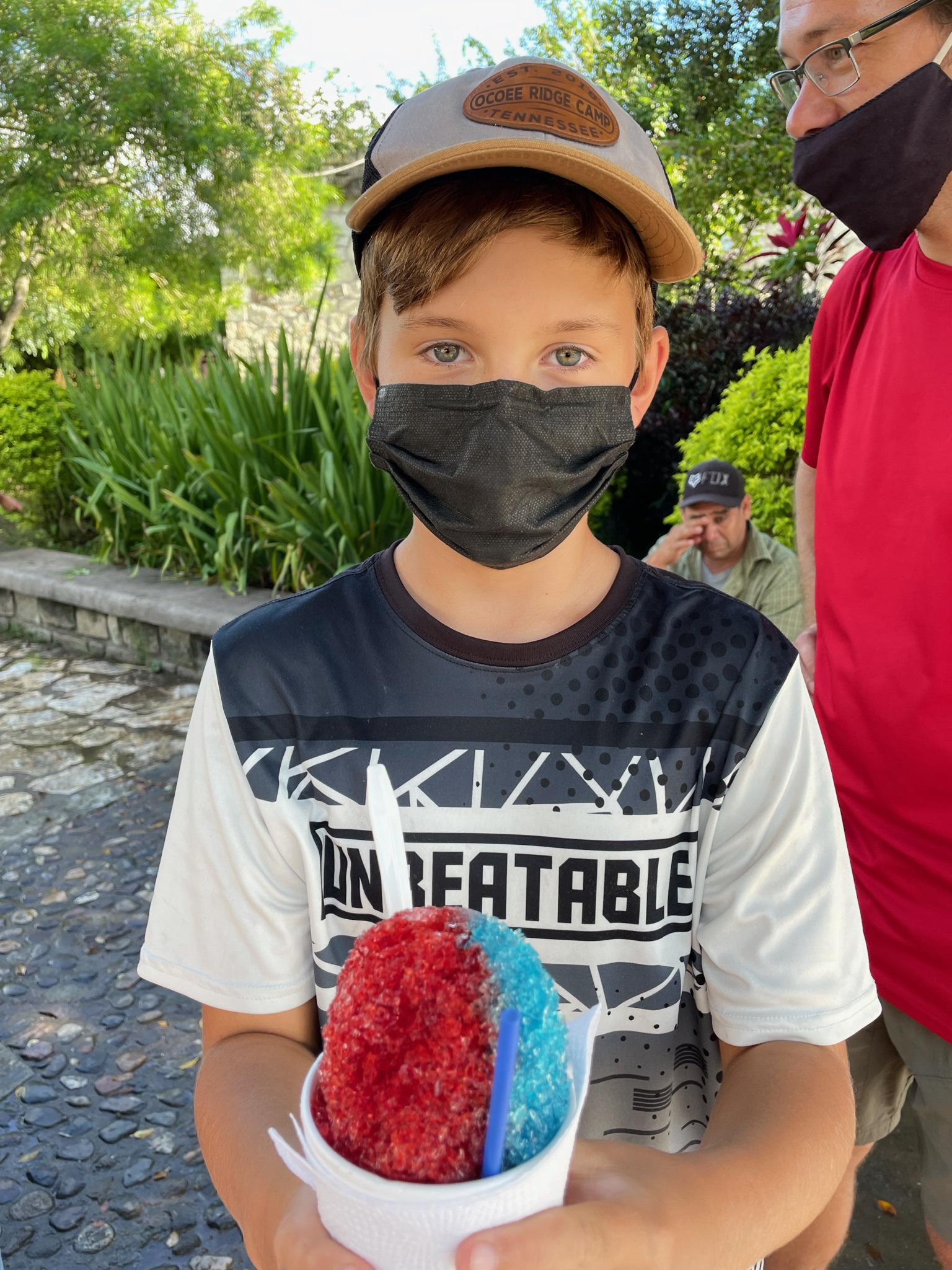
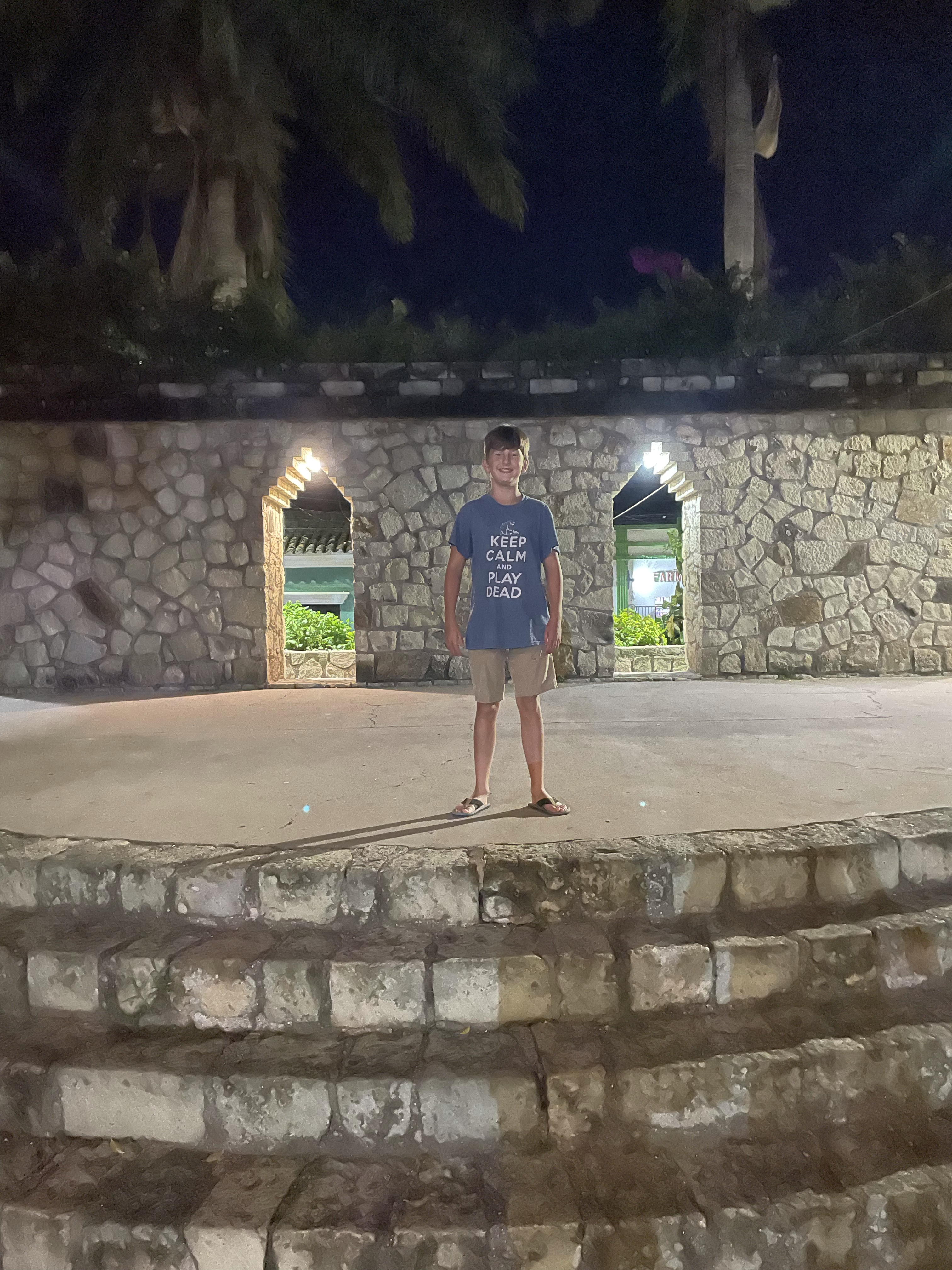
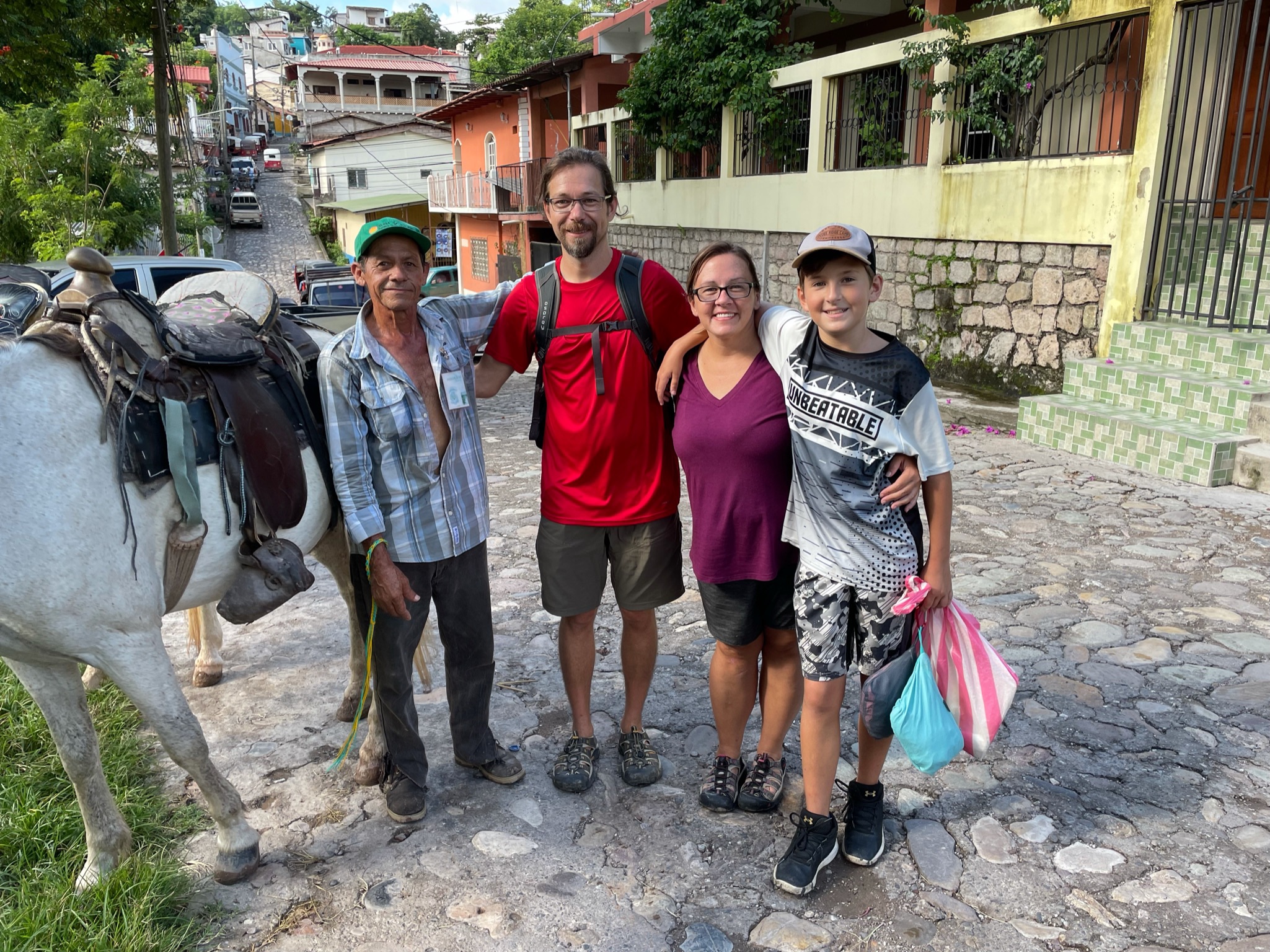
While waiting outside the bank on our first morning, we met Luis, a local tour guide. He offered to give us a personalized tour of the ruins if we wanted, or if we would rather, he could set us up for a horseback ride through the city and countryside. We were skeptical at first, but the longer we talked with him, the more he grew on us. He was a businessman out to make a little money, for sure, but he also had a passion for teaching and a strong desire to please his customers. He worked hard on helping us learn the language and the culture in the area even as we stood on the sidewalk chatting with him. We decided to take a chance and go horseback riding with him, so we made plans to meet at the central park later in the afternoon, which would give us time to find some lunch and him some time to get the horses. We gave him a $10 deposit, and as we walked away to get our food, we wondered if we’d ever see Luis or our $10 again.
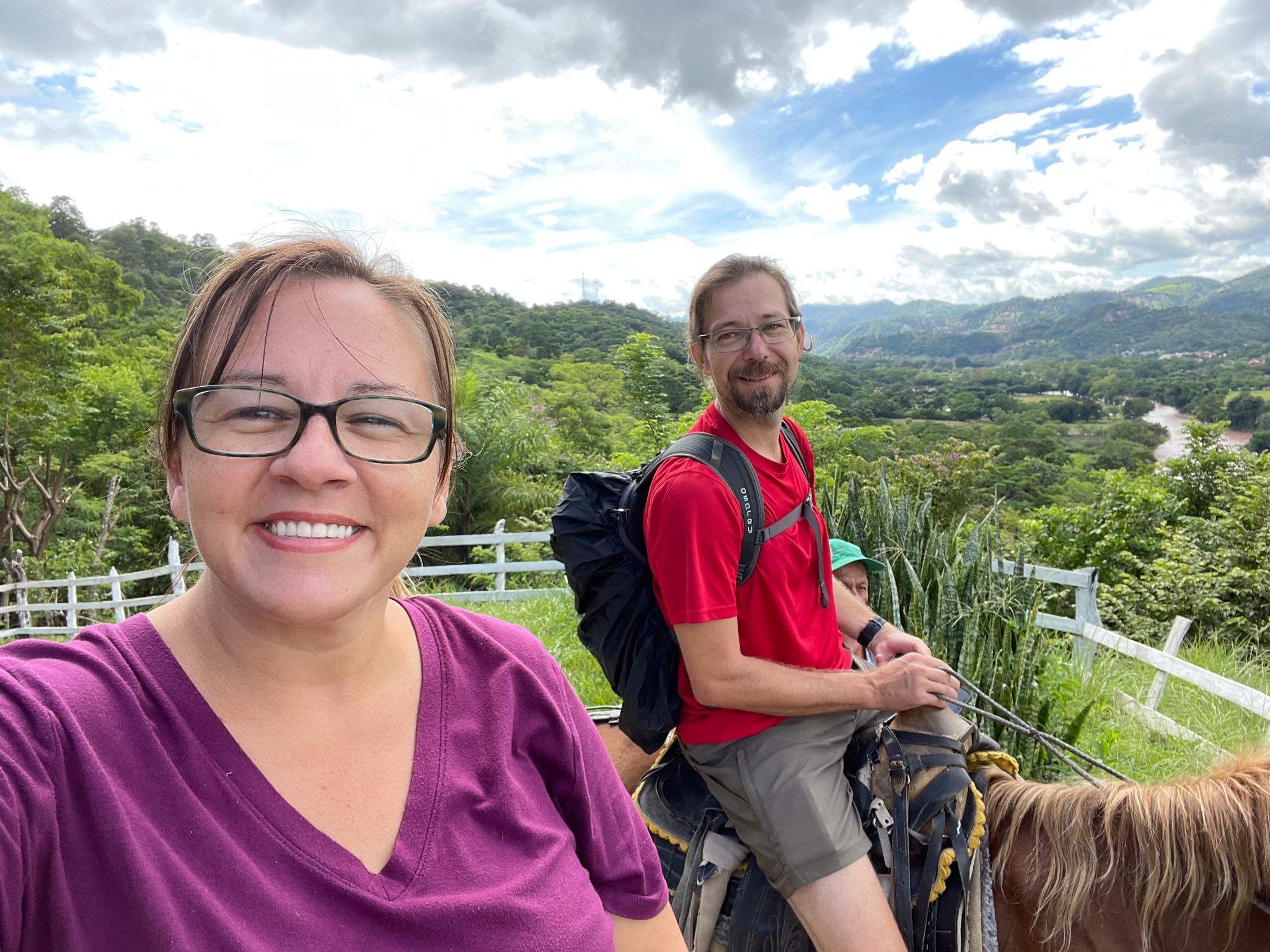
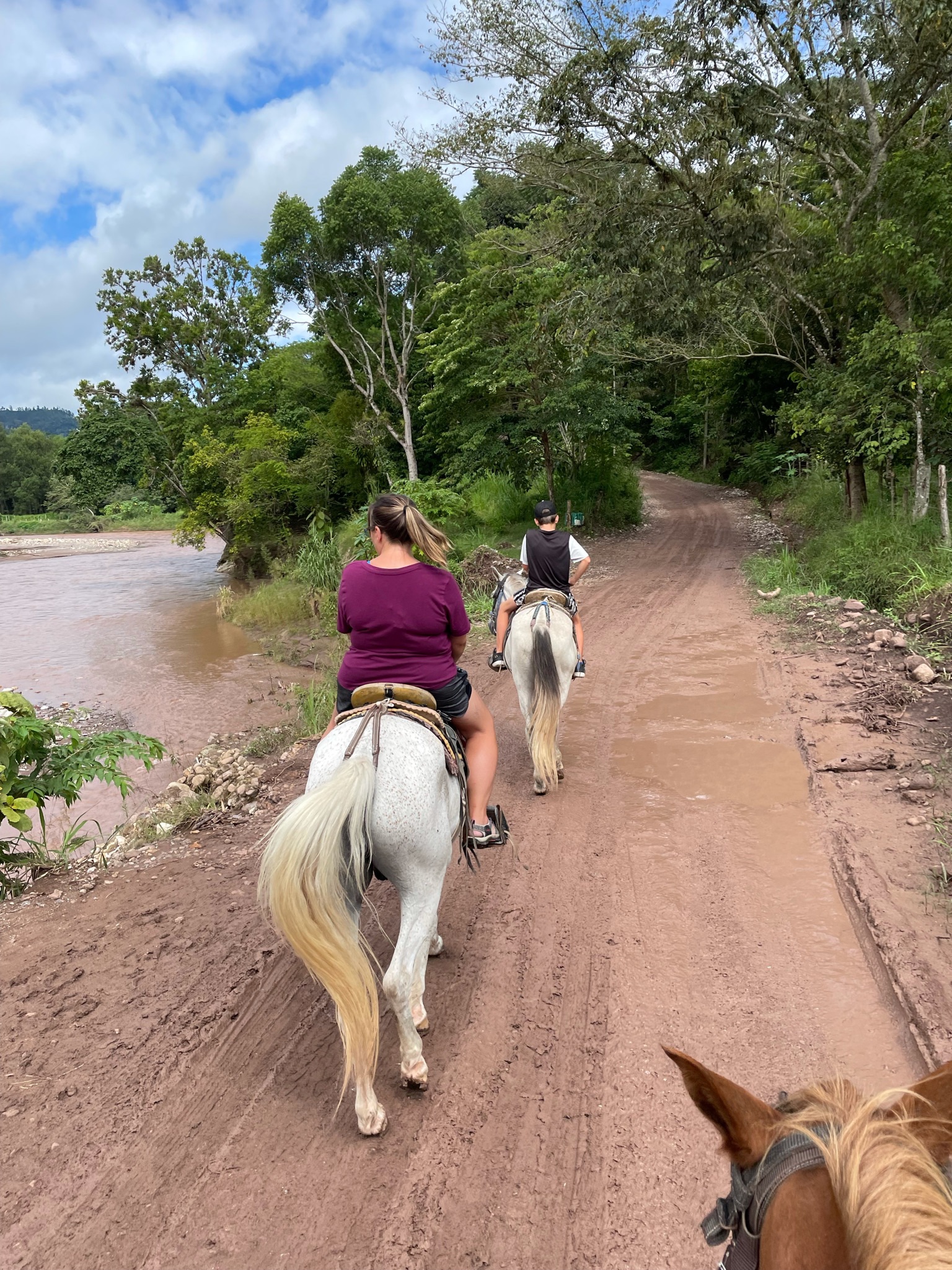
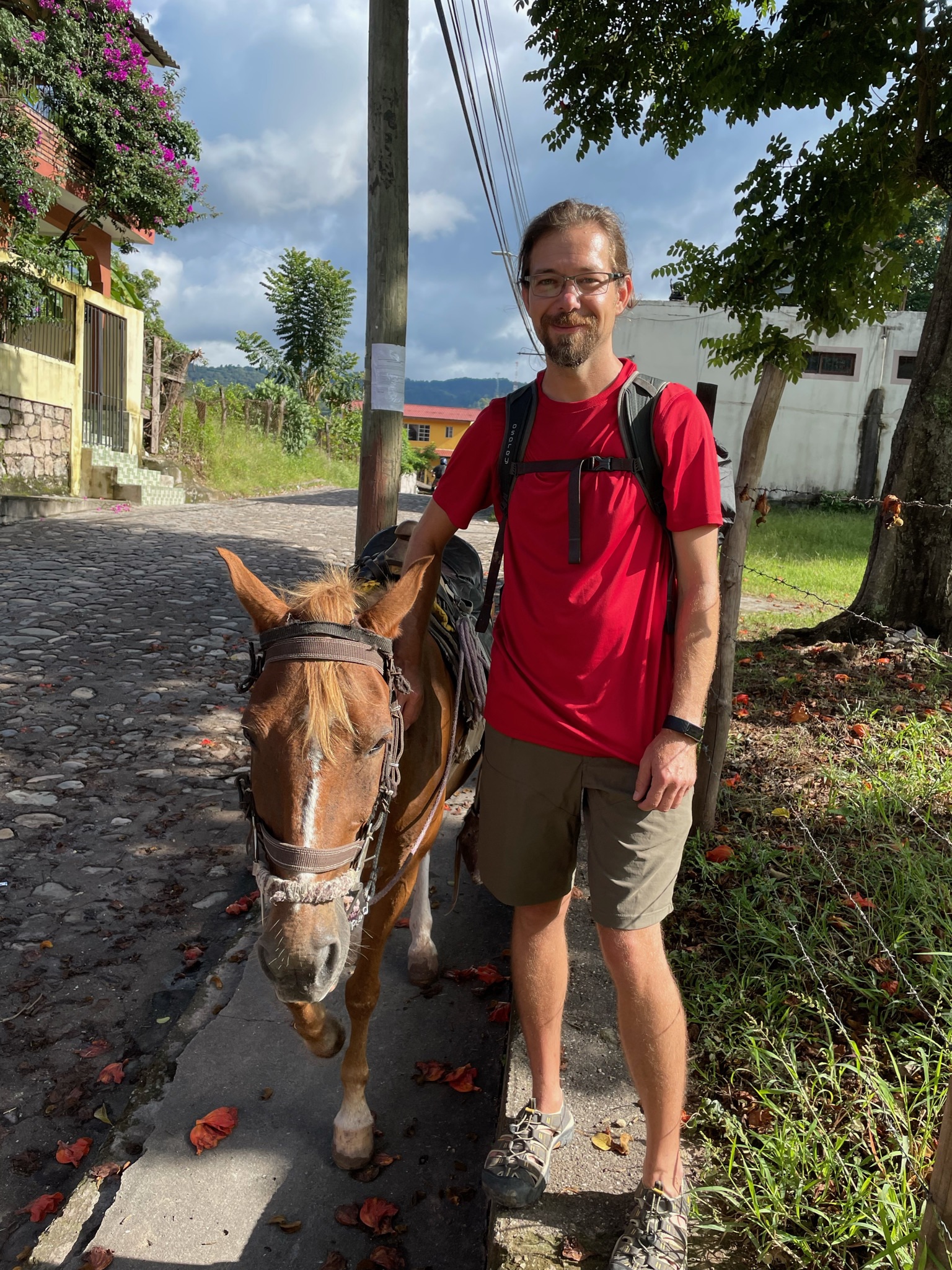
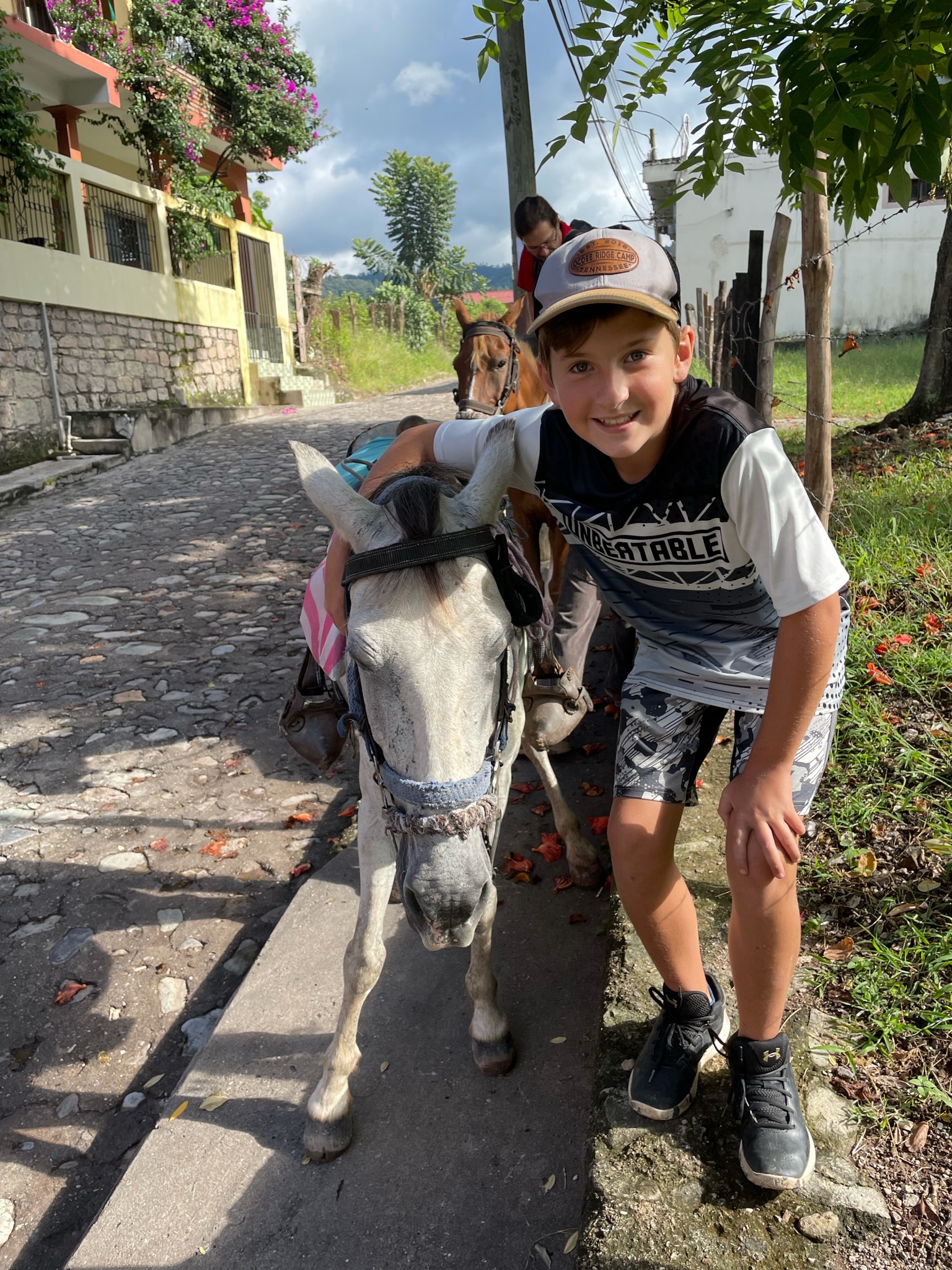
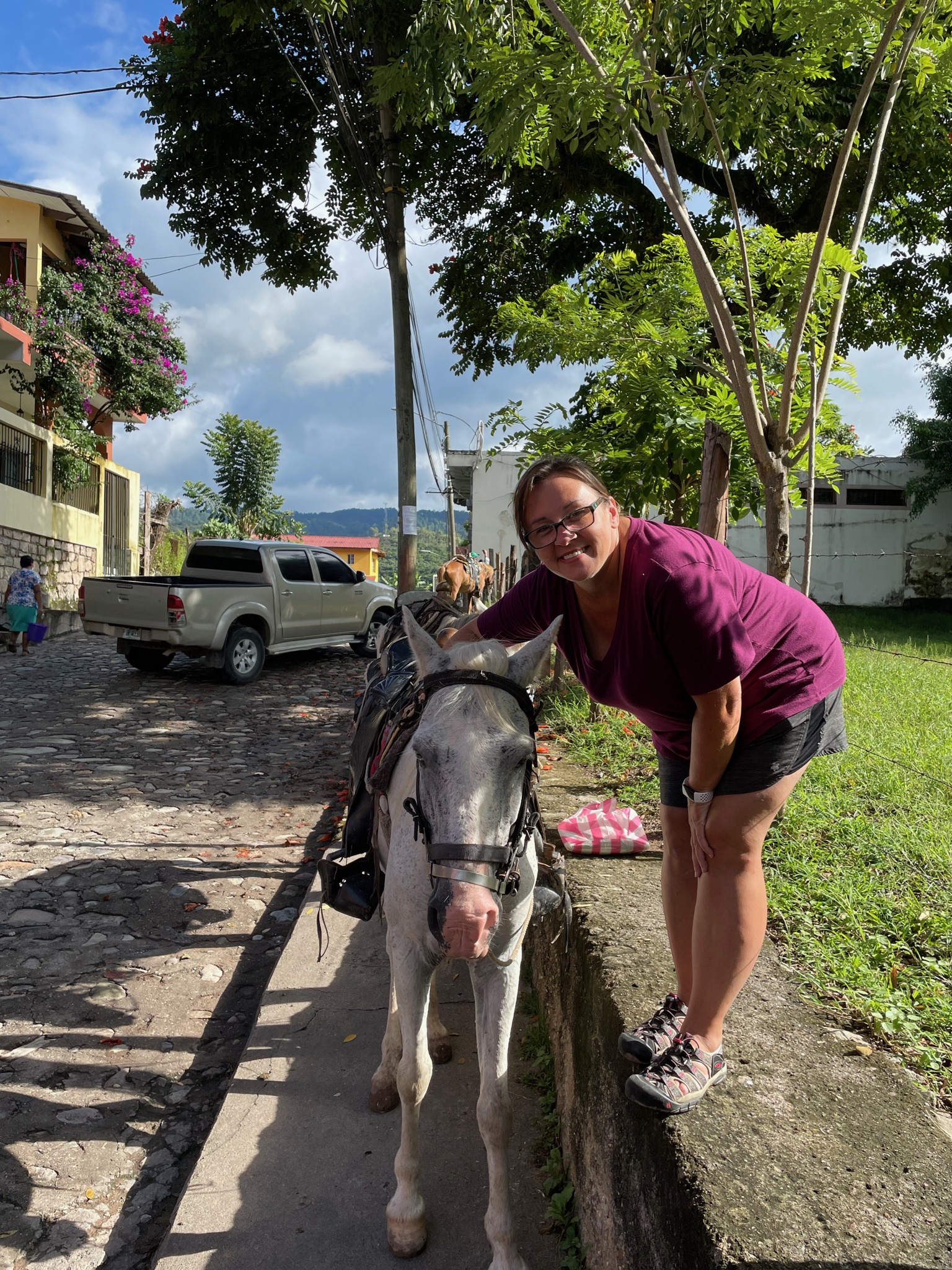
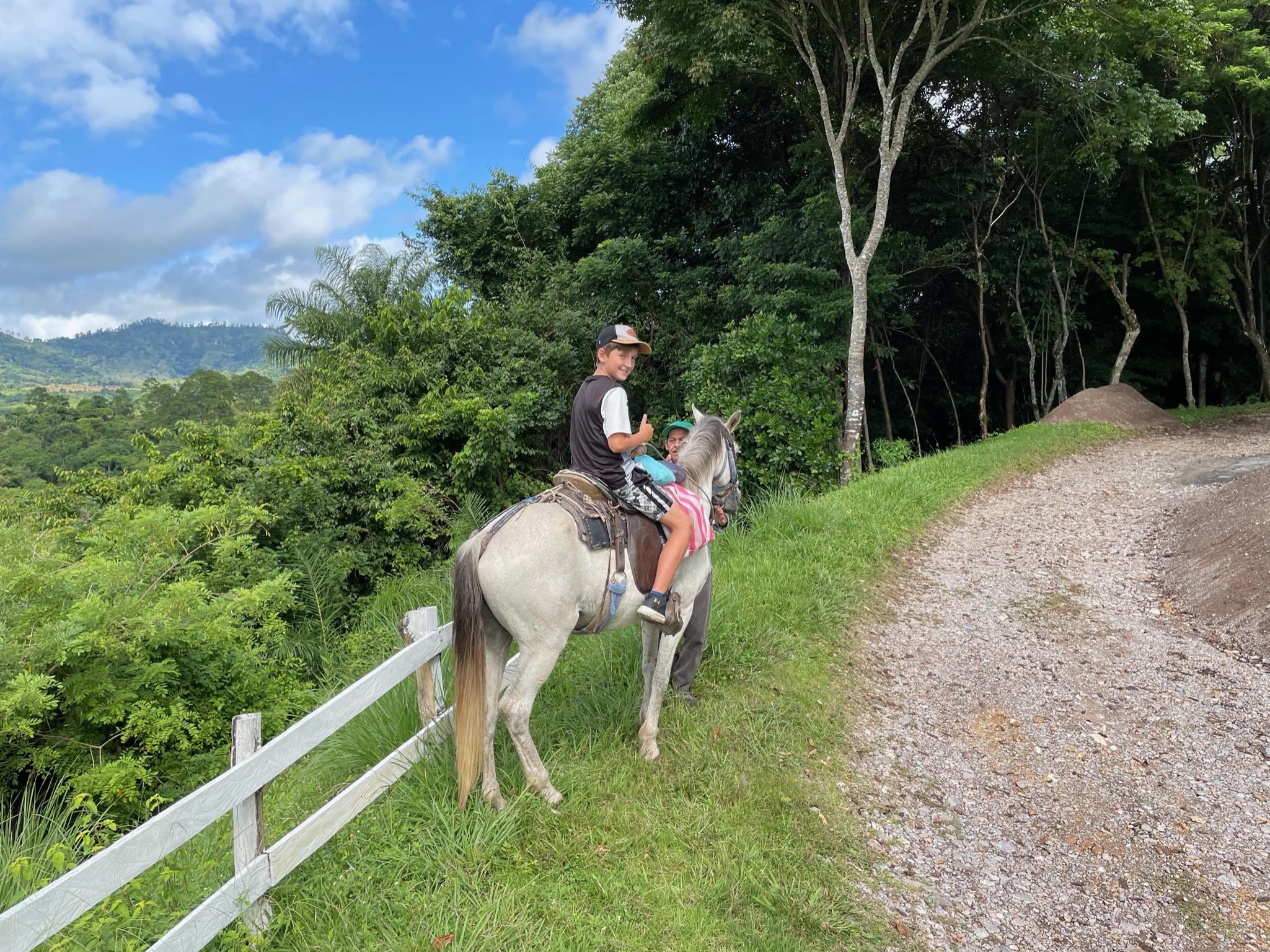
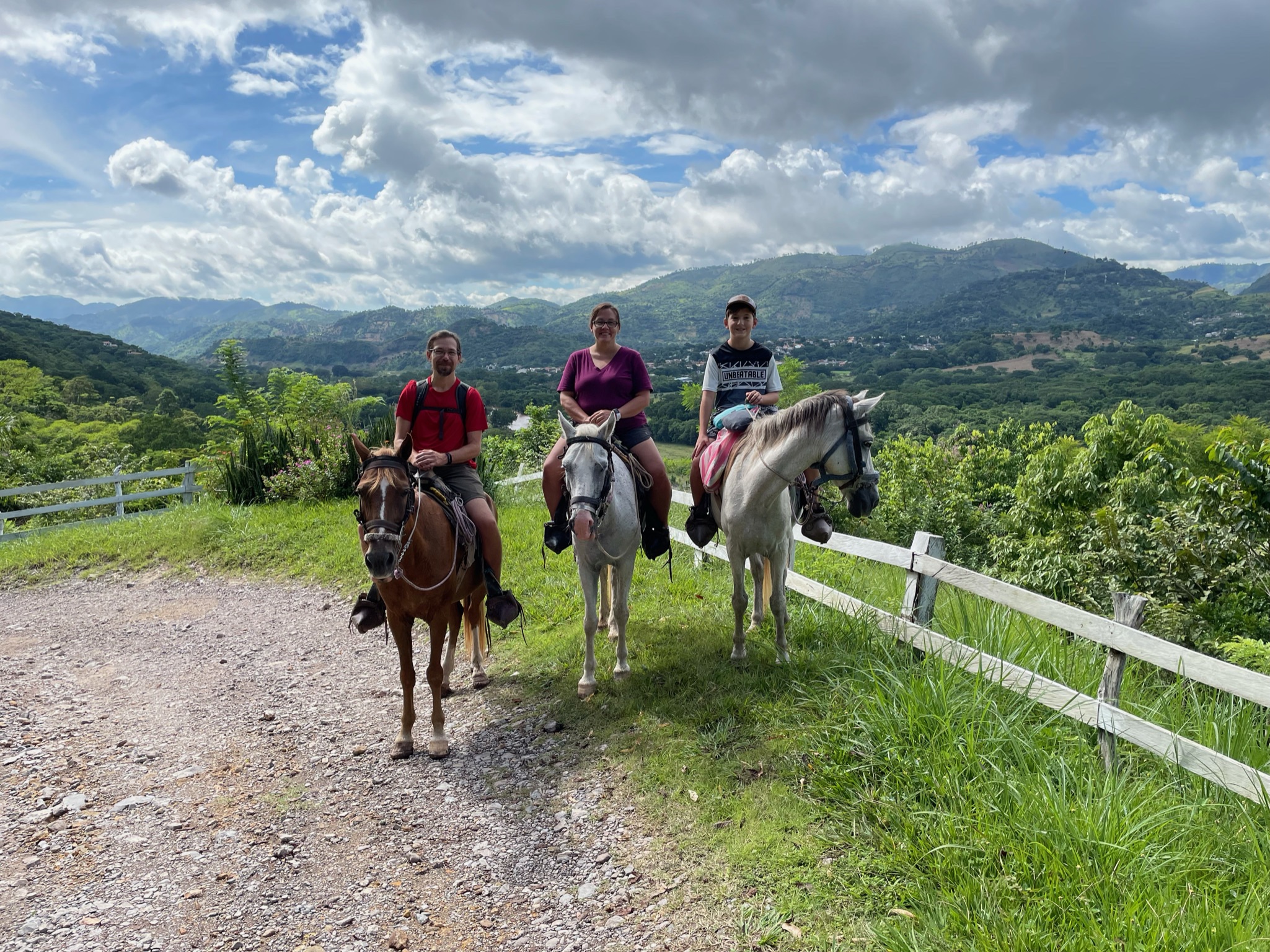
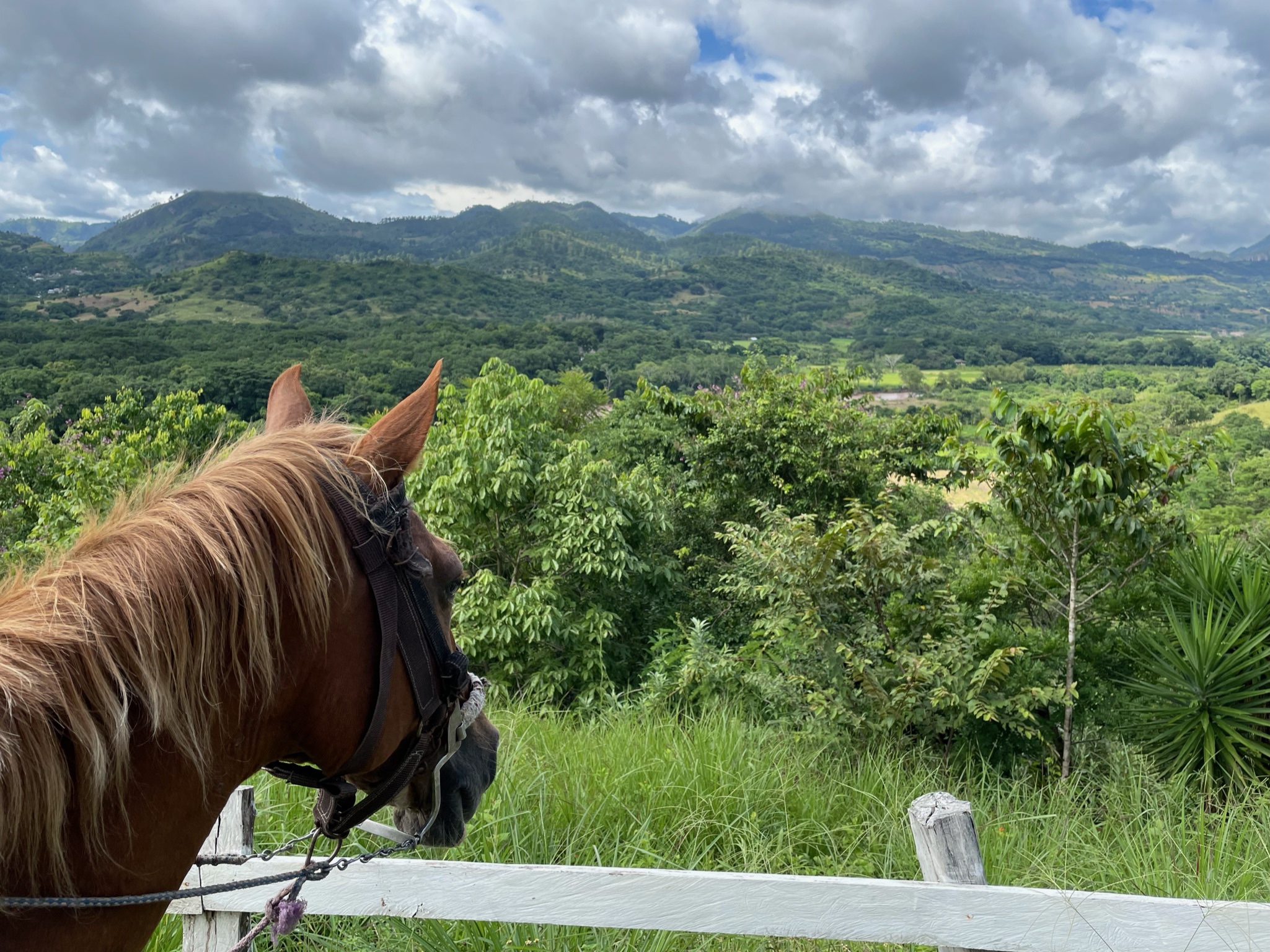
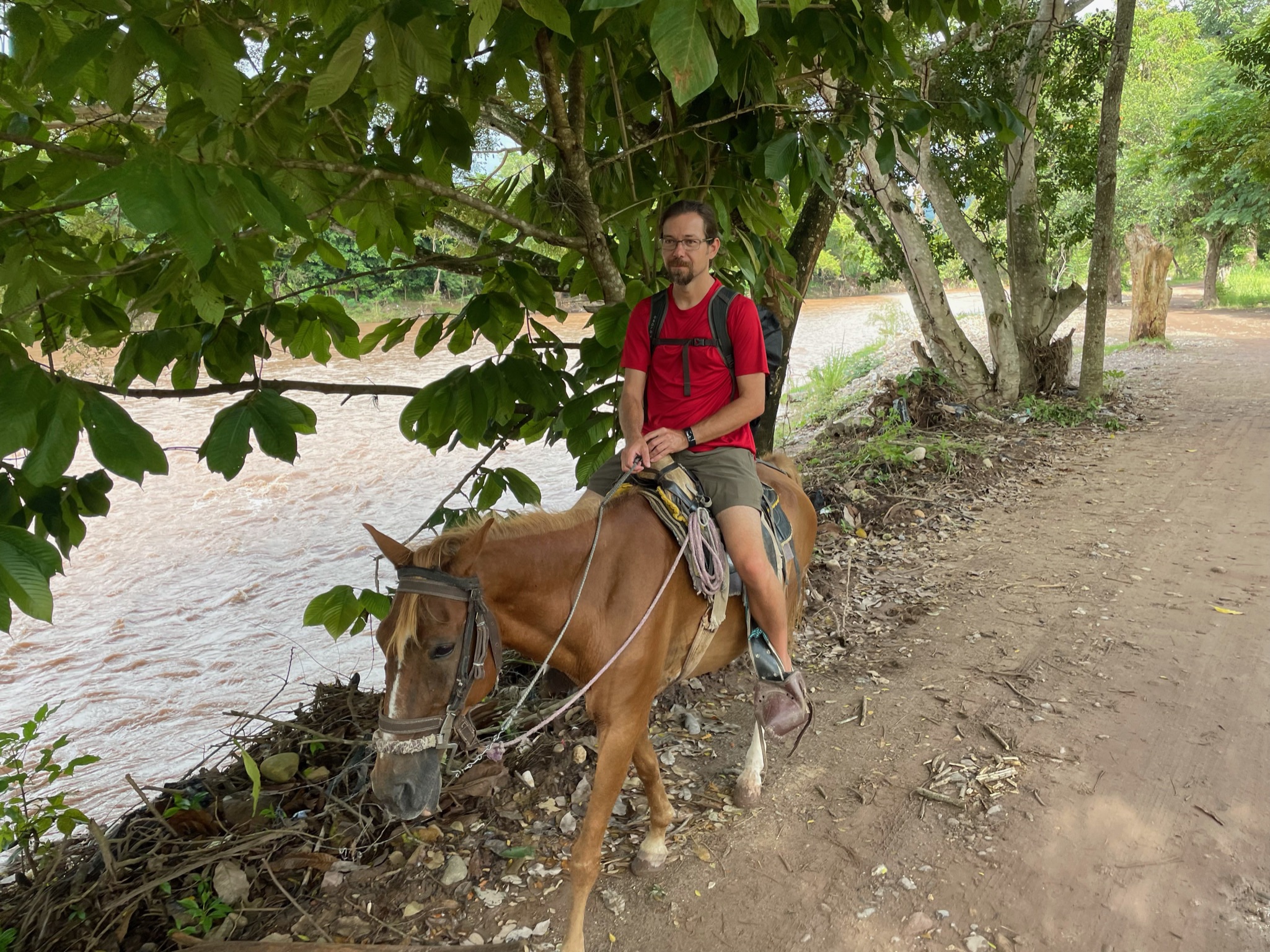
When we arrived at the park at the designated time, we were thankful and a little surprised to see Luis walking up the hill towards the park. We chatted briefly, and then we walked a few blocks with him to get the horses. Henry had never been on a horse before, and he was a little nervous about this adventure. Luis loved talking with Henry, and he spent a lot of time with him making sure he was comfortable with his ride. Once we were all mounted on our horses, Luis walked beside us and guided us through town, across a long bridge over the massive Copan River, and up to a scenic point overlooking the valley to view the green-blue mountains rolling as far as the eye could see. Throughout the two hour ride, Luis would point out various things and would teach us about them. He taught us about the local farms that were growing tomatoes, peppers, and tobacco as we passed them. He pointed out mango and avocado trees growing wild along the riverbank, and he taught us about the beautiful macaws when we saw them as well. All the while, he helped us with our pronunciation of Spanish words and phrases. When we returned to town, we helped Luis return the horses, and we parted ways never expecting to see Luis again. Throughout the next two days, we saw him several times, and every time we were greeted by name with his huge smile. Luis’ love of his town and people and his warm hospitality were easily our favorite parts of our stay at Copan Ruinas.

On our last night in town, the bar/restaurant in the hostel was having live music. Henry opted to hang out in our room and play on his phone, but Brian and I enjoyed a drink in the bar while listening to Spanish versions of some of our favorite songs along with several songs completely foreign to us. We couldn’t sing along, and we didn’t even know what some of the songs were about, but the beat was good, the enthusiasm from the crowd was infectious, and the atmosphere was fun and relaxed. We went to bed that night feeling more normal than we have in quite some time.
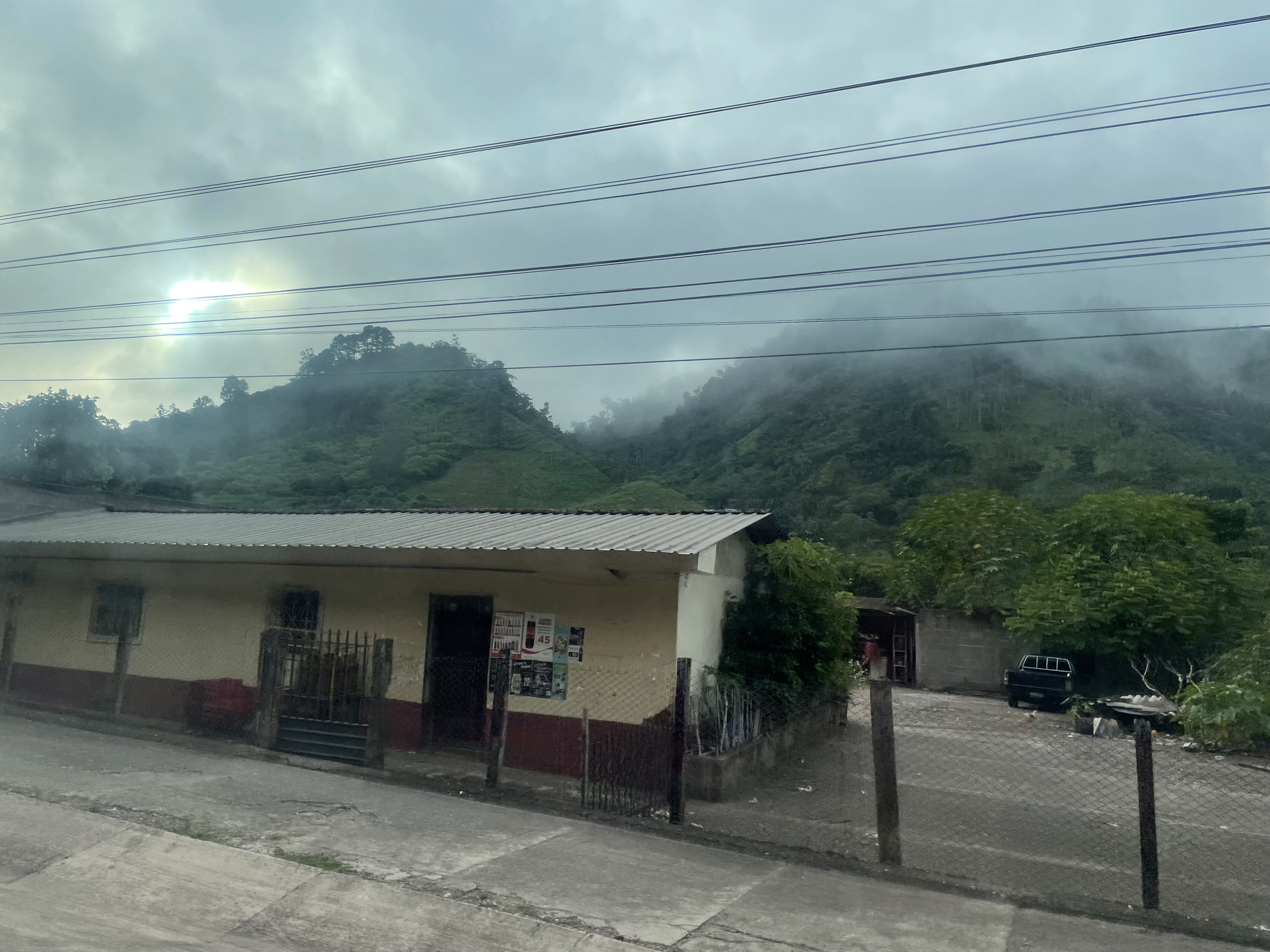
We left Copan Ruinas for the Atlantic coast to visit Utila, an island that several of our new friends along the way had touted. Our first bus was the Casasola Express, a local inexpensive bus that ran several times per day. We walked to the bus stop, an unmarked section of road just outside of town, and one of the gentlemen who had sang his heart out at the bar the night before turned out to be our driver. This bus, like many in the area, picked up and dropped off passengers all along it’s route. The bus was manned by two people, our driver and a doorman. The doorman stood at the door and as we approached people walking or waiting by the road, he would signal to them to find out if they were waiting for the bus. If they were, he would tell the driver to stop, would usher the new riders on board (sometimes without the bus actually stopping), and would accept their money for the fare. The bus was crowded and hot. Passengers got on the bus with machetes, packages, and even a dining table in tow. At different locations, vendors would get on the bus to sell drinks, snacks, and meals, and then they would hop off at the next stop. We even had a preacher get on and deliver a message to us as we traveled, and all of the riders respectfully gave him their attention. The bus was overcrowded, and several stood in the aisles for long portions of the ride, but four hours later, we safely arrived in San Pedro Sula’s main bus terminal.
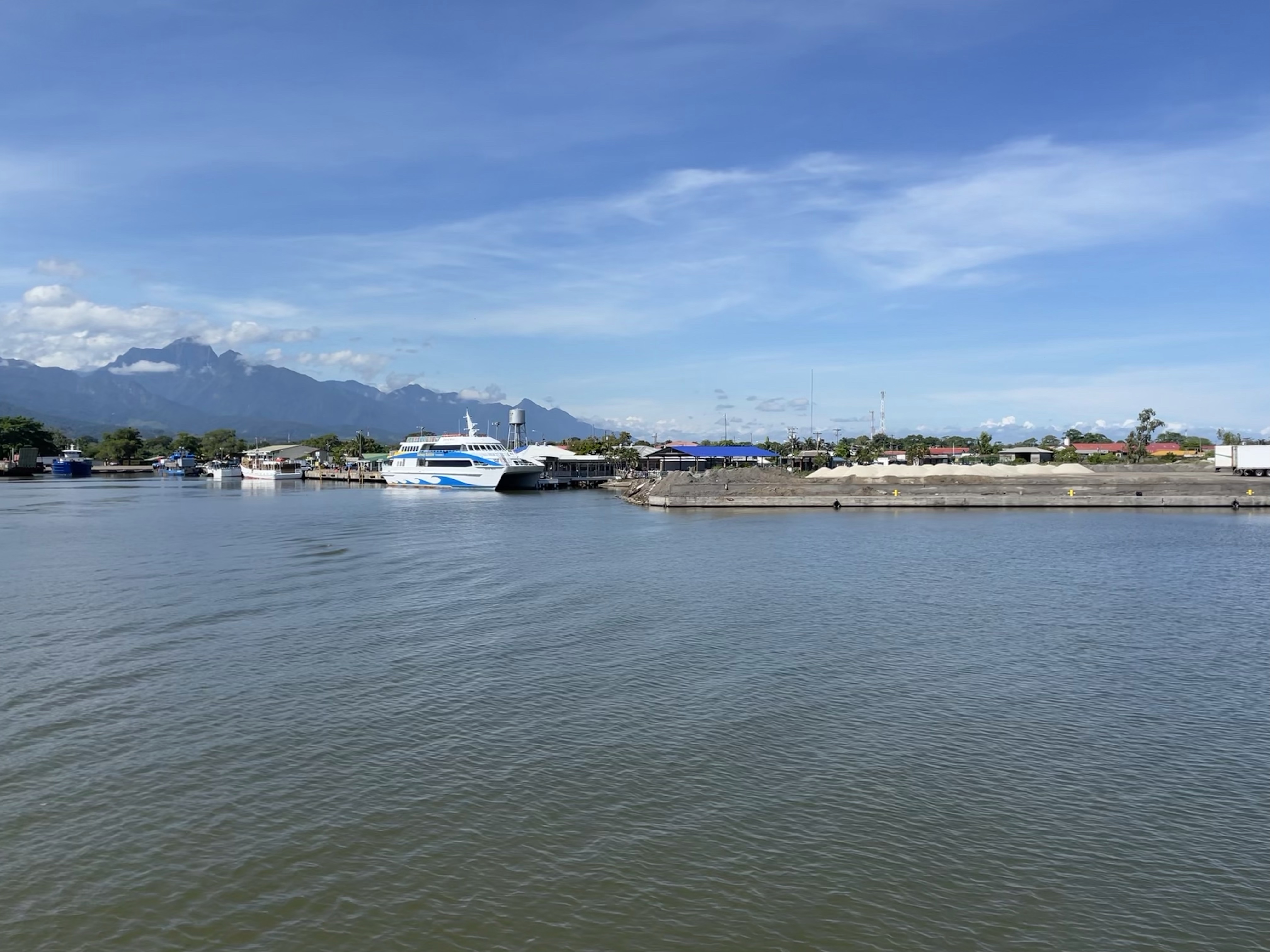
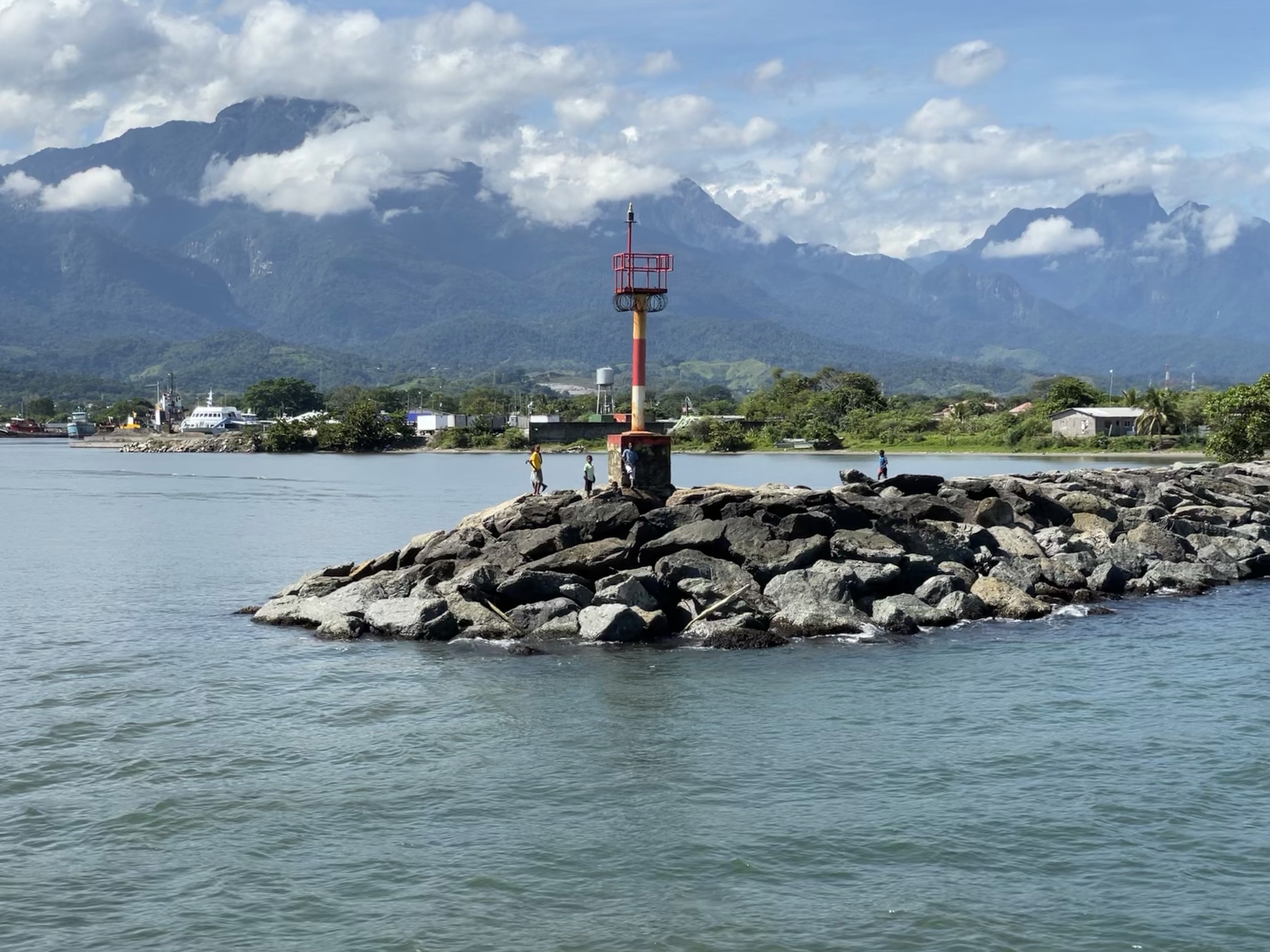
Our next bus was a much more comfortable ride with air conditioning, reclining seats, and plenty of elbow room. This bus took us from San Pedro Sula to La Ceiba. After a night in La Ceiba, we took the ferry over to Utila and found our room there. We had rented an apartment on AirBnB for three nights, and when we arrived, we walked from the ferry to our new lodgings. We weren’t thrilled when we got there; the building wasn’t much more than a run down shack. The washing machine worked, so long as you manually filled it with water for the wash and rinse cycles with the garden hose laying nearby. The stove was broken, but as long as you didn’t need the insulated door, you could heat your food. And the air conditioner would cool the room, but with the windows that were always cracked open and the cracks in the floor, walls, and ceilings, it wouldn’t hold the cool air in at all. Oh, and did I mention the dead tarantula we saw? Yeah. It was bad. We decided to make it work though, and so we carefully and reluctantly settled in.
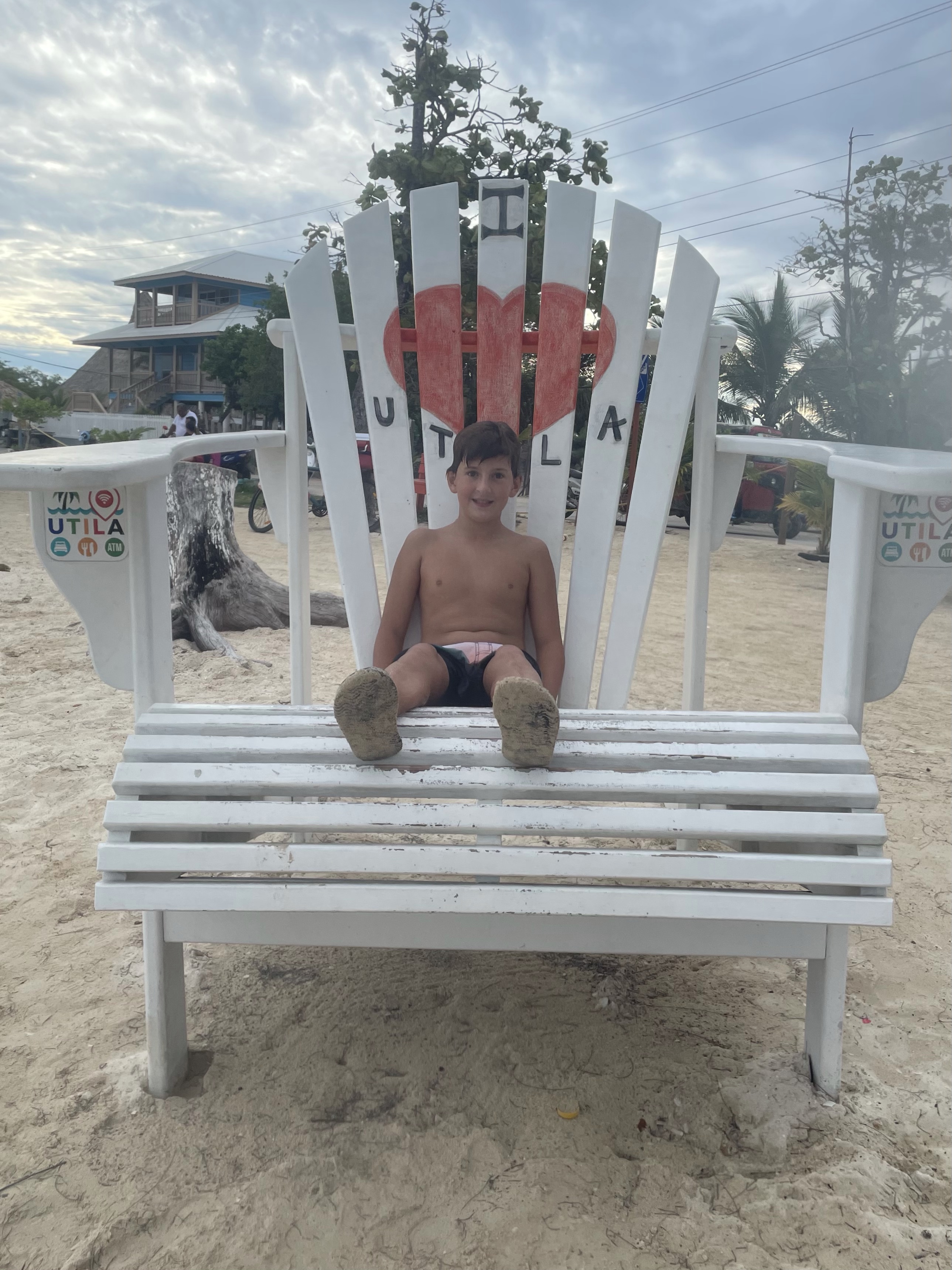
My first impression of Utila was not very good. It was hot, and I mean suffocatingly hot. The main street was overcrowded with businesses right on top of each other, people walking in every direction, and motorcycles, tuk tuks, and four wheelers driving way too fast and too close as they weaved through the crowds and narrow streets. The water was beautiful, but the town had taken over all the beach access, so you had to walk to the outskirts of town to swim. And, because it was an island, it was expensive. The first few meals we had were overpriced and not great. In addition to that, Brian and I got a stomach bug and got stuck in the shack for most of the time. We ran the air conditioner because it was insanely hot if you didn’t, and our host began telling us that we would need to buy more electricity at the rate we were using it. At this point, honestly, I was ready to leave the island far behind. We had heard that the scuba diving was great as the island sits on the second largest barrier reef in the world, and we definitely wanted to give that a shot. We were miserable though. I had really gotten to the point that I didn’t care if we dove or not, but Henry was excited about it. We decided to move on to another place after our first three nights and see if we could turn things around.
That turned out to be a great move for us, and it changed our impression of the whole island. We rented a two-bedroom apartment above the Utila Brewing Company on the main strip. In our new place, we were still a good walk from the swimming beach, but we could use air conditioning freely, and we were within easy walking distance of quite a few restaurants. The food got better, we got better, and all of a sudden, the island wasn’t quite so terrible. We liked the atmosphere here, and that made a huge difference.
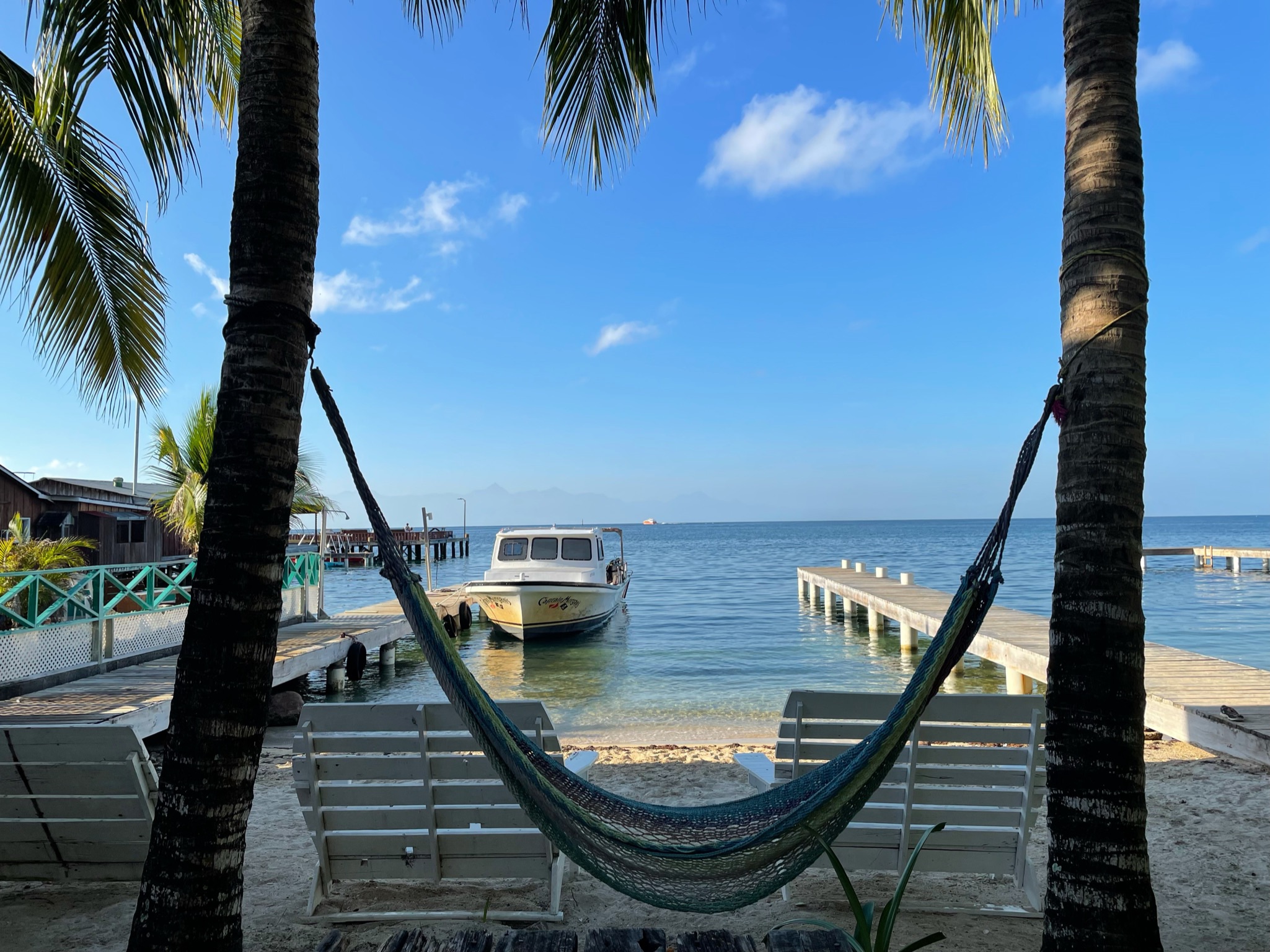
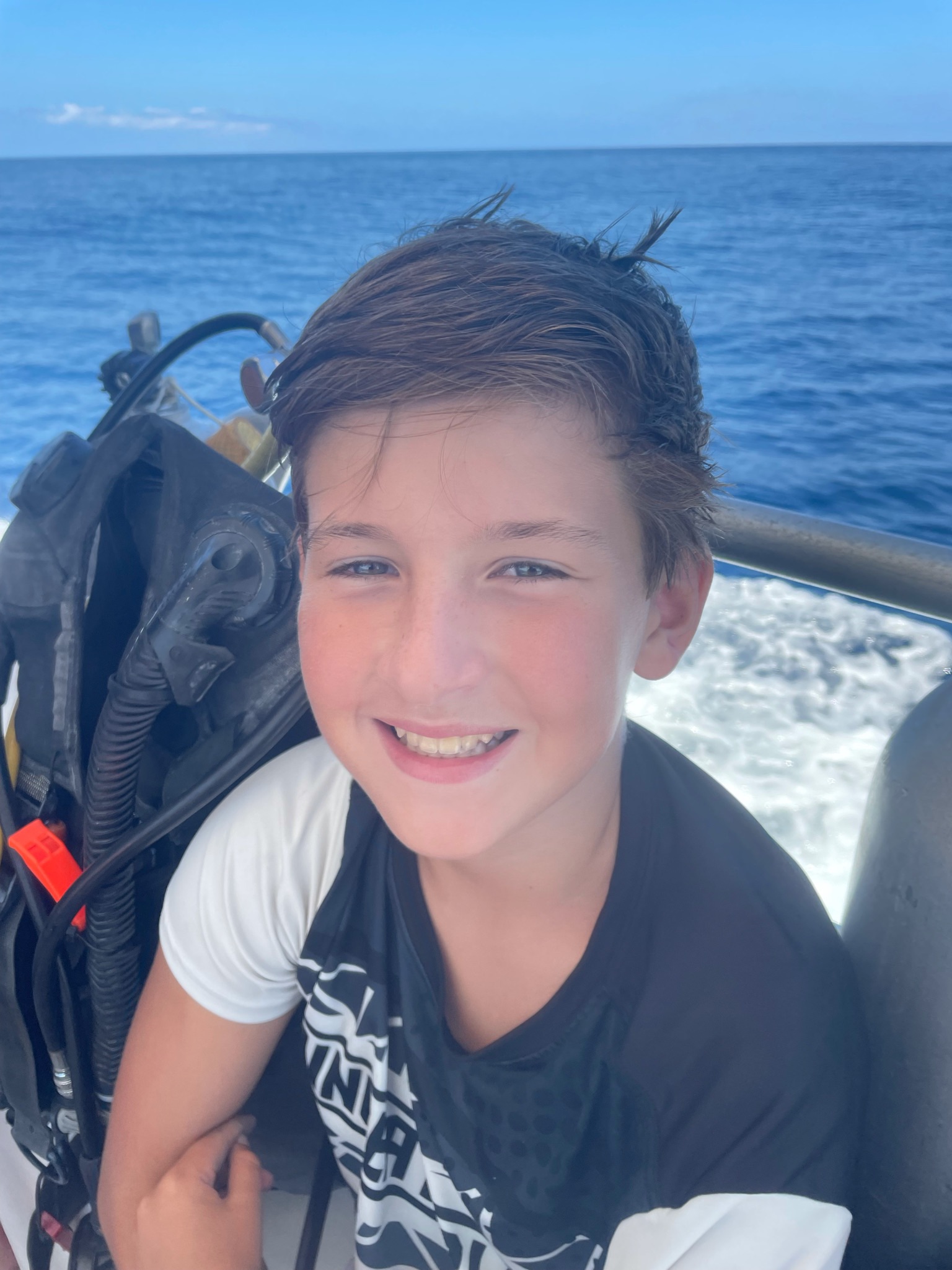
We ended up booking two days of diving with the Captain Morgan dive shop, and as a convenience for their divers, they allowed us to stay in their hotel on those nights. They had their own little private beach, so not only did we have a really nice and convenient first floor room on the main strip, but we had a perfect little swimming hole too.
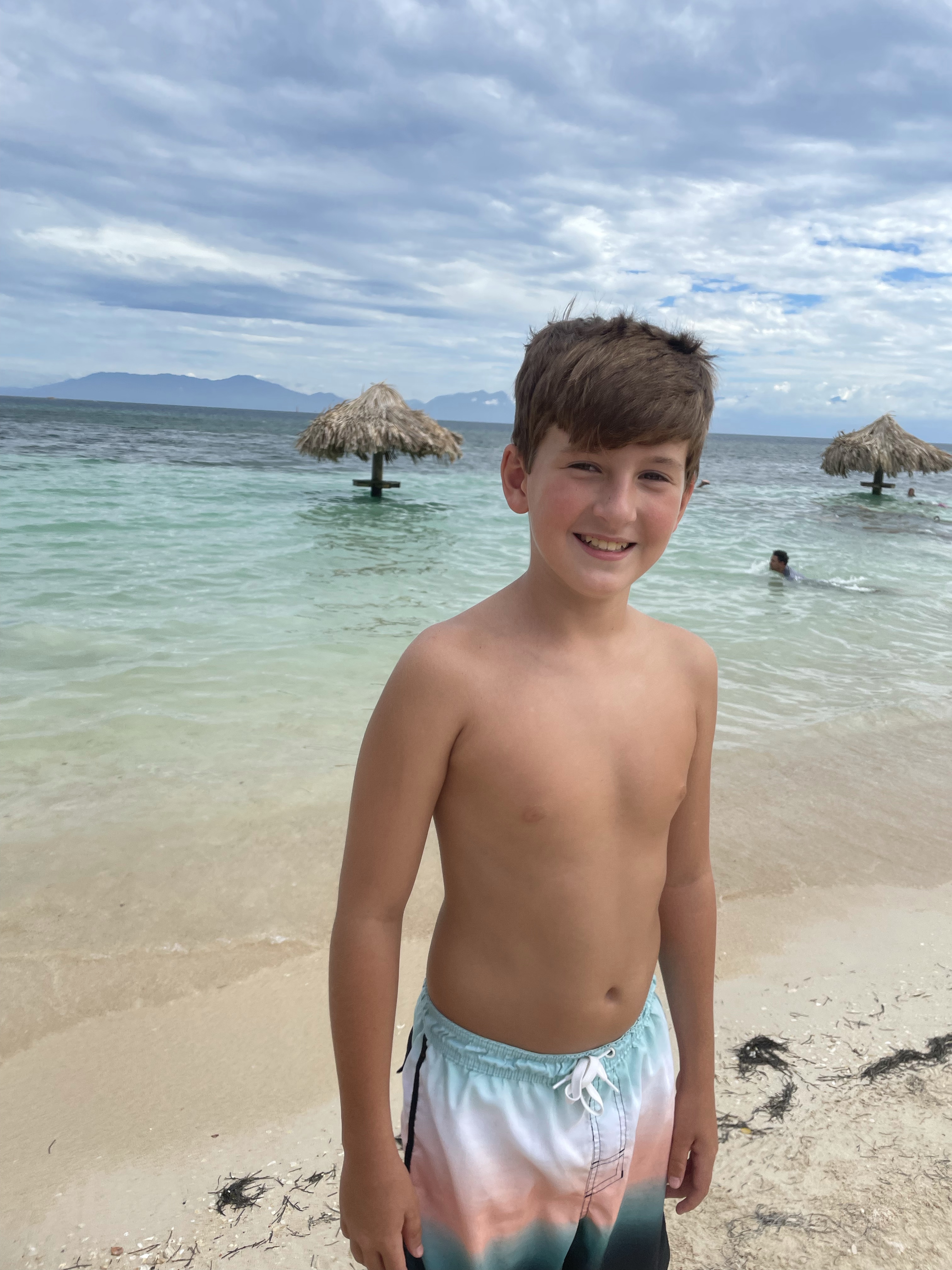
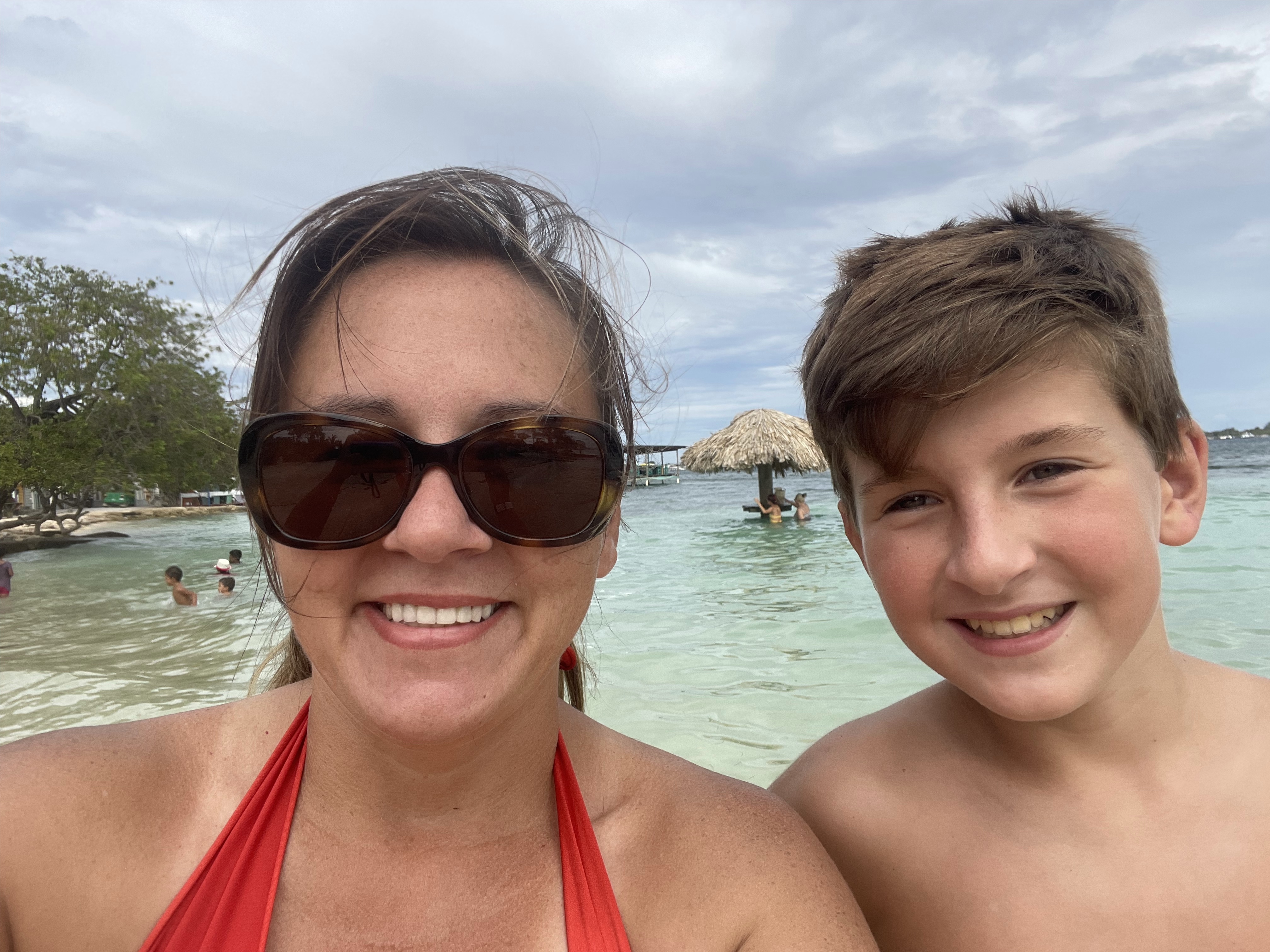
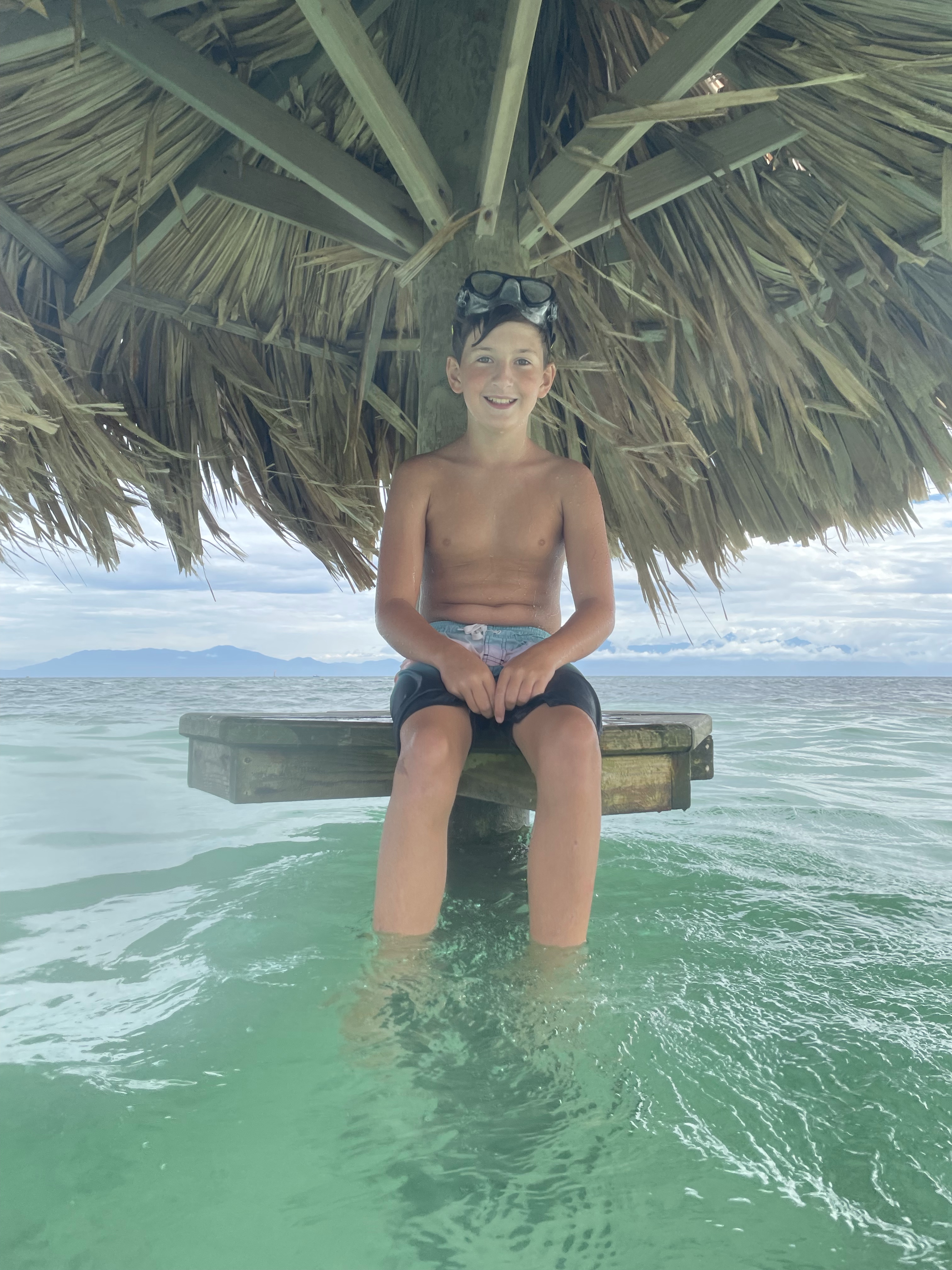
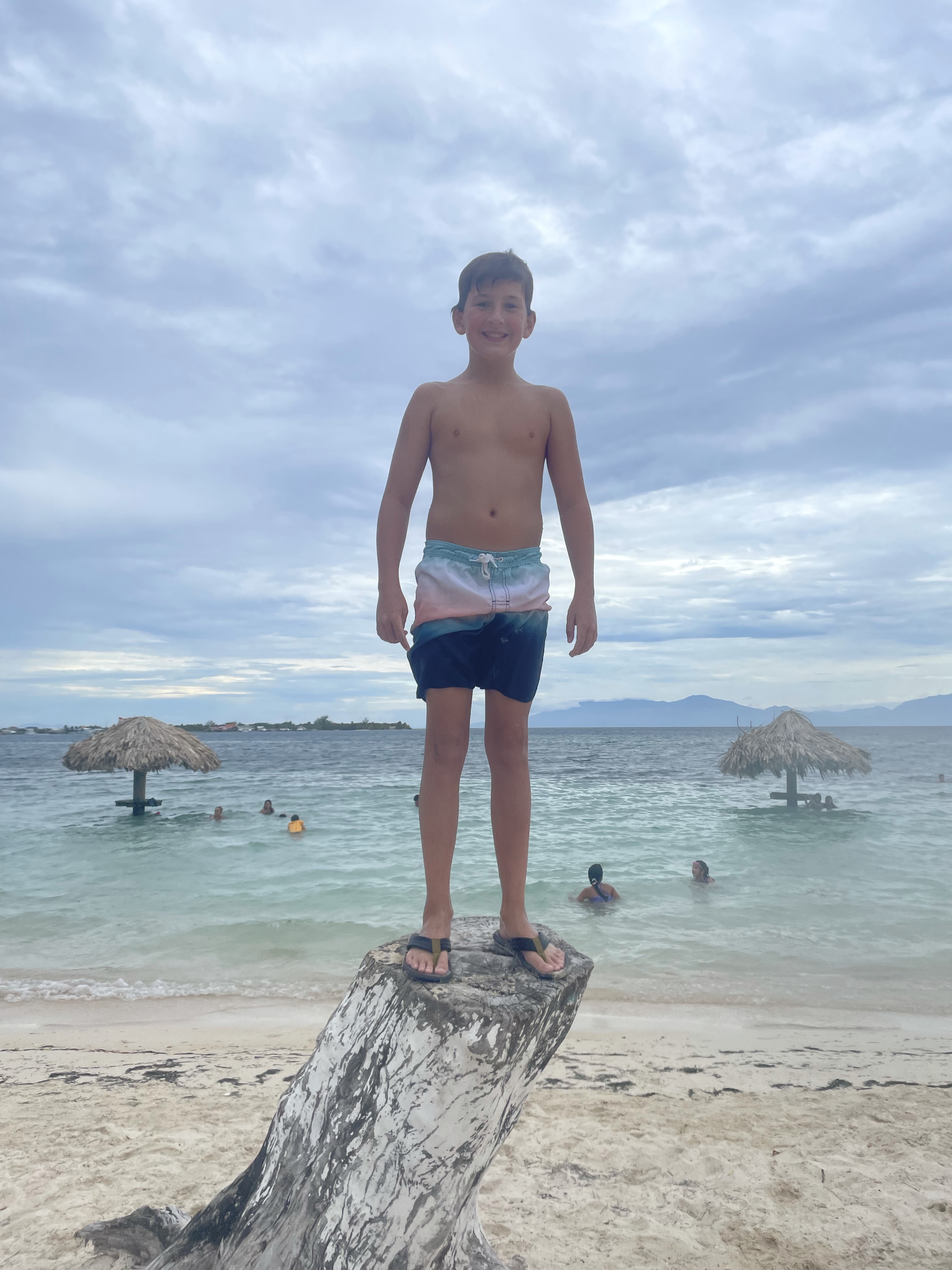
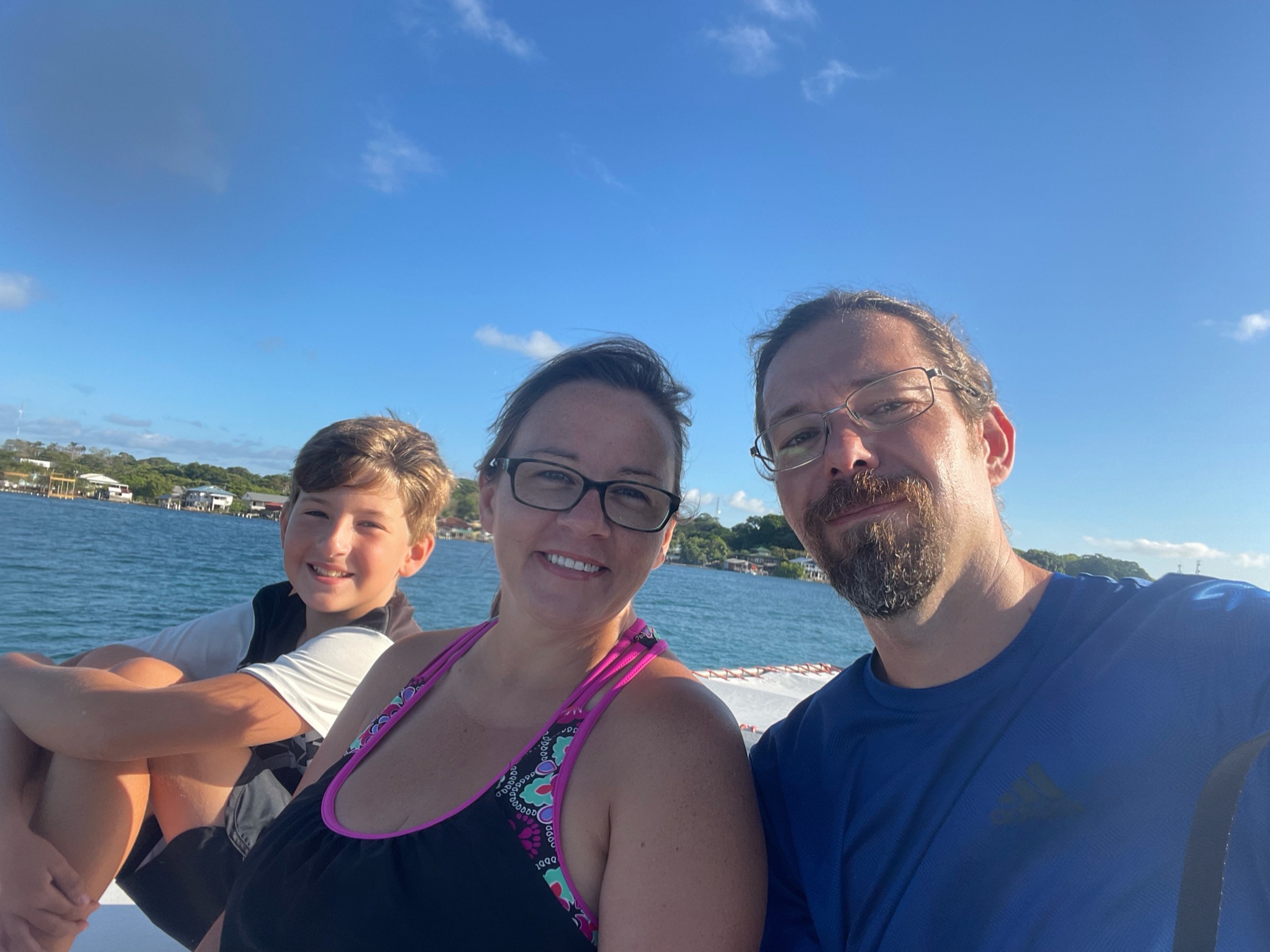
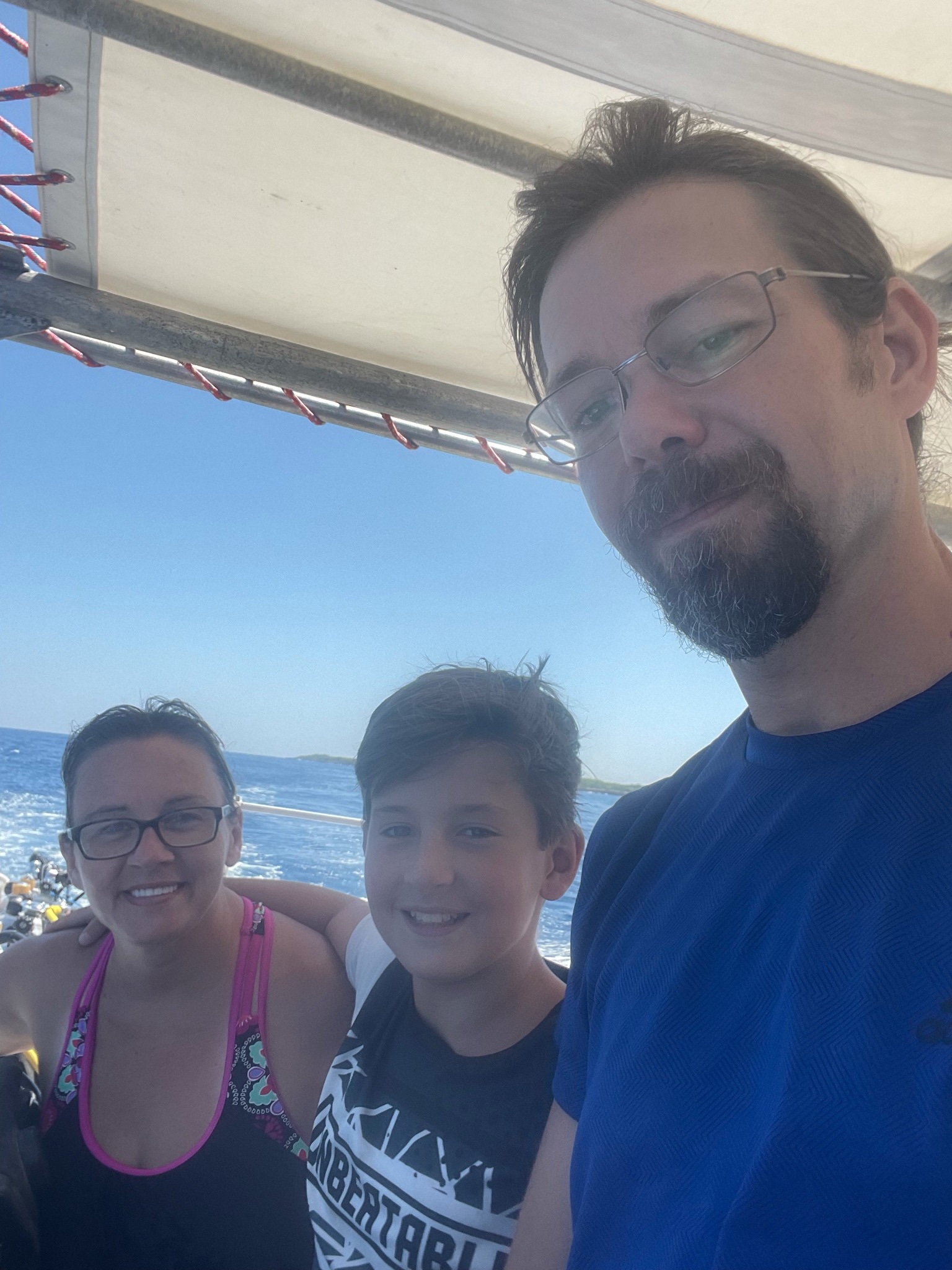
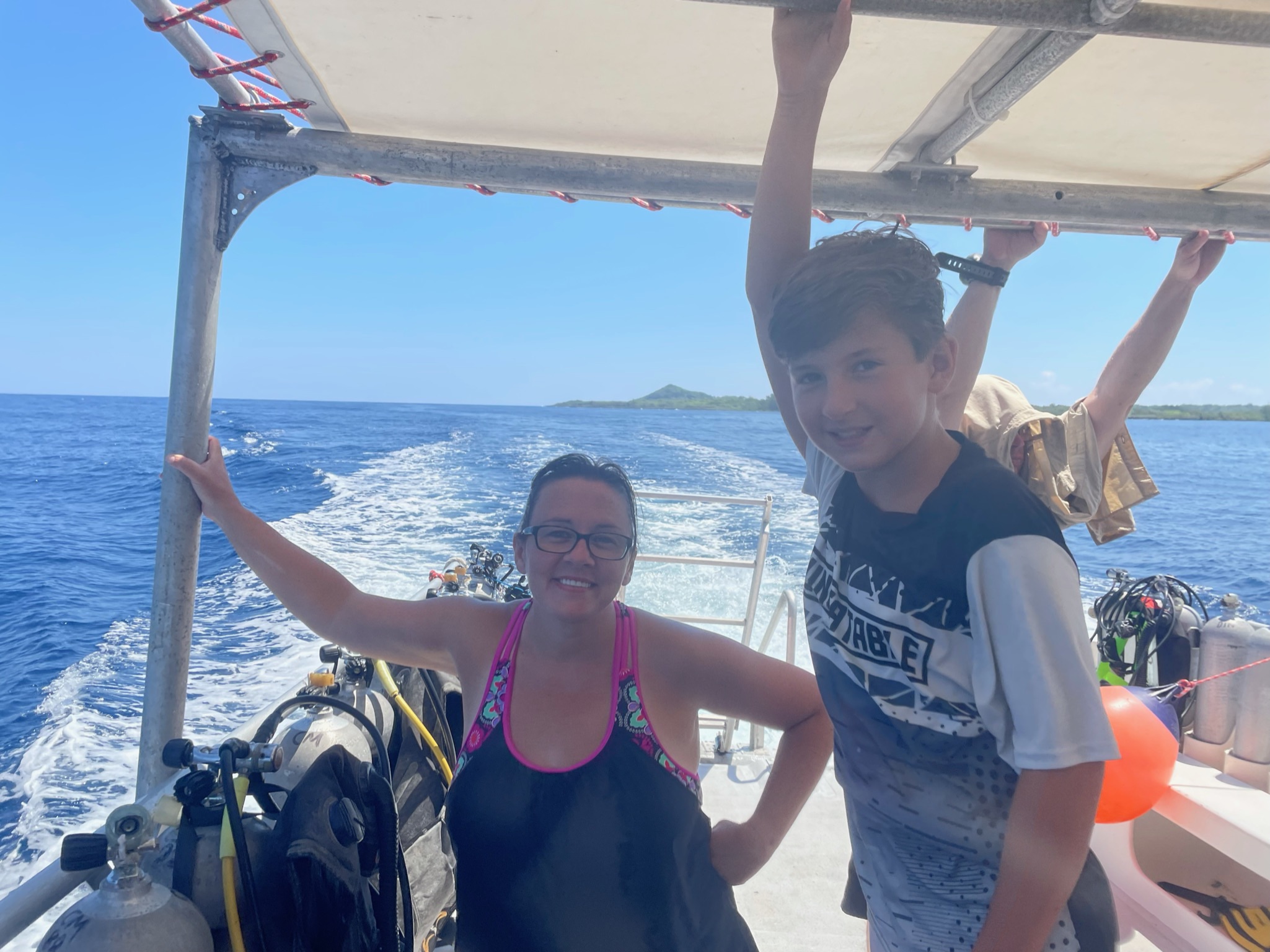
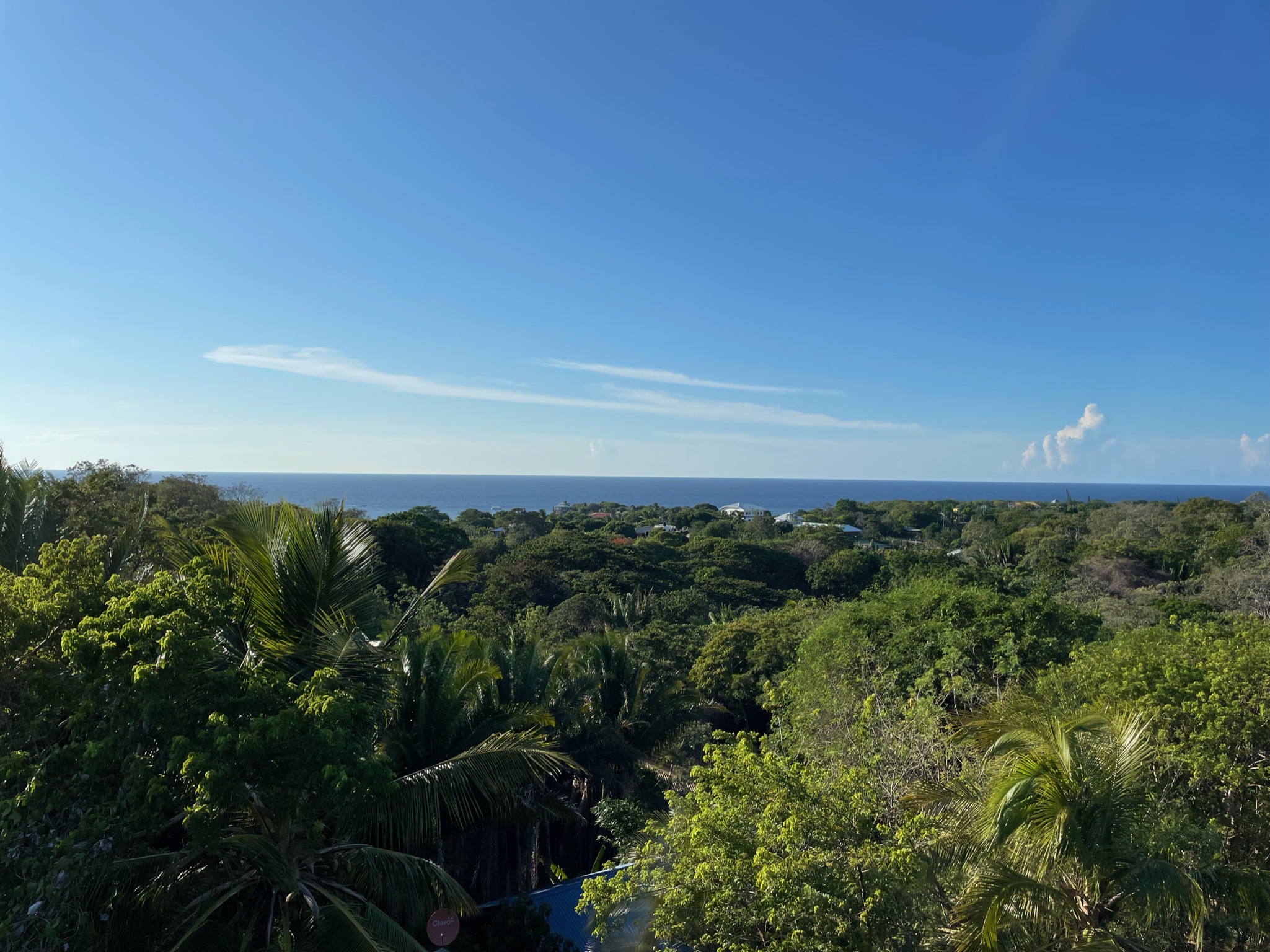
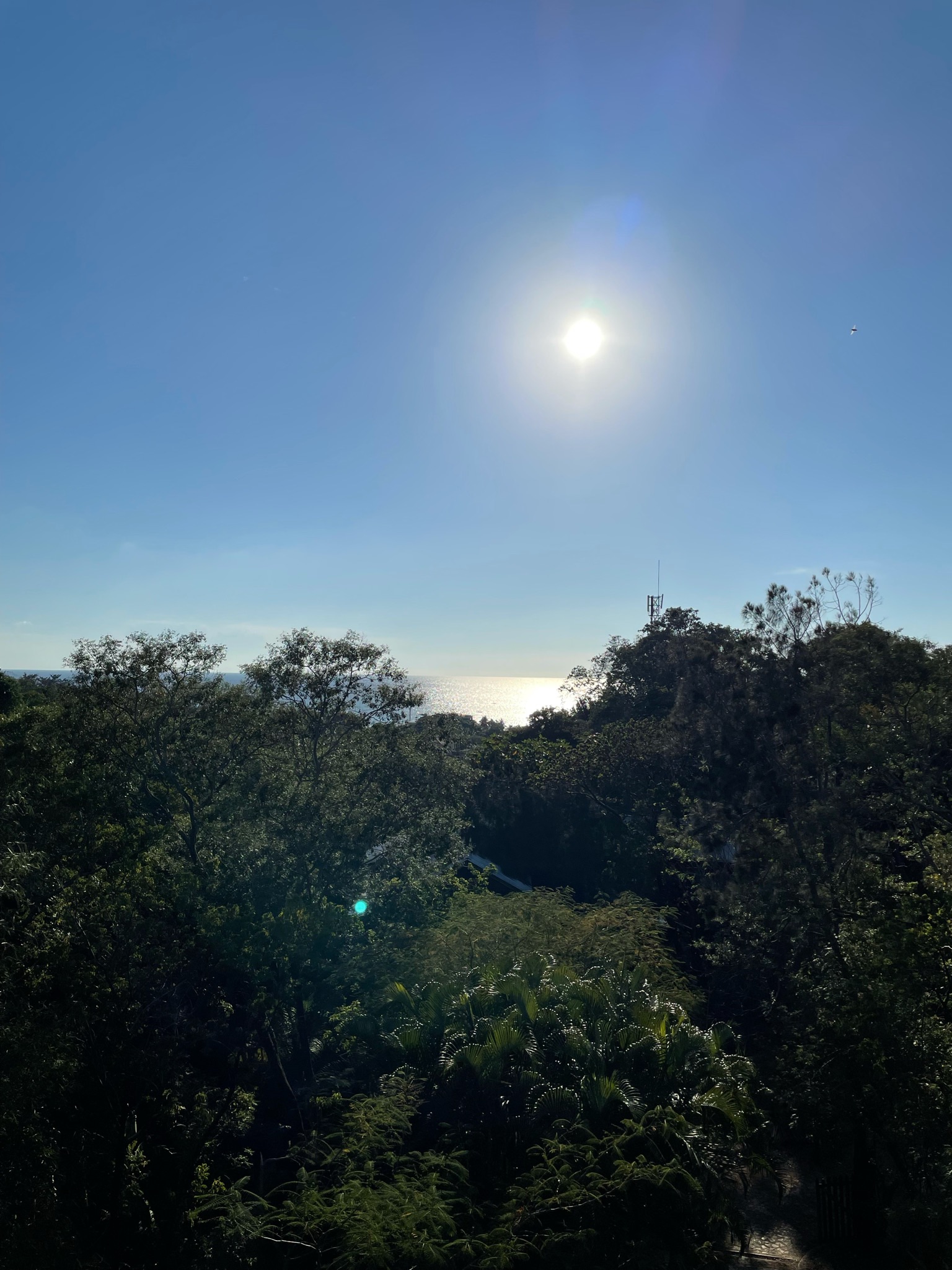
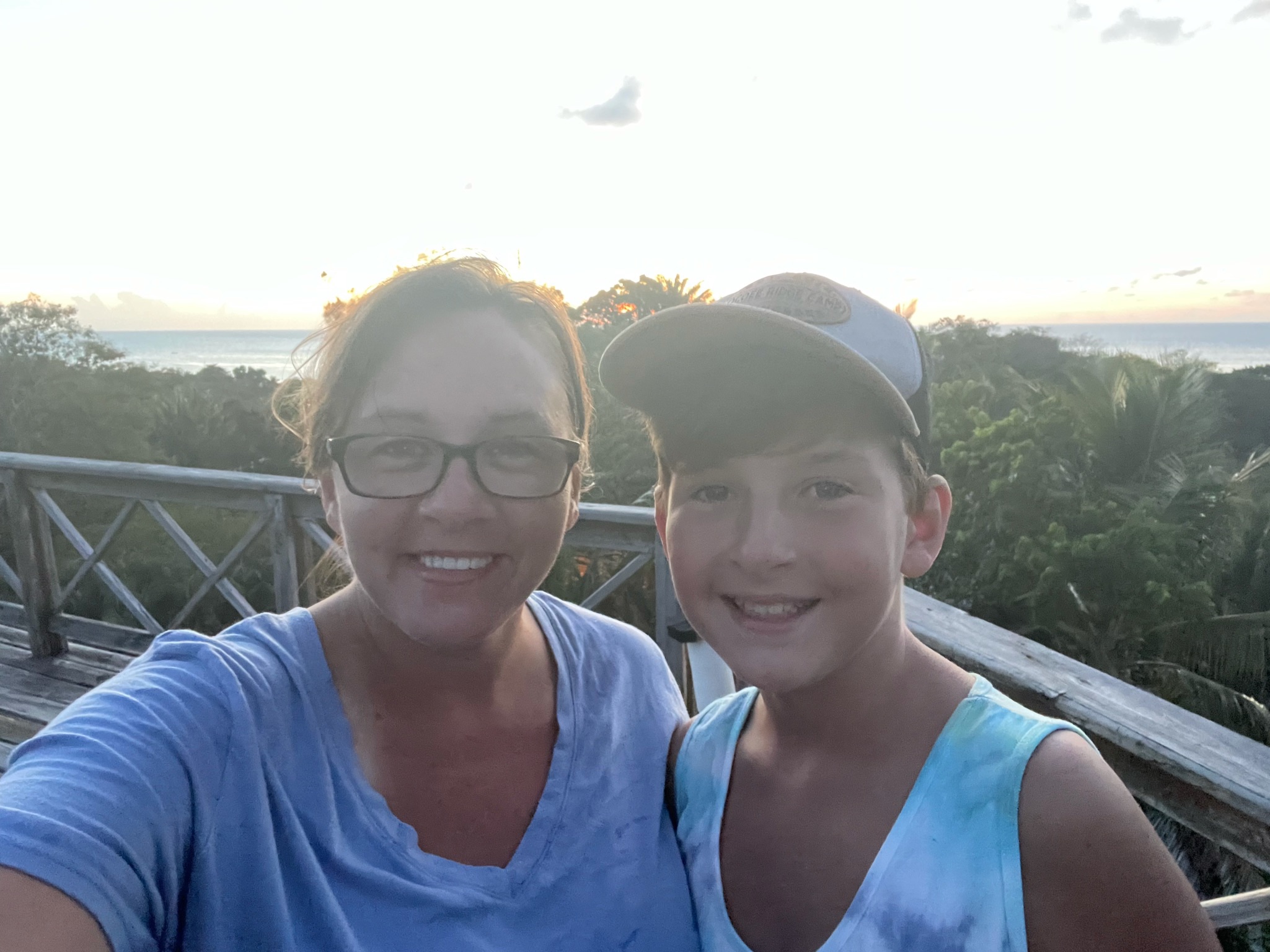
After a full week on Utila, we decided to take the ferry over to another island named Roatan. Roatan was described as the more touristy big brother to Utila. Roatan island was much bigger and with its large hotels, paved roads, and recognizable restaurants, was much more commercialized than Utila. We stayed in a beautiful bed and breakfast cabin atop a hill overlooking the West End area. Our room was on the third floor, accessed by a spiral staircase. We didn’t have air conditioning, but the constant breeze coming through the windows kept the room very comfortable. The view from the roof was gorgeous, and it was a perfect place to watch the sun set over the bay. At night, the roof provided a cool place to rest and enjoy the breeze and the stars.
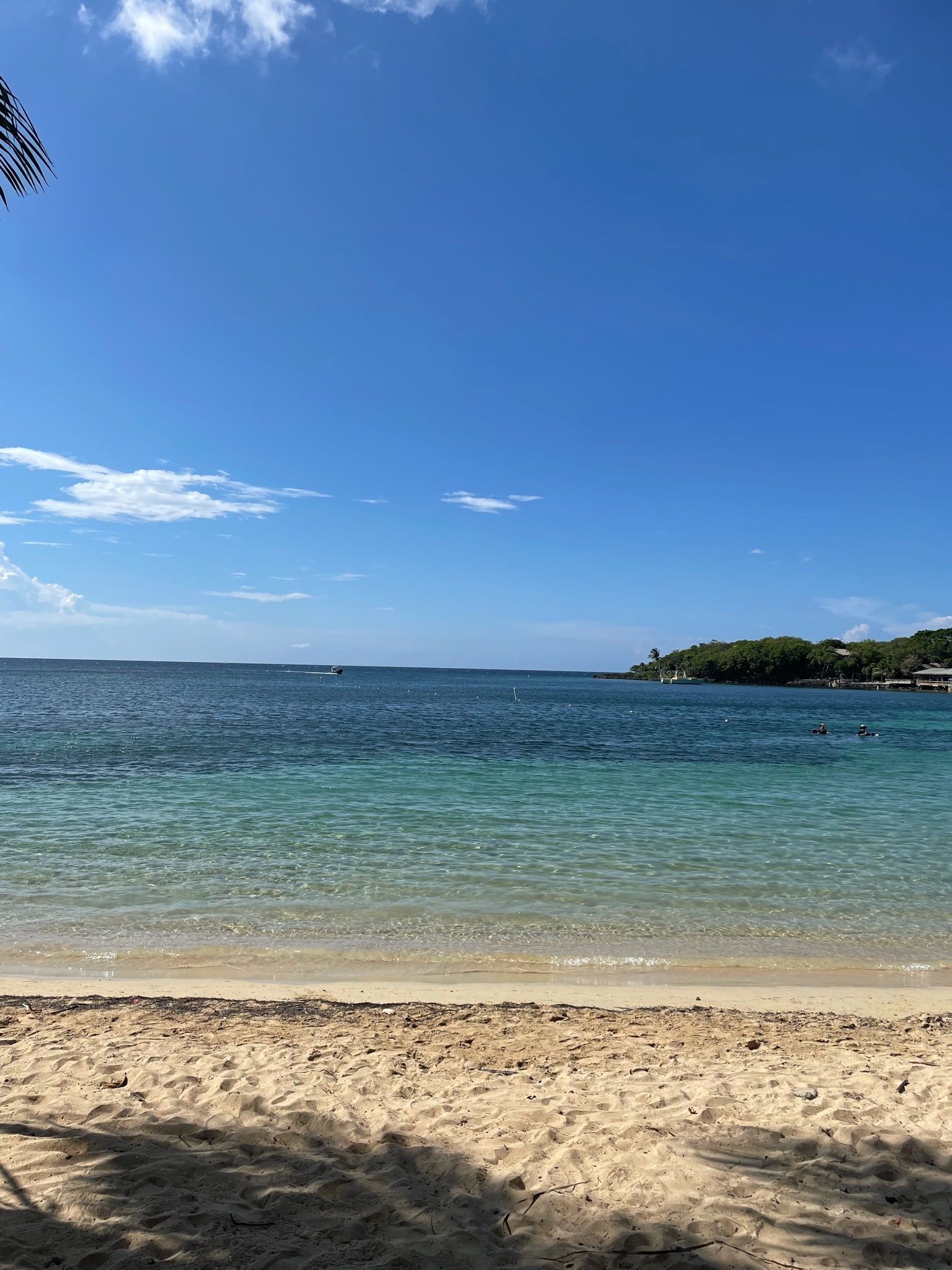

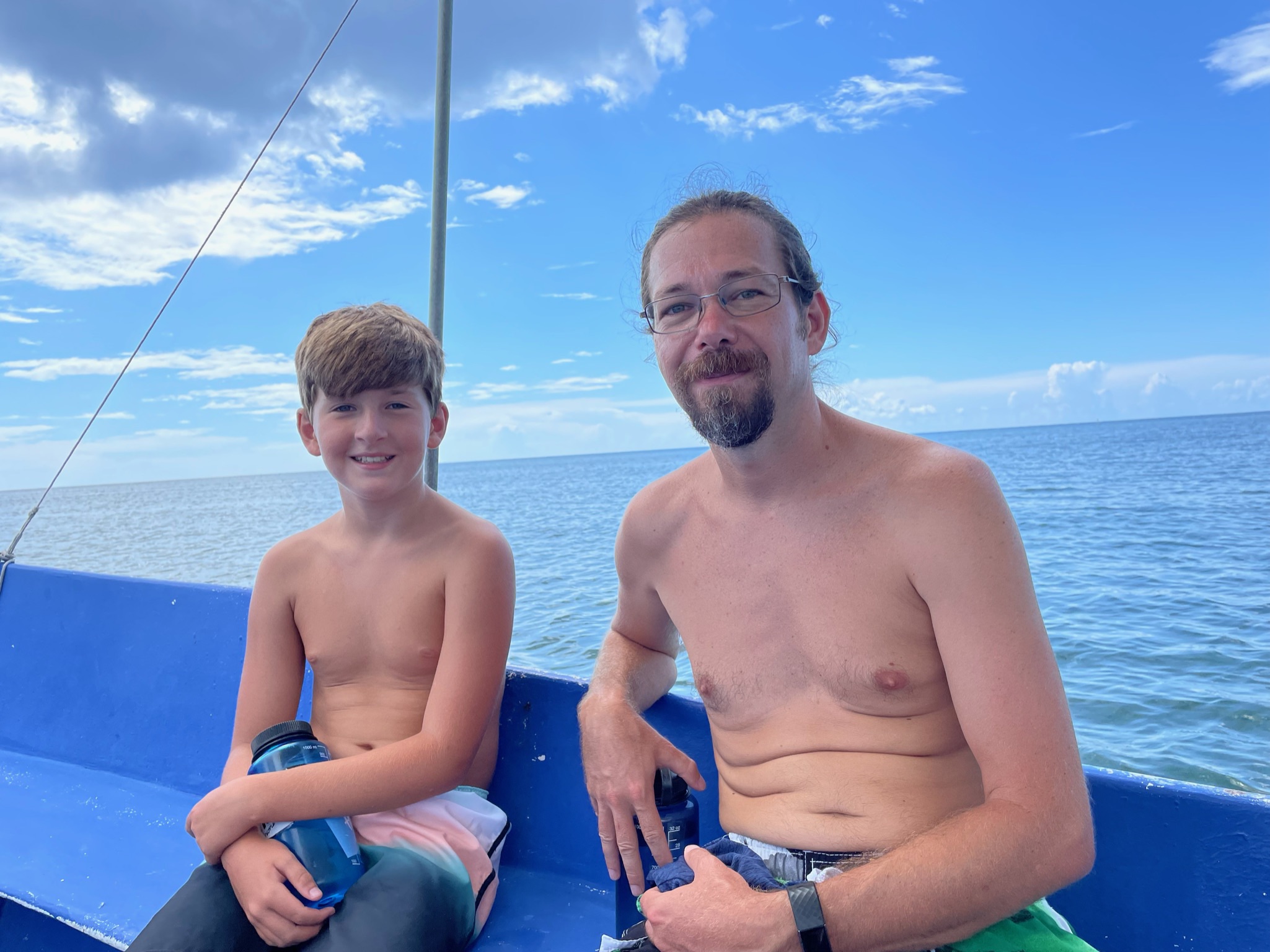
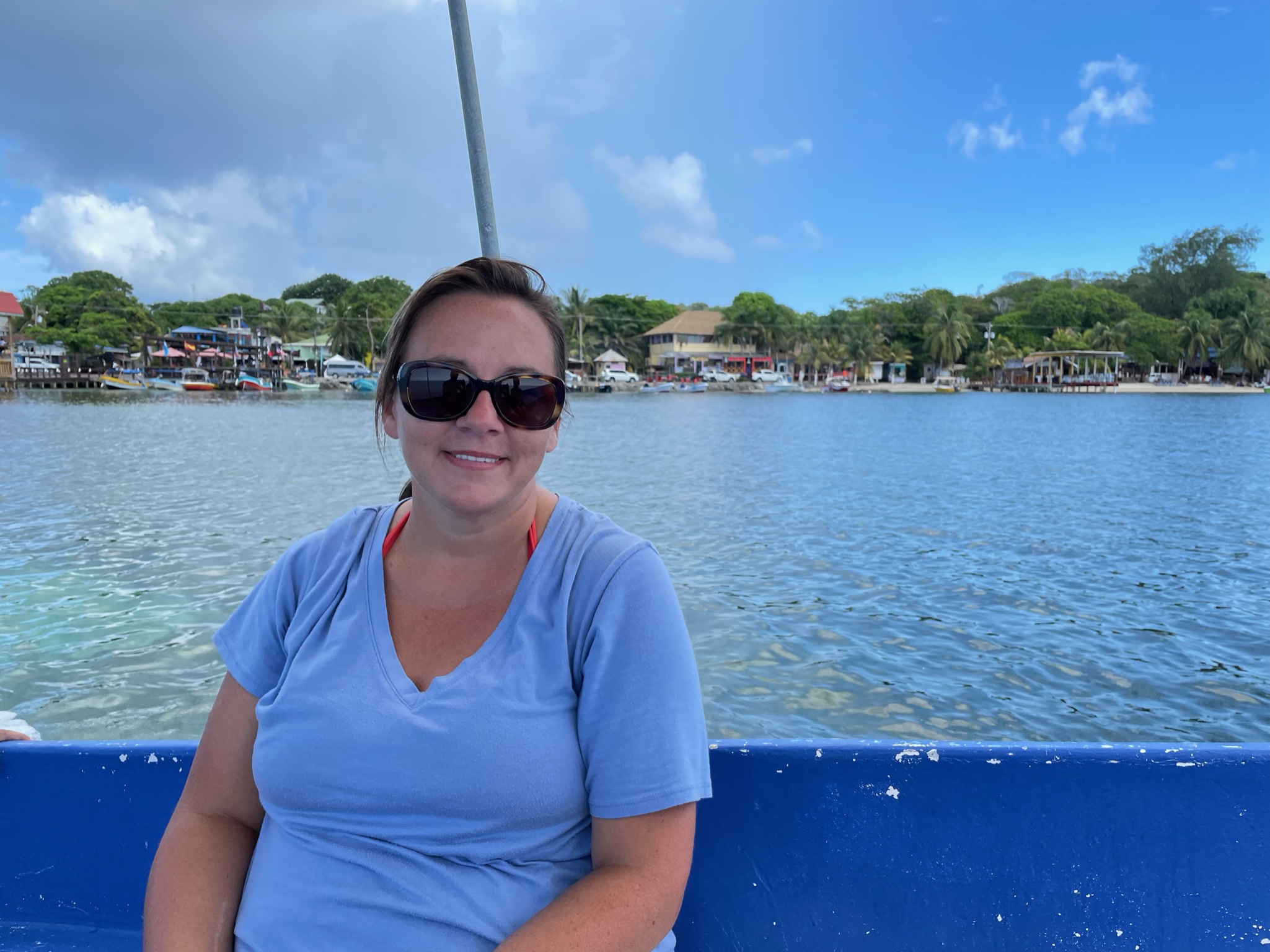
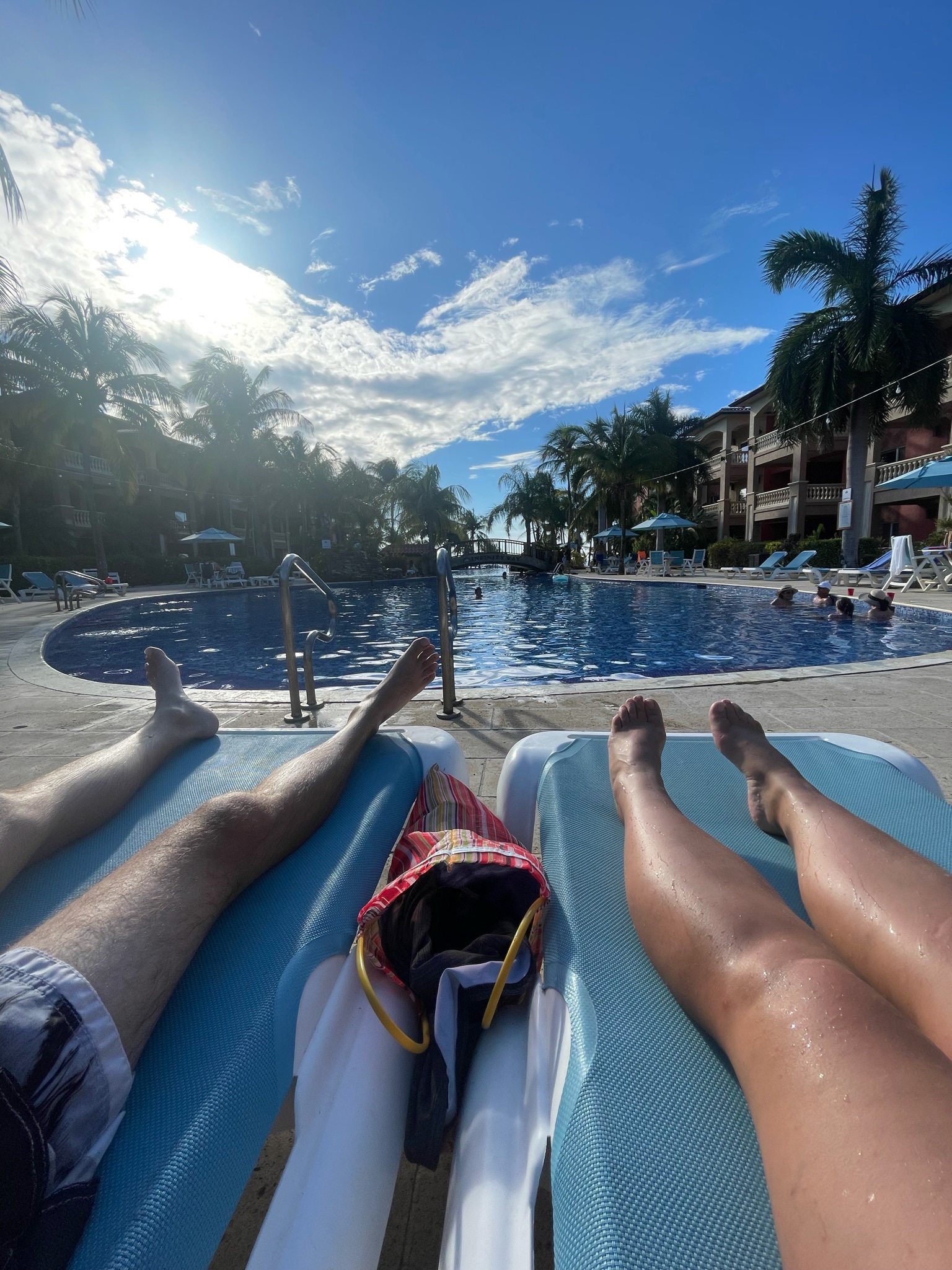
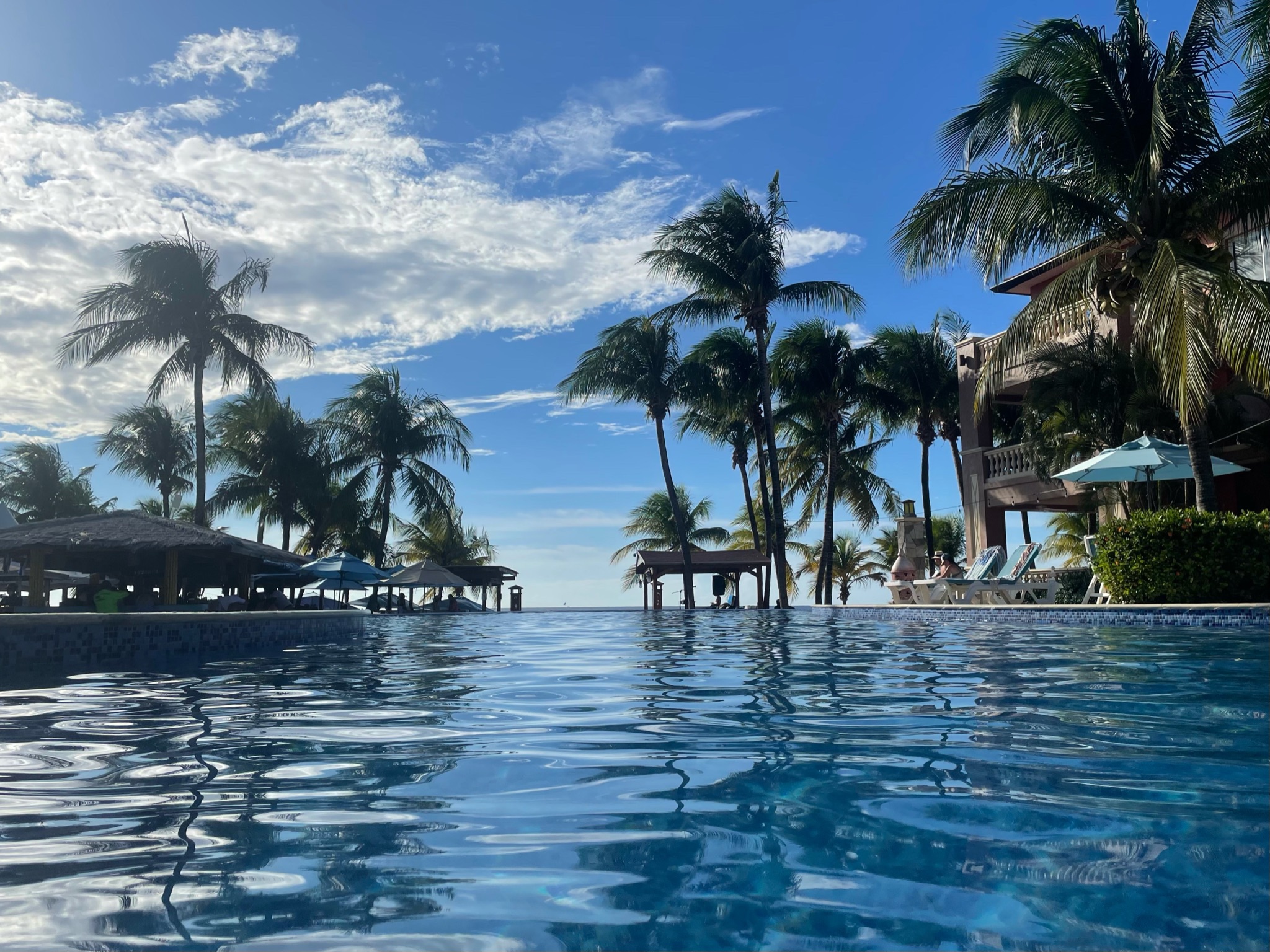
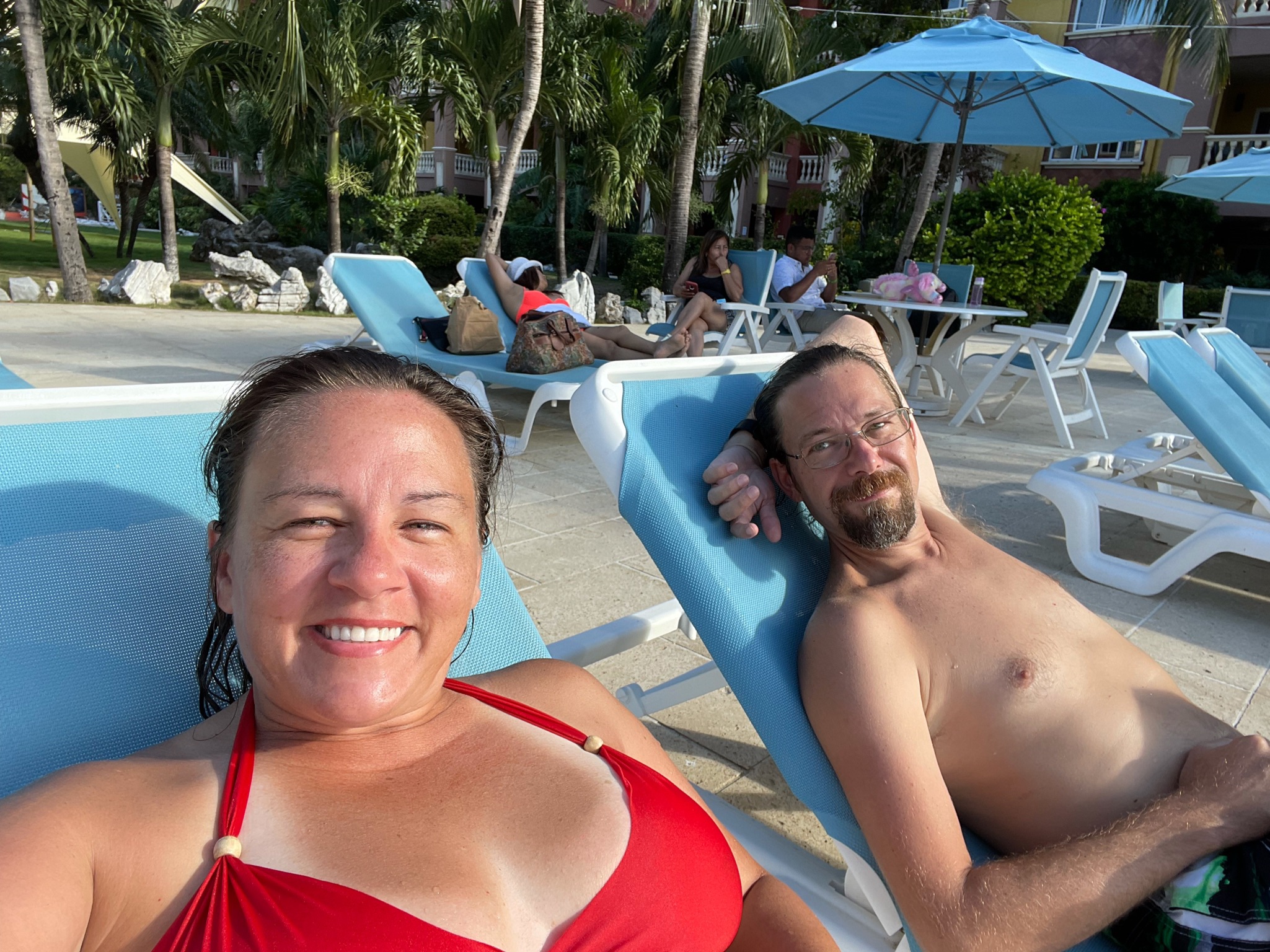
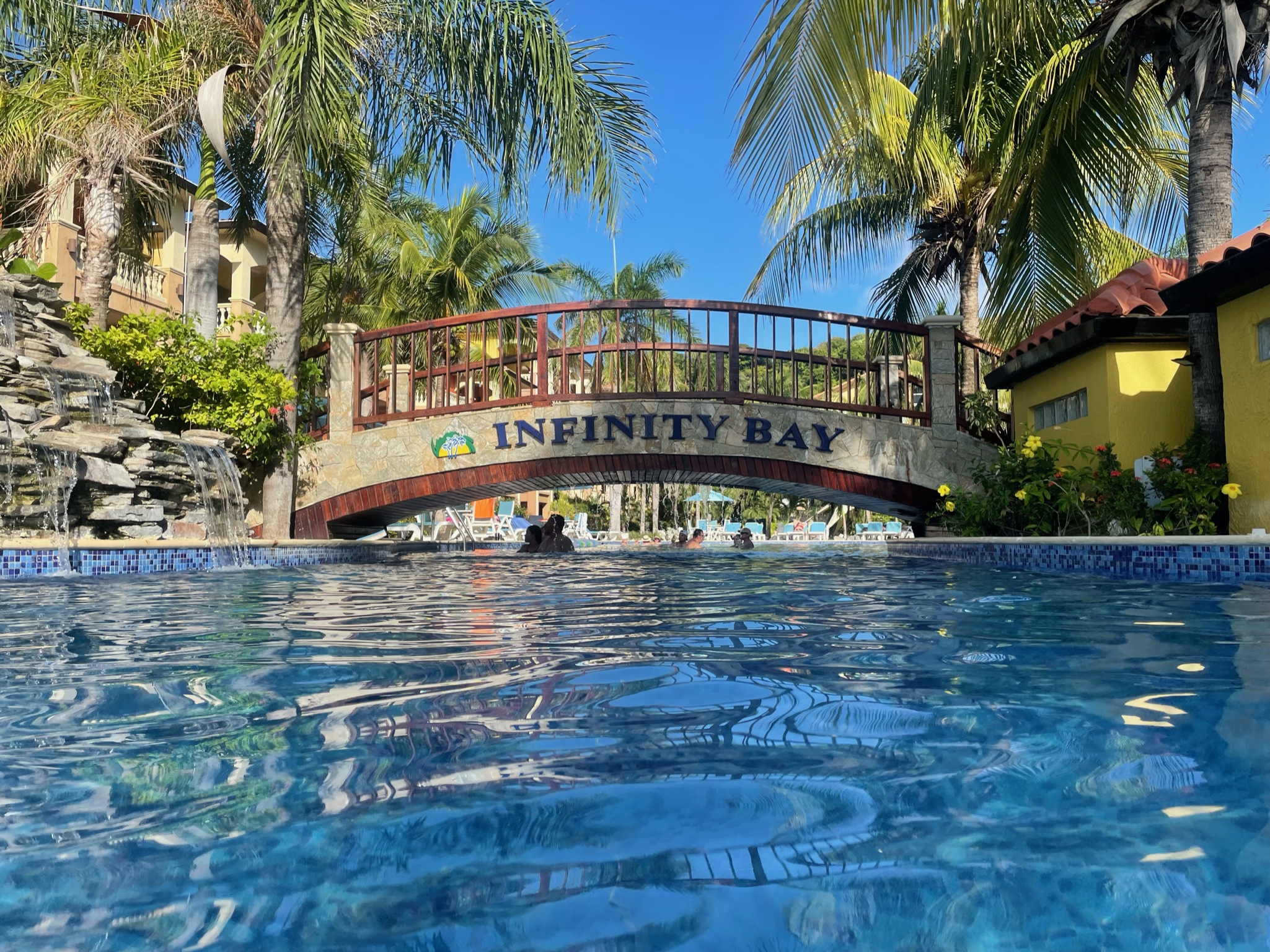
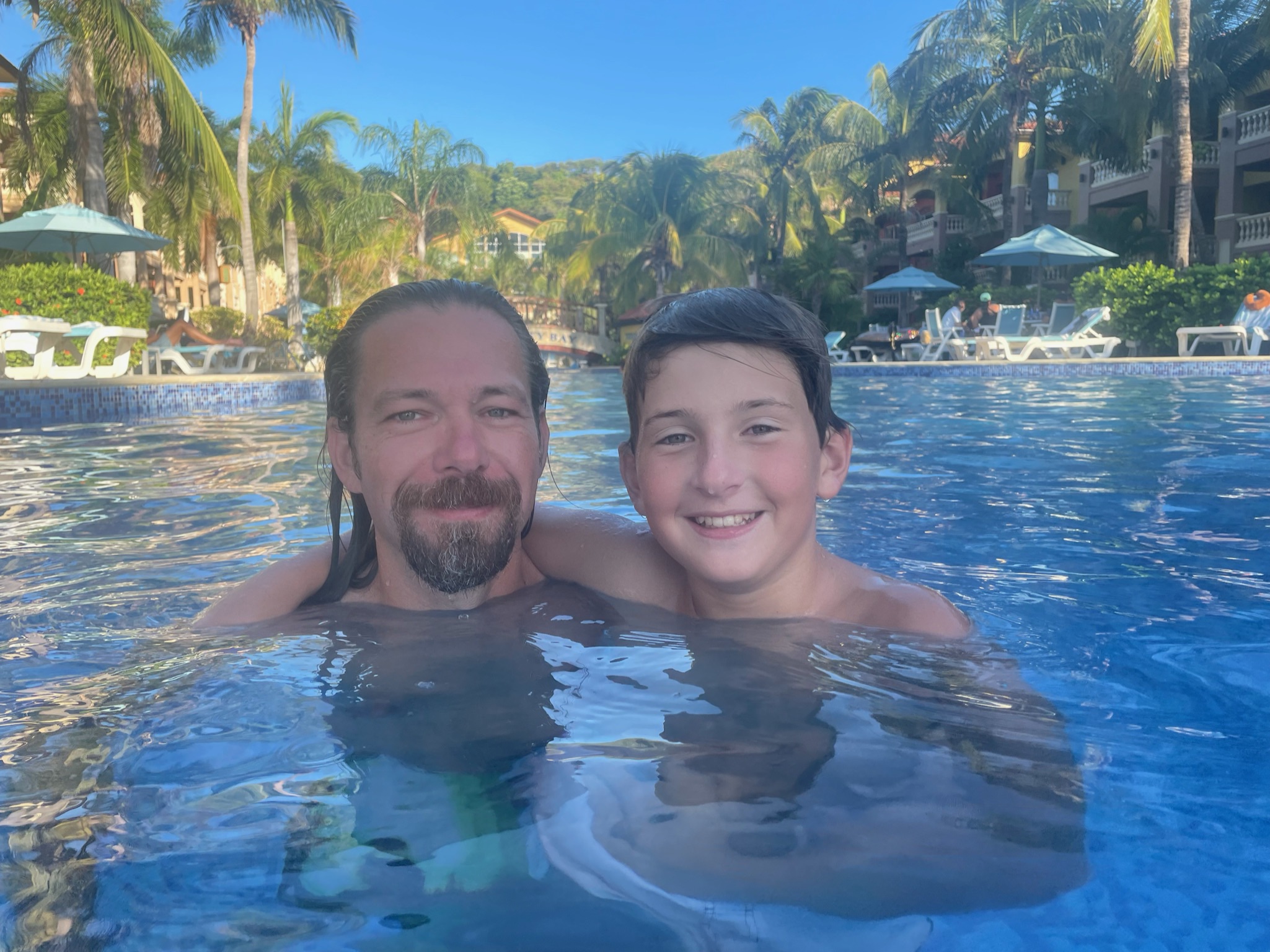
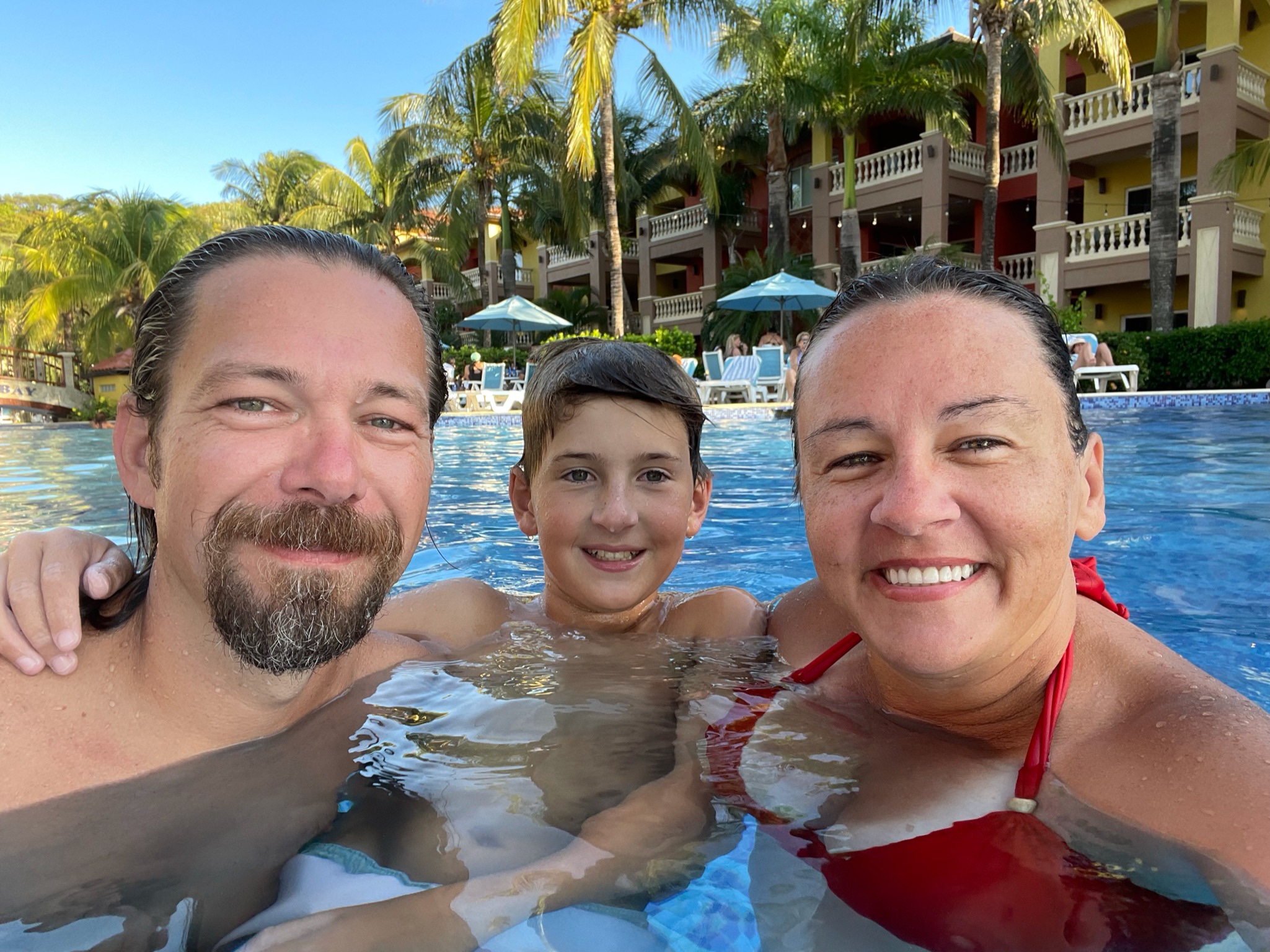
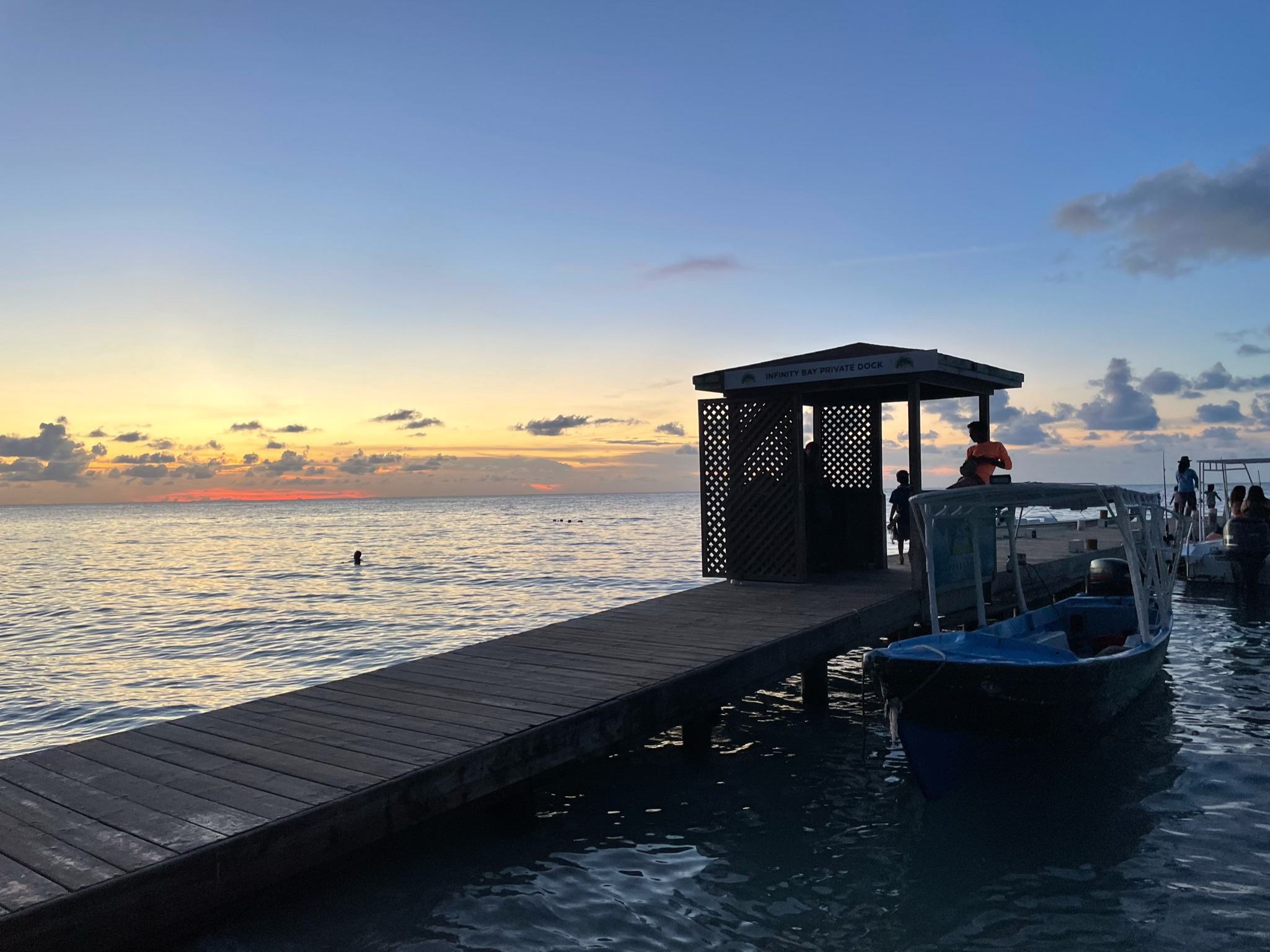
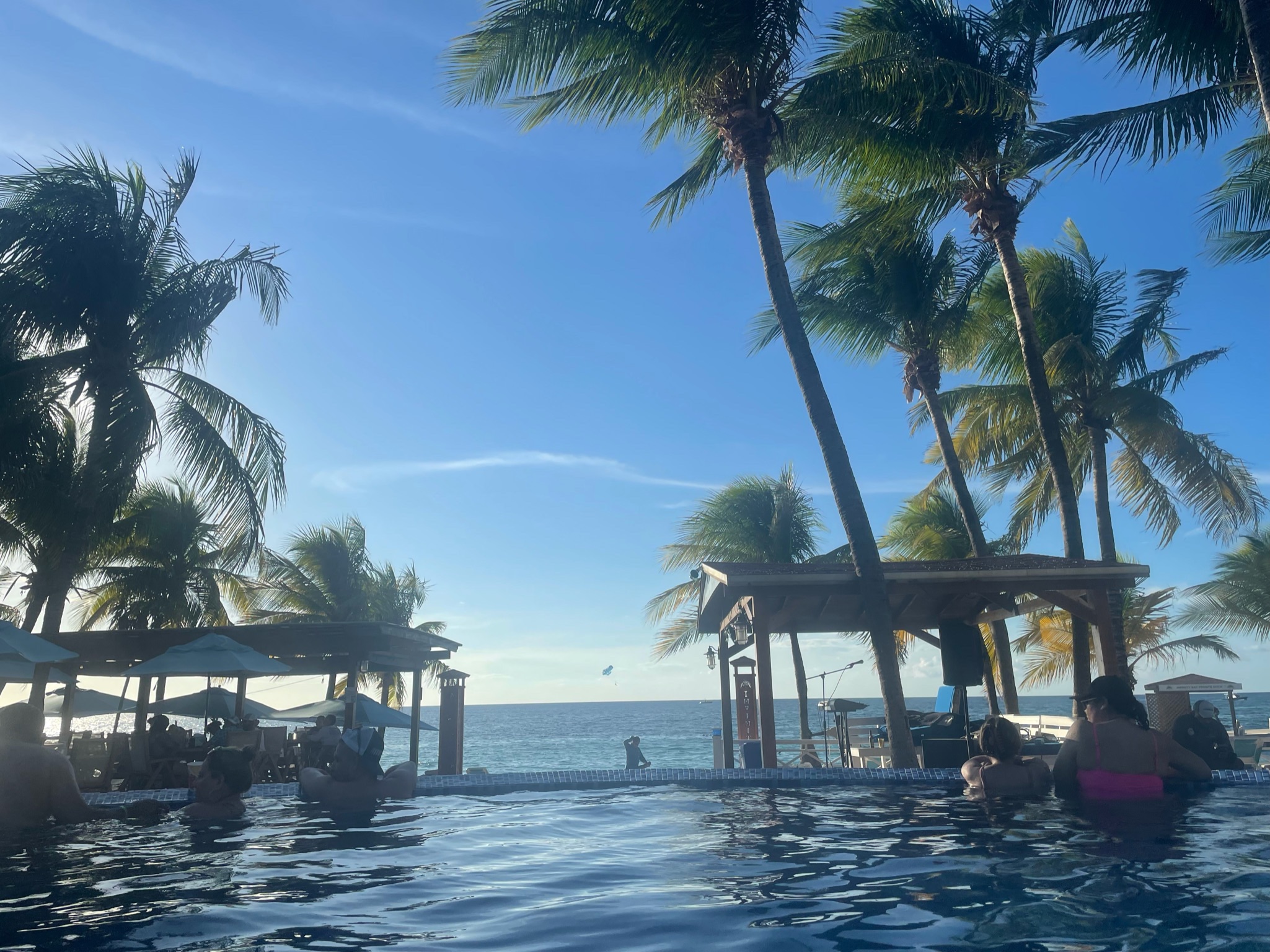
We took a water taxi from the West End area to the West Bay area. West End was a strip of restaurants, souvenir markets, and dive shops along the road that skirted the beach. West Bay was the main beach on the island, and it was absolutely filled with hotels, restaurants, and tour companies promising tourists the best the island could offer. The beach was gorgeous, but it was crowded and busy. After we ate our lunch, we took advice from one of the locals and sampled the pool at the nicest of the hotels. So admittedly, this may not have been a good parenting moment for us, but Brian, Henry, and I walked in from the beach like we owned the place, found a couple of lounge chairs, and relaxed the afternoon away in the cool clear waters of the biggest pool I’d ever been in. When it was time to go, we grabbed our bags and headed down to the hotel’s private dock to meet our water taxi driver and go back home.
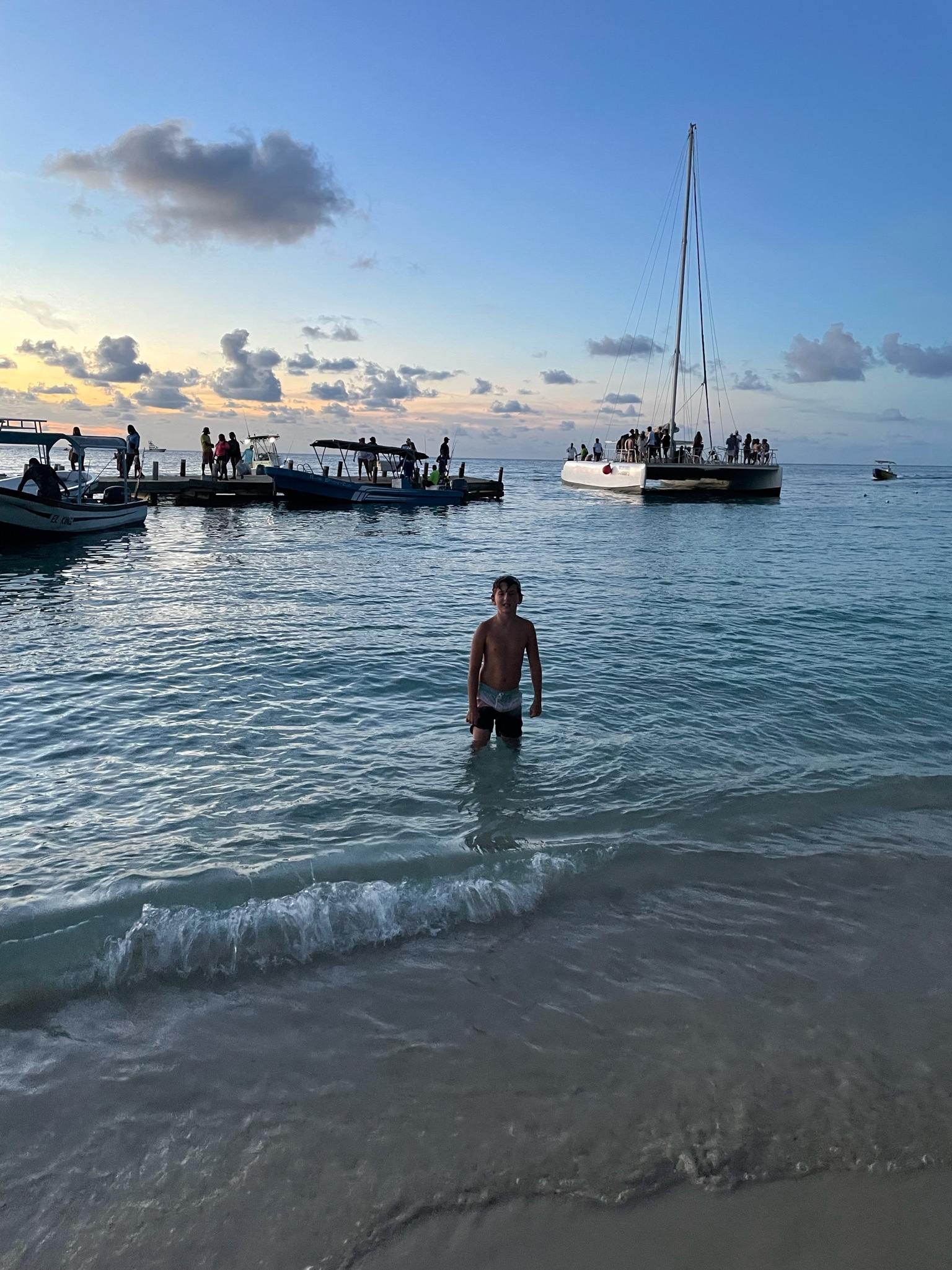
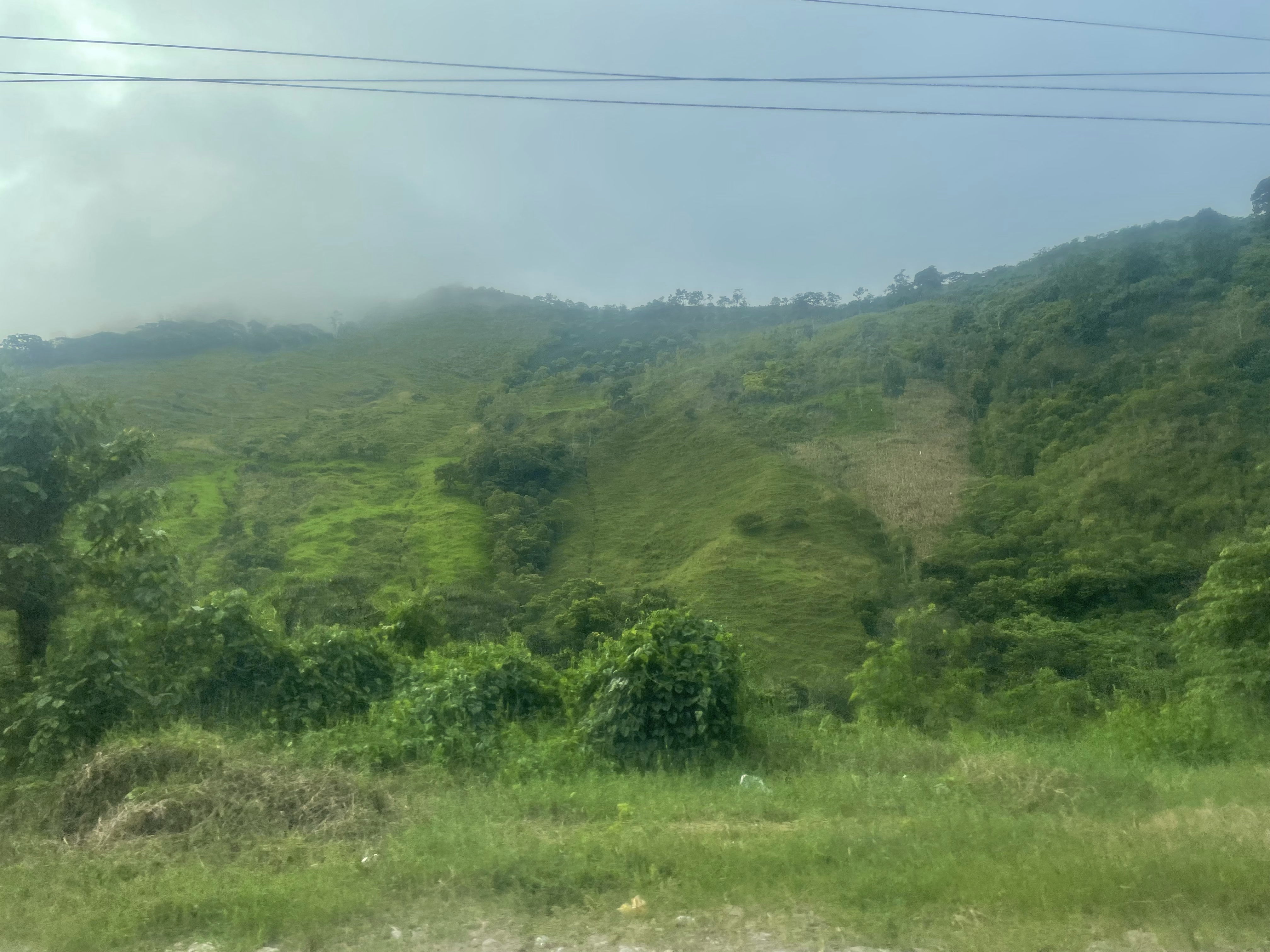
We knew it was time for us to move on, so we said adios to Honduras after Roatan. We didn’t know what to expect in Honduras, but lush green foliage rolling over the mountains and beautiful beaches with outstanding diving were both pleasant surprises for us. It was a great trip, full of ups and downs, and we will forever remember our time here fondly.
 Expedition Fresh Start