Three Weeks in Argentina

Fill your life with experiences, not things. Have stories to tell, not stuff to show.

– Unknown

Going into Argentina, we knew we’d have about 3 weeks to spend before we needed to be in Buenos Aires to begin our trip to Antarctica. We had done our research, and there were four areas/regions that stood out as places we really wanted to go. So we did the best we could to work out an itinerary that encompassed all of them. Argentina is very large and our destinations were quite far apart. The Parque Nacional Iguazu Falls is a very large park and is home to the beautiful Iguazu waterfalls on the Brazil and Argentina border. It is in the North East section of the country. Parque Nacional Los Glaciares is a mountainous region in the Patagonia region which lies to the south. San Carlos de Bariloche is a cute little village in the mountains, and it borders the glacial fed lake in the Parque Nacional Nahuel Huapi. This city is on the Western side of the country And Buenos Aires, on the Eastern side of the country is of course, one of the biggest cities of the world, so we wanted to spend a little time there.

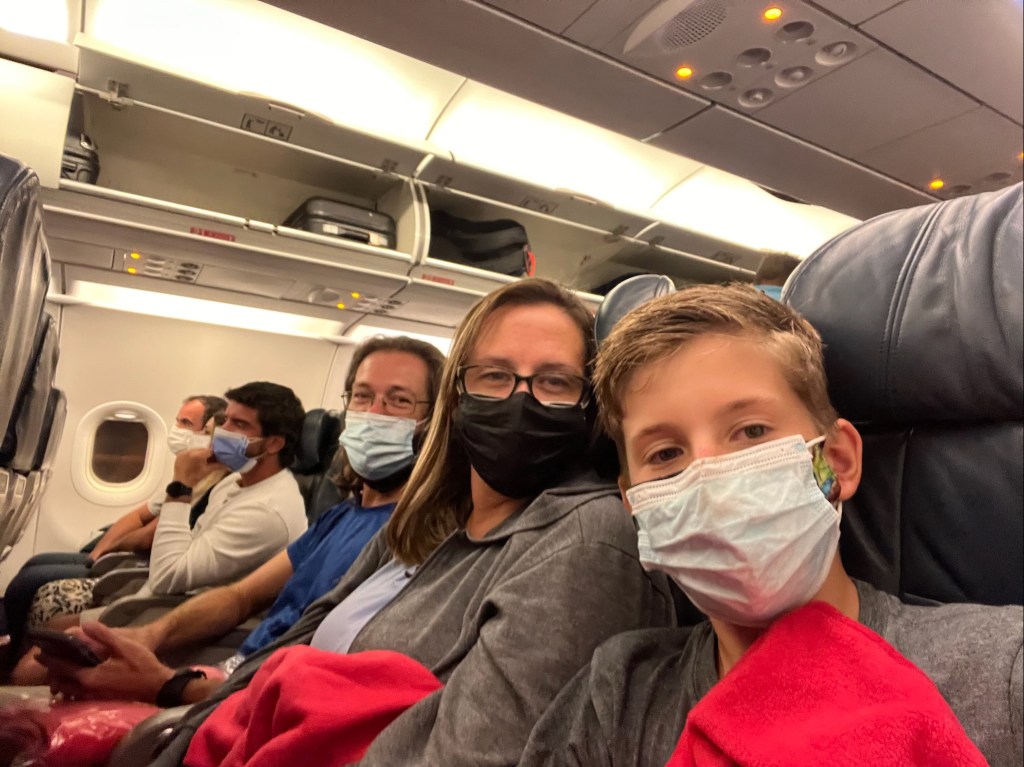
We chose to go to Cordoba first simply on the basis of cost. Transportation within Argentina was very reasonable, but getting there from Peru proved to be rather expensive. Flying to Cordoba was the least expensive, reasonable option we had, so that’s where we went. We had no idea what was waiting for us there, but we knew that if we could just get into Argentina, we could figure the rest out from there. So after flying through the night, we landed safely in Cordoba in the wee hours of a Thursday morning.

Cordoba is actually Argentina’s second largest city. Aside from picking a hotel for the one night we were planning to be there, we actually didn’t know anything about the area. We’d already booked our flight to San Carlos de Bariloche for the next day, so we knew we wouldn’t be there long. In hindsight, the town was really nice, the weather was great, and I wish we could have stayed a little longer.

The town felt more like the United States than anywhere else we’d been on this trip. After traveling for months through Central and South America, this was the first place we’d been where the people were quite diverse. As soon as we landed in Mexico, we began standing out because of the color of our hair and skin. As we traveled further south, those things continued to set us apart, but the people got shorter and smaller; all of a sudden, I began to feel tall as we walked down the street. But in Argentina, we saw many people of every color, shape, and size. Everyone still spoke Spanish, even though they used a modified vocabulary specific to Argentina, but the look of the crowds became more varied. Aside from the language barrier, it felt like we were walking down the street in any of the bigger towns in the US.

Our flight arrived around 4 am, and our AirBnb wouldn’t be available for check in until much later in the day. Our host was kind enough to allow us to drop our bags while the cleaning service was doing their thing at 10:00, but we wouldn’t be able to check in until early afternoon when they were done. Since our bags were heavy, and we had no where to go, we hung out in the airport lobby for several long hours. The airport seemed small, but it was very quiet, and we were allowed to lounge there by ourselves for most of the morning.
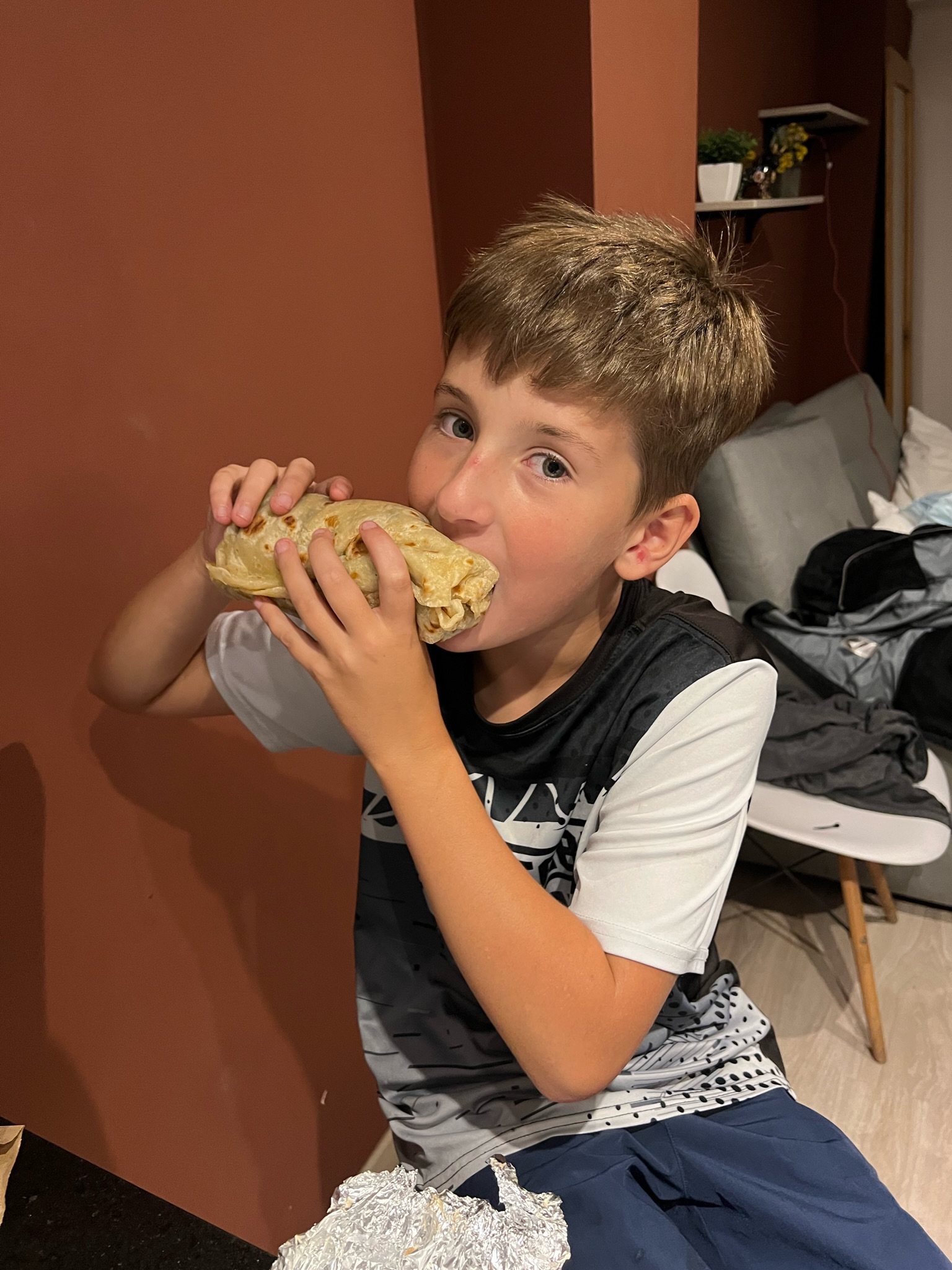
At around 9:30, after withdrawing some pesos from the ATM, we took our taxi to the apartment. We arrived, and Gabriela, the lady who was there cleaning let us in. The apartment was on the third floor, and she taught us how to use the manual elevator instead of taking the stairs. We all giggled as the three of us crammed into the tiny closet elevator, closed the gate, and slowly inched up to our room. Our place was nice, but of course, we were not planning to stay here long; we’d really only be here long enough to get a hot shower, a bite to eat, and a few hours of rest. We walked around town near our place to find some food, and we were pleasantly surprised to find we’d left the tortillas, arepas, and other flat breads behind in lieu of gloriously fluffy and sweet medialunas (lightly glazed croissants). The next day, we ate breakfast at a bakery across the street from our apartment, and then we caught our taxi back to the airport. It was time to head towards our first intended destination.

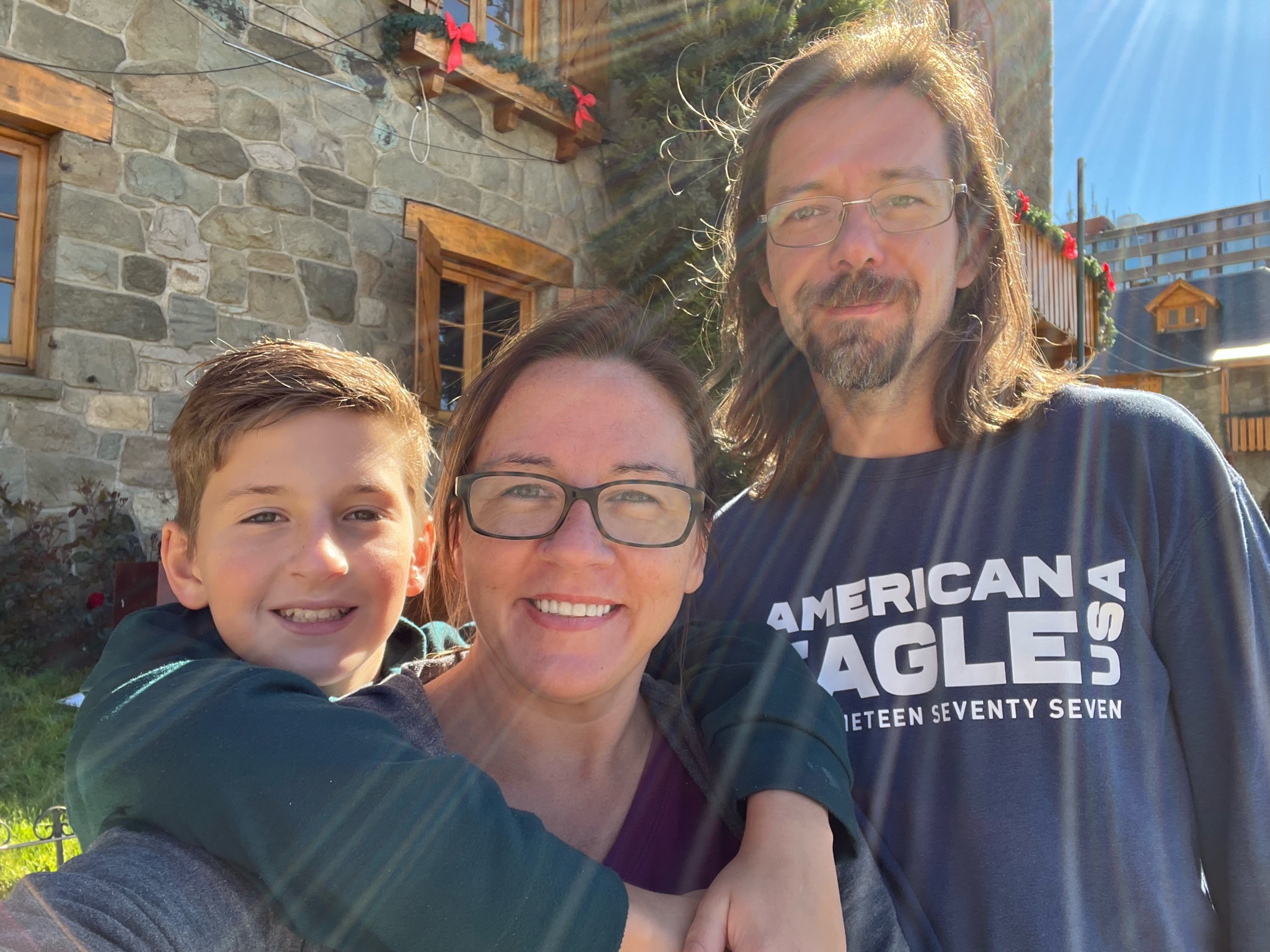
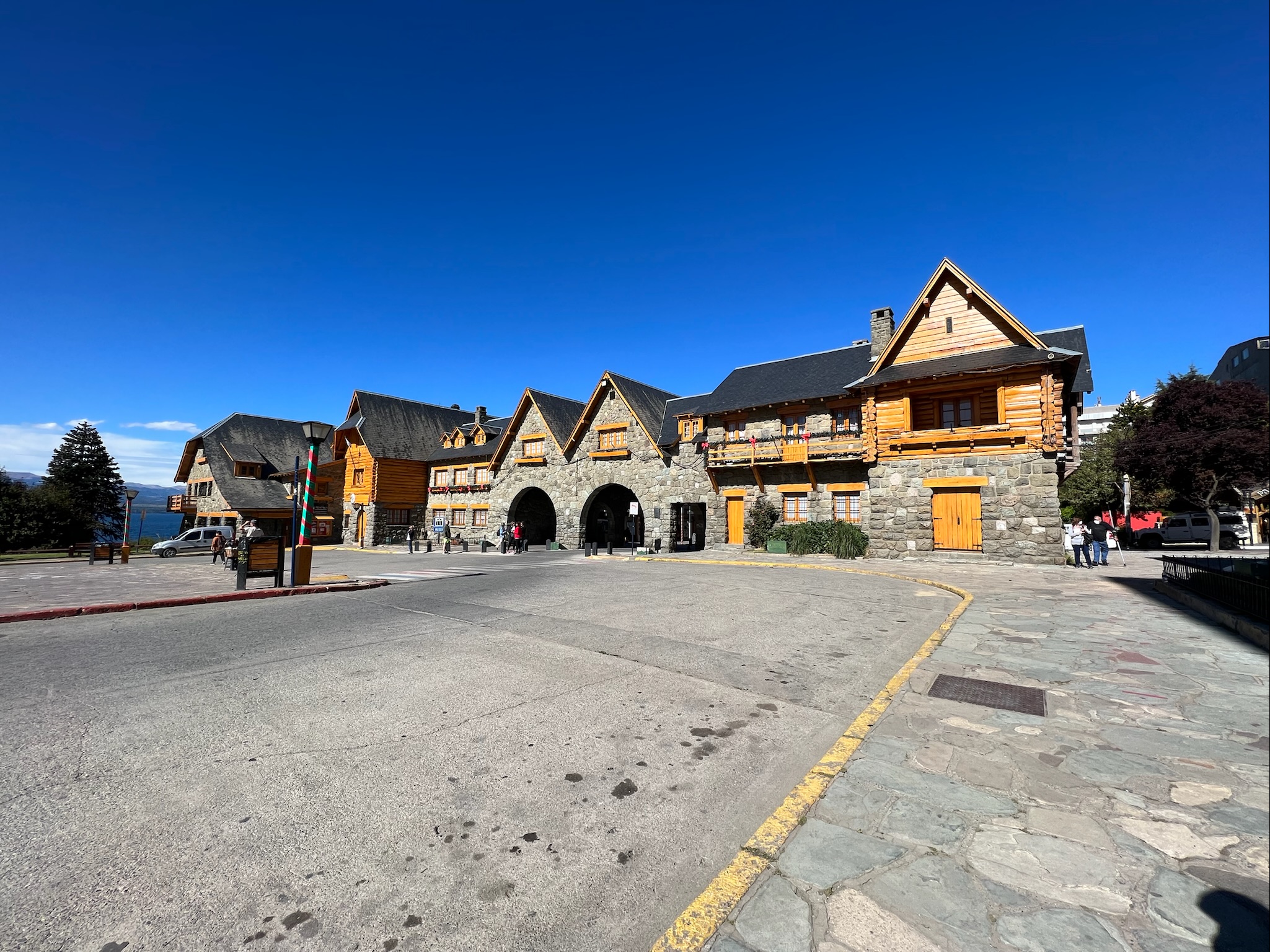
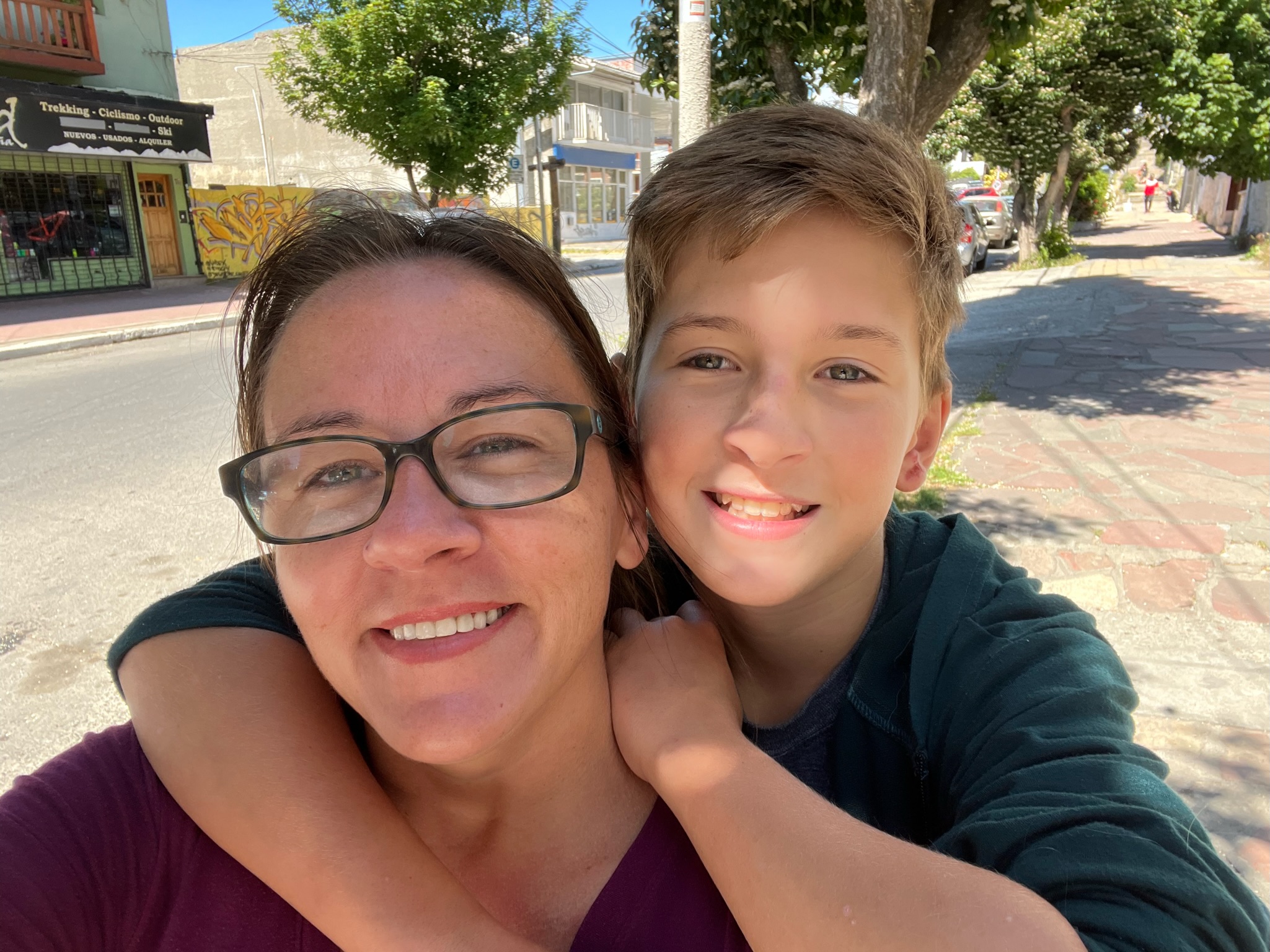
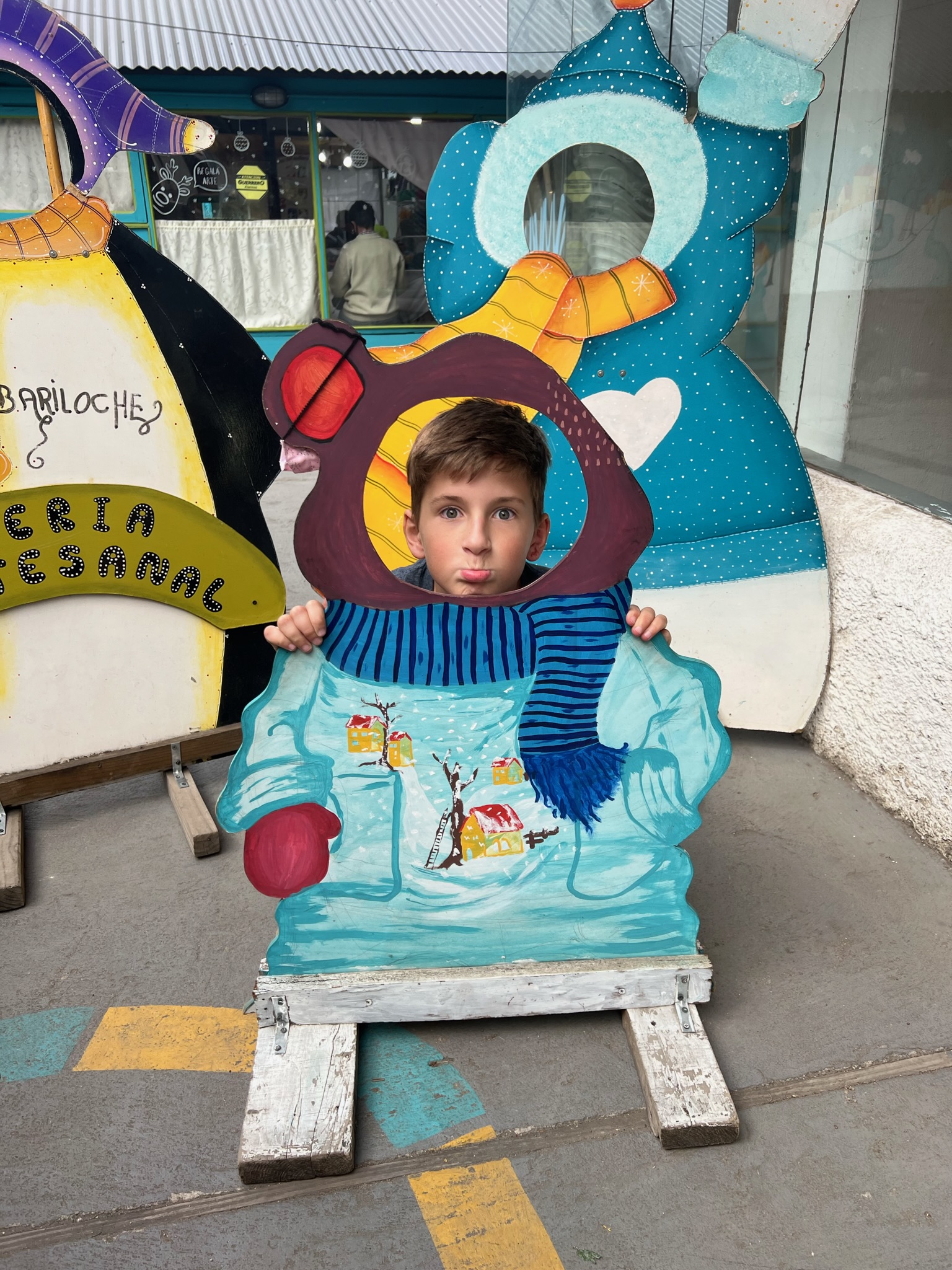
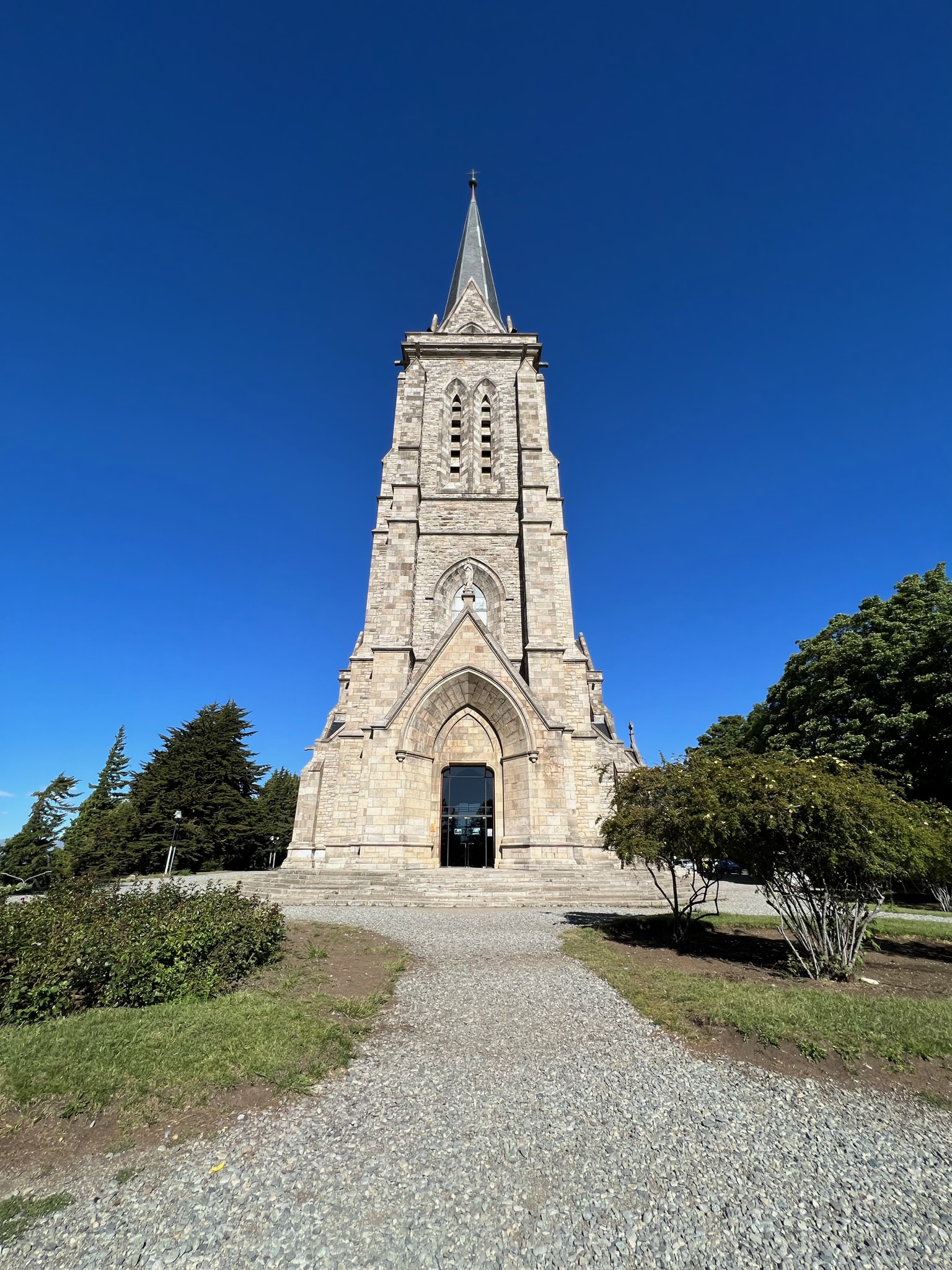
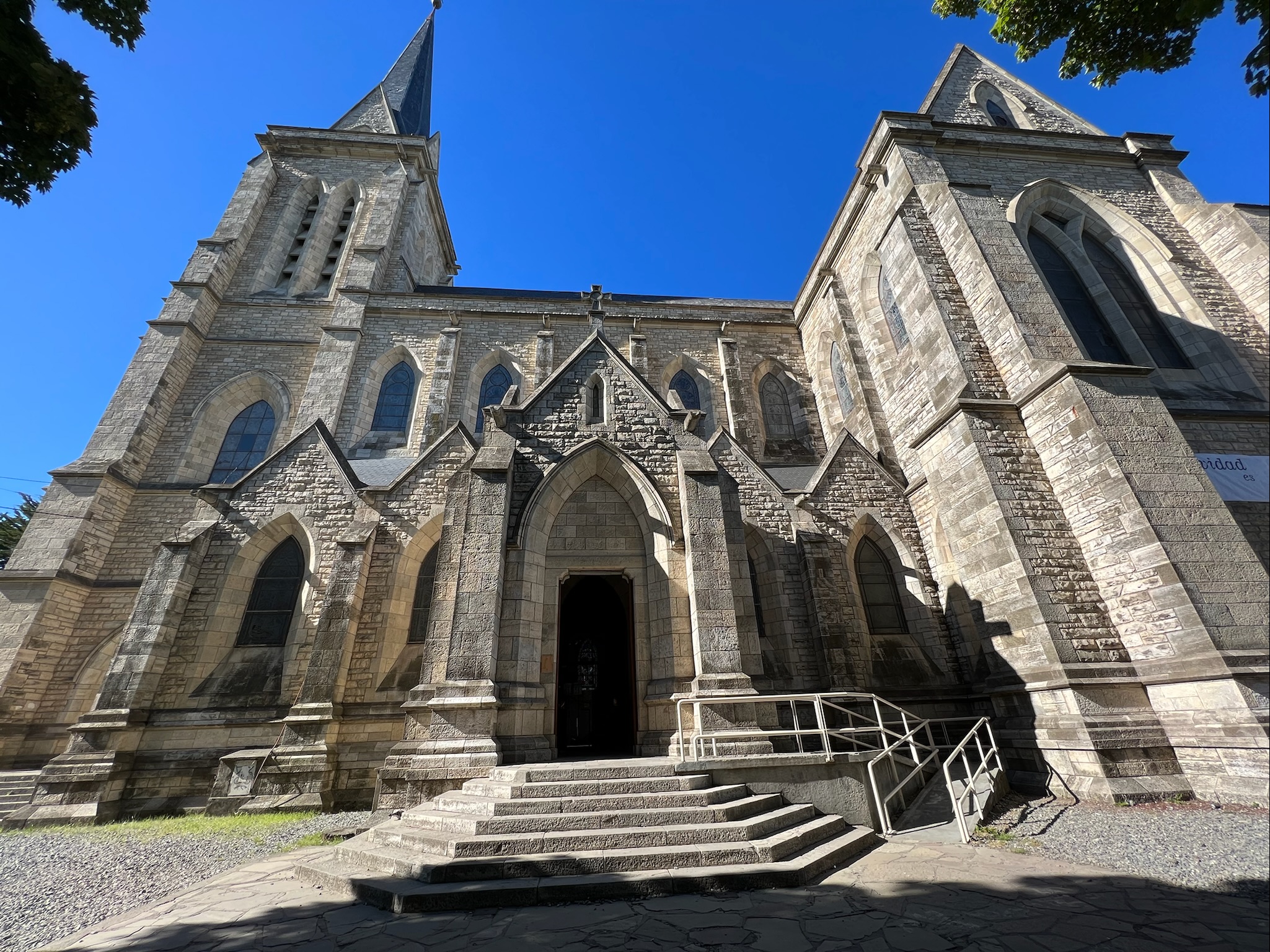
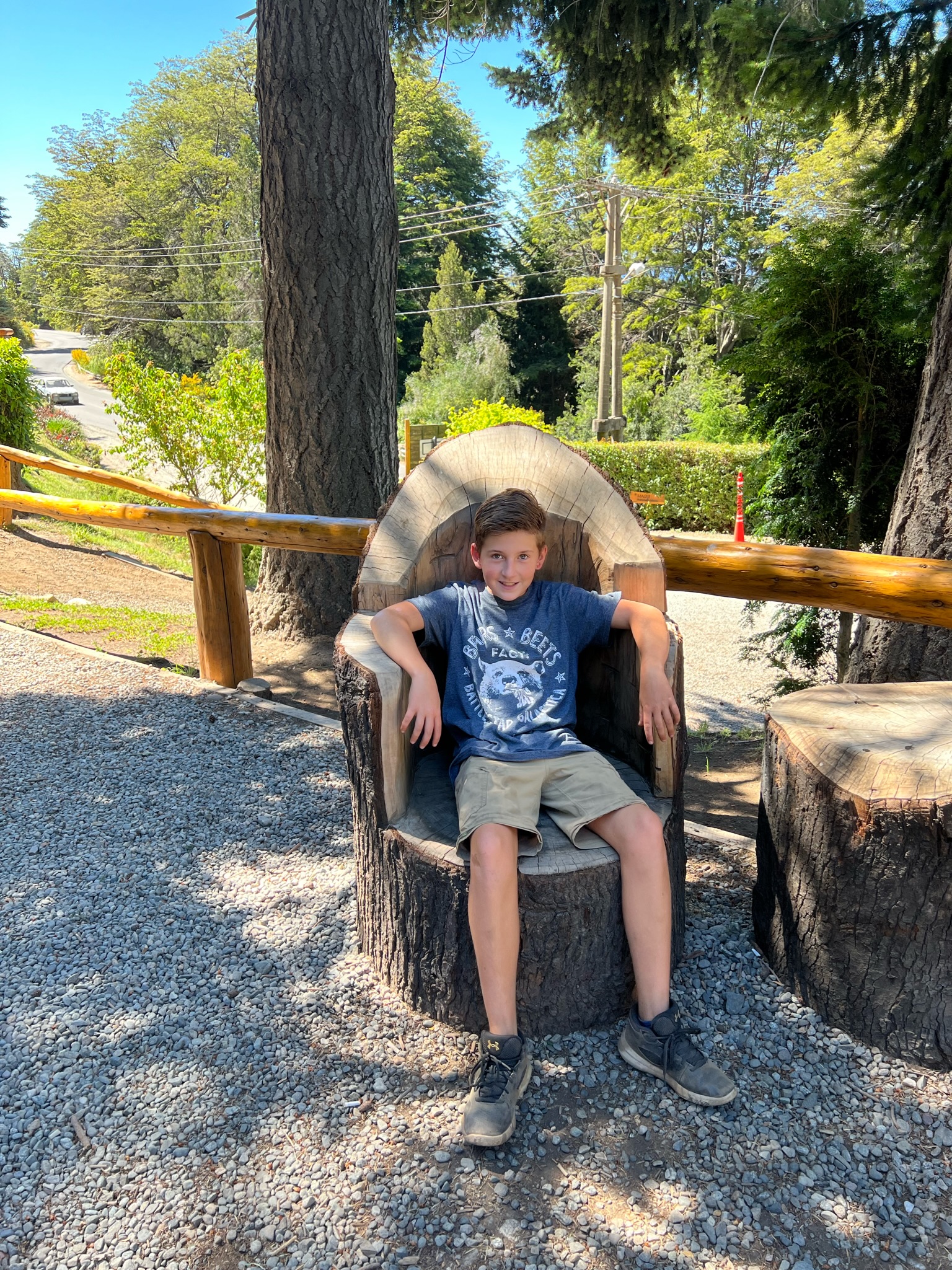
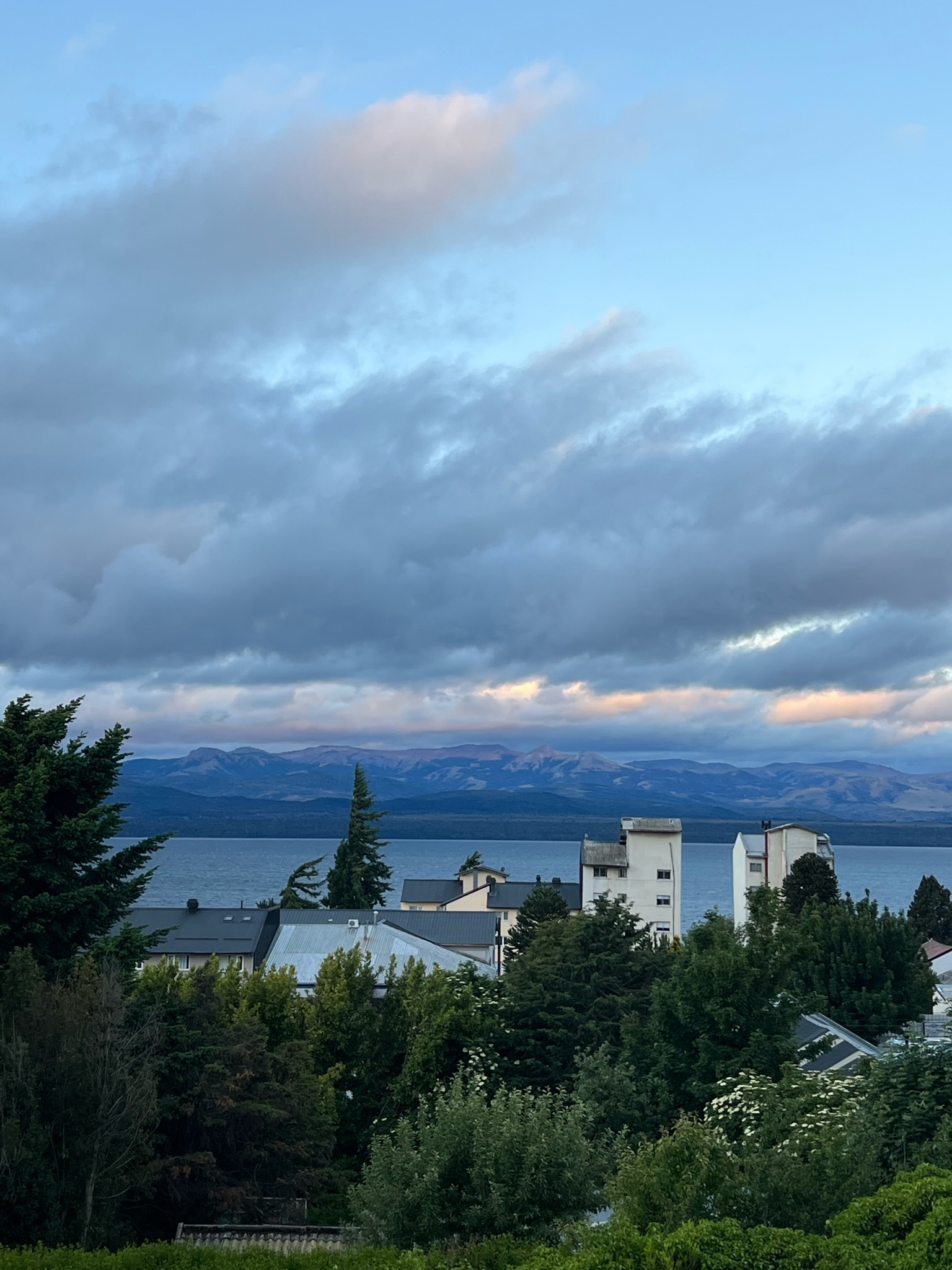
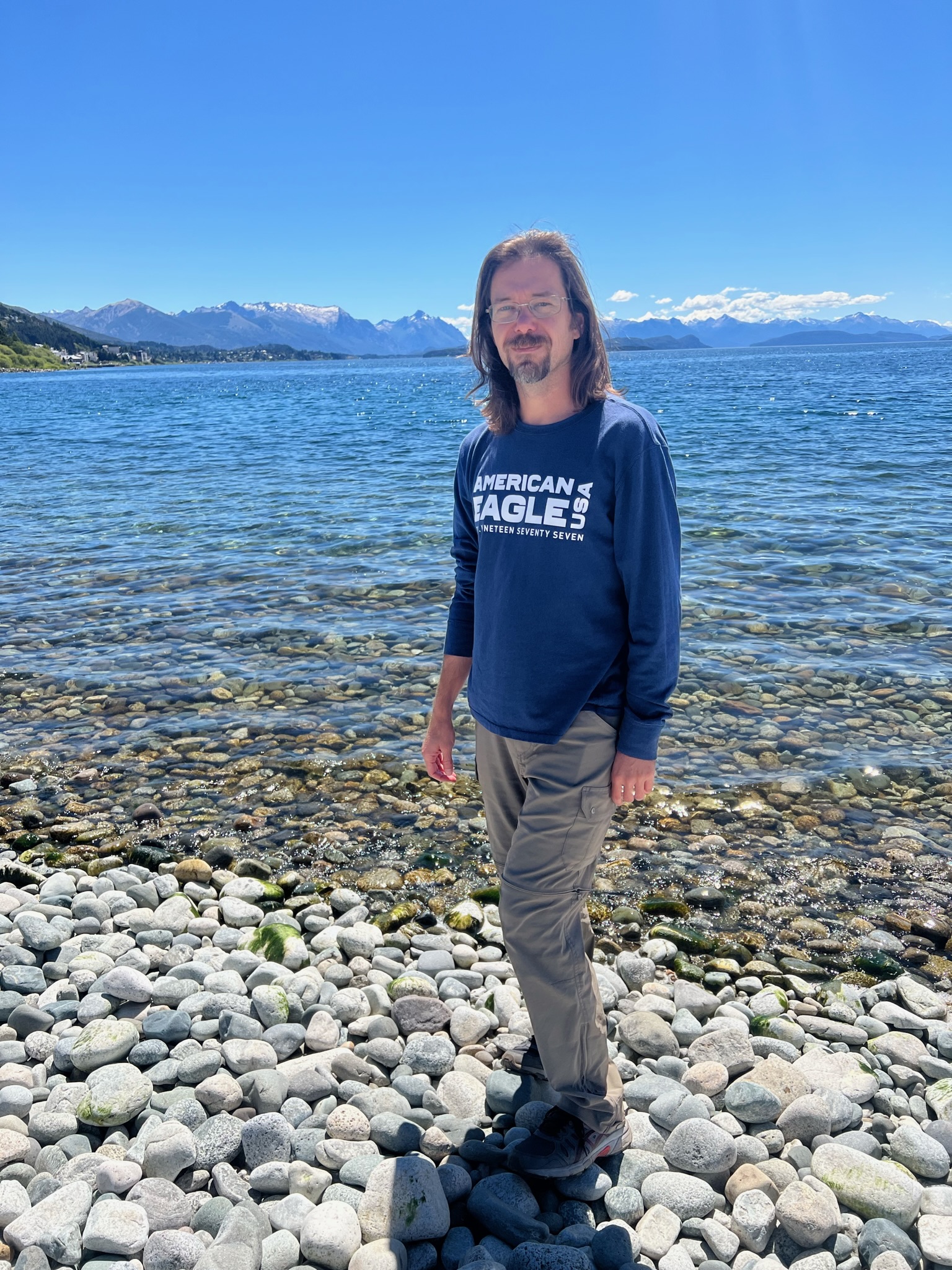
San Carlos de Bariloche is a beautiful little lakeside town nestled into the foot of the Andes Mountains. It reminded us a lot of Gatlinburg, Tennessee. Our hostel sat in a residential part of town. About 5 blocks down the road though, the residential buildings morphed into the tourist-centric stores lining both sides of the street selling everything from fine chocolates to ski wear. There were hundreds of stores and restaurants representing many different cultures and regions of the world. Most of the buildings were built and decorated in a Bavarian/Swiss/Mountain style, and that made it easy to forget that you were walking in the southern portion of South America. And did I mention, that this town sat on the shore of the most beautiful blue lake I’ve ever seen?
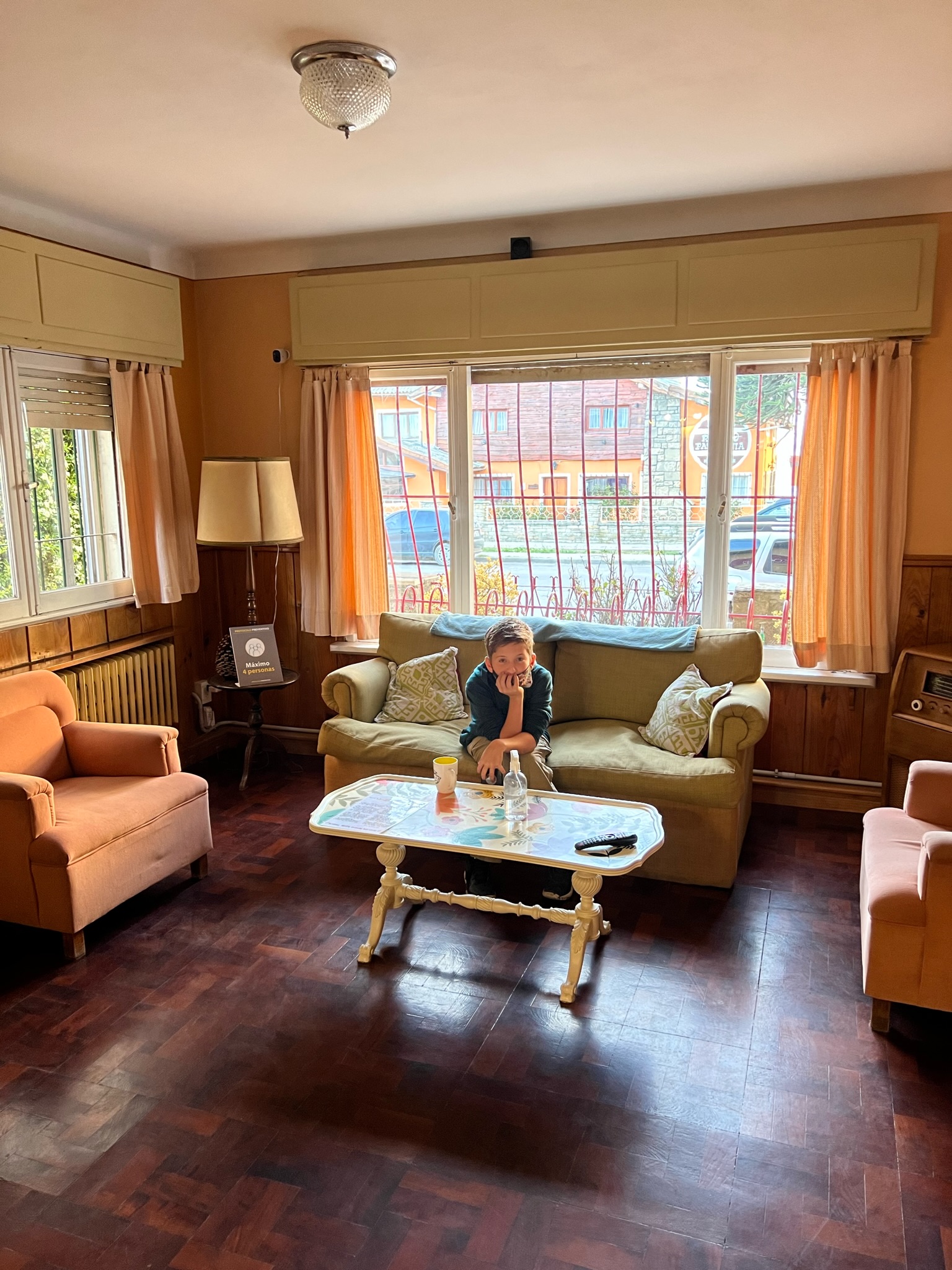
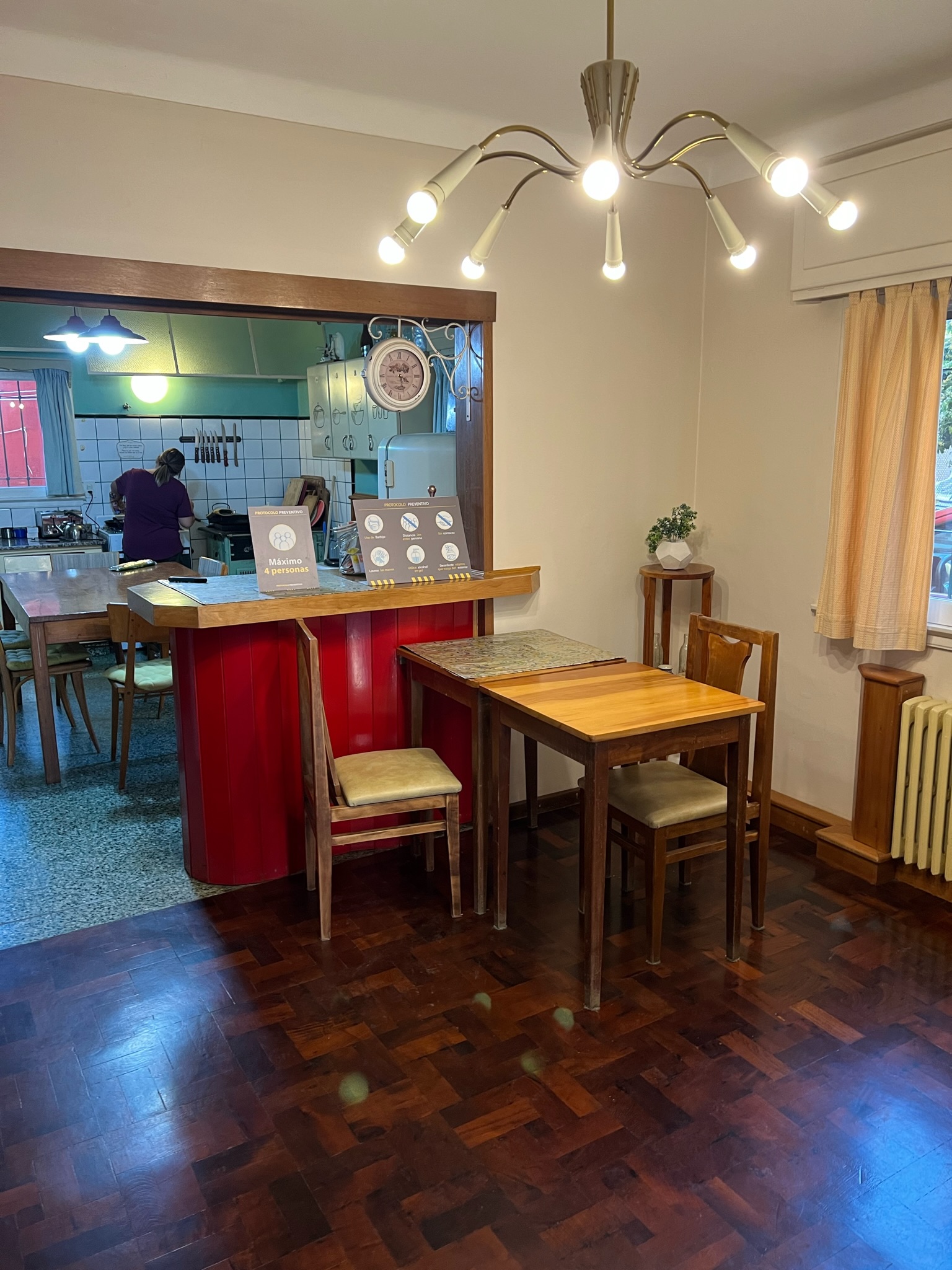
We stayed at the Kospi Hostel, and it was one of our favorite lodgings on the trip. The hostel was in an old house that had been converted into a hostel. Our room was spacious with a queen bed, a set of bunk beds, and a private bathroom, and we had access to the very well stocked kitchen and comfortable living room as well. The house reminded me of my Aunt Glenice’s home that we used to visit when I was a kid. It was warm and inviting, and it felt like a real home. In many of the hostels we’d stayed at, we’d had access to the kitchen, but hardly anyone would actually cook meals while we were there. This one was different. There was someone cooking a meal quite frequently, and it seemed like the house always smelled of something delicious. And our host, Ruben, was incredibly helpful to us as we began learning to live in Argentina.
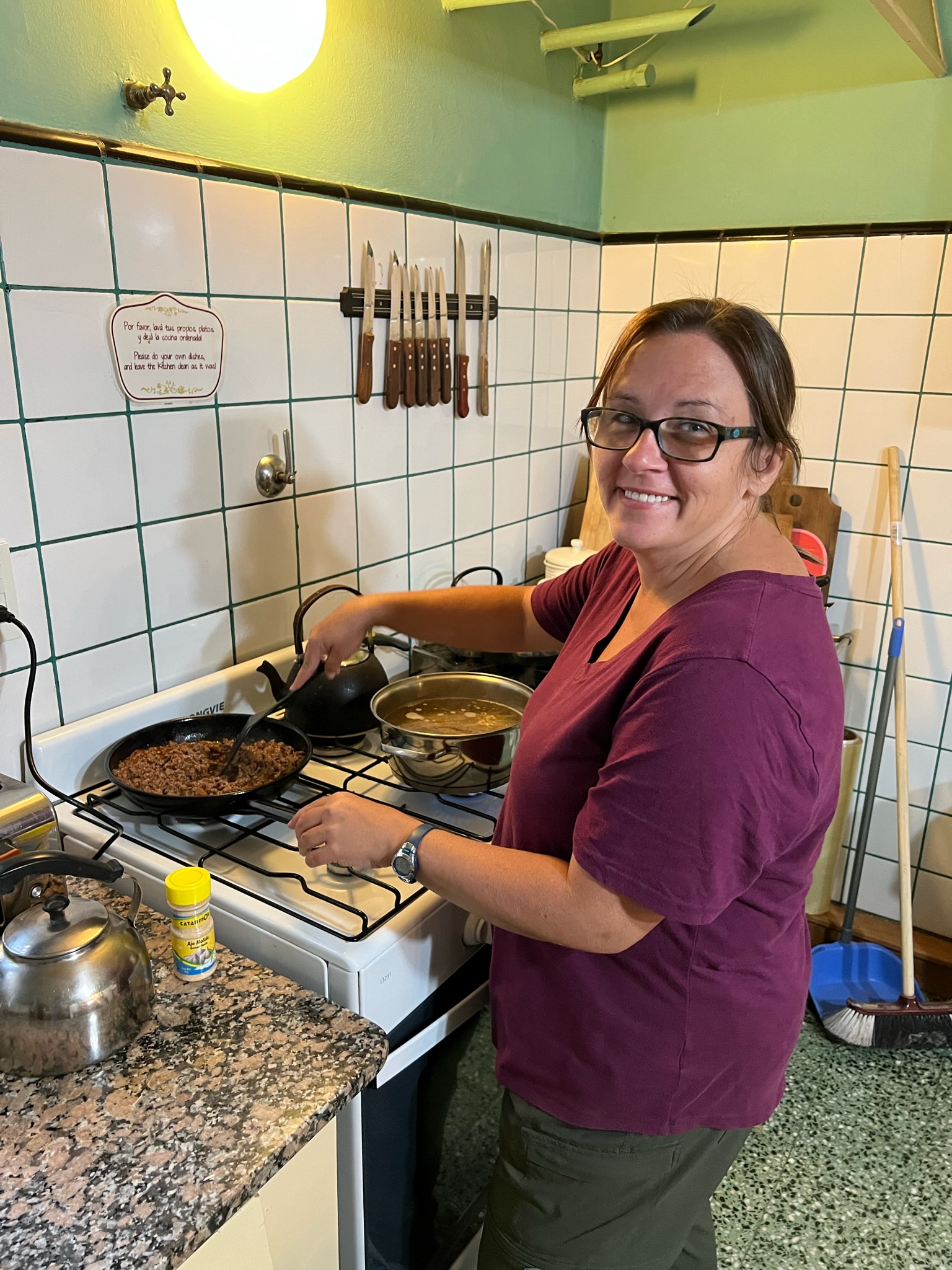
I should tell you that things are different in Argentina than anywhere else we had ever been. First, people here live on a different schedule than they do throughout North or South America. Breakfast was normal time, usually consisting of medialunas, coffee, and juice. Lunch was normally around 12-2 or so and it was a ‘normal’ meal, a lighter, smaller version of dinner. Almost all businesses take a midday break from 3-6. Grocery stores, retail centers, restaurants, you name it – if you didn’t get what you wanted before 3 pm when they closed, you’ were just going to have to wait. And dinner starts no earlier than 8 pm. Now, I’m usually almost ready for bed around then, but here, the restaurants generally don’t even open before 8. We would leave a restaurant full of families with little bitty kids at 10 pm, and the kids were all wide awake still. It takes some getting used to, for sure, but once you adjust, the schedule does work pretty well.

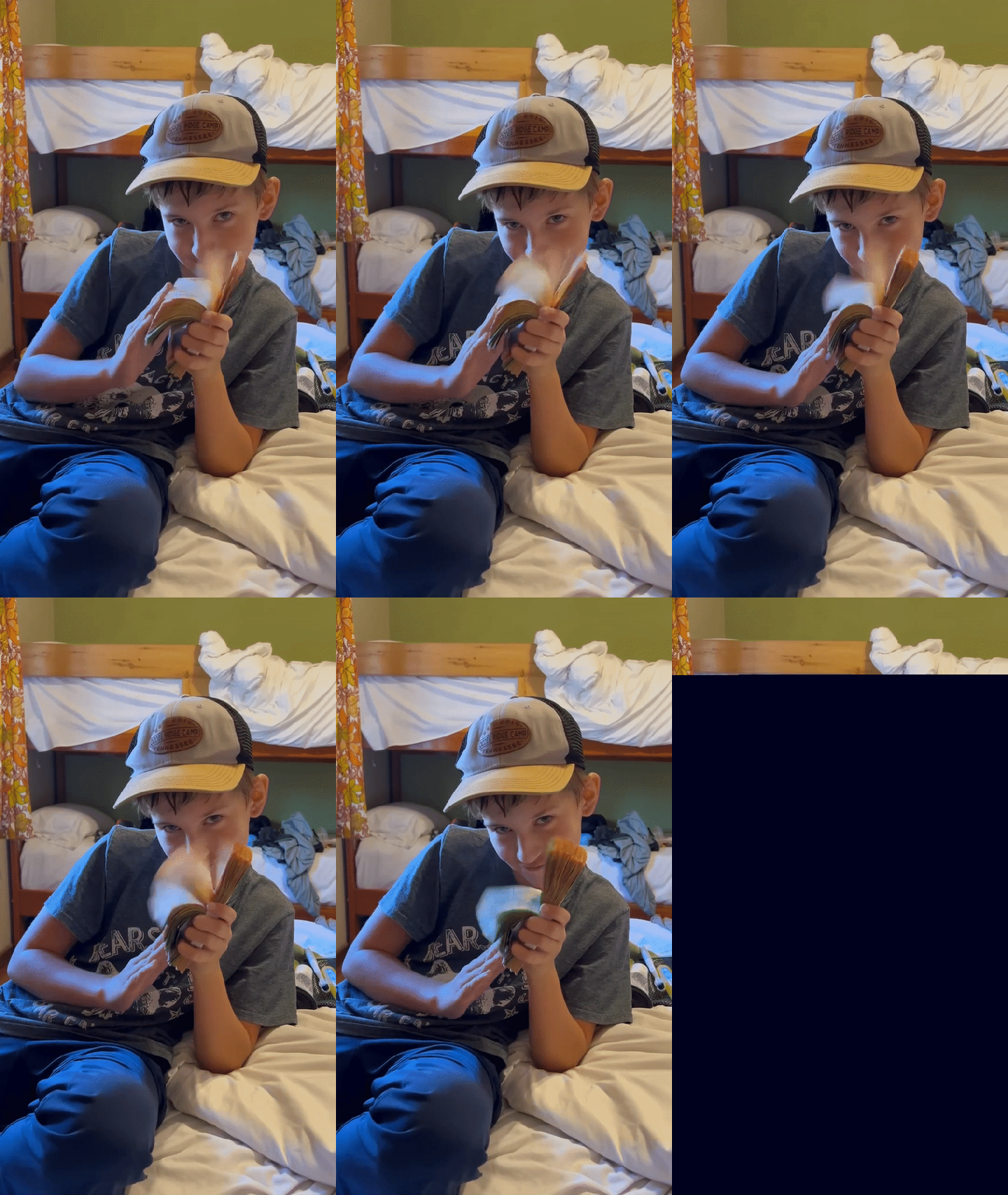
The other challenge to life in Argentina is cash. Most merchants either take cash or they will charge a 10% fee for using a credit card, so of course it is much better to pay in cash. Also, because the value of the Argentinian peso is quite volatile, there is a blue market for cash. The credit card companies will charge you based on the official exchange rate which was close to 100 pesos per dollar. If you can exchange money through the blue market (money changers on the street), you could get 200 or so pesos per dollar. So, if you could get US dollars and exchange them on the street, prices in Argentina were very low (about half of what you’d pay in the US). If you paid credit card rates, they were about the same as in the US. So cash is better, but the kicker with this is that getting cash (US or pesos) is very difficult. The government has imposed very low ATM withdrawal limits, which combined with very high ATM fees, limits the amount of cash available. We spent hours upon hours trying to use money transfer services to get the cash we needed. And once you got the cash, you had the challenge of hiding it. Most stores/restaurants cannot accept big bills, so when you do get the pesos, you end up with a very large stack of cash that isn’t worth a whole lot. While it was fun to fan through your bundle of bills and pretend you were rich, it wasn’t much fun to keep a large wad of bills on you discretely. It was a terrible system, but if you could learn to play it correctly, it worked to your benefit.
Another small but frustrating issue related to cash was that the amount you are charged and the amount you pay are usually different. There are bills that go down to 20 pesos. For amounts lower than 20 pesos, there were coins, but there aren’t very many in circulation. We would go to a market, and our total would be 363.05 pesos. You’d either pay 360 or 370 pesos depending on the cashier. If you didn’t have small bills, you might even pay only 350 if the cashier was particularly generous. This wasn’t much of a problem, unless you tried to use your receipts to remember what you’d spent money on. We learned pretty quickly to write everything down right after we spent it.

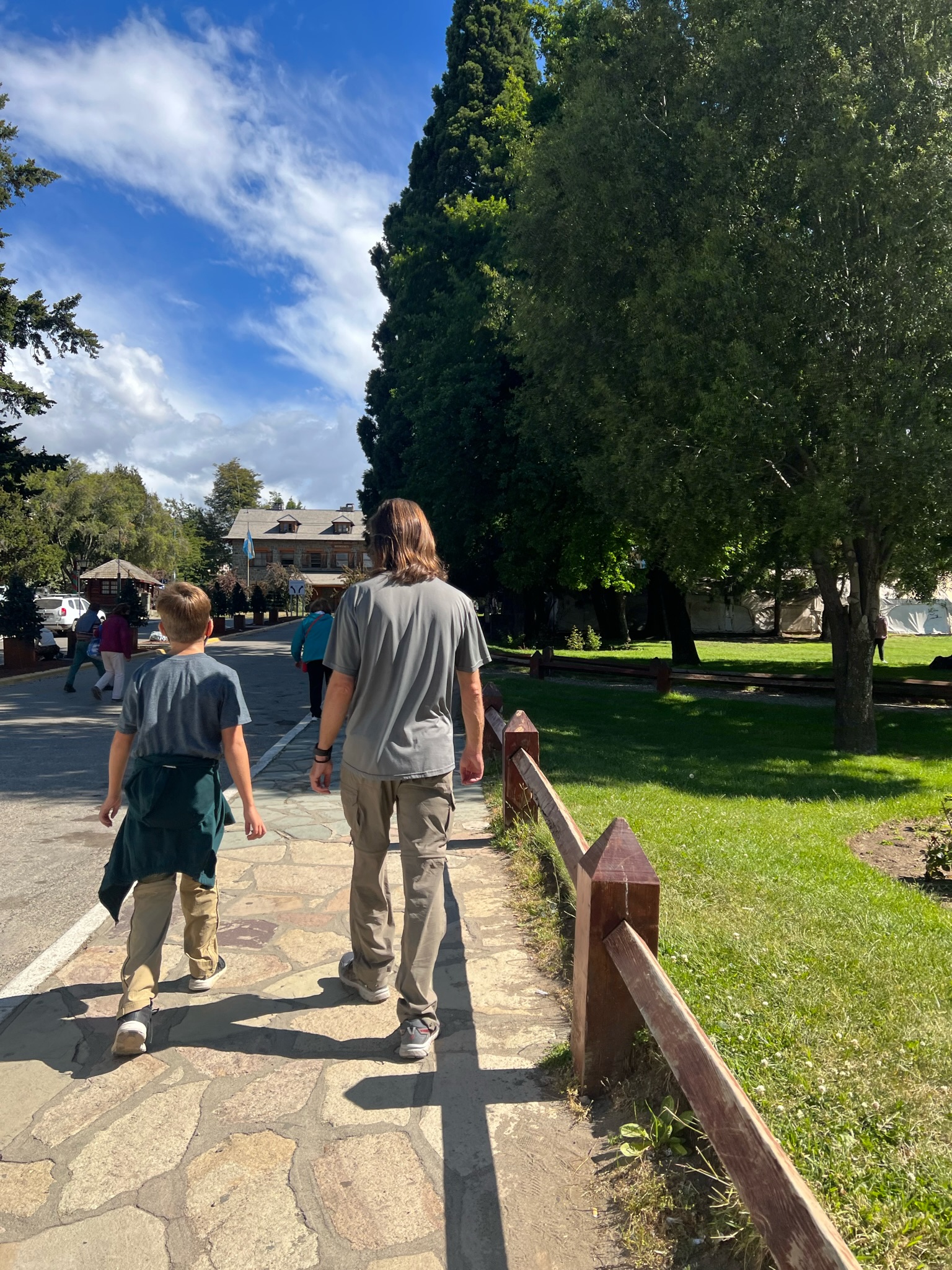
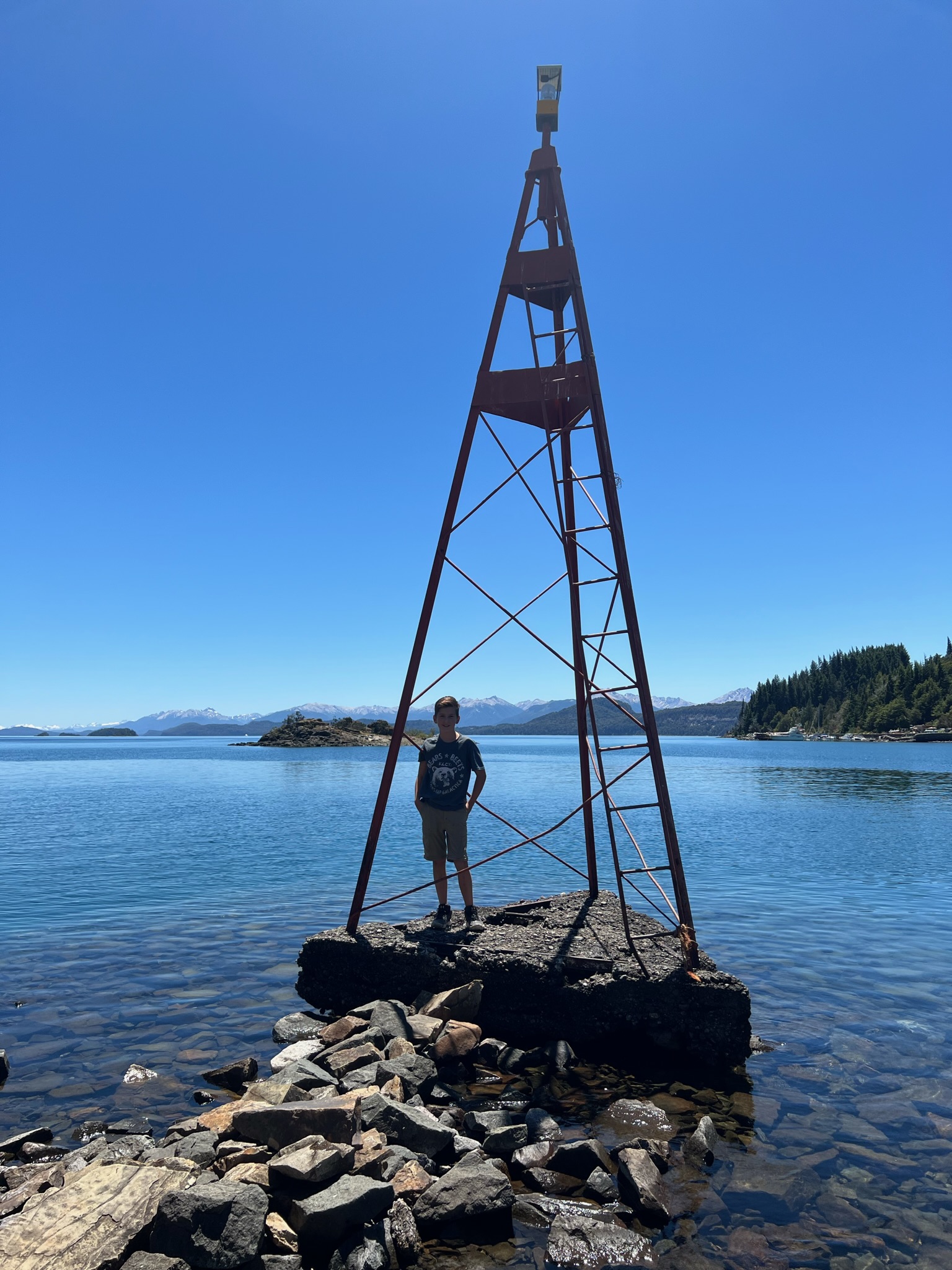
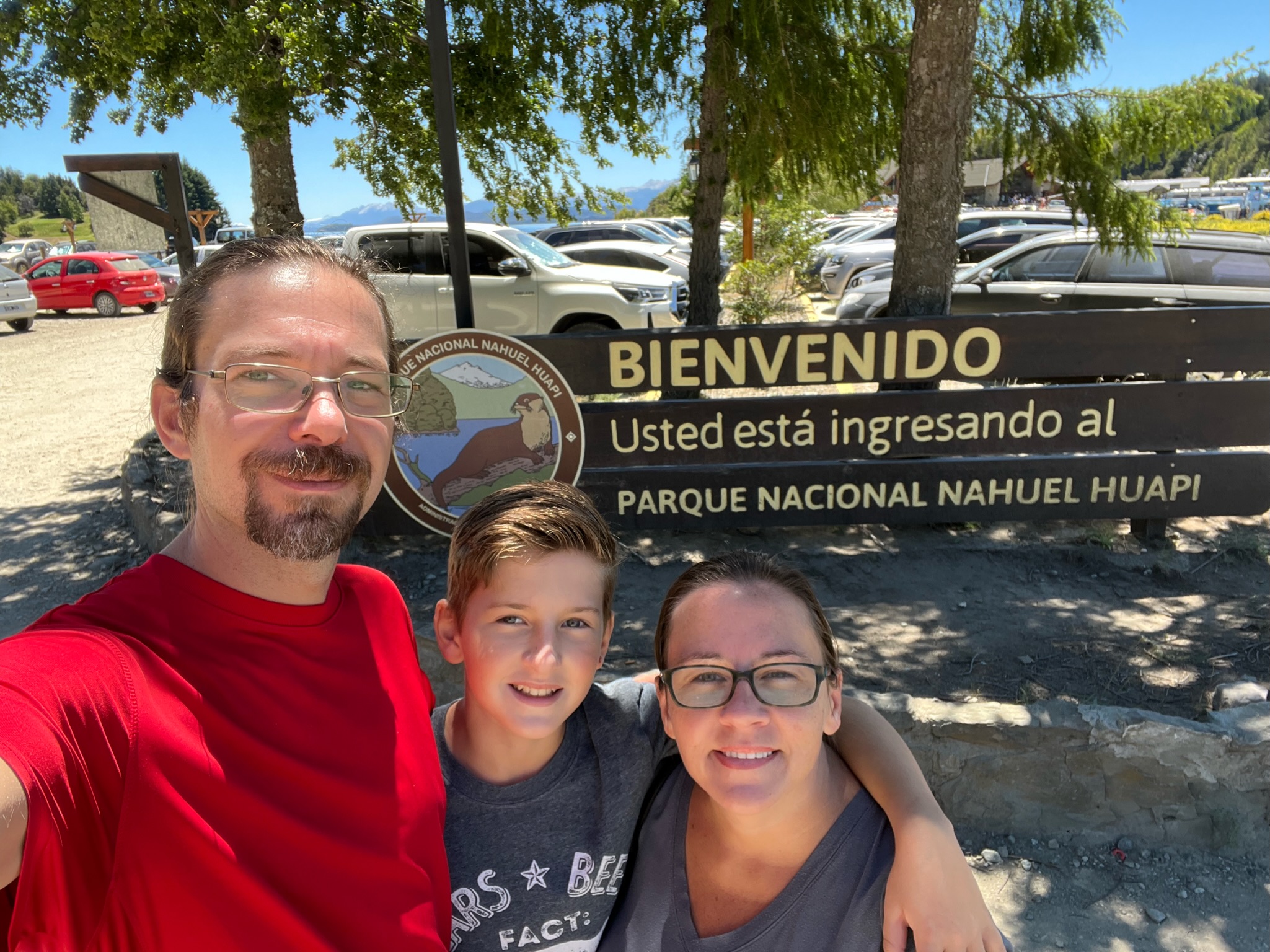
Most of the time we spent in Bariloche was actually getting ready for our trip to Antarctica. We needed a few more clothing items, and we opted to purchase them here. The weather in Bariloche was chilly, so we expected to have a better chance finding waterproof pants and warm gloves here than the other cities we planned to visit. We did take a day to explore the Parque Nacional Nahuel Huapi. We caught the city bus to the visitor center in the park. After a relaxing picnic lunch, we set off to see the viewpoints over the water.
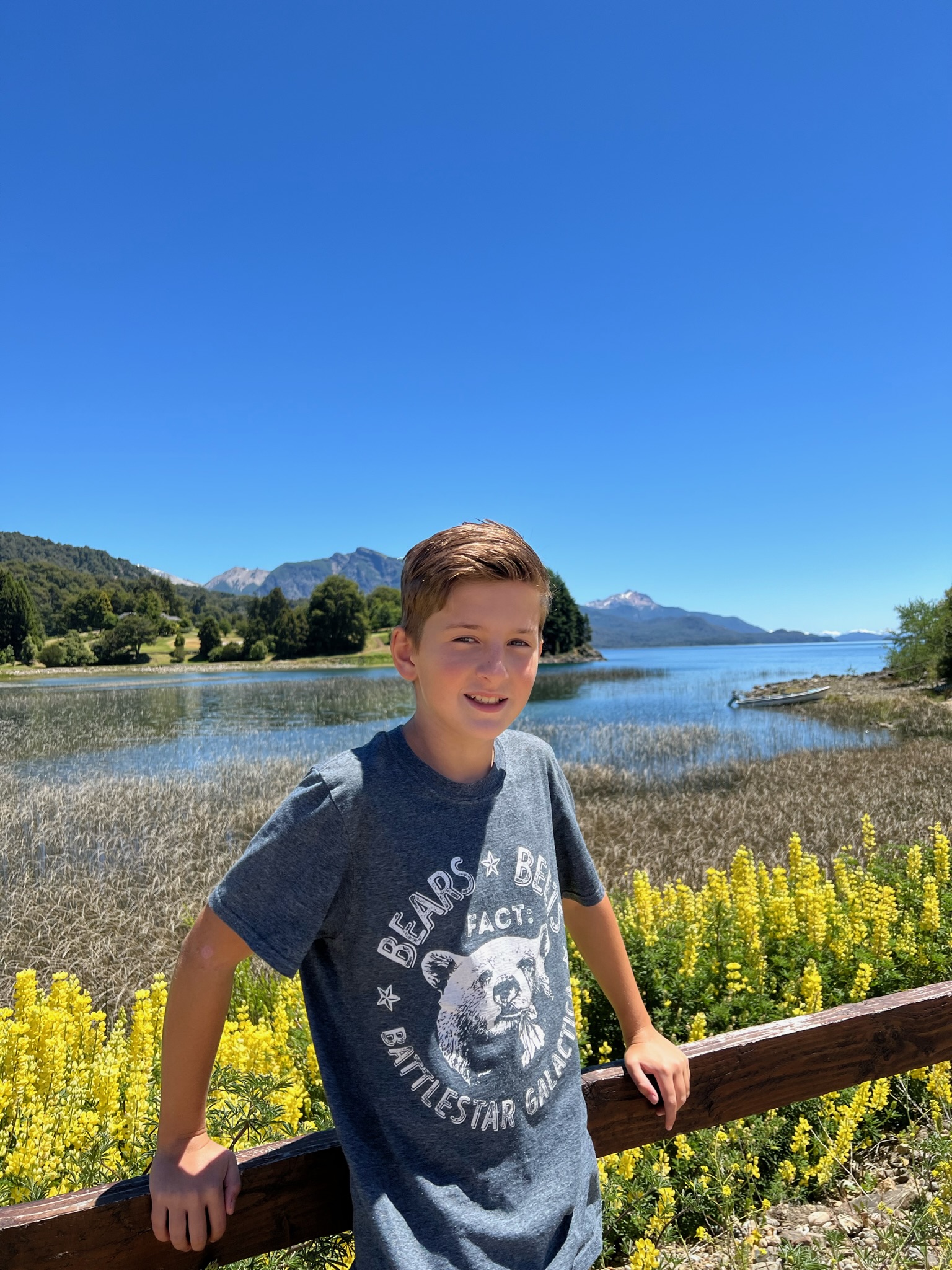
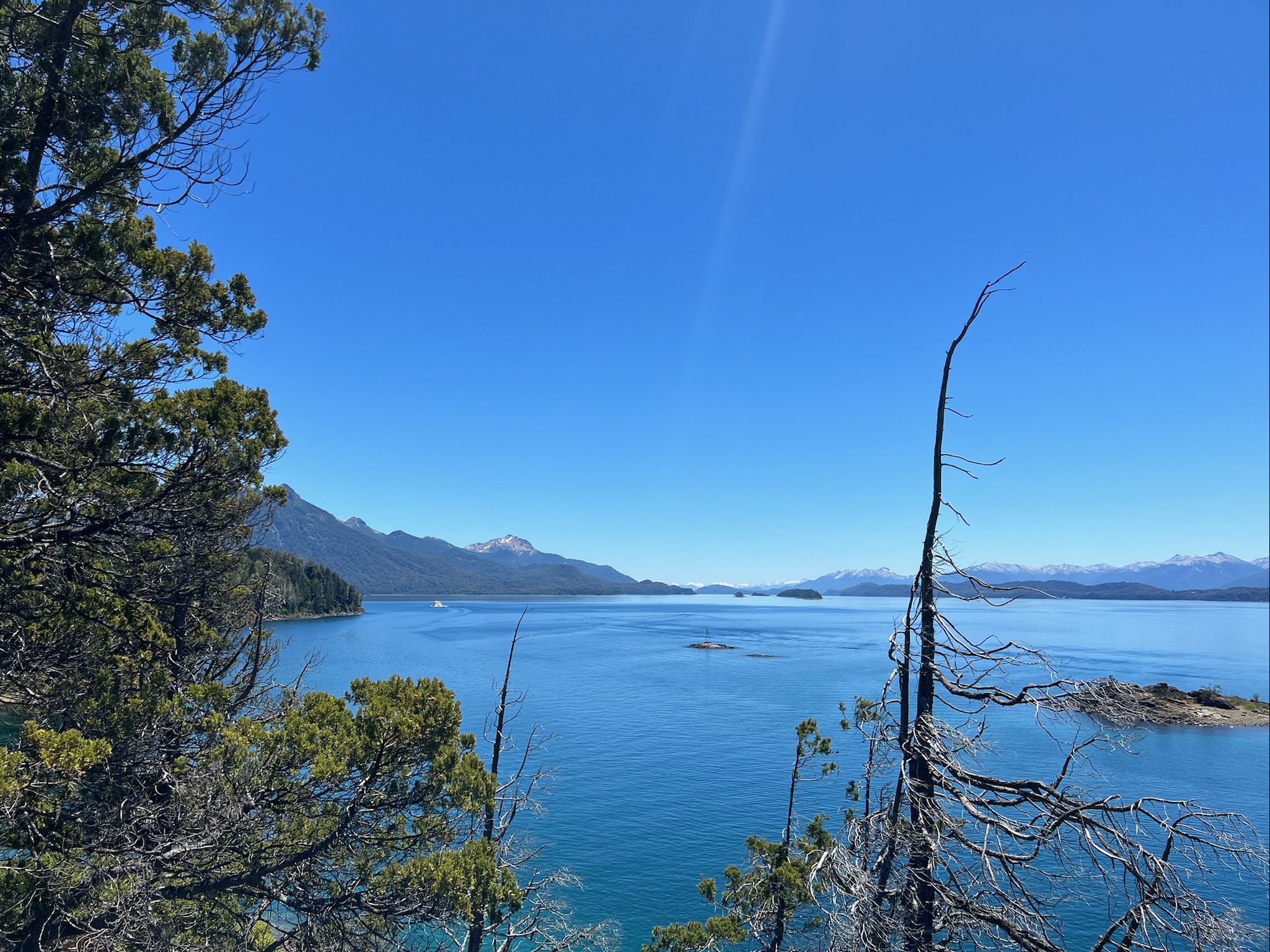
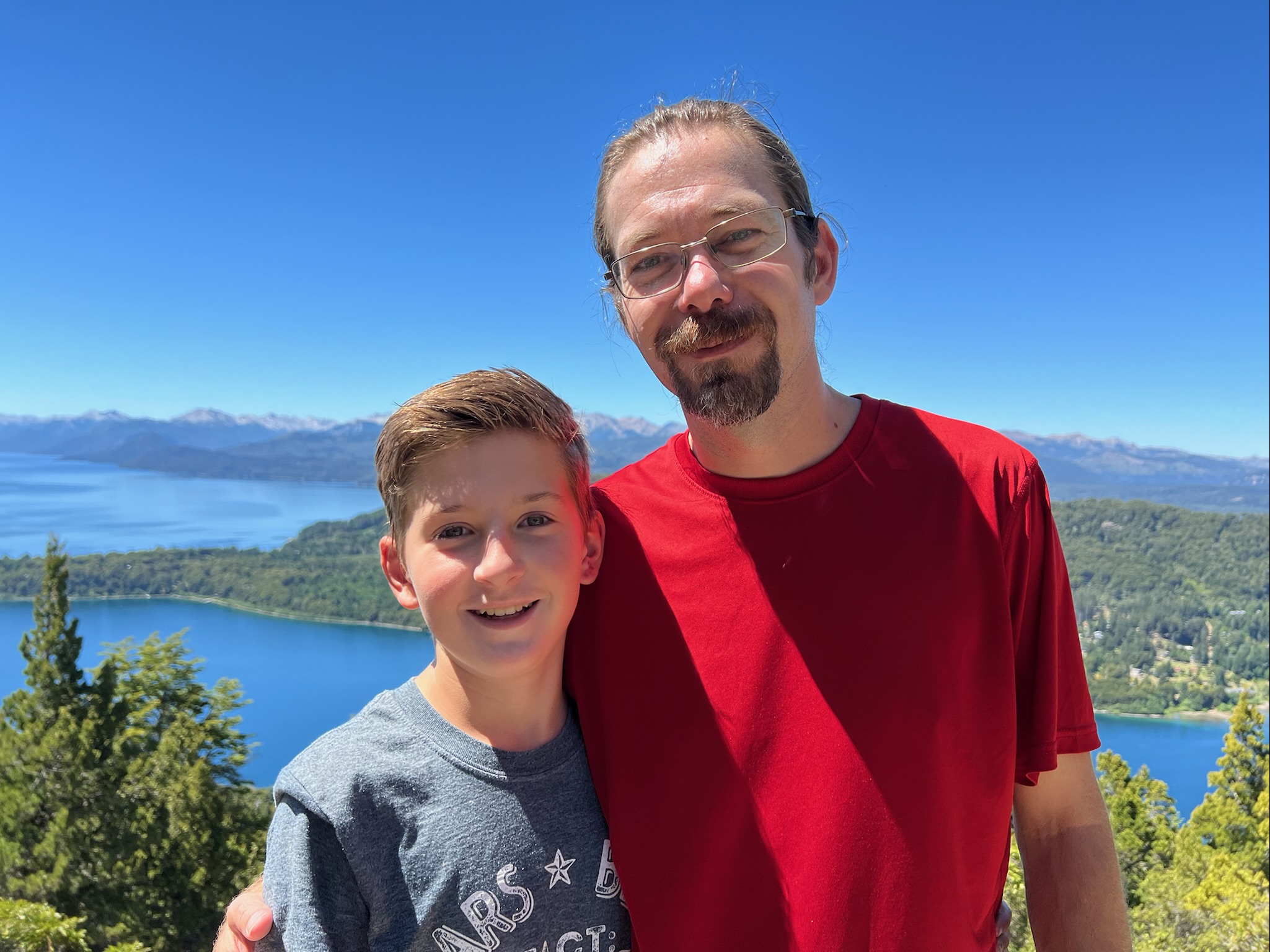
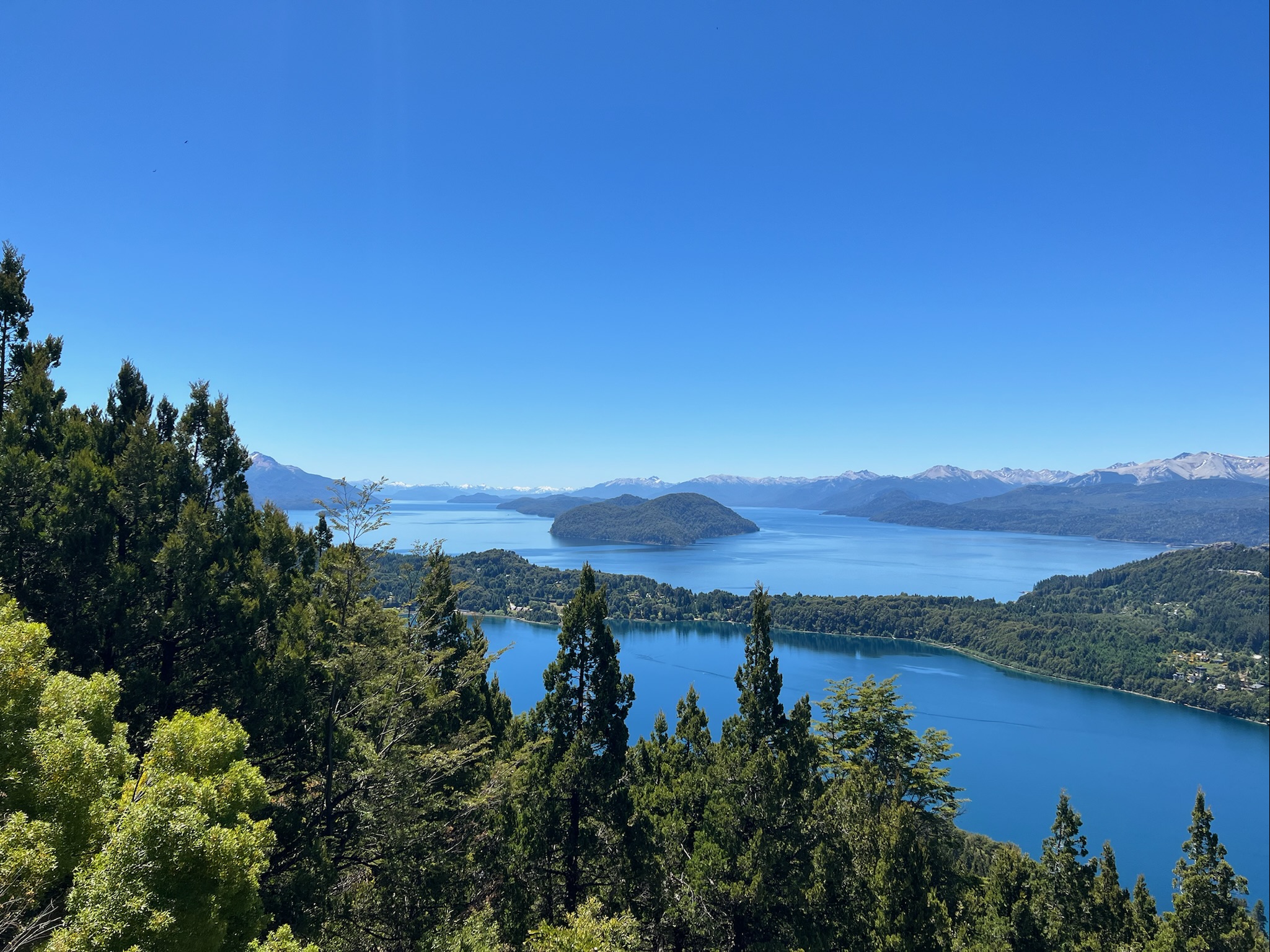
Not quite done getting our fresh air, we hiked to the top of Camp Campanario. For a fee, you can take the ski lift to the top, or if you are up for the challenge (or cheap), you can hike up the mountain like we did. The views of the surrounding lakes were gorgeous, and the cool mountain air was refreshing.
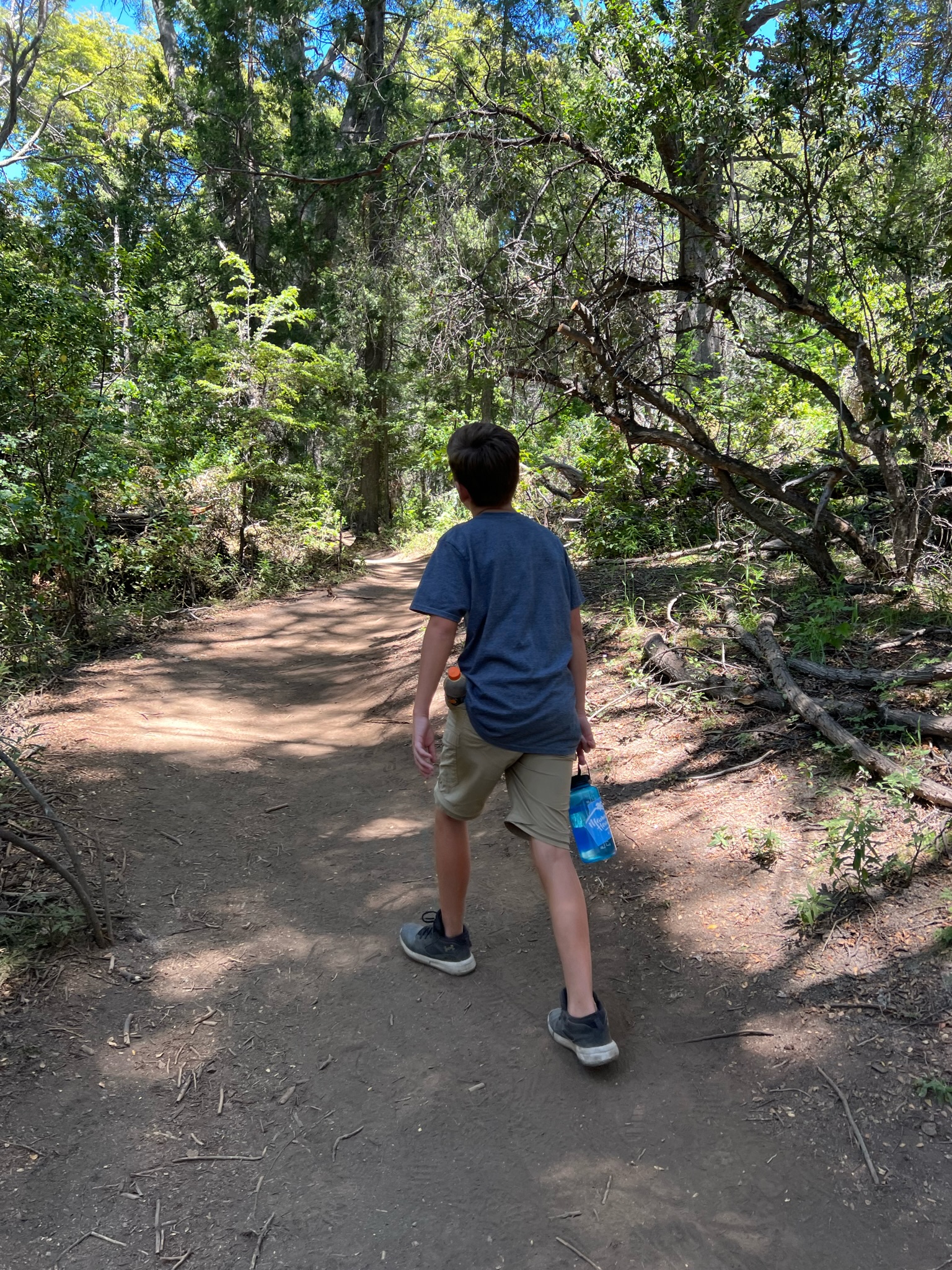
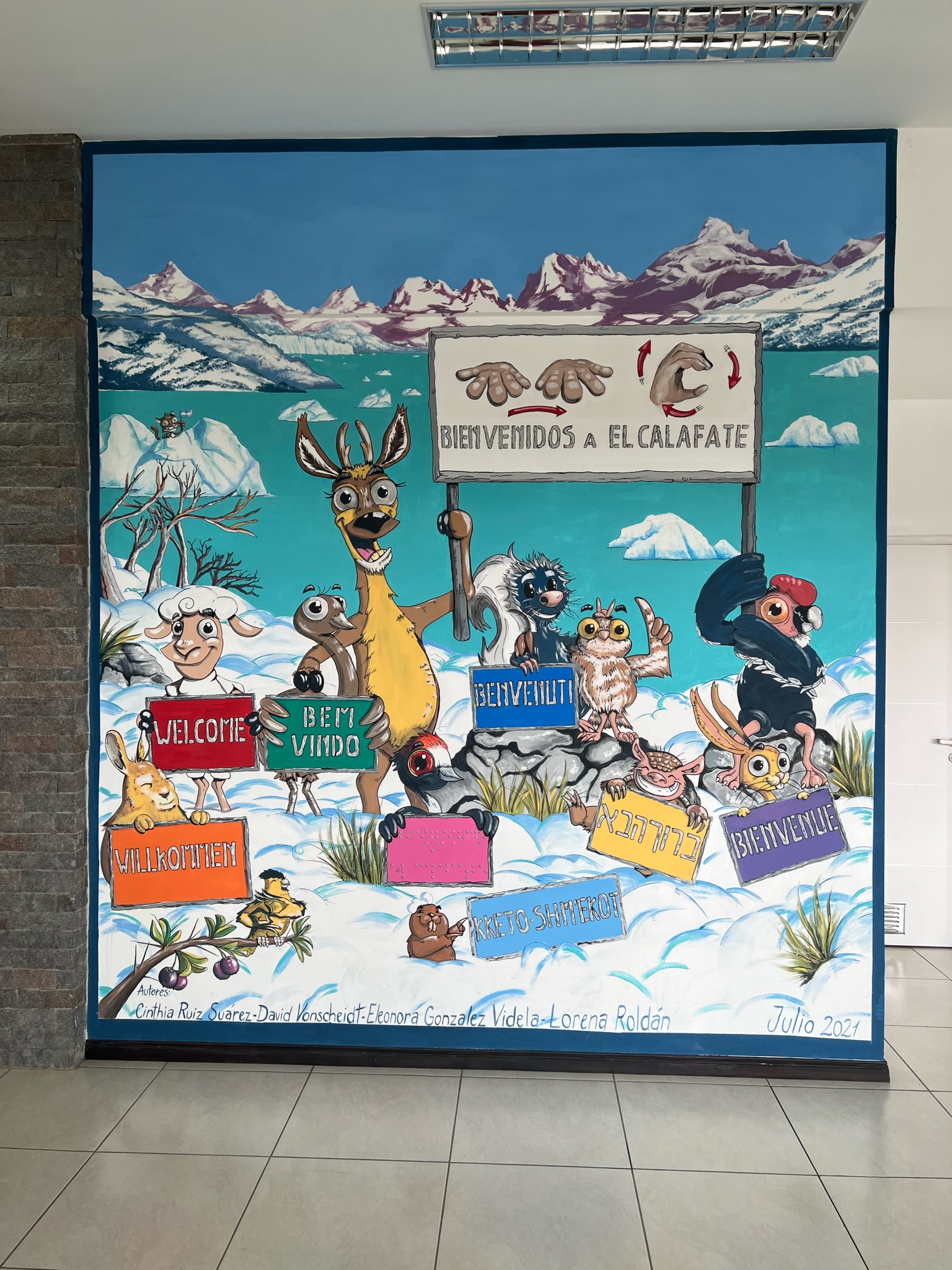
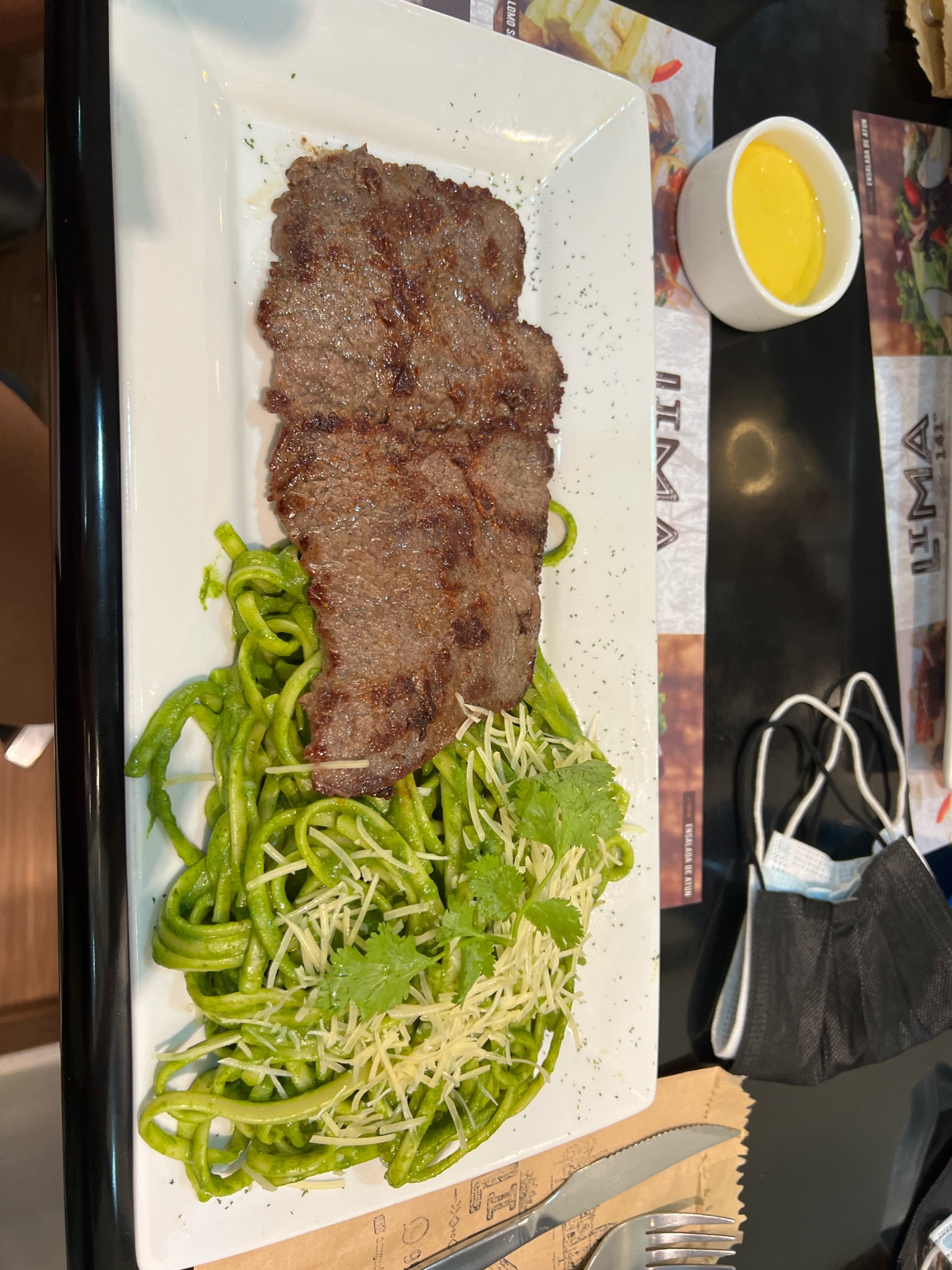
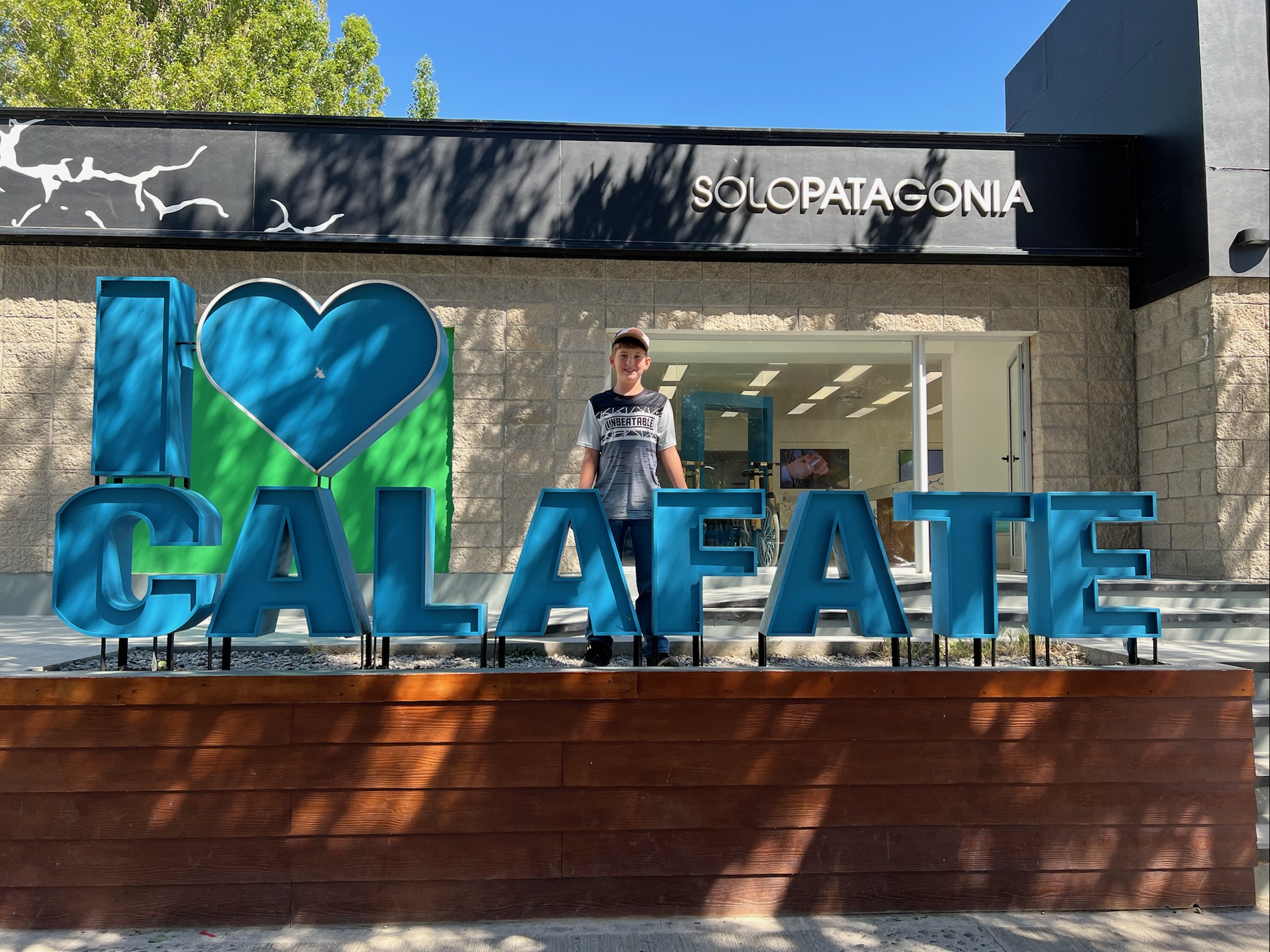
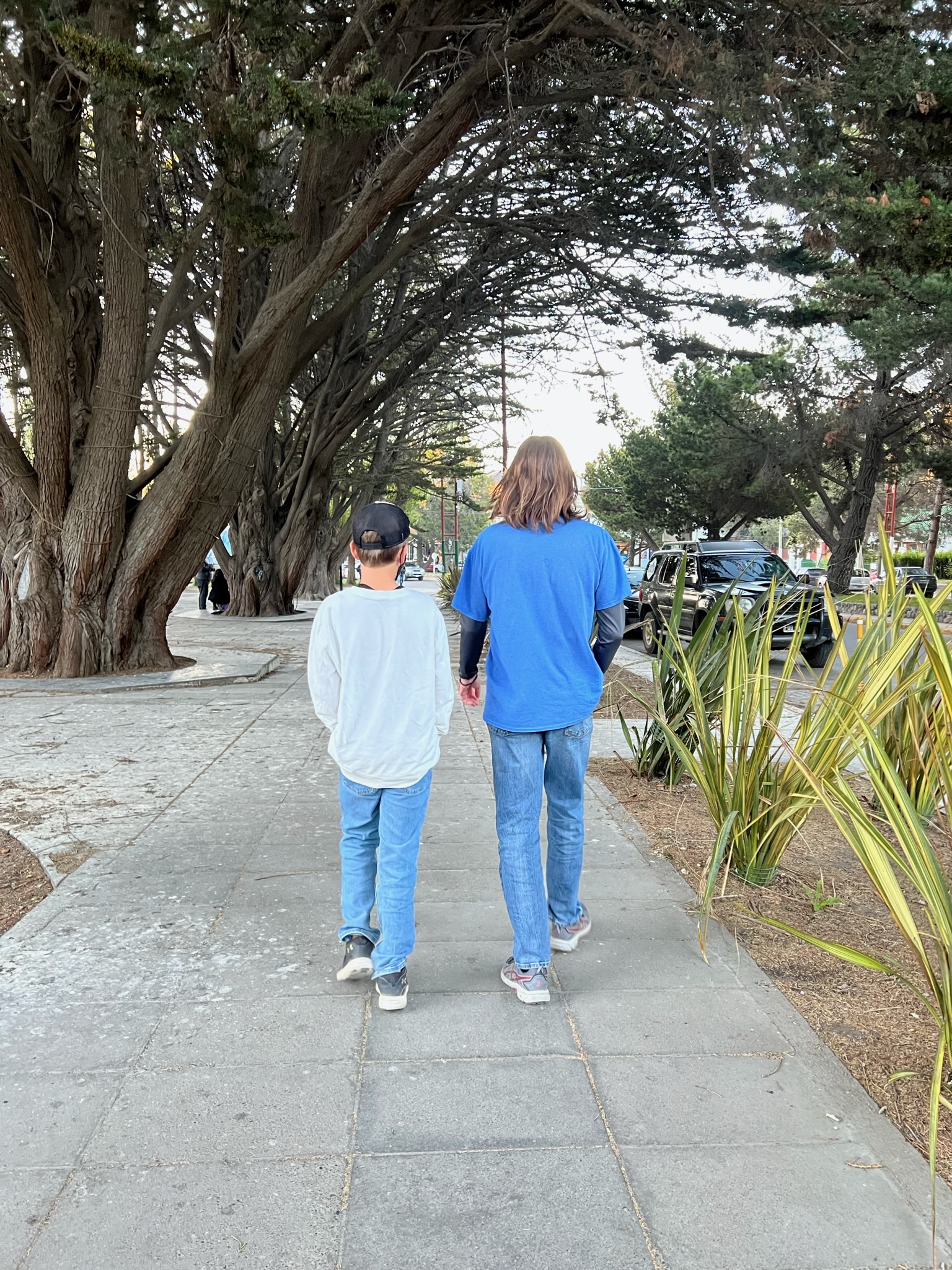
After six nights in Bariloche, we caught another flight further south to the mountain town of El Calafate. El Calafate is another very small town, and it sits on the glacier fed Lago Argentina (Argentina Lake). We stayed at a little hostel a few blocks off of the main strip called the Calafate Viejo Hostel. Our room wasn’t much, but we were comfortable, and our host, Claudia, served us a delicious breakfast every morning. Henry spent several hours playing in the back yard, and I think he really needed that bit of normalcy. The food here was delicious, and we discovered Bife de Chorizo, a tender, juicy steak that melted in your mouth; almost all of the restaurants in town had their version of this dish, and they all tasted amazing. There were good reasons for Argentina to be known for their grilled meats, and El Calafate helped us discover them. All of our meals were very good, and all three of us began to pile back on the weight we’ve lost throughout the first months of our trip. Everything was just so good!

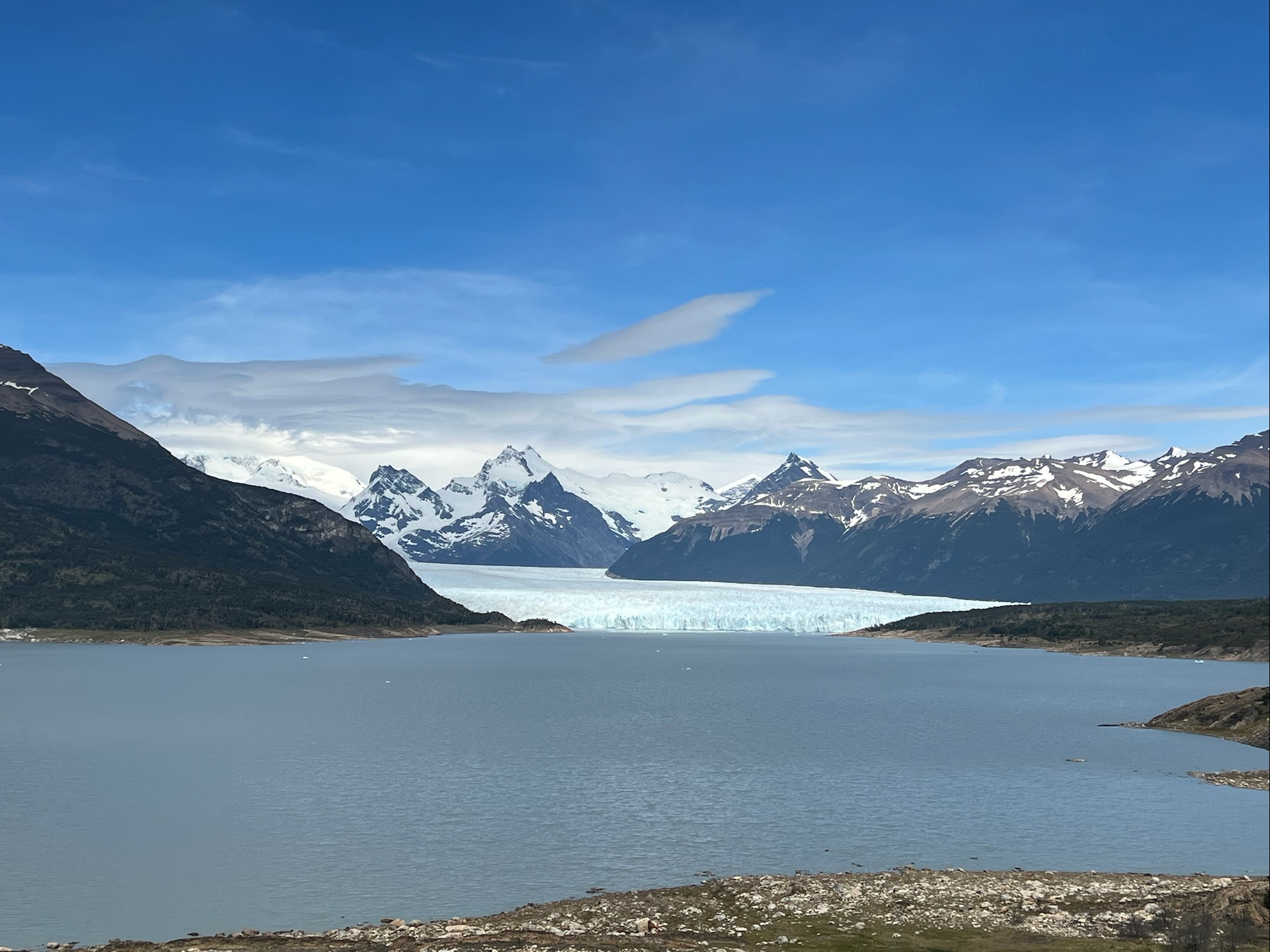
The whole of town is on a 1 mile stretch down the main road which is lined with restaurants, markets, travel agencies, and souvenir shops. There’s not much to do in the town itself, but it is the home base for most of the trips into the Parque Nacional Los Glaciares. From there, we took a day trip into the park to see the Perito Moreno glacier, and it was well worth our time.
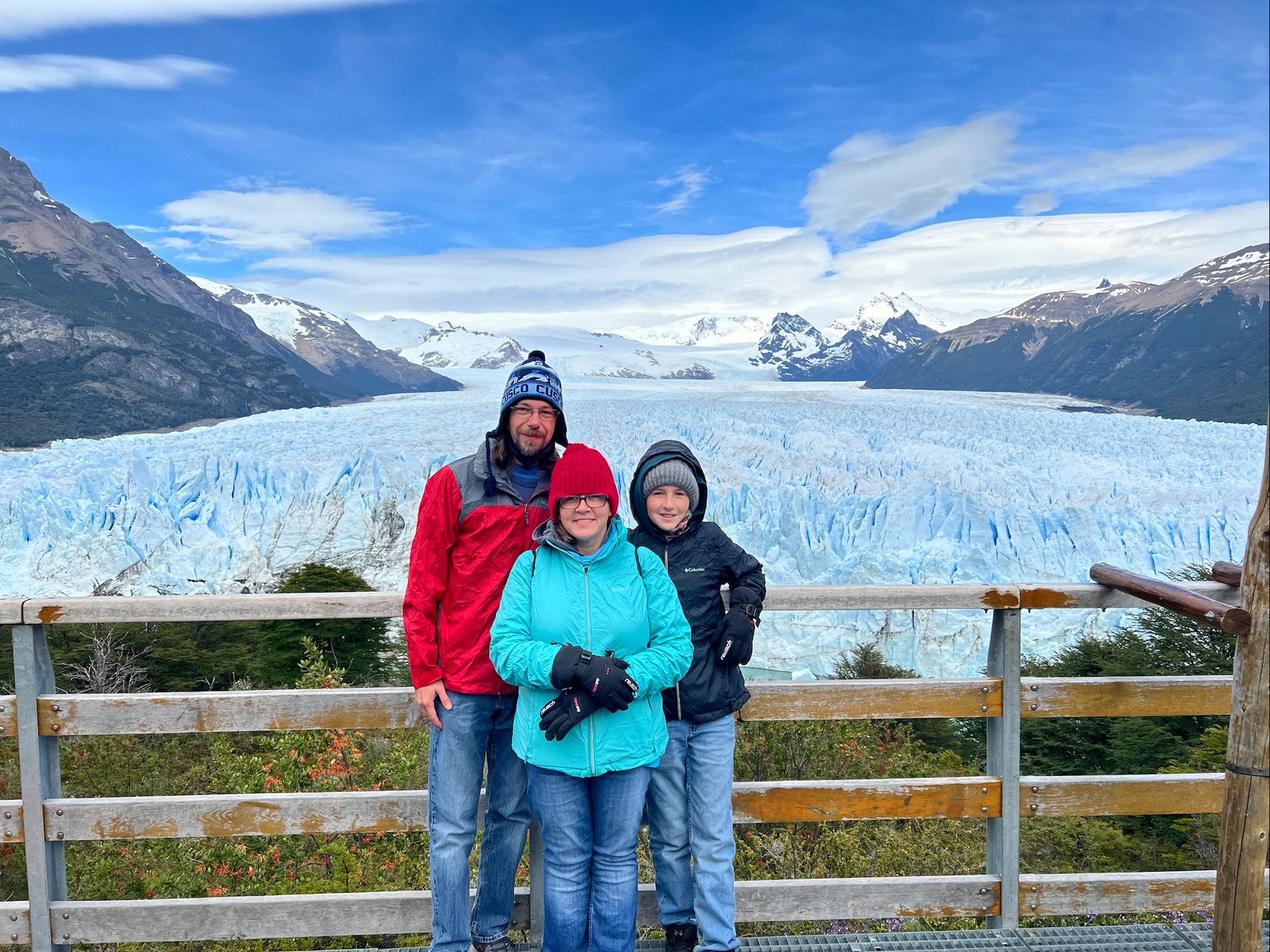
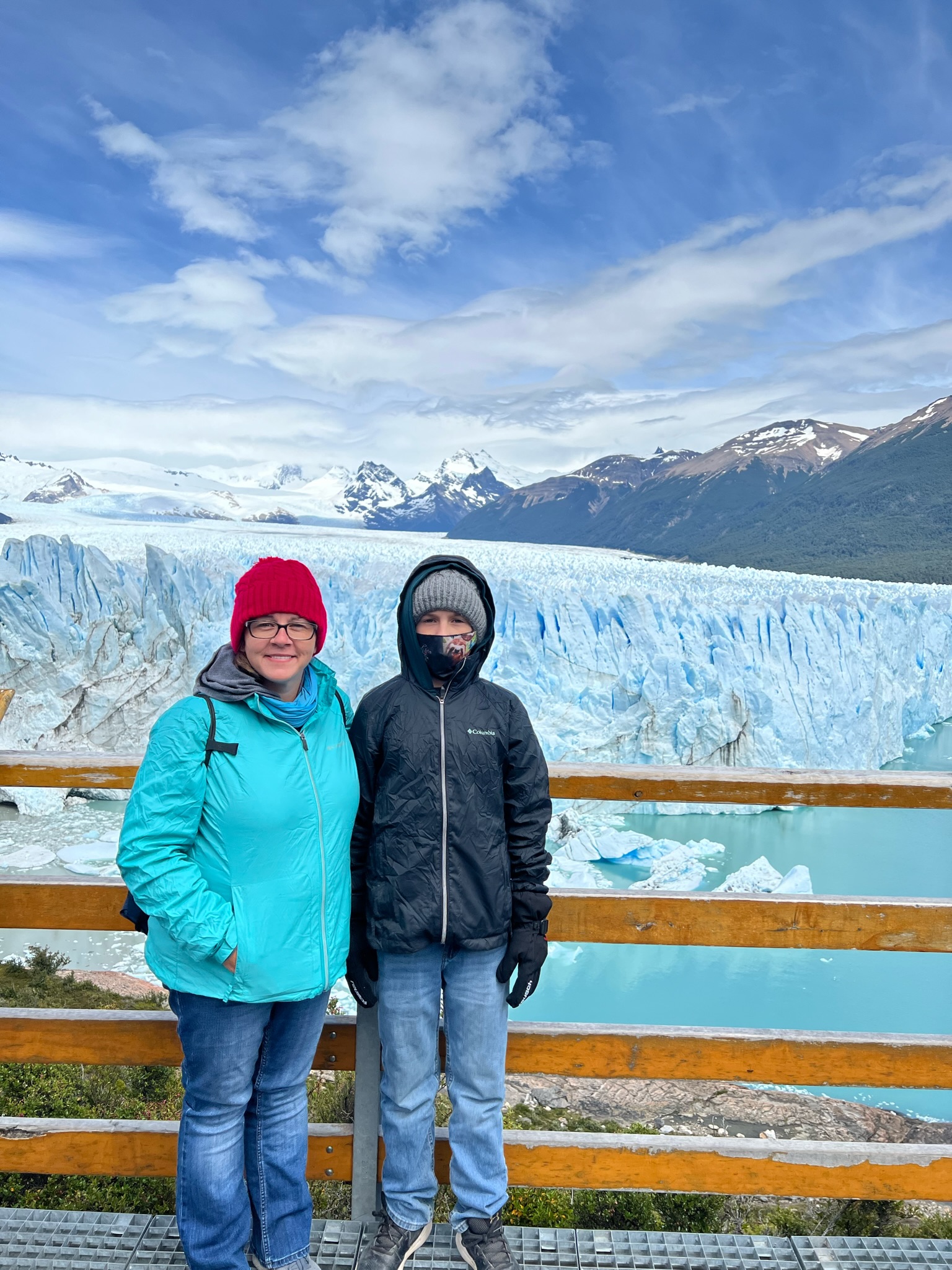
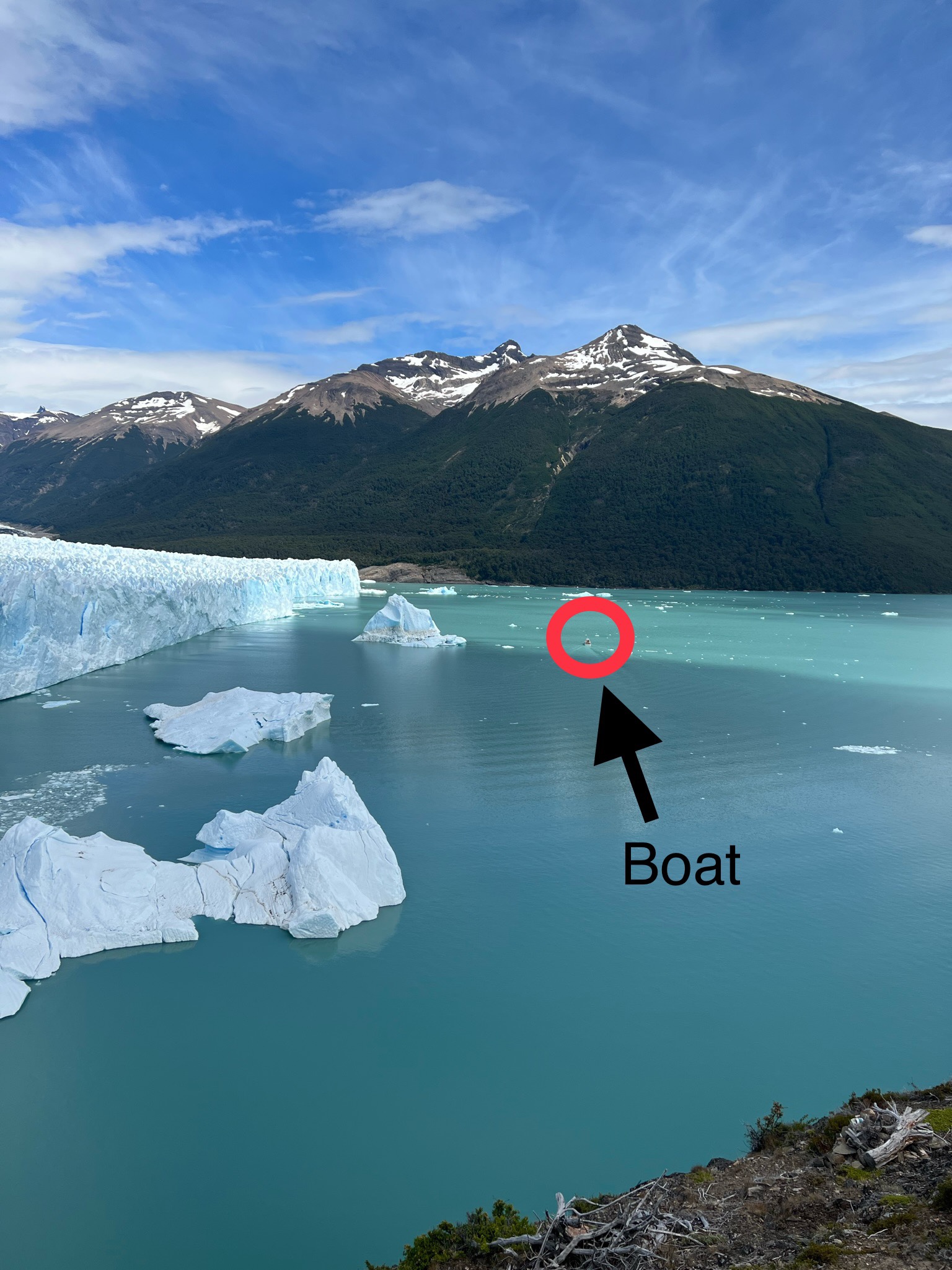
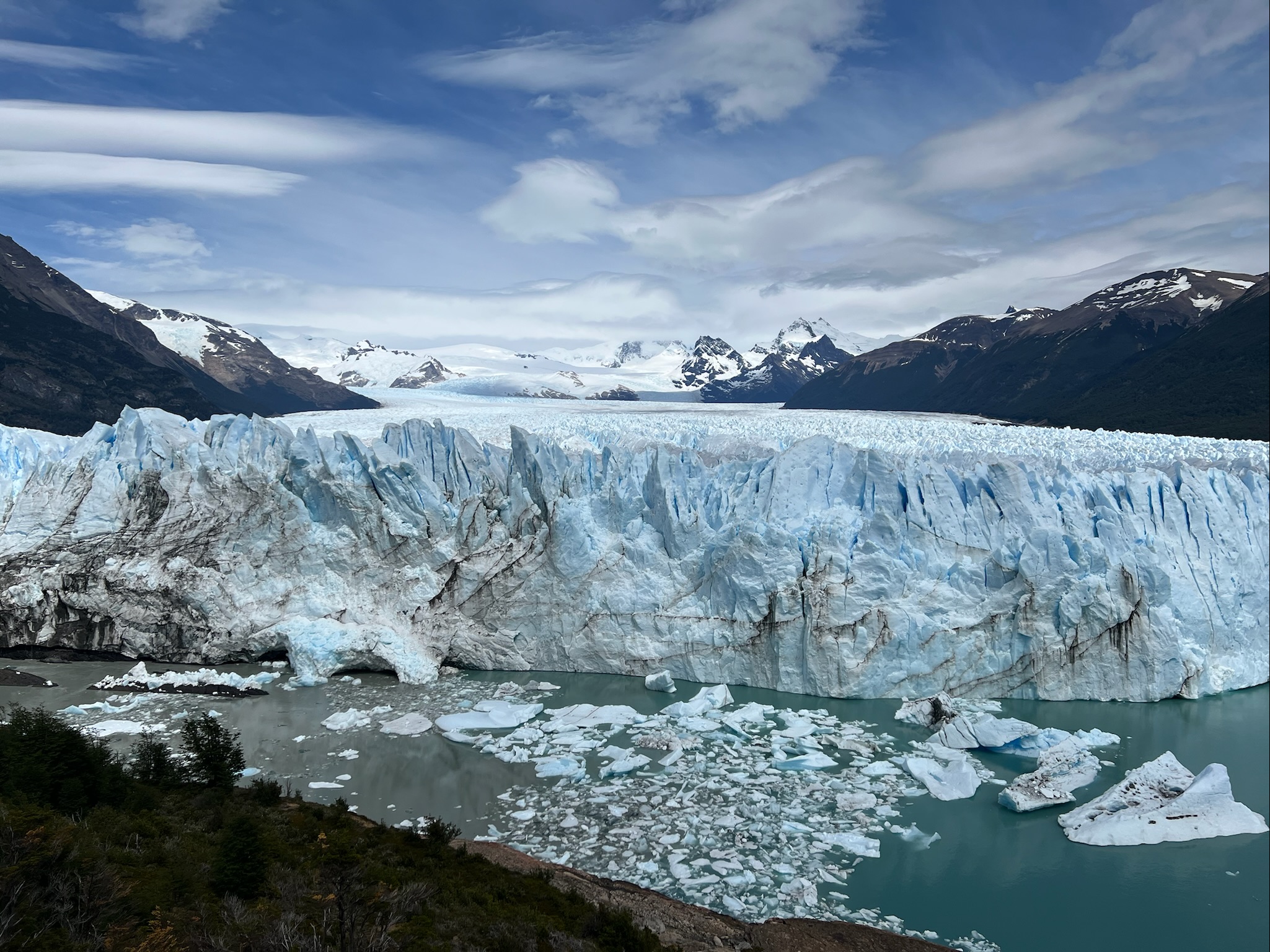
Our driver picked us up early in the morning from our hotel, and we made the hour long drive to the visitors center. We brought every layer of clothes we had because we’d read that the weather near the glacier was very cold and windy. For the first hour or so, we needed them, but as they day drew on, we lost layers until by the afternoon, we were in short sleeves and our last layer of pants. The Perito Moreno glacier viewing area was set up very well, with railed boardwalks lining the shore to view the glaciers from several different points. We easily walked the paths and admired the stunning glacier from every angle. The Perito Moreno glacier is the third largest in Argentina, and it is bigger in size than the entire city of Buenos Aires. At its centerpoint, the glacier is 650 ft thick. At the face, the glacier stands anywhere from 130 to 230 feet tall above the water. For an extra fee, tourists could board a boat and see the glacier from the vantage point of the water. We didn’t do that, but seeing the tiny little boats driving beside the enormous glacier really helped put the glacier’s size into perspective. We watched the glacier calve over and over, listening to the explosion like sounds the ice made when it cracked. It was absolutely amazing to watch the ice break off in massive chunks and fall into the lake. We learned that the Perito Moreno glacier is one of the few in the world that is actually maintaining its size. While the front face calves regularly, the back side of it continues to grow at a rate matching the loss.
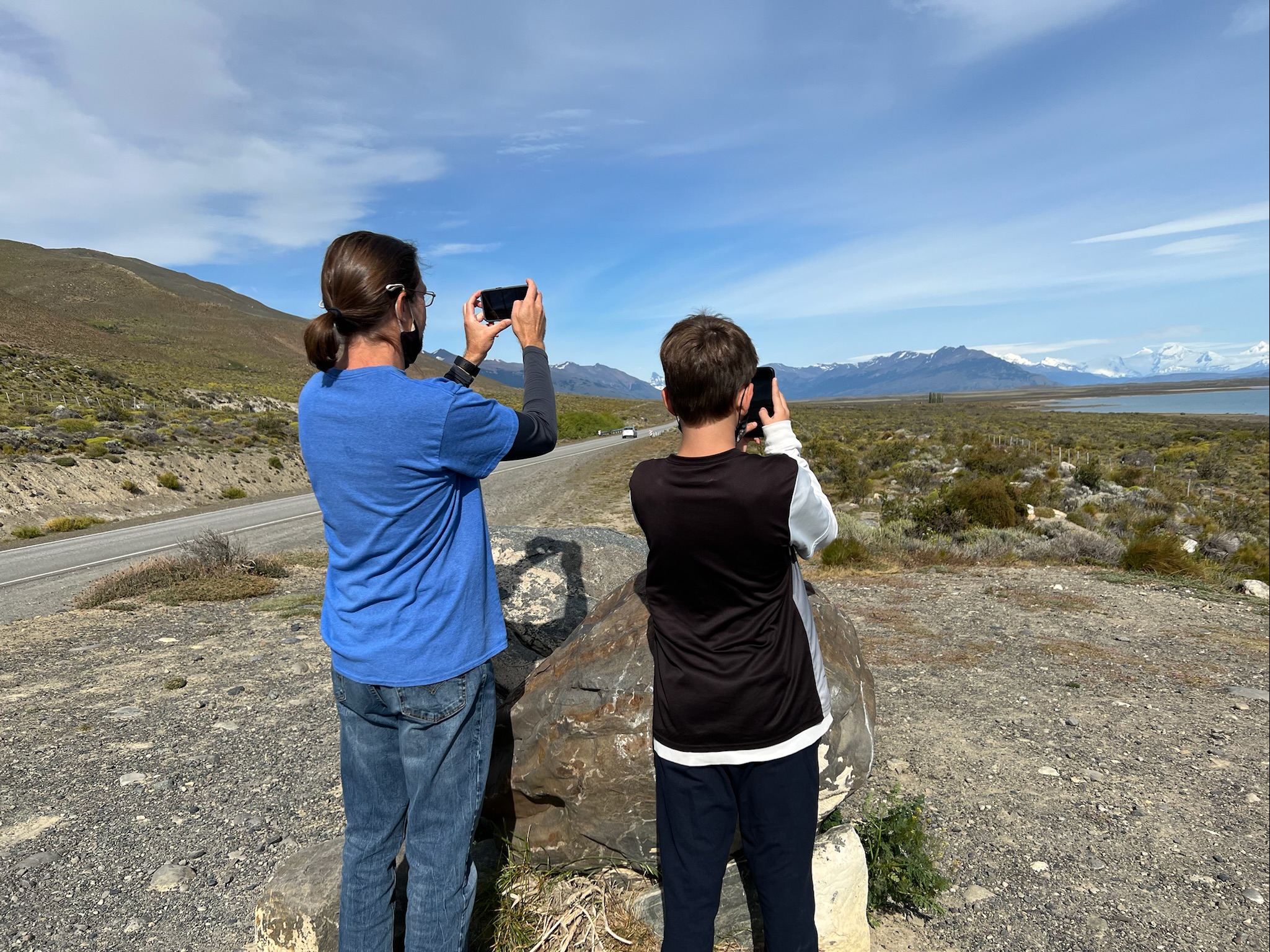
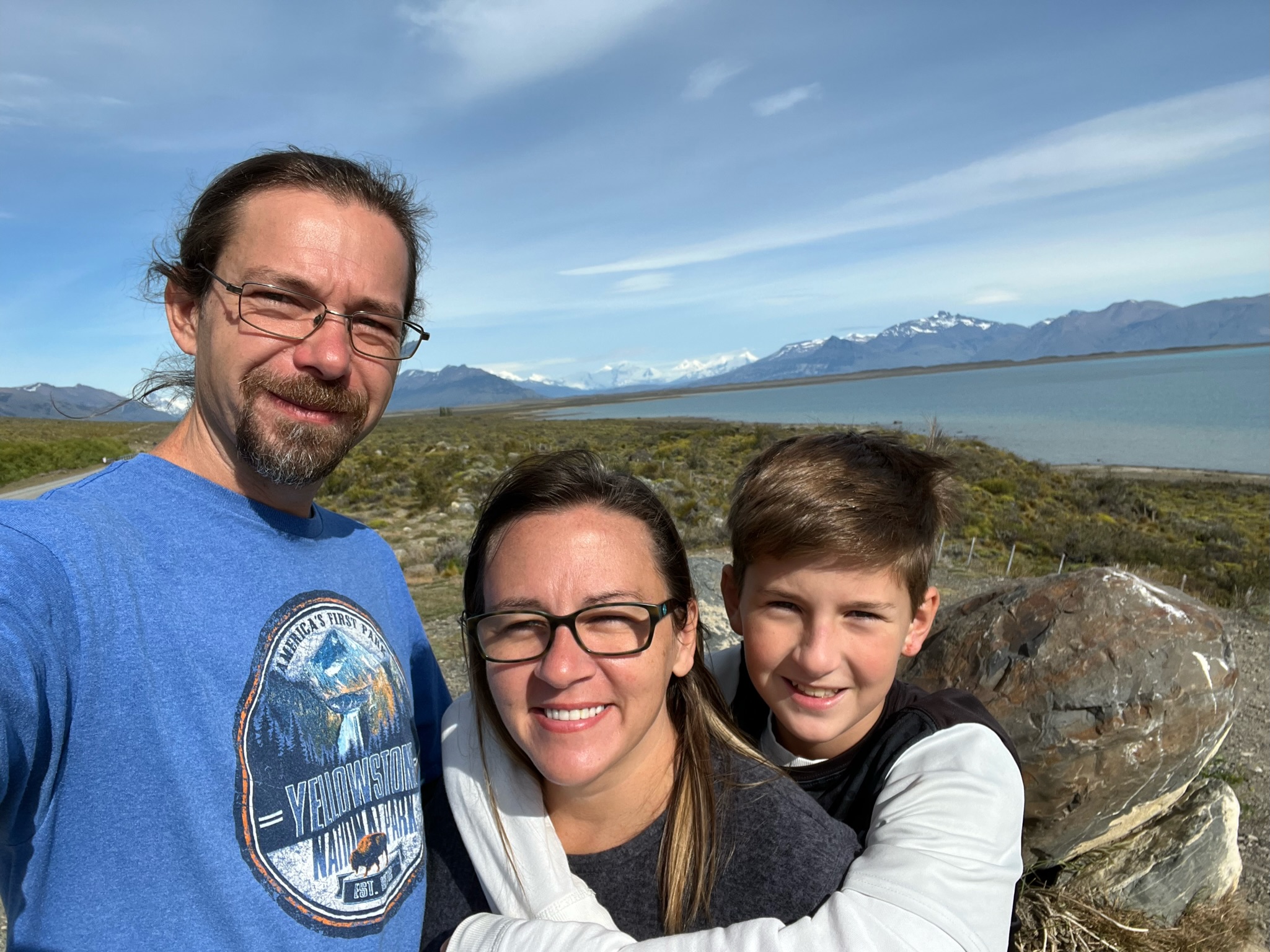
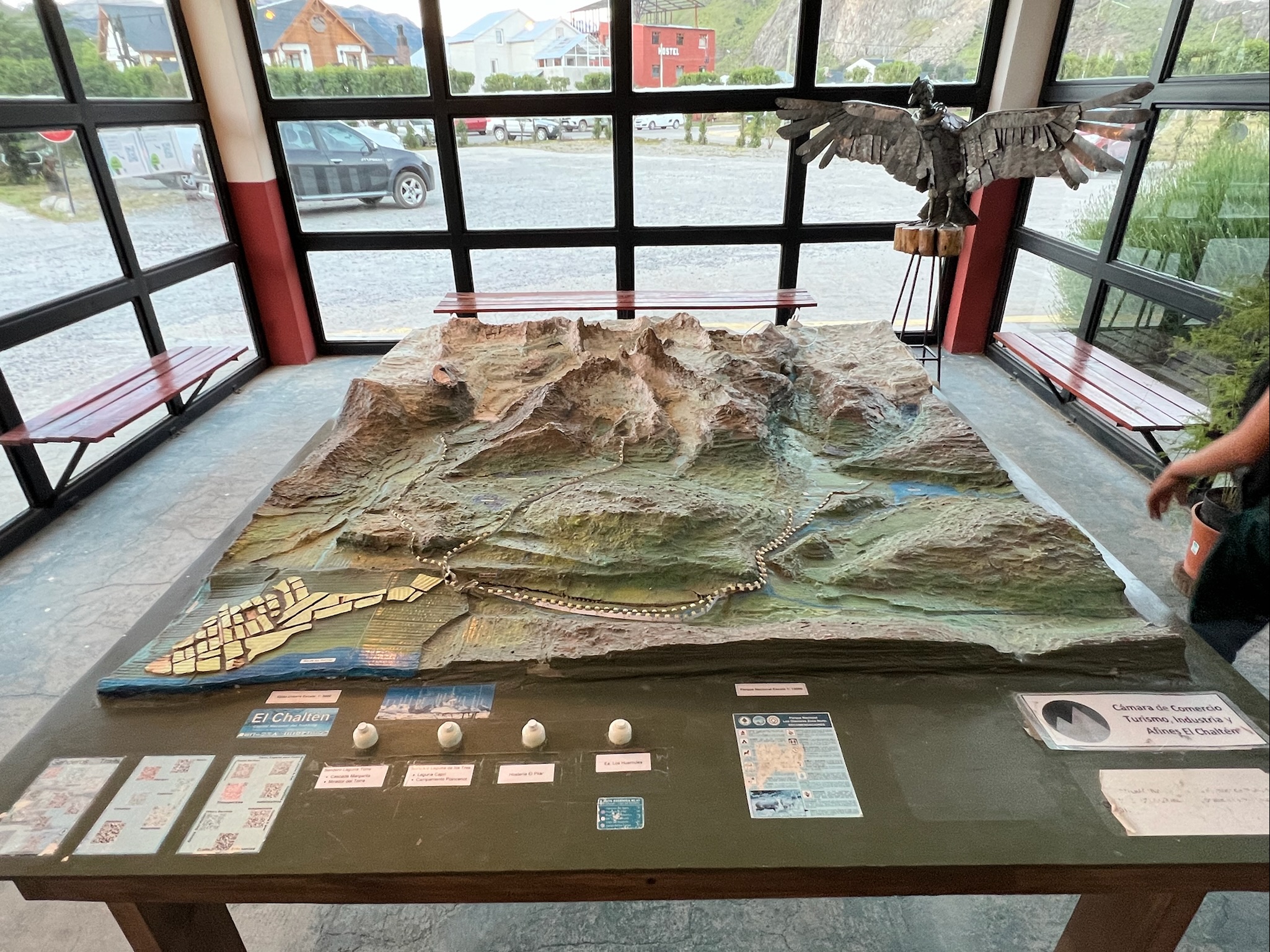
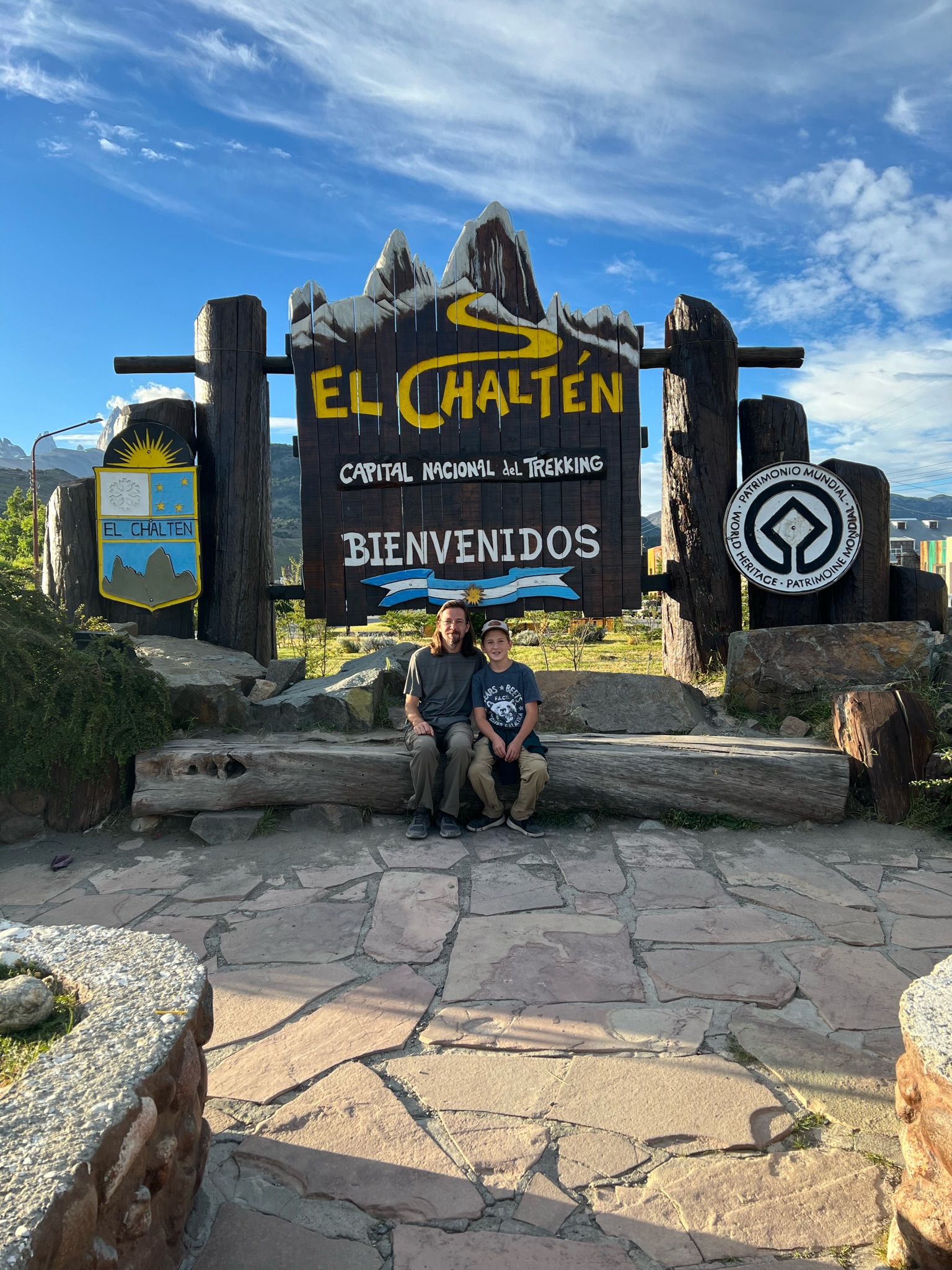
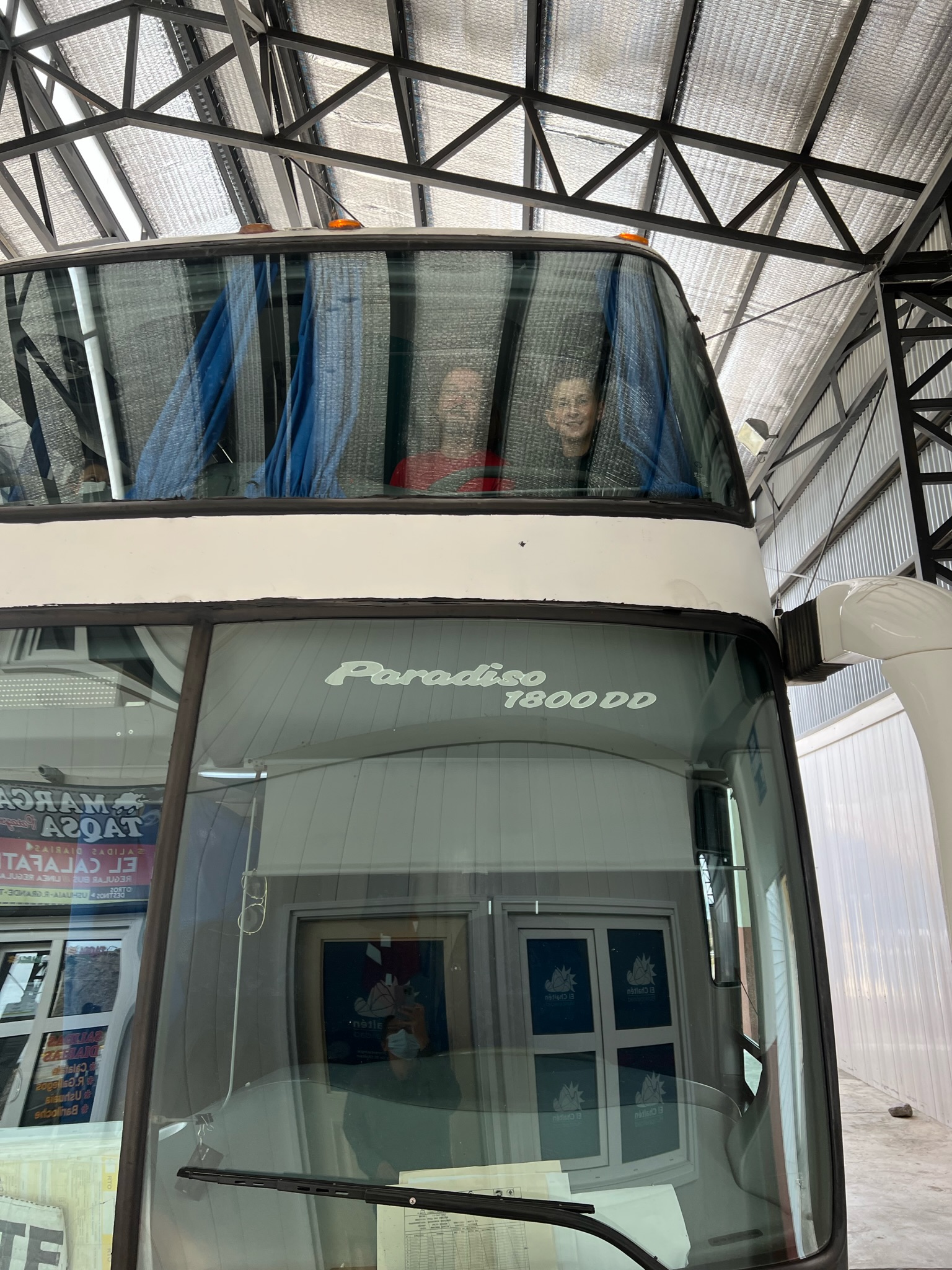
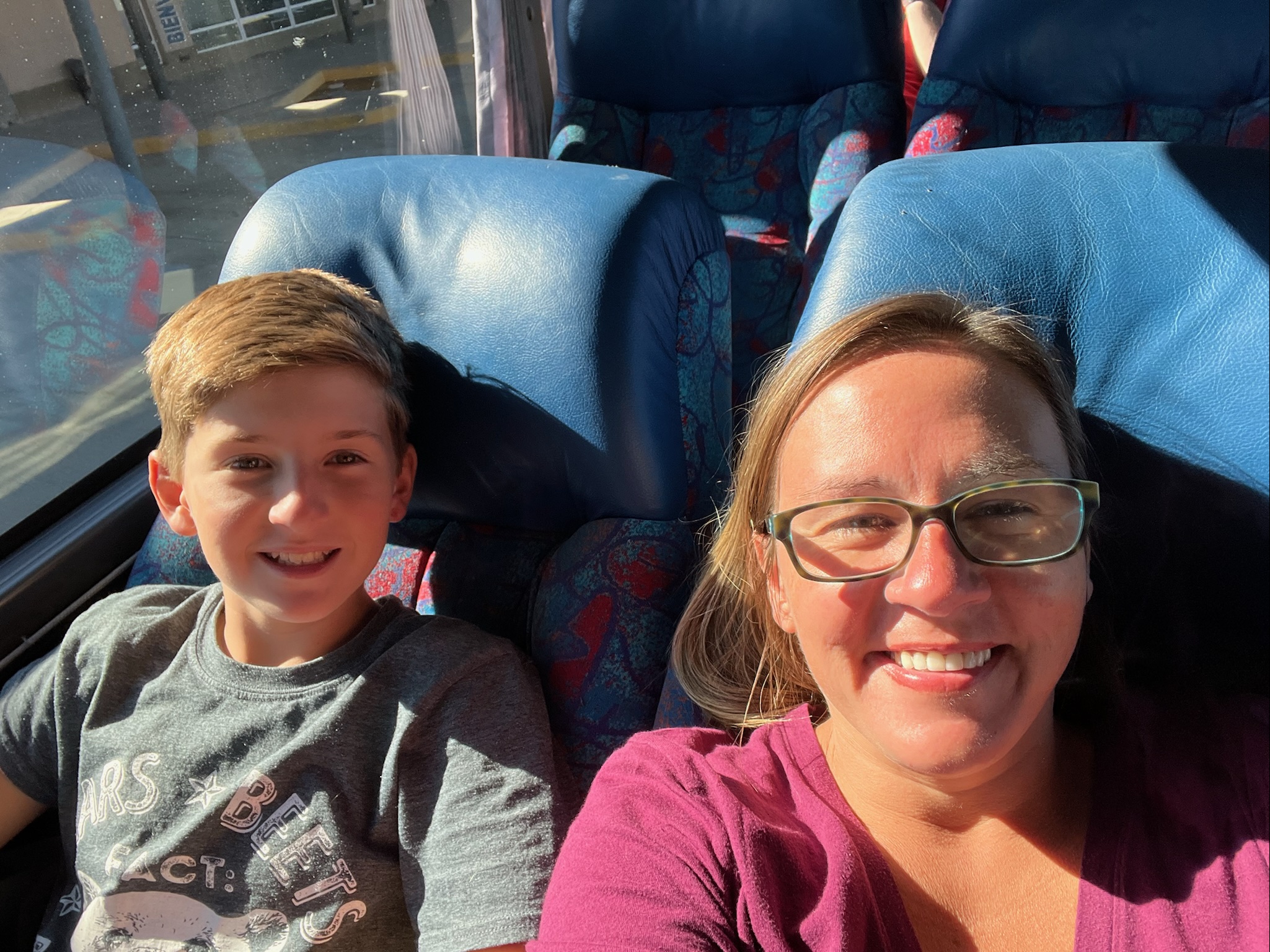
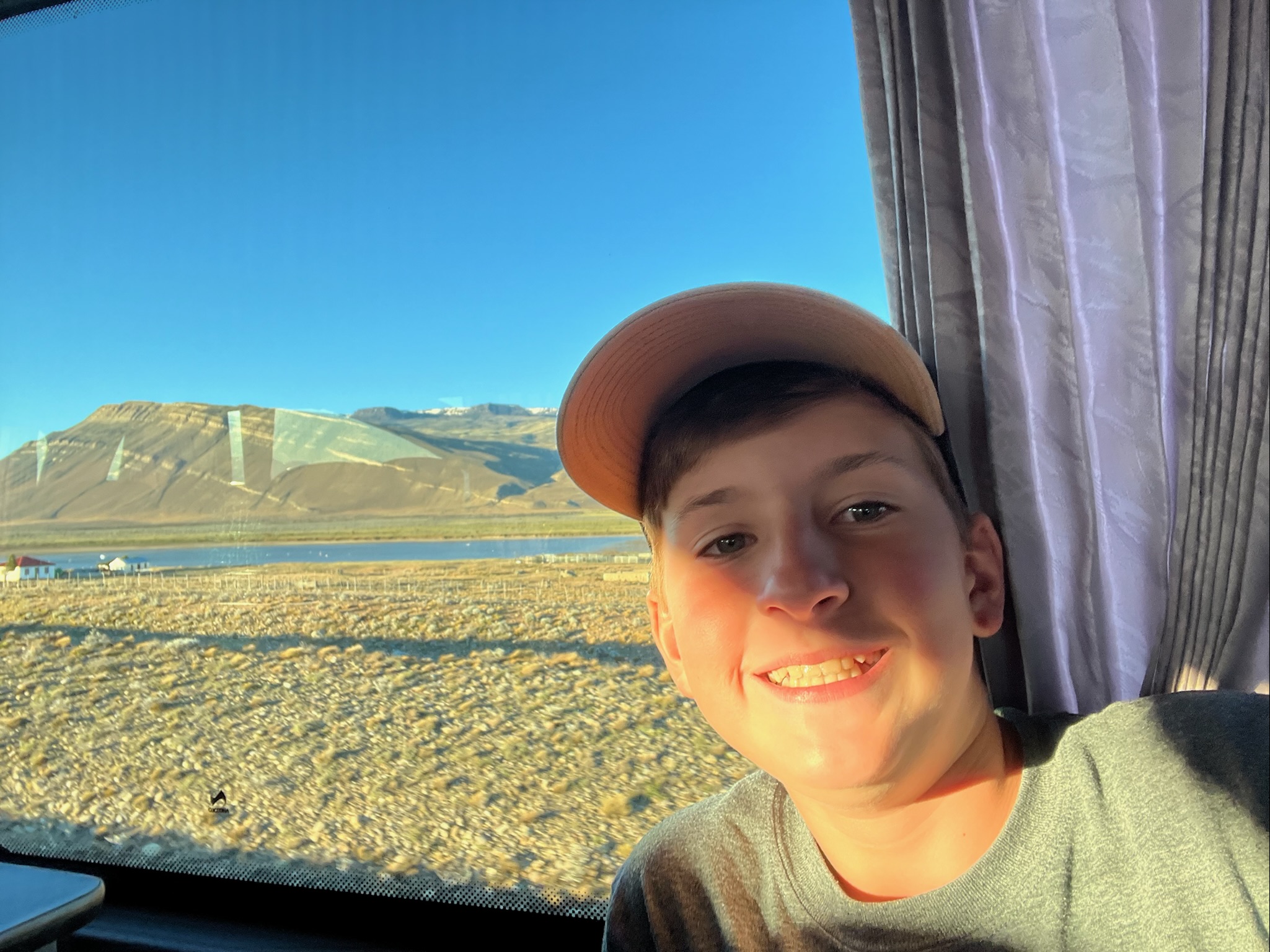
After 3 nights in El Calafate, we caught a double decker bus to visit El Chalten. El Chalten is a really small town of only 300 people about 3 hours north of El Calafate. It is a relatively young town, established in 1985, and there really is nothing there but a basecamp for the region.
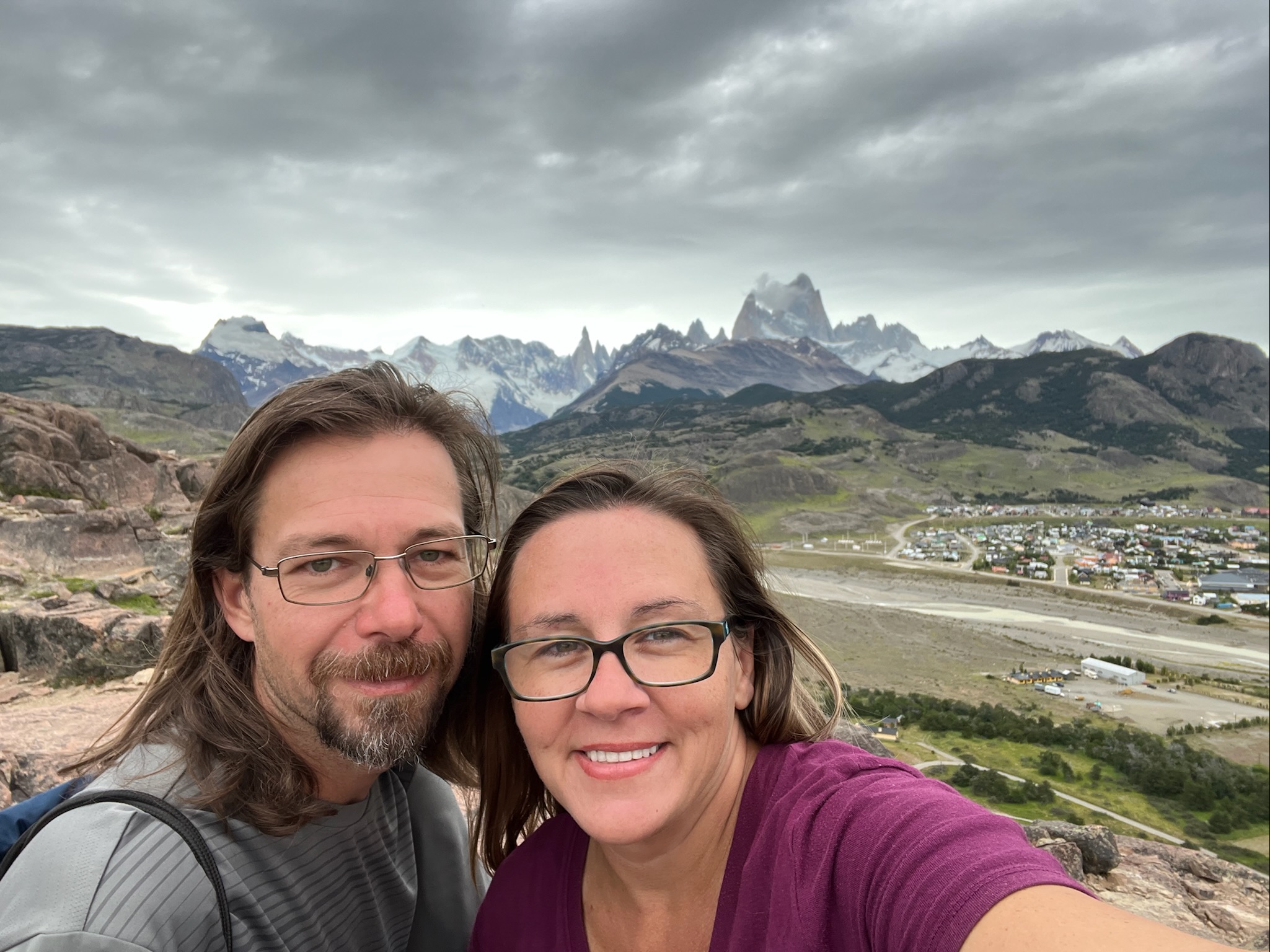
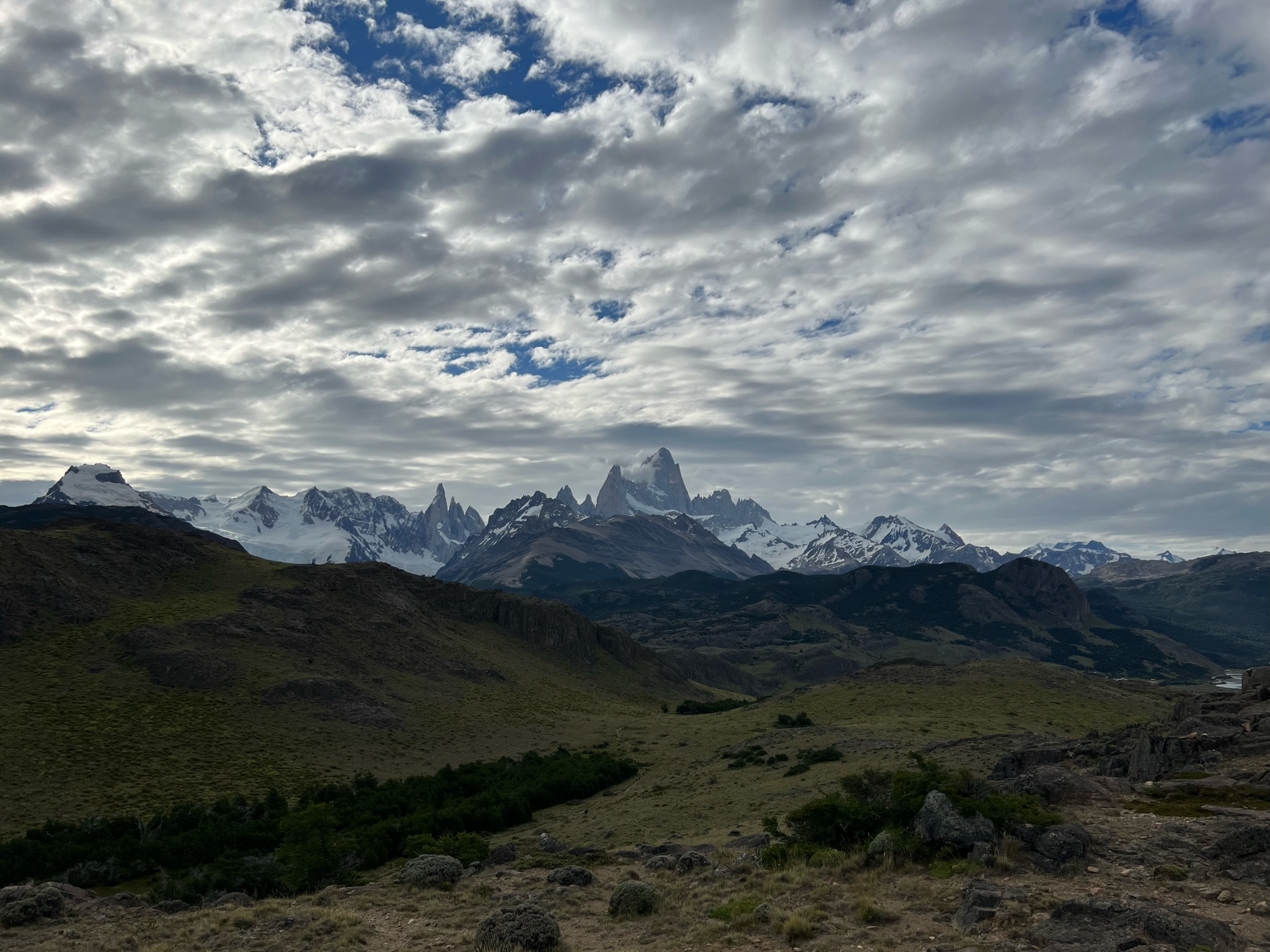
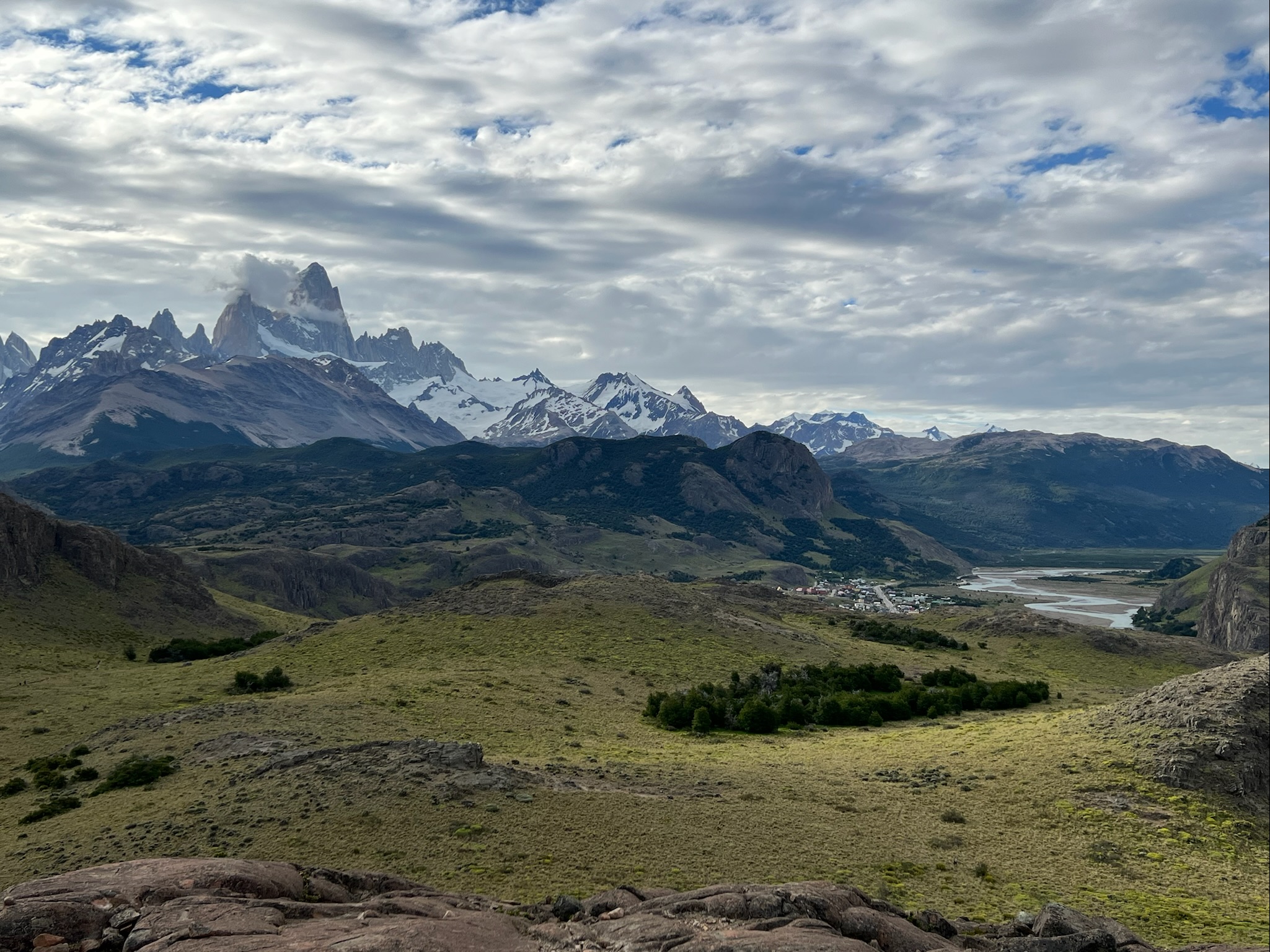
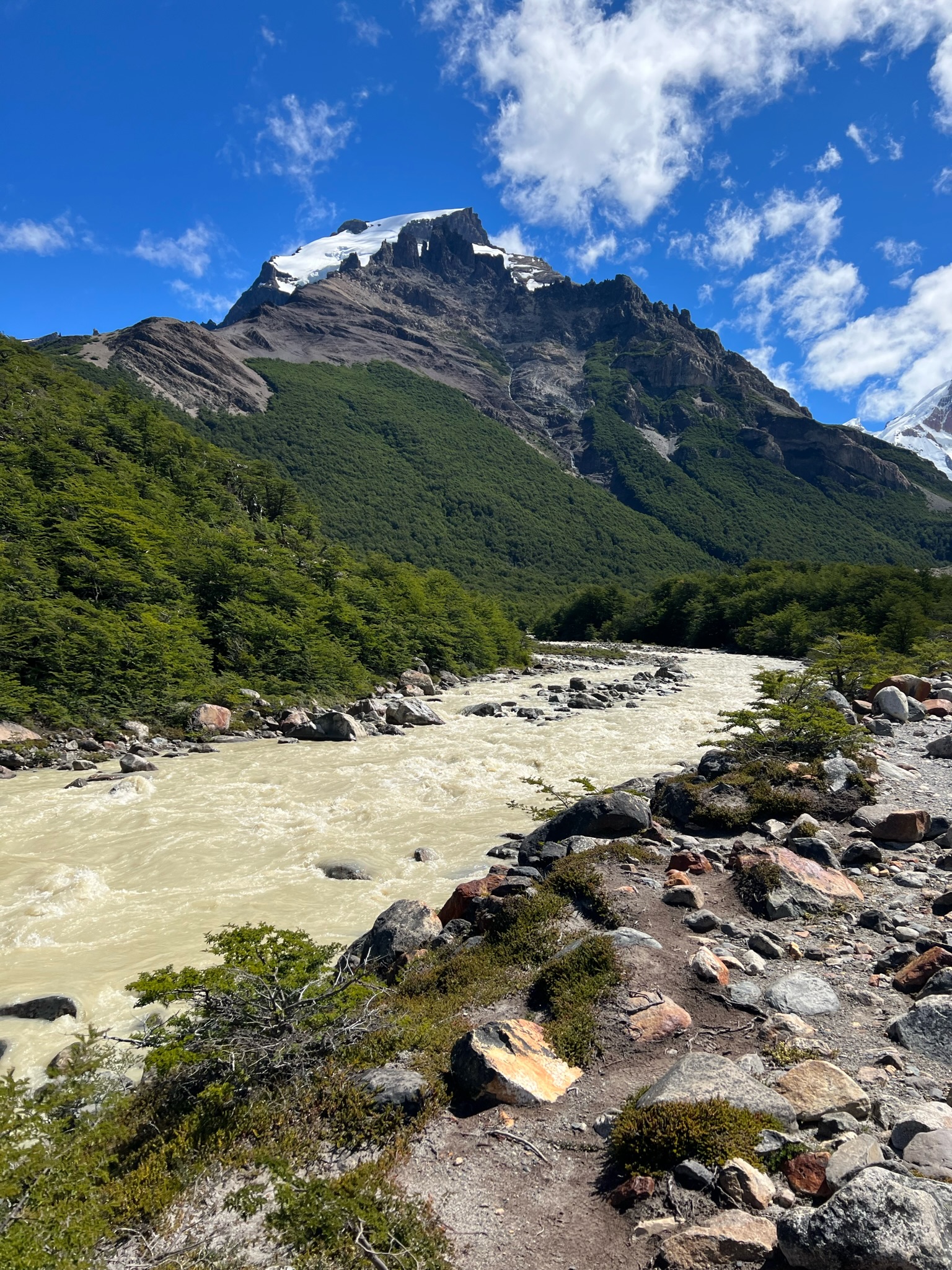
We were in the Patagonia region in the Andes mountains, and the peaks of Fitz Roy and Cerro Torre towered above us. Interestingly enough, the mountains in this region are the silhouette you see in the Patagonia brand logo.

While on the bus, we met Chris, a fellow traveler who had come to Argentina to go to Antarctica. Unfortunately due to COVID, his voyage was cancelled. Since he was already scheduled off of work, and he was here, he was making the most of his time by visiting this area. Up until this time, I don’t think we had seriously considered what would happen if our trip to Antarctica was cancelled, but we all got very nervous about it. Chris was very kind, and we traded travel tips and advice with him for a bit.

When we got to El Chalten, we caught a taxi to get to our AirBnB. We’d rented a two bedroom apartment, and we were too tired to wander through town trying to find it. It was after 9:00 pm, and although the sun was still up, we were wearing out pretty quickly. Our driver pulled up to a ramshackle building, and my heart just sank. I was wondering how in the world we were going to make it for three nights in this shack; it didn’t look like a shack when I’d booked it, but there hadn’t been any outside pictures in the listing either. Just as I’d resigned us to making it work in this dilapidated house, we realized we were not quite at the address. We drove down the road just a little further, and there were a few buildings within a fenced in yard. Our host, Juan, was working and couldn’t meet us, but he said he’d leave the apartment unlocked for us. We weren’t really sure which one was ours, so hoping we weren’t breaking and entering, we knocked and tried the door on one of the buildings to see if it was unlocked. It was ours, and inside, it looked just like the pictures I’d seen online, thankfully.
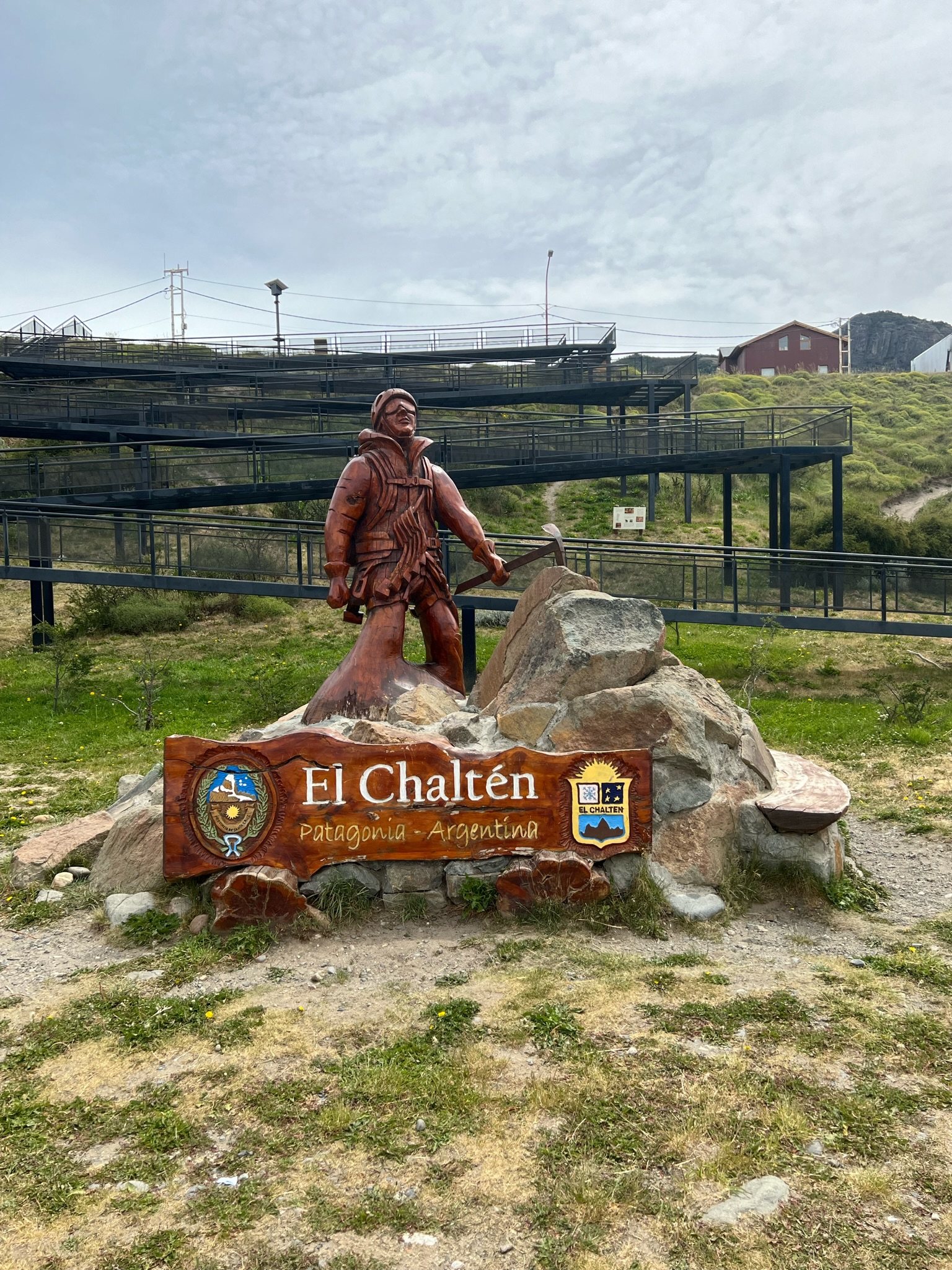
The weather was much colder here than any of the other locations we’d been in. In Cordoba, the low temperatures were around 70-degrees. In Bariloche and El Calafate, the temperatures ranged from 55-65 at night and 65-75 during the day. It was very windy there, so even though it was warm, it felt very cool. Here though, the evening temperatures were closer to 40-degrees, and the daytime highs were in the 55-60 degree range. Like Bariloche and El Calafate, the winds were tough. We’d seen and heard about how windy the Patagonia area could be, but here is where we really experienced it.

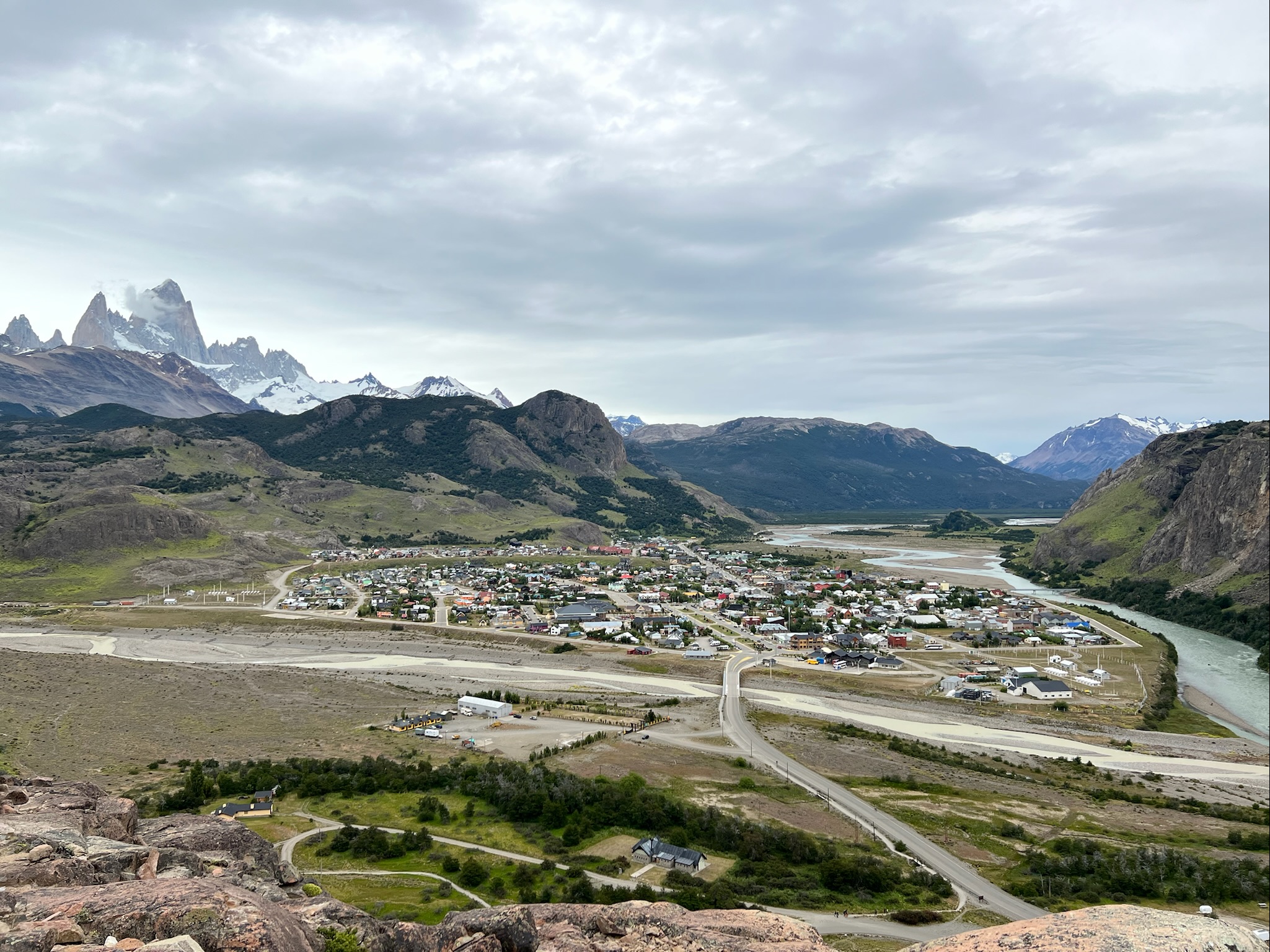
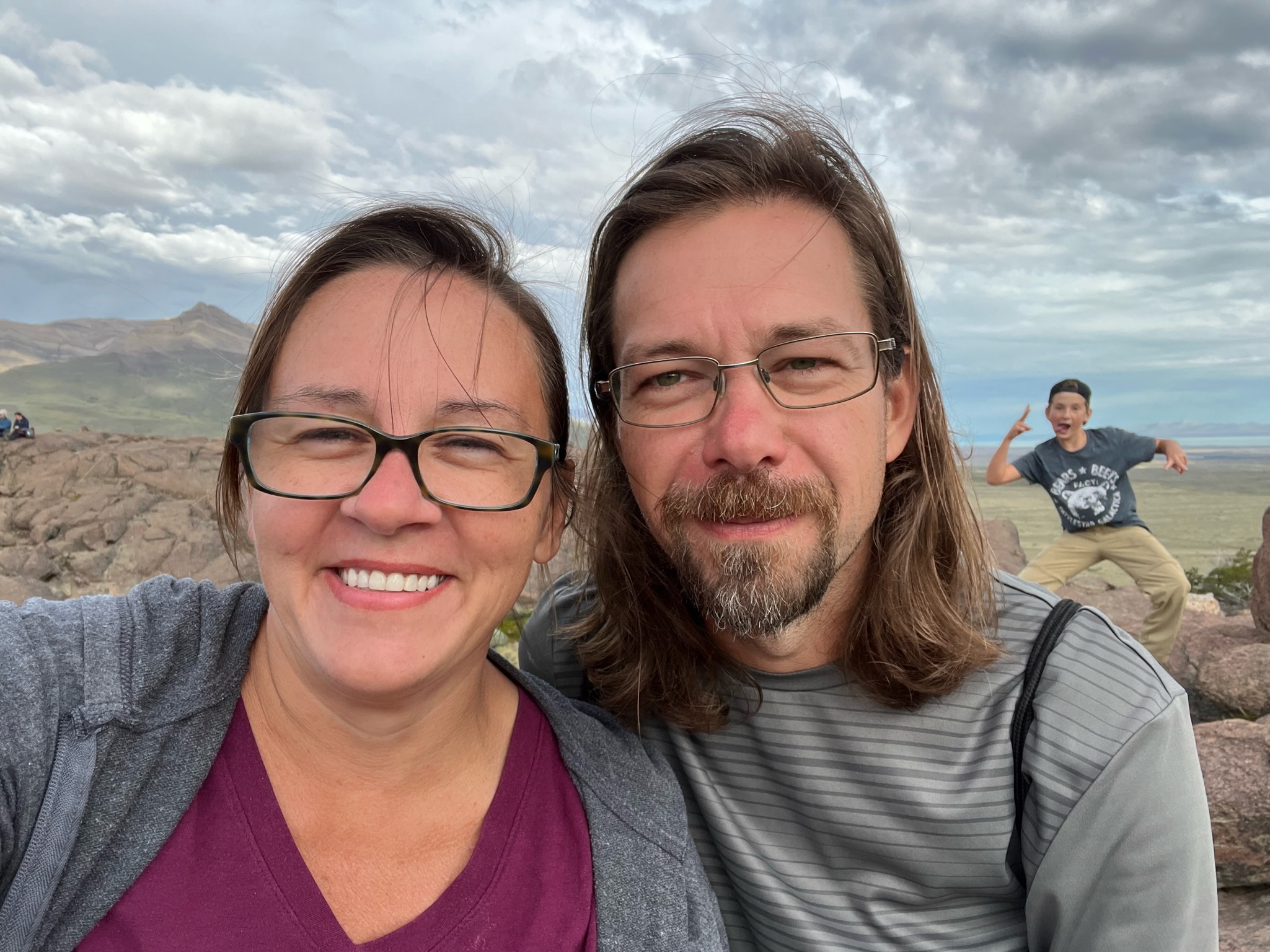
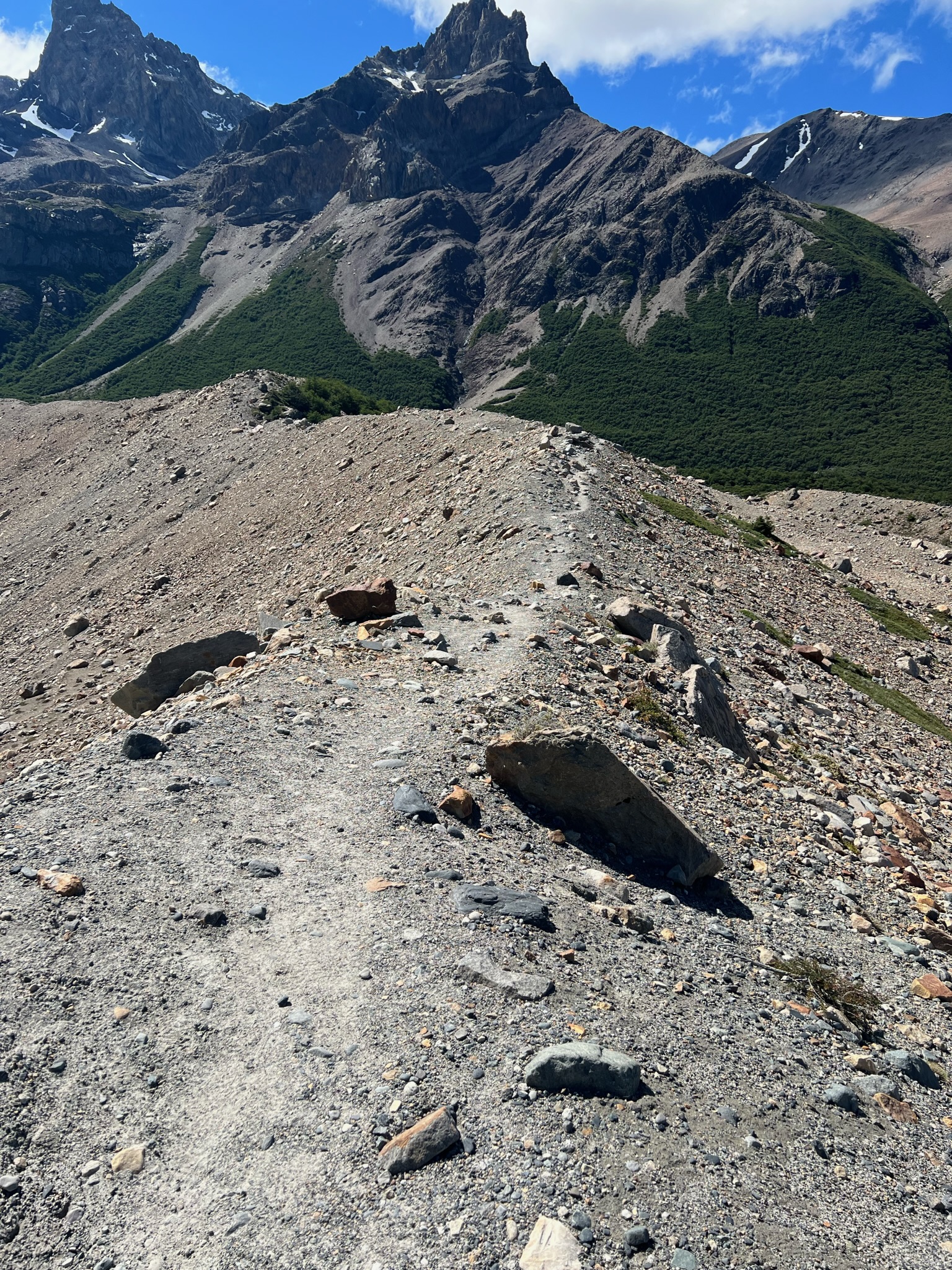
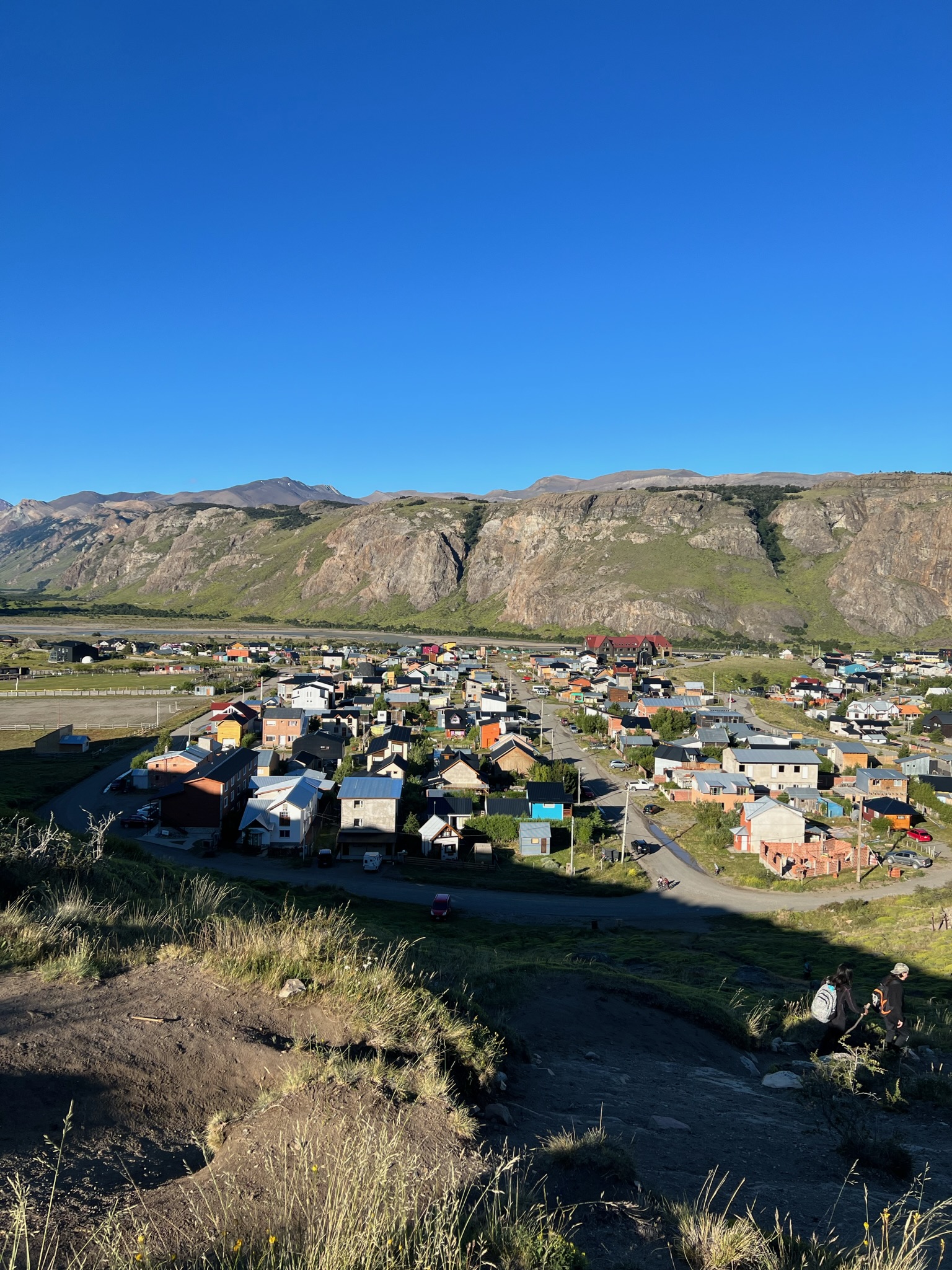
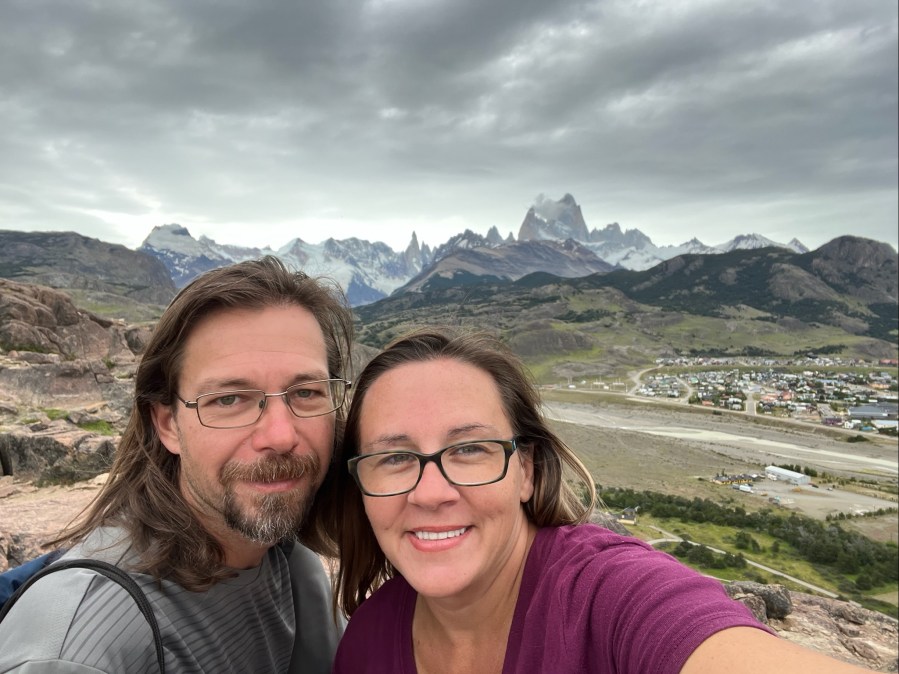
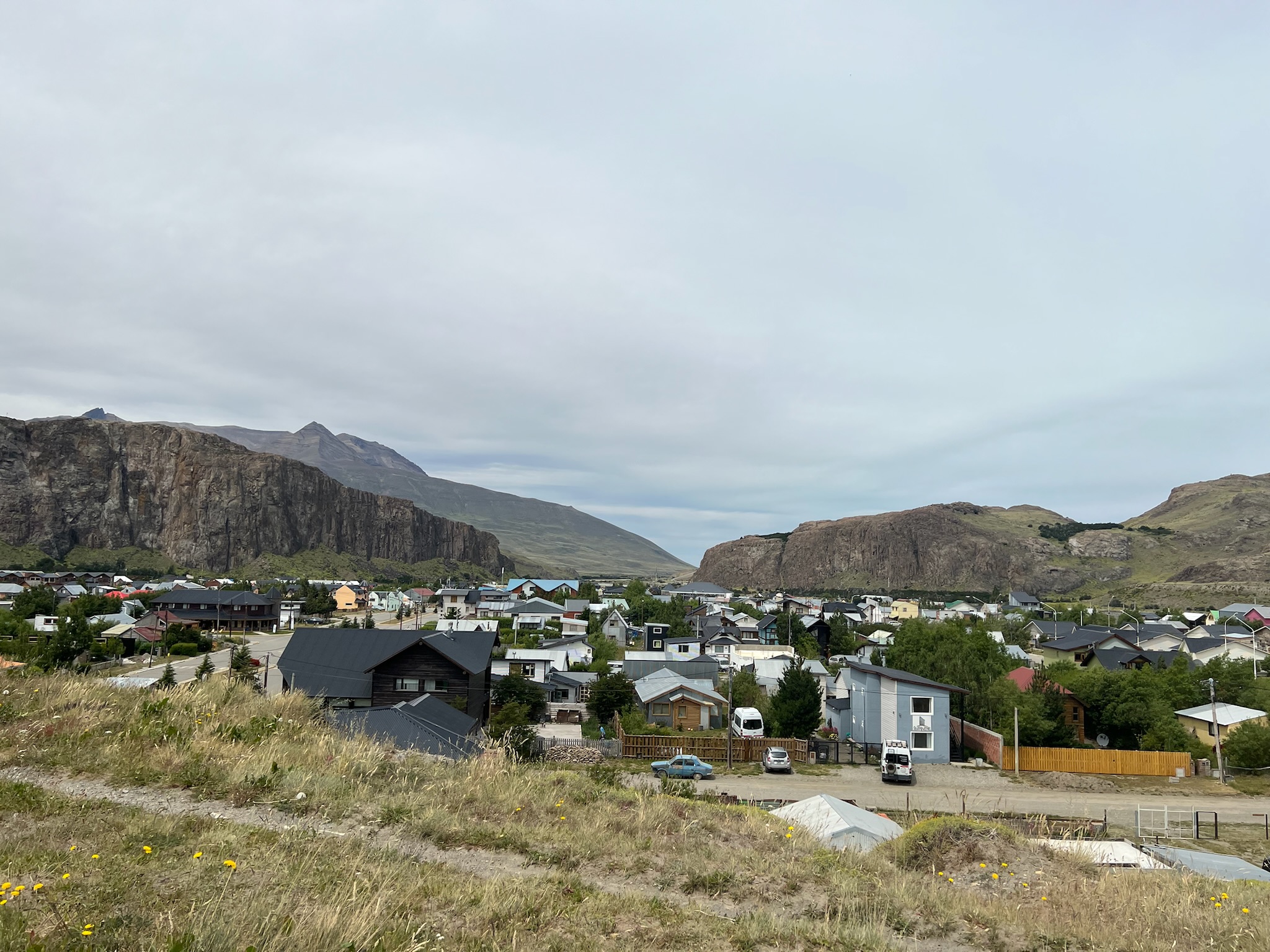
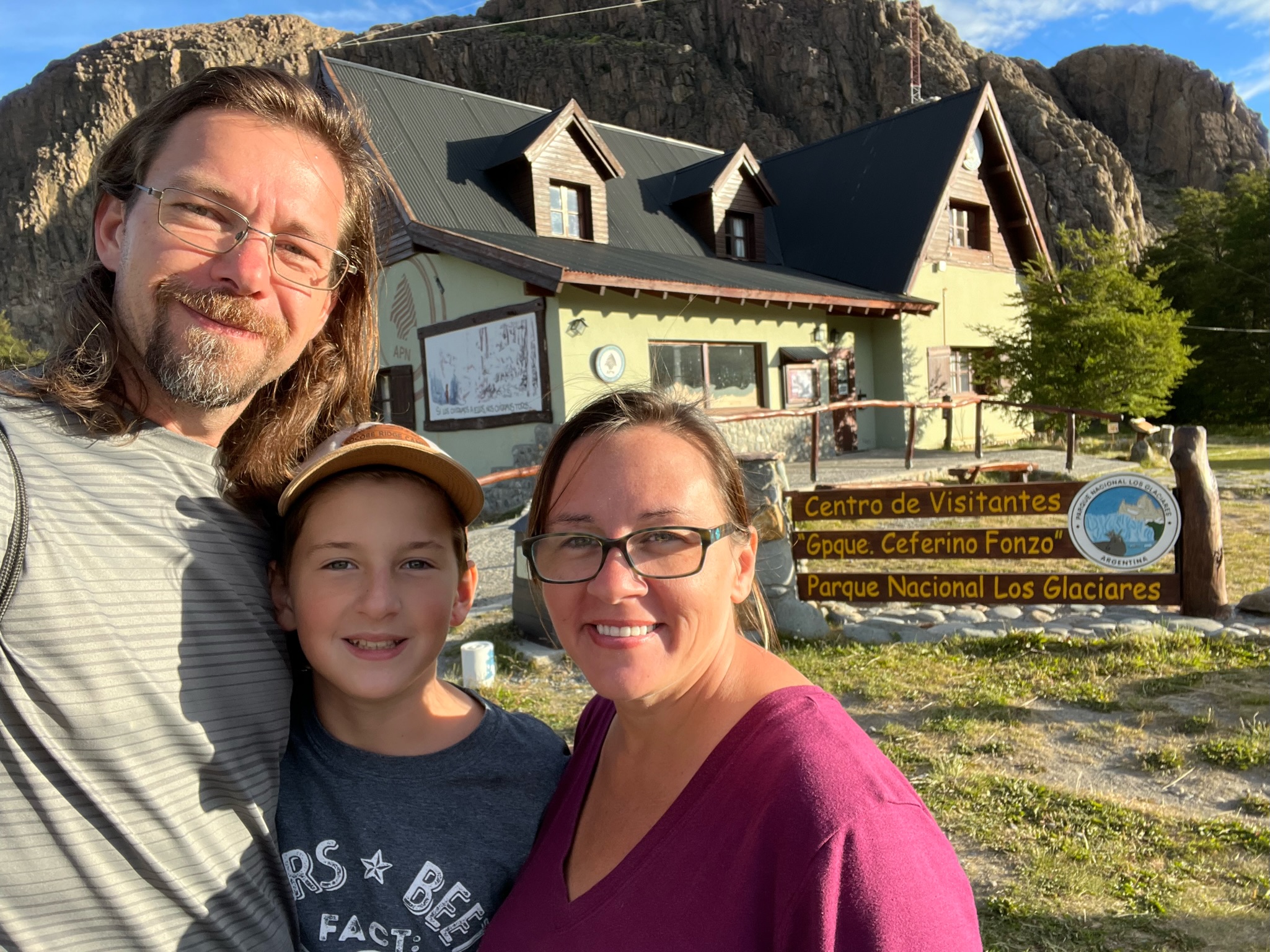
We went on a couple of hikes in the mountains. Our first was to the Mirador de Los Condores and Las Aguilas. We hiked out of town and down the road to join the trail. The visitors center was closed, so we snapped a few pictures and then hit the trail. It was an easy trail, but the elevation and wind made it a little tough. The view from Mirador de Los Condores was beautiful. Sitting high above the river and road, you could see the entire town nestled in under the peaks of the mountains. We were warm from the climb, and the wind blowing through our hair felt great.
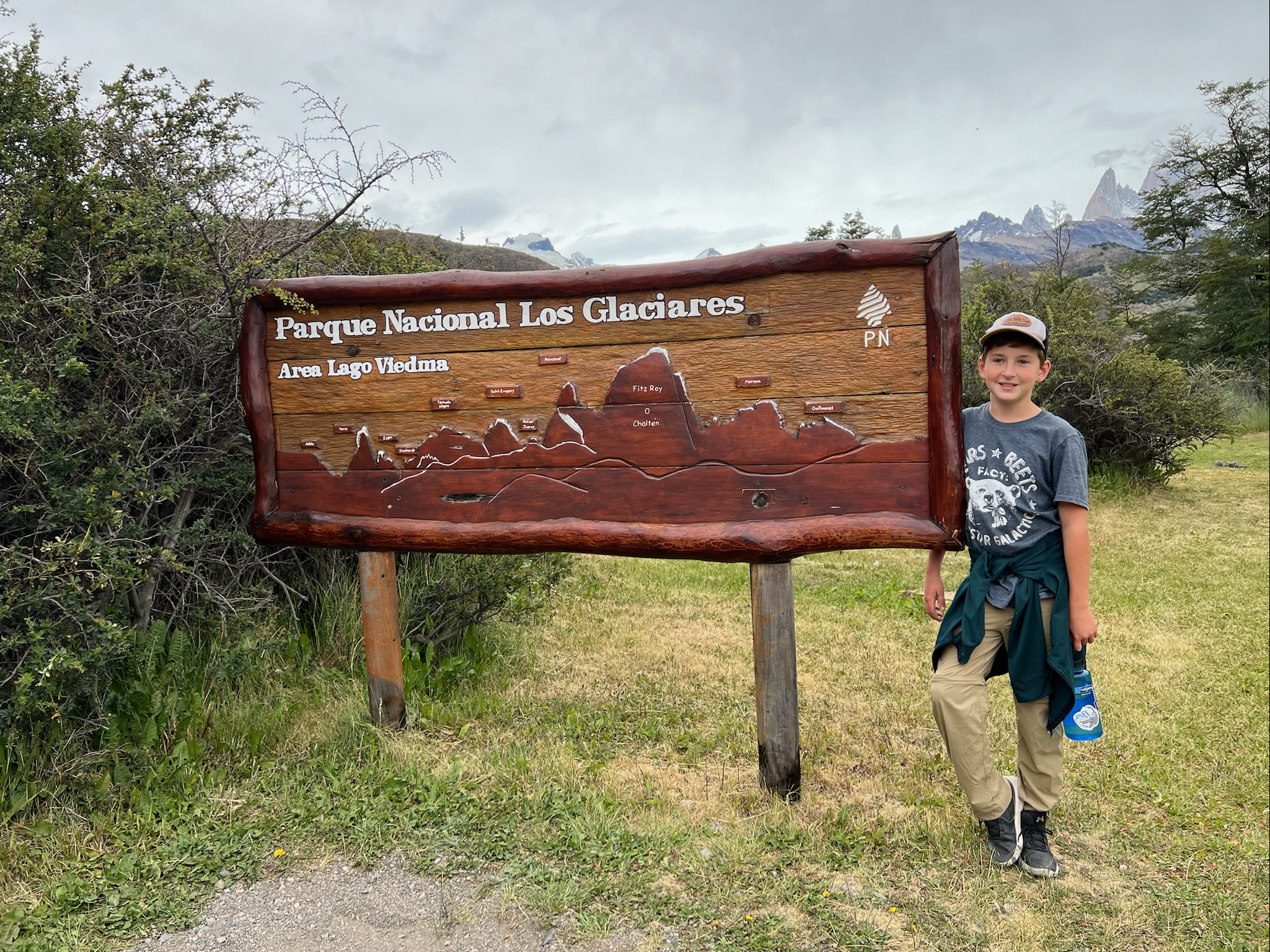
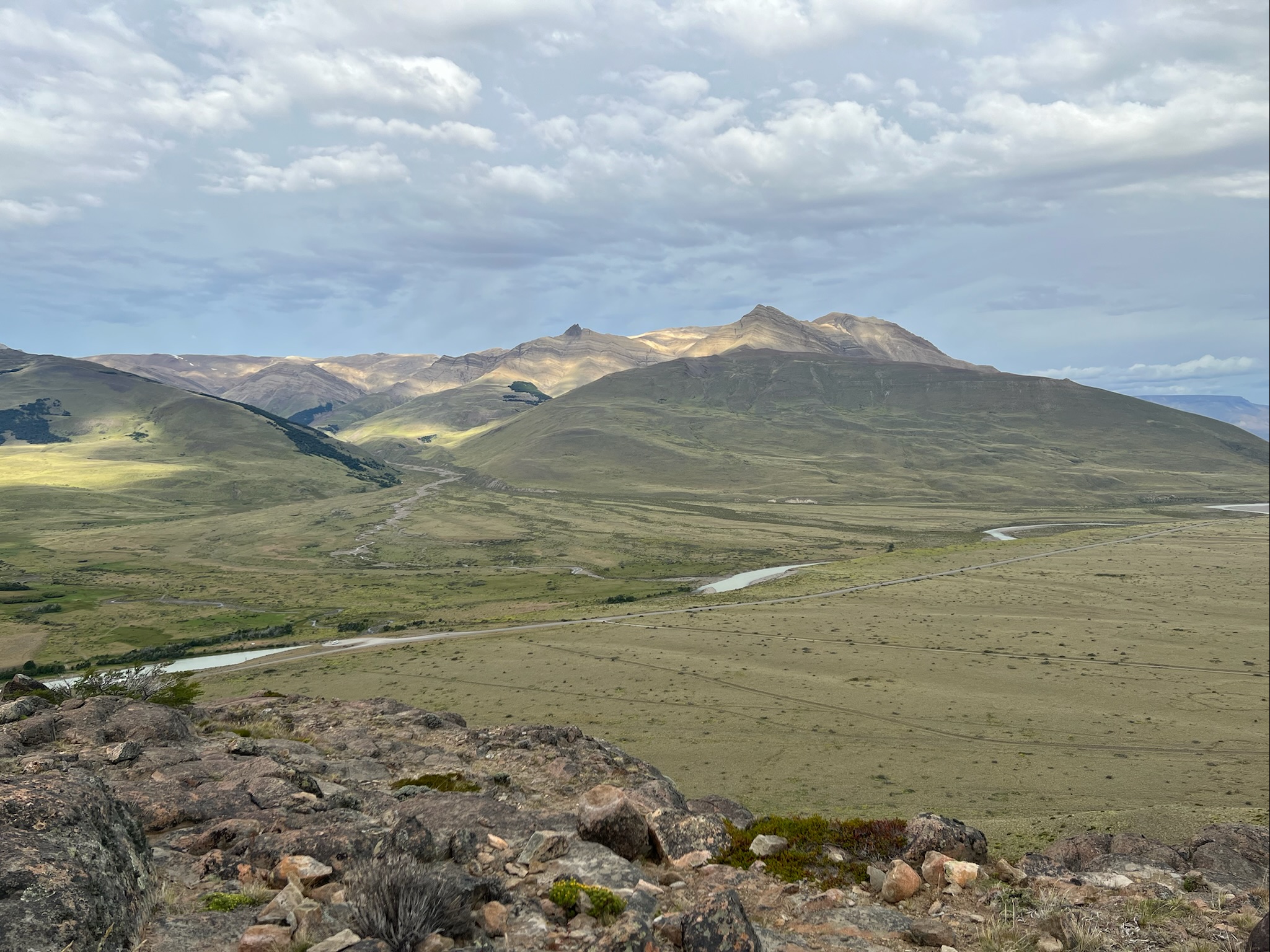
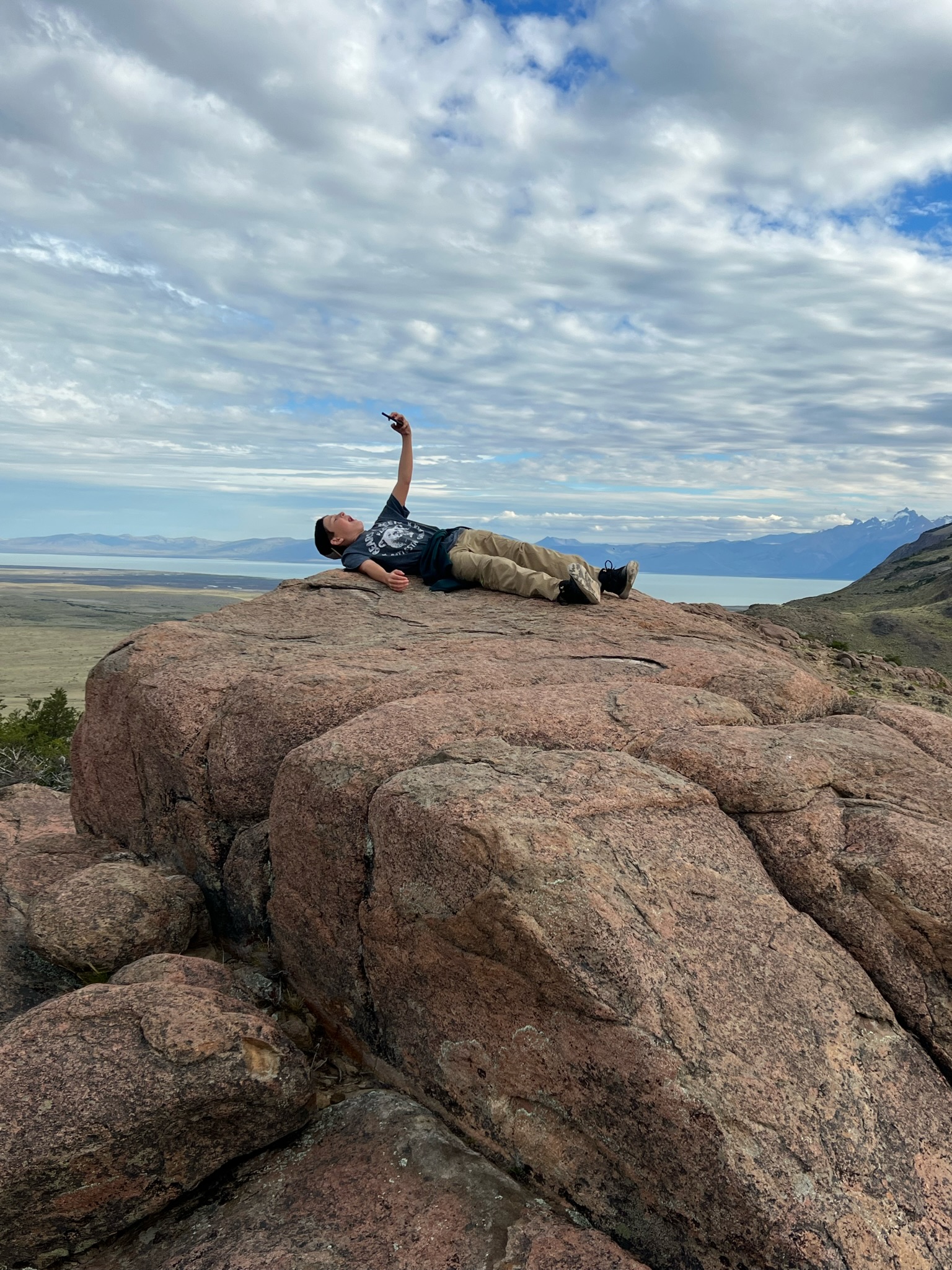
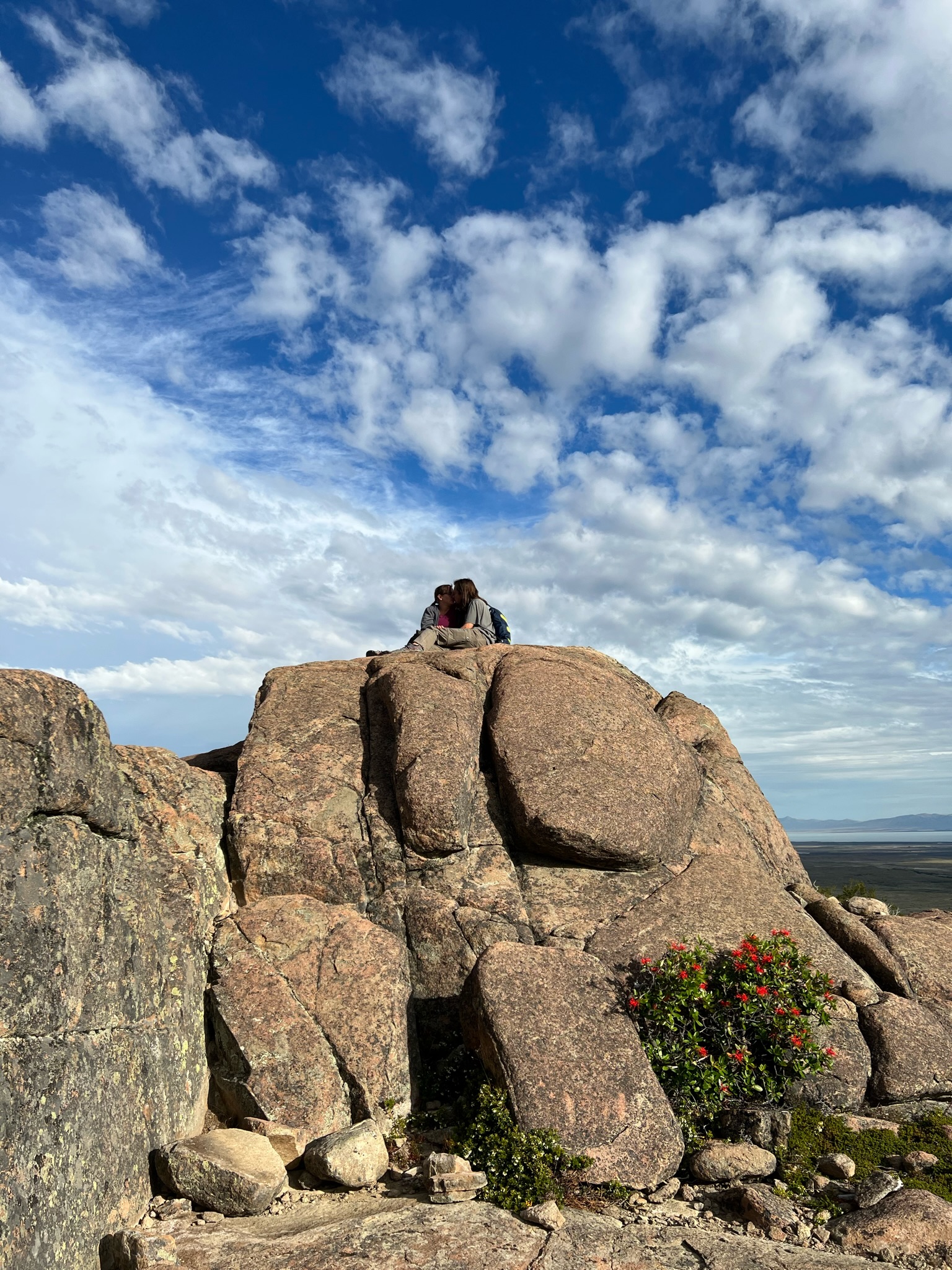
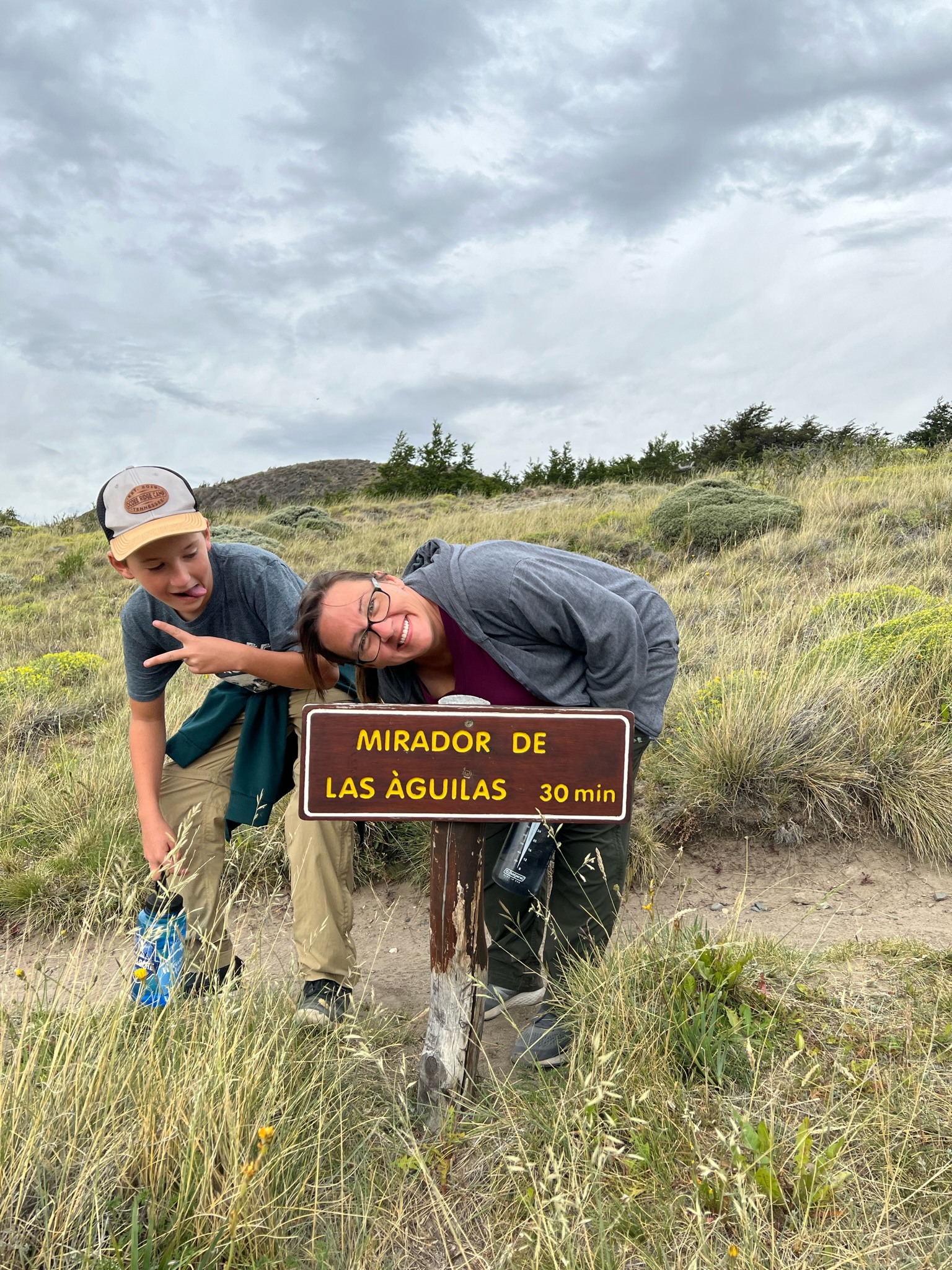
After resting a little, we took off for the Mirador de Las Aguilas. This trail took us through a plain and around to the back side of the mountain. The views here were also spectacular, and we enjoyed the warmth of the sun as we basked out on the rocks.

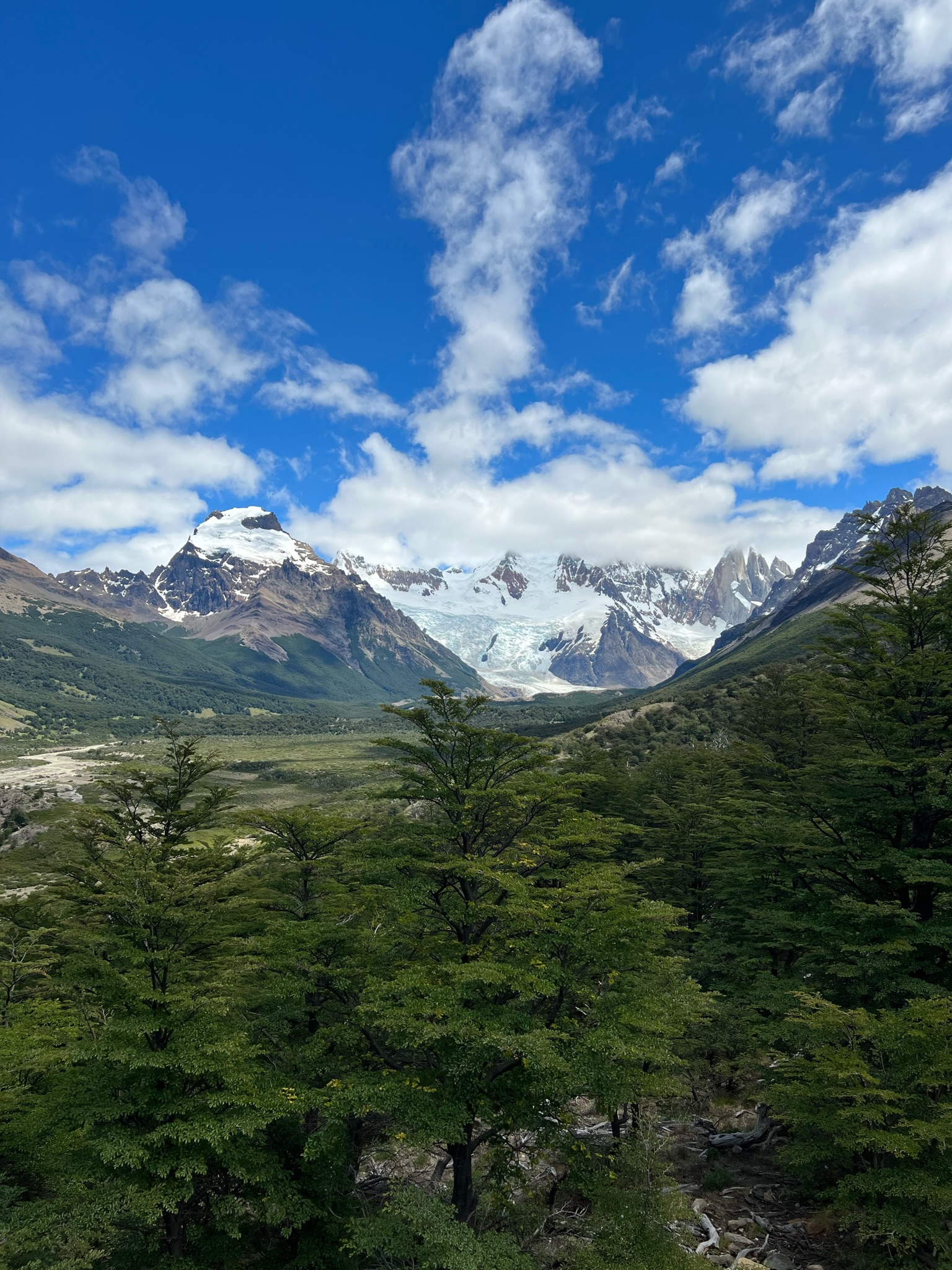
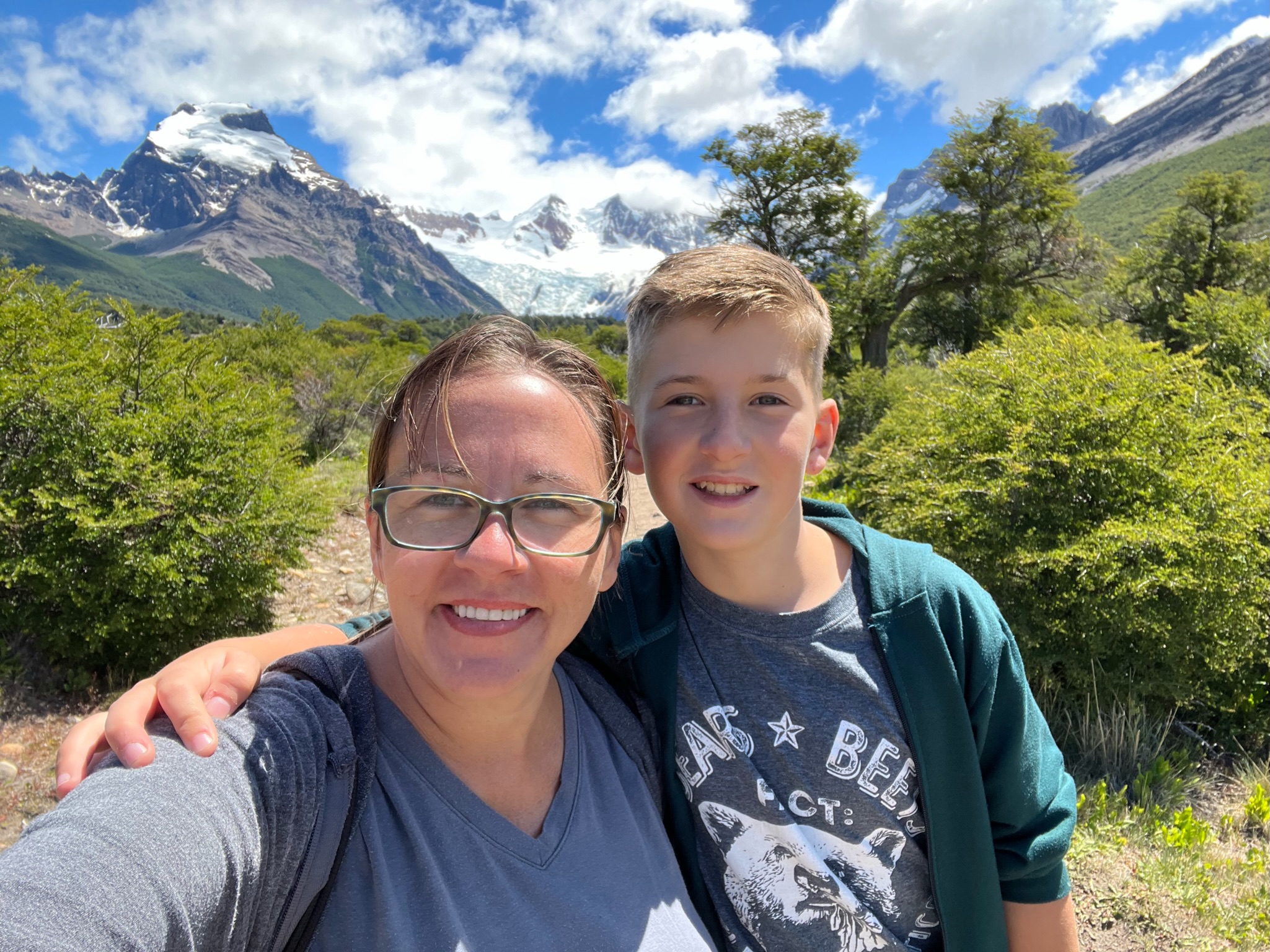
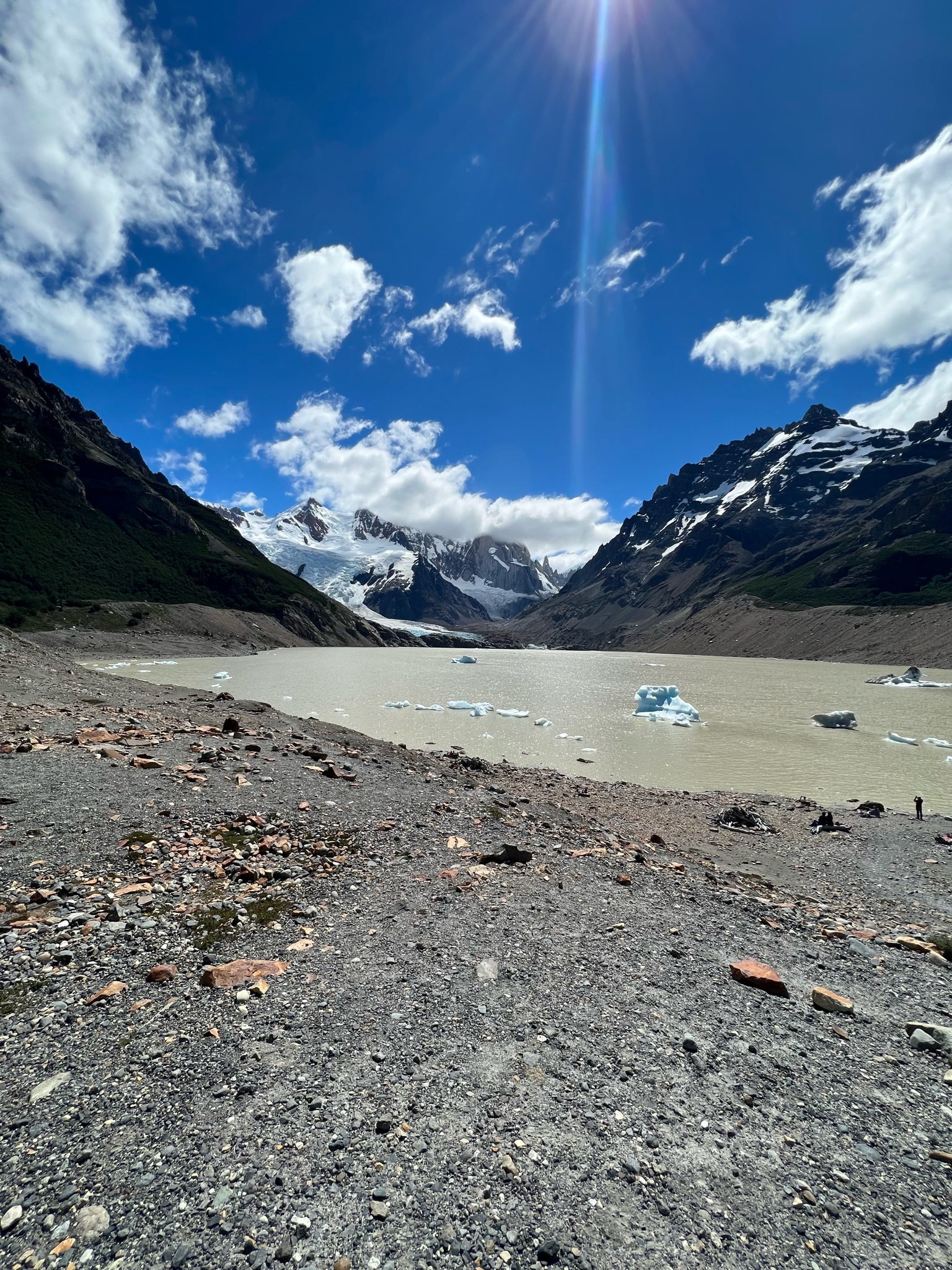
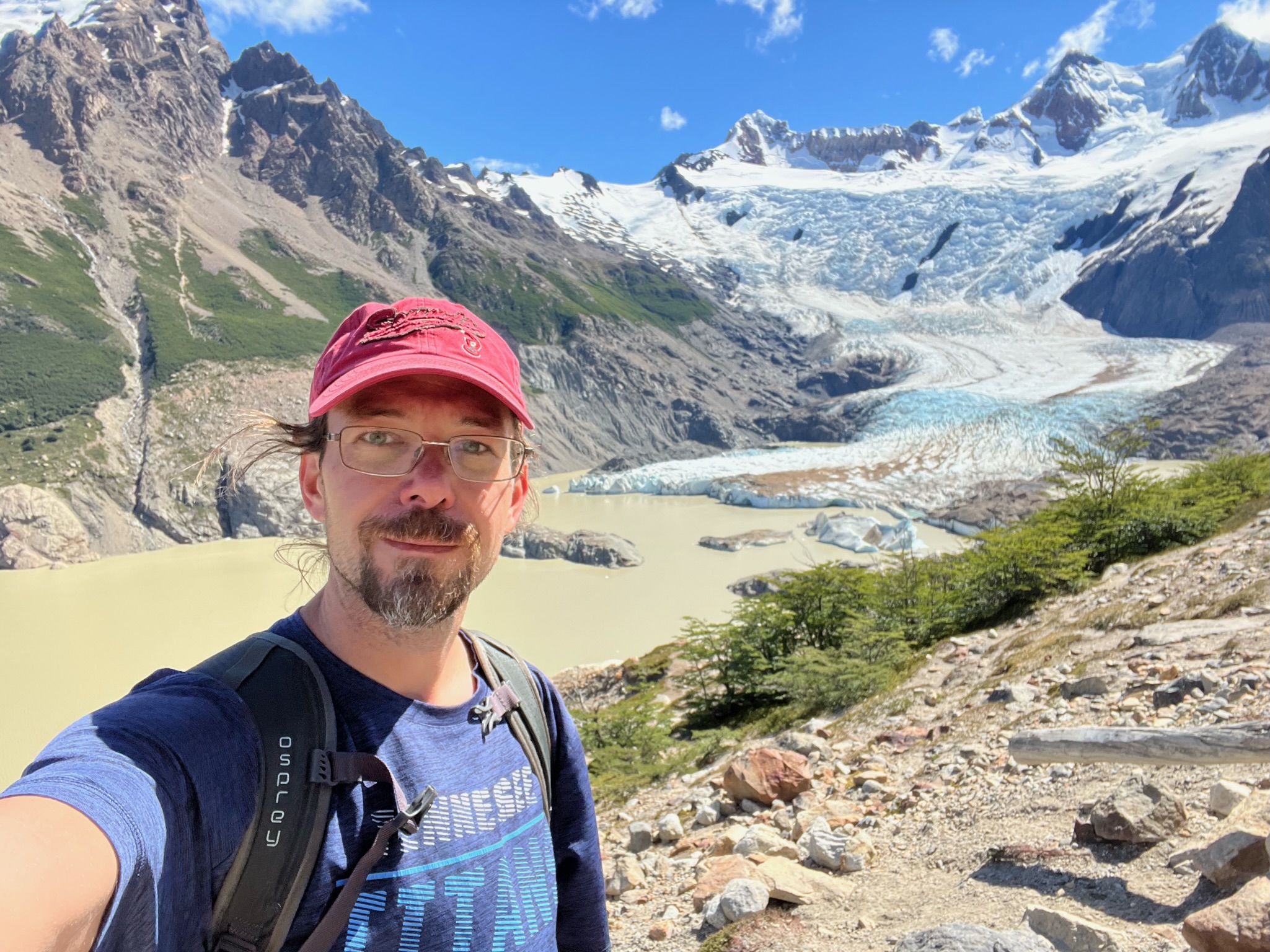
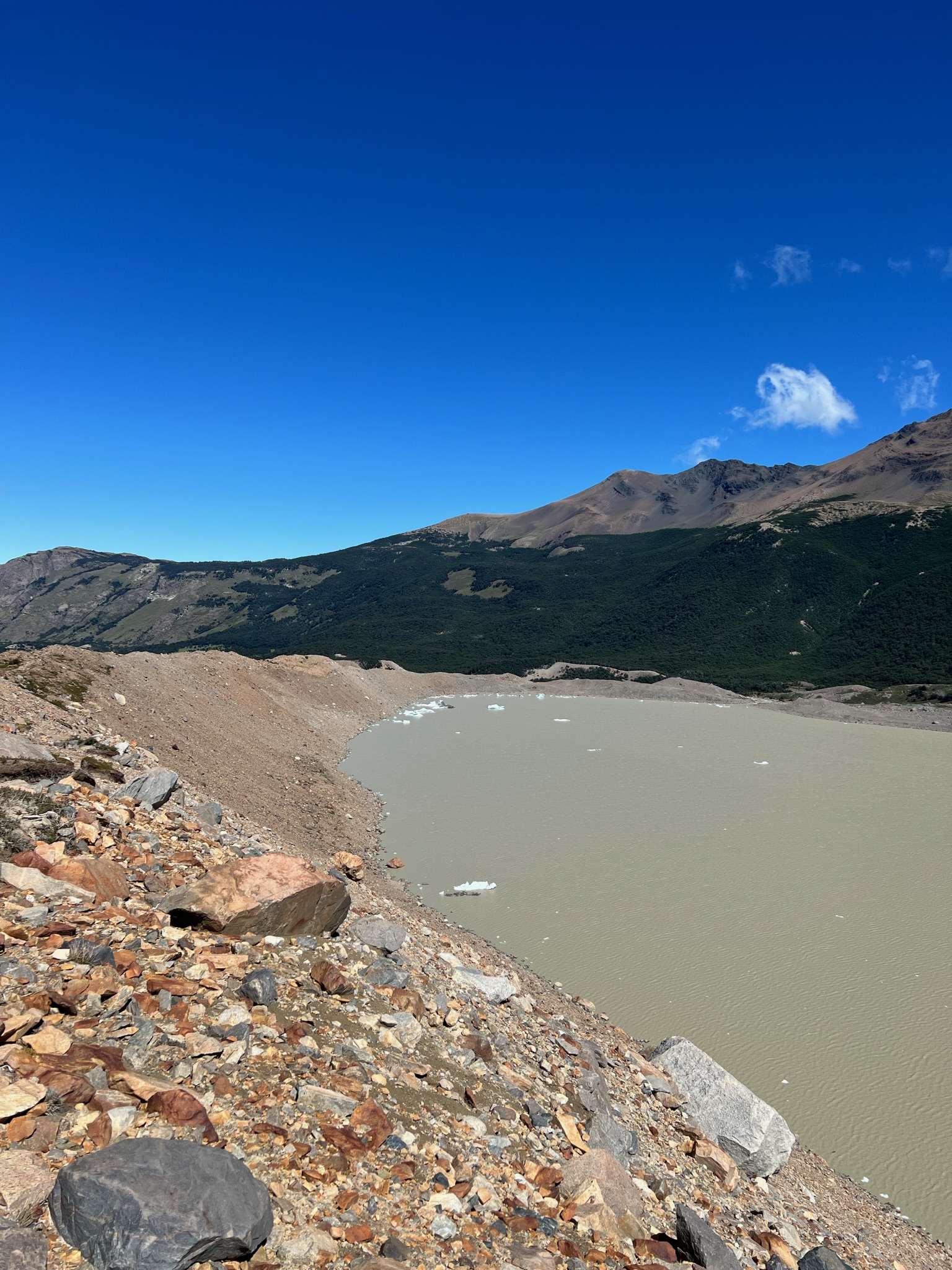
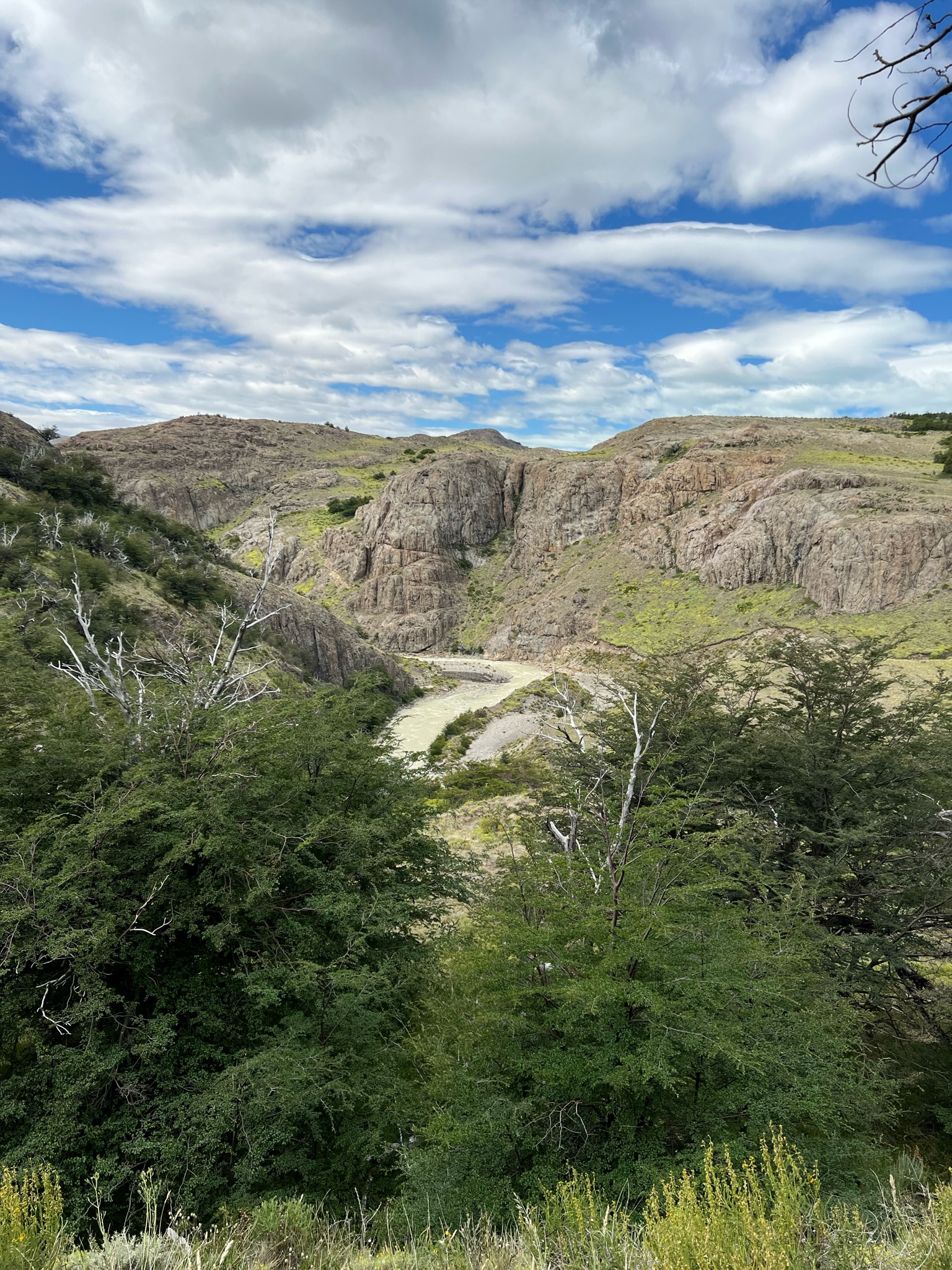
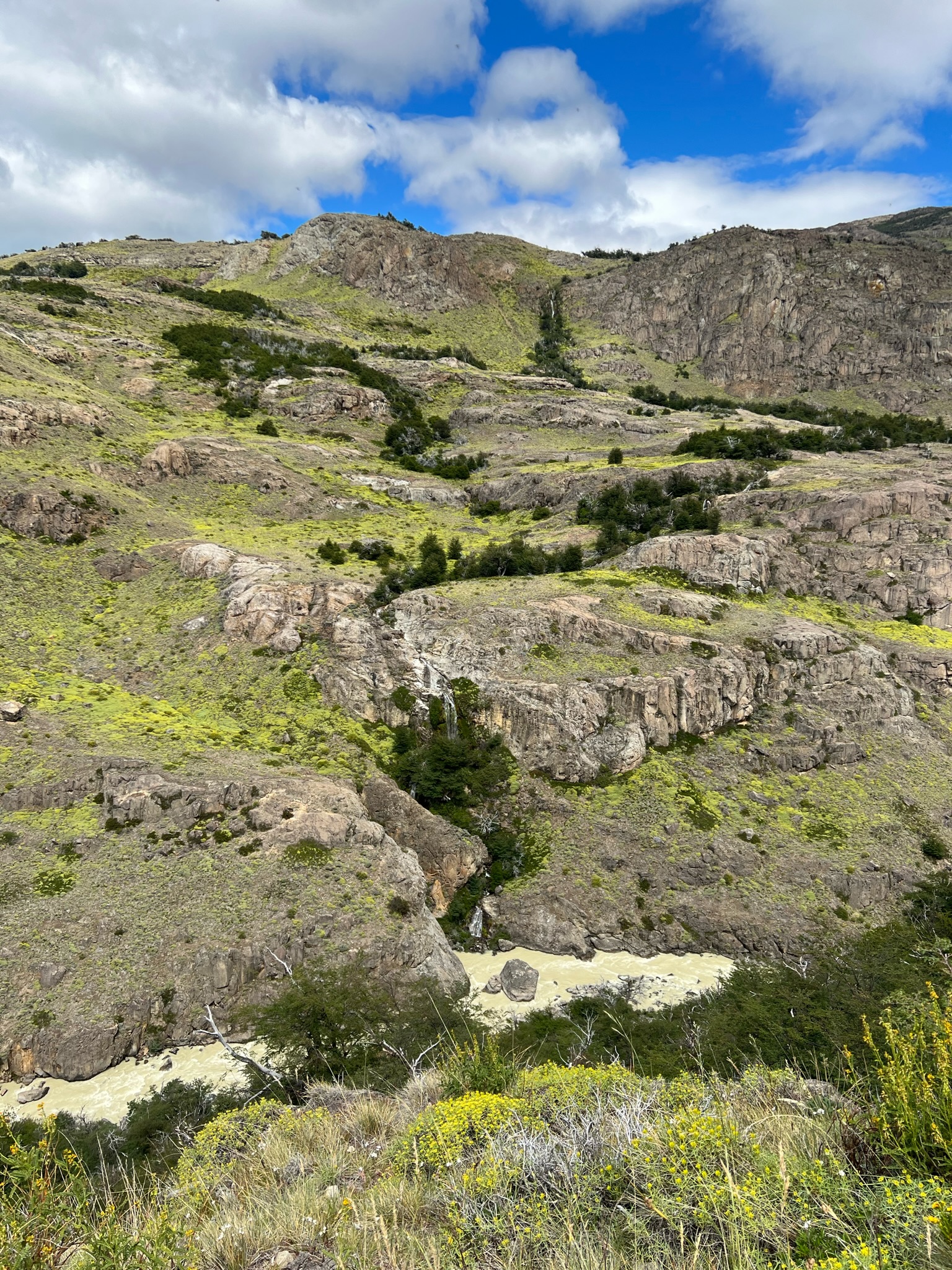
On another day, we decided to hike to the Mirador del Torre, a great viewpoint for the Cerro Torre Range. The trailhead for this one was just outside our apartment. The mirador (viewpoint) was only about 1.8 miles from our apartment, and it was supposed to be mostly level, so this would be a relatively easy hike for us. We reached the viewpoint and had a look around. It truly was beautiful. The trail continued on for another 3.7 miles to the Torre Lake, and if you went another 1.2 miles past that, you would reach the Mirador Maestro and be able to really admire the face of the Maestro glacier. We were already a little tired, but in true Swain style, we decided that we could make it to the lake. Henry began complaining of a sore ankle somewhere around half way to the lake, and he and I decided to turn around and head back to the apartment. We talked Brian into going the rest of the way on his own because I knew he’d regret it if he didn’t make it to the end. Henry and I made it back with no issues, and while Brian hiked the entire distance to Mirador Maestro and back, Henry and I feasted on warm, freshly baked brownies at a nearby restaurant.
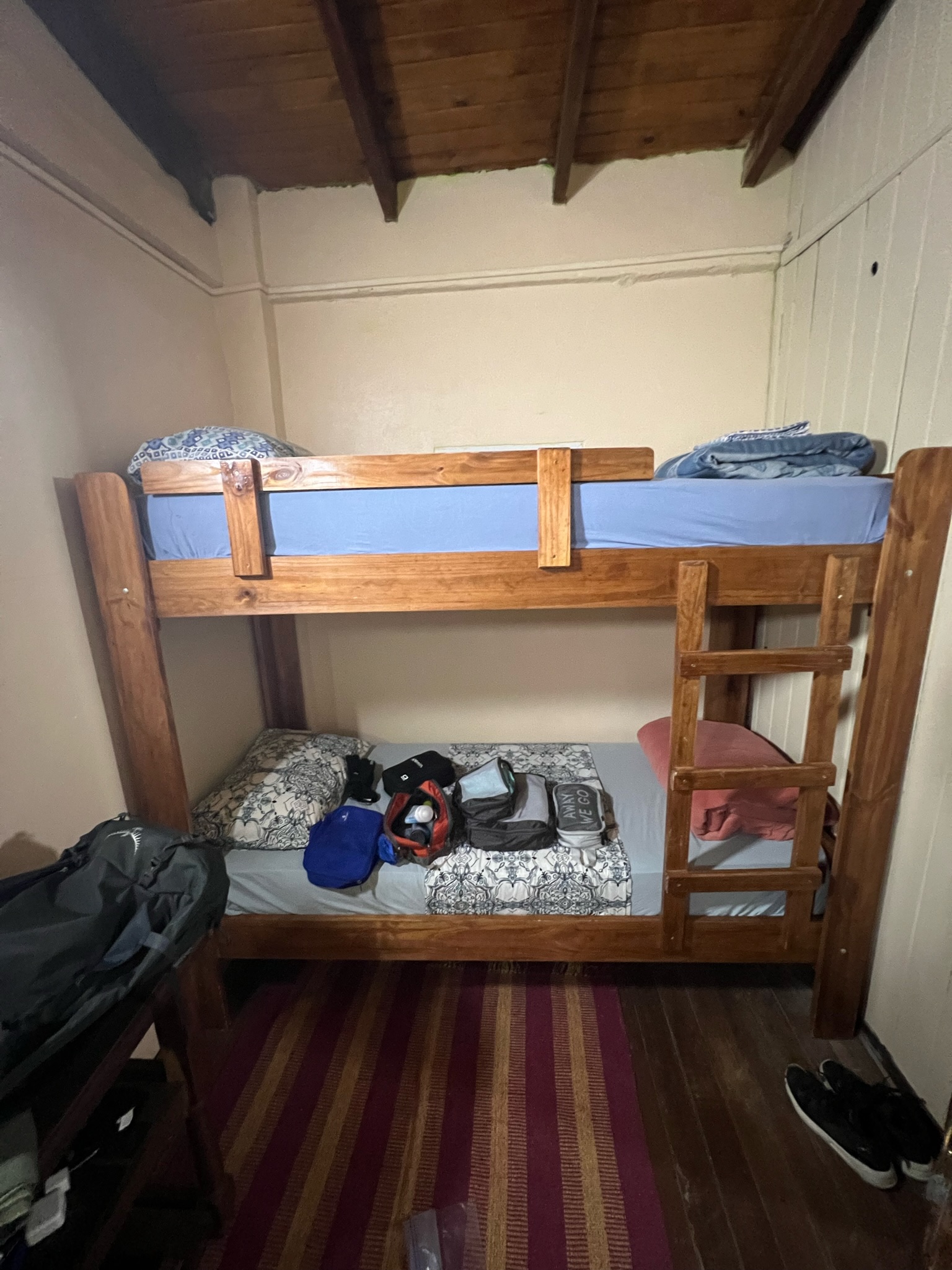
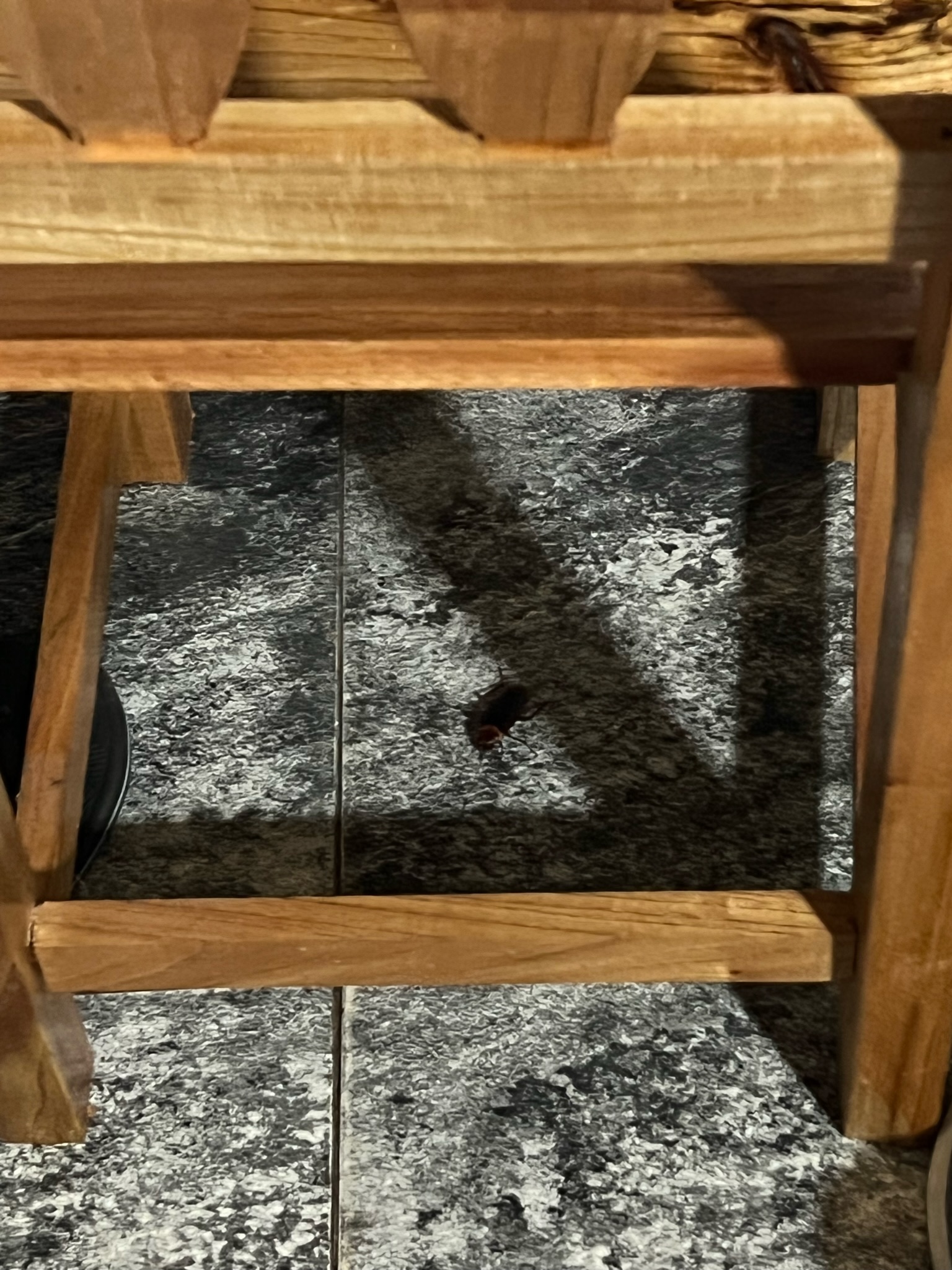
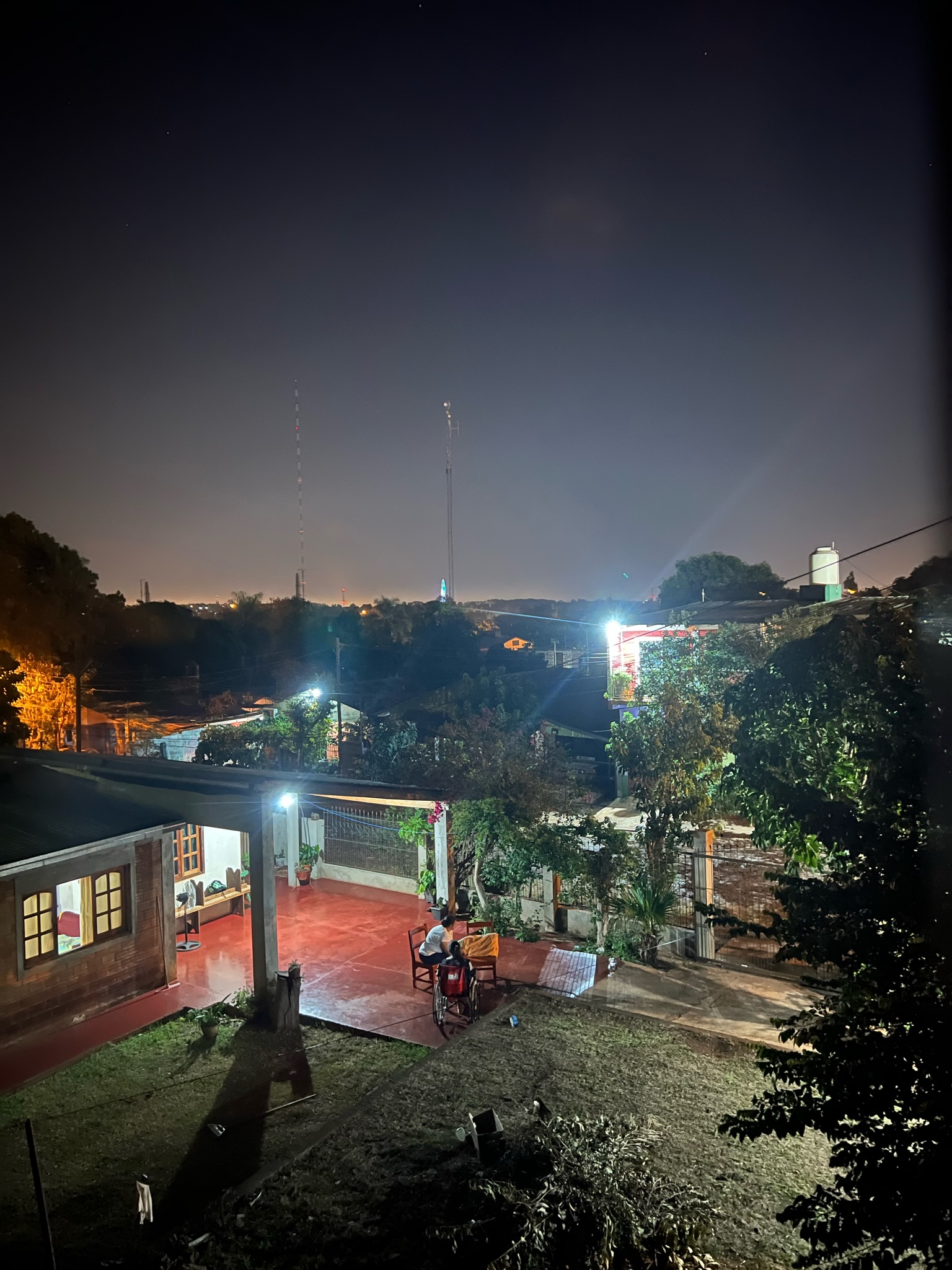
We really enjoyed El Chalten, but it was time to move on to our next destination, Puerto Iguazu. We caught the bus back to El Calafate, and the next morning, we flew to Puerto Iguazu. As I said earlier, El Chalten was very cool, and that made Puerto Iguazu seem that much warmer. Puerto Iguazu is a town that borders Paraguay and Brazil, and it lies in a tropical jungle. The lows here were around 80-degrees, and the highs were near 100. We stayed in a nice 2 bedroom apartment with a pool. The apartment was nice, especially considering that we only paid $12 a night. On our first night there, we found out that we’d be sharing the space with a giant cockroach, and that put a bit of a damper on it. But we named it George, and we pretended he was our pet. Sometimes life gives you lemons.

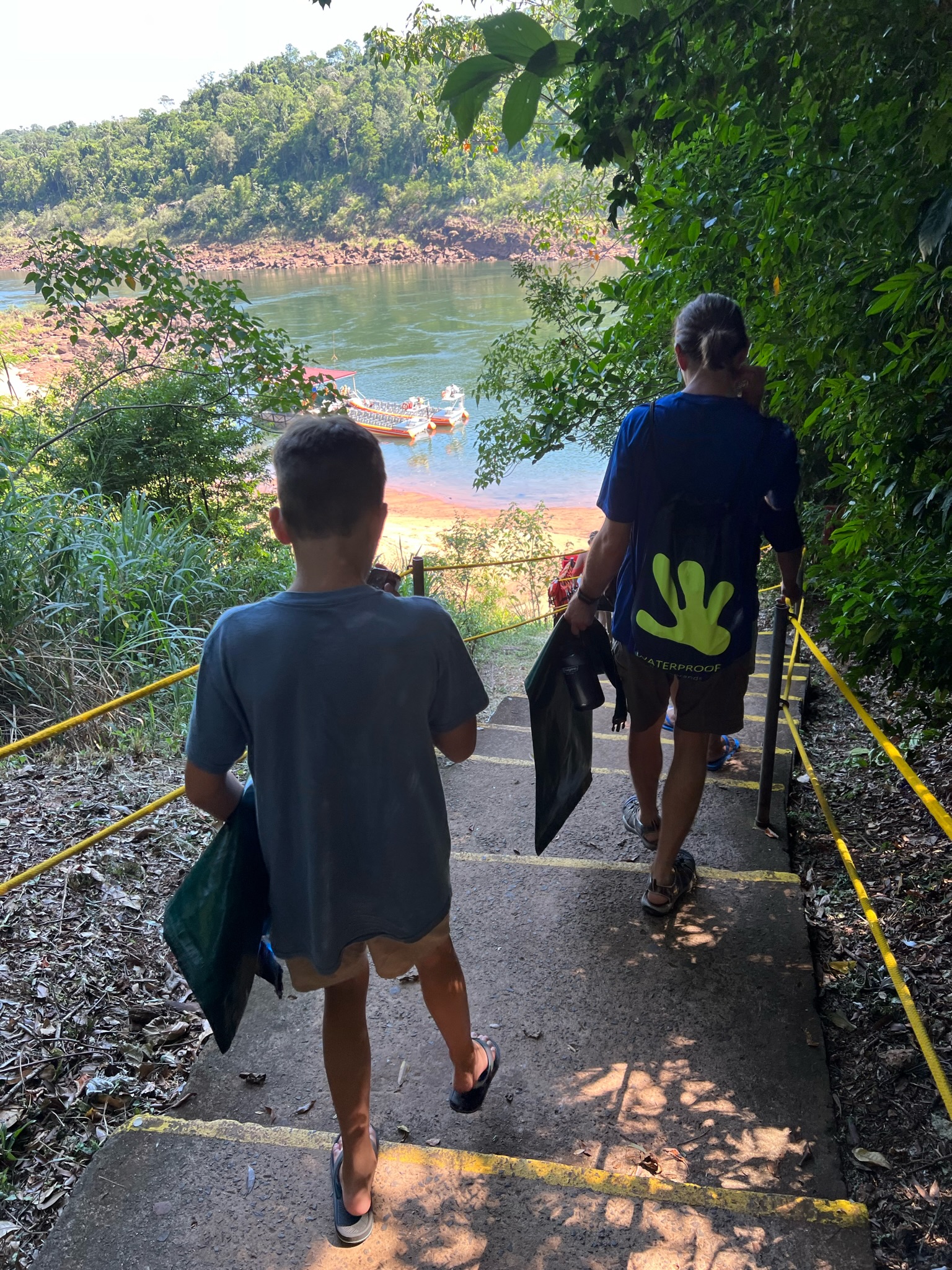
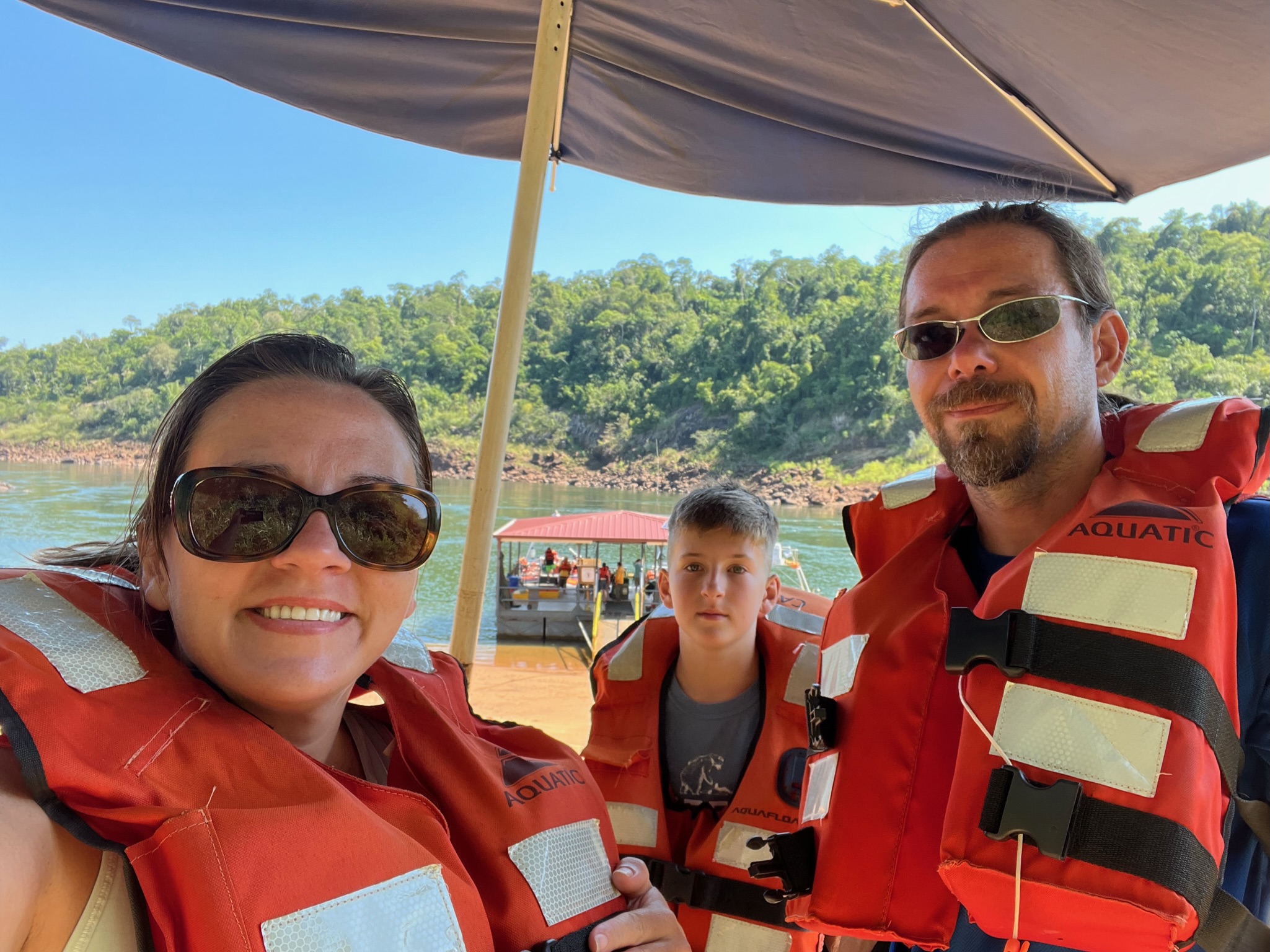
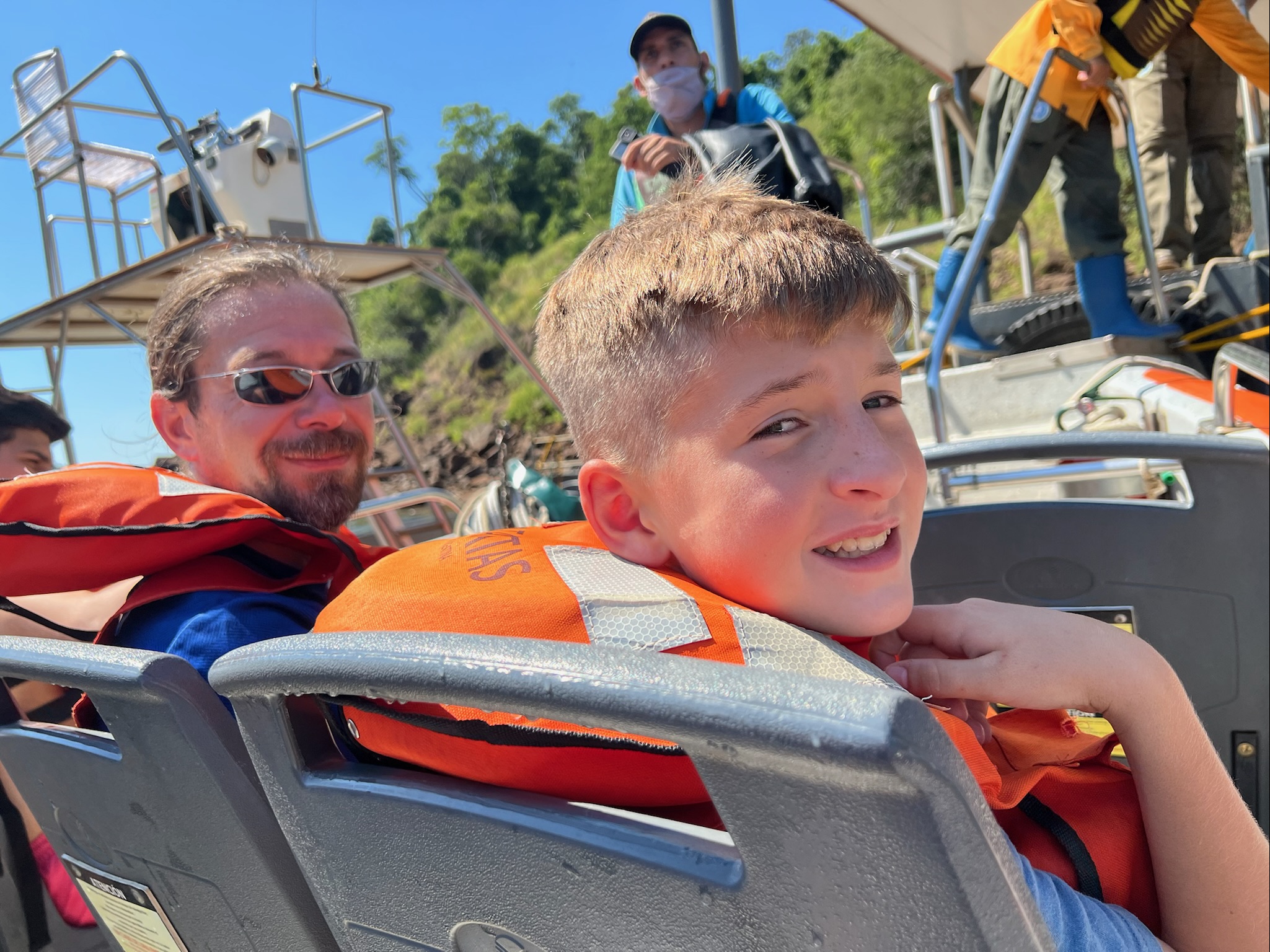
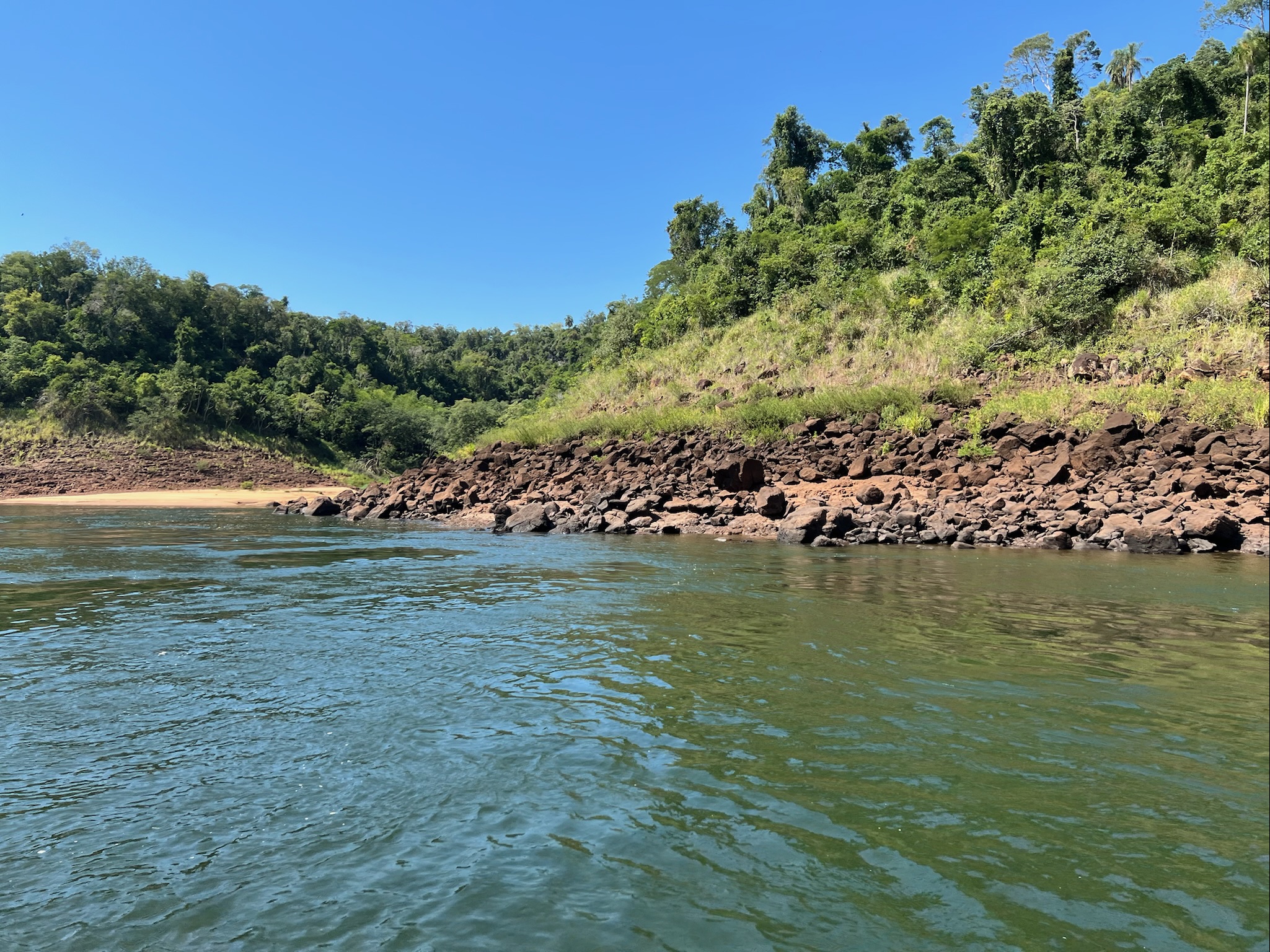
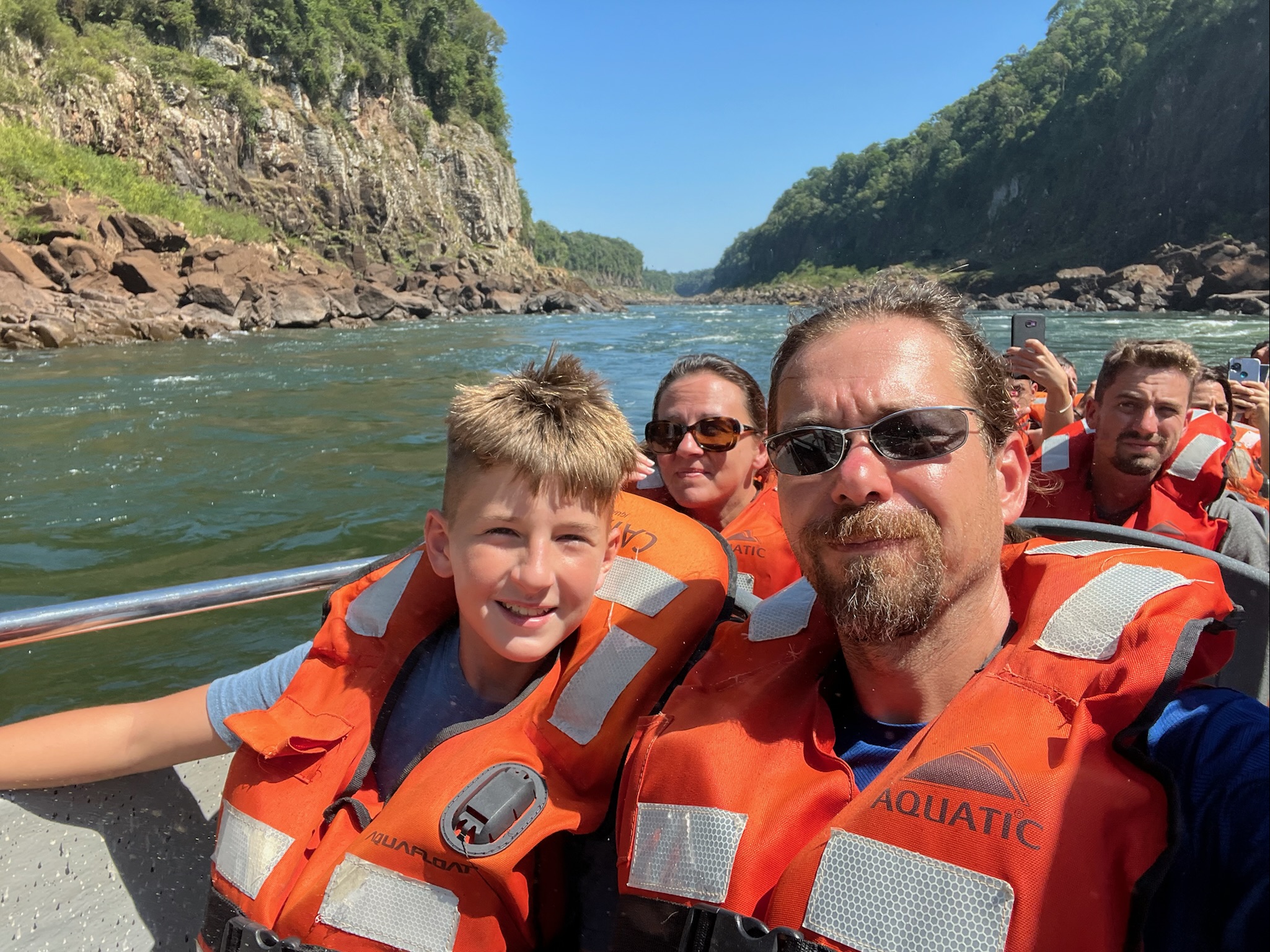
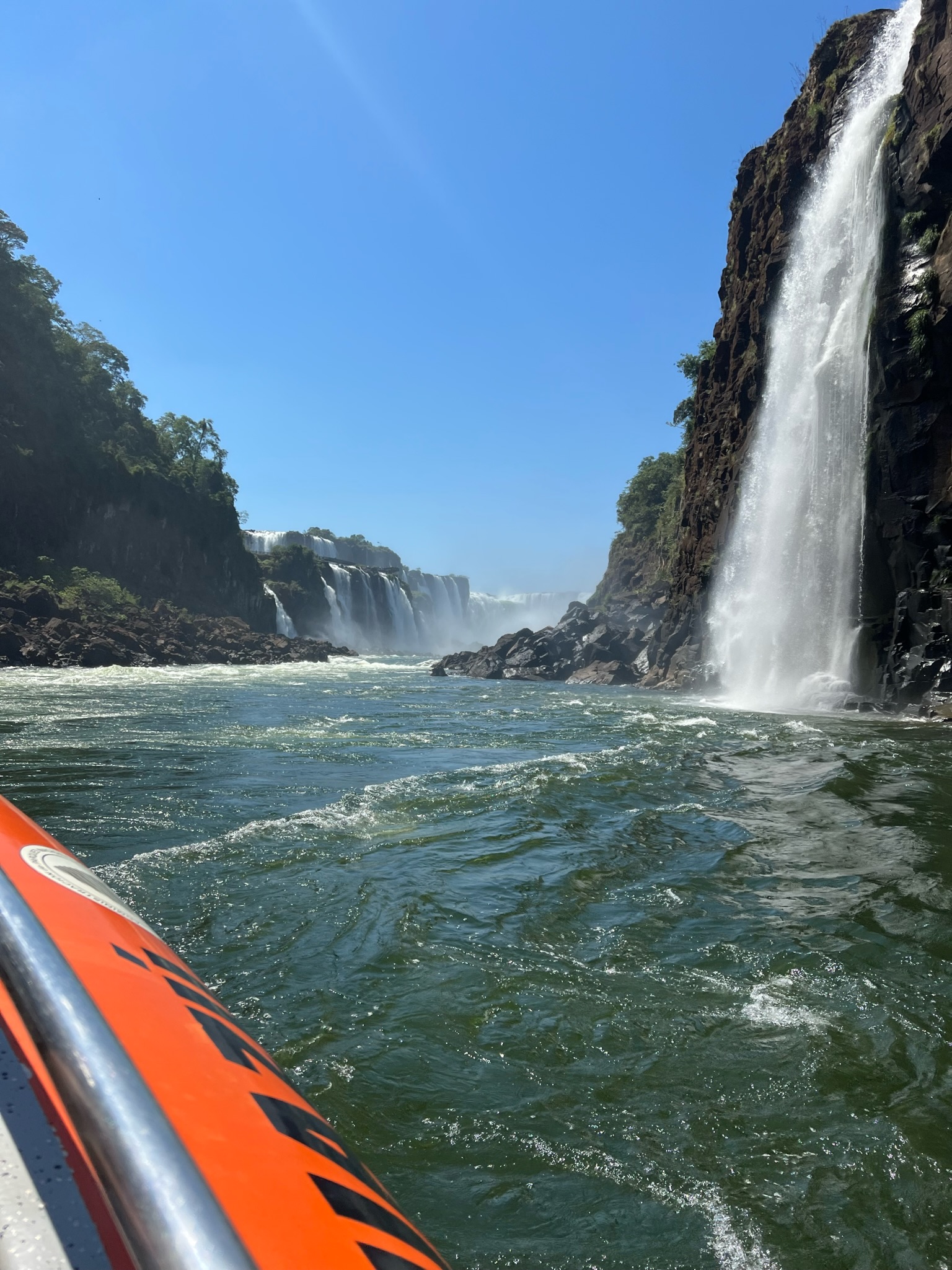
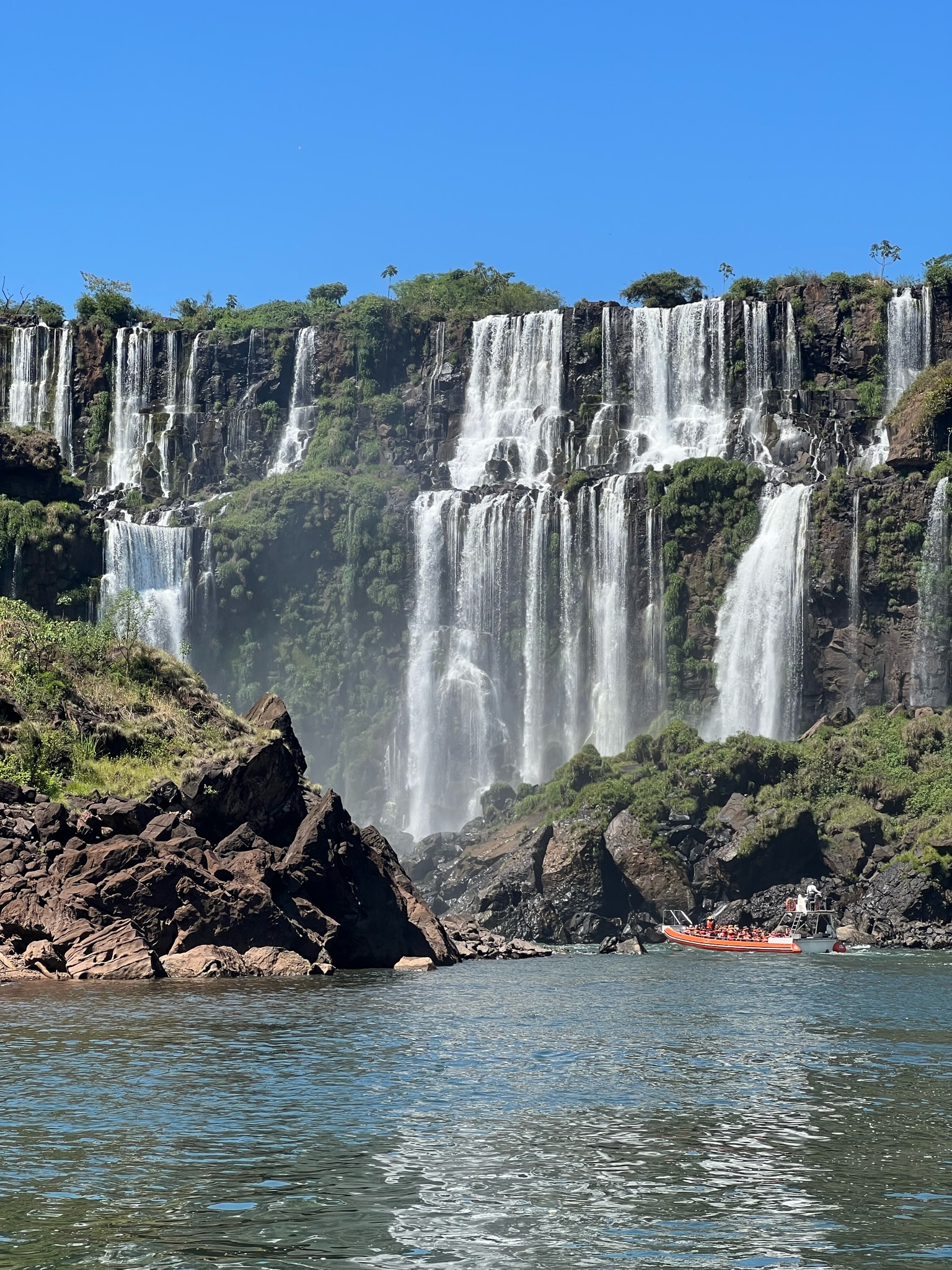
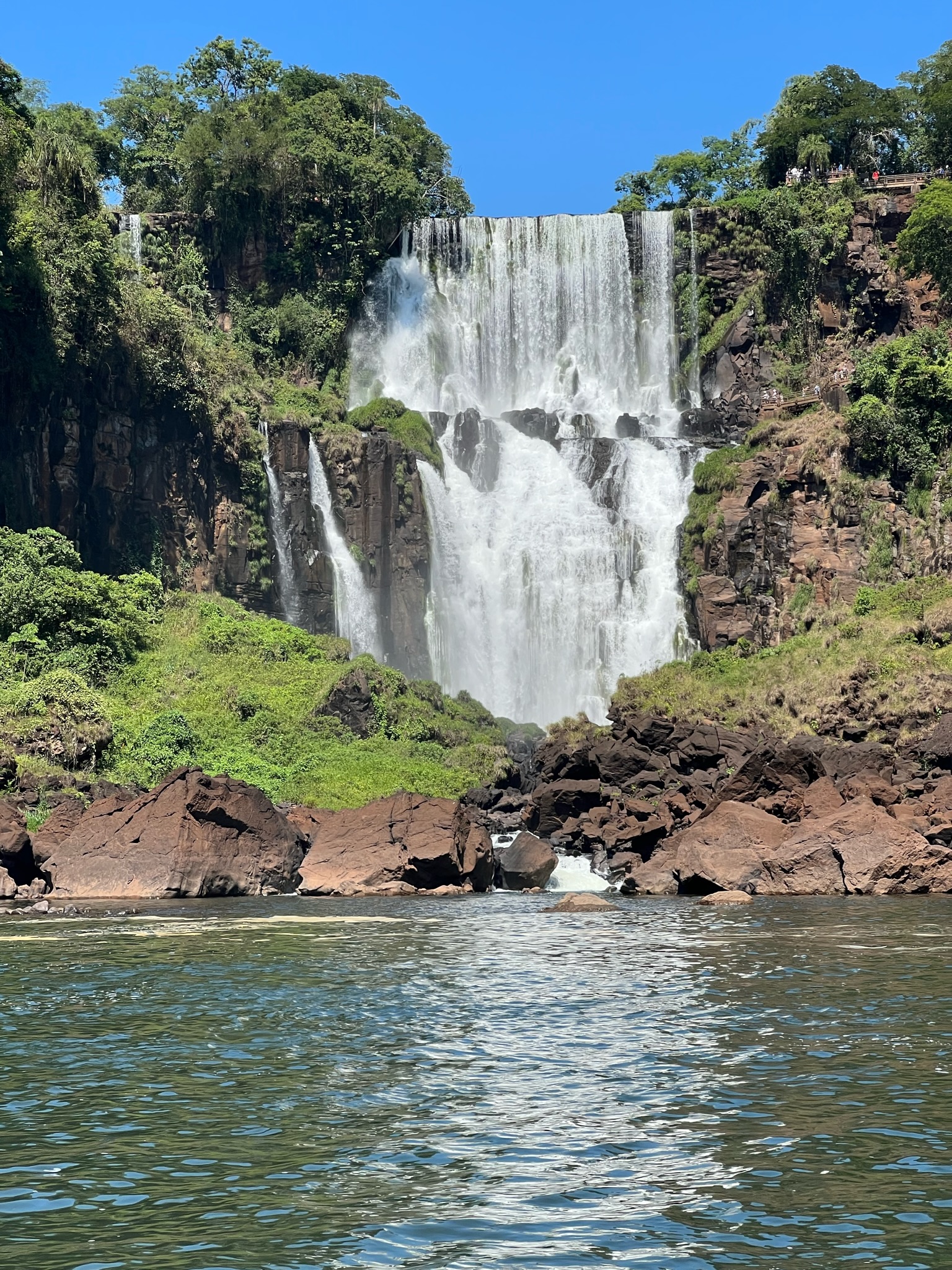
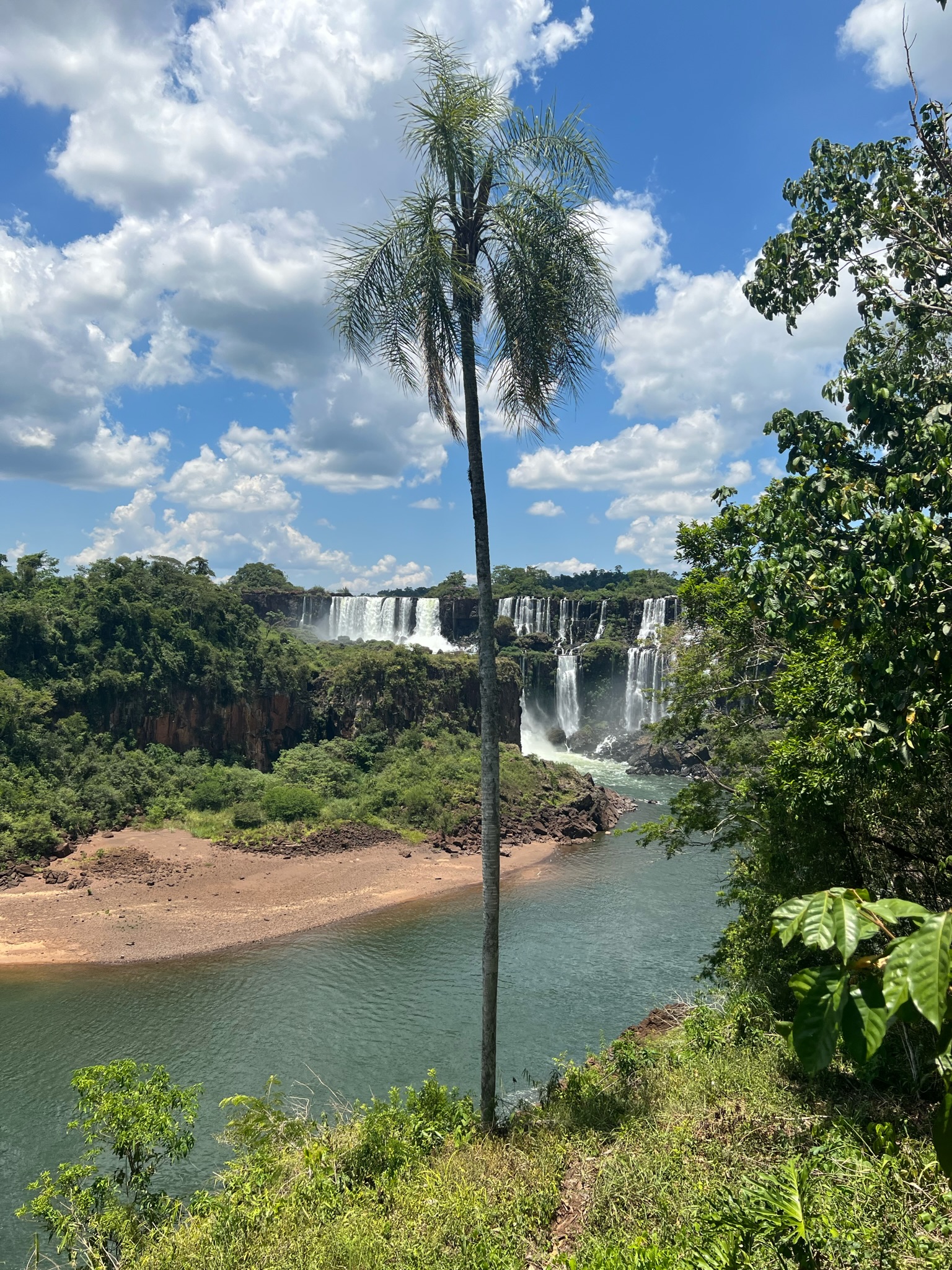
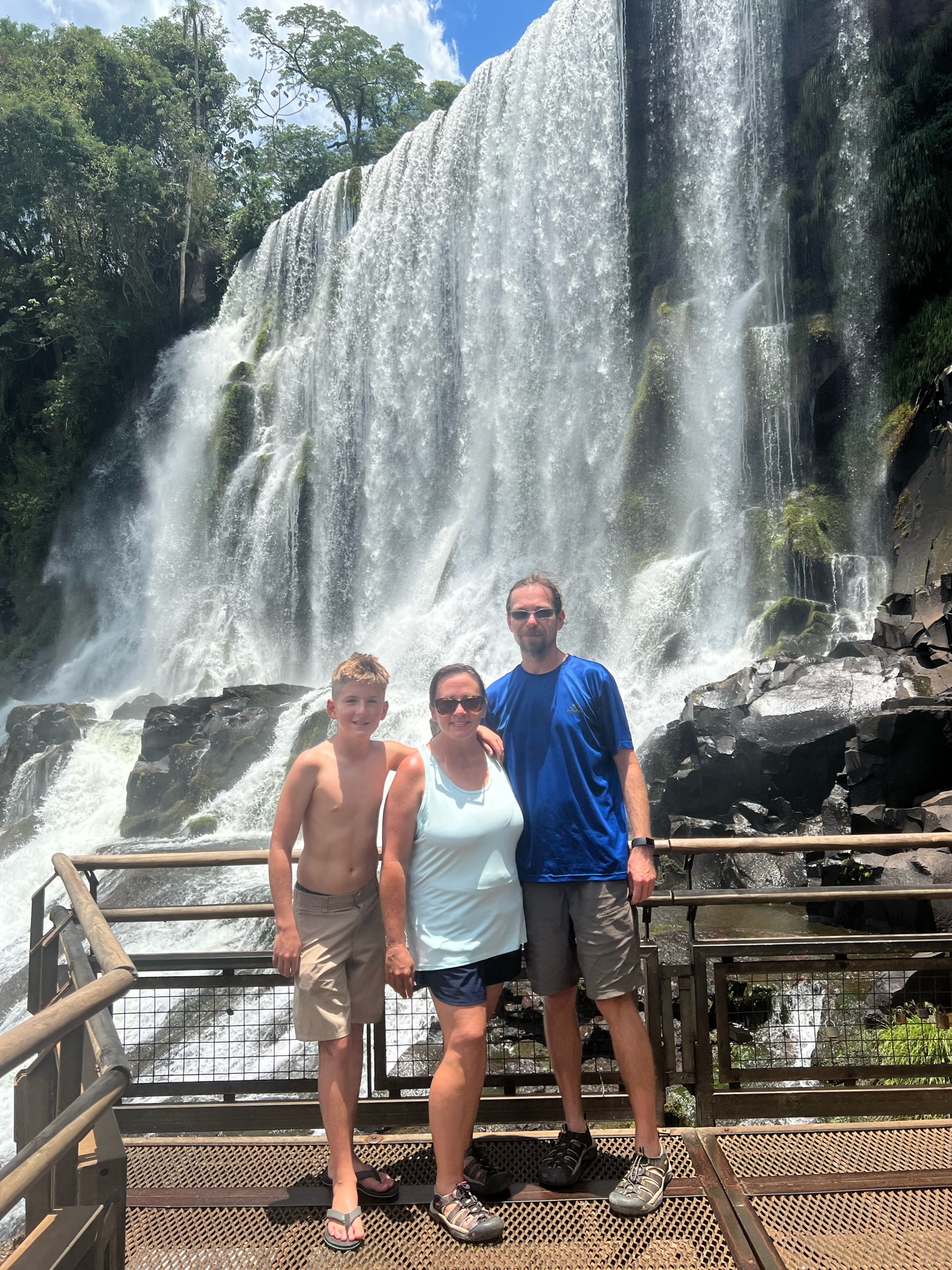
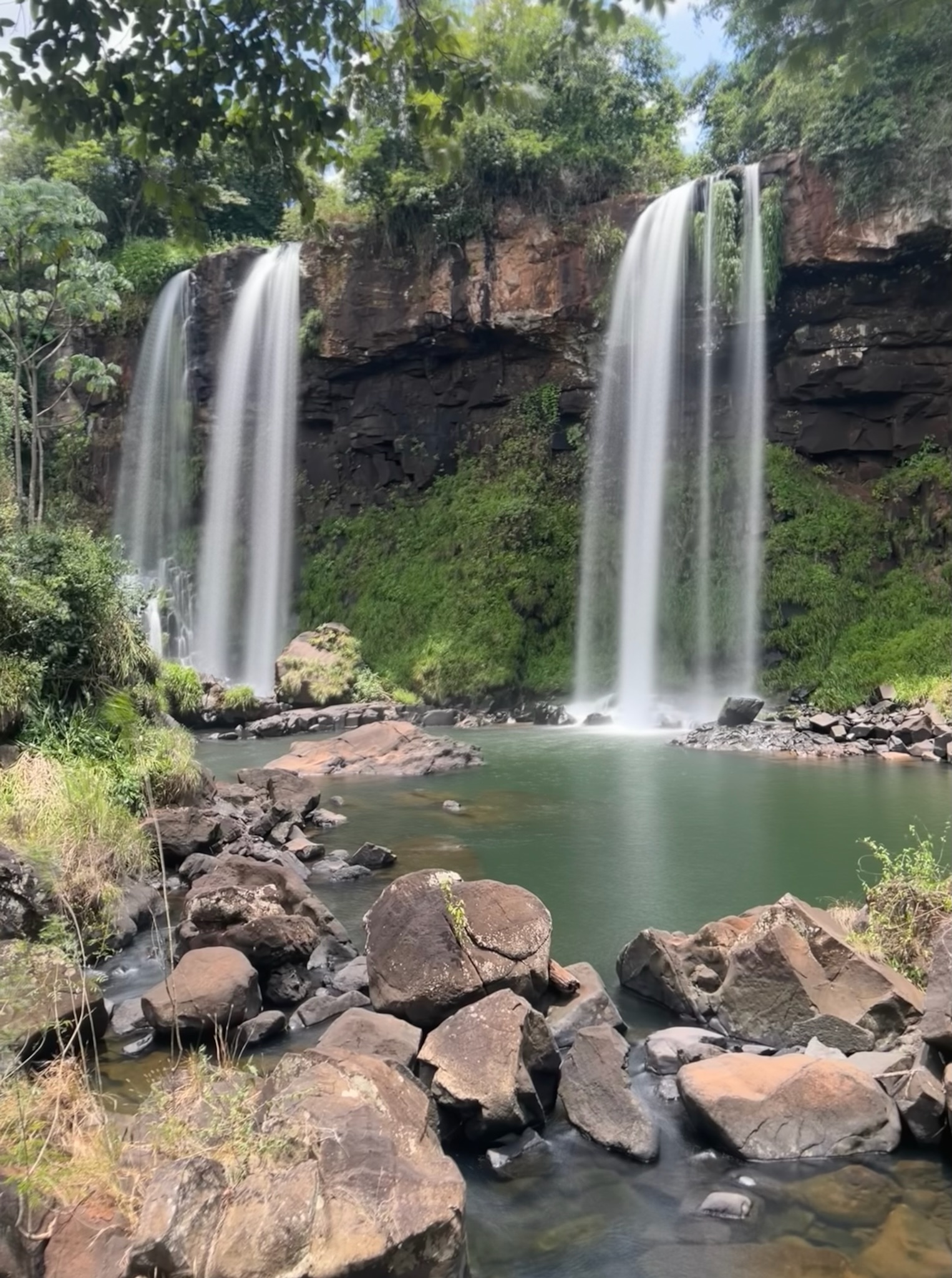
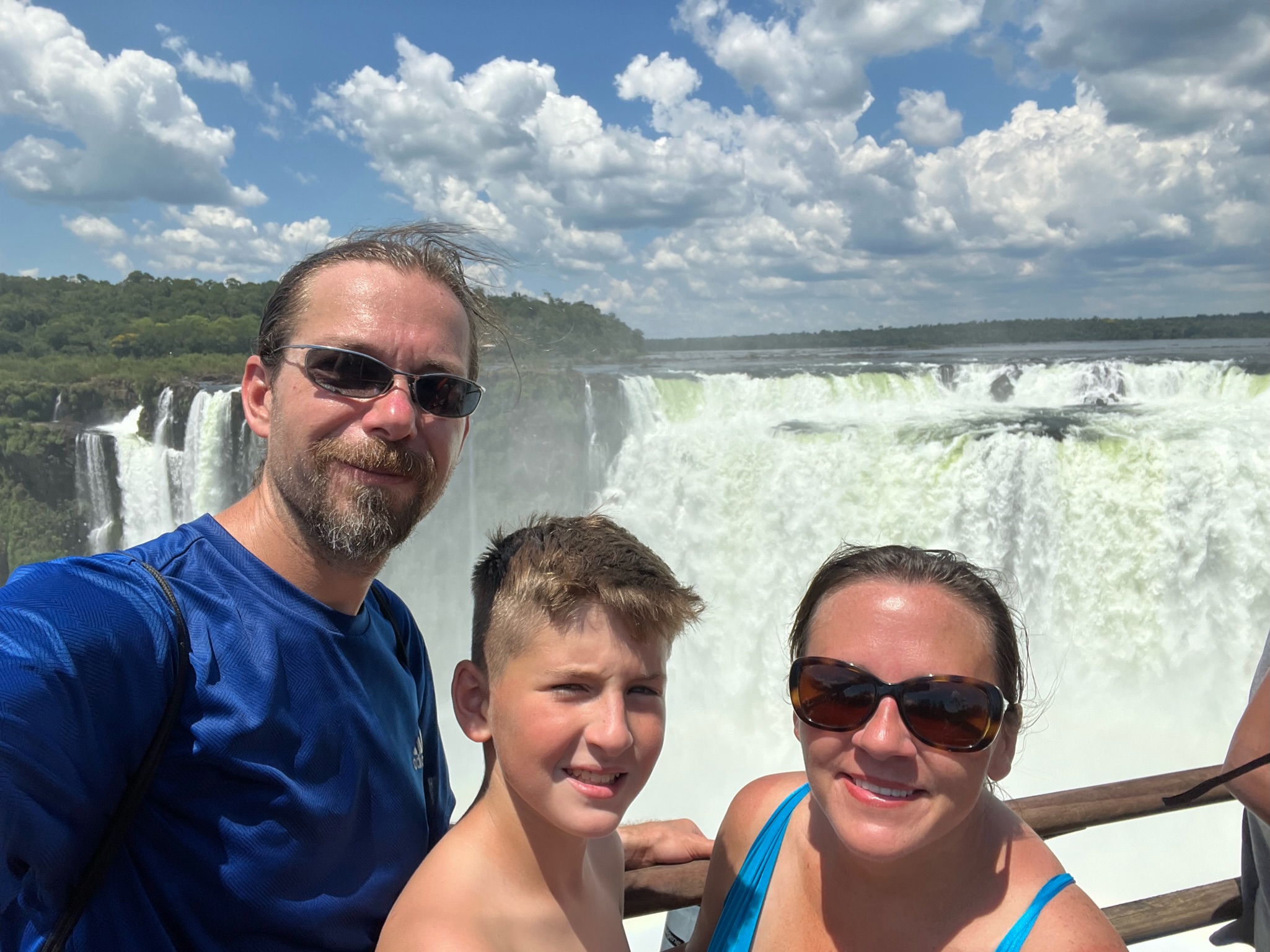
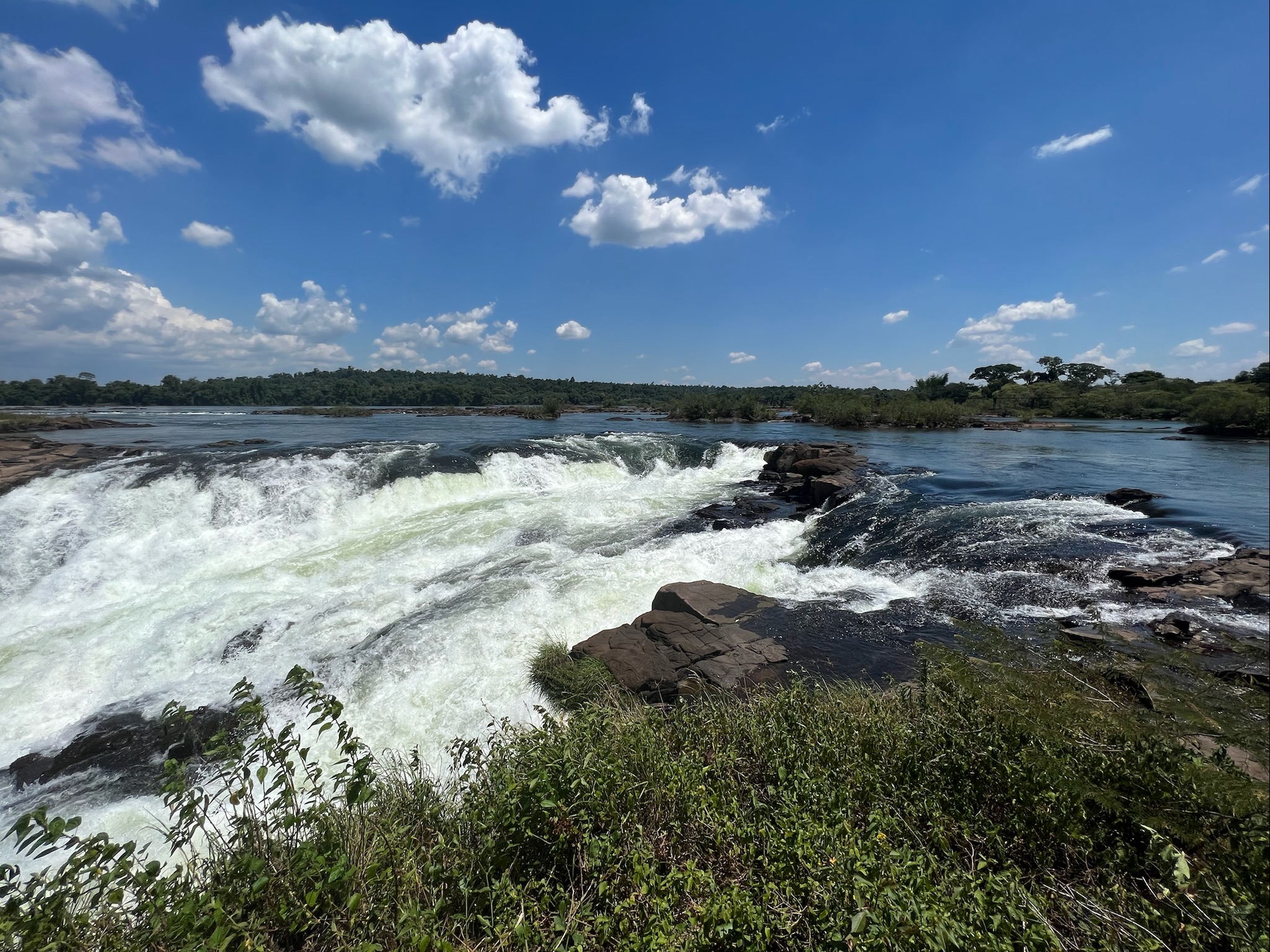
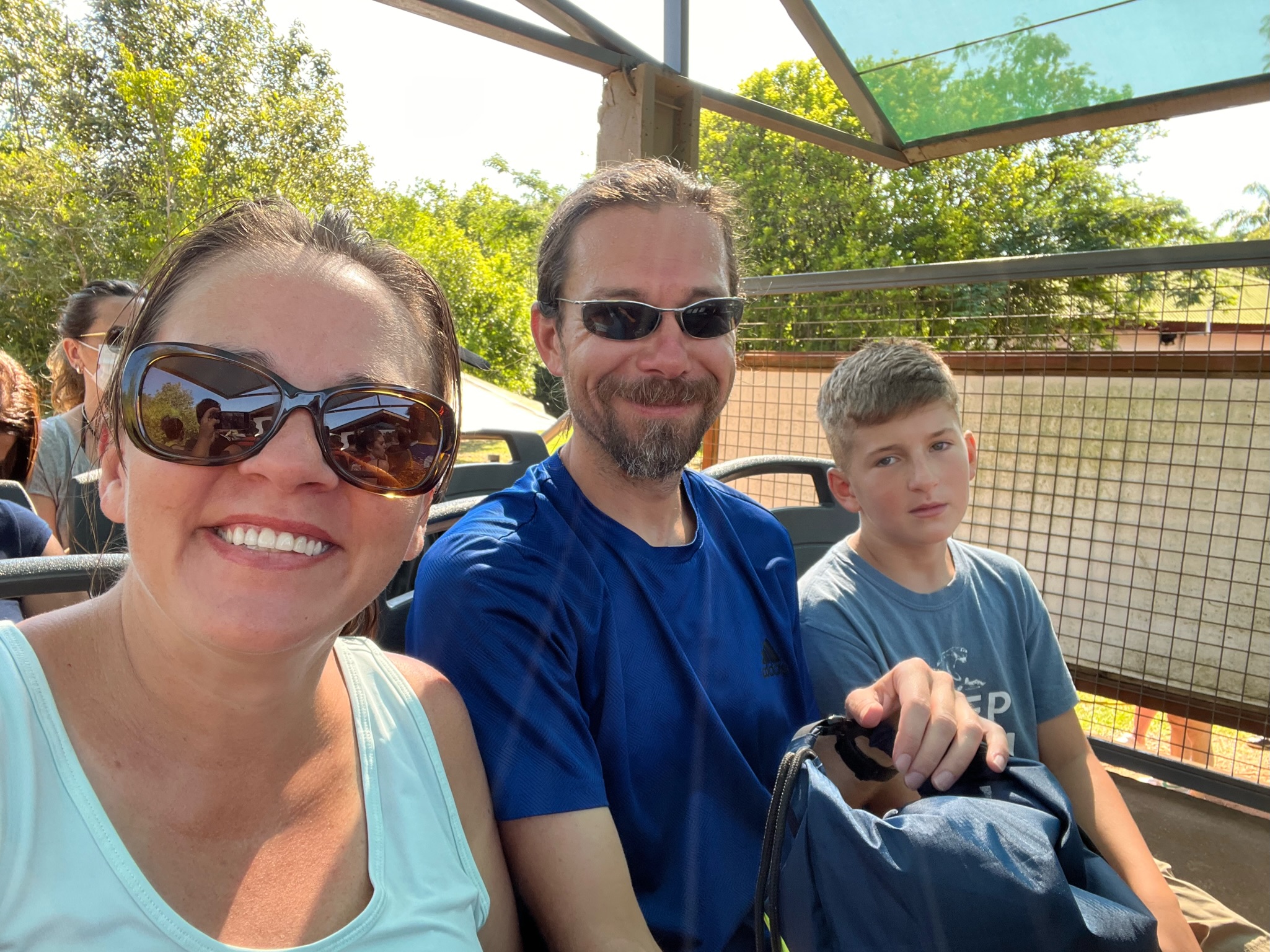
We explored the Parque Nacional Iguazu Falls, and that was quite a day. We started our morning out with a boat tour of the falls. From the park entrance, we loaded onto the back of a pickup truck and traveled 30 minutes or so through the jungle to the water. After donning a life vest and grabbing a waterproof bag, we boarded onto a boat and began our journey up the river to see the falls. It was very pretty here, and the terrain reminded me of Tennessee. Argentina was on one side of the river, and Brazil was on the other. We made it up to the falls, and our captain gave us all a good opportunity to take pictures. Once we’d gotten the shots we wanted, we prepared to get wet and put all of our things into the waterproof bags. The captain took us up close and into the falls and let us all get drenched several times. It was fun, and the cool water felt amazing after roasting in those tropical temperatures.

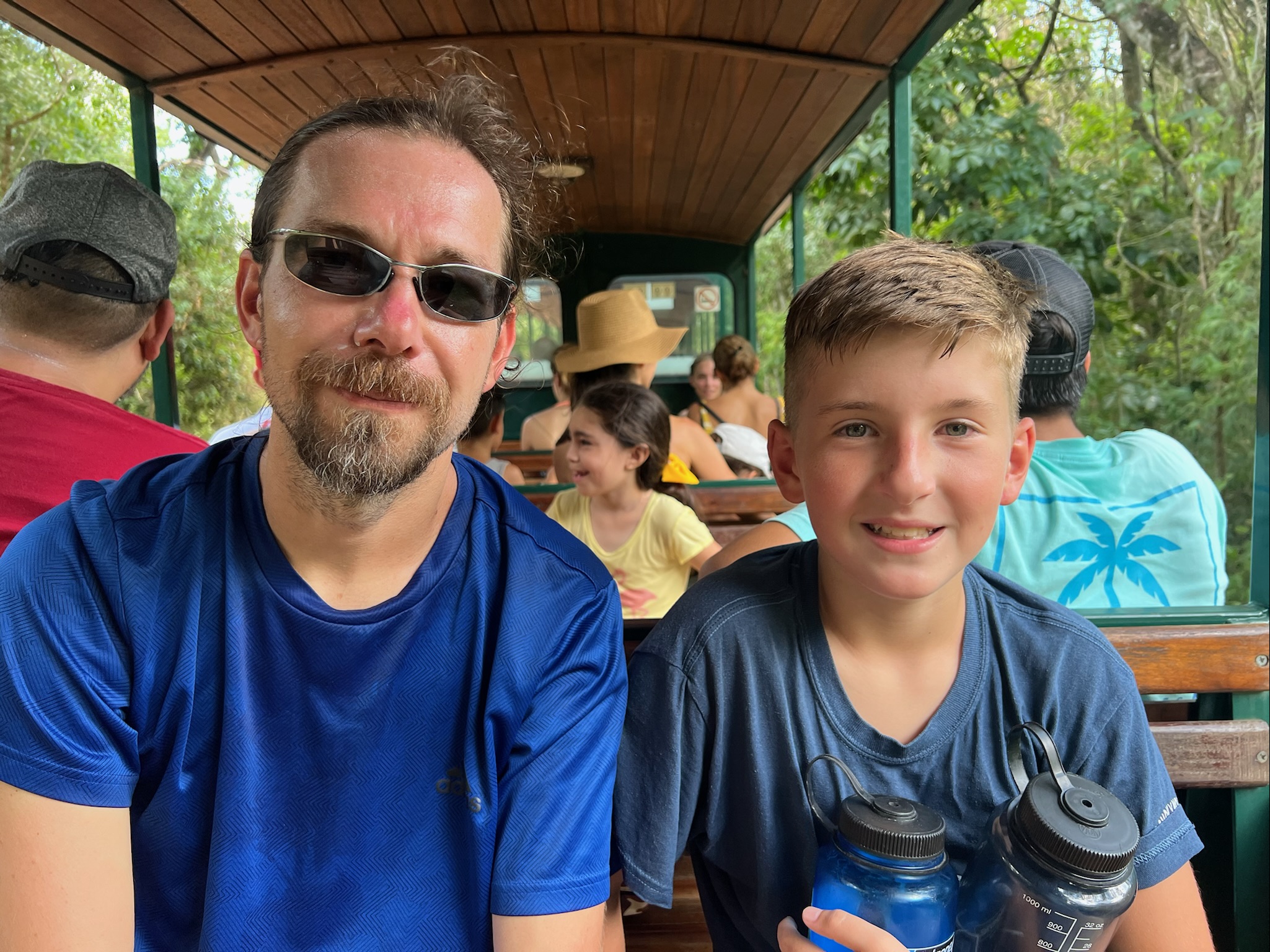
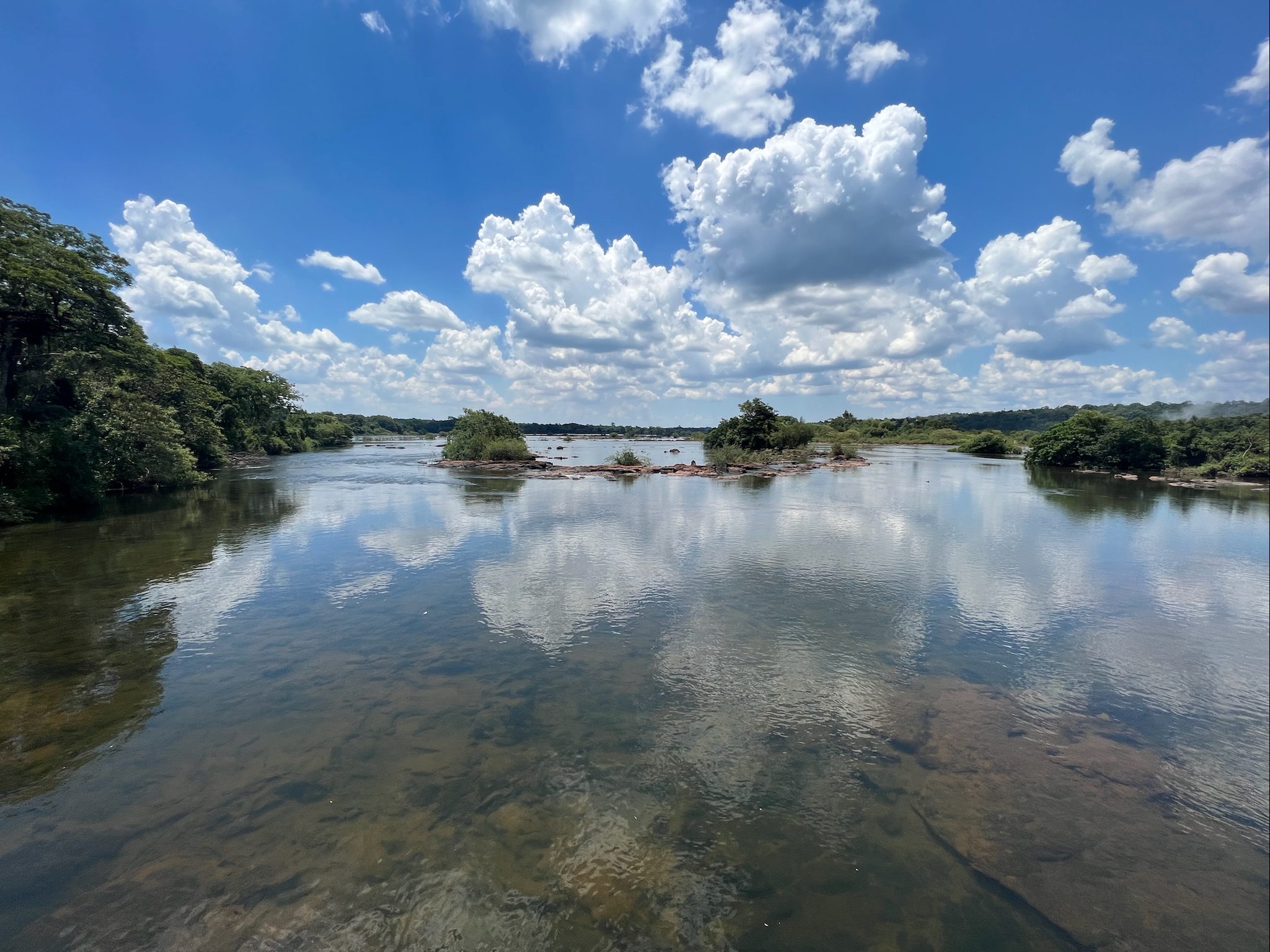
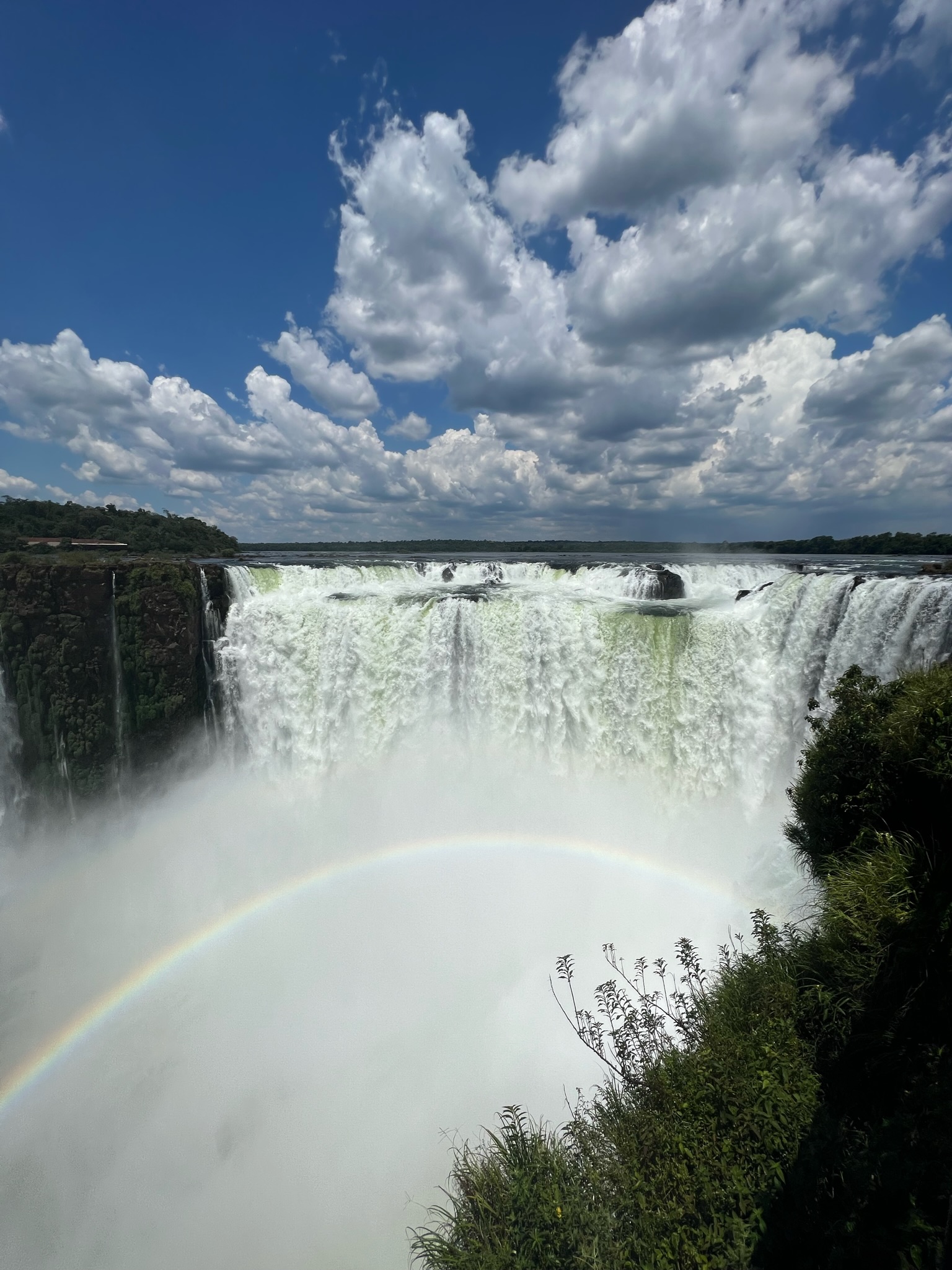
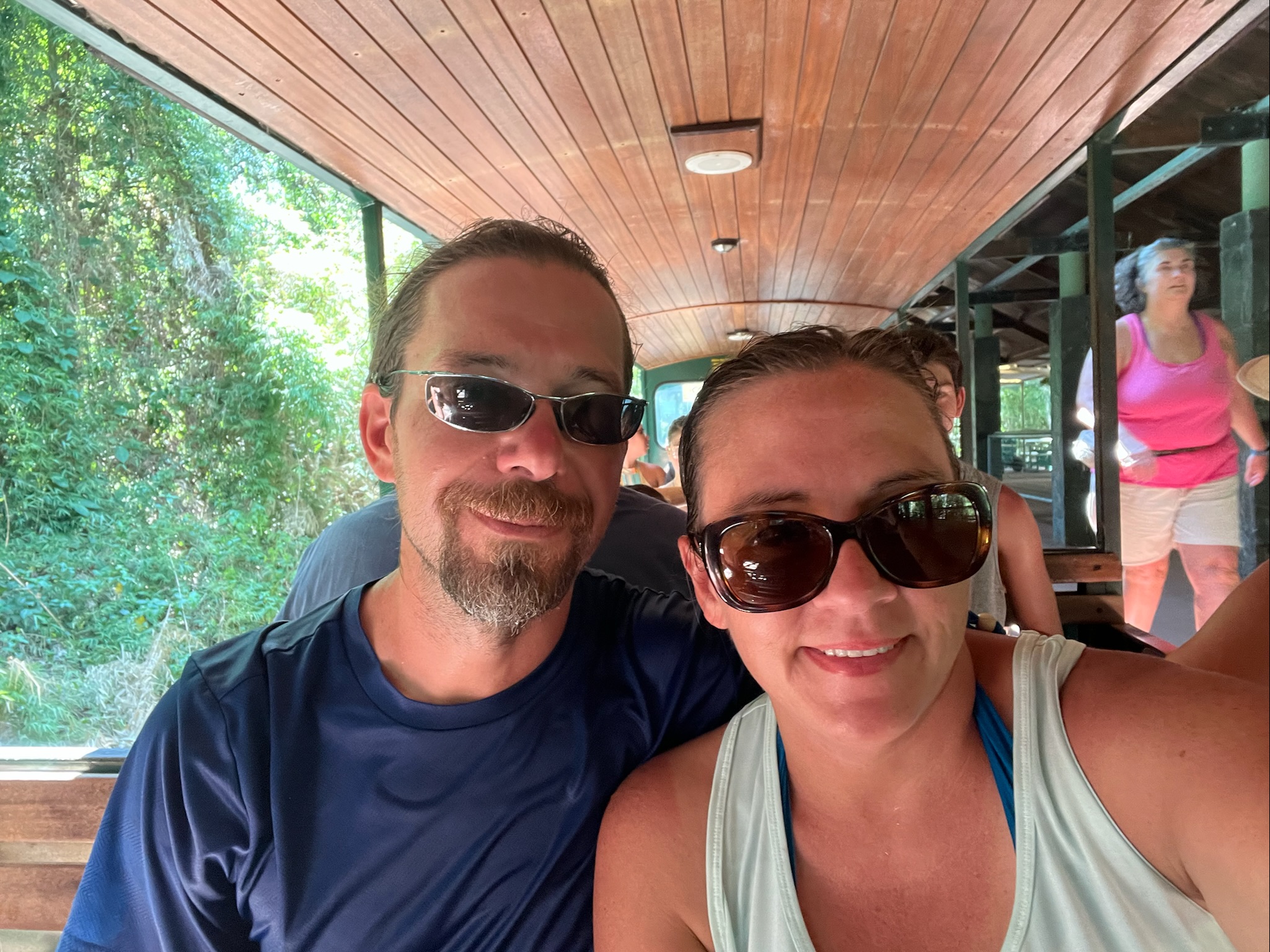
When we got back to shore, we spent a few more hours exploring the park. This park had walking circuits you could take, and each one had lined boardwalks with great viewpoints of the falls. We walked the lower circuit, and when we were done with it, we took the park train to the Devil’s throat, the top of the falls. The water was clear, and most of it was not very deep. However, the horizon as far as you could see was covered in water. As these waters fell over the cliff edge, beautiful rainbows appeared. You couldn’t hear much over the roar of the water. The combined flow of all of the 275 individual falls here makes this the largest waterfall system in the world; it is taller than Niagra falls and twice as wide.
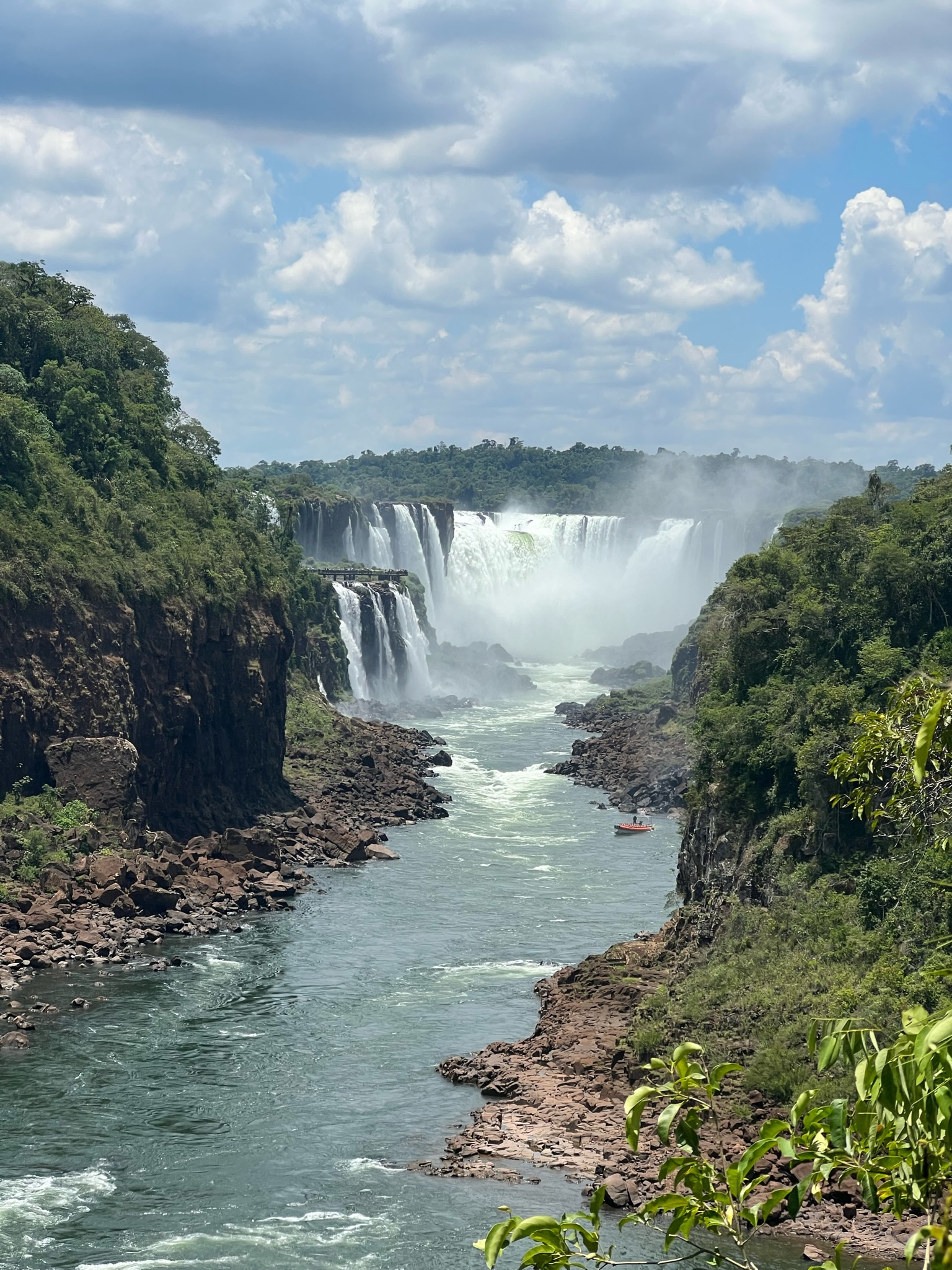
The falls were sunning, and the river ride was nice, but our favorite feature of the park were the showers that were located throughout the park. When you got really hot, you could go douse yourself and cool down a bit. They were amazing.

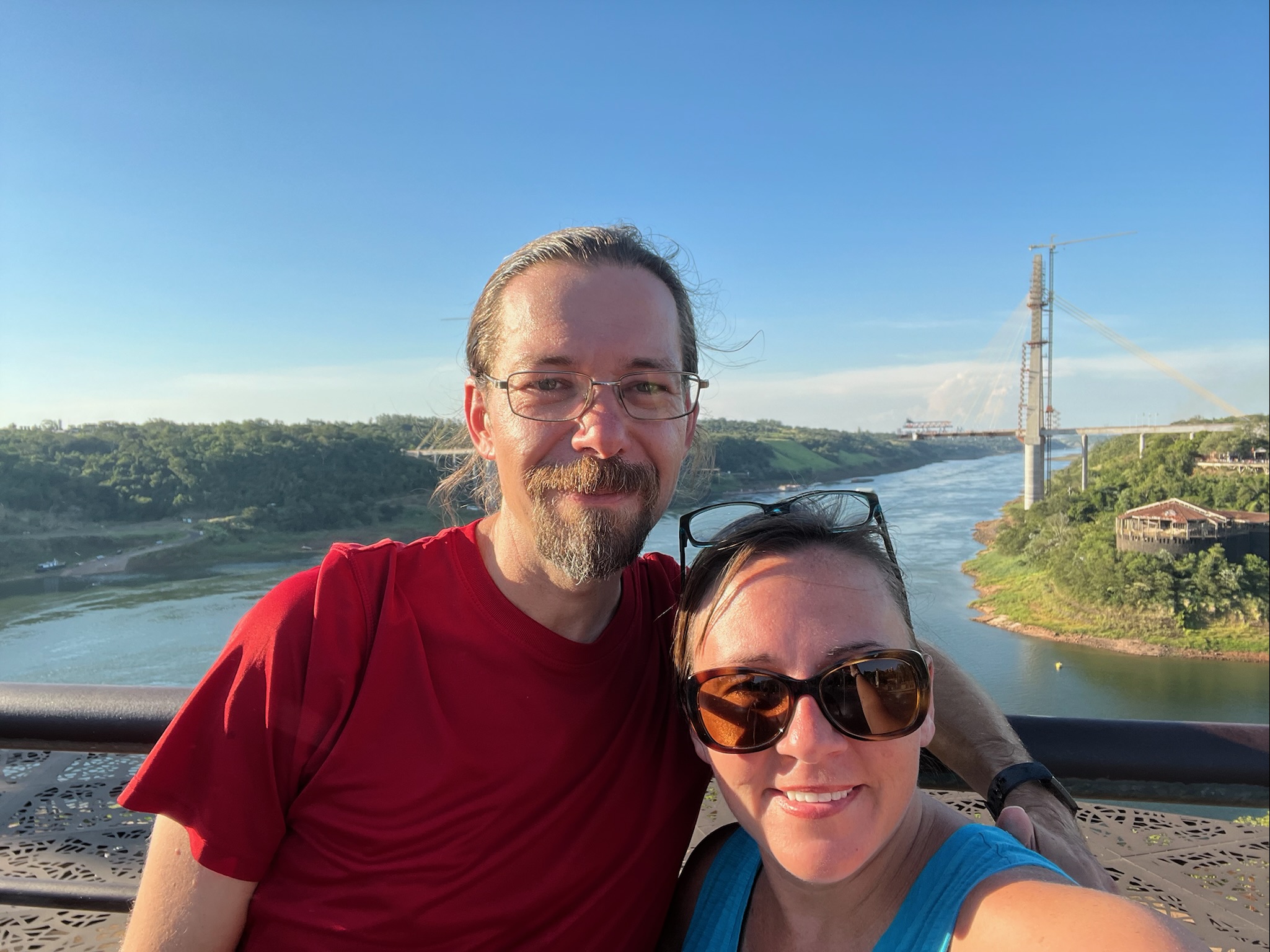
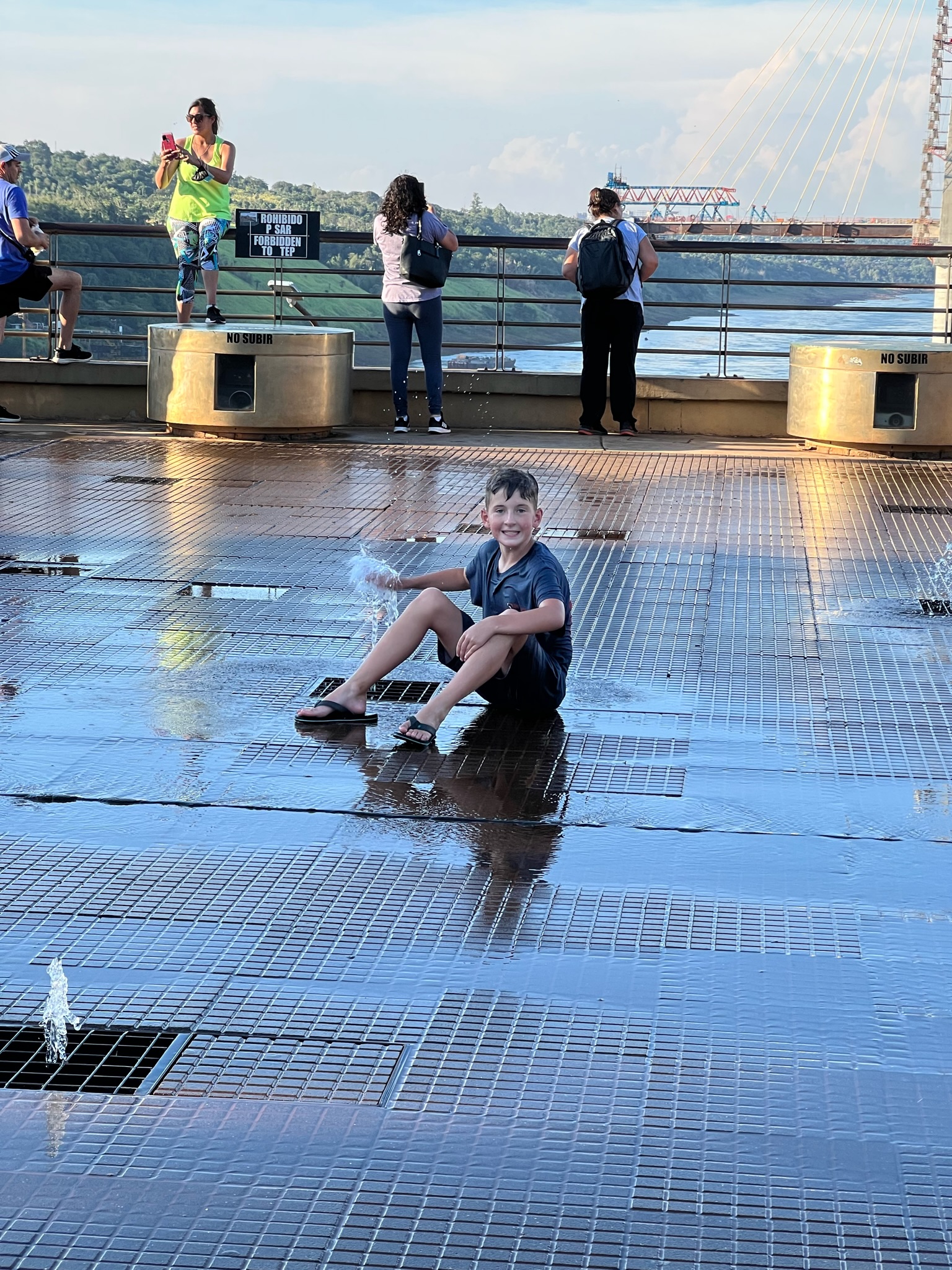
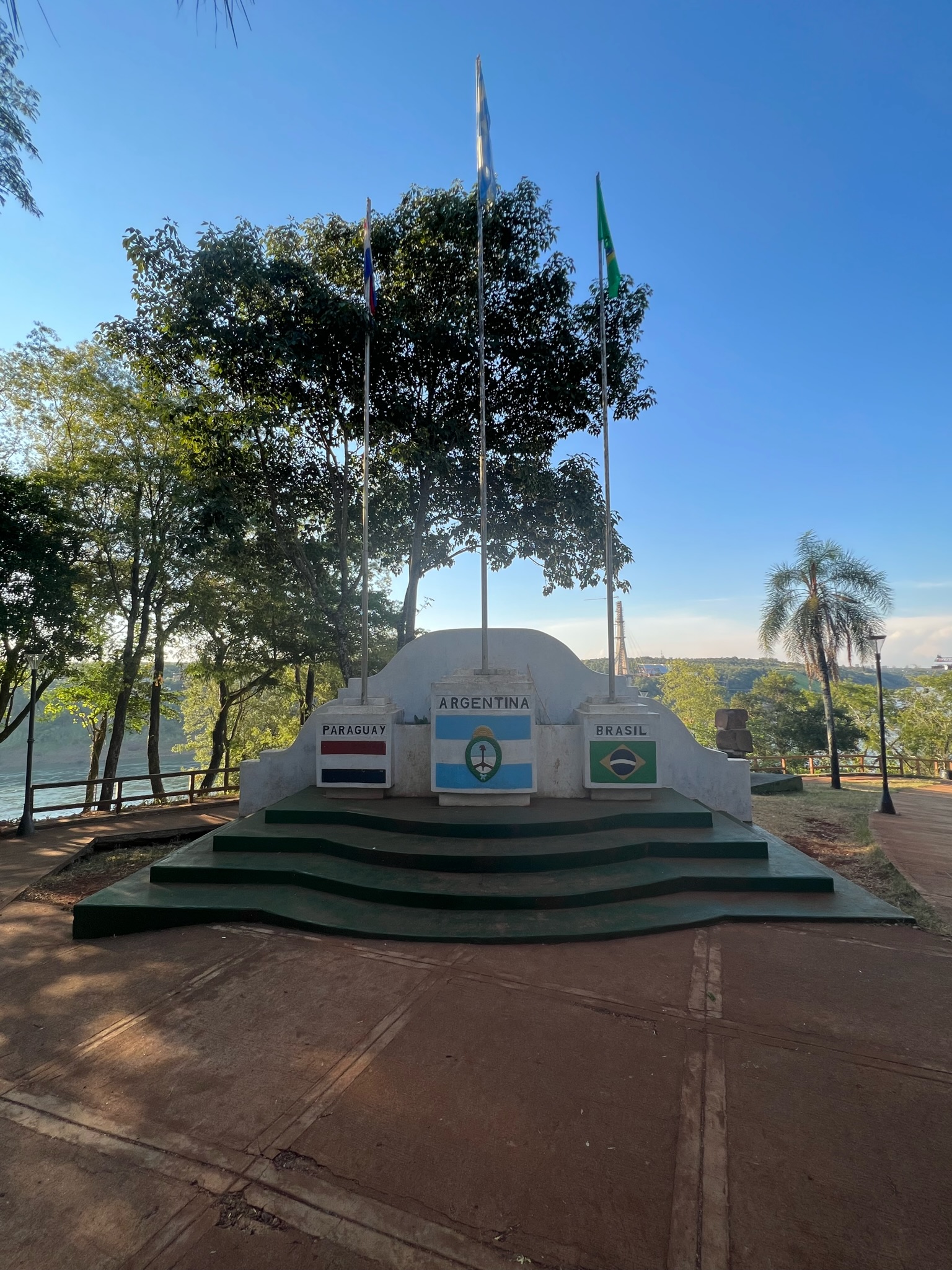
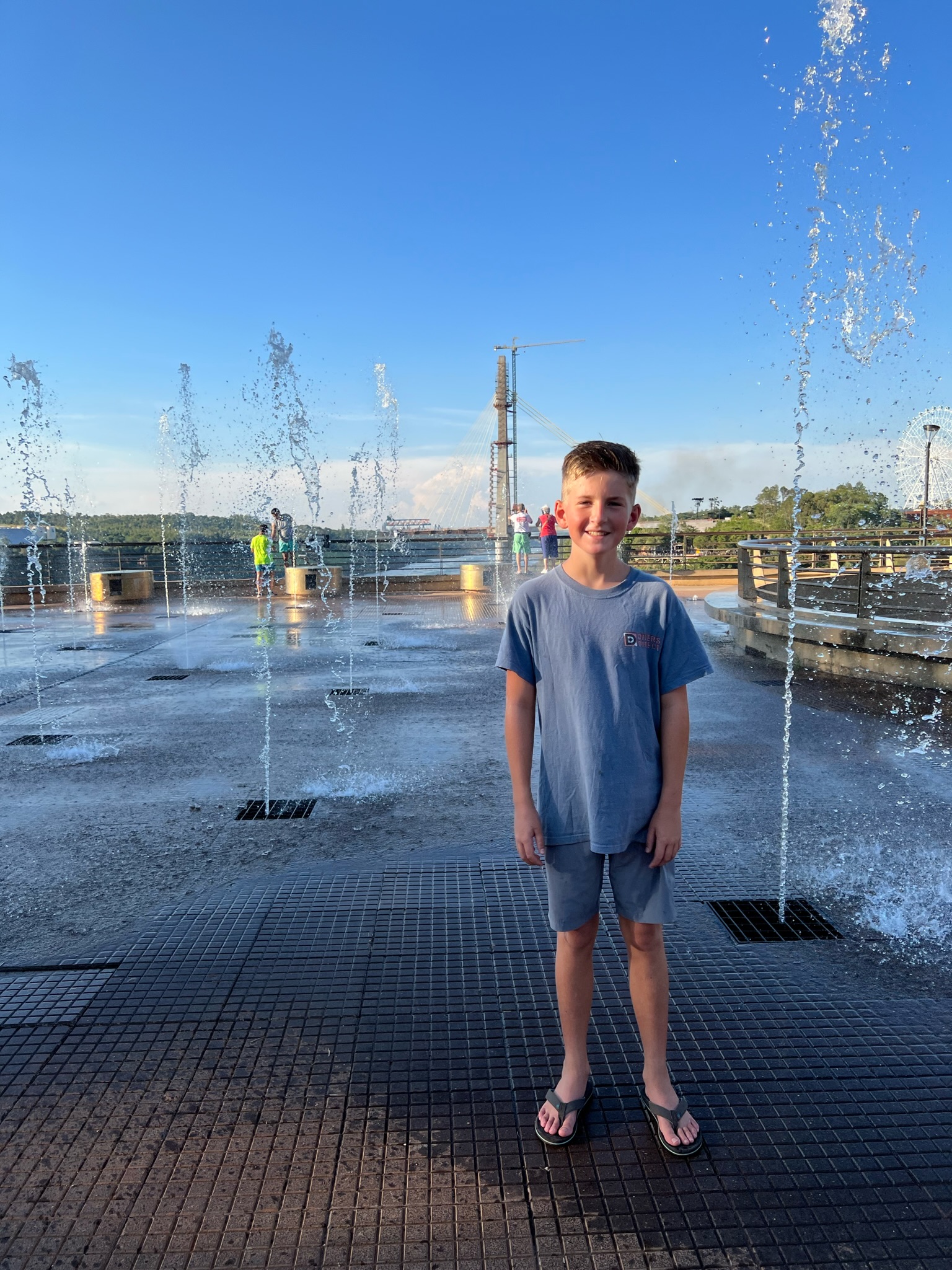
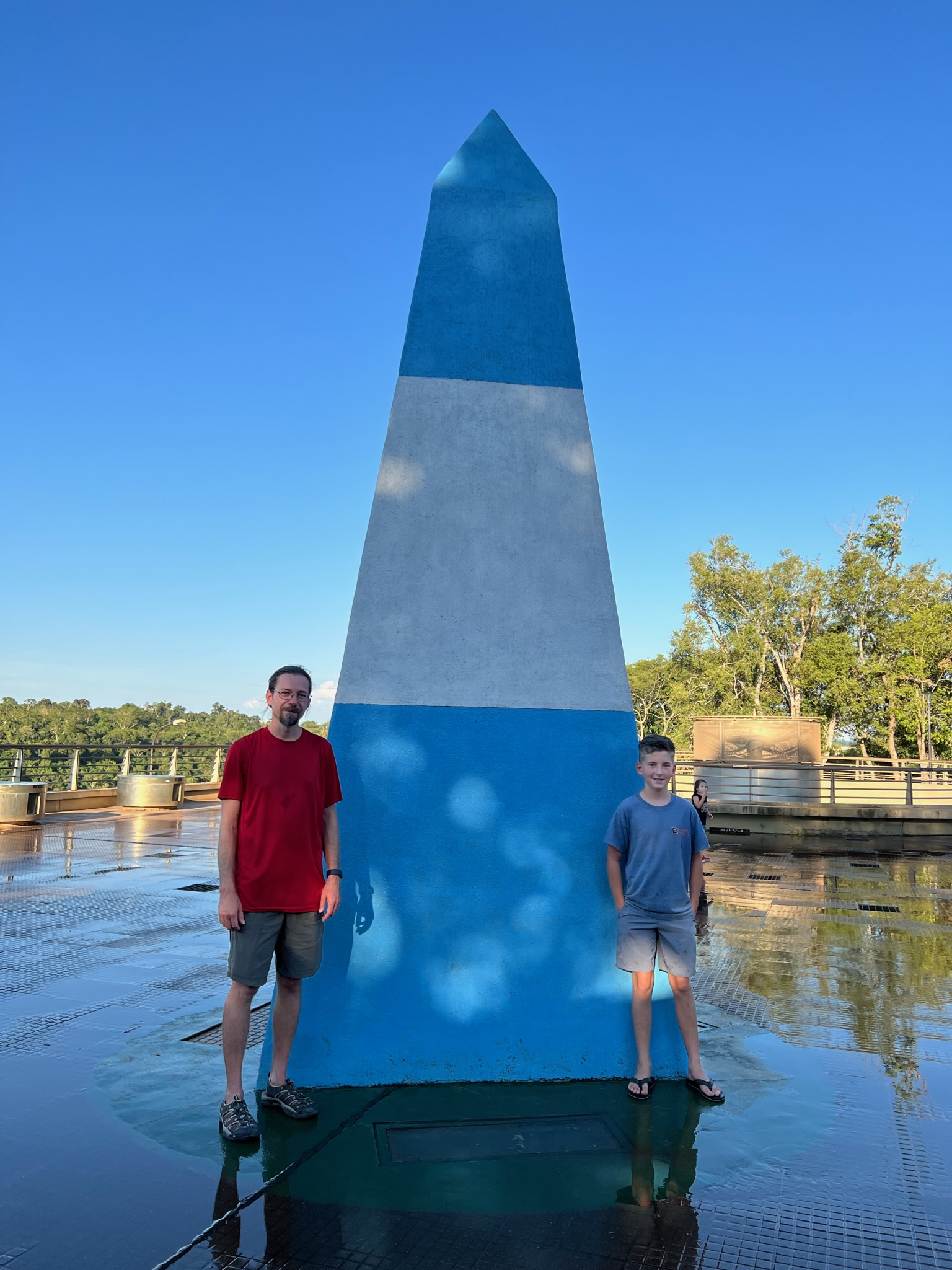
We also went to visit the Hito Tres Fronteras while in Puerto Iguazu. This landmark sits at the confluence of the Iguazu River and the Parana River. Standing where we were, you could look across the Iguazu River to Brazil or you could look across the Parana River to Paraguay. Henry was not happy with us for wanting to walk the 2 miles from our apartment to see this, but his attitude changed significantly when he found the water fountains there. I’m sure the locals thought he was crazy, but he played hard in the water just like the local kids (who all happened to be much, much younger than him).
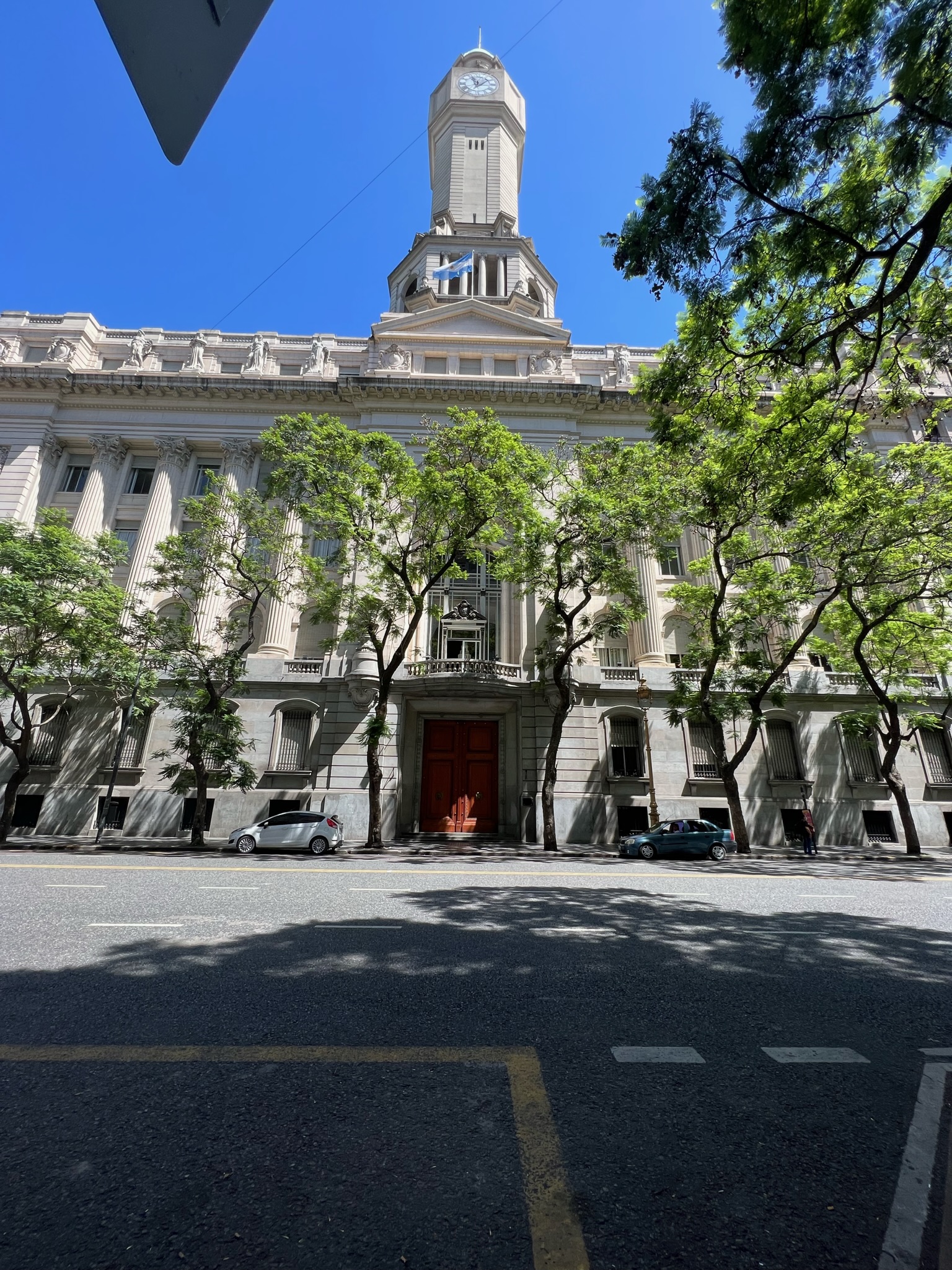
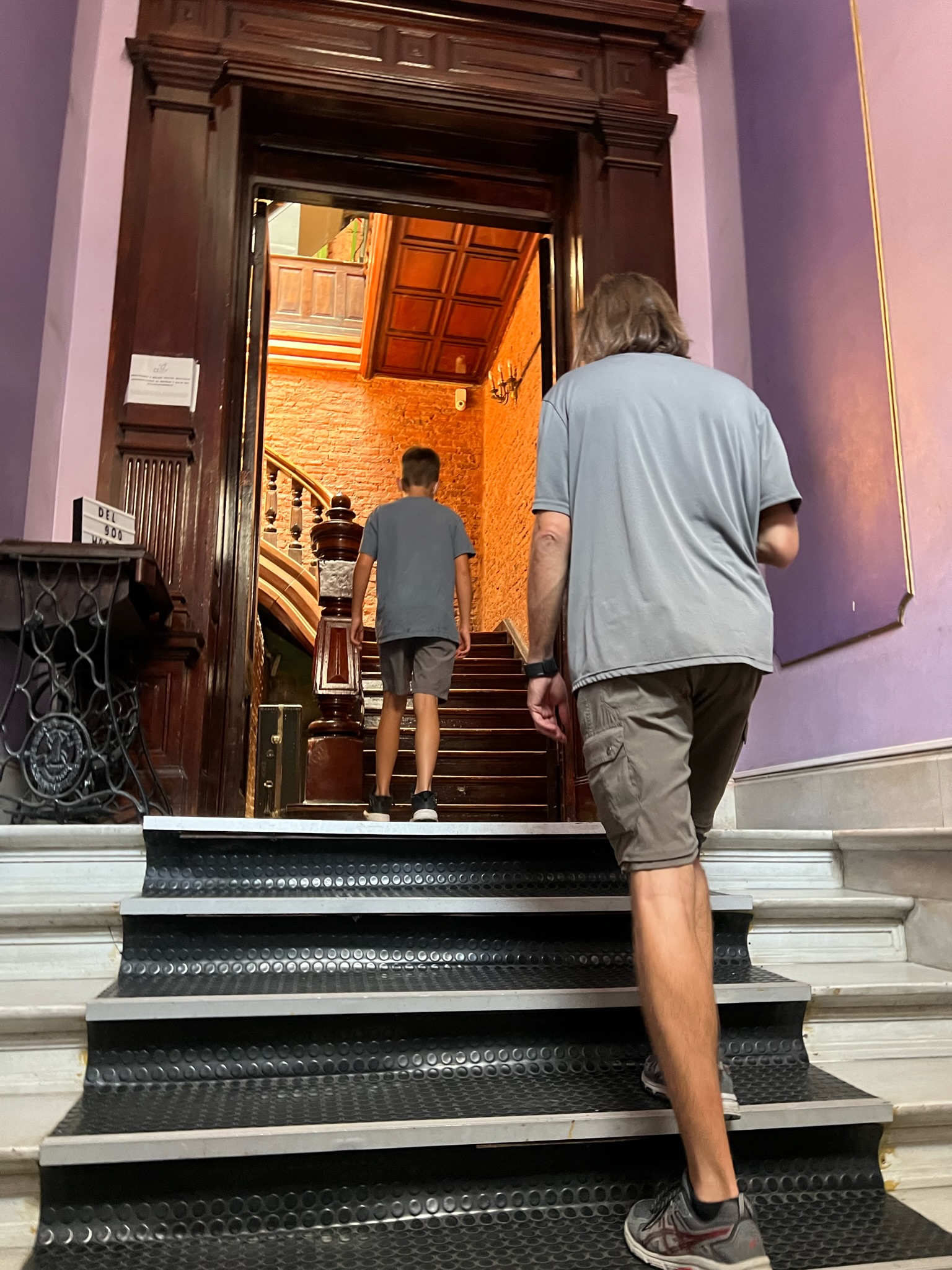
After four nights there, we caught our flight to Buenos Aires. We landed in Buenos Aires after a short flight, and we found our room at the Del900 Boutique Hostel. It was a quaint little lodging in a beautiful old building. Our room was a corner room overlooking the street, and we had a kitchen, pool table, tv, and couches in the common room to use. We loved this place, and our hosts were very helpful.

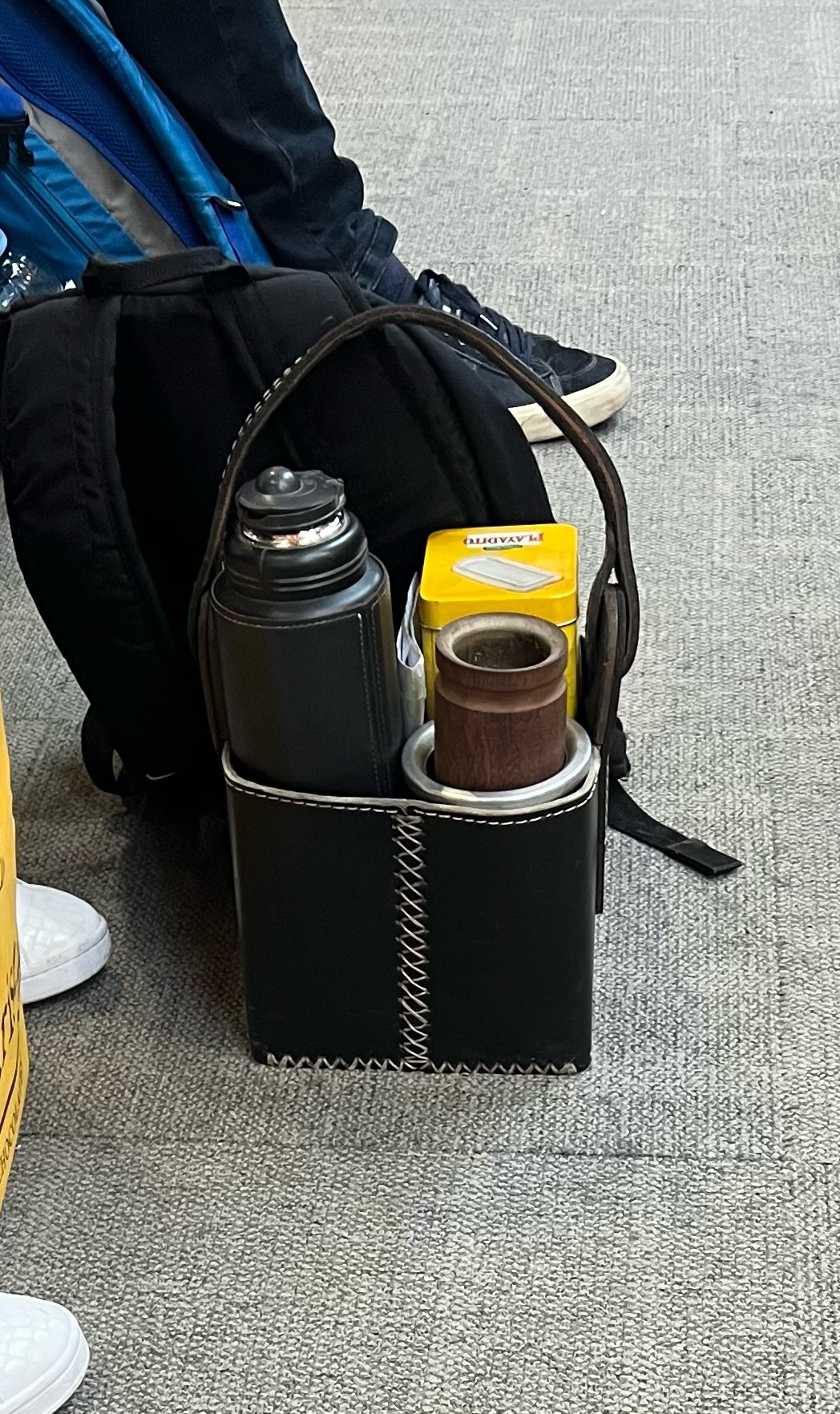
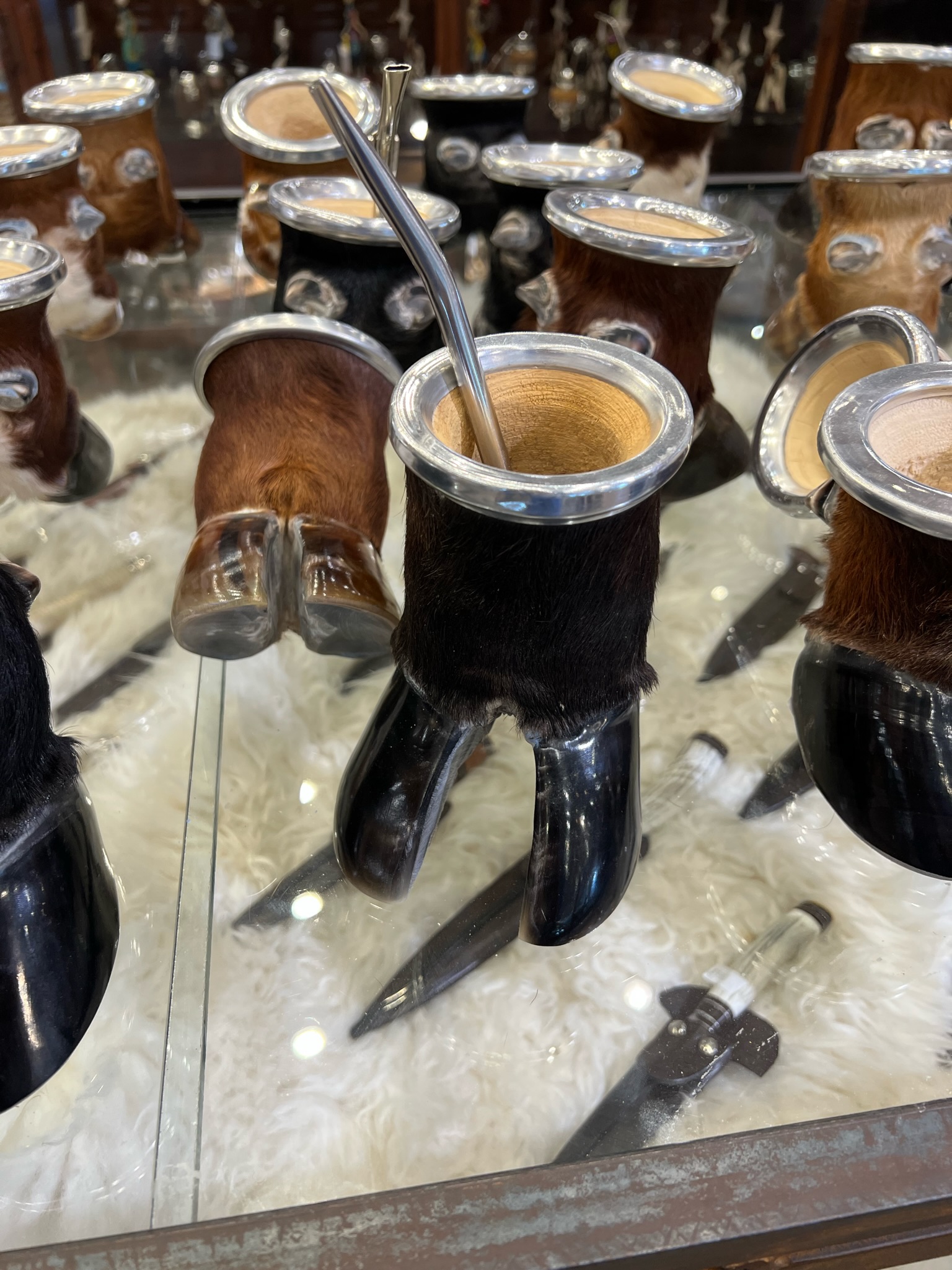
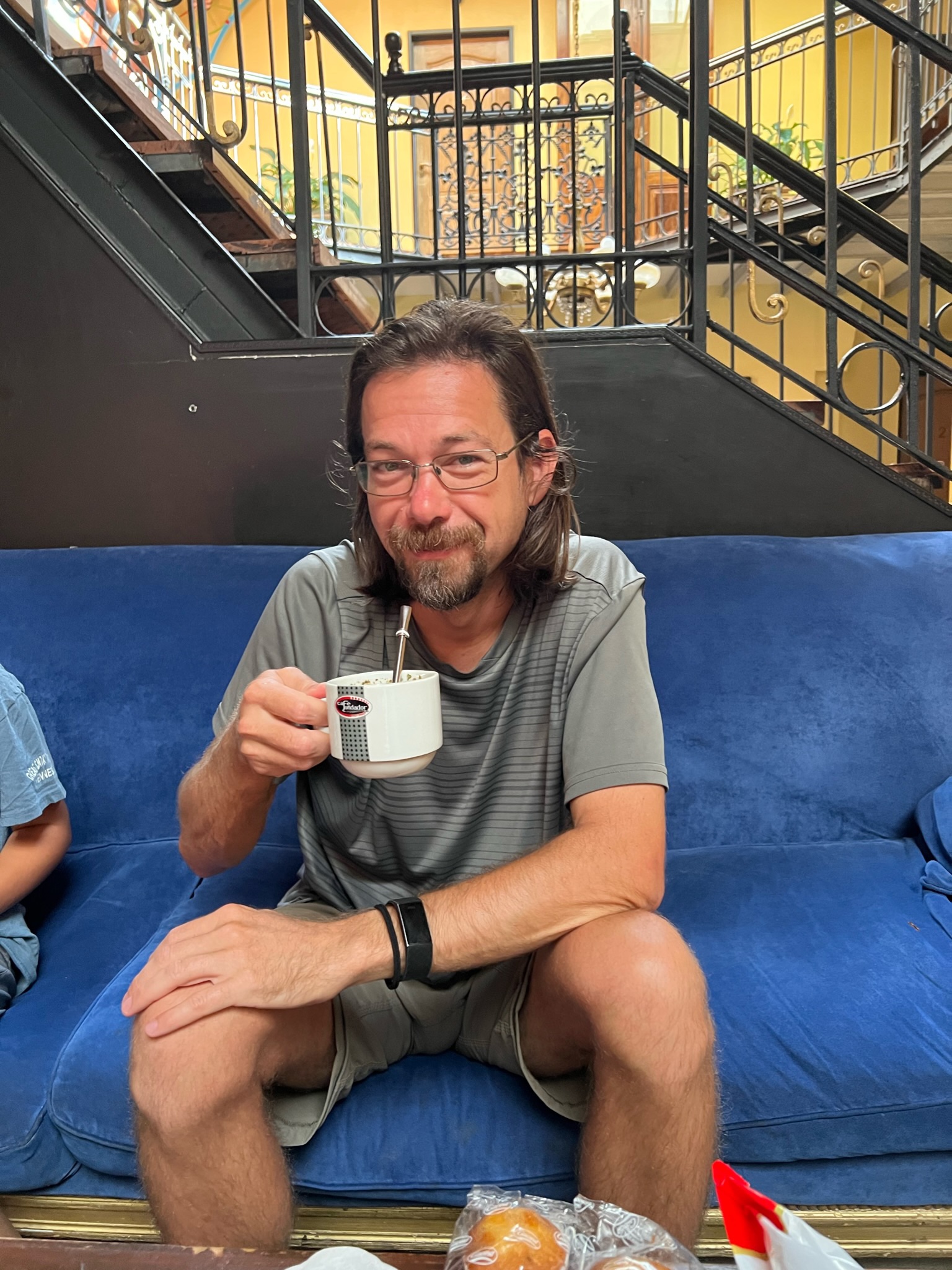
Brian tried mate for the first time, as they had it available for guests to drink in the common area. Mate is a drink that is wildly popular in Argentina. It’s similar to hot tea, but the leaves are loose in the drink while you drink it. To keep from drinking those, you use a special straw to filter them out. In nearly every store, you’ll find mate cups, straws, leaf storage containers, and stylish thermoses so you can easily carry your supply of hot water around with you. The mate cup is specially made for the drink, and we were told that at least historically, people drank it from a hollowed out hoof. Yum. Some of the cups and straws were really fancy, but there were little plastic versions for small kids in some of the stores too. (I’m not sure if kids actually used them or if they just played with them). In many of the nicer stores, you could even find these personalized carrying baskets to keep all of the mate supplies together when you are out and about. You’d see people going about their daily business with their mate baskets in tow, and at many of the public places we visited, they had hot water refilling stations to make it easier. Brian had been wanting to try mate for a while, but because of the way it is consumed (not with food), it’s not something you can find in restaurants. The drink is so popular here, though, that no one even recognizes that us tourists don’t know how to make it or drink it. Our hotel had the supplies we needed (including a water kettle with a special ‘mate’ setting), so we gave it a whirl.
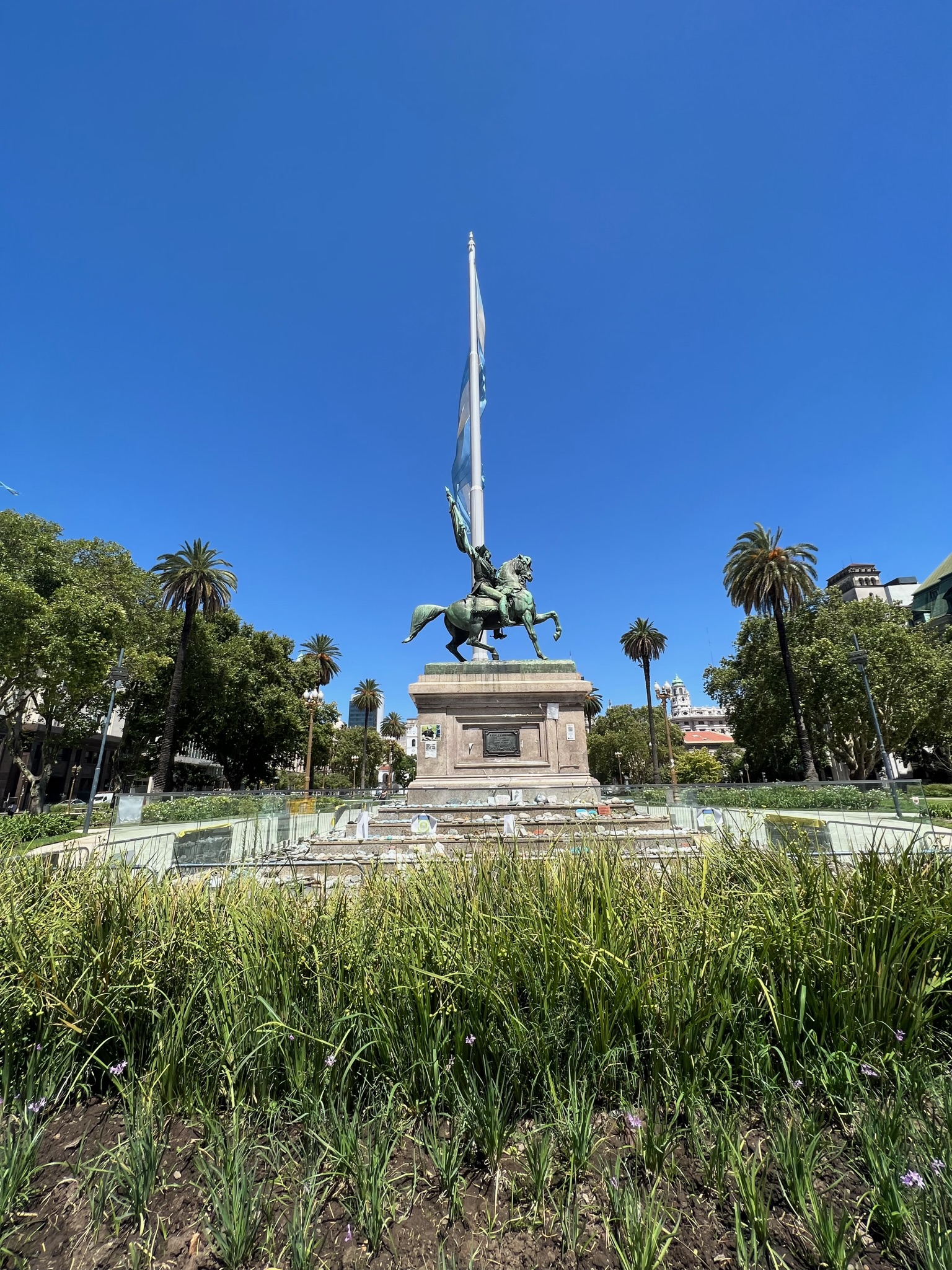
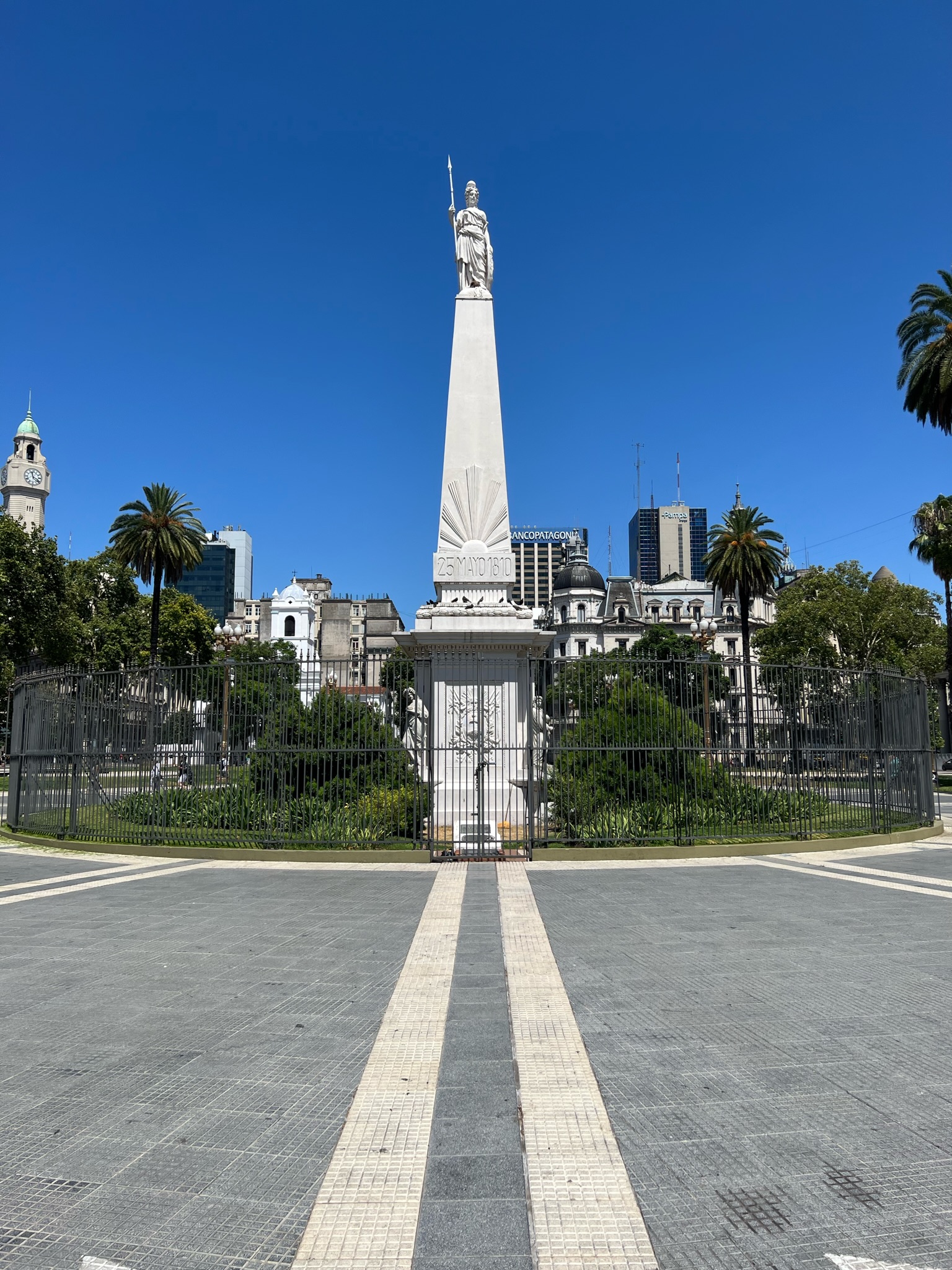
We only had a few days in Buenos Aires before we’d meet our Antarctica travel group, so we enjoyed the time as best we could. We did a little Christmas shopping so that we would have a few gifts to open on the boat. We each had a $5 gift limit. Because we will continue to travel for another 6 months and we’d have to carry anything we bought, we decided it would be best if our gifts were edible. We tried to find treats that we enjoyed but haven’t had a lot. Henry had wanted gummy worms, I wanted caramels, and you can never go wrong giving Brian good dark chocolates.

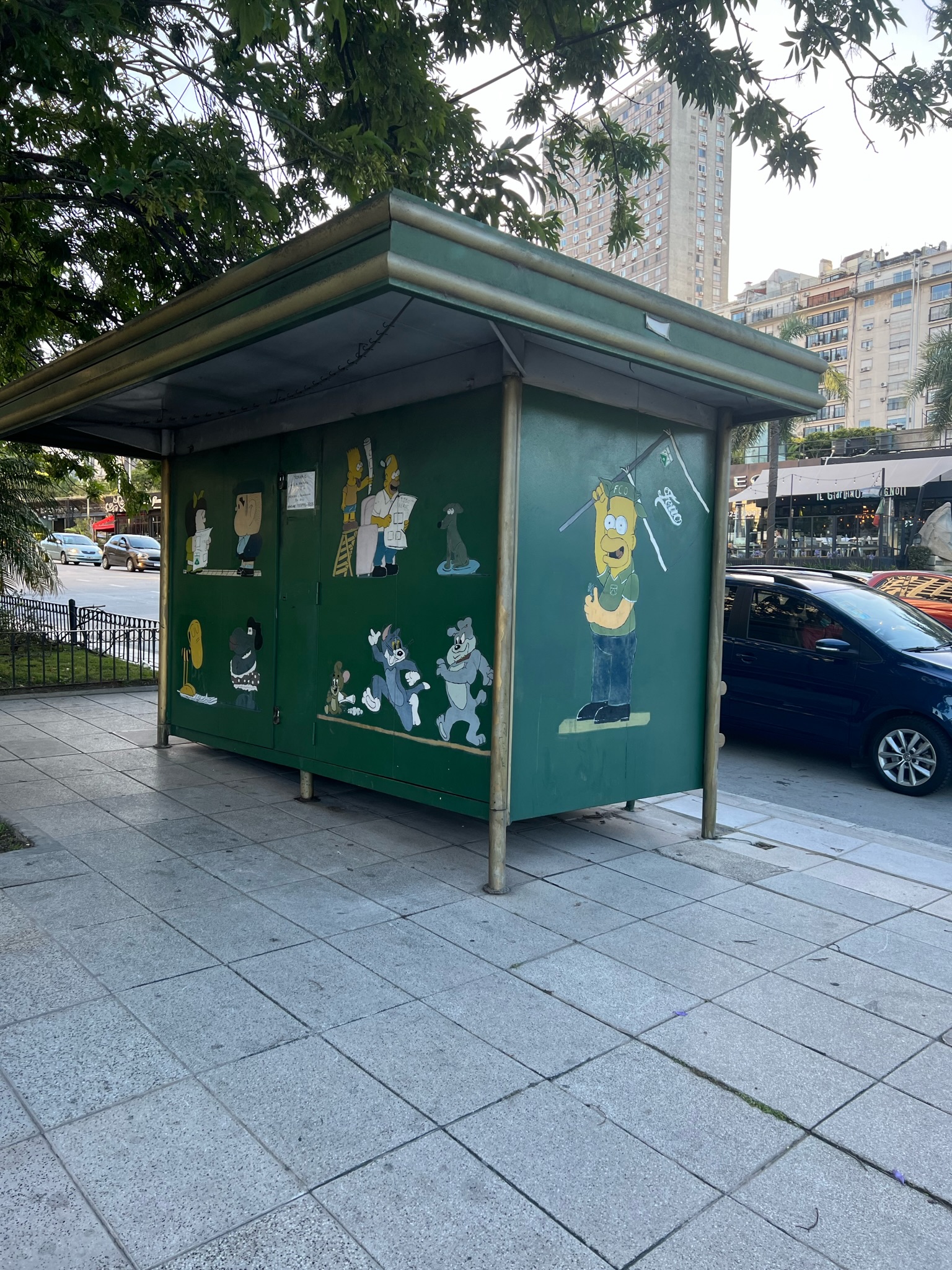
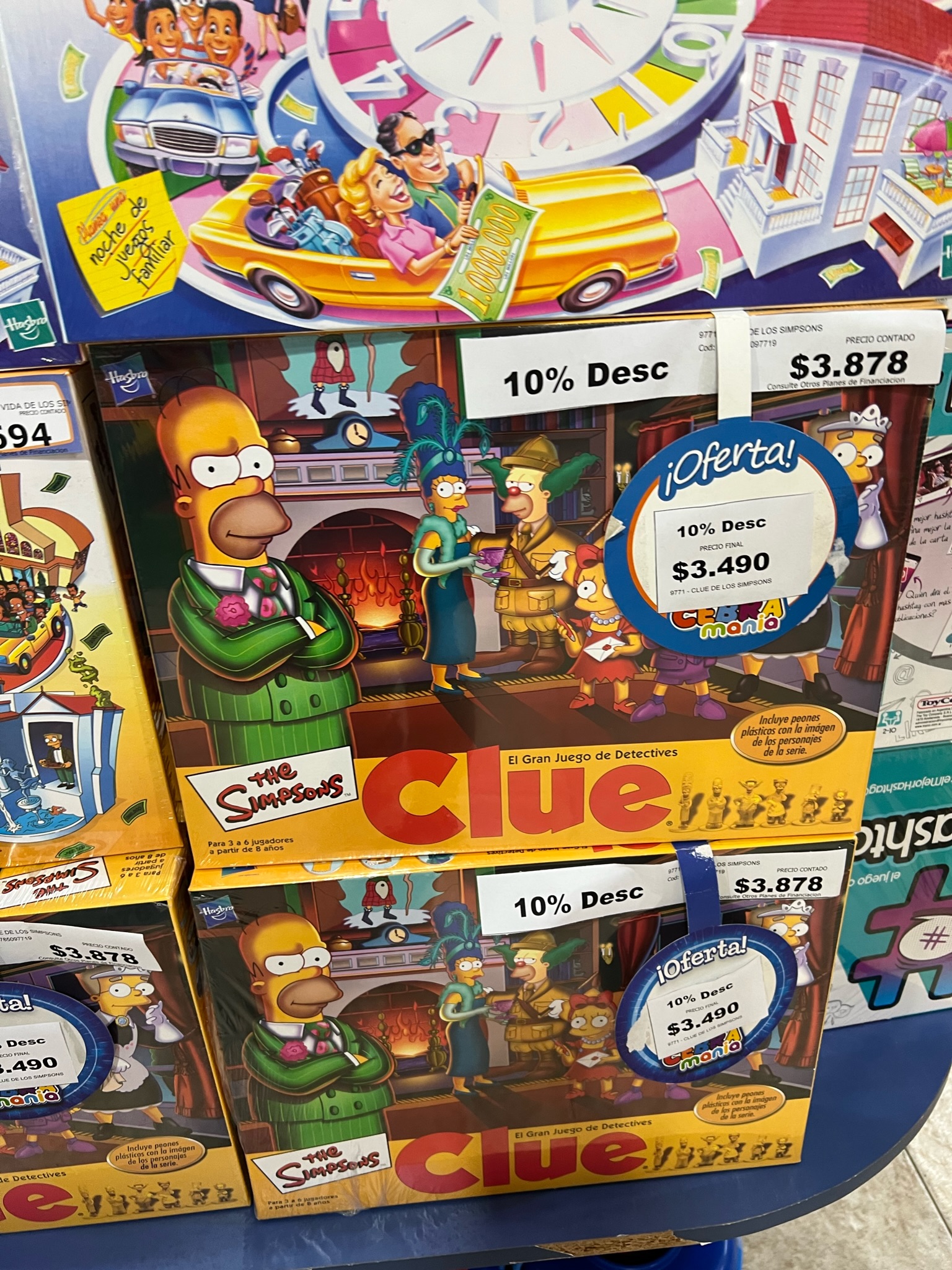
Interestingly enough, we noticed that they really love The Simpsons here. It came on television every night. There were Simpsons painted on park benches and murals. We also saw lots of people wearing Simpsons t-shirts walking down the street. When we were Christmas shopping, we found plush versions of the characters as well as The Simpsons Clue game. I almost bought The Simpsons deck of playing cards just because I thought they might be a fun memento of our time here.
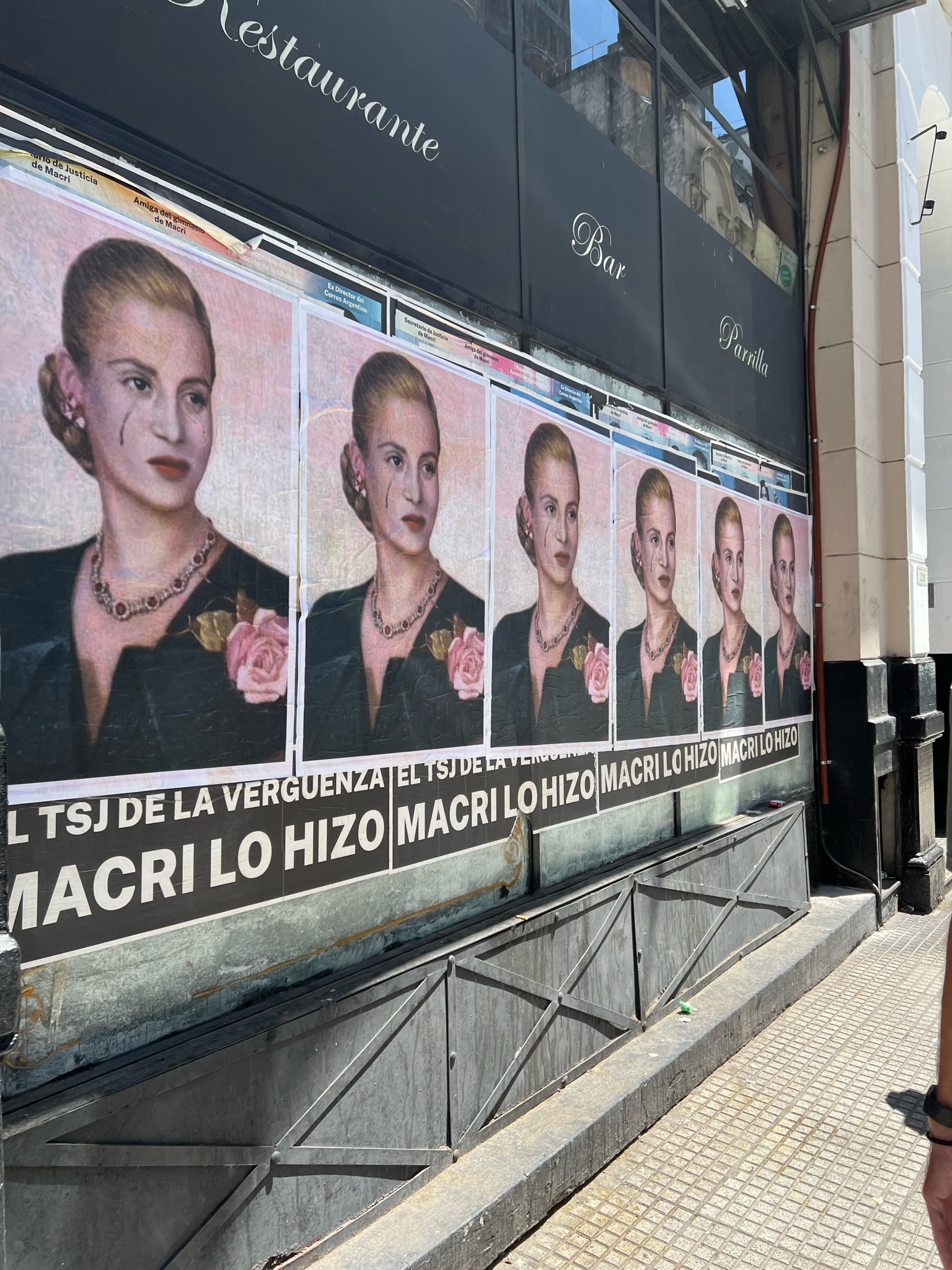
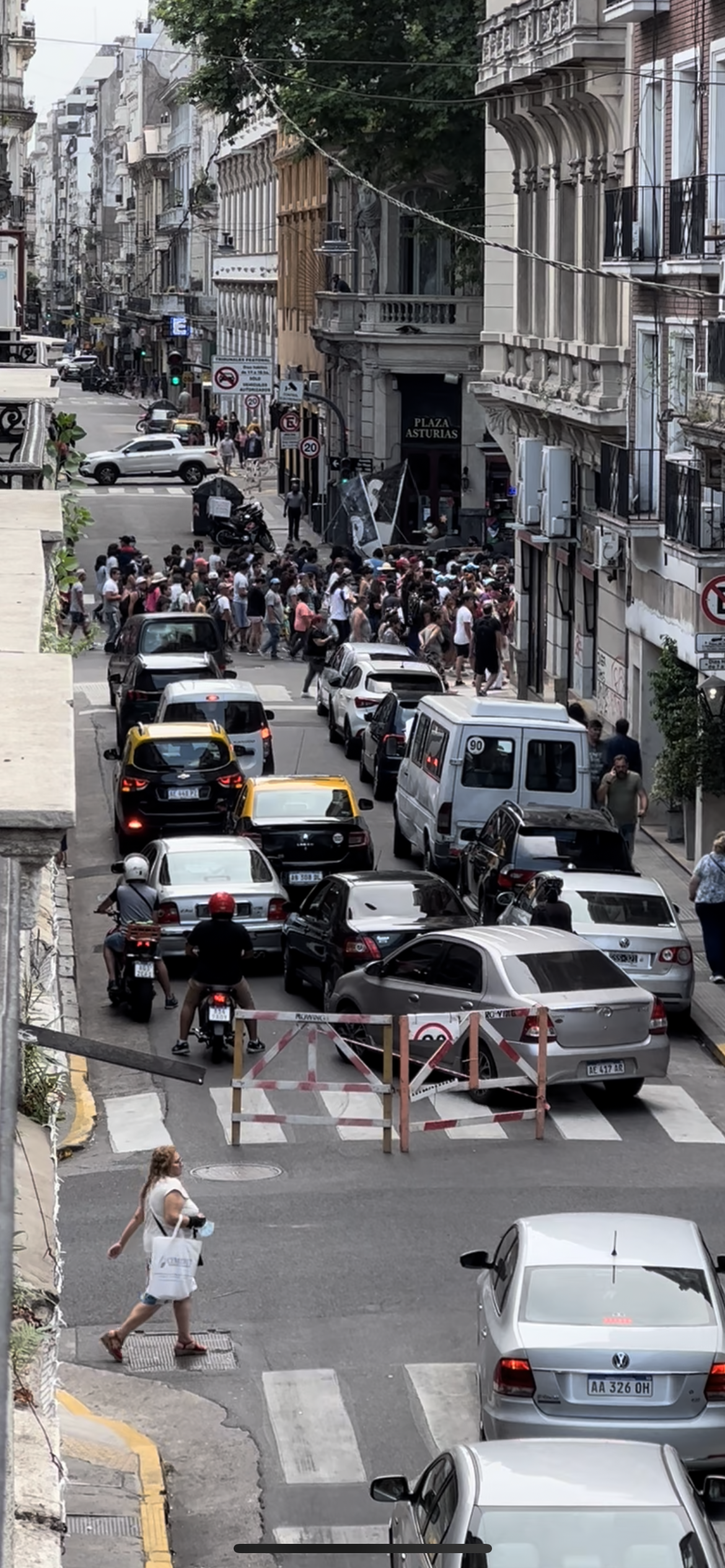
We woke up one morning planning to get some breakfast at a local shop. As we exited our hostel, we heard someone beating on drums. Out on the street, we saw a crowd forming and they were all carrying signs that said Polo Obrero. Not being from the area, we didn’t know what that meant. We thought we’d get a little closer to see what was going on. There were hundreds of people – men, women, and children – in the street, and it appeared that they were getting ready for a parade. We’d seen hundreds of people go down the main road riding motorcycles and wearing Santa gear the day before, so we just assumed it might be something similar. Either way, we didn’t want to be in a crowd that size, so we turned around headed the opposite direction to get some breakfast.

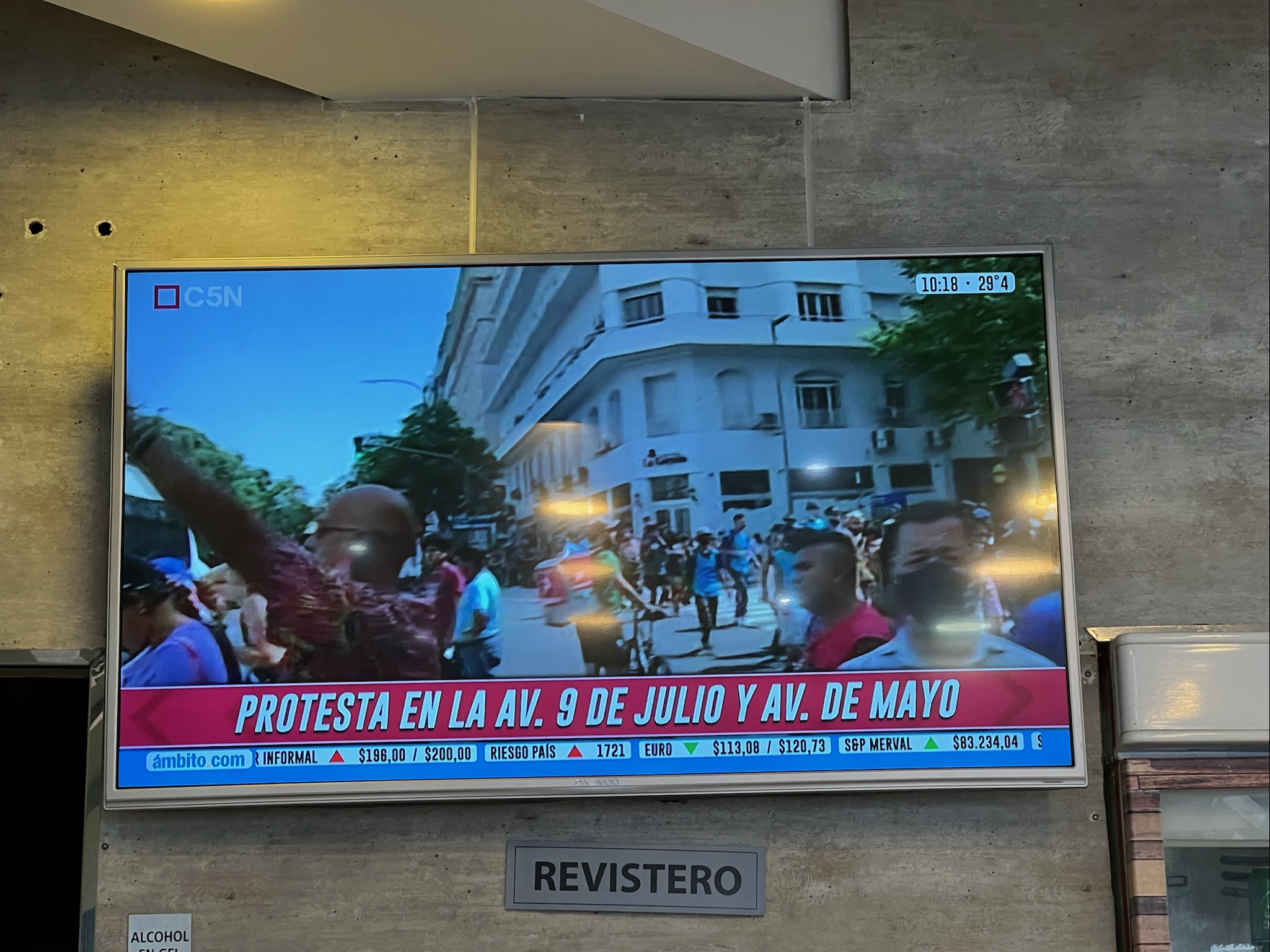
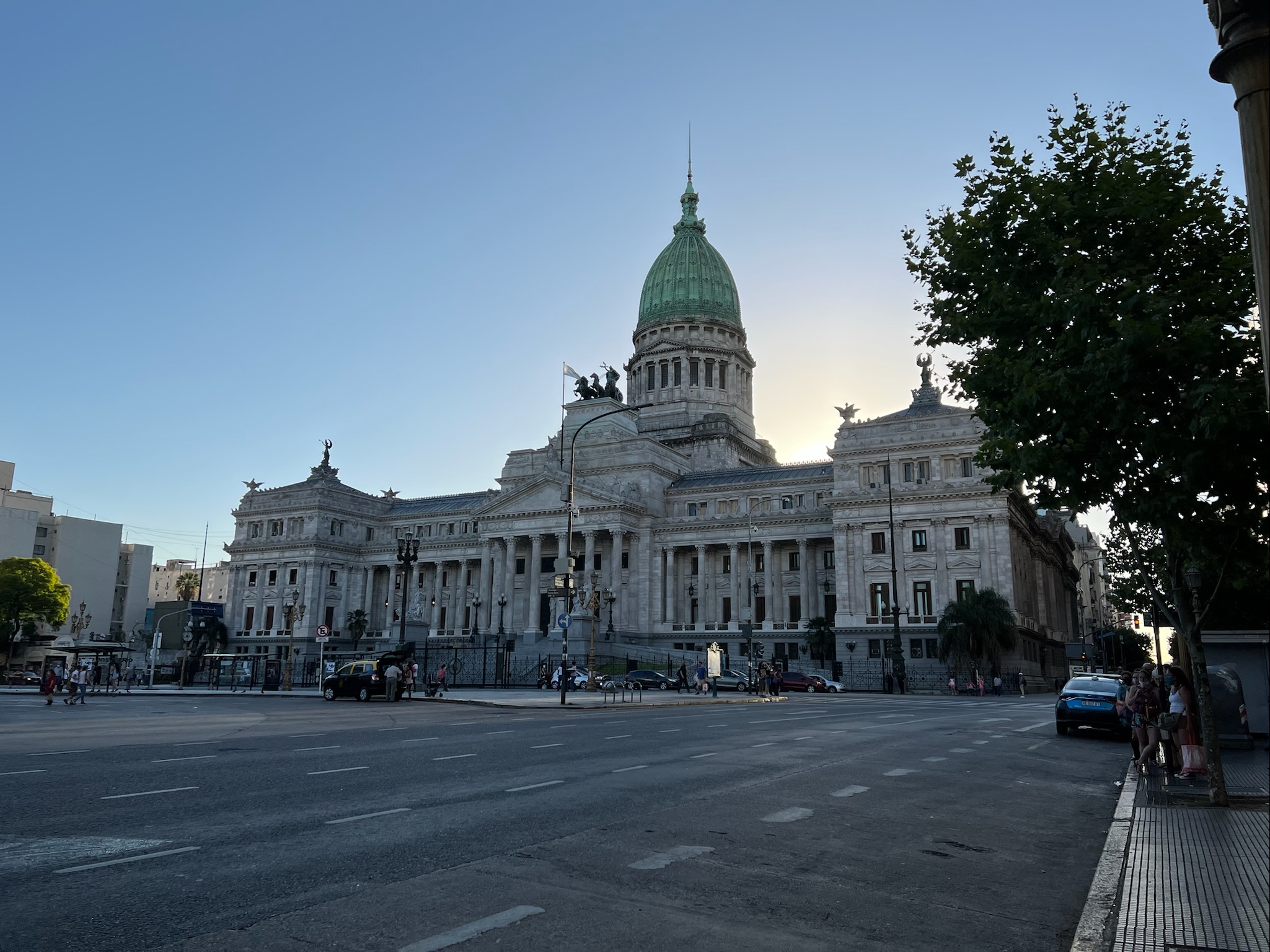
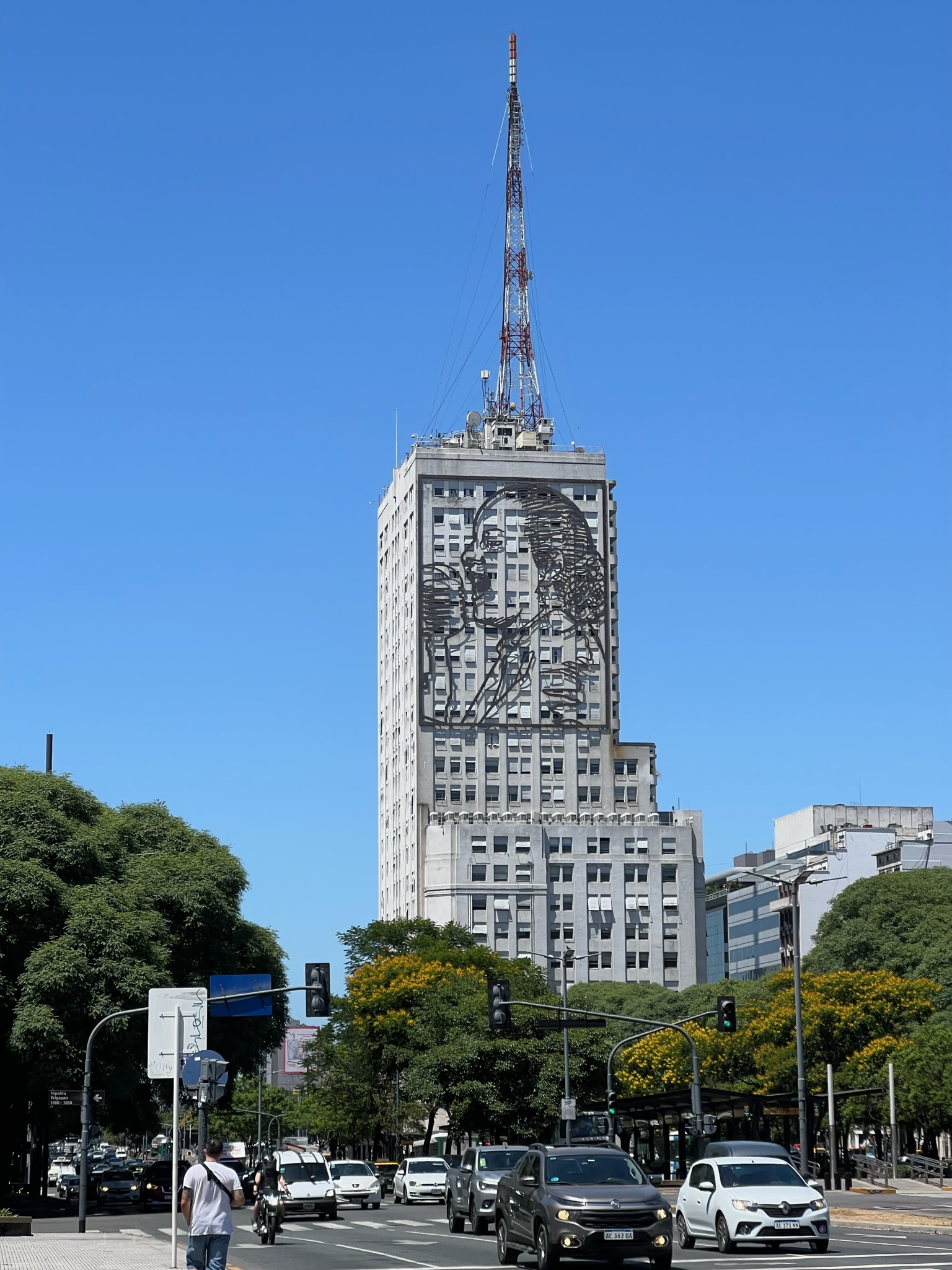
The restaurant we found had wifi, so while we were waiting on our food, we found out that Polo Obrero is a group that holds (mostly) peaceful protests to get the government to act on their cause. They don’t protest often, but they’ve been around for 20+ years. They were intentionally protesting in an extremely busy area to create traffic congestion and draw attention to their cause today. We watched more and more people walk by the restaurant window heading towards the protest, and on the restaurant’s television, we saw the news reporters discussing the protest. We had planned to do some shopping, but we decided that today may not be the day to be in that area. We needed COVID tests for our Antarctica trip, so we found a free testing center away from the chaos and walked there instead. By the time we returned in the afternoon, the group had made their way further down 9 de Julio Avenue and away from us.

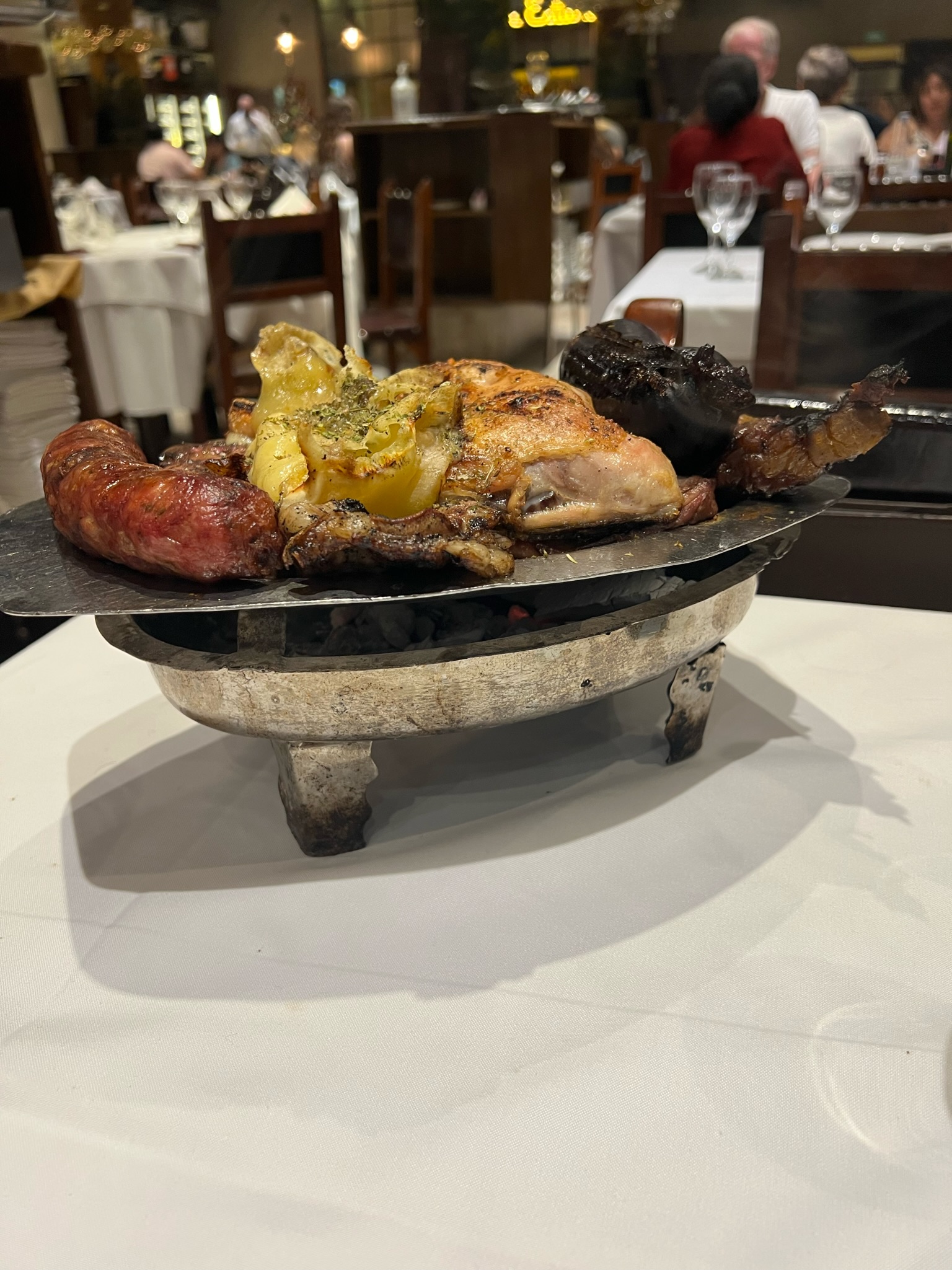
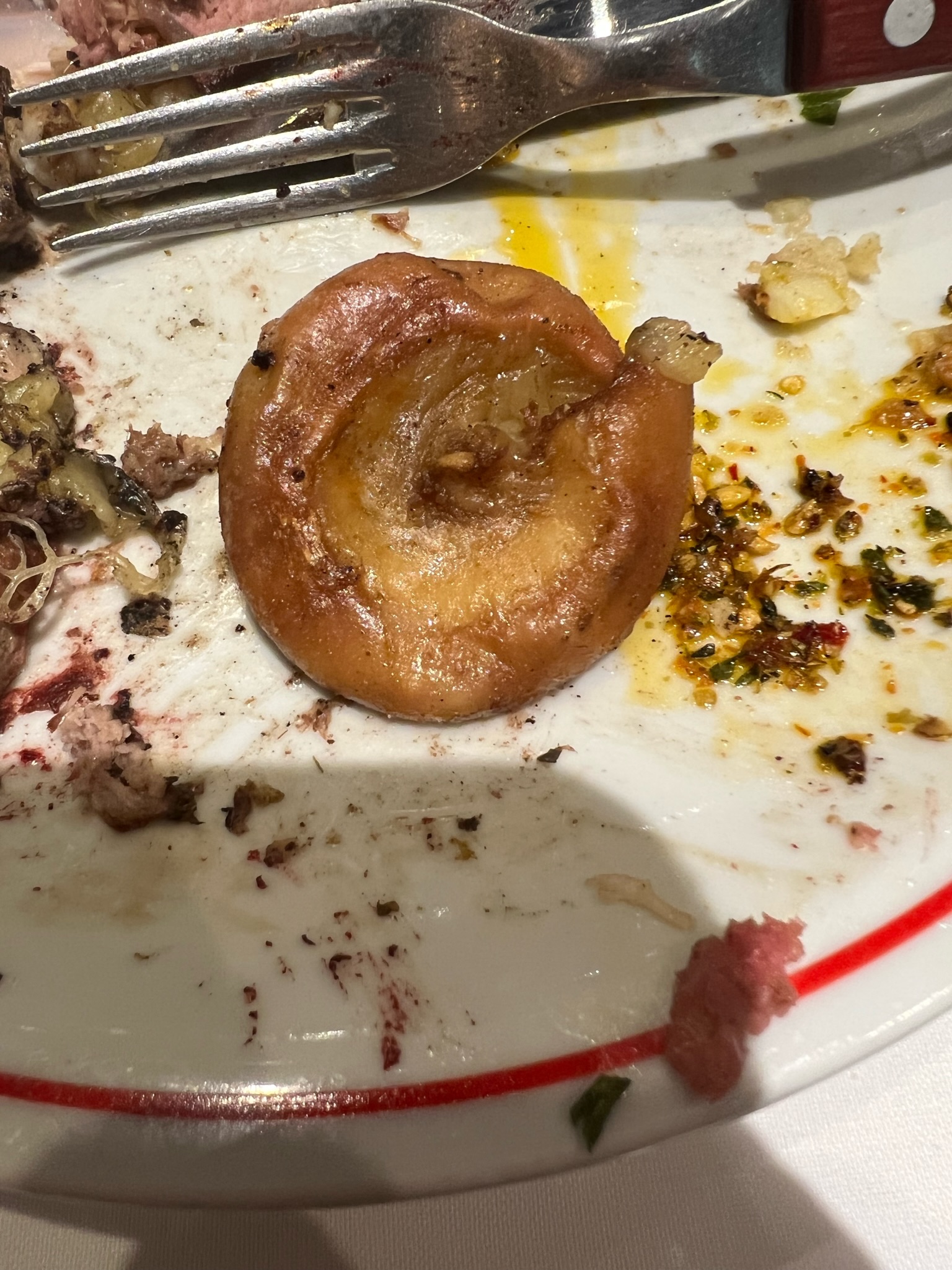
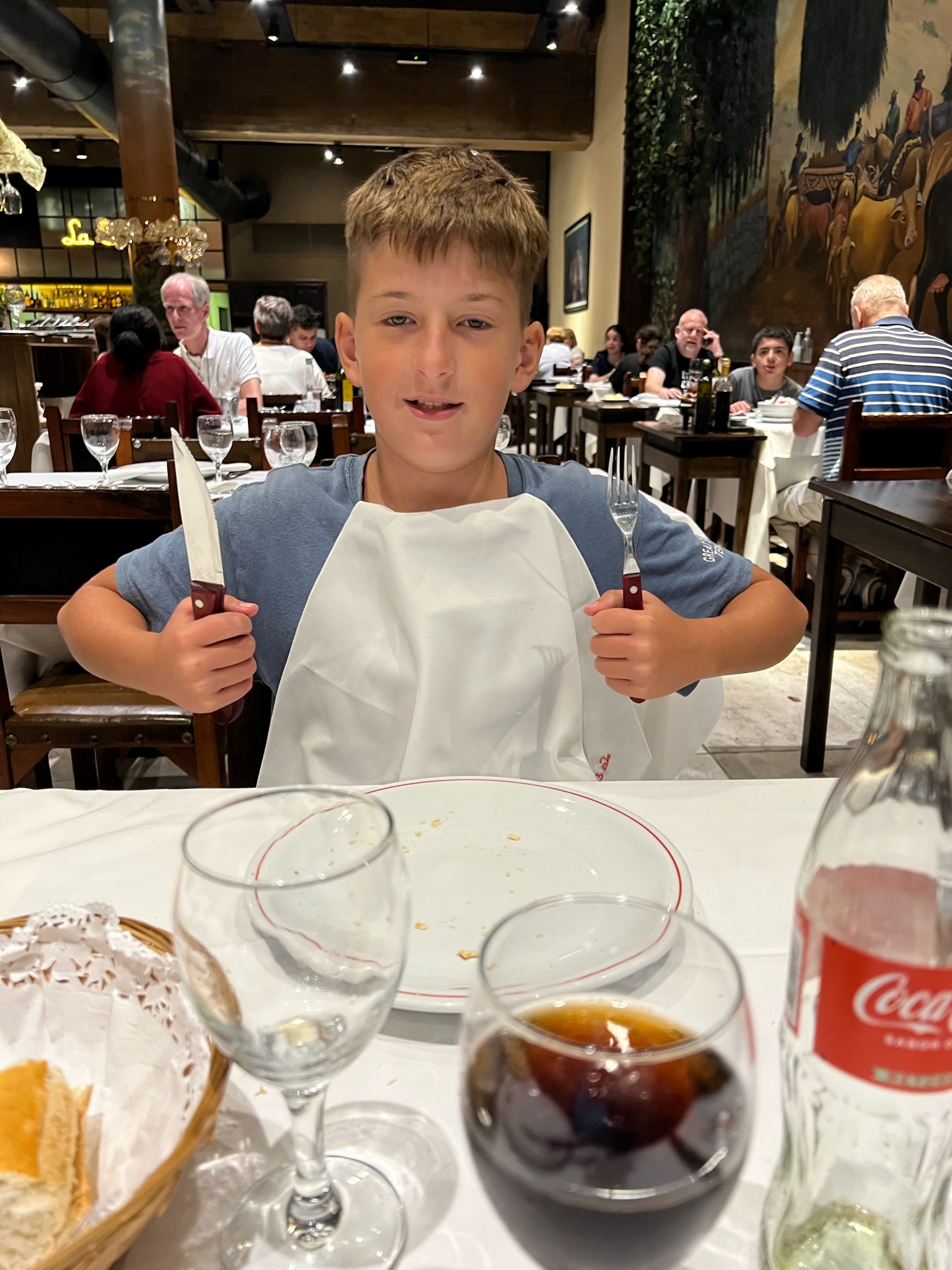
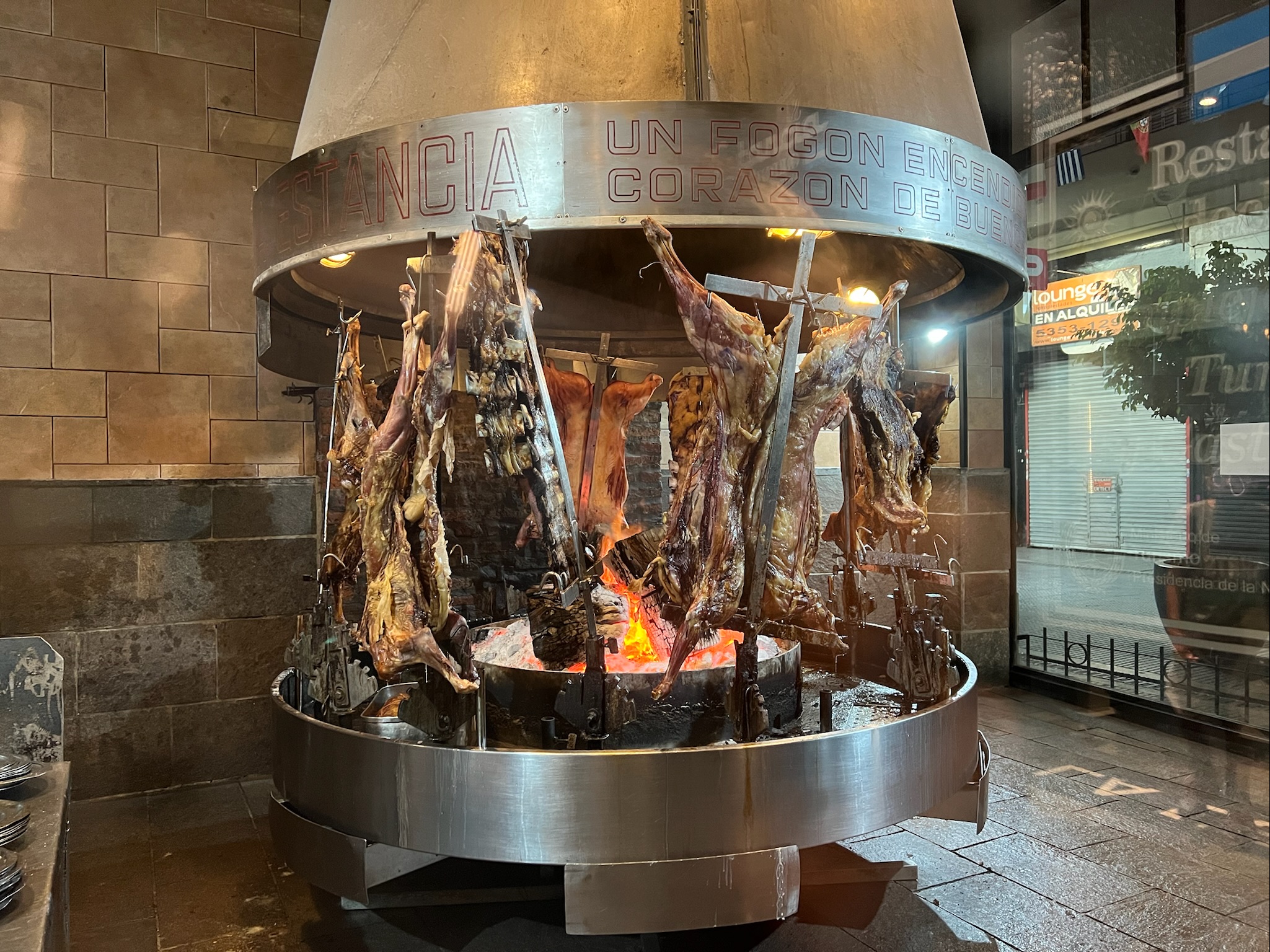
One evening, hungry for good grilled meats, we found a restaurant that had wonderful reviews. The restaurant was very fancy, much more so than we are accustomed to eating at on this trip. Their menu offered a parrillada, an assortment of grilled meats, that we could all share. We didn’t know what everything in the meal was but we figured that we could try it all, and we could all find something we enjoyed. We intentionally did not look up what everything was so we wouldn’t have any preconceived thoughts about the foods. Um. Let’s just say this will always be one of the most memorable meals we’ve ever eaten.

The tray of meats looked and smelled amazing when it arrived at our table. Brian would pick one item, serve each of us a portion, and then we’d all try it at the same time. On our tray, we had bife de chorizo, a fantastic cut of steak that we’d grown to love, a grilled chicken quarter, and a link of chorizo. We decided to hold off on eating those until the end since we fully expected they would be great. We didn’t really know what anything else was, so each different meat was an adventure.

Henry’s least favorite dish, was a large purple bean-shaped mass. Brian put it on his plate to slice some for everyone, and when his knife pierced the outer casing, the soupy black mush inside began to spill out. I nearly gagged just watching that, but it actually smelled pretty decent. Brian spooned some out to all of us, and we gave it a try. Henry could barely keep it down. He has an issue with mushy textures anyway, and this one was just too much for him. I honestly thought the taste wasn’t that bad, but I wouldn’t try another bite because the texture just felt like this uncooked cornbread batter in your mouth (not that I’ve ever tried that). I’ve never eaten anything like it, and I pray I won’t again. When we were able to figure out what it was, we learned that it was blood sausage, literally blood that is thickened and cooked in a casing, and it was exactly as gross as it sounds.

We didn’t know what chinchulines were, but I kid you not, I thought they had to be pig tails. They were small tube like pieces of meat that circled around just like a pig’s tail. When we tried them, it took everything I had in me not to throw up right then and there. Henry kept laughing at me because I was trying not to make a scene in this fancy restaurant, but the thing was incredibly chewy, so much so that I couldn’t get it to break apart so I could swallow it. I threw up in my mouth, and I had to use Brian’s red wine (which I don’t like) to wash it down when I’d drank all of my own drink. We later learned that it was beef small intestine, and it was easily my least favorite dish on the table. It was awful.

Brian’s least favorite dish was next, and it was rinones. Without knowing what it was, we assumed this one had to be some really fatty section of pork. It tasted dirty and rotten, though. I didn’t like it at all, but with enough Coke, I managed to eat my portion. This one turned out to be kidney, which apparently tastes just like a kidney should. Nasty.

We were beginning to wonder if we were in an episode of Fear Factor. Everyone else seemed to be eating these things just fine, and they seemed to be enjoying themselves! We were already on our second round of drinks, and the meal had barely started. Thankfully, our last three meats were really quite good, and we enjoyed them very much. We couldn’t stop laughing about how catastrophically bad the first three meats were. The restaurant itself was phenomenal, but we just had no appreciation for these local delicacies!
I also got my first haircut away from home in Buenos Aires. I’m not very picky about my hair, but I’ve been very nervous about letting anyone touch it. It was starting to look a little rough, though, and it needed some help. I followed a recommendation of our host, and I walked to a little salon not far from our hostel. With my google translations all ready, I walked in prepared to ask for the most basic haircut possible. I was enthusiastically greeted by an English speaking man who welcomed me inside and sat me in the chair. Max, my stylist, tried to talk me into a better haircut, and with a silent prayer, I agreed. As he worked on my hair, he talked about his life in Argentina. He told me about his children, about the poverty in Argentina, and about the last few years trying to survive with all of the COVID restrictions. I loved my time with him, and he did a really nice job on my hair. I also loved that I was able to have a real conversation with a local resident. He spoke only a little English, and I spoke only a little Spanish. I didn’t understand everything he said, and I’d guess he didn’t understand me completely either. But, we talked in two languages as best we could and we both learned a lot from each other.

With our Antarctica group, we also had the opportunity to visit the Ushuaia area. You can read a little more about that in my blog, The Bottom of the World.

I don’t know what we expected for Argentina, but we really enjoyed it here. The country is very big, and across the land, there are so many different regions and climates to enjoy. The mountains of Patagonia were simply beautiful. The tropical jungle of Iguazu was a feast of sights and sounds. Buenos Aires is as metropolitan as they come, and you can find anything you want there. And there were places we didn’t really get to experience either. Cordoba was nice, but we were only there for a few hours. We hated that we didn’t have the time to visit Mendoza, the wine country; Brian loved their red wines. Ushuaia is another area we’d like to have spent more time in as well; the islands here have so much more to see than we could in a few hours. I suppose those will have to wait for our next trip, because for now, its time to move on.
A Peruvian Expedition

Travel is fatal to prejudice, bigotry, and narrow-mindedness.

– Mark Twain

My sister-in-law and her family had visited Peru a few years ago, and ever since we heard about their trip, we’ve been wanting to go.  Unfortunately, we had considered skipping it on this adventure, mostly because we were running short on time but also because it was very expensive to fly into and out of the country.  With Covid, most land borders are closed, and flying is your only real transportation option.  But, Henry had been dying to try a guinea pig on a stick (we can thank Henry’s cousin for sharing that tidbit), and Brian and I had been really wanting to go.  So, we bit the bullet and booked our flight from Bogota, Colombia to Lima, Peru.
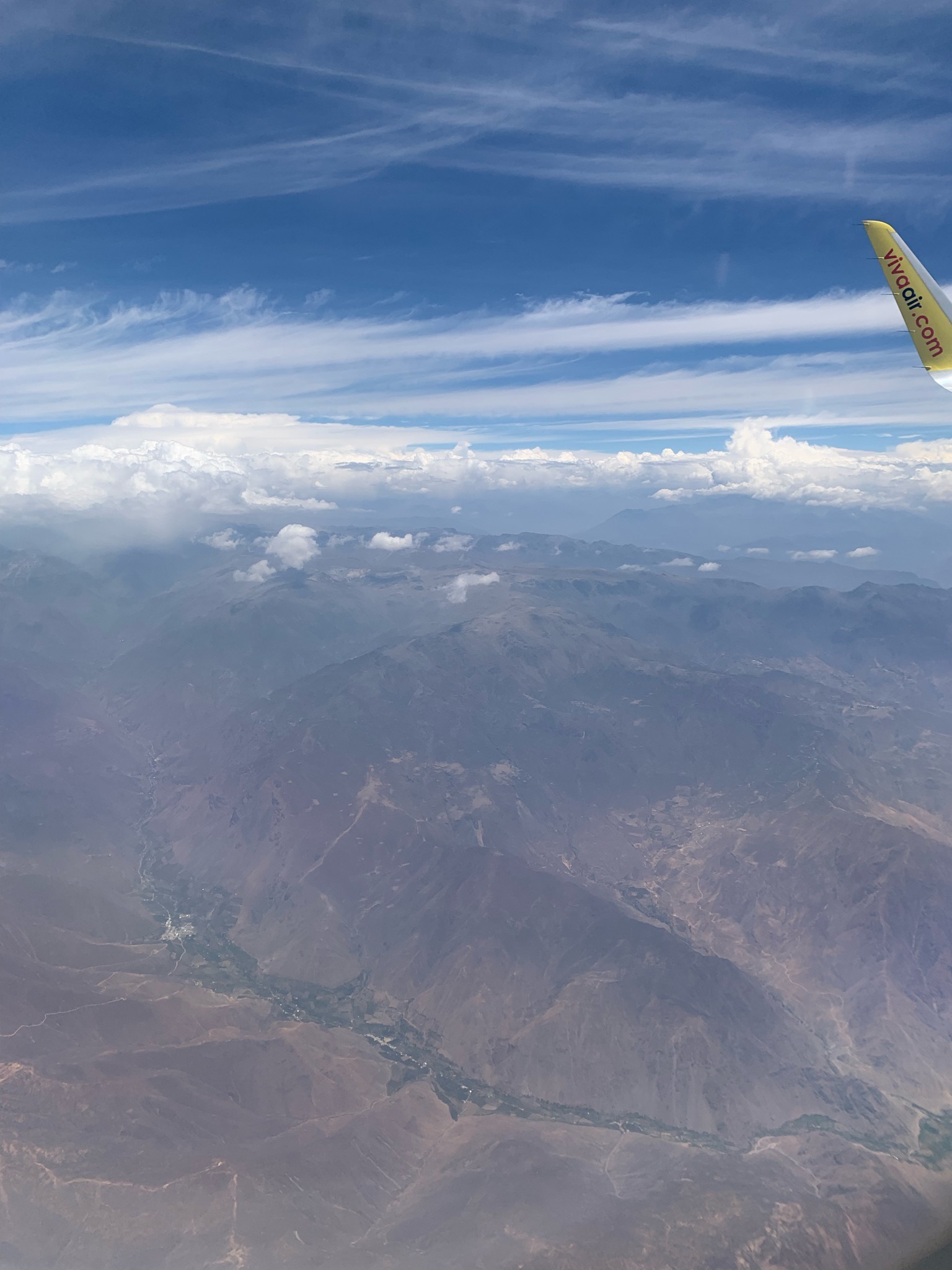
If you’ve been following our blog, you may remember that we were robbed in Bogota on Saturday morning on the way to the airport, so it made for a pretty crazy travel day.  While we were at the bus stop, a car pulled up and the men inside pretended to be police.  They took Brian’s phone, my phone, and a dead debit card from us before they sped away, but by the grace of God, no one was hurt.  Thankfully we still had our passports, Henry’s cellphone, and our credit cards, so we could get by easily enough.  We were all okay, but we were pretty shaken up.  After filling out our police report, we boarded our plane with no issues.

We arrived in Lima and took a taxi to the Passion Hostel in the Barranco neighborhood.  We rang the doorbell from the street, and a man stuck his head out the window to check us out.  After a moment or two, we must have been deemed safe enough, and he opened the door to let us in.  The manager of the hostel, Luis, was very nice, and after a few minutes chatting with him, he let us know that he would make an exception for us.  He typically didn’t allow children in the hostel, but he would allow us to stay there.  We apologized because we had completely missed that their website said they were an adults-only lodging.  I’m not sure that Luis could ever fully understand how grateful we were that he bent the rules for us.  We’d had a horrible morning, and emotionally, we were very much on edge.  I’m sure we could have found another place to stay, but not having to do that then and there was a huge blessing.  Luis showed us to our room which had two sets of bunk beds and a private bathroom.  It was warm and comfortable, and after a very rough morning, it gave us peace to know we were finally somewhere we could drop our guard a little. 
We spent the next two days not doing much of anything other than trying to recover from the robbery.  We changed every password we could think of.  We called our insurance to report the theft and called our cell service company to stop service on the phones.  We knew that the thieves had our phones and that they were gone for good, and we assumed they’d use them for parts, or wipe them and resell them. Unfortunately, we missed most of Lima because of this.  Aside from getting food each day, we spent most of our time cooped up in our tiny little room trying to get back on our feet. 

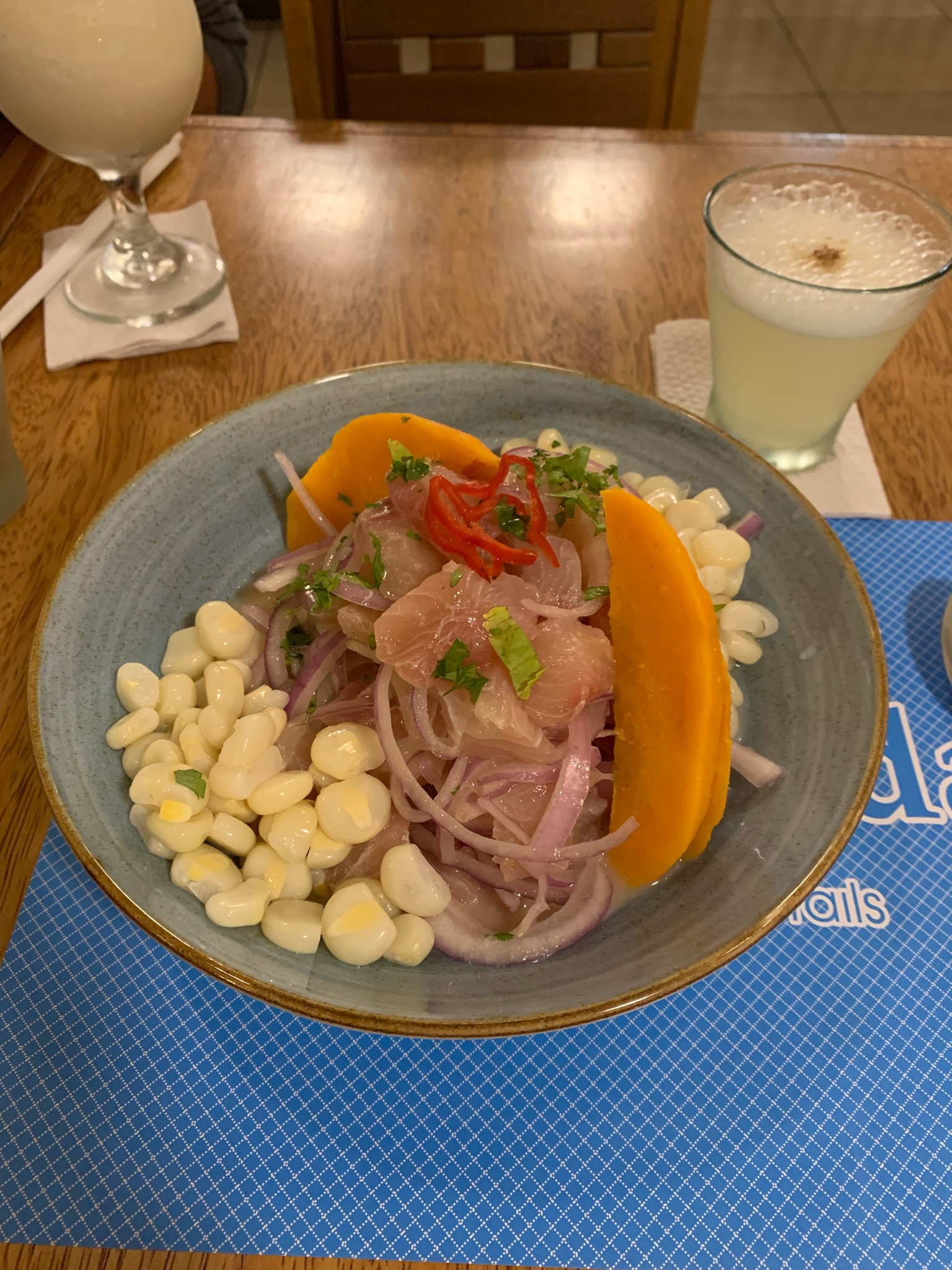
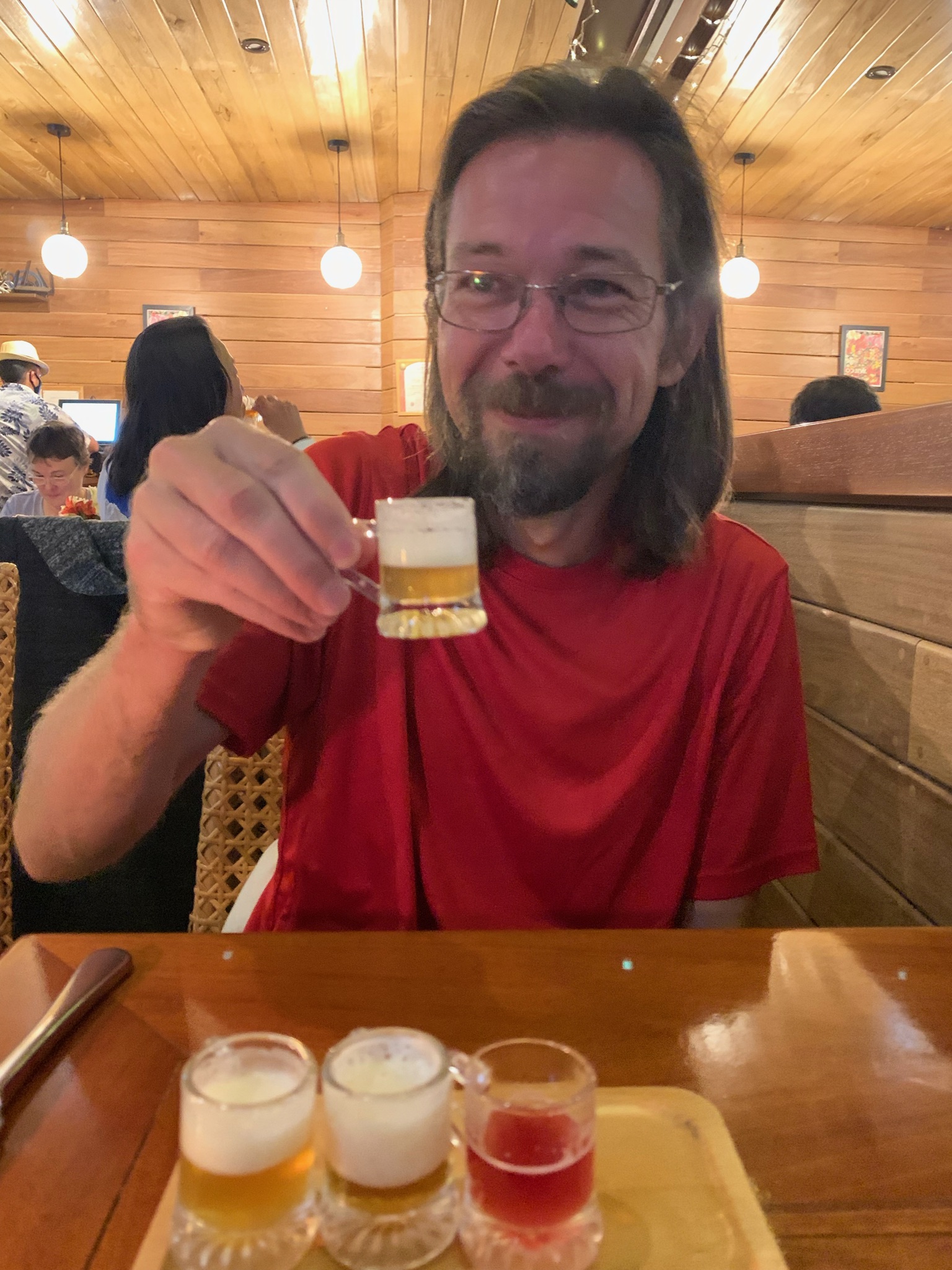
Although we missed seeing much of the city in the first few days, we did get to enjoy a wide variety of Peruvian cuisine. Peru is known for being a culinary hotspot, and it didn’t take us long to understand why. We drank fresh fruit juices from the central market each morning. The restaurants were very good and had a wide selection of foods. My favorite meal was a delicious roasted chicken. Brian had been eagerly awaiting a chance to try Peruvian ceviche, and he wasn’t disappointed; he ate more ceviche than is probably advisable. Henry tried tuco tuco, but wasn’t excited about it. After that, he ate his weight in chicken wings and burgers. We were also able to try a Pisco Sour, a local favorite cocktail; Brian really liked it, but I decided to stick to my standard pina colada.

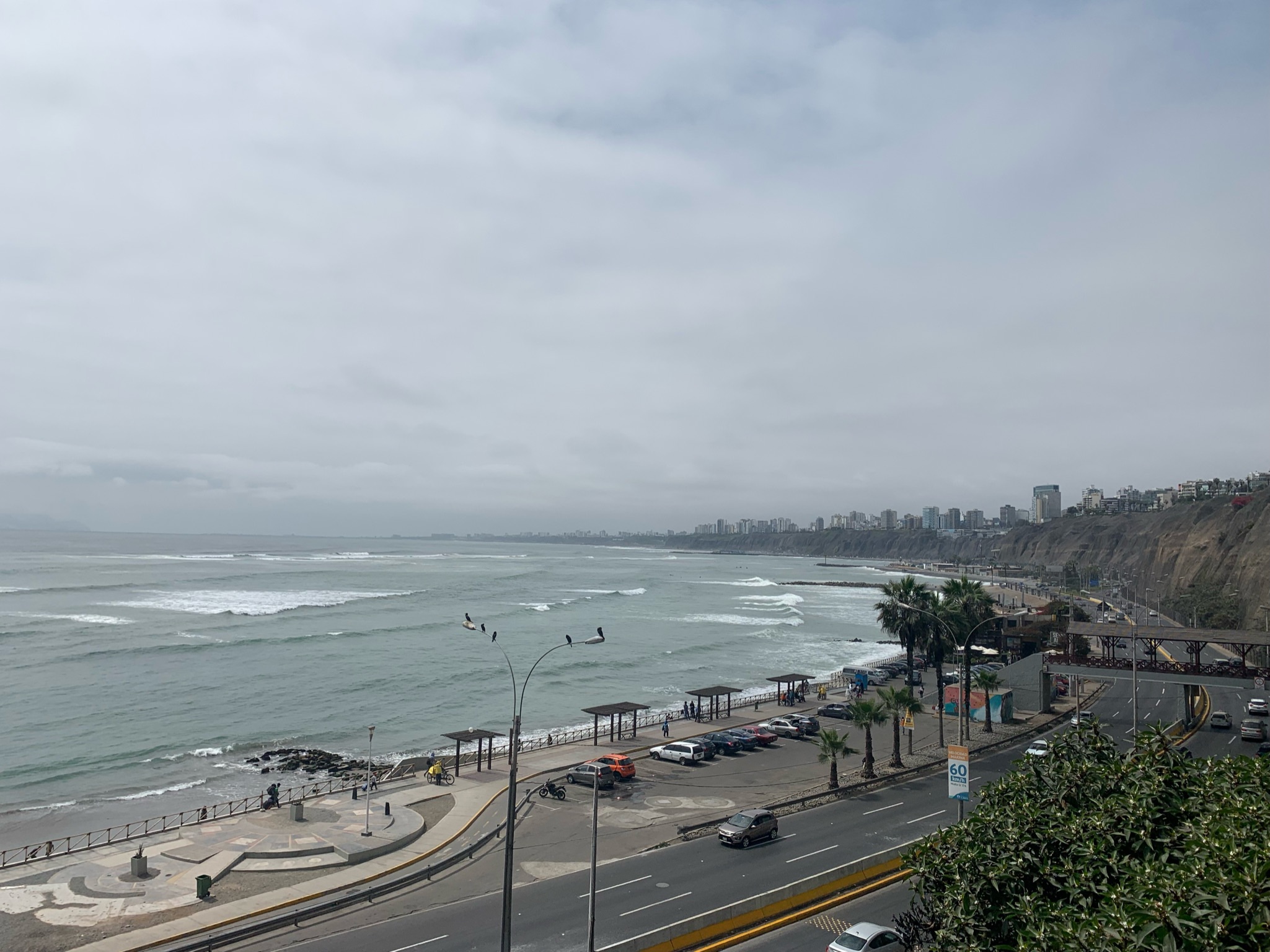
Lima is on the Pacific coast, and the city itself sits on top of cliffs overlooking the ocean.  We managed to make it down to the beach one afternoon, but it was too cool to actually swim.  The weather was strange in Lima.  We were very near the equator and at sea level, and the temperatures were cool enough to be comfortable in pants and long sleeves.  The surfers on the beach all wore their wetsuits as they enjoyed the waves.  I don’t know if I just had a misguided view of what the equatorial regions of the world were supposed to feel like, but Lima completely upset my perceptions.  I’m pretty sure I learned in school that it was supposed to be very warm around the equator all the time, but here it was not. It was cool to comfortable during the day and chilly at night.

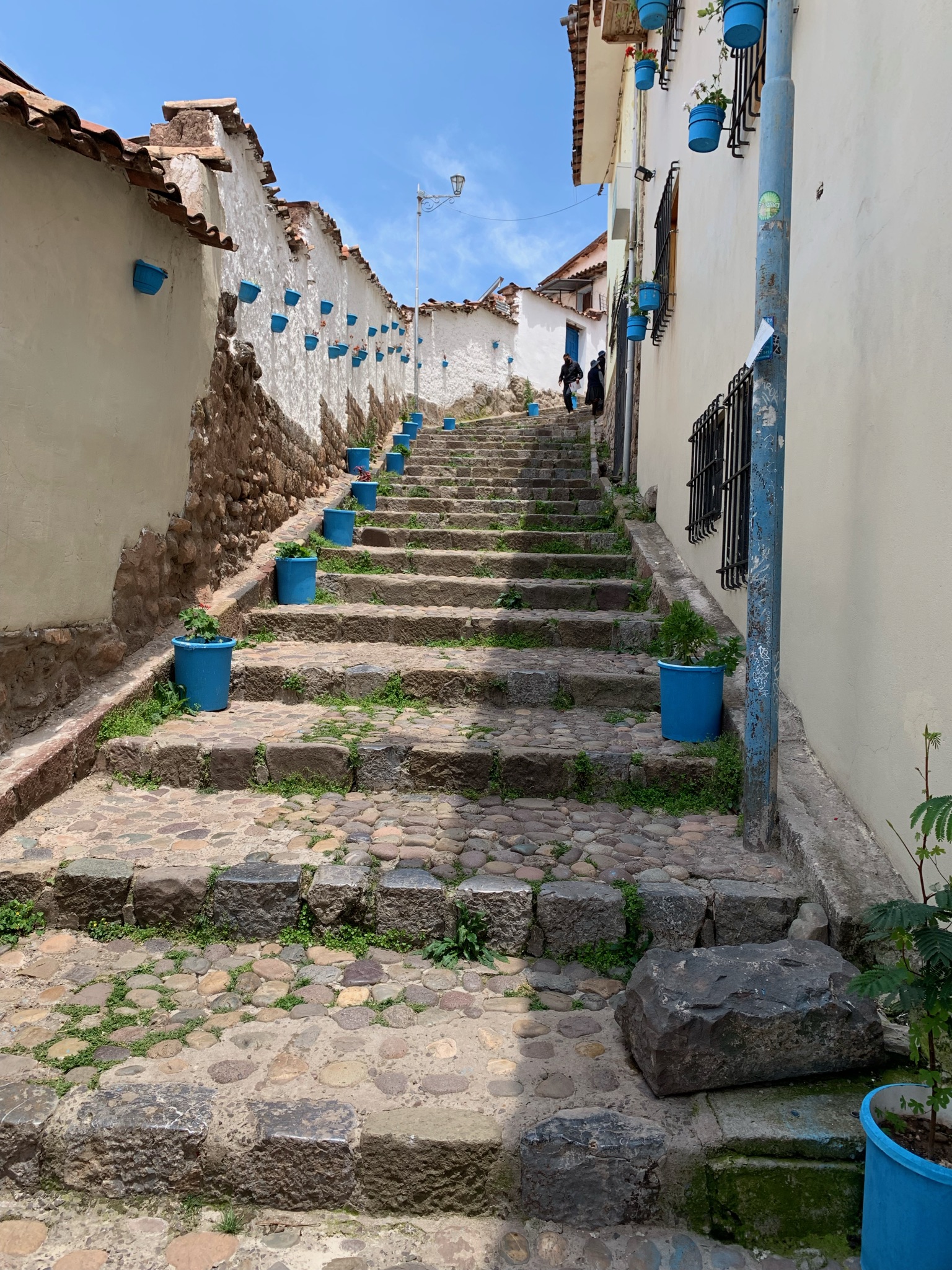
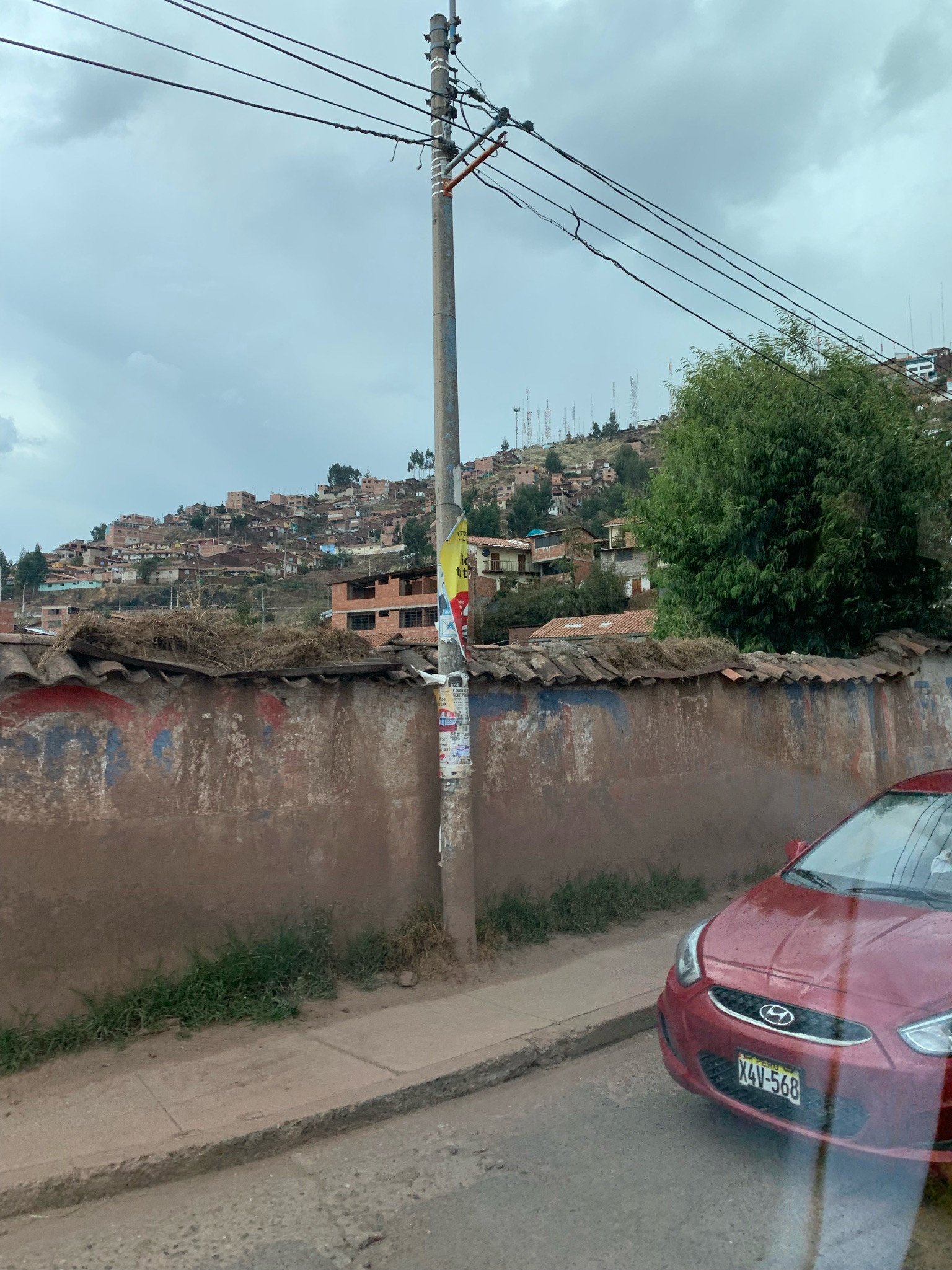
We flew out to Cusco on Tuesday night after spending four days in Lima.  Cusco is a hub of sorts for visiting Machu Picchu and the Sacred Valley.  It is also at 3,400 meters elevation, so it’s a great place to visit for a few days to acclimate to the higher elevation before you head out to the ruins and begin climbing.  The high elevation makes Cusco that much colder, and we found ourselves bundling up in the evenings.

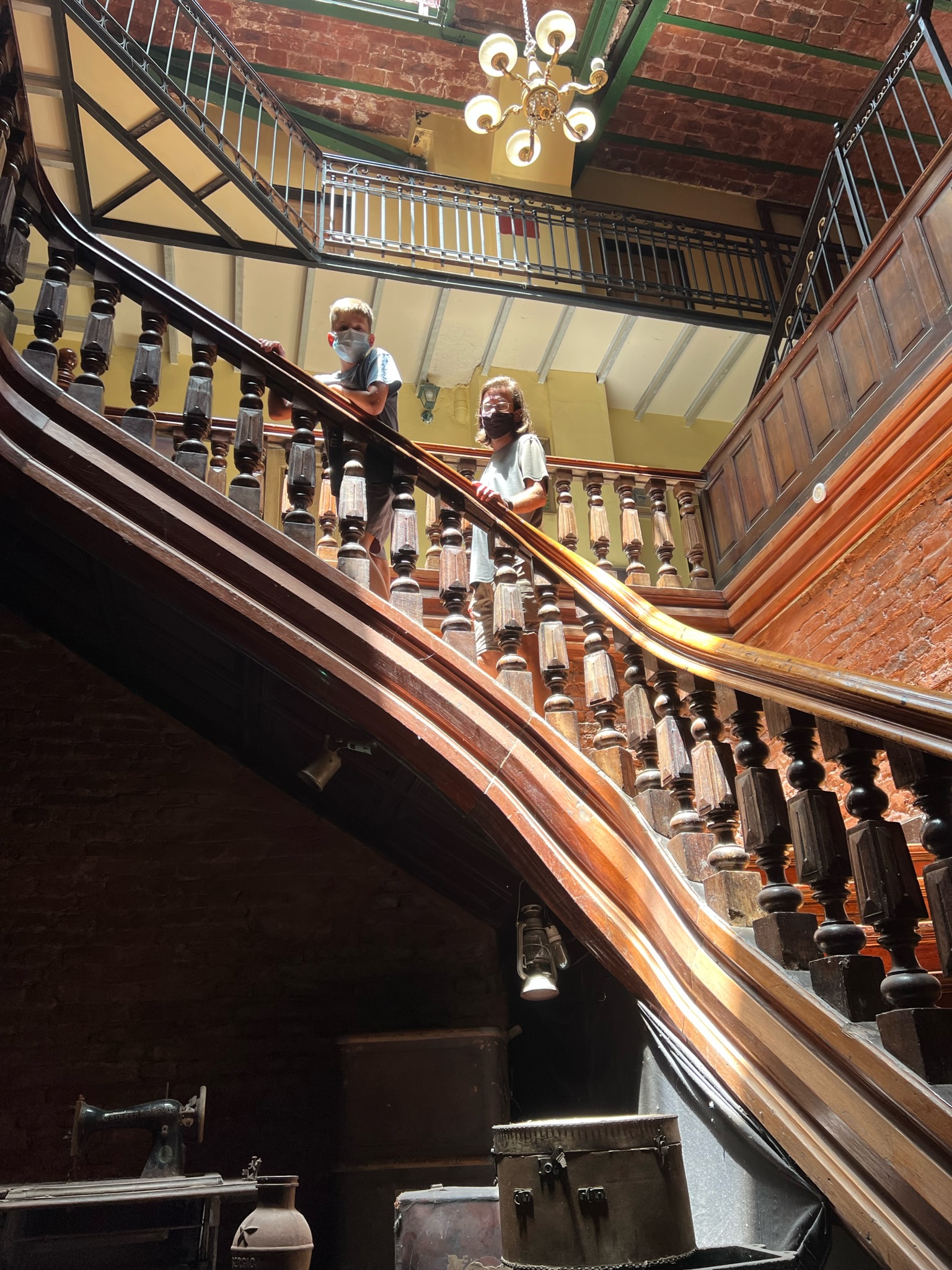
We landed around 11 pm, and our taxi driver took us to our Airbnb.  We stayed in a cute little private room above the Wasicleta Restaurant in Cusco.  The place was adorable.  It was bicycle themed, and there was a bicycle rental shop in the building as well.  The courtyard was brightly decorated, and when we arrived, they were playing 90’s alternative music.  Brian and I liked it immediately.  Our room was on the second floor of the 100 year old building.  It was spacious and bright, and we laughed at how every board in the floor creaked as you walked across the room. 

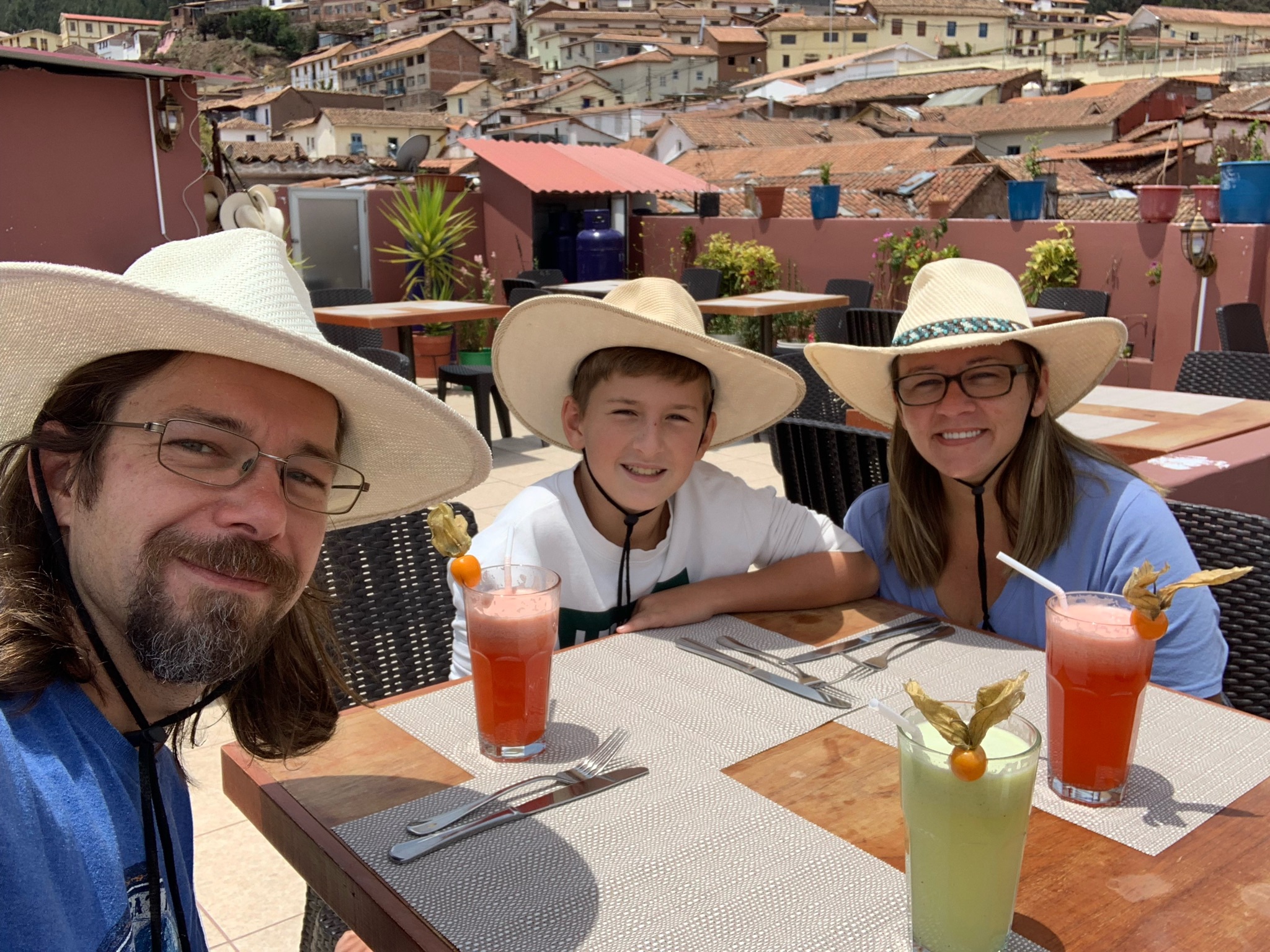
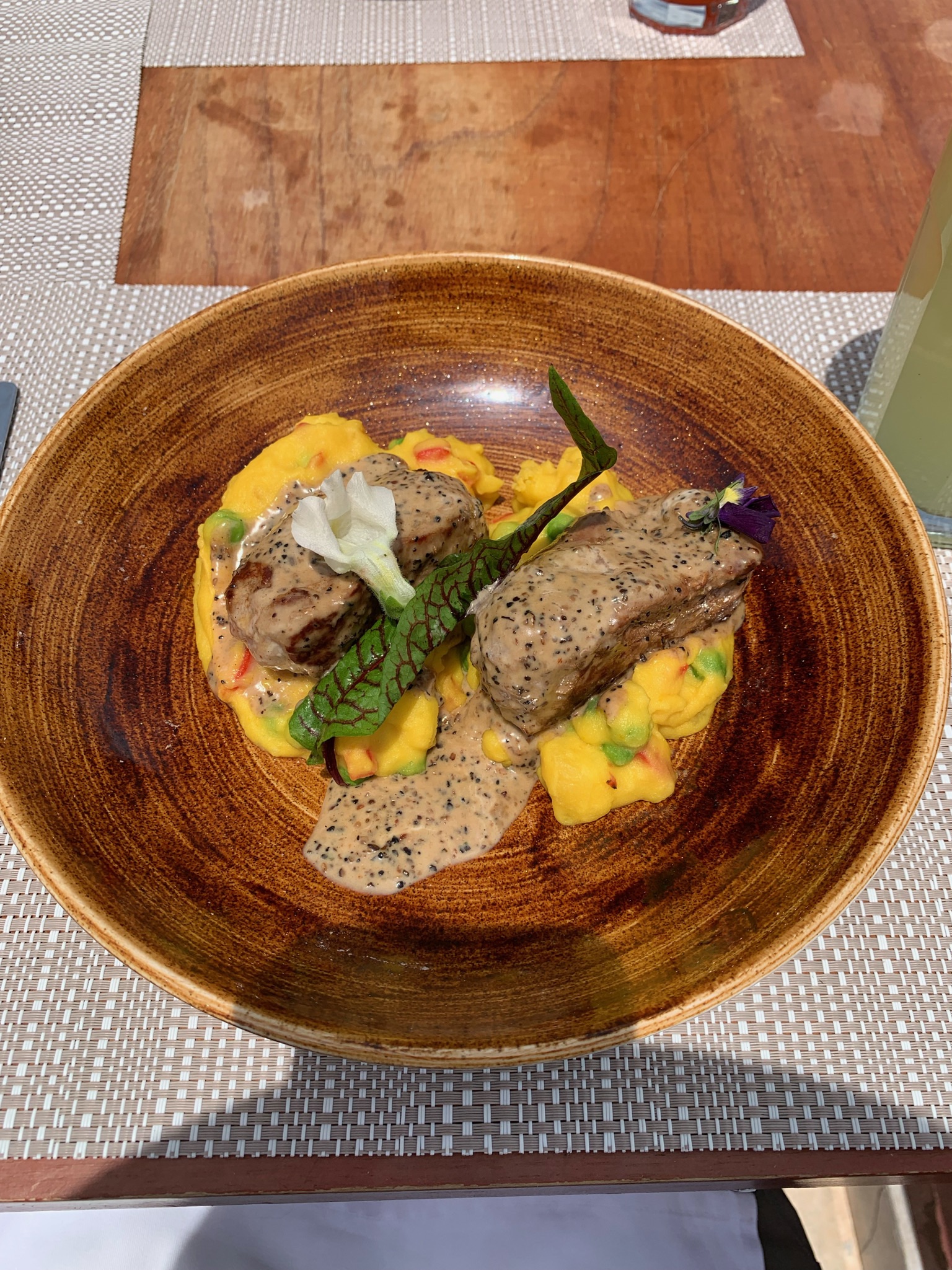
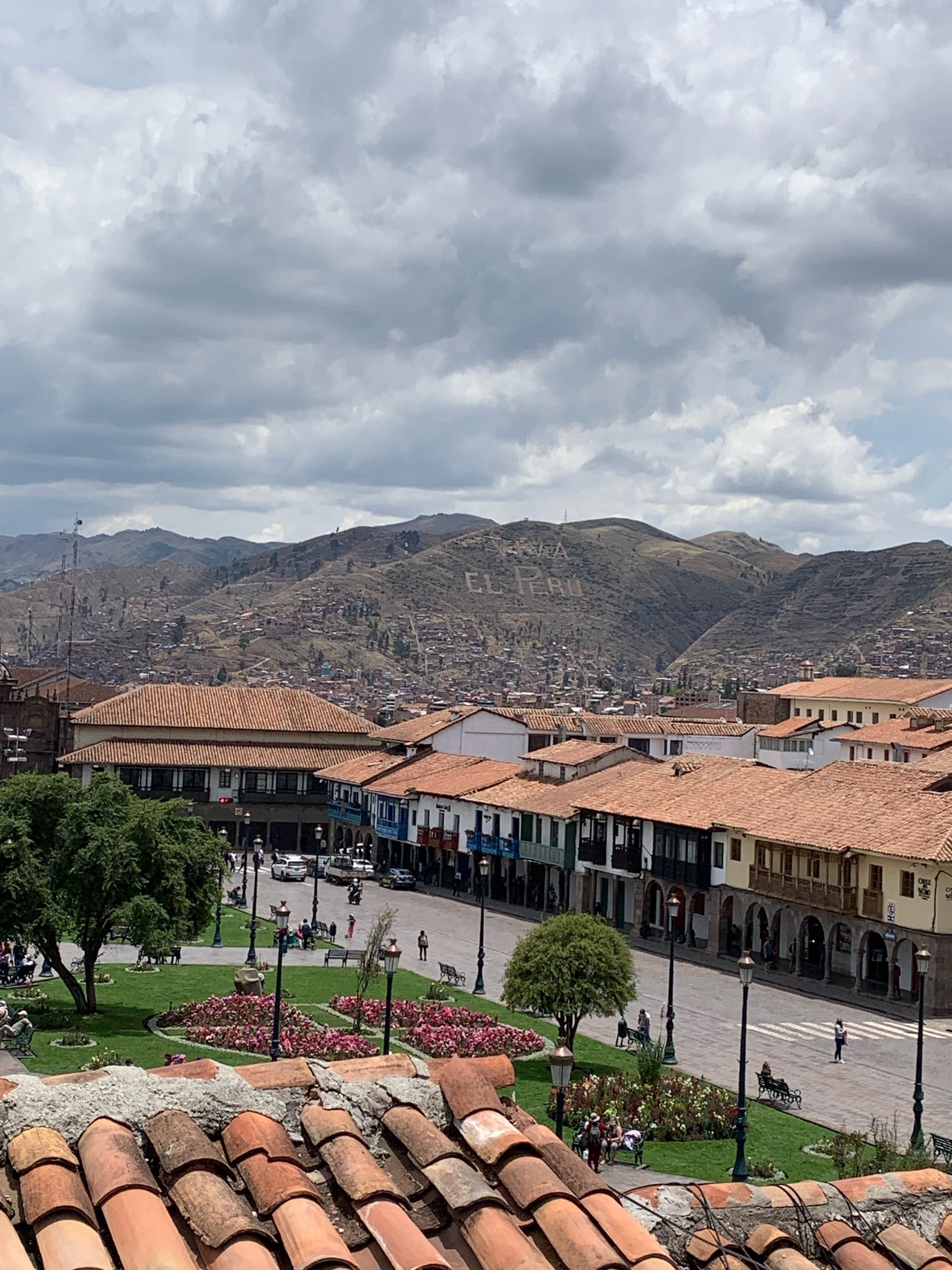
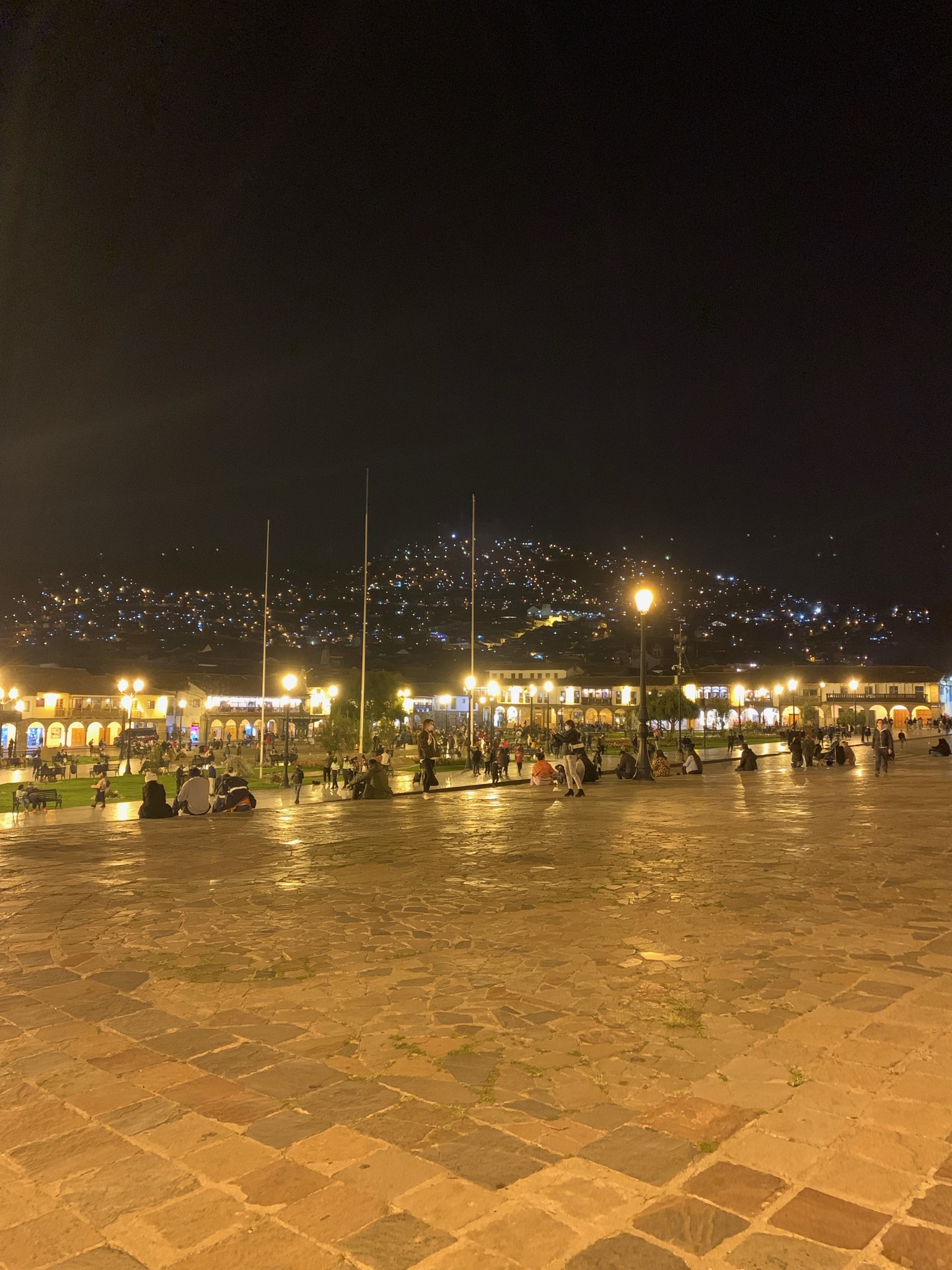
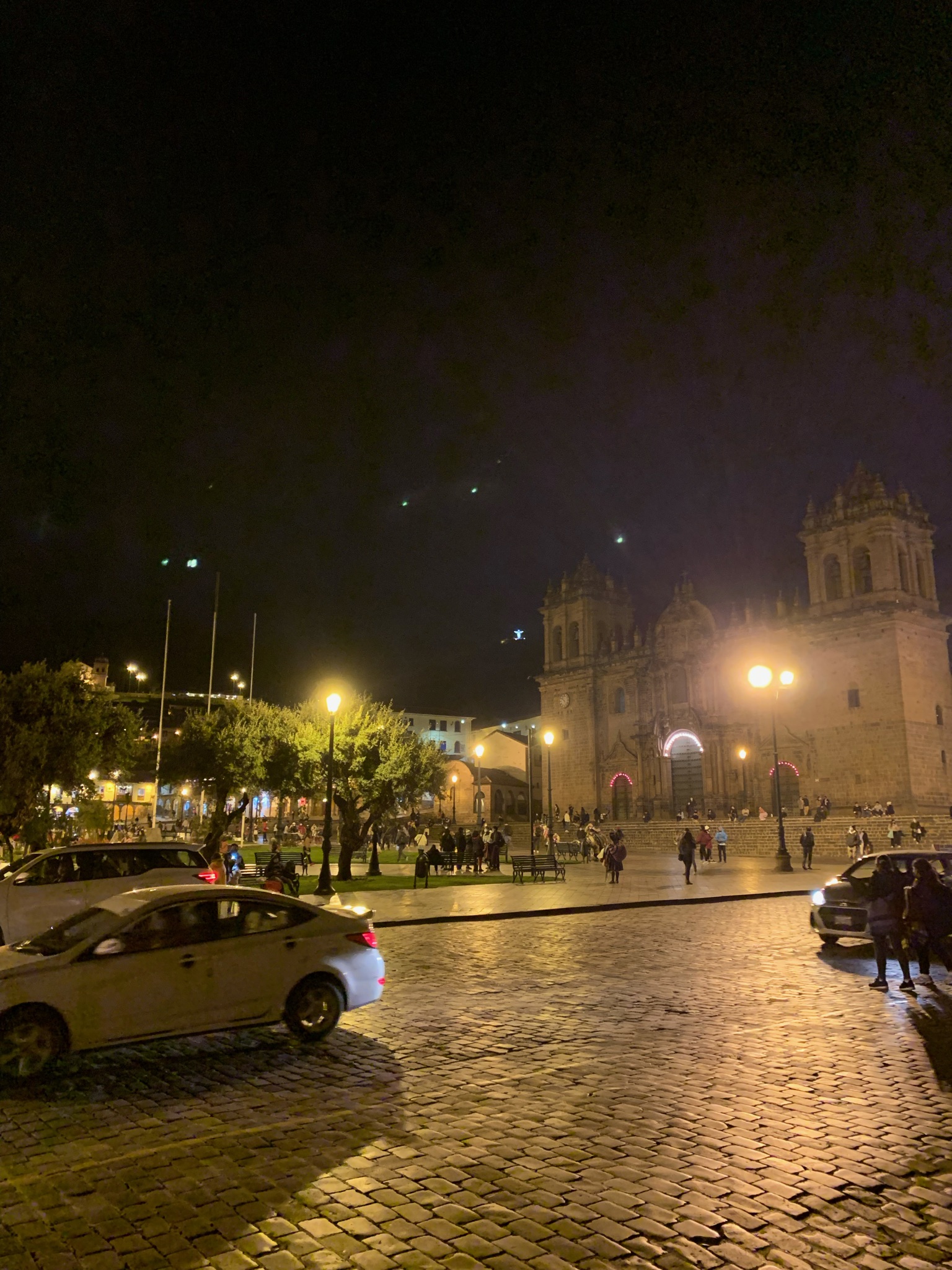
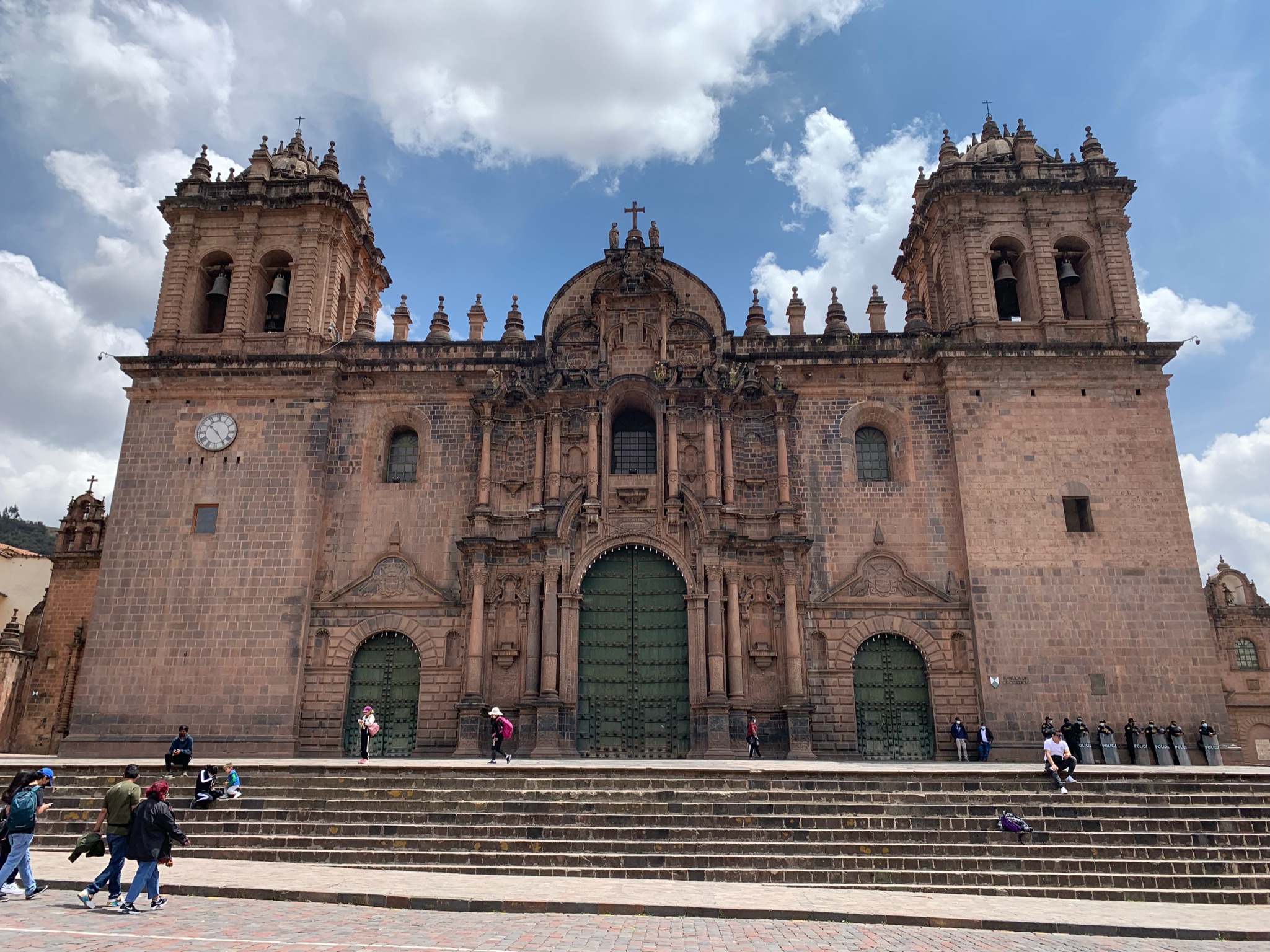
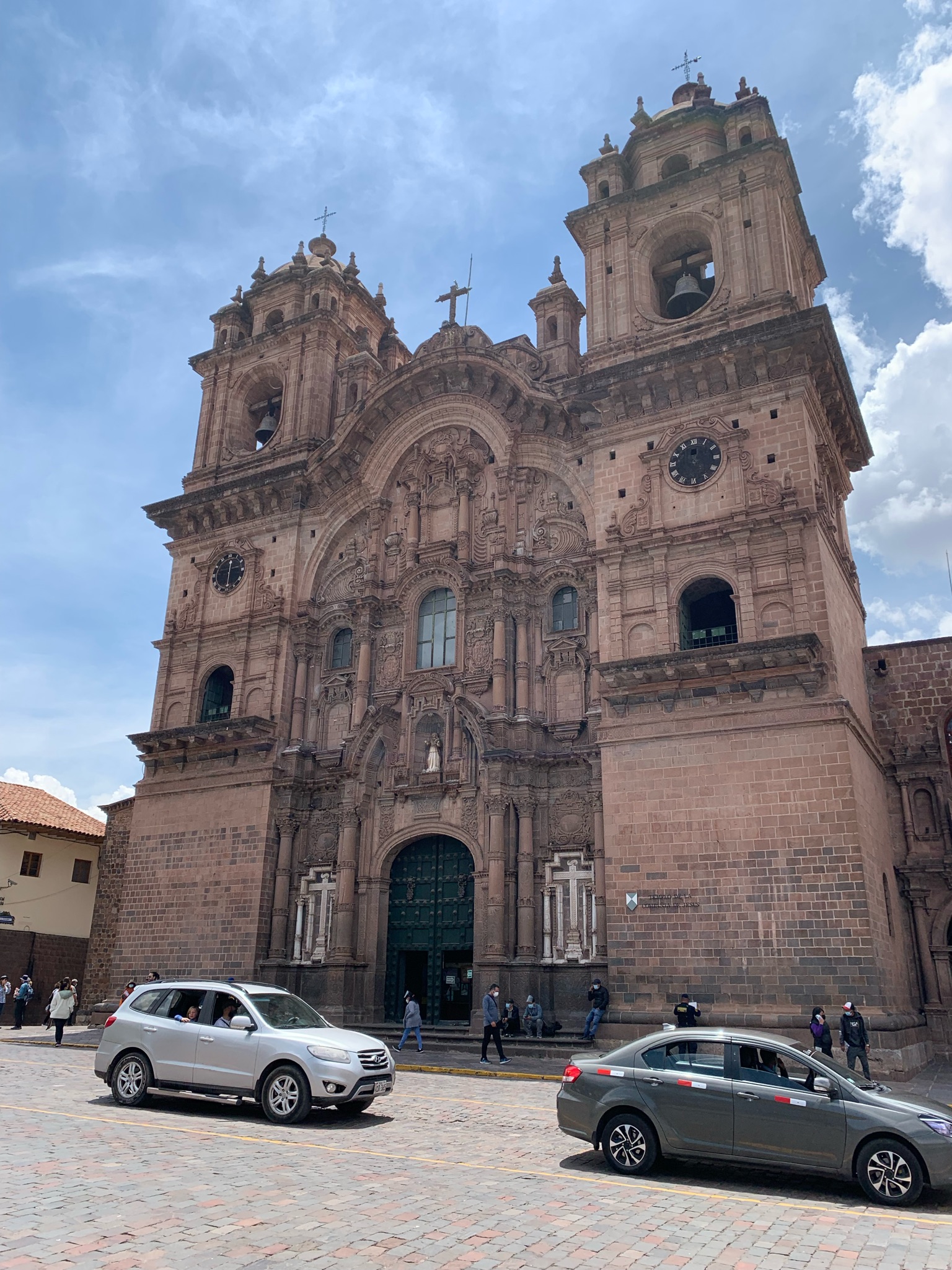
On Wednesday, our first day in Cusco, we explored the city and found ourselves at a rooftop restaurant overlooking the Plaza de Armas.  We were the only patrons on the rooftop, and because the sun was so bright, we were given sombreros to wear while we dined.  We enjoyed the scenic view and laughed throughout the meal at how silly we must look.  Henry and Brian decided to try some alpaca dishes, but I was less adventurous.  My meal was good, but theirs were divine.  I picked at Henry for eating the cute little alpacas, but he had decided that cute or not, they were delicious! 

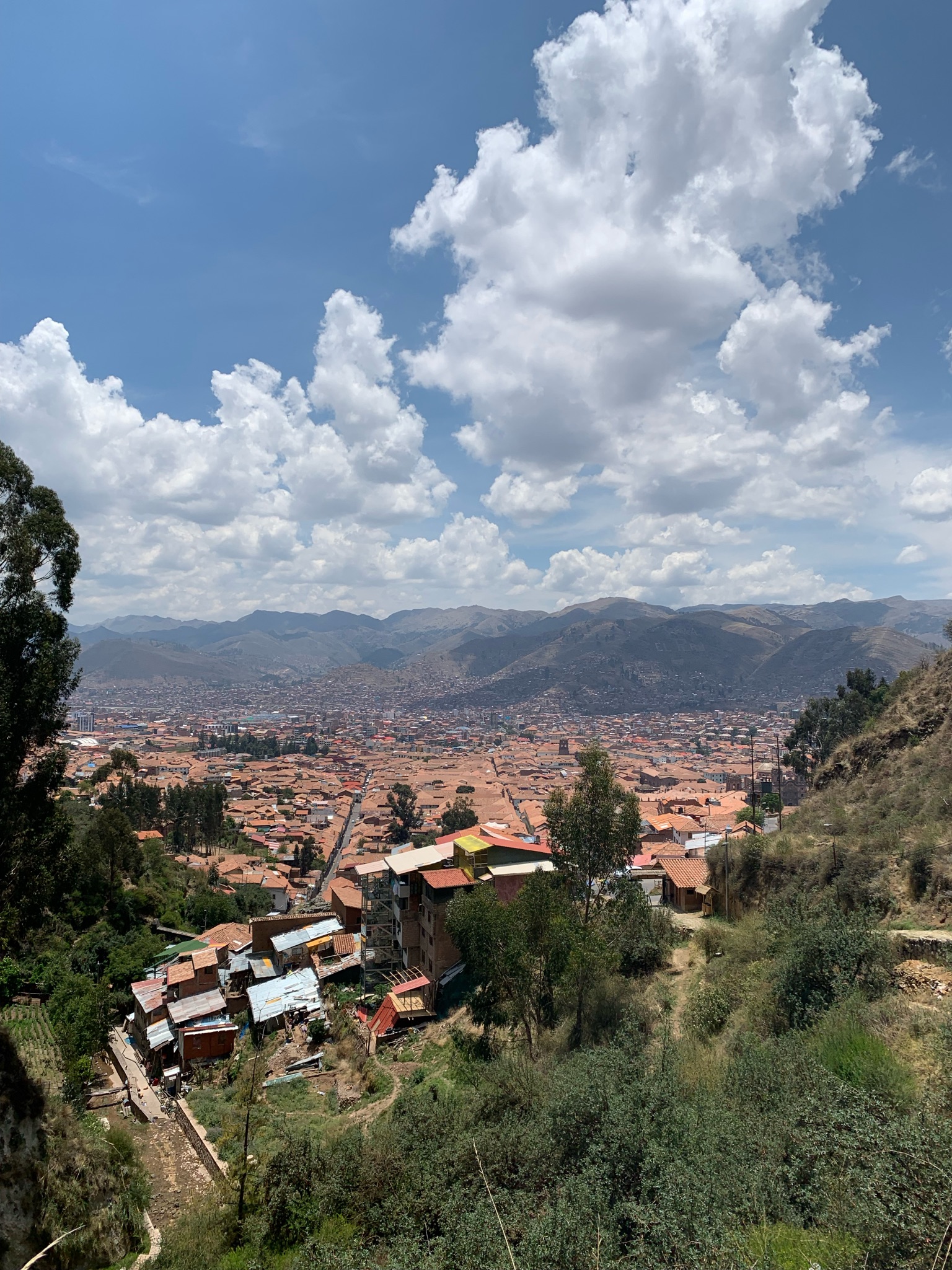
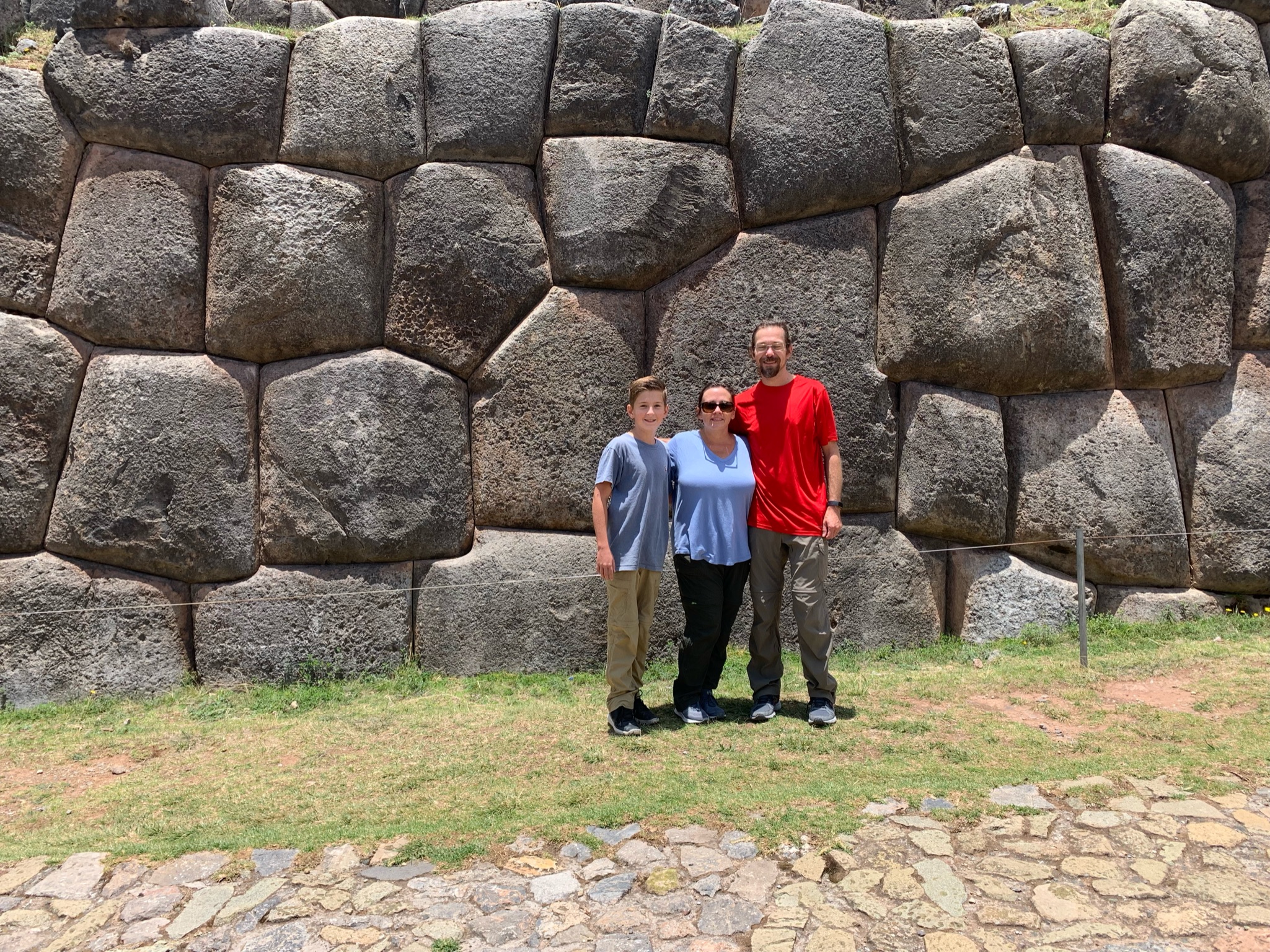
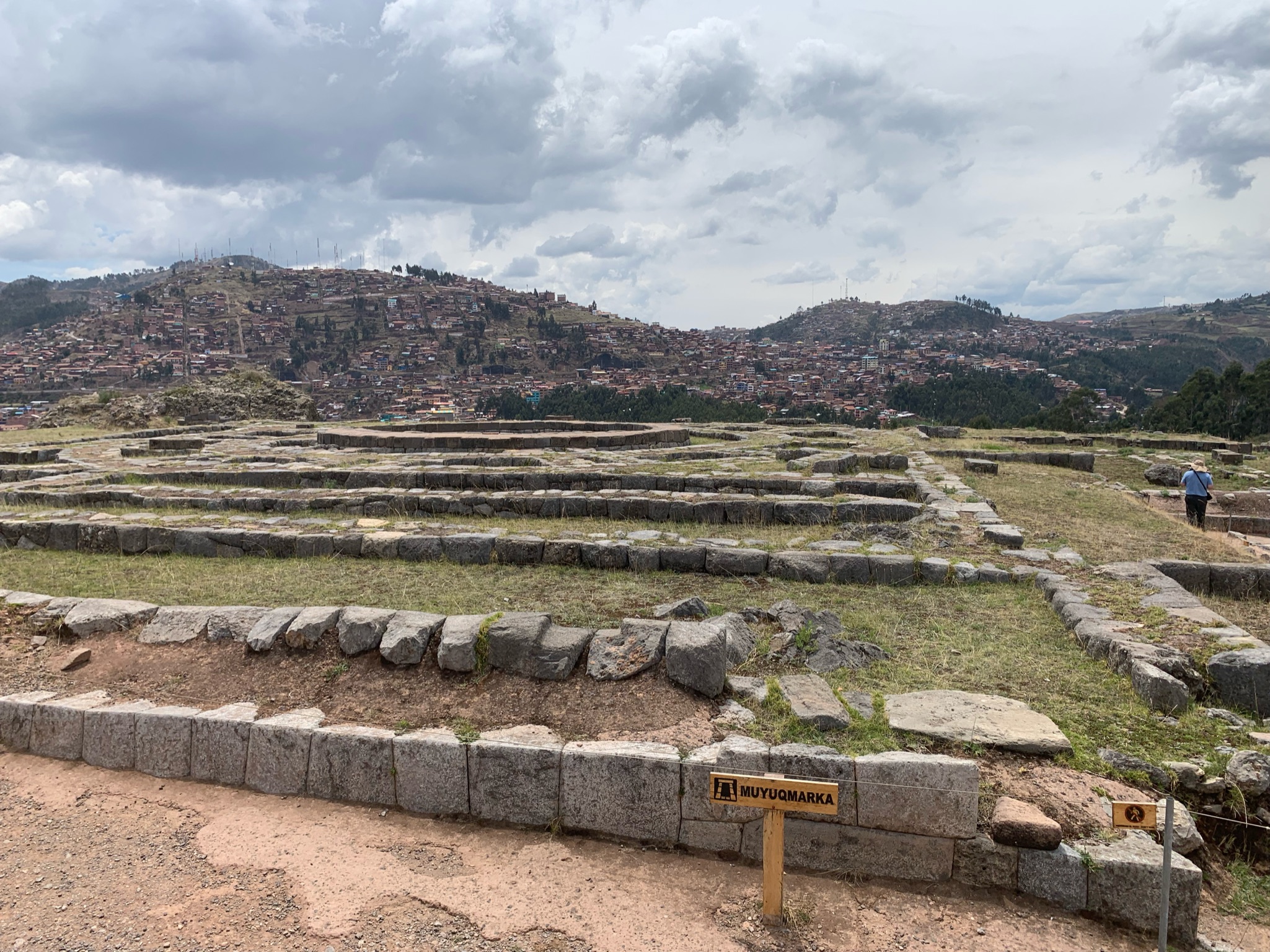
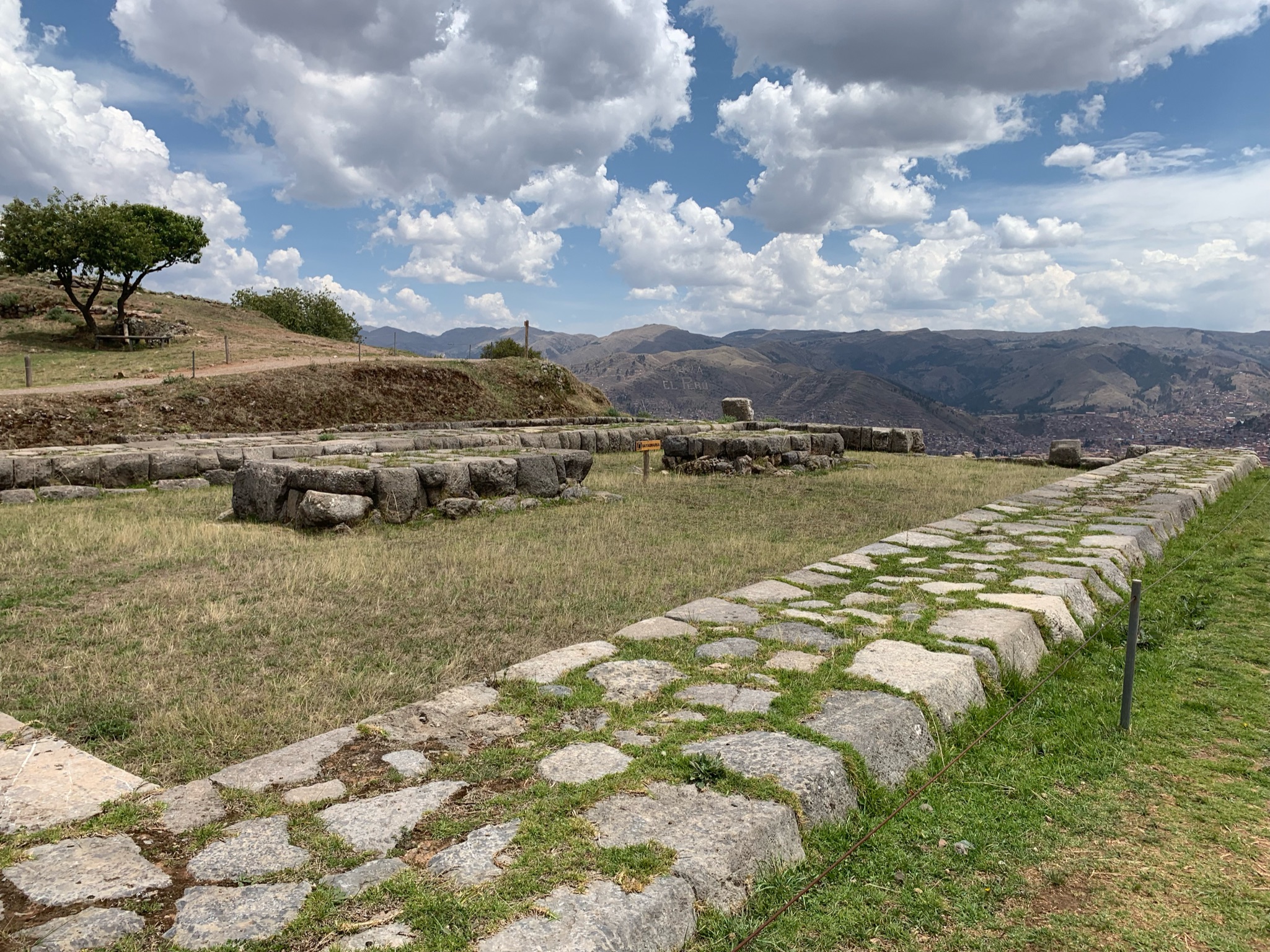
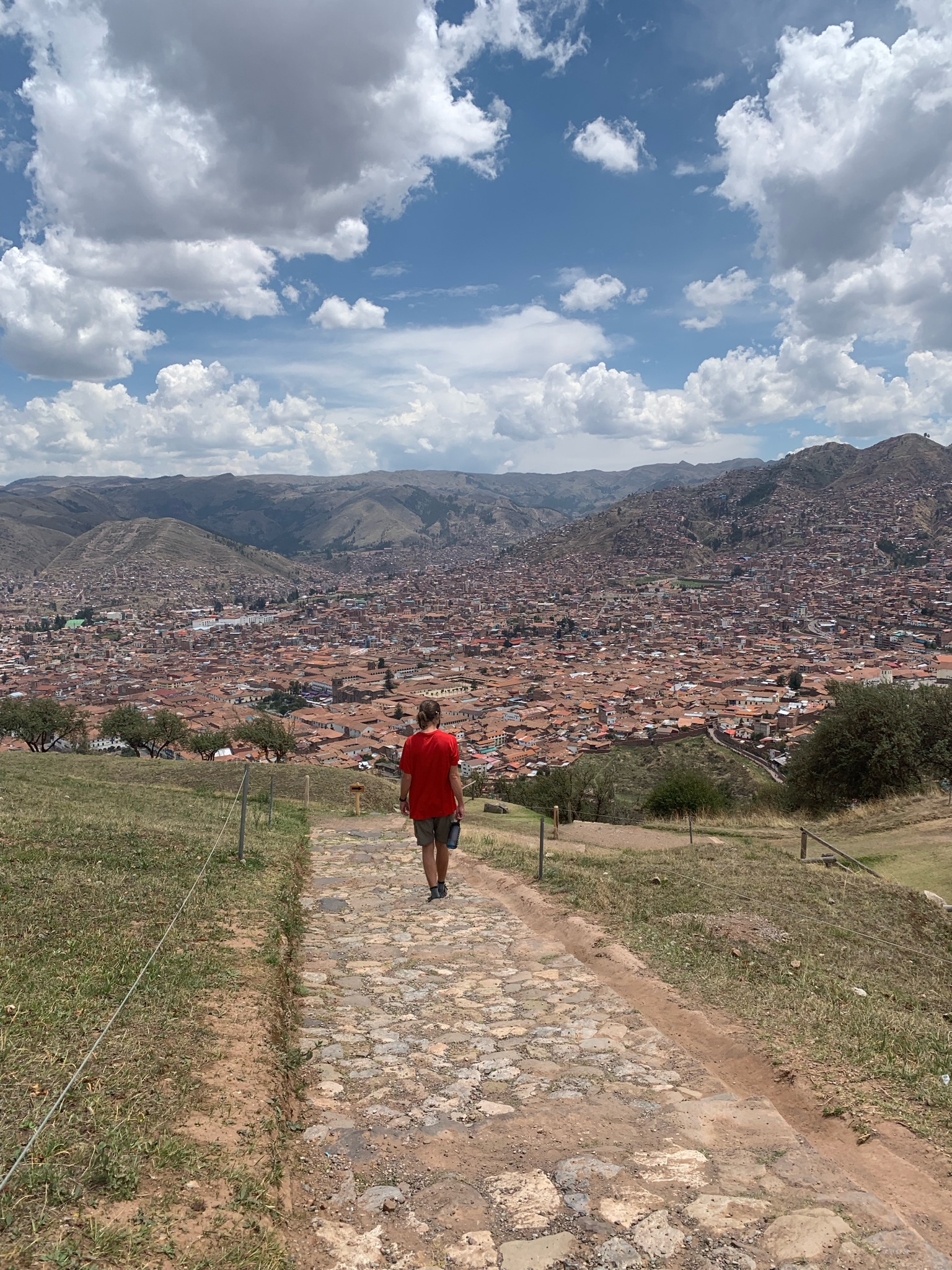
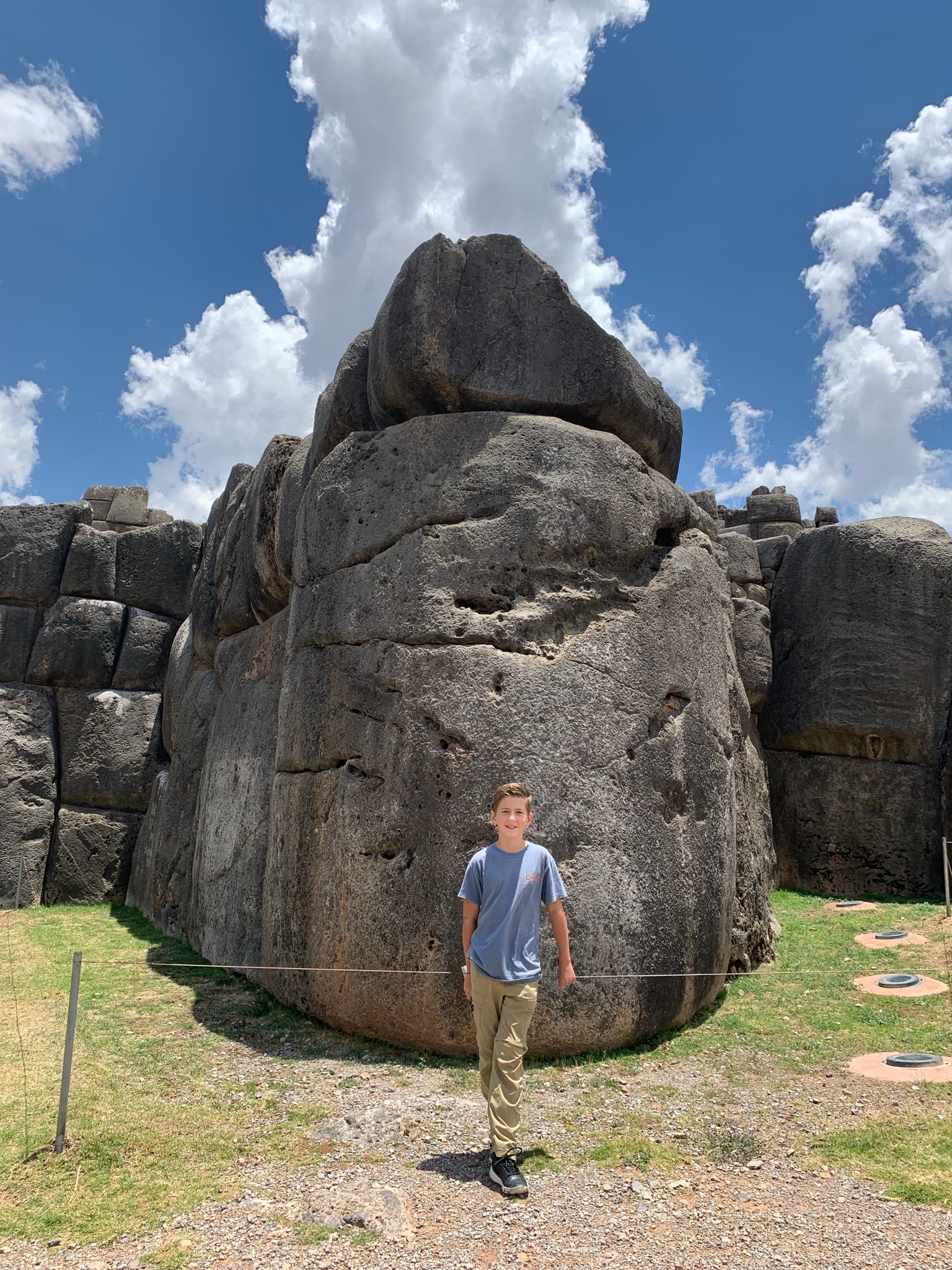
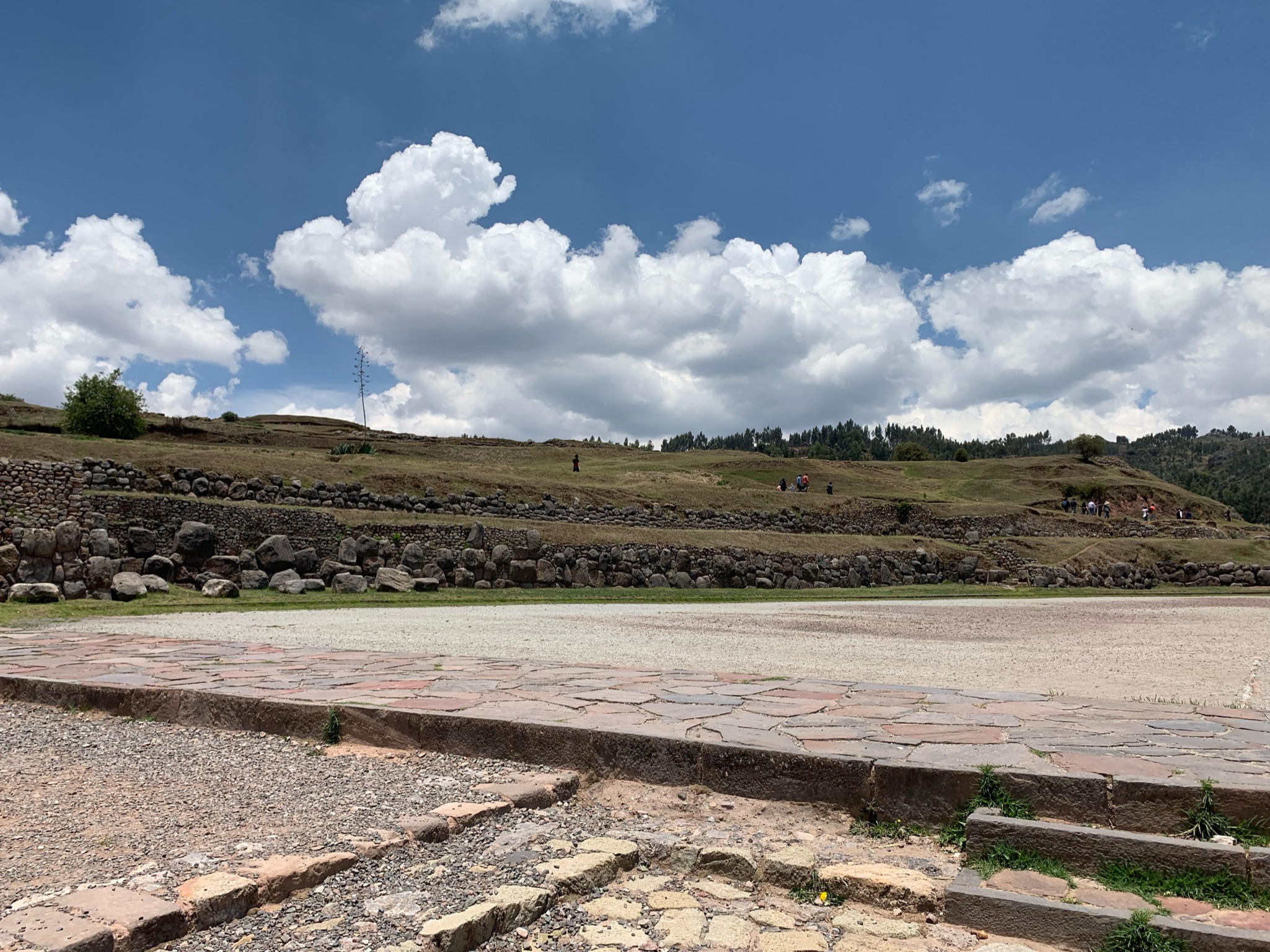
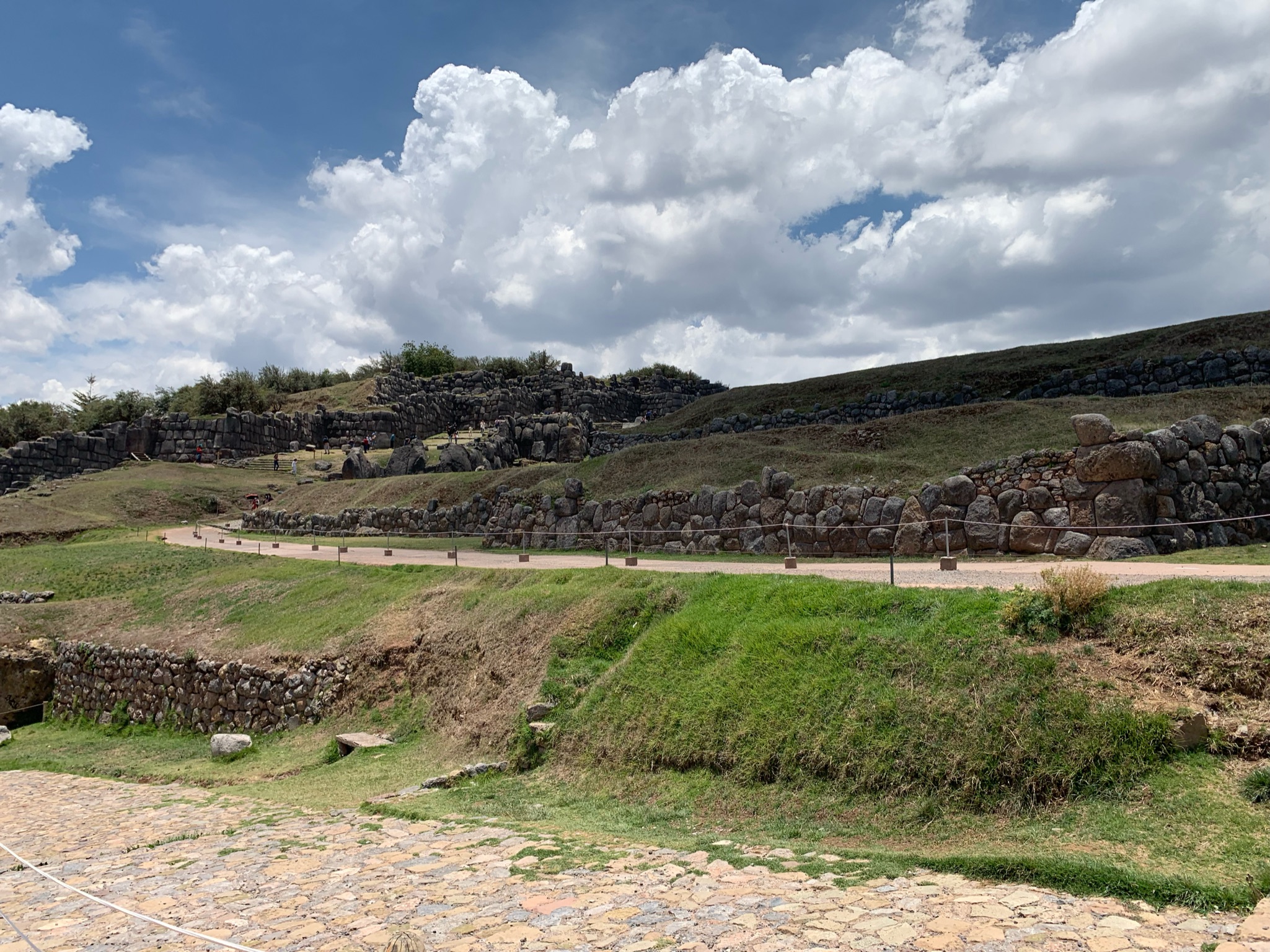
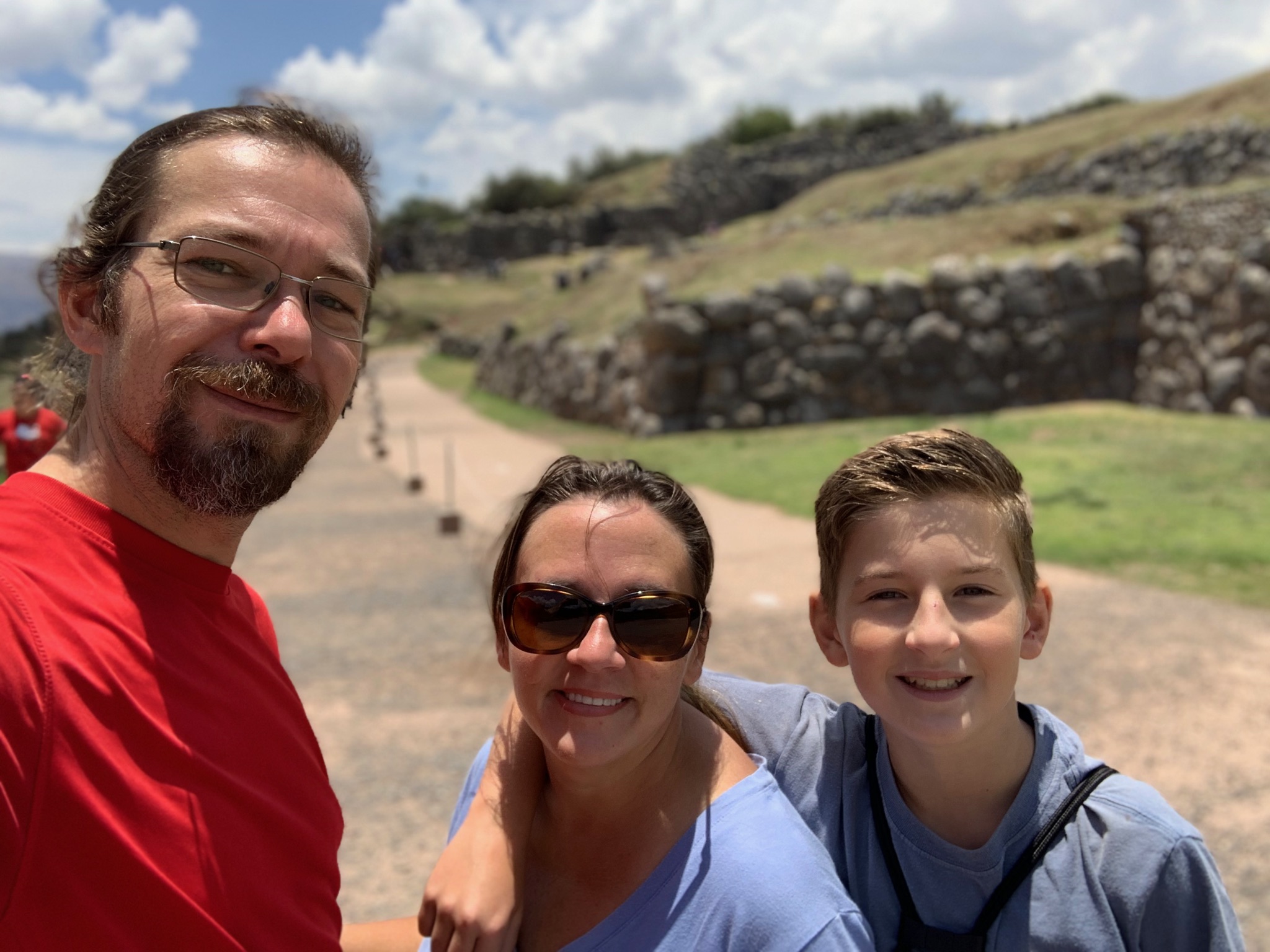
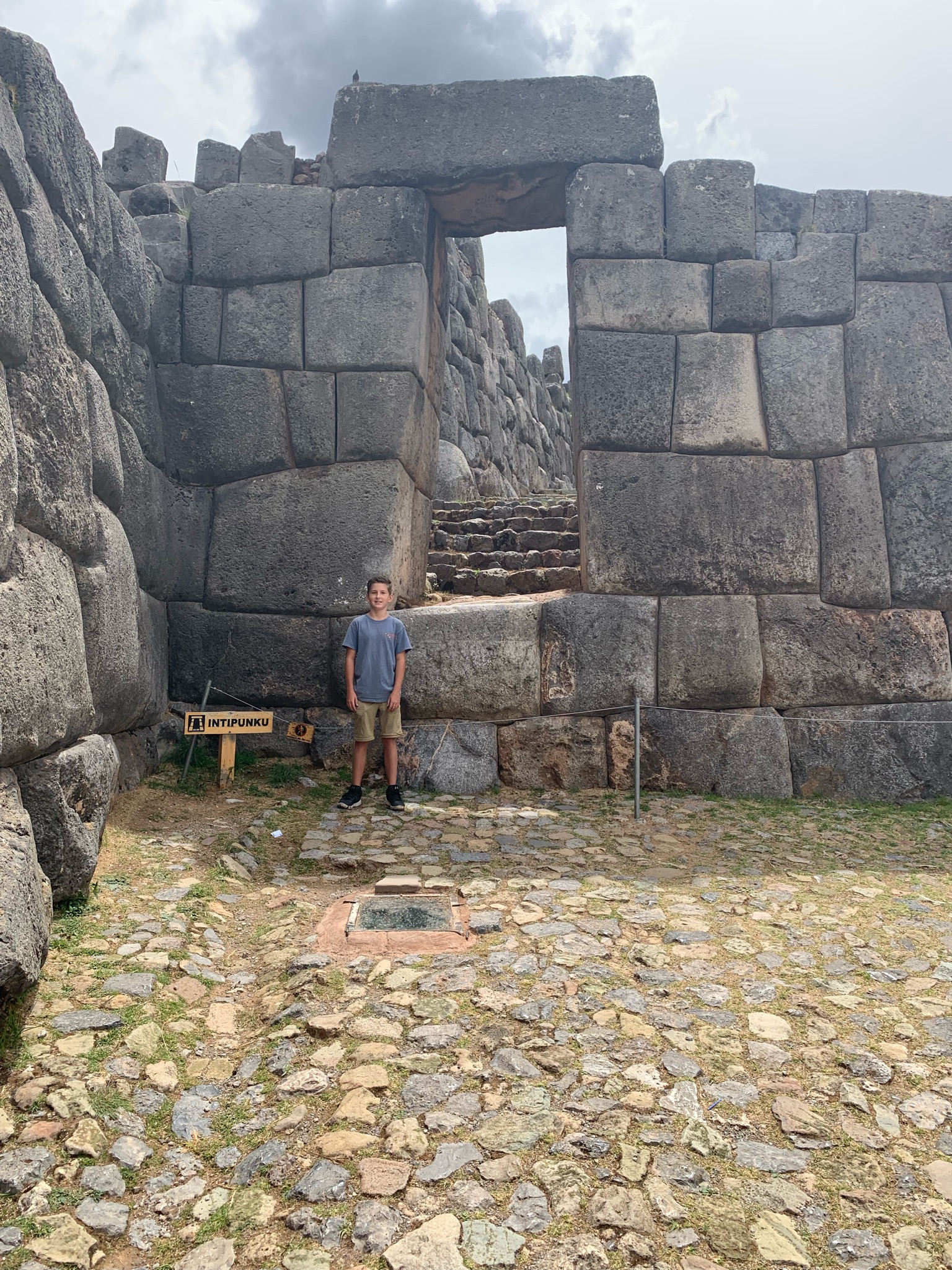
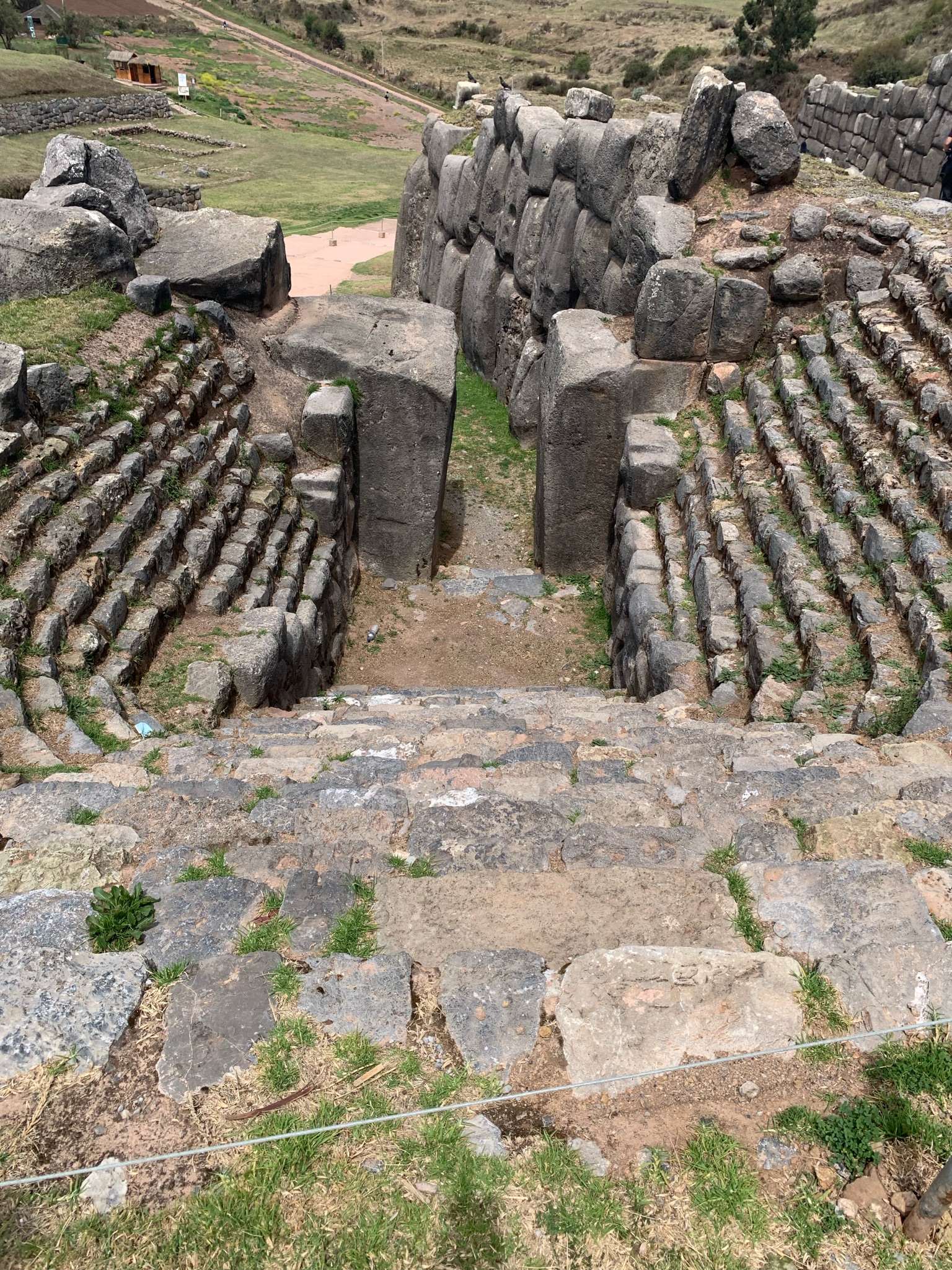
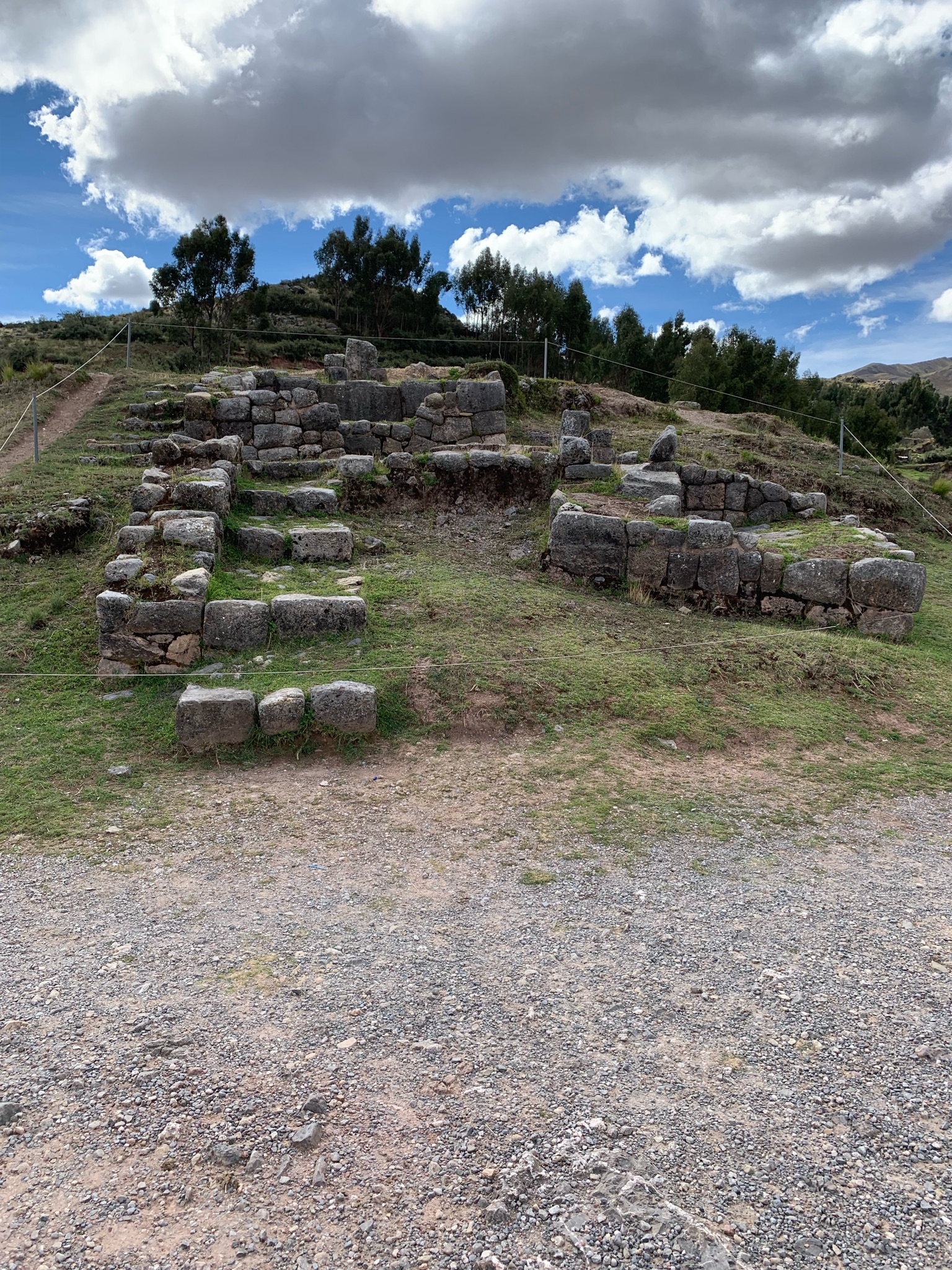
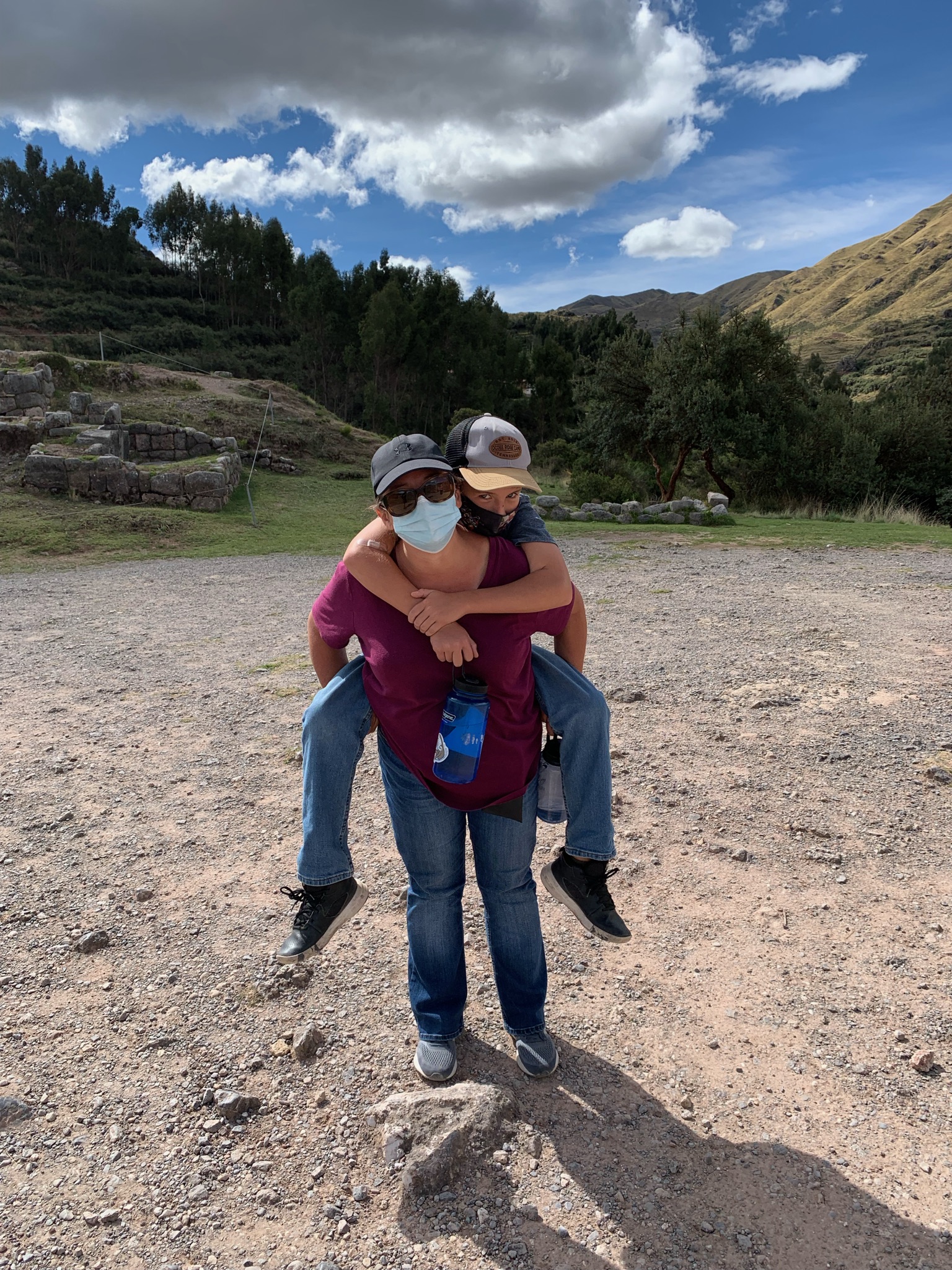
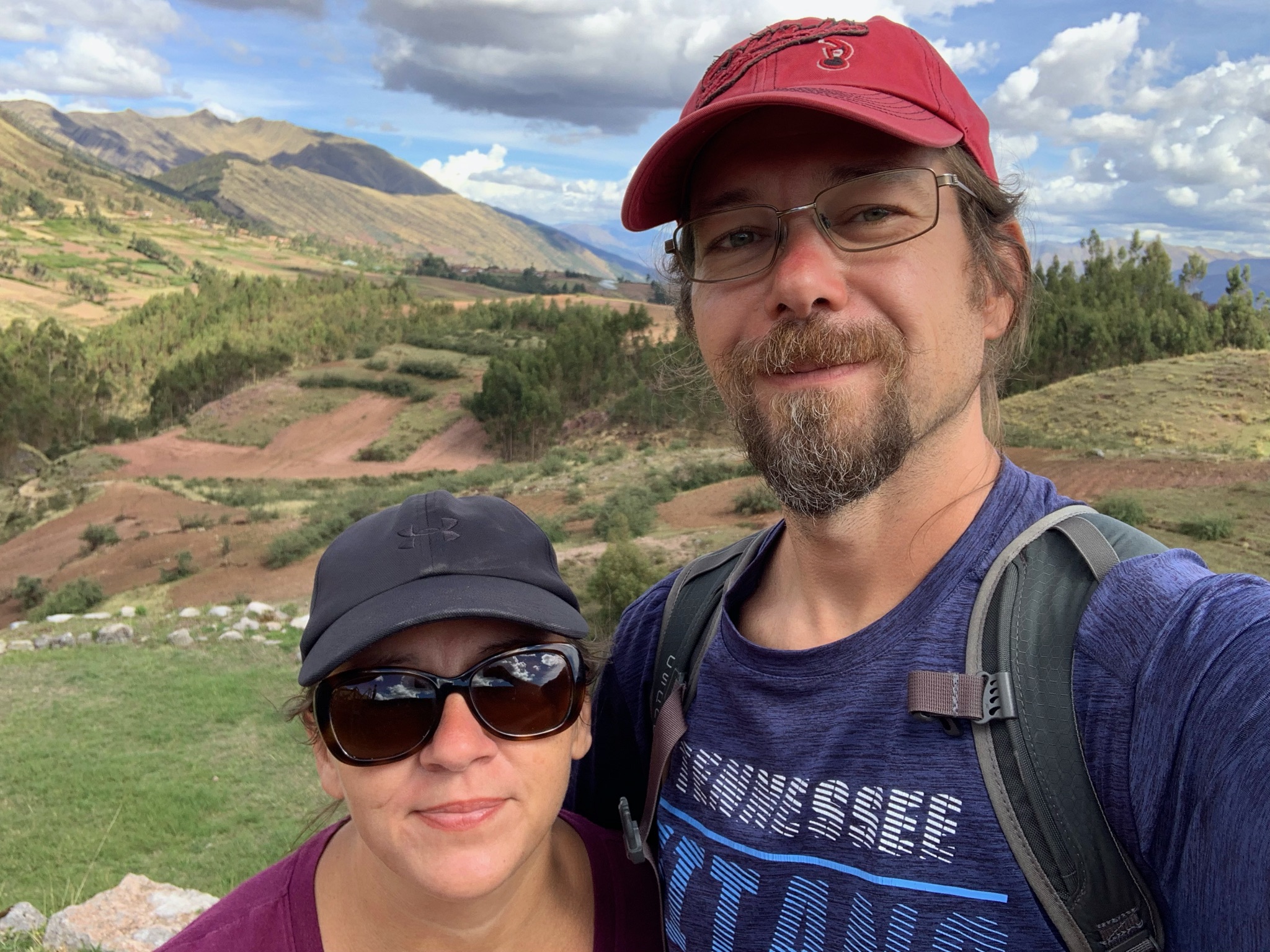
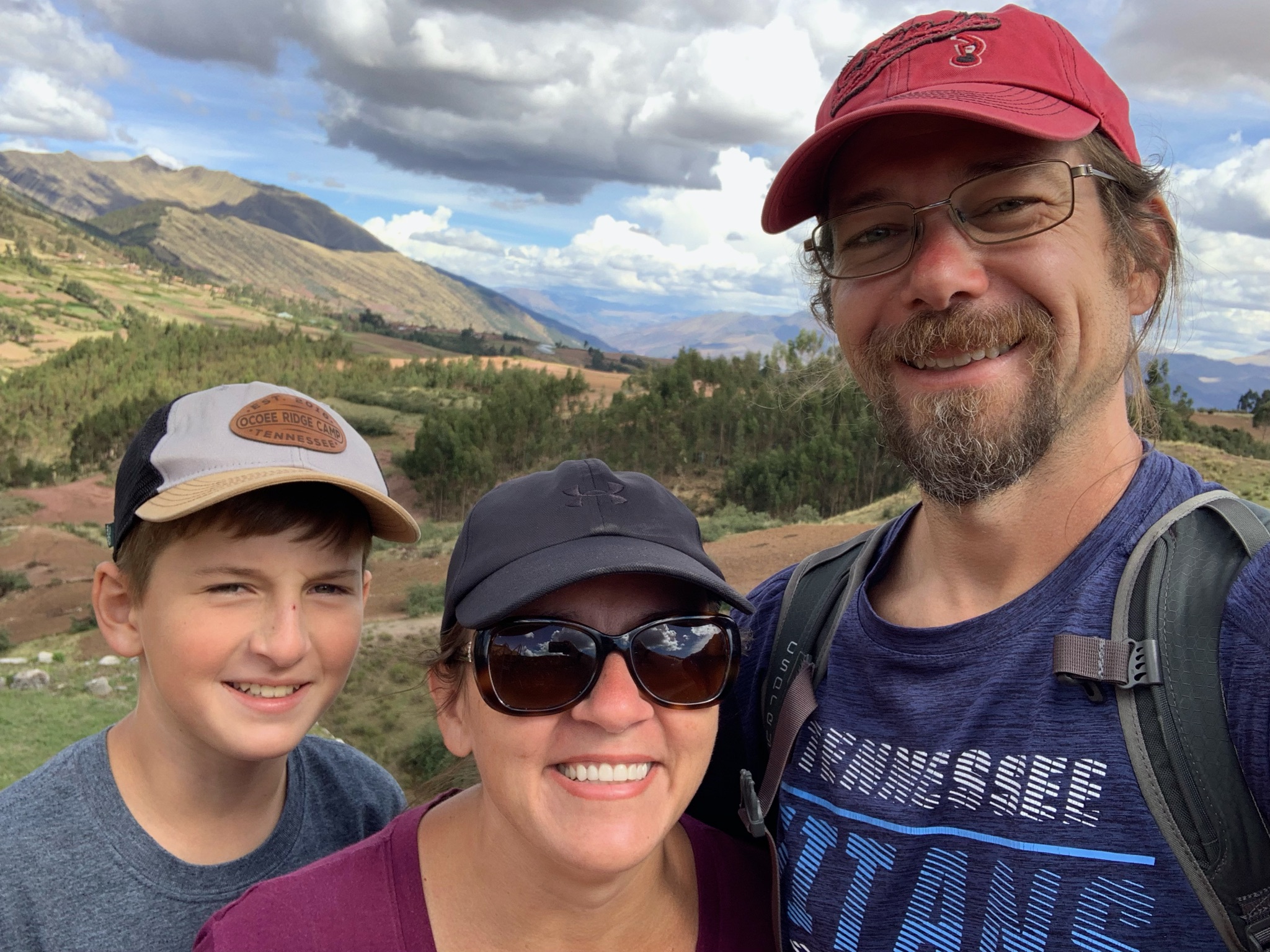
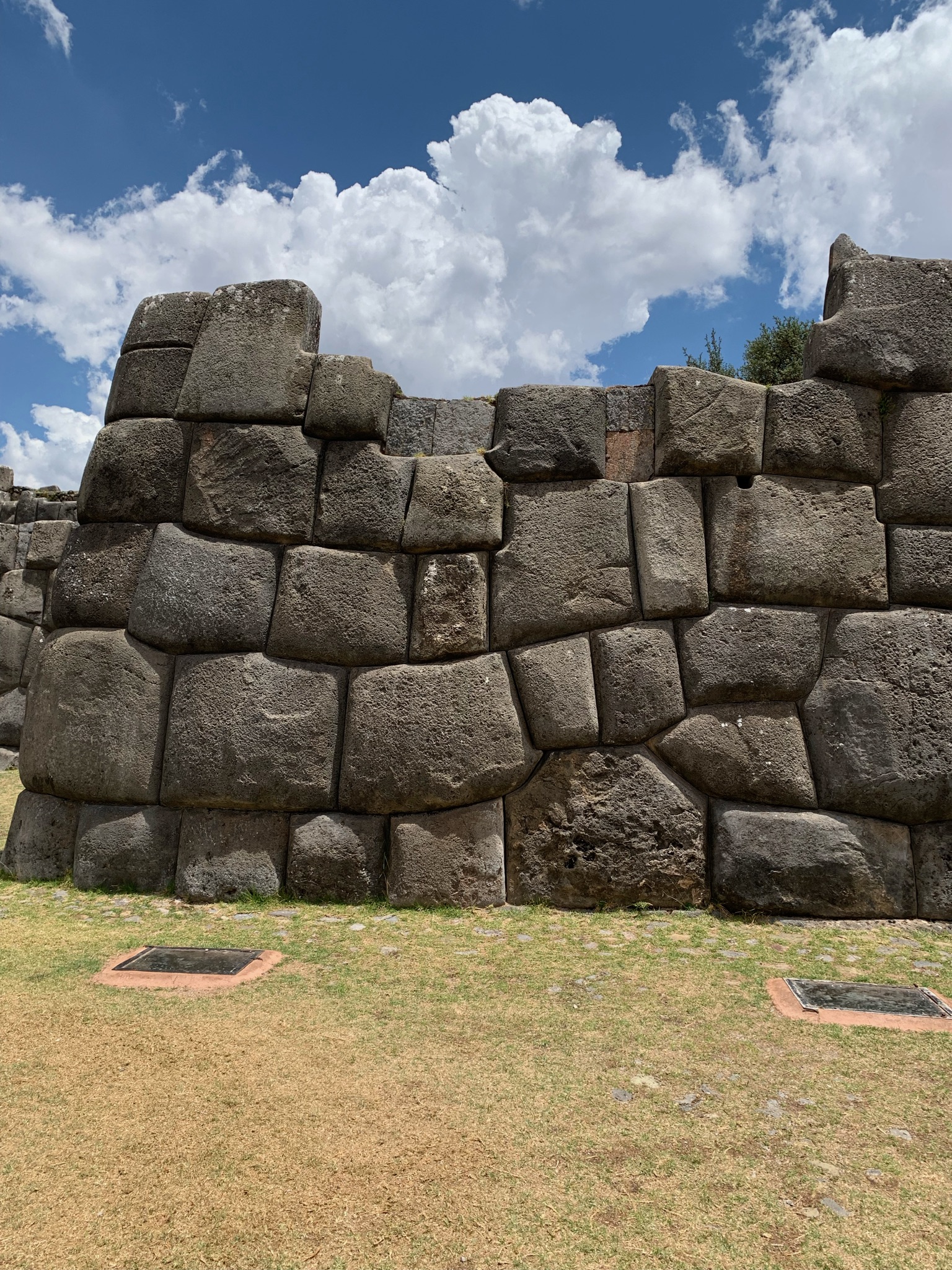
On Thursday, we walked up to the Sacsayhuaman ruins (when pronounced, it sounds similar to Sexy Woman).  Cusco is the second largest city in Peru, and it was one of, if not the, main Incan city.  It is located in a large valley and surrounded by beautiful hills.  On top of one of the hills, the Incas built the Sacsayhuaman facility as a lookout post to guard their city.  On the way to the top, we met three men who were from Lima and were visiting the area for the first time.  They were excited to meet people from the United States, and although we couldn’t understand each other well, we had a nice conversation.  I asked them if they wanted me to take their picture together, and they quickly agreed. But instead of giving me their camera, they took turns taking pictures with us.  In all the countries we had been to before, people would nod when we said we were from the US.  The men from Lima seemed thrilled to meet people from the US.  It was a humbling feeling to remember just how blessed we are to be from such a great place.
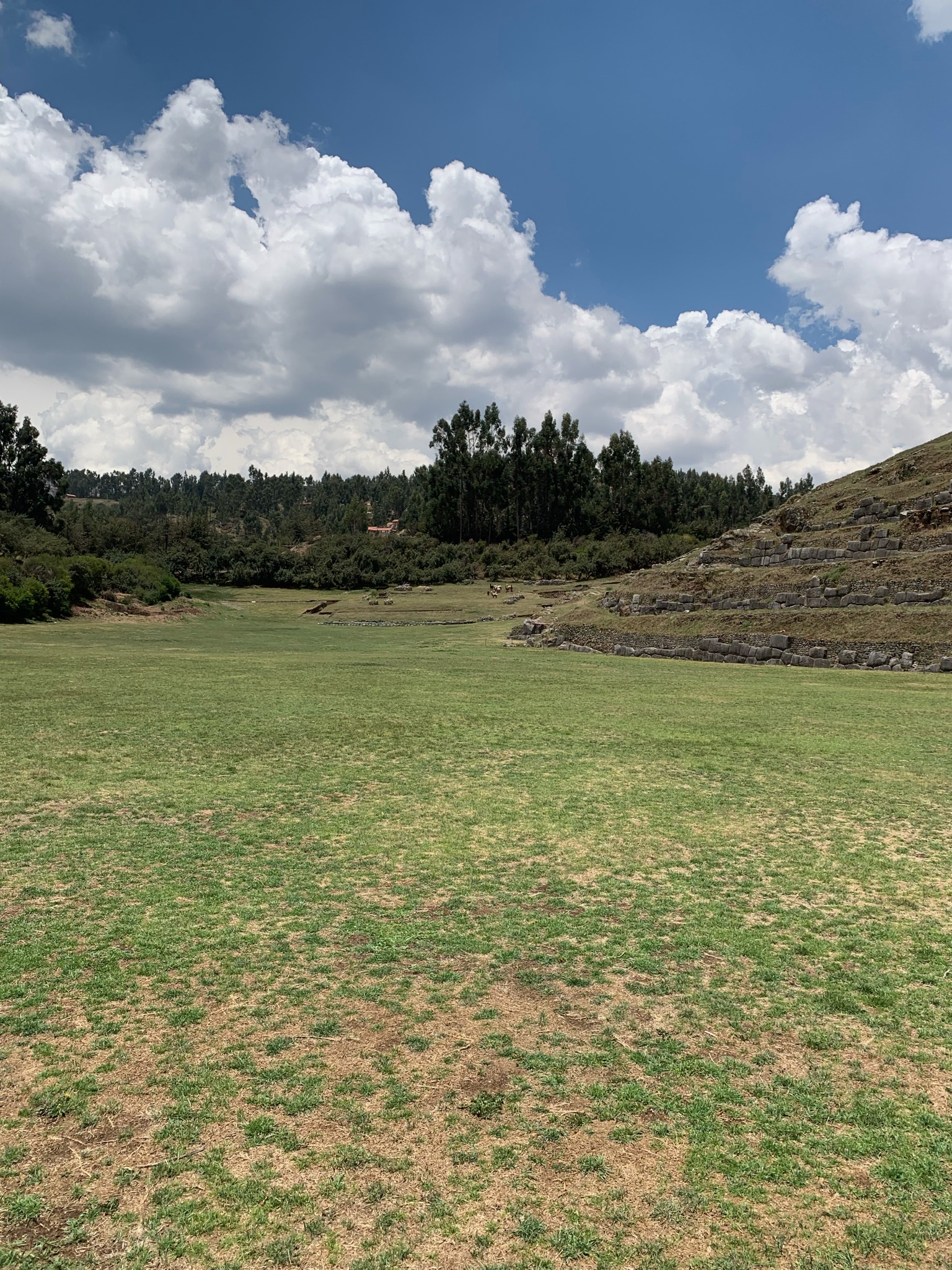
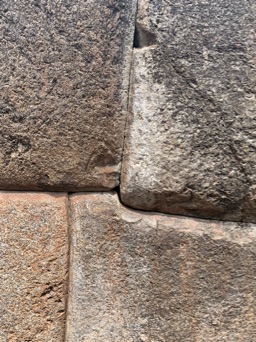
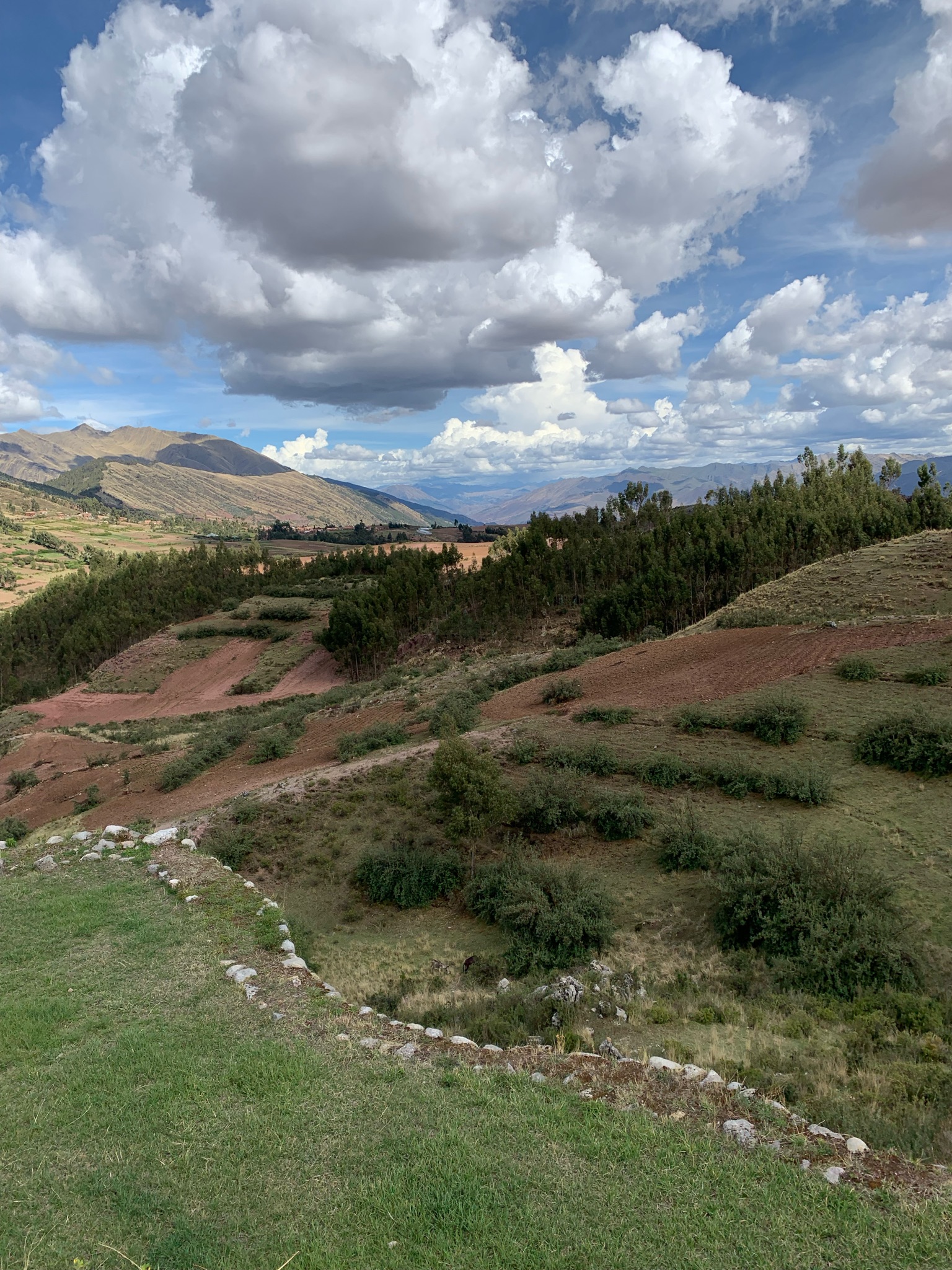
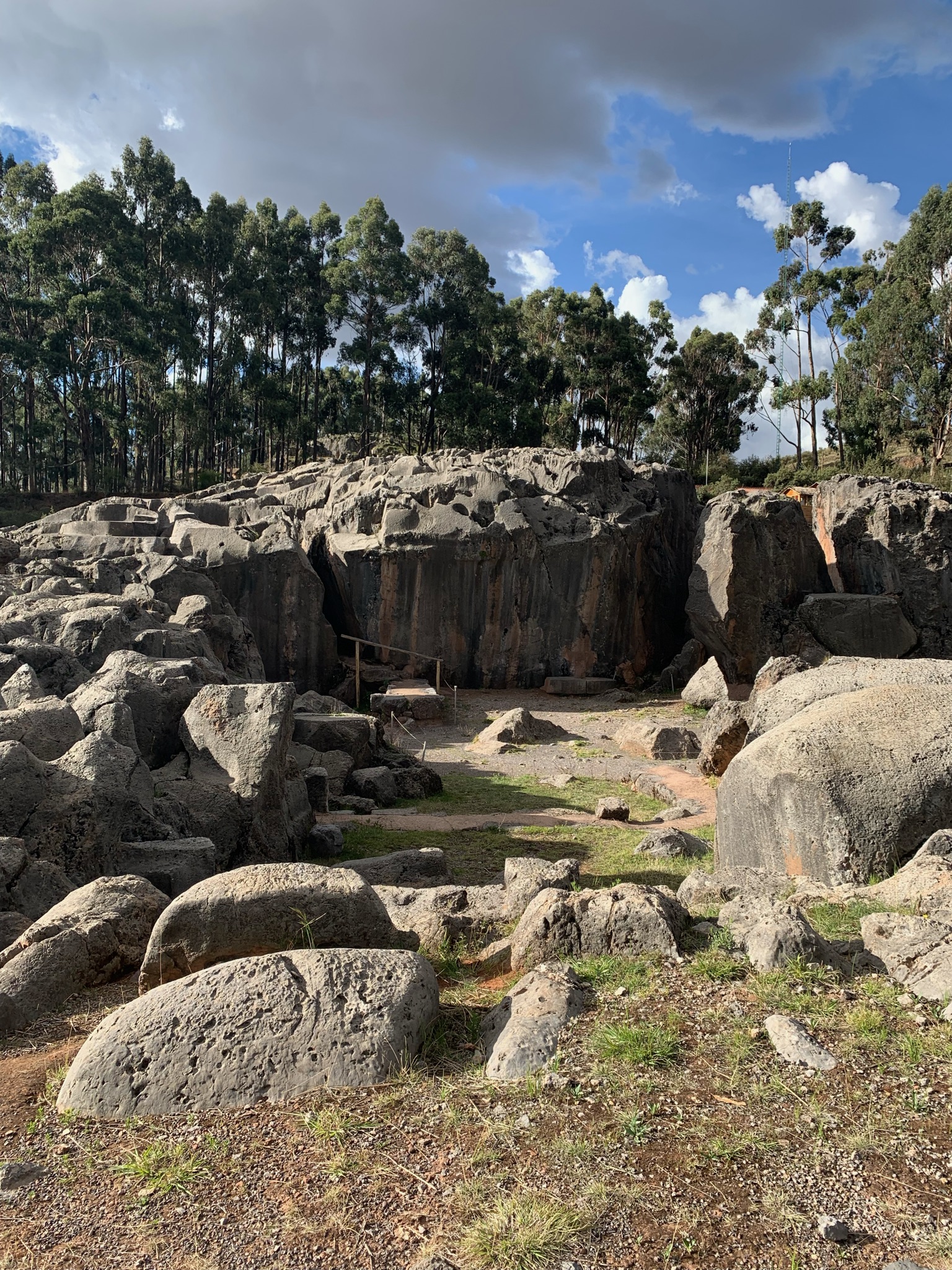
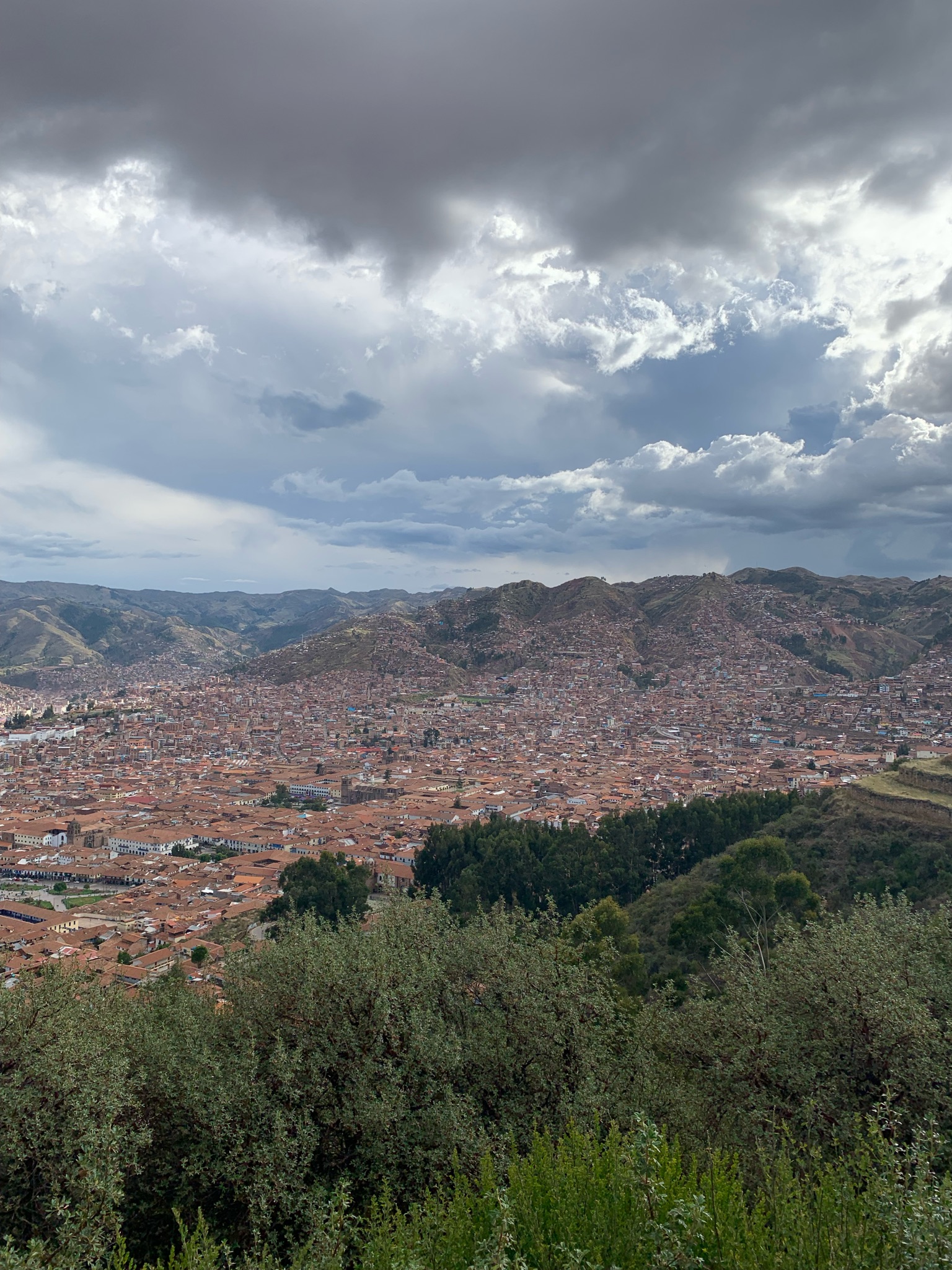
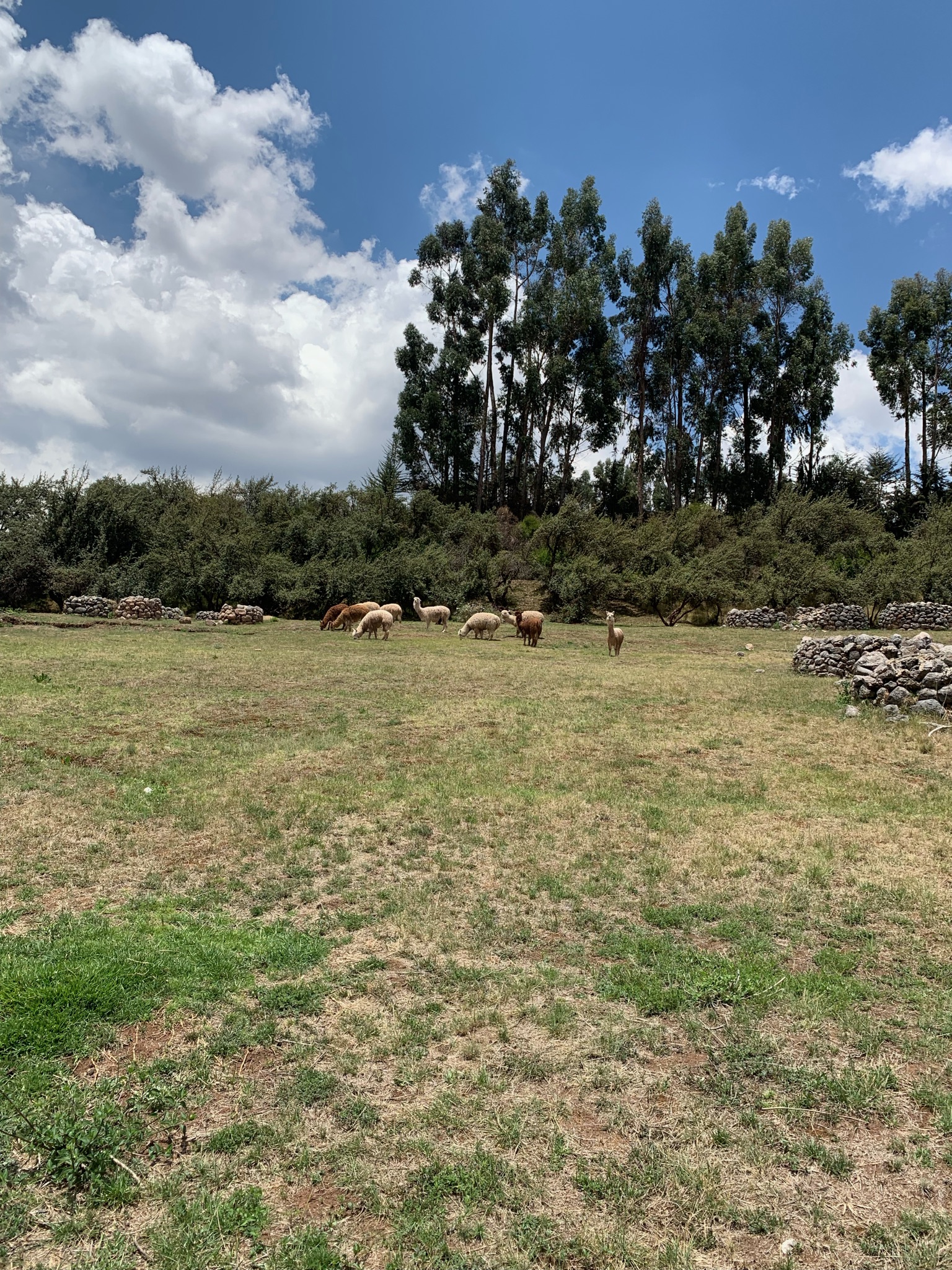
As we wandered, we admired the stone work and the sheer will it took to move the giant stones into place.  Henry got distracted by a group of 8 alpacas on the other side of the field from where we were.  We were walking towards them when a small dog got loose from its owner and decided that it needed to keep everyone safe by running the alpacas off.  We watched as this little bity dog chased off 8 grown alpacas, and I nearly peed on myself watching them run.  They were adorable.  They finally stopped running a few hundred yards later, and the satisfied little dog went back to its owners.  We decided to walk over to the alpacas again, and Henry was able to get much closer to them this time.  Eventually, we steered him back to the ruins, and we finished exploring the area.  The view from the ruins was beautiful.  You could clearly see the Plaza de Armas, and it seemed that there were buildings covering every square inch of the valley floor below.
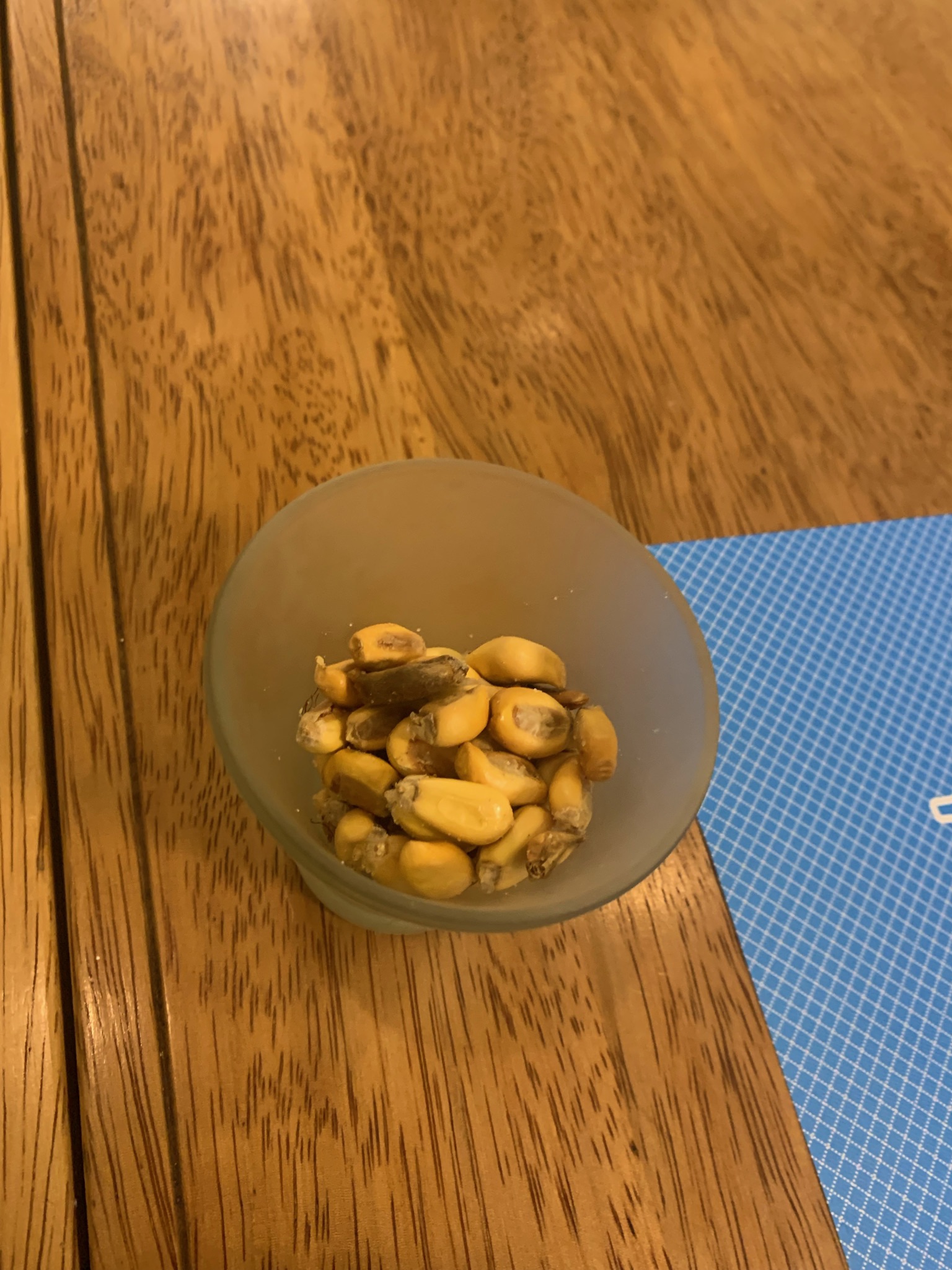
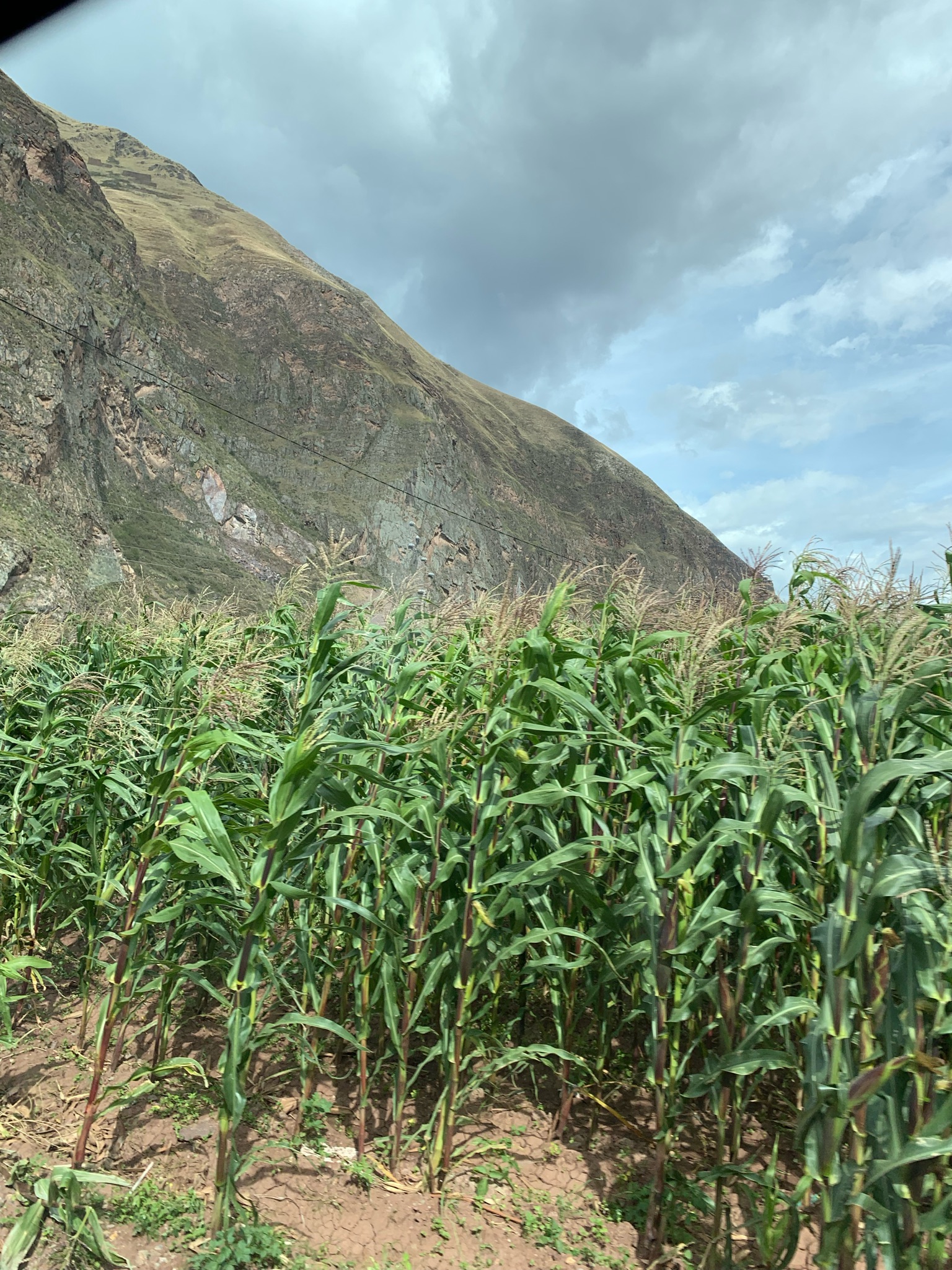
On Friday, we were ready to head to Ollantaytambo to start our Machu Picchu adventure.  We went to a local restaurant across the street from our hotel for lunch before we headed out of town.  The locals seemed to love it despite it only having a few tables, so we decided to give it a shot.  The server quickly told us what she had to offer for the day, and when she realized we didn’t know what any of it was and couldn’t speak Spanish well, she recruited the help of another customer sitting beside us to help her communicate.  He recommended that we try their milanese, so we did.  While the server and her mother prepared our food, he talked them into giving us a plate of samples so we could try the local fare.   The server brought us a plate with several types of meat and a boiled corn dish for us to try.  While we didn’t care for much of it, we ate it politely and were grateful for their hospitality.  We talked with the man about local sights to see until our food arrived.  The man was very polite and was eager to share his culture with us.  I thought about how foreigners may be treated in my hometown, and I am sad to say that he probably would not have been received quite so warmly there. 

After lunch, we checked out of our room and headed for the Colectivo to catch our ride to Ollantaytambo.  As she gave us directions, the server at Wasicleta had warned us that when we got close to the station, it would get scary.  We had no idea what she meant until we got close to the station, and it got scary.  A block from the station, four or five taxi drivers saw us coming, and each one started offering us their deals to get us to ride with them.  So, we are walking on the sidewalk with this group of men walking backwards shoulder to shoulder and shouting over one another to try to convince us that each had the best deal.  At some point, Brian and I just looked at each other and laughed because, even if we’d wanted to hear them, we couldn’t have because of the others in the group.  Someone said ‘Colectivo’, and I said Yes!  Immediately the other men backed off while the one steered us to the waiting Colectivo van.  We took the last three available seats, and then we relaxed a bit when the van took off.

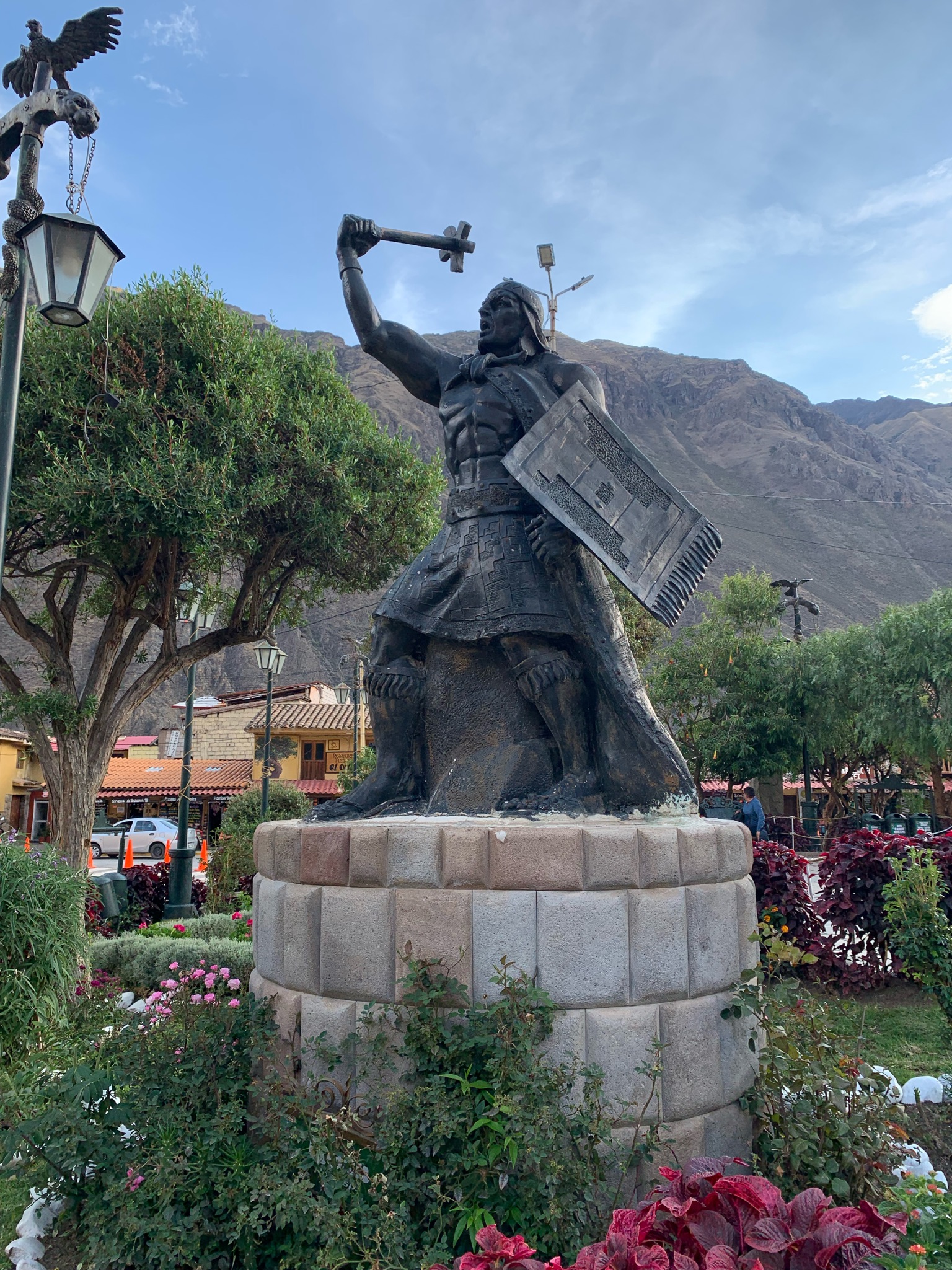
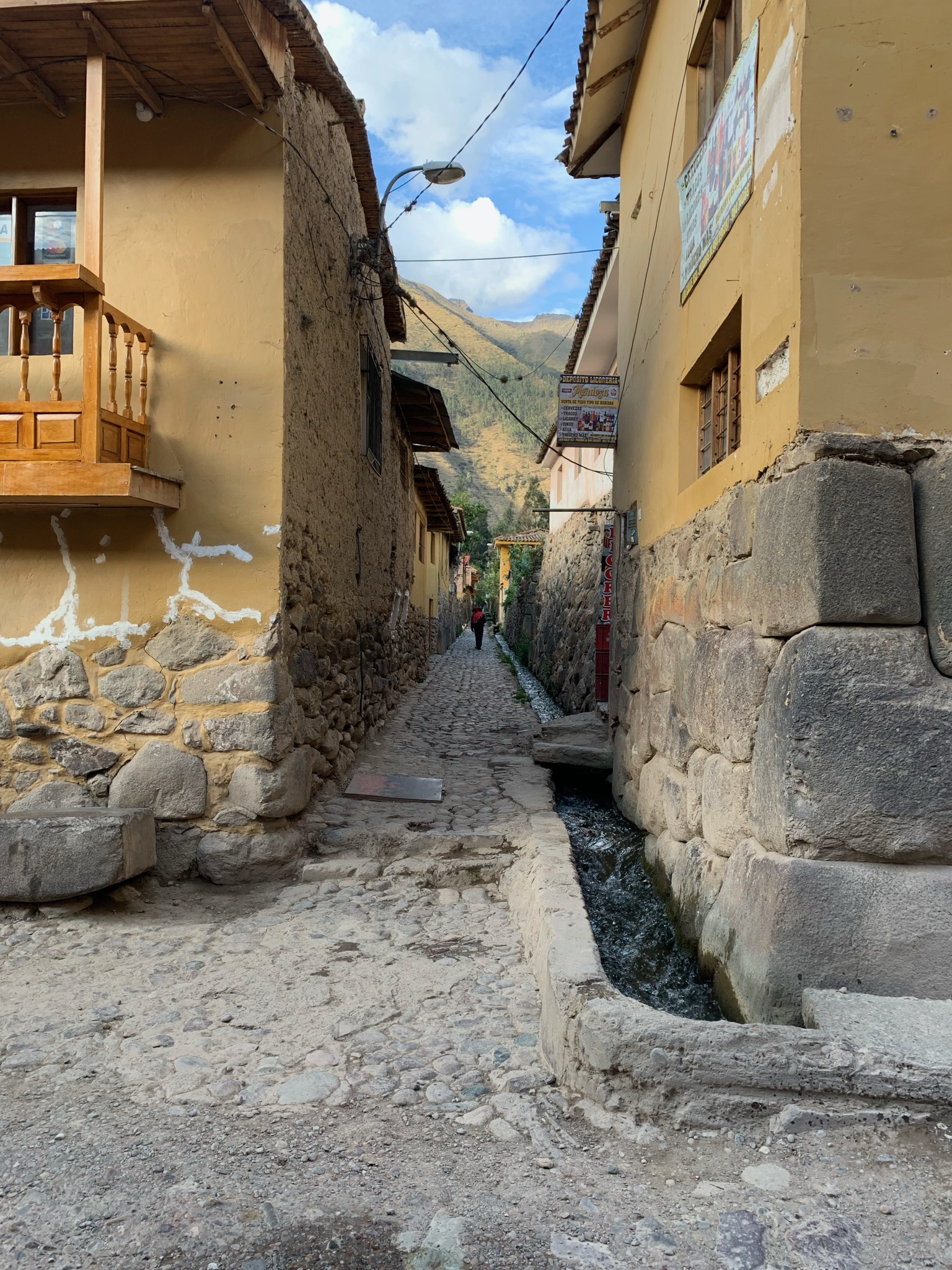
The ride was only about an hour and a half long, but on the bumpy road with music blaring in the van, it seemed twice that long.  When we finally got out, we found ourselves in a sleepy little community with  only a one way road through the middle of it.  Police officers were directing traffic to keep things moving, but most people simply walked to get to their destinations.  After walking a few blocks through the meandering alleys, we found the Rumi Sonqo Hostel nestled in a group of buildings very close to the base of the Ollantaytambo ruins. 

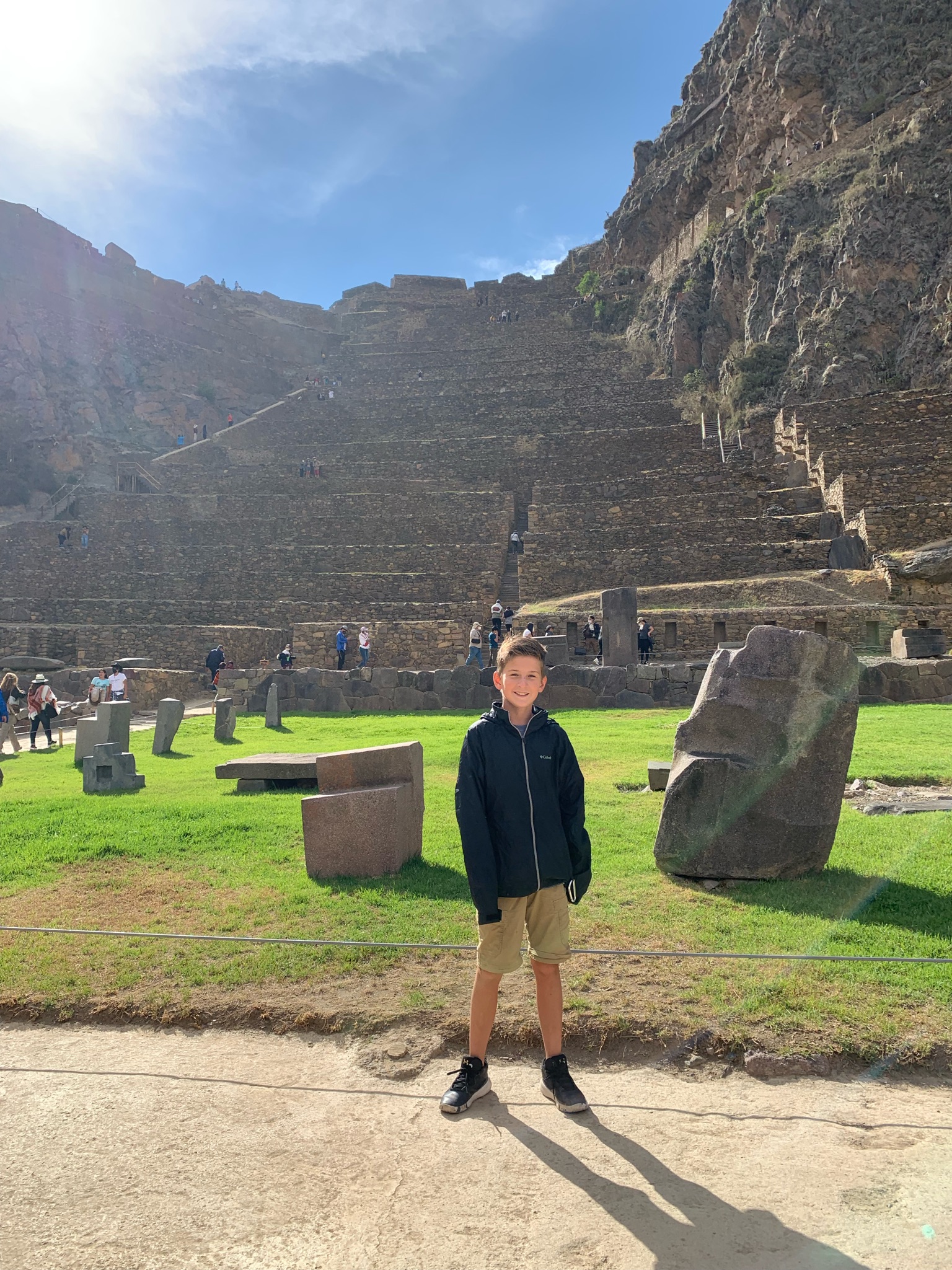
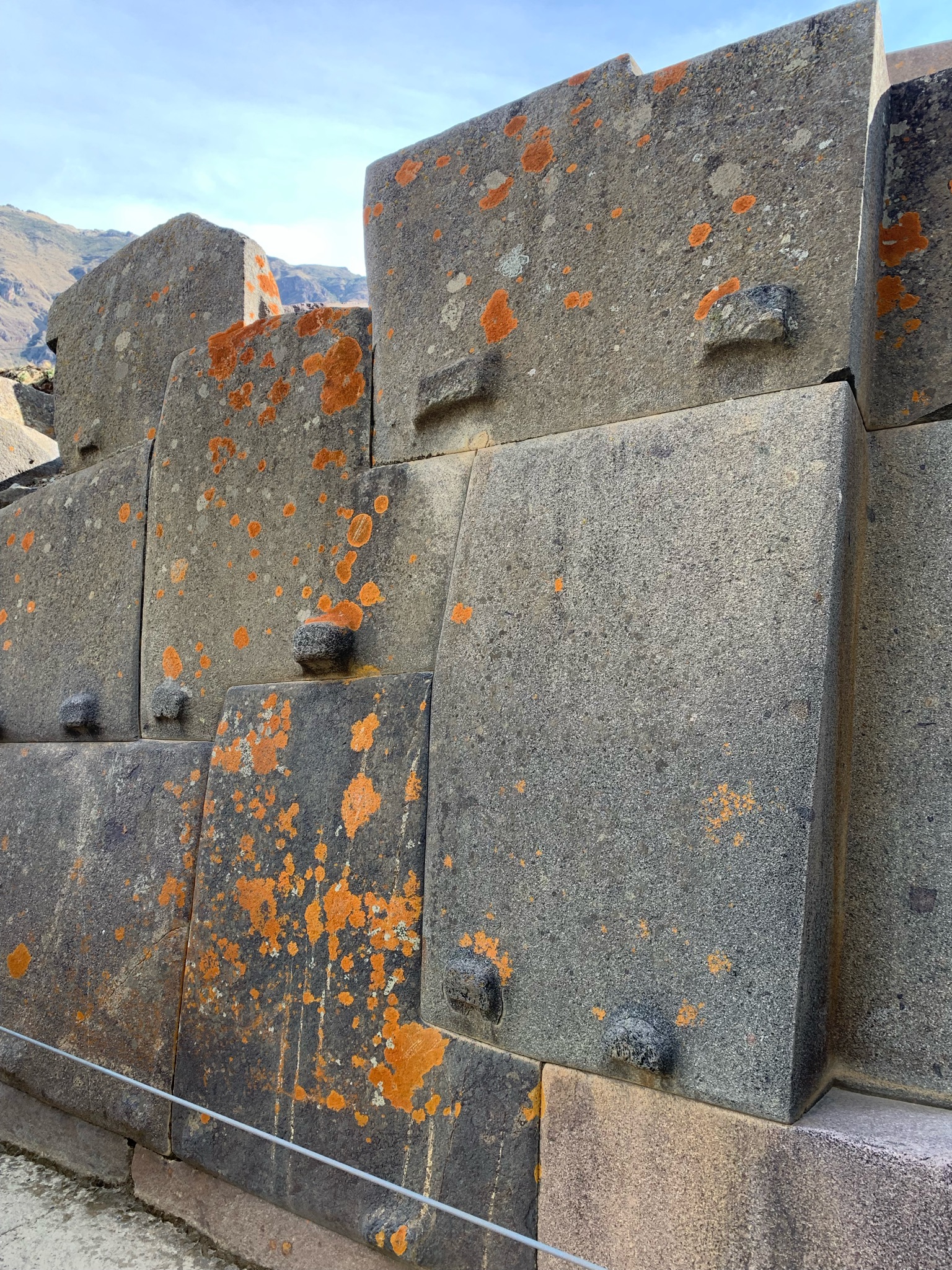
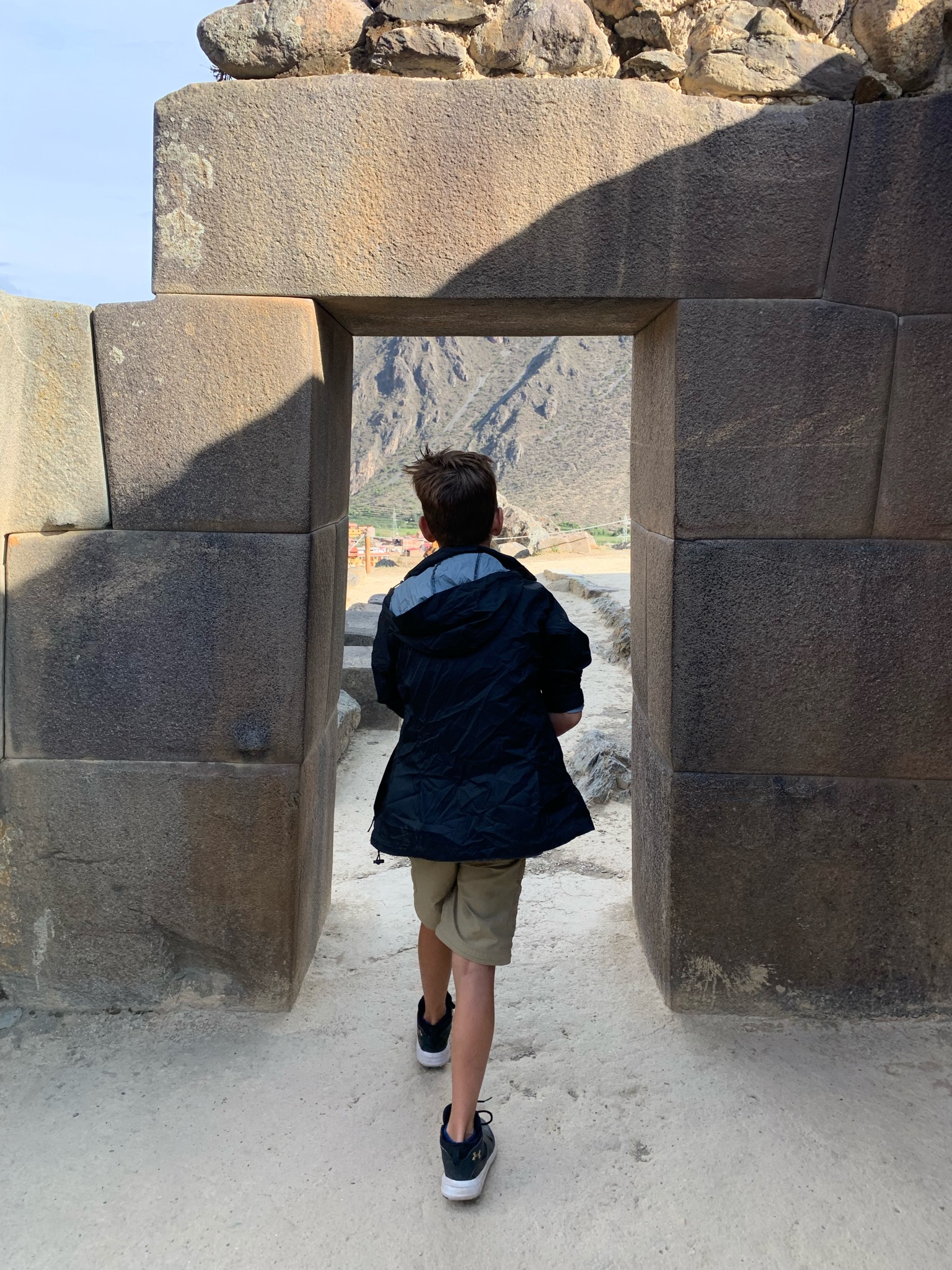
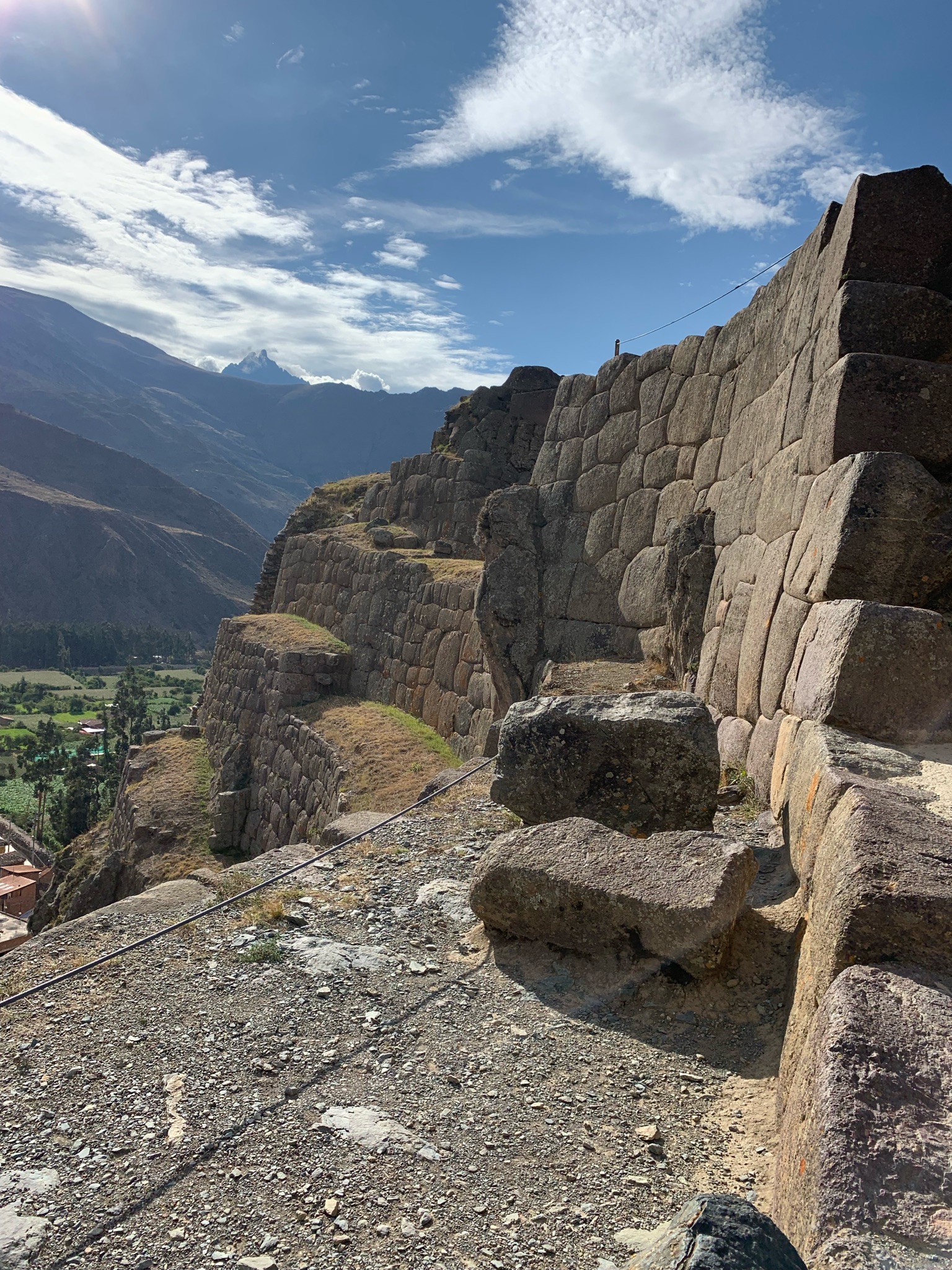
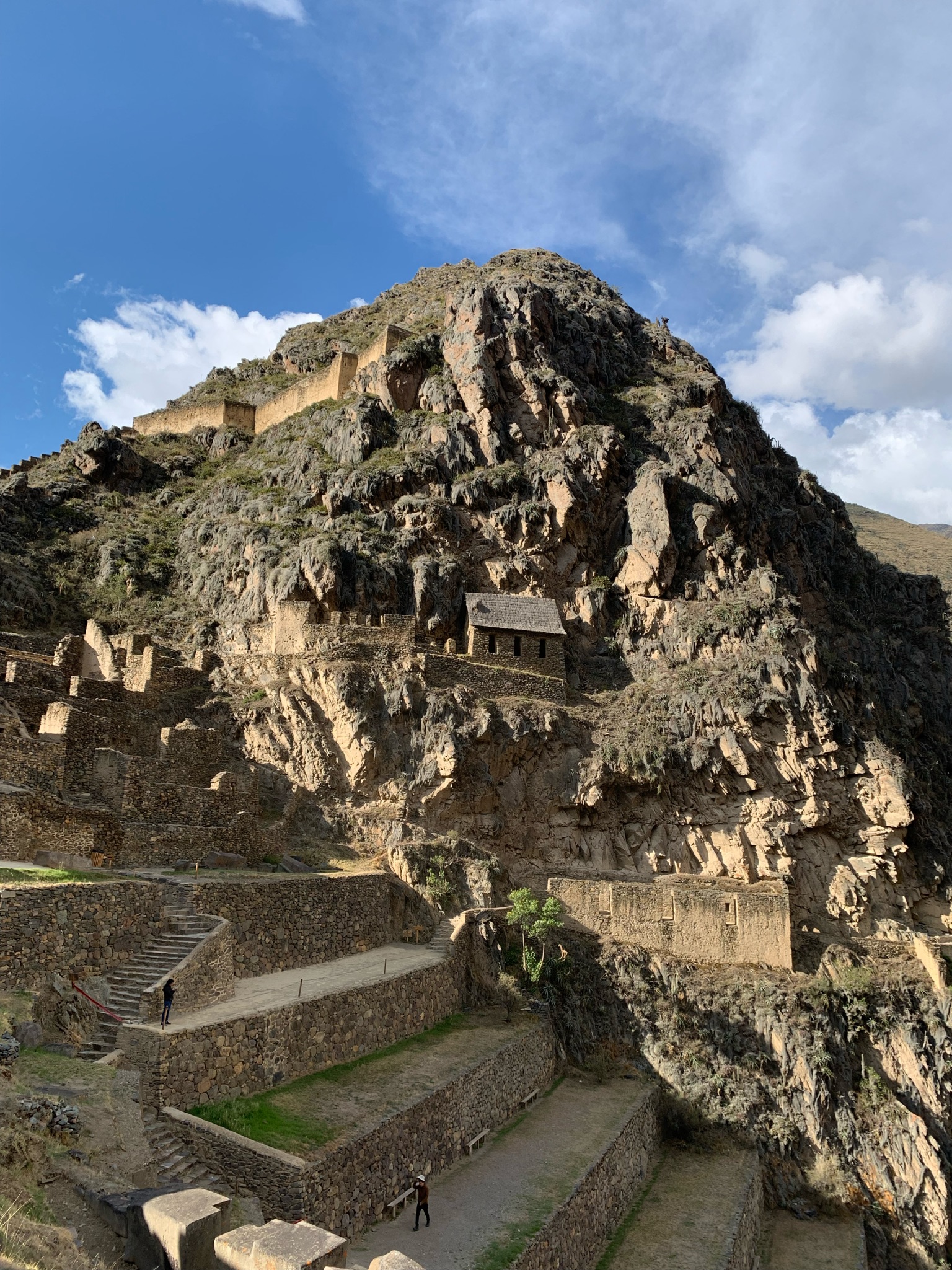
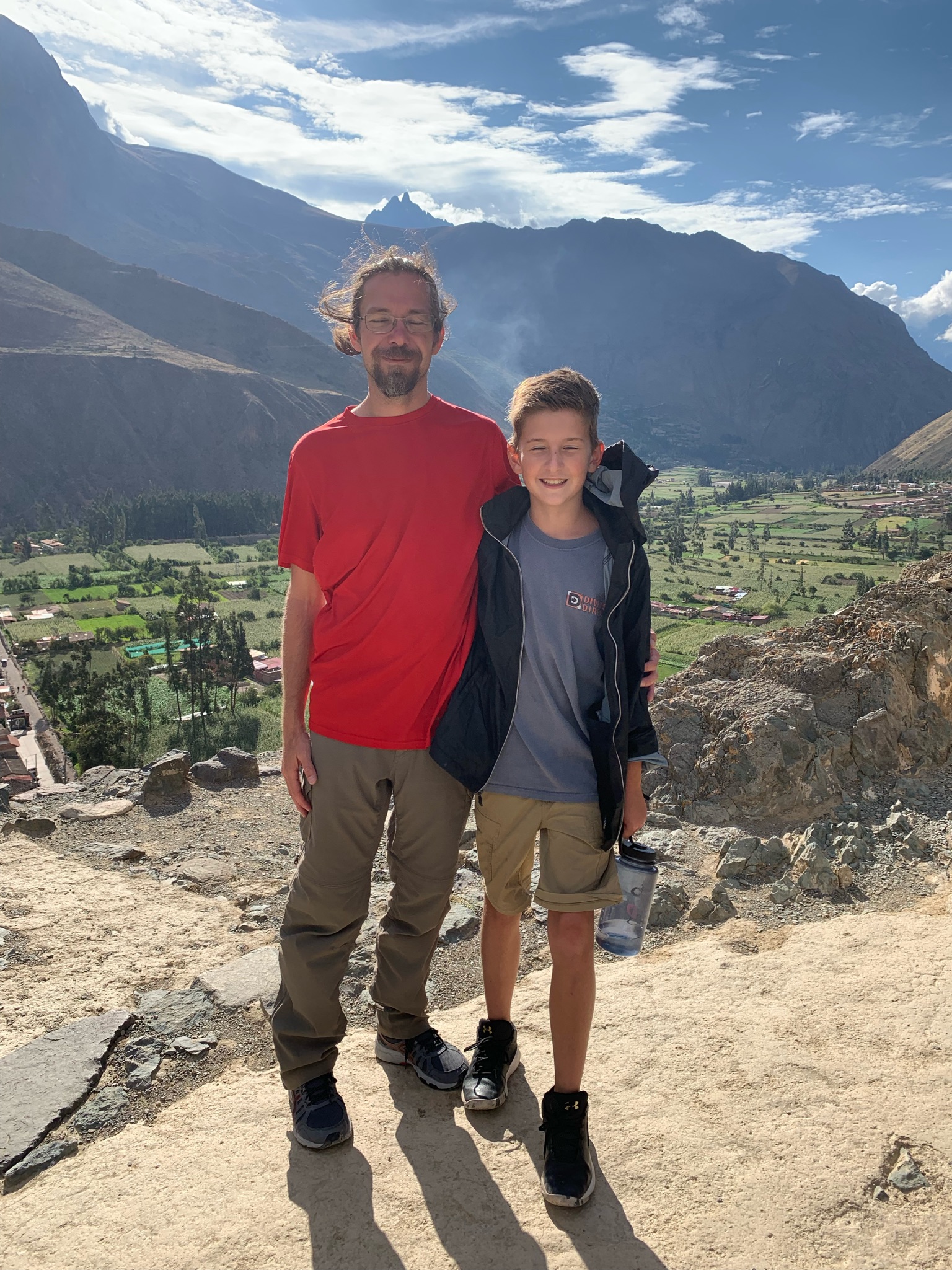
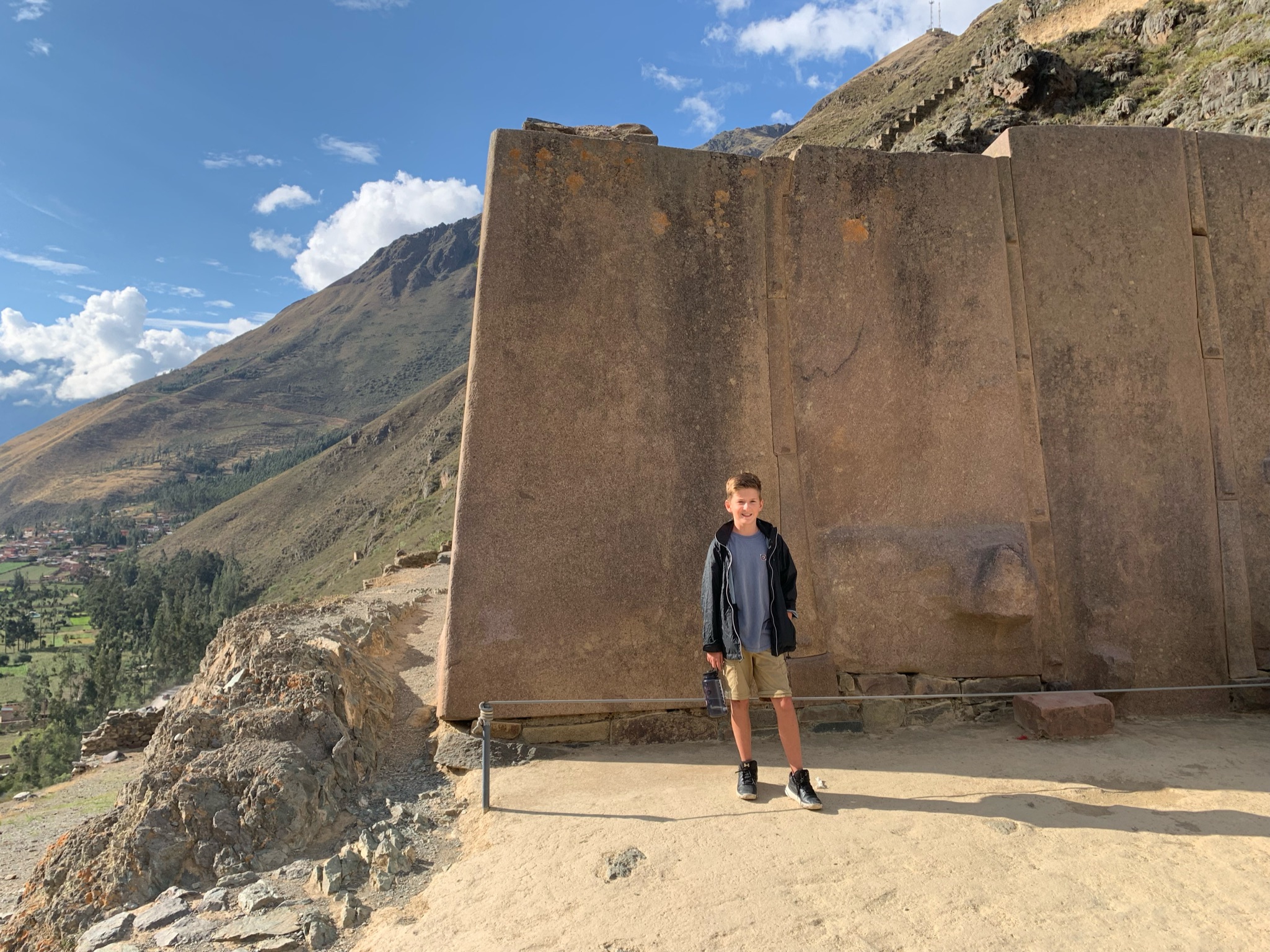
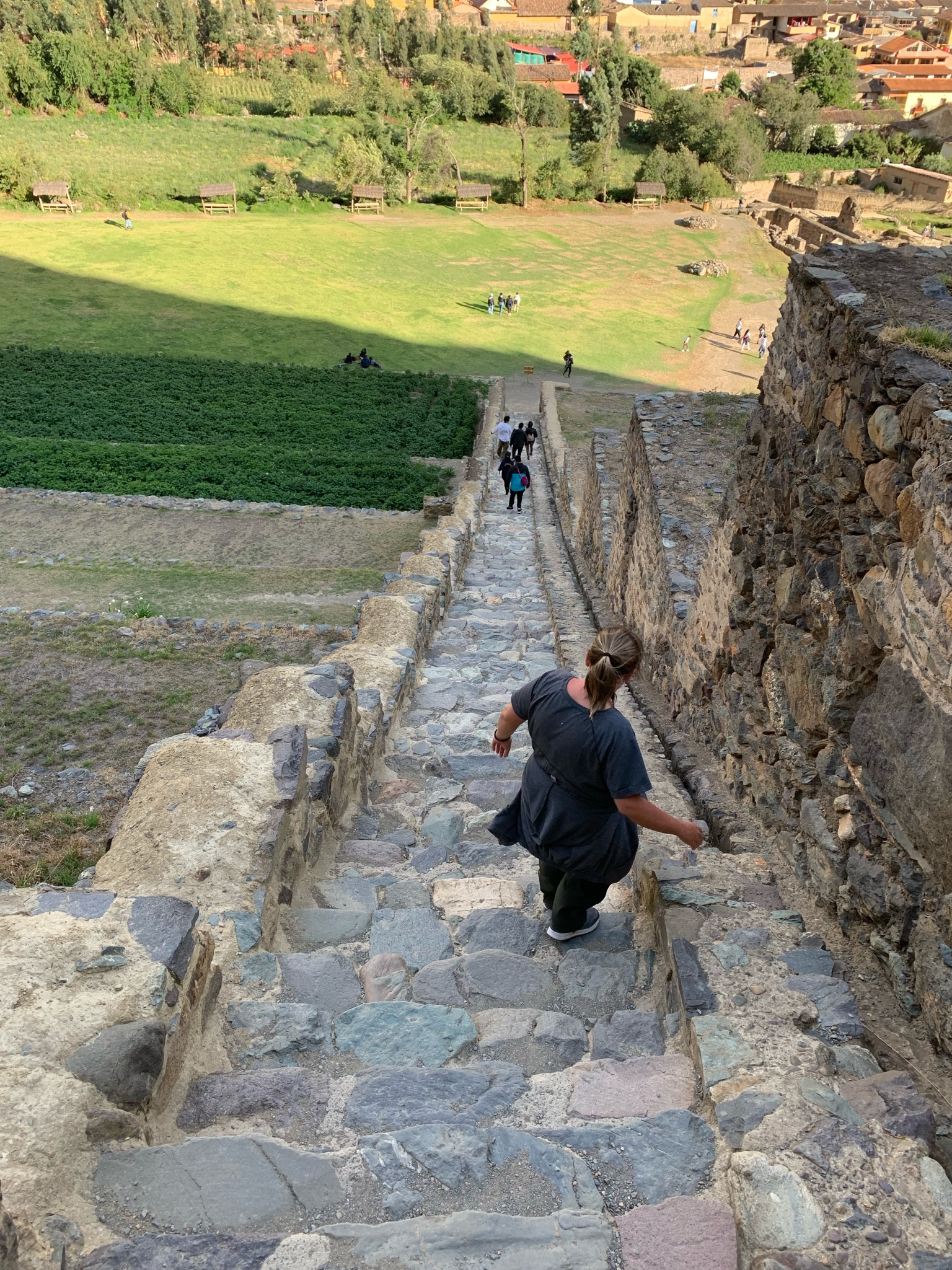
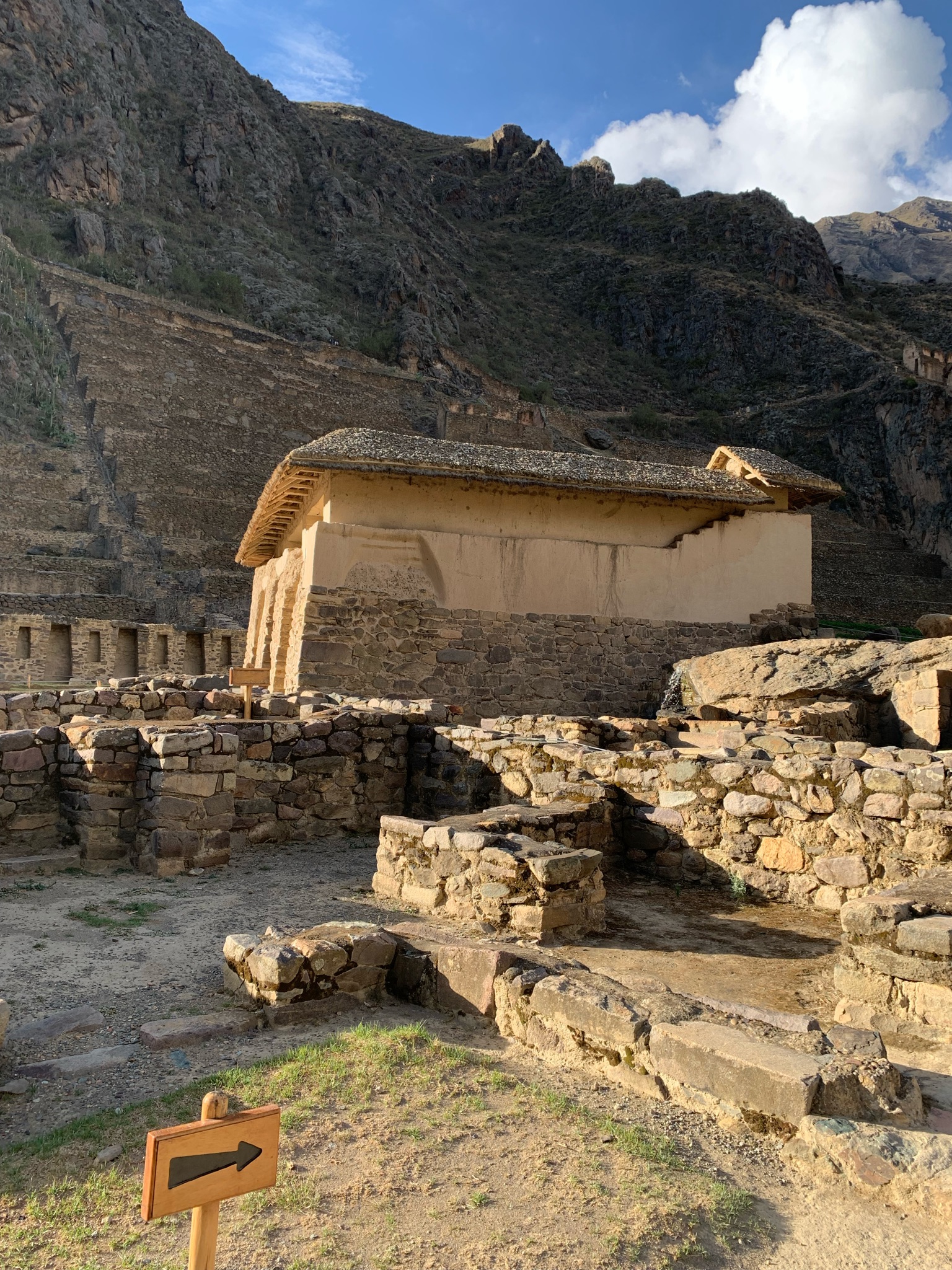
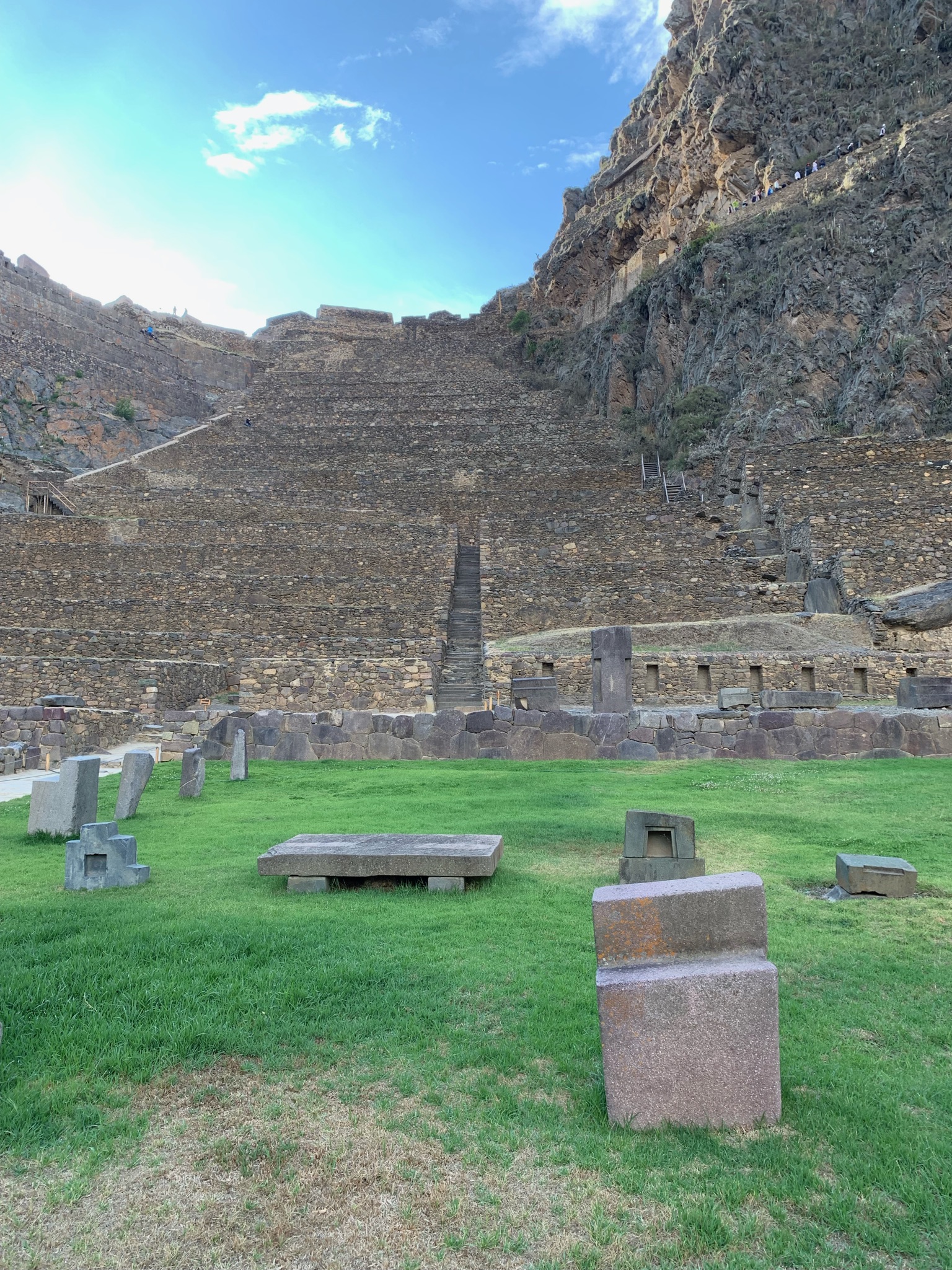
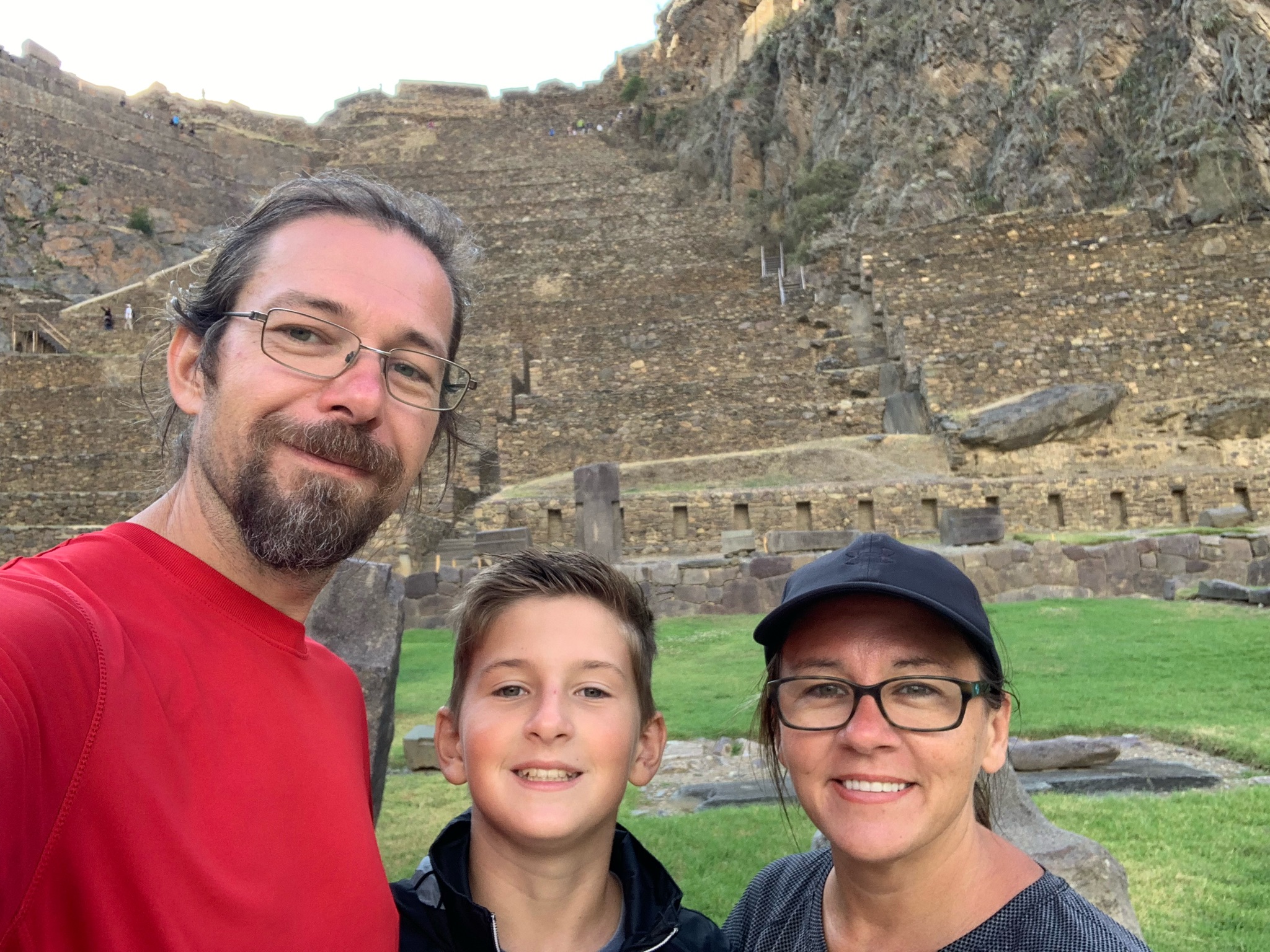
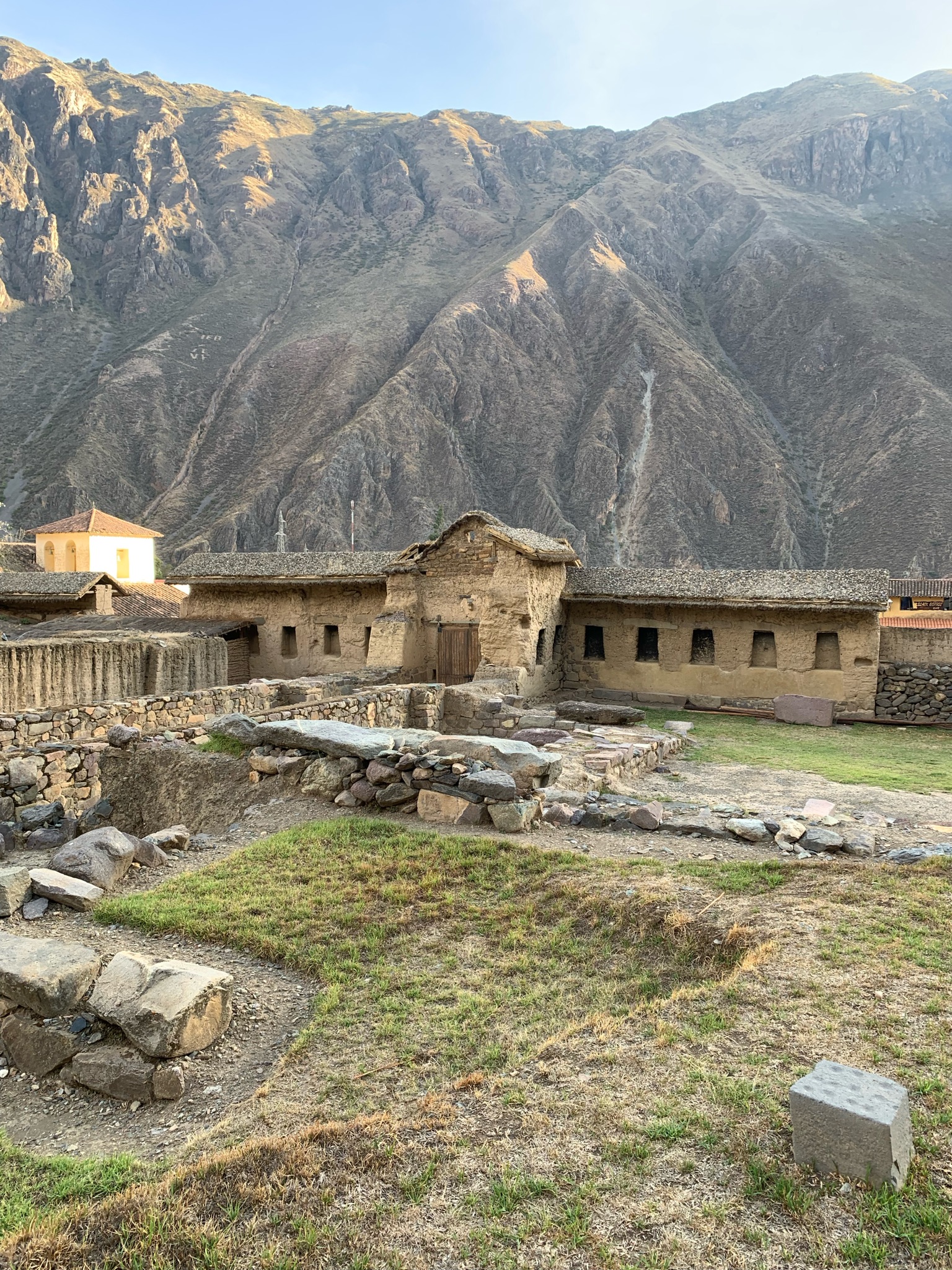
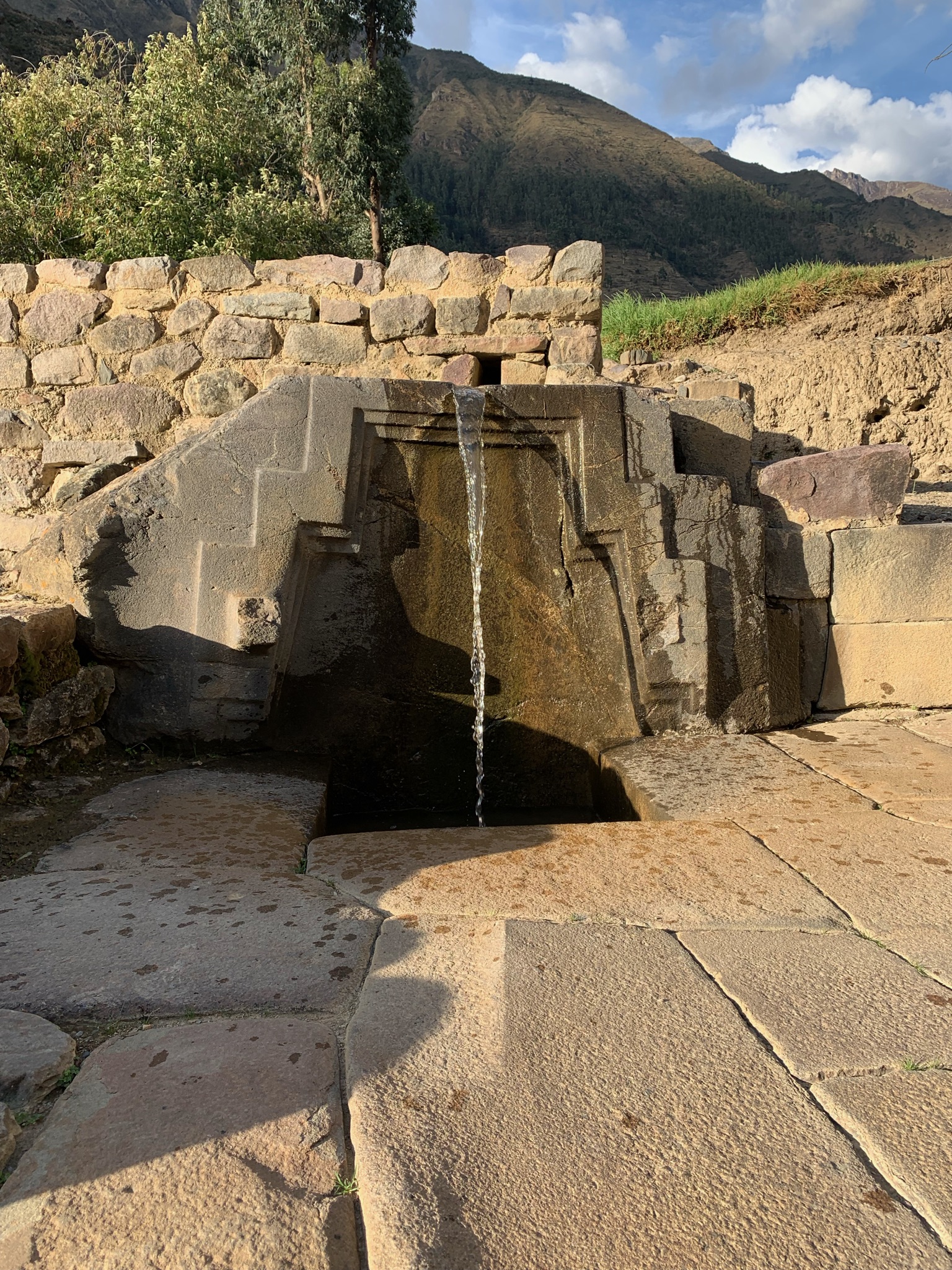
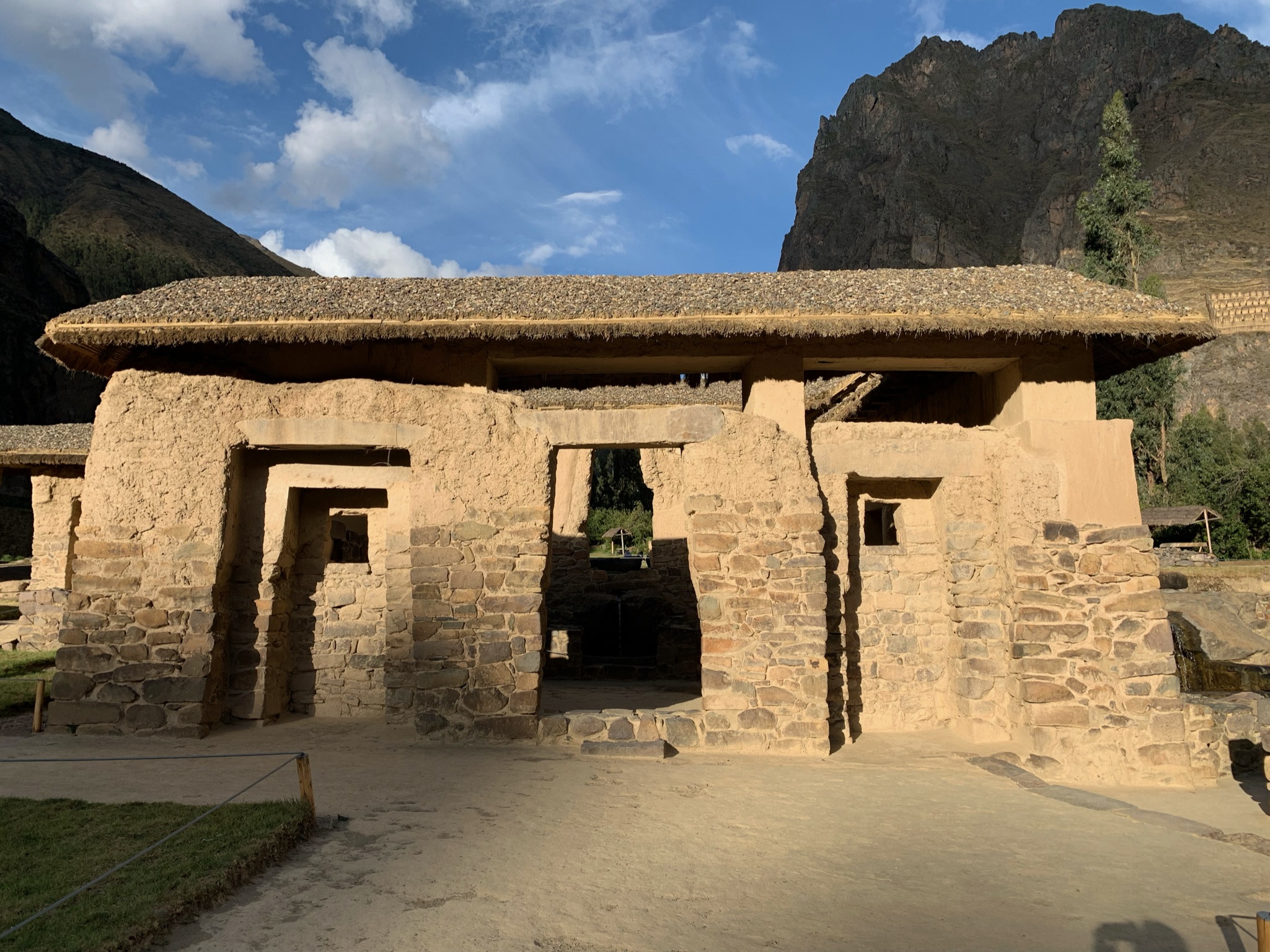
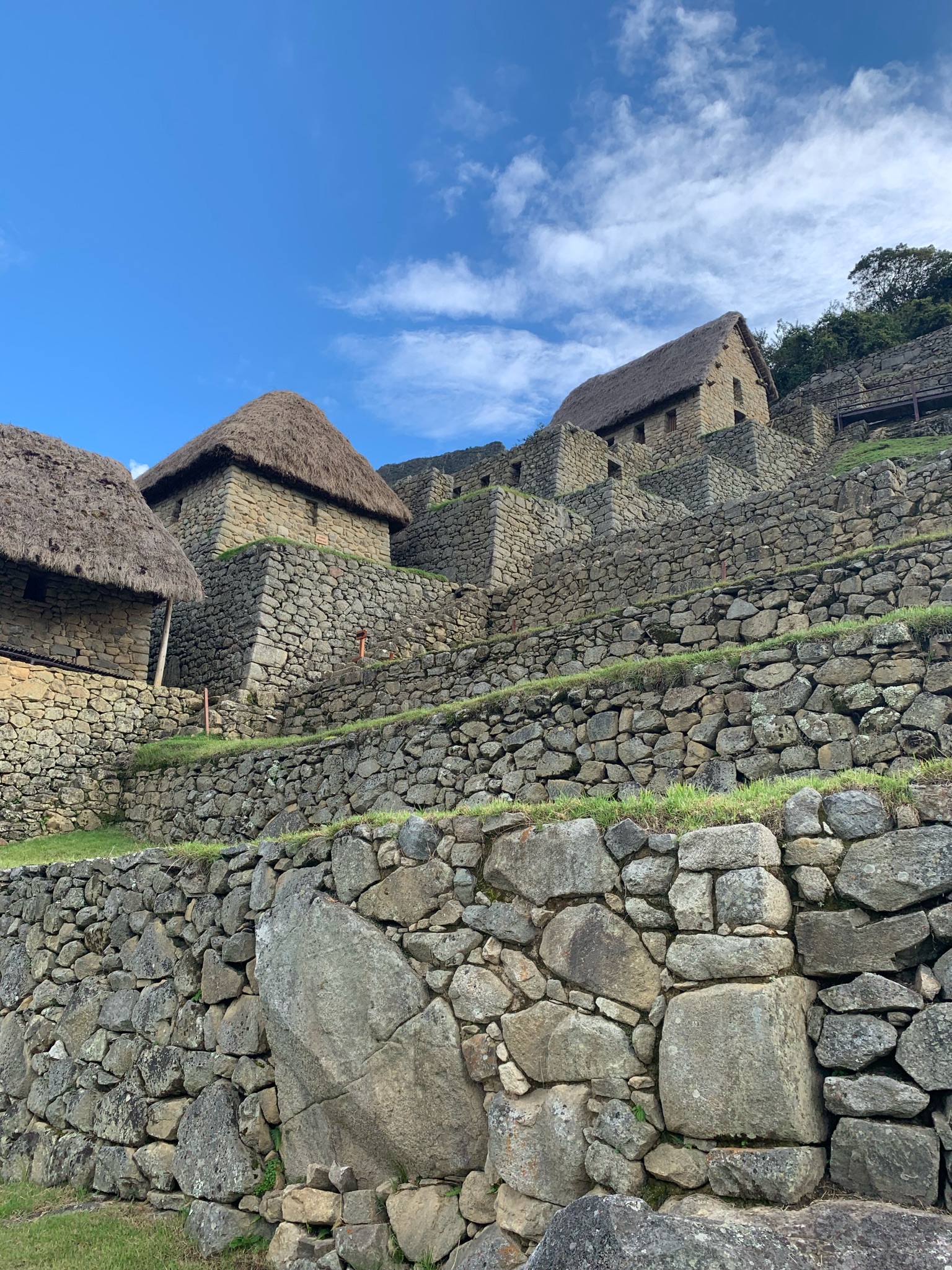
Ollantaytambo is also in a valley, and overlooking the city are the beautiful Ollantaytambo ruins.  There is a little debate about what these ruins were in their heyday.  The design appears to be militaristic, but there are religious aspects high on the mountain.  The leader of the Incas lived here at one time as well.  Even without knowing the details, these were amazing to look at.  The ruins are in very good shape, and the town itself is worth the visit as well. 

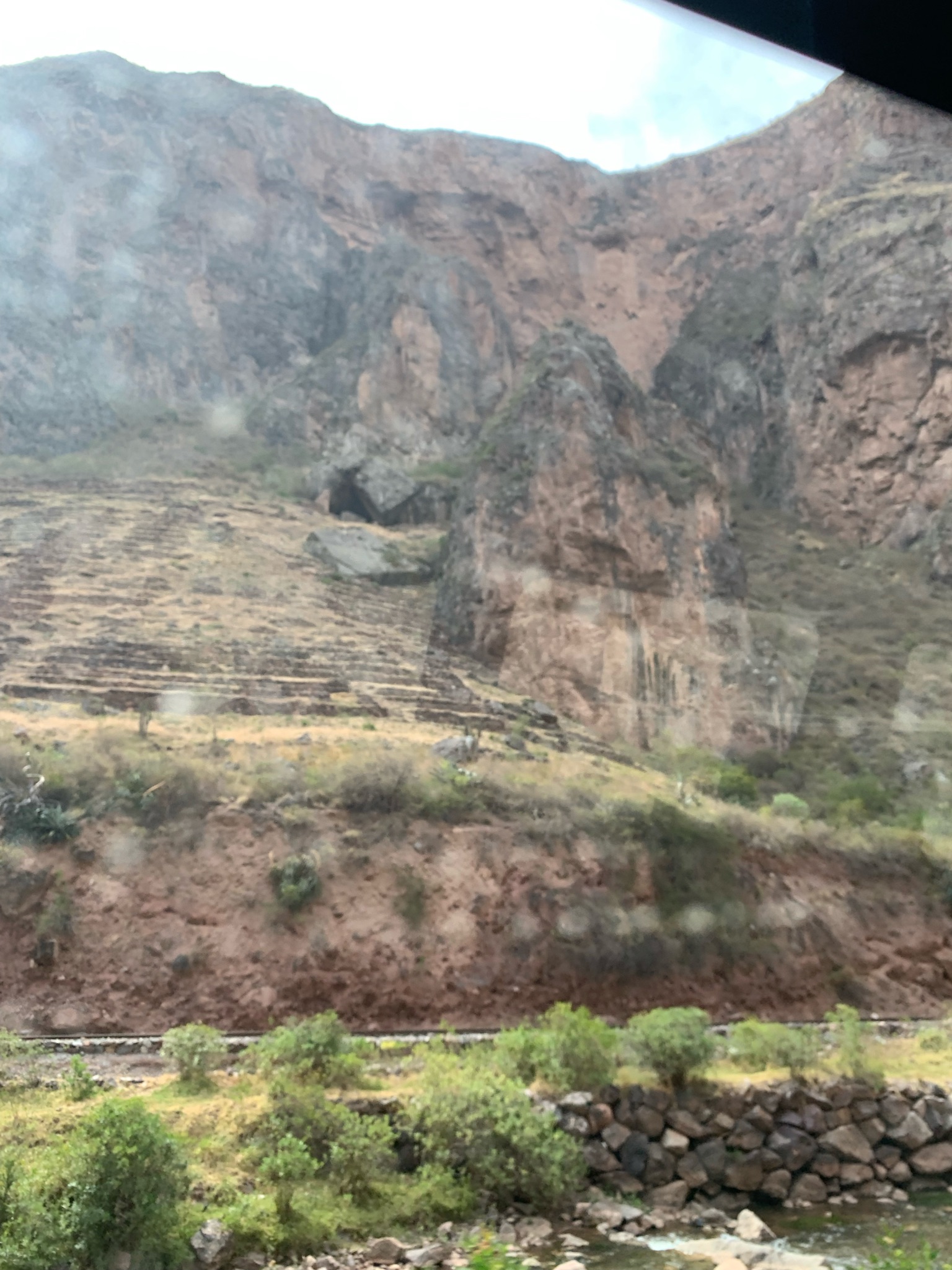
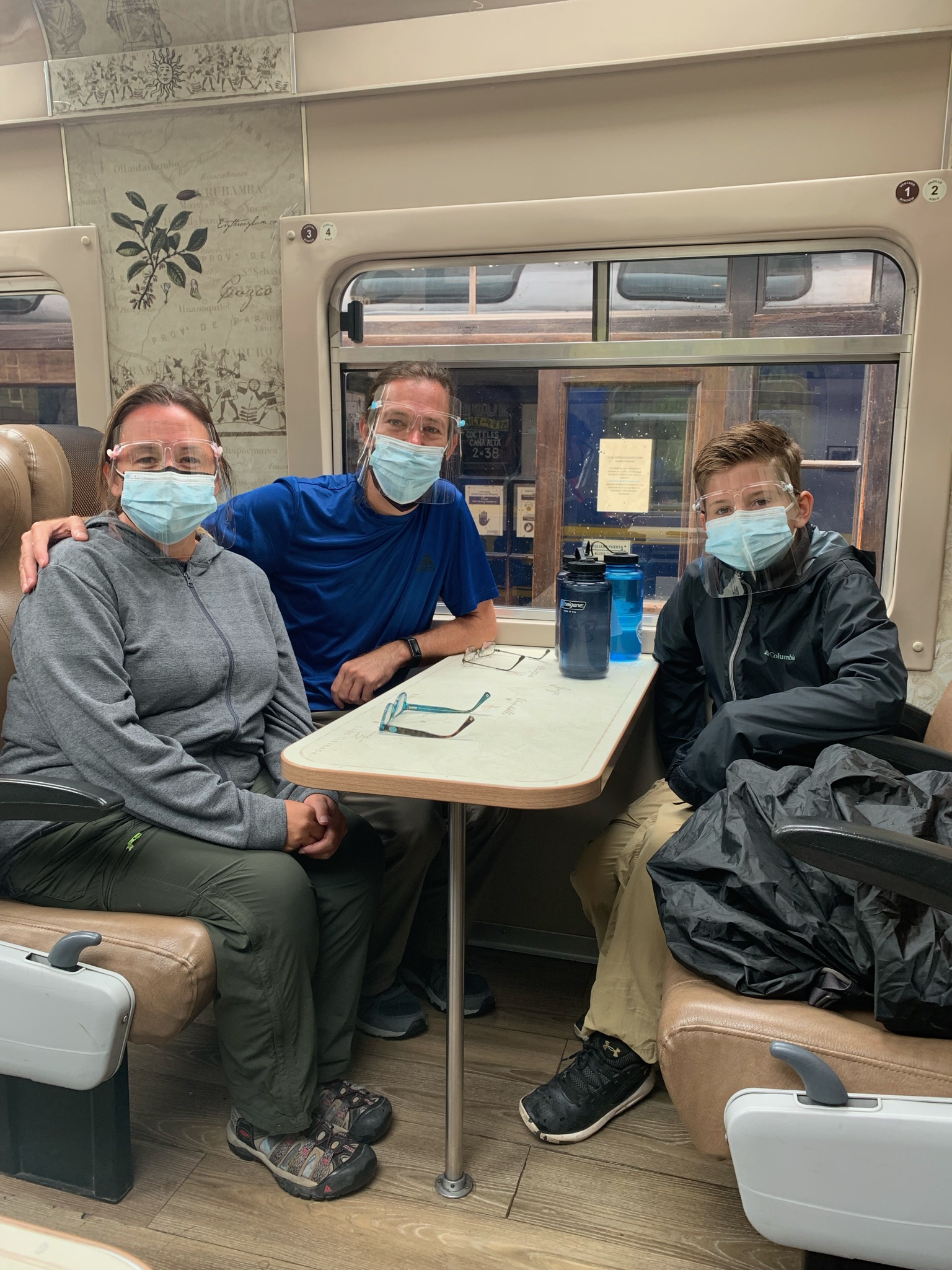
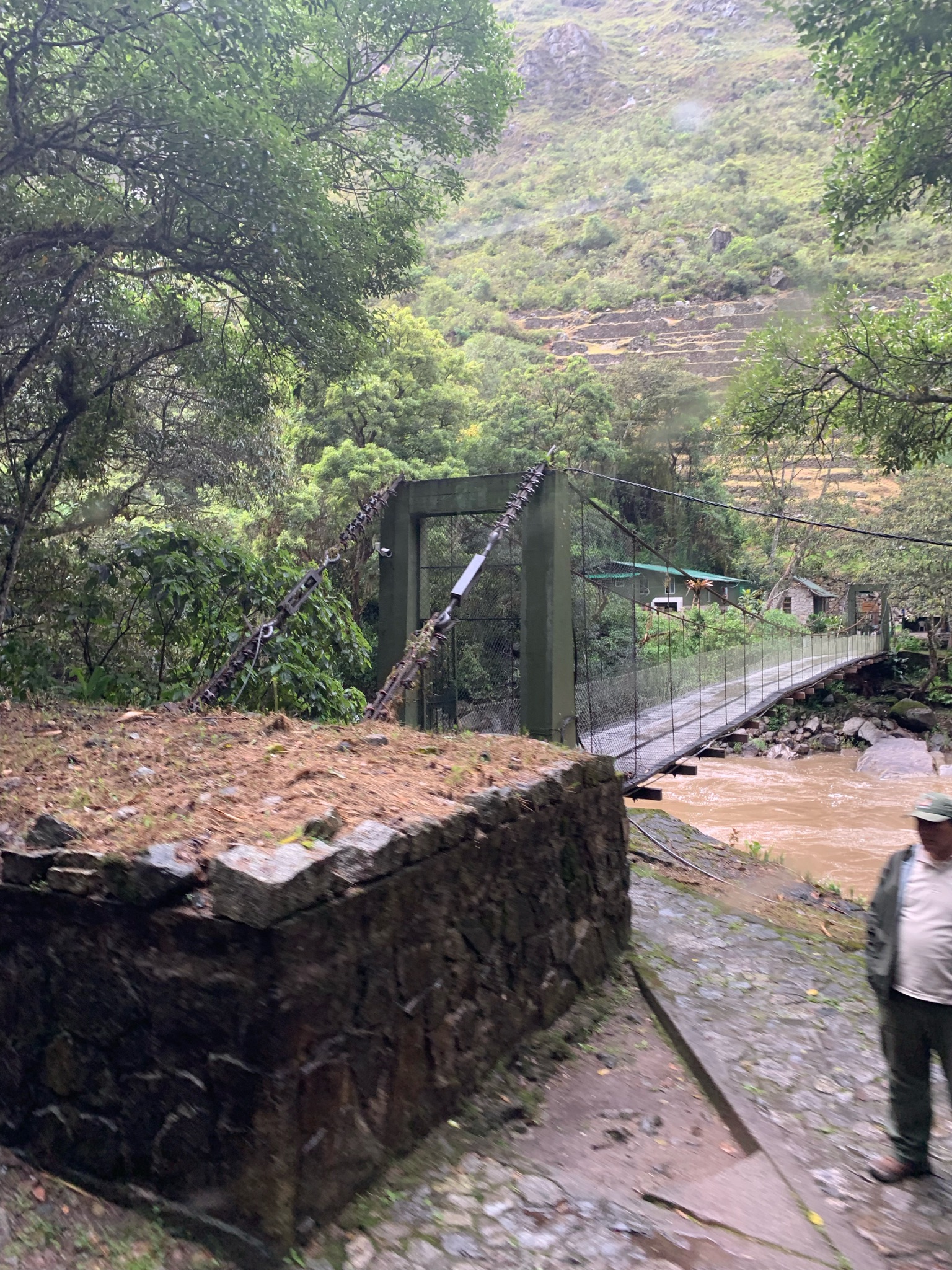
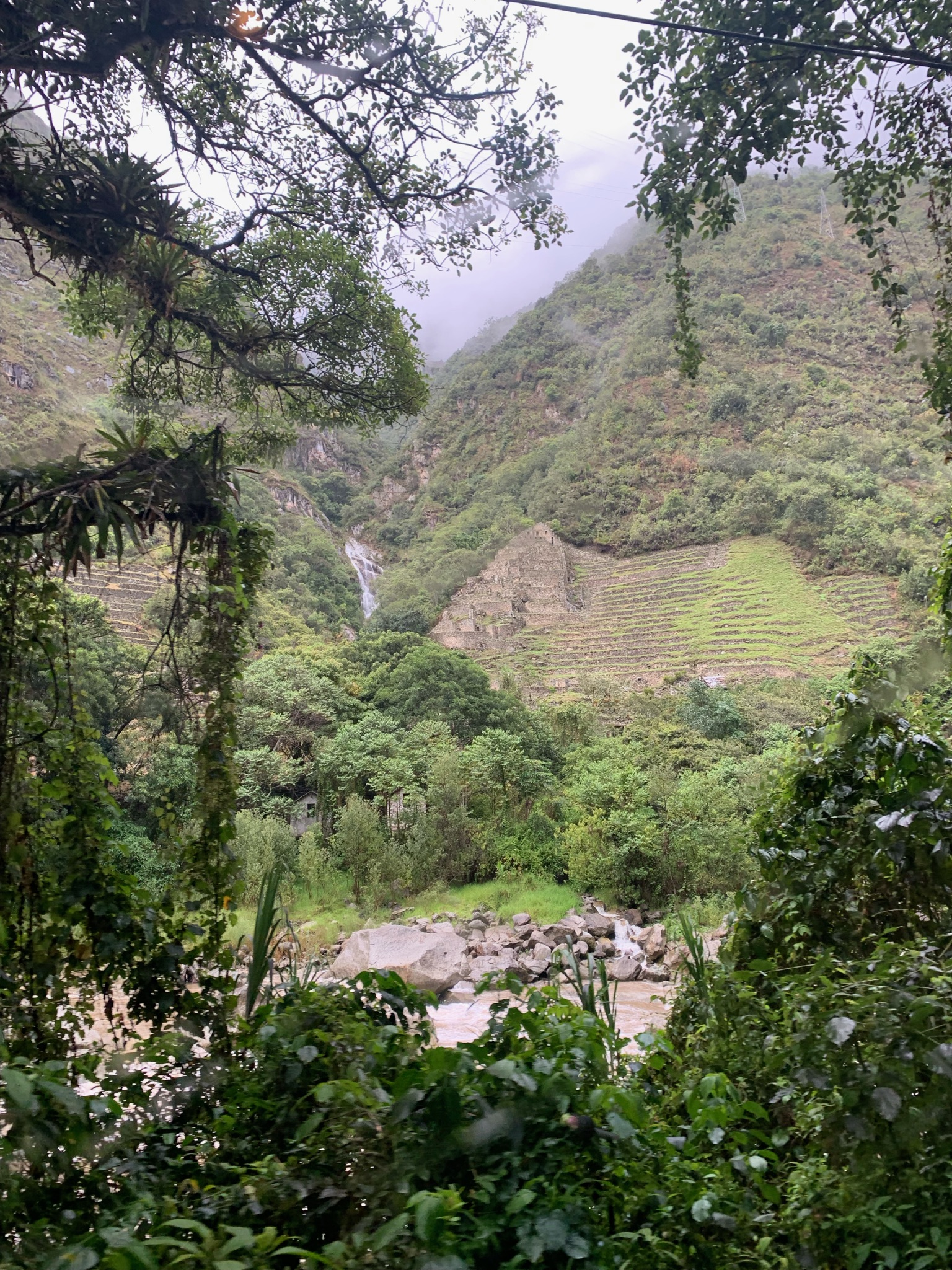
On Saturday morning, we got up very early in the morning, ate our breakfast at the hostel, and made our way to the Ollantaytambo train station.  We had bought our tickets online, but we didn’t have a way to print them, so we checked in at the office.  After getting our boarding passes and filling out health questionaires, we waited on the platform to hop aboard our train car.  The train was very nice, and the three of us sat around a table for the hour and a half ride.  It was beautiful riding beside the river, and we saw several different groups ruins on the journey.

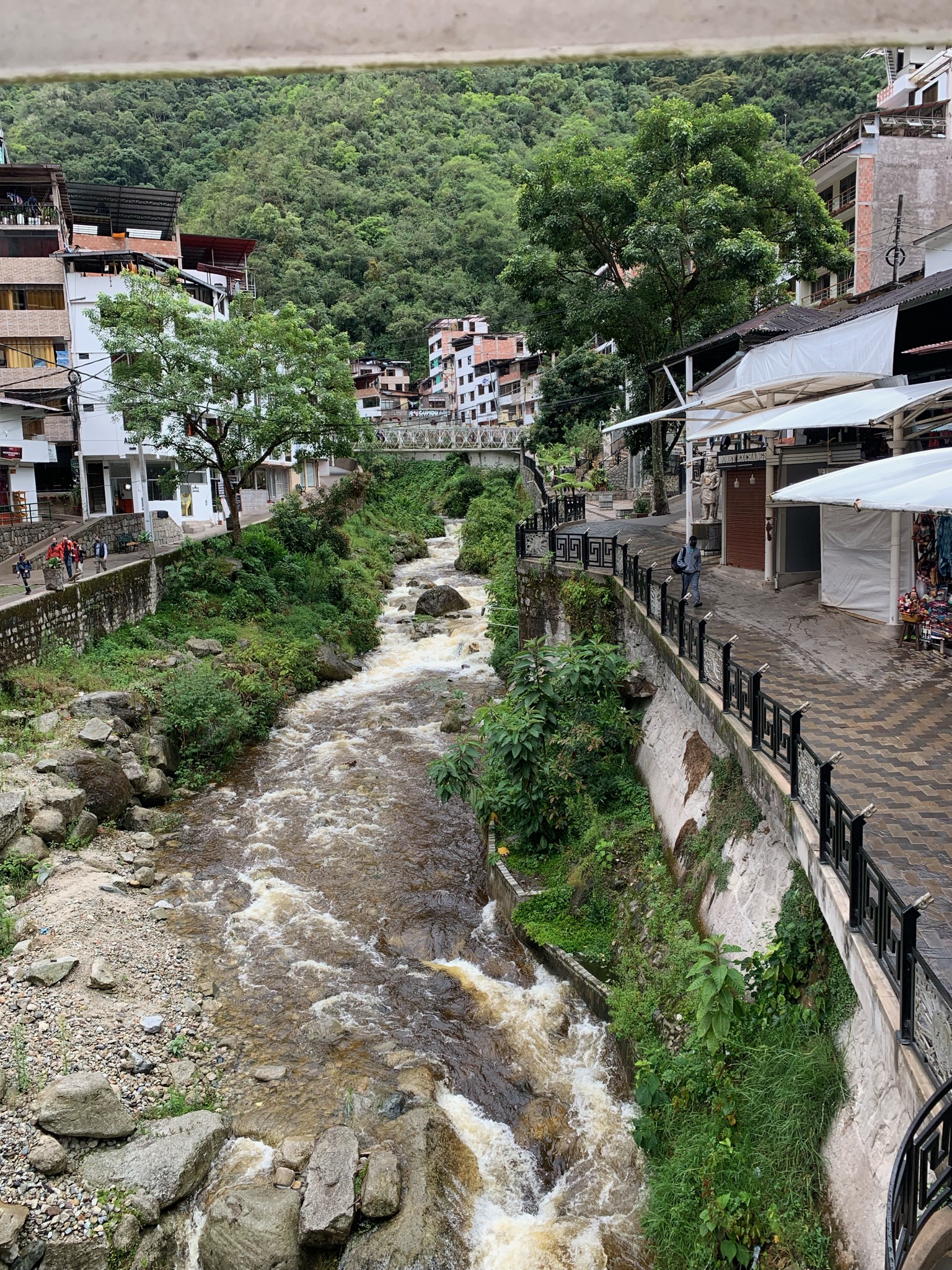
When we reached the Aguas Calientes station at 9:00, we hopped off and explored the town while we looked for some food.   With Covid, Machu Picchu has changed their visiting procedures, and when you purchase your tickets, you purchase them for a specific hour you can enter the park.  We knew we had a 30 minute bus ride up the mountain before our 12:00-1:00 timeslot.  We had a little time to kill, and we didn’t want to go up on an empty stomach. 

Our lunch was delicious, and we stepped out of the restaurant just in time to get in line for the bus.  The buses leave every 5-10 minutes, but the length of the line when we walked up was worrisome.  We watched the time tick by as we waited and waited and waited.  Finally, the bus arrived, and shortly after 12:00, we finally got on board. 

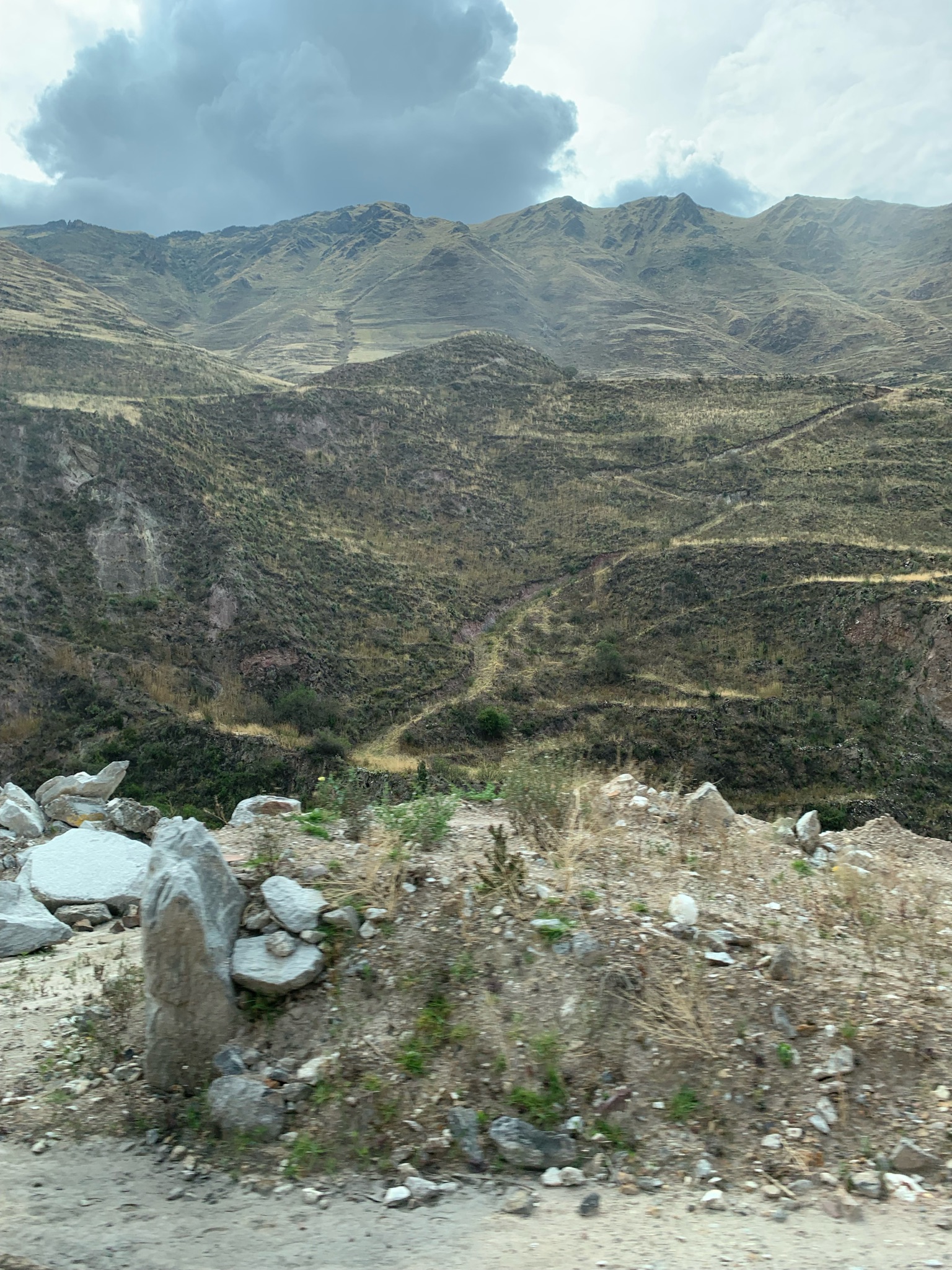
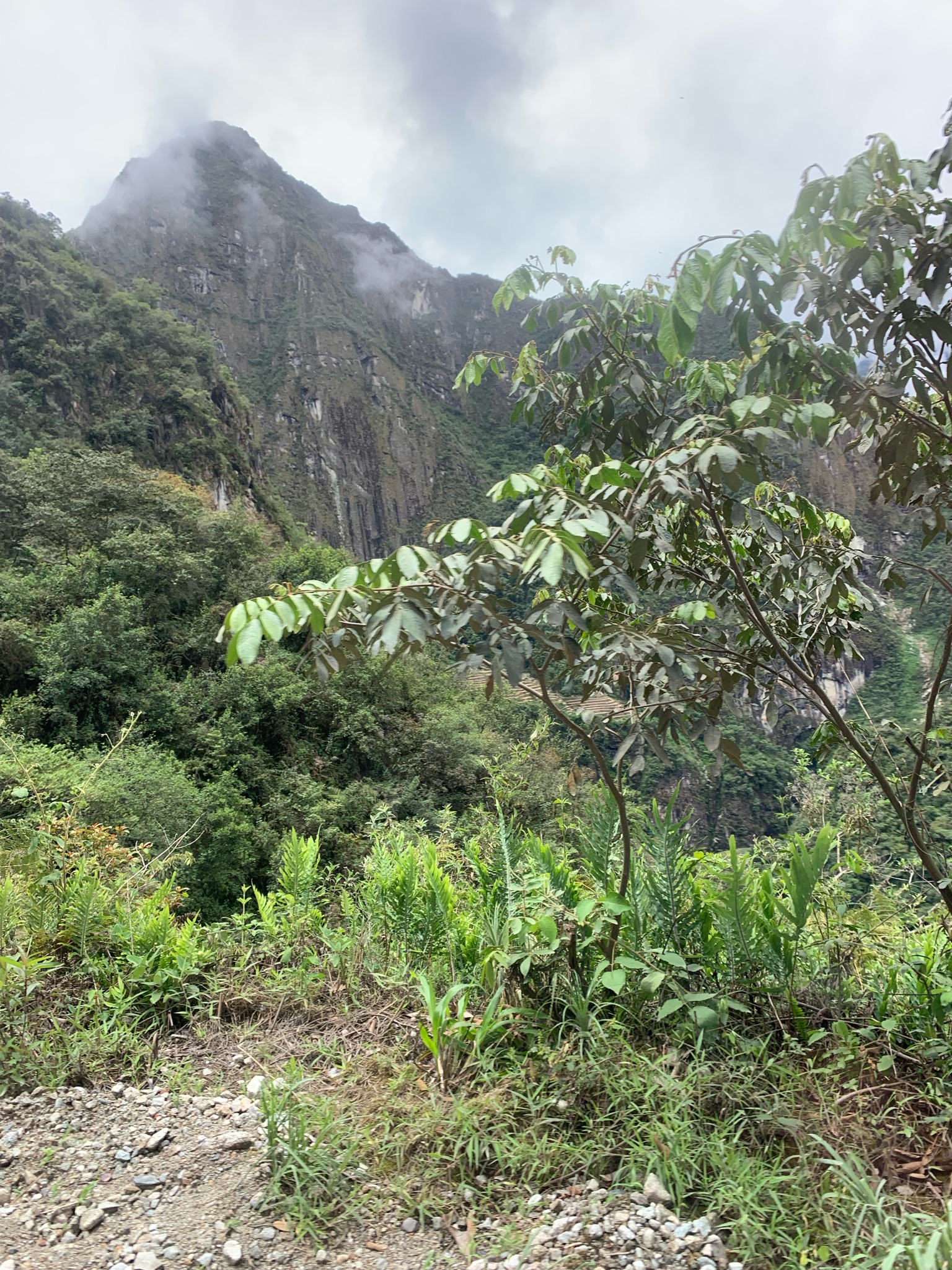
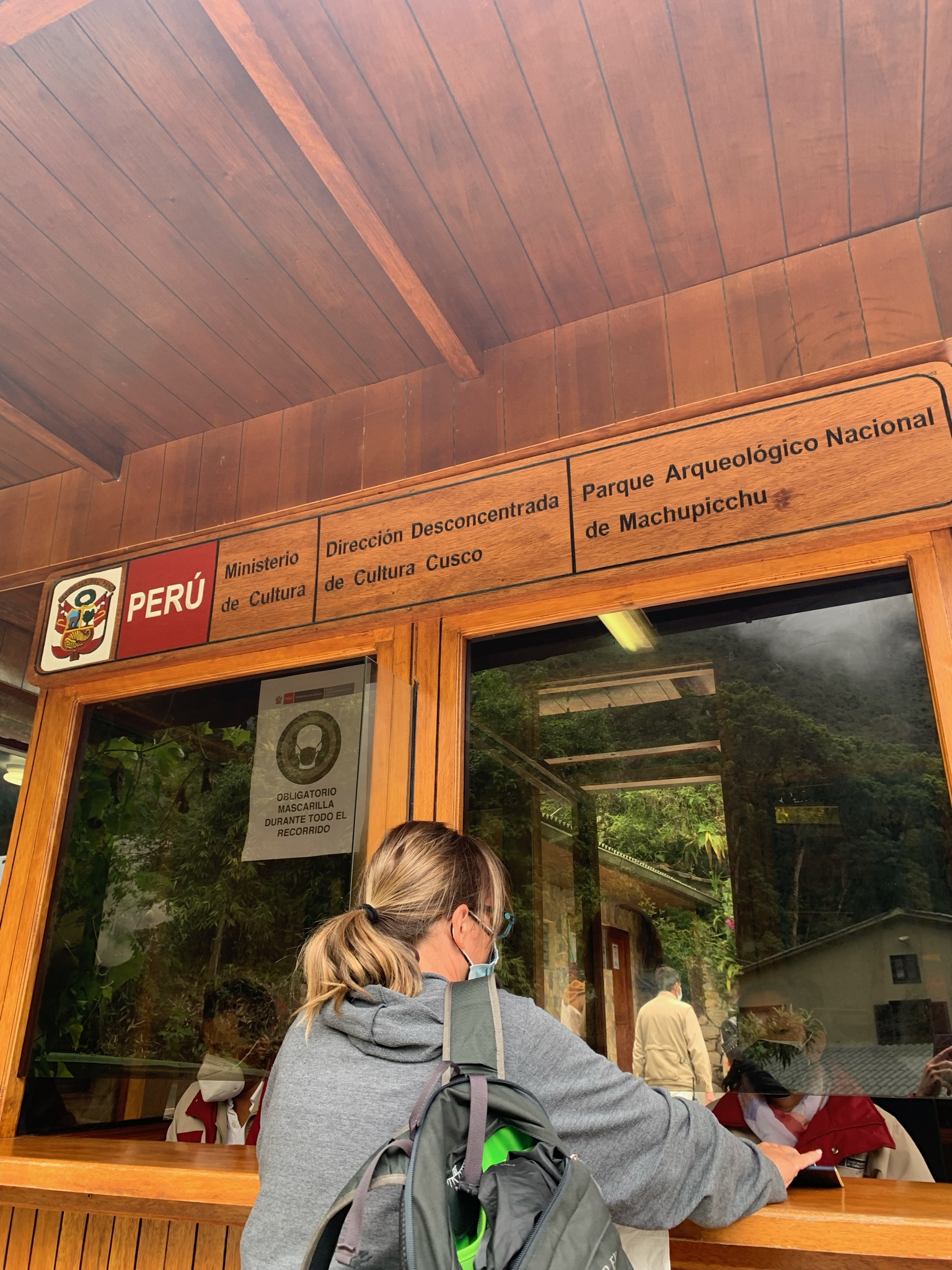
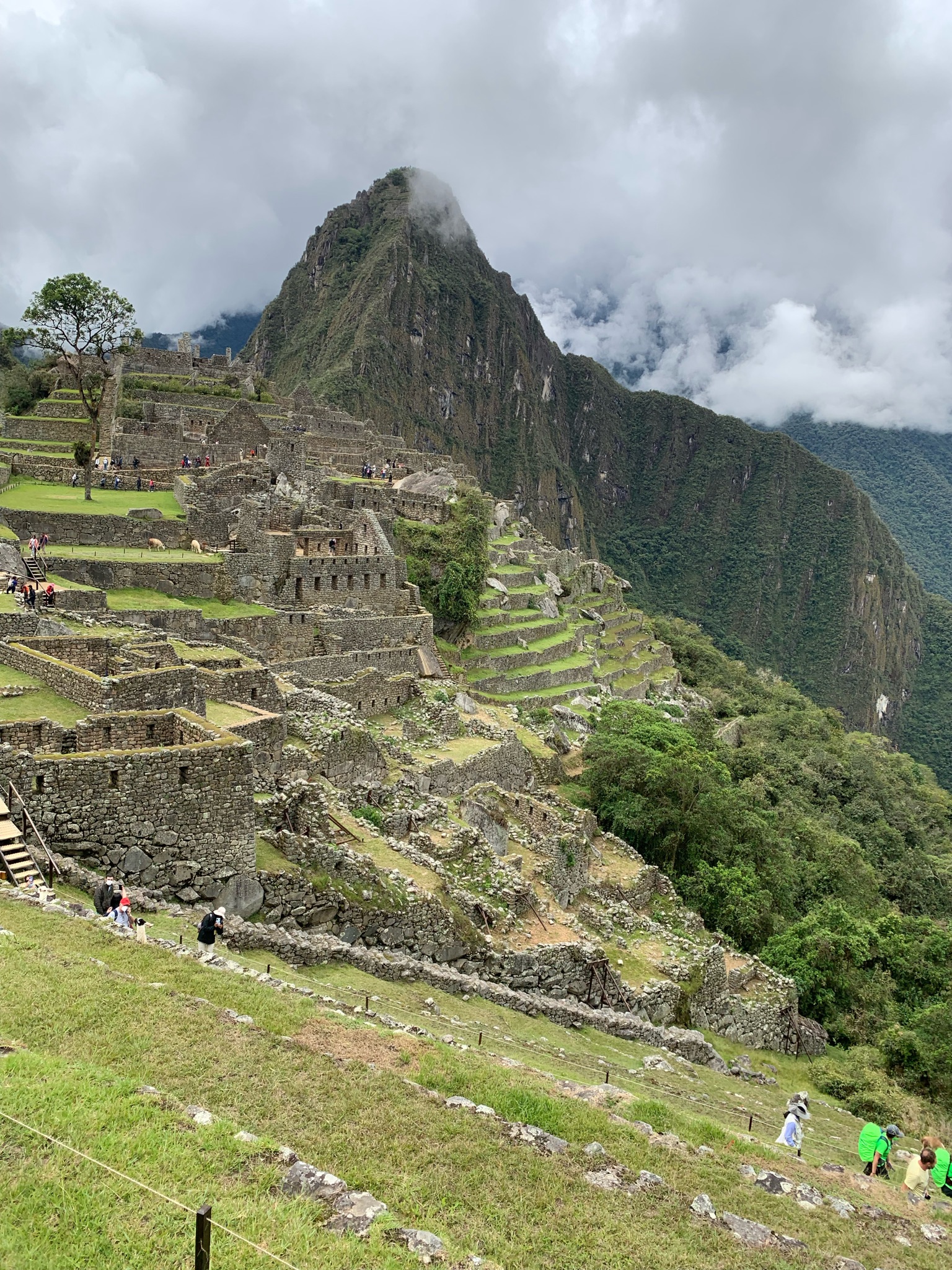
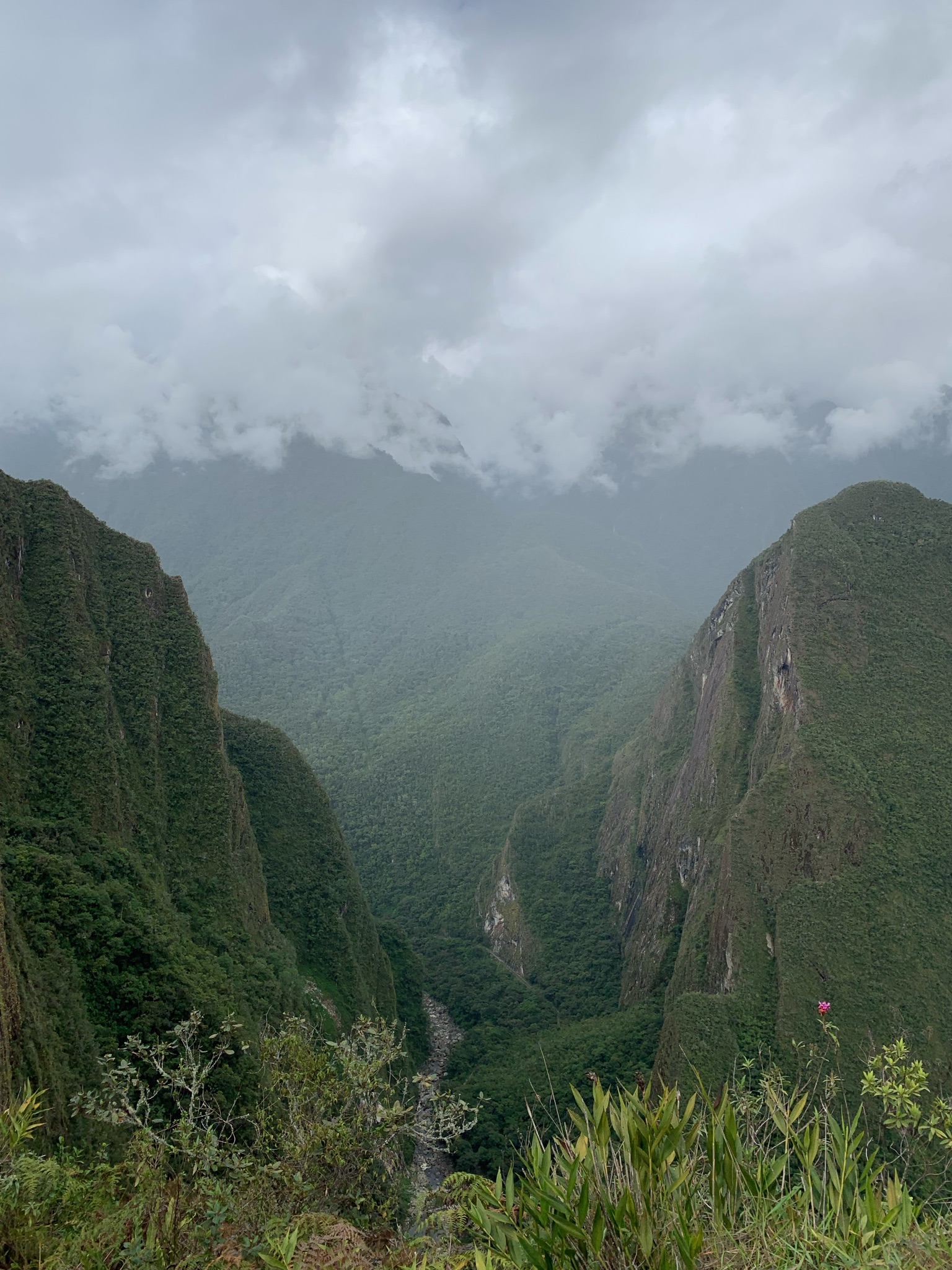
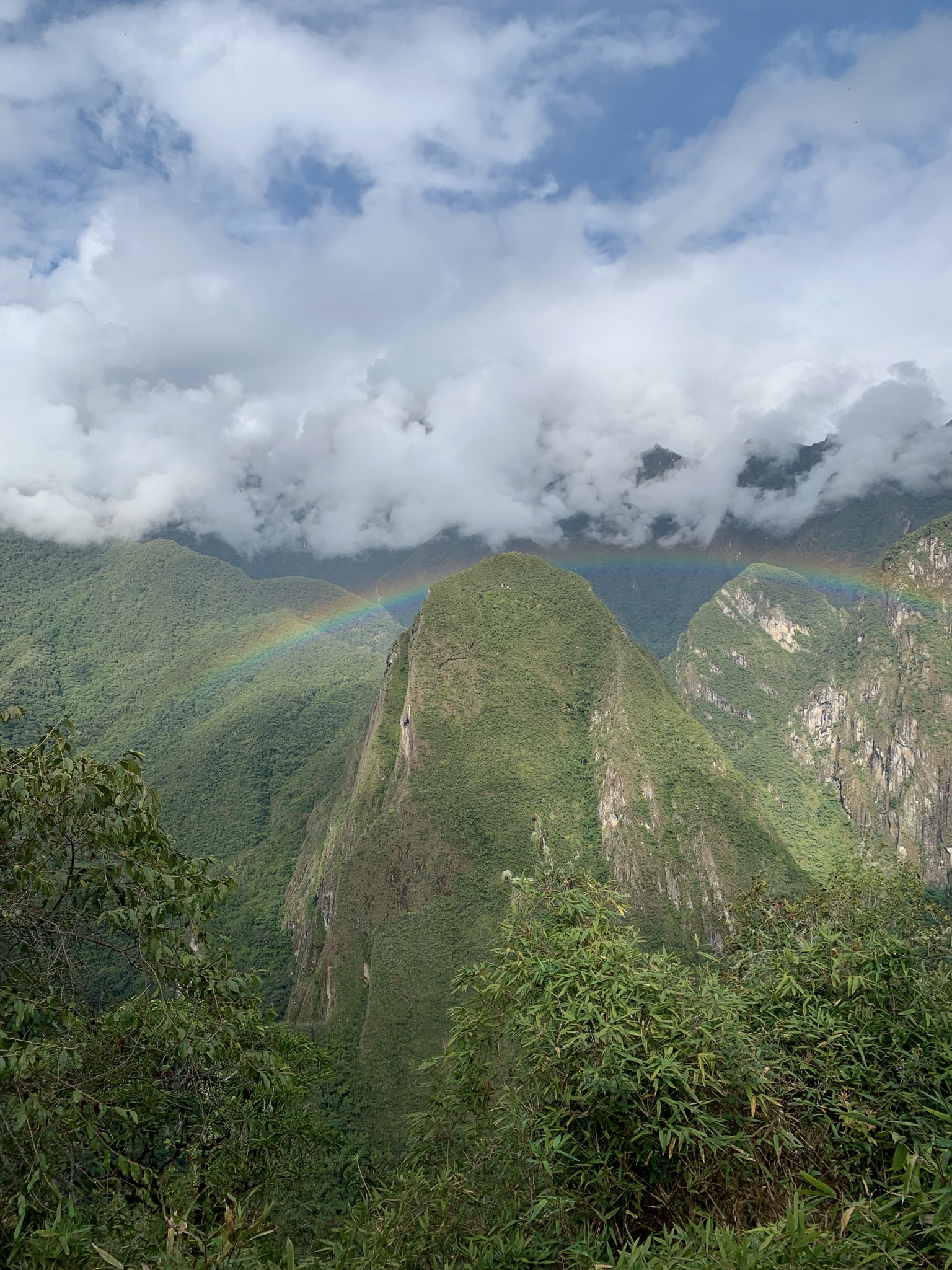
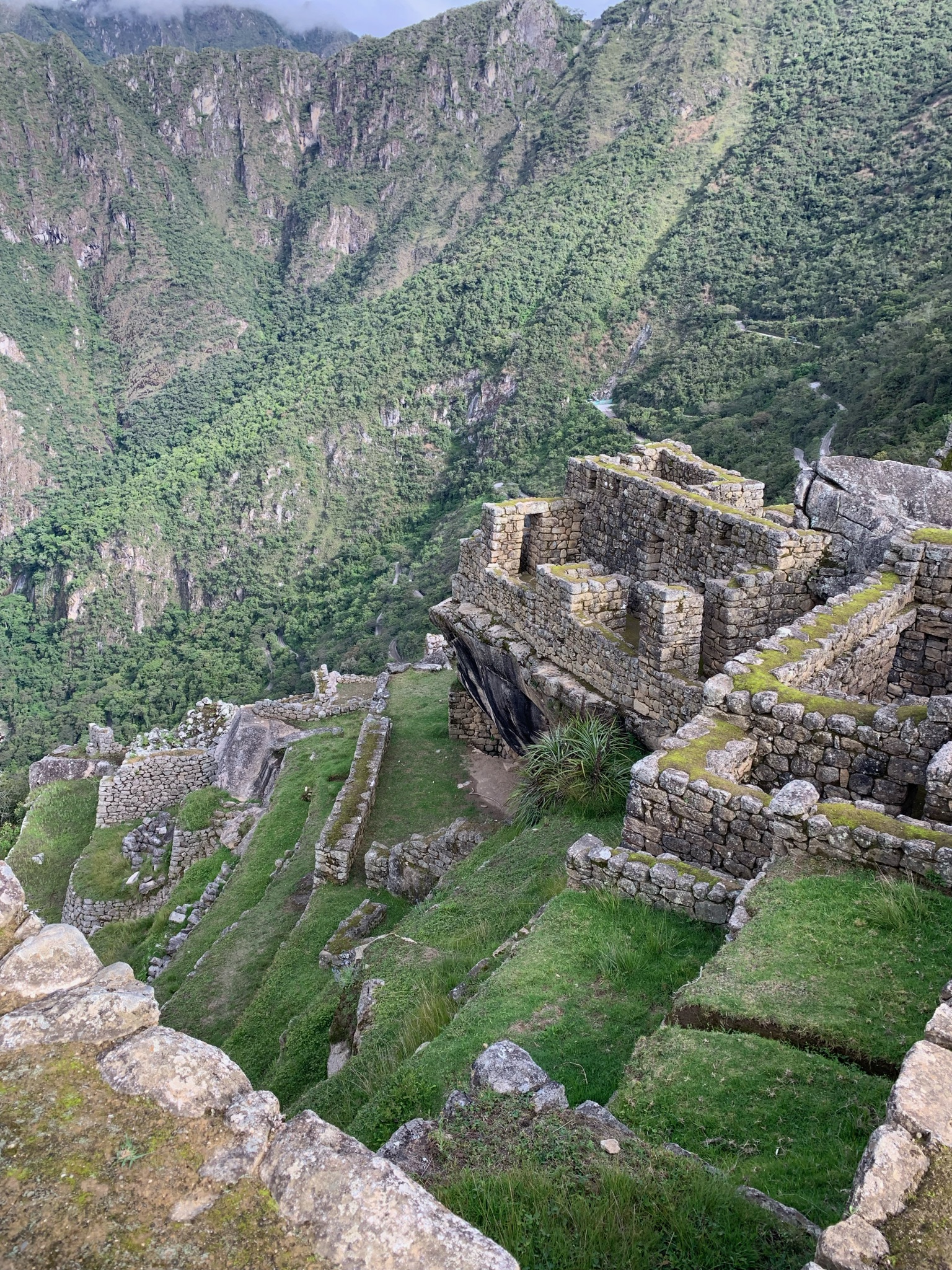
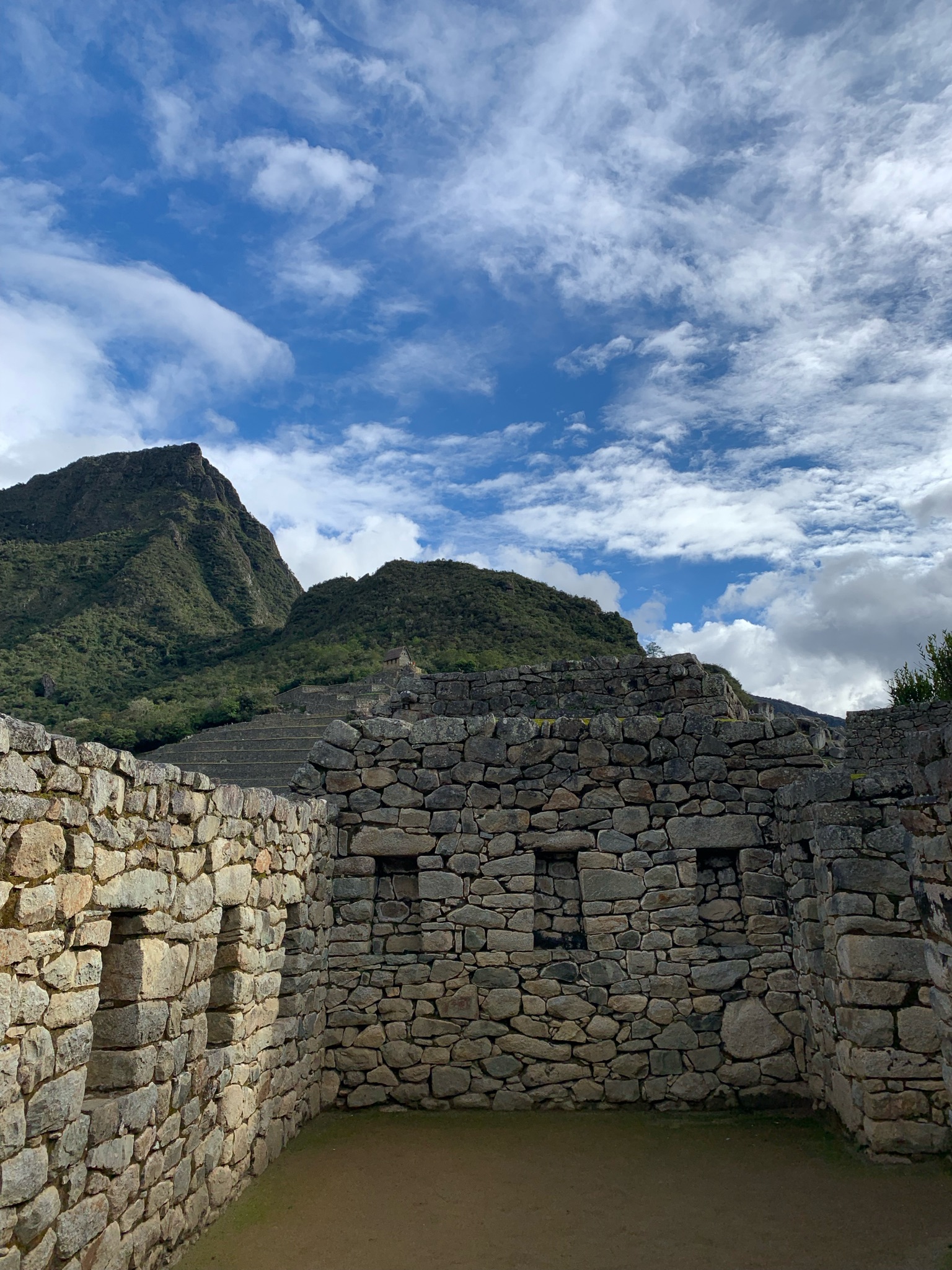
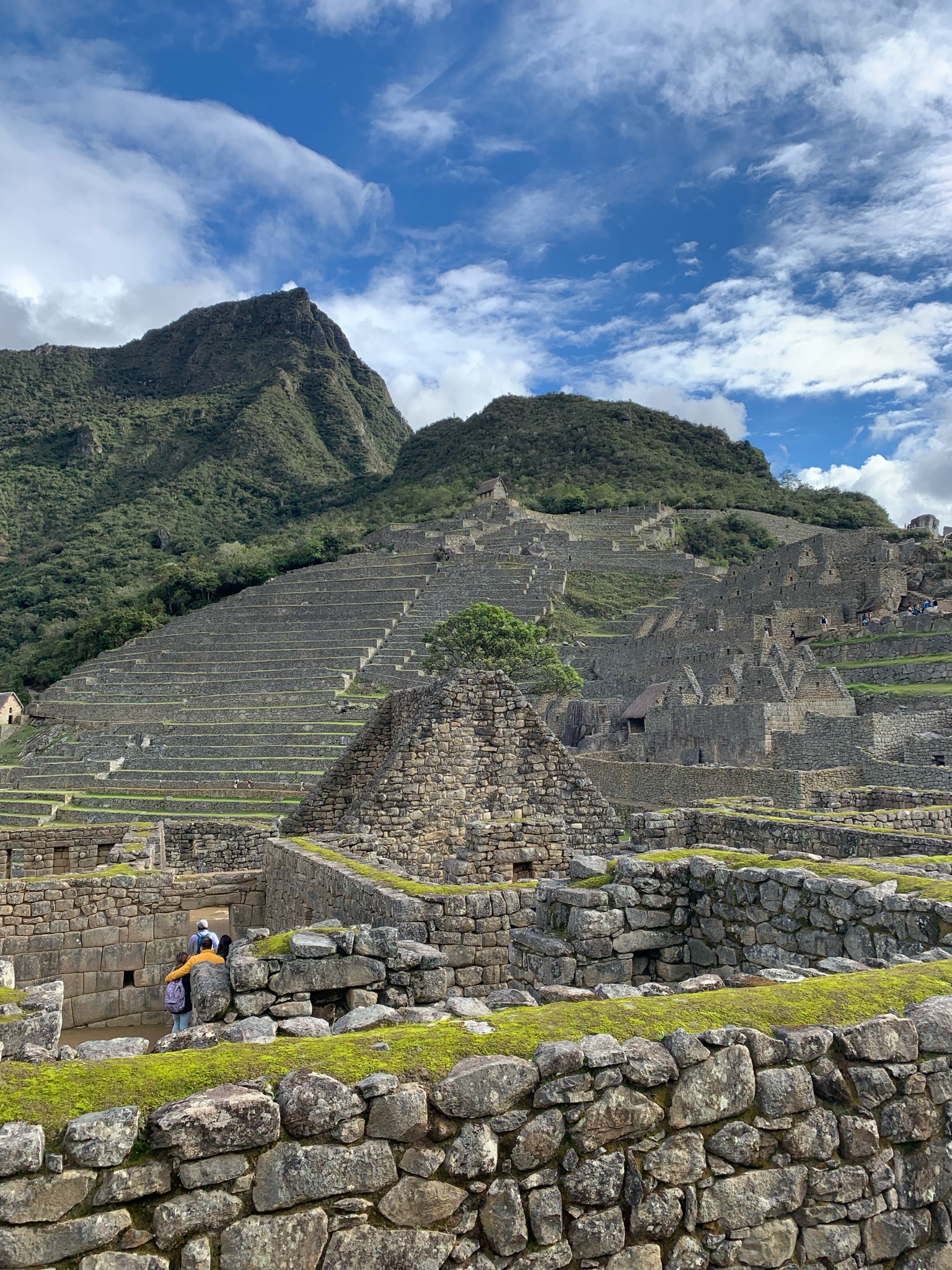
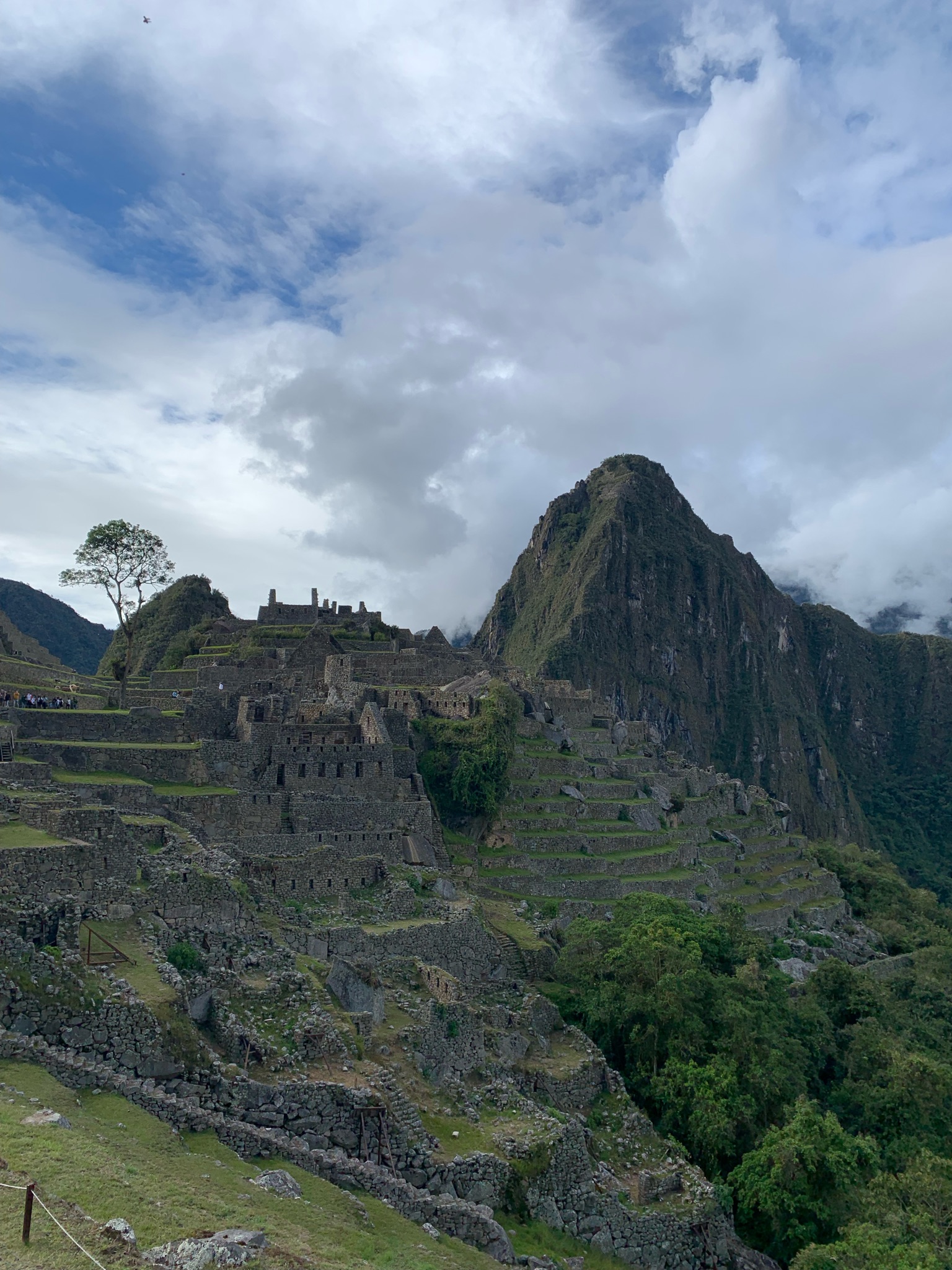
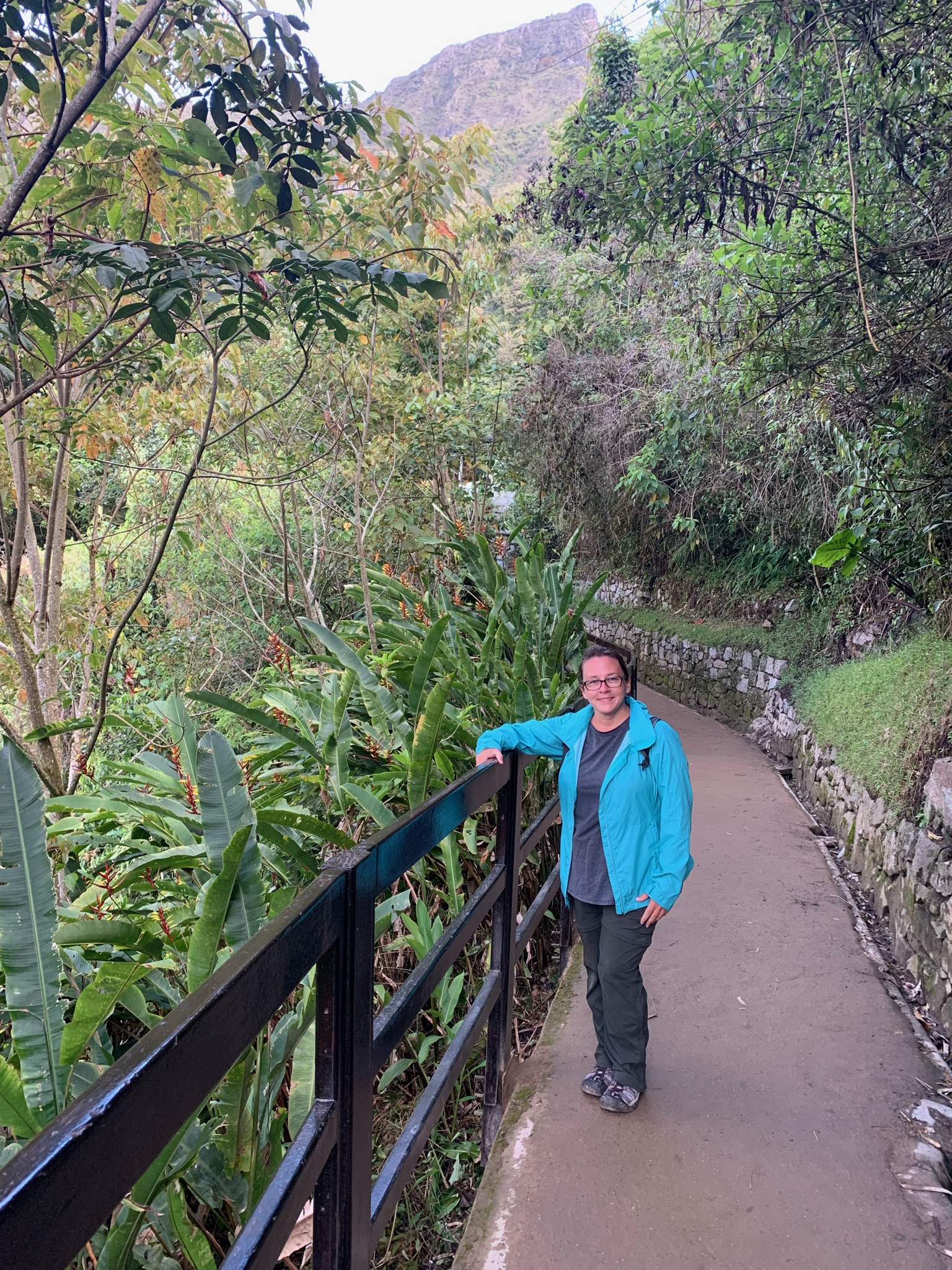
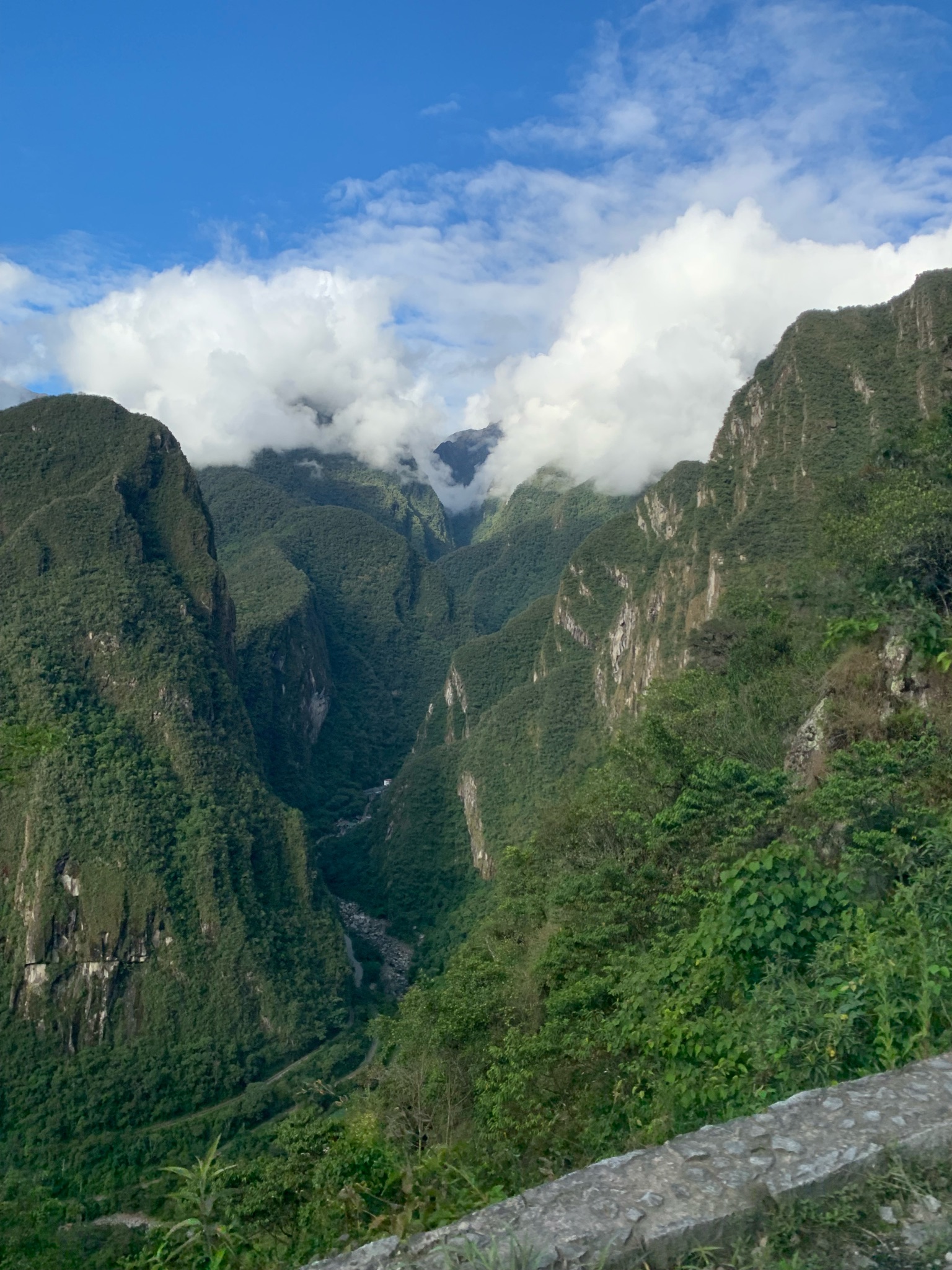
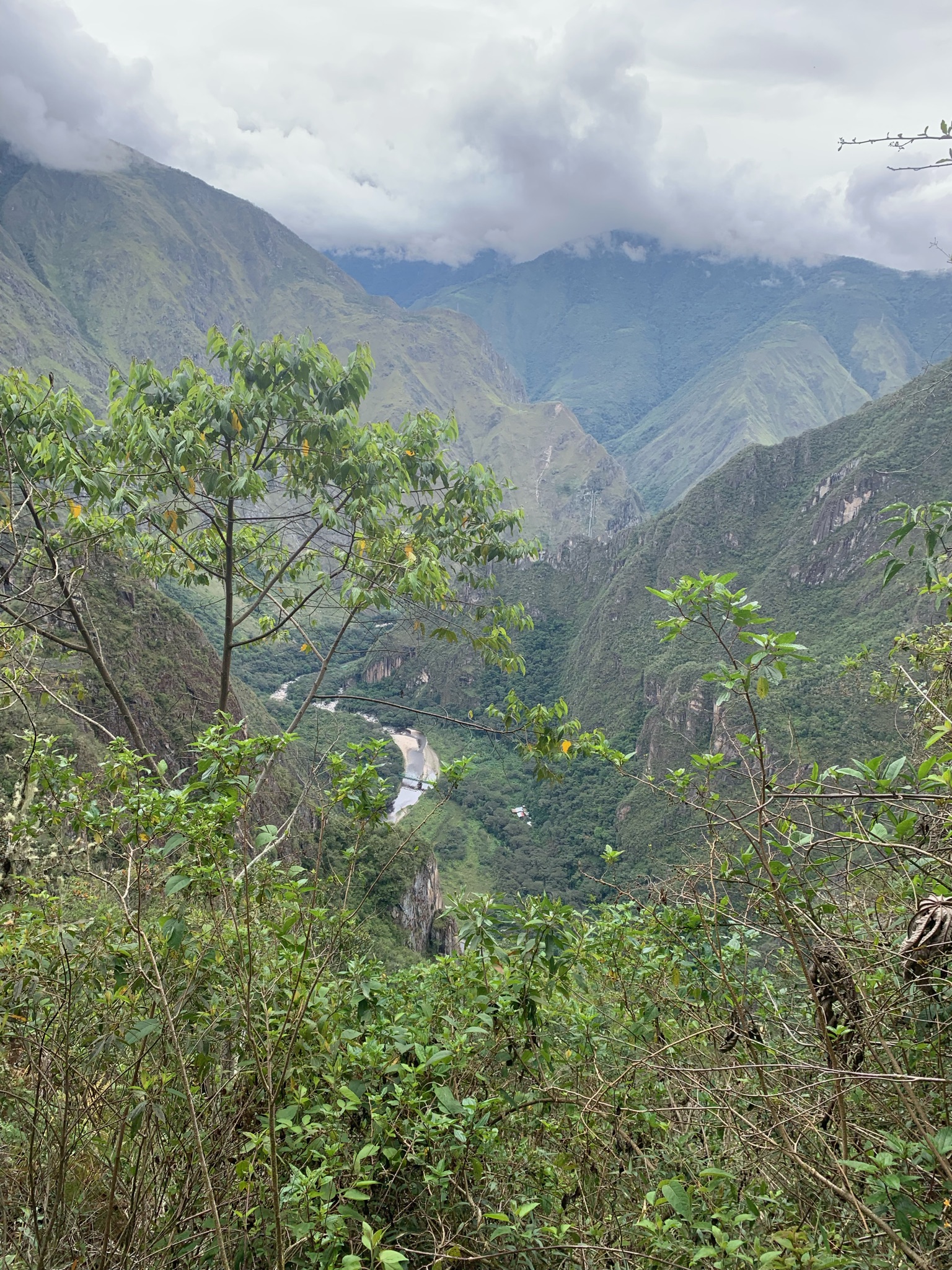
The ride up the mountain from Aguas Caliente to Machu Picchu was absolutely beautiful.  The pictures simply do not do it justice.  The mountain is huge, as are all of the other mountains in the area.  In Tennessee, the mountains are broad and tall so when you look out at the horizon, you see several squatty triangles staggered across the horizon.  Here the mountains are very narrow and tall, so they appear more like jagged teeth.  It’s hard to imagine anyone could even climb these mountains 500 years ago much less that they could build a city on one!  The road up the mountain is full of switchbacks, and the cliffs on the side are dizzying. Through each stretch, we’d pass a set of stairs coming out of the woods that hikers can use to climb to the top instead of taking the bus. The gentleman sitting beside Brian on the bus was from Peru and had visited Machu Picchu several times. He told him that when he’d first come to Machu Picchu back in the late 1980’s, the village children would use the stairs and race the buses to the top of the mountain – and win! At the top, they would ask tourists for tips to celebrate their winning the race. We didn’t have any racers, but our bus made it to the top with no issues. After getting through the gate, we hurriedly walked to the check in for the Huayna Picchu hike.

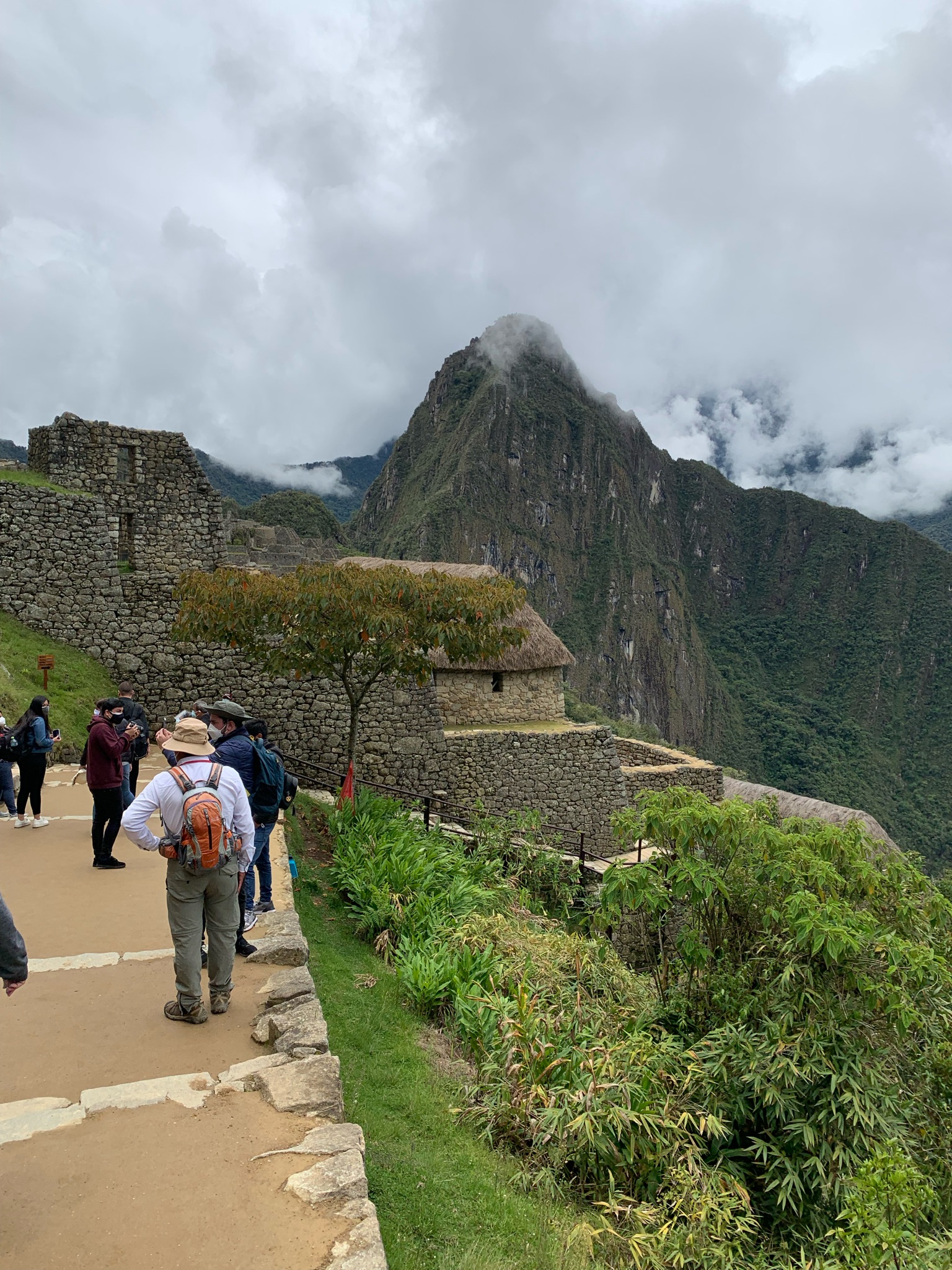
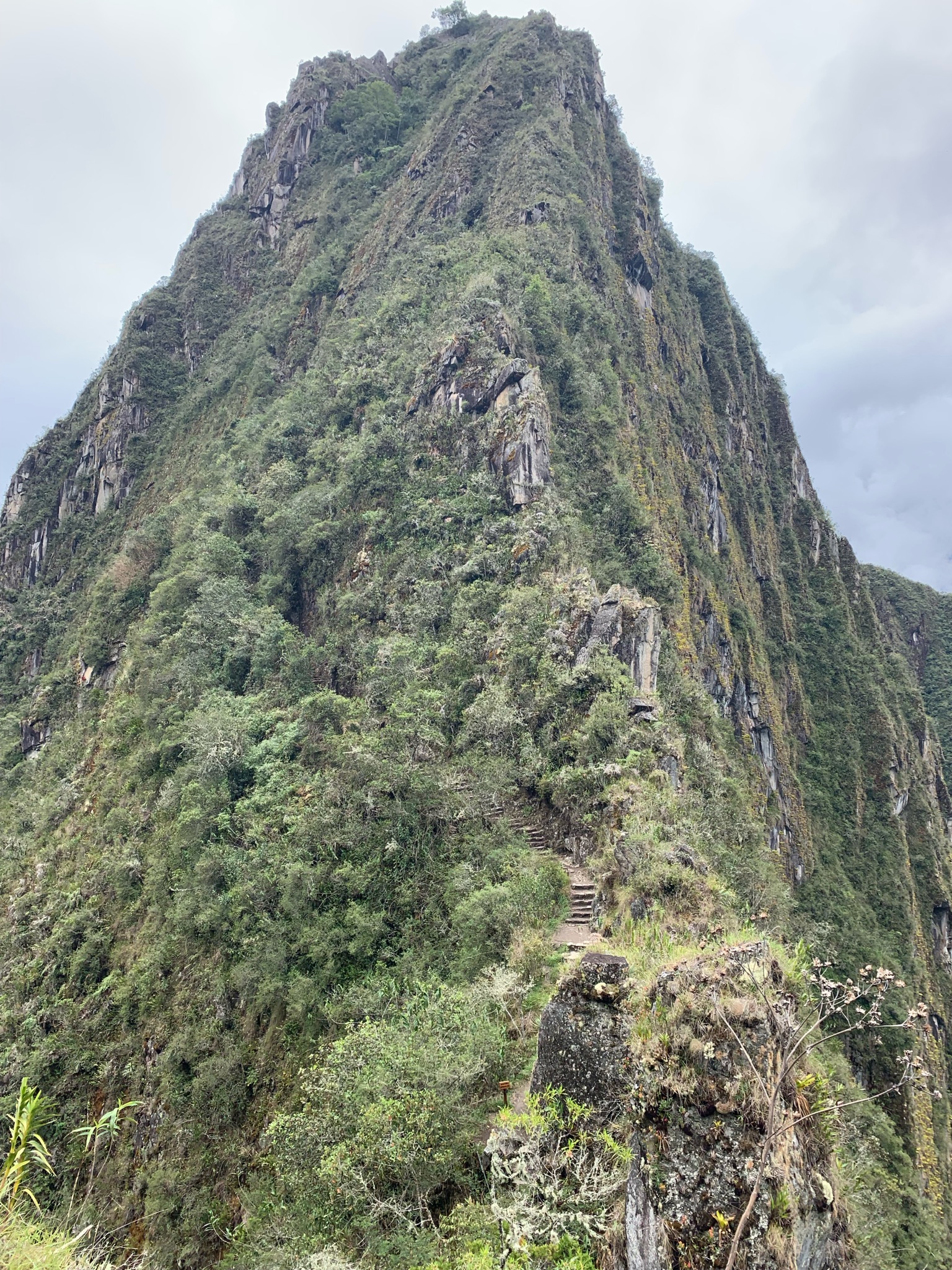
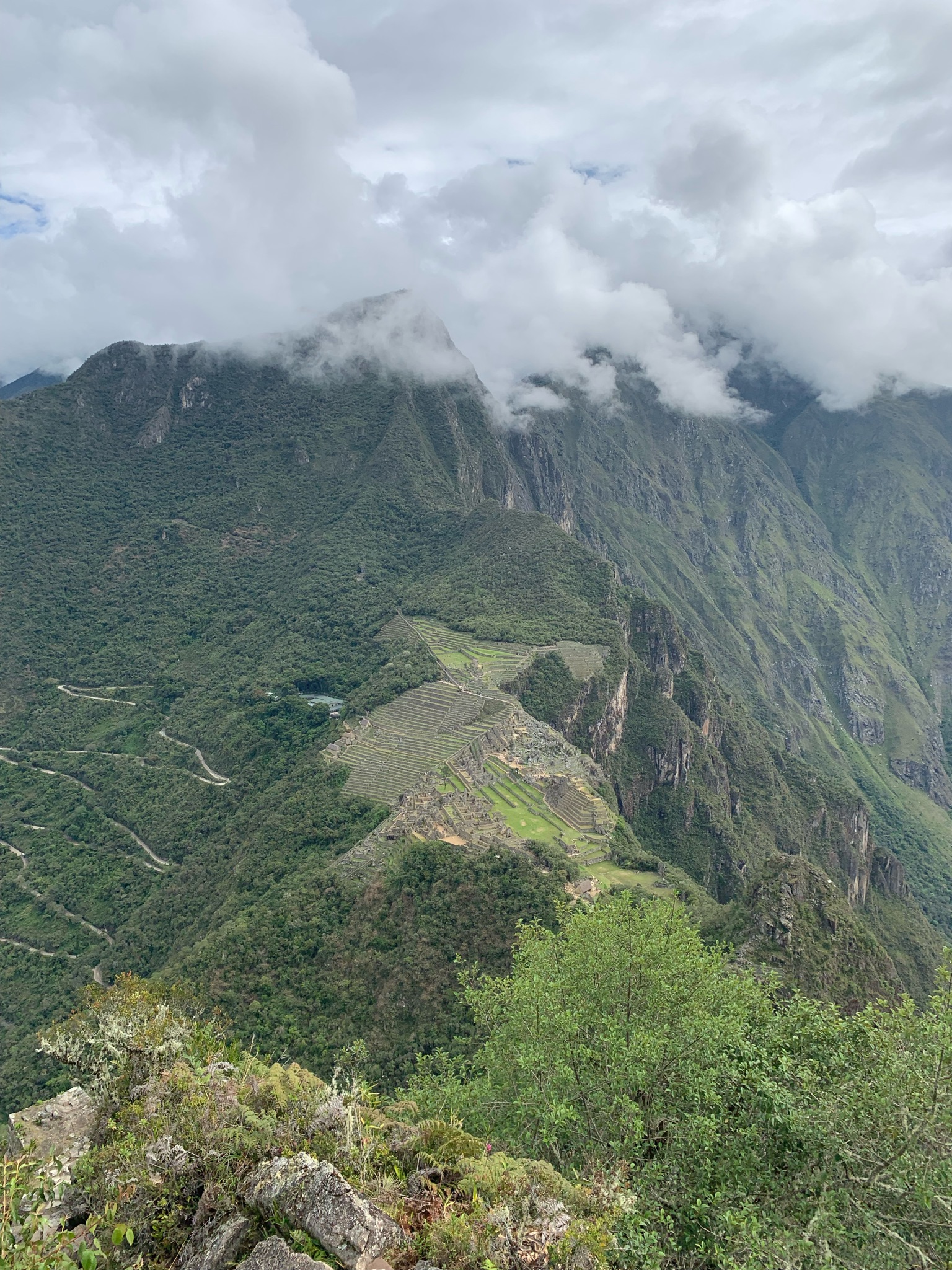
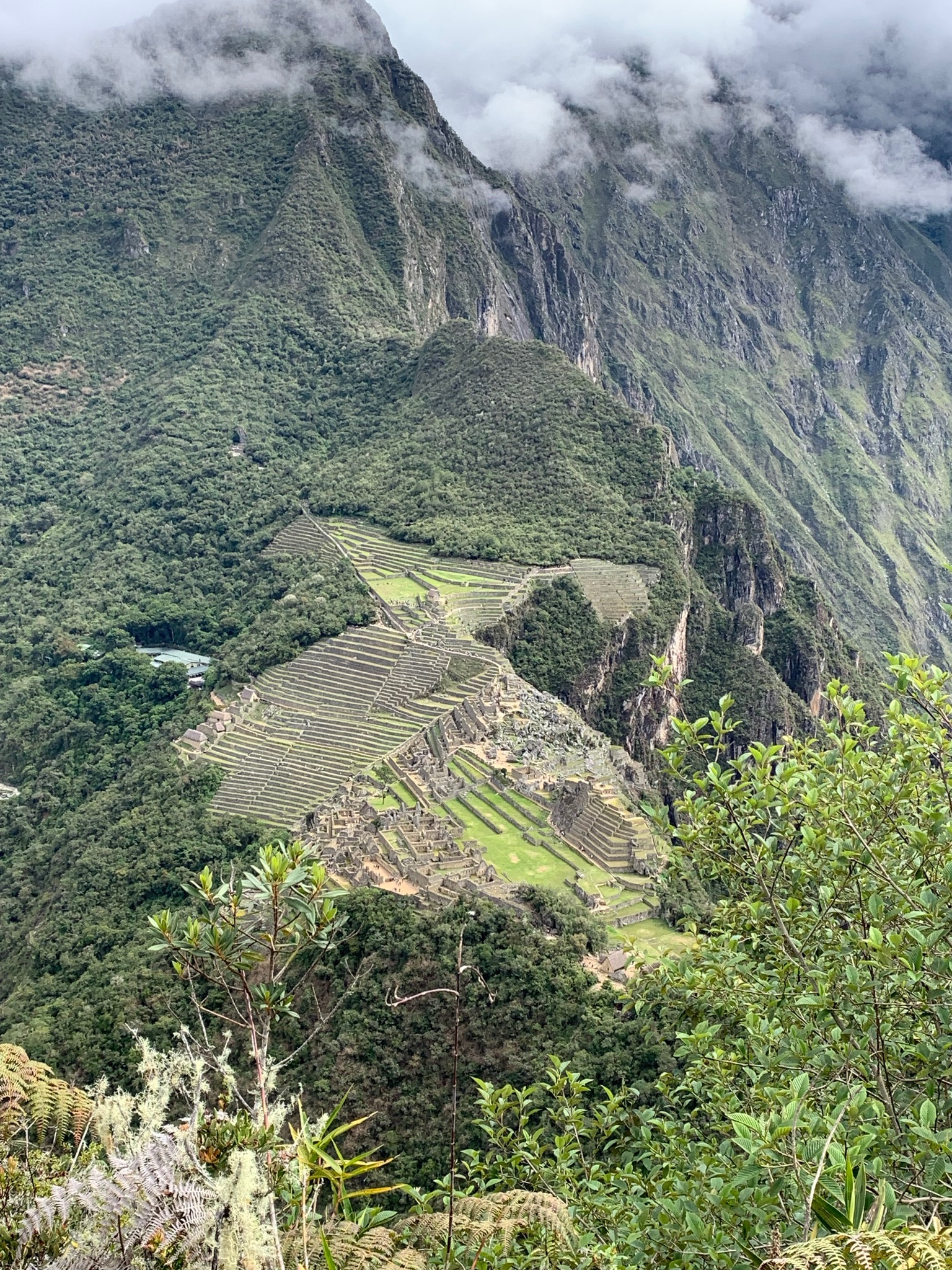
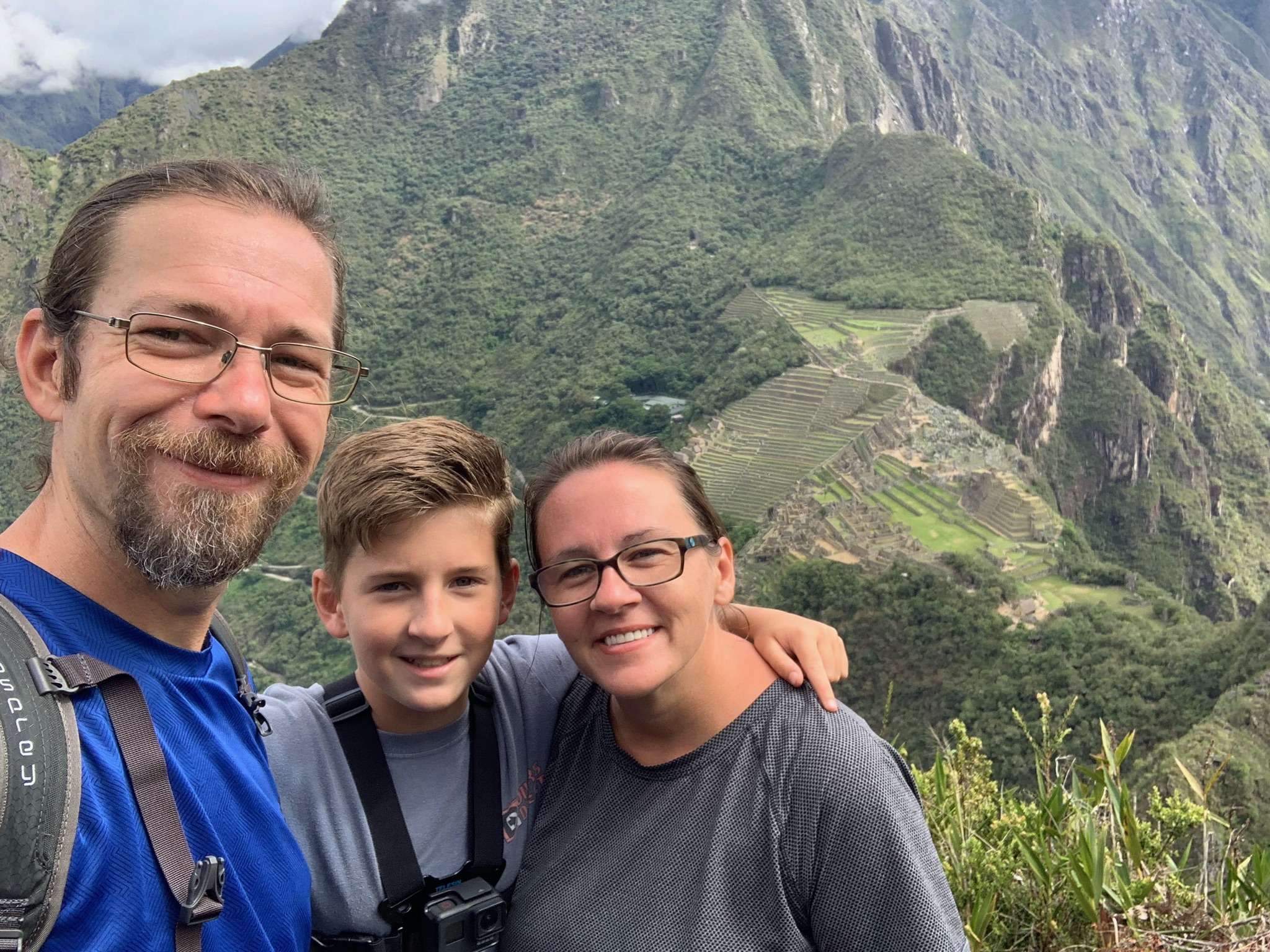
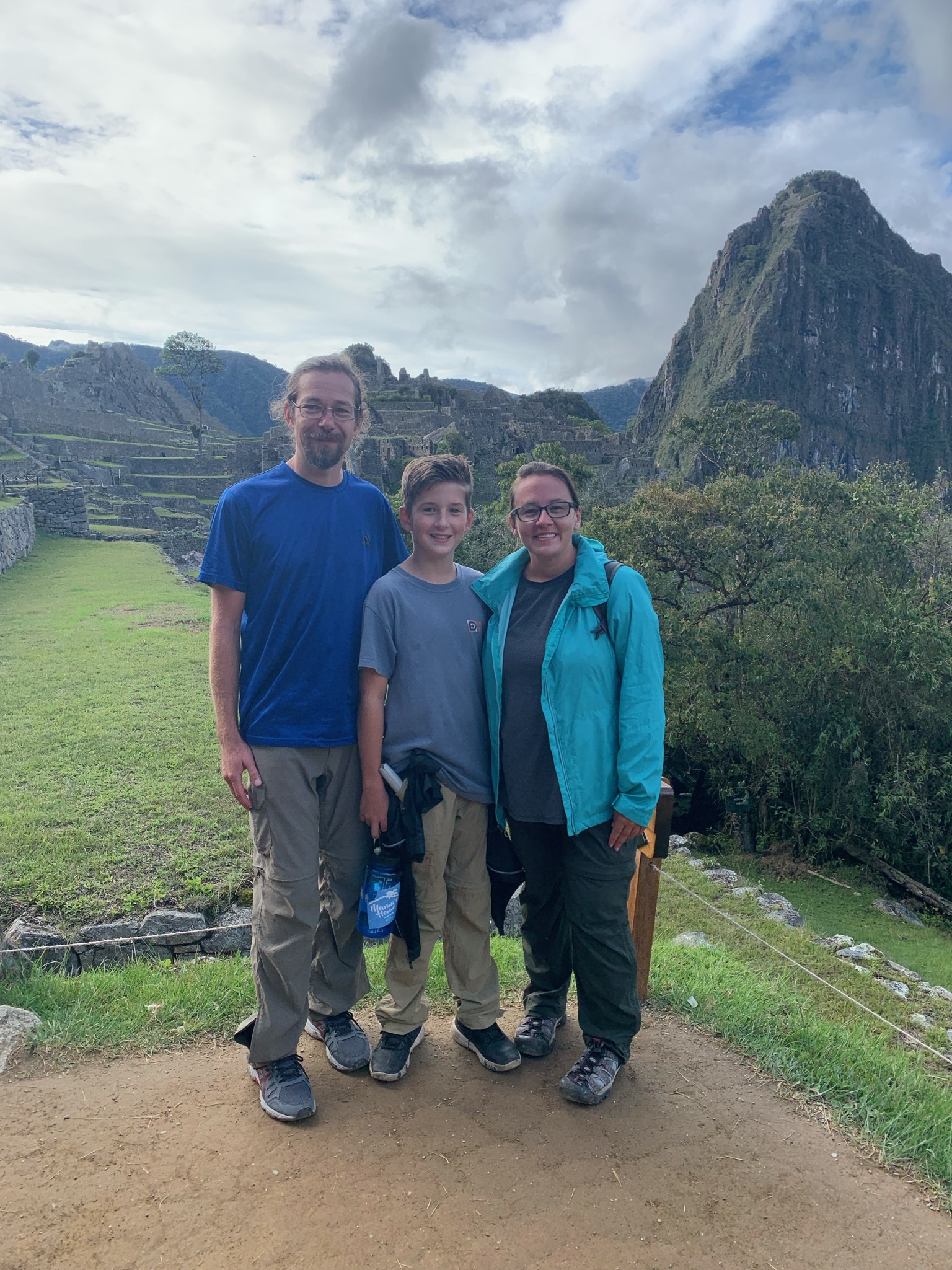
In most of the pictures you see of Machu Picchu, you see the Huana Picchu mountain in the background towering high over the city.  There is a trail that goes to the top of it as well, but because of the terrain, there are a limited number of tickets sold to go that far.  Typically these tickets sell out months in advance, but three days earlier, when I bought our tickets for Machu Picchu, we were surprised to see that there were quite a few still available.  The hike is strenuous, but apparently, we really like a challenge.  With less conviction about it than Brian, I bought the additional passes, and then prayed that I wouldn’t regret it.

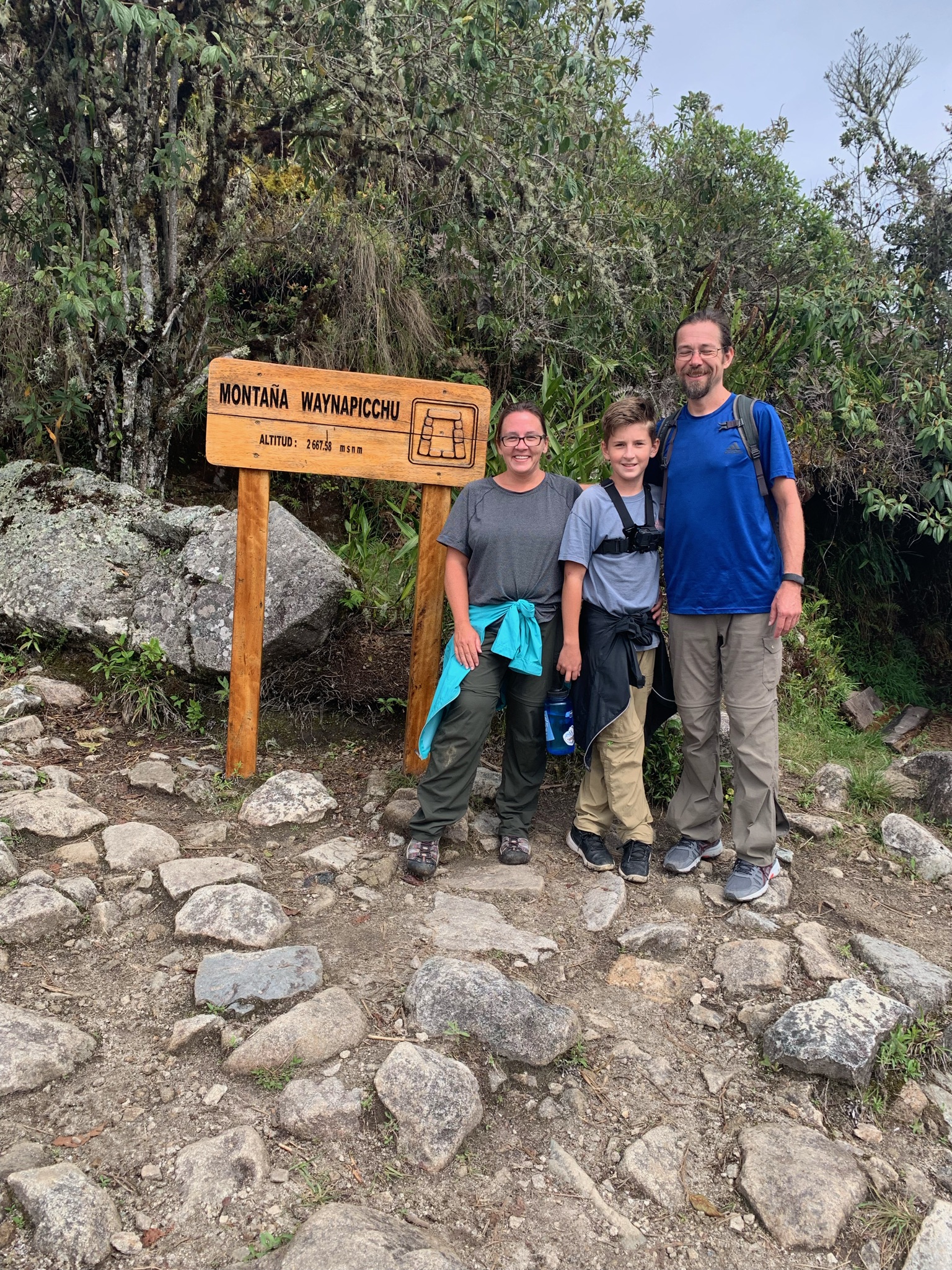
We knew we wanted to do the Huayna Picchu hike first before we explored the ruins because we wanted to ensure we had plenty of time.  So, we headed straight for the check-in station once we were off the bus.  As we walked the path, a tour guide asked us where we were going, probably thinking we were lost, and we told him.  He told us to hurry because if we weren’t there in the next 10 minutes (before the 1:00 window), we wouldn’t be allowed in.  So we ran.  Ok, we walked really fast; I don’t run.  We made it to the check in station and signed the log at a few minutes before 1:00, and then we started the trail. 

I am terrified of heights, but I tend to have more issues at lower elevations.  For example, if I’m 40 feet off the ground, I get vertigo and feel like I’m going to pass out.  If I get 400 feet off the ground, it still freaks me out, but I don’t get the vertigo.  I guess at 40 feet, I feel like its going to hurt really, really bad if I fall.  At 400 feet, once I’m past the few seconds of absolute terror of falling, I know I won’t feel a thing.  But I digress.

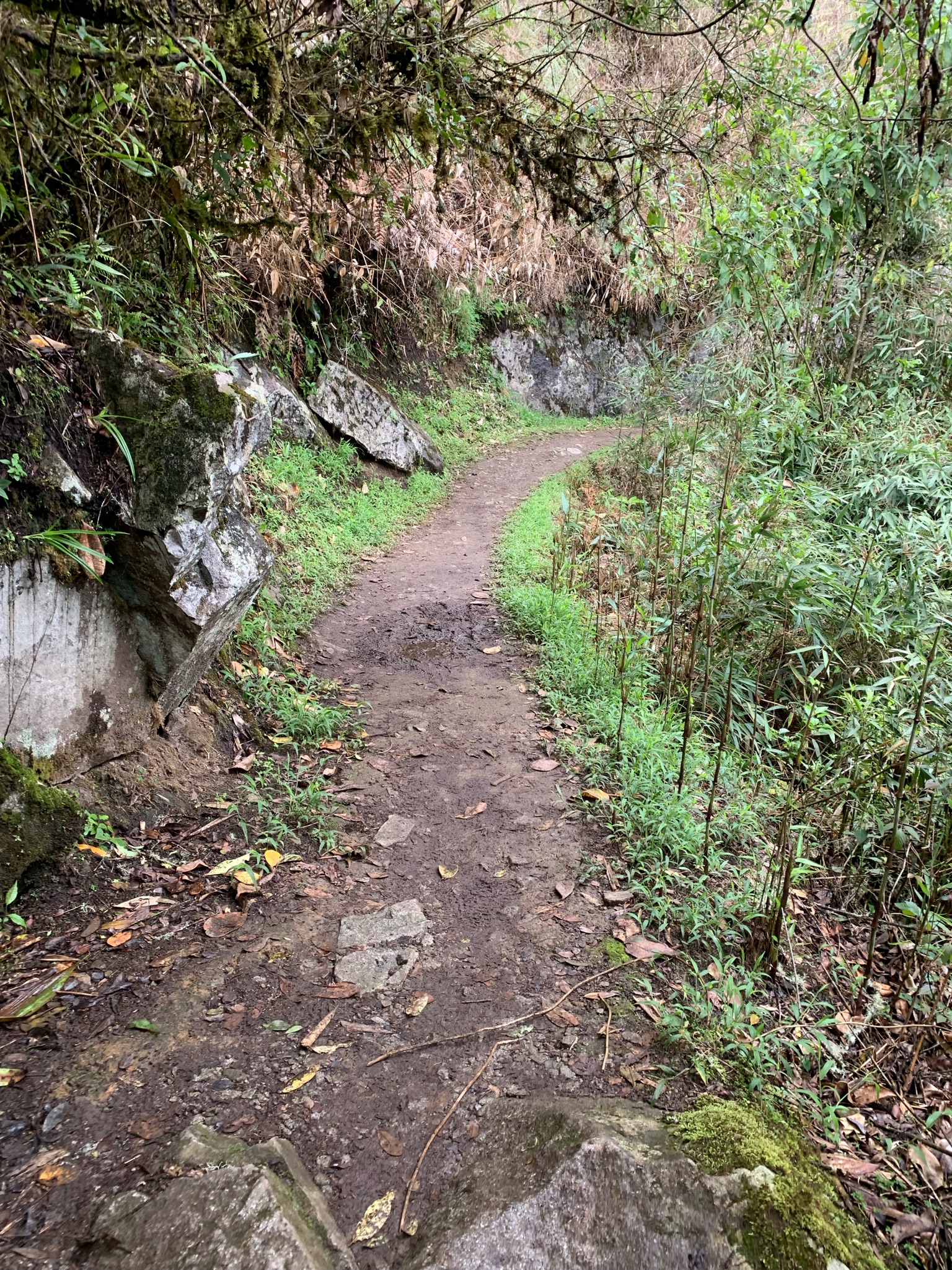
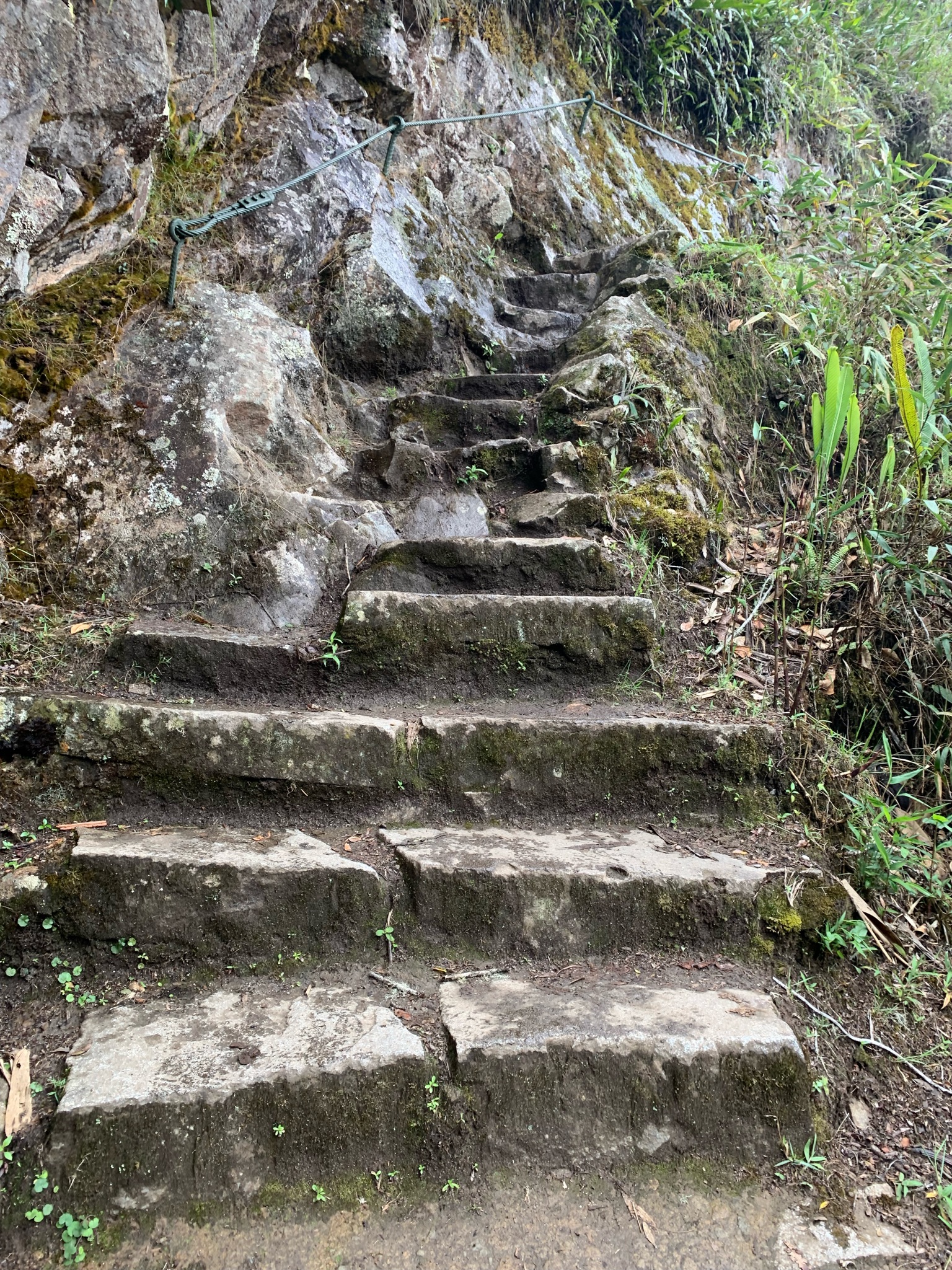
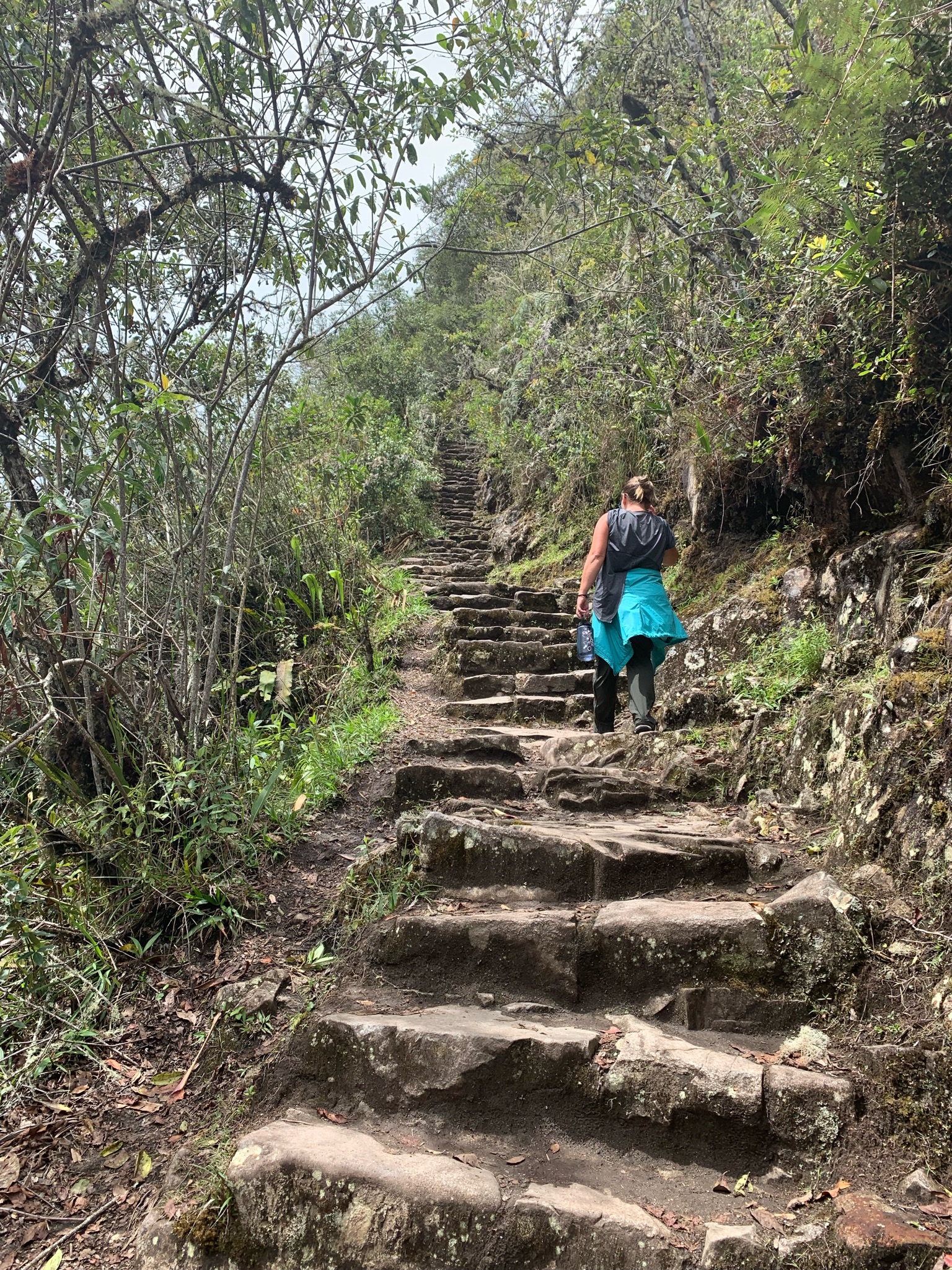
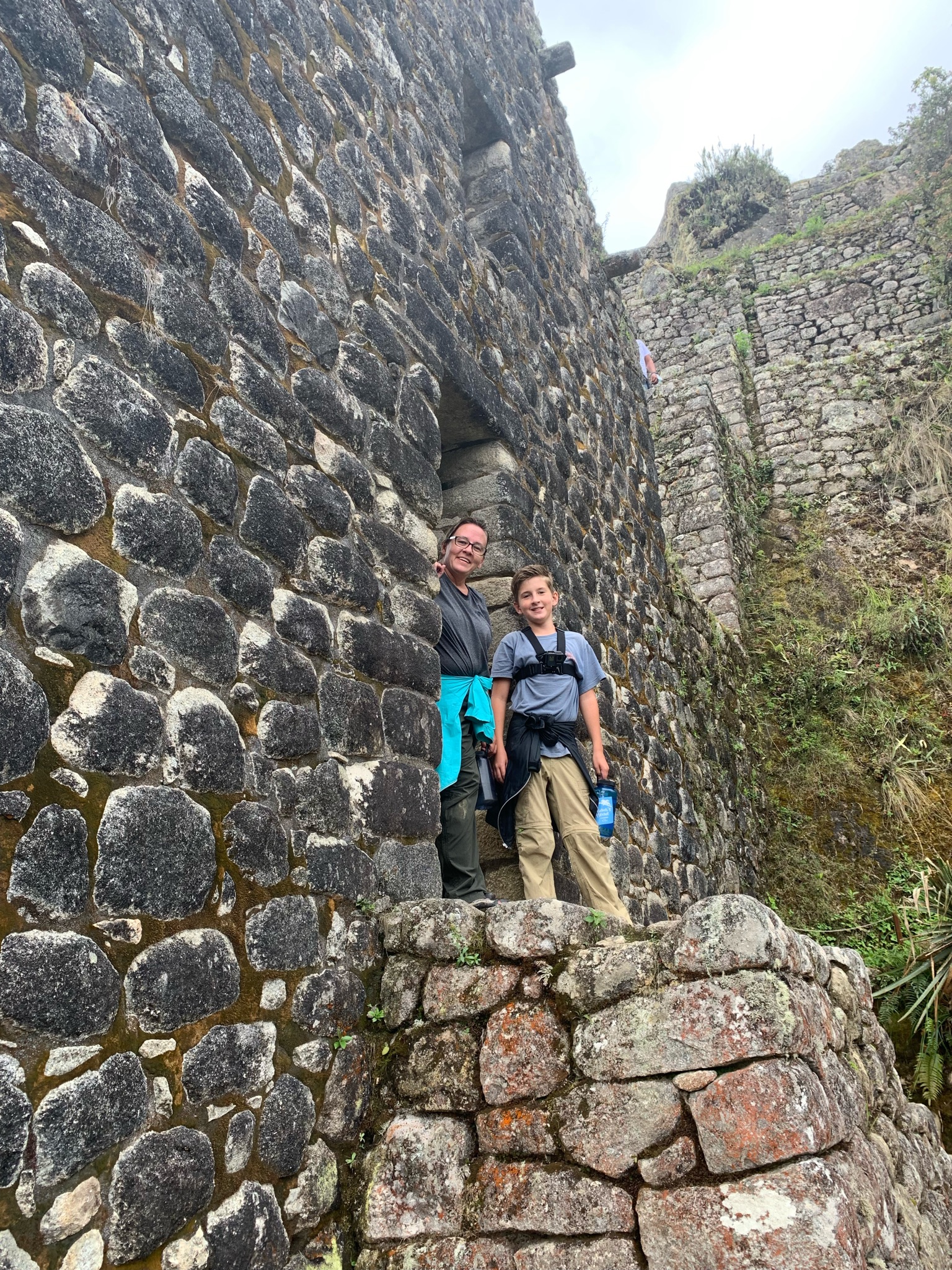
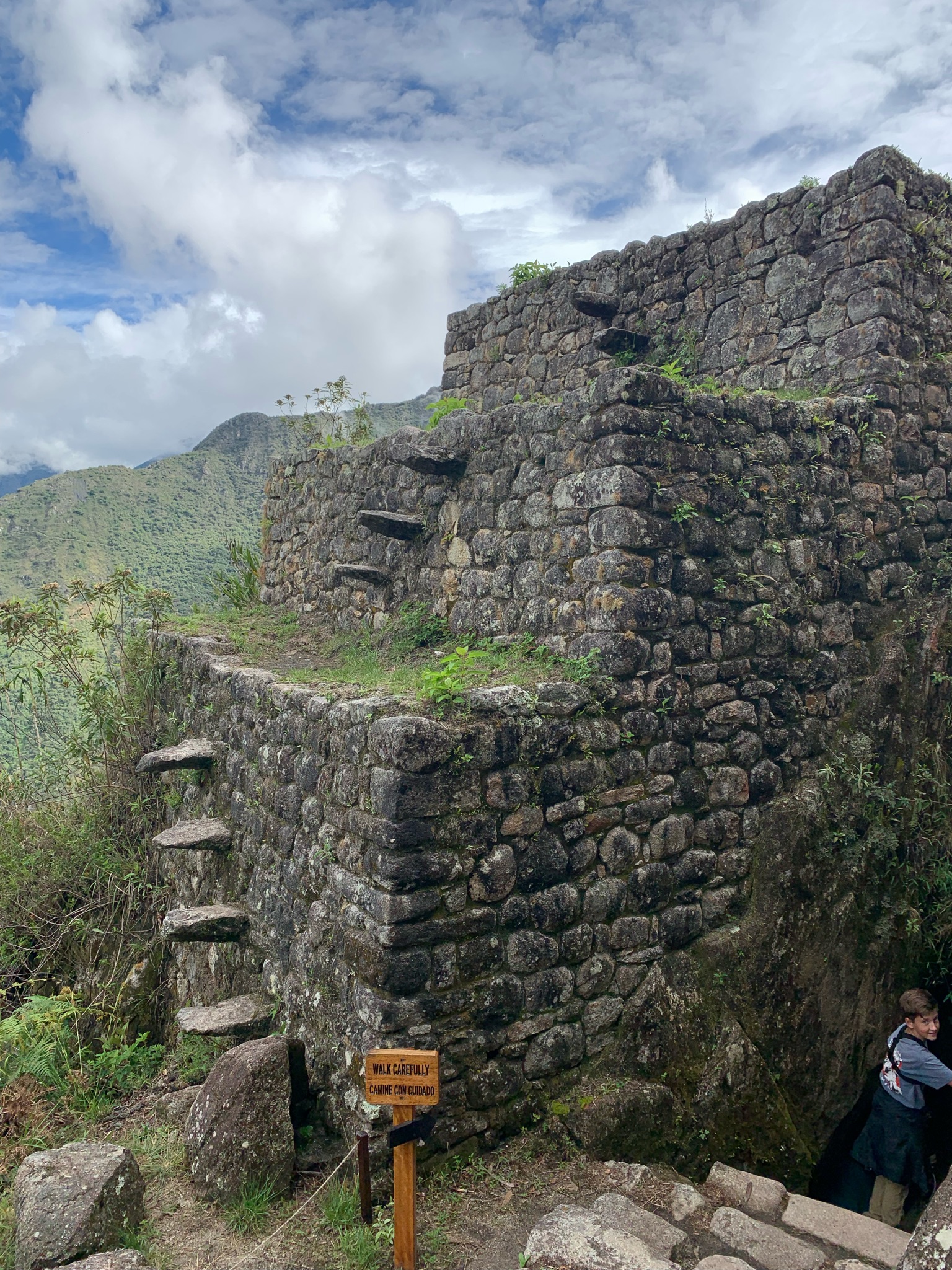
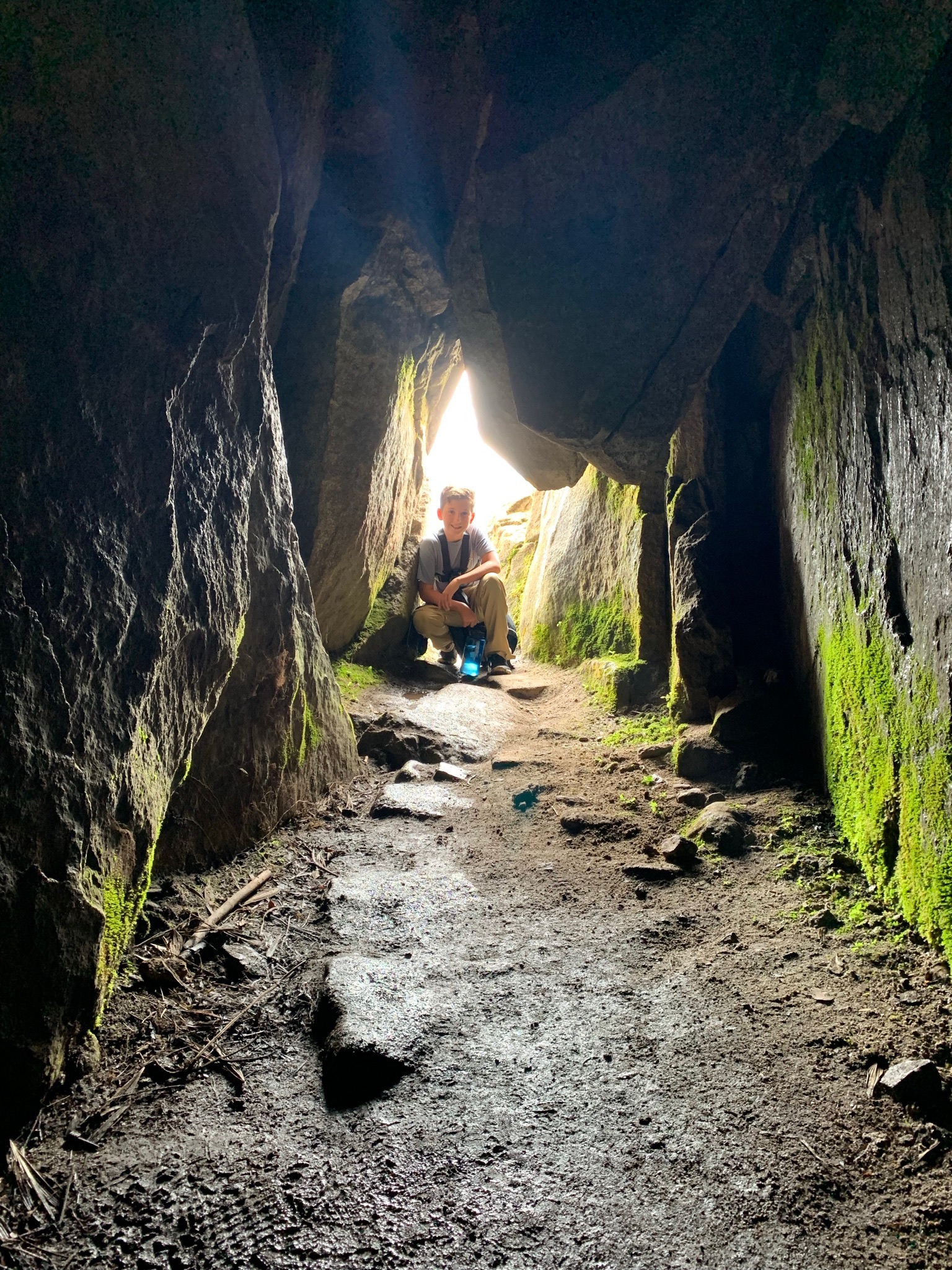
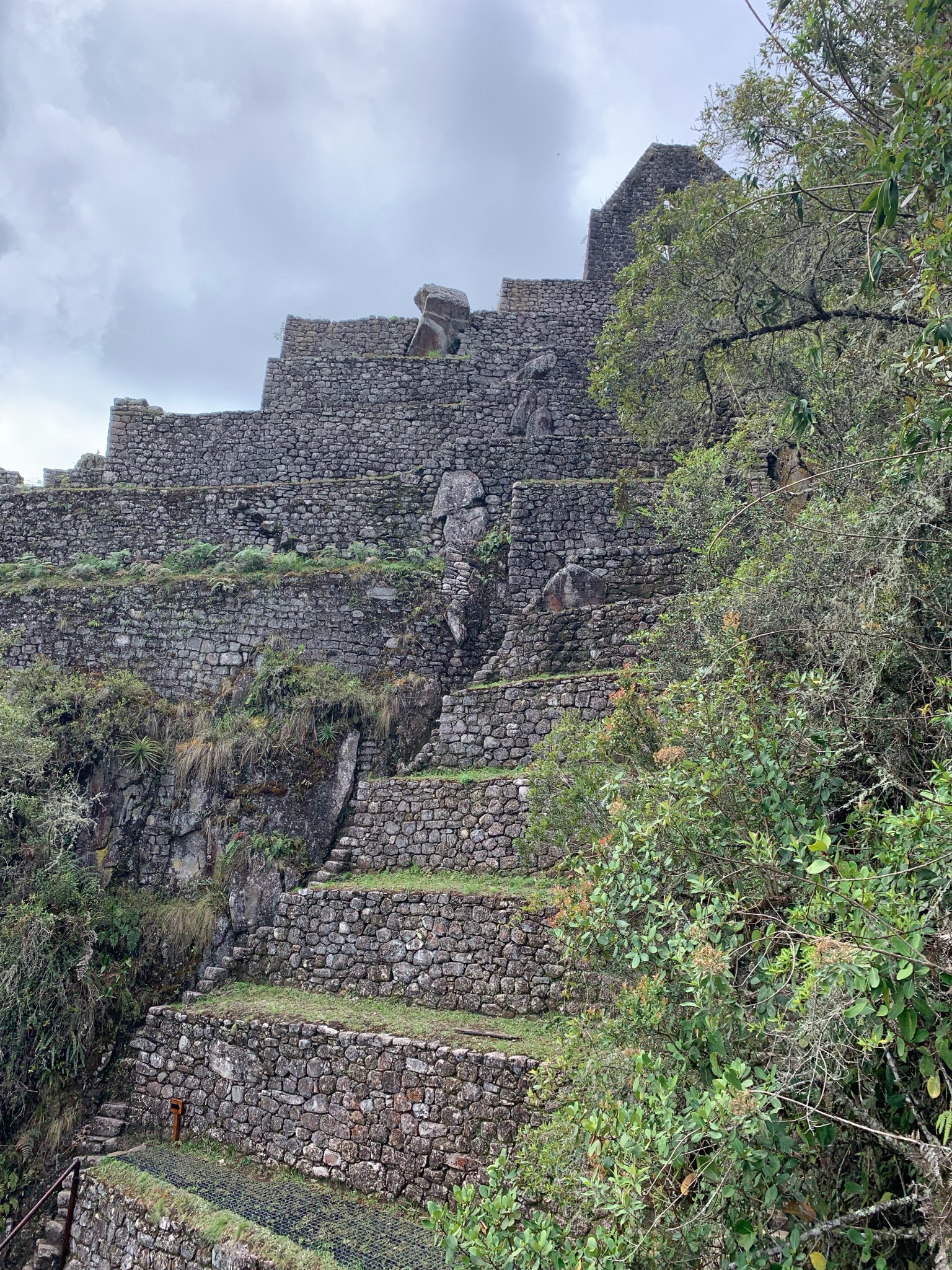
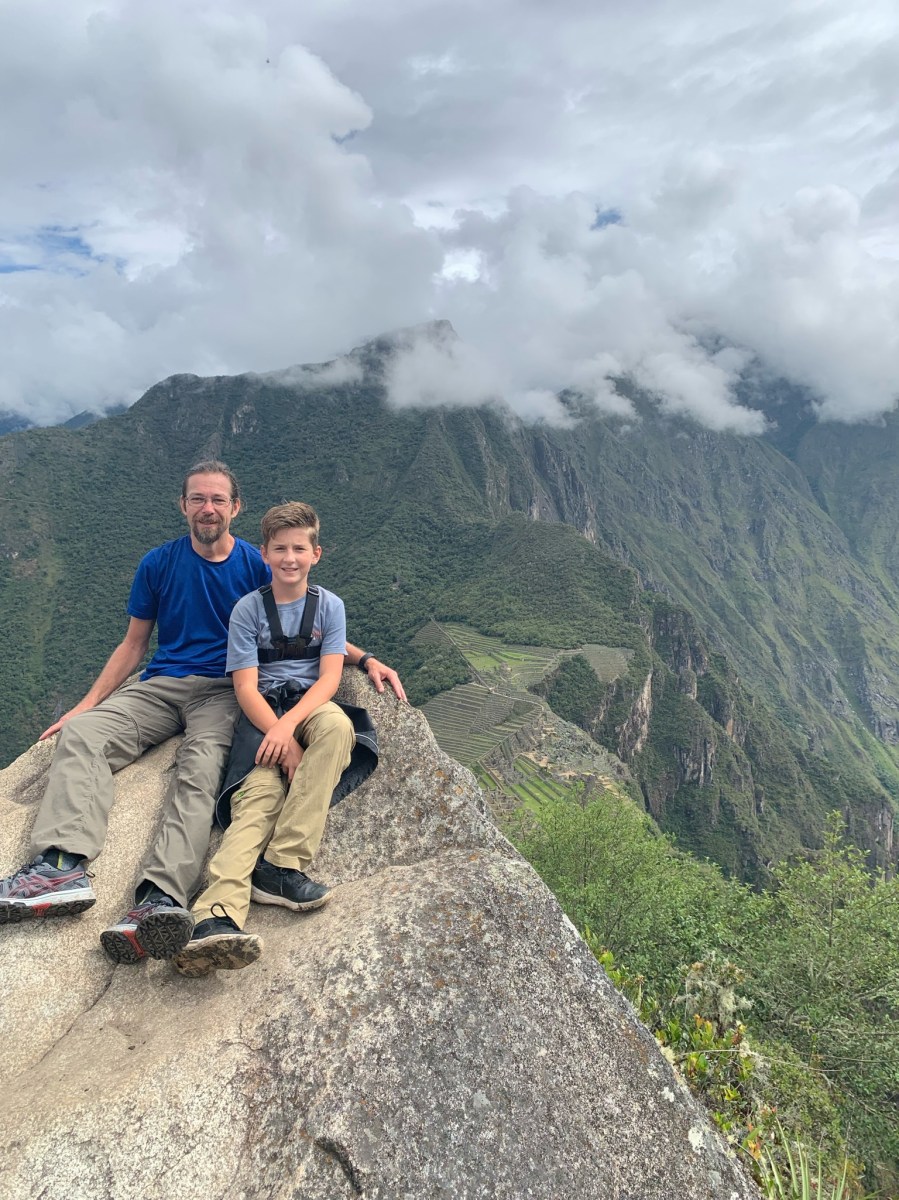
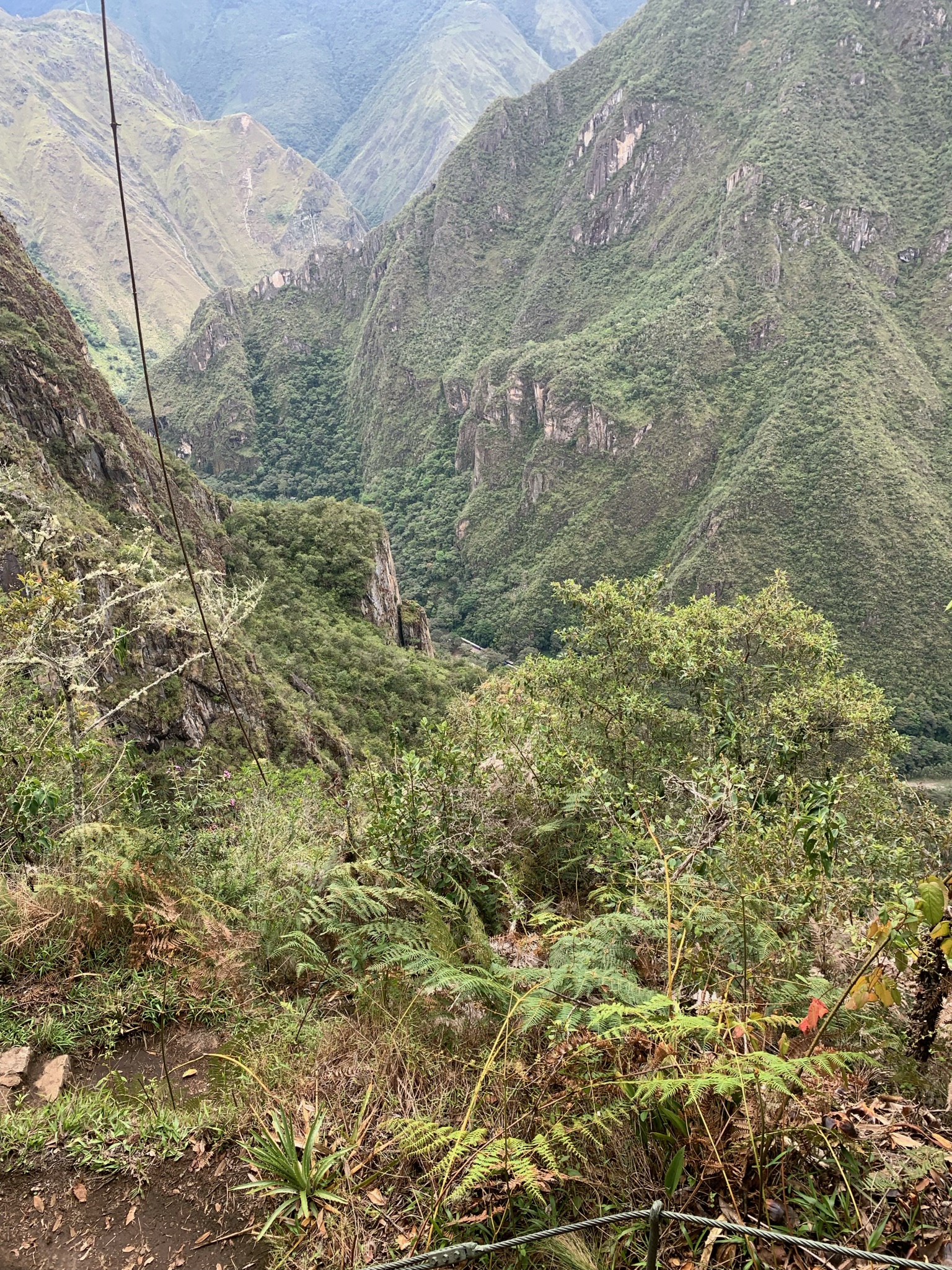
We had heard that the hike was not for the faint of heart.  Not only was it strenuous, but because of the steep mountain, there were lots of places that those with a fear of heights may struggle.  Honestly, I didn’t have much trouble with it.  I wasn’t hanging out on any edges, mind you, but it was way better than I expected.  The steps were tough.  There were lots of them, and they just never seemed to end.  The hardest part of the hike to me was near the end, and it was mostly physical.  There are what feels like hundreds of small 4-5” wide steps going up the mountain to the peak.  For these, I got down on my hands and feet and just climbed them like a ladder.  Easy peasy.  It really wasn’t all that bad.

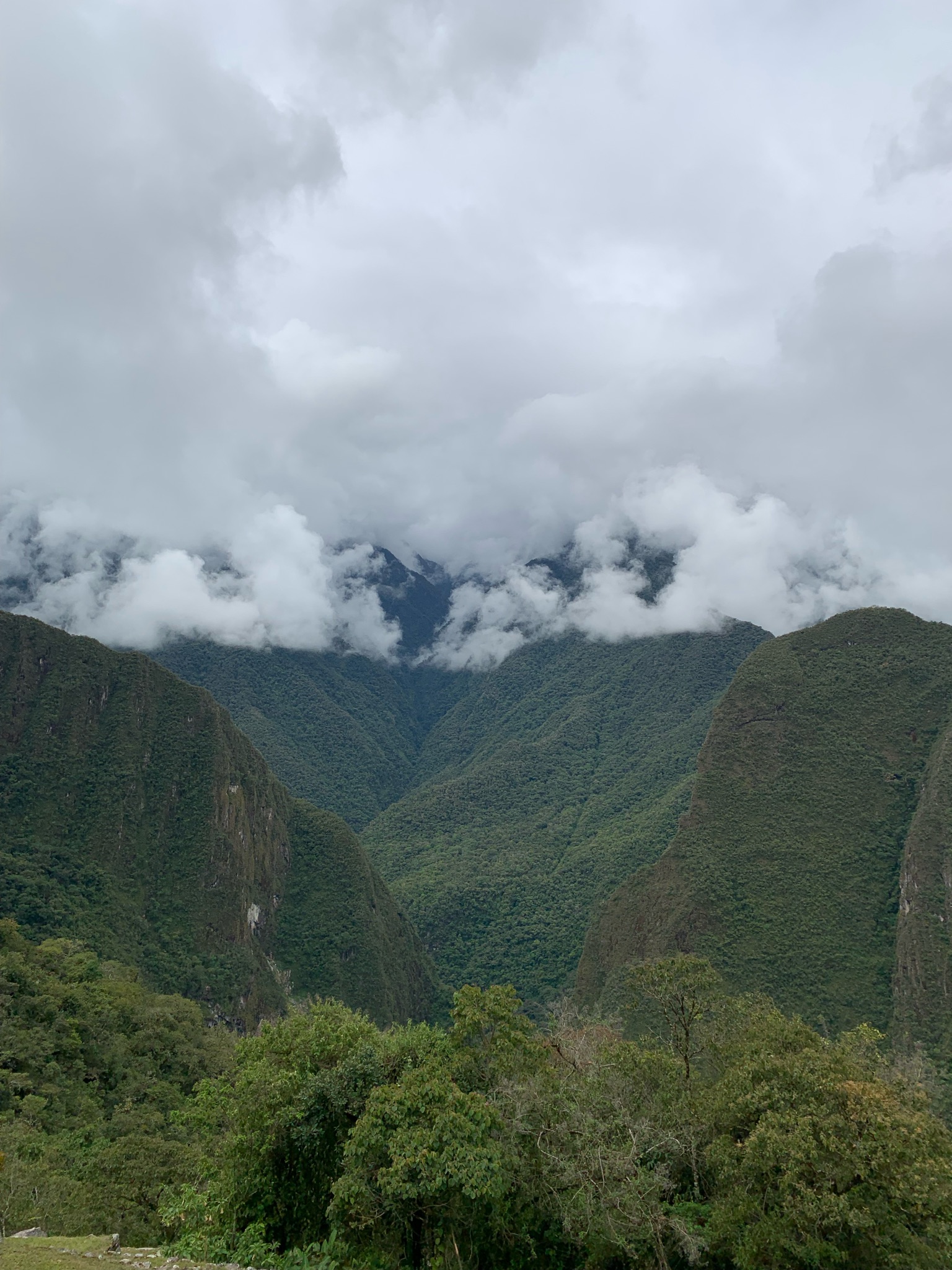
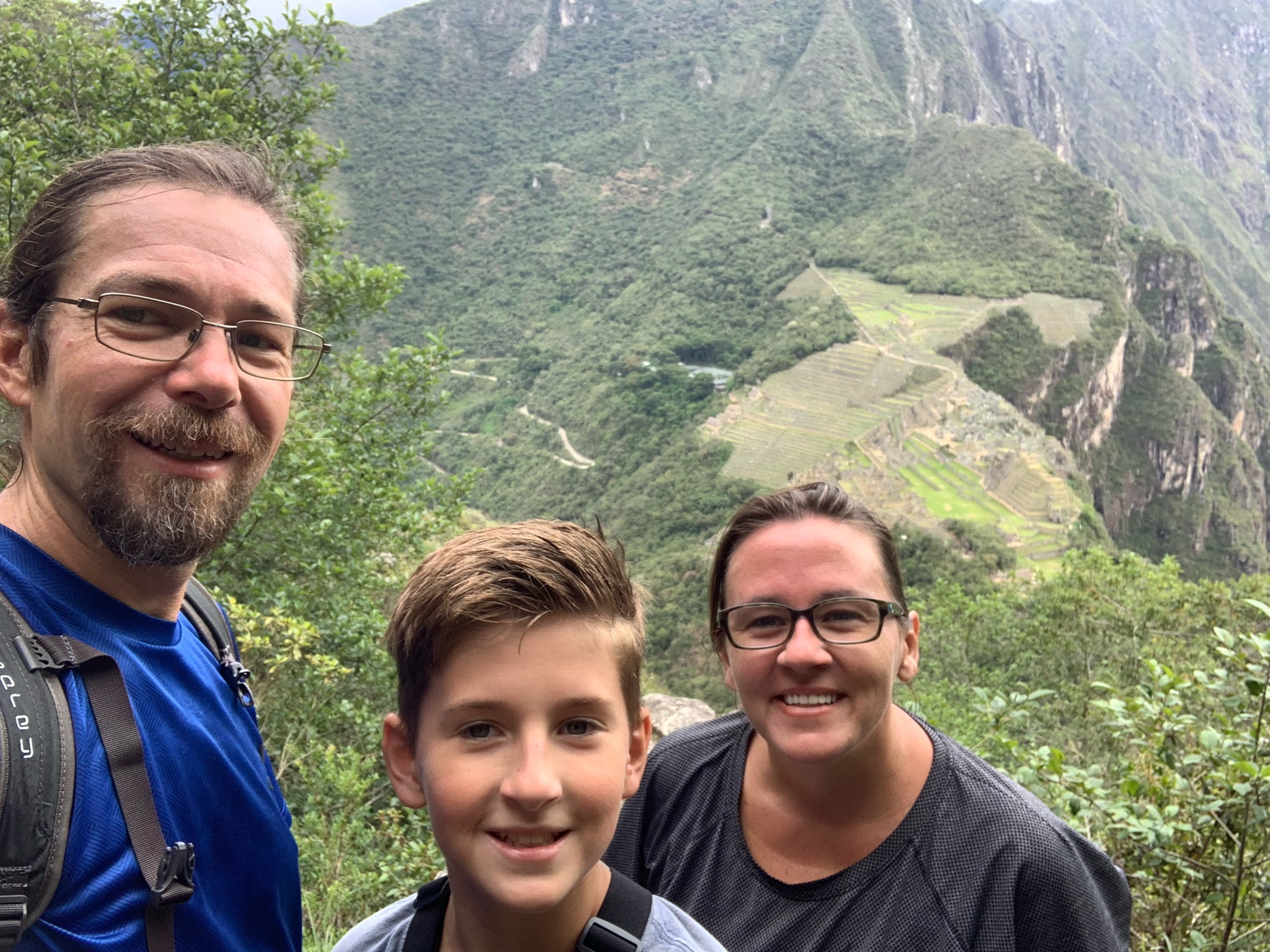
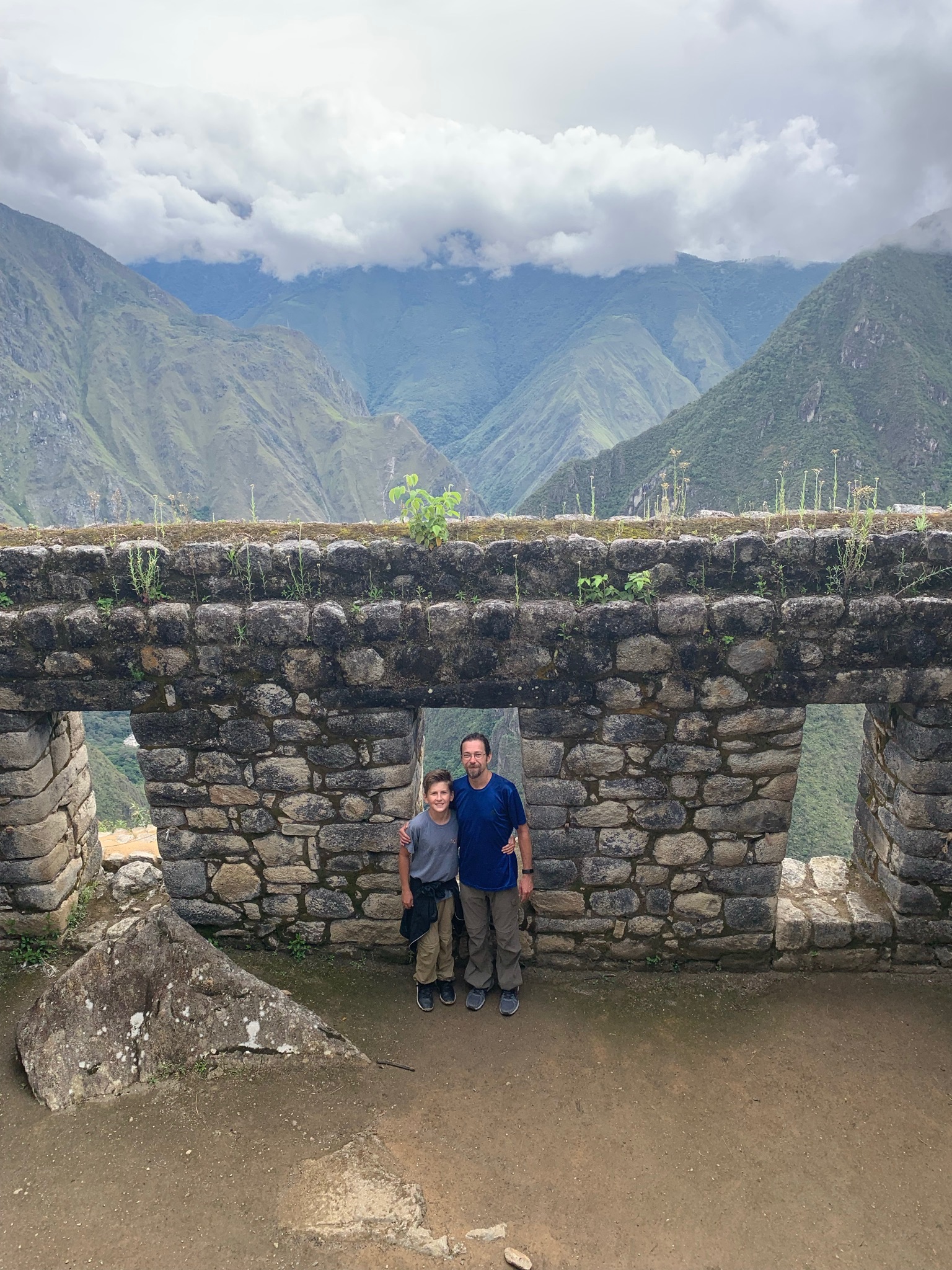
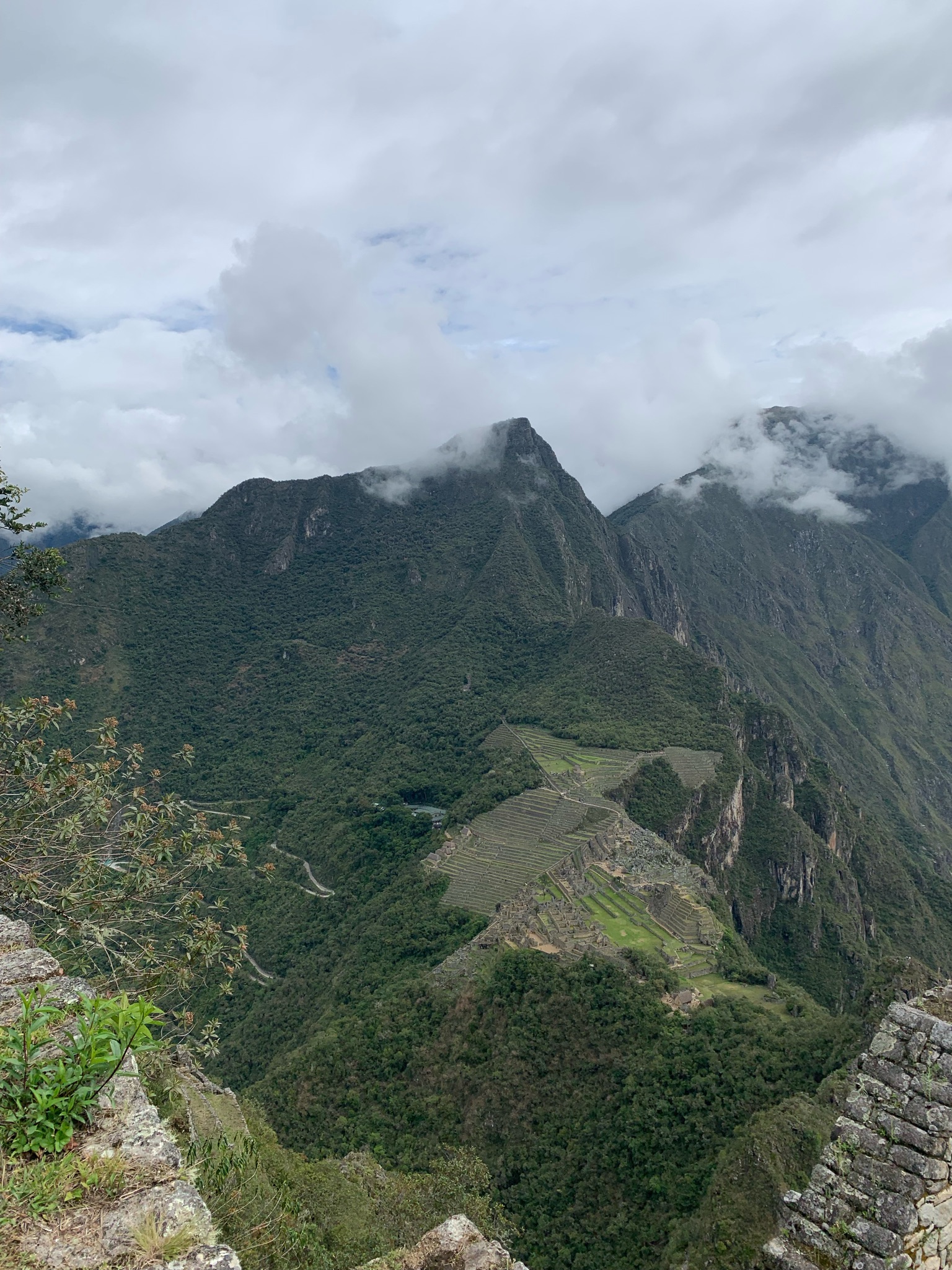
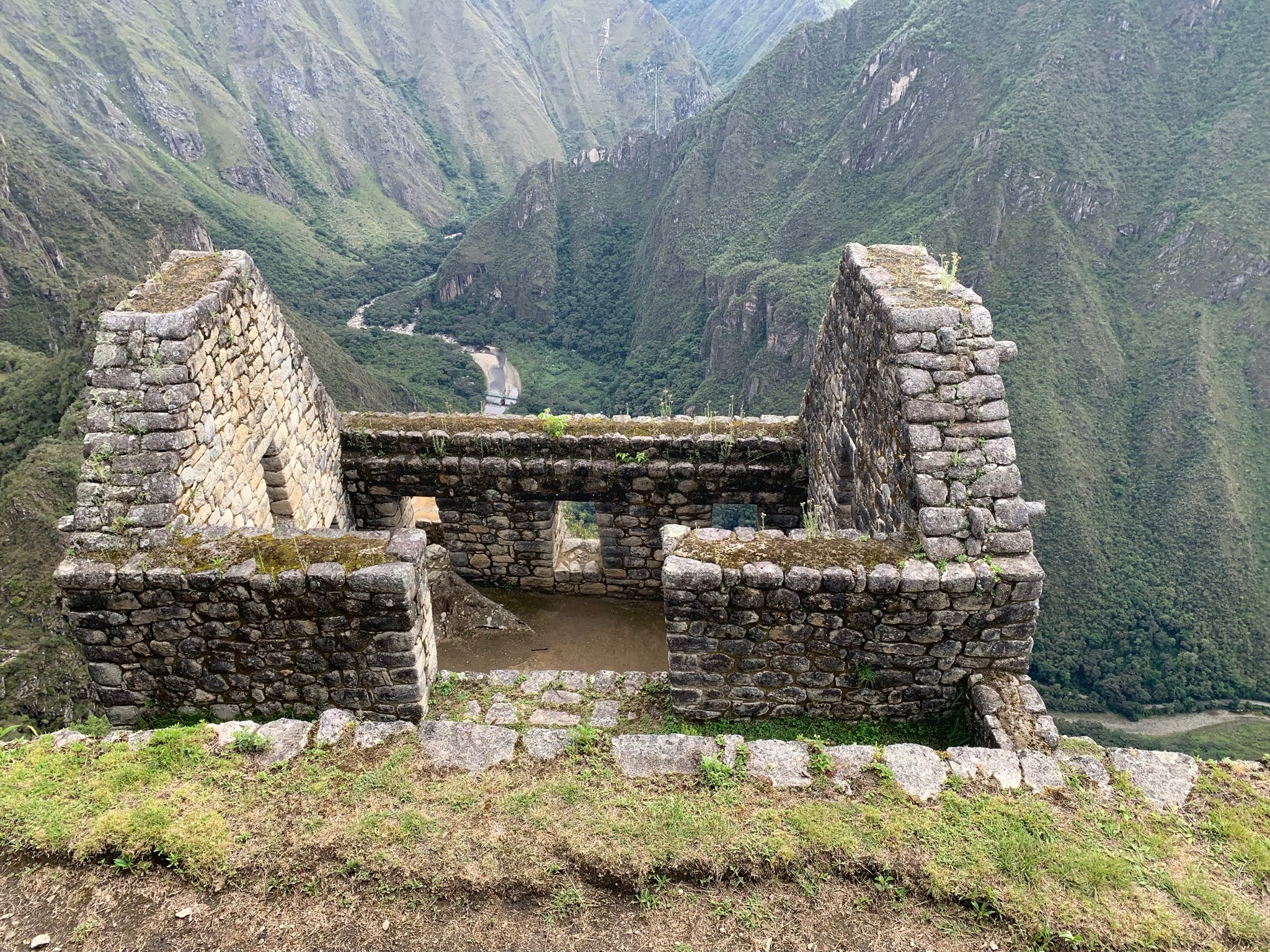
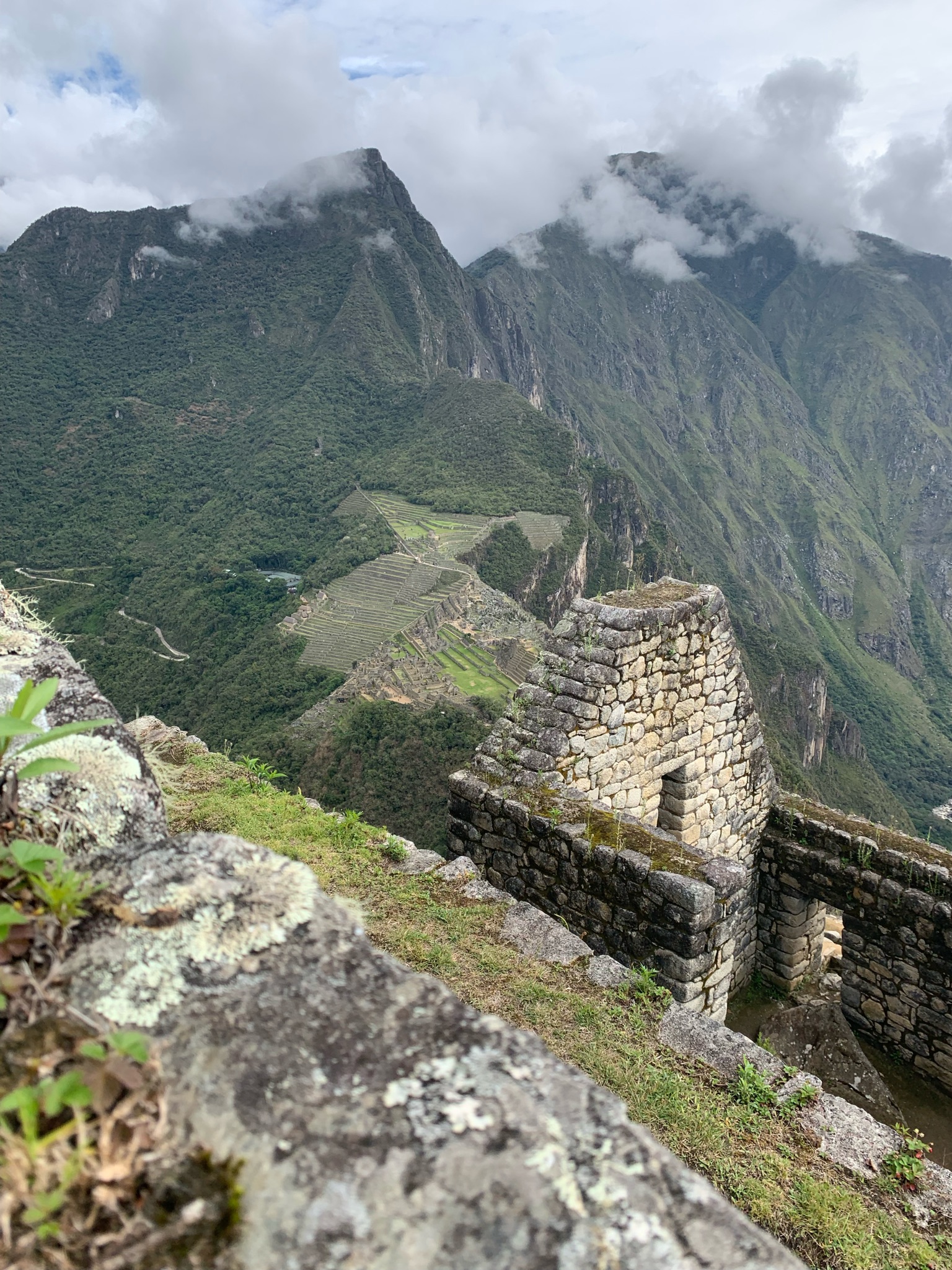
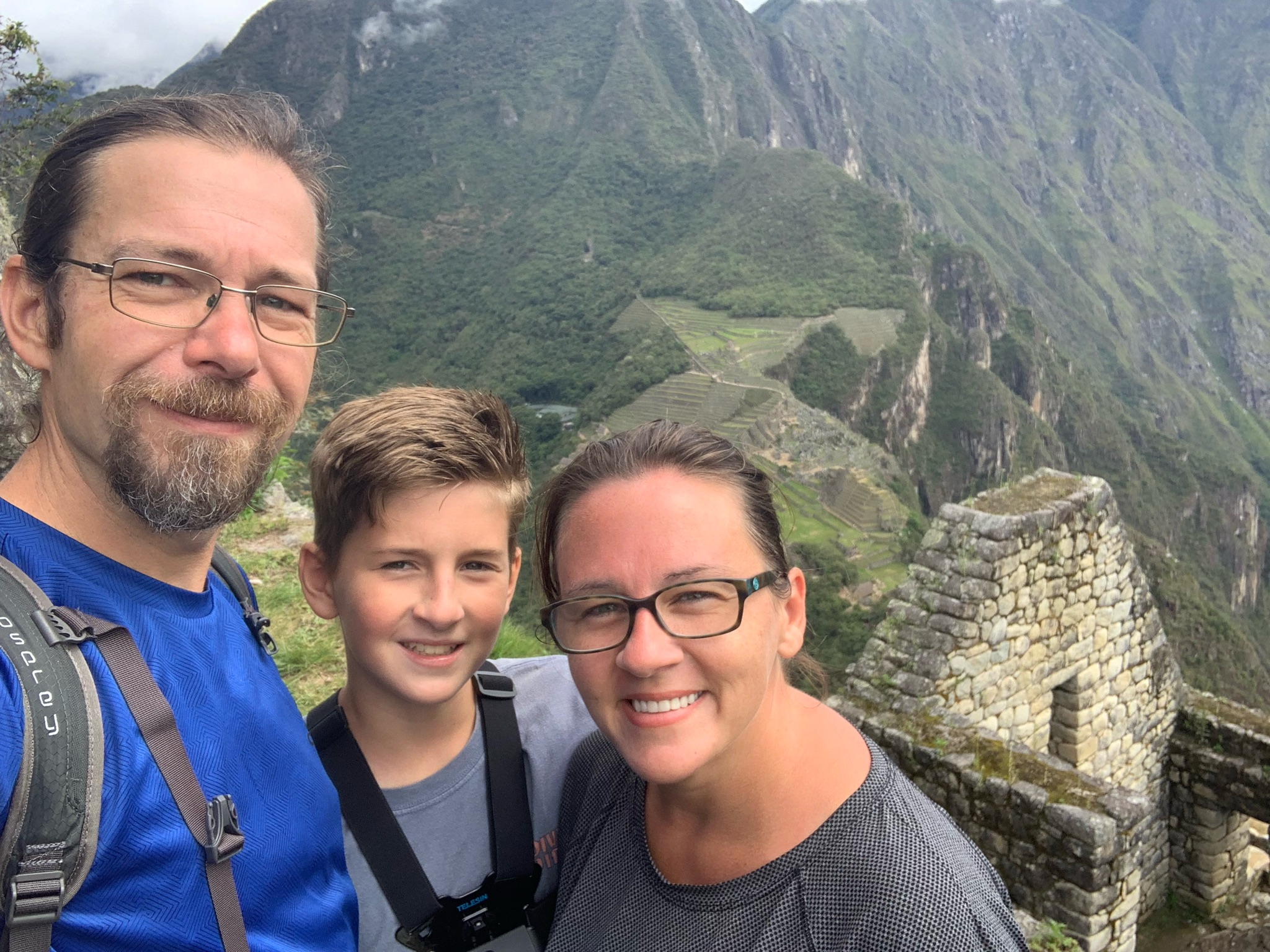
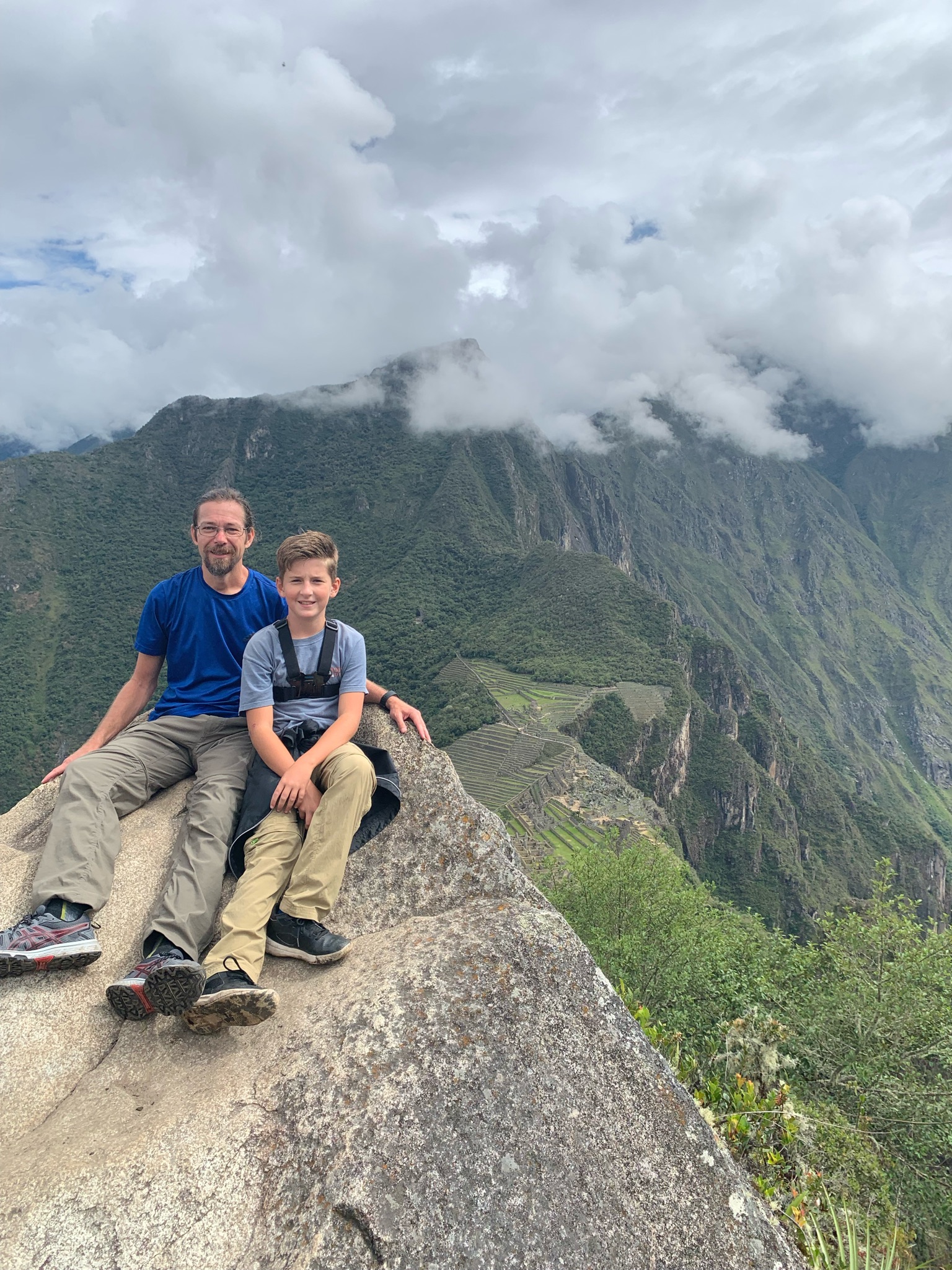
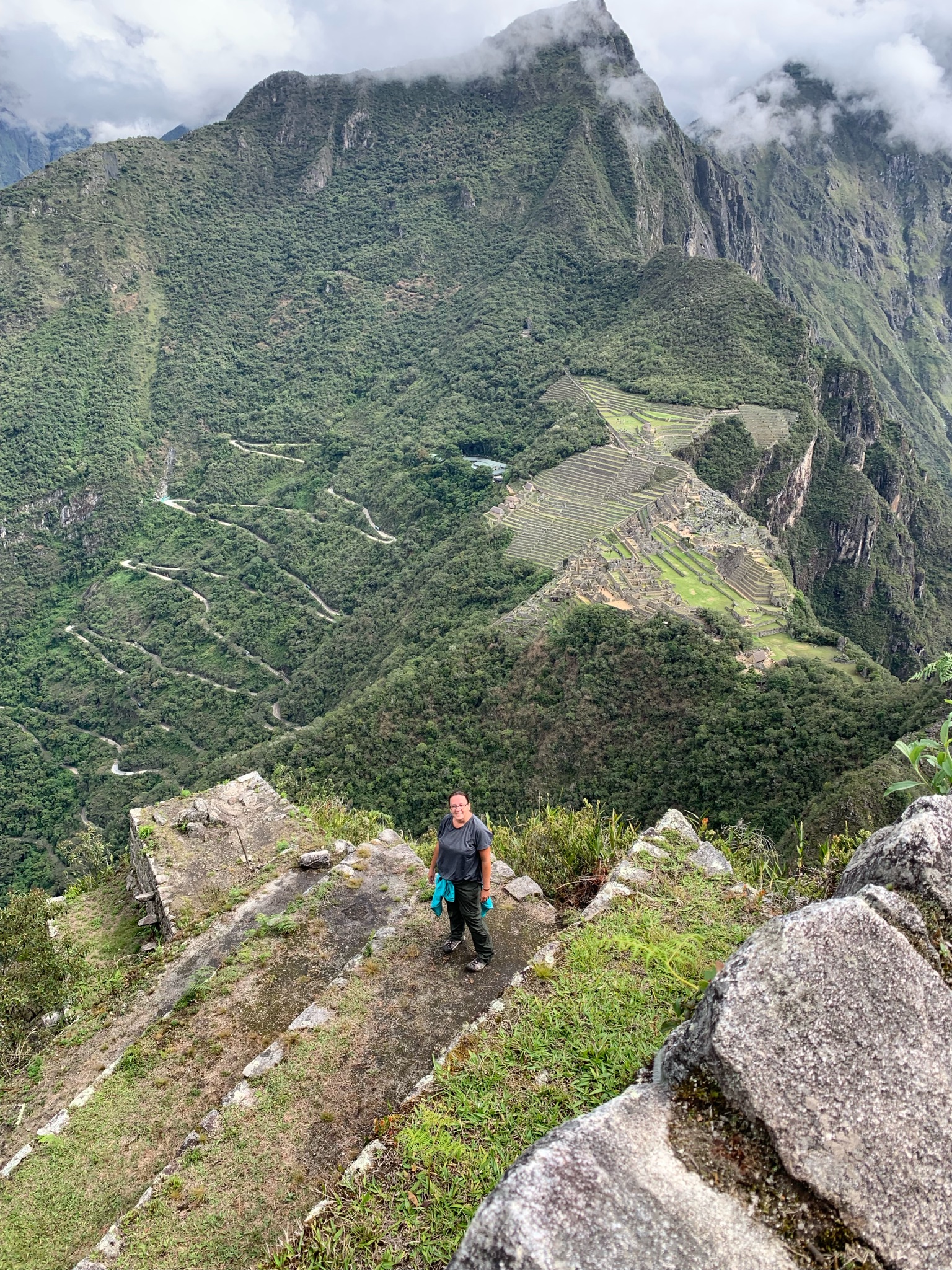
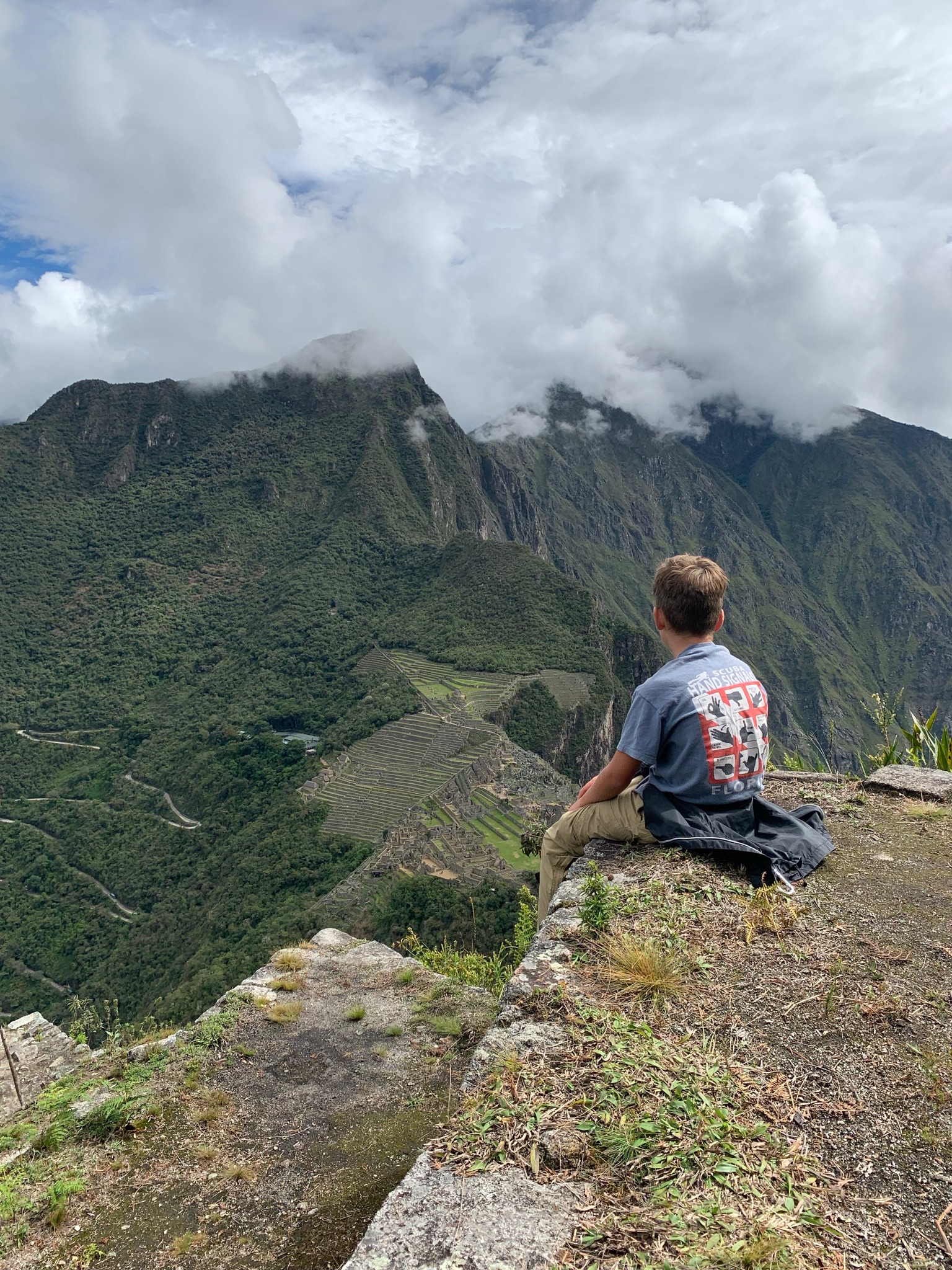
The view from the mountain top was spectacular.  In this region of the world, it is far less common to have beautiful cloudless days than it is rainy, murky days.  We were in rainy season, and it had rained the night before as well as that morning.  We fully expected nasty weather, and we had feared that we would get to the top of the mountain to find that we couldn’t see anything.  But thankfully, that was not the case for us.  We had the most beautiful day to make the climb, and when we got to the top, you could see Machu Picchu and the surrounding mountains very, very well. 

We hung out on some giant boulders for a while enjoying the view and contemplating the impending climb down.  I have a hard time with climbing up because I get winded, but Henry and Brian typically struggle more with coming down because of their legs.  I wasn’t looking forward to it, either, mainly because backing down those steps on my hands and feet didn’t sound that appealing.  For the most part, the climb down wasn’t too bad either, though.  We were tired, and when we made it to the bottom, our legs were all trembling.  But we made it.  And we still had plenty of time to explore the ruins.

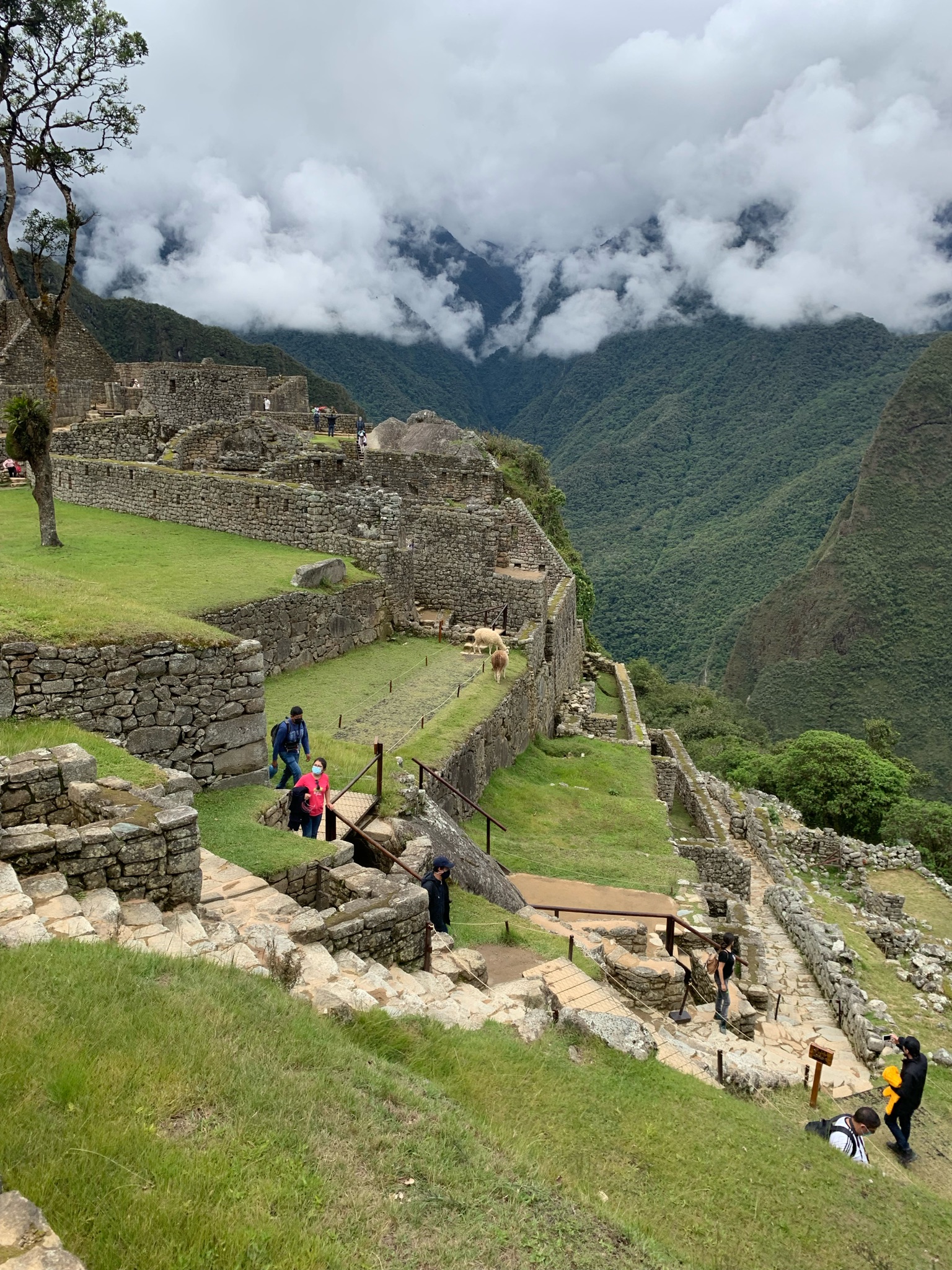
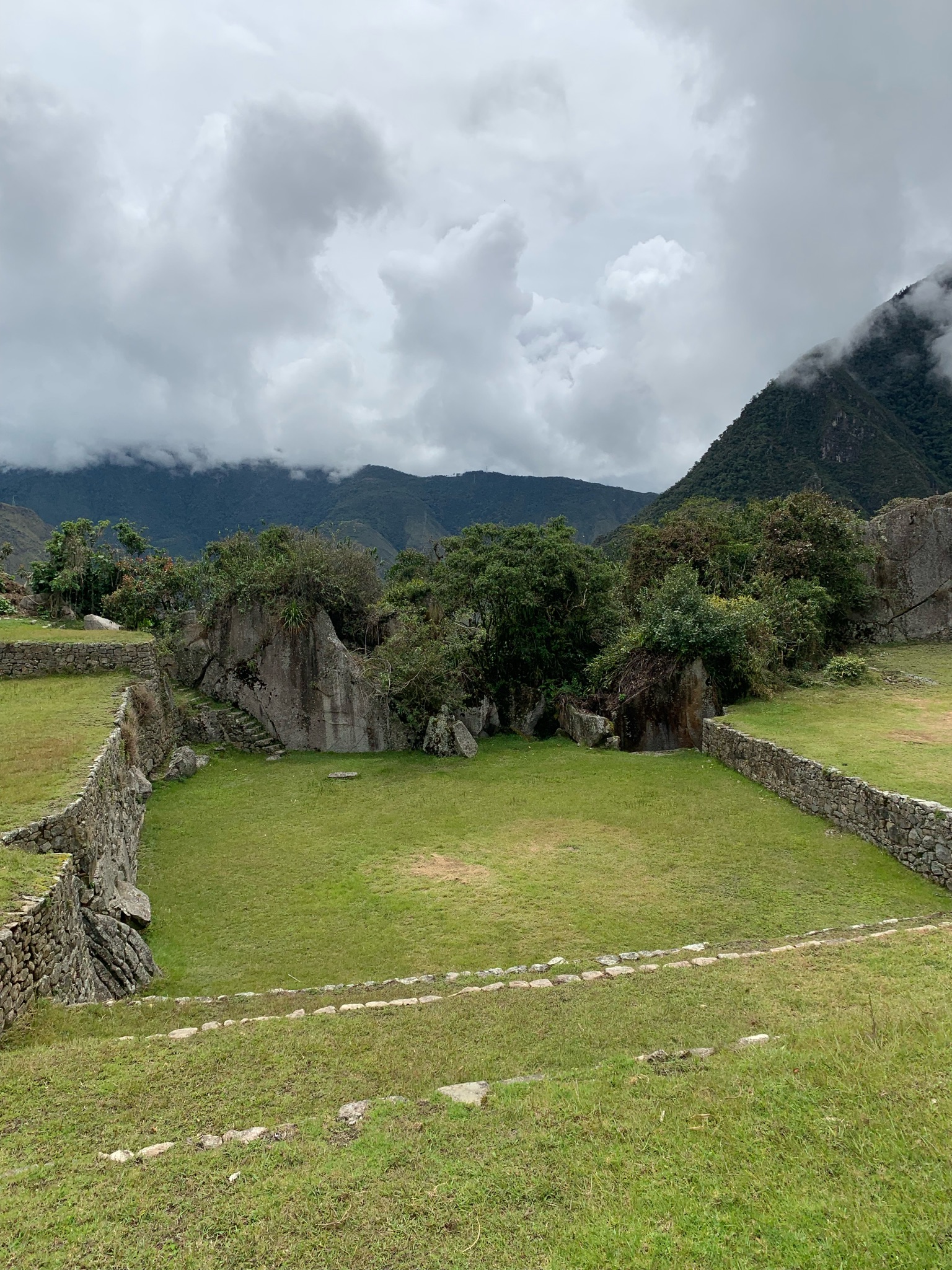
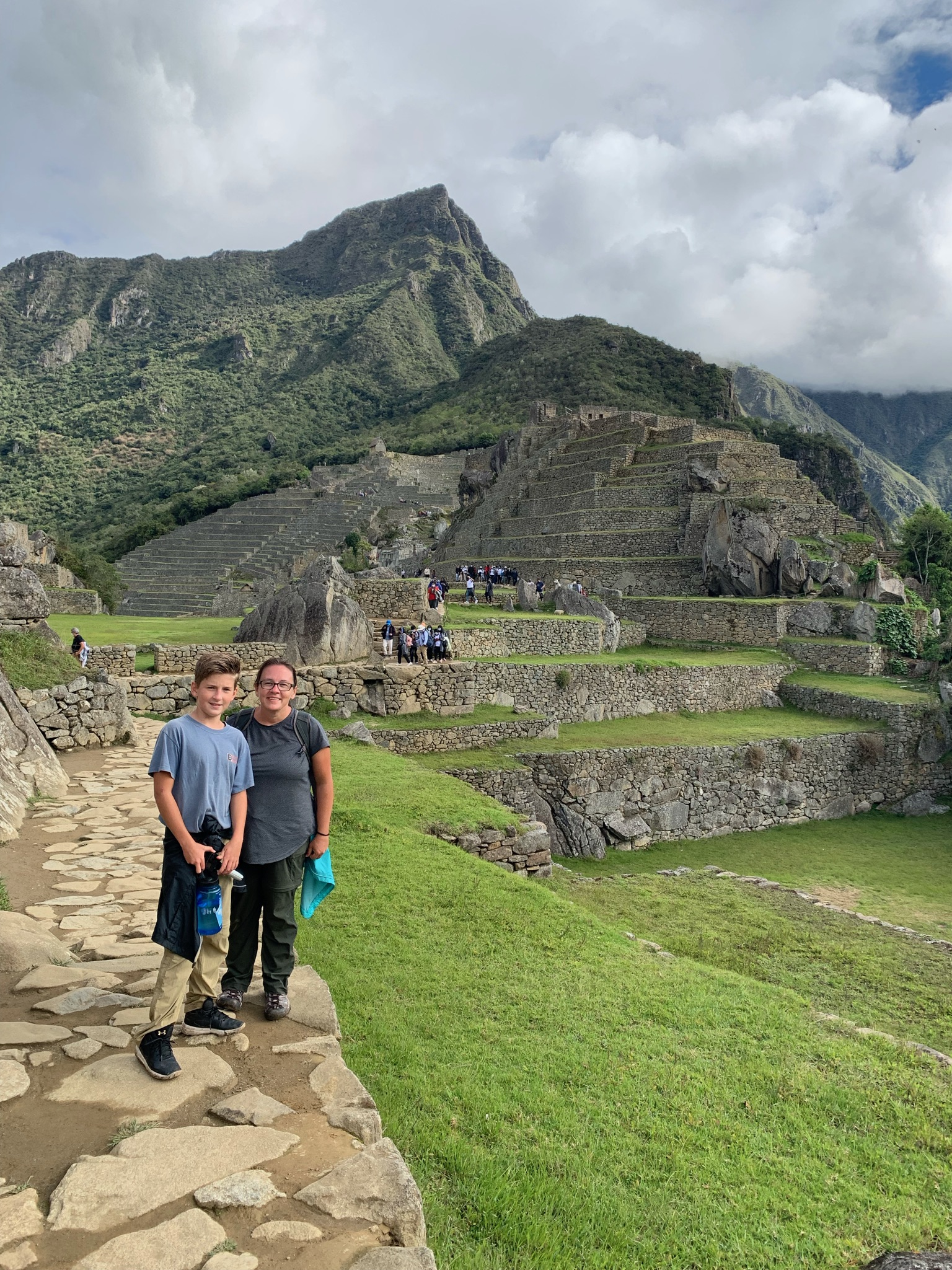
We hadn’t paid for a guide because we didn’t want to have to explore at the guide’s pace, but walking through the ruins it might have been nice to have one.  There were a couple of guides walking with their groups near us, and occasionally we would pick up an interesting tidbit or two as they were talking.  It felt wrong to listen to them too much, but where we could, we stood quietly and learned about the Incas. 

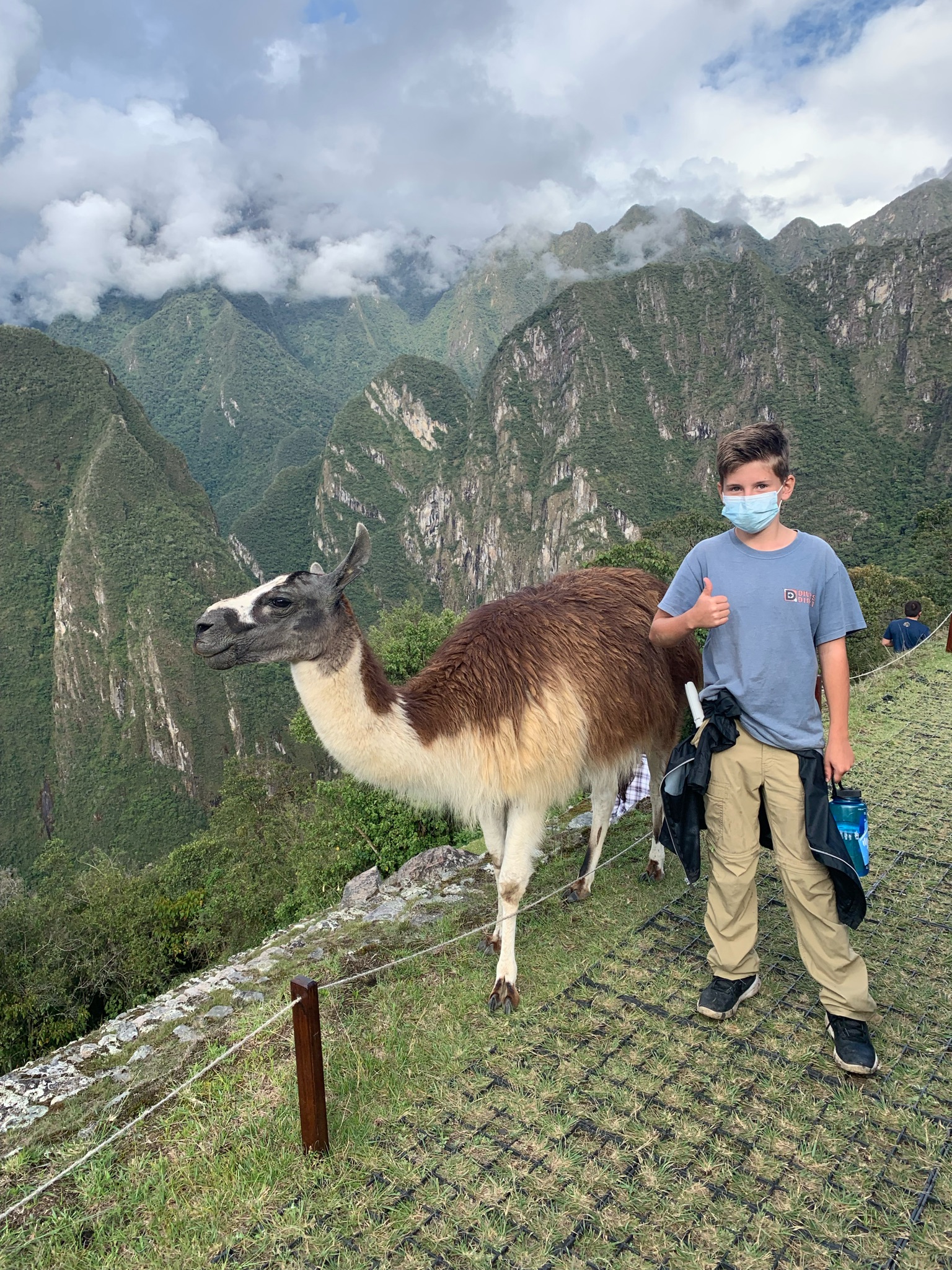
There were a few llamas scattered around the ruins, and we found out that they are brought there to keep the lawns manicured.  Henry was able to pet one of them, and that made his day.

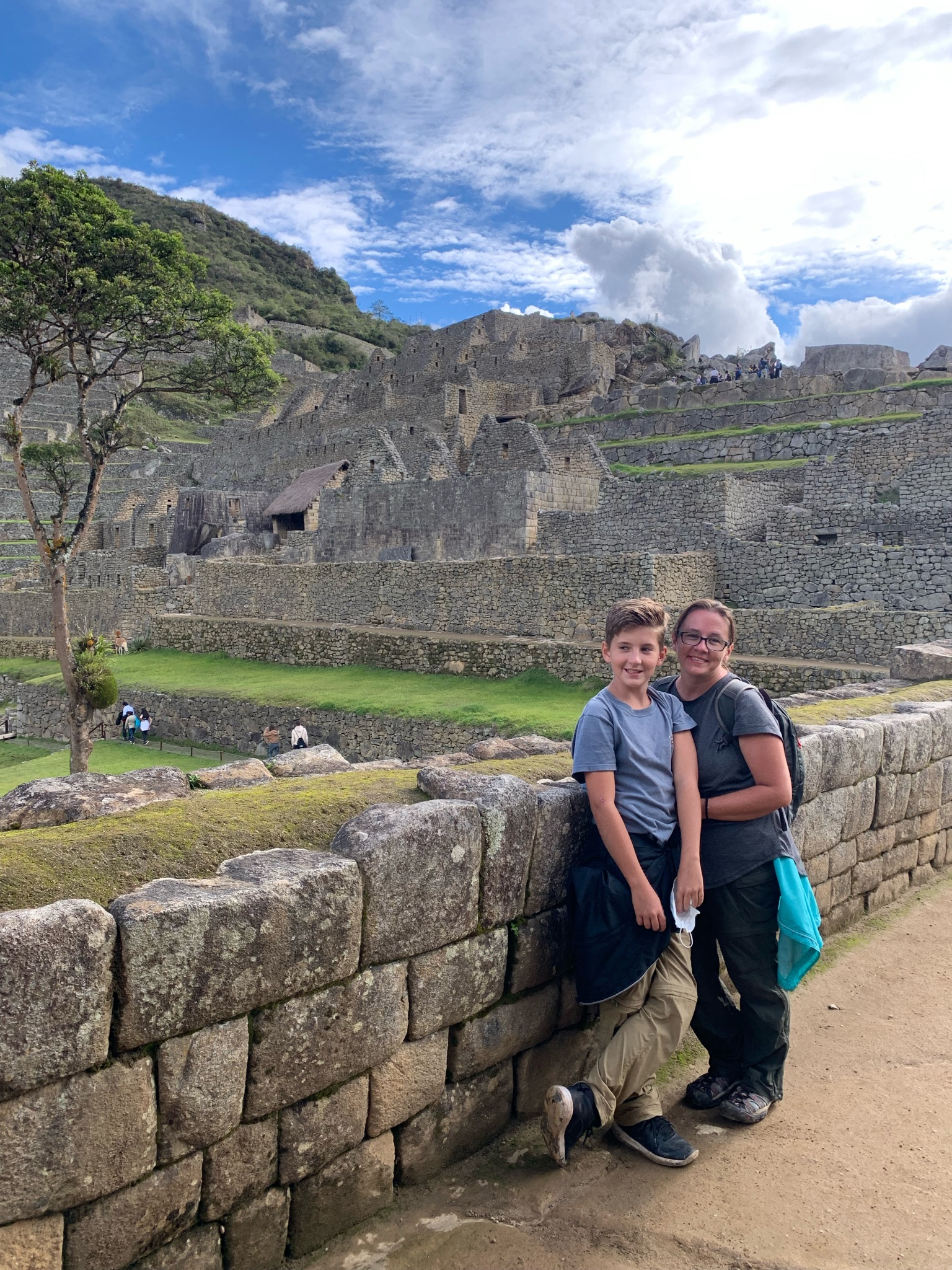
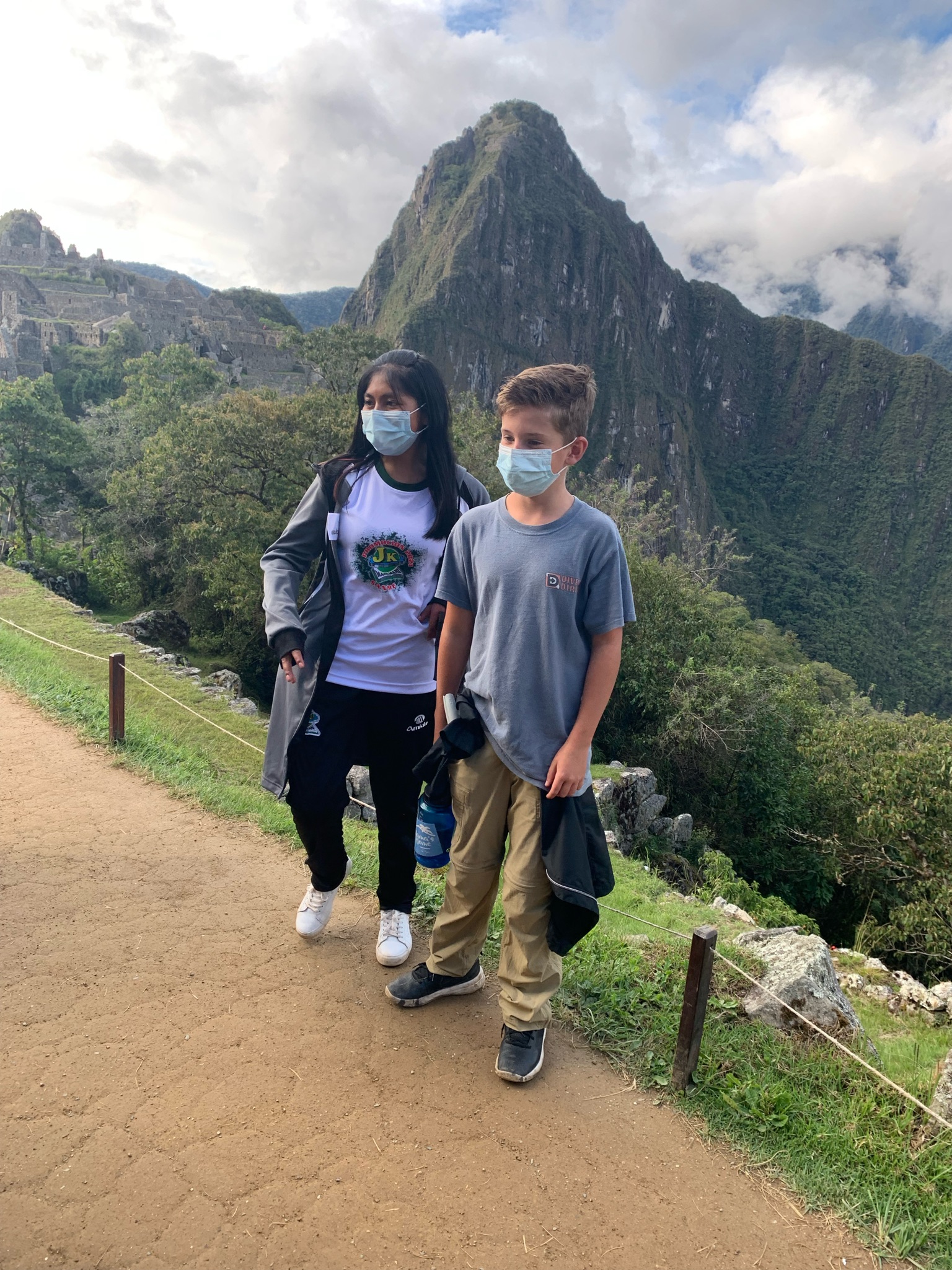
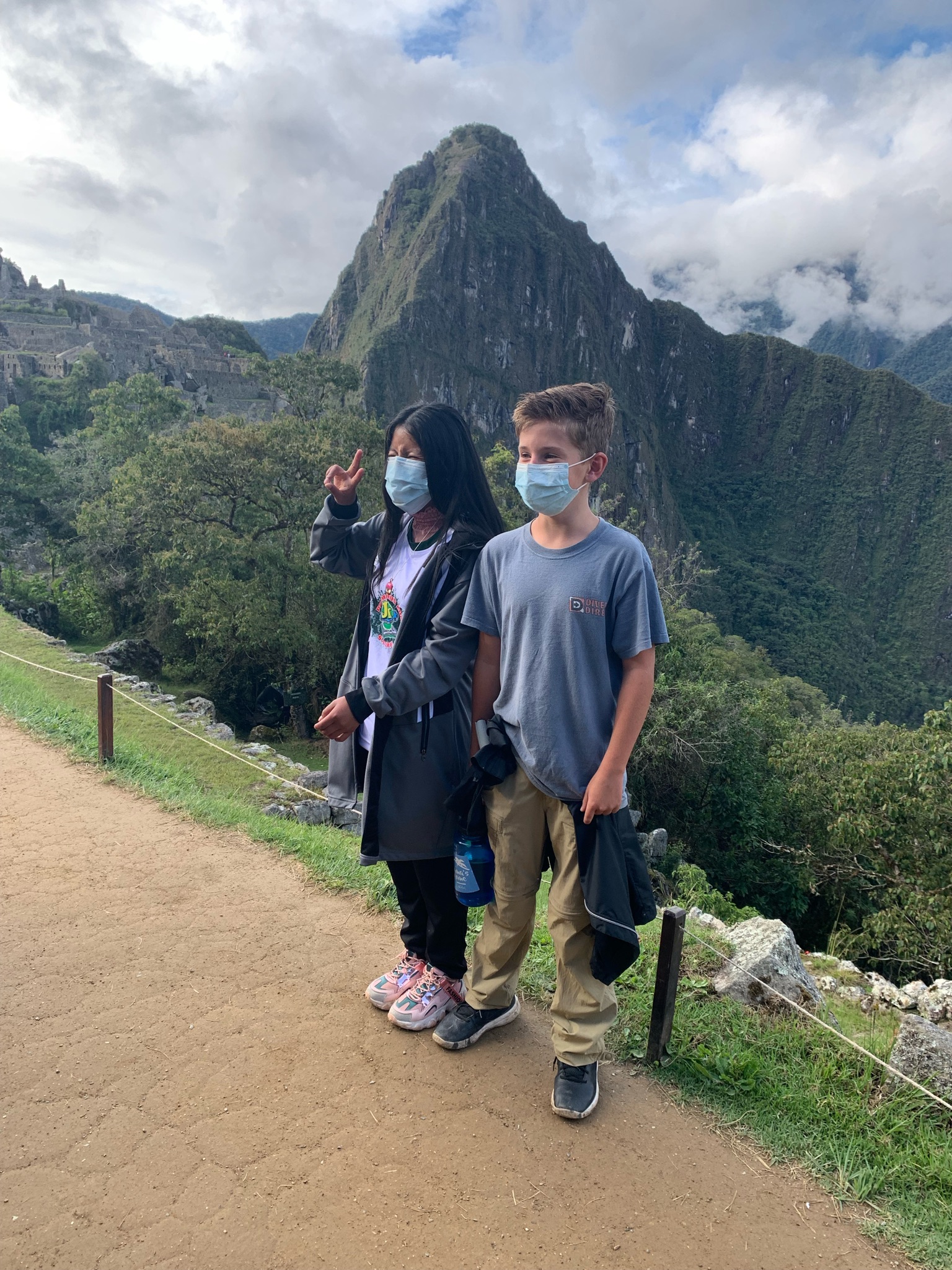
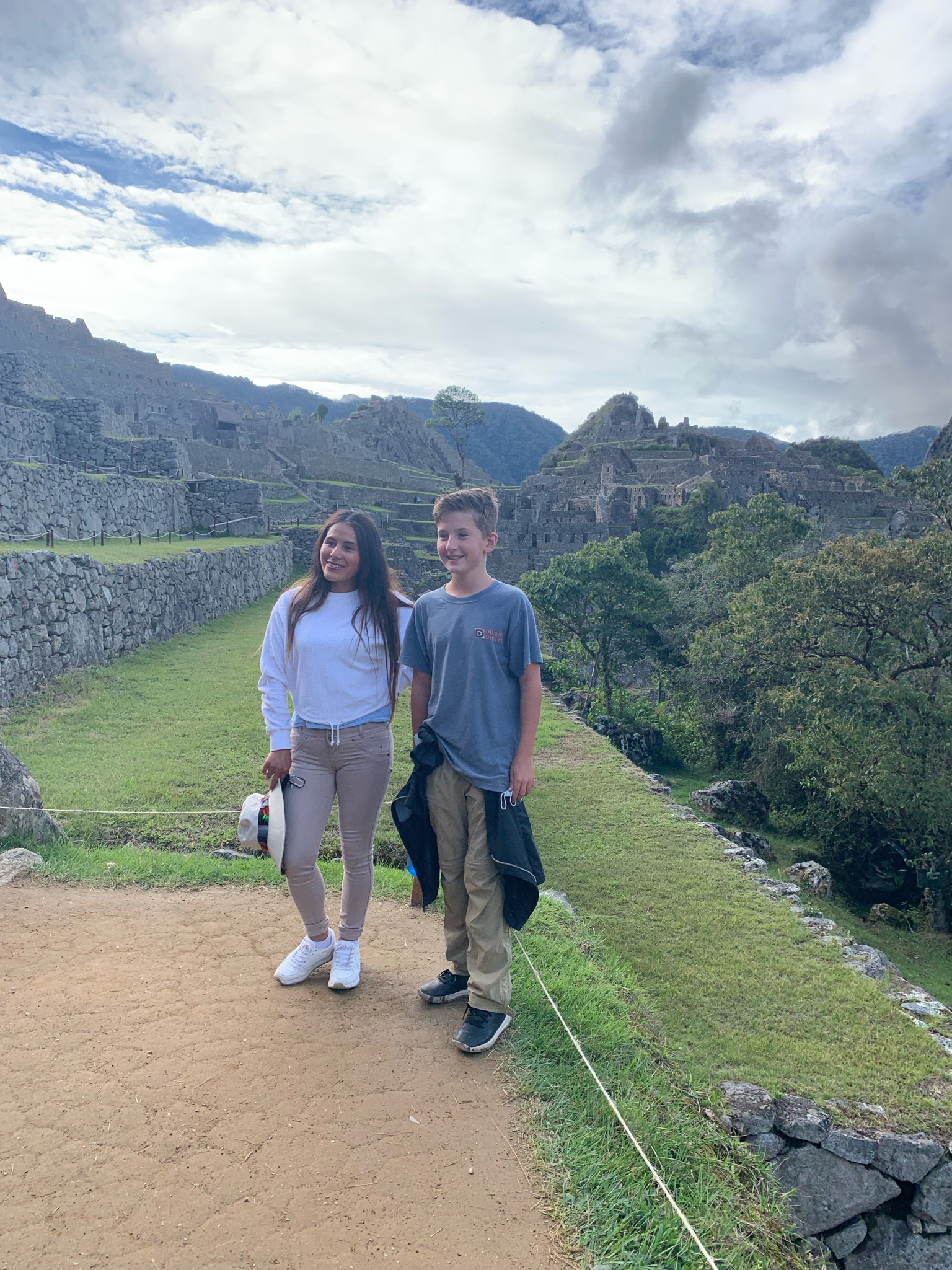
On our way out, we stopped at the last viewpoint for a final picture, and while we were waiting in line, the most interesting thing happened.  A group of pre-teen/teenage girls were standing near us, and they were giggling like girls sometimes do.  Finally, one of them came up to me and Henry and embarrassedly asked if they could take a photo with Henry.  I laughed, and we both said yes.  Henry was completely confused as to why three young girls and a grown woman all took turns taking their picture with him.  If he wouldn’t have been wearing his mask, I bet they would have seen his face was beet red.  They thanked him and moved on, but Brian and I picked on Henry about it the rest of the day.

We took the bus ride back down the mountain to Aguas Calientes and had dinner on the patio of a local restaurant.  We were all exhausted, and couldn’t wait to be back.  We boarded the train to Ollantaytambo, and within minutes, Henry and I were both asleep.  The train to Machu Picchu had been buzzing with excitement, and the train back was full of snores; apparently we weren’t the only ones who were worn out.

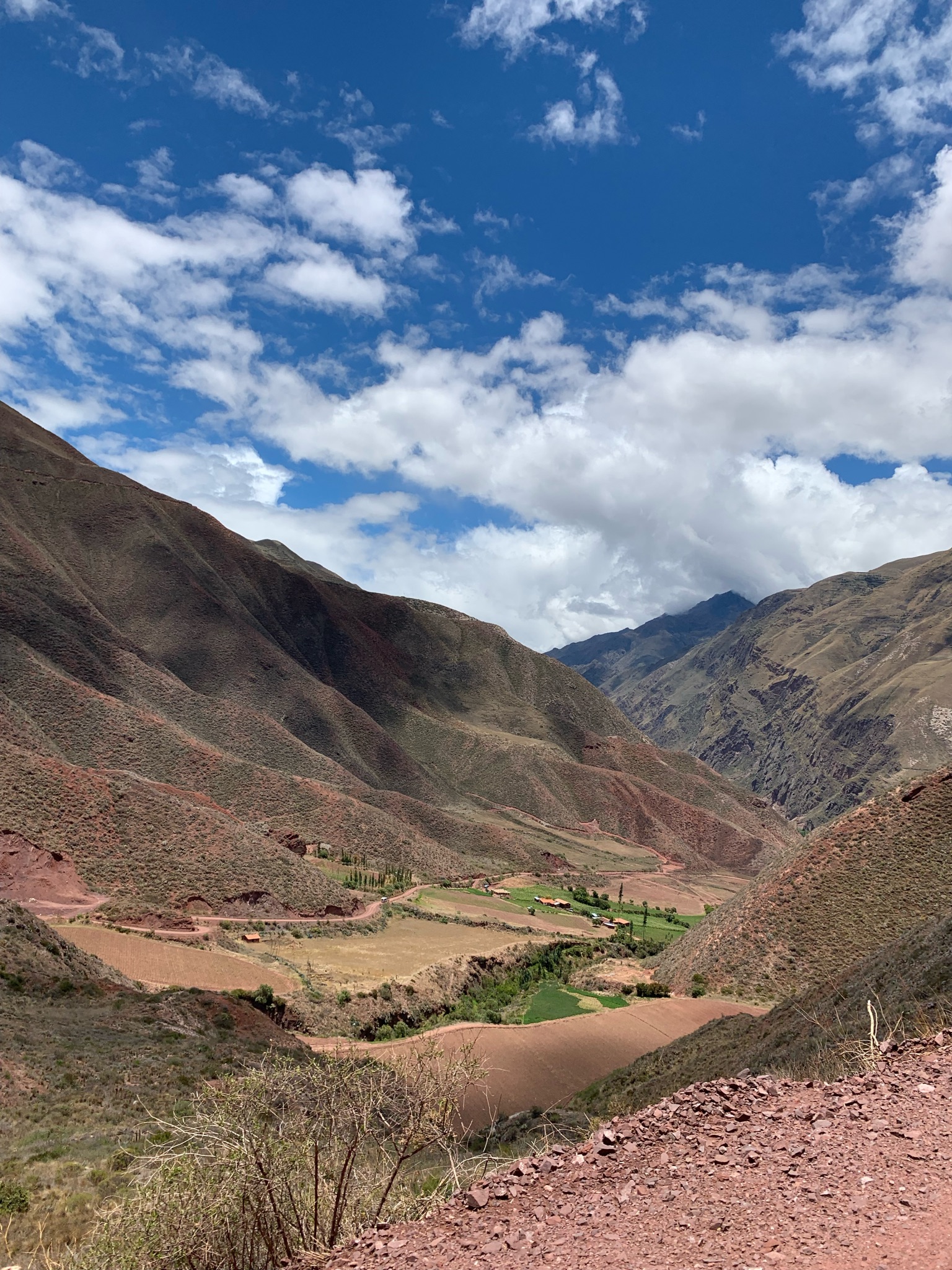
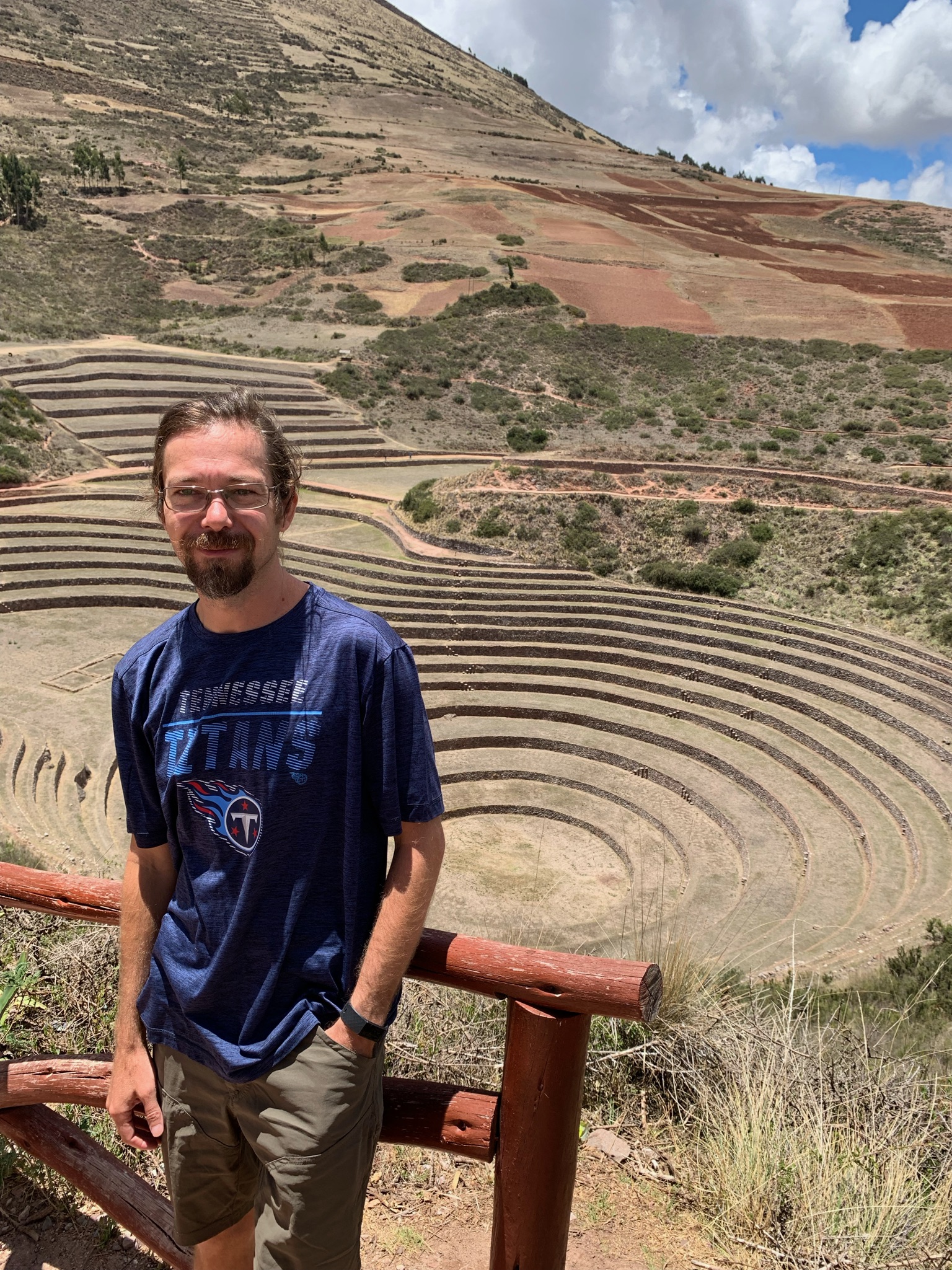
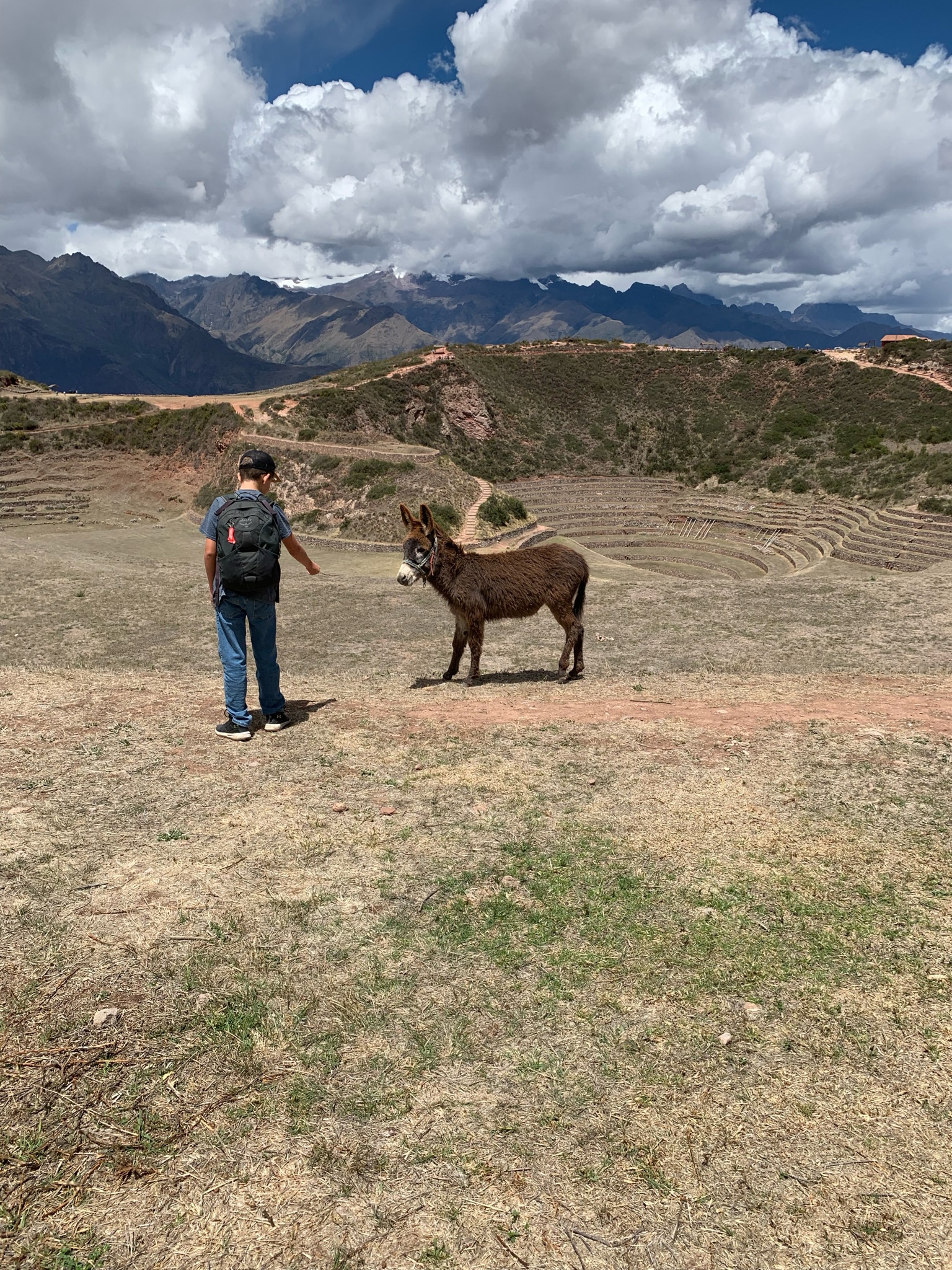
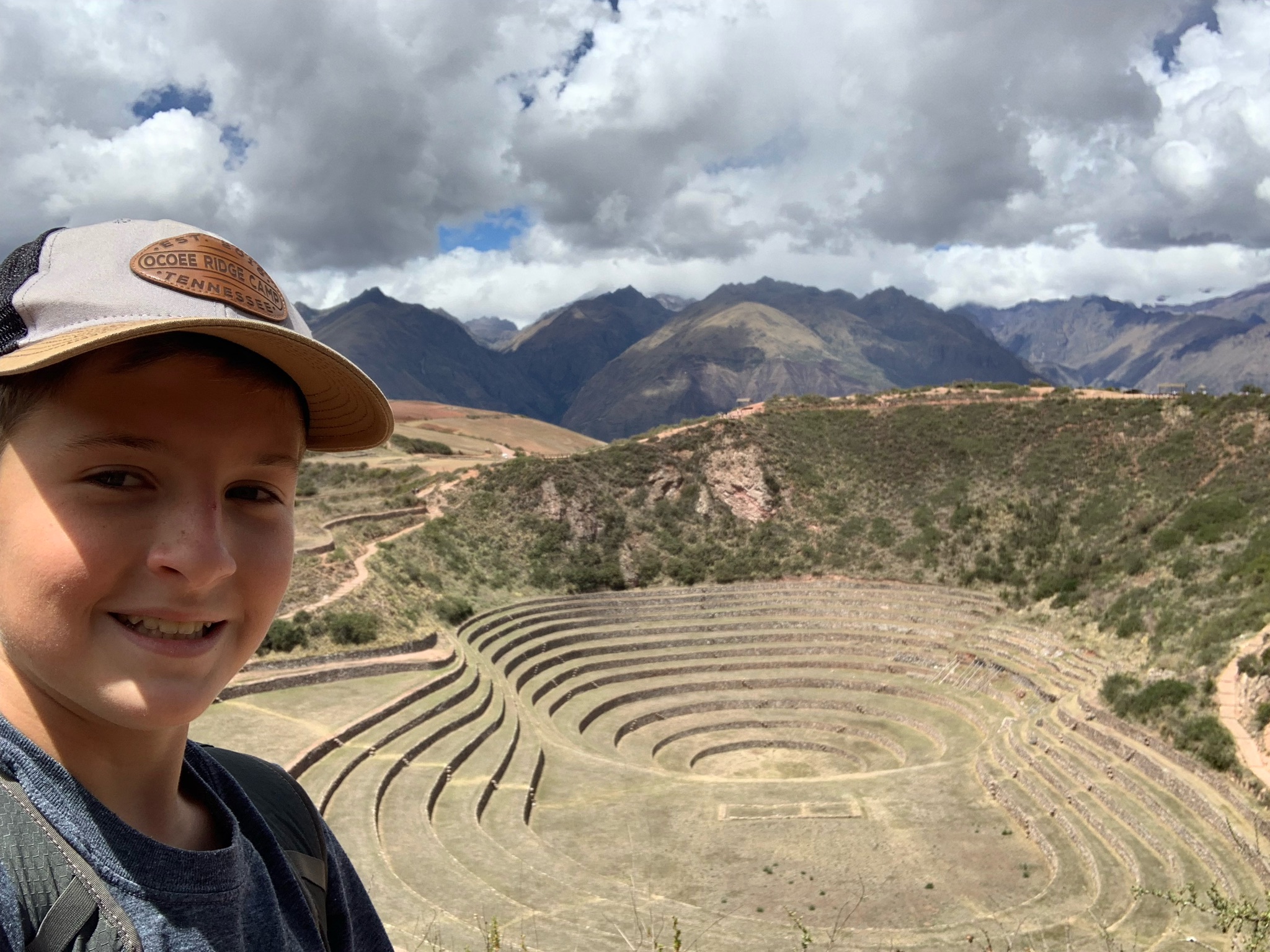
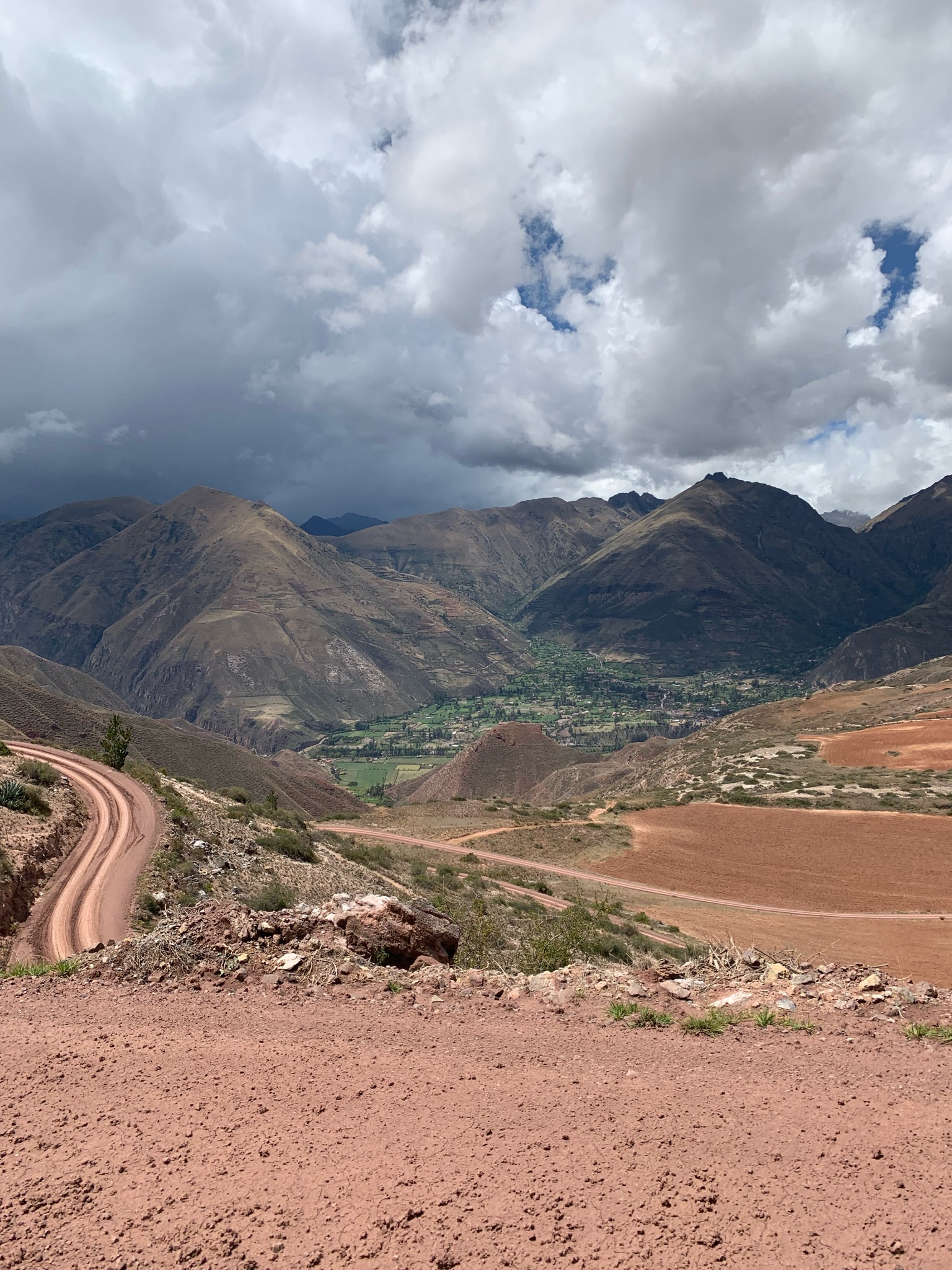
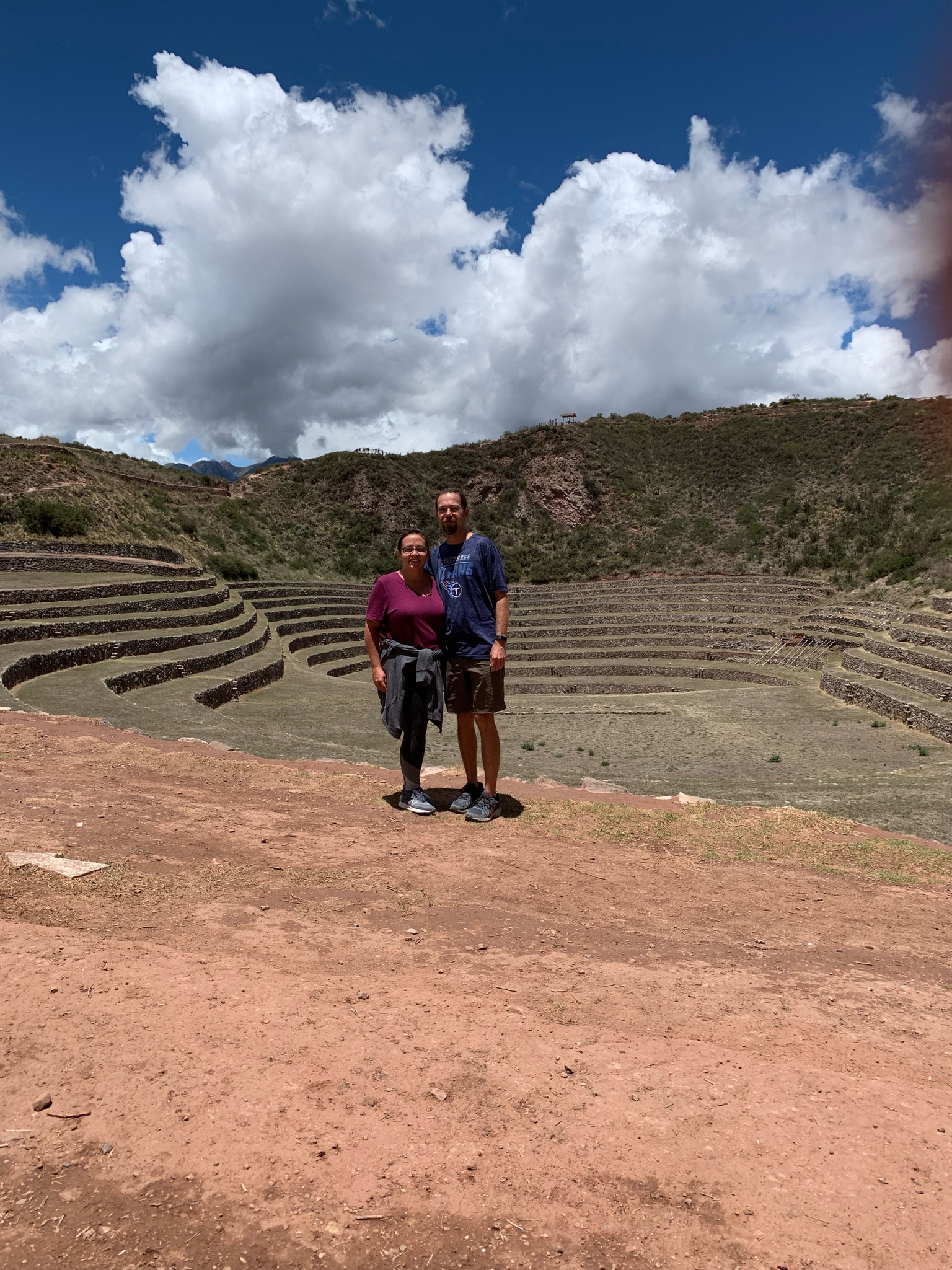
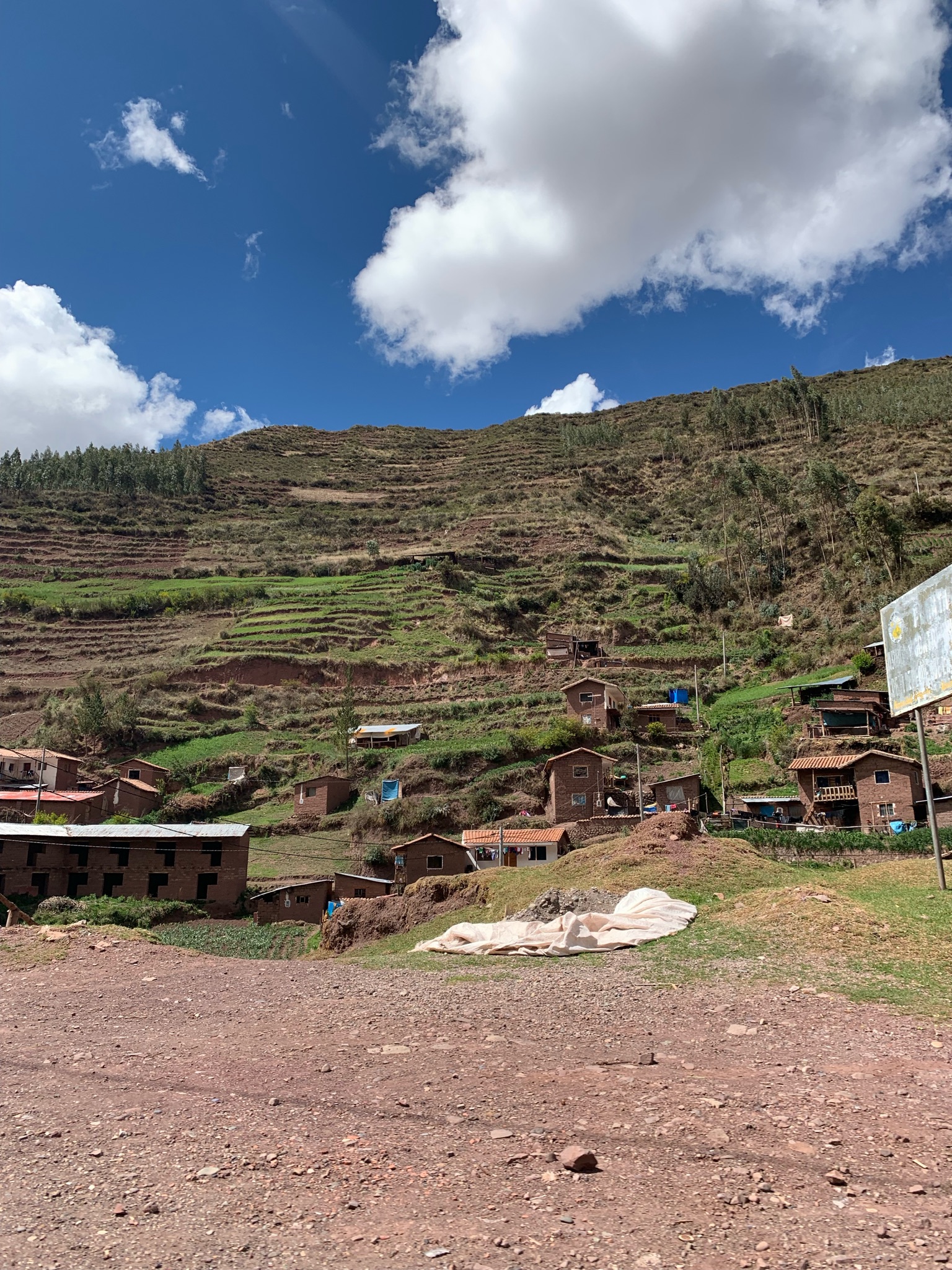
The next morning, we found a taxi driver to take us to see the Moray ruins.  The ruins are very high on a mountain in Moray, and our taxi driver had a little fun as he raced down the dirt roads and around the s-curves to get us to the top.  Henry was white-knuckled, every time the driver reached a curve and honked his horn to let oncoming traffic know to be on the lookout for him.  With cliffs on both sides, the ride was a little scary, but the view of the valley below was breathtaking enough to keep us occupied.  These were about 30 minutes outside of Ollantaytambo, and they were unique in that they appear to be purely agricultural in nature.  The Incas mastered the art of terraces as they learned to live on these mountains, and the Moray ruins are a testament to their creativity and learning.  The design of the terraces, in conjunction with their location, creates unique climates that vary depending on their depth.  Soil samples taken in the area indicate that soils from other areas were brought in and introduced to these terraces so that they were optimum for plant growth.  Like all of the other terraces from the Incan period, this one was irrigated as well.  There were at least four of the terrace pits in the area, and the stone work was impressive.  Each level was precise, and the steps that were built into the wall were clever and practical. 

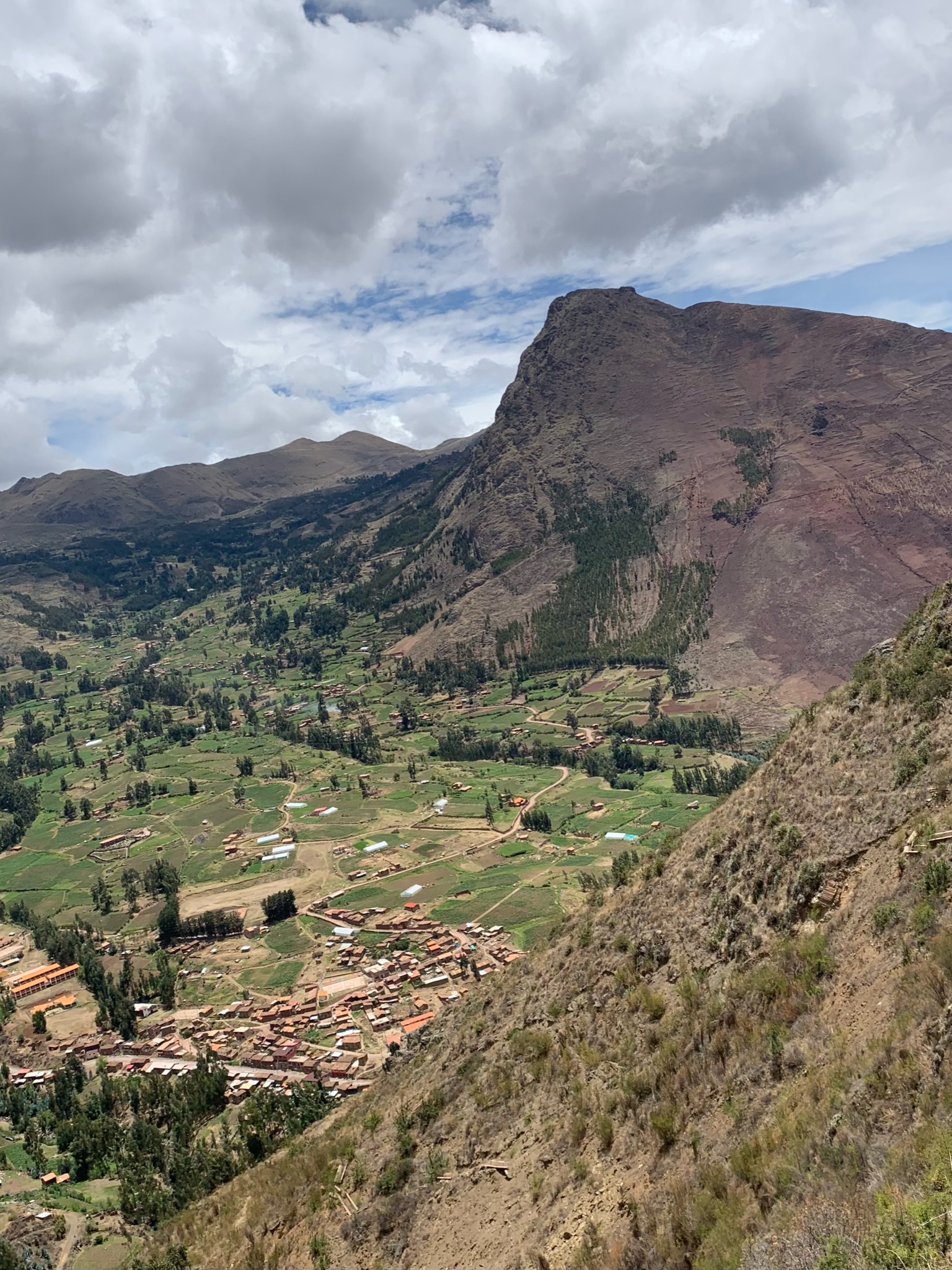
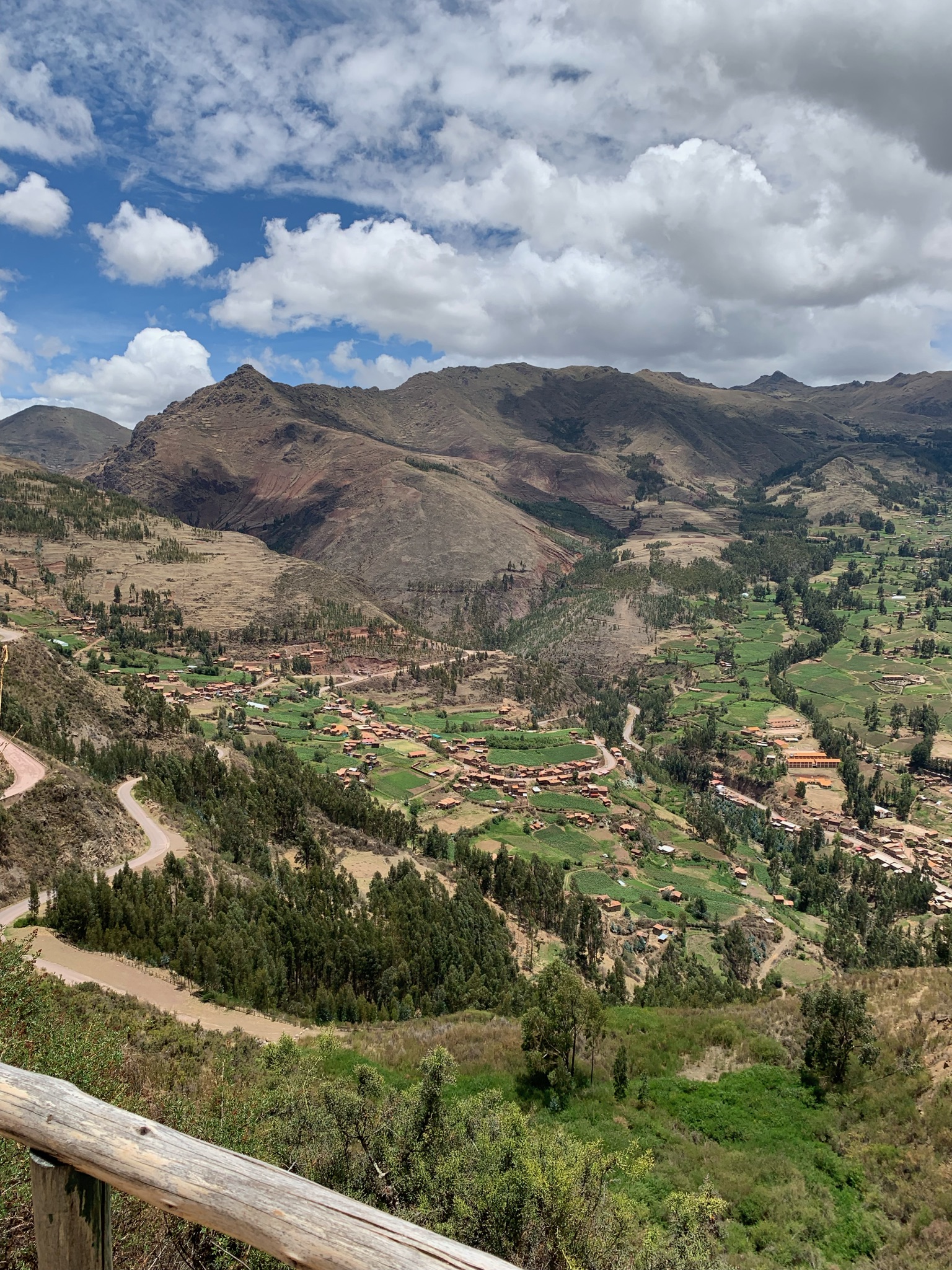
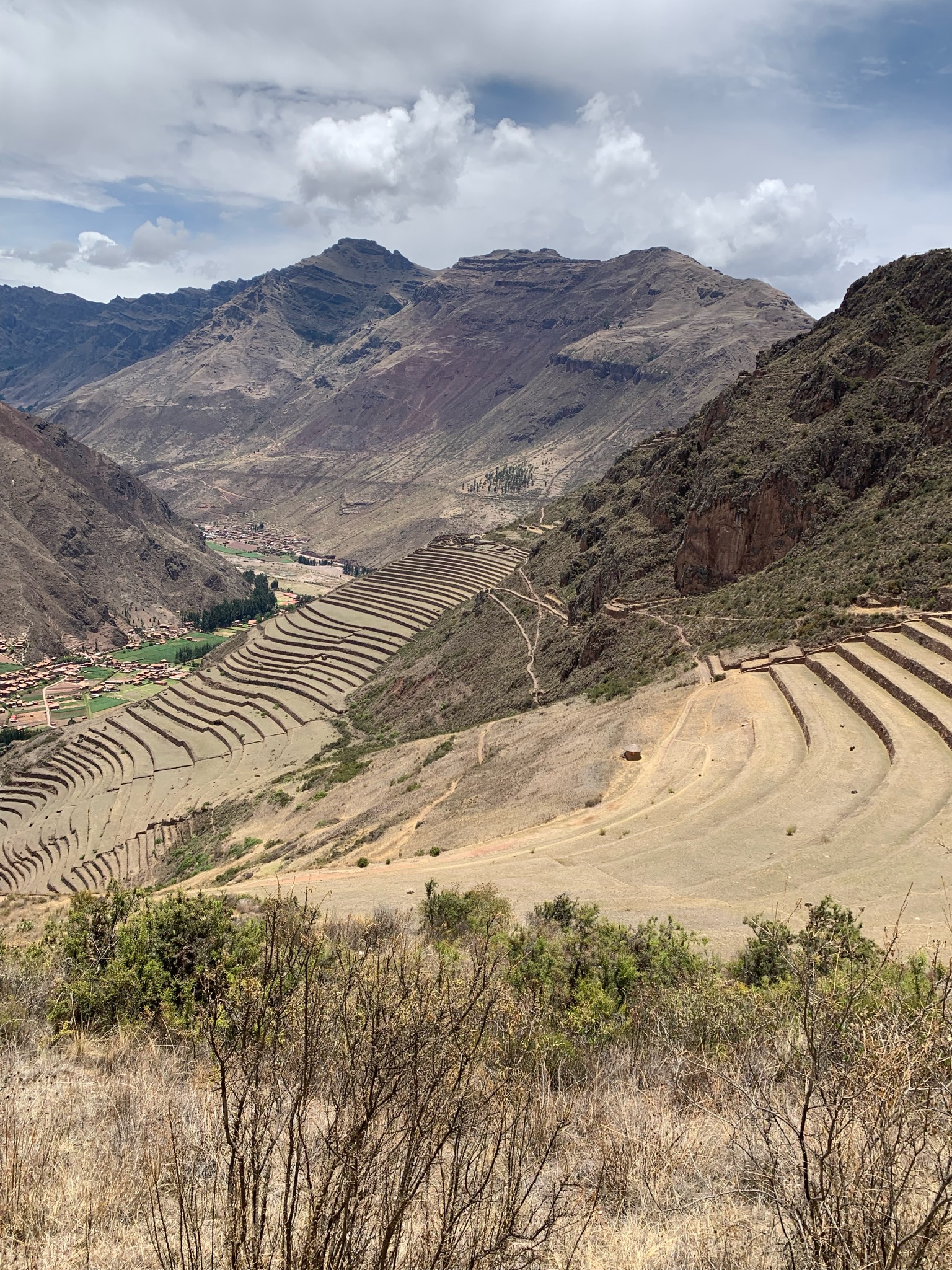
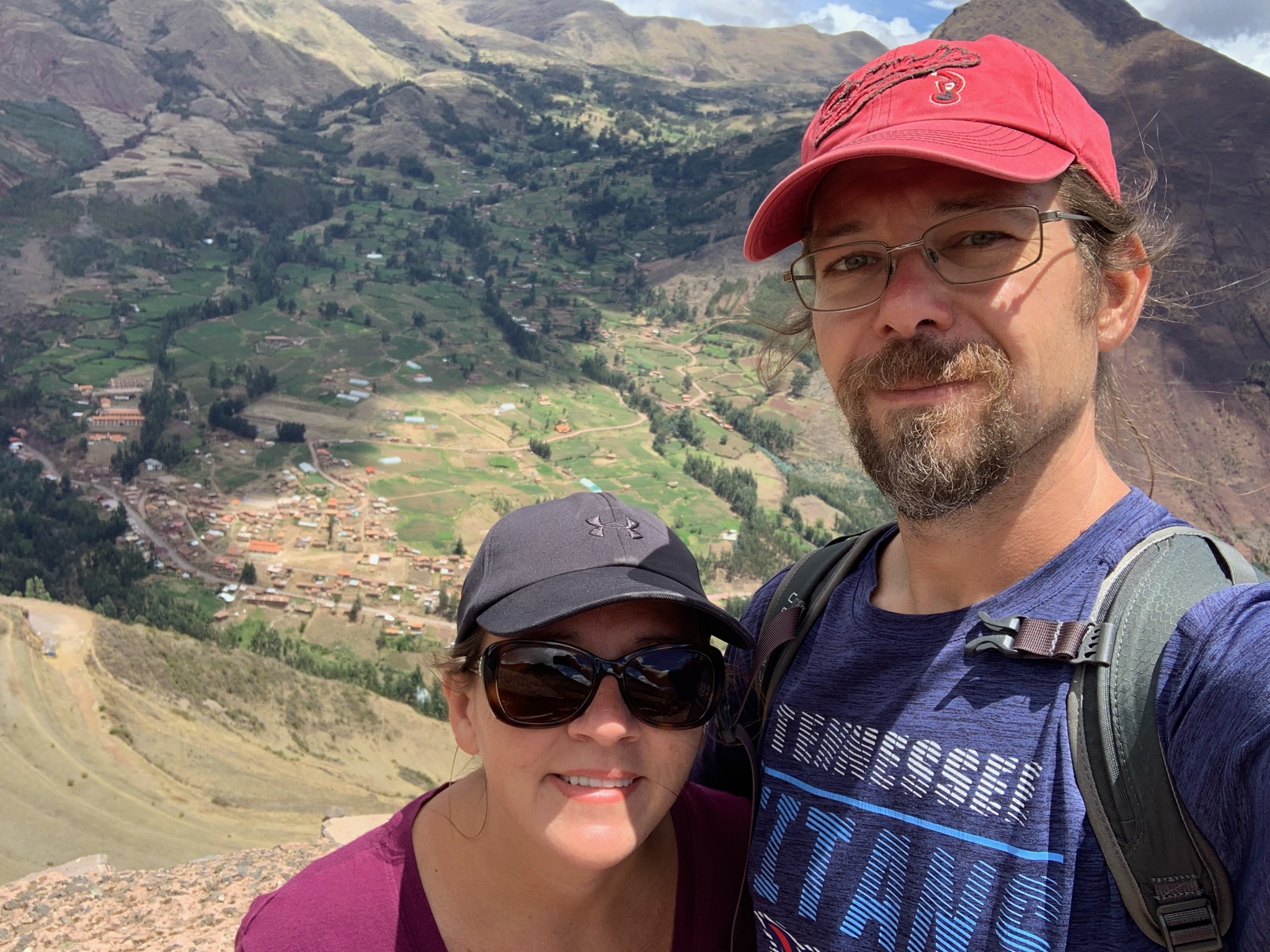
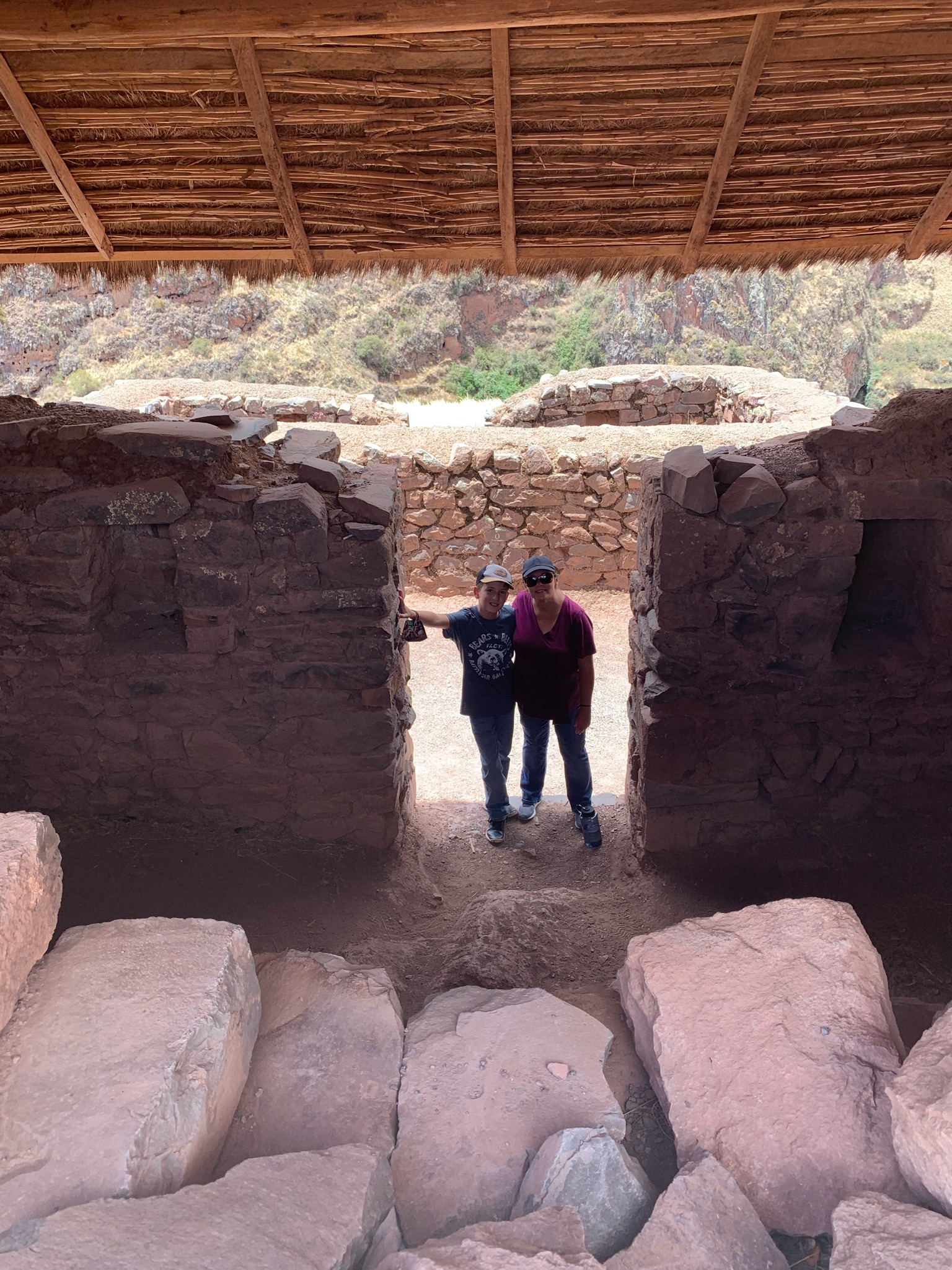
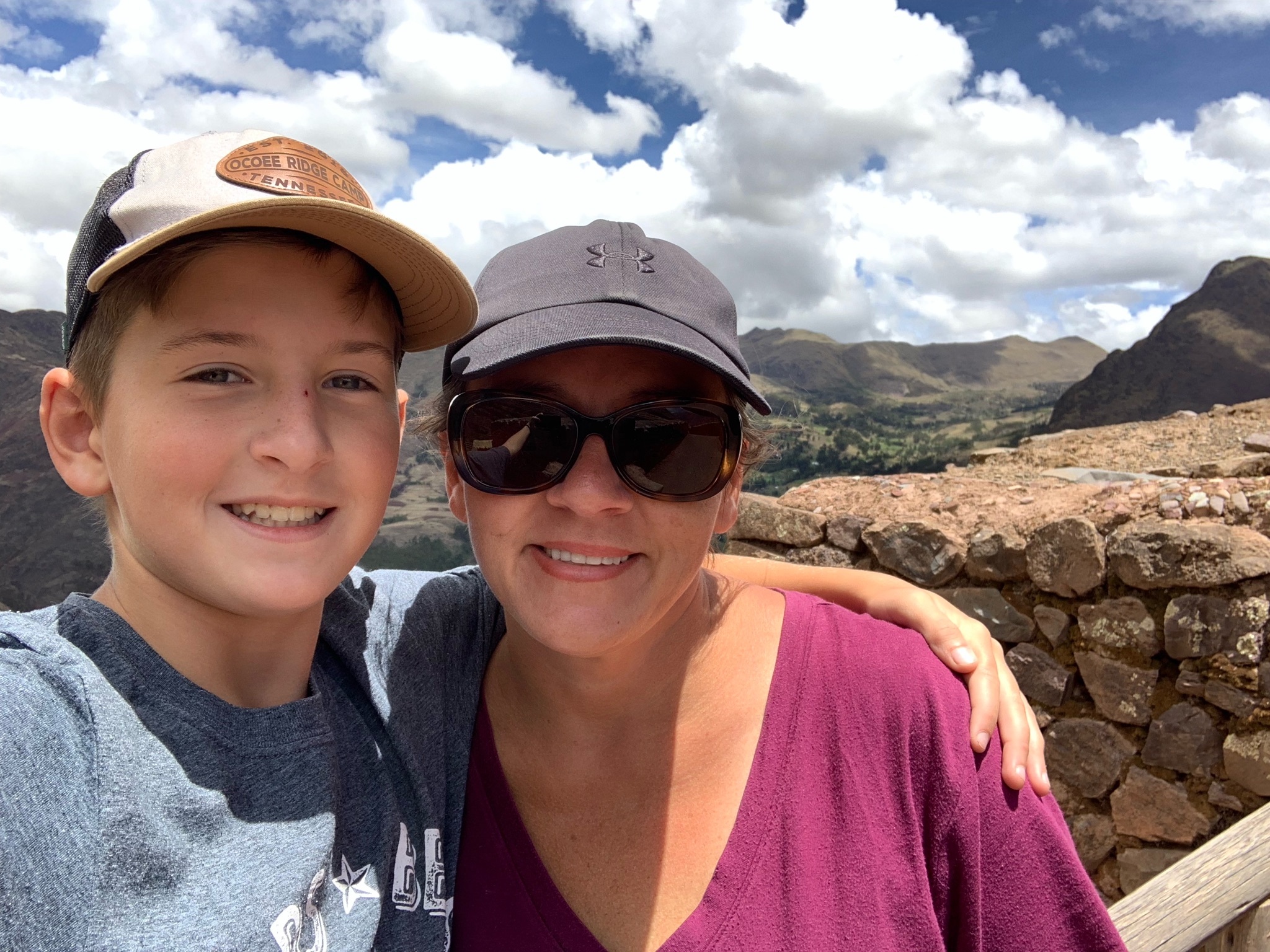
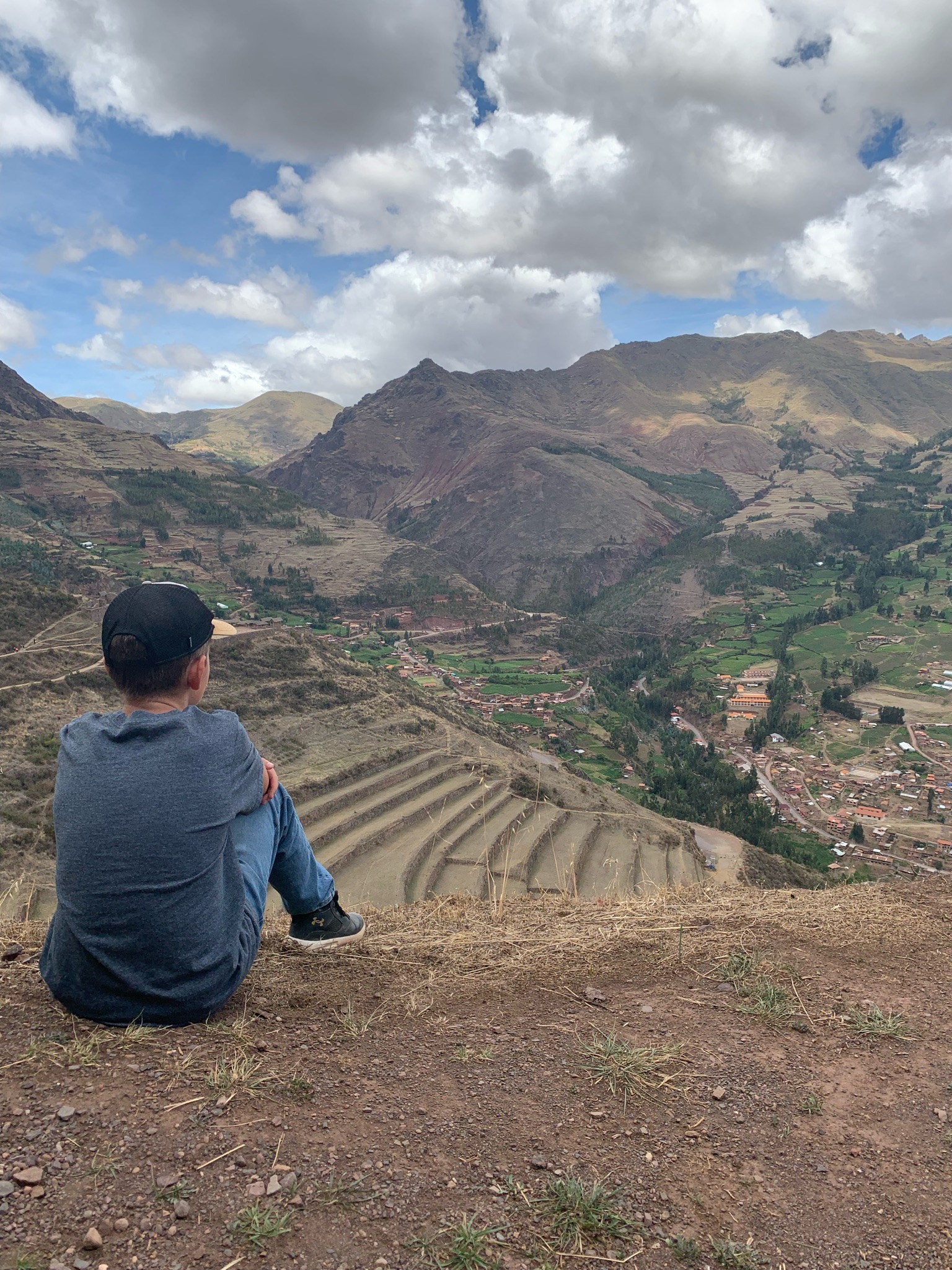
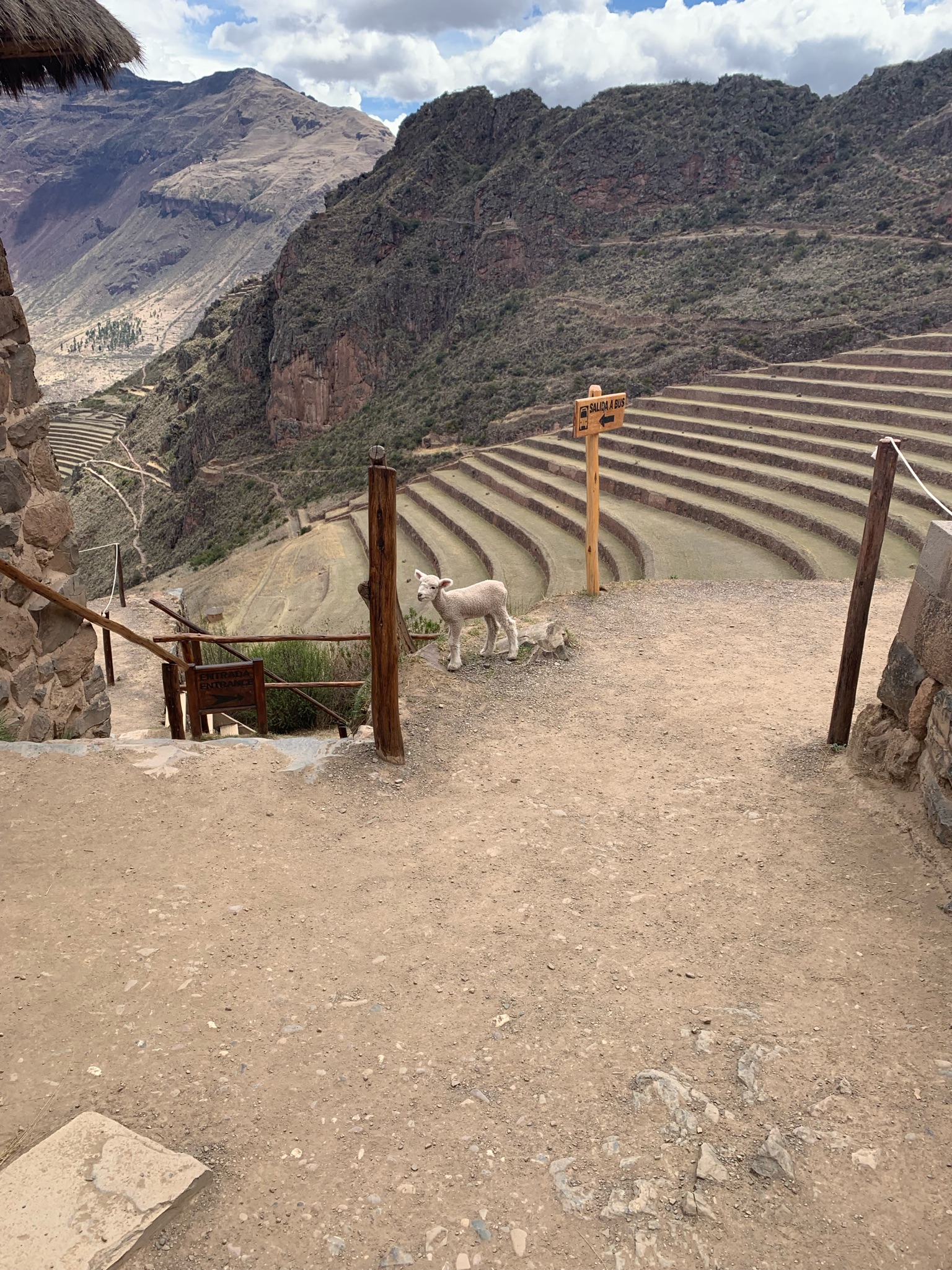
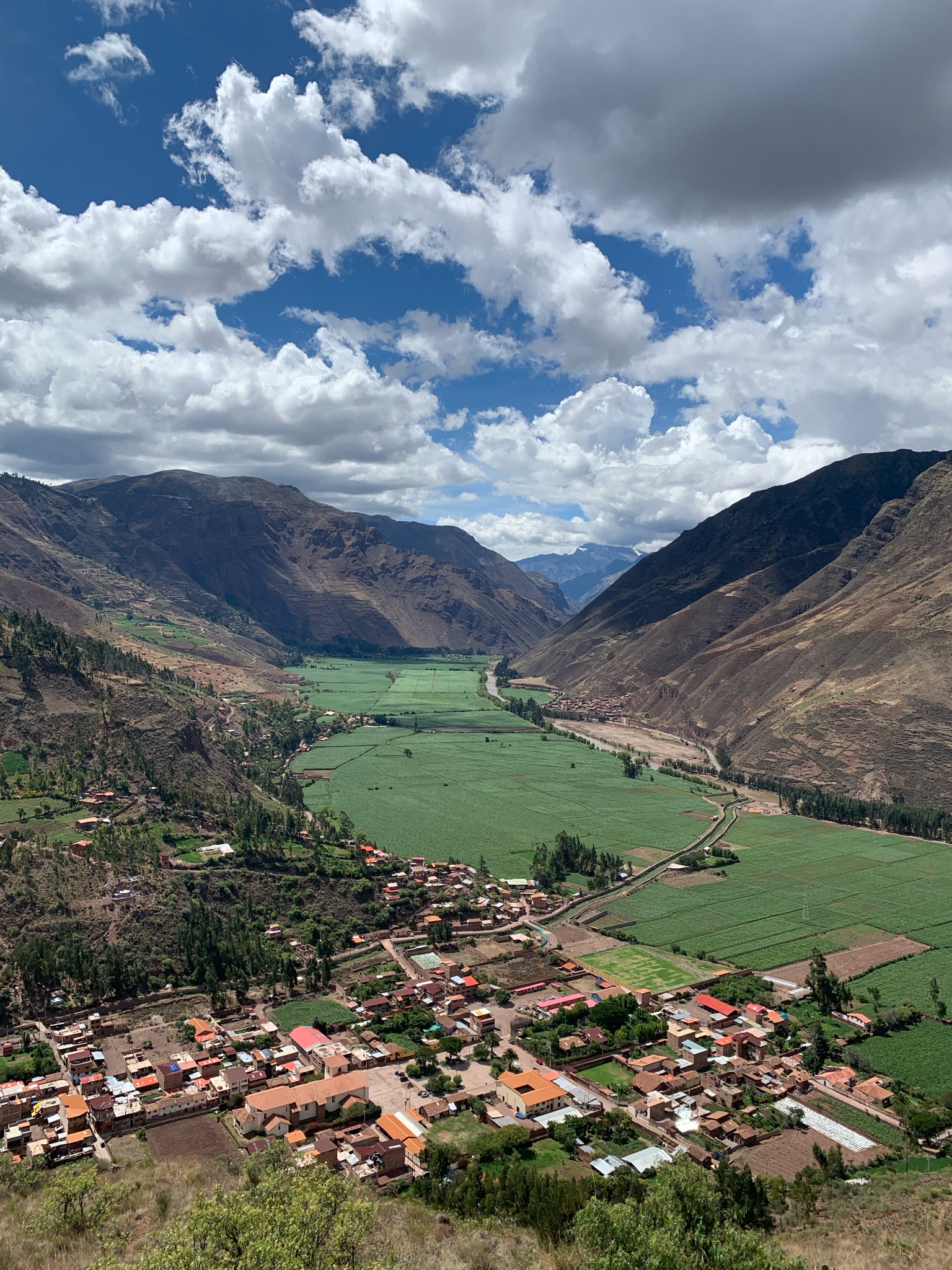
We arranged for our taxi driver to take us back to Cusco the following day, and he agreed to stop by the Pisac ruins for us to visit there as we passed through.  That morning, we woke up and enjoyed our breakfast with our host again, and then William, our driver, met us in the town square.  We arrived at Pisac about an hour later.  Pisac is about 30 minutes outside of Cusco, and it was another Incan city on a hill.  I’d read in several blogs that the Pisac ruins were a favorite to see, and I understand why.  They sprawled across the mountains as far as you could see.  Above the terraces were the remnants of homes you could walk through. 

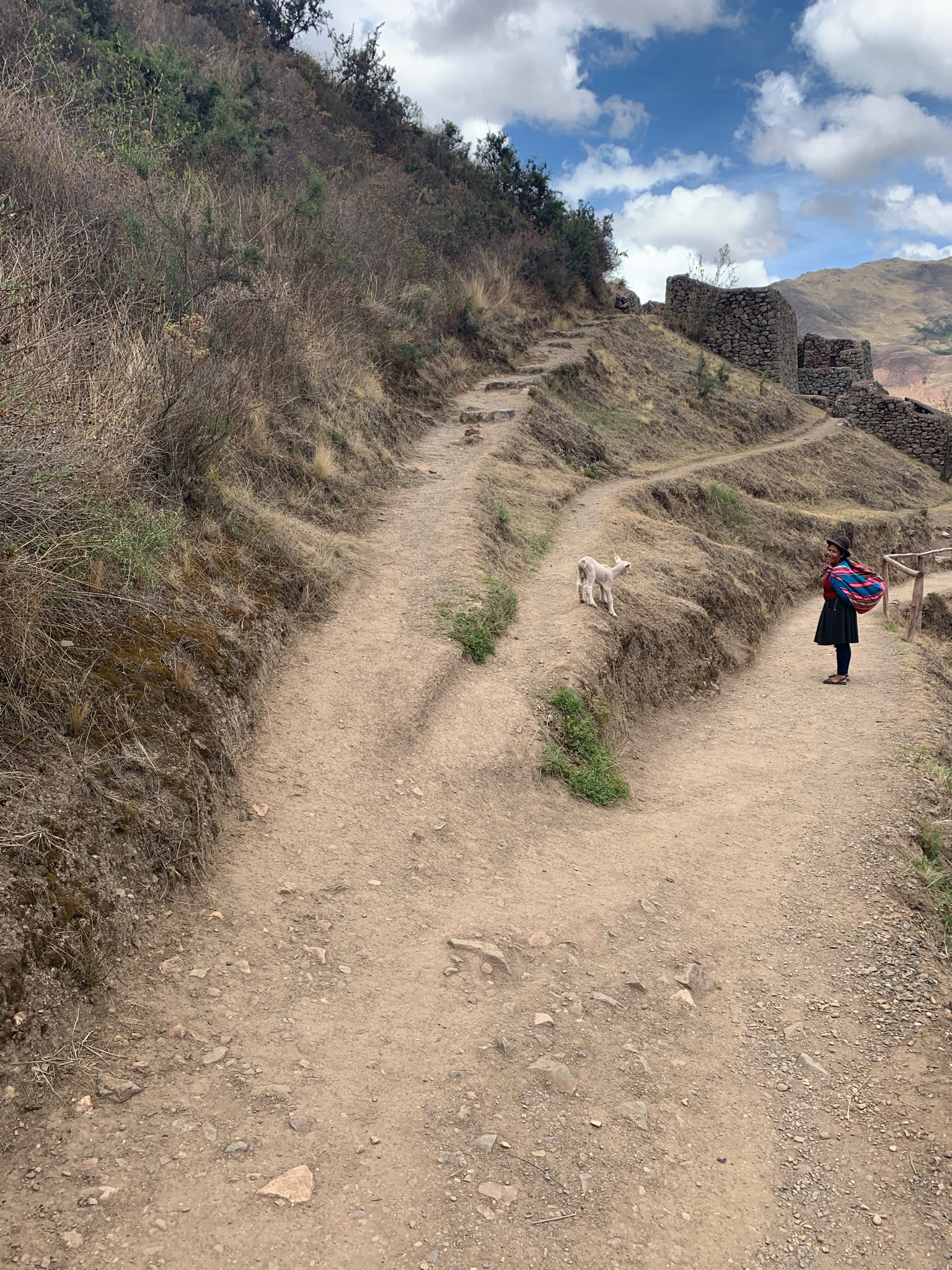
While meandering through the structures on the hillside, we saw a local woman and her baby sheep.  It may have been the cutest thing I’d ever seen.  The little lamb was hopping along and wandering beside its owner.  You couldn’t help but smile watching it play along.

We left Pisac and grabbed a bite to eat for lunch.  William joined us at a local restaurant that he said his mother helped cook at sometimes.  Our meals were good, but the trout watching us from William’s plate was a little difficult to stomach.  Apparently it is common to eat the fish whole here, but Henry and I are a little soft when it comes to that; it was gross.  William told us about some delicacies to try, and that roasted cuy (guinea pig) was one of his favorites.  We had seen it in a few restaurants, but where we did, it was very expensive.  Henry was disappointed that he hadn’t had a chance to try it, and with us leaving Cusco that evening, chances were slimming that we’d find it again.

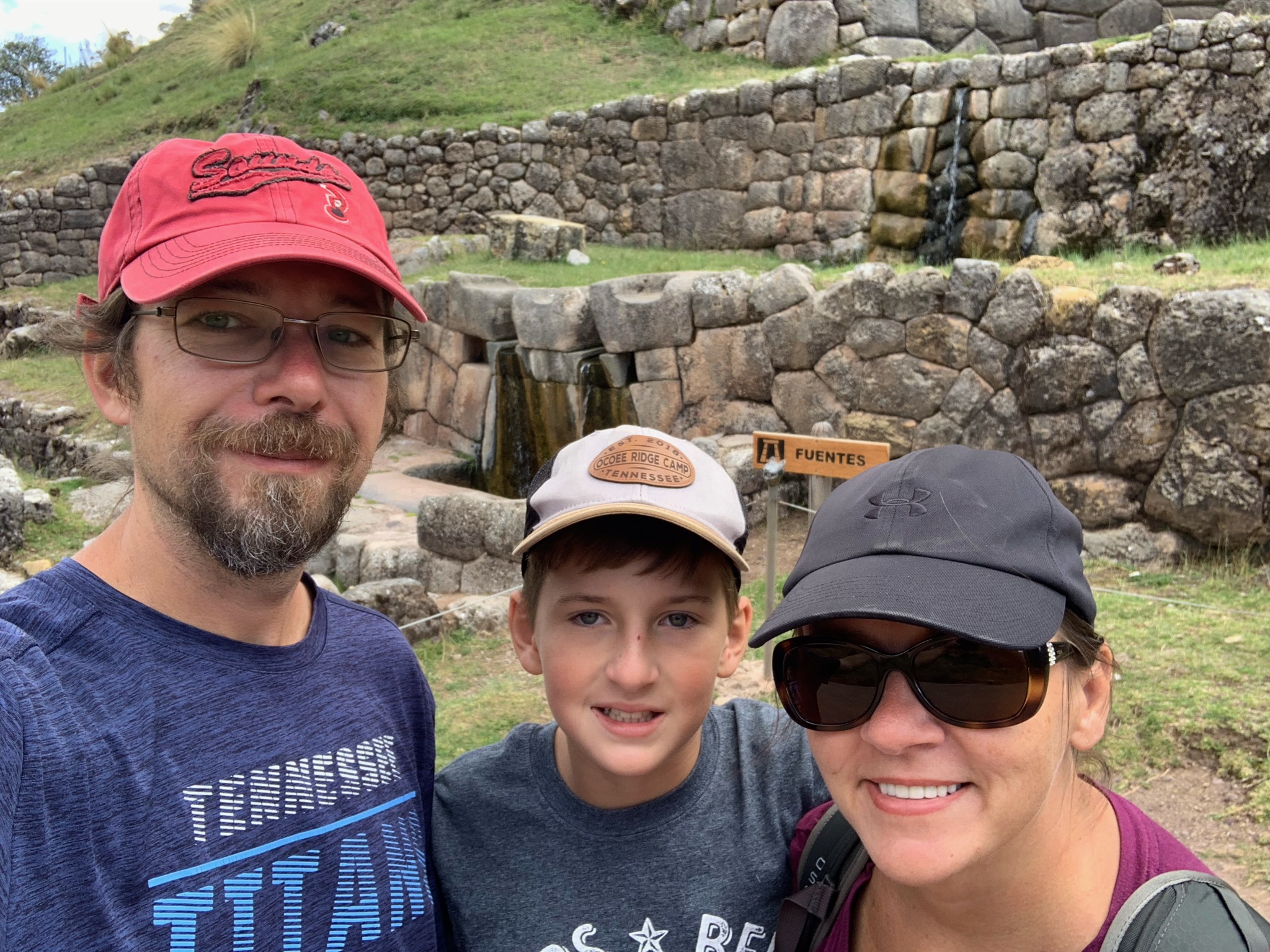
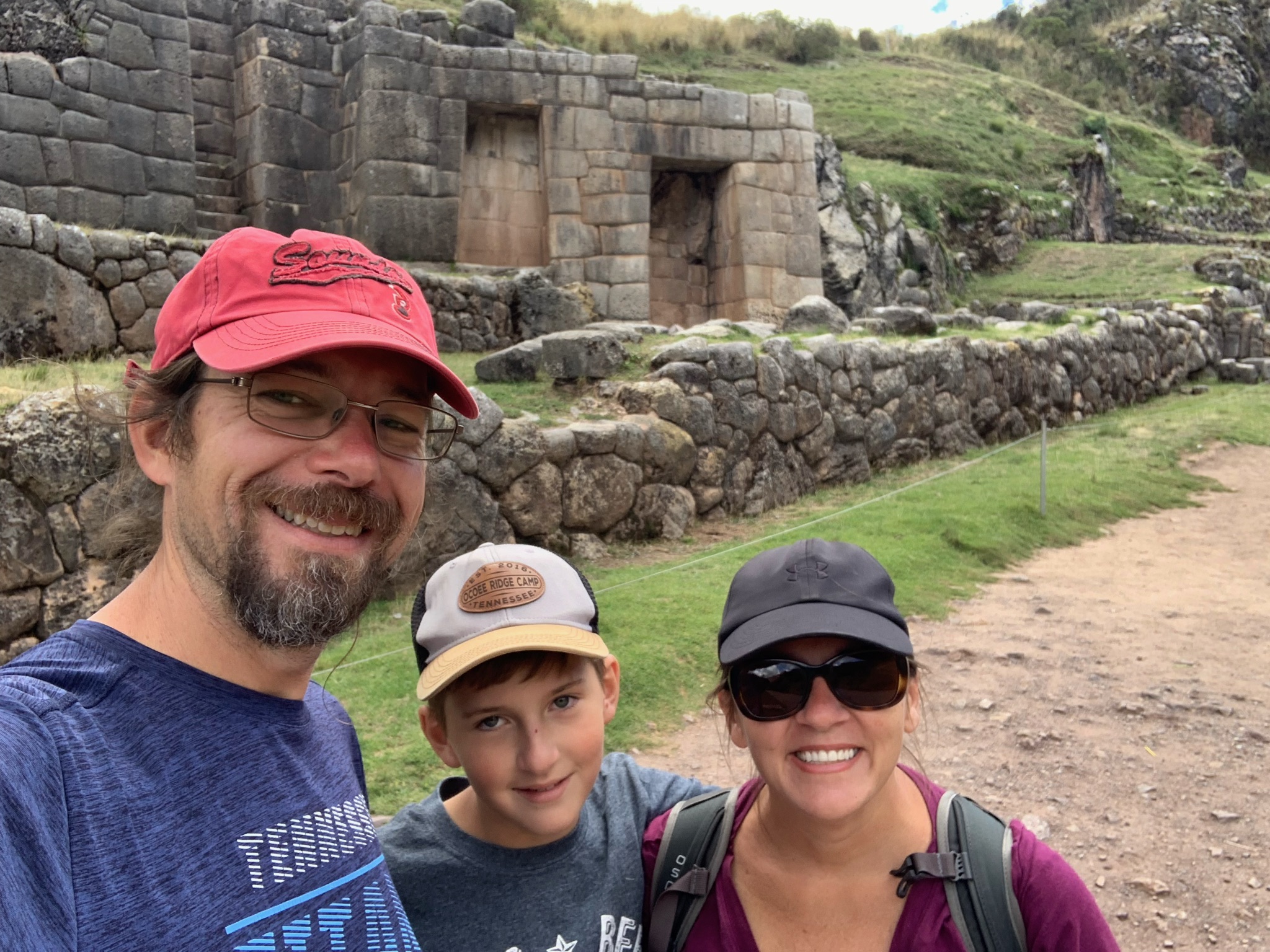
On the way back to Cusco, we were also able to stop briefly at the Tambomachay, Puka Pukara, and Q’enqo ruins.  These three sites are all significantly smaller areas, but they are located close together on the ridge as you descend into Cusco.  Tambomachay was a water temple that the Incas believed was sacred because of the consistent and pure water stream that flowed from it regardless of the season.  It is believed that the site was used as a ceremonial bathing location for nobility.  Puka Pukara was likely a guard post or lodge for travellers.  The remains of houses and storerooms are still visible, and the hillside view was worth the visit all by itself.  The Q’enqo ruins weren’t much to look at as most of the area was blocked off from walking through.  This area was different than most as there wasn’t intricate stonework there; it looked more like a pile of rubble.  Apparently this area was used for sacrifices, death rituals, and embalming, though.

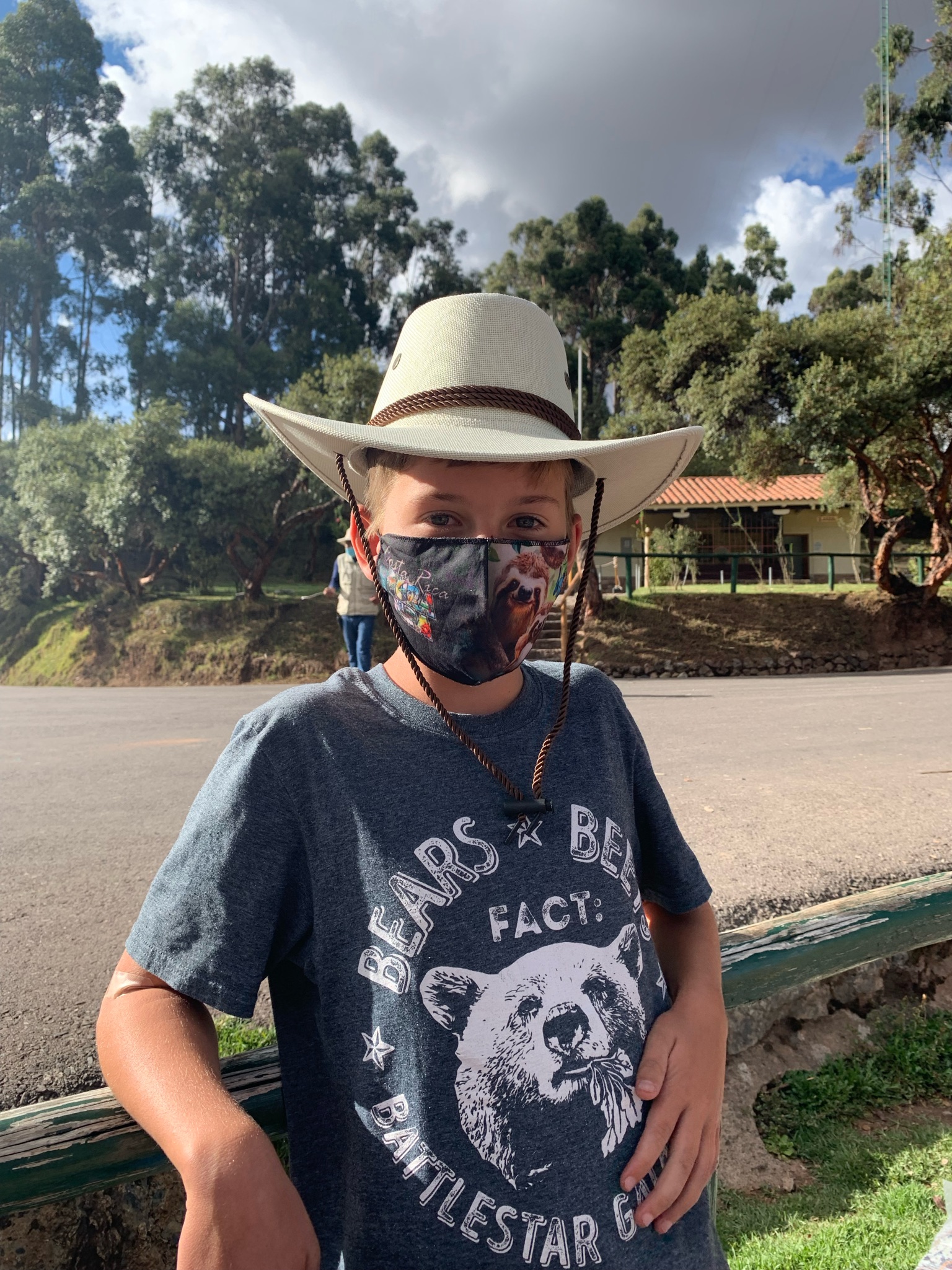
Henry found a Peruvian cowboy hat at the Q’enqo ruins, and he was so excited.  It cost him all of $3.50, and it’ll probably get destroyed along the way, but he had been wanting one for quite some time. 

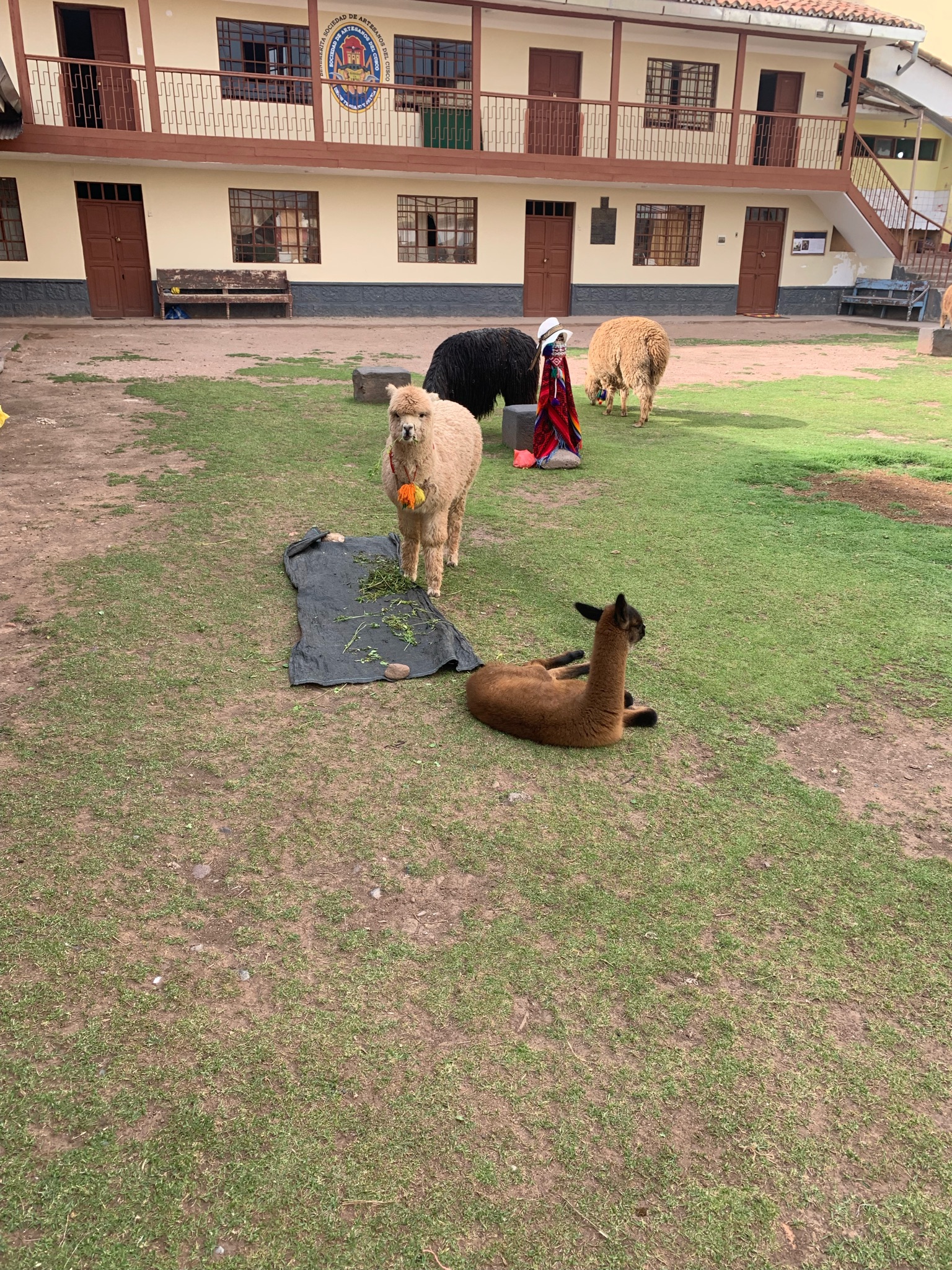
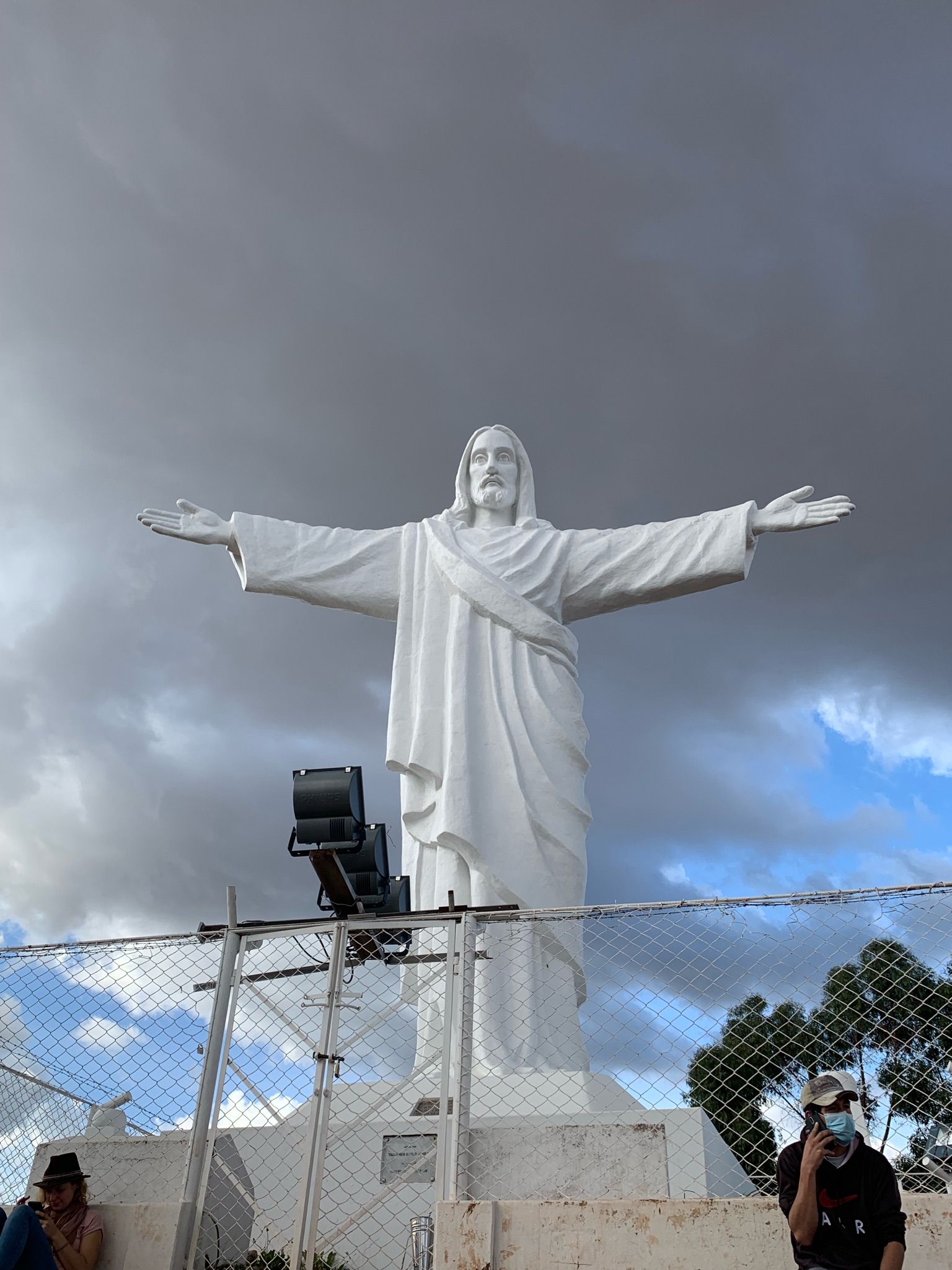
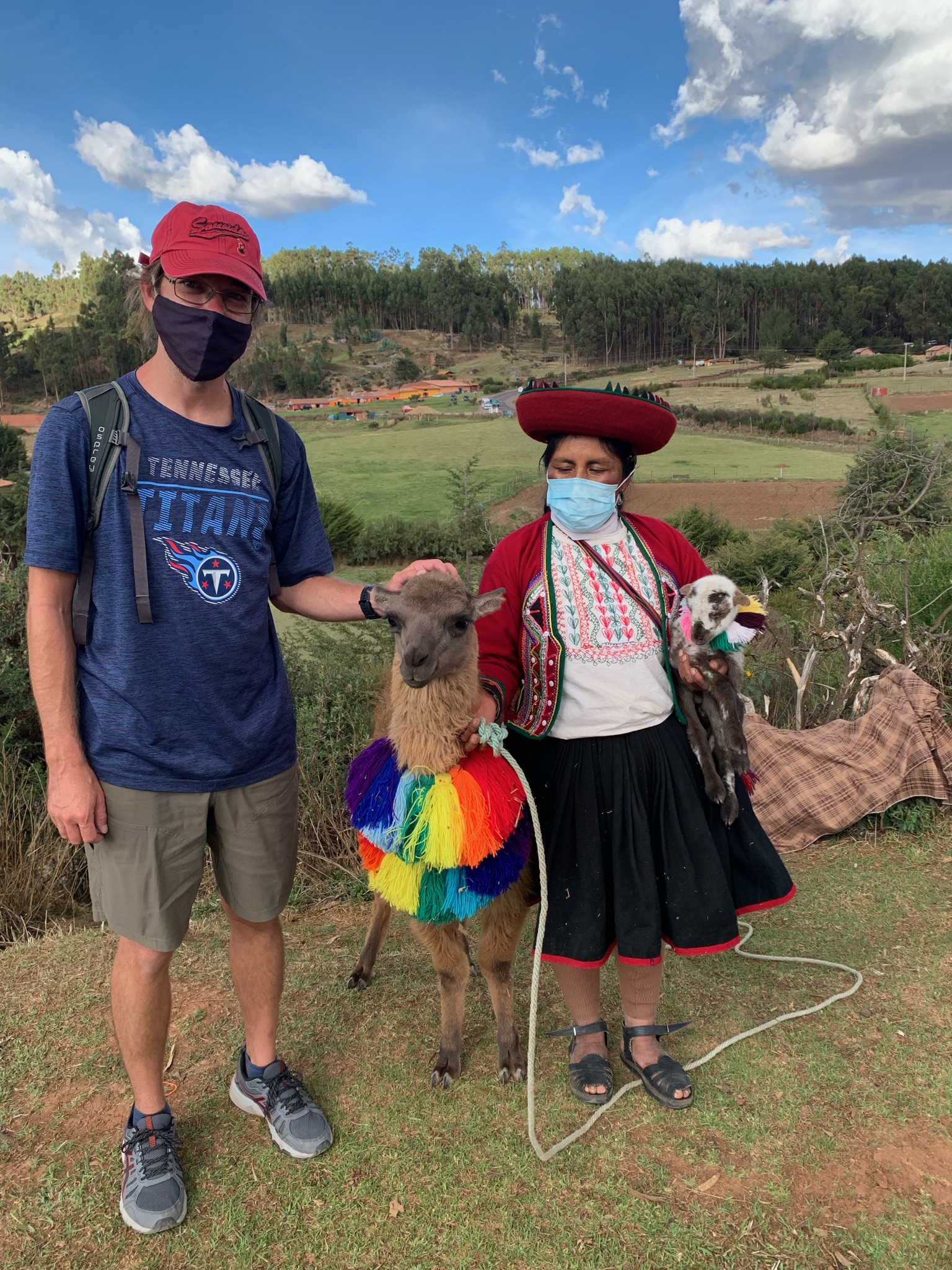
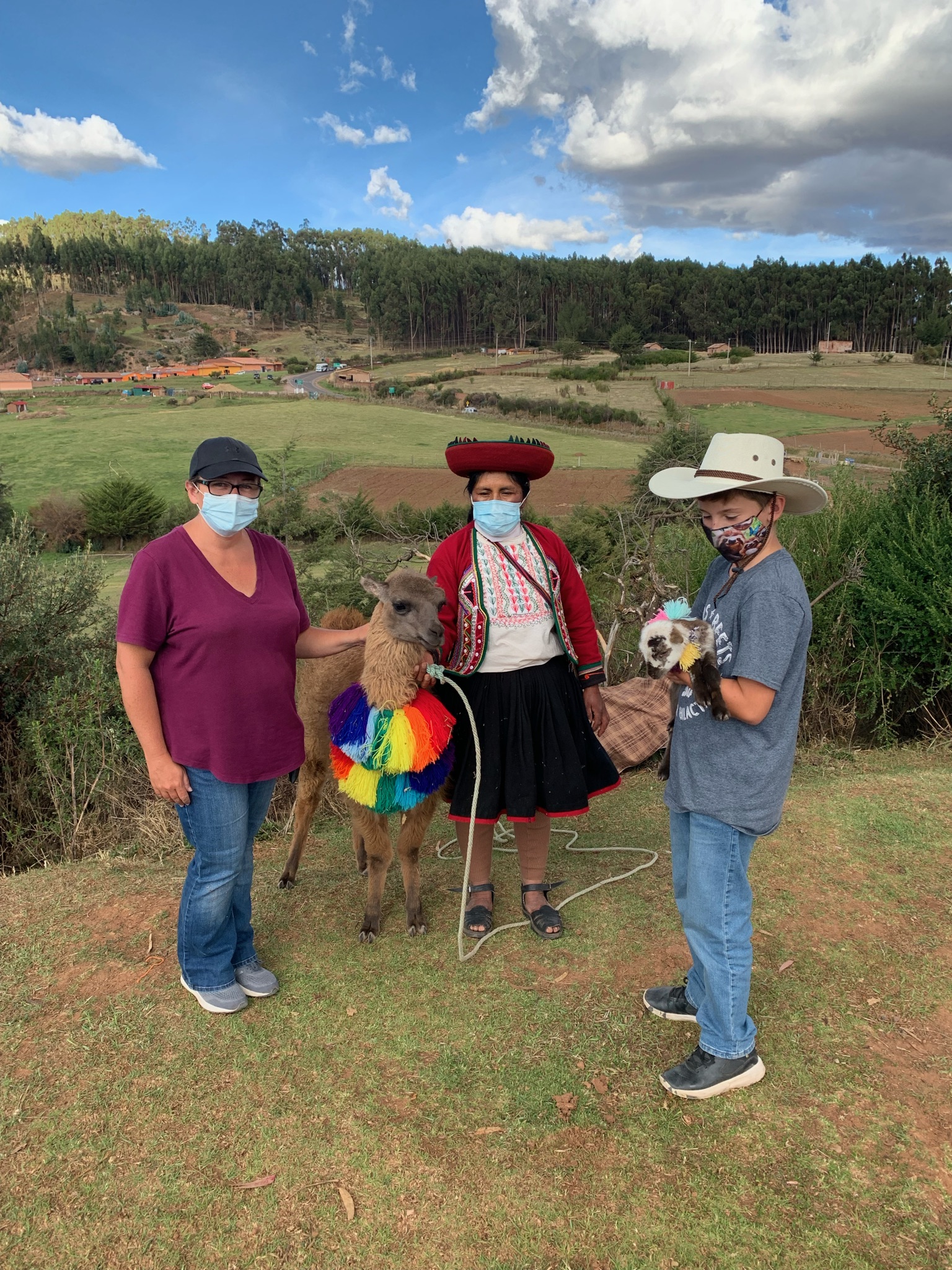
While we were visiting the sites, William also drove us by the Cristo Blanco statue.  We’d seen the statue from Cusco, and it was very near the Sacsayhuaman ruins when we visited there.  We walked by to get our pictures, and there was a lady with llamas waiting in the shade.  For a little donation, we all got to pet the big llama, and Henry, the man-child who adores all animals, got to hold the 4-day old baby llama.  He was thrilled.

William dropped us off at the airport, and we flew back to Lima that night.  It was the Monday before Thankgsiving, and we had a lot to do.  After a short rest at our Airbnb, Brian headed back late Tuesday night to the US.  We had purchased new phones and several supplies that we needed, and he needed to go pick them up.  I still can’t believe it was cheaper for him to fly home to get them than it would have been to buy them in Peru. While he was there, he also was able to send home some extra clothes/supplies we had and didn’t want to carry any longer.  While Henry and I spent the day watching movies and swimming in our tiny hotel pool, he took care of business for us.  By midnight Wednesday night, Brian returned with our booty and hit the sack.  We spent Thanksgiving day enjoying country ham and desserts that Brian’s sister sent back for us and opening our bags of supplies like it was Christmas day!  Its funny how the long johns and packing cubes we bought on a normal day would be less than exciting, but after not having anything new for three full months, they felt like a wonderful gift! 

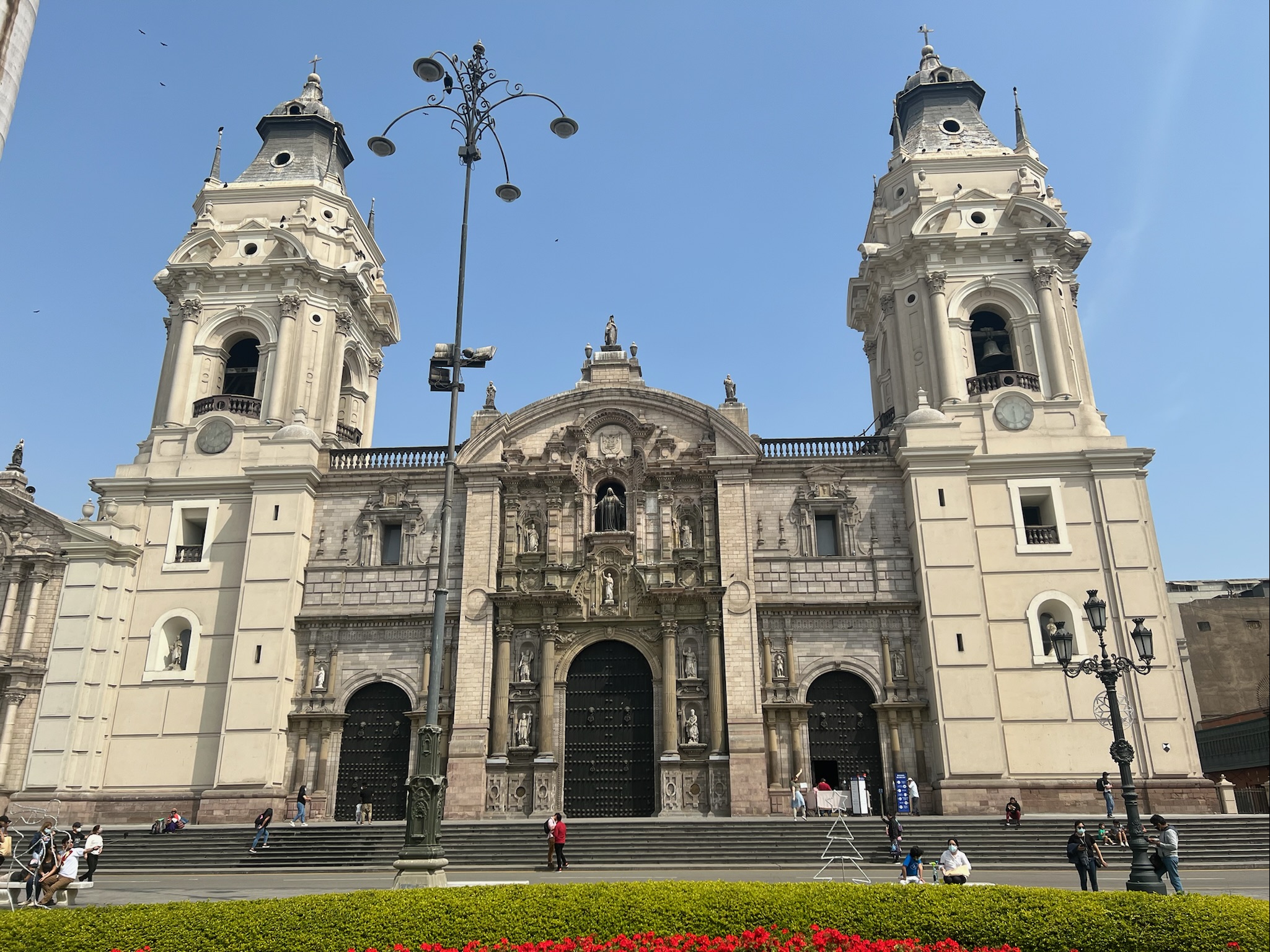
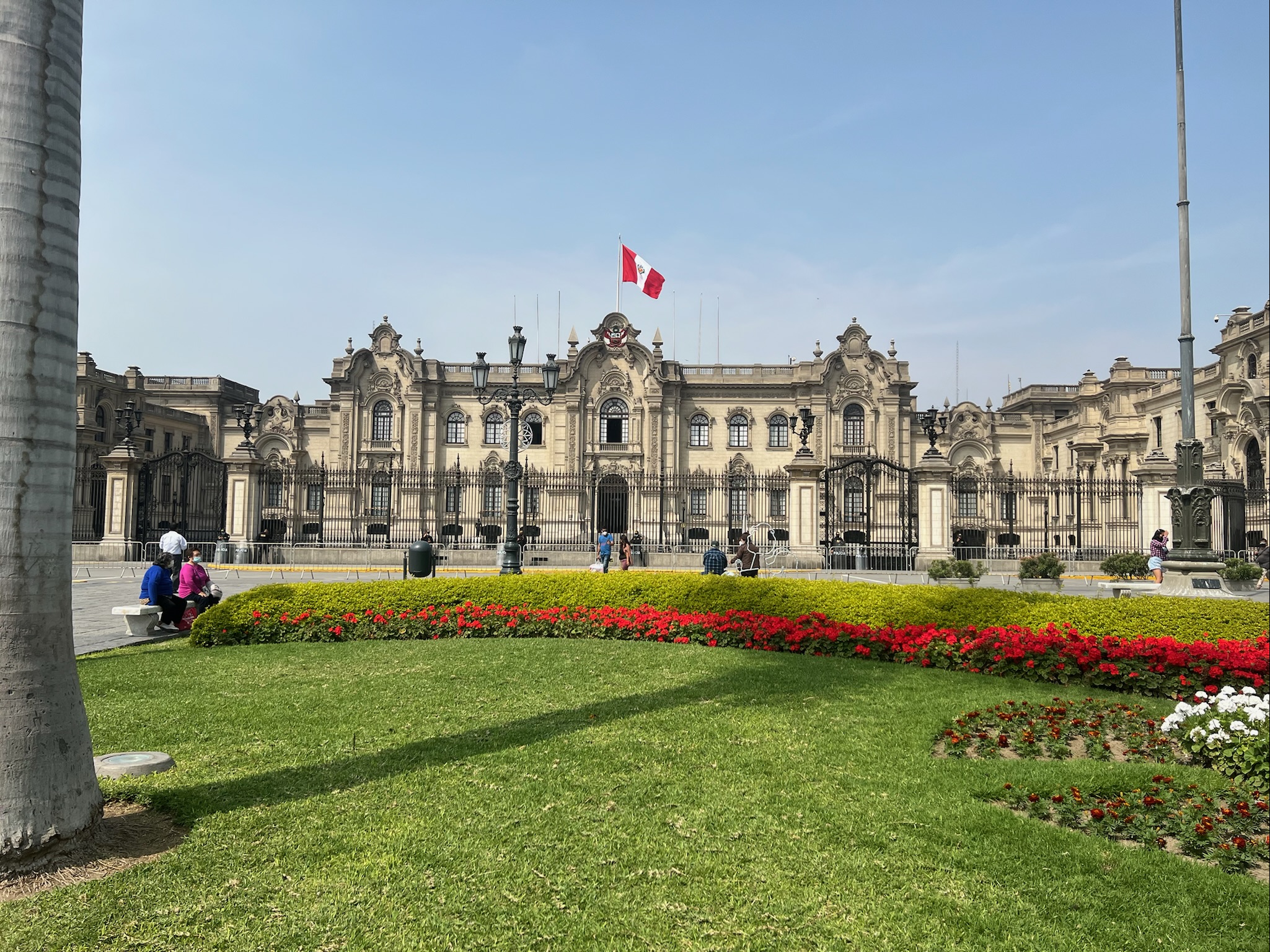
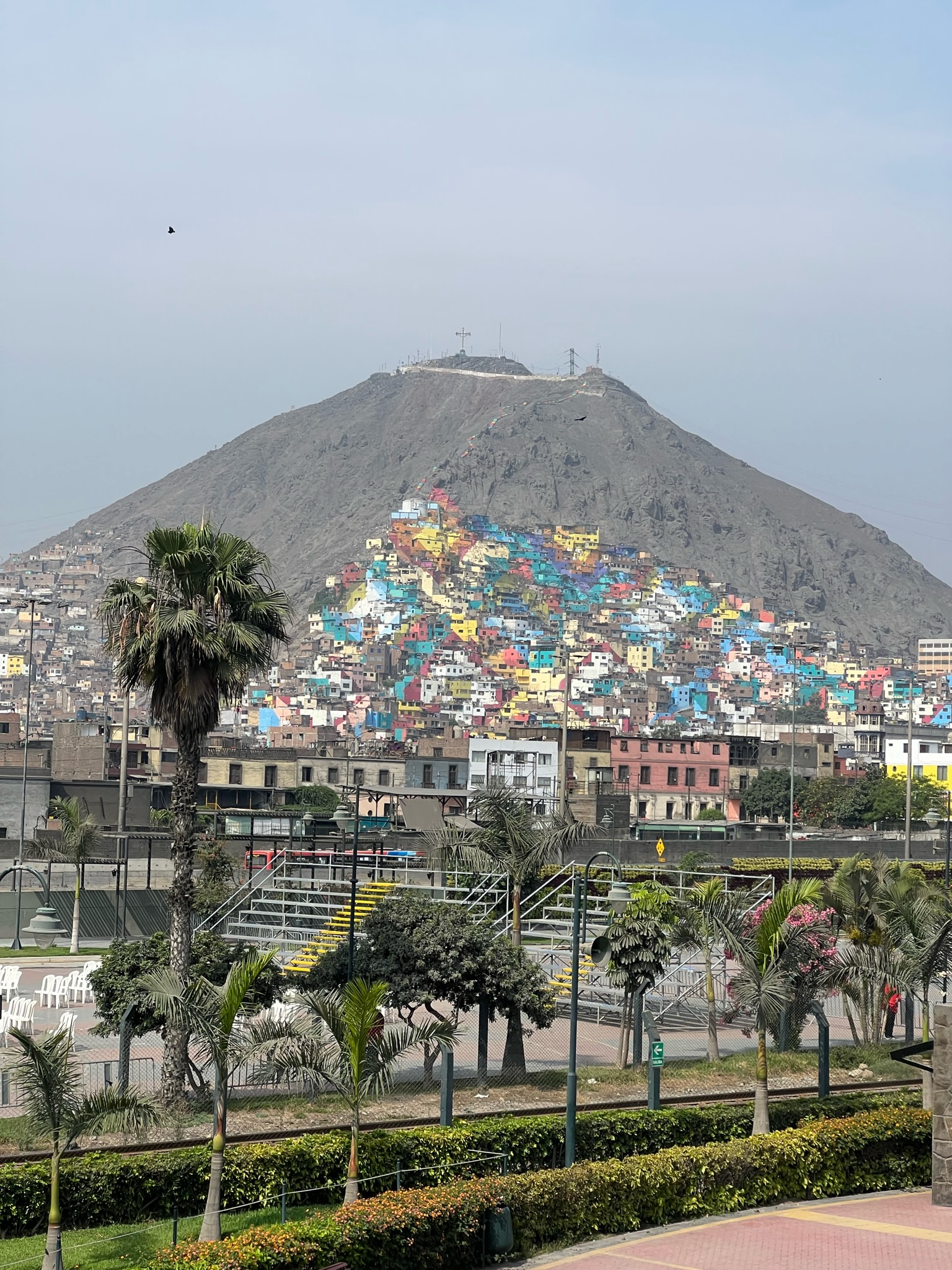
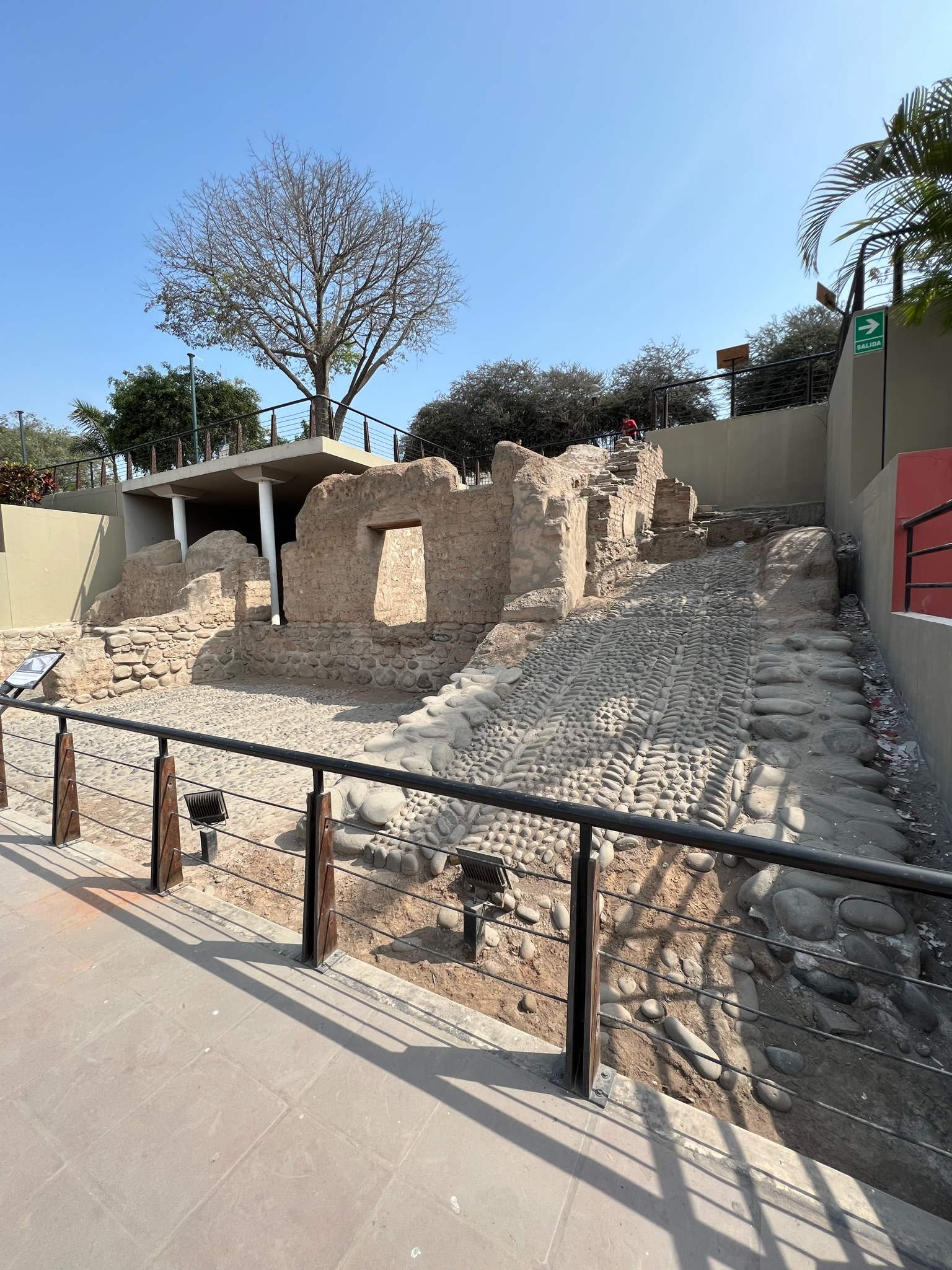
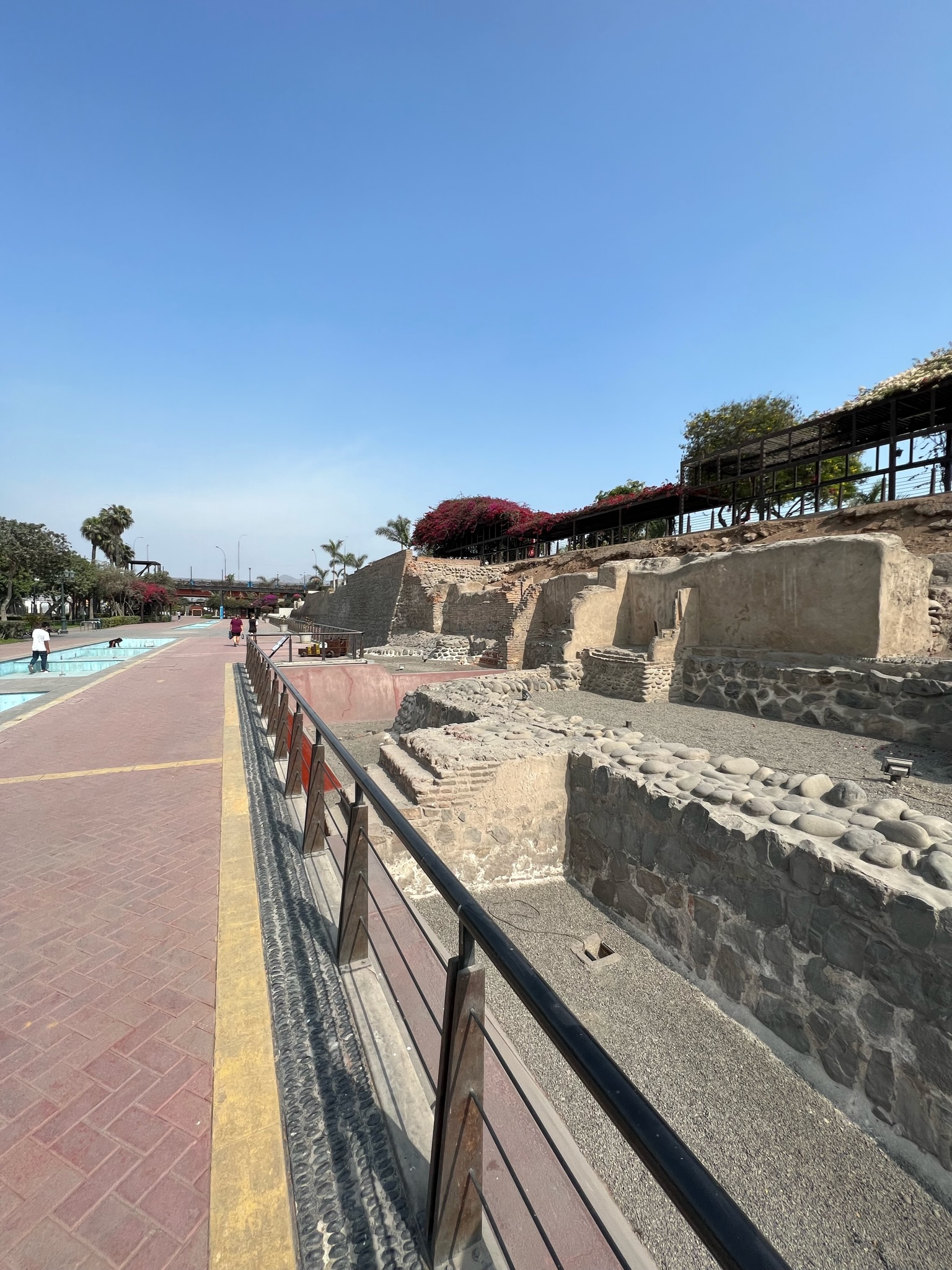
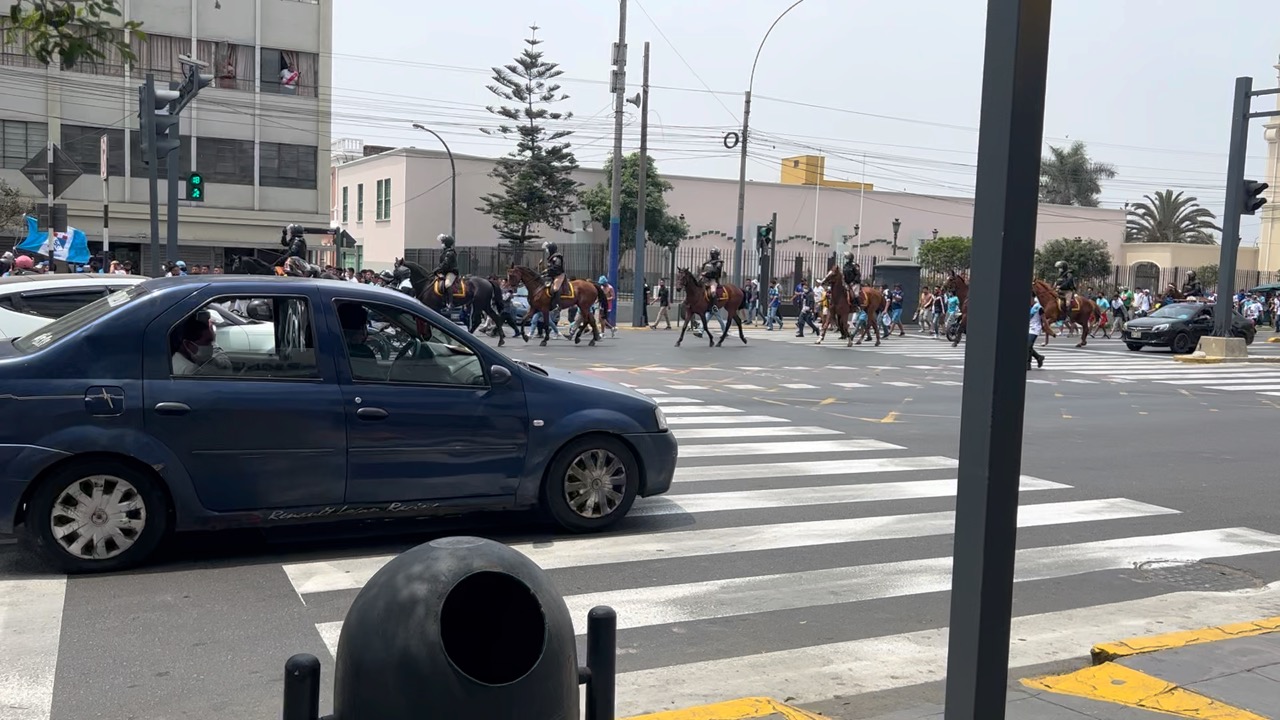
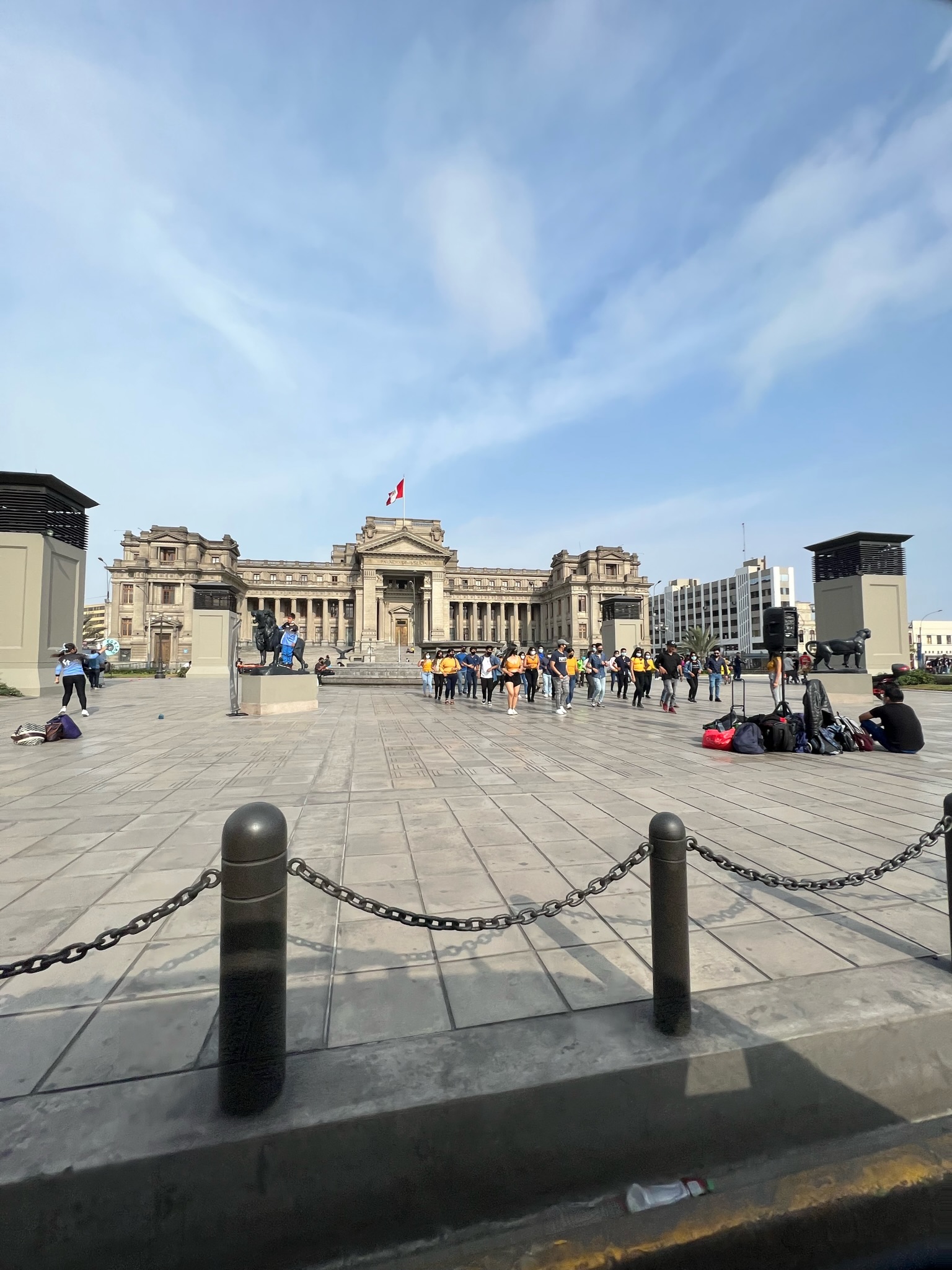
In preparation for our trip to Argentina, we needed to get COVID tested.  So on Sunday we went back to the airport to get our COVID tests, and we decided to use this opportunity to spend some time exploring the Lima downtown area.  Our driver dropped us near the Plaza de Armas in Lima, and within 5 minutes of walking down the sidewalk, we were met by a mass crowd of soccer fans celebrating as they paraded down the street.  The police were in full force, and the crowd was in control, but it was interesting to see them at it again in the middle of the day.  After we grabbed some lunch, we explored the area for a bit.  We found a lovely little park nearby that we wandered through and looked at some ruins within the city of Lima before we made our way back to our room.

On our last morning in Lima, we checked out of our hotel at 10 am, and we had a long day to kill.  We decided to utilize some of that time in the basement of the hotel while we did our laundry so that we’d arrive in Argentina with a full bag of clean clothes.  While we were biding our time in the laundry room, Henry went to the hotel’s gym to burn off some pent-up energy.  After riding the stationary bike for a few miles, he entertained himself with a jump rope.  Apparently, we have failed henry, and until this time, Brian and I didn’t realize that he still didn’t know how to jump rope.  Brian tried giving him some pointers, but he wasn’t having much luck with it.  An MMA fighter named Alfonso was working out in the gym at the time.  He and his trainer, Javier, saw Henry struggling, and they took the time to try to help him while they got their workouts in.  They gave him a few pointers and a whole lot of encouragement, and Henry finally caught onto it.  Henry was really proud of himself, and we were really grateful for these men.  They were busy, and had no reason to even notice our kid was struggling.  Even so, they took their time to help him and pour that support into him. By the time he left the gym, Henry had successfully jumped the rope 26 consecutive times. Not bad for a kid that could barely get two jumps less than an hour earlier.

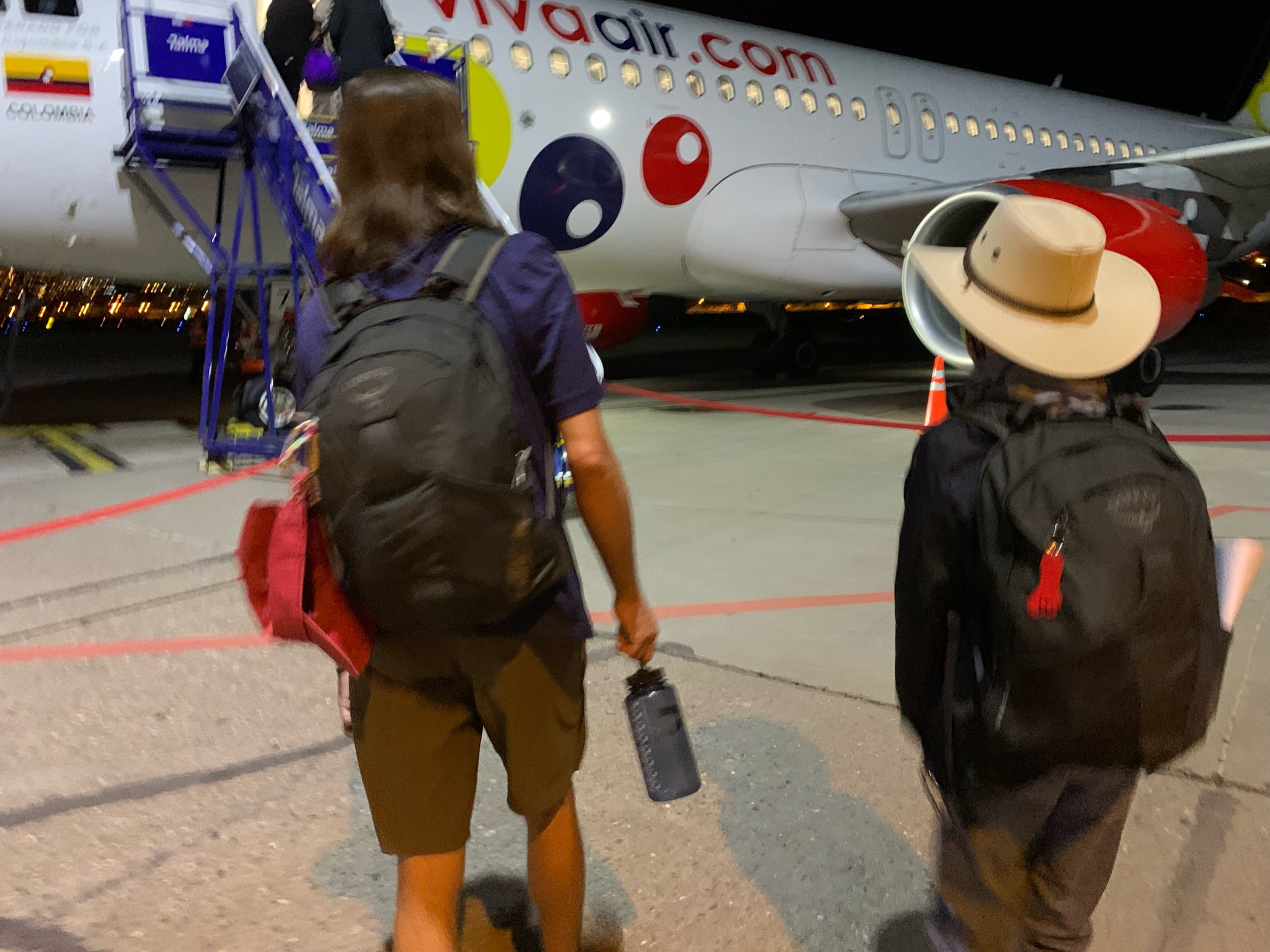
We had a late flight out of Lima, and after spending the afternoon enjoying an outdoor café near our hotel, we finally headed to the airport.  Our Uber picked us up outside of the café, and the 45 minute ride to the airport began.  About 10 minutes away from the airport, we got stuck.  We were in a 6 lane road (3 lanes each direction) and we were trying to turn left onto another 6 lane road (3 lanes in each direction).  Traffic was very heavy, and instead of using the traffic signals, a police officer was directing traffic.  For some reason, he would not allow our lanes to move forward, so for the 30 minutes we sat there, drivers in our lanes showed their disapproval by honking constantly and yelling very aggressively at him.  Our driver obviously was uncomfortable by the situation as he locked the car doors and told us to keep our phones put away.  Motorcycles here typically weave their way to the front of traffic, and while we were stuck, they worked their way forward in front of the cars in our lane and forced their way through the cars to cross the road.  Those drivers in cars were stuck where they were.  Finally, the car drivers started forcing their way forward too, and finally the police officer allowed them to go.  With all the traffic, we could not turn left.  Our driver took us past the intersection and turned an impressive u-turn to get us back on our route.  Thankfully, we made it to the airport in time and got in line to check in at the airport.

We started to relax as we waited in line thinking that the worst was finally behind us. The line wasn’t overly long, and the agents at the check in counter were processing everyone quickly enough. A young lady agent began walking through the line and asking to see all of the required documentation to ensure that we were all ready for the ticket counter when we got there. We’d gotten the list of requirements from the airline the night before, and we felt like we were ready. Unfortunately, when she got to us, she disagreed. On top of passports, proof of vaccination, COVID PCR test results, health affidavits, and proof of onward travel, we had to show that we had sufficient medical insurance that would cover us if we were diagnosed with COVID while we were staying in Argentina.

We have travel insurance that covers this, but because our policy doesn’t specifically call out COVID, Coronavirus, or anything similar, the agent wouldn’t accept this as proof. Our travel insurance company considers a COVID diagnosis just like any other medical issue, but Argentina requires that your policy specifically state something to that affect. It was 8 pm, and our flight was scheduled to leave at around 11. We had plenty of time, but I began panicking at the thought of not being allowed on the flight. Standing in line for the ticket counter, I called the insurance company, and they said they’d email me a letter of coverage that we could expect in the next 1-3 days. I explained that my flight would leave without me in just a few hours, and they offered to rush the letter. Their office closed at 9, but if I could send an email like they specified, they would expedite my request. If I hadn’t heard anything by 8:40, I should call them back. While I was on the phone, Brian was scrubbing their website, and thankfully he’d found some blurb on their site that said that Covid would be covered under their policy.

We called the agent back over to us, and after a few minutes of pleading, she allowed that to suffice. We made it through the rest of the line with no issue. By 8:50 when we got through security, I had still not received the letter of coverage, and since the insurance office would be closed at 4:00 am when we landed, we didn’t want to risk any issues in customs if the letter didn’t come through. We called the insurance company back, but the person I reached this time couldn’t grasp the issue quite so well. After angrily arguing that they would either be providing the letter in the next 10 minutes or refunding me for my missed flight, they finally helped us out and got the letter to us. We made it on the flight with time to spare and some peace of mind about getting through customs. Spoiler alert: no one in Argentina even asked to see it; all of the effort to get the official letter and all of my panicking was for nothing.

Peru was one of my favorite countries, and I would gladly go back there.  The weather was baffling, but the food was delicious, the people were kind, and the country was beautiful.  I wish we had more time to explore the rest of Peru.  I would have liked to see more of the Sacred Valley, but also I would have enjoyed seeing all the colors on Rainbow Mountain, exploring the beginnings of the Amazon jungle, hiking the mountains of Cordillera Huayhuash, visiting the Chachapoyan ruins, seeing the seals of the Bellestas Islands (Peru’s Galapagos), and exploring the floating islands on Lake Titicaca.  There’s so much to see and do here that it could take months to fully enjoy it all.  We couldn’t swing that kind of time on this trip, but maybe next time!