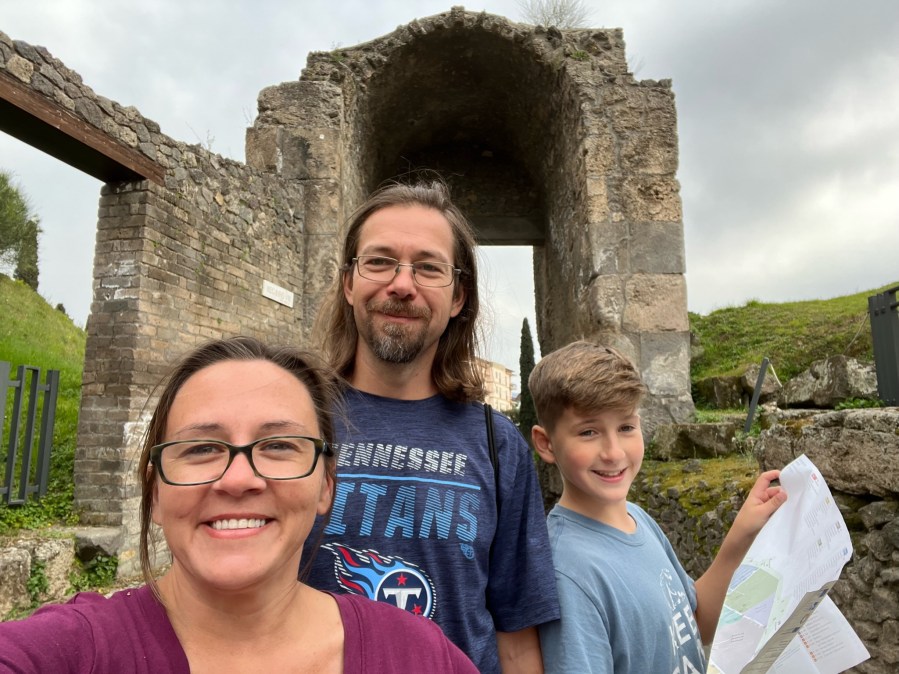
If we do not learn from history, we shall be compelled to relive it. True. But if we do not change the future, we shall be compelled to endure it. And that could be worse.
– Alvin Toffler
Ah, Italy. I’ve wanted to go to Italy for so many years, and who doesn’t? It’s romantic and beautiful. They’ve got ancient ruins to explore, lost cities, beautiful beaches surrounded by warm blue water, and on top of all that, they’ve got the best pizza and pasta that you’ve ever tasted. And did I mention that the wine is phenomenal too? We were in Morocco trying to figure out where to go next, and when we saw we could book $6 flights to Rome, we knew exactly where we’d be going next.
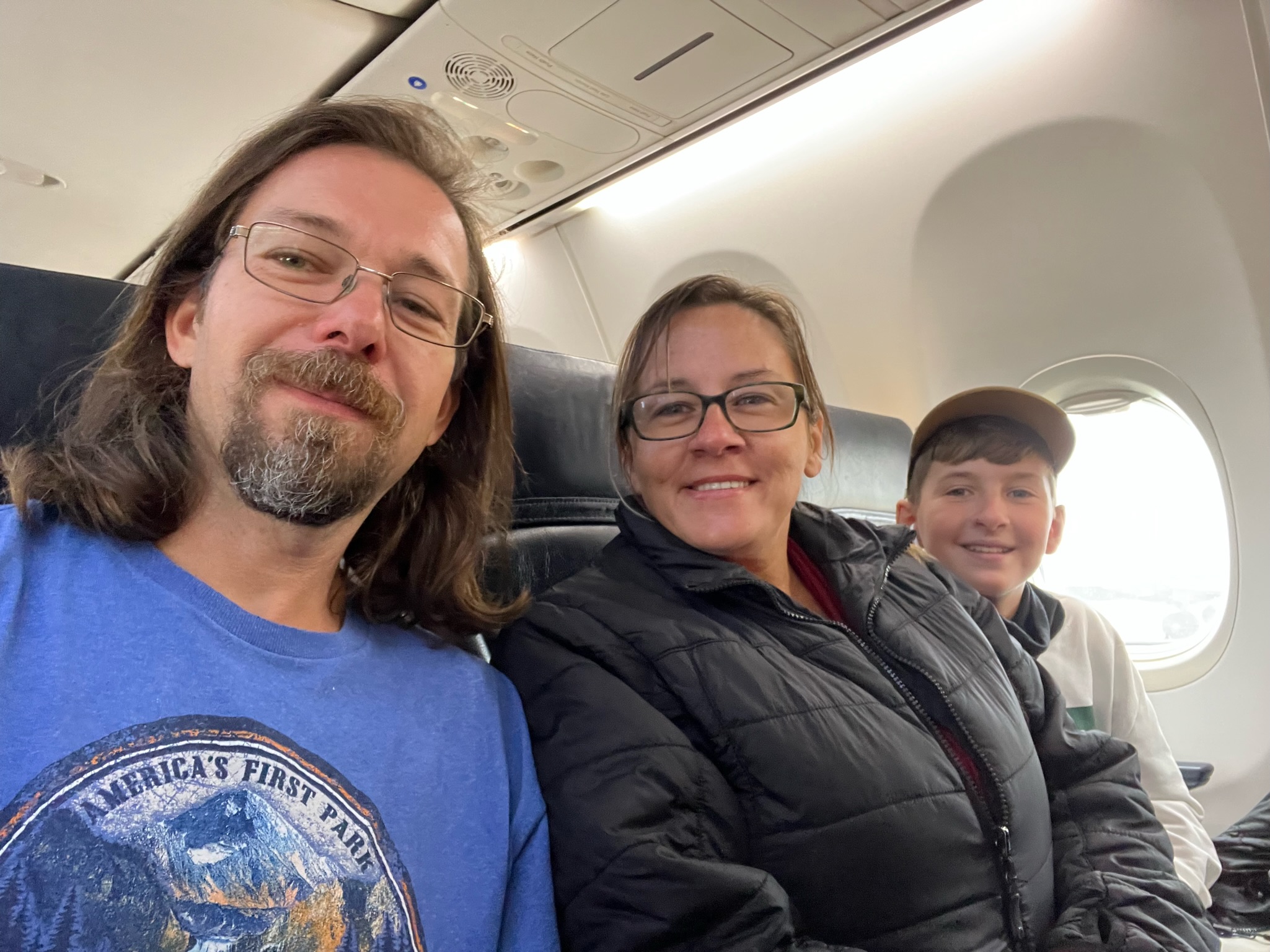
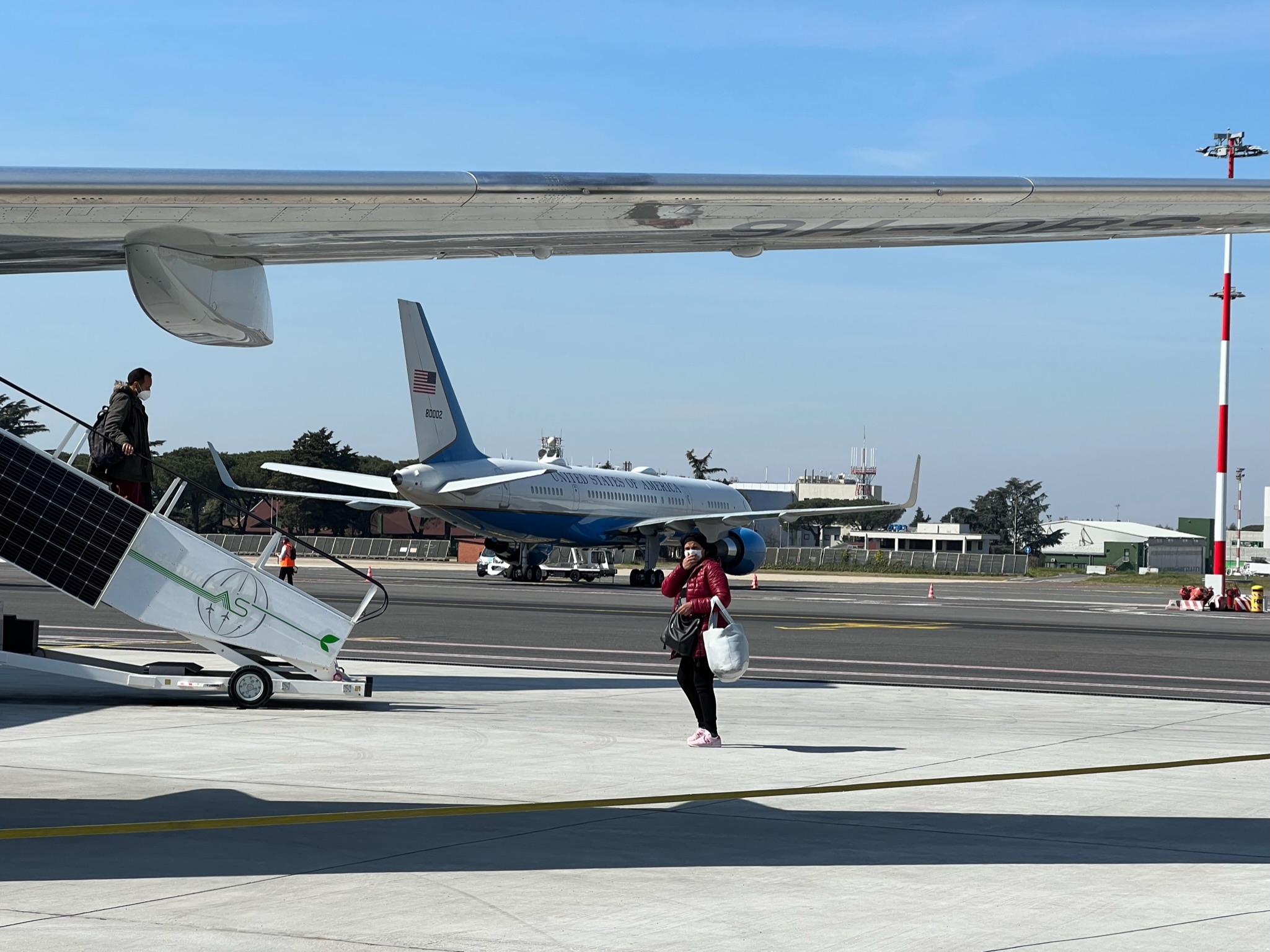
We landed in Rome after a smooth, mid-morning flight. One of the first things we noticed was that there was a United States of America plane on the tarmac. We took pictures of it as we disembarked, and we imagined all sorts of scenarios about which US official was in Italy with us. It’s funny how good it felt just to see that US plane there on the tarmac. After being gone for so long, it just felt good to see some piece of home when you least expect it. Later that day we found out that the National Security Advisor, Jake Sullivan, was visiting Rome as well.
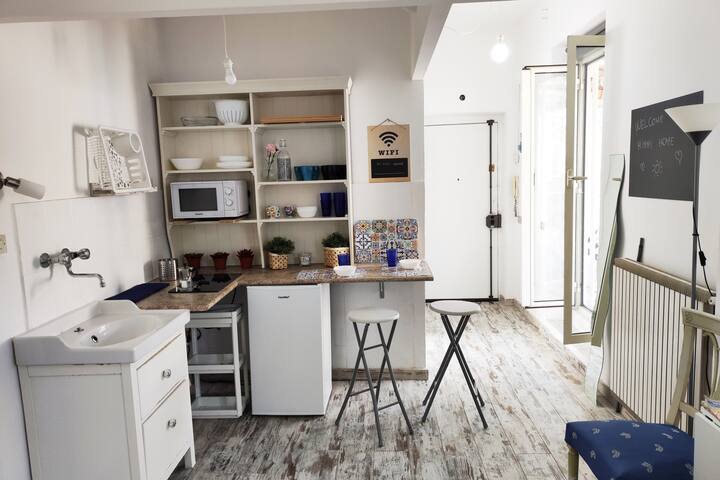
We’d booked an apartment on Airbnb in the Trastevere neighborhood to stay in. We had picked this place because it was centrally located; since we wouldn’t have a car, we needed to be able to either walk to or get public transportation pretty easily to anywhere we might want to visit. This little apartment was perfect for us. It had a well-stocked kitchen where we could cook a meal or two if we wanted, and a beautiful terrace where we could sit outside and relax if we liked. The only issue we had was that the shower was so small we could barely fit into it.


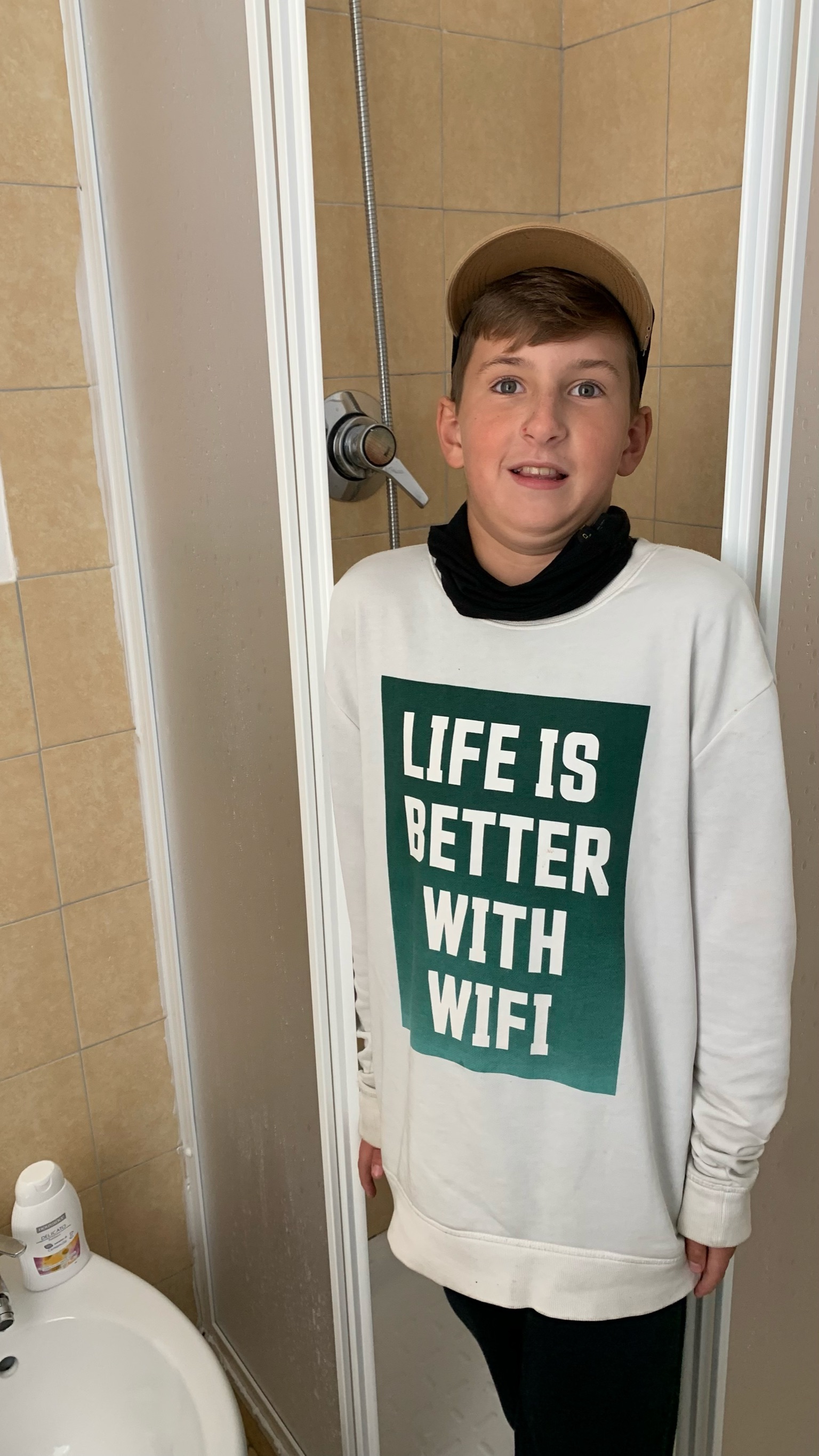
When we arrived straight from the airport, the cleaning man was still working inside to get it ready for us, but he allowed us to come in and drop our bags. We decided to grab a bite to eat from a restaurant just down the street to help kill some time.
Walking into the restaurant, I was a bit concerned because of some of the COVID regulations Italy had put into place. Covid had been pretty rough in Italy, and they had created a green pass system for residents to safely get out and about. Throughout most of Europe, we are considered fully vaccinated because our last dose of the 2-dose regimen was within the last 270 days (9 months). For Italy, that qualified us for a Green Pass equivalent (the actual green pass is only for residents). Italy took the regulations a step further, though, and in order to eat in restaurants, stay in hotels, enter many tourist venues, or ride on public transportation, you had to have a Super Green Pass or equivalent. To get that, you either had to have had the last dose within the past 6 months or you’d have to take a antigen test that was only valid for 1 day. Our vaccines were within the 9-month window, but we were past the 6-month window, so we didn’t have the Super Green Pass. We worried that we weren’t going to be able to do very much while we were in Italy because of that. As a worst case, it meant that we’d have to get several antigen tests while we were in the country, so we were still willing to travel to Rome, but it would get very inconvenient and expensive if we really had to do that every day.
Thankfully it wasn’t an issue for us that first day. The restaurant was a local pizza and pasta trattoria, a traditional informal Italian restaurant. After showing the hostess our vaccination cards (which she didn’t look at closely enough to see we were past six months), we ordered two pizzas to split amongst the three of us, a salami pizza because pepperoni isn’t a thing in Italy, and a sausage and broccoli pizza. The second one is very unusual for Americans, but it appeared to be rather common in Italy. The food was good, but for all the anticipation I had about tasting my very first slice of Italian pizza, I wasn’t overly impressed. The crust was super thin, which I love, but it wasn’t crispy at all. If anything, I’d describe it as a little soggy. And I’d heard that Italians didn’t cut their pizzas, but I didn’t really think that was true. It’s true though. You order a pizza, and you get a 16” pizza whole. You get to tear it into manageable pieces like a neanderthal at your table.
We finished our meal, though, and we made our way back to our apartment to decompress a bit. After stretching and relaxing for a few hours, we decided to walk towards one of the many pedestrian areas to grab a bite of dinner. The host seated us without any questions about our vaccination status, and we ordered pastas all around. Maybe we were just tired, or maybe our expectations were off, but we really didn’t enjoy the pasta at this meal either. It was good, I guess, but it wasn’t exactly fantastic.
The next morning we woke up and went exploring. We wanted to see about going to visit the Colosseum. Because of Covid, the rules said we’d have to have the Super Green Pass to get in. They also said that we’d have to buy our tickets online ahead of time for a specific 15-minute time slot to enter the site. We’ve been travelling long enough to see that what the government says people are doing and what people are actually doing can be very different; we didn’t want to go take Covid tests for no reason if they didn’t really care about them when we arrived. We also didn’t want to buy tickets online just to get there and find out that they were sticklers for the rules and not let us in. So, we thought we’d just check it out first.
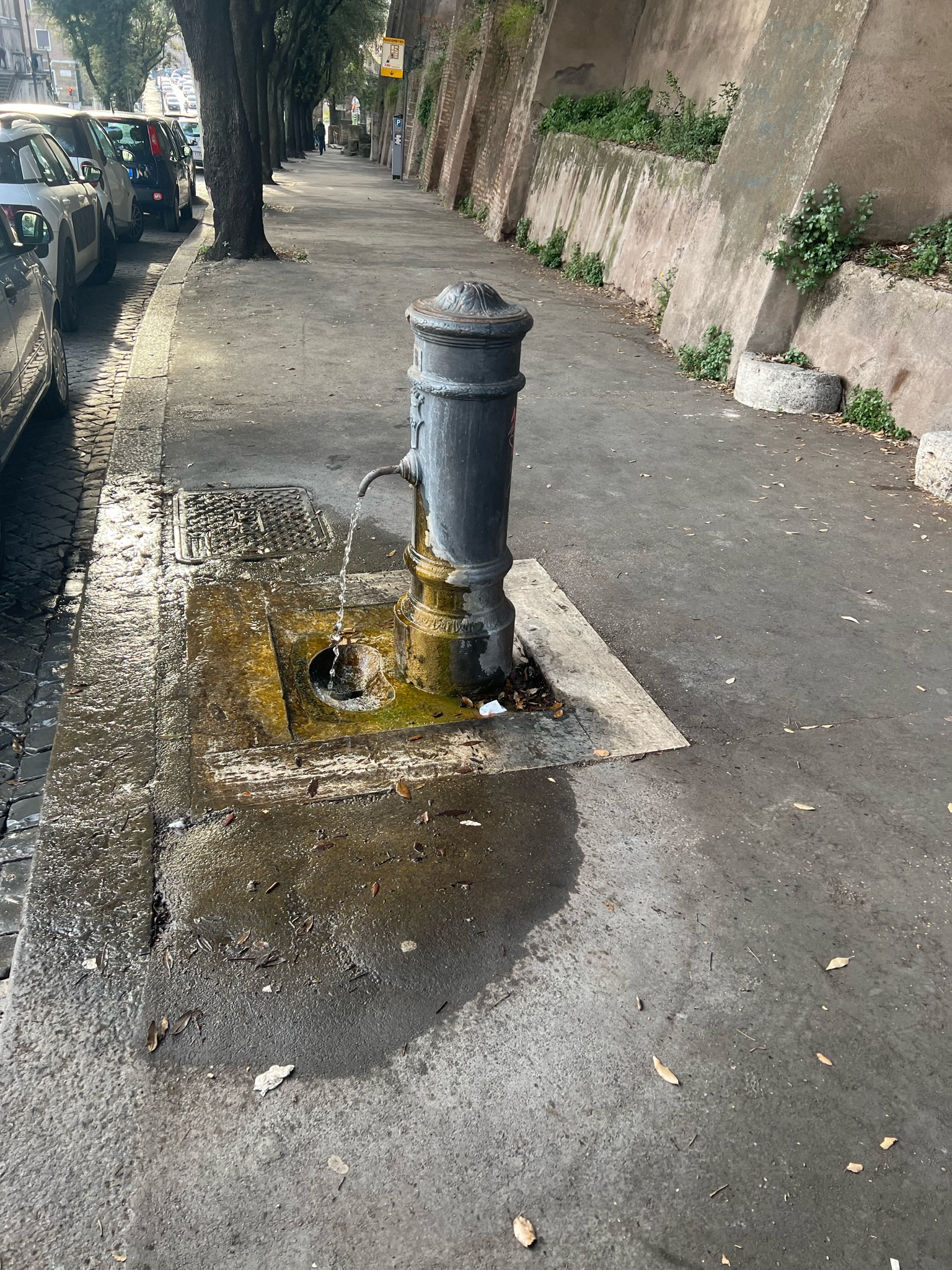
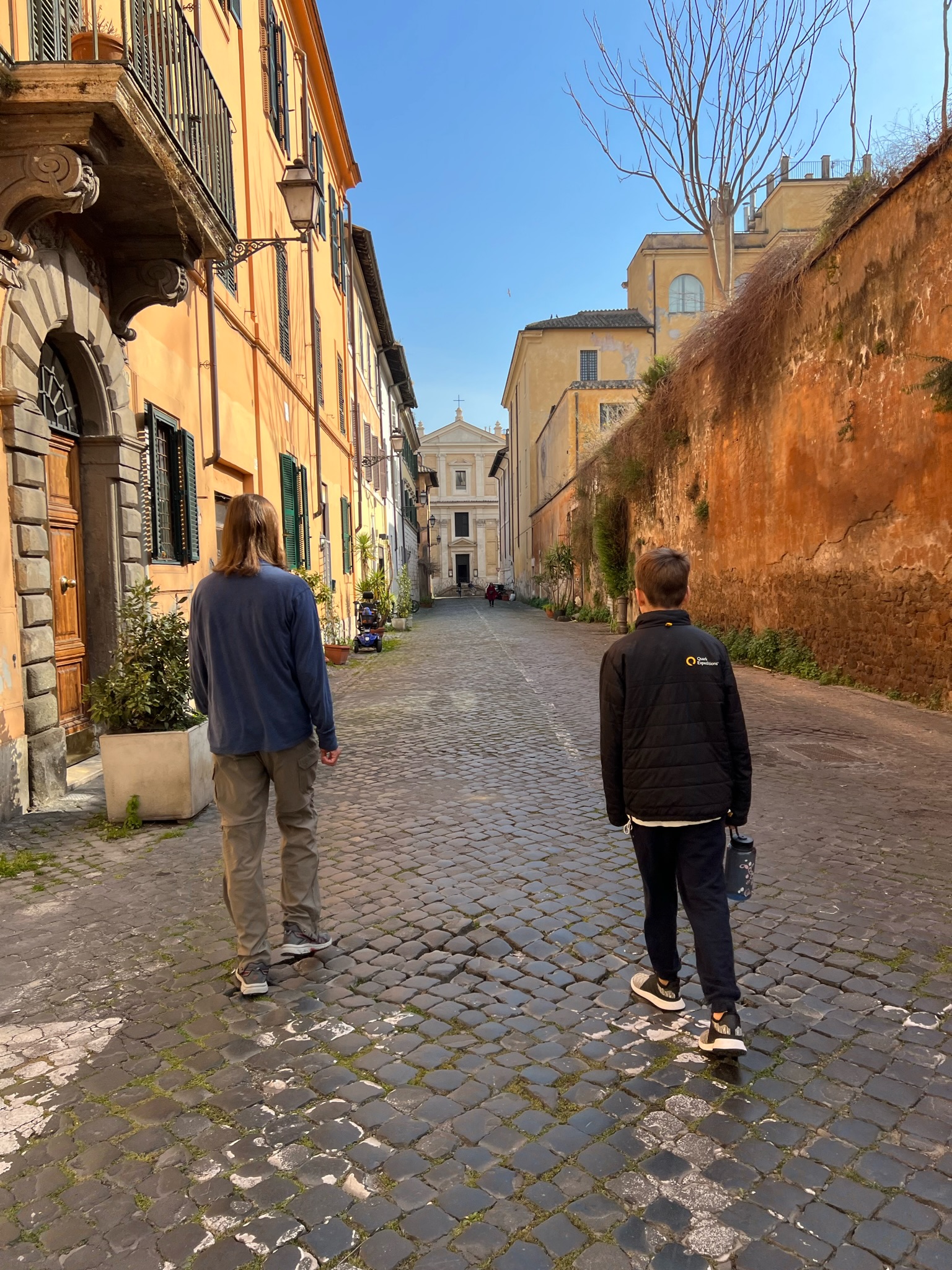
The Colosseum was about a 30-minute walk from the room, and we enjoyed strolling about the city on our way. I was amazed by all of the ruins. We’d be walking along and looking at a market, then a church, then a 1000 year old ruin, then a school. It was crazy to see how the ruins were just sprinkled into their everyday life. I’d be looking at an architecturally beautiful building and notice that the remnants of an old wall were coming out of the side of it. And of course, that was perfectly normal for the Italians who saw it every day.

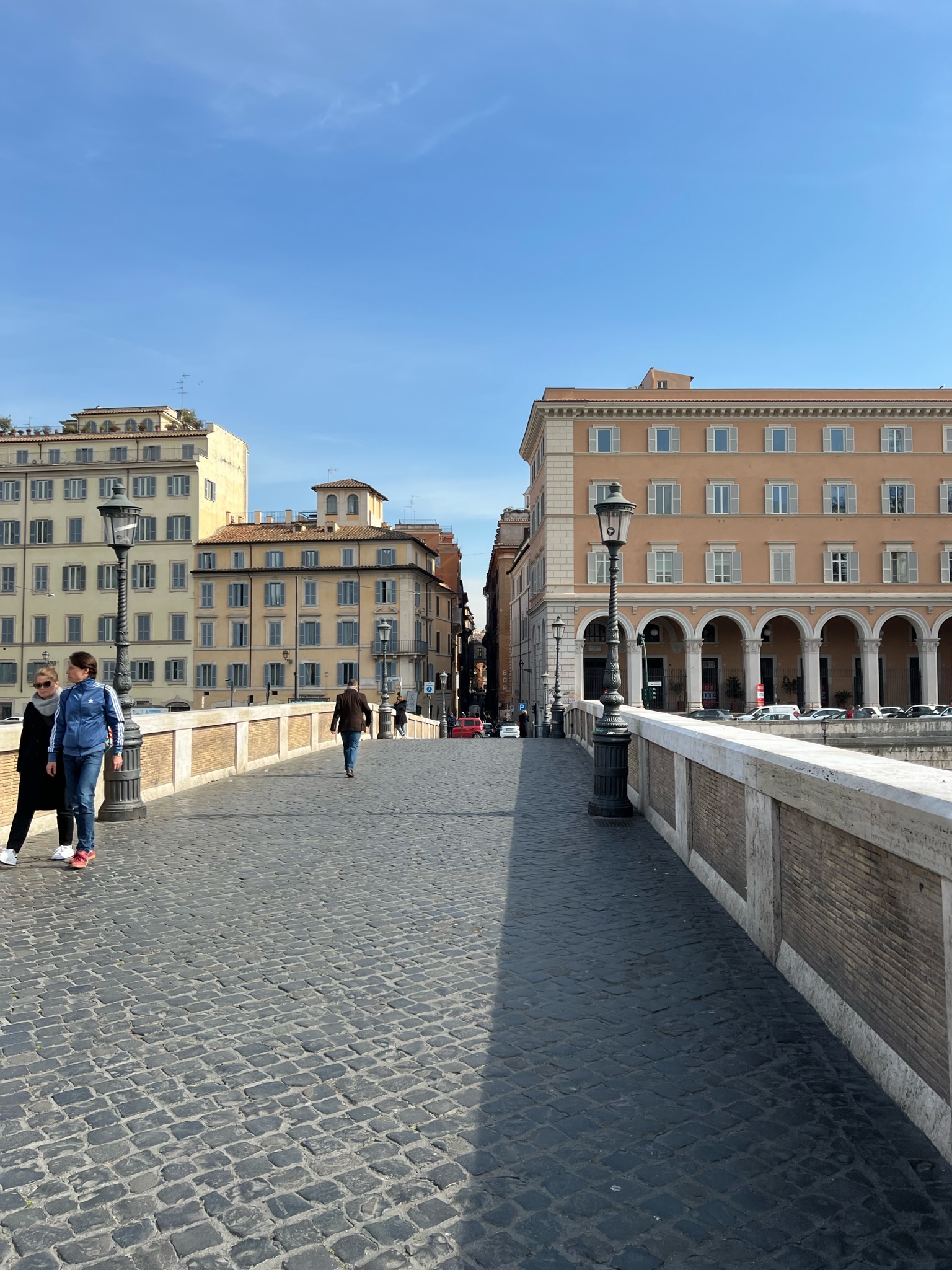
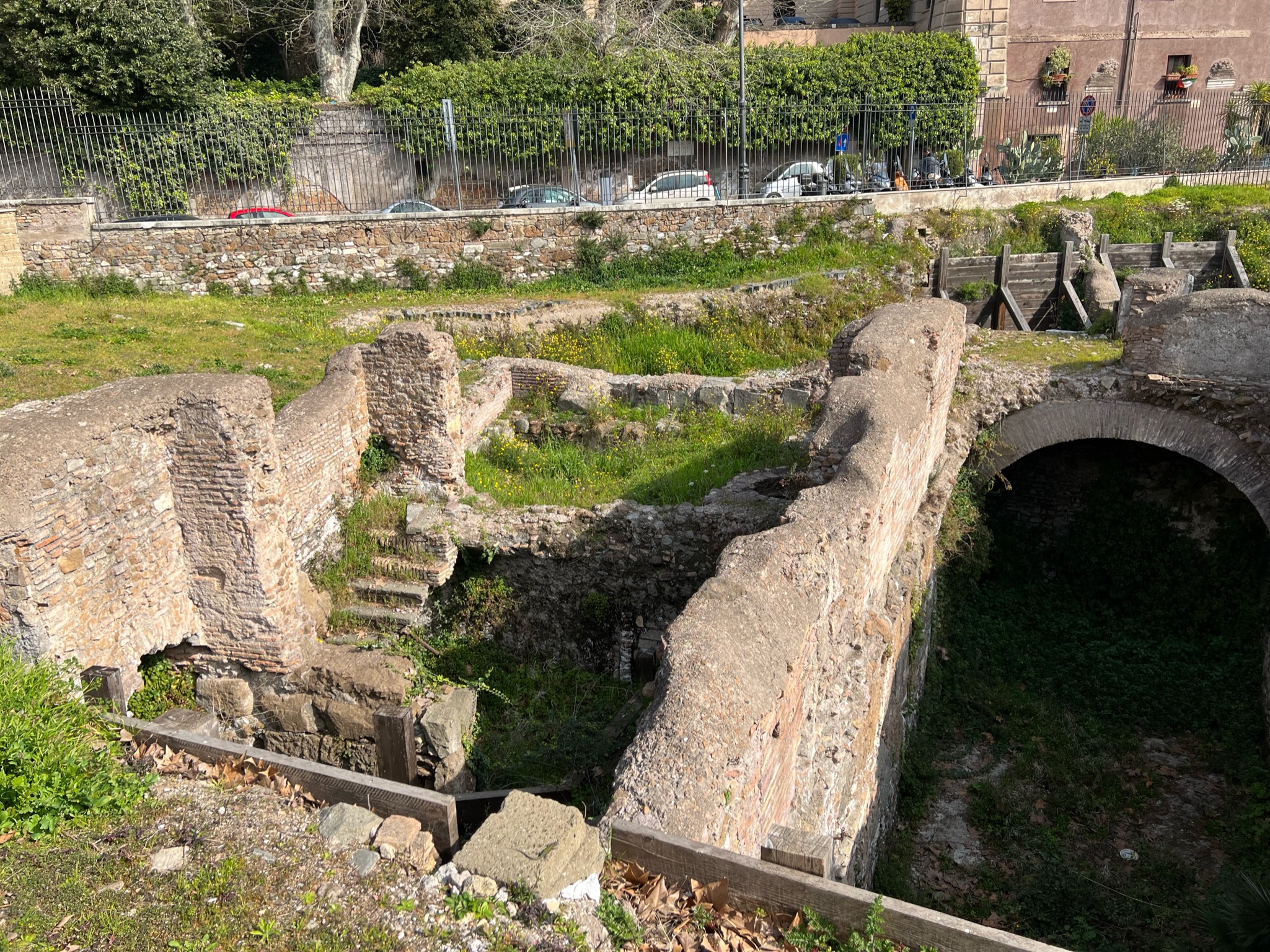
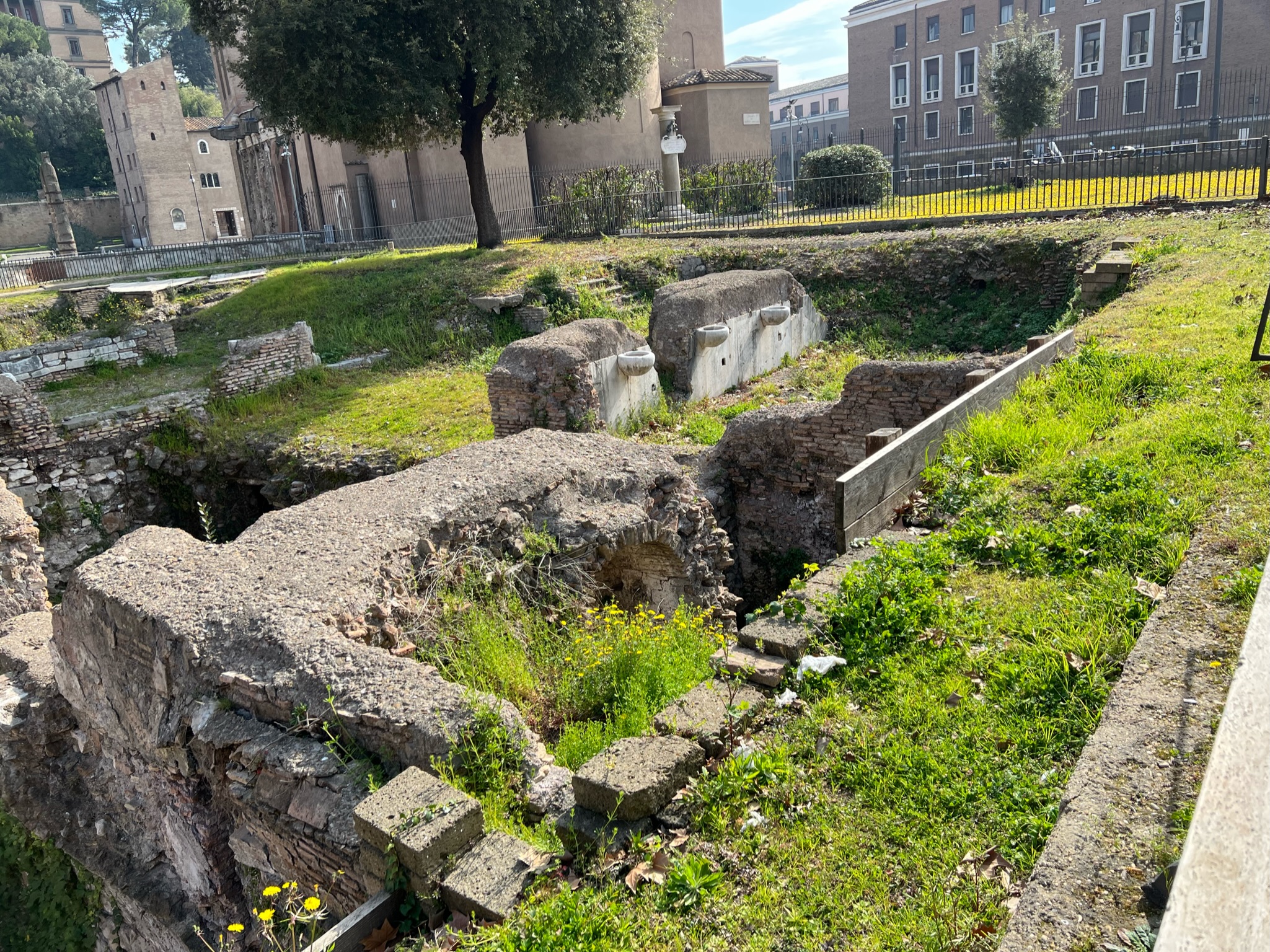
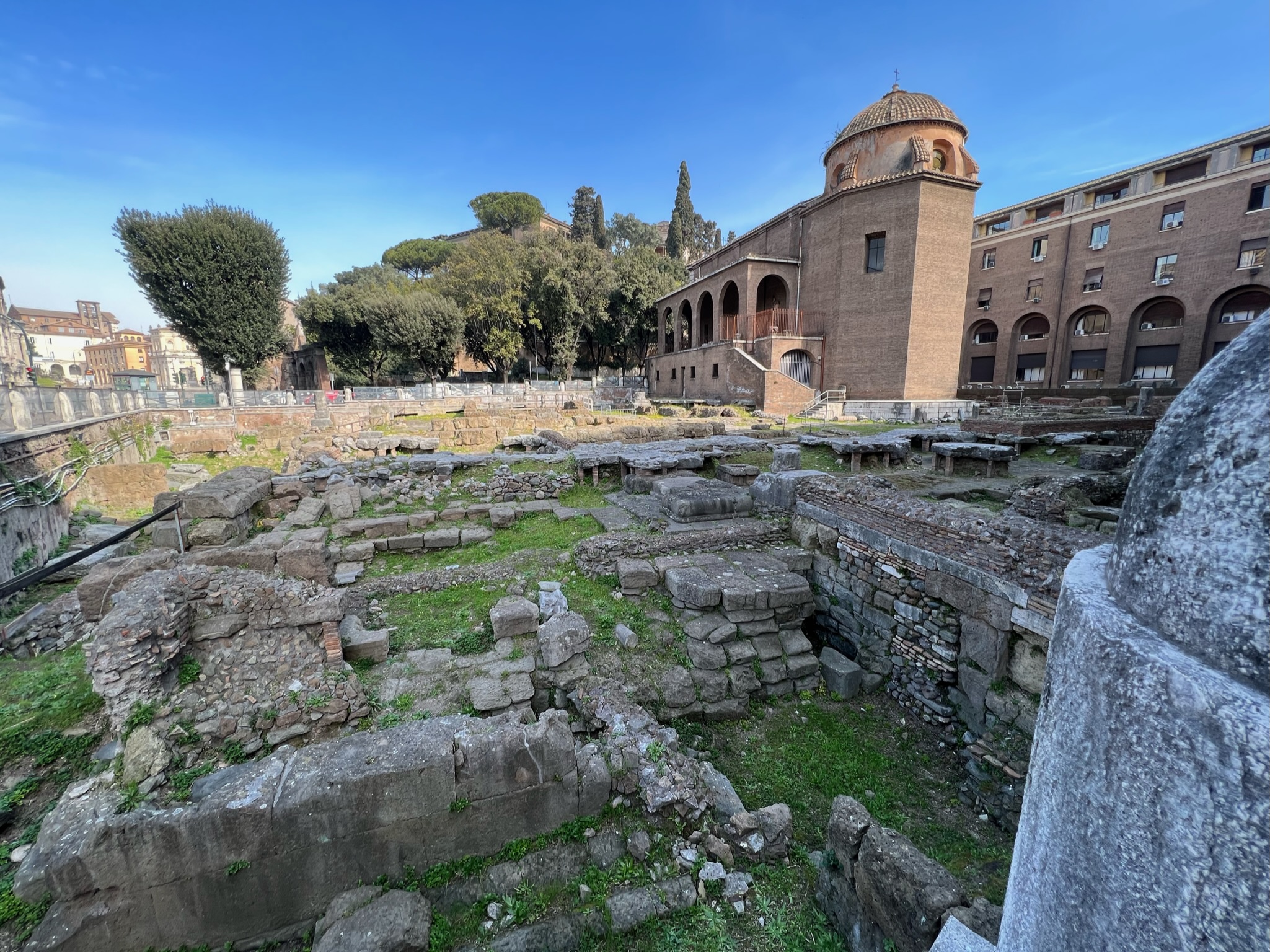
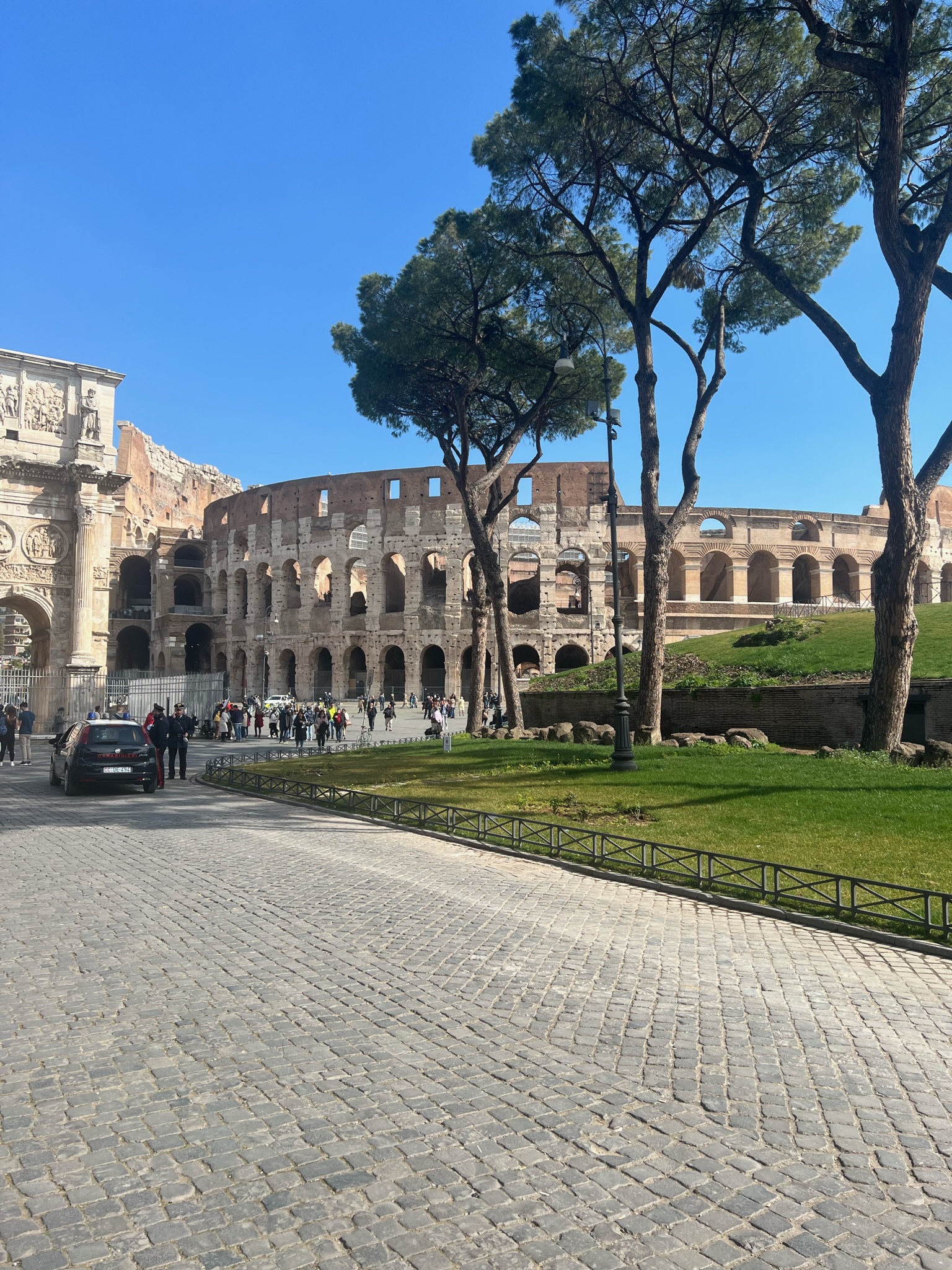

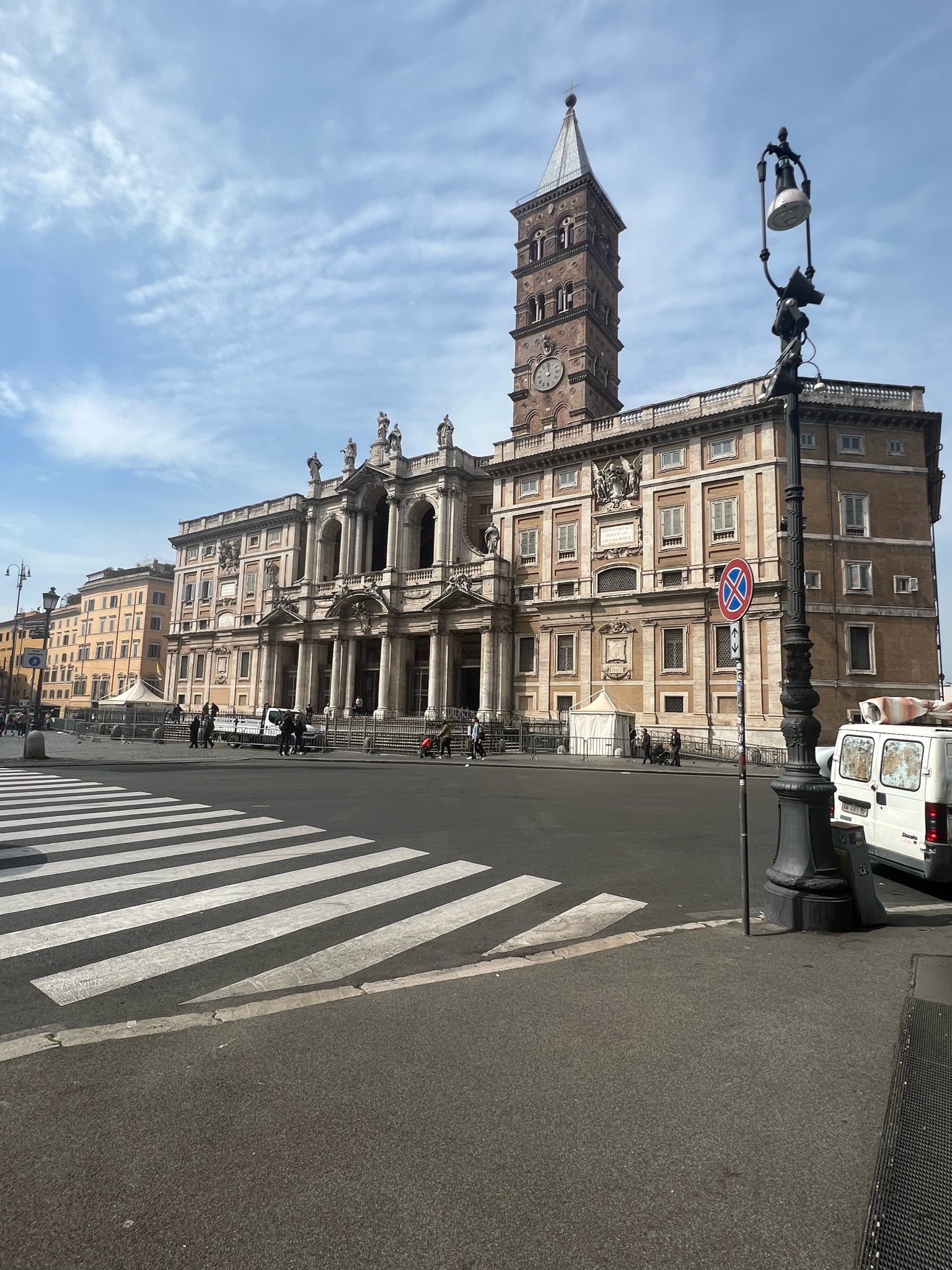
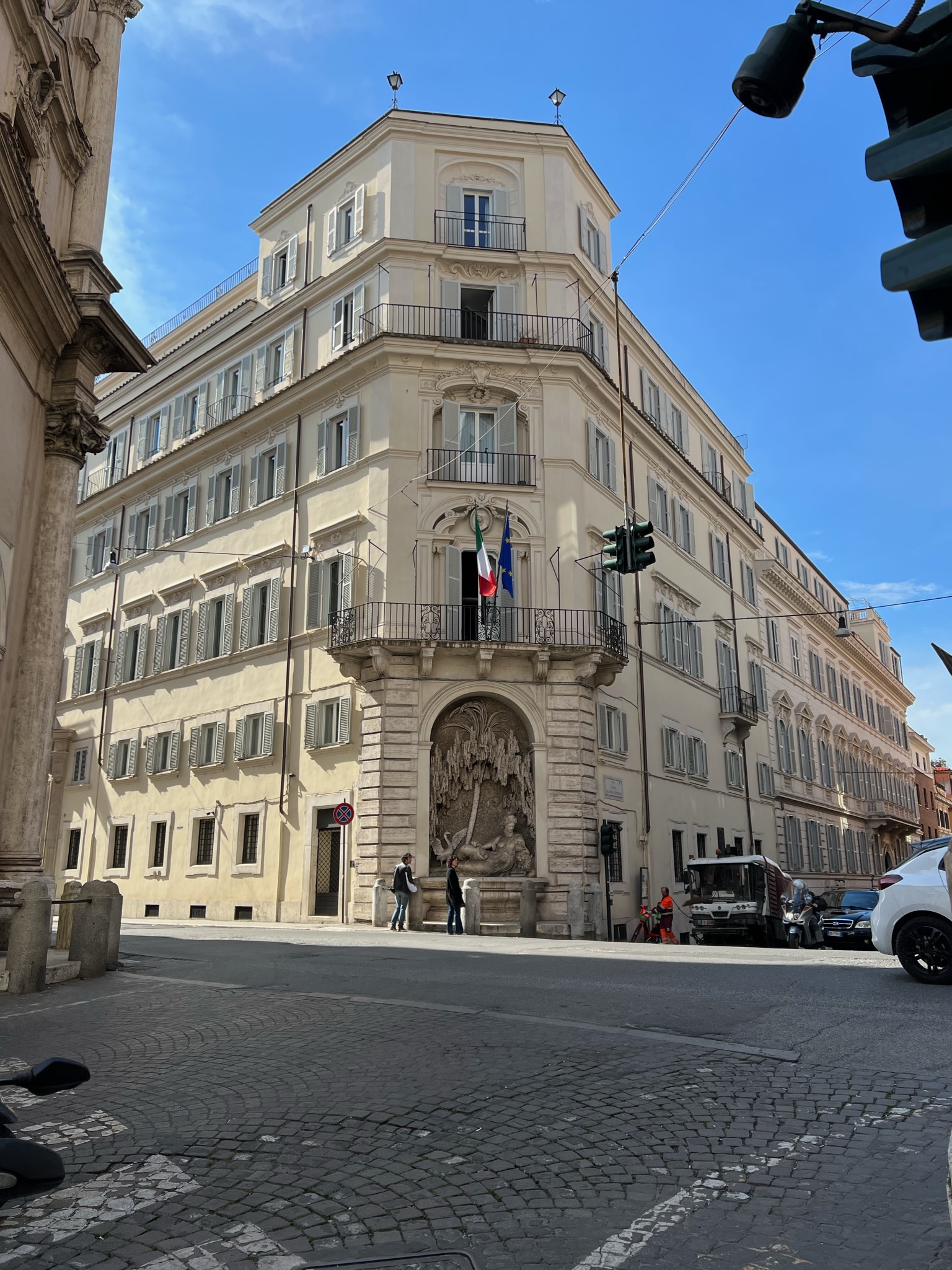
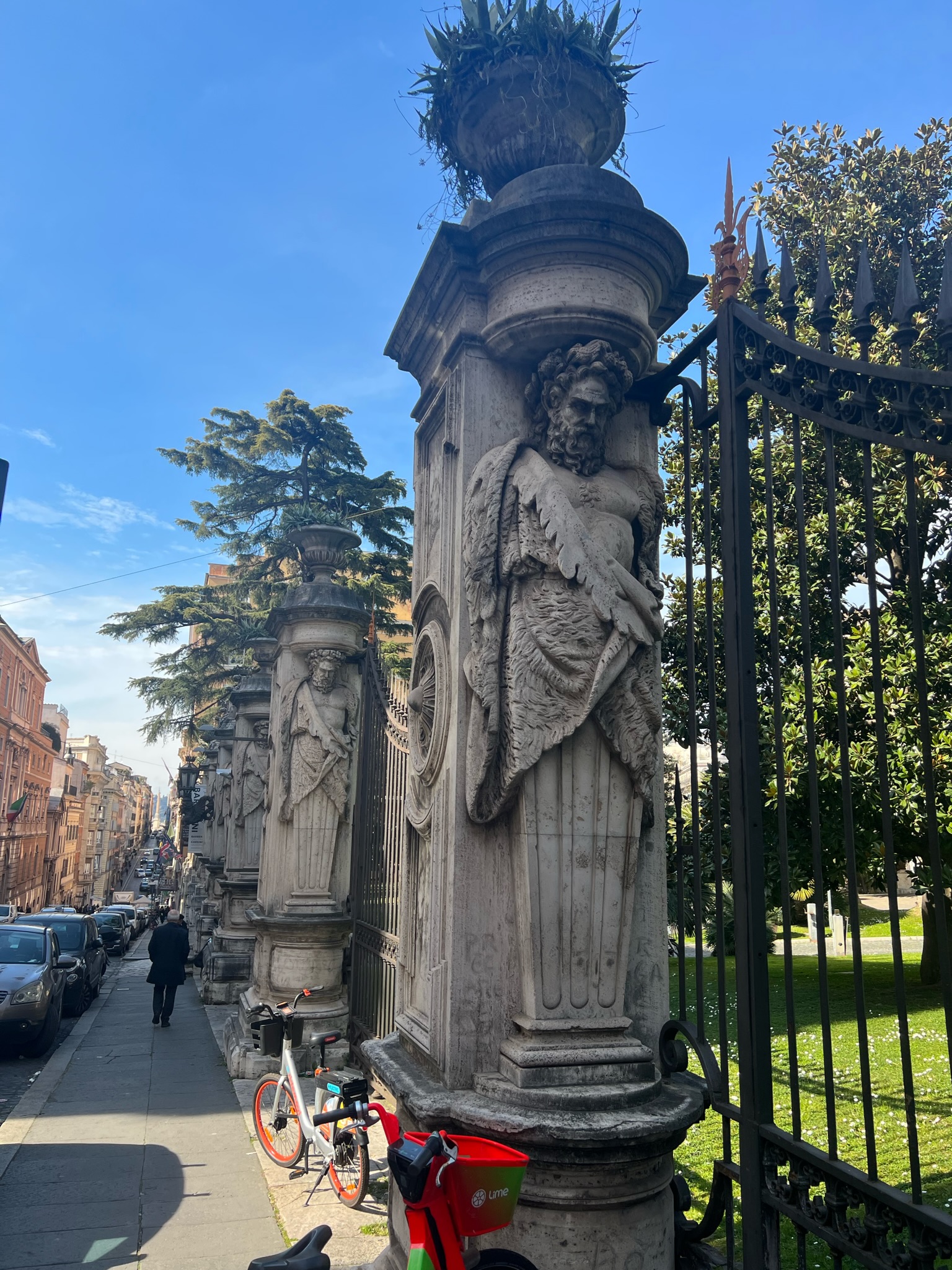

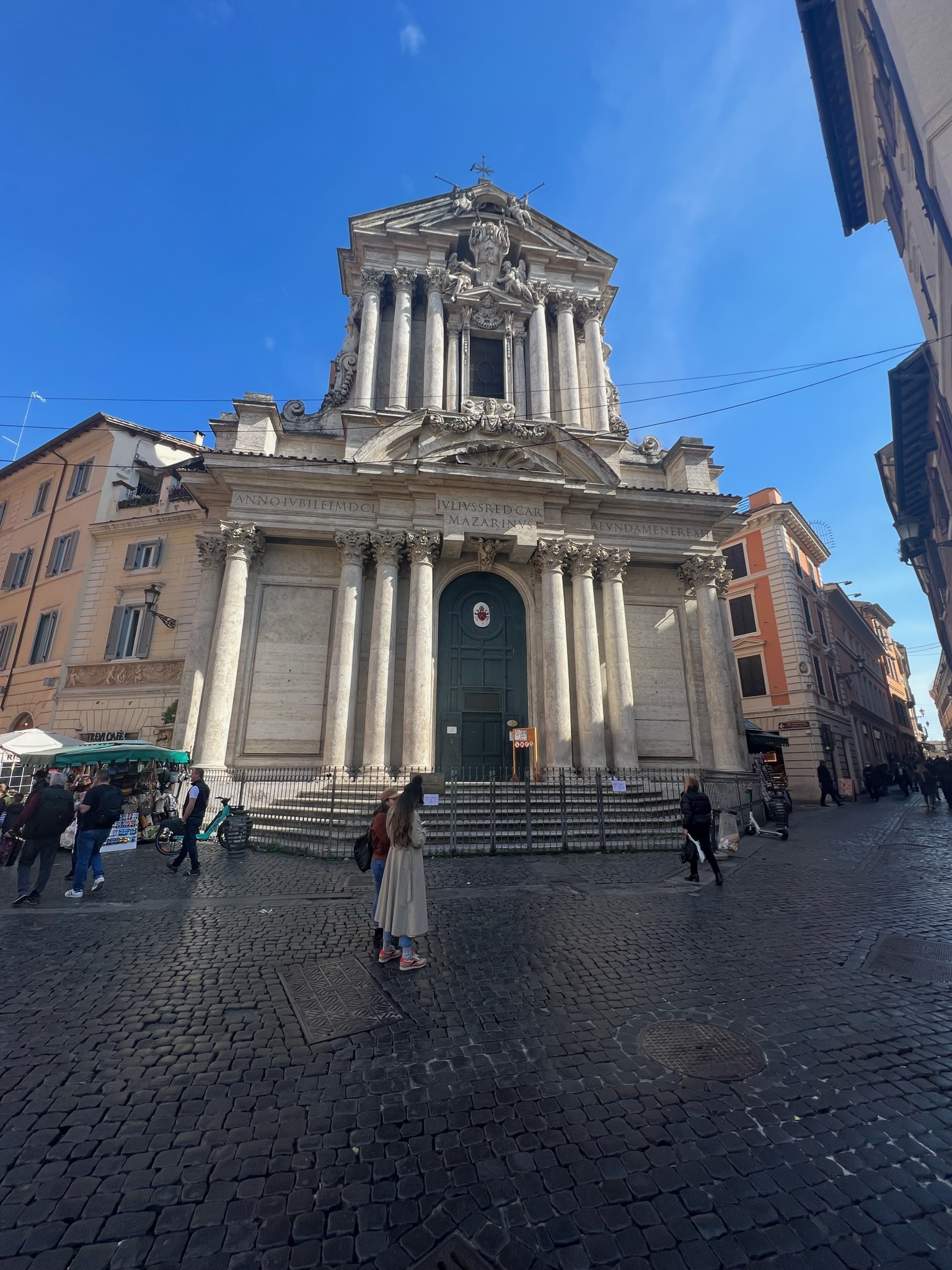
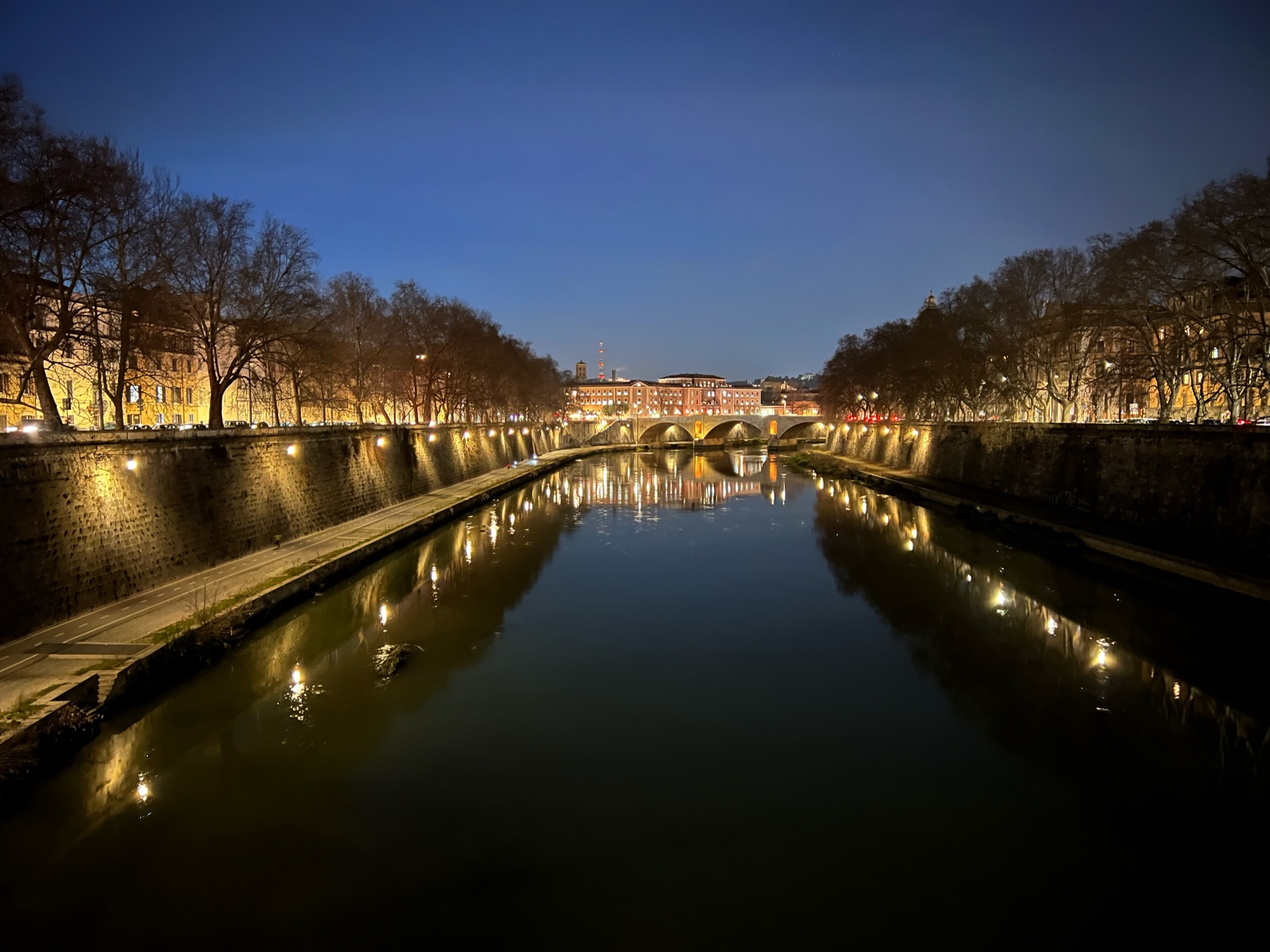
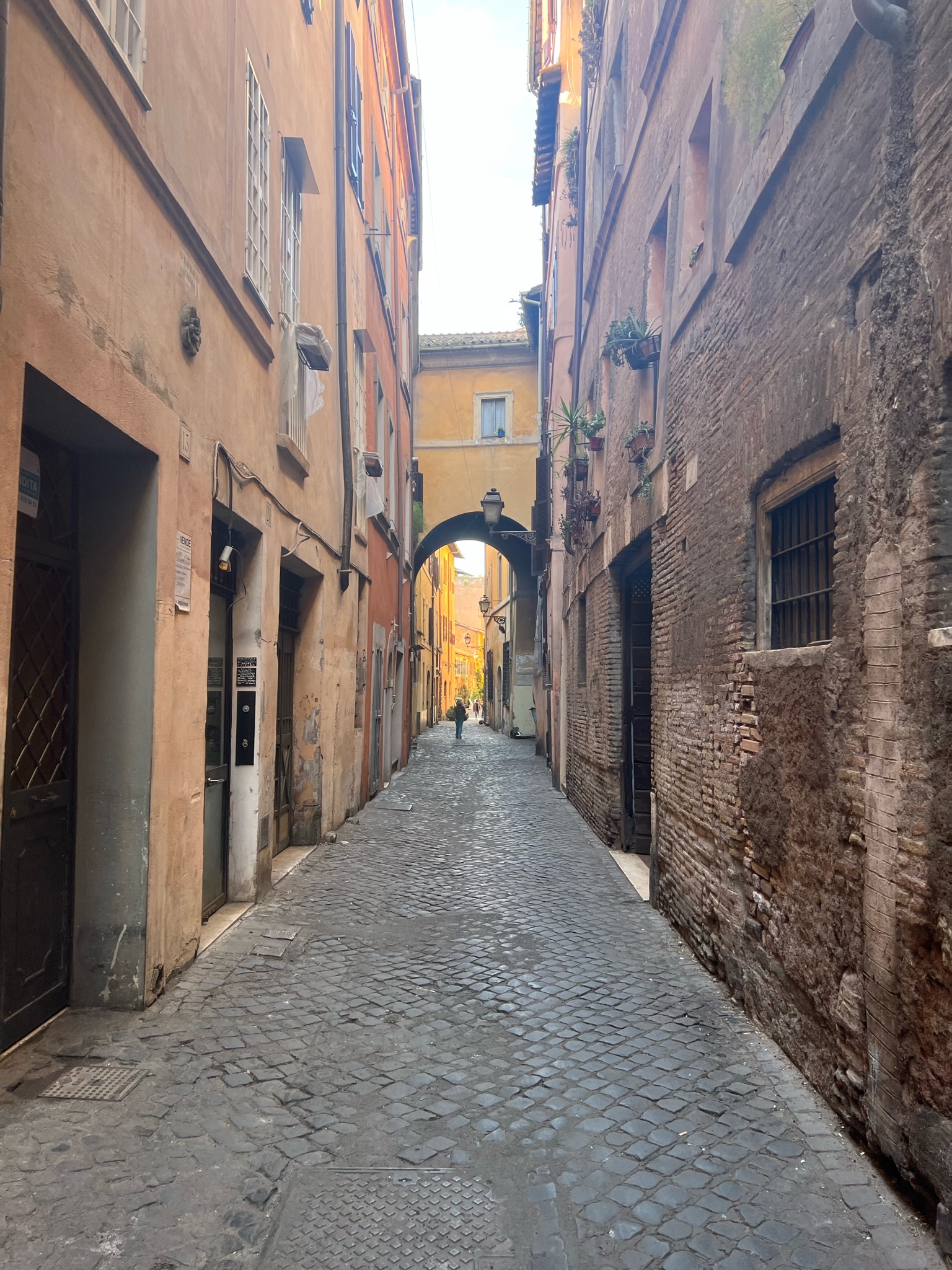
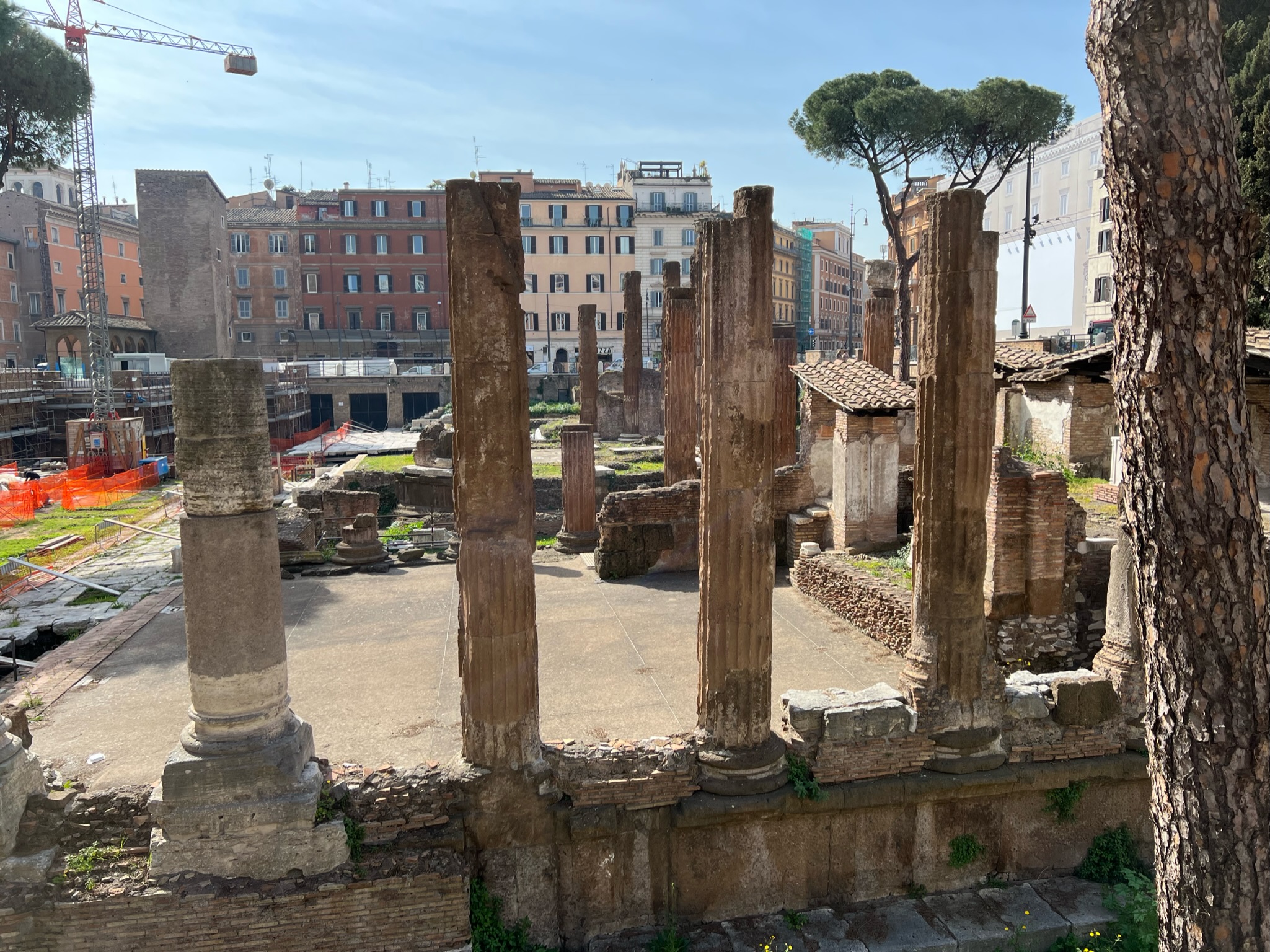
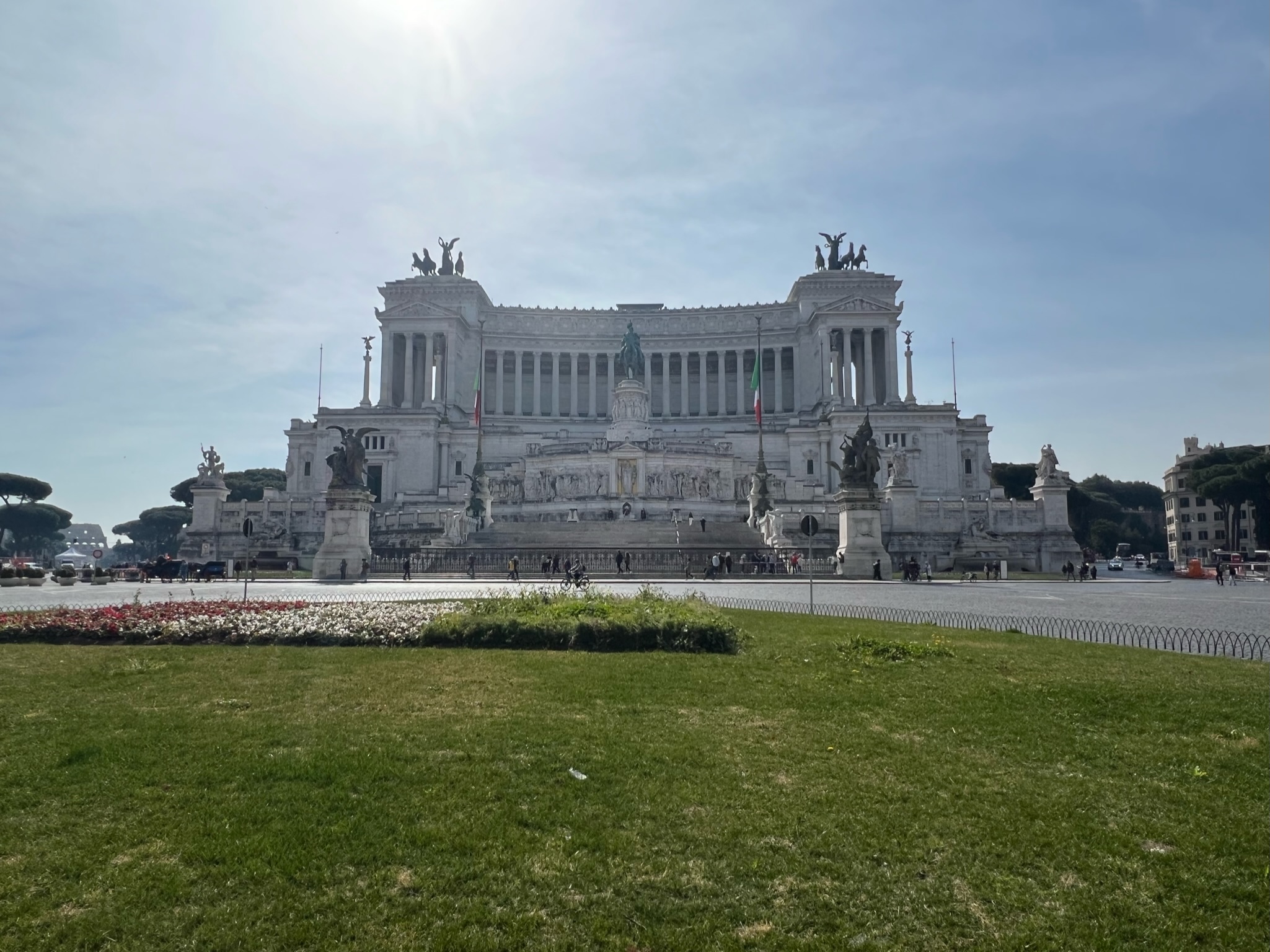
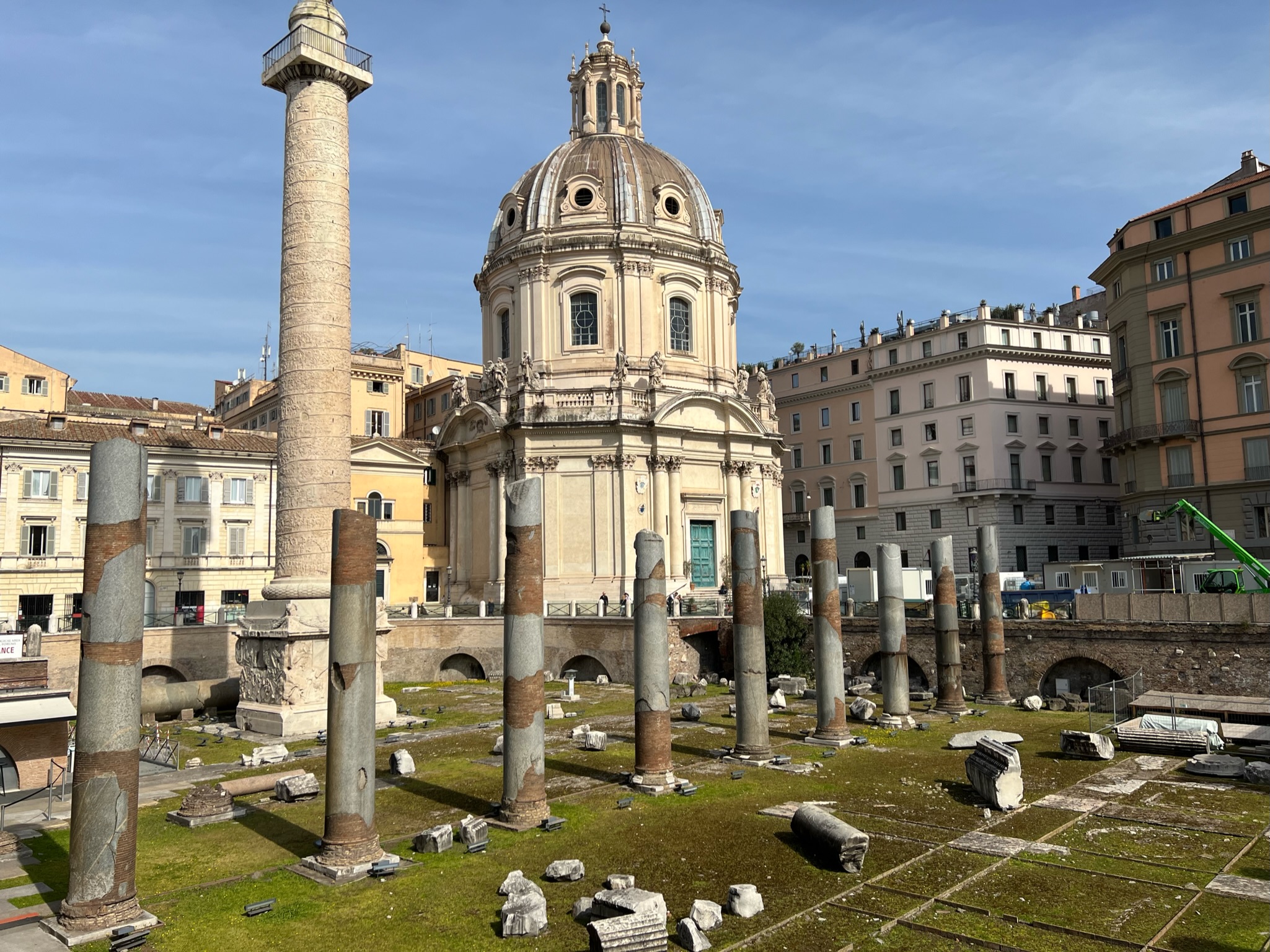

As we walked through town, we came across Palatine Hill first. Palatine Hill is one of the areas that your Colosseum ticket allows you to go and visit, so we knew we could go here as well. The line was very short, so we decided to ask the guard what we’d need to get into the site. He told us the same thing we already knew – that we’d have to buy our tickets online and that we’d need the Super Green Pass to get in. He said that since we weren’t from the EU, we could either have the third dose of the vaccine or a covid test to get in. So we thanked him, and we decided that since we weren’t prepared to get the tests yet, we’d use the day to figure out where everything was. We continued walking until we reached the Colosseum. I’ve seen enough pictures to understand this building was big, but the photos really don’t do it justice. Considering this thing was completed in 149 AD, it is quite a feat of the Roman’s ingenuity and skill. The crowd milling around it was massive as well, so we decided that we’d need to arrive as early as possible to beat the chaos. There were tour groups everywhere. It was easy to find though, and there was quite a lot in the area for us to do.
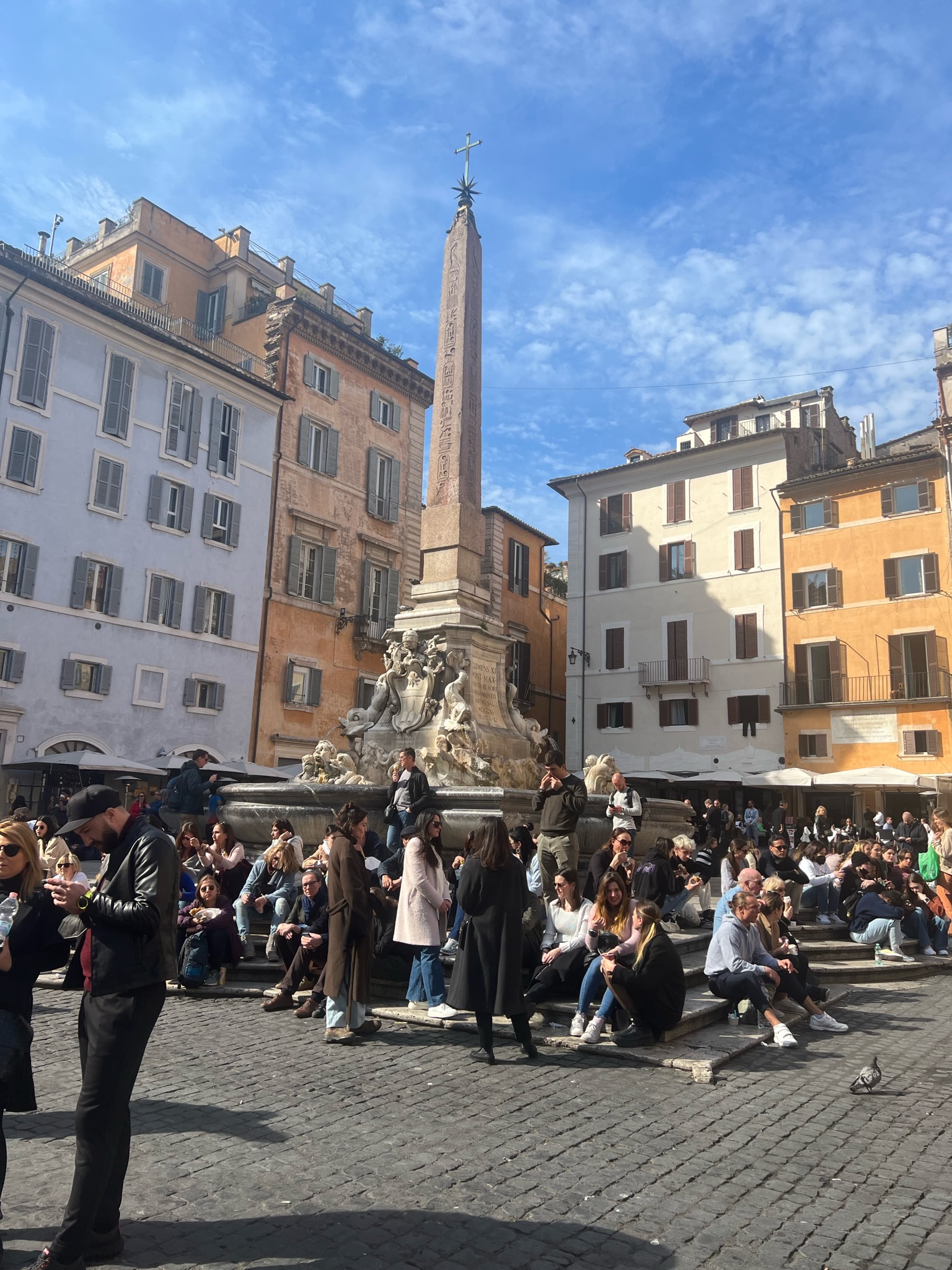
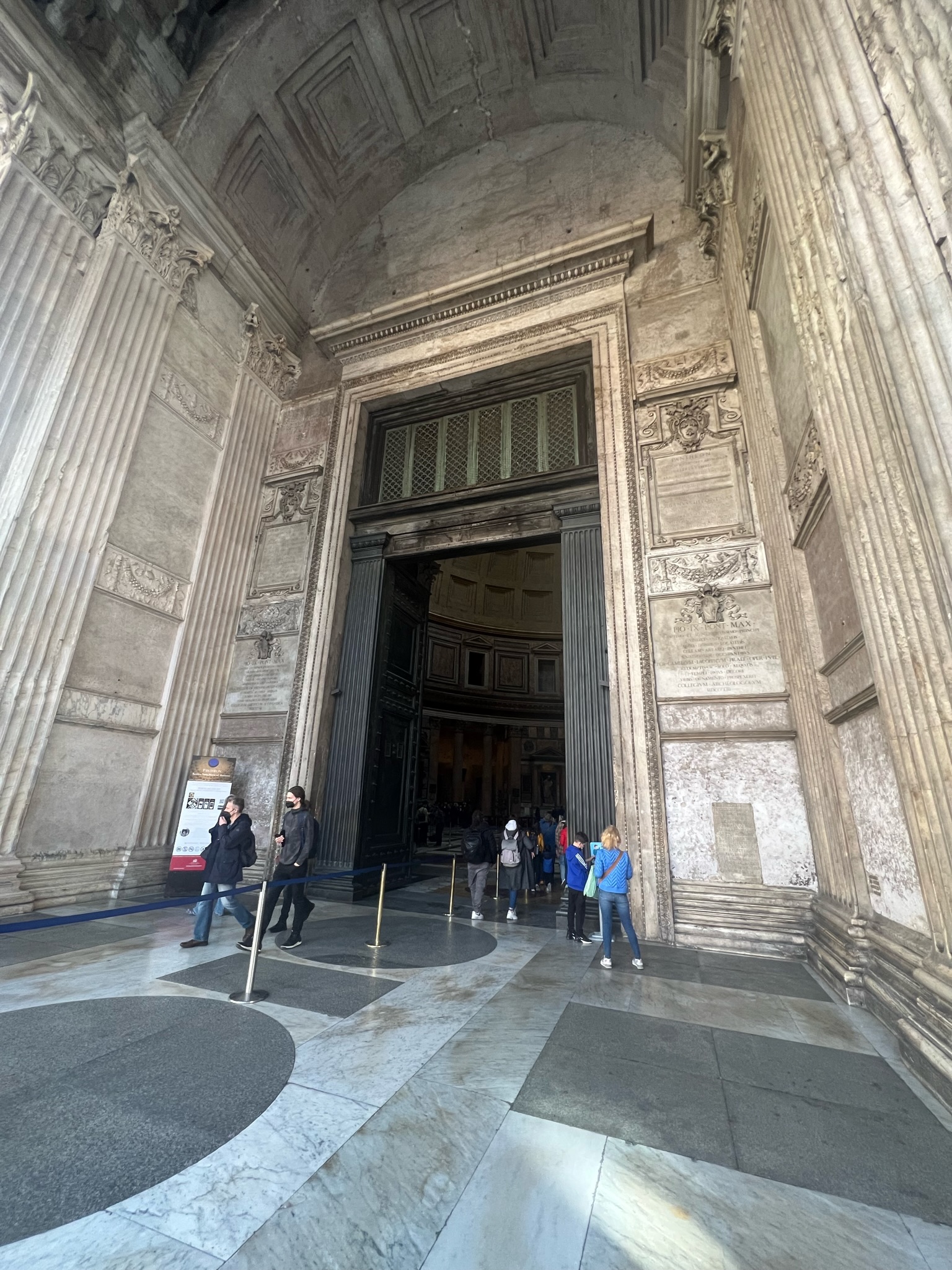
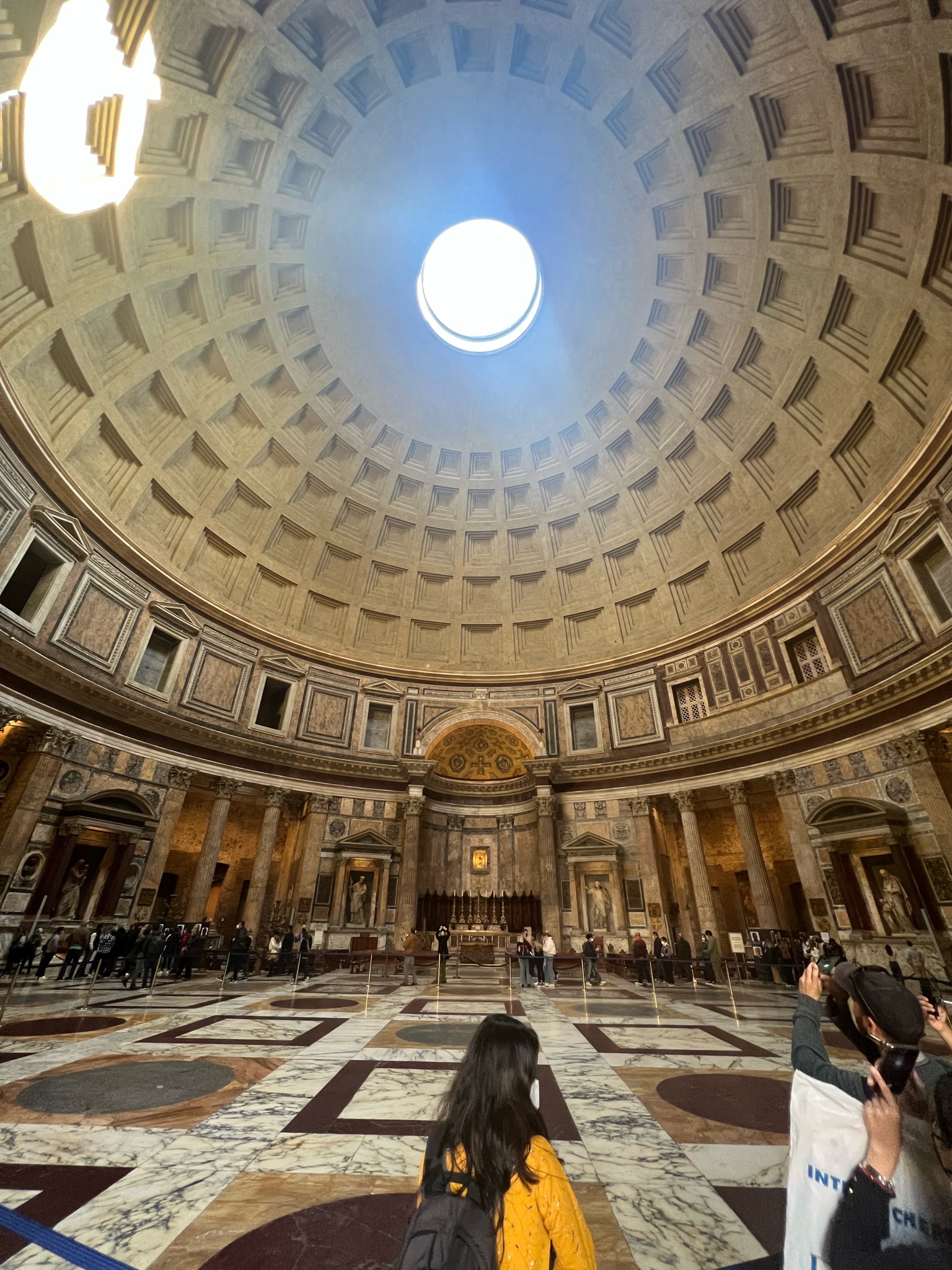
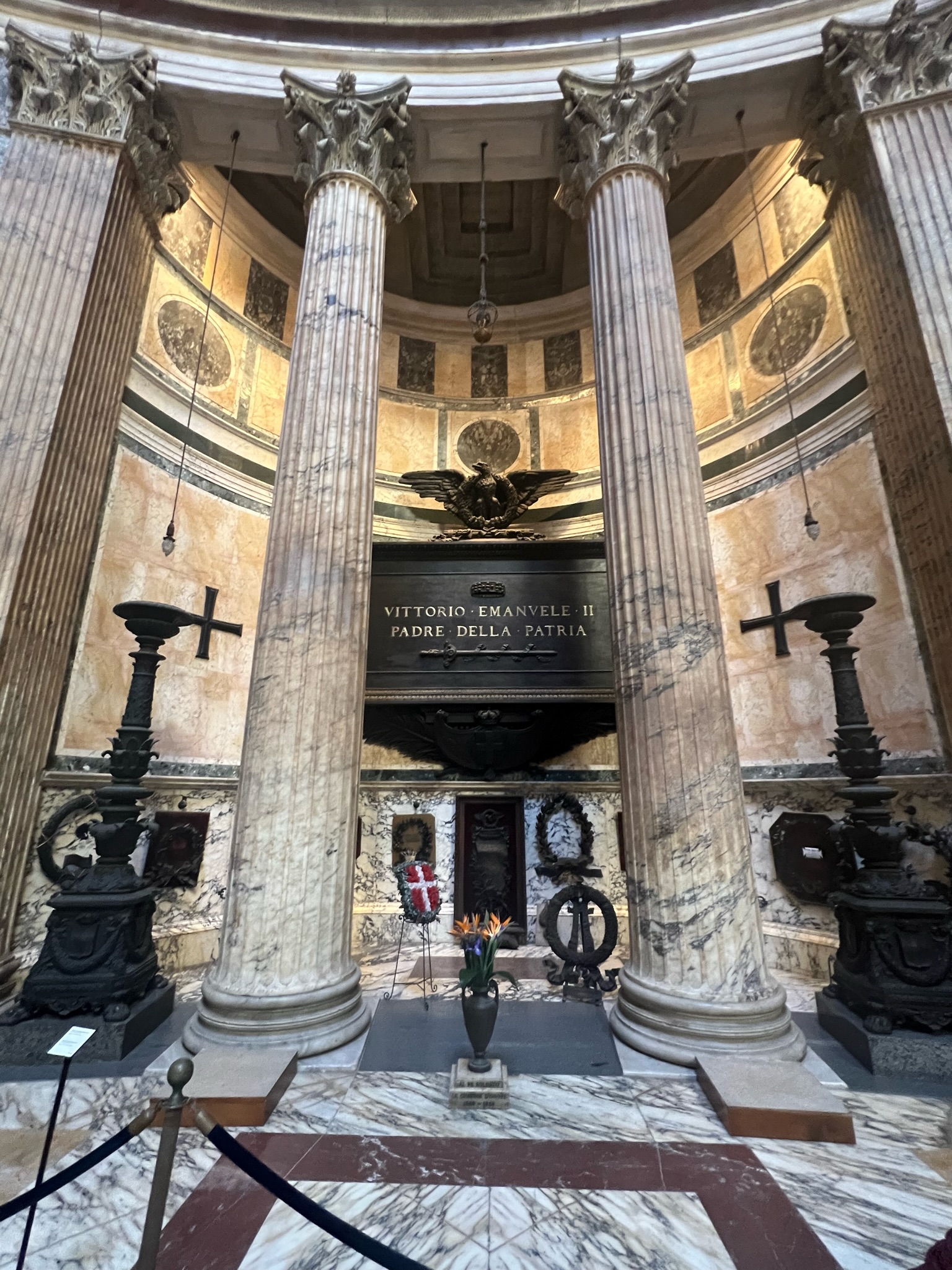
We moved on to the Pantheon building. The Pantheon wouldn’t be included in our ticket to the Colosseum, so we could go see it whenever we wanted. It was free to enter, but again, you had to have the Super Green Pass. We decided to try it anyway, afterall, the worst they could do was turn us away. When we got up to the security guard station, the person monitoring our line looked at our vaccine cards (again, not looking closely enough to see that we were over the 6-months), and he welcomed us inside. We were relieved because as we were walking in, we overheard the female guard working the other line questioning other visitors about their covid tests that they’d need to enter the site.
The Pantheon is an old temple that was dedicated to Venus, Mars, and the divine Julius (Julius Ceasar). The construction of it began in 31 BC after Augustus’ victory over Marc Anthony and Cleopatra. It was donated and has been used as an active church since 608 AD, though. Because it is actually still in use, it is in great condition and is the best preserved building from the era. The dome of the pantheon is 142 ft across, and that little hole you see in the top, called the Eye of the Pantheon, is 27 ft across. The building was very impressive, and we enjoyed our visit here.




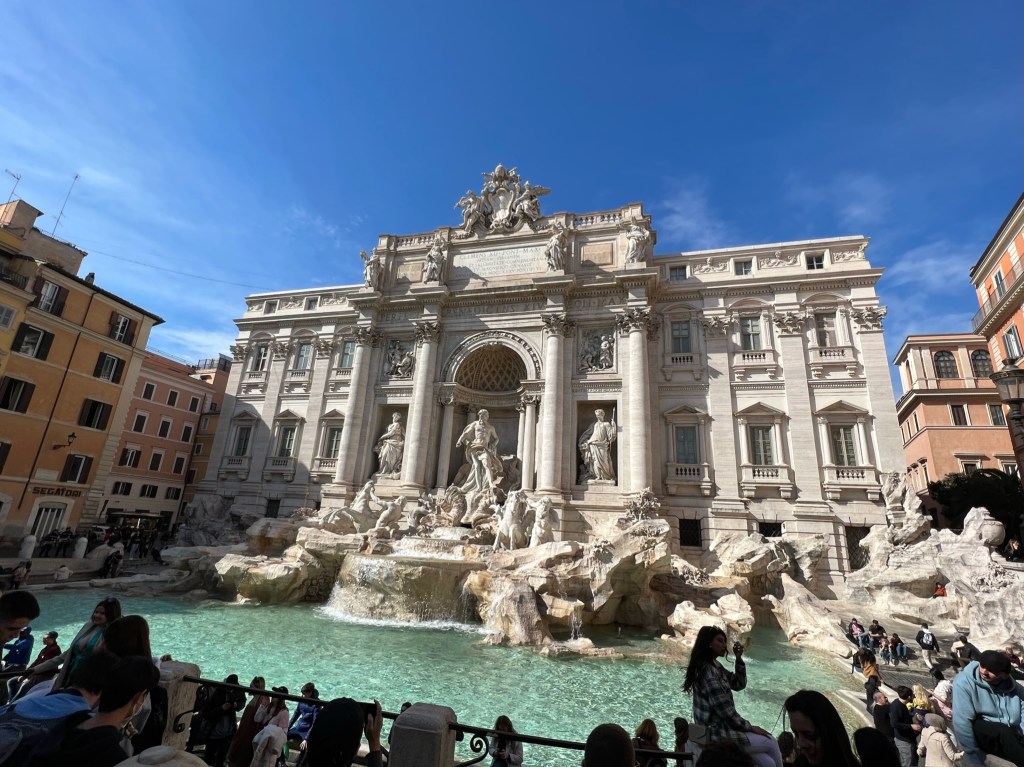
We headed back towards our room after the Pantheon, but while walking, we wandered across the Trevi Fountain. This fountain is only a few hundred years old, but it’s still impressive to see. Isn’t it funny how all of a sudden, a fountain that is only a few hundred years old isn’t that old to me?
The next morning we woke up early so we could be at the local pharmacy as soon as they opened to get our rapid antigen tests. The process was easy enough, and 15 minutes later we were $66 poorer but we had Super Green Pass equivalent documents. We still chose not to buy our tickets ahead of time because we didn’t really know what time we could get the testing done and get to the arena. So when we arrived, we went to the ticket booth to see if there was any way to buy our tickets in person. While waiting in line, we tried buying them online on our phone only to find that there was an issue with using our credit card on their site. Thankfully, we explained the issue to the teller, and he allowed us to buy our tickets there instead.
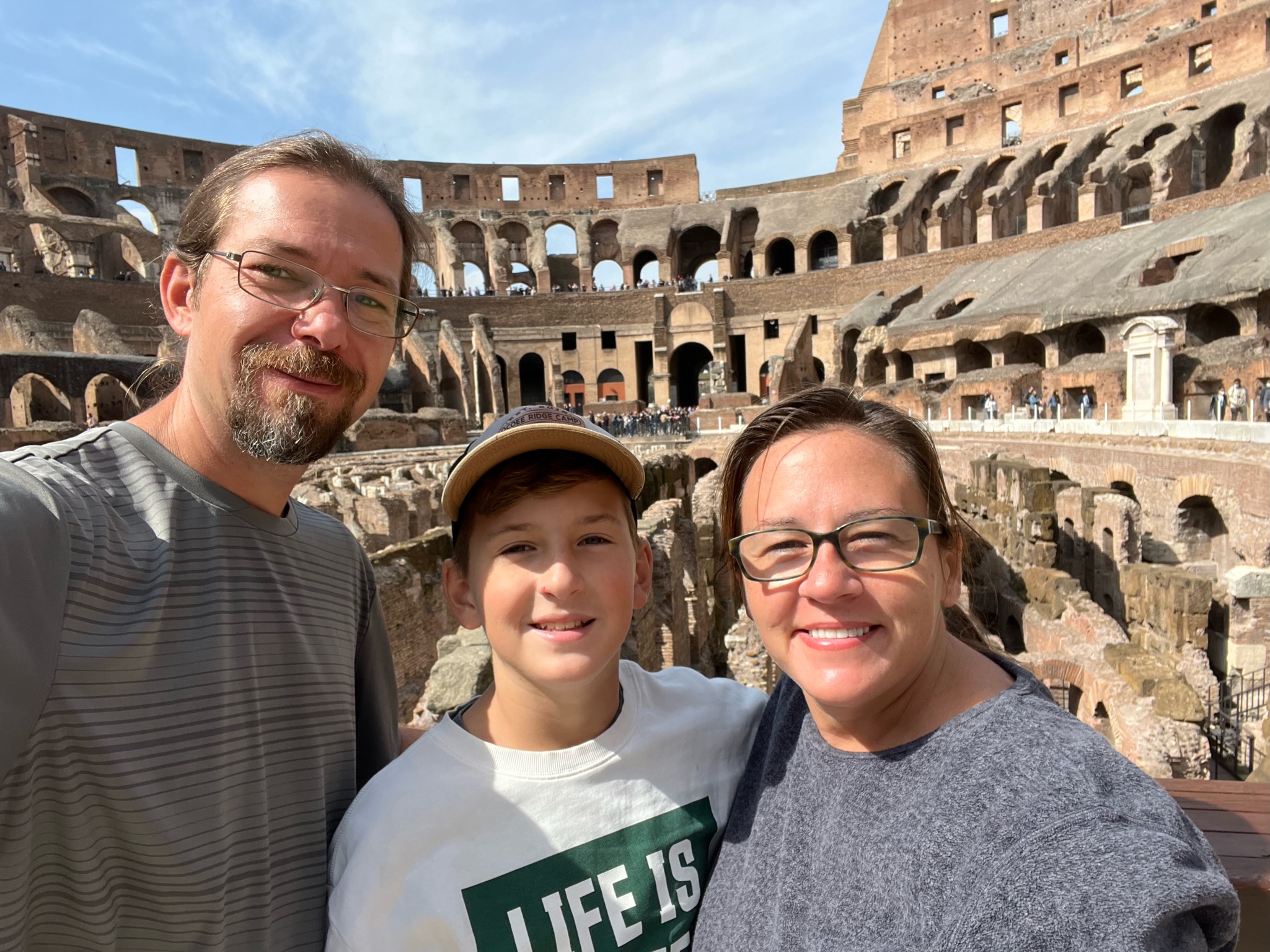
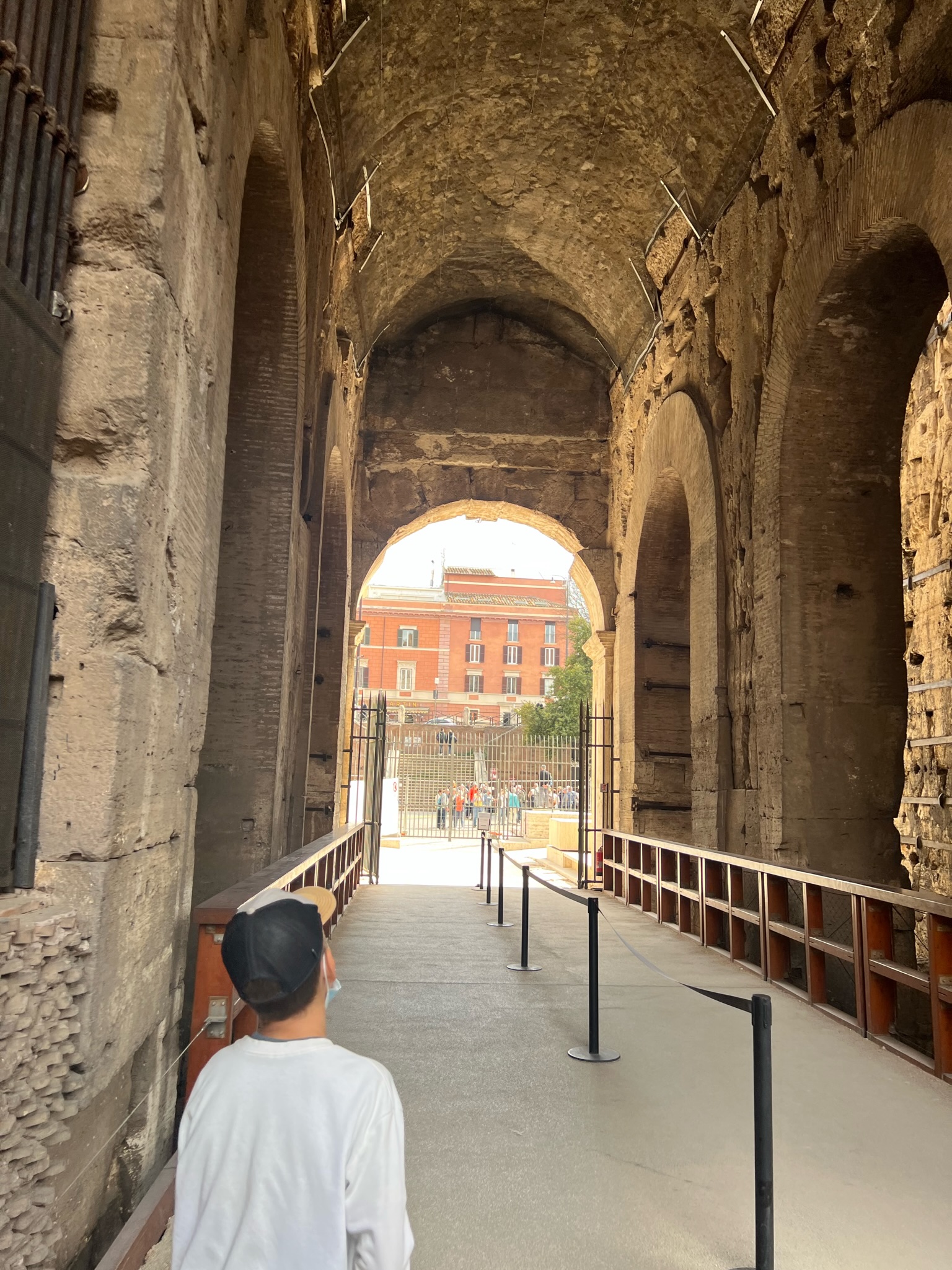
With tickets and covid results hidden in my pocket in case we needed them, we walked over to the entrance gate to begin exploring the Colosseum. We showed our vaccine cards to security, and they let us through without questioning the 6-month lapse. It was quite something to walk into it. It’s a bit overwhelming to actually get to walk somewhere that I’ve read about and seen pictures of my whole life. It’s a difficult feeling to describe. There is awe and reverence and giddiness and everything in between. We made it through security and received orange stickers to denote that we had access to the arena level as well as the upper section. We were directed down a long, arched corridor to the ‘end’ of the stadium. From there we turned and walked into the Colosseum at the arena level entry.

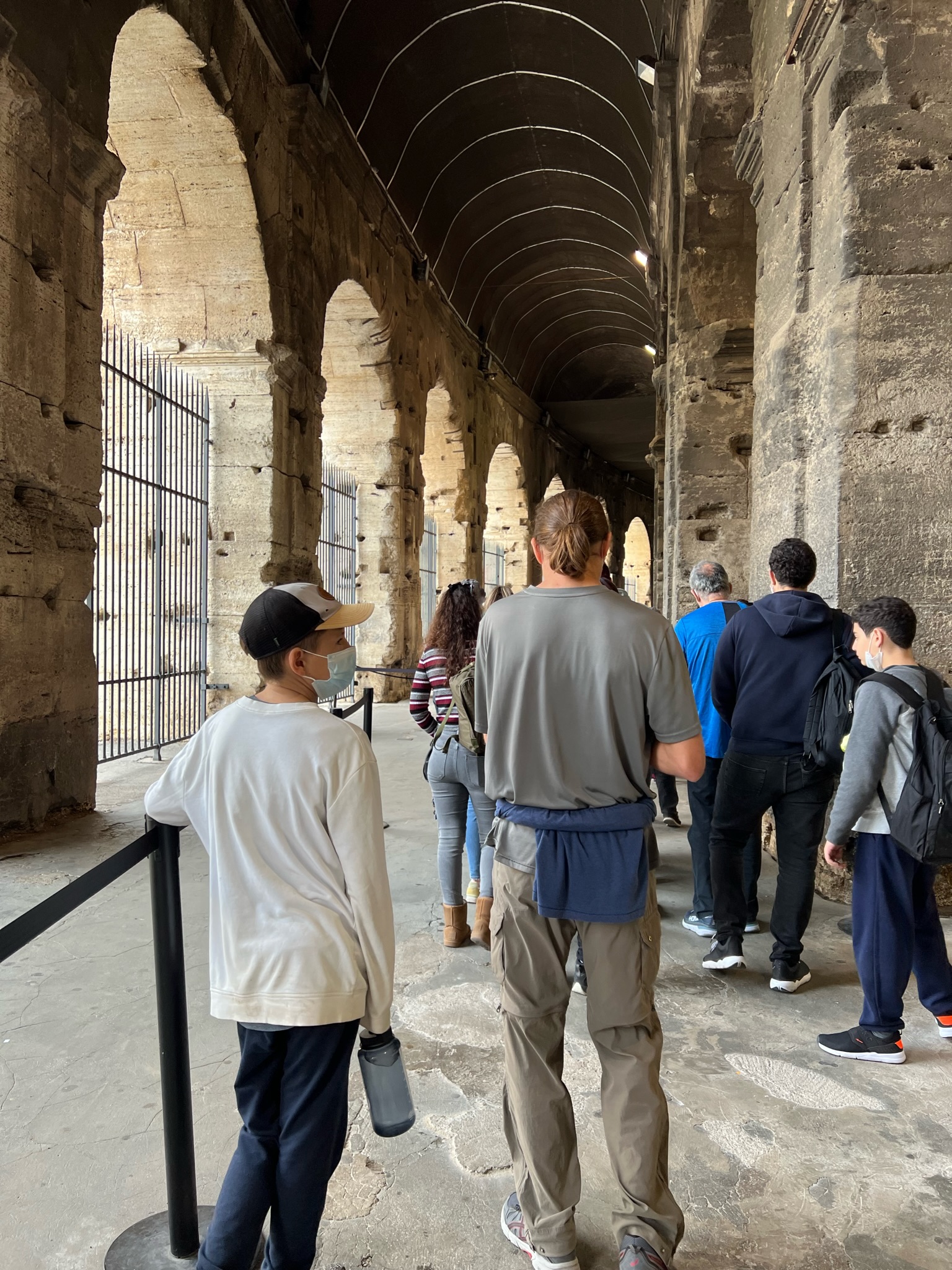

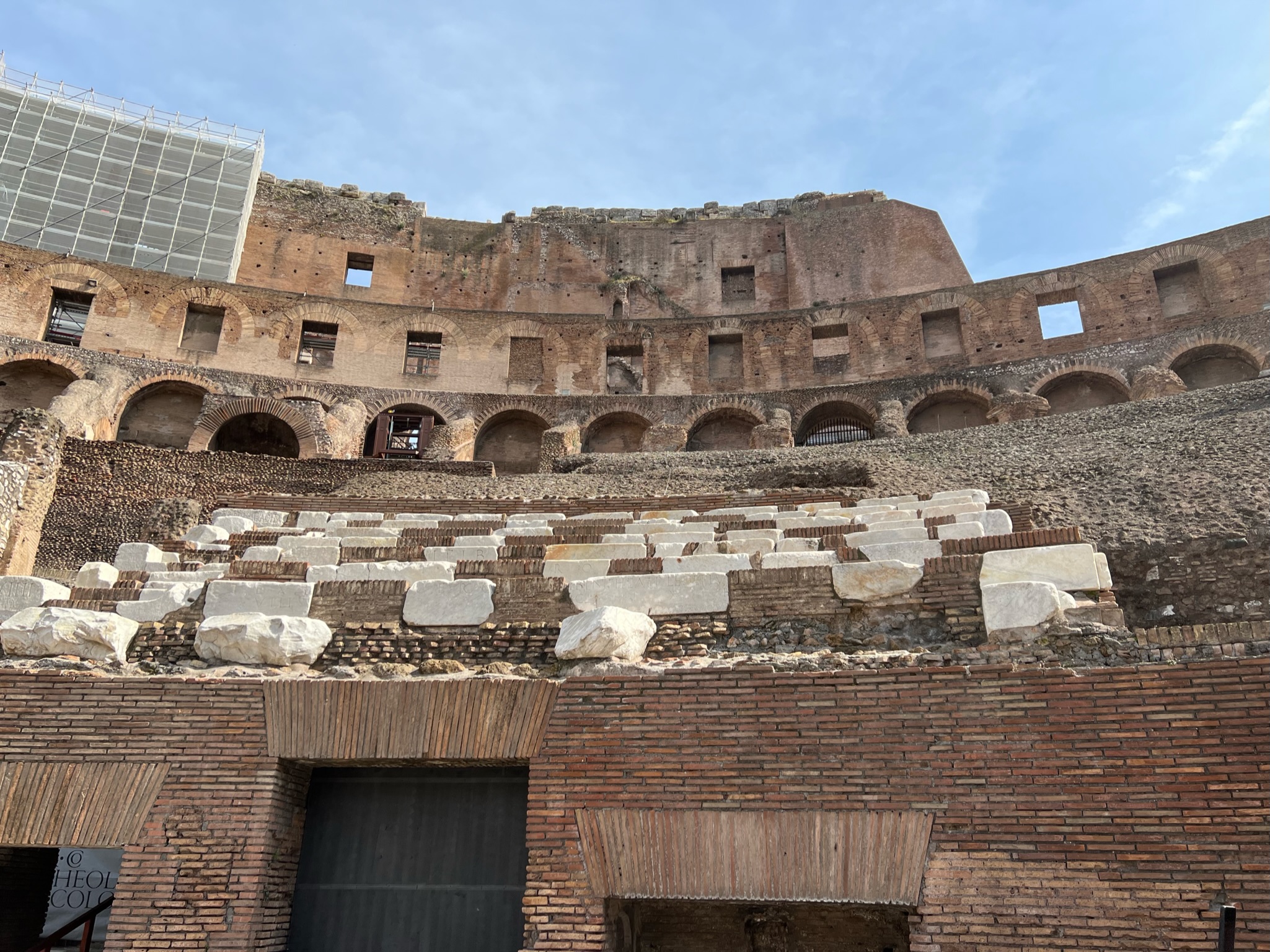
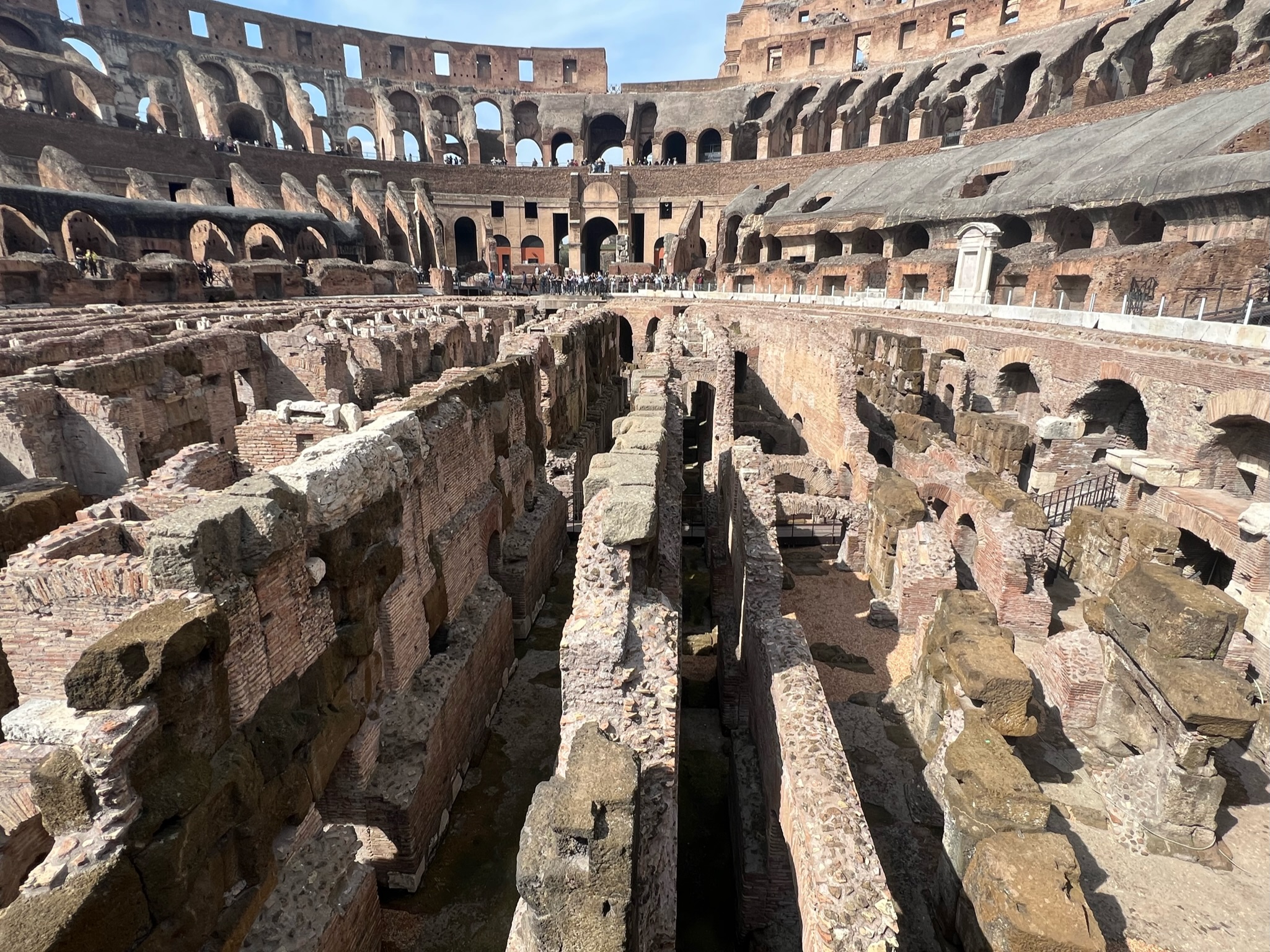

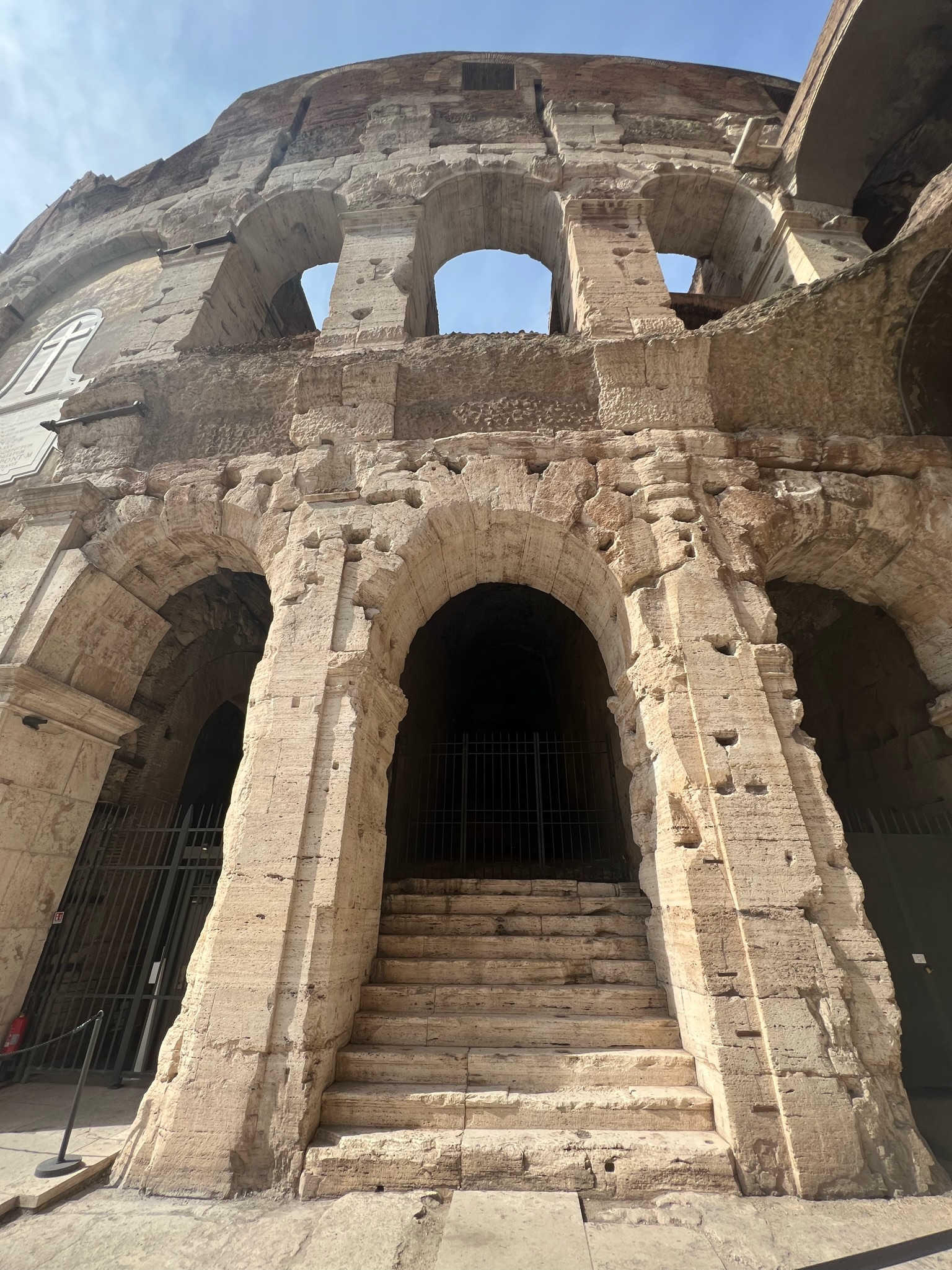
After the great fire of Rome in 64 AD, the Emperor Nero claimed a large amount of Rome as his personal property. He had a magnificent mansion built nearby, and he created a large artificial pond and gardens to help embellish them in this area. After Nero’s death, Vespasian his successor, decided to return the area to the citizens of Rome, so he filled in the pond and built the Colosseum, known then as the Flavian Amphitheater, in its place for their entertainment. Construction of the new amphitheater was funded with the spoils taken from Herod’s temple when the Romans destroyed it as they quashed the Jewish rebellion in 70 AD.
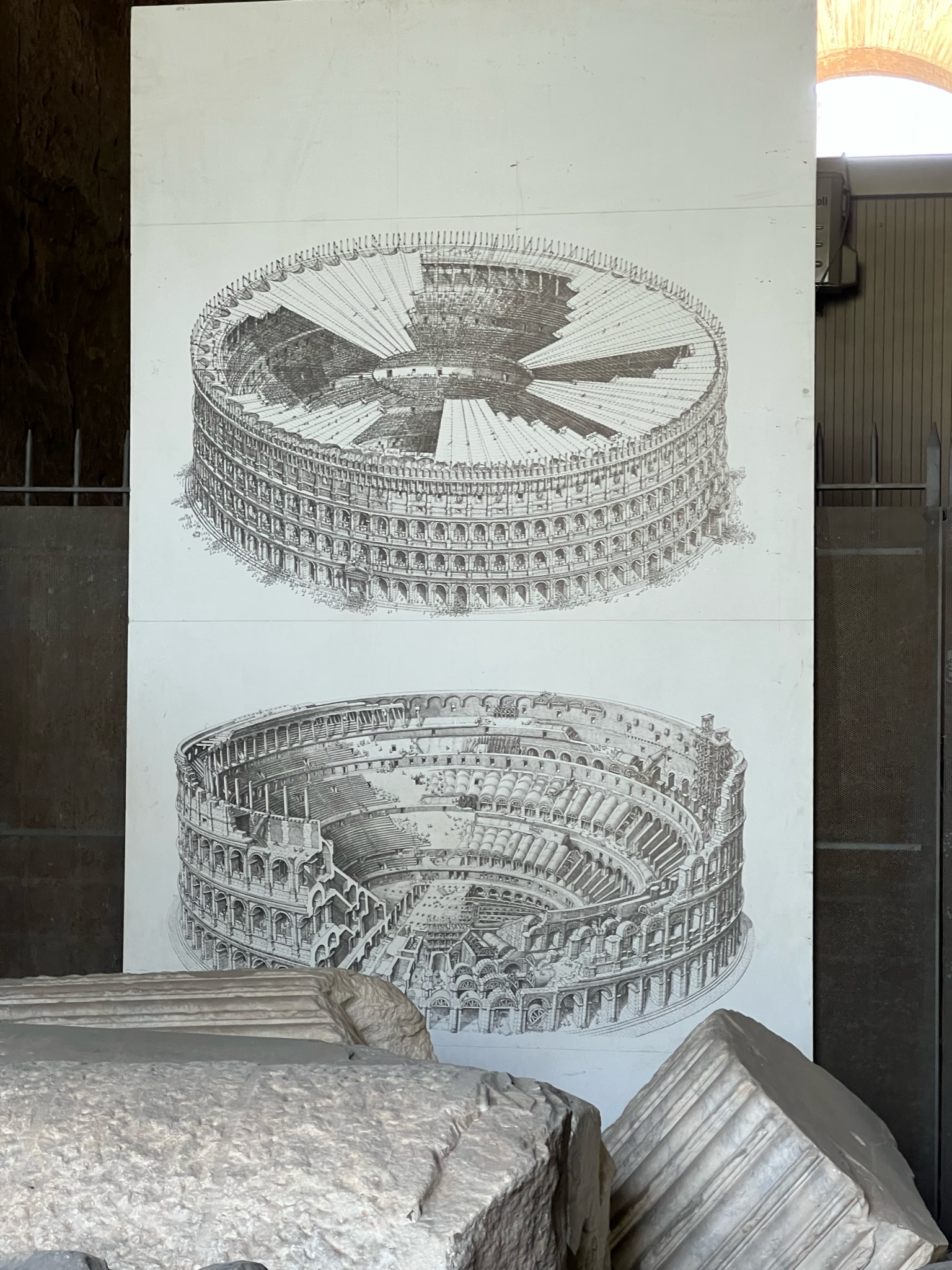
The amphitheater was built to hold dramatic performances, gladiator battles, exotic animal hunts with lions, tigers, pumas, elephants, and more, and other exciting games. Entrance was free for everyone, and the Colosseum could hold as many as 60,000 people. Each person was given a piece of pottery with a seat number on it when they entered the stadium so that they knew where to sit. The seats were divided by class. The most important members of society sat in the lower, marble covered seats with their names engraved in them. The lowest members of society sat in the nosebleed sections at the top. At the very top of the stadium, sailors would open and close the canvas awnings to protect the spectators from the weather during the games.
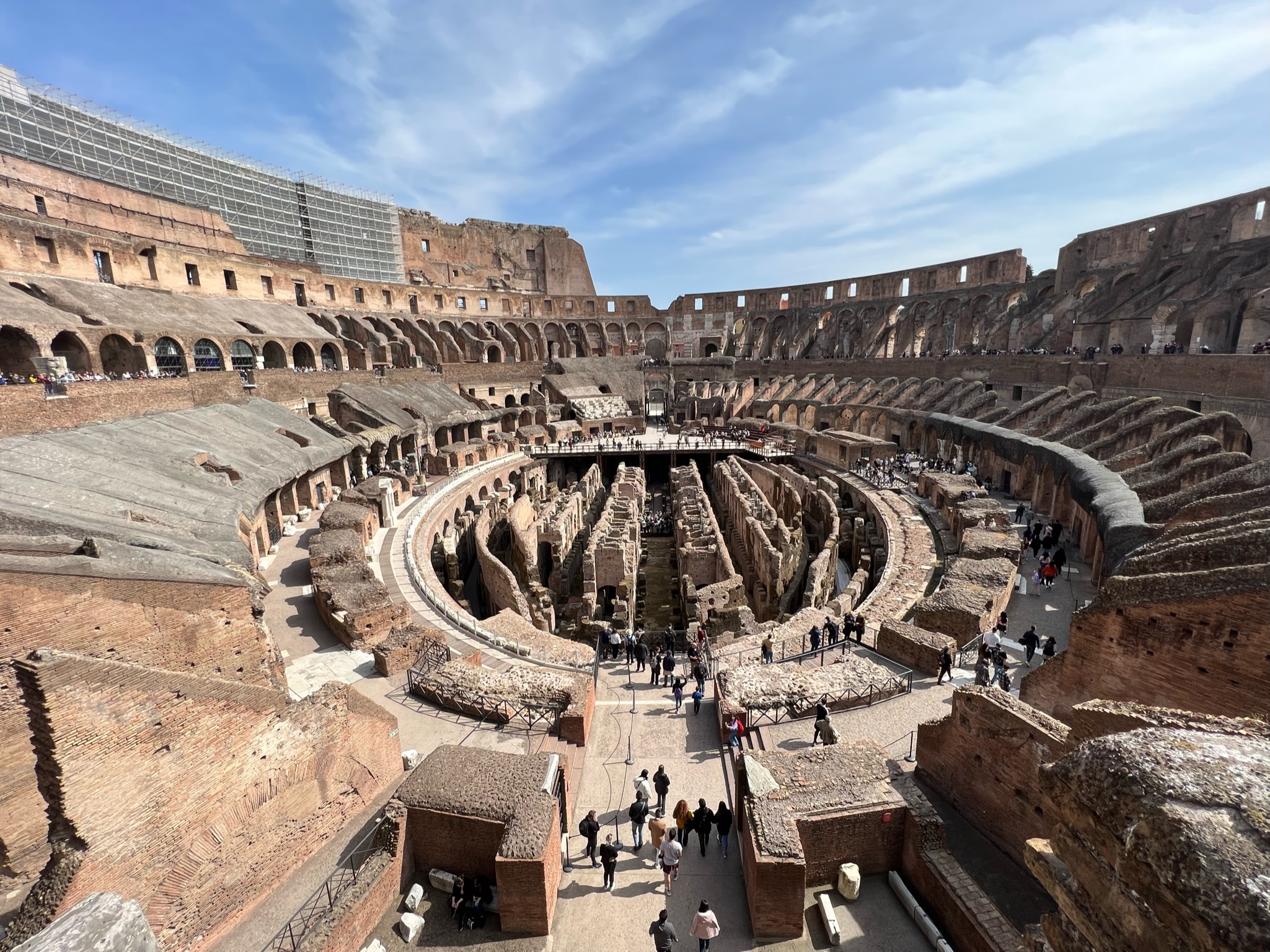
The original arena floor was made of wood and covered with sand. Under the surface, there were elaborate basement levels with 80 different elevators for the organizers to use to add new and exciting elements to the games or performances going on above. The gladiators might be fighting for their lives in the arena, and at the moment they least expected it, the editor, the organizer of the battle, might unleash a lion from one of the floor compartments to add to their drama. The underground structure also was also used to house the weapons, cages, animals, and the fighters themselves during these battles.
Gladiators were often slaves, prisoners, or prisoners of war who were forced to compete. If they were liked well enough, they could even win their freedom through fighting. Sometimes, though, free citizens took up the career out of a desire for fame and fortune. The gladiators attended gladiator schools where they could learn to fight well. The conditions in the schools were similar to prisons, but the fighters were given ample food and medical care to keep them strong and healthy. The gladiators fought until one was clearly defeated. Usually it was kill or be killed for the fighters, but occasionally, the defeated gladiators were allowed to live if they had fought valiantly and the crowd liked them well enough. The winning gladiator was given a palm and a crown as a prize, and often, these winners were well known and celebrated within the empire.
During dramatic performances, set pieces were moved around underground and raised through the elevators to enhance the plays, very similarly to a backstage area today. The Colosseum also hosted naval battles as well. During these times, the entire underground and arena level was flooded with water, and ships were brought in. Spectators could watch as the performers put on a show, usually dramatizing a famous battle or siege.
When the Colosseum was first inaugurated in 80 AD, the citizens of Rome celebrated with 100 days of games. During that time, it is estimated that over 2,000 men and 9,000 animals were slaughtered here during that time alone. It was only used for a few hundred years, though. Constantine, the first Christian emperor, was the first to ban the gladiatorial games in 325 AD, but they didn’t actually come to a complete end until 404 AD. The gladiator schools were closed down by Emperor Honorius about 5 years prior to that. In 404, a monk named Telemachus leapt between two gladiators to stop their bloodshed, and the crowd, angry at his interruption stoned him to death right then and there. That was the final straw; Emperor Theodosius, a recent Christianity convert, finally put a stop to them. The stadium was kept open for beast hunts though, and the last one that was held there was in 523 AD.
We walked through the upper floors of the arena imagining what it would be like to witness such gruesome games being played right before your eyes. A display on the second level described the multiple bowls of perfumes that were brought in daily to cover the stench of blood. It’s hard to imagine the bloodthirsty crowds eagerly waiting to watch someone die the most gruesome death possible. It was interesting to learn that in many early Christian writings acknowledging the games, the authors denounced the Romans for their idolatry displayed at these games, but they didn’t address the cruelty and murder.


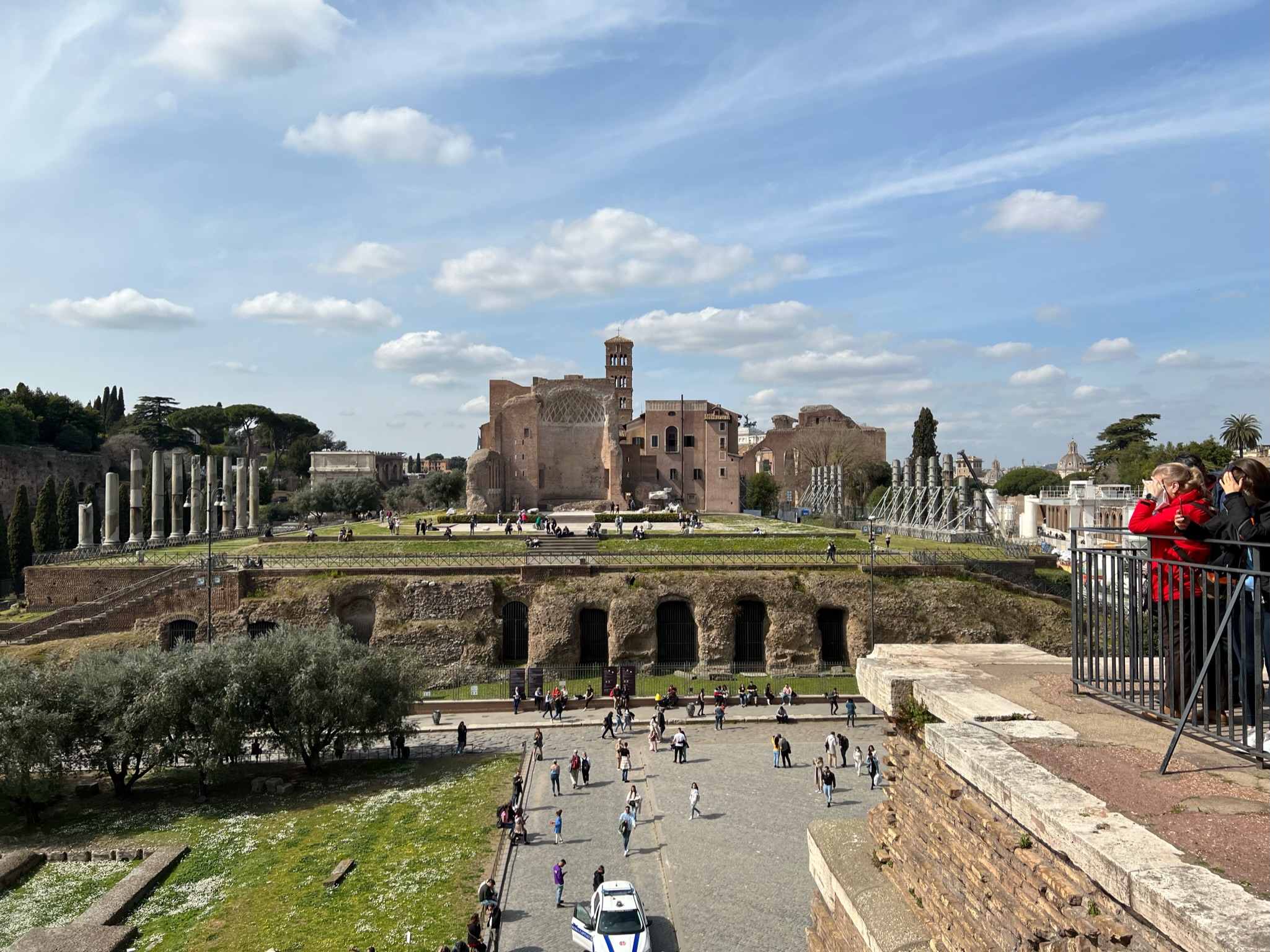




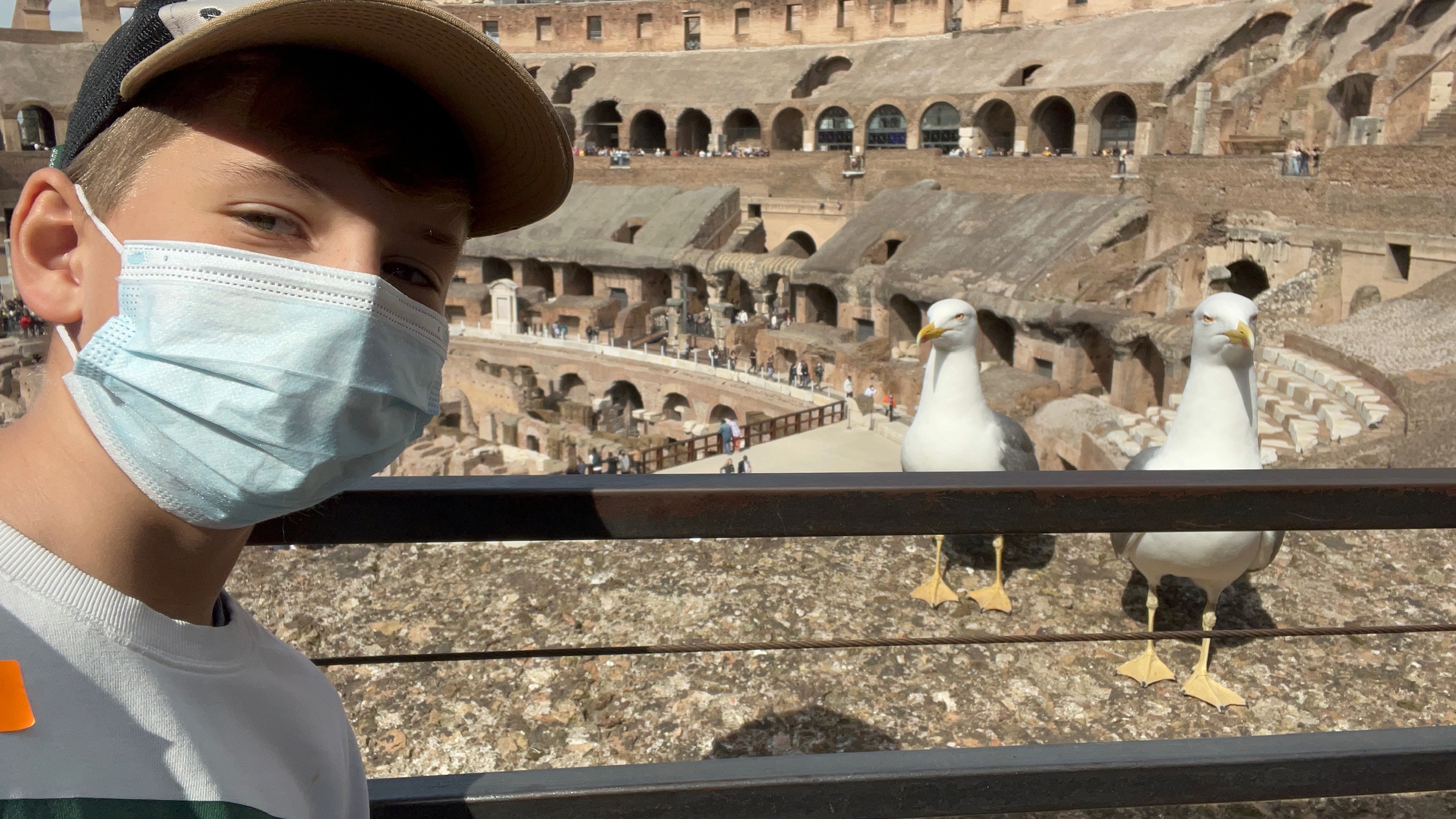
We left the Colosseum in search of lunch, and then we went to our next destination: Palatine Hill and the Roman Forum. The Roman Forum is the old seat of the Roman Empire and the center of public life when Rome was at its peak. The Senate was there. The Emperors lived there. The biggest temples and most important buildings in their society were all there. Beside that is Palatine Hill. The Roman aristocracy lived here. Augustus chose the hill as the site for his own house, and later, it became the site of the imperial palaces.
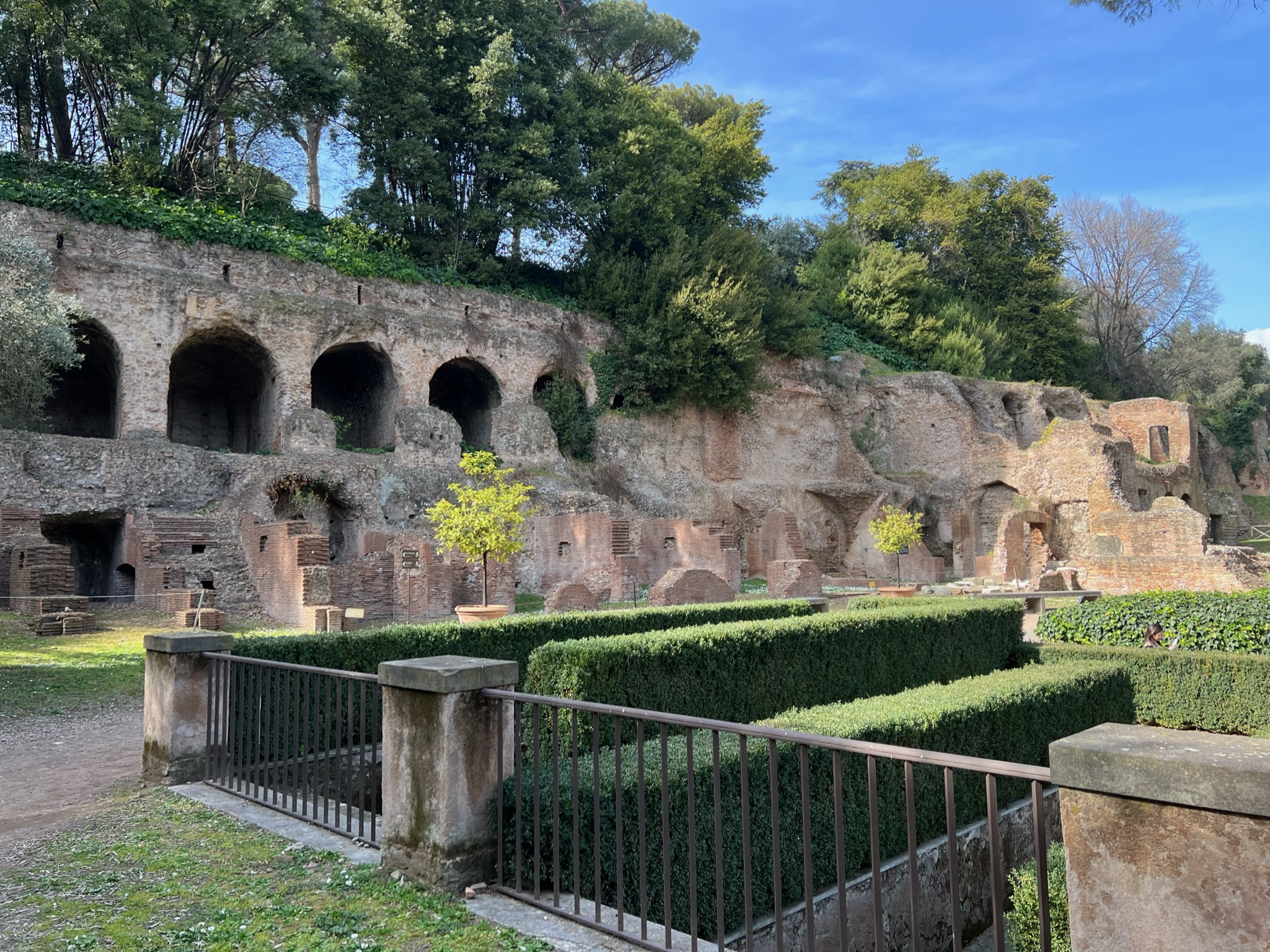
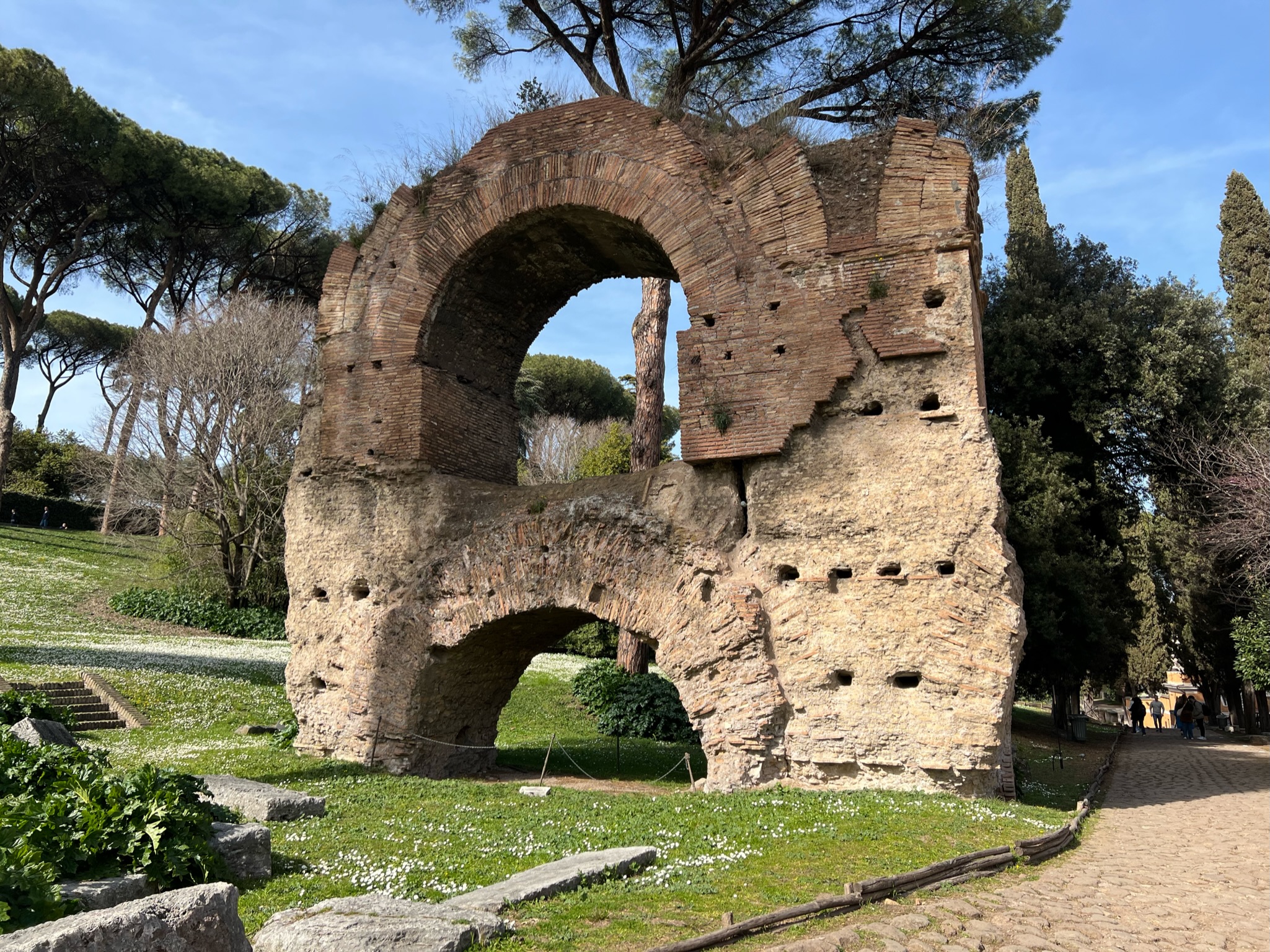
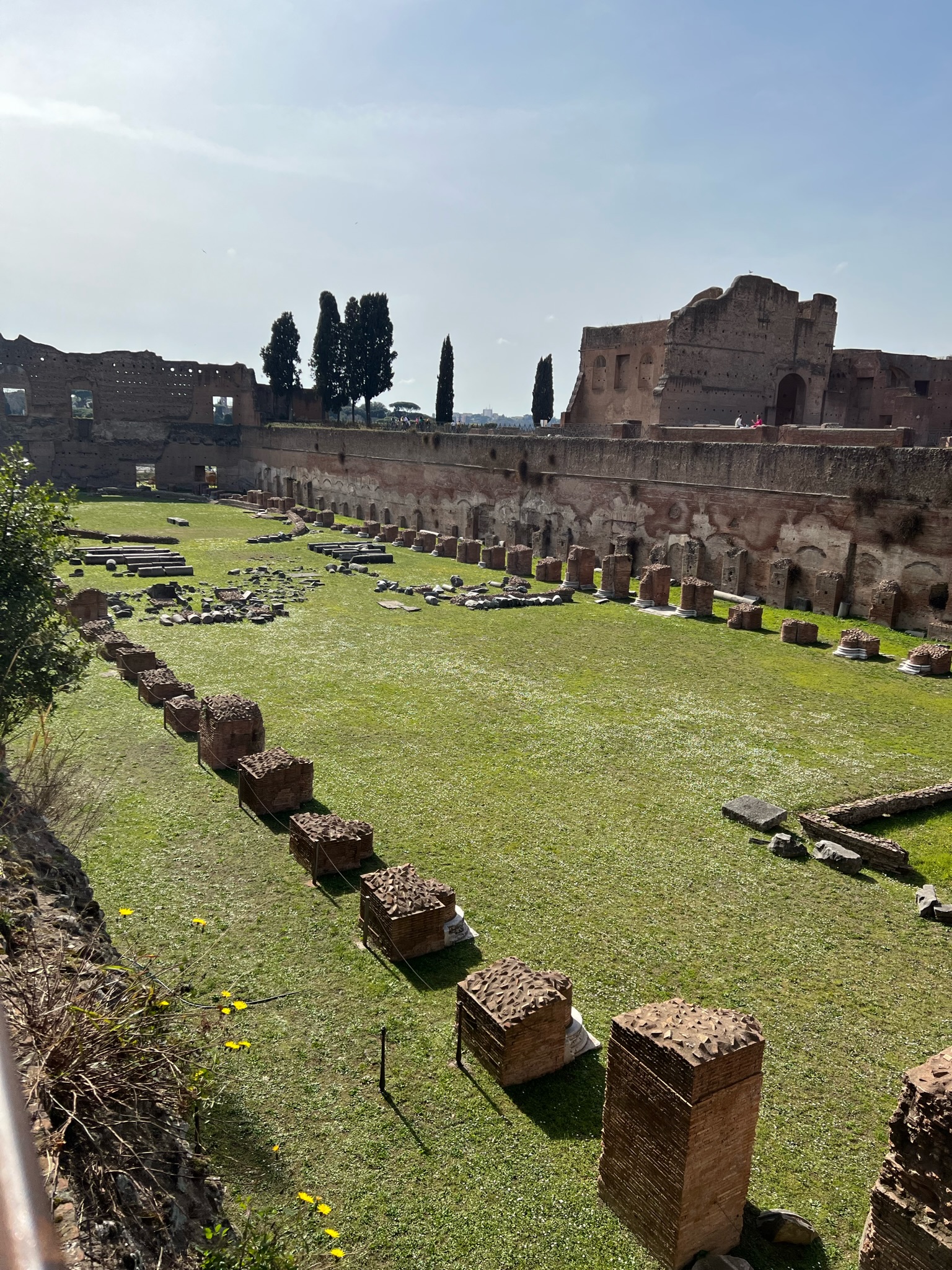
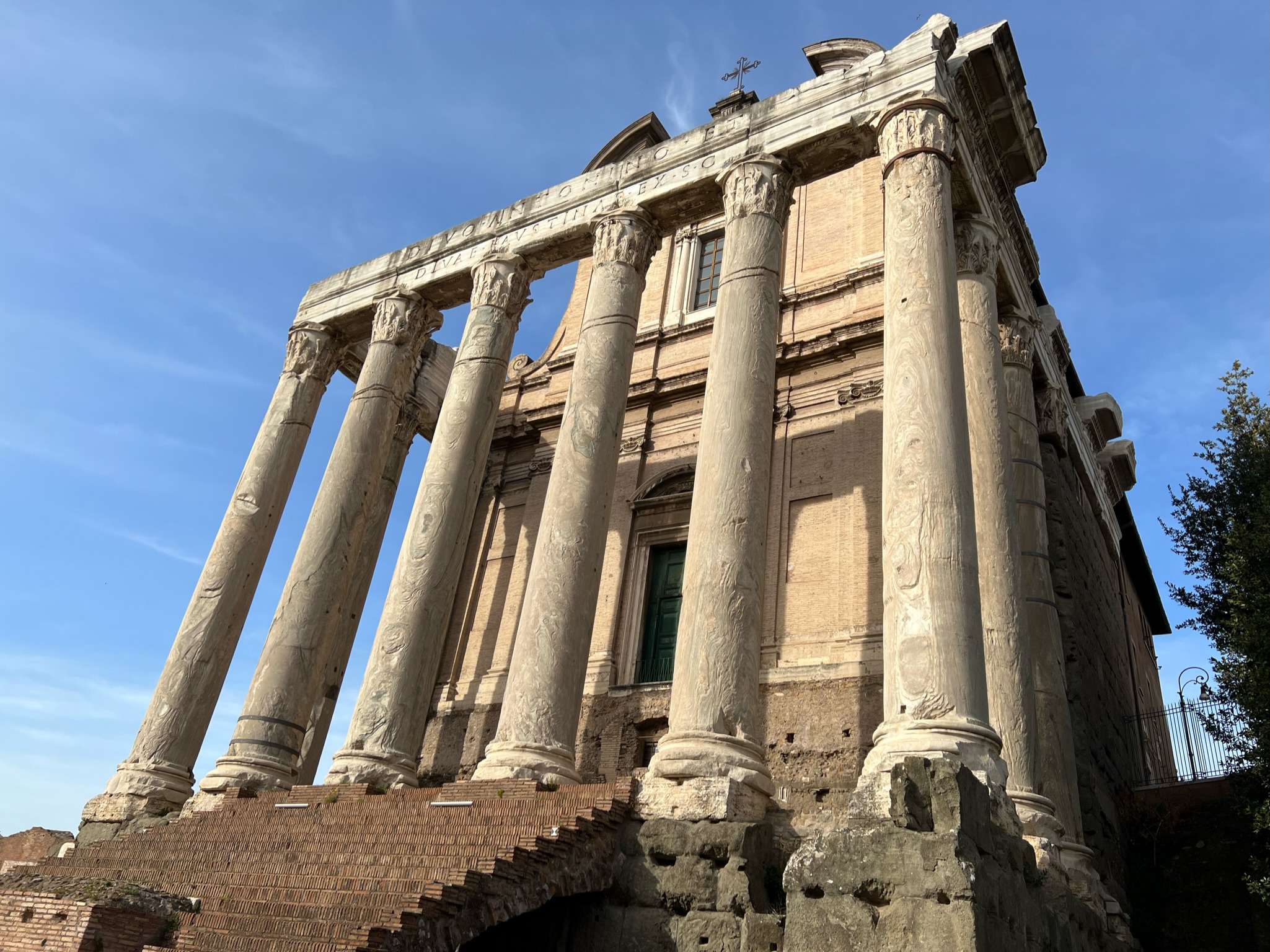

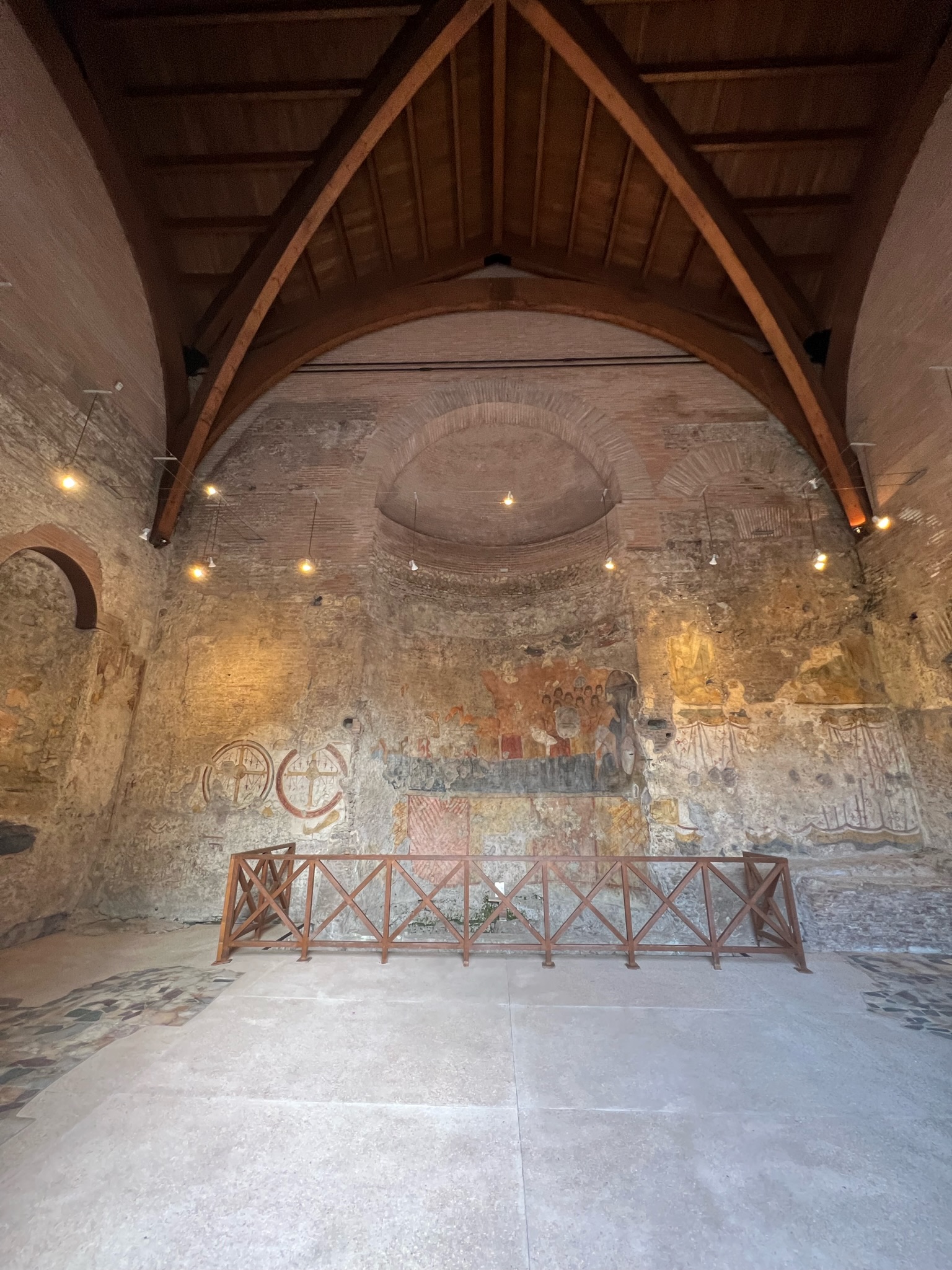
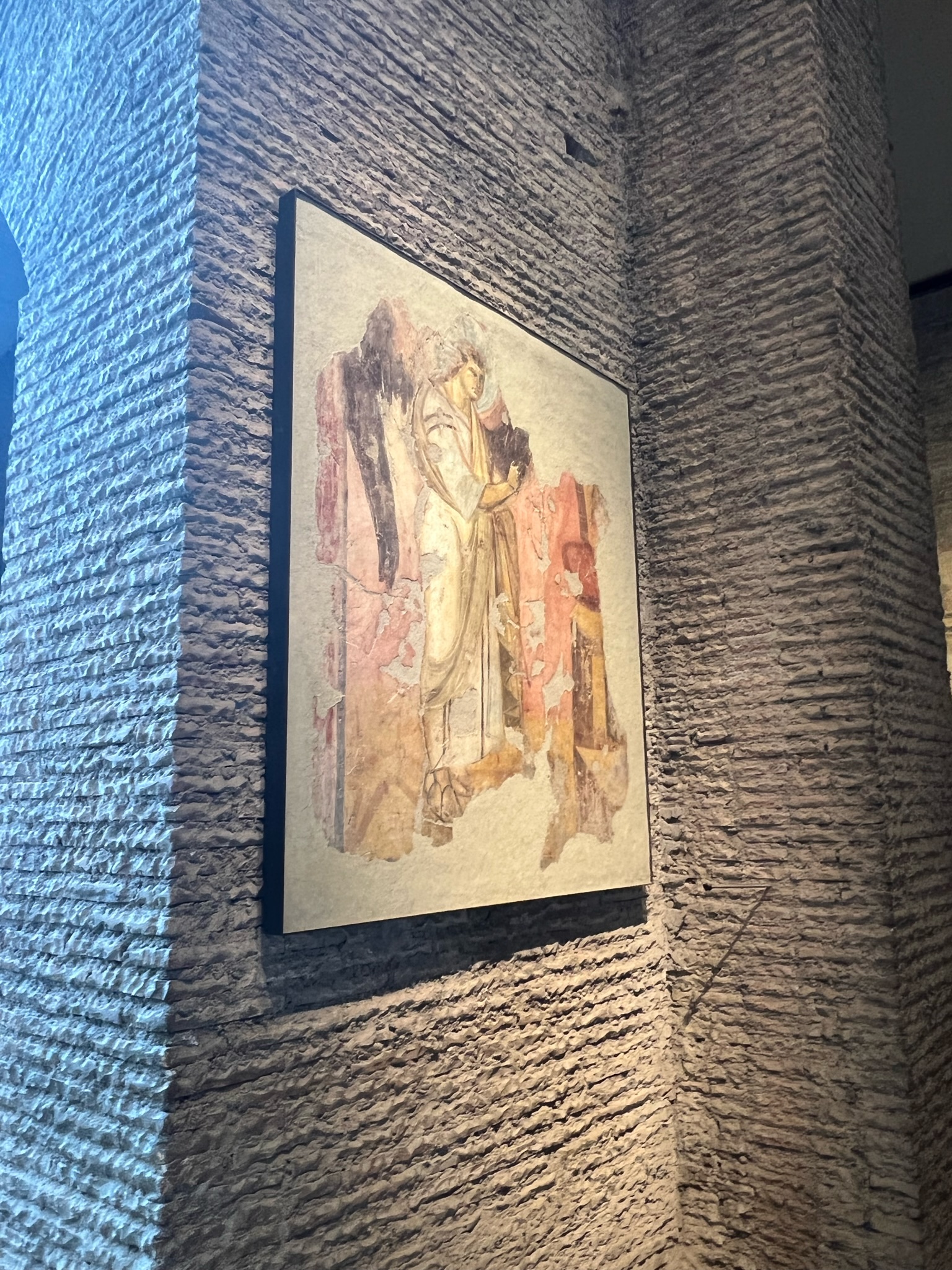
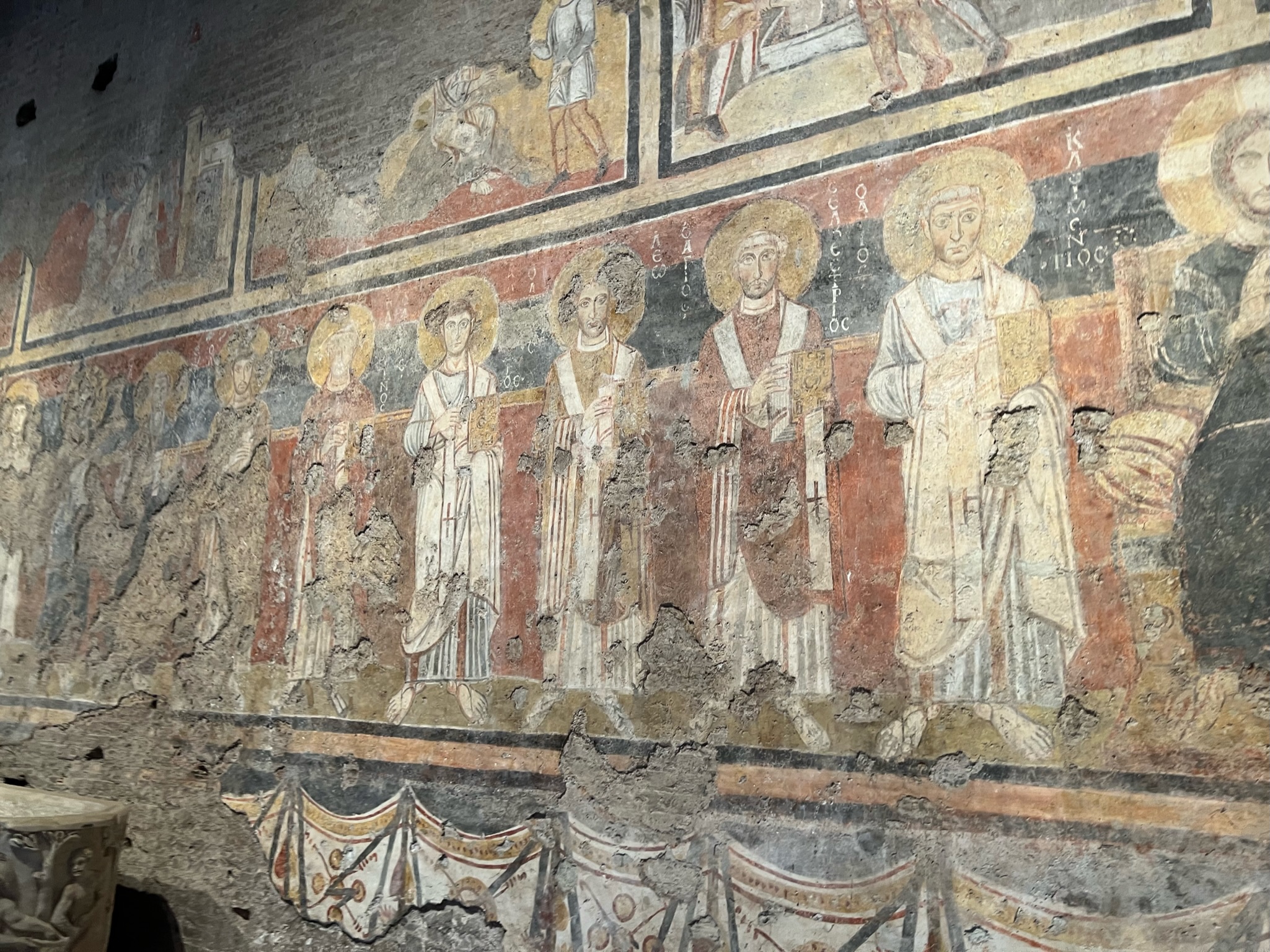

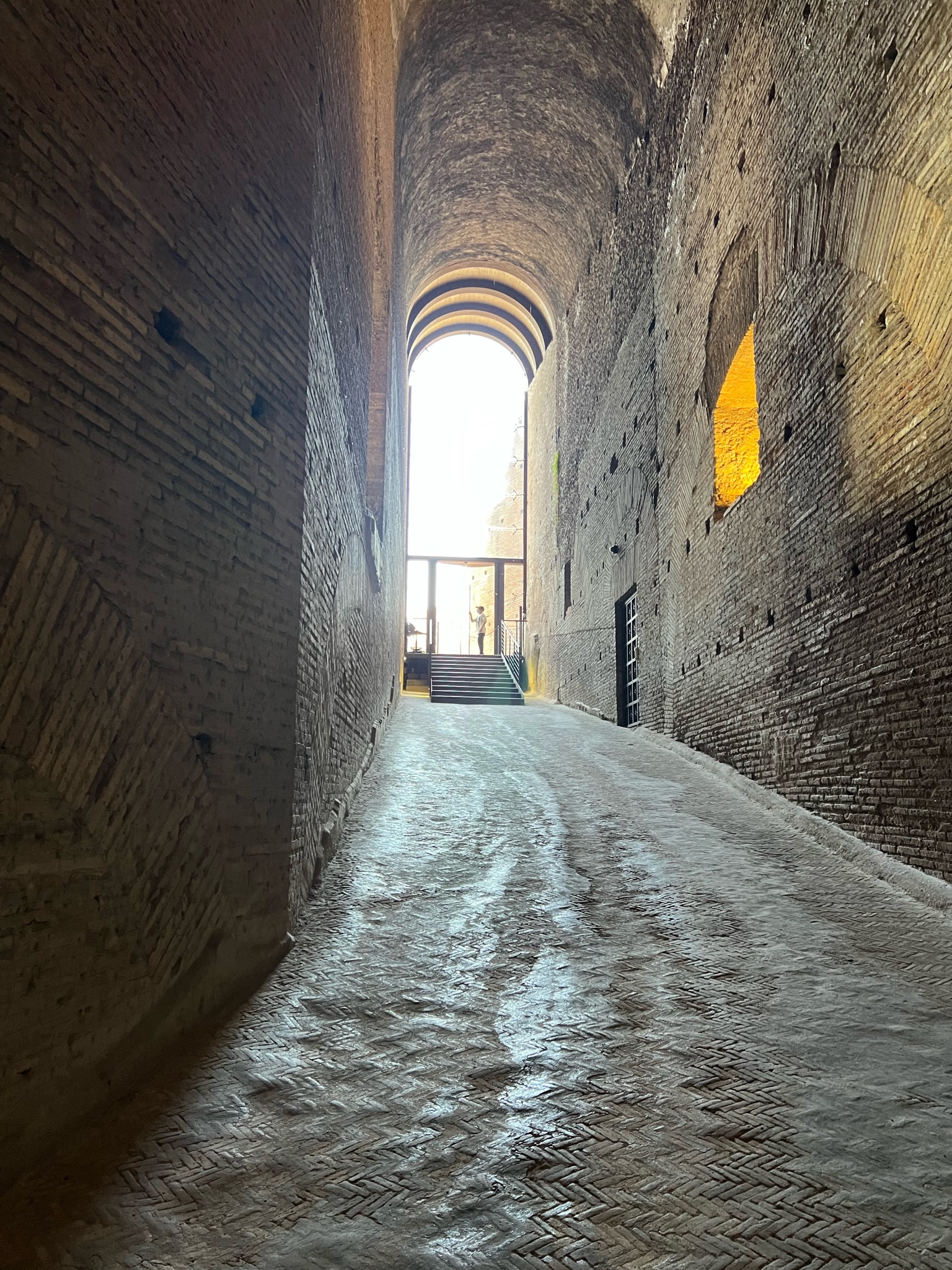

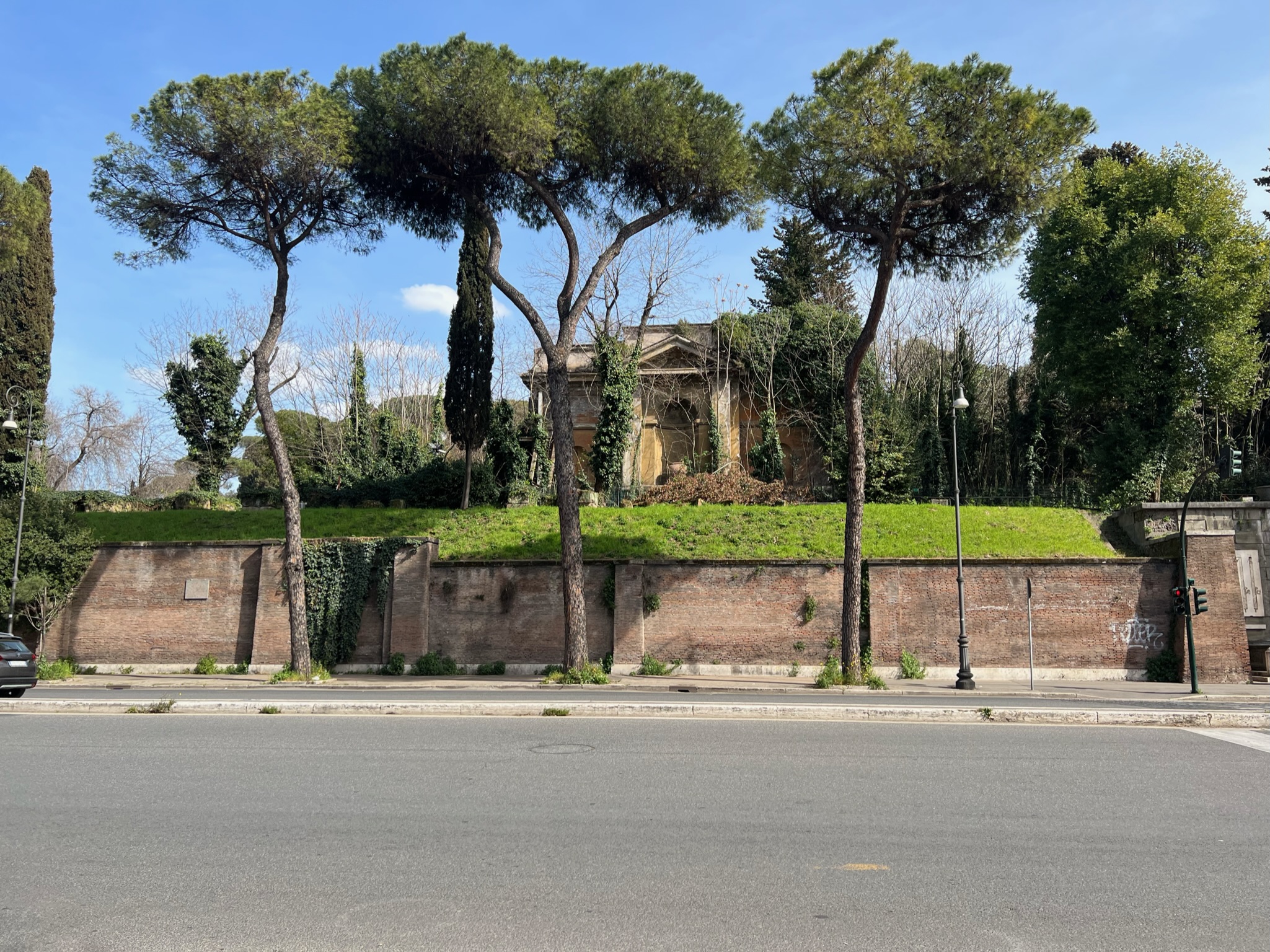
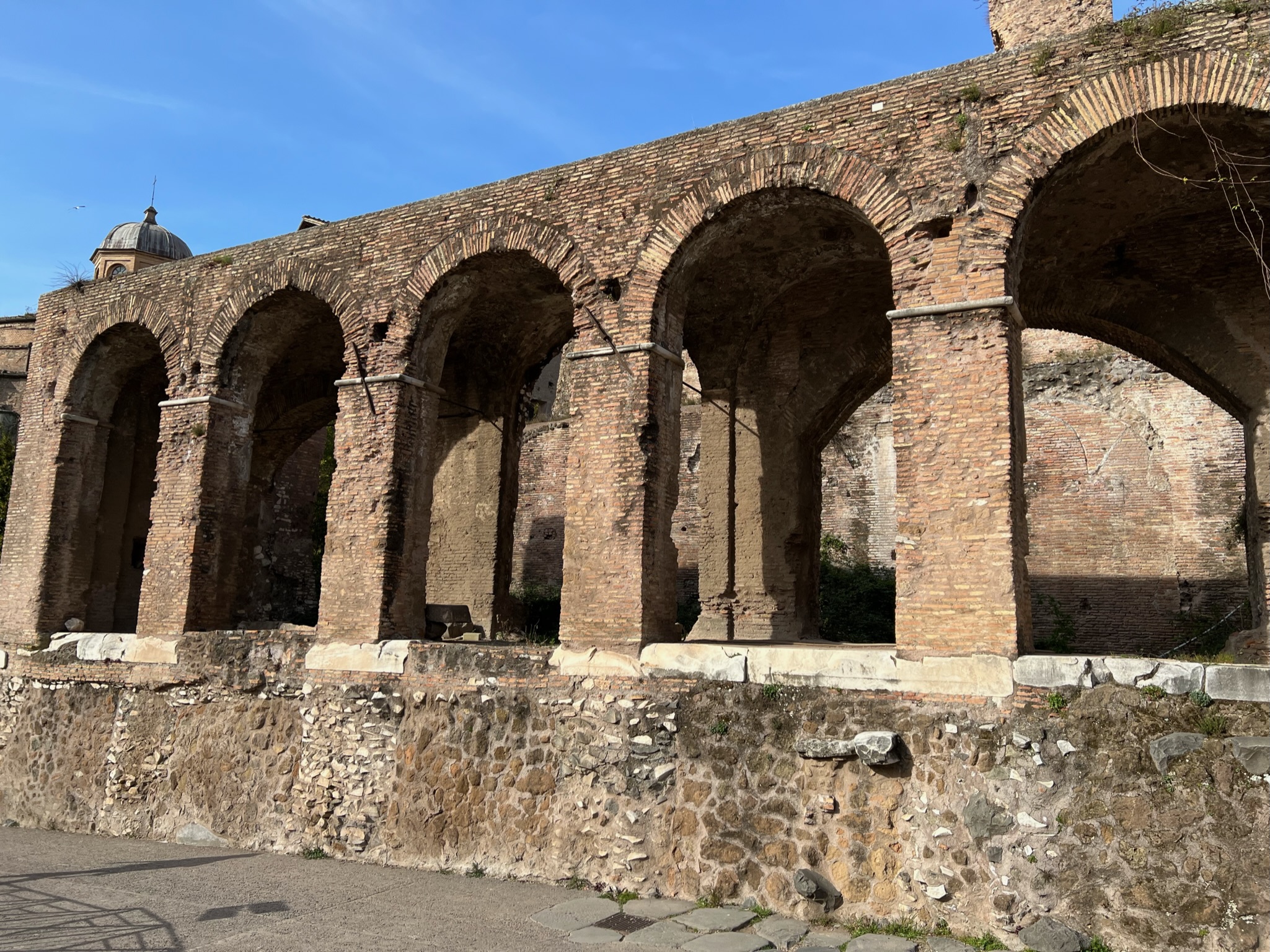

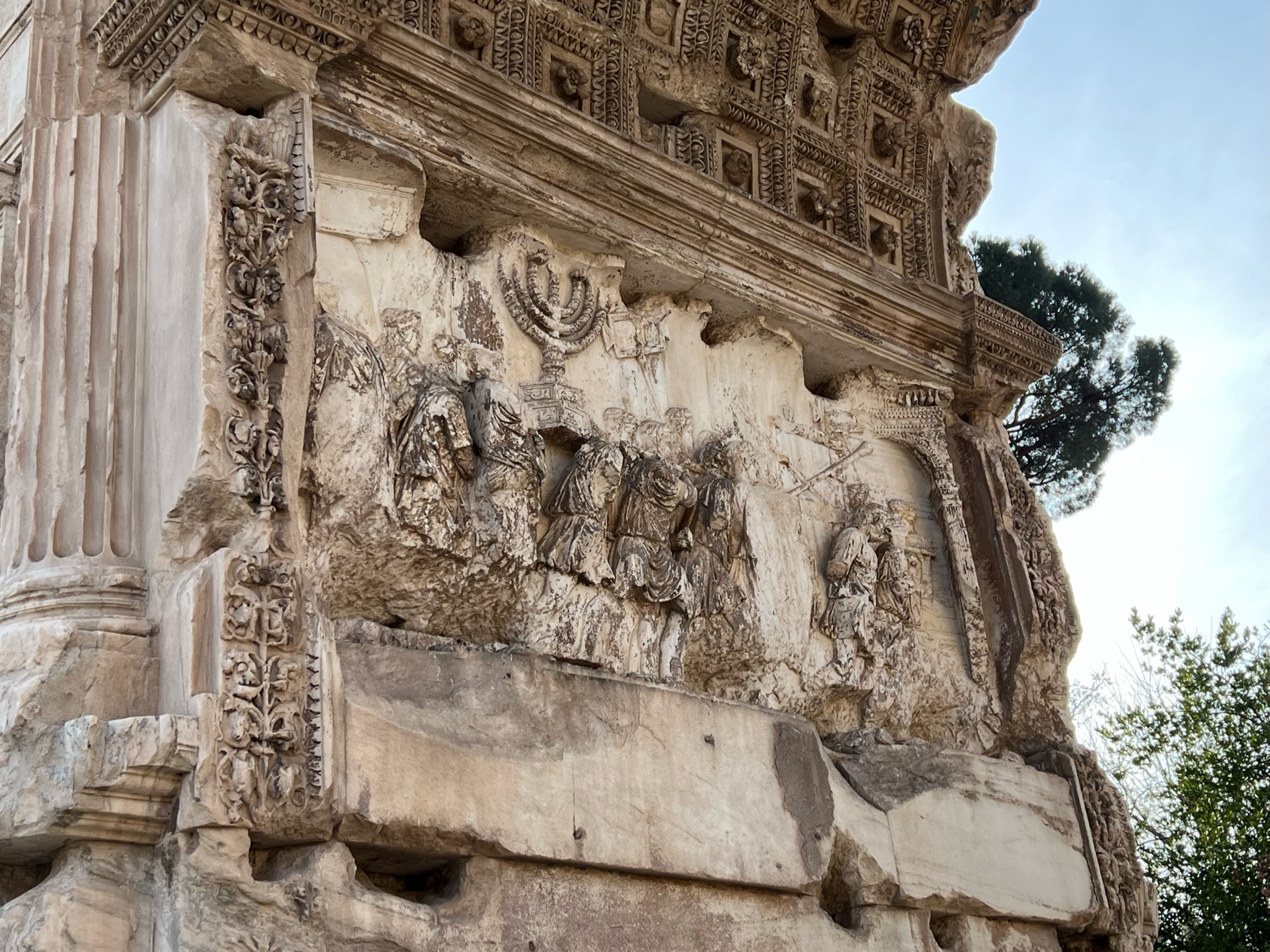
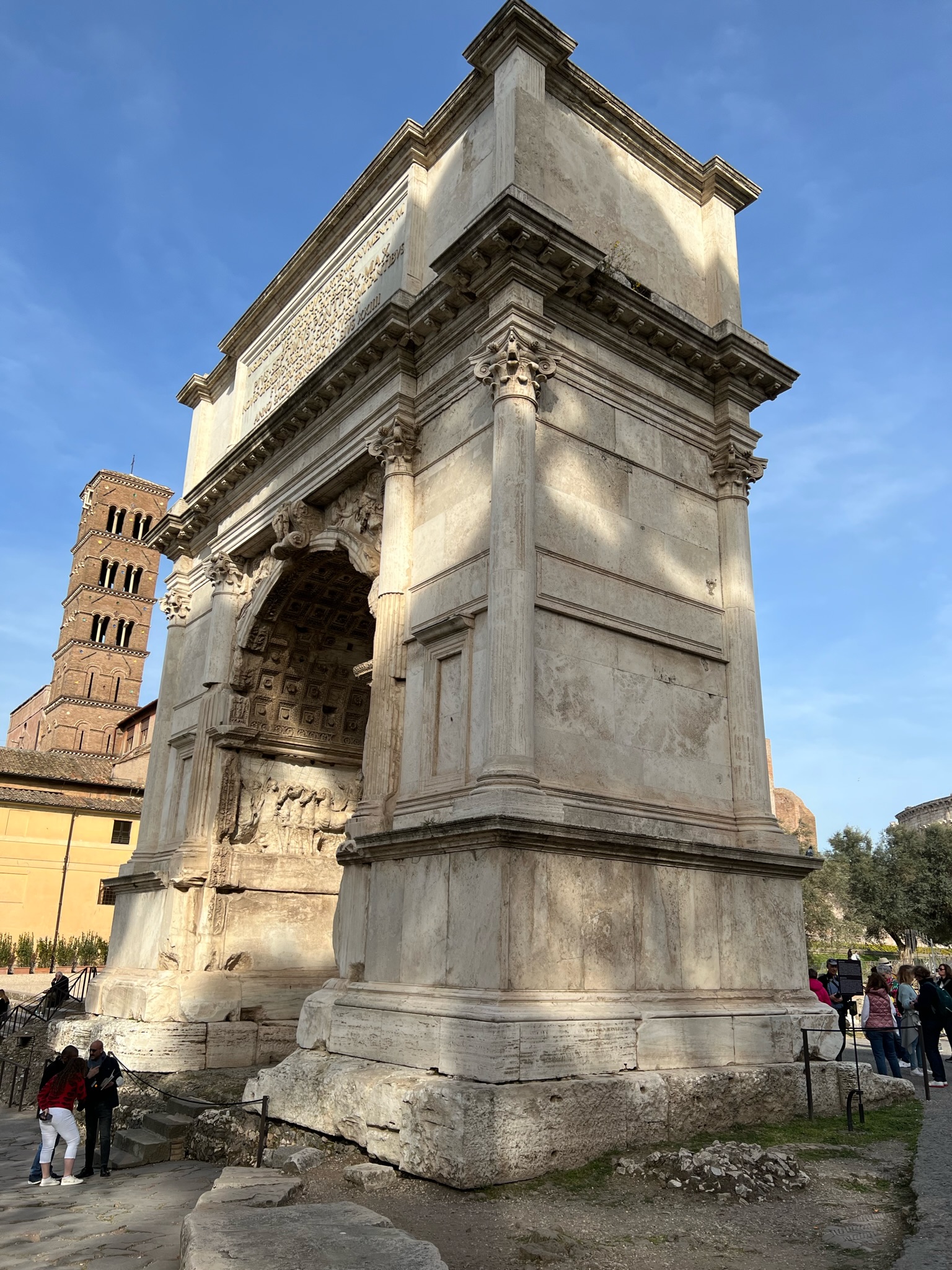
We walked into the same entrance to Palatine Hill that we’d tried the day prior, and just to see if they’d question us, we only showed them our vaccine cards. Like everyone else, they were fine with those. There was a lot to see in this area, but I won’t bore you with all of it. The Arch of Titus was one piece that was significant to me. Titus was the one who took credit for the defeat of the Jews in AD 70, and after his death, the arch was built to commemorate his victory. Inside, there are scenes depicting his grand homecoming and all the spoils he took from the Jewish temple during the war.

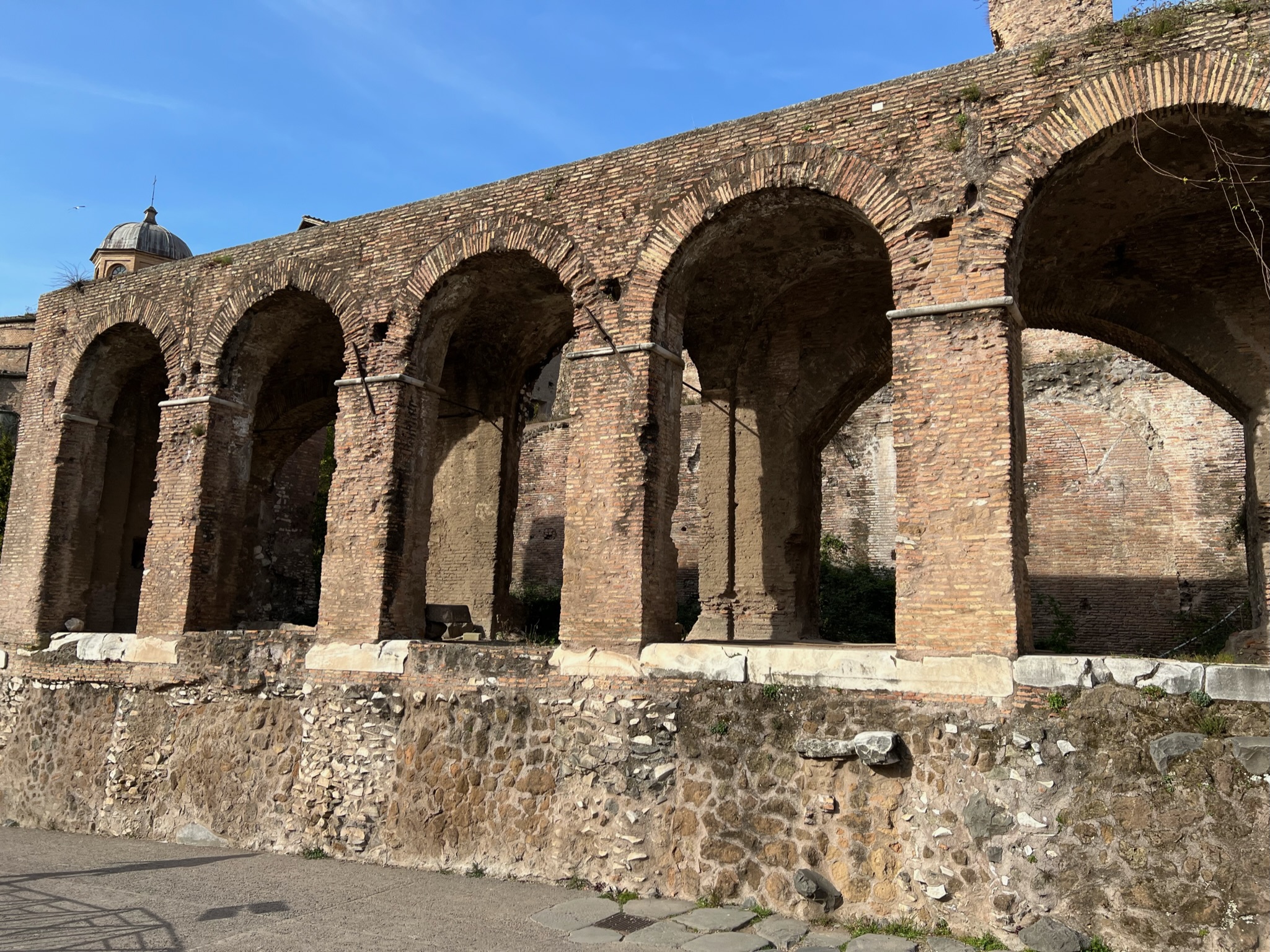
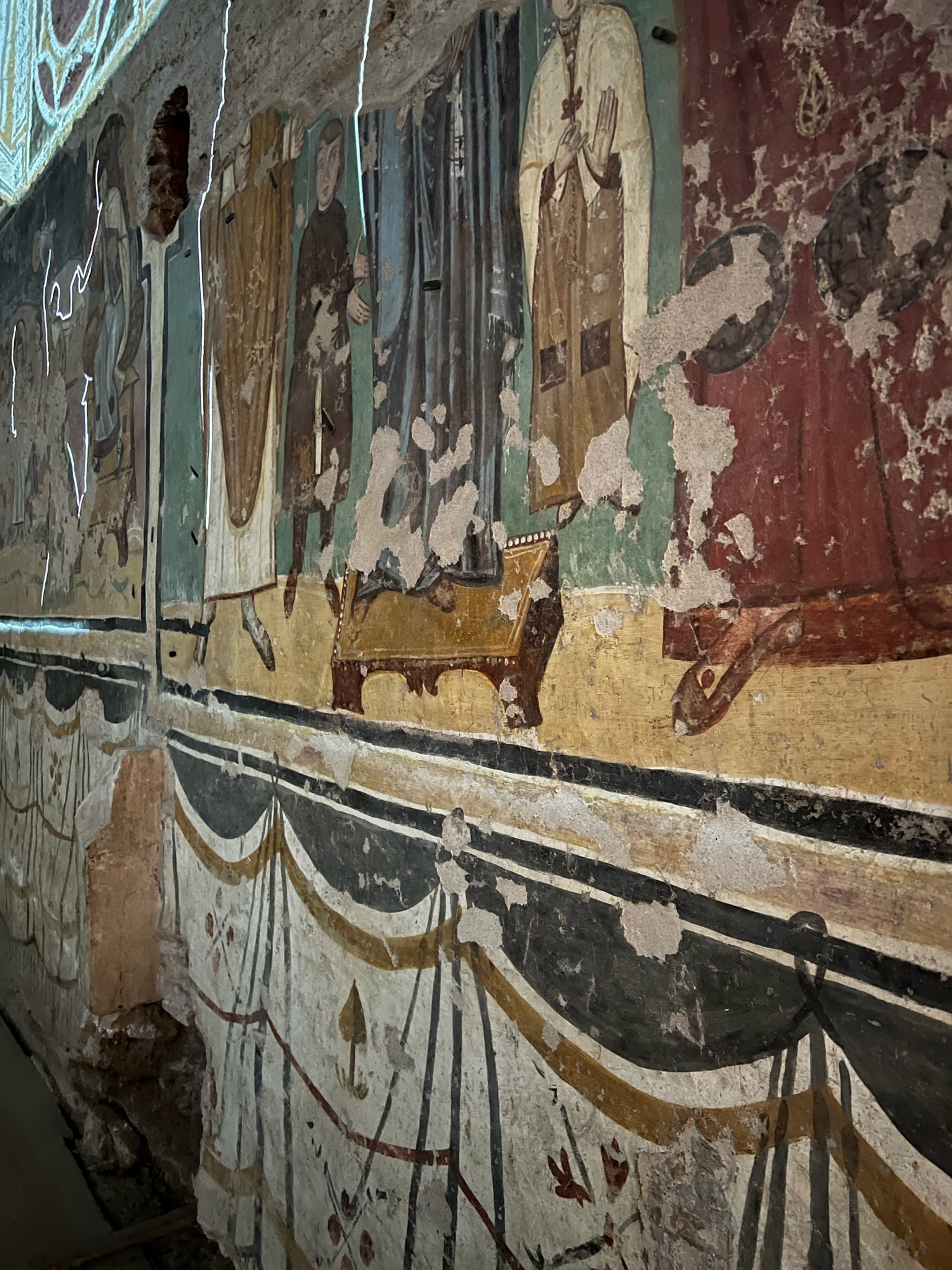
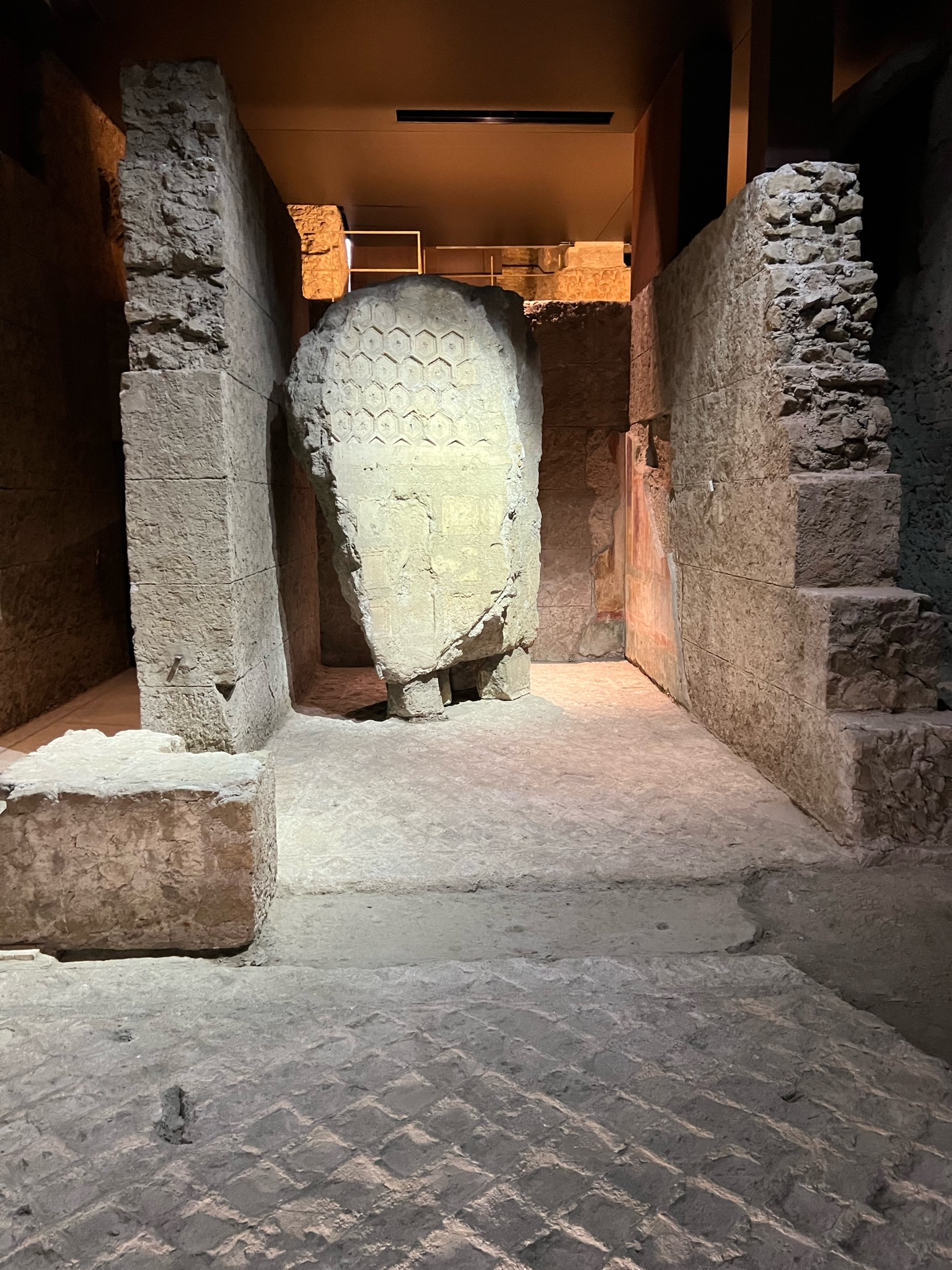
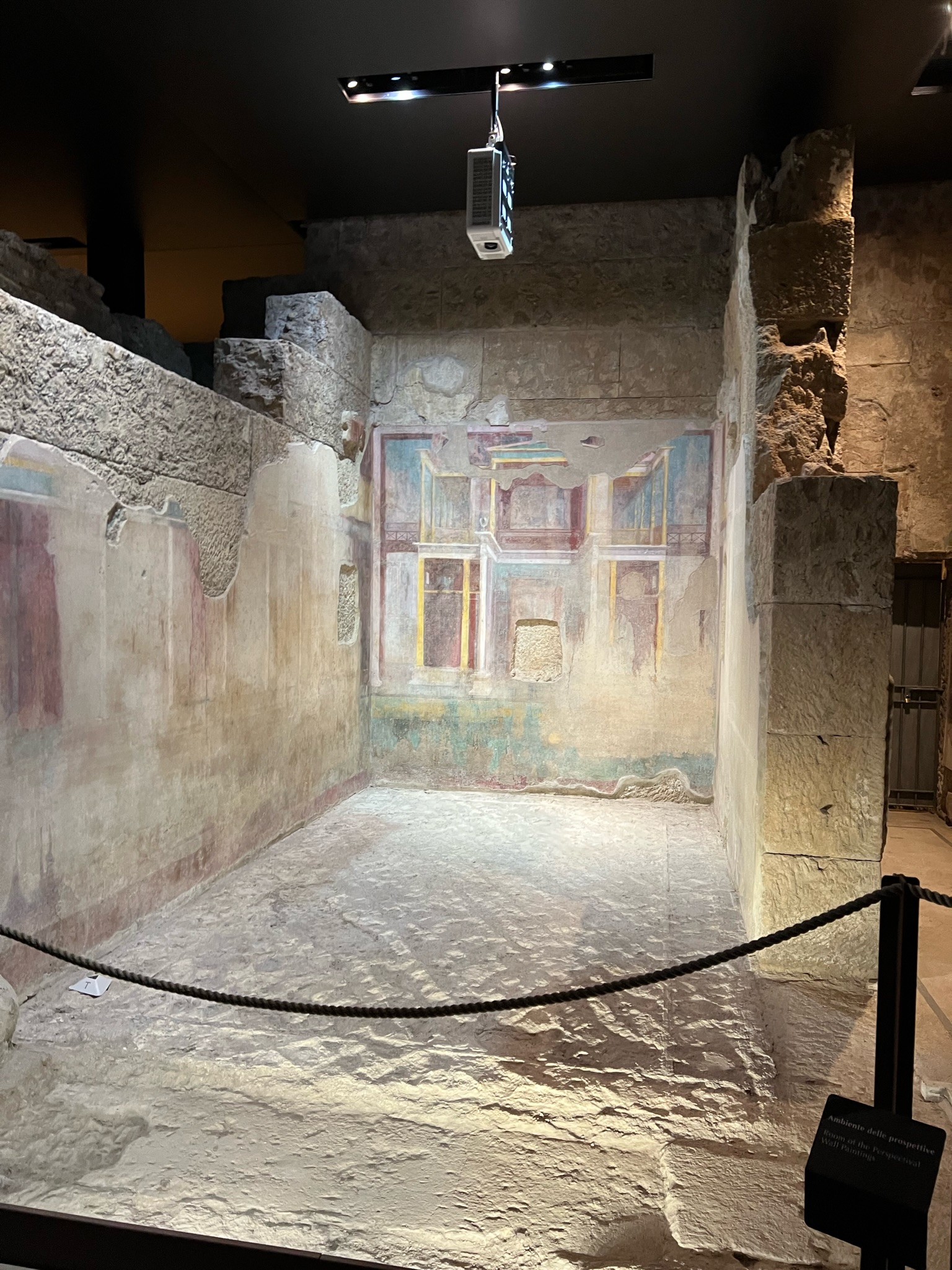
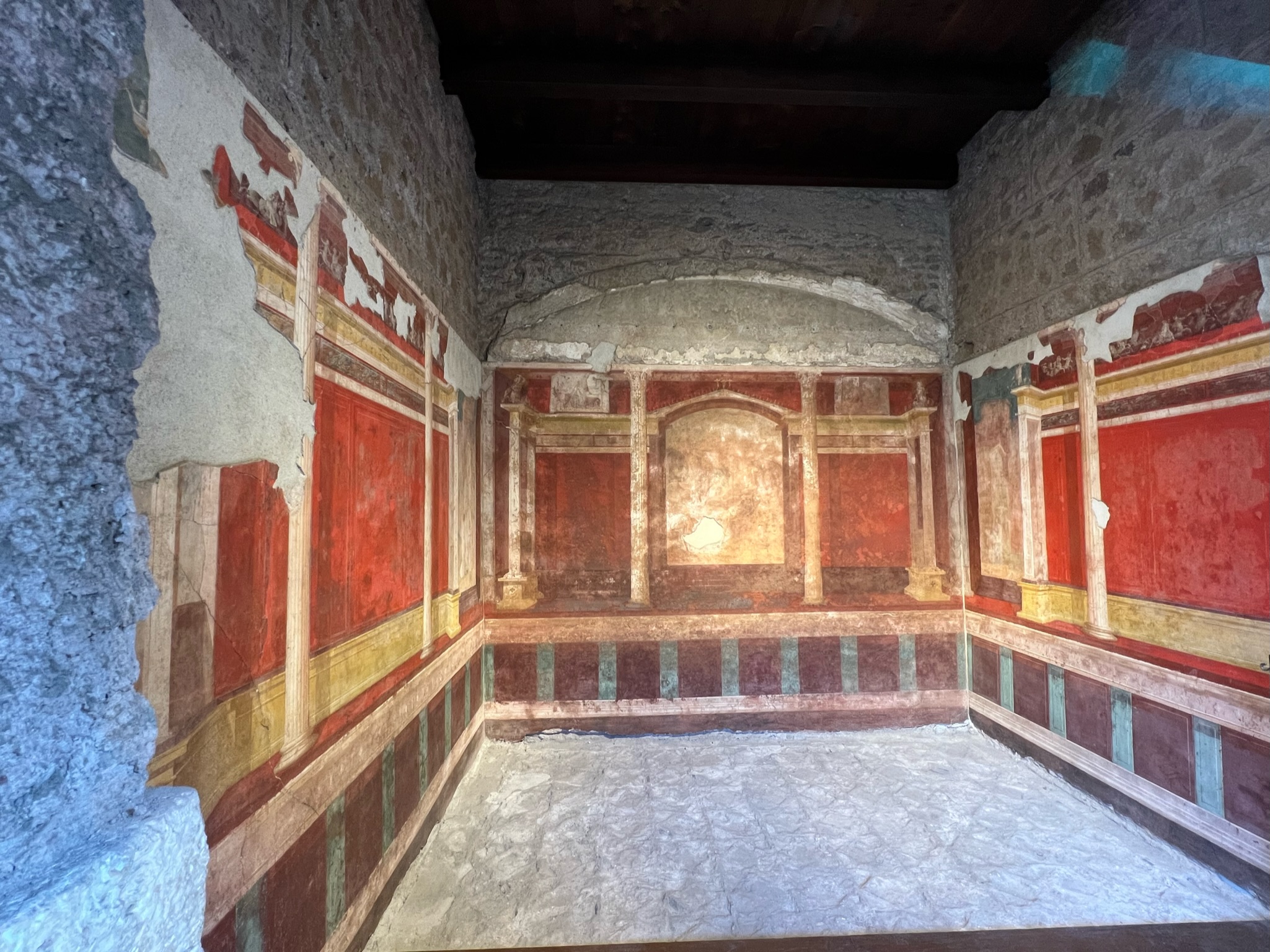
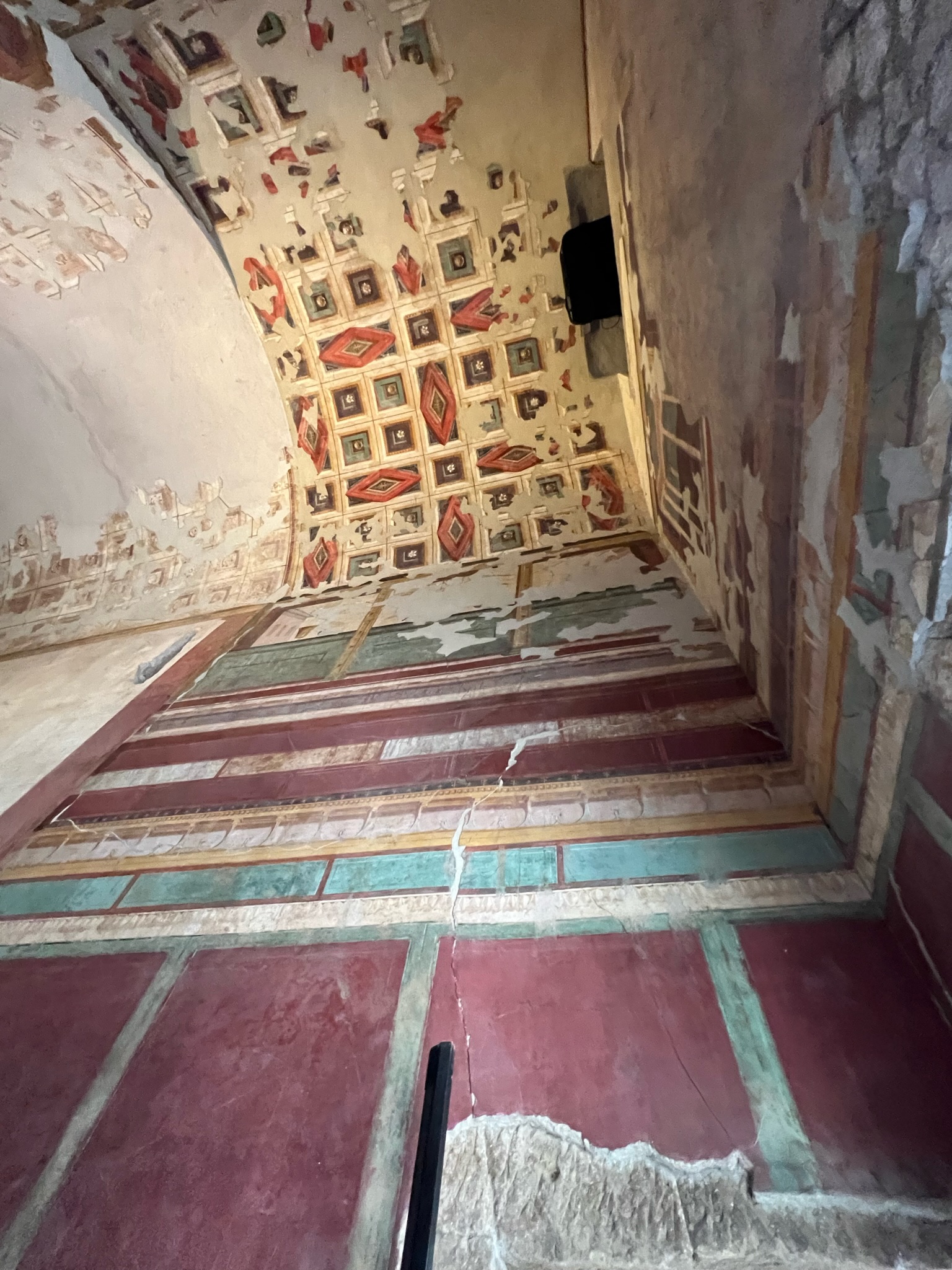
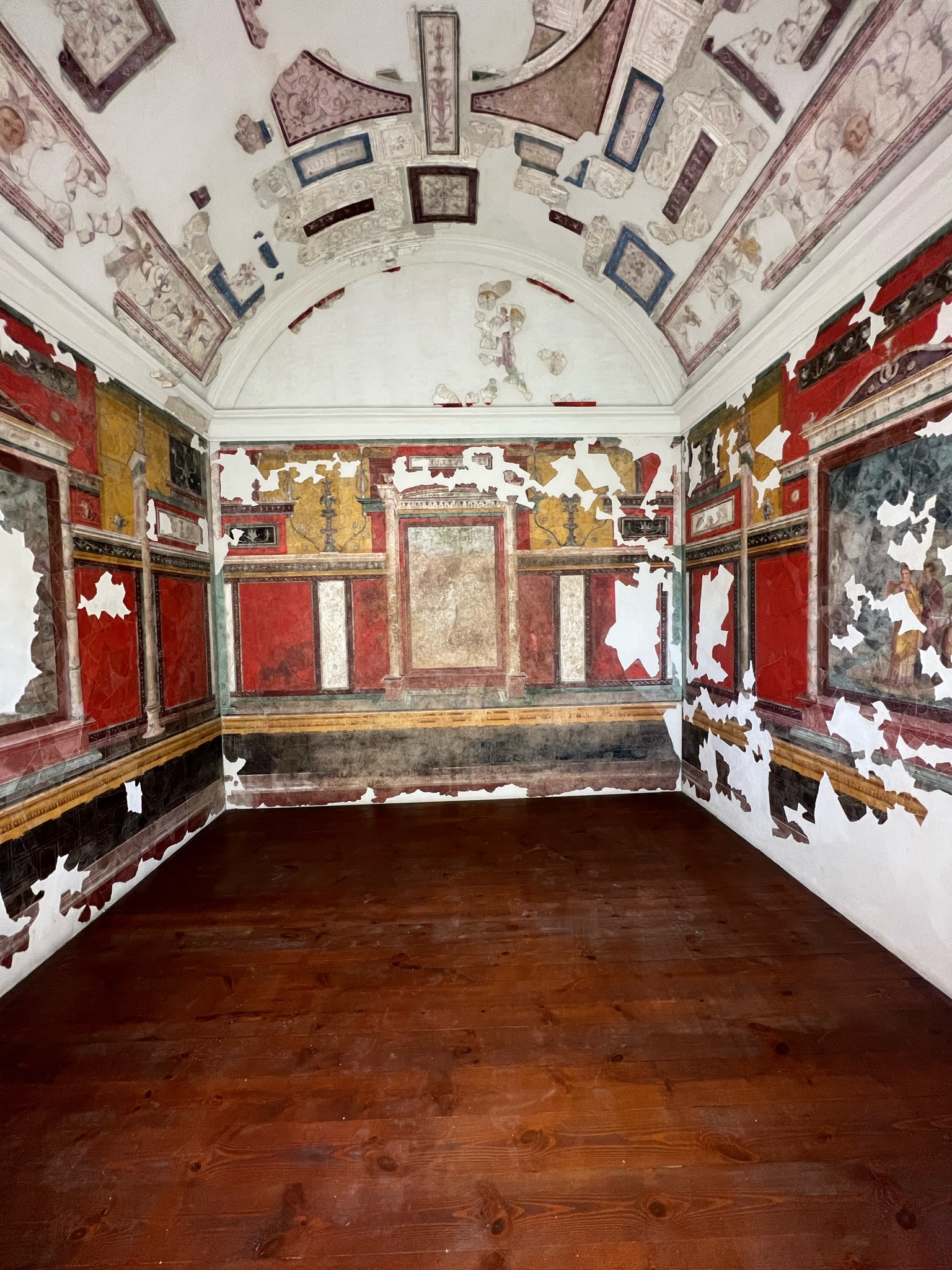
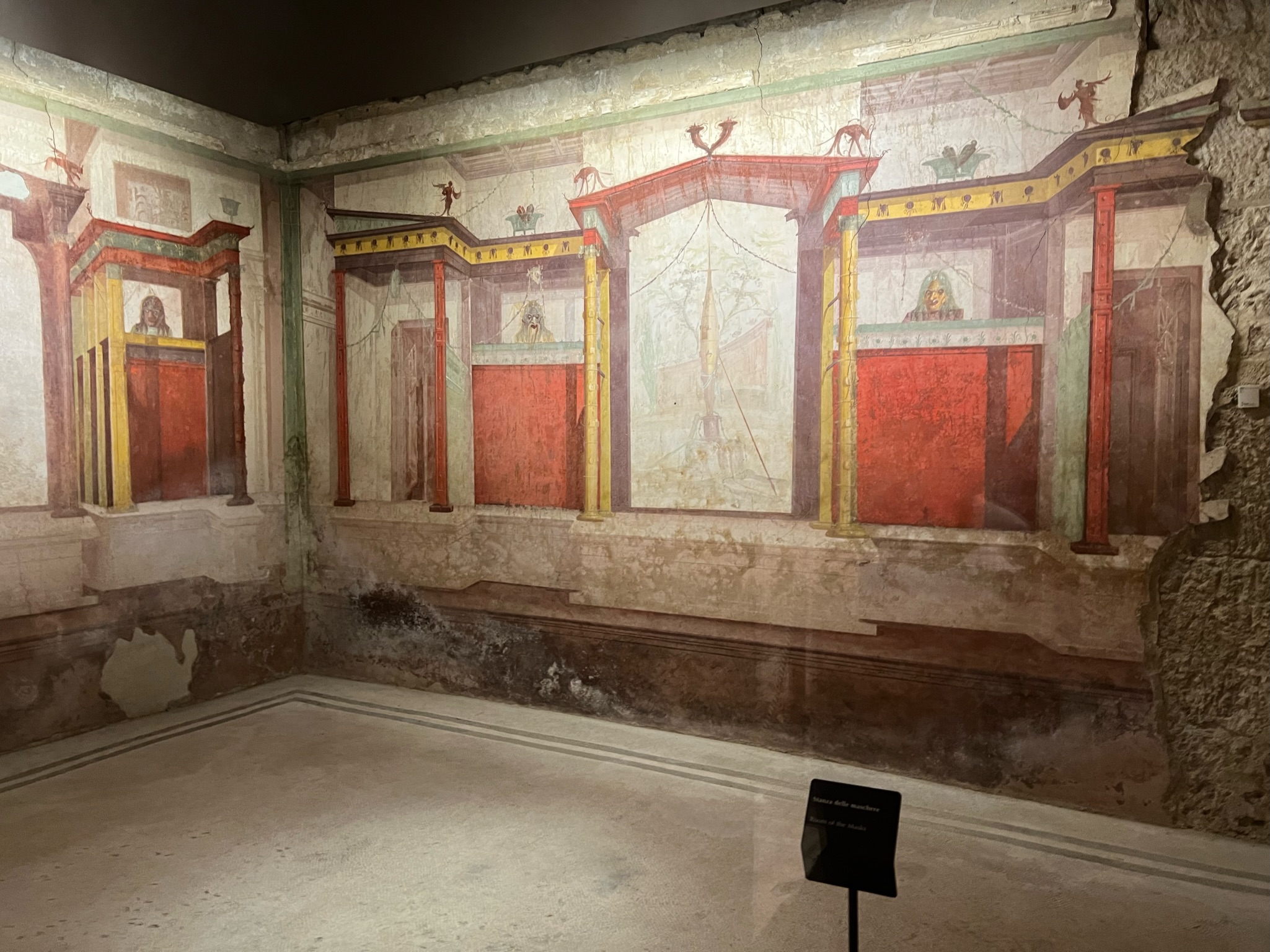
We were able to enter the home of Ceaser Agustus. Several rooms in his home are viewable, and you can see how opulent the rooms were by the fragments of frescoes still on the walls.

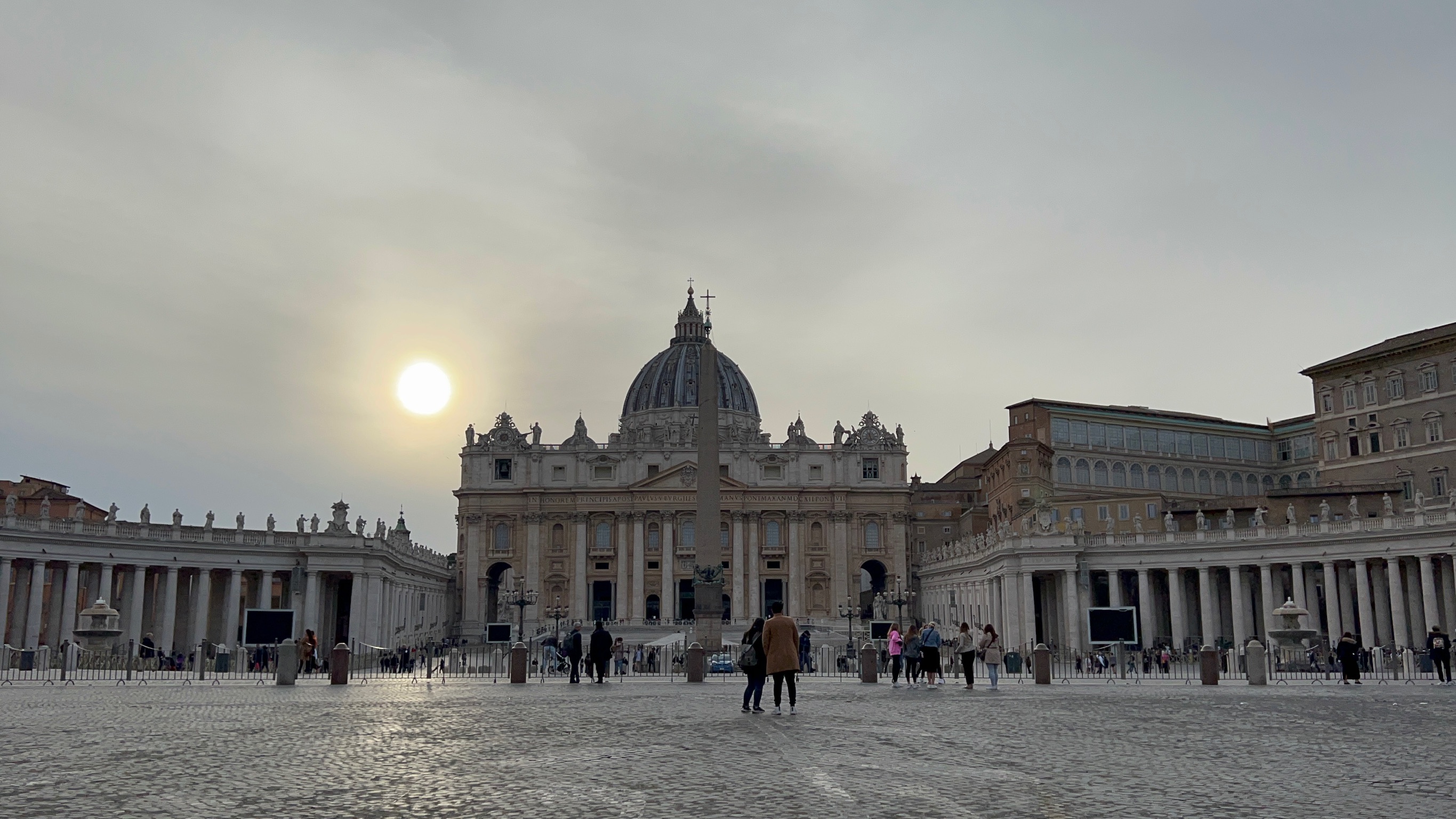
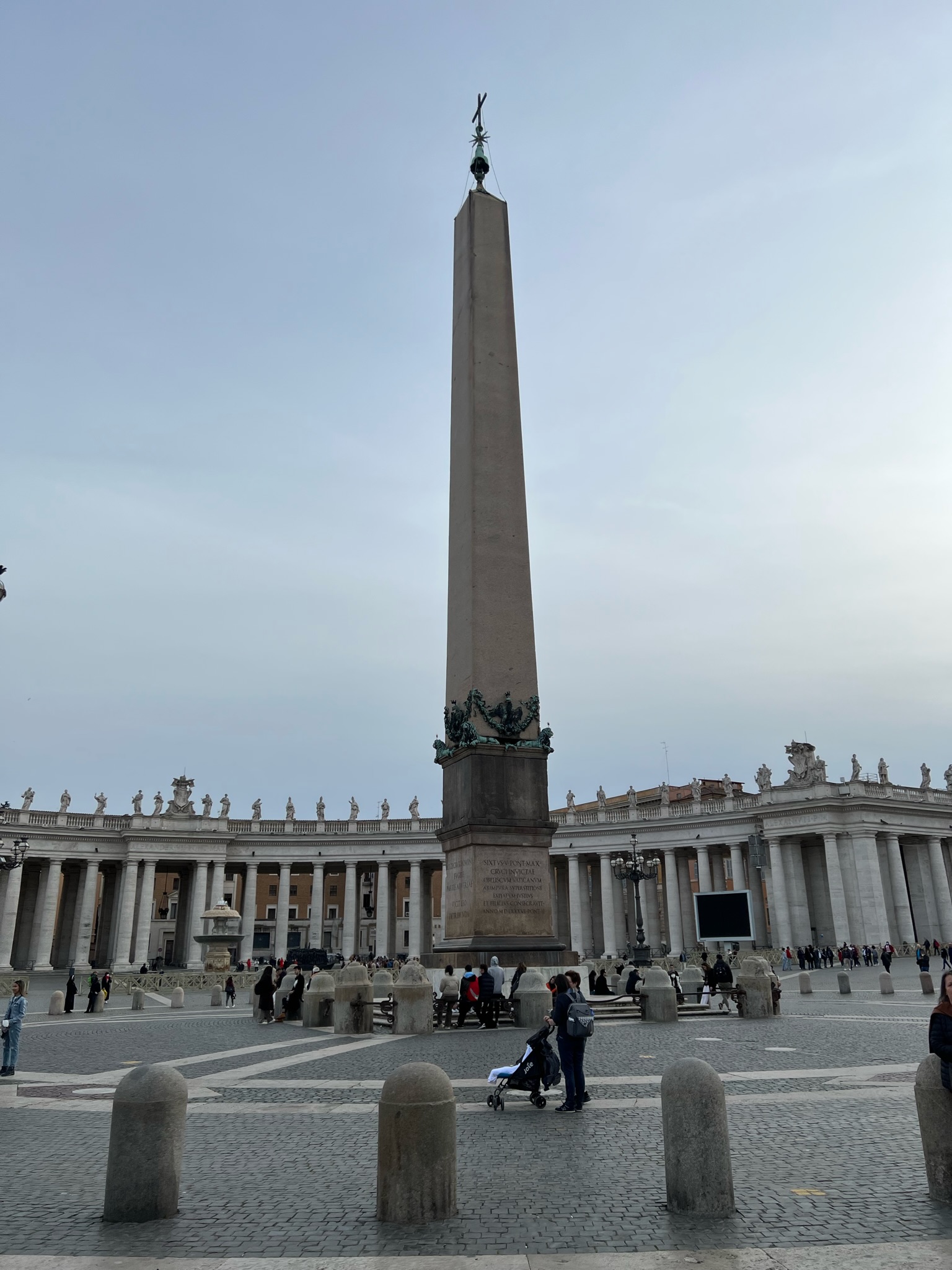
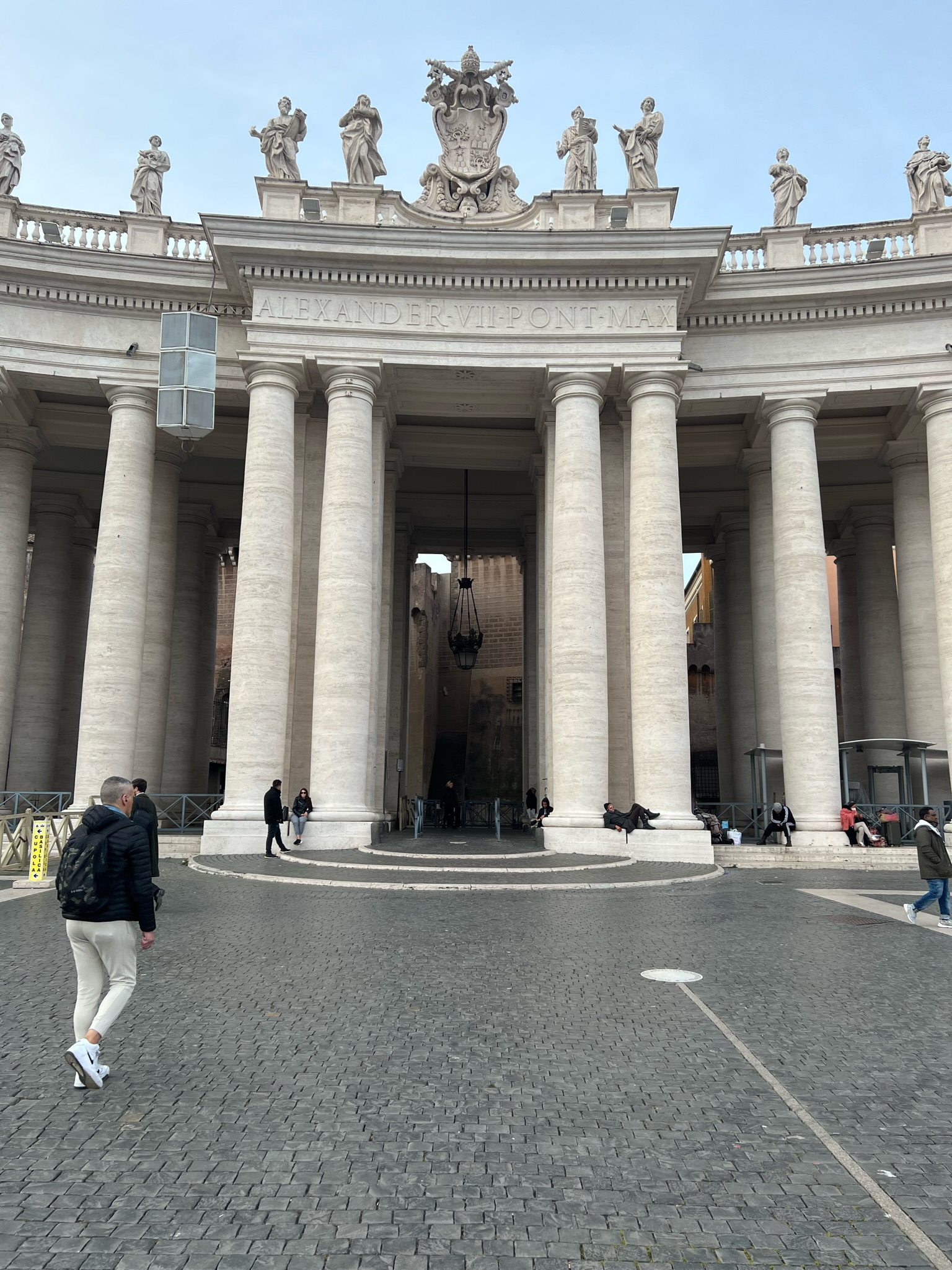
We had wandered through the ruins for long enough, but we had one more stop for the day. We were already pretty worn out, but we’d be leaving Rome the next day, so if we wanted to see anything else, this was our only chance. I very much wanted to see Saint Peter’s Basilica, so we made the hour walk from the Forums, past our apartment, and on to Vatican City. We waited in line for only a few minutes when we made it up to security. Somewhere along the way, Brian had lost his mask out of his pants pocket, and he didn’t have one anymore. The security guy wouldn’t let him in without one, and we didn’t see any we could quickly go and buy. Brian offered to wait outside so that Henry and I could go in, but before we could even make a decision about that, a very nice tourist behind us gave Brian a mask out of her stash. We cleared security and started walking up to the entrance.
A second security guard stopped us and wouldn’t let Henry and I go in. In Italy, it is required to wear a FFP2 mask, and we’d been traveling without one for days with no problems. Ours were standard surgical masks, and the one Brian had just been gifted happened to be the right type. We debated our options for a few minutes. Brian gave me his mask so I could go inside and see it; he and Henry very sweetly agreed to wait outside for me. They gave me a kiss and told me to take lots of pictures for them.
Reluctantly I walked in alone. It was cold outside, and I hated for them to have to wait there for me. It was also nearing closing time, and I didn’t know if I’d be able to go in and look around in time for them to each take a turn. I did the best I could to walk through quickly, but it still took me 30 minutes or so at a fast pace; after all, it is the largest church in the world.
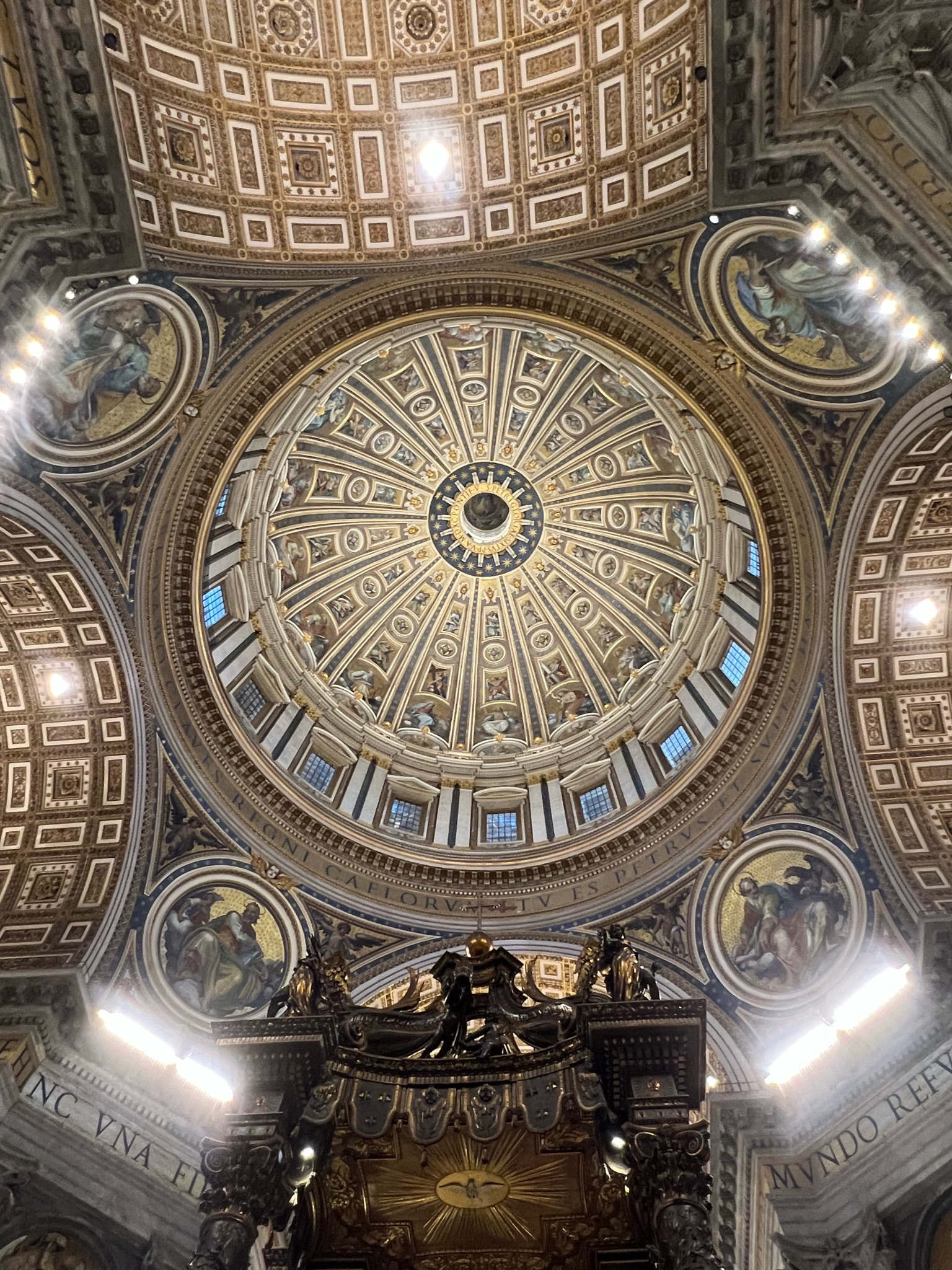
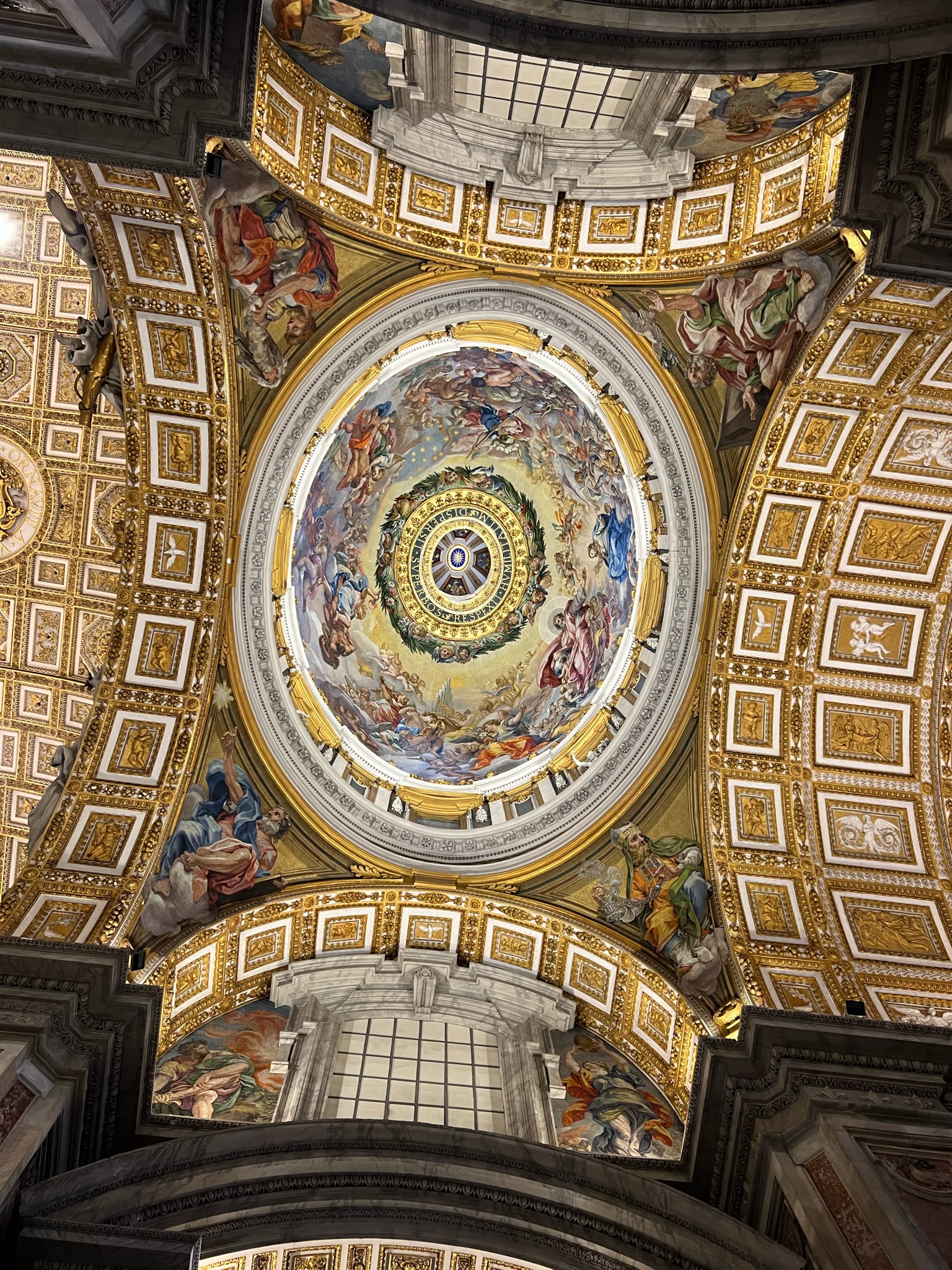
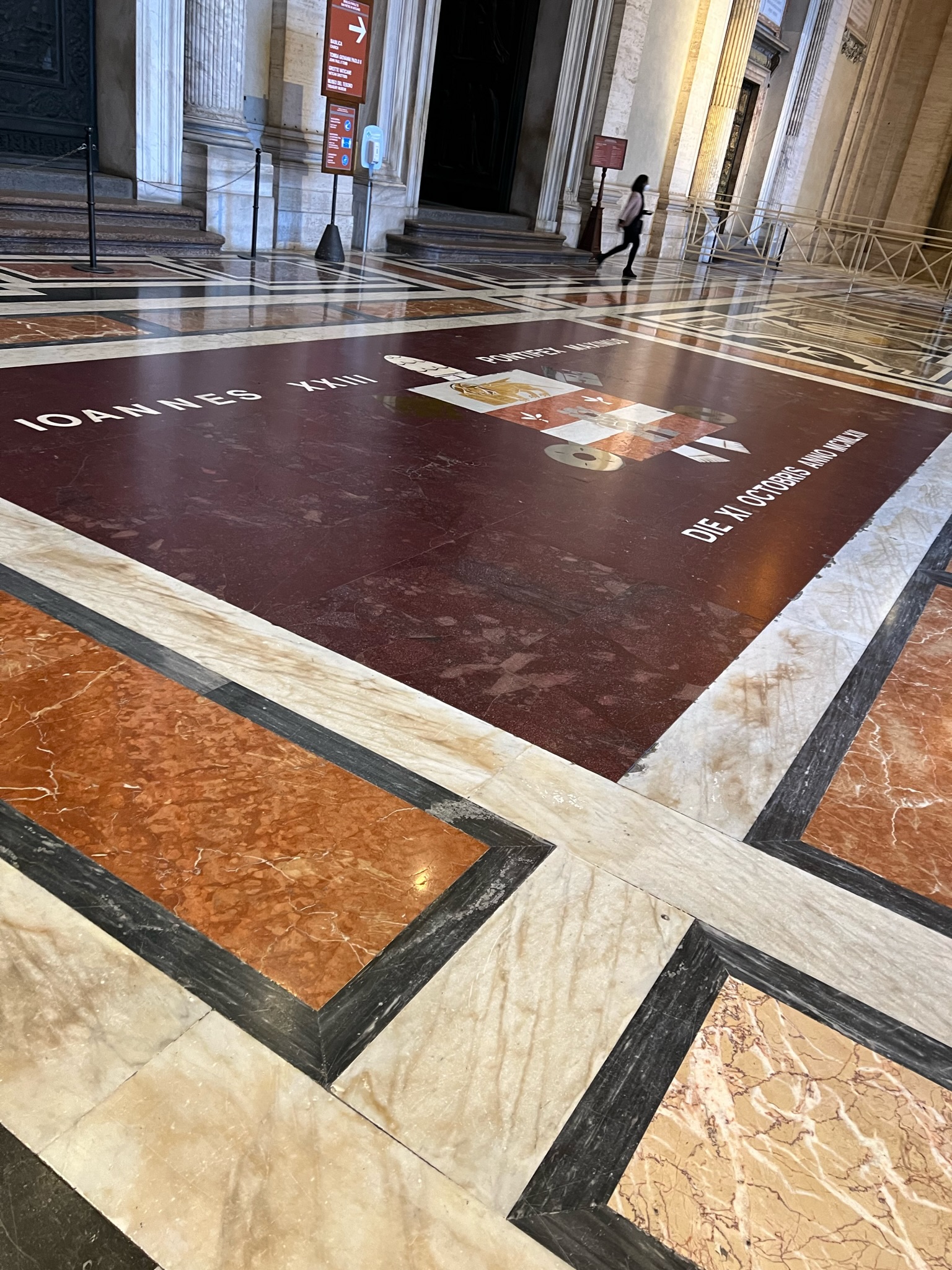
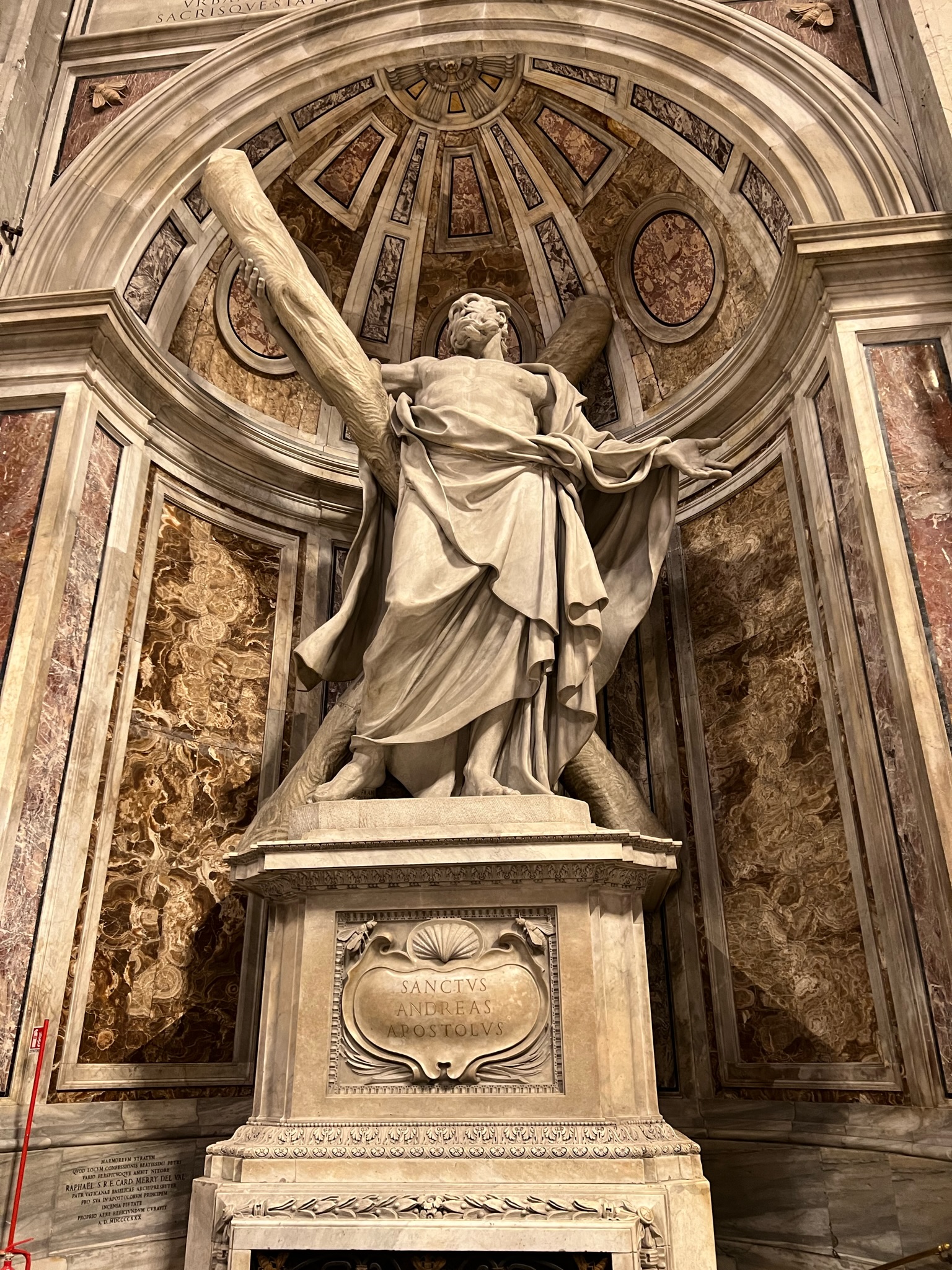
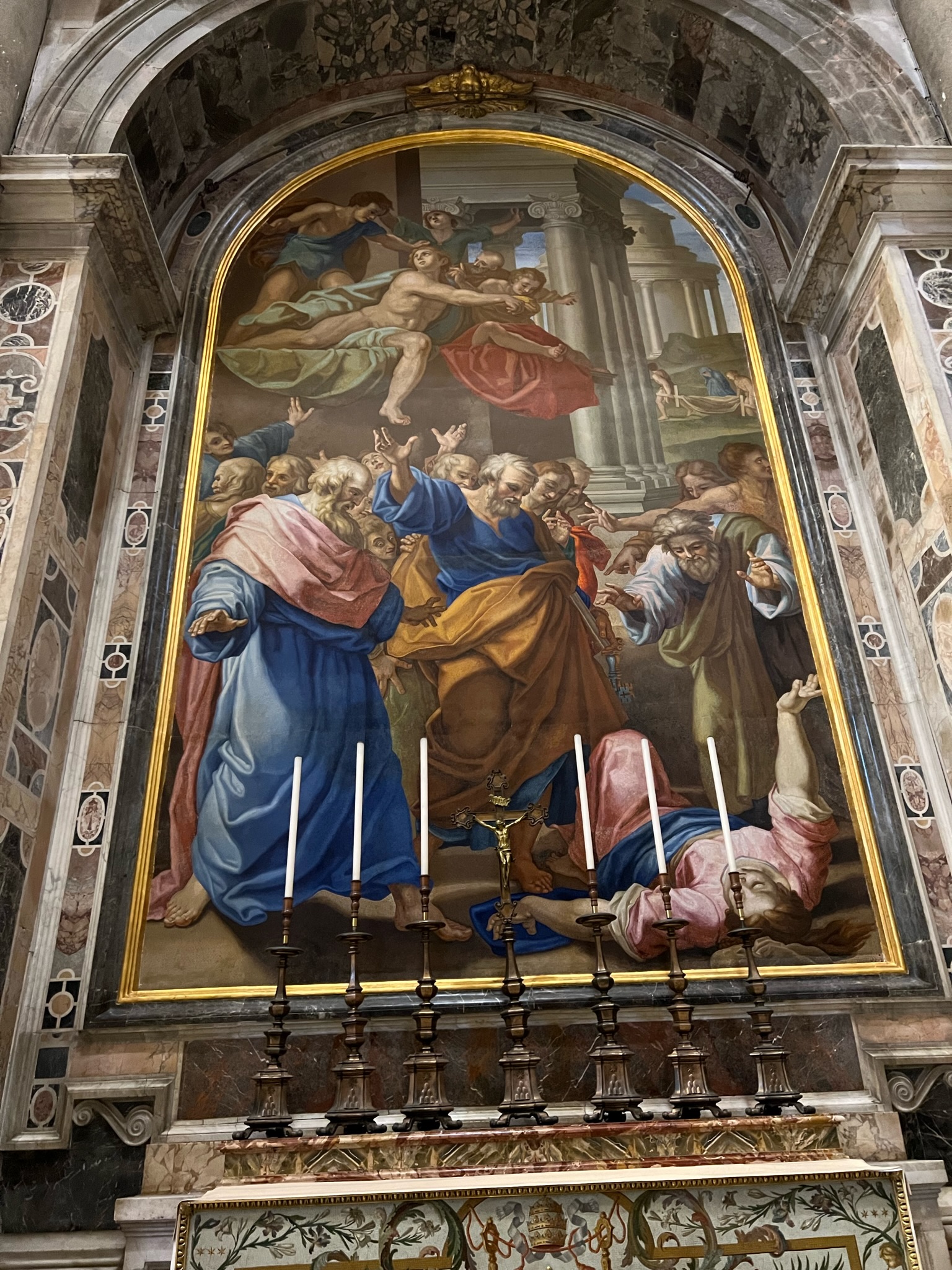
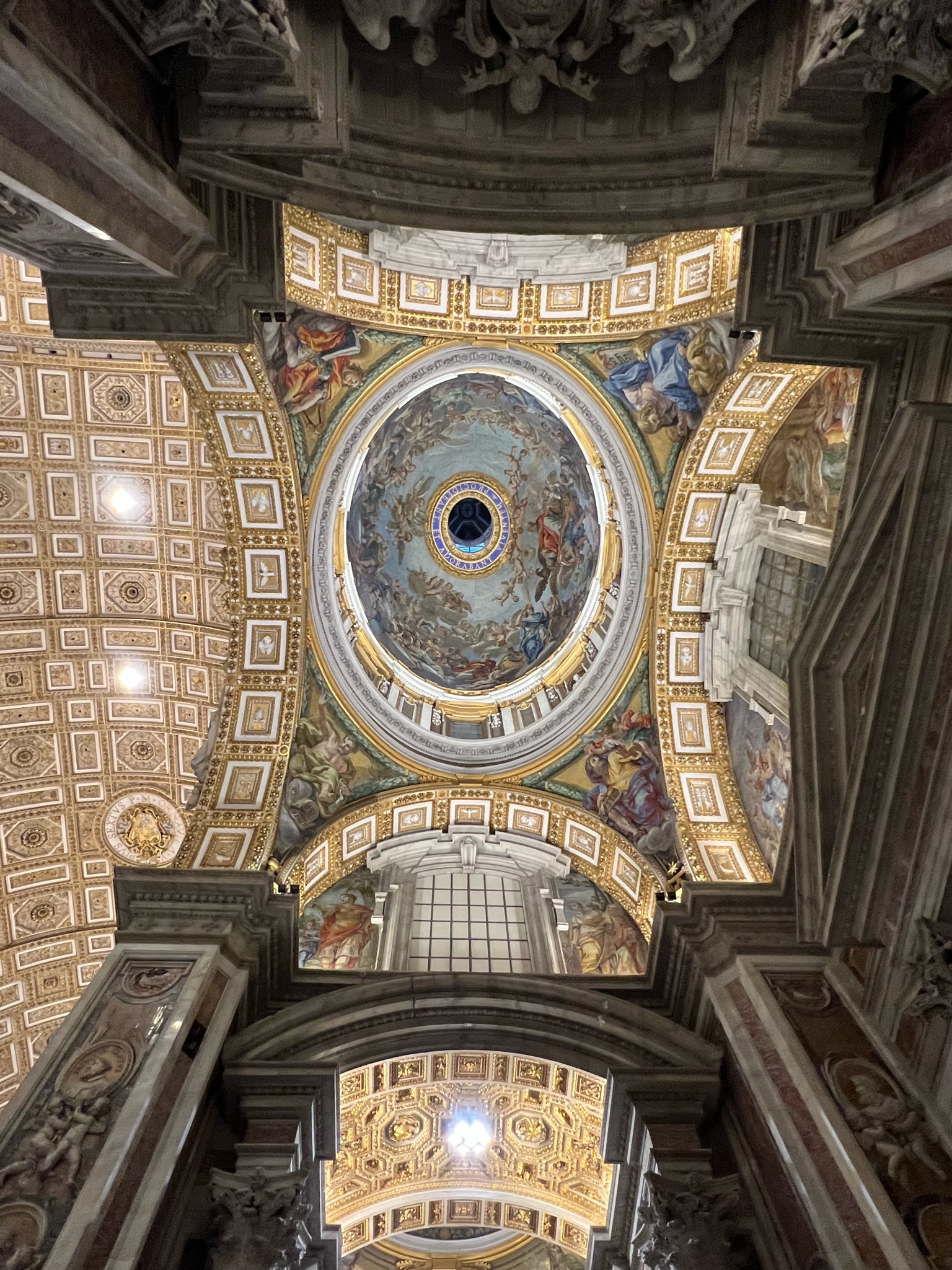
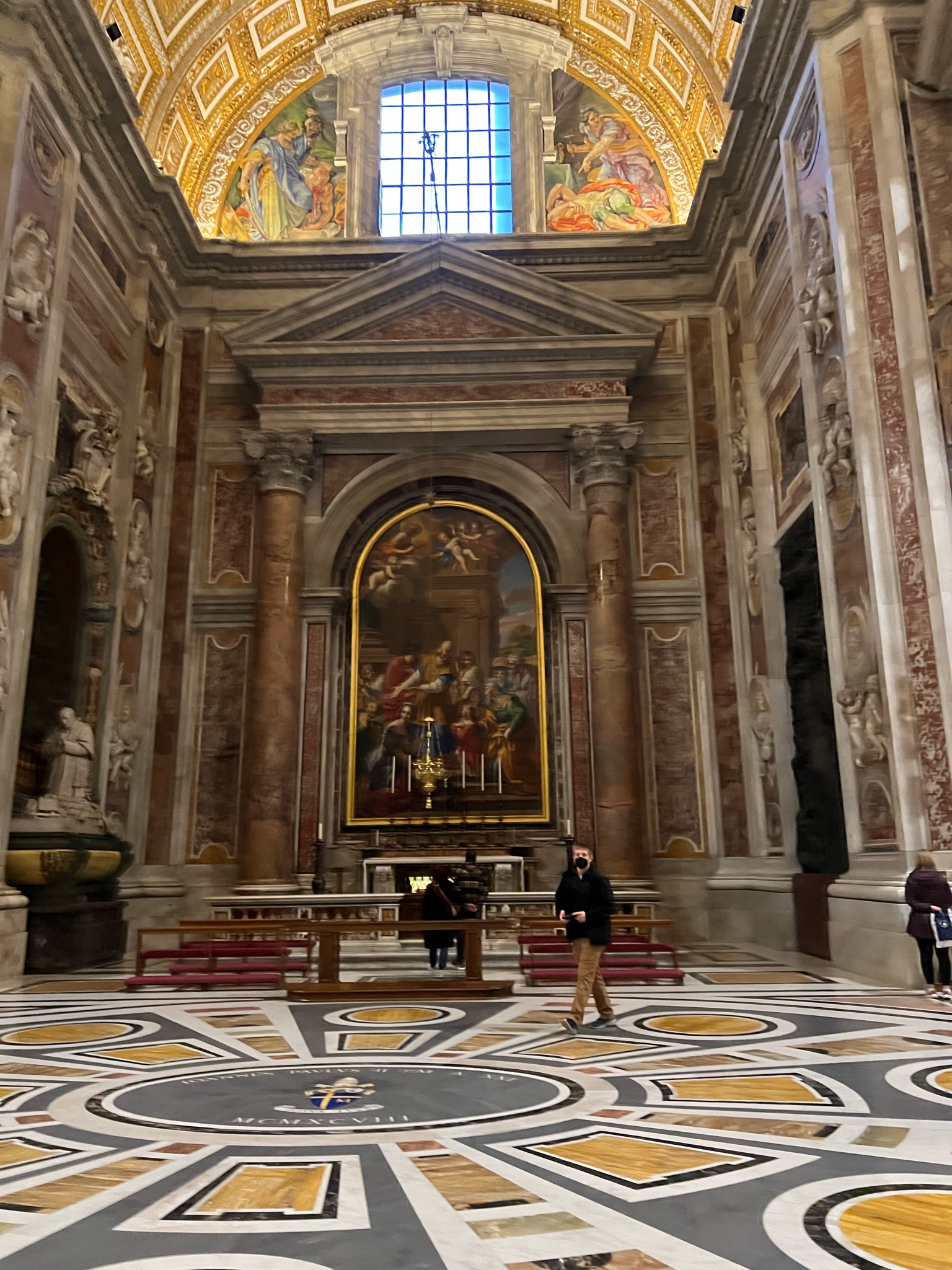
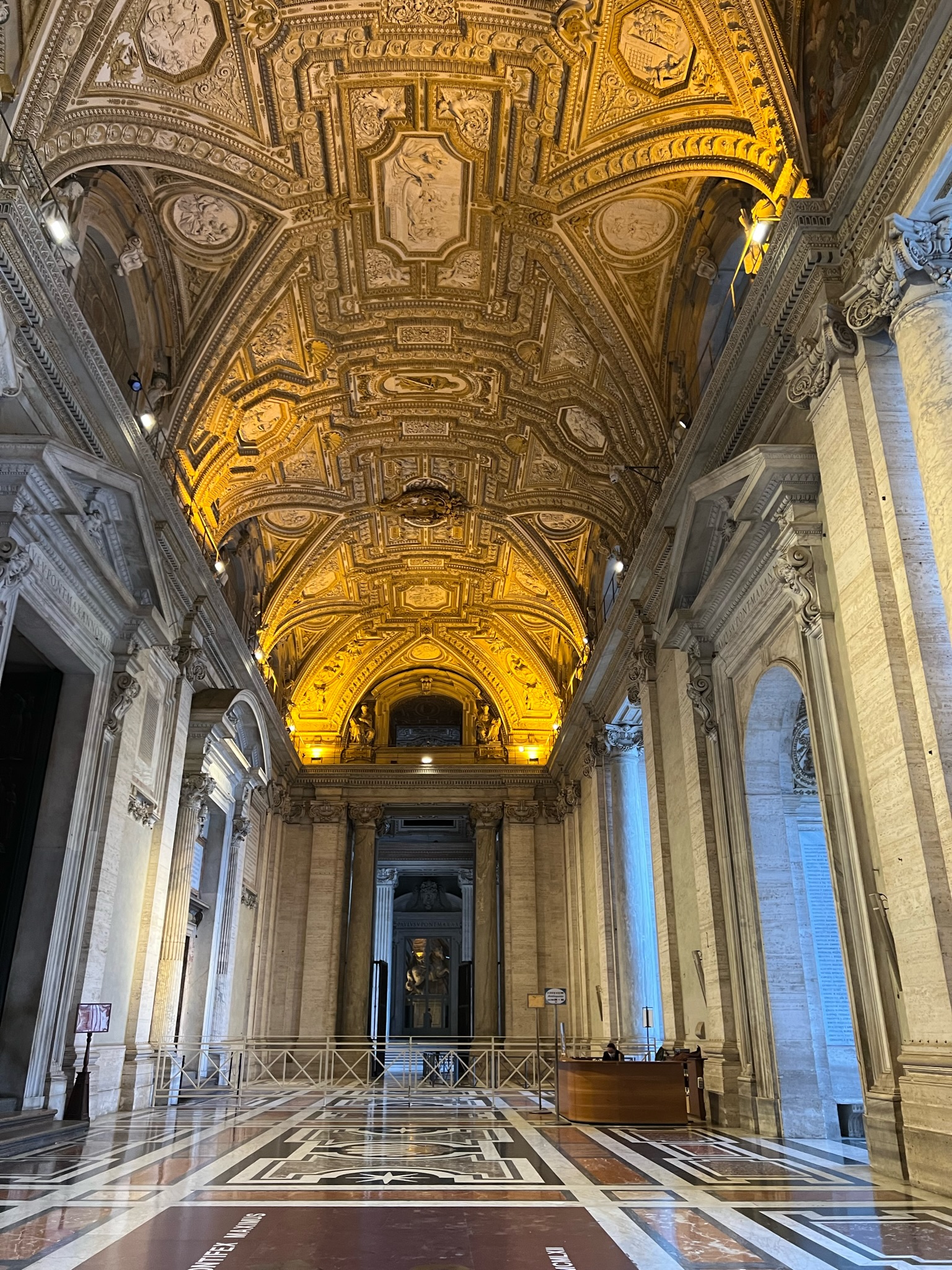
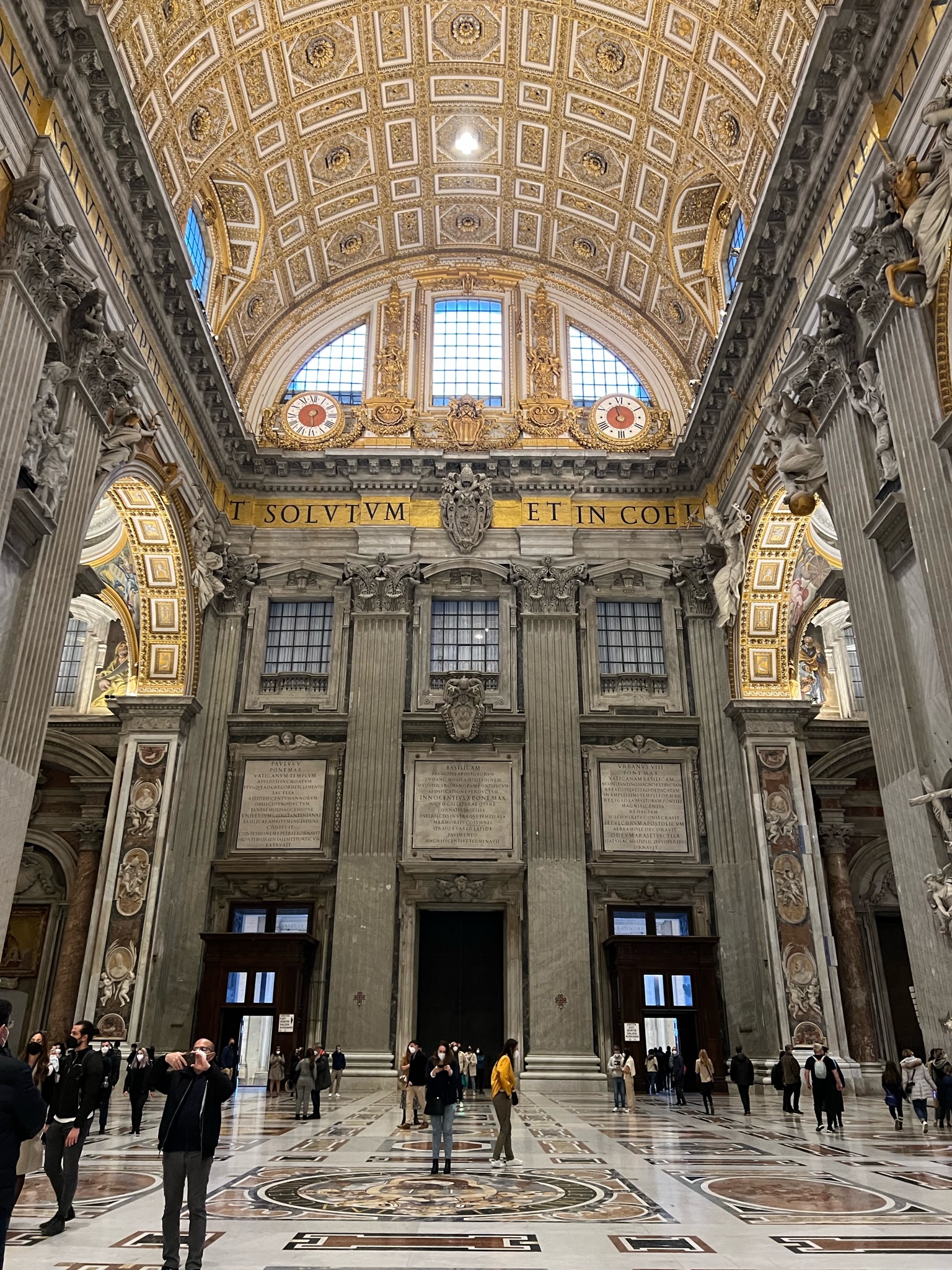
I have never seen anything manmade that is more beautiful than this church. Everything inside is fantastically ornate. Before I even got inside, the magnificent sculptures looking down on me, the glossy marble floors of the portico, and the enormous doors humbled me. Everything is just so big. When I first entered the sanctuary, the view was simply overwhelming. In front of me, there was a 7-story, 96’ tall black and gold canopy over the alter where the speaker addresses the church. On both sides, there were long vestibules spanning the length of the church. Every wall was adorned with sculptures and paintings. Many crypts were visible, each holding a significant person in the church’s history. The ceilings were nauseatingly high at 152 ft tall, and they were covered in gold sculpted filigree and decorative embellishments. There were multiple domes, evenly spaced throughout the building and each one depicted artist renderings of biblical stories. There were several mini-alters the size of regular churches off to each side, and parishioners were meditating and praying at each. The floor was covered in decorative marble, and throughout the building, there are markers that identify the relative lengths of other massive churches in the world. The beautifully blended sounds of a choir group humming echoed in the room. It was amazing.



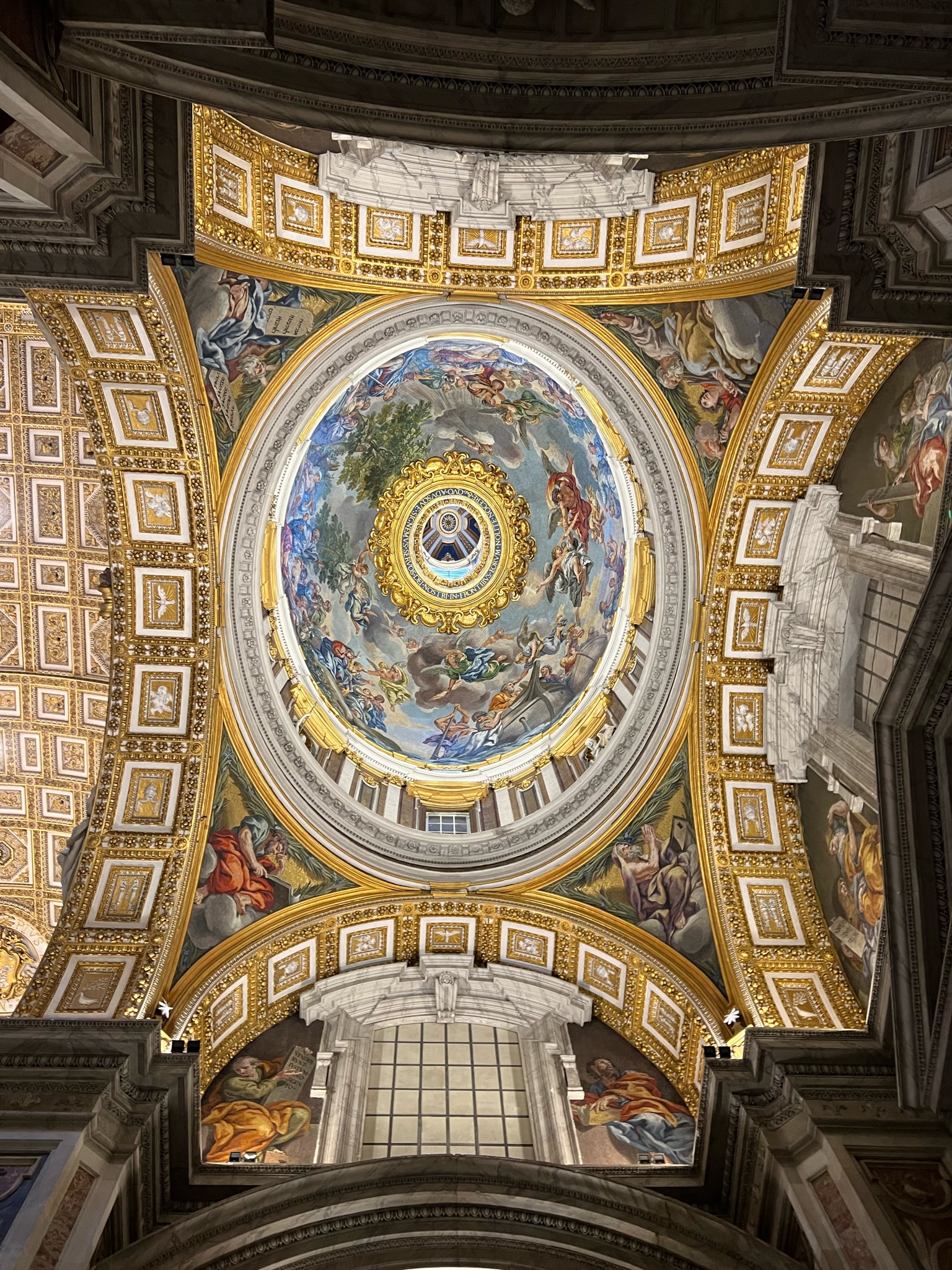
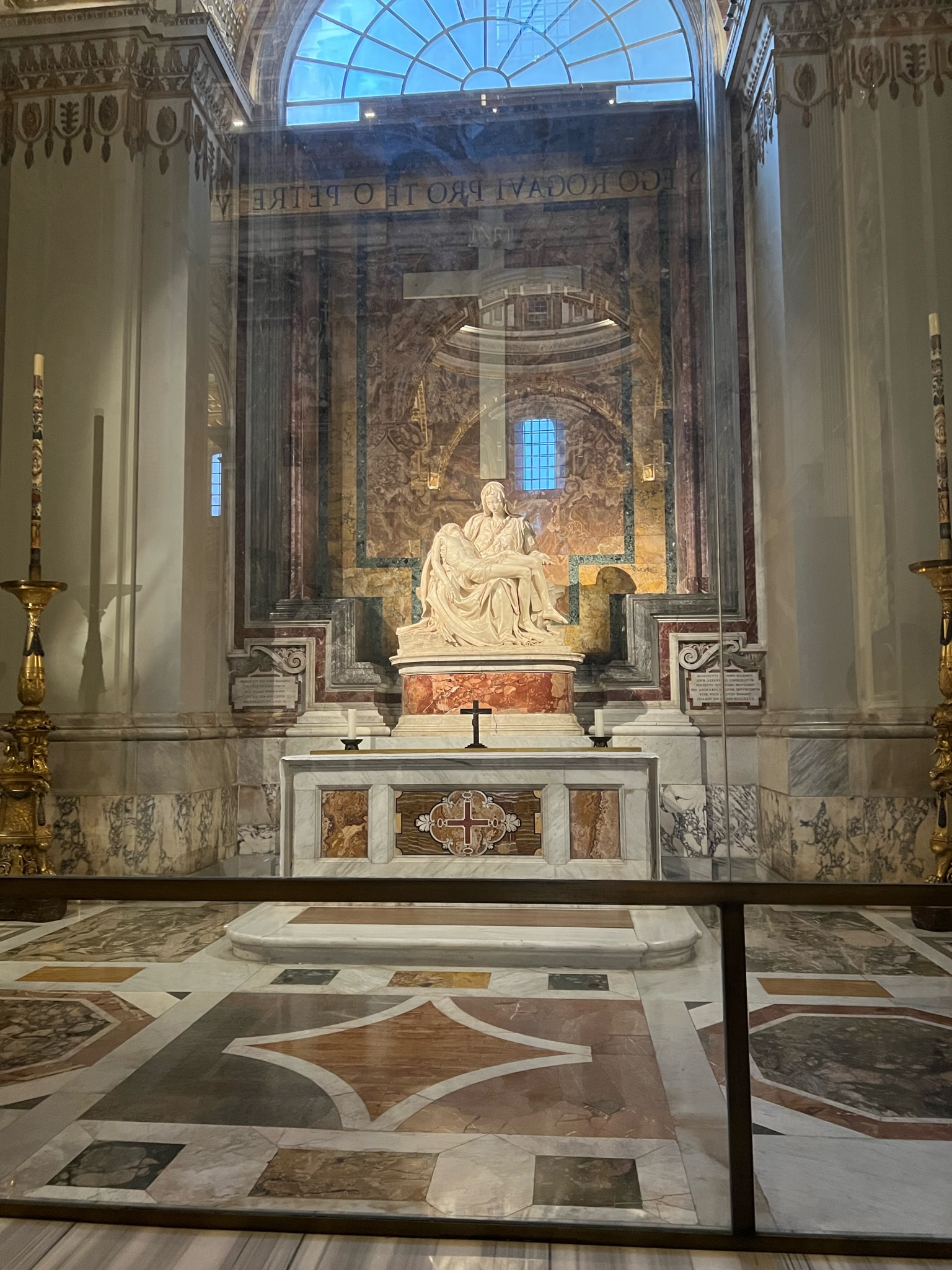
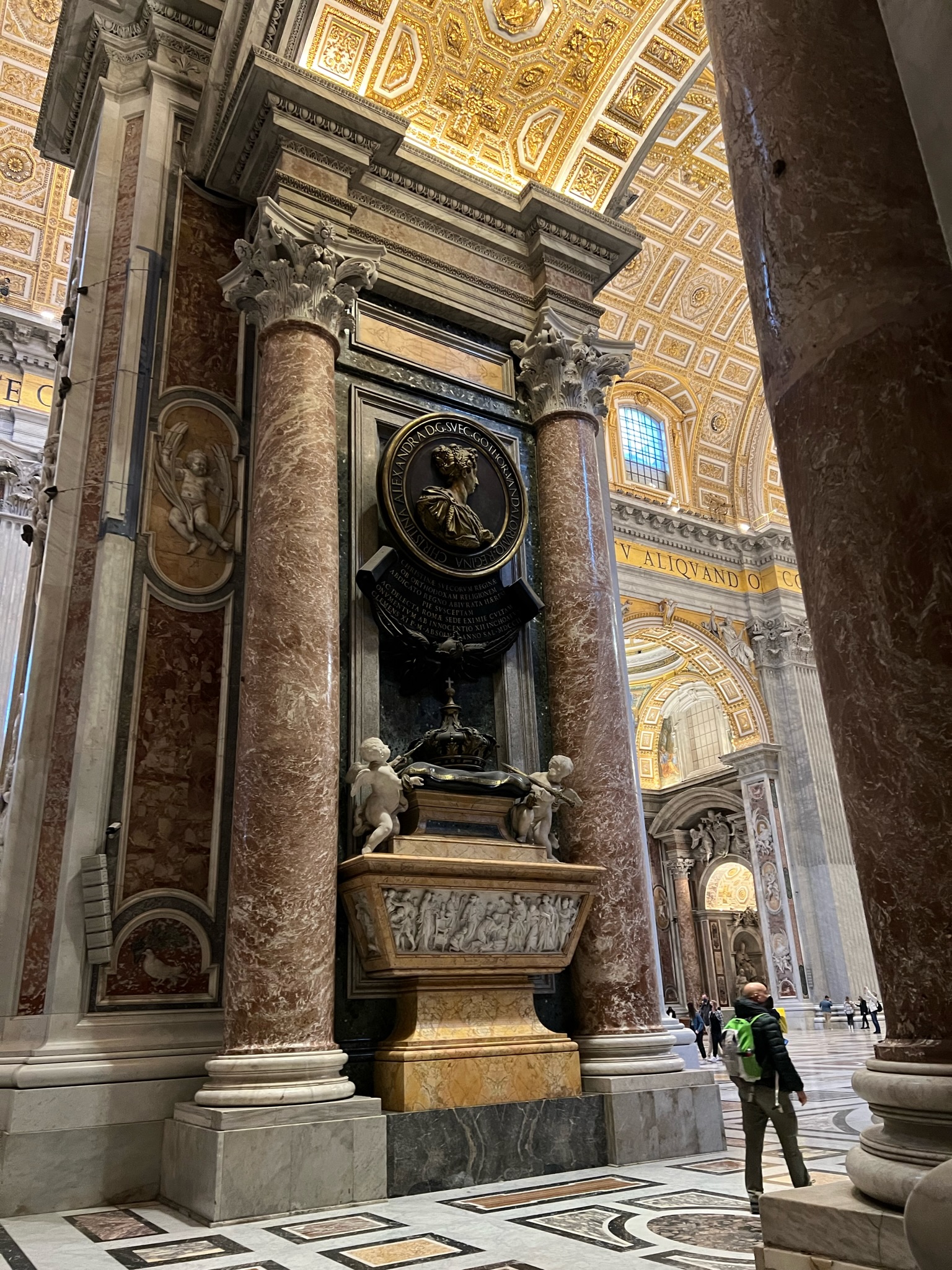
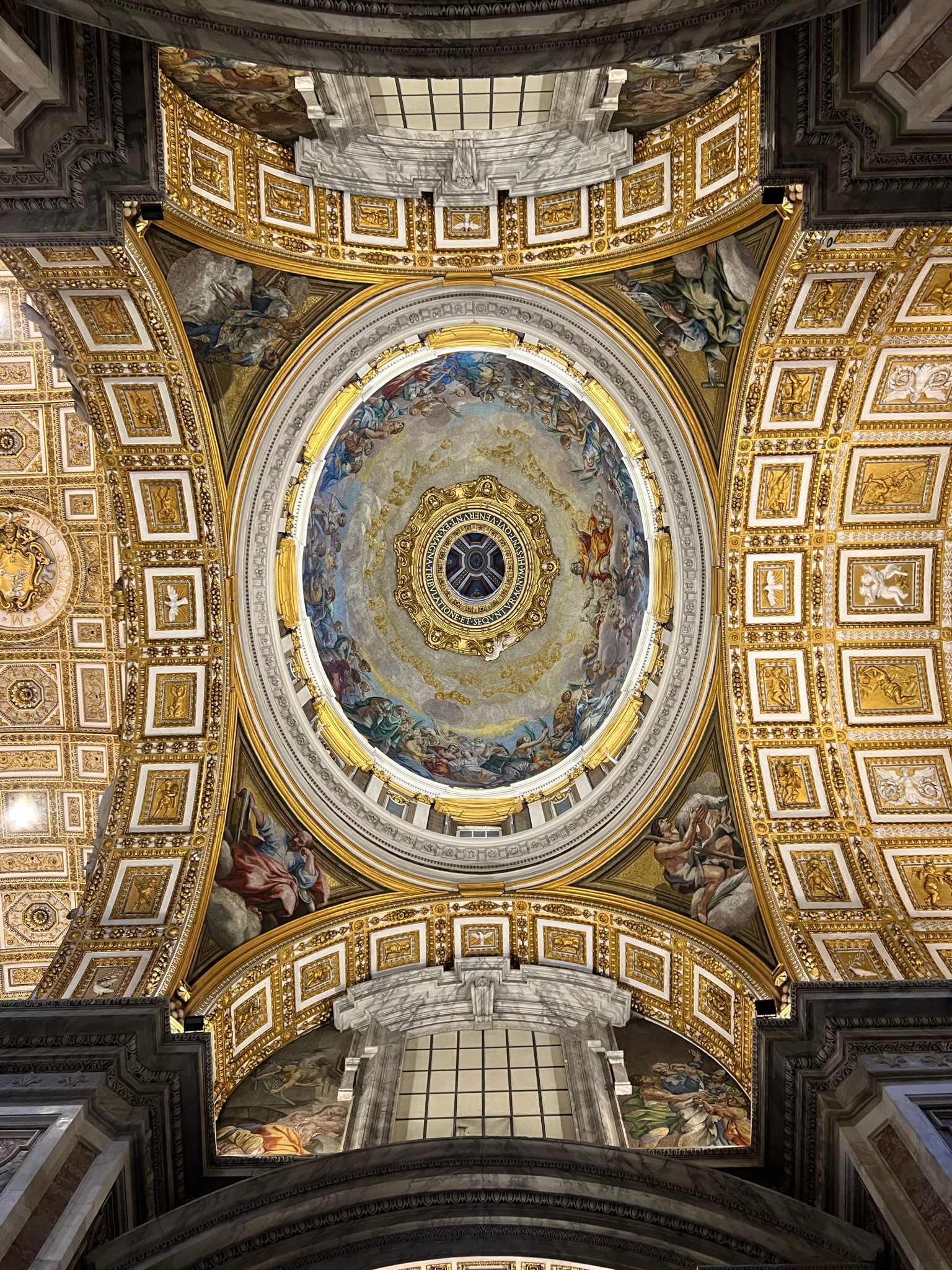
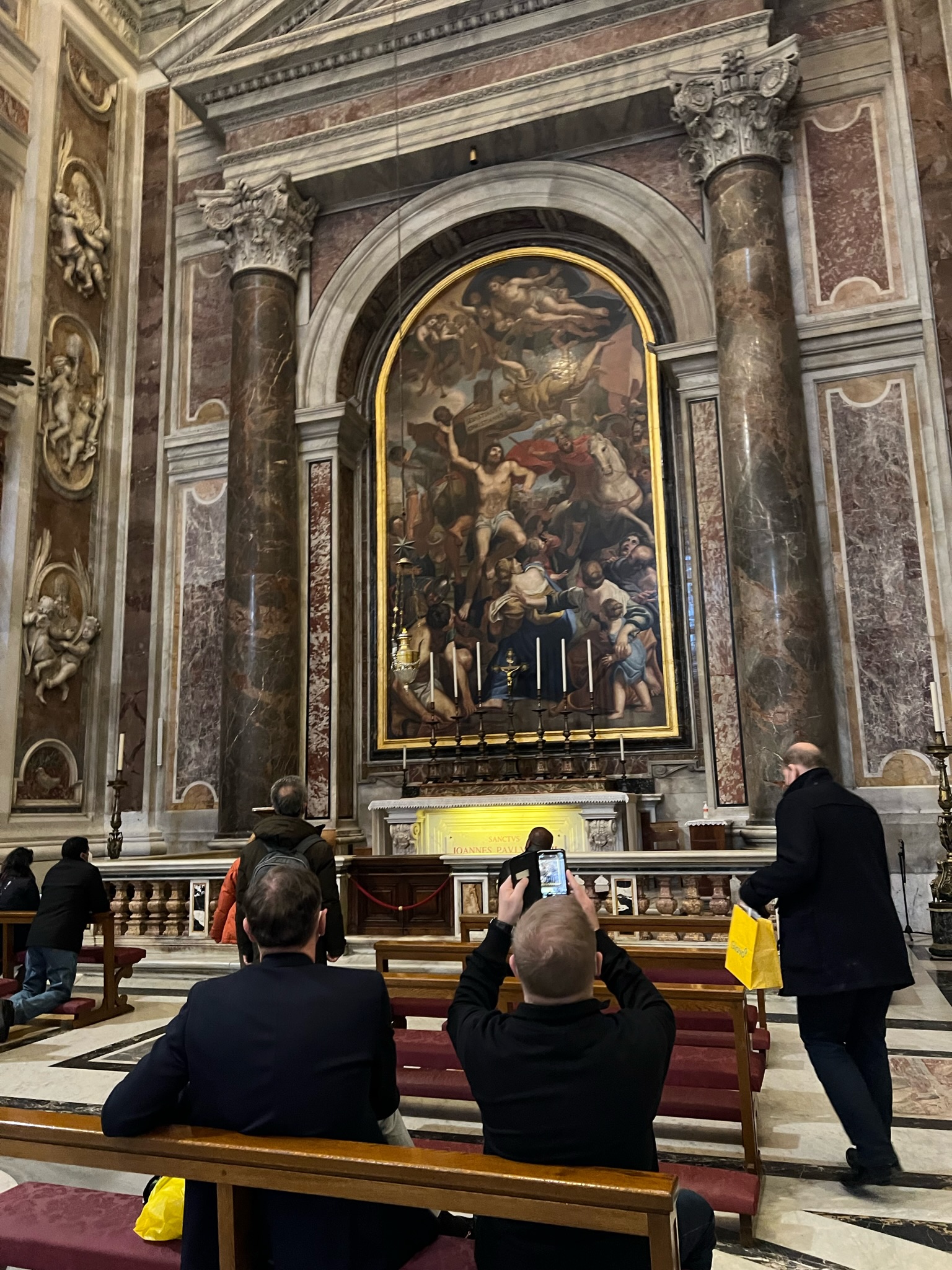
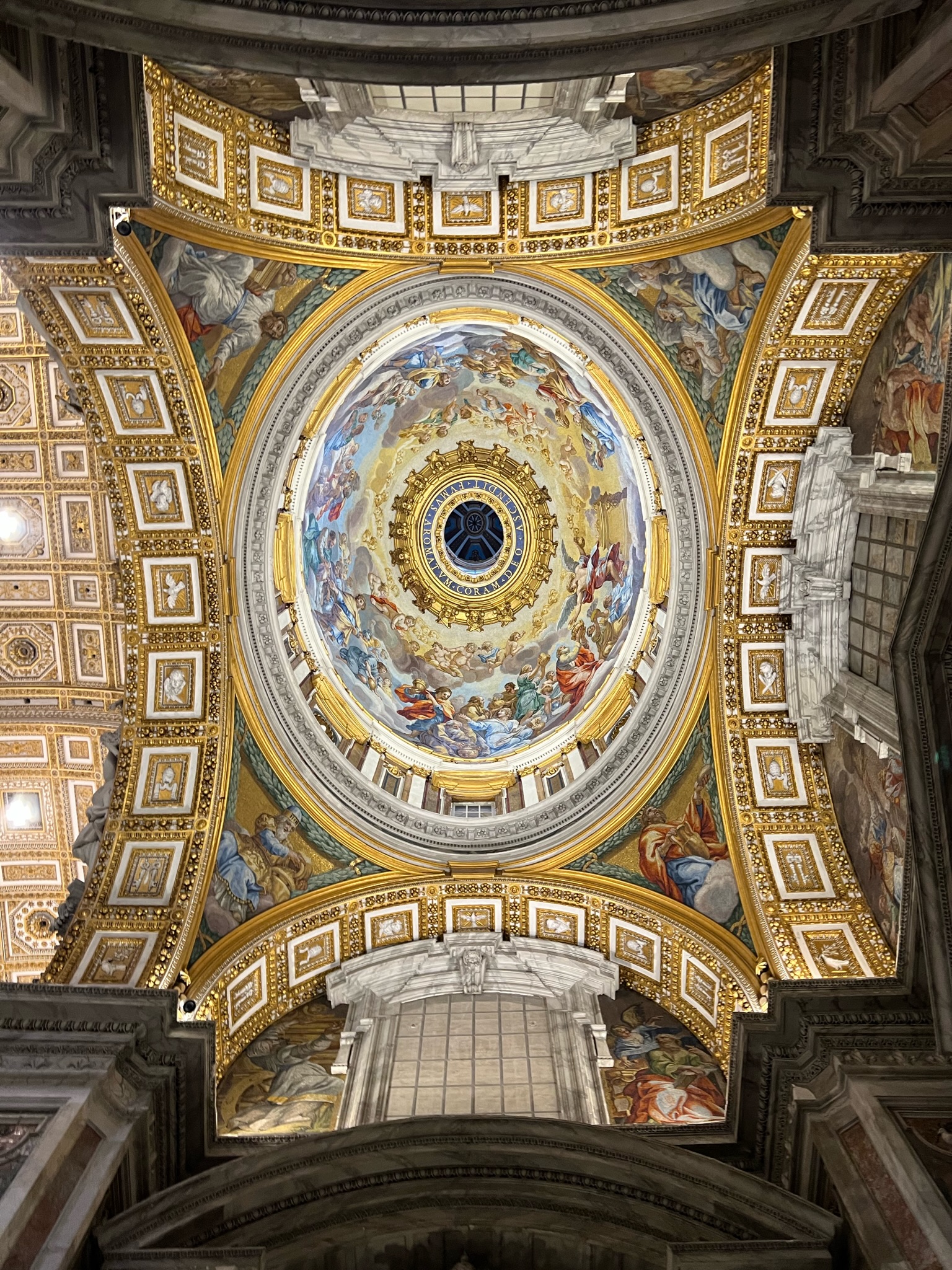
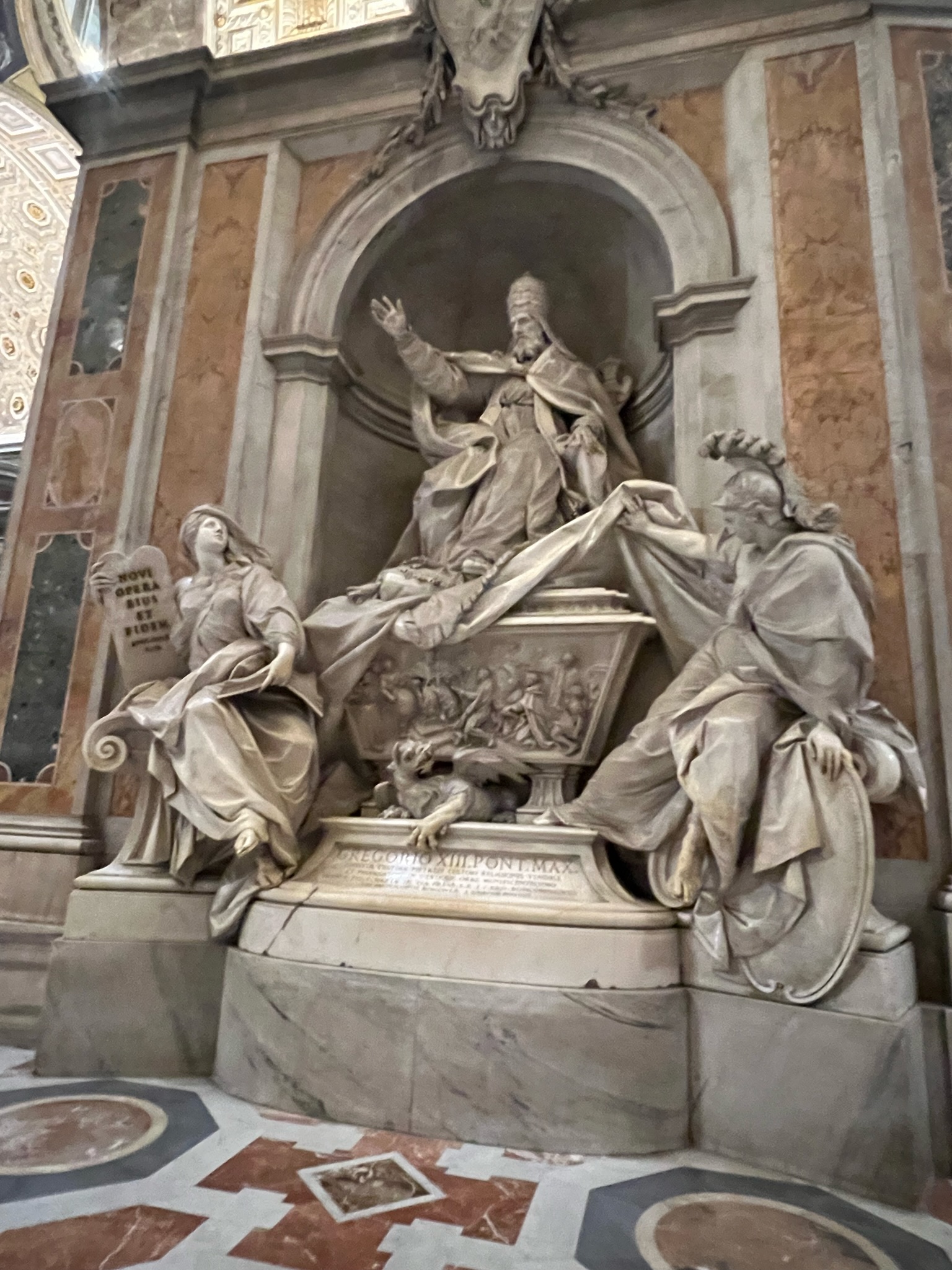
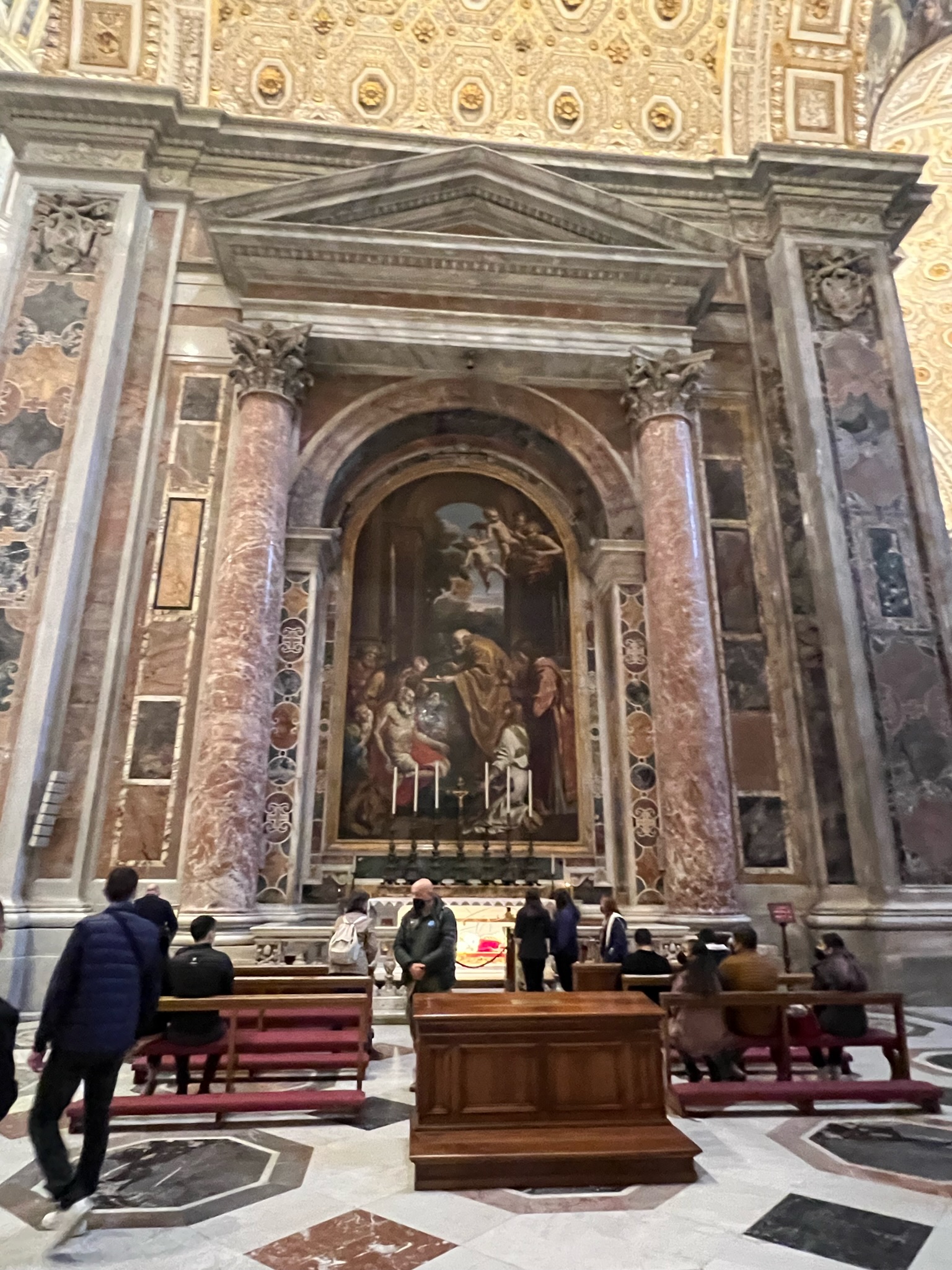


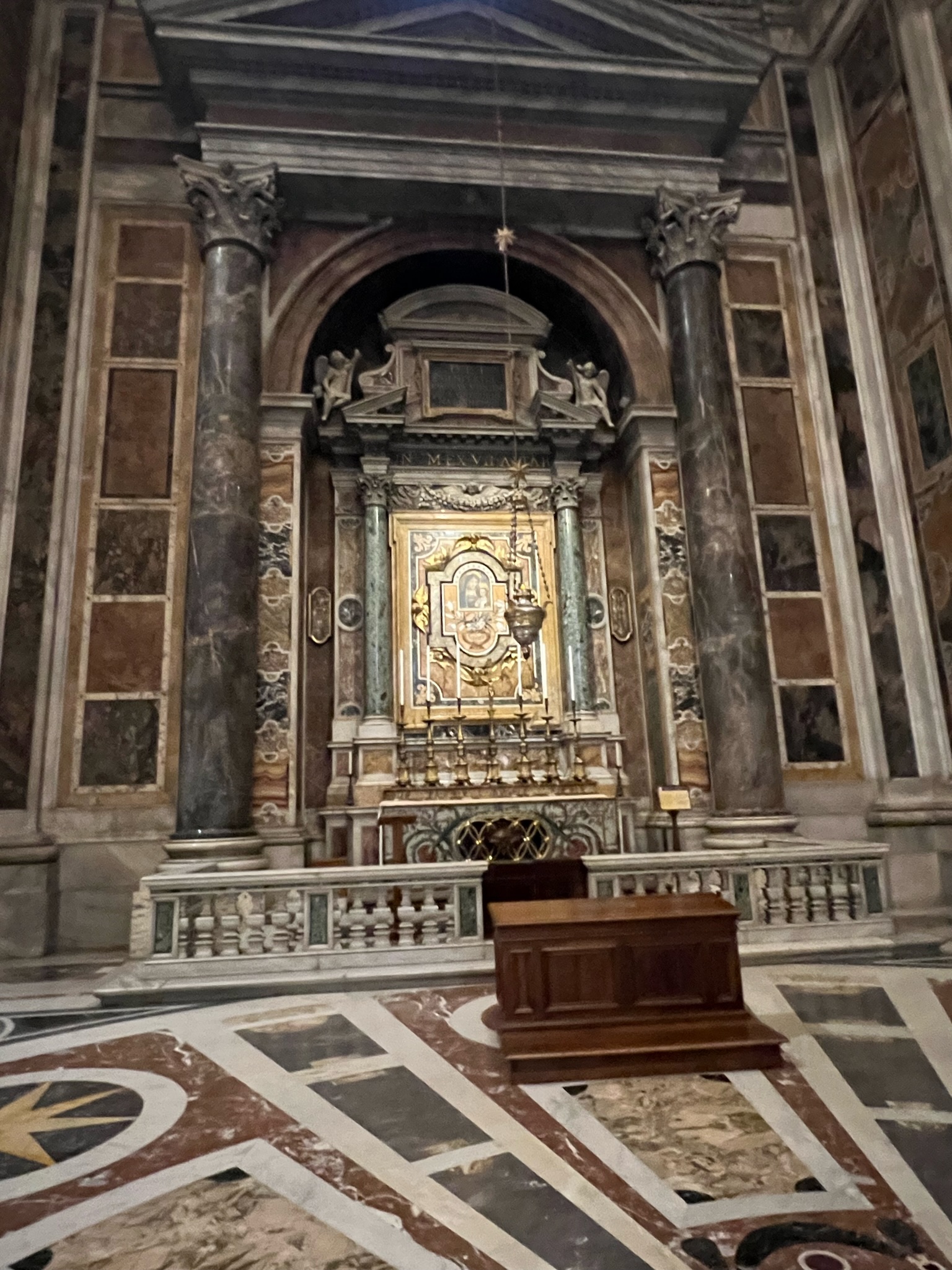
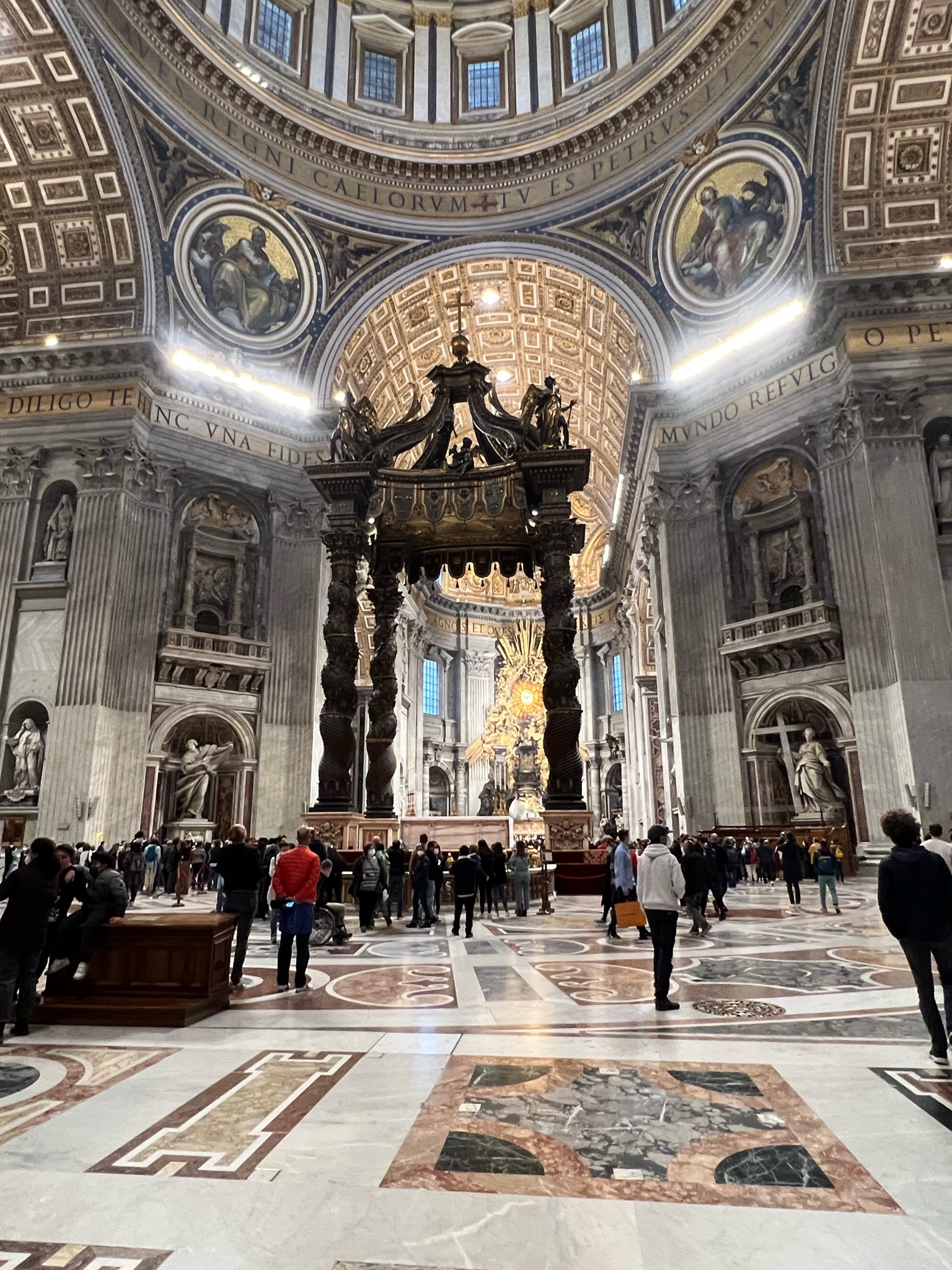
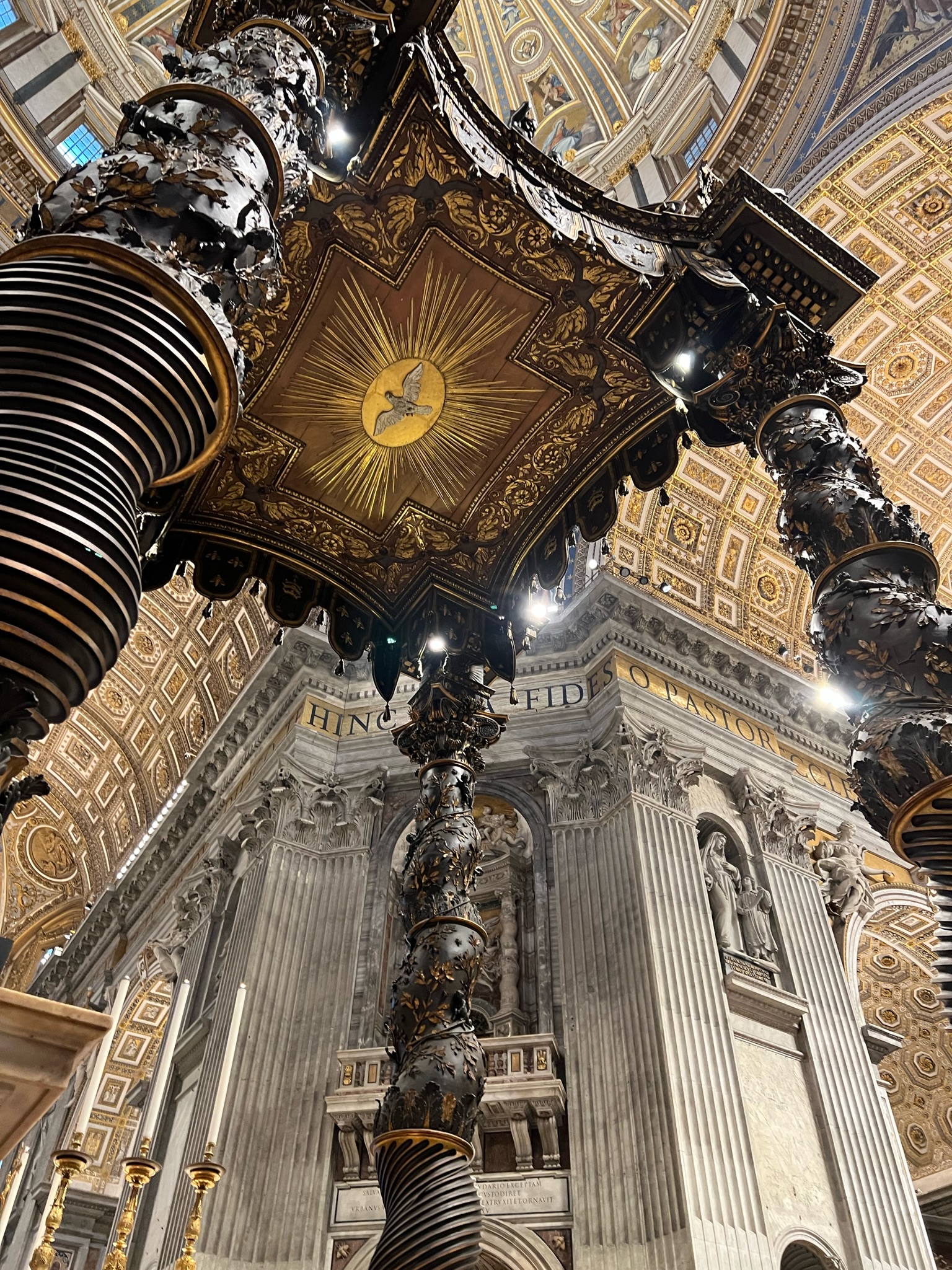

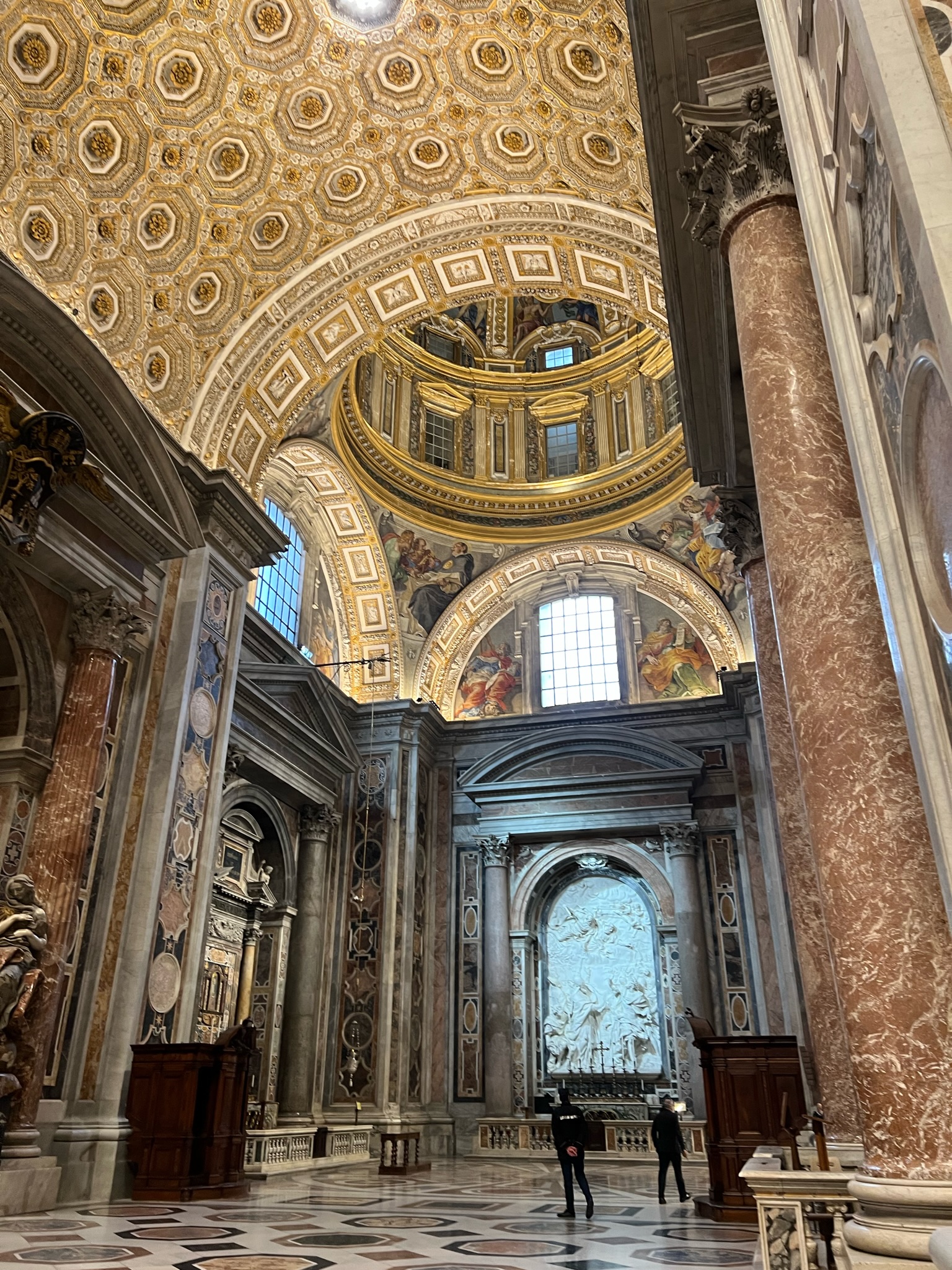
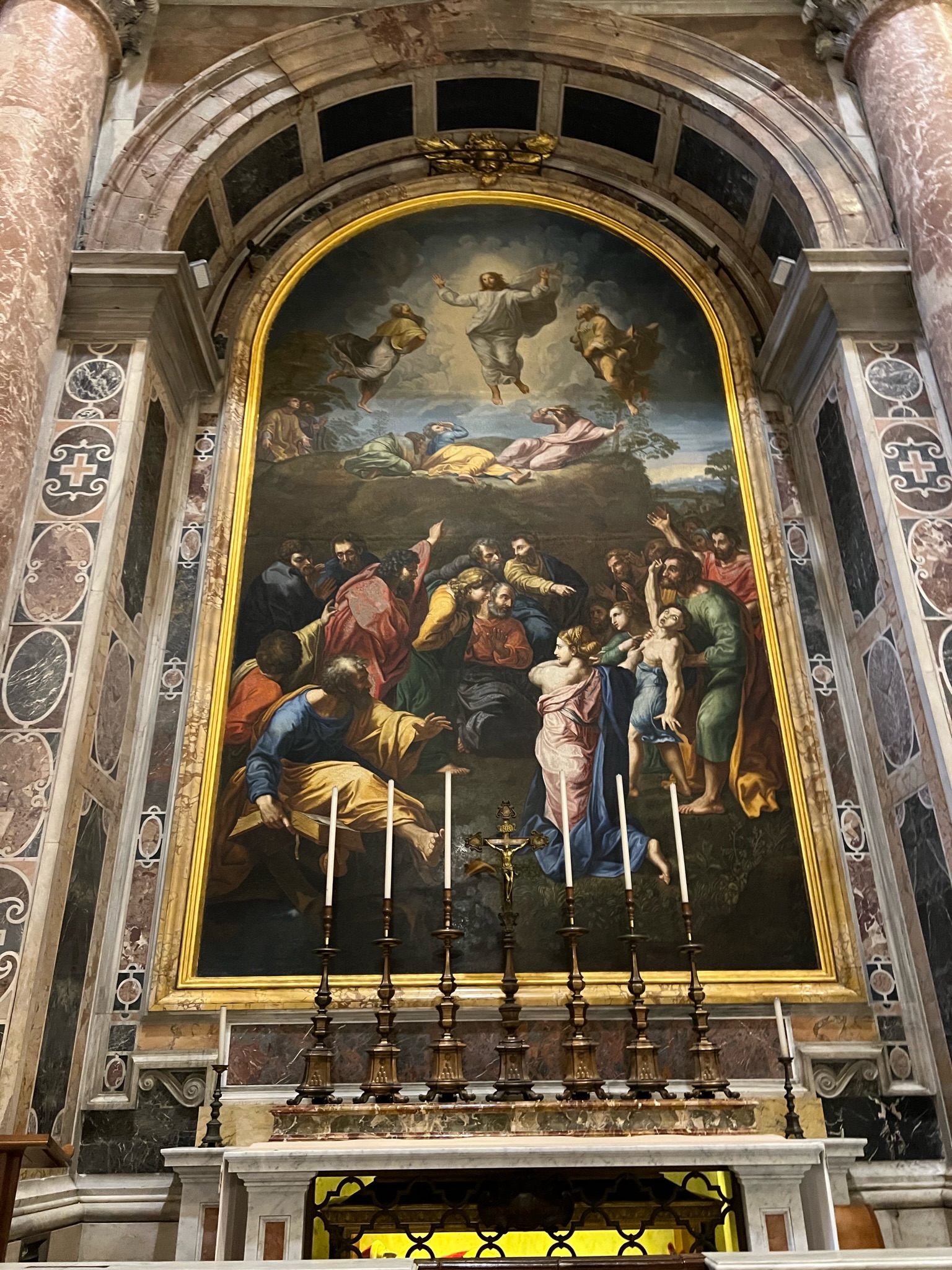
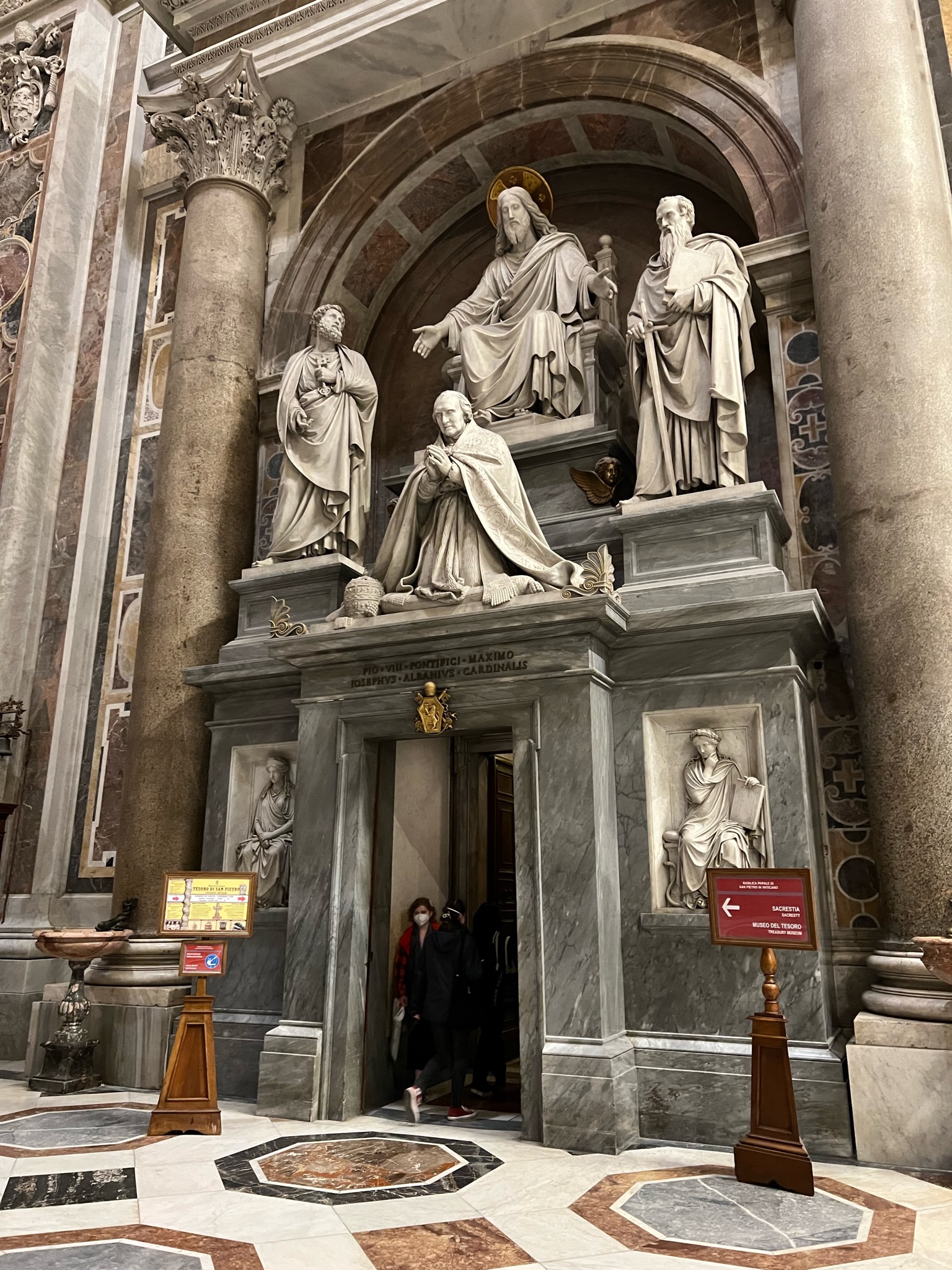
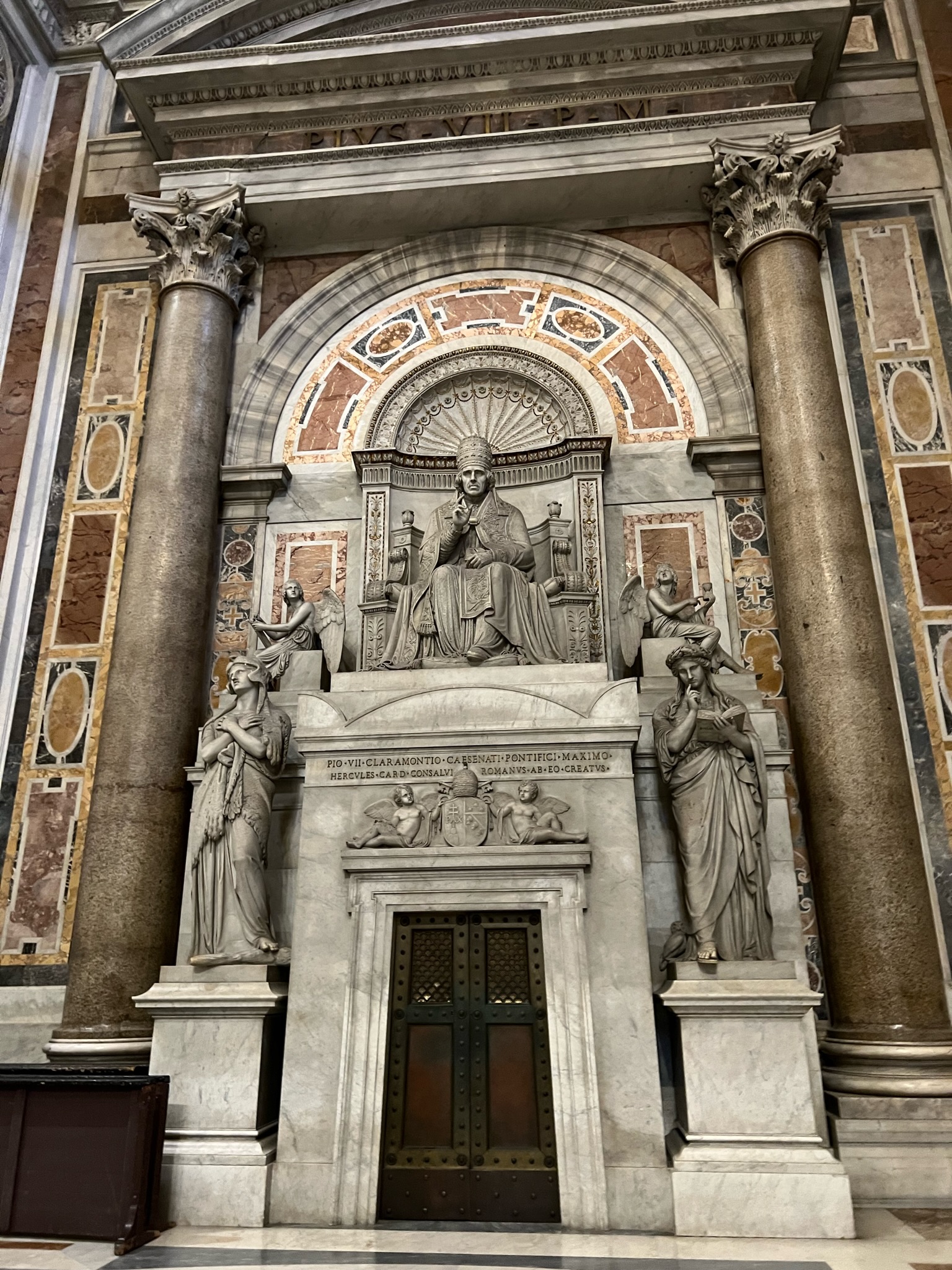








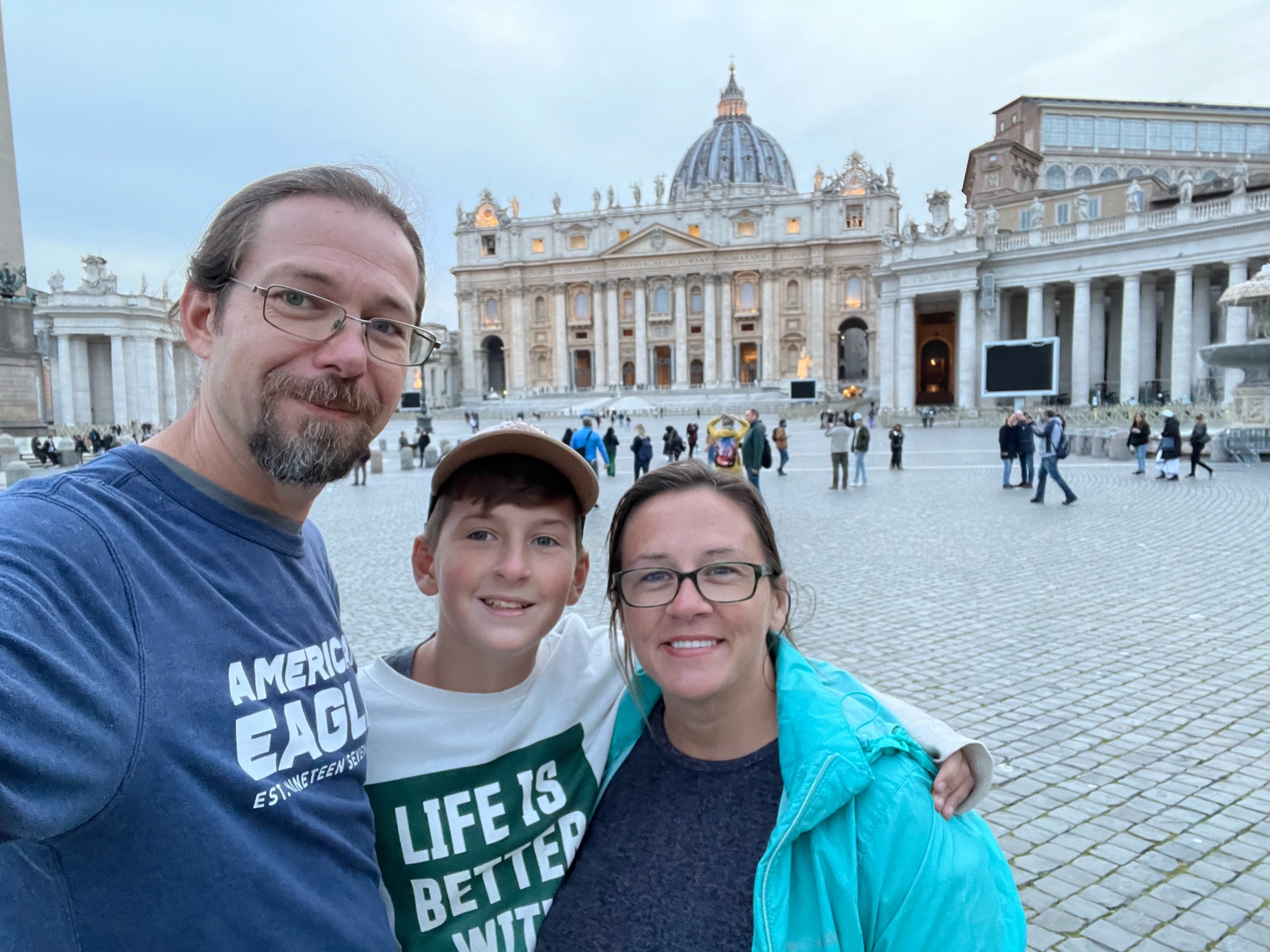
When I came back out, I found Brian and Henry, and I told them that we had to figure out a way for them to get to visit it in the morning. It was simply too beautiful to miss. On our way back to the apartment, we worked out a plan. We’d get up extra early and be there when the gates opened. Brian would go buy the ‘right’ masks so we could ensure we’d all go in together. And because I really wanted to do it, we’d also try our best to climb to the top of the dome together.
The next morning, we woke up and started our walk. Saint Peter’s Square was almost empty when we arrived, and we breezed through security. Just for spite, Henry wore his surgical mask and carried his FFP2 mask in his pocket. No one said a word to him.
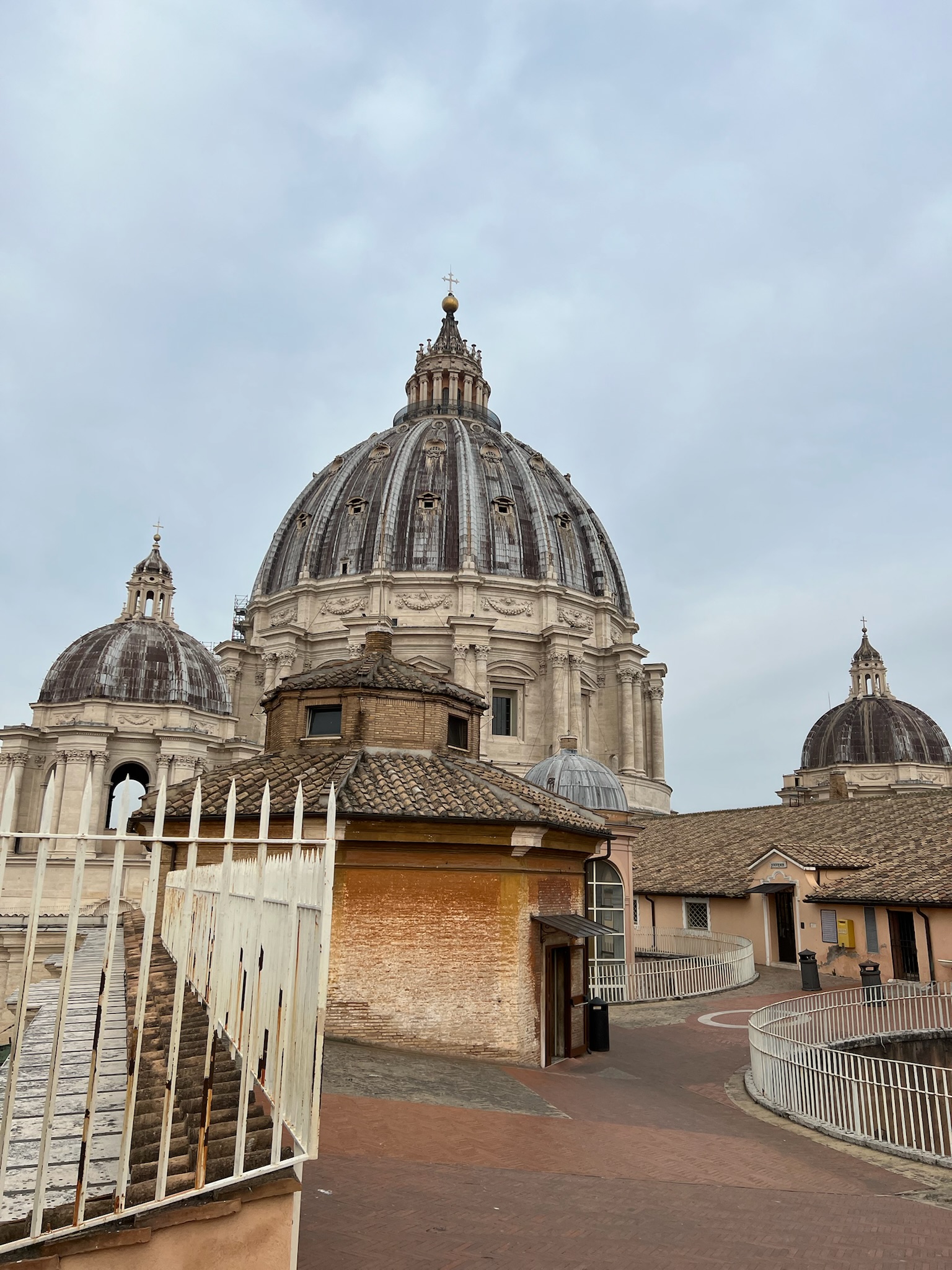
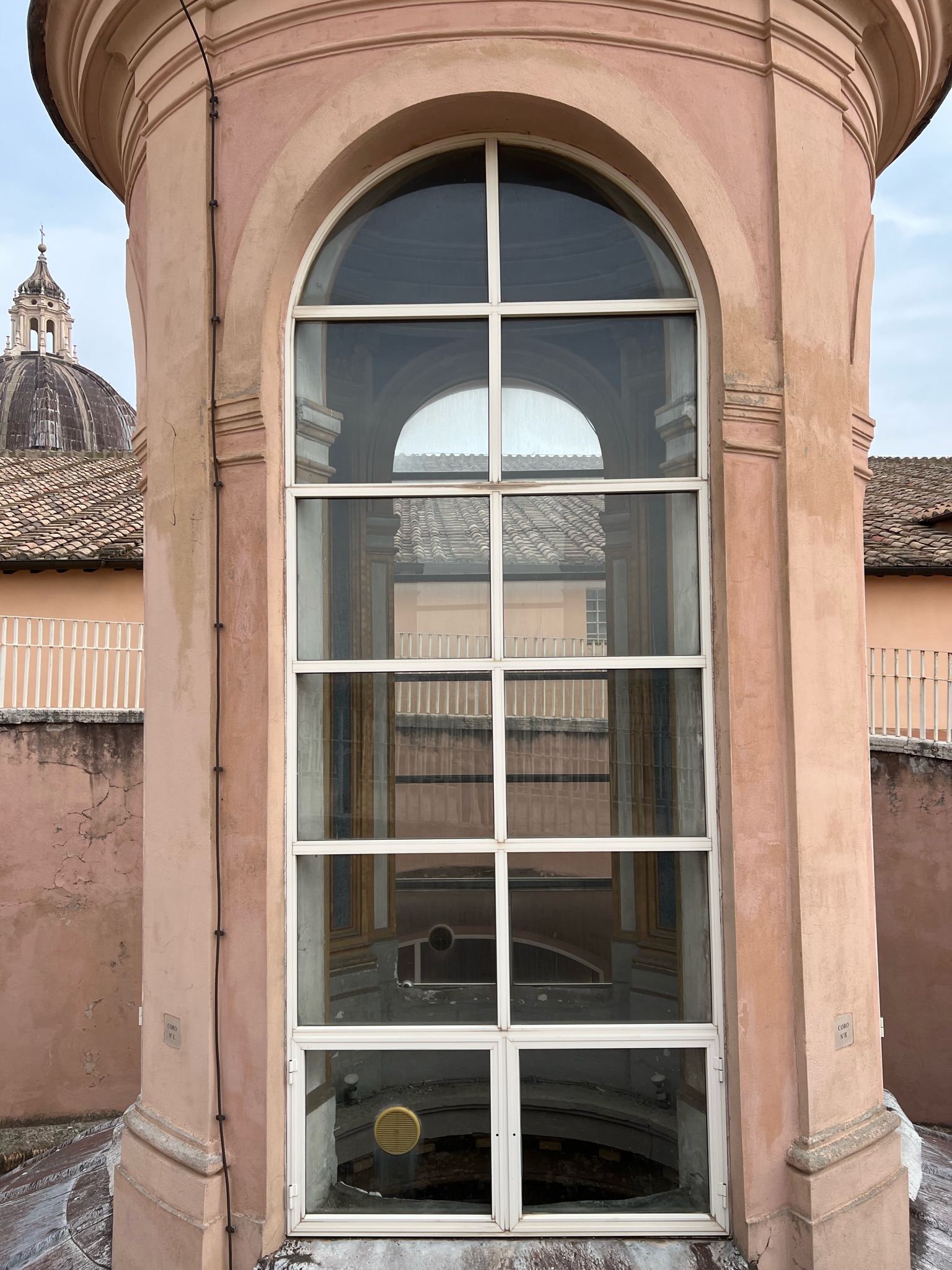
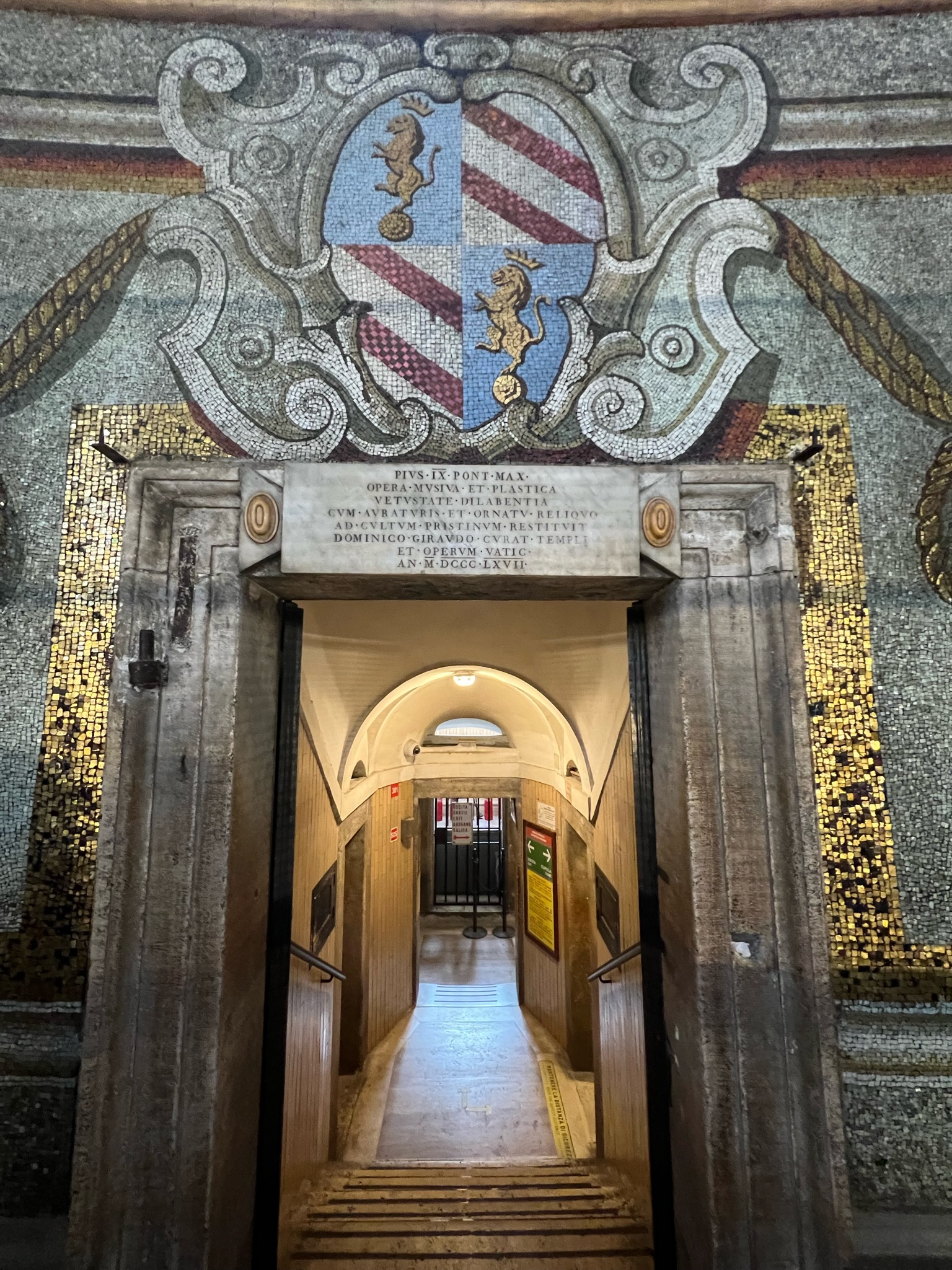
The basilica is free to enter, but to climb the dome, we had to pay a small fee. We had the choice of climbing 551 steps, or for $2 more, we could take an elevator part of the way and only climb 320 steps. We hopped in the elevator and rode quite smoothly up instead of taking those additional 231 steps. When we exited the elevator, we were actually walking on the roof of the main part of the basilica. We could see the different domes spaced out on the roof. While we were actually above the main part of the domes, we could see into the vertical sections to see the artwork in the very tops of the domes.
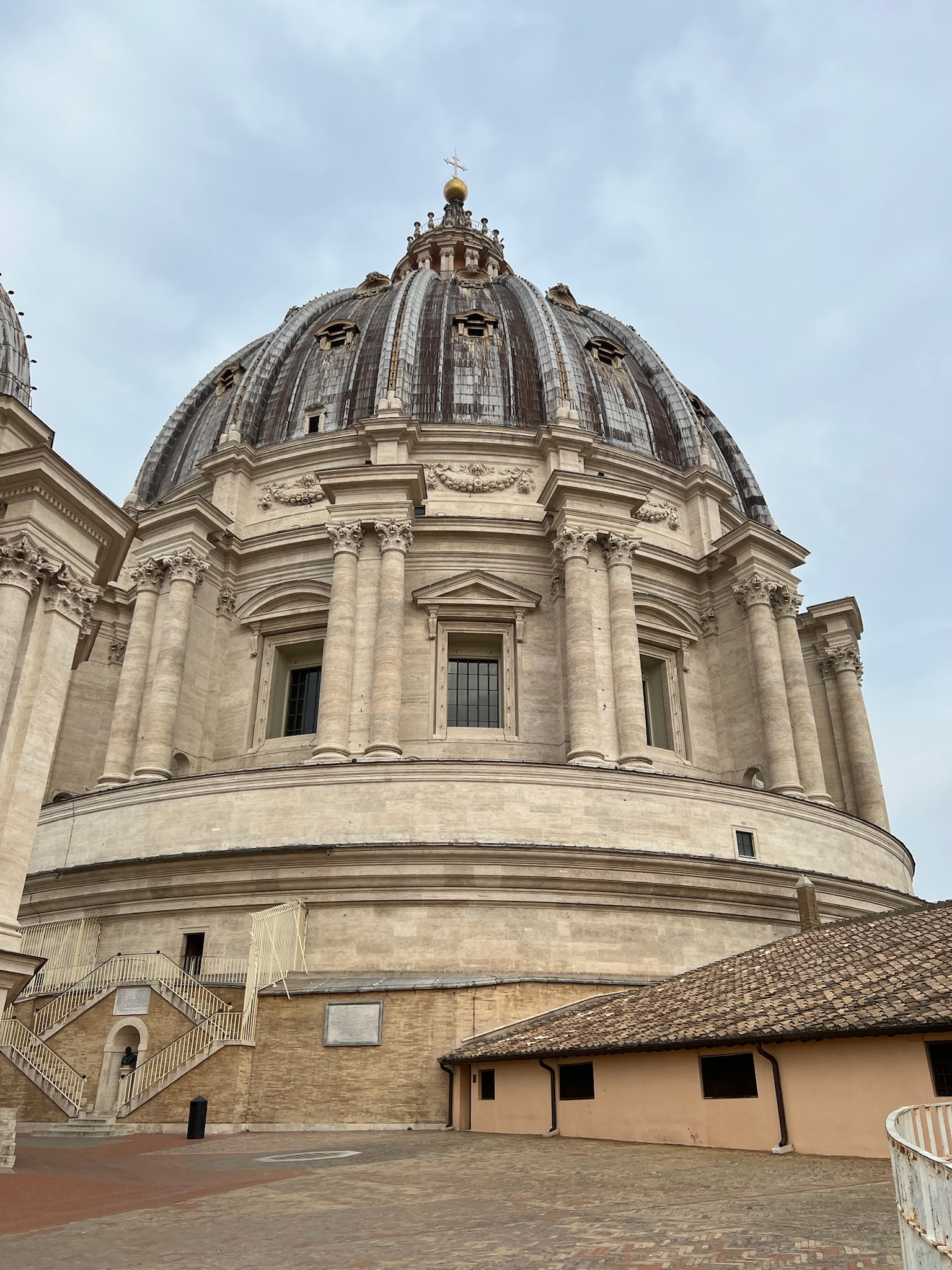

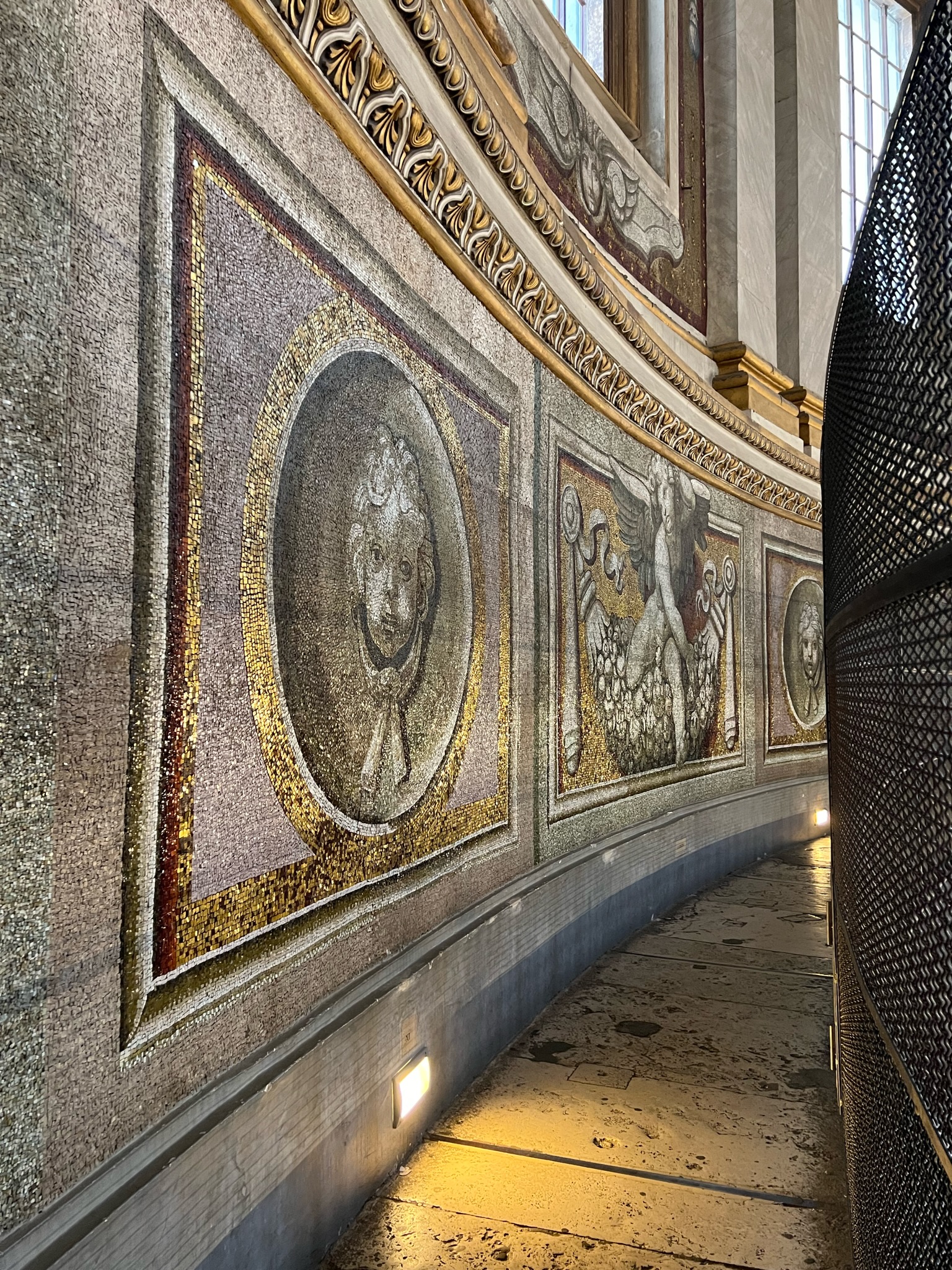
We stepped inside to see the largest dome. A short ramp led us to a balcony at the base of the inside of the largest dome. From here, we were able to look down at the black and gold canopy, and we could clearly see into the arched ceilings of the nave. More impressively than that though, we were able to clearly see that the paintings on the walls weren’t paintings at all. Every single ‘painting’ in the building is a fabulous mosaic of 0.25” sized tiles. To see them up close and to view the slight variations in color that make the finished products look so beautiful was amazing. Standing on the balcony, you could reach and touch the 8’ tall cherub mosaic on the side of the dome, the one that was put there over 500 years ago! One of the most amazing things about this little cherub is that, unless you’re standing on the balcony, you can’t even see it. From the floor of the basilica, it is hidden by the balcony floor. If you know what you’re looking for and can actually spot it, it is very small and almost unnoticable. The amount of work that went into this basilica is simply mind boggling.
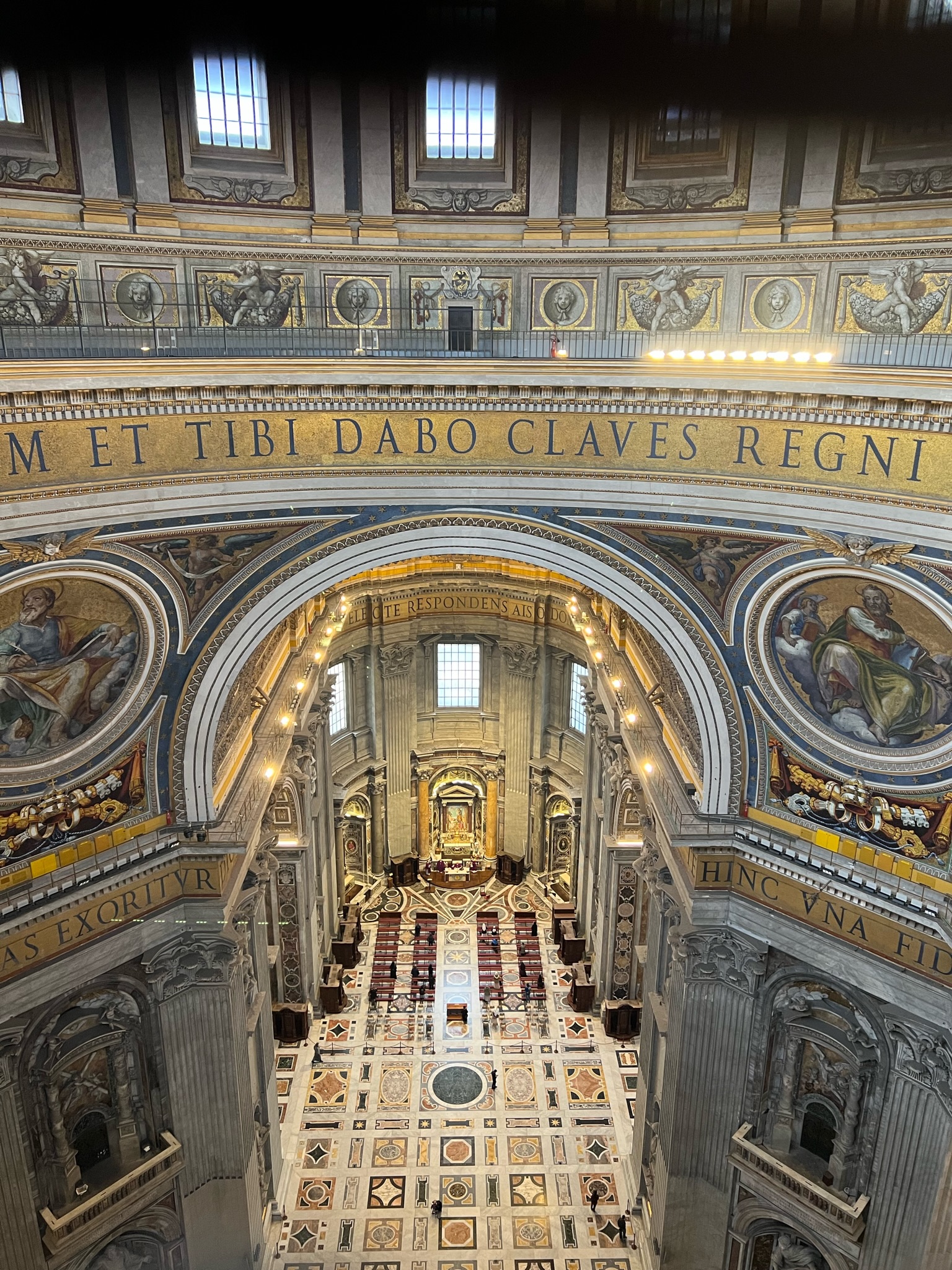
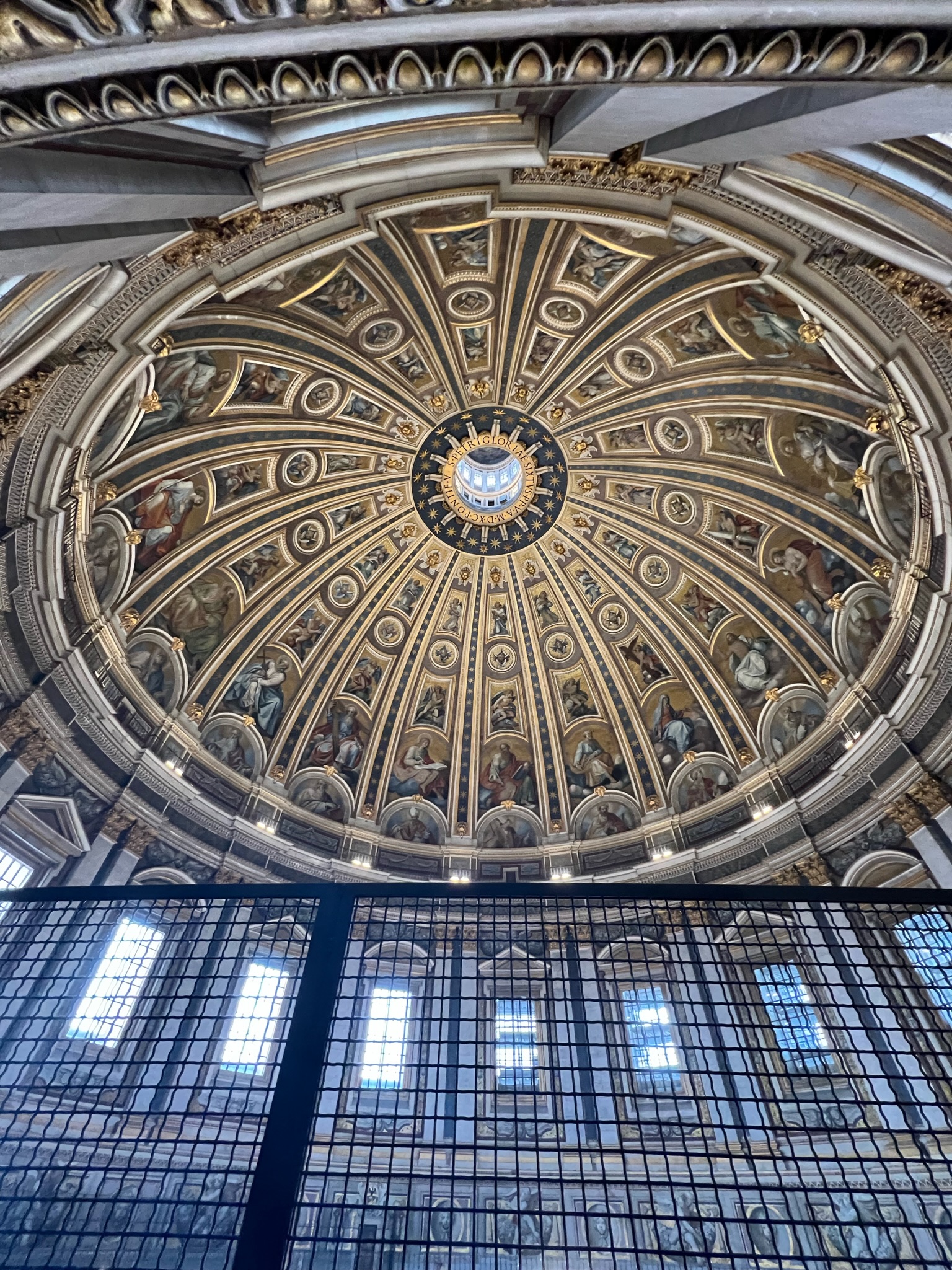
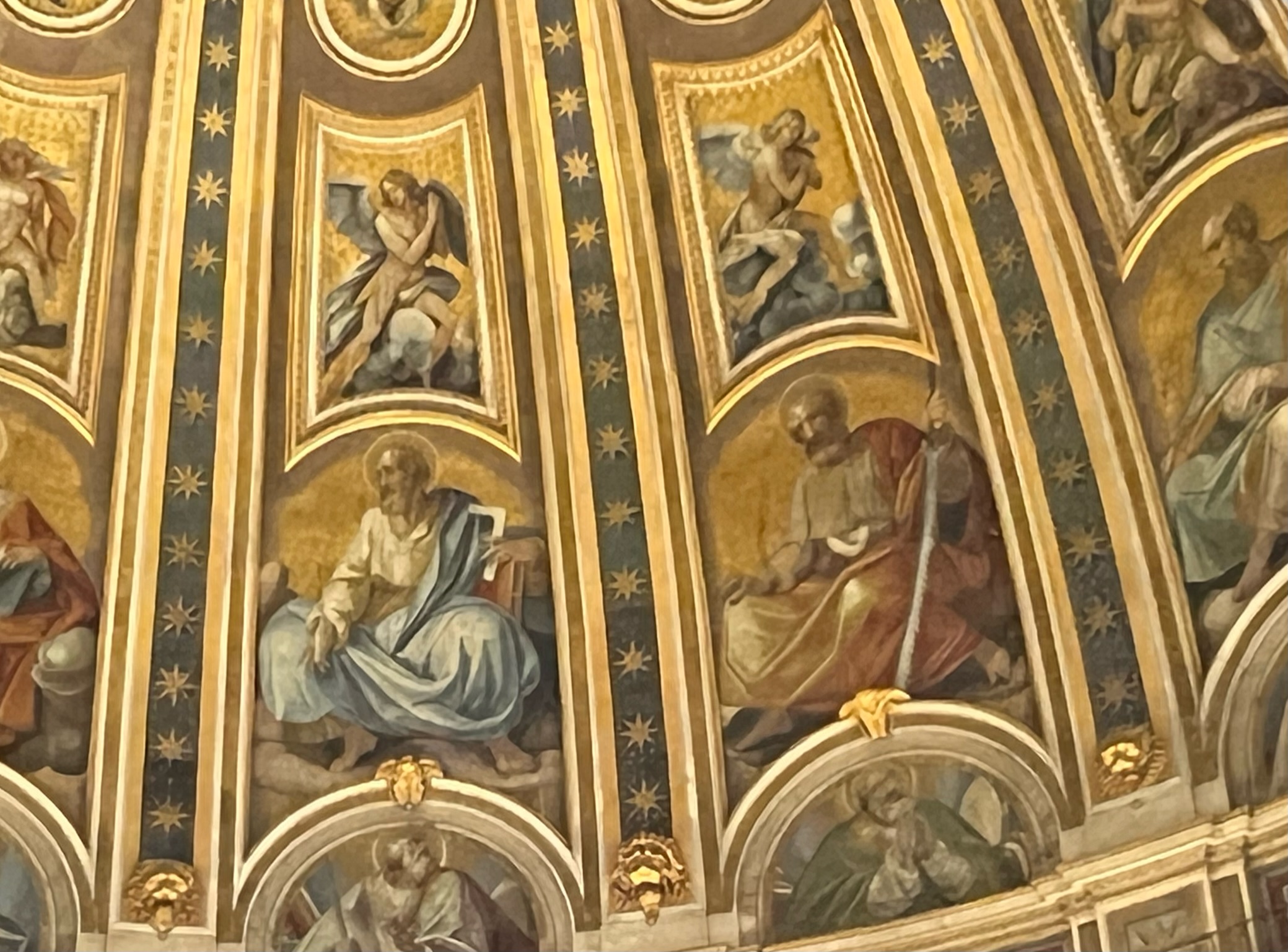


Henry and I both struggled with vertigo while we were standing there looking around. The dome is 137’ in diameter (almost half a football field), and it rises at least that much in the lower section alone. From the balcony, we could see the tiny chair that a regular sized person might sit in during a church service.
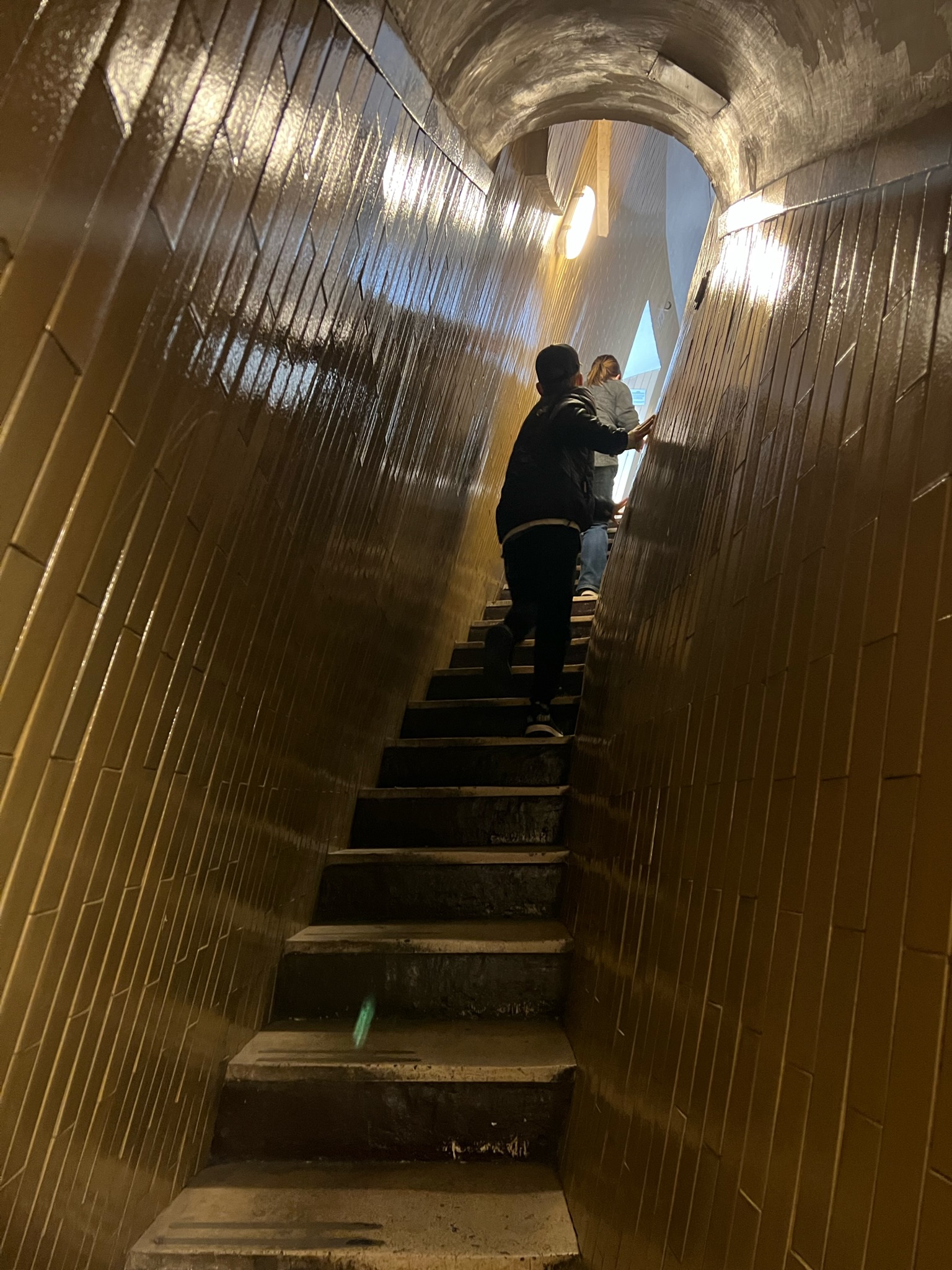
When we’d taken in all we could, we stepped back outside and began the climb up to the top. At first we walked up a ramp. The ramp turned into a spiral staircase, the spiral staircase turned into very narrow stairs with an arched ceiling, and the stairs quickly turned into very tight switchbacks as we approached the top. As we were walking through this, I struggled with thinking about how far down below me the floor was. There was the dome, and then there was nothing else below me for the length of an entire football field except that pointy bronze canopy. But we made it to the top, and when we stepped out on the balcony, every step was worthwhile.

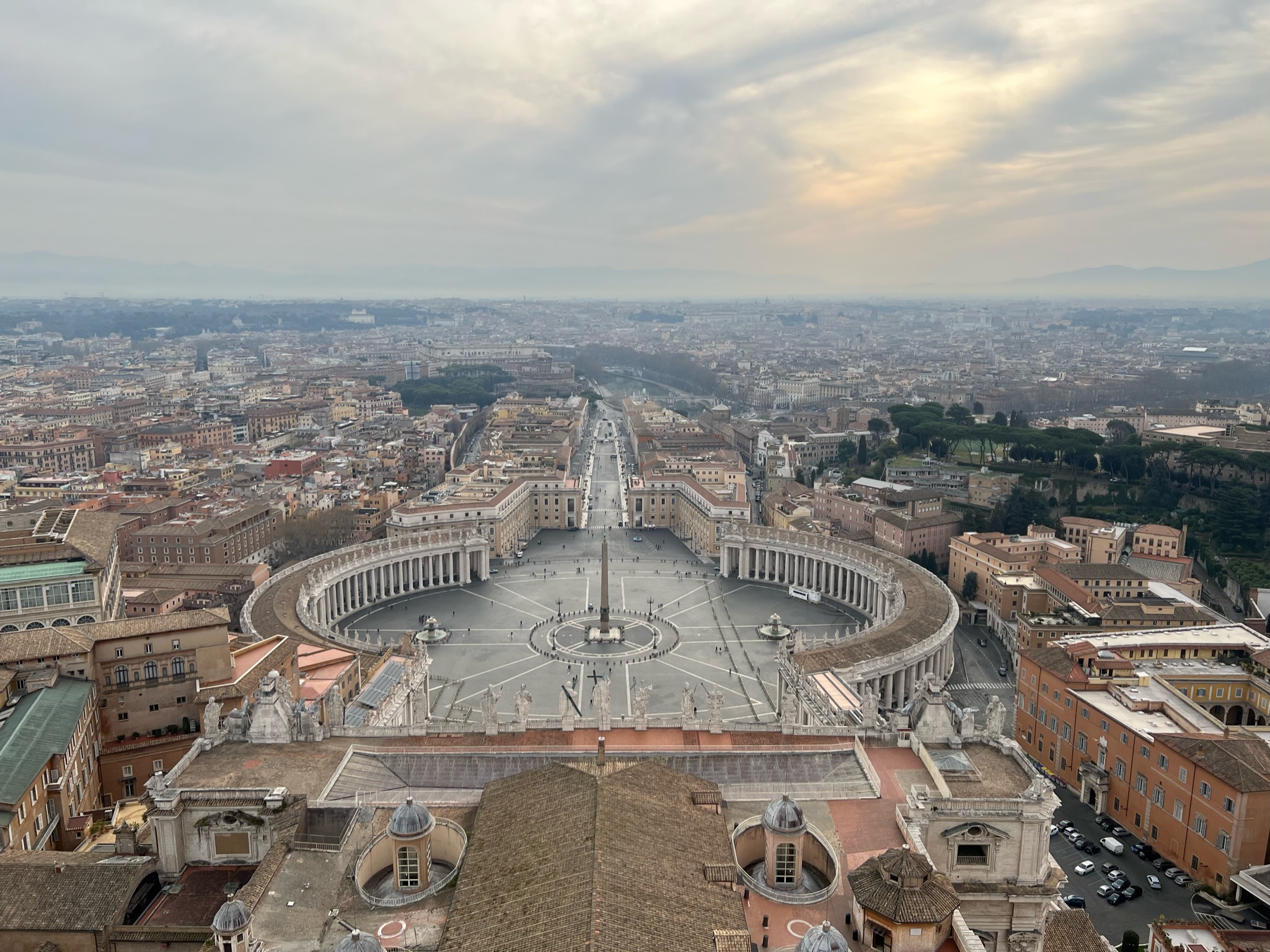
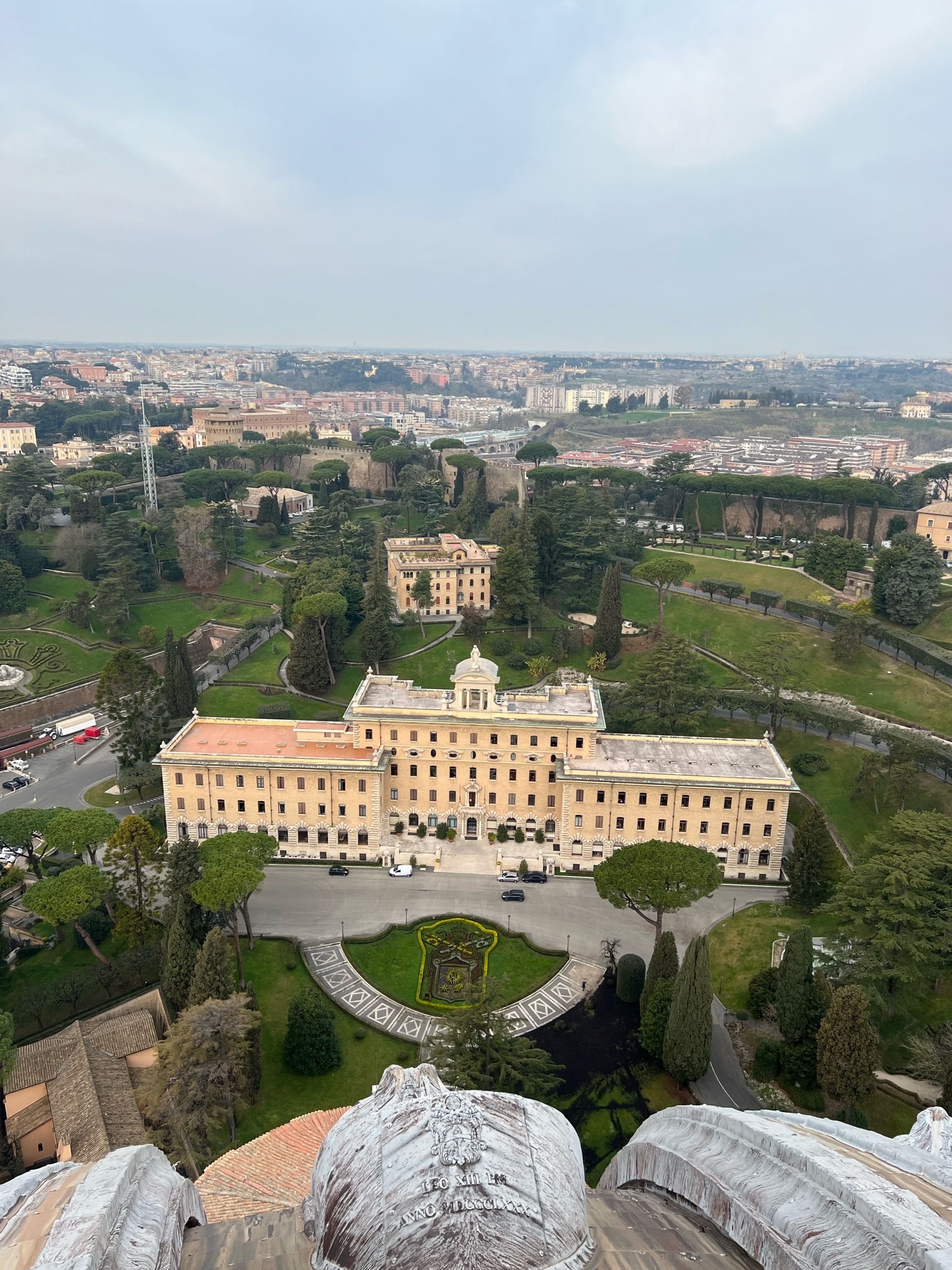
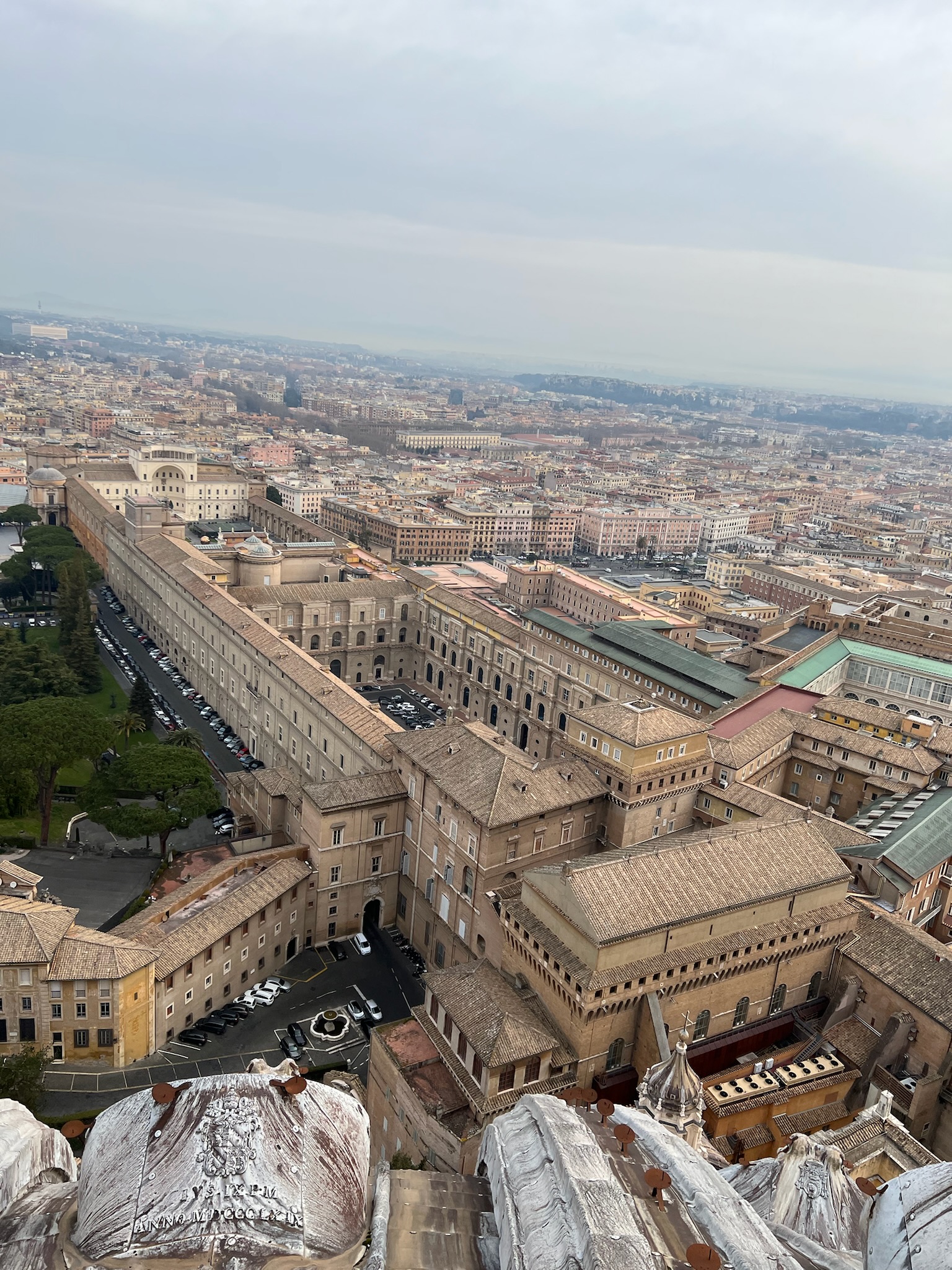


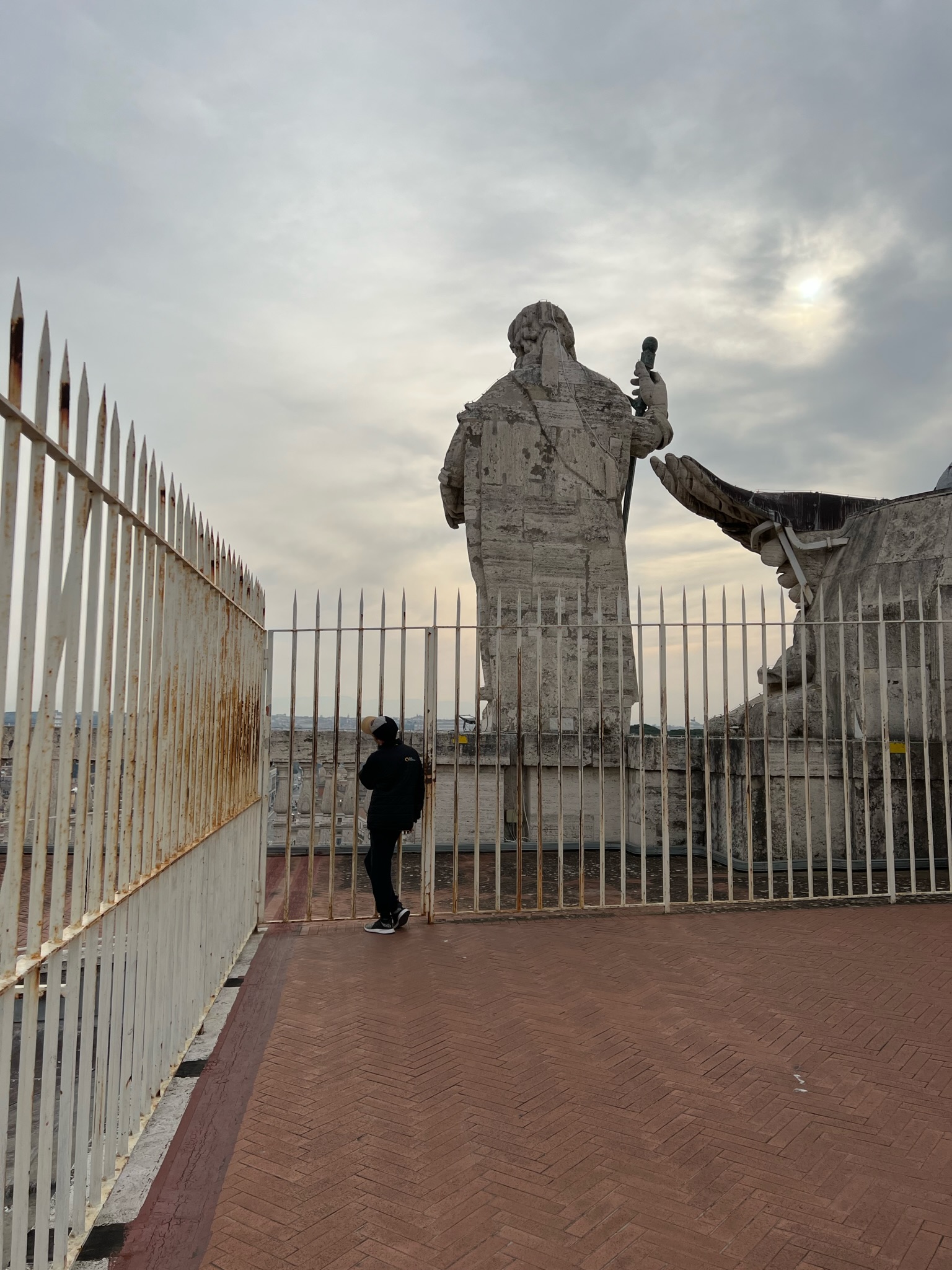
The view from the top was spectacular. We could see all of Rome from that vantage point. It was a bit cloudy out, but even so, we could see so much. Saint Peter’s Square was still very empty, but it was beautiful from this angle. We wouldn’t have time to go inside it, but we could easily make out the roof of The Sistine Chapel beside us. The Pope’s residence was just beyond that along with several other Vatican City museums. Even the concrete eaves on top of the basilica was engraved and well decorated. We had the place to ourselves for a little bit, but within only a few minutes, a crowd began to arrive. We decided to head back down to see the inside of the church before more tourists arrived and spoiled the experience.
We got down to the bottom, and the ticket line for dome climbing admission nearly wrapped around the building. Apparently getting there at opening time was the way to go. The stairs were rough to climb, but we did it completely alone. I hate to think of how miserable that might have been if the crowd all went up and down together.
We toured the church together, and I showed them the most beautiful things I noticed the day before. Henry was really excited about it, and that made me happy. He kept borrowing my phone so he could take pictures of things that he just couldn’t believe. We had time to really wander around together, so we found our way to the crypt. The whole basilica sits on top of a crypt full of Popes, Bishops, and other Catholic church leaders. In the center of the church under a painting of Peter is supposedly a crypt with the bones of Peter. There’s an ongoing debate as to if those are really his, so I’m not sure if they are or not.
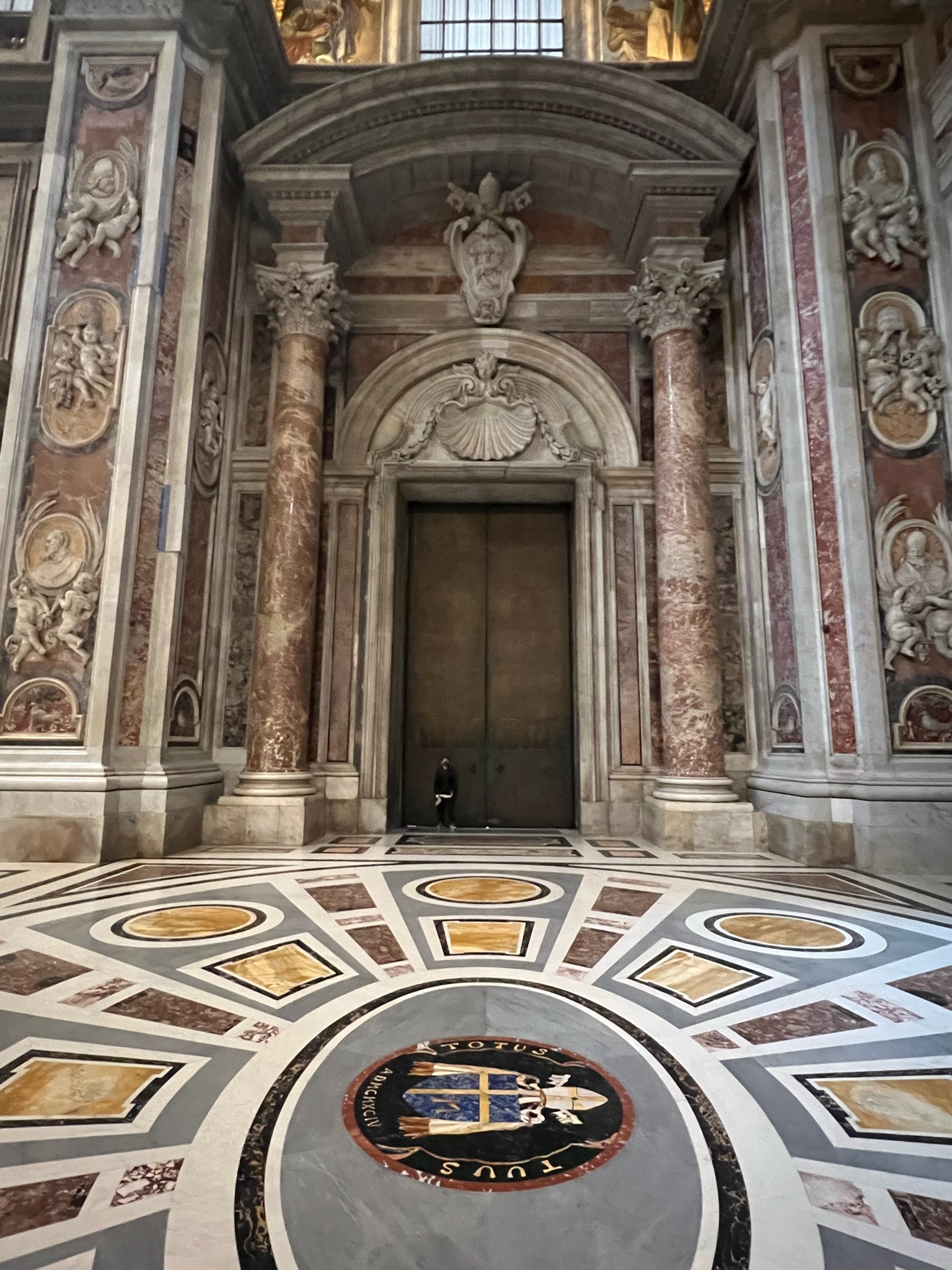
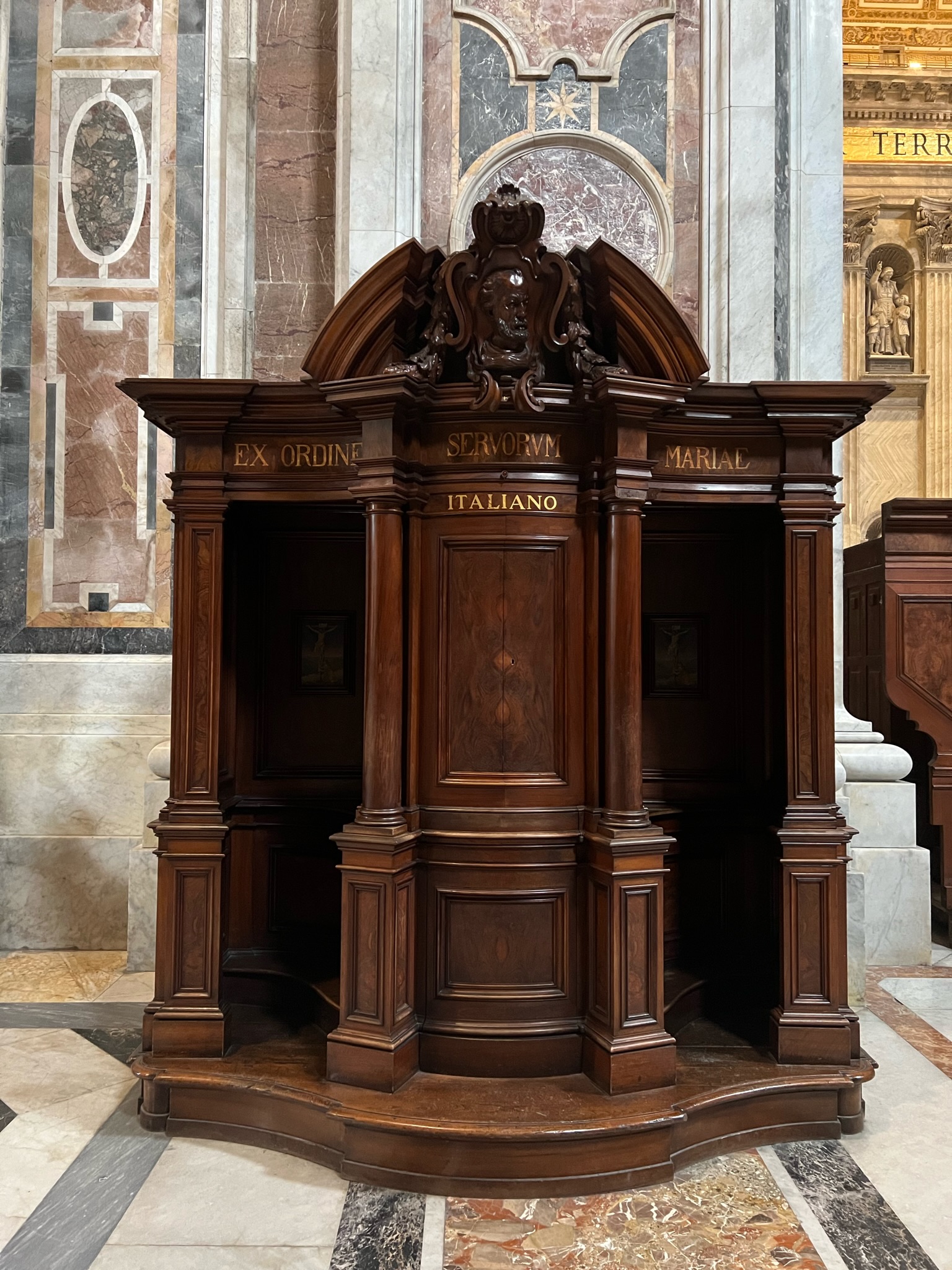
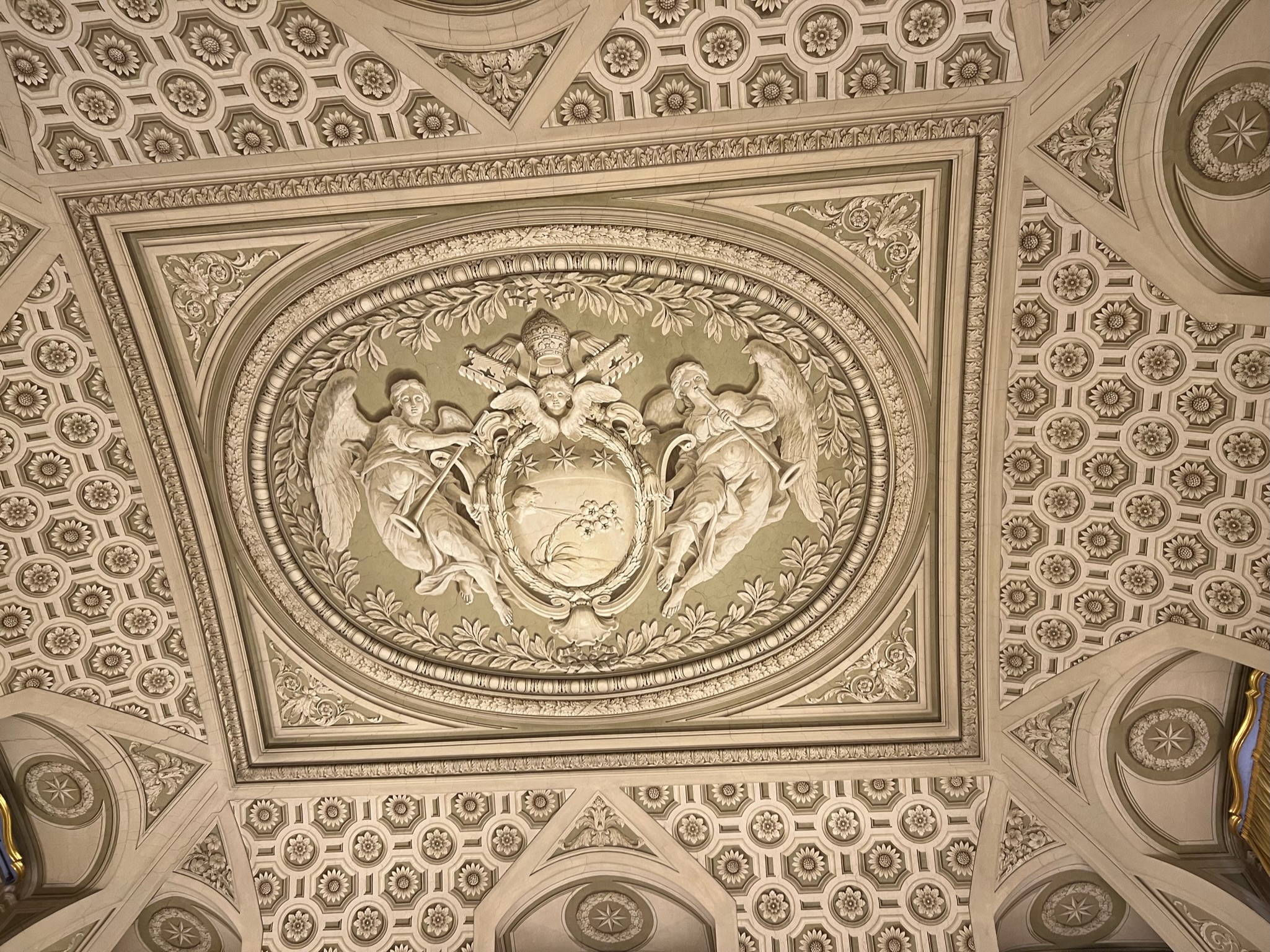

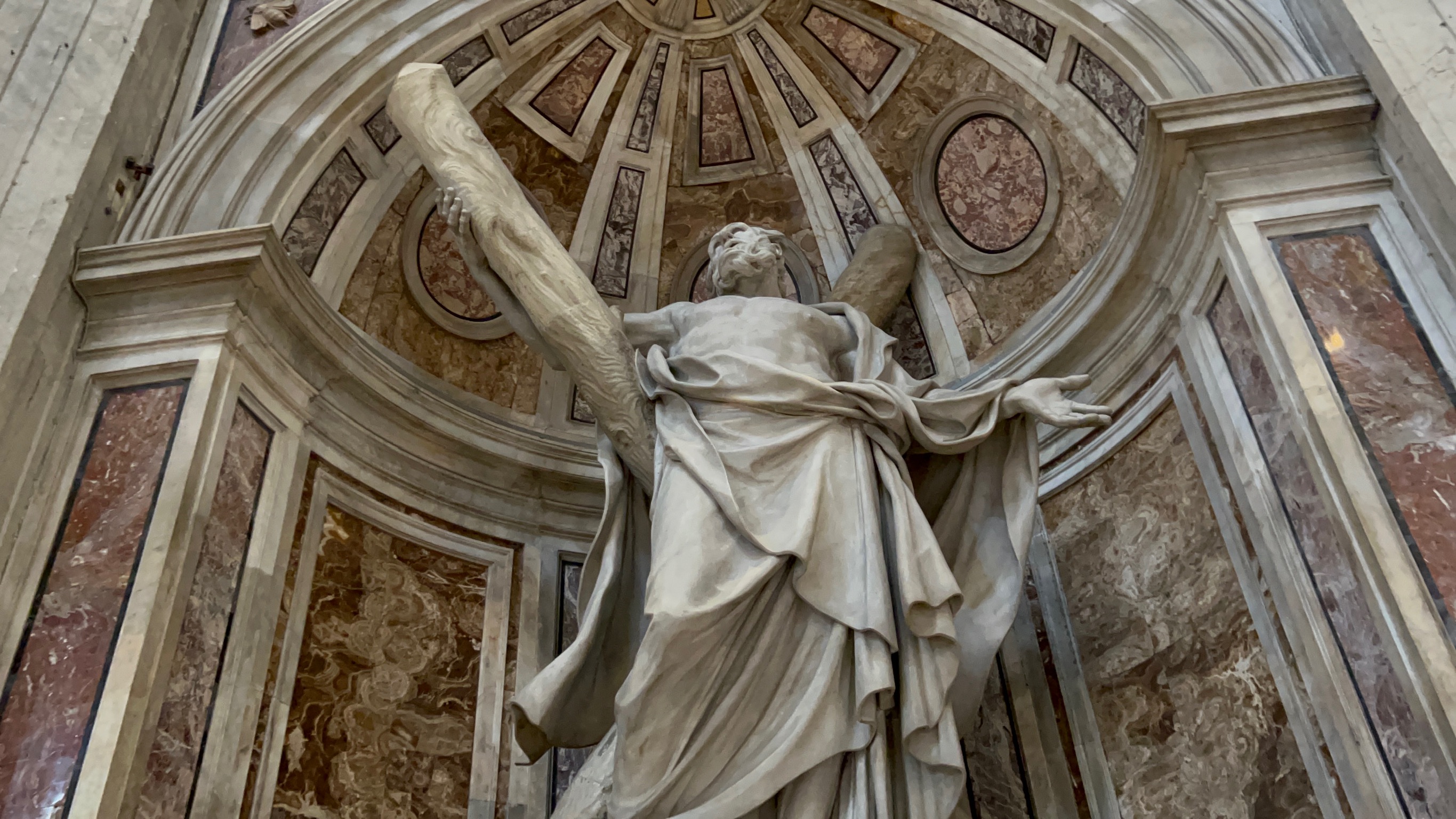
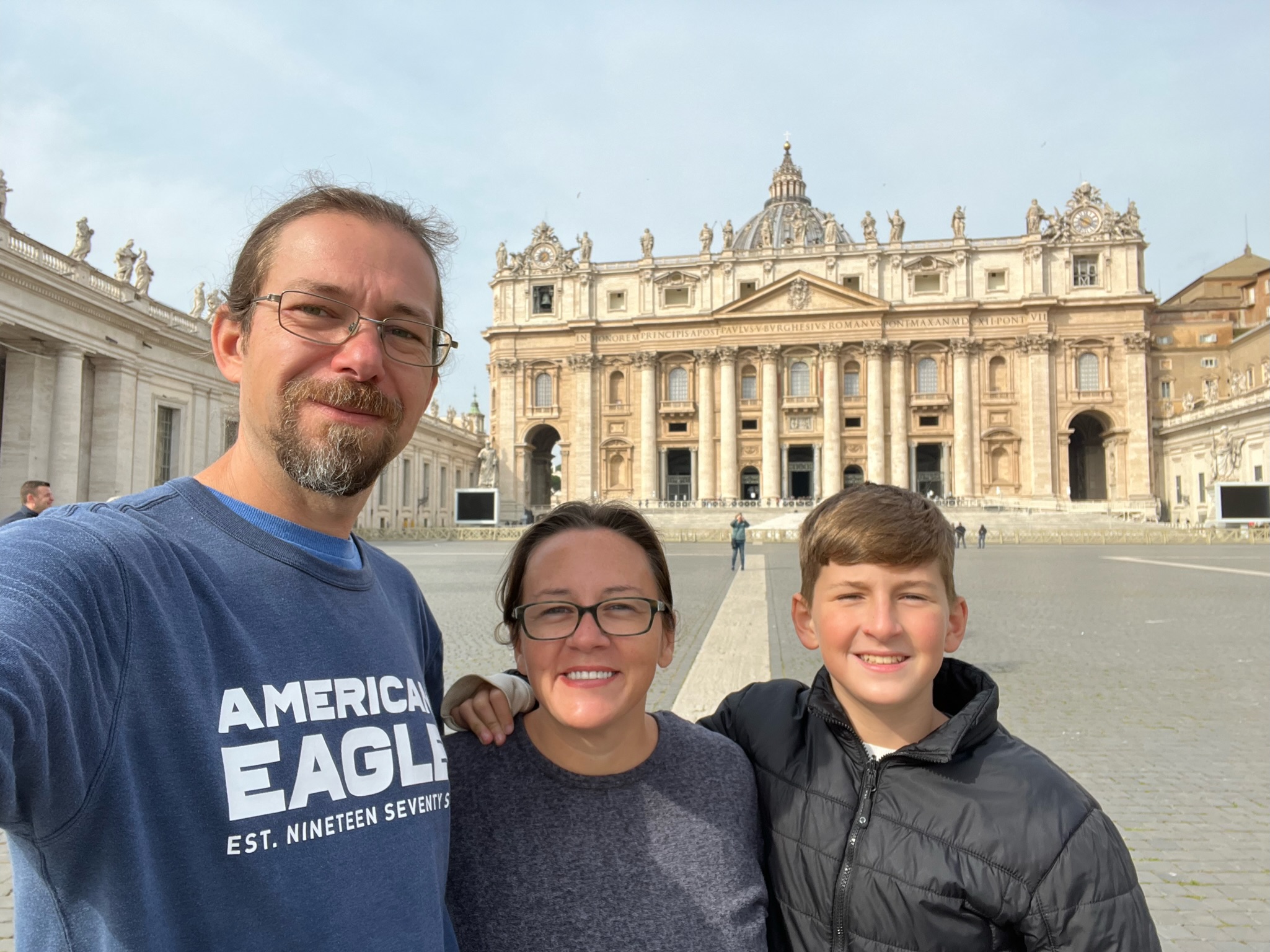
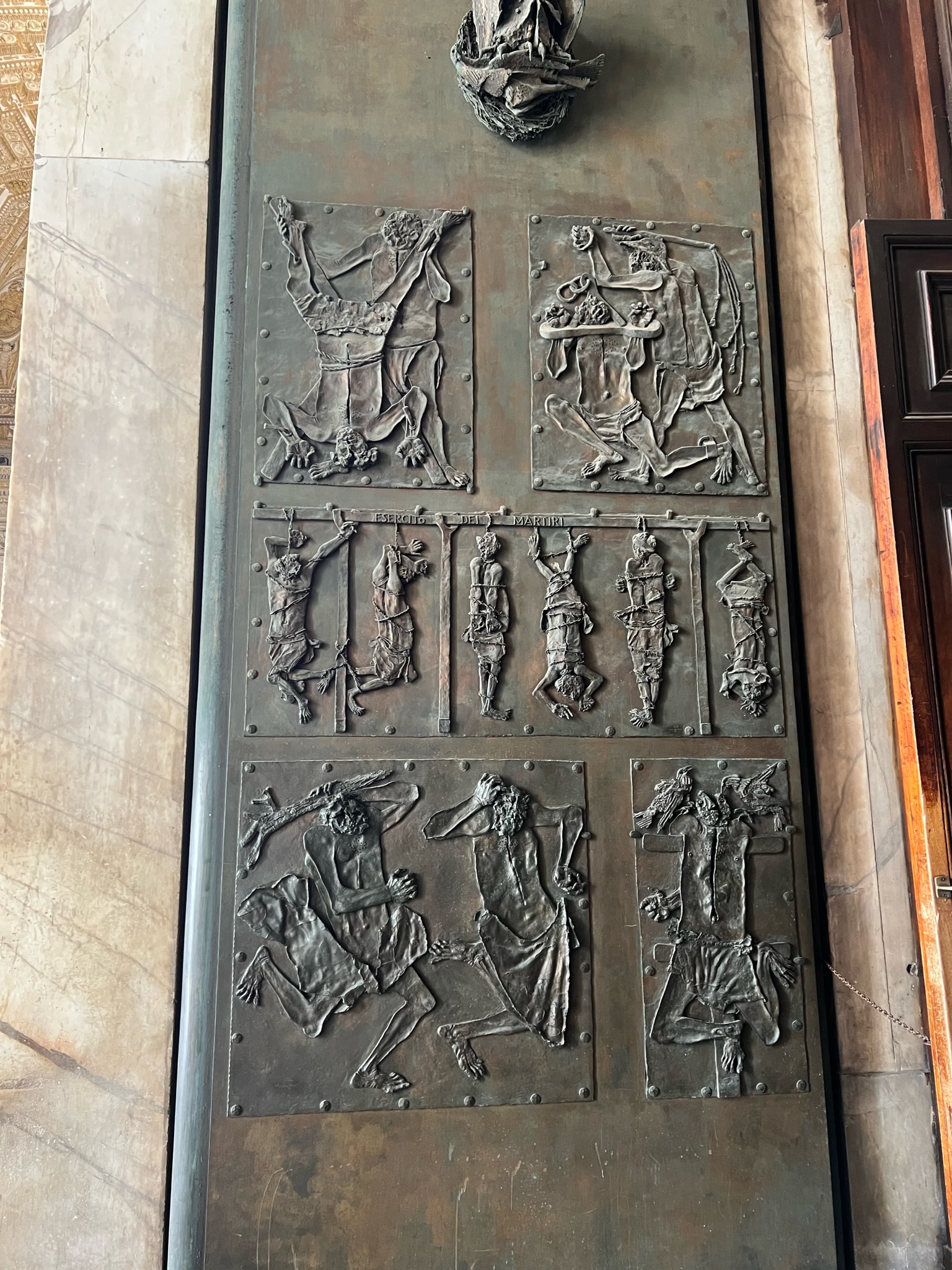
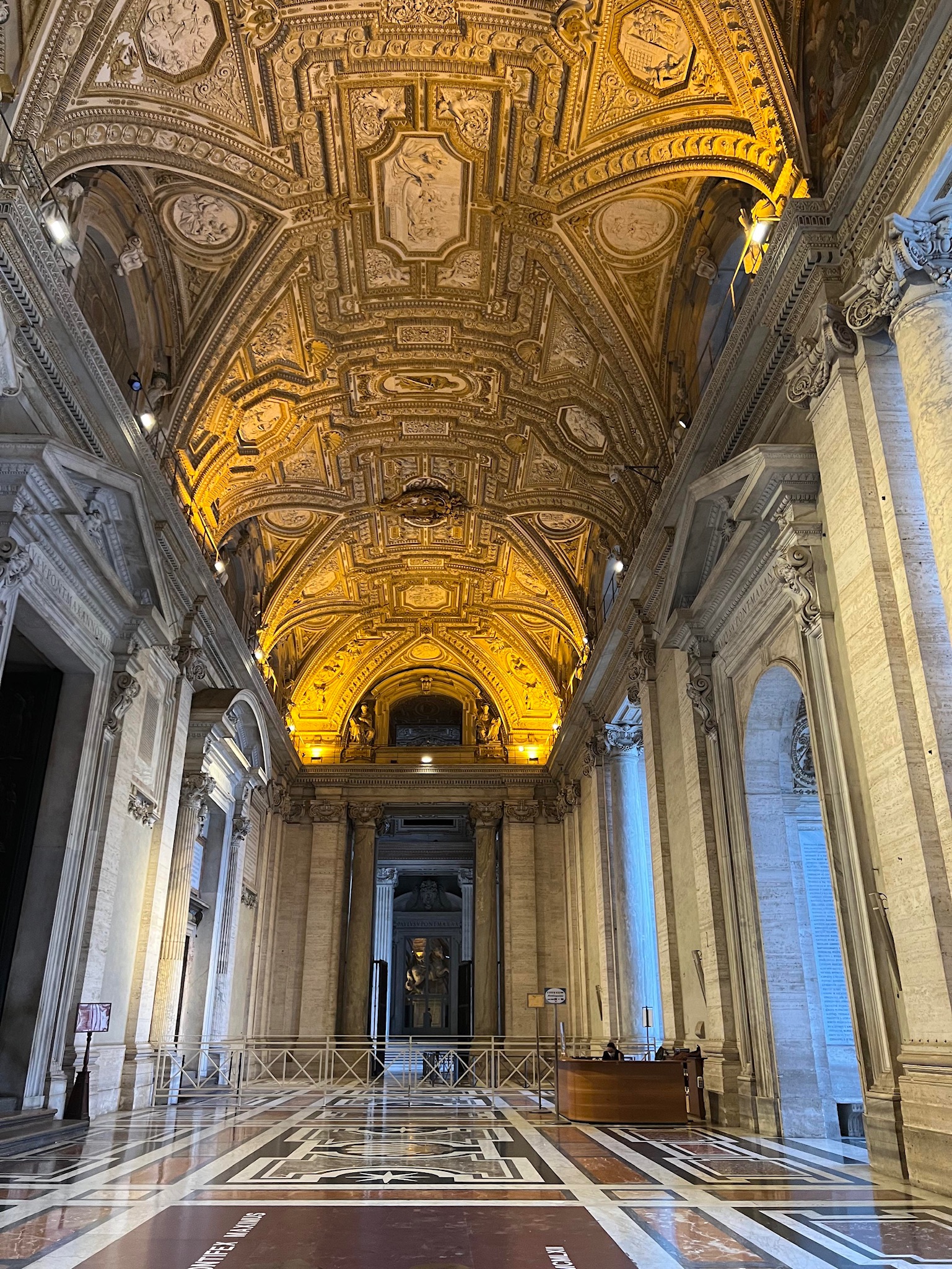

We toured around for quite a while, but eventually it was time for us to head back so we could catch our train. I’m so glad they got to see the inside. It was amazing, for sure. But, honestly I can’t help but have mixed emotions about it. Maybe it is wrong of me to think that way, but the thing that I kept coming back to as I looked at all that opulence and indulgence, was that I don’t think Peter would have wanted it. That first night when I came out of the church alone, we passed a woman on the street who had cardboard taped onto her feet for shoes. I had just left this over-the-top, outrageously beautiful church, and outside, nearly on the steps of the church, a woman was begging for money because she didn’t even have shoes to wear in the cool Italian air. I think the Peter who first followed Jesus may have had a vision like this church in mind when he and the other disciples volleyed for position about who would be the greatest among them. I don’t think that the Peter who died a horrendous death on that same site for teaching what he believed would have wanted it though. I think he would have preferred that the church help the little lady with some shoes. I don’t know. I just can’t help but wonder if the lavish luxury provided in his honor could have been better spent helping to spread his message of the church.
We made it back to the apartment to grab our bags and catch our Uber to the train station. We’d bought our tickets the night before, so all we had to do was to get there on time, and hopefully find some lunch. We’d eaten at the station the day before, so we knew we could grab some food in their food court. As we waited for our food to arrive, one of the employees of the Five Guys restaurant stopped by to see our Super Green passes. I showed him our antigen test results out of sheer spite because if no one asked about them, it was a waste of time and money to take the tests. He insisted on seeing the vaccine cards instead, and like everyone else, he didn’t even look at the date.
He did warn me that several of the trains were running very late that day, so I should keep an eye on the update board. Our train was still showing on time, so we crossed our fingers and ate our lunch.
Downstairs, we scanned our tickets to get into the platform area, but there was no platform identified by our train. So we waited. The people who were waiting on the delayed trains were all standing there as well, so it was very crowded and very hectic. We found a rail to stand beside, and we kept our eyes peeled for any sign of the train. It went from on time to a 5 minute delay to a 20 minute delay, and 20 minutes after it should have left, there was still no sign of a platform. As we started getting a little nervous, a train pulled up behind us, and the display indicated it was the one we had been waiting for. We made our way as quickly as we could through the crowd to hop on board.
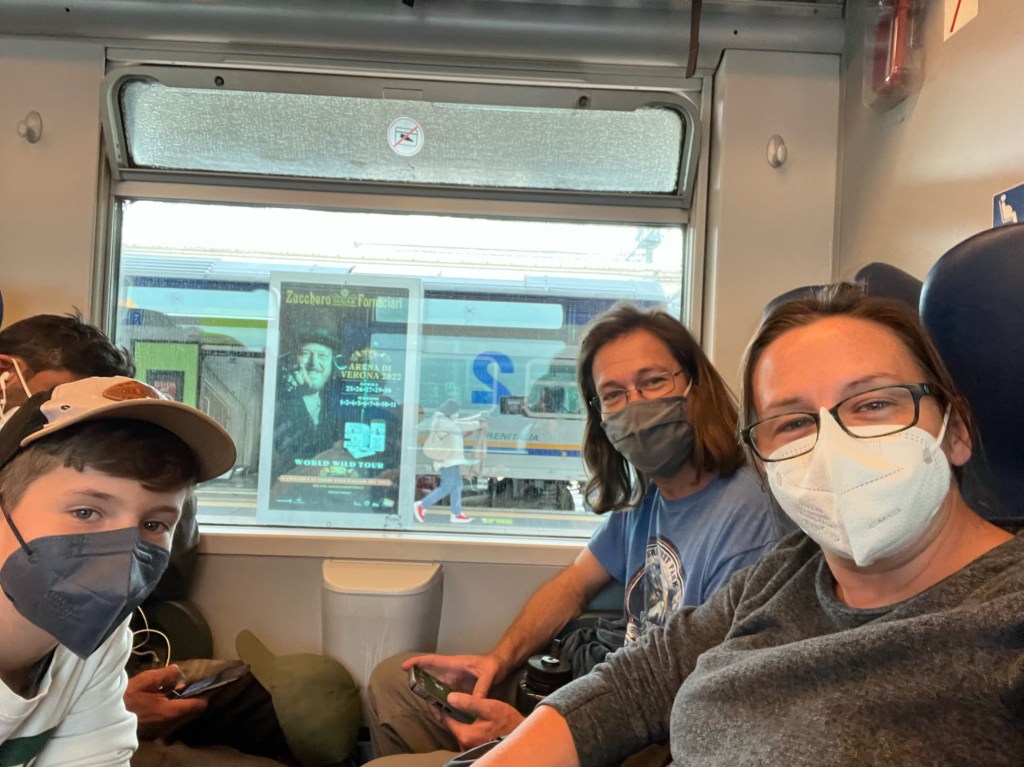
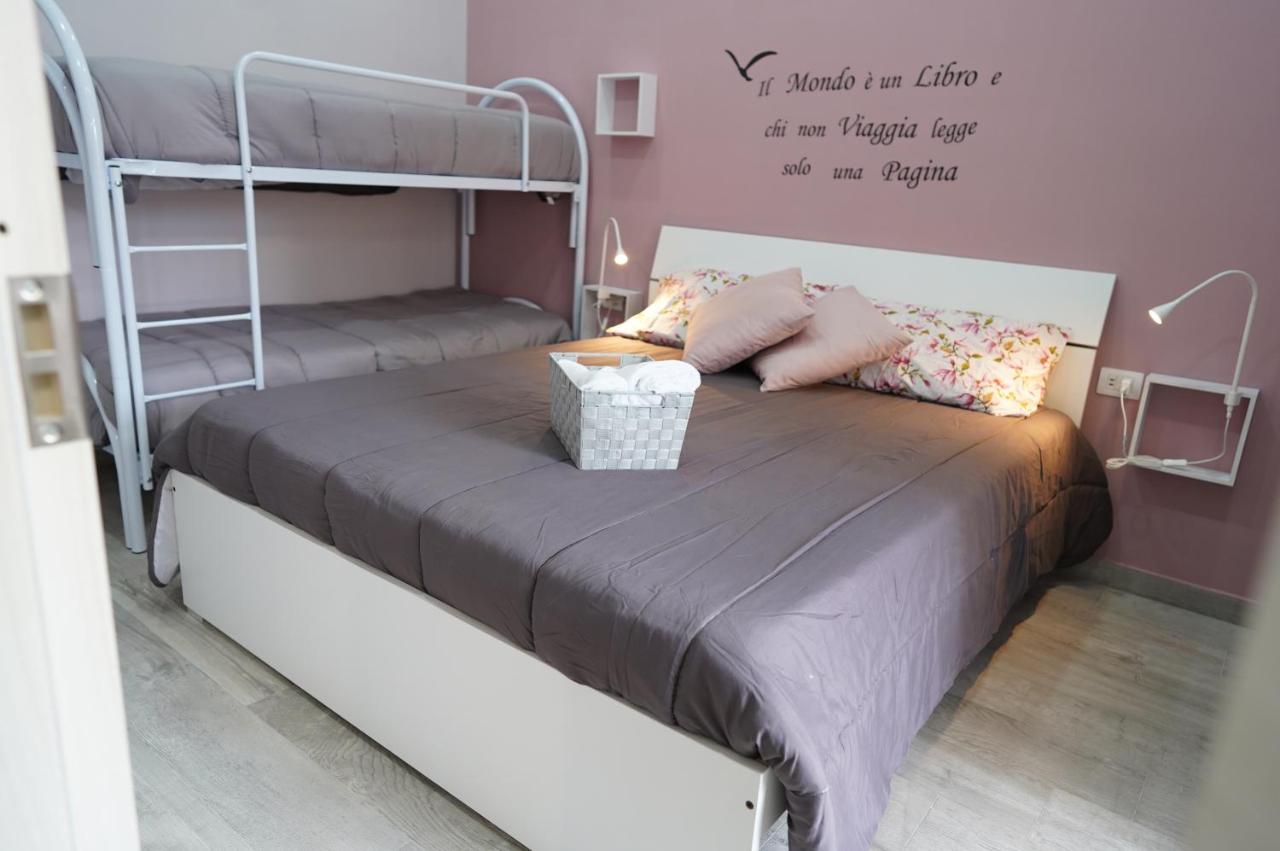
The train to Naples (or Napoli, in Italy), was very nice. We sat together in a 4-seat section. It was air conditioned and comfortable, and it was only about an hour-long ride. When we arrived in Naples, we took a metro to a second station, and then after a 5-minute walk through a bustling outdoor market, we met Enzo, our new host, at the door of the Cristal Home. Enzo escorted us up to the 6th floor of the bed and breakfast so we could check into our room. He and his mother had purchased the apartment on the 6th floor, and they’d converted it into a small two-room bed and breakfast. We entered a code into the keypad, and the door opened up to a small foyer with coffee, tea, and snacks. Our room was just beyond that. It was a nice room with a queen bed, a set of bunk beds, and a private bathroom. He gave us some suggestions on where to go for dinner that night, and then he left us to get settled in.
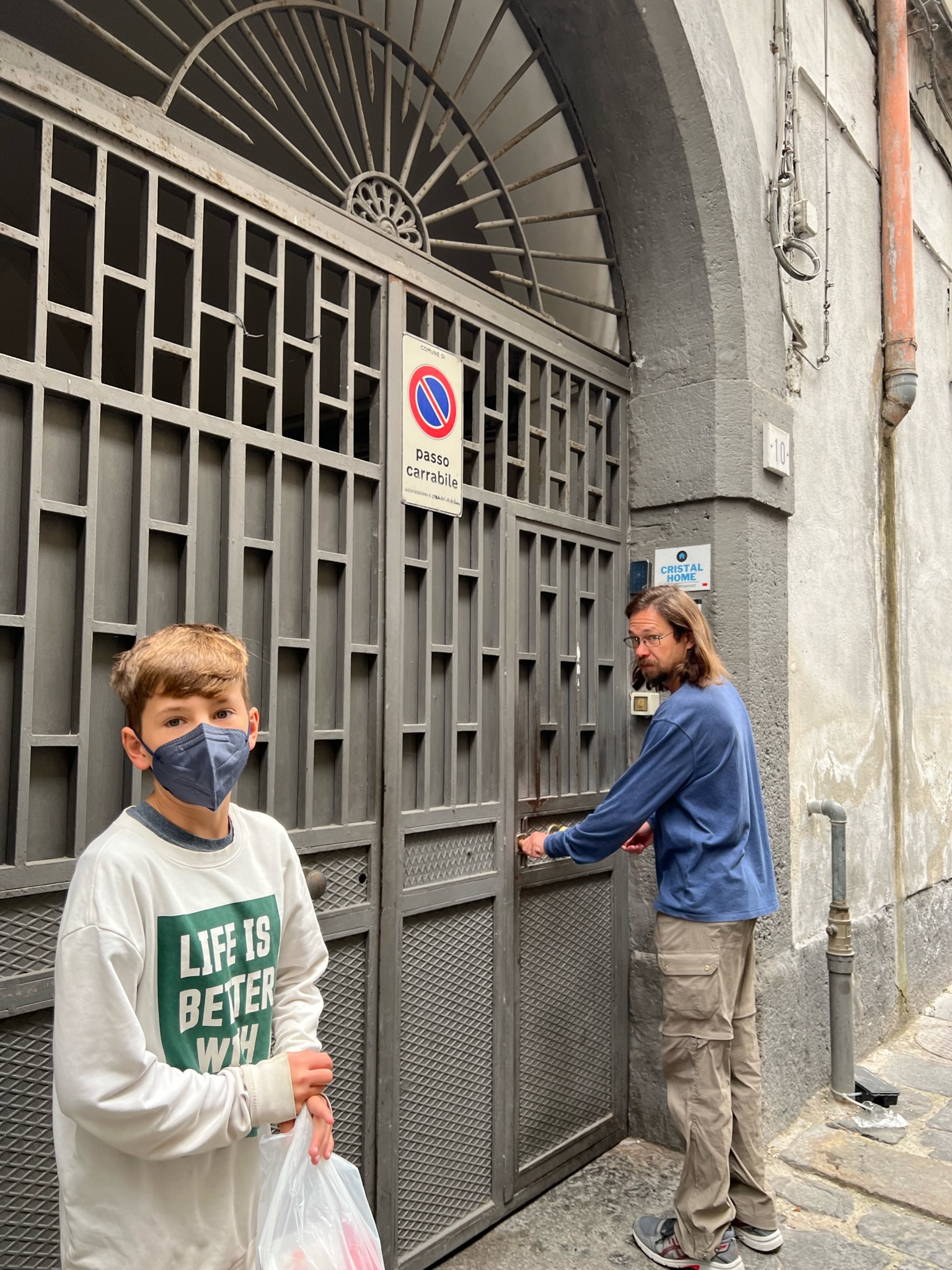
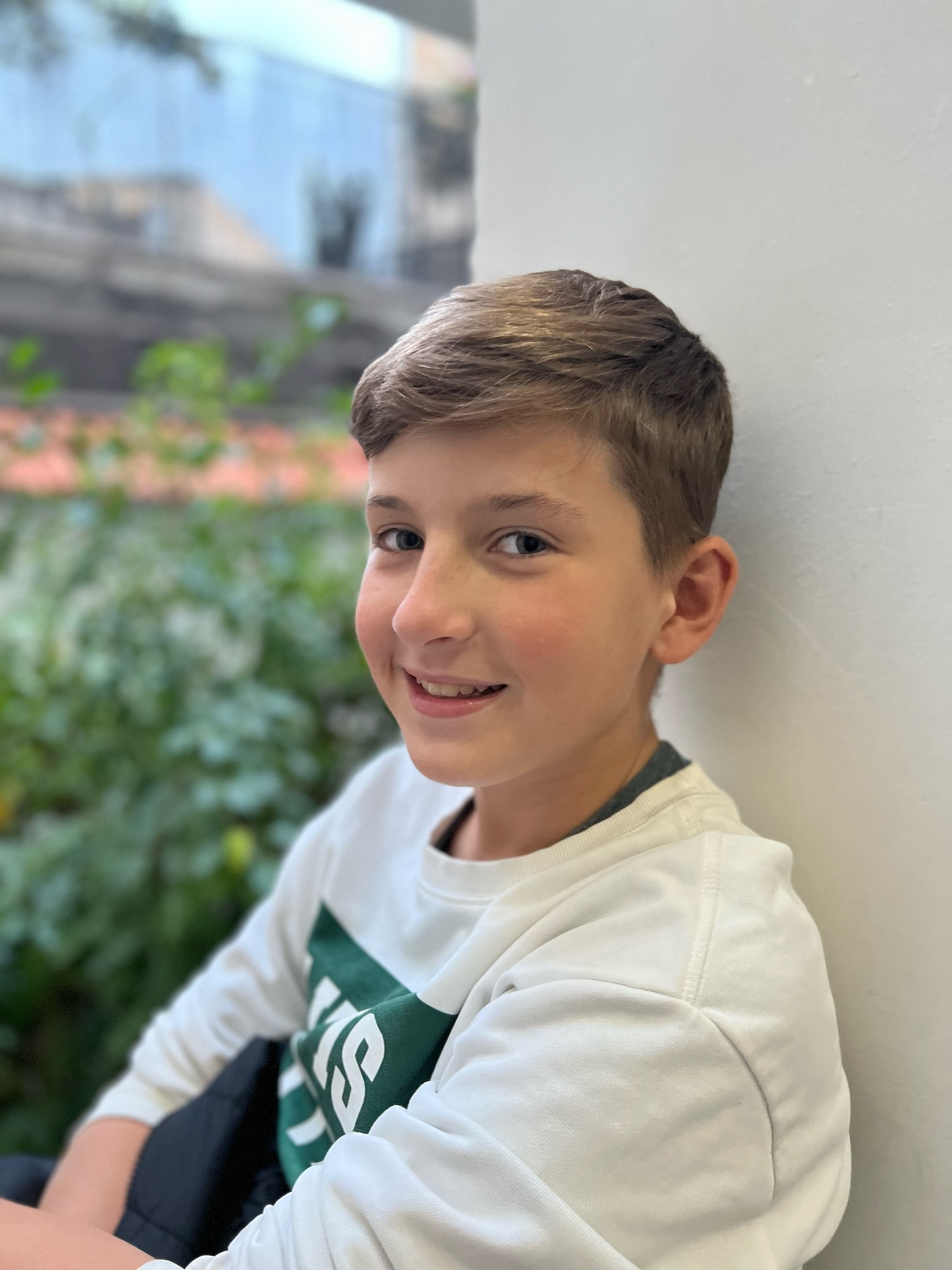
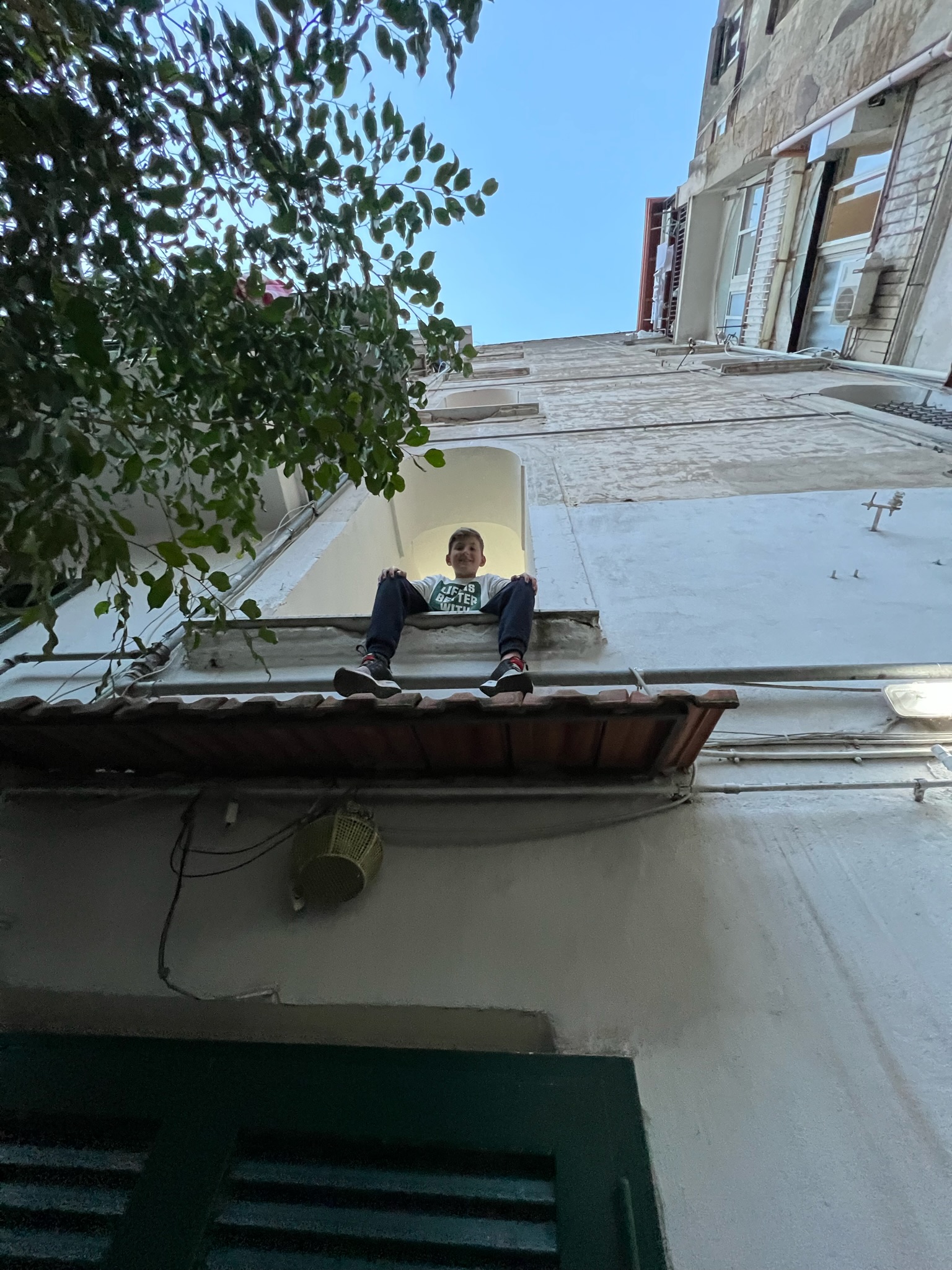
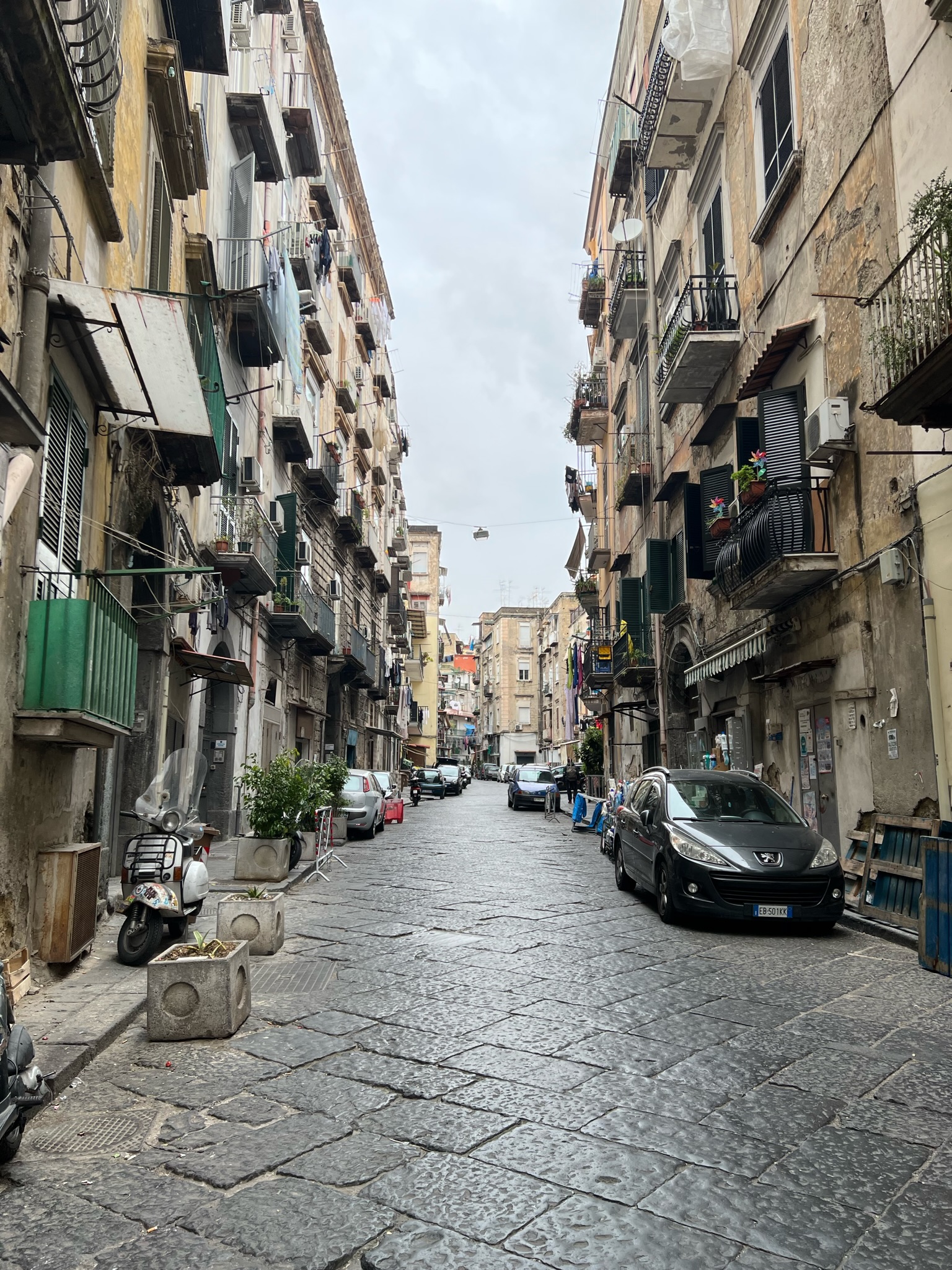
Naples was very nice. We were staying in the Rione Sanita district of town. It was an older section of town and it felt very ‘lived in.’ Real people lived here. It wasn’t set up for tourists or the wealthy residents. It was where the everyday, normal Italians lived. I loved it. The market outside was a little crazy, but I enjoyed walking through it. Outside the window of our room, you saw everyone’s laundry hanging out on their lines. It didn’t make for pretty pictures, but it felt authentic.
We spent a few days in Naples and we didn’t do a lot there. We mostly needed some time for planning, and Enzo’s bed and breakfast gave us a perfect place to do that. One of the issues we were facing was related to covid. In a growing number of countries, our fully vaccinated status is no longer recognized after we pass the 9-month mark. I was down to less than 25 days, and Brian and Henry only had a few longer than that. If we followed our current plan, we’d be coming back to Europe after all of vaccines were past the date, and that would make things far more complicated and expensive. We could get the booster shot, and that would simplify the situation tremendously, but we weren’t crazy about that either; we really didn’t want the first two doses to begin with, but to travel freely during a pandemic, we had to get them. We couldn’t find anything on the internet about getting a booster in Italy, so we stopped by a few pharmacies just to ask. One of the pharmacies referred us to a local hospital, but they said that they couldn’t help us unless we had tax numbers (the social security equivalent in Italy). We started looking at more and more options, but still we weren’t crazy about any of them. Croatia is happily vaccinating anyone who will travel there. Australia is happy to vaccinate tourists as well, so long as all of their residents are vaccinated first. Abu Dhabi would vaccinate me and Brian, but because of his age, they might not give Henry the booster. We came up with a shaky plan about how we’d get through the next month or so, and it had a lot of ifs and maybes in it. But it was the best we had.
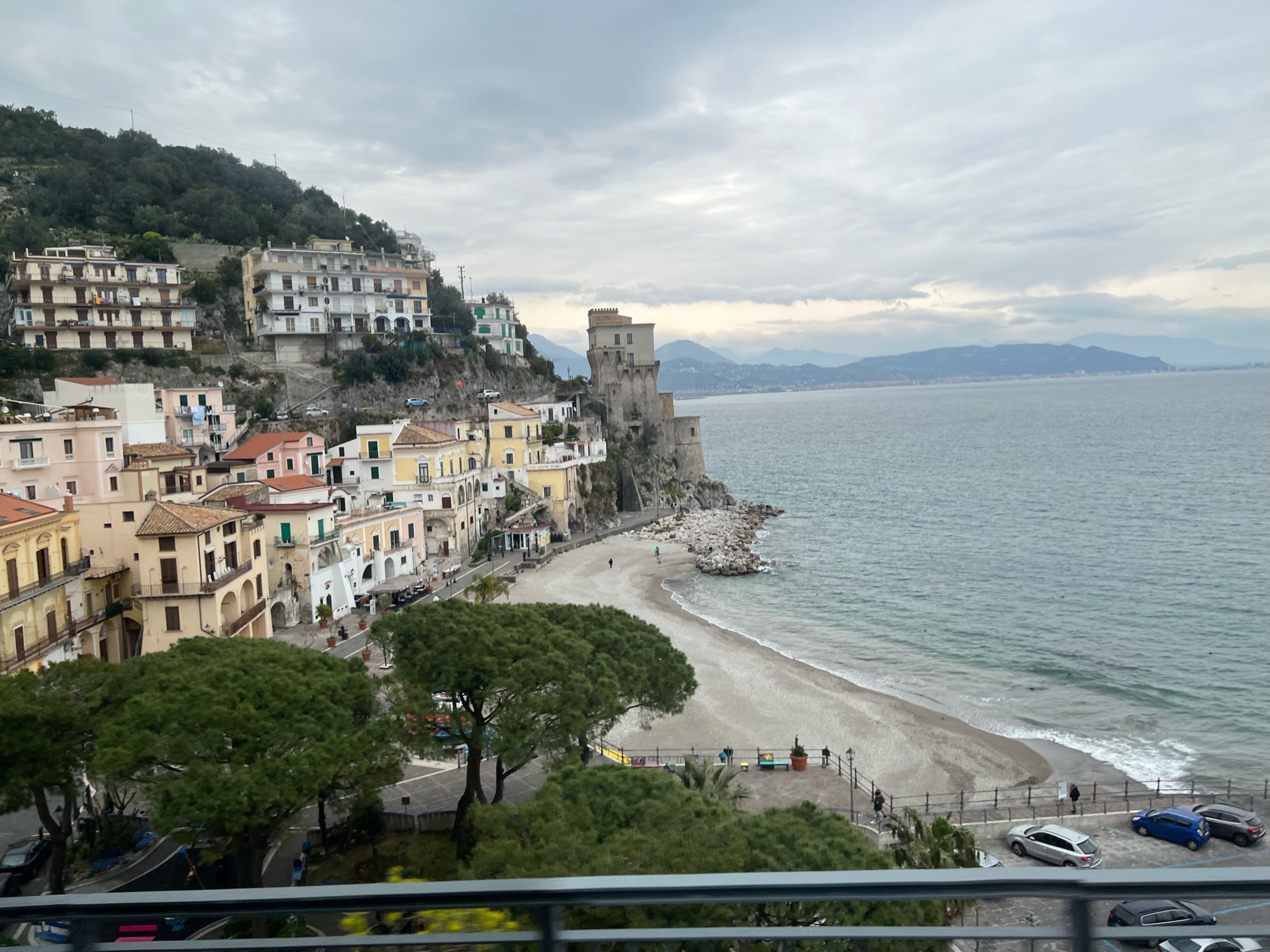
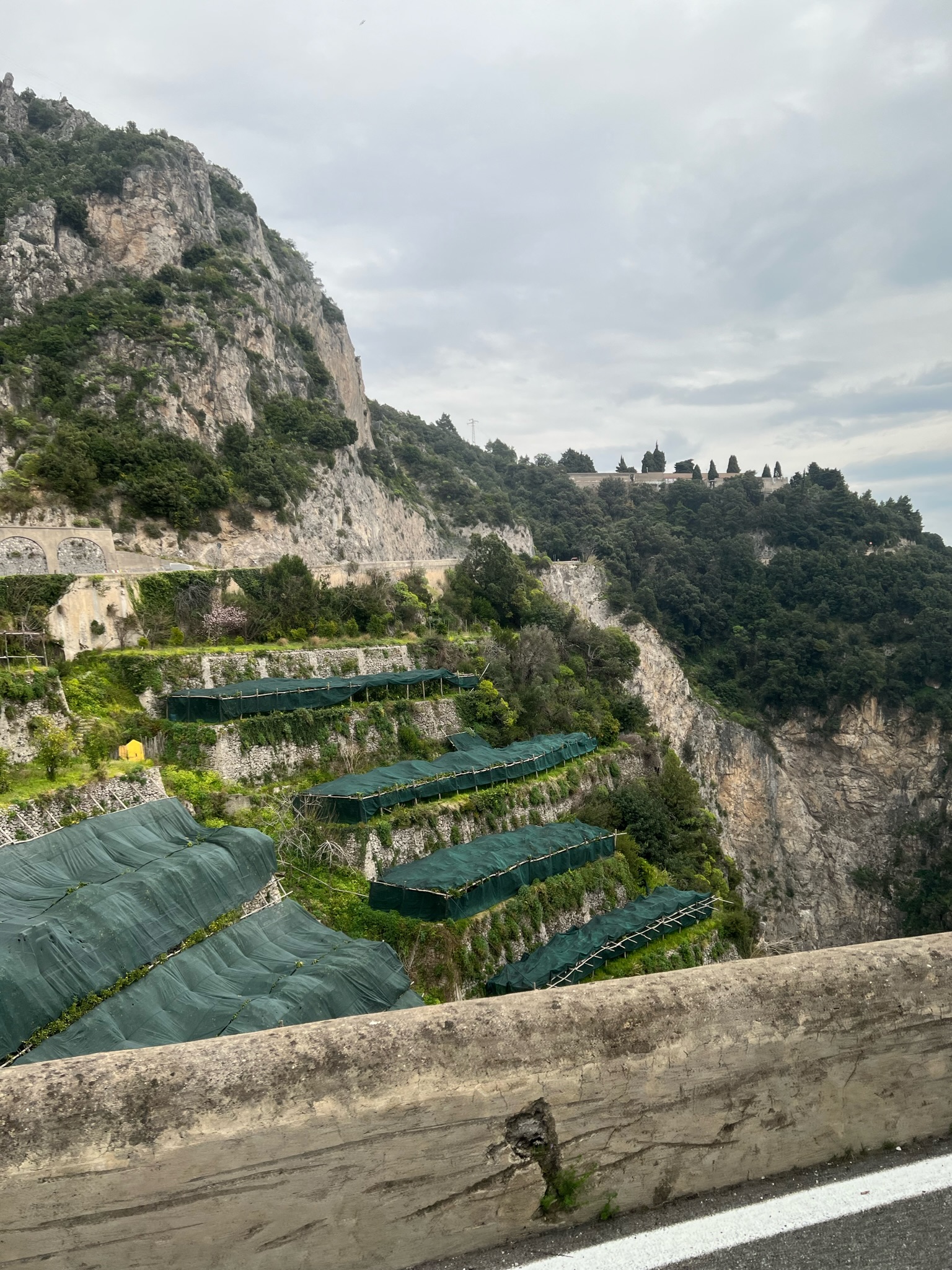
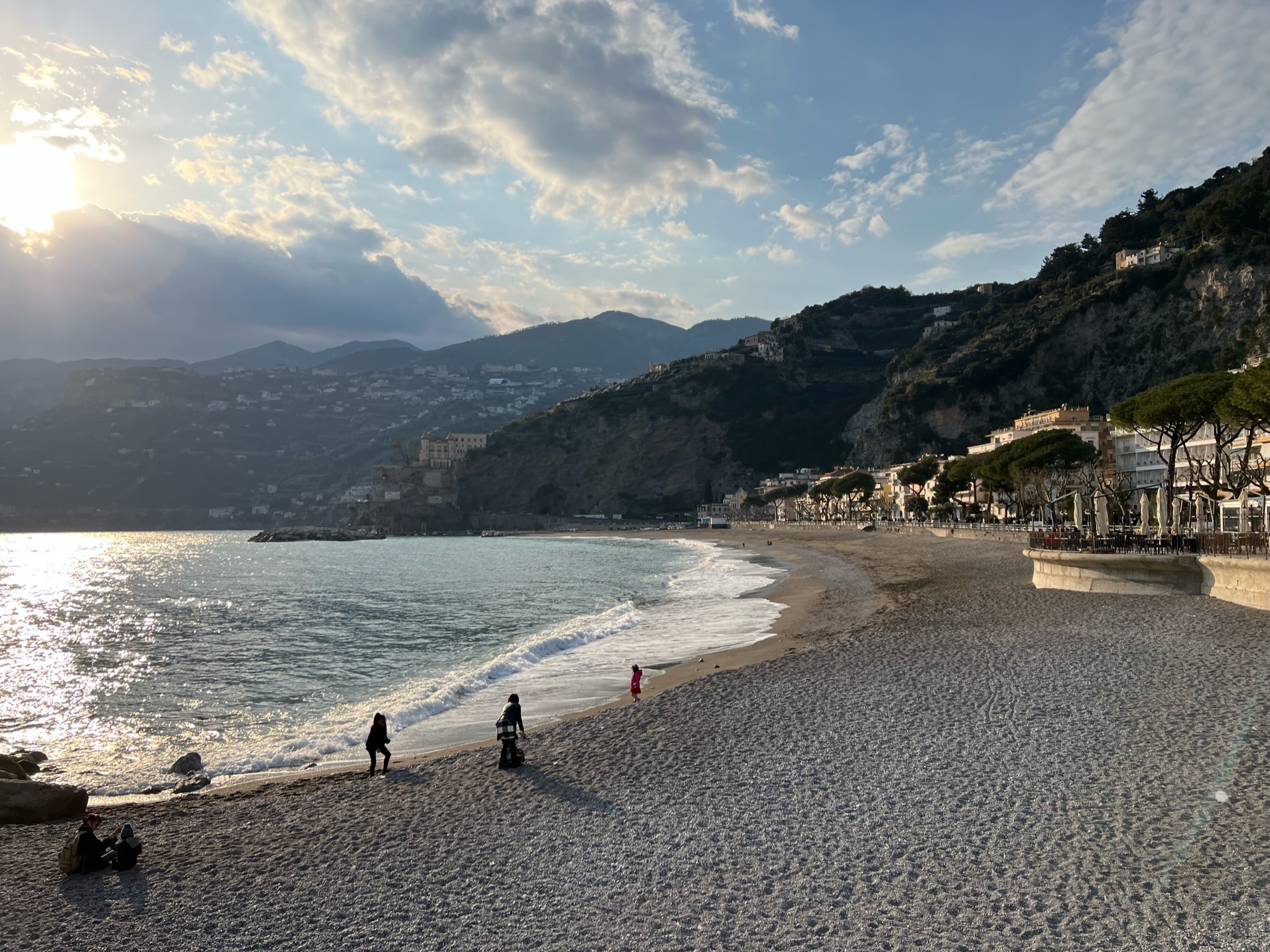
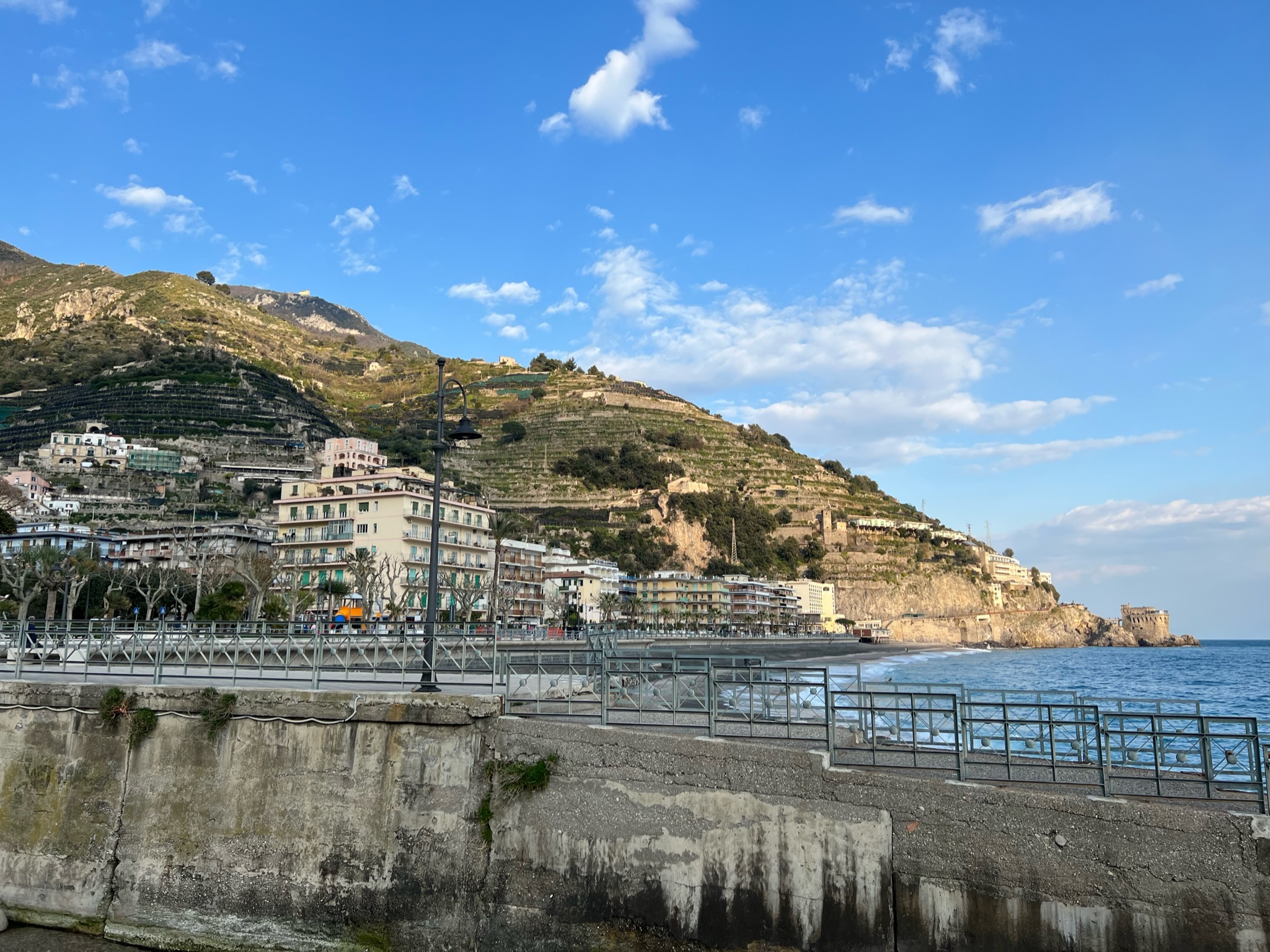
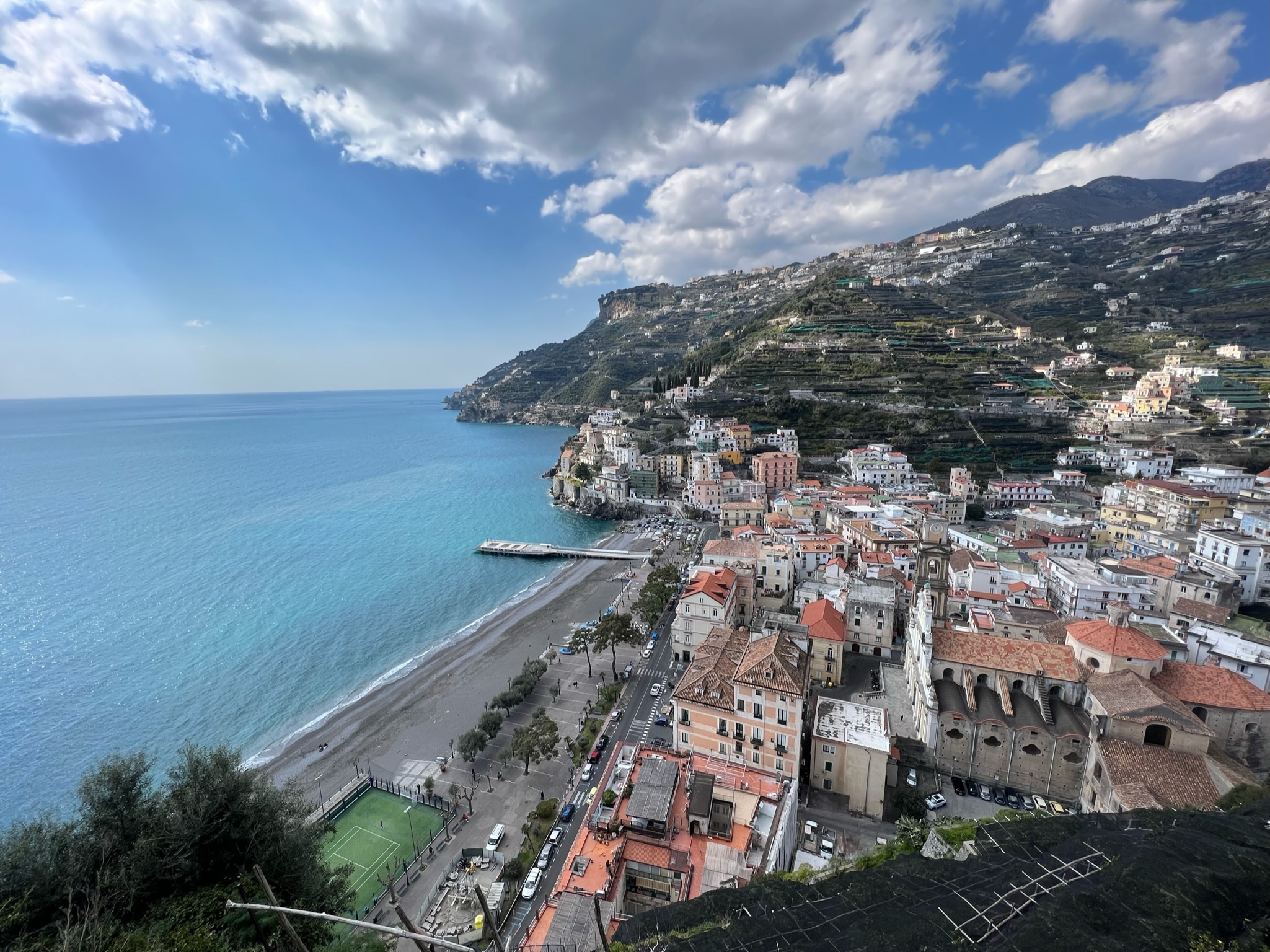
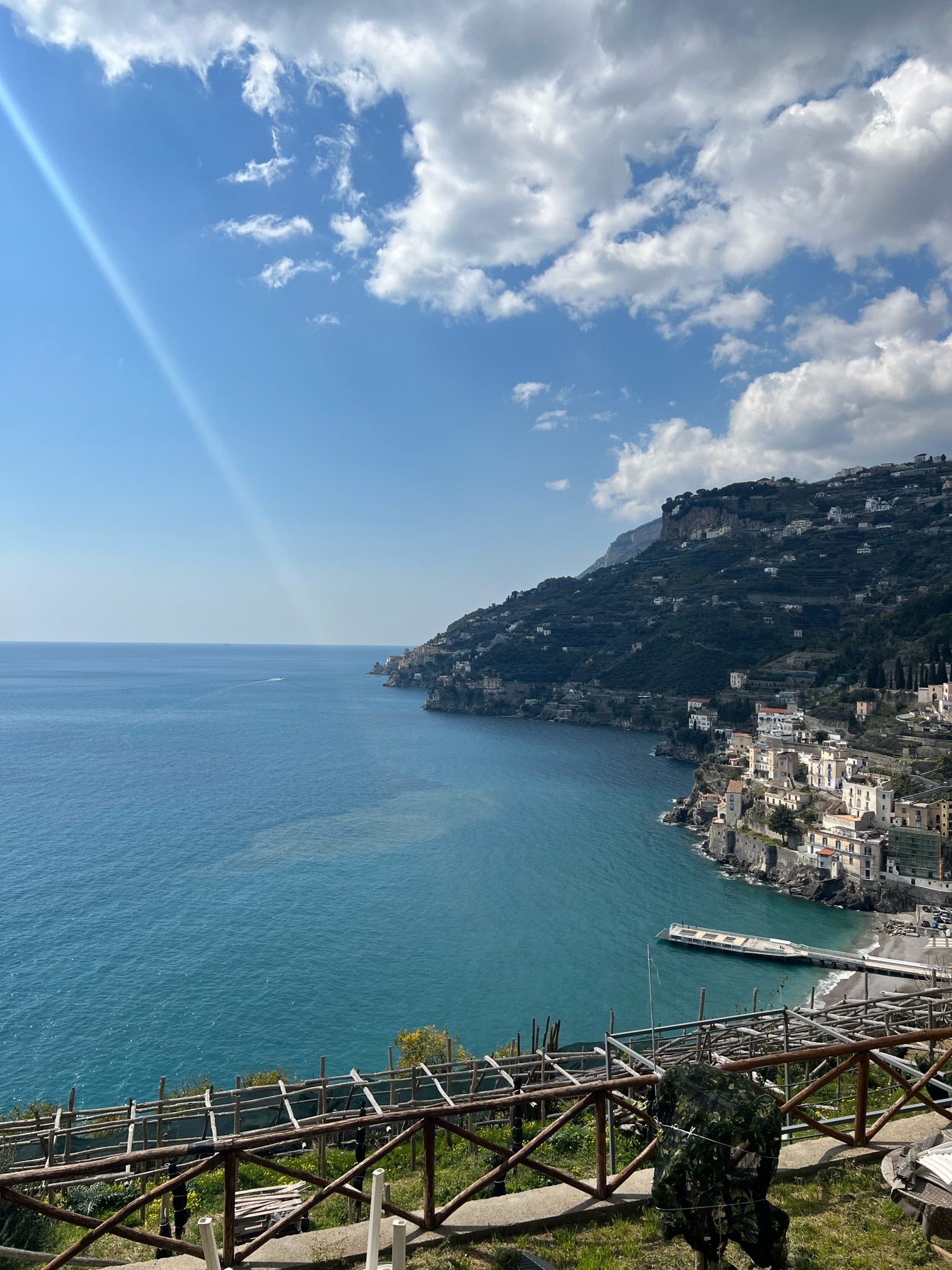
For now, it was time for us to move on. We were heading down to the Amalfi Coast. Brian bought us bus tickets one afternoon, and the next morning, we took off on a 30-minute hike across town to get to the bus station. It was pretty easy to get there, and the bus was very comfortable as well. About 45 minutes before we got to our stop in Maiori, we hit the Amalfi Coast. The Amalfi Coast is a beautiful stretch of Italian shoreline and there are quite a few cliff-side towns nestled within it. There’s a pretty good bus system that transits the very curvy roads and gives great access to all of them. The road is treacherous, though. Its narrow and windy, with cliffs on one side and rock walls on the other. The bus slowed down considerably, and every time it approached a curve, it sounded the horn to alert motorists that it would taking up the whole road. It was a beautiful ride, though. The water was a spectacular blue, and the colorful buildings made you wonder how on earth people built them so precariously balanced on the rocks. All over the hillsides, you could see groves upon groves of lemon trees.
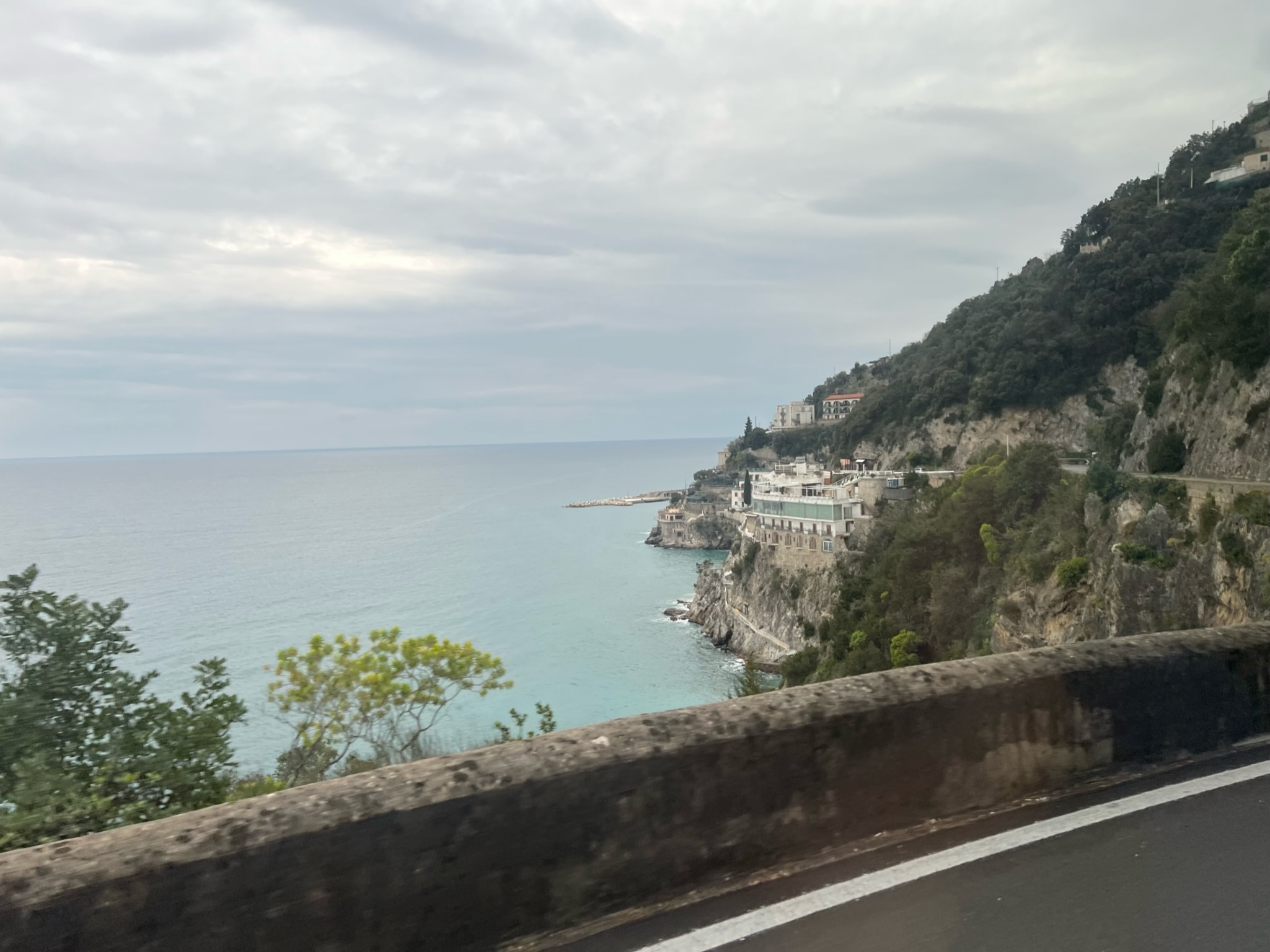
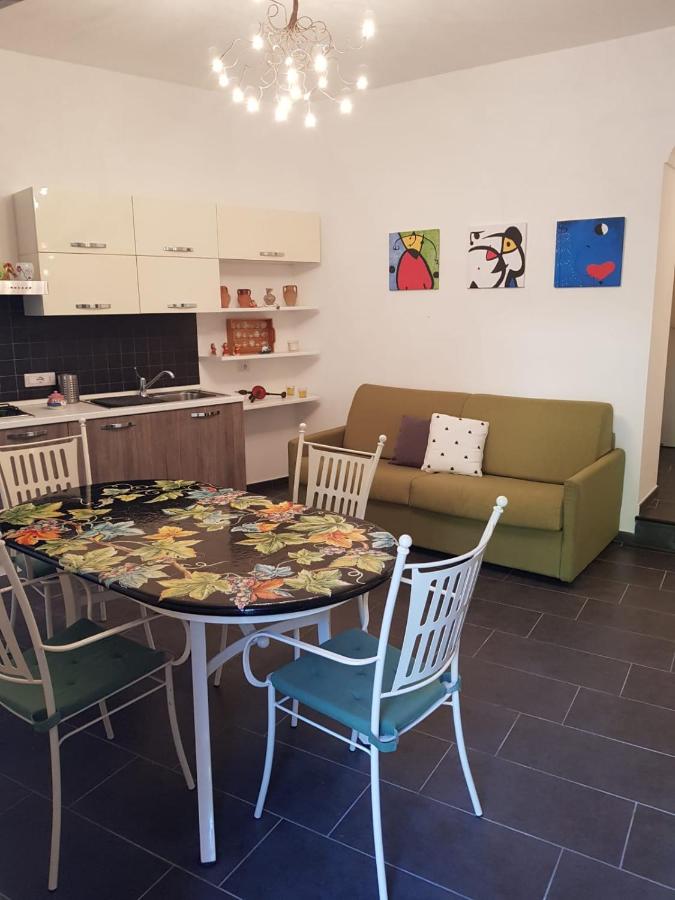
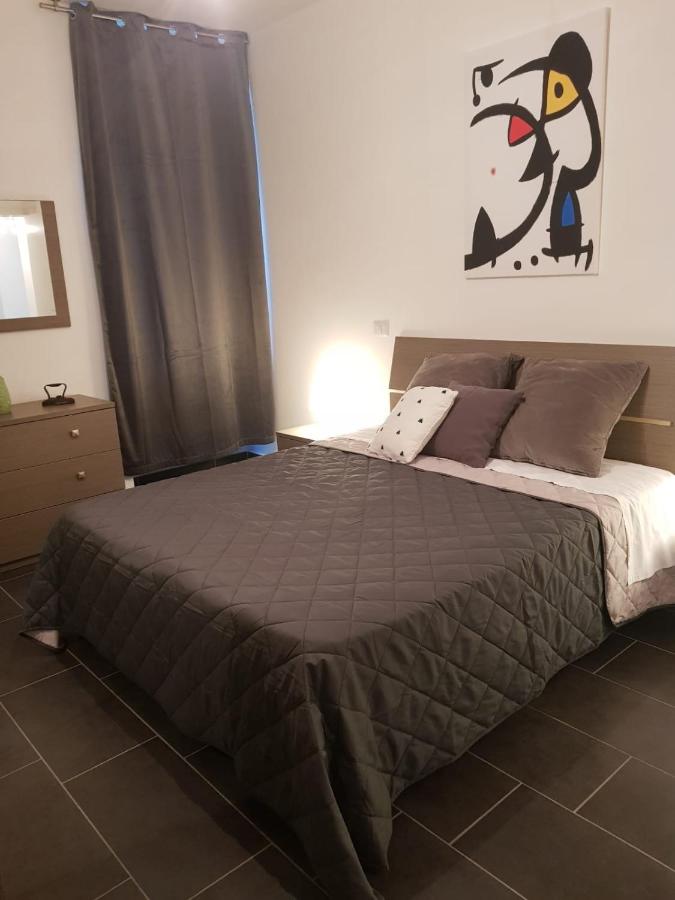
We changed buses in Maiori to get to Ponteprimario, a little town about 6 minutes drive from the coast. We’d rented a little apartment there. Our hostess Zajra met us at the bus stop and escorted us to our place. When we walked in, we couldn’t really believe it was all ours. It was a brand new two bedroom, two bath apartment with a very well stocked kitchen, a living area, and a washing machine. For people who’ve been traveling a long time, this was like heaven. We had privacy and luxury all at once! And at $50 per night, it was a steal.
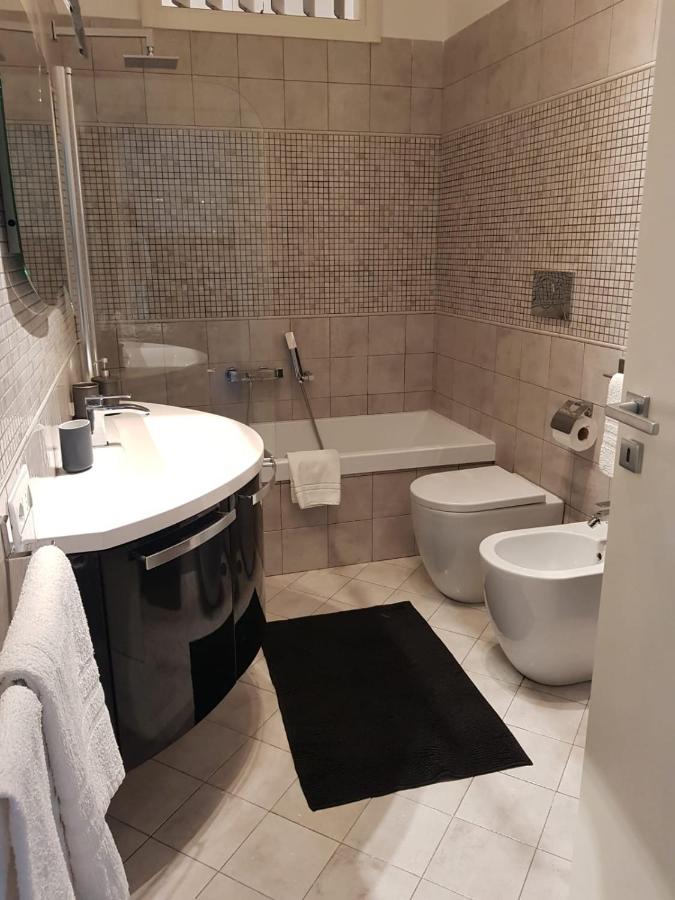
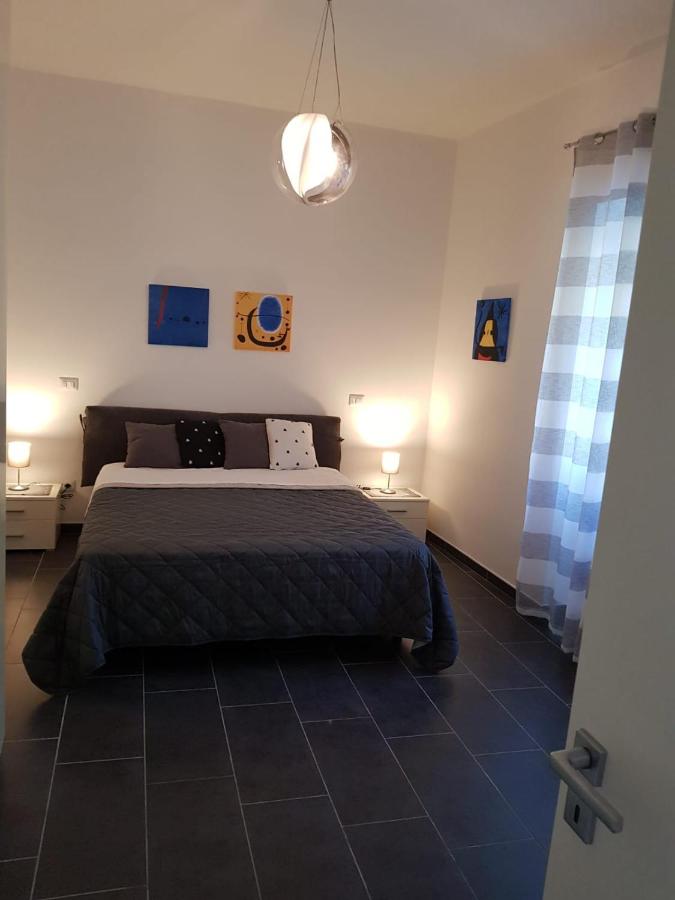
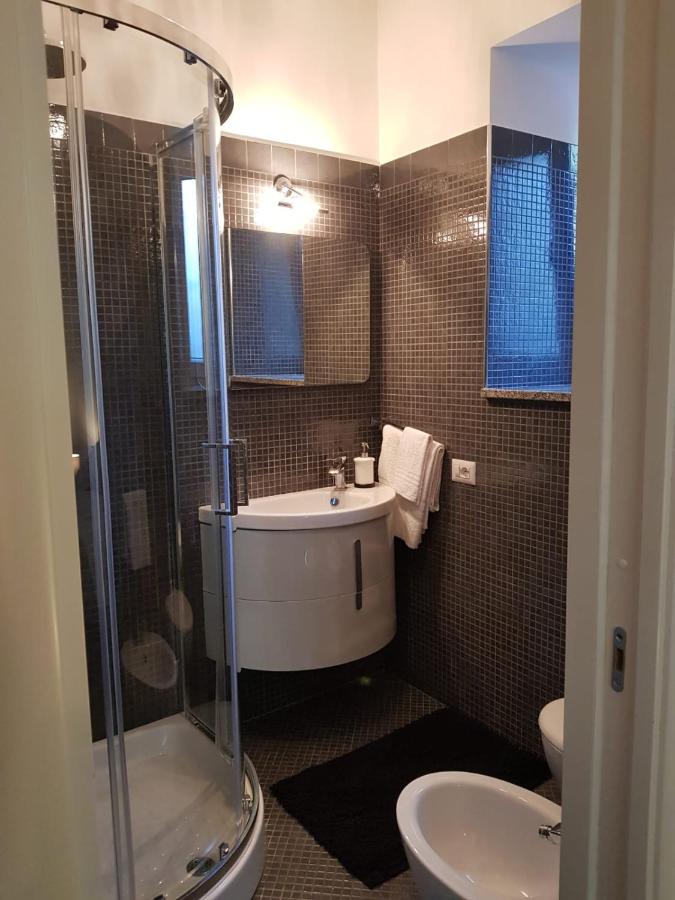
We loved our little place, but we didn’t really love the walk into town. Typically, we will walk anywhere if it’s a mile or less, but much more than that, despite my desire to save money, I start to complain. This apartment was 1.7 miles outside of town, but with no vehicle of our own, there wasn’t really any other option besides walking. Thankfully it was very gently sloped, and it really wasn’t a bad walk either way. We just planned our outings carefully so we didn’t have to hike it multiple times each day.
We got to Ponteprimario on a Saturday, and after we checked in, we walked into town to find some dinner. We met a nice man named Mario who owned the nearby Mario and Maria’s Restaurant, and at his invitation, we stopped in there for dinner. Afterwards, we saw a cute little grocery store on the corner near town, and we considered stopping long enough to pick up a few things for breakfast. But we were really tired and just wanted to get back to the room, so we decided we’d just eat the snacks we had for breakfast and come back on Sunday morning. Brian had remembered that the bus would be coming through towards Ponteprimario sometime around 8, so we walked to the nearest bus stop and waited there for the bus to come. We waited for about 20 minutes with no bus in sight. It was cold, and we were getting more miserable with every minute, so rather than wait indefinitely, we decided to hike the 1.7 miles back to the apartment. By the way, we never saw the bus come by that night.
The next morning, we woke up, showered, and ate our snacks our host had provided for us. We got a little bit of a late start for lunch, but we headed into town again in search of something delicious. And to our surprise, we learned that everything shuts down on Sundays in Maiori. Everything. Every restaurant we walked by was dark, and even the grocery store was shuttered. We stopped on one of the sidewalks to come up with some form of a plan B that didn’t involve us going to bed hungry, and a very nice man stepped out of the Casa Ferraiuolo restaurant. They were open. They didn’t have any tables at the moment, but if we were willing to wait for 10-15 minutes, they could get us seated.
We had heard about Casa Ferraiuolo from our hostess. She had listed them as one of the nicest restaurants in town, and if we wanted to go there, we should let her know so she could reserve us a table. Brian and I were a bit worried about the price tag that would come with the meal, but with grumbling stomachs and no other options, we gladly accepted. While we waited, they brought us champagne to sip on and a bread and cheese plate to snack on.
When we finally stepped inside, we immediately felt underdressed. Stepping inside was like stepping back in time. The restaurant was very small and it only held about 7 or 8 tables in total. The bar was large and took up a large portion of the room. The waiters were all dressed to the nines and showed the utmost courtesy in everything they did. We decided to split two entrees and an appetizer to keep our costs to a minimum. Everything we had was very delicious, and the food presentation was beautiful. We left that afternoon very pleasantly full and eager to come back again.

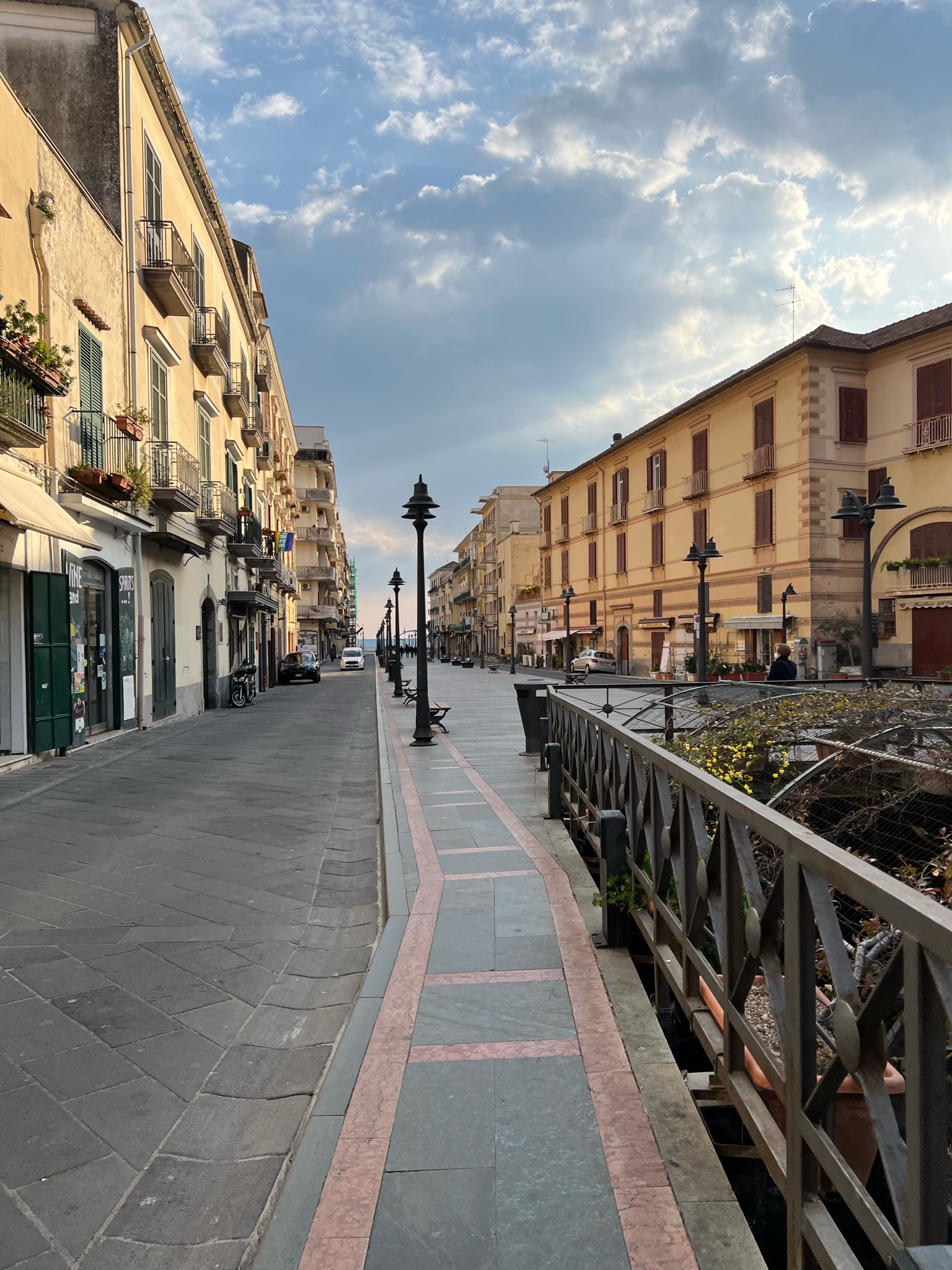

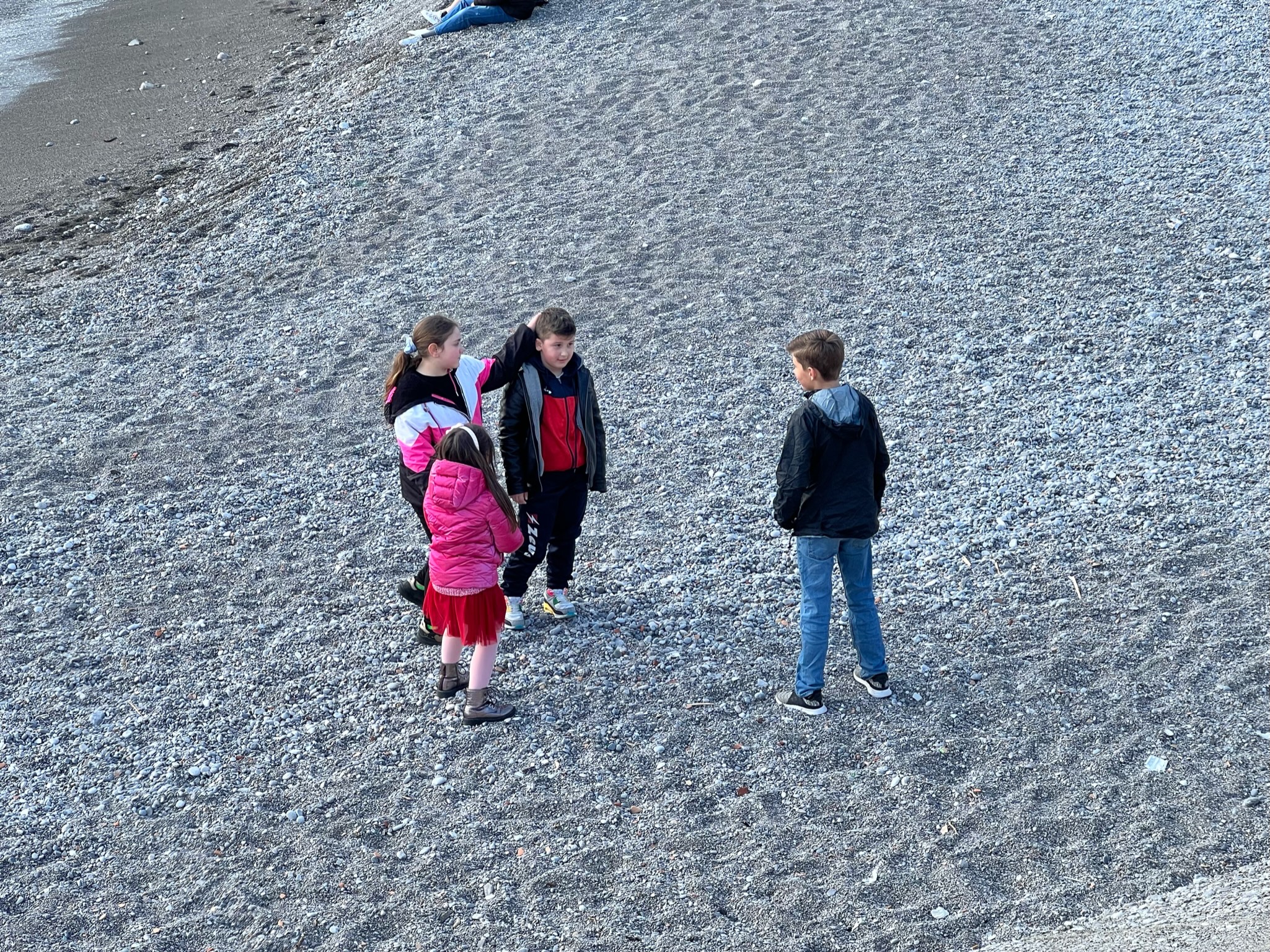
We walked around town for the rest of the afternoon. Many of the stores and restaurants began opening back up around 7 pm, so we had hope that we’d find some dinner somewhere. Henry had spotted a playground, and I stayed with him so he could burn off some energy while Brian wandered through town trying to find a pizza we could take home and reheat later on for dinner. Henry had a ball playing by himself. There were a couple of younger girls who thought he was something, and they eyed him for a little while. Eventually their curiosity got the best of them, and they came by to ask him who he was and how he could do some of the jumping and climbing he was doing. One little girl was local, and she didn’t speak any English. The other girl was also local, but she had an Italian father and a British mother, so she spoke both languages very well. She seemed to be the one that was most amazed by Henry’s skills, so they hit it off pretty well. Henry taught her to do a few tricks, and she pushed him to try a few things she knew how to do also. They were funny to watch, and I loved seeing Henry interact with kids, albeit younger ones, for a little while.




Brian signaled me that he’d found a pizza for us, so we left to meet him. On our way home, we made one more stop to grab a few babas for breakfast. A baba is a rum-soaked pastry that is very popular in Italy. It was not very popular with us, however, and while we all got them down, Henry and I agreed to never touch one again.
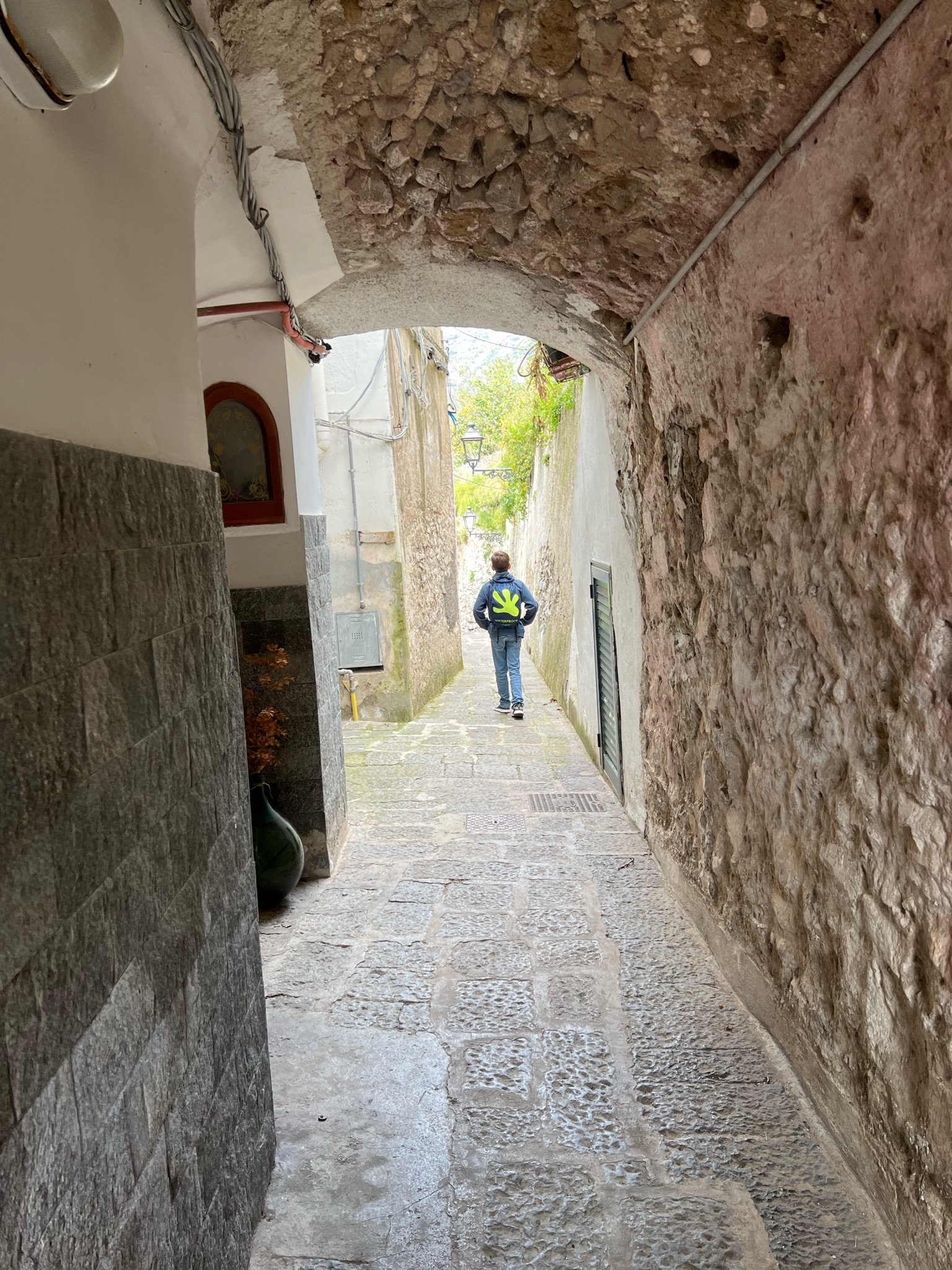
The next day we decided to check out the Lemon Trail. The town of Maiori is just around the curve from another town called Minori. The Lemon Trail is a beautiful cobbled path that weaves through the lemon groves between the two towns. Walking through it, you get spectacular views of both towns and the crystal blue sea. We walked over to Minori to see what was there, and after finding lunch at a local café, we grabbed a few treats from a bakery our hostess had recommended.



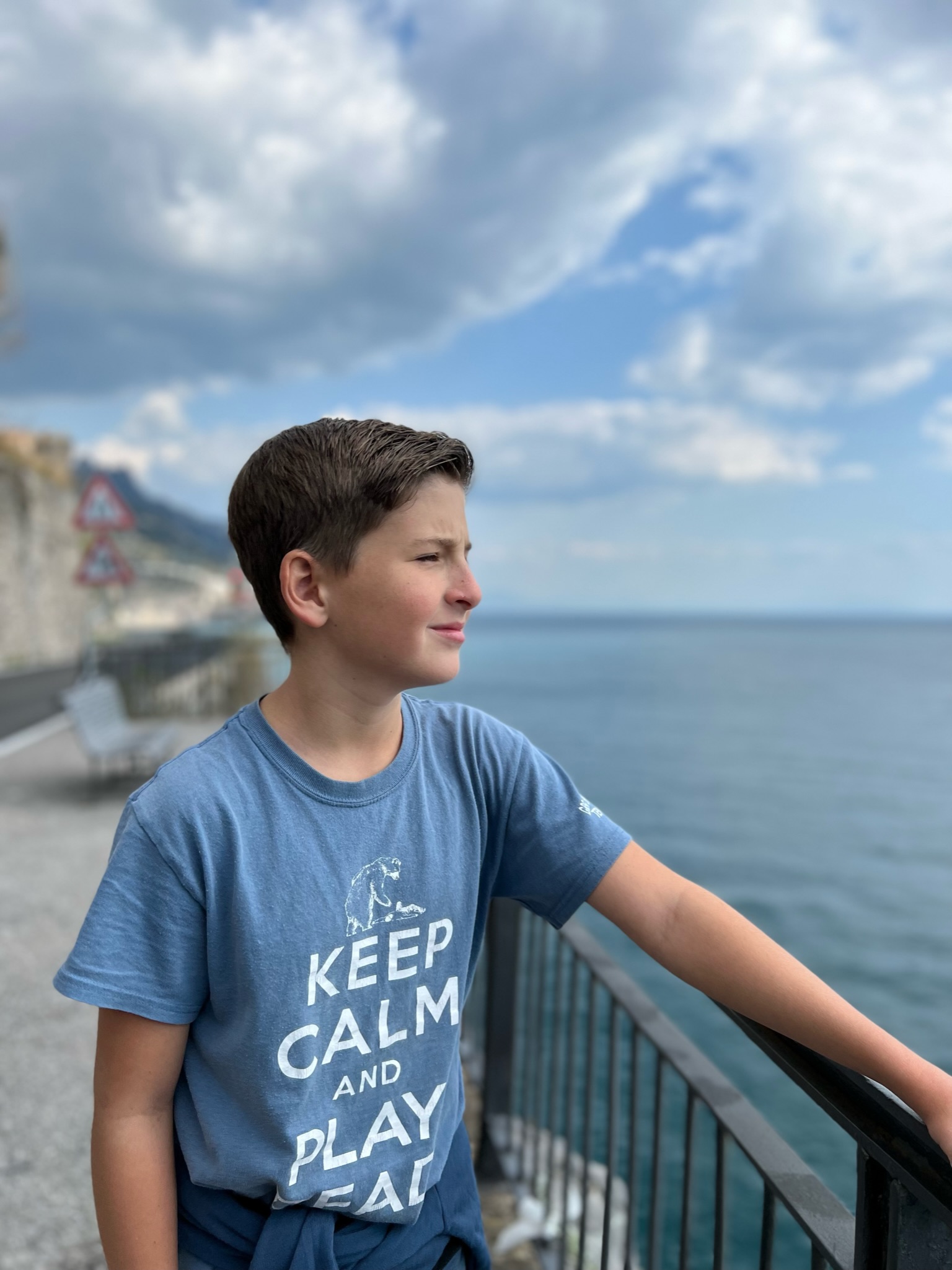
On another day, we caught the bus to Salerno, a town that was 45 minutes down the coast. Salerno is one of the biggest towns on the Amalfi Coast. We were going in part to check out the town, but mostly because we wanted to ask the hospital about getting our booster shots. The local health department in Naples had finally responded to my email requests, and they confirmed that we could actually get the shot in Italy. We had to have a tax code, but since we didn’t qualify for one through normal means, we could apply for the STP card. The government of Italy believes that everyone should have access to medical care if they need it, so they have this program available to people that can’t get medical coverage otherwise. This is typically geared towards refugees or people who enter the country illegally, but a tourist with a short term medical need qualifies as well.
After grabbing lunch at a fabulous little diner, we found the hospital pretty easily. Italian hospitals don’t look anything at all like US hospitals, but at least this one didn’t feel like the mental asylum the Naples hospital did. The security guard questioned us about what we wanted, and when we mentioned the STP, he signaled for us to come back in a few minutes when they would be returning to the office. A few minutes later, he signaled for us to come in and he showed us to an office at the end of a hallway. The older man who ran the office was very nice, but he didn’t speak very much English. We told him we were there to get our boosters for covid, and after some discussion with his office-mates, he sent us with a young English speaking man to the third floor. Up there, he tried to enter us into their computer system, but because we didn’t have a tax number, he had to send us back to the older man. This time around, the man filled out STP forms for all three of us and sent us back to the third floor again.
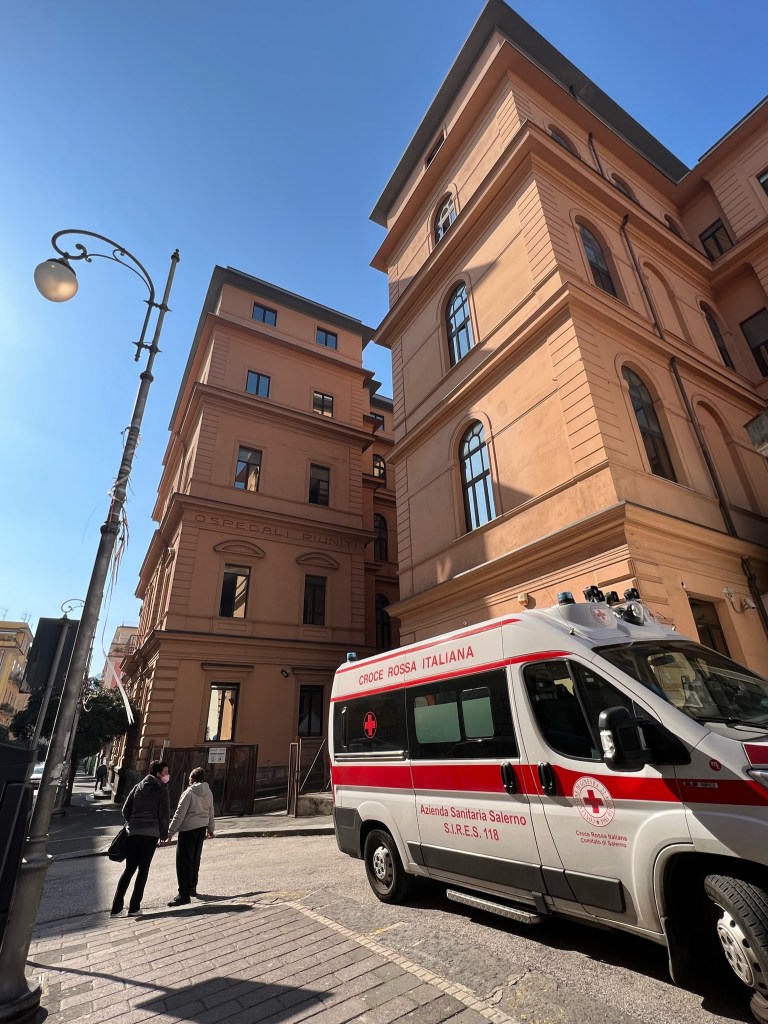
We had new people check us in on the third floor this time, and they had obviously not dealt with the STPs yet. The three of them worked together until they had us registered properly. The shots were not available until the next day at 3:00, so we would have to come back again the following day. We thanked them and went on our way.
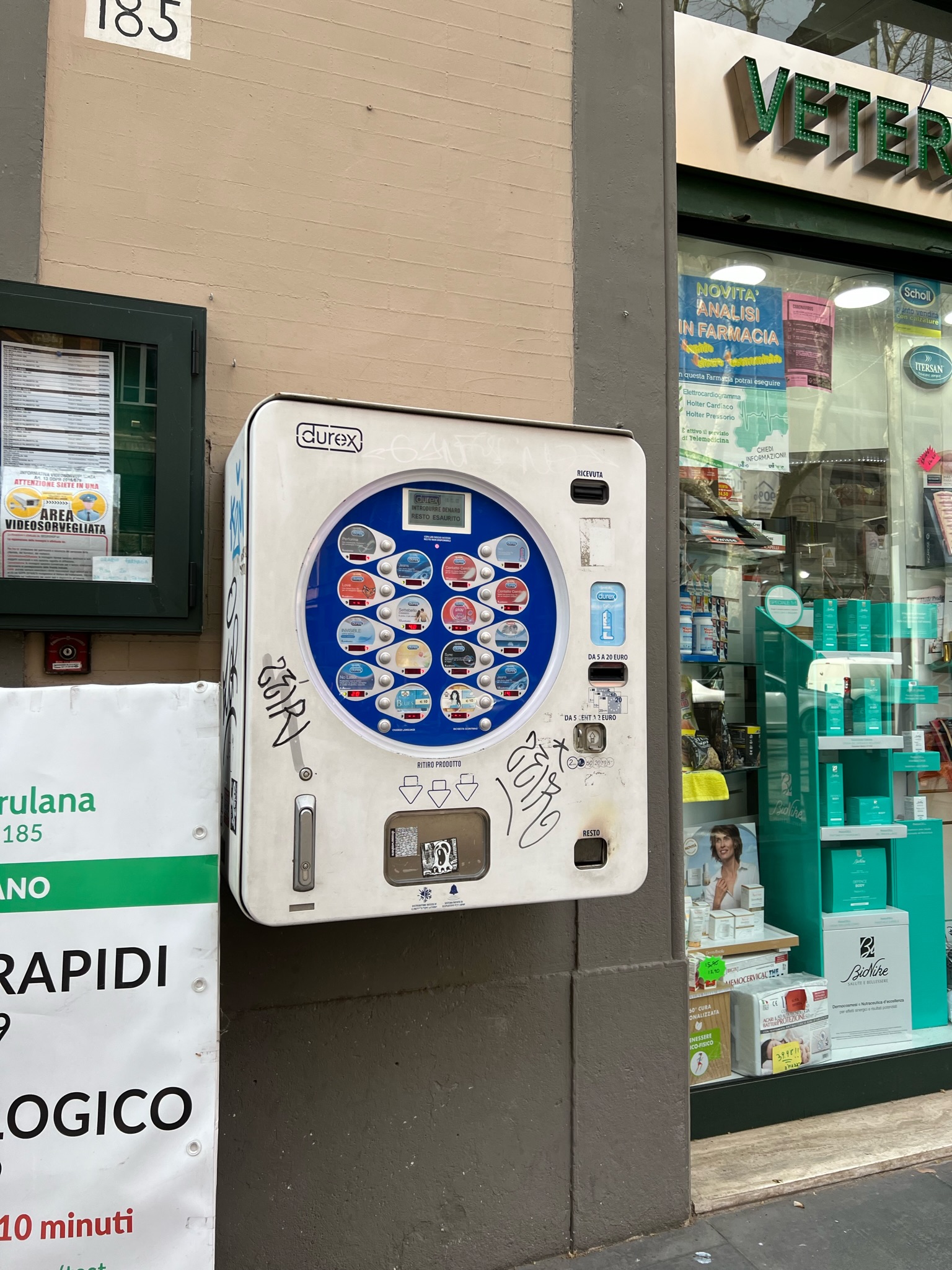
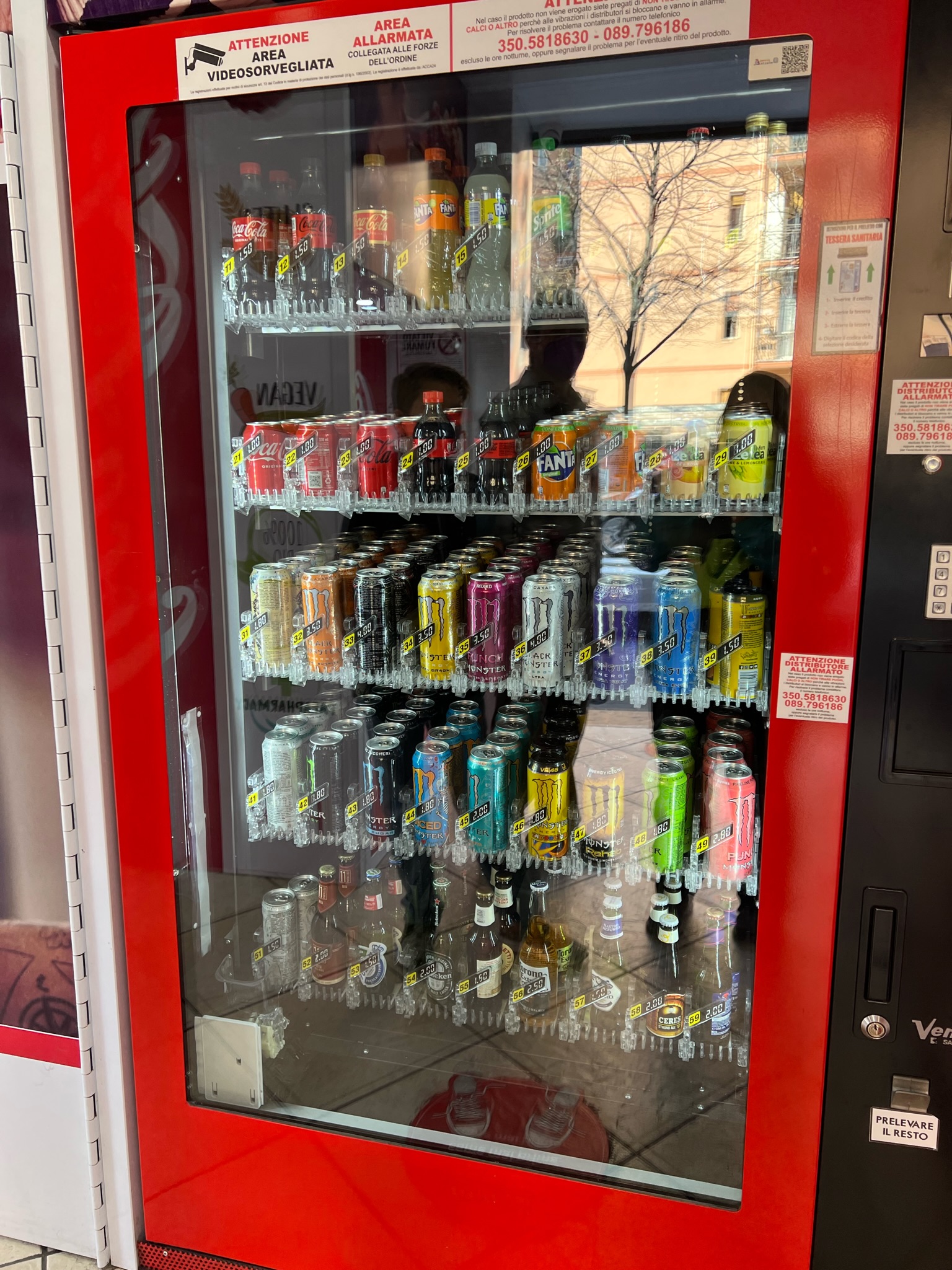
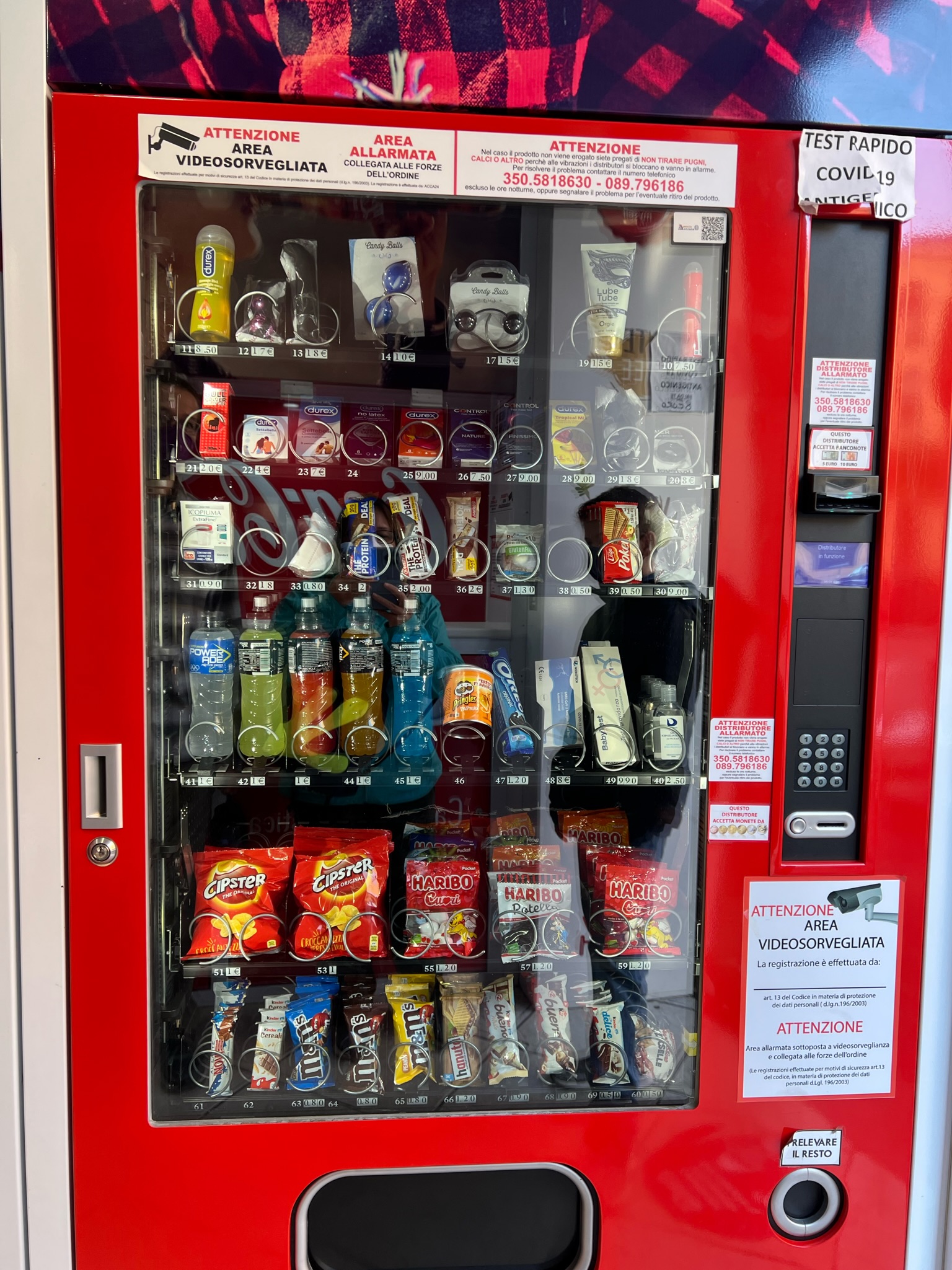
On our way to the bus stop to return home, we had a good laugh at the vending machines. You could buy anything from sodas, snacks, headphones, masks, condoms, sex toys and booze. This was at an unmanned vending area about a block from an elementary school.
The next day we came back, and right at 3:00, we came to the hospital. The guard let us in and we went back to the third floor. There was a group of 20 or so people who were all waiting to be vaccinated, so we got in line, and within a few minutes, we had our shots and were on our way again.
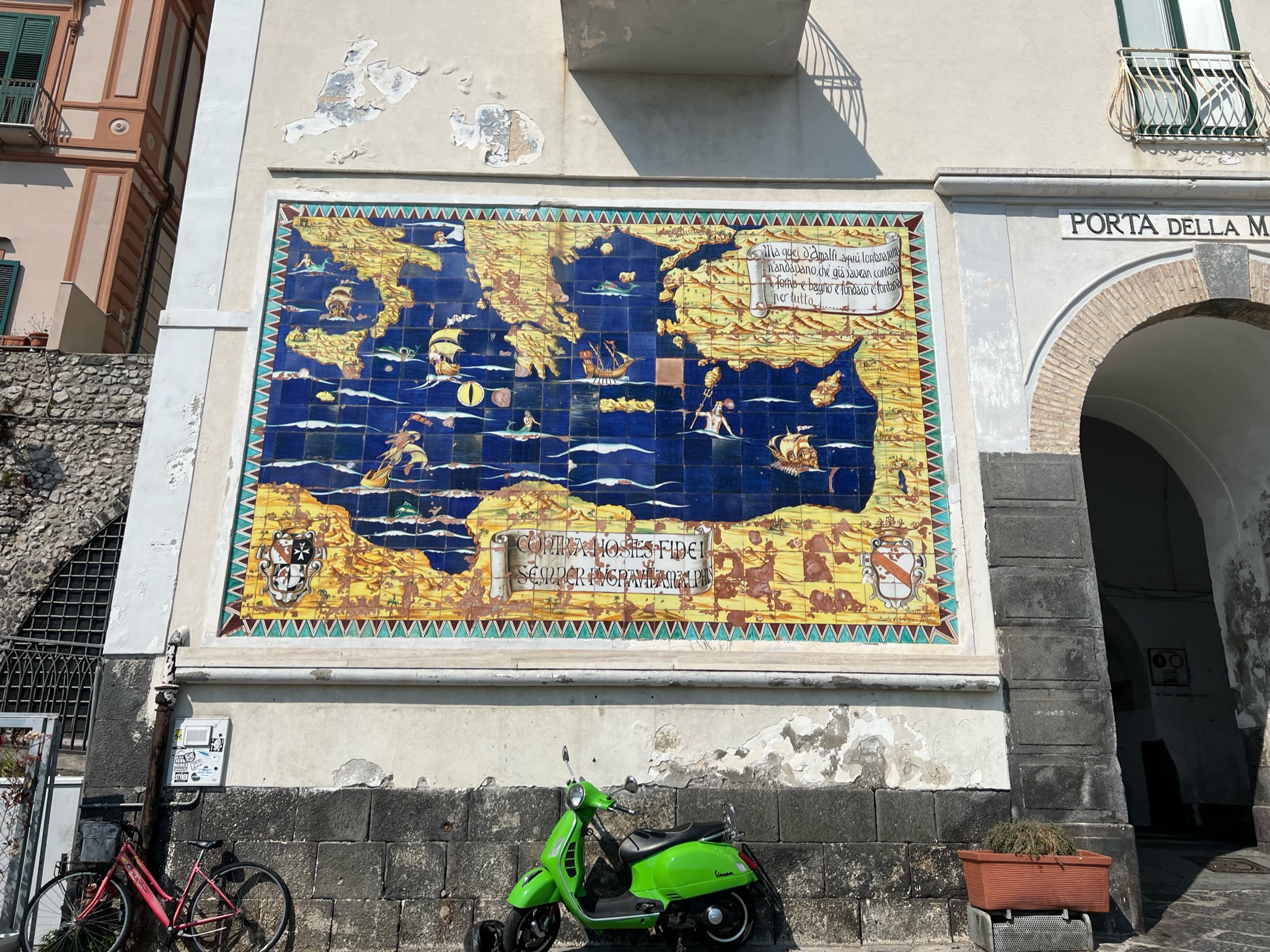
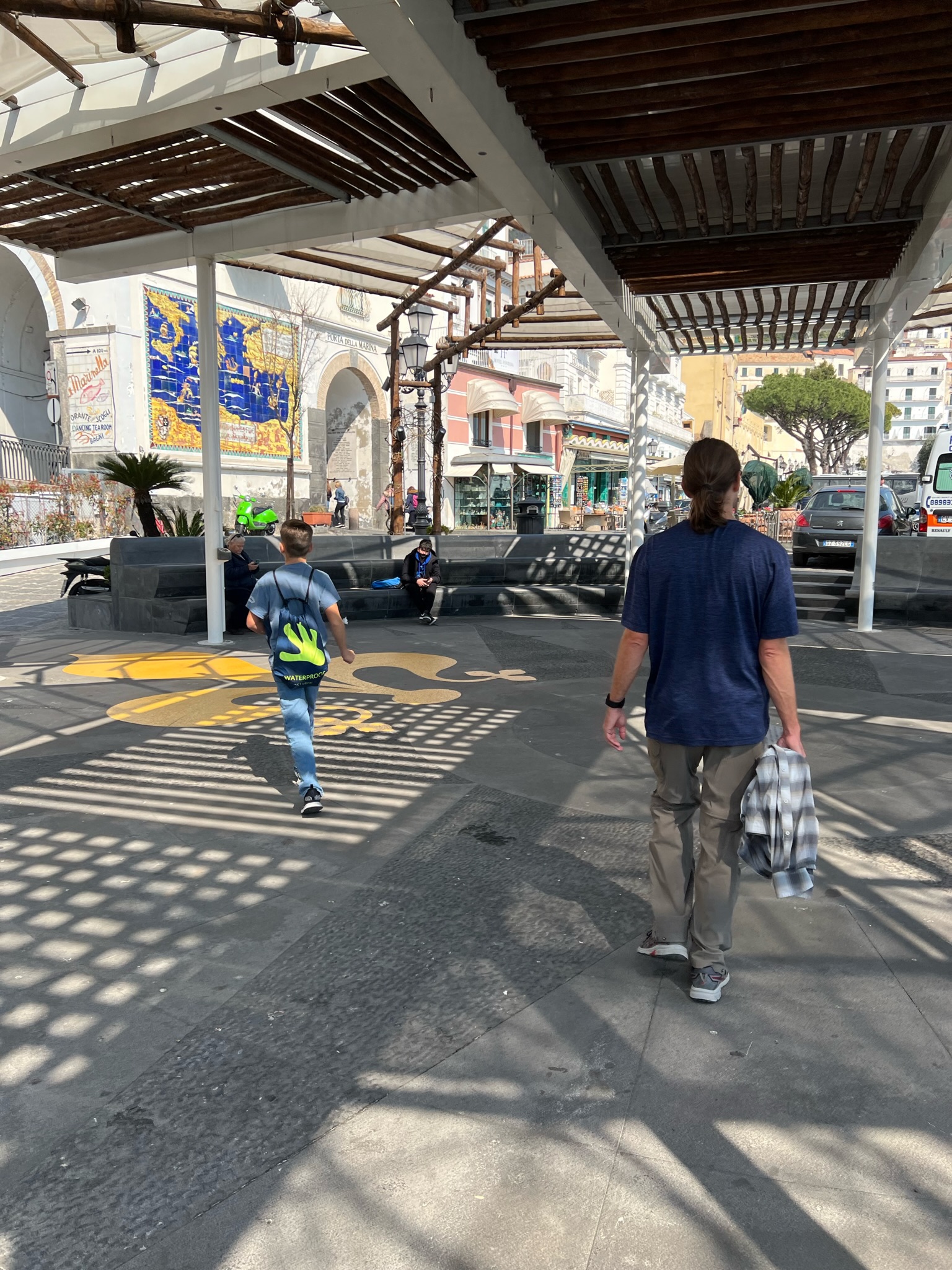
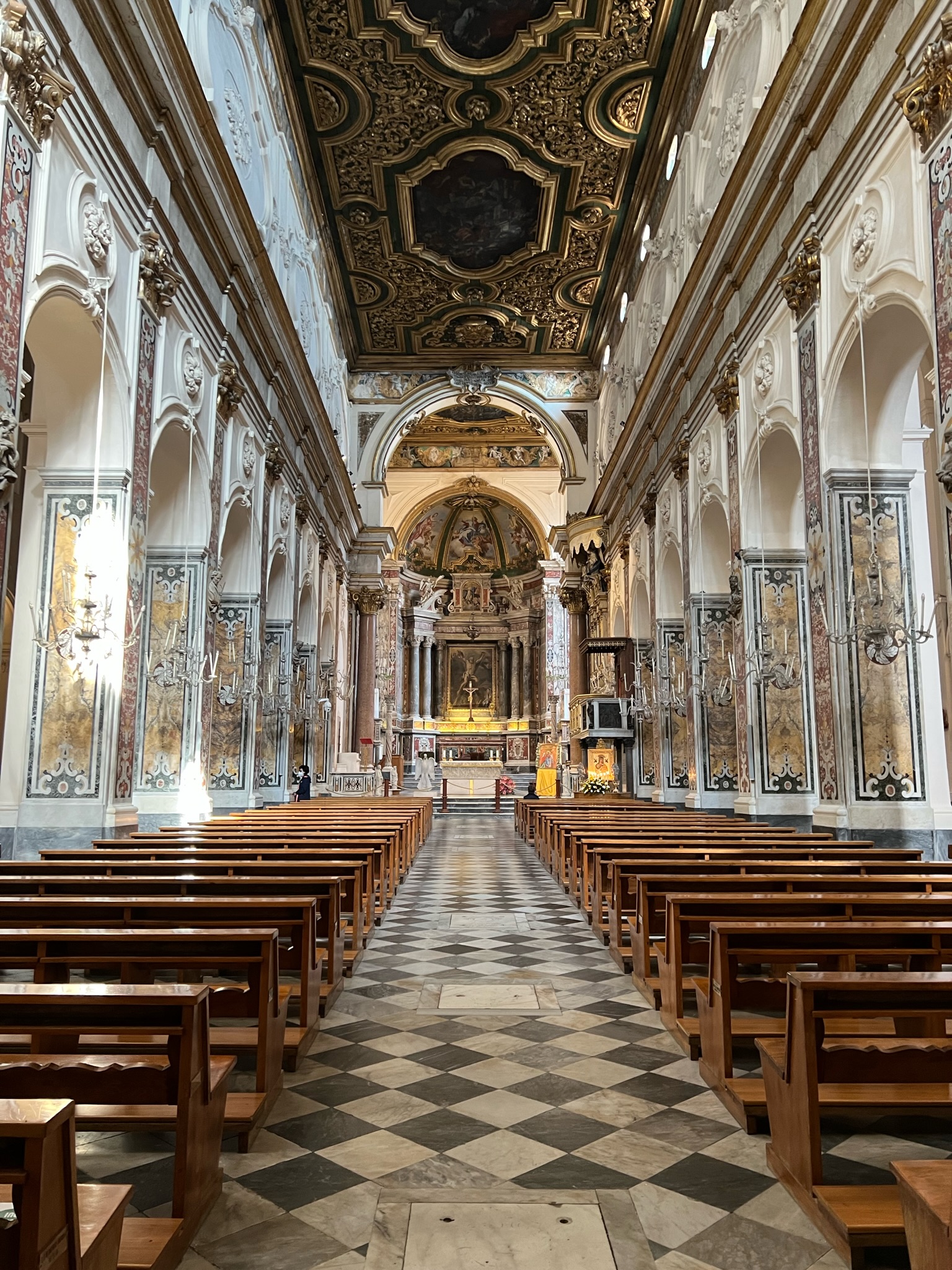
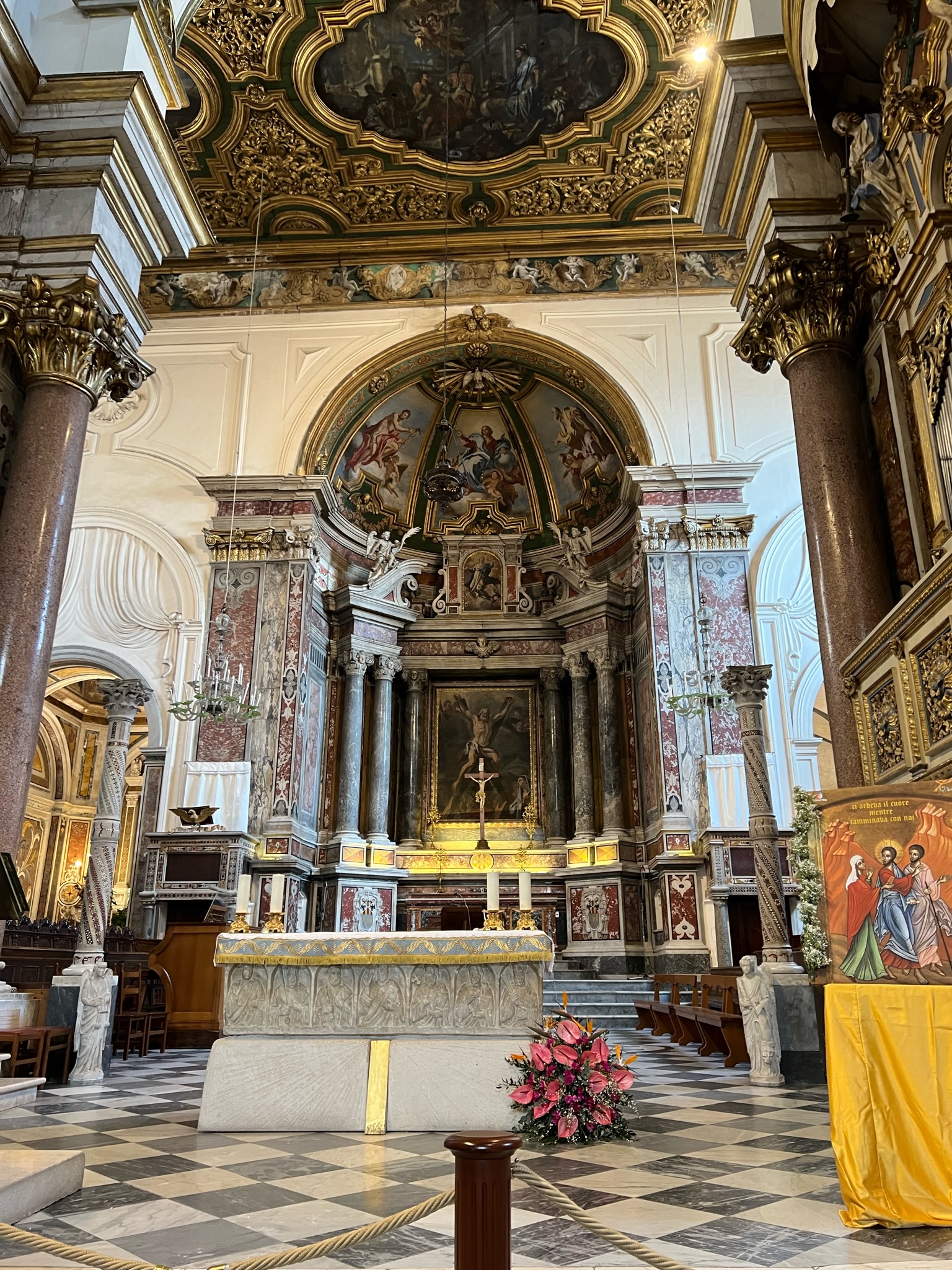
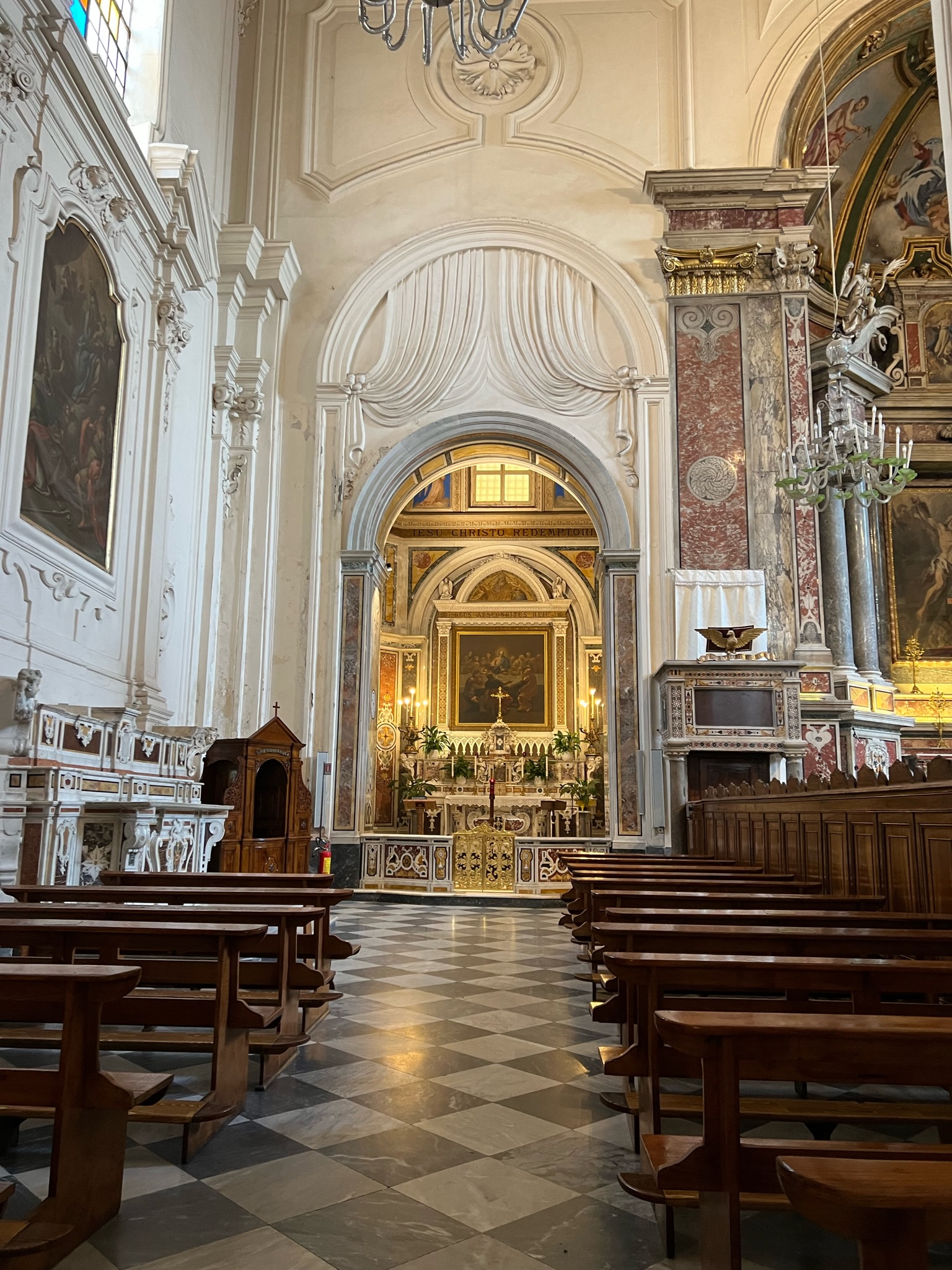
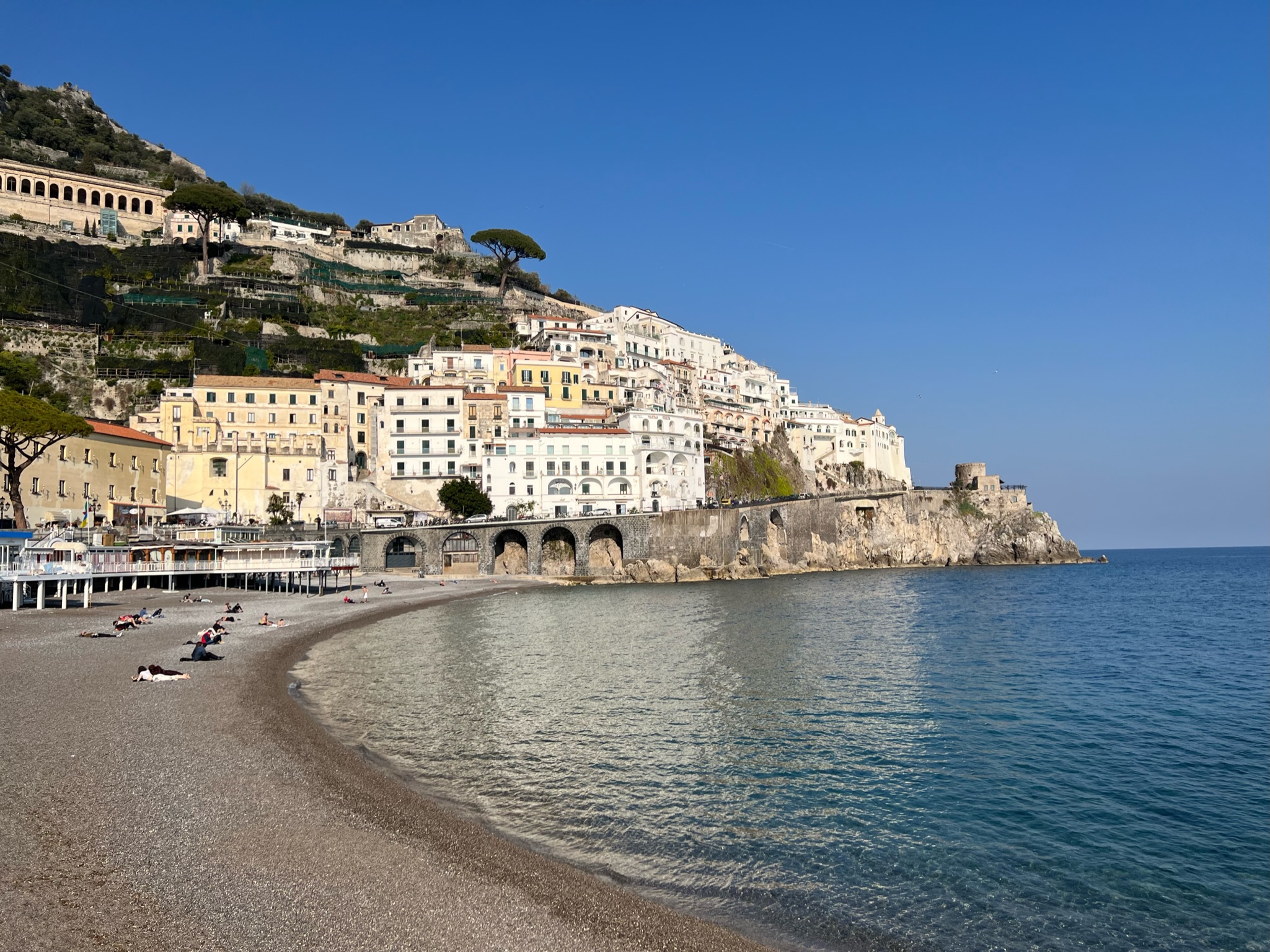
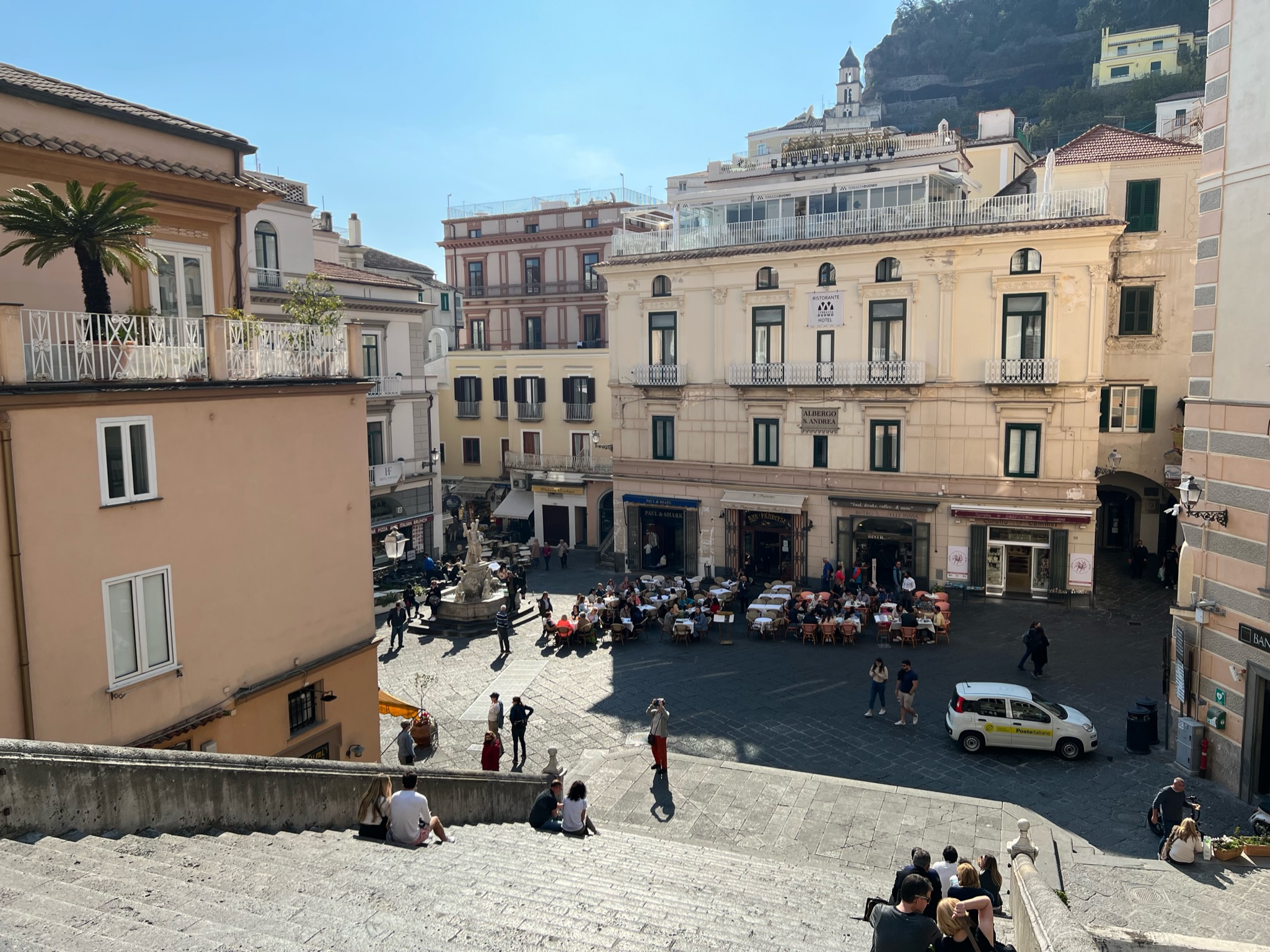
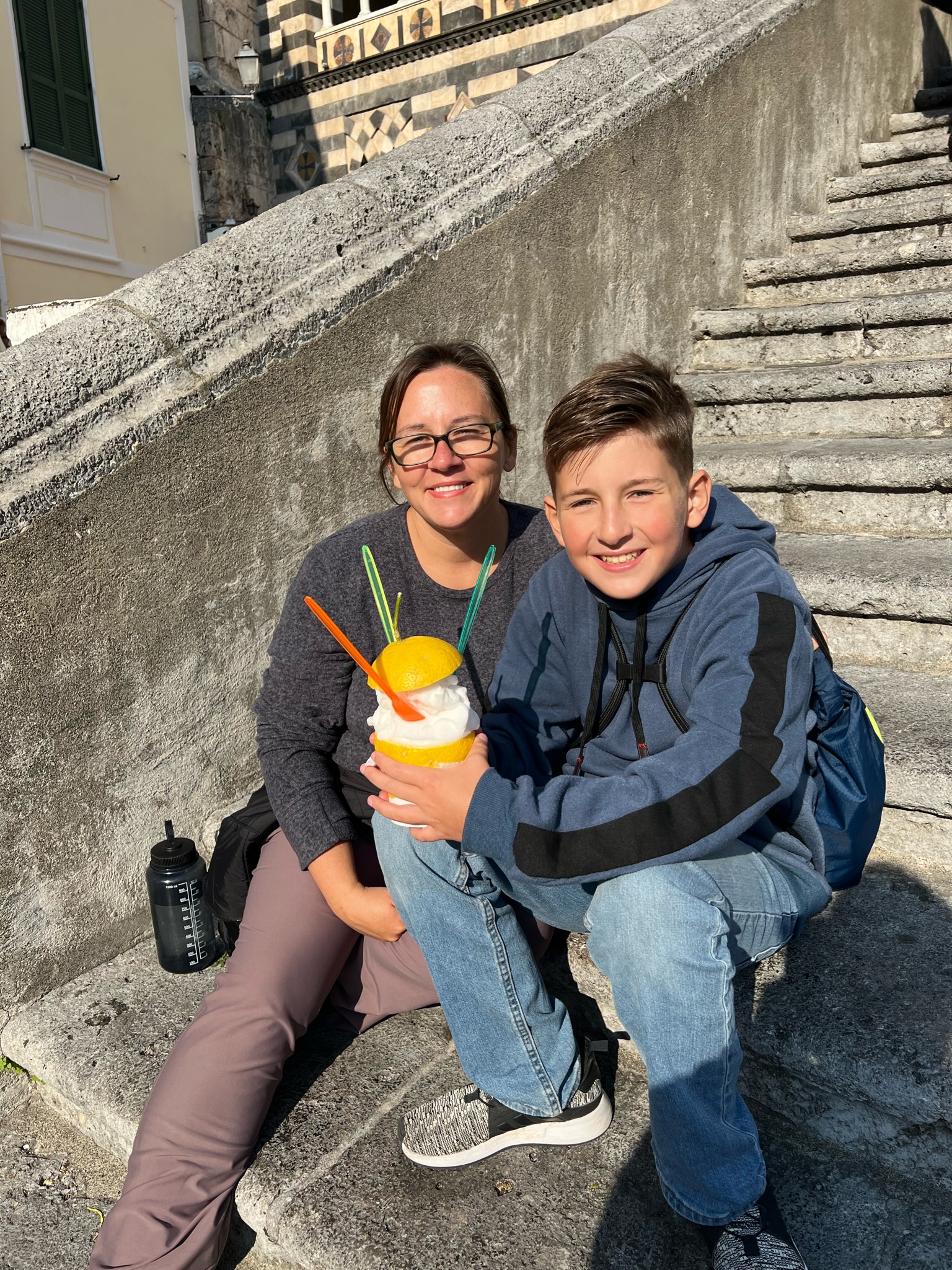
Another day, we took the bus towards Amalfi just to check it out. Amalfi is another large city, although significantly smaller than Salerno. Amalfi was beautiful. The land flattened out a little before it reached the ocean, so Amalfi had a broader beach and a larger main street than Maiori. It had a charm about it, though. We wandered through the narrow cobbled streets and we found a beautiful church near the restaurant we ate lunch at. It was Saint Andrew’s Basilica. It was very ornate inside, and the steps outside were a perfect place to eat a bit of lemon sorbet on a beautiful Italian spring afternoon.

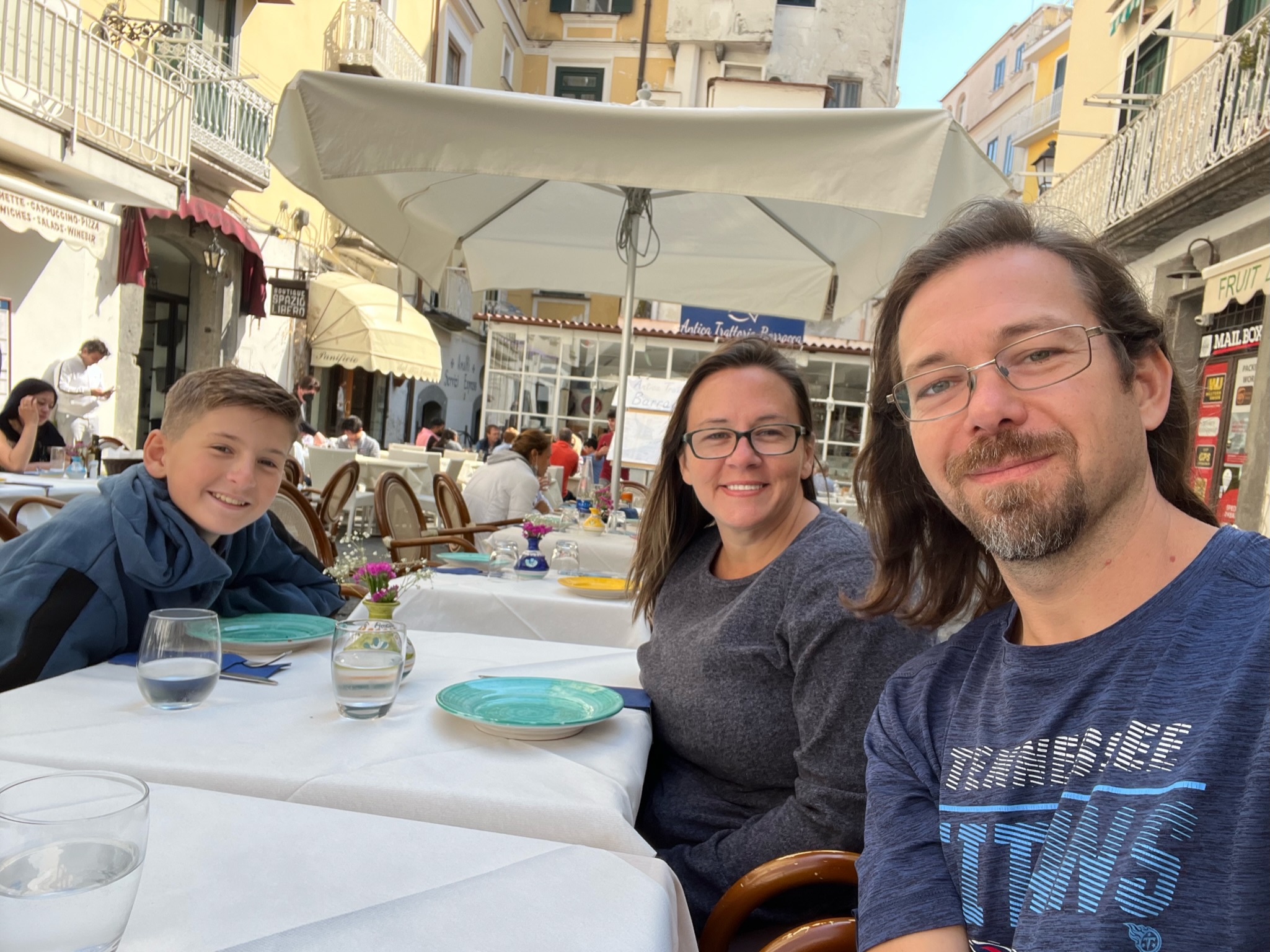



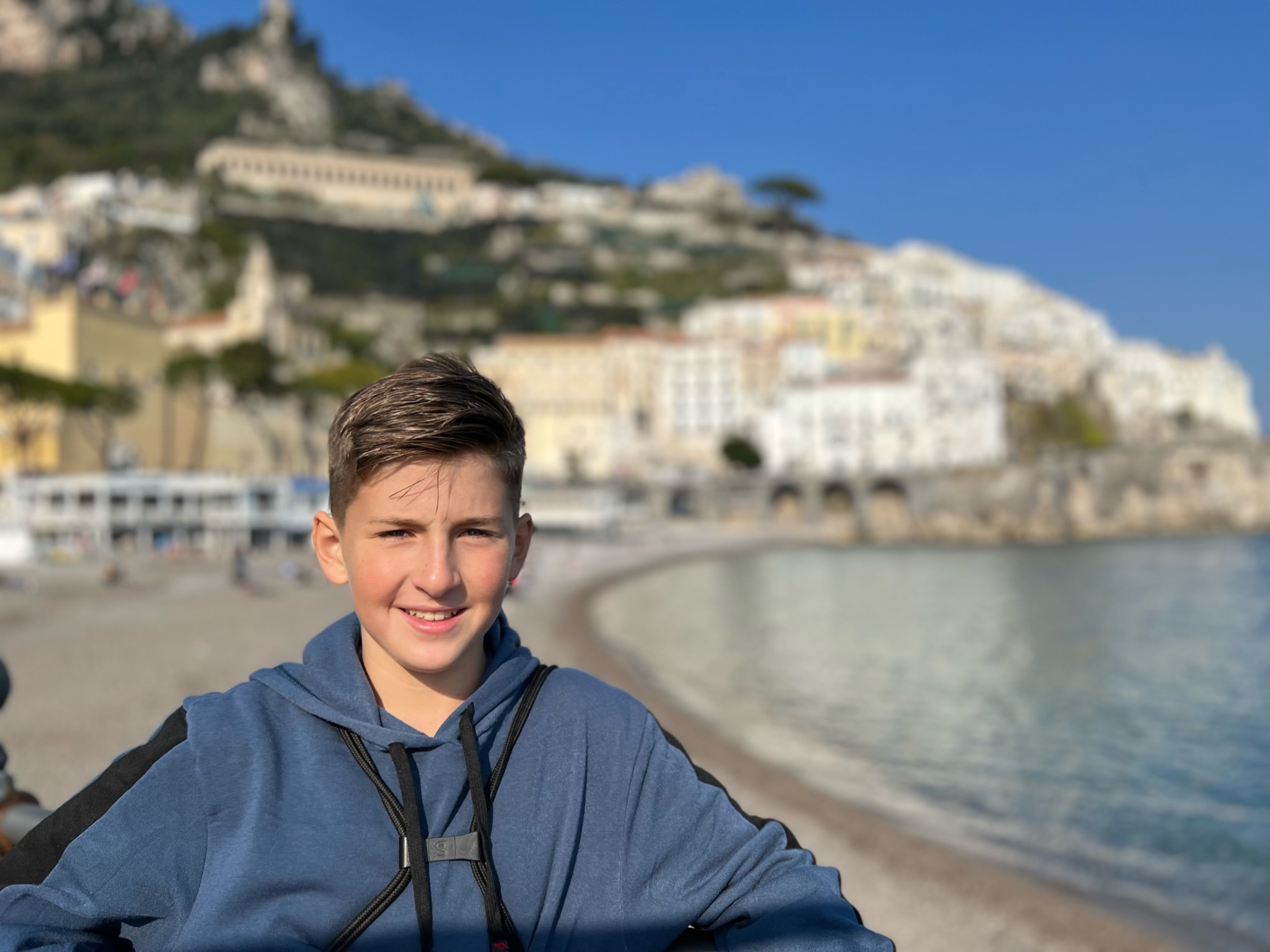
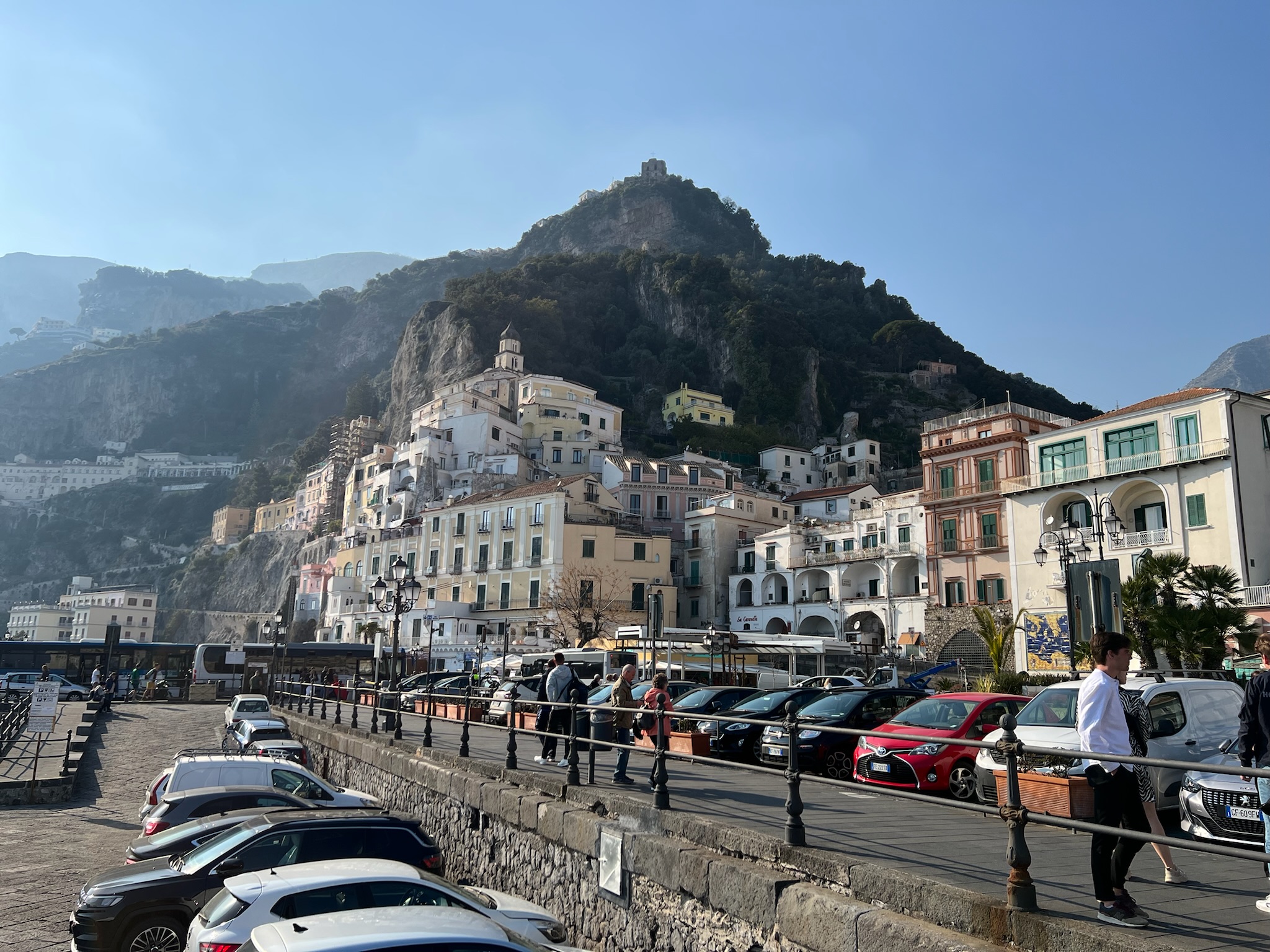
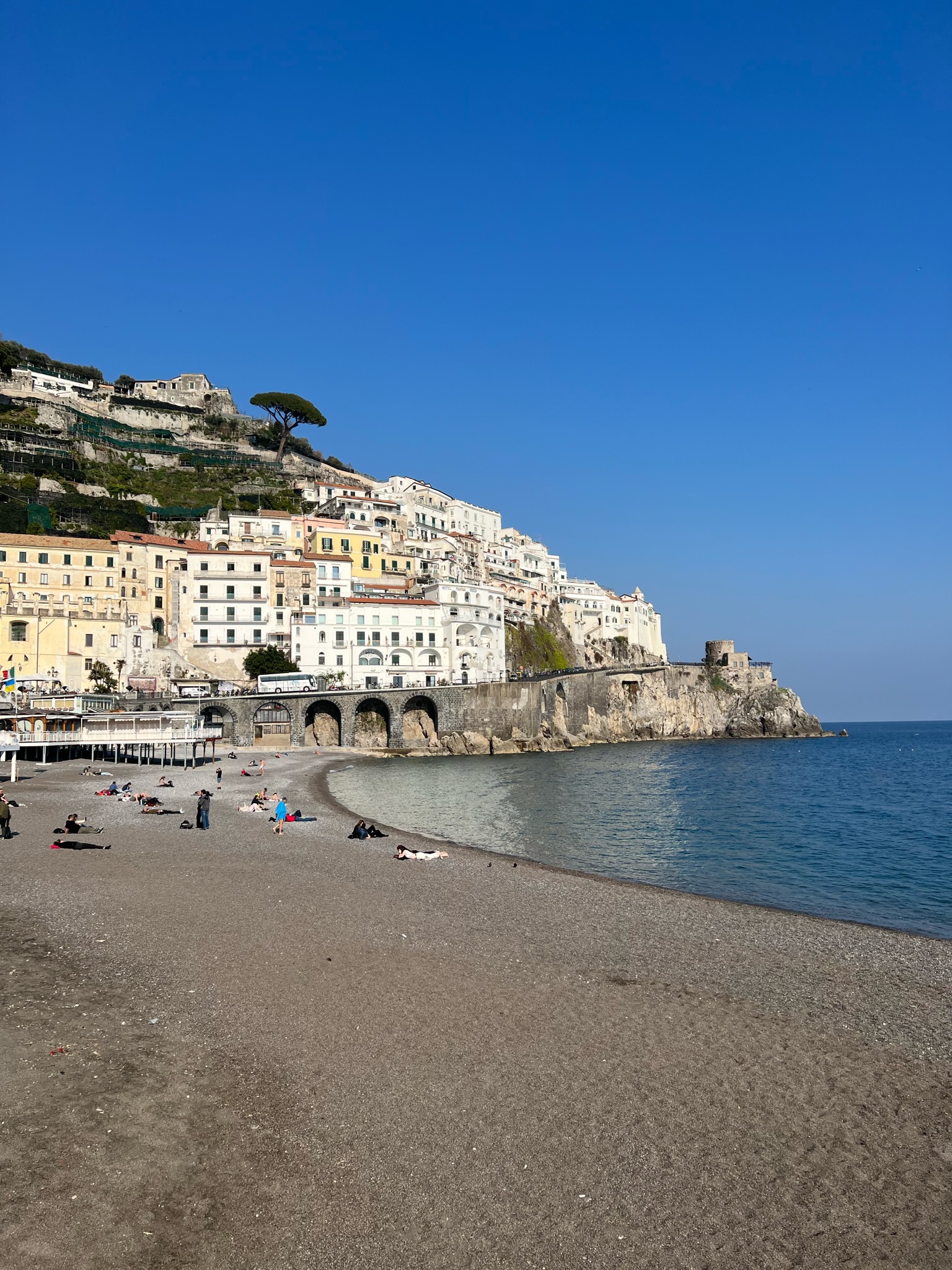
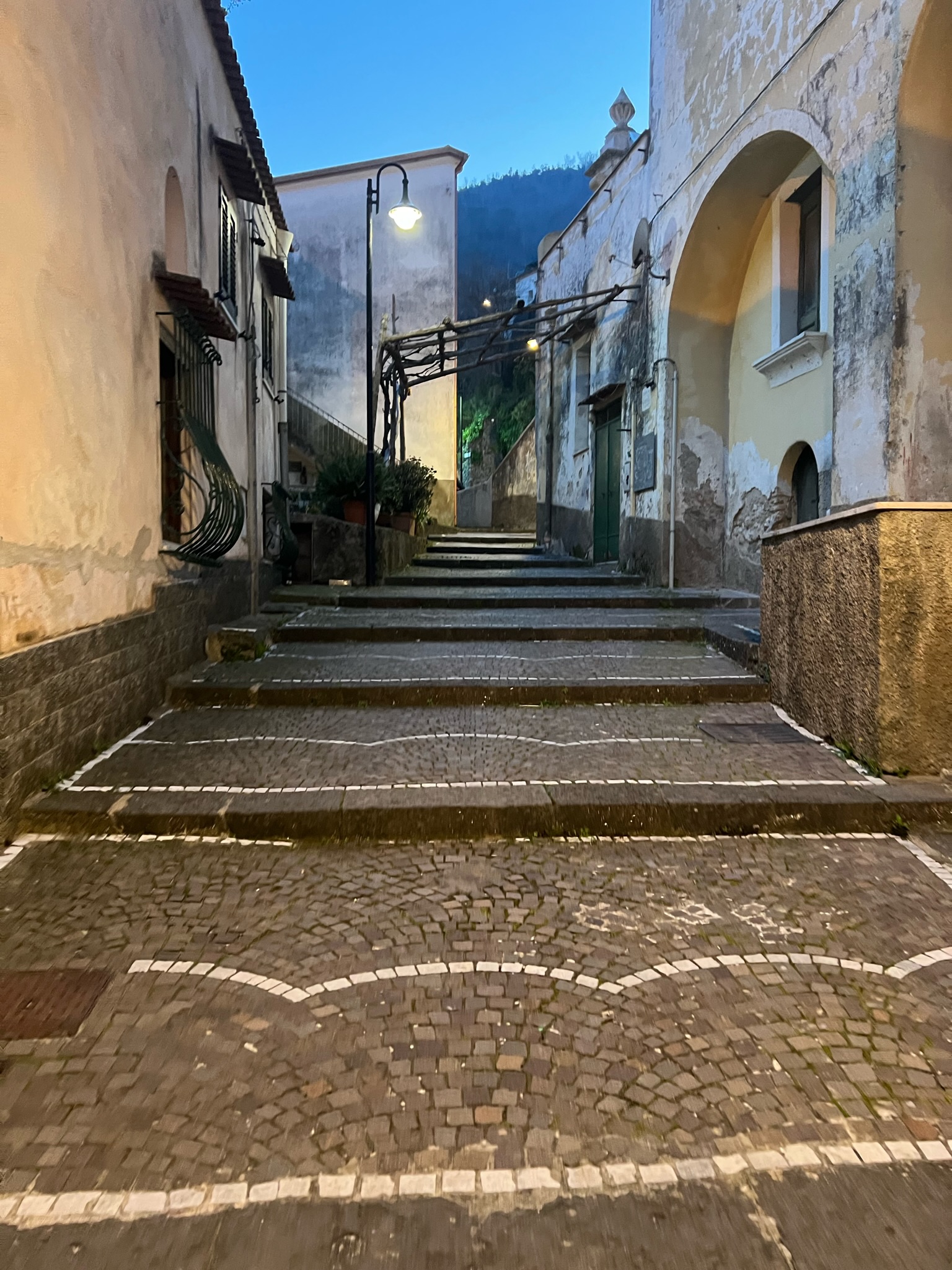

That afternoon, we agreed to let Henry stay at the apartment and eat cereal for dinner (his favorite) while we went on a date in town. Our hostess made reservations for us at Casa Ferraiuolo, and we dressed up in our nicest clothes for our date. We made the 30 minute hike into town, but because of the chill in the air, we agreed to buy bus tickets to get back home on. Our dinner was fantastic, and we enjoyed pasta, delicious cocktails, and dessert. After dinner, we made our way down to the bus station, and within only a few minutes of waiting, our bus picked us up and dropped us near the apartment.
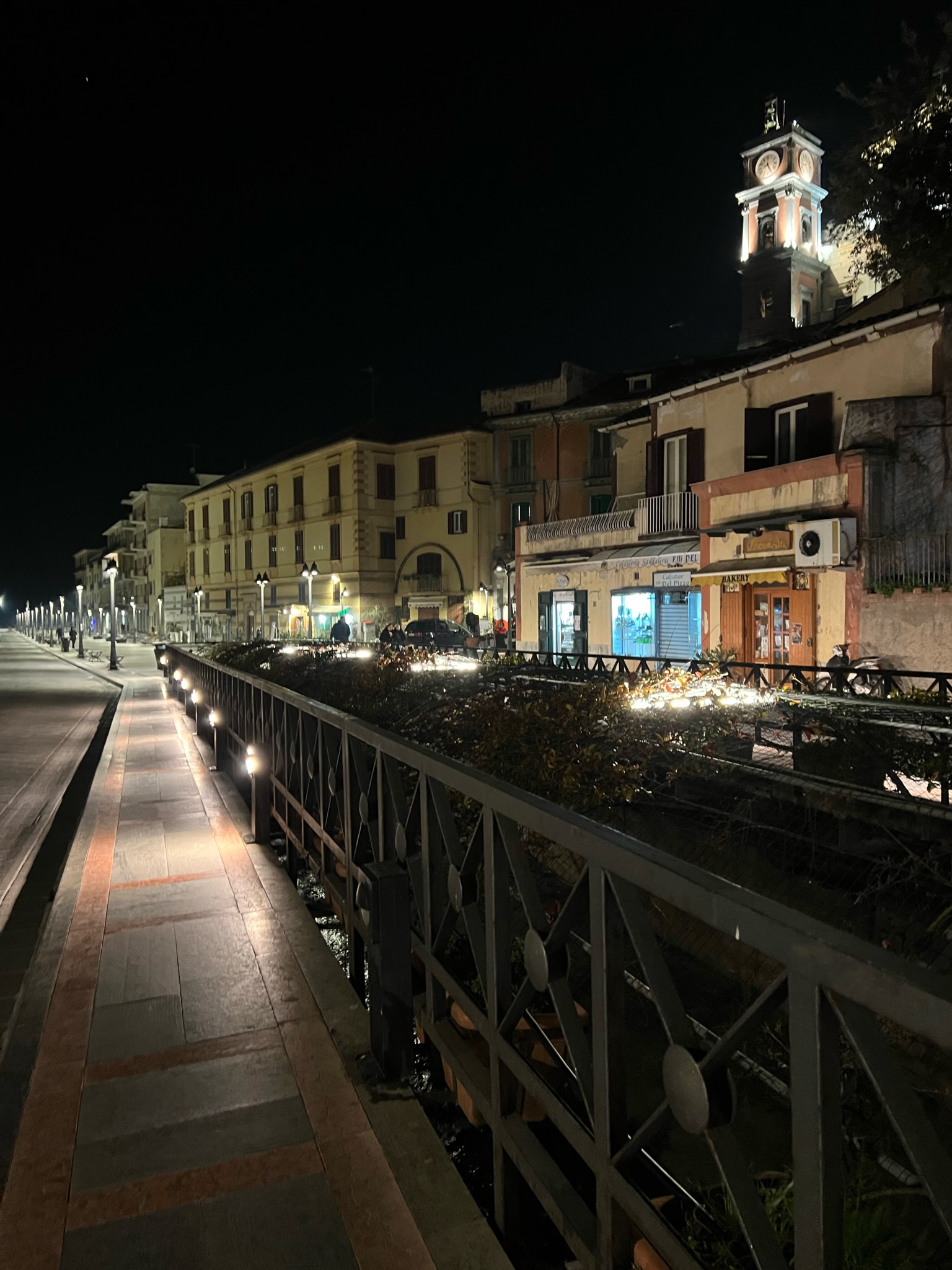
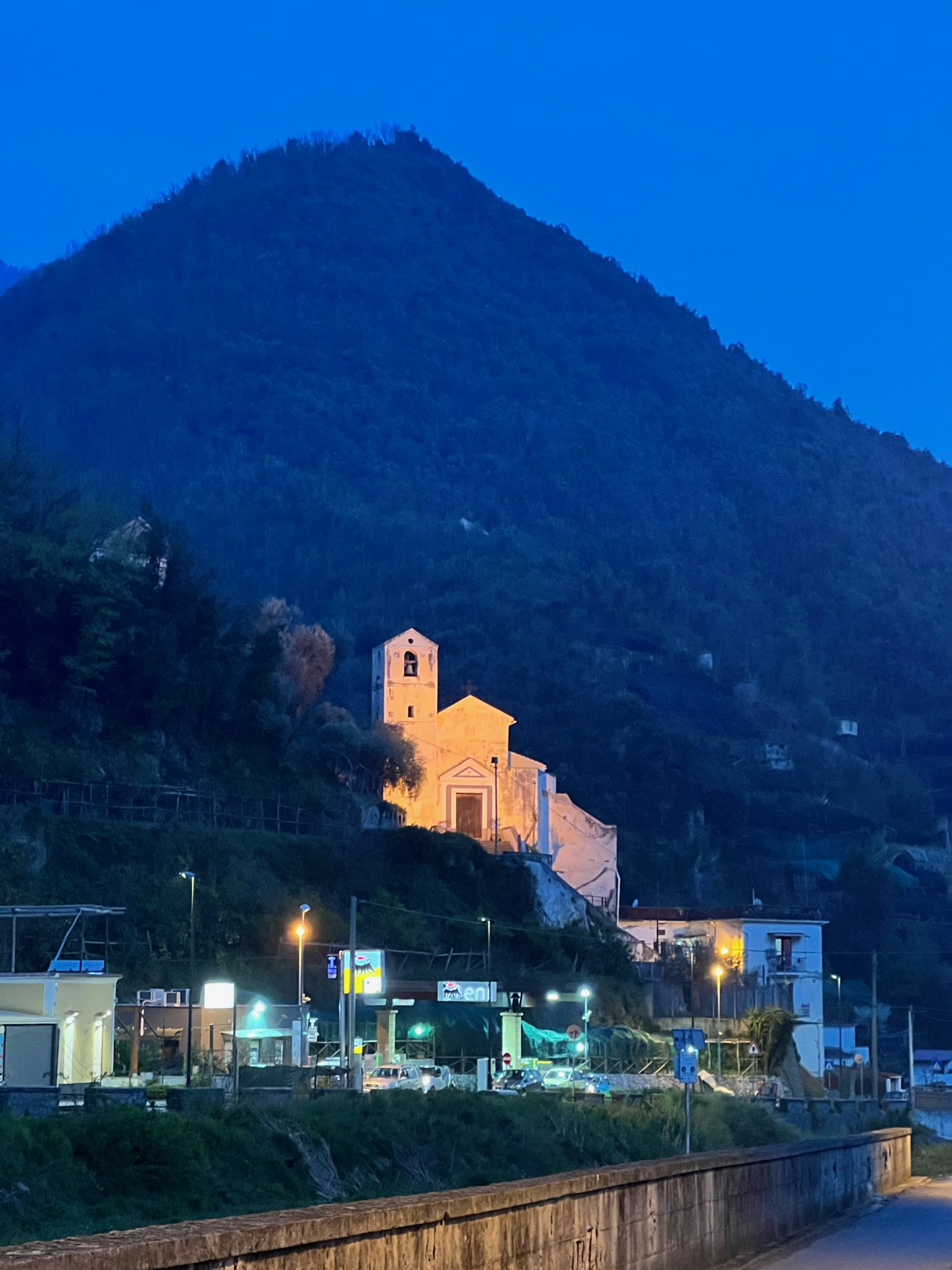


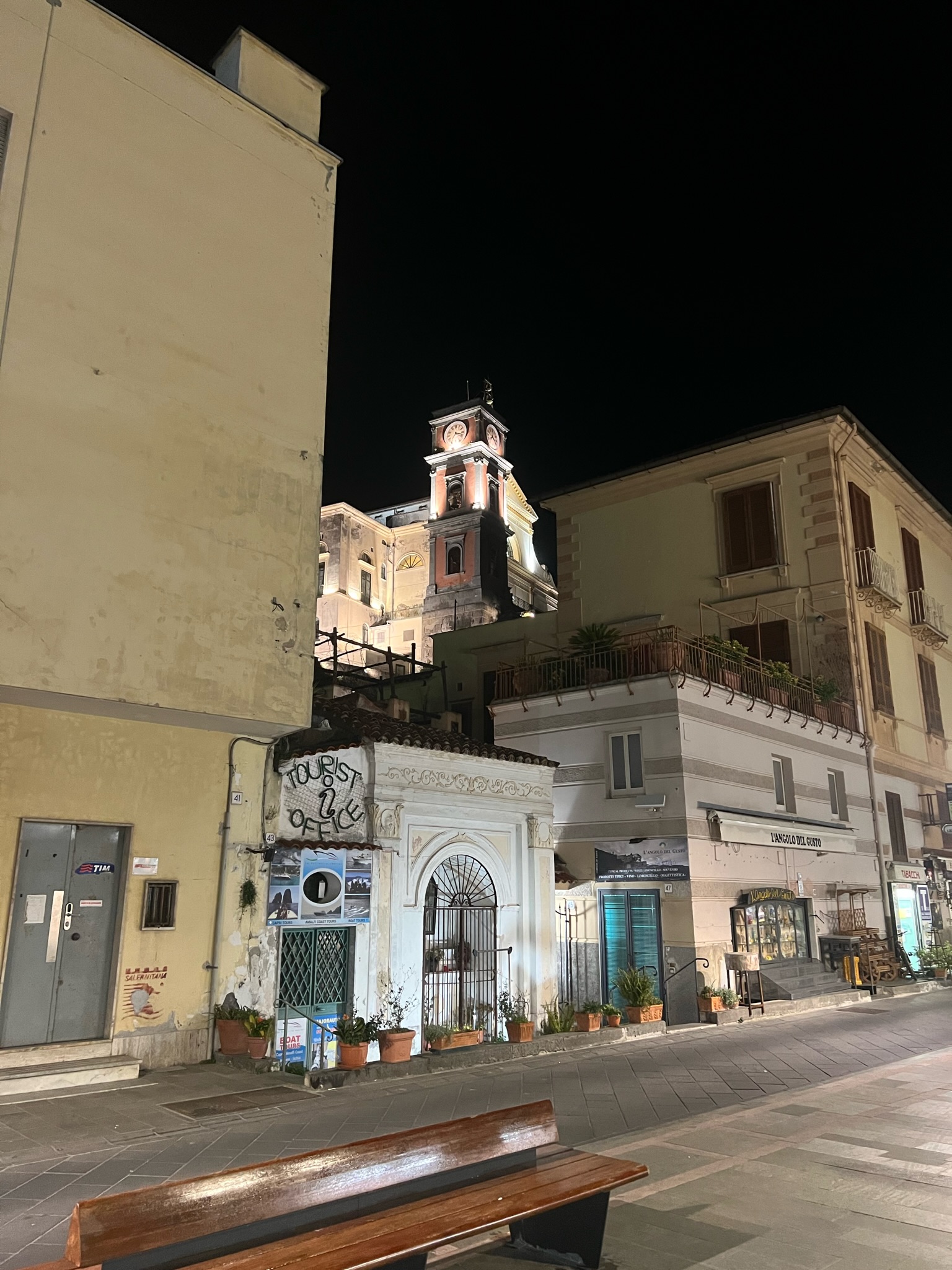


On our last day in the Amalfi Coast, we packed our bags and caught the bus at the Ponteprimario station to head into Maiori. We were a bit sad to leave the comfort of our little apartment, but we had a new adventure to begin. We changed buses in Maiori so we could ride back to Salerno for a third time. The train station in Salerno had regular trains that would take us to Pompei, our next destination. We bought our tickets at the kiosk, and within 10 minutes time, we were seated on the nicest train we’d ridden so far.
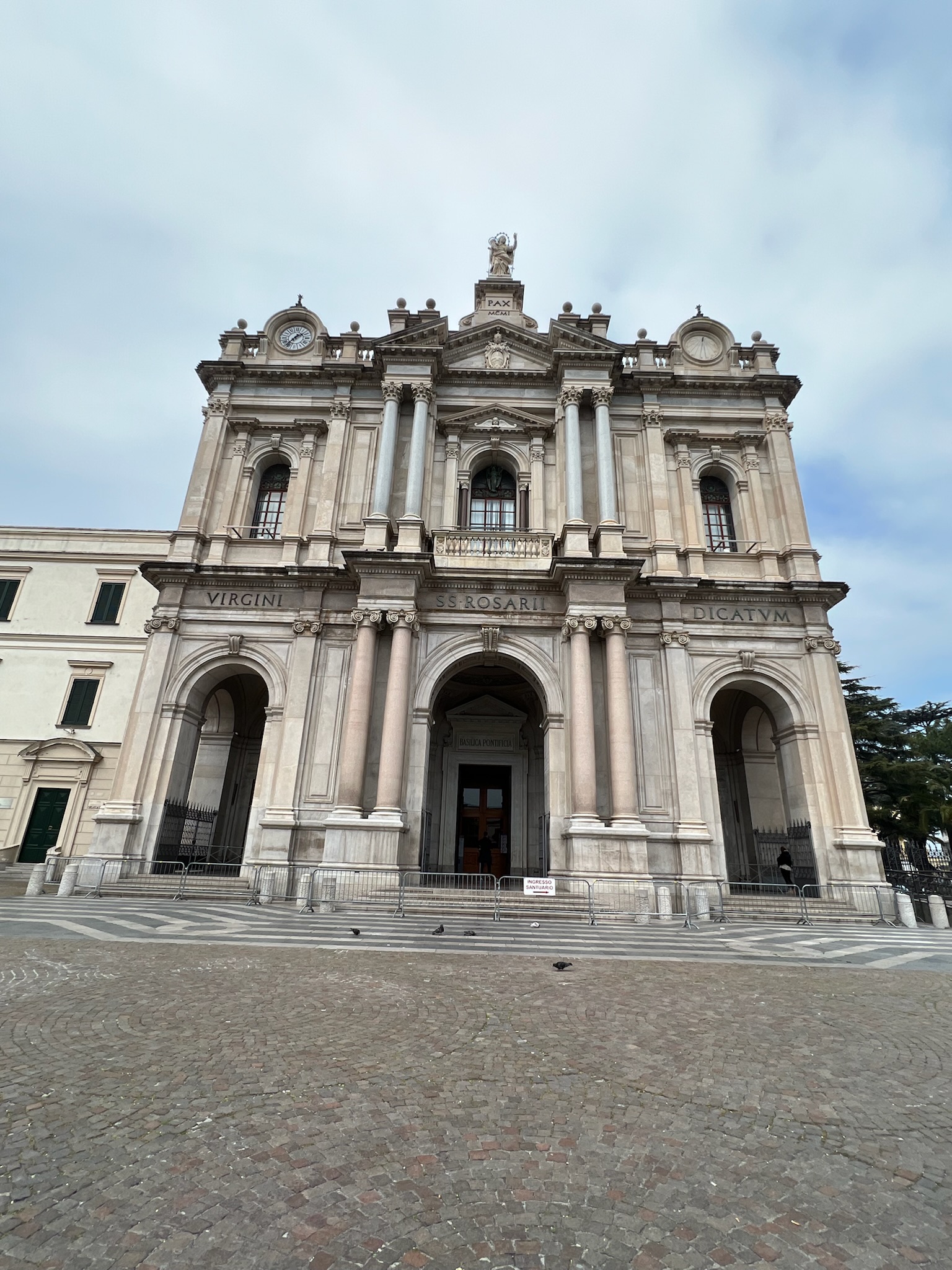

Pompei was only a 30 minute train ride from Salerno, so we were there in no time. We stepped off the train and took a few minutes to orient ourselves. Our hotel was only about a 20 minute walk from the station, and since taxies weren’t readily waiting on the street, we decided to just walk it.
The Domus Michaeli was an interesting place to stay. It was located in an apartment building. Similar to the one in Naples, Catello, our host, had purchased the apartment and converted into a bed and breakfast of sorts. He built out the rooms so that each one had a private bathroom, and the once living area served as a breakfast and common area for the guests. Our room was really nice except that there was no toilet seat. We thought that maybe it was just an oversight Catello had made when he was cleaning, but after looking through the reviews more thoroughly, we discovered that it had been that way for years. I’ll never quite understand why we didn’t have a toilet seat, but we got used to it.
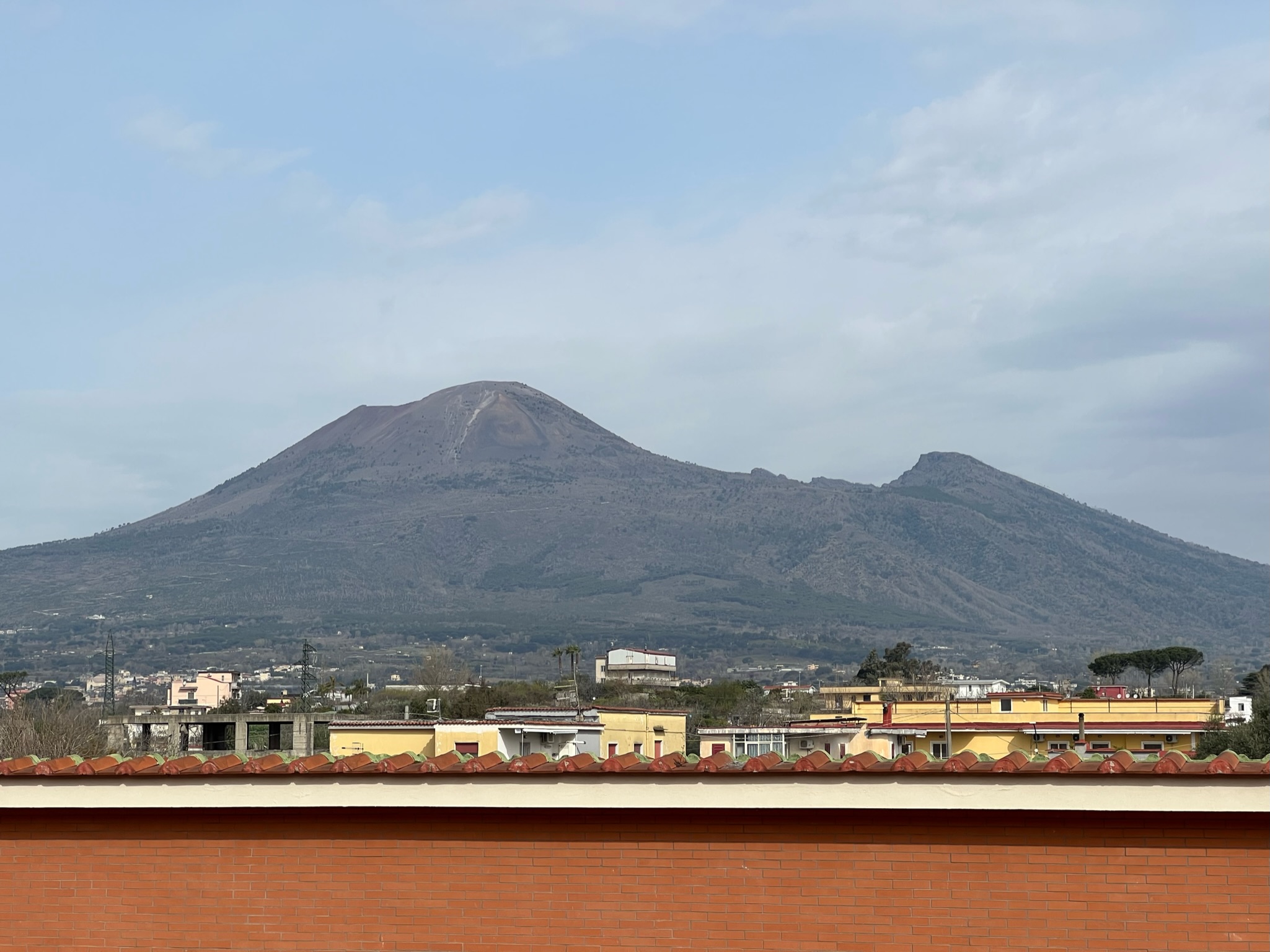
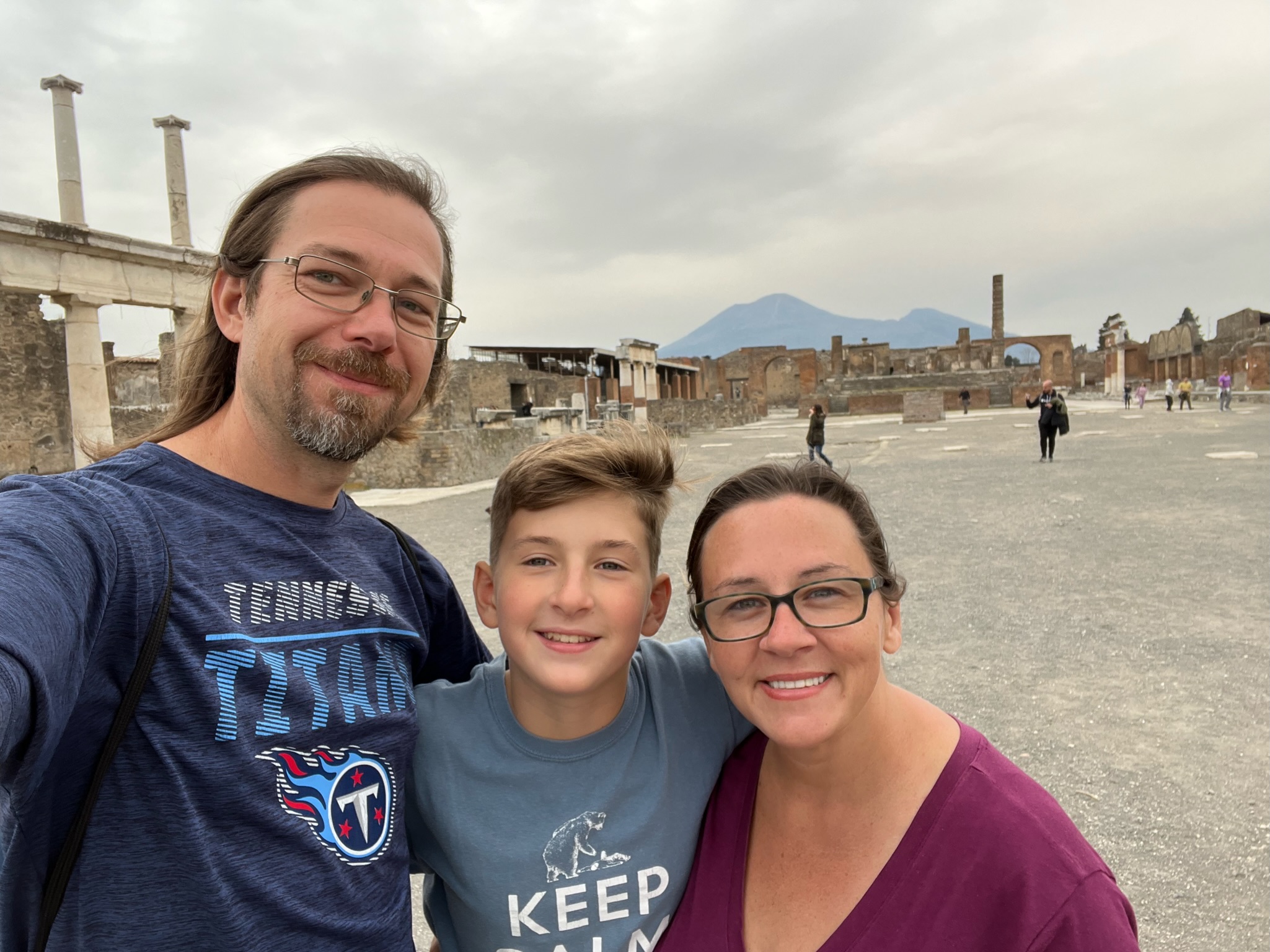
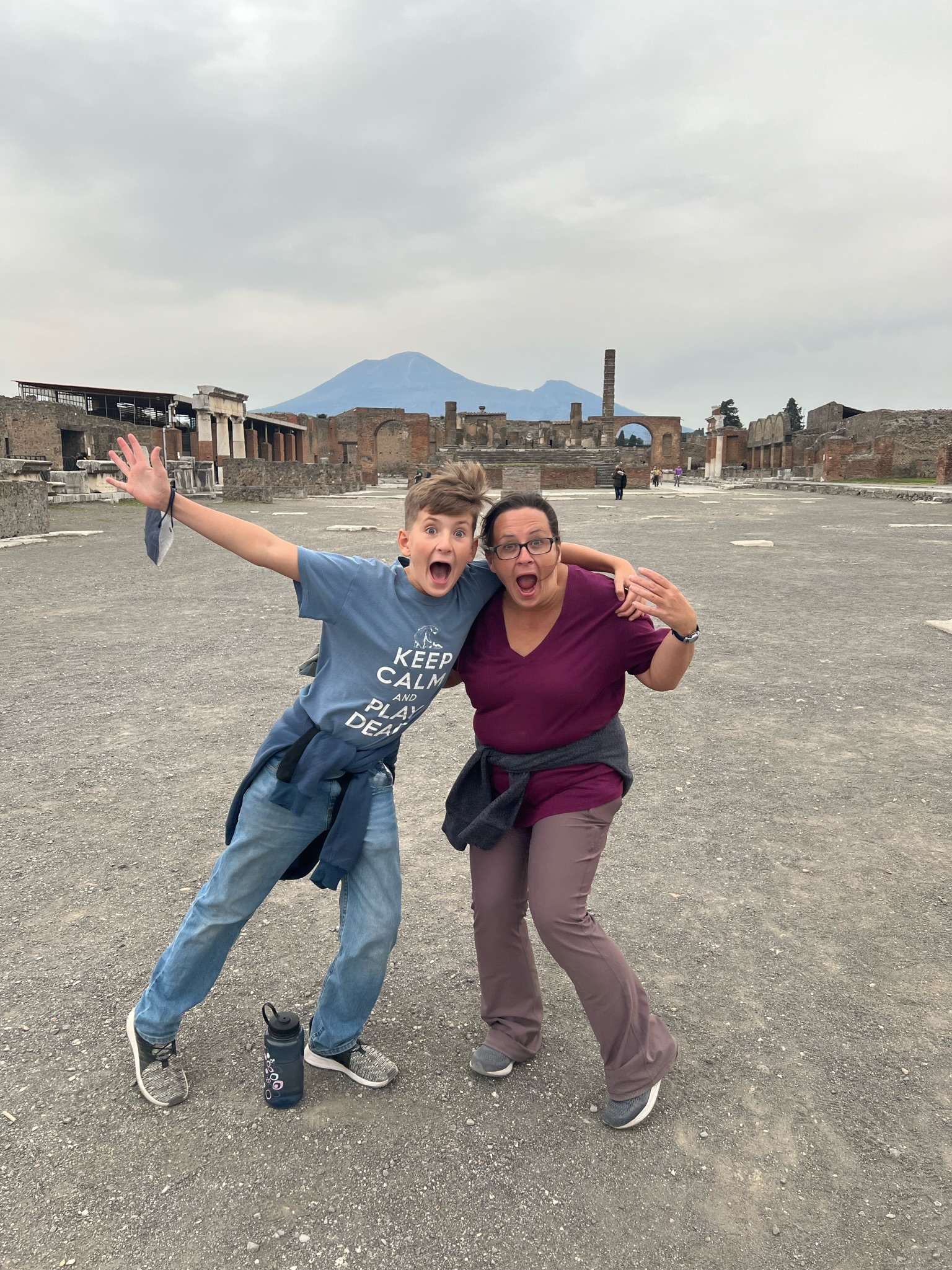
The window in our room overlooked Mount Vesuvius, which was pretty cool. It was a little unnerving, though. Knowing that we were going to see the ruined city of Pompeii that sat just a few blocks away from us and that the volcano that destroyed it so quickly was still active. If the volcano erupted, we were very close to it. I tried to remember that I can be a little overdramatic and that we’d likely be perfectly fine, but I had to remind myself of that several times during our stay.

The new town of Pompei, not to be confused with the old town of Pompeii, is very nice. Of course, most of the people who travel there are coming to see the famous ruins, so almost every souvenir shop is geared towards that tragedy. There are a lot of great restaurants around, though, and we enjoyed it very much.
We had a lot to see, and we knew we were only going to be in the area for three nights, so we didn’t have much time. We’d planned to go see Pompeii the first day and then to go see Herculaneum, another city that was destroyed in the same eruption, the next. We really wanted to climb to the top of Vesuvius and look down into the crater, but we just didn’t have time to do that as well.
That night we watched a BBC show on Pompeii to prepare us for what we would be seeing the next day. Henry was bored with the show, and I worried that he’d be bored with the ruins, but that turned out not to be the case. The next morning we woke up and started our trek to Pompeii. We were about 20 minutes from the entrance closest to us, and about 45 minutes from the one on the opposite side. We’d read that it would be better to start at the furthest one, so we did. As we passed the closest one, though, we were hounded by tour guides who insisted that it wasn’t an entrance. They just wanted to give us information, they said. We’d read to expect them, and we’d also read that they were scammers just trying to get you to take their high priced tours. We walked quickly past them and ambled down to the second entrance.
We arrived at the gate and bought our tickets to get in. They gave us a map to help us orient ourselves, and we were off. Before I get into what all we saw, let me quickly go through some history to help frame up what we were seeing.
Pompeii was a very ordinary town before Vesuvius destroyed it. There were some upper class and some lower class, but there wasn’t anything especially special about it. Seventeen years before the eruption, the town had sustained significant damage from an earthquake, but the volcano had remained dormant after that. On the other side of the volcano was a smaller town of Herculaneum. It was on the coast, and its believed that it was a slightly more affluent town than Pompeii. In the days leading up to the eruption, Vesuvius had started having smaller eruptions with smoke and rock being exhausted from the top. Many of Pompeii’s 20,000 residents and most of the 5,000 Herculaneum residents had actually fled from the area because of that. For whatever reason, some 2,000 people stayed behind in Pompeii and an unknown number in Herculaneum because they either couldn’t or wouldn’t leave. In August of 79 AD, though, Vesuvius finally erupted.
Within a matter of minutes, a massive cloud of superheated gasses, smoke, rocks, and dust shot upwards of 10 miles into the air. As the rocks and dust hurtled back down, they began to settle on the town of Pompeii. Day turned to night there. In Herculaneum, the residents could see the massive dust cloud move towards Pompeii, but the winds kept the worst of it off them. The continued dust and rockfall smothered the town of Pompeii, and eventually the roofs couldn’t hold any more. Throughout the night, the roofs of the buildings finally gave way, and there was not much left to protect the people. The people who were left in Pompeii didn’t all die immediately. Archeologists have found some of them where they had eventually died on top of 12-15 feet of ash. These unlucky ones survived the initial eruption, and they had fought to climb out of the ash and rocks as they tried to escape. In Herculaneum, the residents continued on with life as normal.
During the next few hours, though, the superheated gasses that had shot up and out of the volcano, rushed back down, and as they fell, they hit the mountain sides and rushed outwards towards the towns. They killed everyone that was left in both towns.
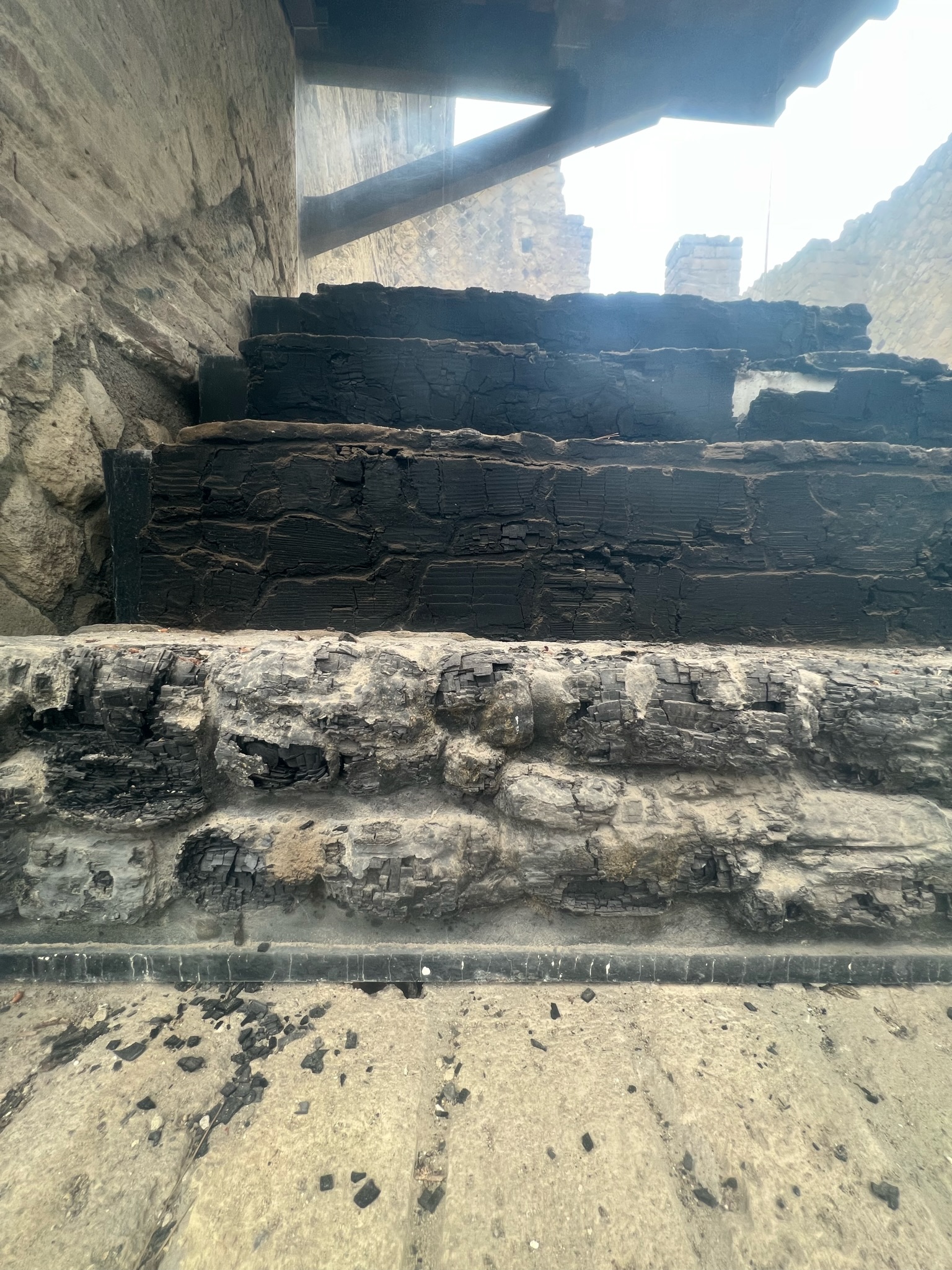
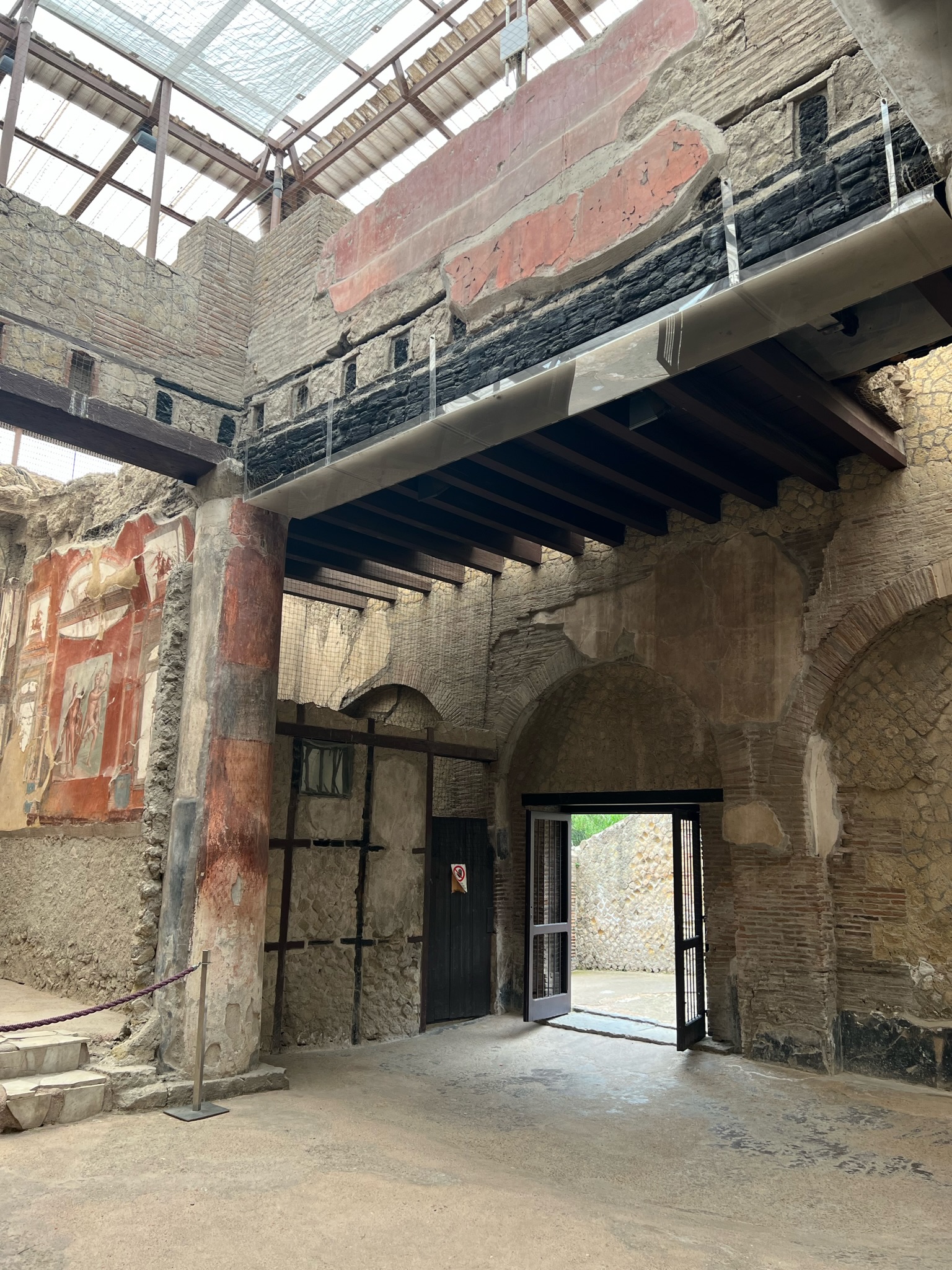
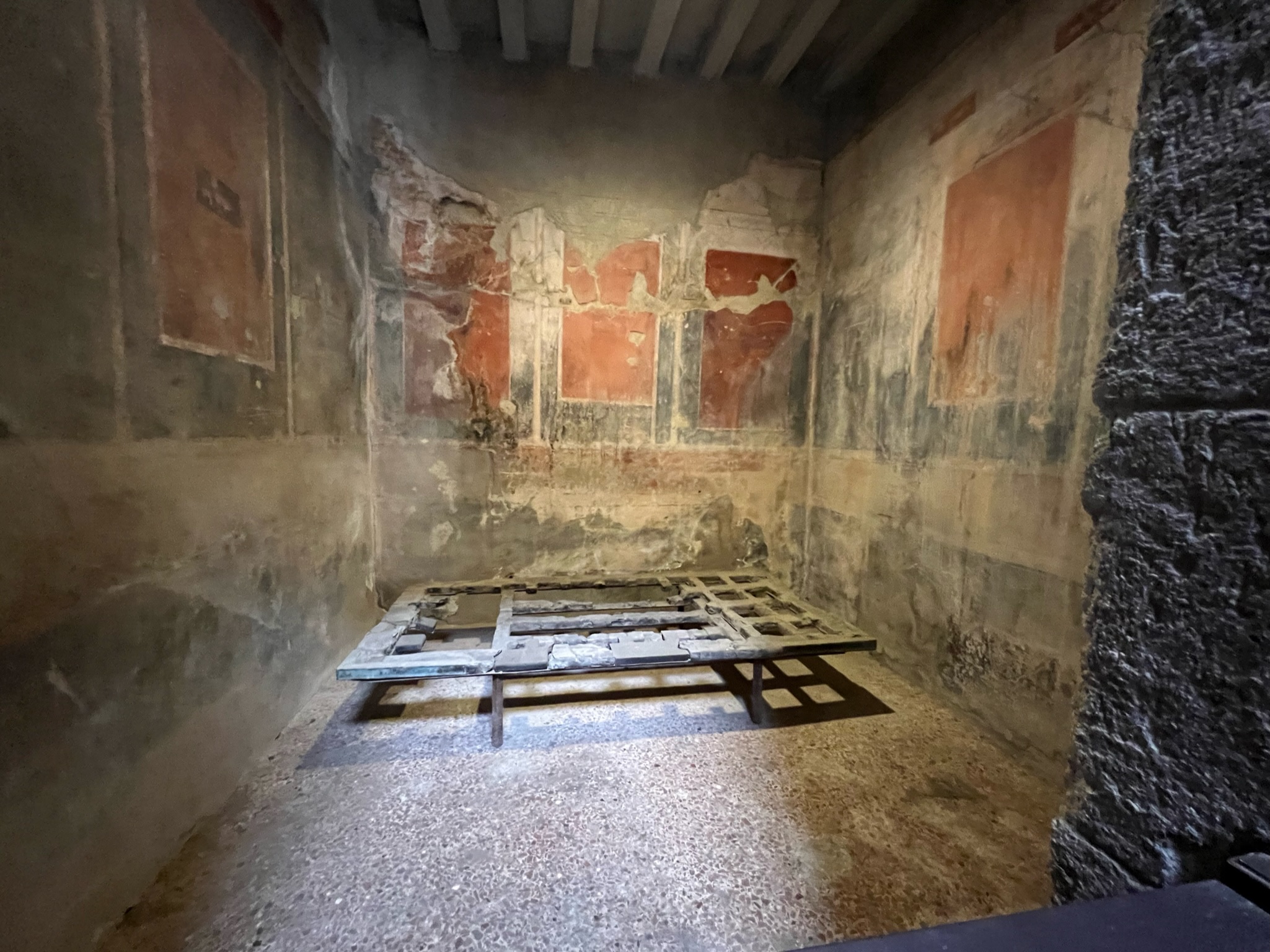
In Herculaneum, the gases were extraordinarily hot at 400 to 500-degrees Celsius. Anything the gas touched was immediately burnt. The people never knew anything. One minute they were alive. They saw the cloud heading toward them, and as soon as it touched them, they were gone. Their skin and muscles were burnt off their bodies in a matter of seconds. In their homes, the wood was carbonized by the heat, therefore many of their everyday objects such as food, clothing, and wooden furniture were preserved. The ash settled in over the next few days and buried the entire town in 50-60 feet of ash. The shoreline that the city was perched on was moved over 400 yards further out away from town as the ash settled and displaced the water. Herculaneum laid exactly as it was, and it was all but forgotten until in the 1700s, a farmer found the ruins while trying to dig a well.
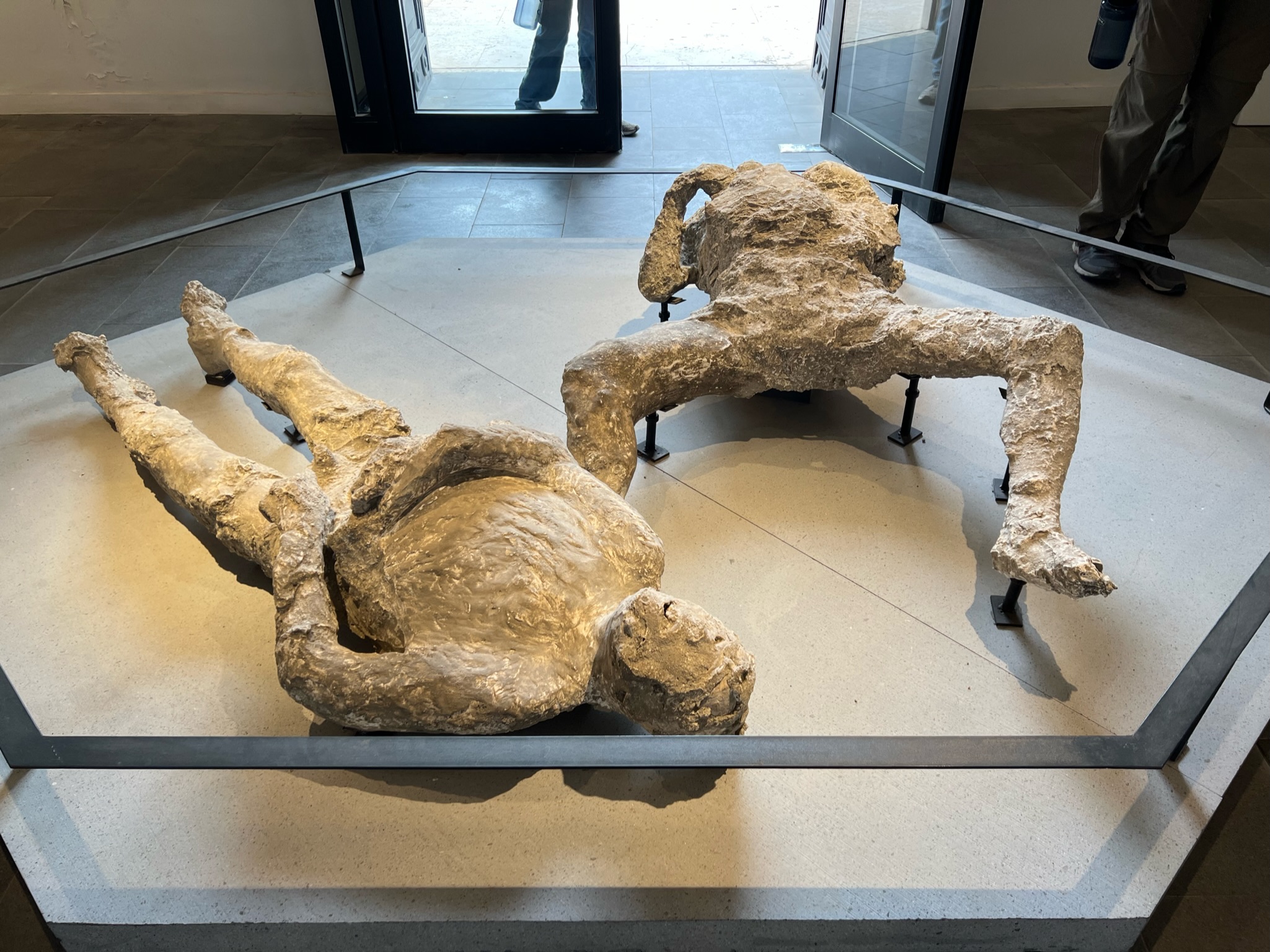
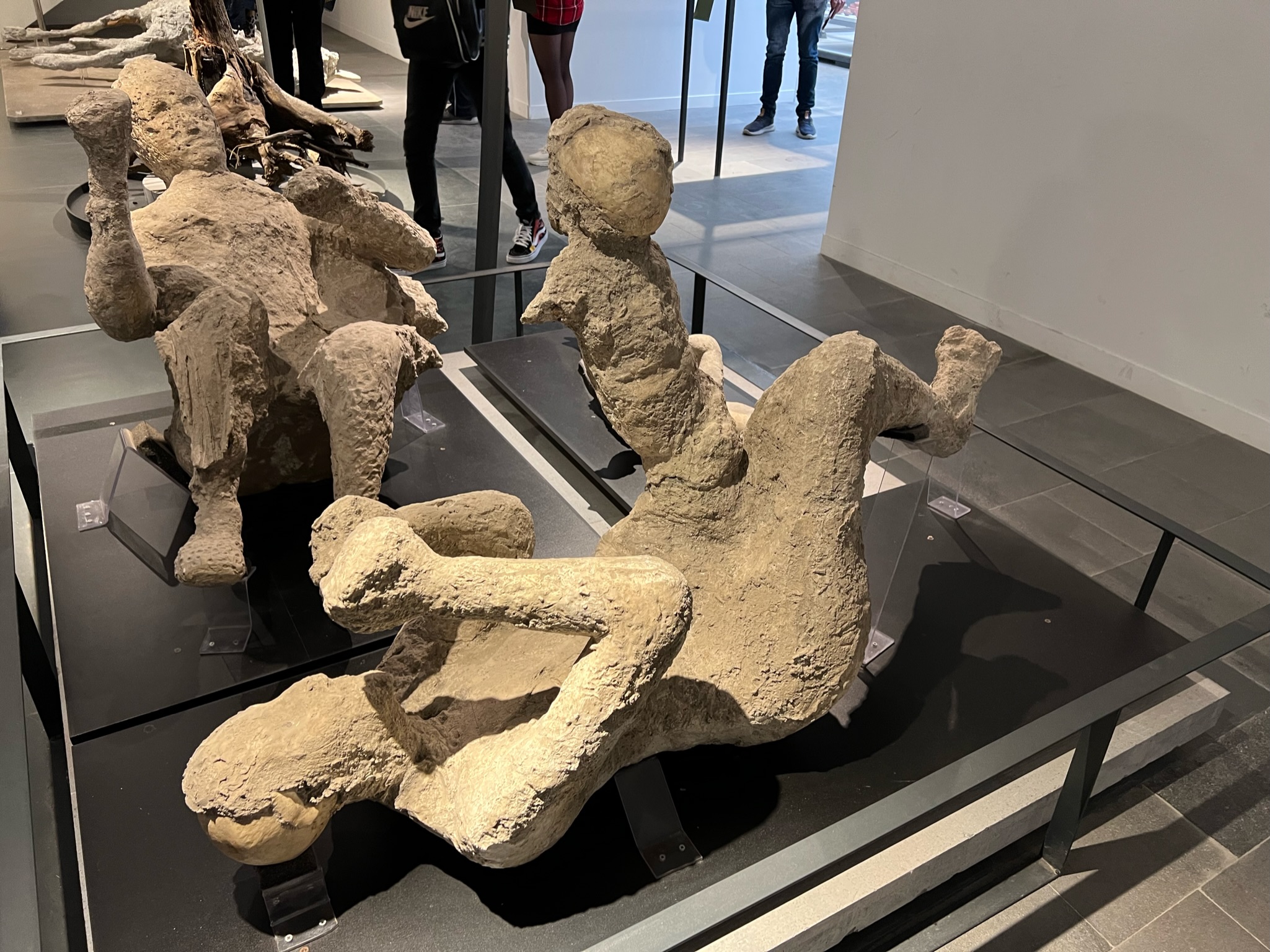
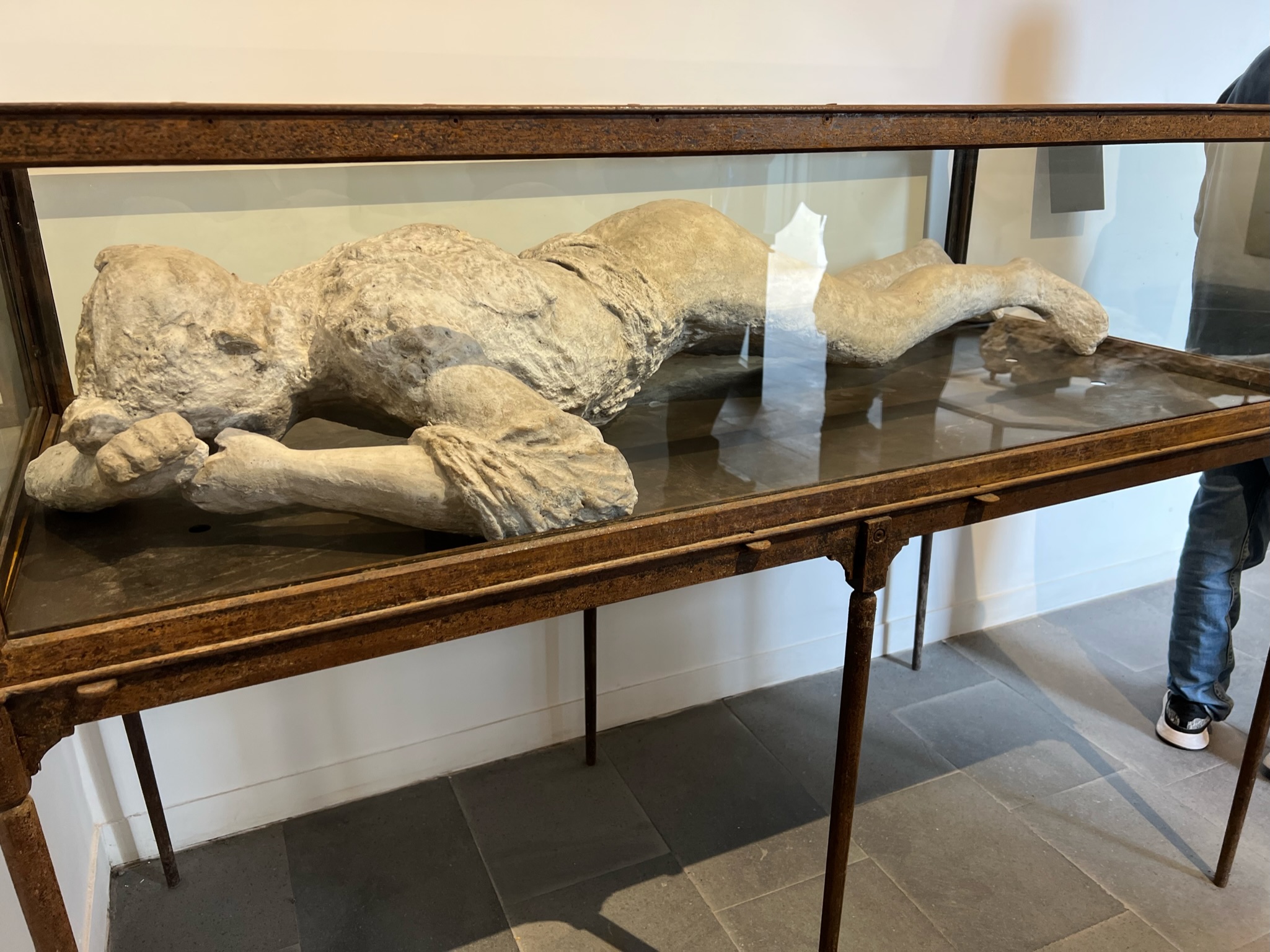
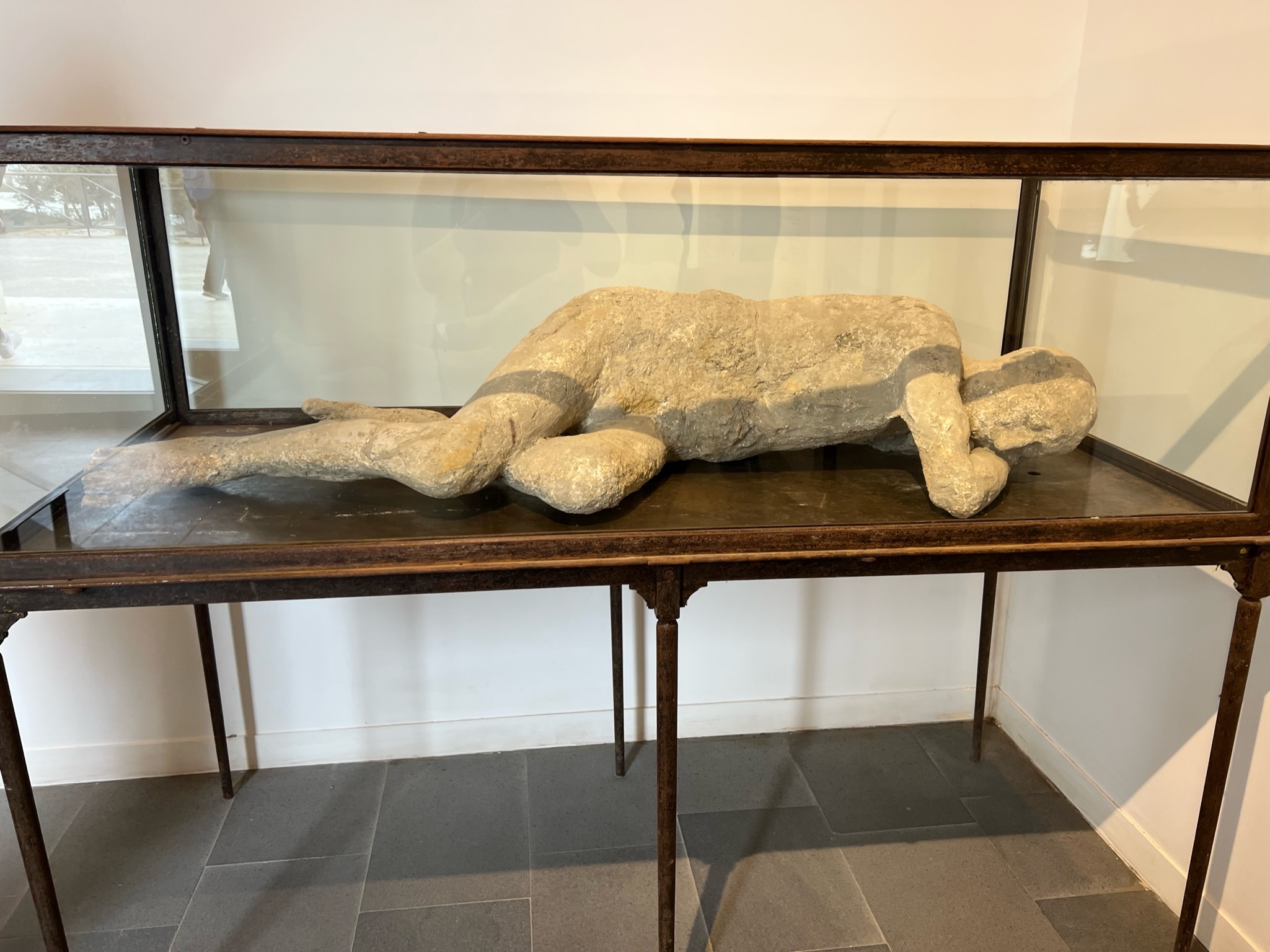
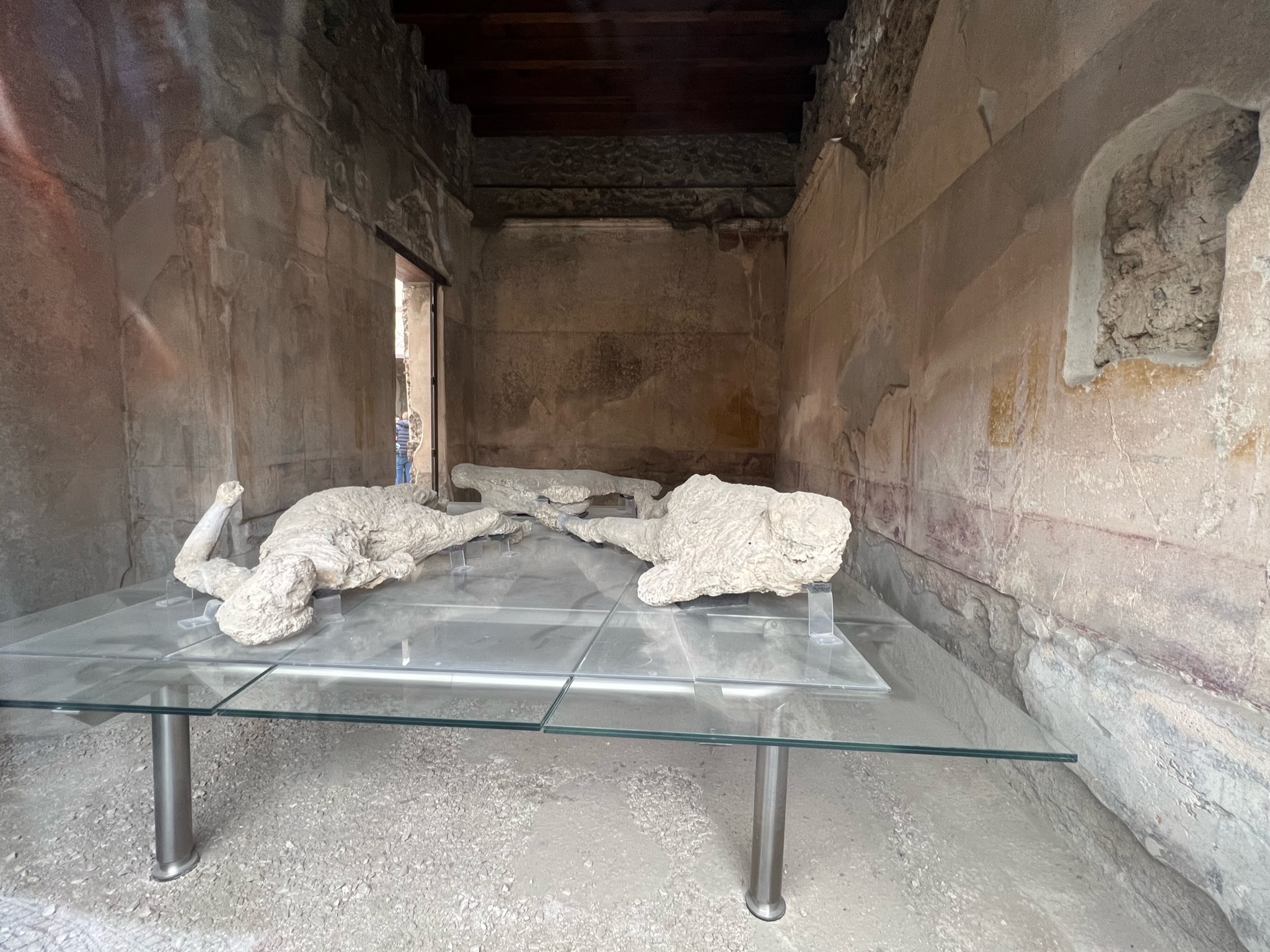
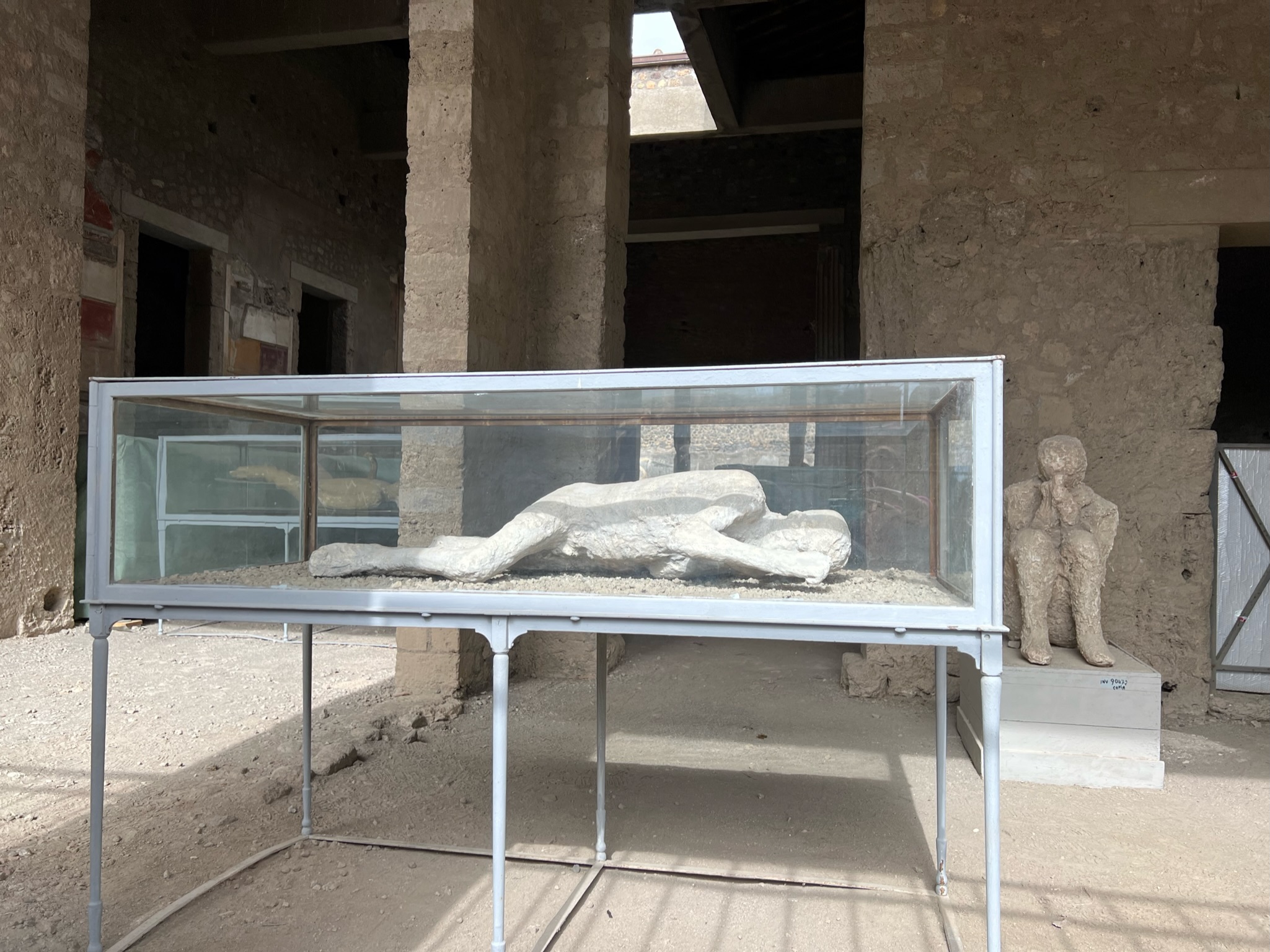
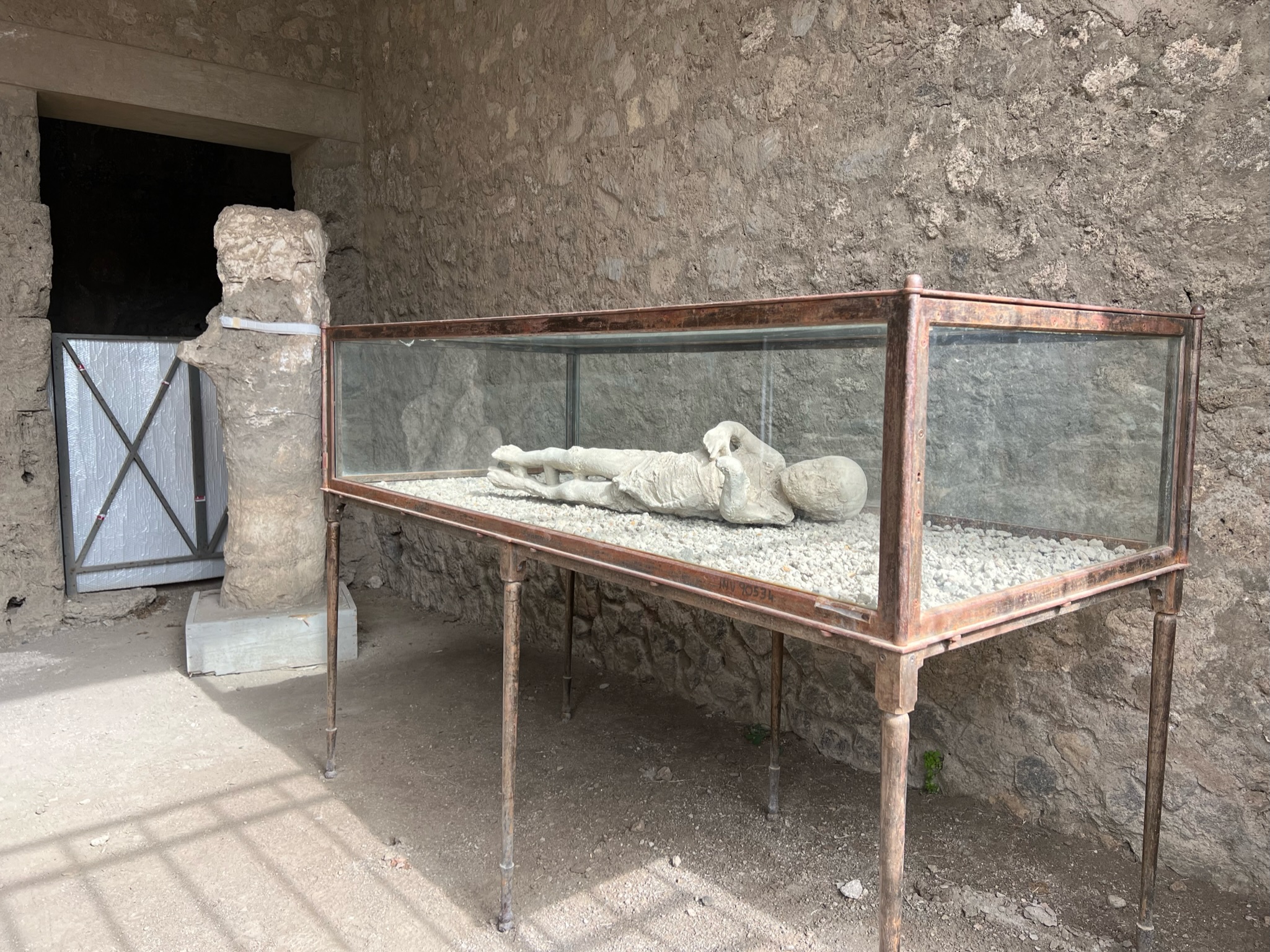
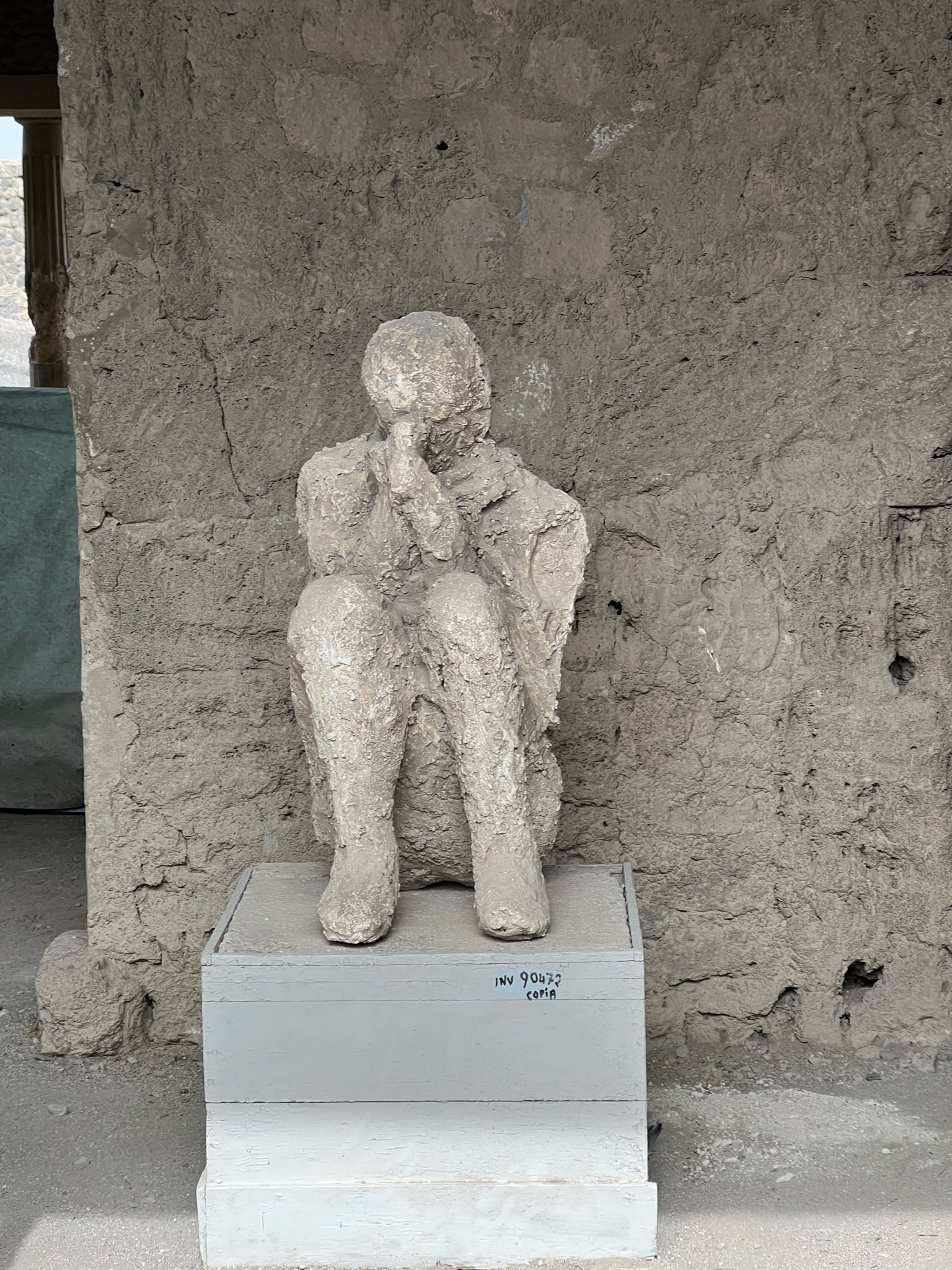
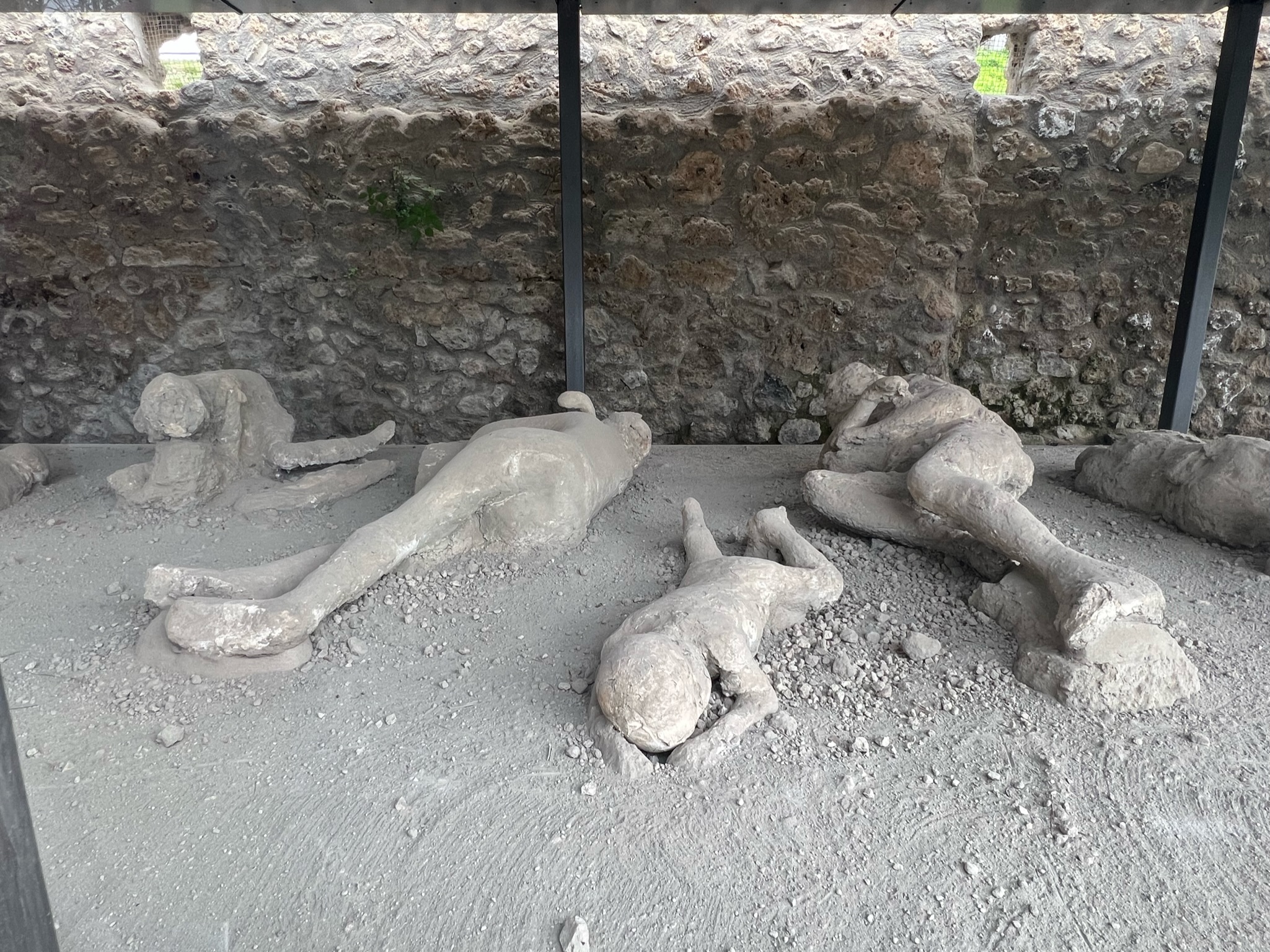
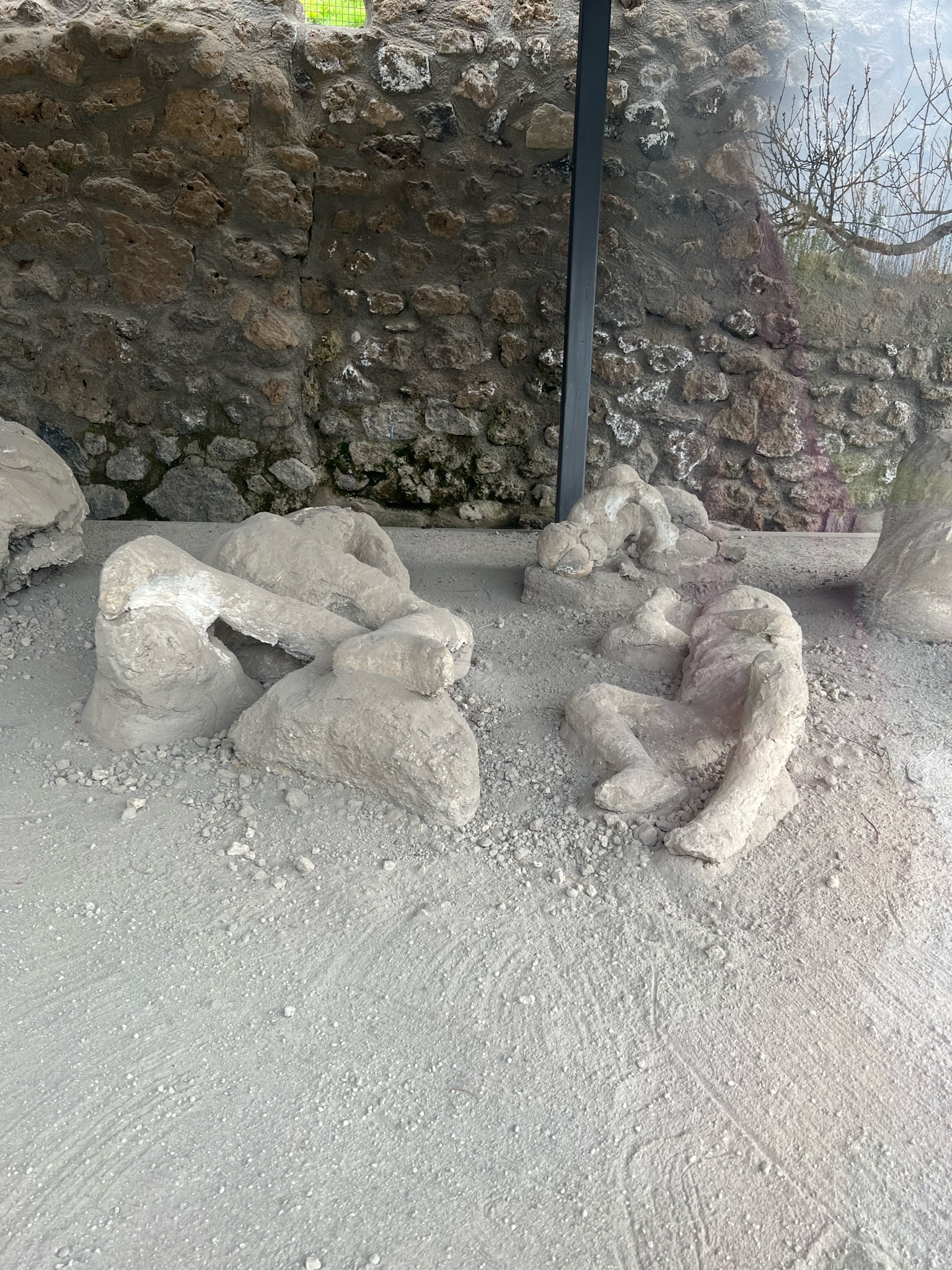
In Pompeii, the gases were slightly cooler, at only 200-400-degrees Celsius. Anyone who had survived the initial deluge of rock and ash, was killed when the gases hit them. Their bodies were not burnt to the same level as Herculaneum though. Their bodies were frozen in whatever position they were in when they fell, and as the ash settled around them, it trapped everything in place exactly as it had been. Over the years, the remains, still maintaining a level of moisture, rotted away and left voids within the ashes. When excavations began in Pompeii in the 1850s, the archeologist in charge of the project filled the hollow cavities with plaster to retain the shapes of the people. Because of that process, we today can see extremely good representations of these people’s last moments.
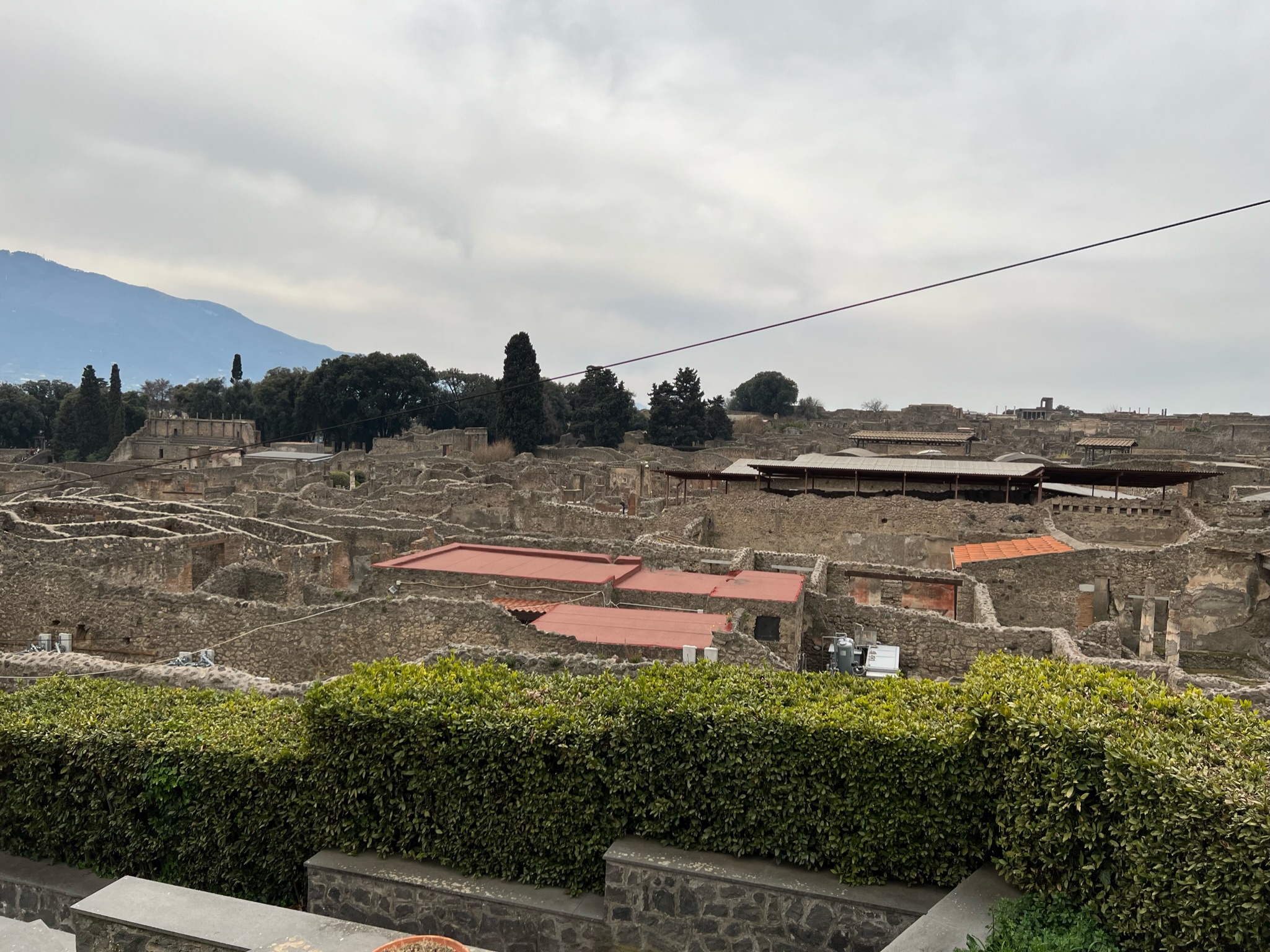
When archeologists began studying Pompeii, they divided the town into 9 different districts. Within each district, they numbered the blocks and the individual rooms. This location system has given them the ability to locate where artifacts have been found and piece together a picture of what Pompeii actually looked like. It was interesting to note that they aren’t done. There are still several large sections of the town that haven’t been excavated yet. When you walk by those sections, they just look like grassy areas. Underneath, though, there are untold treasures waiting to be found.
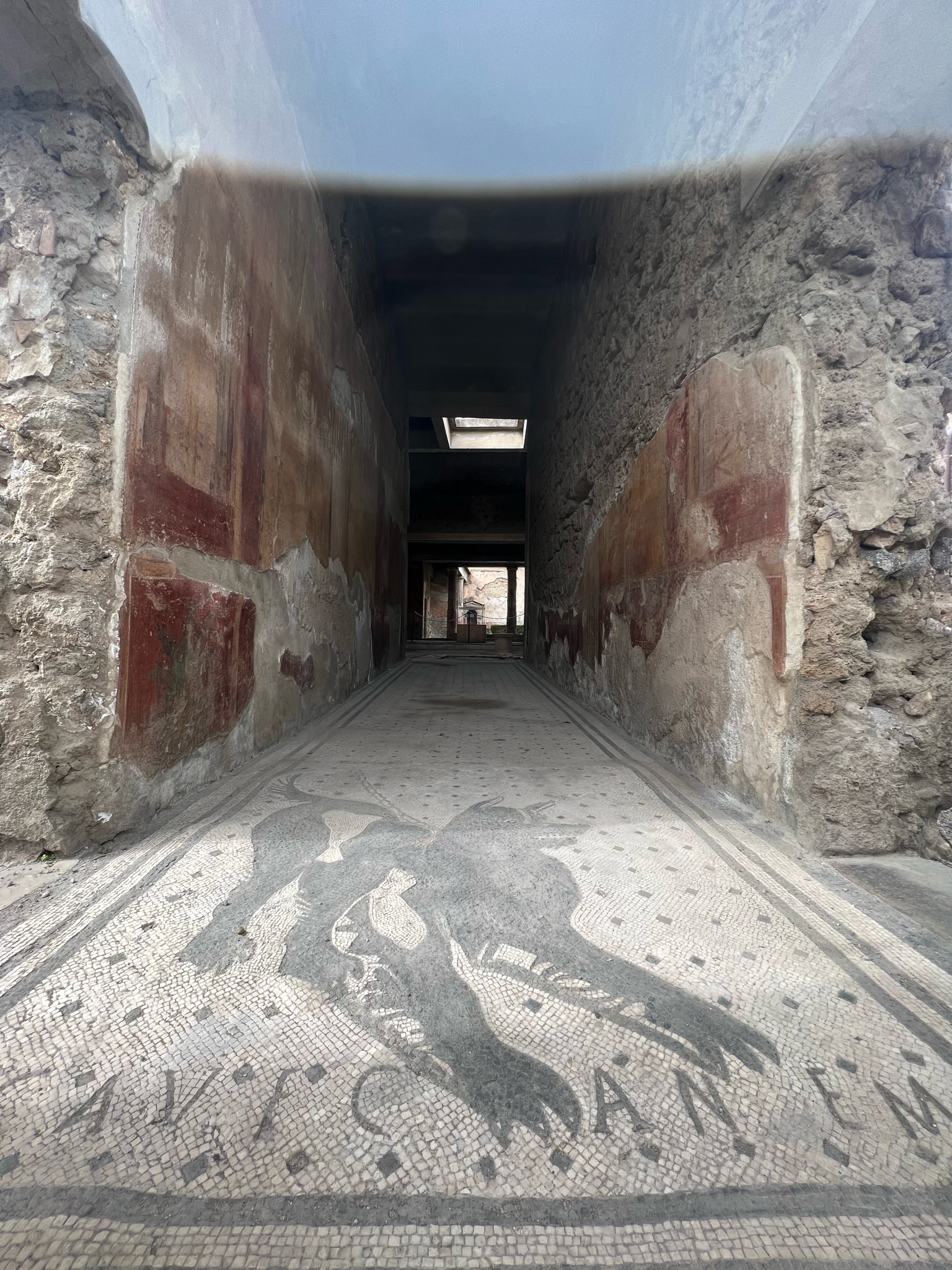
So far archeologists have found some 1100 human bodies in Pompeii. Several of the casts have been put on display, and they are absolutely heartbreaking to look at. A baby found near its mama. A man doubled over, maybe in prayer. A man and woman who were close to one another had climbed through 12ft of ash to fall over dead before their escape. A dog who struggled to get air as his chain kept him tied in place. A man who simply couldn’t go on. You can’t go here and not look at the casts, but you won’t walk away the same person after seeing them.
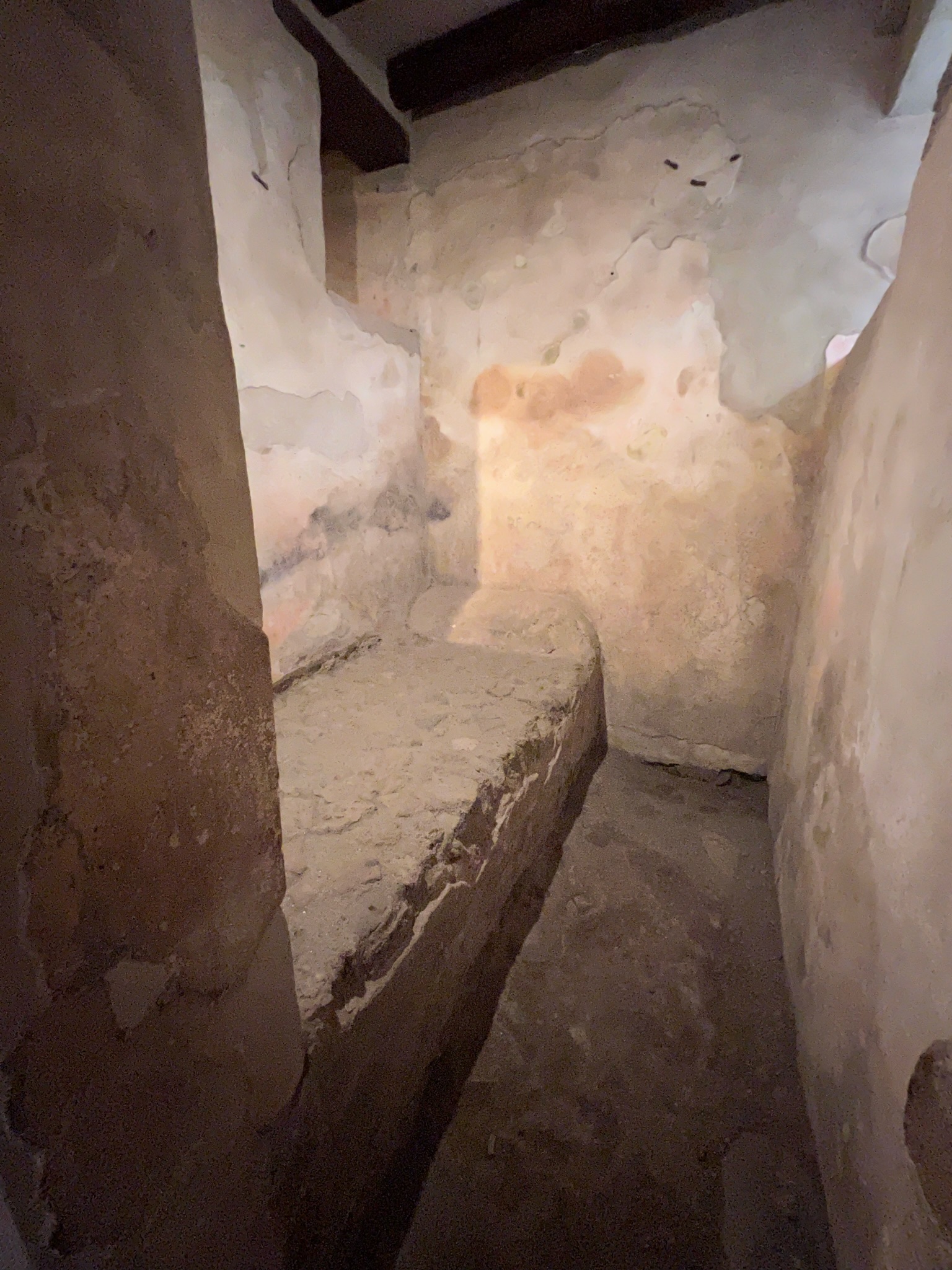
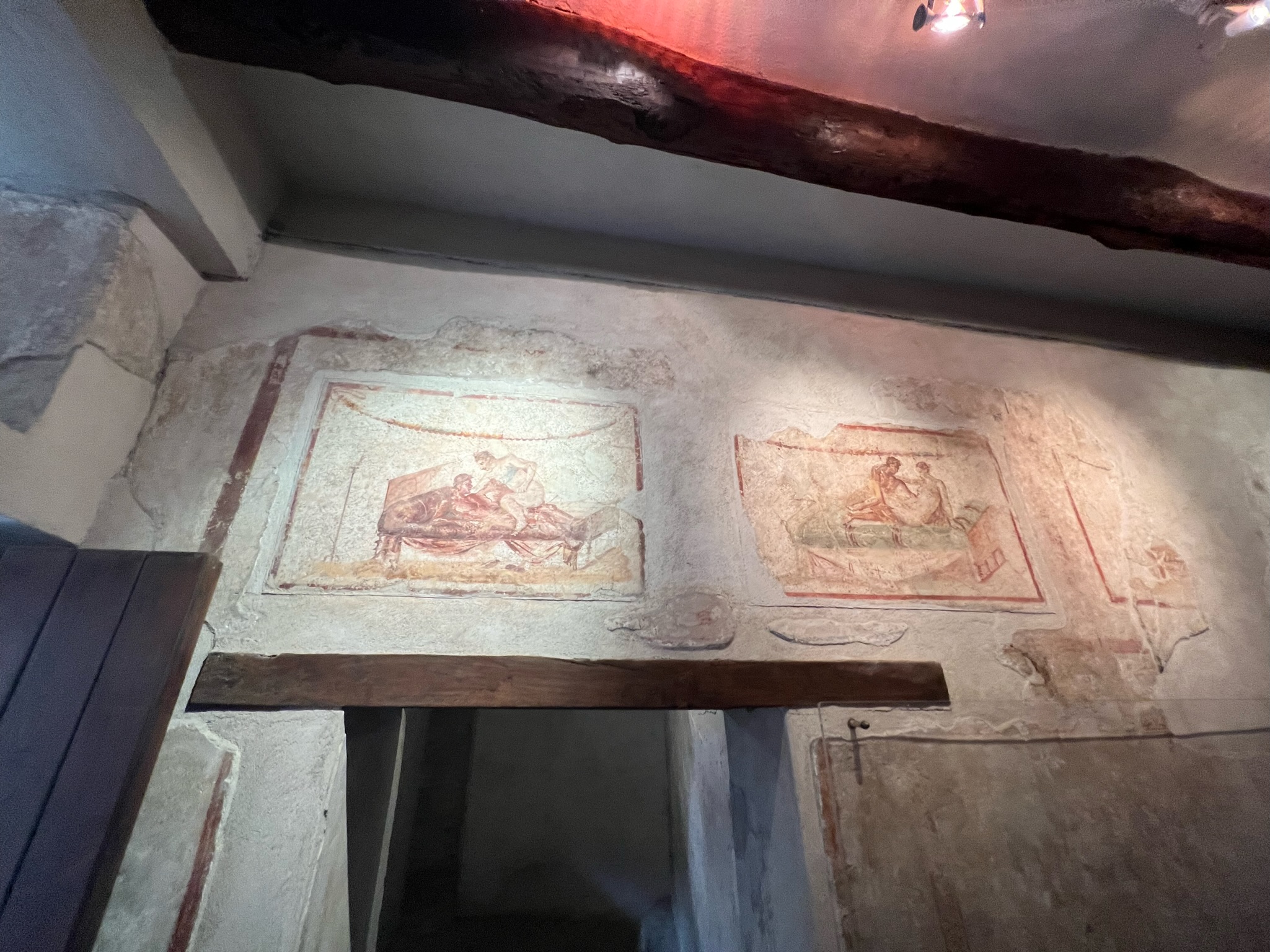
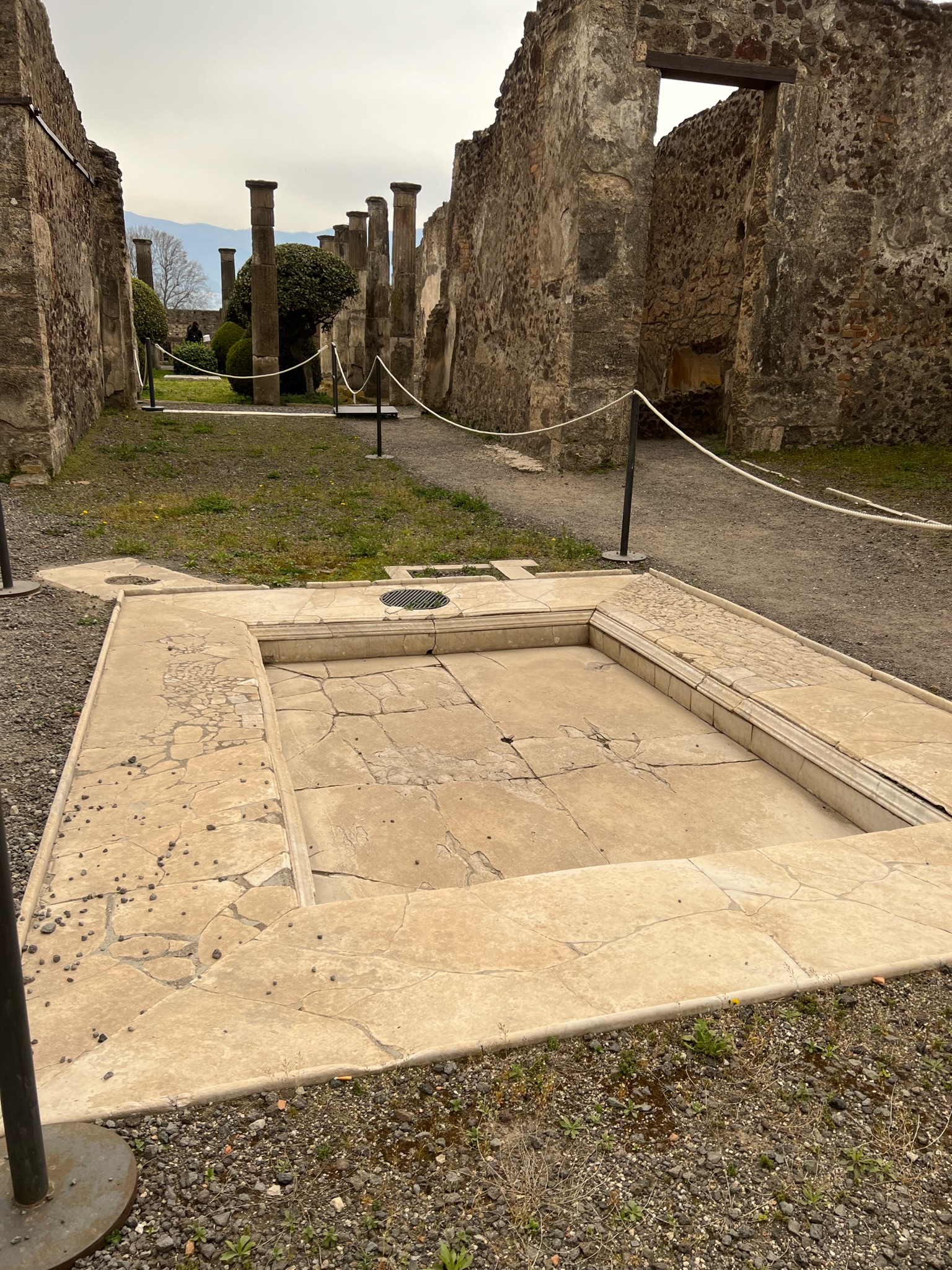
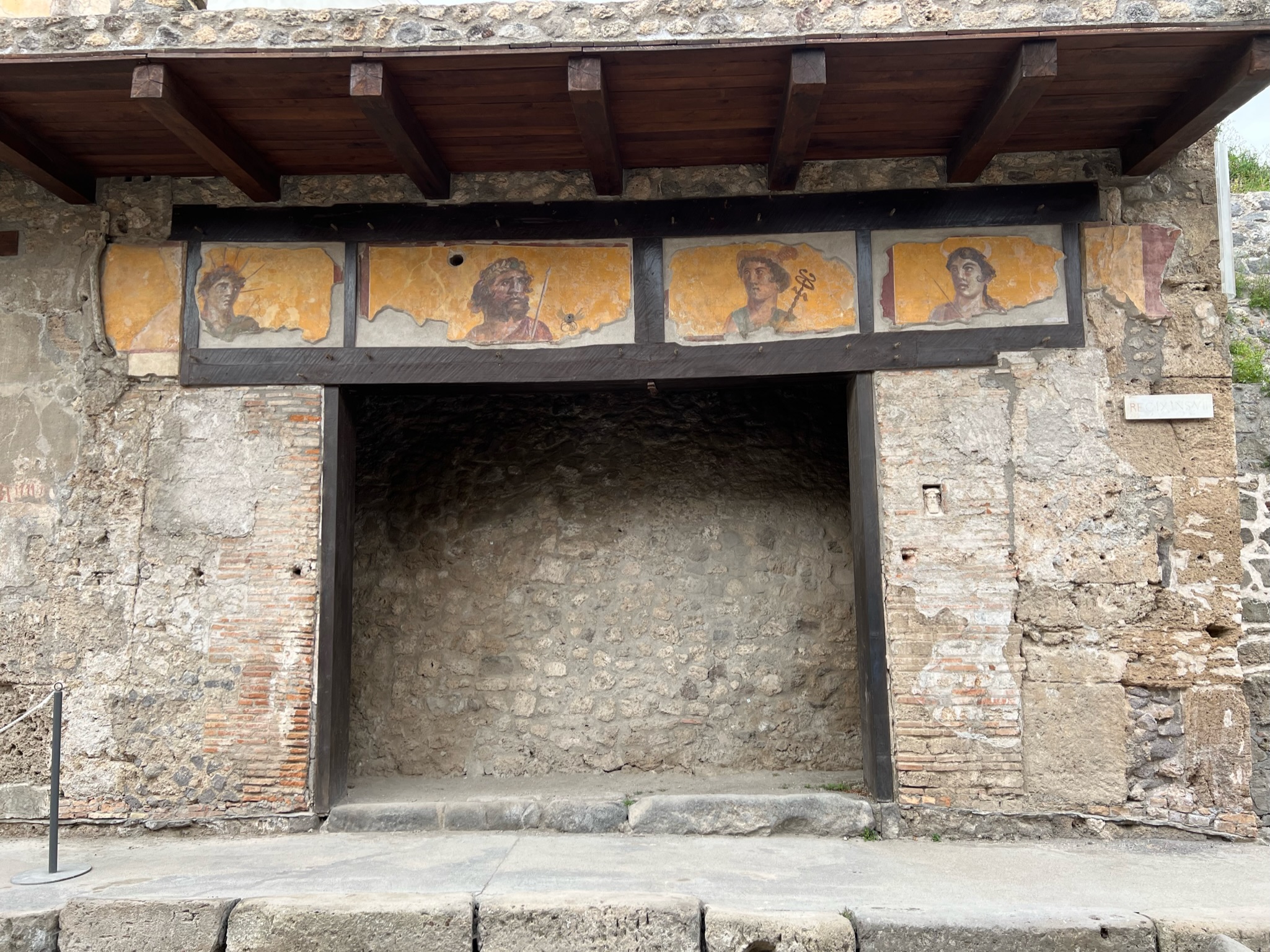
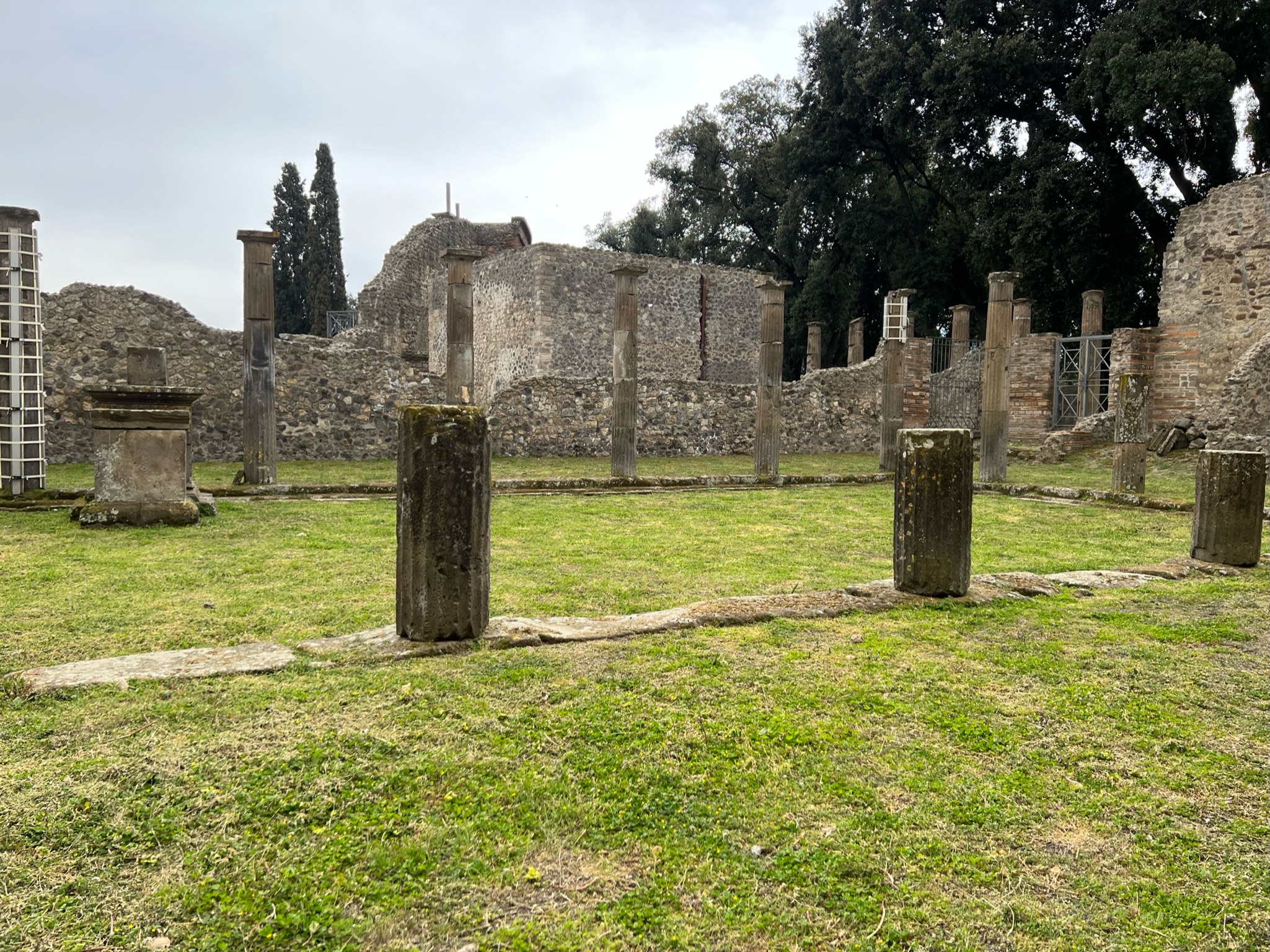
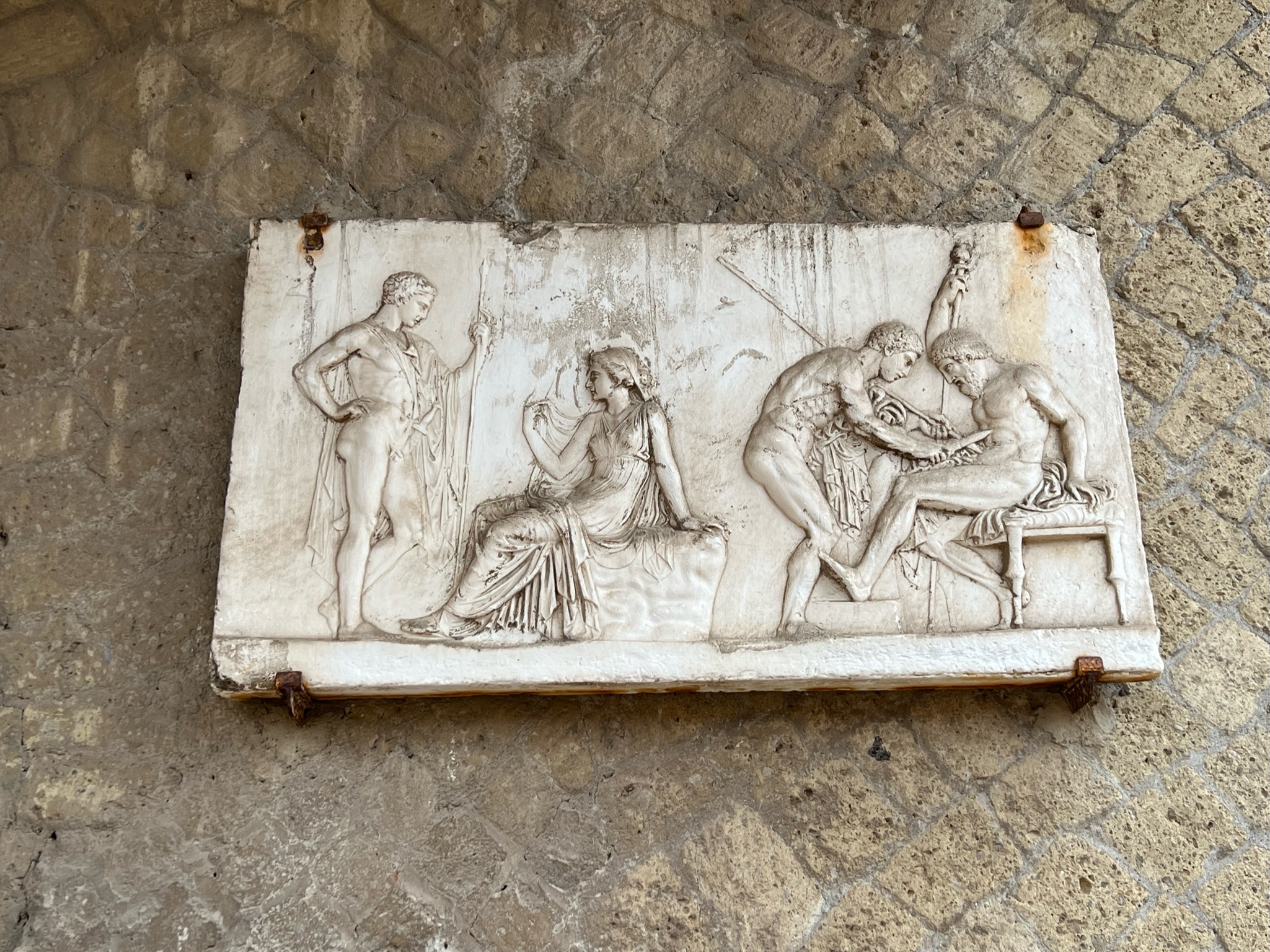
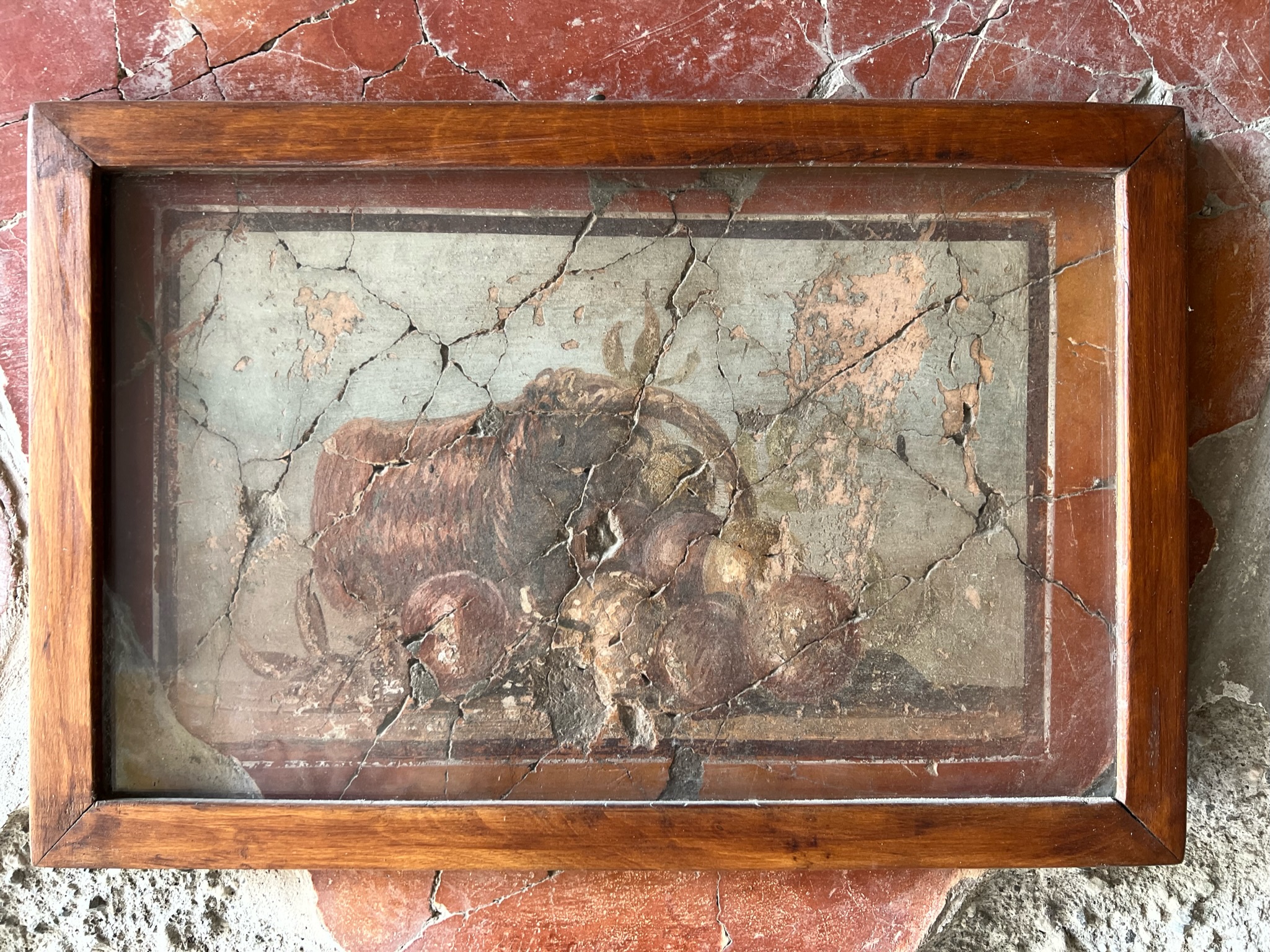
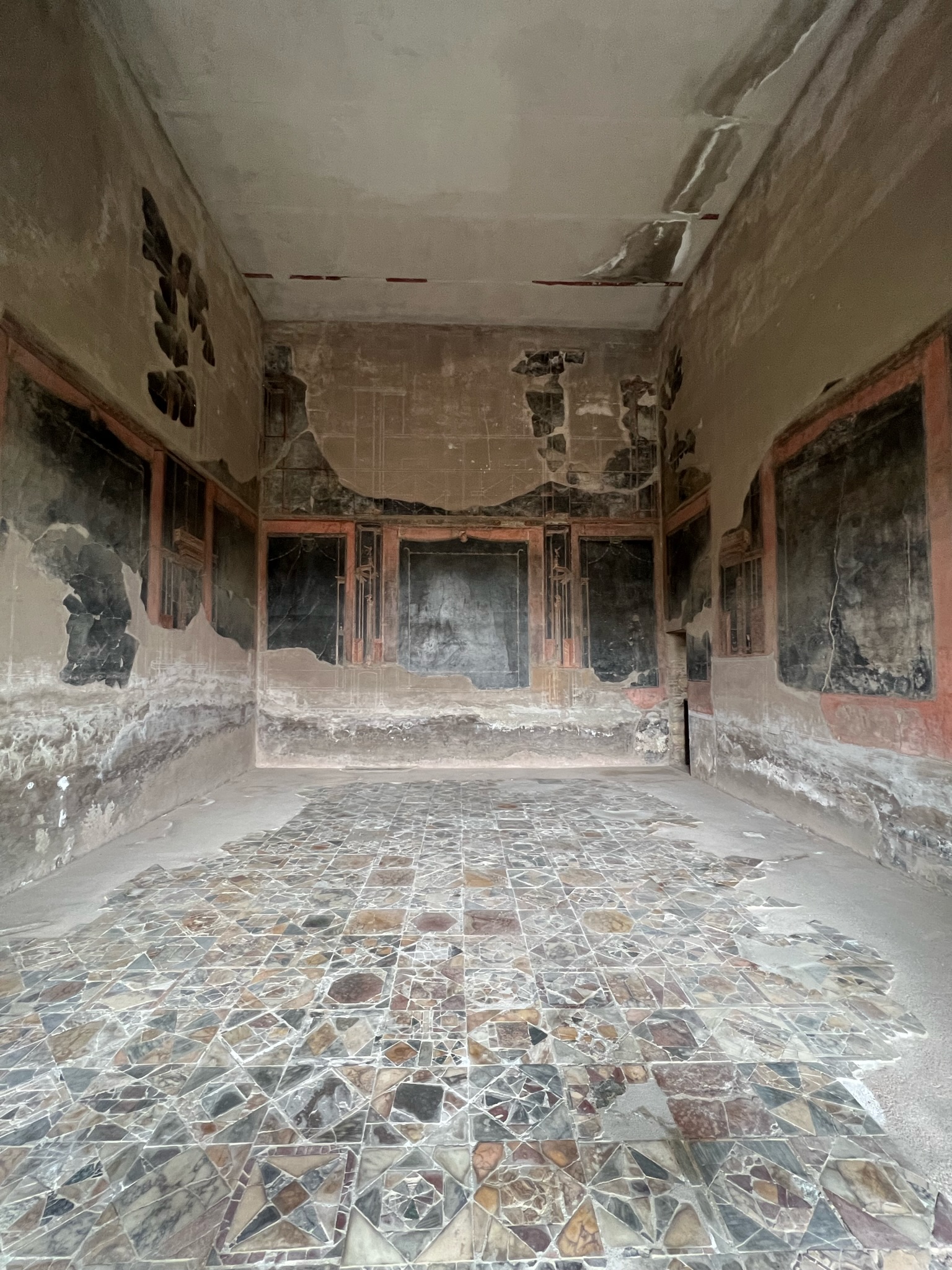
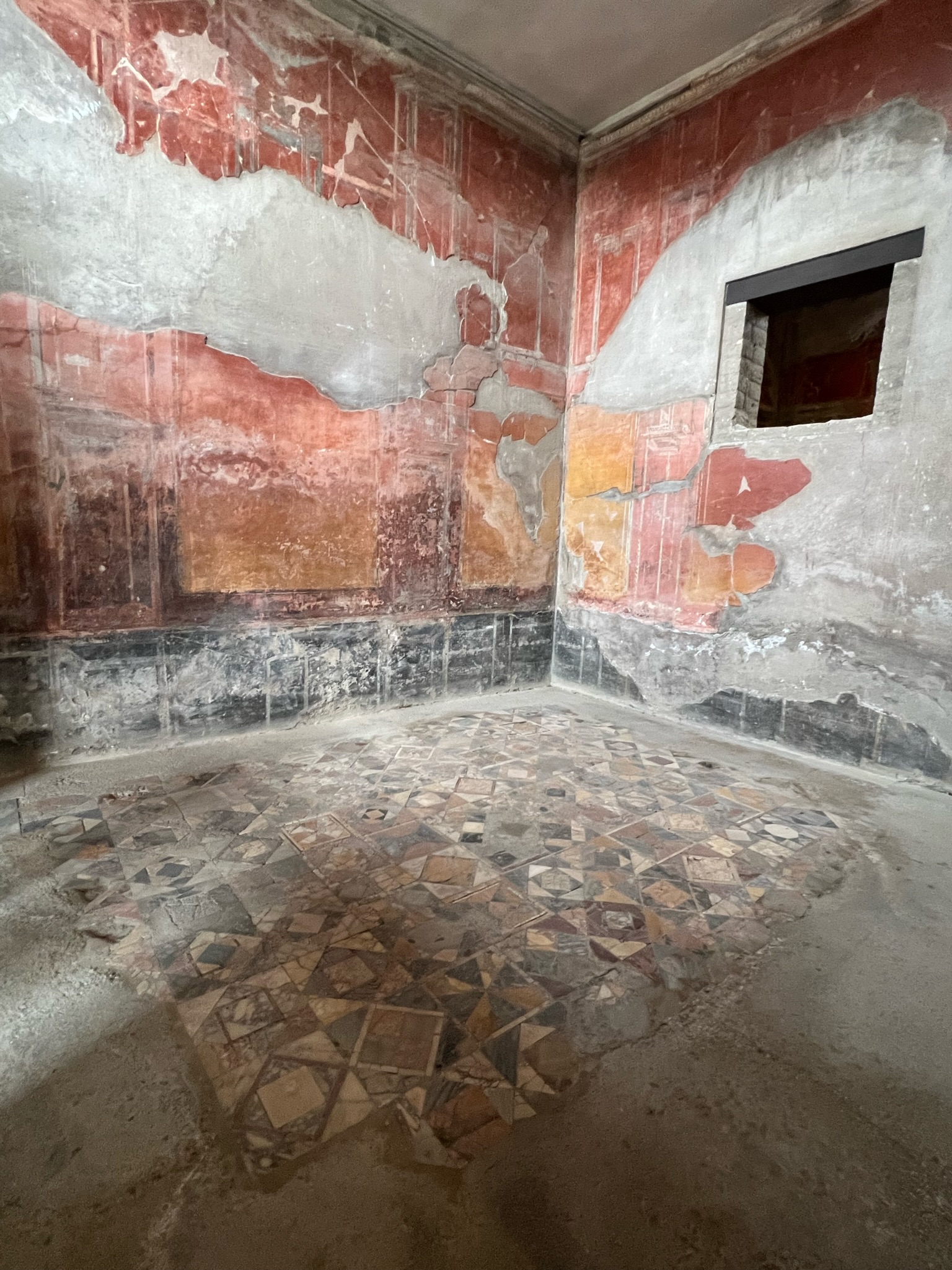
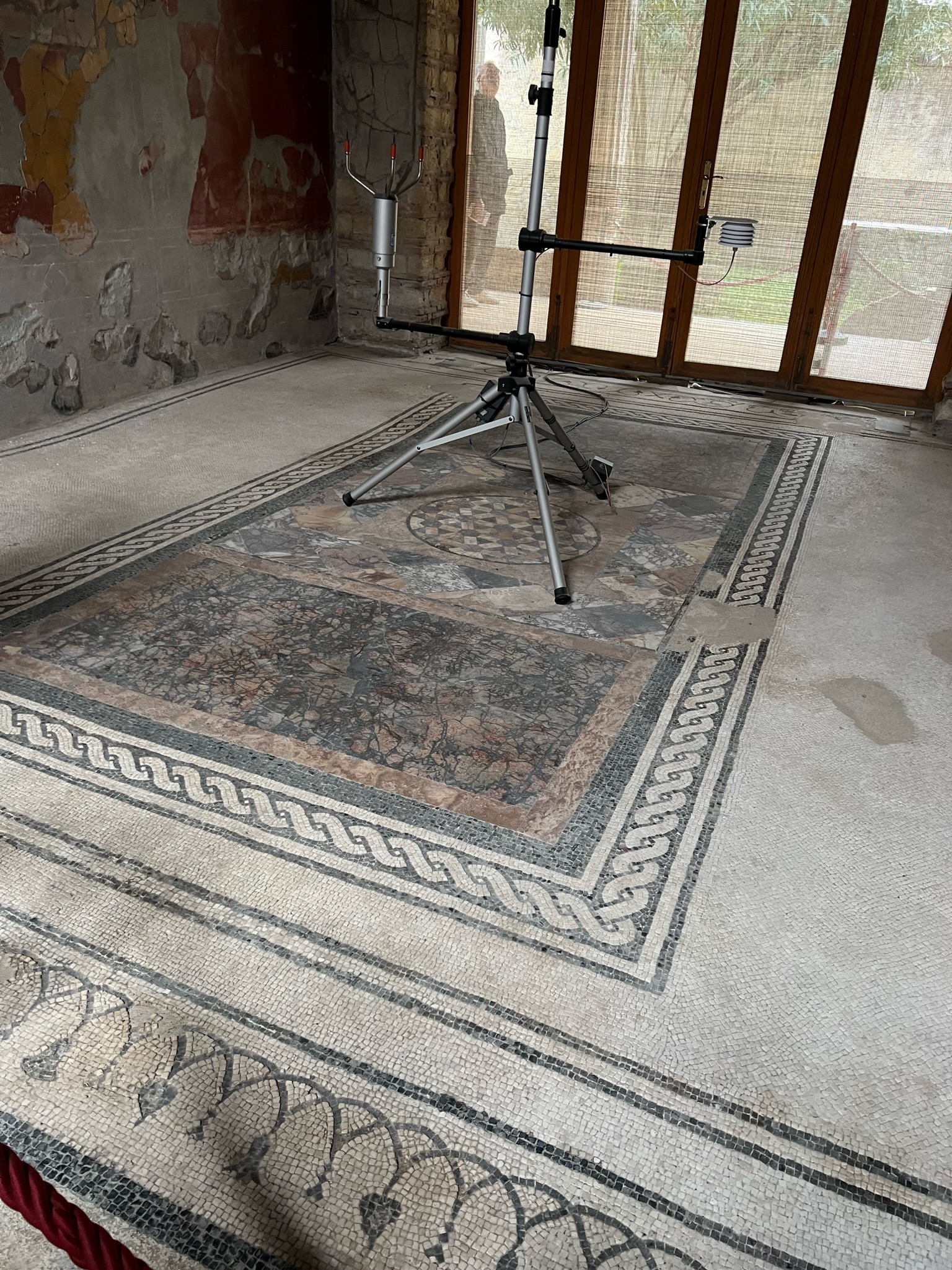
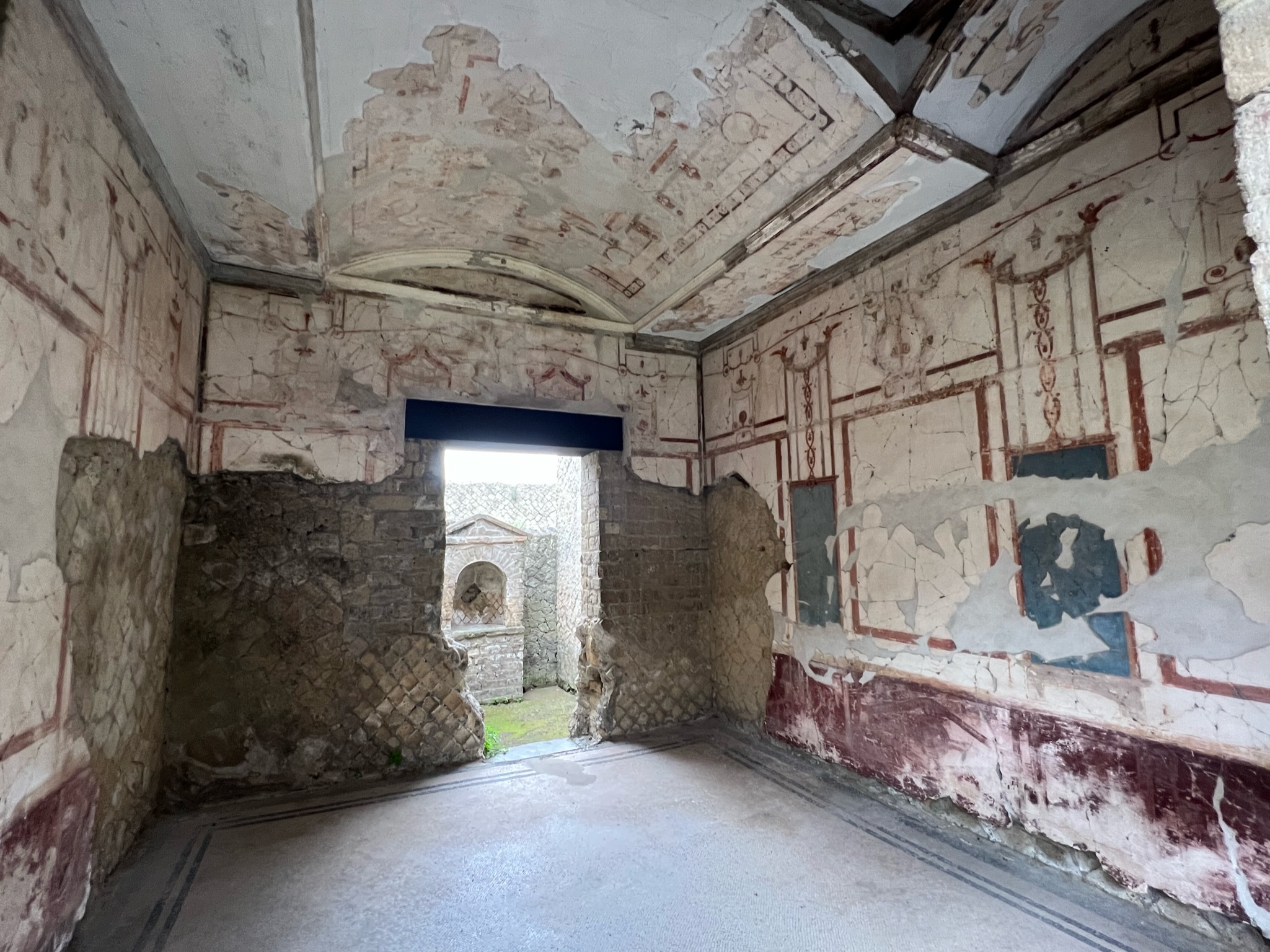
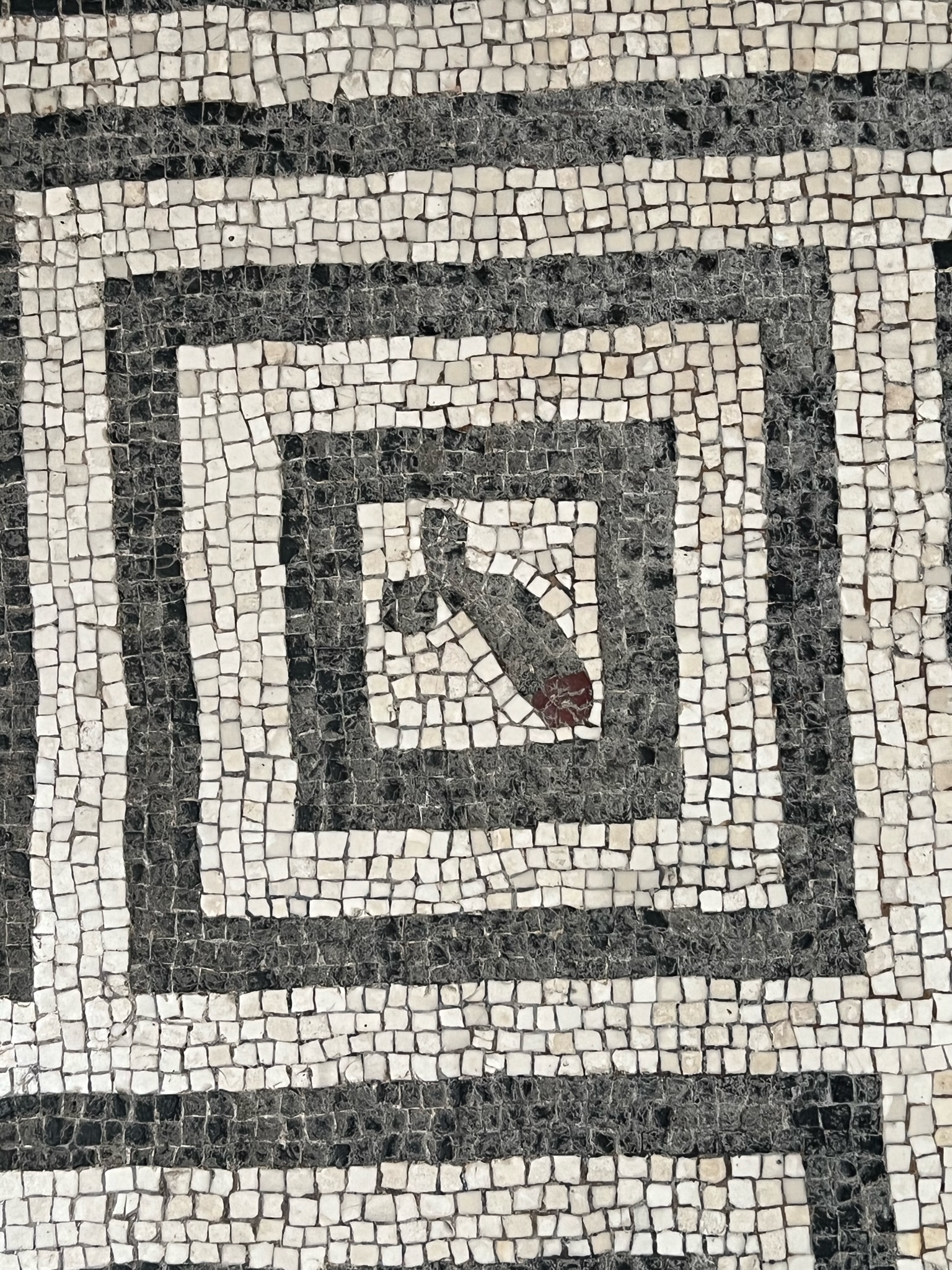
The city was interesting to walk through. Some of the larger homes must have been quite fantastic. Many of them still had remnants of frescoes painted on the walls. Large gardens in the courtyards would have been lovely, I imagine. Several restaurants have been found as well. It was common at the time for people to eat in the restaurants during the day and at home at night. And of course, there was the brothel. The Romans loved their gods and sex, and there are tributes to both everywhere.

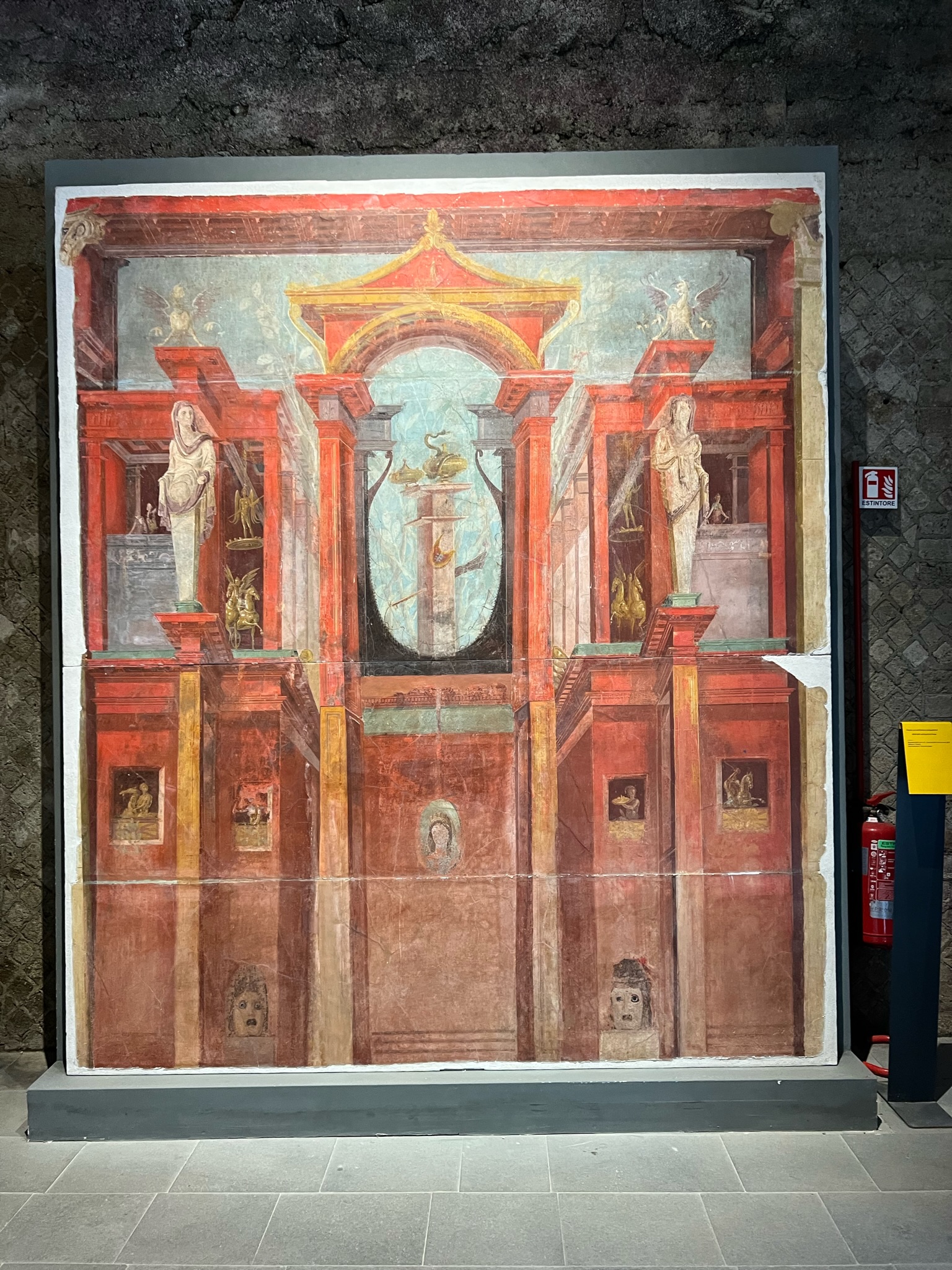
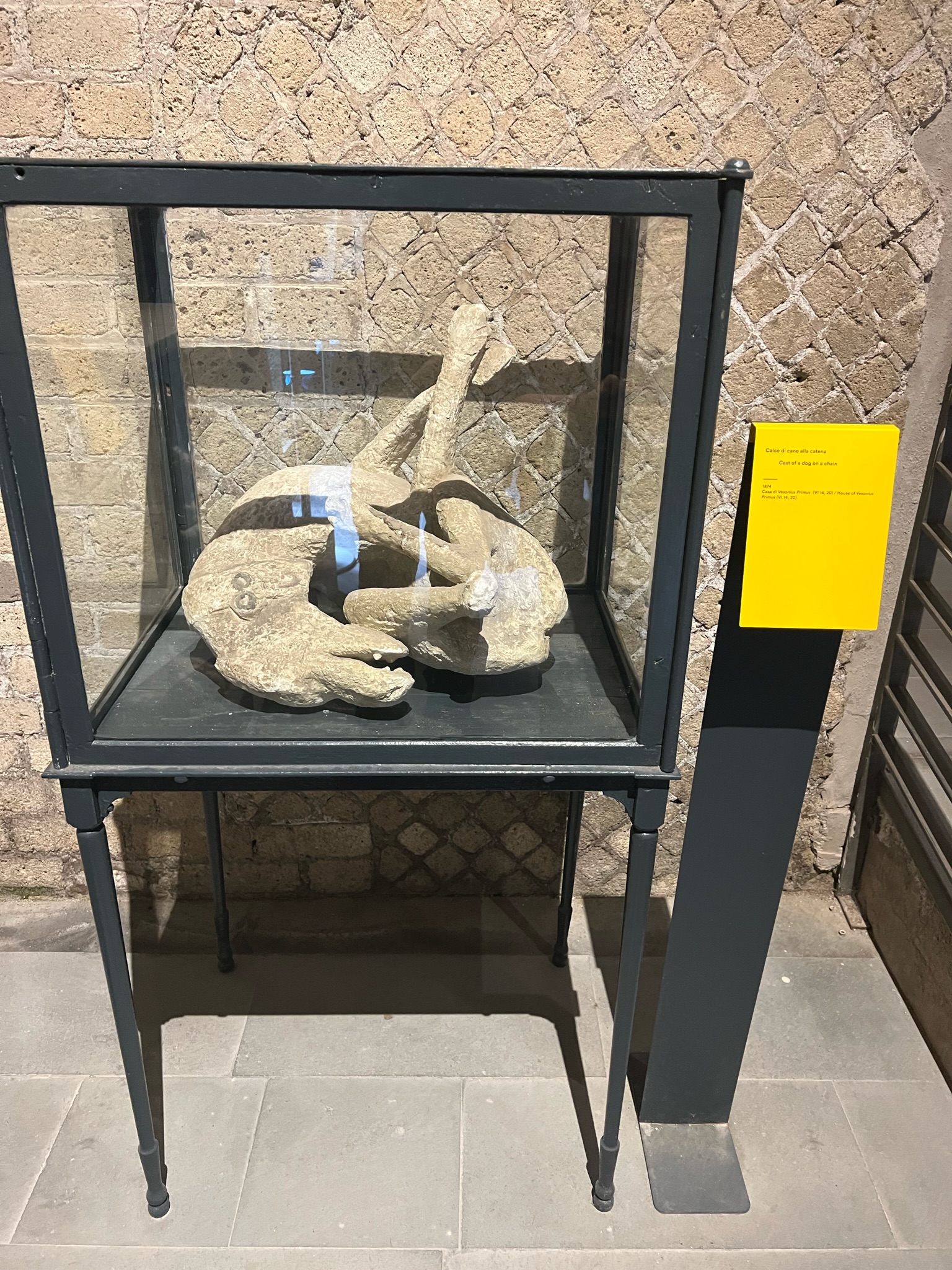

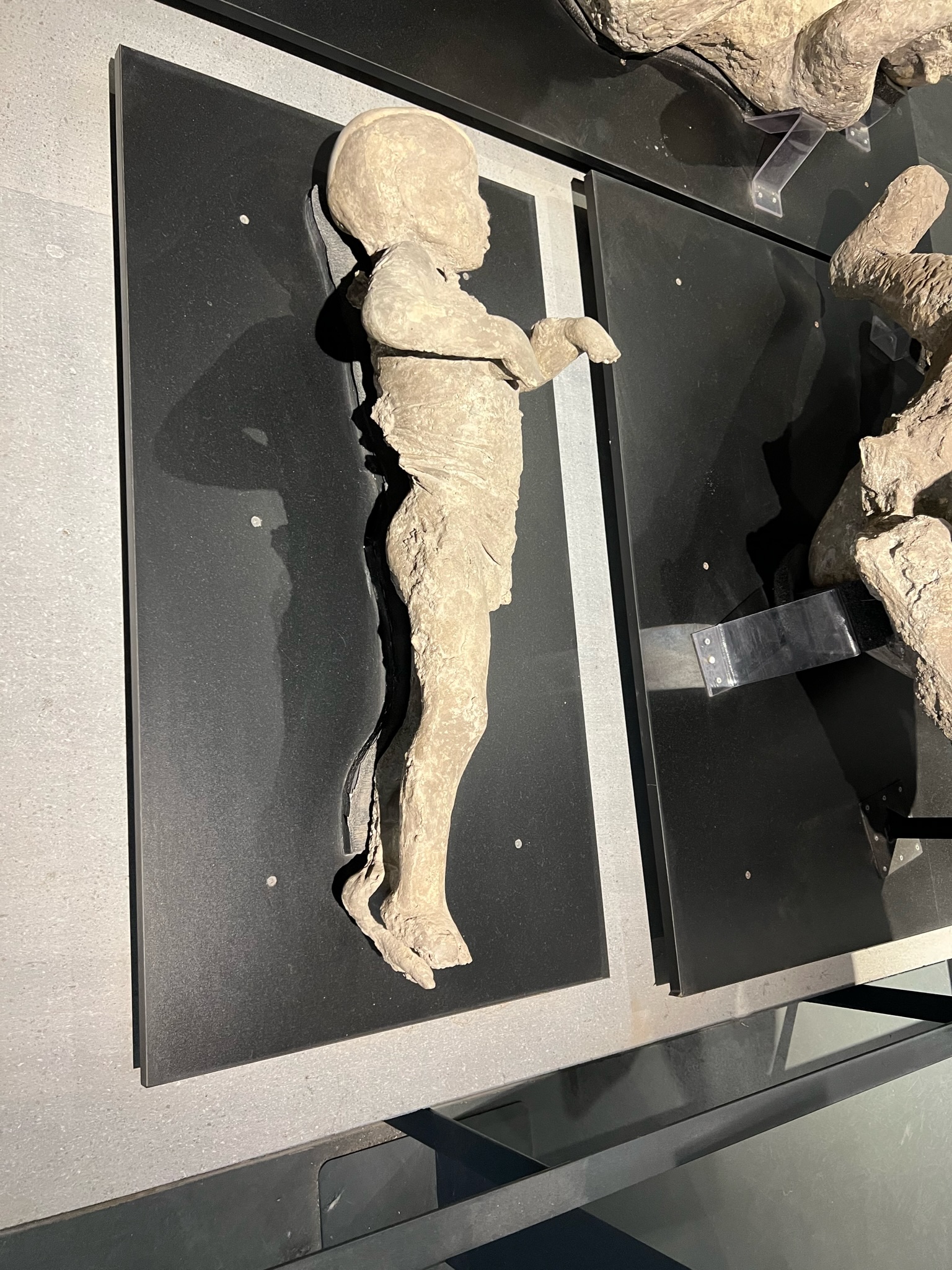


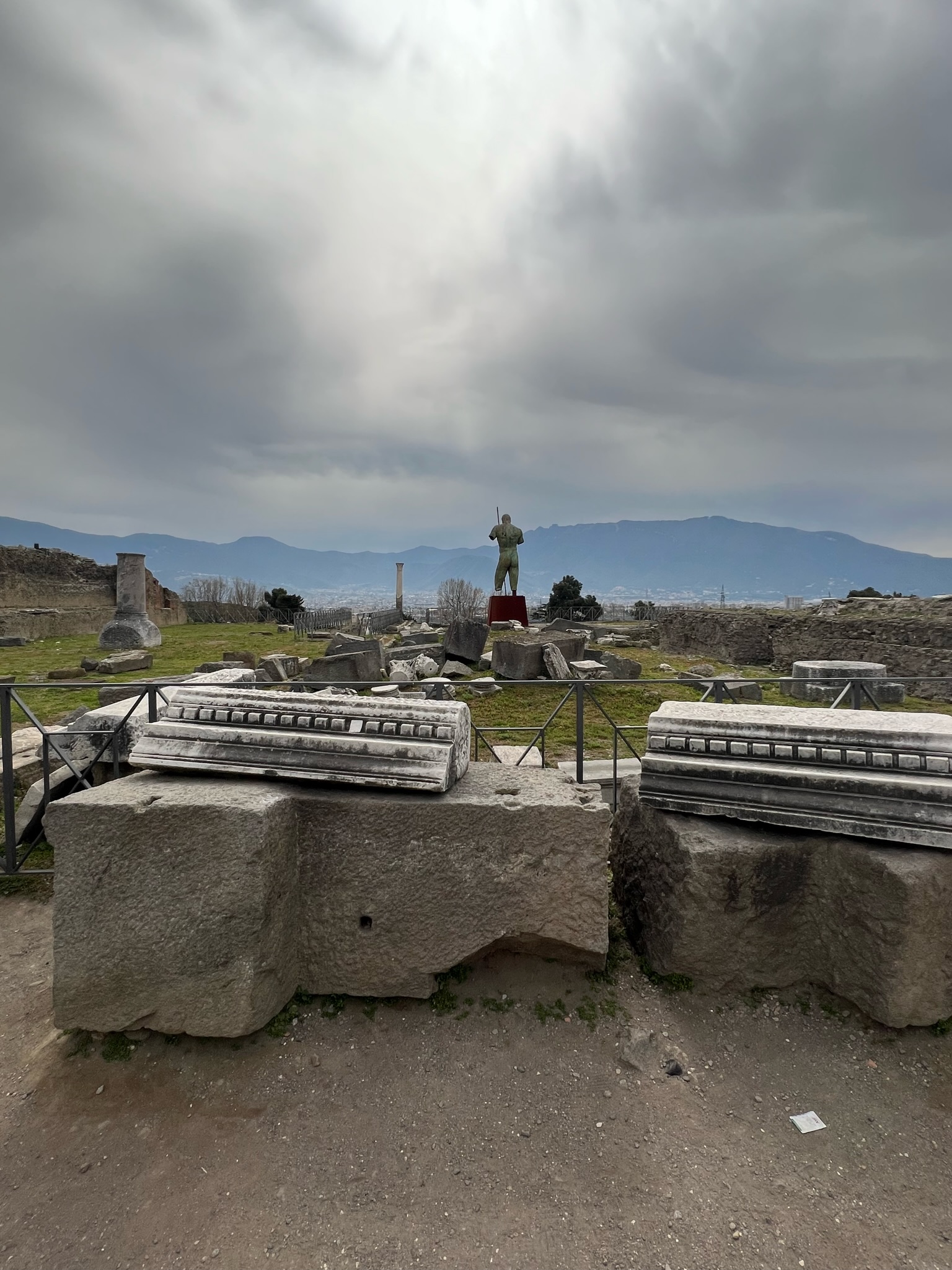
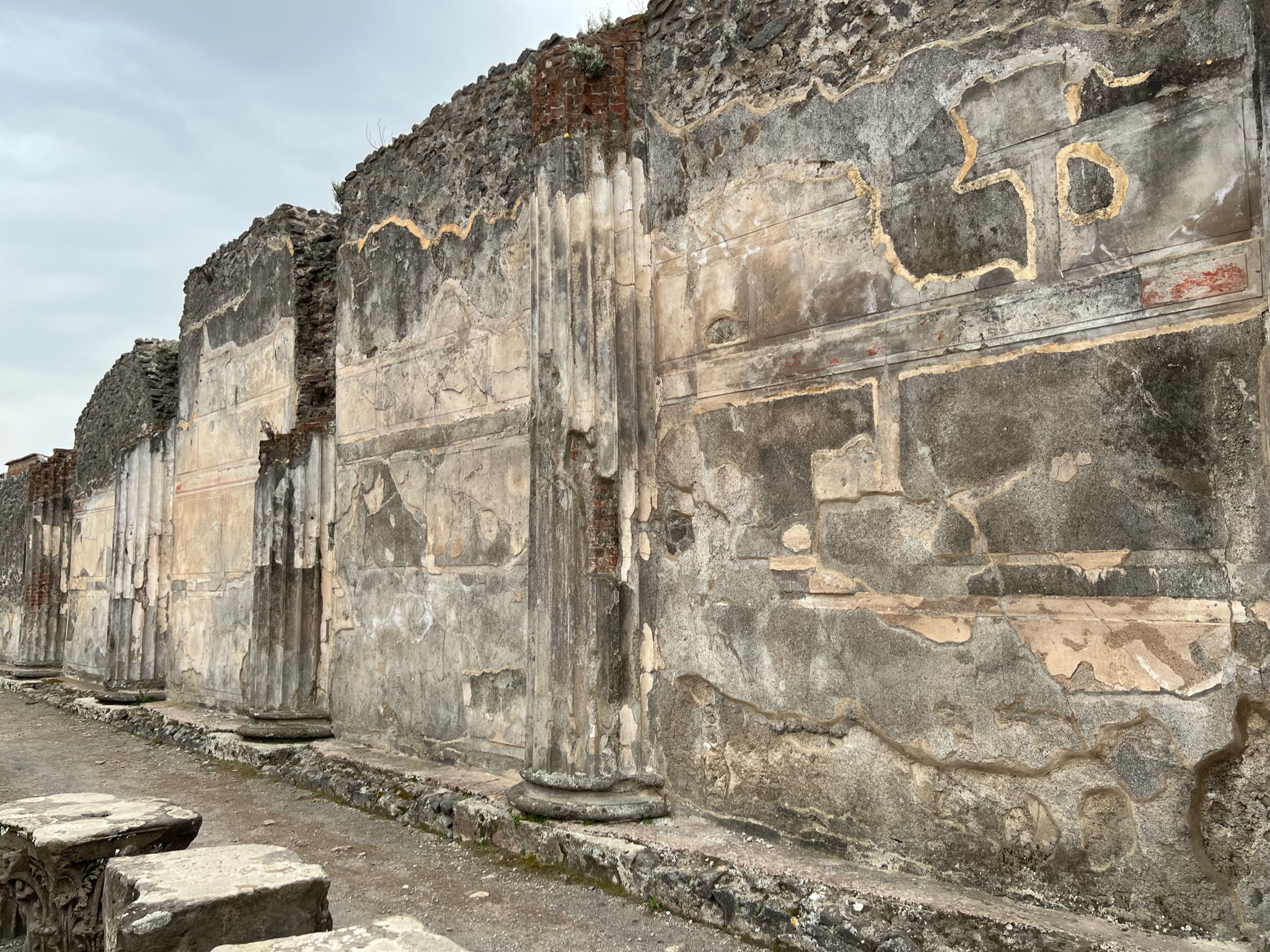
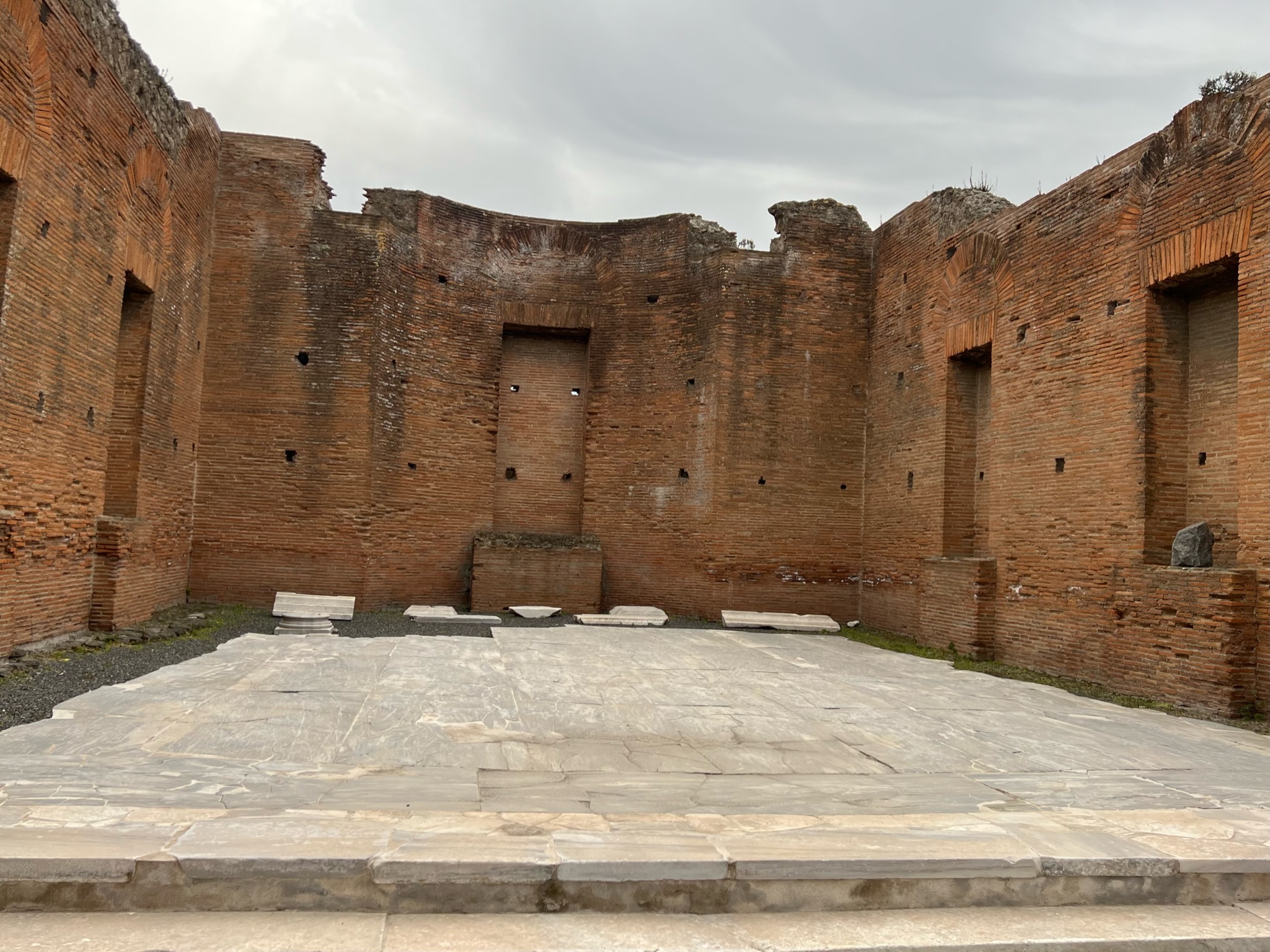
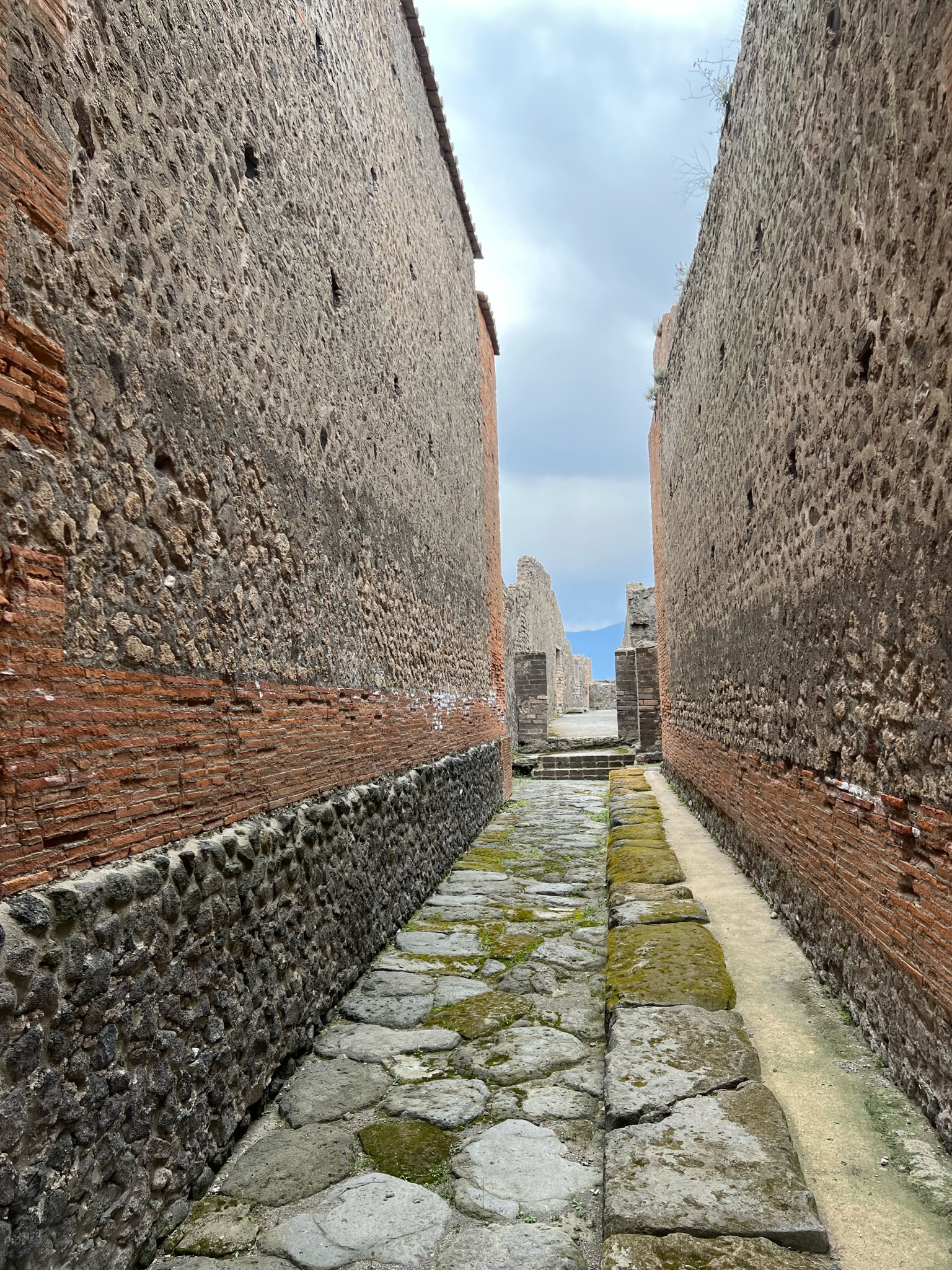
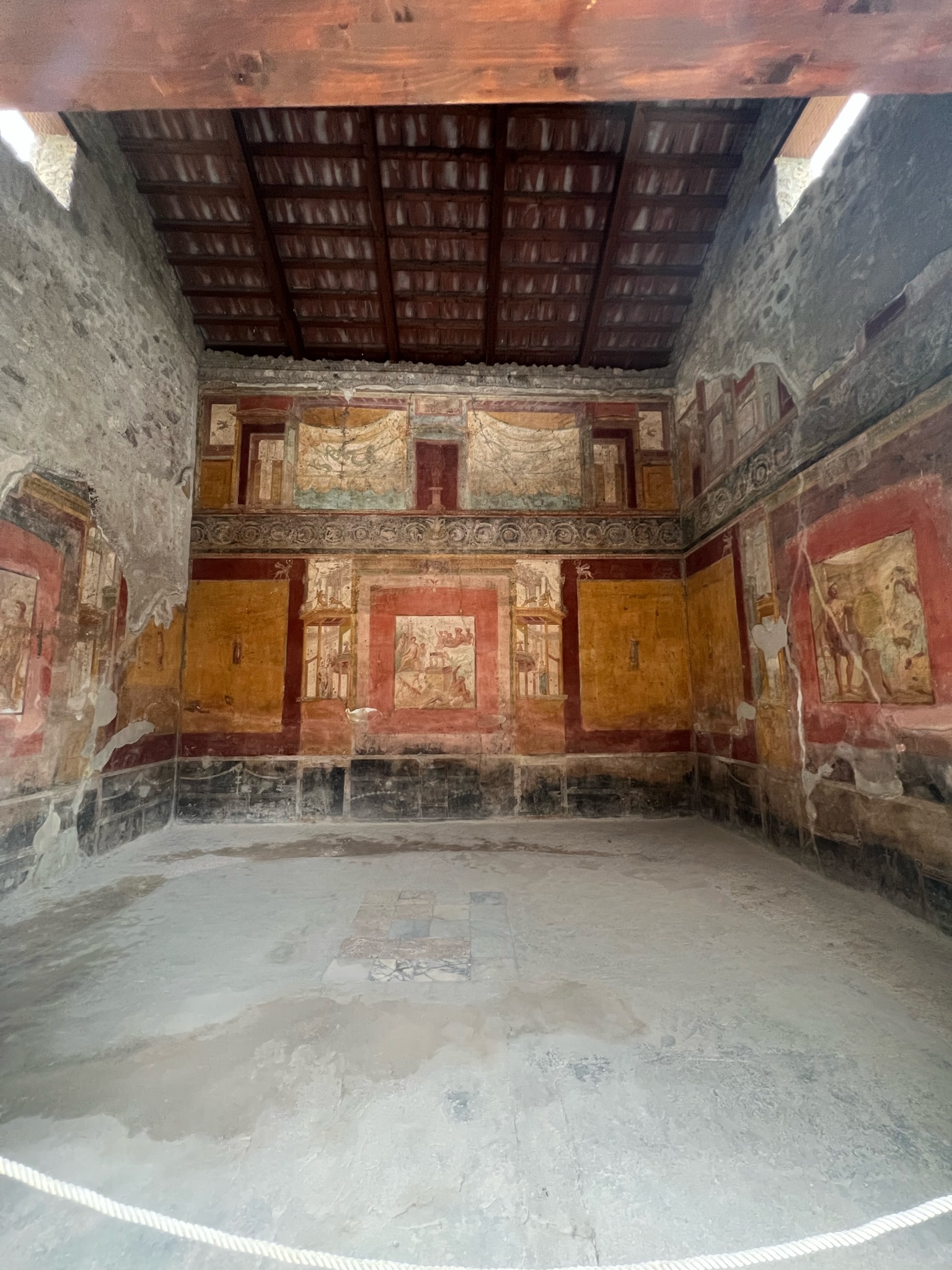


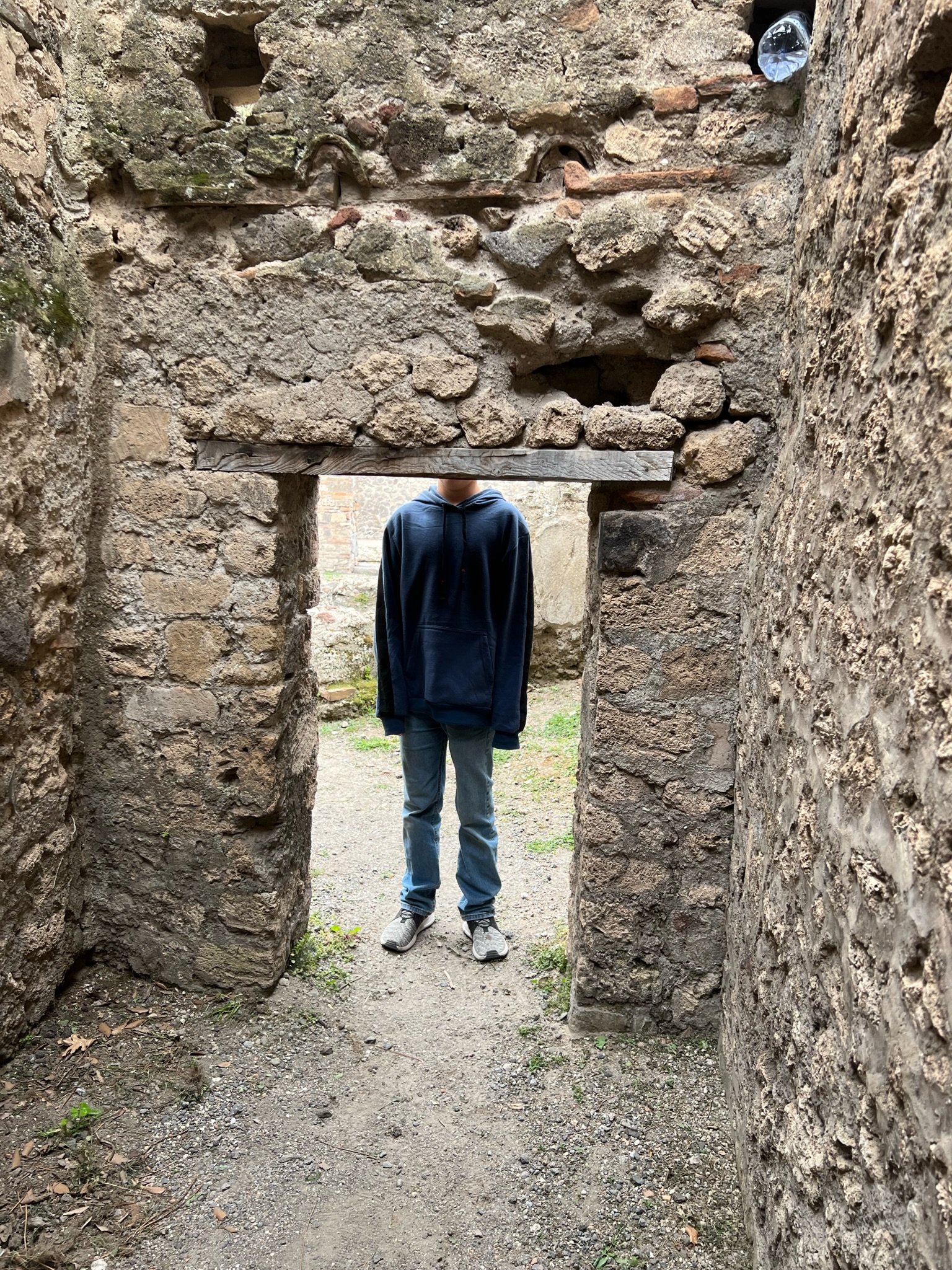

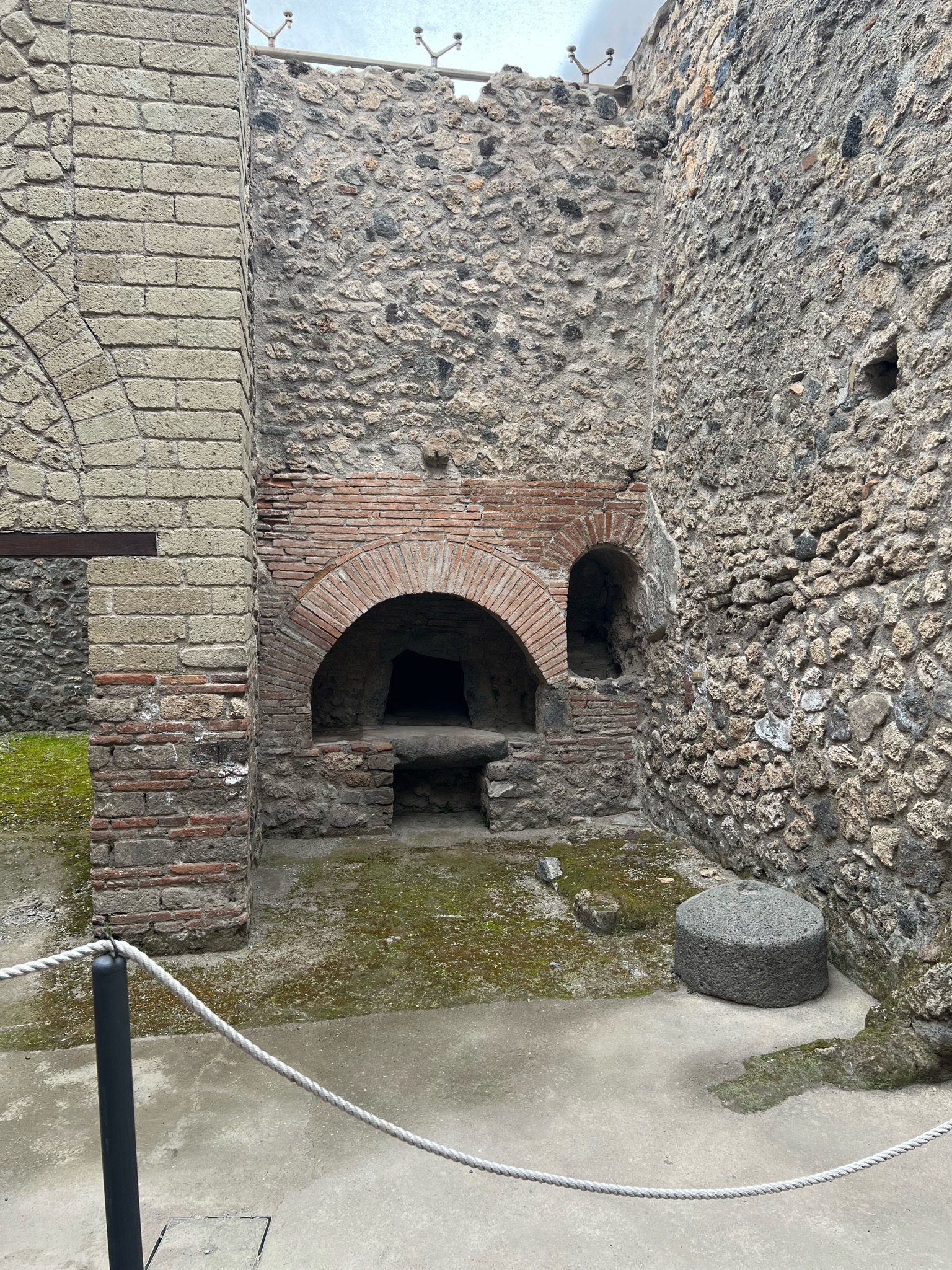
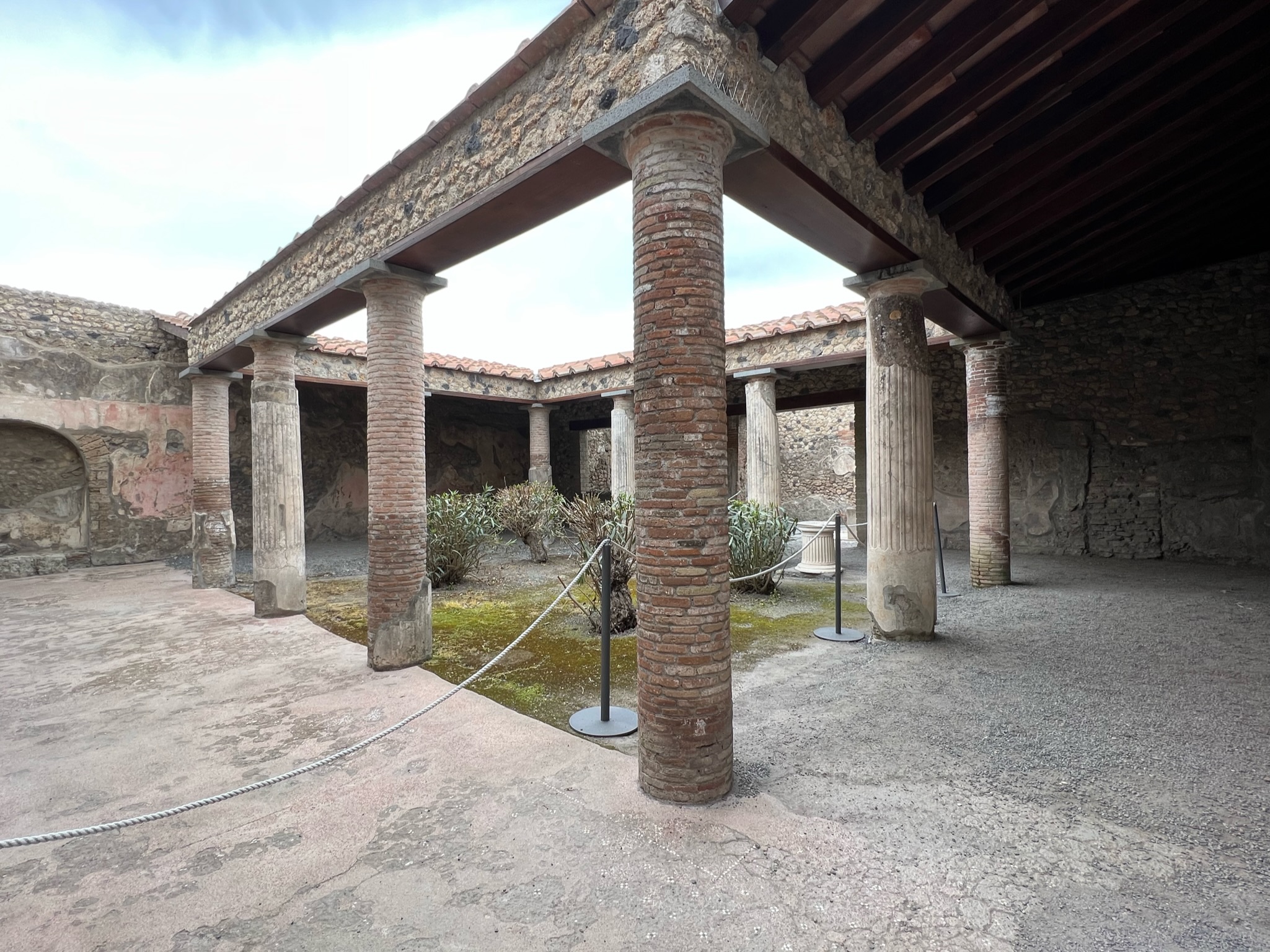
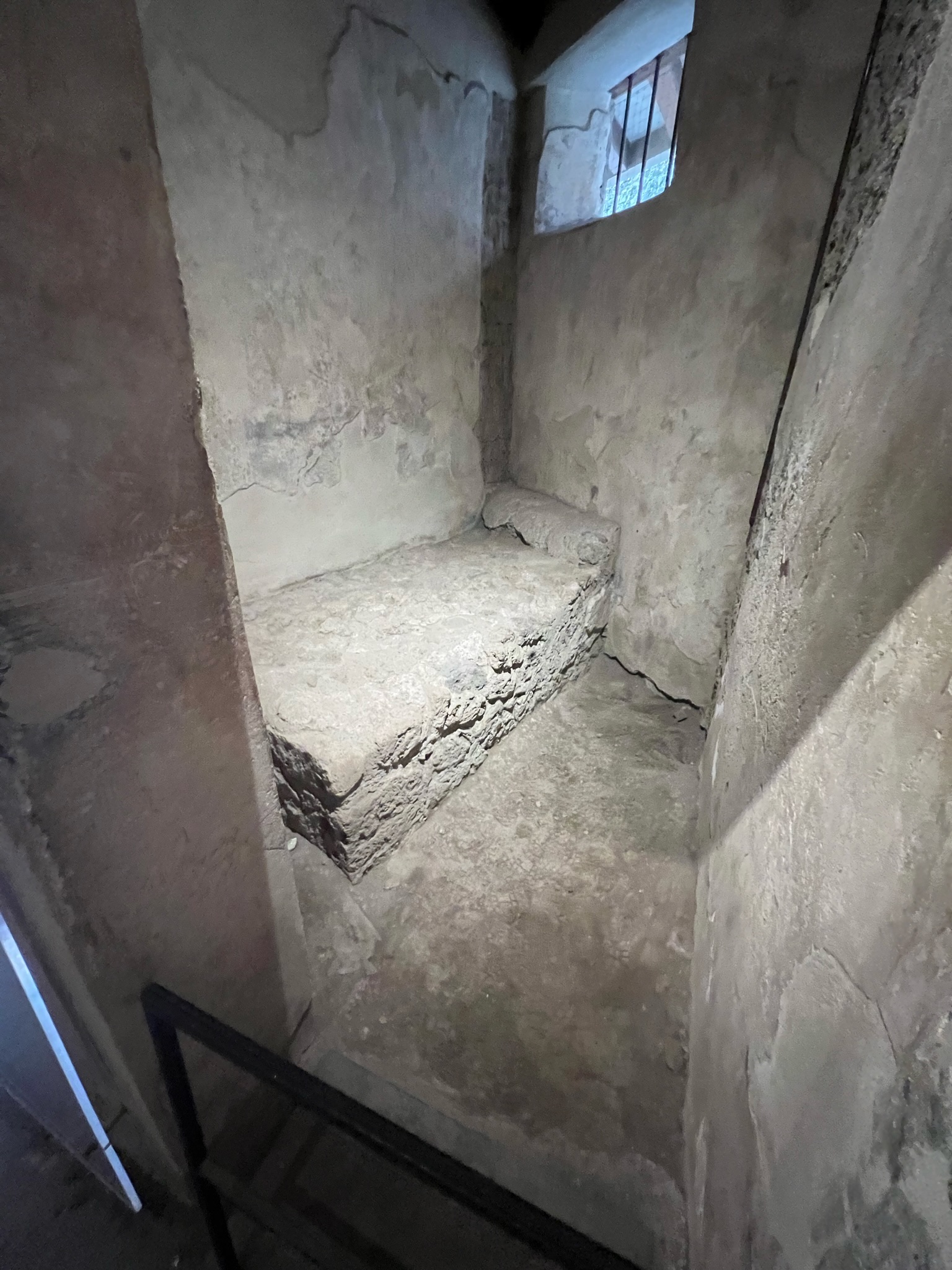
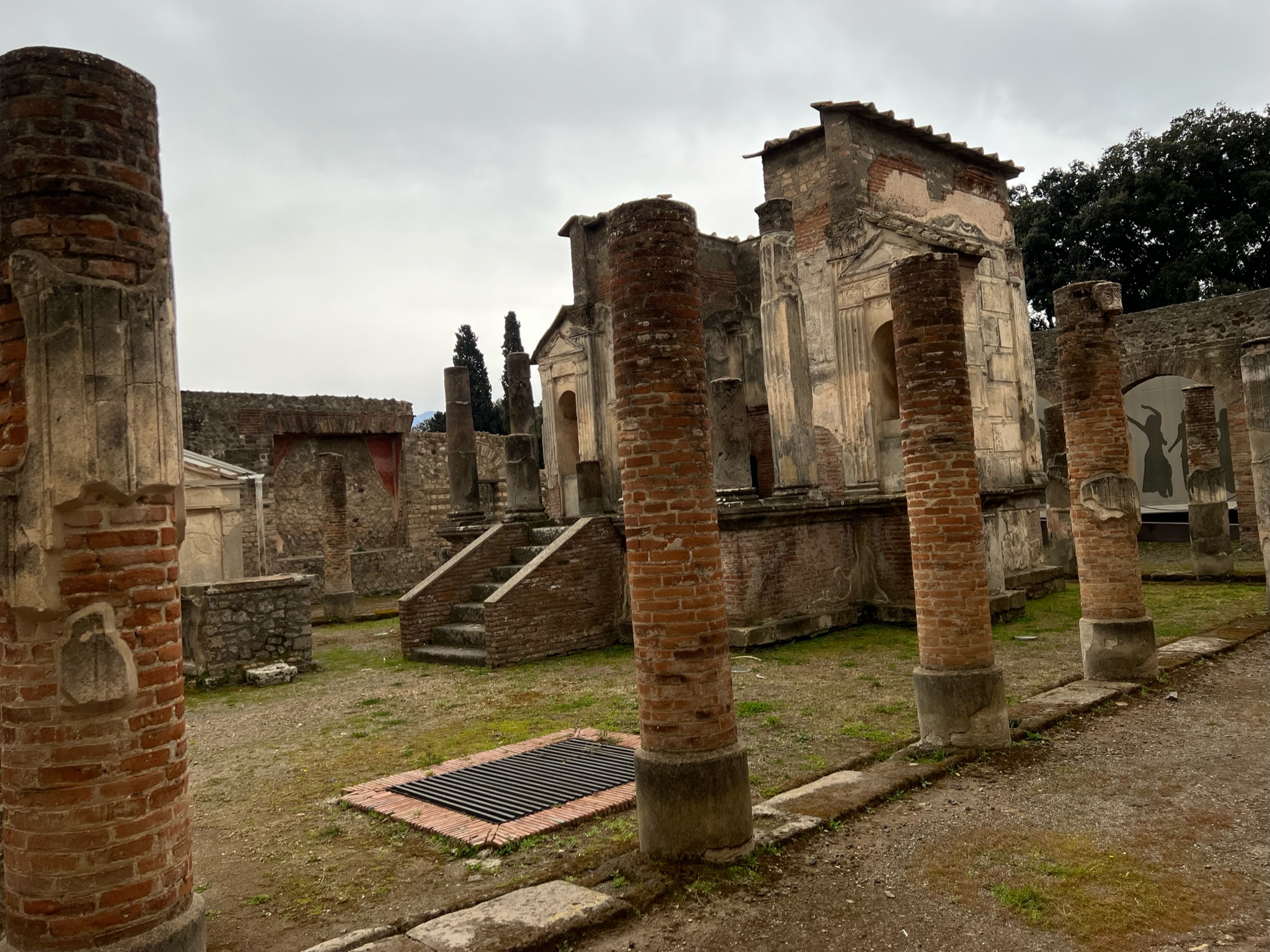
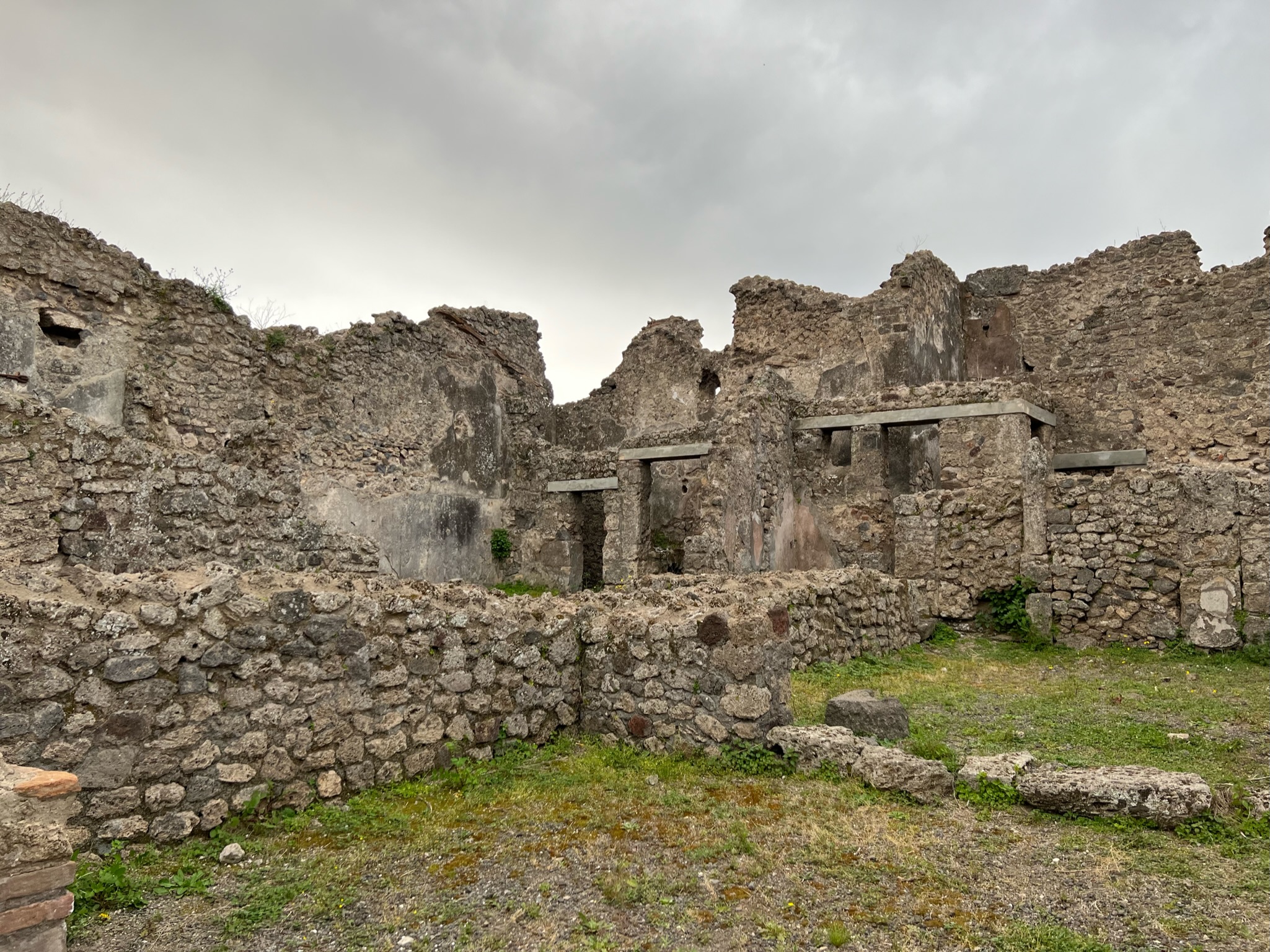
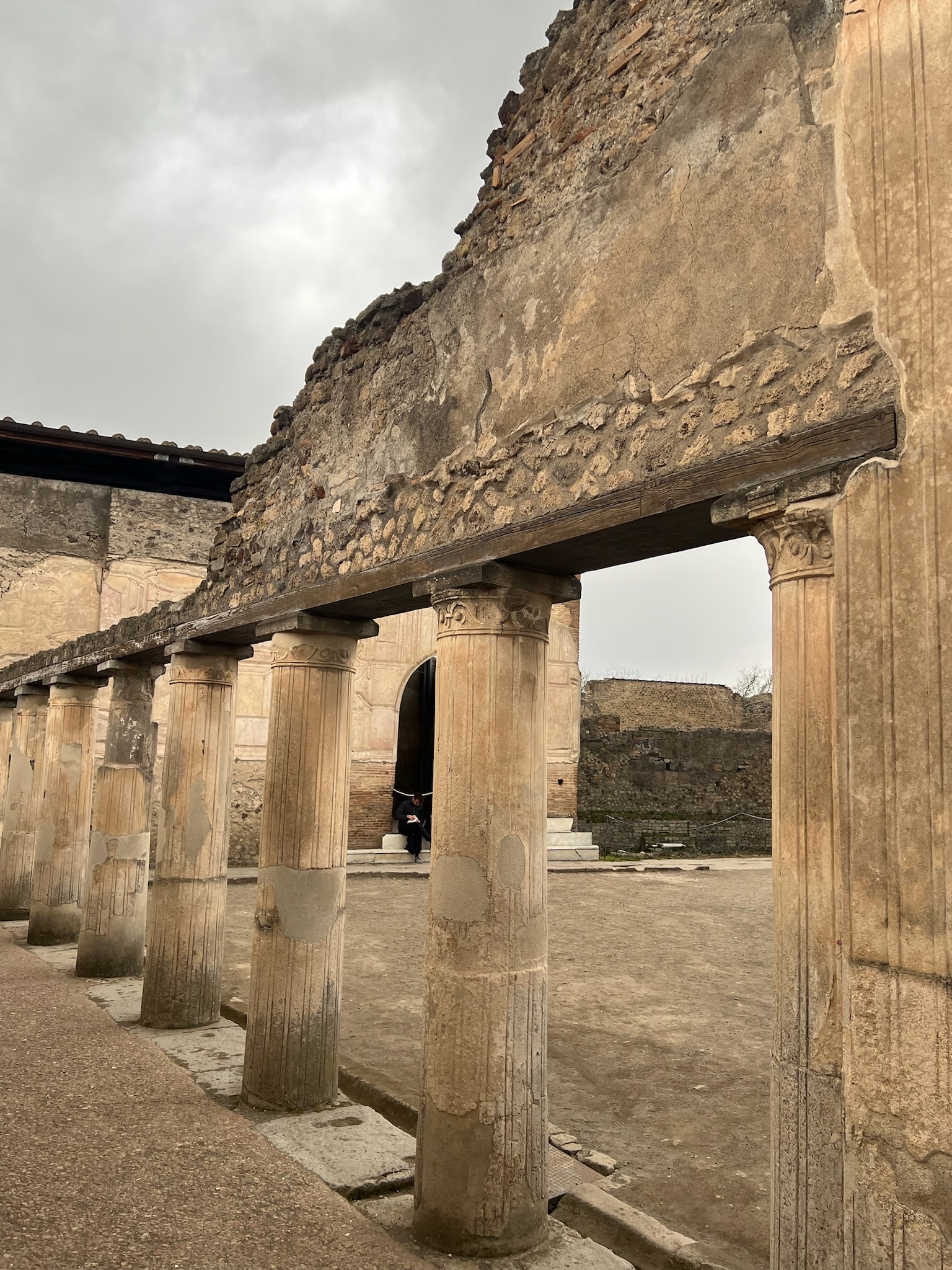
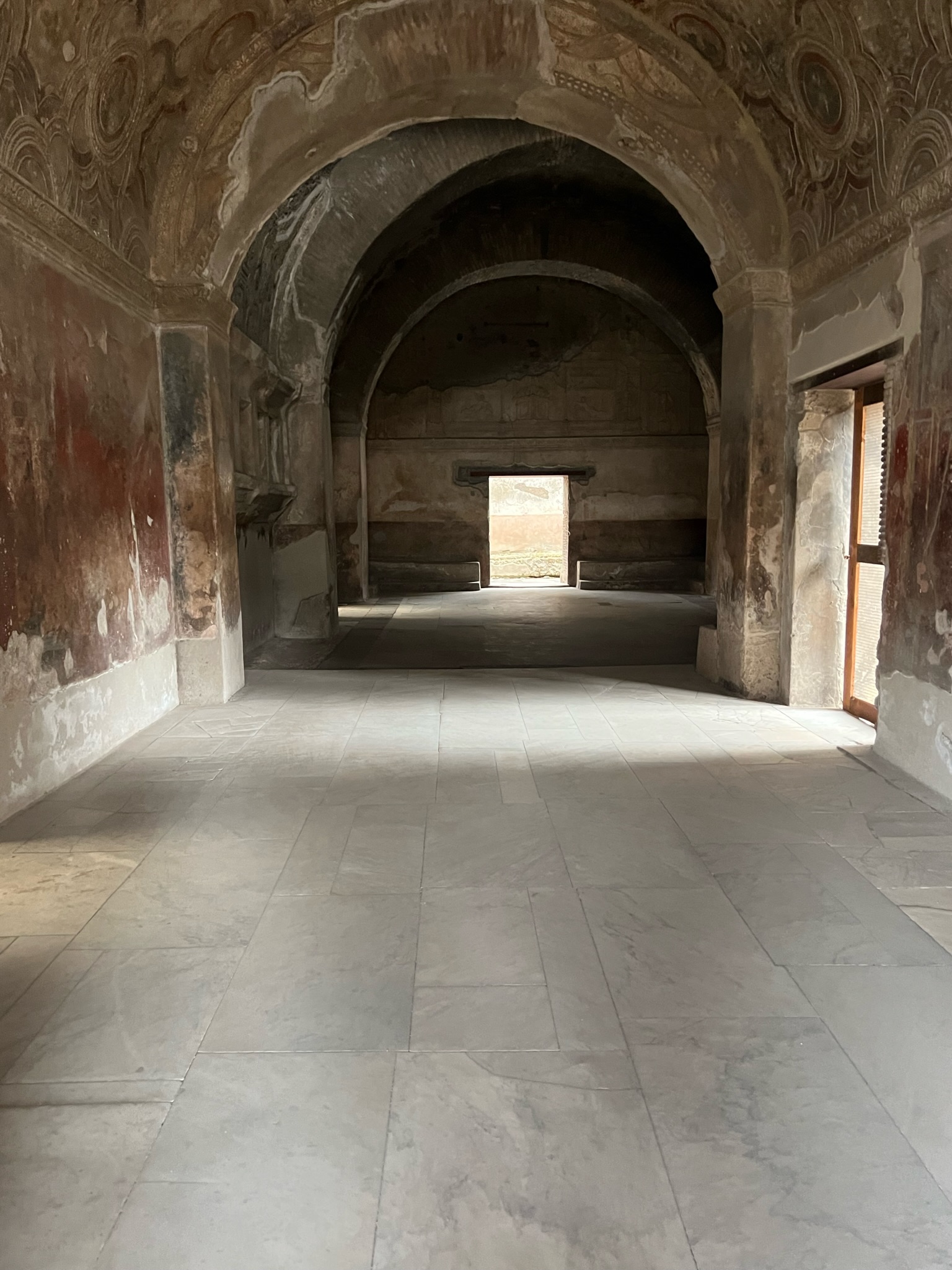
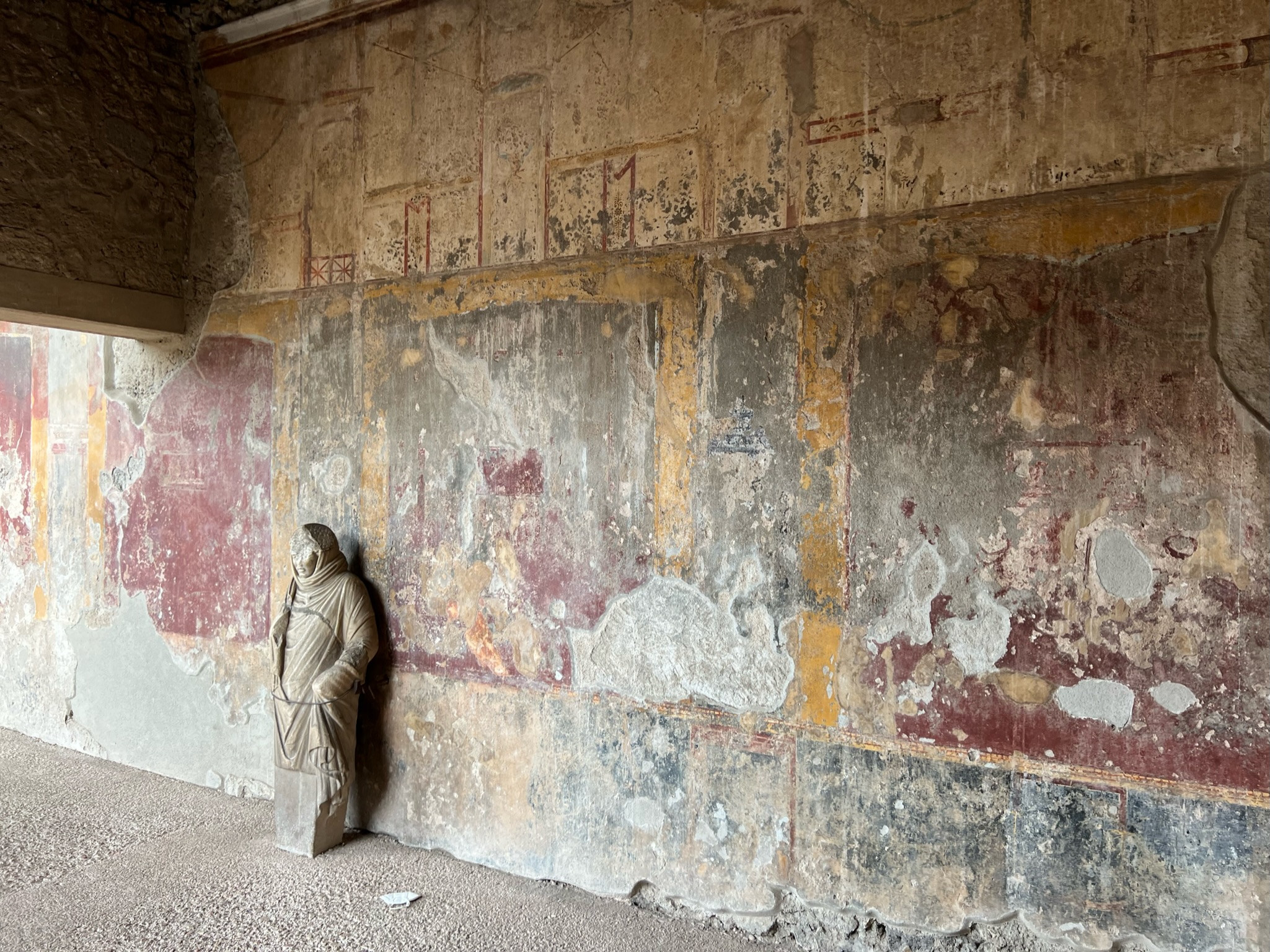
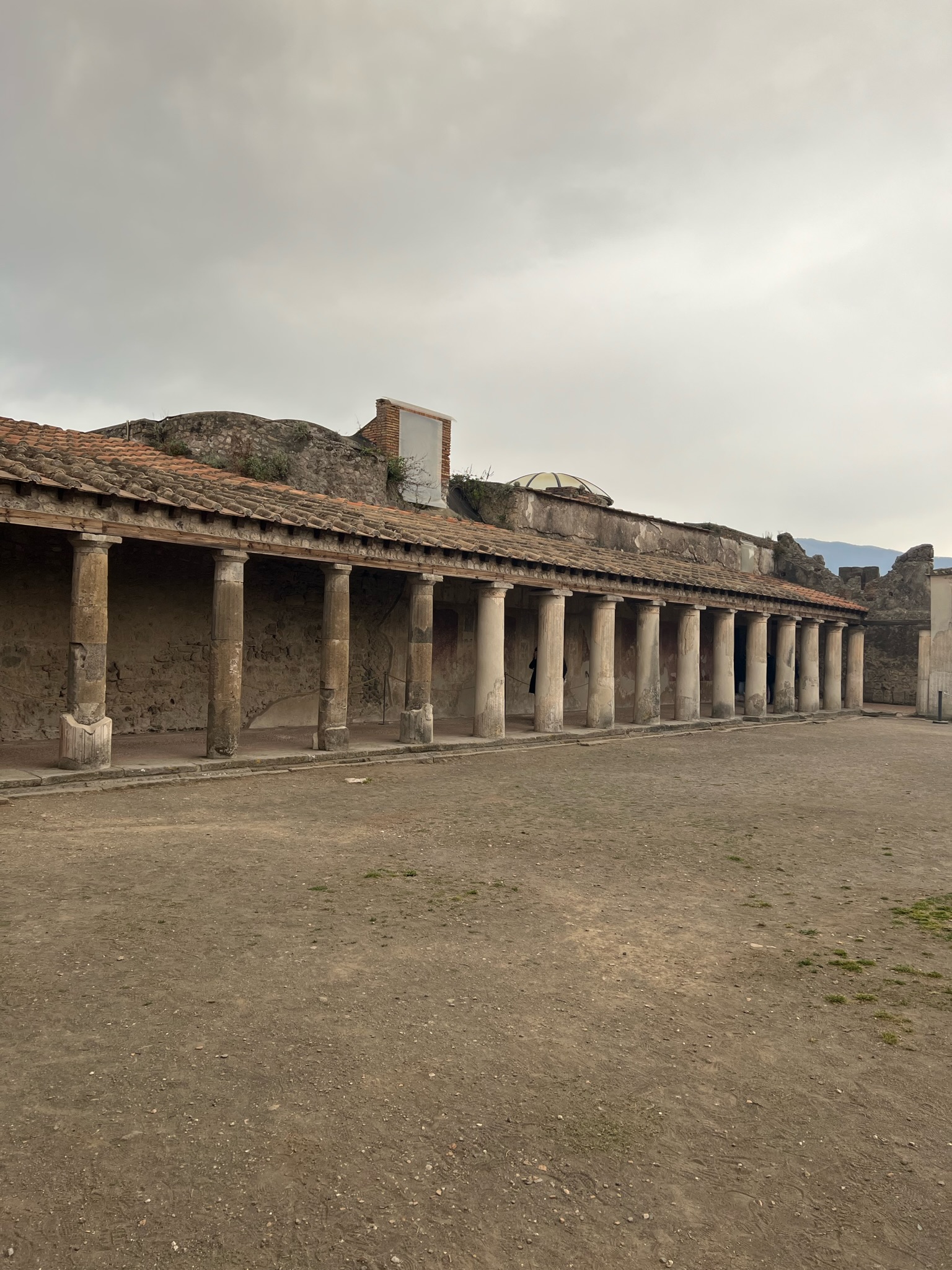
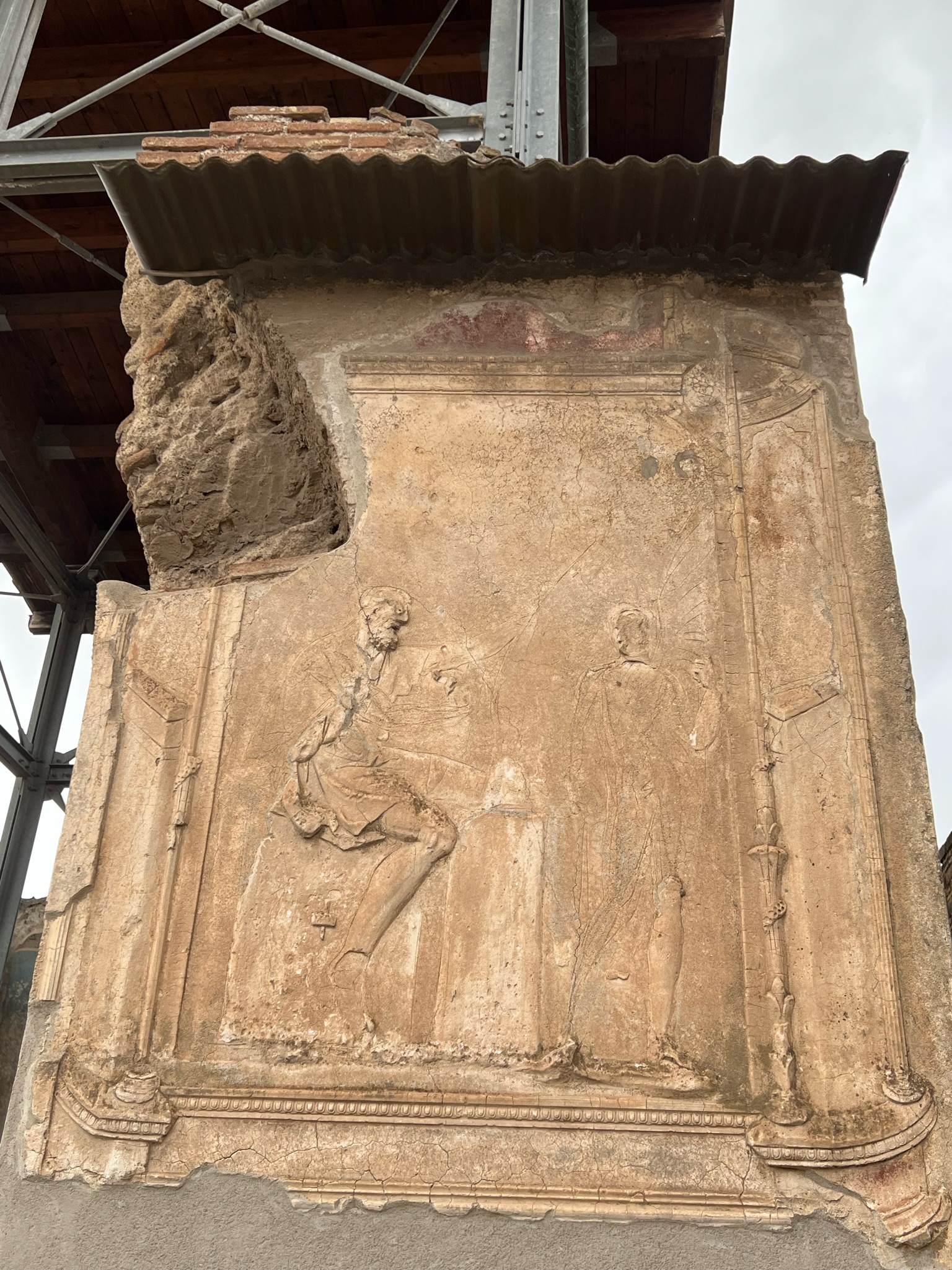


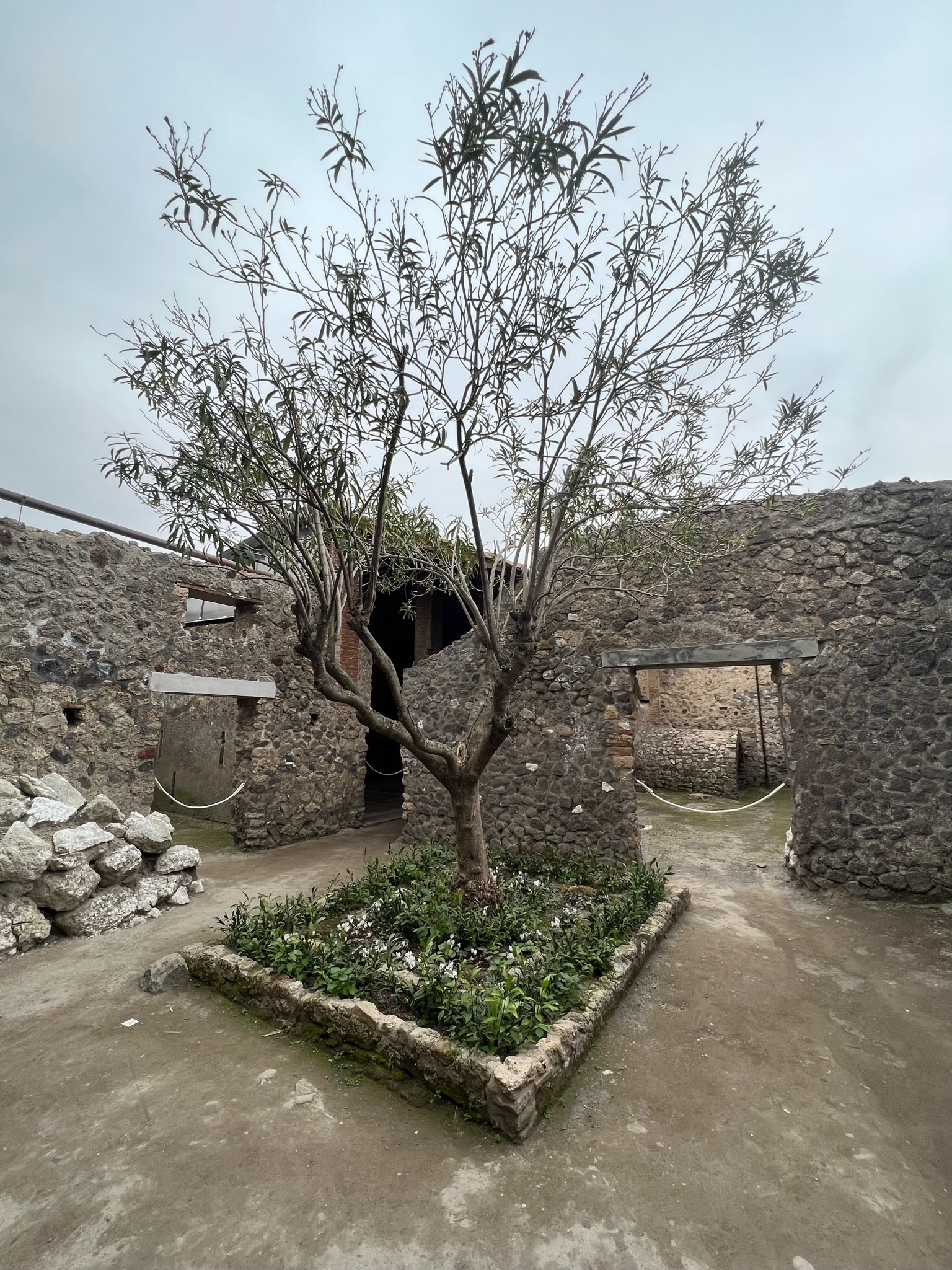
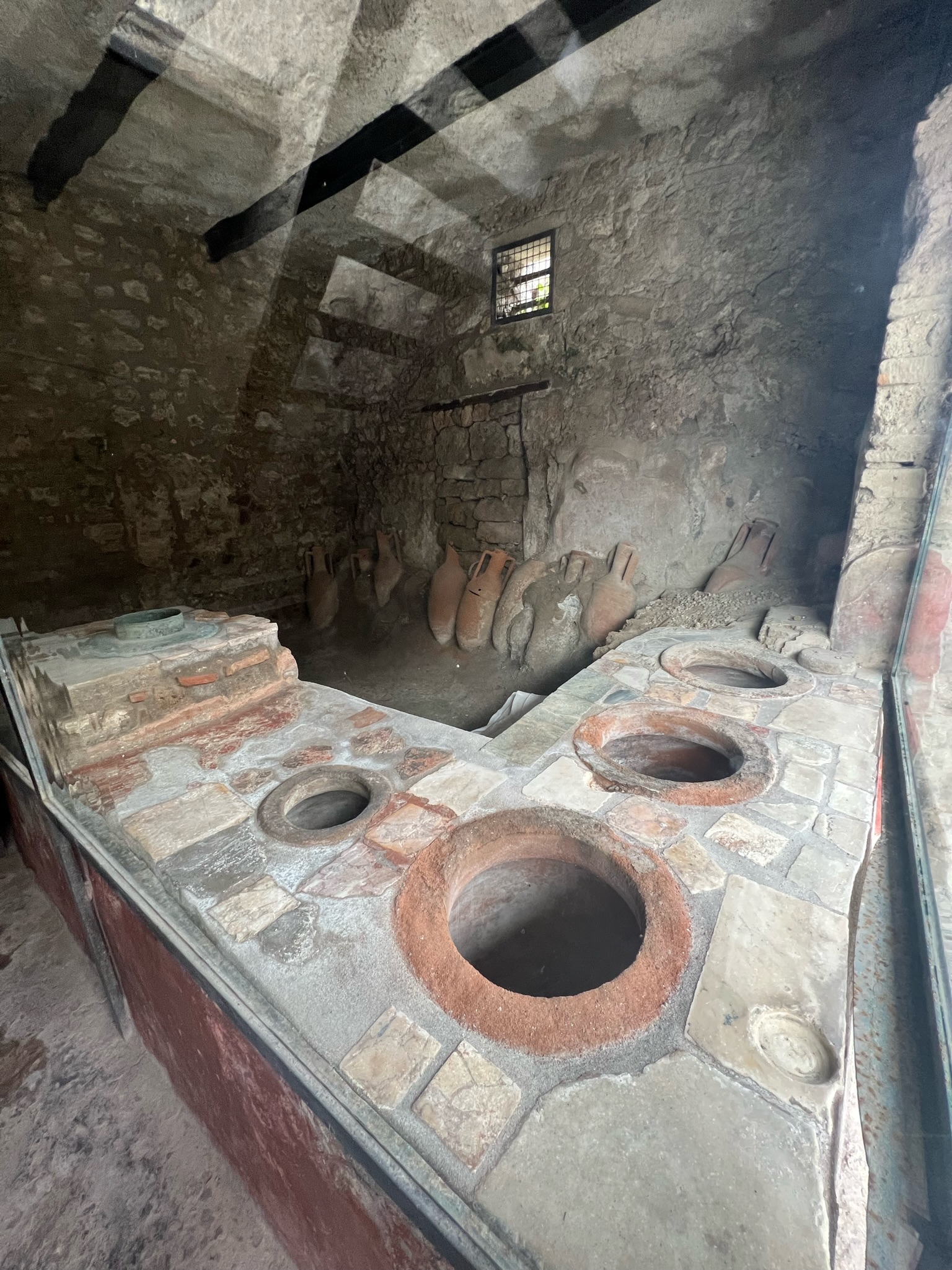
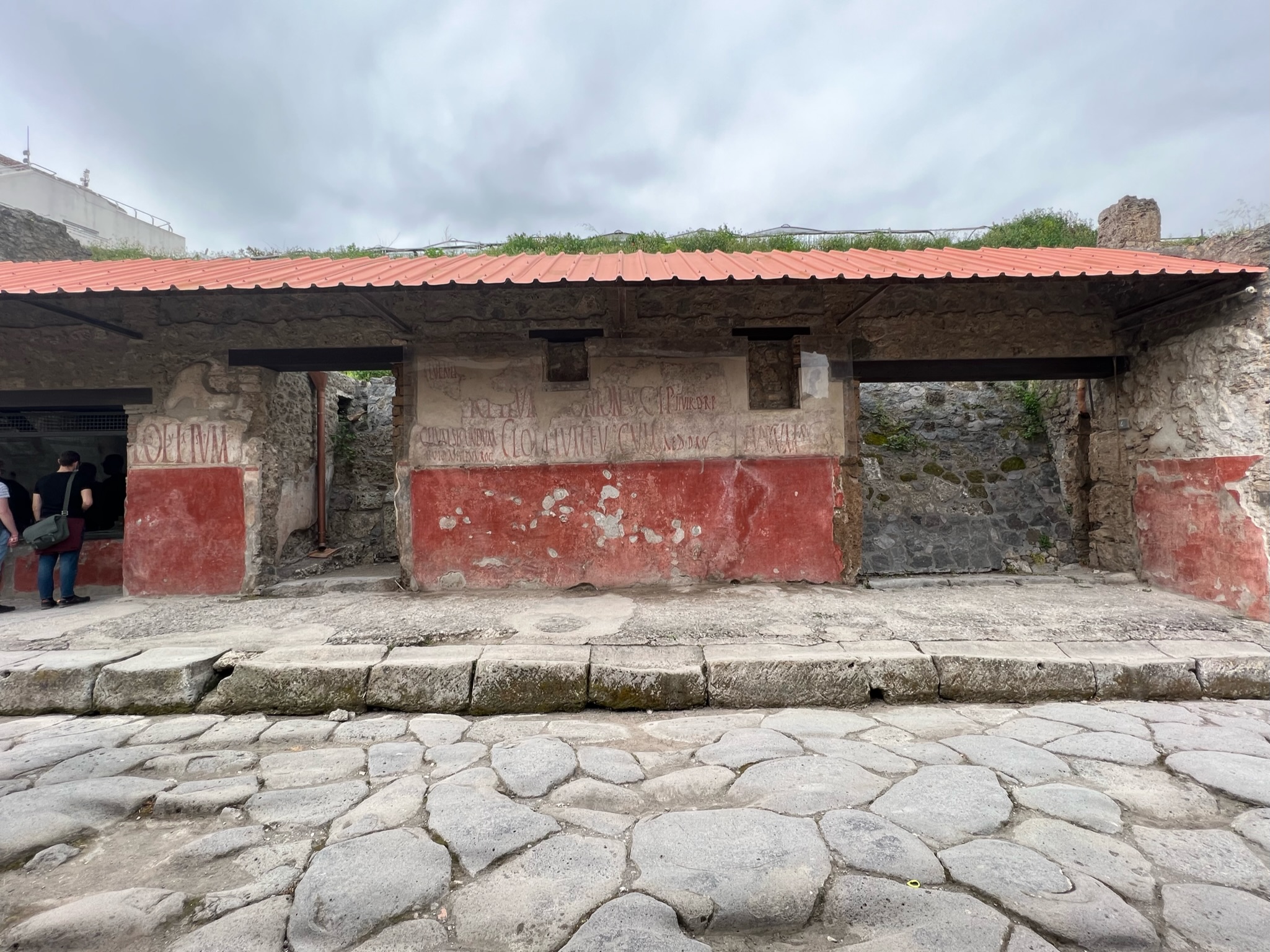
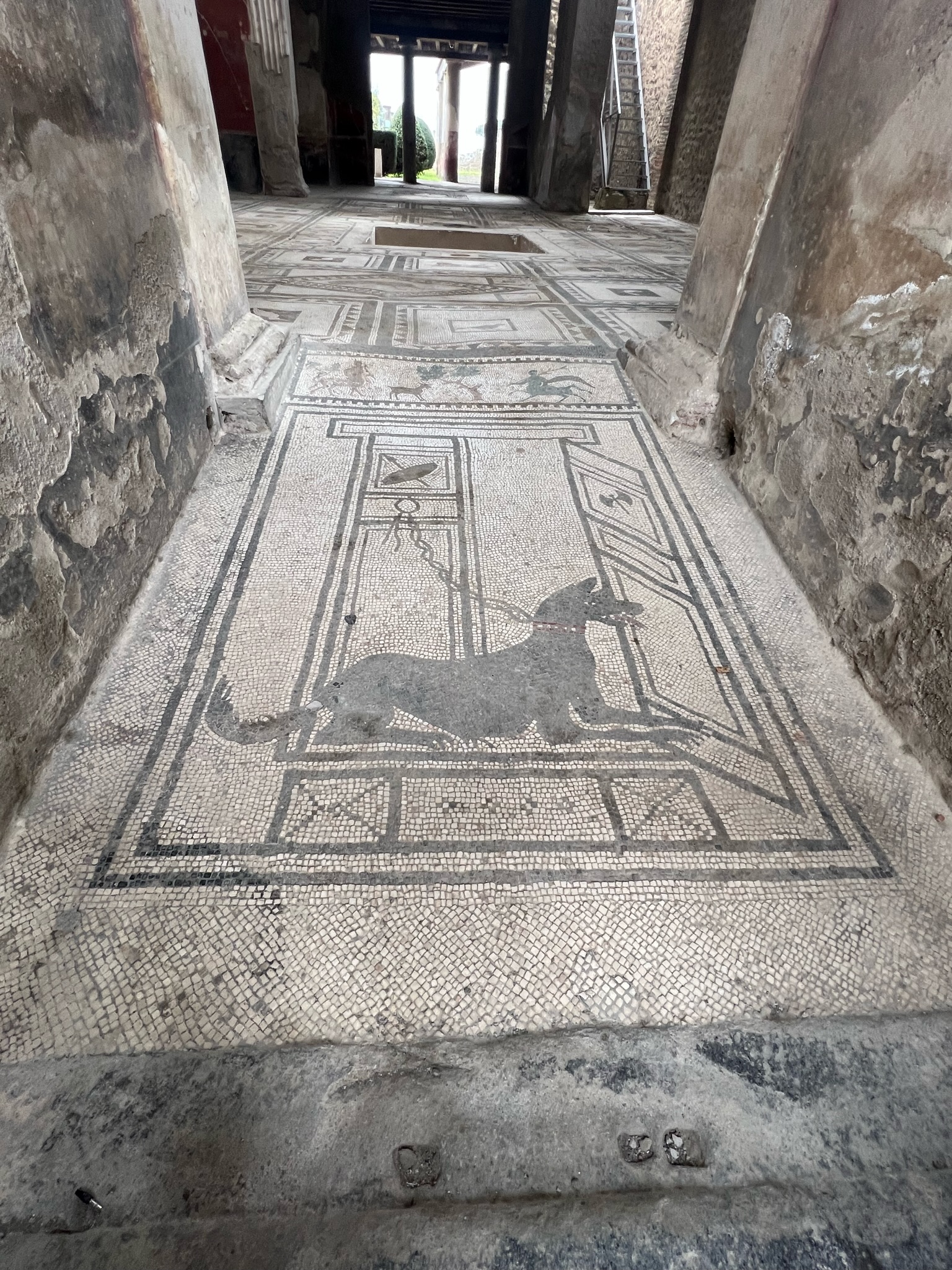

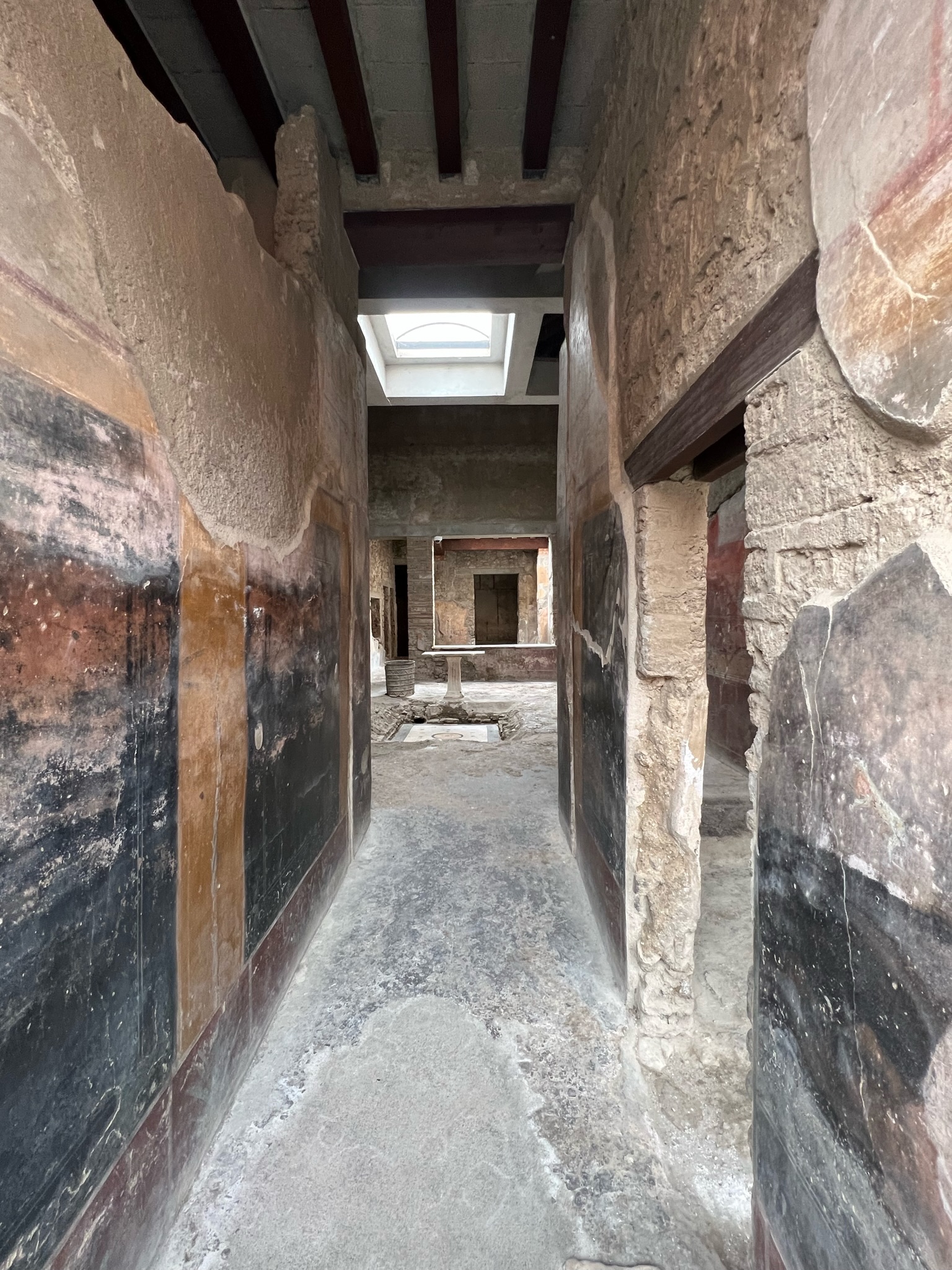
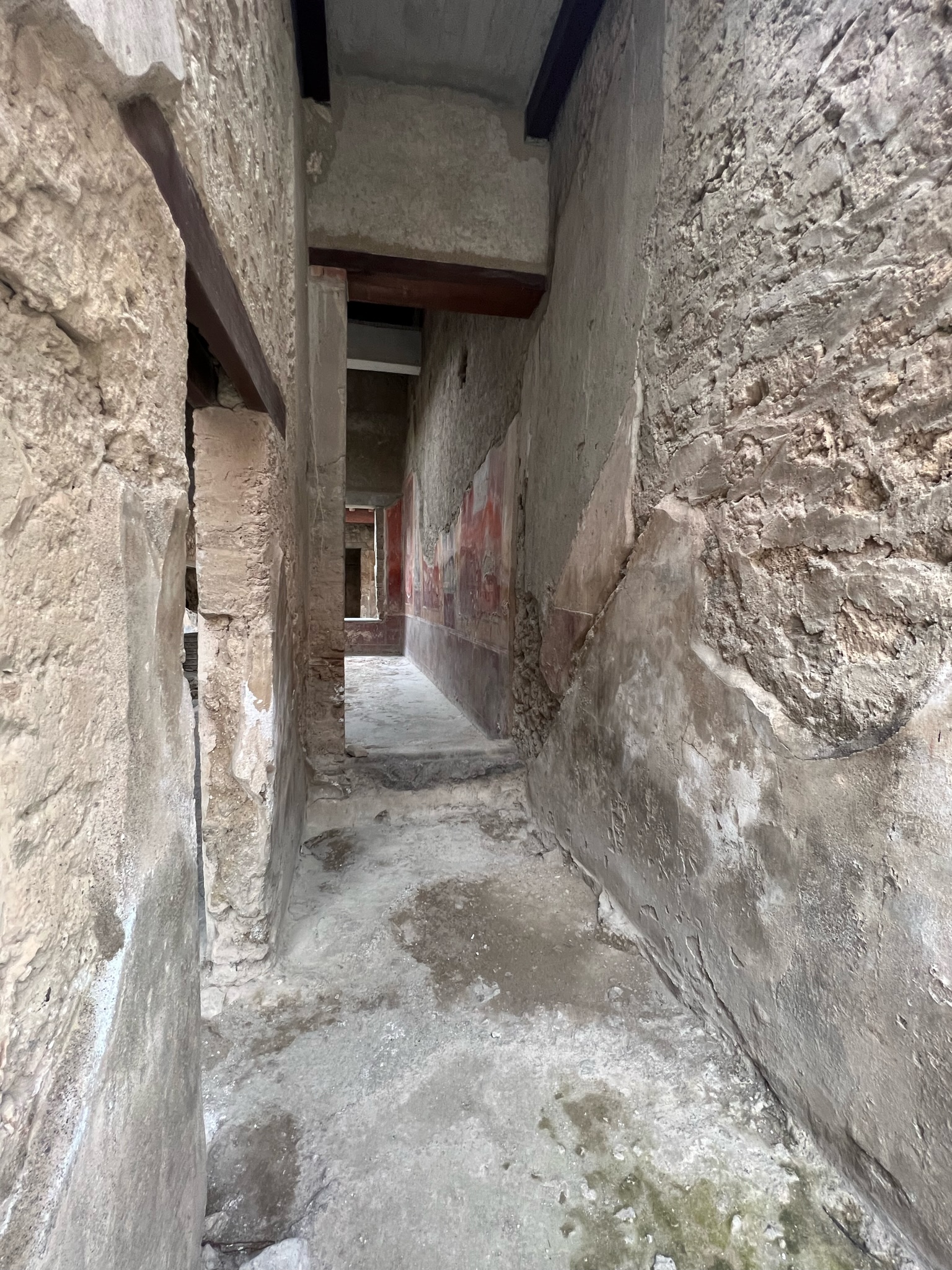

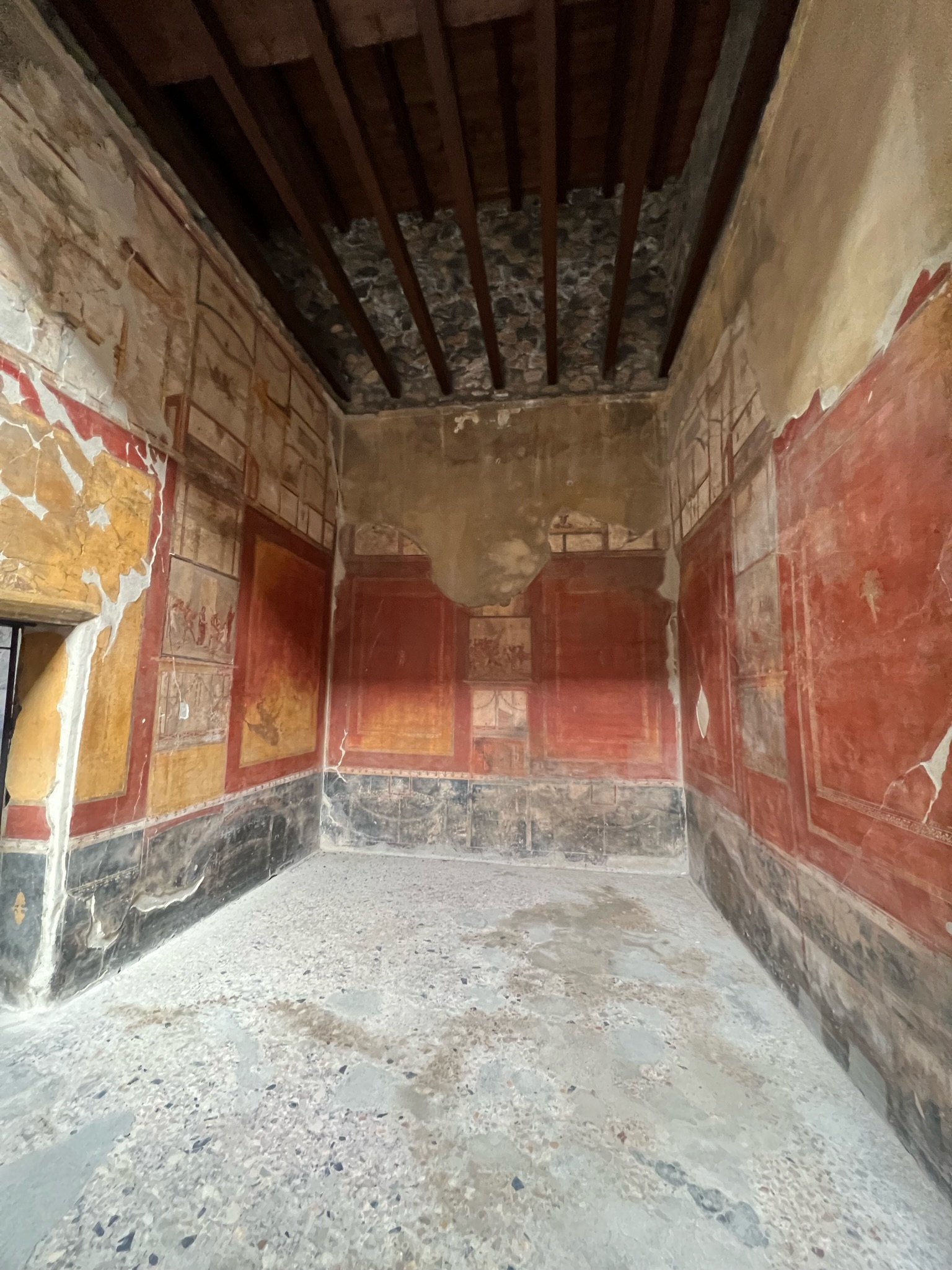
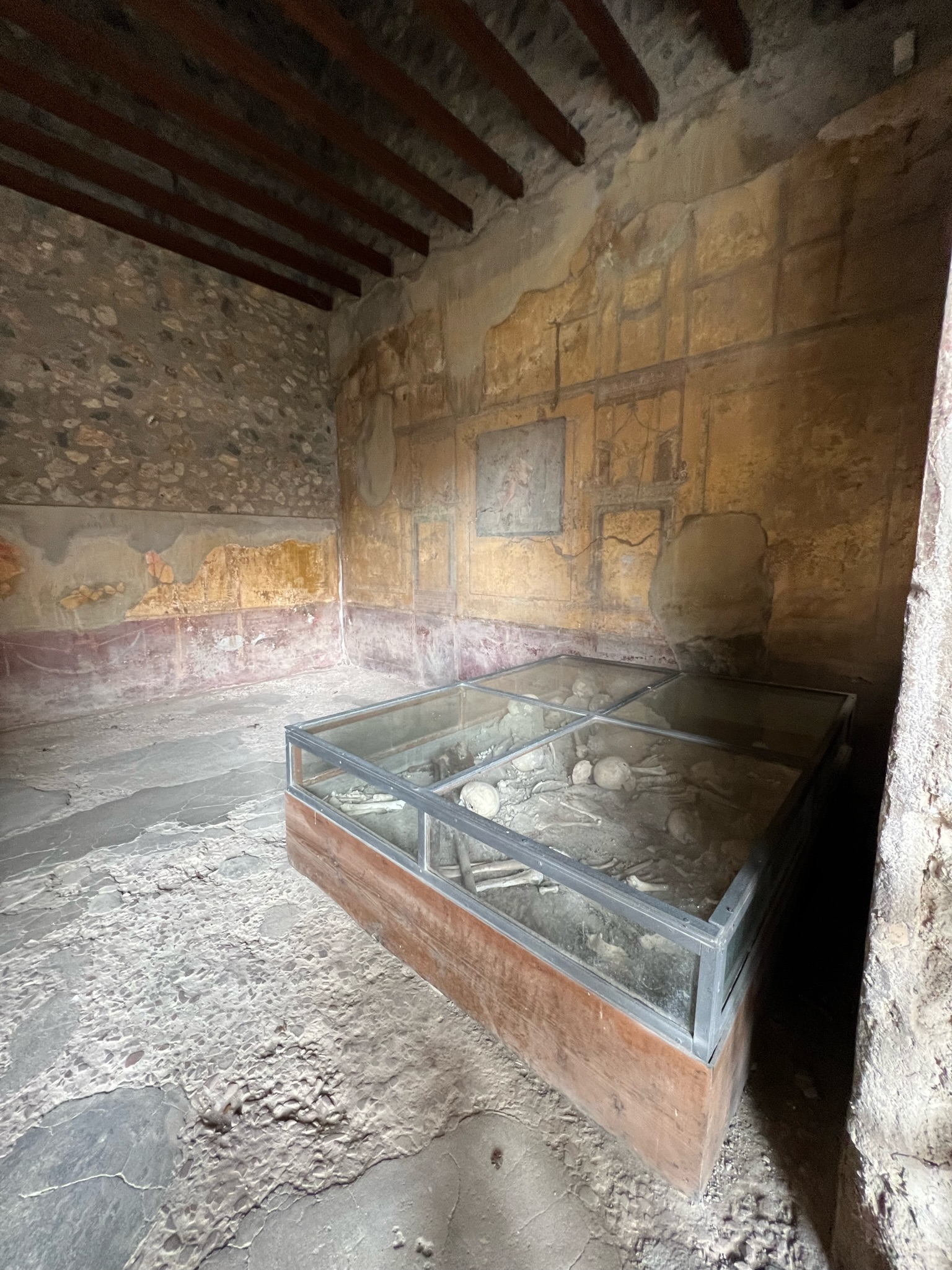


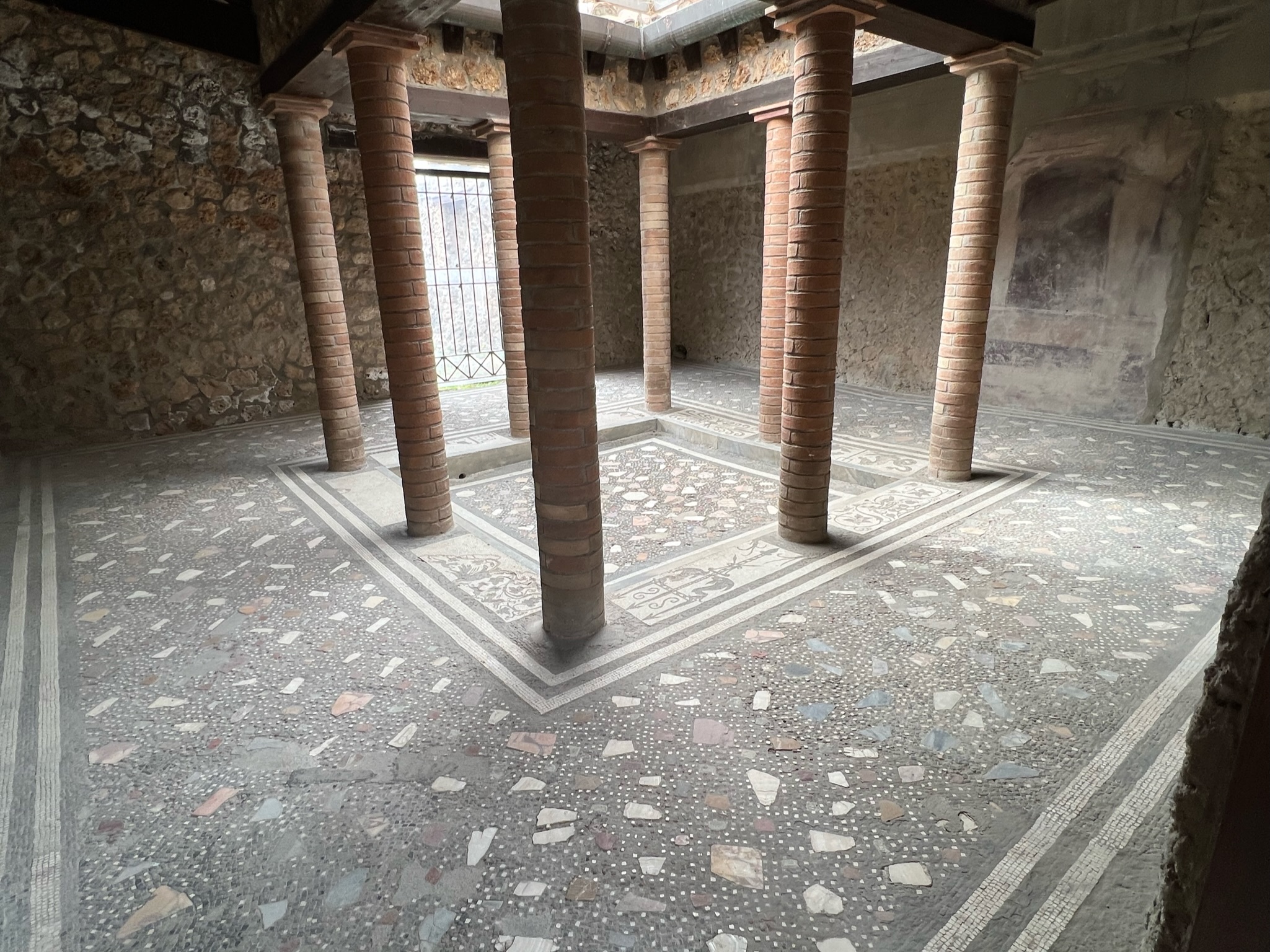


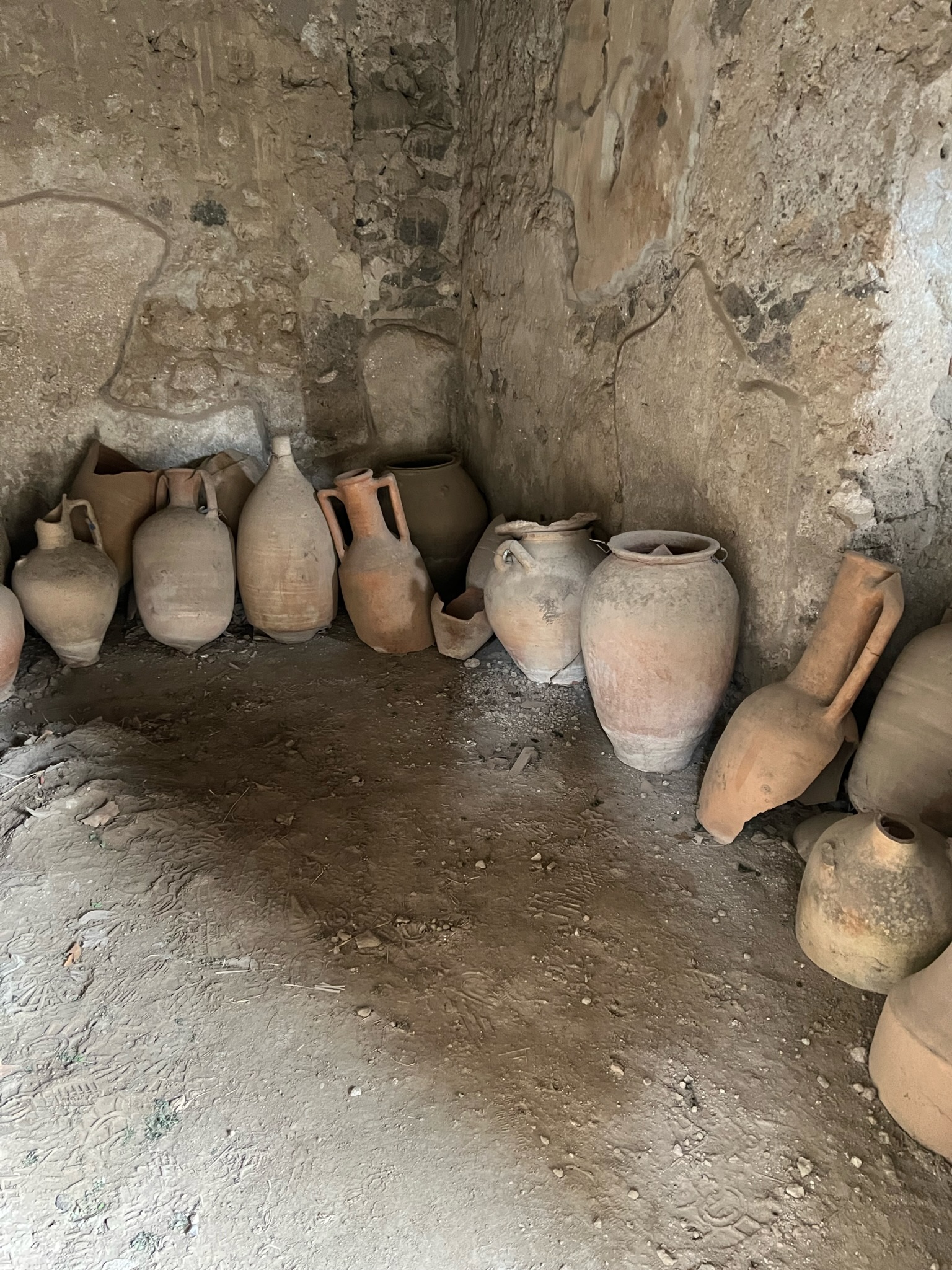
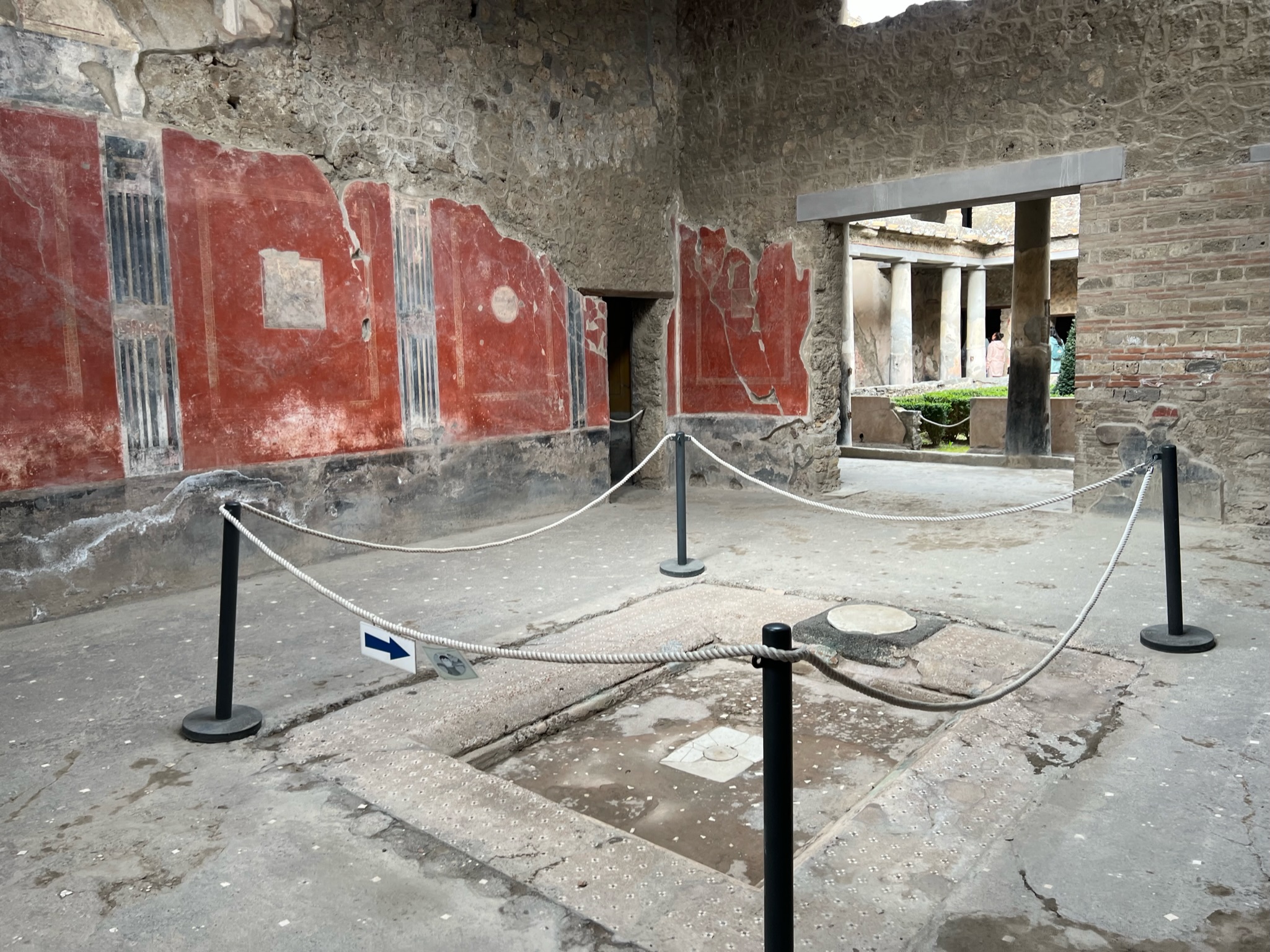
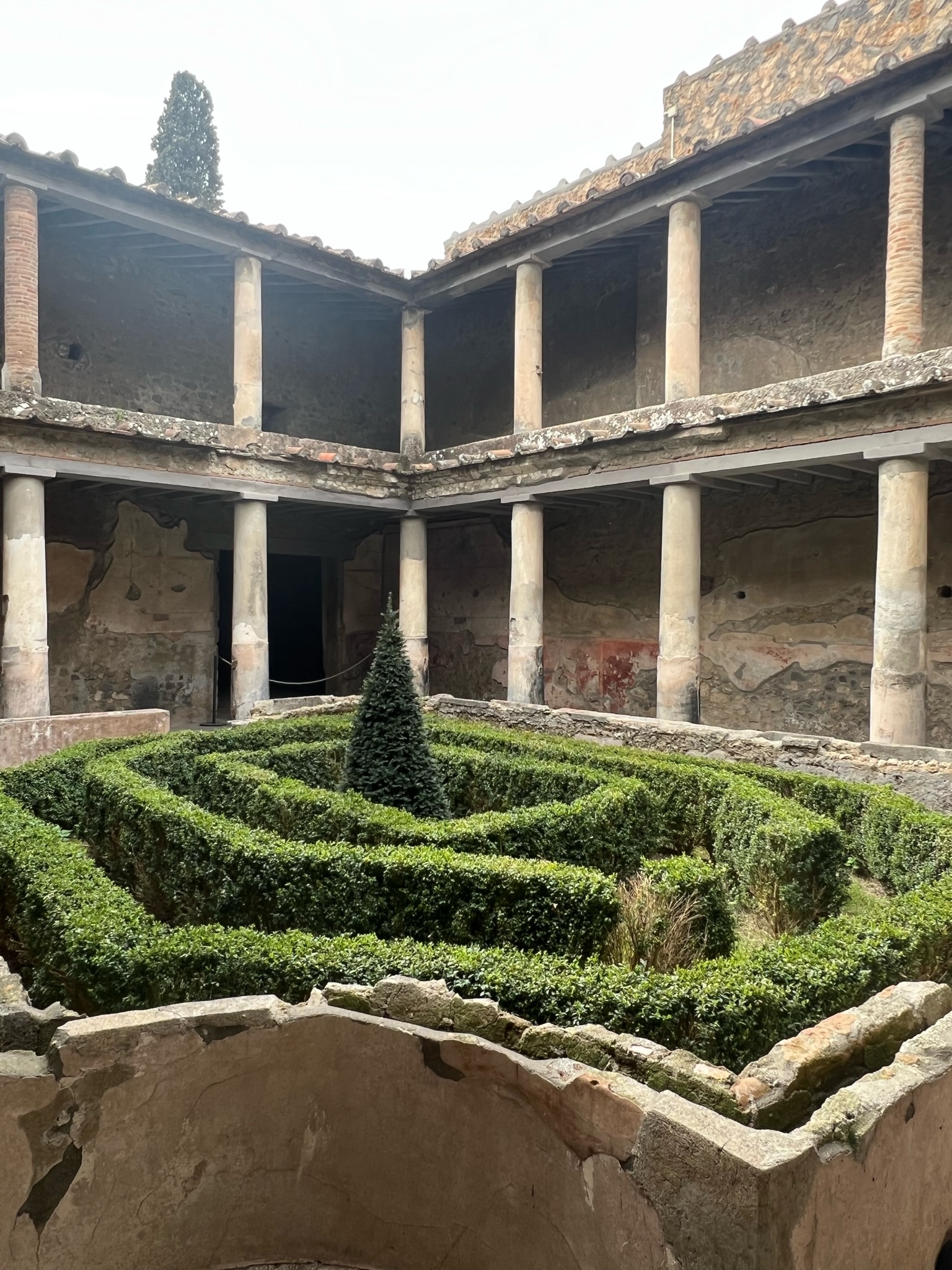

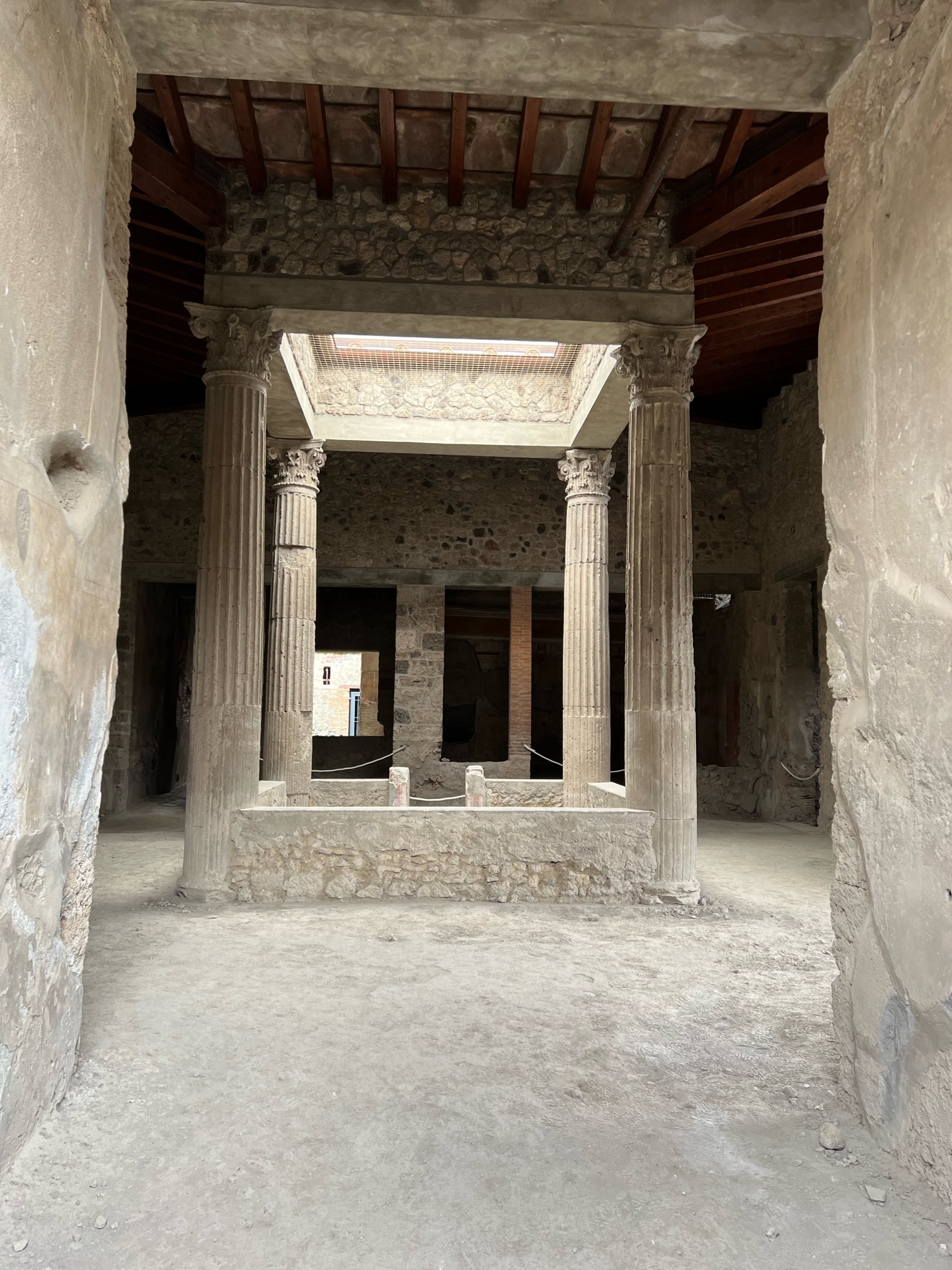


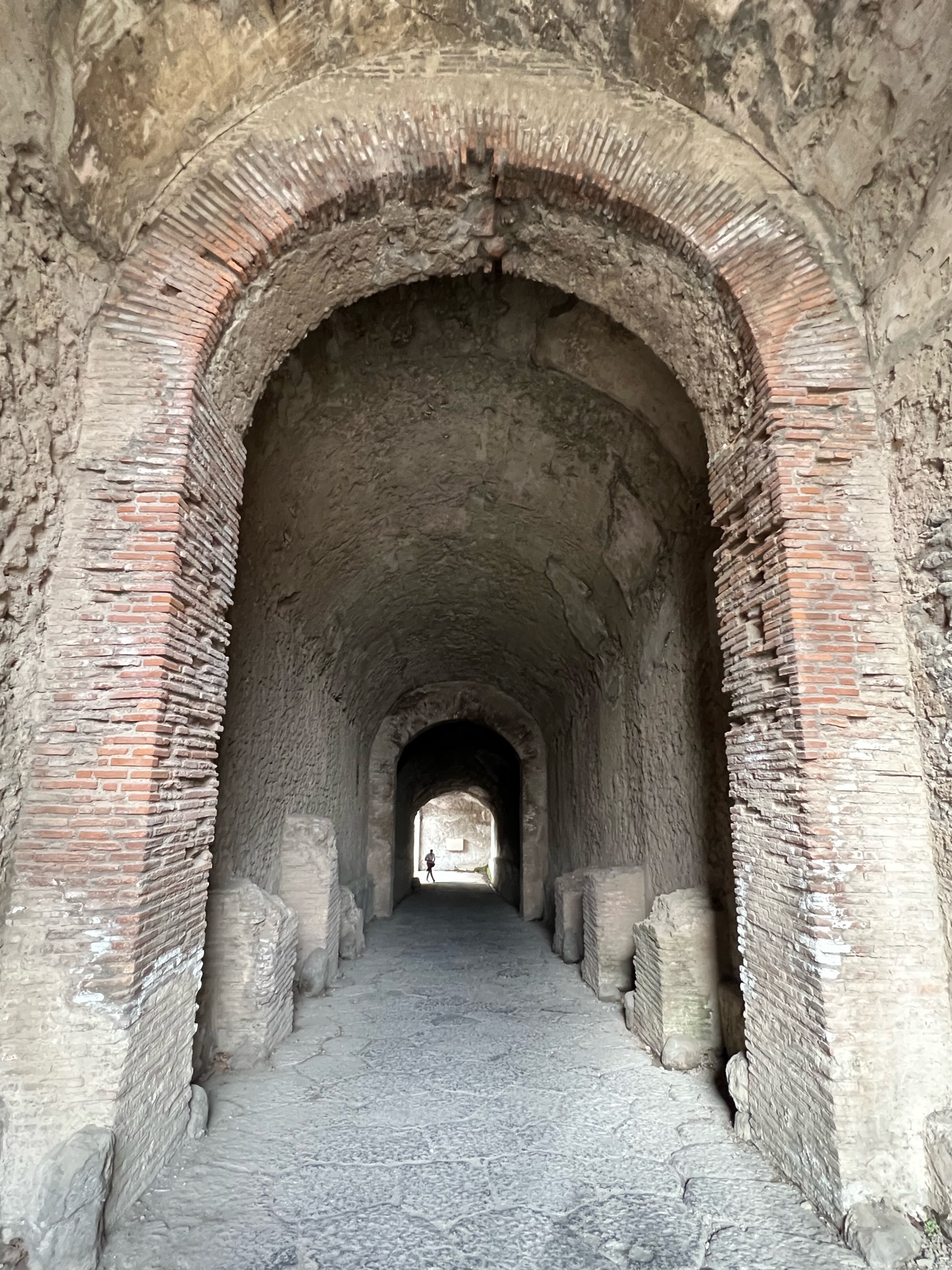
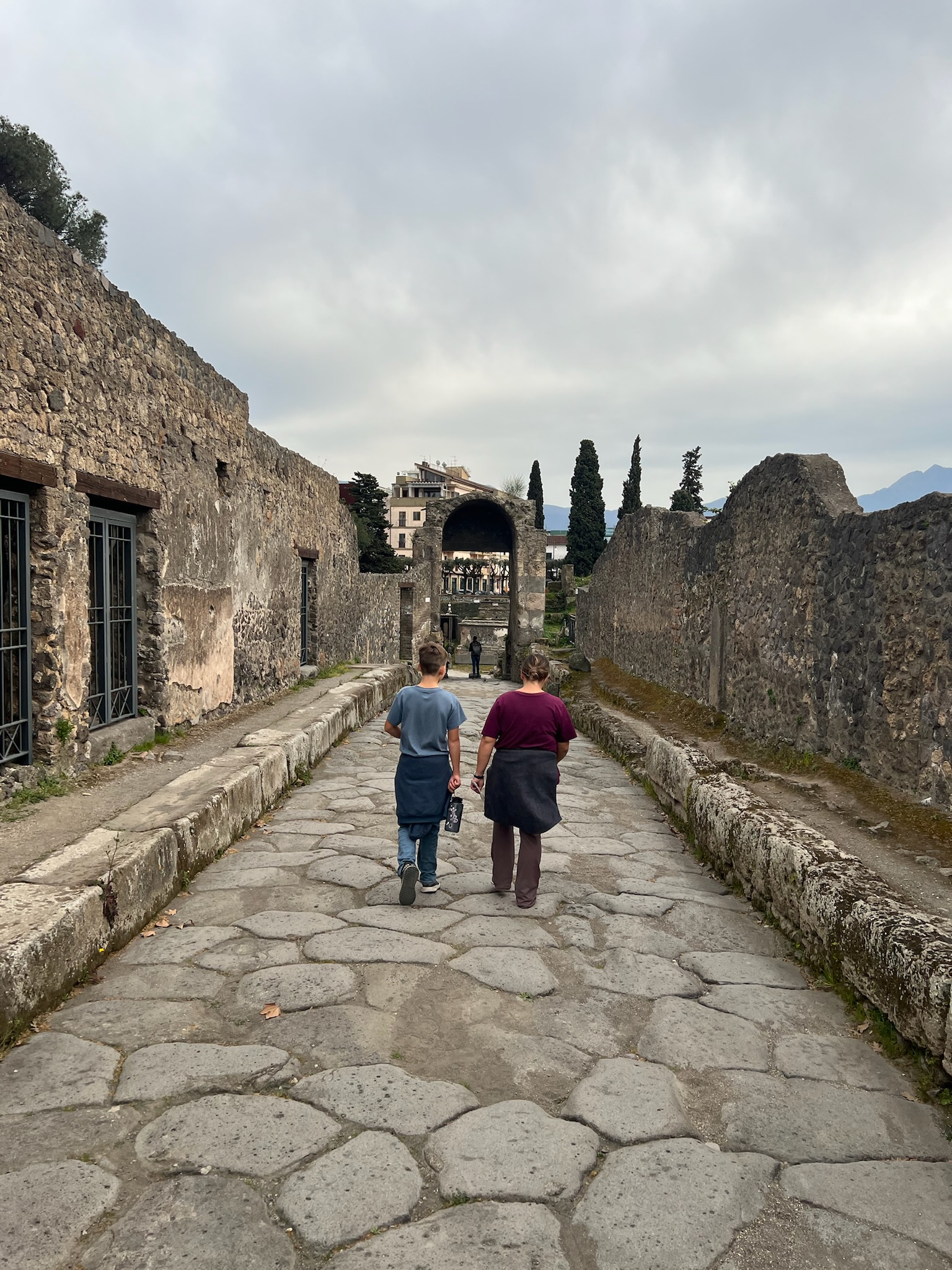

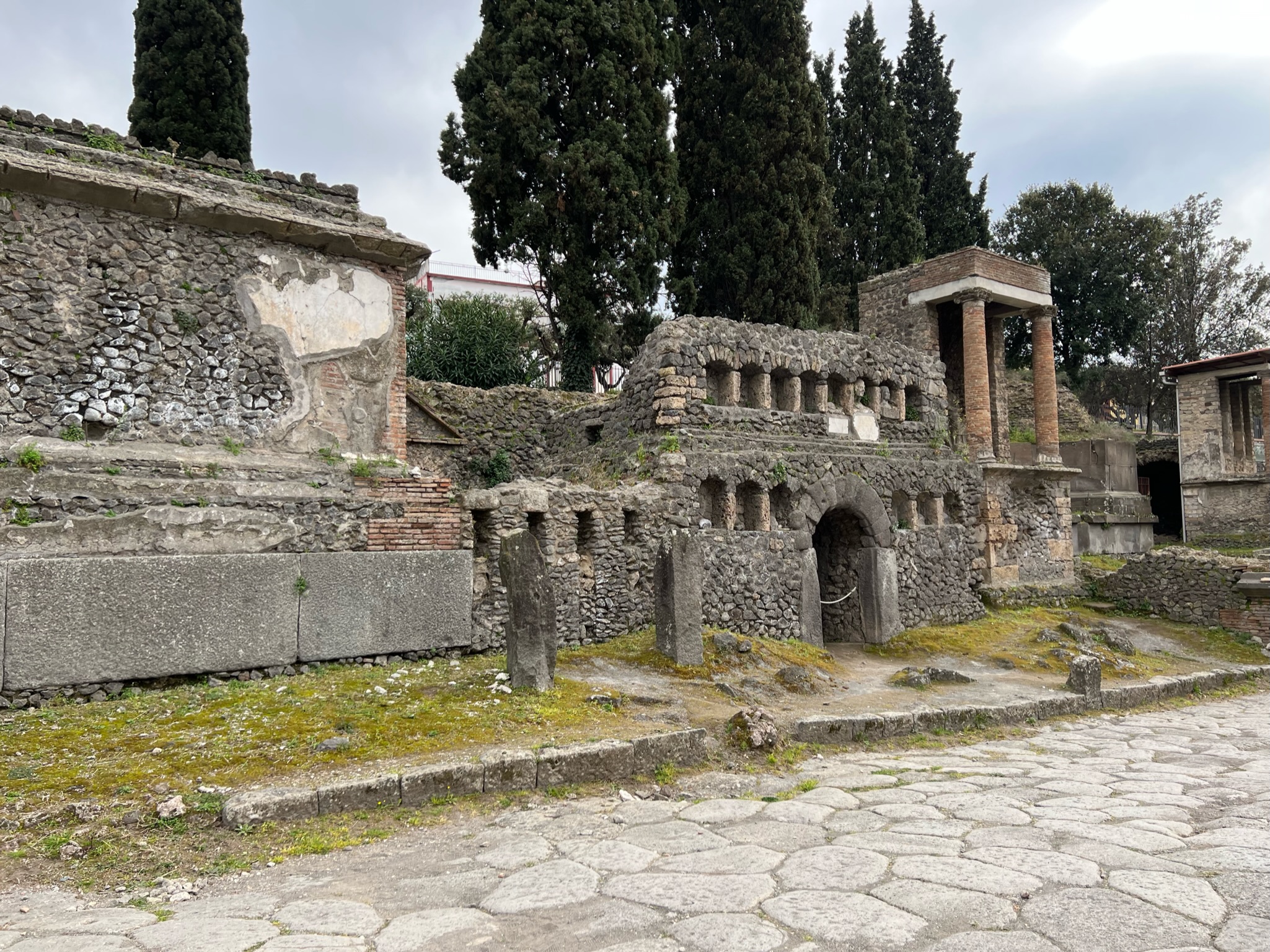
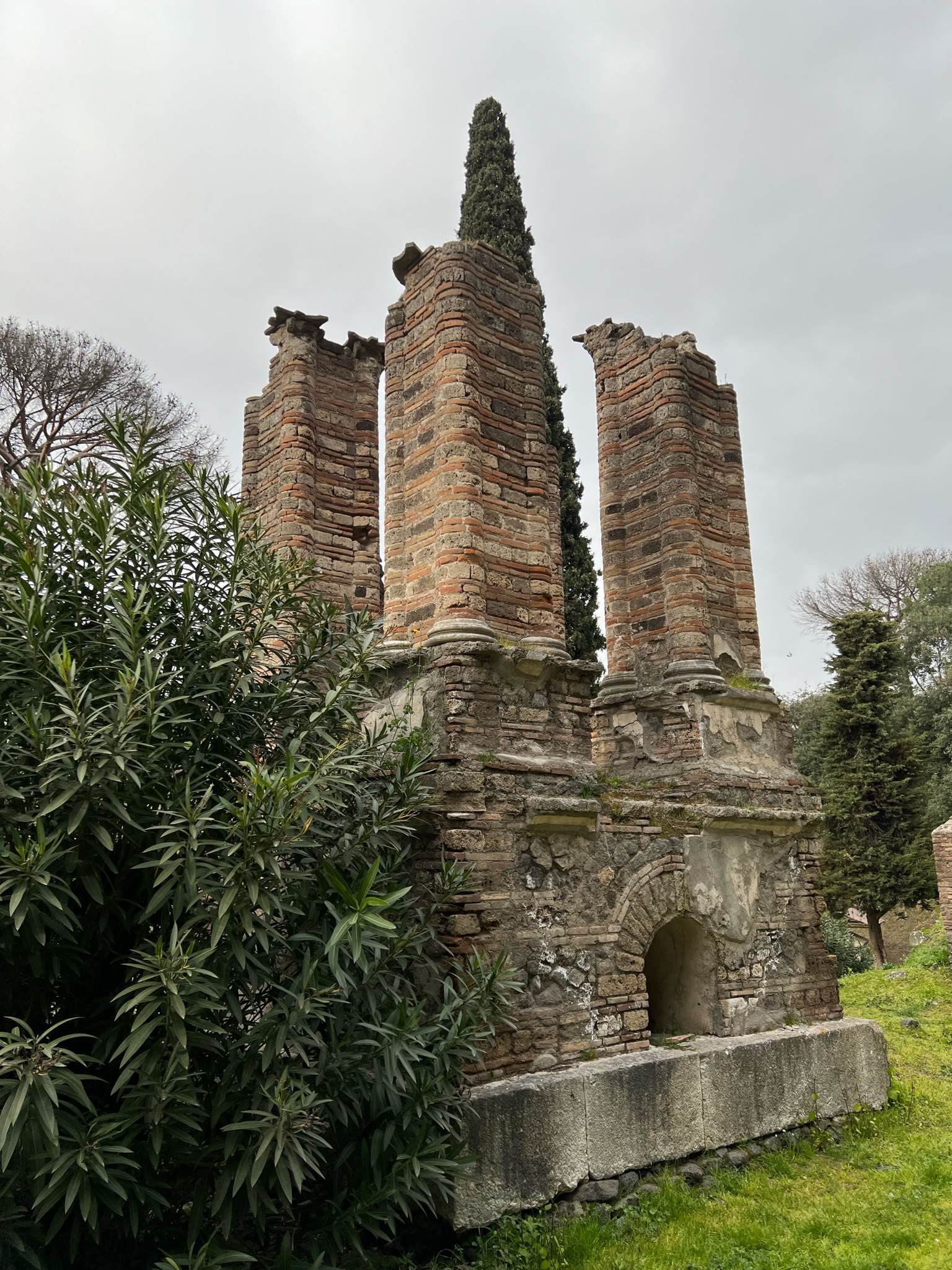
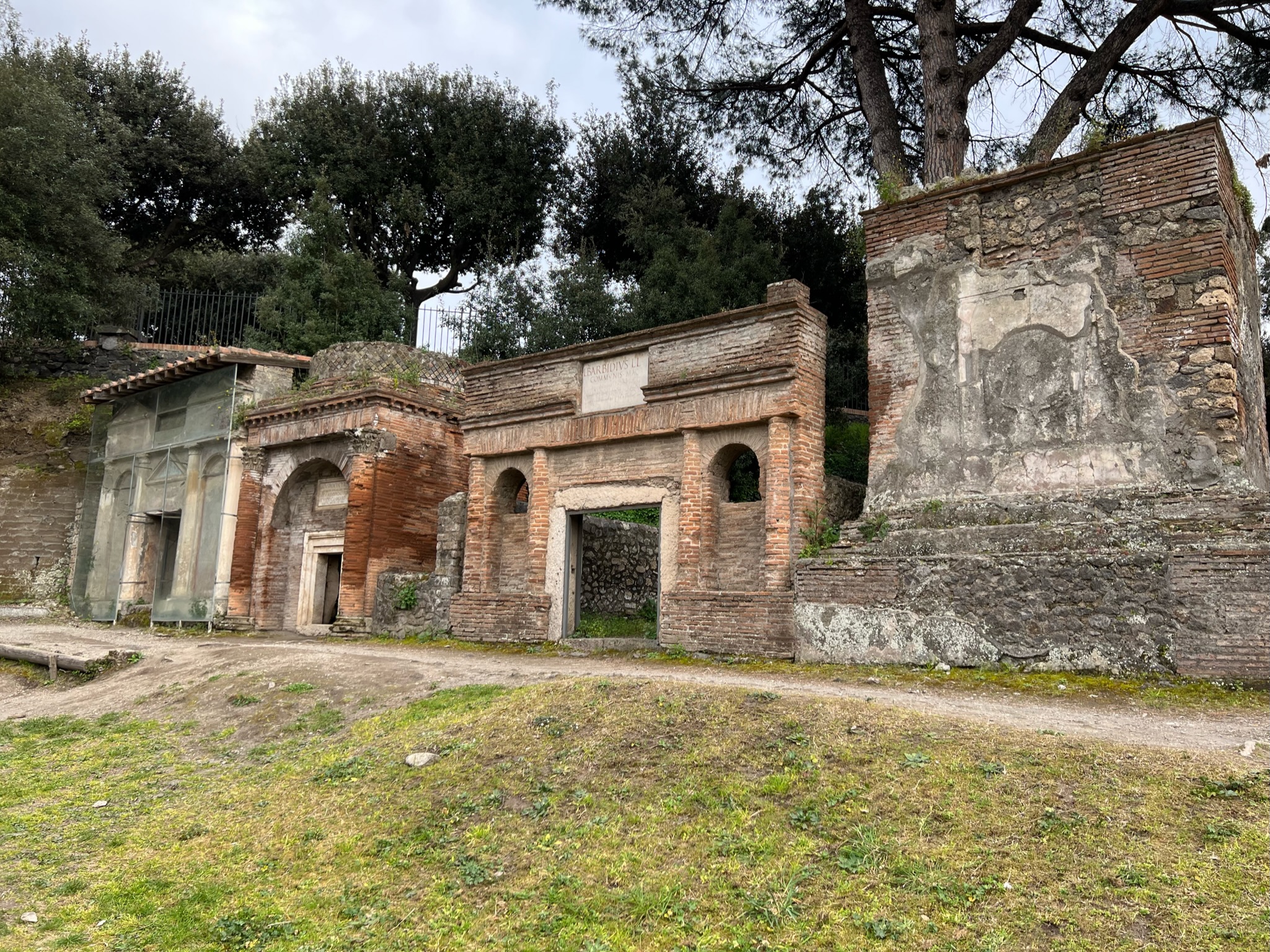
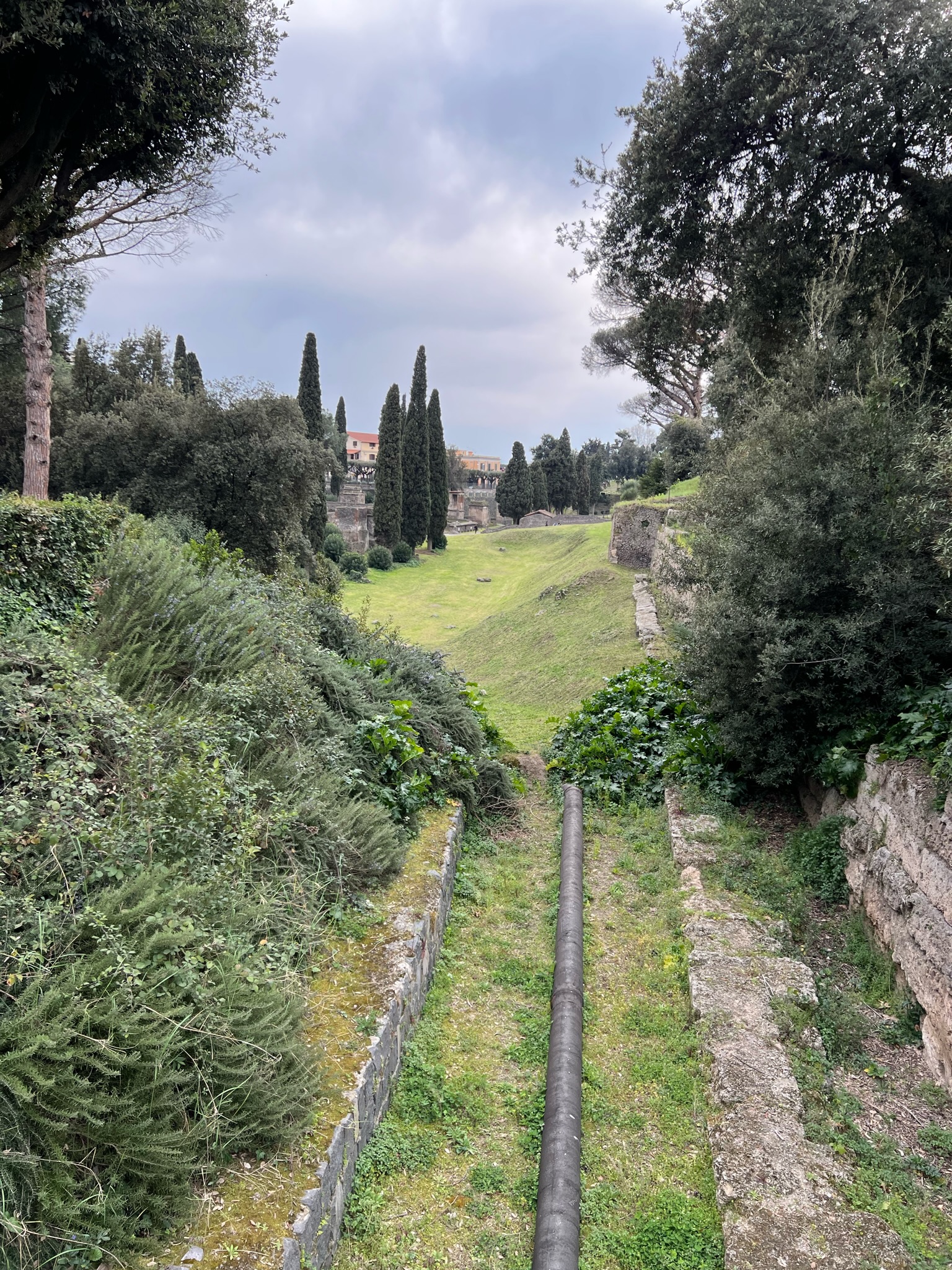



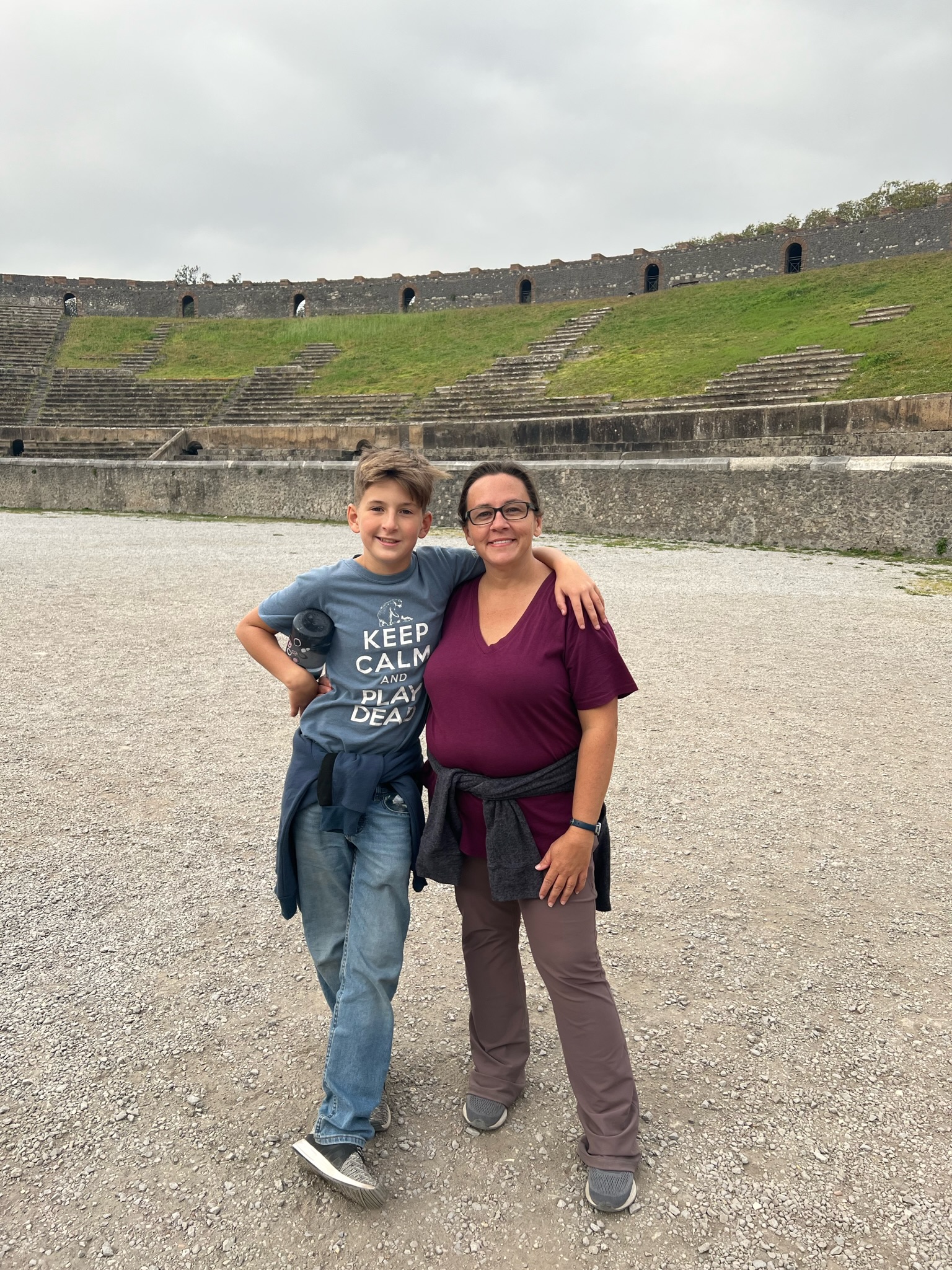
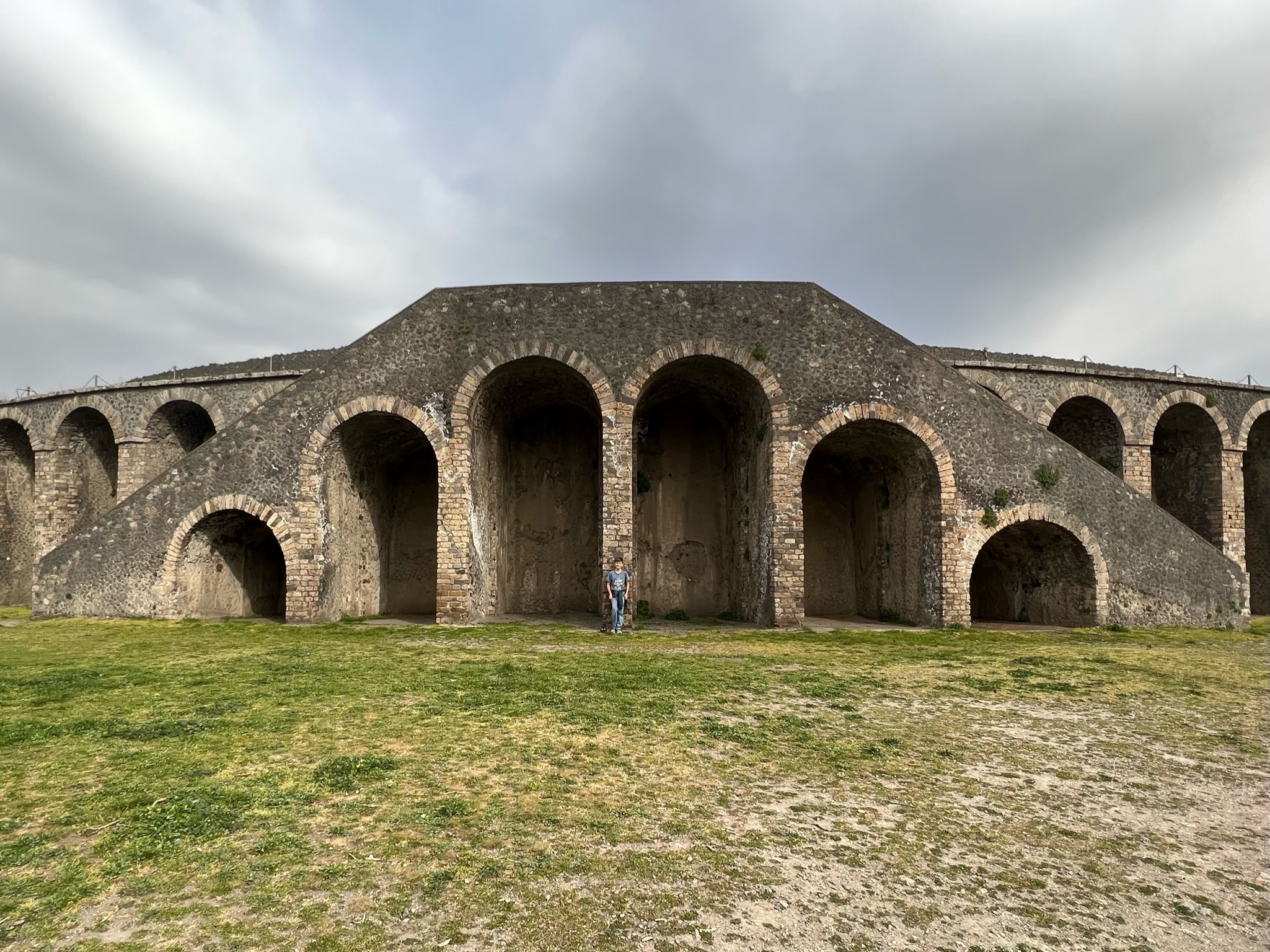
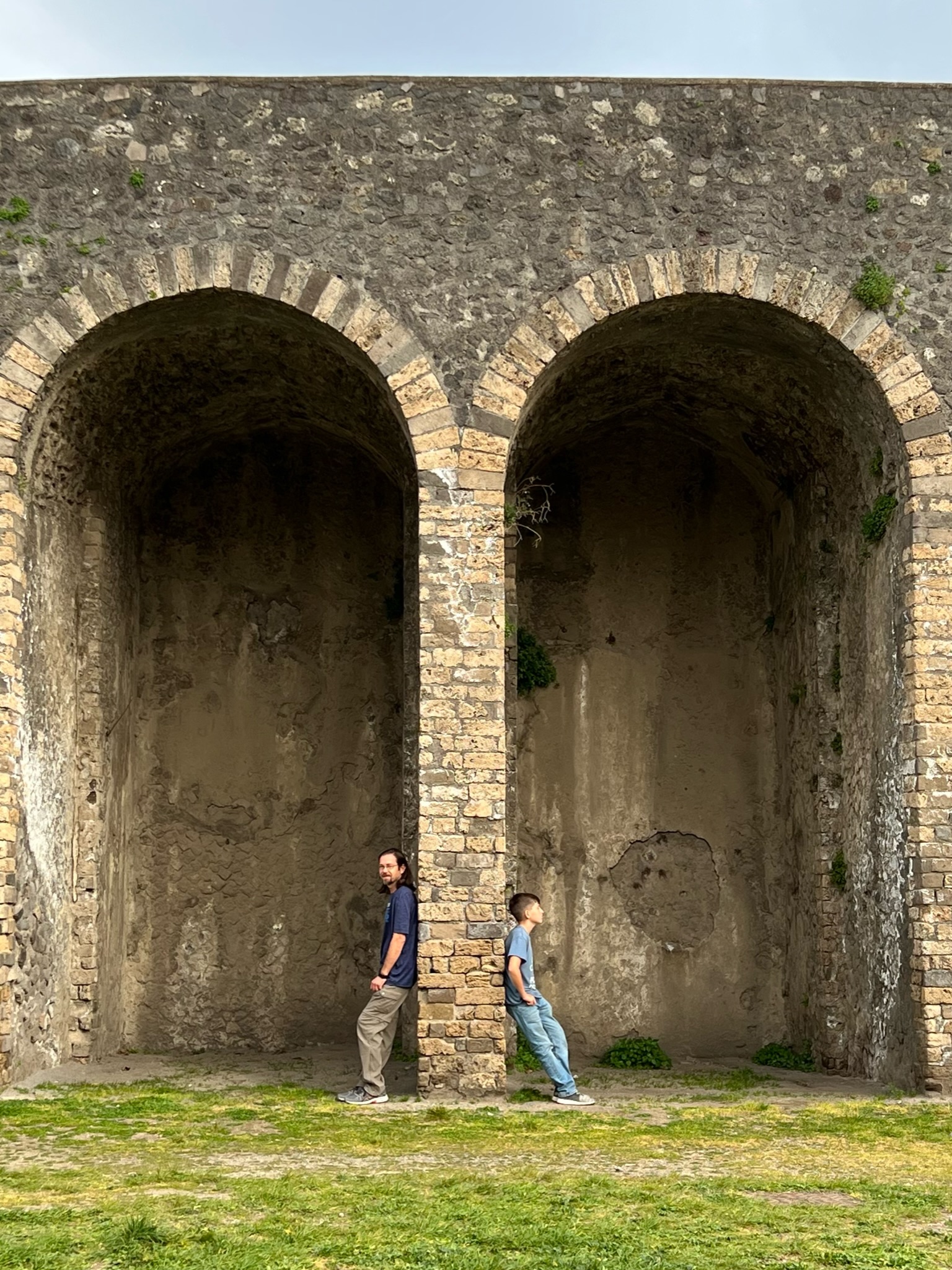
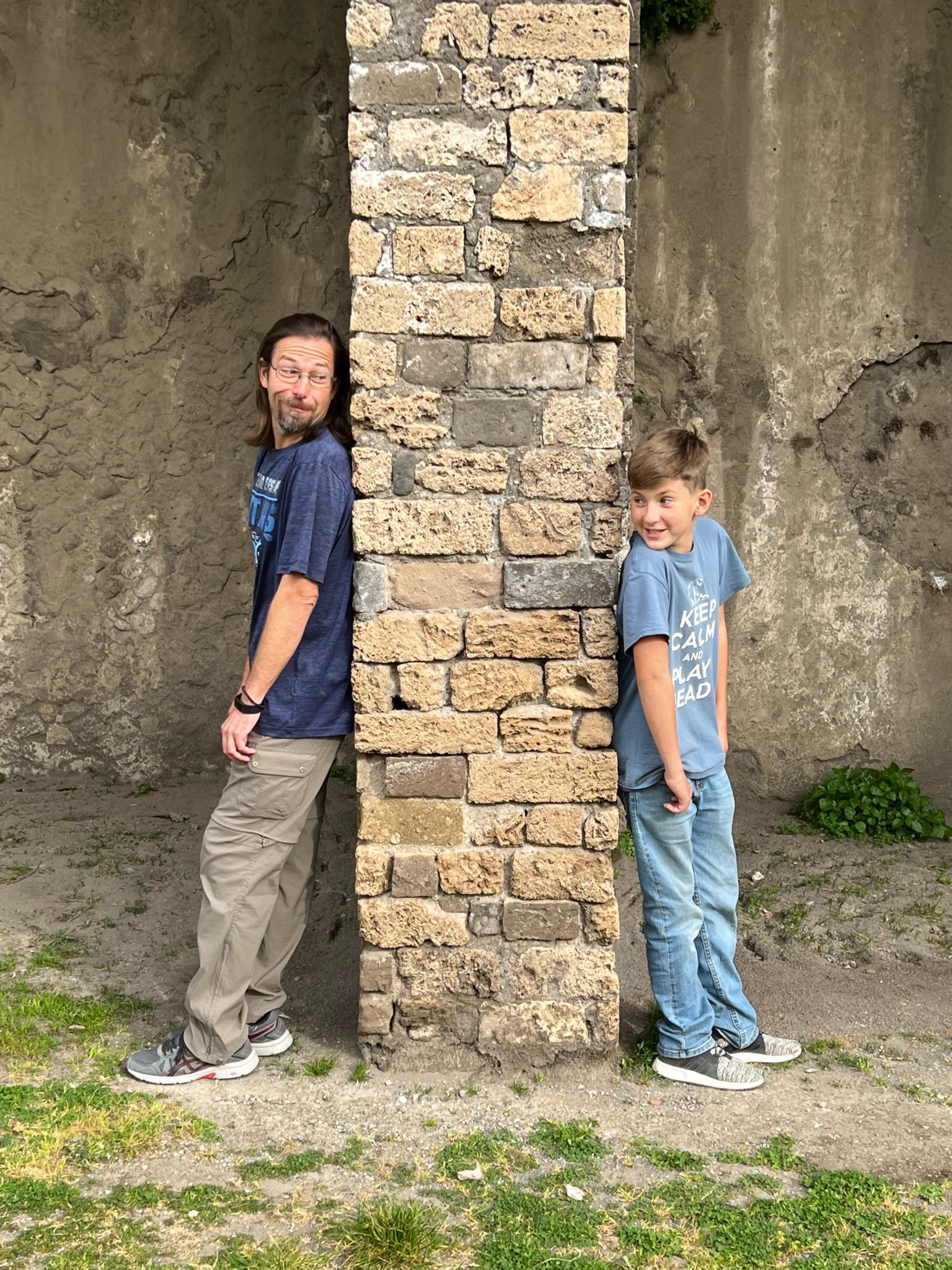
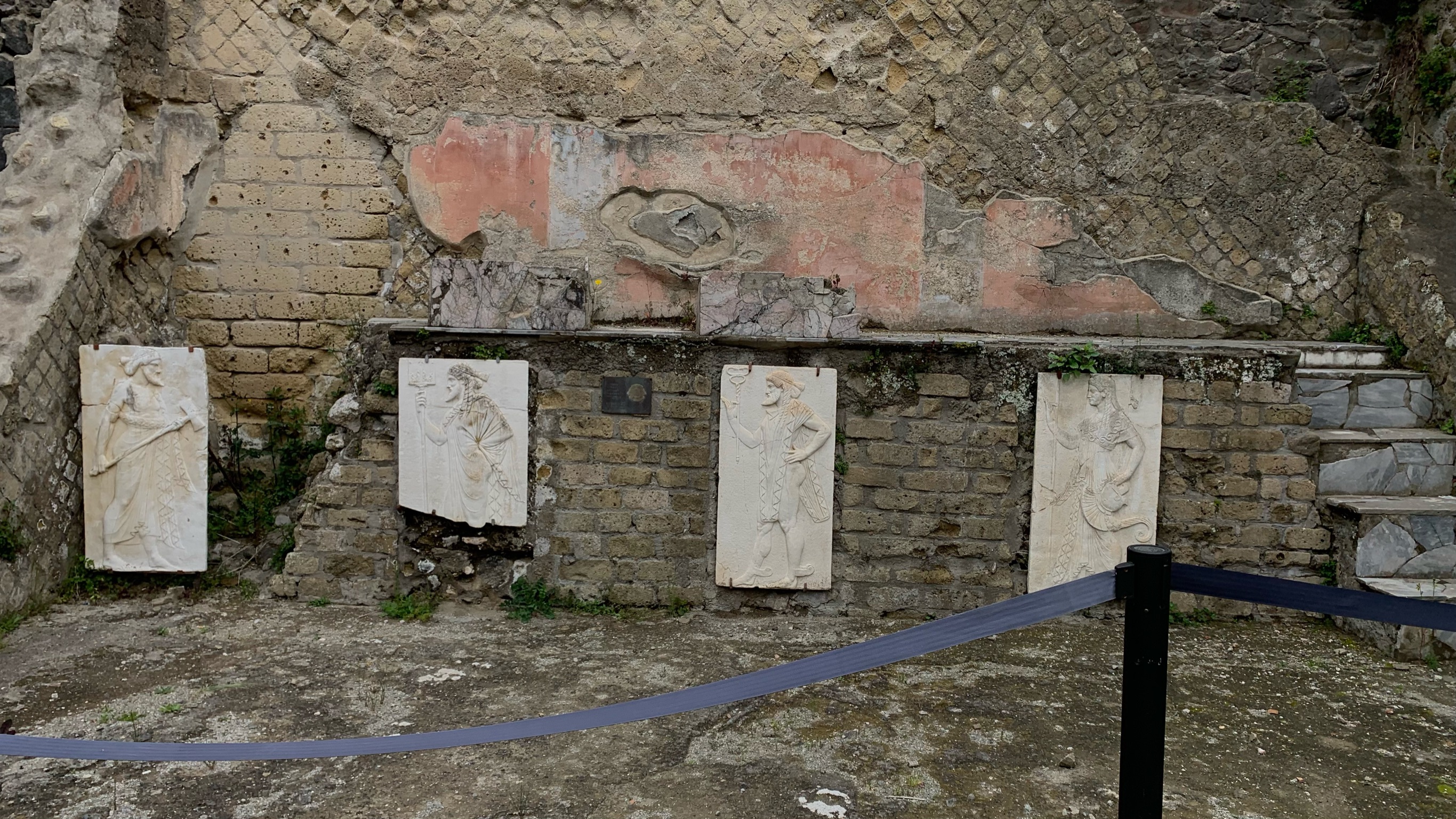
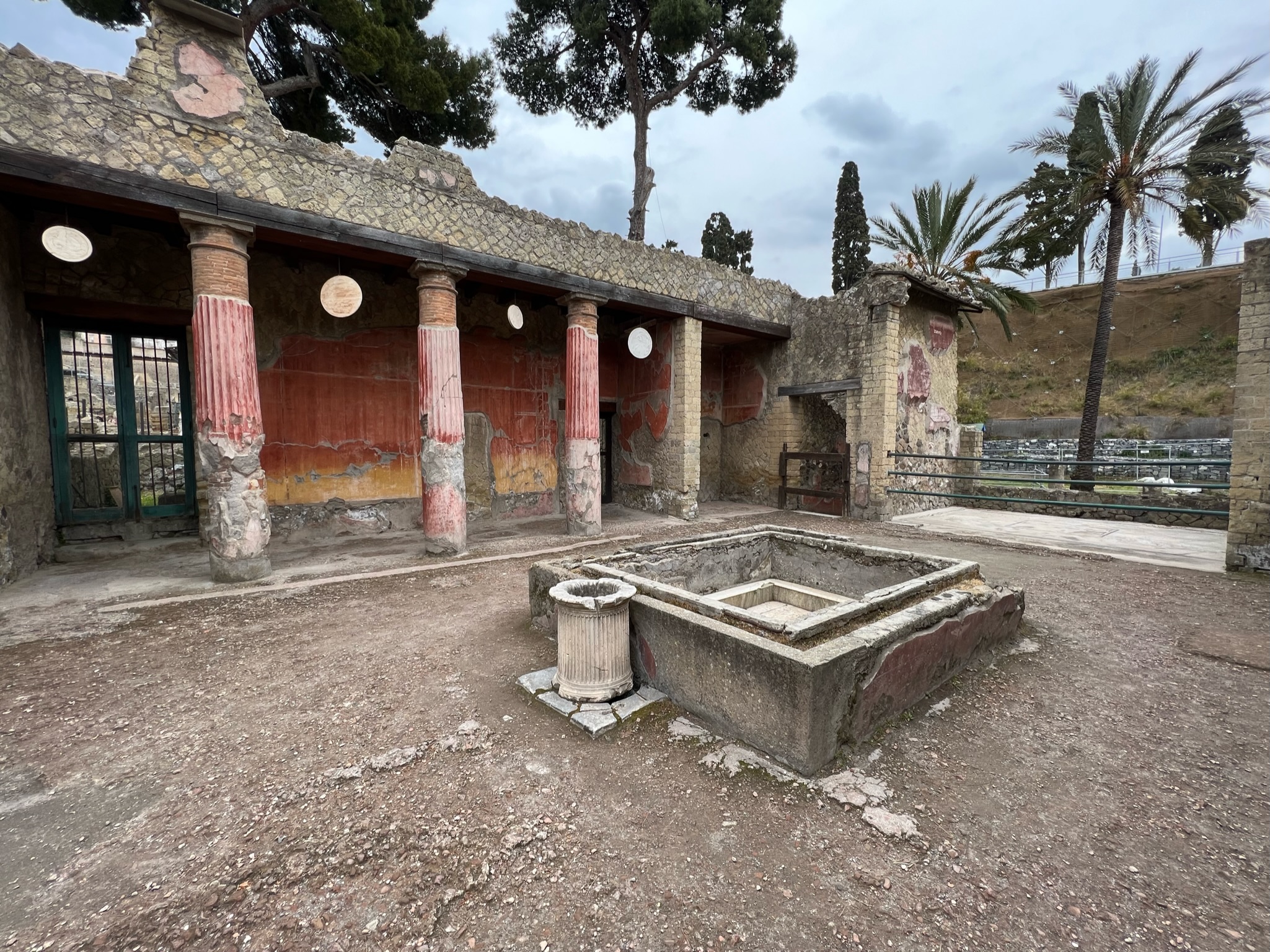
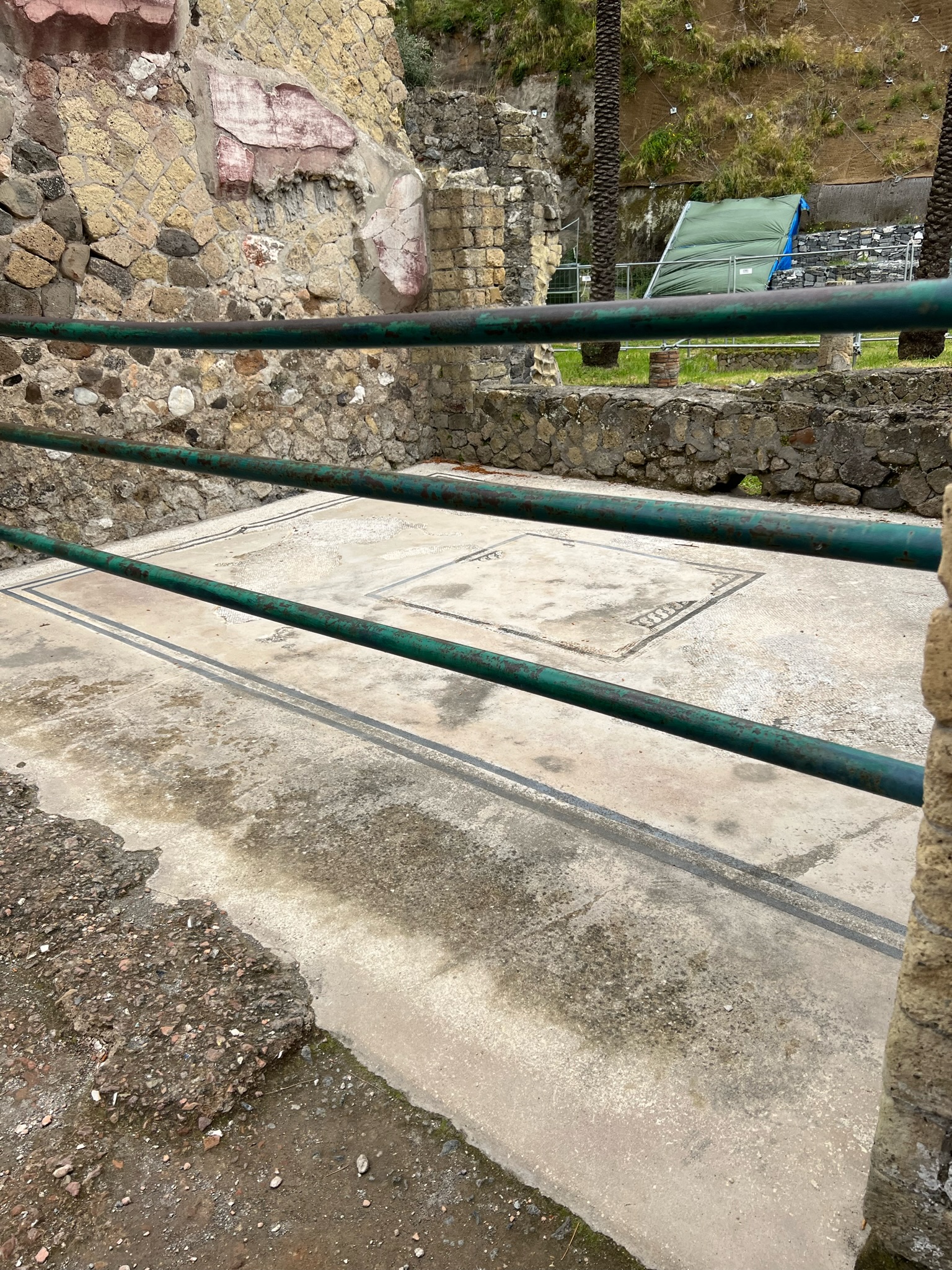
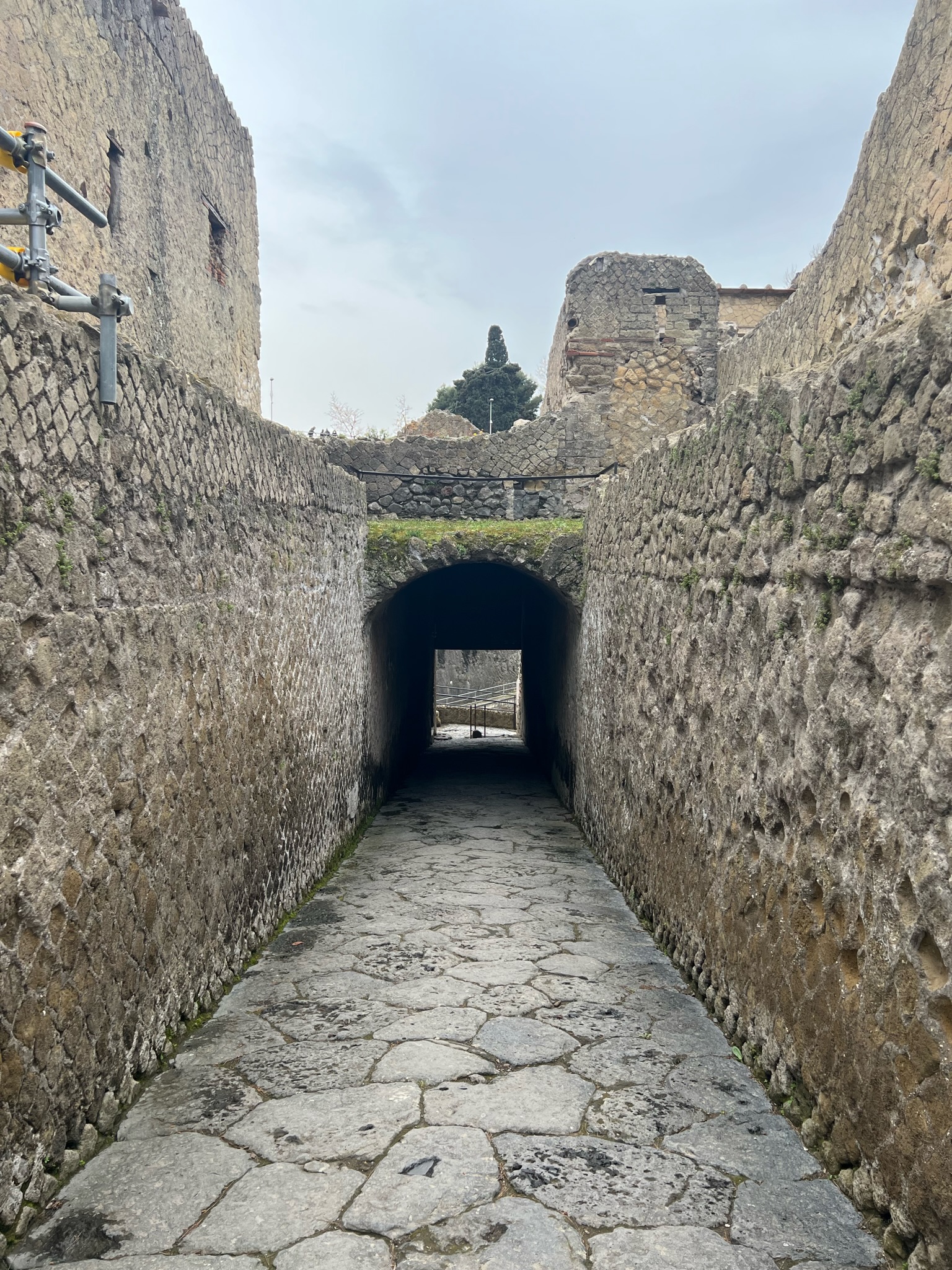
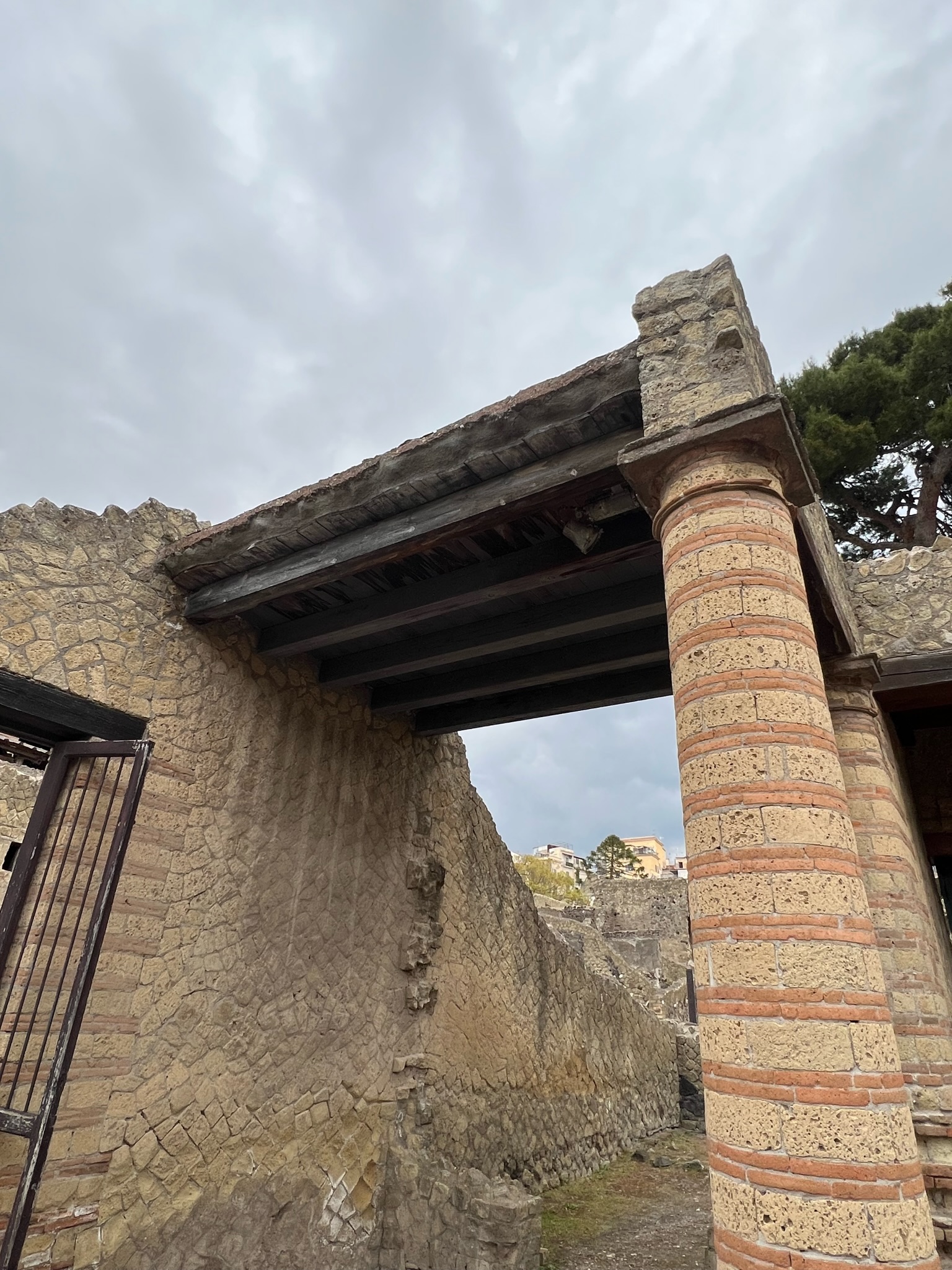
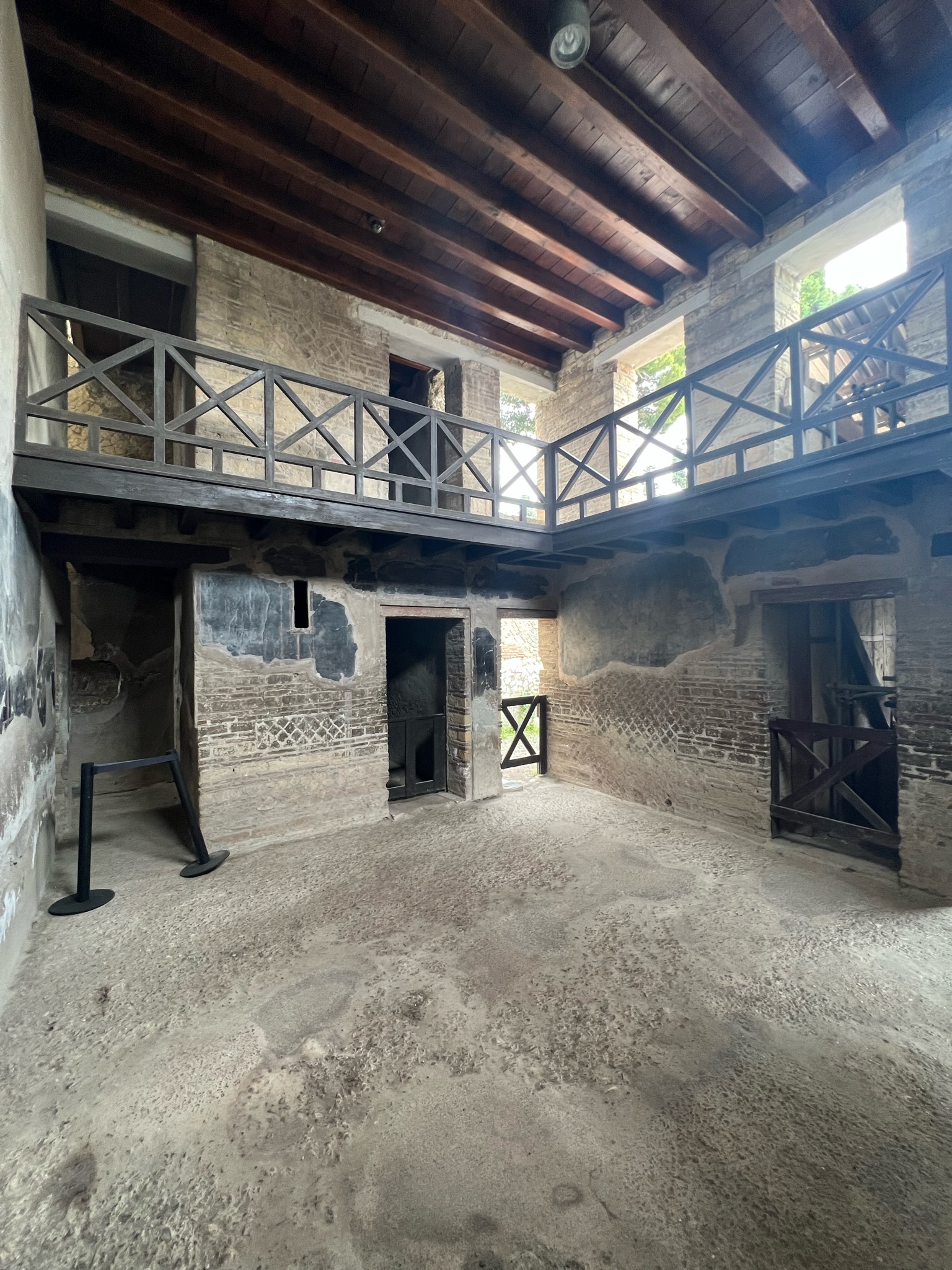
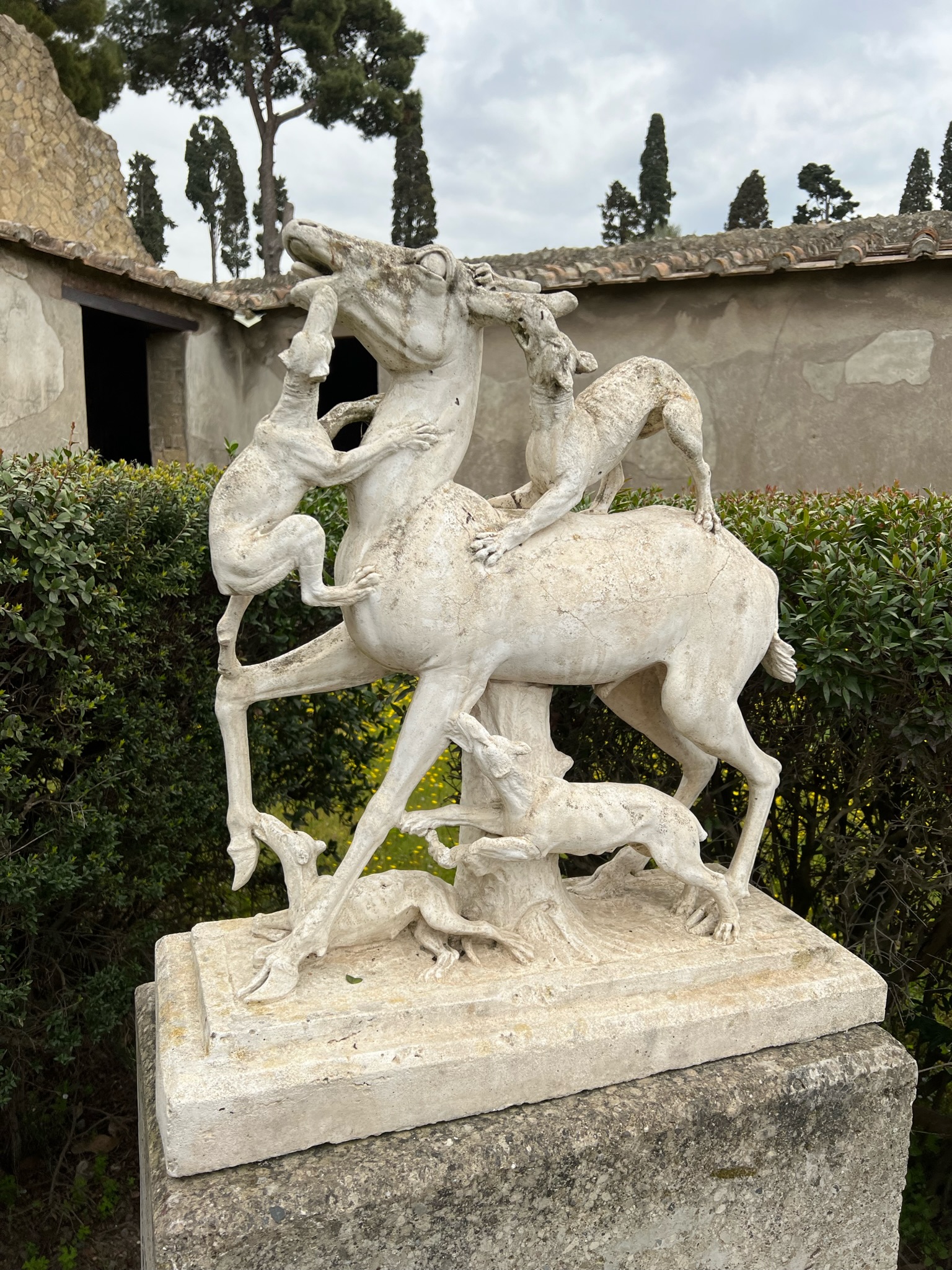
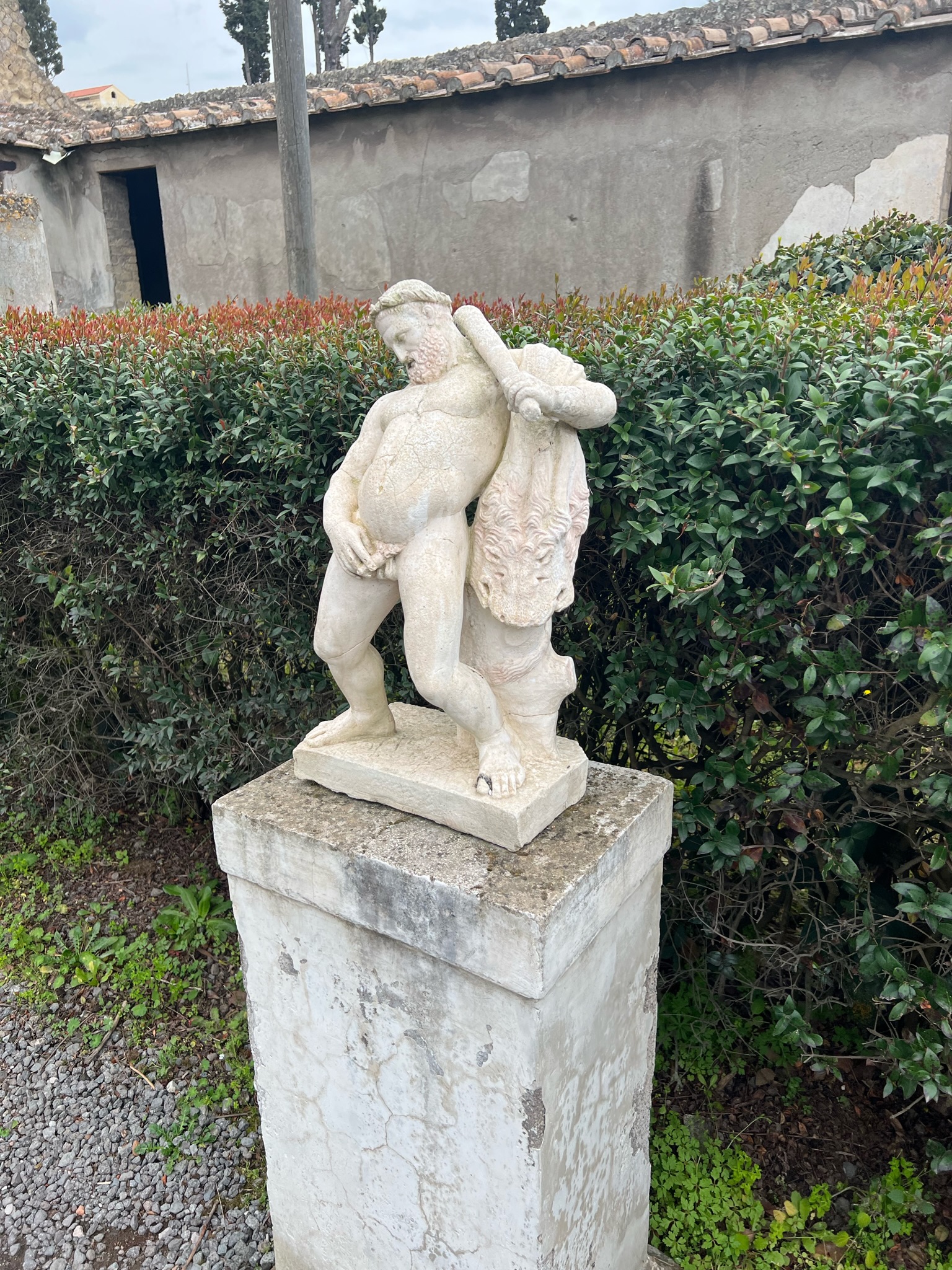
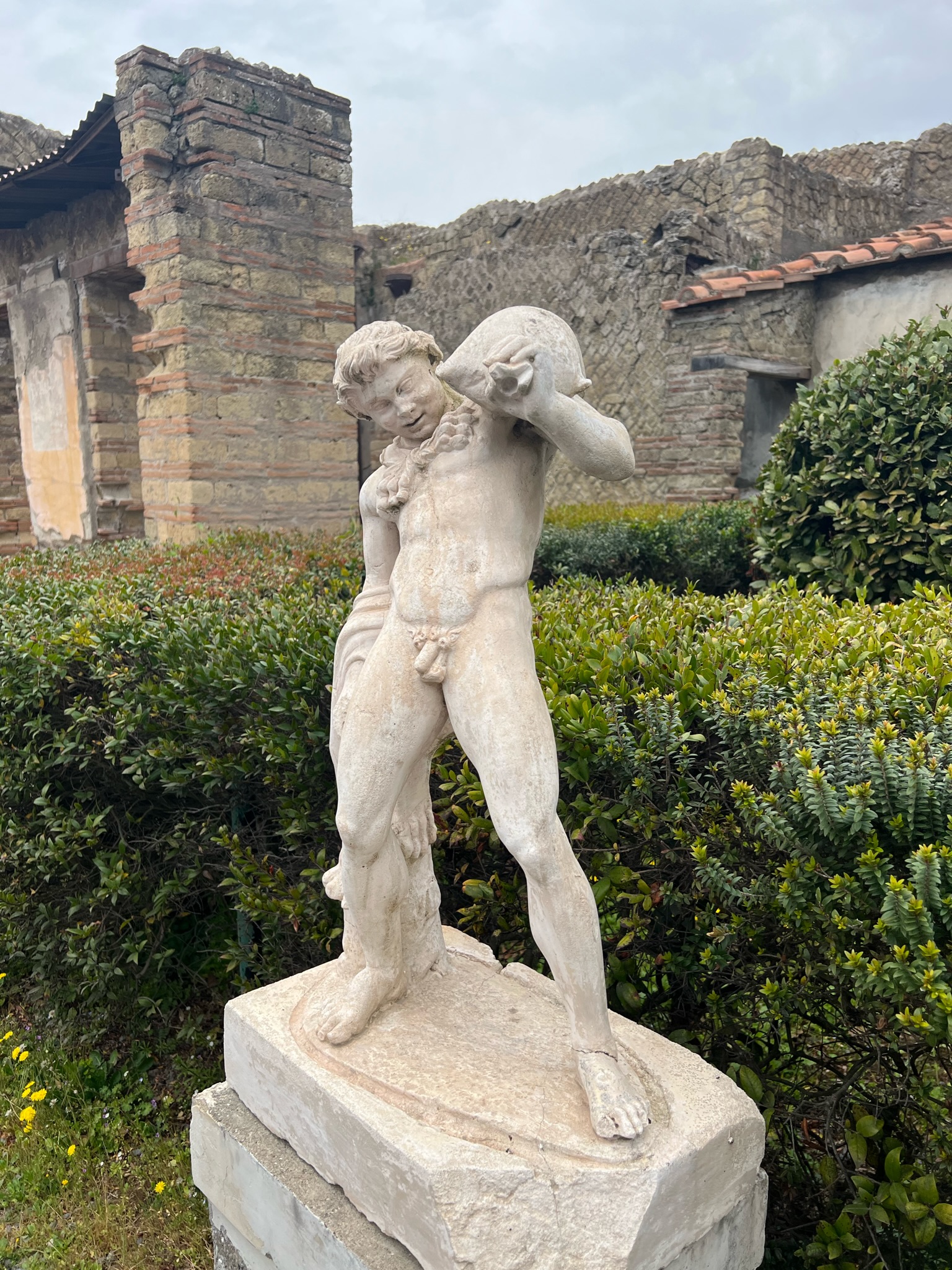
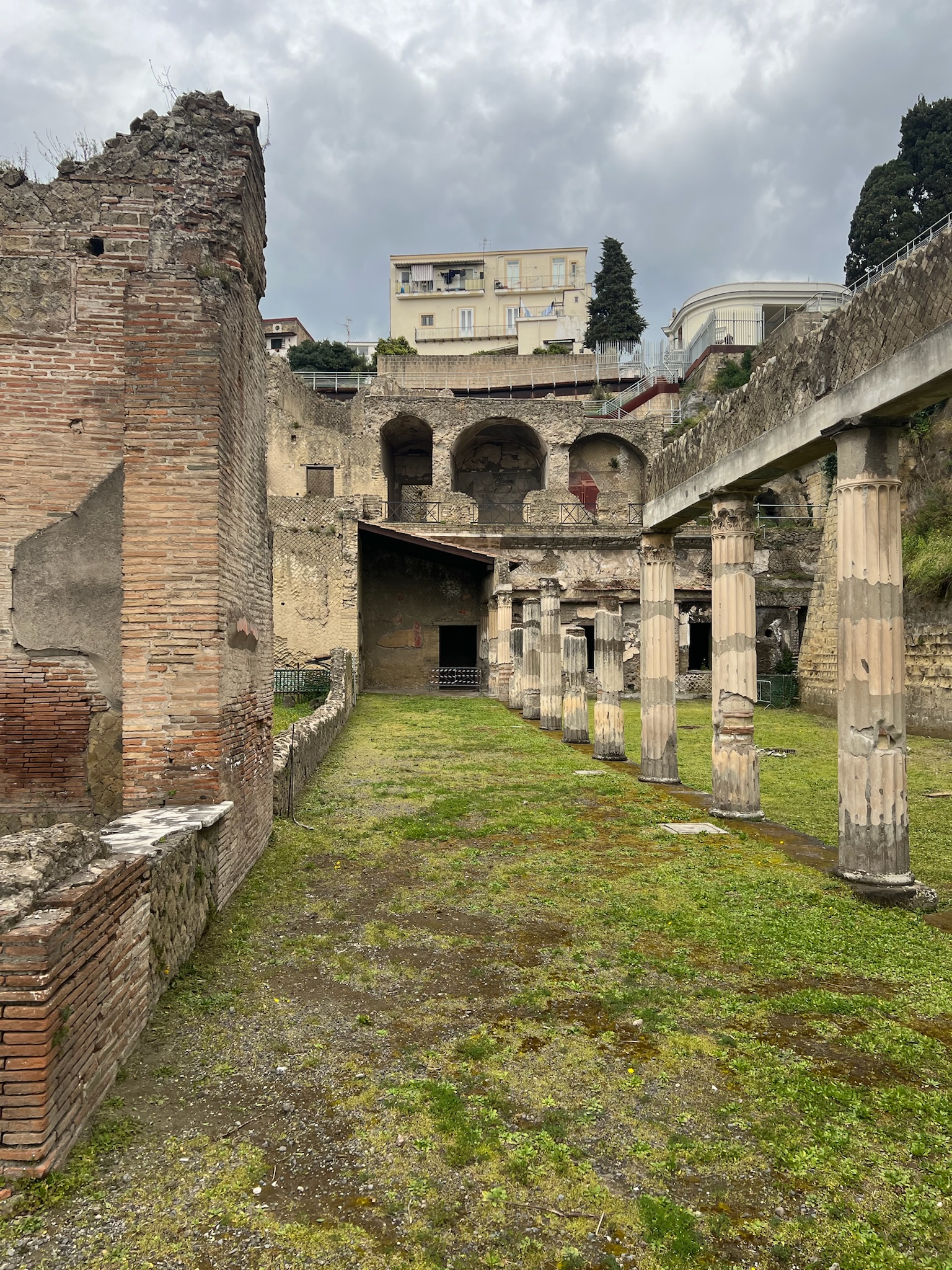
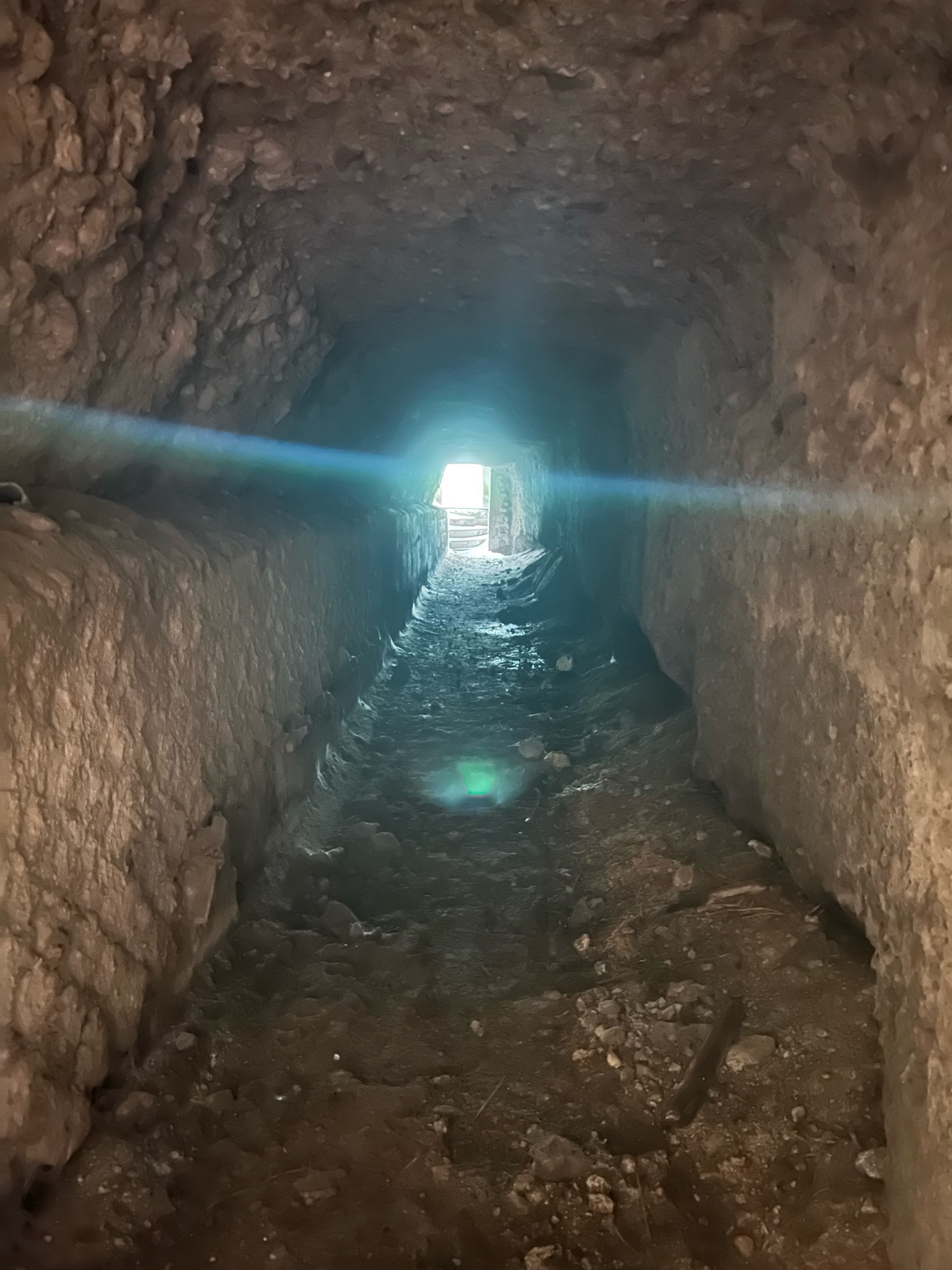
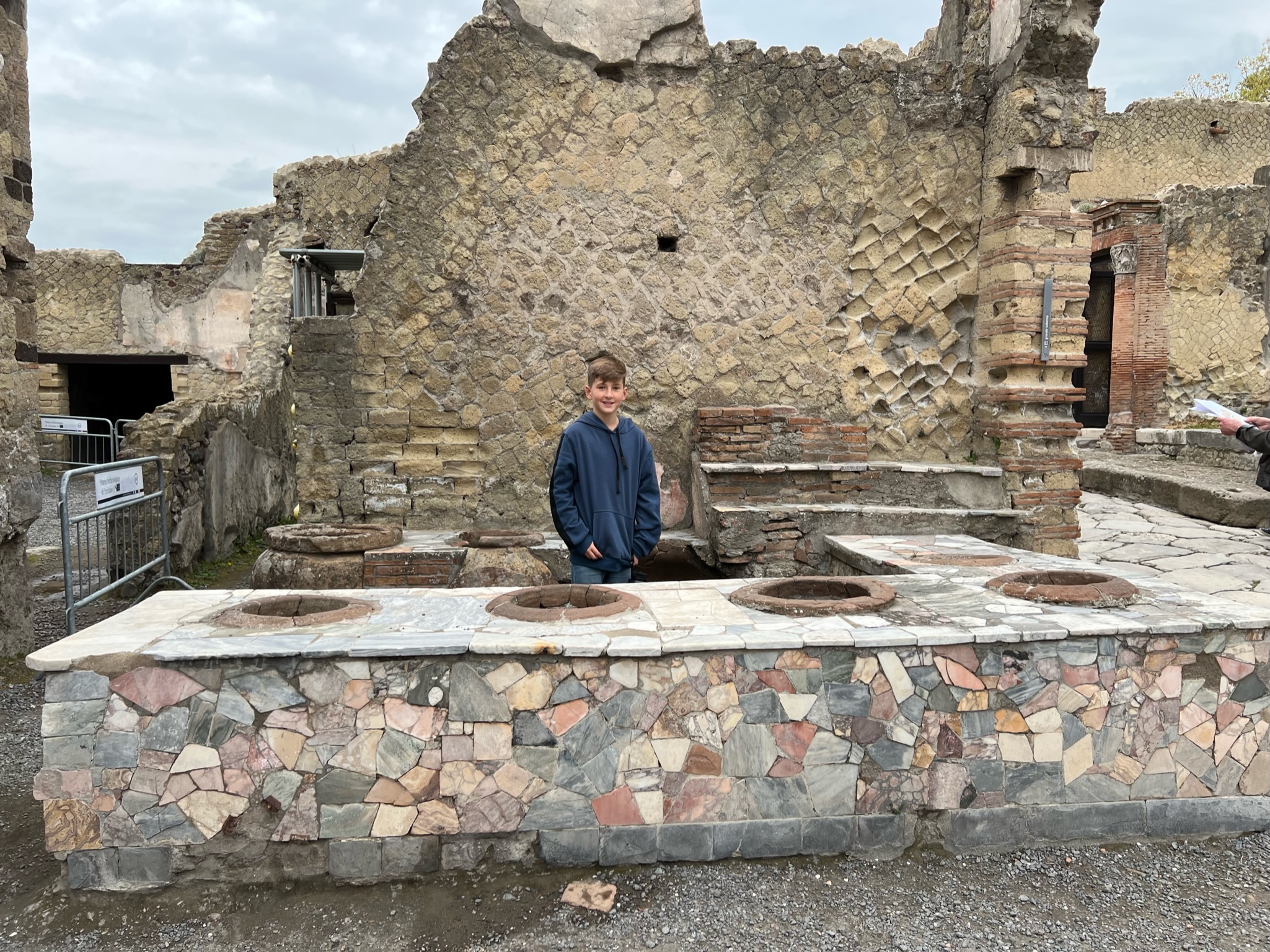
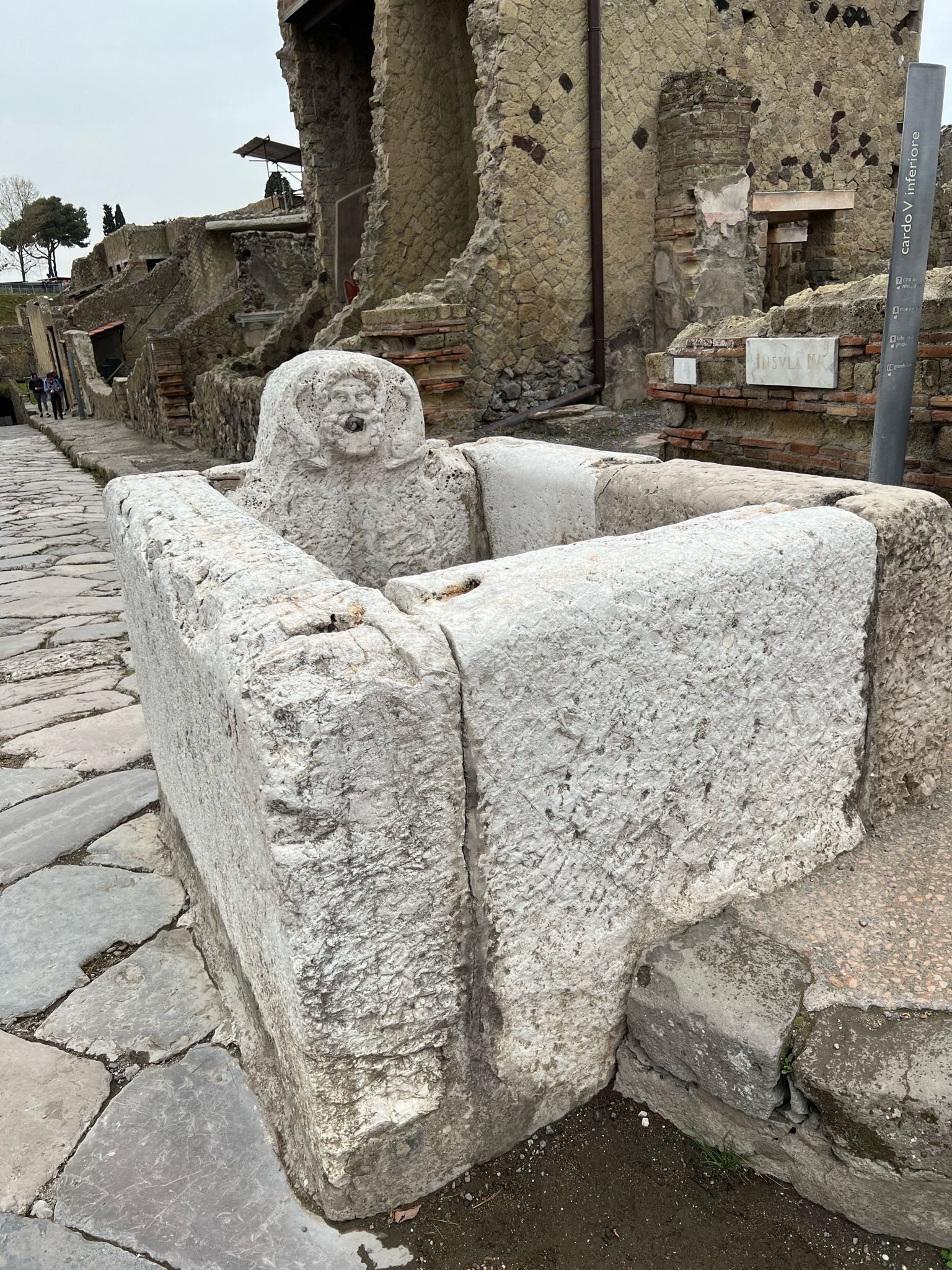
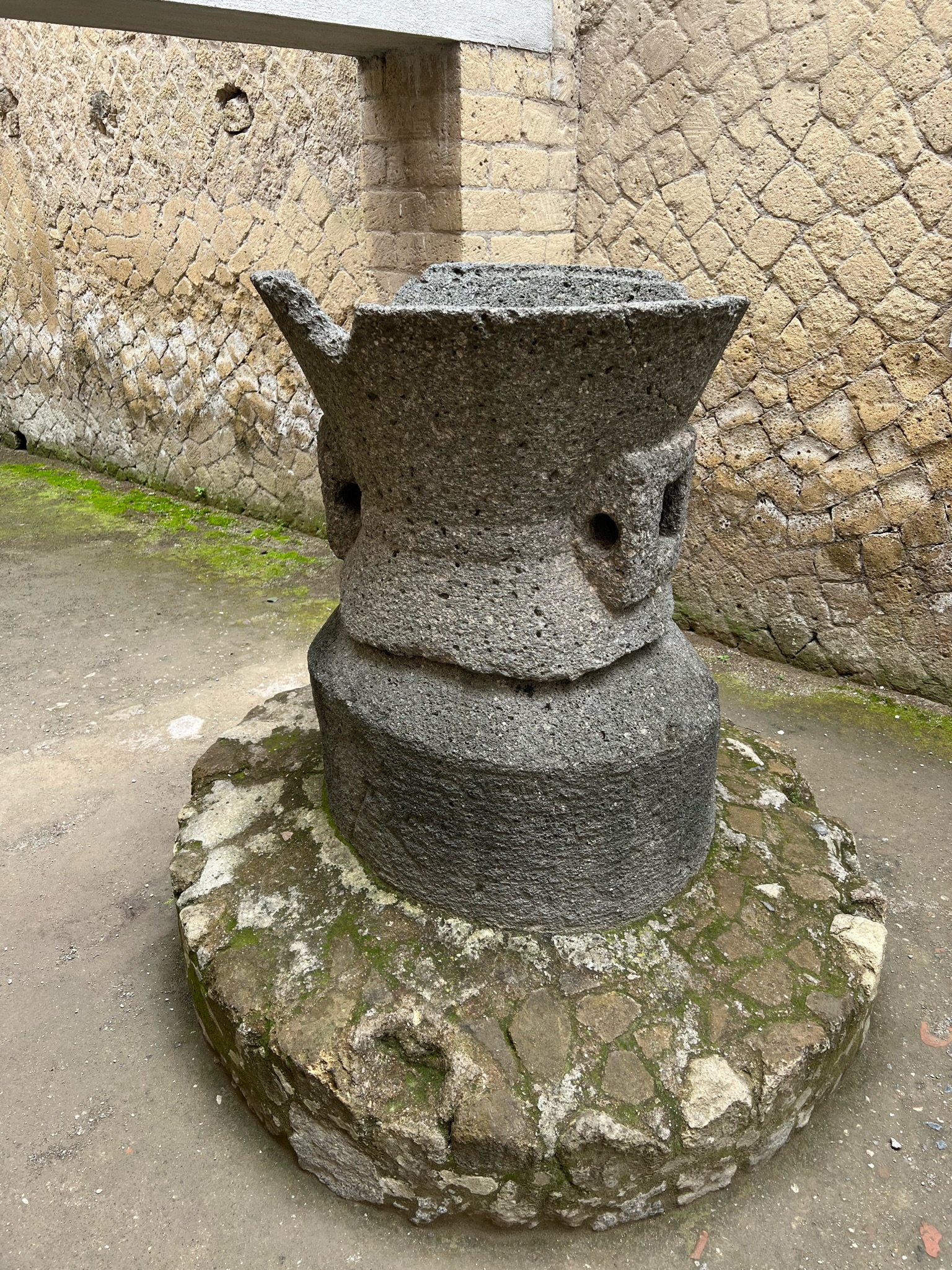
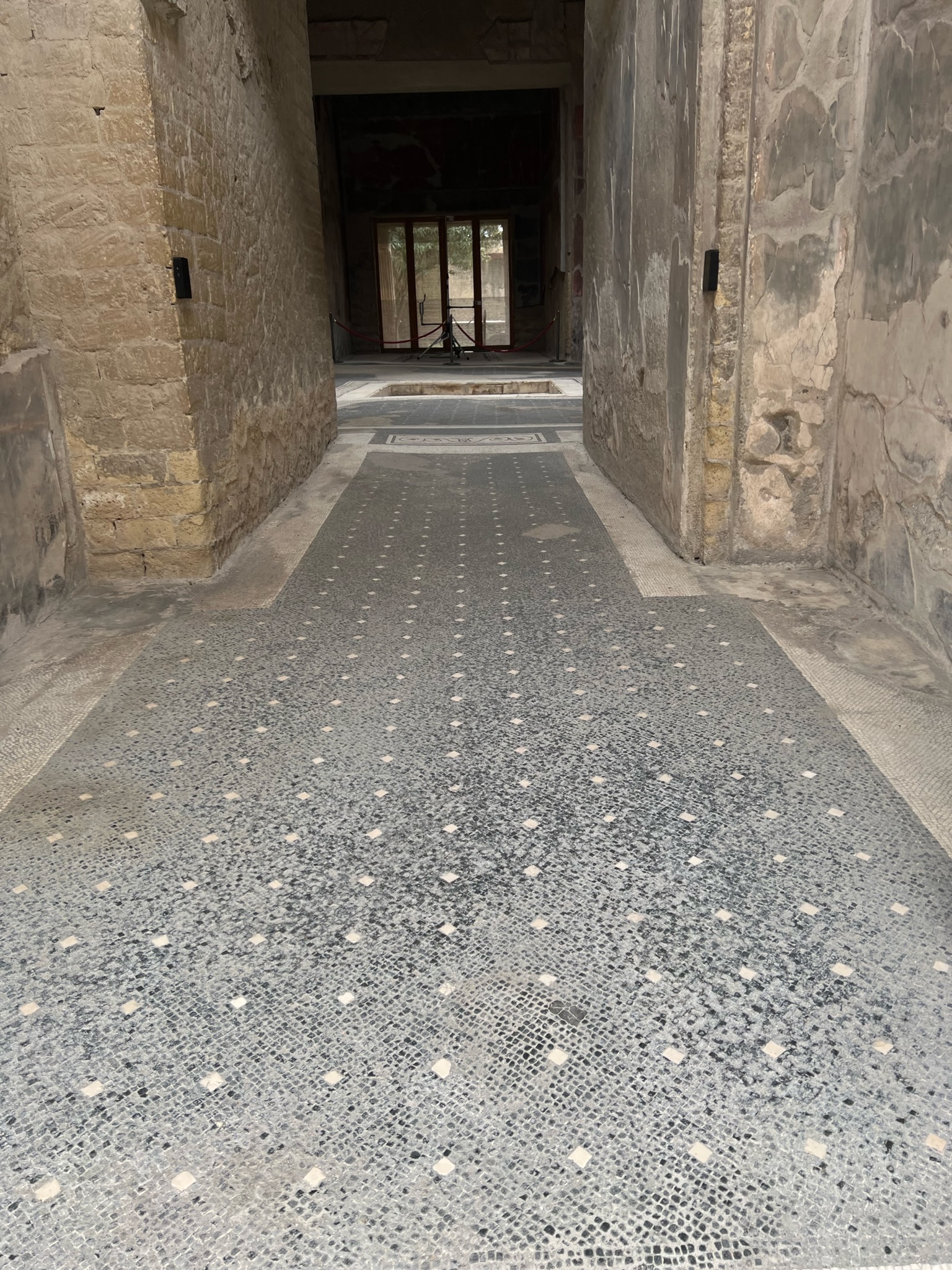
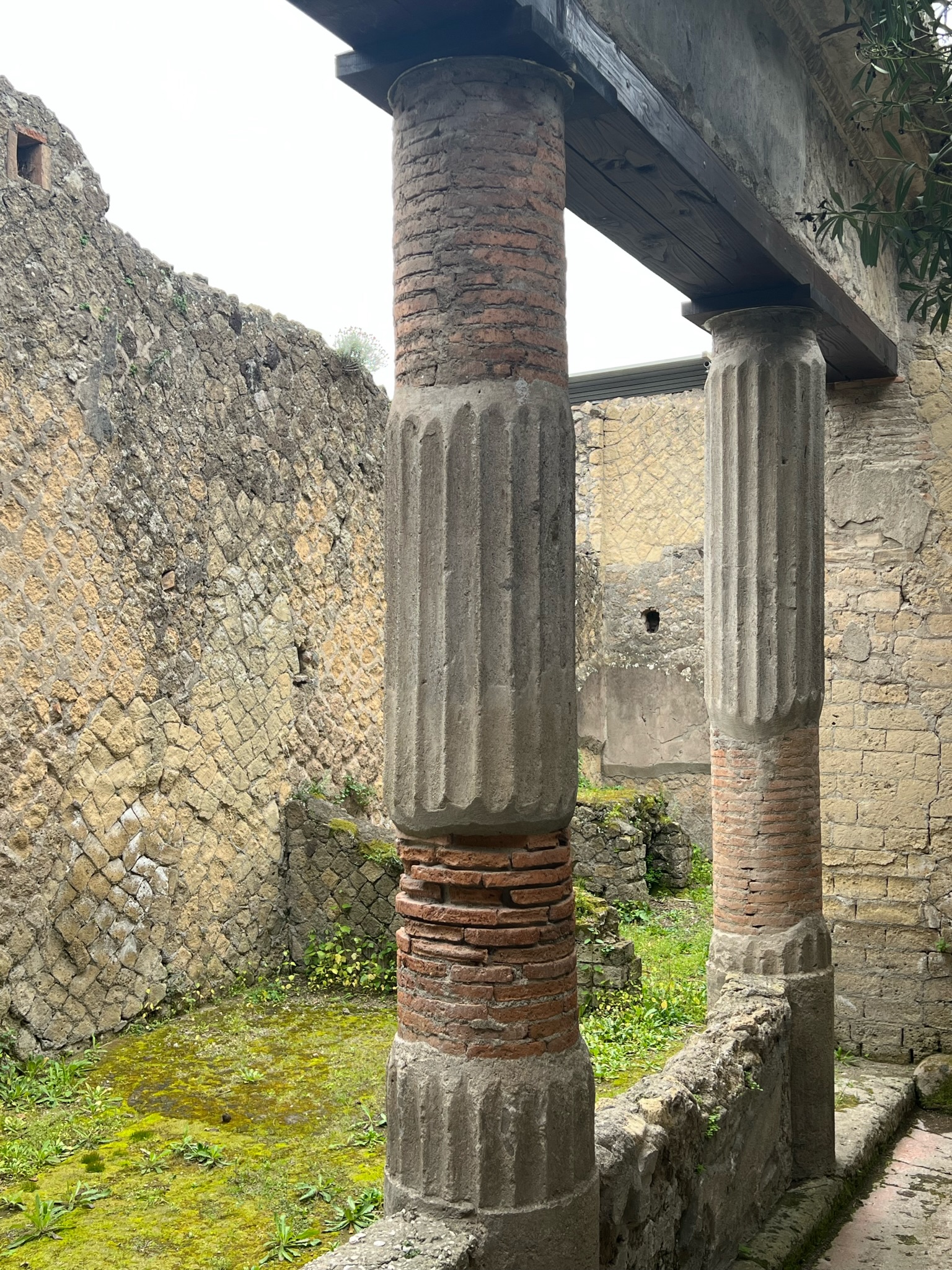
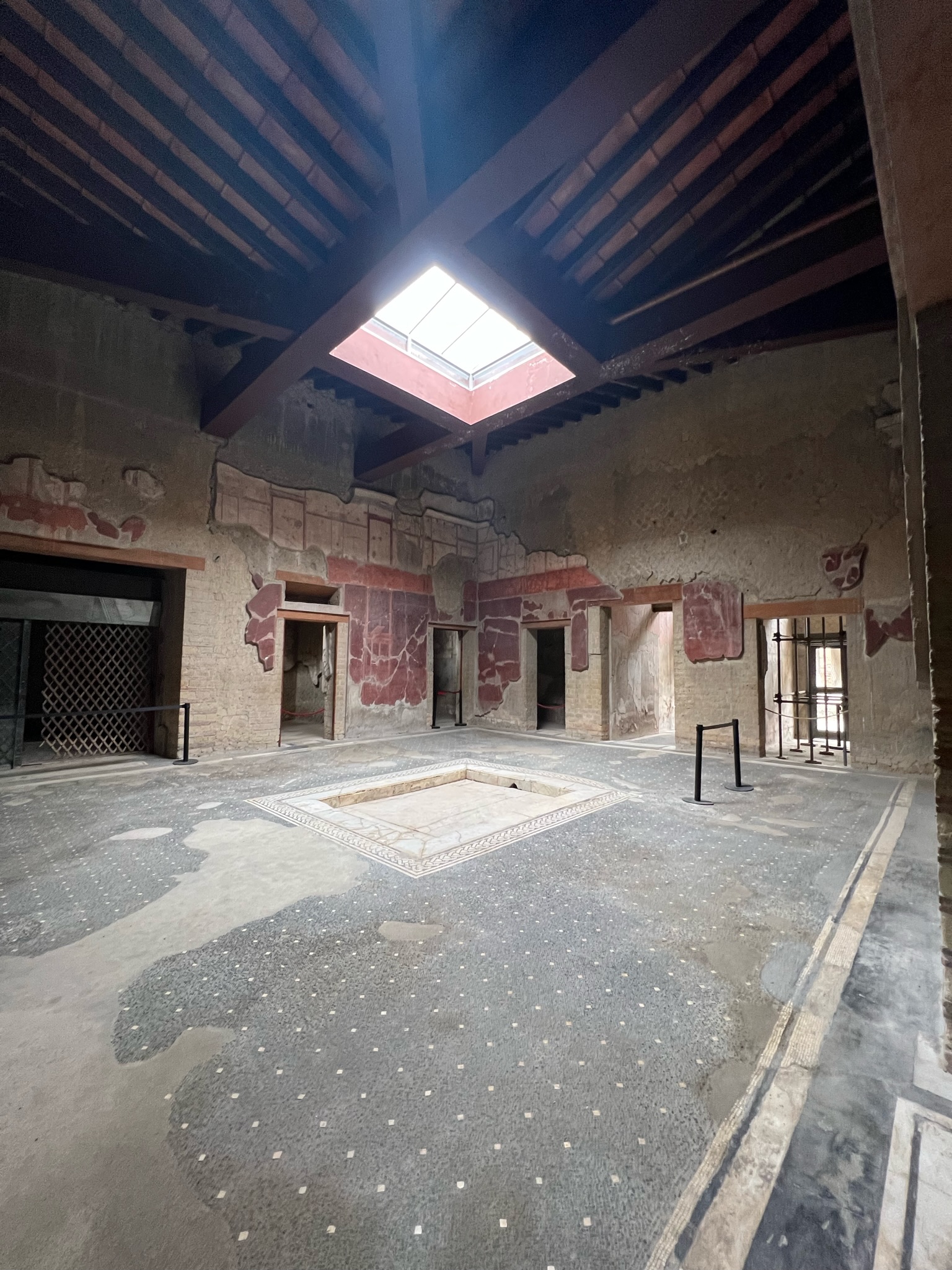
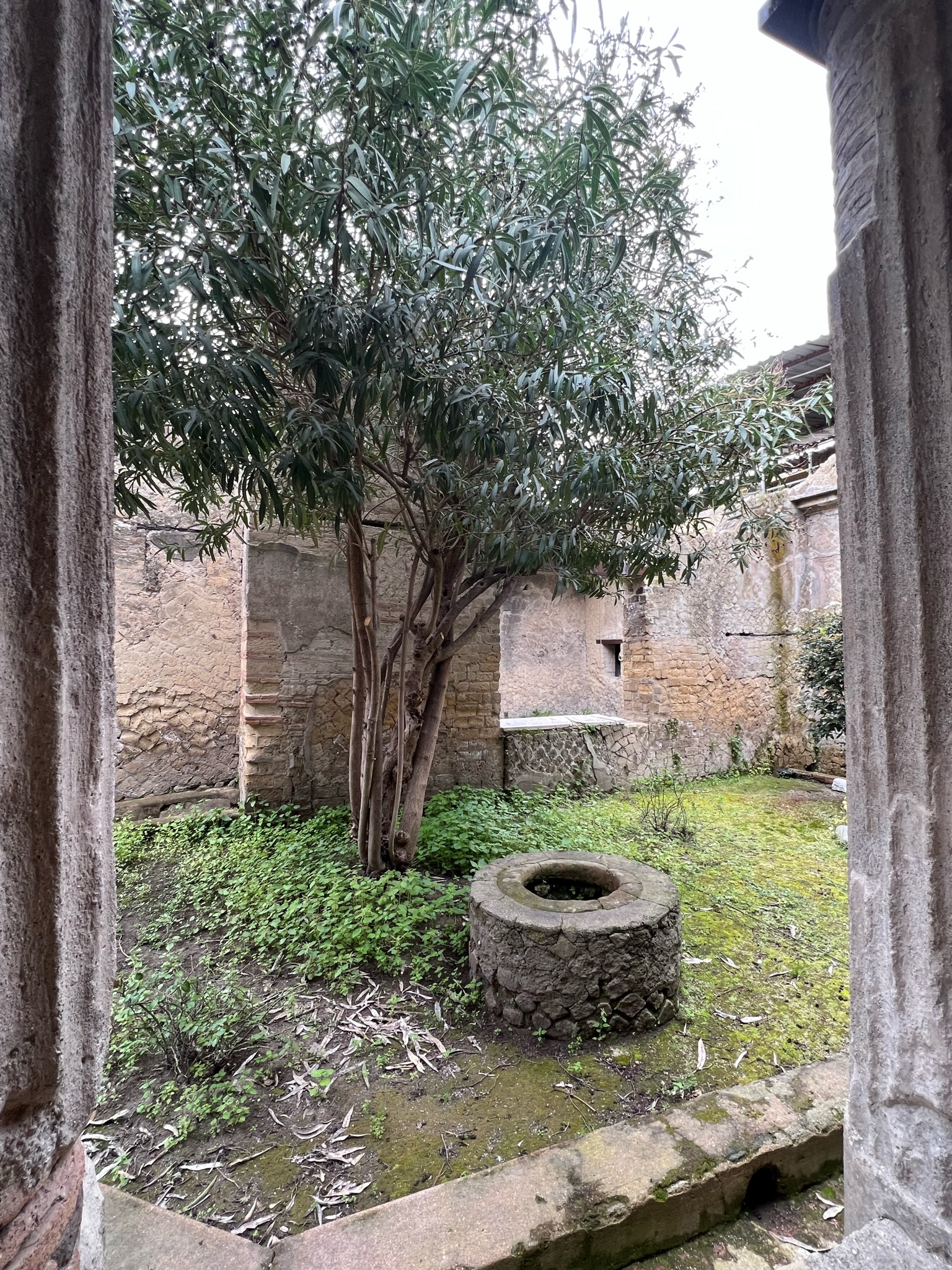
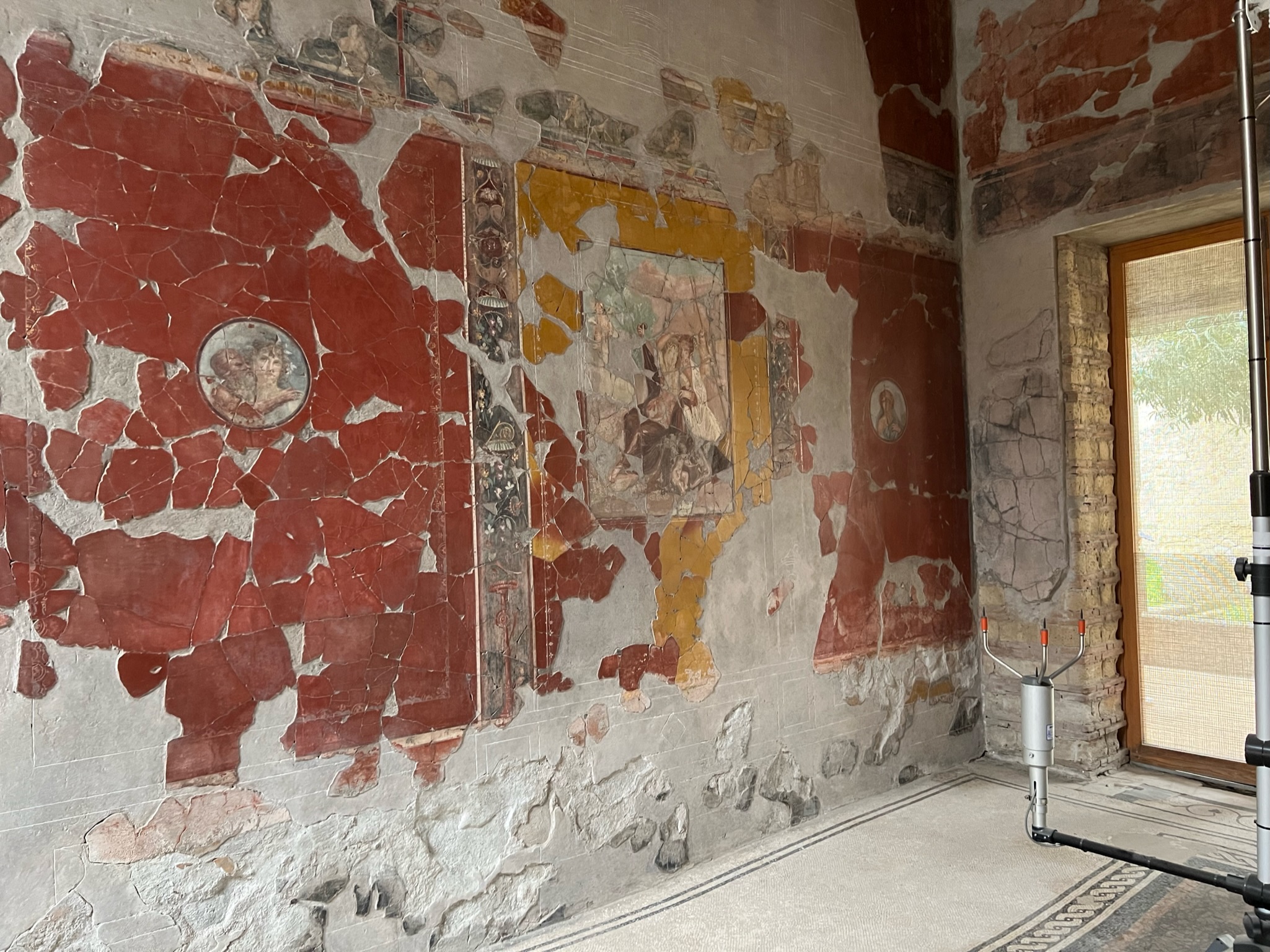
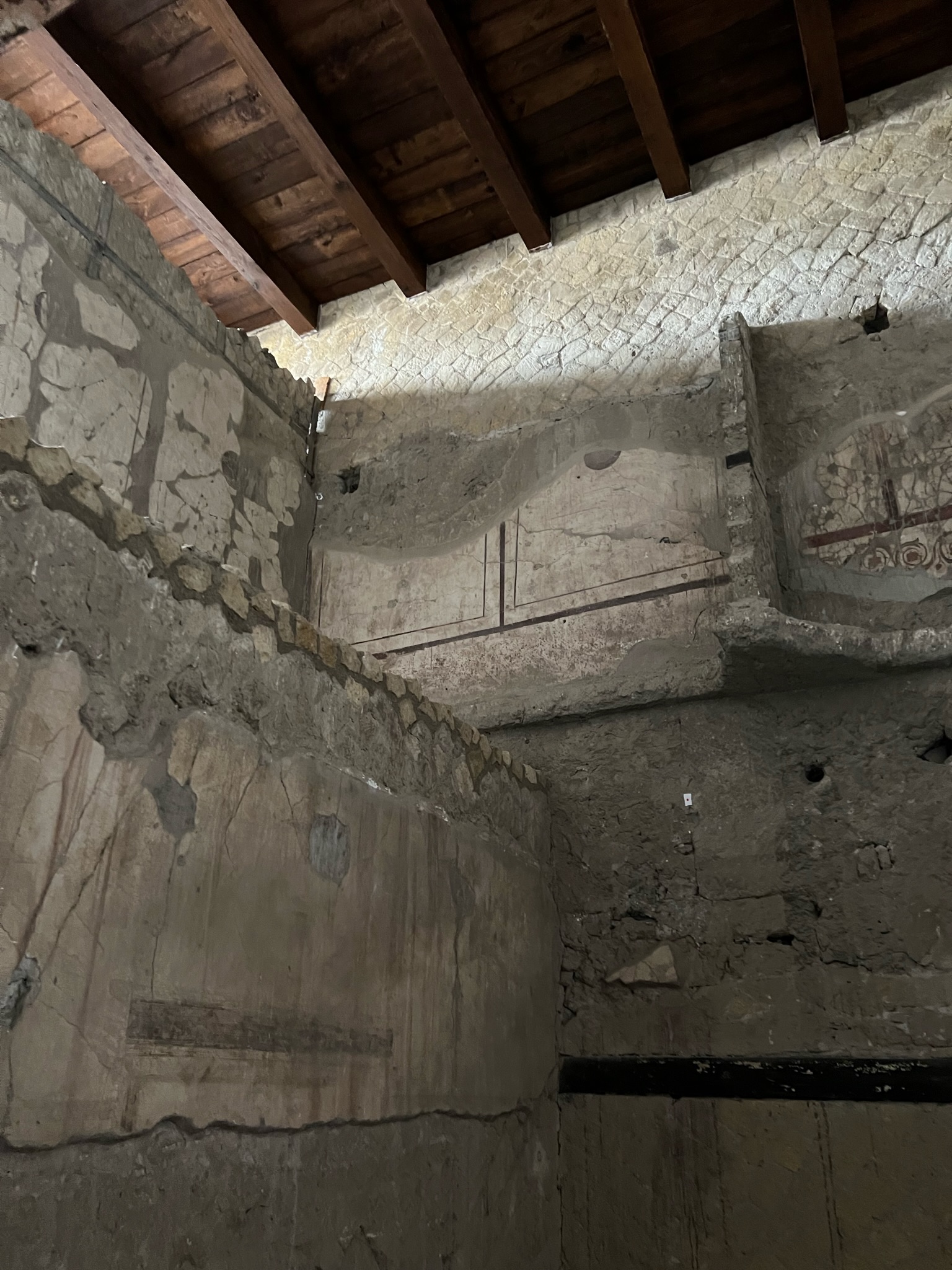
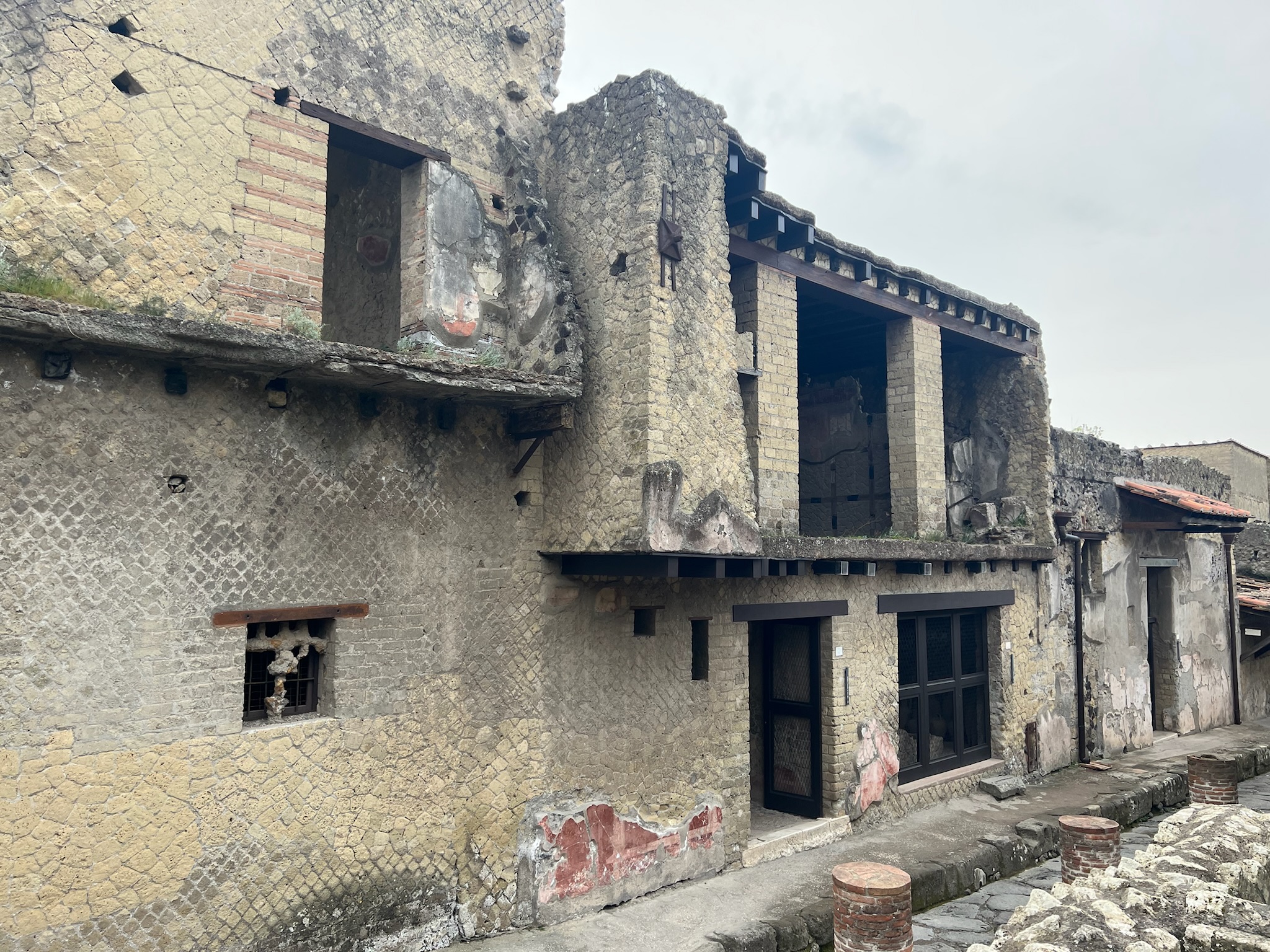
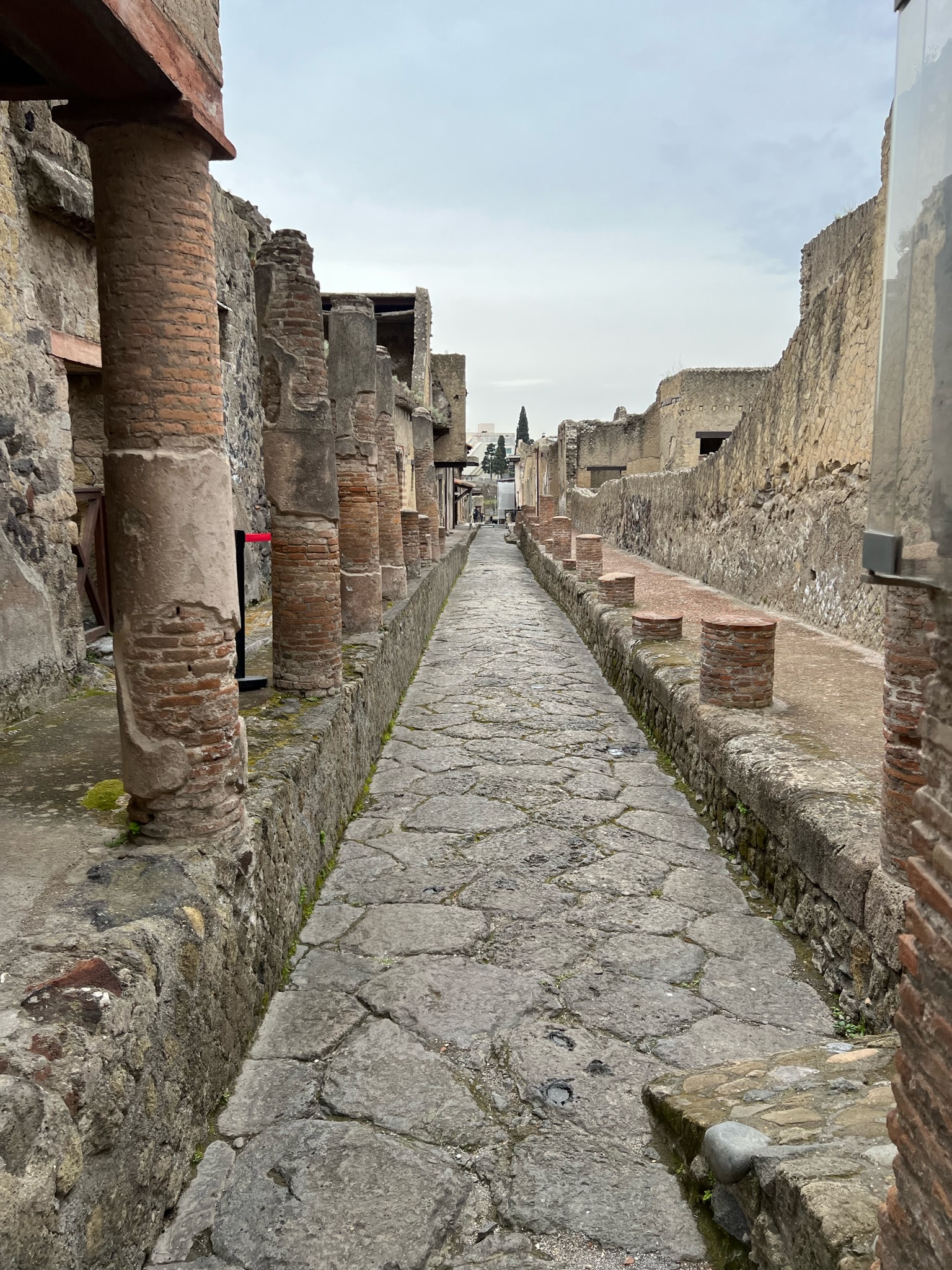
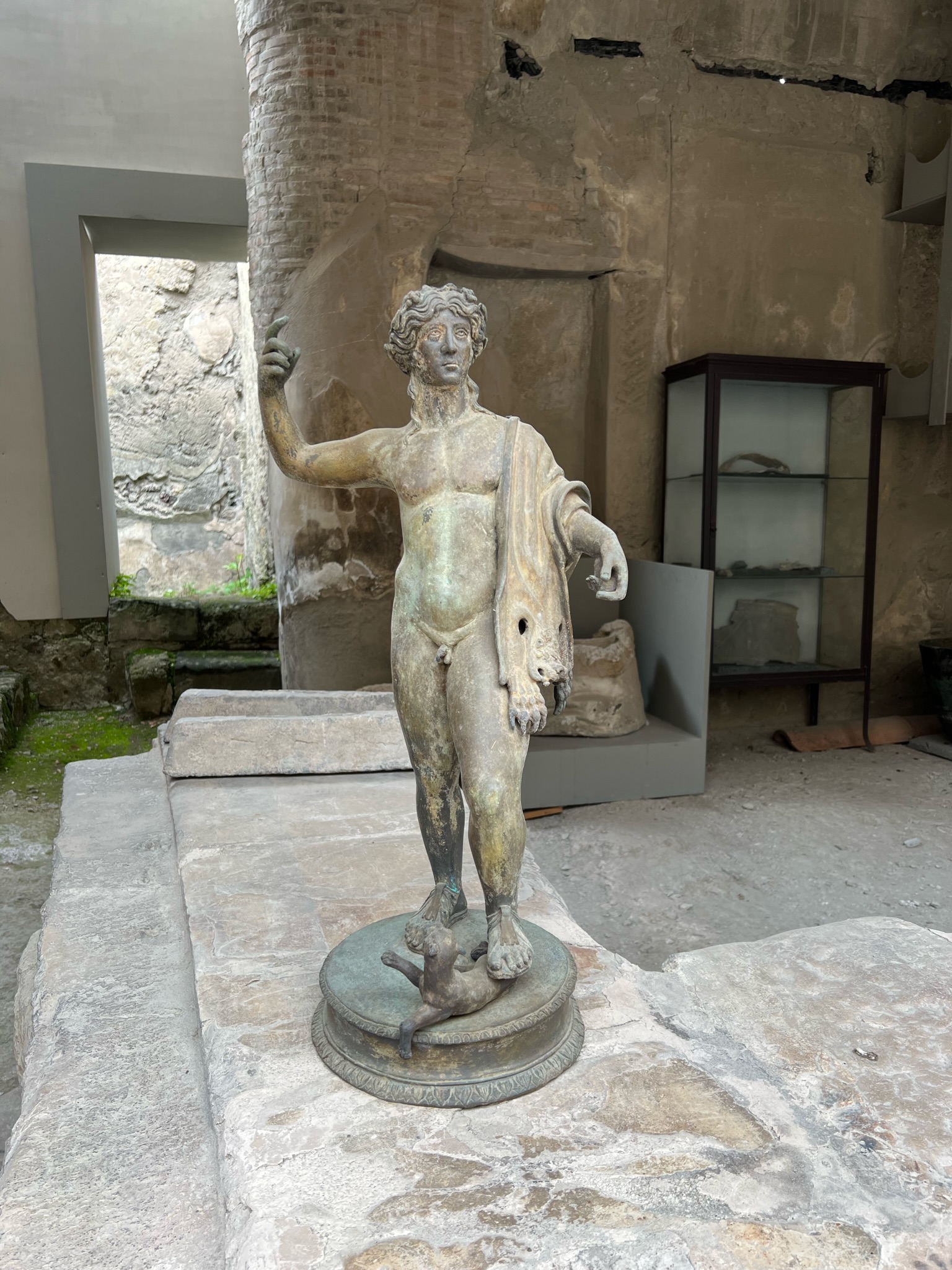
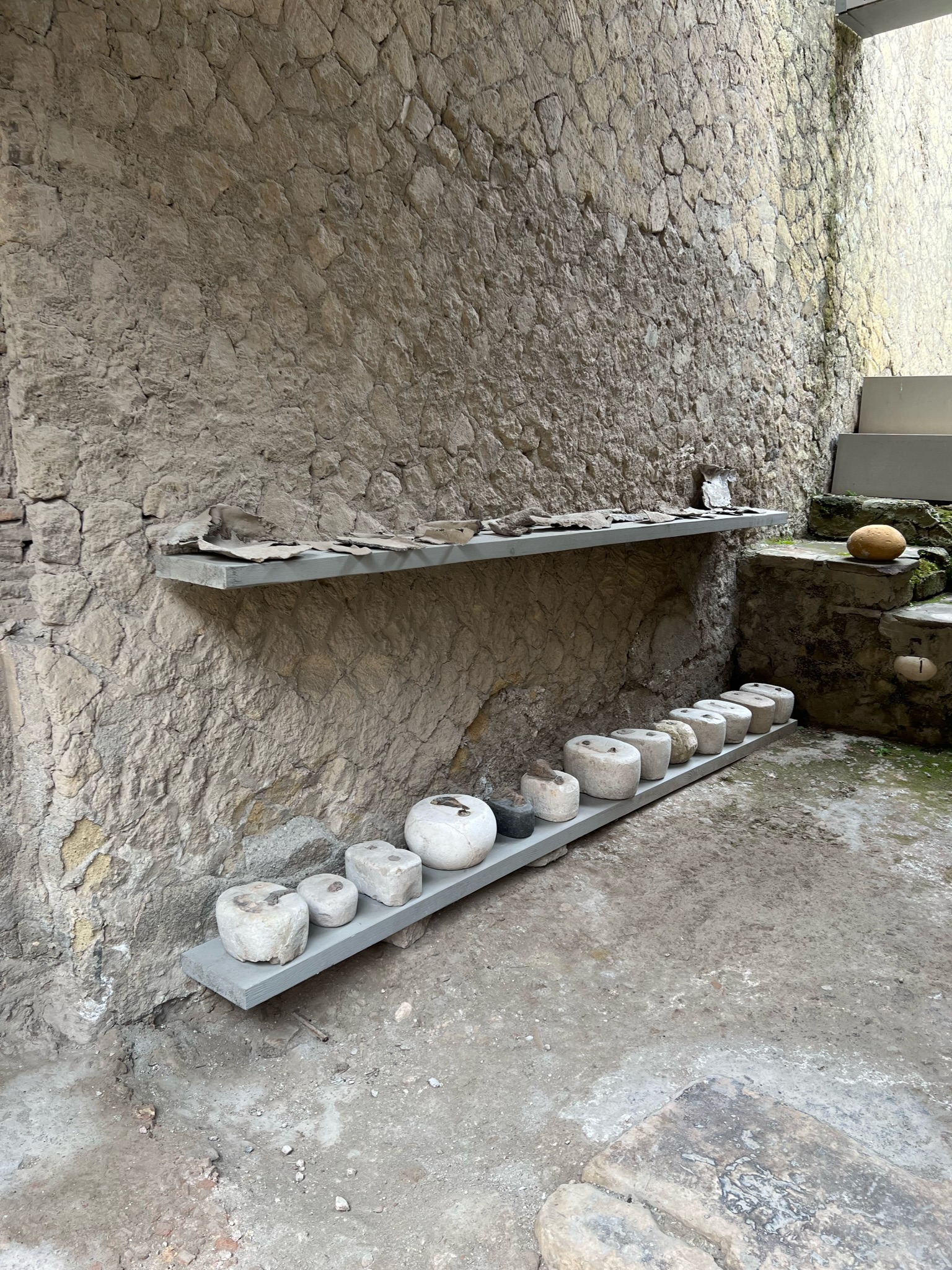
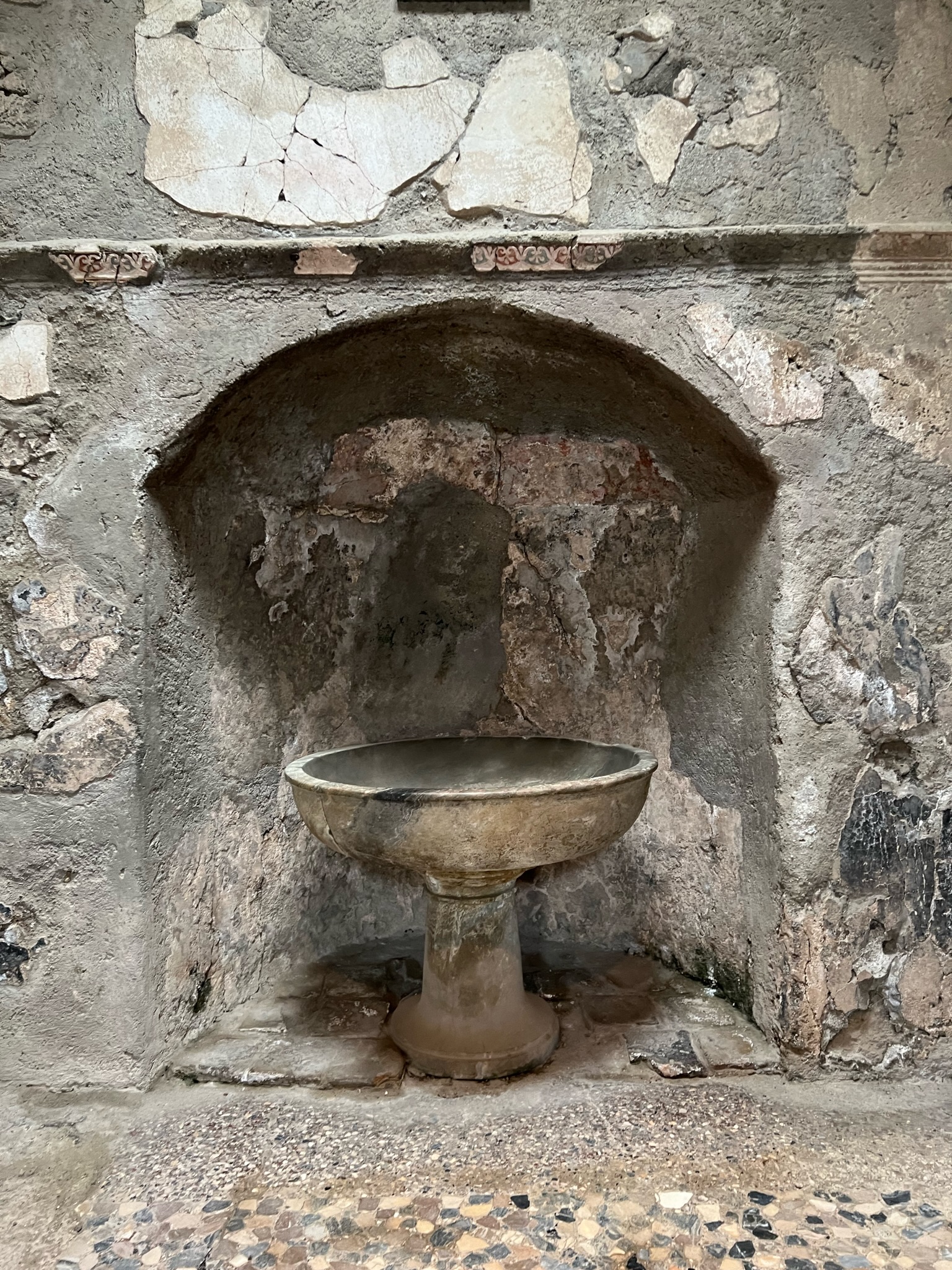
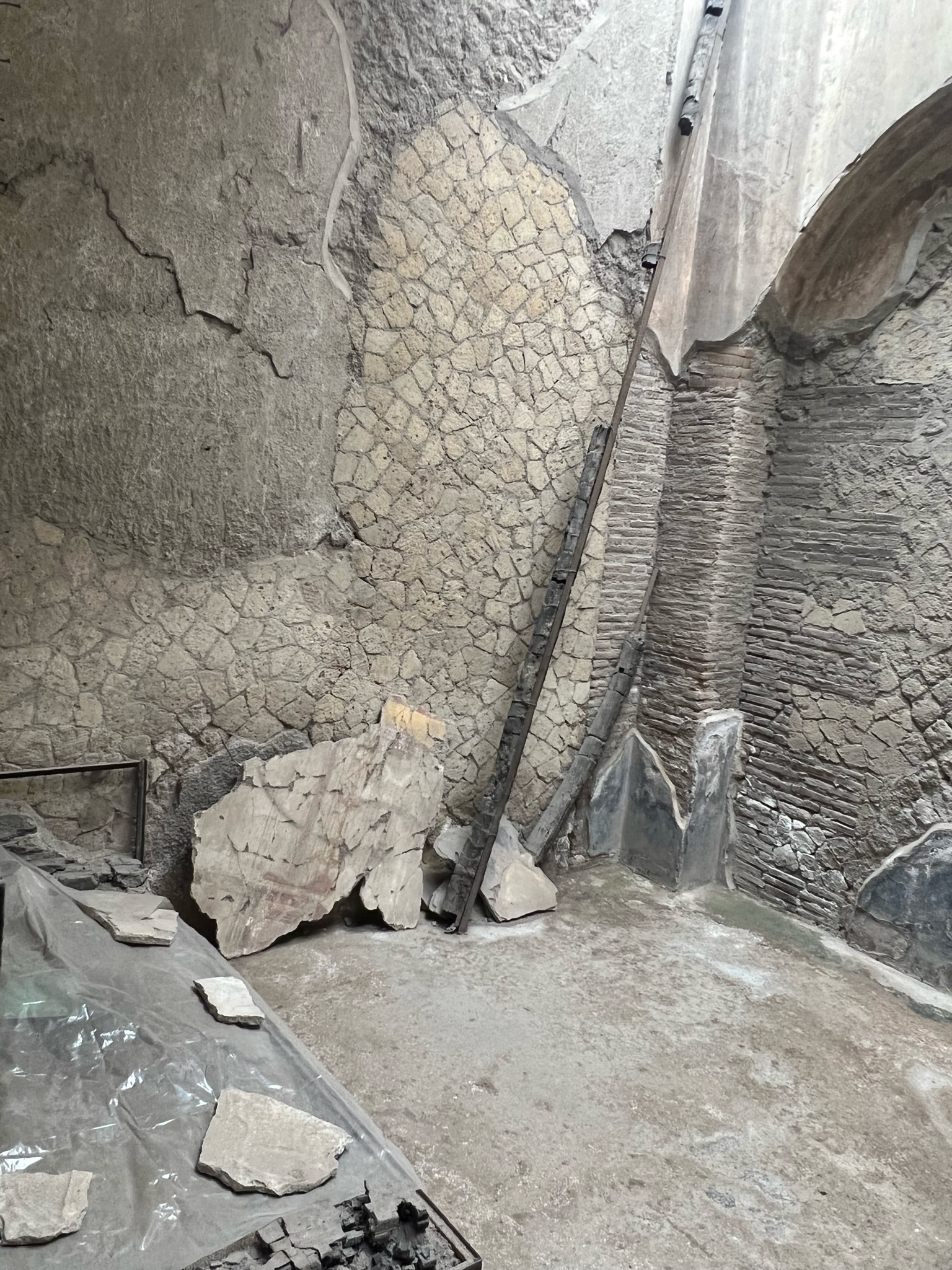
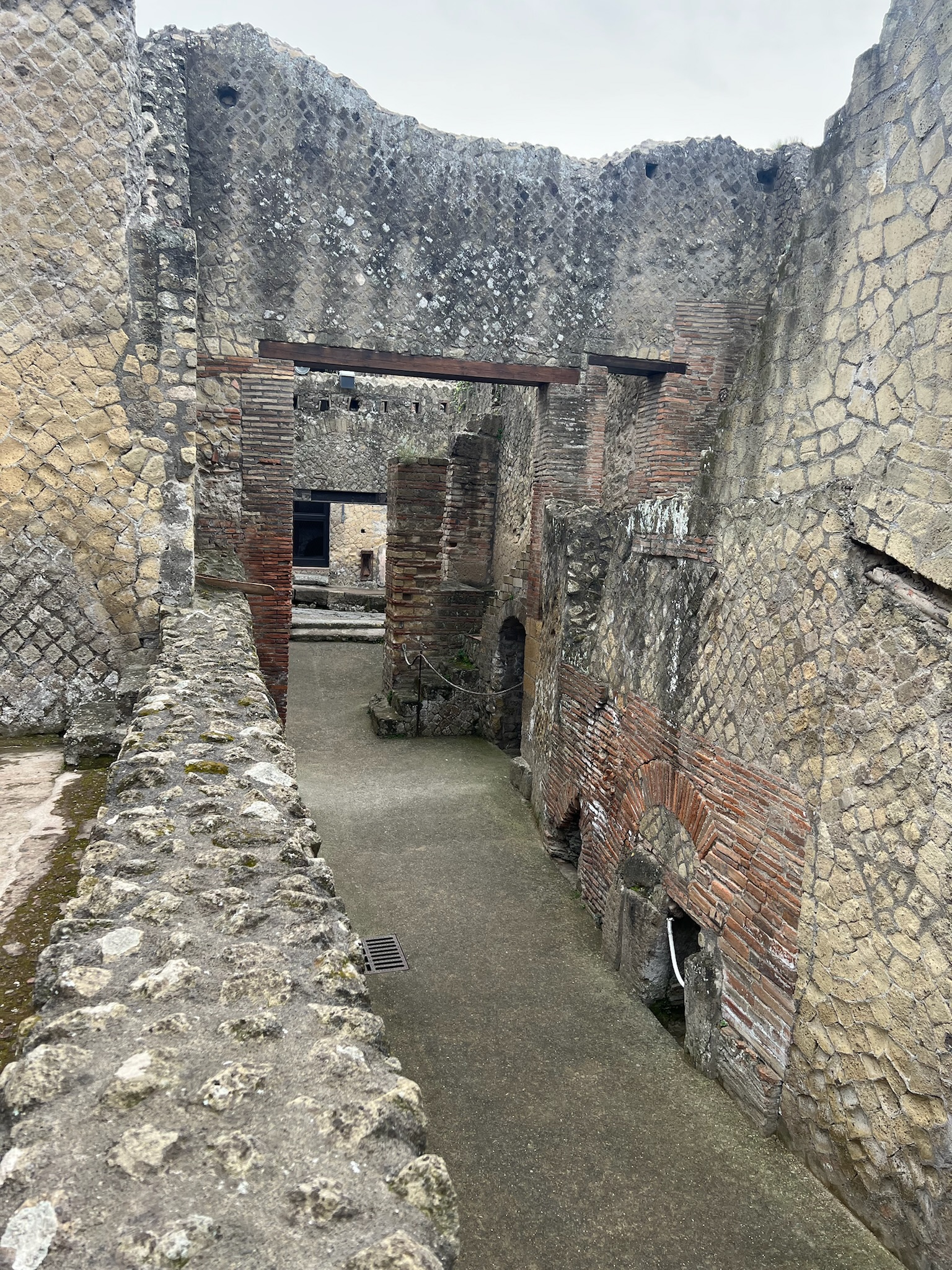
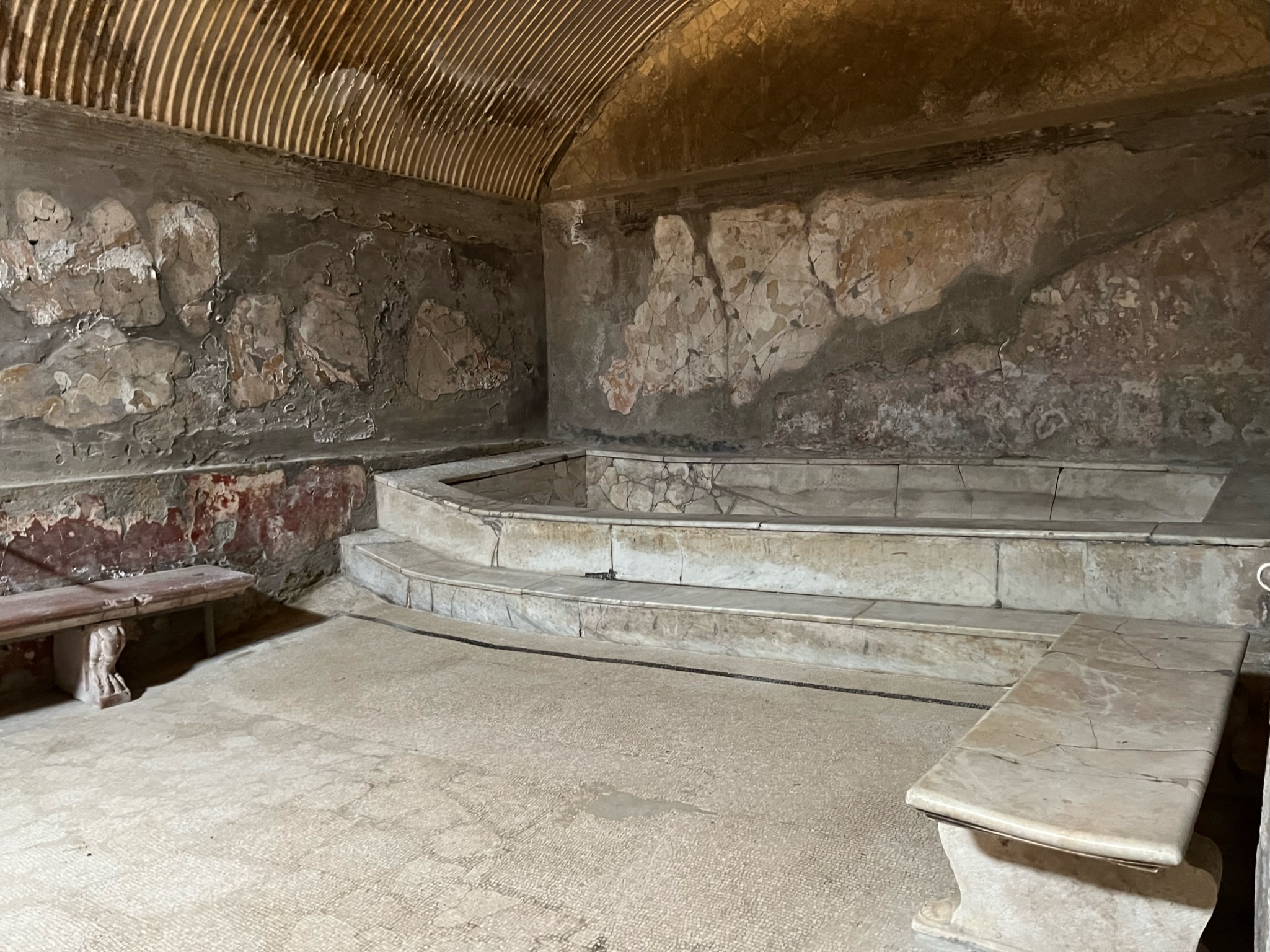
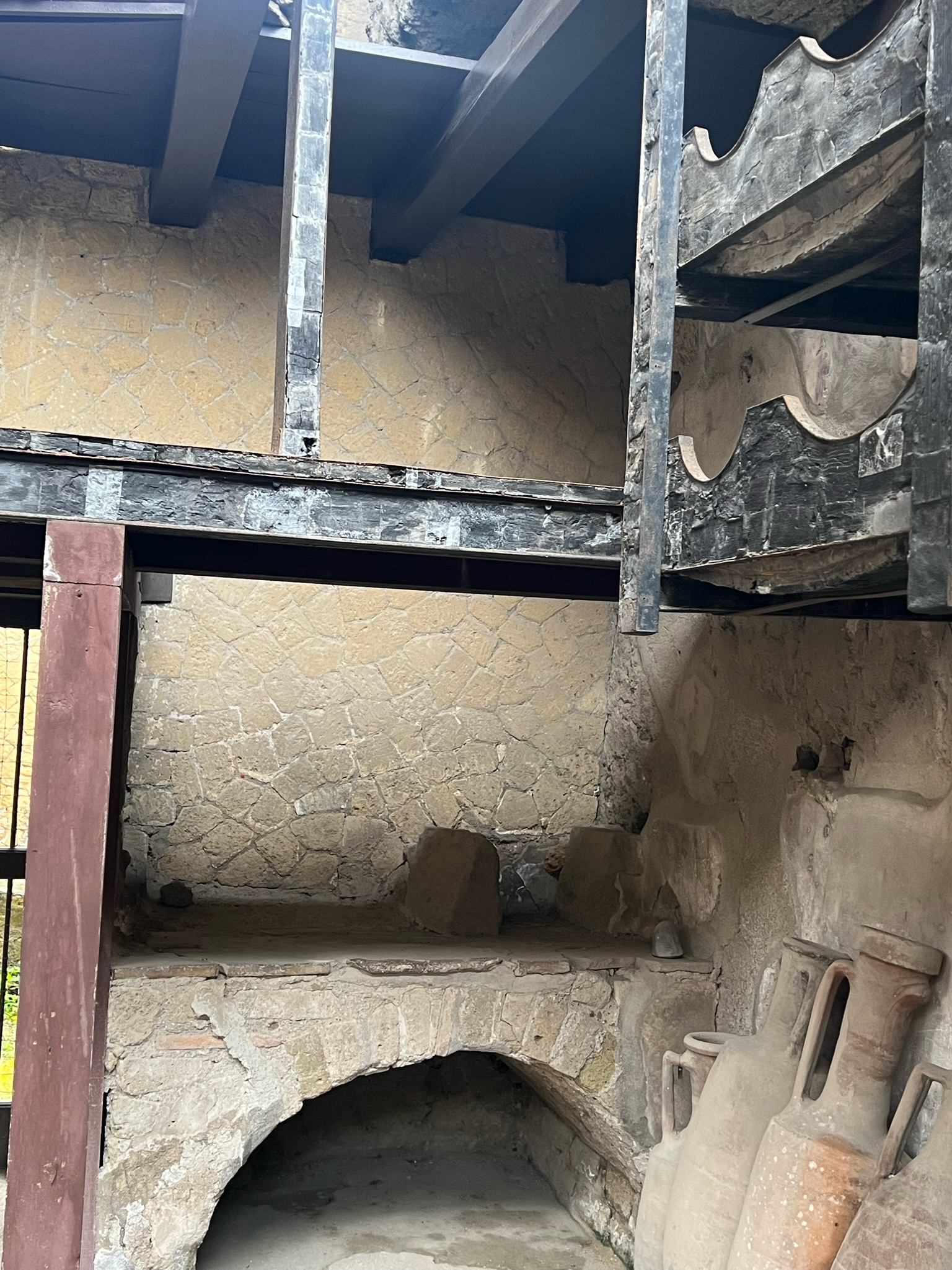
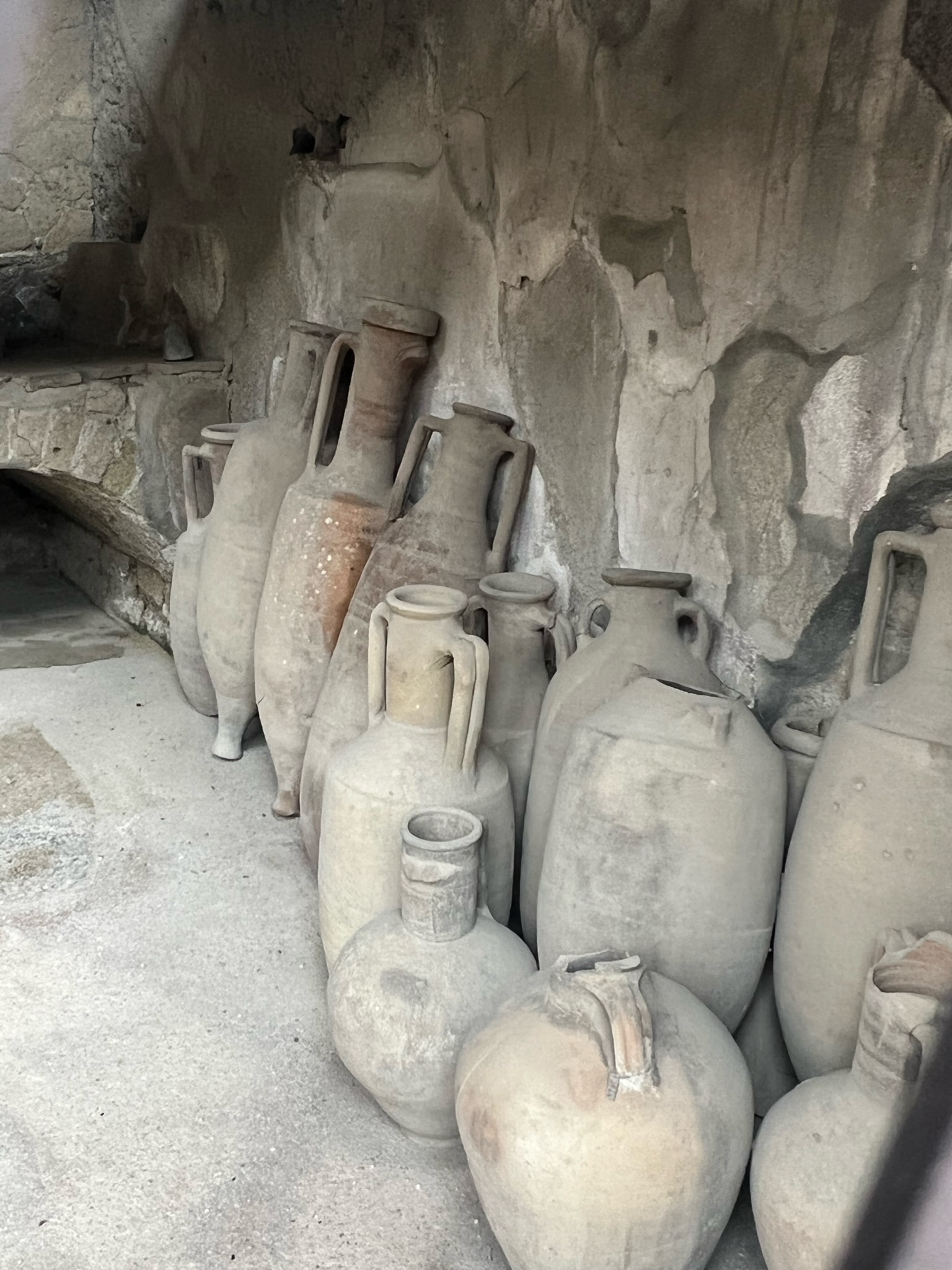
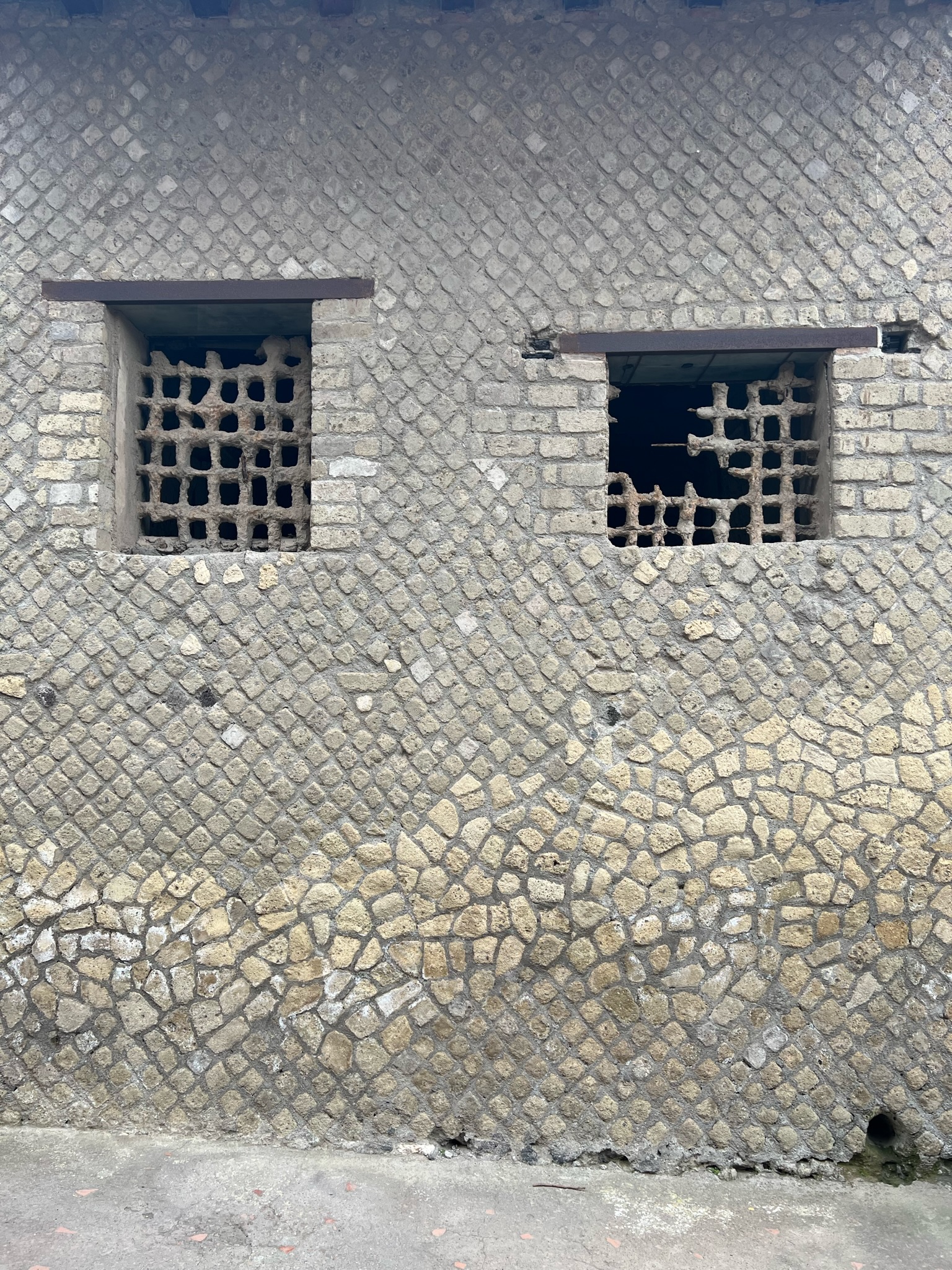
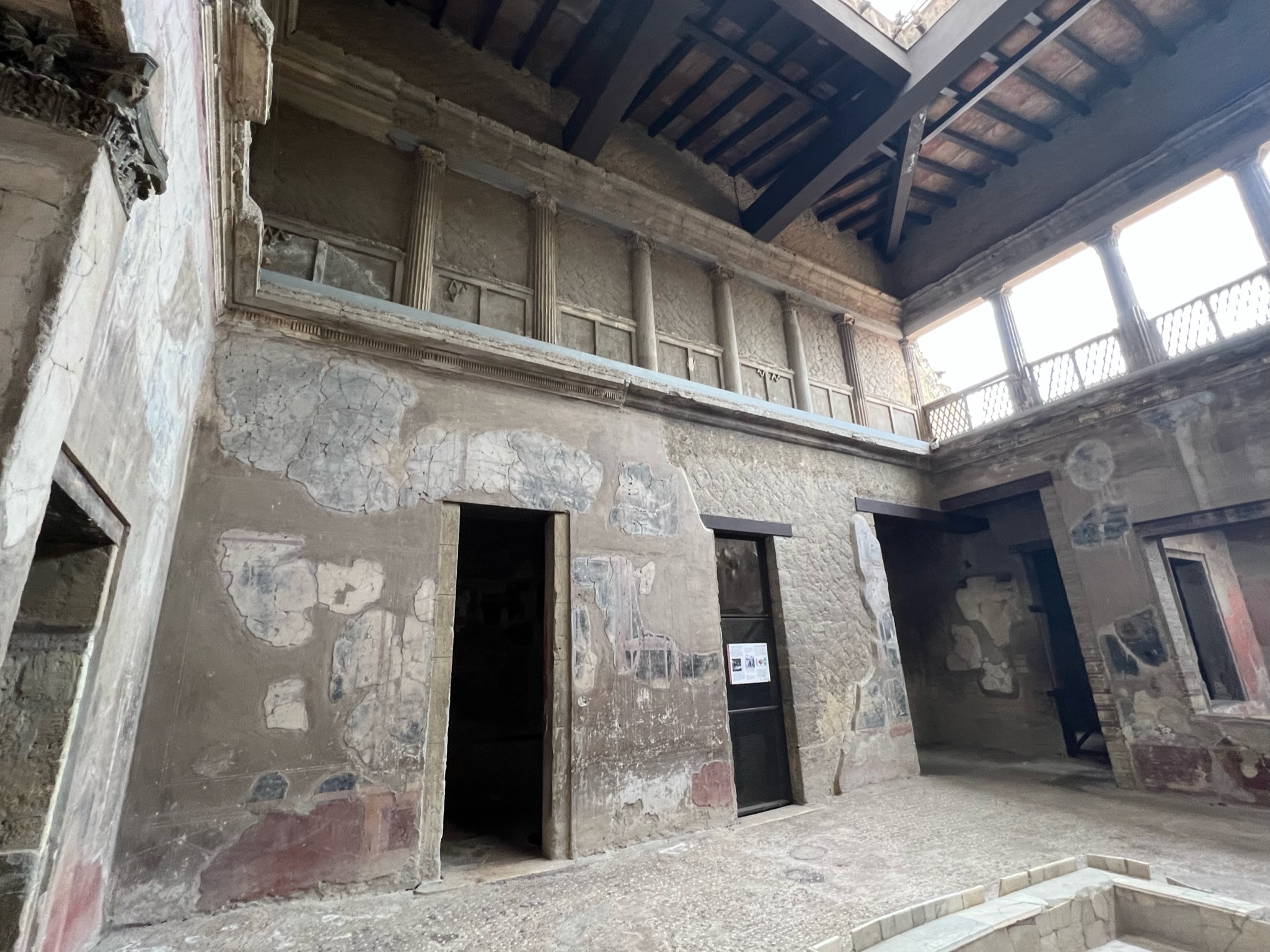
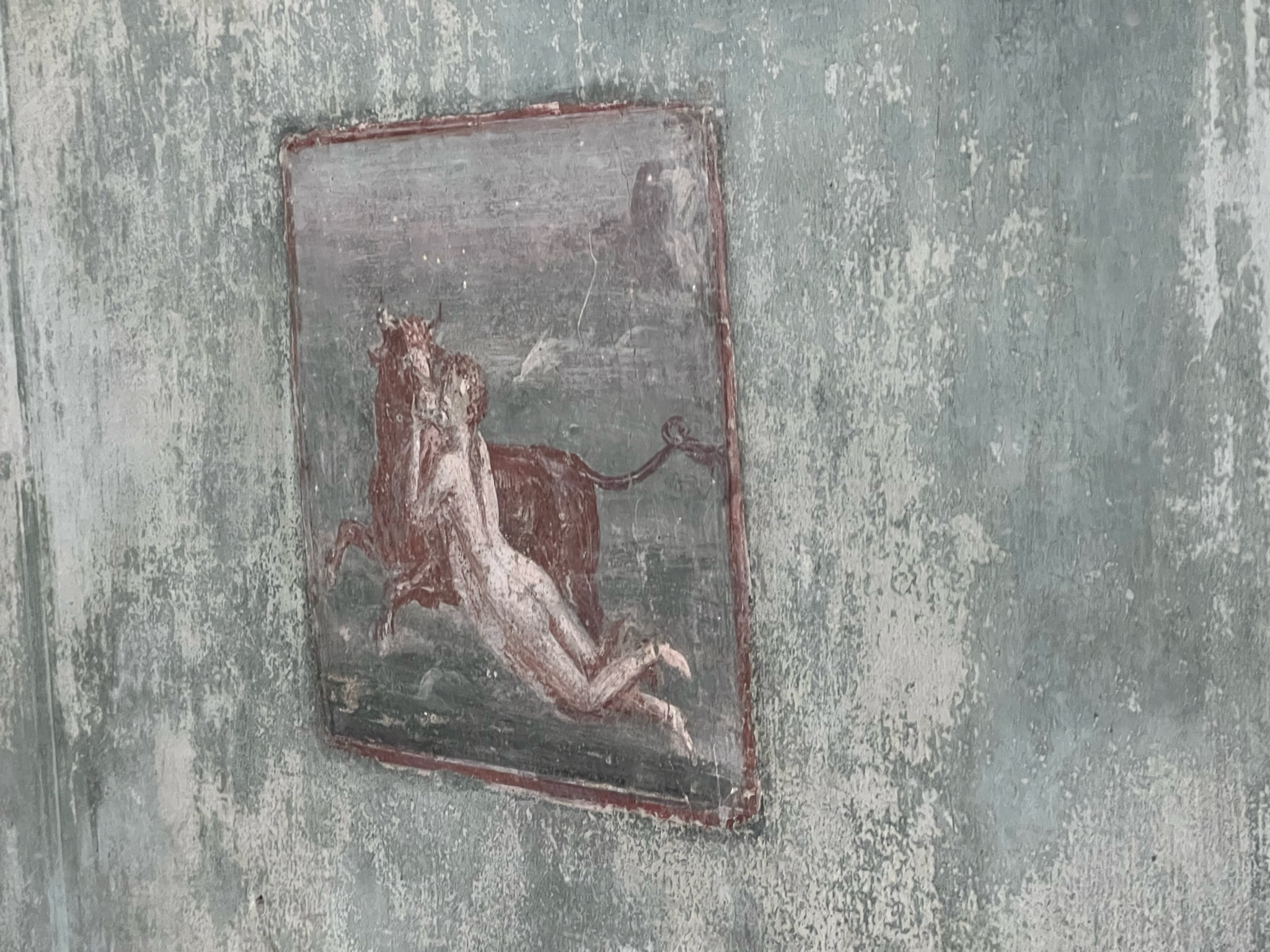
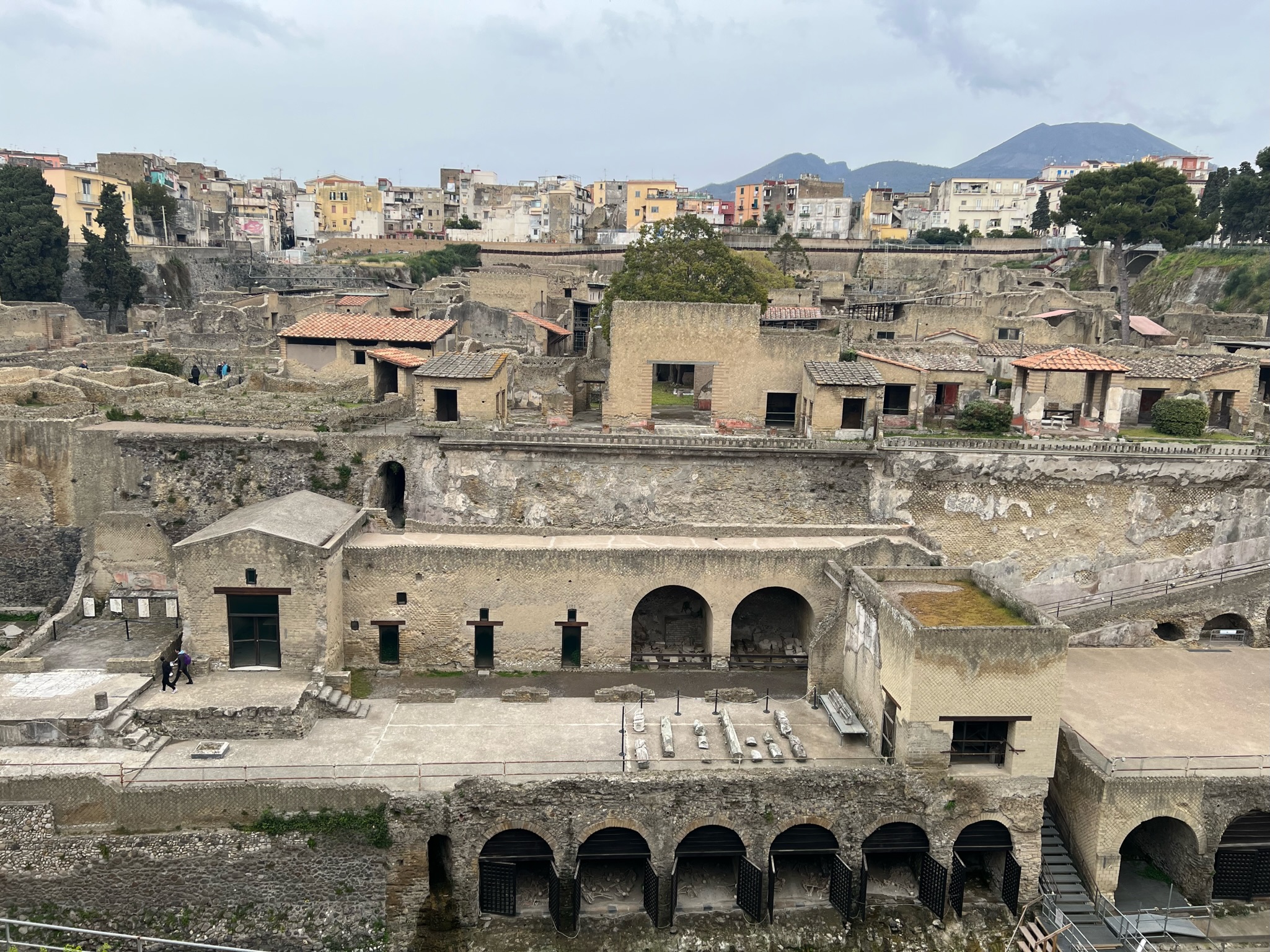
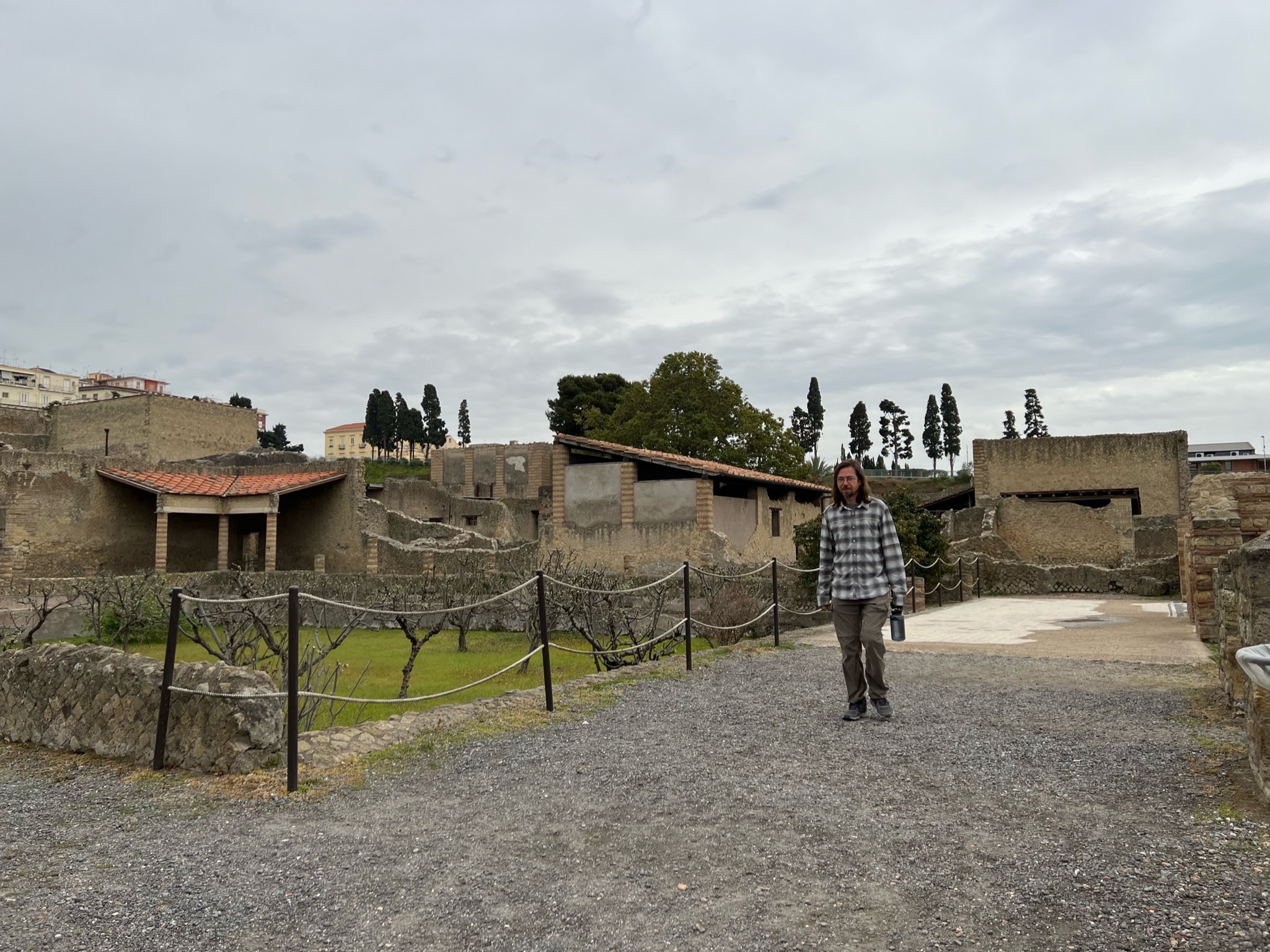
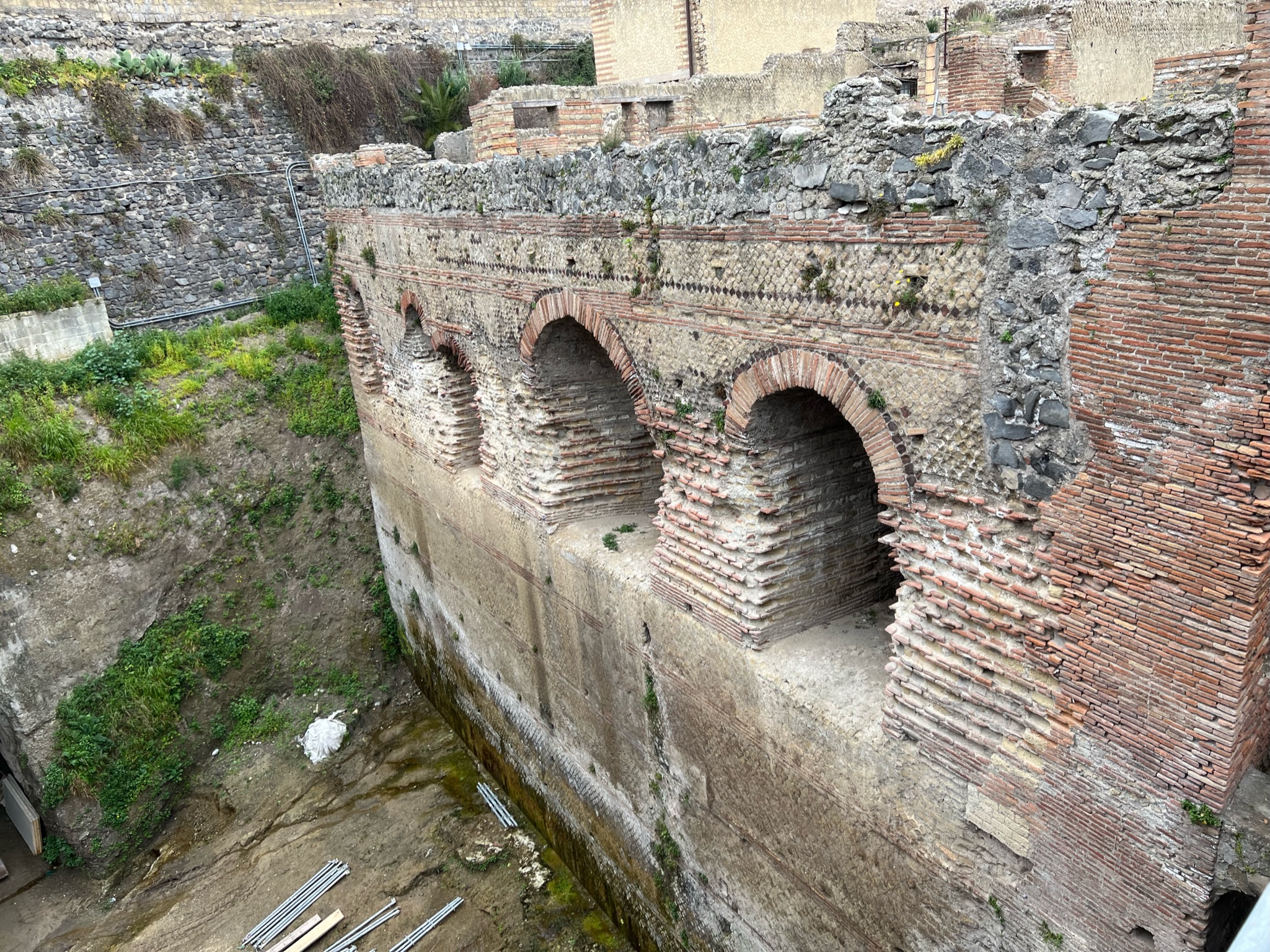
Herculaneum was very similar to Pompeii except that the homes were far more intact. Archeologists have only uncovered about a quarter of the city. I’m not sure that they’ll ever get much more than that as the new city is built directly on top of the old one. Standing on the surface of the new city, you can see that some of the buildings in the old city were only covered by a few feet of soil. It’s really quite amazing to see this buried town literally underneath the new one. Many of the city buildings haven’t been found yet, so they are presumed to be lost for now. The buildings that have been found were much better preserved here, and it makes imagining the town a little easier. You can see the multiple stories of the homes, bigger frescoes, and wooden features that simply don’t exist in Pompeii.
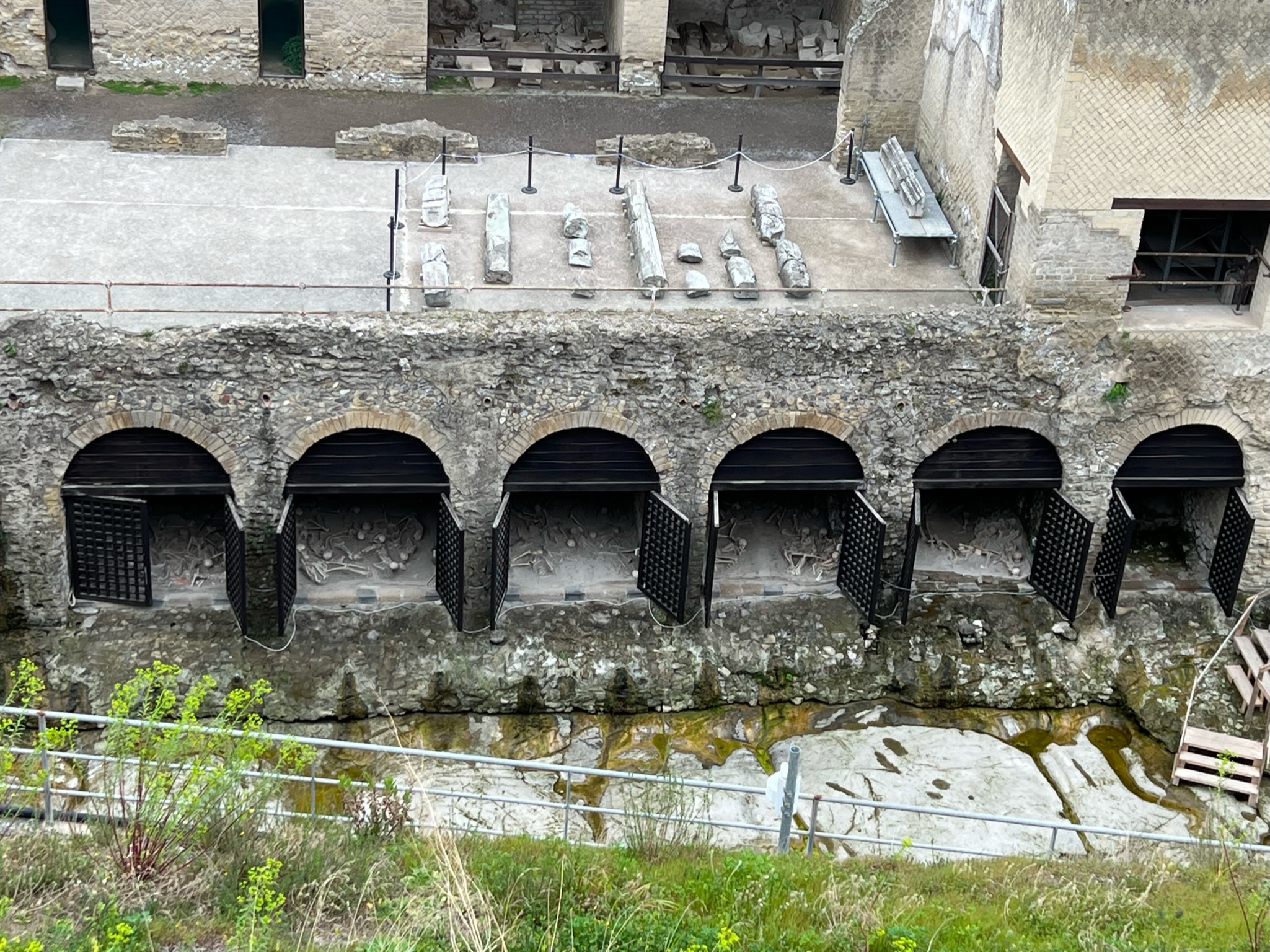
In Herculaneum, the excavations have found very few bodies. In fact for a while researchers believed that everyone, or nearly everyone, made it out in time there. But they made a gruesome discovery when they excavated the boathouses near the old shoreline. Inside, they have found more than 300 skeletons all together inside. Its possible that these people were trying to flee via the sea when the gas cloud blew through. The boathouses were no match for the intense temperatures though, and their skeletons are all that remain.
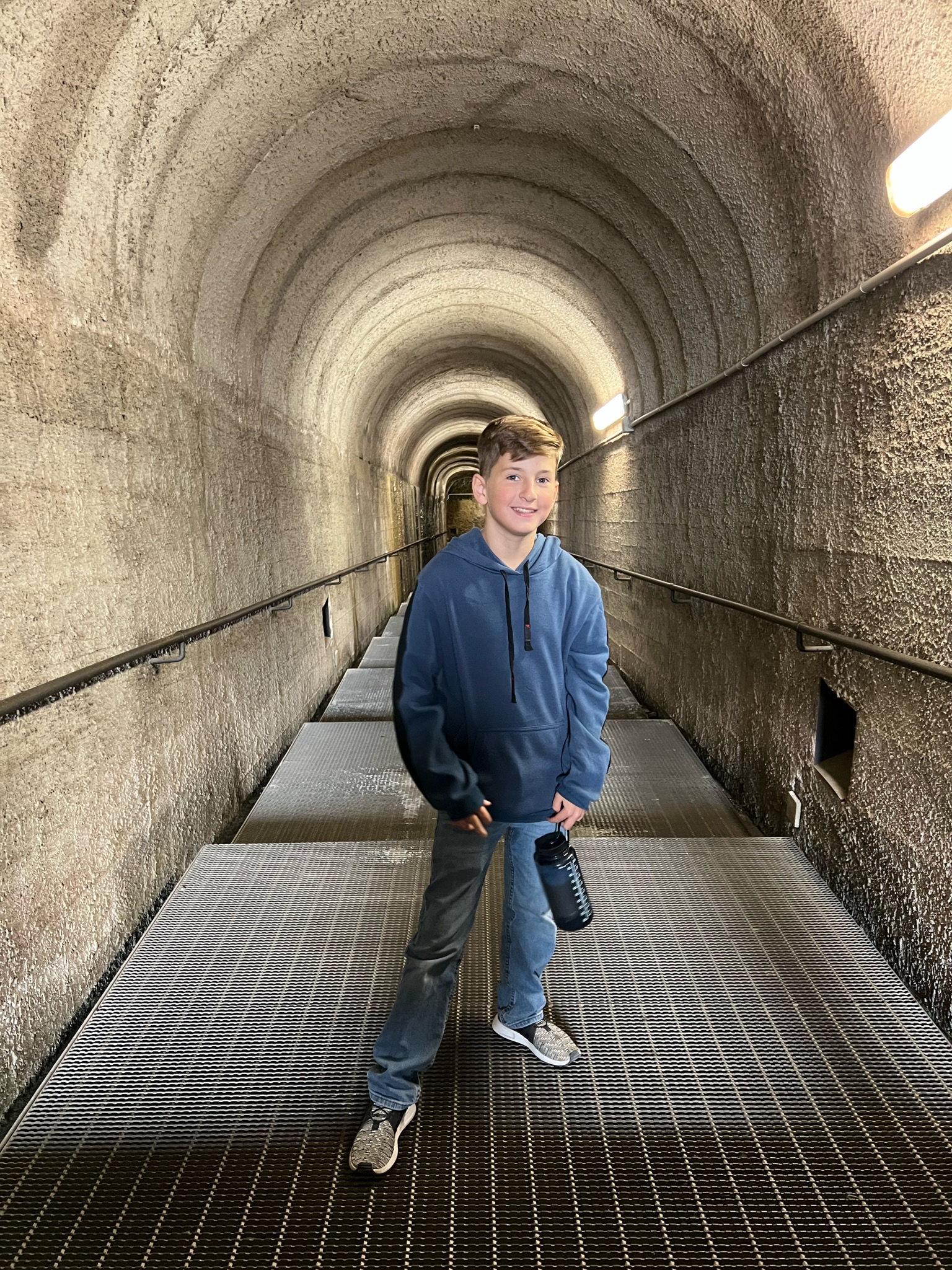


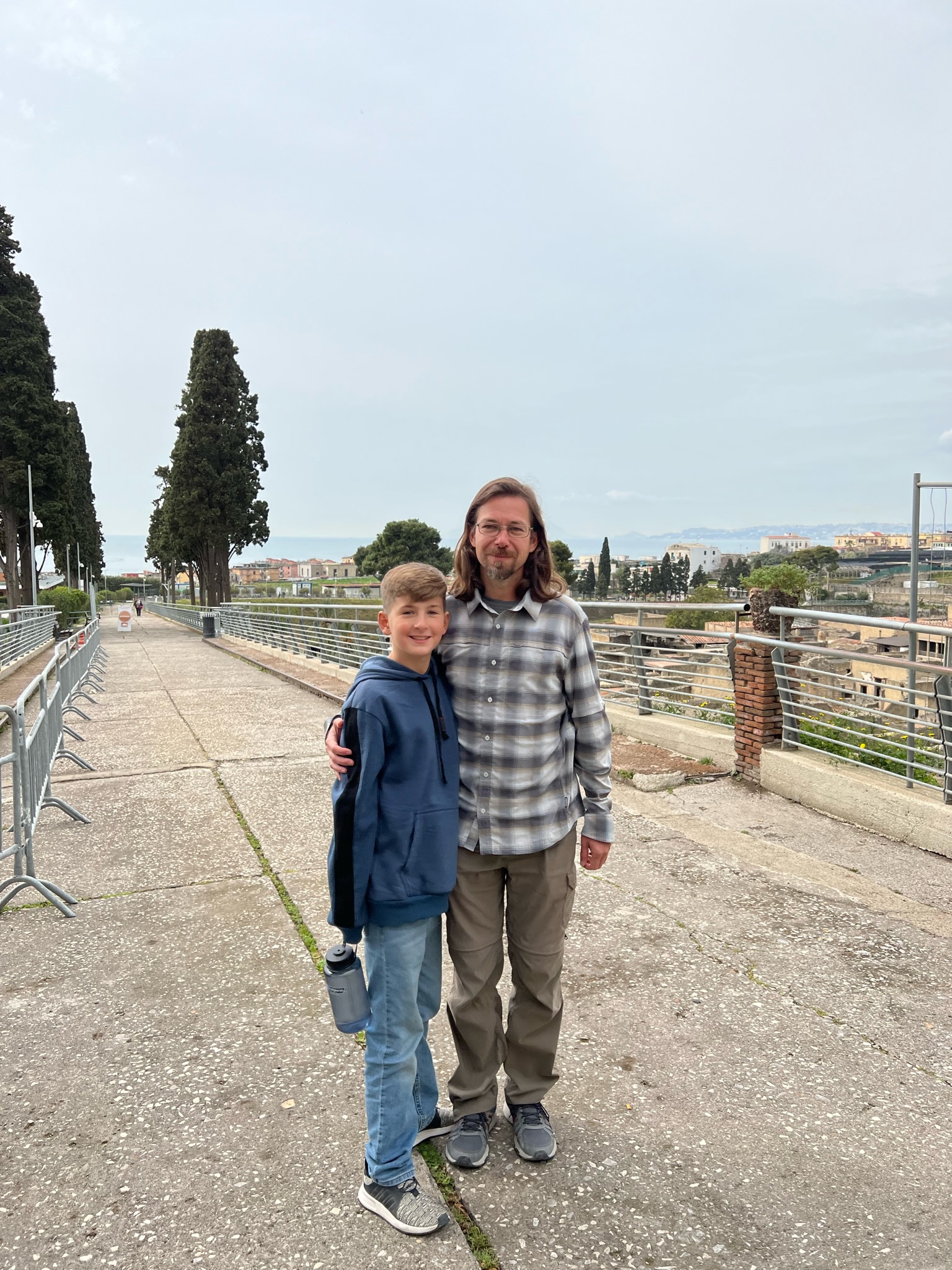


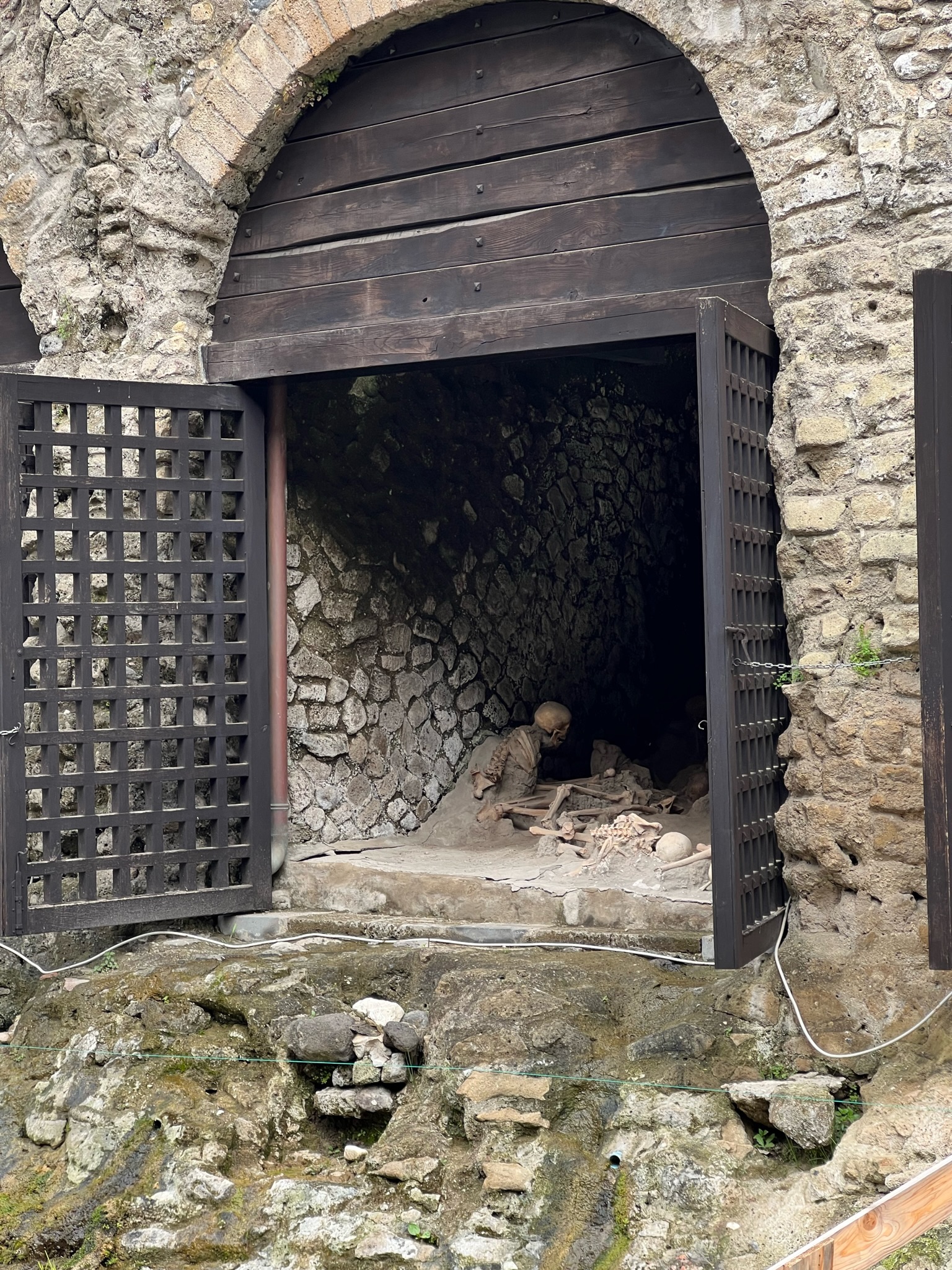

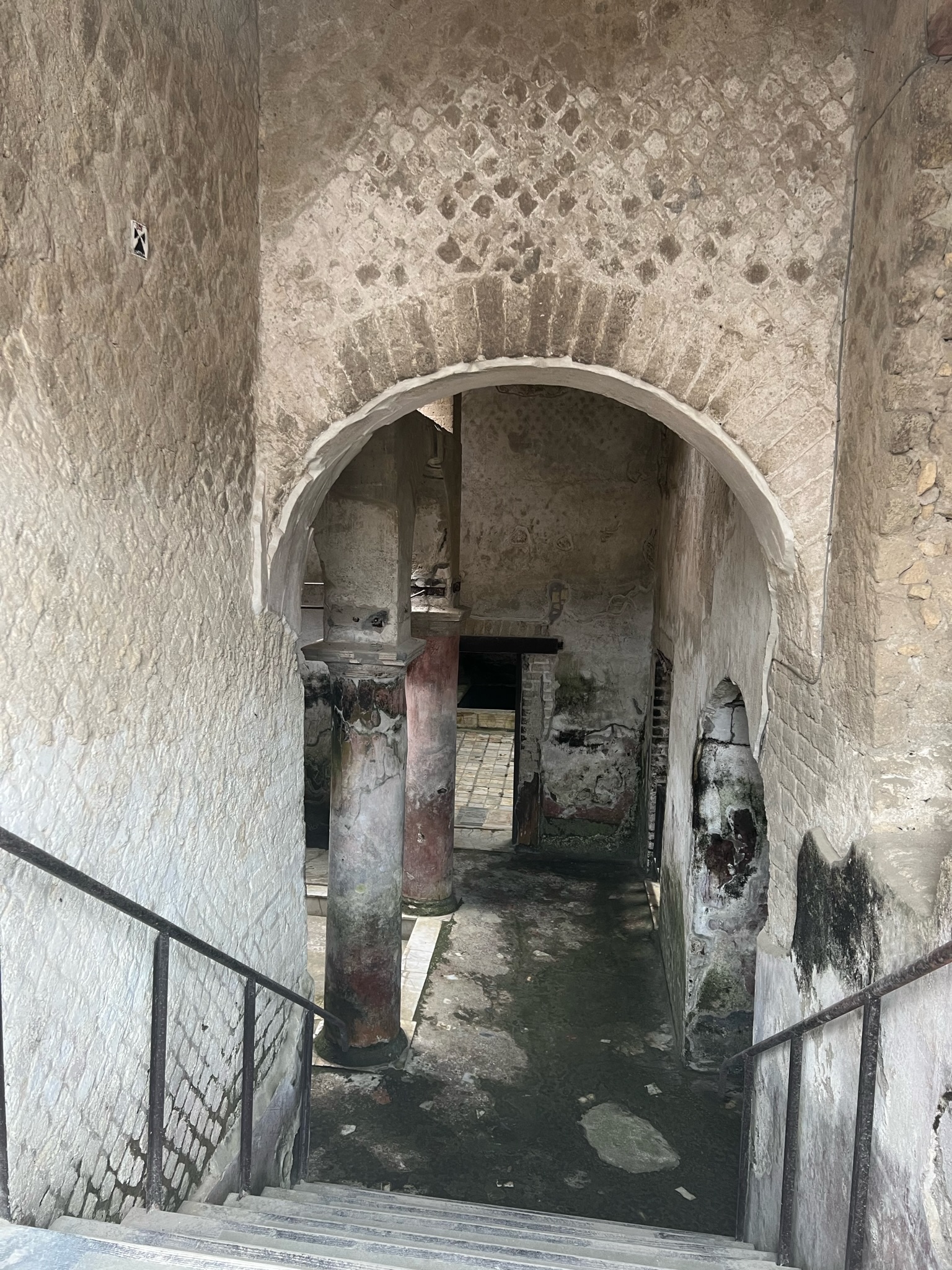

















On our last evening, we ventured across town to eat at a Japanese Sushi restaurant Brian had found online. It was a long way from our place, but we figured we could see more of the city if we walked it. Four kilometers later, we found the restaurant nestled into the end of a cute little building. Our food was delicious, and while we felt a little bad about eating our last meal in Italy in a Japanese restaurant, it sounded too good to pass up. Exhausted from the day, we chose to take the train back towards our room instead of hiking it, and tired and well sated, we crawled into bed once more.
On our last morning, we packed our bags and headed downstairs to begin our journey for the train station. Catello met us at the bottom of the stairs on his way into the building, and at seeing our bags, he told us just to come with him. He walked us to his car, loaded our bags inside, and drove us to the train station himself. It was such a sweet and unexpected thing to do for us, and after walking so much while in Pompeii and Herculaneum, it was an incredible relief. We caught the train back to Naples with no issues. From the Garibaldi station, we caught the airport shuttle and headed straight to the airport.
Italy has been such a wonderful place to visit, and we are very sad to leave it behind. All the food we ate was amazing with the exception of that first day, and the people we met were really kind. The little cities and villages tucked in along the shorelines are amazing, and they each have their own character. The history of this place is what has stirred me most, though. Learning about the lives and deaths of the people here was very fascinating. It’s hard to imagine a place where cities can literally be built on the remnants of cities, but here in Italy, it’s real; I saw it for myself. In school I was always bored by history because it just seemed like a bunch of dates and very dull stories, but seeing real fragments and touching actual remnants of it has been educational and refreshing. I am like a new sponge, soaking it all in. I cannot wait to come back to Italy one day to see and learn even more.
 Expedition Fresh Start