If you change the way you look at things, the things you look at change.
– Dr. Wayne Dyer
I don’t know a nicer way to say this, so I’ll just say it. I didn’t want to go to Morocco. We’d originally planned to go there in January when we left Argentina, but because of some COVID/border closing issues, we decided to hold off on it. I was excited about it back then. We’d watched a few videos highlighting beautiful areas of the country, and I was happy to go check them out. Then in February we had the opportunity to go to Egypt, and we were able to spend 10 days there. By that point, I figured that Morocco would be very similar to Egypt, and if that was the case, I wanted to just move on to somewhere new. I really enjoyed Egypt, but I was eager to go see something different too. Brian kept insisting on us going there, and in the spirit of compromise, I agreed we could go for a little while. After 9 days of wandering through the walled cities and narrow alleyways, I have to admit that Brian was right. I’m really sorry to be leaving this beautiful place.
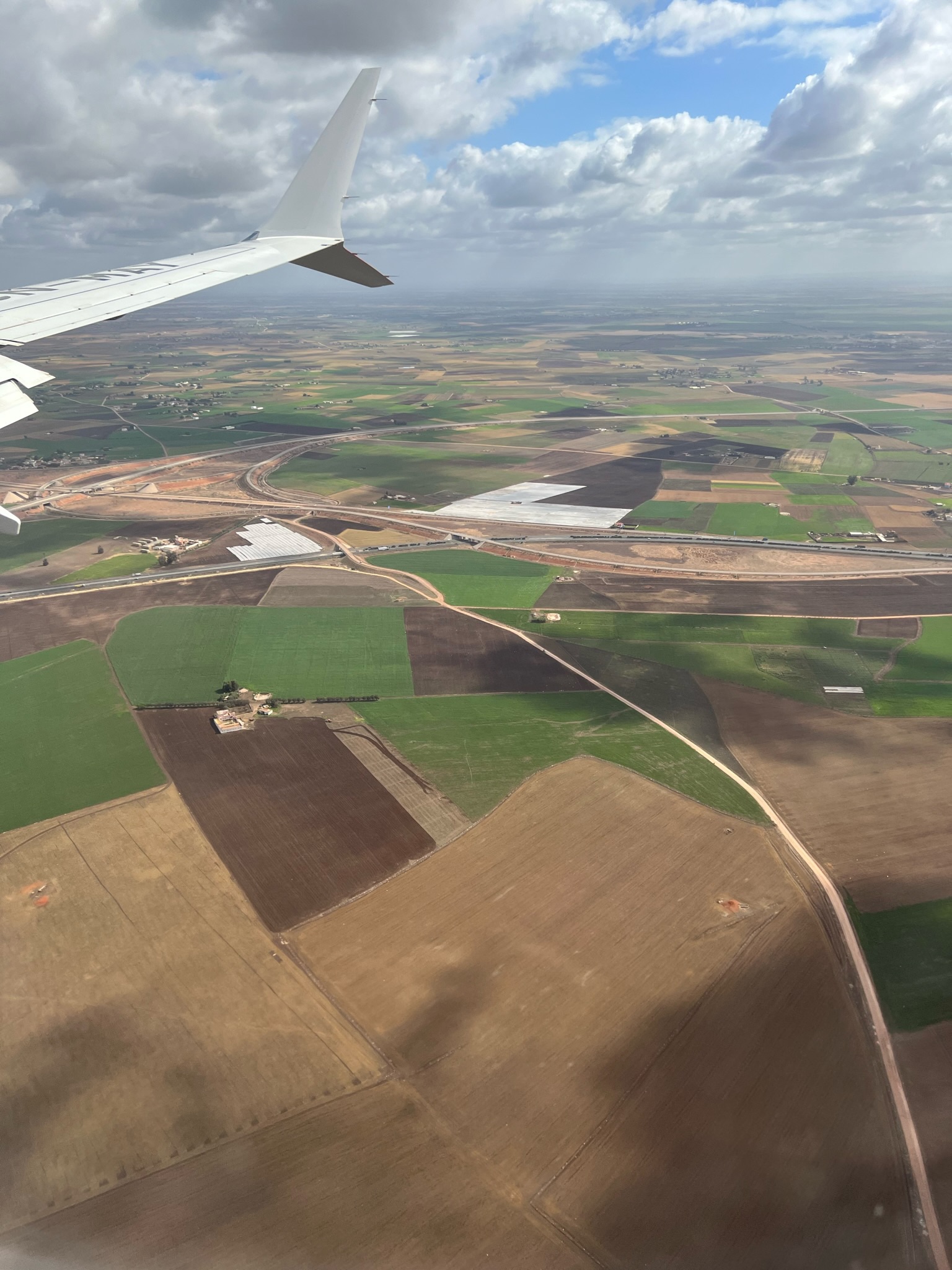
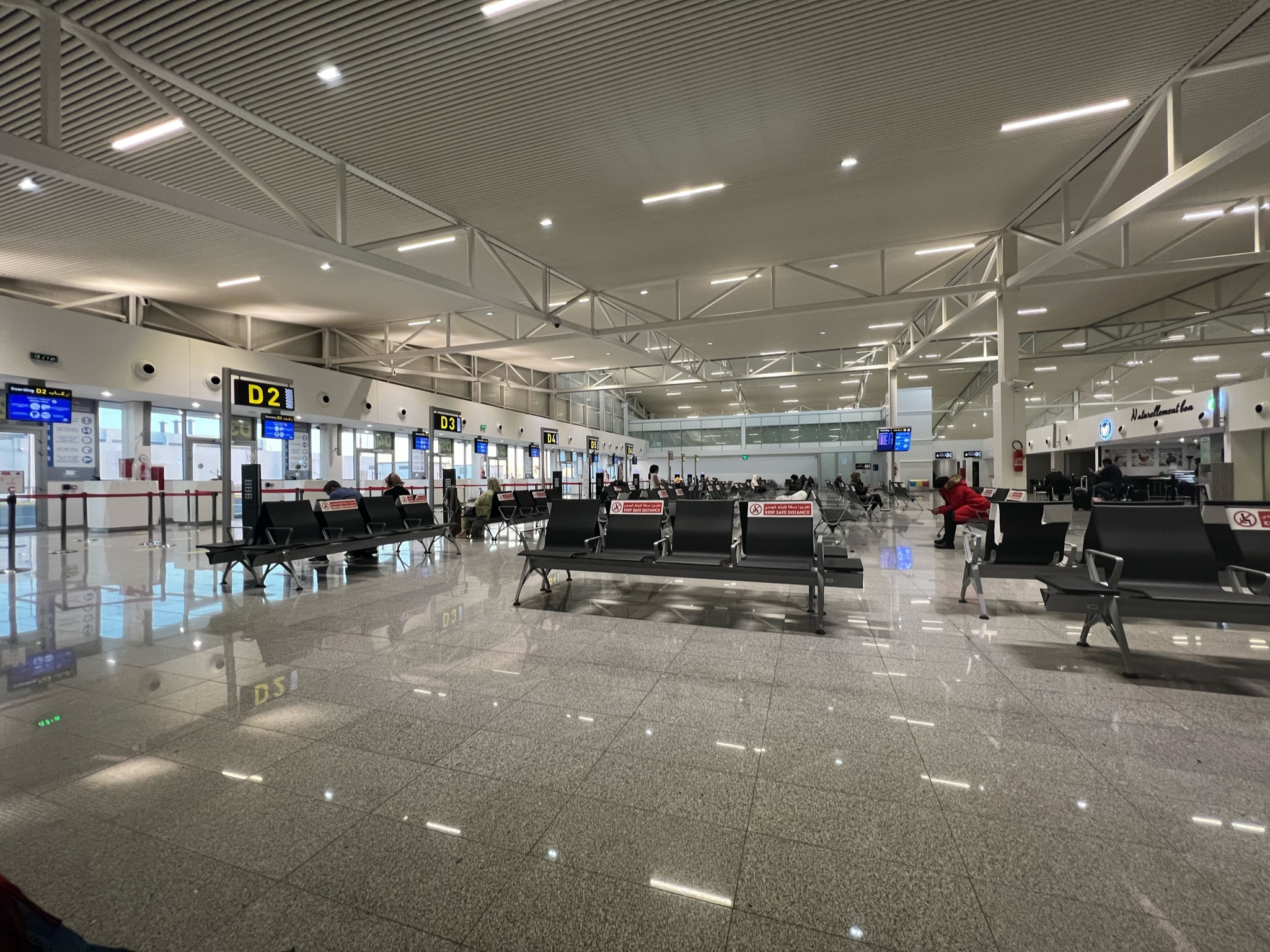
We left Cairo on an early morning flight to Casablanca. Our flight plan had been modified by the airline after we booked it, and so instead of the 1-hour layover we had originally planned, we now had a 12-hour layover instead. Our first flight was good, and we arrived in Casablanca at 8 in the morning a bit tired and hungry. We only had about a 5-minute walk to get to our new terminal, and when we rounded the last corner to walk in, we were shocked. It should have tipped us off when we went through security as we entered the hallway; we were literally the only three travelers in the room. The two bored looking security guards chatted idly with us as we put all our bags on the x-ray conveyor and walked through the scanners. When we had regathered our things, we walked into a gymnasium-sized room with 8 small gates leading out to a very unglamorous parking lot. There were a handful of people milling about, and there was one small café that served coffee, pastries, and light sandwiches. The only place you could go for a change of scenery was the bathroom. That was it. We would be stuck here in this little room with hardly any food options for the next 12 hours.
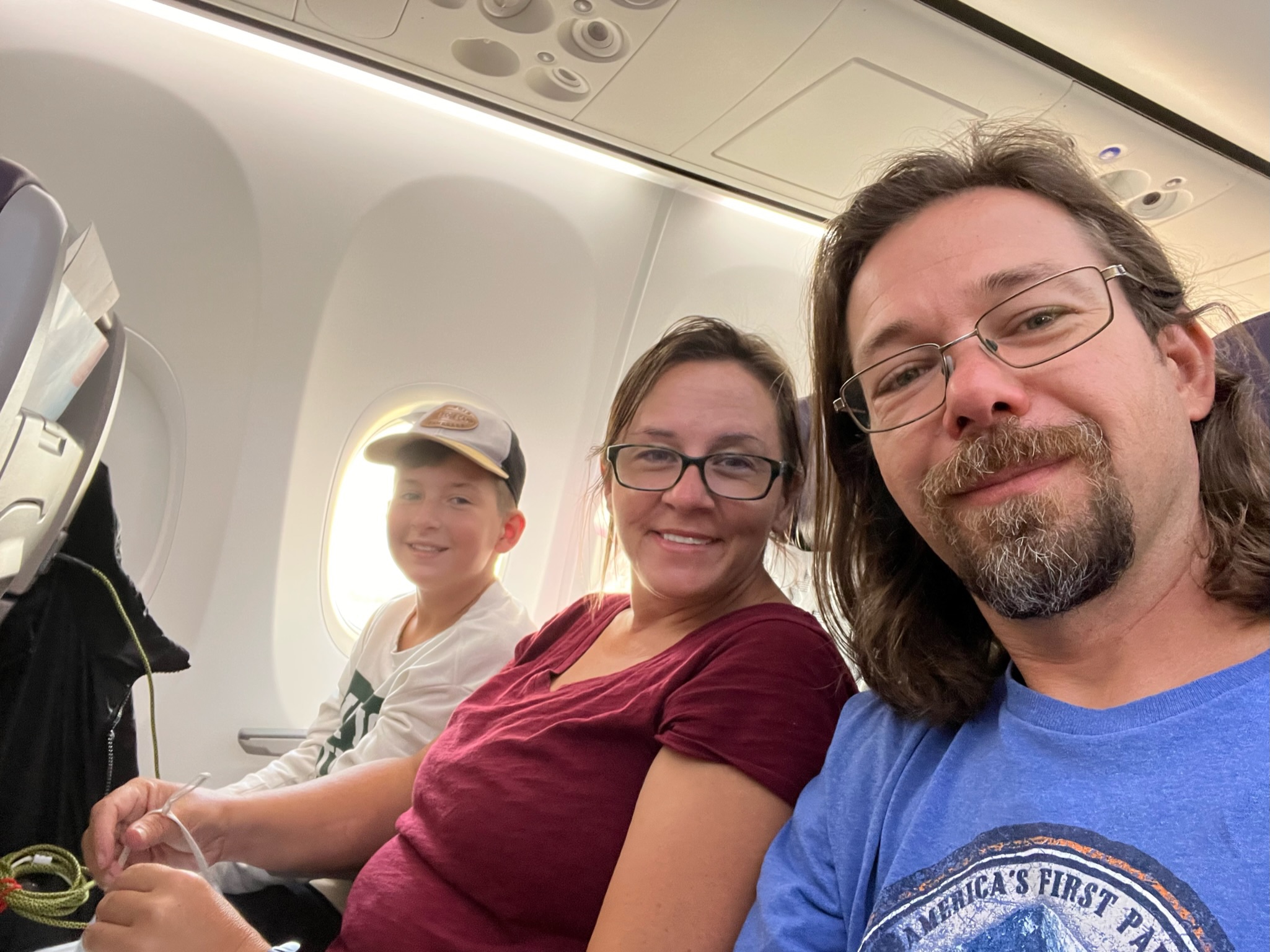
We waited a bit before we went to get our first meal at the café but our bellies were rumbling already. The sandwiches were good with fresh meats and cheeses on crunchy baguette breads – much better than most airport sandwiches – and we ate them in our cramped waiting room seats at the far end of the room. We all played on our phones and kept ourselves busy until three hours in, we found out that the wifi was only good for three hours and could not be renewed. We had to spend the next 9 hours entertaining ourselves without the benefit of the web. I slept. We ate the same sandwiches again. Henry complained. Brian fussed at us. I got cold and grumpy, so I slept some more. They watched reruns of their downloaded Netflix shows, and they complained some more. It was awful.
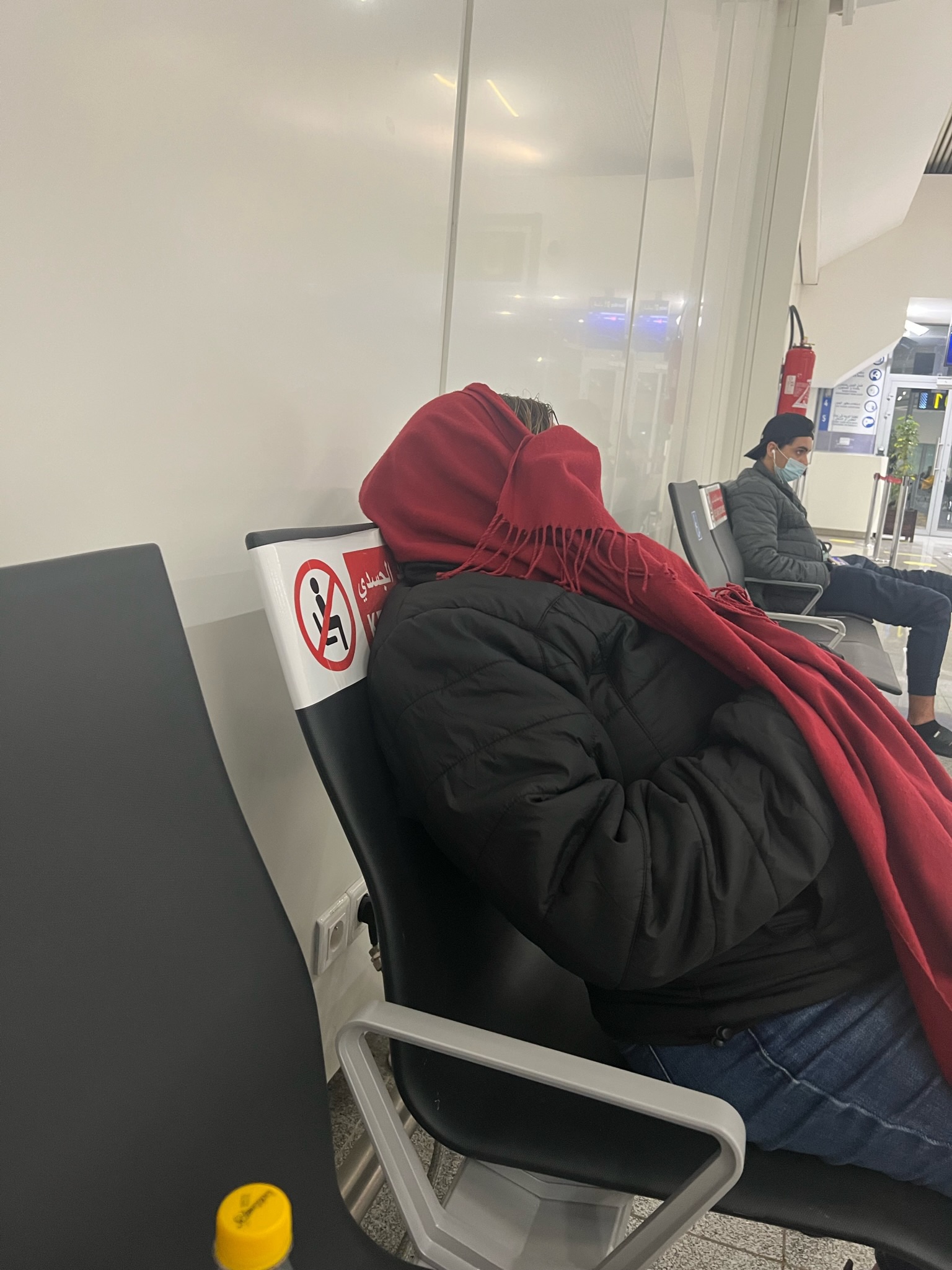

It finally came time to board our flight, and the gate attendants loaded us onto a bus and drove us out to the plane. At 10 pm, we finally got buckled into our little propeller plane for the last leg in this little adventure. Henry had fought the good fight, and he’d managed to stay awake all day long. Less than 2 minutes after he buckled his seatbelt, he was out cold. The poor kid didn’t feel anything else until we woke him up and made him exit the plane after we’d landed.
We stumbled off the plane and into immigration like zombies before we walked out of the airport and into the cool Marrakech air. Our riad was sending a driver to pick us up, and he would be waiting just outside the arrivals area for us with a sign with our name on it. We walked outside and there was a group of 40-60 people standing around. Many of the people had signs, but we couldn’t find our name on any of them. After searching quite thoroughly for our guy, we gave up and contacted our host to see if something might have happened to him. Mahjoub, our host, assured me he was there, and I assured him that there was no one with our name out there. While Brian and Henry did one more thorough scan of the crowd, I found a travel agency sign and stood by it, thinking that our guy could at least identify us that way. Within a minute or two, our driver came up and introduced himself. He seemed a bit winded, and we guessed that he’d just arrived. He didn’t have any signs with him, by the way, but he did call me by my name when he first introduced himself. I would have been irritated by his being late, but honestly, I was just so happy he showed up at all by that point.
After a fifteen minute drive through the beautiful city of Marrakech, we stopped unexpectedly at an intersection in the road. At first, we thought the driver was stopping to allow a pedestrian to push his wheelbarrow out of the way so he could turn past him. That wasn’t the case, though. The man moved his wheeled cart up to our car, and then he opened the back hatch and started loading our bags inside. He must have registered our confusion, because the driver quickly let us know that we would be going with the older man the rest of the way; he was using the cart to help us get to the riad for the night.
Now, had I been better prepared, I might have known what was going on. Remember, I wasn’t really on board with going here, so I hadn’t done any research to know what we were going into. I didn’t know that there aren’t any cars in the old city. For that matter, I didn’t know we were staying in an old city either. Our driver had stopped at the city gate because he couldn’t physically drive his car inside, but we were so tired we hadn’t registered that either. We didn’t really know what was going on, but like with all travel to new and unknown places, we had to have a bit of trust for the people who were helping to lead us through it.
After loading up the cart, we took off on a third of a mile hike through dimly lit, deserted, and narrow cobbled alleyways. The man leading us couldn’t speak much English, but he tried to be friendly to us. He tried to point out a few areas that we might want to go back and look at in the morning light, but honestly, we had no idea what he was saying. We smiled and nodded, and we did our best to keep up with his brisk pace. We wound our way through several alleys until we reached a very narrow one on the right. Our guide rang the bell, and Mahjoub answered the door. He thanked the guide and payed him for his help, and then he welcomed us inside his beautiful riad.
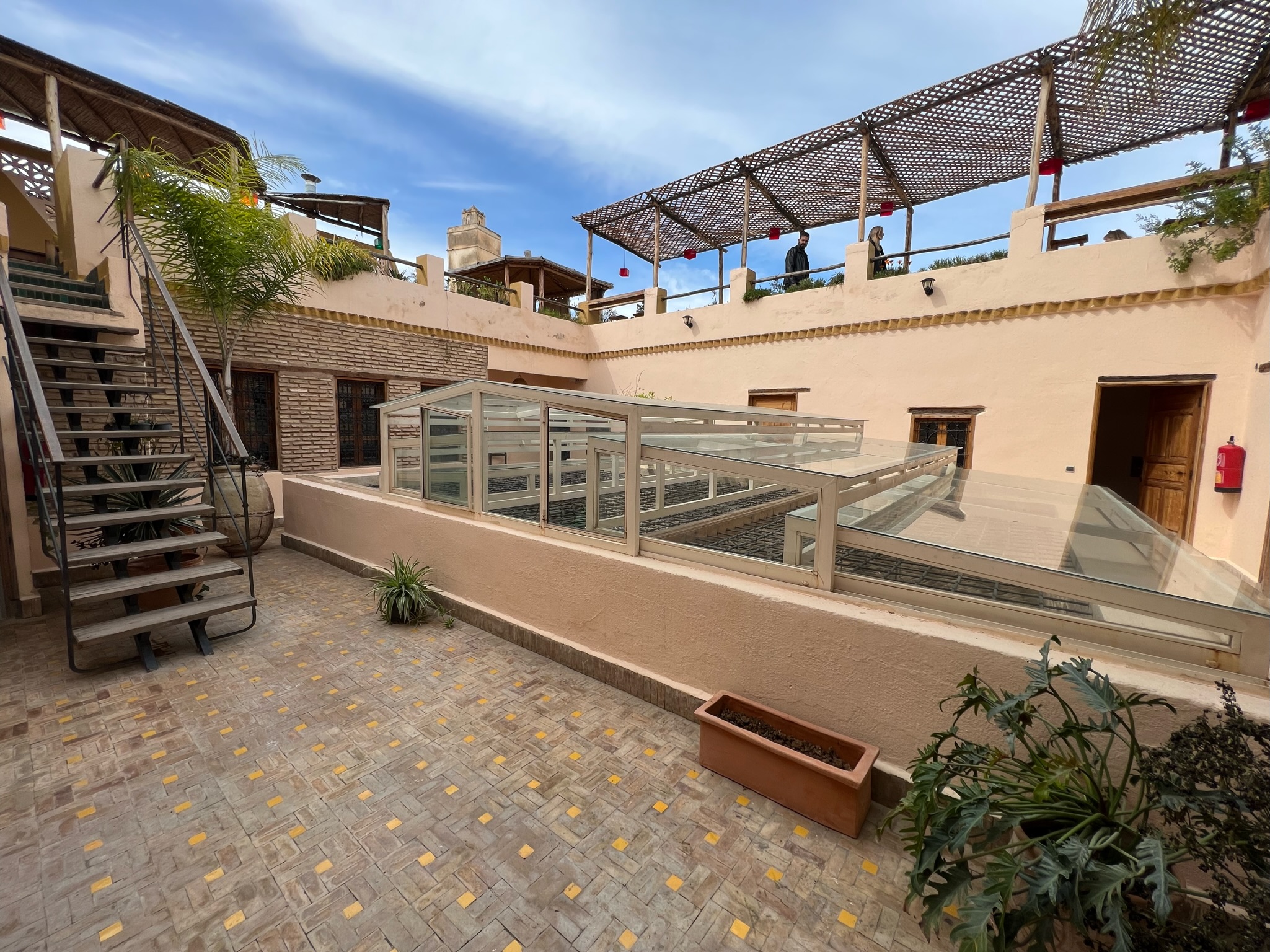
We had never heard of a riad before, but there are lots of them around Morocco. Riads were once homes that extended families would live in. A couple would buy or build the property and as their kids grew up, their childrens’ families would come to live with them in their own rooms/floors. The property would grow as the family did. In cities like Marrakesh, the buildings are built right up beside one another, often sharing walls. Because of this, there are very few, if any, windows on the outside of the building to let in the sun. Instead, the homes were built around a courtyard of sorts, and above the courtyard, there would often be a large opening in the roof with a removable cover. The opening over the courtyard allowed the home to have natural light from the sun during the day, and the cover provided protection from the rain when it was needed. The bedrooms and living rooms had windows that opened up to the courtyard so that they were well lit. The roofs were used also, as they provided ample space to hang laundry, dine, or enjoy a cool breeze on a warm evening.
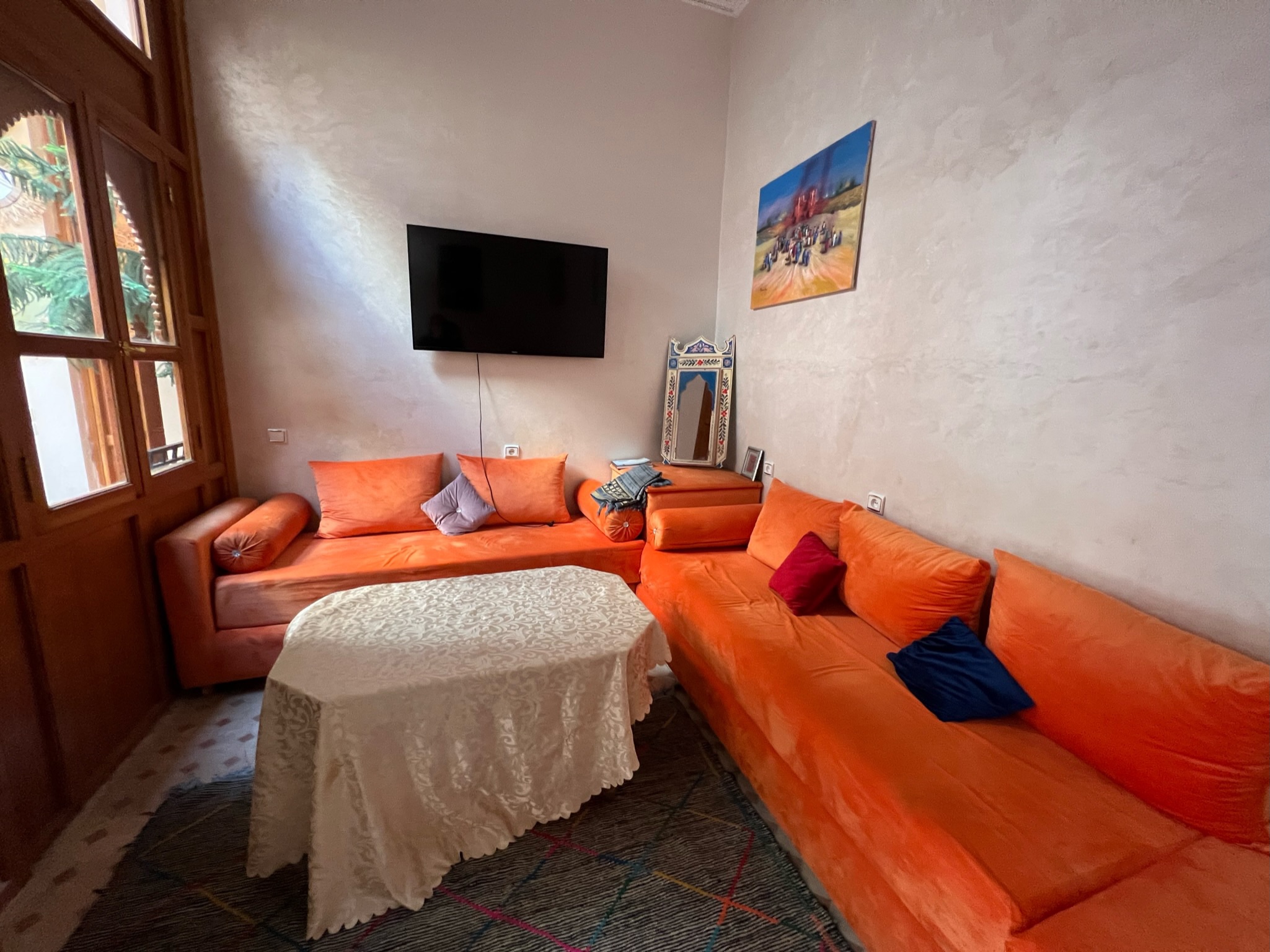
Over hundreds of years, the kids began growing up and moving into their own homes instead of staying with the family, so these large stately mansions began to take on a new role; many families converted the homes into guesthouses like ours instead. The Riad Jenan Adam was absolutely beautiful. Outside the door, the building didn’t look very distinguishable from any of the others nearby. But inside, it was gorgeous. The center room was lined with couches, beautiful tiled floors, and intricate woodwork, but with the cool night air seeping in, it was a bit too cold to enjoy. Mahjoub led us into a smaller room off to the right that was comfortably lined with orange couches, and he brought us warm mint tea to sip on while he checked us in. After chatting briefly with us about our time in Morocco, he walked us to our room on the second floor, where we immediately found our beds and fell fast asleep.

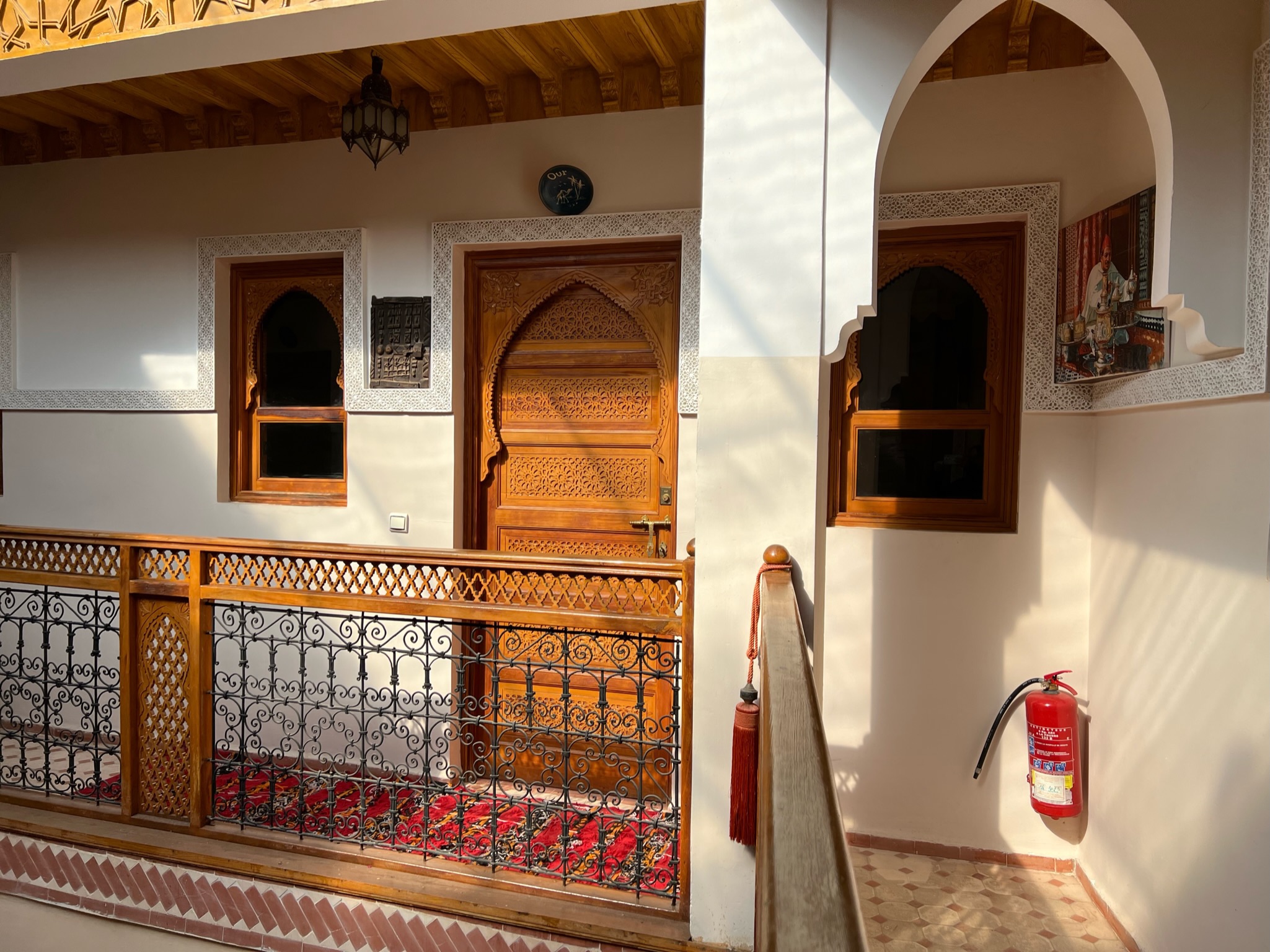
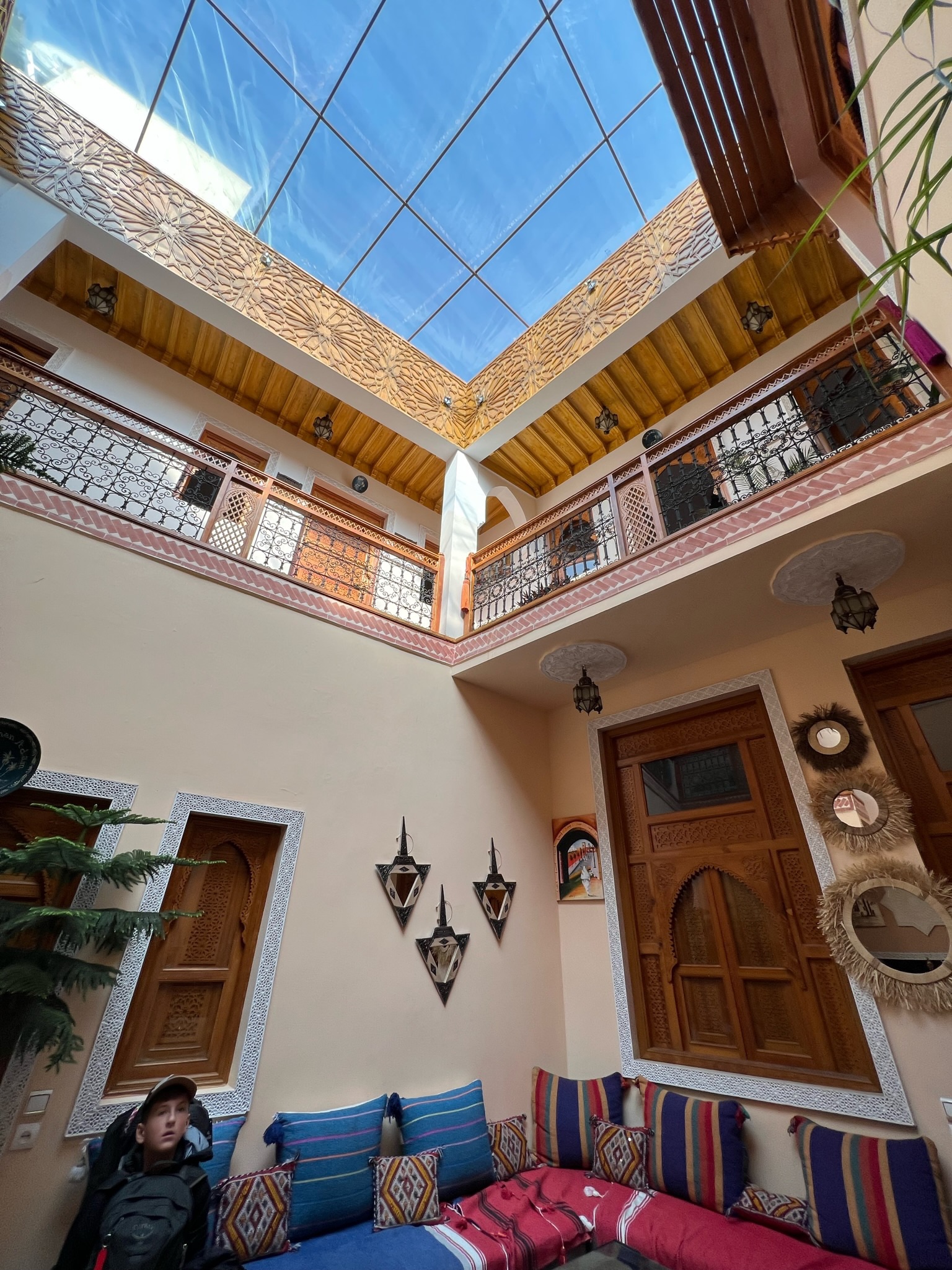
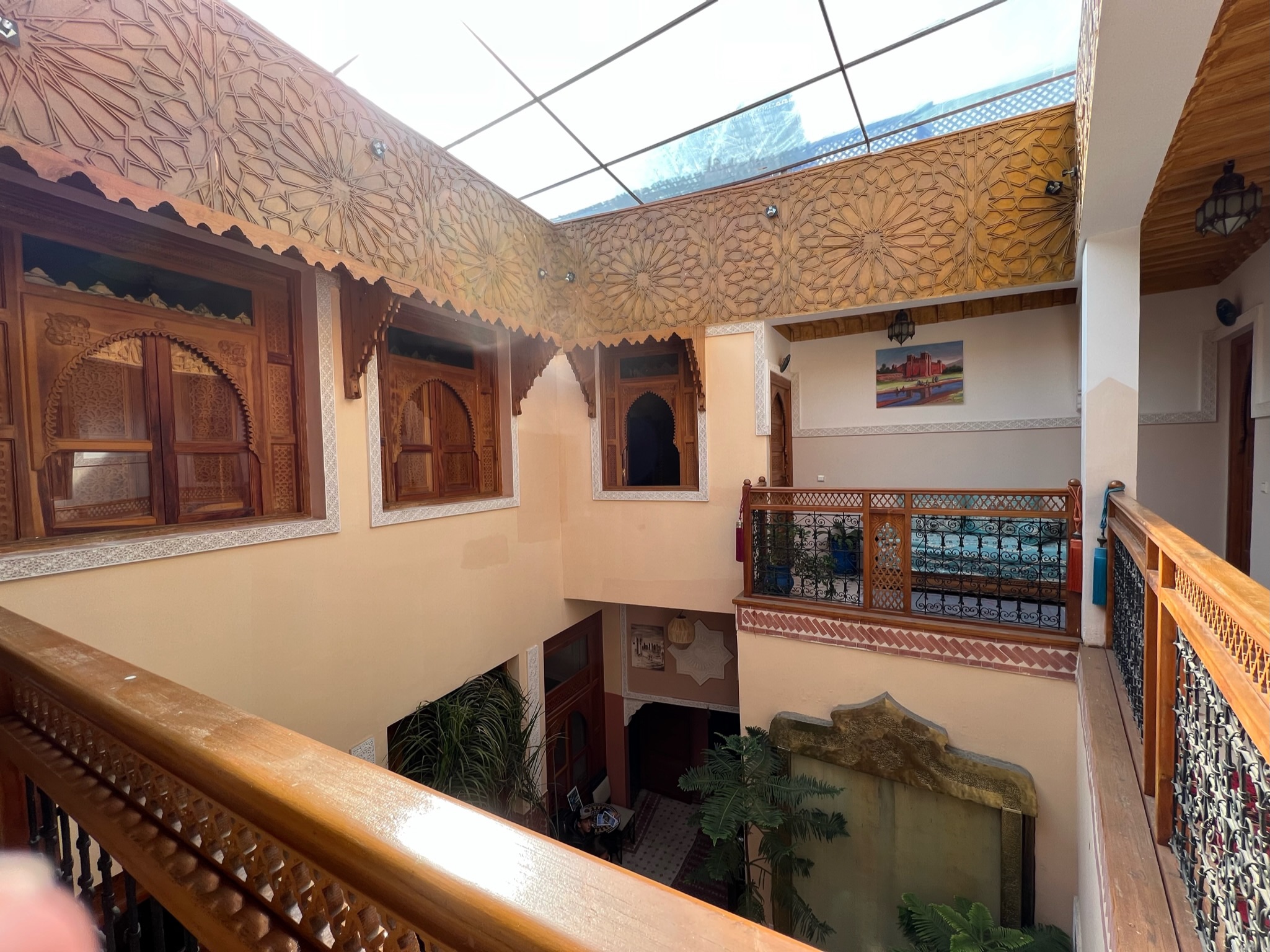

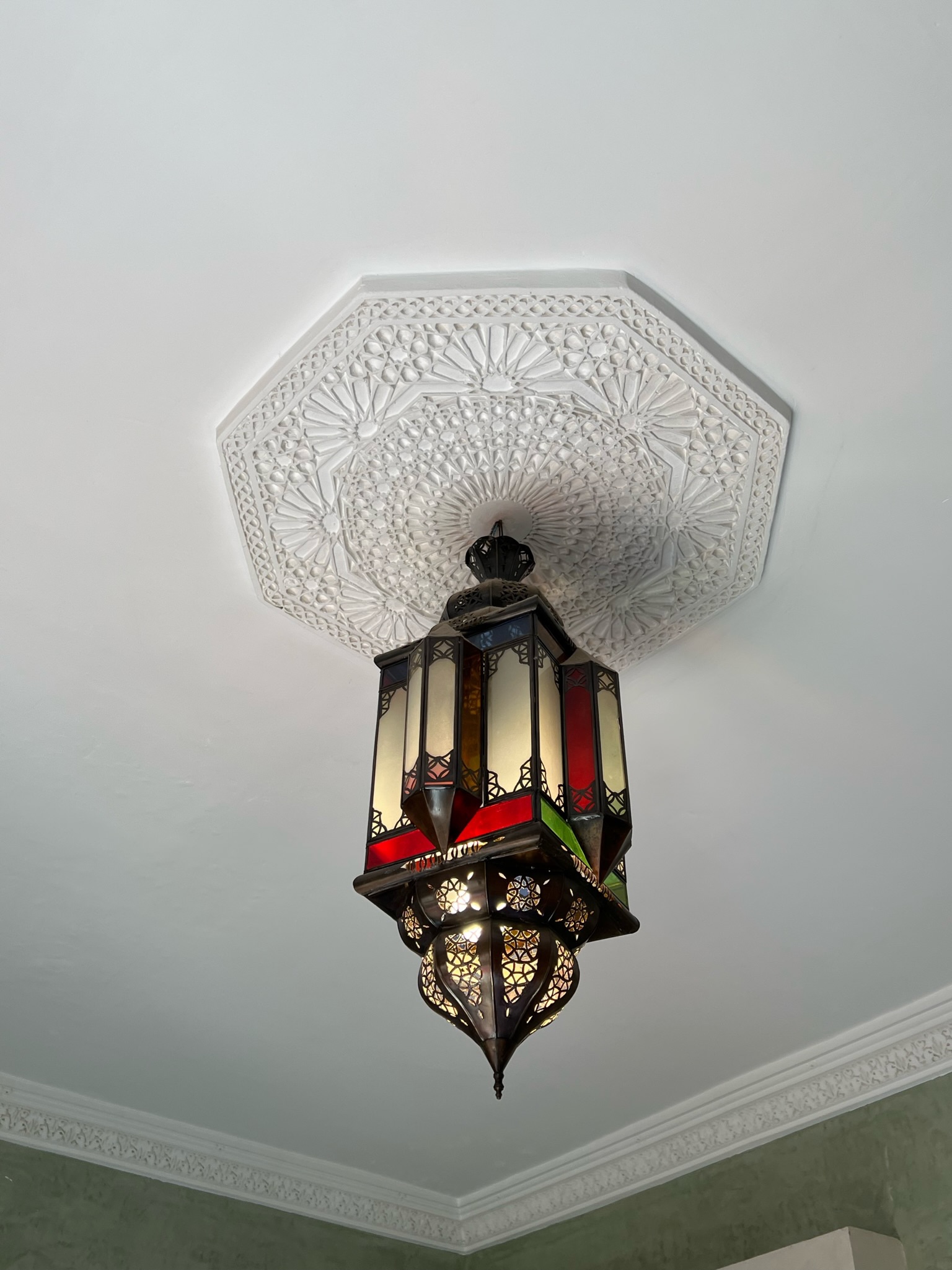
We woke up to the blare of our alarm, and groggily, we forced ourselves out of bed. Our room was pitch black, and if not for the alarm, we’d likely have slept for several more hours. We figured out how to open the solid wood window panels, and that allowed the light to pour in and us to wake up a little easier. The rain was pouring down outside, but inside, the house was bright and welcoming. Mahjoub fixed us a lovely breakfast of eggs, several different breads with honey, jam, butter, nut butter, and oil, coffee, tea, and freshly squeezed orange juice. After giving us some time to unpack and work out a plan for the day, he escorted us to a restaurant a very short distance from our riad. As with most of the restaurants in this town, the restaurant sat on the third and fourth floors of the building, so entering through the narrow doorway, we climbed an even narrower staircase to the top floor. The space was packed tightly with tables and chairs, but we found a nice comfortable seat overlooking the edge of the roof.
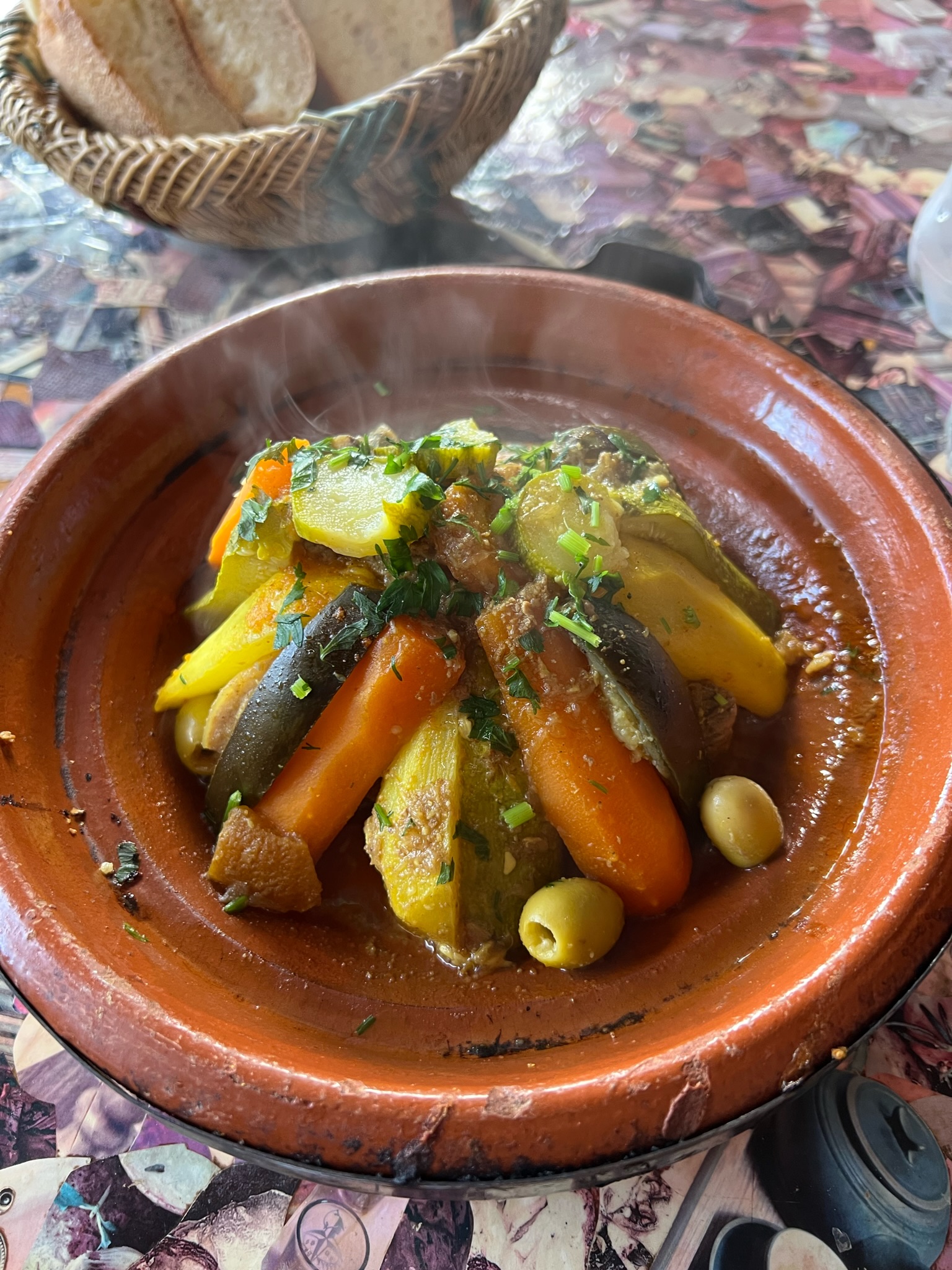
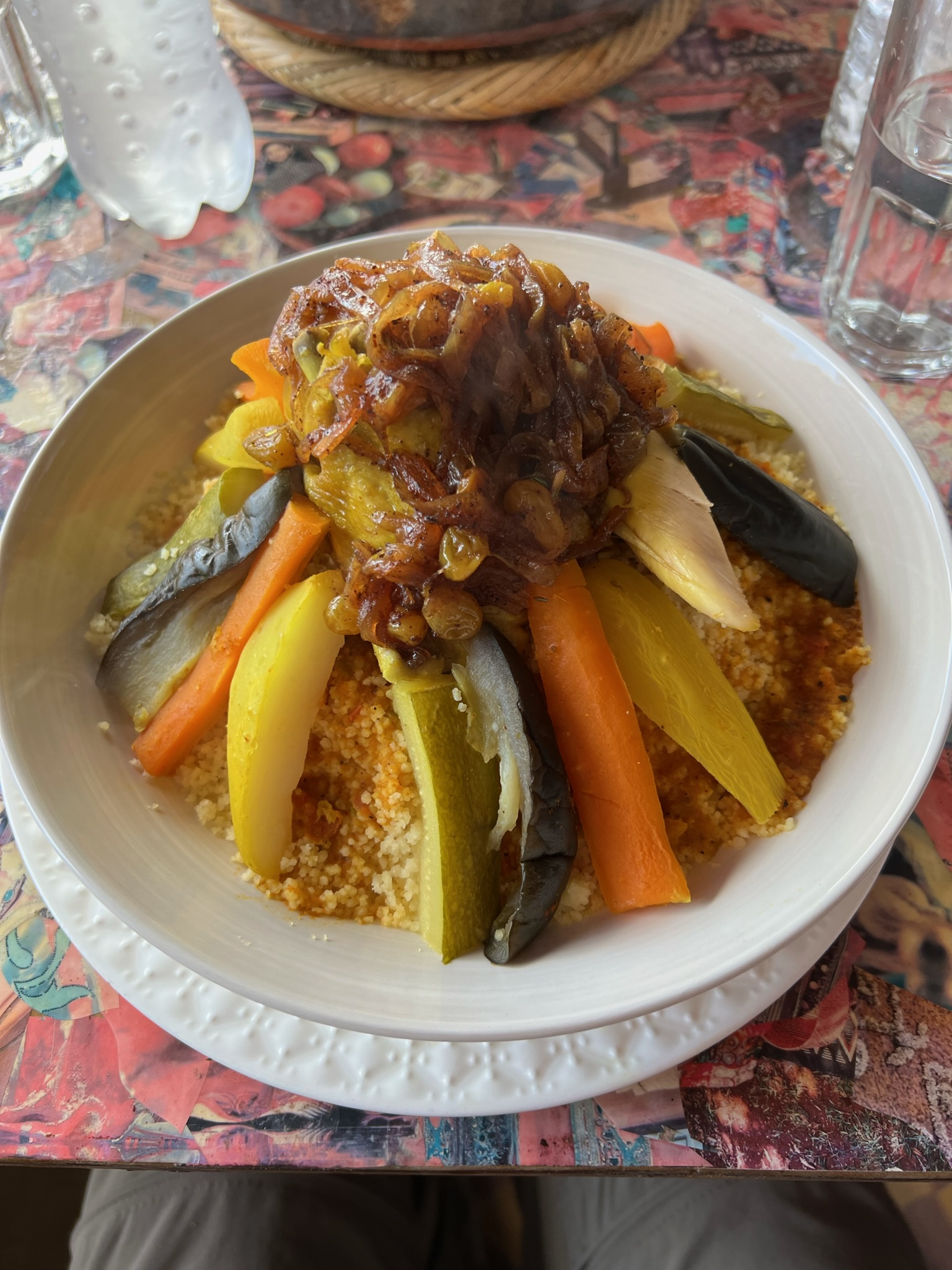
One of the dishes Mahjoub had recommended was a tagine, and other than knowing it was a meal cooked in a special type of dish, we really didn’t know much about it. We ordered our meals trusting the wonderful smells in the air would lead to something good, and we anxiously awaited for them to be prepared. The tagine is a ceramic dish with a cone shaped lid. The chef places well seasoned meats and vegetables to roast inside, and the result is delicious. Henry and I had the beef tagine, and it was very similar to a beef pot roast with vegetables. Brian tried the couscous that Moroccans are famous for as well, and he said it was also very delicious.
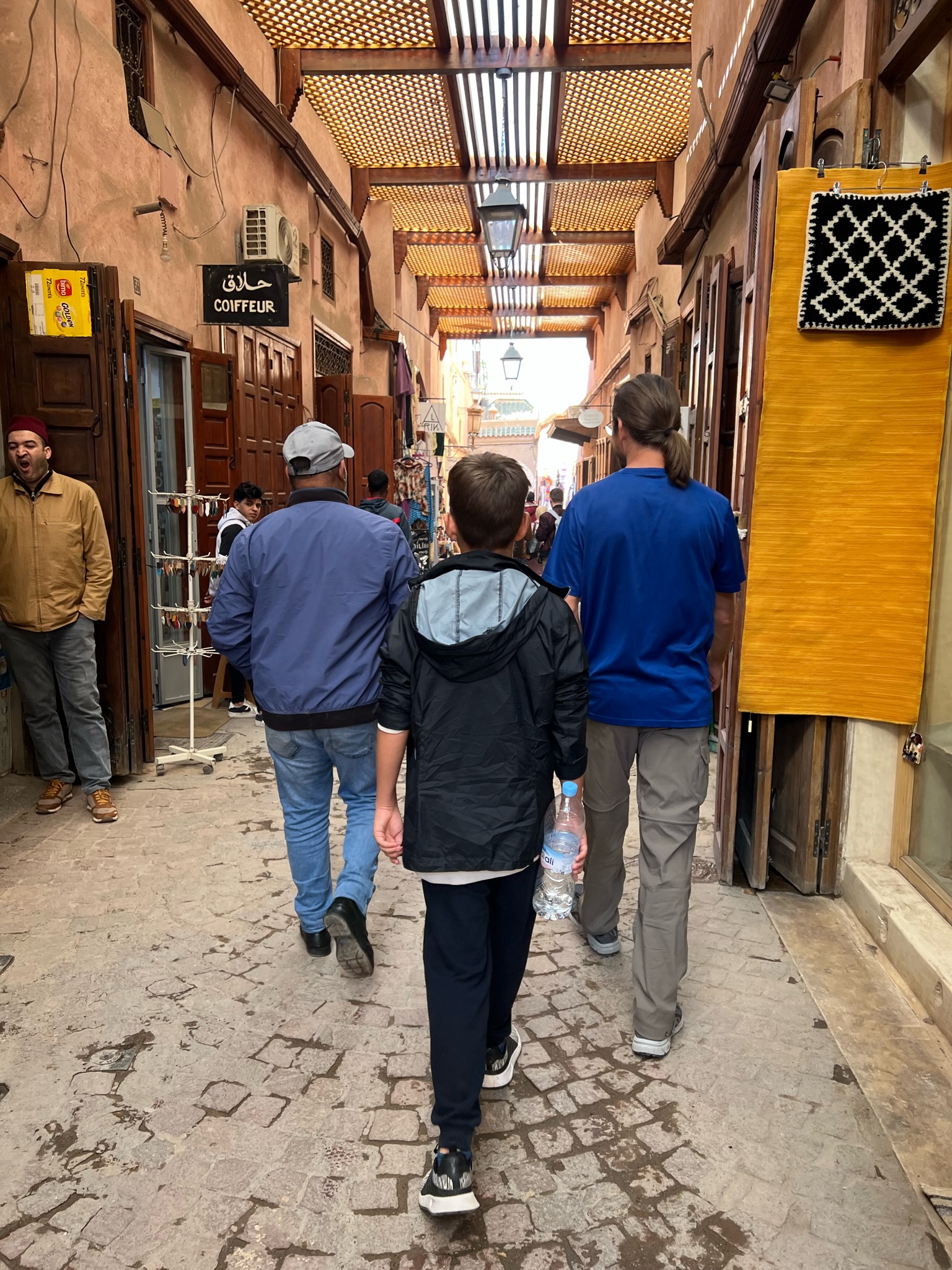
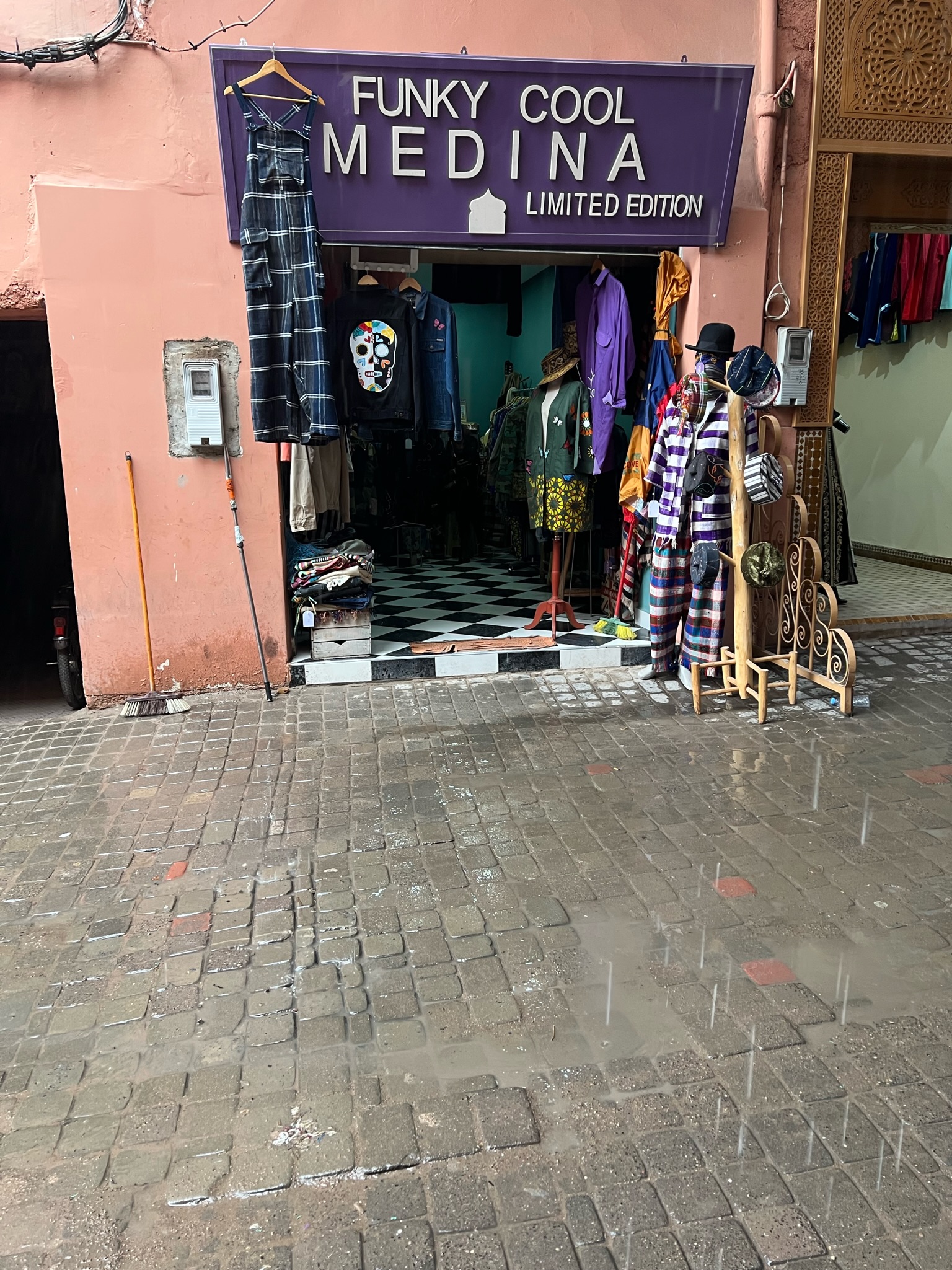
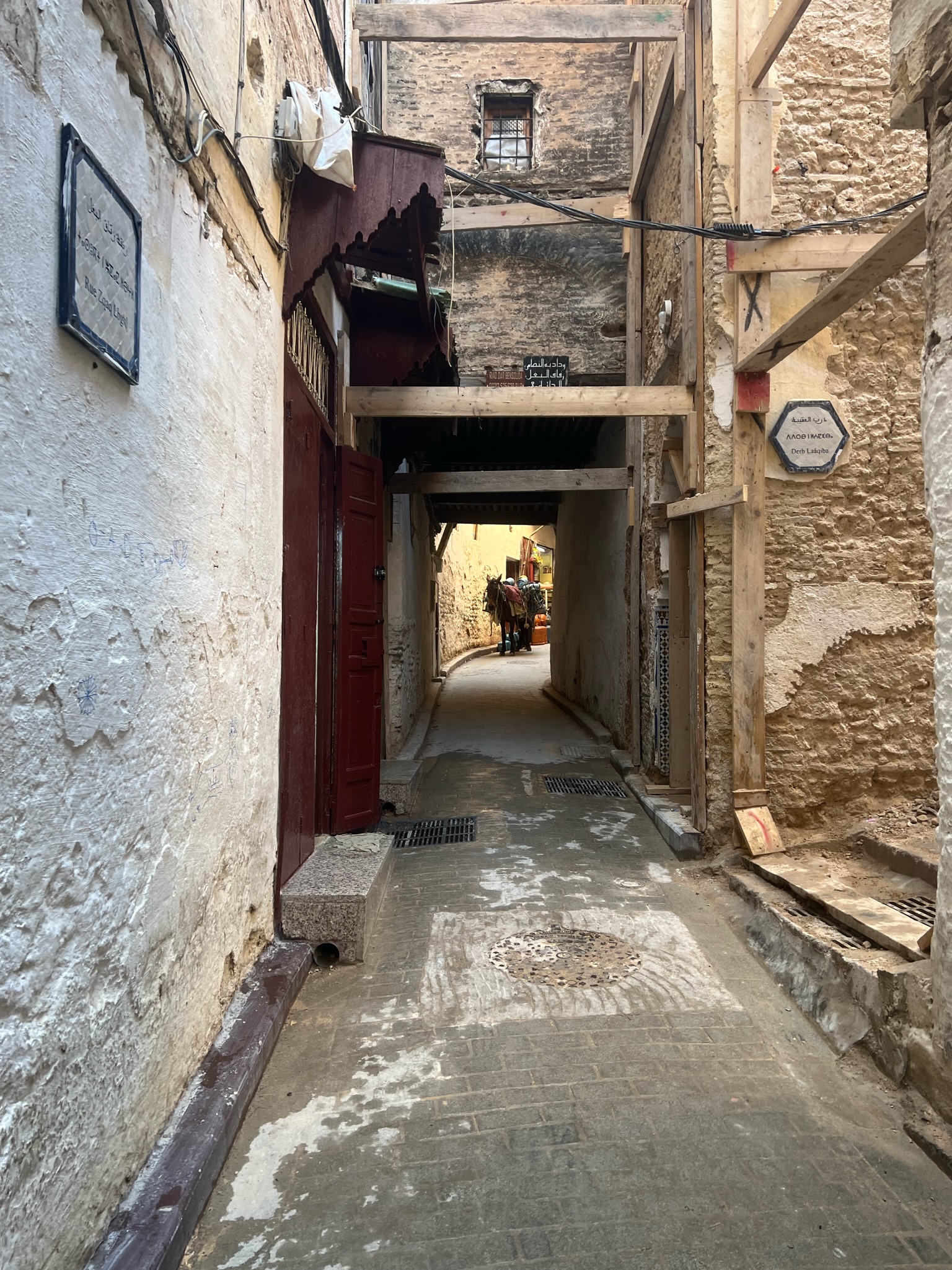
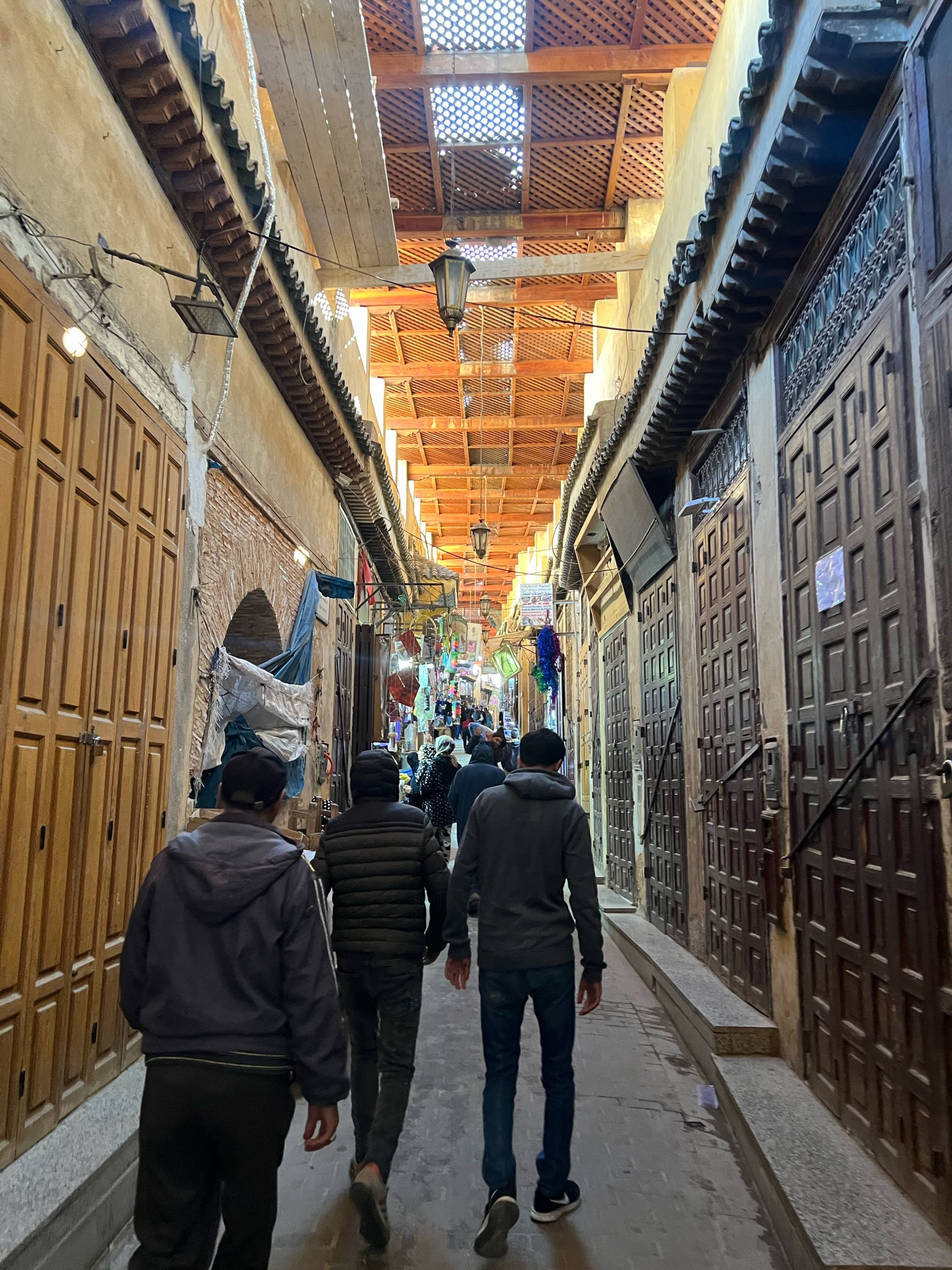
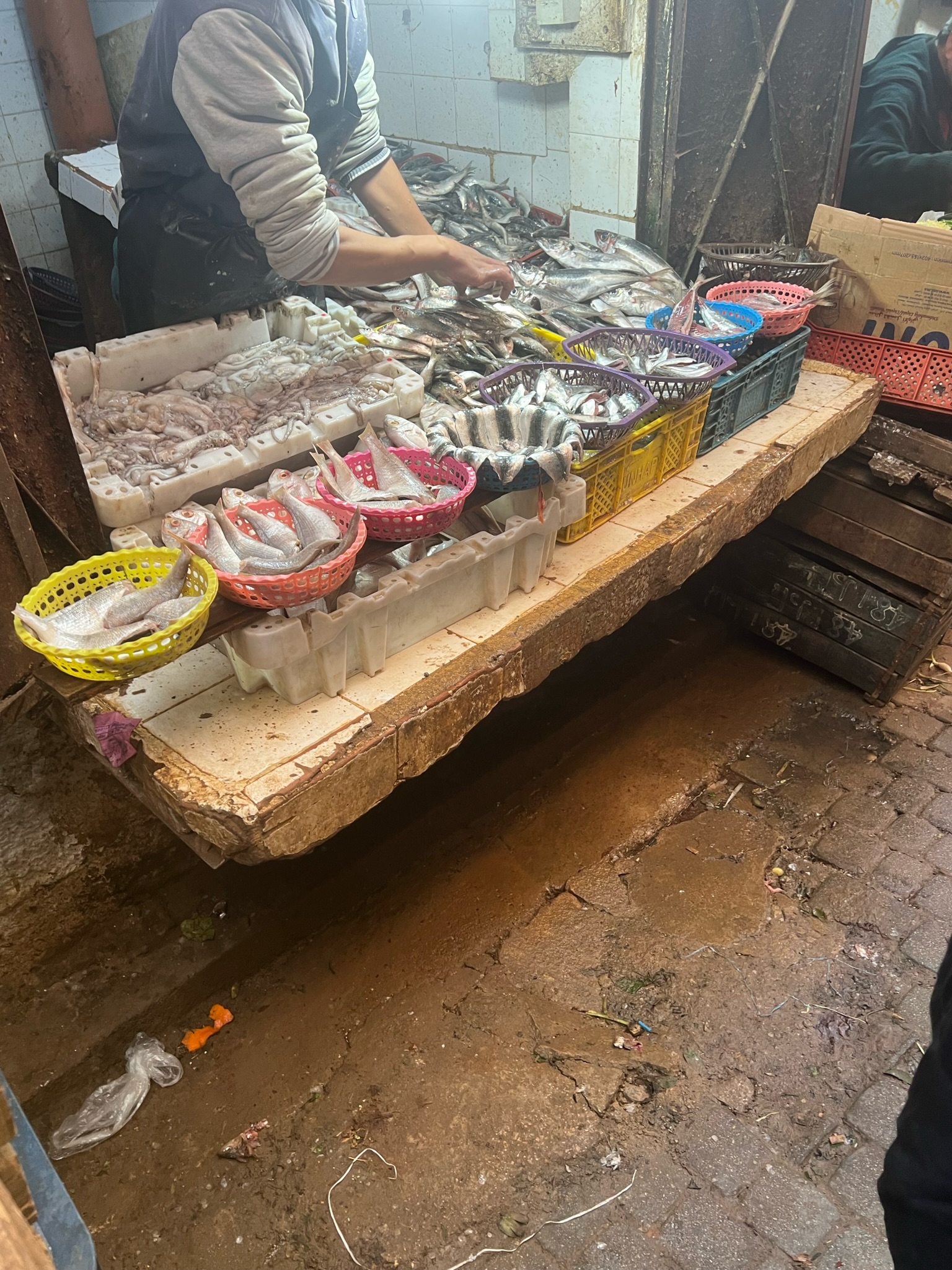
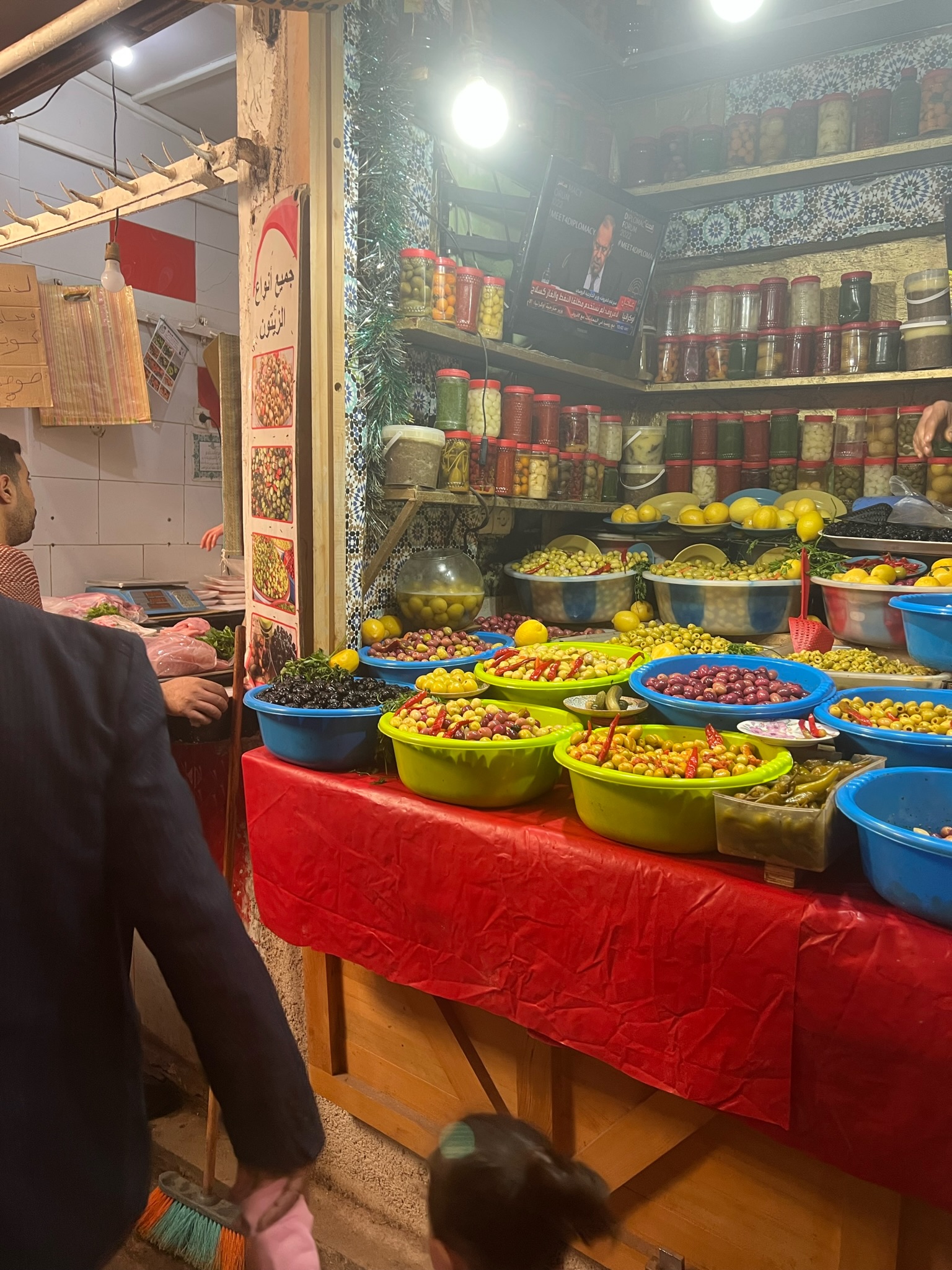
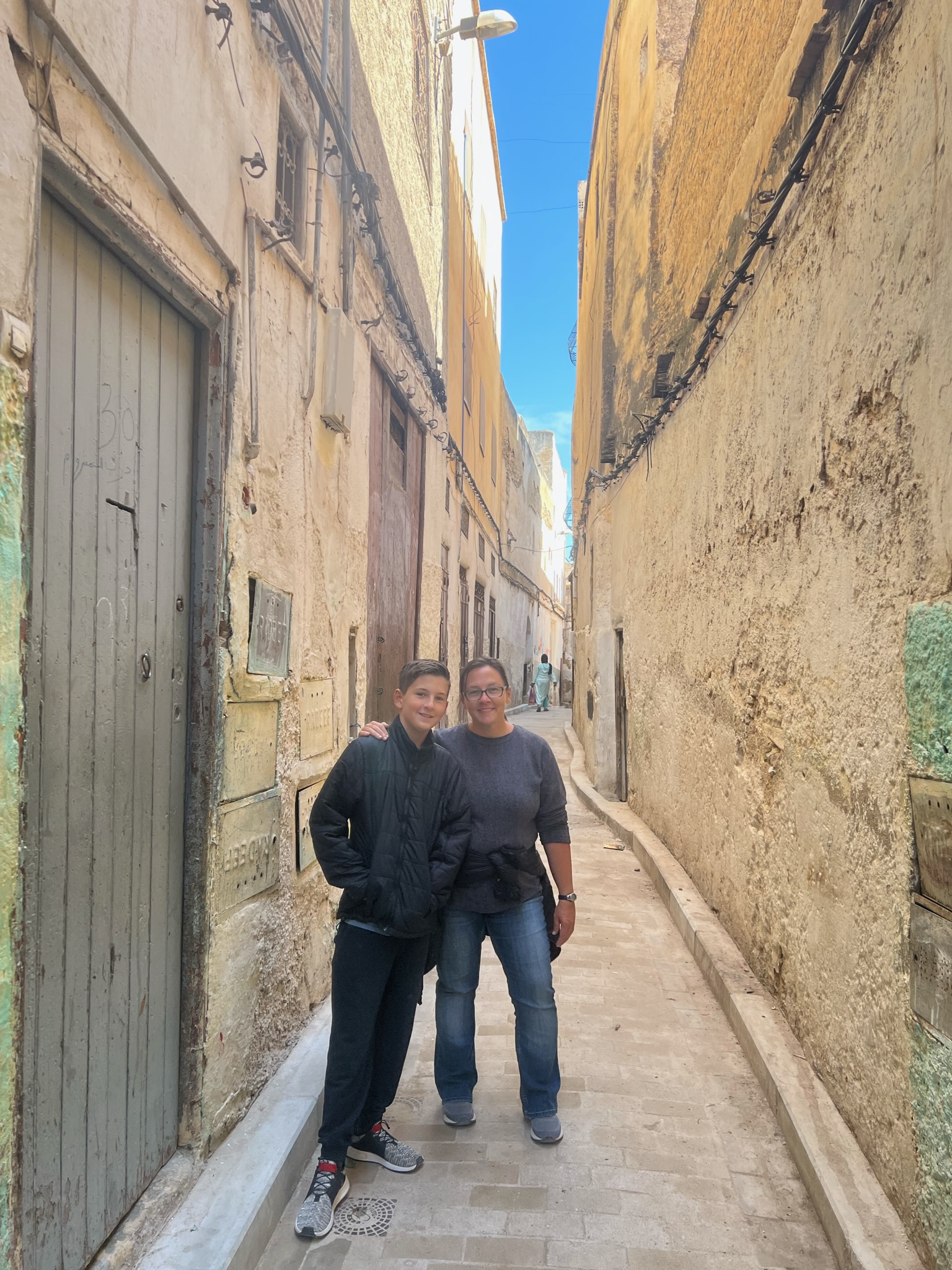
We explored the old medina for a few hours to get a feel for our new environment. A medina is an old, historic portion of a city. The medina of Marrakesh is almost 1,000 years old, and the 2700 acre city is surrounded by 11 miles of walls. Inside these city walls, homes and businesses are built upon one another, usually sharing outer walls and leaving only very tight alleyways to walk through between them. The streets are far too narrow for cars, but many streets are just large enough that motorcyclists and bicyclists will ride through them. Shopkeepers open their doors each morning and place their wares out for display in their doorways and into the alleys to attract sales, but this further constricts traffic. It’s possible to find almost anything as you walk about. On a short walk, it is quite easy to pass fruit and vegetable stands, meat markets, bakeries, clothing stores, souvenir shops, cleaning supplies, shoes, lamps and decorative metalworks, brightly colored ceramics, and leather goods stores. Outside the businesses, shoppers mill about looking for good deals. To walk down the street, you are are constantly weaving between shops and around shoppers, and for your own protection, doing your best to stay to the right so that you are not run over. Its crazy, chaotic, and beautiful all at the same time.


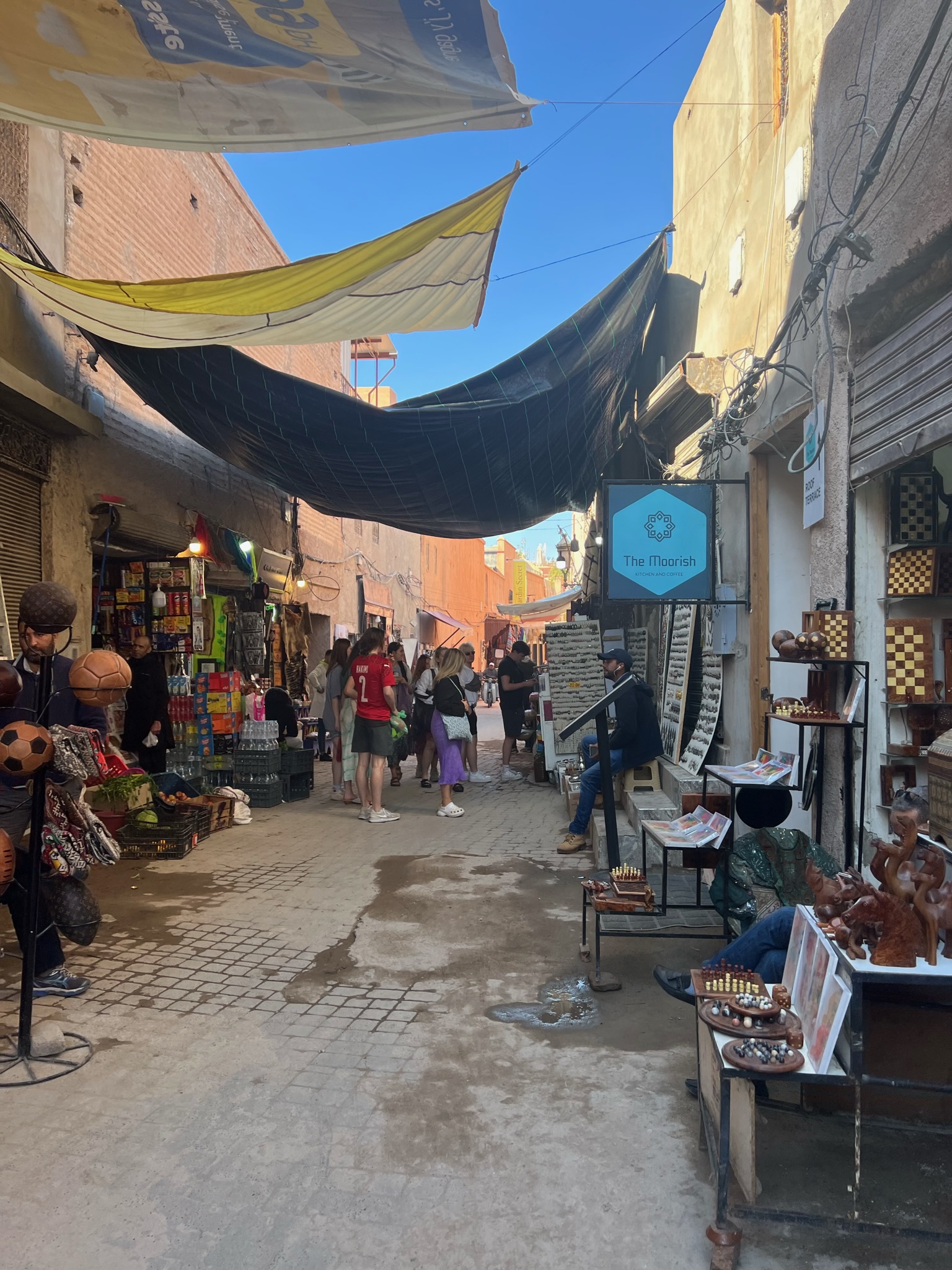

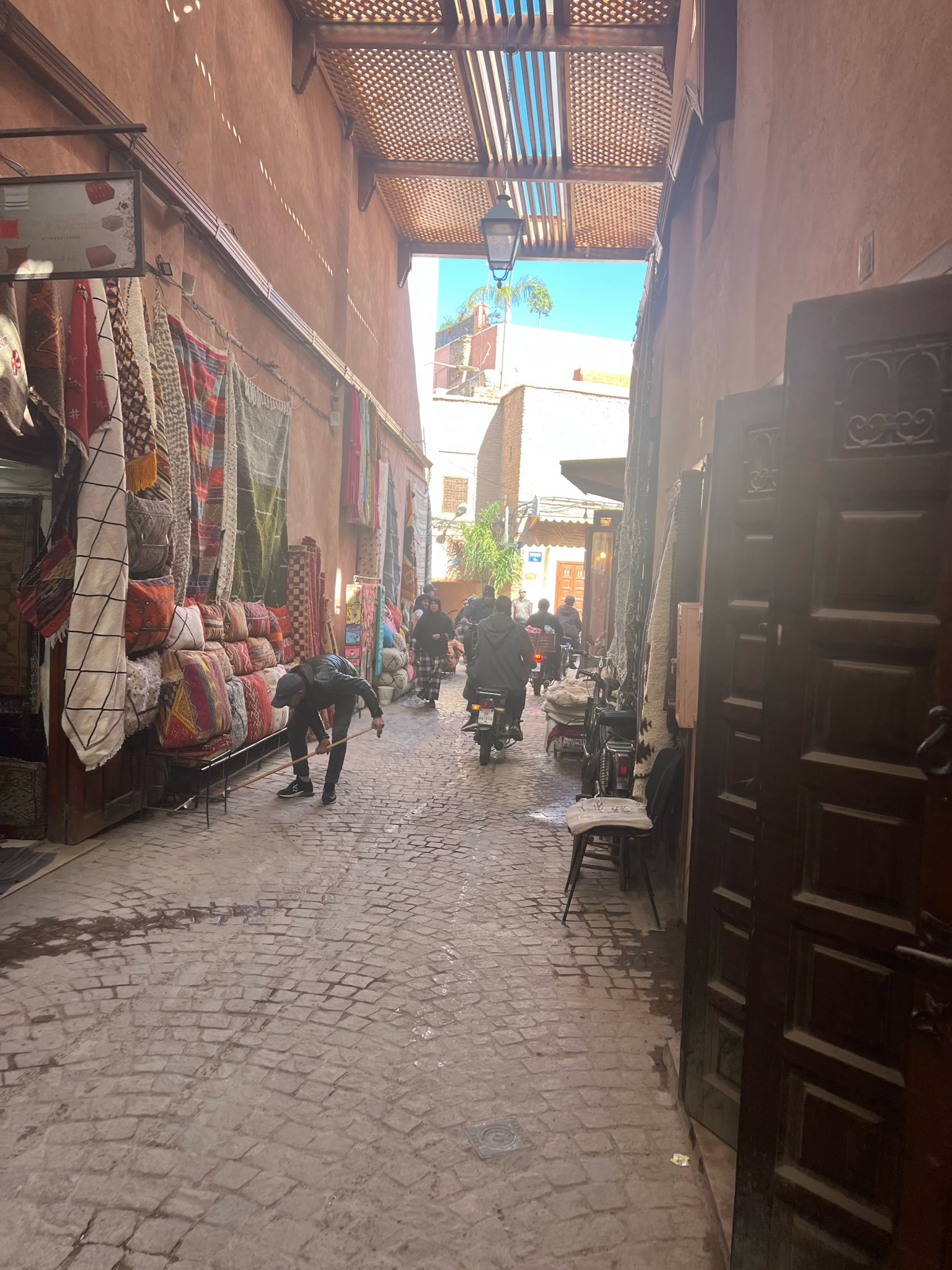
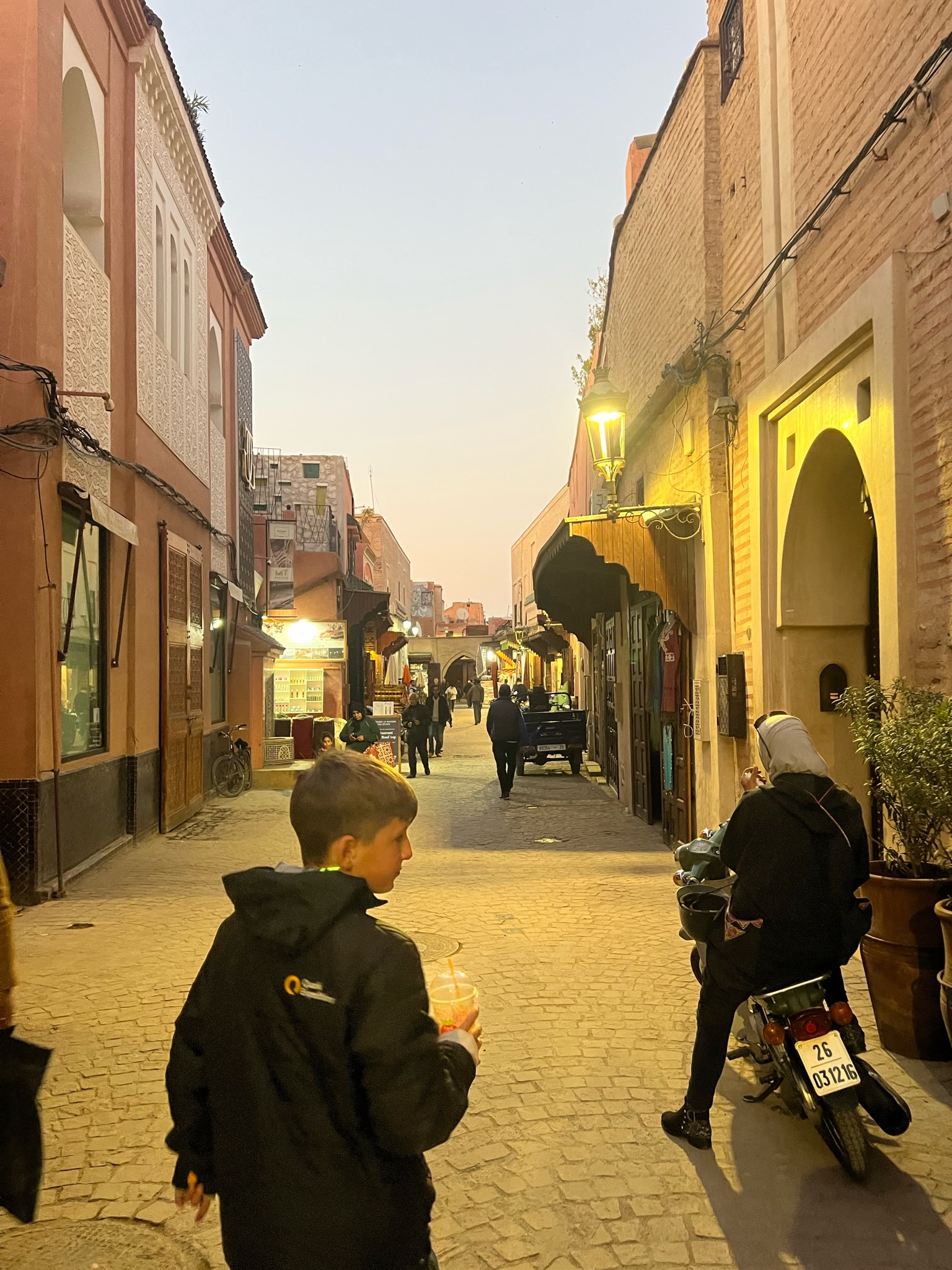
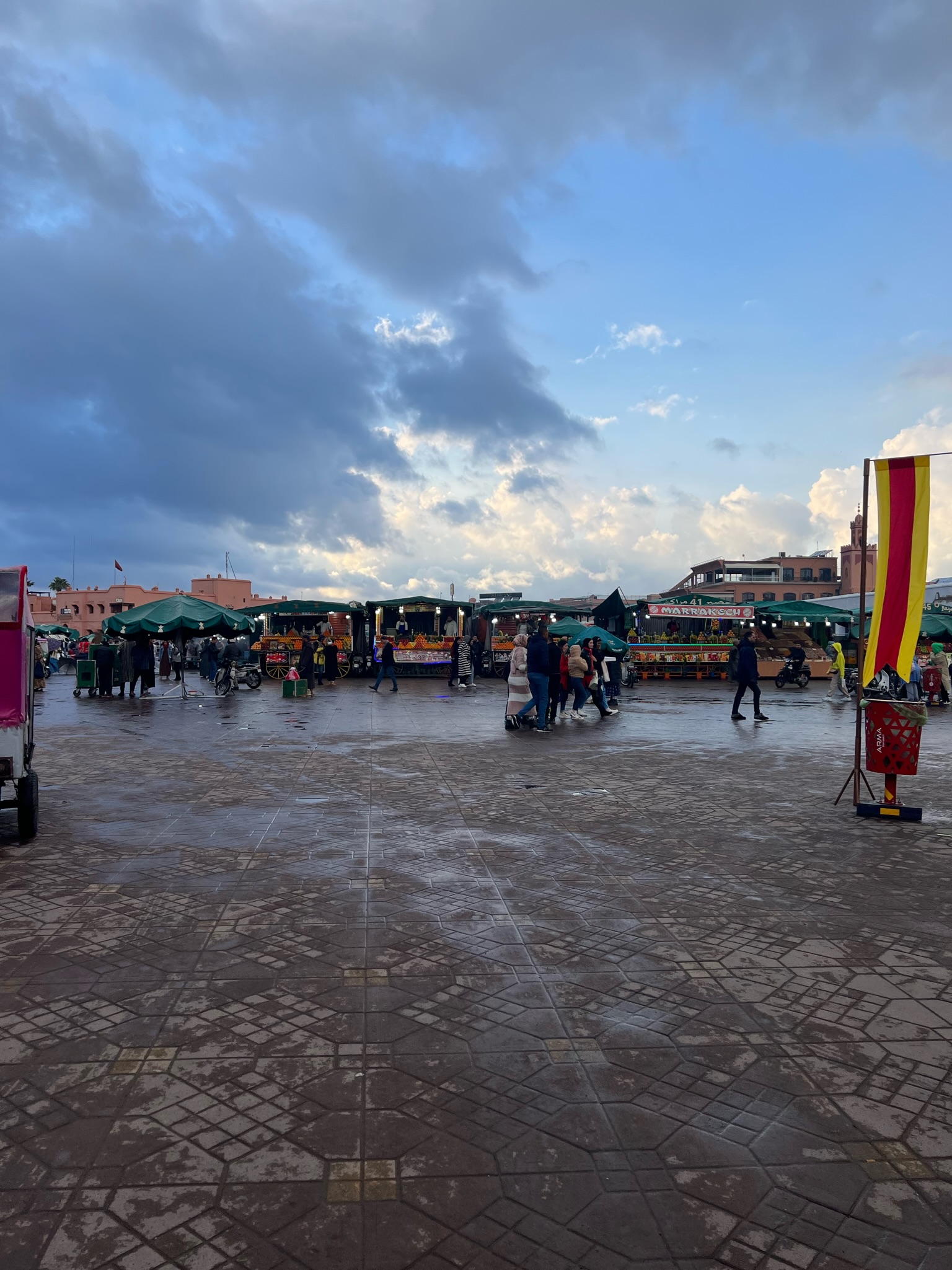
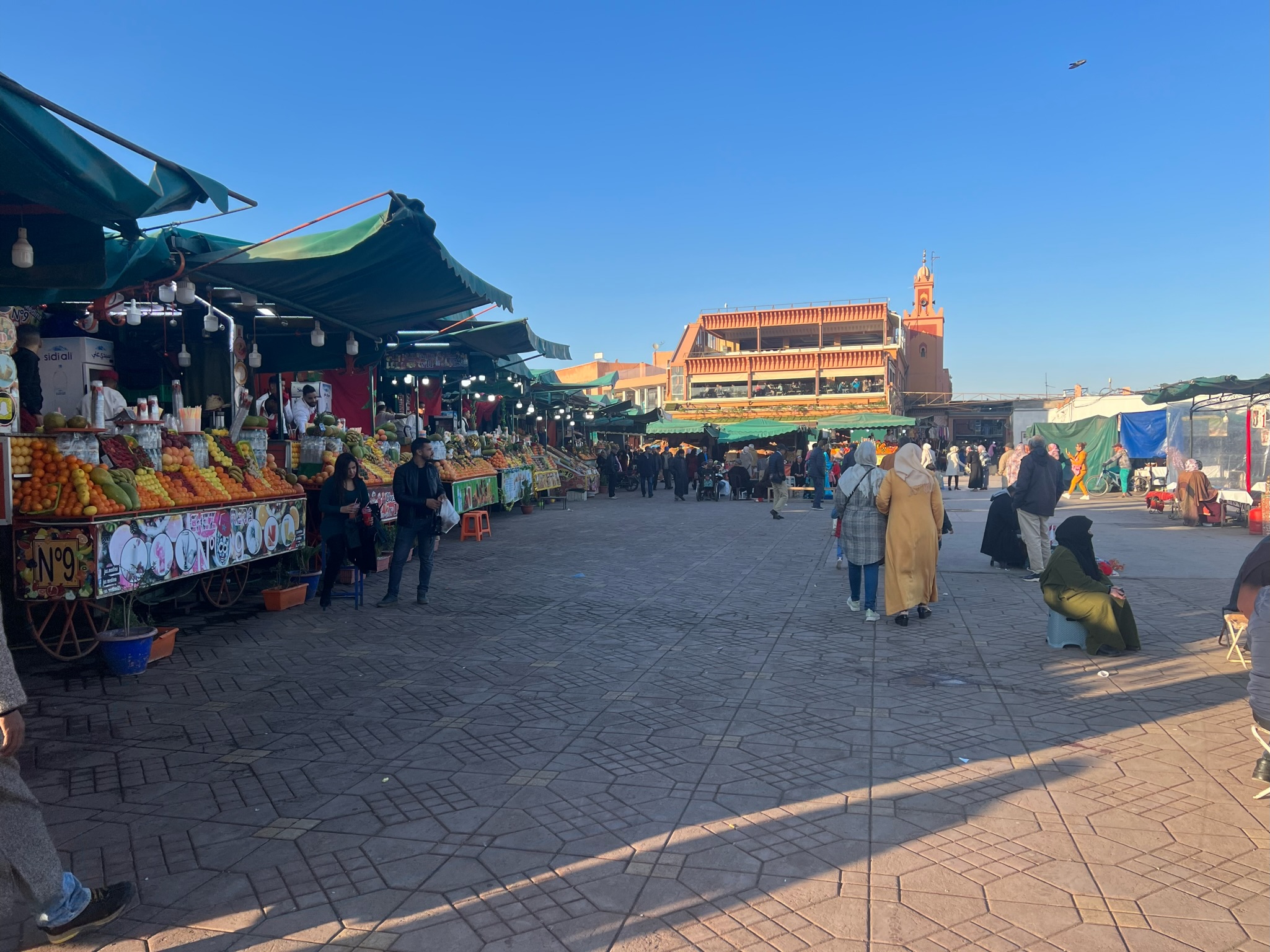
On that first day, we found our way down to the Jemaa el-Fna Square. This area is a very lively section of the medina where anyone and everyone comes to eat and play. There are hundreds of food and fresh juice stalls lining one section of the square. All of the juice stalls have gorgeous displays of fruits for you to choose from, and for about $1, they’ll make you a fresh squeezed juice that is phenomenal. The food vendors are preparing their dishes as you order them, and the food is so inexpensive that it makes you wonder how they could sell it at those prices. Pass these vendors, and you move out to the more open section of the square where you’ll hear the snake charmers entertaining passing tourists. There are performers dancing and singing traditional music, monkeys almost begging for you to hold them, donkeys waiting to be ridden, and henna artists itching to help you decorate your hands and arms. All of this is surrounded by more vendors selling their wares, ice cream stands, more juice sellers, and restaurants boasting the best rooftops in town. It’s a lot to take in; the sights and sounds of it all were so different from anywhere else, and they were all so perfect together.
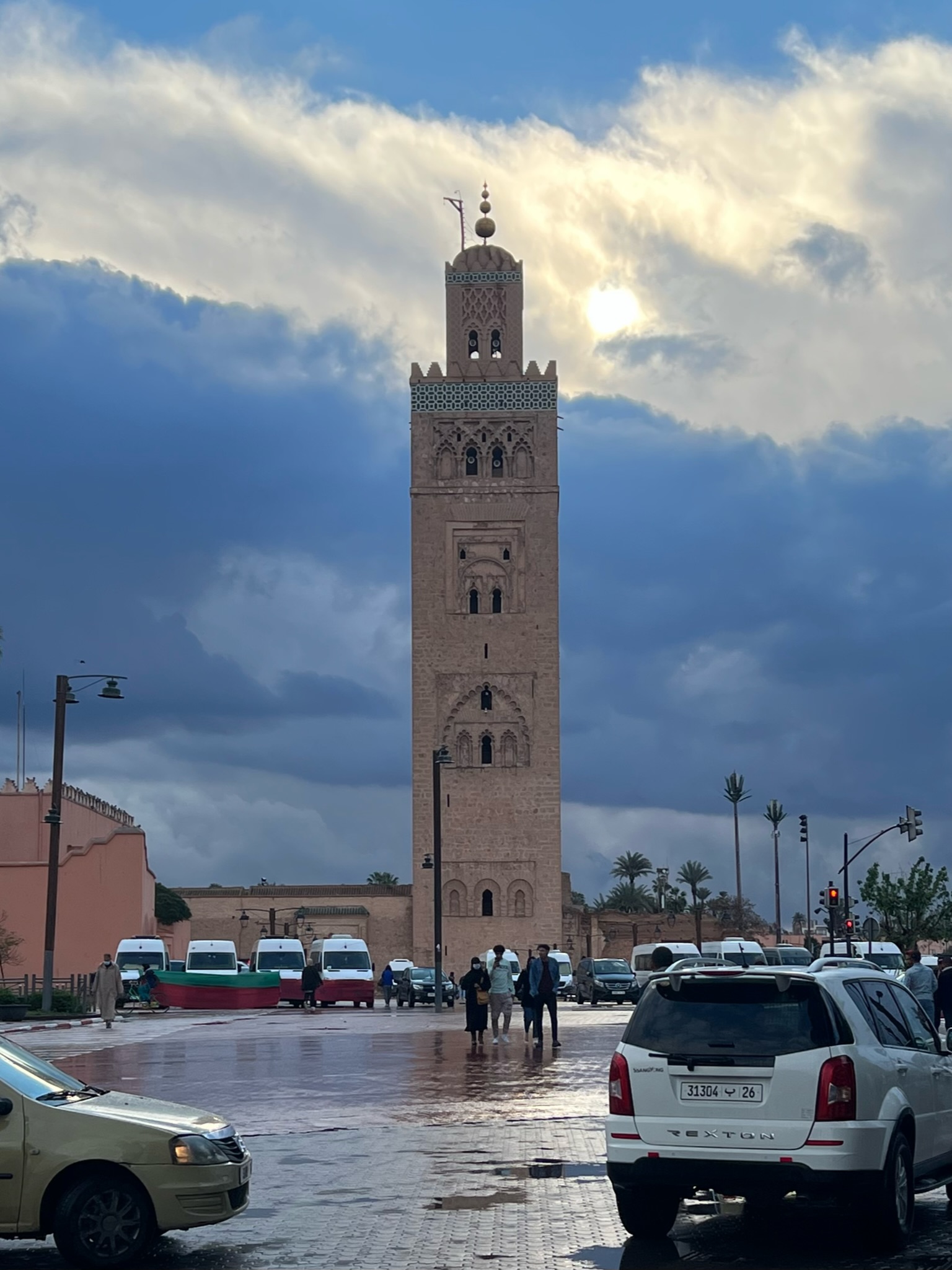

As we were walking around that first day, a kid who was about 10-12 years old eagerly let us know that we should head towards the tanneries today because there were some women from the Sahara that were in town, and this was the last day you could see them. He said it was incredible and rare to see them working the leather like they do, and he gave us instructions on how to find them. He told us that they would only be there for about another hour, so we should hurry. We politely said thank you and continued walking on our way when another young man, this one in his early twenties, stopped us to say hello. He also let us know about the women, and he insisted on walking with us a little further so he could point us in the right direction. As we walked, he kept up a friendly banter. We weren’t sold on going to see them, but so long as we felt safe, we were okay with walking with him to see where they were. As we walked on, the streets got a little more desolate, and we began to get uncomfortable. About the time we decided we were ready to turn around and go back, an older man came out to introduce us to the tanneries. He claimed he was the manager of the tannery. He offered to give us a tour of the facility, and he gave us some mint to use as a ‘face mask’ to help cover the stench from the tanning process. He was probably nice enough, but we’d already decided to go back, so we politely said goodbye and returned to our part of town.
Later on in our room, we were reading about the tanneries, and we learned that this is a common ploy to lure tourists into them. After a quick tour, the tourists are often guilted or intimidated into purchasing leather goods or paying an outrageous price for the ‘free’ tour. The person who delivers the tourists to the tannery insists on a generous tip for getting you there as well, even if you didn’t really want to go. You get to see the tanneries, and they get a little well-coordinated extra money as well. Thankfully we got out of there just in time.
Incidentally, in our next few days, we had several other people stop us and offer to help us find the tanneries as well. Each time the story was a little different. Every time we heard it though, today was the last day, and they would be closing up and leaving in about an hour. Every time. We tried several different lines to deflect them, but the most effective was to tell them we had already been there. Once we said that, the helpful local would simply fade away or go back to what he was doing.
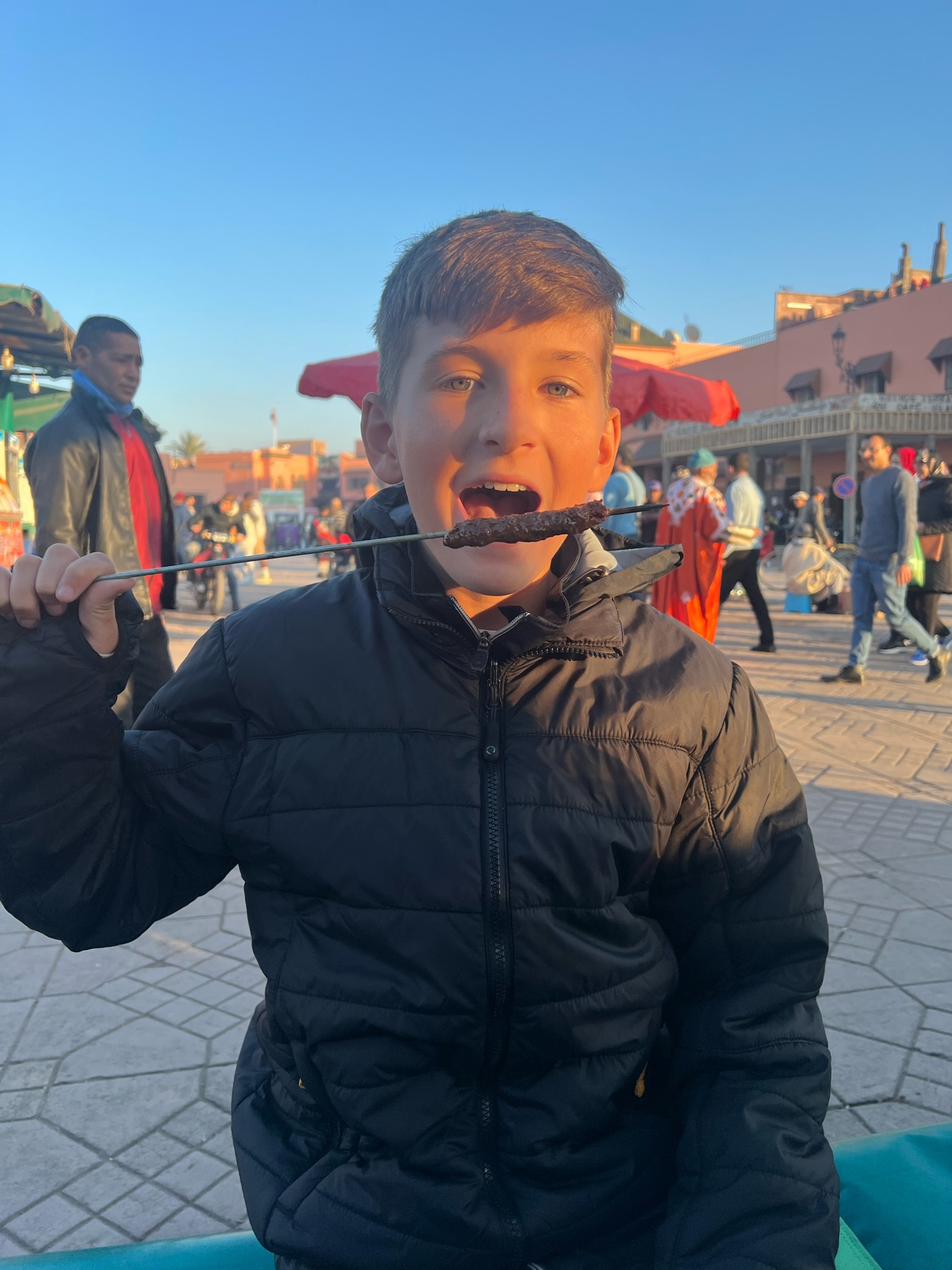
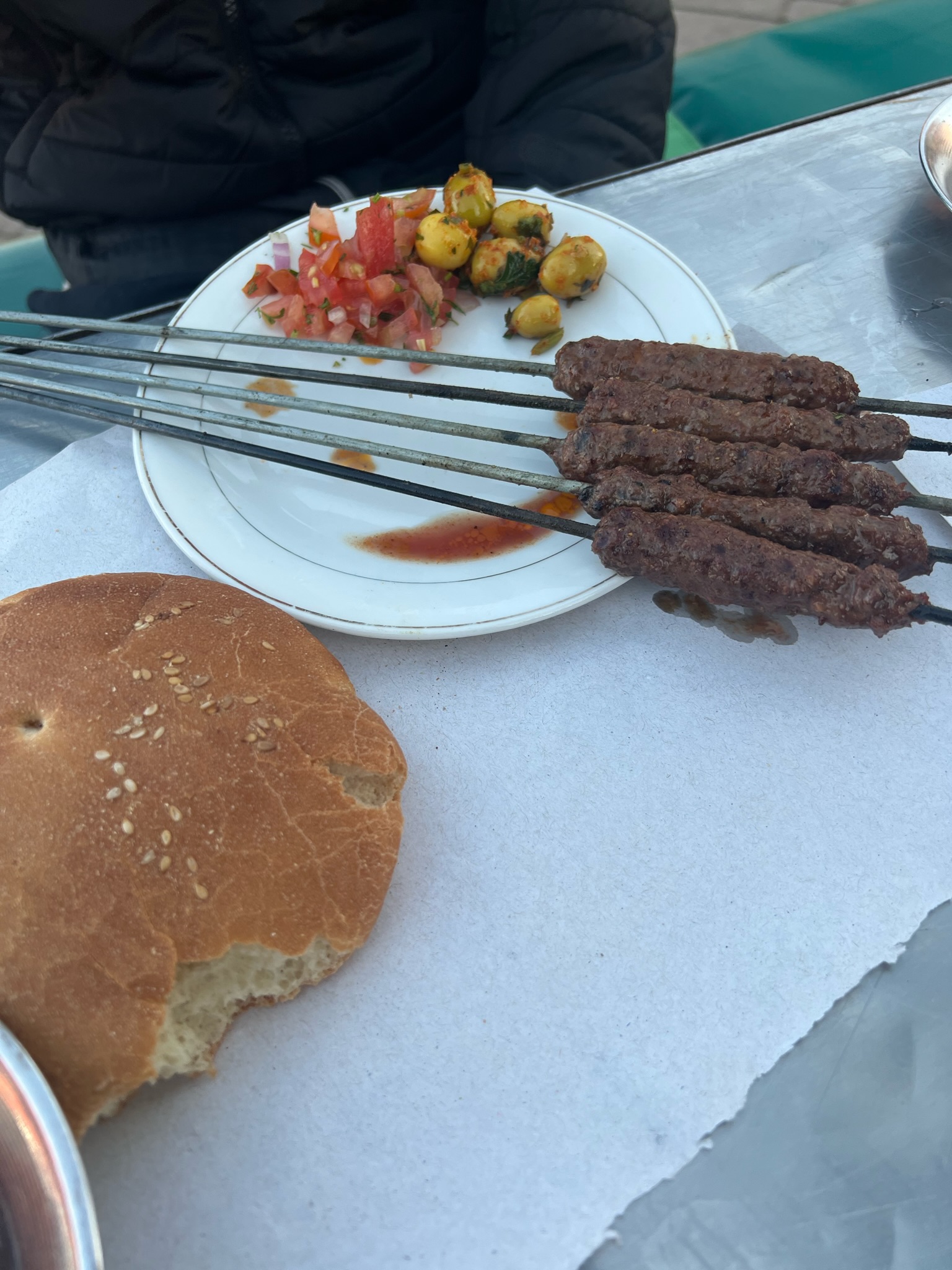
We enjoyed the atmosphere so much that we found ourselves at the square on another afternoon, and we dined on the juice and food stalls like locals. Henry had strawberry juice while Brian and I drank a fresh glass of delicious pomegranate juice. We ate minced beef kabobs at the #34 food stall, and it was fabulous. After months of not having a good hamburger, their kafta (minced meat) kabobs tasted extraordinarily good. If we’d only had a bun to put them on, they would have been perfect.
One afternoon we were walking through the markets trying to get a new sim card for Brian, and the crowd was very thick. We’d already been keenly aware that this environment would be perfect venue for pickpockets, so we’d been extremely careful about what we had with us and where our belongings were stored on us. Brian was talking to the shopkeeper in a very busy alley while Henry and I leaned up against a nearby wall to stay out of the way of the of the crowd traveling through. All of a sudden, there was a ruckus behind Brian. I pulled Henry closer to me, and Brian quickly grabbed up his phone from the counter as well. We all turned to figure out what was going on, and while we stayed as far away from the commotion as possible, we watched a middle-aged man get off the motorcycle that he and his wife were riding and begin punching a younger man in the face. We gathered from the shopkeeper afterwards that the younger man and his buddy had tried pickpocketing something out of the wife’s pocket as they slowly rode through the crowd. She had felt him and told her husband to stop driving immediately. There were no police called; they settled this for themselves. The husband beat the snot out of the kid, and then he and his wife went on their way. It was unnerving to watch, but it was a good reminder for us to continue to be vigilant.
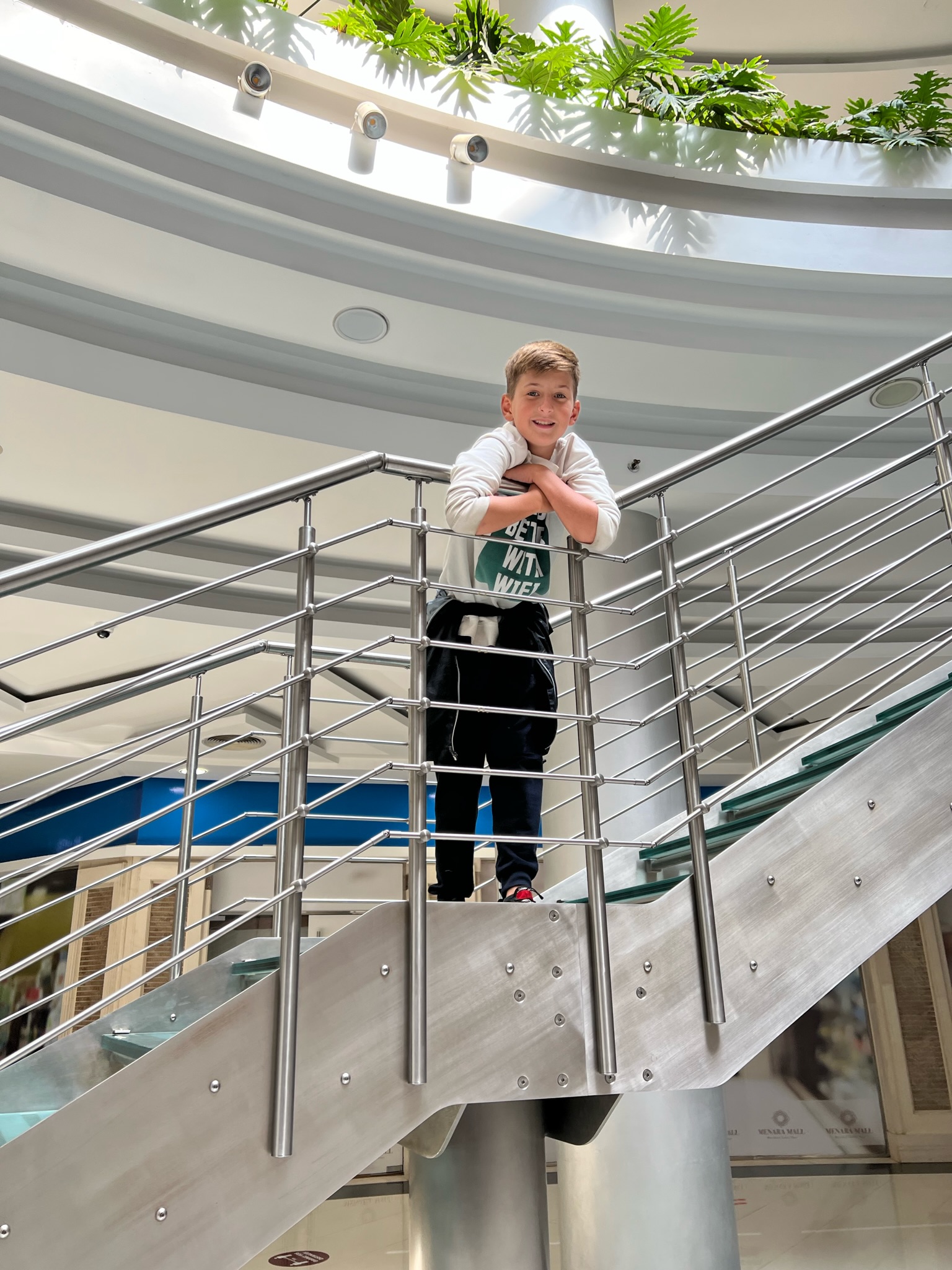
On another afternoon, we found our way out of the medina and walked over to a shopping mall in the new part of town. After a quick lunch at our favorite Chili’s Bar & Grill, we explored the area for a few hours. We never found the garden we were looking for, but we did find an awesome grocery store which was almost as good. They had everything we needed to make homemade quesadillas, and Mahjoub agreed to allow us to use the kitchen, so we were excited for that. Back at the hostel, Brian cooked up our quesadillas while I finished up a few things I needed to do upstairs, and then we shared one of our favorite dinners with Mahjoub. He seemed to enjoy it as much as we did.
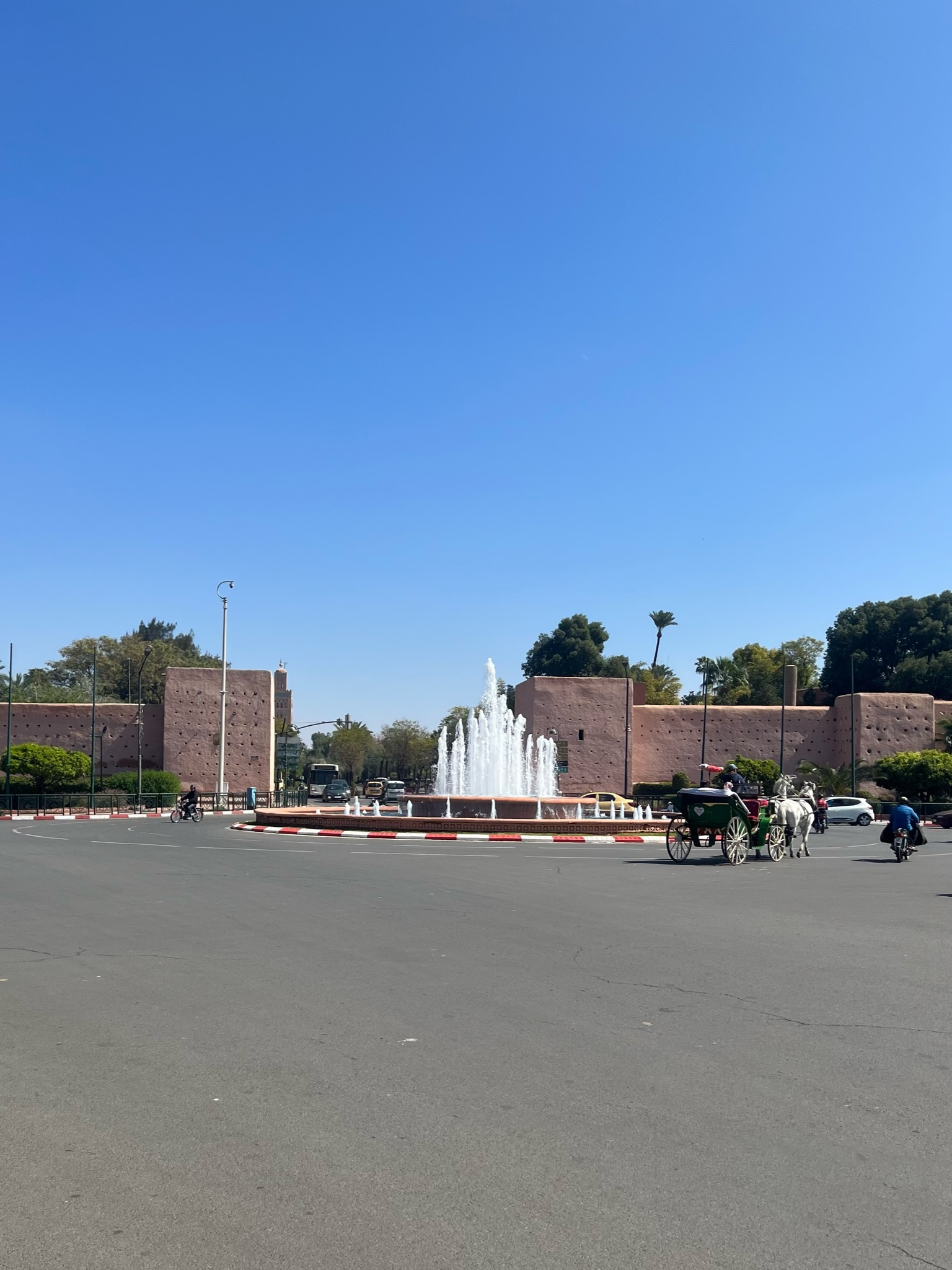
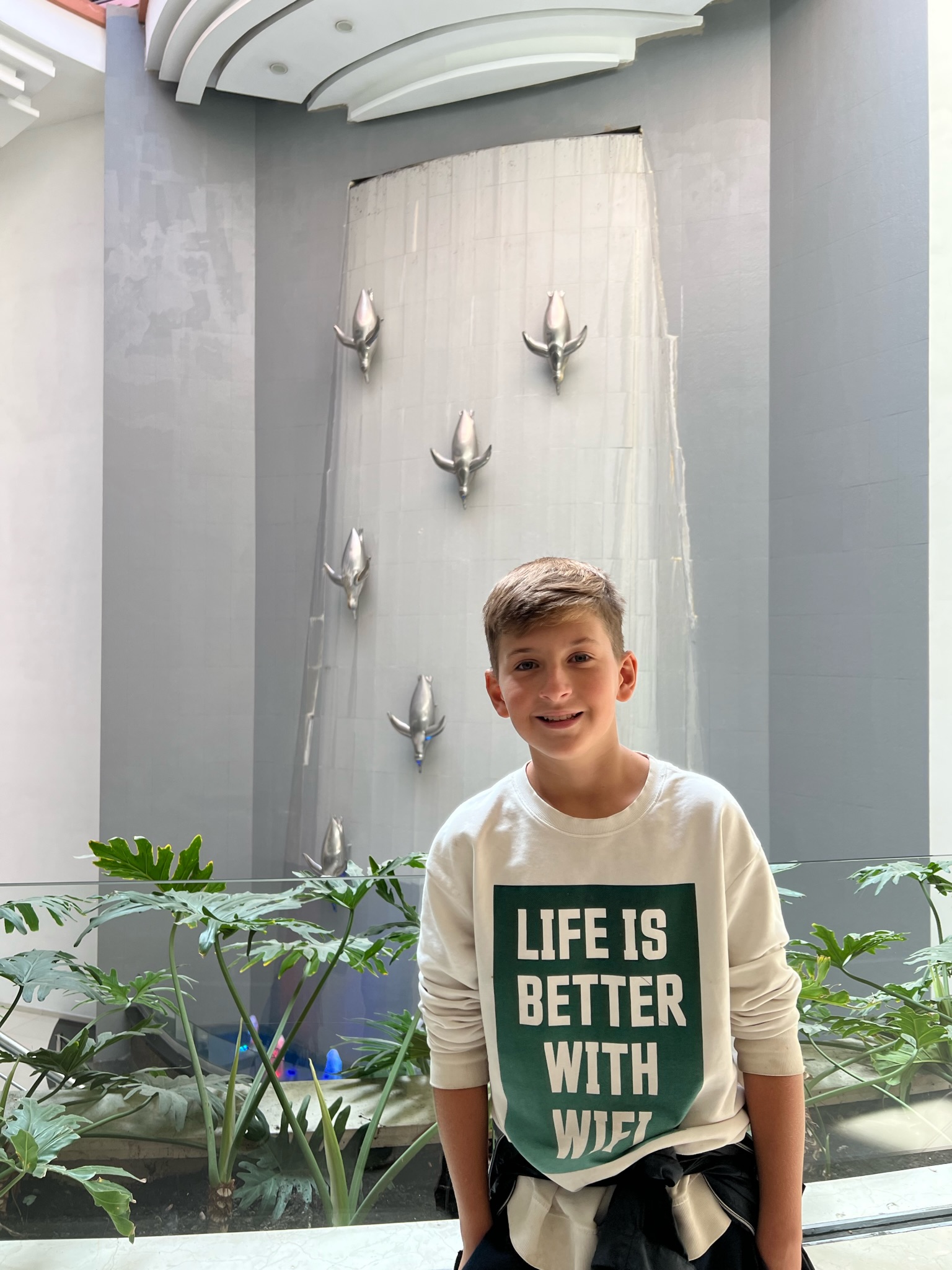
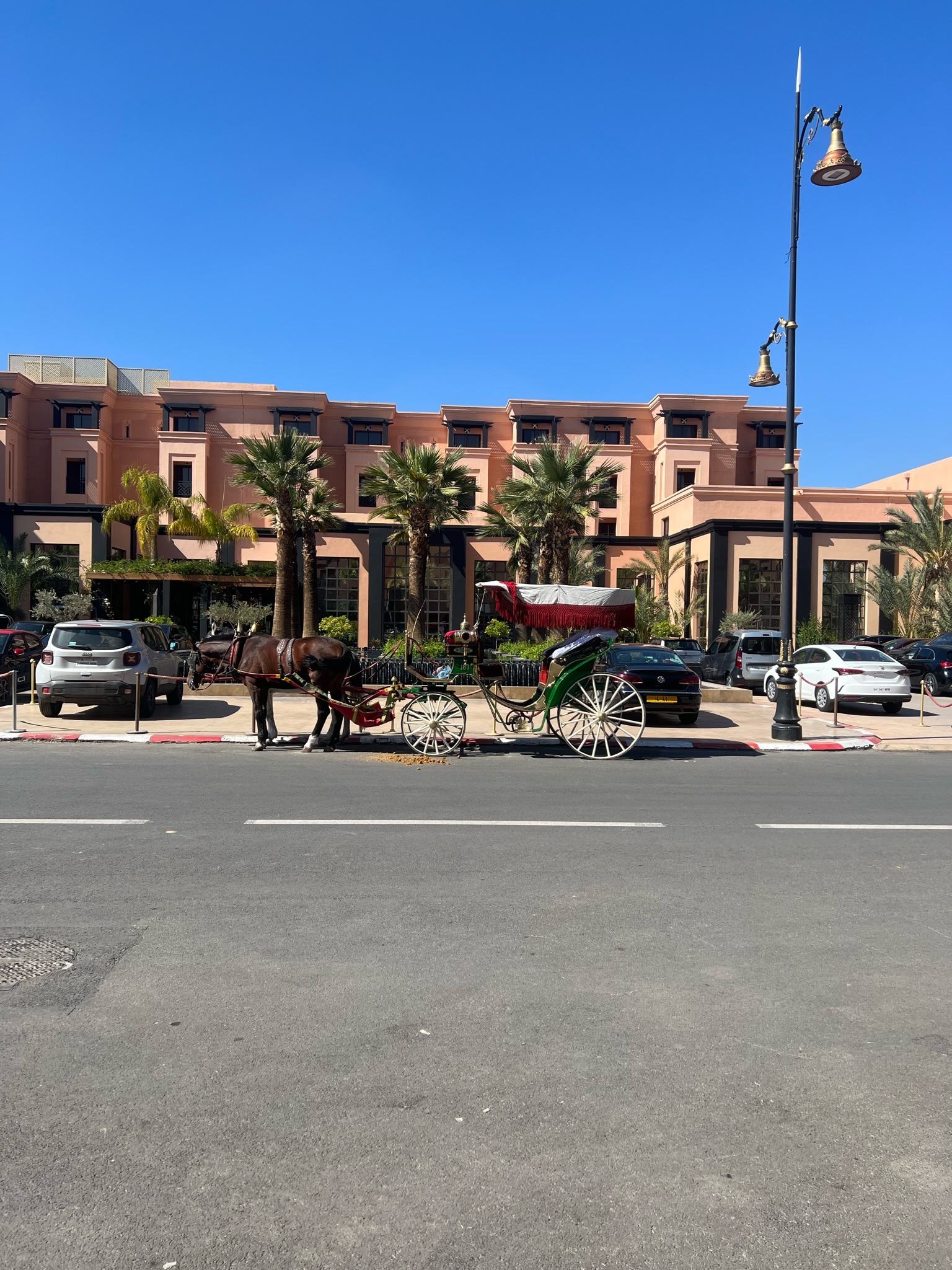

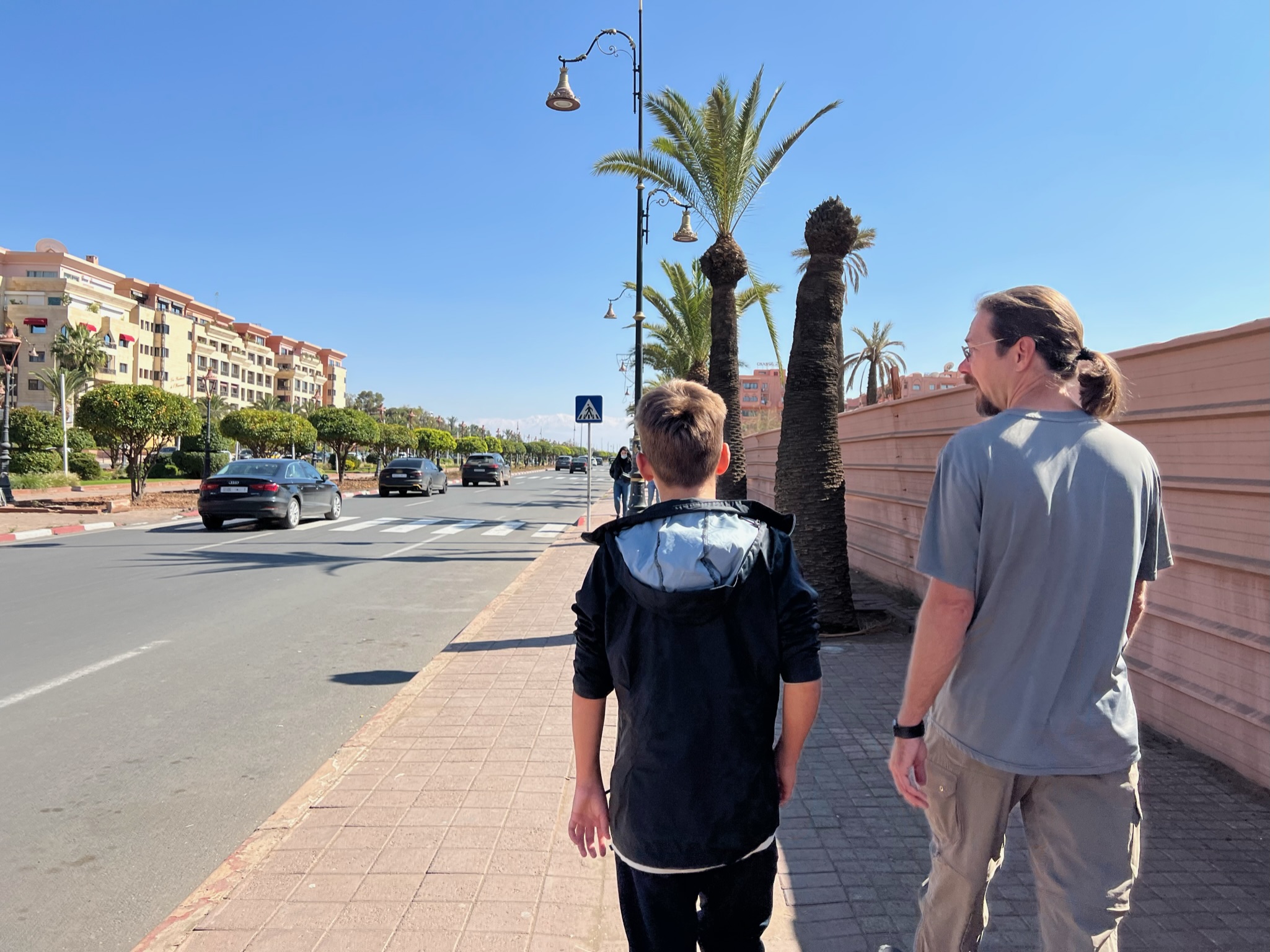

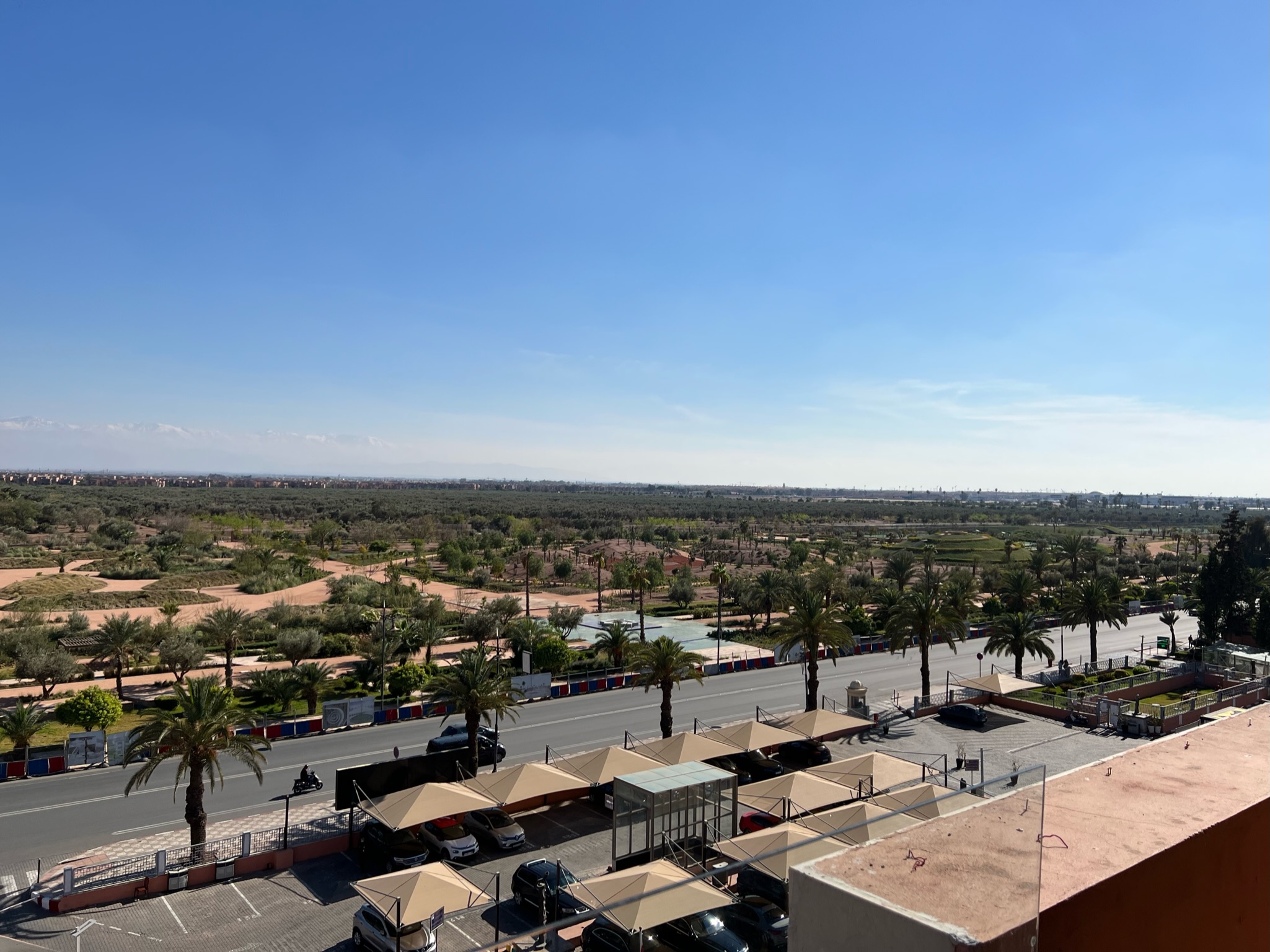
We loved Marrakech, but it was time for us to move on. The beautiful red city, as it is known, was wonderful to visit, and the riad we stayed at was simply beautiful. We were eager to see what the rest of Morocco had in store for us, though. Mahjoub really wanted us to check out the Sahara and Southern Morocco, but we didn’t feel like we had enough time to see it the way we really would have liked to. Instead, we chose to take the train from Marrakech to Fes, another even older town, and see what was there. Mahjoub arranged a ride for us to the train station, and after grabbing a bucket of KFC to enjoy on the train, we hopped on board.
The train was comfortable and smooth. The car was divided into several different cabins that each seated 8 people. When we arrived to our cabin, there were four people already there, so we put our bags on the overhead racks and settled into the vacant seats for the six hour ride. We were able to take in the sights as we traveled through the country, and except for the car getting very warm at one point, we actually enjoyed the ride. Henry spent most of the time working on his Algebra and getting mad at me in the process. He, Algebra, and I are not a good combination, and it’s one of the reasons we’ll both be glad when he returns to normal school.


We made it to Fes with no issues aside from being hot and tired. Mahjoub had been kind enough to arrange a friend of his, Ayoub, to meet us at the station and escort us to a riad that he knew. At the station, I heard him call my name before I ever saw him. Ayoub was an enthusiastic young man who was quickly bounding over to meet us. He had the biggest smile on his face as introduced himself, welcomed us exuberantly, and then escorted us to a taxi. He took a second taxi because the cars weren’t big enough to hold all of us, and our taxi followed his to the edge of the medina.
Our first views of the medina let us know that this one would be very different from Marrekech. Marrekech is flat, and the entire medina is easily walkable because of its size and topography. Fes is much larger, boasting more than 9400 cobbled streets and 300 mosques. At over 1,200 years old, it is the oldest and largest medina in Morocco, and while it sees far fewer tourists than Marrakech, we were told the town had a lot to offer as well.
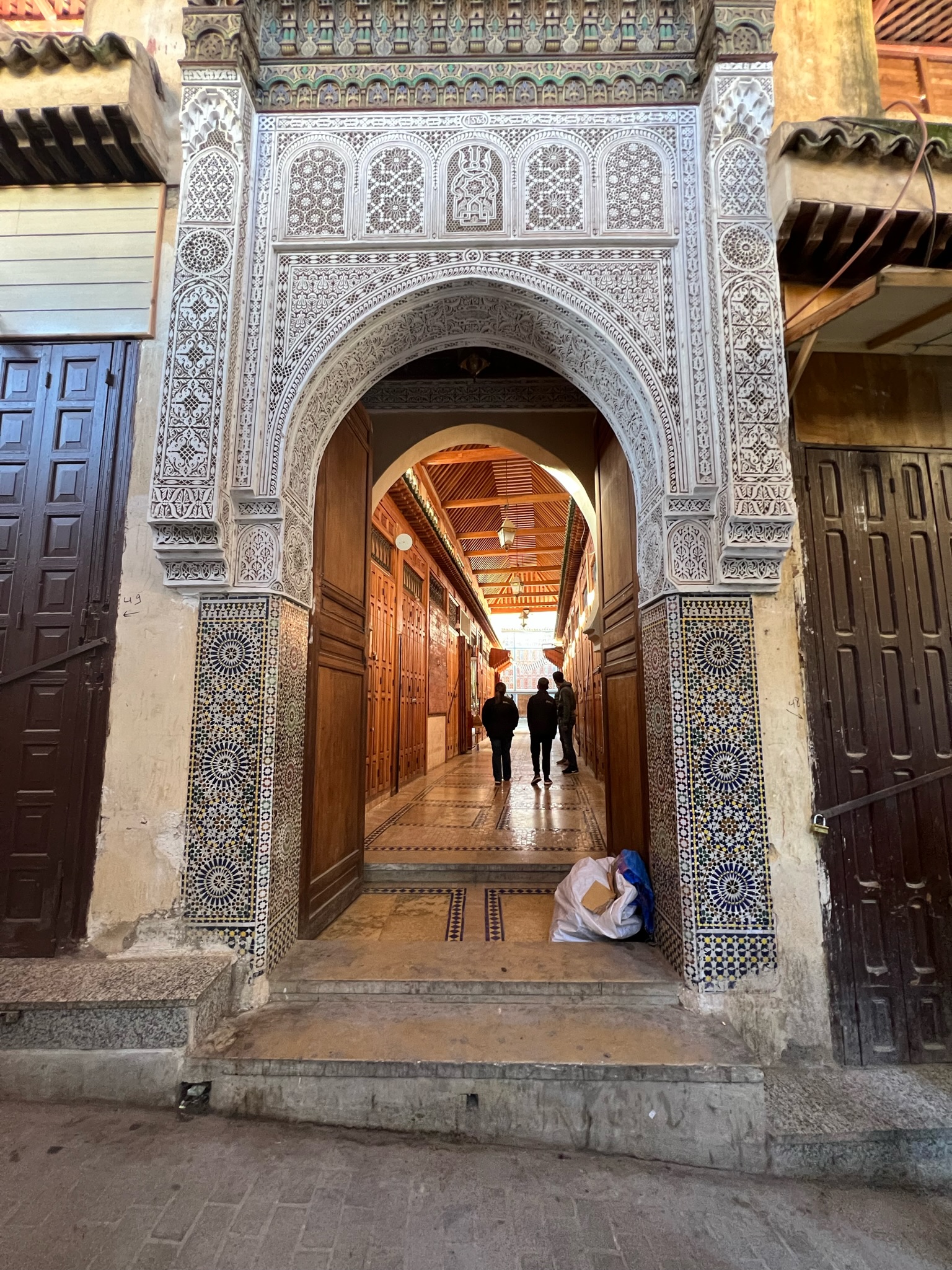
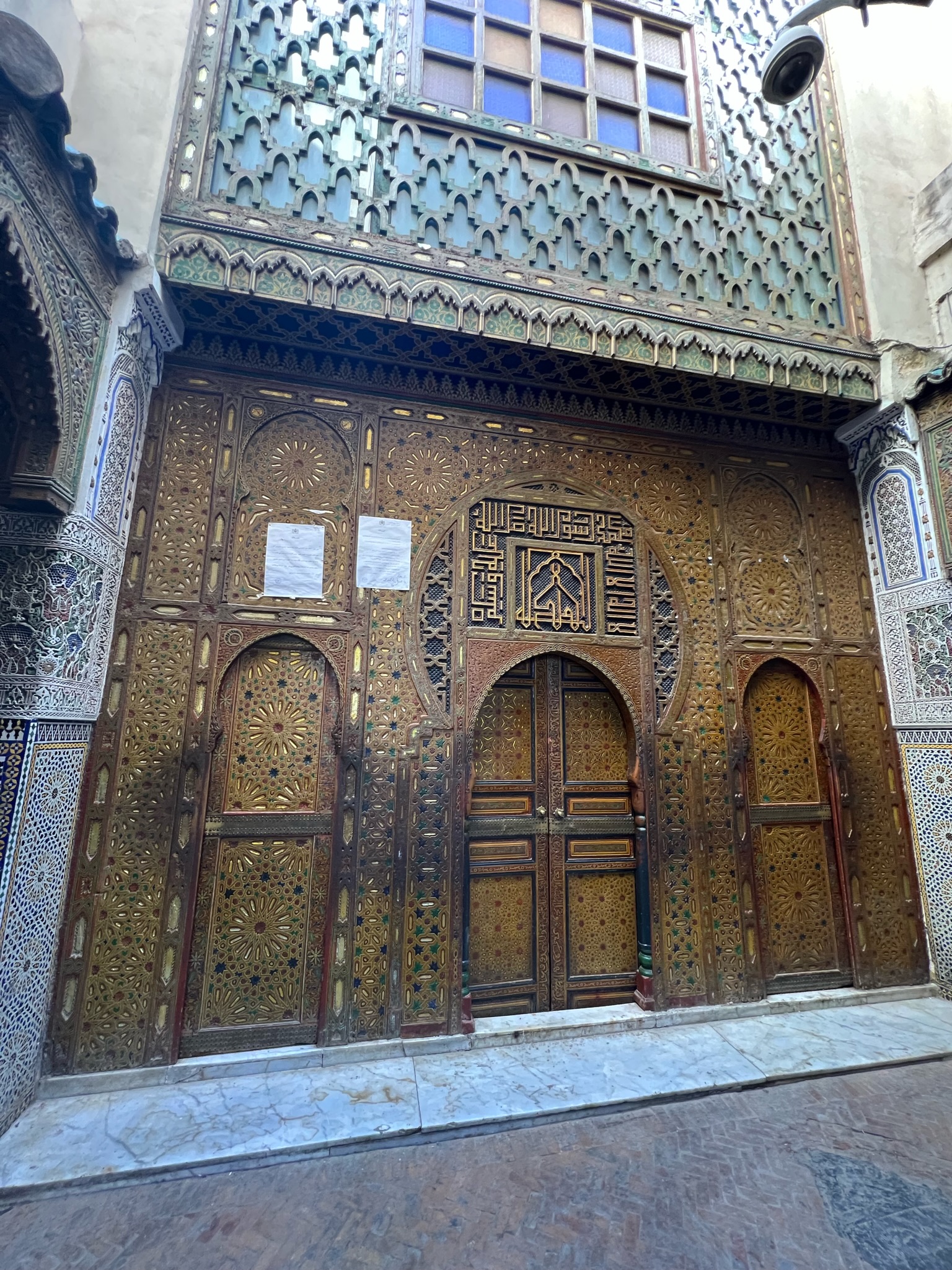
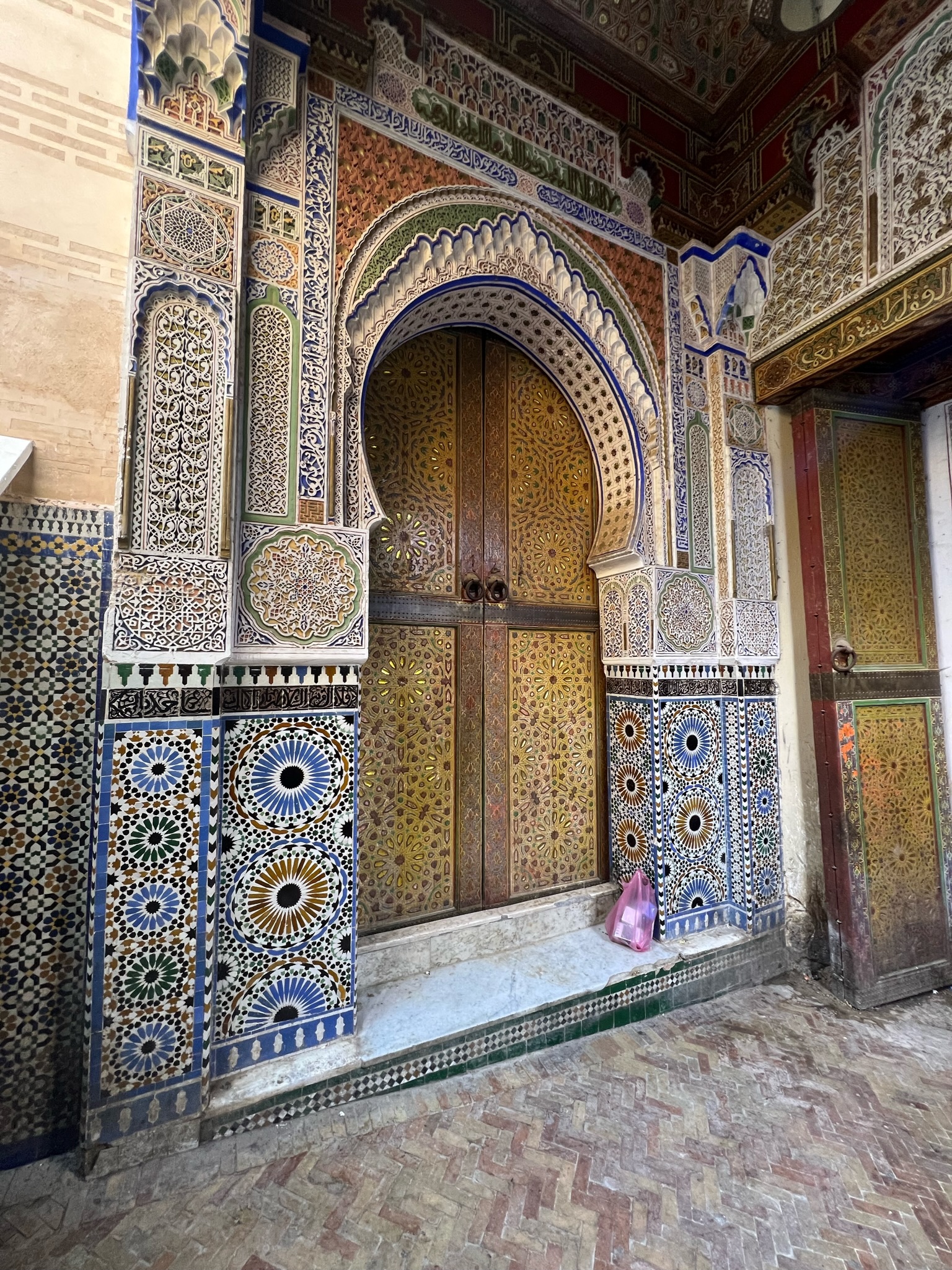
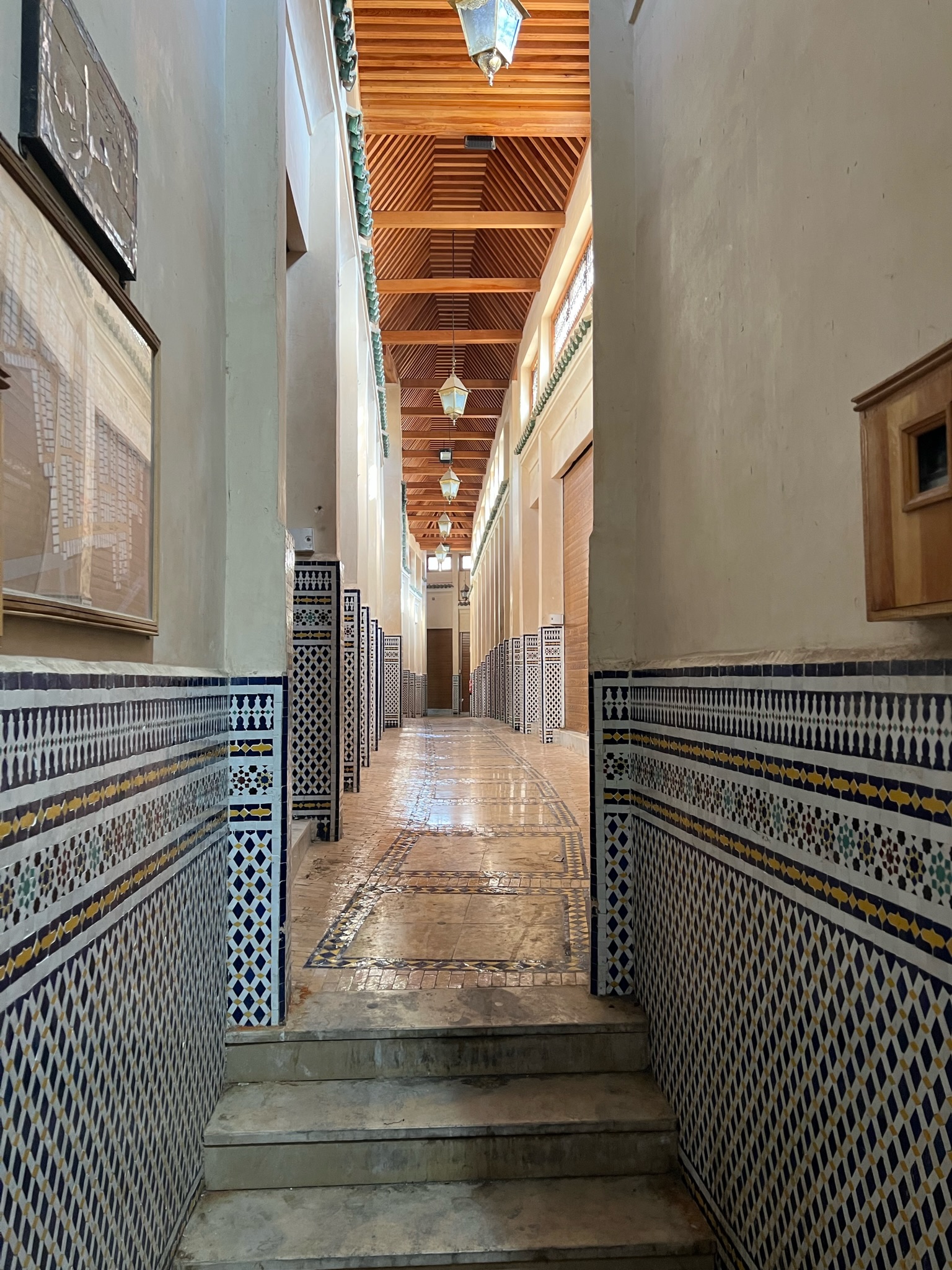
We walked down a large hill, and after winding through several different streets, we found ourselves at the door of the Riad Sanaa Rose. Abdel, our new host, opened the door to the riad and welcomed us inside. After unloading our bags, we sat with him and Ayoub at the dining table in the lovely home enjoying freshly baked cookies and mint tea while we learned more about Fes. We found out that this Riad was at least 300-400 years old, and that all of the tilework inside was handmade. The dining table sat in the center of the courtyard area, and the three-story building loomed around us as we rested. Off to one side of the room was a beautiful fountain where the family would have gotten their water. Another side yielded a plush seating area lined with couches and big, fluffy pillows. And a narrow spiral staircase with insanely steep steps was inset into a third wall. After setting up dinner plans with Ayoub, Abdel showed us to our room on the third floor. Our room was large and spacious, and after traveling all day, we were eager to stretch out on our beds for a short while. Henry and I couldn’t help but open every window and wood window panel to see the different views first, though.
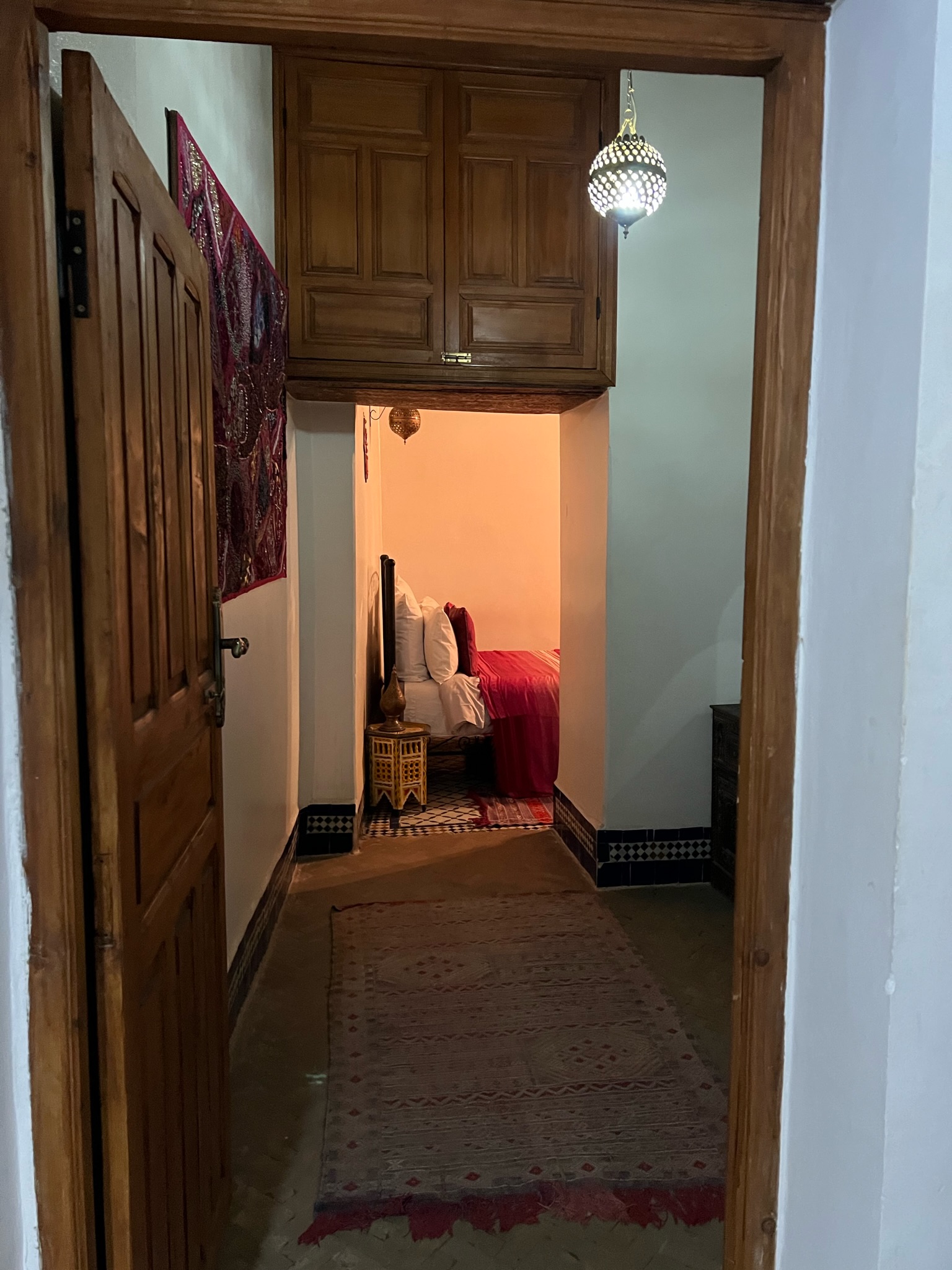
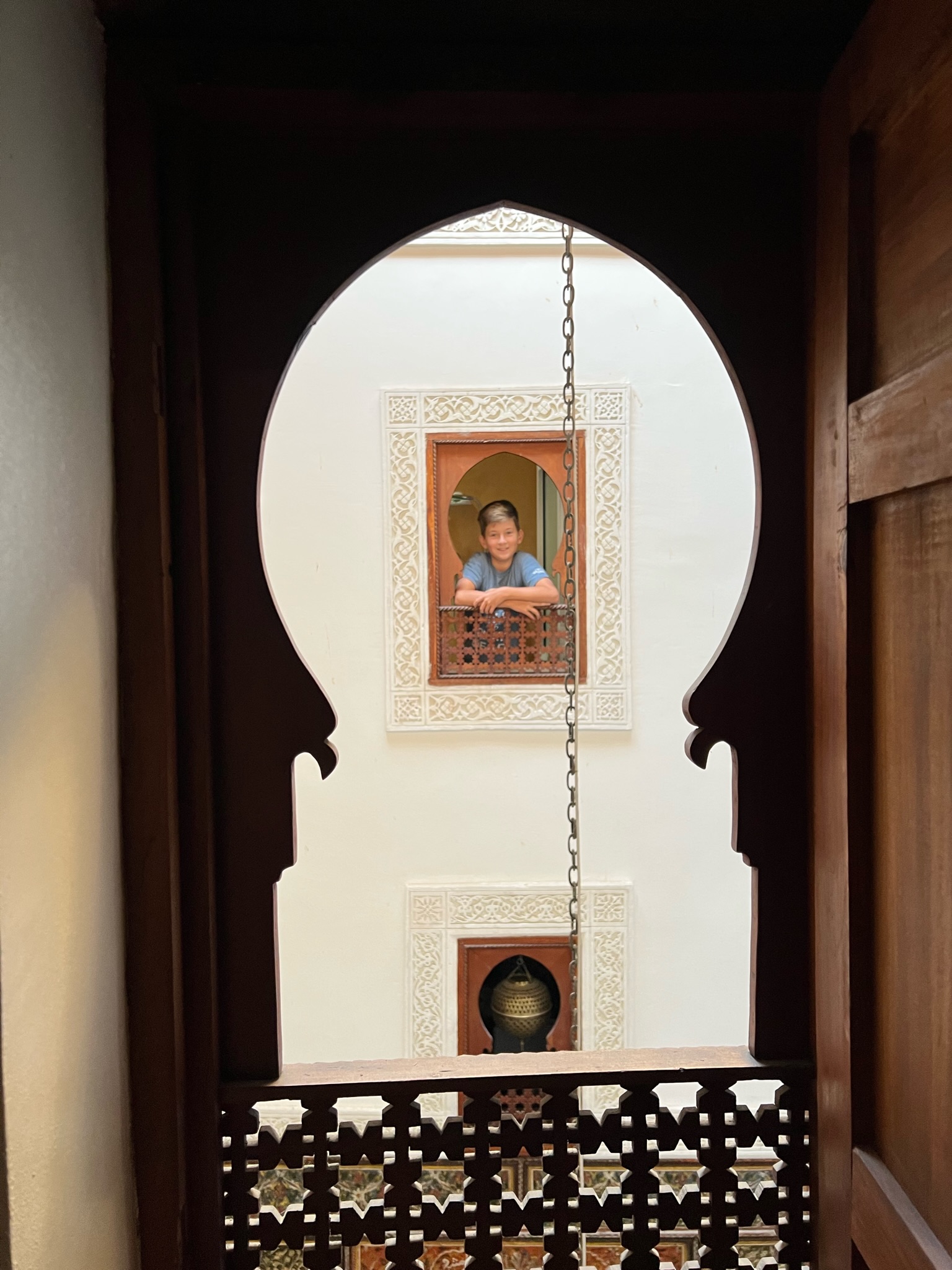
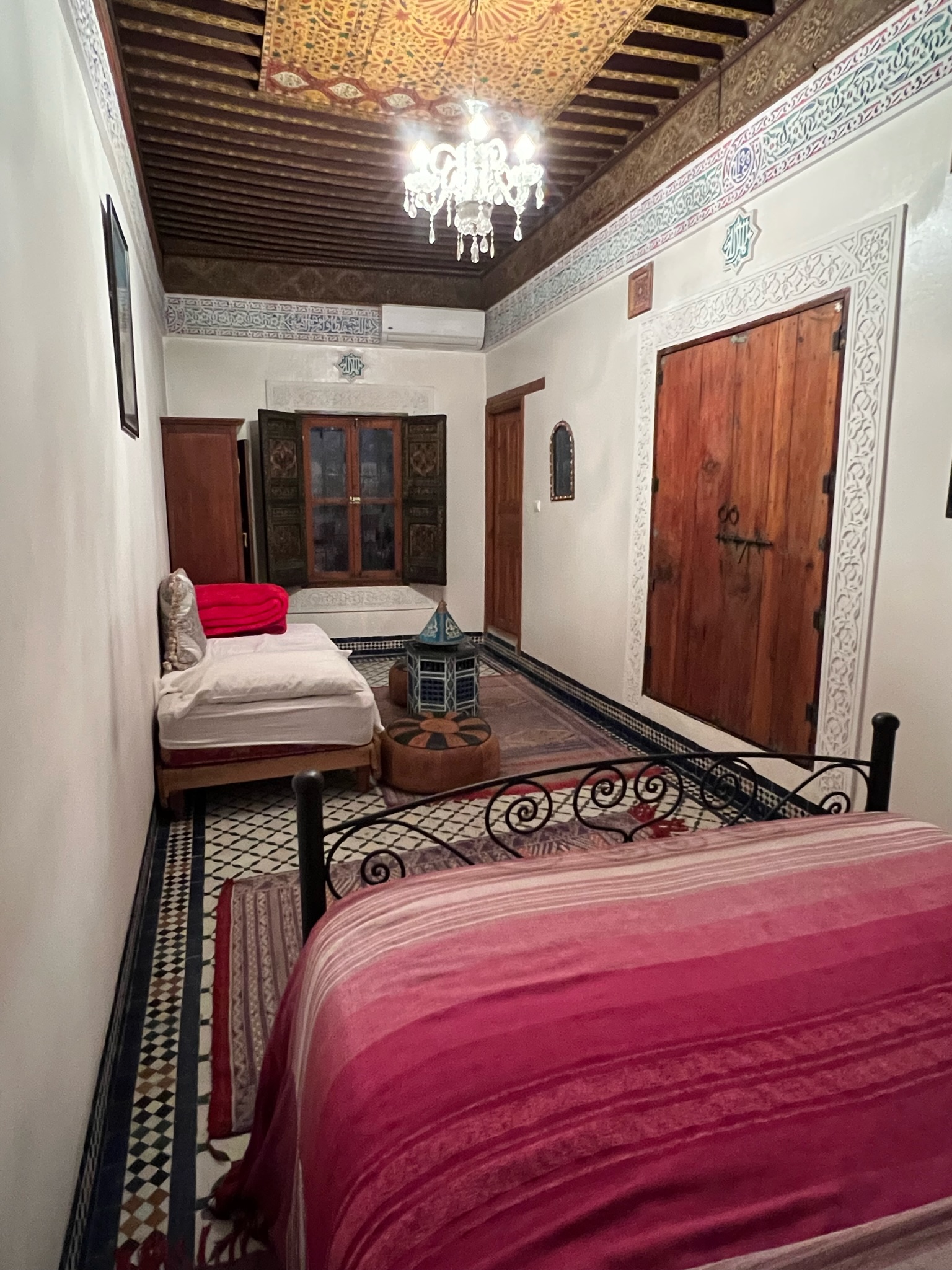

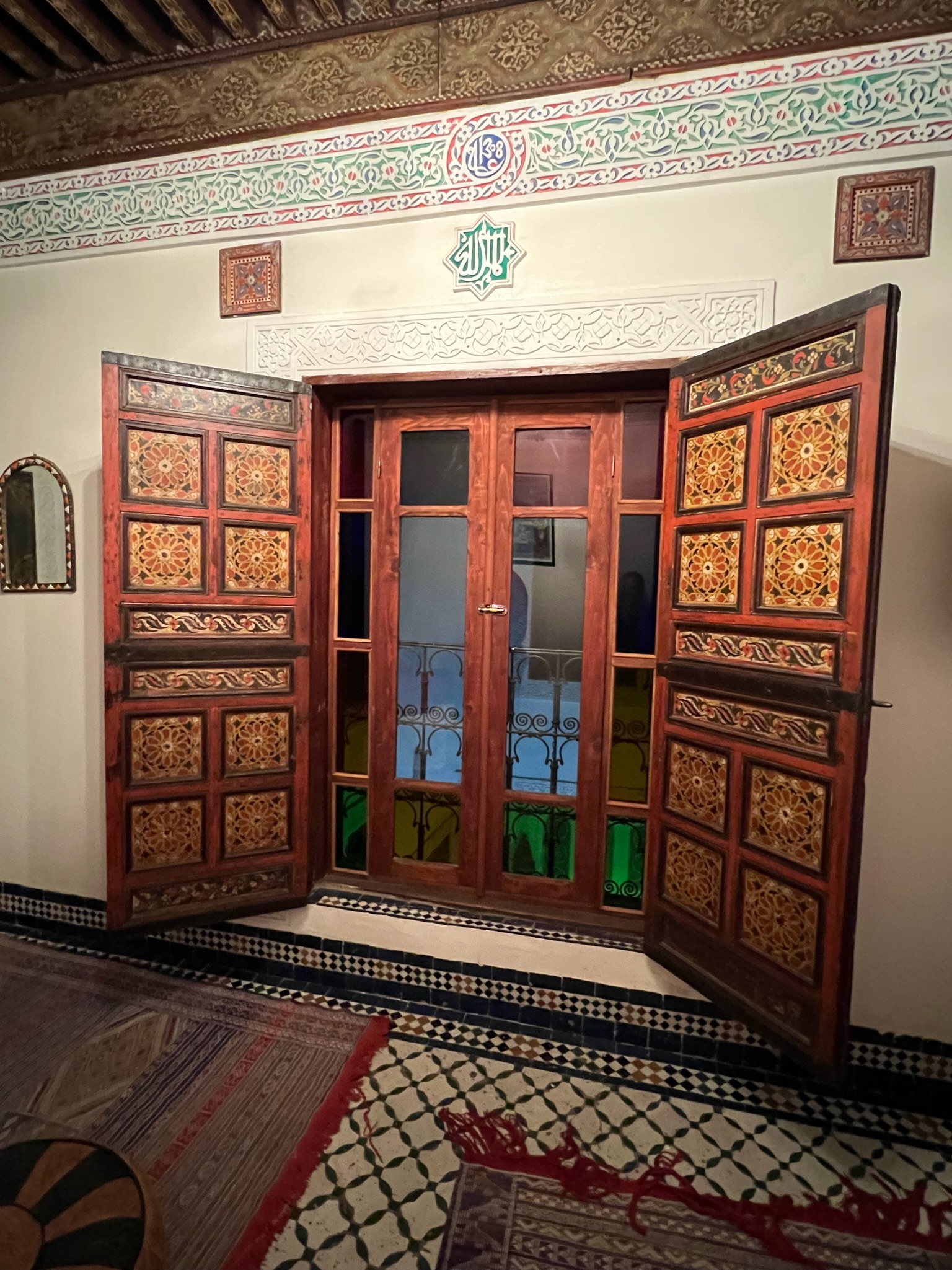

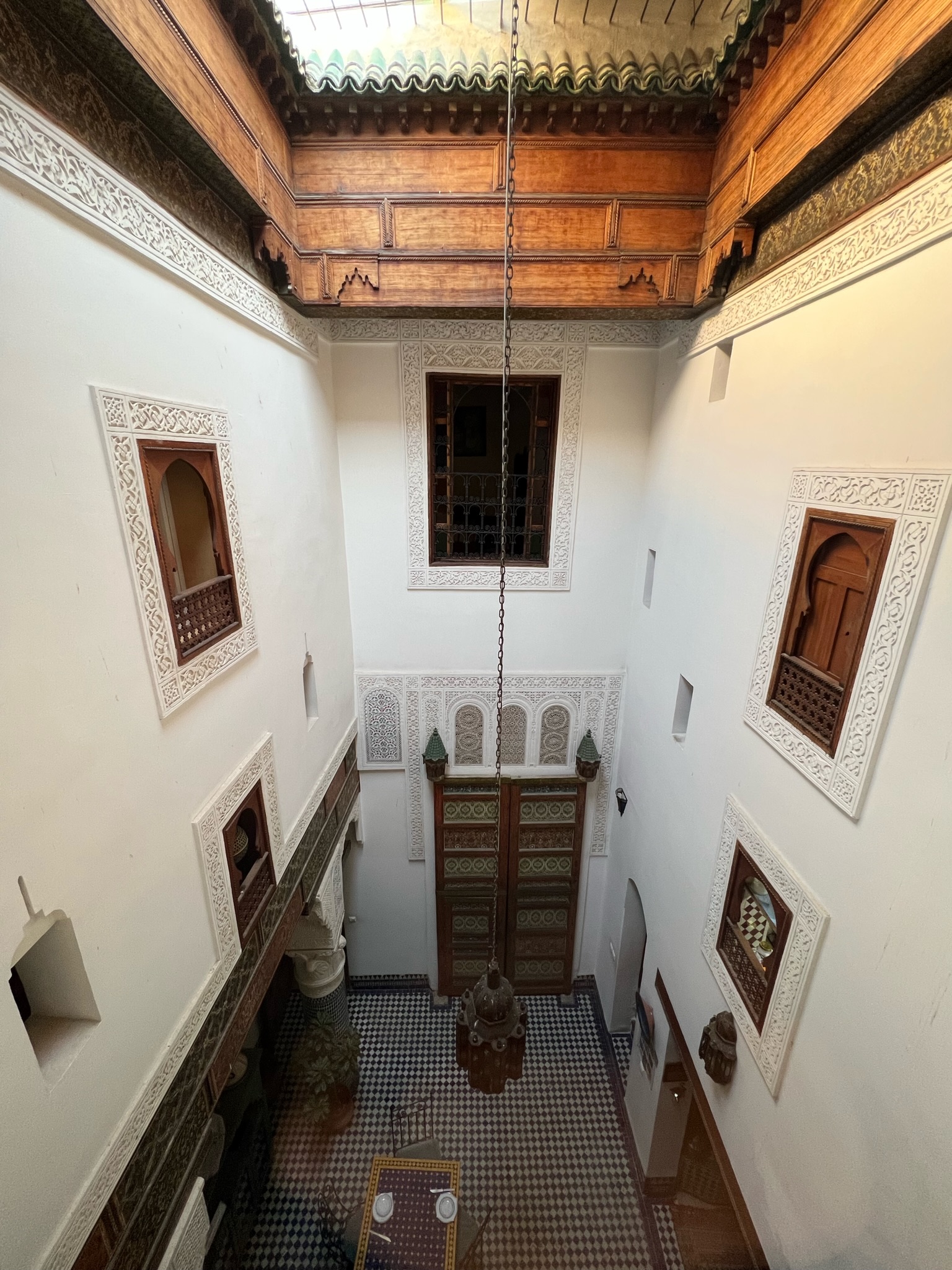
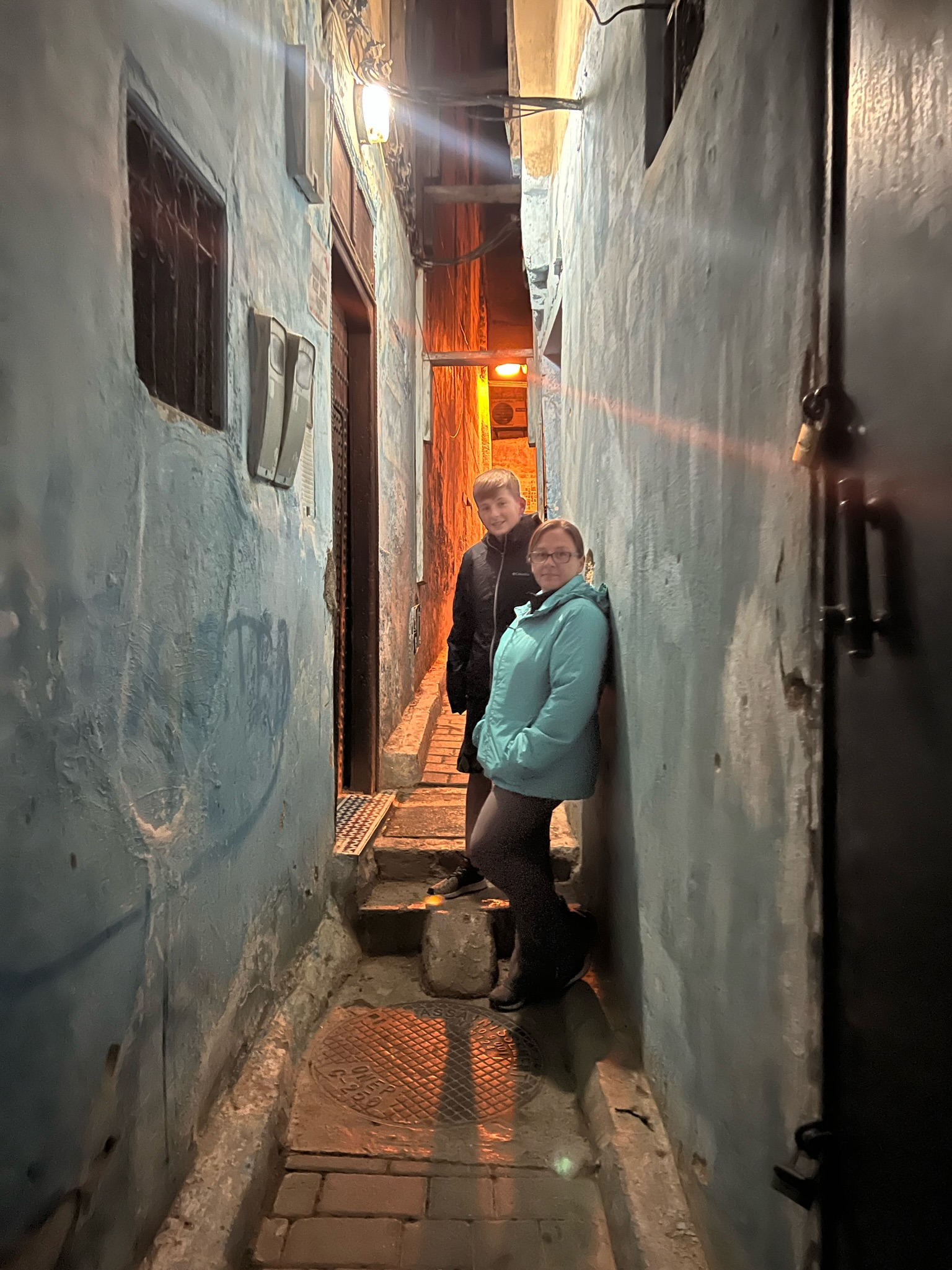
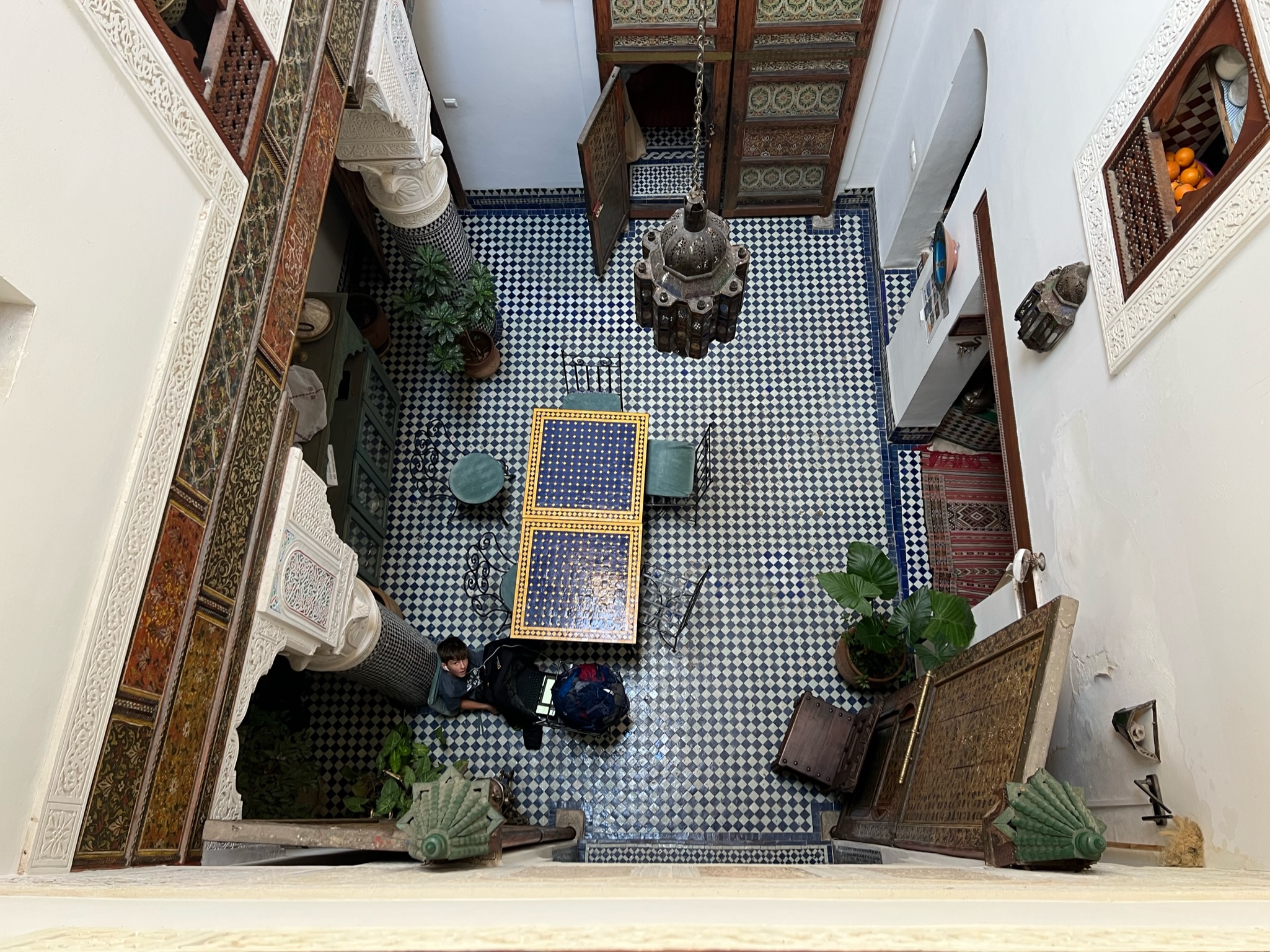

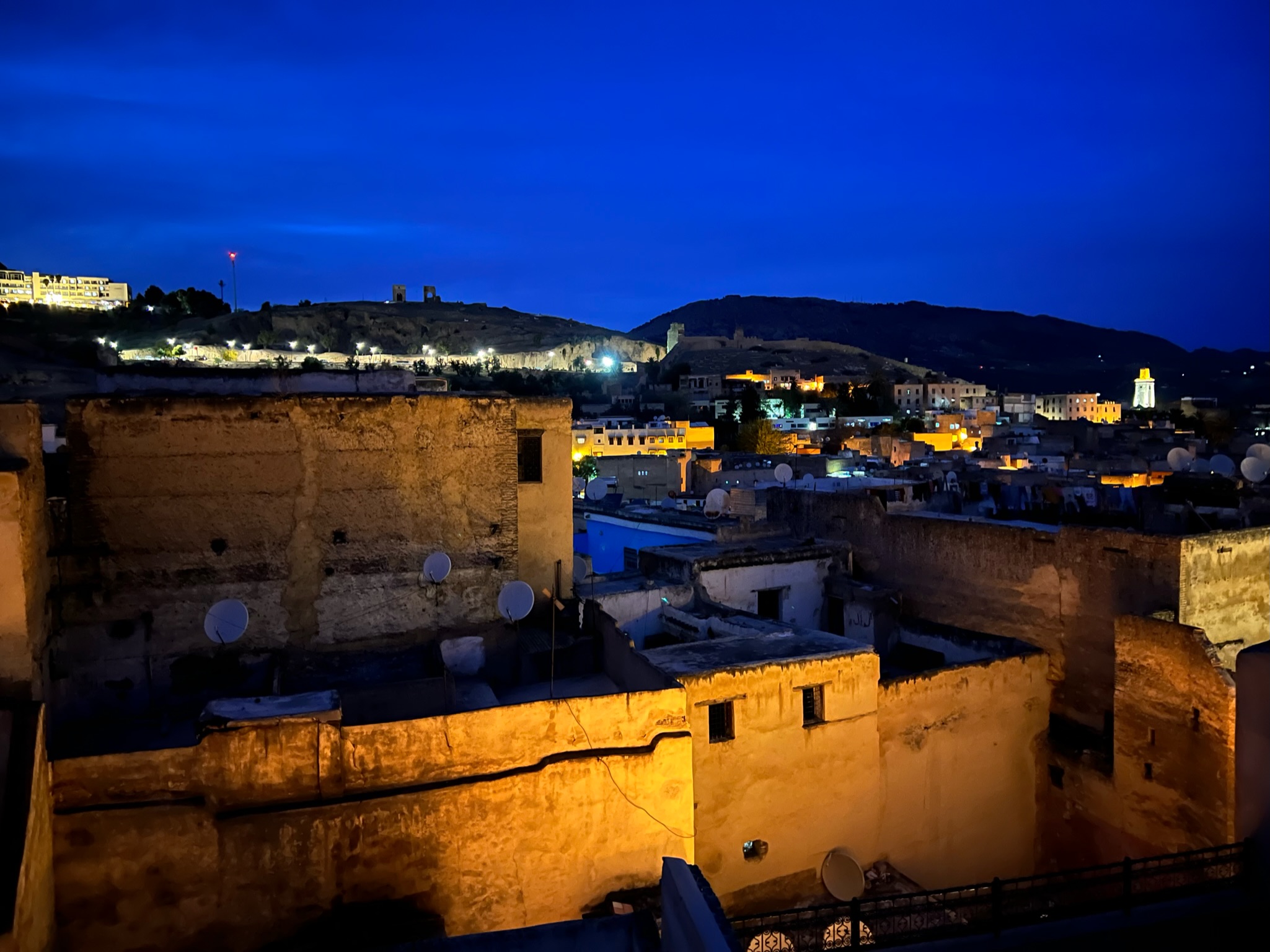
Ayoub and Abdel both warned us about walking through the medina alone. With over 9000 very narrow streets, it is very easy to get lost. Everyone gets lost, so its more of a question of when than if. Also, there are people in Fes who will try to lead you to places you don’t want to go (sounds familiar) and will try to help you in order to get a tip. To help us avoid that, Ayoub agreed to pick us up for dinner and escort us to a nearby restaurant so that we could try some tagines there. The restaurant was very expensive, so we opted to split two entrees instead of each of us having our own. The food was delicious, but there wasn’t very much of it to go around. Thankfully we were too tired to care very much, and we made our way back to the riad and quickly found the warmth of our beds.
We arranged a tour with Ayoub for the next day. We don’t typically do tours, but Ayoub was a friend of Mahjoub, and he seemed helpful. He agreed to take us to several local sights, and since we would be a little pressed for time in Fes, we thought it would be helpful to have someone help us get to them all quickly. We felt like the few interactions we’d had in Marrakech had helped us prepare for the people in Fes, but leaning on the side of being overly cautious, we felt like it might be good to have a local with us too.
Abdel provided us with a delicious breakfast the next morning, and shortly afterwards, Ayoub and his friend arrived to pick us up. We spent most of the morning walking through the city from site to site admiring the complexity of the alleyways and taking in the environment. Ayoub took us to a metalworking shop where we met the owner and viewed several floors of his beautiful lamps, mirrors, ashtrays, jewelry, and decorations. Some were embellished with camel bone accents and various gems as well. Many of the pieces were very beautiful, and although they were happy to ship things home for us, we wouldn’t purchase any to take with us.
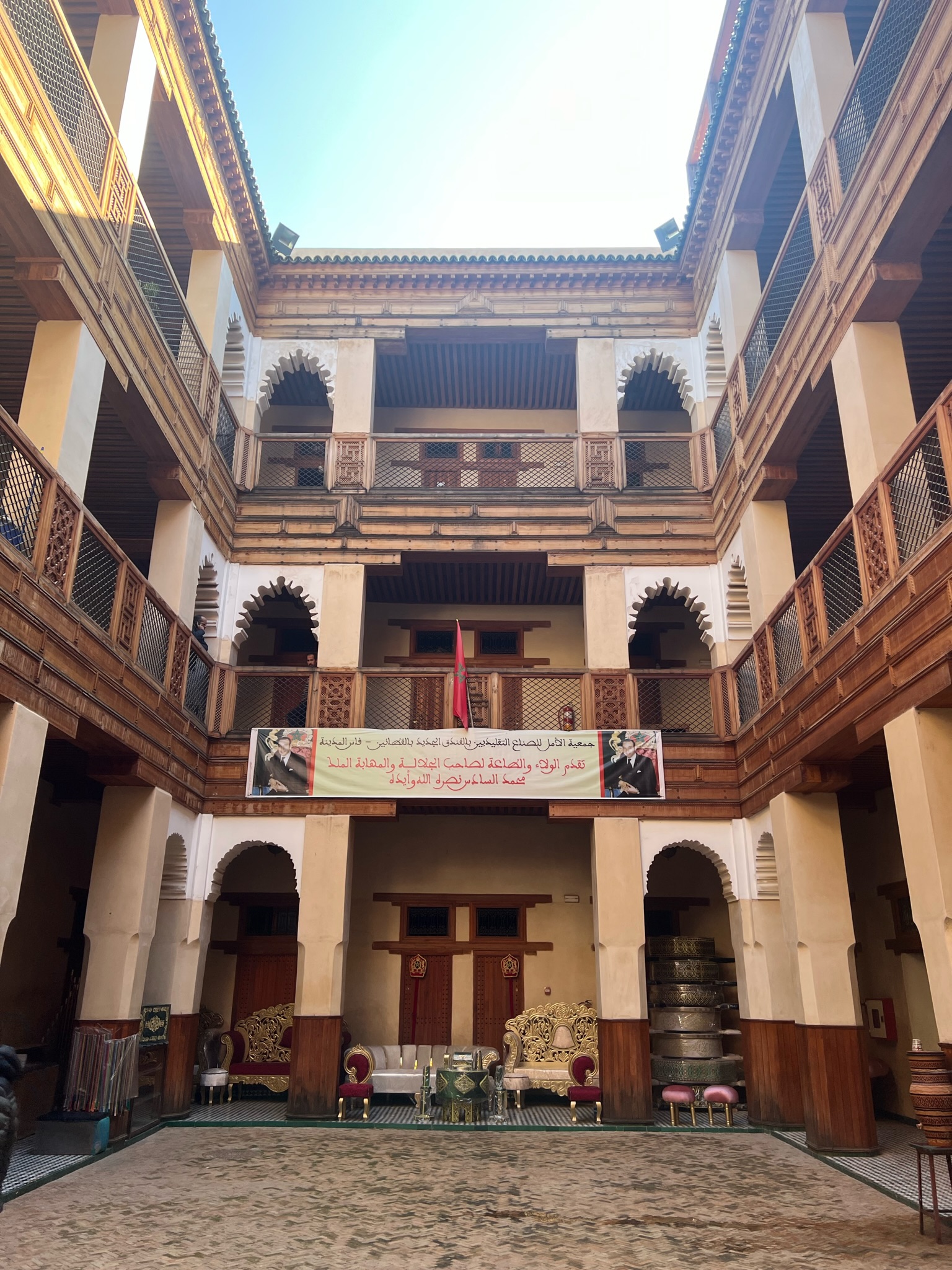
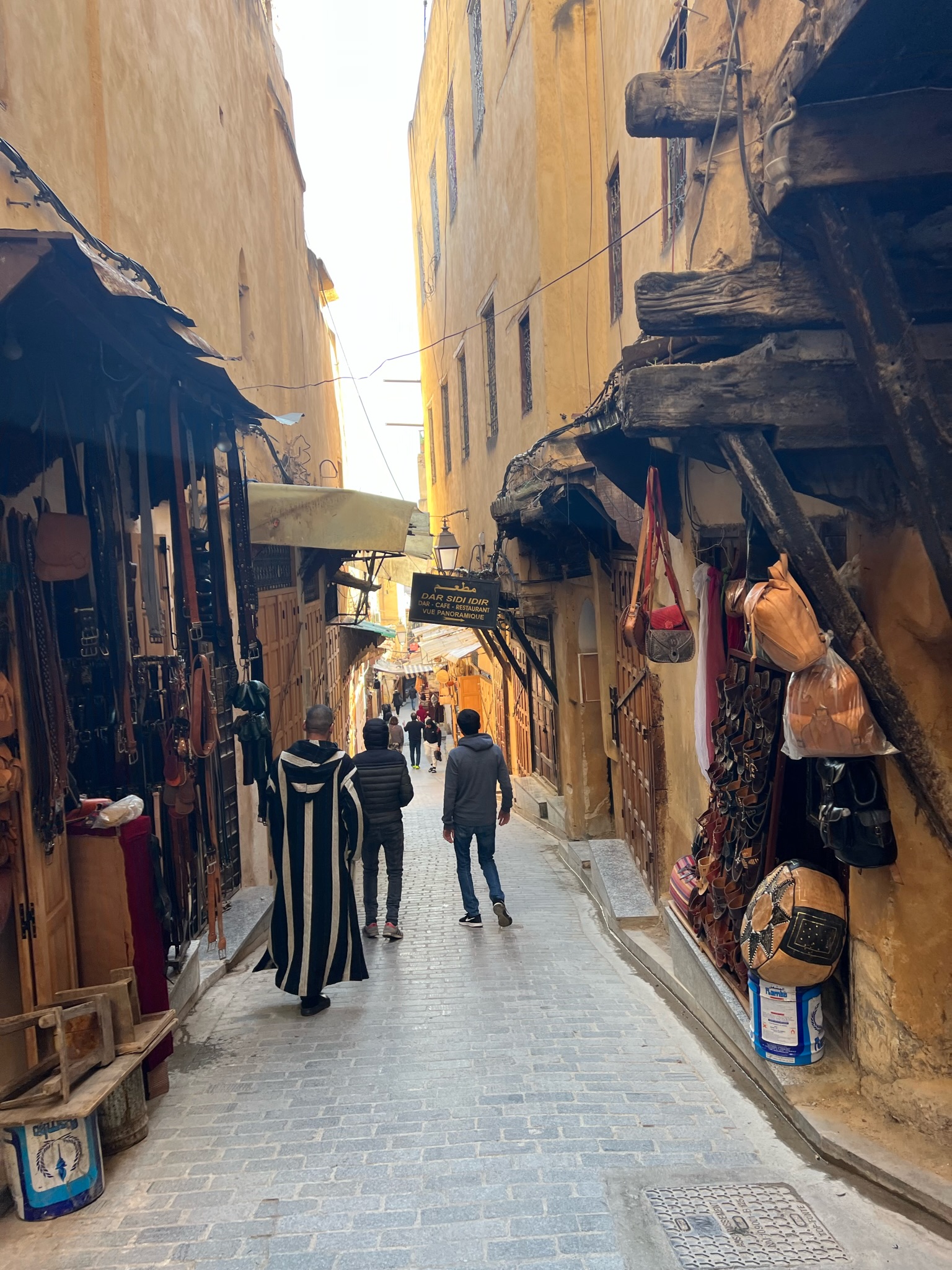





Ayoub also took us to a tannery. We were a little nervous about this one, honestly, but it turned out to be a good visit. We went to the roof of a nearby building with one of the tannery employees so we could get a birds eye view of the dying pots and drying racks. Below us, the hides were being stained to their eventual colors. The smell wasn’t bad from this vantage point. The guide told us that they actually use pigeon poop to soften the leather; the acid in the poop helps treat the leather, but it is also what causes the noxious smell. He explained to us and let us feel the difference in goat, camel, and cow leather, and he helped us understand the main uses for each. Camel leather, for example, is very thick and tough, and it is best used in shoes, belts, or bags while goat leather is very supple and makes for beautiful clothing, bags, and gloves. It was a good tour, and we enjoyed looking at all of the leather goods his group had made. We really wanted to purchase a new jacket each, and I would have loved a new purse, but we did the right thing for our budget and chose not to. I will say this, though, if I ever make it back to Morocco with an income, I know exactly where I’ll be going.


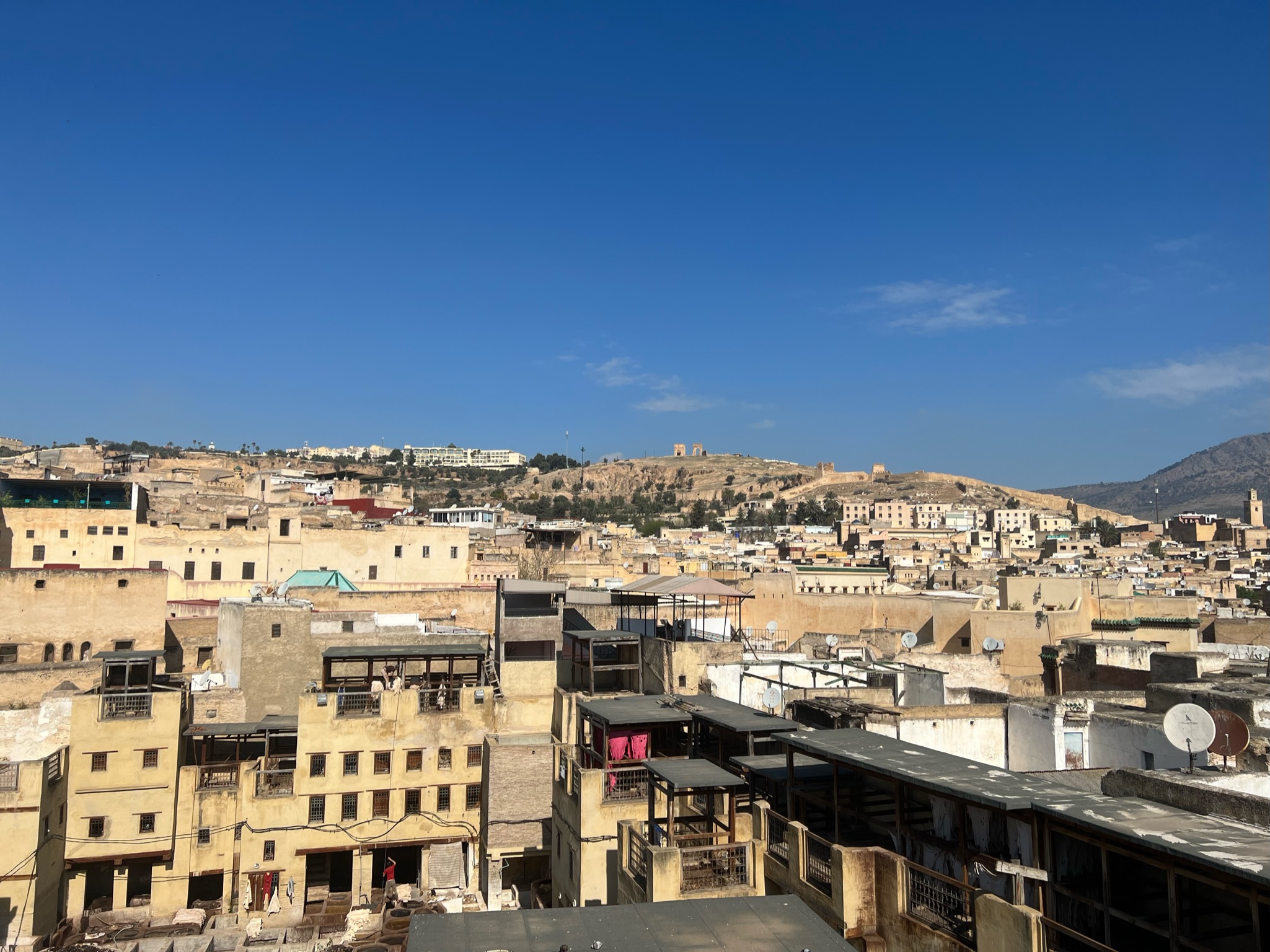
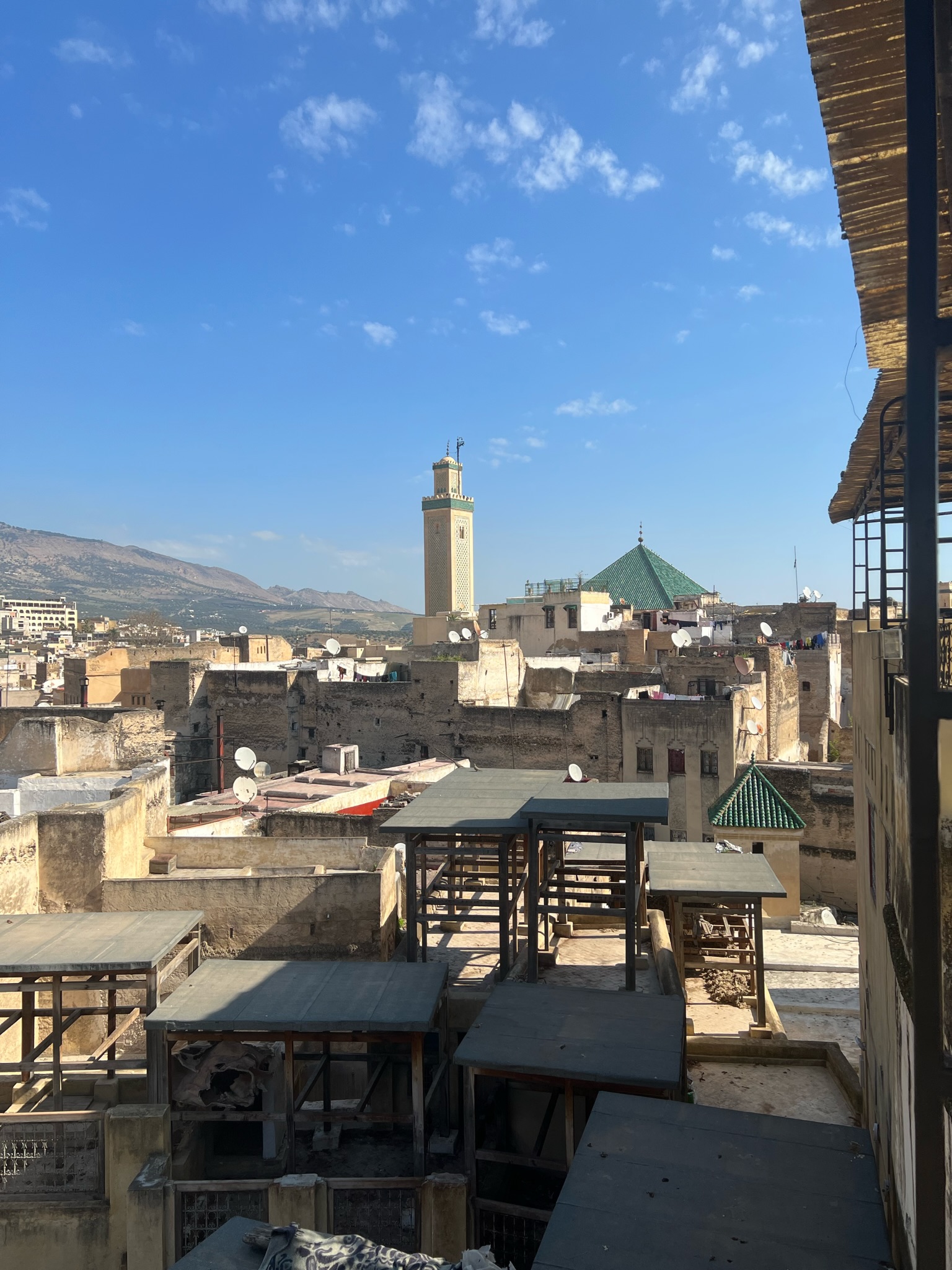
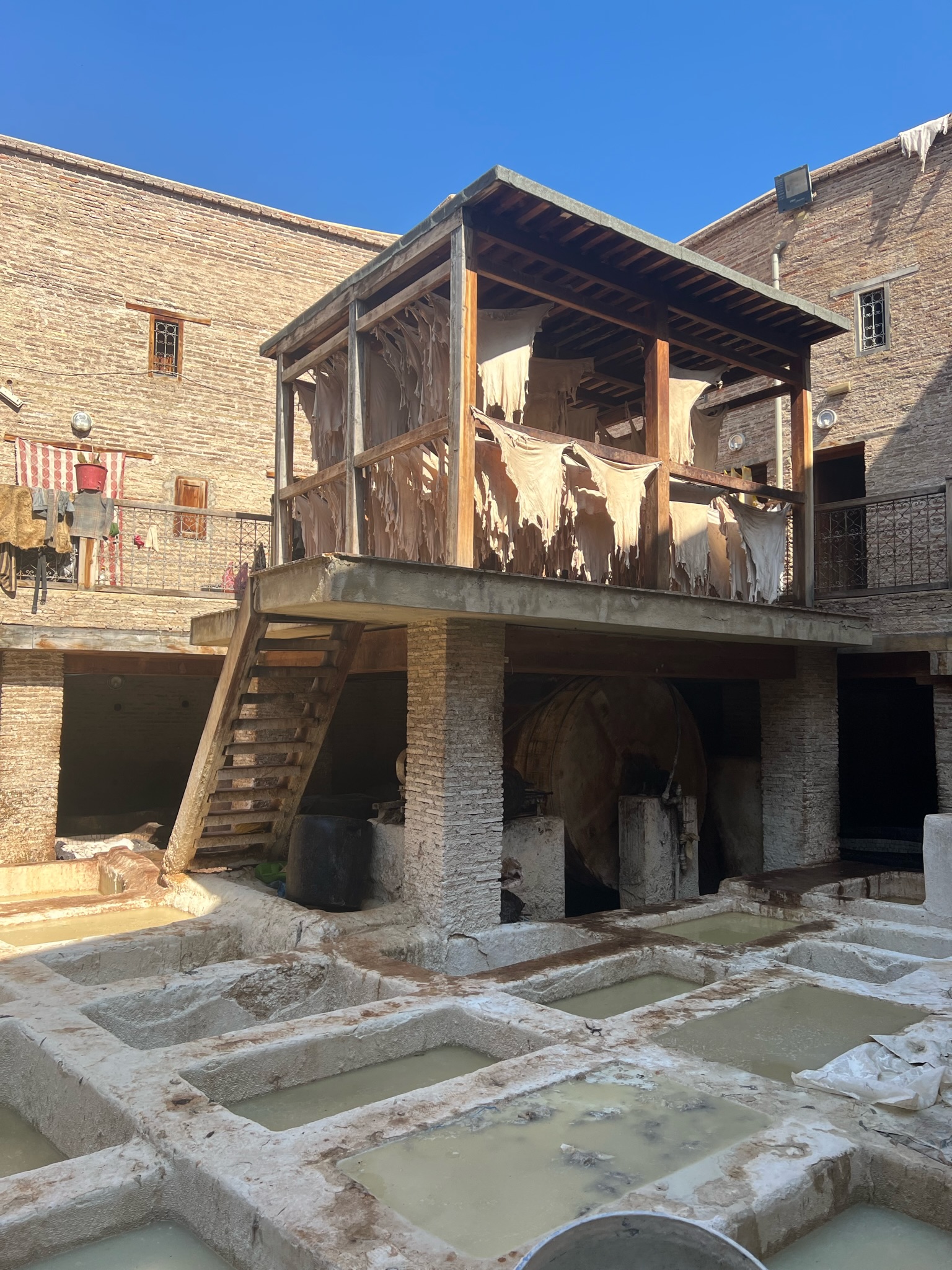
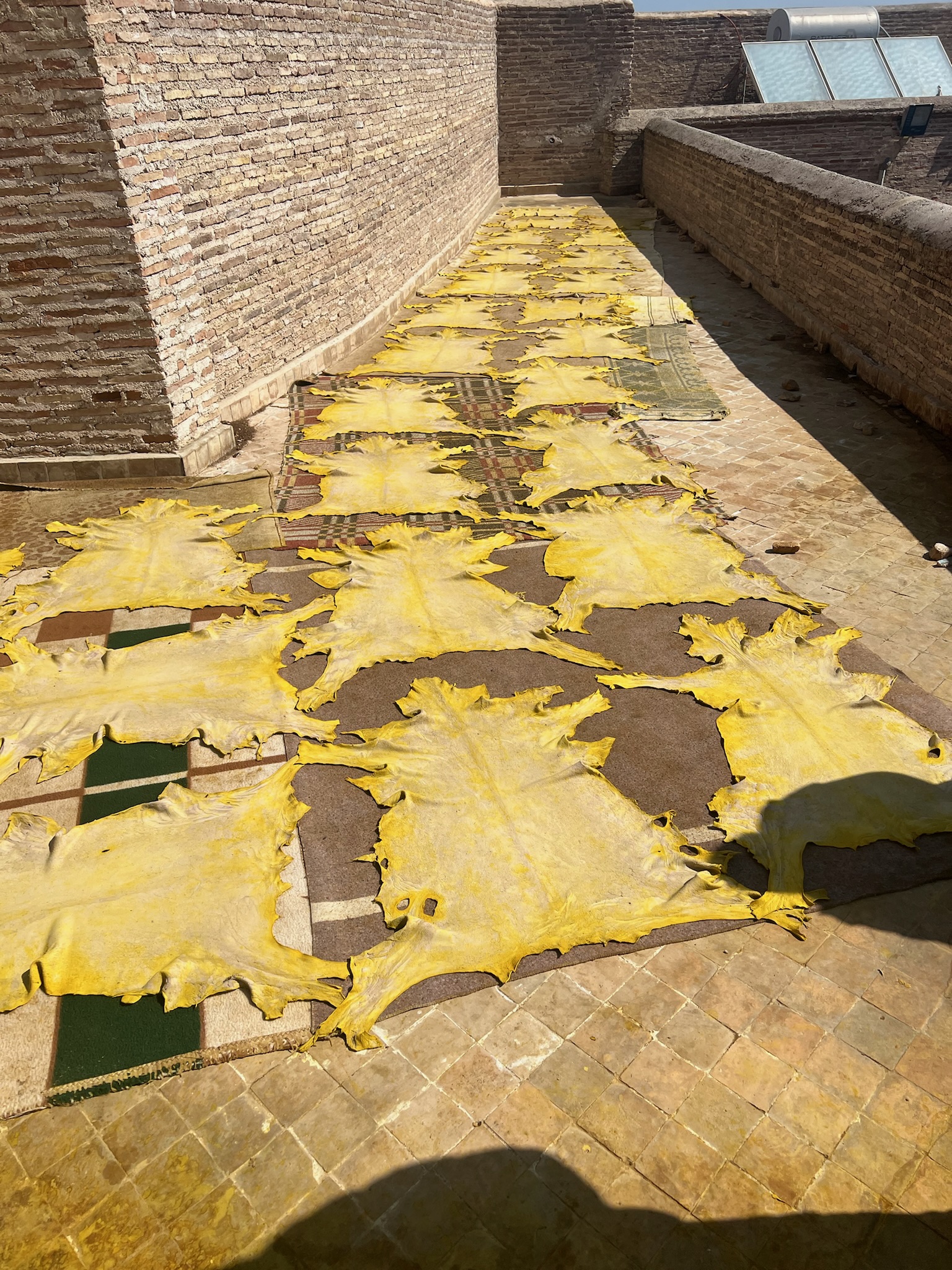
We went to a few other tanneries through the morning, and we got to see different sides to the process. In one area, for example, a man was standing down in one of the pits pulling out the hides to move them on to the next process. It looked like grueling work, and I can’t imagine the physical strain this work puts on the people that do it. Even worse were the men who worked upstairs with sharp blades who were shaving the leather. They stood behind the leather and ran their knives down the front, cutting and smoothing the leather. Each pass required the worker who was starting standing upright to bend fully at his hips to the point he was nearly touching his toes, and these men were making many multiple passes per hide.
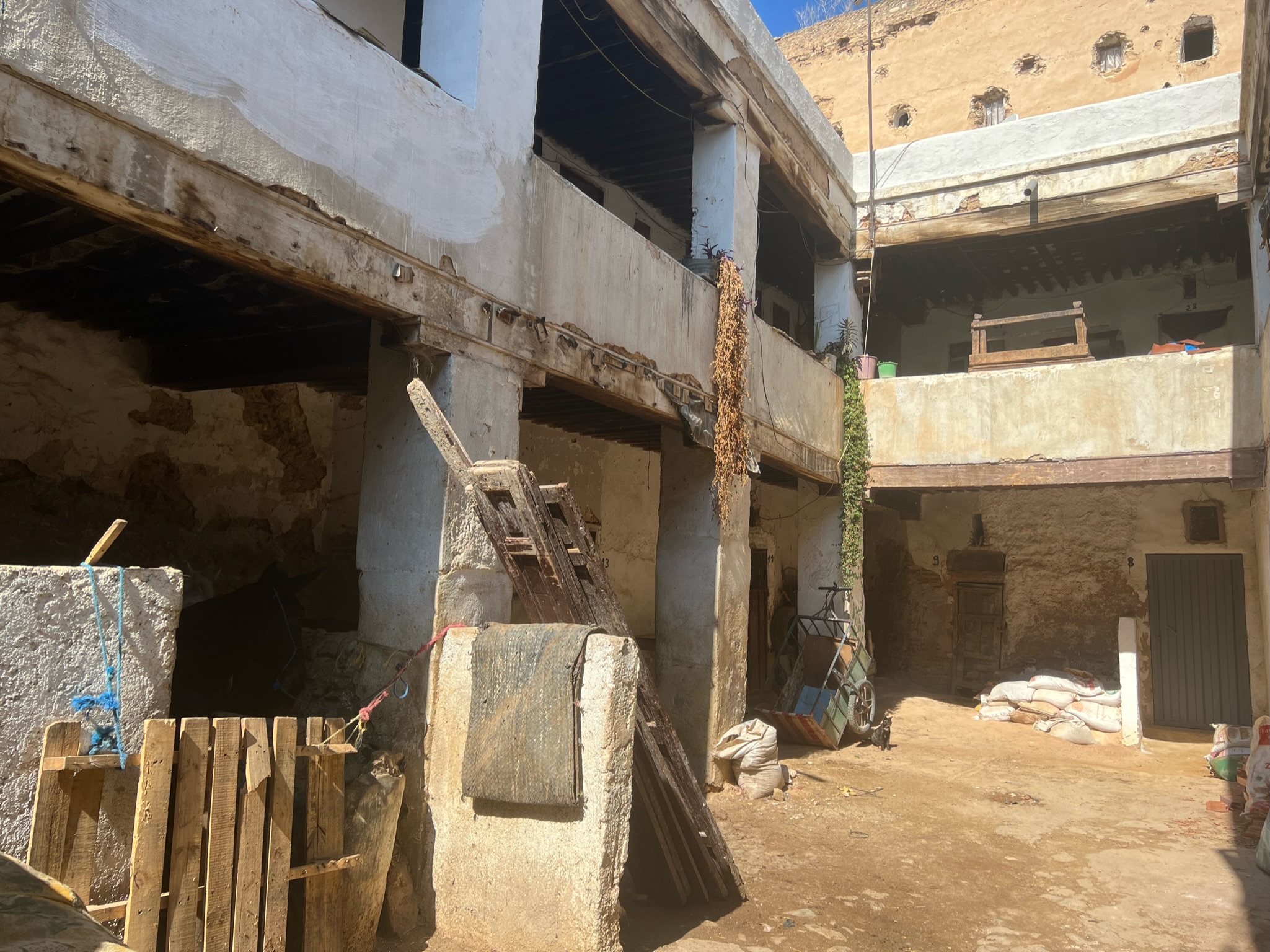
We also saw a few stables along the way. The streets of Fes are very narrow, and no vehicles are allowed on them. They use donkeys in a few places as taxis or for hauling heavy items, so at different intervals in the city, they have stables to house them.

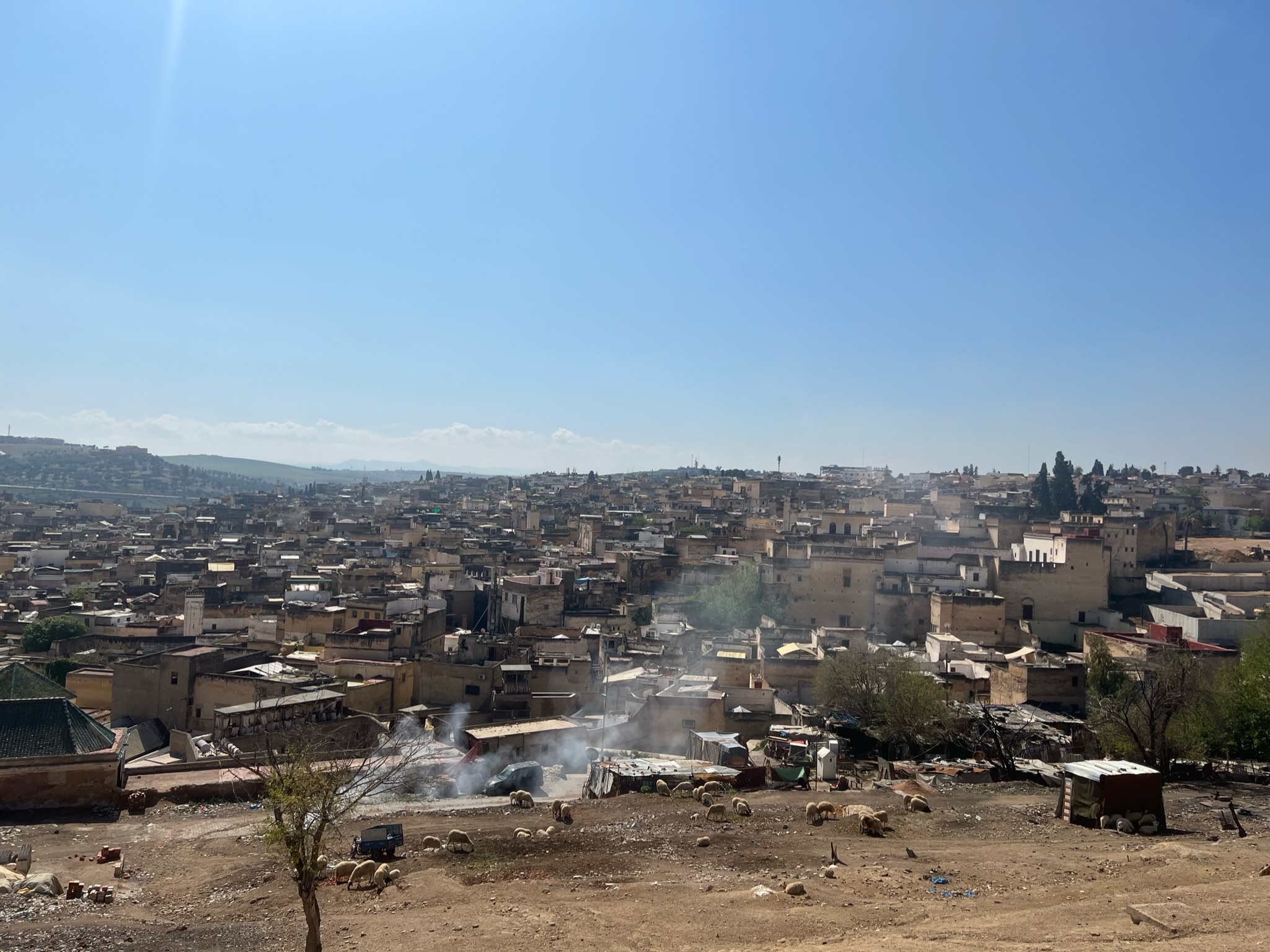
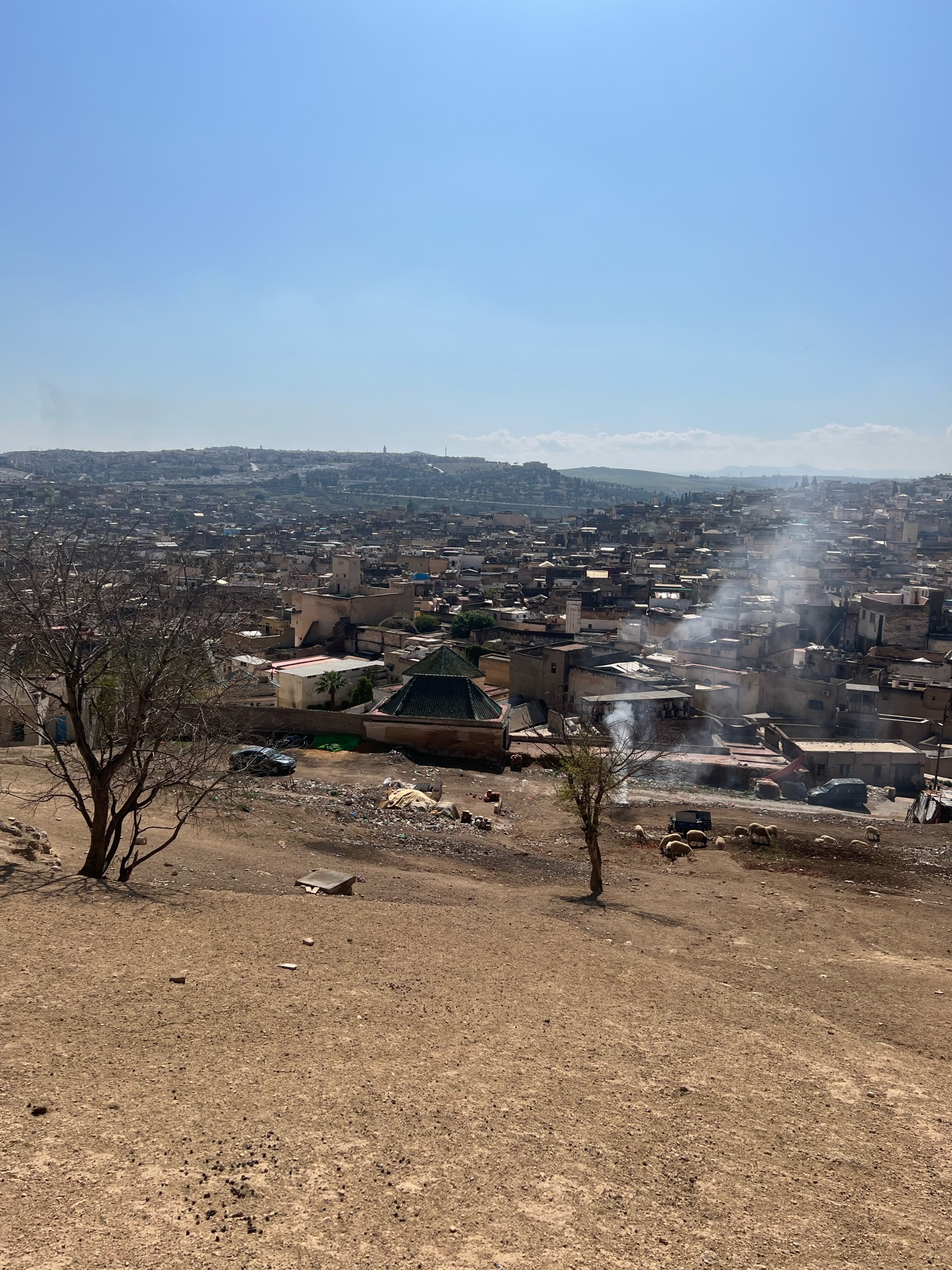
Ayoub also took us up on a hill near the wall for a great view of the city. We could see where the medina and the new city meet, and it was pretty neat to look at the tangle of buildings and spot our hotel from the overlook.


We had to return to our riad for a few hours in the middle of the day because we had an experience of a completely different sort awaiting us. When Brian and I were in college, we met Amy through Brian’s friend Blake. Blake was in Brian’s fraternity, and although I didn’t know either of them very well, Brian thought a lot of them. Through the years, we’ve been able to keep in touch through Facebook. A few weeks earlier, Amy had texted me to let me know that her 6th grade ELA class was beginning a unit on exploration, and they had been reading up on our blog as they were studying this unit. We talked a bit, and Amy asked me if we’d be willing to do a Zoom meeting with her kids. Brian and I were really excited about it, and Henry was too, although he was far more nervous about it than we were.
We found the best spot in the riad for getting good wifi, and we got our computer set up to do the call. We were able to get connected with no problem, but they had a few technical issues on their end. One of the coolest parts of this experience for us was while we were waiting for them to get everything set up. Apparently, they had gotten the display working, because we heard one of the kids exclaim, “That’s them!” It made us all feel a little like we were celebrities.
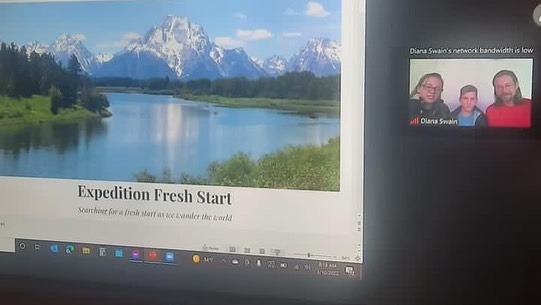
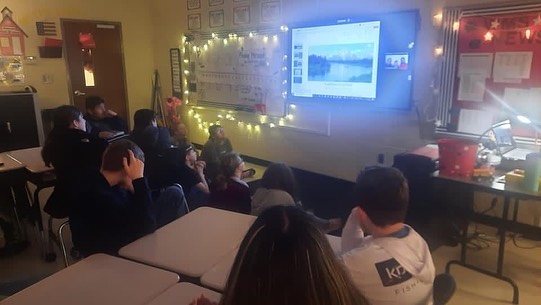
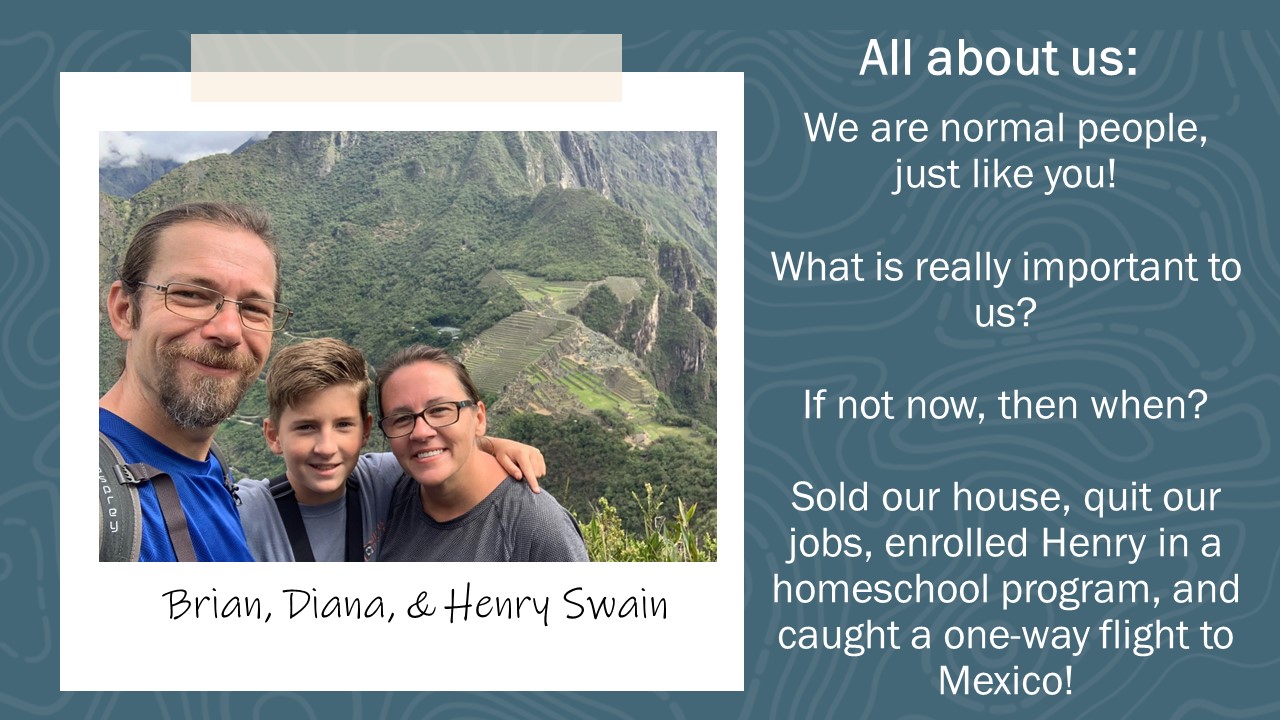
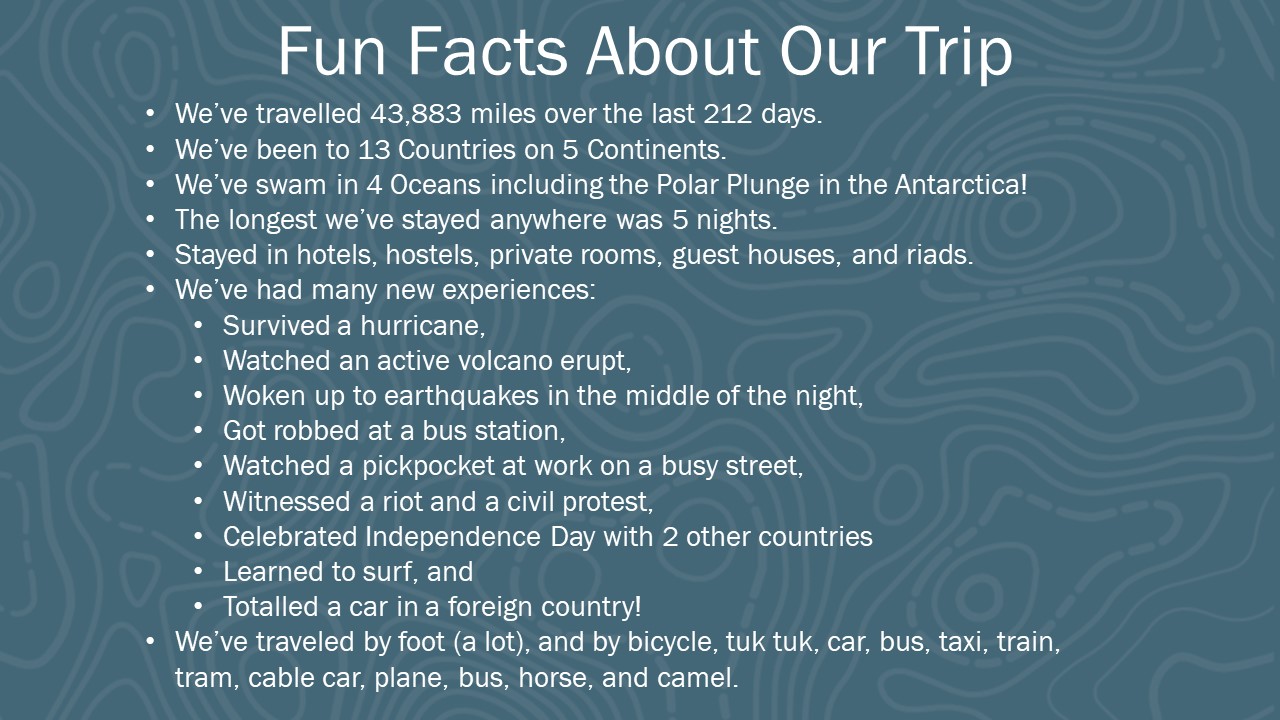
We found out then that we’d be talking to four different classes of kids and not just one. They were all so polite, and we loved talking with them. We got to tell them about our trip, and they got to ask us a few questions. They loved the penguins in Antarctica, and they loved hearing about some of our misadventures. Henry told the classes all about penguin poop, and the kids loved it. I wouldn’t have mentioned that part, but he knew just what it would take to entertain them. It was really nice to get to see and talk with Amy as well, even if it was very brief; I think it must be hard for anyone to understand how good it feels for us to see a familiar face when it happens so rarely these days. This has to be one of my favorite experiences of this whole trip.
After our call, we met Ayoub again, and he escorted us to his home. He was going to teach us to make tagine from scratch, and then we’d get to eat it with him and his family. His home was on the second floor of a building overlooking a little courtyard near the edge of town. We sat in a small but warmly furnished living area and watched television while he fixed us some mint tea to share. His sister was babysitting a neighbor’s young child, and they sat with us for a while also; after a bit, the child decided he was bored with us, so they went outside instead. We sat inside and talked with Ayoub about his family and his work. I enjoyed how passionately Ayoub talked about his job and getting to show people around. He has worked in the tourism industry for several years, and he’s made a lot of friends along the way. He’s also a lover of languages, and he speaks several fluently. Because of this and his knowledge of the area, he’s able to show visitors a side of Morocco that few others can. He worked hard to help us be comfortable and enjoy our visit to Fes, and the love he has for his work is infectious; you can’t help but enjoy Morocco more because of him.
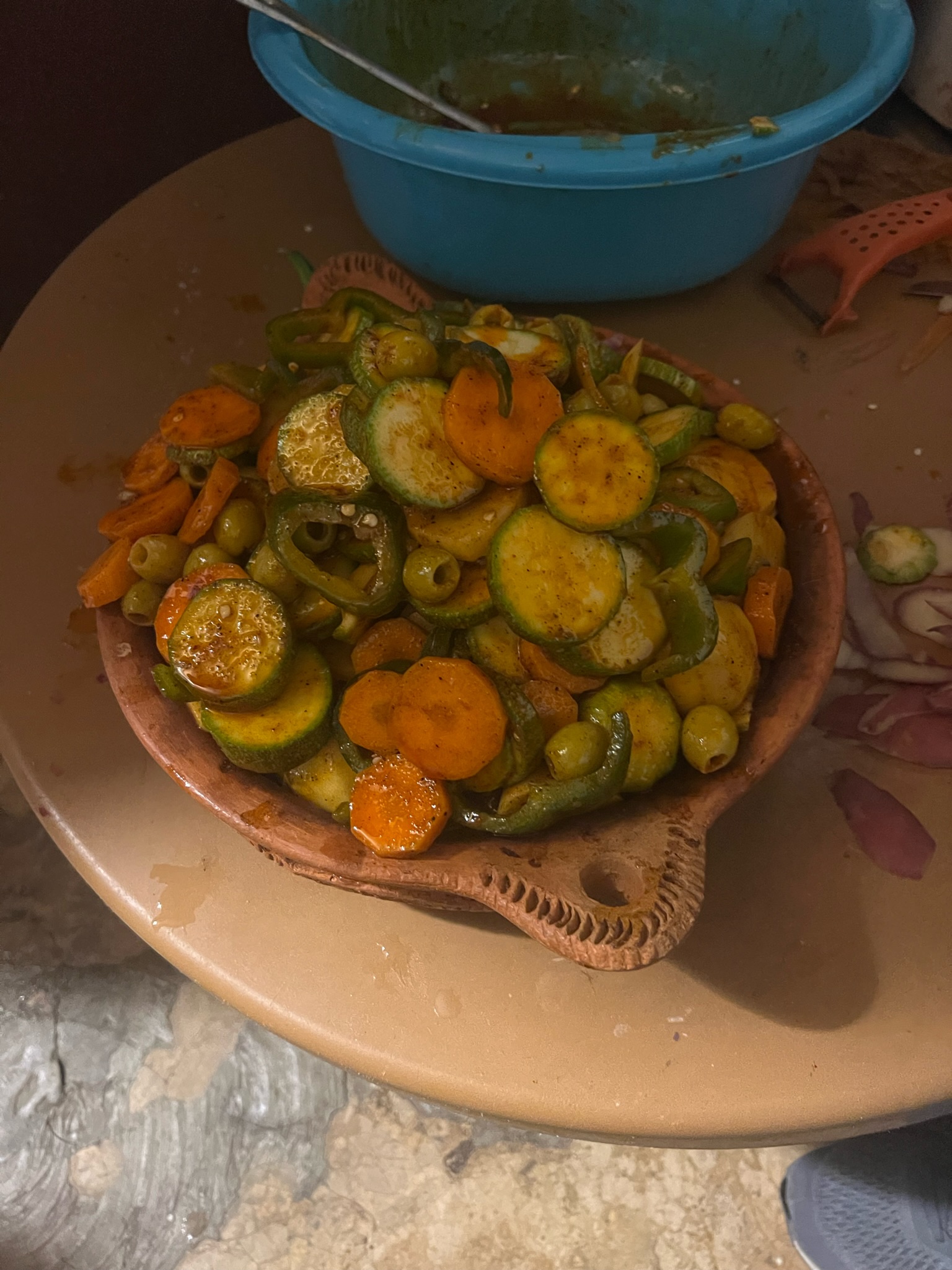
After tea, we began the meal prep. He made space for us to work in the kitchen, and then he put us all to work. We peeled and sliced potatoes, carrots, peppers, and zucchini as he mixed in the seasonings and prepped the chicken for the meal. After all the meat and vegetables were placed inside, he added a little liquid to the pot, and then he used a plastic sack to seal the top. Finally, he placed the pot onto a propane burner, and it began to cook.
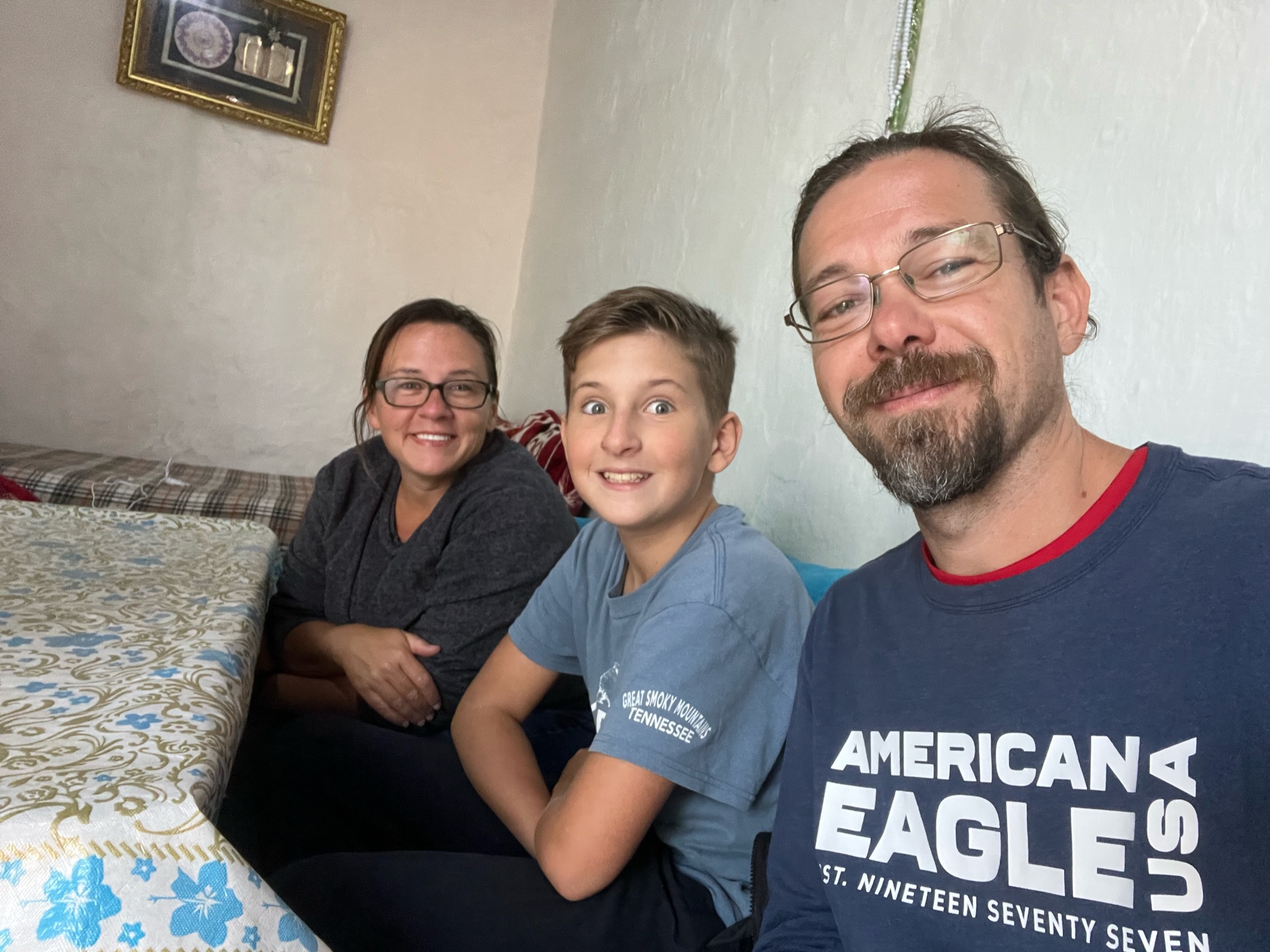
It took between 45 minutes to an hour to cook completely. The smells that wafted into the room as the food neared doneness was heavenly. At some point while we waited, we were joined by Ayoub’s father. He didn’t speak any English, but he sat beside us watching television for a bit while the food finished up. When everything was ready, Ayoub set the table and brought in a delicious smelling pot of roasted chicken and vegetables. We enjoyed the meal at the family’s table, doing our best to mind our manners. Henry was having issues getting the chicken meat off of the bone with his fork, and Ayoub’s father kept encouraging Henry to just pick it up and eat it with his hands. He finally did, and that seemed to make him very happy. After we had our fill of the tagine, Ayoub fed us a very tasty desert of oranges and bananas, and then he walked us back to our riad.
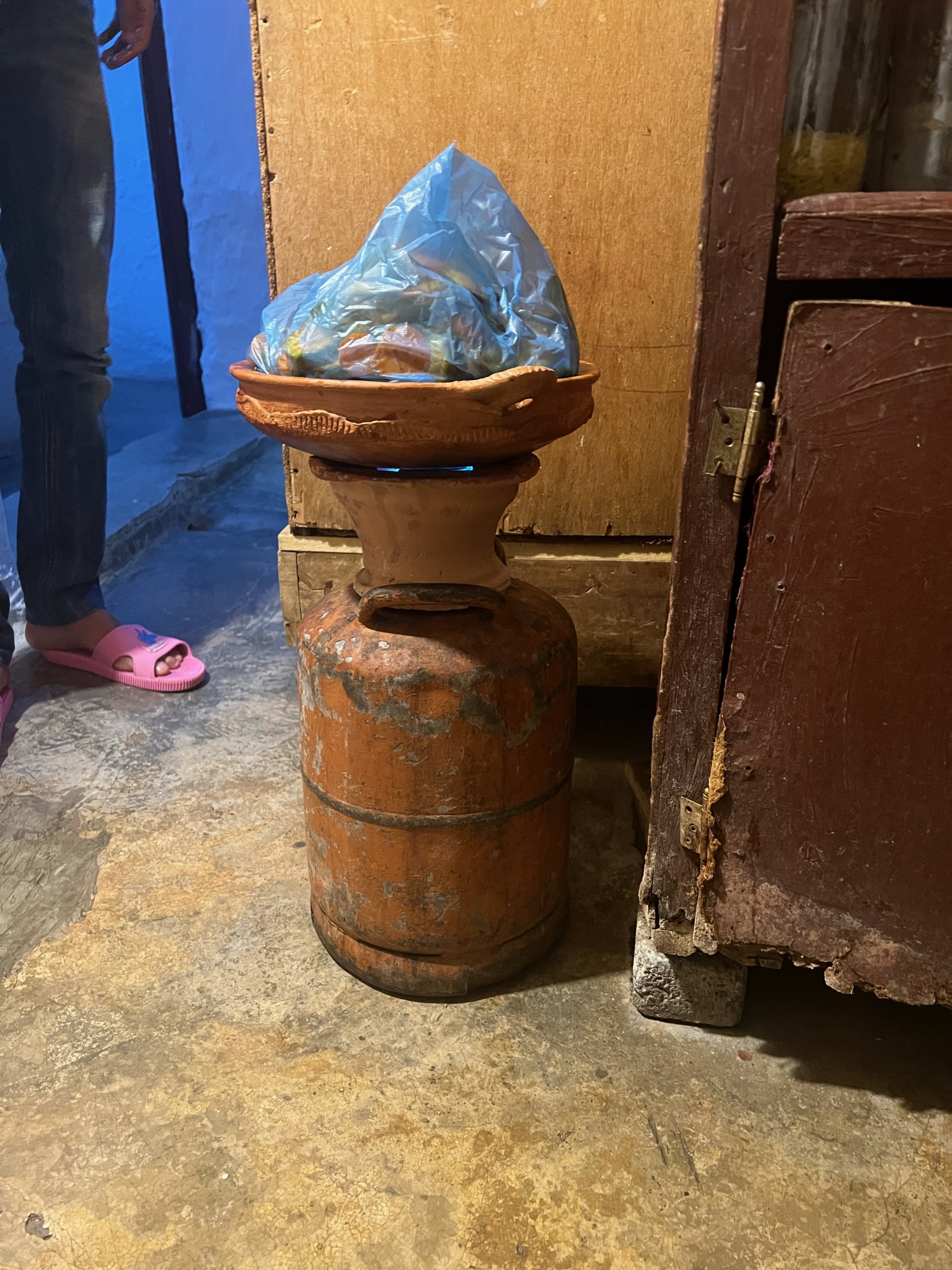


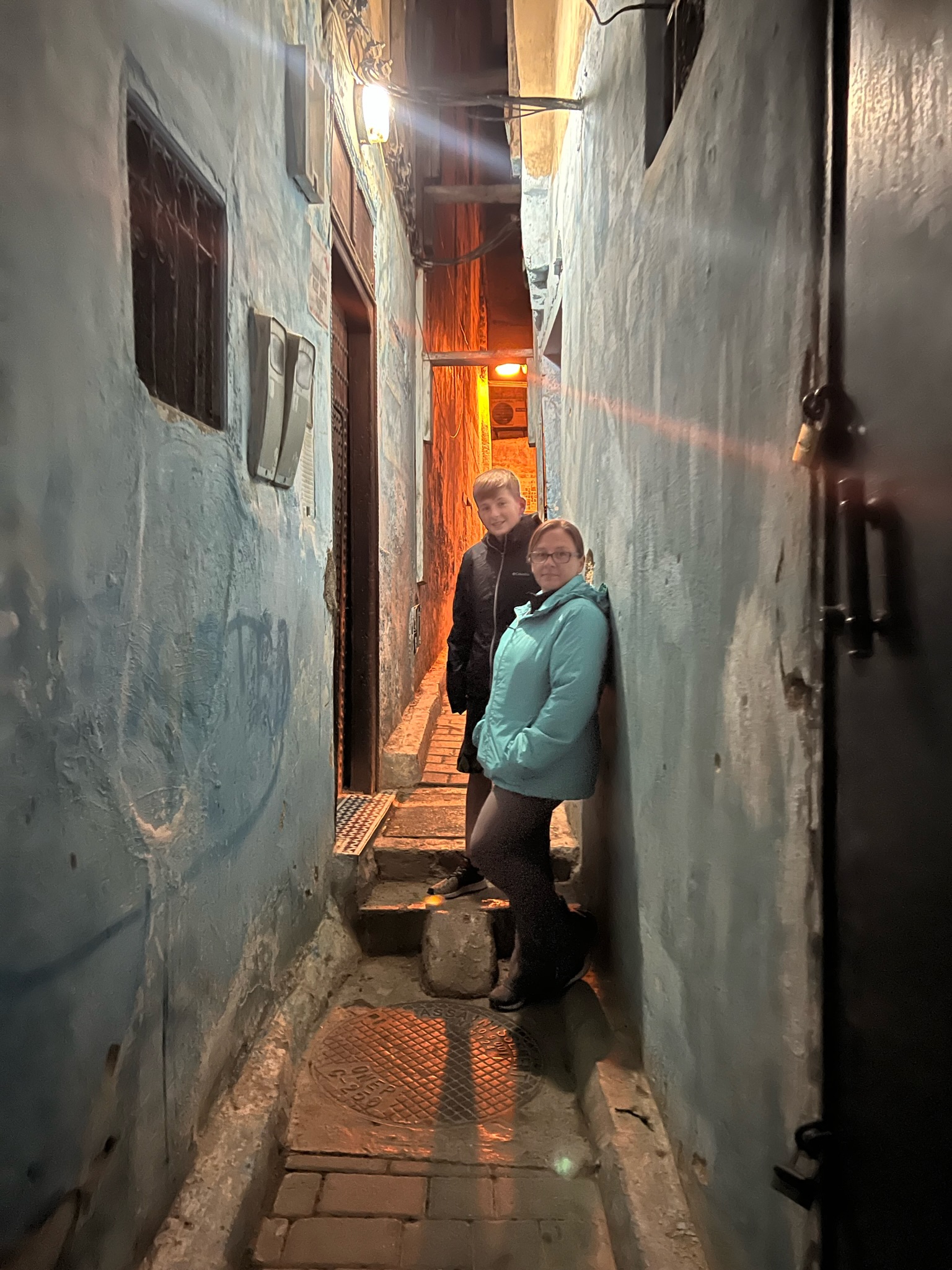
We relaxed mostly the next day. Ayoub’s friend escorted us to another rooftop restaurant where we found a delicious meal, and we found our way back to the riad with no problems. Later on in the day, we needed to go to the ATM to get some cash so we could pay for our riad. Brian memorized the directions to it, and then we set off on our own for the first time. We got to the ATM with no issues, but we weren’t crazy about the environment around it. The ATM was located directly on the street, and across the street, there were 8-10 men who were milling about. Henry and I tried to discreetly keep an eye on them while Brian got some cash out. While we were by the ATM, one of the men brought over a very large tagine, and all the men completely ignored us and started diving into it; apparently they were just waiting on their food. Just to be cautious, though, we decided to walk into a large ceramic shop nearby and kill some time with the hopes that they would leave before we left the store. The ceramic shop was beautiful, and I wanted to buy some new dishes for home, but of course we couldn’t. The owner said he had an Etsy shop, so maybe when I get home I can look into that a little further. Either way, when we exited the shop, the men had dispersed, and we made it back to our room with no issues.

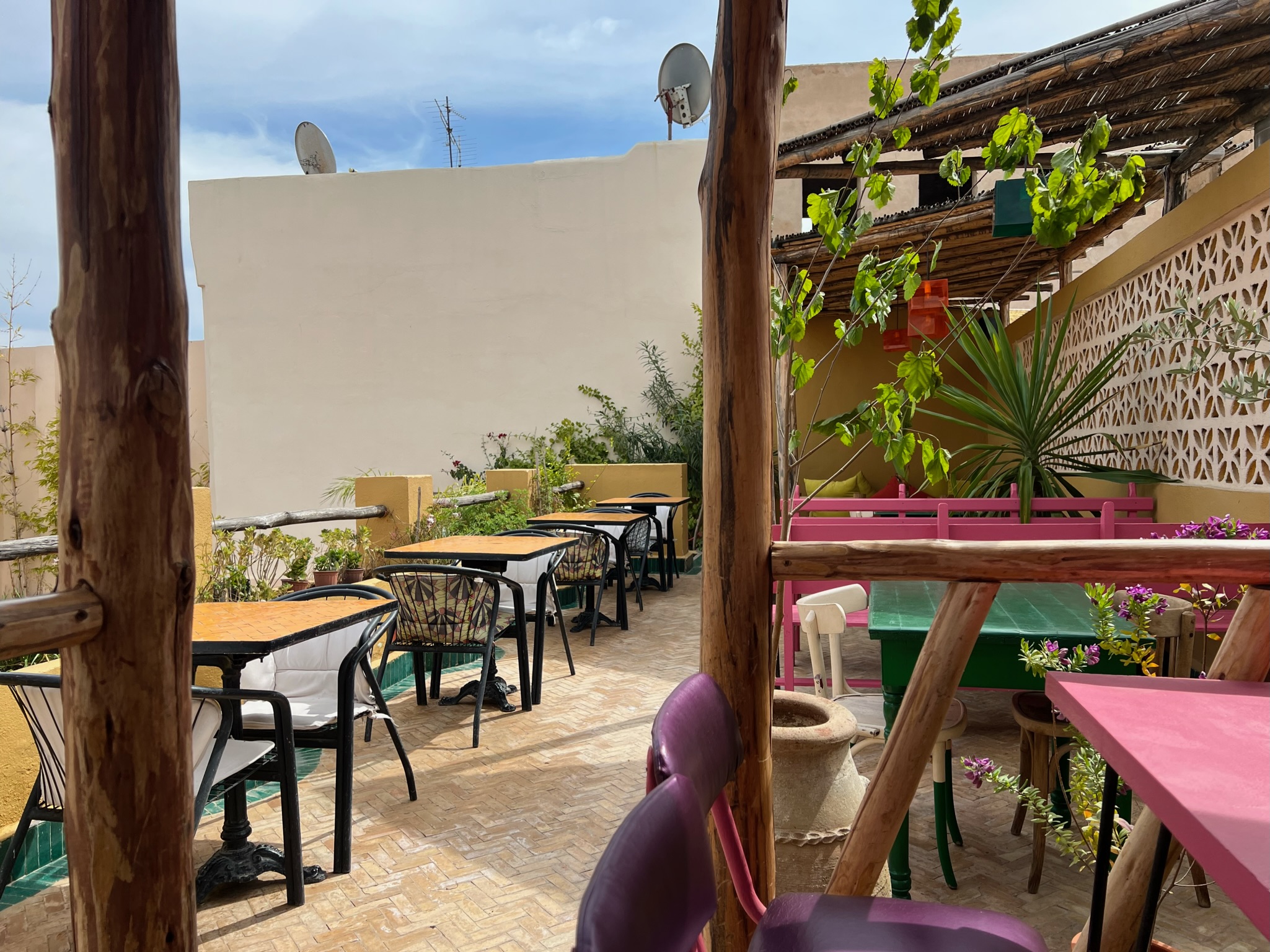
On our last morning in Fes, Ayoub met us bright and early at the riad, and he escorted us out of the medina. We walked for half a mile or better before he was able to hail a taxi for us, and then he gave instructions to our driver. We said our goodbyes, hopped in the car, and headed to the bus station.
The bus was comfortable and roomy, and we made it to Chefchaouen in about 4 hours. Chefchaouen is called the blue city, and we’d heard it was beautiful. We had only planned to stay there for one night, and then we were going to head back to Fes to catch our flight out of Morocco. After a short taxi ride from the bus station to the edge of the medina, we walked for about 5 minutes through the city and found our hotel, the Casa El Houta. We were tired and hungry, so after we settled into our spacious 2nd floor room, we asked the gentlemen at reception for any lunch suggestions. He told us a few places, and then he walked with us to one of them.
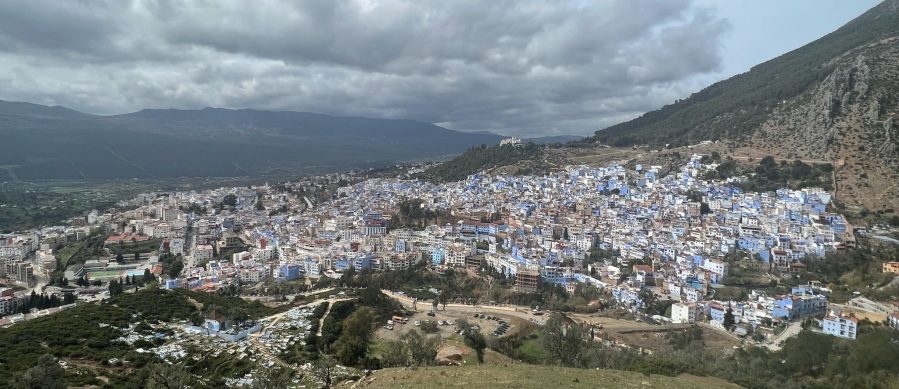
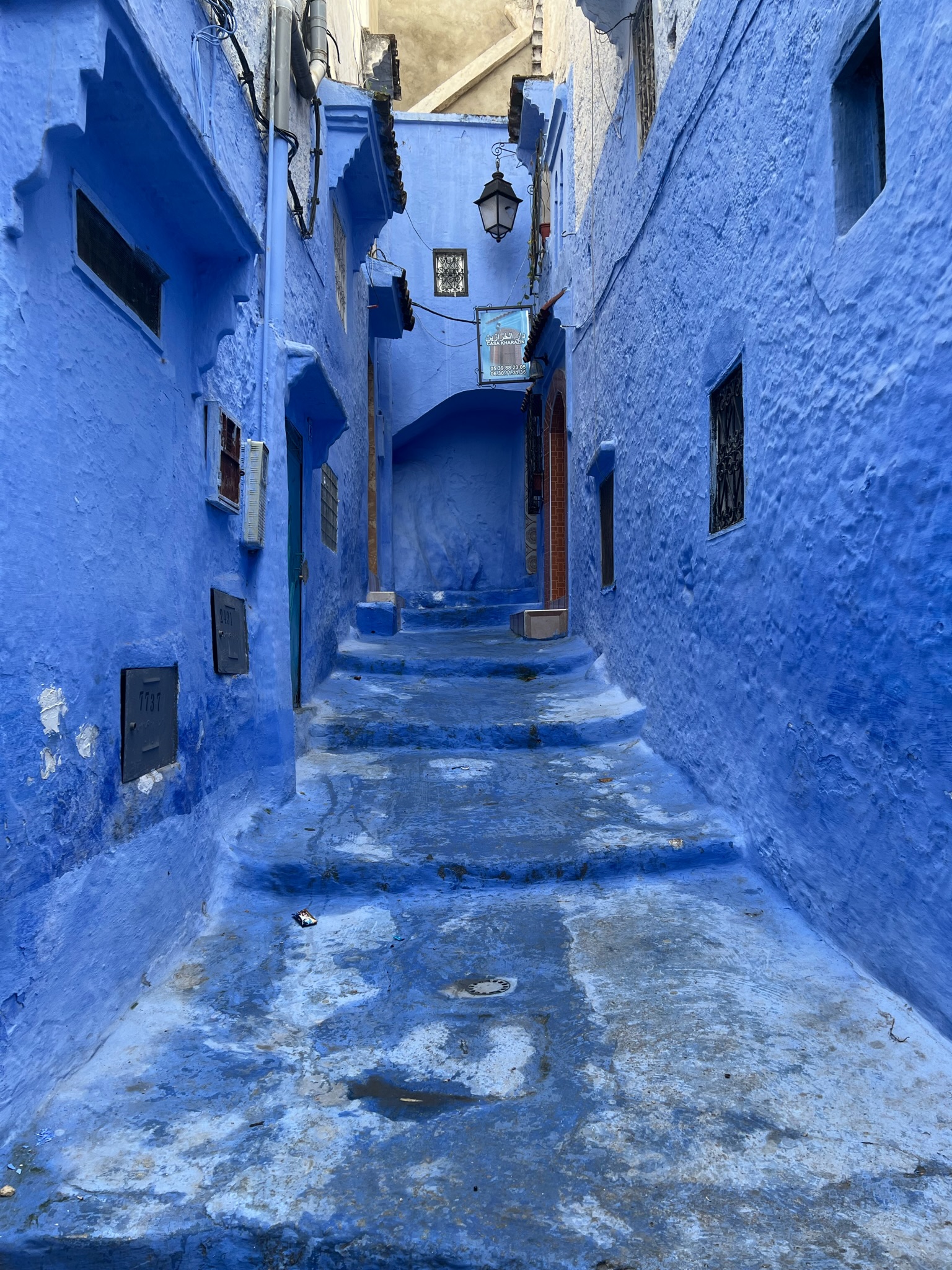
Chefchaouen is another walled city, and because of it’s history, all of the buildings in it are either blue or white. A young man we met there told us that when the Jewish people were being persecuted in Europe way back when, many of them fled to Morocco for their safety. The Jewish and Islamic people lived together, but they wanted to create something to easily tell who was who. The Jewish people painted all of their houses blue, and the Islamic people painted theirs white. From that point on, the city has made it a point to keep the paint fresh and beautiful. The city is very well maintained, and it is a photographer’s dream.
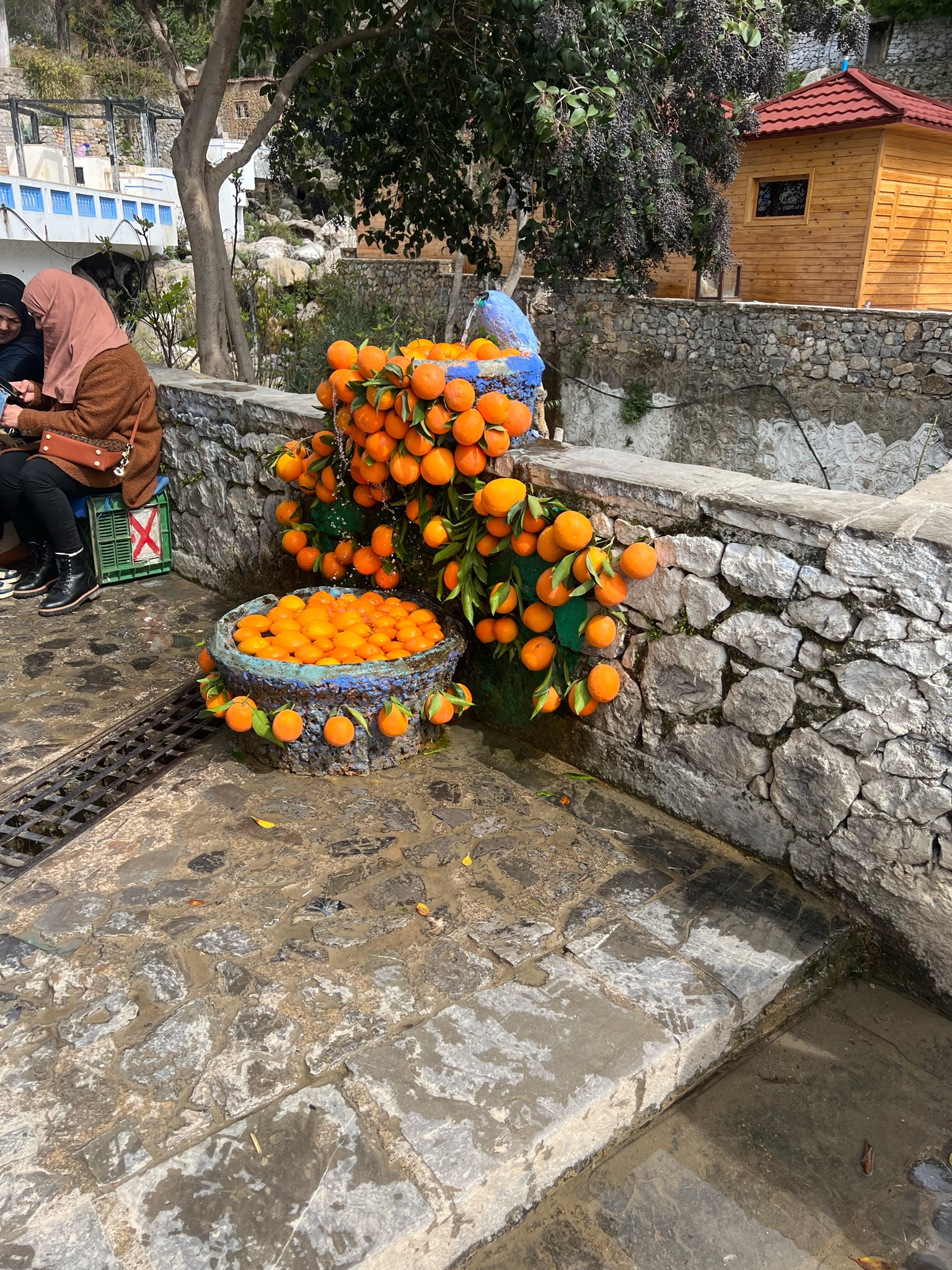
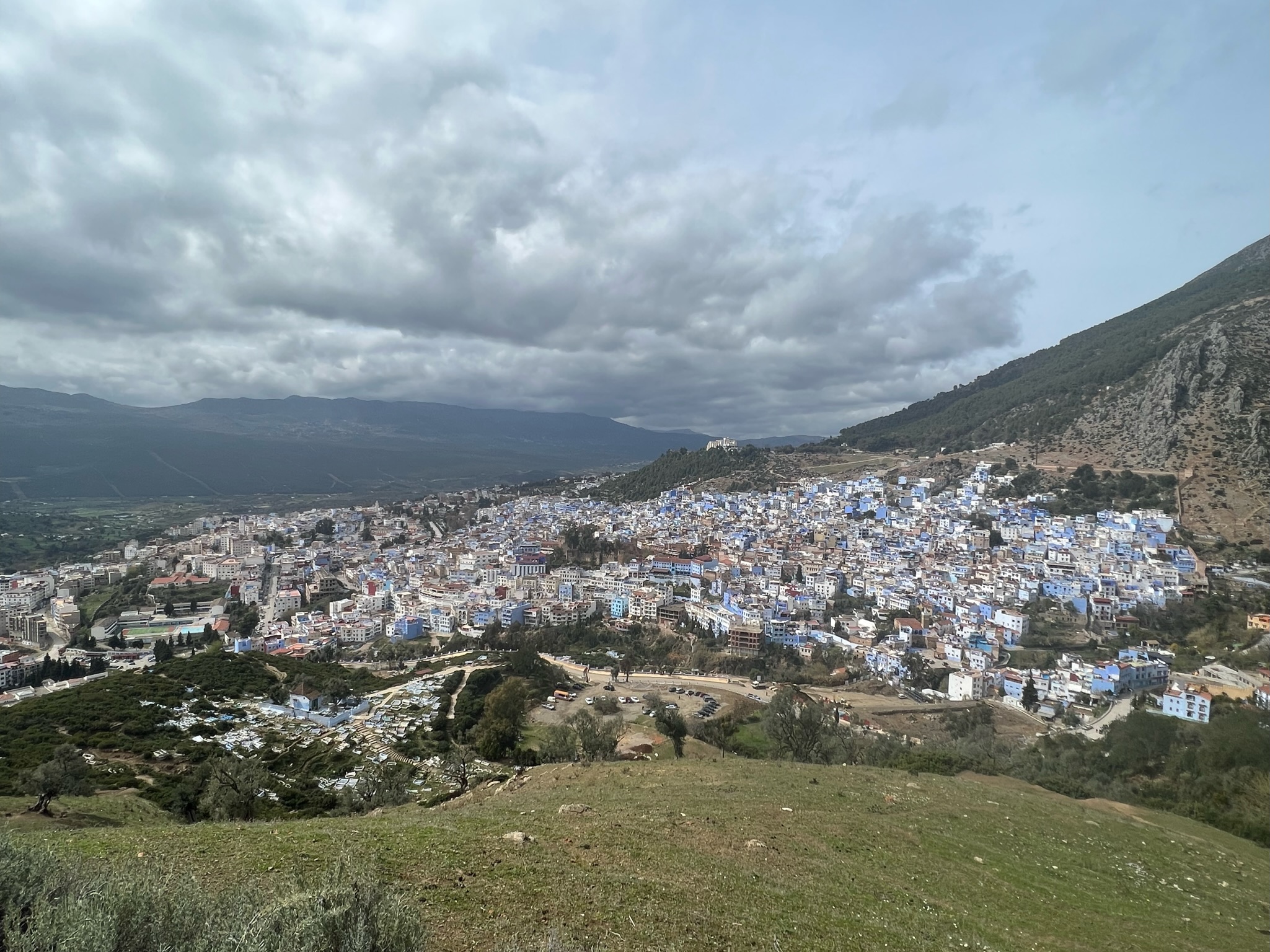
Our food on the third floor of the restaurant was delicious, and afterwards, we decided to walk to a viewpoint at a nearby chapel. The views were gorgeous, and the weather was spectacular. We didn’t have time to explore the new city, but we could see it from the hilltop. Vendors sold souvenirs, fresh juices, and clothing all up and down the medina streets, and the atmosphere with the brightly colored buildings was light and airy.
On our way back to our hotel, Henry found a vendor making cotton candy for $0.30. We got to watch our candy being made, and then we ate it up on the nearby steps as we watched the people go by.

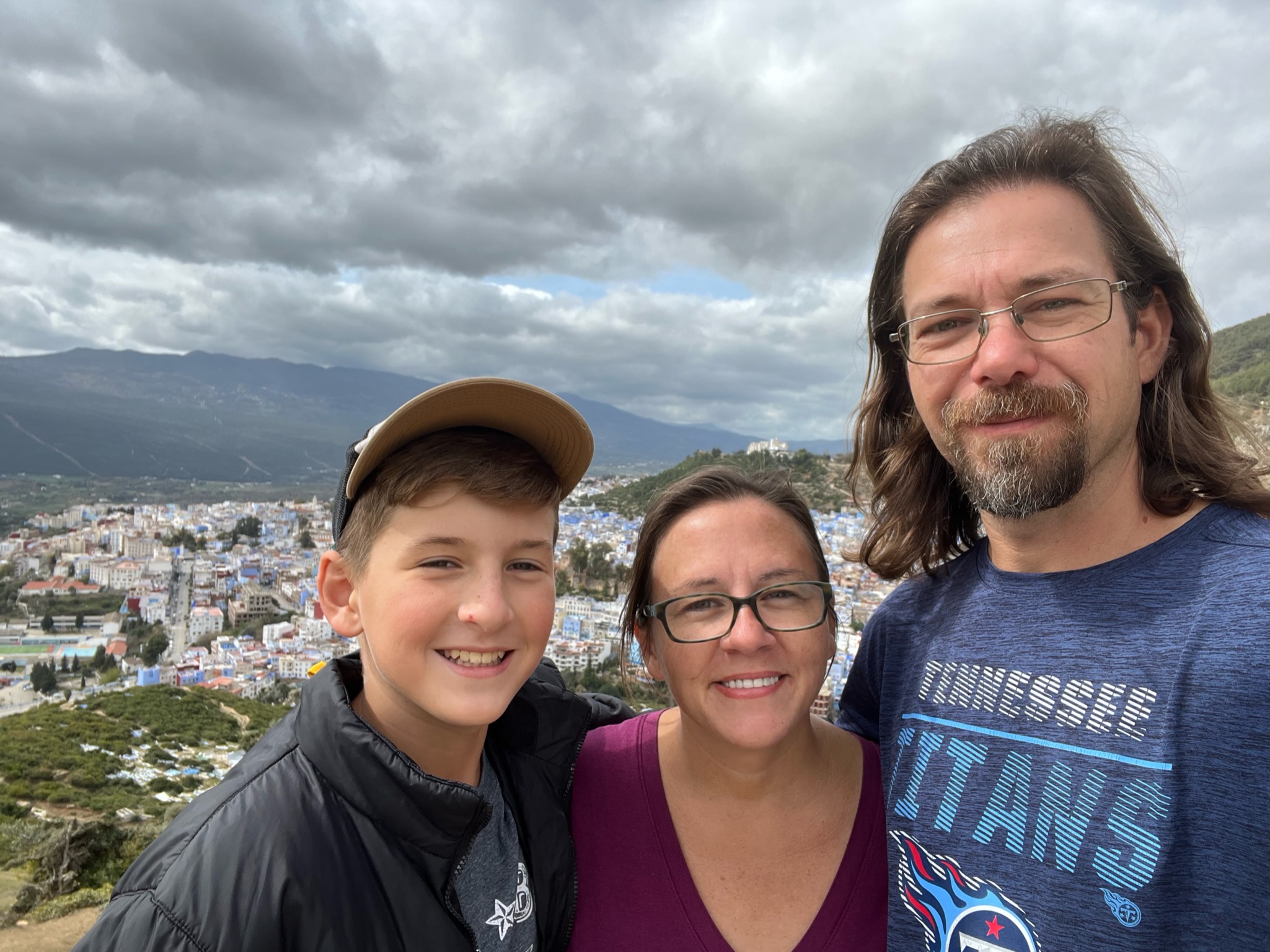


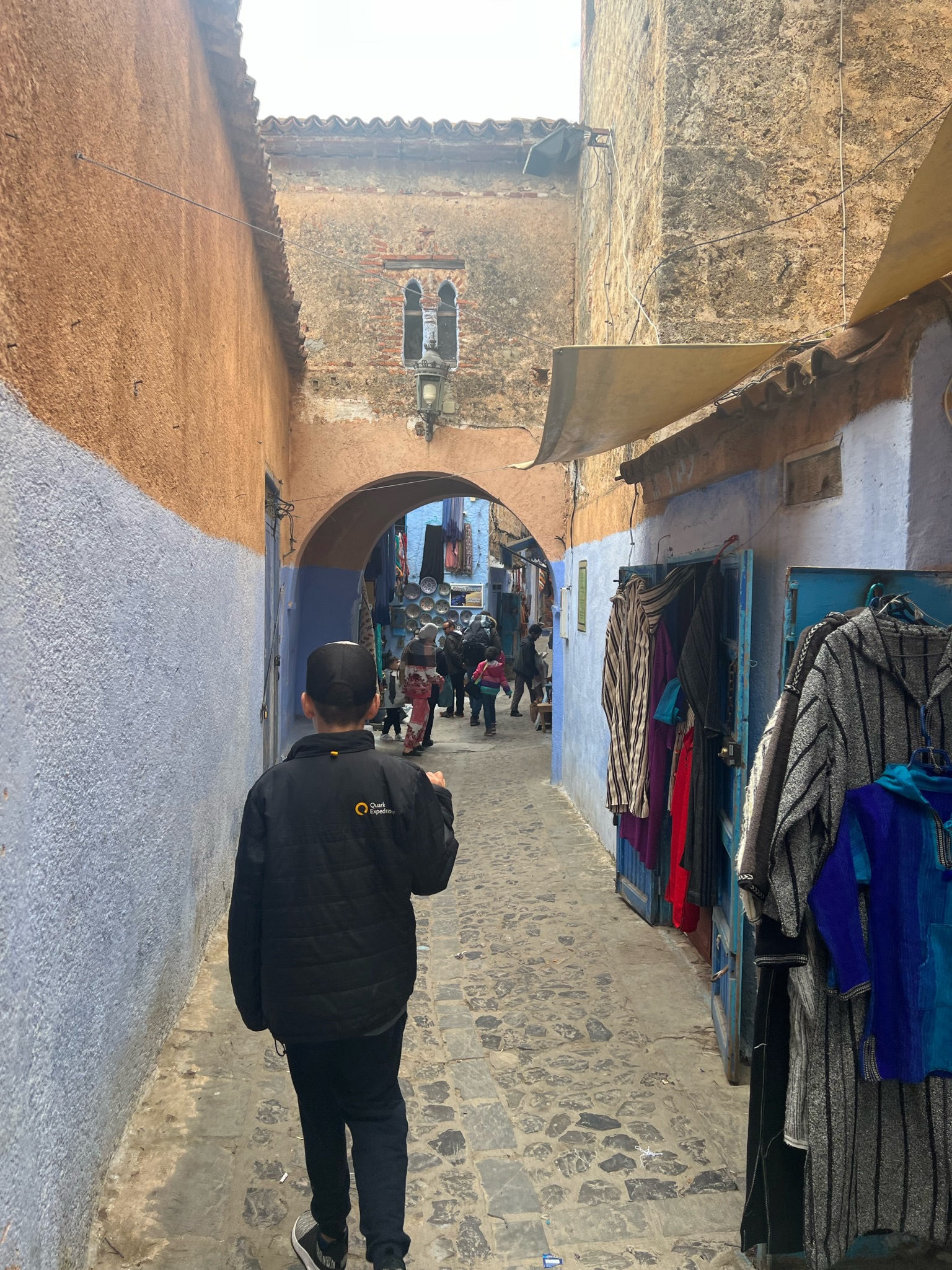

We headed back to Fes the next morning. After we grabbed some breakfast at a nearby restaurant, we took a taxi back to the bus station. We walked in and bought the tickets for the next bus to Fes, and we didn’t really catch that the price the attendant charged us was slightly less than what we’d paid to get to Chefchaouen. He directed us to the bus, and after a short discussion with the driver about needing to change busses midway, we climbed on board.
About halfway through the trip, we pulled into a gas station, and the driver signaled for us to get off and wait. He gave us our bags, and said that our next bus would be here in about 30 minutes. Unsure and scared of being stranded in a gas station in the middle of nowhere, we dumbly stood by waiting for further direction. A very tall man in a striped shirt who appeared to work with the buses told us to have a seat; our bus was on its way. We nervously waited in the chairs by the station for some sign, any sign, of a new bus. Our old bus didn’t leave the station either, and we didn’t exactly know what was going on with that. About 30 minutes after we first stopped, the striped shirt guy started signaling for us to walk with him across the street. With a few others in tow, we walked with him to a proper bus station and waited some more. No one else seemed to be getting nervous, so we tried to entertain ourselves by watching this one fellow passenger’s turkeys. Striped shirt guy was still in the area, and he didn’t seem concerned, either, so we tried to be patient. Meanwhile Brian and I were trying to come up with a plan B if this didn’t work out. Obviously we’d gotten on the wrong bus. This one was going to Fes also, but in exchange for the lower ticket price, we got a longer, more tedious ride. While we were waiting, we actually watched as the bus we should have been on passed by.
After 10 or 15 minutes, a new bus finally pulled up in the lot, and we were told to hop on if we were going to Fes. We climbed on and took a seat, and after 6 hours, we finally made it to back to Fes.
We opted to walk from the bus station in Fes to the Cine Hotel where we’d be staying. Really we didn’t want to walk, but the taxi drivers acted like they couldn’t understand us, so we had no choice. It wasn’t a bad walk, though, and the hostel was very nice. We were staying outside the medina this time, so the hotel was newer with more modern conveniences. We grabbed a good dinner from the restaurant on the first floor, and we enjoyed our gloriously warm room upstairs.
The next morning, we met our awaiting driver at the curb to head to the airport. It was time to leave Morocco behind. Mahjoub, Ayoub, and Abdel had made a very good impression on us, and we really hated to leave them. All of them had been very good hosts to us, and they checked on us long after we left them. We really enjoyed the food and environment of Morocco as well. When I didn’t want to go to Morocco and only reluctantly agreed to go, it was because I saw Morocco as some version of Egypt with nothing new to see. It turns out that there was so much more to see and do there than I ever imagined. We explored Marrakech, Fes, and Chefchaouen, but we could have easily spent weeks relaxing on the beautiful beaches, exploring the magnificent Sahara, and checking out the modern town of Casablanca as well. The people of this nation were interesting, and their lifestyle was different from anyone else we’ve met. I am grateful that I gave Morocco a chance, and now I truly look forward to going back there again one day.
 Expedition Fresh Start