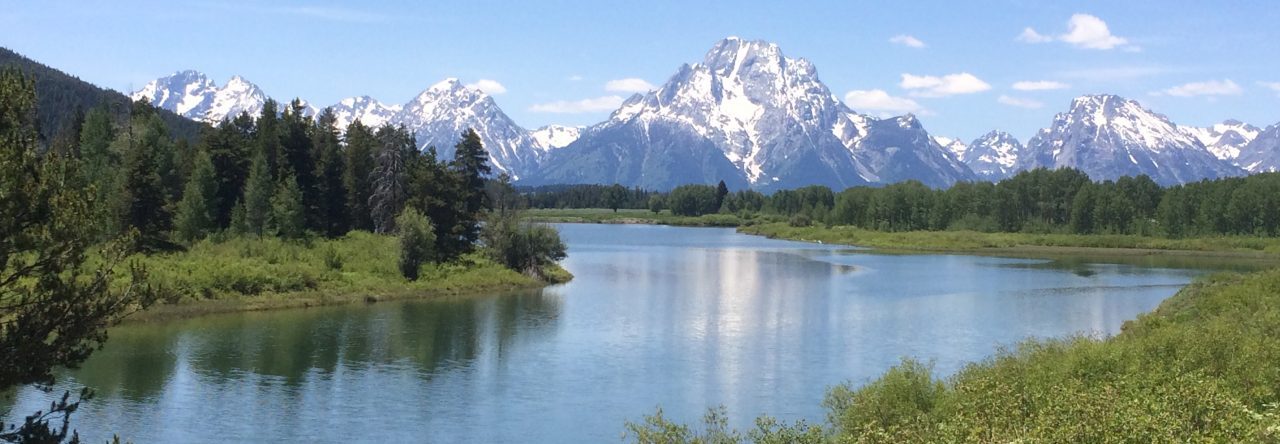

I believe it is in our nature to explore, to reach out into the unknown. The only true failure would be not to explore at all.
– Sir Ernest Shackleton
When Brian first mentioned going to Antarctica, I really thought he was crazy. This man that I loved had to have lost his mind. All I could imagine was trekking through icy, near blizzard, horrendously windy weather with dogsleds and wearing heavy fur-lined coats, hats, and gloves as we survived on nasty coffee and seal blubber. What kind of person would actually want to do that? But he was adamant that he wanted to go there, and Henry was all in, also. Henry was scared of the polar bears and orcas, but in the right conditions, he said he’d love the opportunity to do the polar plunge. Begrudgingly, I accepted that this would be one of our destinations if/when we made our trip around the world. And then in July when we started setting our plan into motion, our voyage to Antarctica was the first thing we booked.
Originally, we signed up for a 10 day adventure where we sailed from Ushuaia, Argentina to Antarctica and back. At some point while we were in Utila, Honduras, we got a message from Quark saying that our trip had been cancelled due to the challenges of COVID. We were pretty upset, but over the next few days, we tried to work out an alternative. After several emails and phone calls, they offered us the option of joining this 20-day Celebrating Shackleton trip instead, and thankfully, the timing worked out with our travel plans.
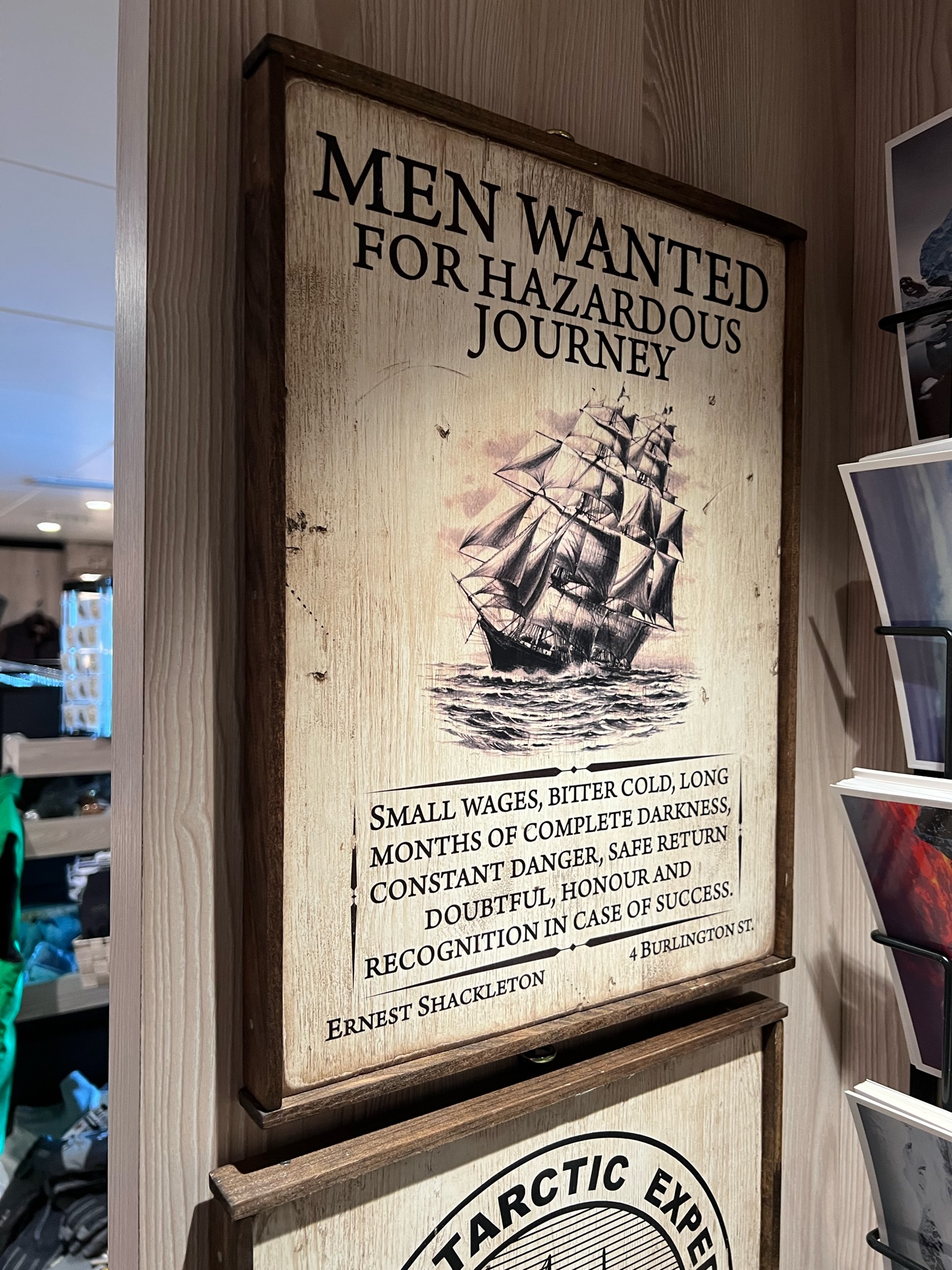
We had all heard of Ernest Shackleton, but none of us knew much about him. Over the next few months, we read the book ‘Endurance: Shackleton’s Incredible Voyage’ to learn a bit more about him. The book was a good and easy read, but I’ll give you the quick version here. Ernest Shackleton was an Explorer from Great Britain, and in 1914, having recently lost the opportunity to become the first man to reach the South Pole, he set out to become the first man to traverse the Antarctic continent via the south pole. His crew left Britain in their ship, Endurance, just as World War I began, and they stopped in South Georgia to make their final preparations. On December 5,, 1914, the 28 men left South Georgia with plans to reach the continent through the Weddell Sea, but the conditions soon worsened, and only 45 days into the trip, the Endurance was trapped in the icy waters. The men camped on the boat for 9 months until in late October, they had to abandon ship due to the pressure from the surrounding pack ice that was crushing the boat; water began flooding in faster than they could get it out. The wooden boat was no match for the enormous pressure of the ice. The men were marooned on large floating slabs of sea ice for 6 months until the ice floe began to break apart as well. In early April, 1916, Shackleton ordered the men off of the sea ice and into their three small lifeboats so that they could set sail and hopefully find land. They rowed their small open top lifeboats for 5 days in some of the roughest waters in the world, and somehow, they all made it to Elephant Island, 346 miles away from where the Endurance sank.
Elephant Island was/is uninhabited, but it was the first solid land these men had stepped on in 497 days. After resting and recuperating there briefly, Shackleton took 5 men with him in one of the lifeboats to try to reach South Georgia, another 720 miles away. While he was gone, his second in command, Frank Wild managed with the remaining men at a place they named Camp Patience. After 2 weeks of sailing in the tiny lifeboat, Shackleton and crew landed on the west side of South Georgia in King Haakon Bay. From there, rather than risking more danger by trying to sail around South Georgia, Shackleton and two of his men climbed the glaciers and mountains of South Georgia for 36 hours in order to reach the Stromness Whaling Station on the eastern shore of the island. Within hours, the other three men still in Shackleton’s lifeboat were rescued, and by August 30, 1916, they were able to reach Camp Patience on Elephant Island to rescue the remaining 22 men. All in all, the 28 men were stranded for 31 months in the most desolate and unforgiving areas on earth, and every one of them survived.
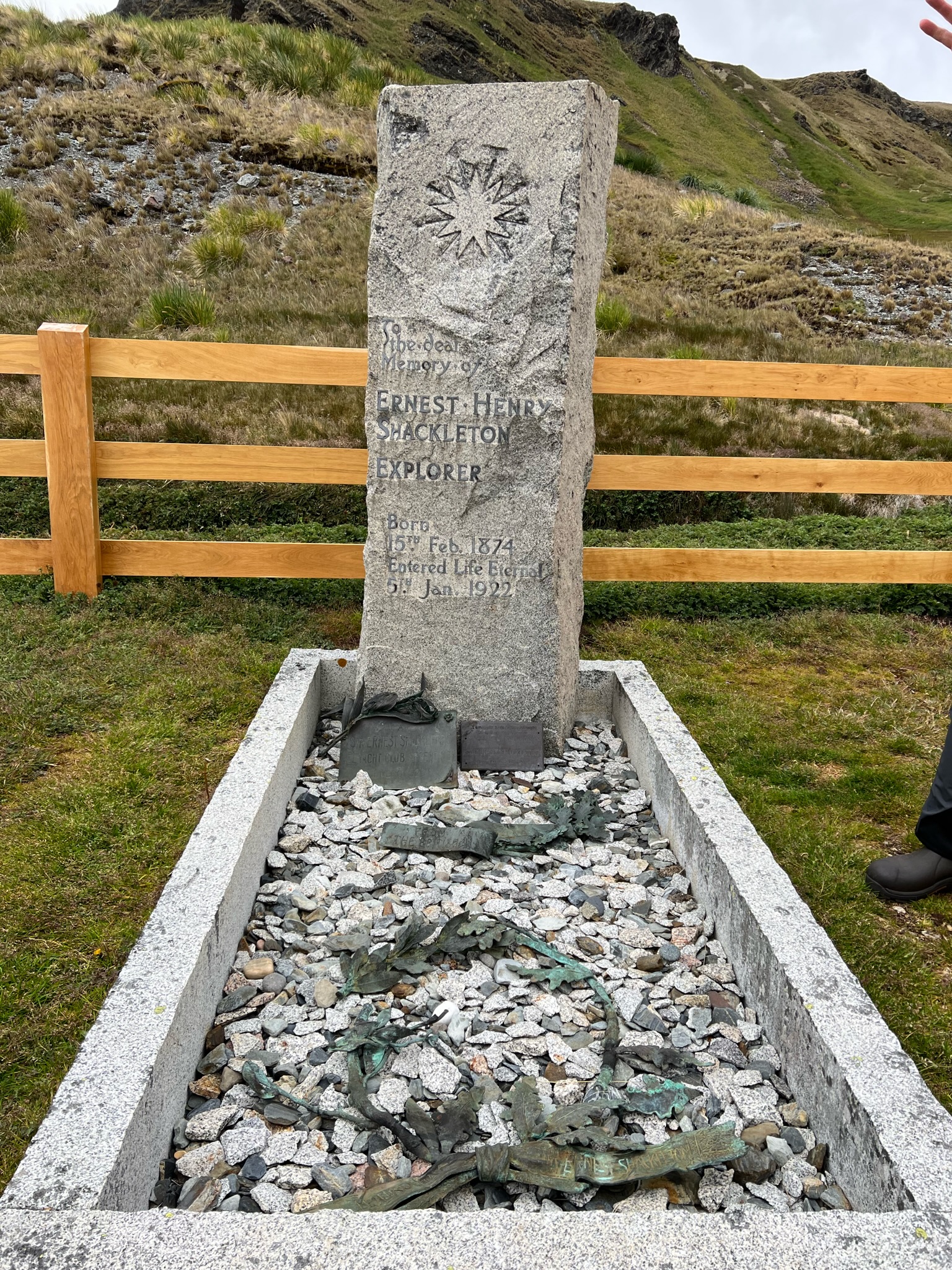
While Shackleton’s mission to traverse Antarctica was not successful, he is still recognized today for his leadership and drive in getting all of his men home alive. Shackleton died on January 5, 1922, and at his wife’s request, he was buried at the whaling station of Grytviken, South Georgia. This Quark voyage would honor Shackleton by remembering his expedition, visiting some of the places his men had traveled, learning about their challenges and hardships, and on the 100th anniversary of his death, holding a toast to Shackleton at the cemetery where he is buried.
It sounded nice. So here’s how it really went.
Day 1: December 22, 2021
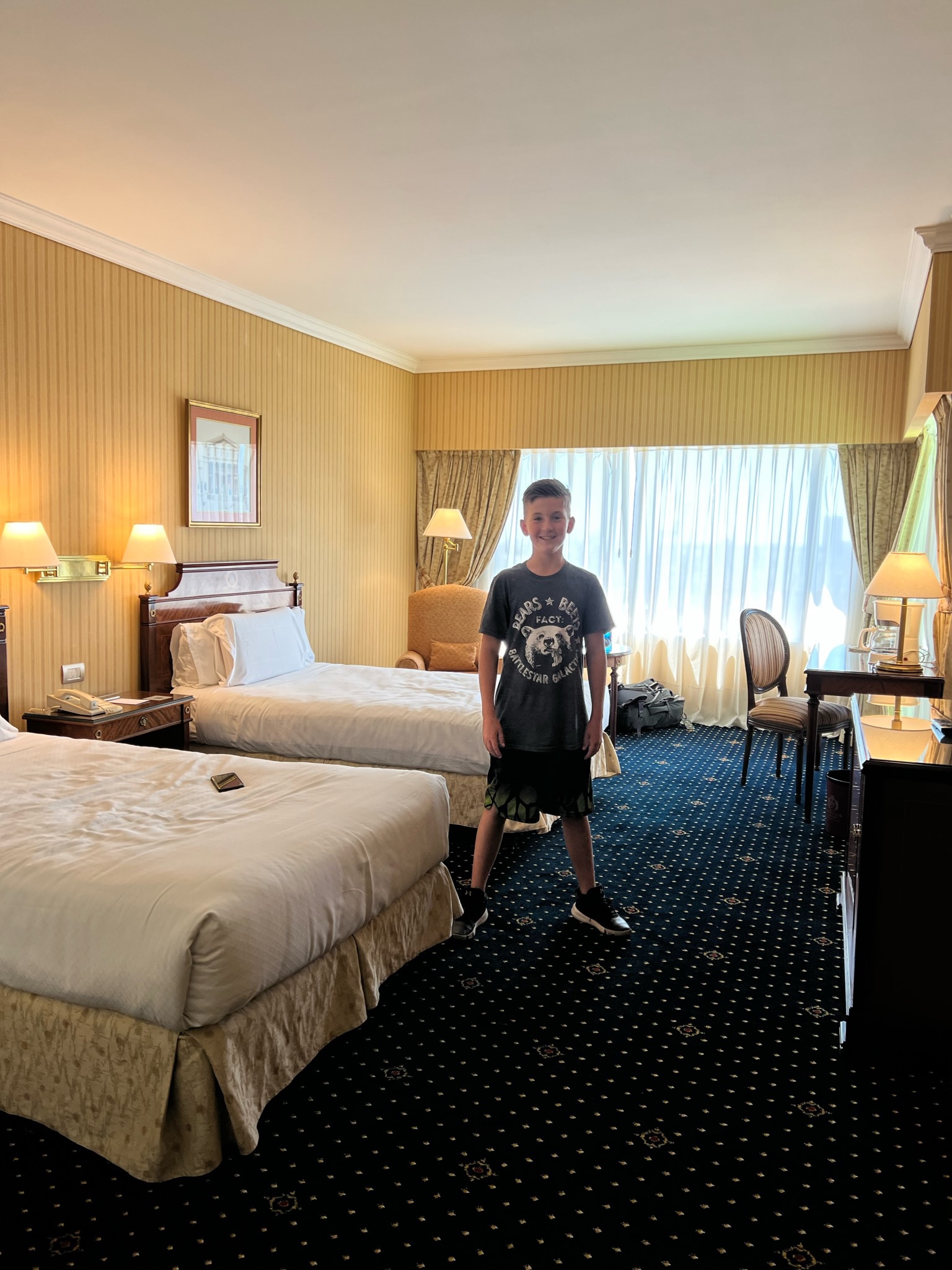
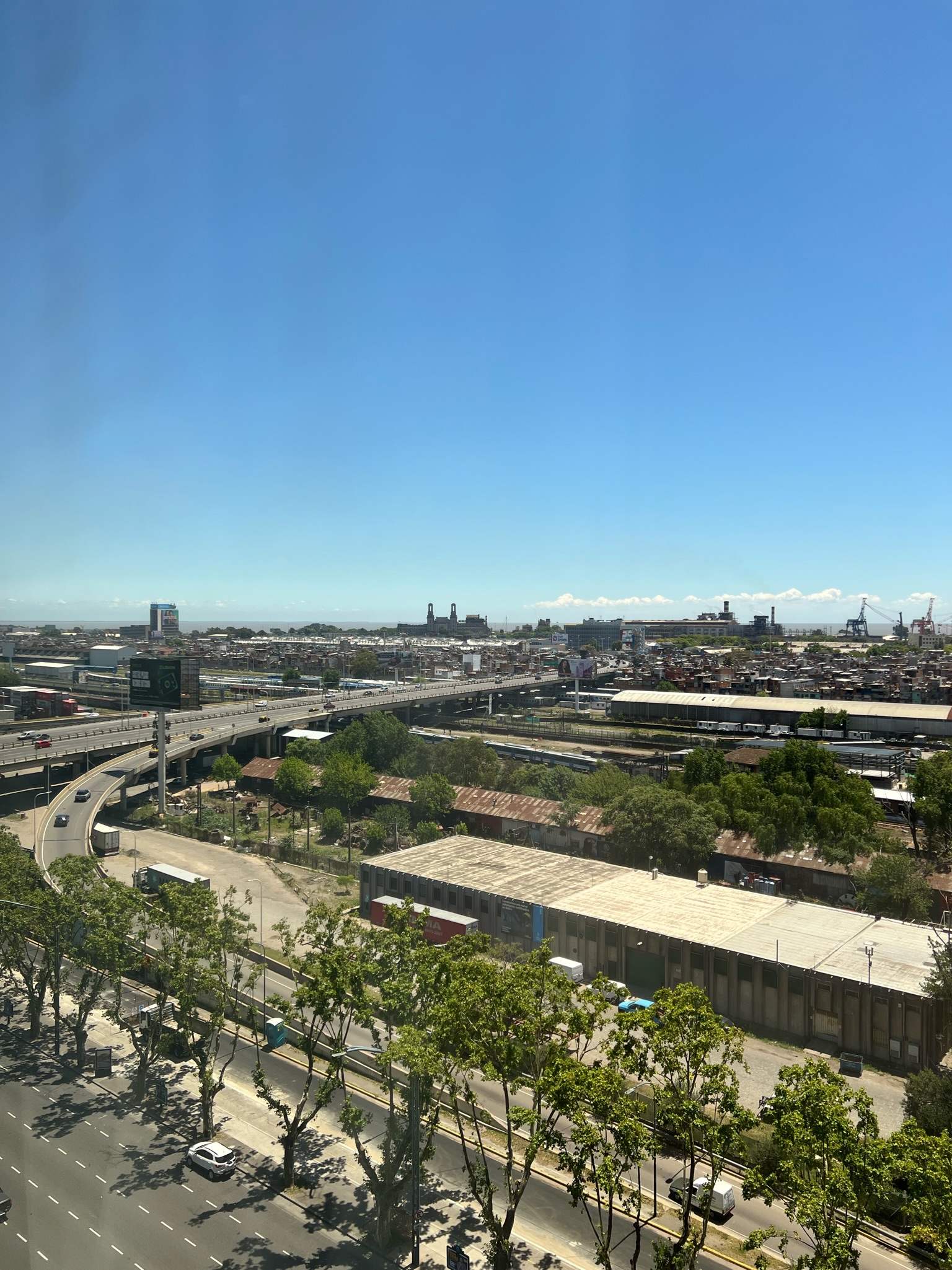
This morning, we checked out of the Del900 Boutique Hostel in Buenos Aires where we’ve been staying for the past few nights, and we took a taxi to the five-star Emperador Hotel where Quark Expeditions is putting us up for the night. At the reception desk, we learned that we would have two adjoining rooms, and I was not happy about that at all. Henry was thrilled because he assumed that he would have a hotel room all to himself. We rode the elevator up to the eleventh floor and let Henry into ‘his’ room. It was beautiful and had a luxurious king-sized bed. Brian and I went next door to ‘our’ room and found that, while also very beautiful, it had two full sized beds. So we did what any normal parent would do, and we kicked Henry out of his room. He was disappointed at first, but when he figured out that we were actually going to let him stay by himself in the two-bed room, he was absolutely beside himself with joy. He told us he would need a few hours that night by himself just to celebrate. He couldn’t stop smiling, and he could barely get out a coherent sentence because he was so excited. The rooms were not adjoining as the clerk told us they’d be, and even though I really wasn’t crazy about him having a full room to himself, I knew he’d be okay. After all, we were right next door.



We left shortly after check-in and headed up to the 20th floor to meet the Quark Expeditions group for the first time. We had to show them our passports, vaccination cards, and the results from our most recent PCR test, and we had to fill out a health affidavit for them. Henry asked if there were any other kids on board, and Valeria, a member of the Quark ground team told him there would be a few around his age. The check in process went smoothly, and after we got our bag tags, we headed to their COVID test site for a second PCR test. They told us that if we didn’t hear from them, we should assume that everything was good.
Two weeks before this, we had met a very nice man named Chris. Chris had come from Utah to Buenos Aires for his cruise with Quark only to find out that the cruise had first been delayed and then ultimately cancelled. A few crew members had tested positive for COVID right before they embarked. He wasn’t happy, of course, and his situation planted a few seeds of doubt in us about the possibility of our trip even happening. At this point, we were still afraid that they might postpone or cancel the trip, but all signs were looking like it was a go.
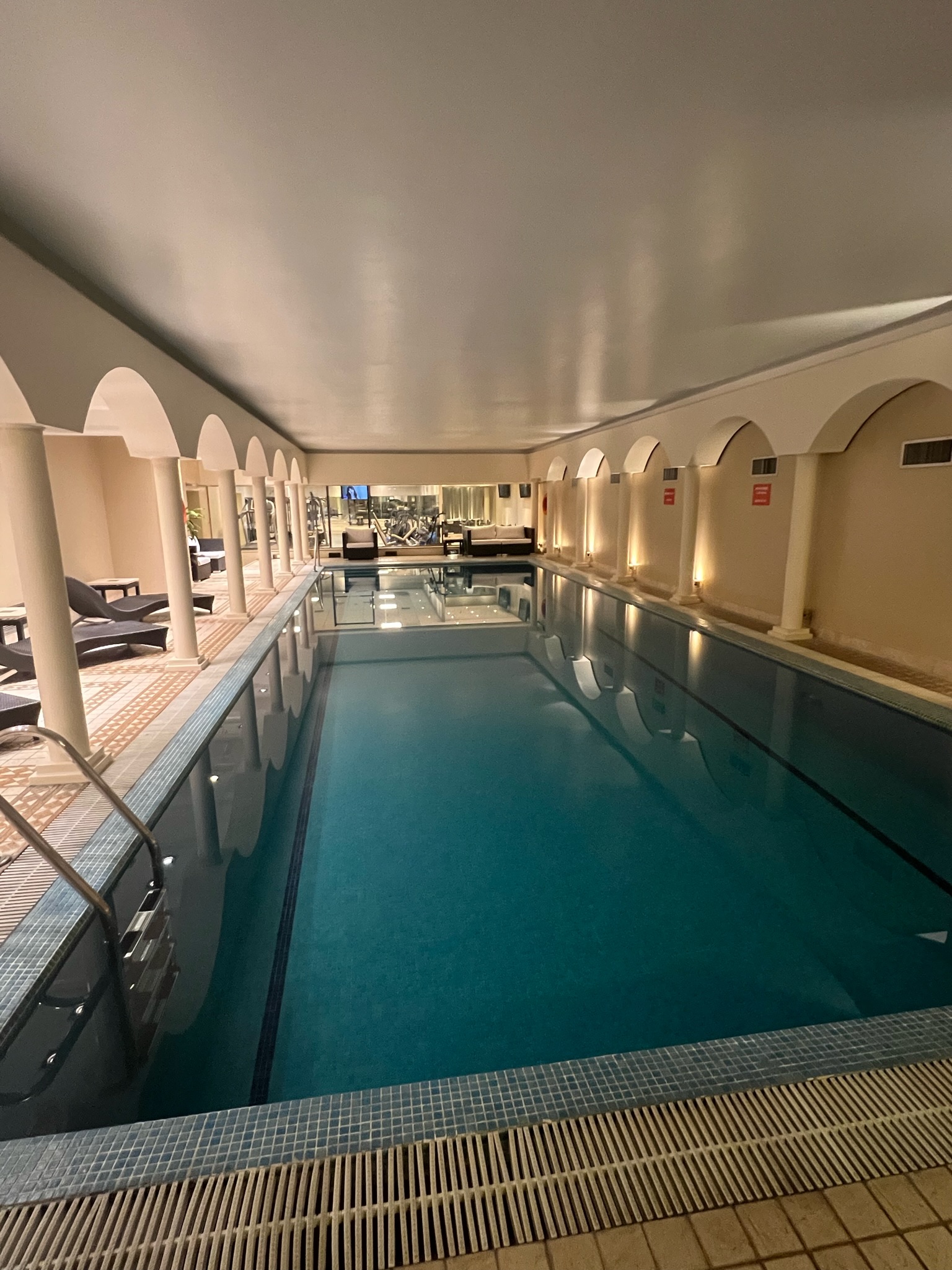
With nothing else to do, we grabbed a bite of lunch at a brew pub near The Emperador. After lunch, Henry and I went to get the last of the supplies we needed for the boat while Brian enjoyed a sampling of Argentinian beer. We needed to pass some time, so we went down to the hotel pool for a quick dip. Thankfully we had the pool to ourselves for about the first hour, but eventually another couple came in as well.

After the swim, we prepped for our first official Quark activity. In an effort to help quarantine us, Quark was offering a complimentary dinner for us there at the hotel. We went, and all three of us felt a little out of place. The dinner was fancy, and we walked in wearing our best jeans and t-shirts. The travelers in the group weren’t too dressy, but the meal was elegant. We had roasted beef, chicken, cold cuts, salads, wines, and whole tables of desserts. It was fantastic, and it set the tone for a great trip.
After dinner, we had some work to do to prepare for being disconnected to the world for three weeks. Brian was ensuring our bills would be paid, booking our next flights, and setting up our computers. I was booking rooms for the next leg of our trip. Henry was basking in his privacy and enjoying laying in the windowsill of his room. We finally made it to bed around midnight, which was way later than we wanted to be. Henry ended up getting creeped out by the noises in the hotel, so instead of going it alone, I am staying with him in his room while Brian gets the whole king-sized bed to himself.
Tomorrow is so exciting that we are all struggling to go to sleep!
Day 2: December, 23, 2021
We woke up at 4 am to get our bags packed and the last few items on our to-do list done. We dropped off our checked bags to the hotel lobby, and by 5:30, we were eating our Quark provided breakfast. While eating, Valeria stopped by to welcome us to the trip. Apparently several of our fellow travelers tested positive and were not allowed to participate on the expedition. I cannot imagine their level of disappointment about that, and I felt terrible for them.
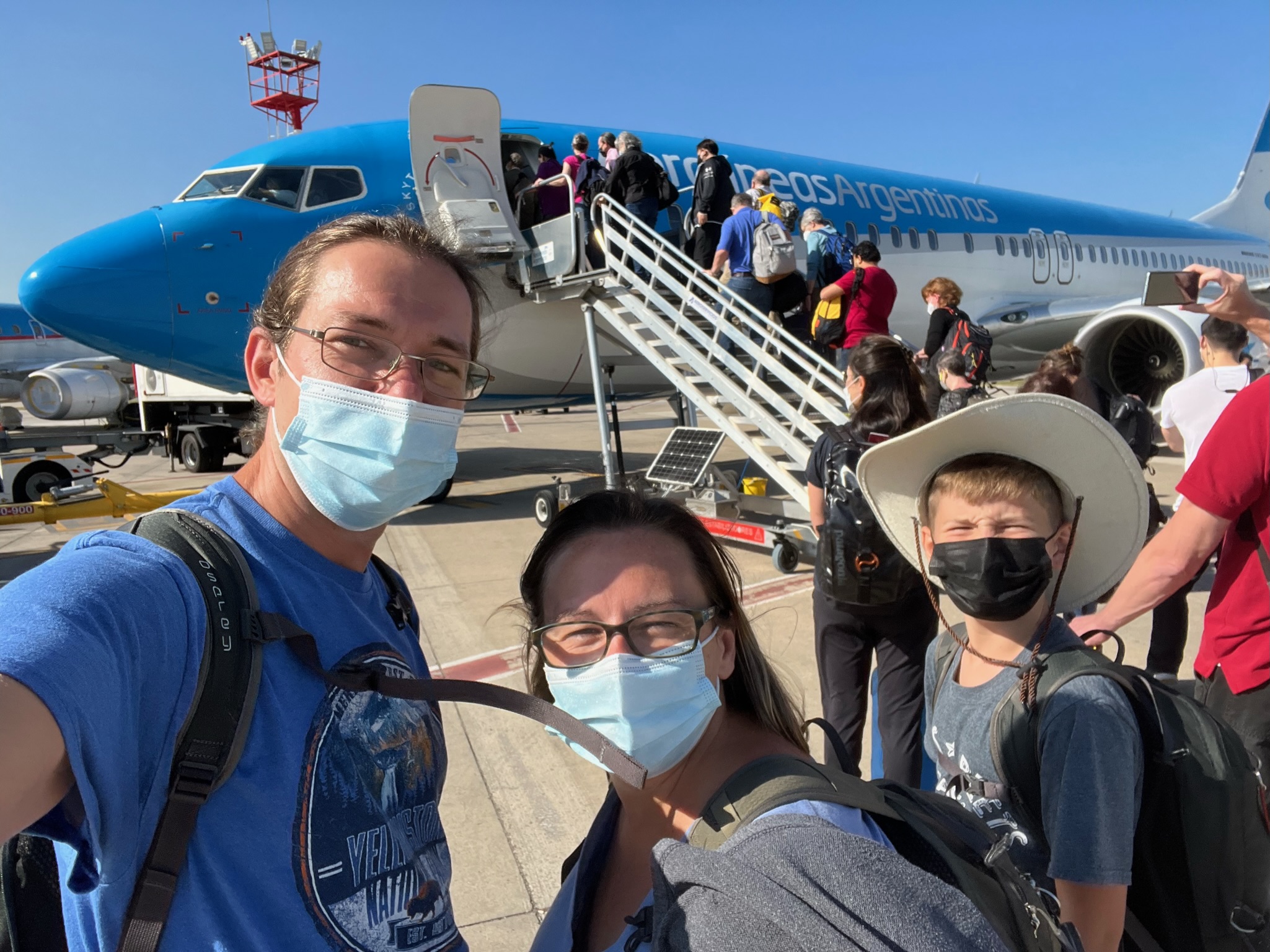
We hopped on a chartered bus bound for the EZE airport. After checking in, we made it through security and to our gate. Our flight was chartered by Quark, so everyone who was at the gate with us was bound for our ship. At the gate, we loaded onto a bus. The bus drove us all out to the plane where we climbed aboard from the tarmac.
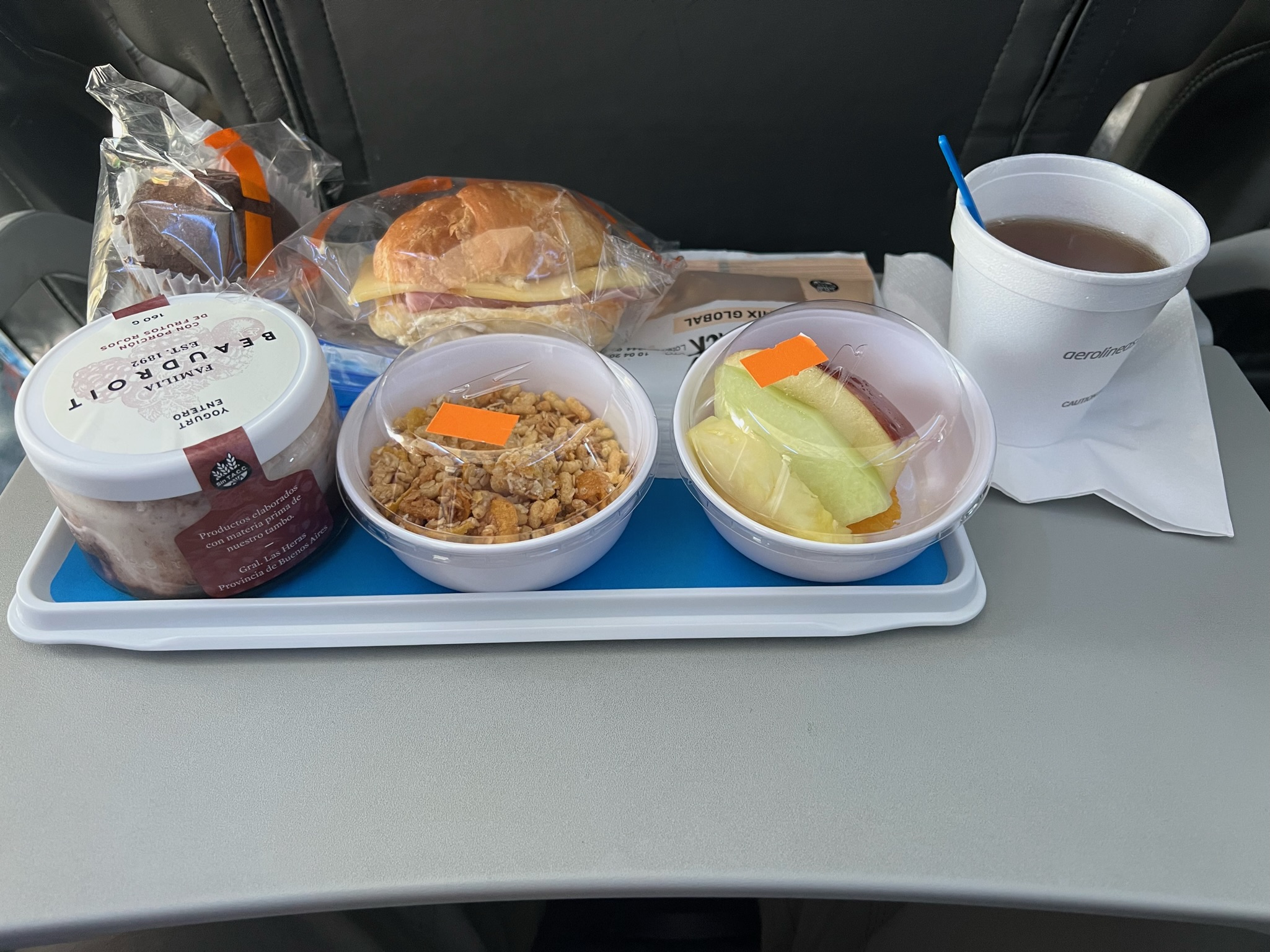
Our flight was extraordinarily smooth. We were all excited because they actually served us a meal. We had juice and coffee/tea/soft drinks as well as a ham and cheese croissant, yogurt with granola, fresh fruit, a bag of nuts, and a chocolate muffin. As many times as I’ve flown, I think I have only got a meal once. Henry couldn’t get over how much food they gave us. We may have looked a little like the Clampetts, but we were having a ball.
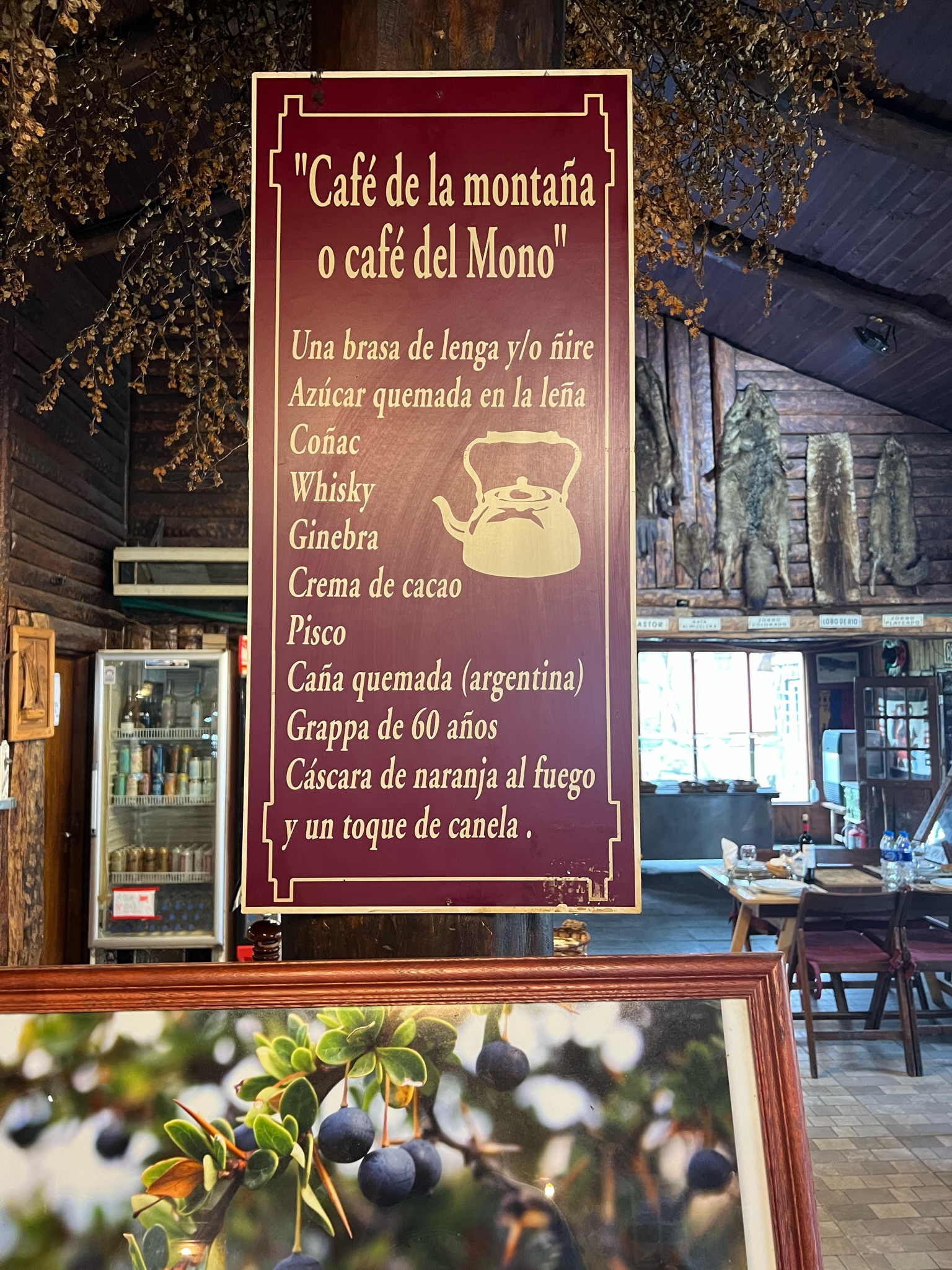
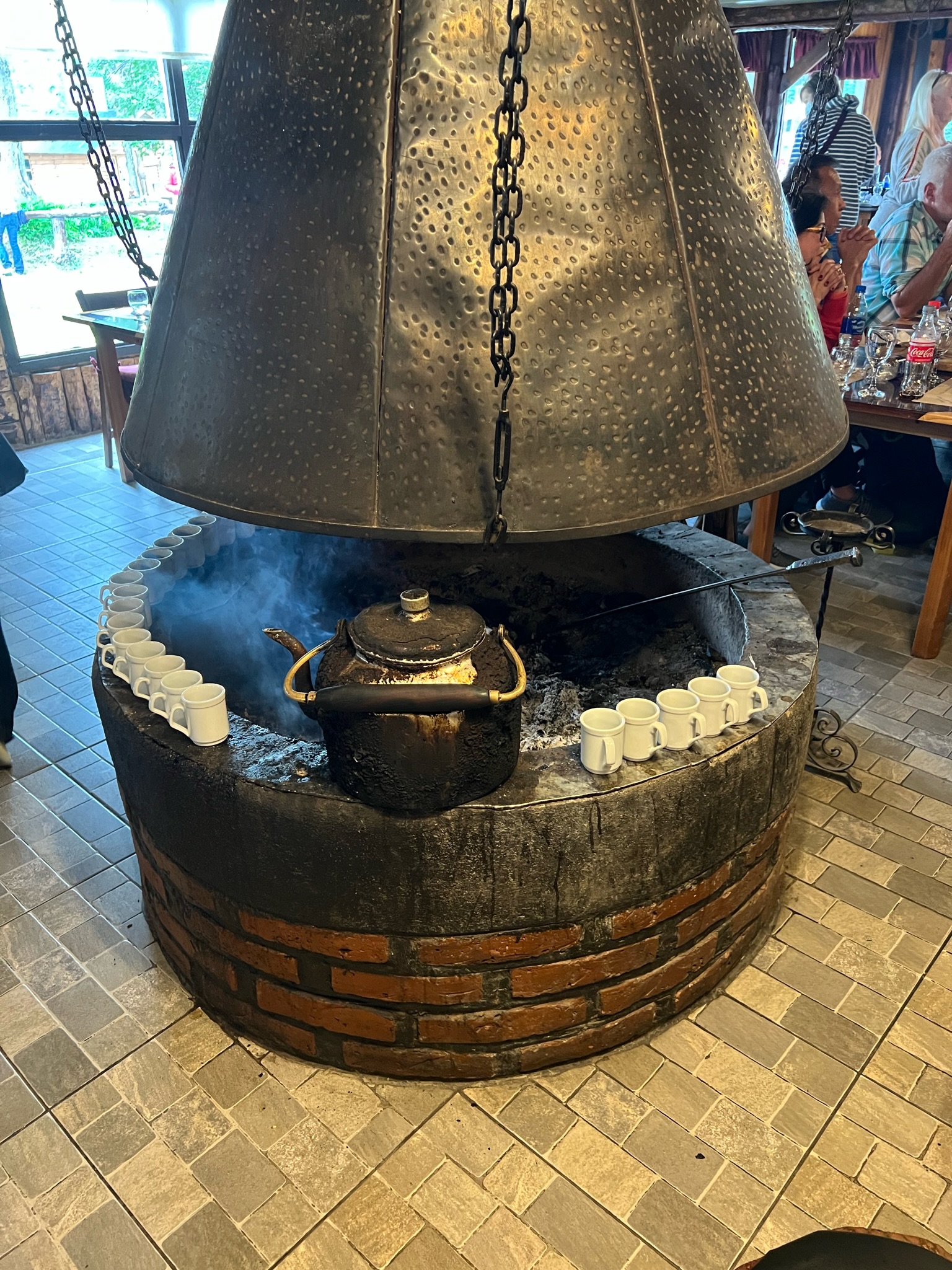
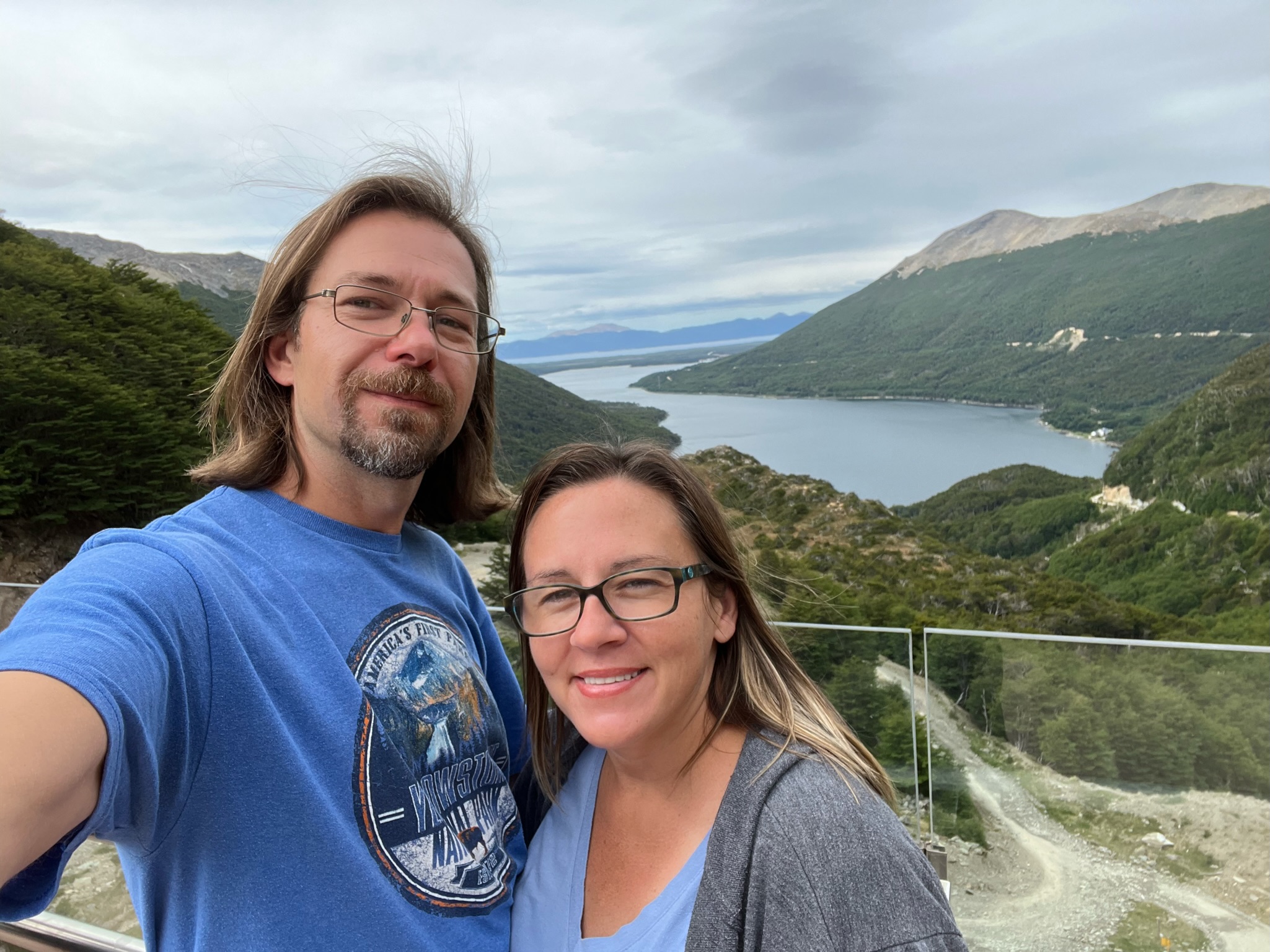
Once we landed, we didn’t have to pick up our checked baggage because Quark would be taking it straight to the boat and placing it in our rooms for us. Instead, we loaded onto another bus. We got the first glimpse of our boat, the Ultramarine, as we traveled past the marina on our way to see a few sights in the Tierre del Fuego province. The tour guide on the bus taught us about Ushuaia as we headed to our catered lunch at Villa Las Cotorras. We were able to try their special coffee, and we tasted pistachio and el calafate (a local berry) ice cream for dessert. After lunch, they drove us to the only place in the Andes mountains where you can drive through them in Argentina. The view of Lake Fagnano and Lake Escondido were beautiful. We tried to enjoy the experience, but everyone was so excited about the voyage and just ready to be on the boat by then.
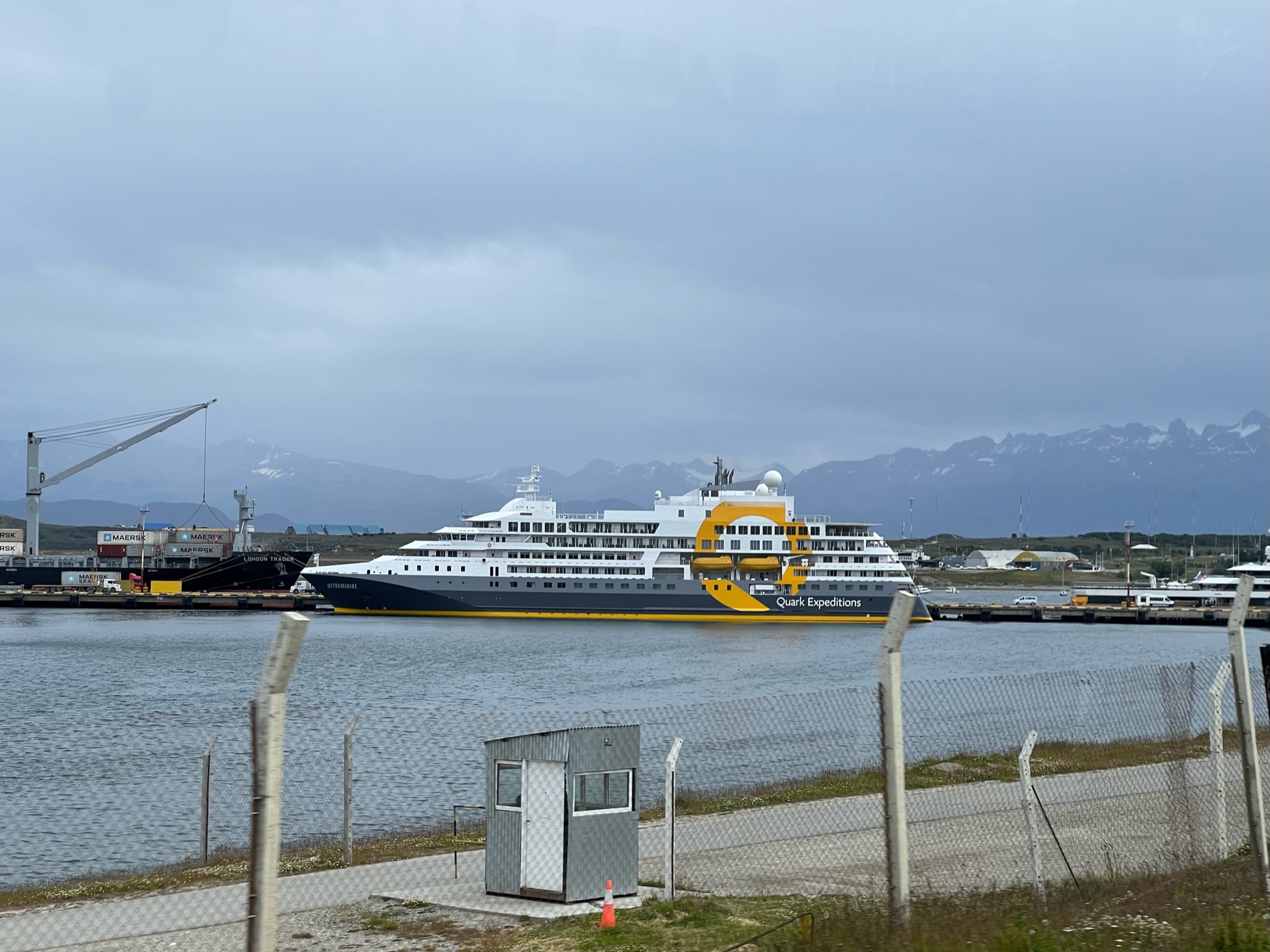
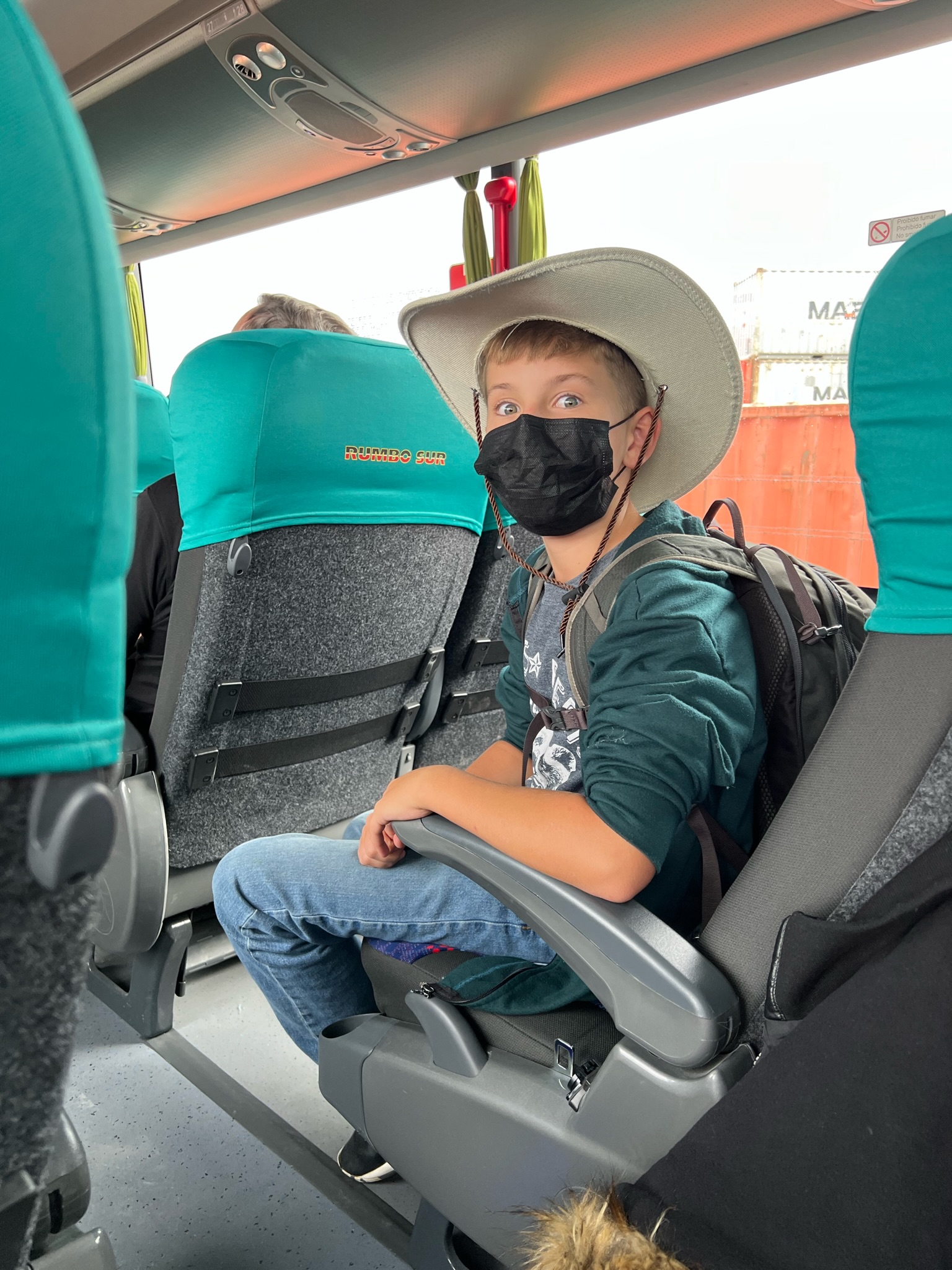
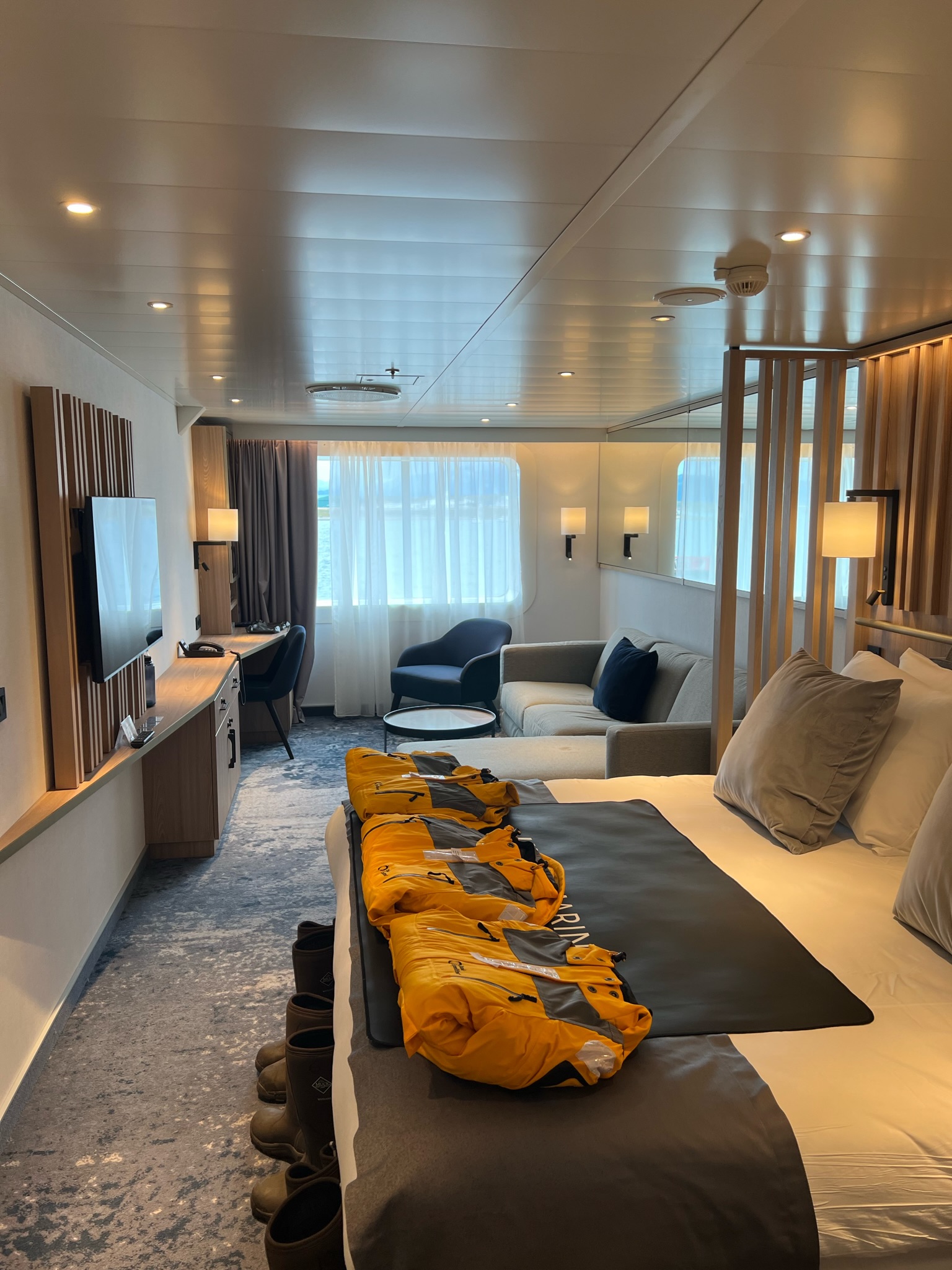
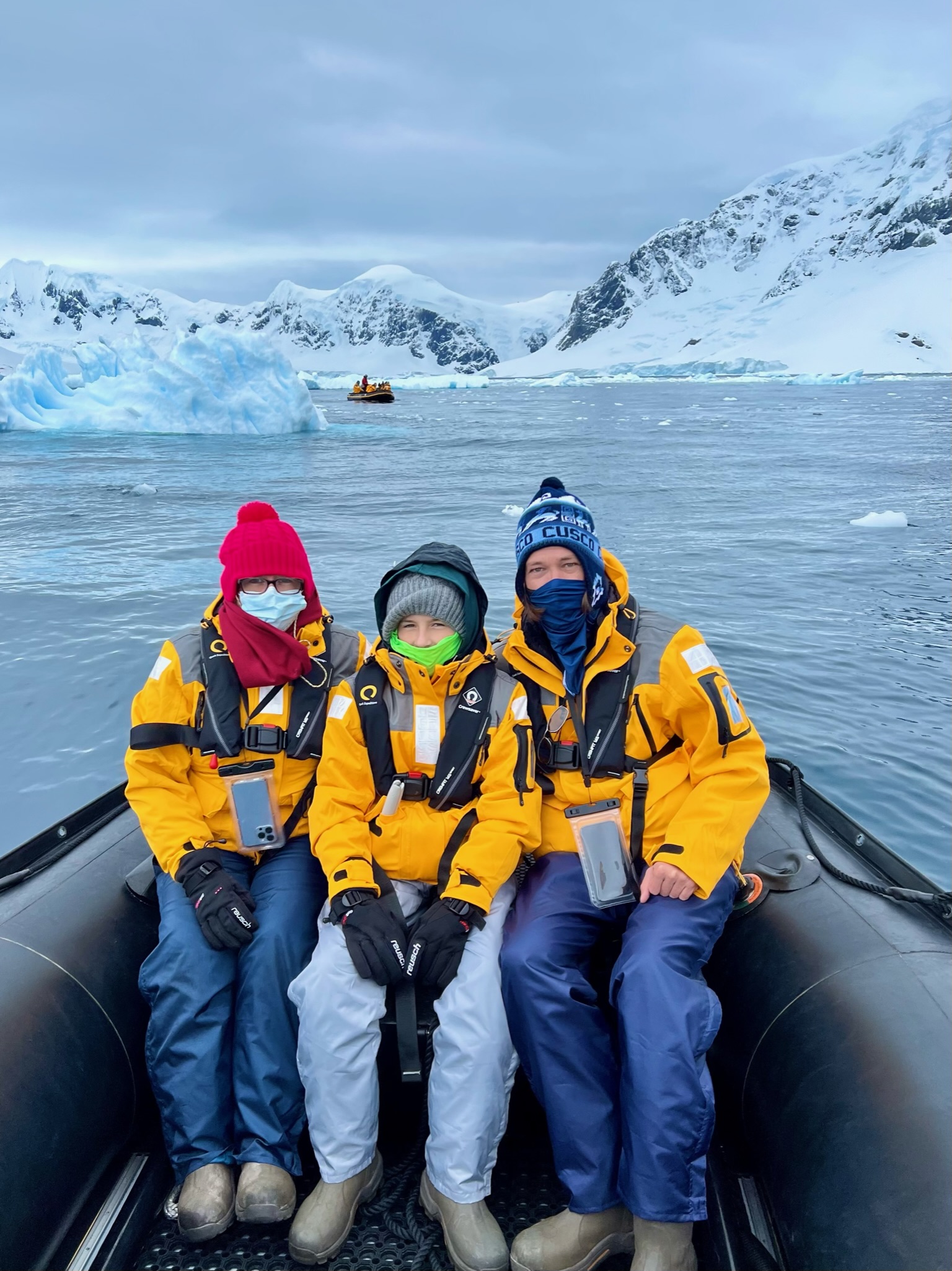
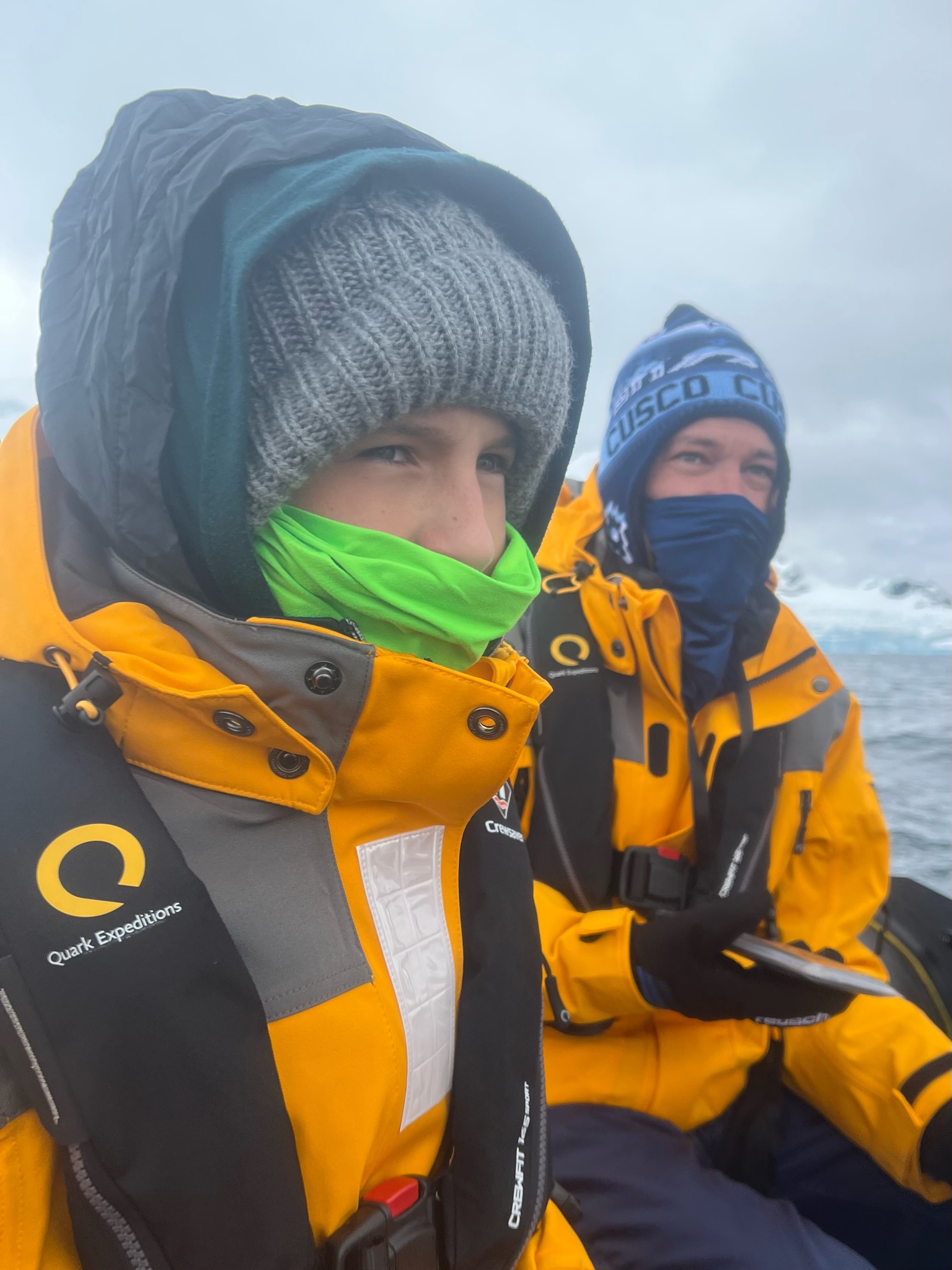
We made it to the boat shortly after visiting the Andes pass. Our bags were waiting for us in our room as promised, and at the foot of our bed, our bright yellow Quark parkas (that we get to keep) and our thick rubber boots (that we are borrowing) were waiting for us like Christmas presents. We were all very excited as we tried on our gear and thought of how warm we would be.
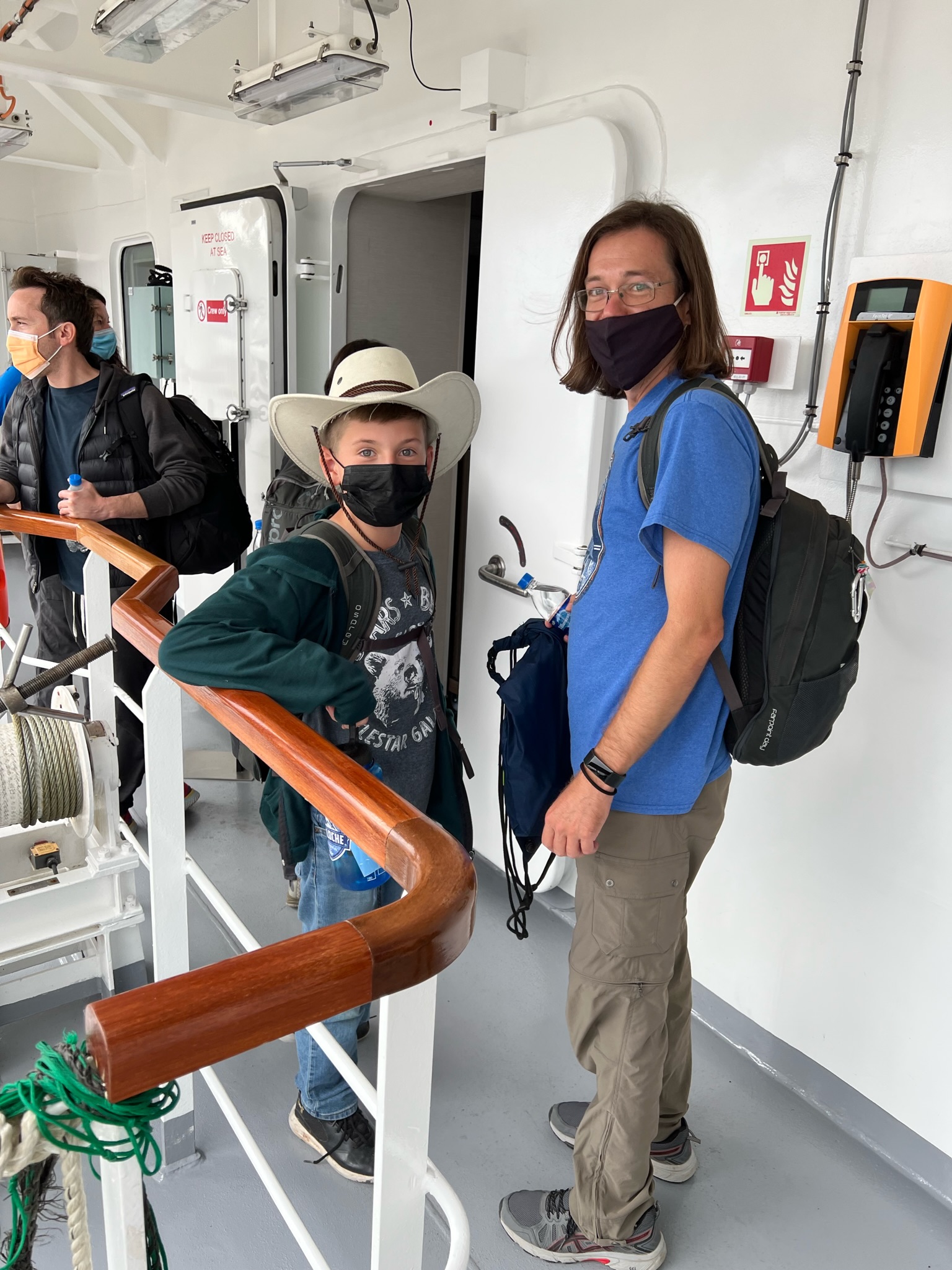
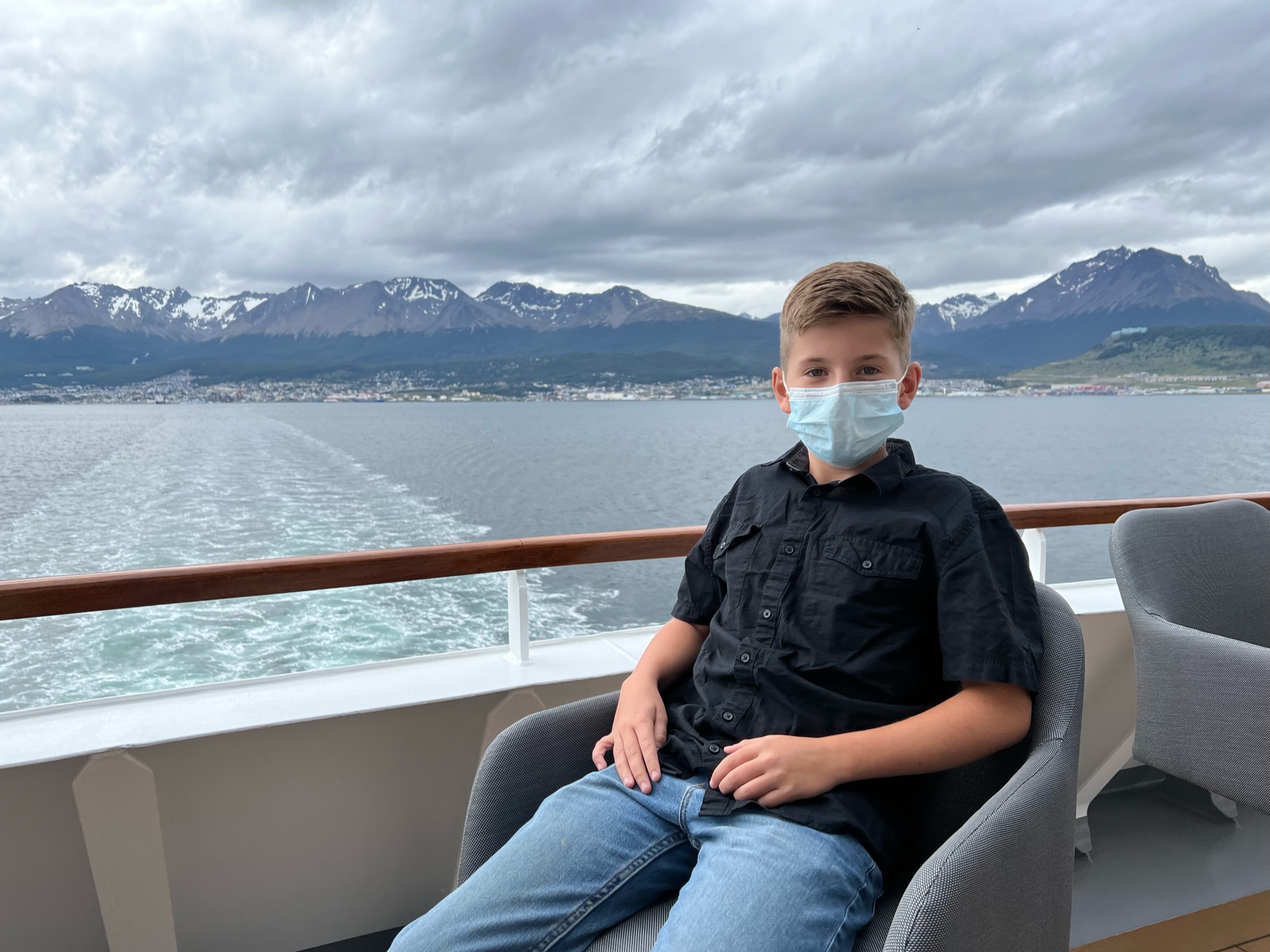
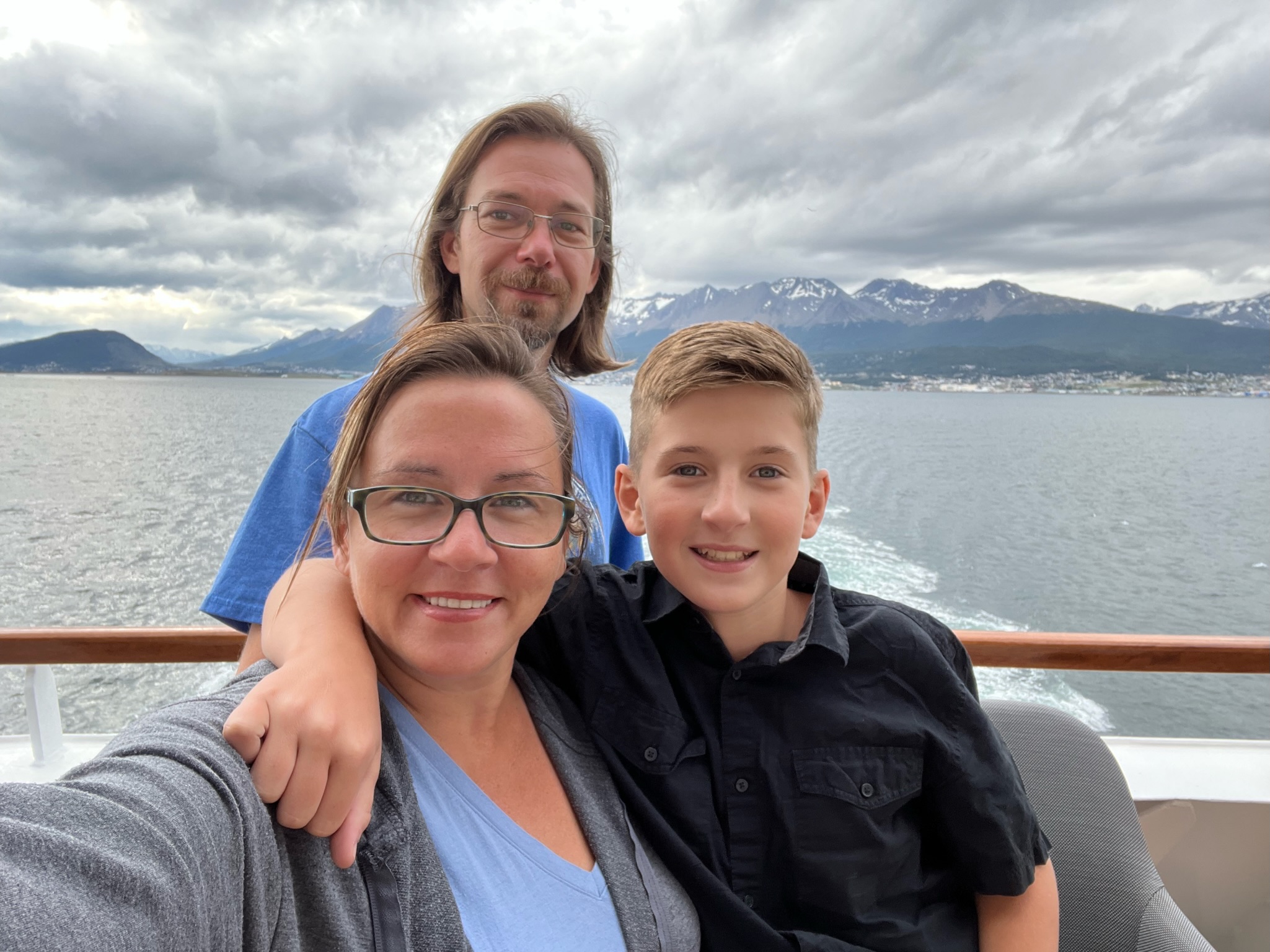
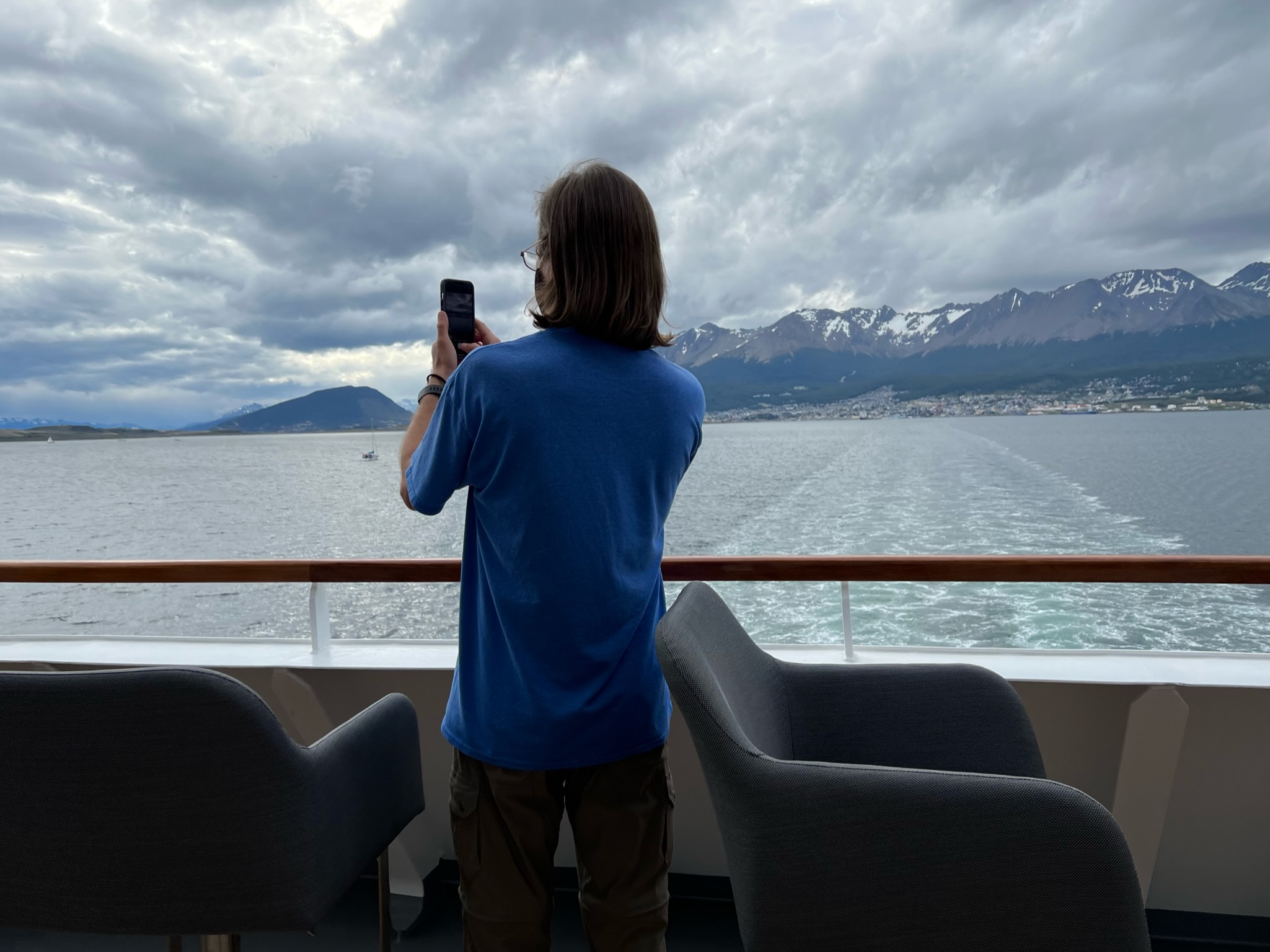
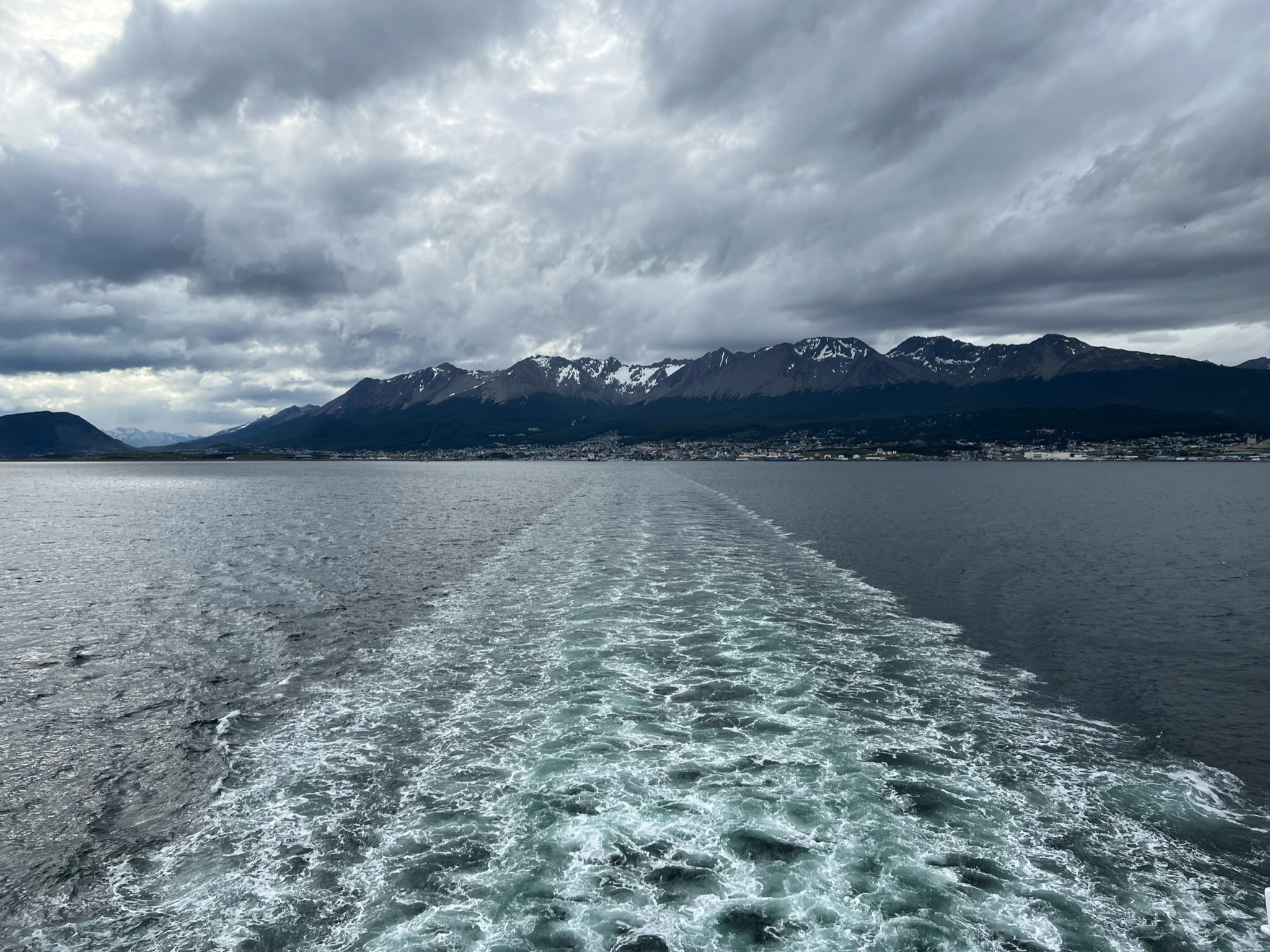
In the afternoon, we went to the Ambassador’s Theater for our first on-board activity. The lounge was spacious and beautiful with plush benches and comfortable chairs. We kept looking around for the other kids Valeria talked about, but we couldn’t find them. Maybe they were some of the ones who tested positive and couldn’t join us. Solan, our expedition leader, talked us through safety protocols and prepared us for the emergency drill we would have later in the evening. After the safety review, Brian, Henry, and I walked around the boat’s deck taking in the sites. While we were in the safety briefing, the boat had begun to move down the Beagle’s Channel on its way to open sea. We finished the meeting just in time to take the last photos of the city as it disappeared from sight.
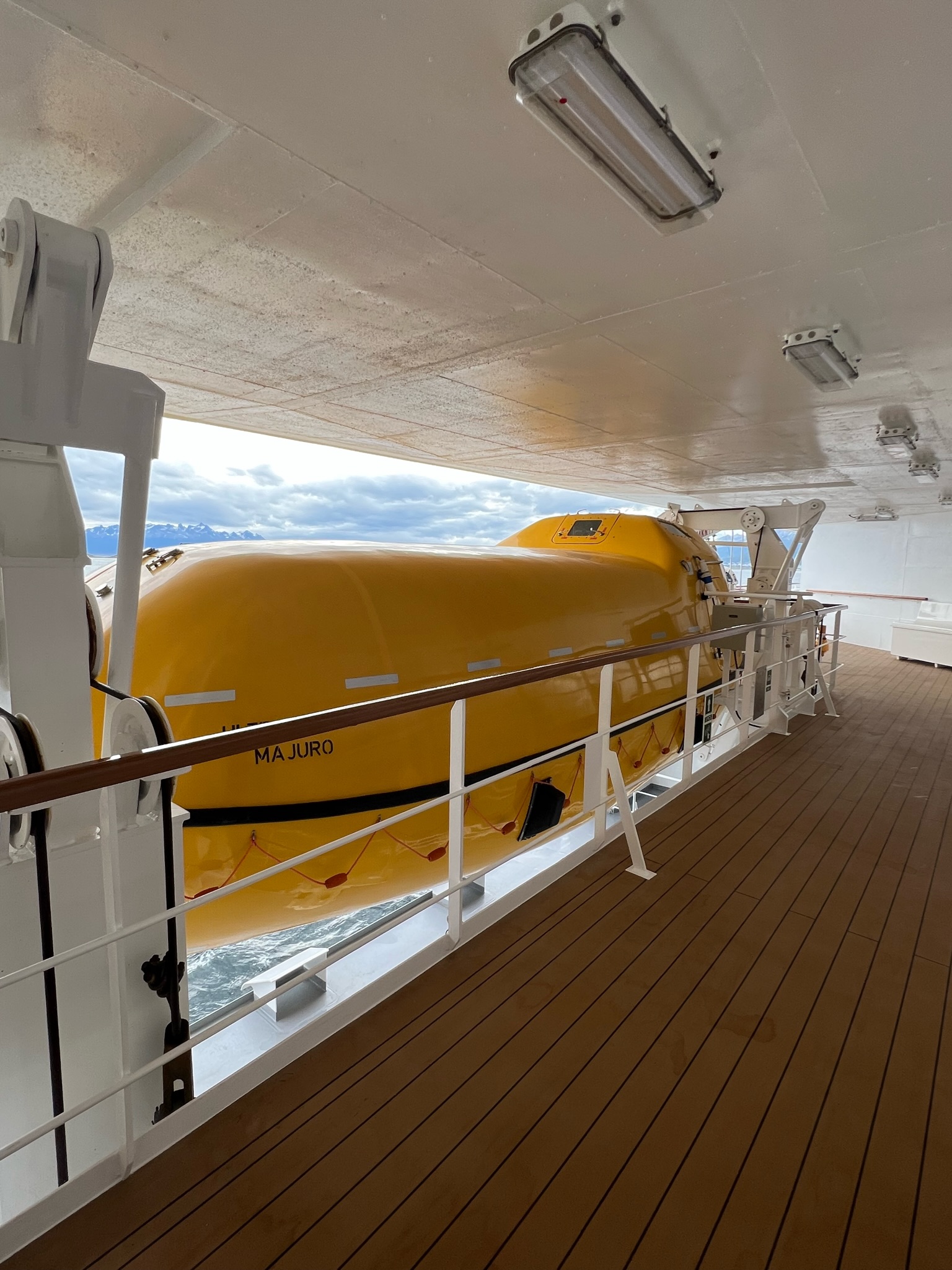
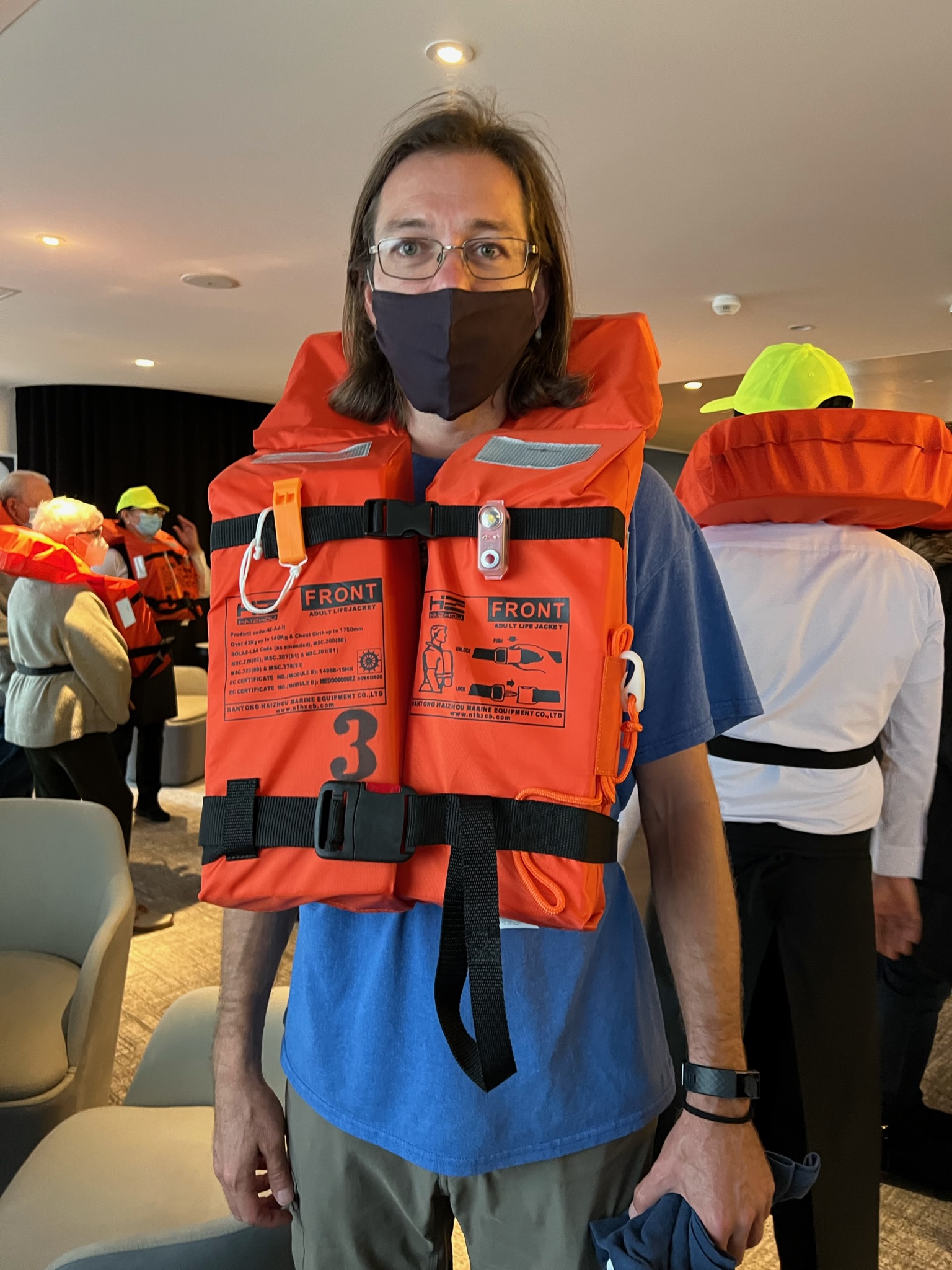
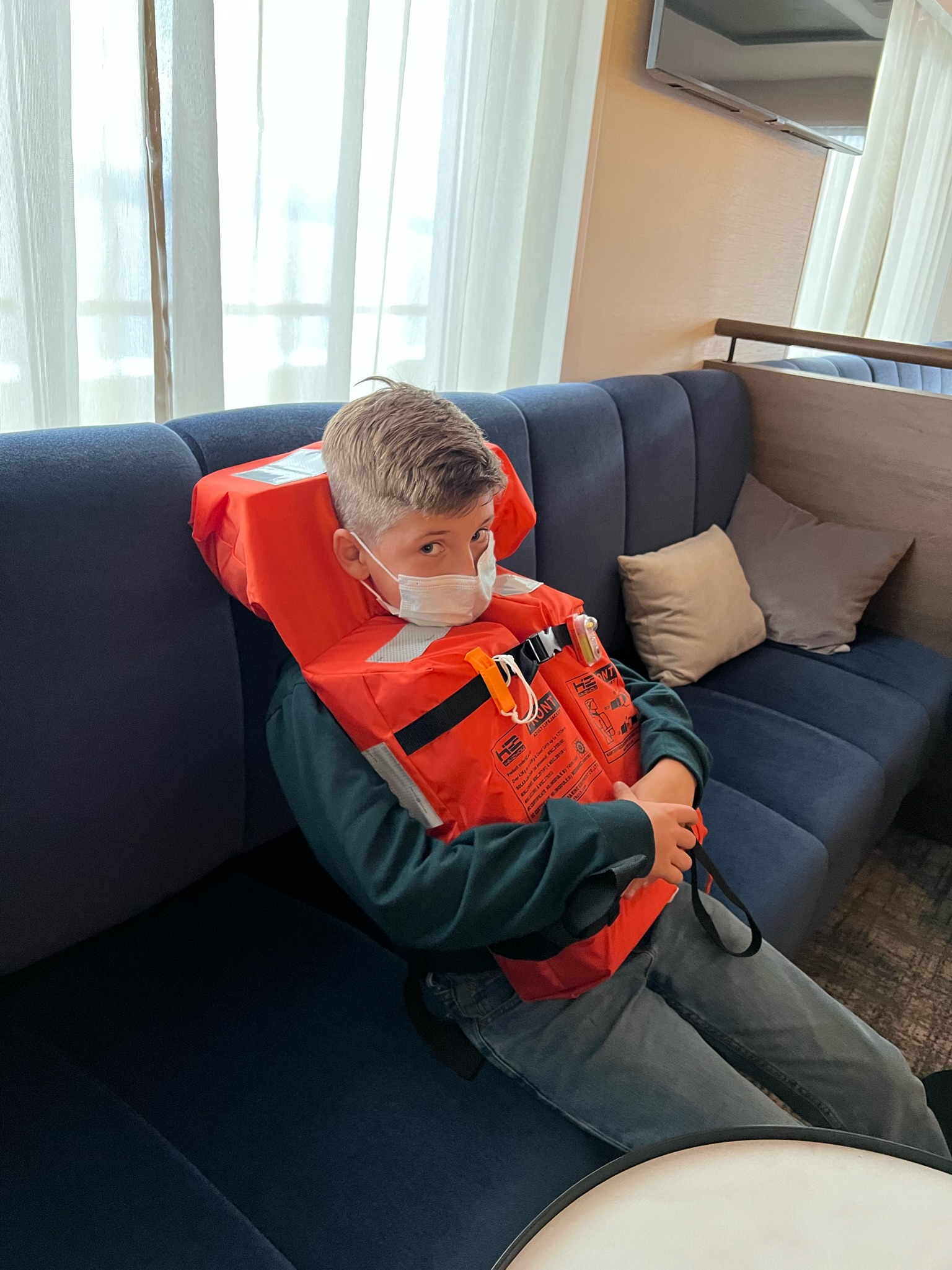
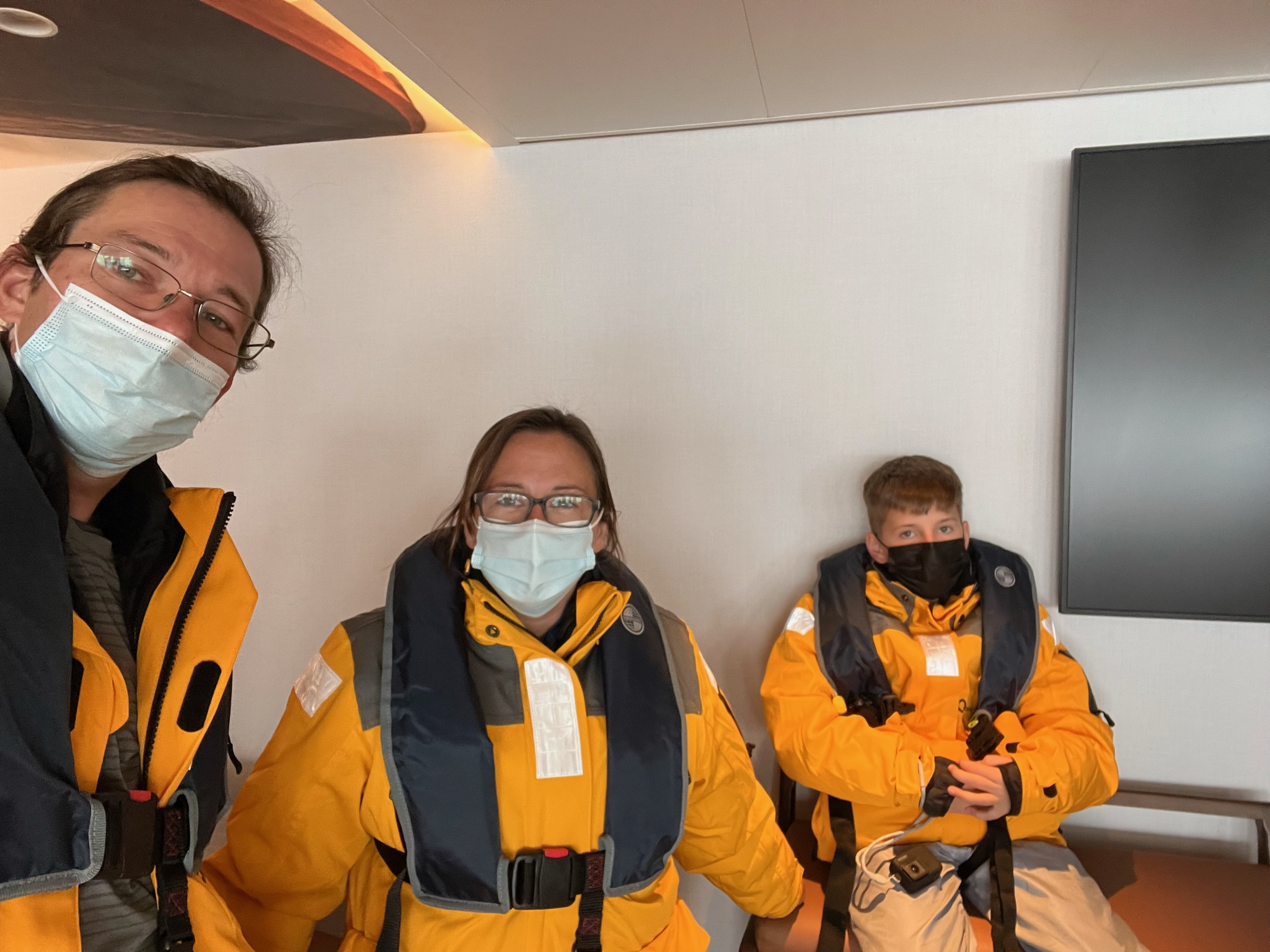
We made our way down to our room and found our safety gear in the closet just in time for the drill. With life jackets in hand, we headed back up to the Ambassador’s Theater where we were instructed on how to evacuate the ship properly, how to don our life jackets, where to go in the event of an emergency, and how to abandon ship if necessary.
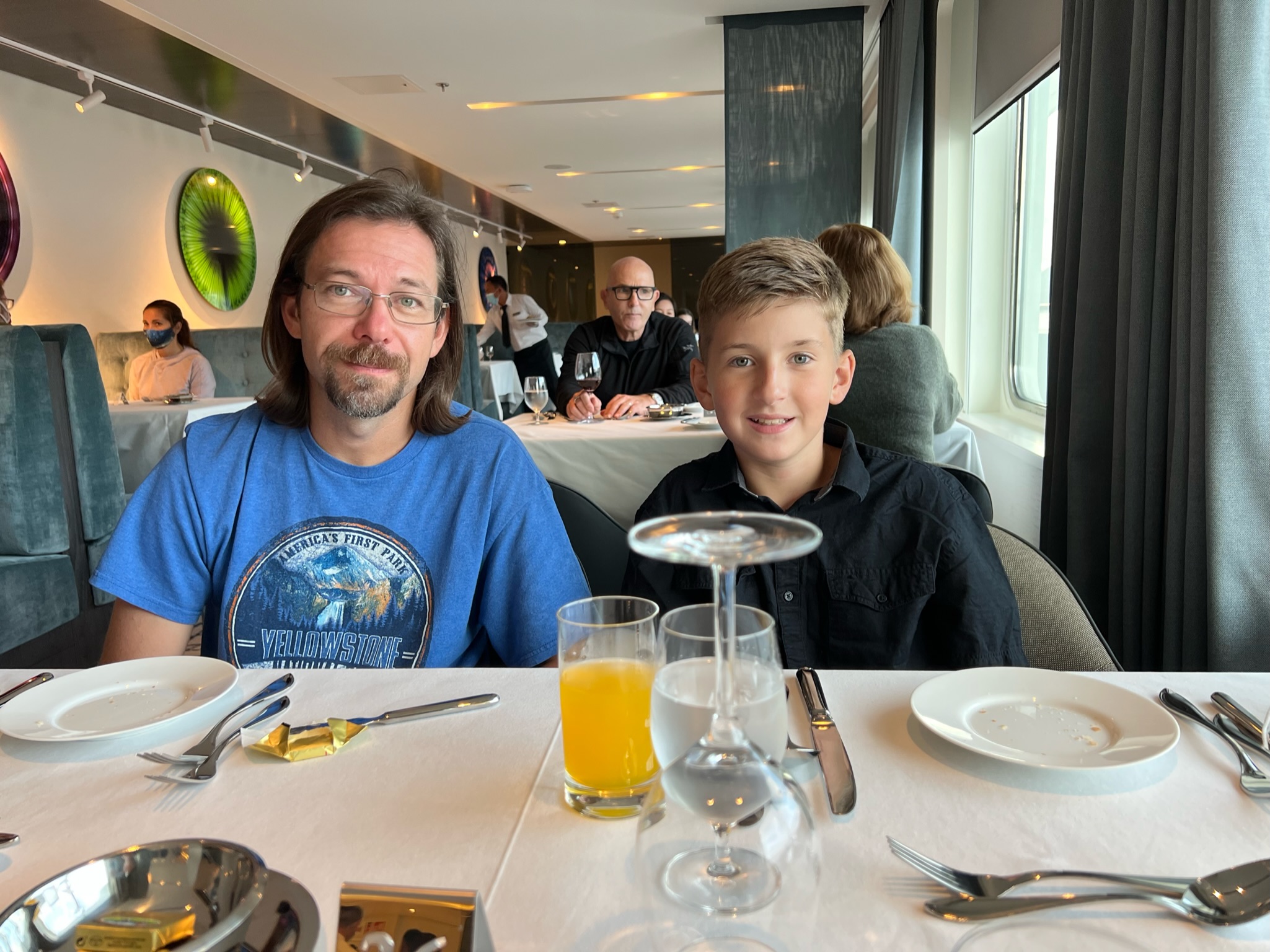
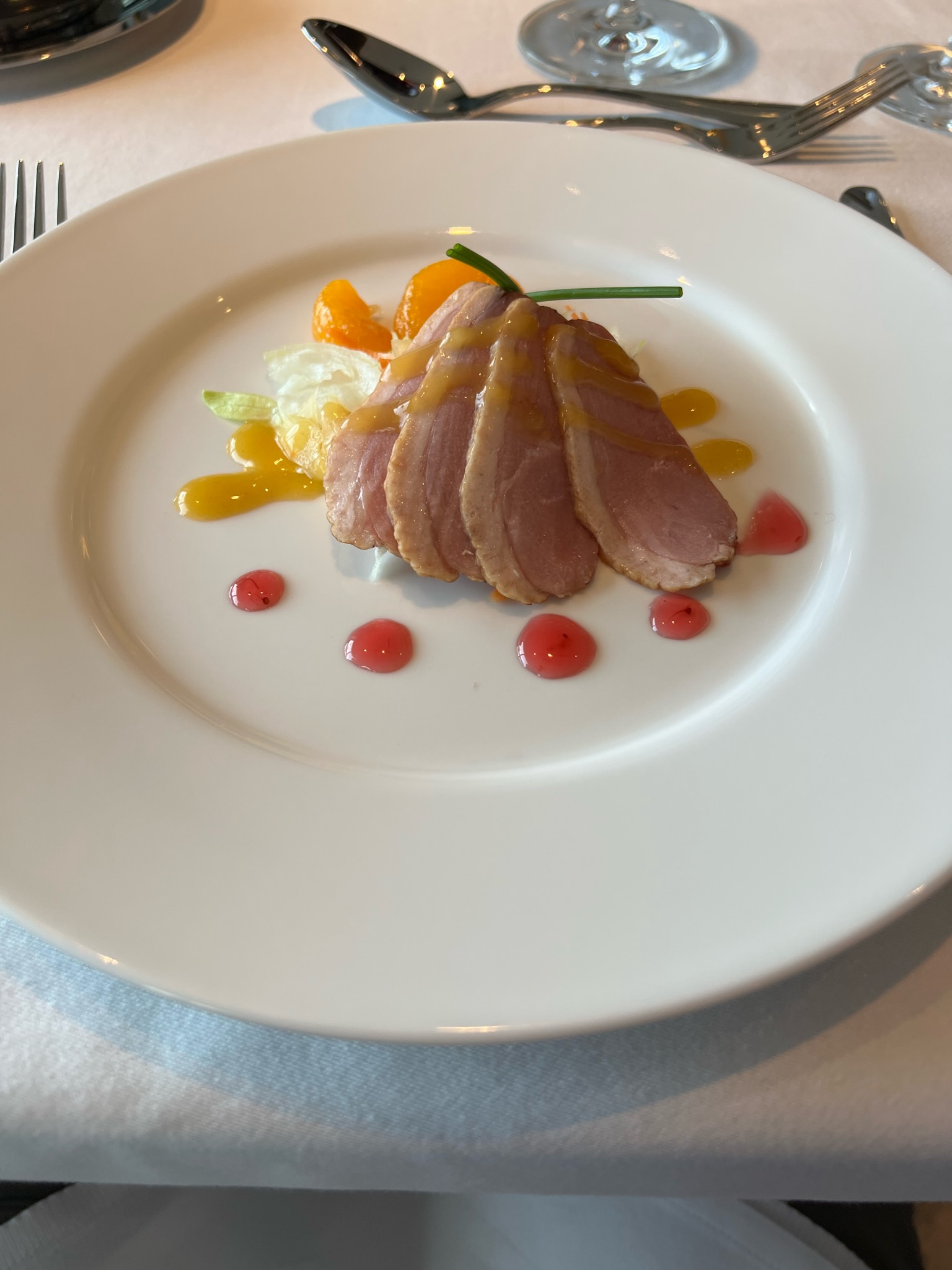
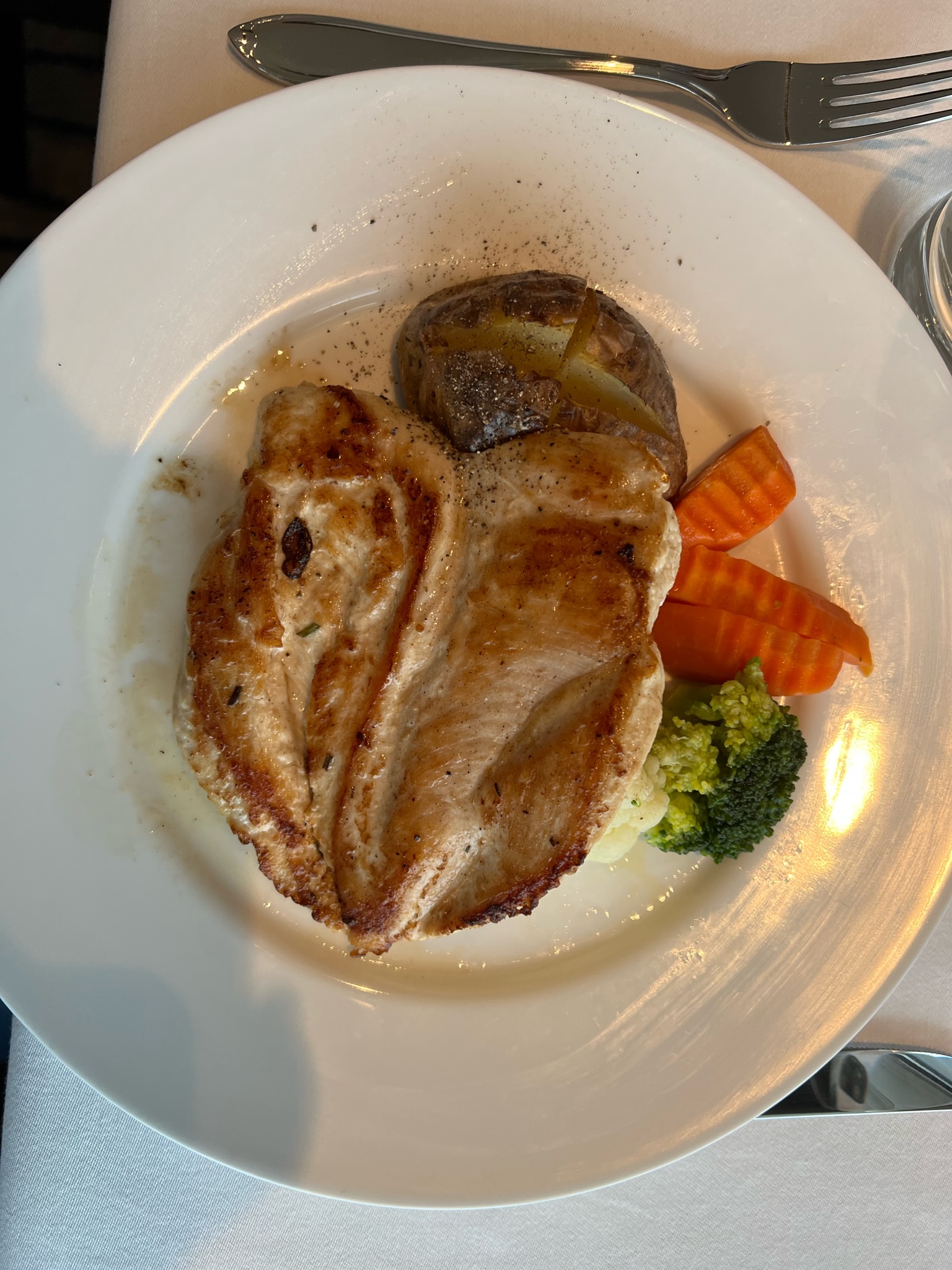
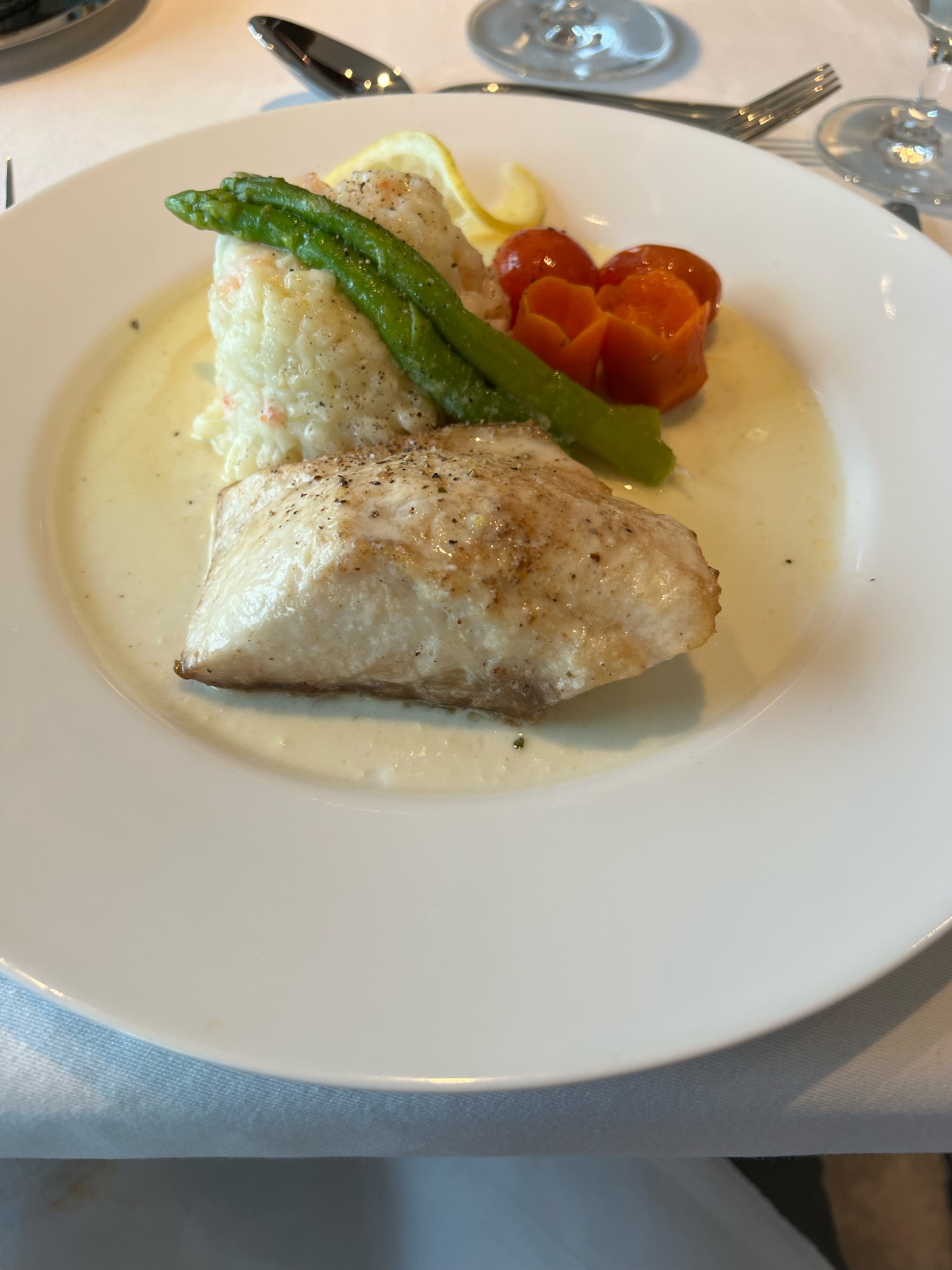
After the drill, we made it to our dinner in the Balena restaurant. To mitigate any issues with COVID, we were assigned to table 36 which sat by a window on the port side of the ship. The menu was extensive, considering where we were. Henry had salmon, I had roasted chicken, and Brian had a butterfish dish. Henry was thrilled that while taking our order, the server asked what he wanted for dessert. We haven’t had many desserts lately. The meal was very good, but we were exhausted and a little cold, and I was ready for bed.
Next we chose to go see the ship’s doctor about nausea medicine. We were still in the Beagle’s channel, and the water there was very calm, but by midnight, we’d hit the Drake Passage which is said to be the roughest waters in the world. Per Solan’s recommendation, everyone needed to get ready for the toss and sway of open sea because through the night as we were sleeping, the conditions would change. Dr. Sam was available to administer medicine to anyone who felt like they might need it. We each had a nausea patch to get us through the first days, but after that, we’d only have Dramamine. As a precaution, we went ahead and got some medicine from her just in case we needed something a little stronger.
We did meet one kid named Max while we waited in line. He was just a little younger than Henry, and he was part of a larger family that was on board. We didn’t really talk to them much, but he was as excited to see a kid as Henry was.
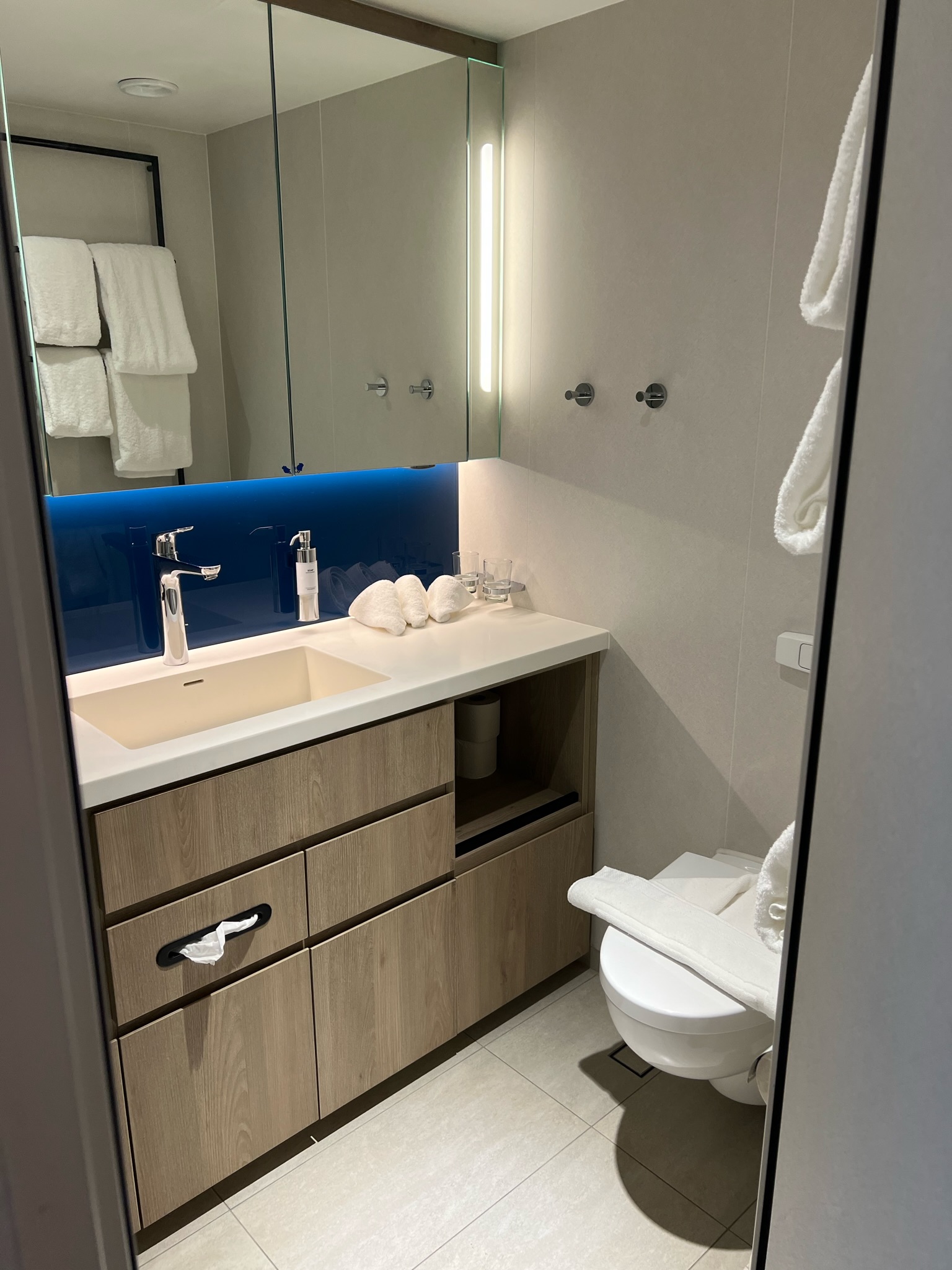
When we got back to the room, we found that Mark, our cabin steward, had come in, turned the bed down for us, and made up Henry’s sofabed. He tidied up the room and bathroom for us, and turned the lights to a relaxing low so that when we came in, the room was very warm and inviting. While I was in the bathroom getting ready for bed, Henry happened to look out the window and see a group of dolphins swimming along side the ship. He and Brian watched them for a minute or so, but I missed them by the time I got to the window.
We have crawled into our very comfortable beds, and the exhaustion of the day is catching up with us all. I don’t think we’ll have any trouble sleeping tonight.
Day 3: December 24, 2021
We woke up early and made it up to Deck 5 for breakfast by 7:45. All of us were doing pretty good with the nausea, but we could definitely feel the motion of the ocean. The boat was quite stable, but you could feel the toss and sway as we rode the swells. We didn’t trust ourselves to walk very far without holding a handrail, and going up and down stairs was a bit of a challenge.
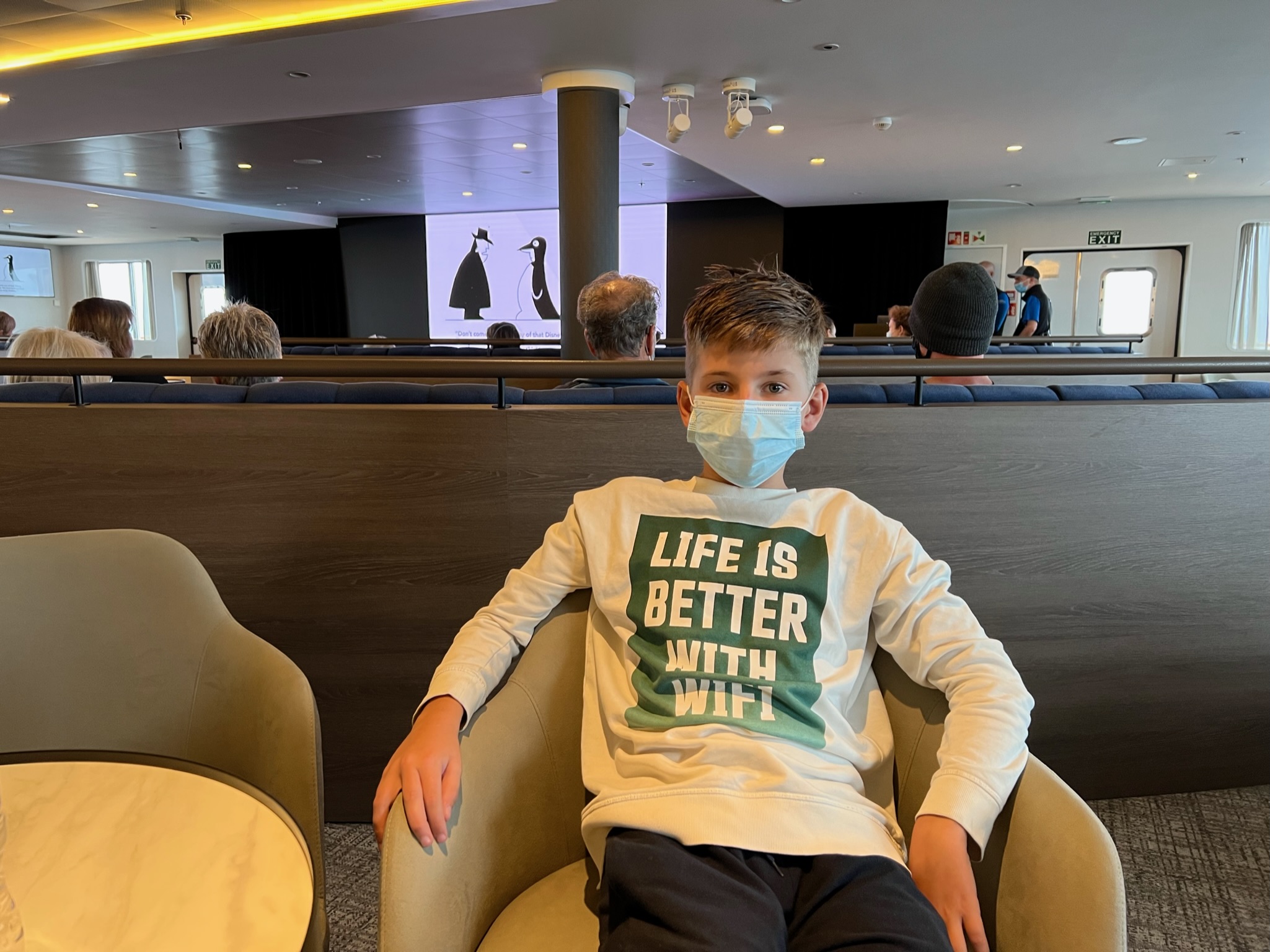
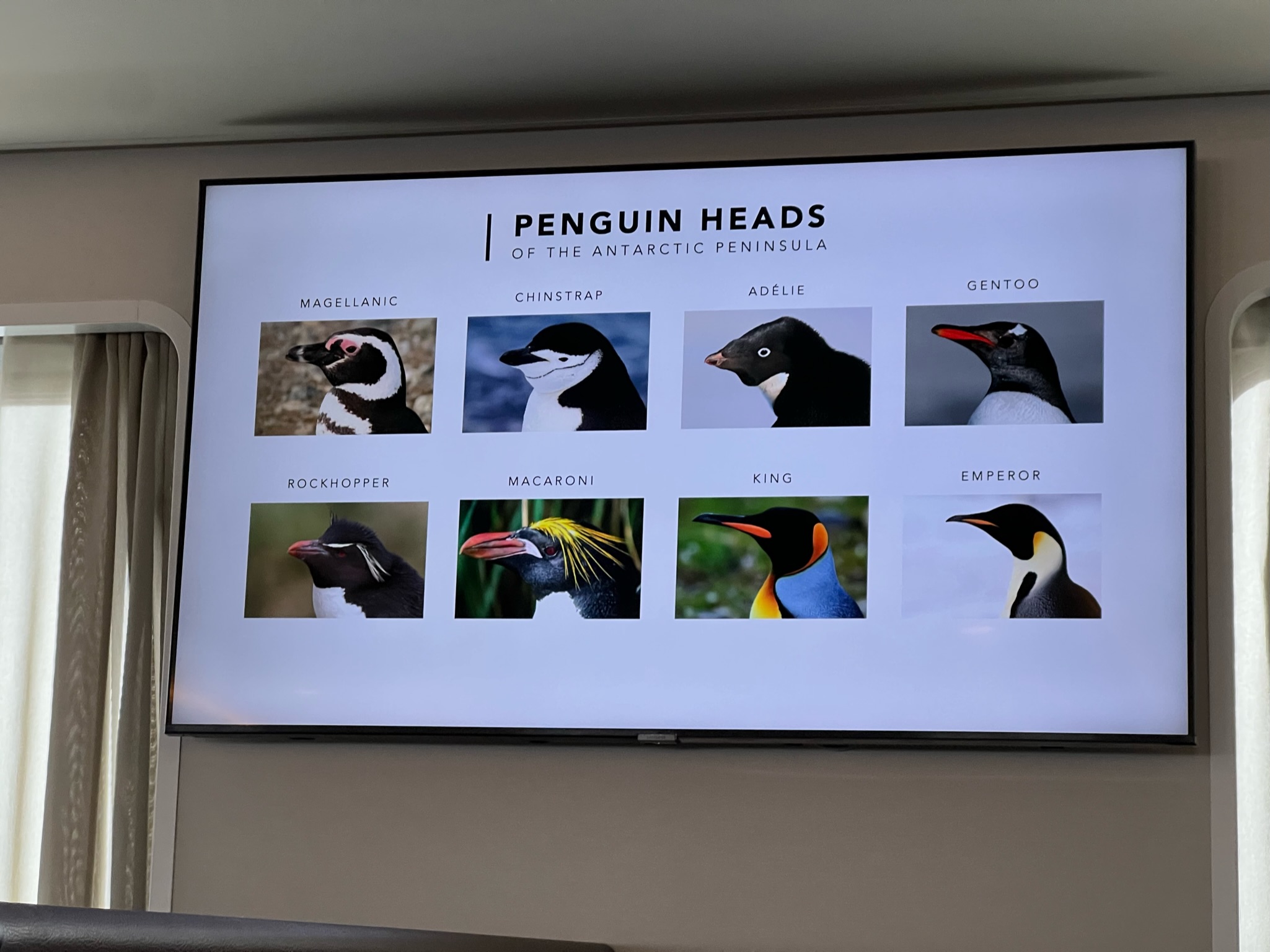
After breakfast, we made our way to the Ambassador’s Theater again for a talk on penguins from Noah, the ship’s ornithologist. He was engaging and amusing, and we really enjoyed his presentation. We learned a lot about the 8 different kinds of penguins we might see on the voyage, and I began looking forward to the other presentations.
We went up to Deck 7 to the Panorama Lounge to get information about joining the Sea Kayaking excursion. It would have been fun, but Henry wasn’t quite old enough to participate, and it was very expensive to do anyway. We opted to go back to our room and rest instead.
Shortly before lunch, we watched another presentation on the Cryosphere from the comfort of our room. This one was about glaciers and how they are created, and it was given by Austin, a guide and the ship’s geologist. We’d had the luxury of learning about glaciers as we visited The Glaciers National Park in Argentina. I’m sure Austin had gone into better detail, but my nausea medicine, exhaustion, and lack of rest got the best of me. I fell asleep.
After lunch, we went to a mandatory briefing on the Zodiacs. Since there aren’t any docks in Antarctica, if we want to get off of the boat and explore the area, we have to do it by boarding these smaller inflatable boats. They are very navigable and can get us all the way to shore. The more we learn about them, the more fun they seem like they will be.
After that talk, we went through some information on biosecurity procedures. Quark is part of the IAATO, an association that helps to protect Antarctica. To protect the ecosystems, they are very careful that we don’t accidentally introduce any non-native plants, animals, or bacteria to the land. To do this, they’ve implemented gear cleaning procedures for us to follow every time we get on and off of the Ultramarine. After the presentation, we went back to our rooms and waited for our turn for personalized training. When it was our turn, Quark staff members looked over our gear with us and helped us clean it for our first visit out.
When our gear was ready, we signed up for a Zodiac group (we joined the Whale group) and received our locker numbers. To get on the Zodiacs, we have to go down to the ready room on Level 2. We can store whatever gear we want in our lockers. From there, we can don the last of our equipment and head out to our boats. When we get back on the Ultramarine, we can leave our big rubber boots and jackets in our lockers if we’d like. It keeps us from having to store our wet jackets and muck boots in our room.

Just before dinner, we participated in a recap of the day’s activities and a briefing of what to expect the next day. The plan for Day 4 is to complete our passage on the Drake and potentially do a ship cruise into Deception Island. Deception Island is an active volcano, and the caldera holds a lake of sorts. Because one side of the caldera is collapsed, you can actually sail through a narrow channel and sit in the middle of the volcano. Sounds like fun!
On the way back to the room we signed up for a gym slot and a sauna slot. We wouldn’t normally have to do that, but with COVID, they are limiting the number of guests that could use these areas at any one time. Henry will need to burn off some energy, so hopefully we’ll be able to use the gym frequently while we are on board.
But for now, it is time for me to dream about the warmth of the sauna.
Day 4: December 25, 2021
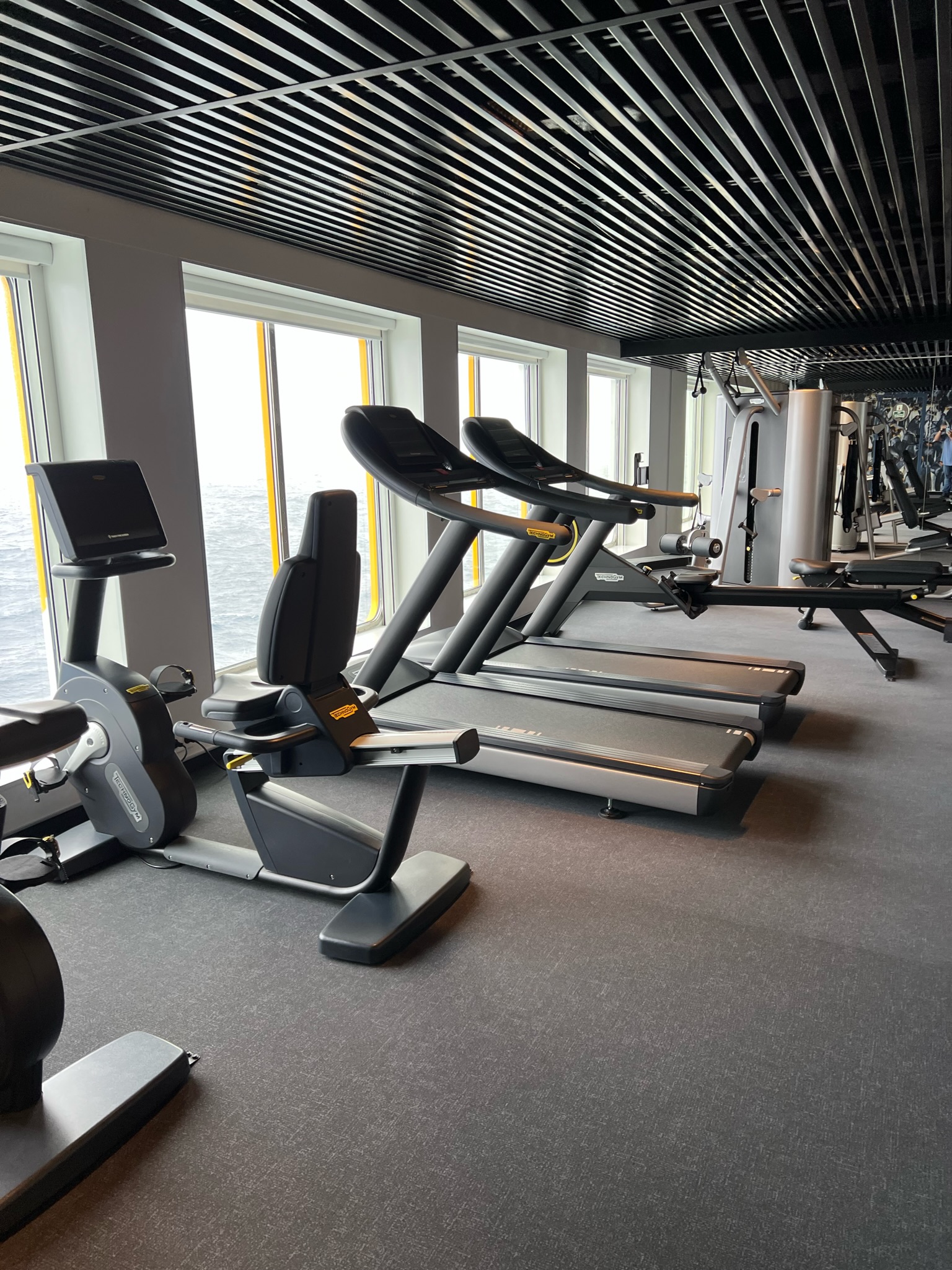
We woke up early for breakfast, and after we ate, we headed to the gym. In case you haven’t tried it, let me tell you that walking on a treadmill is quite a difficult task when you’re on a boat that is swaying back and forth.

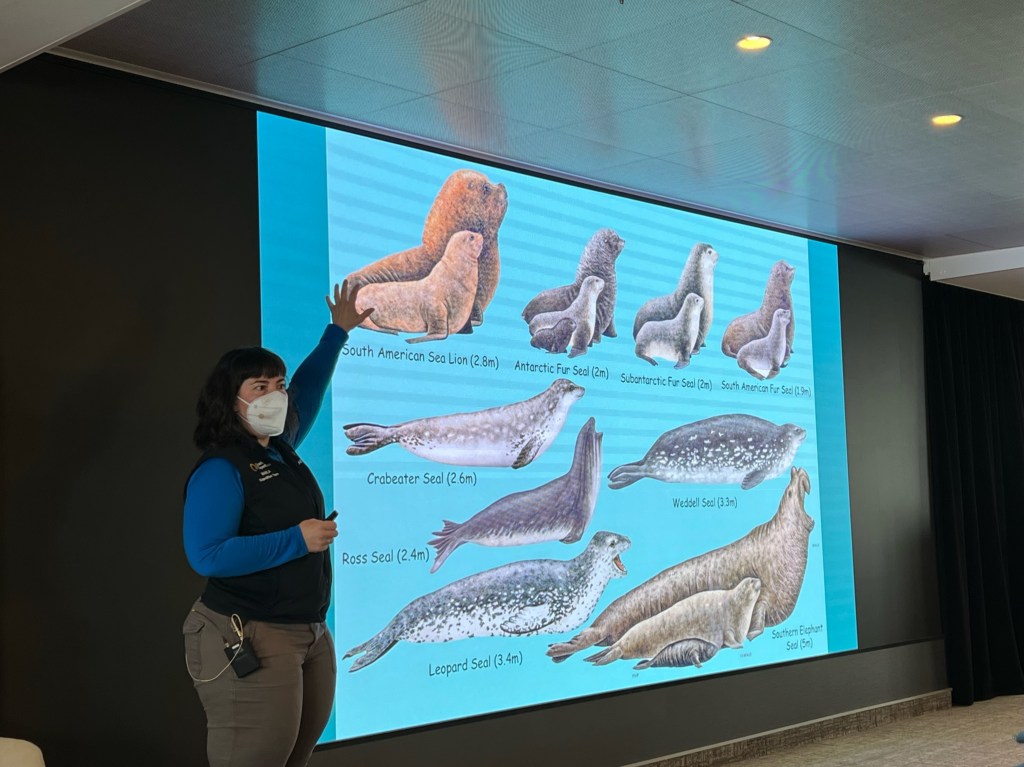
We went to a presentation from Marla, a guide and our ship’s marine biologist, on seals. It was very educational and entertaining. The presenter told us about the 5 types of seals we might see on this trip and generally what the differences were between the types. I was amazed at just how big some of the seals could be. A male Southern Elephant seal, for example could get up to 16’ long, and they can weigh as much as 8,000 pounds.
After that presentation, we went to the Polar Boutique, the Ultramarine’s gift shop. Everything was very expensive, so we browsed and then headed back to our room empty-handed. We got our swimsuits on for our visit to the sauna. While we were waiting, we watched a second presentation from our cabin from Phil, a guide and the ship’s historian, on how Antarctica was discovered. Having never been much on history, we found this one a little boring, and we got distracted. We turned it off just in time to head up to deck 7 for our 11:45 sauna appointment.
The sauna was extraordinarily hot. Henry and I couldn’t take it long, so we went out to the spa and relaxed out there instead; Brian toughed it out for much longer than us. In my mind, the sauna was going to be so relaxing. It turned out to be a little miserable. But we did it, and when we left the Spa, we changed our clothes again, and then we stopped for lunch.
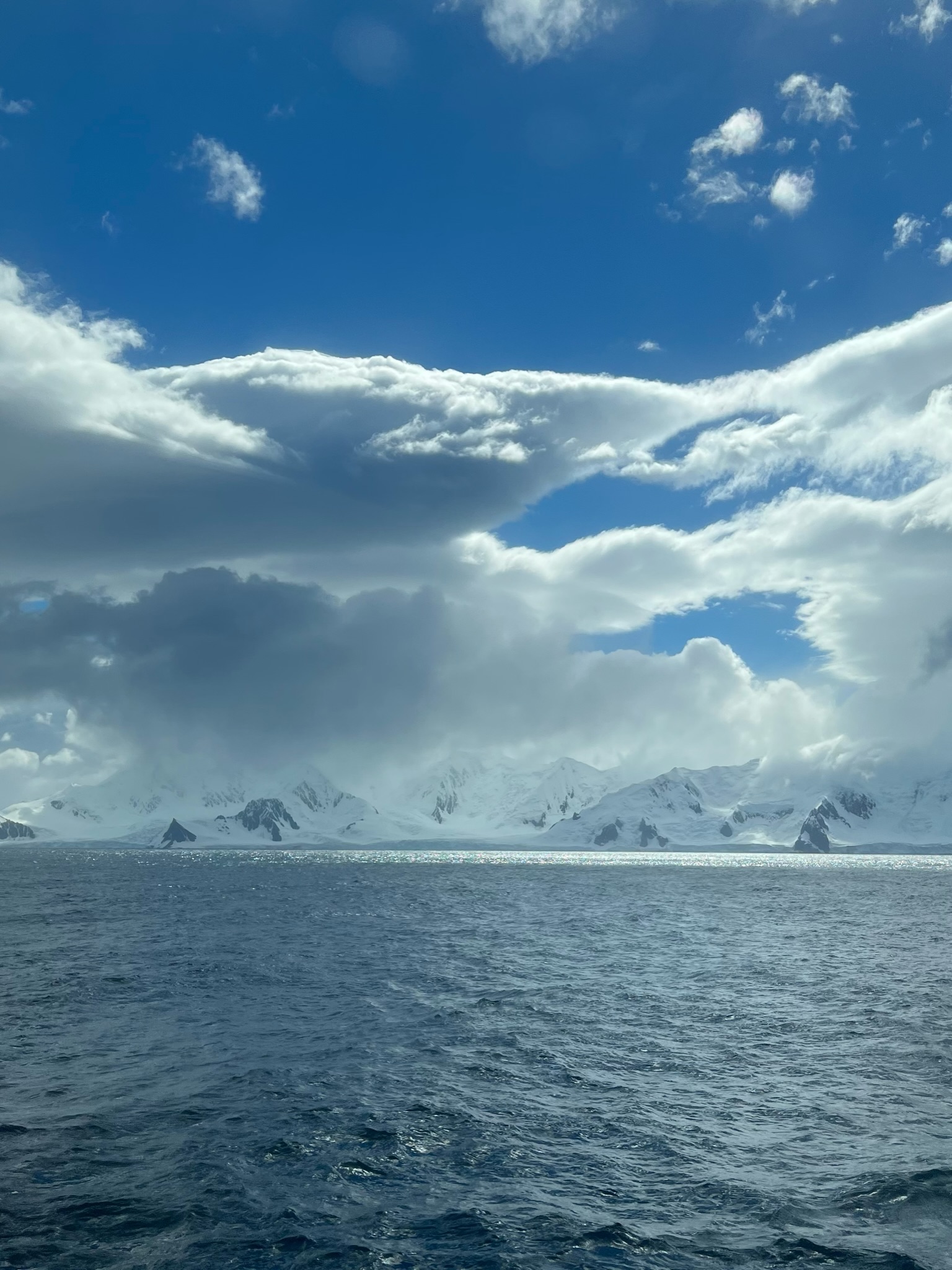
While we were eating our lunch, the announcer came over the intercom to let us know that we were beginning to see the South Shetland Islands come into view. He also said that they were seeing penguins in the water and blows from whales. We eagerly watched out the window by our table, and I saw a whale that was only about 50’ from the boat. It was awesome! Our server, seeing our excitement, brought our desserts to us quickly so we could eat and get outside to watch for more. On deck, we were able to see another whale blow and peek out of the water. We saw the whale tail and everything. I really wanted to stay there and look for more, but it was just so cold we couldn’t take being outside for very long.

Later in the afternoon, we had two mandatory activities to do with our Zodiac group. The first was that we had to perform another round of PCR testing. We were given our nasal swabs, and we performed the test on ourselves while we were observed by Quark staff. It stunk to do this on Christmas, but it had to be done. At least they were the less invasive tests, so it didn’t feel quite so awful.
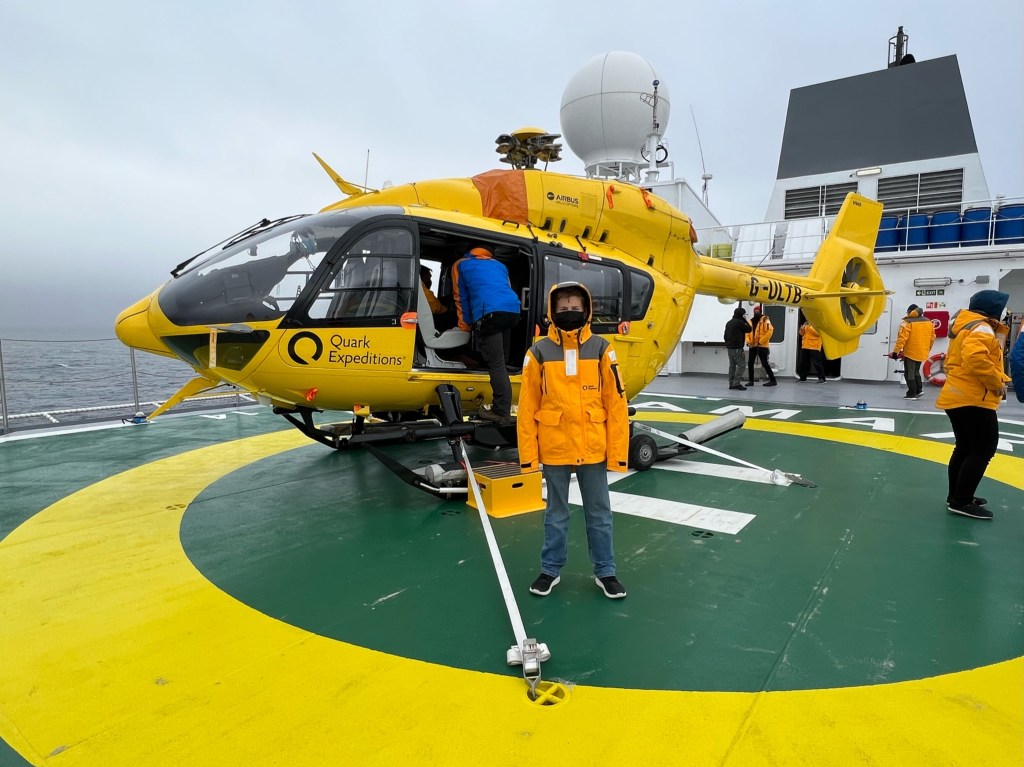
After that, we got to go up to the helicopter pad with our group to see the helicopter. Colin, a guide and a leader in the Helicopter team, had given a presentation after lunch about helicopter safety. To help familiarize us so that we’d know what to expect when we get to go for our ride, they took us to the deck with it completely idle so we could look at it up-close. We learned when, where, and how to safely walk around it with the blades turning, and we were able to climb inside and buckle ourselves up. By doing this today, hopefully we’ll all be more prepared when we actually get to take our ride. One of the pilots, Steve, walked us around the chopper and taught us a few things about the equipment. They are very proud of their helicopter, and it seems like they should be. We are all really excited about the helicopter ride!
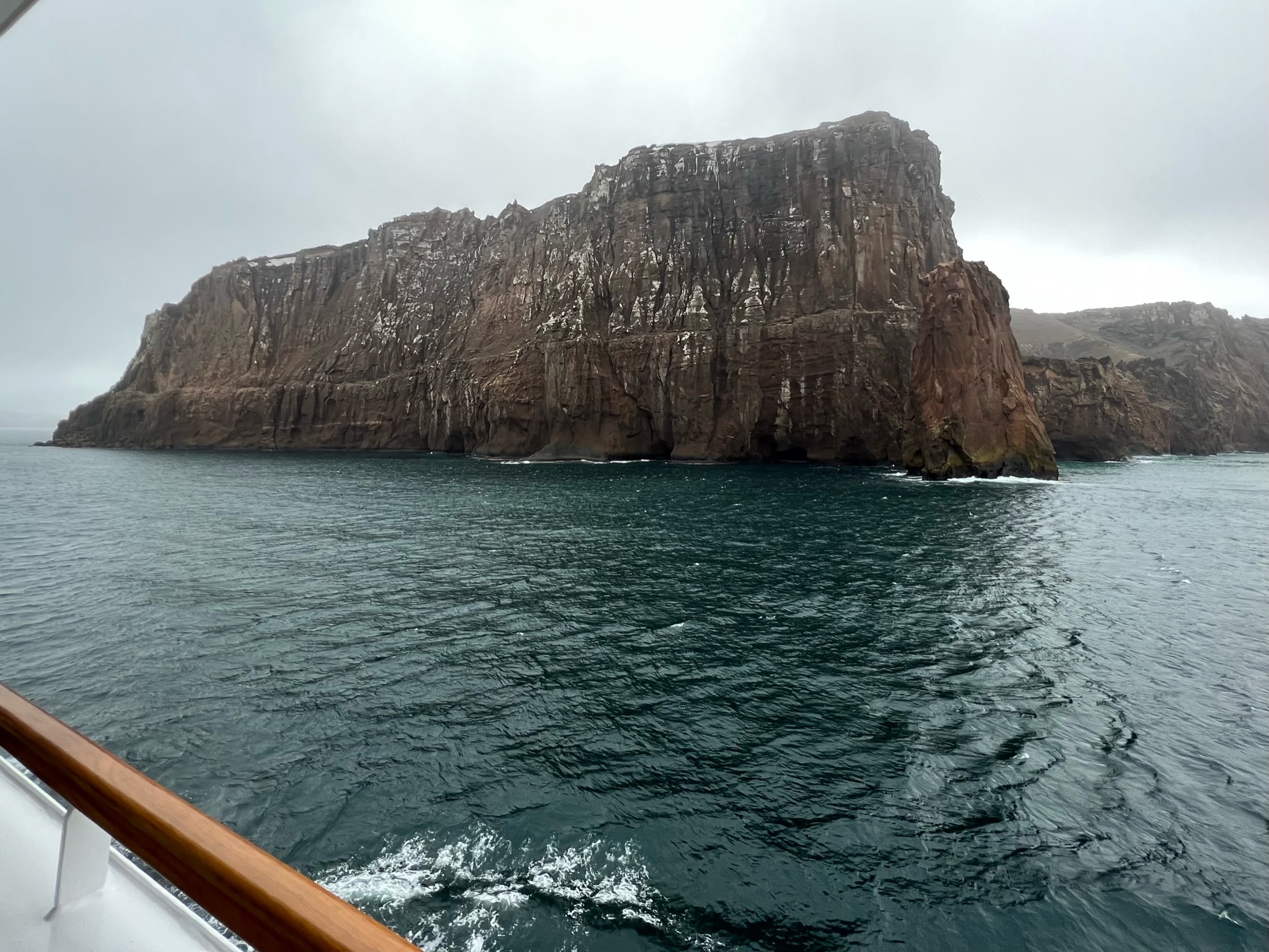
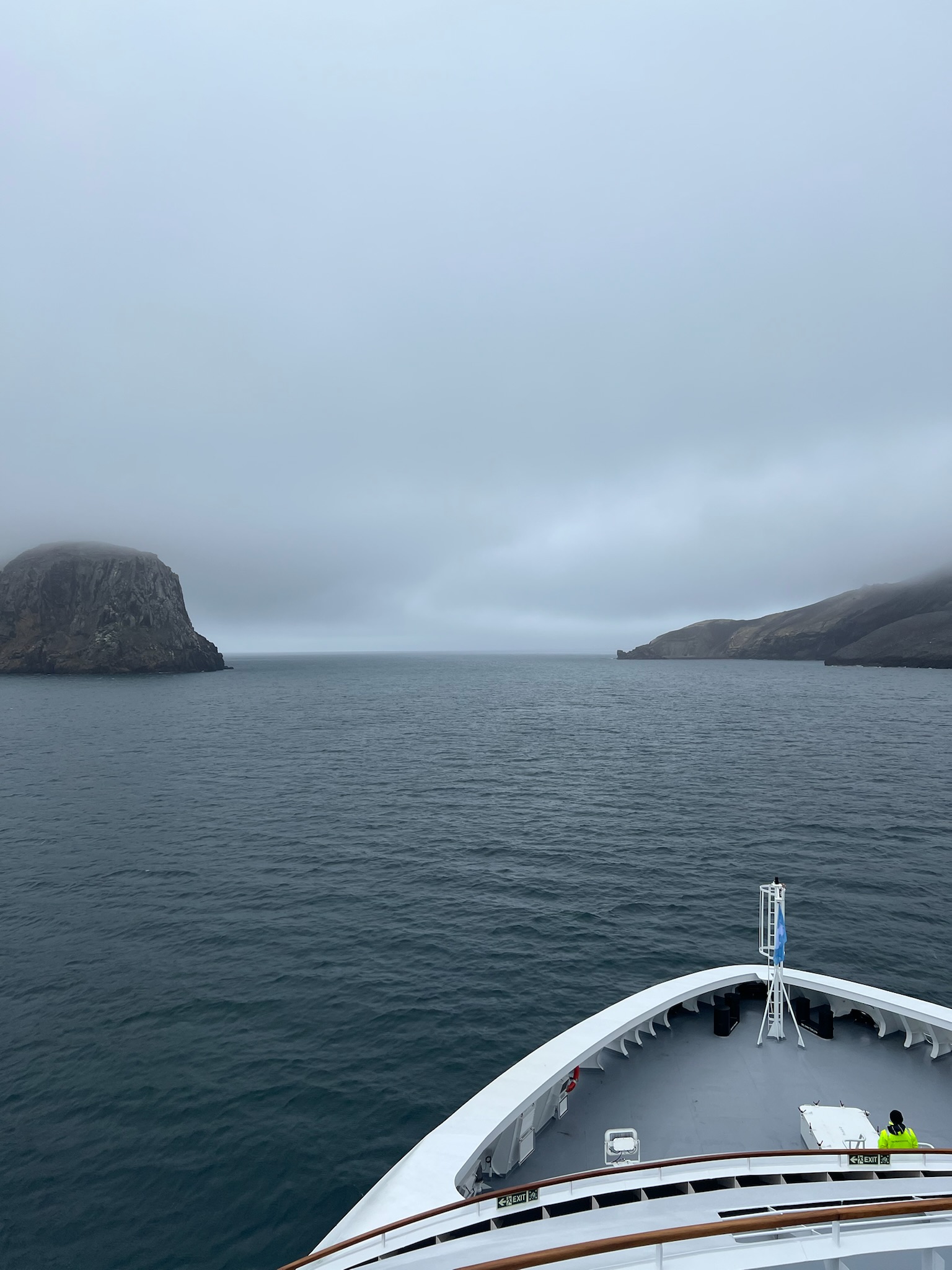
We made it to Deception Island before dinner, and although we didn’t get off the boat, we enjoyed the pitstop. It was much larger than I expected. I imagined a small lake where the boat could barely get turned around, but that was not the case. It would actually be easy to miss that you were in a volcano, until you begin to see the steam coming up through the beaches. Hopefully tomorrow, we will get to get off the Ultramarine on the Zodiacs for the first time!

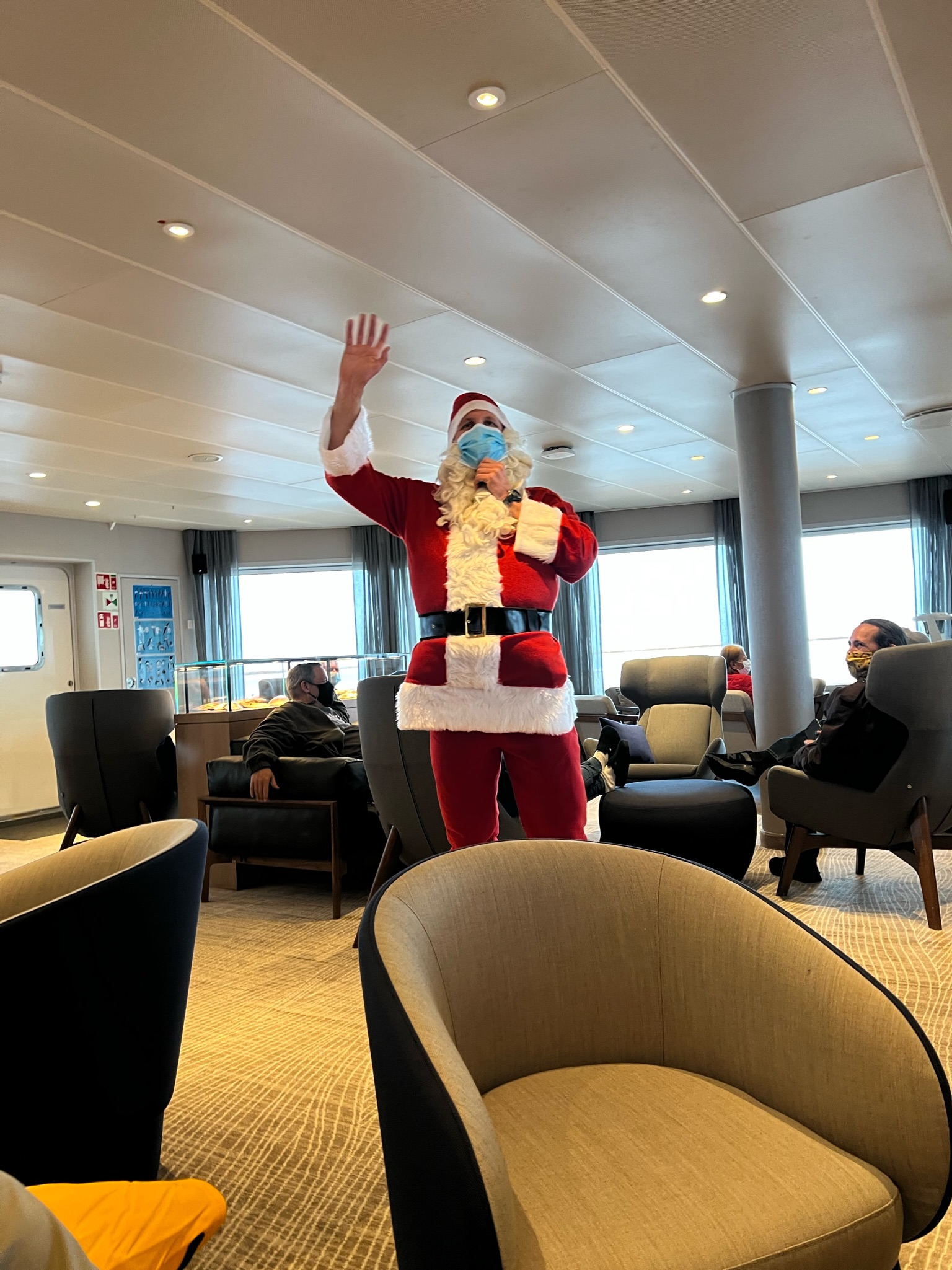
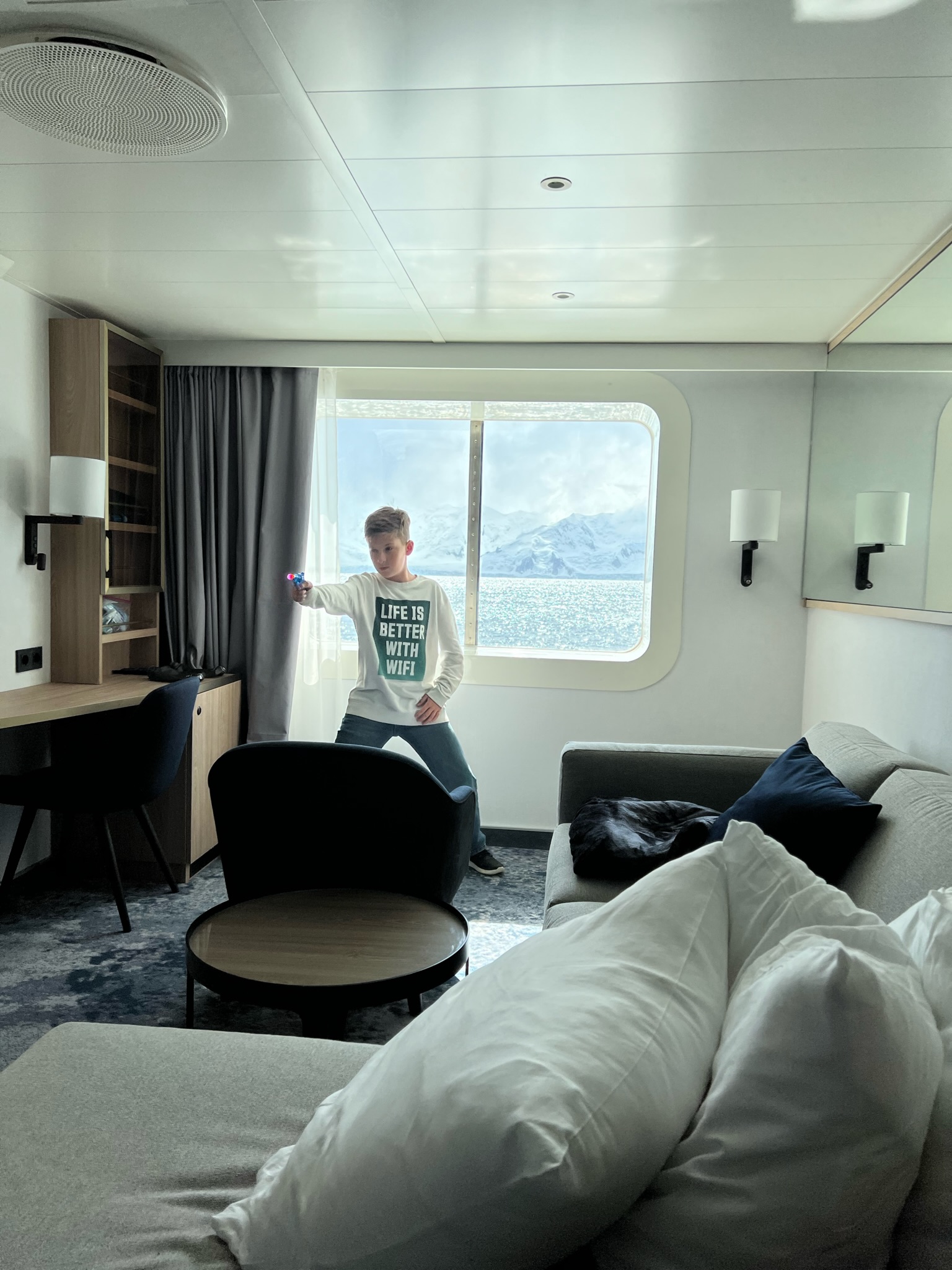
This was a strange way to spend our Christmas this year. Although we got to talk to our families today, it wasn’t the same, and we have missed them terribly. We all had simple Christmas gifts of chocolates and candies, and we got Henry a fidget toy and a $2 toy suction cup gun with targets. It’s the simplest Christmas we’ve ever had, in ways. We’re trying to find the joy in that. I would be lying if I said I haven’t missed the Christmas carols, the trees and decorations, and the chaos that generally accompanies this time of year though.

Day 5: December 26, 2021
We woke this morning and had a good breakfast in the Balena restaurant. They are still talking about doing an excursion today, so after breakfast, we came down to our room to try on all our layers. We wanted to make sure we were dressed appropriately for the environment, so fully dressed, we went out on deck and found the windiest corner we could. All in all, we felt like we were going to be okay. We went back to our room to await our turn to load onto the Zodiacs.
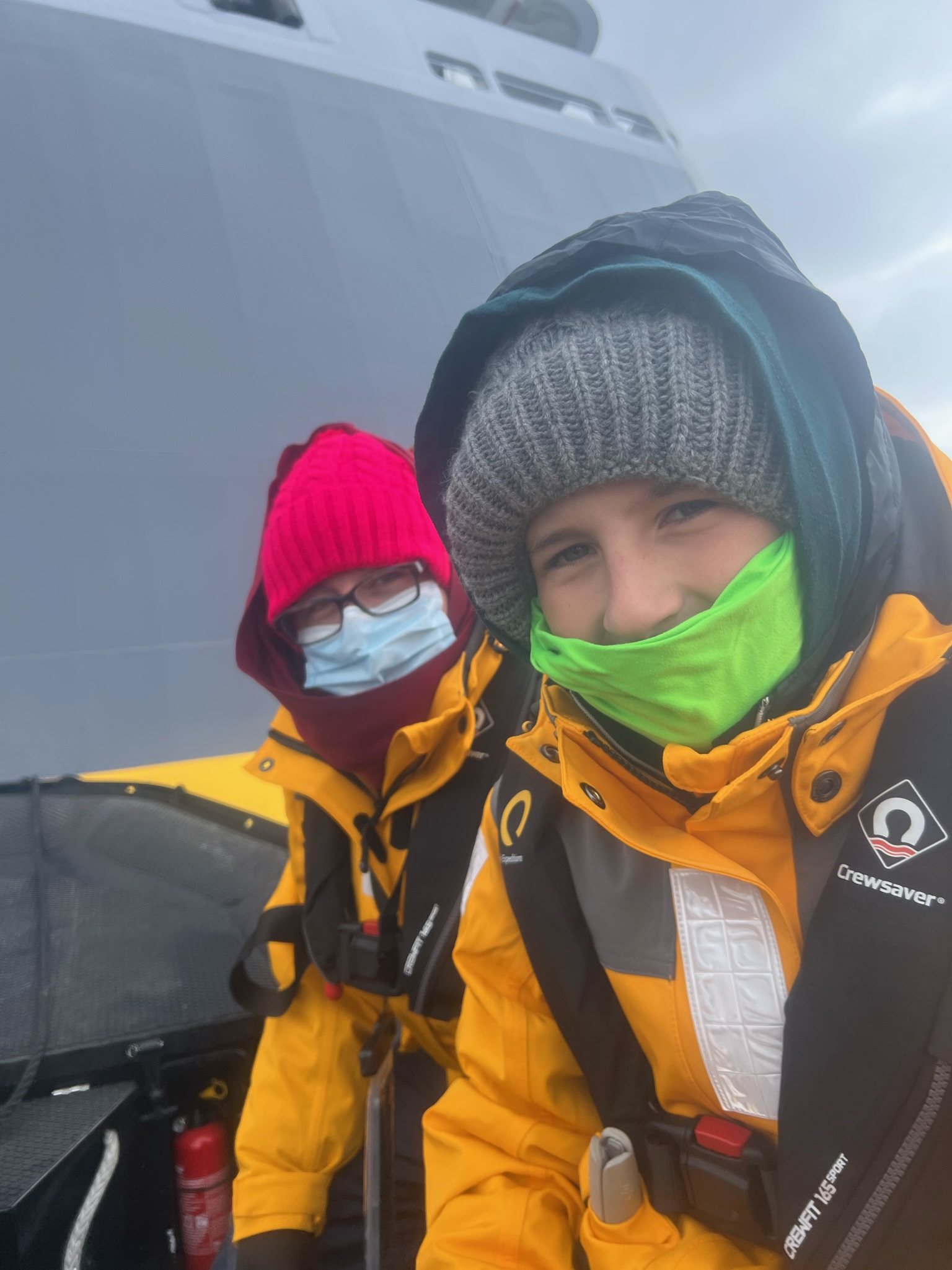
When the Whale group was called, we finished putting on our gear and headed down to the ready room. With all our gear on, we stepped aboard our Zodiac with Ellie, our guide. There were only five guests on the boat. Ellie took us on a tour of Cuverville Island. We saw lots of penguins swimming in the water, and several different colonies on shore. The penguins are quite good swimmers, and at the surface, they pop up and out of the water like a dolphin does. It’s adorable! As we weaved through the floating ice, we also saw the massive head of a leopard seal hunting for his lunch (an unlucky penguin). After an hour or so of exploring, we made it to the island to begin our hiking there. The guides had found a good launch point, cut stairs into the snow for us to safely climb up, and marked off a few paths for us to follow. If you stayed on the path, you could walk fairly easily. If you took one step off the path, you sunk down in about 2’ of snow.
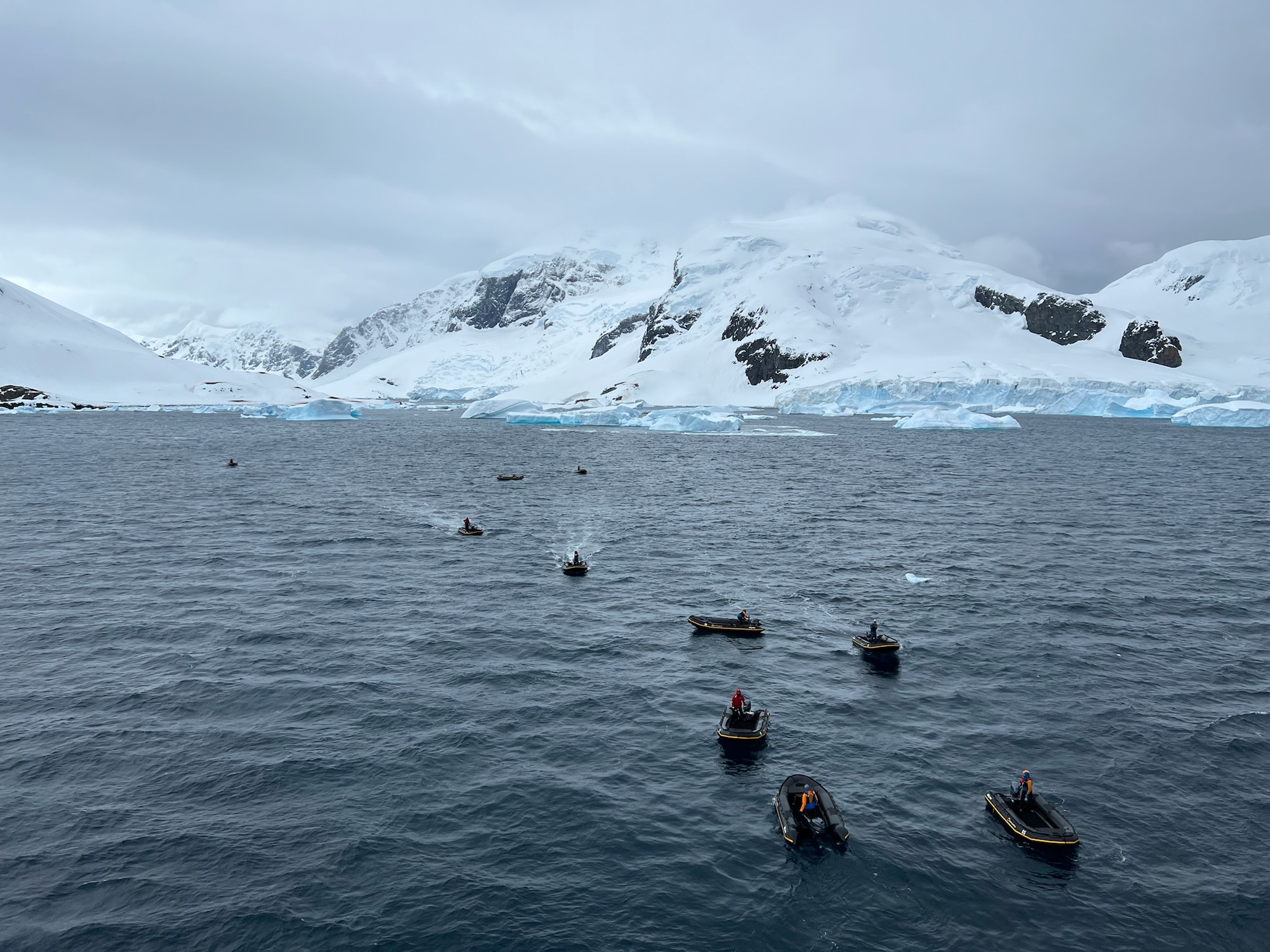

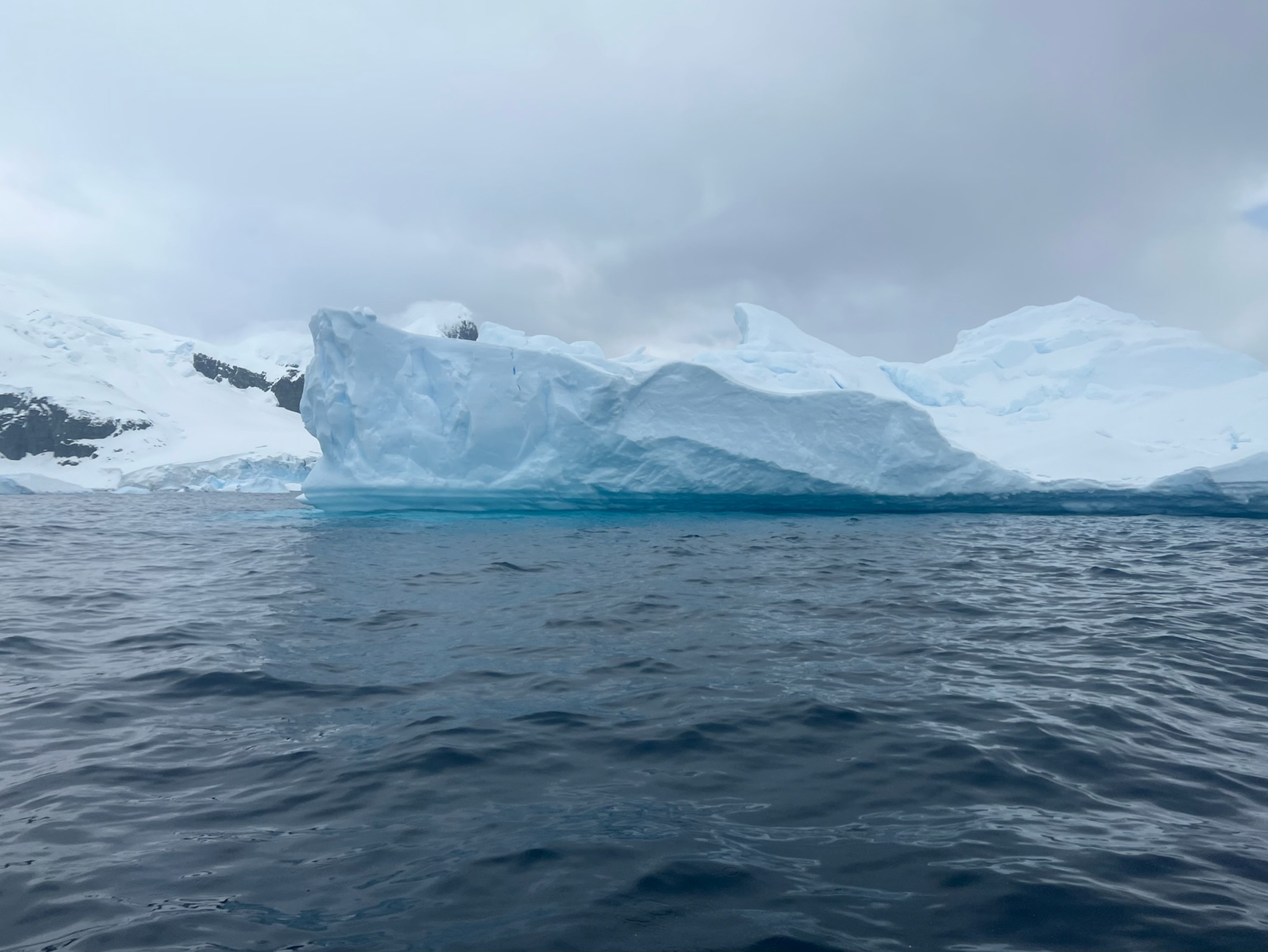
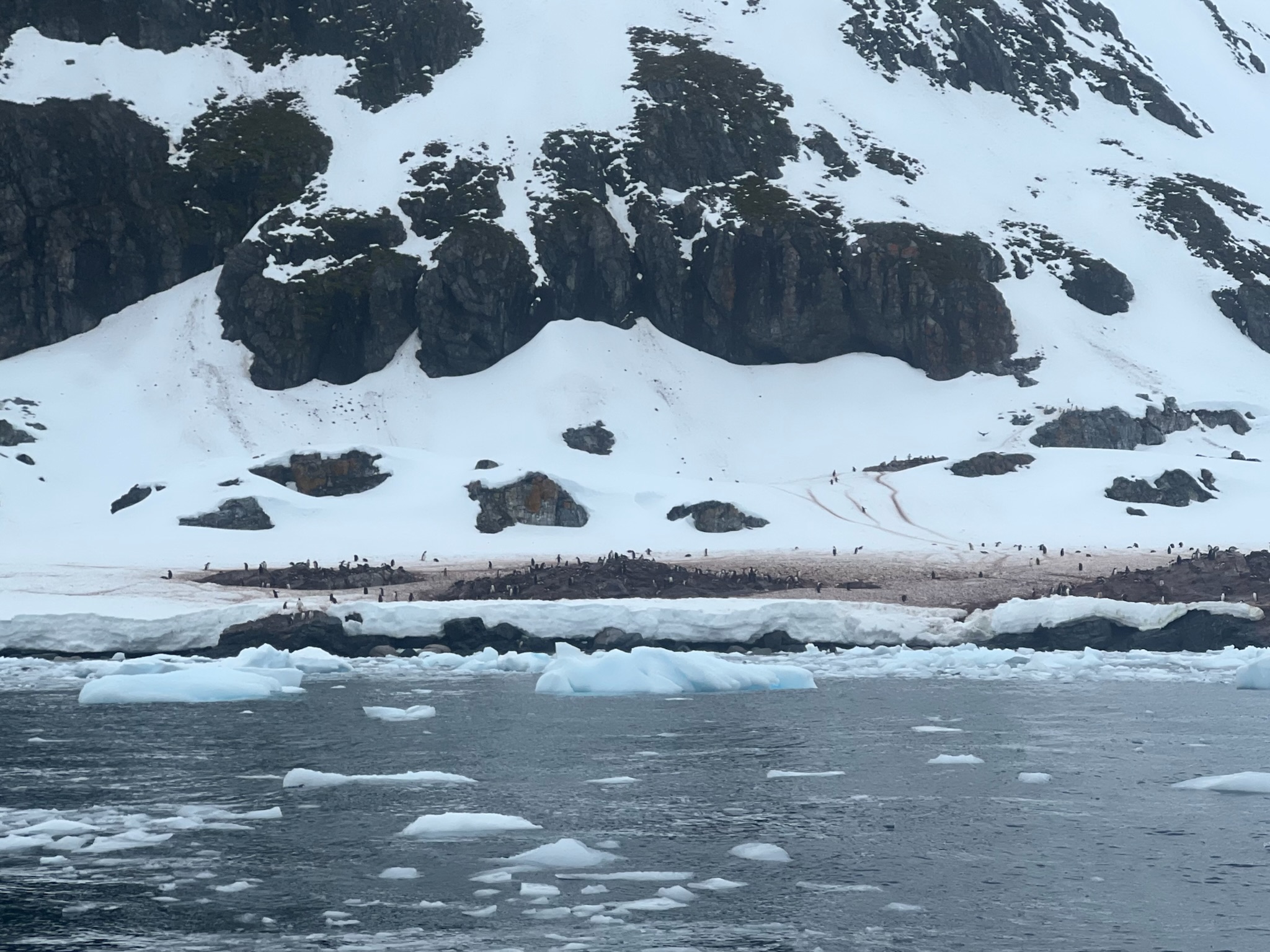


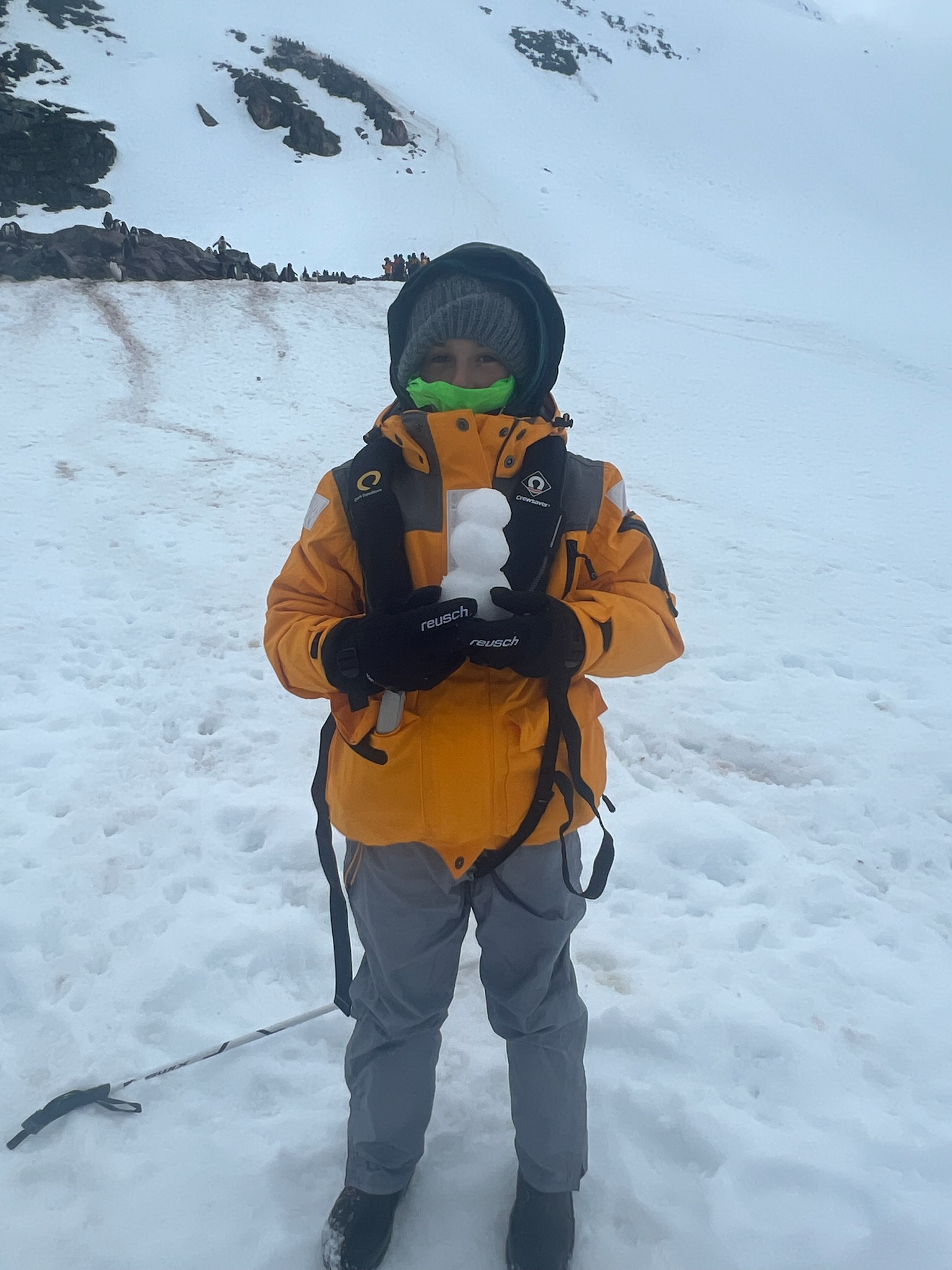
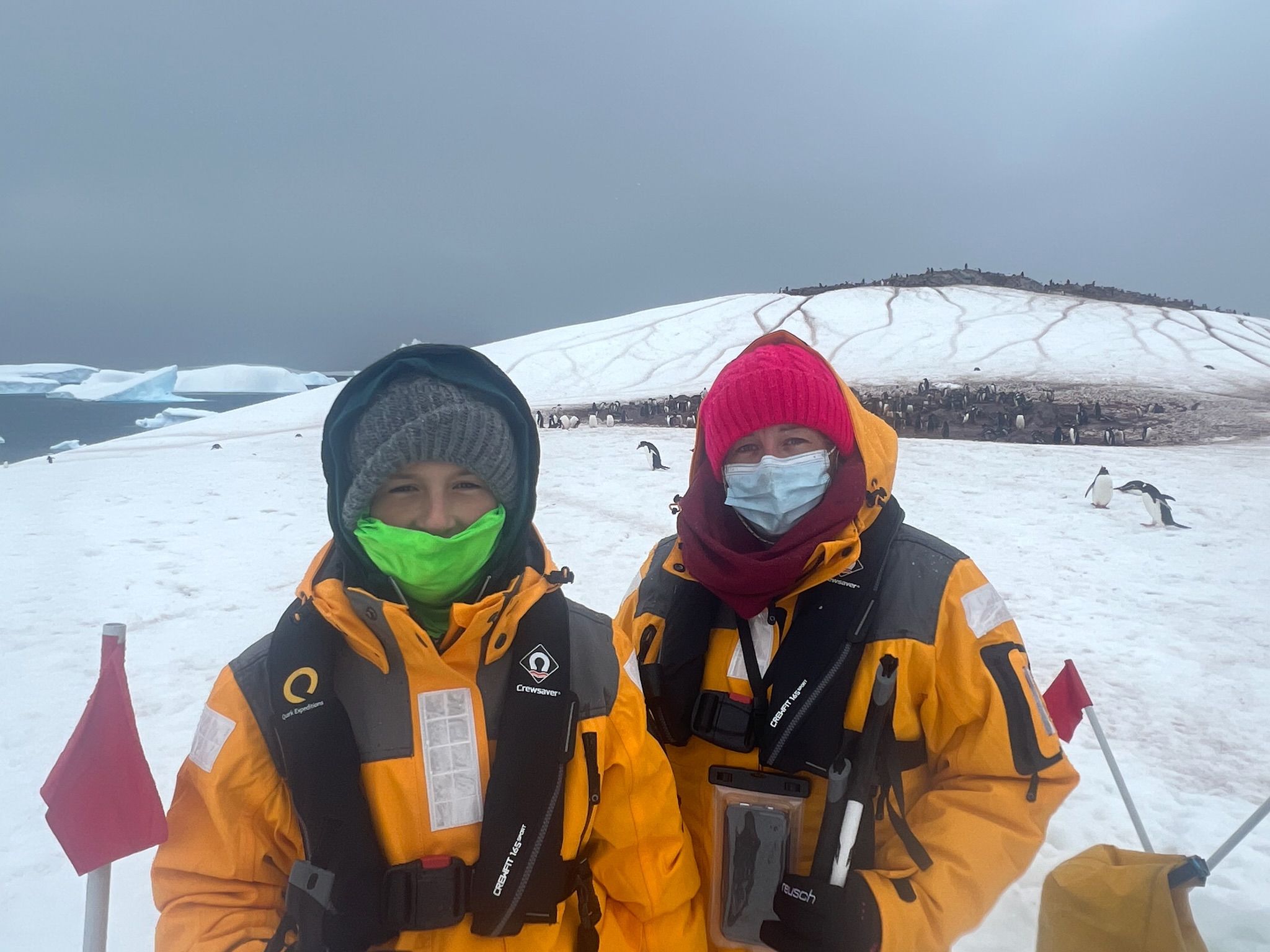
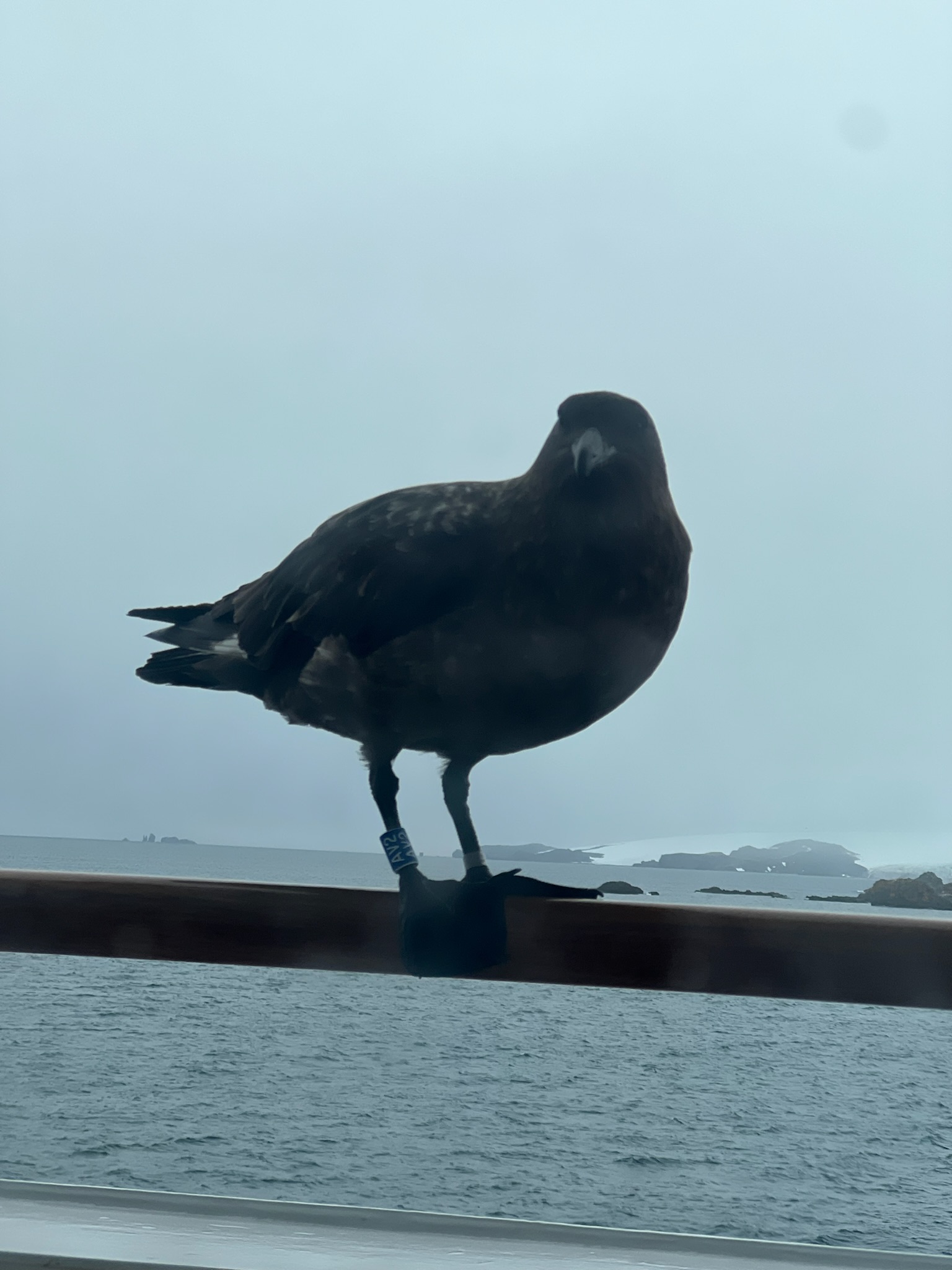
The penguins were adorable to look at, but they smelled terrible. From afar, you can tell if you’re near a colony because you’ll see pink tinted snow. The penguin diet is made up primarily of krill, a red colored shrimp like creature, and the pink tinted snow is from the penguin guano (poop). The penguins walk around mostly covered in this pink mess. Some are clean, and I presume its because they just finished their swims. The penguins were really cute, all stench aside. They waddled around fairly clumsily, and they’d stop and slide on their bellies occasionally. This is their breeding season, and there were quite a lot of penguins sitting on their nests. They build the nests out of pebbles that they find, stacking them up and around them. While we were there, the guides said that there was quite a lot of pebble stealing going on; apparently the penguins find it easier to take neighbors’ pebbles than to find their own. I wish I could have recognized that. We also saw a skua nesting on the island. A skua is a bird that eats the eggs and young penguin chicks. On land, these are the only real penguin predators. If the penguin can survive it’s first year, it outgrows the skuas and is relatively safe on land.
After about an hour on shore, we loaded back in the zodiacs and headed for the boat. We were cold and hungry, and I was dying to go pee. When we unloaded from the boat, we had to go through another gear cleaning session to make sure we don’t cross contaminate the places we go. Boot washing is a bit of a chore and is perhaps, my least favorite part.
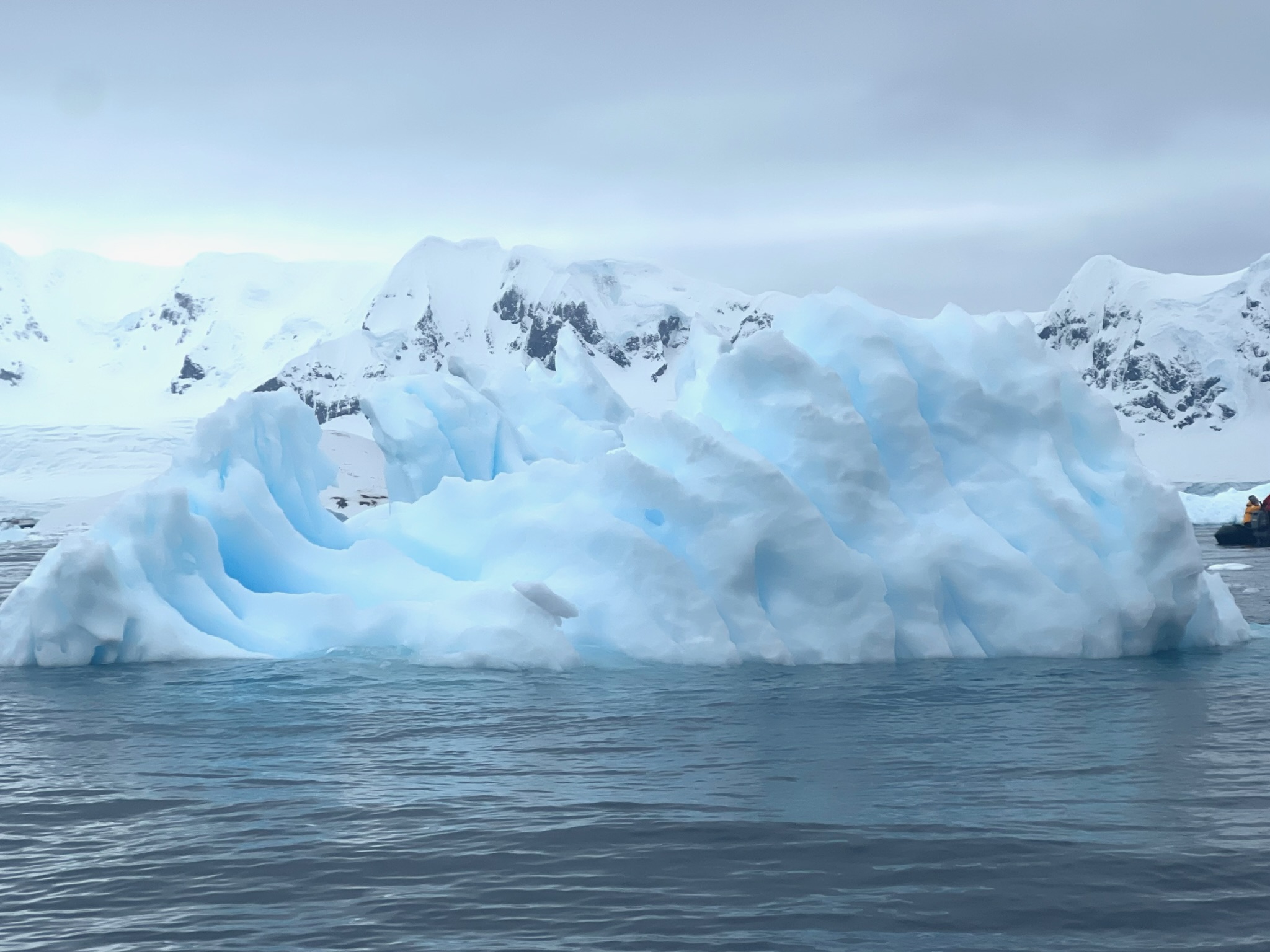
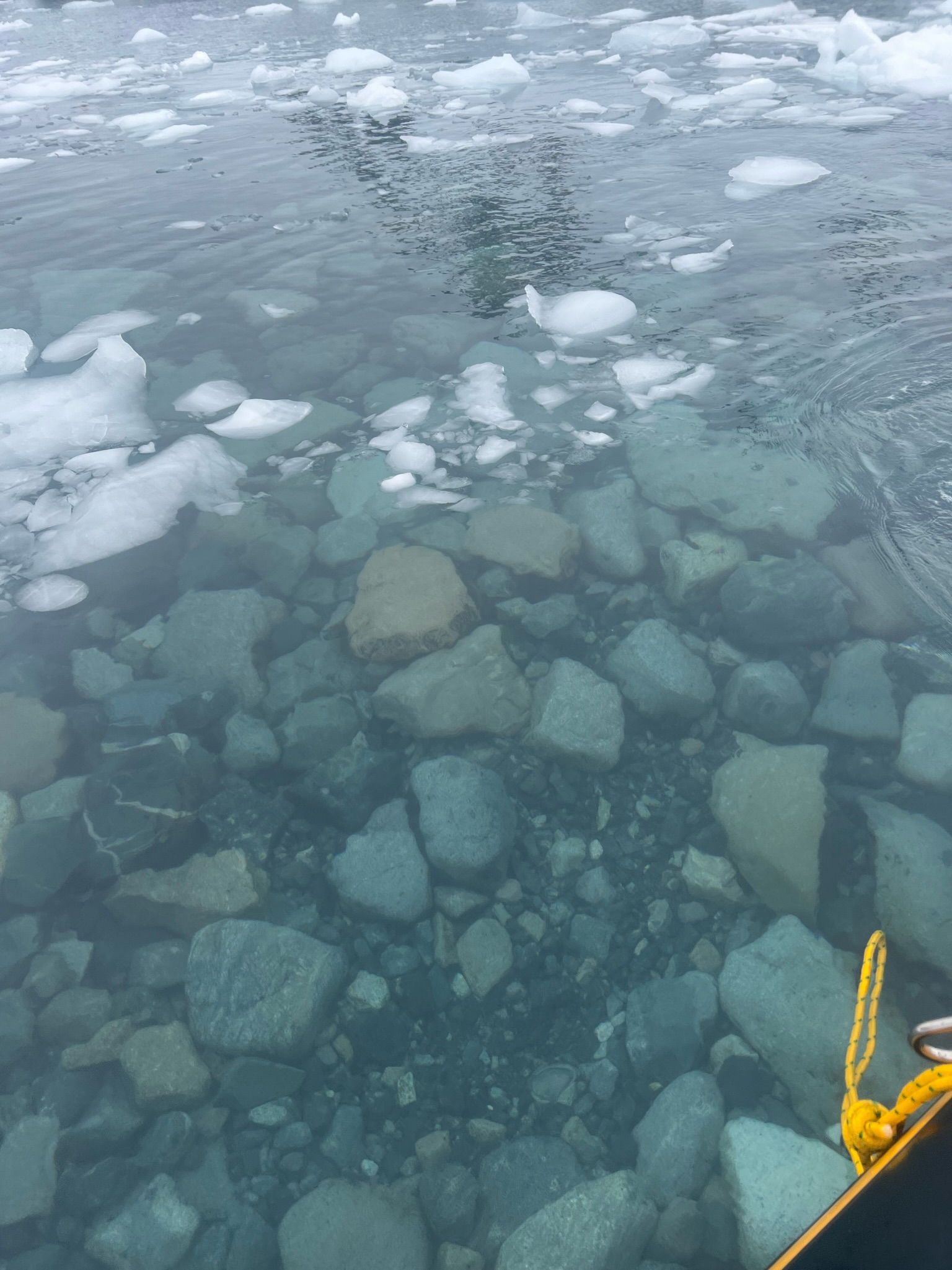
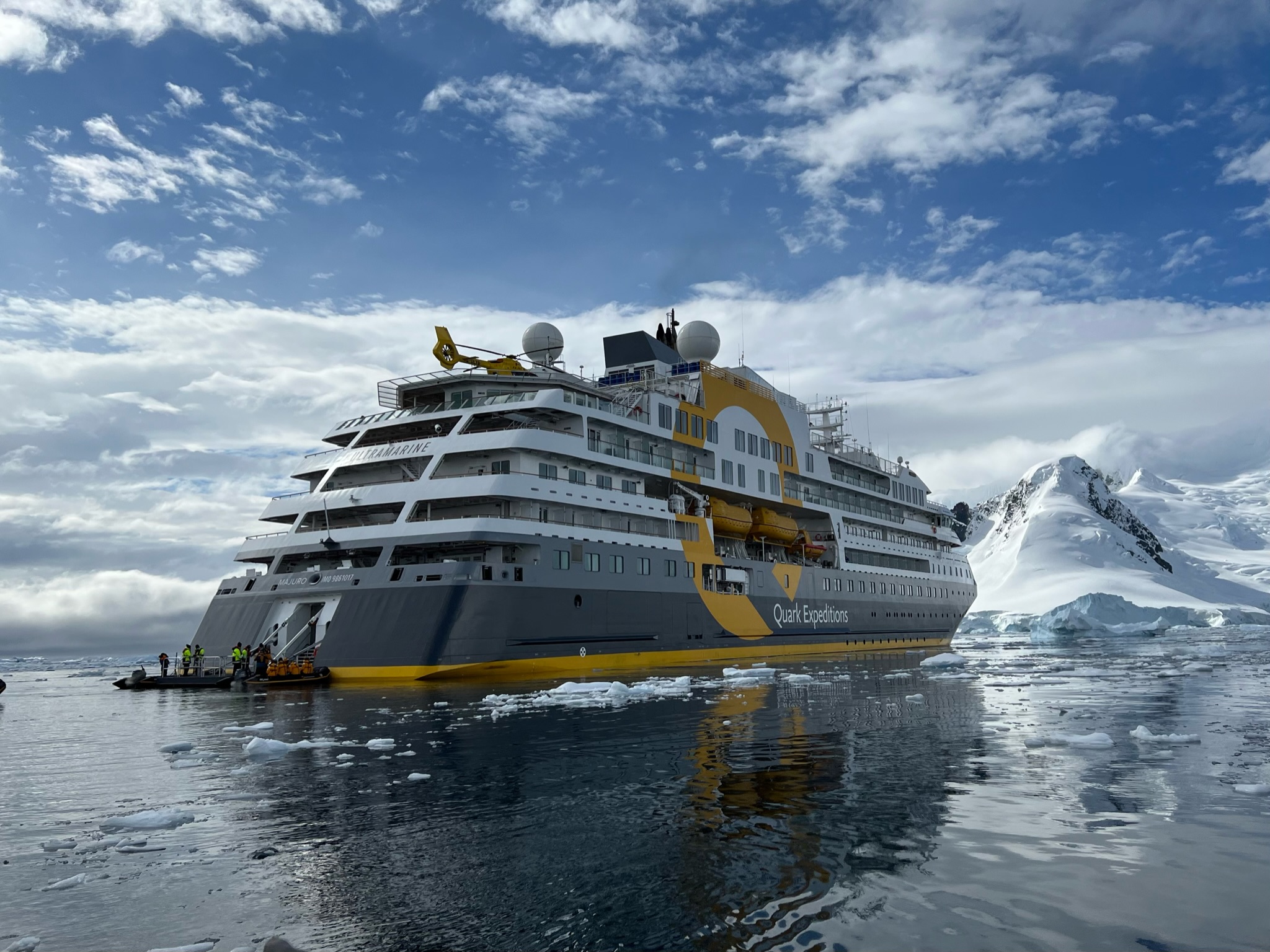
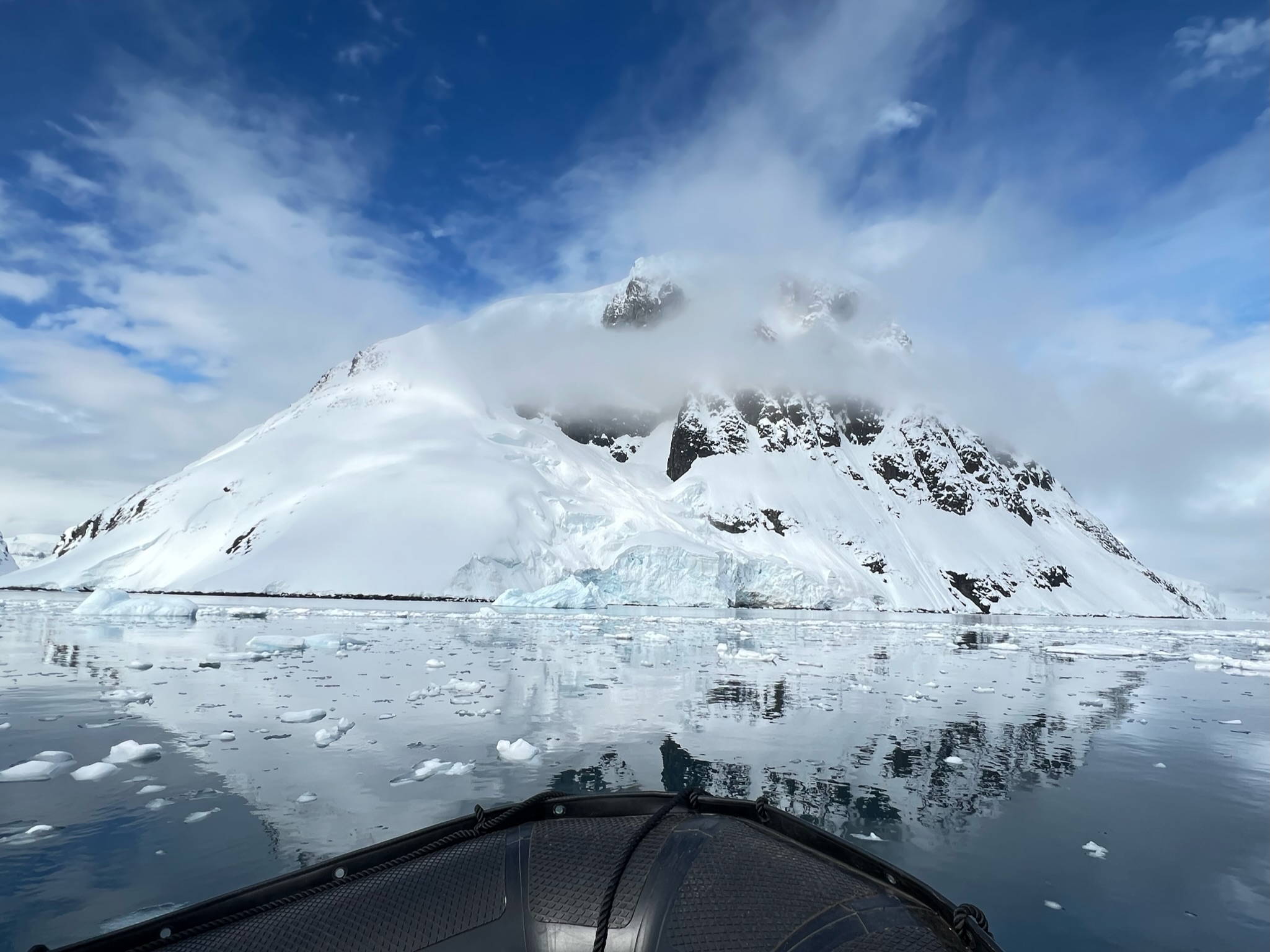
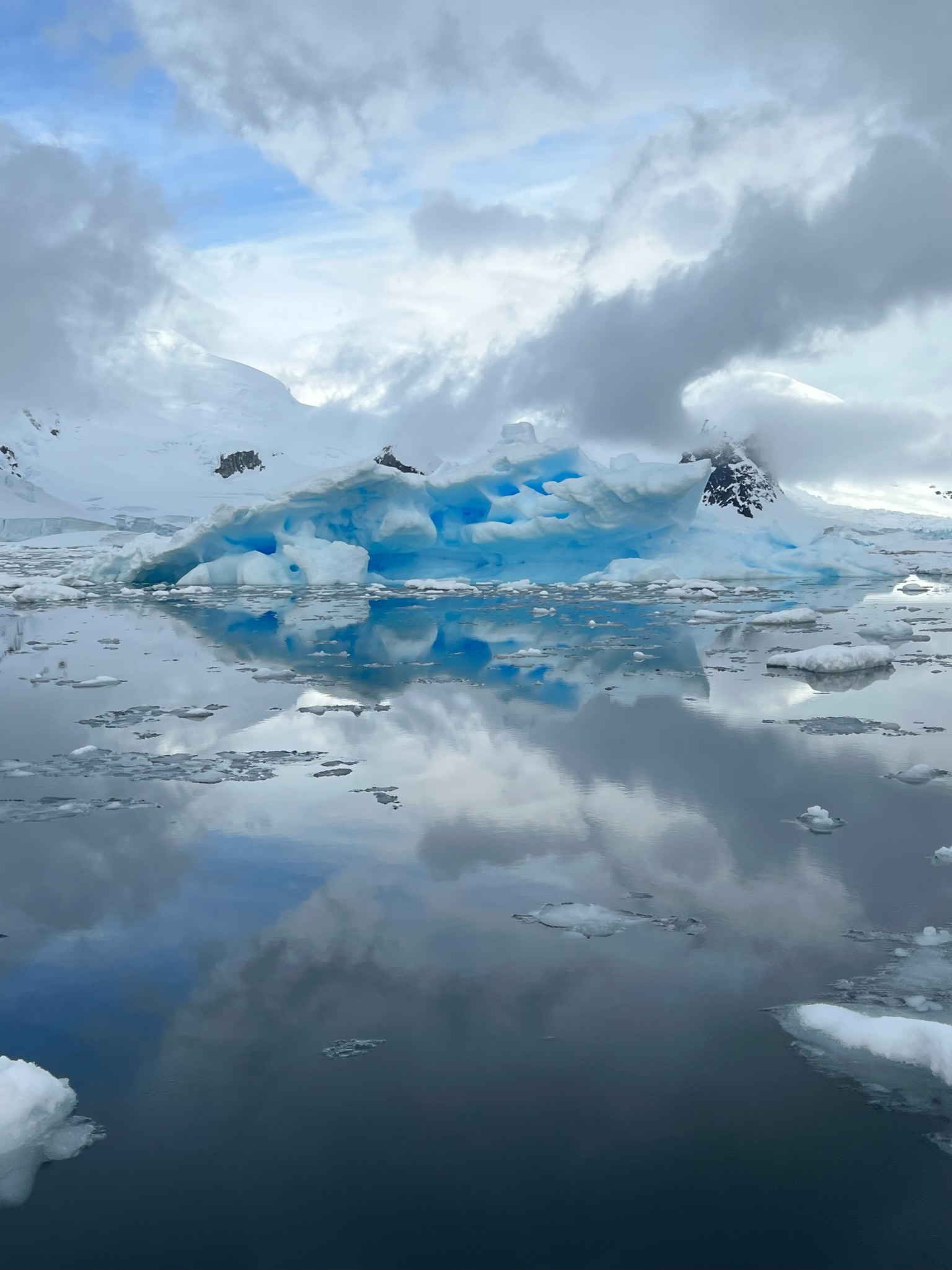
After lunch, we waited for our second turn at going ashore. The Ultramarine was moving from Cuverville Island to Neko Harbor. Eventually our turn came, and we got dressed and went to wait in the ready rooms. We loaded onto a boat with Kim as our guide and driver. Michelle, a guide and the Quark photographer, was also riding with us. Because of the location, we weren’t going to make a landing, but the ocean surface was as still as glass, and with all of the ice afloat, it was a stunning place to explore. We saw several different penguins, two skuas, and several other birds. The icebergs were phenomenal to look at as well. The mainland was reflecting on the glass water surface beautifully, and it made for a photographer’s dream. The weather was warm enough to ride without gloves. It was such a great ride. We came back to the boat on cloud 9, and went to our room to get warm. After grabbing a cup of warm ginger lemon tea, we got down to our normal clothes and relaxed in our room a bit.
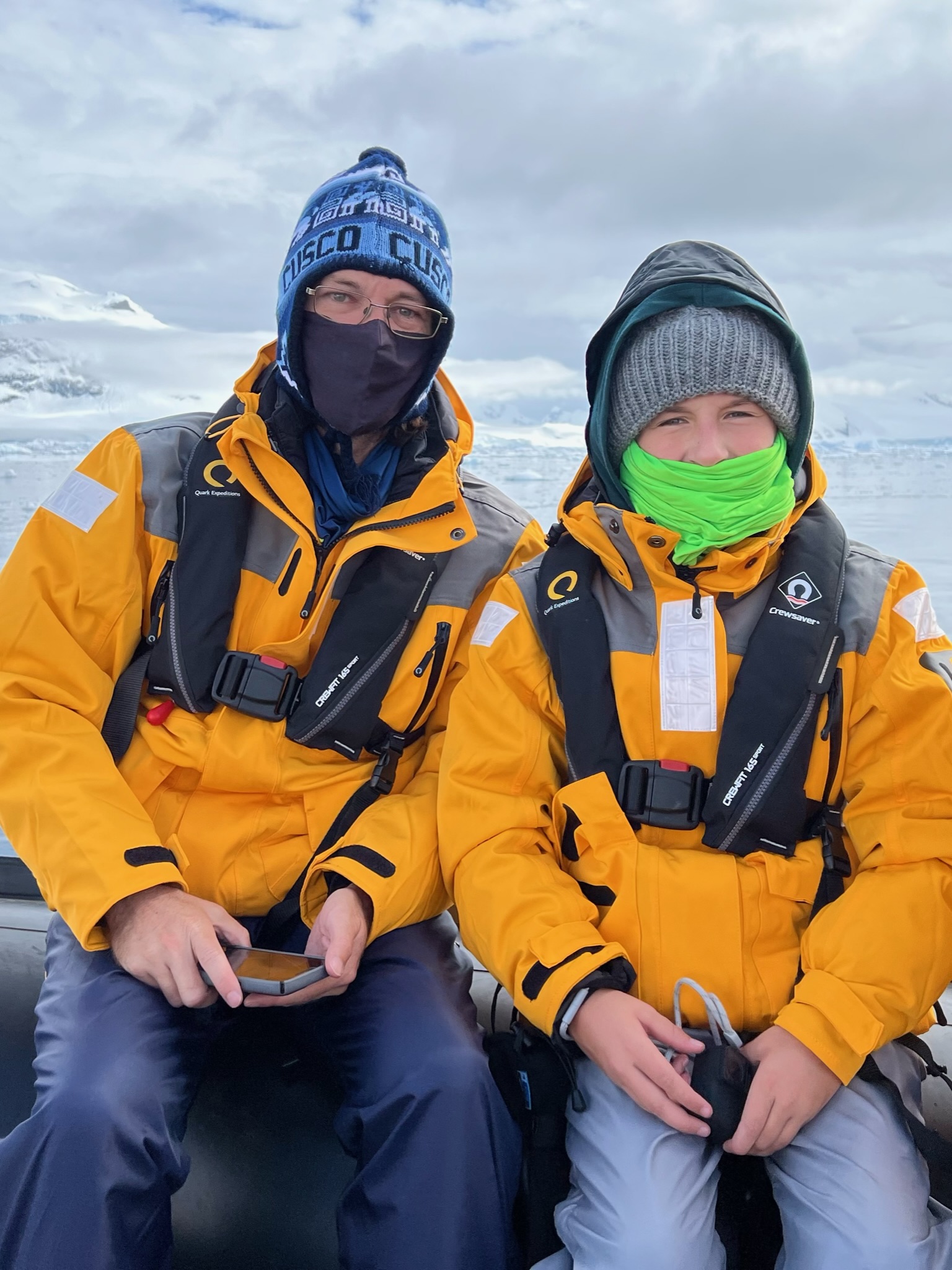


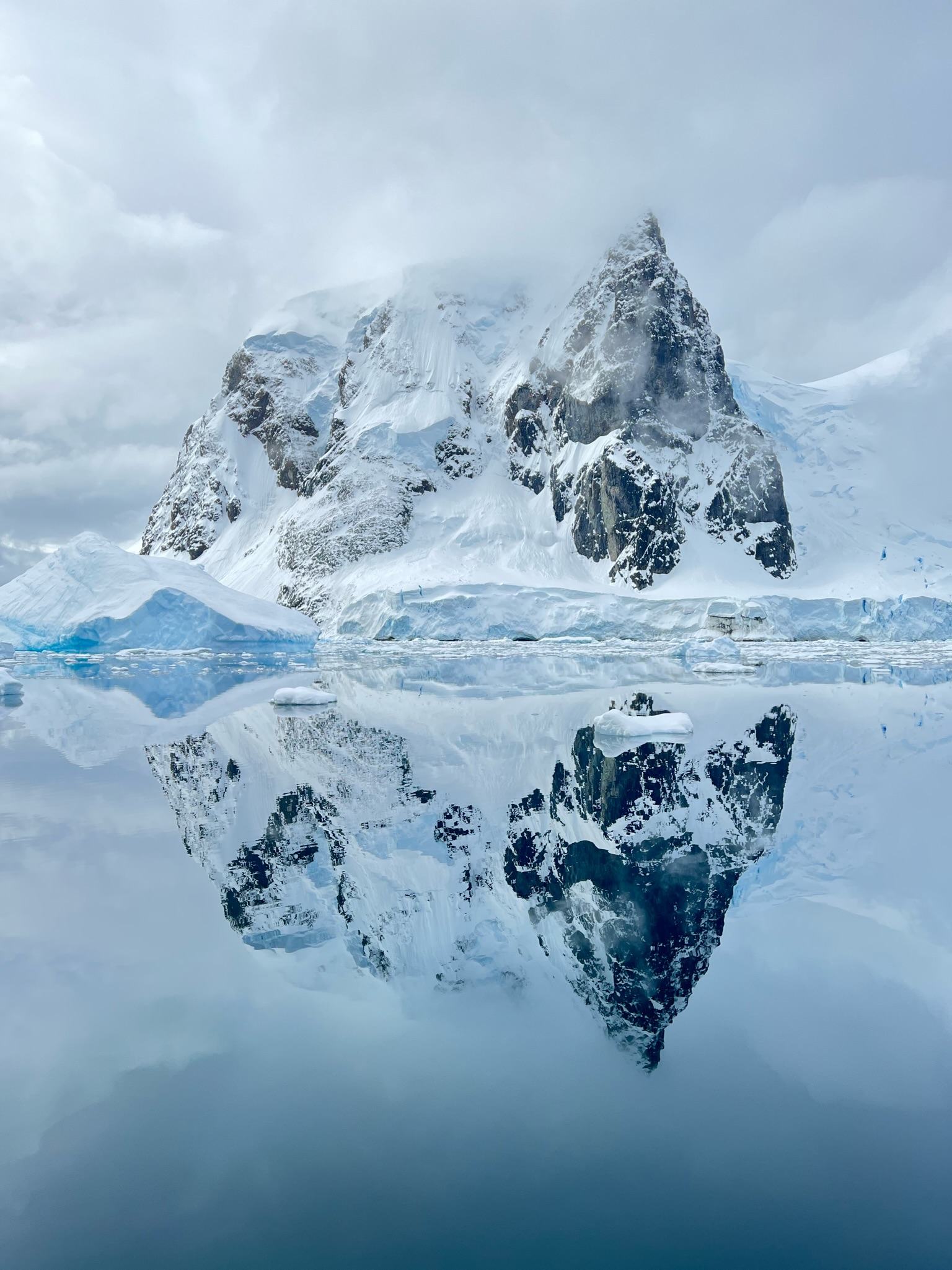
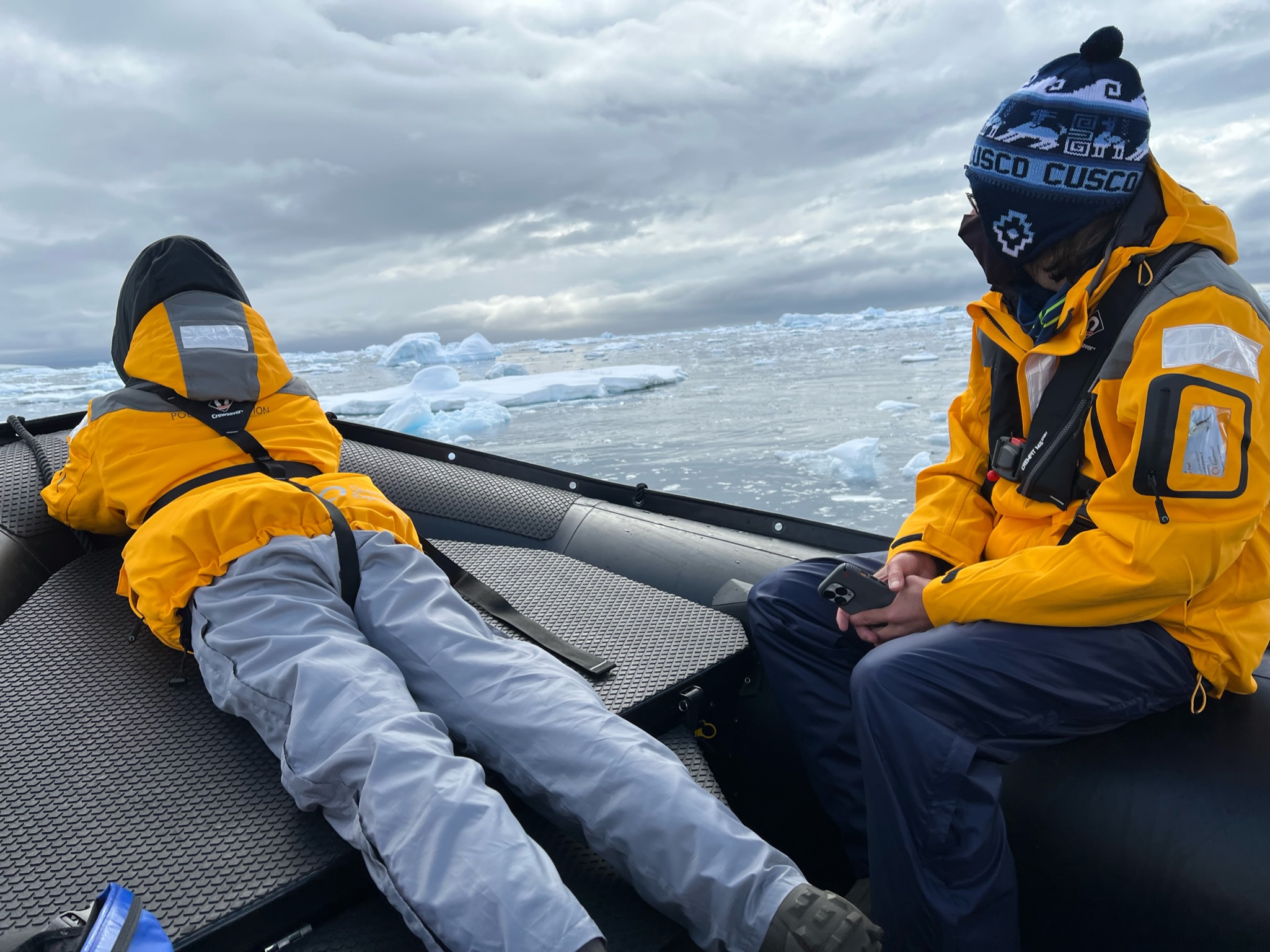

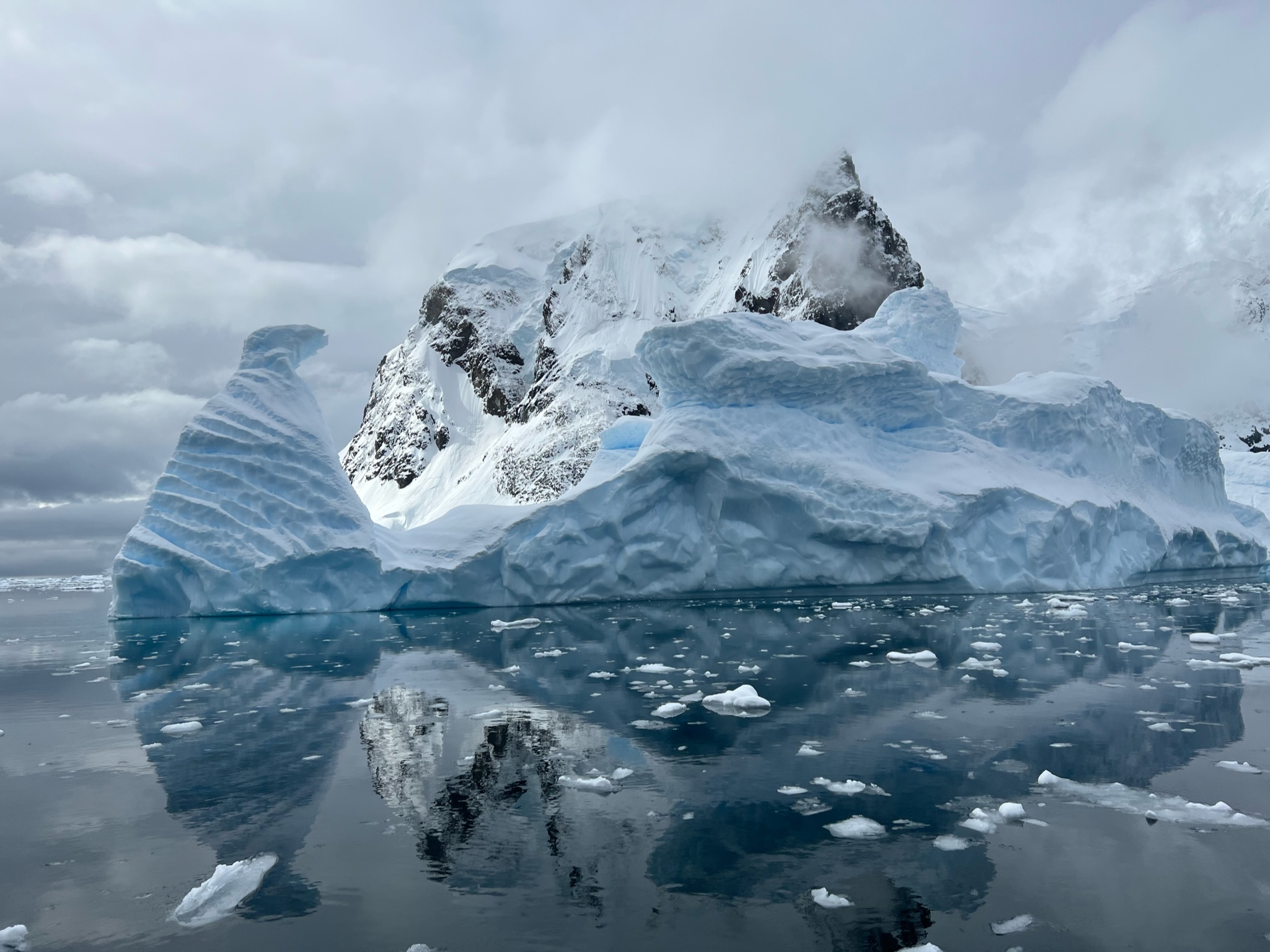
We went to the nightly recap and learned that the plan for tomorrow is to get to do our helicopter rides. We are all super excited. The team has a plan B if the weather is uncooperative, but hopefully it will work out.
We have made several friends on the cruise with other passengers as well as with staff. We are among the younger passengers, and Henry is one of only two kids on board. We’ve had great conversations though, and the age difference doesn’t seem to be an issue. We haven’t seen the other kid since the first night when we were in line for the doctor. We bought Henry a little suction cup toy gun that came with bowling pin targets for Christmas, and he’s had an absolute ball with it when we’re in our room. He hasn’t missed having kids around too much. It might be the best $3 Christmas gift he’s ever gotten. Several of the staff have been very friendly with us too, especially with Henry, so that is helping us all.
Oh, and we found out that one person on board does have COVID. He/she is now being isolated, and he/she had two people that are being quarantined just in case. I hate it for the three of them, but it has reminded us to keep our guard up. The Quark team is doing everything they can to help reduce the spread. Based on where we are in the voyage, we’re pretty sure that this person acquired their covid before they got on the ship. We will take another covid test in a few days to make sure we’re keeping it contained.
Day 6: December 27, 2021
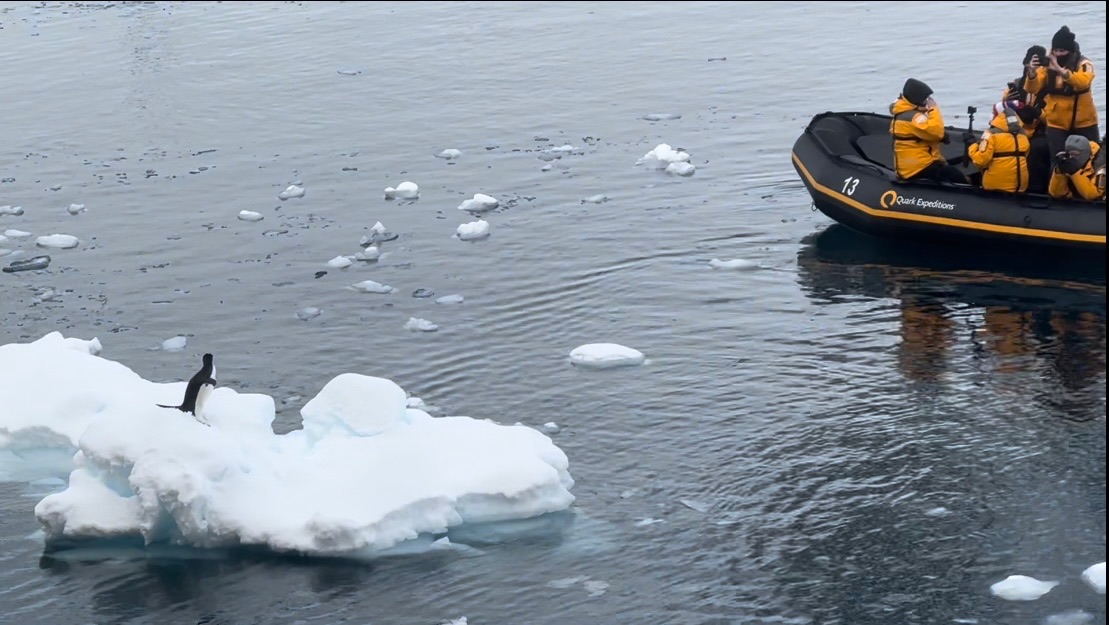
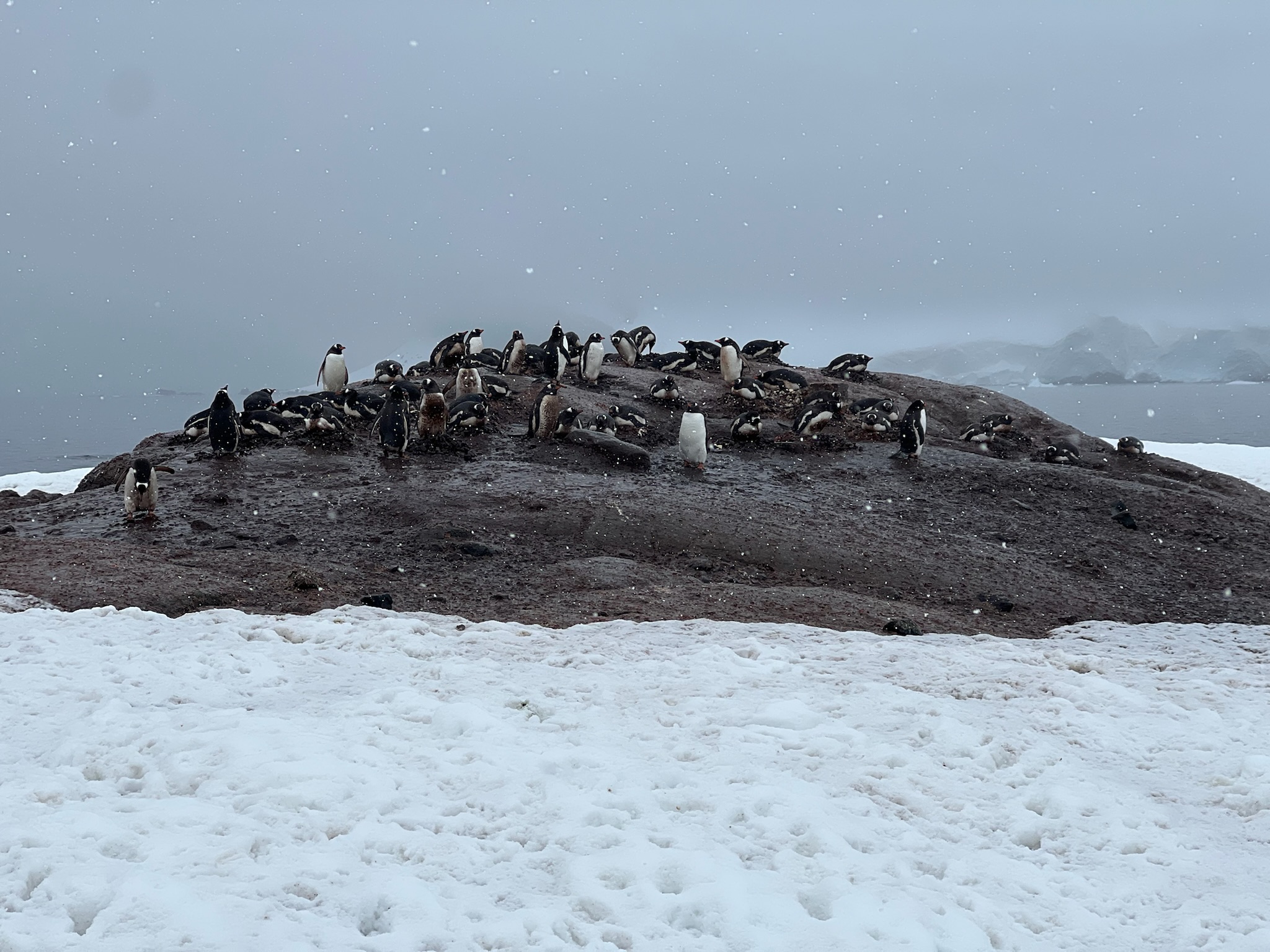
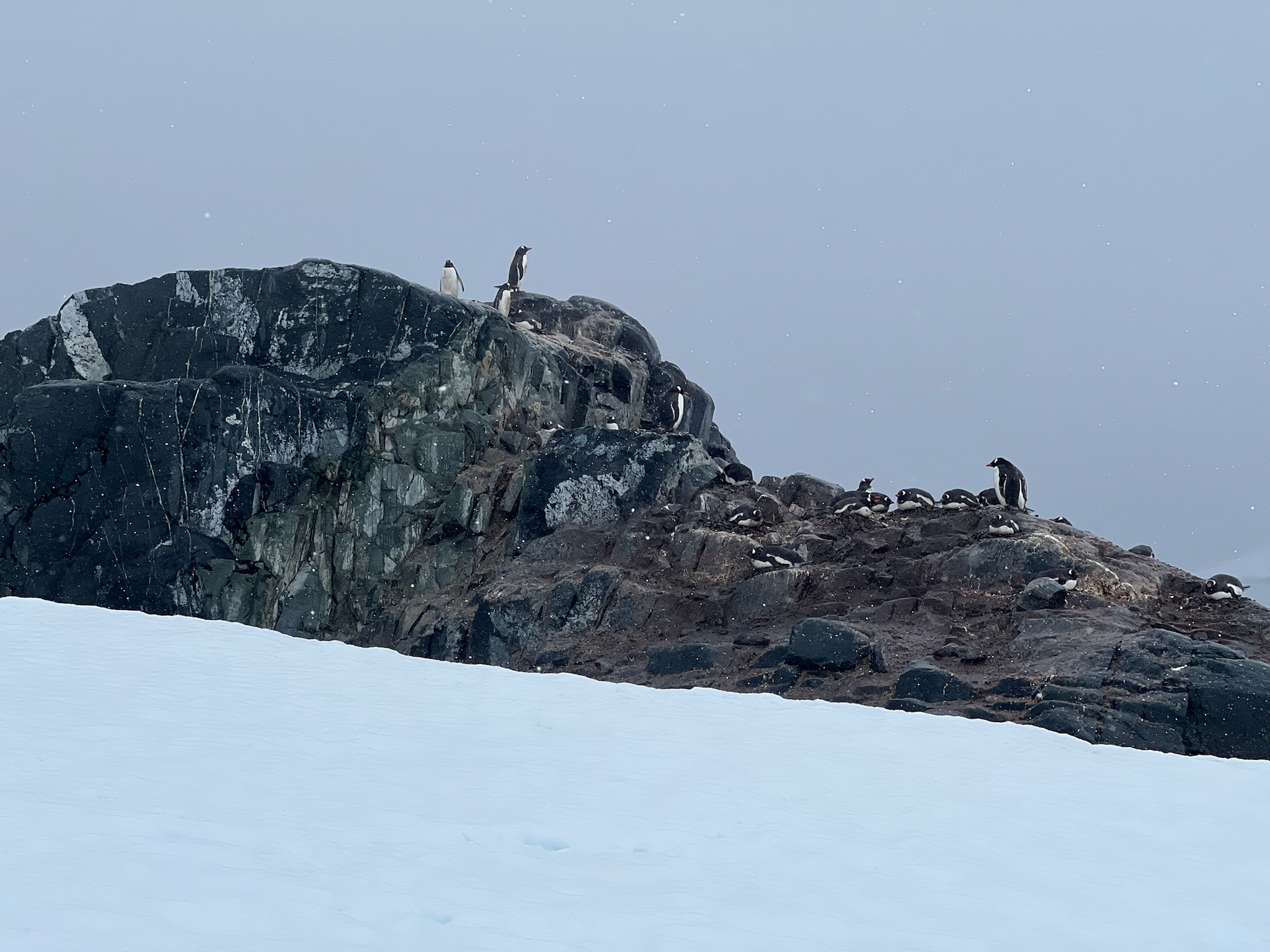
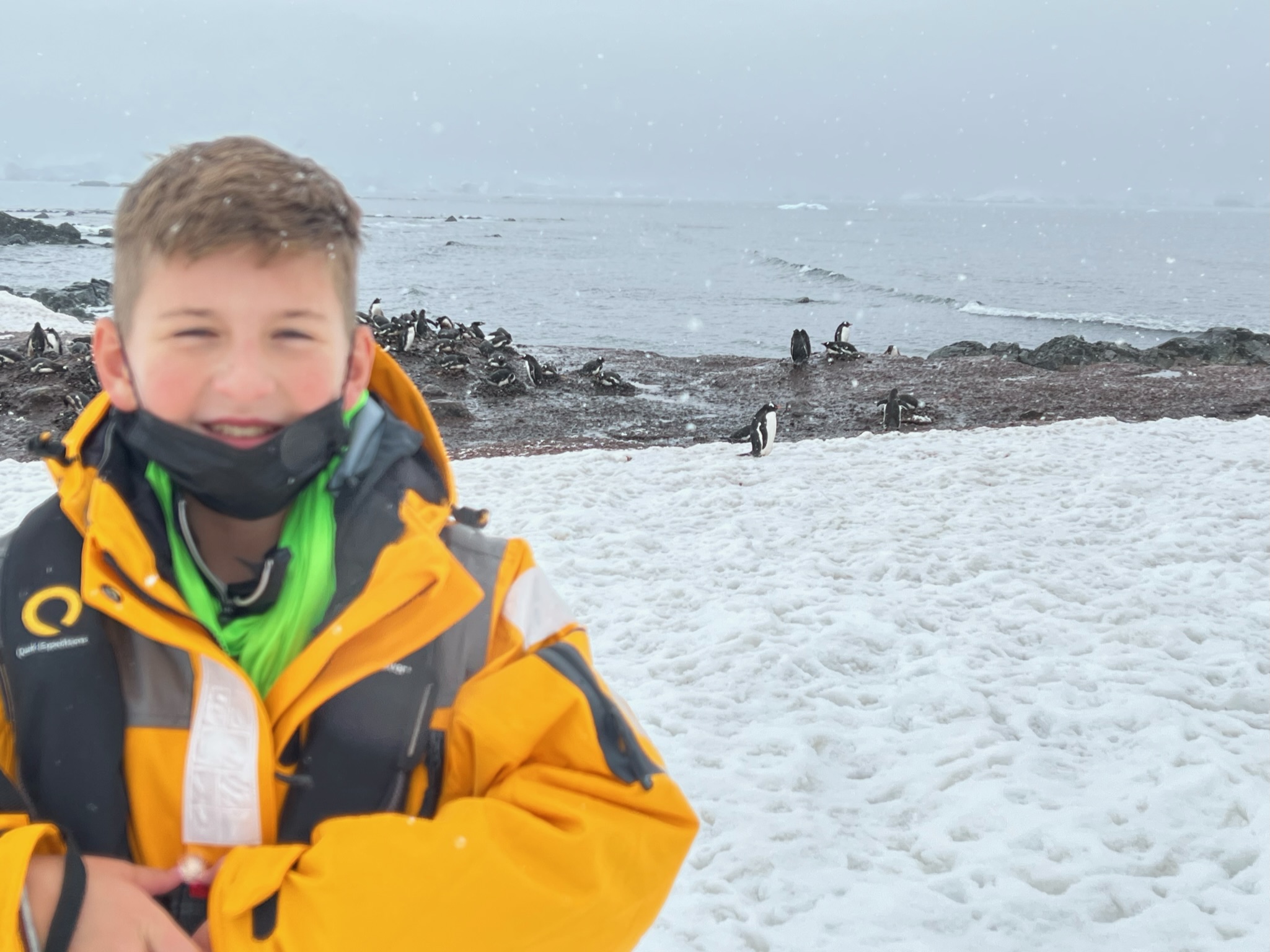
Today we woke up and had our breakfast. We were able to go out on the zodiacs to Mikkelsen Harbor. This harbor is just south of Trinity Island, and we were able to walk out onto it and enjoy the penguin colony that lives there. The highlight of my time in this spot was watching a little penguin waddle down the penguin highway directly towards me. He got spooked about 10 ft away from me and changed direction, but he was absolutely adorable. During our zodiac cruise, we also saw several seals laying out sunning on the ice.

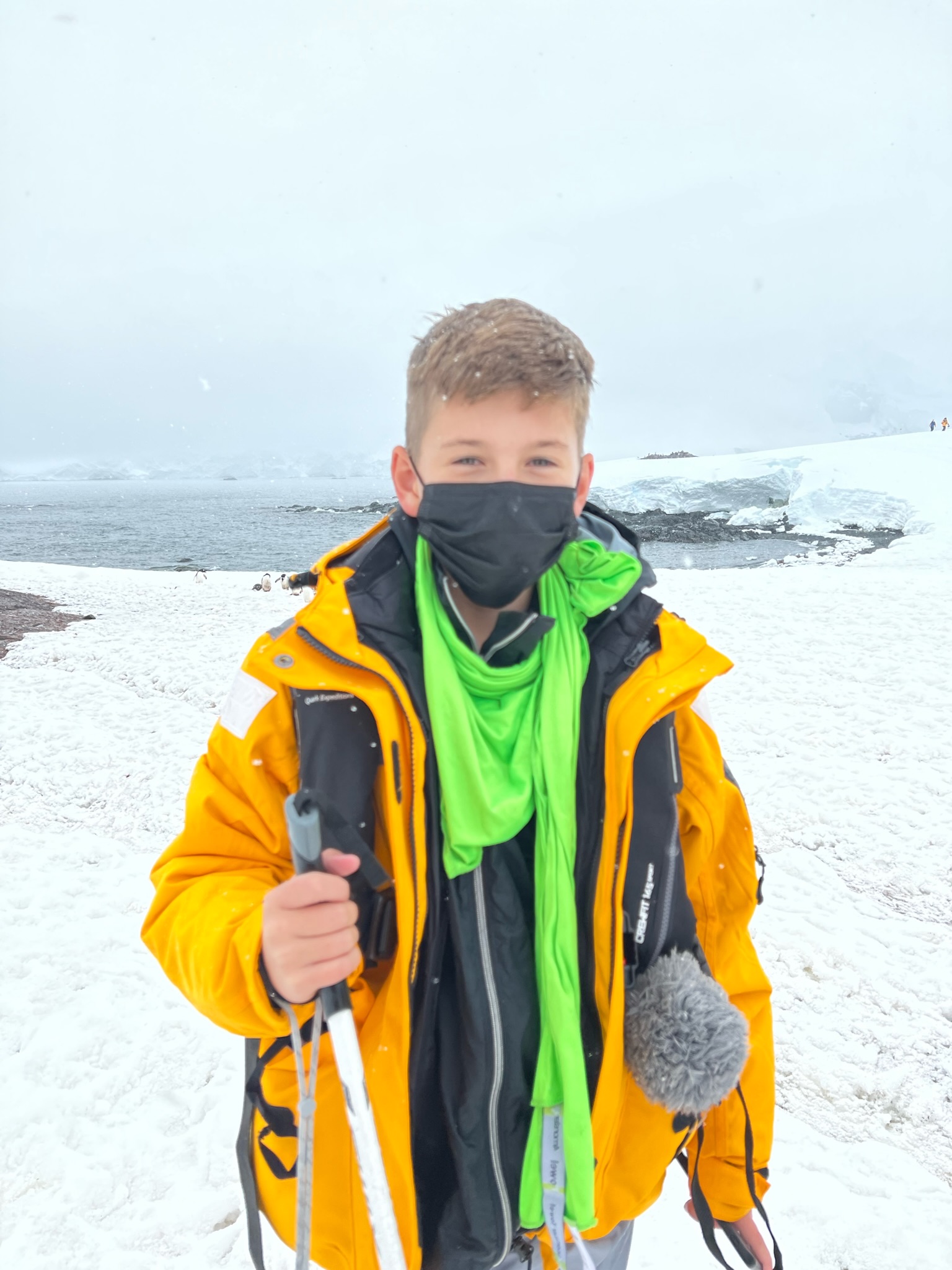
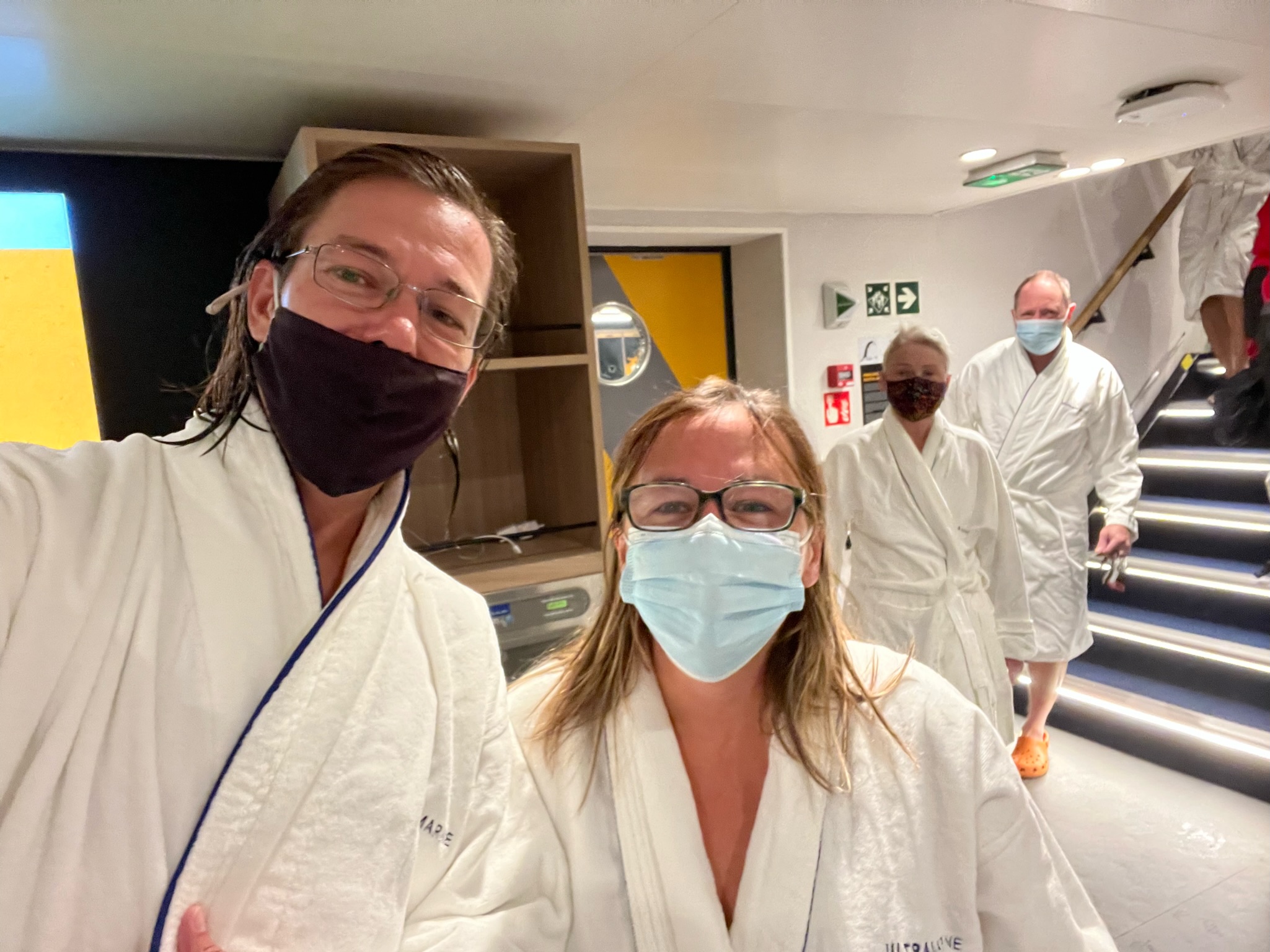
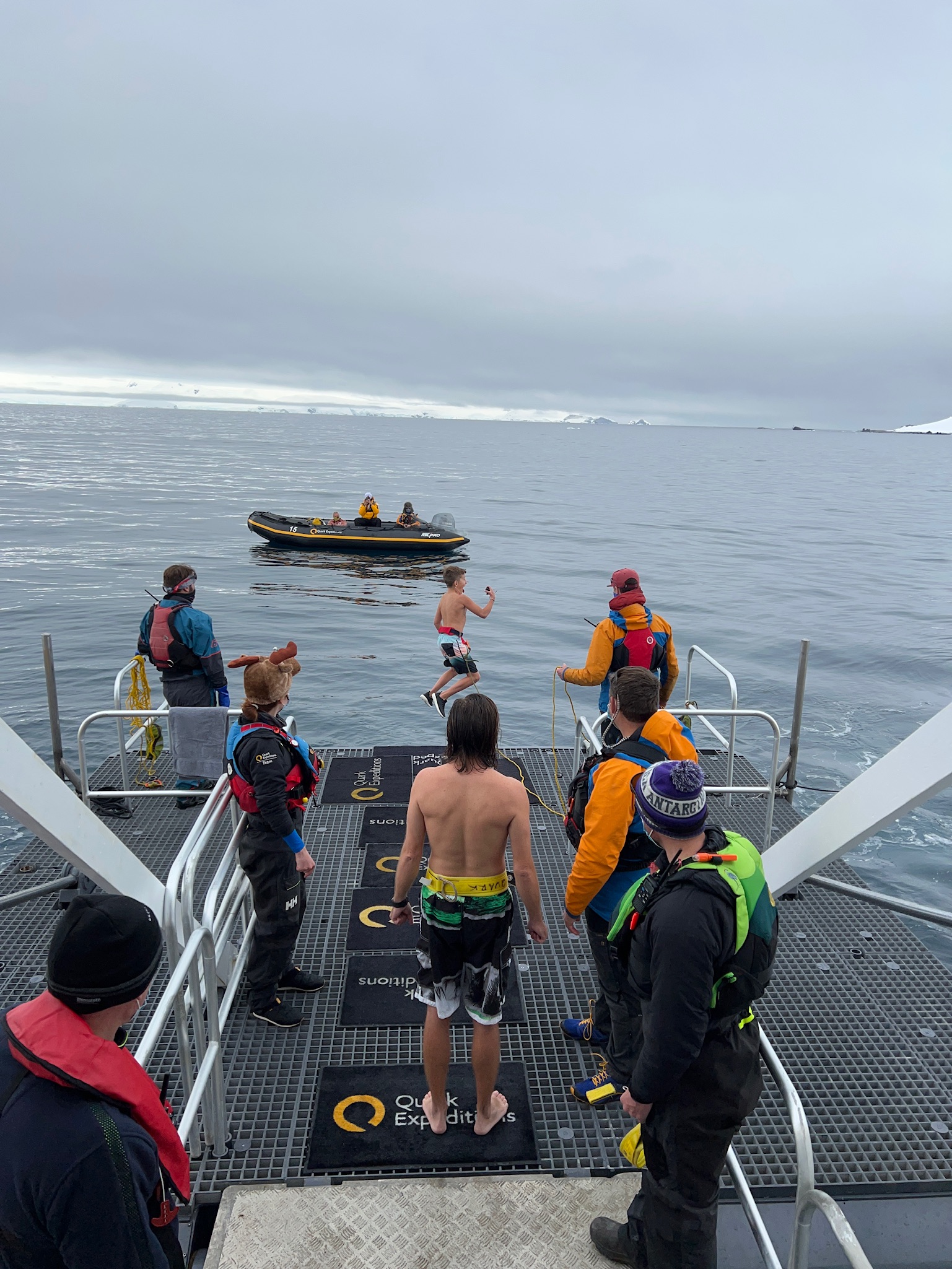
When we got back to the Ultramarine, we saw that they were preparing for the polar plunge. They were setting up one table near the ready rooms with vodka shots, and another table near the reception area was loaded with t-shirts for polar plunge survivors. I was just getting warmed up when they announced that they would be doing the polar plunge in just a few minutes. I hated the idea of doing it, and I really, really didn’t want to go down there. But I knew I’d regret it if I didn’t take my one chance, so I put my bathing suit on (much to Henry’s delight and dismay), put on my robe, and walked with Henry and Brian down to deck 2.
We got there in time to join a few others, and the crew had created a party atmosphere. Dance music was blasting, the crew was cheering, and nervous plungers anticipated the cold. It was frigid. All of the deck 2 doors were open, and the robe was no match for those Antarctic winds blowing through the ship. By the time we made it to the front of the line, the line of plungers extended all the way through the ready area and up the stairs to reception. All in all, 73 of 128 guests took the plunge. Henry loved it. Brian thought it was fun, and it was every bit as miserable as I thought it might be.
By the time I got to the platform, barefoot and in only a swimsuit, I was shivering. I stood frozen in place as they tied the harness around me. The ship’s photographer Michelle was capturing the moment for us, so they instructed me to turn towards her when I jumped, and that I could jump whenever I was ready. I went straight in, because I knew it would be much worse if I thought about it for too long. Jumping in was awful, and the icy water took my breath away. I don’t know how deep I went, but it seemed to take forever before I finally made it to the surface again. All I could think about was getting out of the water. I finally found the ladder, and I prayed my arms and legs would cooperate to raise me out of the water. I also prayed that my swimsuit was still on, because I could no longer feel it.
I’d seen a video where the girl said that once she got out of the water, she actually felt warm. She lied. It was still frigid. Now, instead of ice water around me, I had frigid air. The platform I was standing on with cold wet feet was freezing, and it seemed to take forever for them to get the harness off of me and let me go back inside. I couldn’t find my robe and couldn’t get to my shoes for all the people in the prep area, and I got really irritated because no one would move out of my way. The bar manager held out a glass of vodka to me, and I drank my shot without even making a face. I don’t think it helped, though, as I still felt like a popsicle.
Inside the door, I put my robe back on, and instantly, I started warming a bit. In just a few minutes, I was almost back to normal. Henry was elated. He wanted to go and do it a second time for some crazy reason, but thankfully they wouldn’t allow that. He had no fear about doing it. In fact, it was the main thing that excited him about this trip. I truly don’t understand 13 year old boys.
We were excited after lunch to learn that the weather was cooperating, and that they were planning to do the helicopter rides. The whale group was first, so while the pilots were doing their reconnaissance mission, we went ahead and got ourselves ready. By the time they made the announcement for us to come upstairs to the helideck to get ready, we were ready to walk out the door. We made it upstairs, and the guides helped us don our helicopter life jackets. We sat at a table waiting for our turn to load, but unfortunately the weather, which can and frequently does turn very quickly, had taken a turn for the worse. The winds were picking up, and the clouds were rolling in. On the reconnaissance mission, the pilot had actually lost visual of the ship, so they decided to hold off on this for another day. Dejectedly, we removed our gear and returned to our rooms. We did make it to a photography presentation where Michelle explained some of the more advanced features on many of our cameras, and she gave some pointers for taking better photographs in the harsh Antarctic conditions.

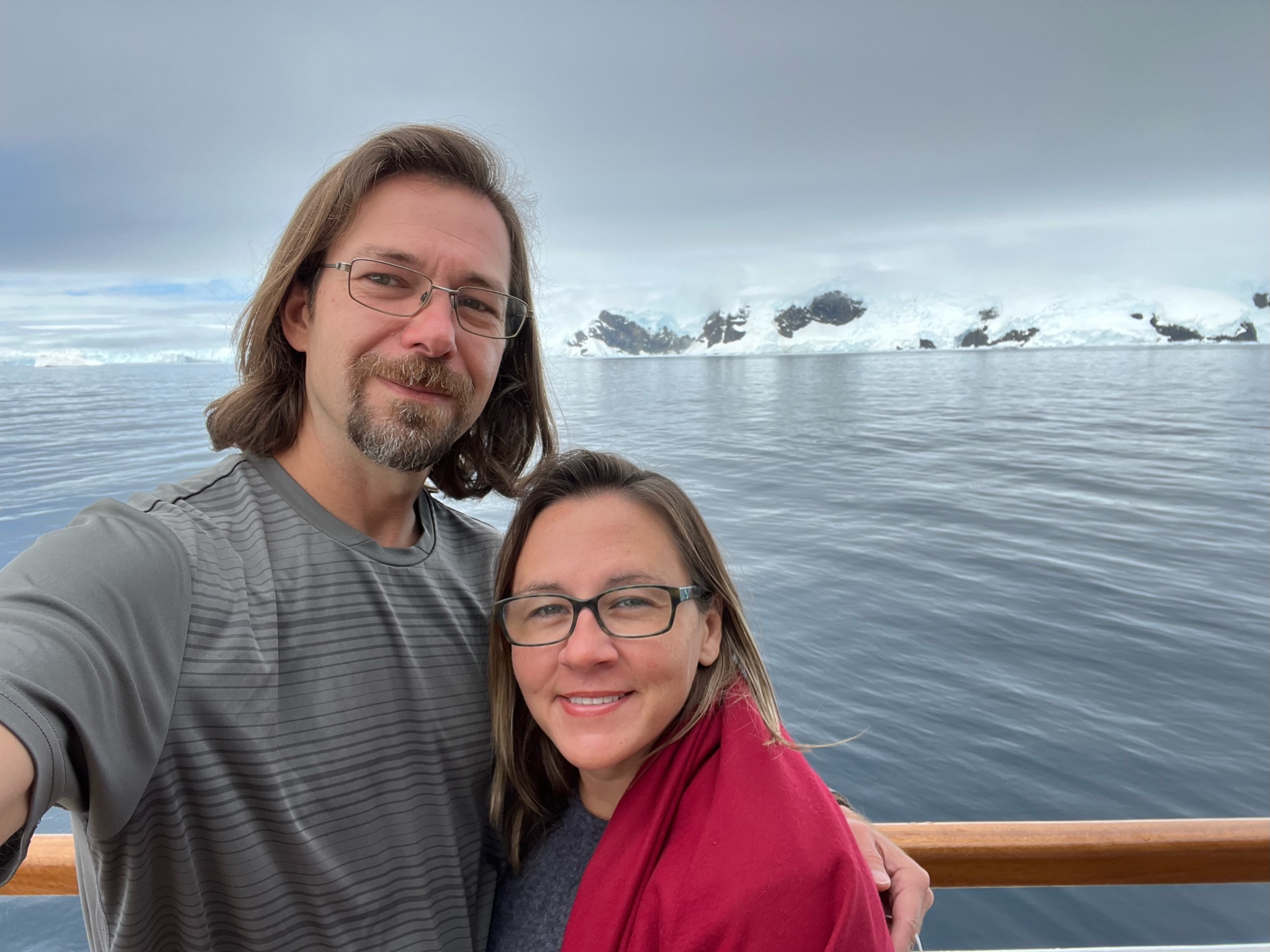
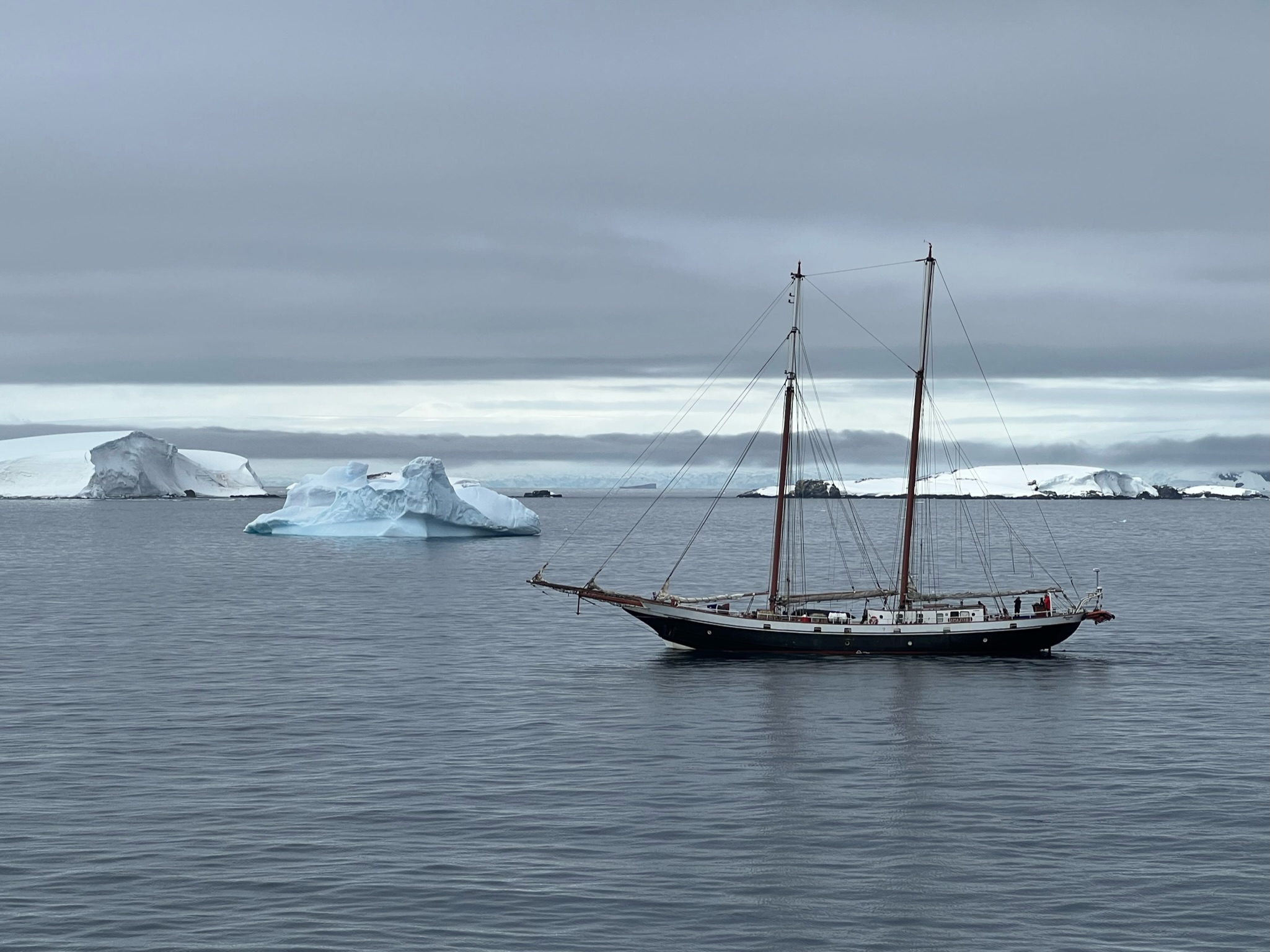
During the recap, we found out that we will actually get to step on the continental Antarctica tomorrow. We’ve been on two different islands, but this feels different. It feels official!
Day 7: December 28, 2021
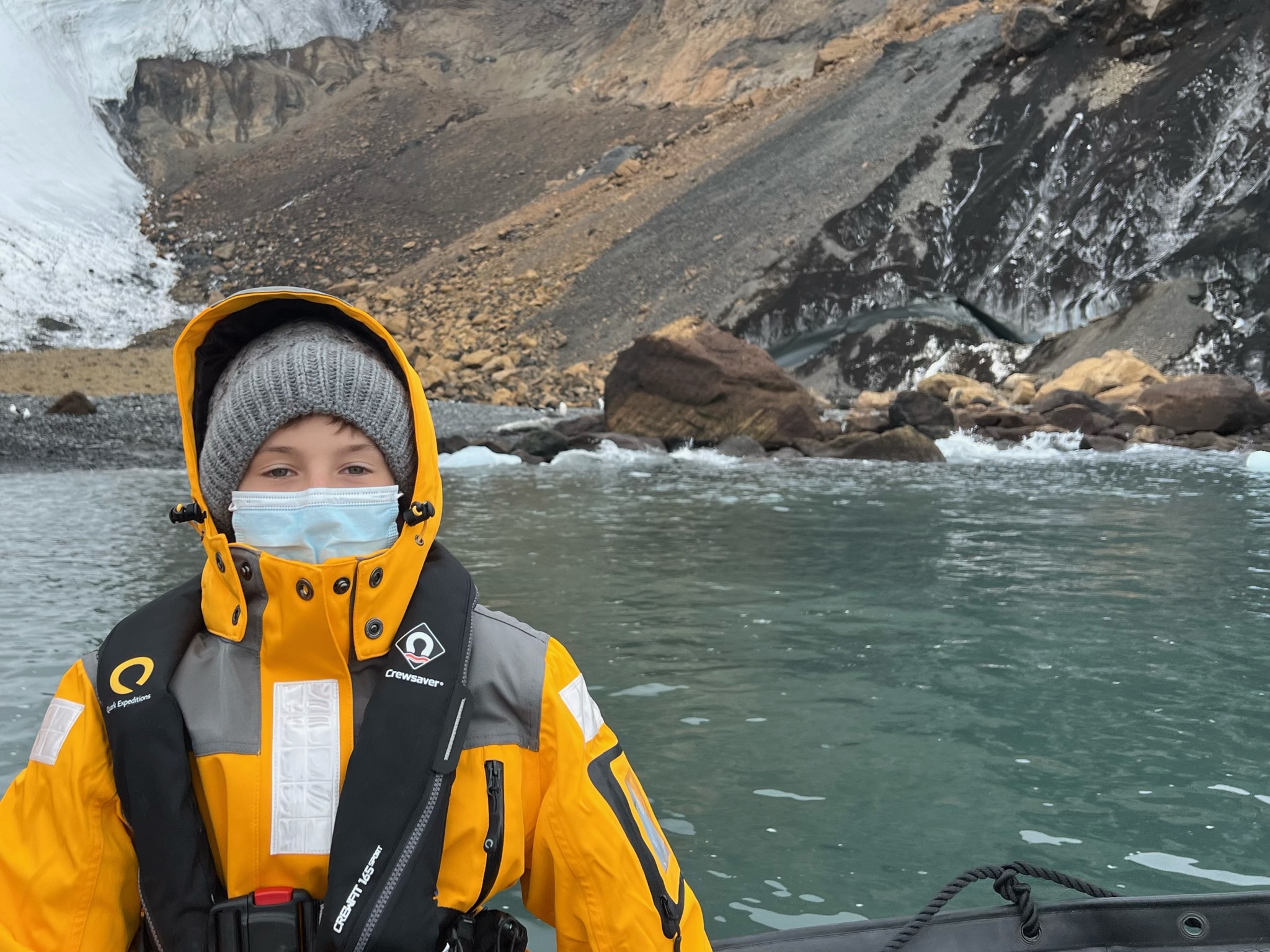
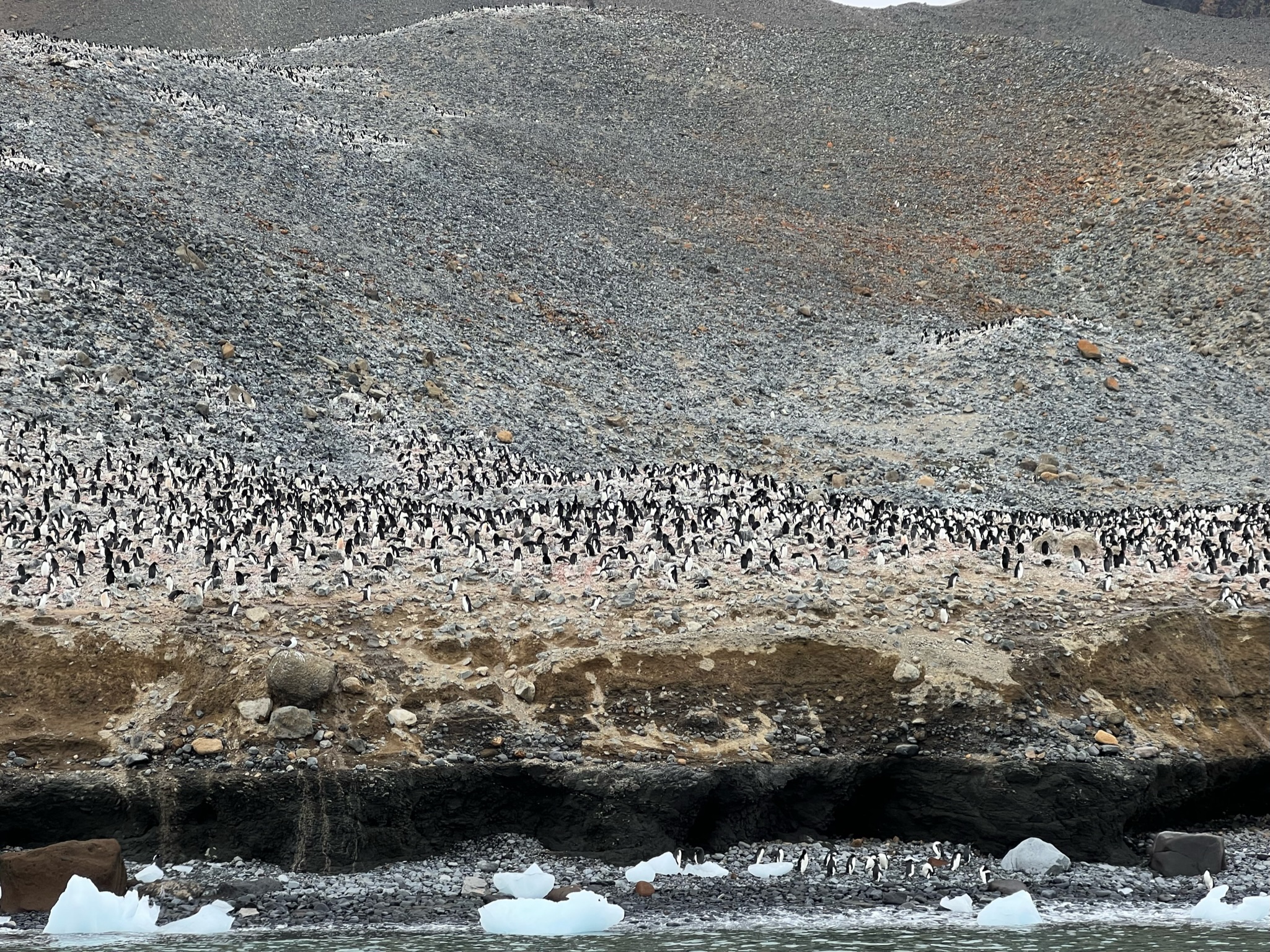
After breakfast this morning, we took off on the Zodiacs to visit the continental Antarctica. We are in the bay outside of Brown Bluff on the Antarctic Peninsula. This area is home to about 37 thousand penguins, and it has beautiful glacial faces as well. We rode the zodiacs and landed on the shore of a rocky beach. From there, we all found a group of penguins to watch, and we sat down in the rocks and just enjoyed the show. Many of the penguins here already had small baby chicks in their nests, and they were extremely cute to watch. Up on the cliffside, there was also a snow gull nest that Brian and Henry walked up to see. After the hike, we loaded back onto the zodiac and cruised around the bay. We were only able to see a very small section of the colony where we landed. In the zodiac, we could get a much better idea of how many penguins live here. They covered the mountainside and marched up and down the shoreline in constant motion. While floating around the shore, we also came across a very large leopard seal that was eating a penguin. The seal was rising to the water surface and thrashing the penguin around with its teeth in order to skin it and tear it into bit sized pieces. While the seal worked on its catch, several gulls began to hang around ready to scavenge on any penguin bits that floated away. The gulls taunted the seal, and occasionally he would remind the gulls that they should be afraid. Eventually, the seal had all he wanted, and the gulls flew away with bits of food, including the penguins head.


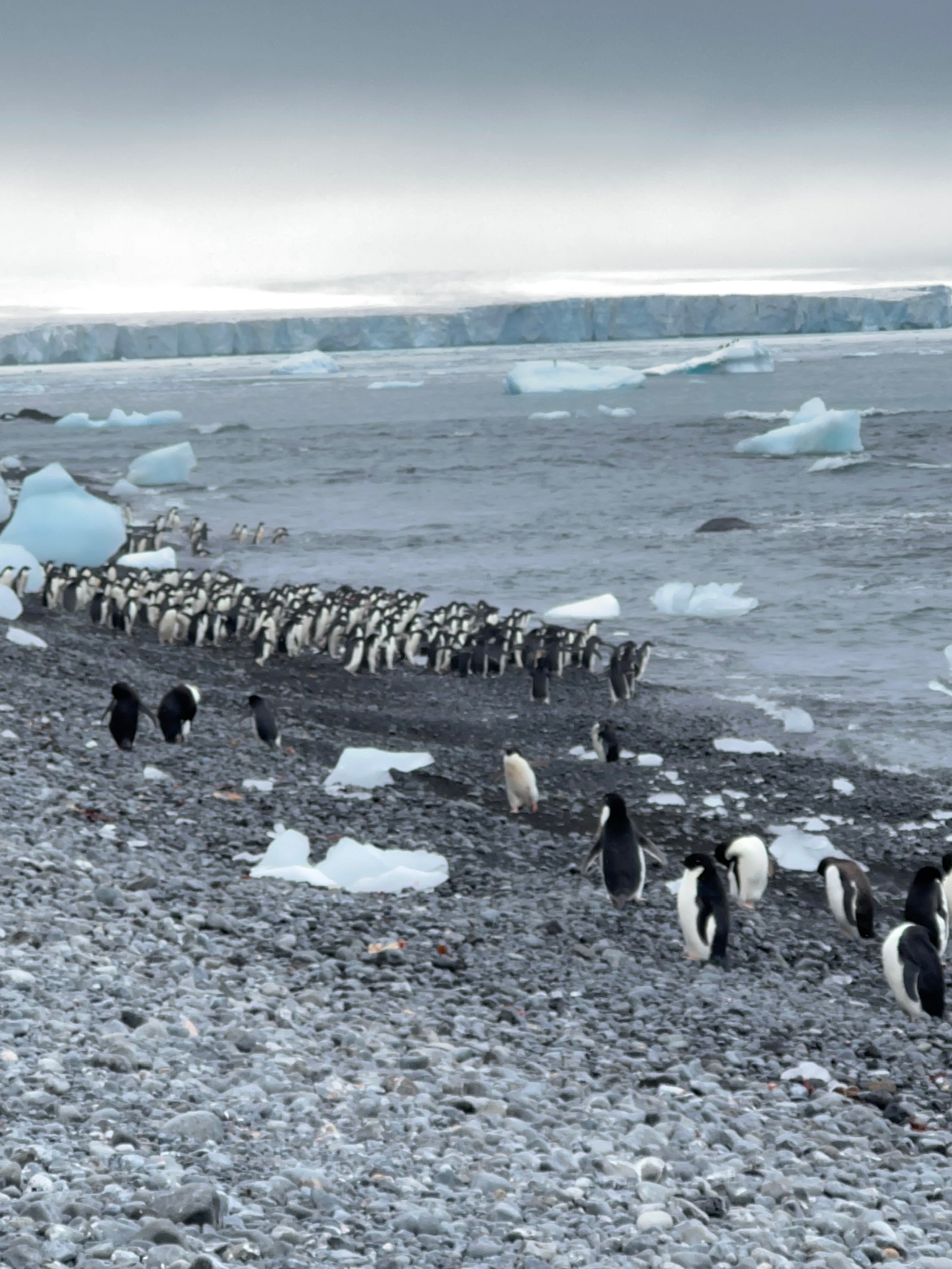
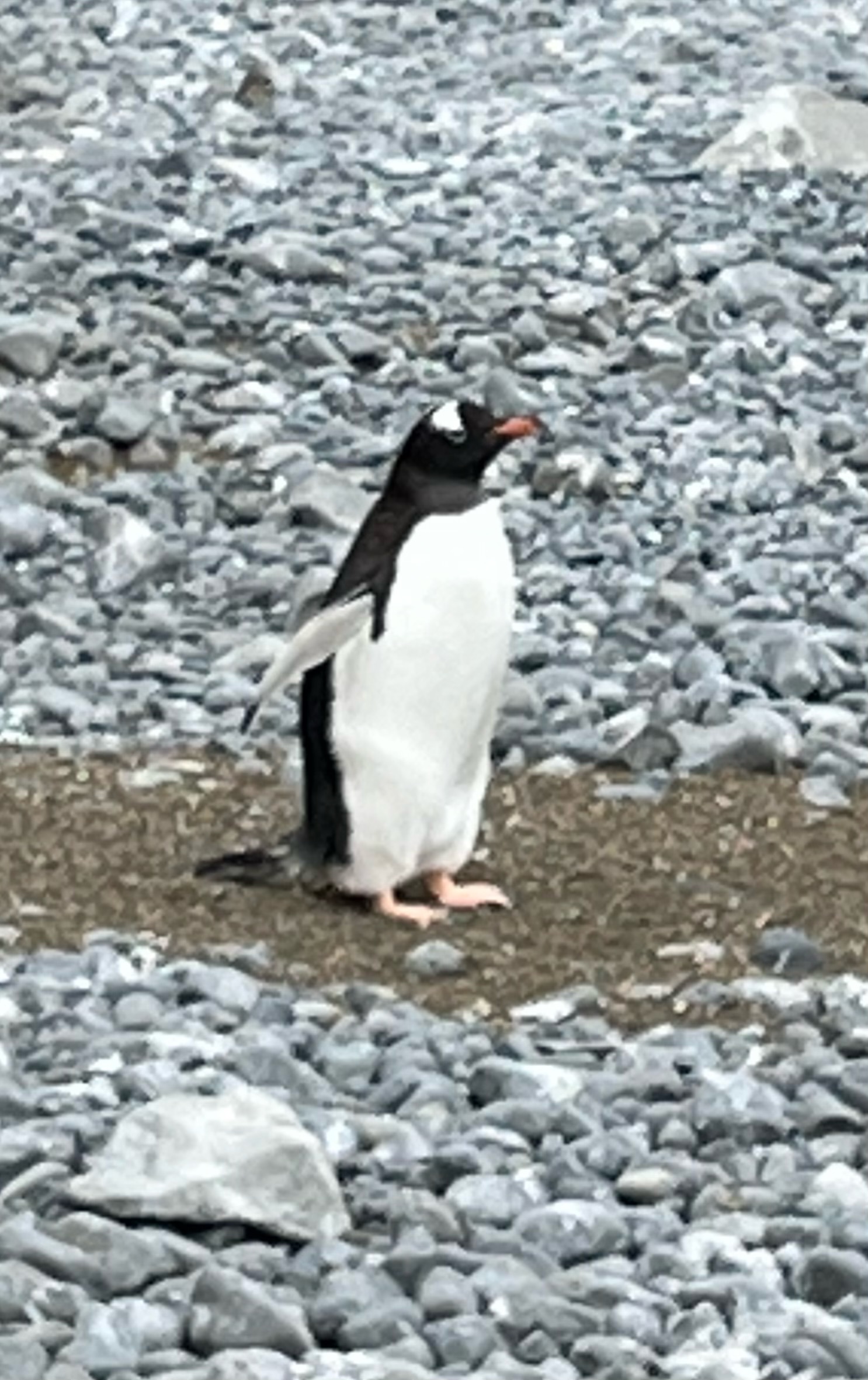

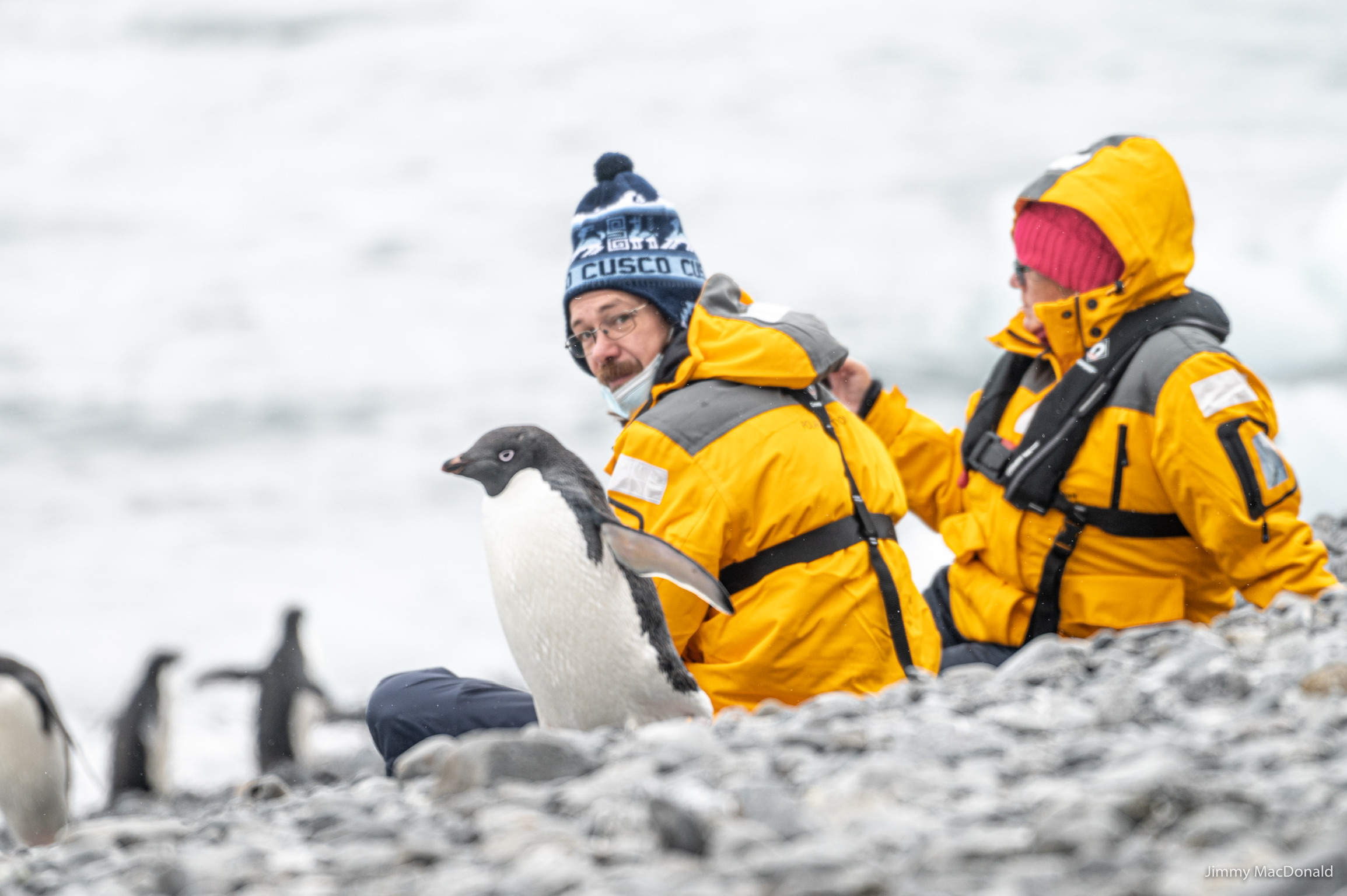
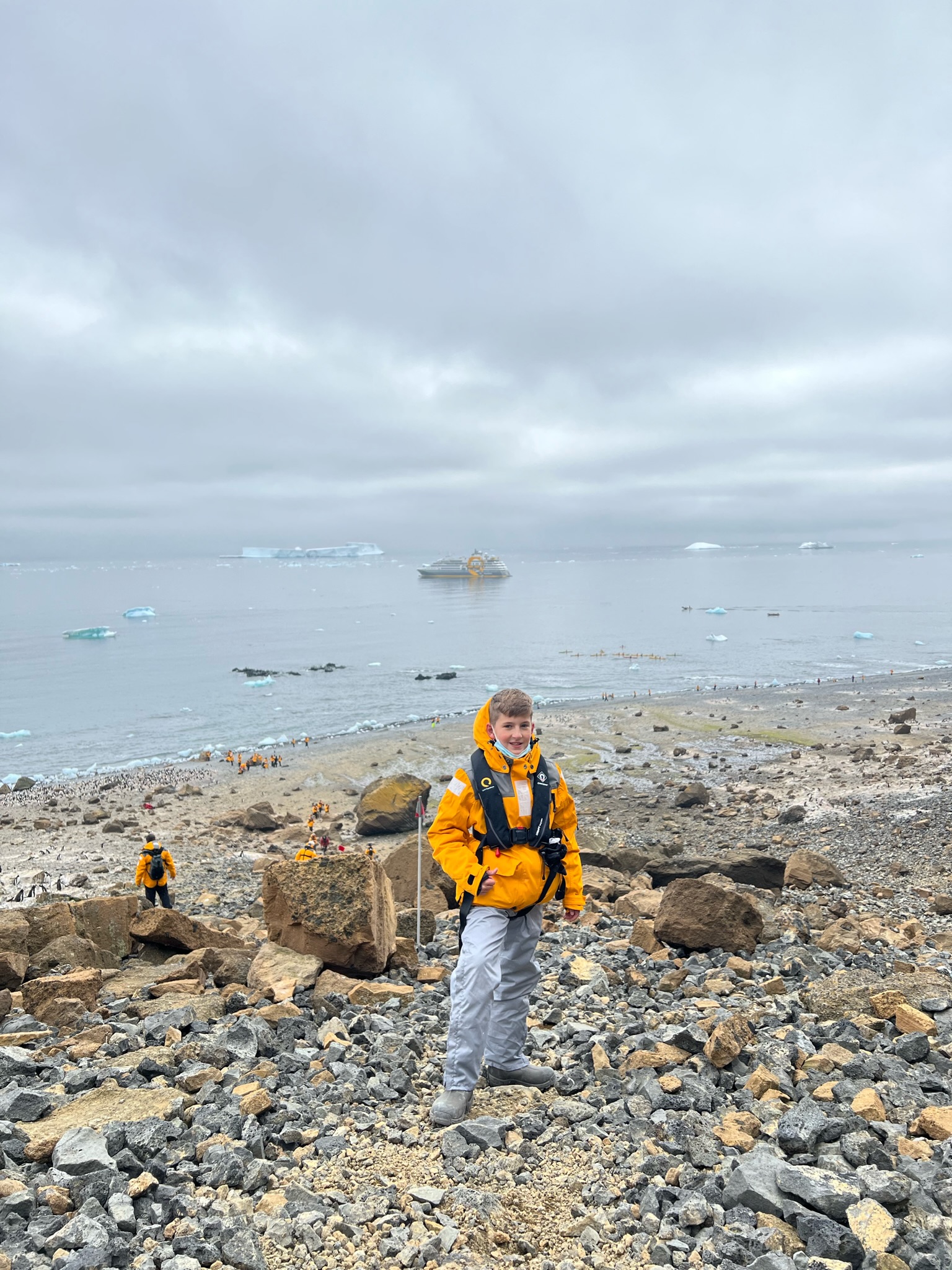
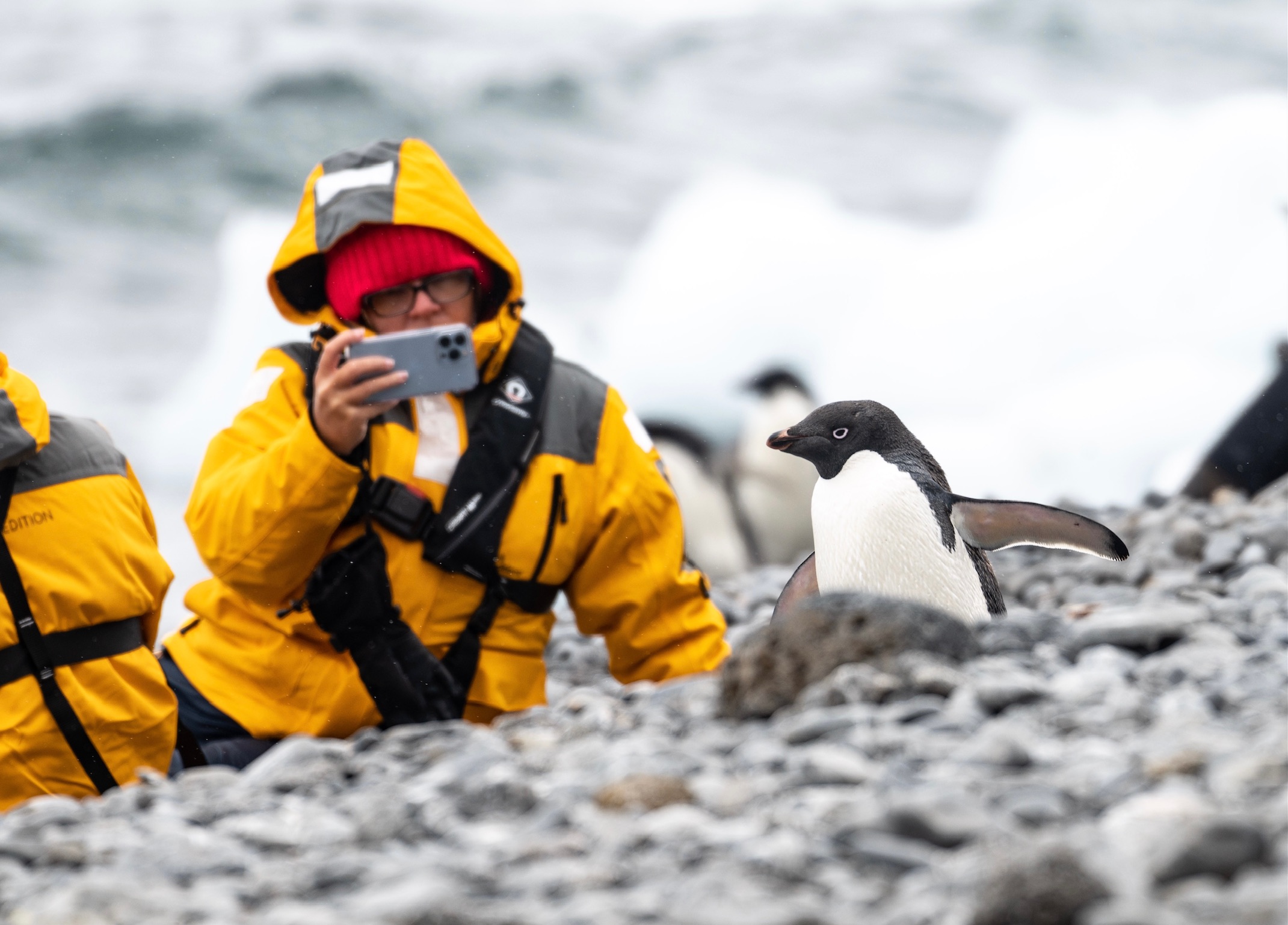
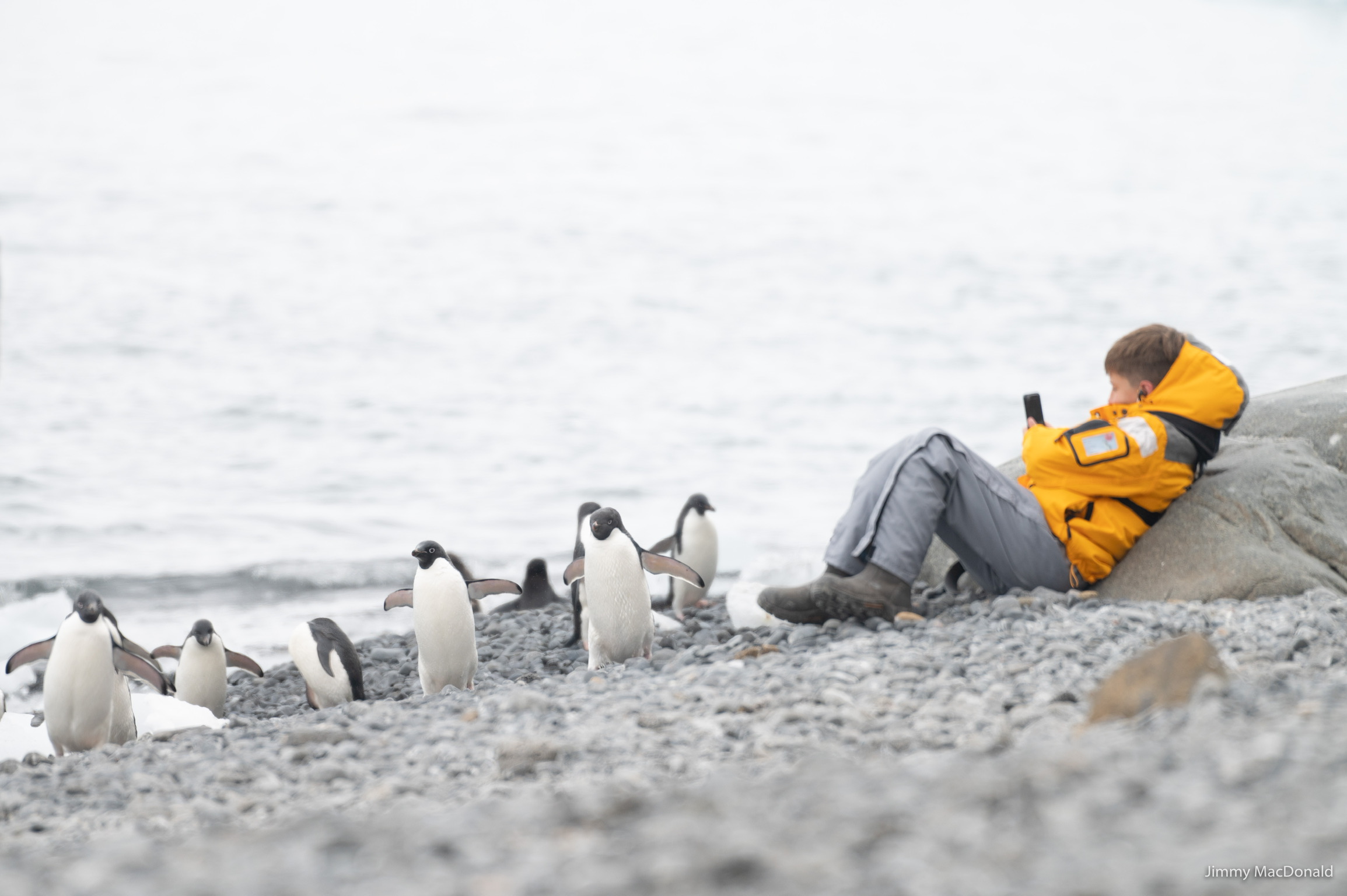


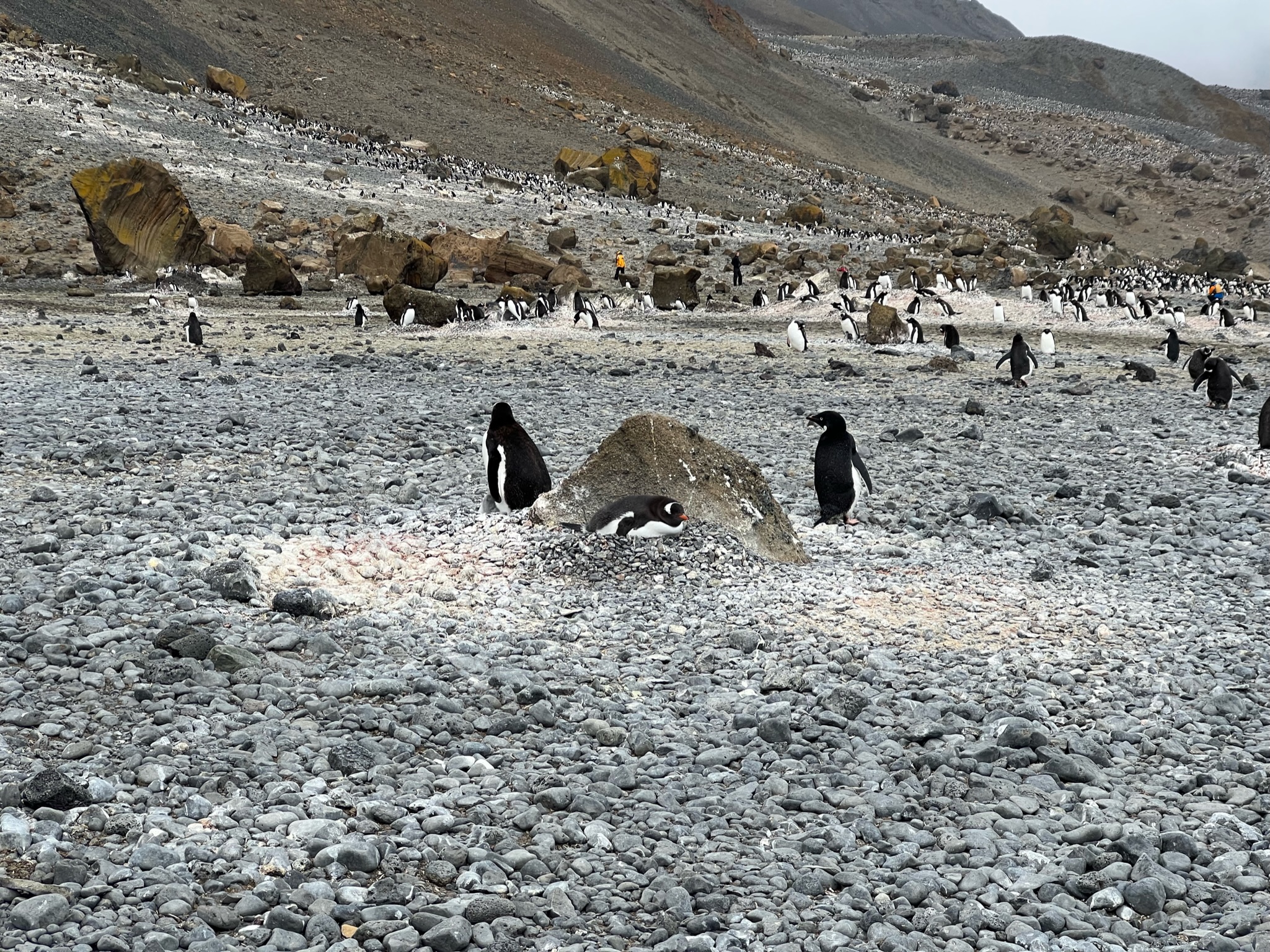

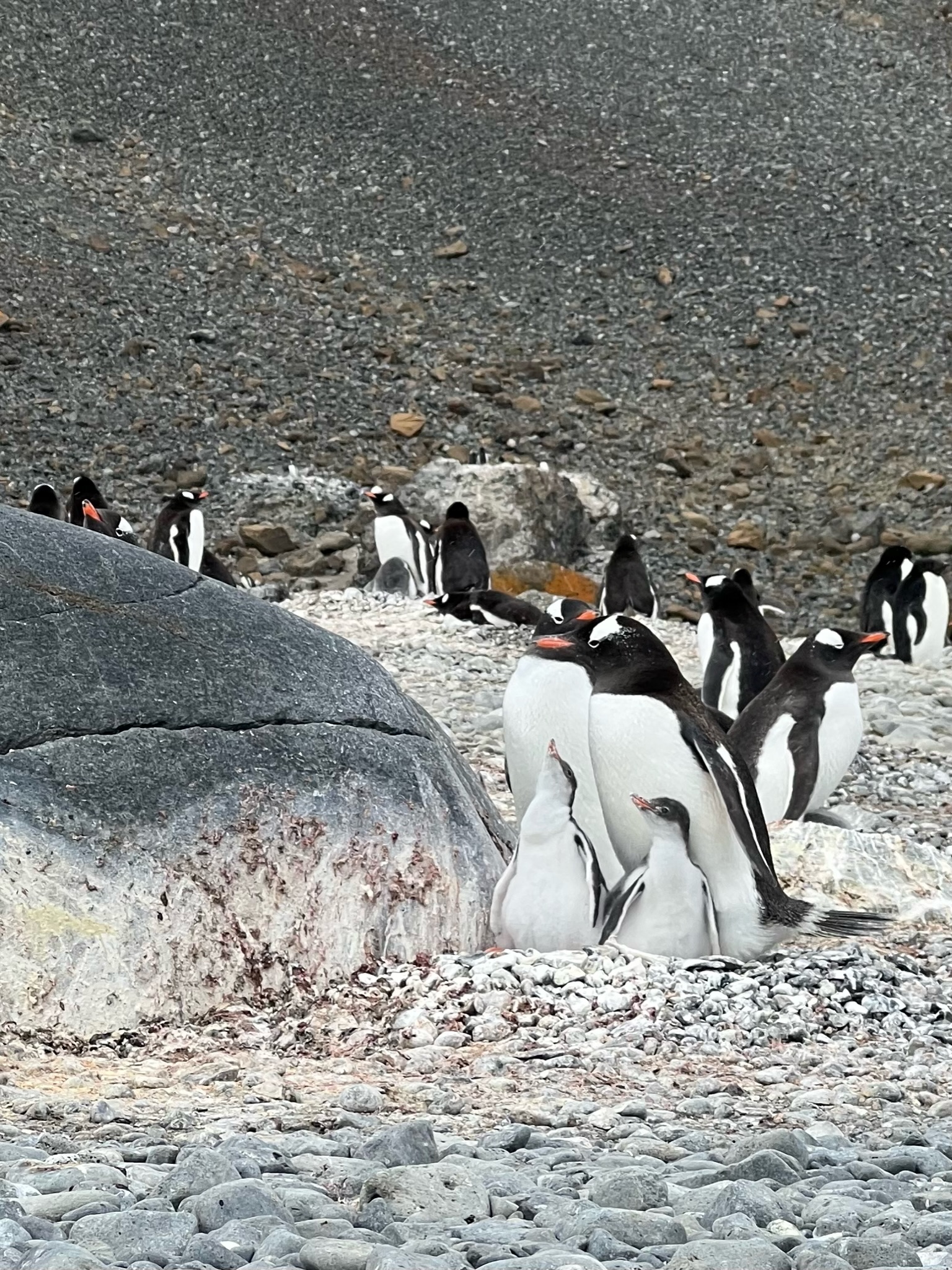
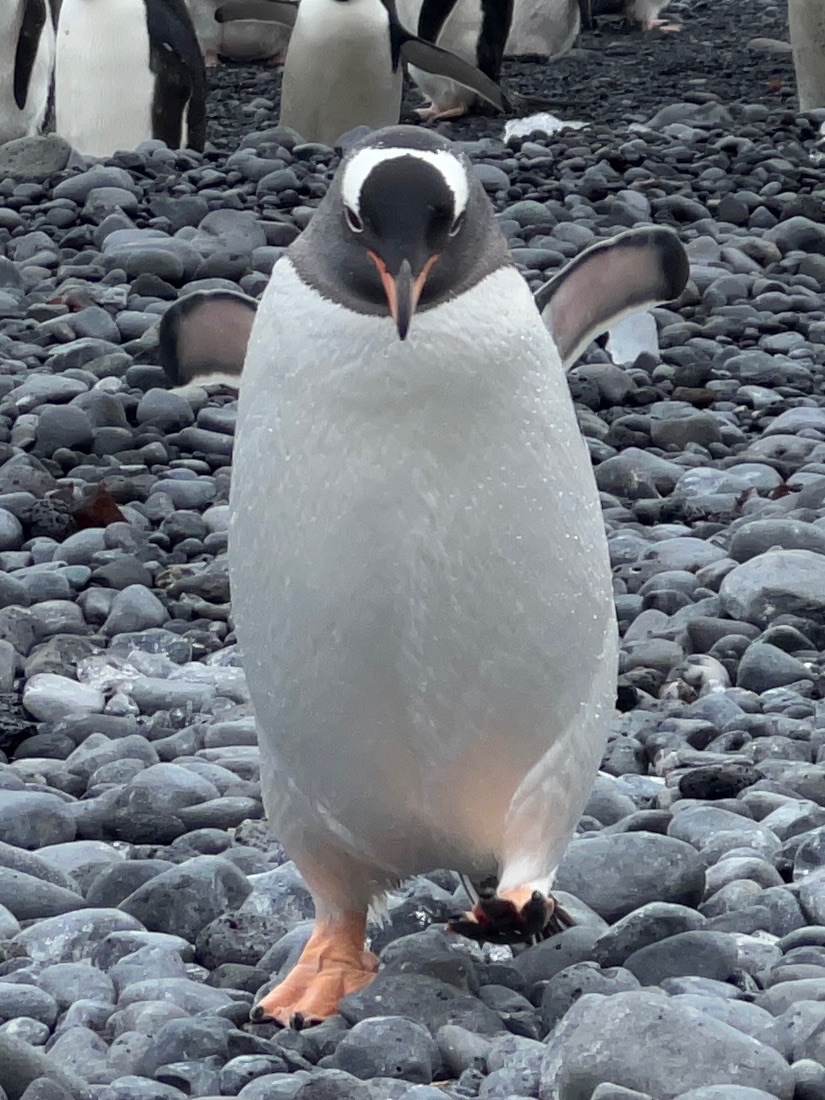
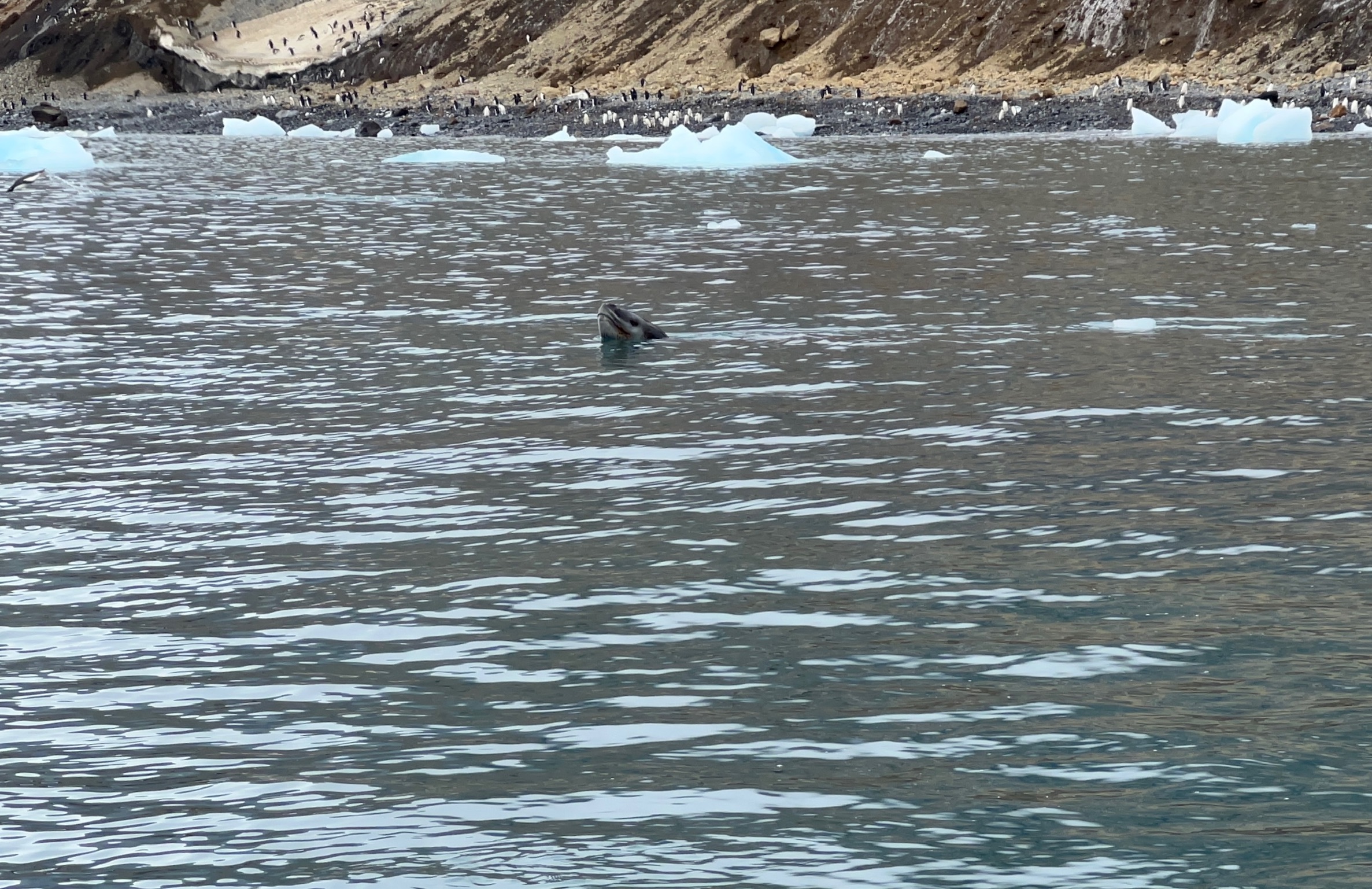
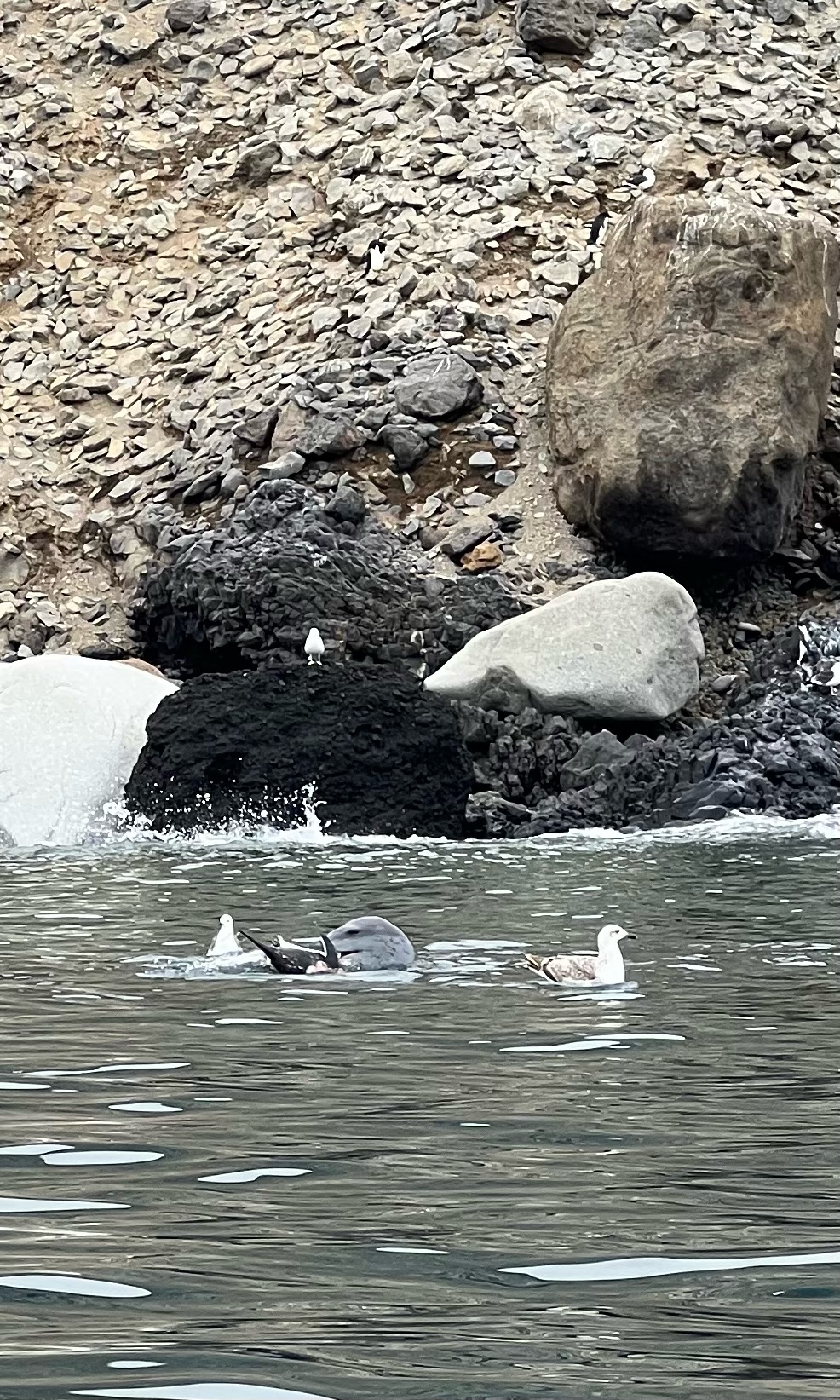
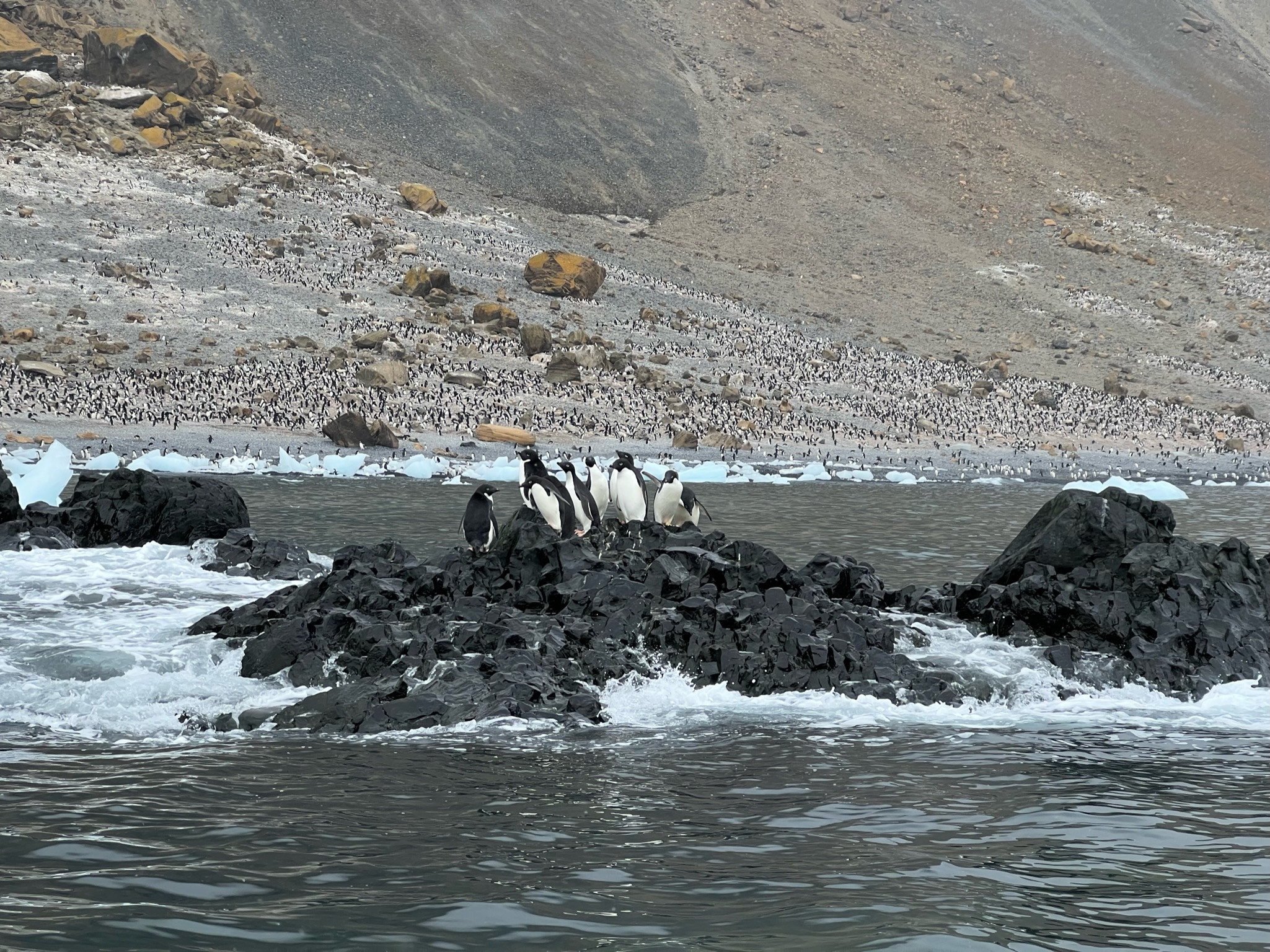
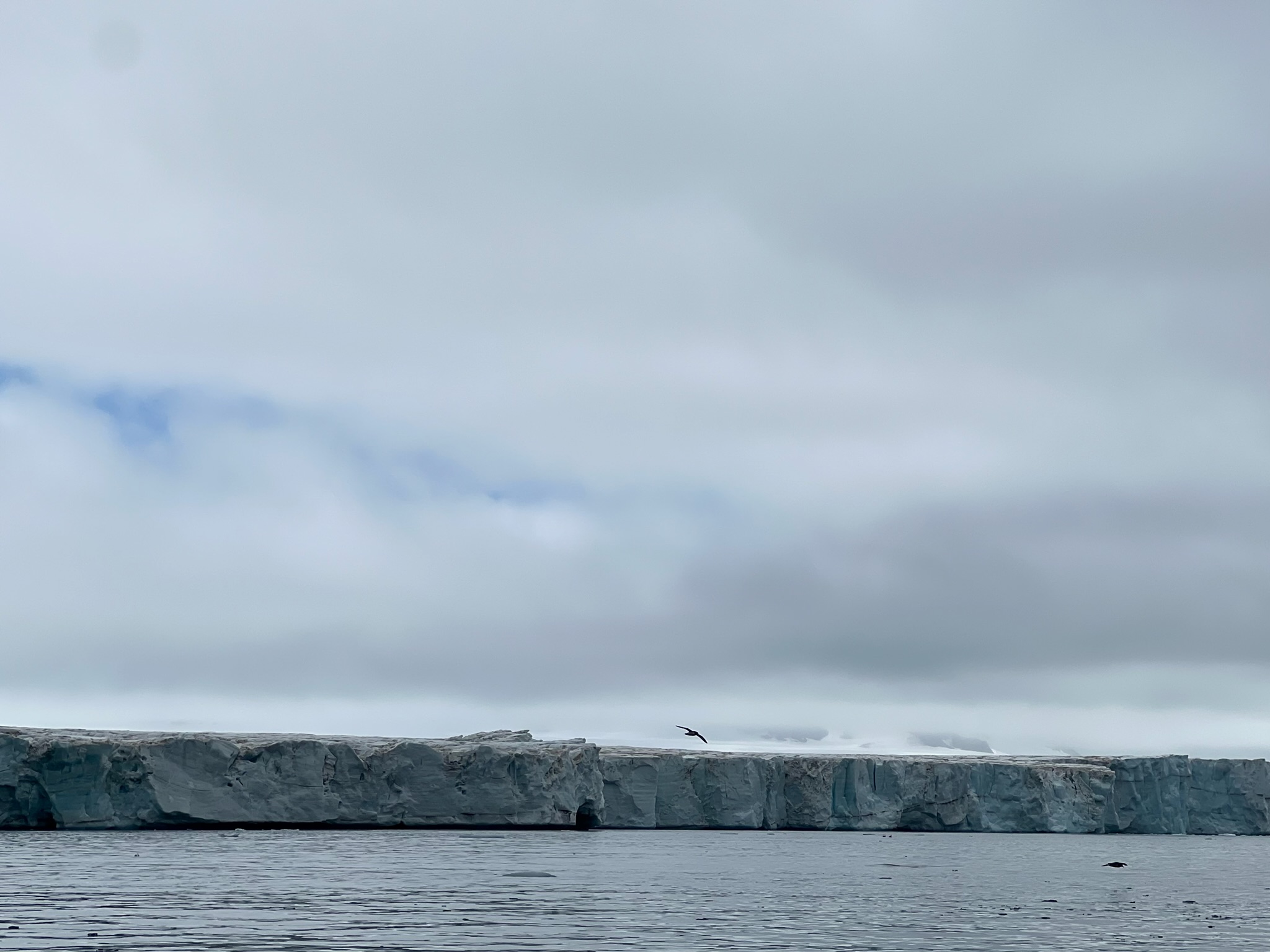
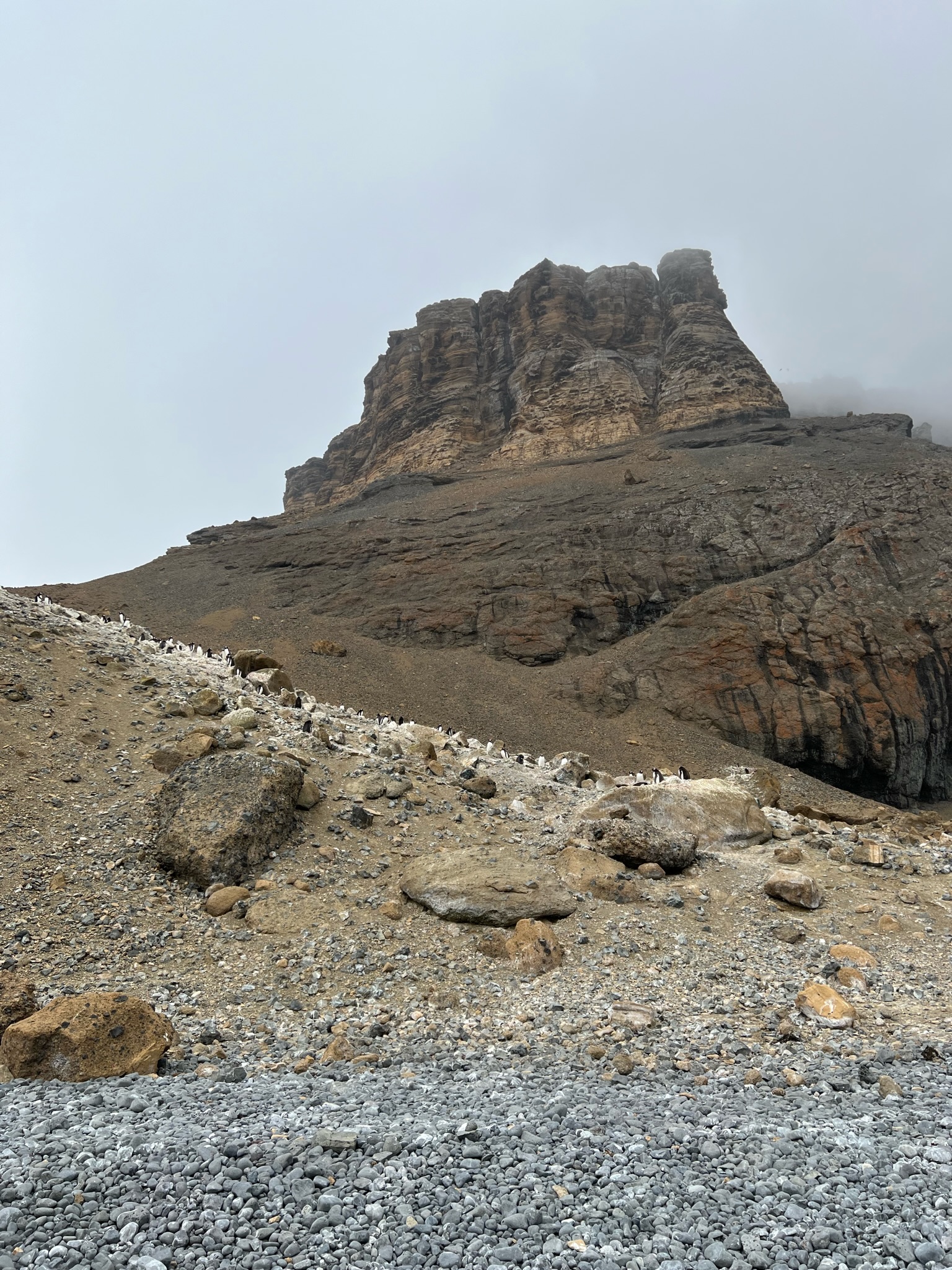
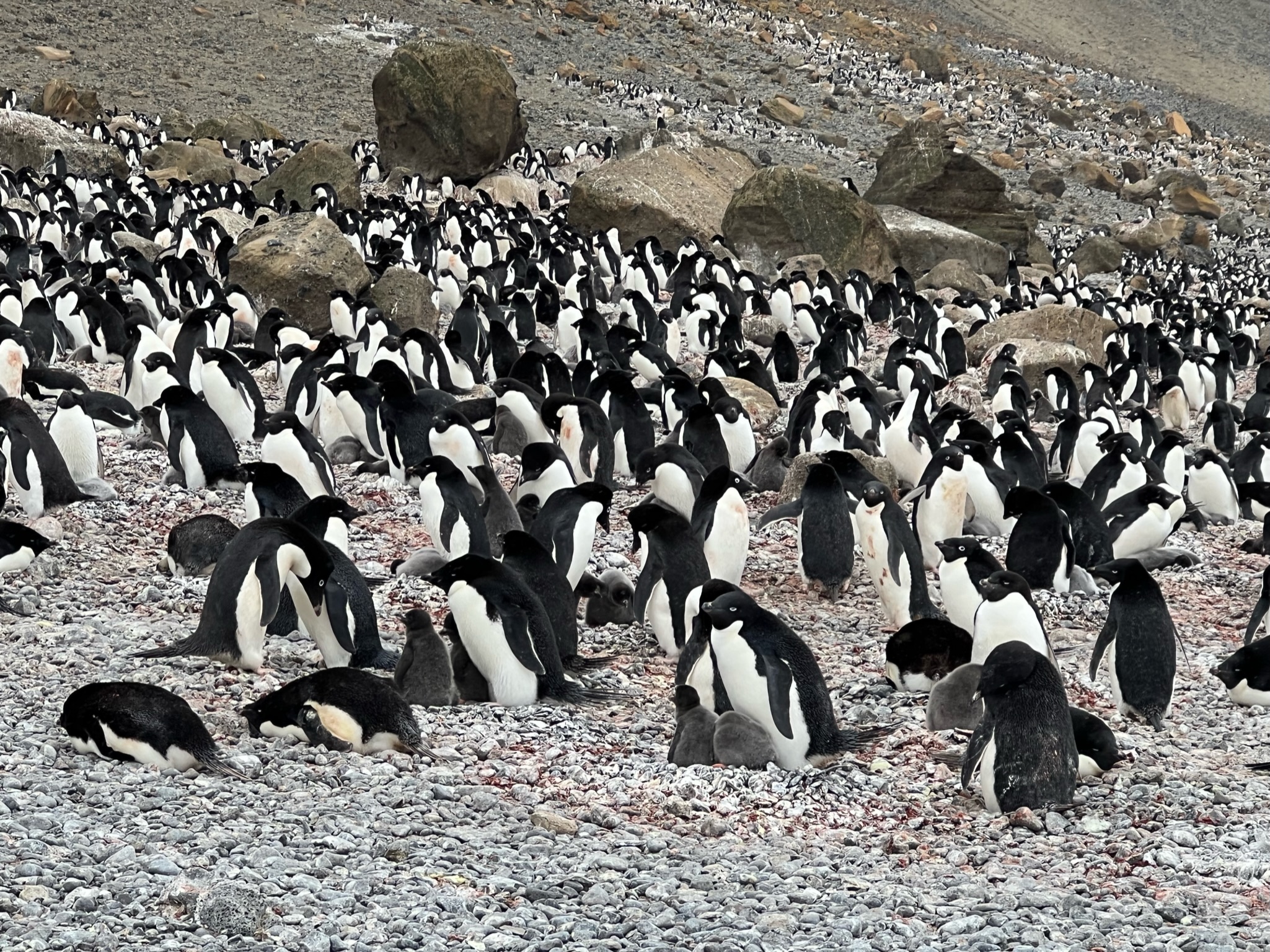
The leopard seals are a primary predator for the penguin. They are not as quick at swimming as the penguins, so they lurk around the shore line waiting for the opportune moment when an unlucky penguin crosses their path. It was disturbing to watch this seal dismember the penguin, but that is the reality of life here. These leopard seals survive by eating 20 penguins a day, when possible. We saw another even larger leopard seal hunting at the shoreline further down the bay, and we found a weddell seal relaxing comfortably on the beach.
When we got back to the boat, we warmed up with a cup of apple and cinnamon tea. After lunch, we took our next PCR test, and then we went back to our room to prepare for our newly rescheduled helicopter ride. To help us pass the time, we watched a presentation on the secrets of Antarctica from Jean, a guide. Jean talked about the methods scientists are using to learn more about the world by analyzing the different layers of ice. It wasn’t my favorite presentation, but it is interesting to see what they are learning down here.
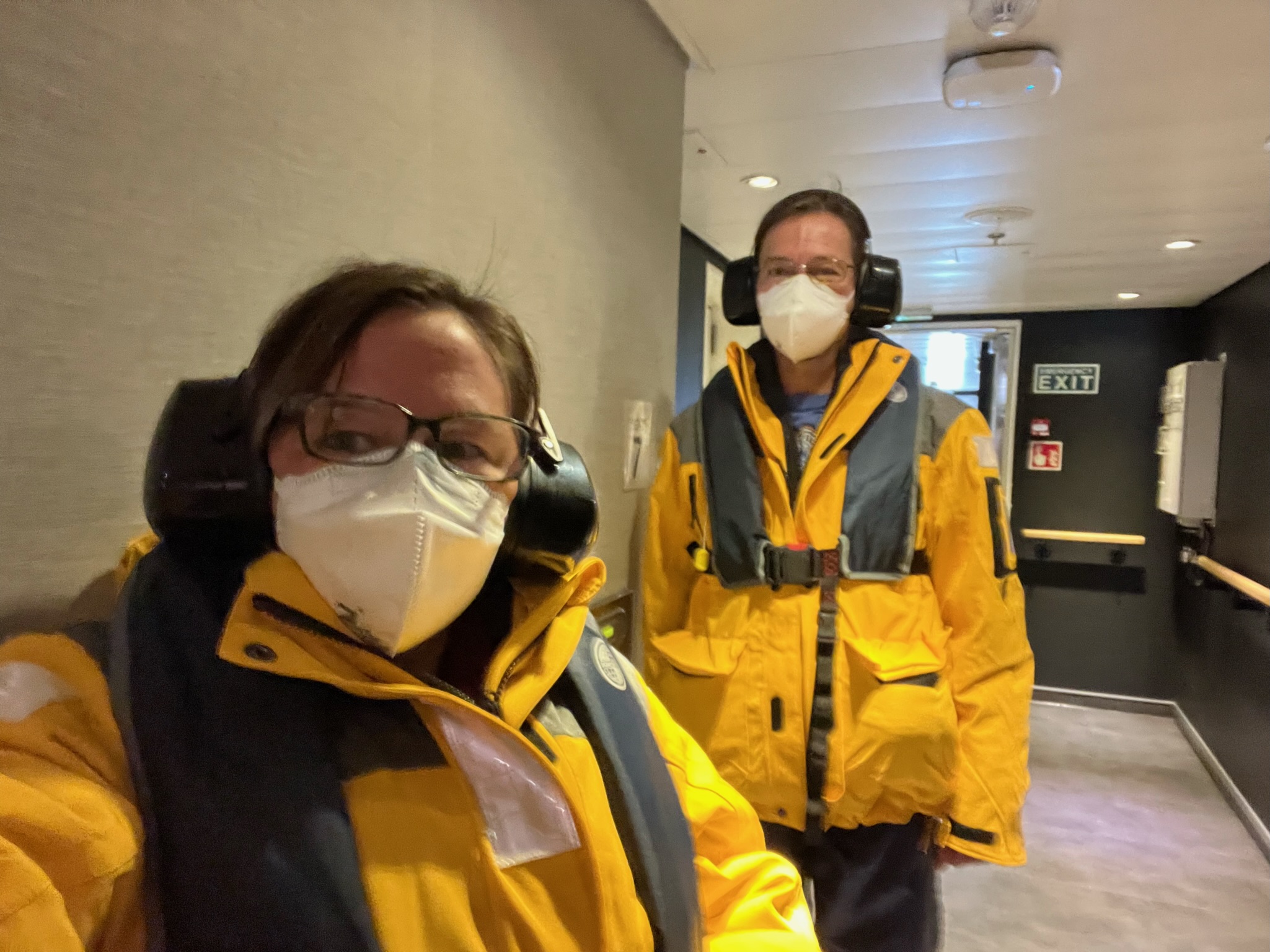
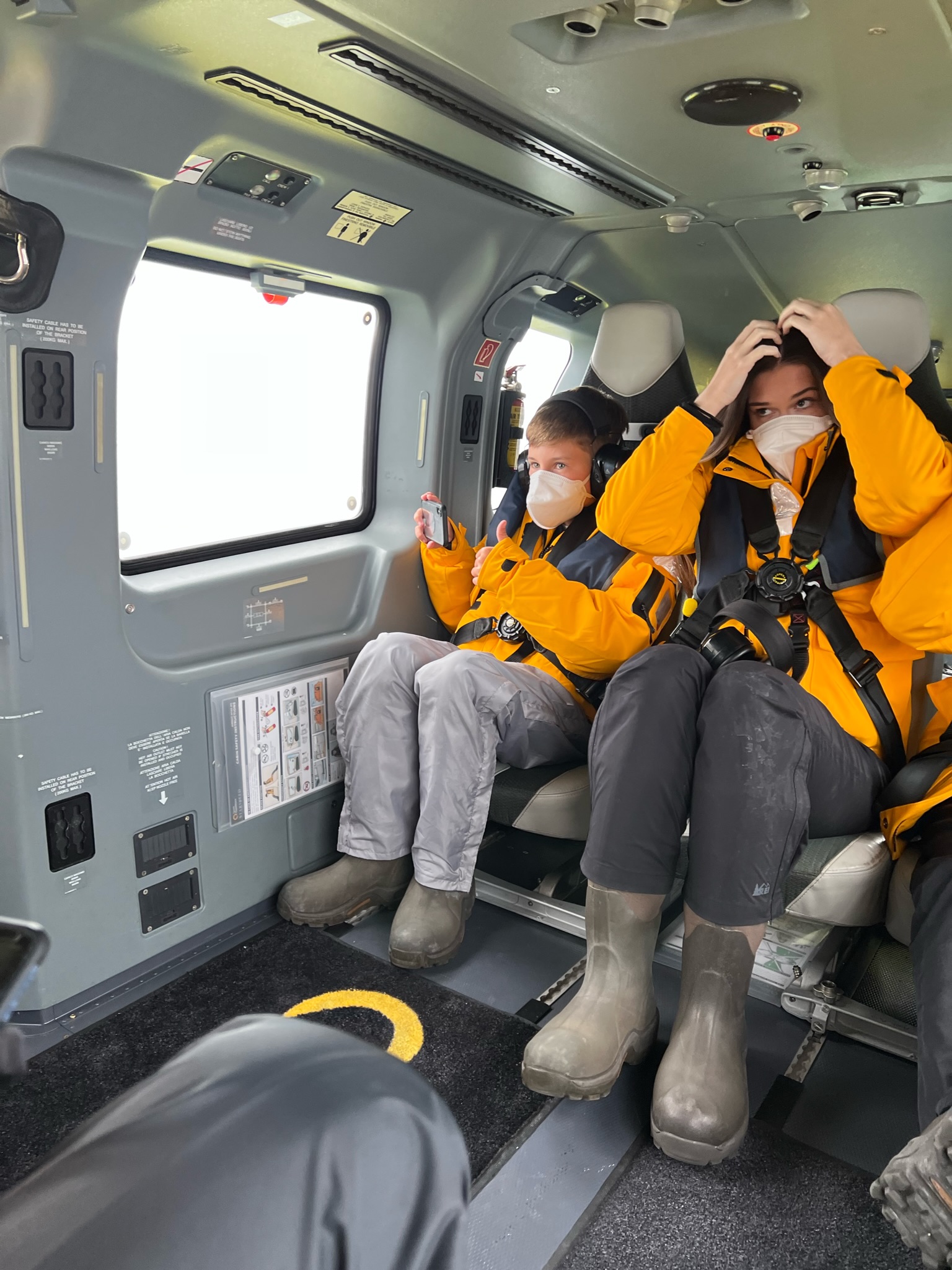
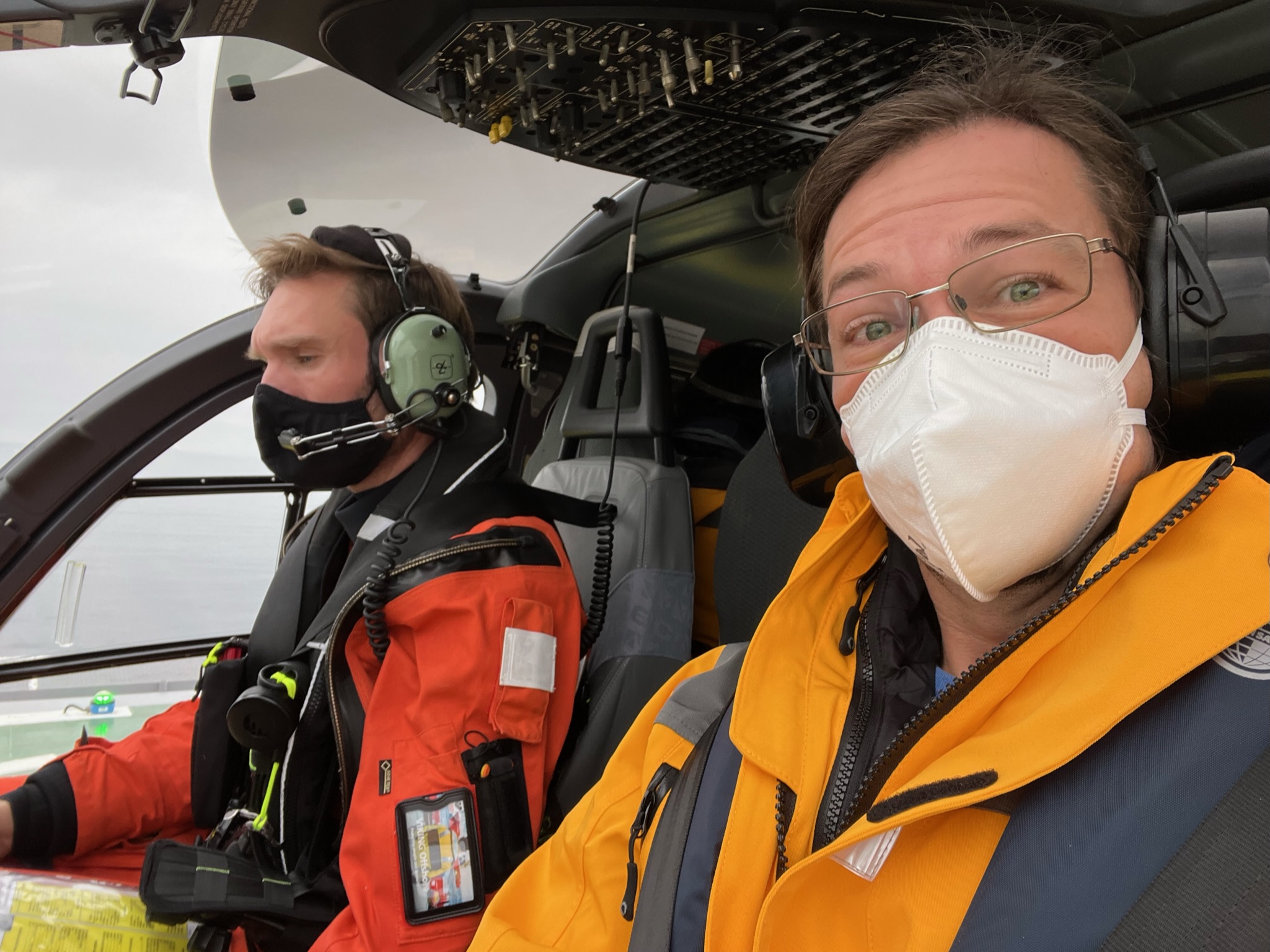
Our group was last for the helicopters, so we waited patiently. When it was finally our turn, the team helped us suit up for the helicopter. They weighed us individually and then assigned our seats to optimize the cargo load. We were handed a pair of earmuffs, and then the crew carefully directed us to our seat in the chopper and helped us buckle in. Within only a minute or two, we were all loaded up, locked in, and taking off on the helideck. Henry and I sat in opposite corners of the helicopter, and Brian got to sit up front with the pilot. The scenery from the air was awesome. We were able to see the giant ice shelves and icebergs in true relation to the size of the Ultramarine, and the vastness was incredible. The beautiful blues where the sea splashes up against the icebergs and ice shelves were stunning, and witnessing the calving of the massive glaciers and ice shelves was incredible too.


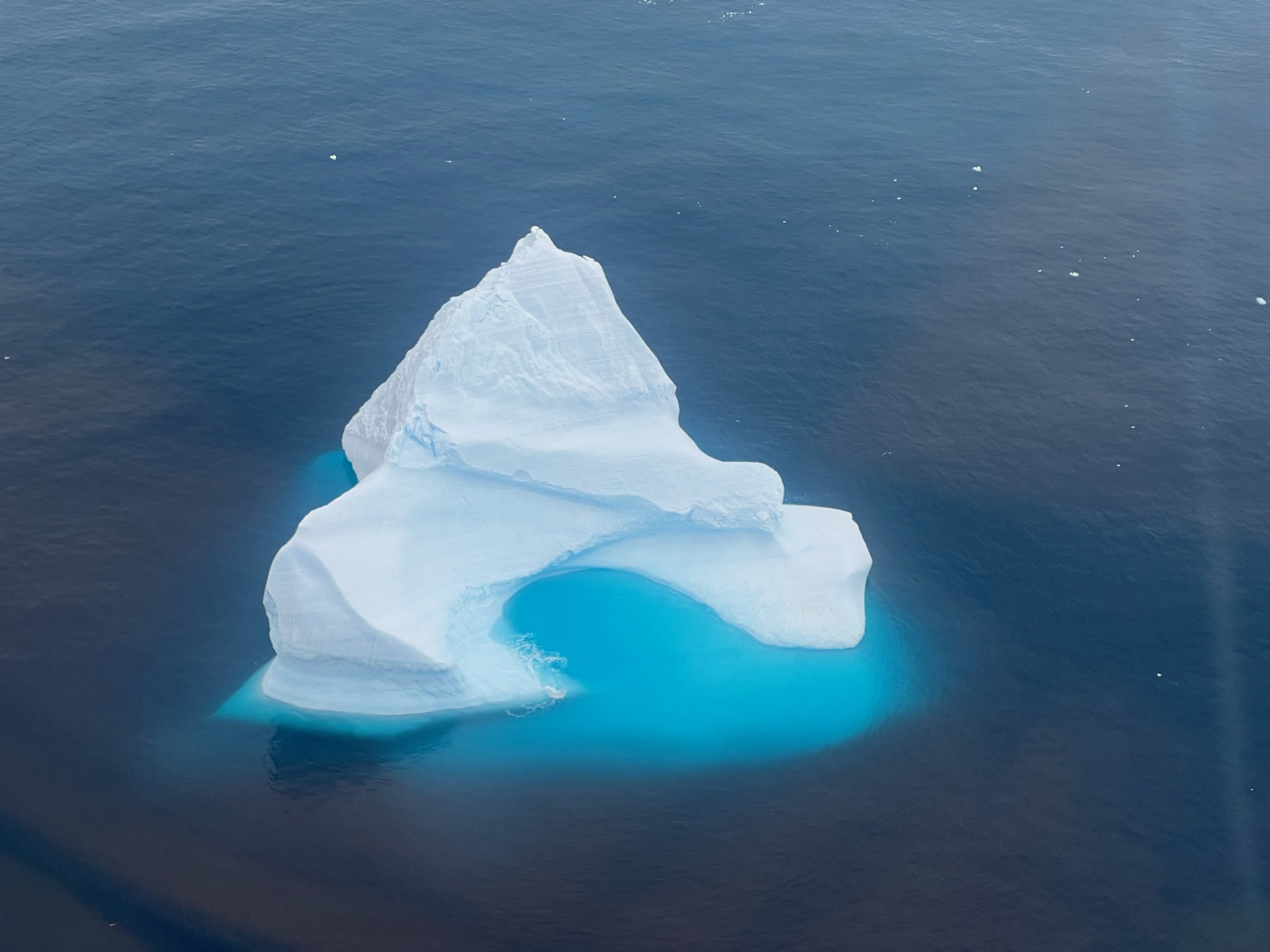
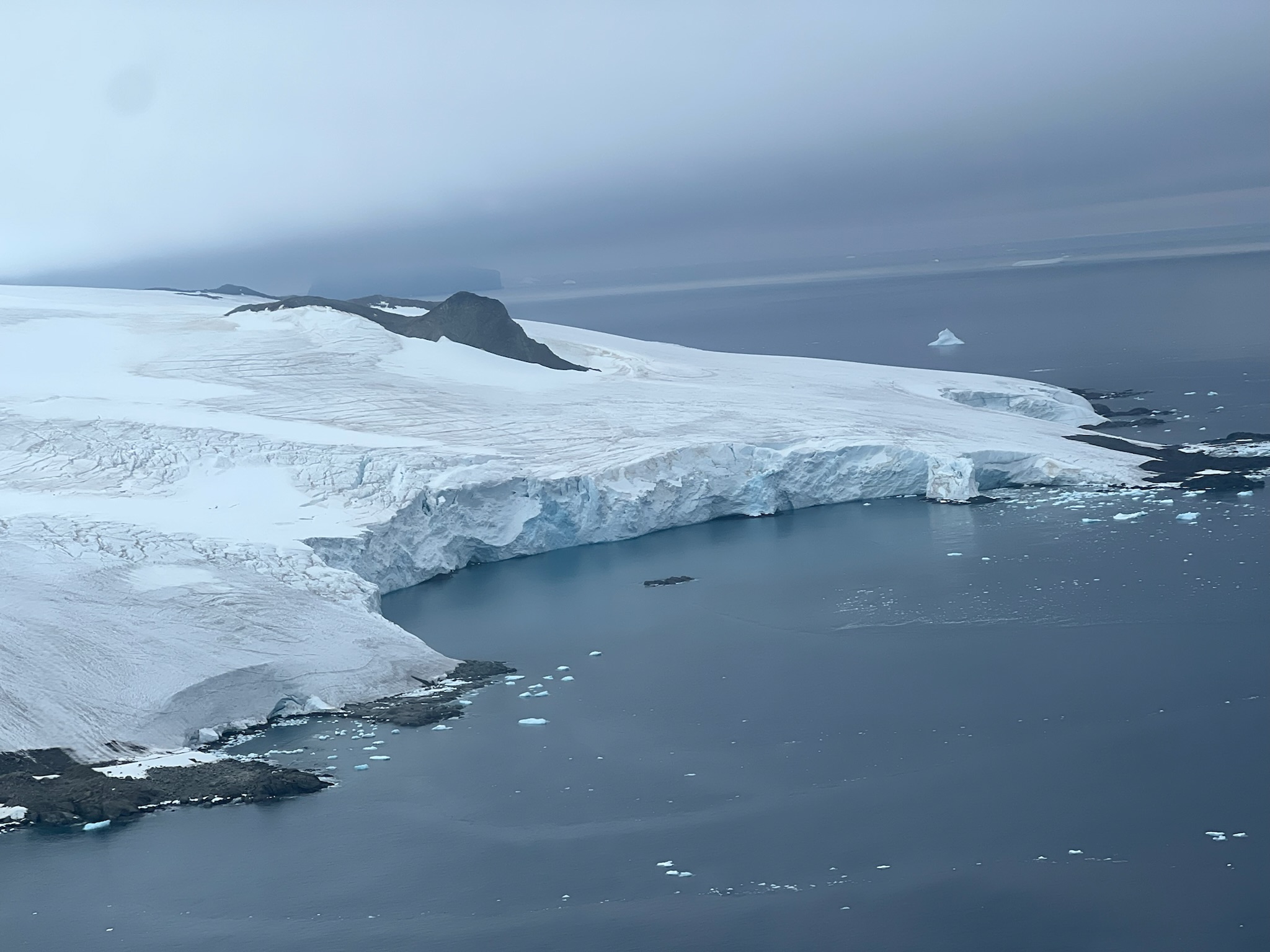
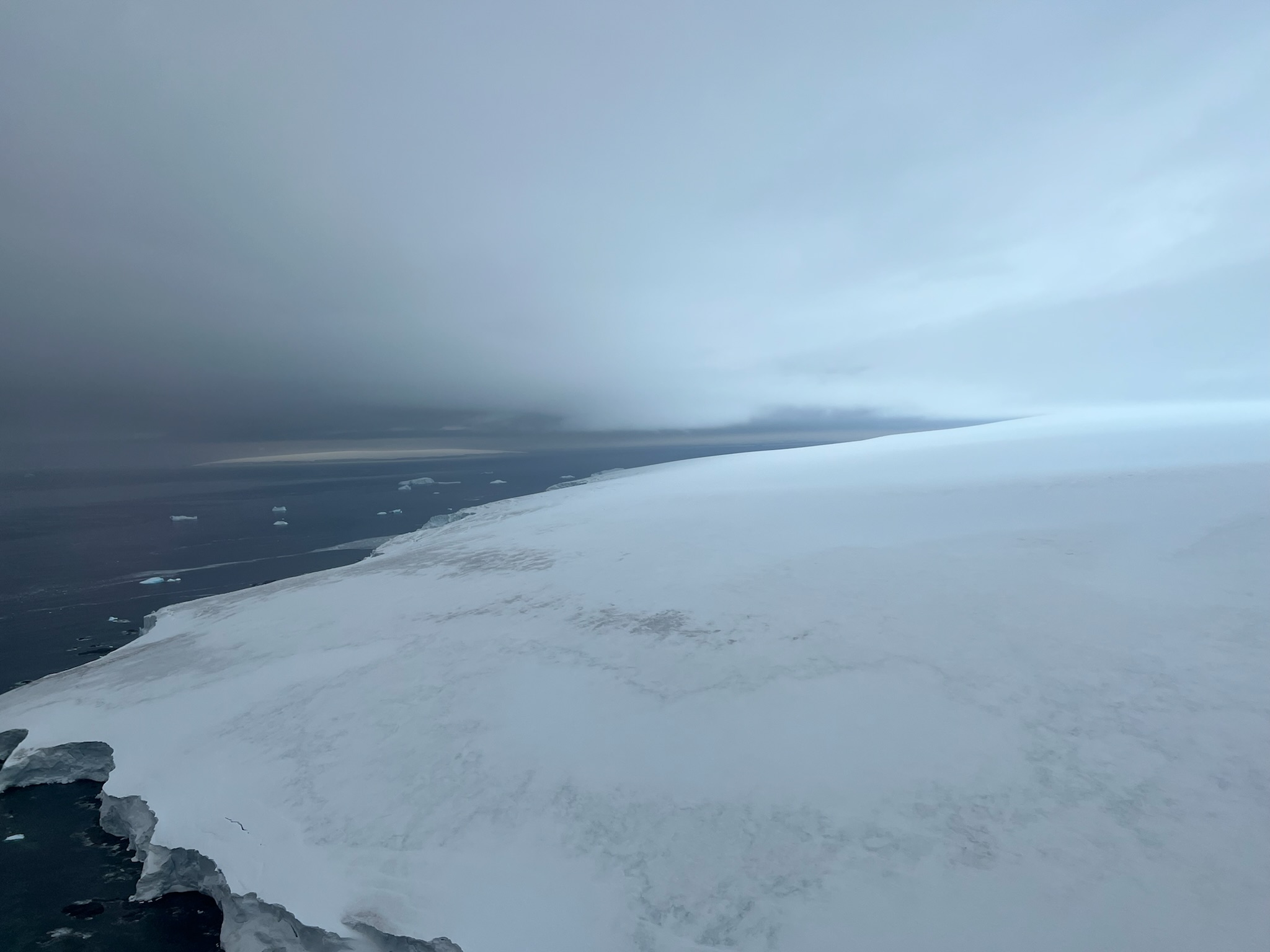
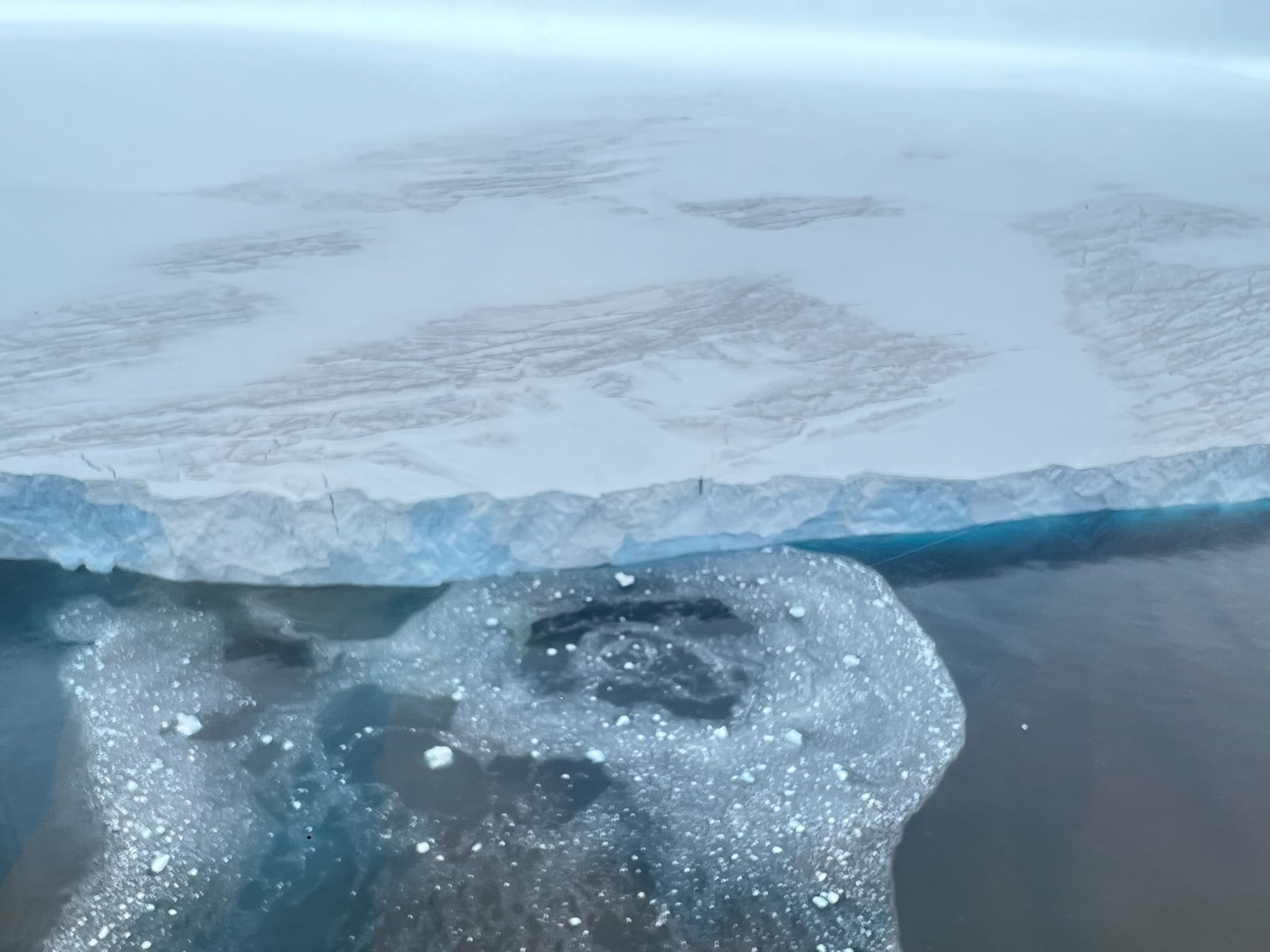
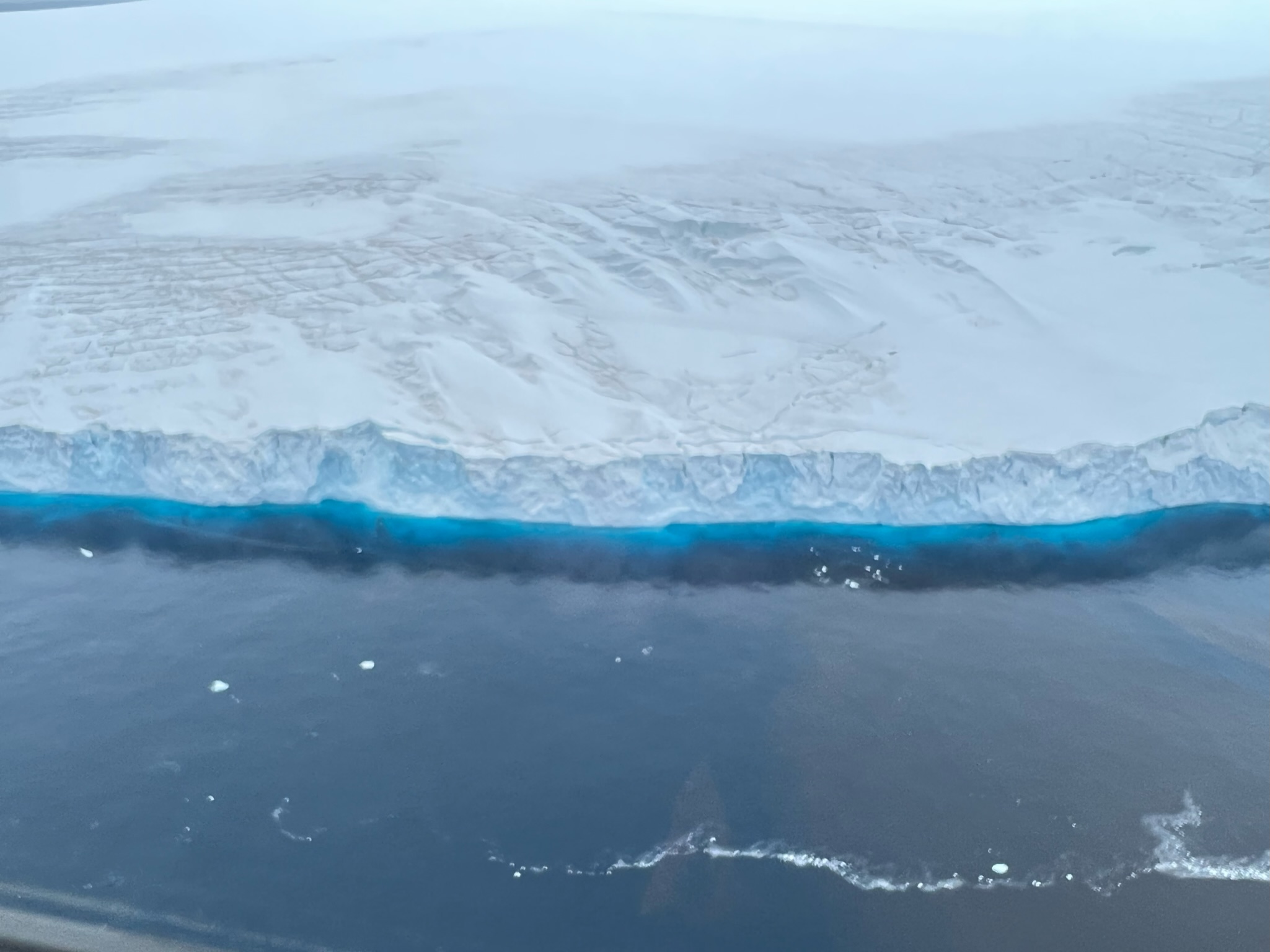

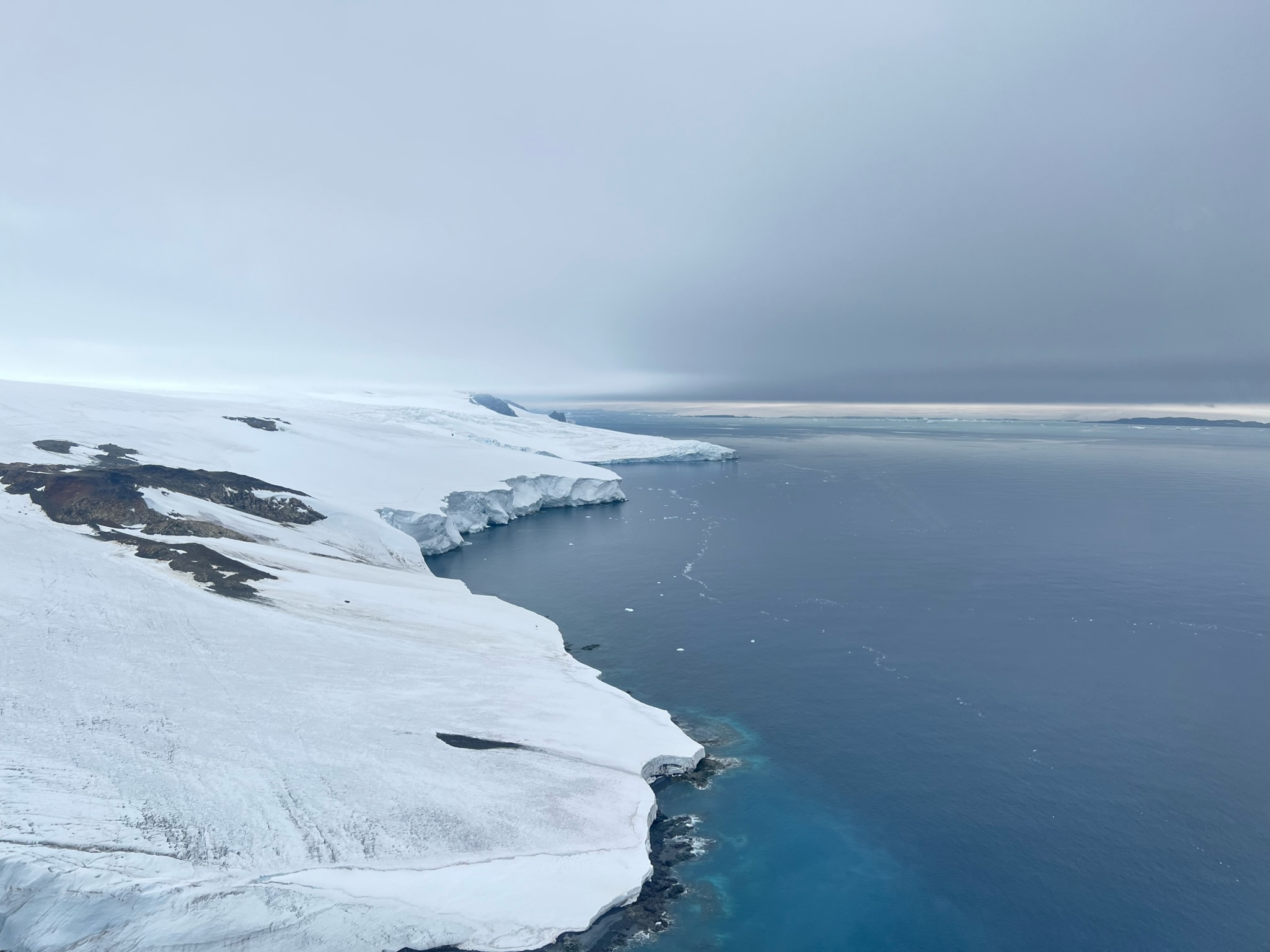
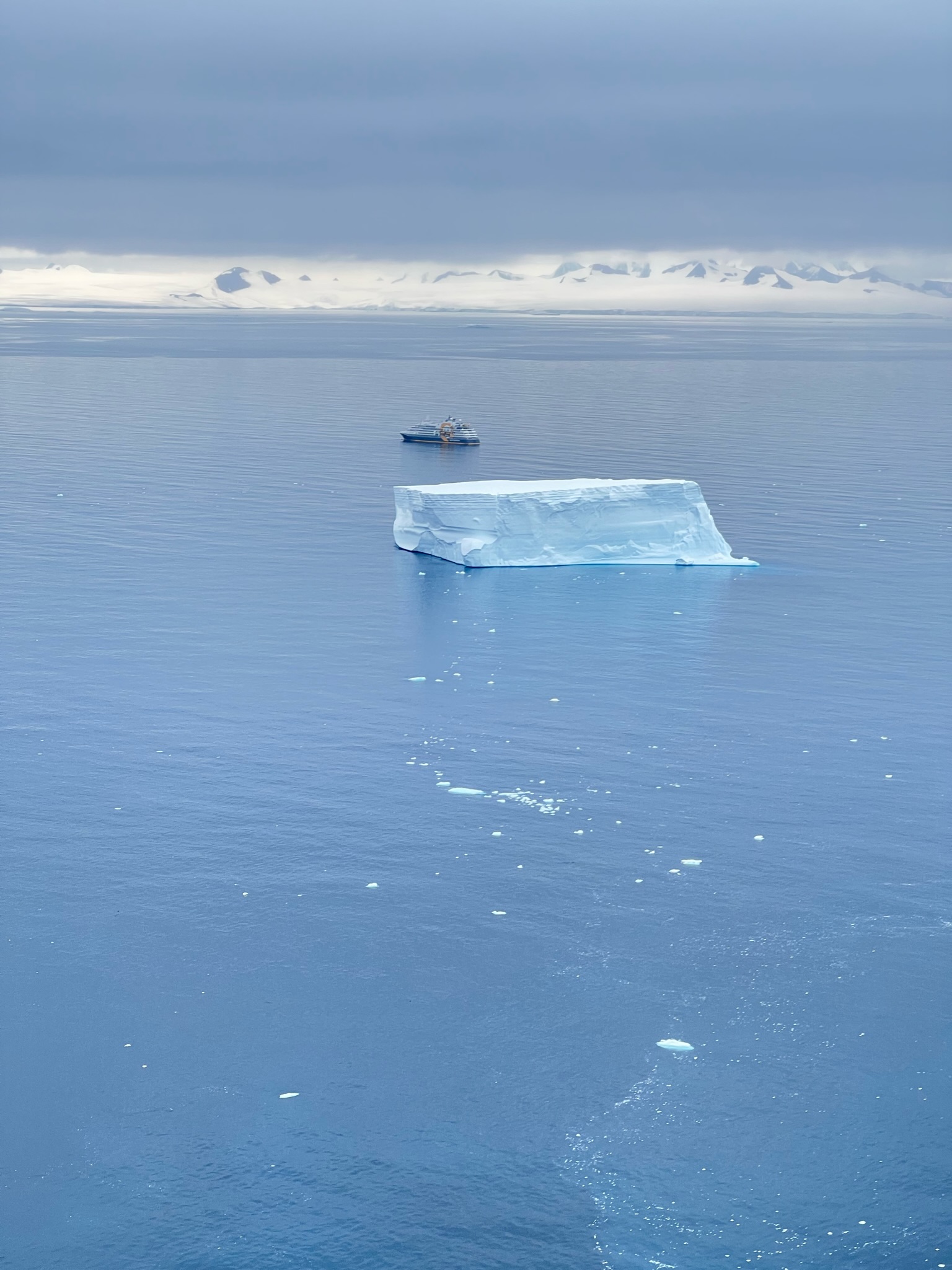
I found it very interesting that most of Antarctica actually sits below sea level, but the surface is covered by nearly a mile of ice. There isn’t any significant snow here, as it is one of the driest regions of the world. Looking at the massive thickness of these glaciers, its amazing to think through how long the ice has taken to build up. Pictures really don’t do it justice.
Upon our return, we had our afternoon recap and then headed for dinner. We had planned to navigate into the Weddell Sea tomorrow, but it doesn’t look like that will happen. We have someone who needs to be evacuated for a non-covid medical emergency, so we are having to change our plan. Instead, we are going to head to King George Island so we can get them the help they need. It’s disappointing for us, but hopefully they can get the help they need. On our Zodiac cruise this morning, our driver told us how excited he was that we’d get to enter the Weddell Sea. It’s rare that the weather and the ice conditions allow you to spend much time there, and both were working out beautifully for us. But the crew assures us that we will have lots of fun in the South Shetland Islands too.
Tonight the waves are going to be a little rough, so we have taken our motion sickness medicine and are heading to bed. By tomorrow night, we should be docked somewhere, and hopefully we’ll get to go and explore on land again.
Day 8: December 29, 2021
Today was a lazy day, but it wasn’t supposed to be. Last night, we knew that we’d be crossing the Bransfield Straight, and the crew recommended that we all take some motion sickness medicine in preparation. We did, and it must have done the trick, because we were all out hard. This morning when the alarm went off, all three of us struggled to fight off the stupor of the medicine. We made it to breakfast, and we were pleased to see the beautiful scenery outside our windows. We were in Maxwell Bay, just on the south side of King George Island in the South Shetland Islands. This area is home to many science stations, so there is quite a lot of traffic, all things considered. We saw several ships moored in the bay, and we watched helicopters and small planes come and go throughout the morning.
For reasons unknown to us, they have not evacuated our passenger yet, so we are staying in the area a bit longer. We had a few presentations in the morning, and the plan was for us to go out on a zodiac cruise and hike in the afternoon. The presentations were okay. Marla gave an educational presentation on Orca whales. She does a very good job in making her topic both entertaining and educational. After that, our special guest Ross presented on Ernest Shackleton. This presentation was much more difficult for us, as we were extremely tired and Ross’ voice is very soothing. He lost us about a third of the way into it. Henry and I worked on his homeschooling, and Brian entertained himself playing games on his phone instead. In the afternoon, the weather turned rough, so we weren’t able to do the zodiac cruises at all. We watched the snow come down in a thick blanket as the boat rocked and rolled on the waves. At one point, we were up on deck 7 and recognized how far the ship had listed to the left; we could see nothing but water out the windows on the left side of the ship, and nothing but sky on the right. The crew didn’t seem to even notice, so we just continued with our activities and laughed it off.
It felt like a bit of a wasted day, but we were all feeling rough. We needed a free day to rest a bit. On an unrelated note, we had another positive covid case on the ship. The ship doctor says that the two cases we’ve had are unrelated, and that both are most likely from before the people were on the ship. We will be taking another test in a few days. It’s a bit scary to have positive cases on board, even if everyone is wearing their masks and sanitizing their hands. We’re keeping our distance from everyone, and we’re doing all the ‘right’ things. There’s not much else we can do.
Day 9: December 30, 2021
We woke up to a morning announcement by Solan; we had forgotten to set an alarm. We quickly dressed and went to breakfast, and fortunately, we weren’t too late. After breakfast, we went to the Panorama Lounge and had more coffee while we played a few games of checkers.
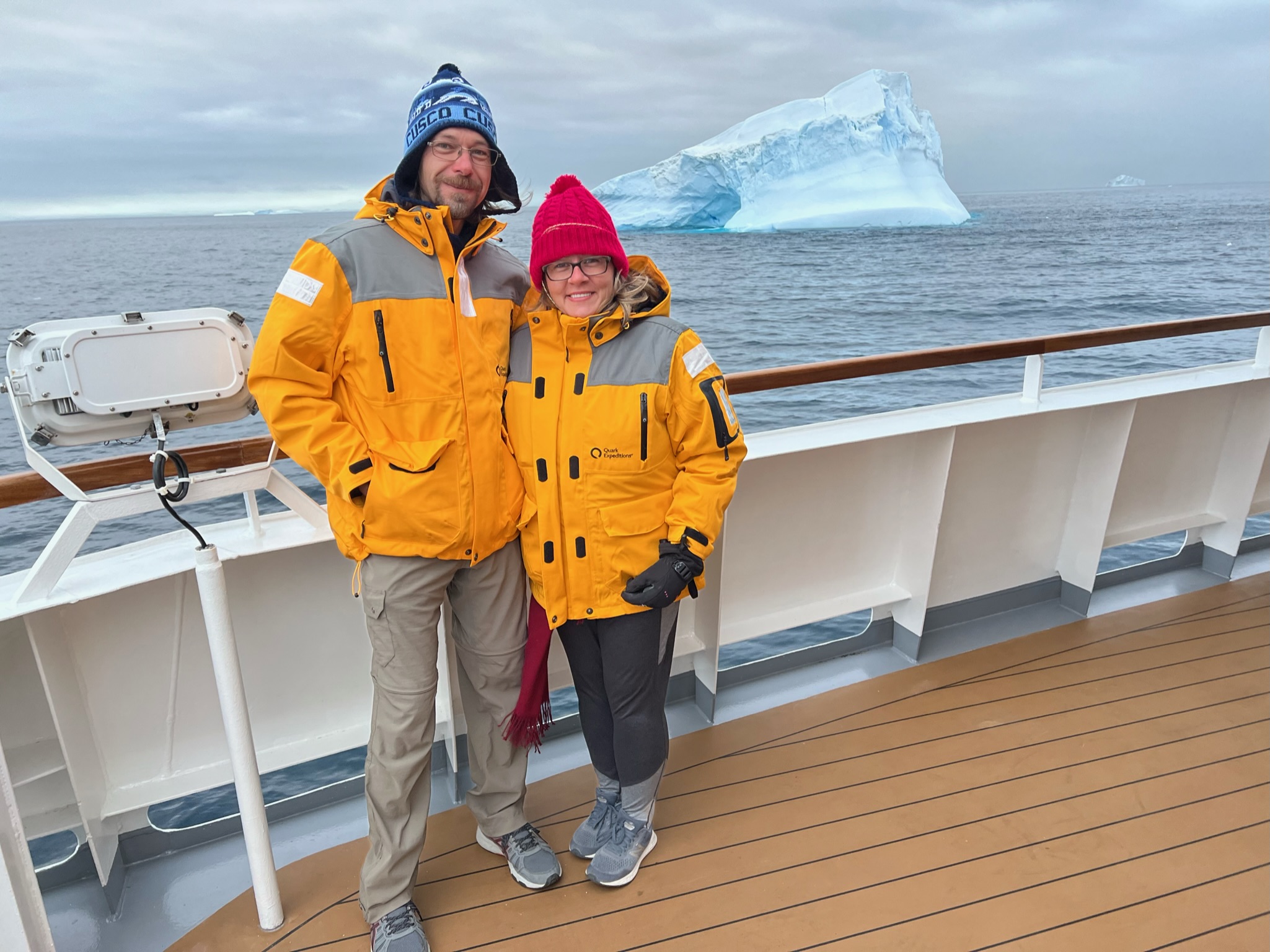
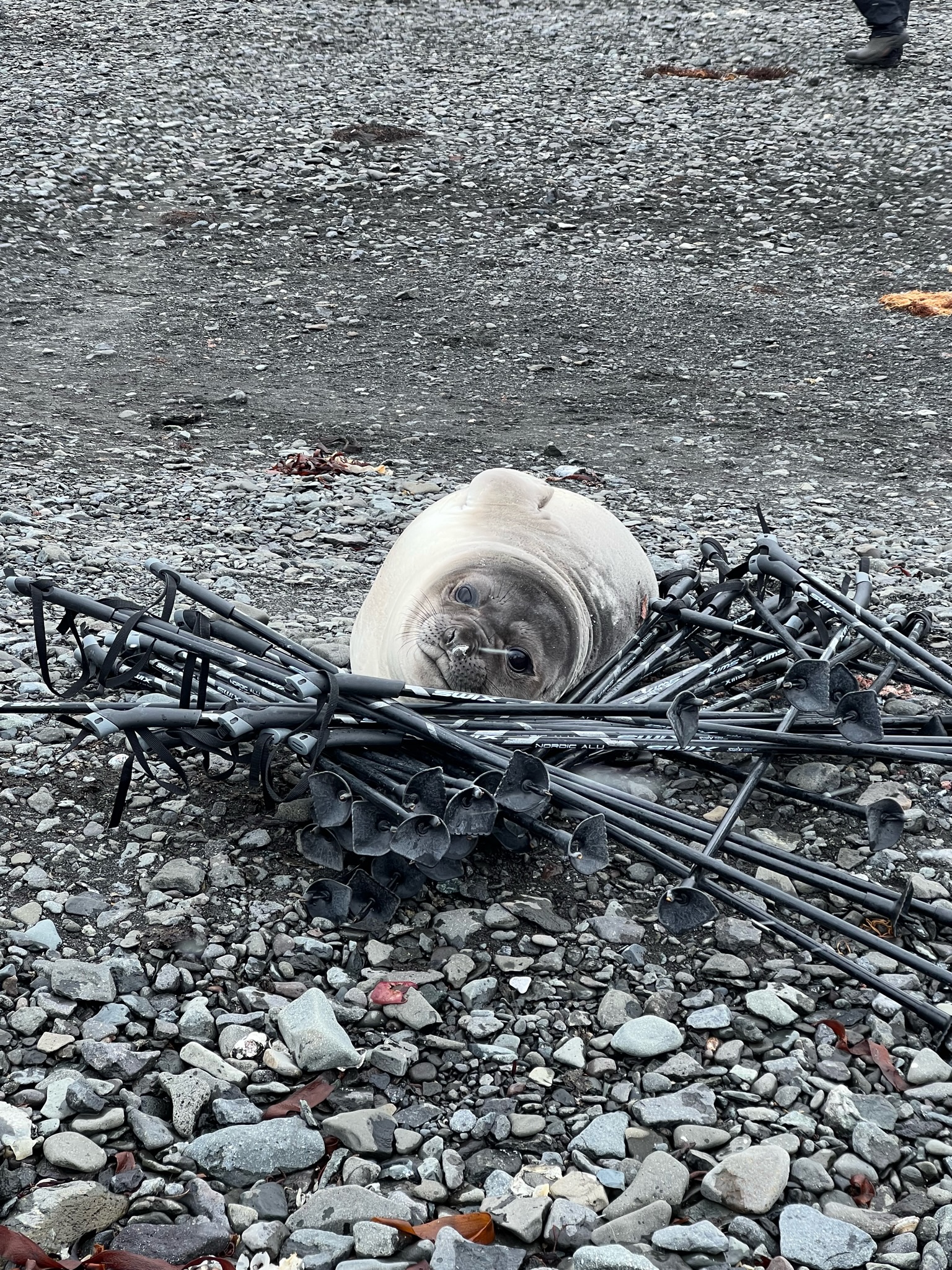
The team readied the zodiacs for a quick cruise through Maxwell Bay on the southern end of King George Island. The waters were a little choppy, but we loaded up and our driver took us out to enjoy the face of the glacier first. On all of our zodiac rides so far, we have avoided getting wet, but on this ride, there was no other option. The snow was pelting us in the face, and the waves would regularly douse the riders in the front of the zodiac. After a few minutes, we worked our way around the shoreline until we came upon some resting seals. These seals were very large, and they were soaking up the sun on the beach. They didn’t really seem to notice us. We made our way over to our landing zone for a touch-and-go landing. We didn’t have long – 15 minutes or so – but we could enjoy the rocky shoreline for a bit. Just in front of the landing zone, a seal had made a nice comfy bed out of our pile of walking sticks. They told us we could go and look at him so long as we didn’t try to take his sticks. He was adorable. His big brown eyes were so sweet looking, and he seemed perfectly at ease laying on the beach with 20 yellow jacketed people staring at him. He lazed around, scratching his side and observing us with little interest. He was as cute as a 200 pound seal could be, and looking at his slow, tame movements, it was easy to forget that he was a vicious killer. I had seen a seal kill and dismember a penguin just yesterday. It was hard to imagine this was even the same kind of animal.
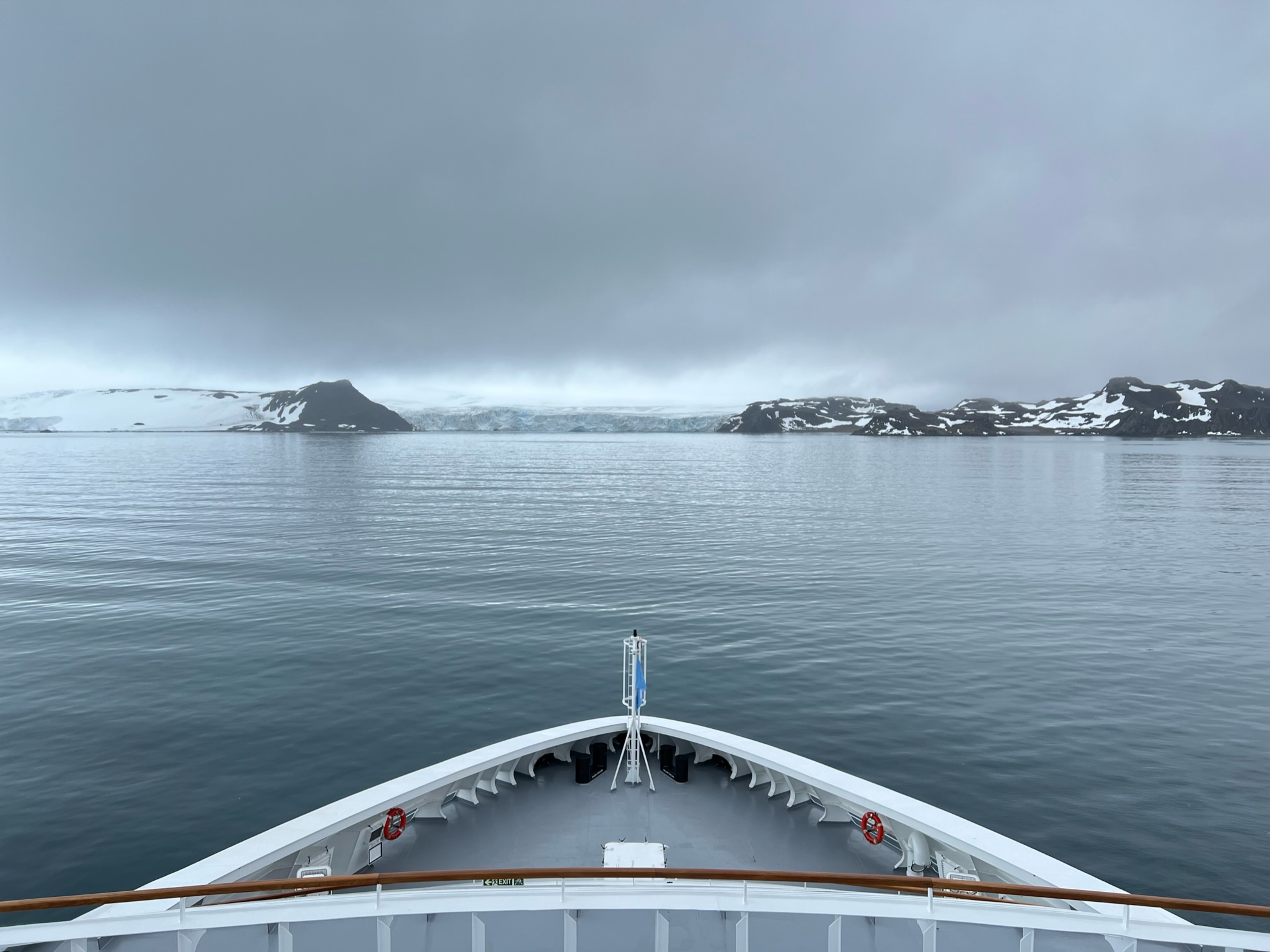
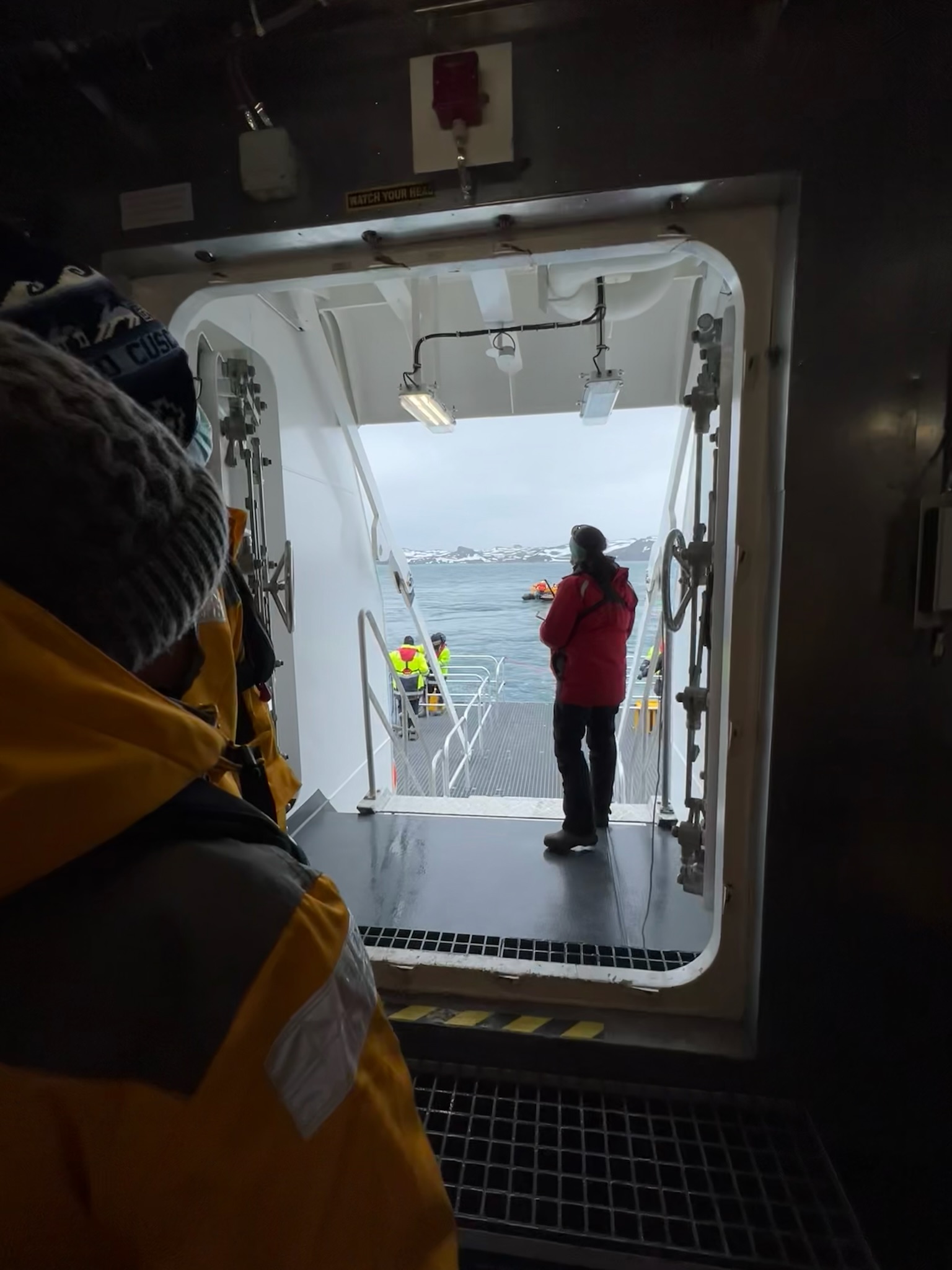
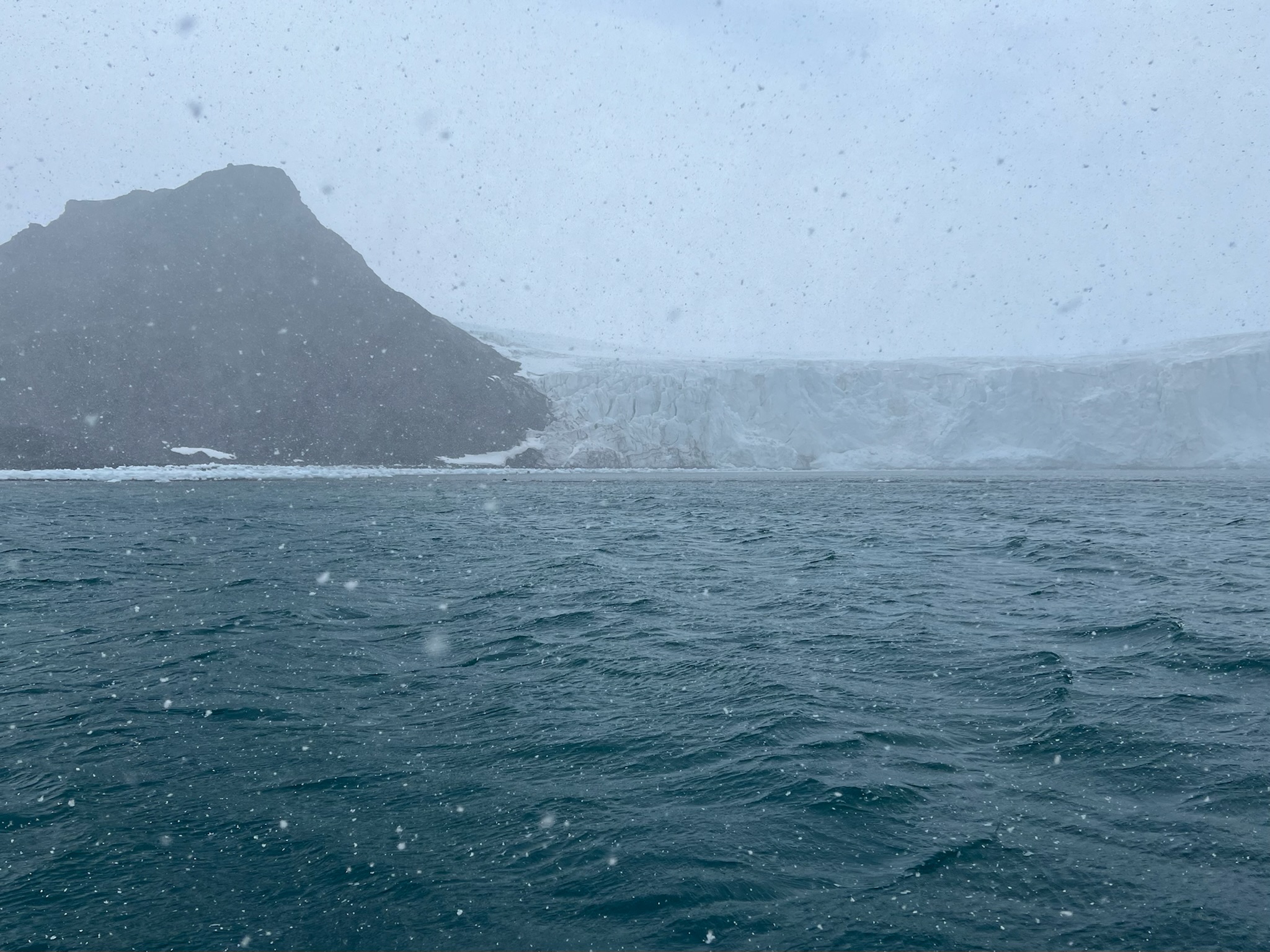
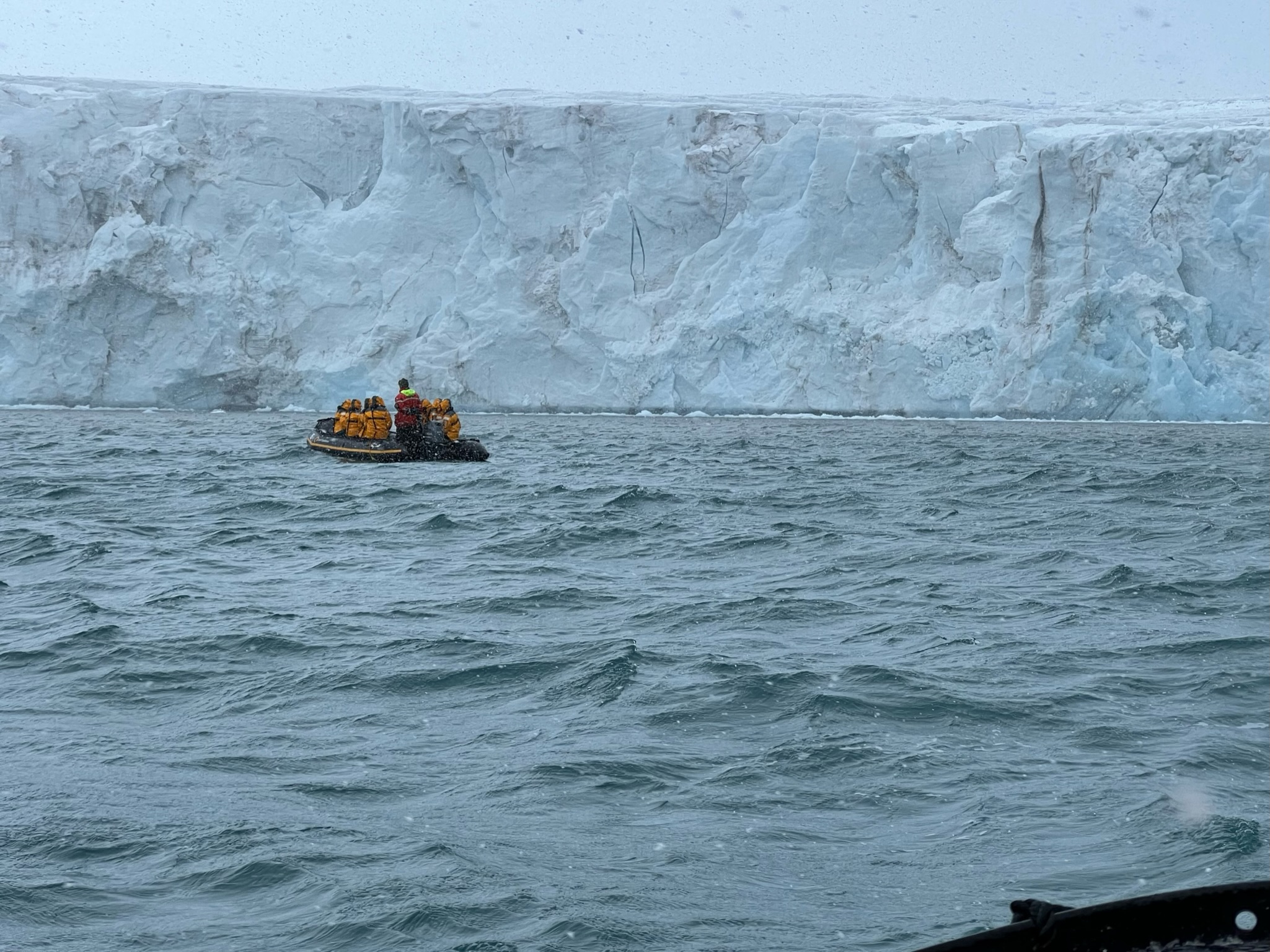
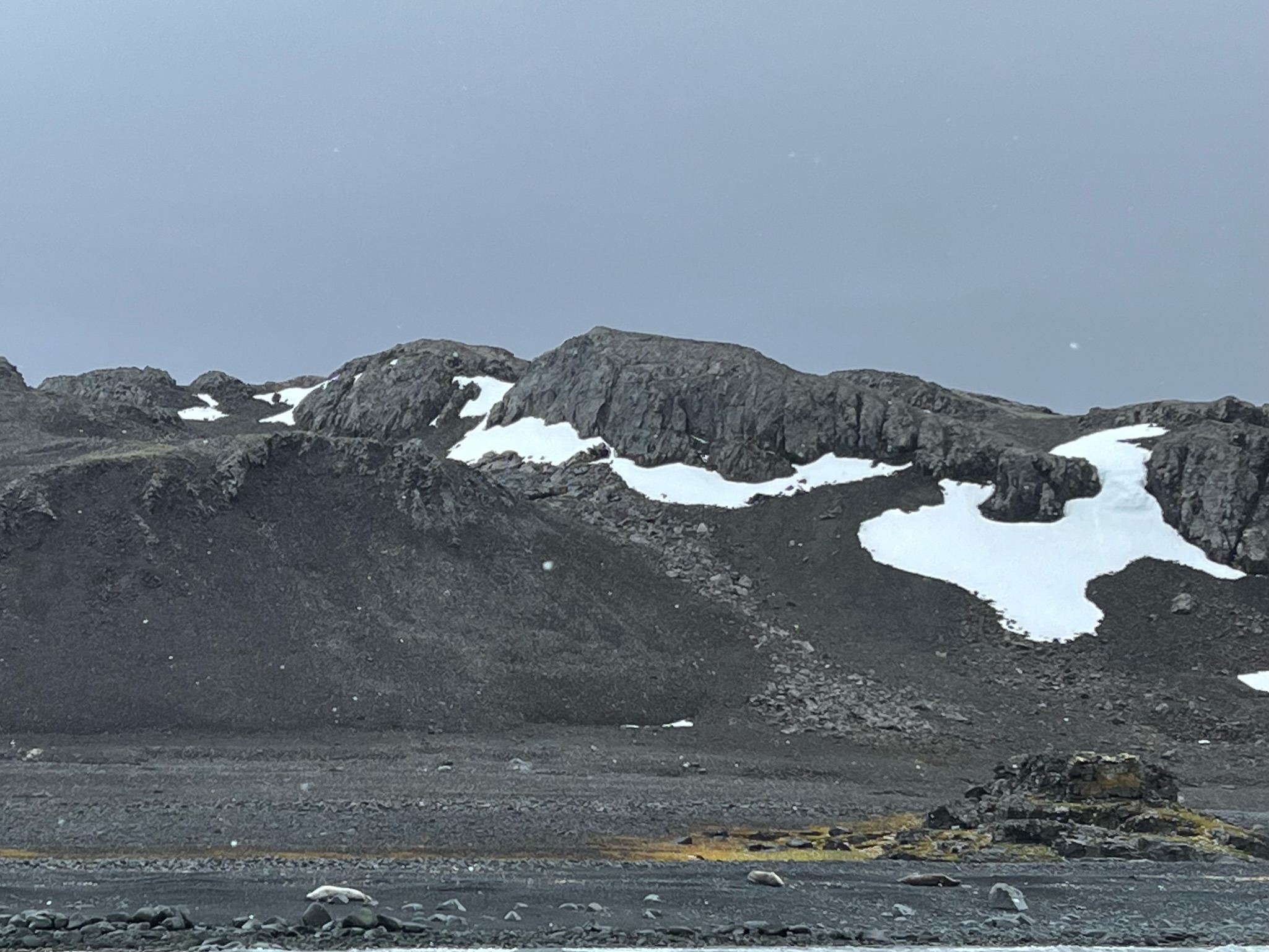

We were very, very cold, and we opted to get on the zodiac to return to the boat sooner than we had to. The ride back was the longest 20 minutes I’ve experienced in quite a while. The waters had continued to get rougher, and the cold was deep in our bones. We got back on the boat and quickly went to our room to rest and warm up.
We watched two presentations today. The first was from Tim Jarvis, the author of Chasing Shackleton. Jarvis told about his adventure reliving the later portion of Shackleton’s fateful trip. The presentation was good, and even though I did fall asleep during it, Jarvis did a great job of helping us understand the challenges that Shackleton and crew faced. It’s absolutely amazing that they survived. After being in the cold for only two hours today, I was utterly miserable. These men suffered the cold for months on end, and they were not clothed in high tech and waterproof gear with rubber boots. I don’t know how they could do it.
The second presentation was from one of the Quark crew, Fabrice. He educated us on how animals in the polar regions can survive in such frigid temperatures. It was interesting to understand some of the specifics of their anatomy that allow them to survive like they do.
After dinner, we hung out in the Panorama Lounge again. Henry played card games with his new friends Scott and Maggie while I stared out the window looking for wildlife. I was thrilled when I saw a whale pop up about 50 feet away from the boat. He traveled beside us for a short period, but eventually the boat outpaced him. We stared off the bow for a bit longer and saw several whales swim off in the distance. It was wonderful to watch.
But it was very cold, and after a short time, we found our way down to dinner. Once again, our meal was fantastic, and we enjoyed the company of our serving staff. Rudy and Meerim, our servers, have learned our names, and we have grown very comfortable with them. Rudy calls Henry ‘little boy’ every time, and it makes Henry smile. They work very hard, as they are with us at every meal. Rudy is blunt and doesn’t hold back, and we love it. Meerim is the utmost professional, and her singsong voice is as sweet as sugar. They have made the dining experience very pleasurable for us. Some of the other guests around us have been difficult, and I hate it for the serving staff. Some guests have complained about the service, and as a result, there have been several changes in the staffing. We think that the crew is doing very well considering they are still working out their own kinks. The meals are slow, but then again, we don’t have anywhere else to be. We just try to sit back and enjoy ourselves.
At some point in the afternoon, they were finally able to evacuate our passenger that needed help. Of course, the ship personnel didn’t tell us what happened, but they did let us know that he/she was successfully moved to the ICU in Puentes Arenas, Chile. Because of the nature of this evacuation (I’m not sure what that means, really), they could not safely send his/her family member with the evacuation crew. In a twist of impeccable coincidence, a miracle happened. Elsewhere on our ship, there was a large family that had been isolated from everyone else because one of their members tested positive in our second round of PCR testing. They had requested to charter a flight to get back to land as soon as possible. Typically, because of the areas the boat travels to this wouldn’t be possible, but because of the evacuation, the Ultramarine crew was able to work with them and get this scheduled. They chartered a flight from King George Island to Puentas Arenas, and because of that, the family member of the patient who needed evacuation was able to ride with them and be with their loved one. Isn’t God good?
Day 10: December 31, 2021
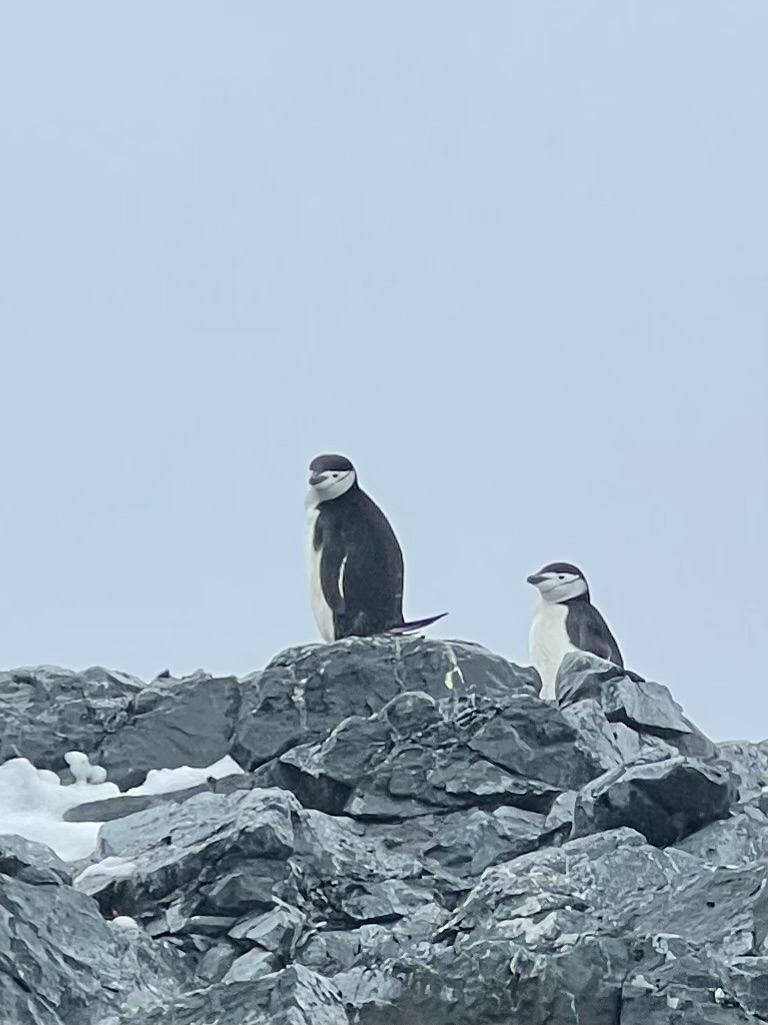
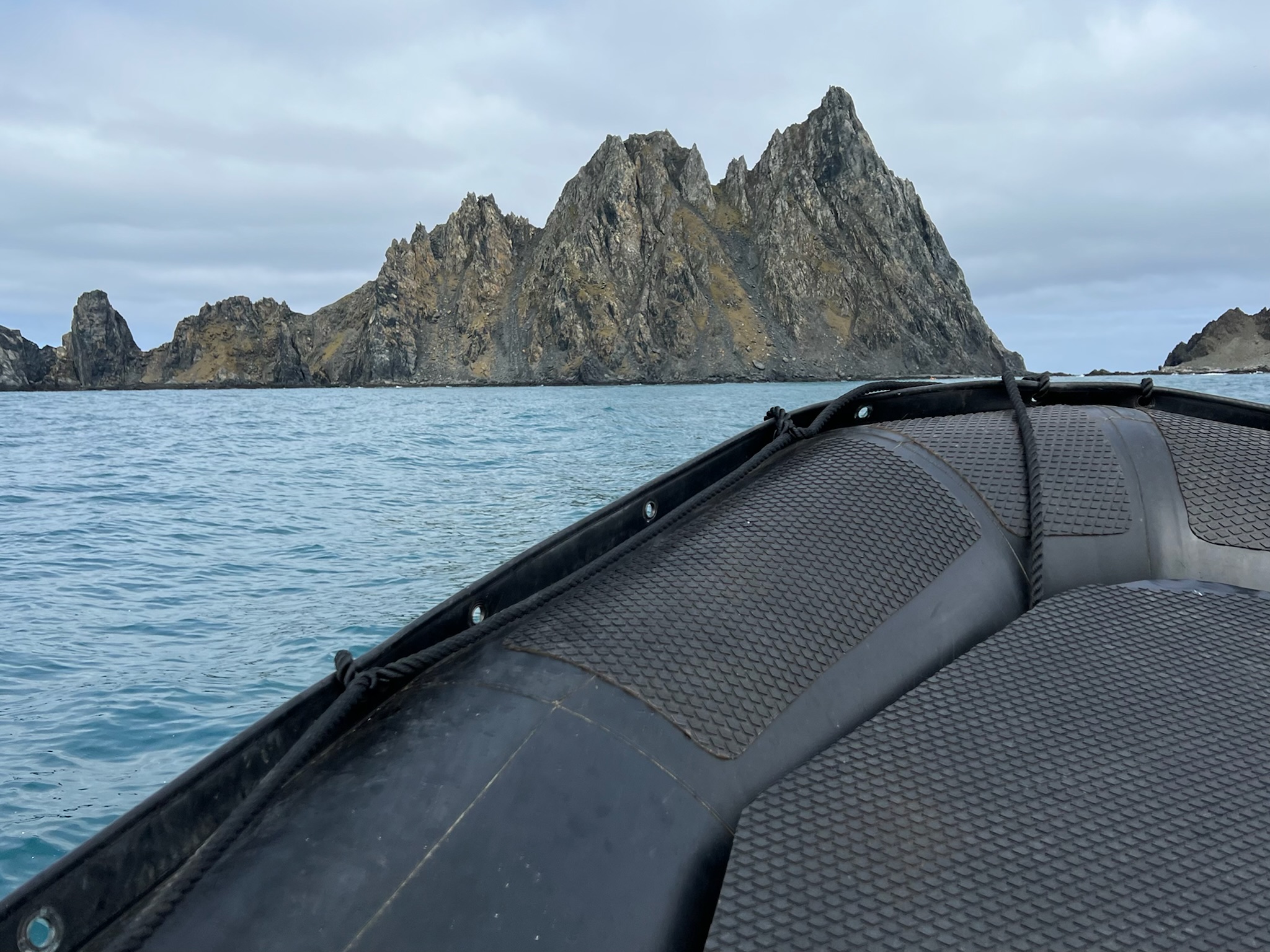
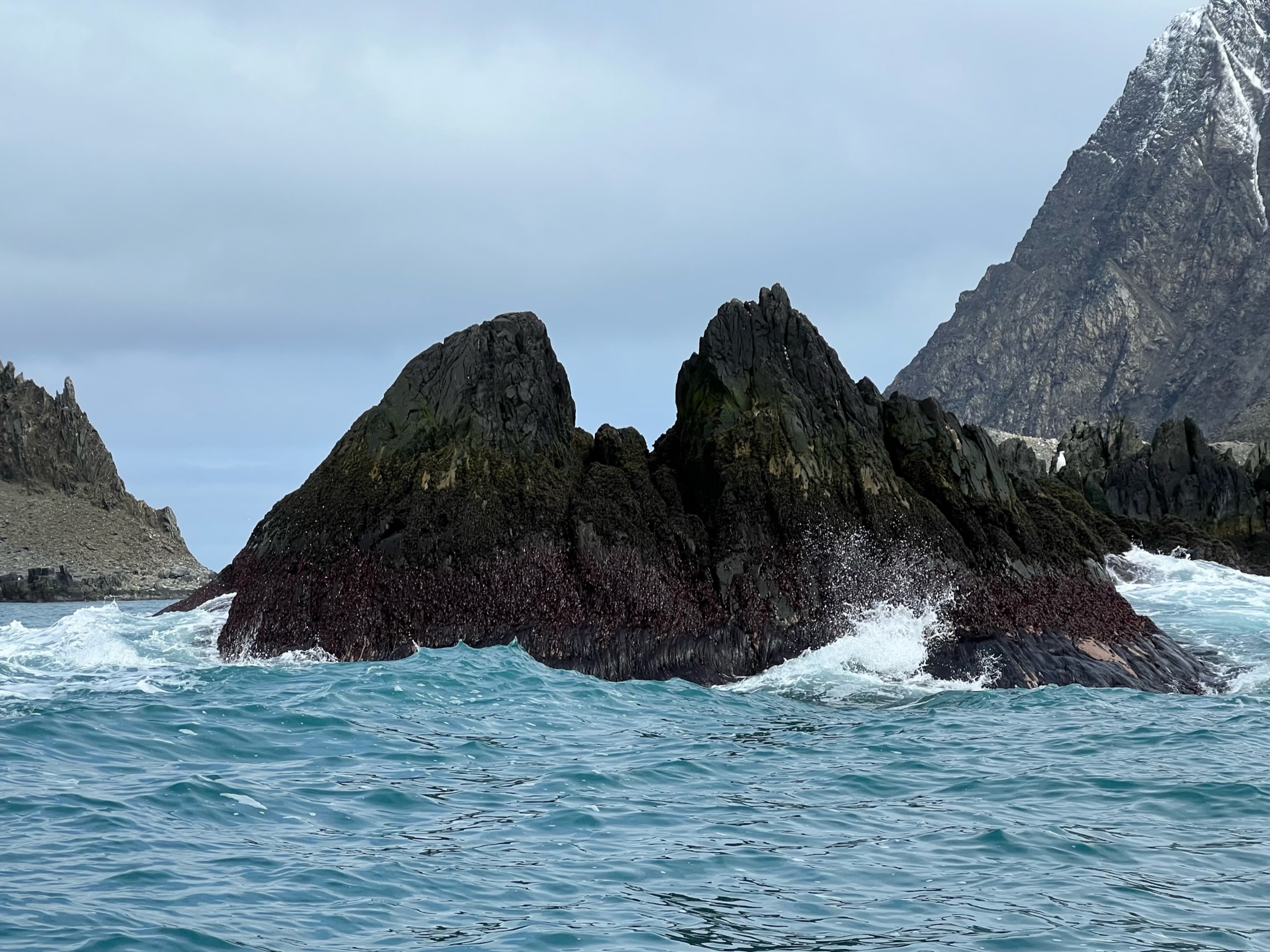
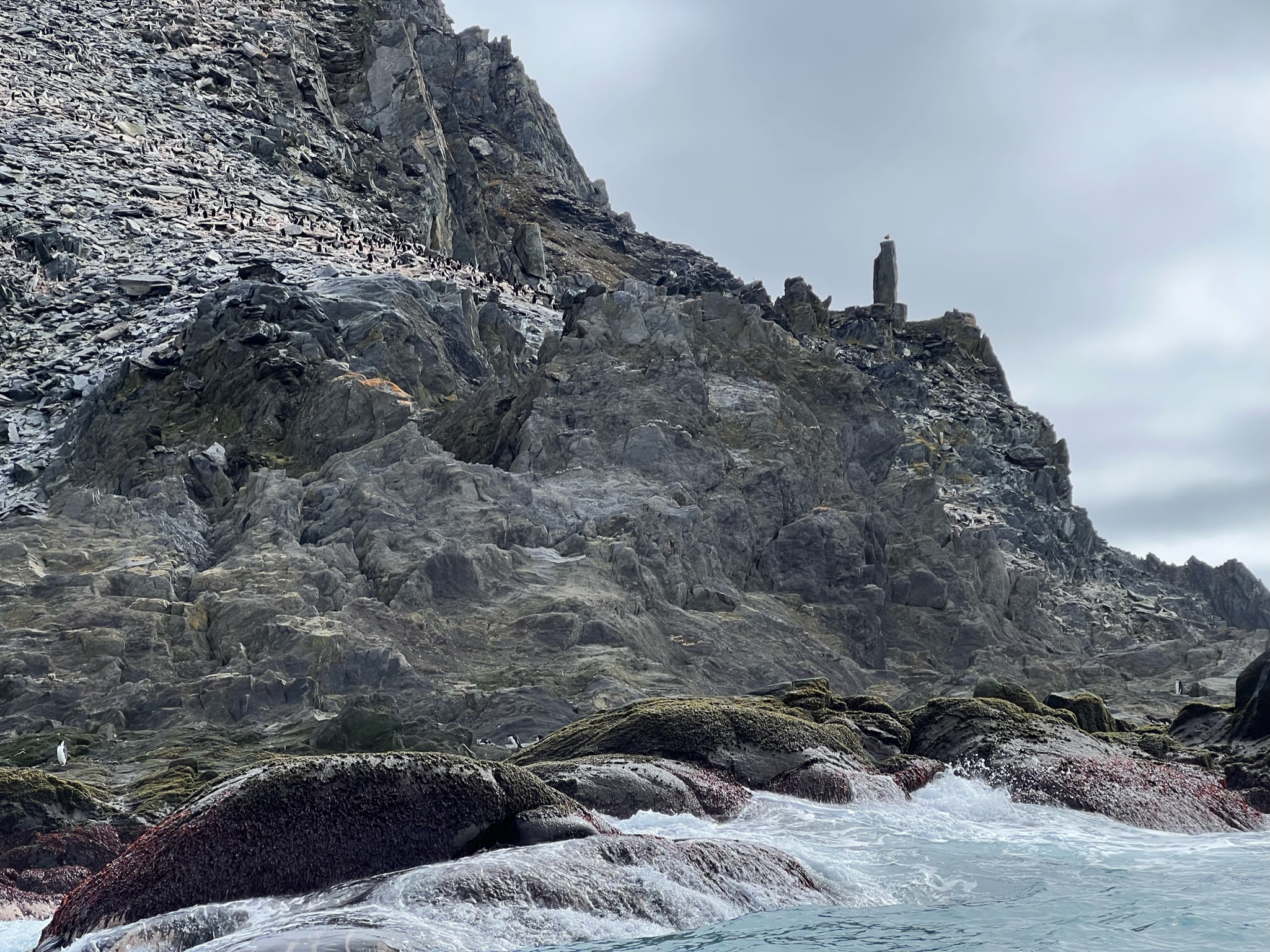
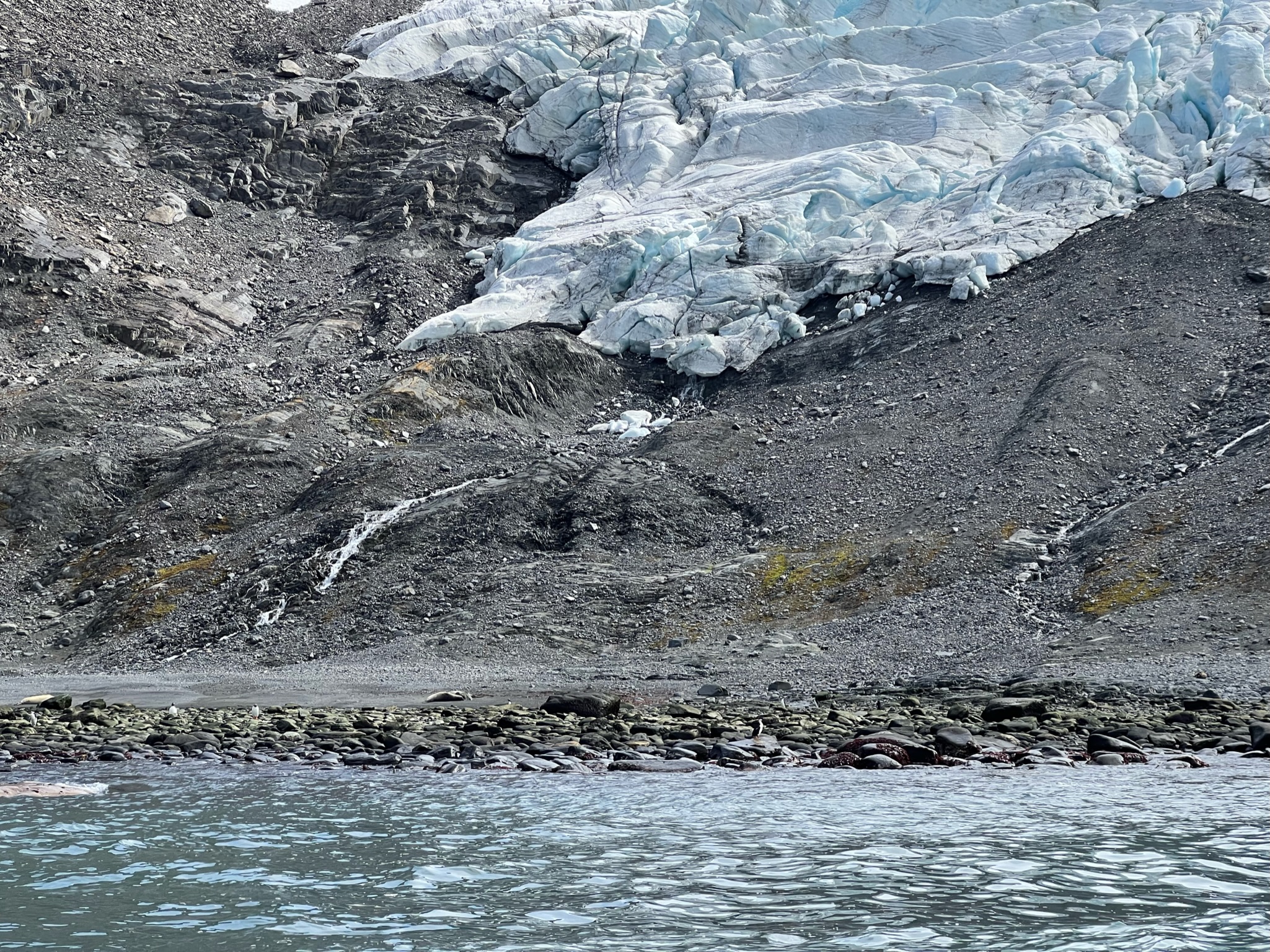
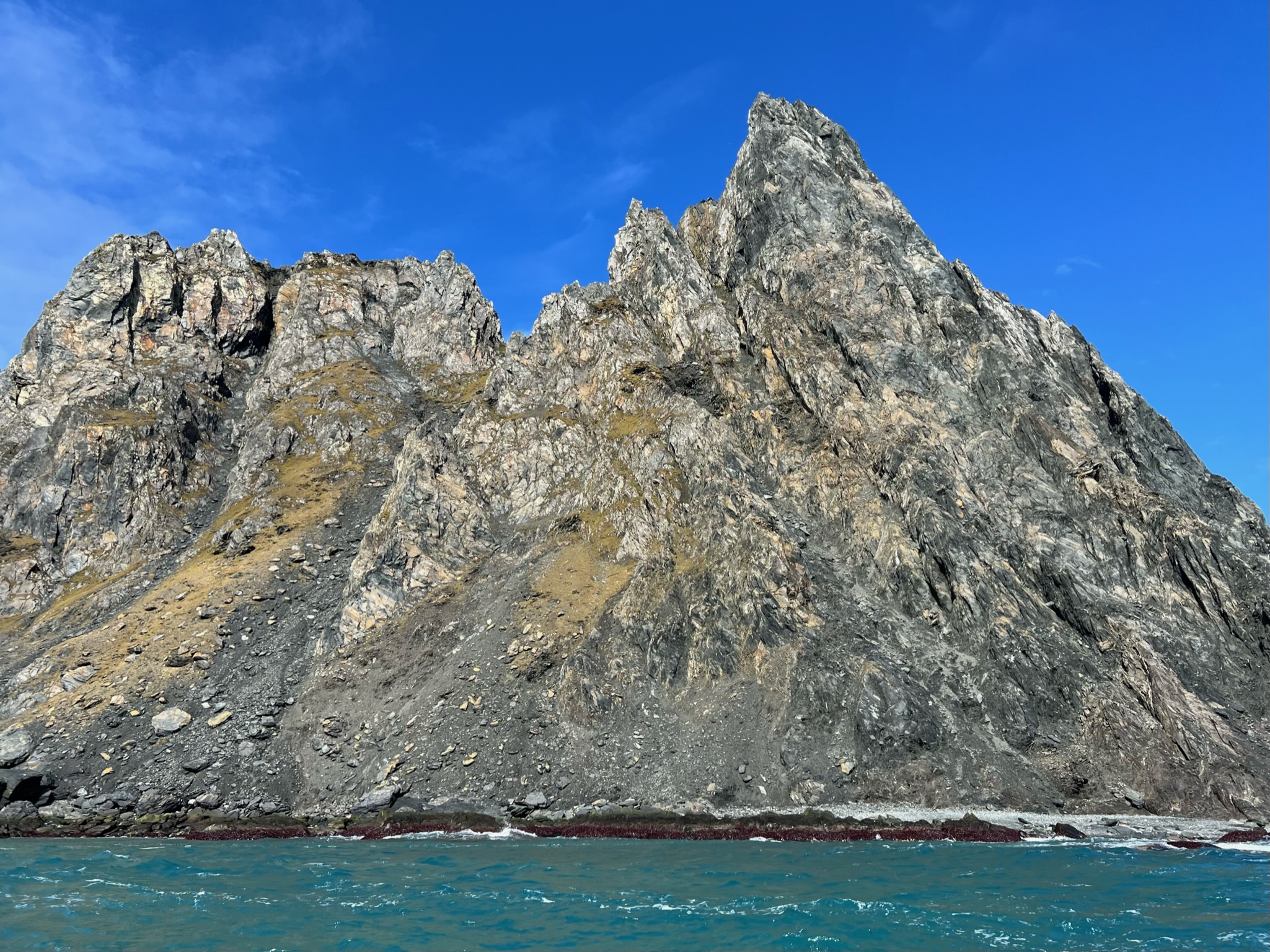
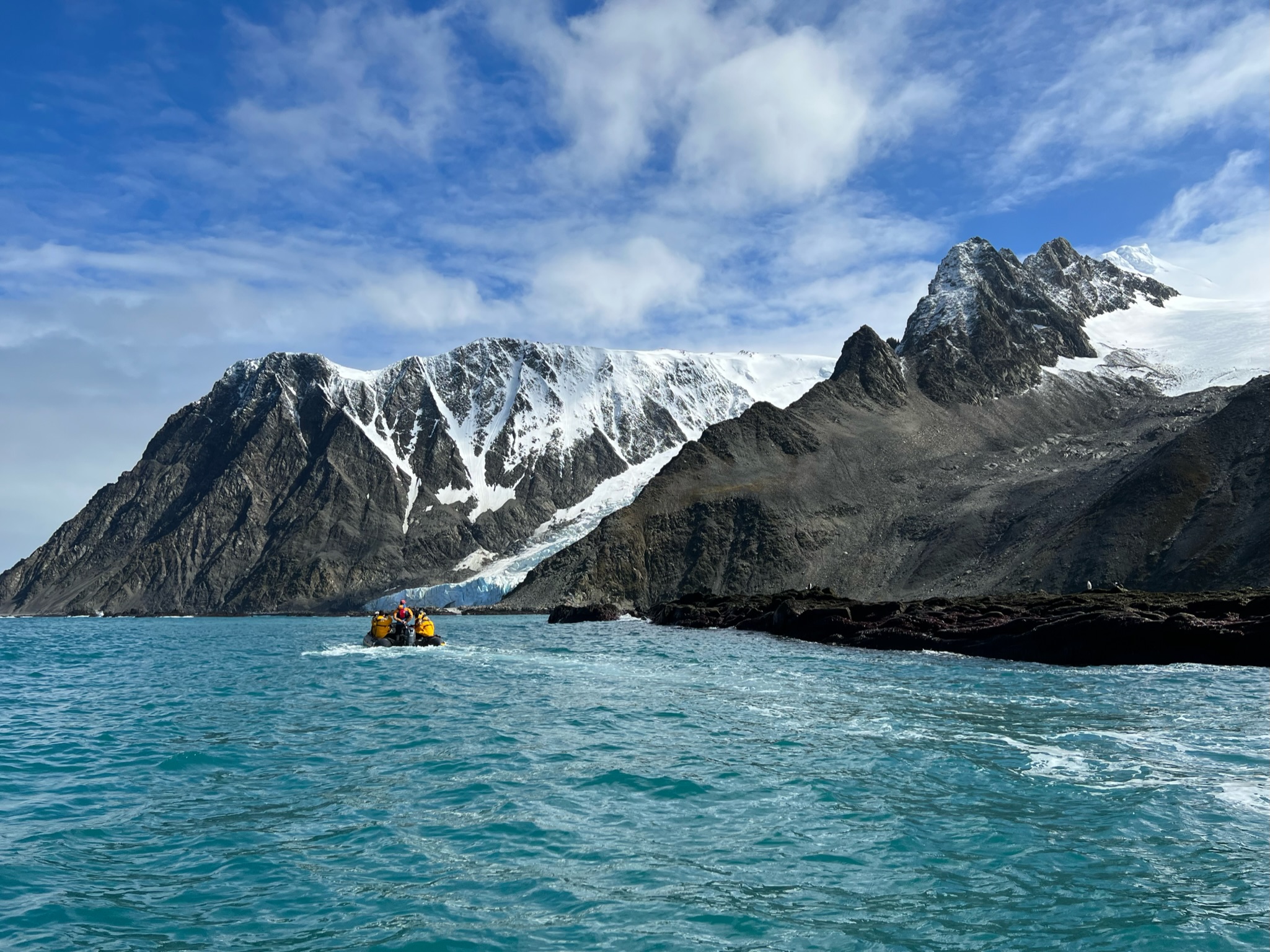
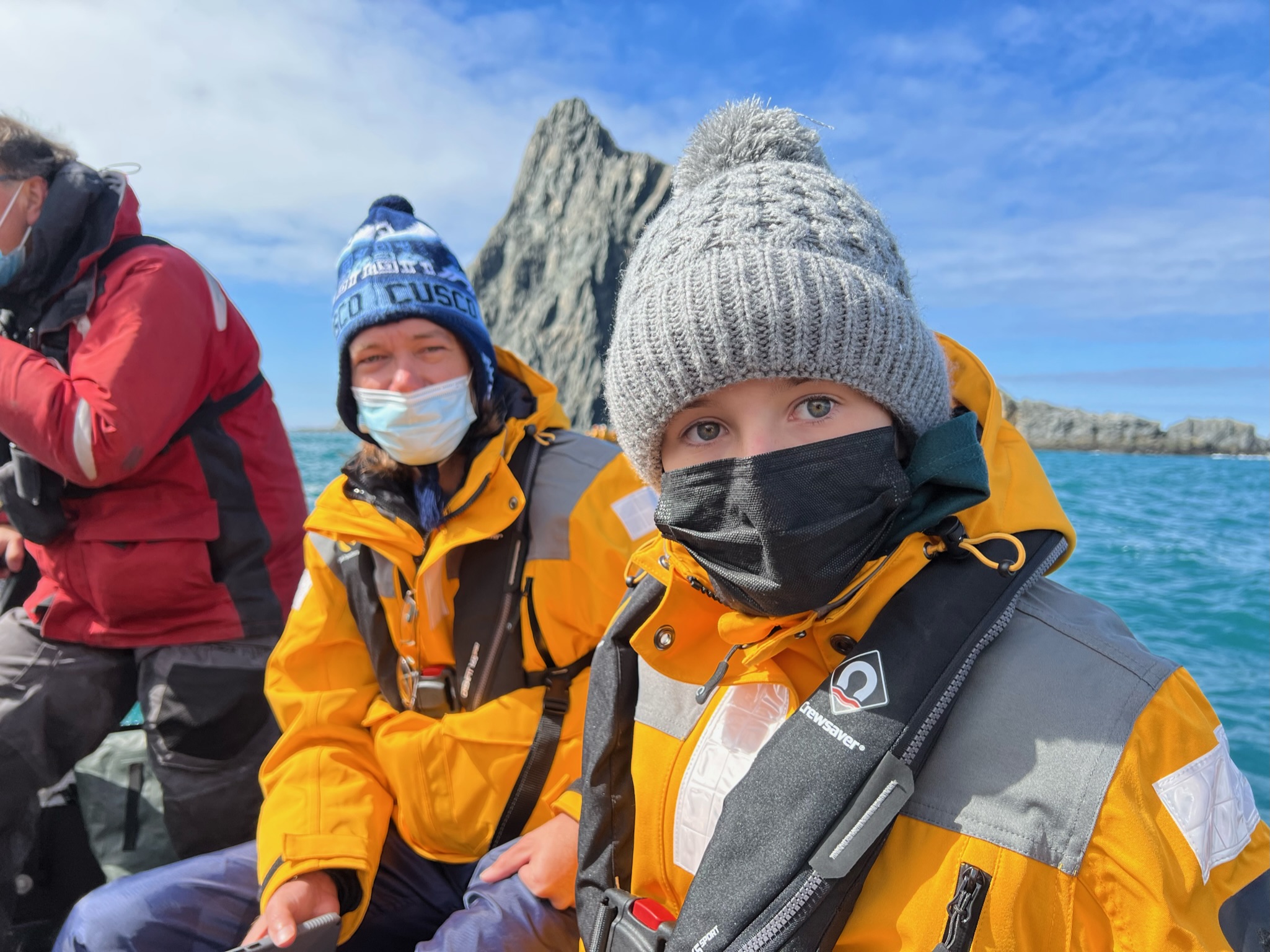
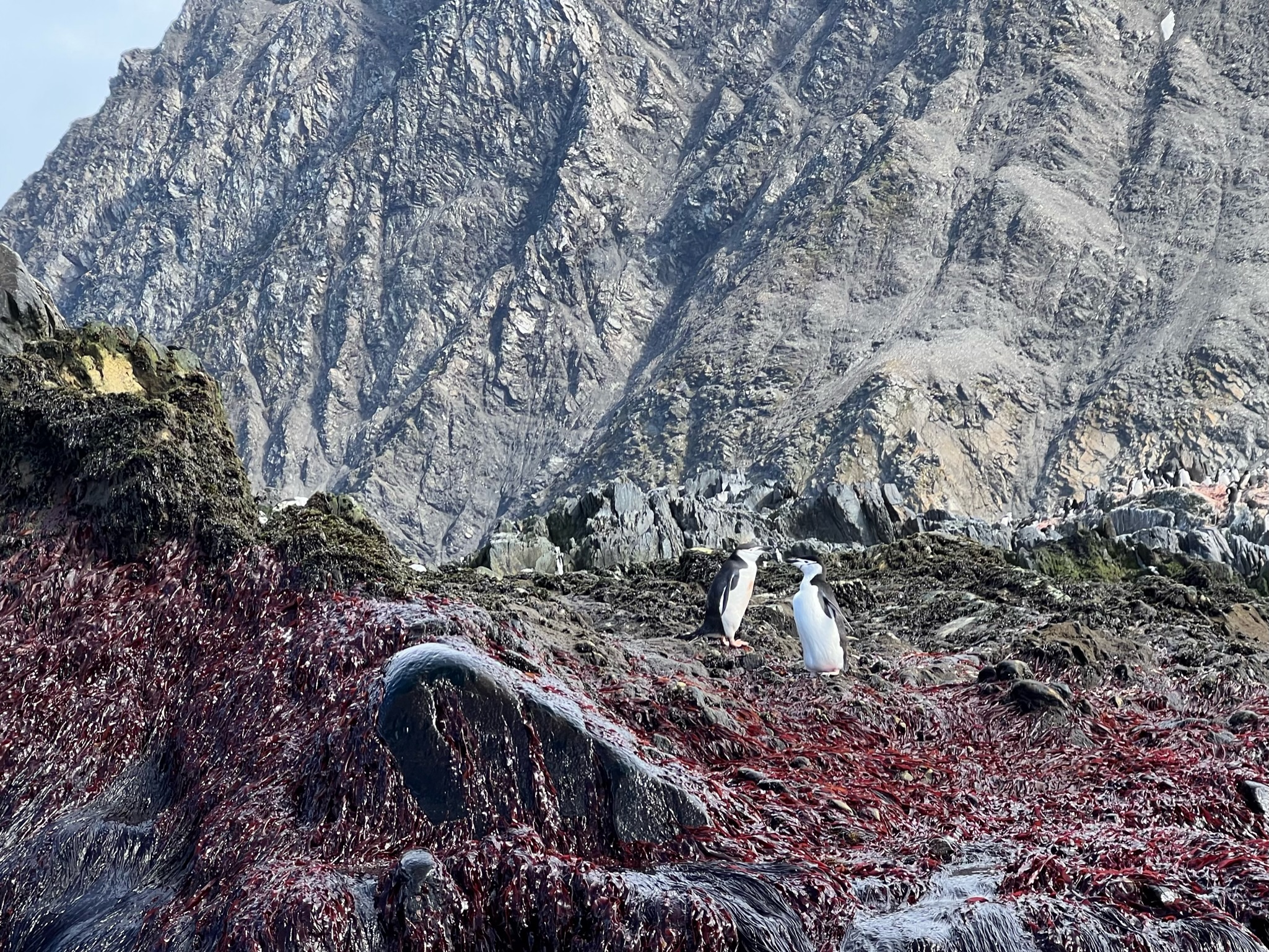
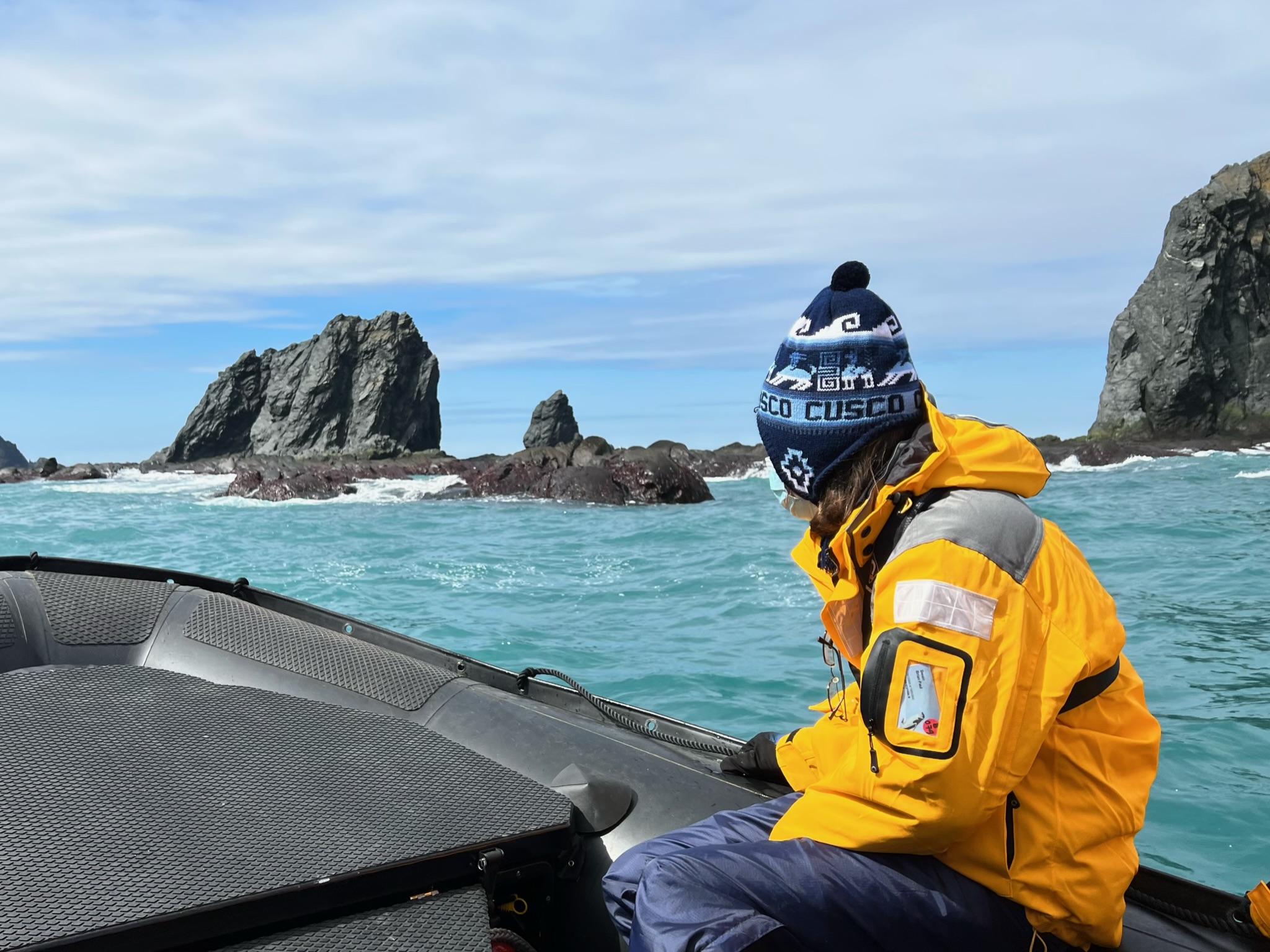
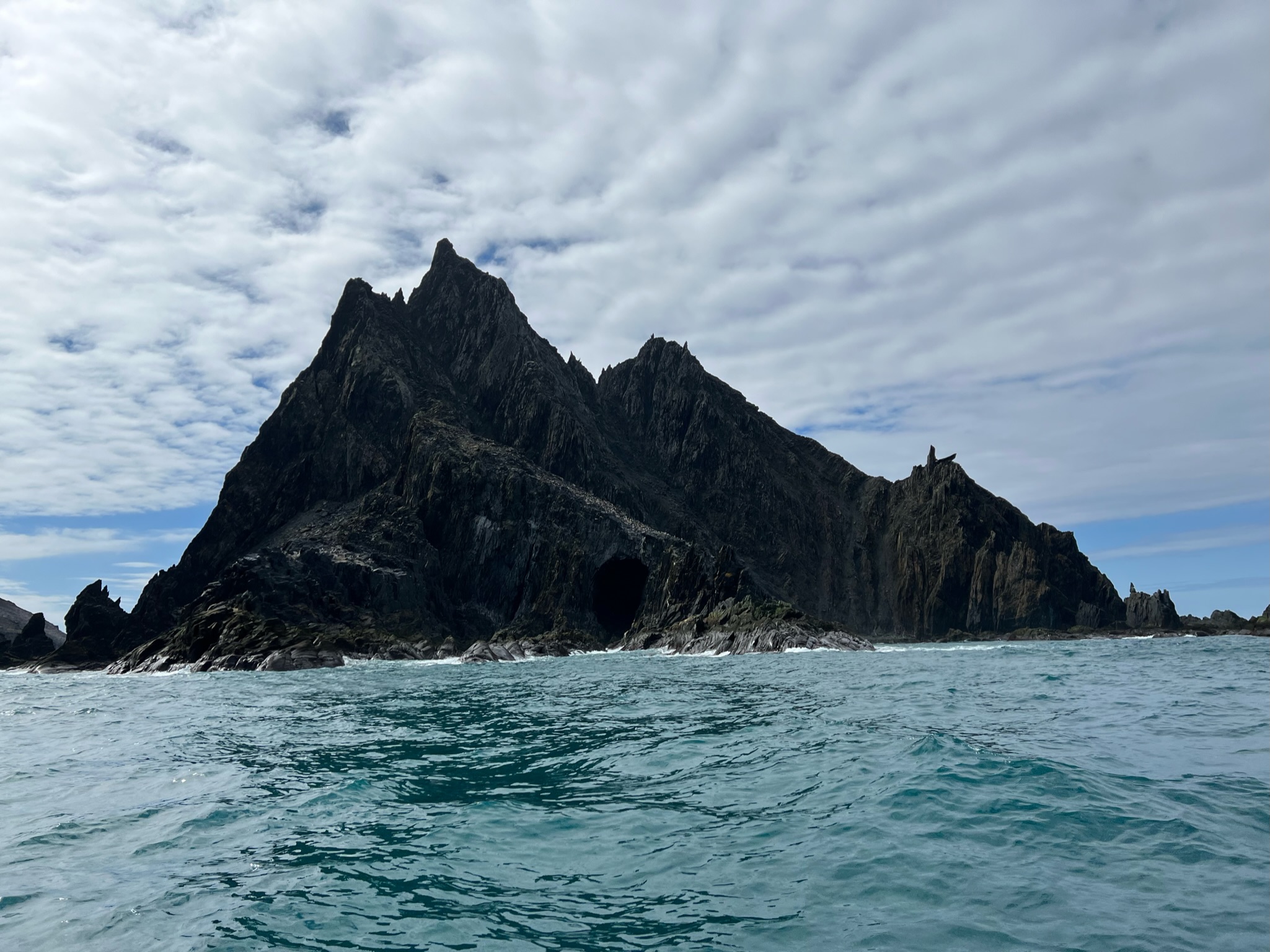
We arrived at Elephant Island today. We’d heard that the island was uninhabitable, but I didn’t fully understand why until we laid our eyes on it. These islands look like more of a sea hazard than land. We did get to go zodiac cruising around the southern end of the Island today to see Cape Lookout. Mauricio, our driver, was very excited; he said this area was new to him too. We seem to be blessed with very good weather that has allowed us to go to new places on this trip. There were lots of giant boulders in the water for us to navigate around, and we saw 40-60 seals sunning on the various beaches. We saw a few chinstrap penguins as we explored, and when we got out around the back side of one of the islands, we found some macaroni penguins hanging out on the cliffside. These penguins have little yellow hairs where their eyebrows would be, and this is the first time we’ve seen them. We also saw some interesting geology here. The mountains were very jagged, coming up and out of the water at very harsh angles. They look like sharp saw-teeth coming straight out of the sea. And there were several beautiful glaciers coming down between the mountains.


After lunch, we did yet another round of PCR testing. It’s getting easier now because we all know the drill. It doesn’t make it any better though. Hopefully everyone is negative on this test. If we get a positive now, it’ll indicate that we’re spreading it around on the ship, and I’m not quite sure what happens then.
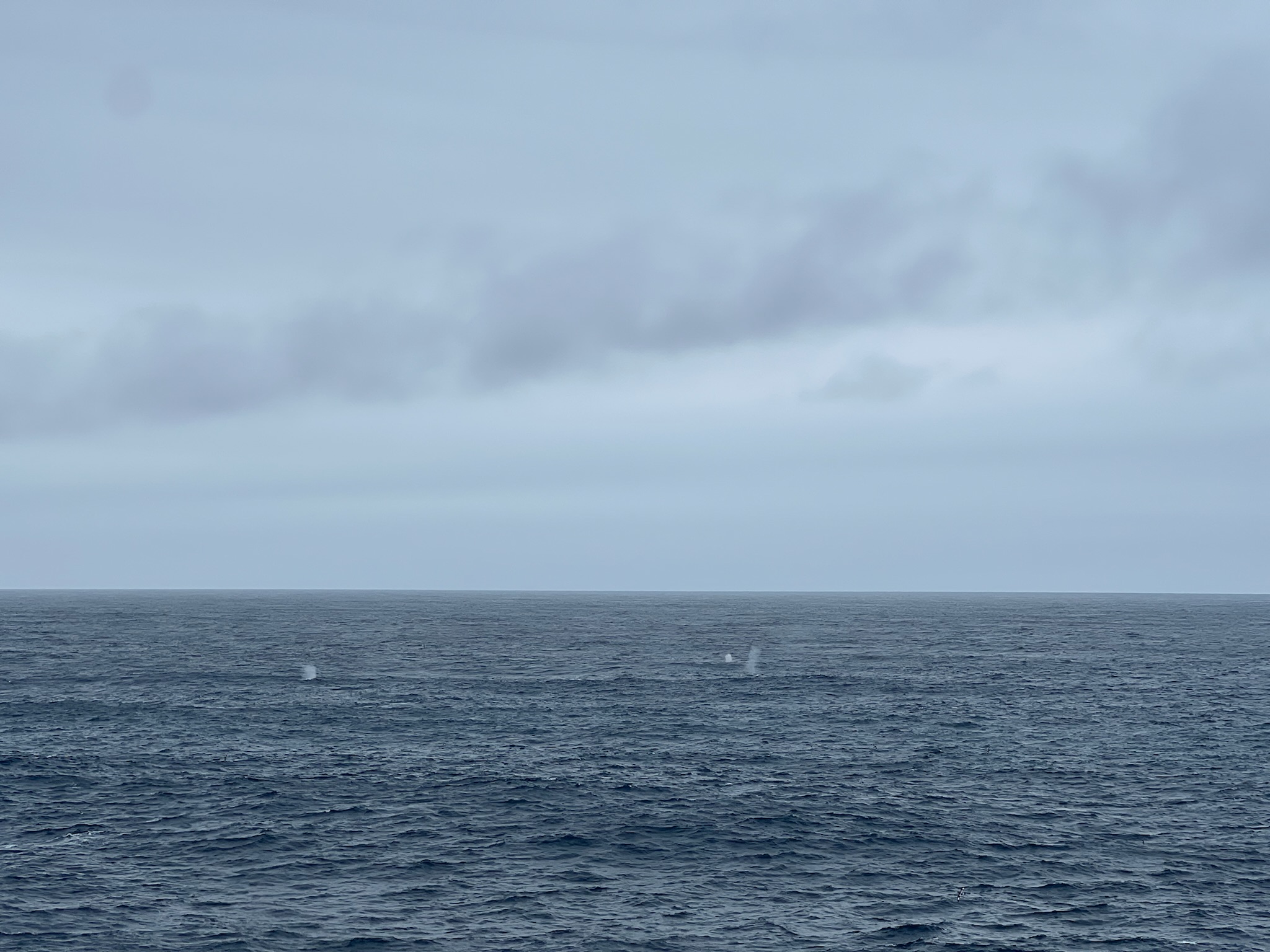
During the trip further up Elephant Island, the announcer came over the intercom to let us know that we were changing our course slightly because a large quantity of wildlife was moving in the water. The captain and team were seeing many different whale-blows up ahead, and we were changing direction to move closer to them. It was wild! Every direction you looked, you’d see whale blows and the dorsal fins of whales. And there was so much more in the water than just the whales. We saw seals and penguins swimming too, and there were all sorts of birds swarming overhead. Our guides said the animals were in a feeding frenzy, as the geography in this area tends to create a massive oceanic supermarket. They estimated that there were at least 50 whales (finwales, hump backs, and others), and there could have been as many as 100 of them. It was an amazing spectacle to see, and the crew was just as excited as we were. We didn’t see it, but one of the other spectacles of this wildlife gorging was a vibrant red tint to the ocean. Apparently, there was a bit of a whale poo-nami happening as well. I’m kind of glad I missed that part.

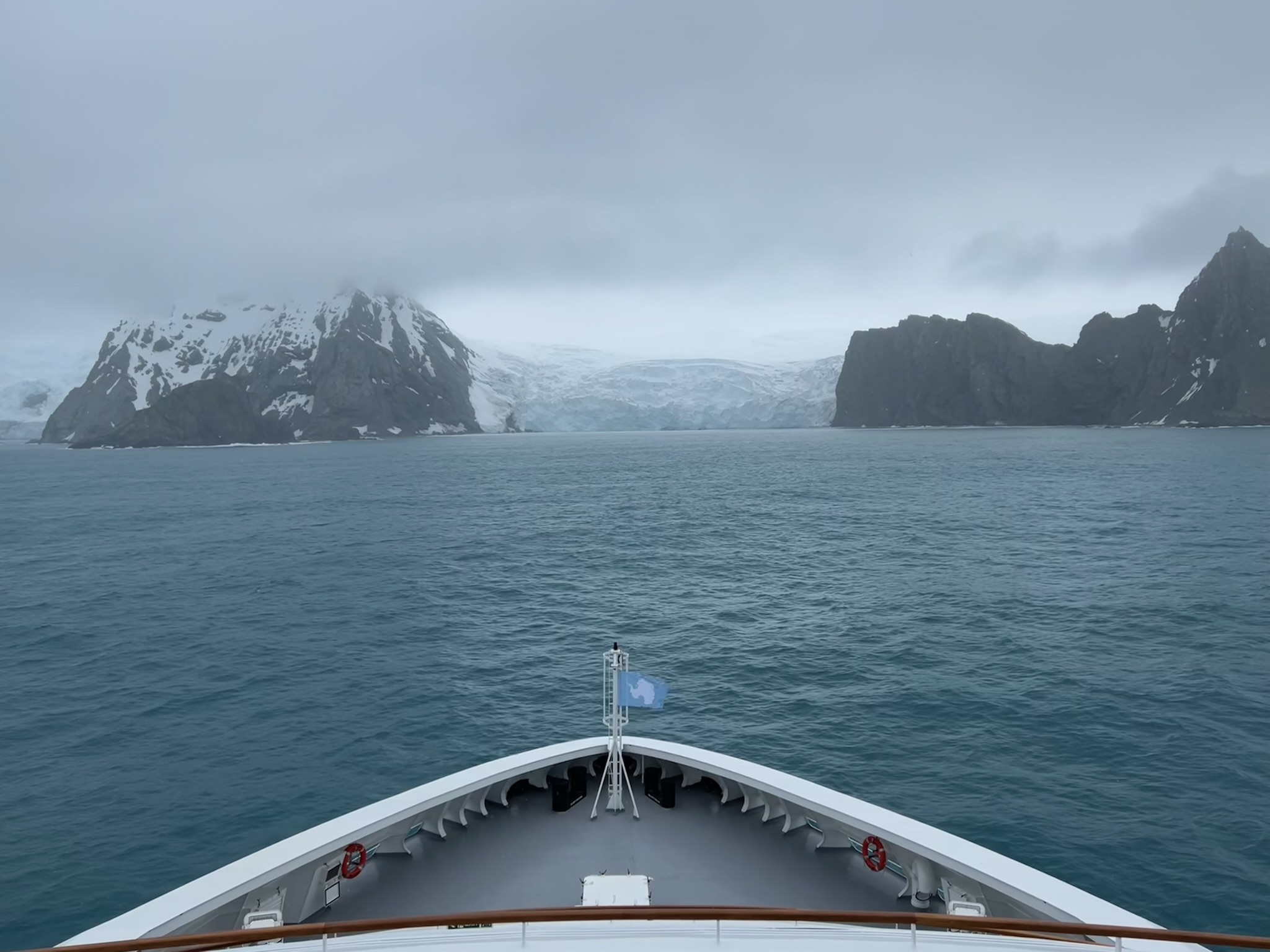
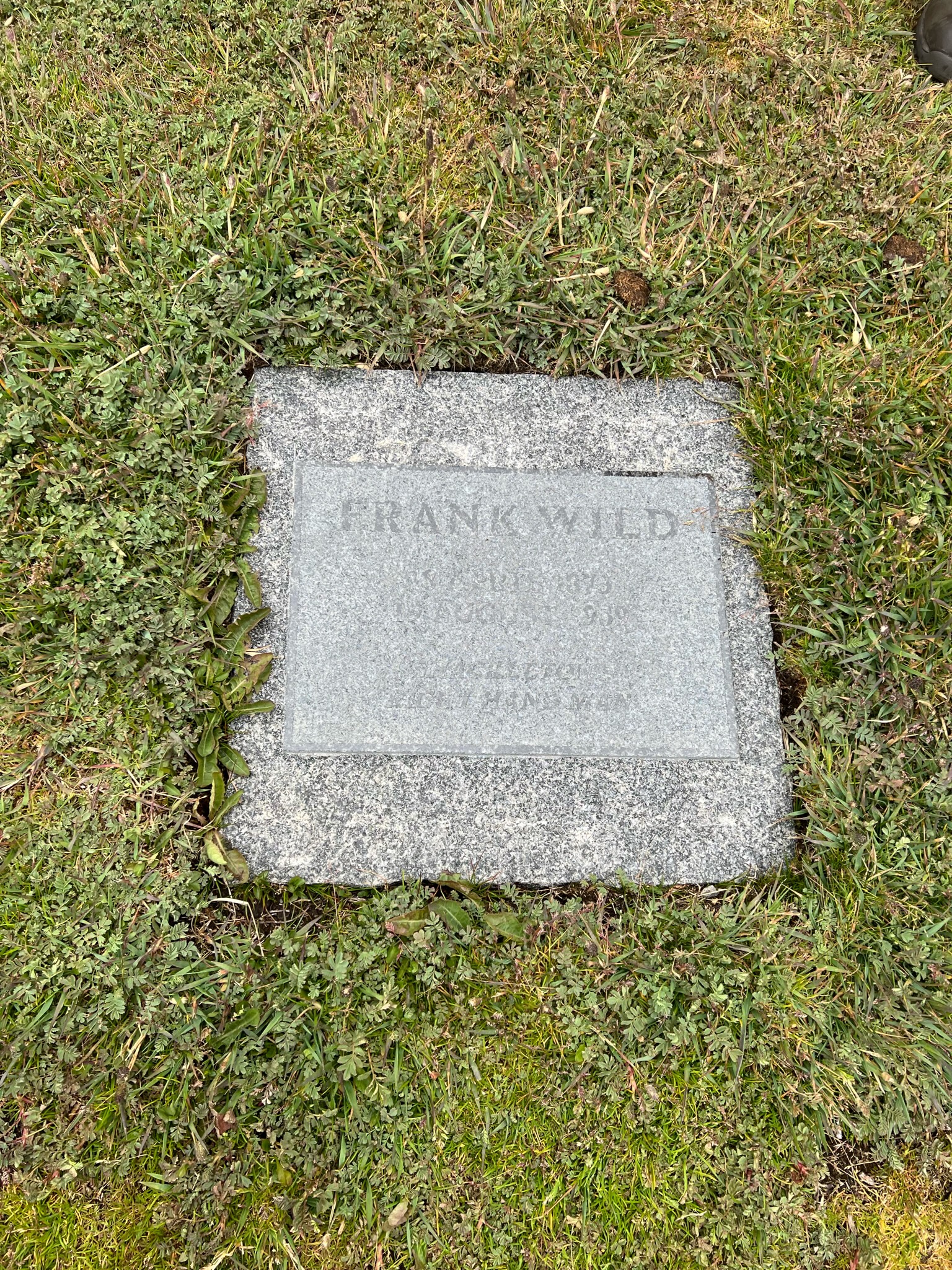
We ship cruised to Camp Patience and Point Wild on Elephant Island. This is where Frank Wild and the 21 men stayed behind while Shackleton went for help. The team did a little tribute to the men as we observed just how inhospitable the land would have been to camp on for four months. We toasted our mulled wine in their honor, and then we set sail for South Georgia.
While we were at Point Wild, Henry’s friends Scott and Maggie actually got married on the ship. We found out later in the evening at our daily recap, and we couldn’t be more happy for them. They were so cute!

As we entered the restaurant for dinner tonight, the staff presented us with champagne. Henry was disappointed because they didn’t give him one, but Meerim brought him some apple juice in a wine glass so that he could celebrate with us. The atmosphere was festive, and our meal was delicious. After dinner, Stefano and Ryan, two of our guides, hosted everyone who wanted to play some games in the Ambassador’s Theater. They told a lot of dad jokes that of course we loved, and we laughed quite a lot. At midnight, we grabbed our drinks and headed out to the deck to ring in the new year under the stars.


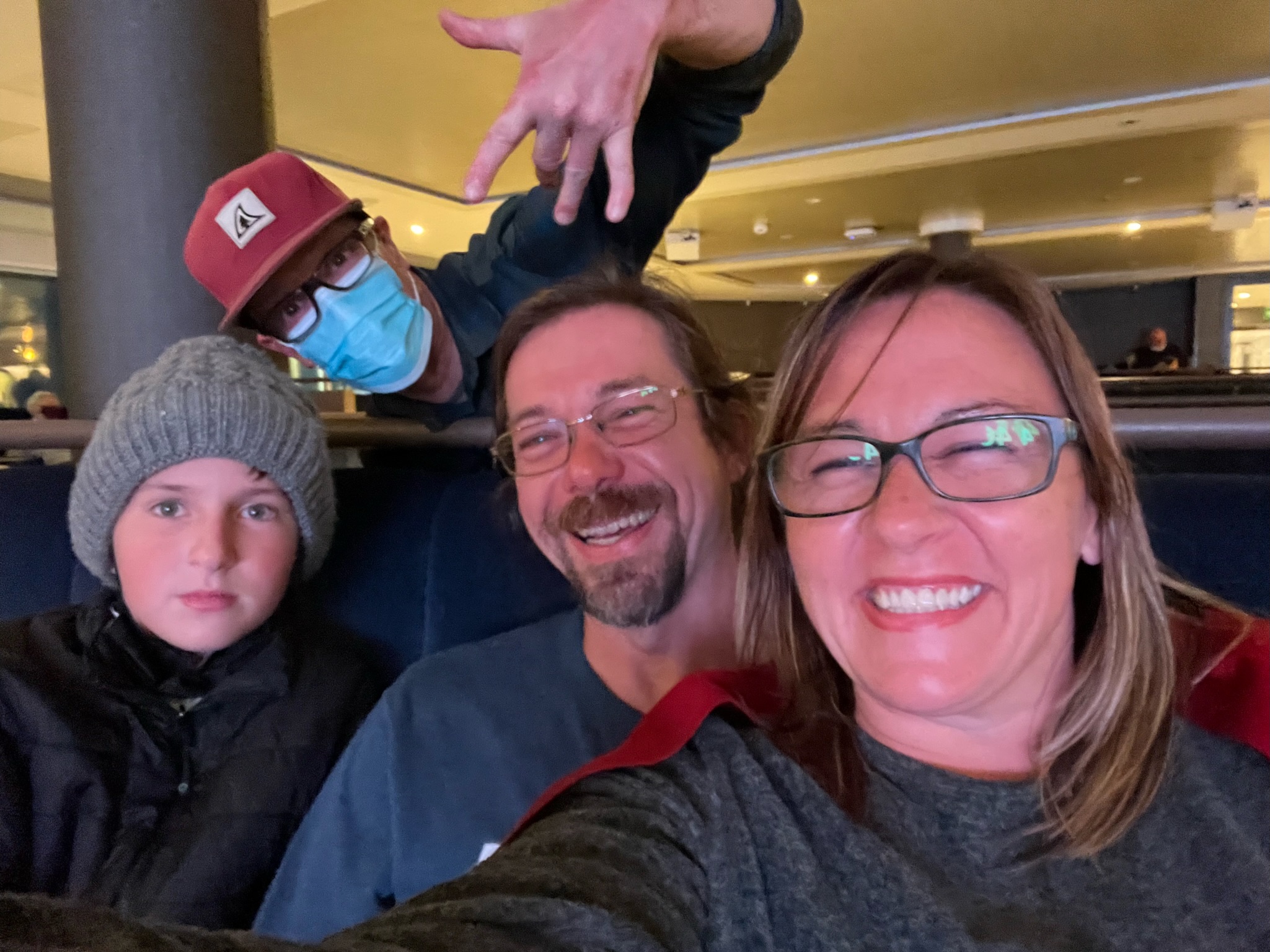
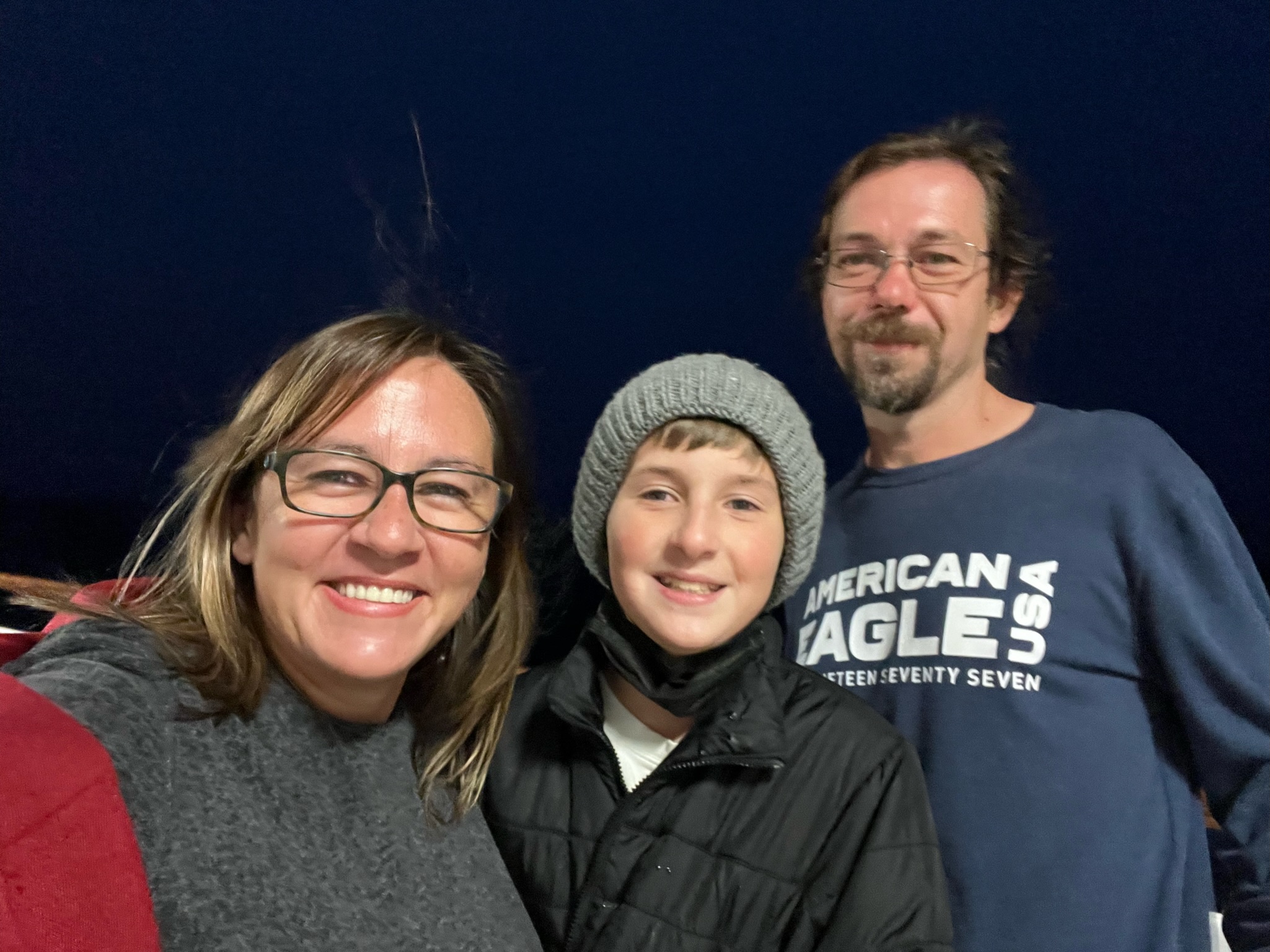
It’s been a wonderful day today, and a great way to end this year. I cannot wait to see what 2022 brings us!
Day 11: January 1, 2022
Today has been a very lazy day. We were able to all wake up on our own since the crew blessed us with no wakeup call this morning. We have left Elephant Island, and we are en route to South Georgia. The waves are really rocking the boat. Between the waves and the drinks last night, there are very few people out and about on the ship. We dropped off laundry, and then spent most of the day in our room battling that queasy feeling. The crew says this is a great weather passage through the Scotia Sea, and if that is true, I’m thankful for it; I’m certain I don’t want to see a bad day.
We went to a mandatory biosecurity update for South Georgia. Antarctica biosecurity was pretty easy compared to their standards. They want to make sure that no non-native species get inadvertently brought to the island. In the past, they have had issues with grasses that traveled in on a visitor’s boot and sprouted on the island plains. The government here is very particular to prevent that. So, after we went through our training, we inspected our gear and used wire brushes to clean our Velcro, paperclips to clean the grooves on our boots, and vaccums on all of the mesh on our gear.
Incidentally, South Georgia wasn’t always managed so closely. In the 19th century, whalers brought reindeer to the island to be used for meat. The two deer turned into hundreds over the years as there were no predators for them. Unfortunately, they ate the tussock grass that grew in the area and provided a home for the other wildlife living there. Rats also found their way from ships onto the island, and the rats would feast on pipits which are small songbirds. The pipits were almost eliminated completely, but thankfully humans stepped in to help them. It ended up costing a lot of money and tremendous effort to eradicate both of these animals from the island. The project was successful, though; the pipit population has rebounded, and the rest of the wildlife has their tussock grass back.
We also went through some safety information about South Georgia. We are told that there is a tremendous amount of wildlife on the shores, and we must be very careful. So far, penguins have been interested in us, but that’s all. There have been plenty of elephant, leopard, and Weddell seals laying around on the beaches, but they are not fast movers on land. South Georgia will be the first time we have seen fur seals. These seals can get up on their ‘legs’ and run faster than a human. So, we were told to always have a partner when we’re on shore, to keep our distance from them, and to never turn our back on them.
Also, as a precaution for the bird population, we will also be blacking out the ship at night. There are a tremendous number of birds living on the island, and many of them are attracted to the lights on nearby ships. They fly out to check them out and end up hitting a window and getting themselves trapped or hurt. So for now, at night, all of our window curtains must be closed, shades must be drawn, and the outside lights must be kept to a minimum.
Oh, and South Georgia is in a different time zone, so we lose an hour tomorrow. We are all still struggling with the time schedule, and this is unfortunate! Speaking of that, it is very late now, and we really should be getting to bed if we want to catch any sleep at all.
Day 12: January 2, 2022
Well, we were supposed to change our clocks today, but we didn’t. We were tired and went to bed without taking care of it, and since there wasn’t a wakeup call this morning, we almost missed breakfast. We got to our table with about 15 minutes to go, but thankfully the restaurant staff didn’t seem to mind. After breakfast, we watched a presentation by Noah about the birds of South Georgia, and Marla gave one on the fur seals after that. We had a great lunch, and then we spent the afternoon in our cabin. Brian and Henry have wrestled on and off all day, but I haven’t felt like doing much. We watched movies and relaxed together most of the day, and that has been wonderful. We skipped an educational presentation on the Antarctic Treaty and a photography session that might have been great. It was nice just to sit in our room and hang out for a bit, though. We needed that.
We went out on deck for a little while to see two humpback whales that were in the area. Henry and Brian saw a fur seal that was in the water, but I never saw it.
During the day’s recap, the expedition team did a dramatization to help us understand what to expect when we get to South Georgia in terms of seals. Apparently, they will be everywhere, and because this is the end of mating season, many of the seals are very aggressive. We will stay away from them, but according to the team, they will almost certainly not stay away from us. And they bite. Isn’t that nice? We’re told to never run from them, but to give them their space. Henry is worried they’re going to go for him because of his size, but hopefully he’s worried for nothing. Anyway, the dramatization was hilarious, and it did help us understand a little better what we’re walking into.
At dinner, the restaurant did a tribute to Shackleton and the Endurance by making some of the dishes that the crew ate on Christmas. Brian tried them all, but Henry and I chickened out. They also gave us each a shot of Shackleton Whiskey to go with our dinner. We decided to let Henry try a very small bit. He hated it, and said that it would definitely put some hair on his chest. Thankfully, he can’t understand why anyone would want to drink that stuff!
After dinner, we went to a bar talk with Kim, one of our guides. She talked about her experience learning to be a white water rafting guide in Ottawa over the summer. It’s funny to hear her talk about learning that; she seems so competent, it was refreshing to remember that she’s just a person and has to learn too.
Day 13: January 3, 2022
We woke up this morning in King Haakon Bay. This is the bay where Shackleton and his men landed as they sailed the James Caird lifeboat from Elephant Island. It took them 14 days to get here, and when they arrived, they were thrilled to have reached solid ground, but terrified because the terrain is far less than hospitable. They nearly died trying to get their rowboat through the narrow entry to the bay in the massive storm they were in. Once they were finally in, they still had 36 hours of climbing over the mountains and glaciers in wet gear that was not designed for the task in order to get to help.

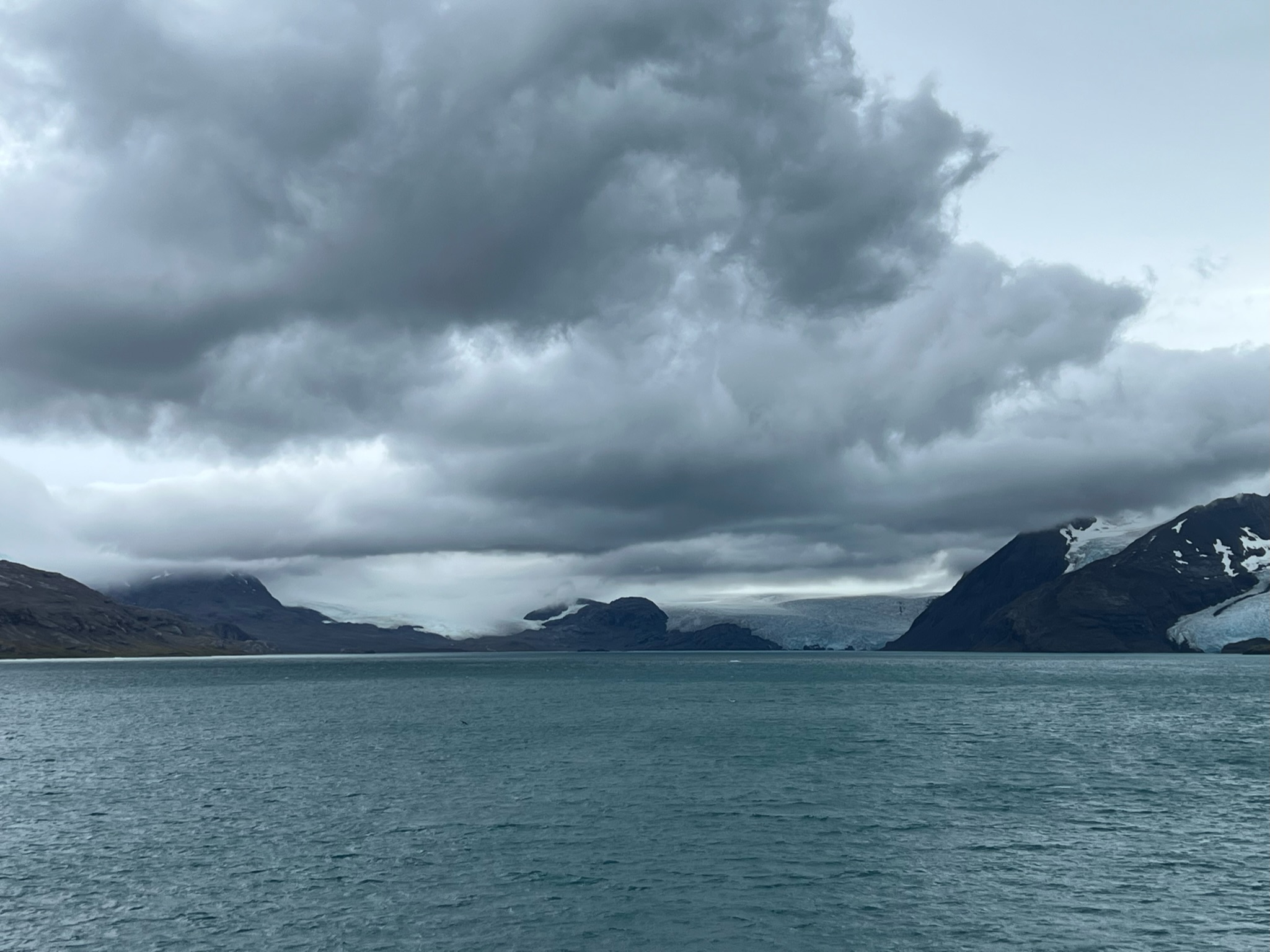
We did a shore landing at Peggotty Bluff. Shackleton’s men named the bluff this, and it was here that they upturned their boat and made camp for the first time. It was our first opportunity to experience South Georgia, and we were very excited about it. We got into the zodiacs and drove across the smooth waters to the shoreline.
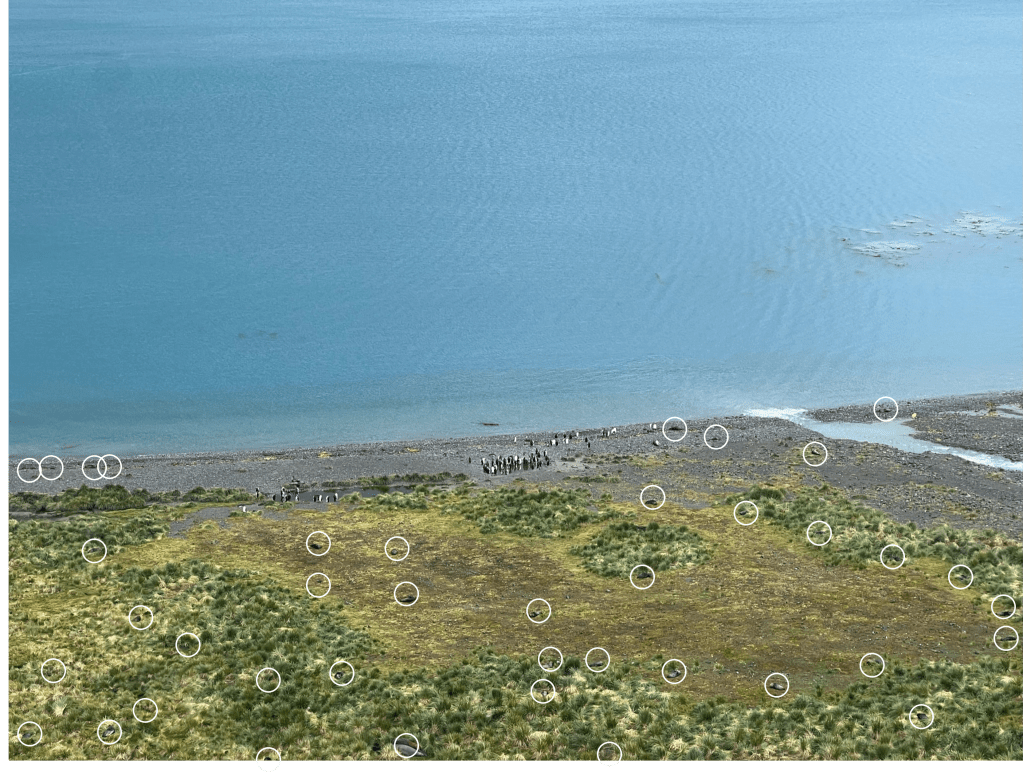
We were amazed at the number of seals we saw laying around on the beach, and we got to experience seeing fur seals for the first time. The seals we had seen thus far in the trip were all the kind that move slowly on land. In the water, they are quite quick and graceful, but on land, they look like giant slugs, and they move about much like inchworms. Fur seals are eared seals, though, and they can hinge their bodies upwards and walk on their front and back fins. This means that they can move quickly, more quickly than a human, on land as well. And in mating season as it is now, these massive male seals are all on the shore marking out their territory and waiting on the female seals to come ashore. We’d been told that these seals would be aggressive, but we didn’t really know what to expect.
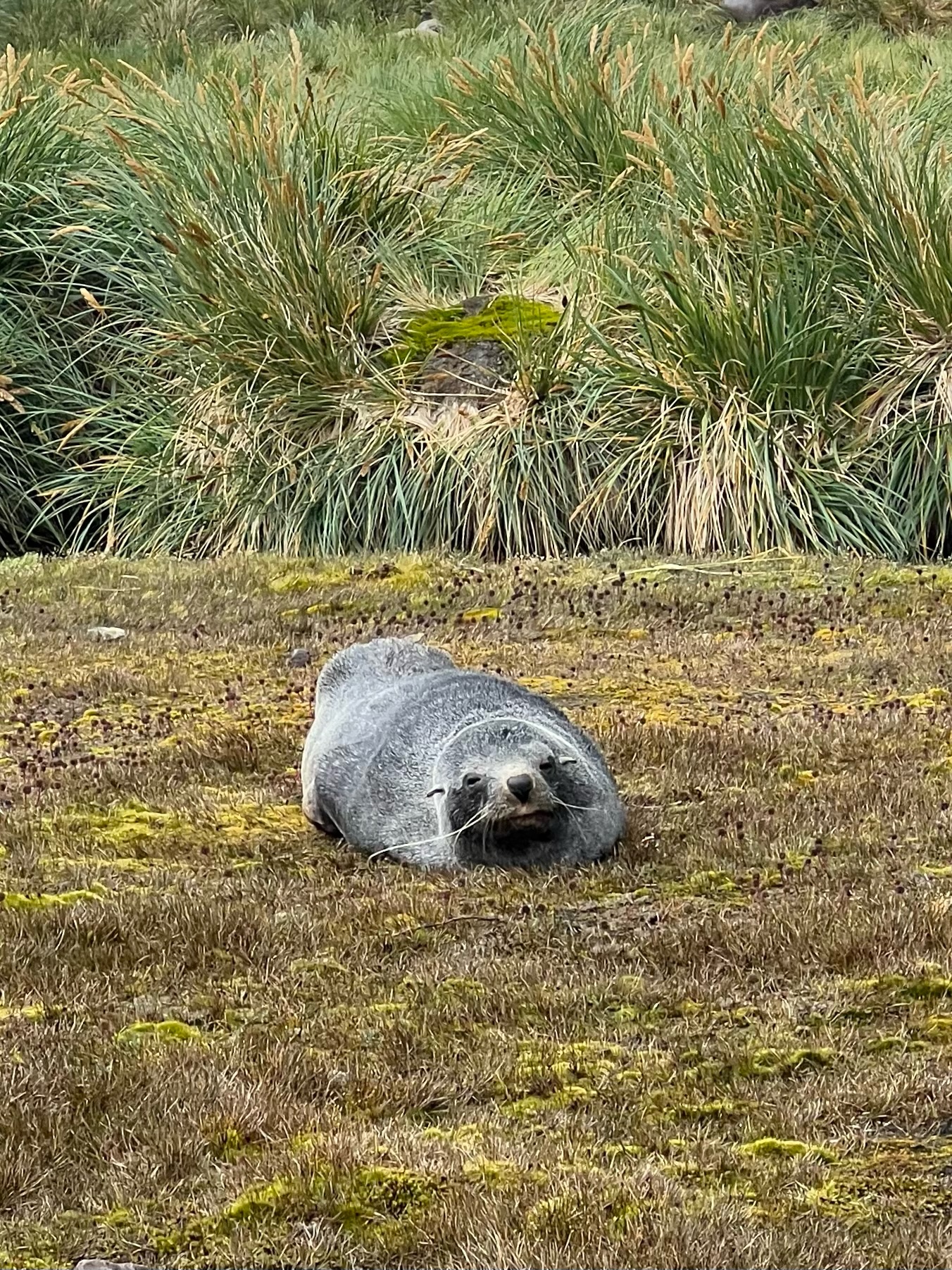
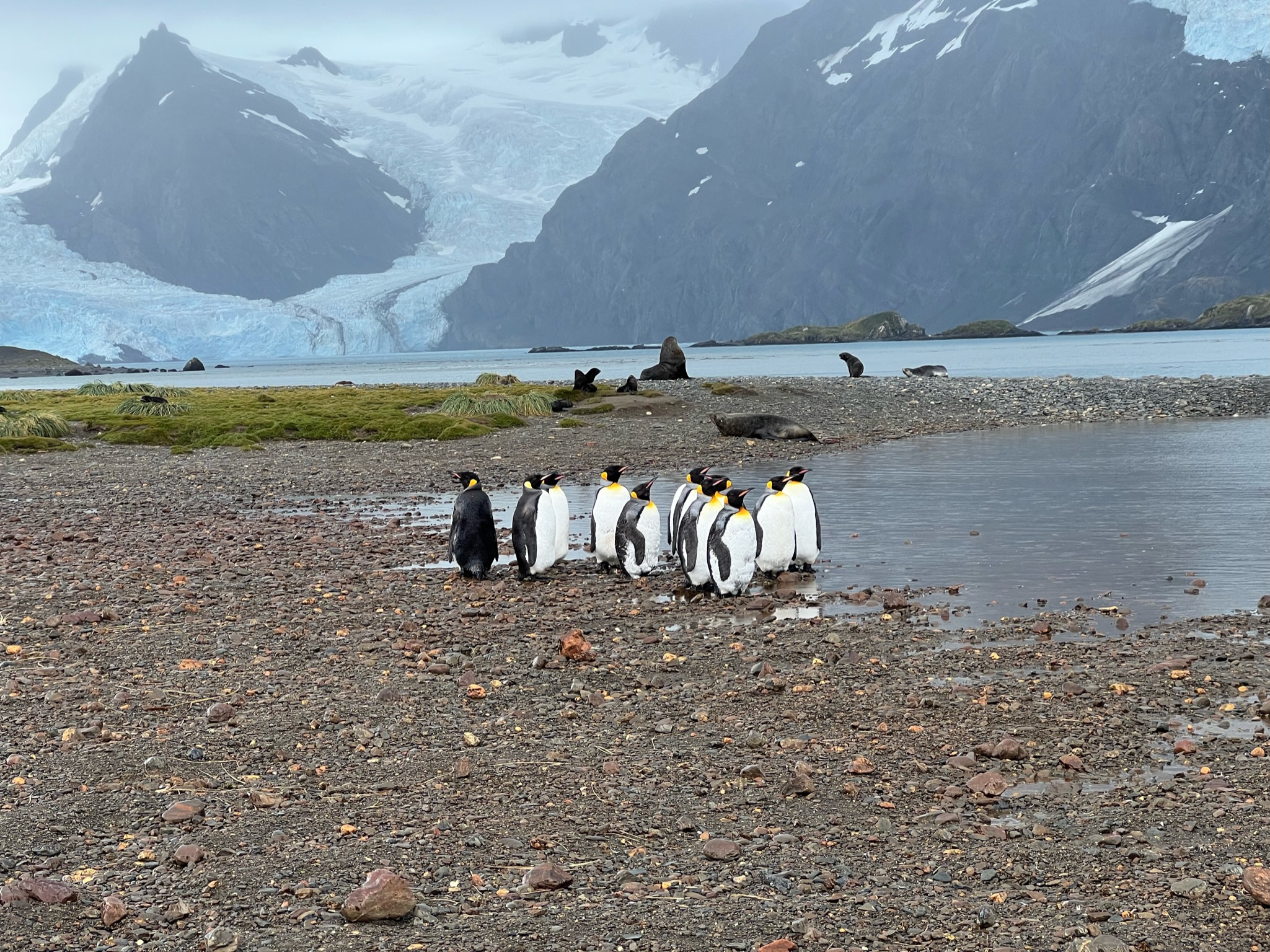
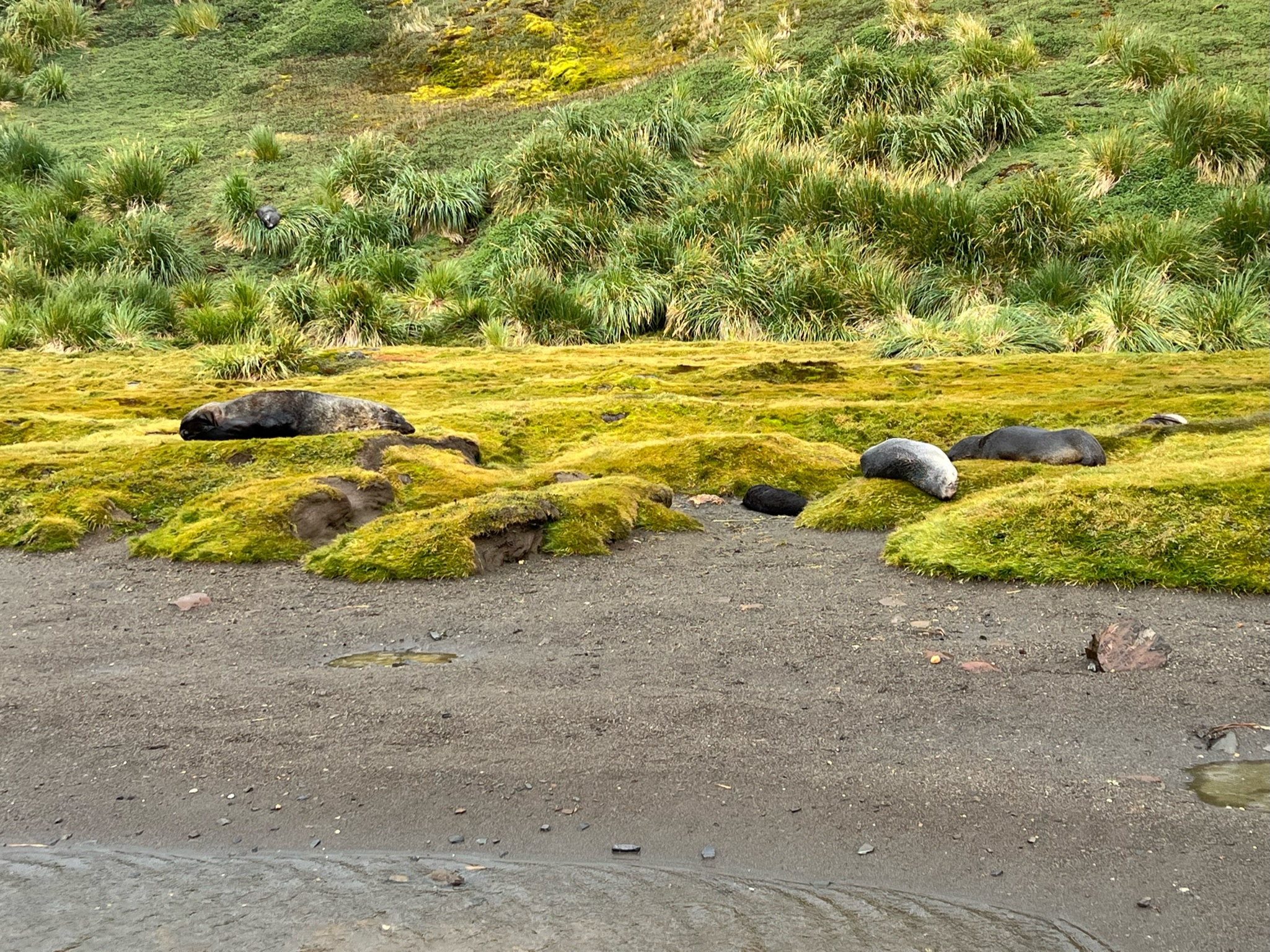
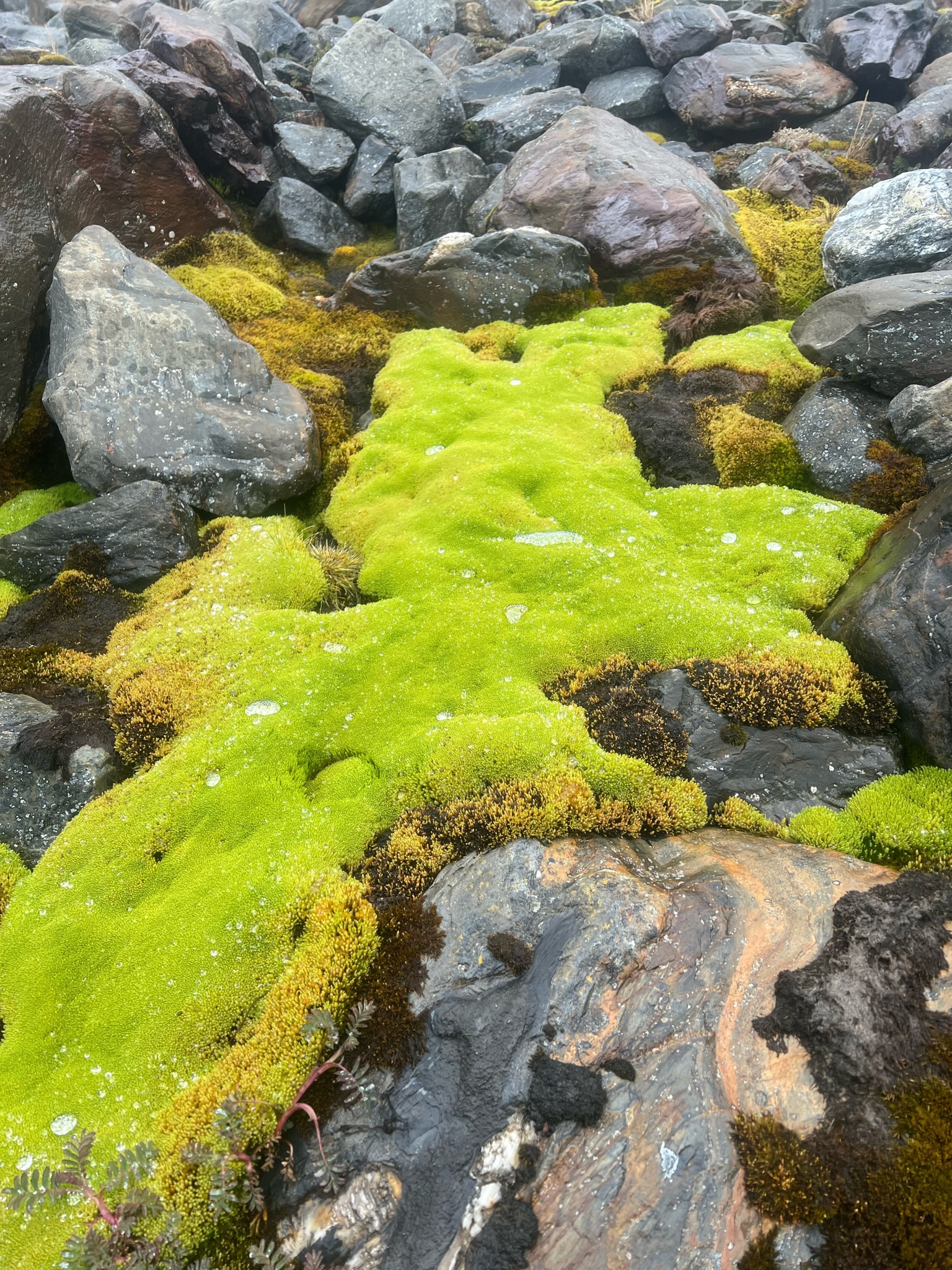
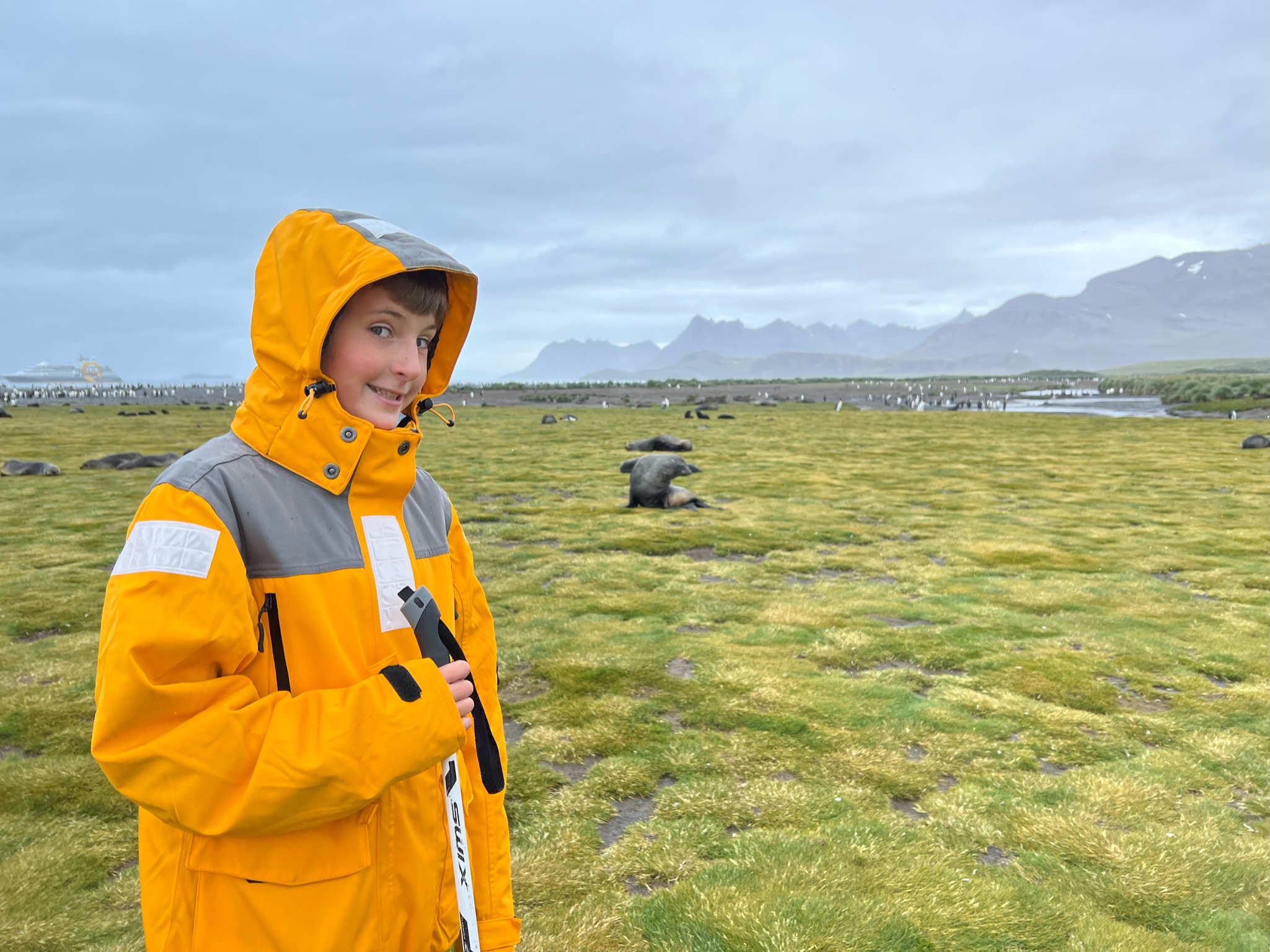
We were given a walking stick, and we were allowed to take off our life jackets since we might want to remove our parkas here. The weather was quite warm, and with all of our layers on, we began overheating quickly. Unfortunately, the rain started not long after we arrived, so we had the option to sweat through our clothes or get them soaked in the rain. South Georgia is still within the Antarctic convergence (meaning the water is still Antarctica-cold), but the weather is a bit warmer here. There is tussock grass on the ground, and moss grows thick over the rocks on the hillside. There are very few blocks of floating ice here as well.
Also the Scotia Sea is very deep, but South Georgia sits on a bit of a shelf in the ocean. The nutrient dense water from Antarctica flows towards the shelf to form an area very ripe with oceanic wildlife. This is part of the reason that over half of the worlds’ oceanic mammals live here. It is also the reason that there were hundreds of seals and penguins out on the beach enjoying the sun with us.
We walked up a moss-covered hill to see the glaciers just over the ridge, and it was beautiful. The trail was rocky, but there was very thick moss growing on the ground. It felt like walking in a foam pit. At the top of the ridge, we looked over a canyon with glaciers all over. With the warmer temperatures, the water was melting and flowing down the rocks in beautiful waterfalls. We walked amongst the seals keeping our walking sticks between us and the seals in an effort to keep our distance. Most of the seals watched us with interest, but they didn’t seem bothered by us. It is interesting to be surrounded by wildlife that doesn’t view you as a threat.
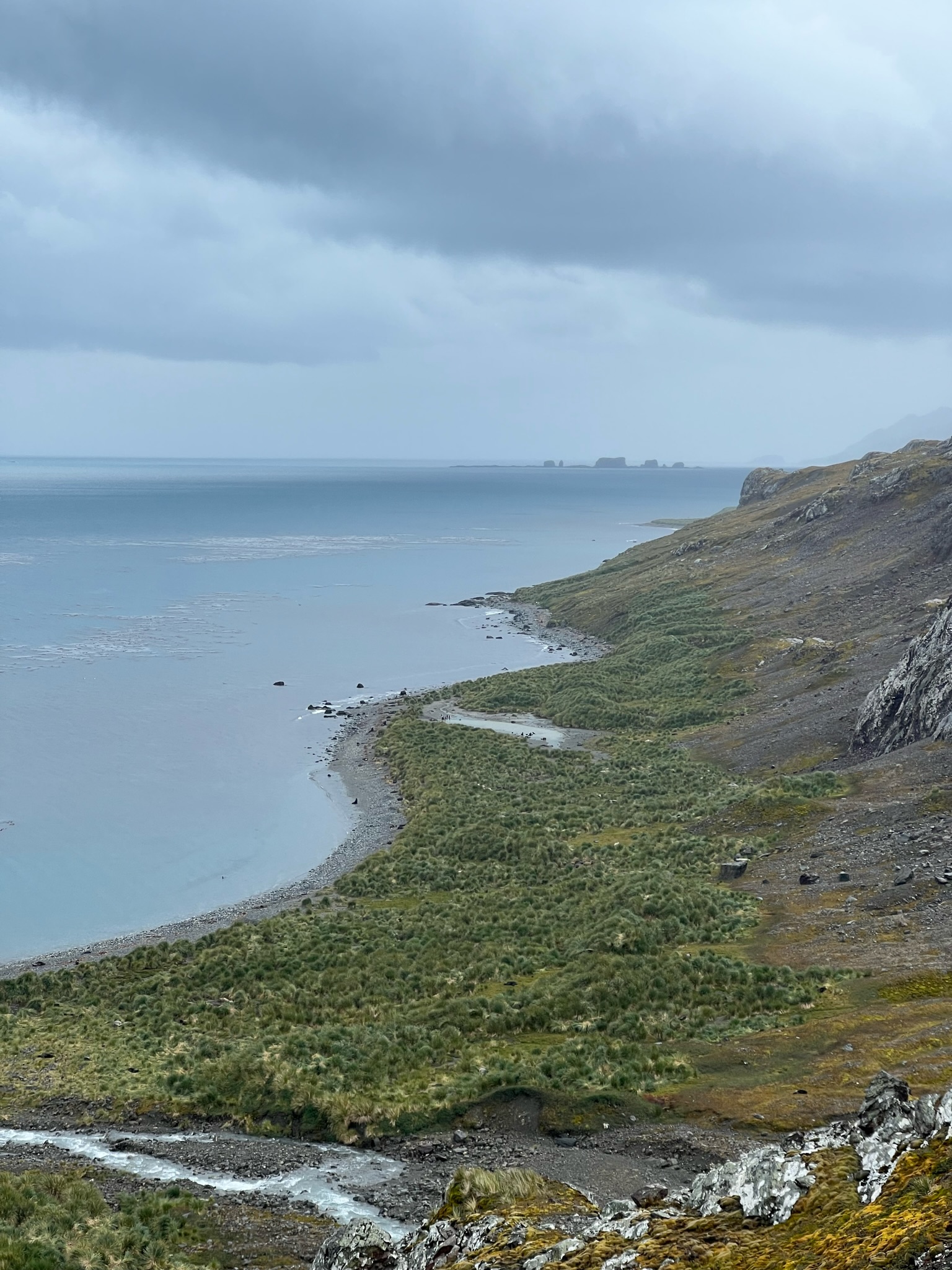
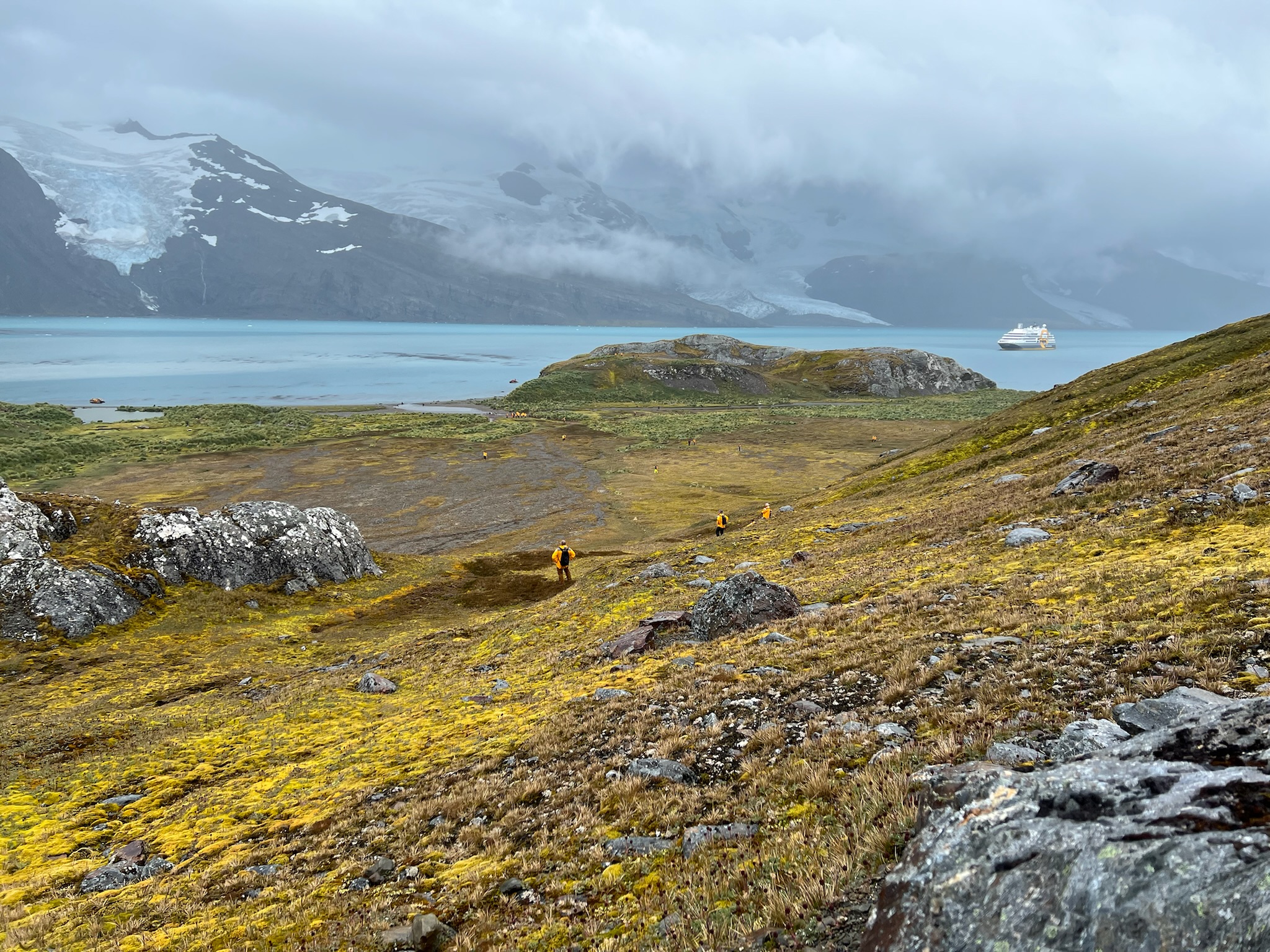
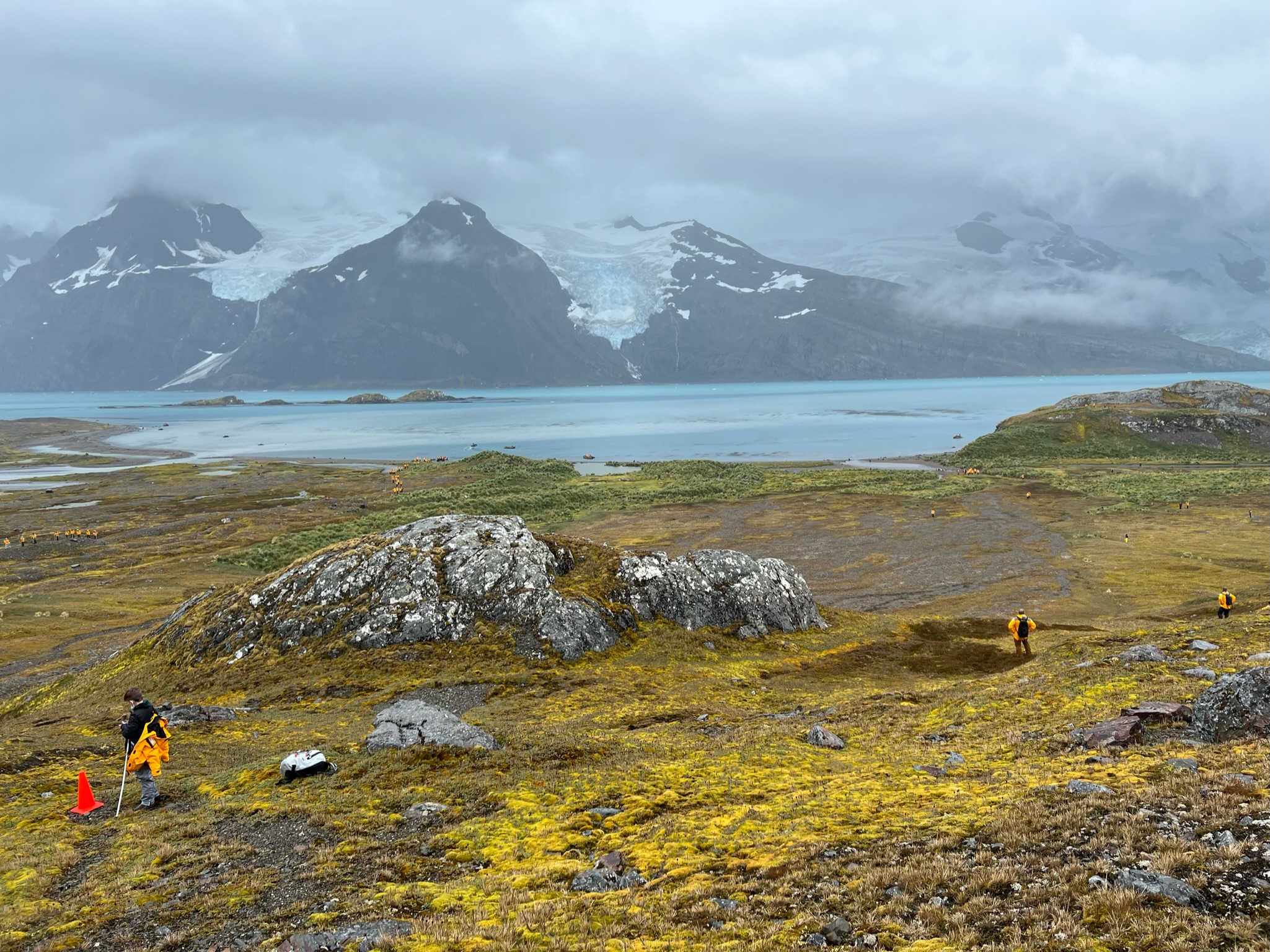
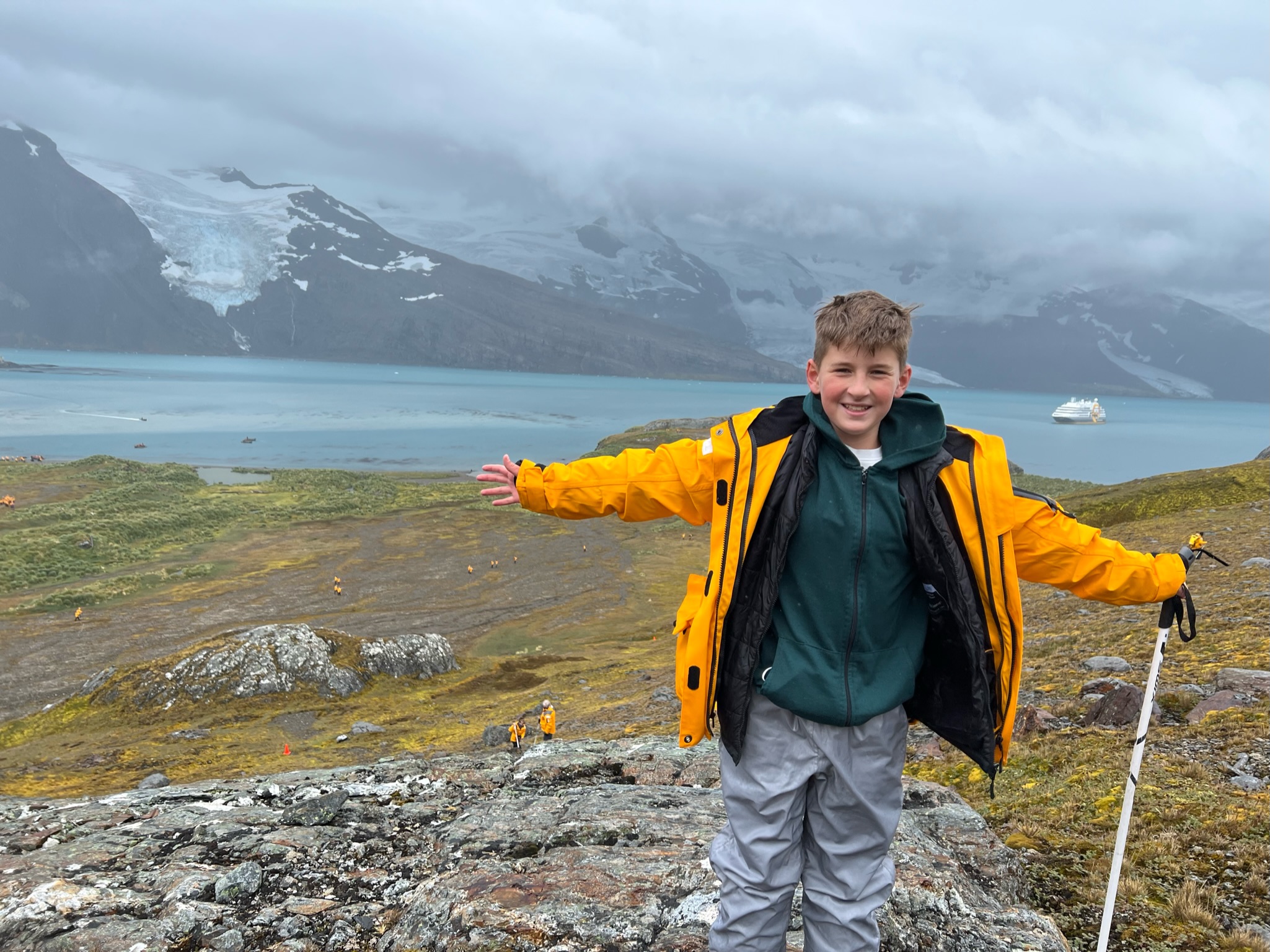
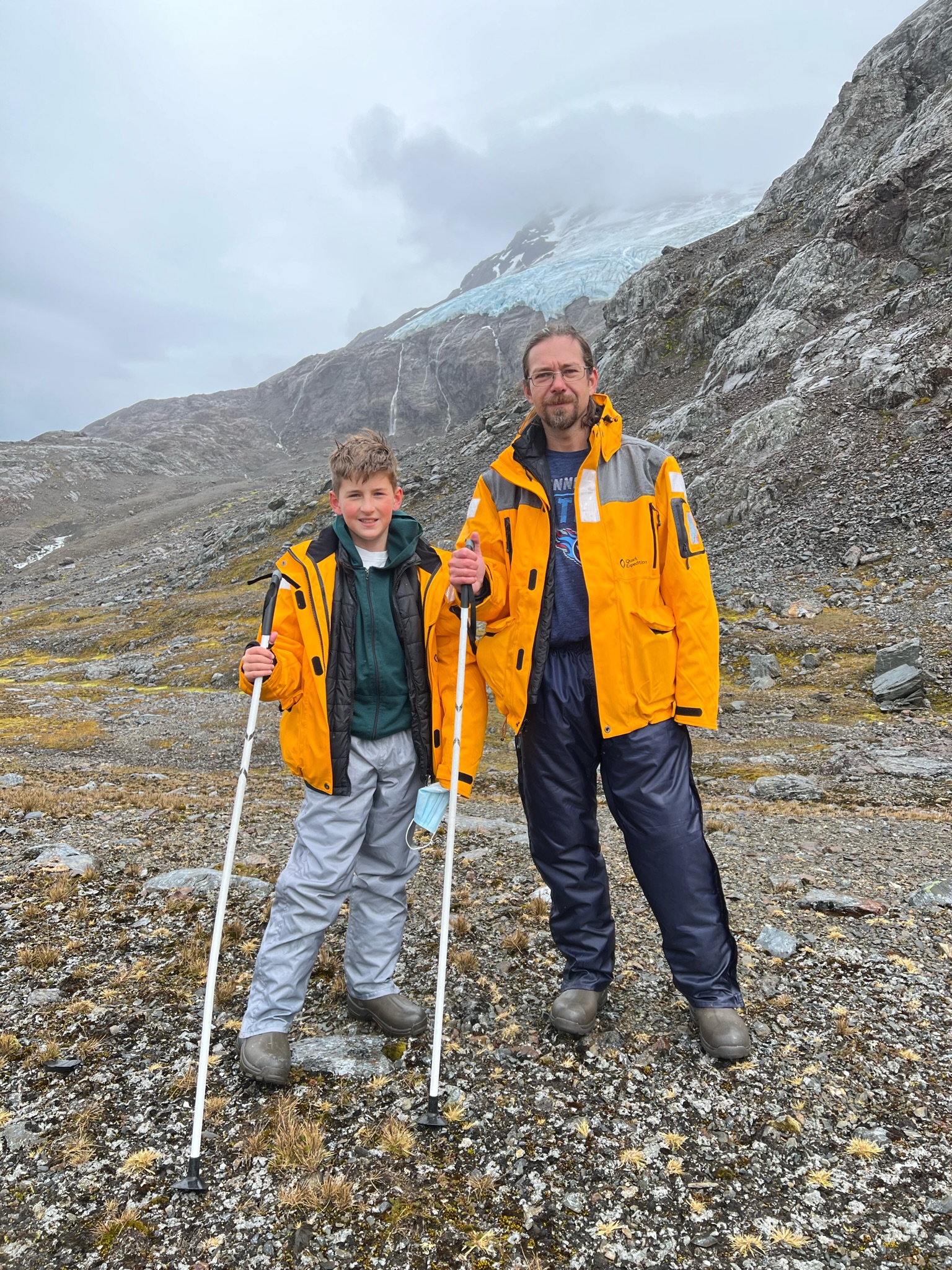
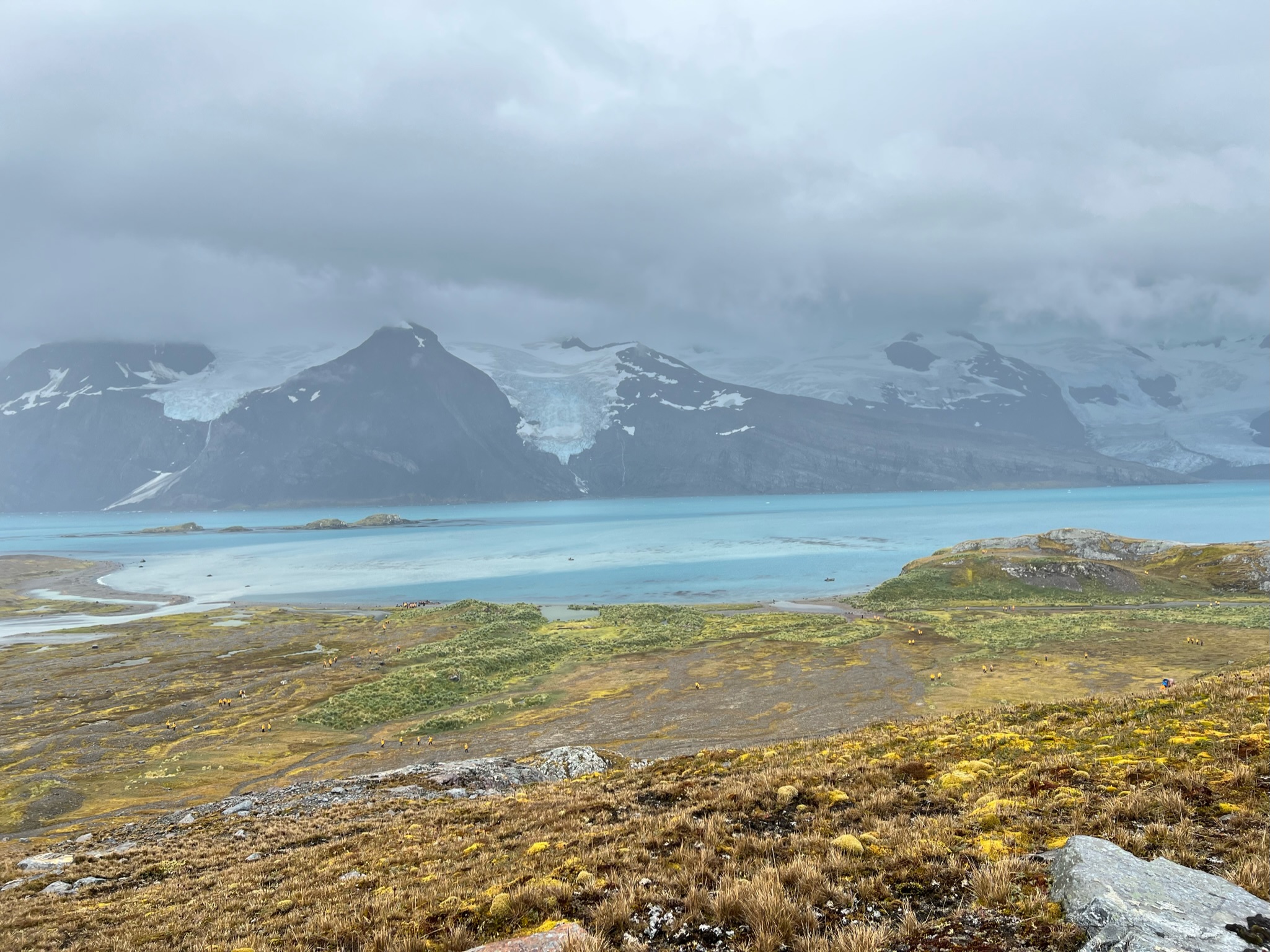
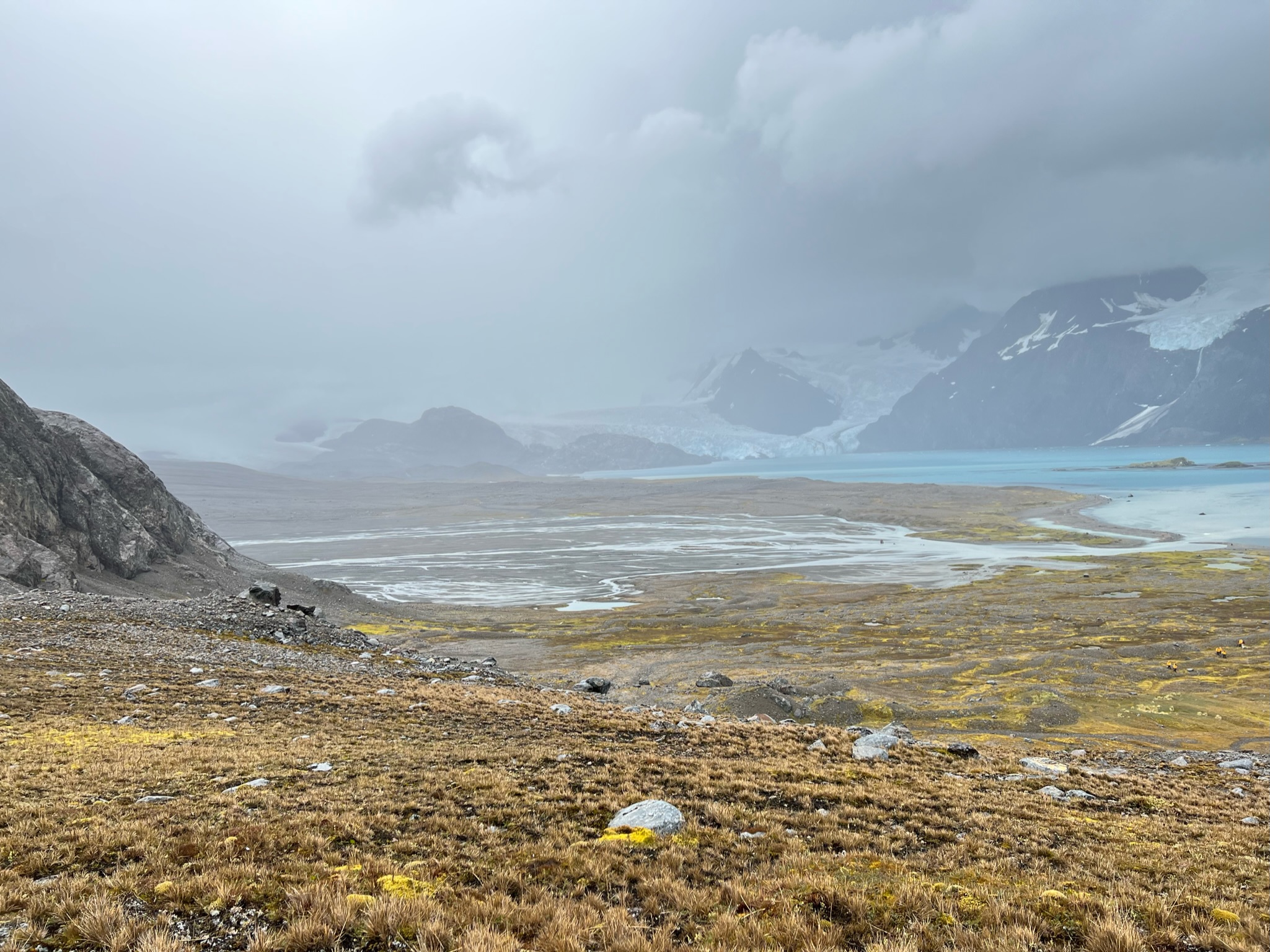
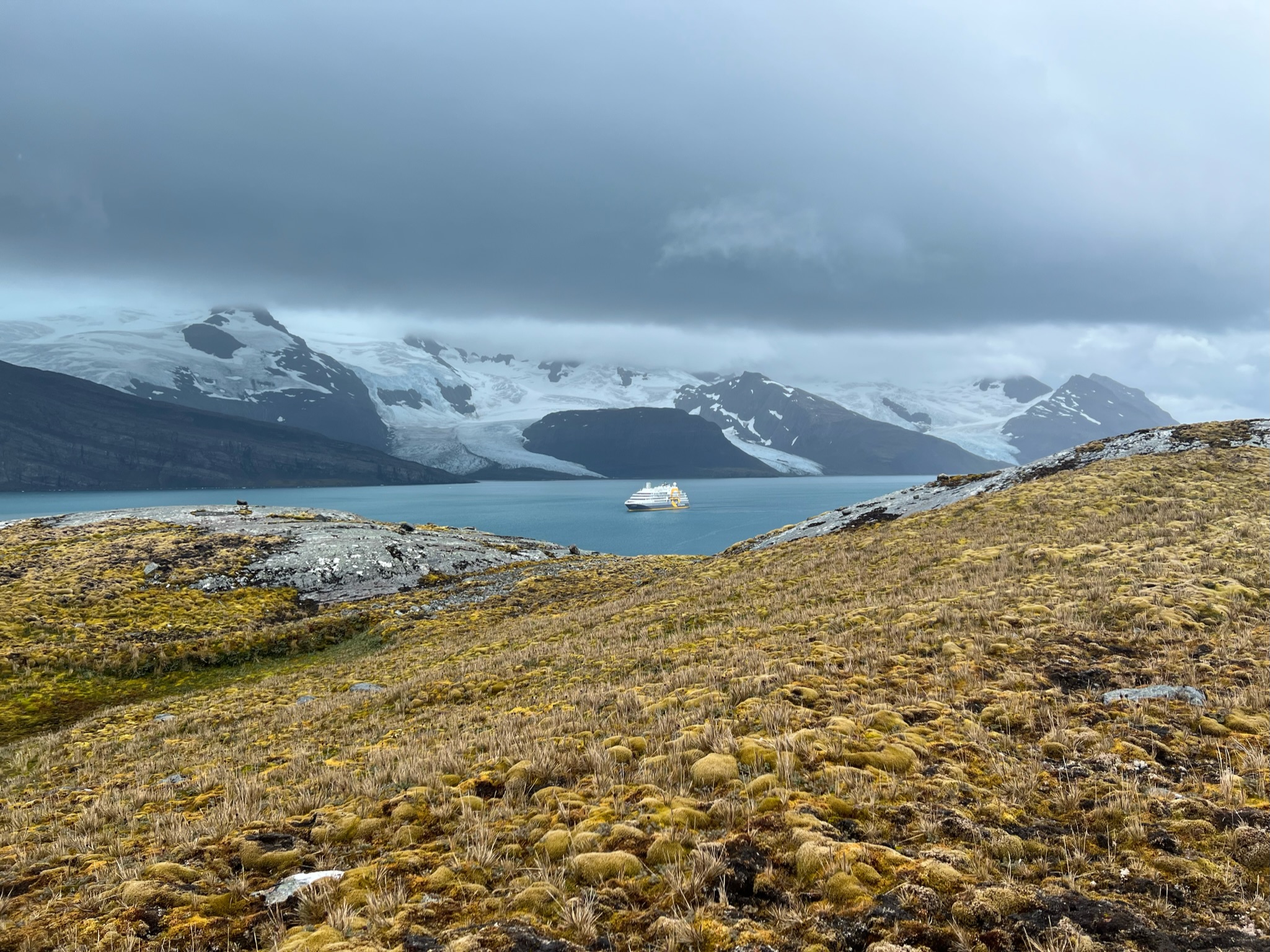
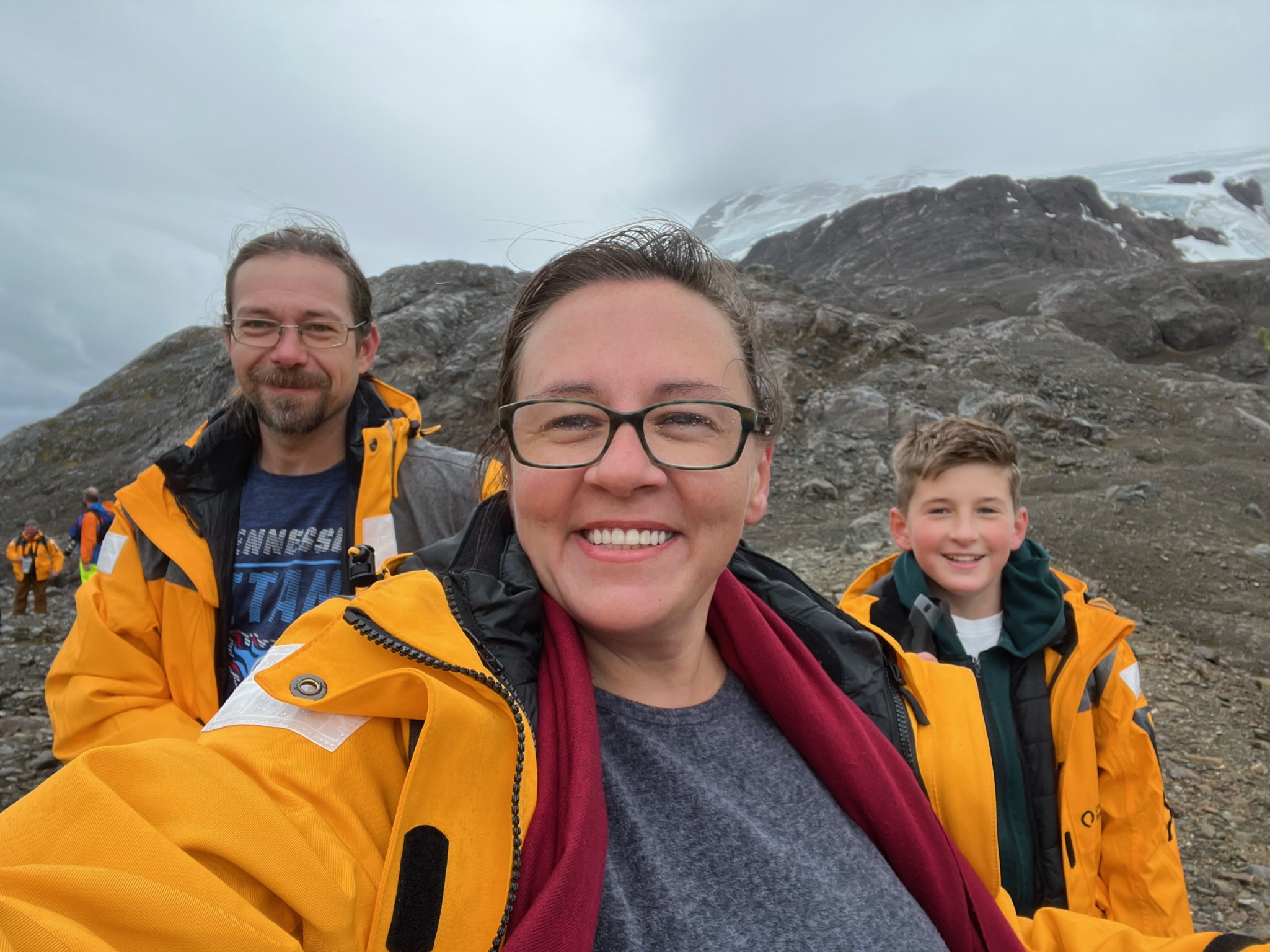
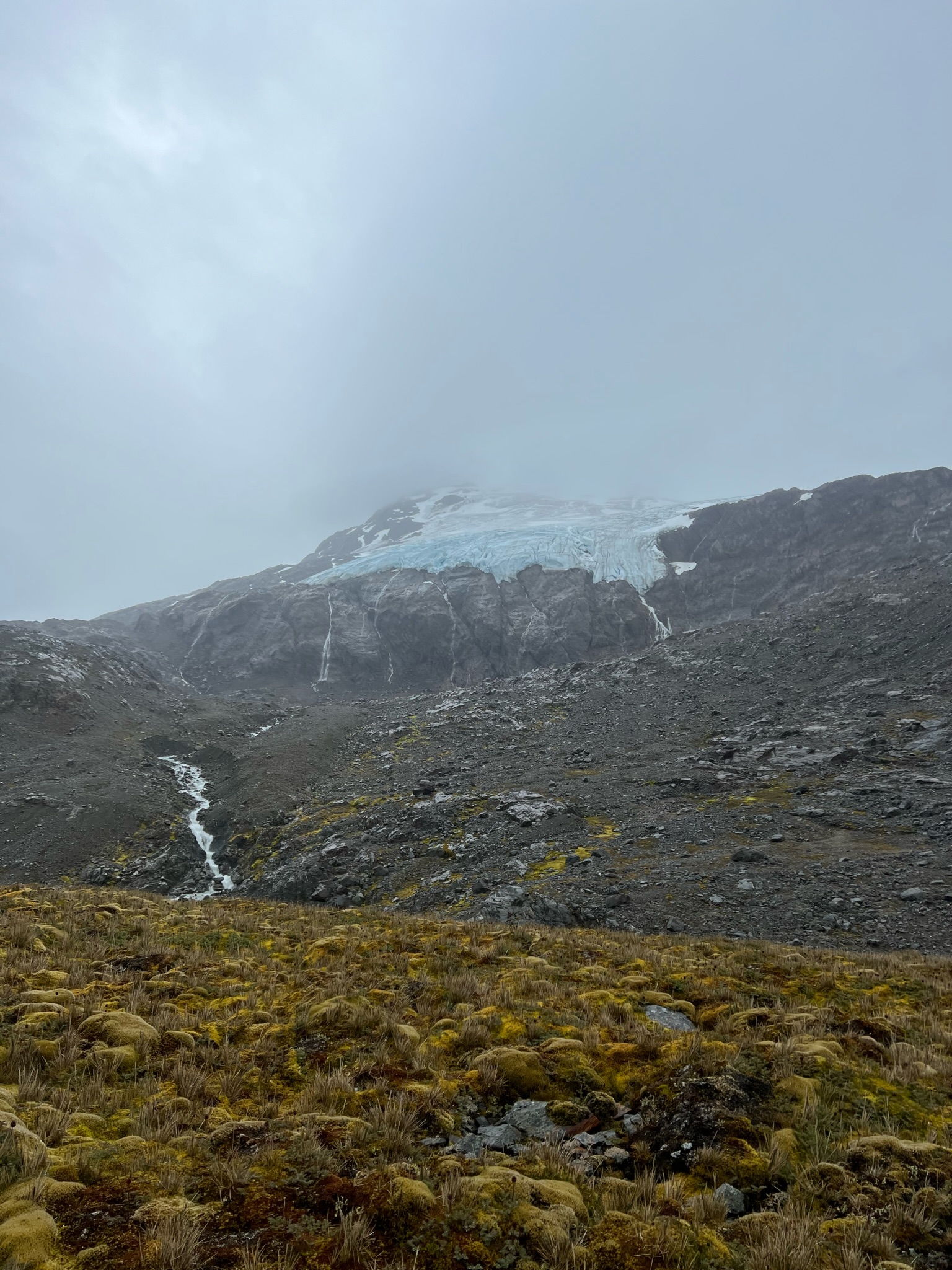
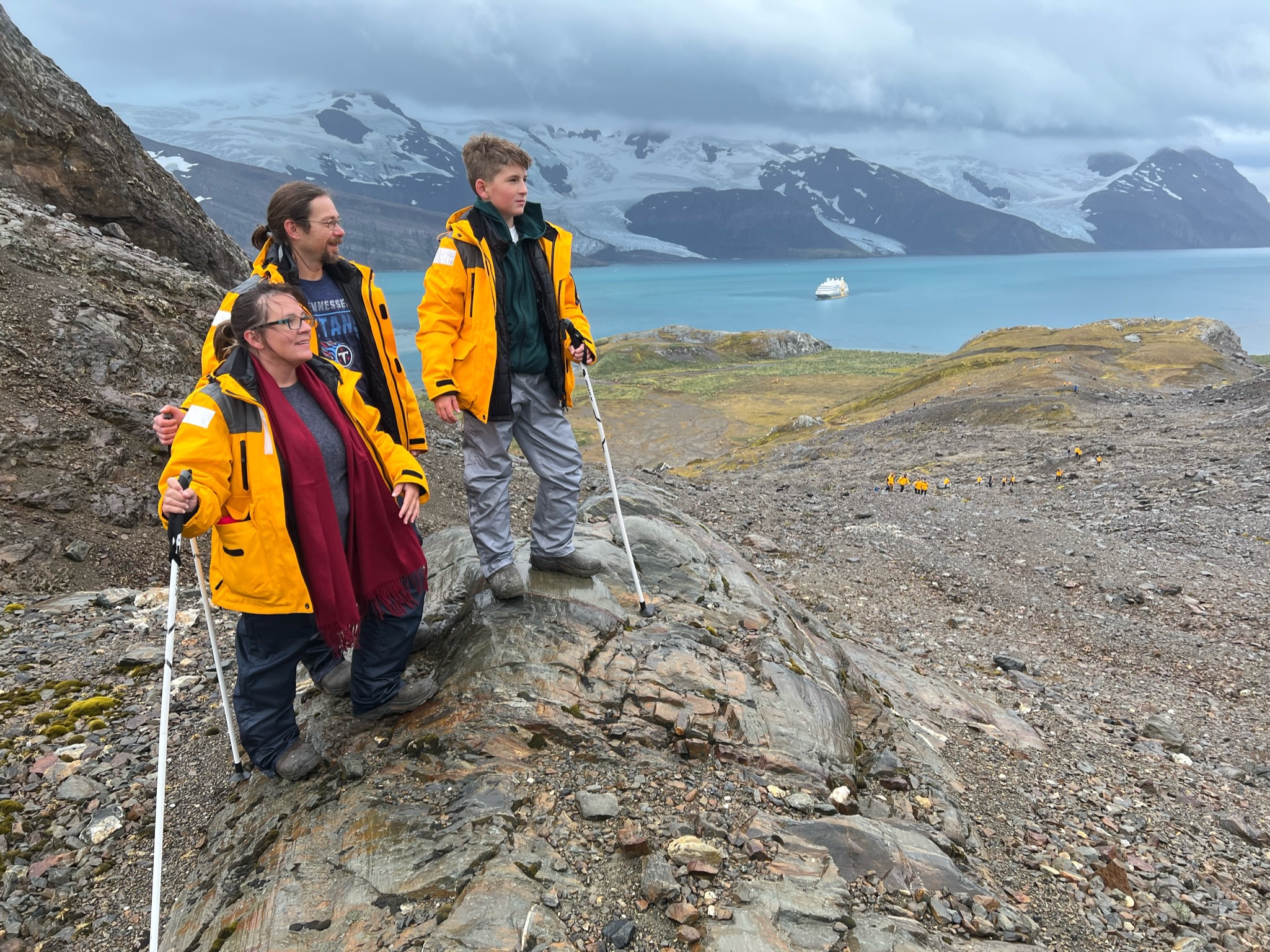
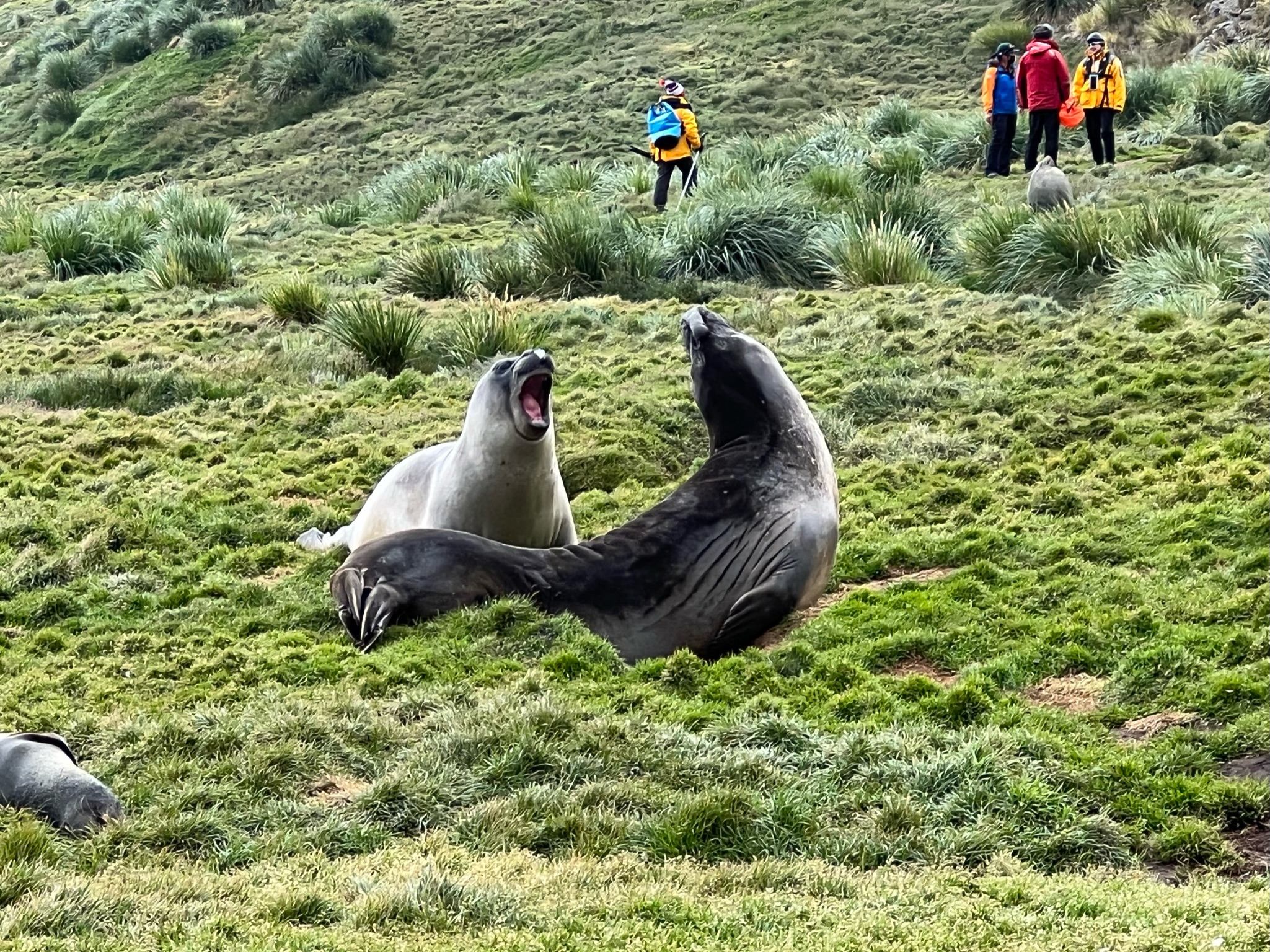
From there, we walked down the trail to a boulder near the shoreline. From here, you could see down on all of the seals that were sprawled out marking their territory. The male fur seals were all fairly equidistantly spaced on the plain. Sometimes the male would be surrounded by his harem, and several young pups wandered around as the adults rested. There were a couple of piles of Elephant seals as well. Elephant seals are different from fur seals in that they like to pile up together. Many times that we’ve seen them, they are in large groups. They enjoy touching one another, but they can get a little territorial too, and we did watch two elephant seals fight for alpha status too. By the end of the walk, we were ready to go back to the boat. The water was getting a little rougher, and our gear was beginning to feel damp.
We got back on the boat and had our lunch, and then the real fun began.
We went out on a zodiac cruise shortly after lunch to see the Shackleton Gap, the area where Shackleton and his men began their walk across South Georgia in search of help. While part of our group toured the area, we boated through the bay looking at glacier faces. While we were on the boat, the wind began picking up significantly, and the rain really began to come down. The glaciers were pretty, but we were miserable in the boat, and the swell soaked us as we traveled through the water. Our fellow passengers couldn’t seem to understand that if they would scoot closer to the back of the boat, we’d all stay significantly dryer, even after our driver and Tim Jarvis, the Shackleton special guest reminded them repeatedly of this. By the time we got to shore to explore the area, we were completely drenched and absolutely miserable. We considered not even going on shore, but we figured we’d get out for a few minutes and see what we could.
About the time we got out, the guides let us know that they were wrapping up the shore excursion because of the weather. We could have a quick look around, but then it would be time to go. We did, and the beauty of nature did not compete well with the cold and uncomfortableness we were experiencing, so we quickly got in line to go back. We got in our zodiac, and our driver manuvered the craft as best as he could in the large swells, but at some point, he gave up trying to keep us dry and headed back as quickly as he could.
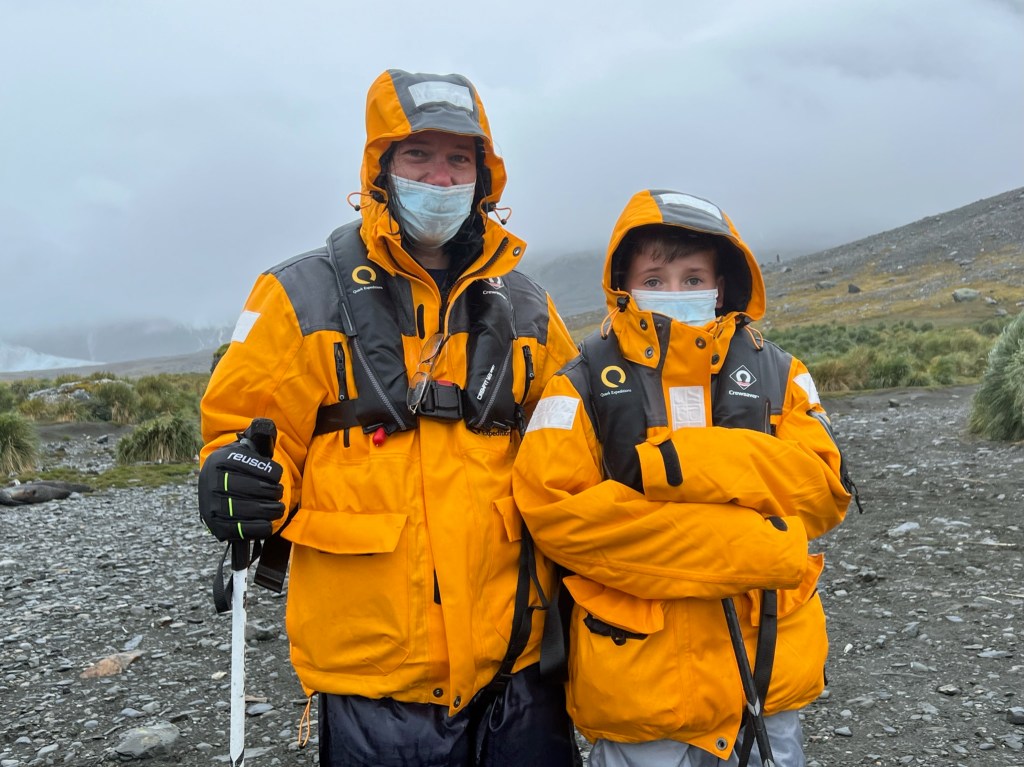
We walked back on the boat with every inch of us dripping wet. We came back to our room and tried as best we could to wring out water from everything. All three of us were in our underwear trying to get everything that was wet somewhere it would dry. We were freezing and mostly naked, and I truly felt sorry for Shackleton and his men. We had waterproof (albeit ineffective) gear and a warm ship to come back to with heated rooms, endless hot chocolate, and steaming hot showers). We were out in the cold for only a an hour or two, and then we were able to warm up quite well. These men were out there for months in woolen clothes that were meant for the dry environment of Antarctica, not the stormy mess of South Georgia. They stayed cold and wet for months on end.
We spent the evening trying to warm ourselves up. After dinner, we all curled up under our covers and watched movies. We are keeping our room very warm in an effort to dry our gear, and hopefully that will work. The crew is talking about going out again tomorrow, and quite frankly, I have little interest in it. I was miserably cold today, and I don’t want to go through that again. We’ve rung out gallons of water from our gear (I’m probably being overly dramatic, but it felt like gallons), and I don’t think its possible for it to be remotely dry by tomorrow.
Day 14: January 4, 2022
This morning we woke extra early so that we could begin on an early excursion. Because of the weather coming in, we are needing to visit the Salisbury Plain and Grytvikin stations today, and since there is a three hour transit between the two, we’re having to get started early.
Our first excursion was very nice. The weather was windy and rainy, but the temperatures were in the 40s and it was pleasant to walk around in. The worst part of it was that our clothes have still not dried. Our shirts and pants were all good, but our socks and shoes were still drenched. The sleeves of our outer jackets were still damp, and our gloves were very wet still. So, we did the best we could. We wore as few layers as we could so we wouldn’t get anything more wet, we went without gloves, and we just gave in to the sopping wet of our boots. The landing was spectacular, though, and worth the squishy wet feet.
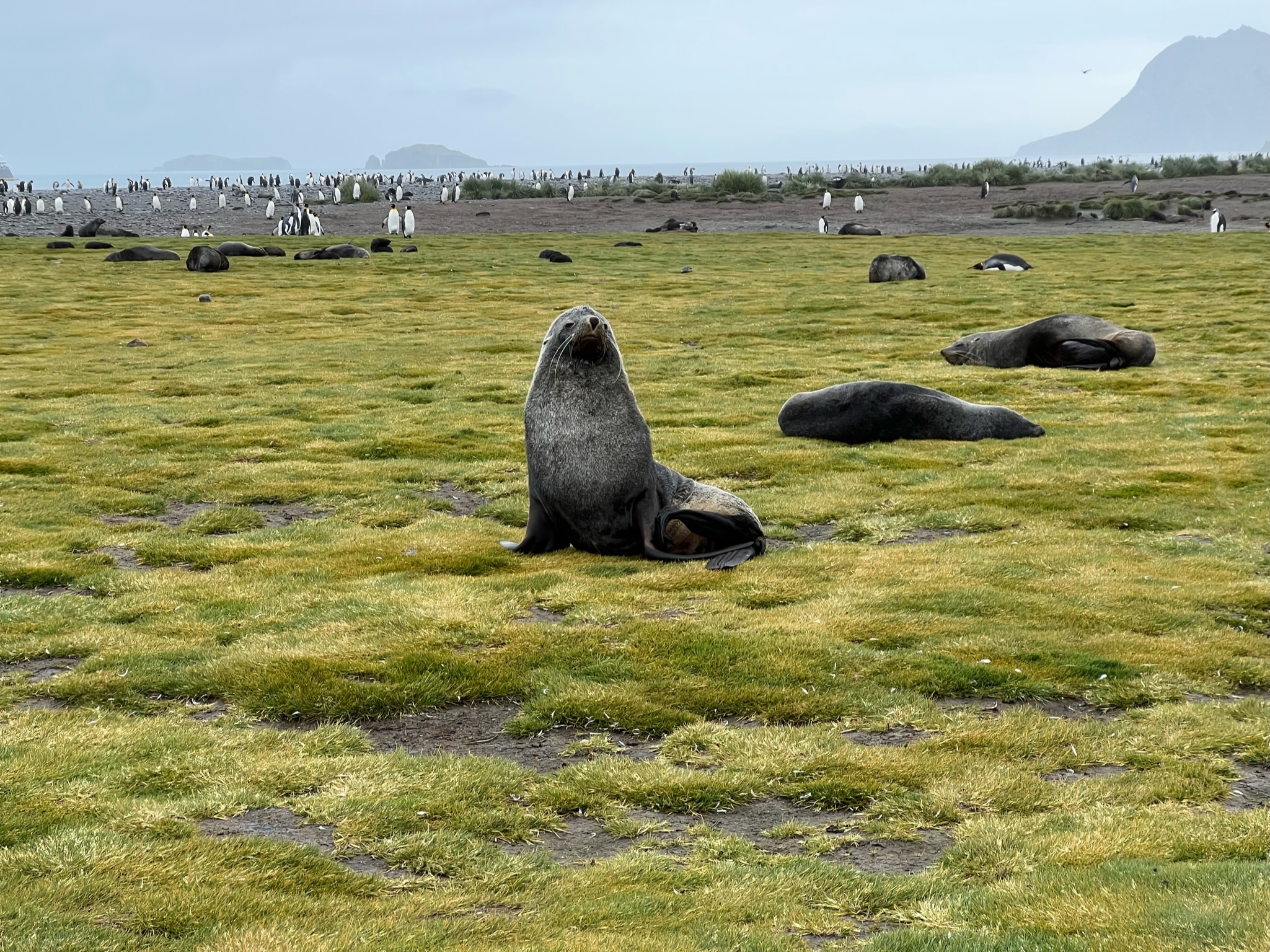
As we pulled up to the shore, we watched a leopard seal ripping apart a penguin. The flying birds swarmed hoping to get a morsel or two as the penguin was being thrown around. As we landed, the guides were trying to intimidate a fur seal who was a little too feisty and who was coming uncomfortably close to them. We unloaded from the zodiac and walked up the shore to meet with Solan and learn about our excursion.
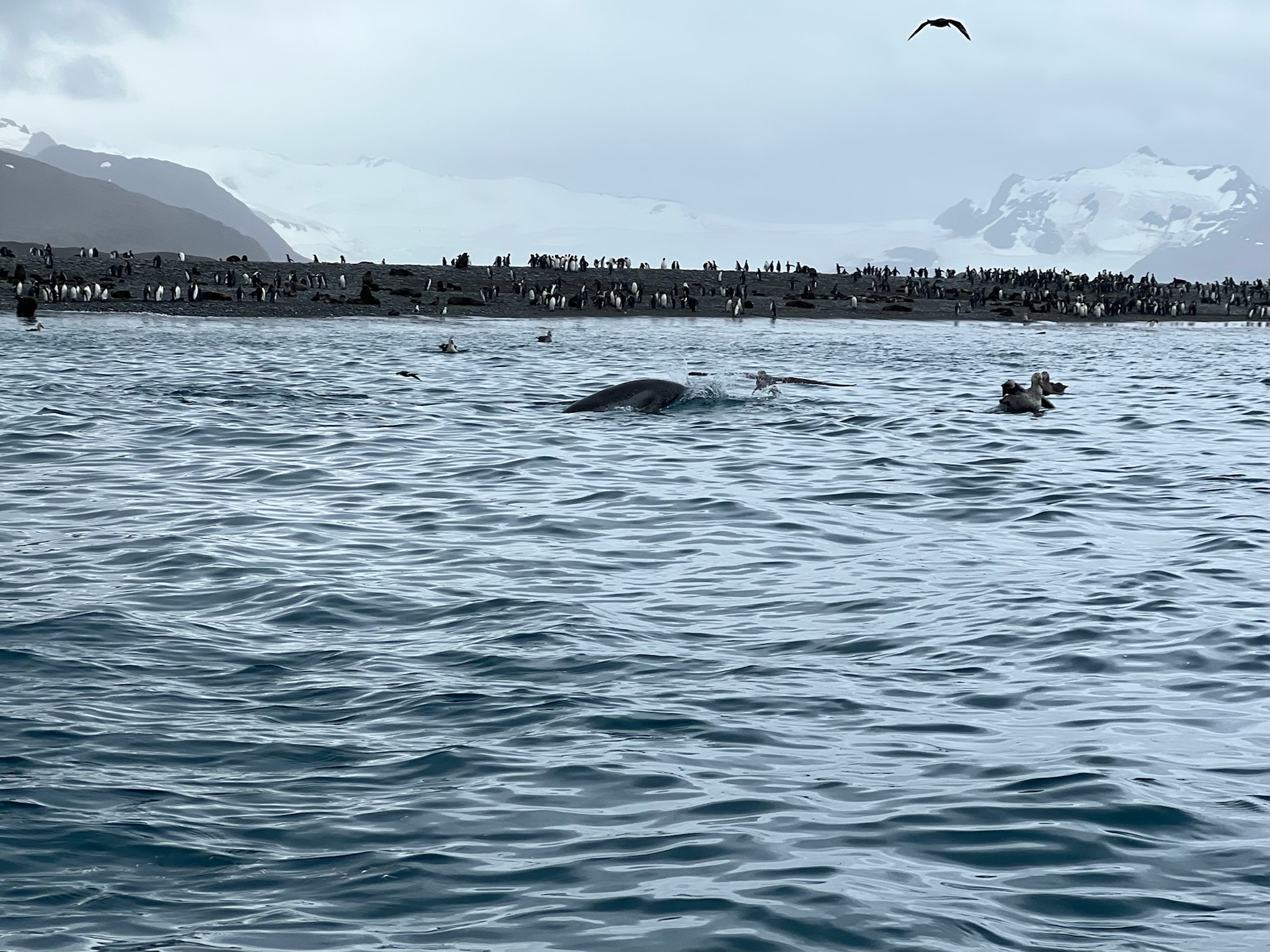
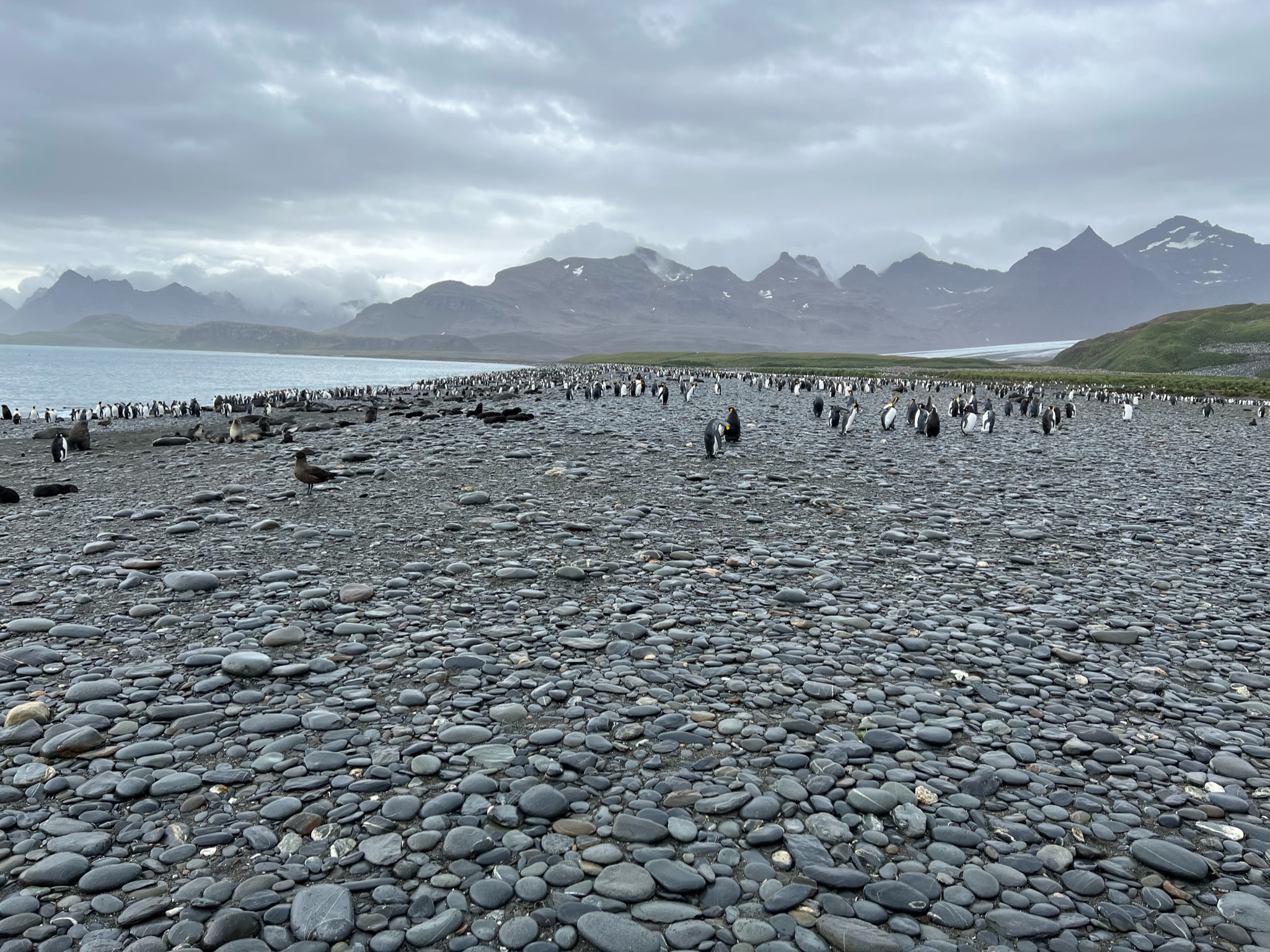
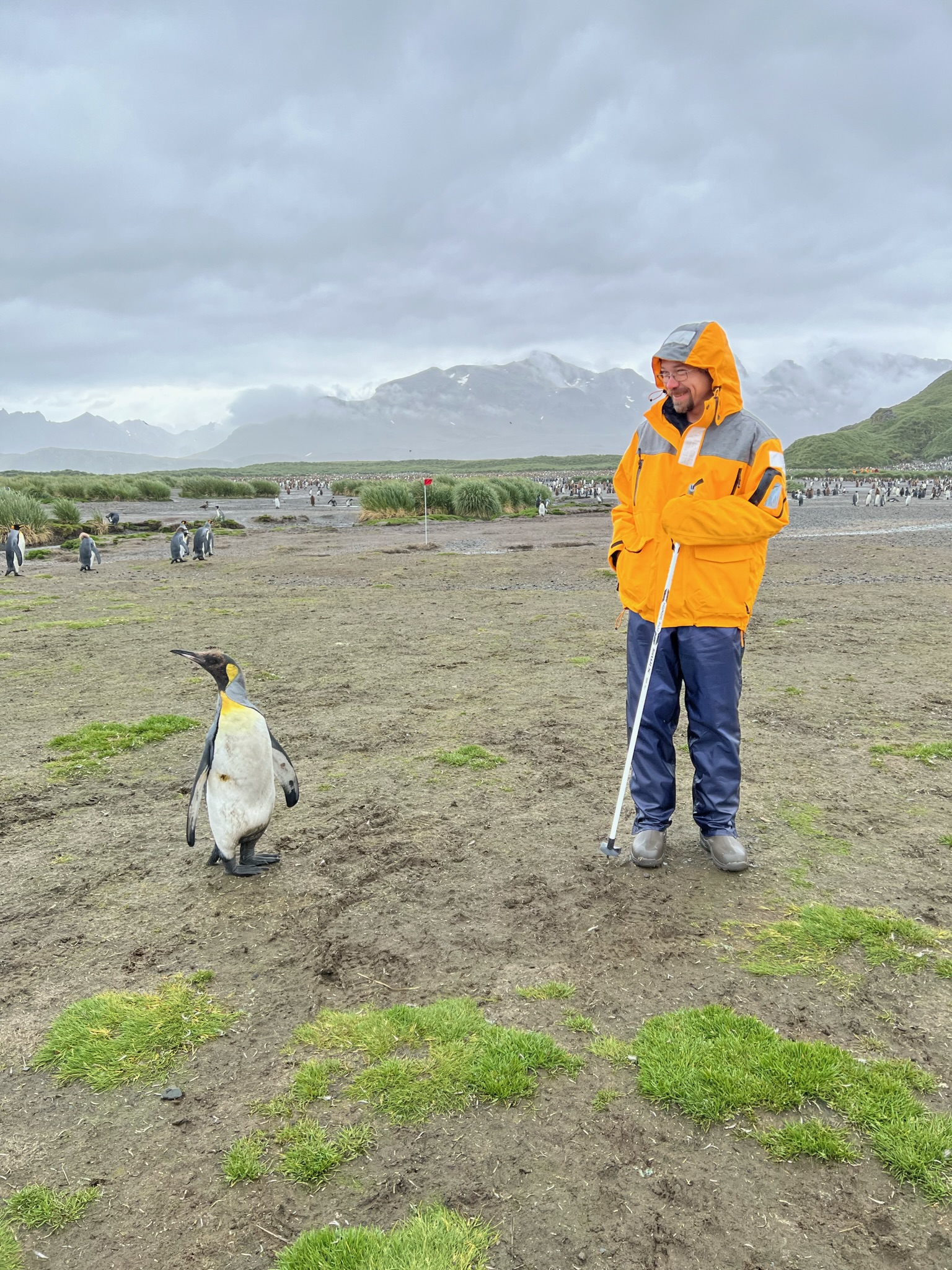
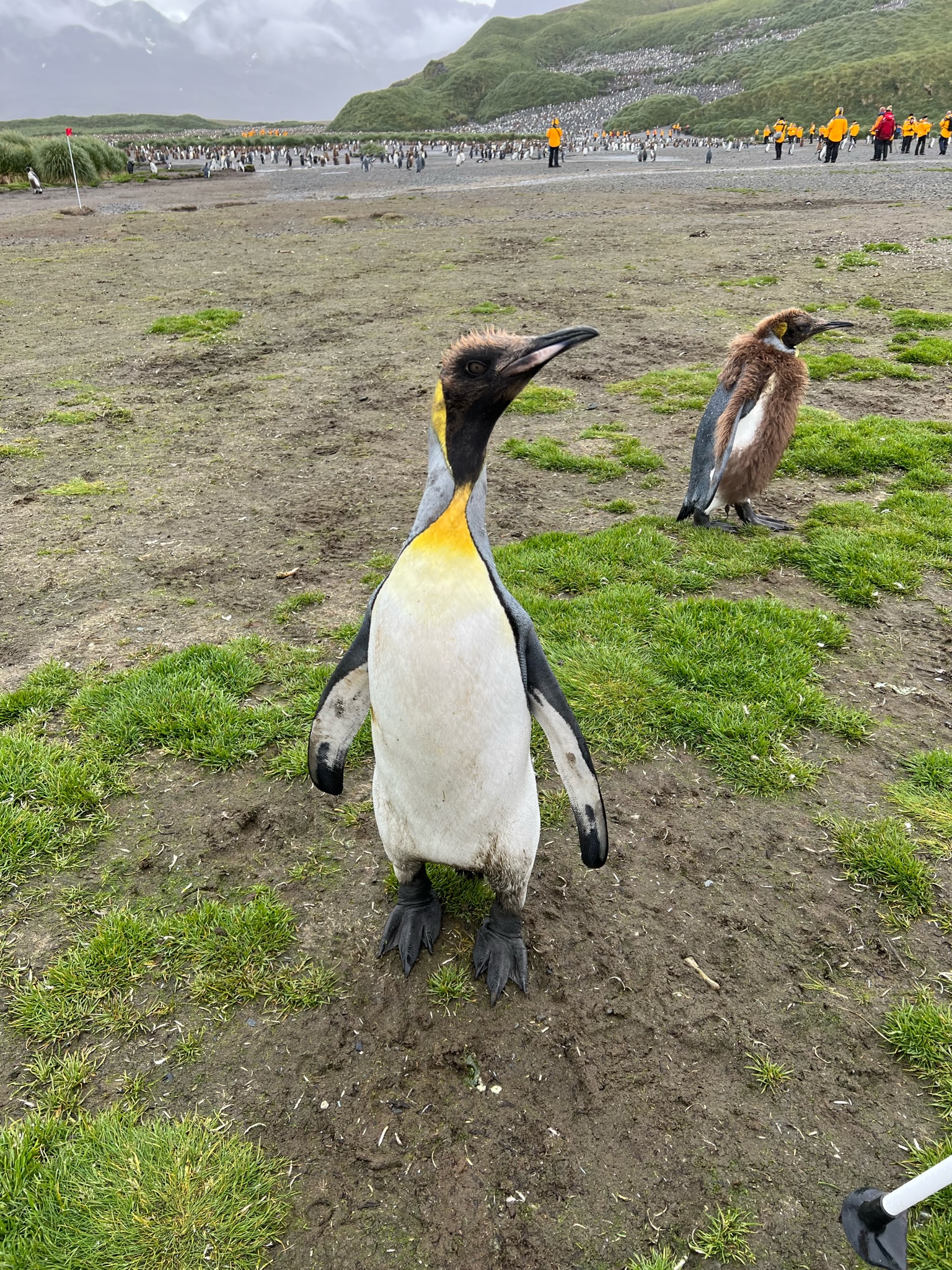
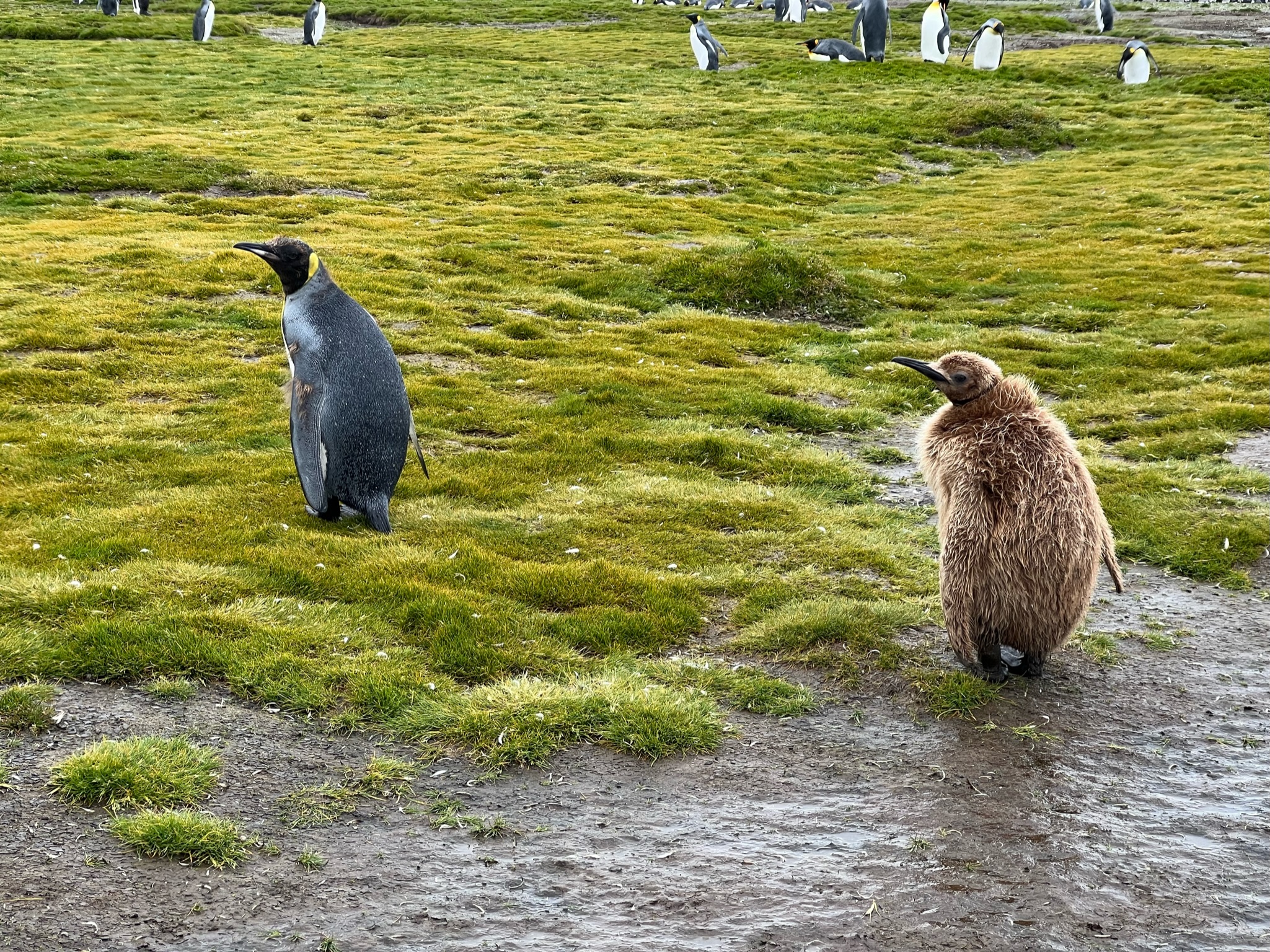
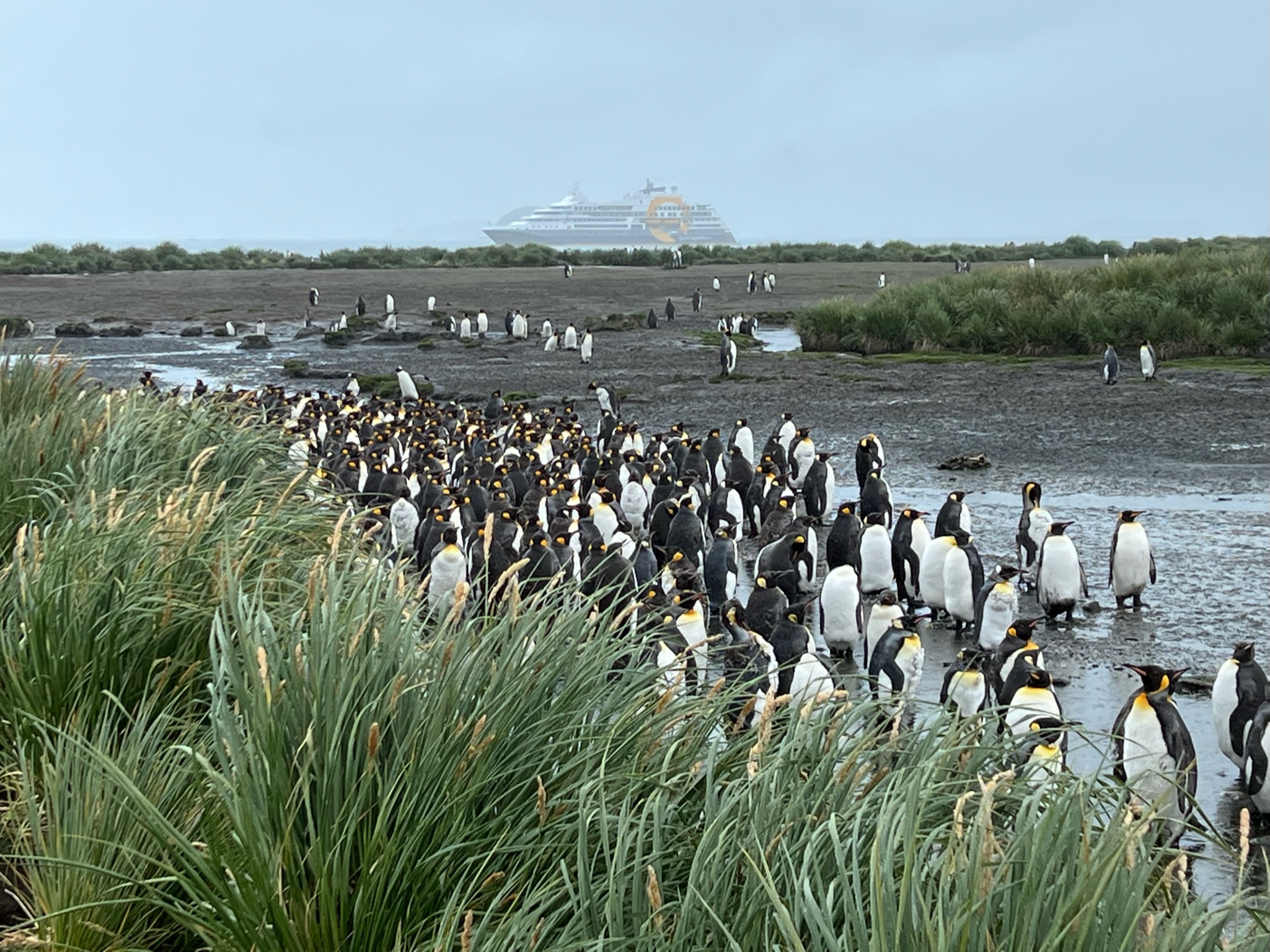
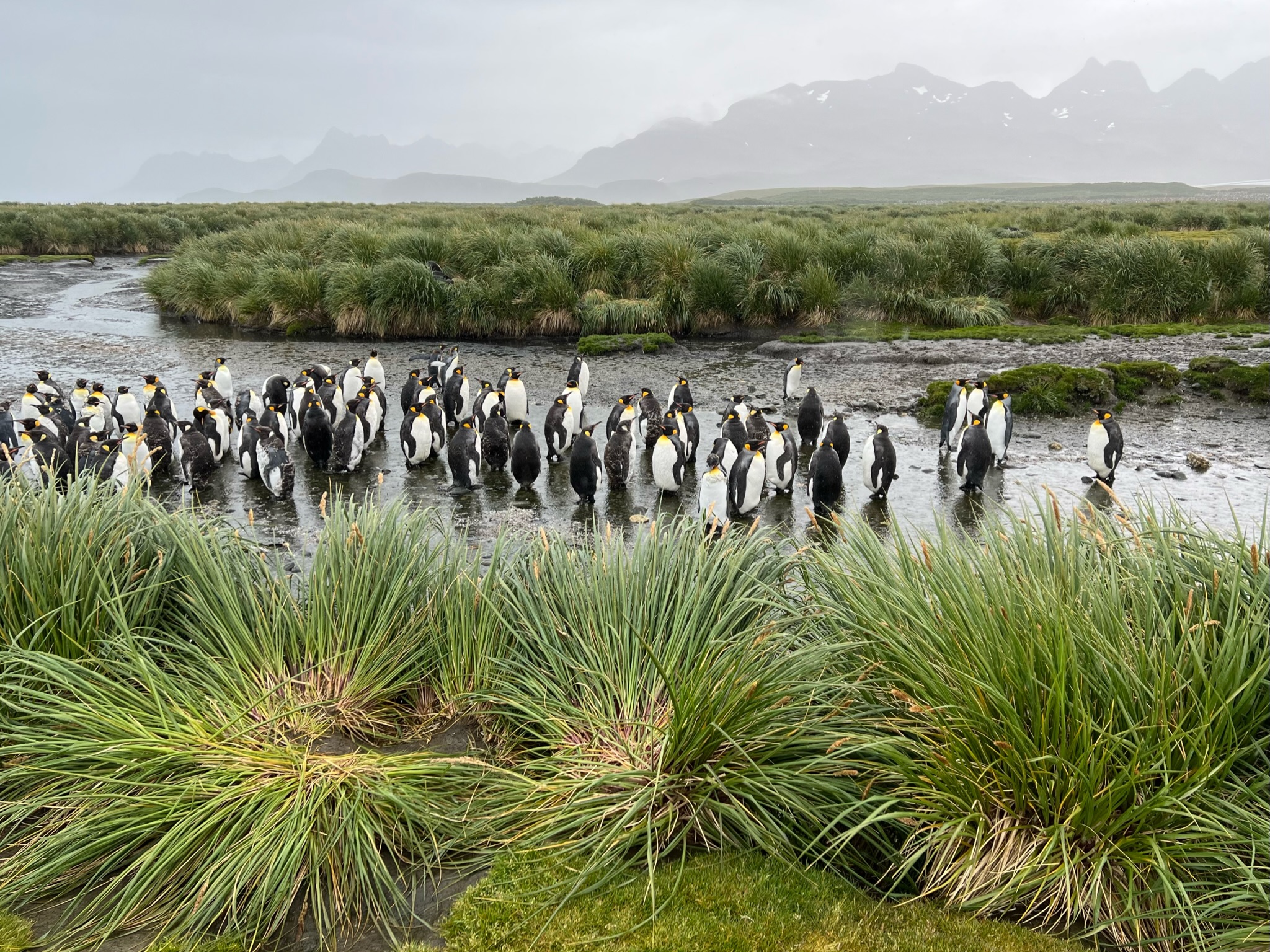
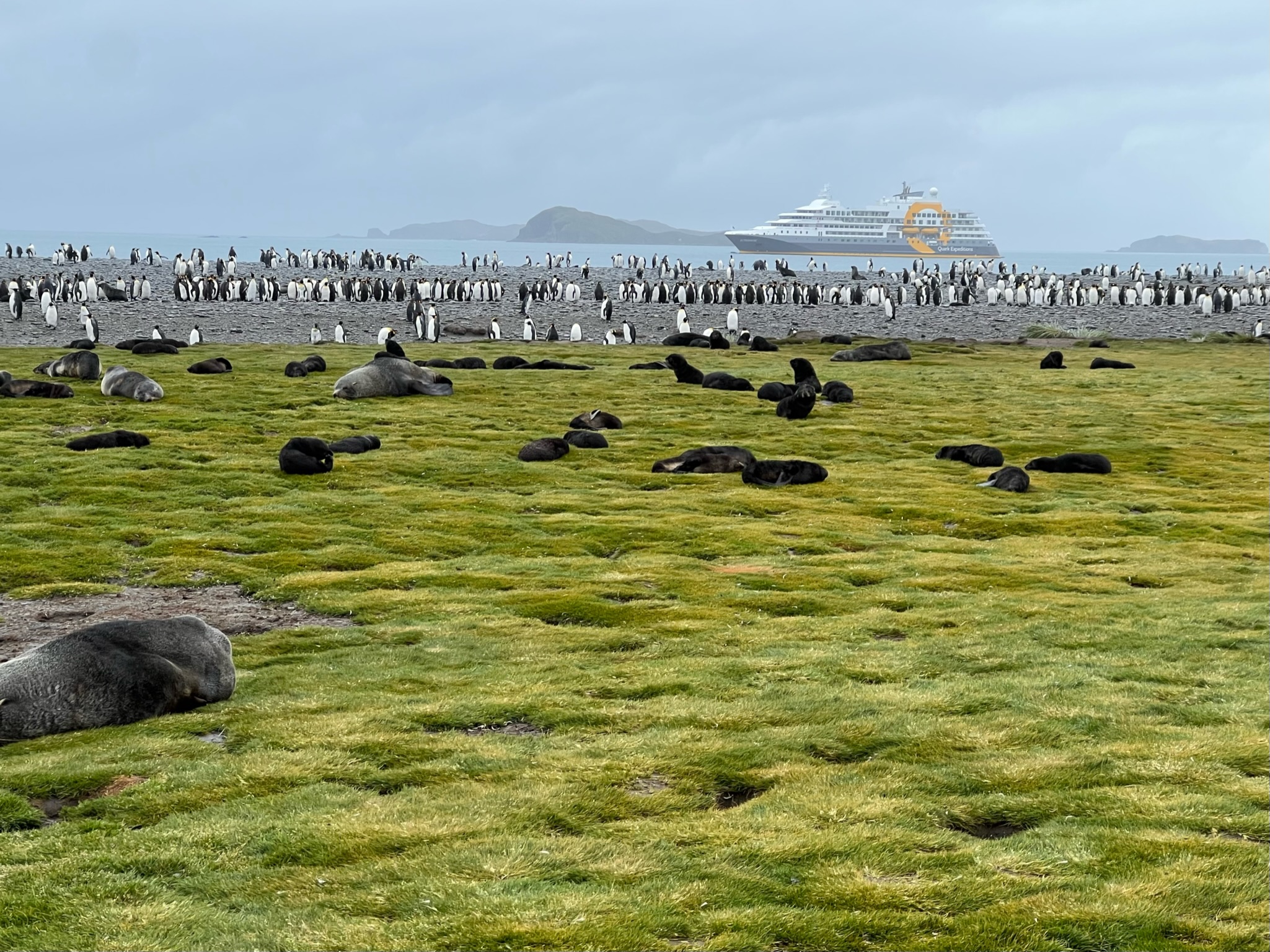
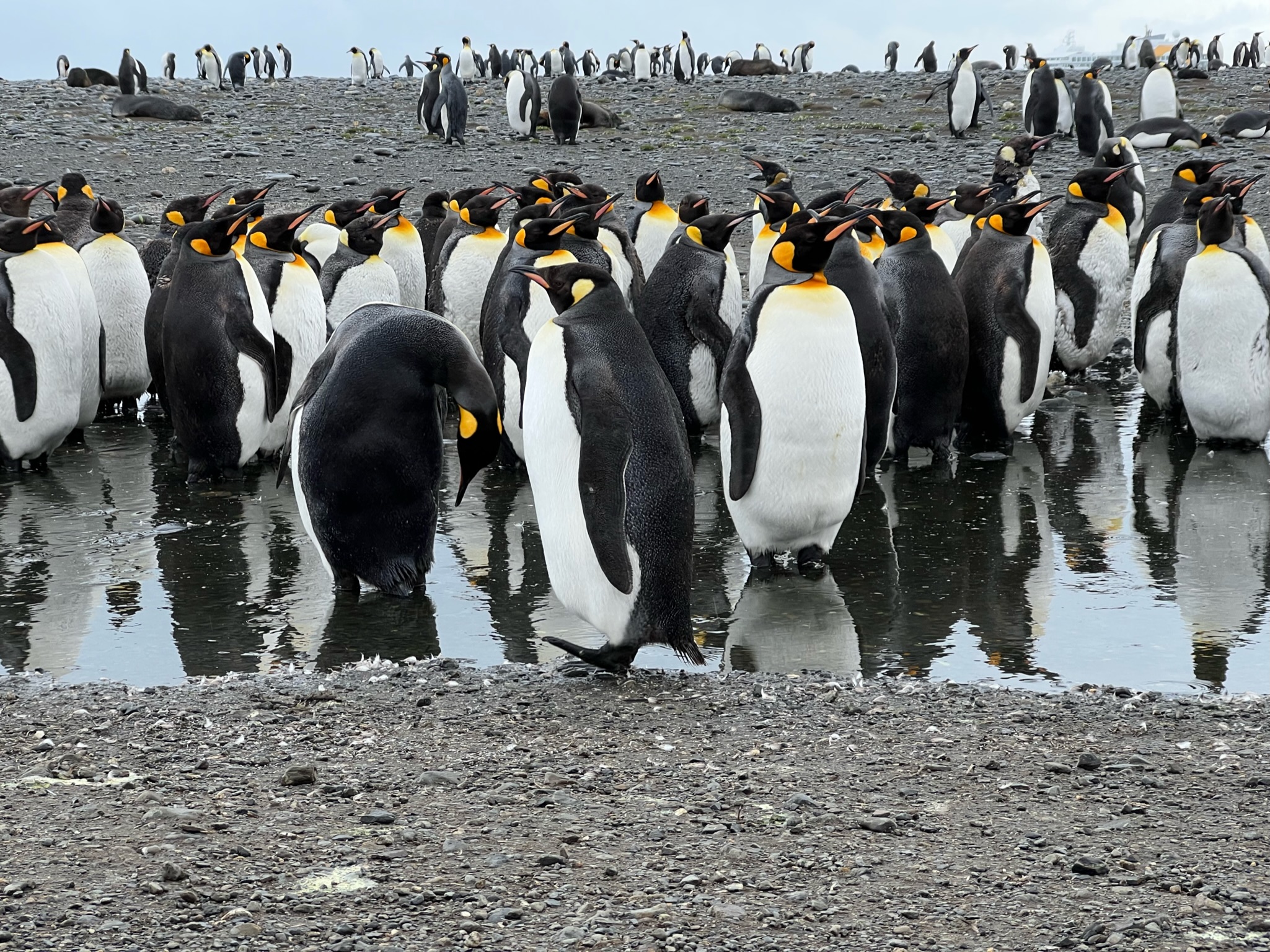
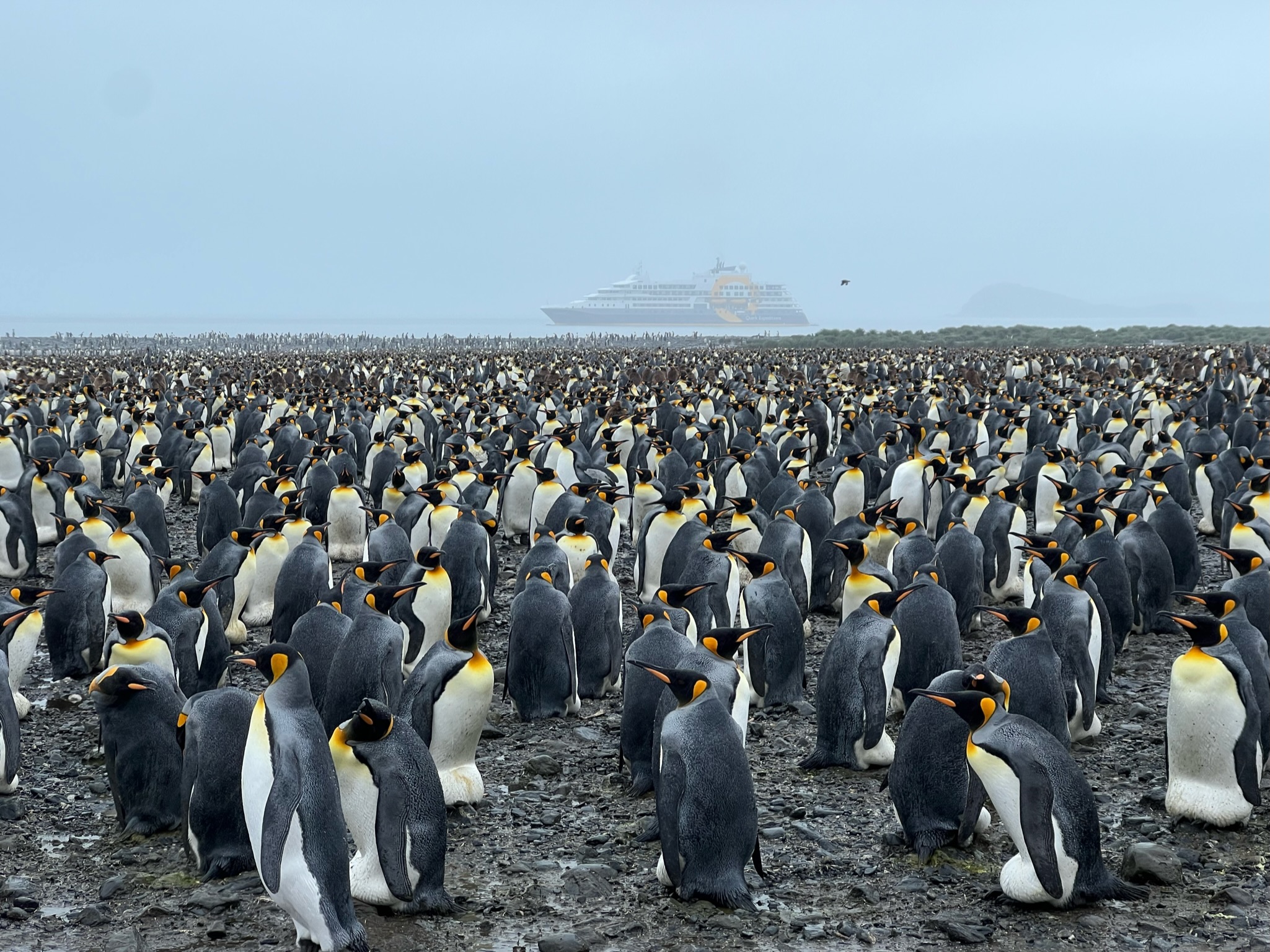
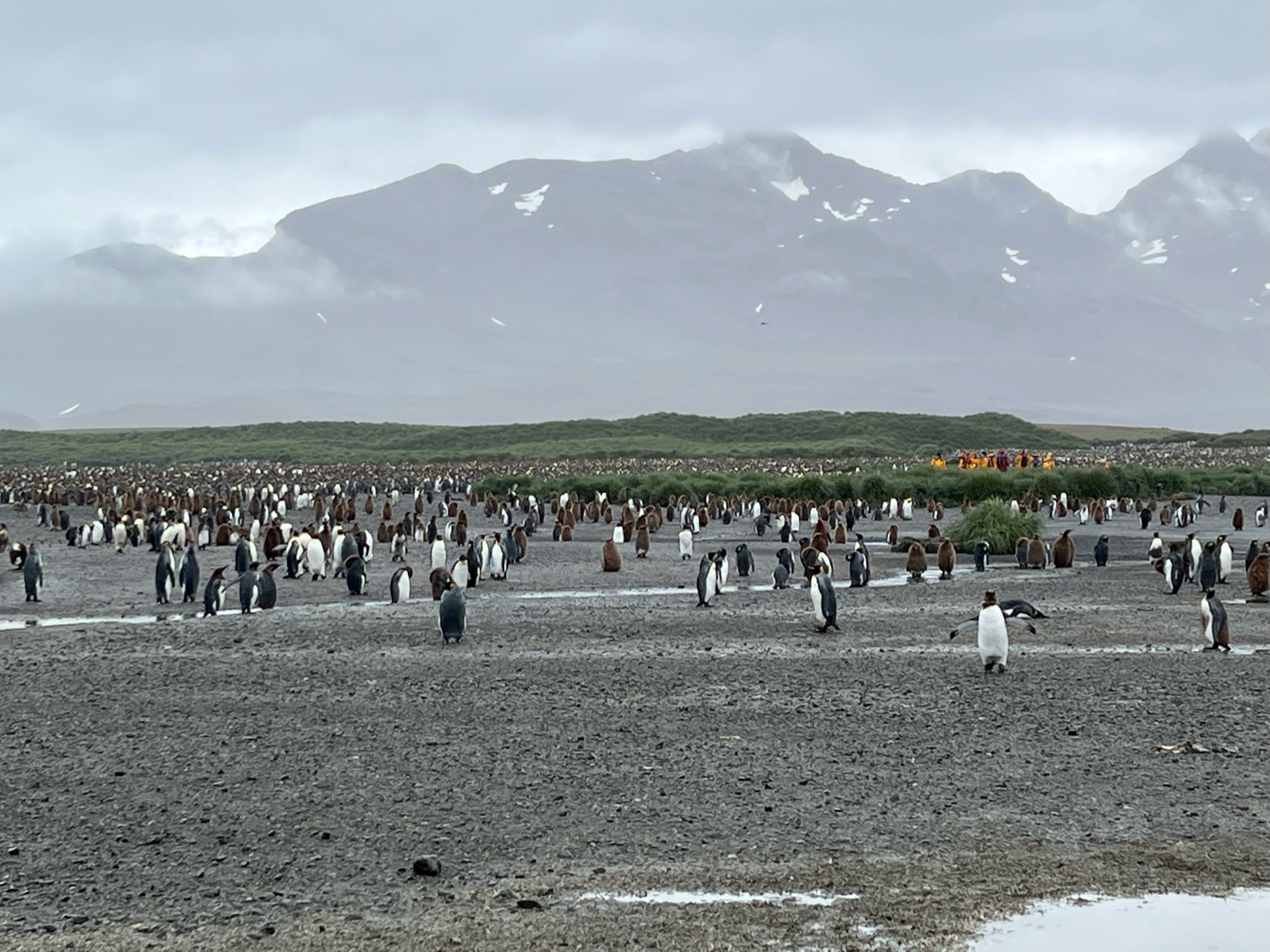
It was hard to pay attention to the briefing with all of the wildlife surrounding us. Literally as far as the eye could see, the ground was scattered with adult penguins, year old penguin chicks, and seals – fur seals as well as elephant seals. We walked through the rocky beach, and then across tussock grass watching these animals live amongst each other. The male seals fought to maintain their territory. The female seals that weren’t basking in the sun were mothering their pups. The pups, cute as they could be, are born very aggressive and reminded me of chihuahuas trying to strike fear into everything they saw. Meanwhile, penguins were wandering through them, petrols (vulture like birds) roamed the area searching for carcasses to devour, and even a pintuck duck flew around. It was amazing and awful at the same time. There was so much beauty to behold, but you couldn’t see it without stepping around bones, feathers, and carcasses. This is daily life to these animals, and you simply cannot appreciate this spectacle of nature without fully seeing the savage side of it as well.
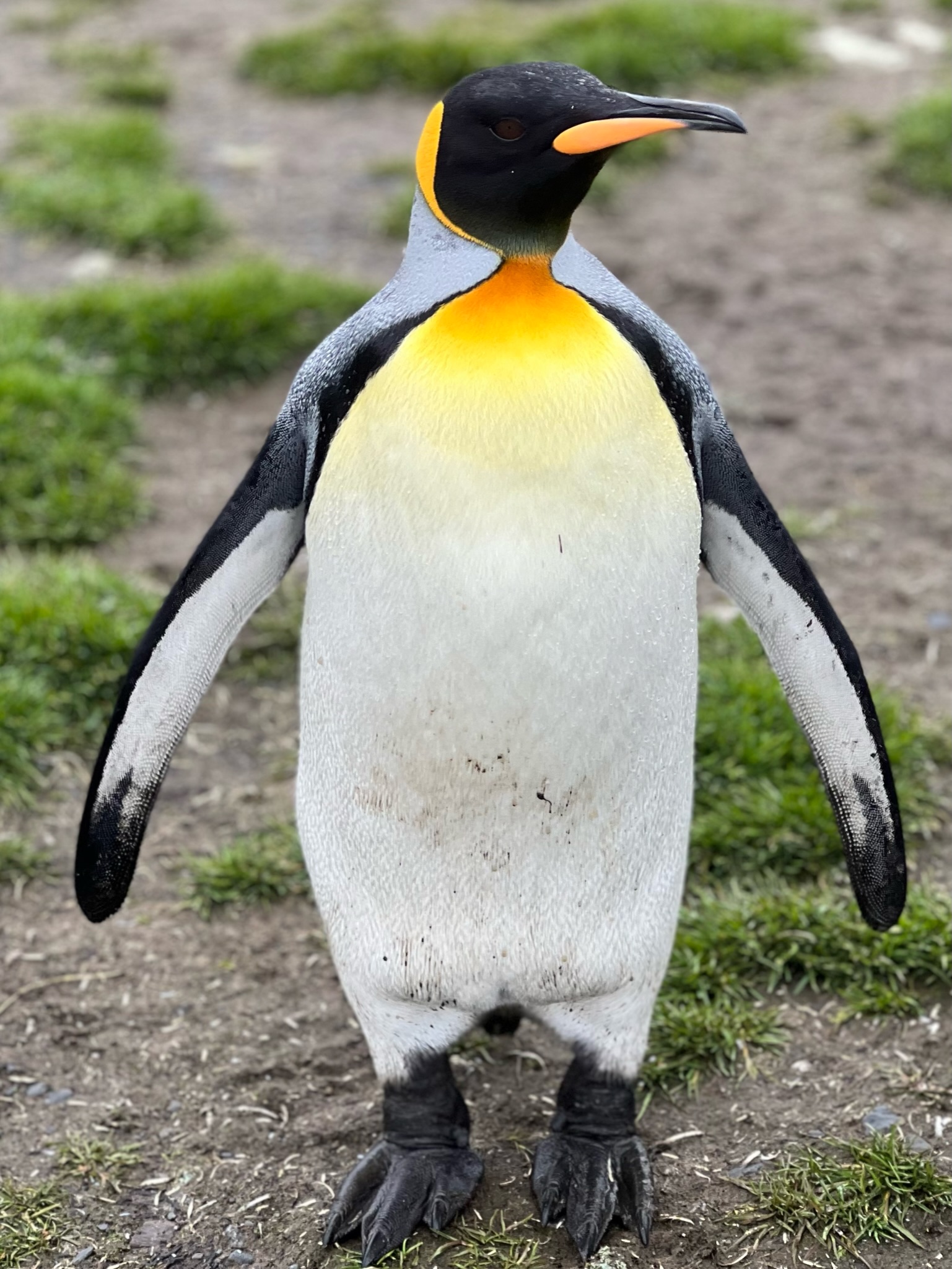
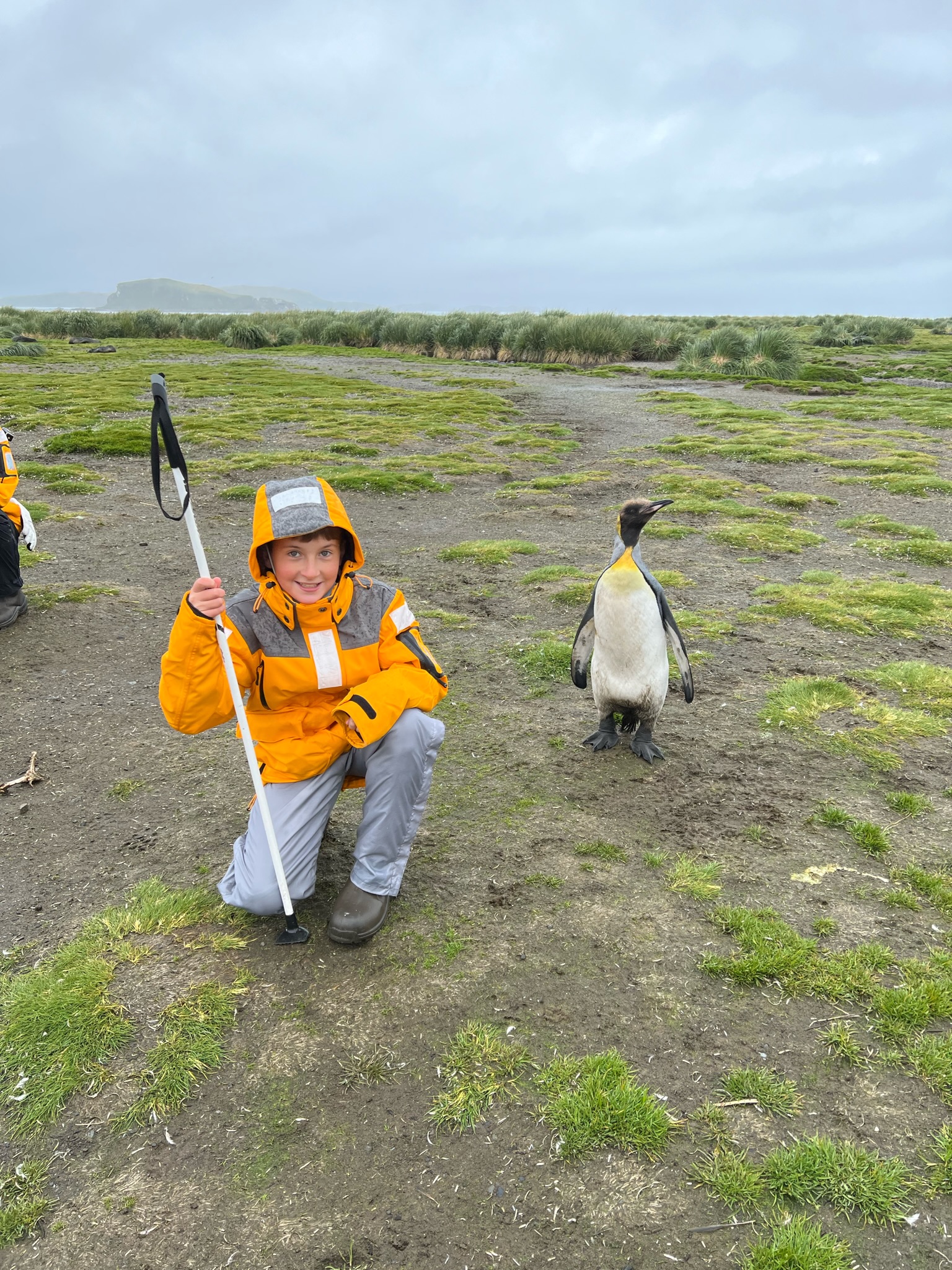
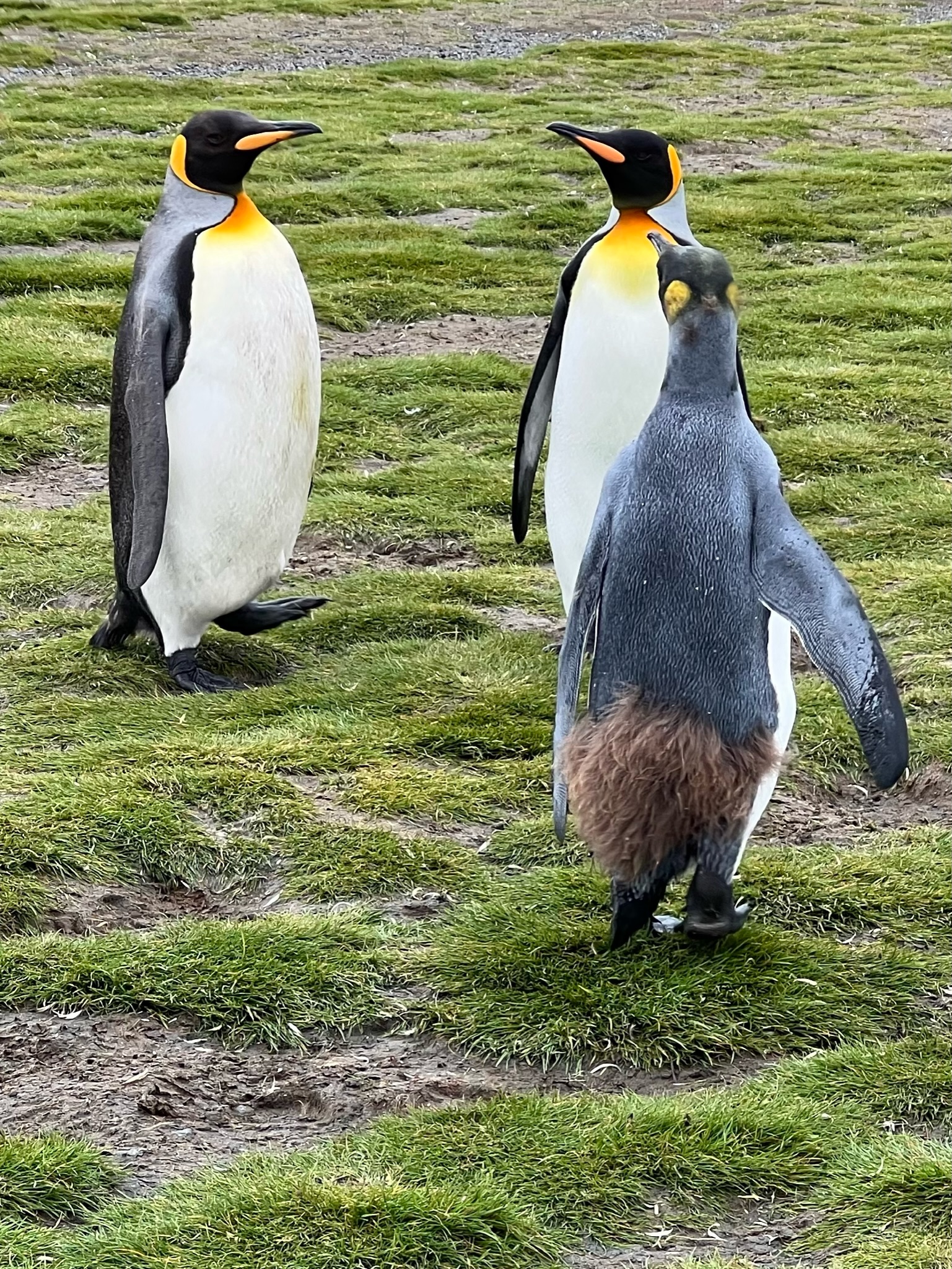
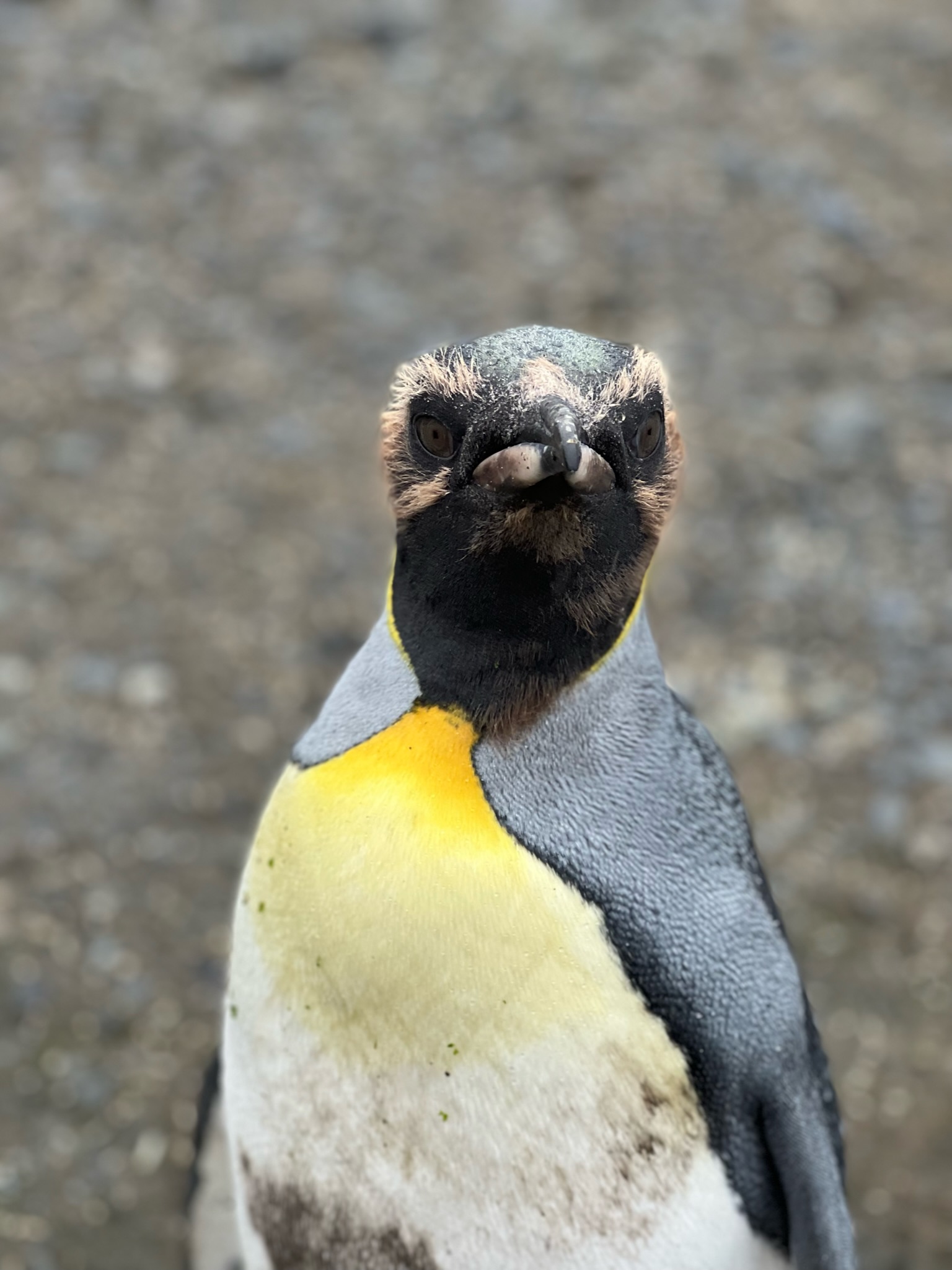
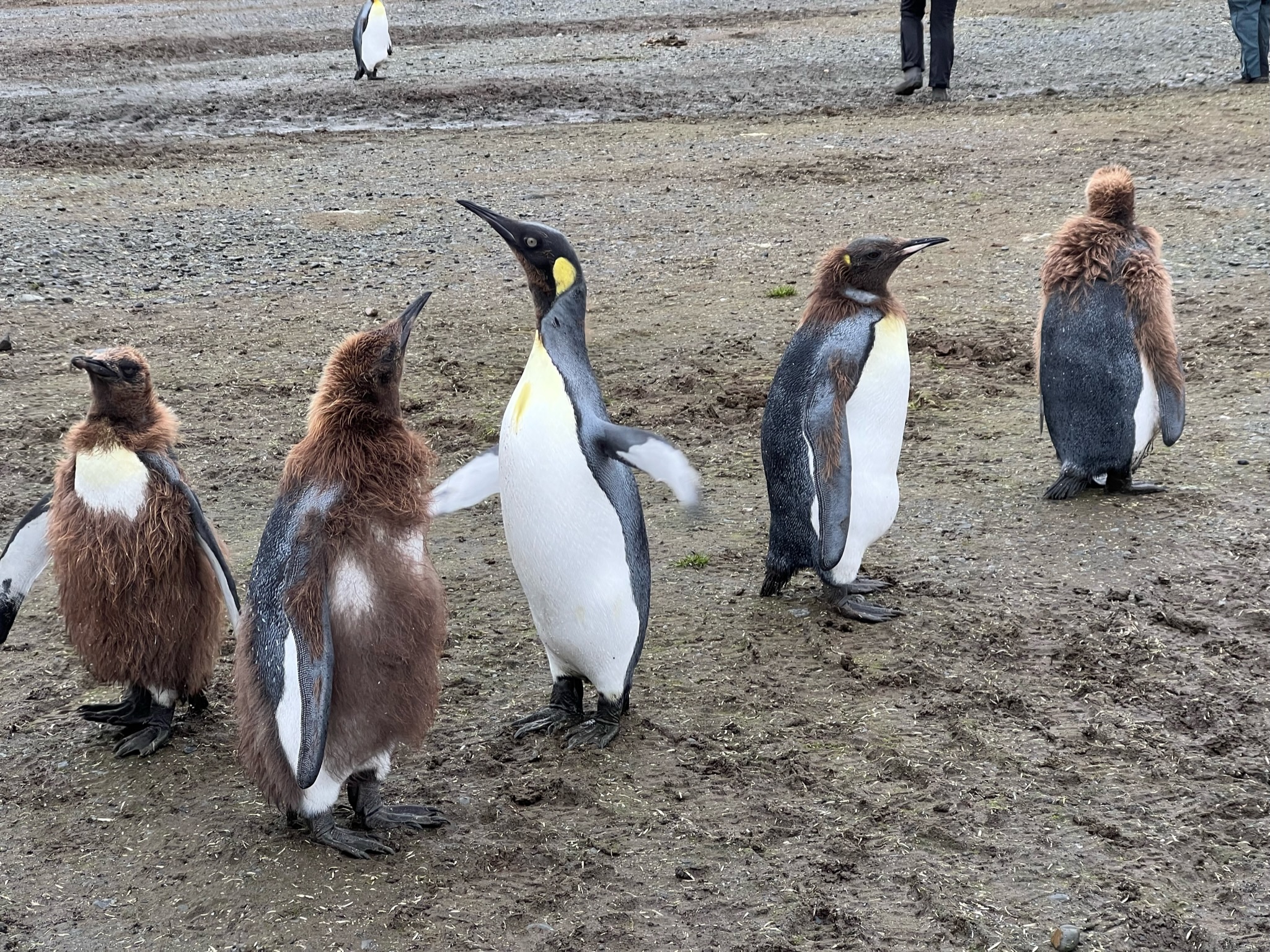
This plain is home to 600,000 king penguins. King penguins come here to hatch their chicks, so up on the rocky hillside, there were thousands of penguins on their nests. The chicks stay in the area for just over a full year, so many of the larger birds we saw were actually last year’s chicks. All of the penguins are molting right now, but the adolescent chicks are the most noticeable. They are losing all of their soft and fluffy brown down as they get their first layer of true penguin feathers. It’s an ugly stage, but its easy to imagine how beautiful these birds will soon be. Some were still completely fluffy, but most were a mangy looking combination of fur and fluff. The younger adolescent birds were very inquisitive, and they would walk right up to us to check us out. The older birds were too busy with their eggs and feeding to be worried about us.
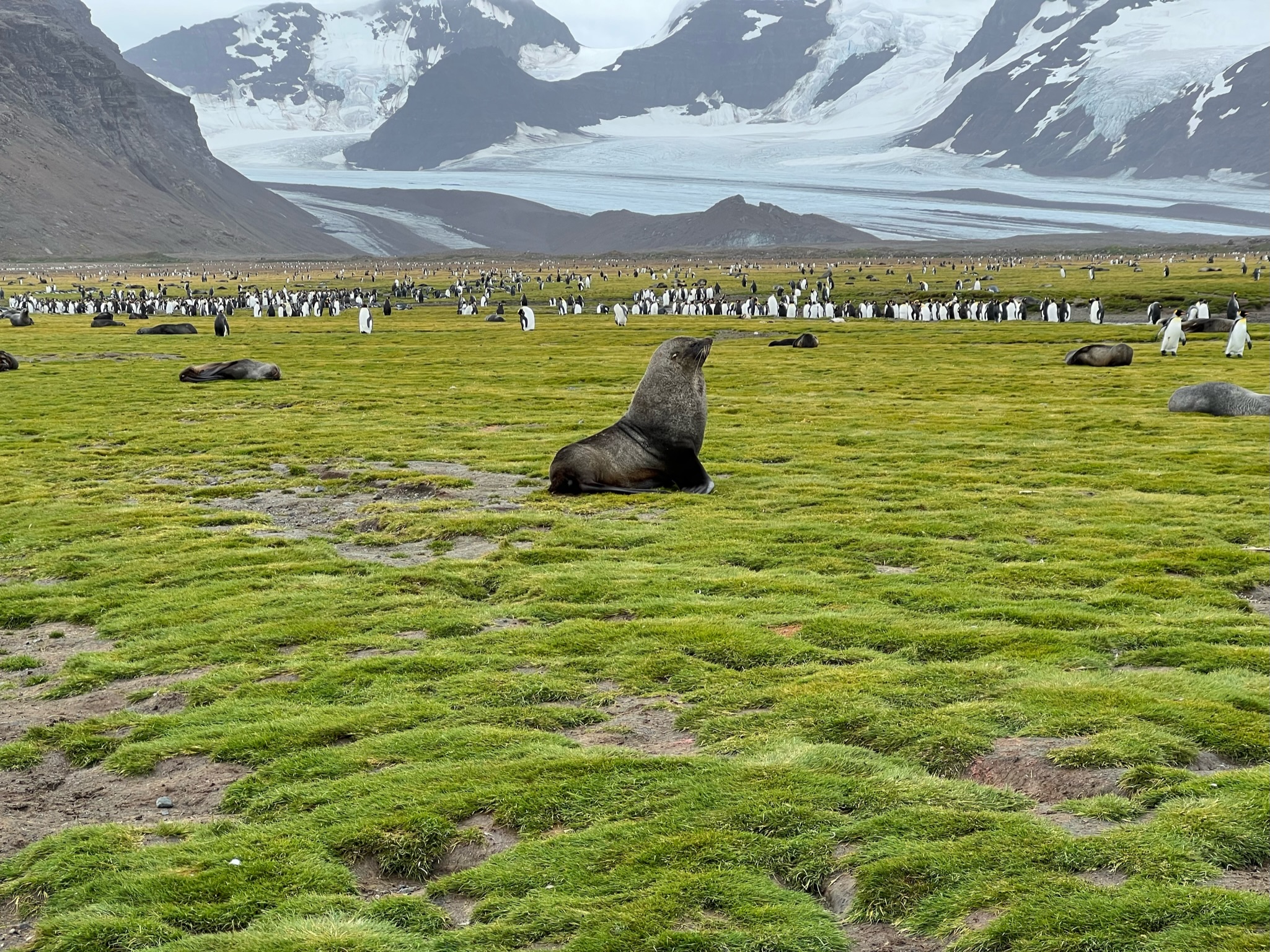
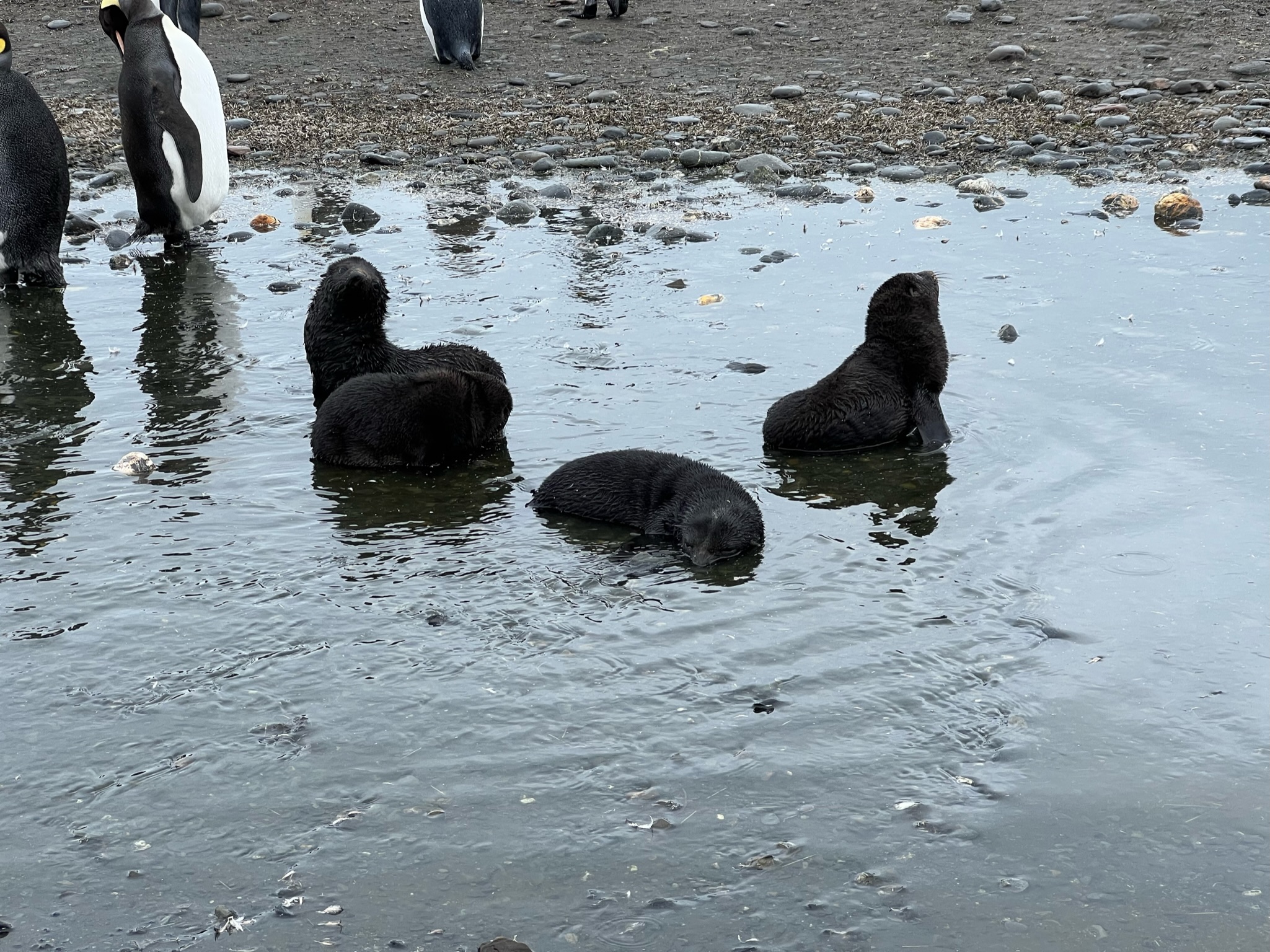
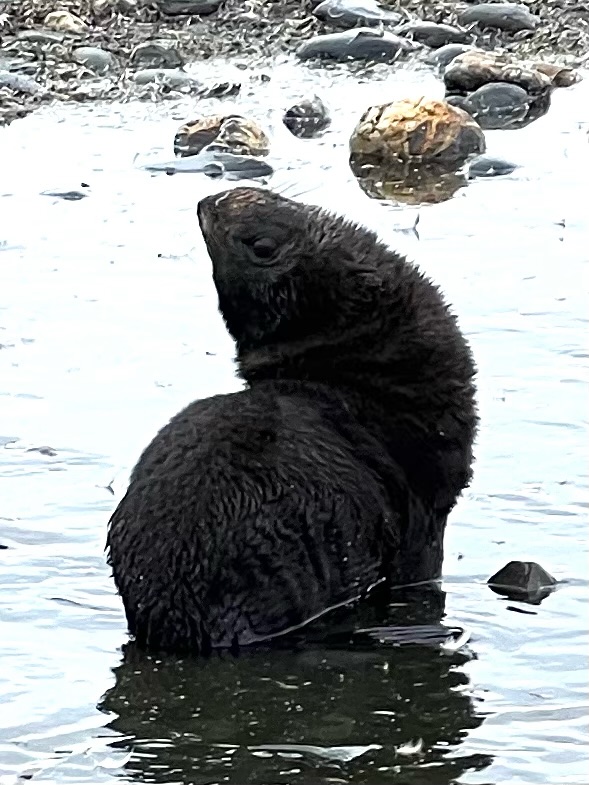
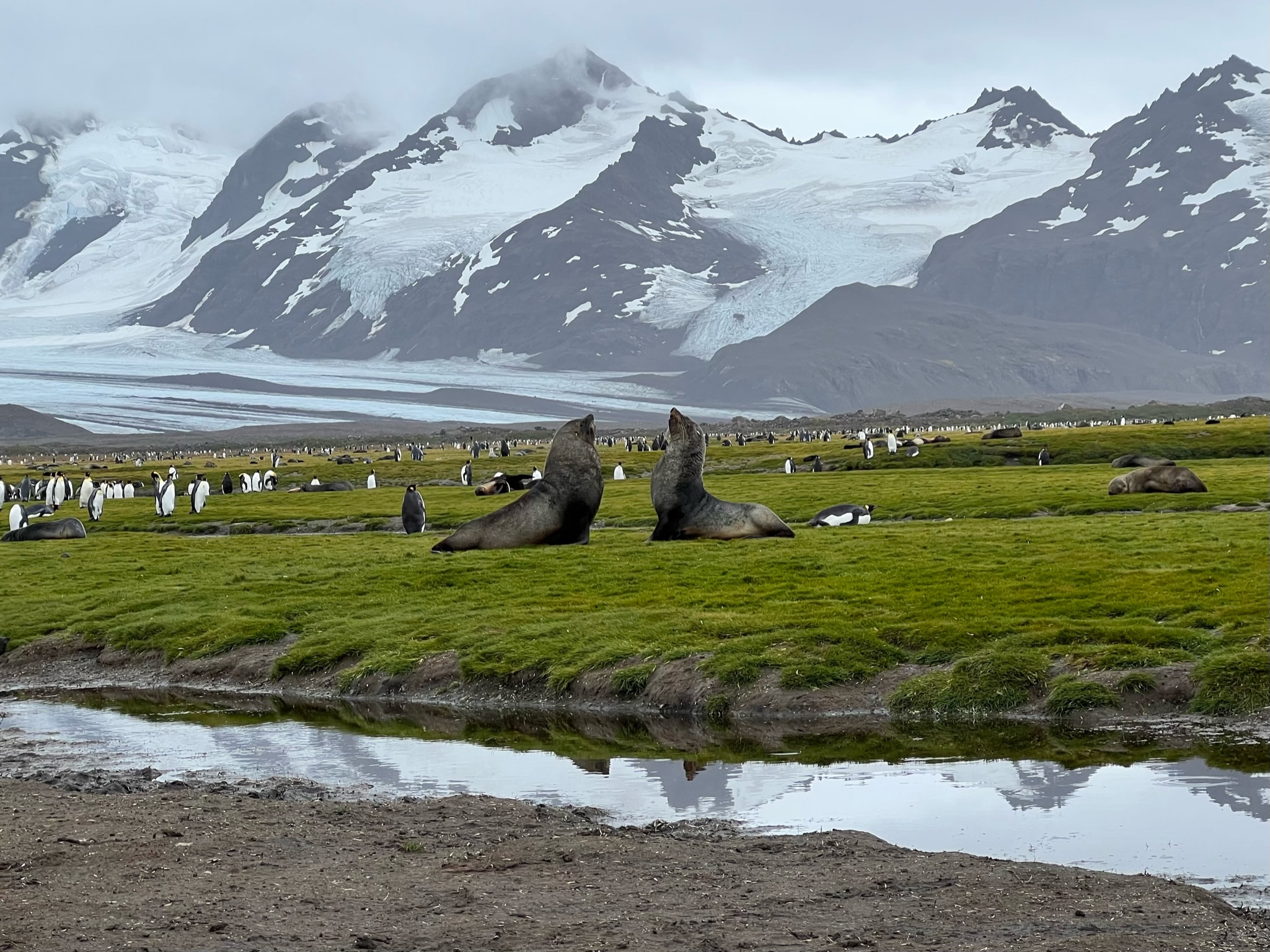
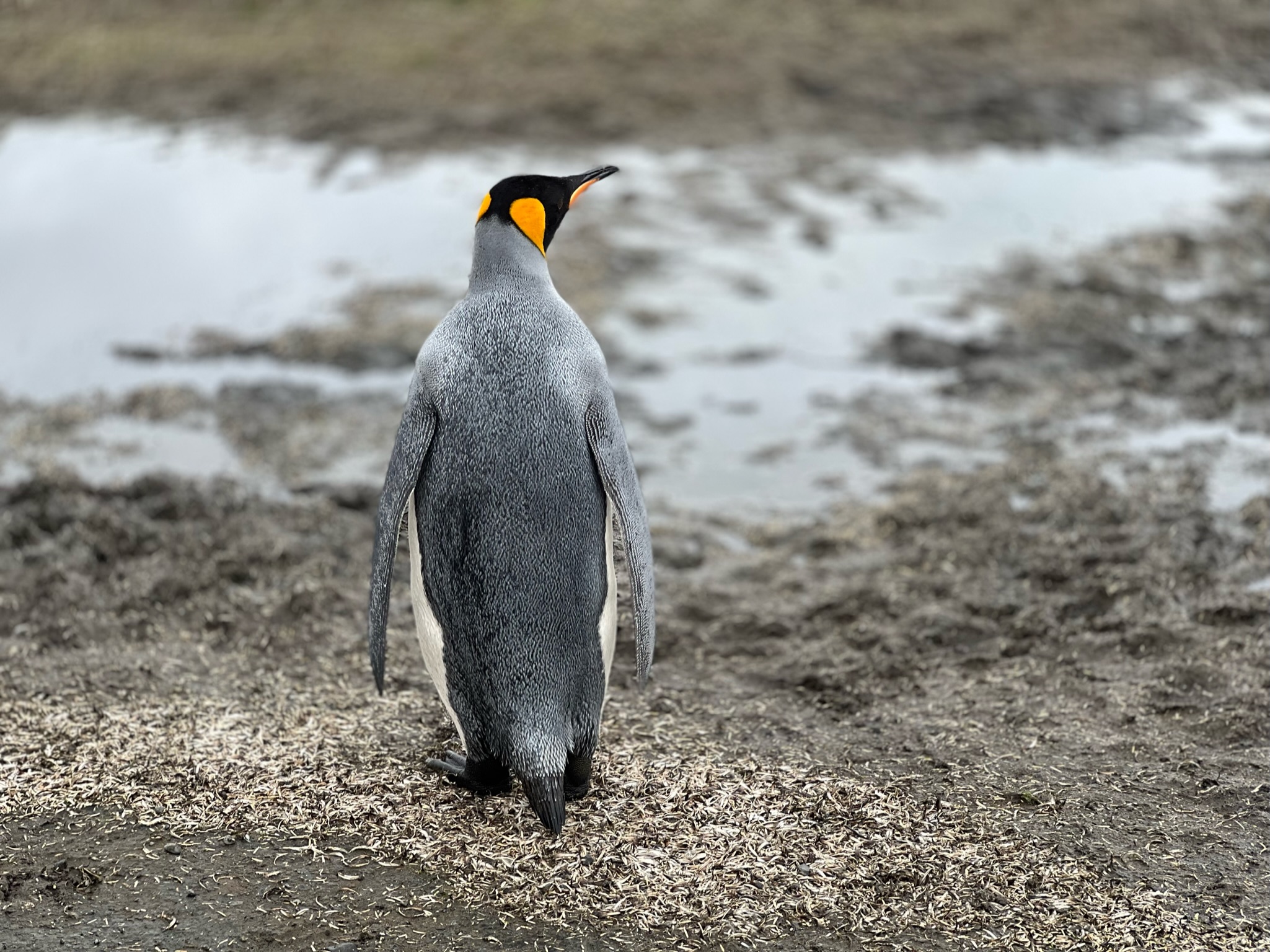
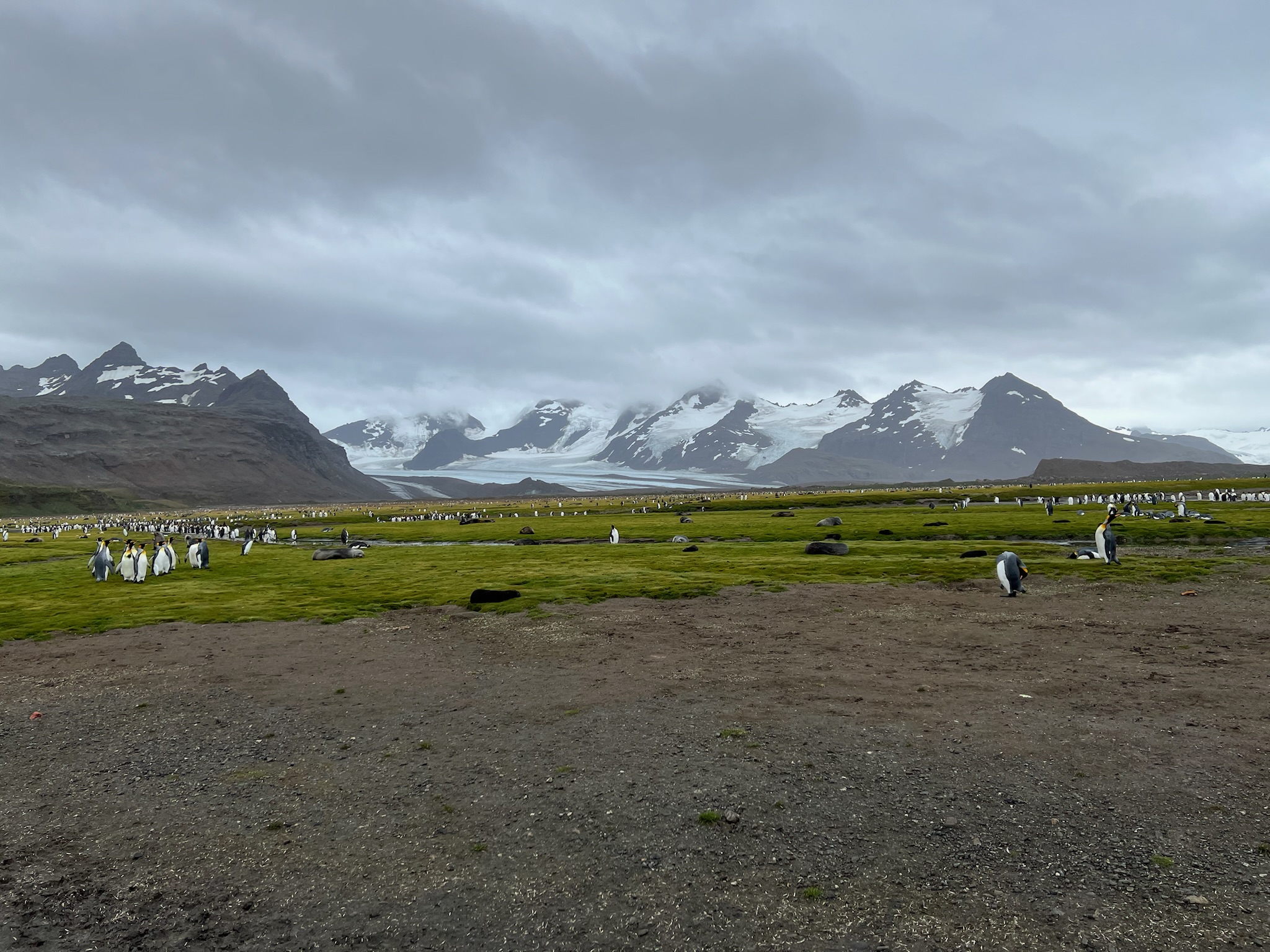
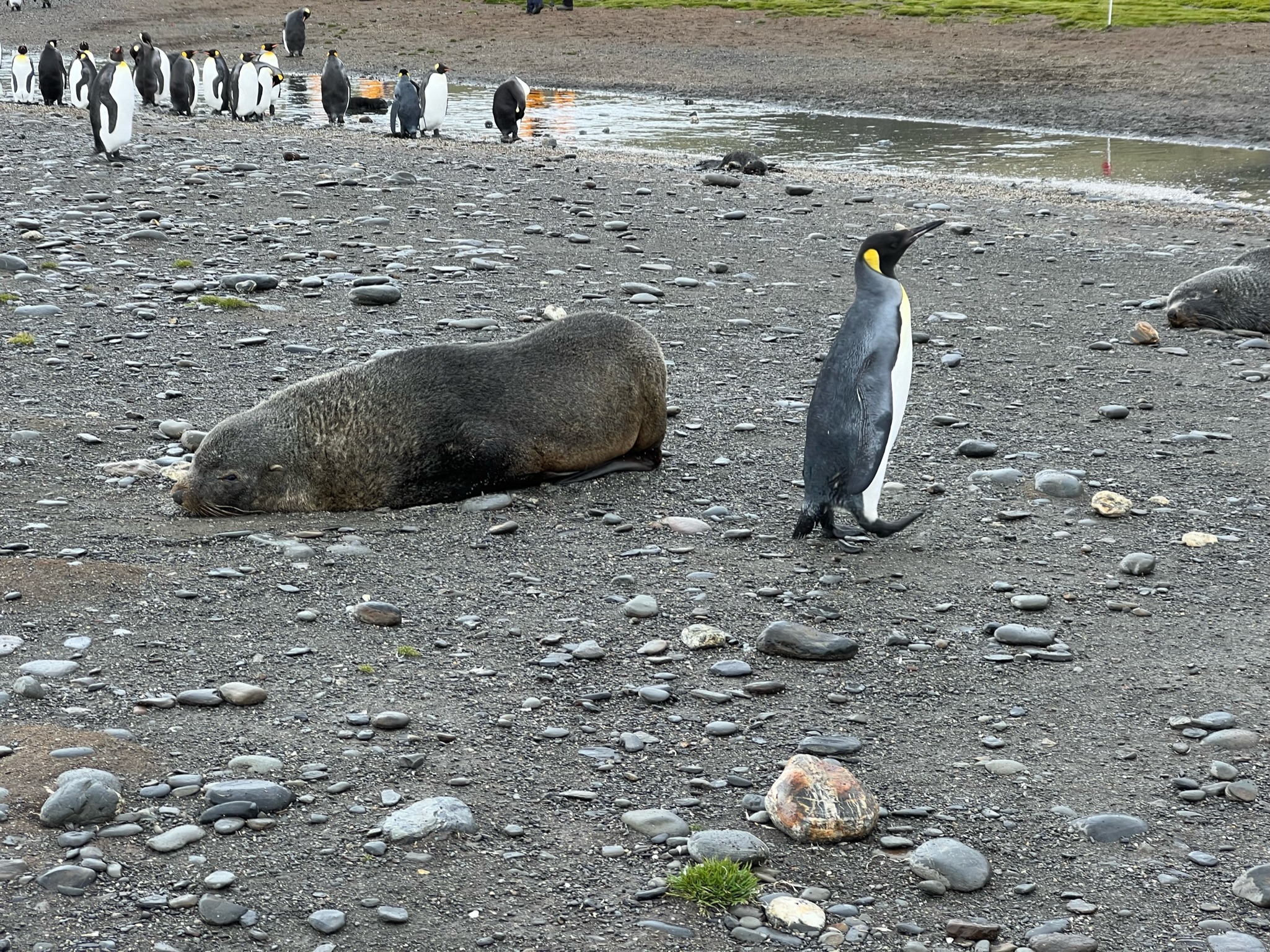
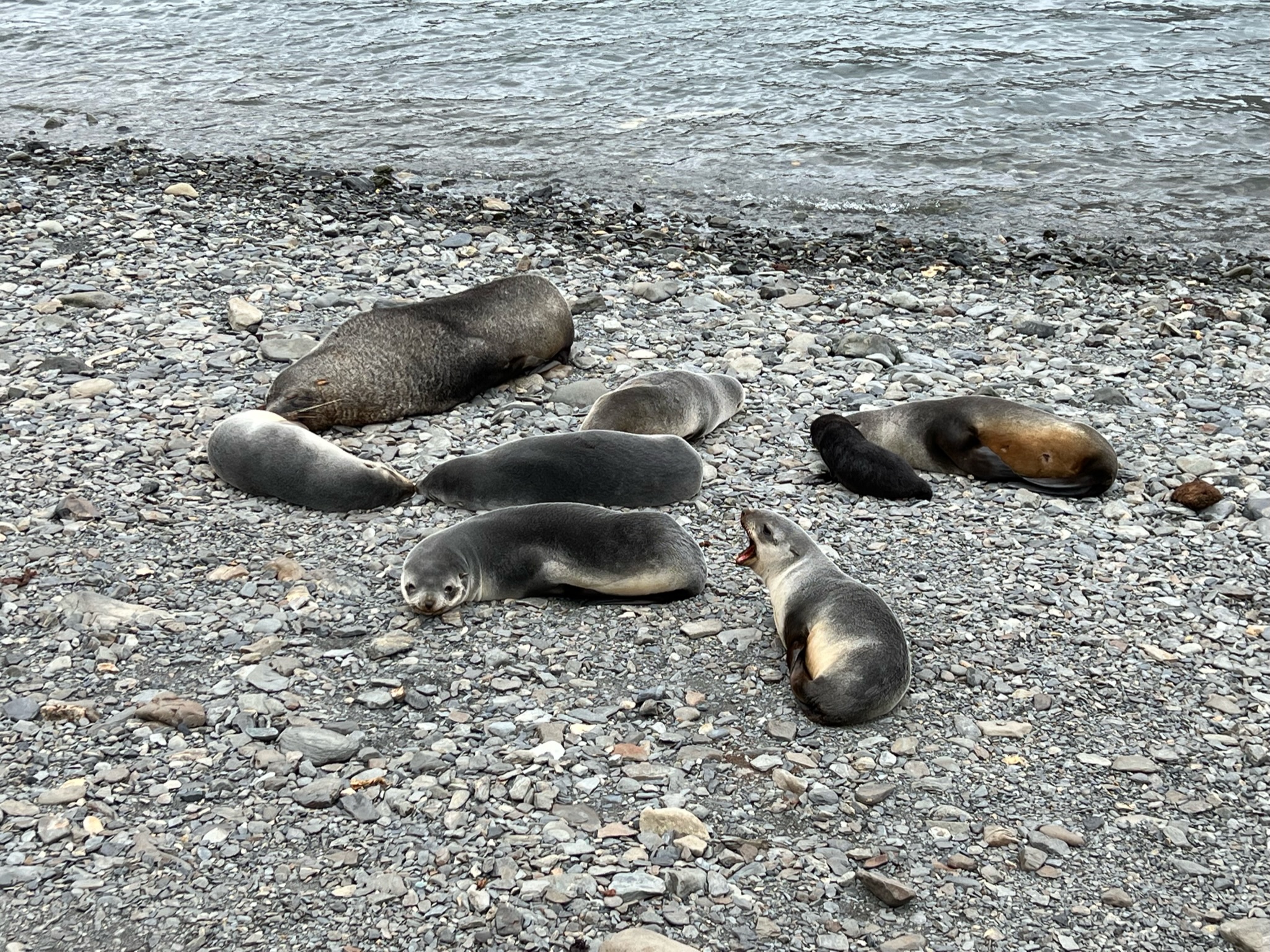
We got back on the boat drenched and freezing again, and we headed to our room to dry out again. We had a decent system for handling all of the wet clothes this time, so at least the process was easier. After lunch, we had a briefing where Solan, our expedition leader, let us know that we’d go to Grytviken this afternoon. Tomorrow is the 100th anniversary of the death of Ernest Shackleton, and we’re going to his grave to pay our tribute to him. We’re going to do that a day early to avoid a massive storm coming into the Scotia Sea.
We got ourselves ready to go to Grytviken, and this time we were smarter about it. We sent Henry to the reception area to request some trash bags so that we could use those between our sopping wet boots and our socks. Apparently, we were not the first people to ask, because when he asked the reception lady for the bags, she asked ‘Are you going to put them on your feet?’
We came to shore across very placid waters. We walked between the seals and penguins to make it to the cemetery where Shackleton is buried. The cemetery is small, probably holding 20 or fewer gravestones. Shackleton’s was the largest, and the group congregated around it. Tim Jarvis said a few words to his honor, shared a quote about Shackleton, and then we toasted on Shackleton Whiskey and apple juice.
We walked around the old whaling town for a while, meandering around the buildings and relics and trying to imagine what life would have been like for the men who lived and worked here. It had to have been miserable, and the work they did here was bloody, gory, and exhausting. According to our guides, the men could work a season or two, and they’d likely be able to afford a business when they returned home. It was profitable, but very, very hard work.
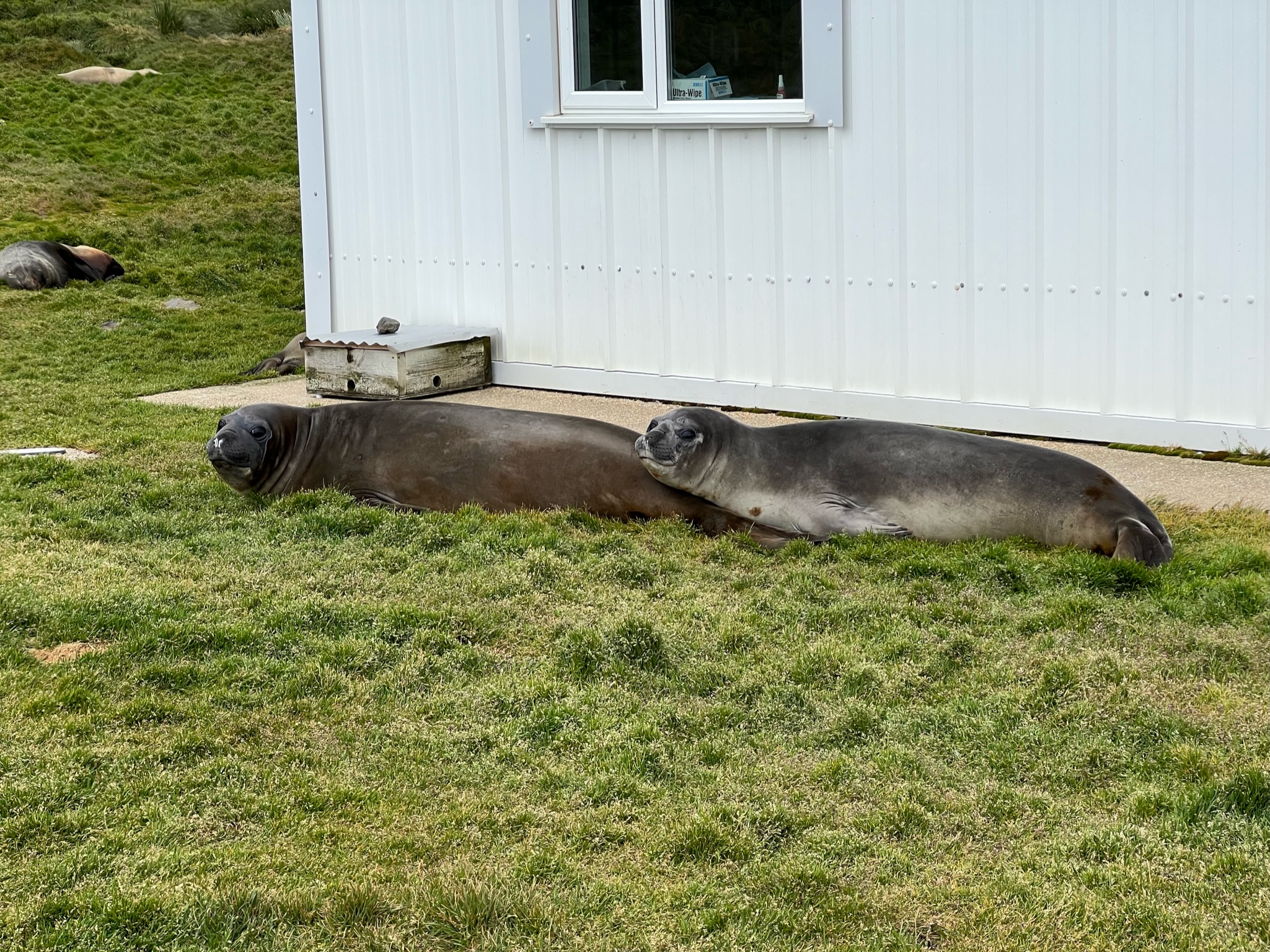
The seals and penguins all made their homes in and around the relics, and they seemed very comfortable with our intrusion. It was strange to see them laying on brick piles, out by the pier, and playing in the boneyard.
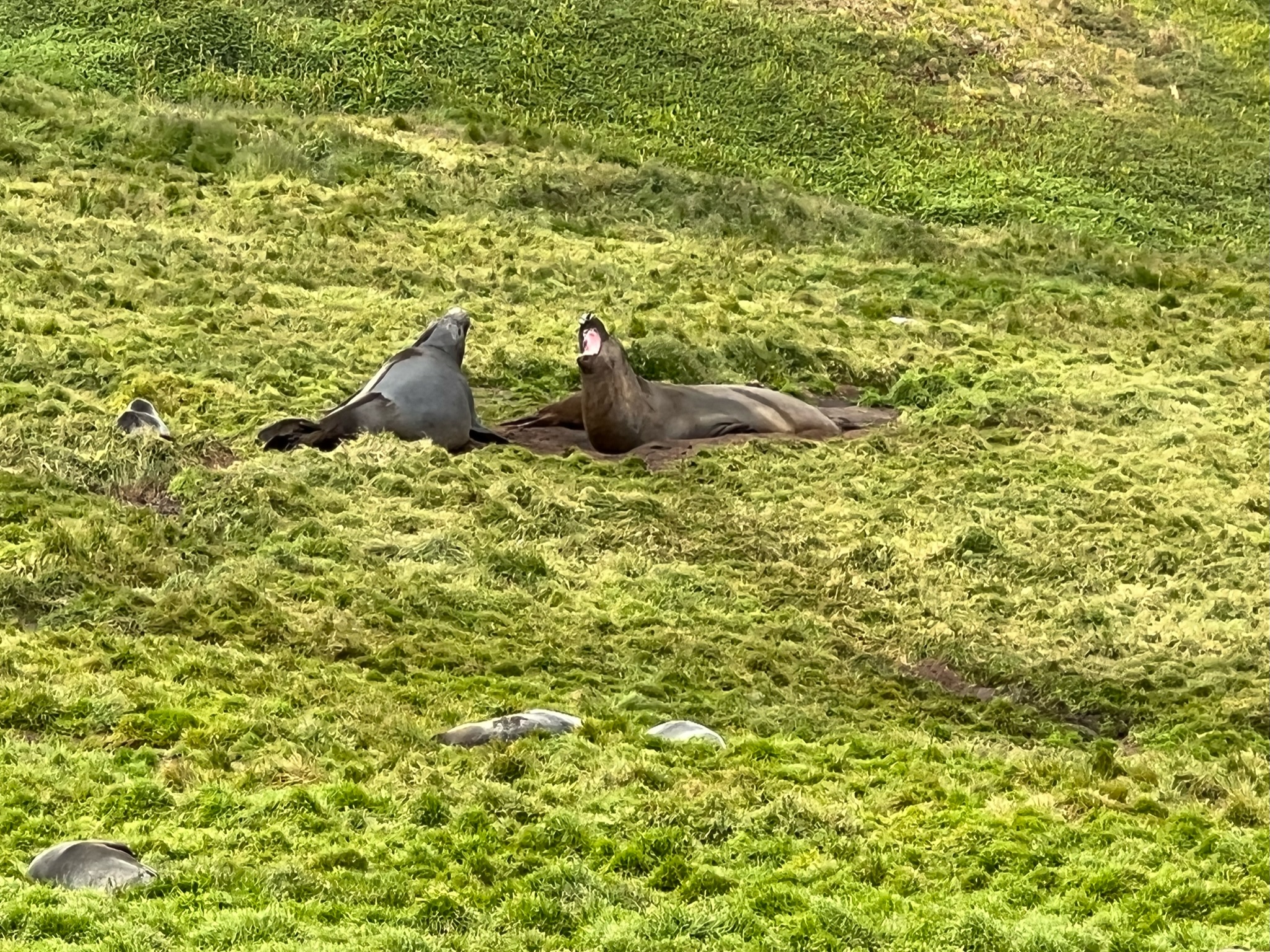
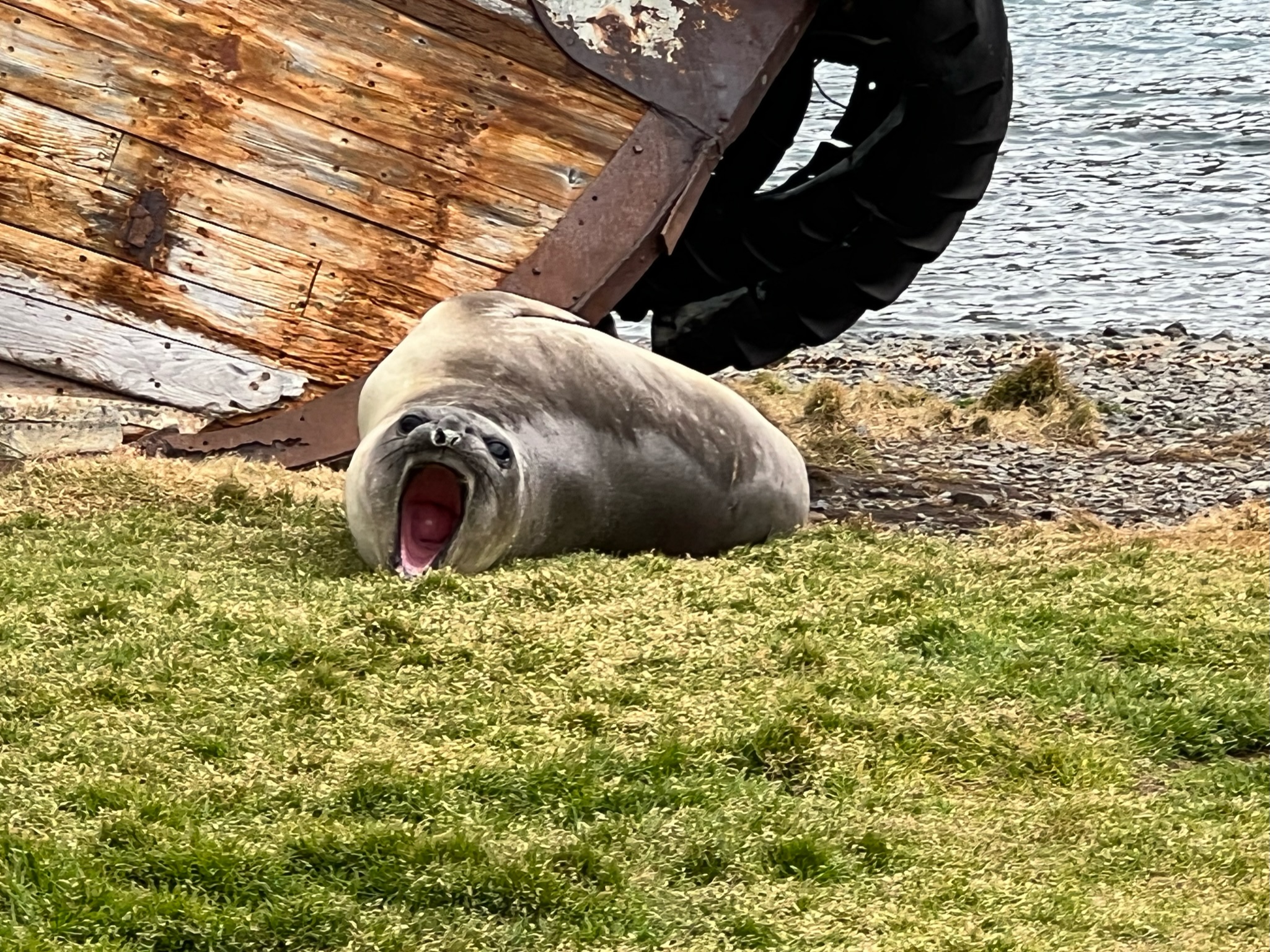
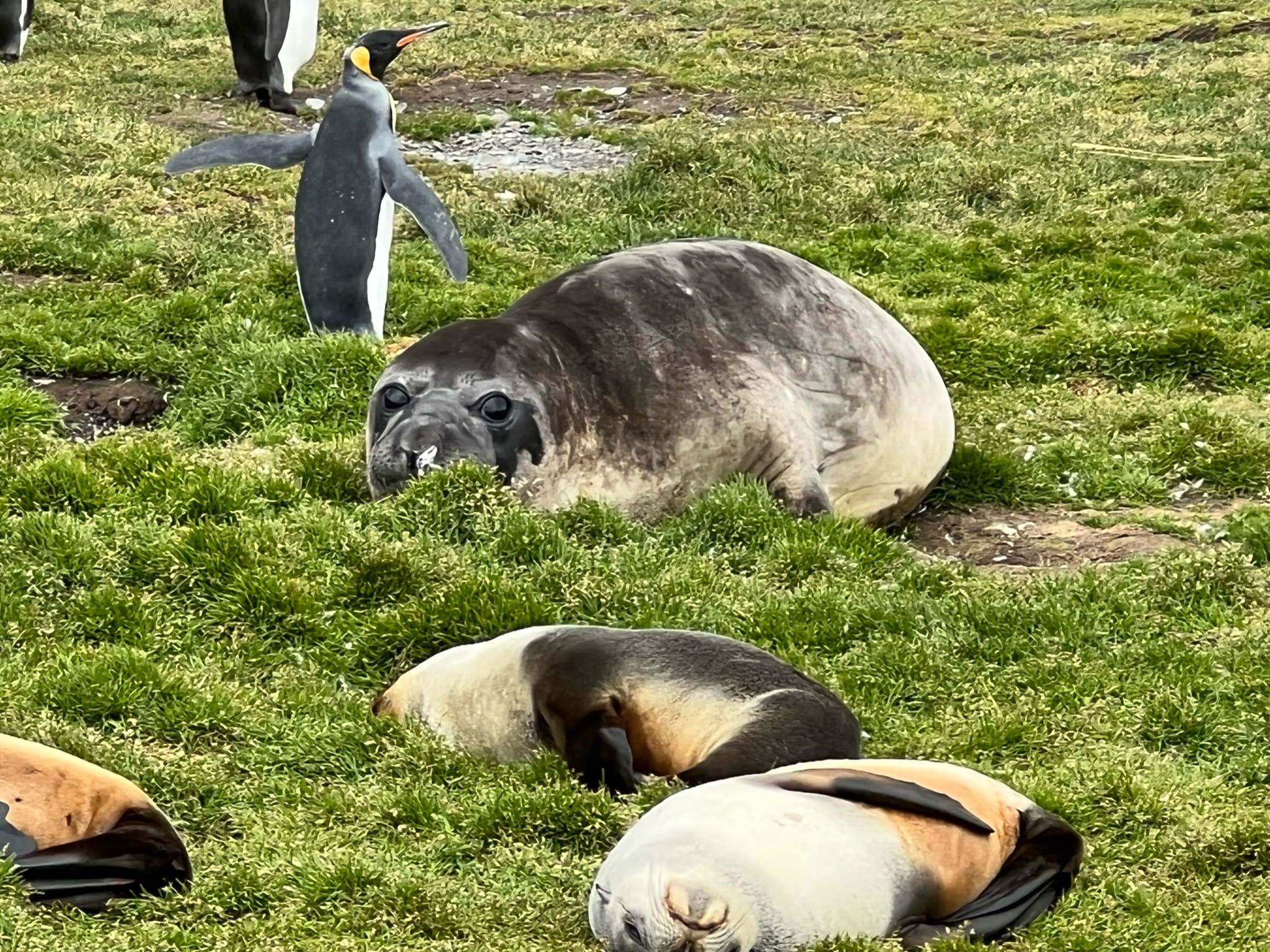
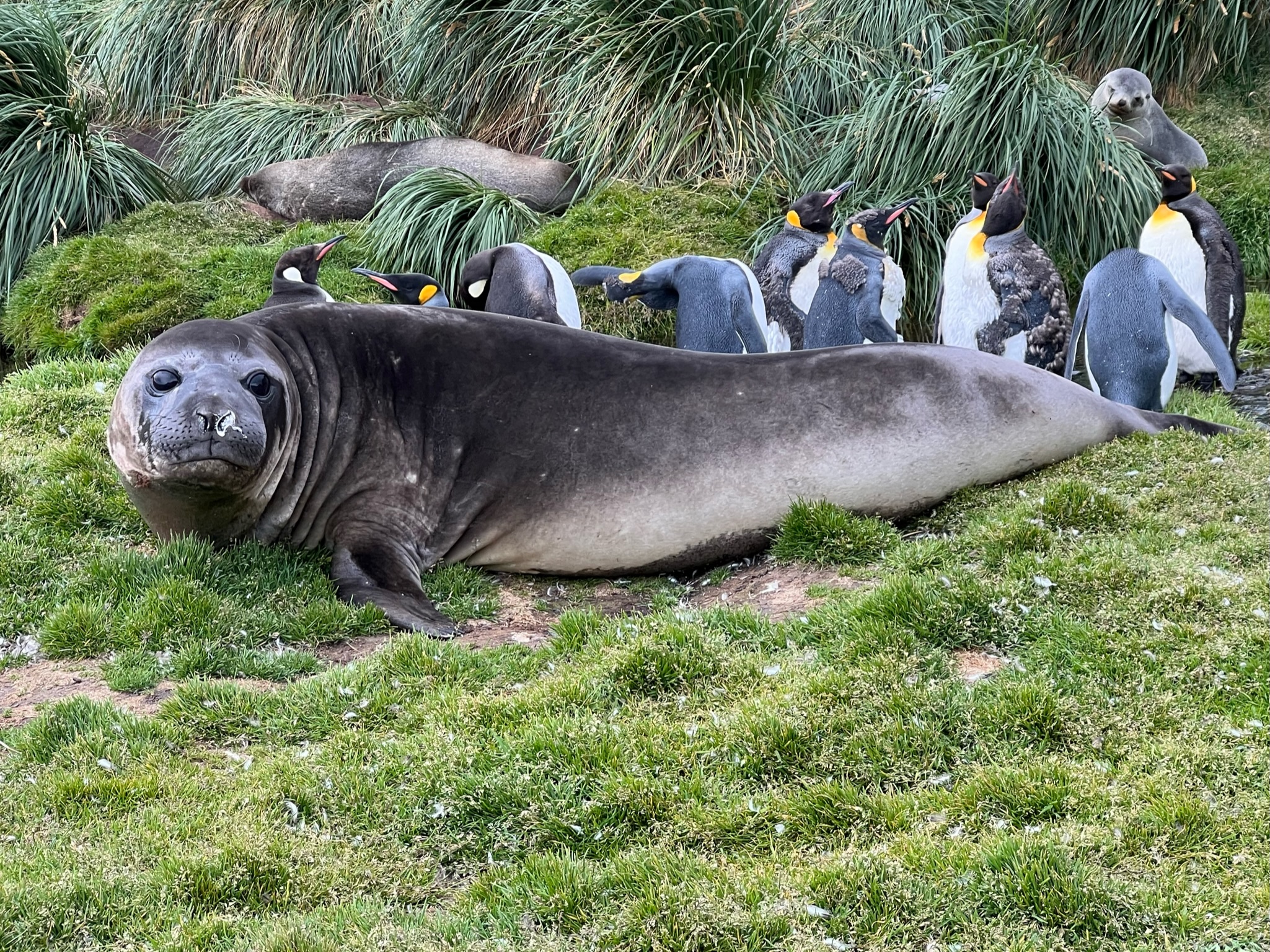
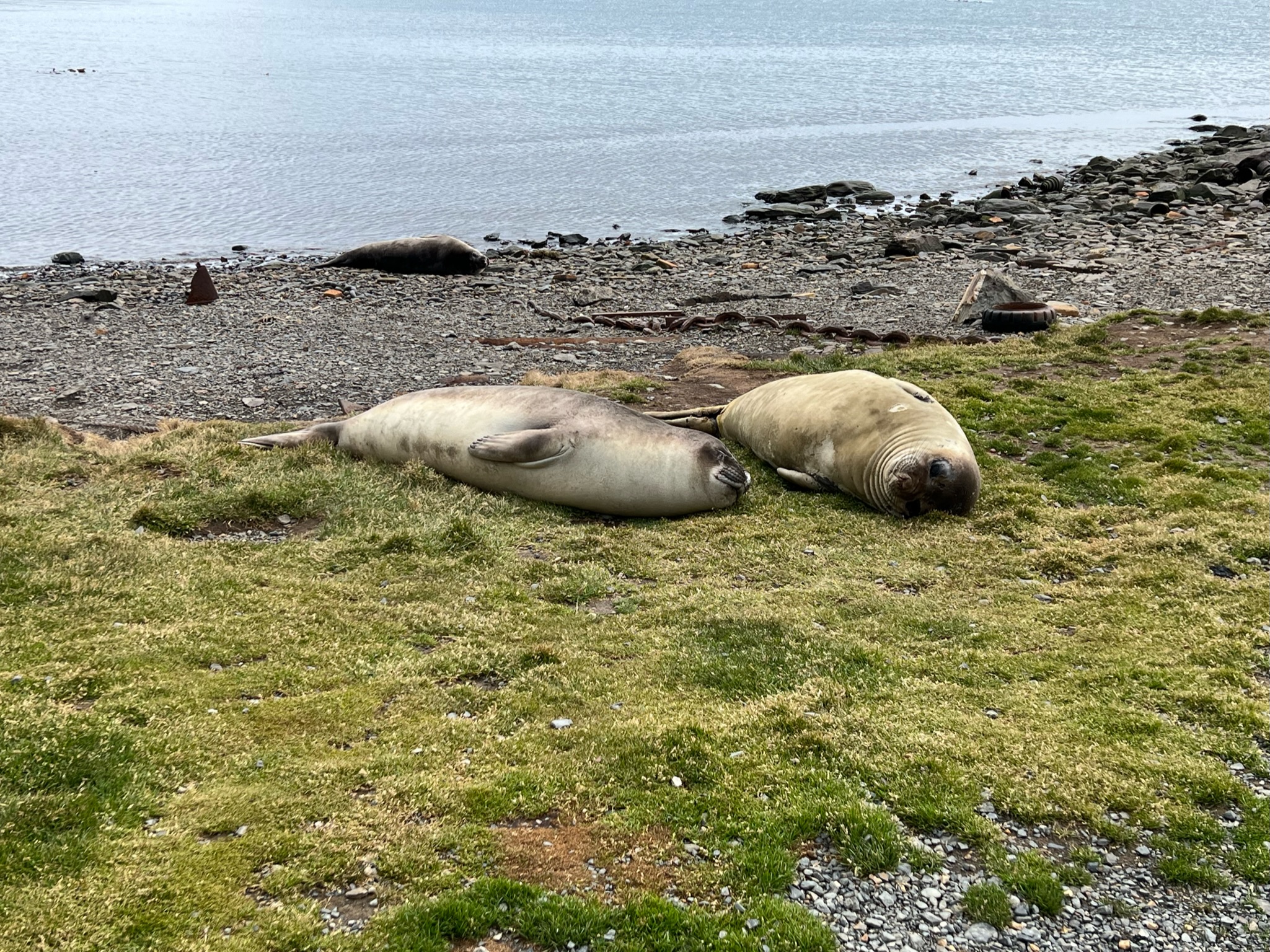
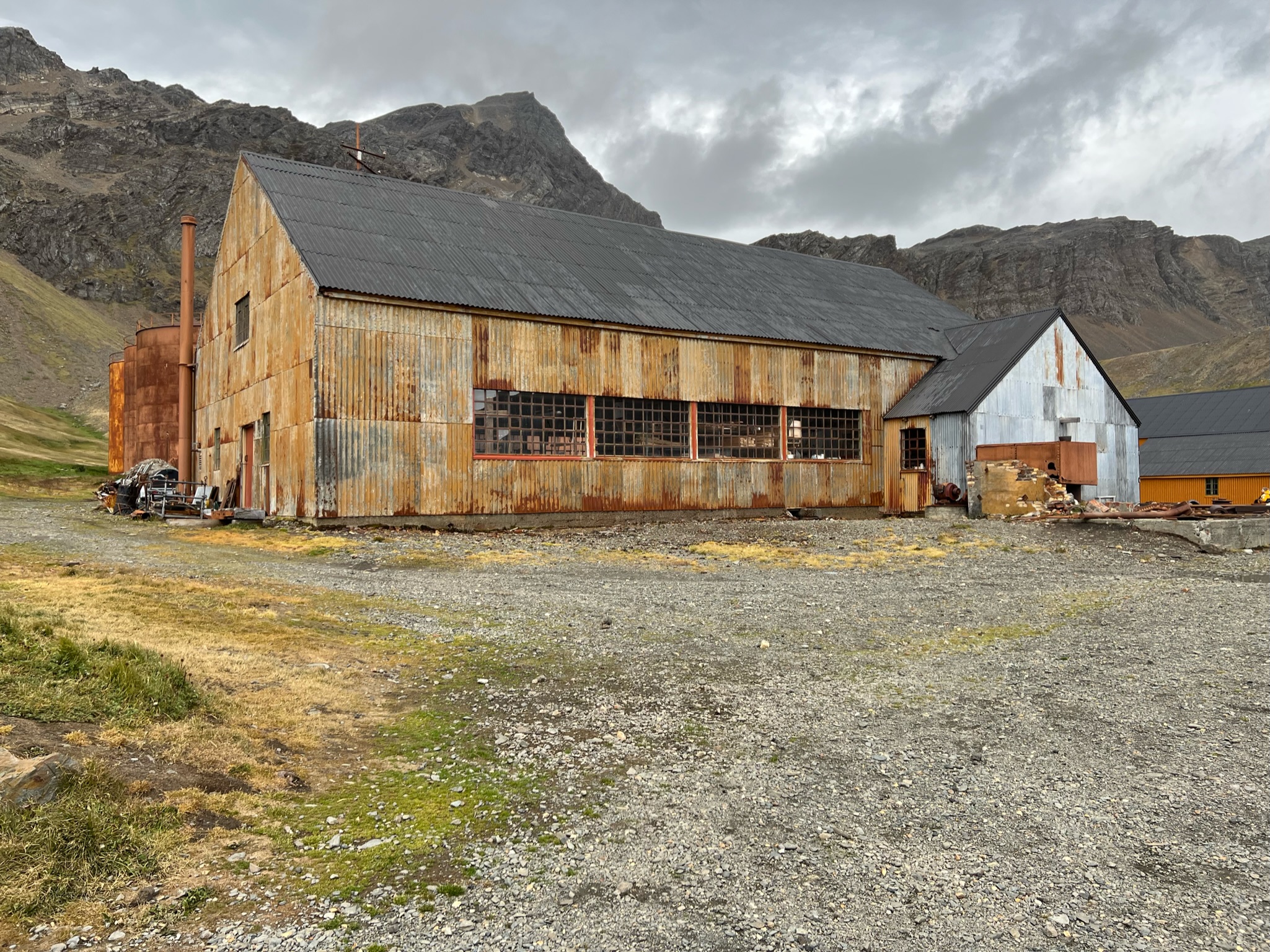
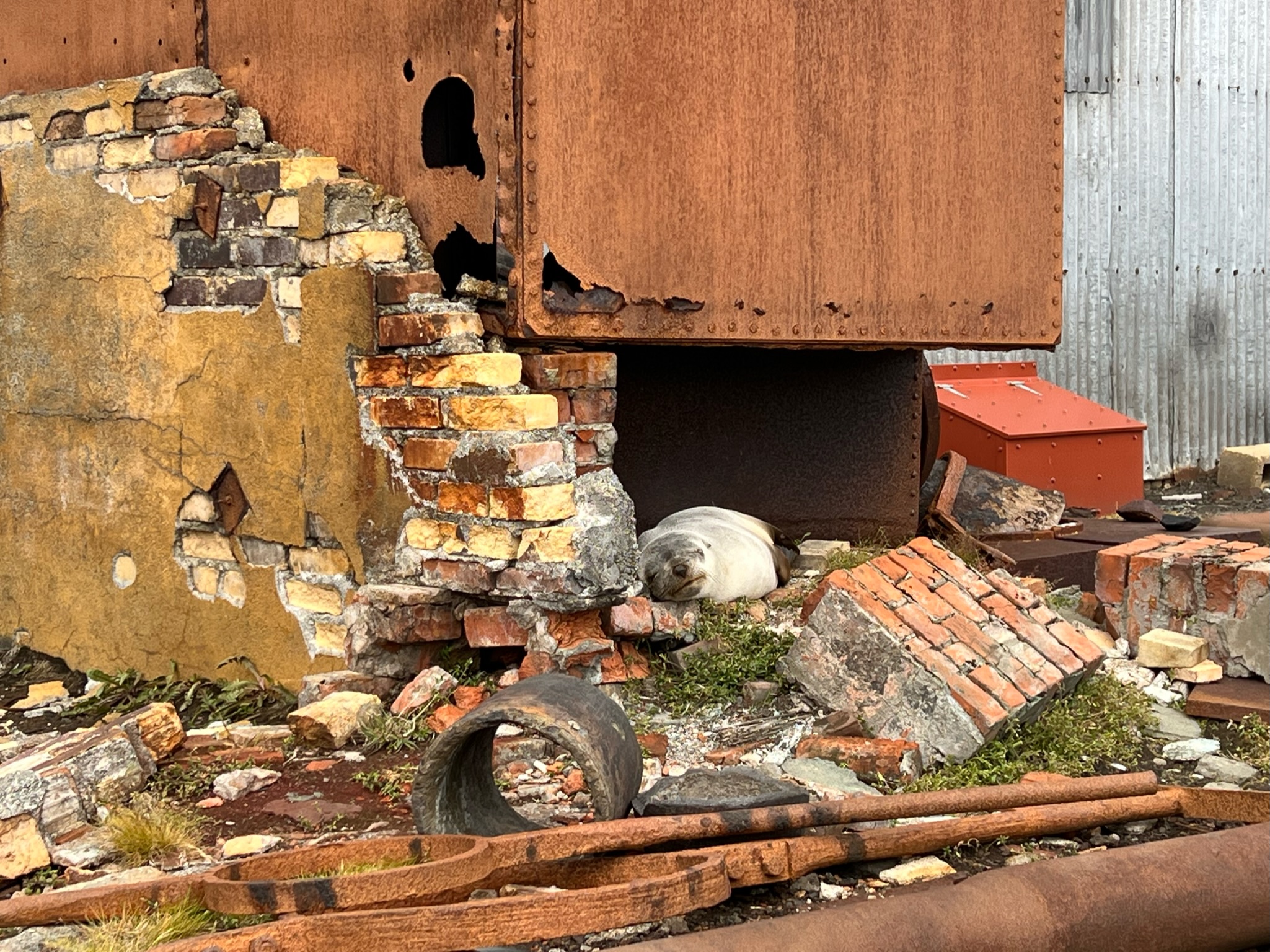

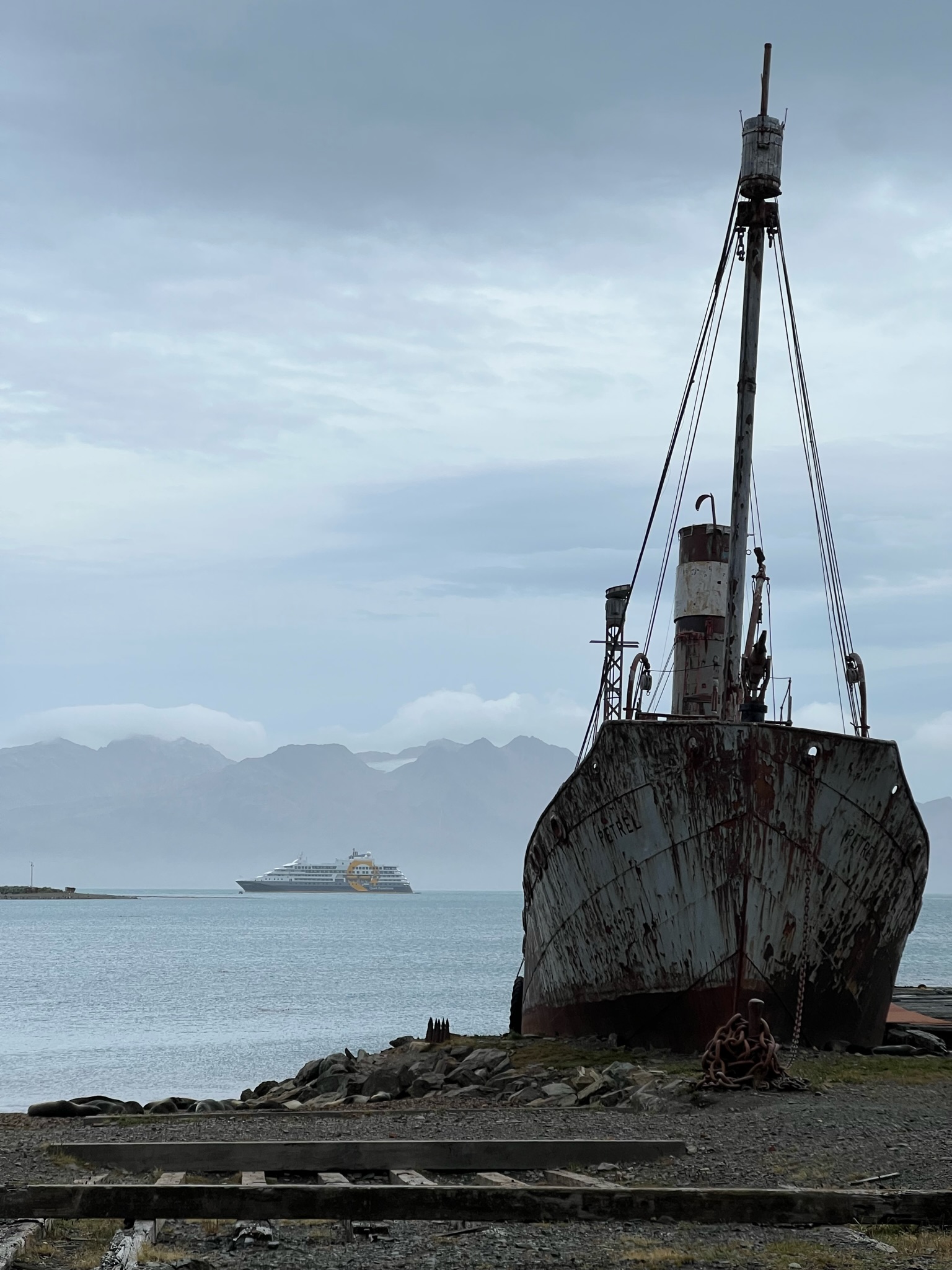
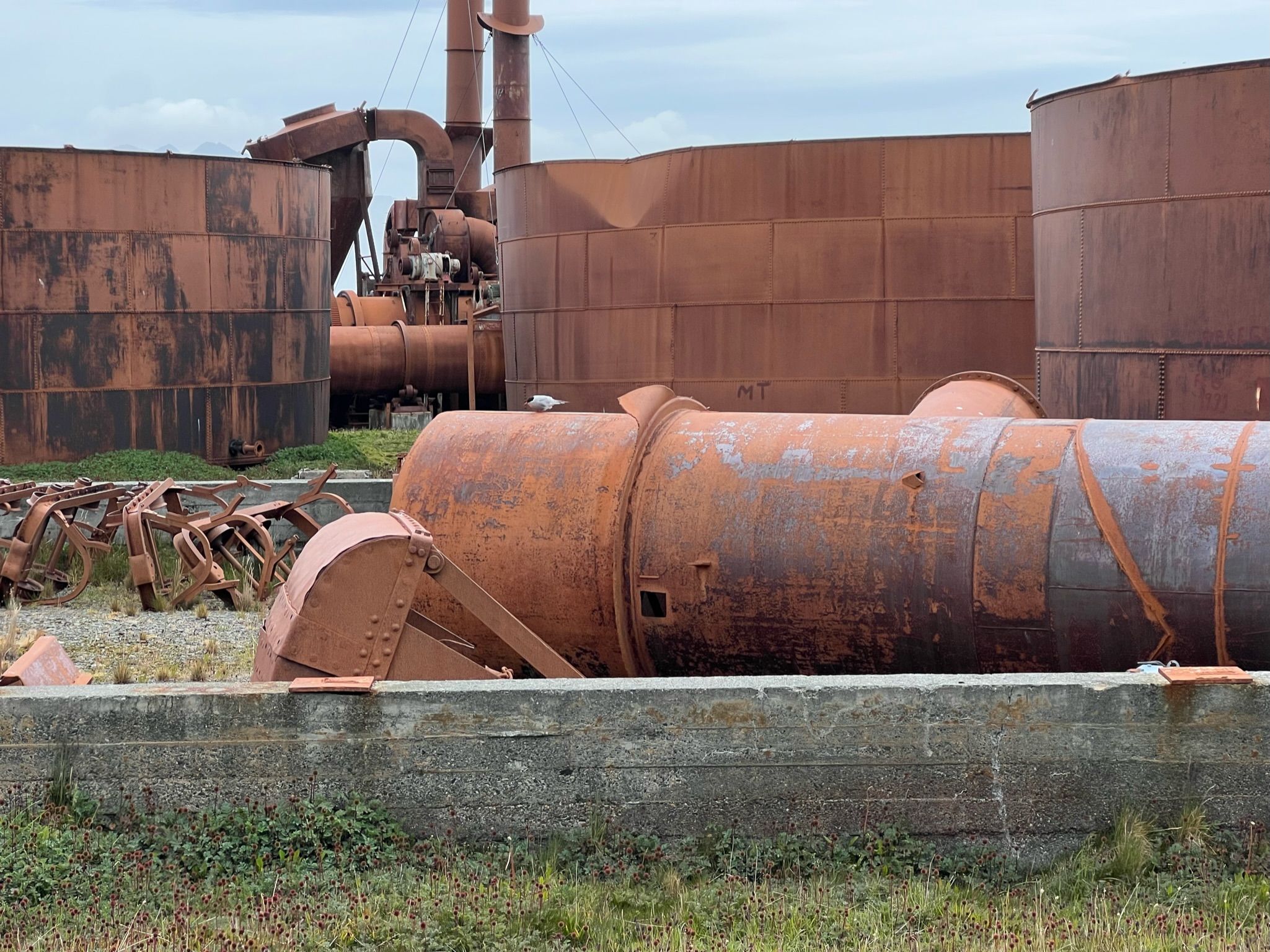
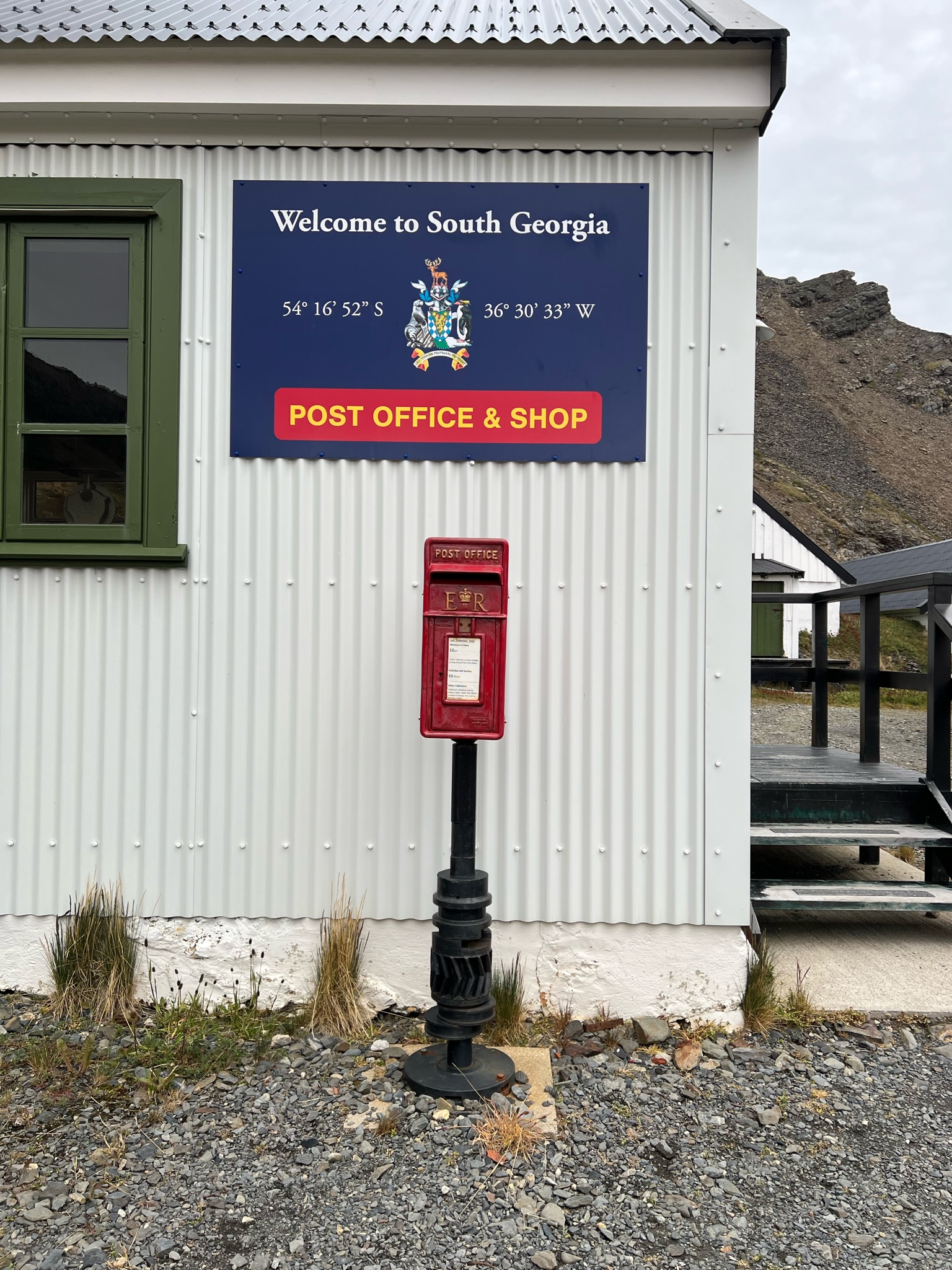
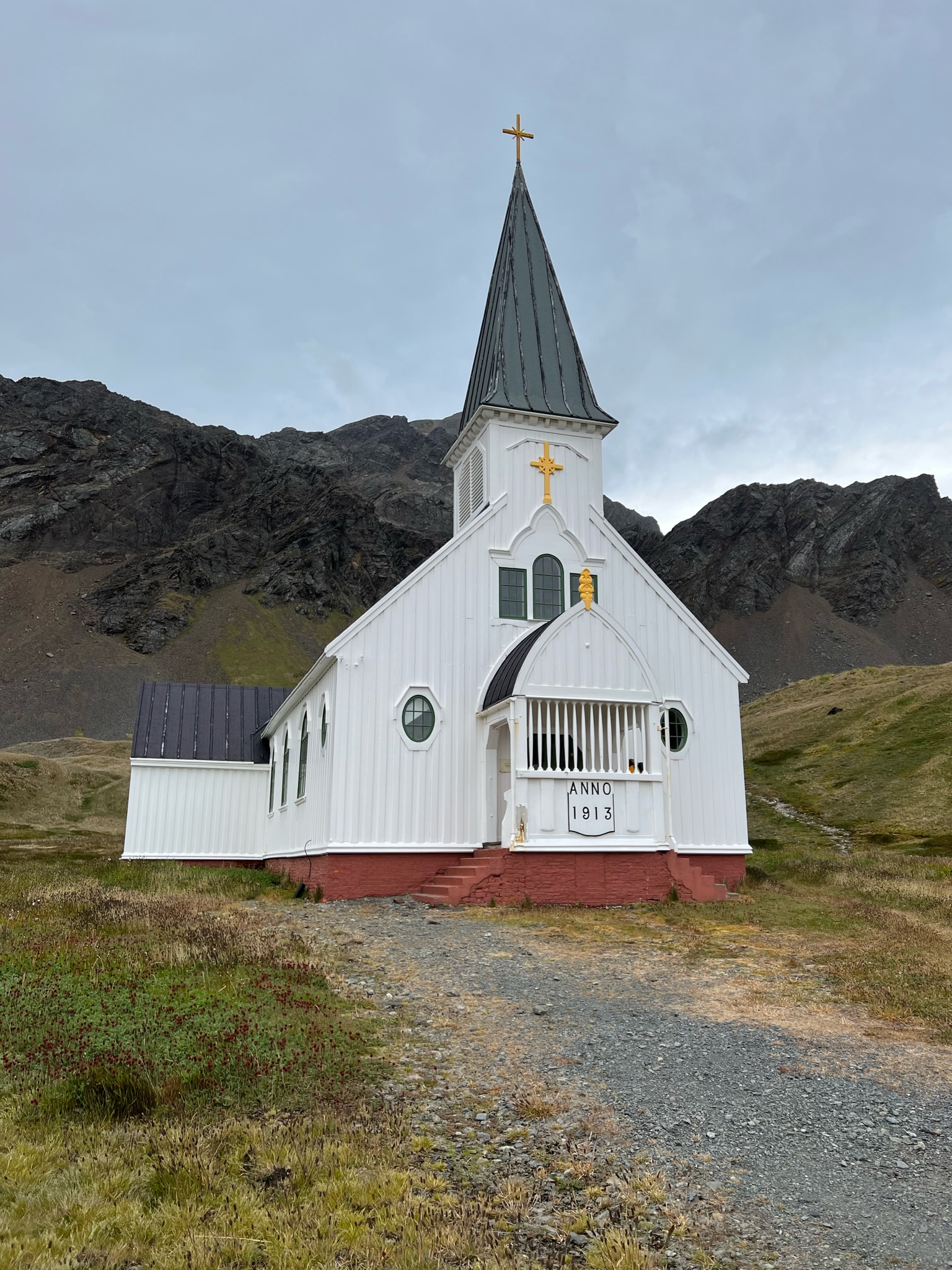

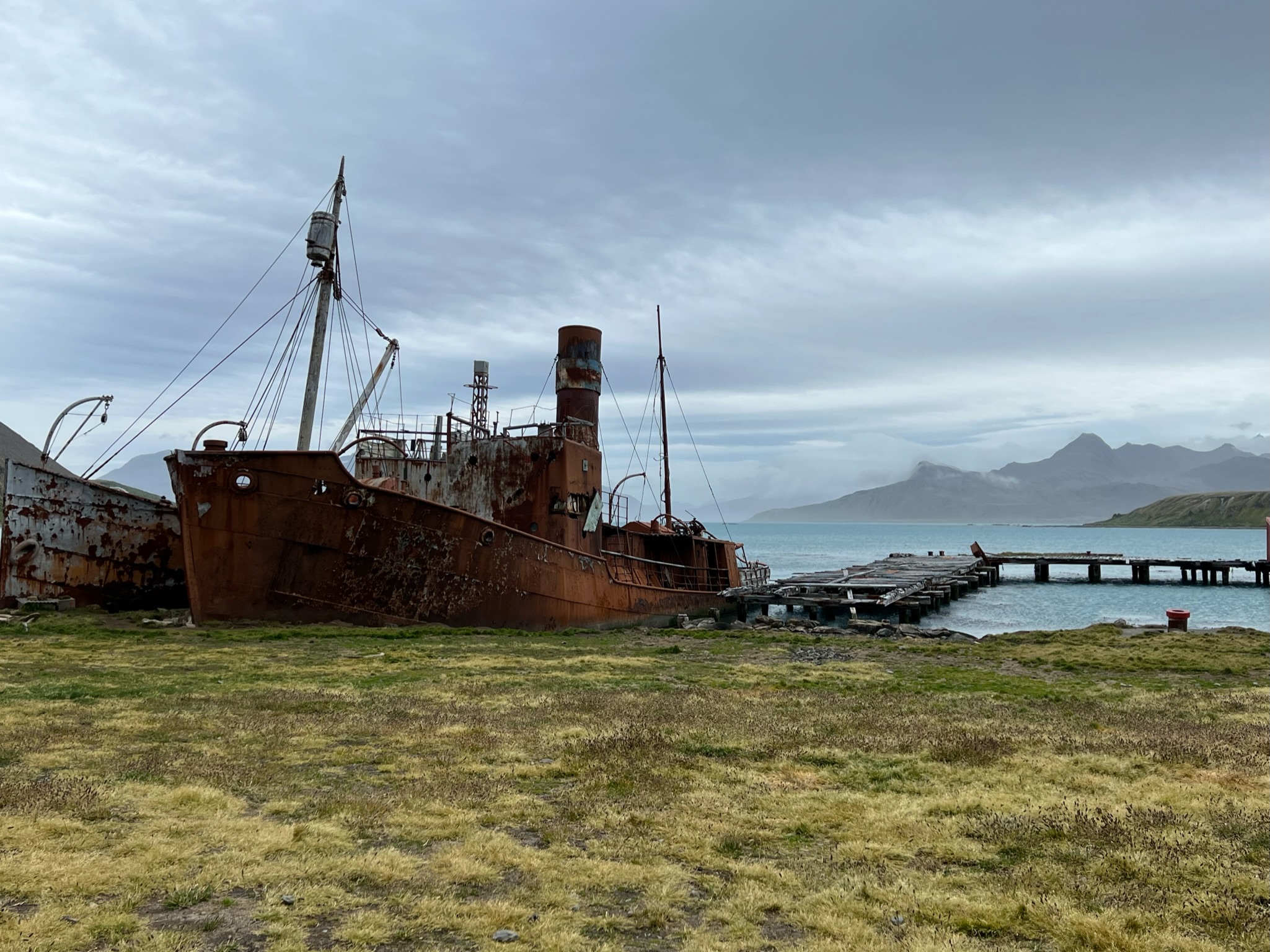
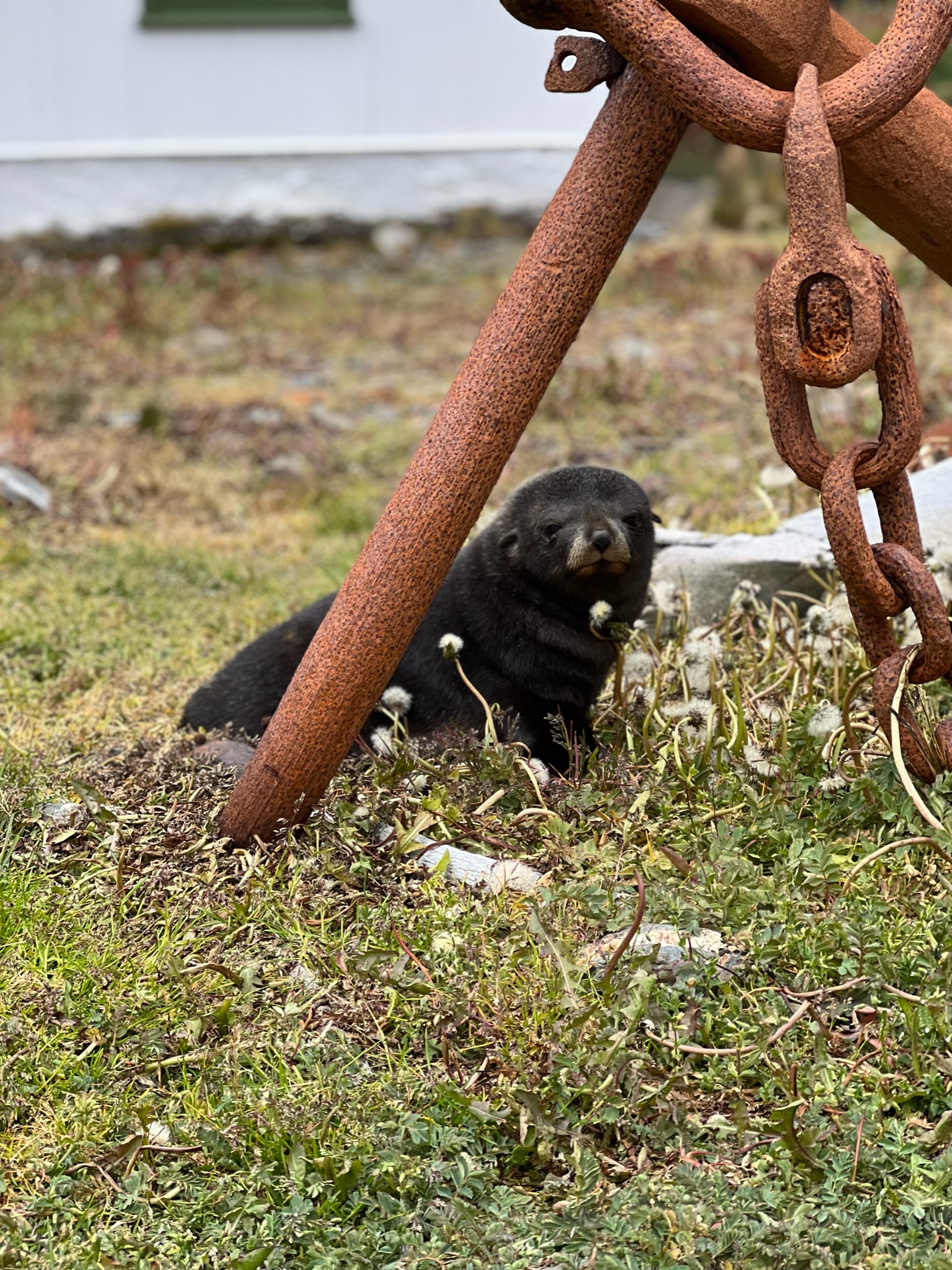
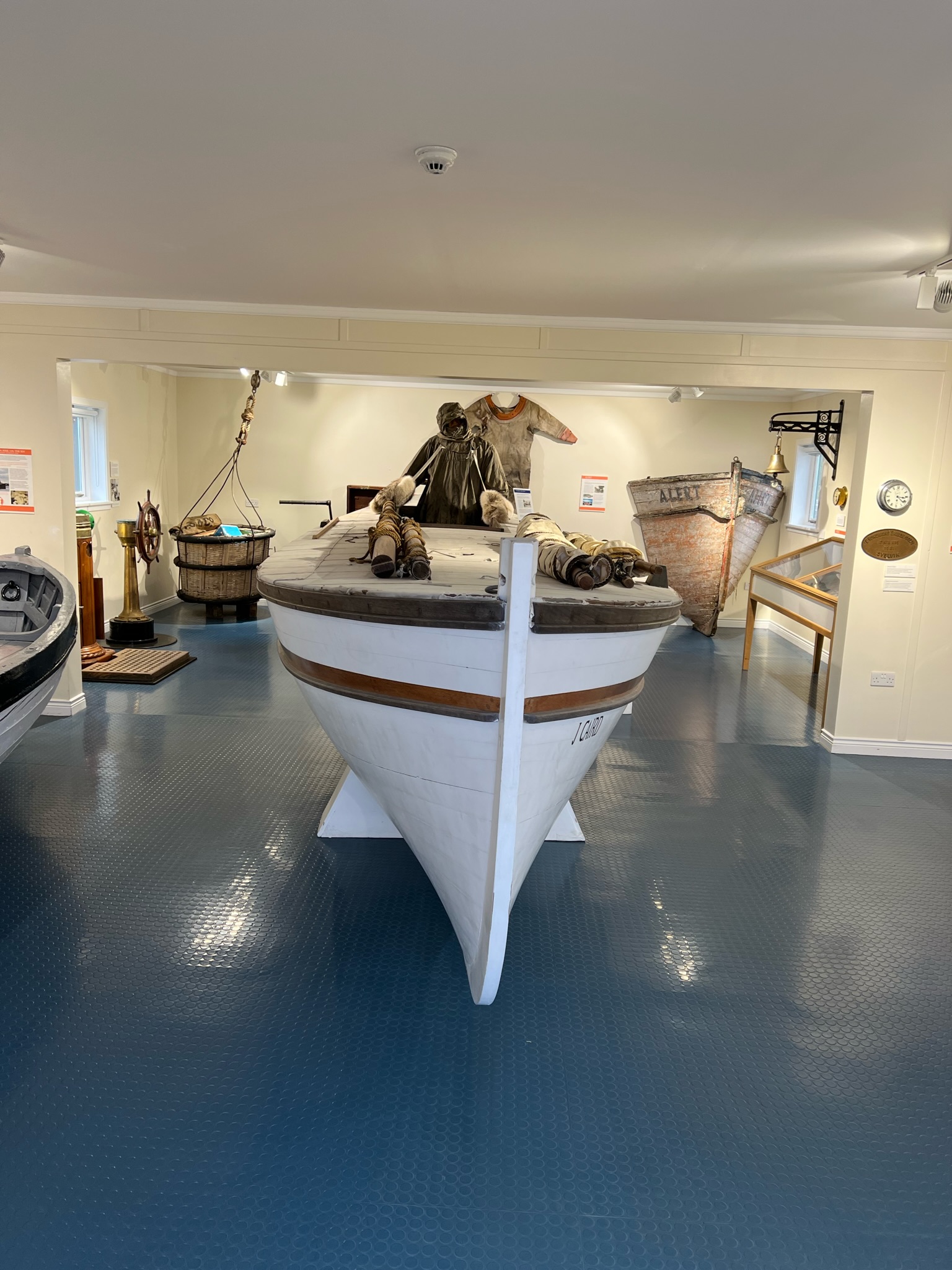
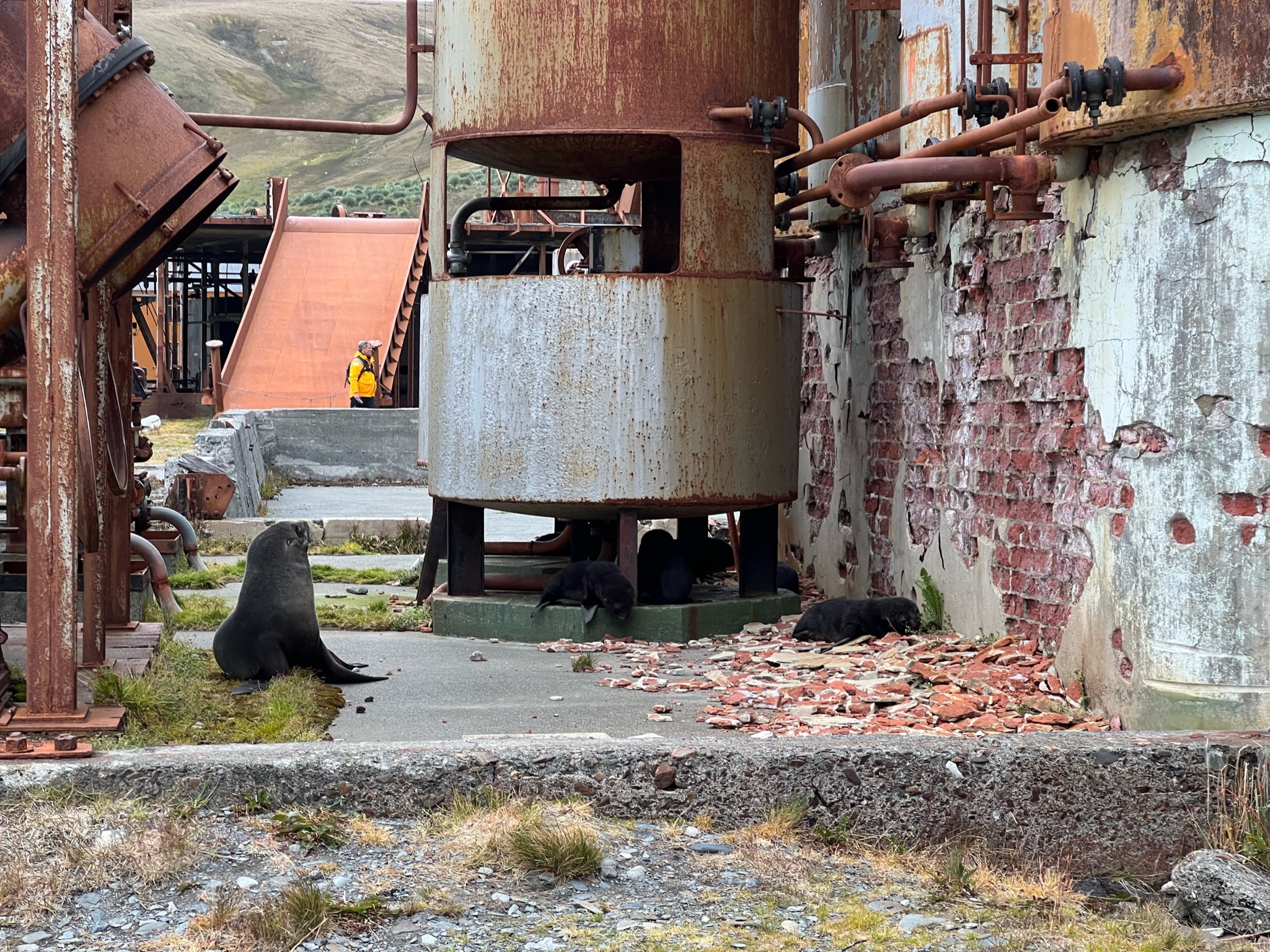
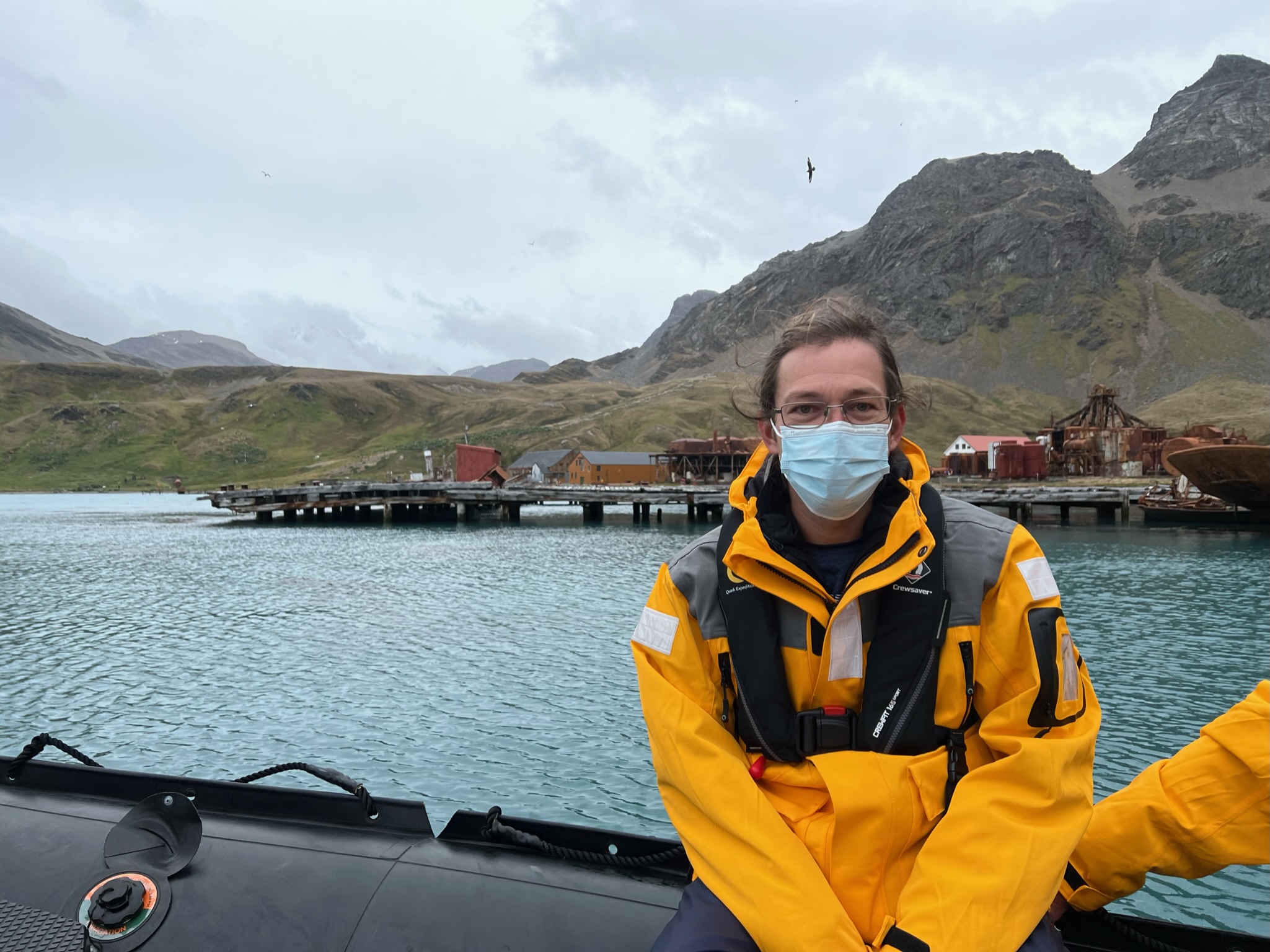
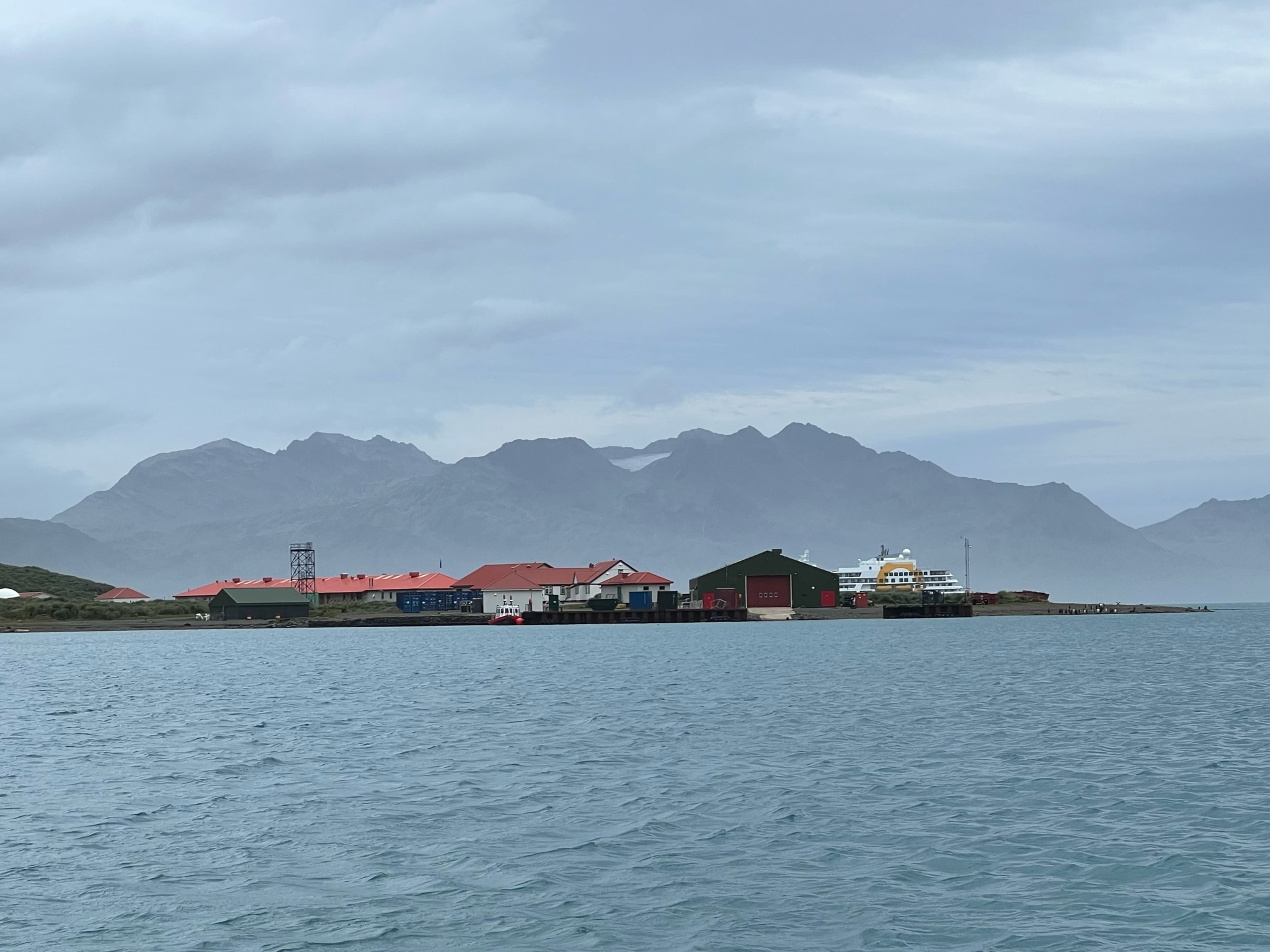
Due to covid, we couldn’t enter any of the buildings, but we could peek our heads into an onsite museum that featured a replica of the James Caird lifeboat. Having just crossed two days of ocean on what our crew called small waves, I can’t imagine how they navigated this tiny boat in these waters to reach this island. It’s truly amazing that the little boat didn’t capsize.
For scientific discovery, give me Scott; for speed and efficiency of travel, give me Amundsen; but when disaster strikes and all hope is gone, get down on your knees and pray for Shackleton.
– Sir Raymond Priestly
Today was a great day, and I’m so glad I put on my wet gear and went back out. The weather was spectacular this afternoon, and this made a really nice capstone for the trip.
Day 15: January 5, 2022
We didn’t do very much today. We are traveling from South Georgia to the South Orkney Islands in an effort to avoid a major storm that is brewing in the Scotia Sea. We had a few nausea patches left, so we each put one on. I get the most sea sick, so I used the last one from our latest prescription. Brian and Henry used two from an old prescription (I know I shouldn’t hold on to old medicine, but I do). Theirs expired in 2016. Hopefully it won’t hurt them, and maybe, it will even help. The crew has warned us that its likely going to get rough, so it was worth the risk.
Fabrice presented ‘Of Penguins and Men’, a presentation he created to help us understand the relationship men have had with penguins in the past. Everyone loves penguins now, but for a long time, penguins were sought after for food and for the oil that can be extracted from them. I can’t imagine slaughtering these cute little creatures, but it happened en masse. There were a few other presentations today, but we didn’t feel well enough to go see them. Well, we also weren’t overly interested in the topics either. One was on Antarctic geology, and two were on Shackleton. We watched them on the live stream in our room, but I don’t know that I could tell you much about them.
After dinner, we listened to Michael, a guide from Canada who is currently living in the United Kingdom, as he talked about kayaking around the entire island of South Georgia. The wind and weather is very difficult there, and although many kayakers have raised the money and tried to make the trip, very few have succeeded. Based on my very limited experience on the island, I think that anyone who tries that has to be out of their mind.
Day 16: January 6, 2022
We had a wonderful day today. We arrived at the South Orkney Islands early this morning, so we woke up to beautiful snowy mountain tops and ice-blue glaciers. Right after breakfast, we went through another biosecurity screening where we cleaned our gear and had it inspected. After lunch, our group was the first to go out on the Zodiacs for a landing.
The water was a calm and beautiful turquoise, and we made it to shore after a very smooth ride. It was very cold outside, so we were bundled up in all of our layers. In our shore briefing, Solan let us know we had two options for our excursion. If we went to the right, we could hike up and over a ridge and go see a glacier. This glacier was stable enough that we could actually go walk on it. If we went to the left, we could follow a rocky path to a colony of adelie penguins. We unanimously decided that we’d go towards the glacier since we’d probably never get the chance to see a glacier that close again. After we picked up our hiking sticks, we wove past the seals and up the trail. Several of the guides along the way were really excited to be there. The Orkney Islands are beautiful, but they are pretty far out of the way even for Antarctica. Because of that, most of the time the boats don’t get to stop there. The only reason we were able to go was because we were evading the storm.
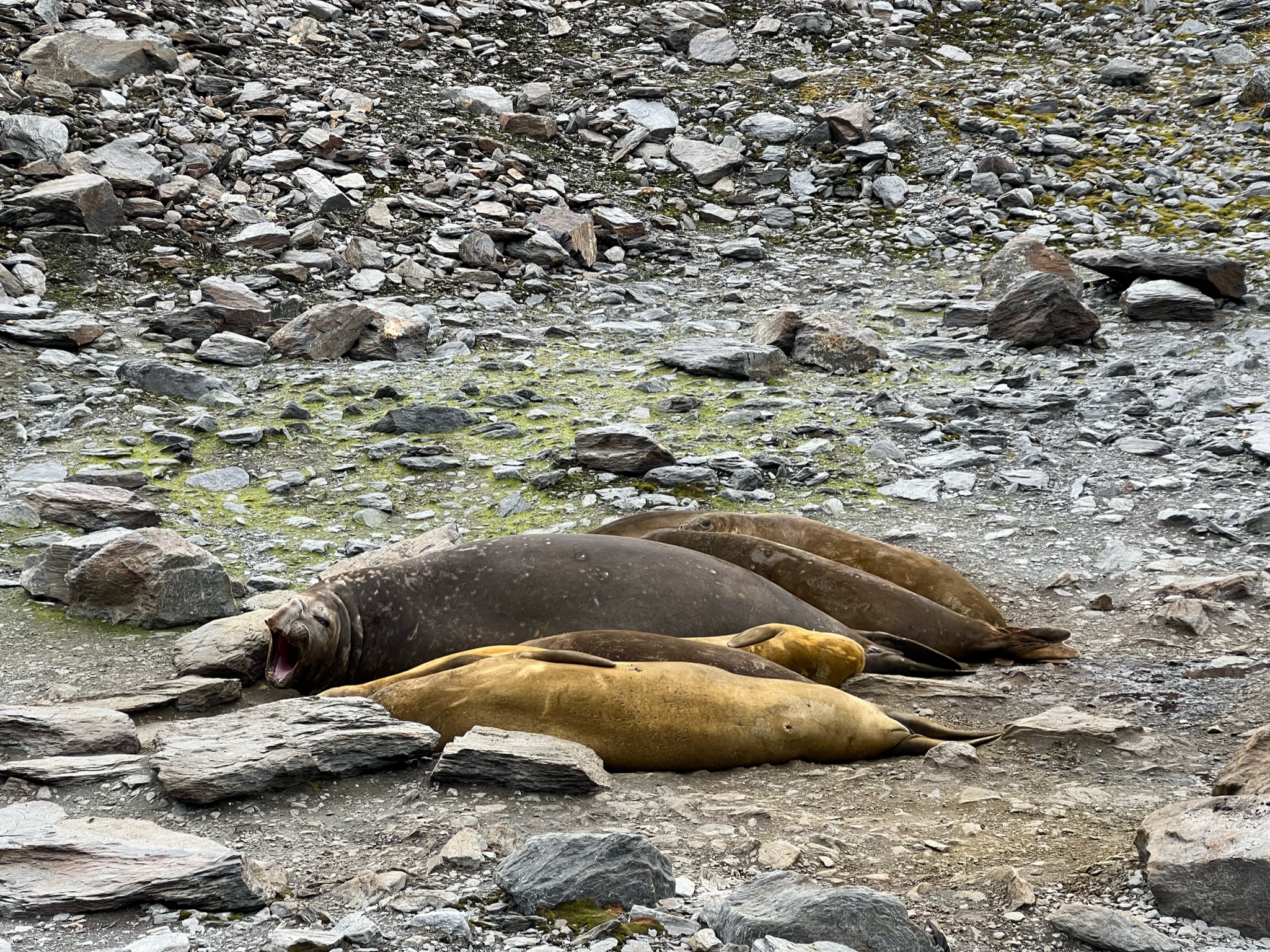
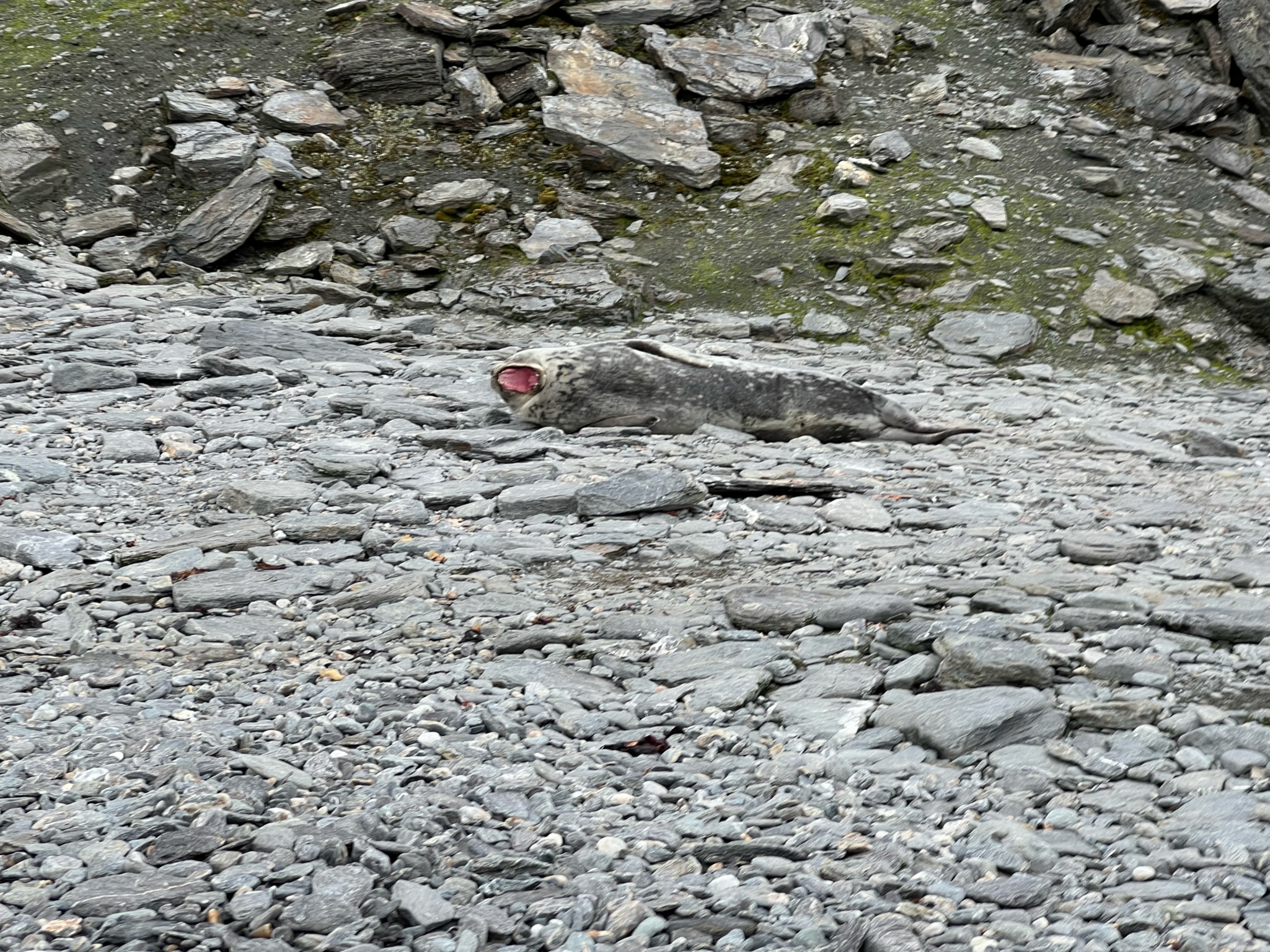
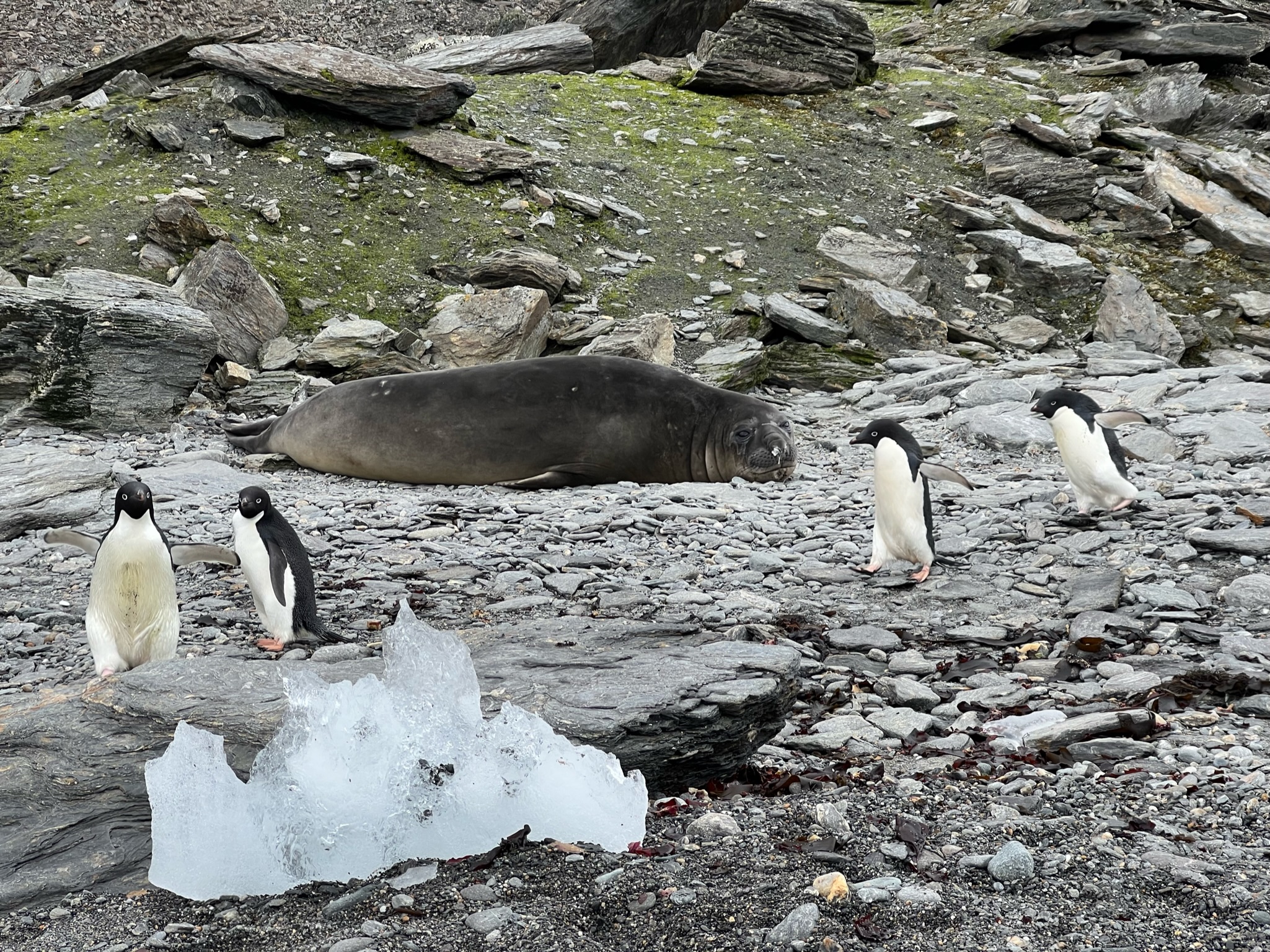
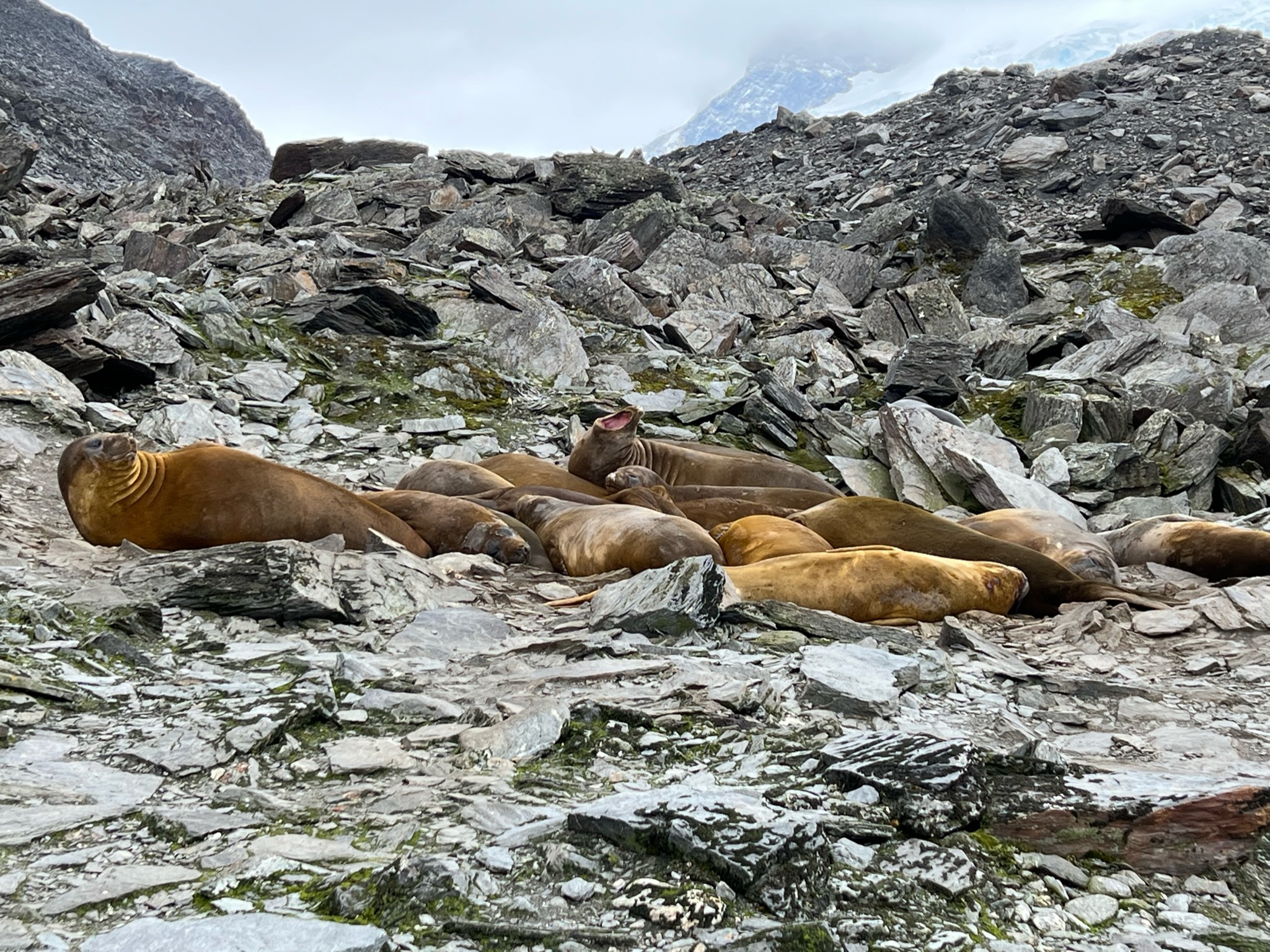

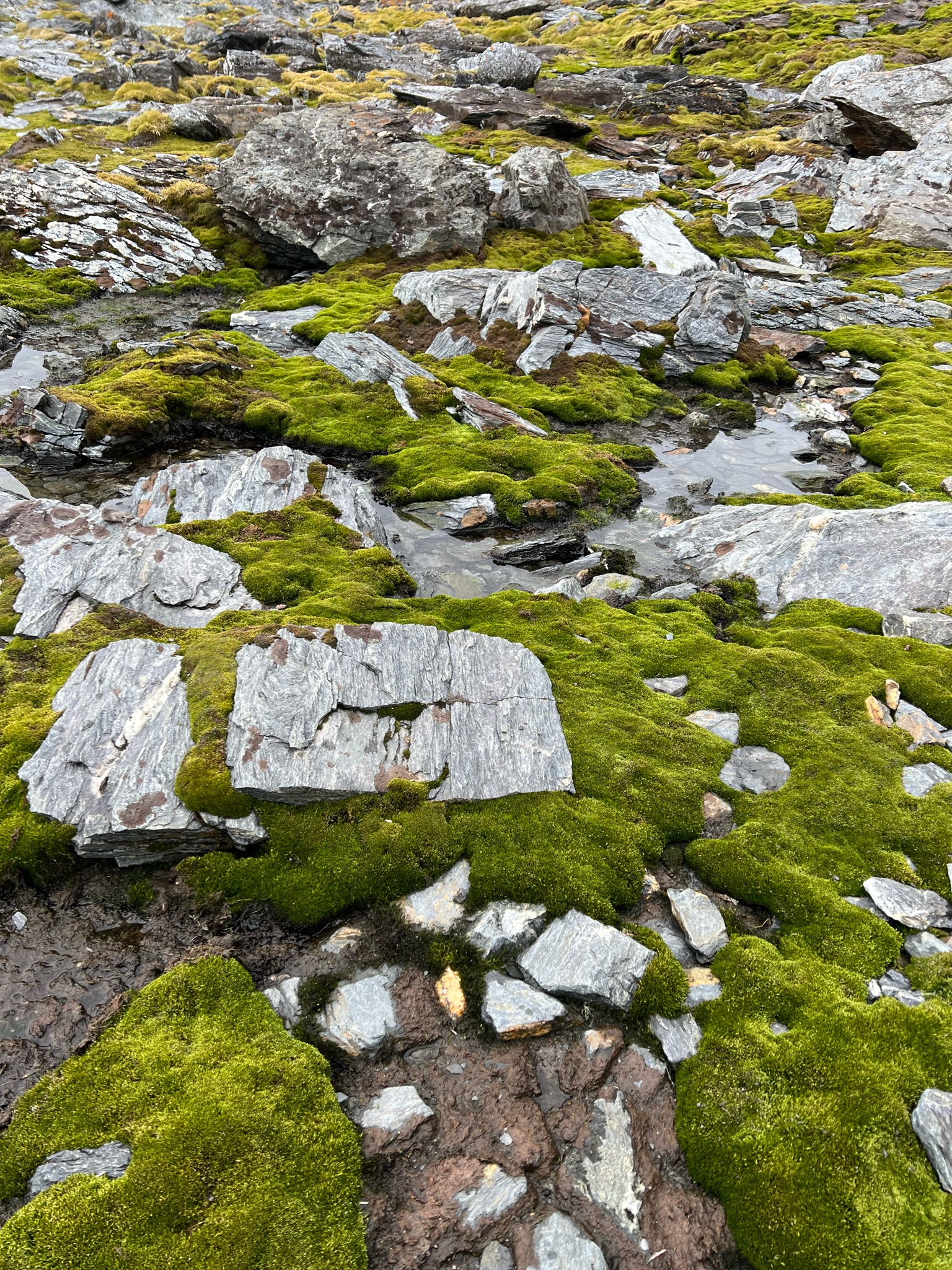
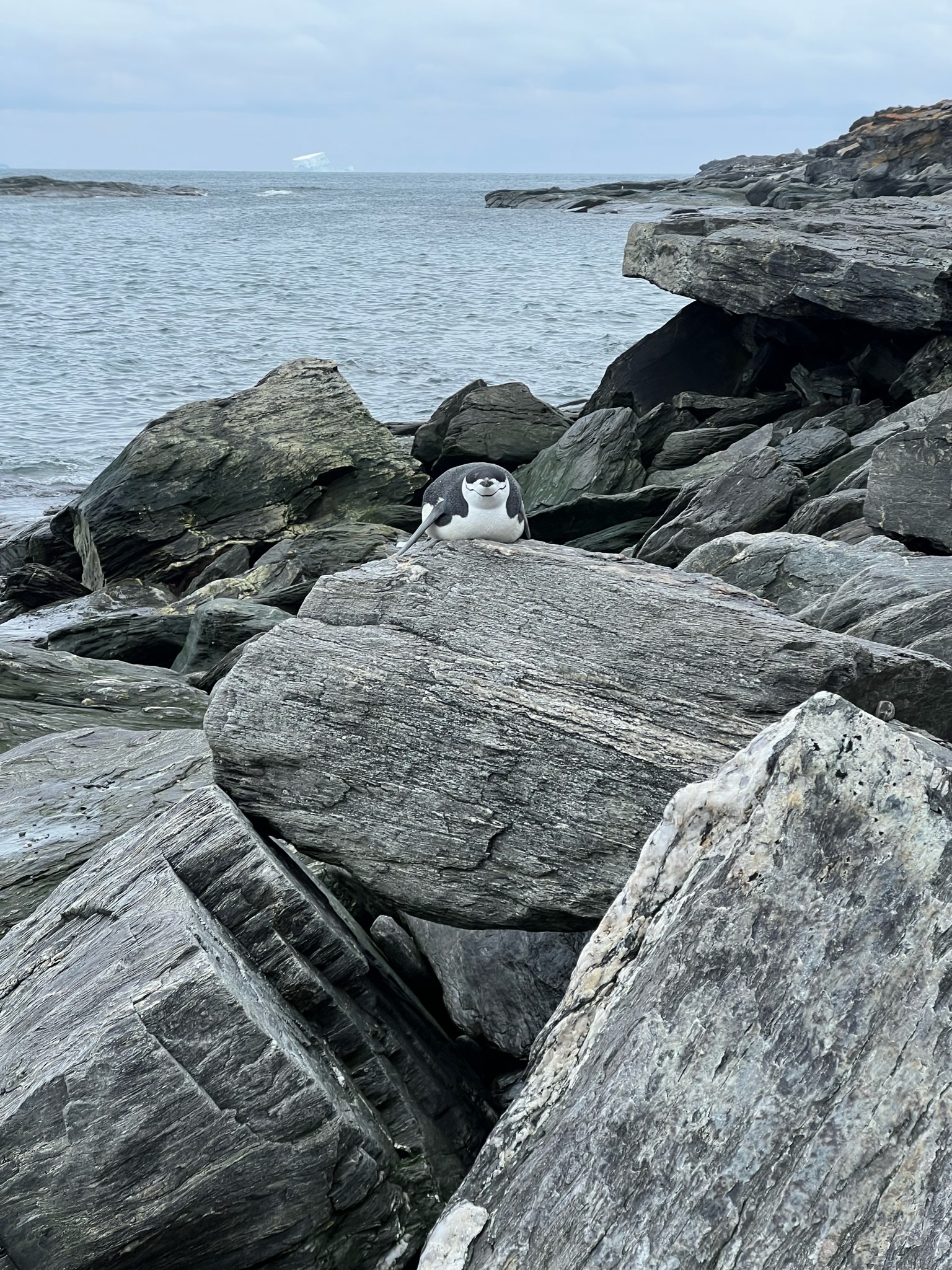
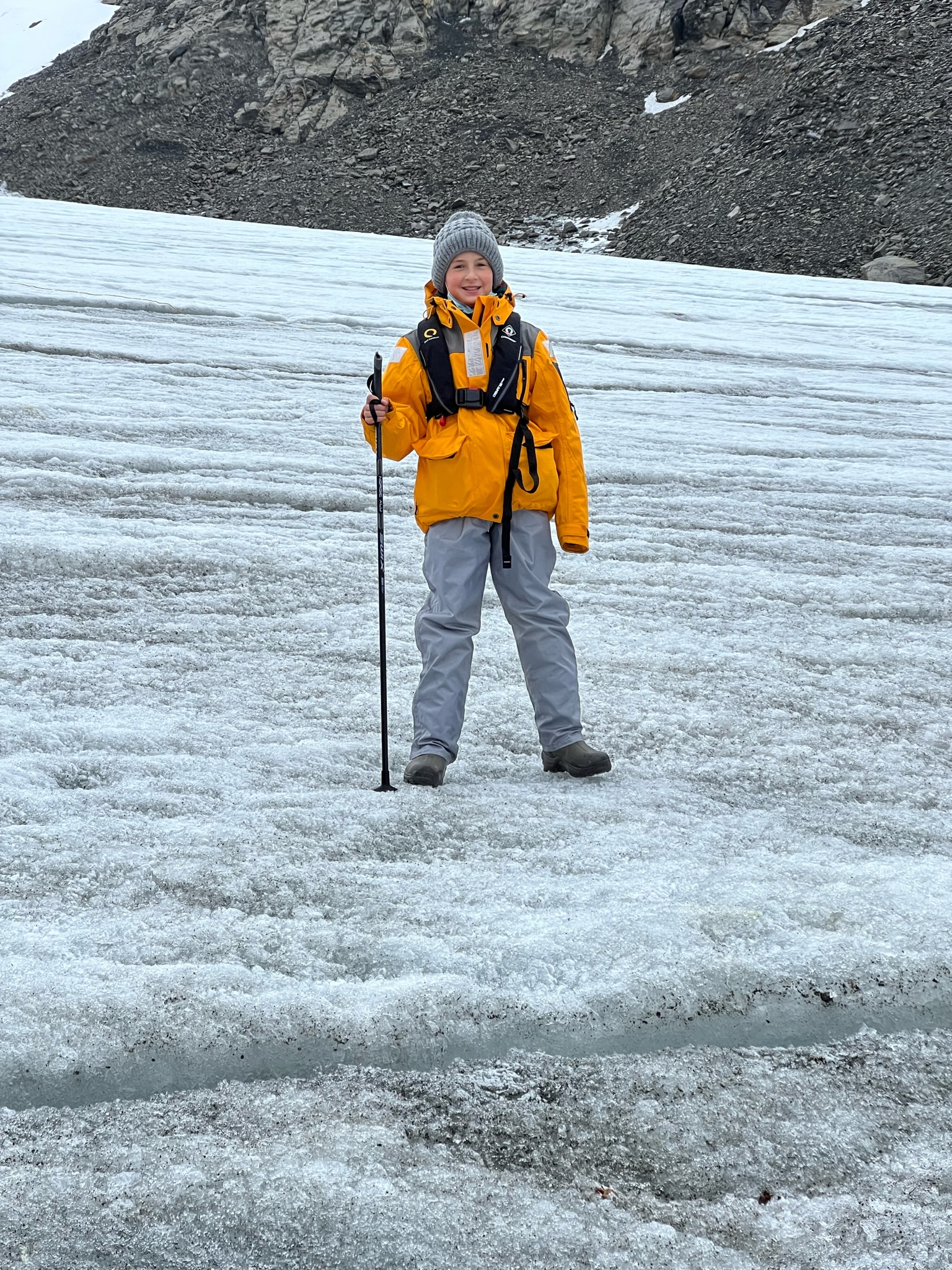
We hiked up the ridge with no issues, and when we got to the top, we had a stunning view of the bay, the rocky beach, and a massive glacier that thinned all the way to the beach. We got to the foot of the glacier and took our first steps on top. The surface was pocked ice. There wasn’t any snow on top, but the surface wasn’t smooth and slippery. We were able to easily make our way up on the ice and when we got there, Henry did his best to make glacier angels. An adelie penguin followed us for a while, but eventually he got bored and moved on to find his friends.


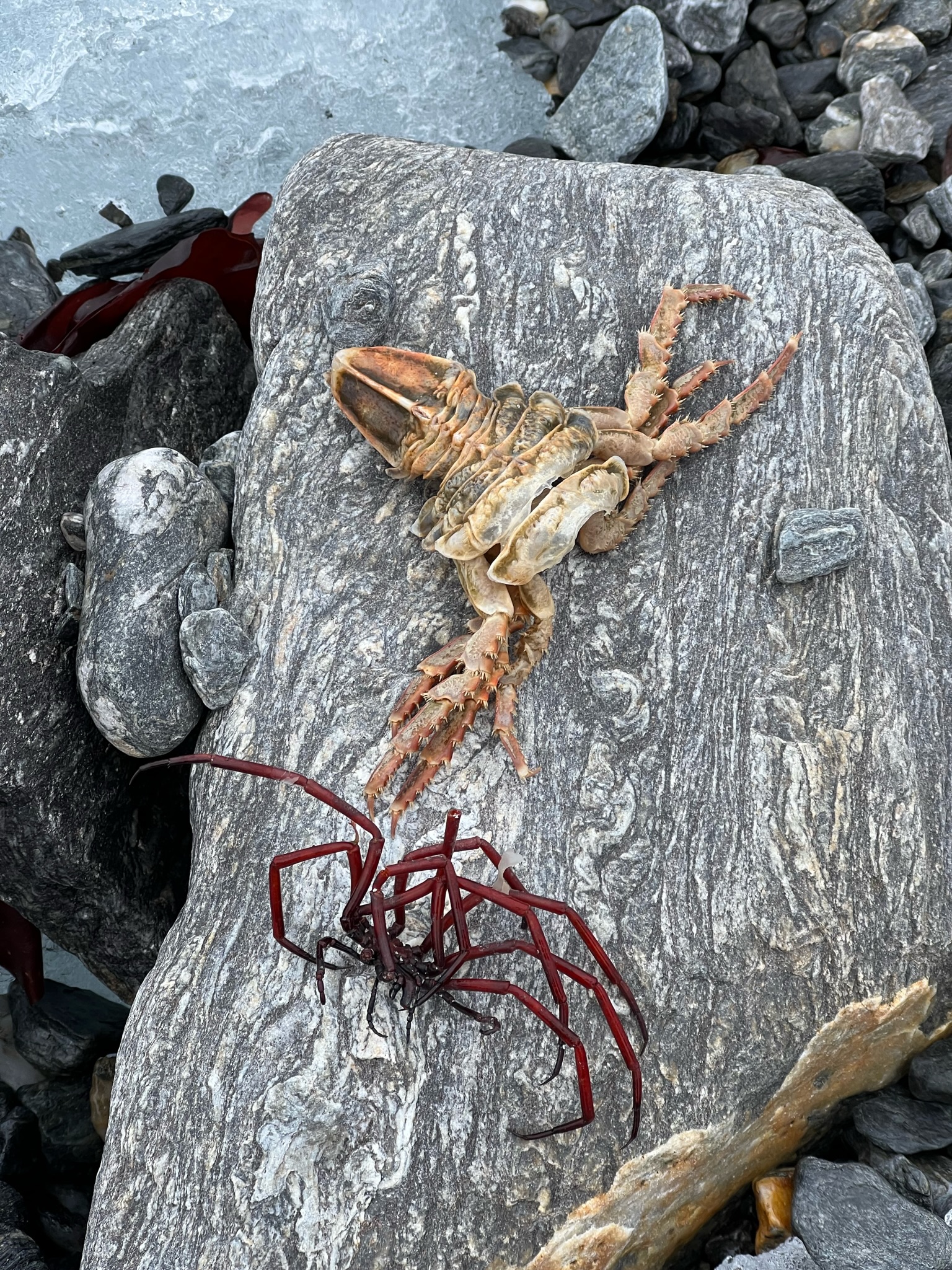
While we were out exploring, we found a creature frozen in the ice. I used my hiking pole to pick it up and take it to one of the guides. She didn’t know what it was either, but she said she would ask about it. About that time, Ross, another guide, came up to us and identified it as a Sea Spider, an arachnid that lives deep in the Antarctic waters. He said they happen to be very common, living deep in the water here.
Eventually, we moseyed back towards the zodiac landing zone. Technically, we were supposed to go one of the routes, and then we were supposed to come back to the zodiacs and join a group to go cruising. Henry wasn’t fond of the zodiacs, Brian wanted to go cruising, and I was happy to do either. So, we split up. Brian went on a zodiac cruise by himself while Henry and I walked over to the penguin colony.
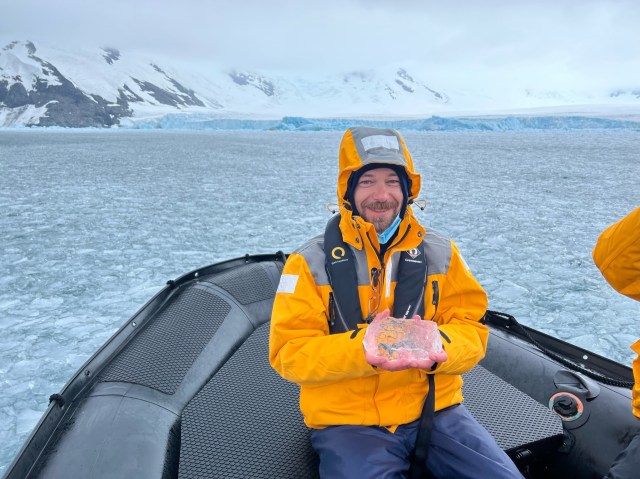
As a highlight on his cruise, Brian got to pick up his own piece of ice out of the sea to use in his beverages that afternoon. He said it was a great cruise. They got to see a lot of penguins, and they were able to travel through a lot of slushy ice exploring.
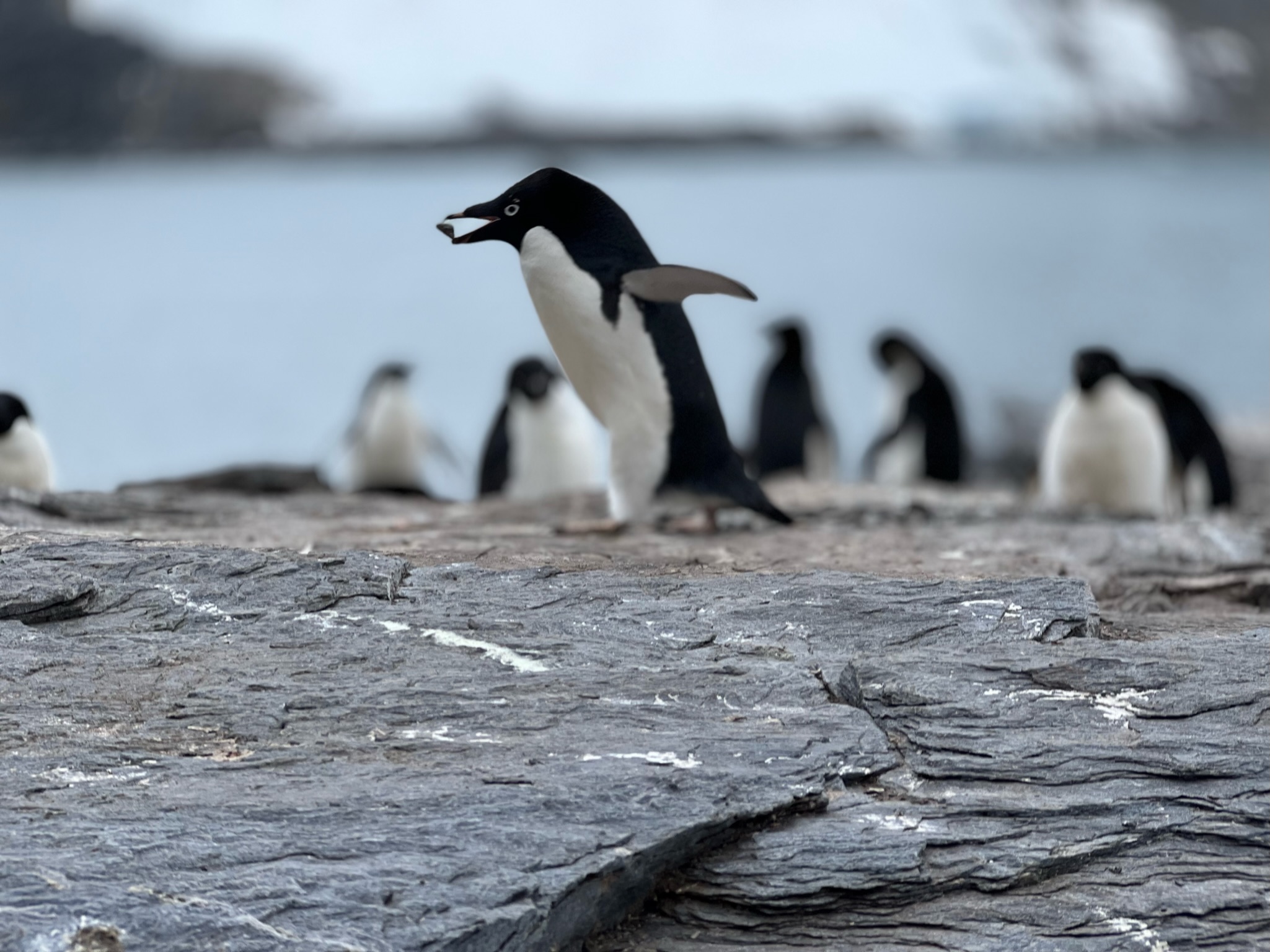
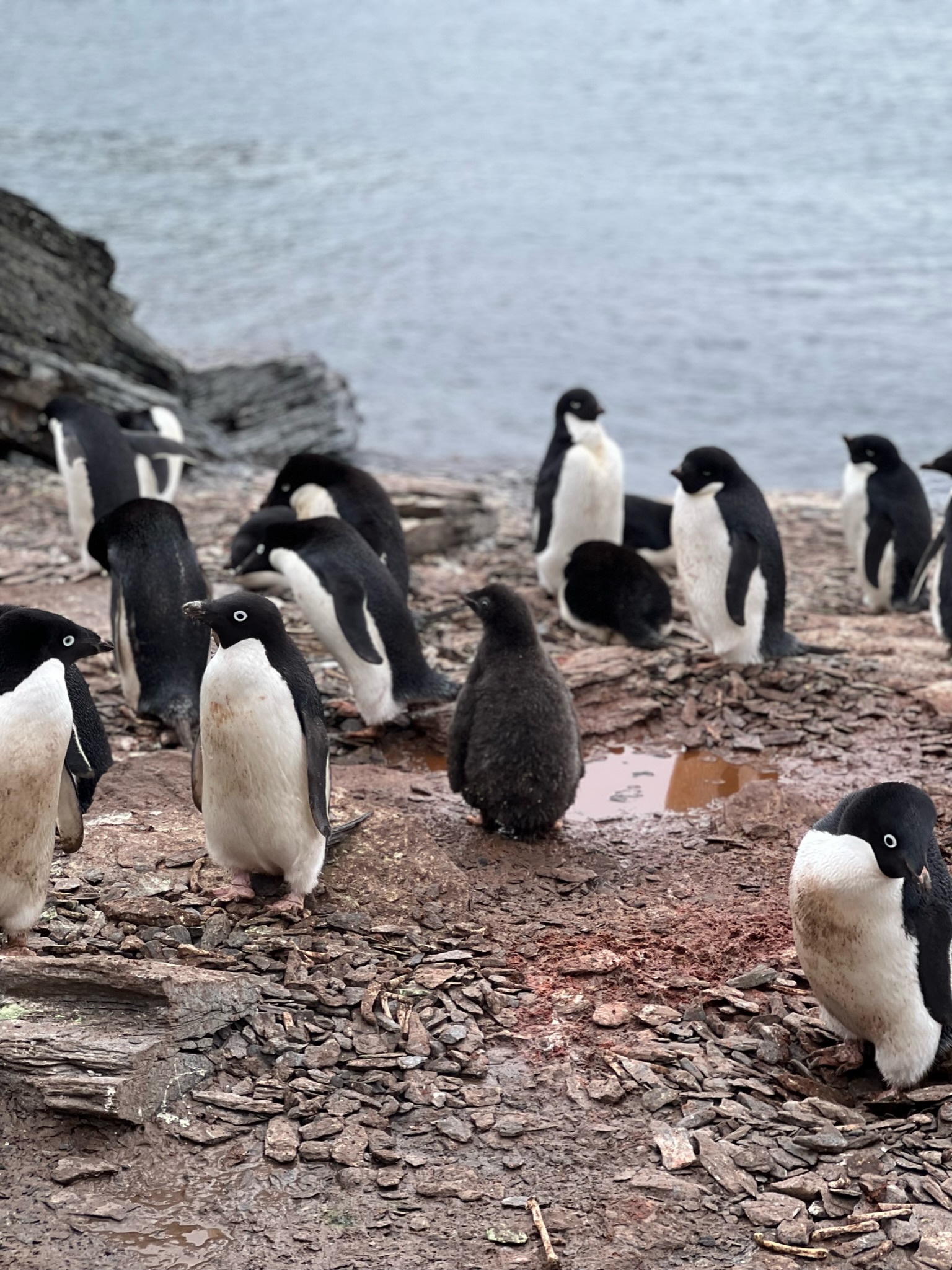
Henry and I had a good time too. We laid down on the ground and watched the penguins.
It’s mid-summer here now, and the penguins are busy taking care of their chicks. The baby chicks were about 4-5 weeks old, and they were covered in thick brownish black downy fur. Their parents keep them fed and gaining weight at this stage. As they get a little older, their parents will eventually leave and just not come back, and then they will have to figure out how to go get food on their own. The first year mortality rate is very high for penguins, but if the chick can make it through that first year, the can live very long lives (30+ years). Every summer, the penguins will migrate back to this area to build their nests and hatch their eggs. For a few years, the chicks aren’t really able to lay viable eggs. They still come back though, and they practice mating and playing house. They will build nests, but most, if not all, won’t lay eggs. After a few years, the playing pays off, and the penguins pair up, lay an egg, and together they will incubate the egg. Once it hatches, they will continue to work together to get their babies bigger and stronger.
The younger birds who were playing house were building nests by gathering rocks and making small rock beds. We watched a couple of birds stealing rocks from each other. One bird was working really hard to find rocks and bring them to her nest. Every time she turned her back, another little mischievous penguin would steal a rock from her nest and put it in her own. The poor little thing was working so hard. She wandered off for a moment, and we lost track of her (they all look alike, after all). Meanwhile, the little thief grabbed four rocks from her nest and added them to her own. We cracked up when we saw that our first little penguin had come back to her nest area a different route, and on her way back, she bit the butt of the thief to teach her a lesson! Penguins are so funny. They are adorable, they waddle everywhere they go (unless they are sliding down a hill on their bellies), and they are very industrious.
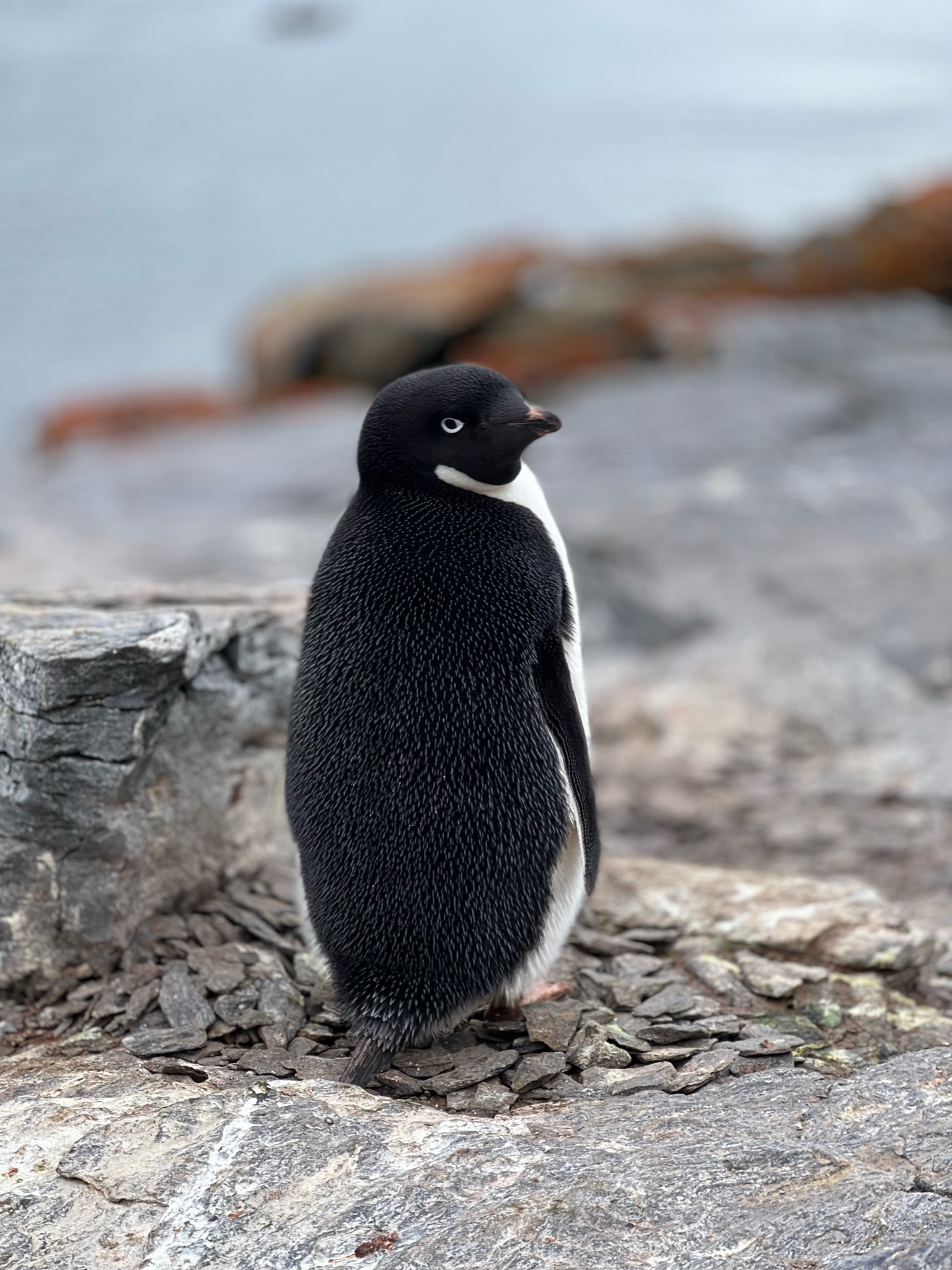
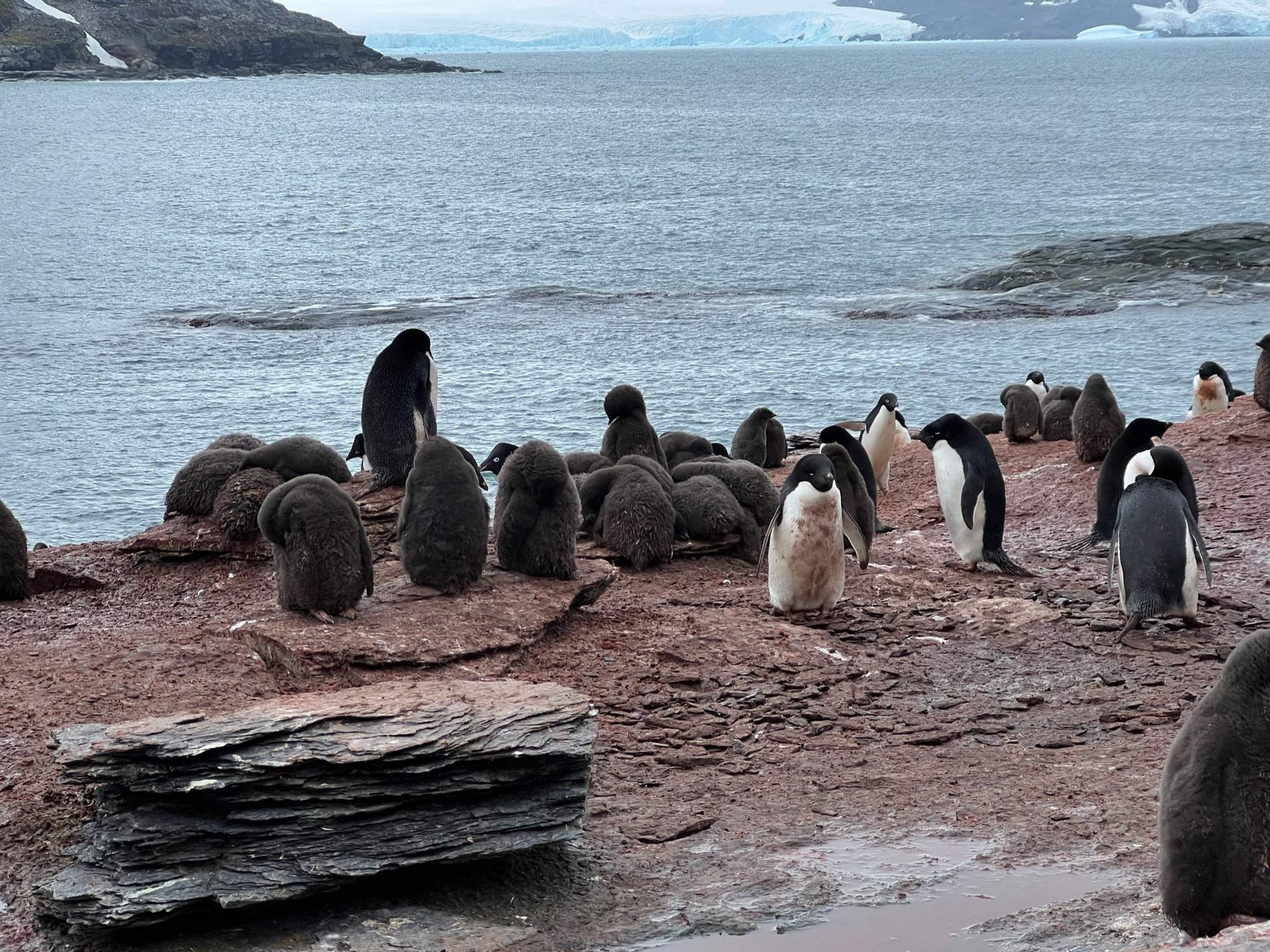
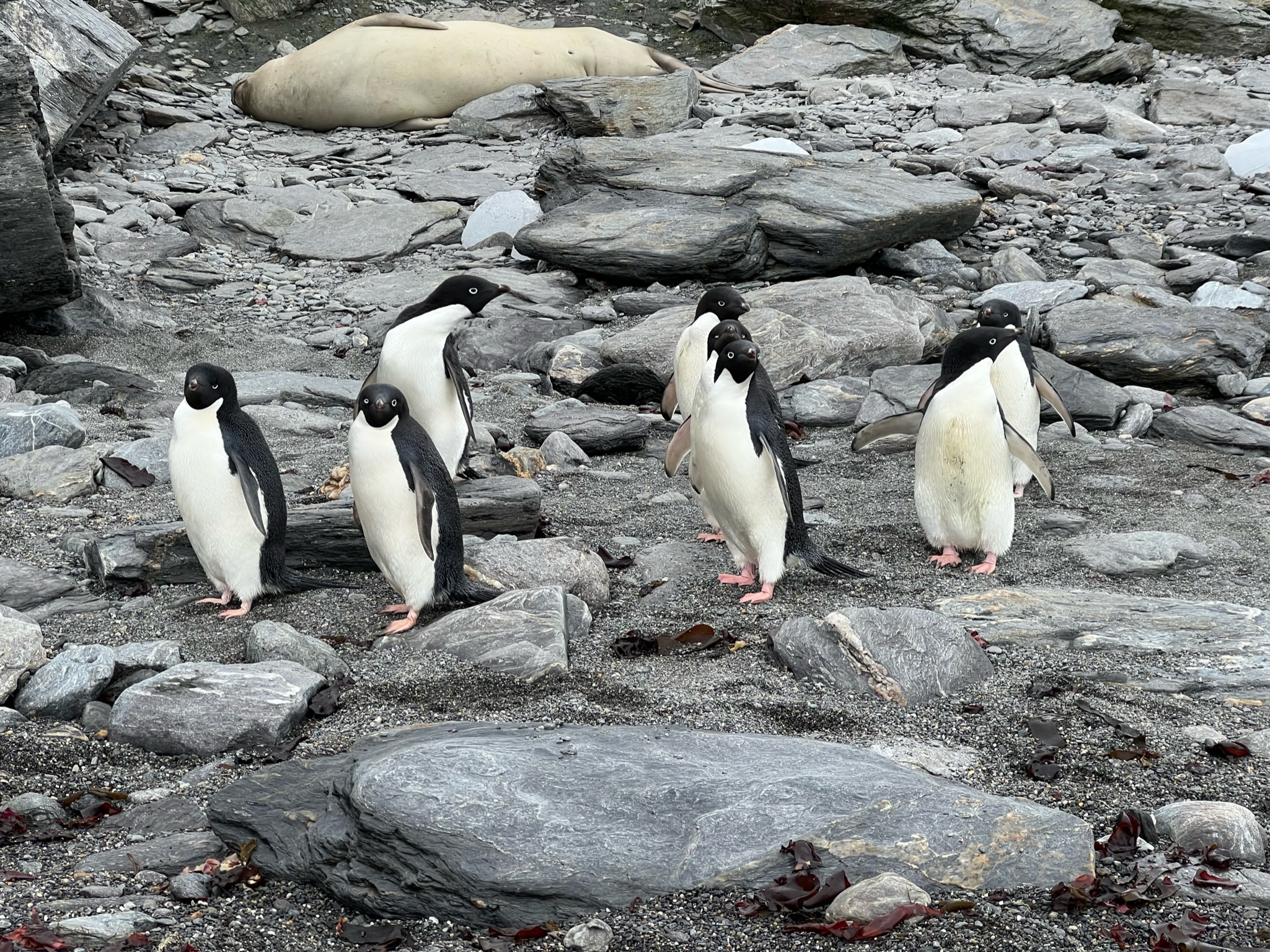
We got back to the boat, and we washed up our gear for the last time. Penguins and seals are cute, but they smell awful. You can smell them from a long way out, and its a smell that gets into your sinuses very deeply. We couldn’t tell if their smell was on us, or our clothes, or if it was just lingering from our visit to the island, so we washed everything very thoroughly.
Afterwards, we played cards in our room. We’ve been teaching Henry some new card games, so on top of Uno and Hearts, he’s learning Rummy, Black Jack, and Solitaire. He’s also learning how to shuffle cards properly, and he’s doing very well with it. Someone on the ship is hosting a cribbage tournament, and we signed up for it just because we could. Of course, right after we signed up, we went to google to figure out what cribbage was and how to play it. Apparently its popular, but we’d never really heard of it. We don’t stand a chance at winning, but it’ll be fun hopefully.
We moved upstairs to the Panorama Lounge to play cards there and enjoy the scenery. Solan called all the guests up to the helideck so we could toast Antarctica as we set sail for Argentina. We had three toasts. The first was for all of the people we love that couldn’t be with us but we wish they were. The second was for the adventurous spirit that drives people to do crazy things like travel halfway around the world to Antarctica in the middle of a pandemic. And the third was to Antarctica and the beauty that awes and humbles all who see it. It was a great toast, and I got a little teary eyed during it.

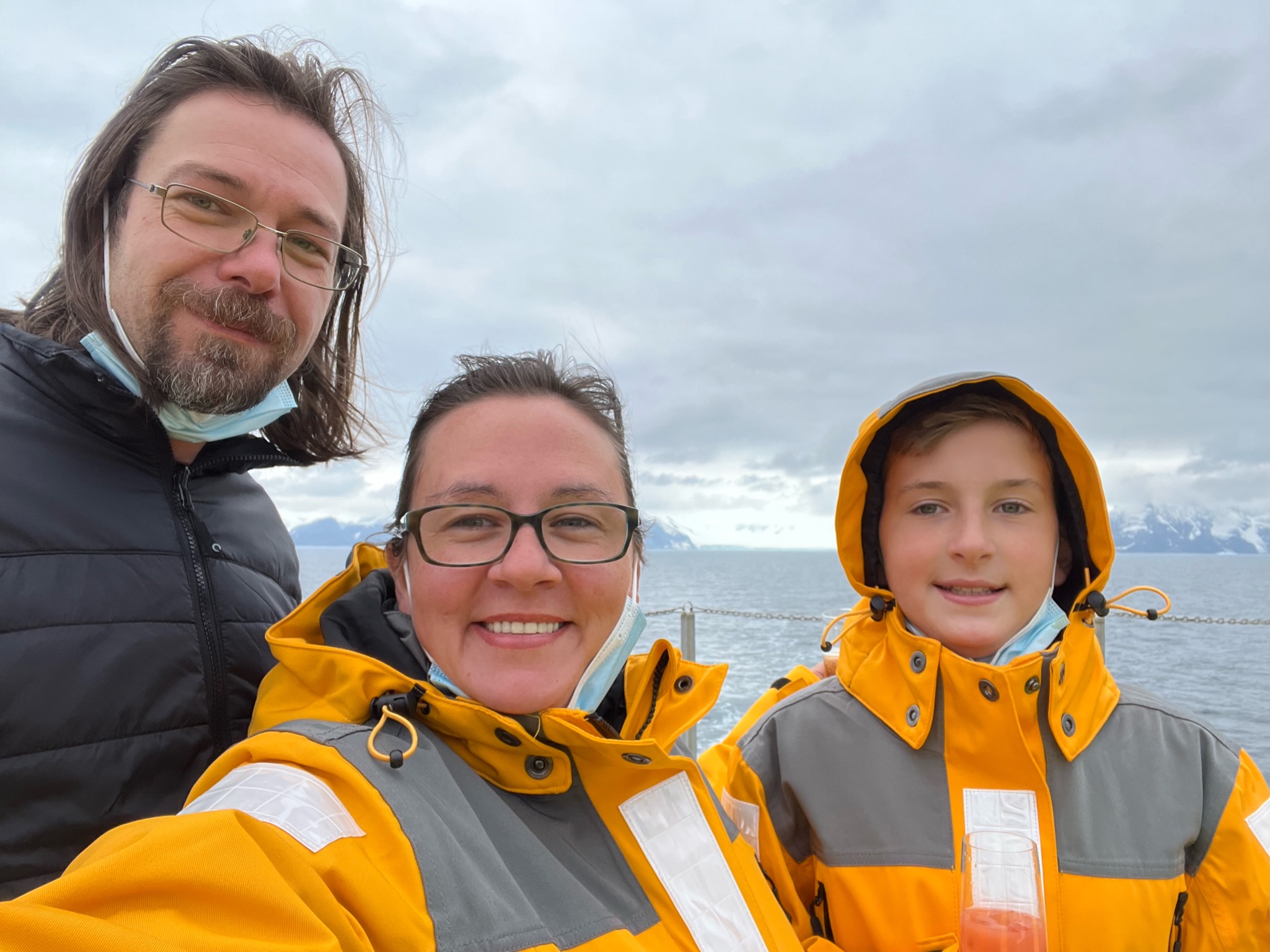
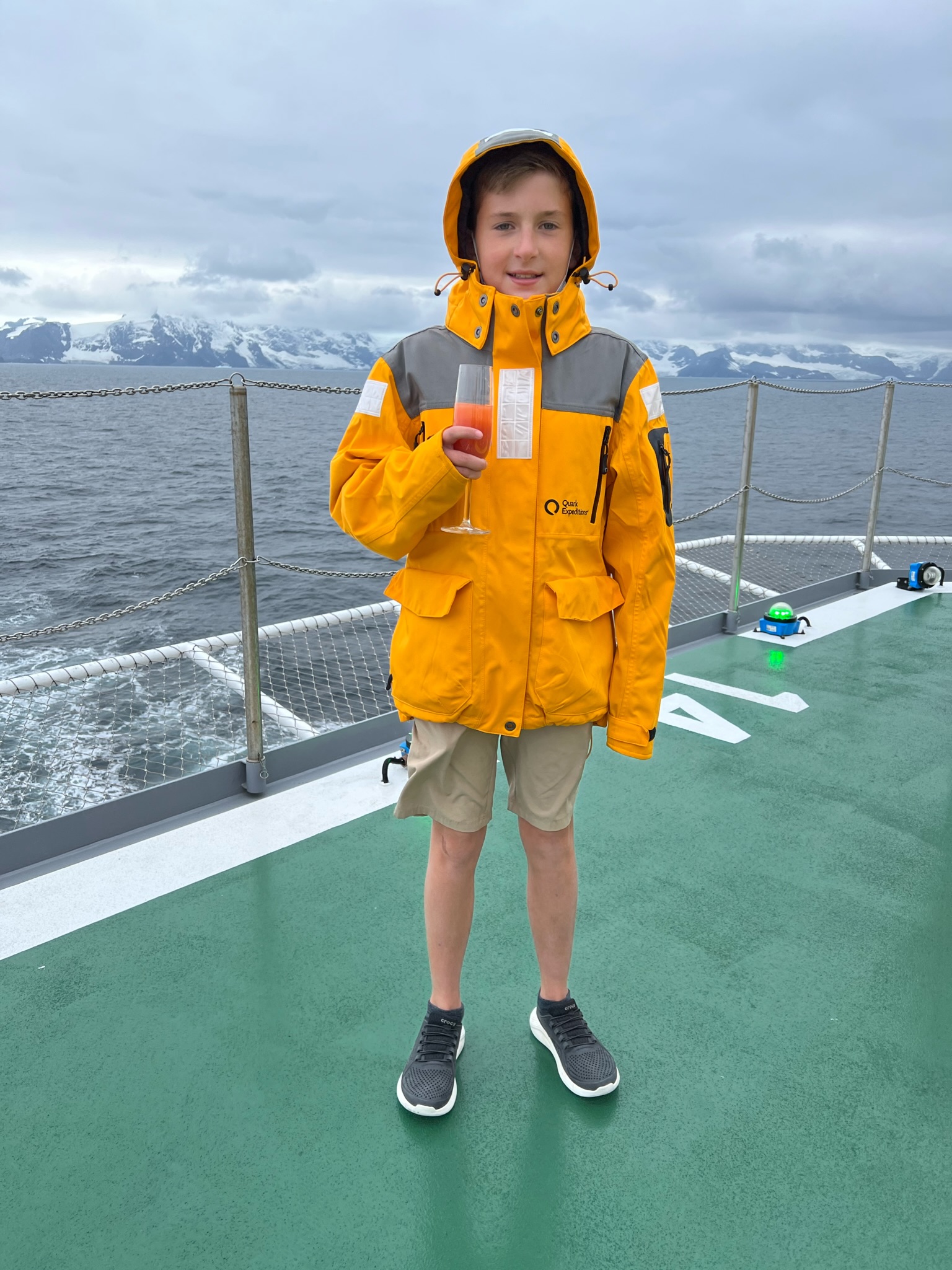
We went to dinner after the toast, and we were able to admire enormous icebergs through the meal. After dinner, Stefano, a guide who is originally from Italy but has lived in Norway for the last 11 years, talked about his year of living in the Arctic. He went to school in Svalbard to become a guide, and the year was quite eventful. Stefano is probably one of the funniest people we’ve met, and he can tell a story remarkably well. I loved listening to him.
Its hard to believe our trip is coming to an end. Brian and I were talking today, and I think we’re both ready to get off of the ship. We’ve had fun, and I’m so grateful we came. But I am ready to stop rocking and rolling with the waves, and I’m ready to get back to our adventure.
Day 17: January 7, 2022
We are heading north towards Ushuaia today, so we have sailed all day long. We are trying to avoid a storm, so the captain is doing his best to keep us in the calmest areas. Unfortunately, even though we are going through low wind areas, the waves are growing larger.
Brian went to a photo editing session with Michelle where she gave practical pointers for how to maximize your photos. While he was doing that, Lacy, another passenger, was kind enough to offer cribbage lessons. Henry was dead-set on learning how to play so we could win this tournament, so he wasn’t going to miss that for anything. He and I went to deck 7 and met Lacy in the game area. She was a wonderful teacher, and she was very patient with us. Throughout our game with her, we got to know her a bit. She was a solo traveler from Alaska, and was trying to step on all 7 continents before she turned 25. Antarctica was her last one. She was fun to talk to, and she really had a good time with Henry. Brian joined us towards the end of our session, and she was able to give him some pointers too.
We enjoyed a presentation on baleen whales from our guide Marla. I learned a lot, and I was really impressed with her knowledge on them. We still aren’t feeling great though, and it makes paying attention very difficult. It’s funny how nonchalant we are about whales now. Occasionally, someone will comment that there are whale blows off the deck, and we don’t even get up to run and check them out now. Since when did we get indifferent about whales?
We were able to make a visit to the bridge area this morning. The captain and his crew were relaxing at the helm when we got there. We were in a lot of fog and had overcast skies, so they had very little to view aside from the sea spray and snow that was hitting their windows. We did our best not to bother them, so we just observed the controls and their conversation for the fifteen minutes or so that we were there. The boat drives on autopilot mostly, but there is always someone at the helm. I could imagine this job being very dull on these long sea days, unfortunately. The sway of the boat combined with an unchanging scenery would make staying awake very difficult. I’m grateful that they can do it.
Before dinner, Brian went to play his cribbage round with David, another passenger. David was a young man who was traveling with his brother, father, and grandmother. He was an advanced player and was the one who helped to organize the tournament. By this time, Brian had played maybe three games. They had a lot of fun, and the game was close, but David defeated Brian and moved on to the next round.
After dinner, we went back to the game table and played around a bit. Adam, a young man who was traveling with his father, introduced himself and let Henry know they were scheduled to play a round. They decided to play then and there. Henry was really excited about playing him, and Adam was a great sport. Brian and I sat beside them playing Hearts with David and Michael, another guest who happened to be traveling with his wife and mother. Adam and Henry had a lot of fun, and my mama’s heart was full as I listened to this mid-late twenties man interact so well with my son. They talked and laughed and joked around. Adam told Henry that he was the only person he might be okay with losing to. In the end, Henry did win the round. He is very nervous about his next round with Ms. Jane (David’s grandmother). David told Henry that she’s really good.
I haven’t been able to reach my opponent yet, so perhaps I’ll be able to touch base with him tomorrow. For now, I have to get Henry to go to sleep. He’s on a high from winning, and now he has dreams about the first place prize.
Day 18: January 8, 2022
Today was a long day. I am officially sea sick. Our patches that we put on when we left South Georgia are officially doing nothing, and this boat has a lot of movement. I’ve taken Dramamine all day, and it helps, but I hate just laying in bed napping all day. In the afternoon, we all did a round of antigen testing in preparation for our entering Ushuaia again. Our last few tests have been negative for everyone on board, so we don’t expect anyone to test positive. It’s just a formality for us at this point. There’s still a little nervousness because if, somehow, you test positive, your onward travel is definitely going to be affected.
Tim Jarvis did a presentation on climate change. I really didn’t think I would enjoy it, but he did a very good job of highlighting some of the areas that are most affected. Having seen the beauty and splendor of these glaciers in person, its difficult to imagine that they could all be gone one day. We’ve listened to presentation after presentation on the wildlife, and we’ve learned a great deal about how the ecosystem supports itself (and us). I understand better the importance of some of the small daily choices we make, and I think that my family will all take this further as we continue on this journey and when we return home.
Henry also got to play his second round in the tournament against Ms. Jane. He was nervous about it, but he did well overall. He found her in the restaurant after breakfast, and they negotiated their game time. He said she was really fun to play, and they had a good time. The winner would have to win 2 out of 3 games, and in the end, Ms. Jane walked away as victor. Henry was disappointed that he didn’t win it all, but I think he had a ball with it.
Our guide Michael presented on how waves are created, a timely presentation considering most of the passengers are struggling at least a little. In my Dramamine-induced haze, I didn’t catch all of it, but the bottom line was that more wind yields bigger waves. We’re going through the Drake Passage again now. The first time we came through it, it was very calm. These are the roughest waters in the world, and we were told to expect very large swells. When we came through the first time, we only saw swells of about 2 meters height. That’s big if you’re playing on the beach, but in a large boat, it just means you’ll feel a little sway. This time around, the waves are 4-5 meters, and it’s a bit more than a sway. The crew tells us this is still pretty nice though. I’d hate to see rough.
We did get the benefit of an absolutely beautiful sunset though, tonight. Antarctica was pretty, but it stays overcast there most of the time. We saw the sun pop out here and there, but the weather changed very quickly, so it wouldn’t last long. Now that we’re getting further north, the foggy horizon is clearing up a bit, and we’re getting back to ‘normal’ skies. The sun was gorgeous on the open sea. Vibrant reds and oranges bounced off the waters, and one glimpse was all it took to remind you that going home isn’t all that bad.

Day 19: January 9, 2022
It’s our last day on the ship. Its crazy how quickly the time has come. I’m ready to get off; I’m tired of the sway. I do think we have been seriously spoiled, though. Every morning we leave our cabin, and Mark comes in and cleans it up for us. We go to our breakfast, which is pretty much anything you can think you might want for breakfast. We’re greeted with big smiles and enthusiastic good mornings. We return to our newly cleaned room to prepare for the day.
Lunch is similar to breakfast. Mario, Romel, and Rudy ensure that we have anything we want. And at dinner, the adorably sweet Meerim ensures our wine glasses are full as she helps them take care of us. We return after dinner to our bed turned down and chocolates on the pillows. Henry has loved the towel animals Mark makes for him.
Henry has also become somewhat of a celebrity aboard the ship. He is the youngest passenger on board, and being the social butterfly he is, he’s made all sorts of friends. Most of the staff knows him by name, and the ladies in reception are exceptionally fond of him. Other guests know us by him, and as we’ve talked to them, we’ve told them our story numerous times. We are ready to move on to the next leg of our journey, but we have to admit that this one has been extraordinary. We have lived in lavish luxury for nearly three weeks. Our budget journey will be a bit of a harsh reality when we return.
We were hoping to be able to cruise past Cape Horn in Chile before we entered the Beagle Channel on our last stretch before Ushuaia, but the weather is just not cooperating. We changed course again to try to get us on the protected side of the land before the really strong winds hit us. Considering my seasickness, I’m very grateful for the change.
We had a disembarkation briefing with our guide, Ryan. Turns out, we will have to have our checked luggage outside our room before we go to bed tonight, so seeing as how we have a disaster in our room with stuff everywhere, it looks like we might have a busy night.
Gillian, another of the guides, told us about some of the other places that Quark travels. I think we’d love to travel with them again. Henry is already dreaming about visiting the North Pole now. He’s got a crazy dream of us all doing a polar plunge in the Arctic, too. This child is insane.
I had some issues meeting up with my Cribbage partner, but today, we were able to meet and play our game. Andrew, the President of Quark, and I played a very good game of cribbage. I ended up winning, but I’m fairly certain that he may have helped me out a time or two. We had a good conversation during the game, and I learned a lot about some of the challenges the company had faced and are currently facing with COVID. The two trips that the Ultramarine were supposed to take before ours were cancelled for COVID, and the one following ours was cancelled as well. It made me feel even more grateful that we had this opportunity.
Before dinner, we had a bit of a goodbye party with the Captain and Staff. Solan, our expedition leader, introduced the Captain and the ship staff managers. We all toasted to them and the great time that we’ve had. There were a few tears in the room, as it really is hard to say goodbye.
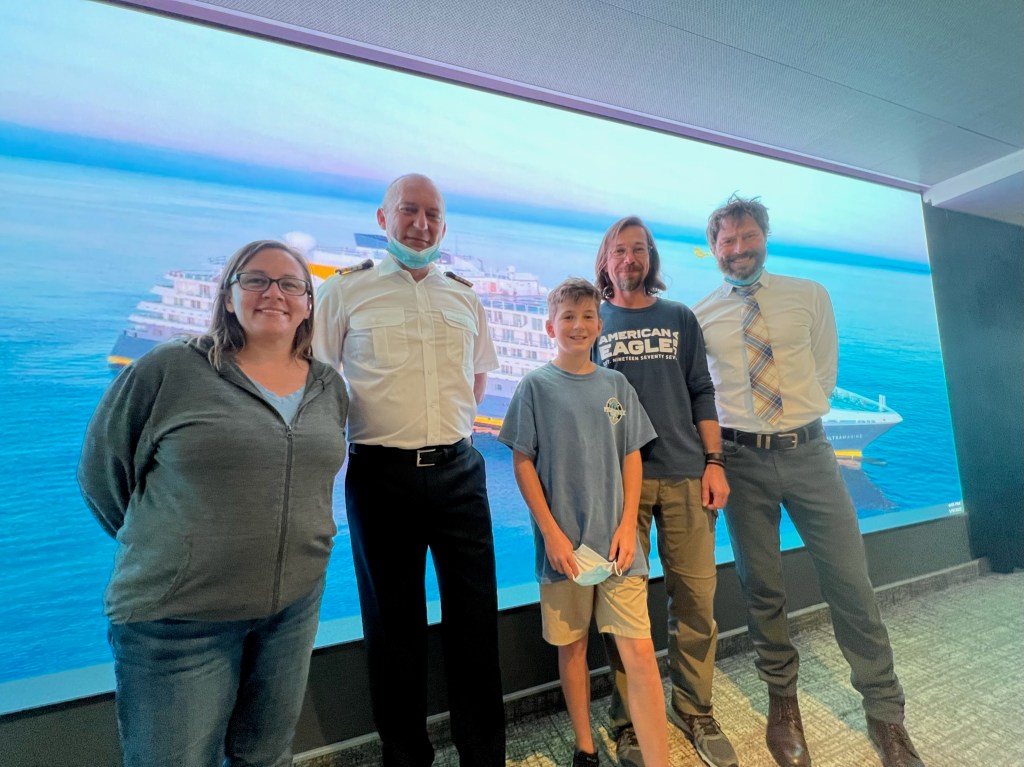
We followed the cocktails with a slideshow of the polar plungers doing their thing, and then an auction to benefit Penguin Watch and the South Georgia eradication fund. After dinner, we all gathered together again to watch the slide show of our voyage that our photographer made for us. There were quite a lot of laughs, and Henry and I both cried during it.
Tomorrow will be hard, but we are excited too. We will be getting off the ship, going on a bus tour of the National Park, and then boarding our plane for Buenos Aires. We knew this time was coming, but it seemed to get here so quickly.
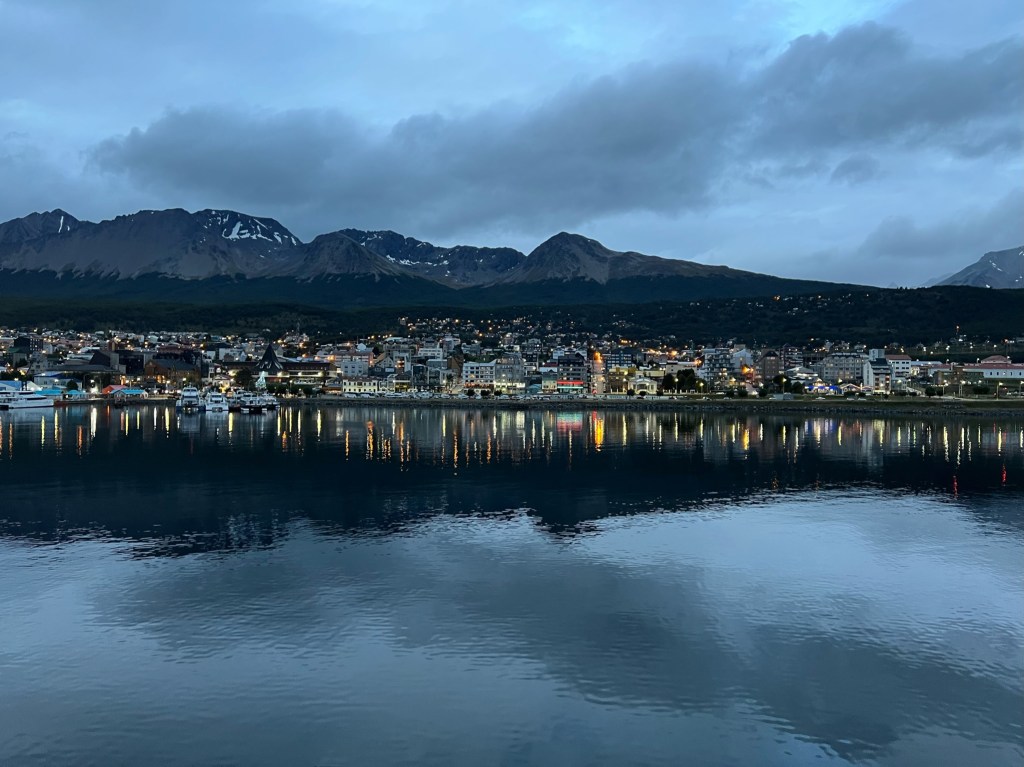
Day 20: January 10, 2022
We woke extra early this morning to pack up the last of our things. We’re all going on about 5 hours of sleep. We made it to breakfast, and enjoyed our last meal at the #36 table. At the end of the meal, we said our goodbyes to the restaurant staff and headed to the theater to pick up our packed lunches and passports. We waited in our room until they called us, but when it was our turn, we picked up our things, walked out of our room for the last time, and headed down the gangway.
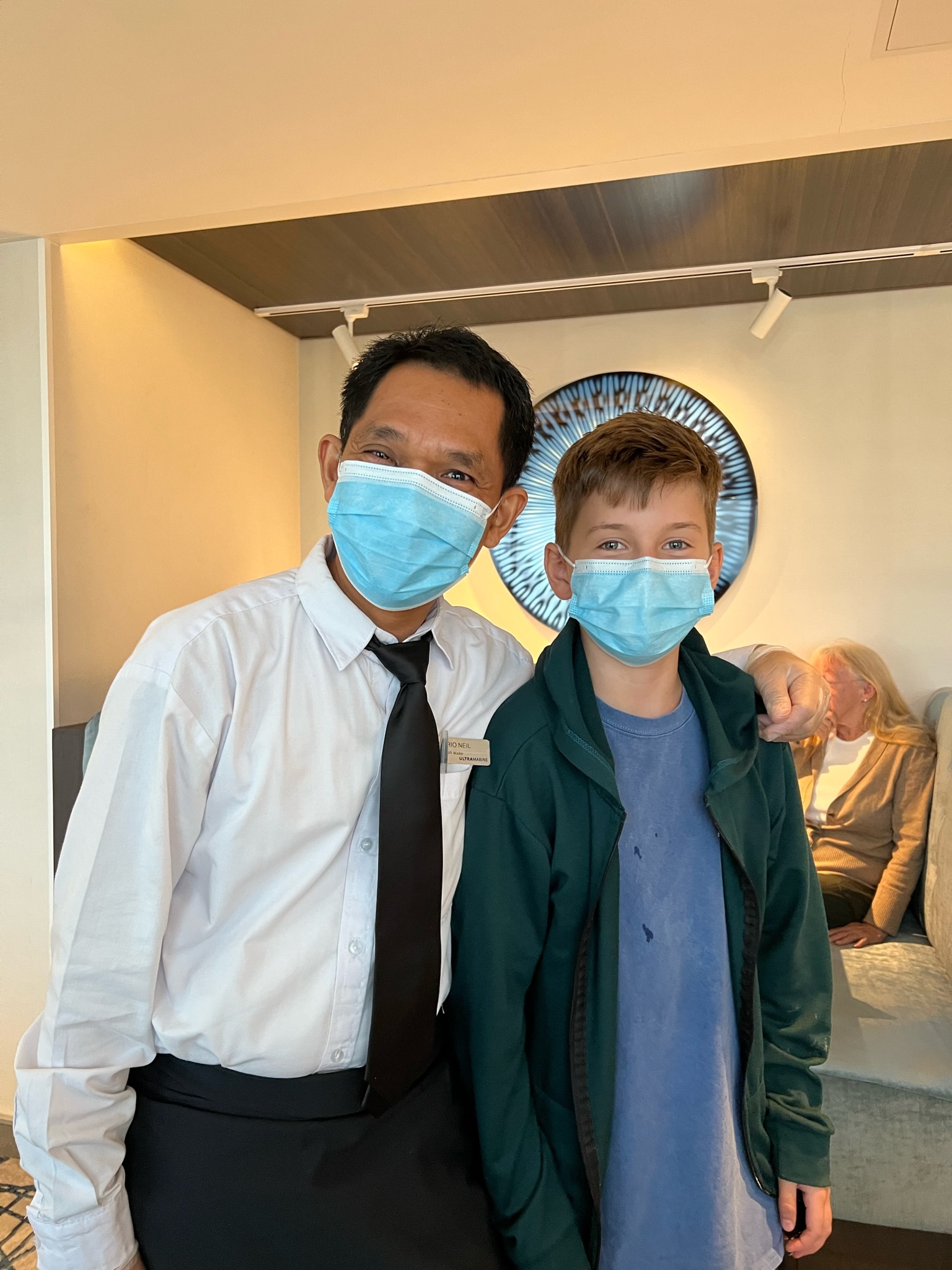
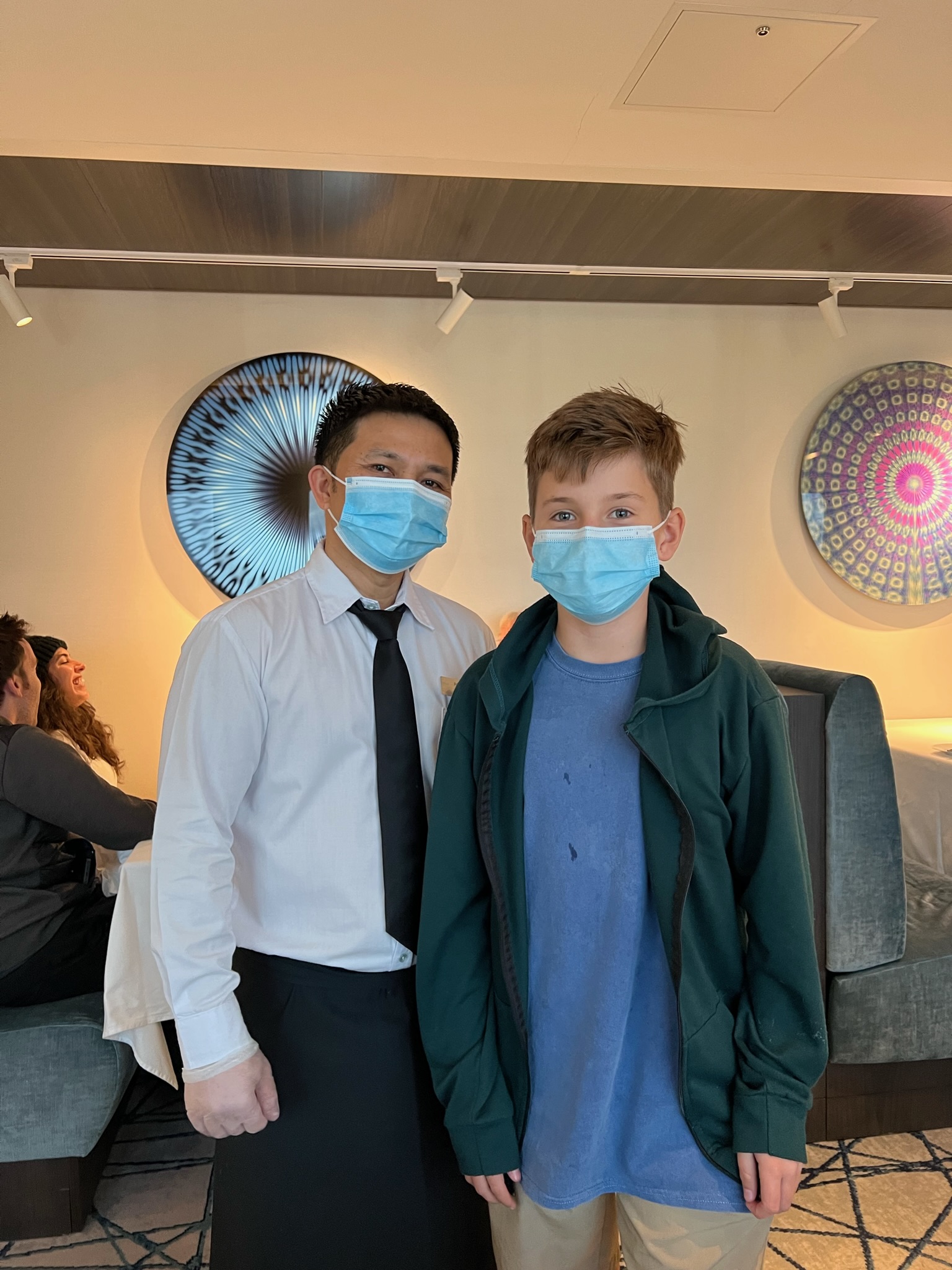
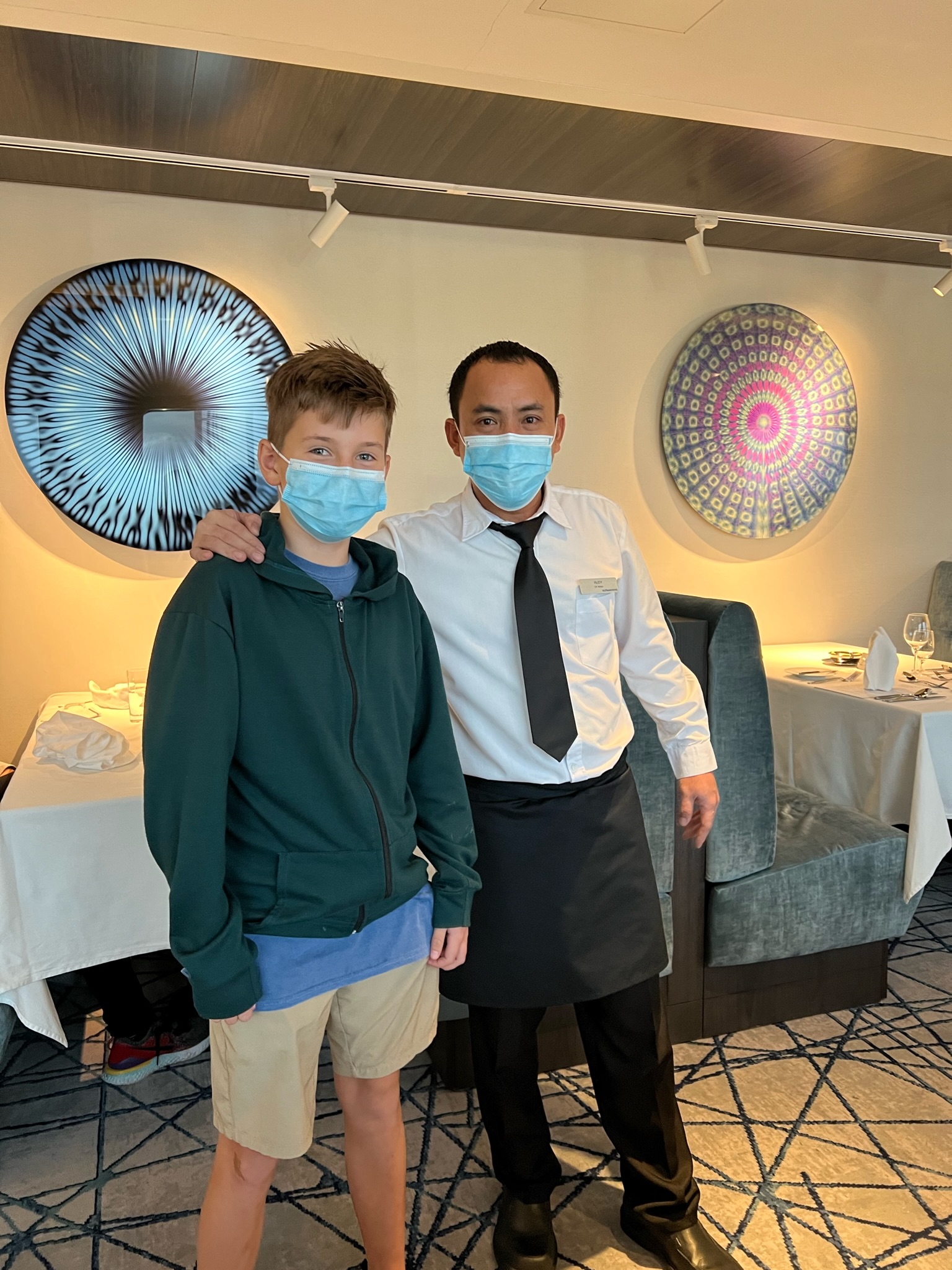
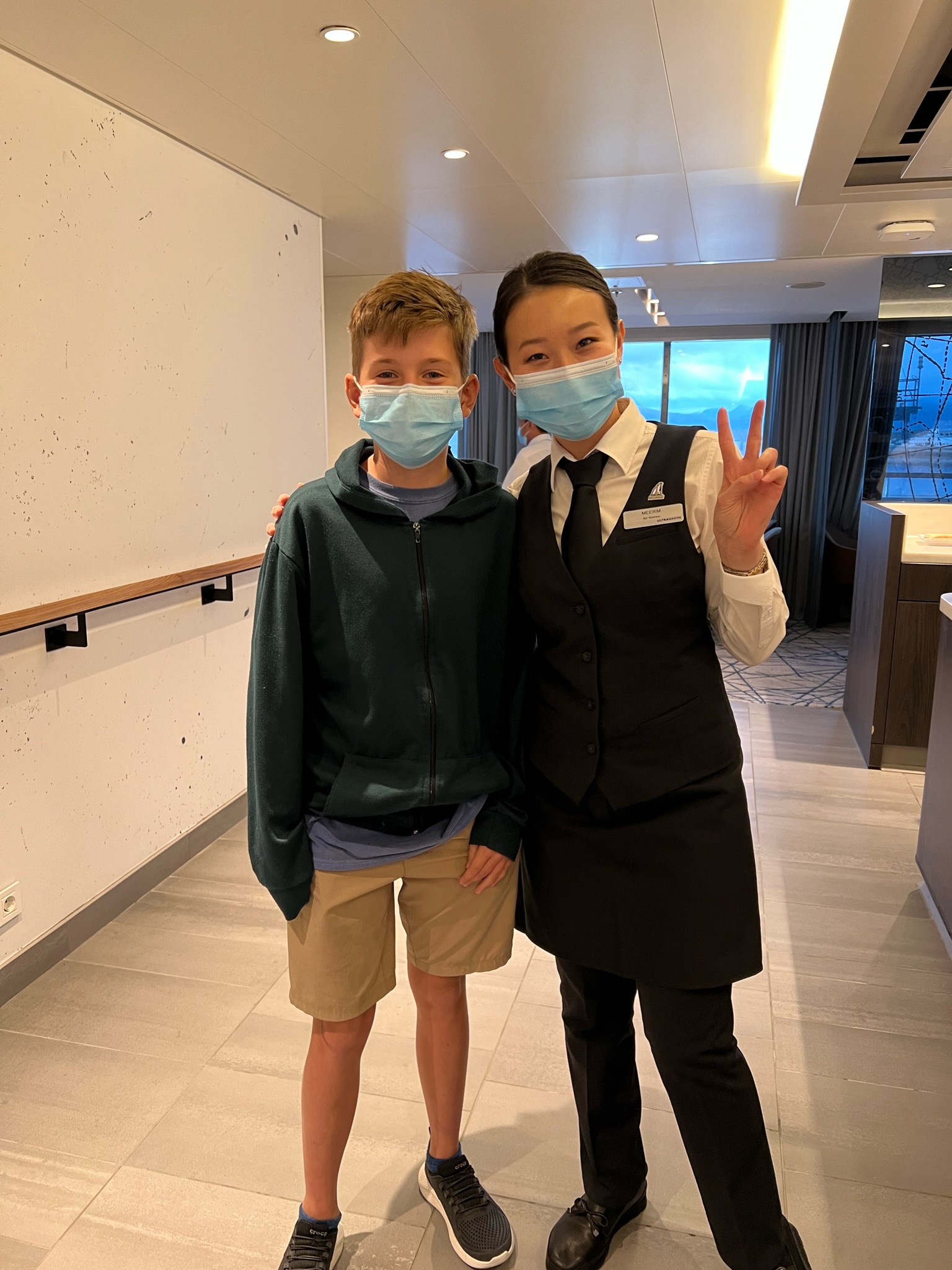
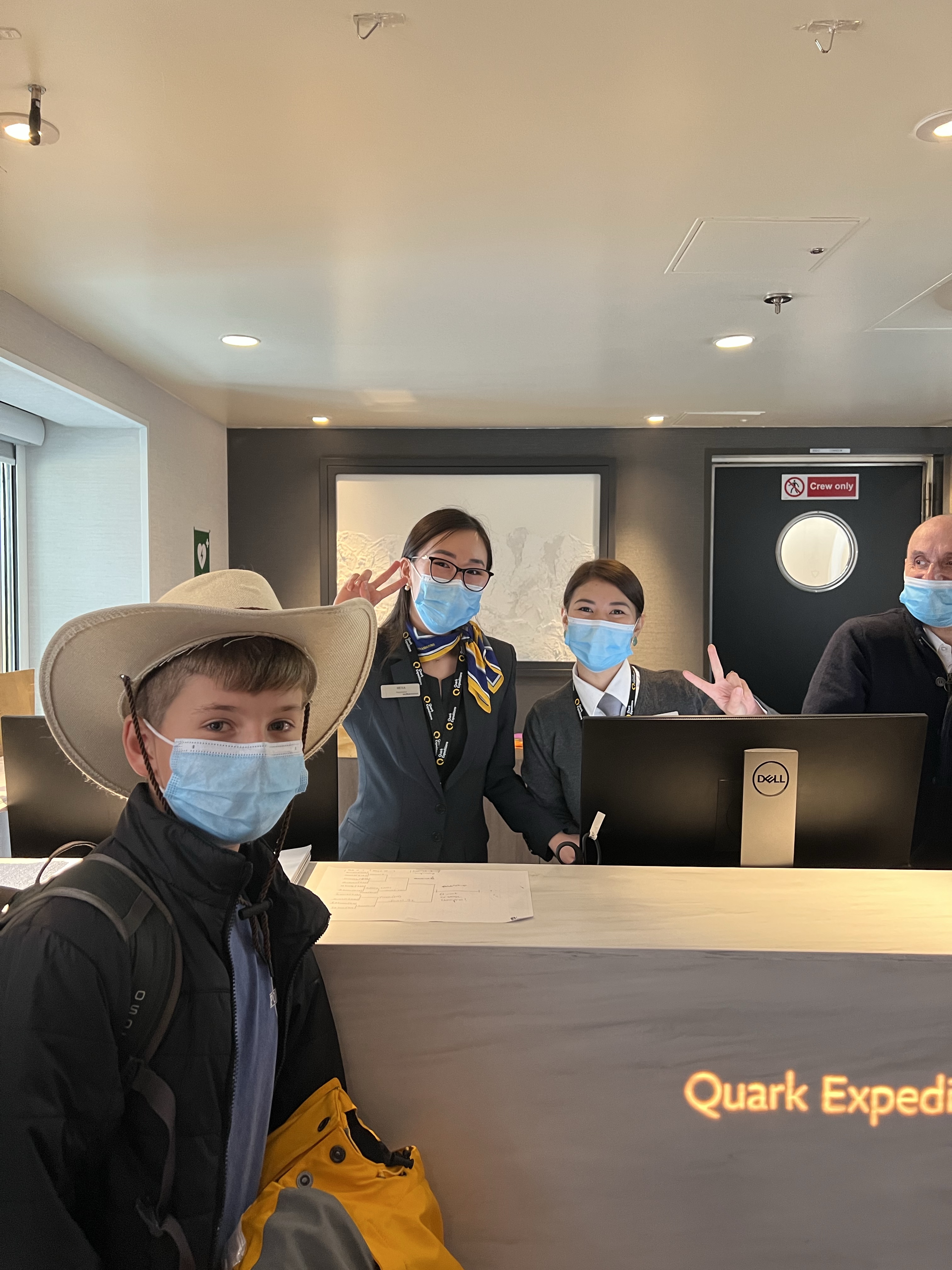
The ladies at reception told Henry how much they would miss him, and I couldn’t help but chuckle when they asked him to please say “Yes, ma’am” one more time for them. He did, and they just loved it. The Quark team was lining the gangway and pier to see us off, and through teary eyes, we smiled and said goodbye. We even saw Valeria from the ground team again, and she remembered Henry. We loaded our bags onto the bus. Over the next few hours, we got to go on a whirlwind tour of Tierre de Fuego, a National Park in Argentina. They took us to see the very end of the Pan-American Highway also; this highway starts in Alaska and goes all the way through the Americas. Since we’d been on this highway quite a lot on our journey, it was pretty special for us to get to see the final stretch. At around noon, the tour company dropped us off at the airport.
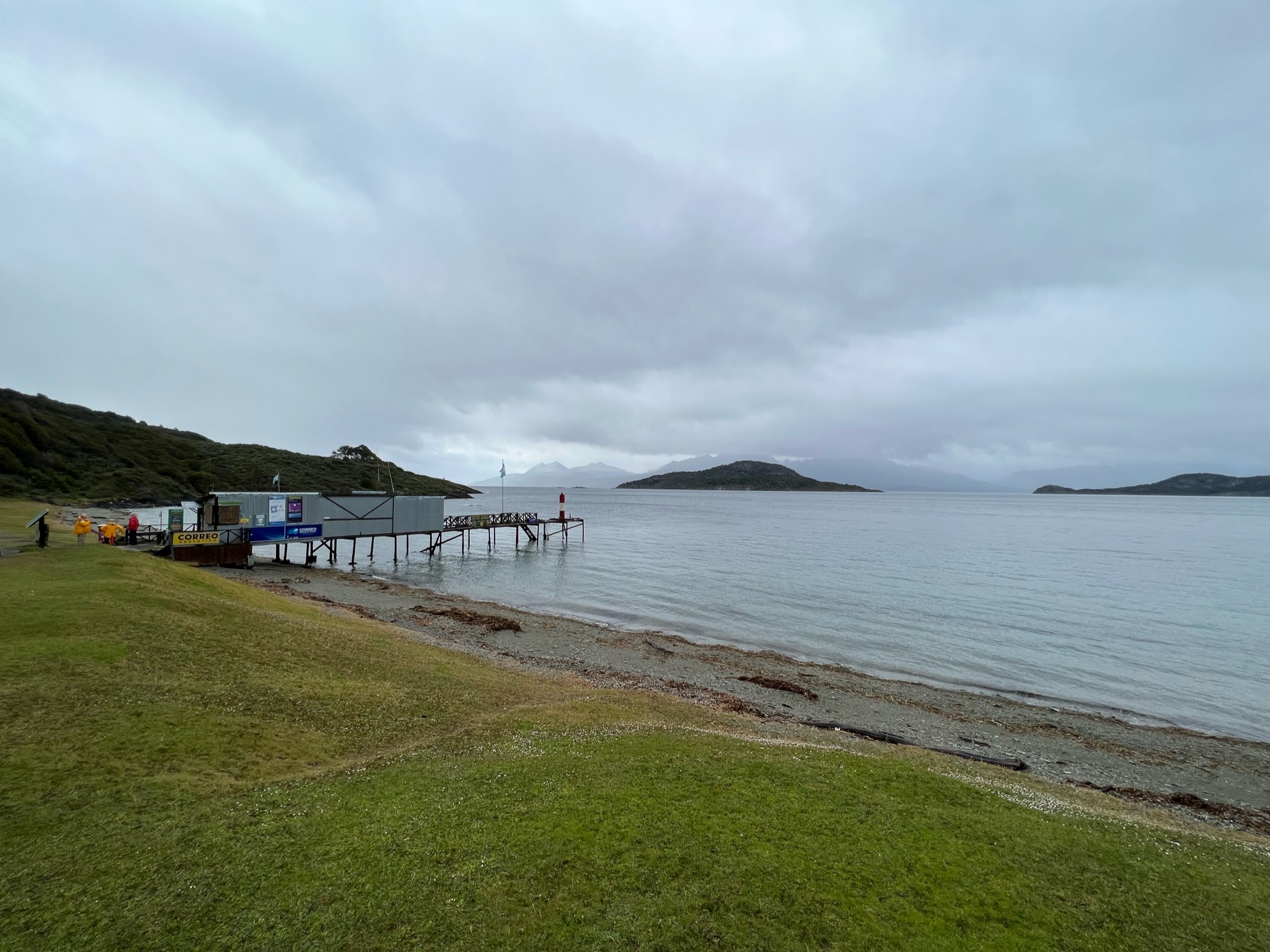
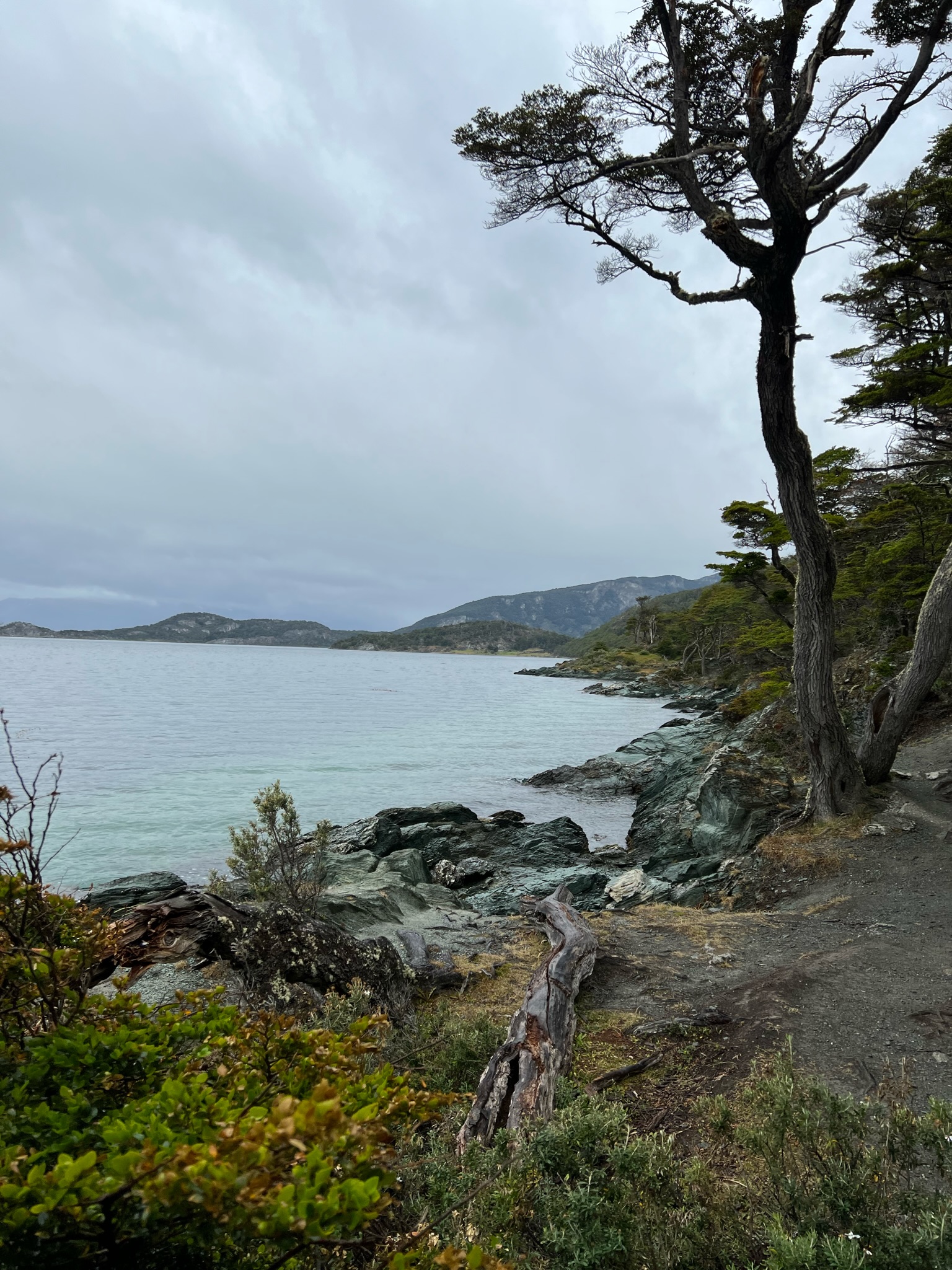
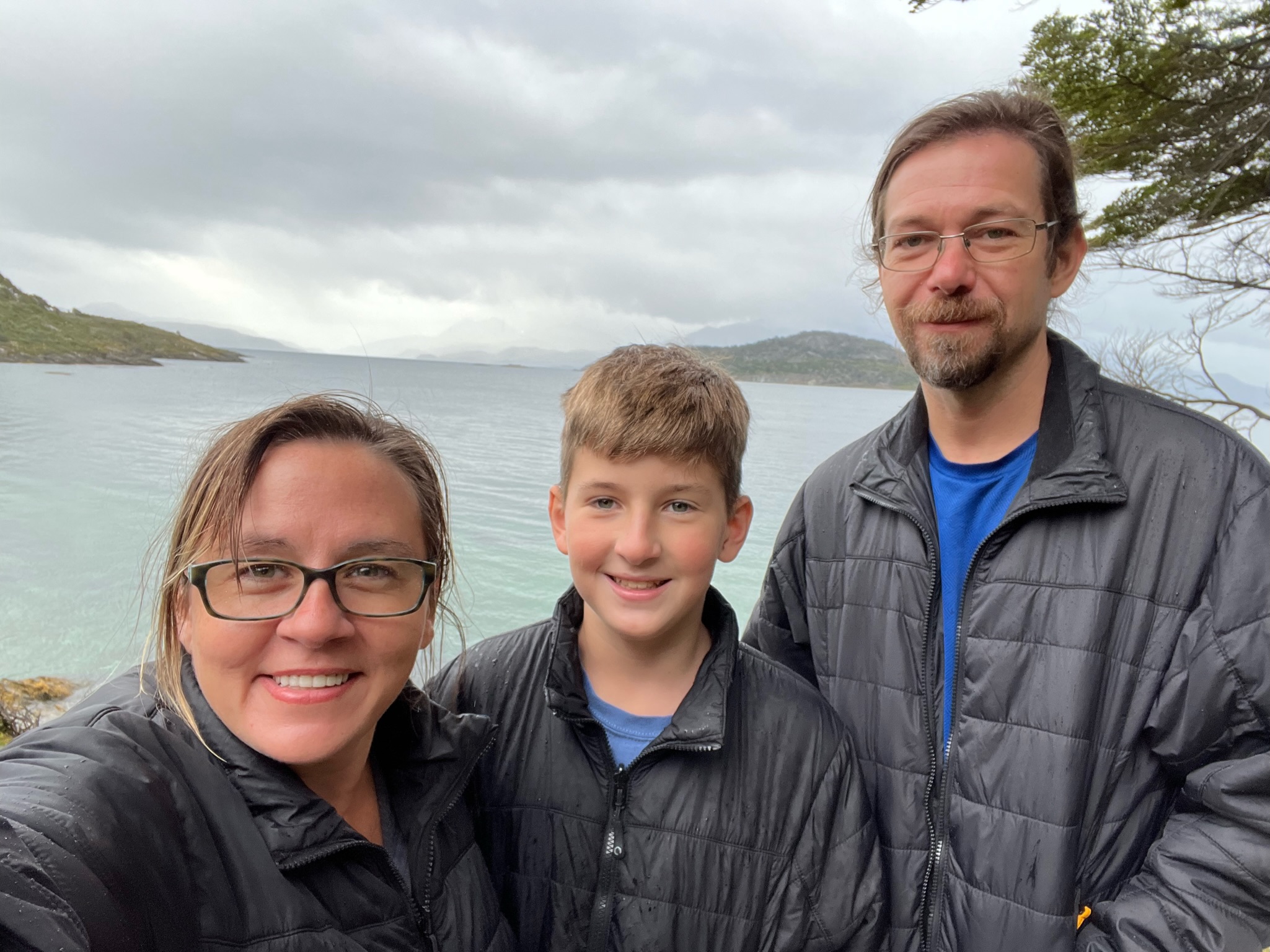

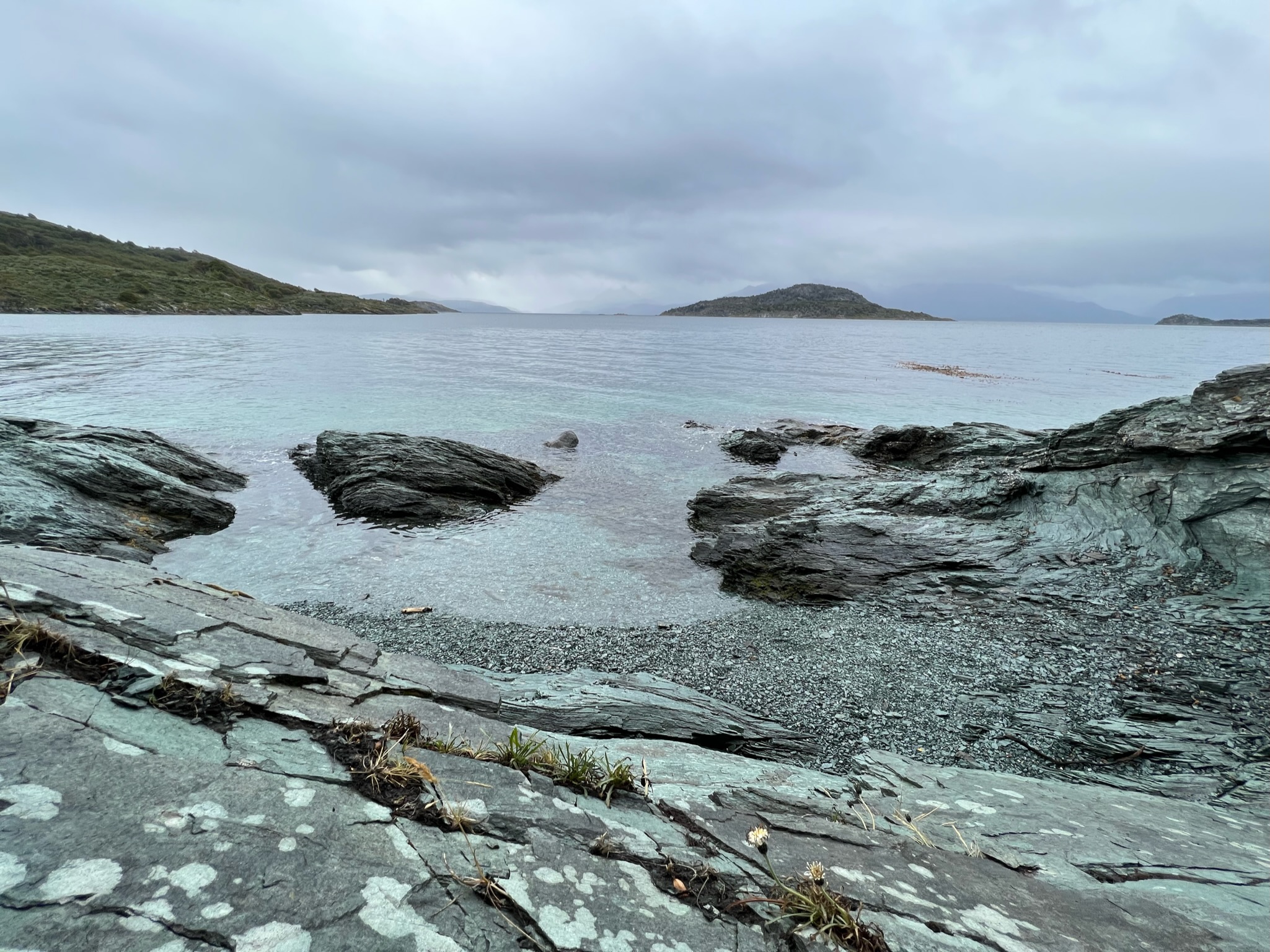
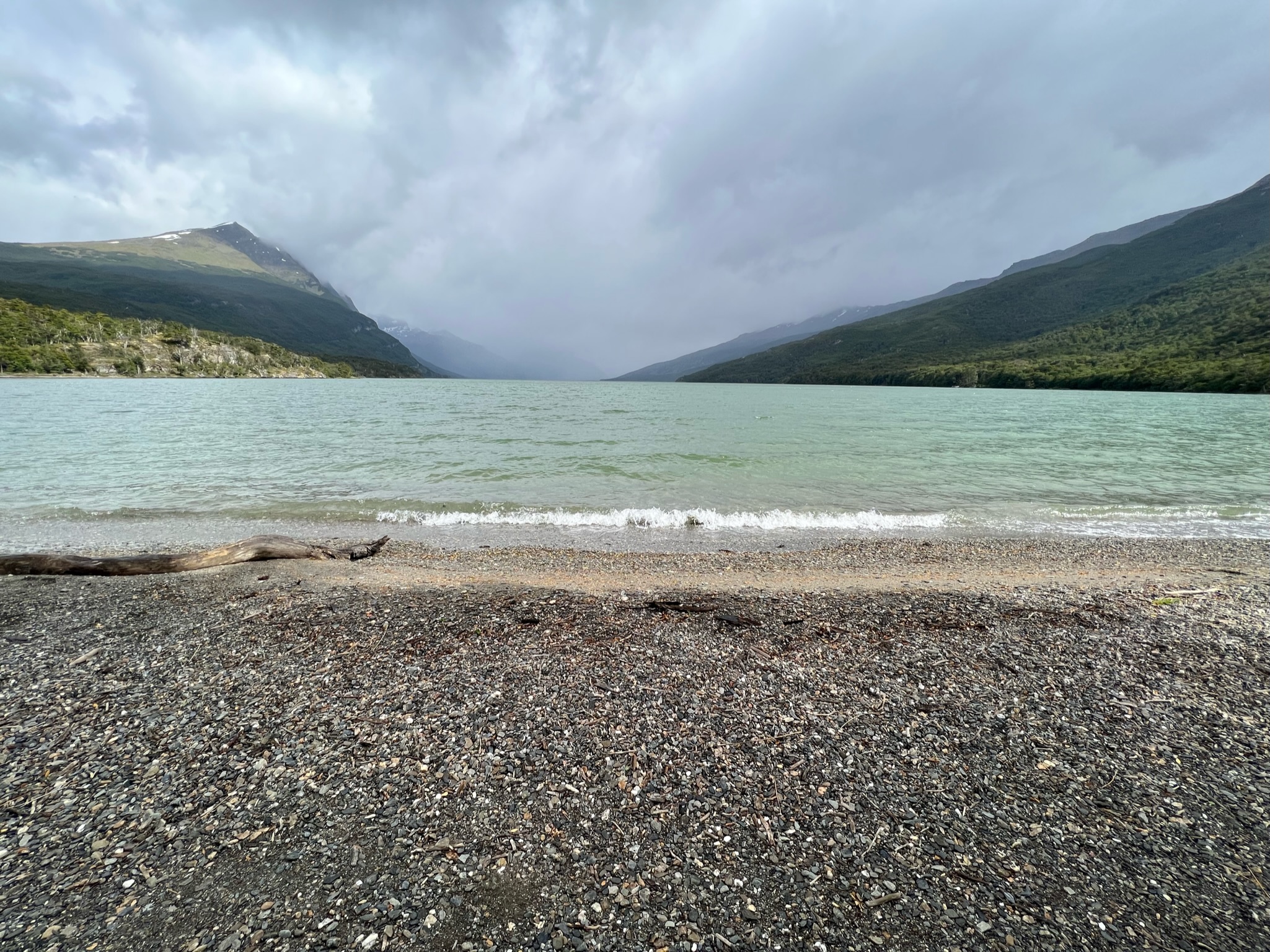
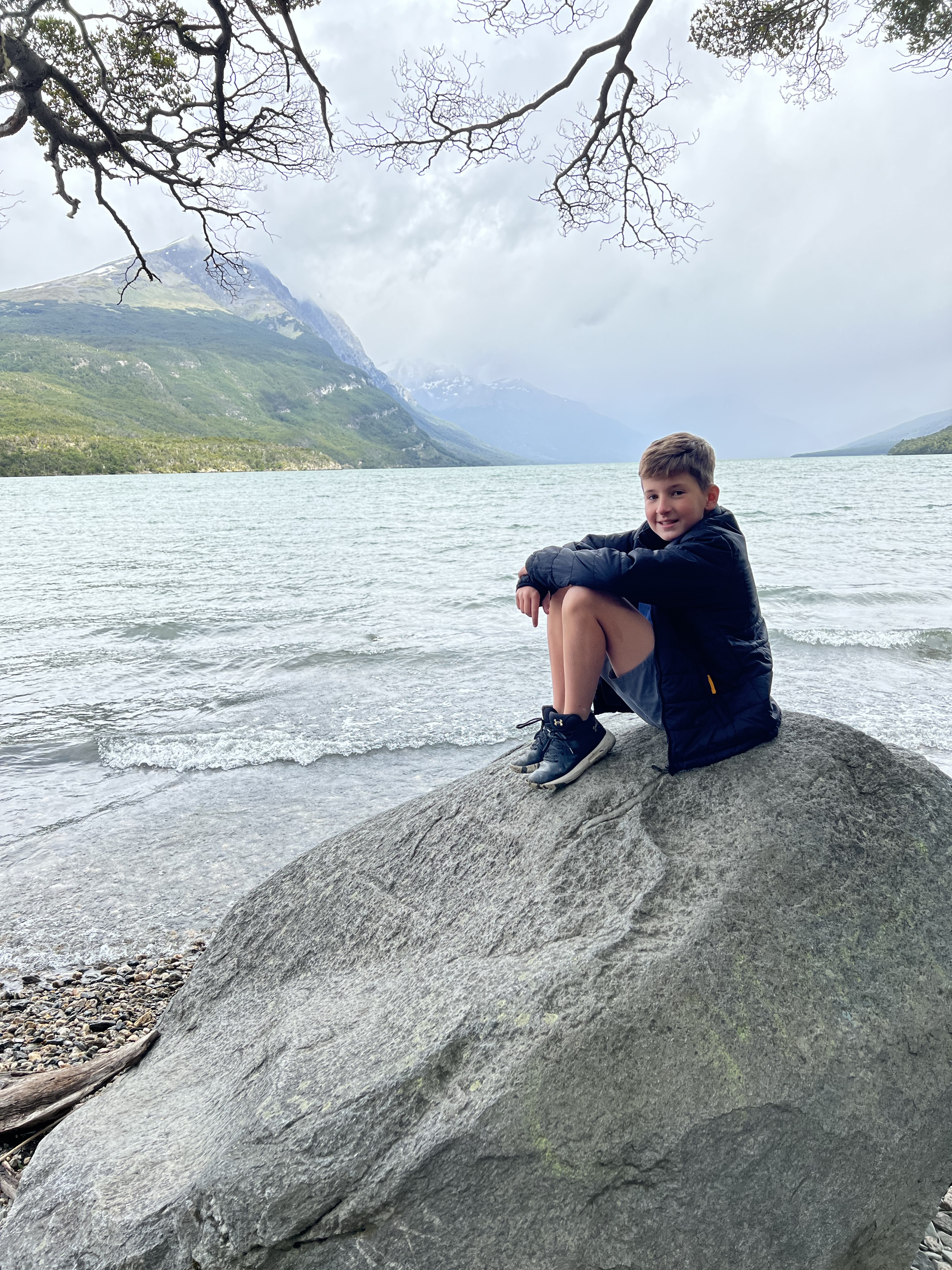
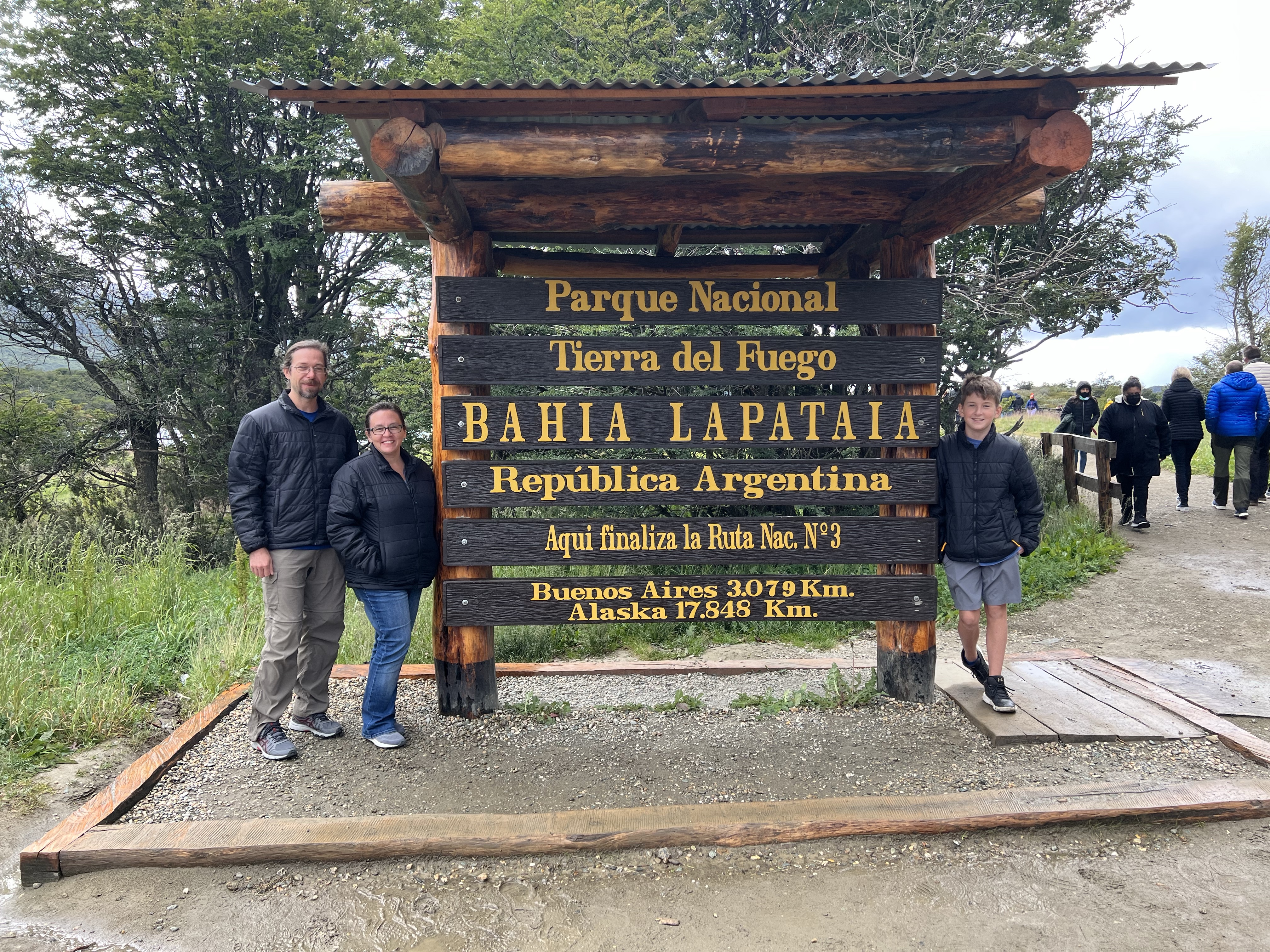
At the airport before the flight and then again after we landed, the people in our group were chatting with one another like we were all old friends. Henry exchanged contact information with several of the group. Ms. Jane gave us a contact that might be able to help us with coding when Henry is ready for it. Mr. Tom, the oldest man on the ship, gave Henry some pointers on his camera and editing software. Scott and Maggie, the sweet couple who got married on the trip and who had taken to Henry and spent a lot of time playing games with him, said they’d keep in touch with him as well.
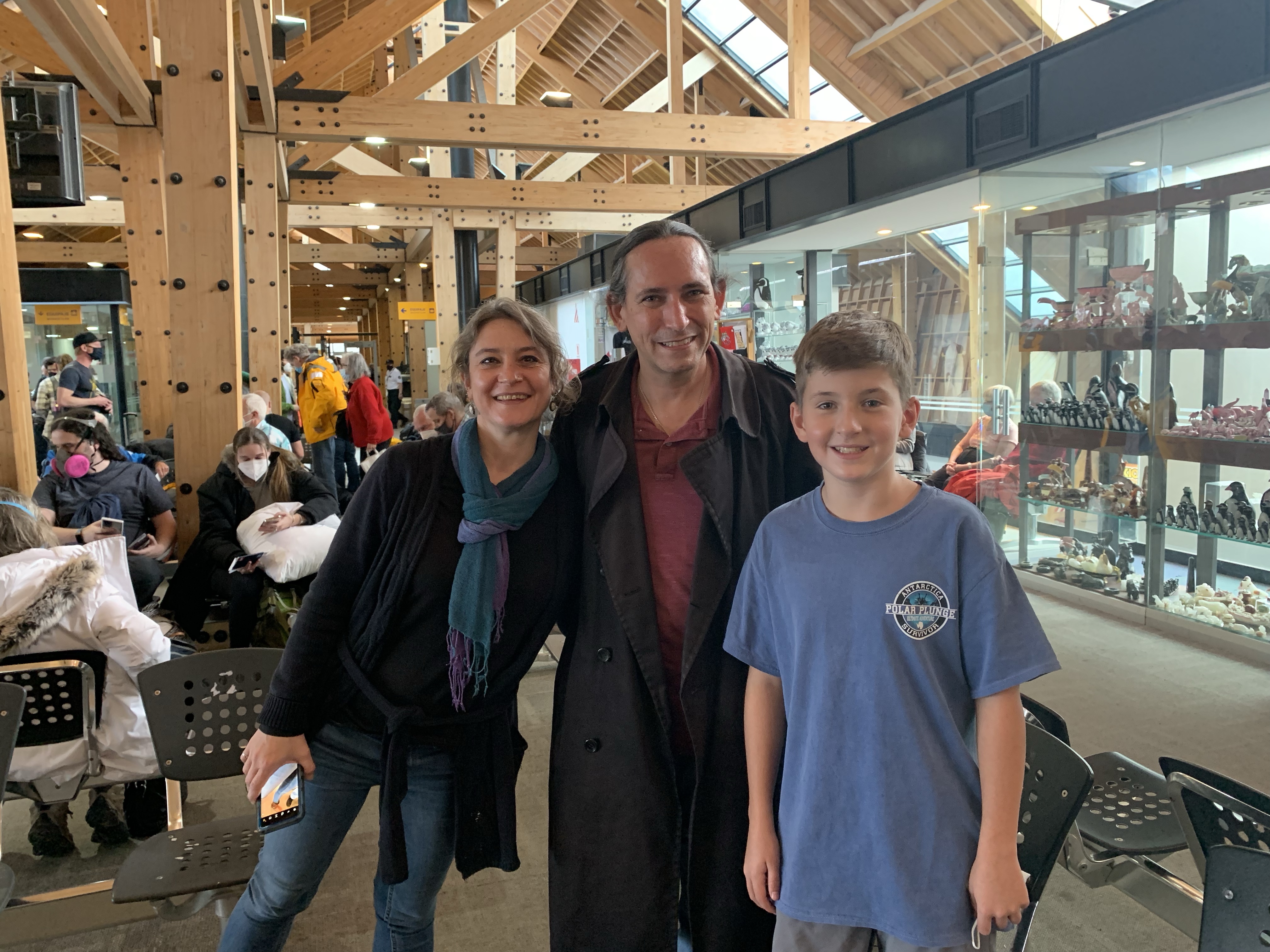
Afterward:
We had such a good time on this trip, and we met so many great people. I am grateful for the Quark Expedition Team and the Ultramarine staff. Both worked so hard to ensure that we had a safe and pleasant voyage. I honestly cannot think of anything they could have done better to protect us during this pandemic. The guests were all great fun, and they were so incredibly nice to all of us, but especially Henry. My pictures are beautiful, but quite frankly, they just don’t do it justice. I know many of you reading this may never want to go to Antarctica, but if you have the means and opportunity, it is well worth your time. To be in an area where most people will never go, and to see all of the wildlife in their element was both extremely humbling and absolutely breathtaking. Brian, Henry, and I had a fantastic trip. I’m beyond grateful that we have had this opportunity, and I will take these memories with me for the rest of my life.
 Expedition Fresh Start