Resilience is accepting your new reality even if it is less good than the one you had before. You can fight it, you can do nothing but scream about what you’ve lost, or you can accept that and try to put together something that’s good.
– Elizabeth Edwards
I was nervous about going to Colombia. It would be the first country for us on another continent, and this happened to be one that had a reputation for crime and corruption. I can also still remember watching the movie Romancing the Stone when I was a kid and the jungle and the scene with the alligators stuck with me from all of those years ago. I remembered Cartagena being beautiful and the main characters in the movie enjoying the local rhythms as they danced together in the city. Would Colombia be the scary place I’d heard about where I would constantly be looking over my shoulder, or would I be taken in by the beauty and culture? I really didn’t know what to expect, and I was surprised to experience both. Let me start at the beginning.
We’d debated for days on how to get to Colombia from Panama. You cannot cross the Darien Gap by land, so buses were out of the question. Should we would fly, or should we take a boat through the beautiful San Blas Islands? I really wanted to take the boat because I had wanted to spend a few days in the San Blas Islands for quite some time. In the end, we decided that we really didn’t have the 5 extra days to spend on the boat, and the flight turned out to be slightly cheaper.
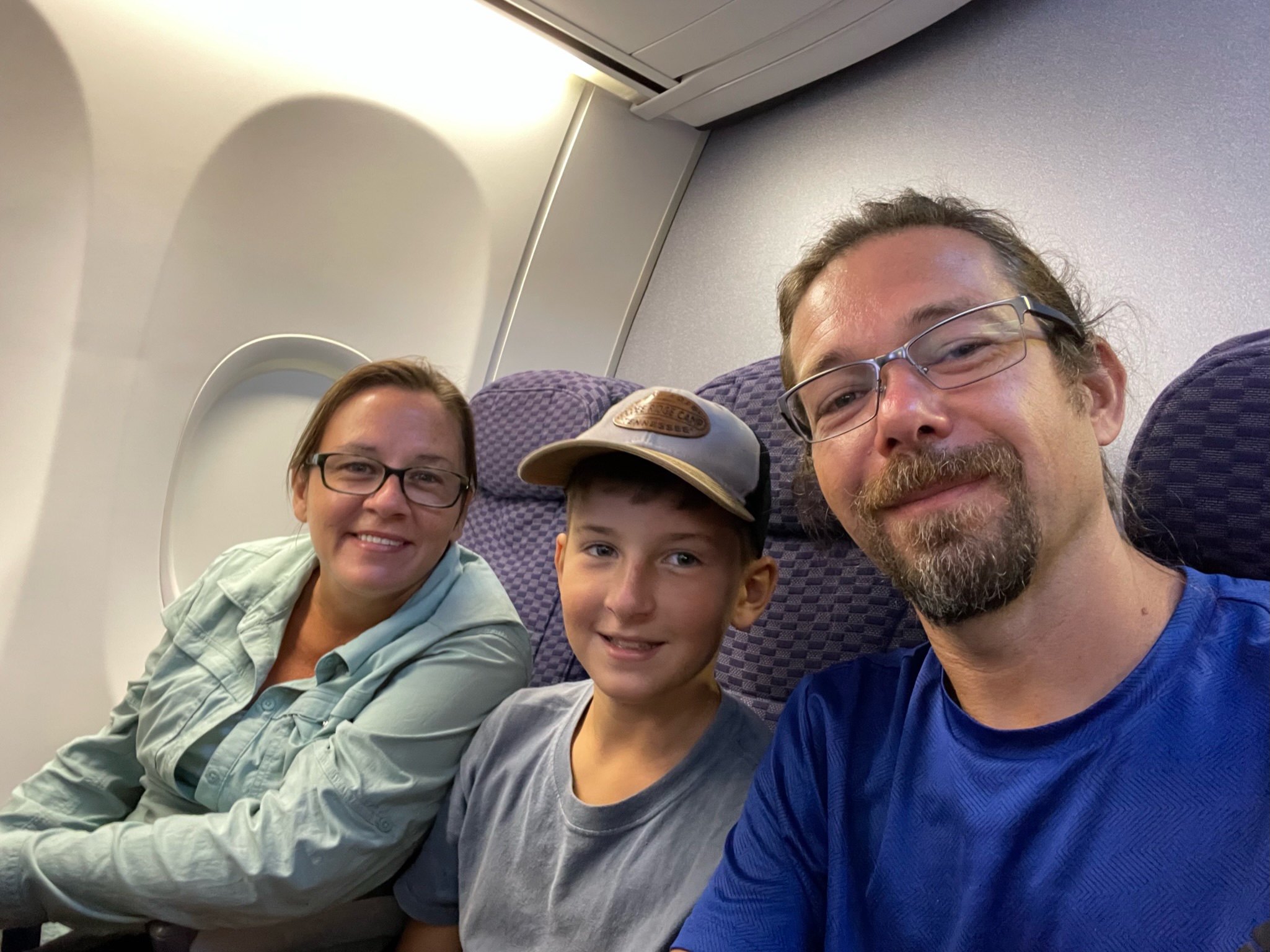
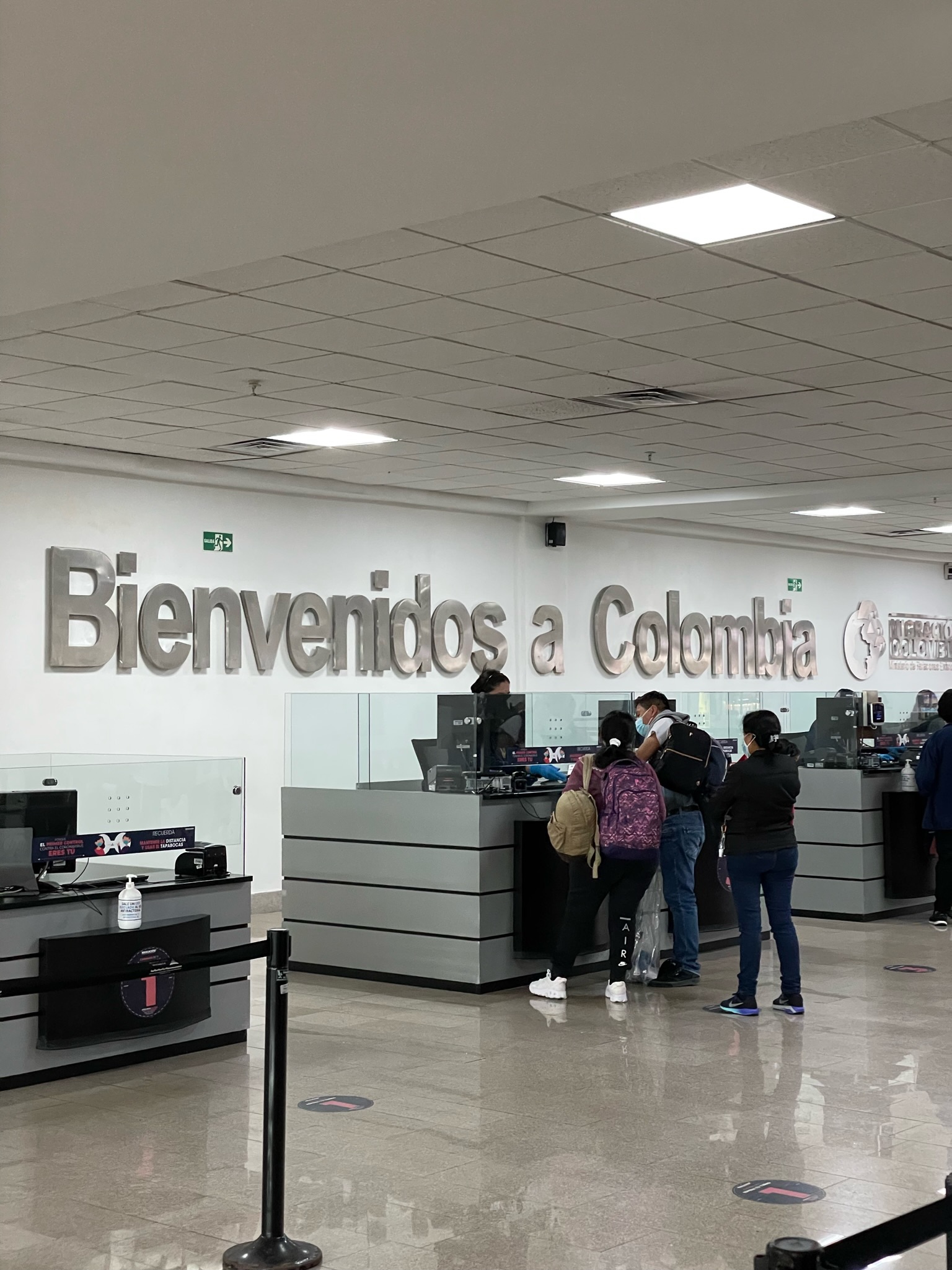
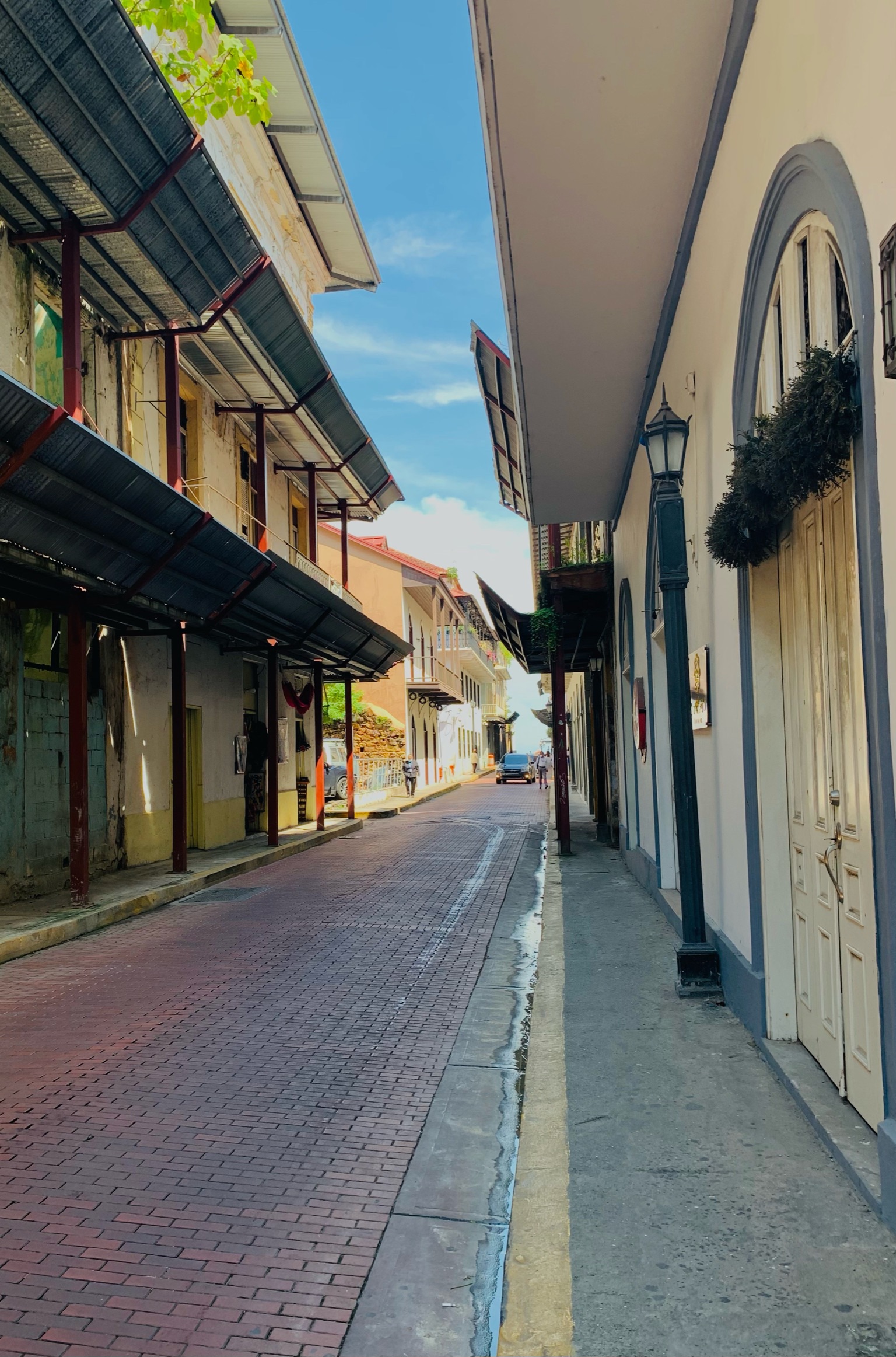
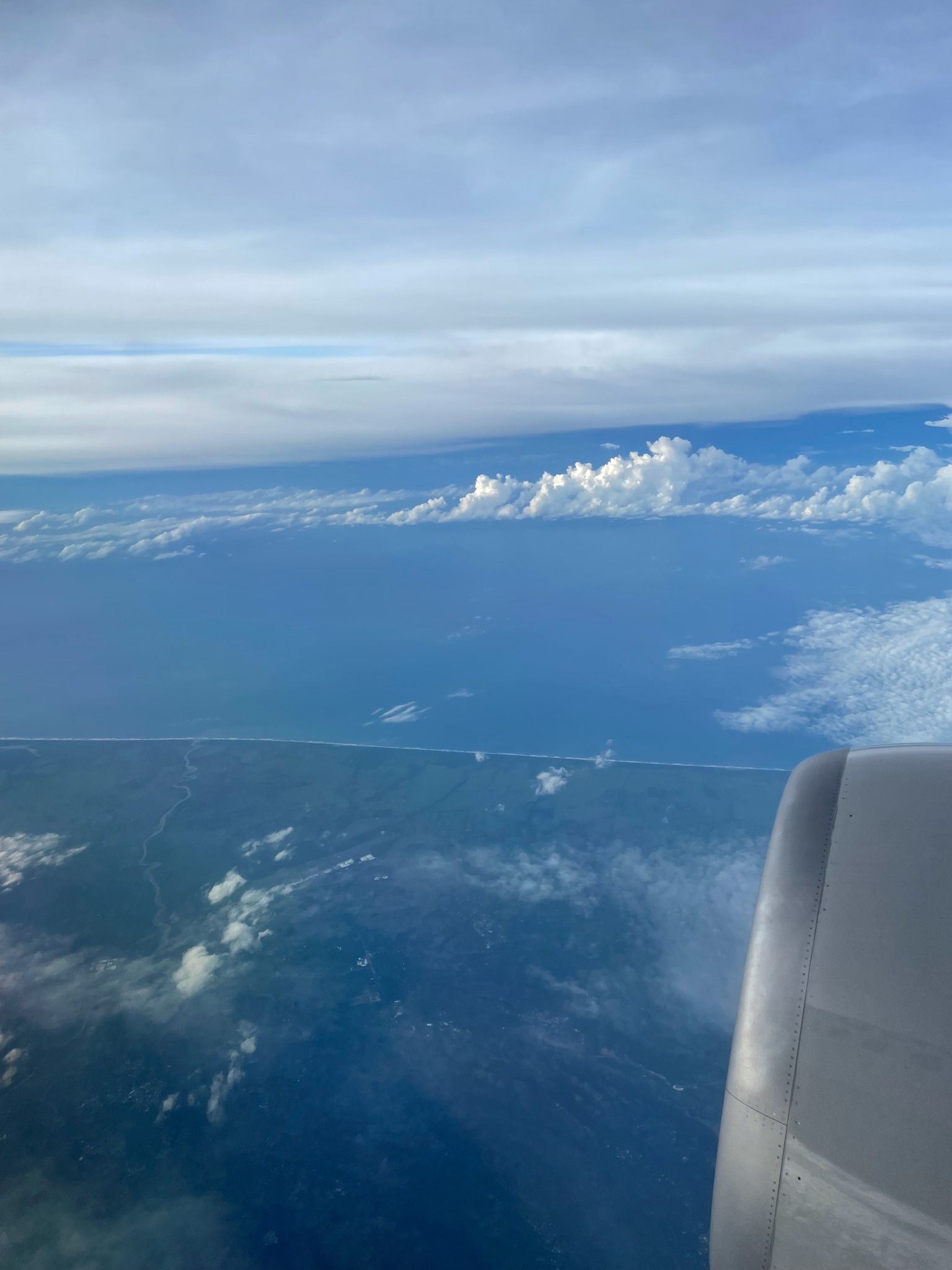
We flew from Panama City to Cartagena, Colombia on a Saturday morning. Shortly after the plane touched down, we grabbed our taxi and headed for the hotel. We were staying just outside of the historic district which is very near the ocean. Our driver turned off the shoreline highway, and we drove under an arched bridge and through the old city walls. Once we were inside the wall, it felt like we were transported to another time and place. Old enormous colonial homes and businesses replaced the standard big city buildings. These structures were all very well kept and colorful with beautiful gardens and decorative balconies. The streets were cobblestone, and there were monuments and artistic details on nearly every corner. It was crazy how by going through the wall, the whole atmosphere changed. The new city was big and bustling, but the old city was beautiful and serene.
Our driver got us to our hotel, and we entered a high-ceilinged foyer with a single large flight of white marble stairs. The reception area was at the top of the stairs, and we got checked in with no issues. Our room was up another flight, and we had the only room on the floor. This hotel was very small, and each of the 6 floors only had 1 or 2 rooms each. From our floor, you could continue up a modern spiral staircase to the others. On the 5th floor, the hotel had a community lounge area with a balcony that overlooked the street, and on the roof, it had a very nice pool to relax in. Our room was spacious and bright, and we had windows overlooking the hotel’s inner courtyard.
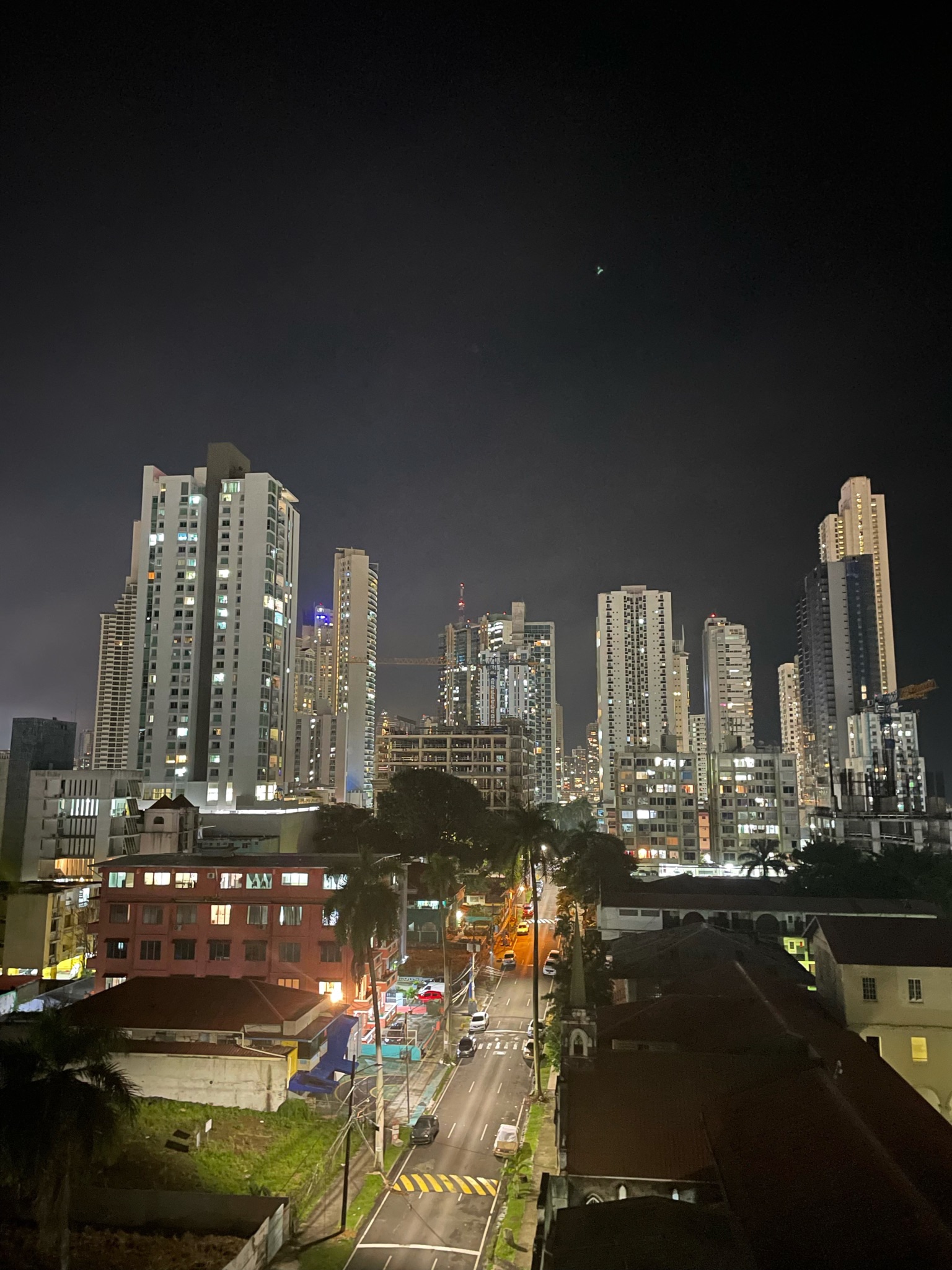
Outside our room, the city was hopping. A main bus terminal was directly across the street from the hotel, and there was a small mall just beyond that. At all hours of the day, people were milling about or walking to their destinations. There was always music coming from one of the businesses, and the environment was relaxed despite the busyness of the city.
On our second day in Cartagena, I talked Henry into going on a free city walking tour of the old town with me. For two hours, we followed our guide, raptly listening to the history of the area, learning how the old city used to be an island (but now is not), learning about the original residents and the Spanish who chose to settle there, and hearing about the criminal/violent history of the region and how Colombia is fighting hard to change it. I loved it. Henry did not. He patiently waited for it to be over, but that was about it. I loved walking up on the old walls and imagining the citizens defending themselves against the pirate attacks, and I enjoyed learning about the men and women who stood up for the defenseless slaves that were brought to be sold in the port and how they changed the course of history by doing so. I really enjoyed the old city.

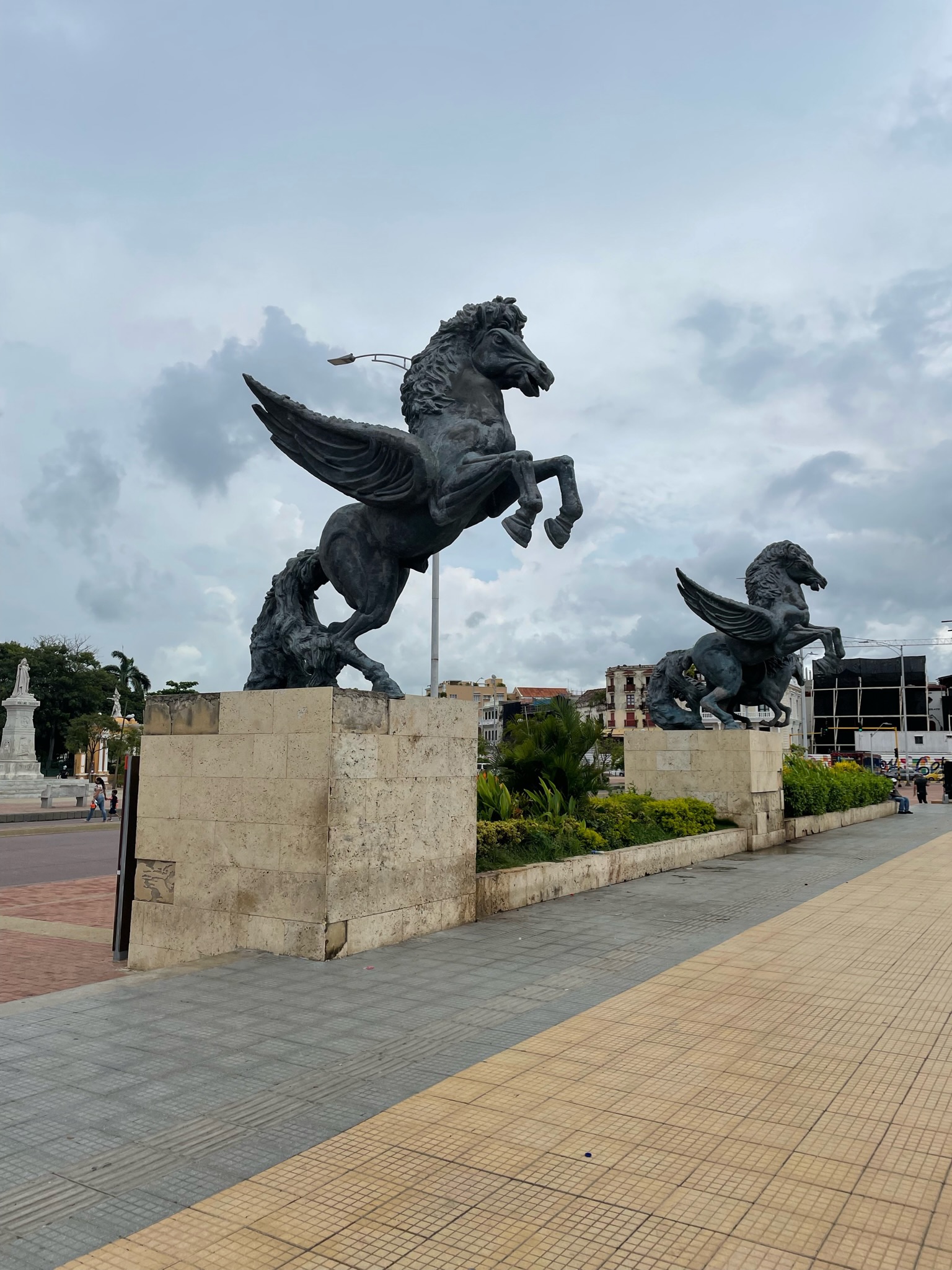
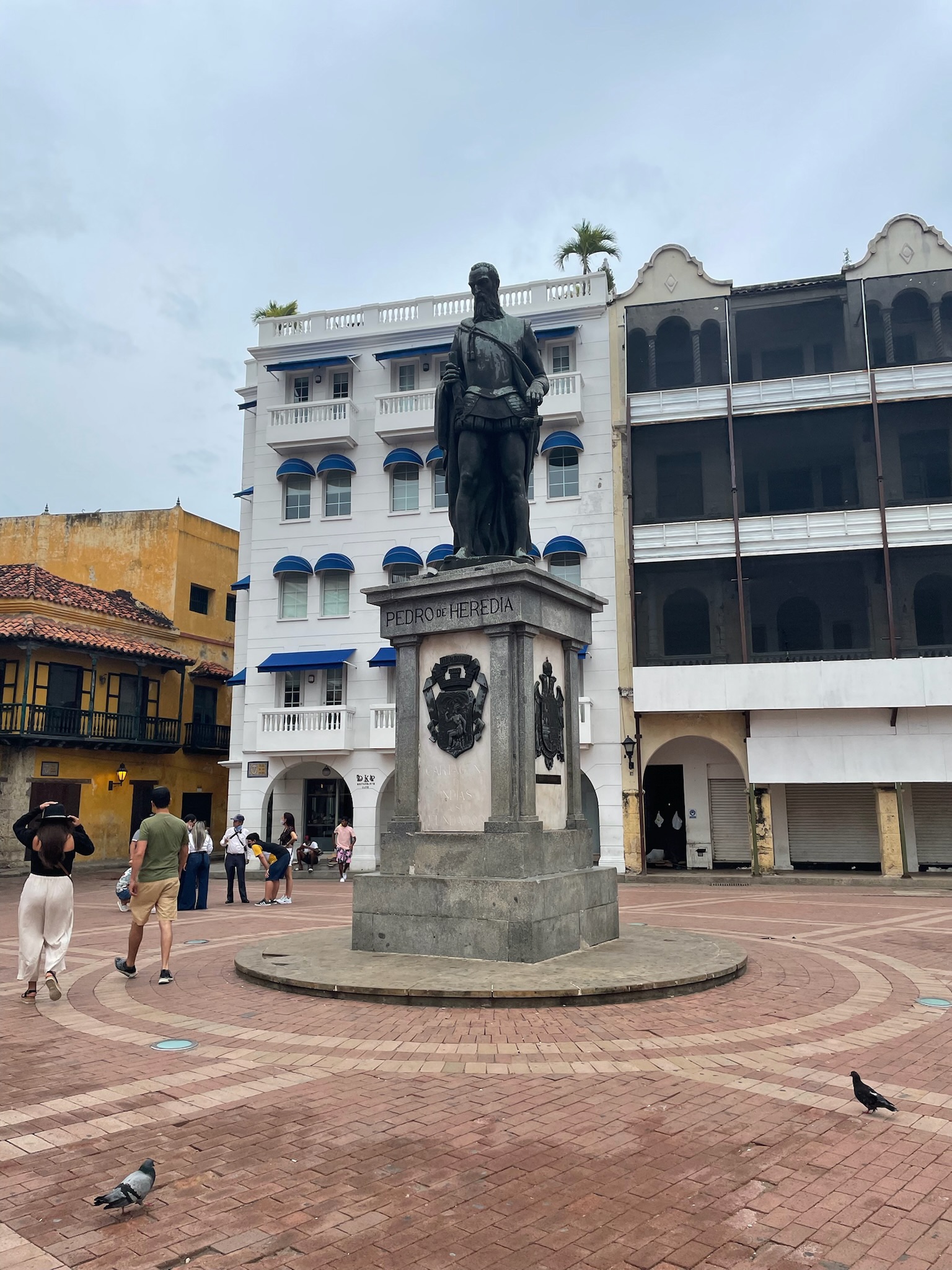
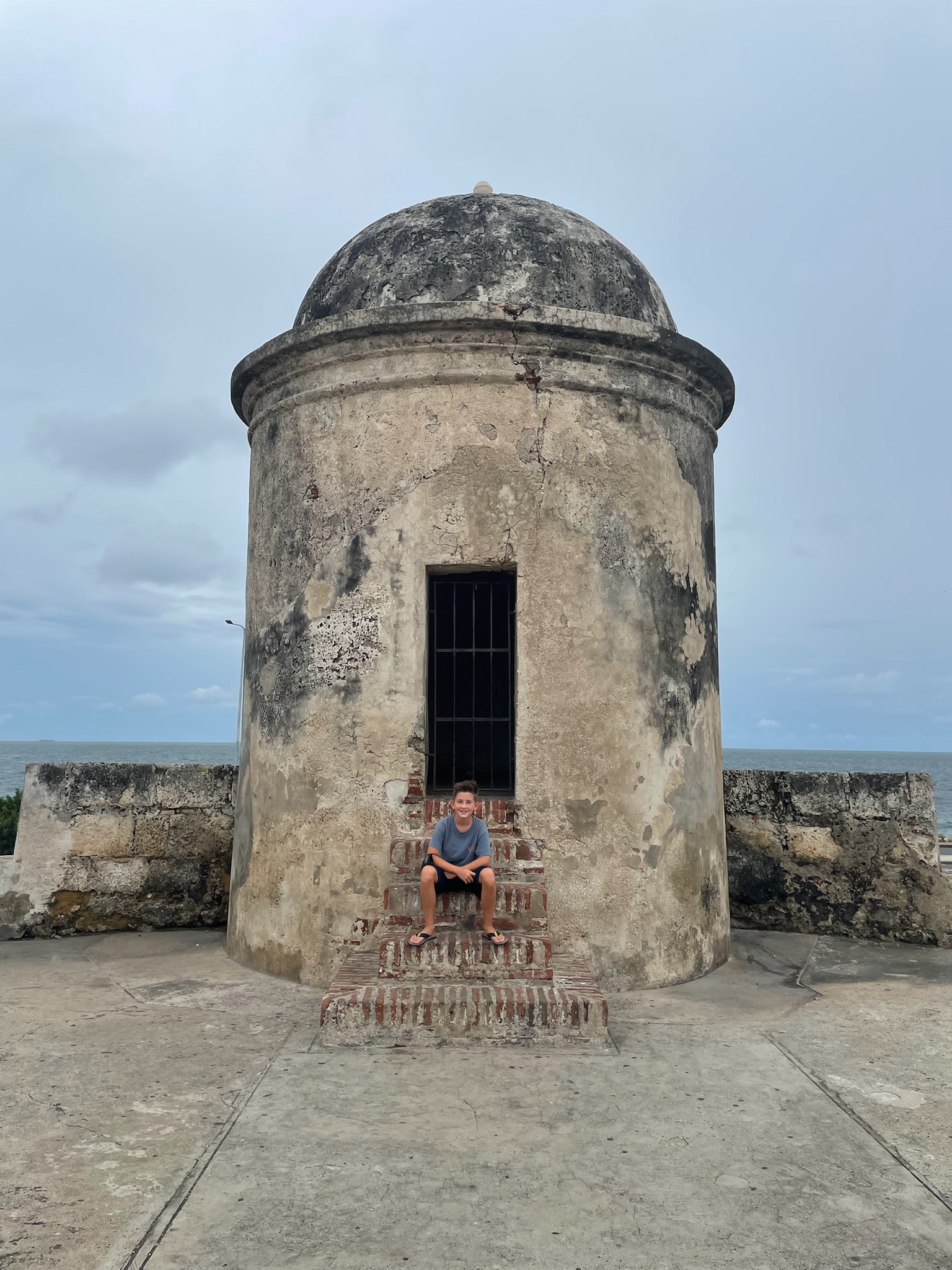
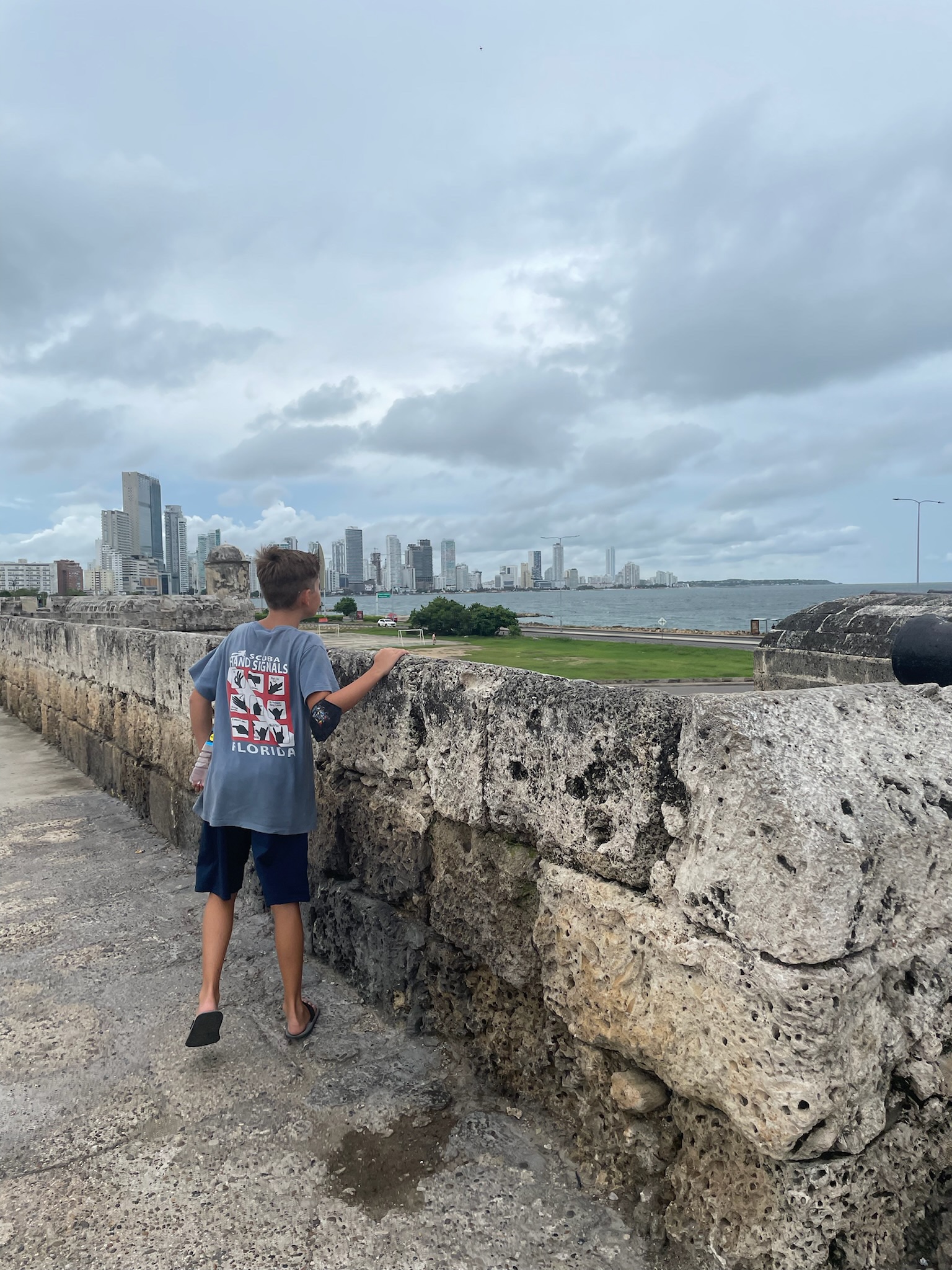
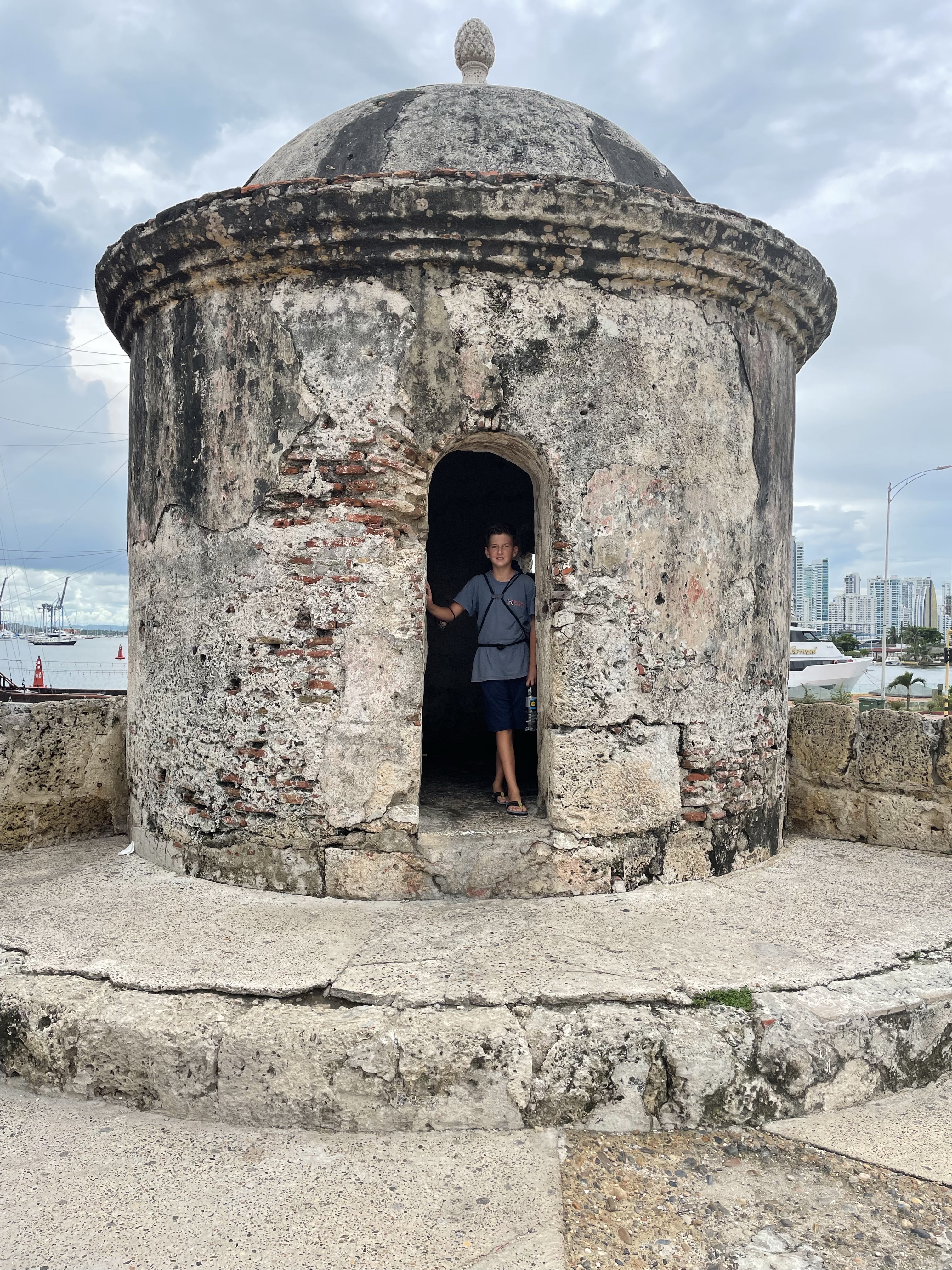
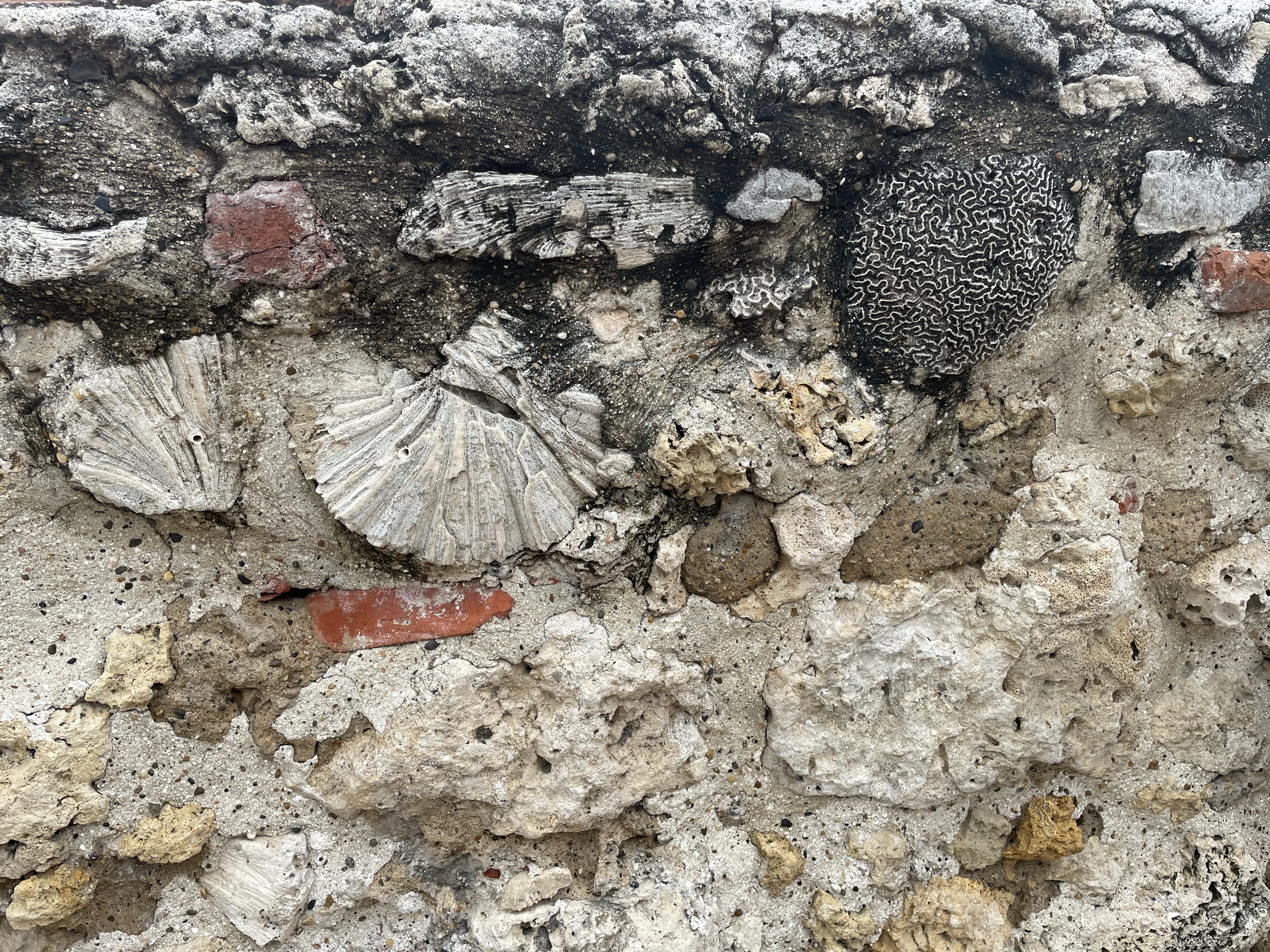
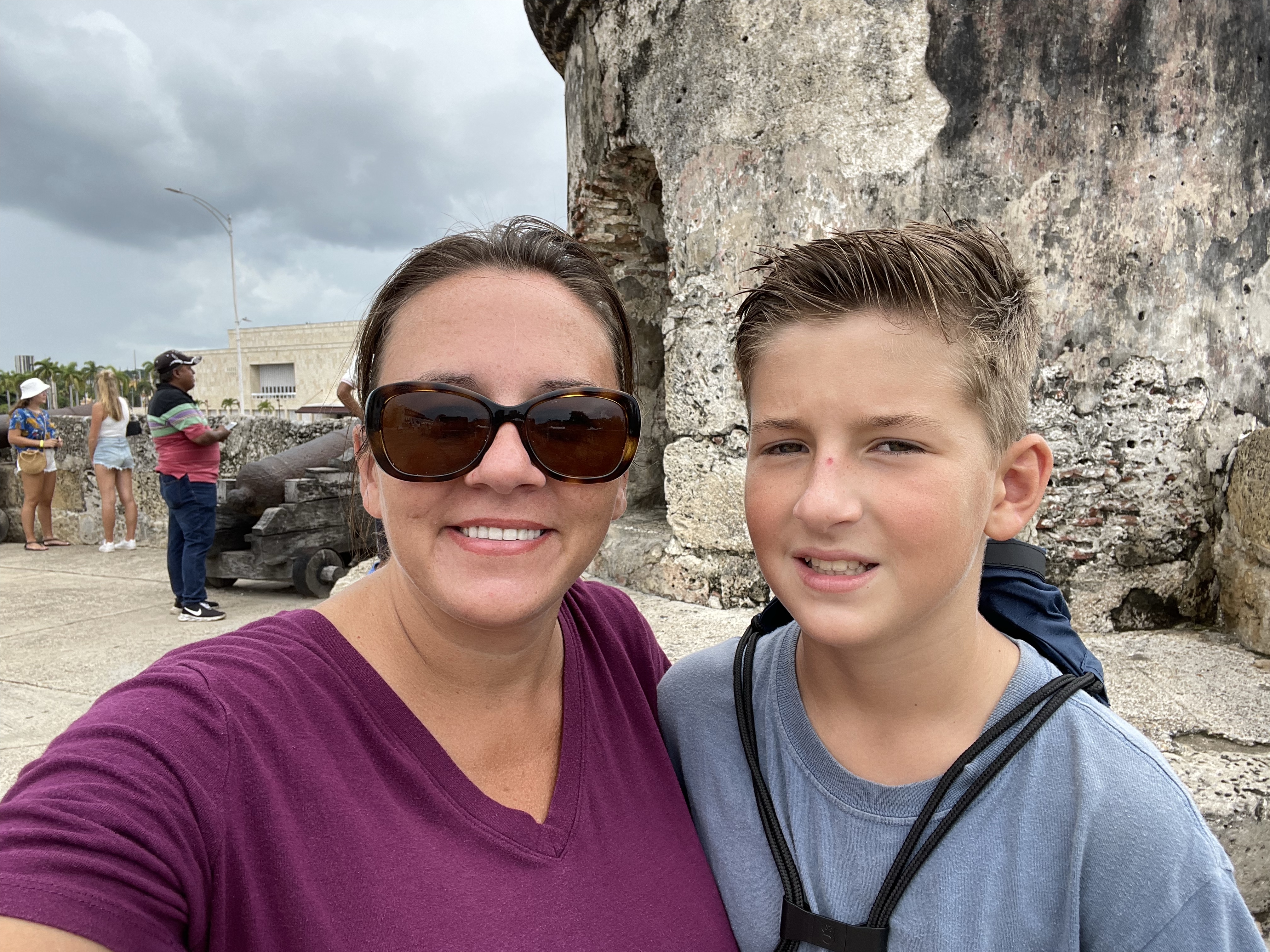
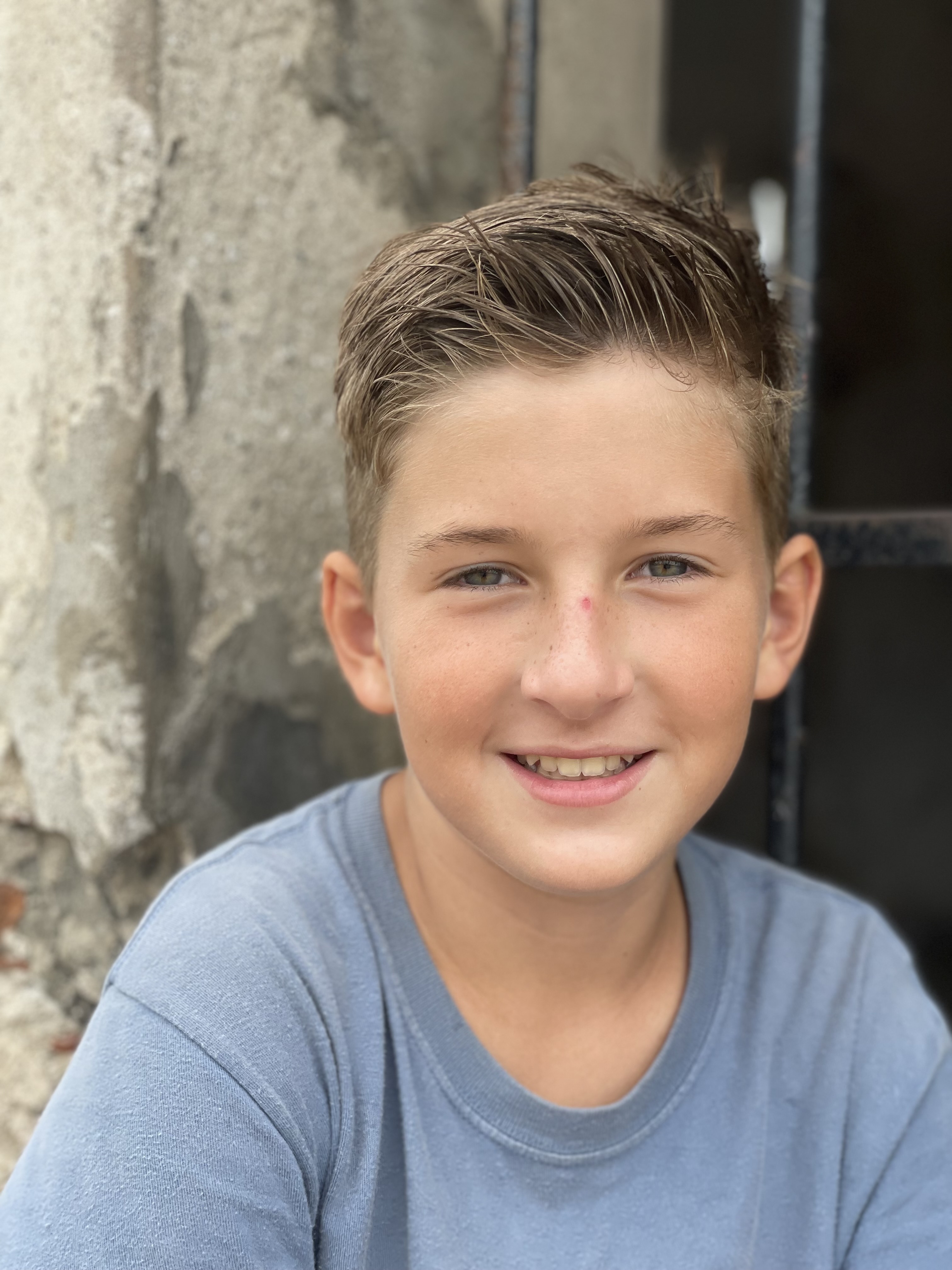
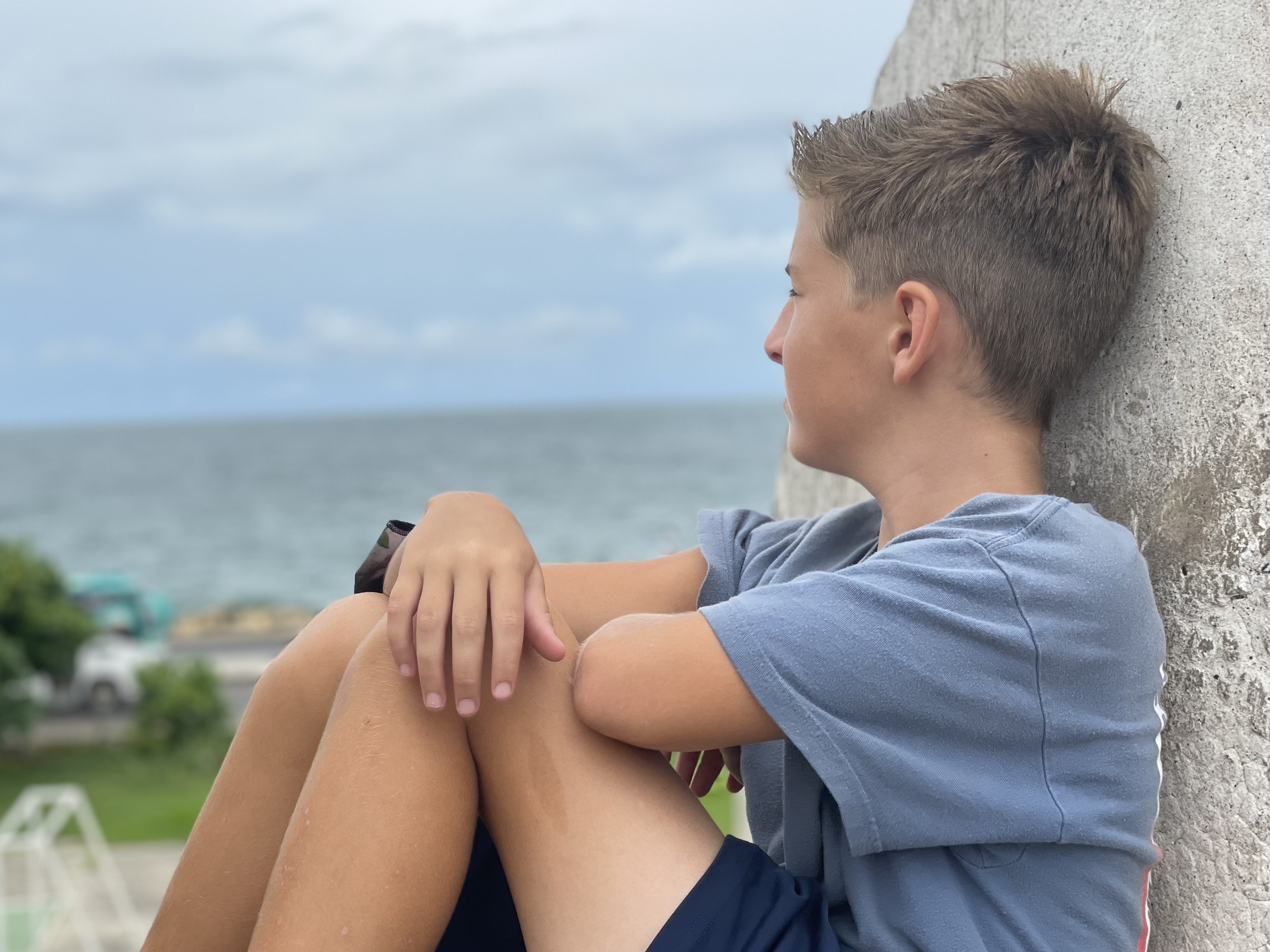
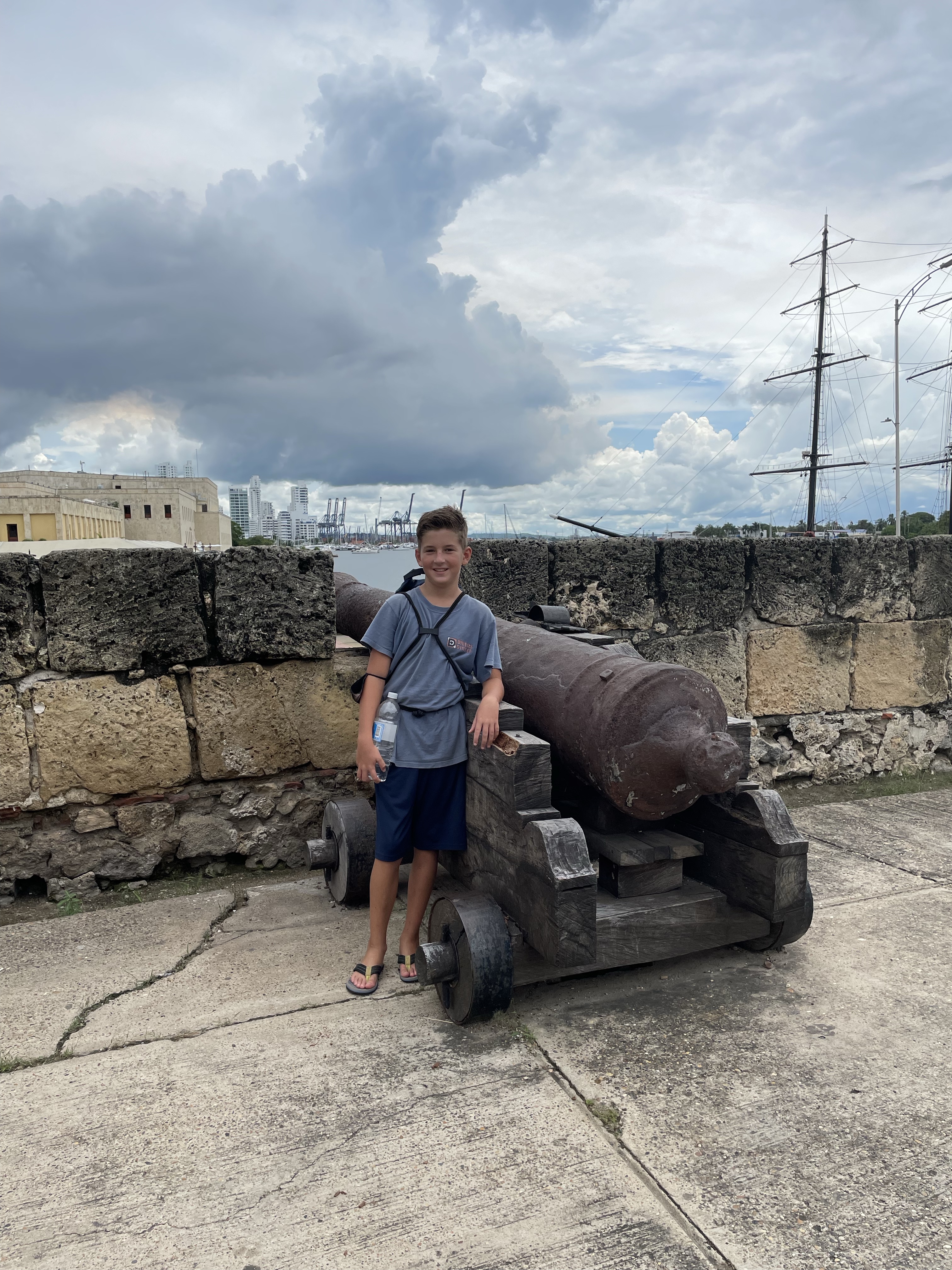
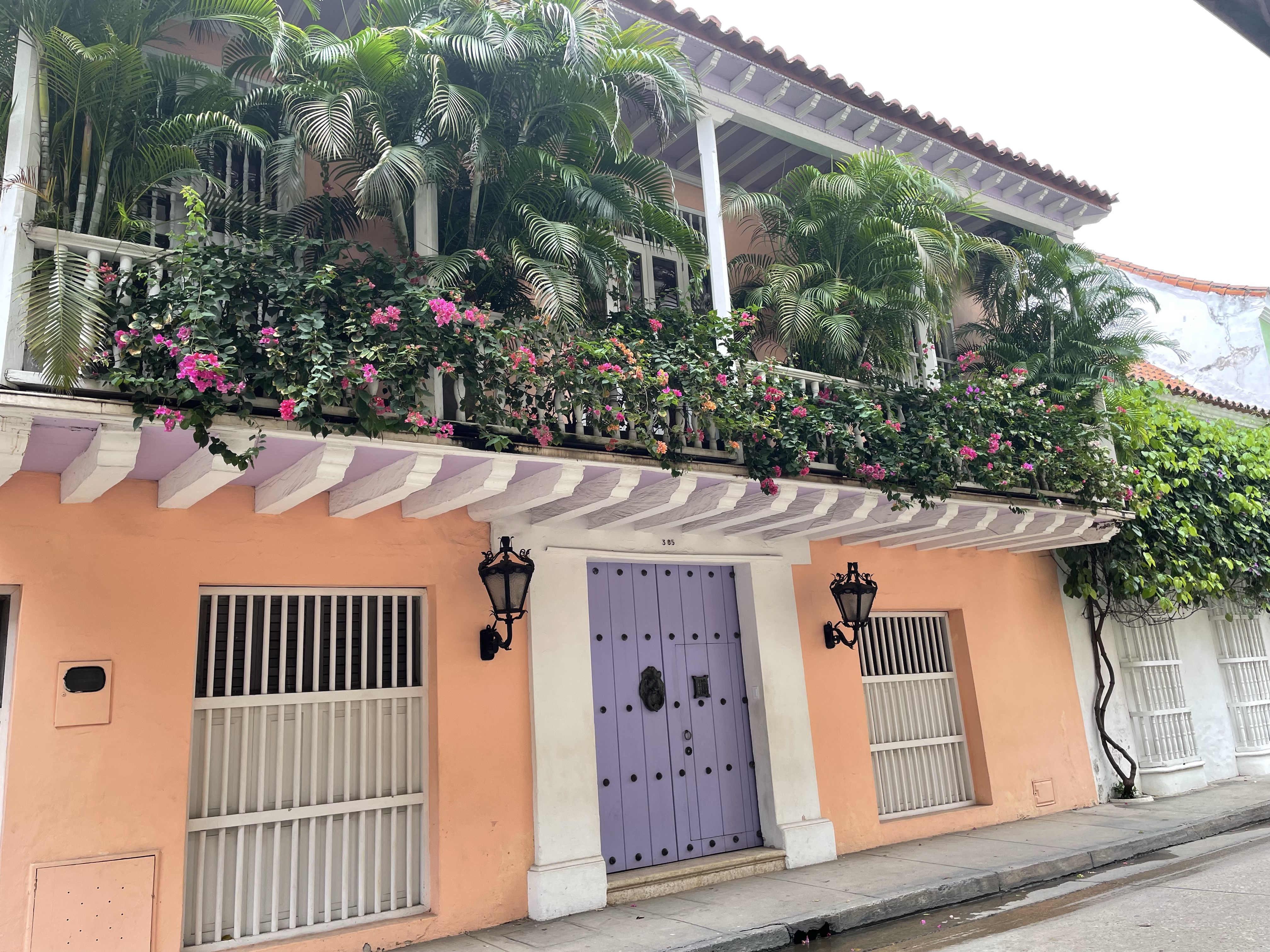
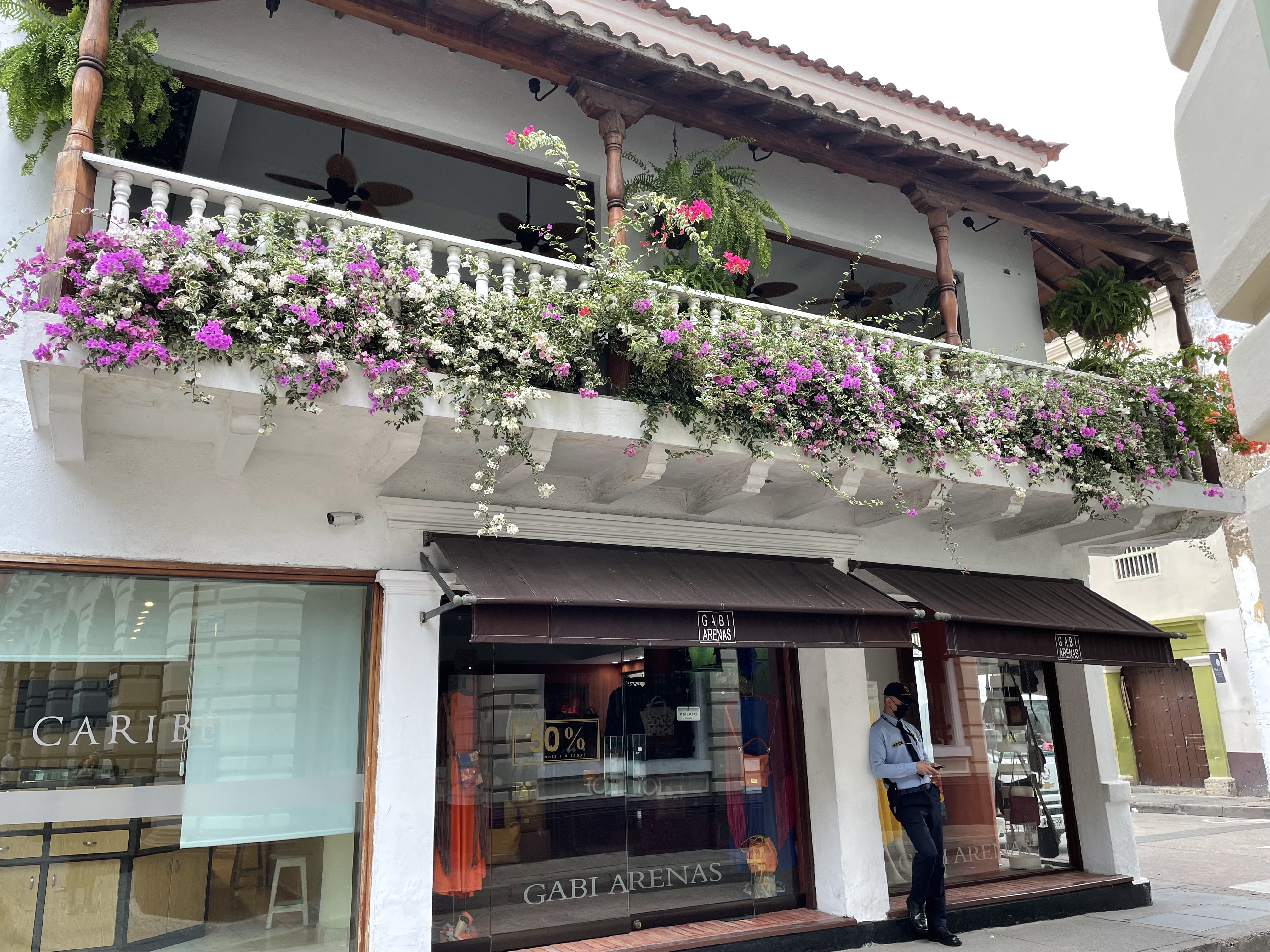

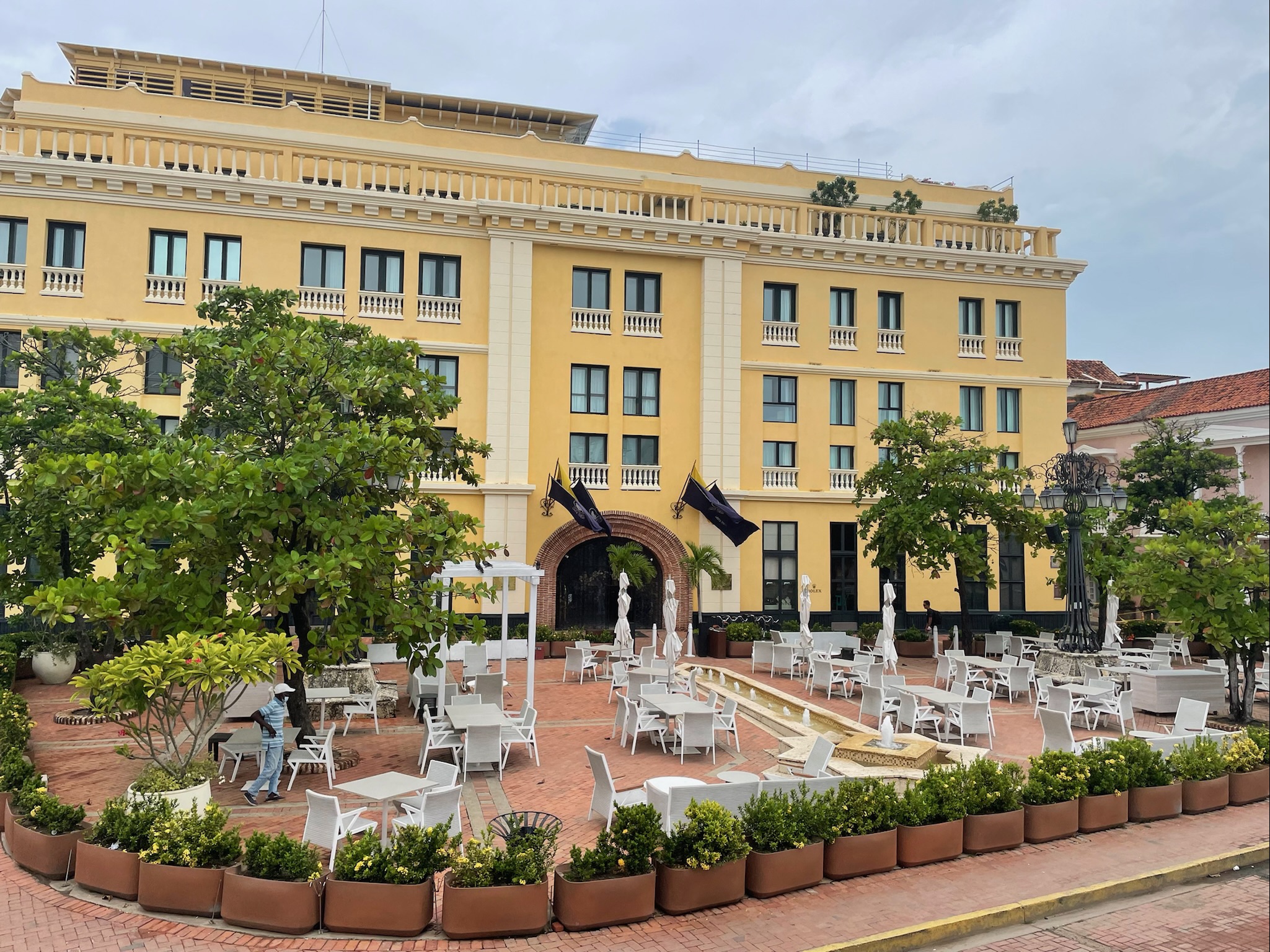

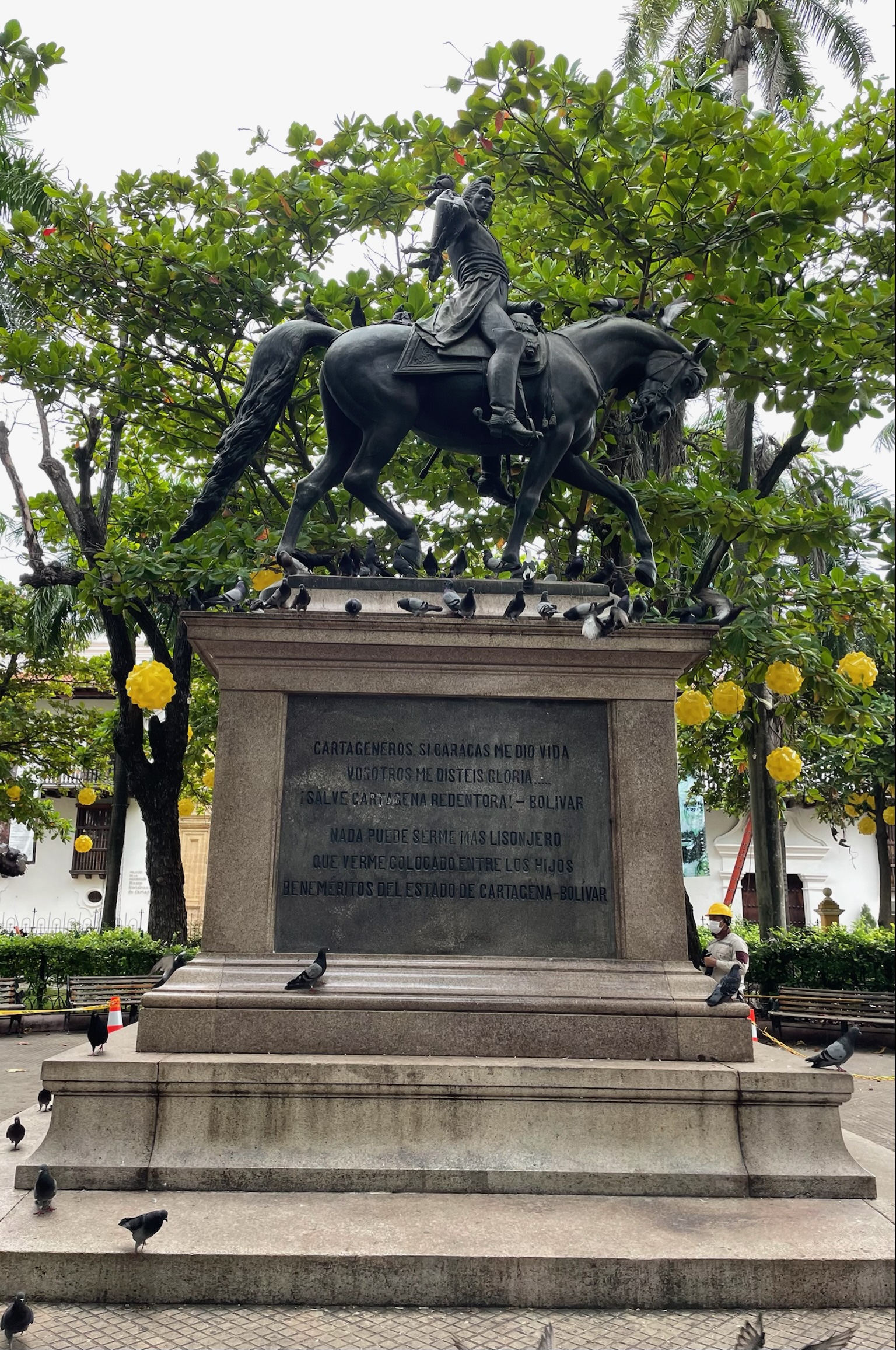
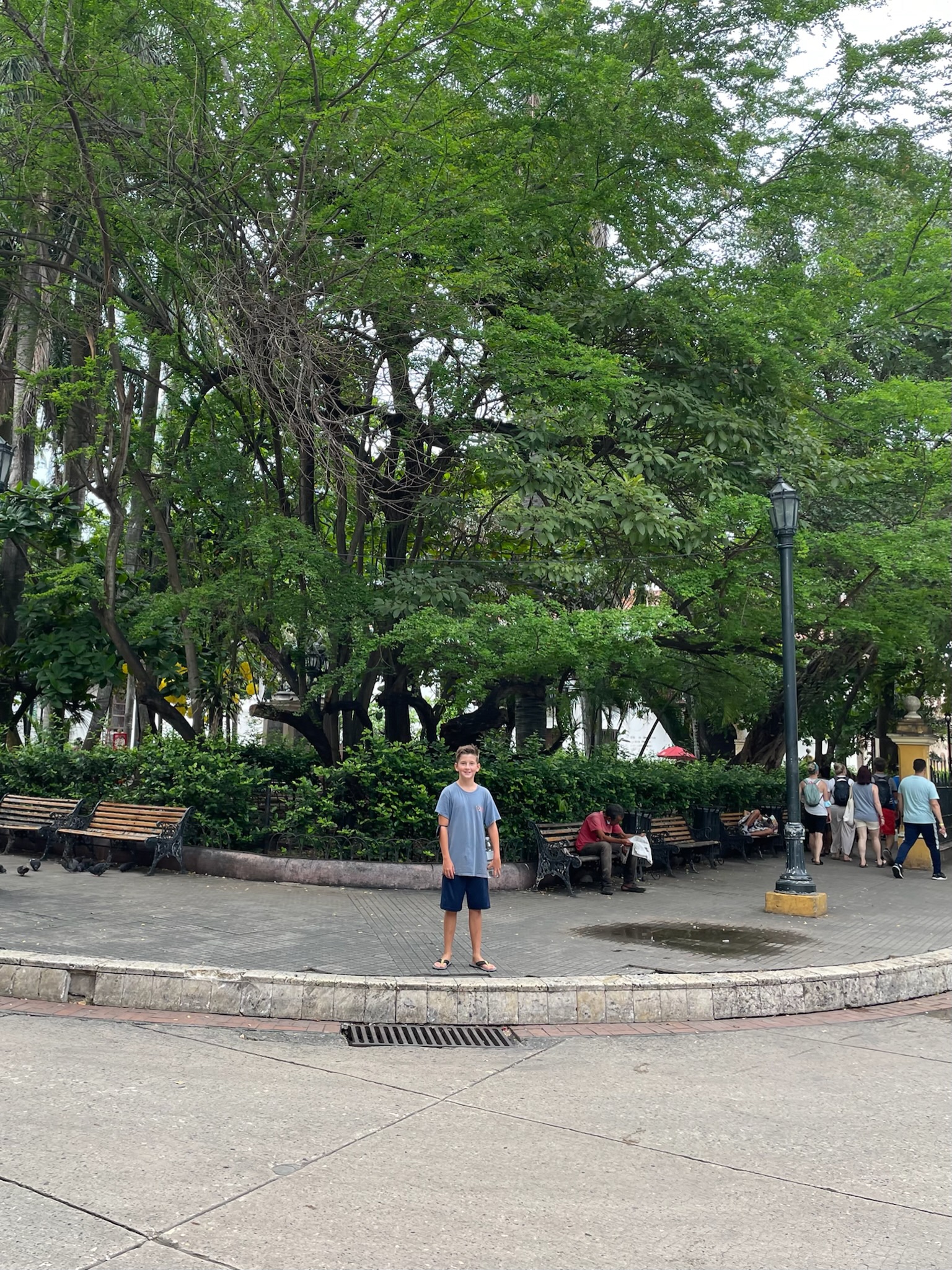
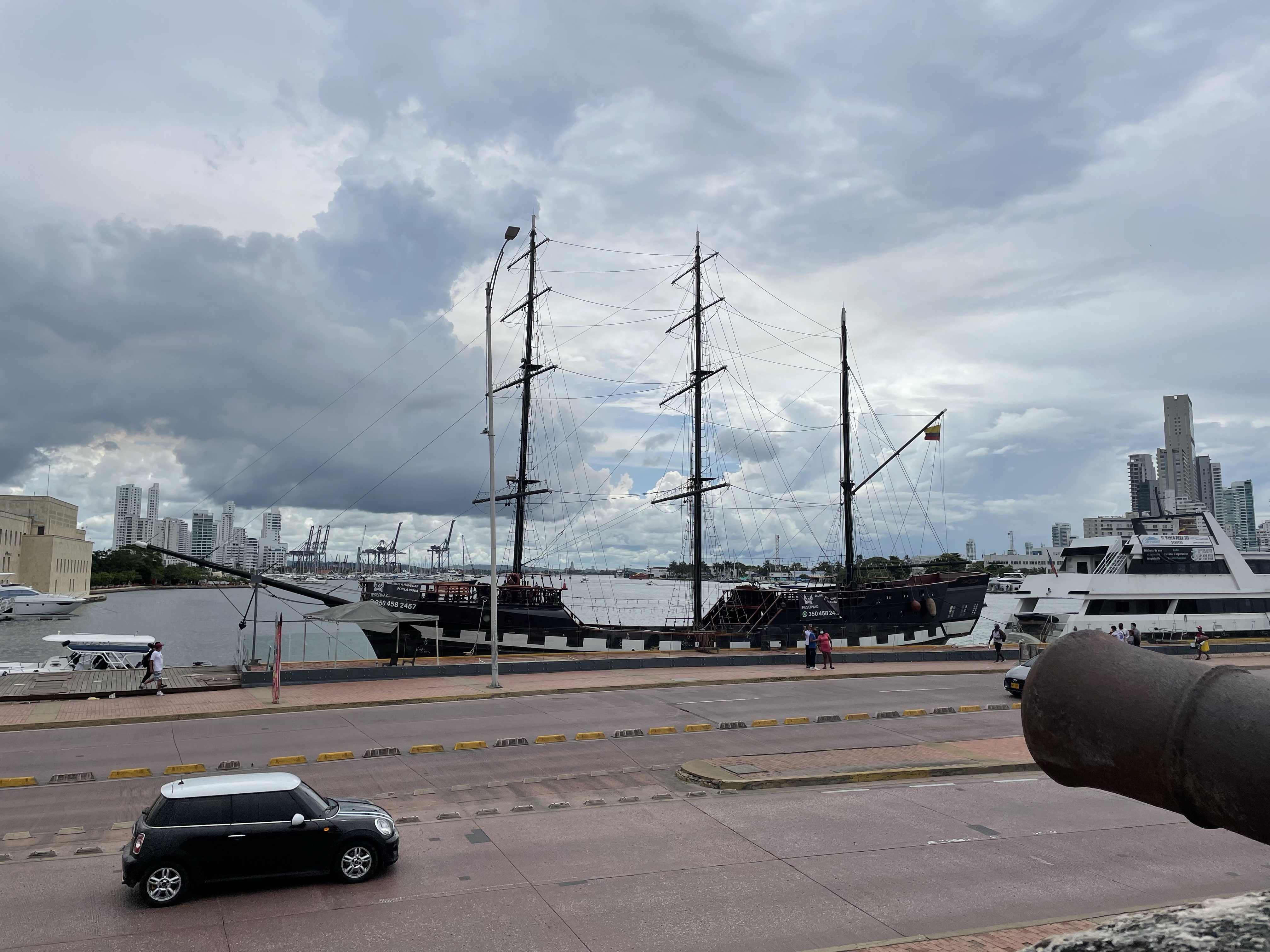
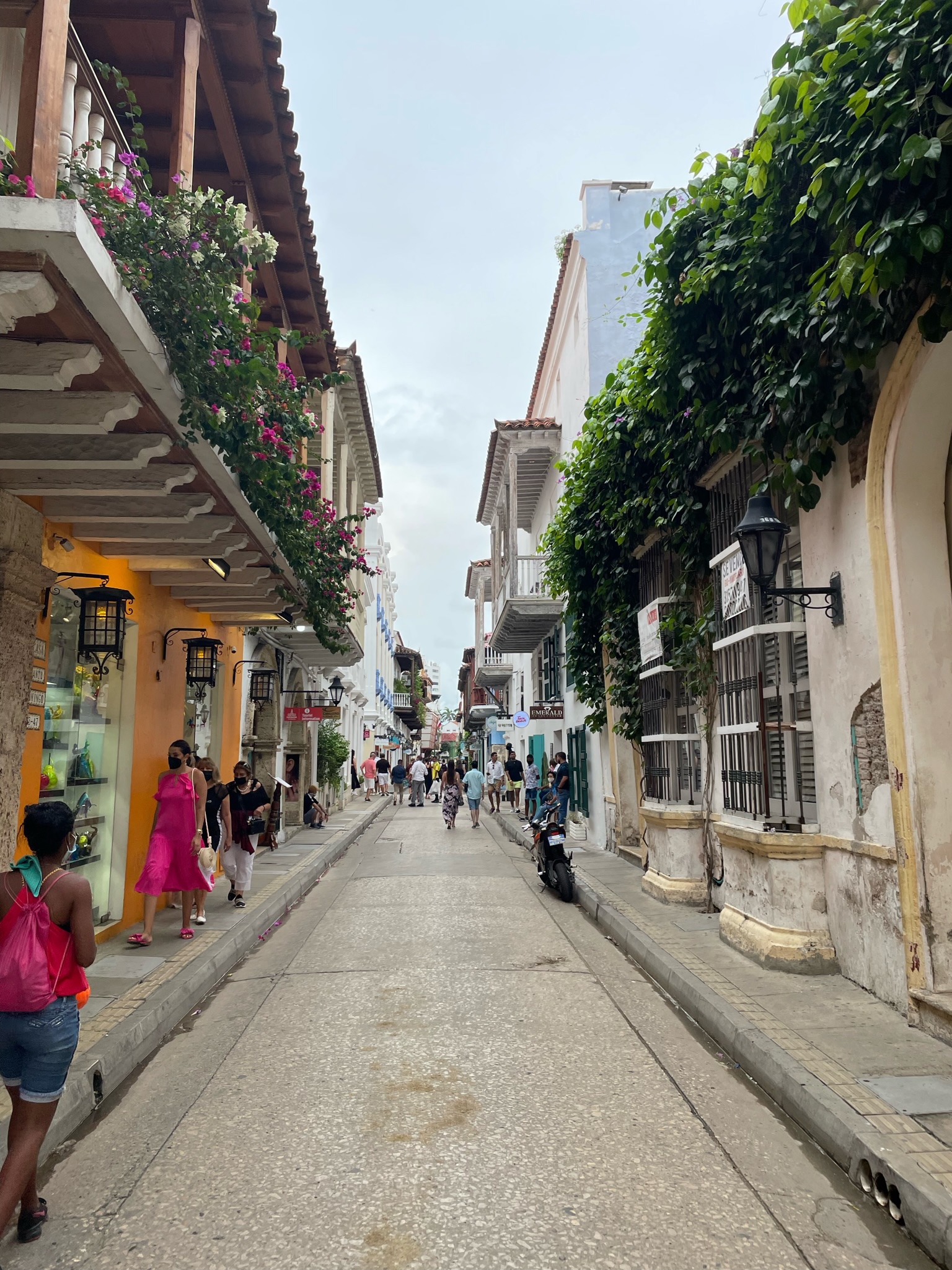
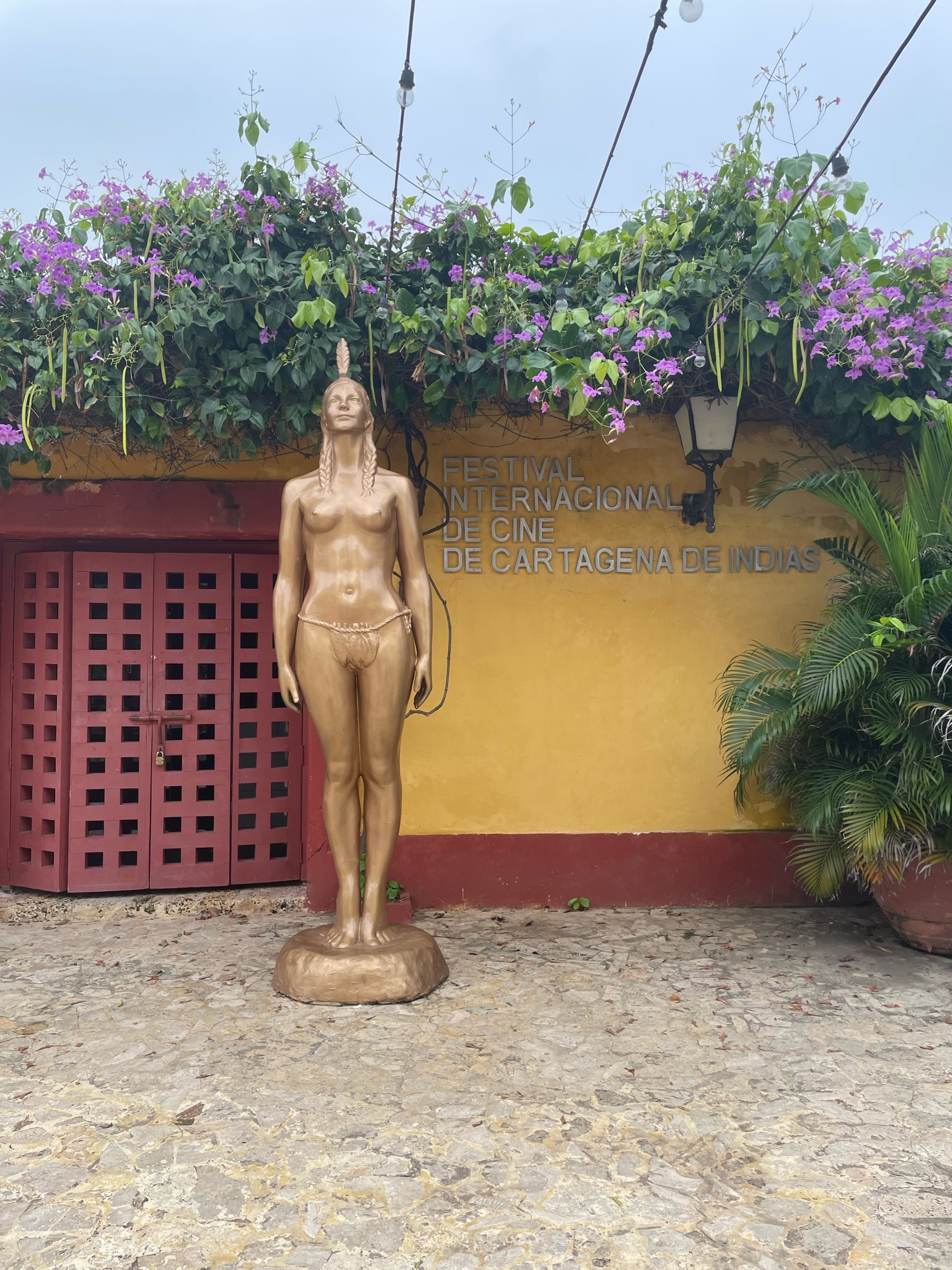

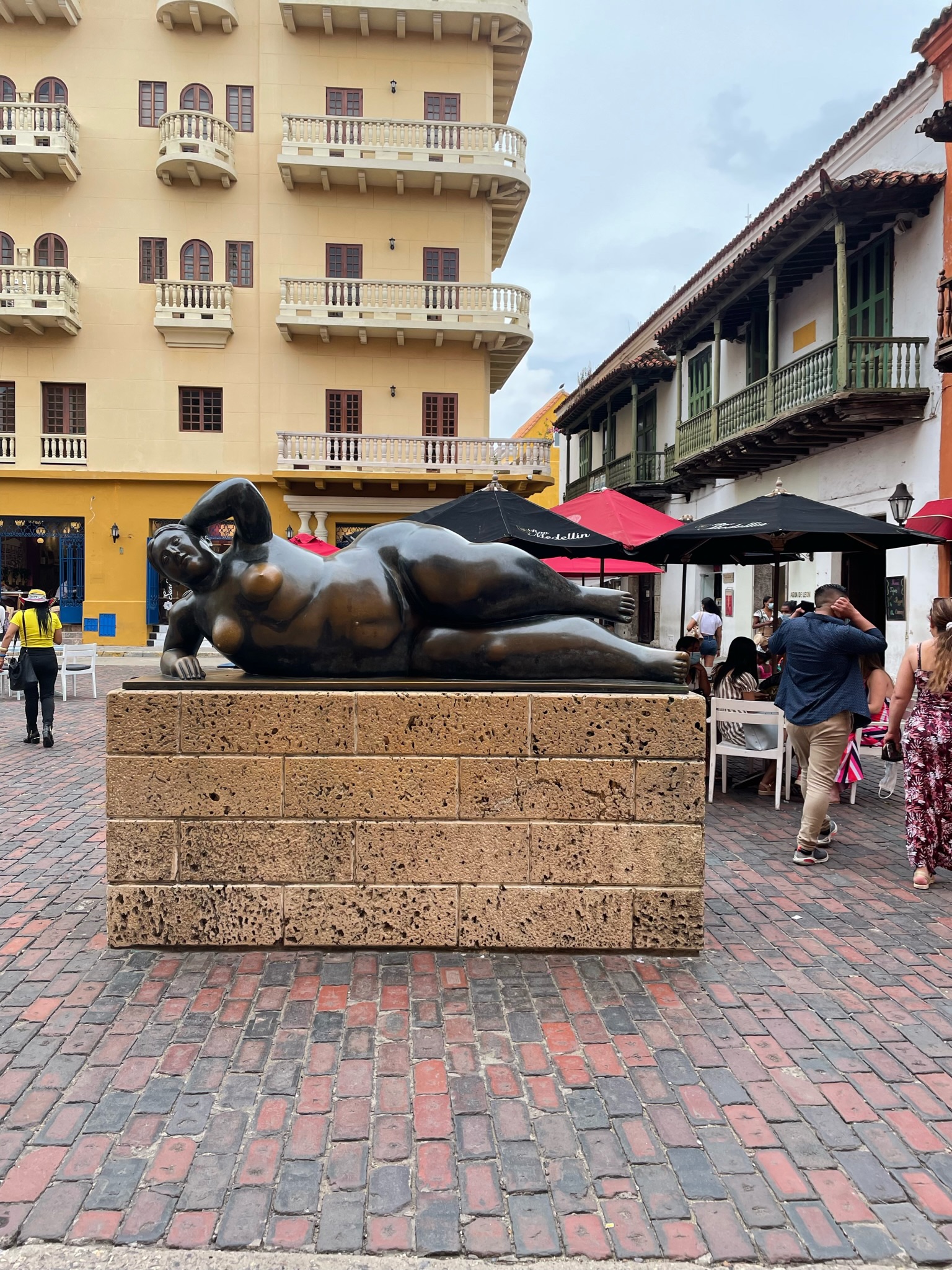

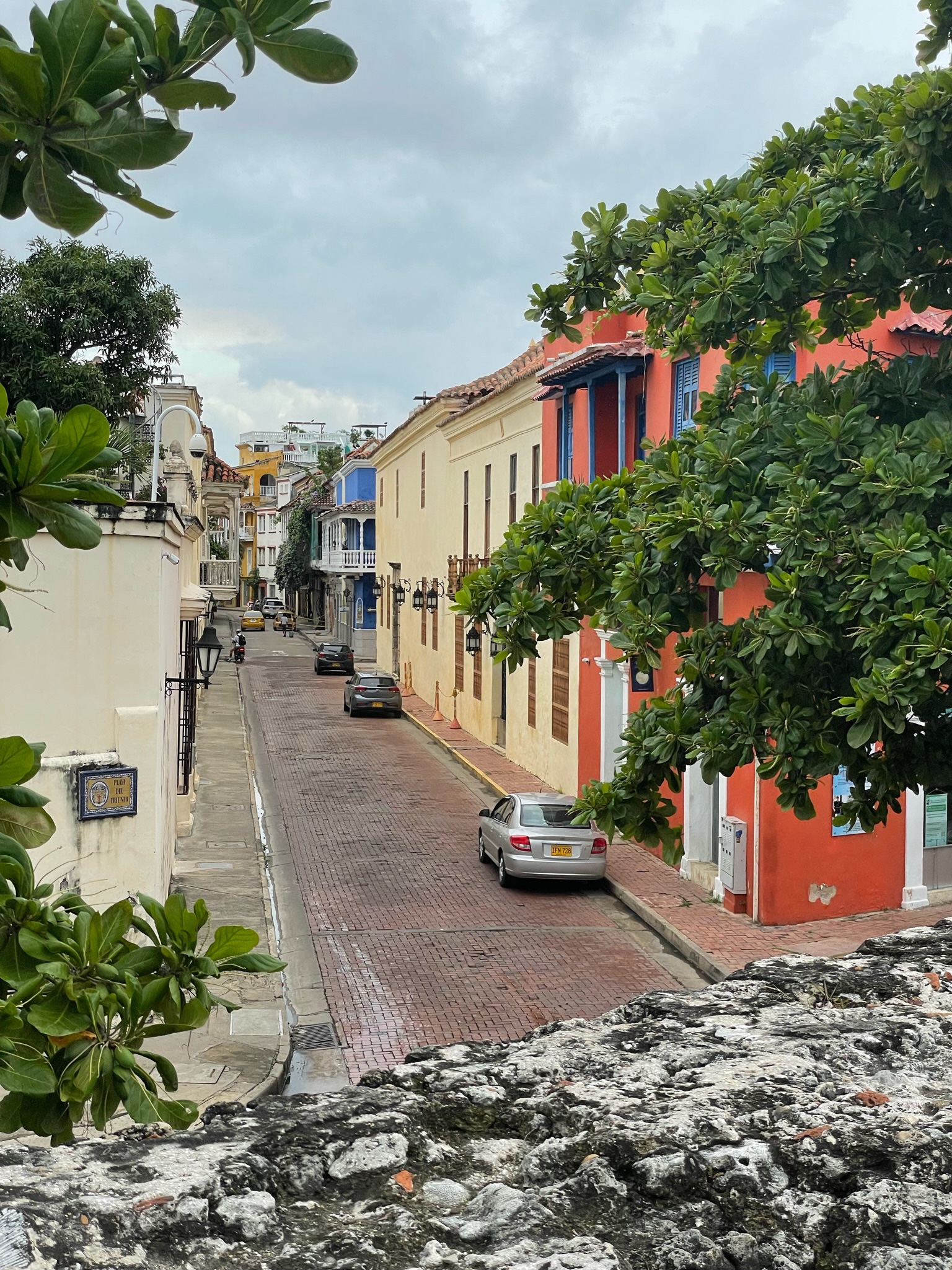
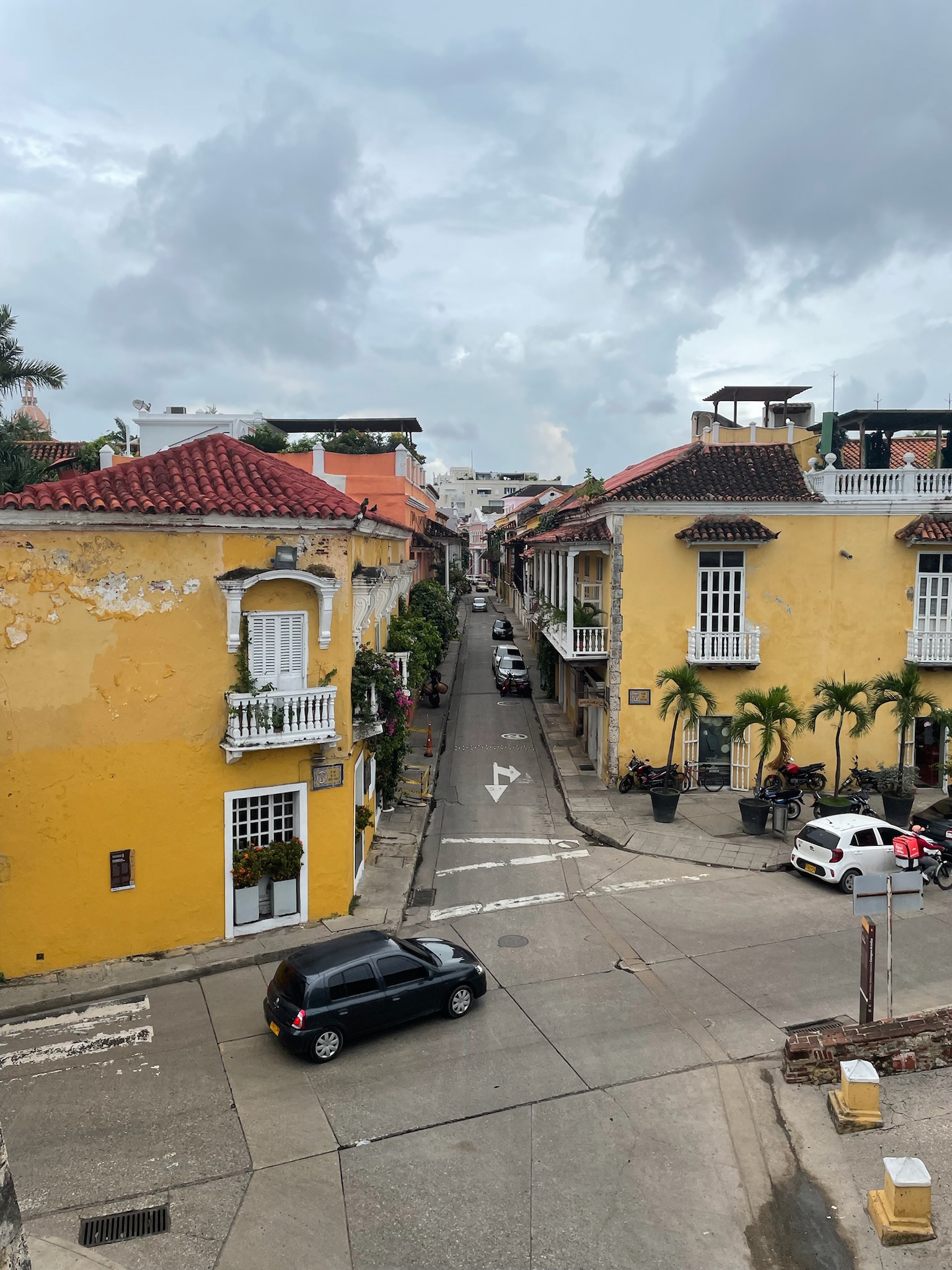
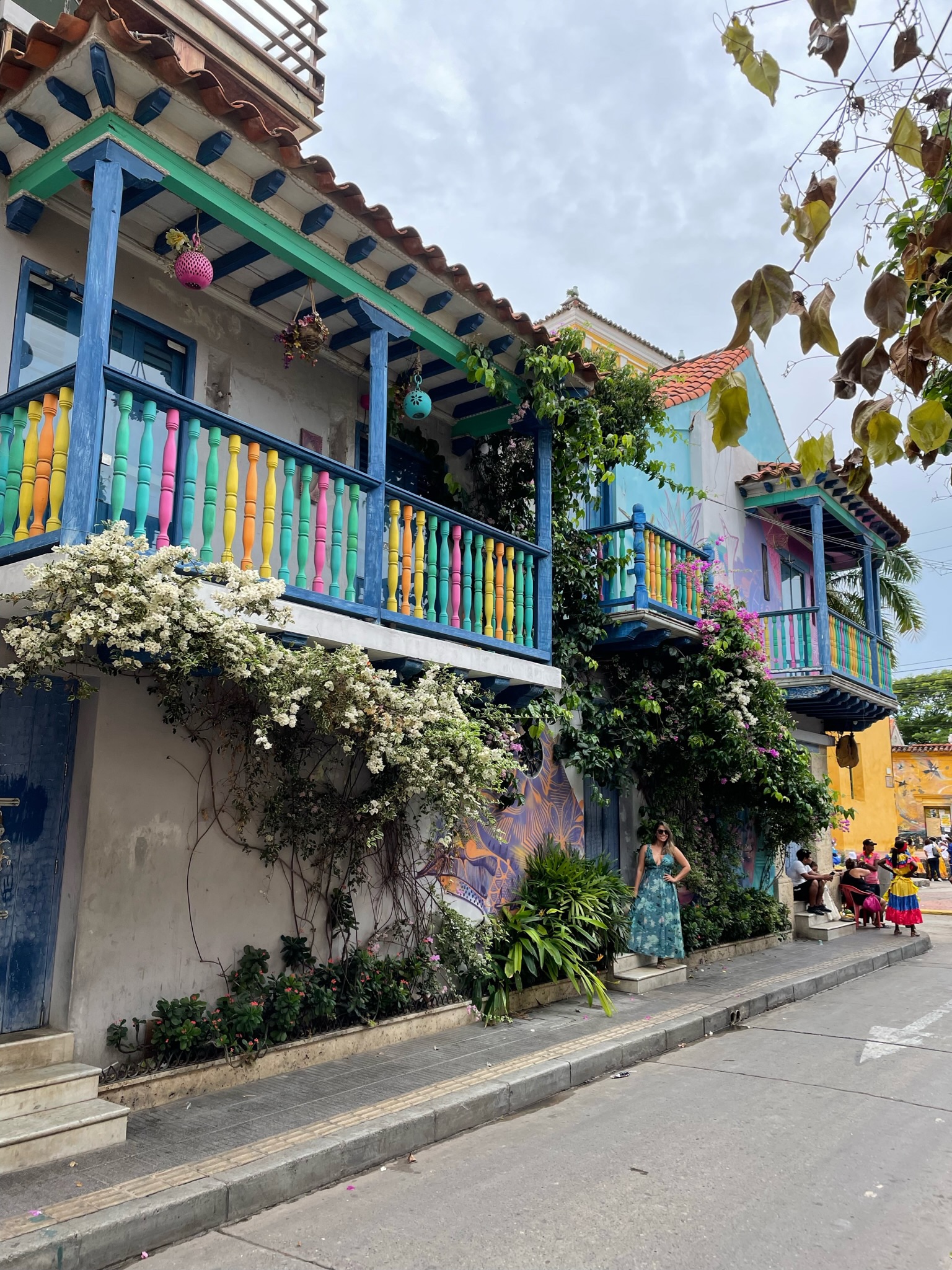
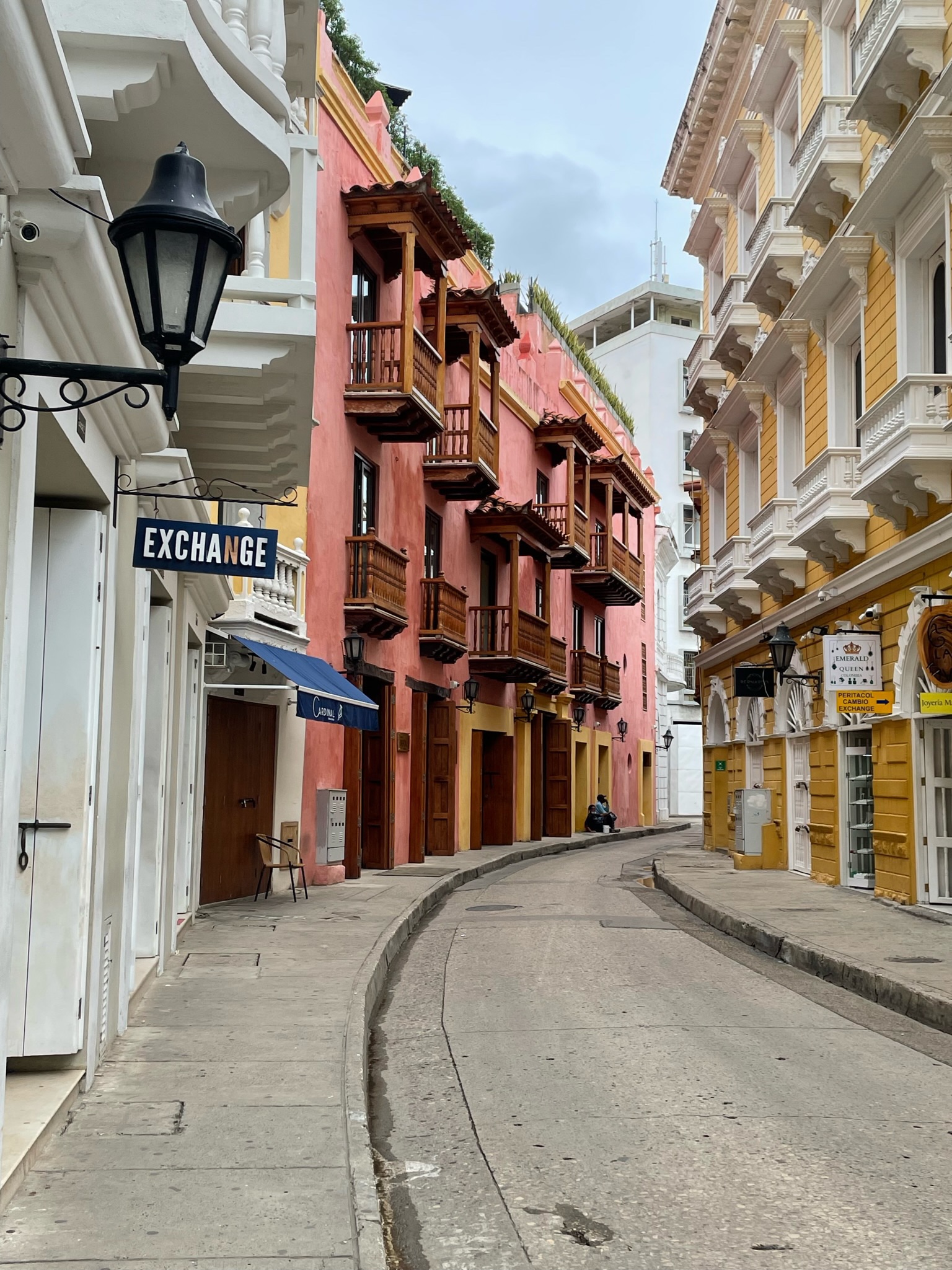

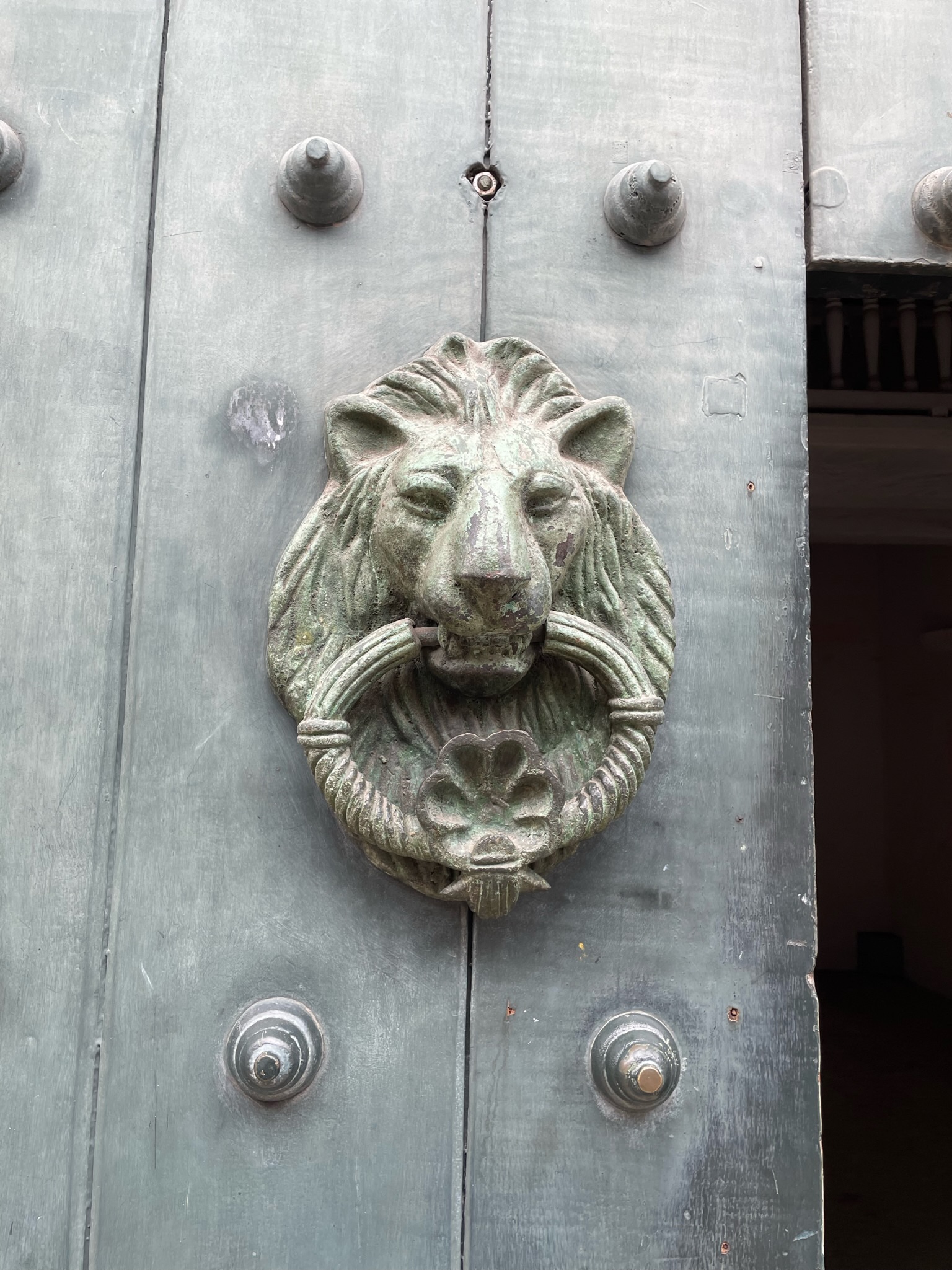

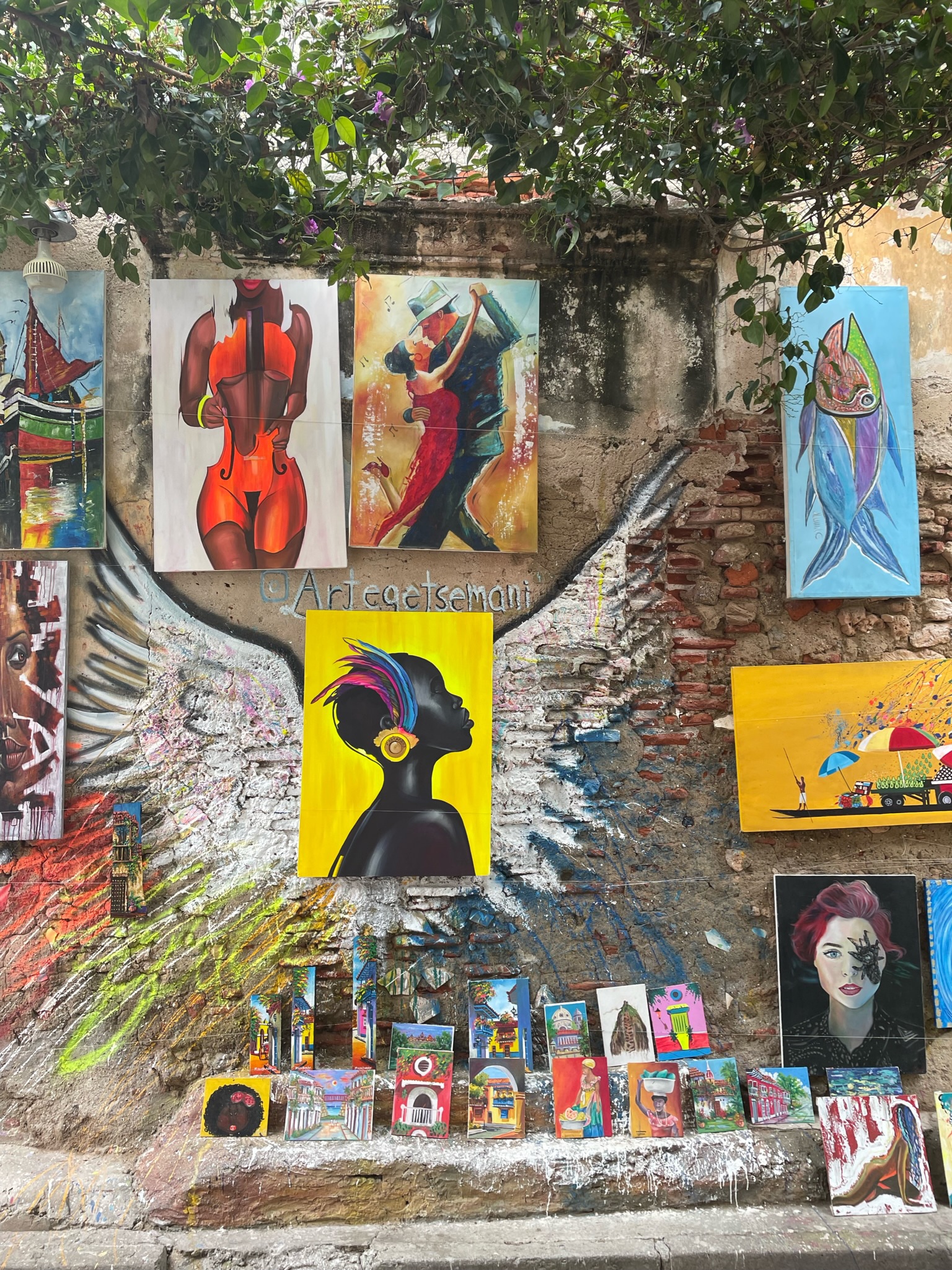
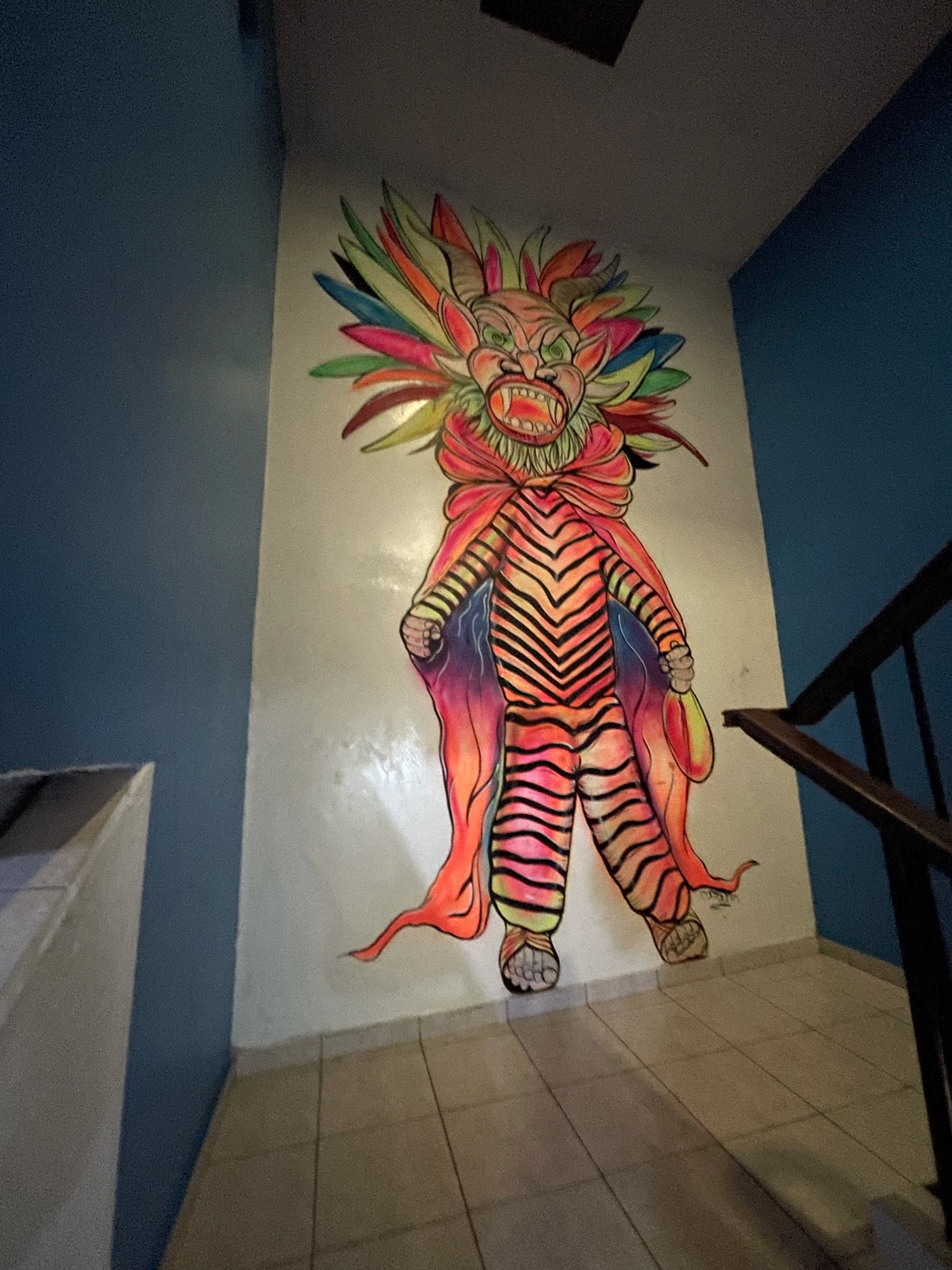
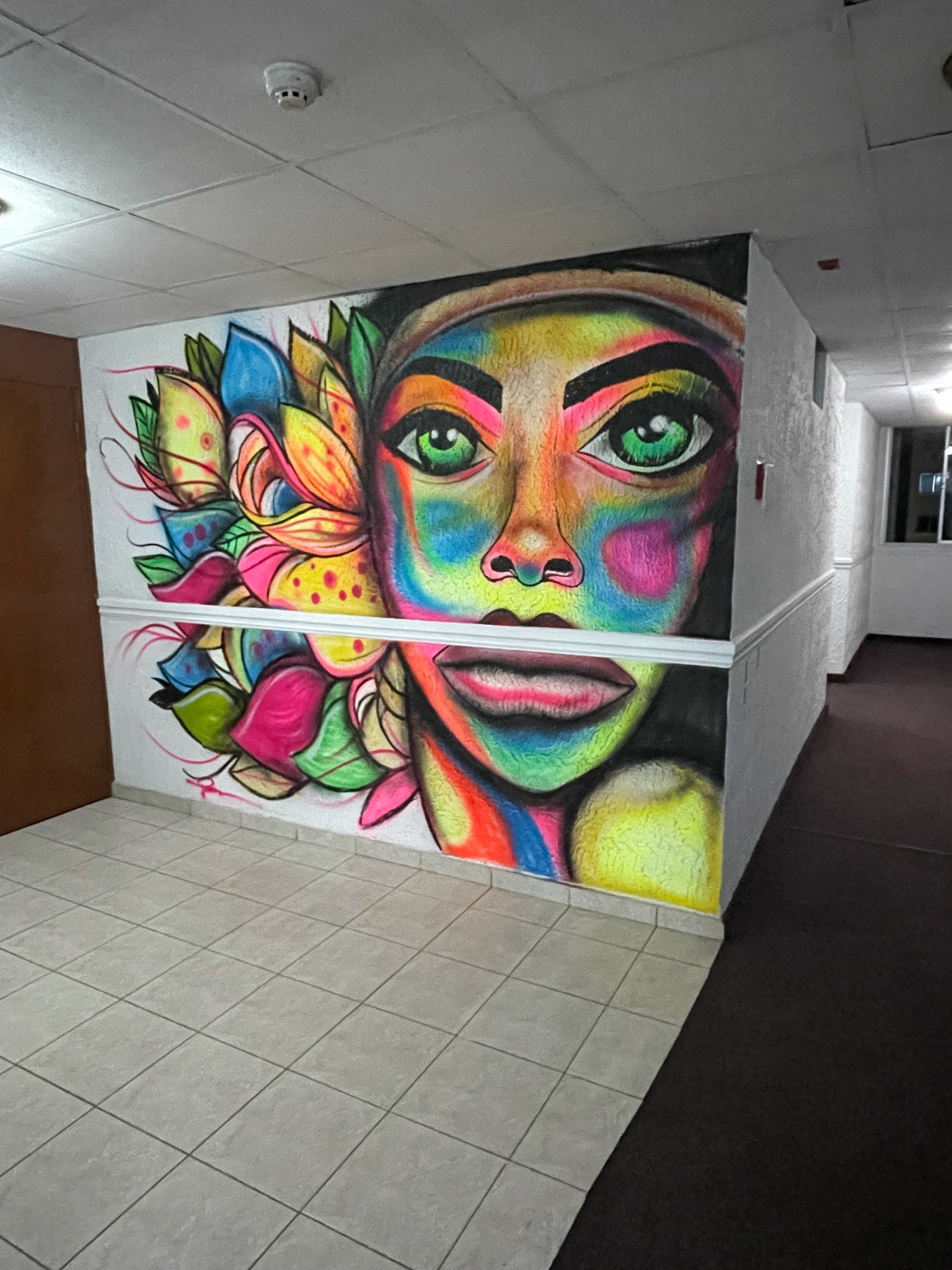
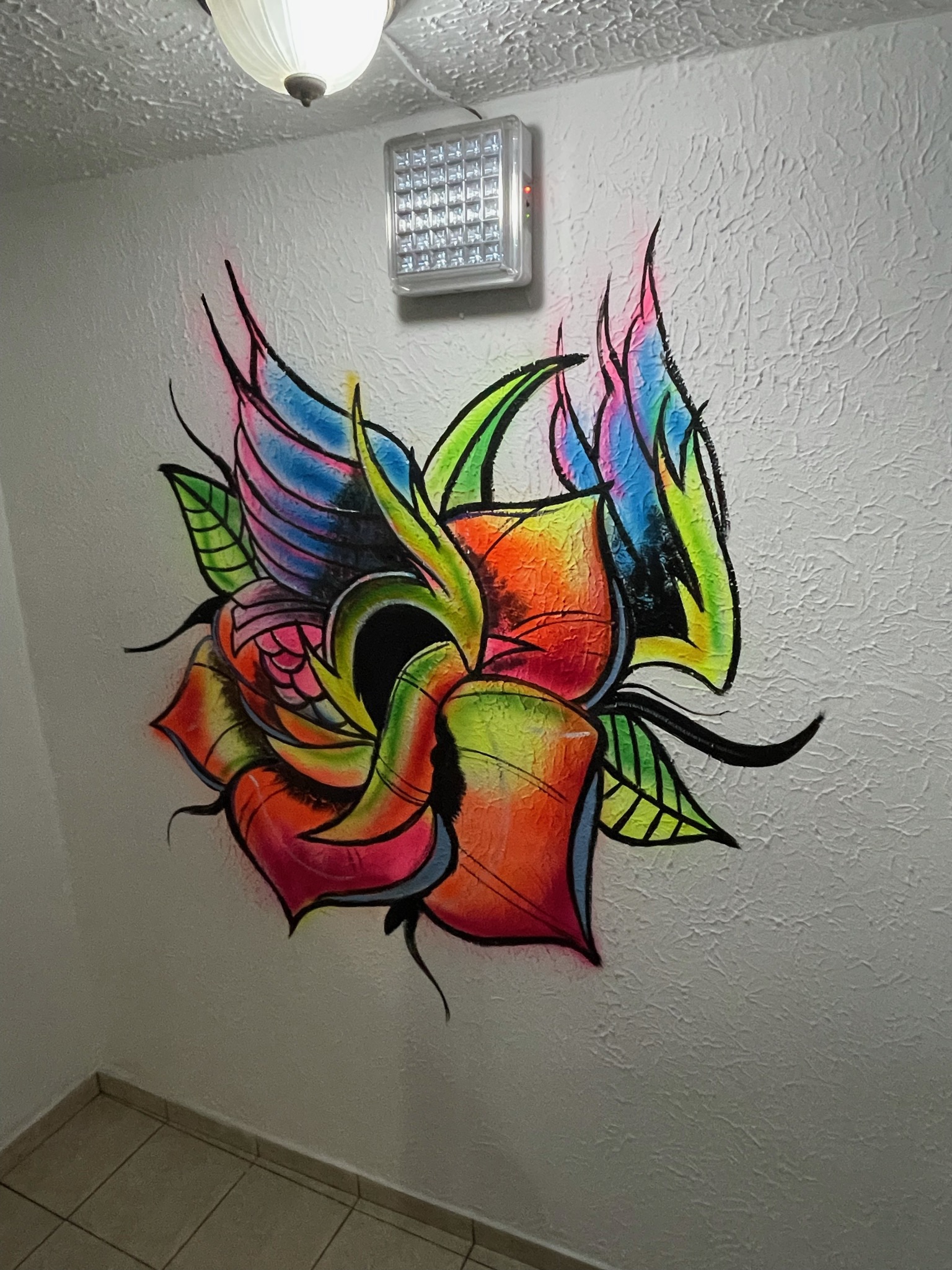
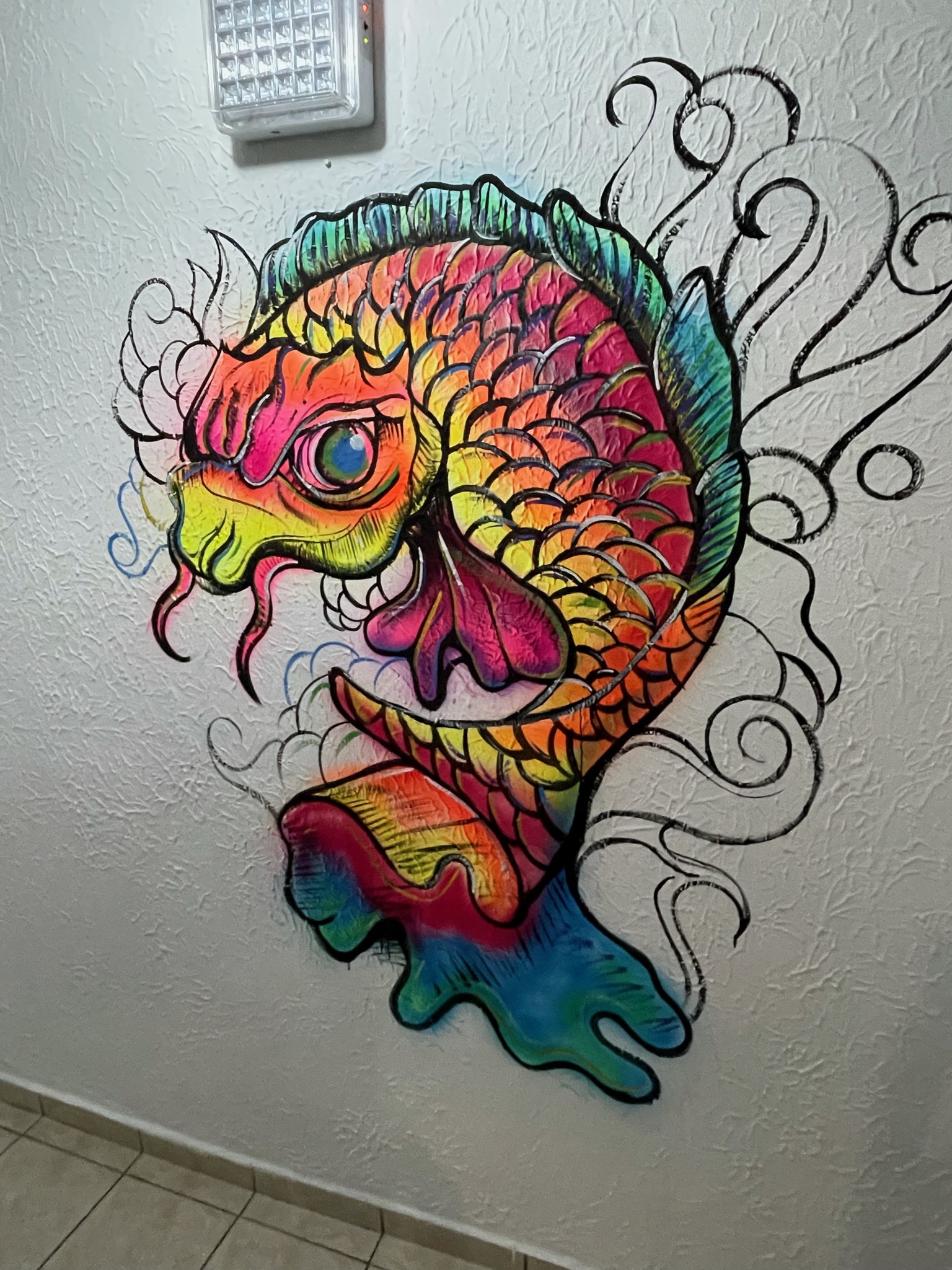
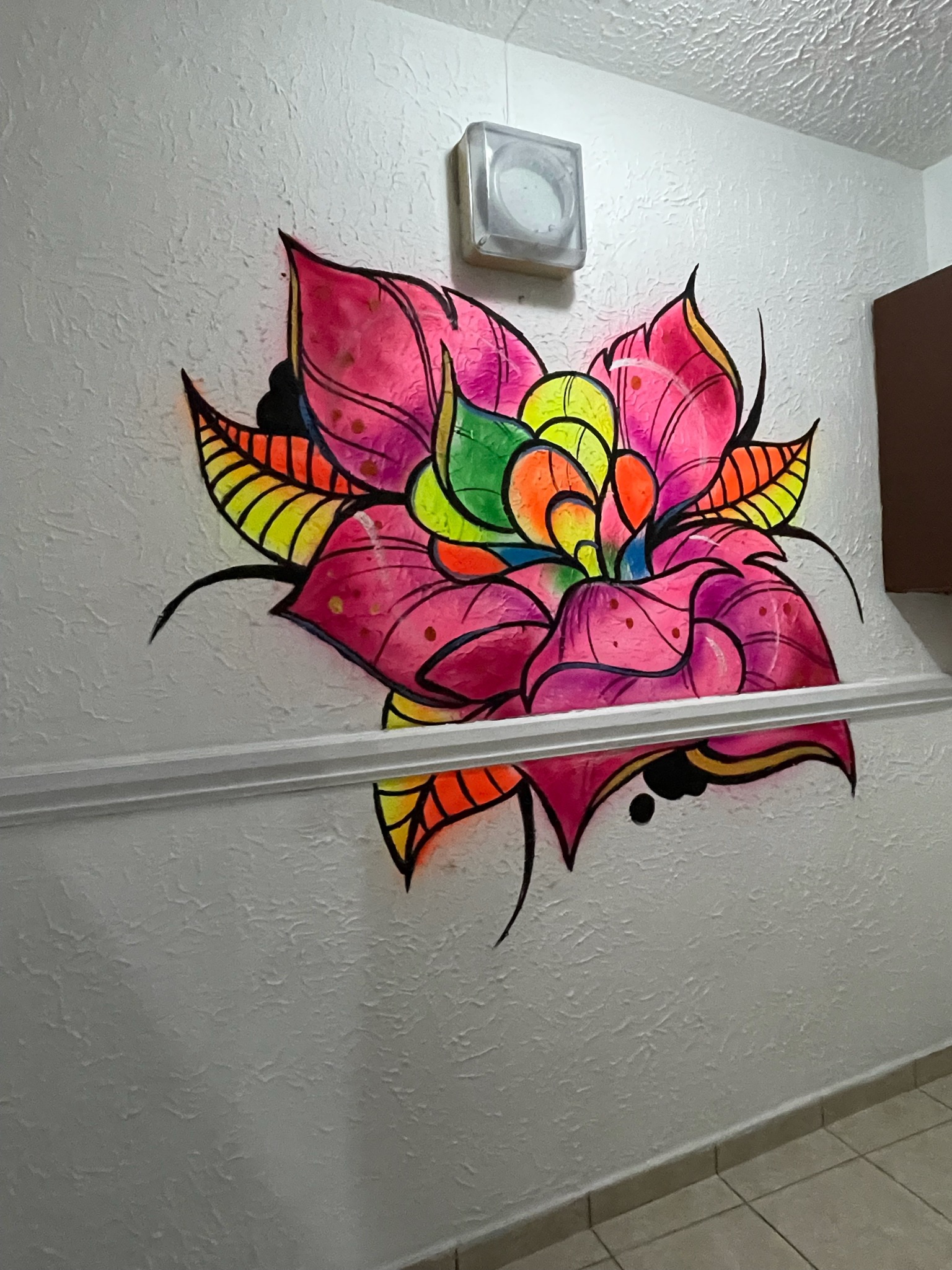
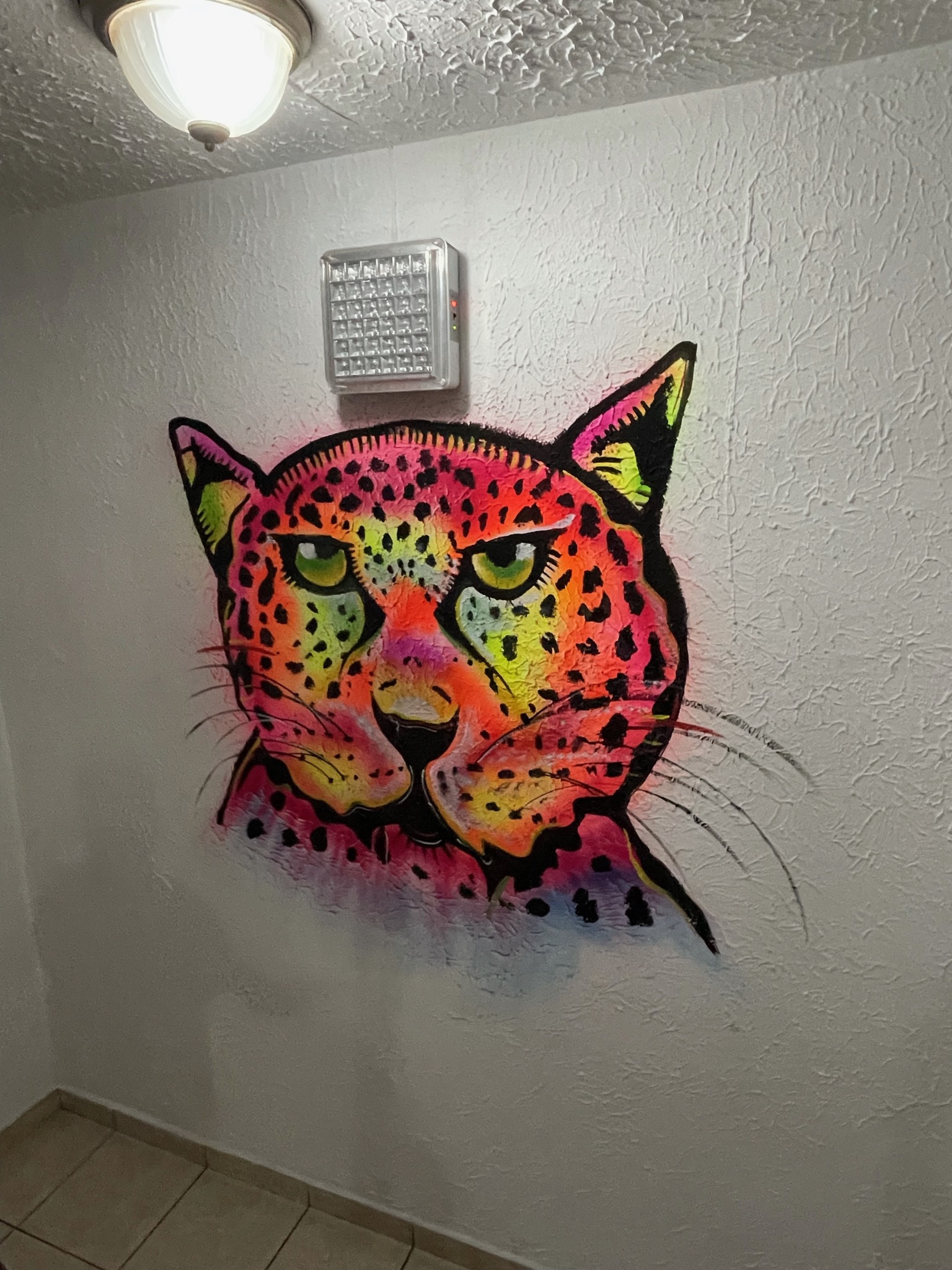
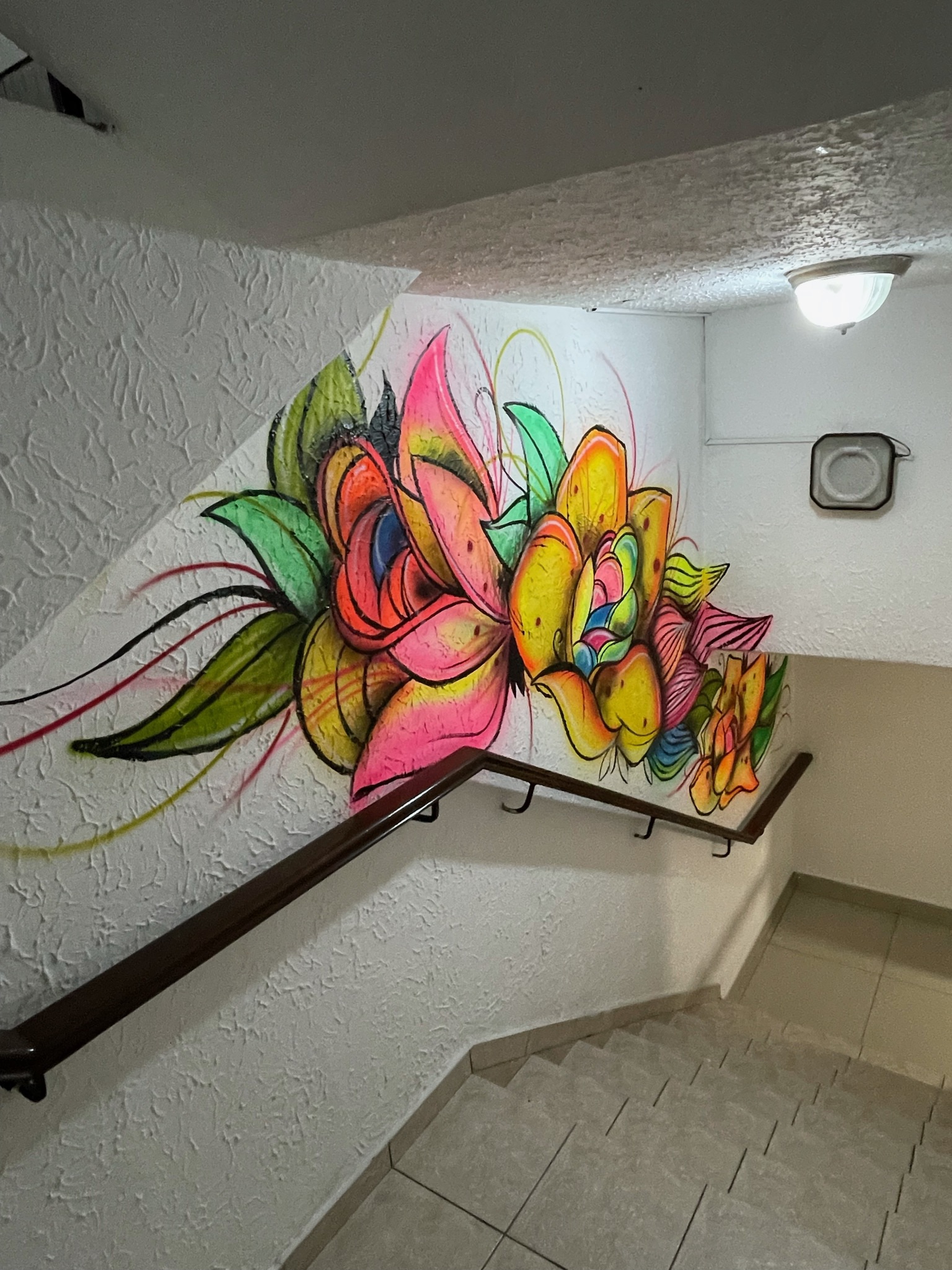
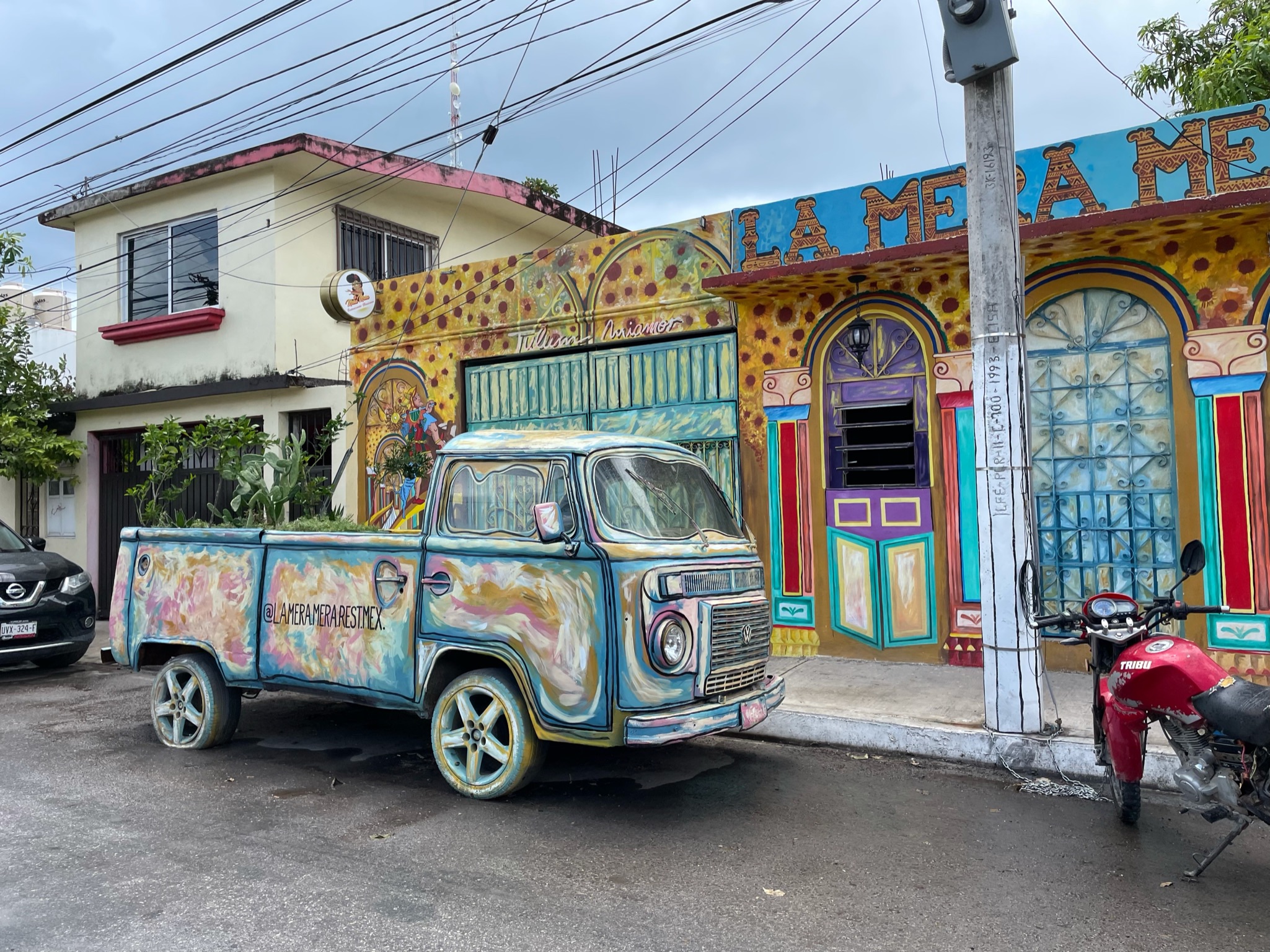
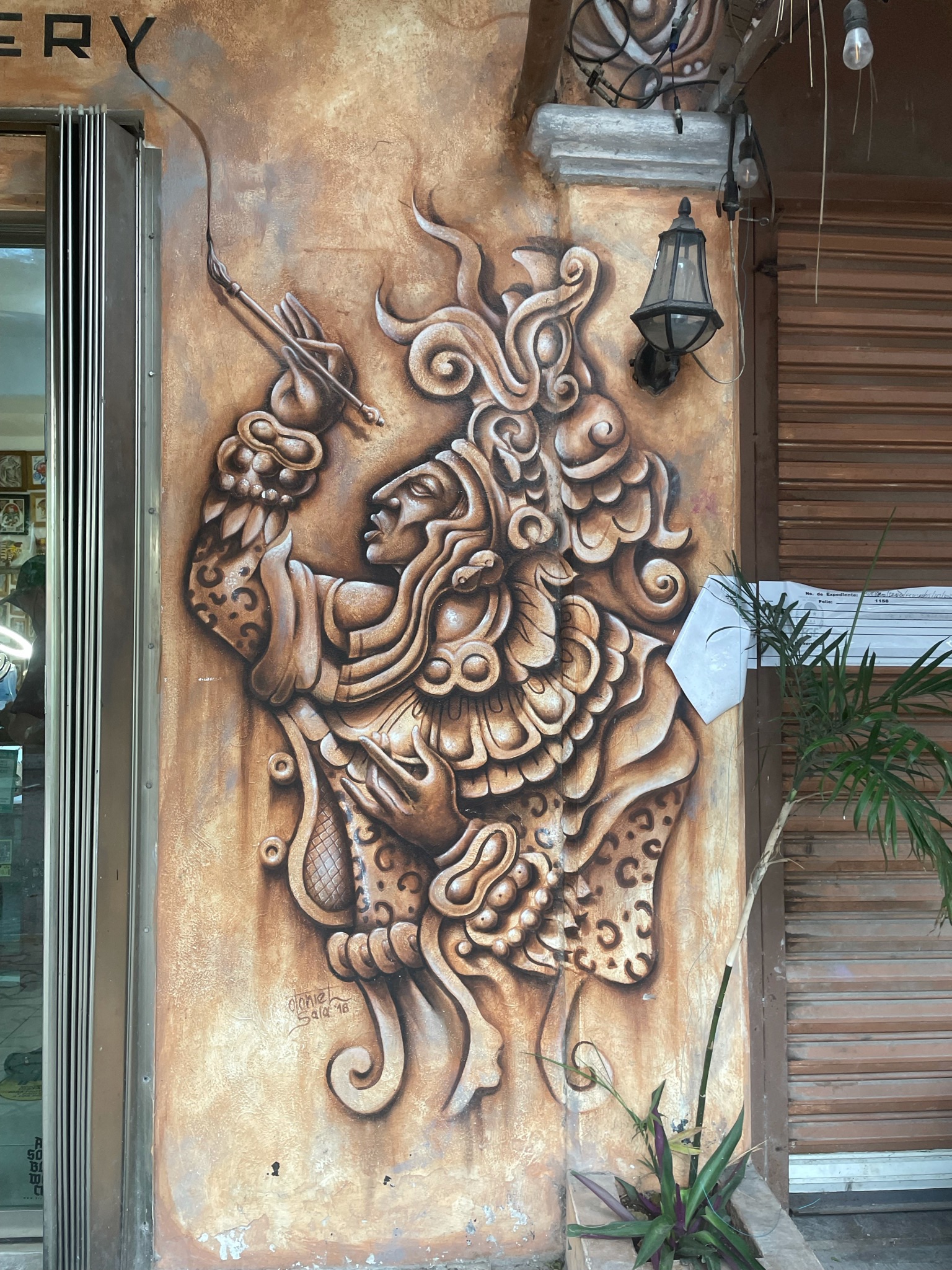
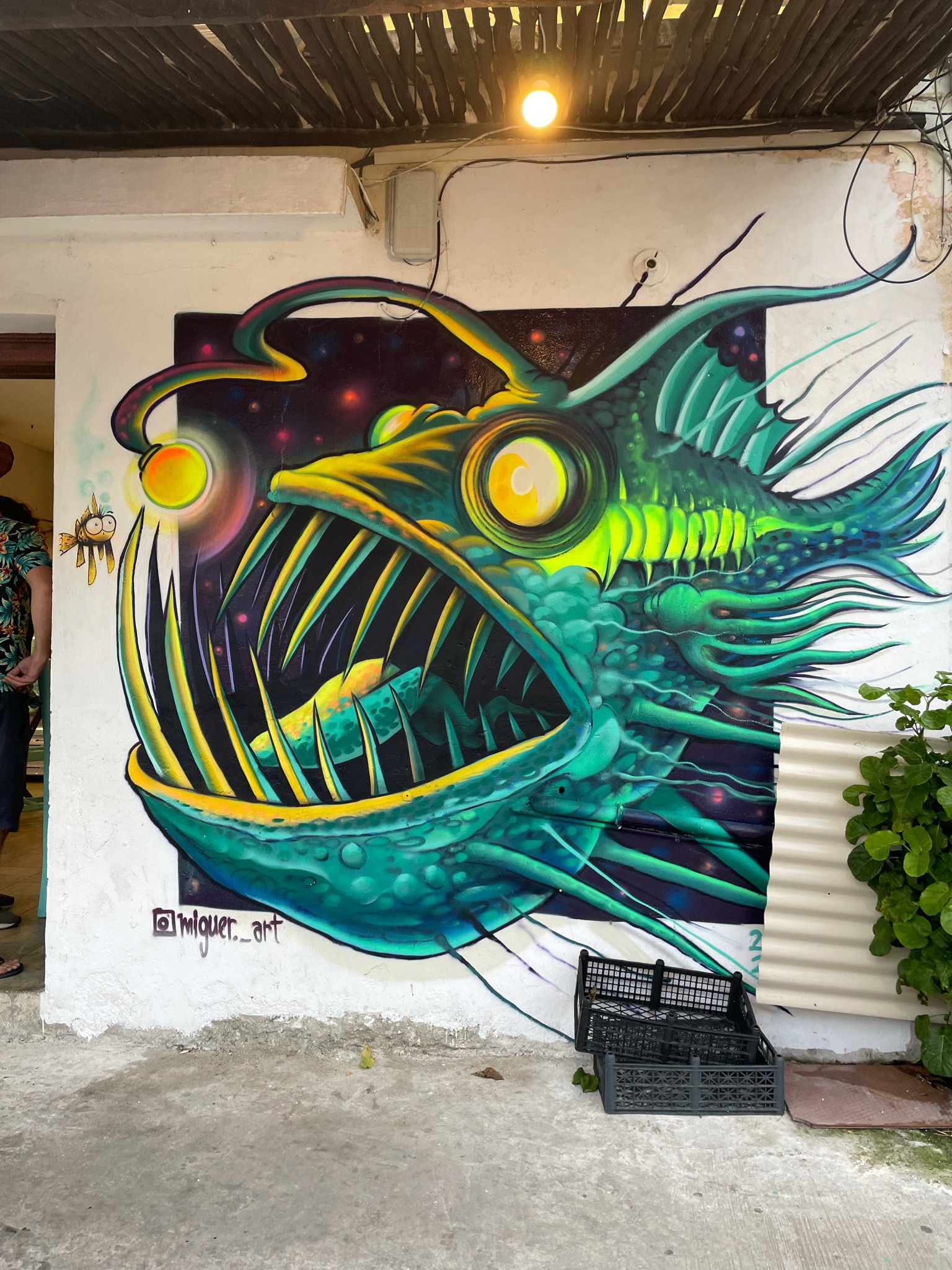
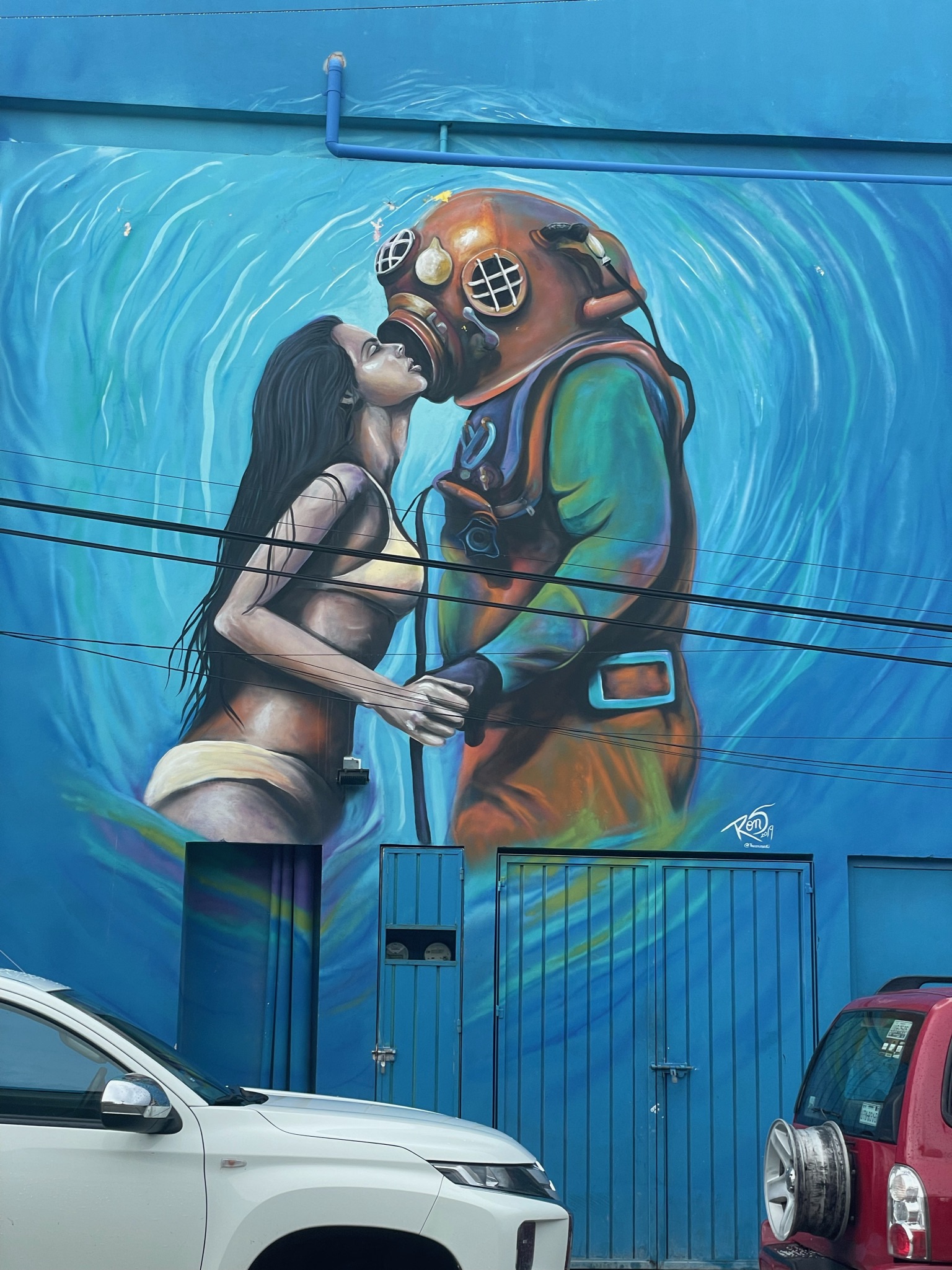
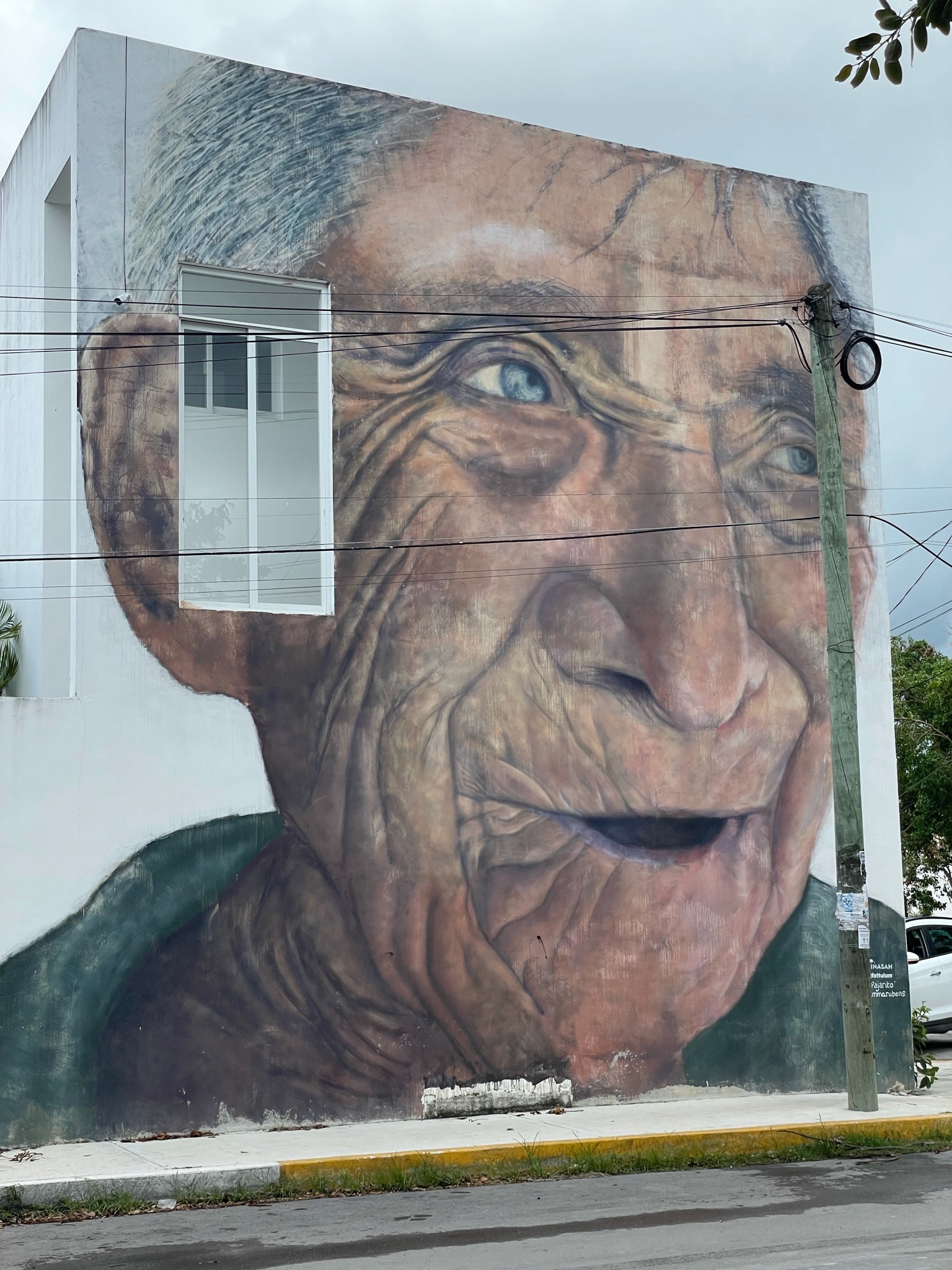
And we enjoyed the rest of Cartagena also. The streets of Getsemani were colorful and vibrant and full of life. The ‘regular’ people lived here while the upper class made their homes in the Old town. We felt more at home here, and we loved the atmosphere. The art was amazing as well.
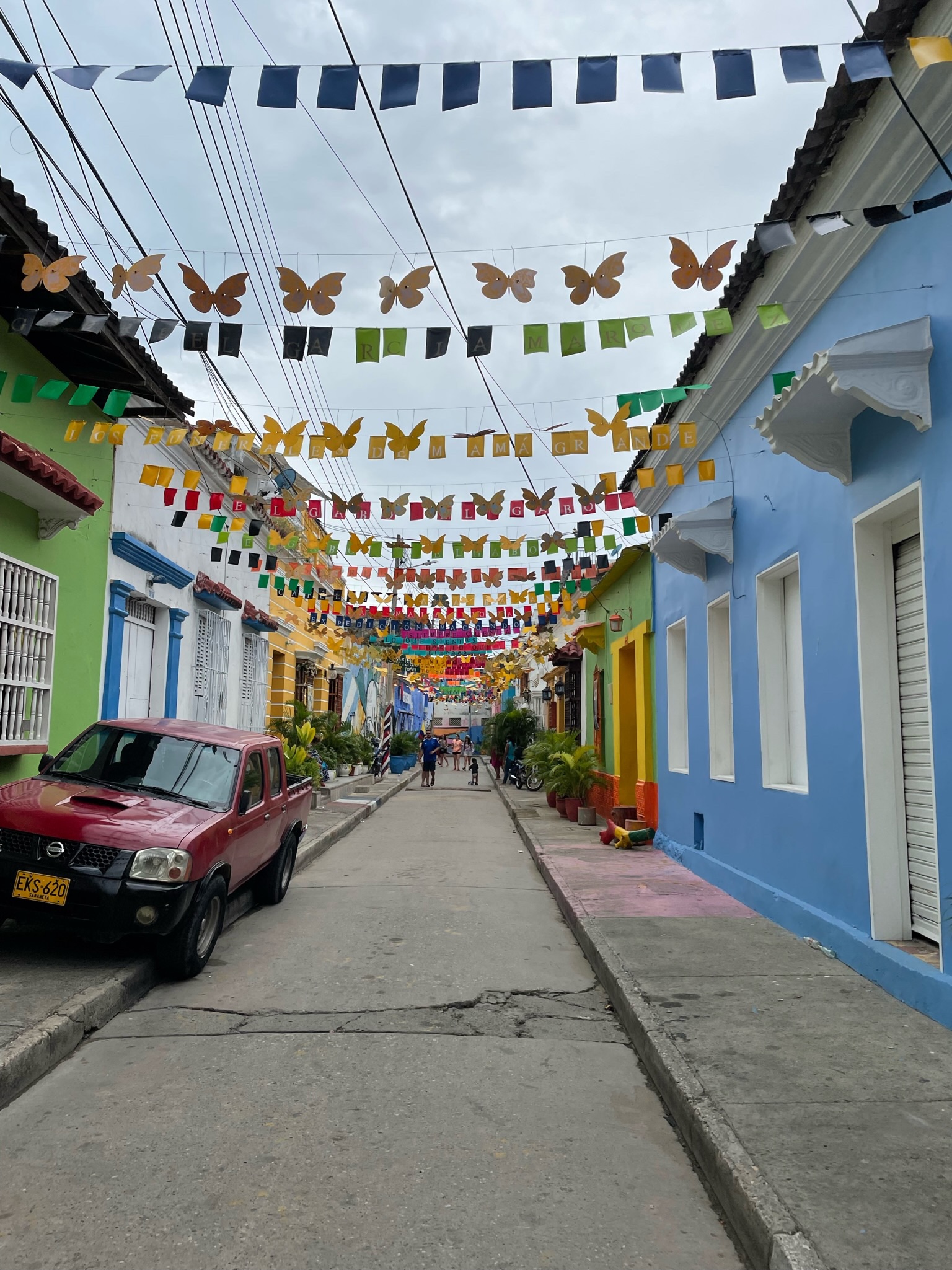
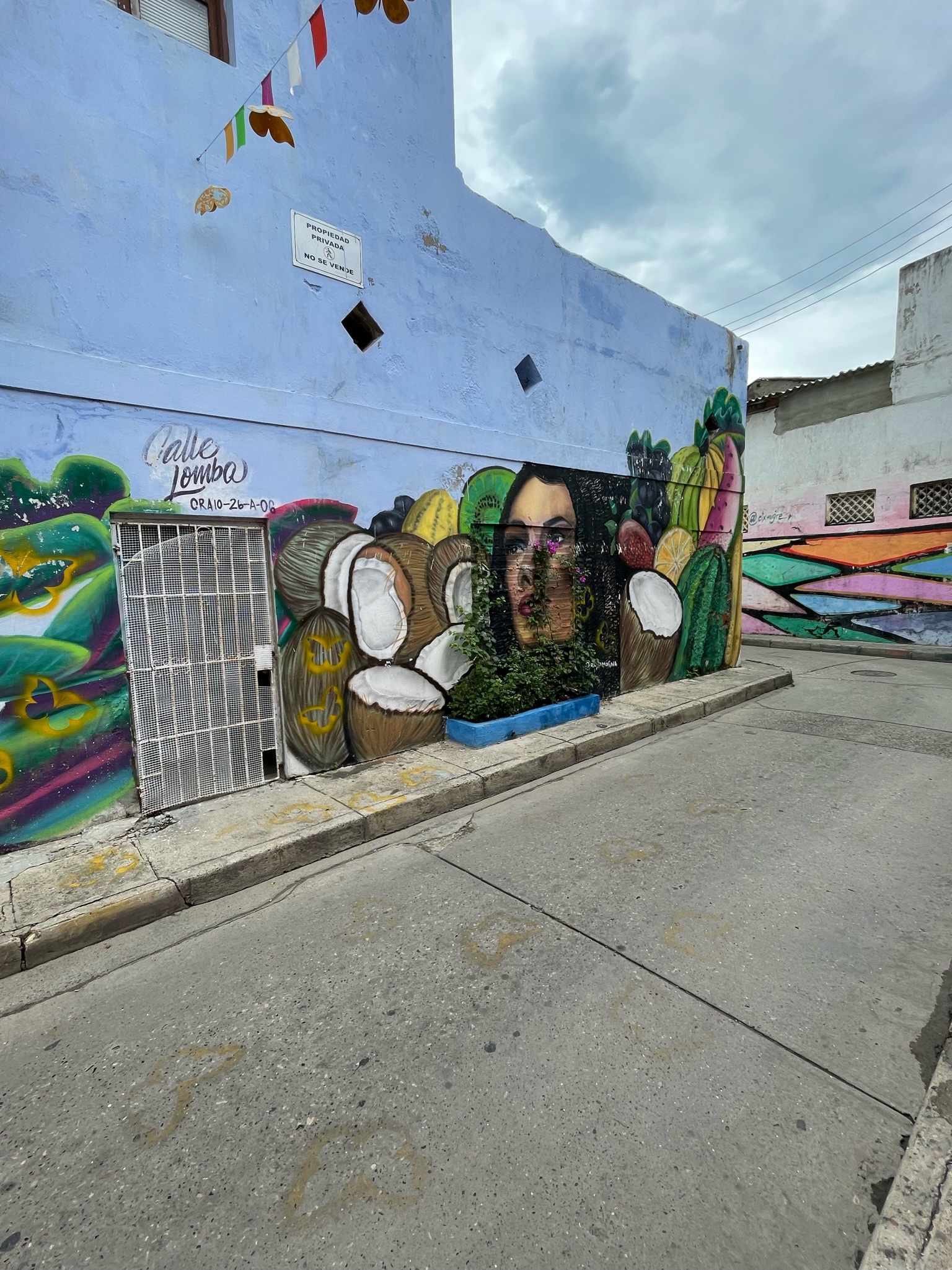
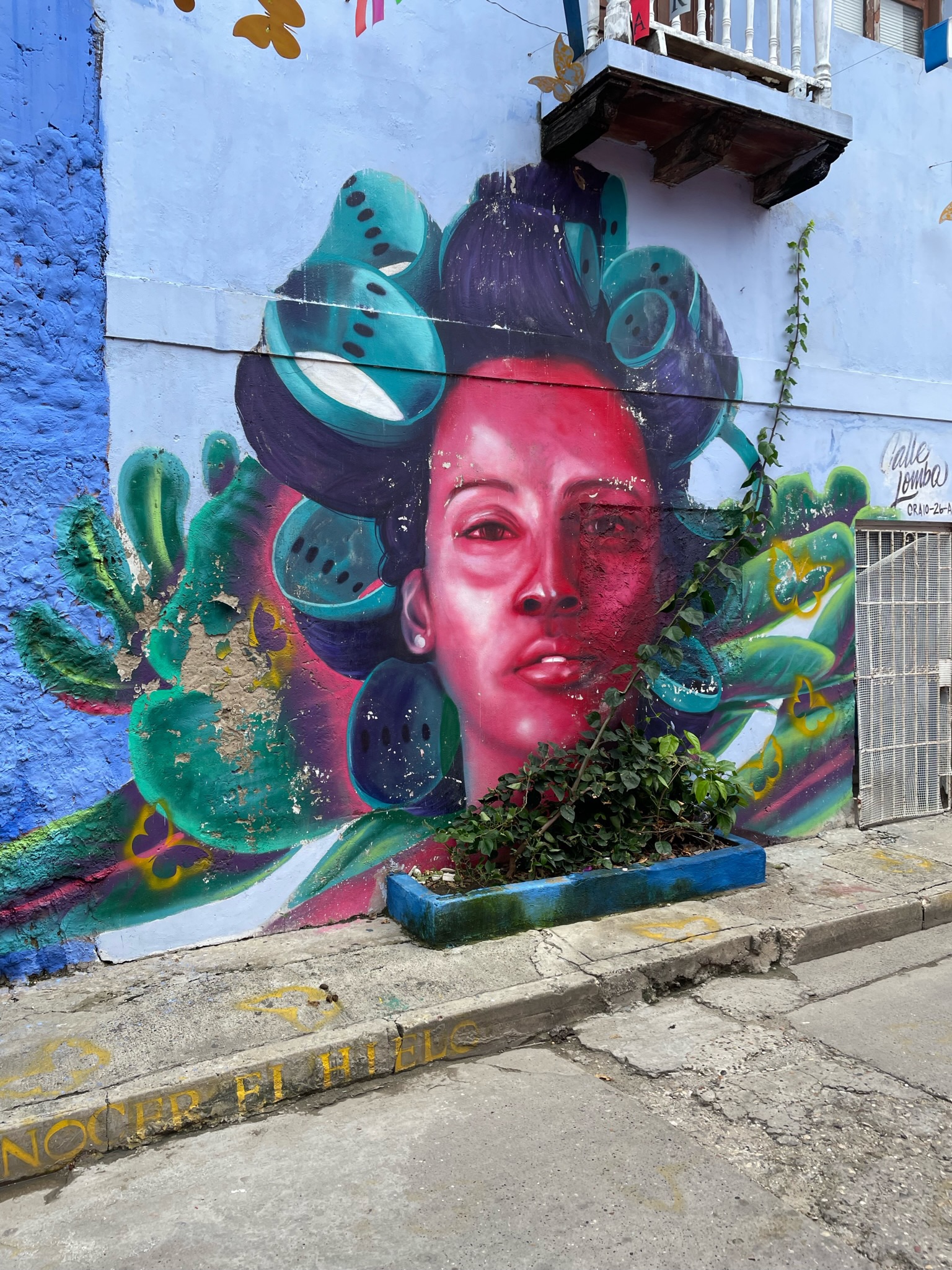
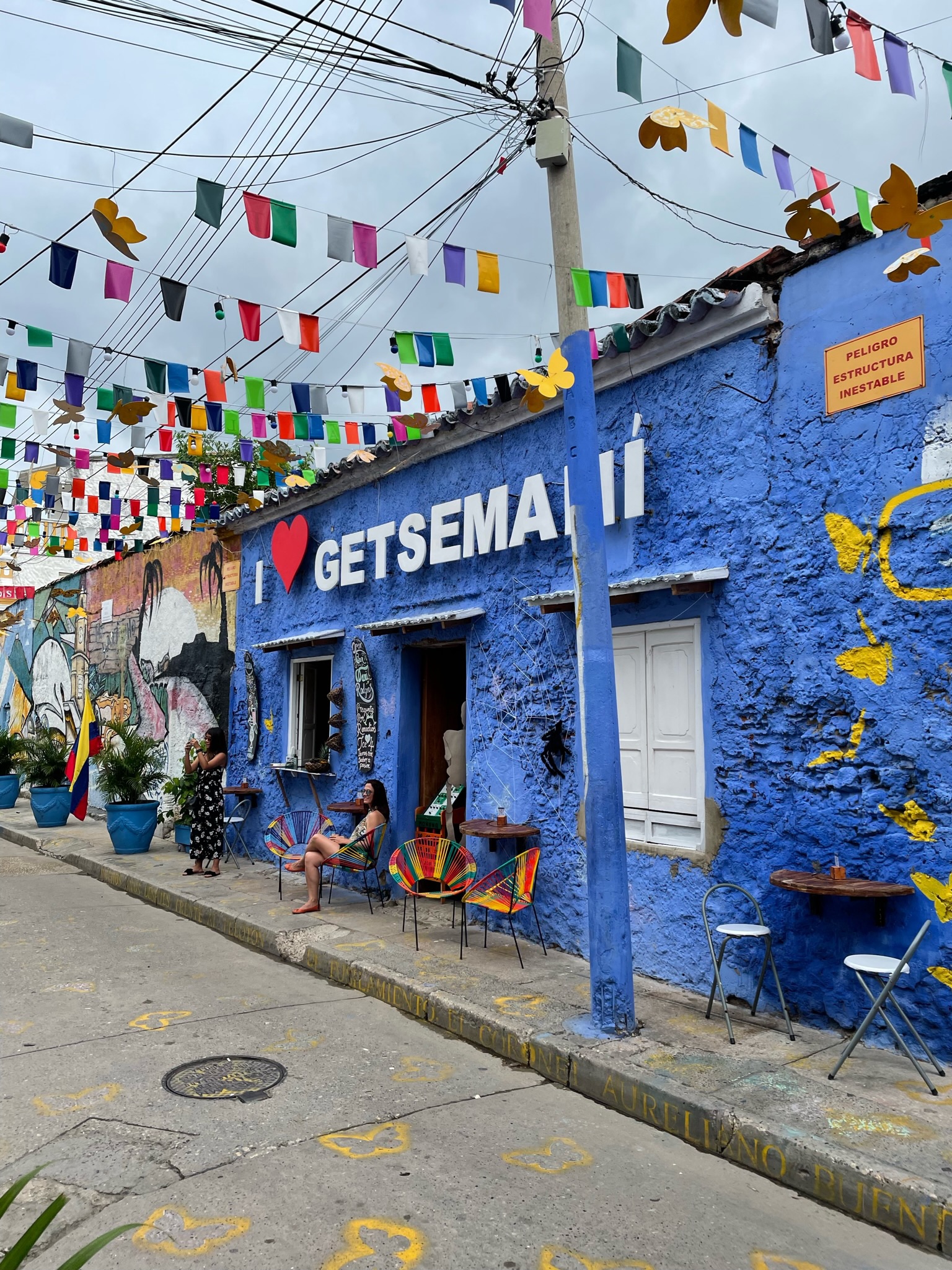
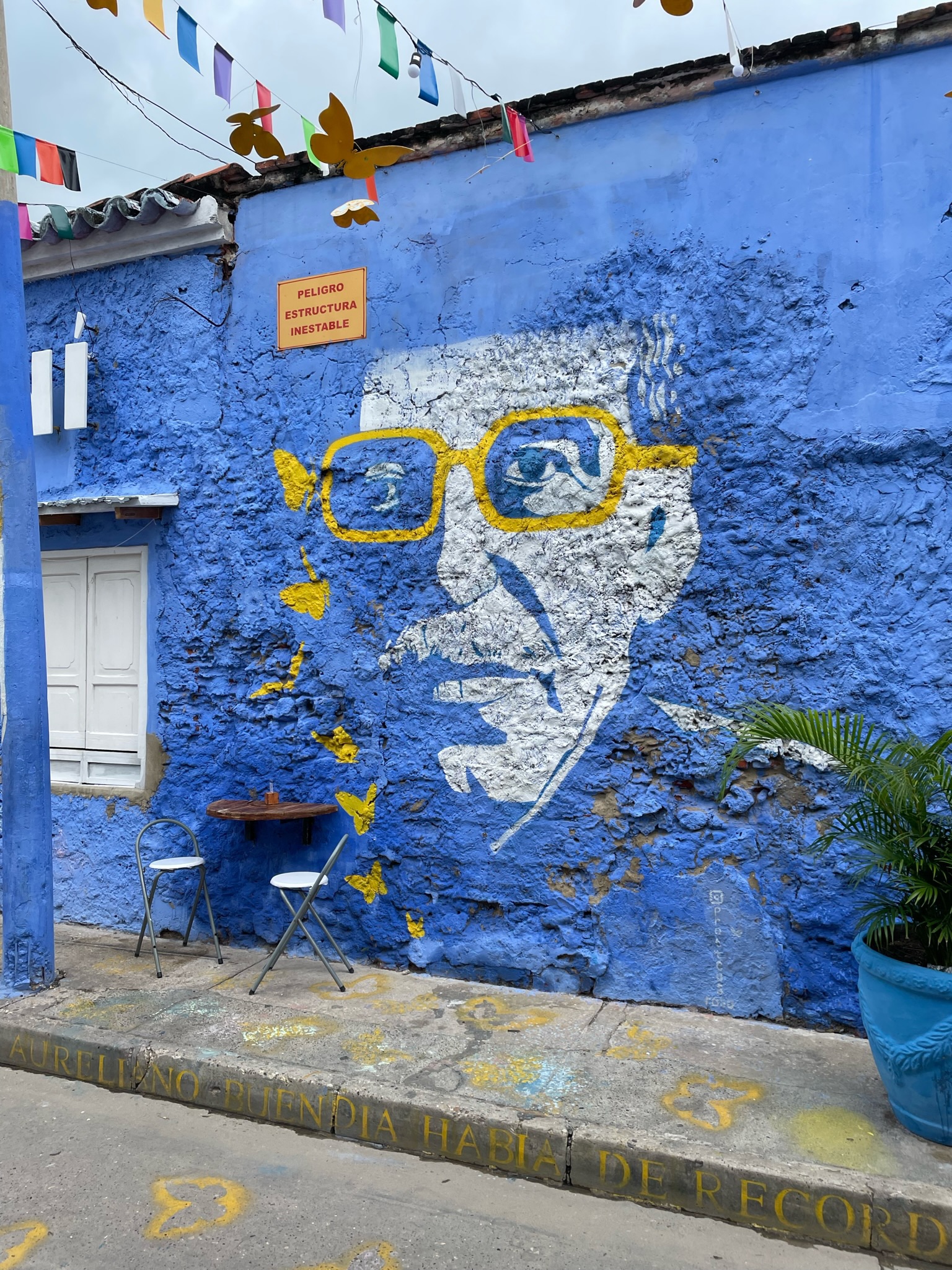
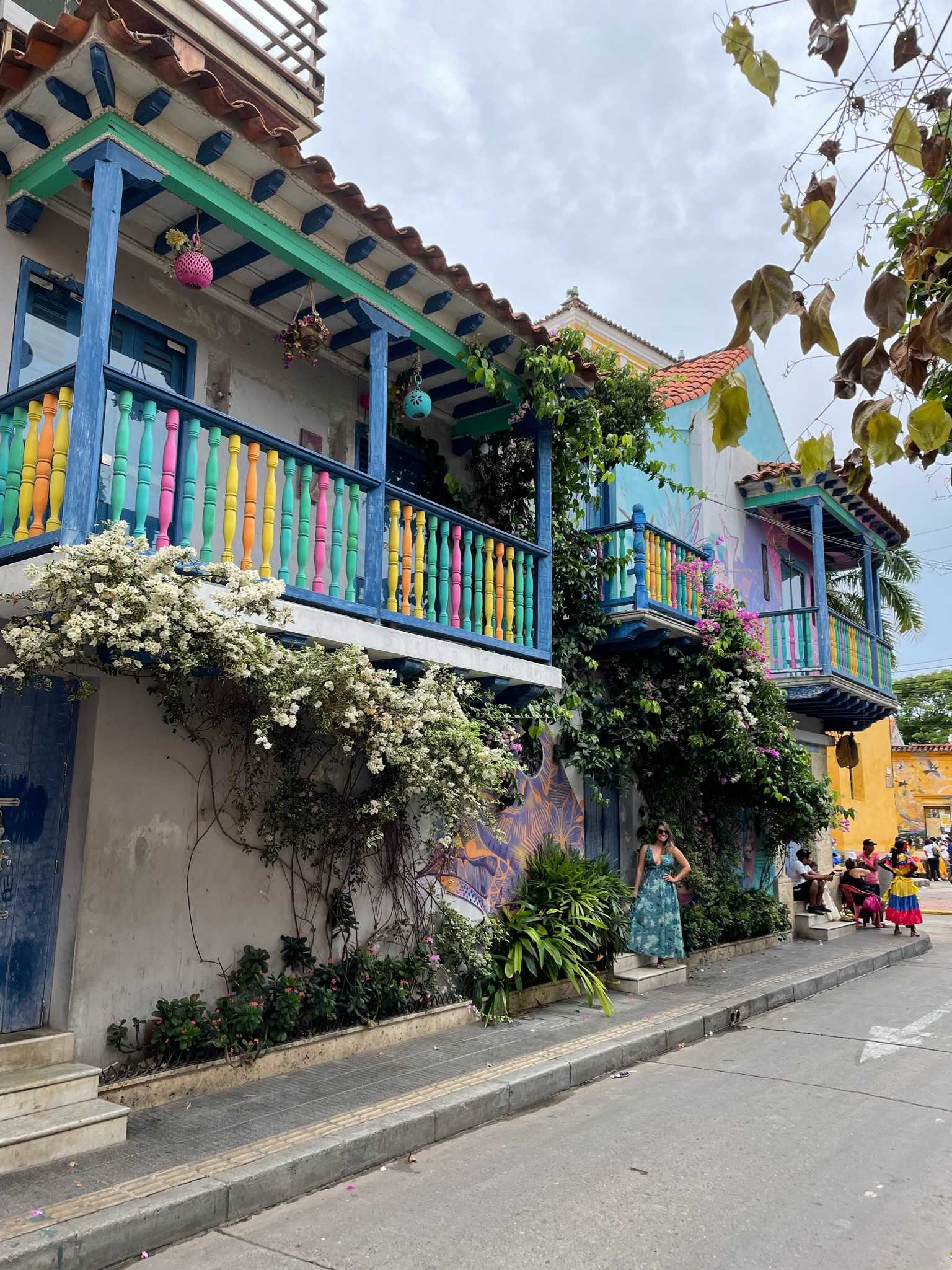

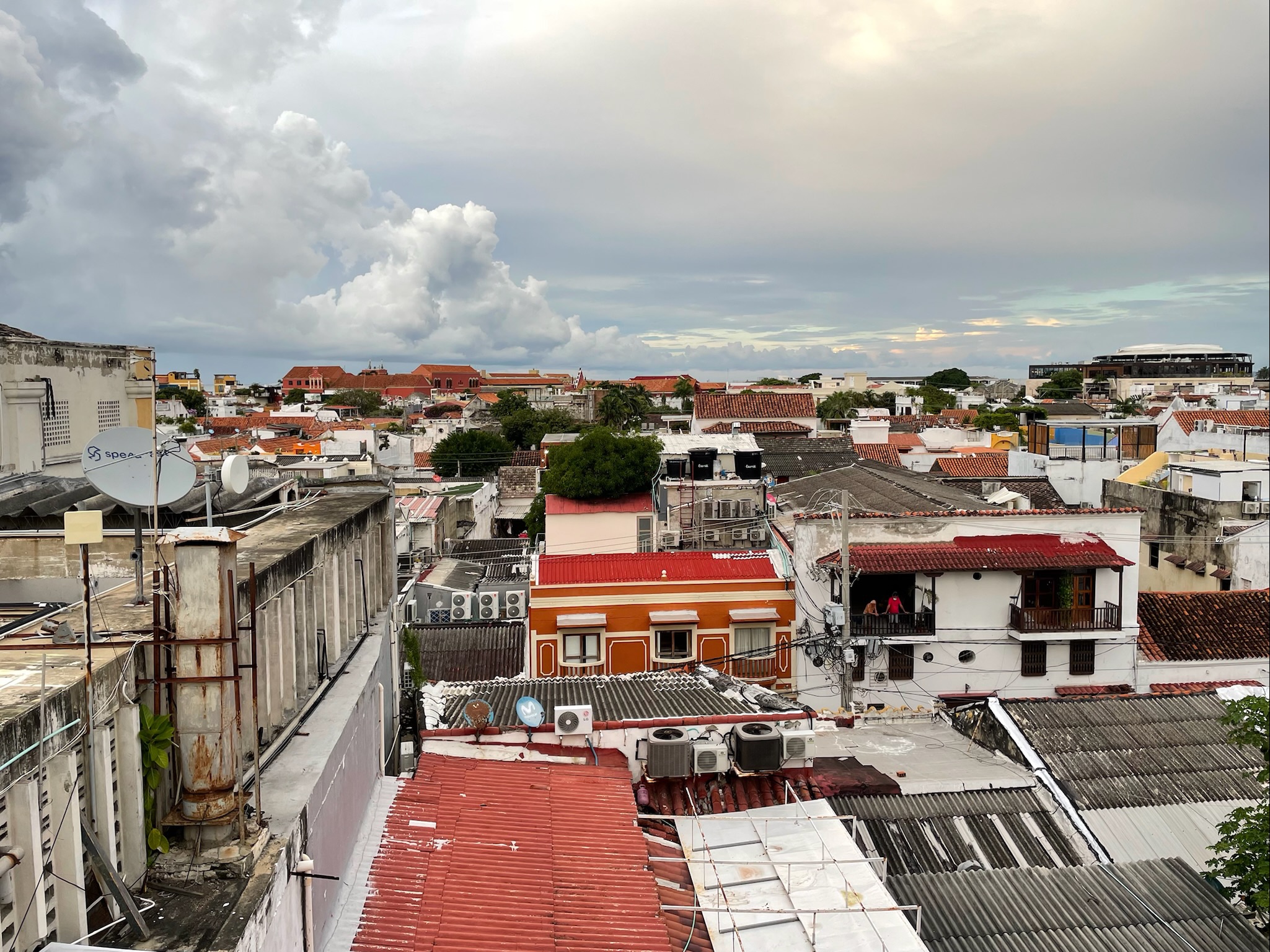

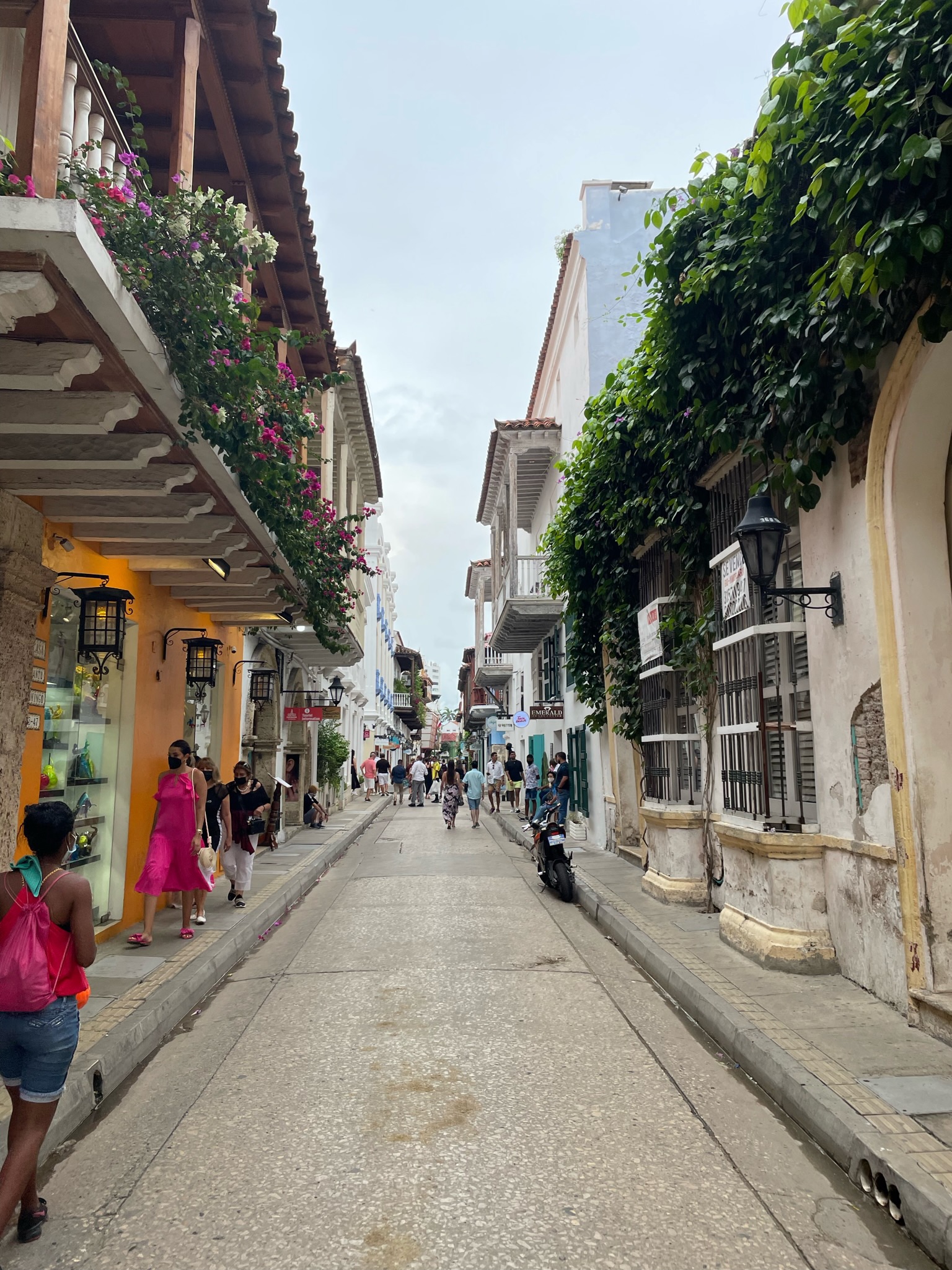
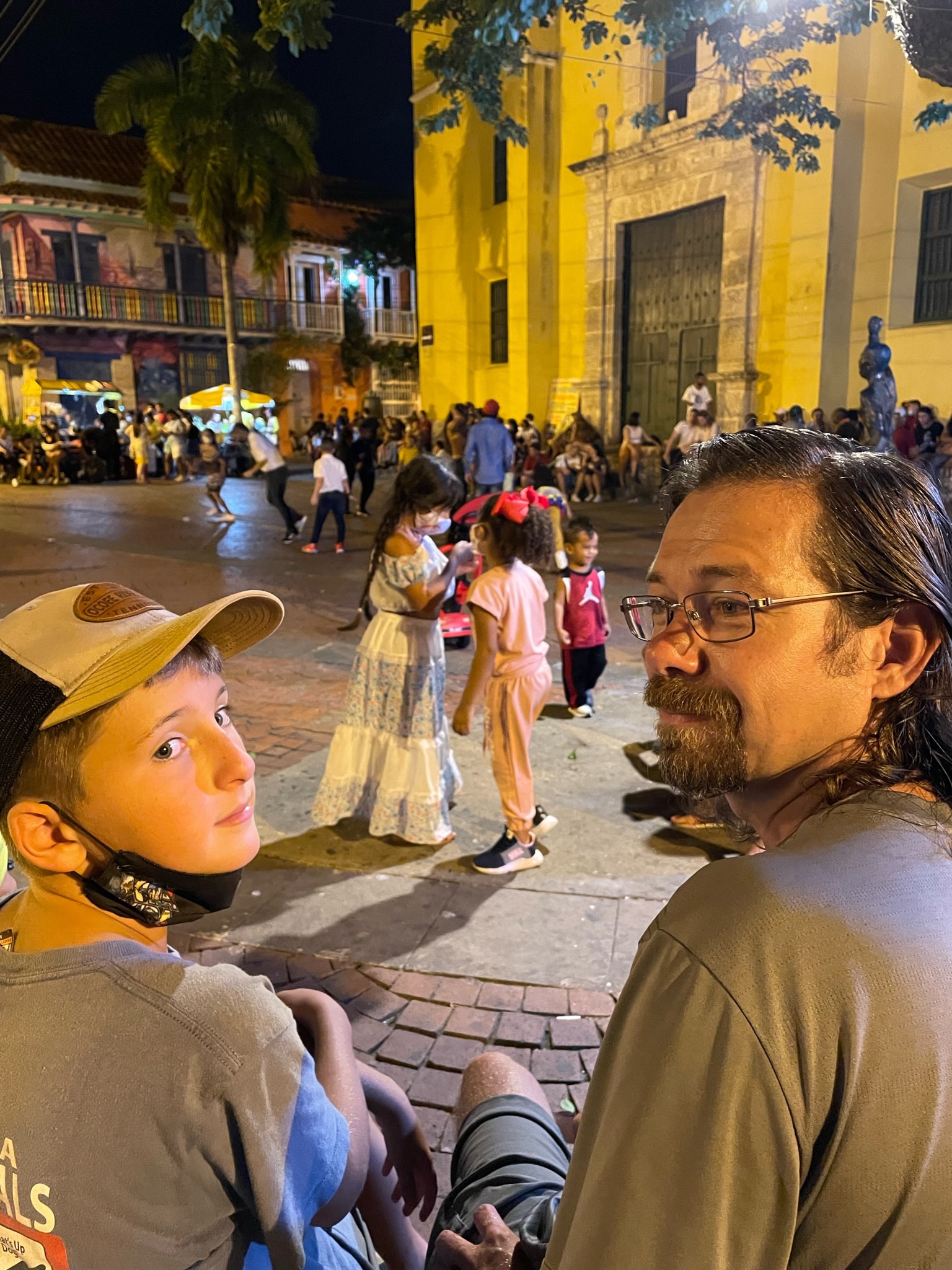
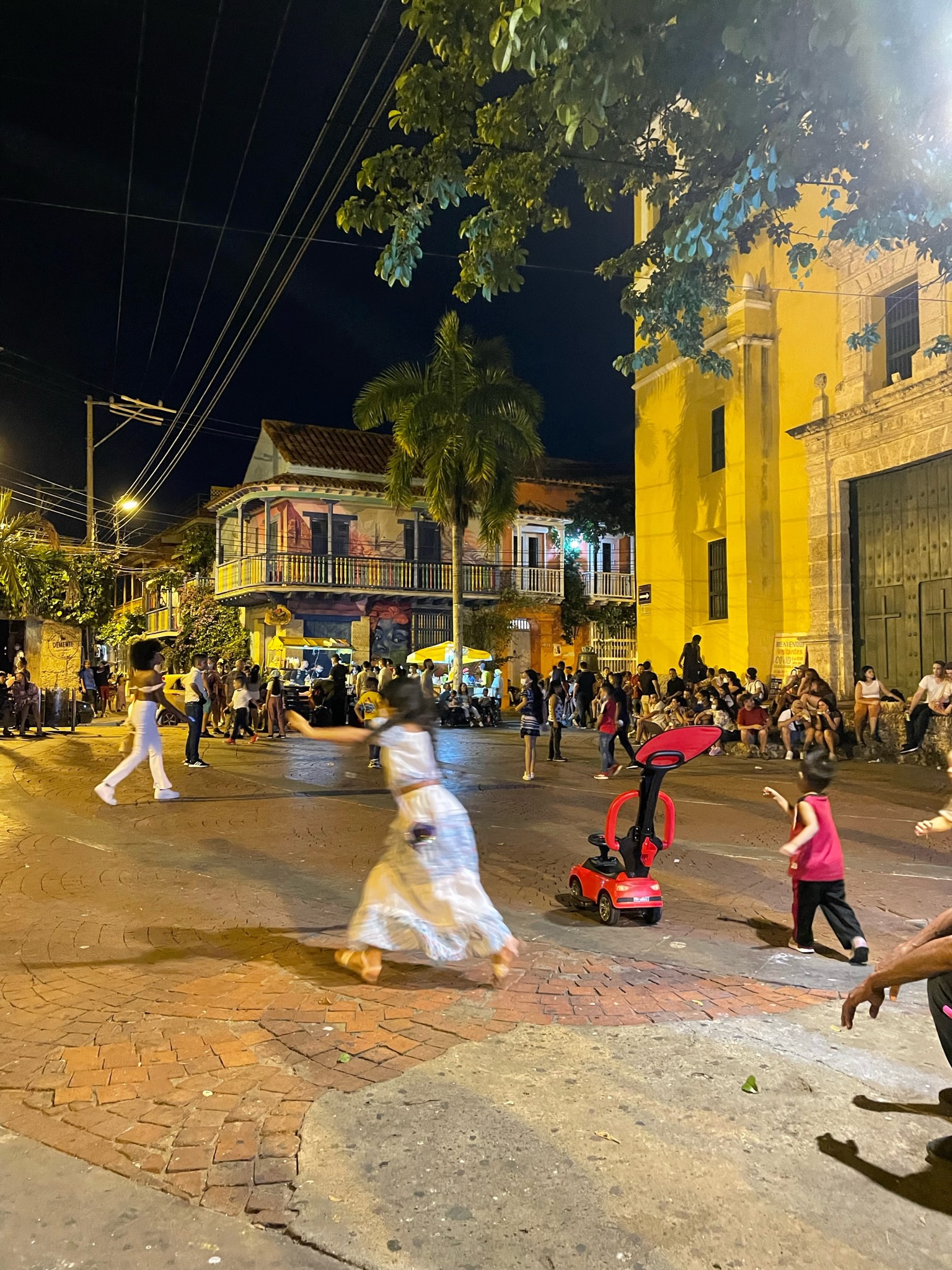
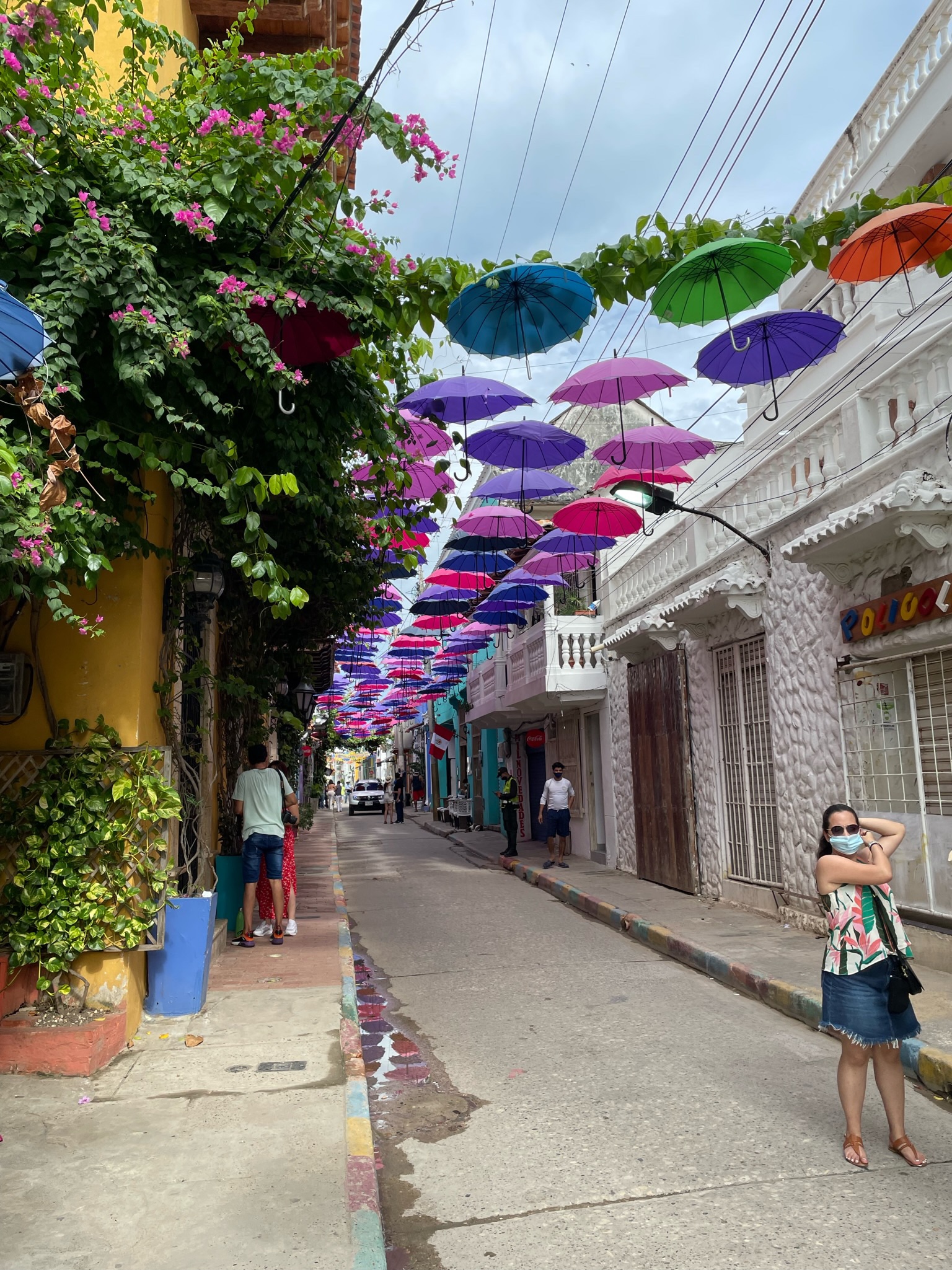
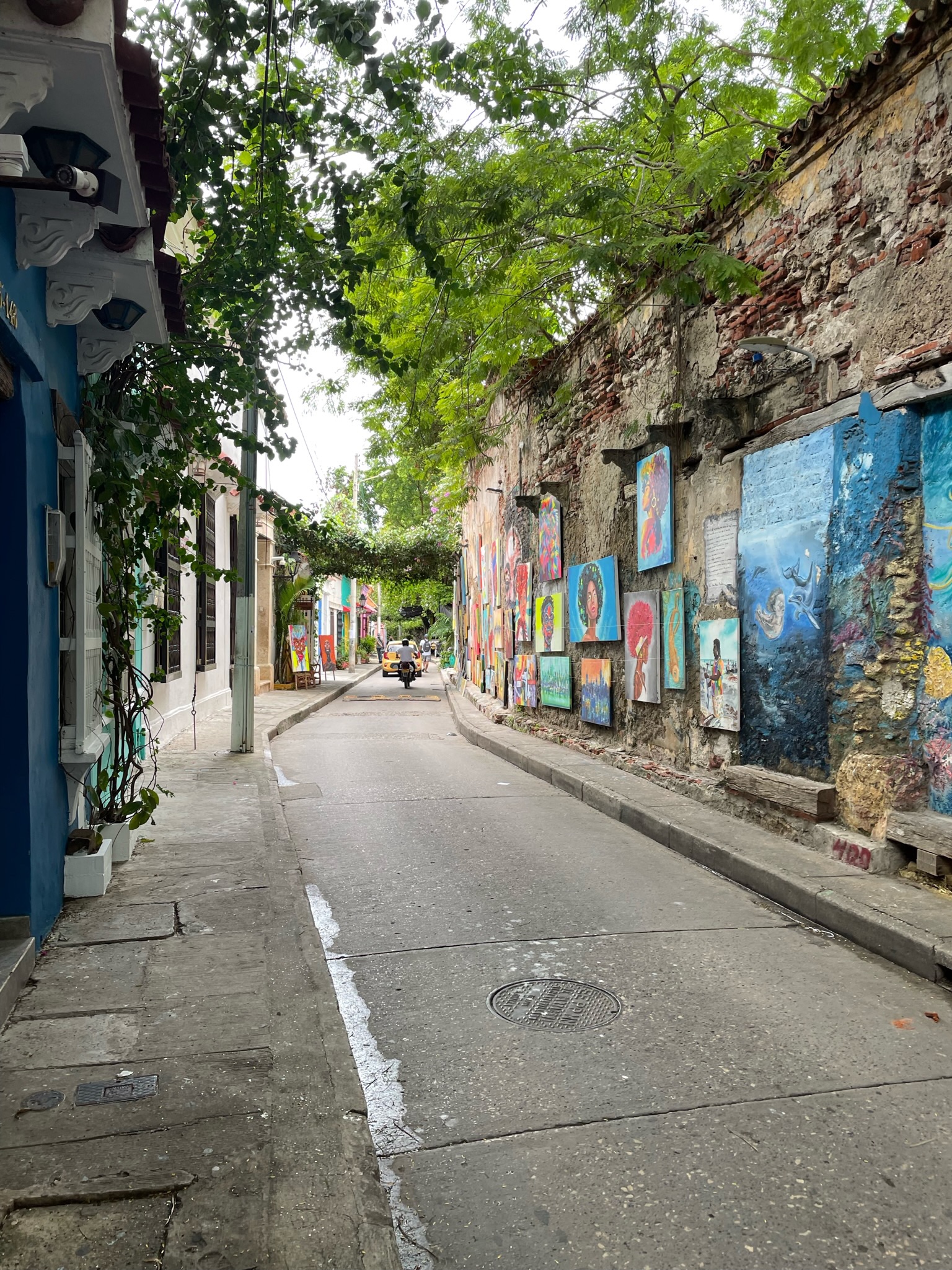
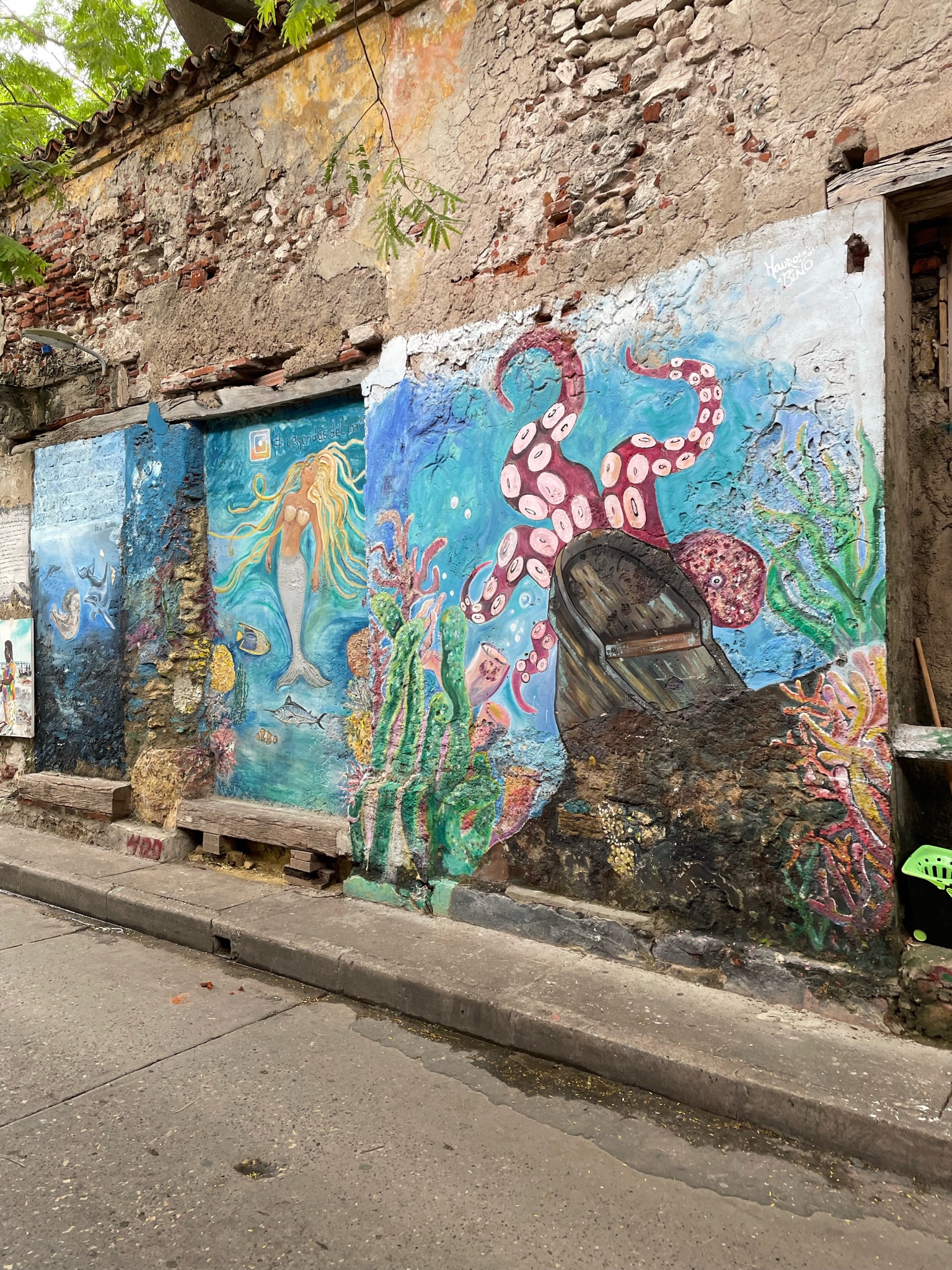
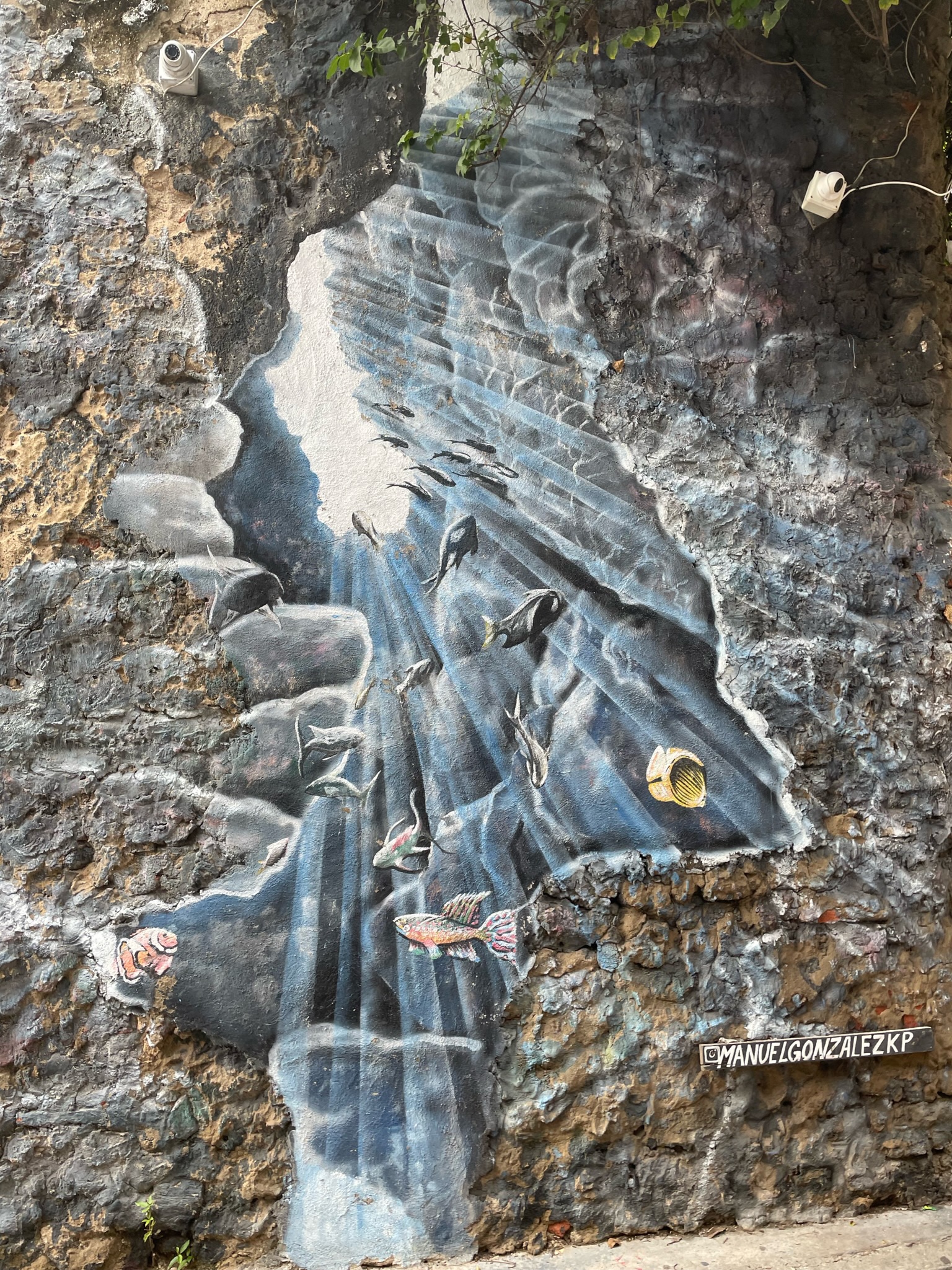

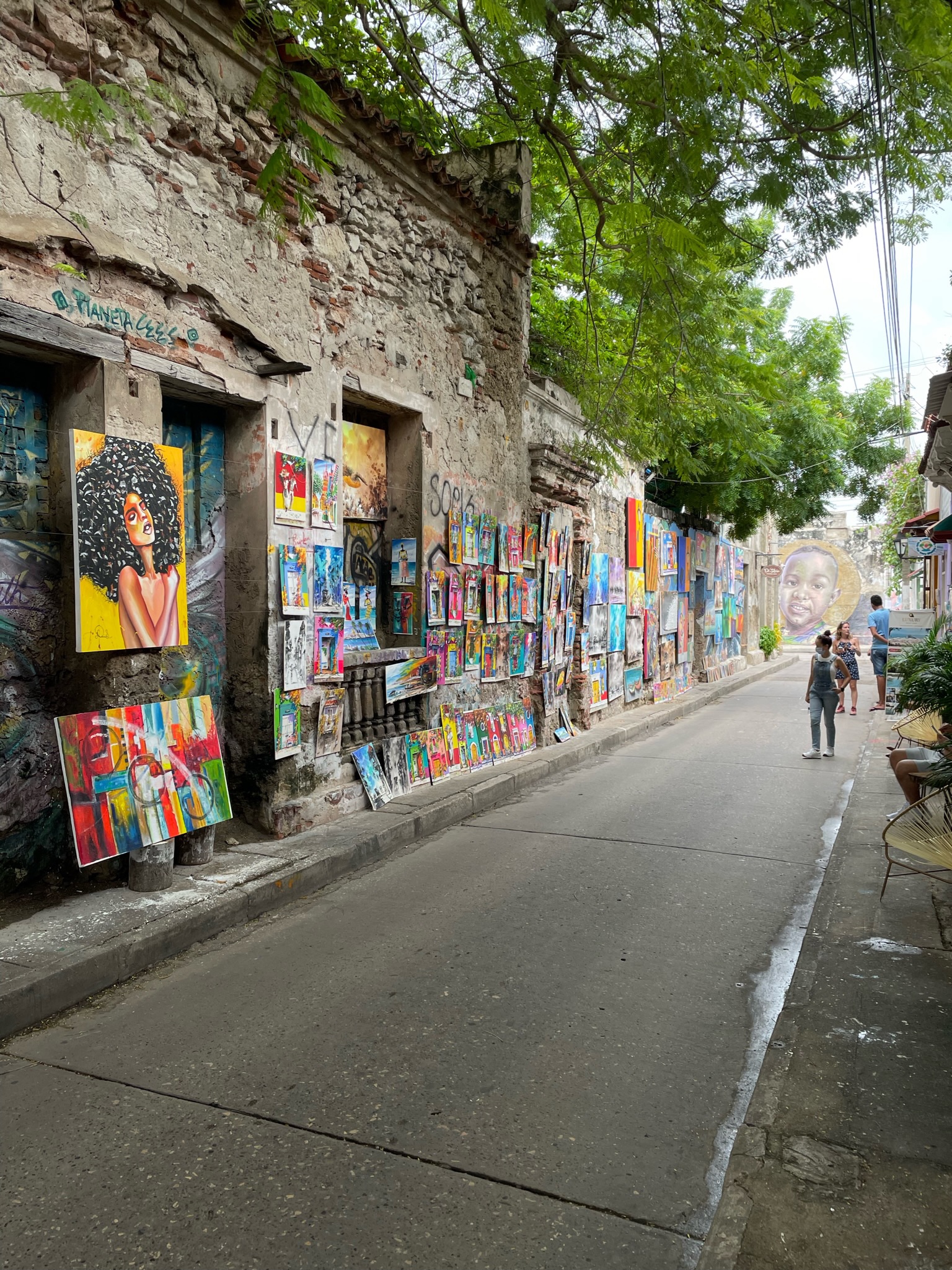
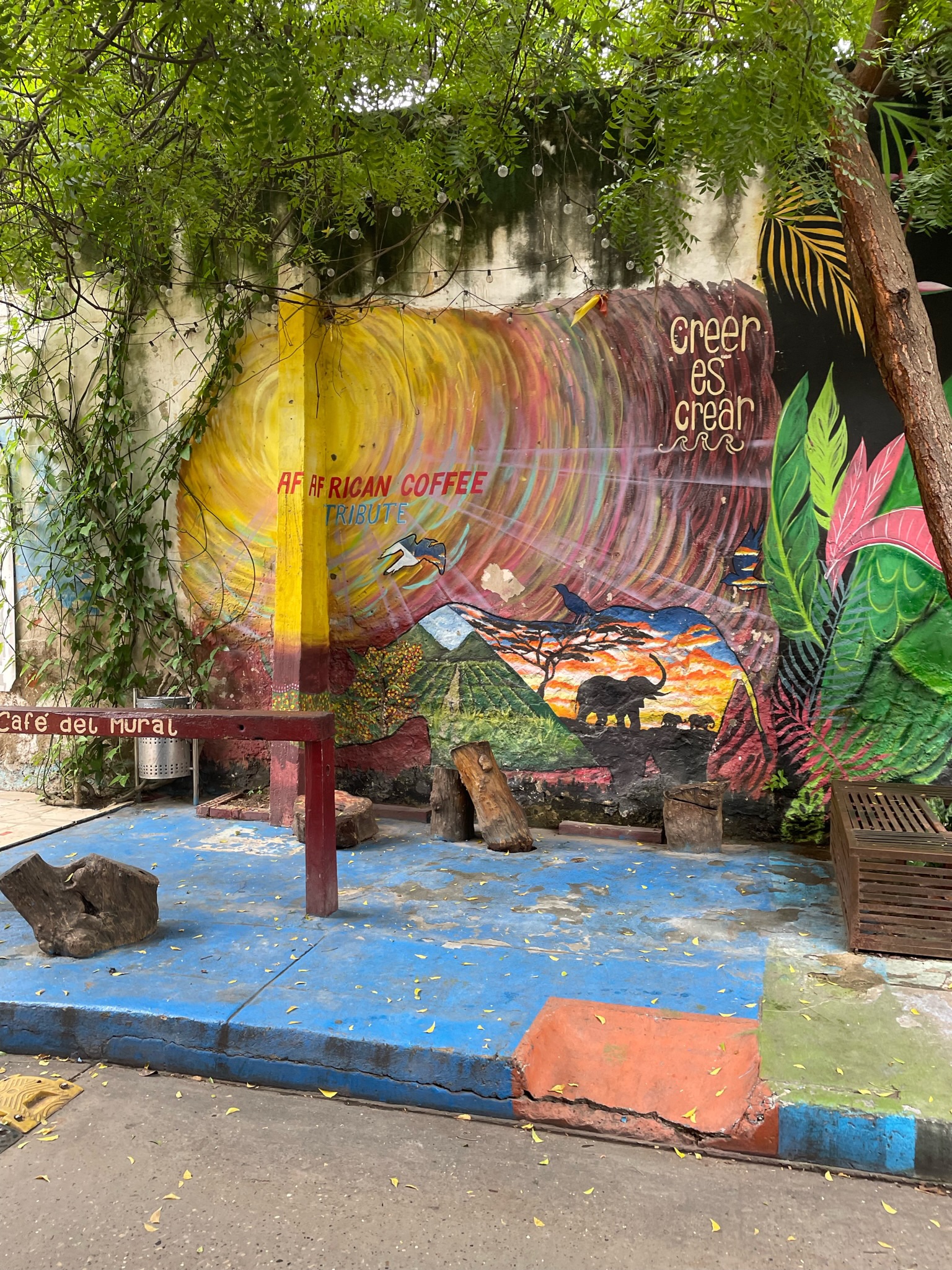
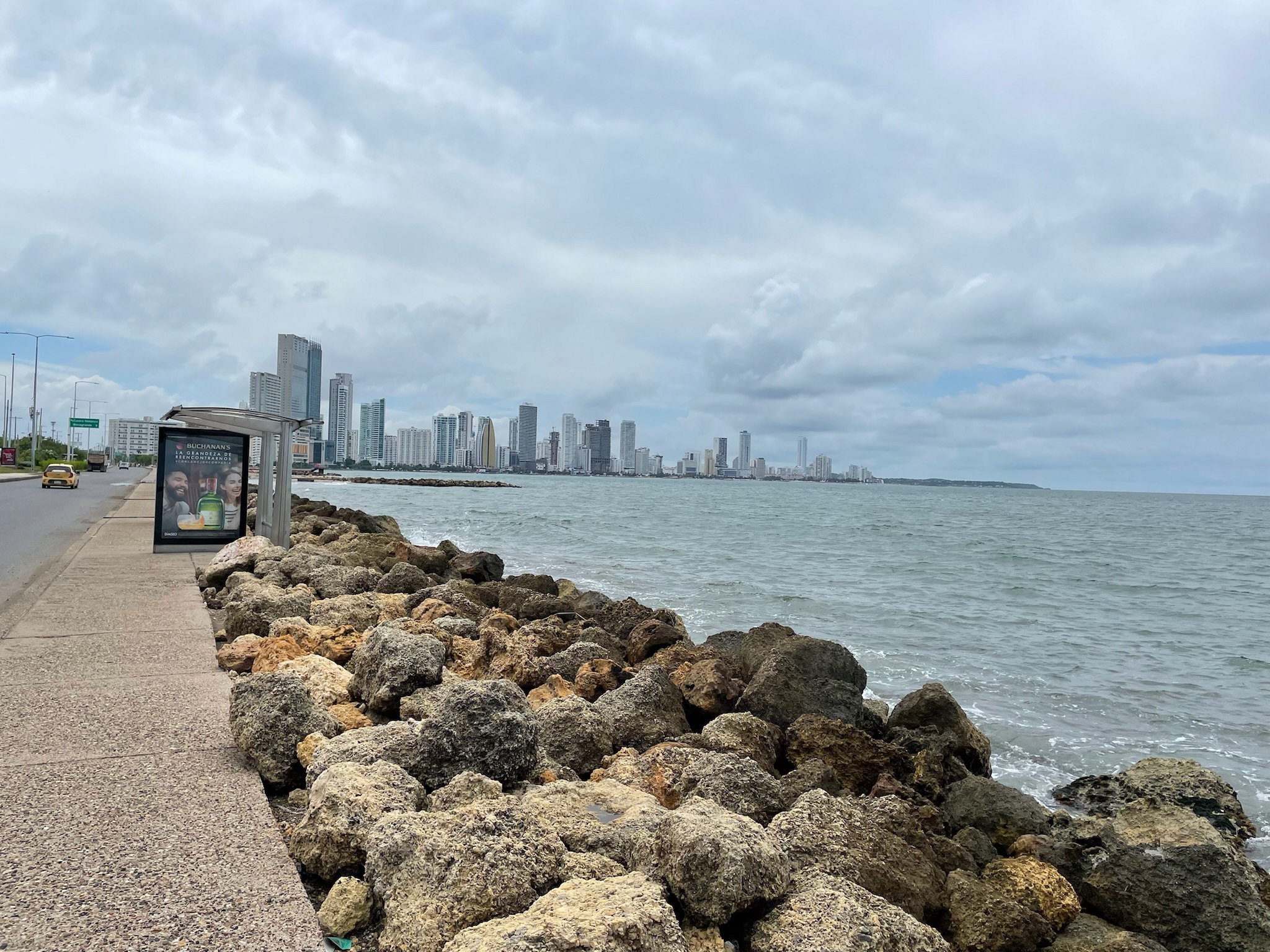
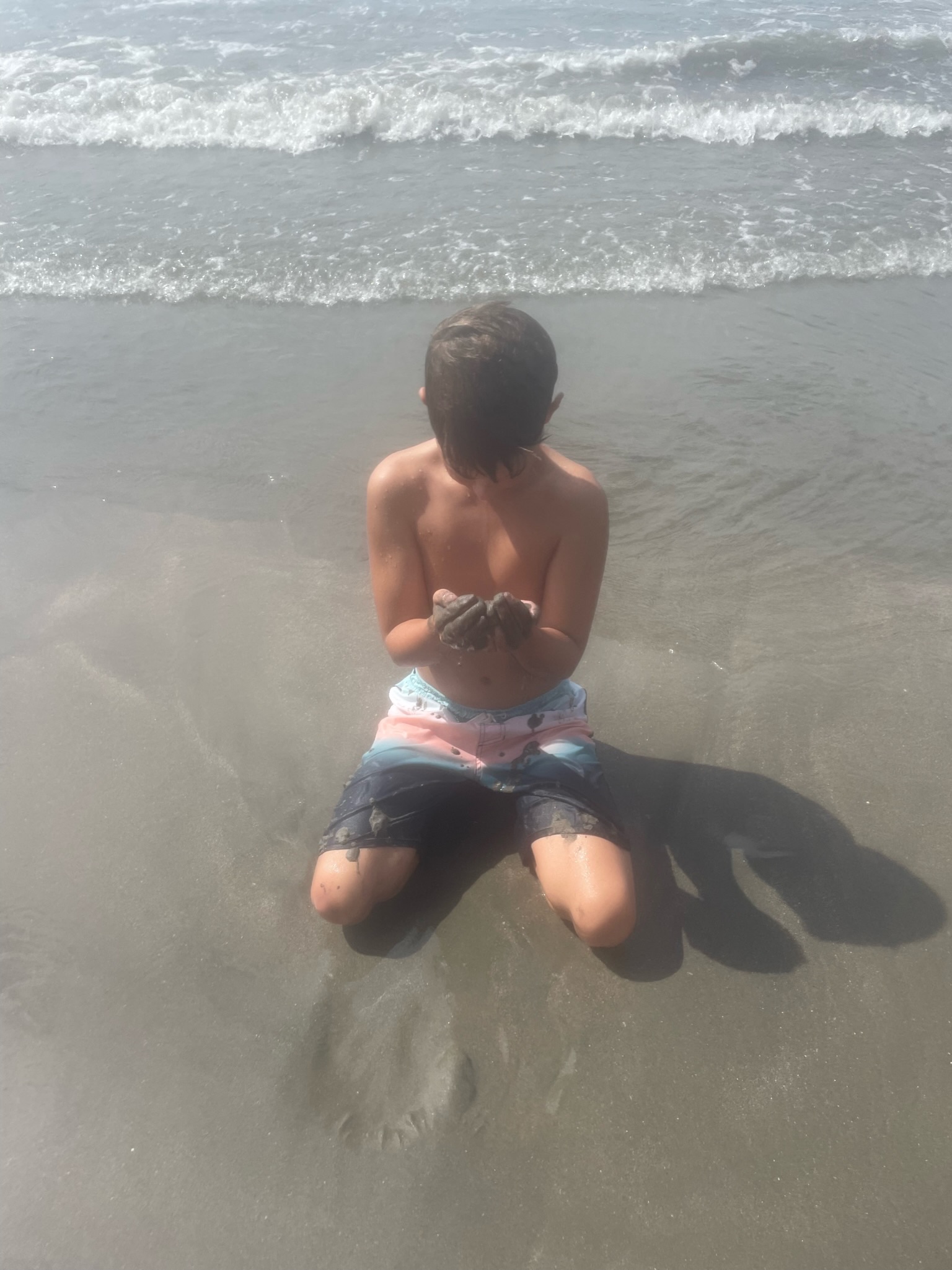
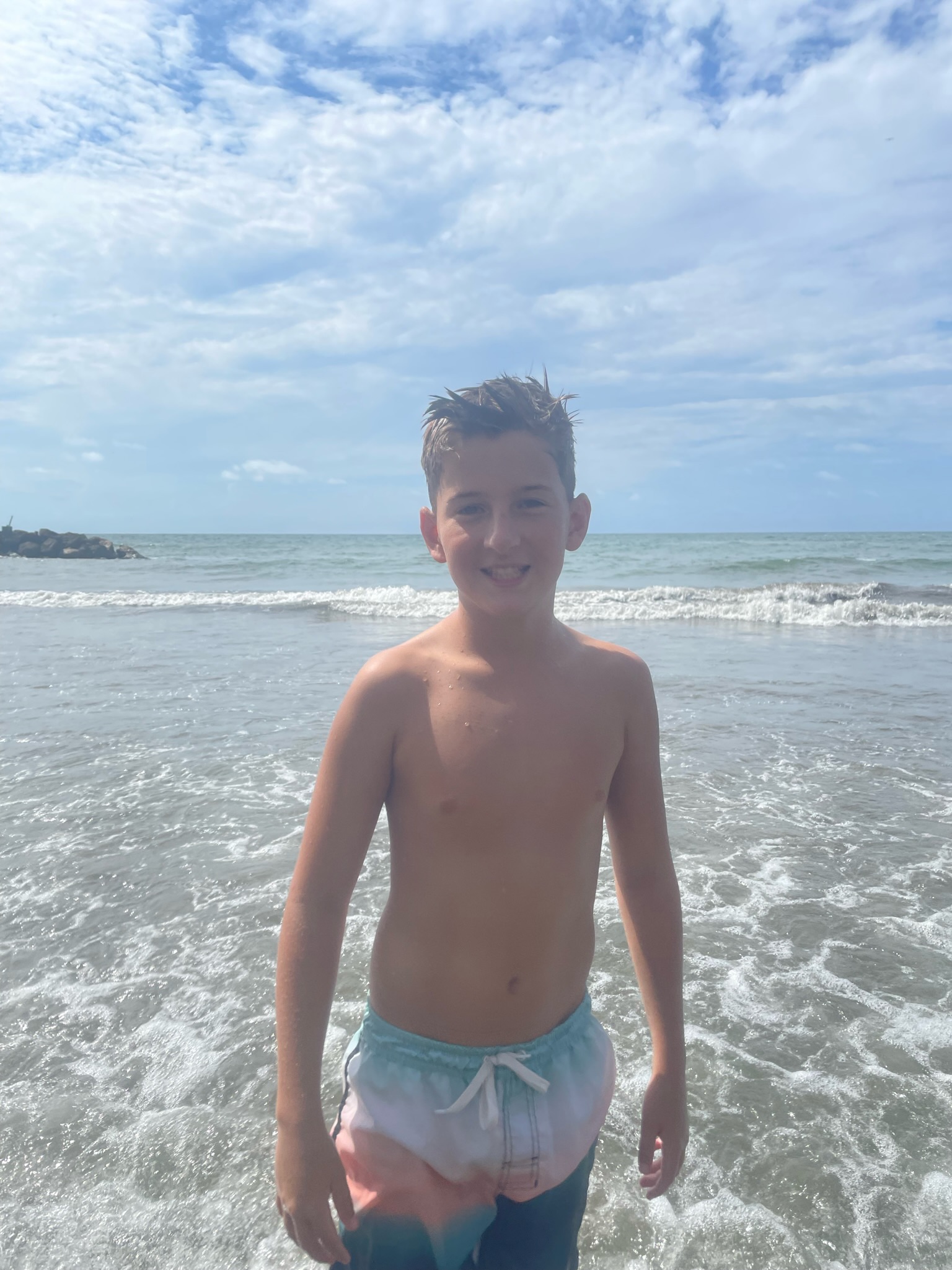
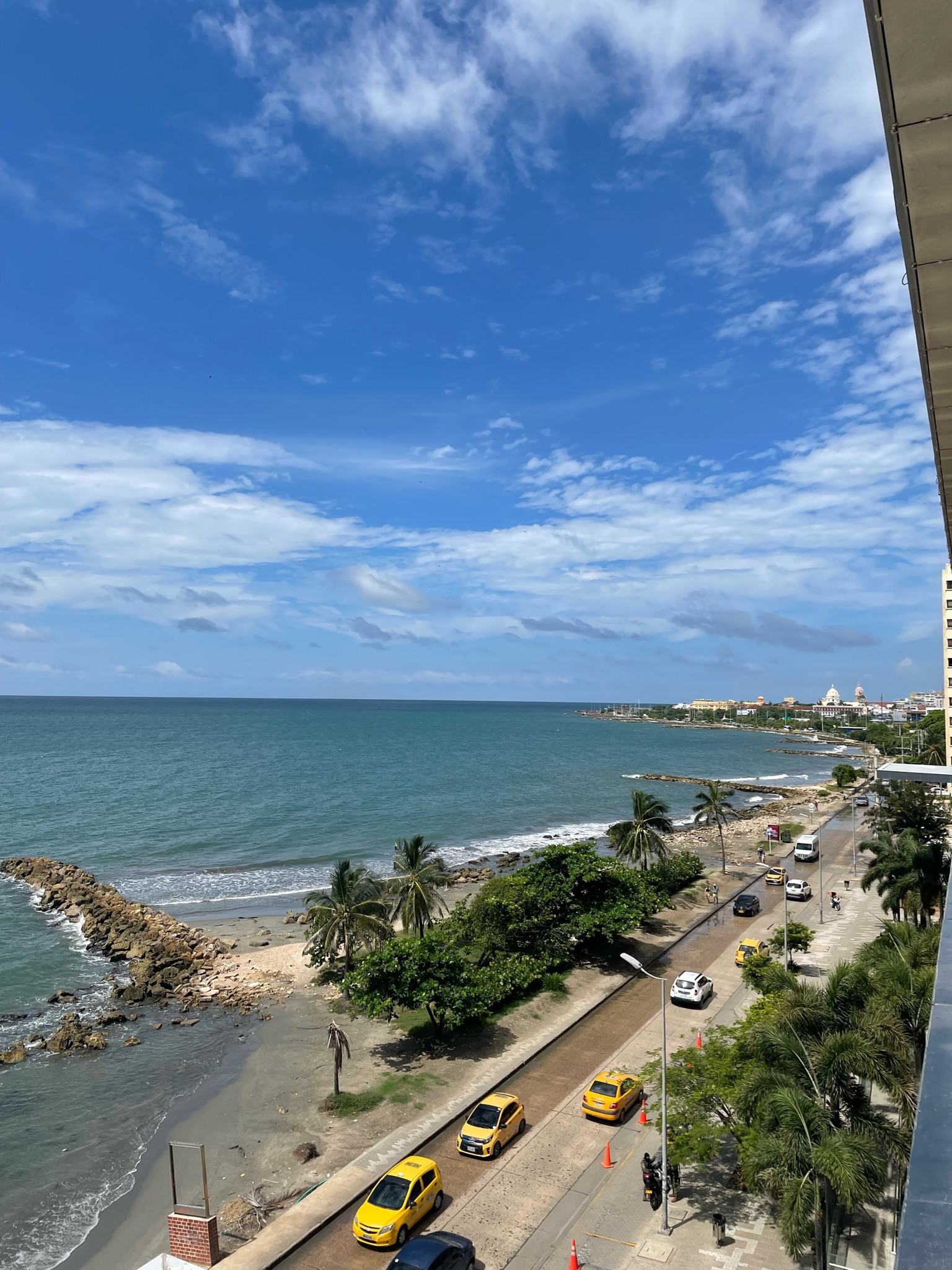
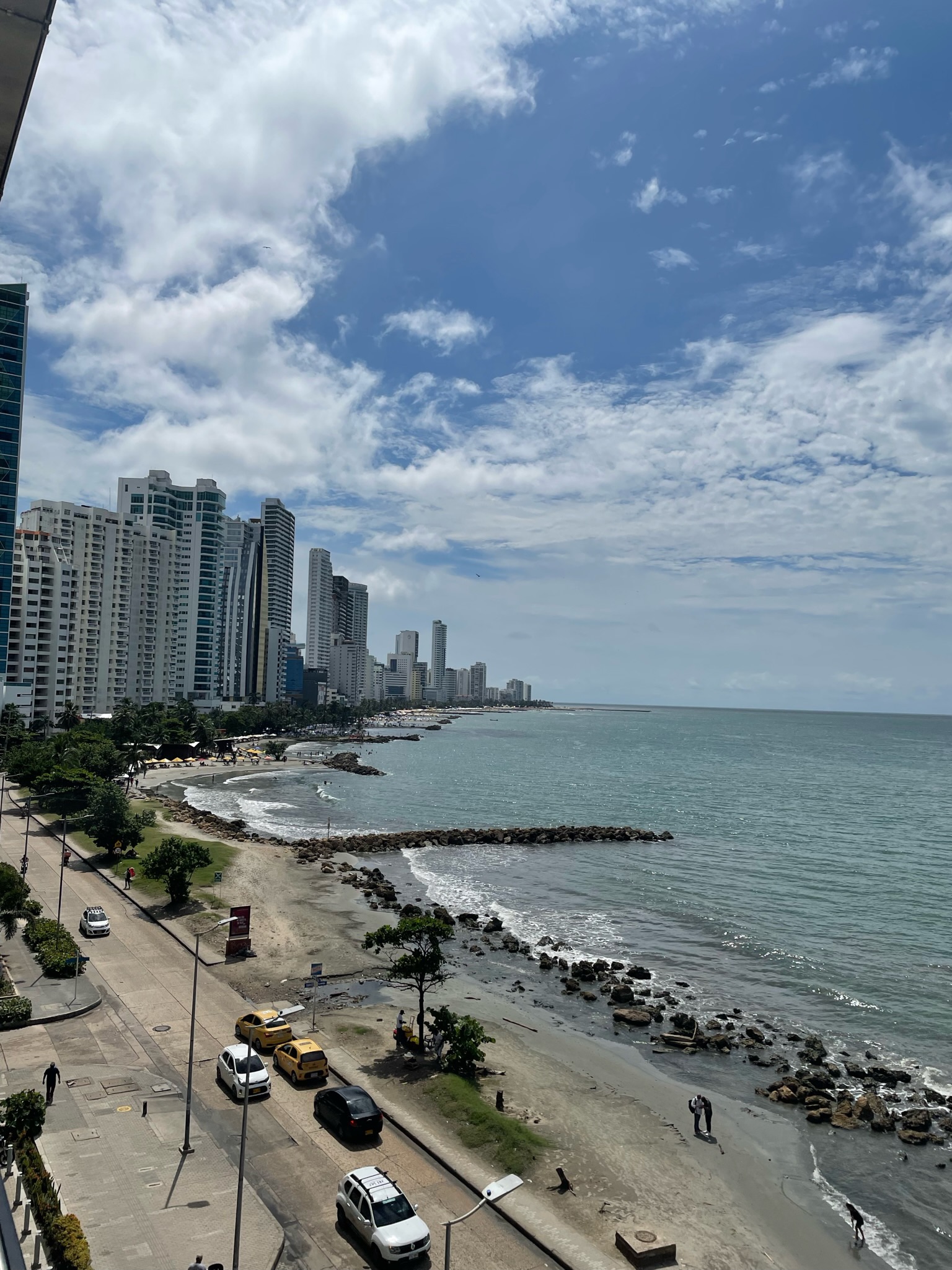
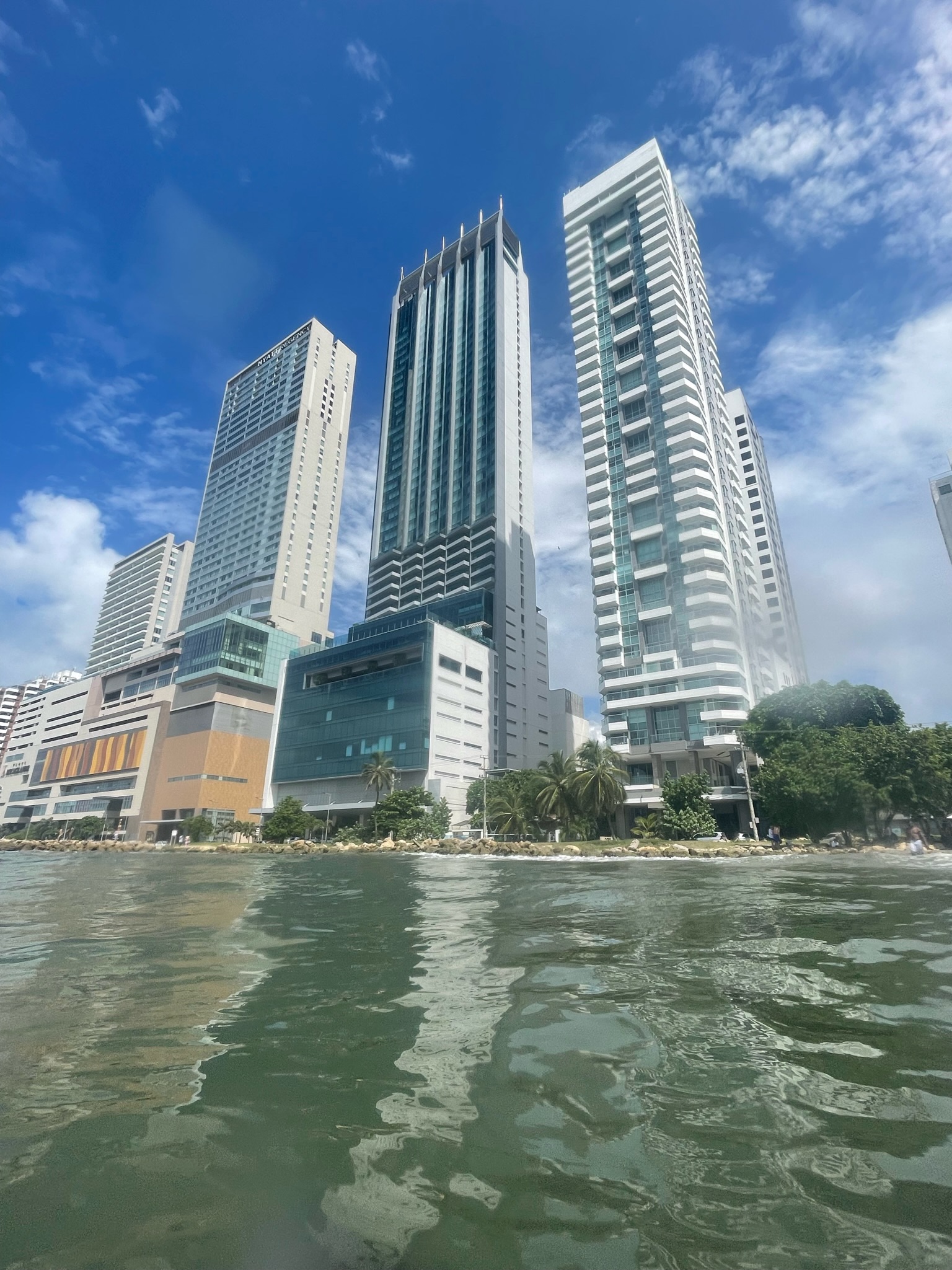
On another day, we explored the beaches of the town. We had planned to go for a swim out by the old city, but when we got there, we found that the beaches in that area were closed. Instead, we walked a few kilometers to the Bocagrande area and ventured out into the water there. The water was cool and refreshing, and the sand felt good on my feet. It wasn’t the beautiful crystal blue water I love so much, but in the Colombian heat, it still felt amazing.

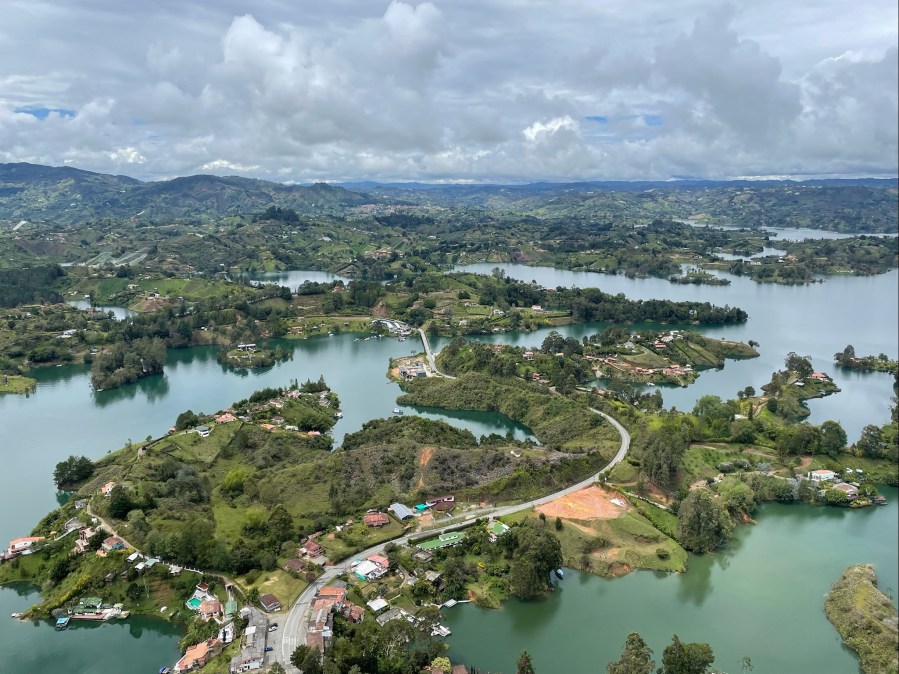
After a few days in Cartagena, we decided to move inland a bit, and our first stop was in Medellin. The airport in Medellin is actually almost an hour east of the city and closer to another town we wanted to visit called Guatape. So when we landed, instead of going into Medellin, we got on a shuttle bound for a hotel in Guatape. Guatape was another hour east of the airport, and our driver manuevered the narrow winding roads with ease. The weather was overcast and rainy, so we didn’t get to enjoy much of the scenery. We made it to our hotel which sat atop a hill overlooking a BMX track and a soccer complex. Our room was nice, but it was a little chilly. We had only planned on staying one night, visiting the Piedra del Penol the next morning, and catching the bus back to Medellin. The next morning, we woke up to dreary skies and pouring down rain. We were all disappointed that our one shot of enjoying the scenic panoramas atop the rock was probably a bust. We decided to go have some breakfast and we prayed for a break in the weather. God granted our request, and shortly after breakfast, the skies cleared up. We headed for the big rock.
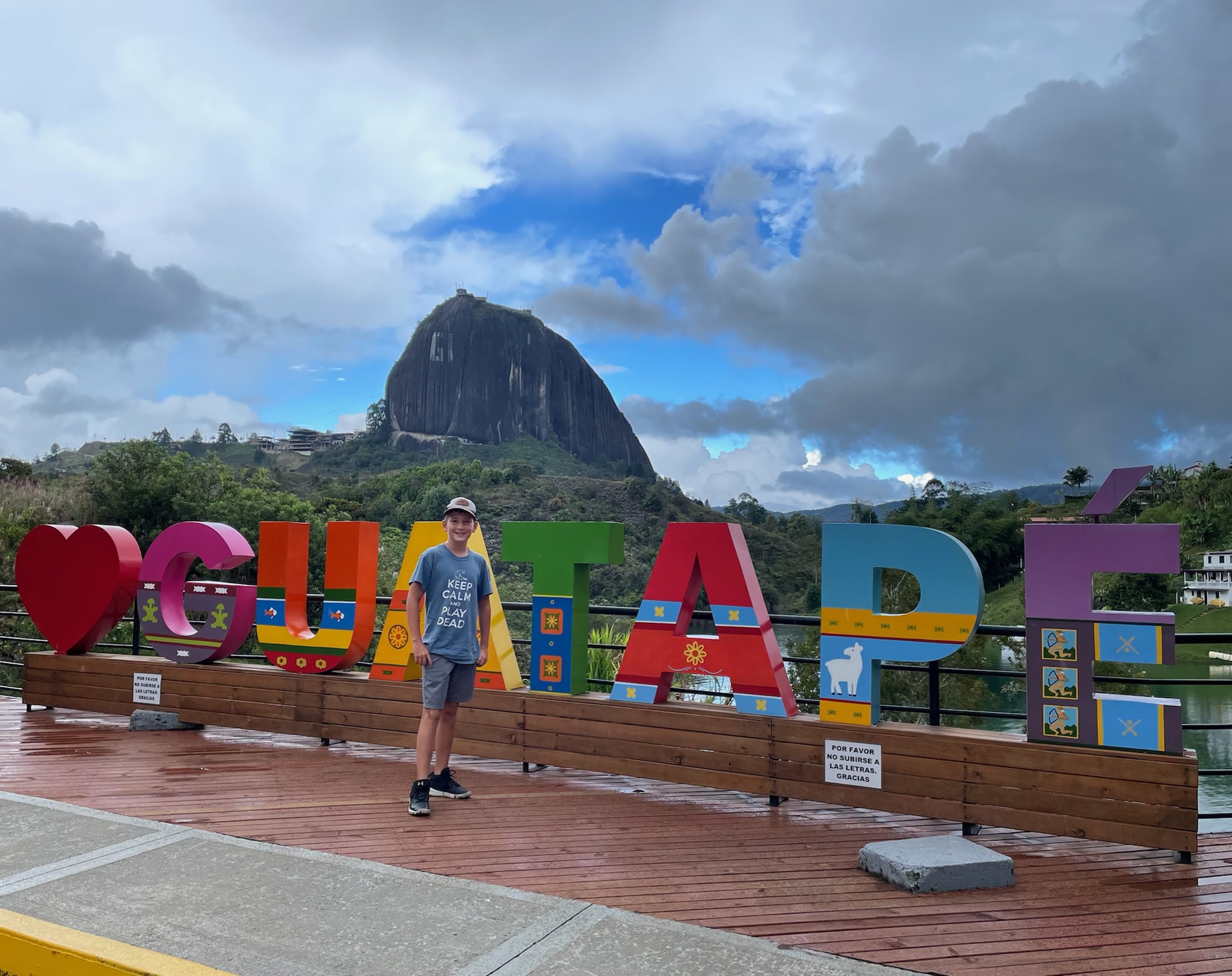

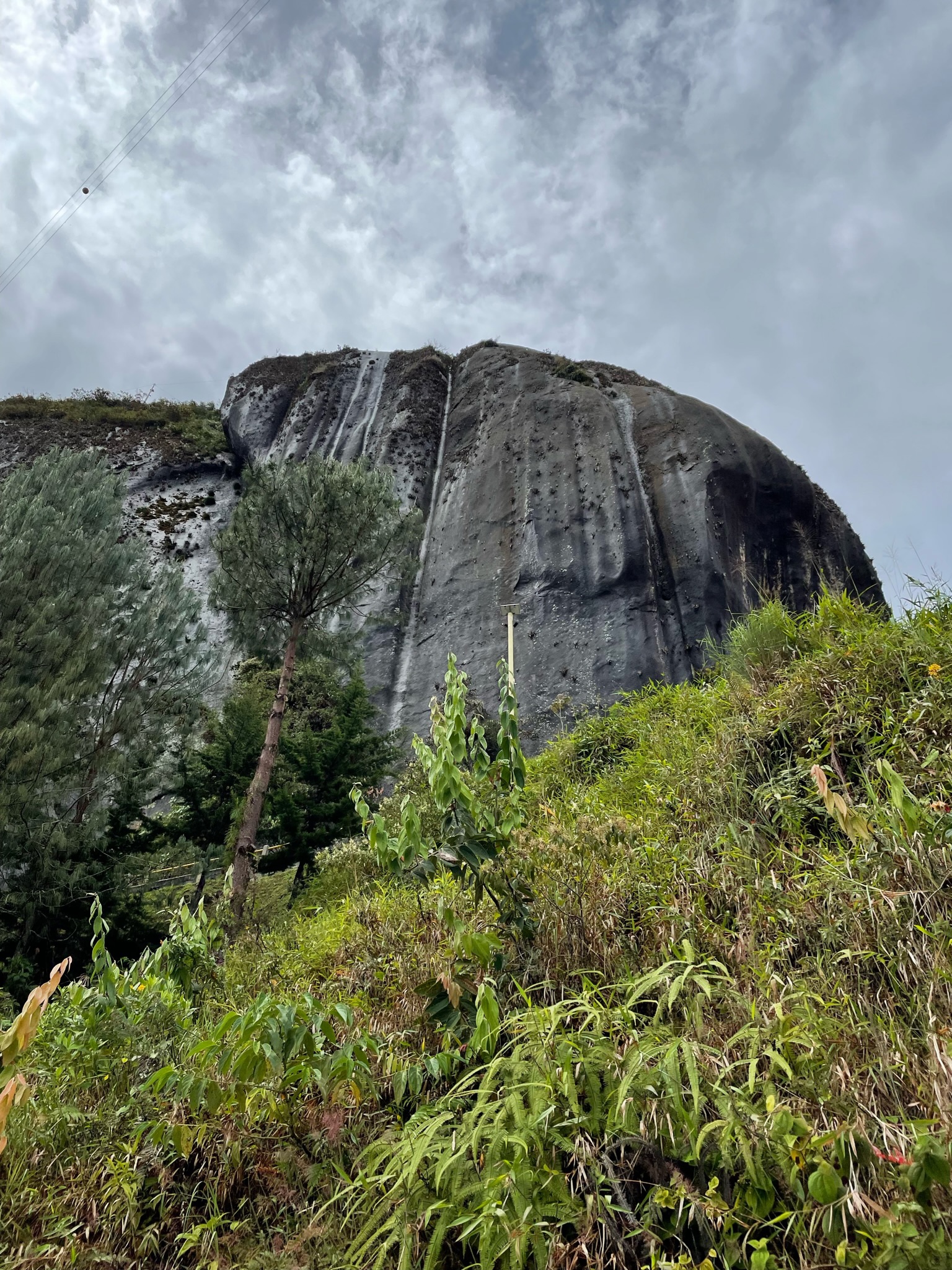
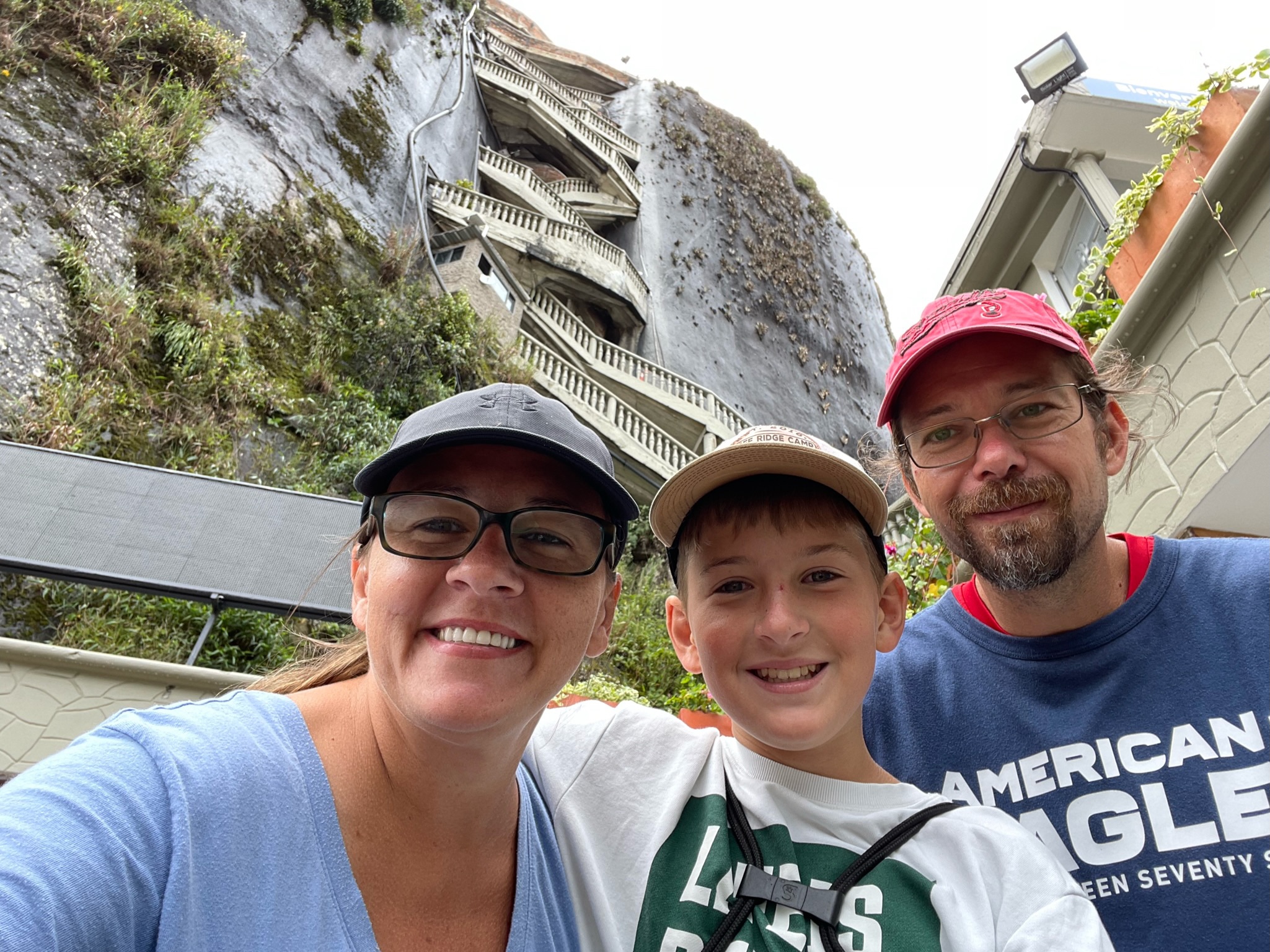
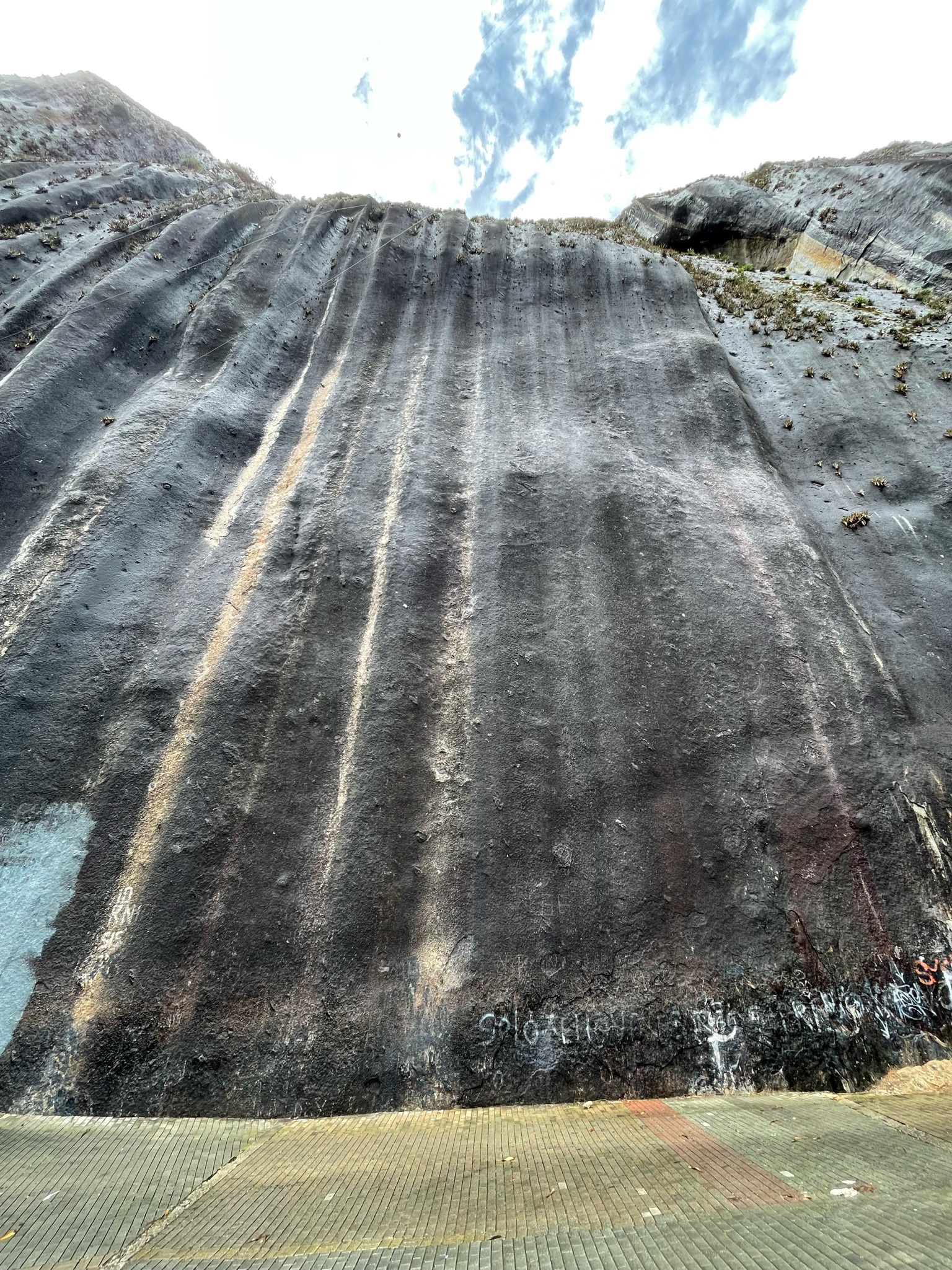
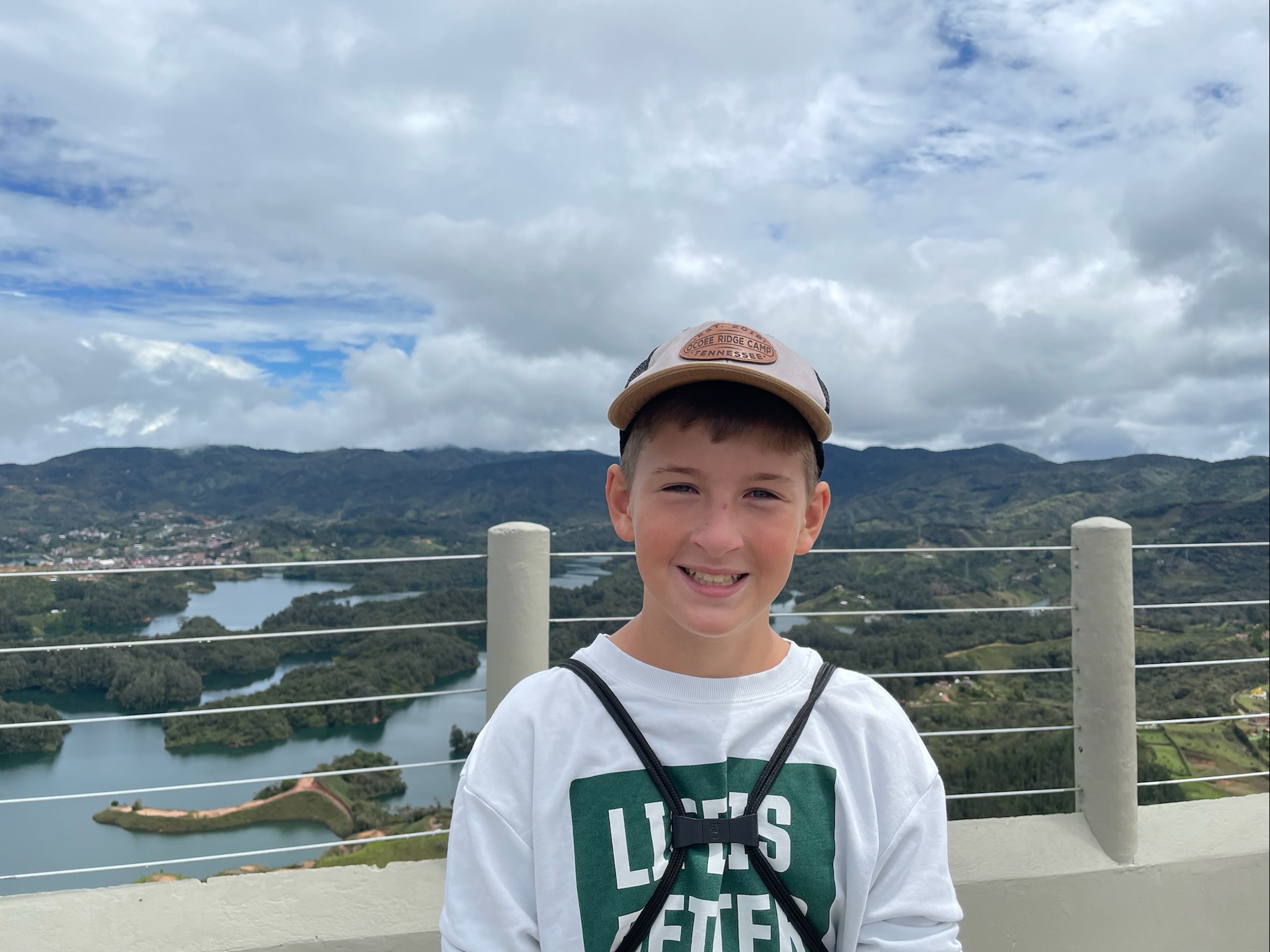
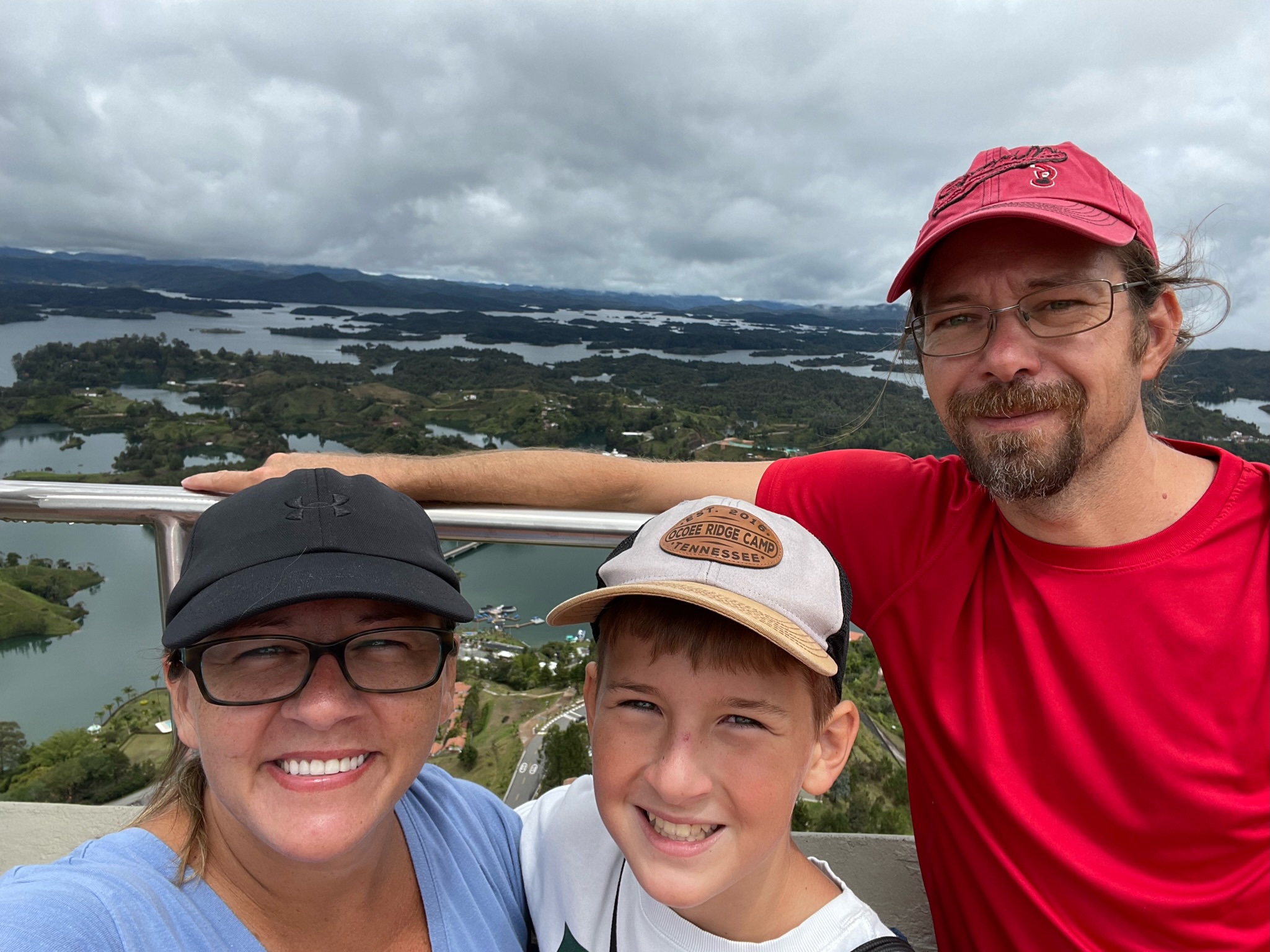
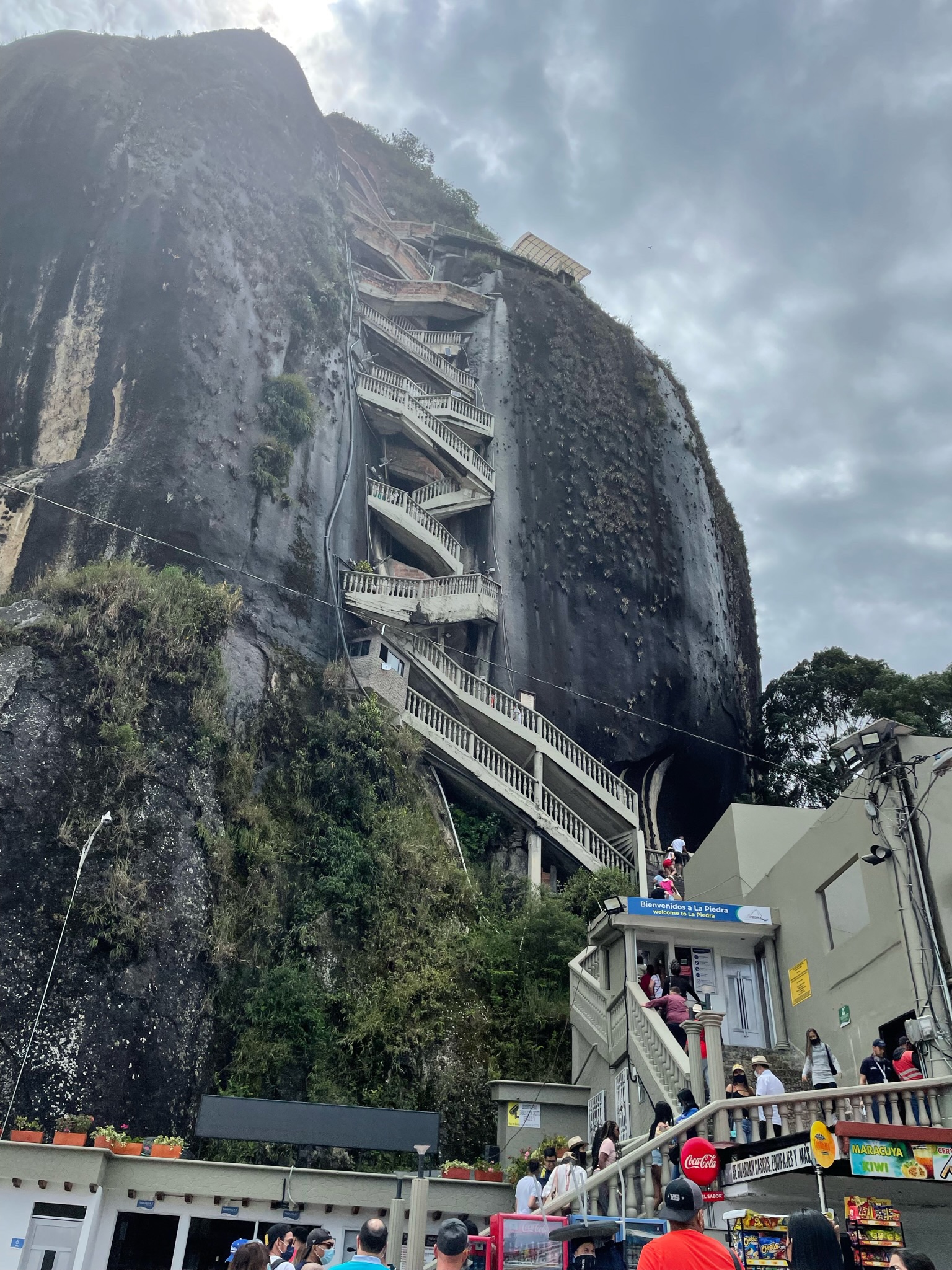
The Piedra del Penol is a giant rock that sits all by itself in a region full of lakes and forests. Its roughly 700 feet tall, and its made of materials that aren’t common in the area. The going theory is that the rock was emitted from one of the volcanic eruptions in the area way back when. I’m not sure if that’s true, but it was a sight to see. The rock was first scaled in 1954, and since then, they have built an entire attraction out of it. There are 675 concrete steps to get to the top, and on the very top, there are restaurants, a viewing tower, bathrooms, and gift shops. The view is spectacular from every angle. I was a little nervous about the climb, but it only took us about 20 minutes or so to go up, and although I had to stop several times to catch my breath, it really wasn’t that bad.
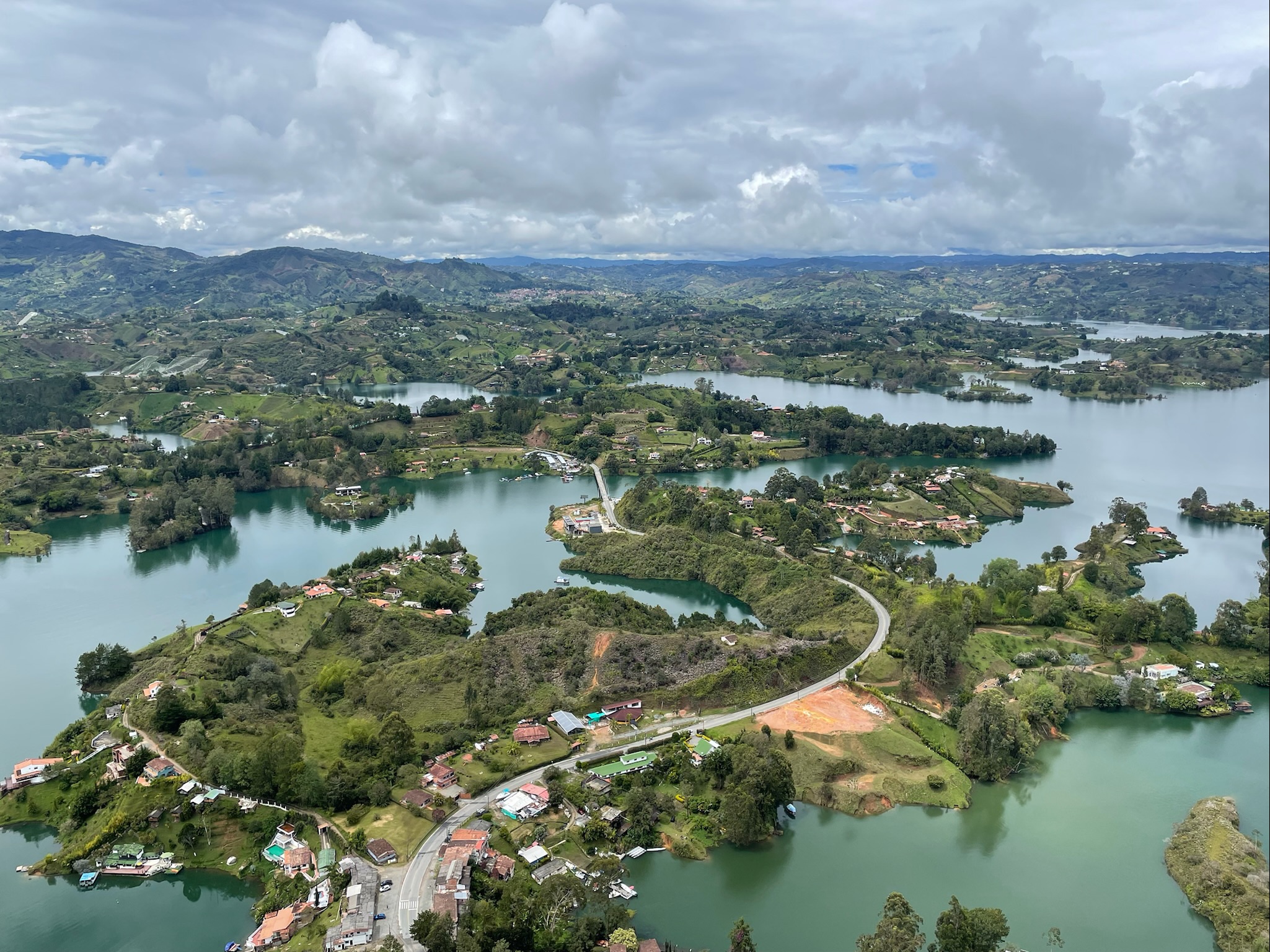

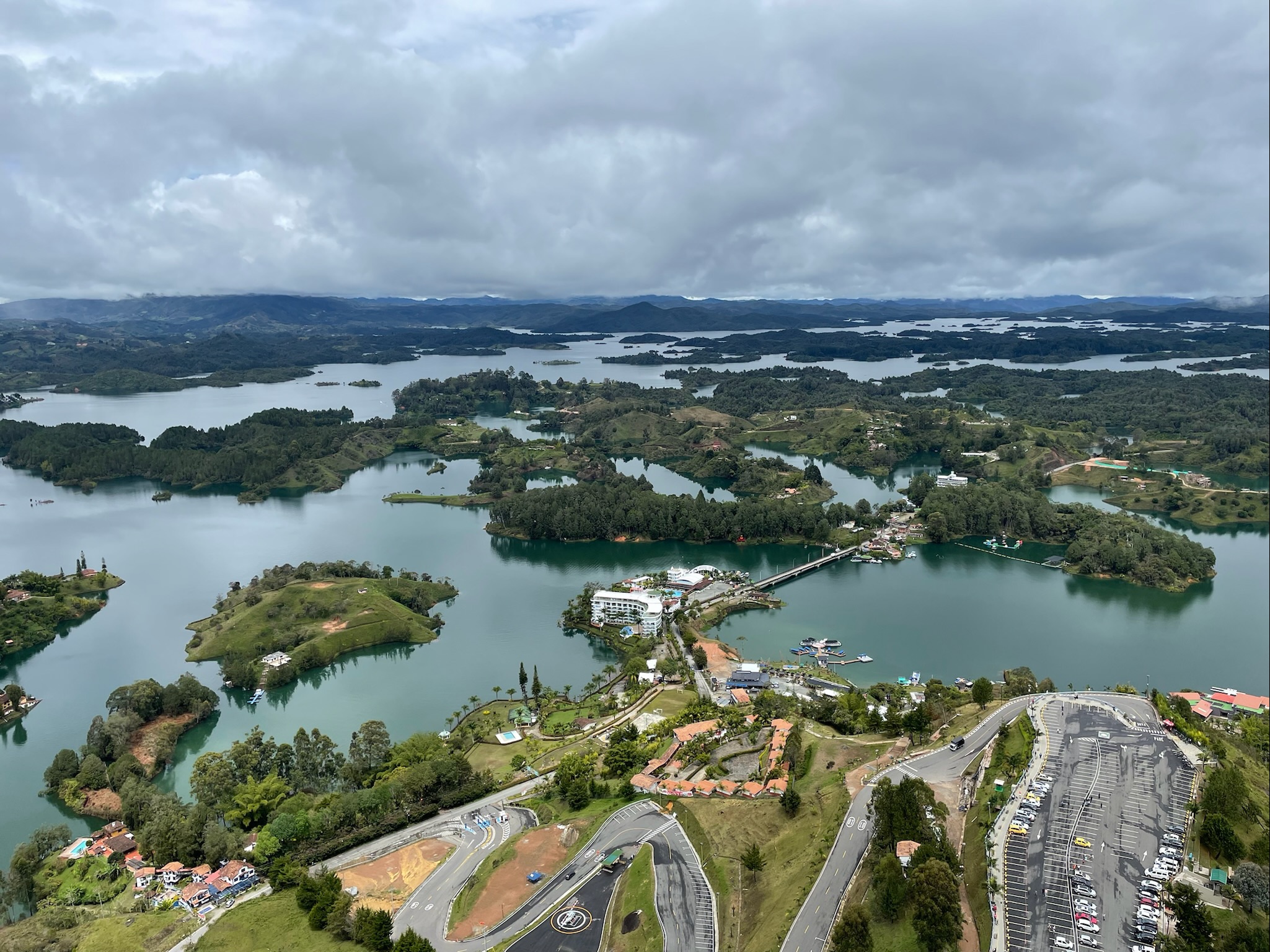

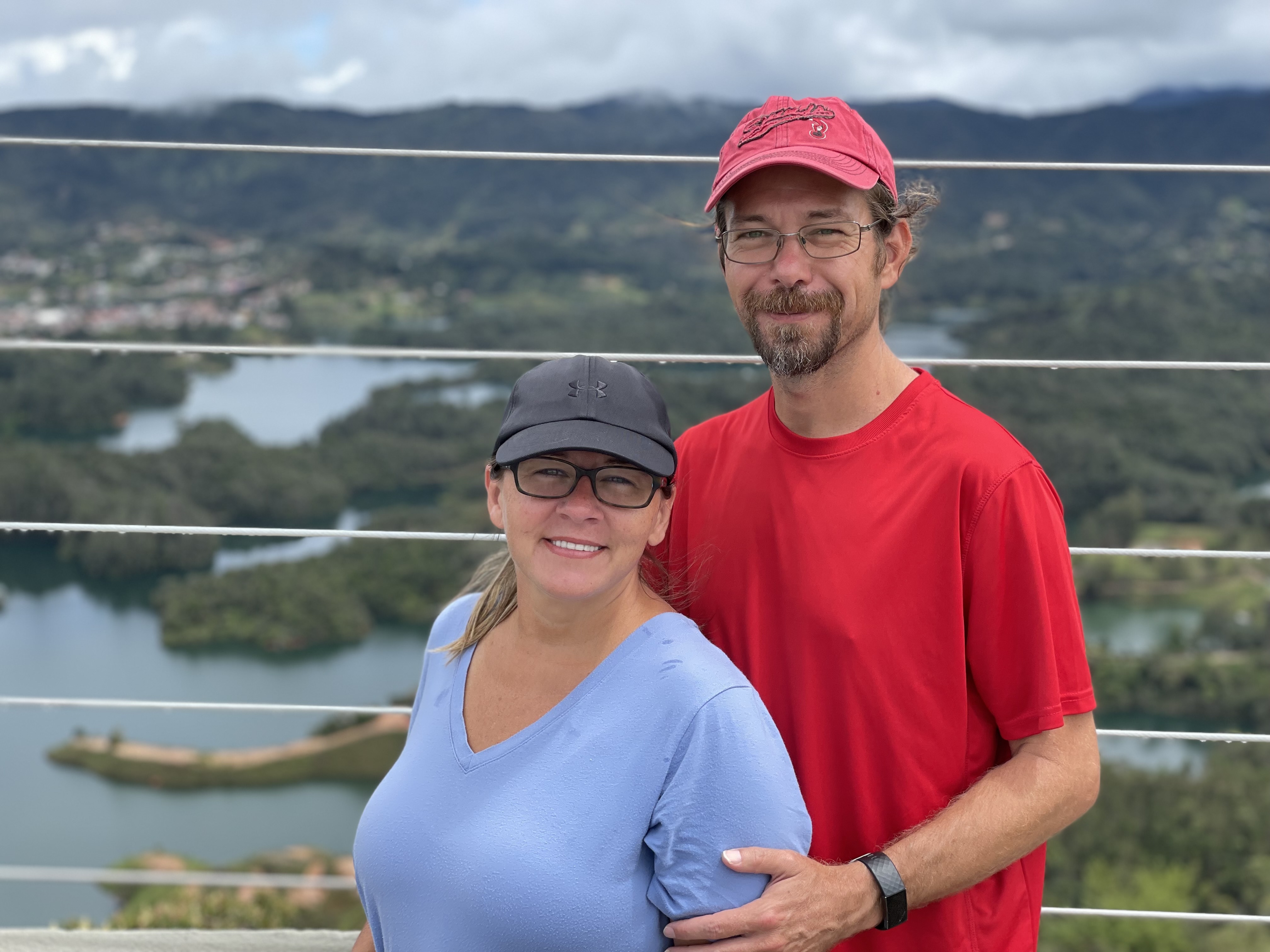
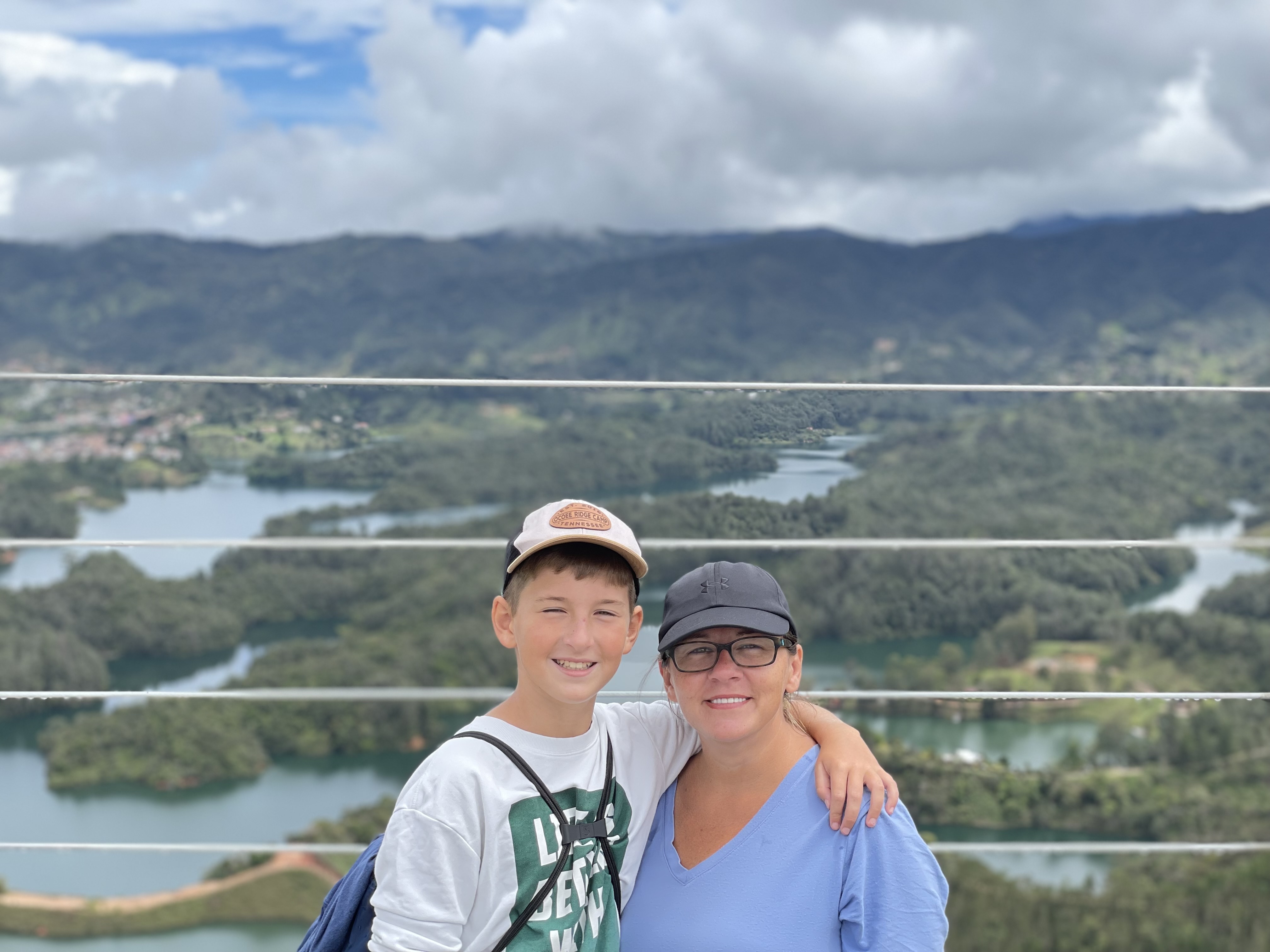
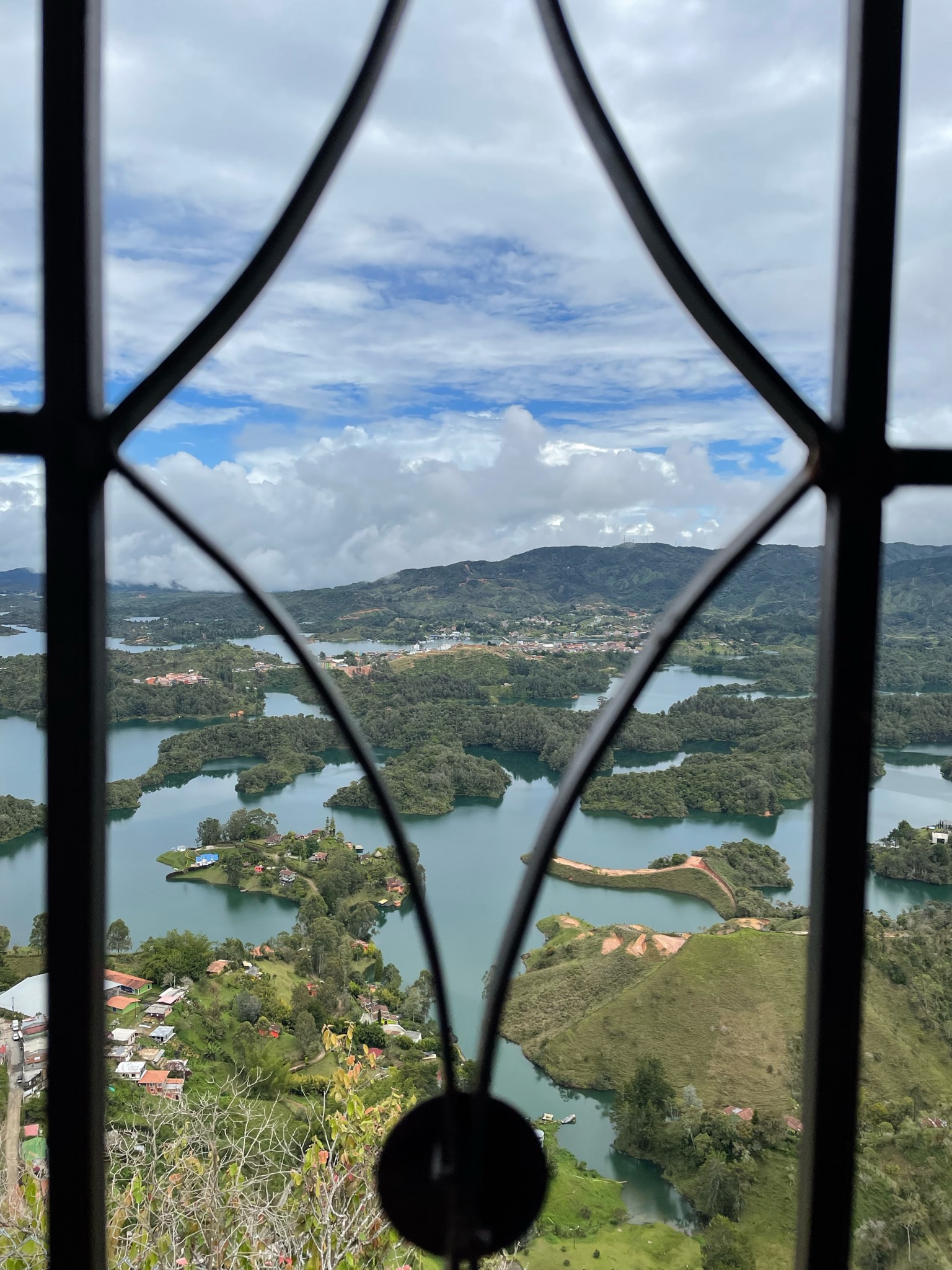
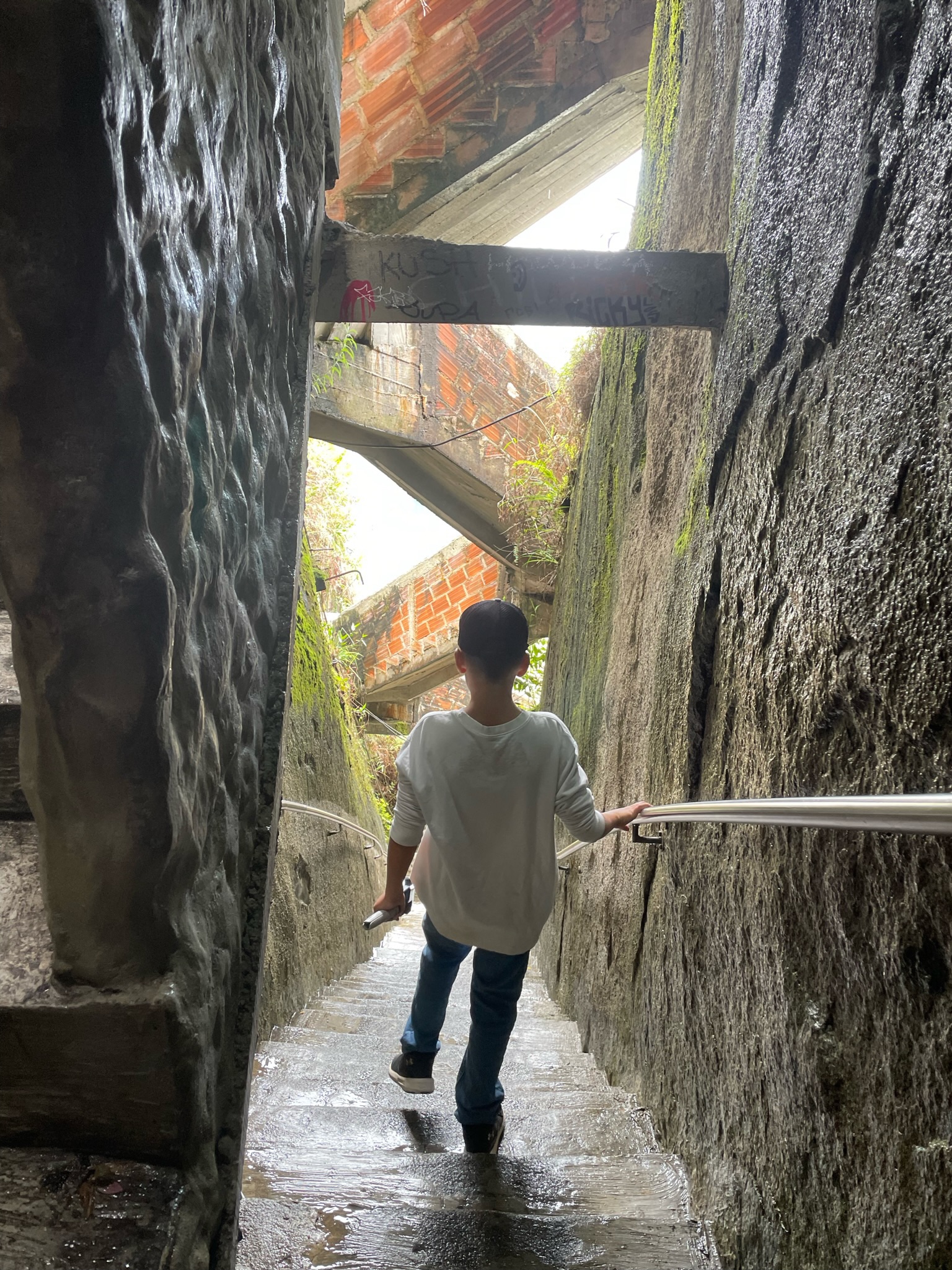
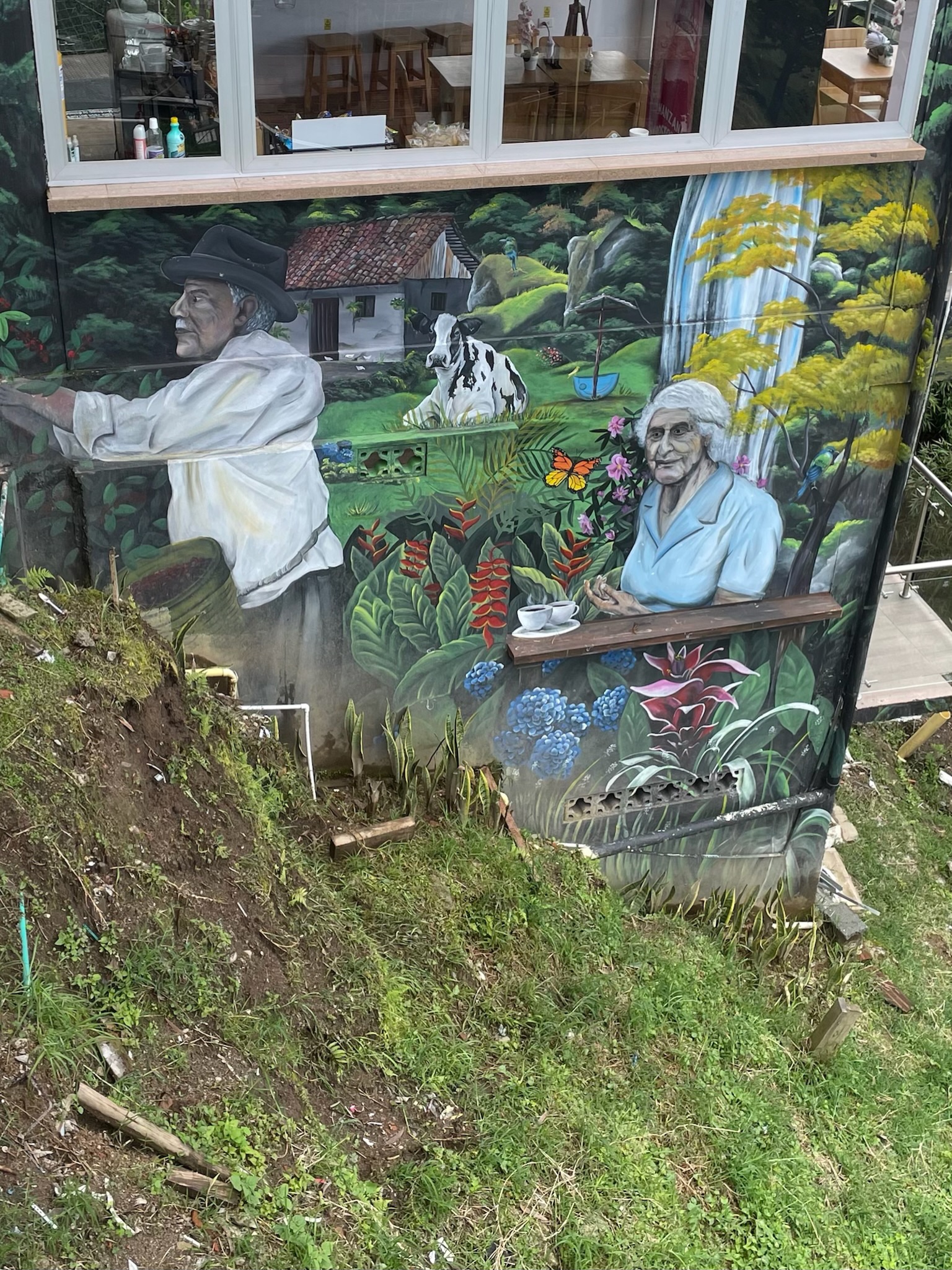
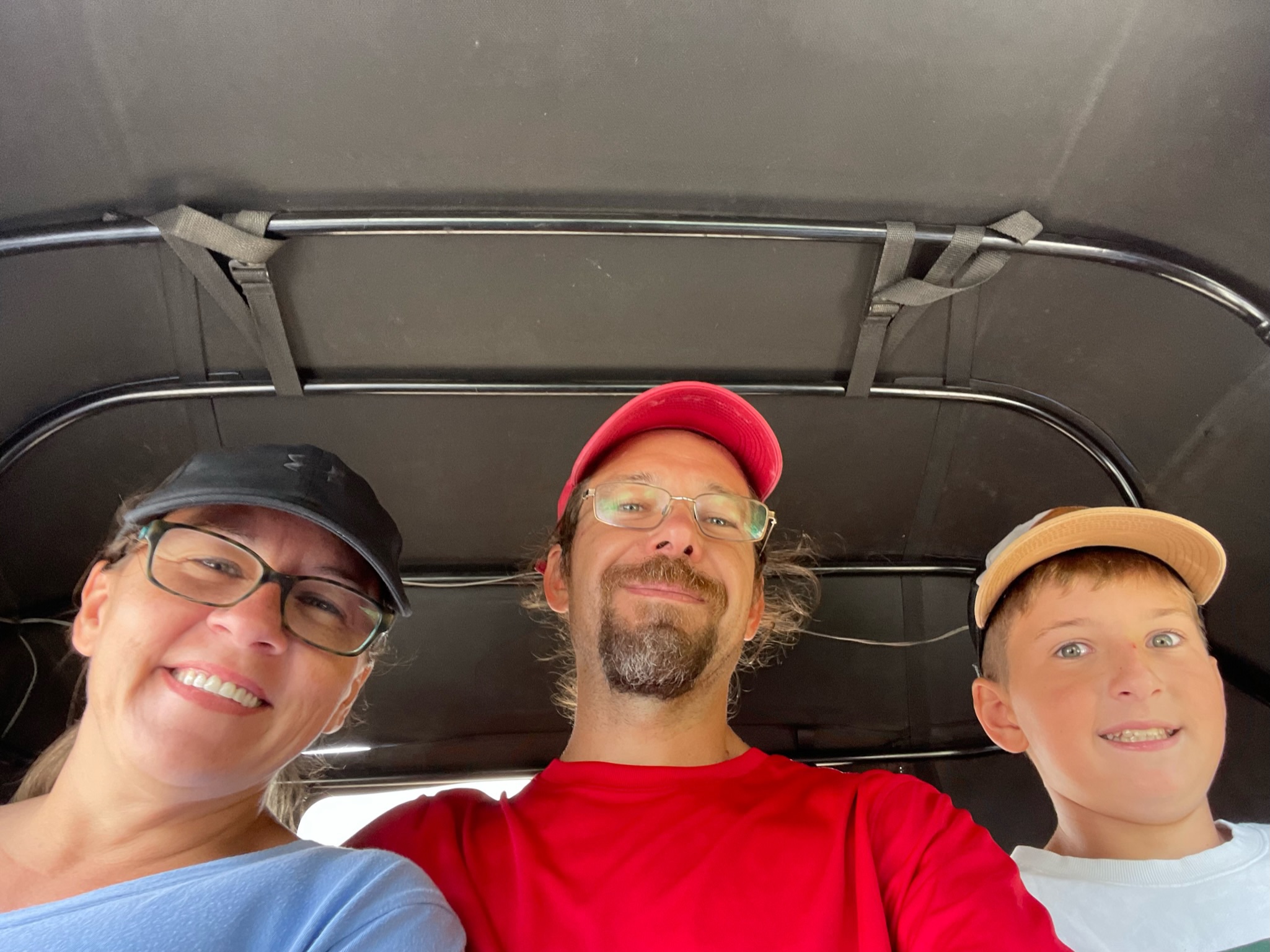
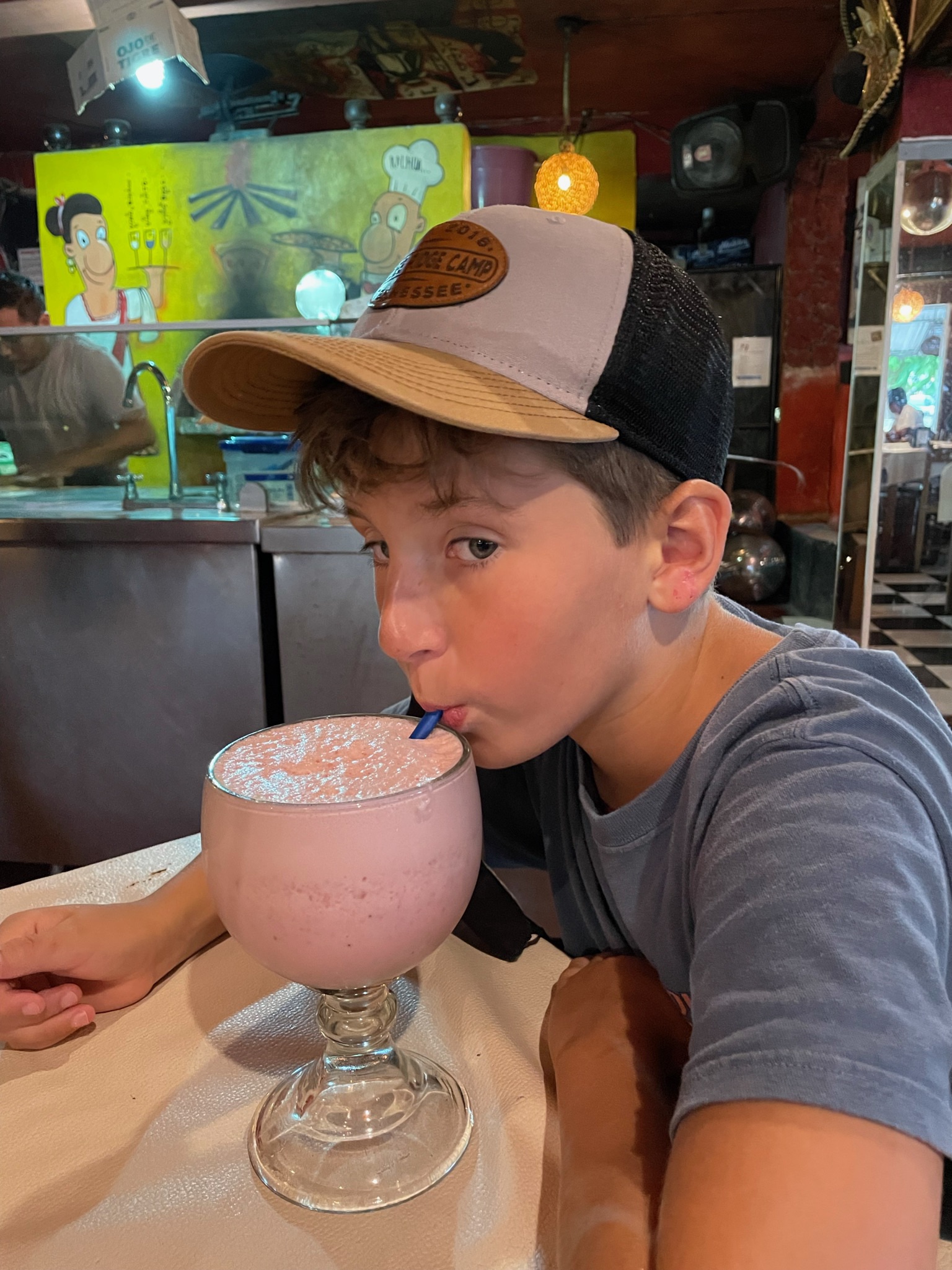
We found a crepe restaurant in Guatape that we really loved. The night we arrived in Guatape, we ate our dinner there, opting for lazagnas over crepes. We let Henry order us a strawberry and chocolate crepe for dessert, and he was hooked. We liked it so well that when we came down from Piedra del Penol, we actually had our lunch there as well. We met the restaurant’s owner, a French man who had travelled to Guatape 6 years ago for a 2 night stay and never left. The town was enchanting, and we really regretted that we only had one night to stay here.
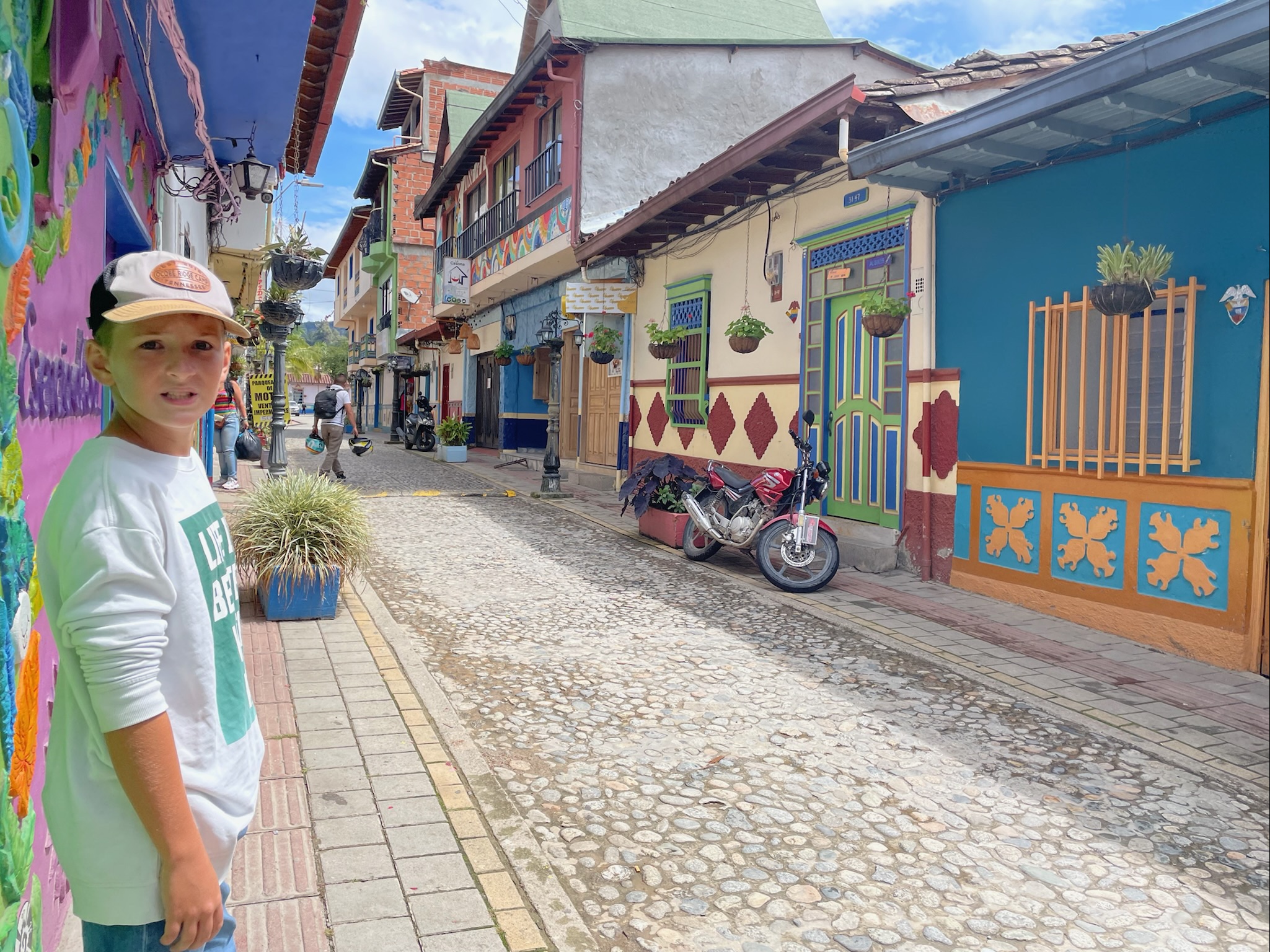

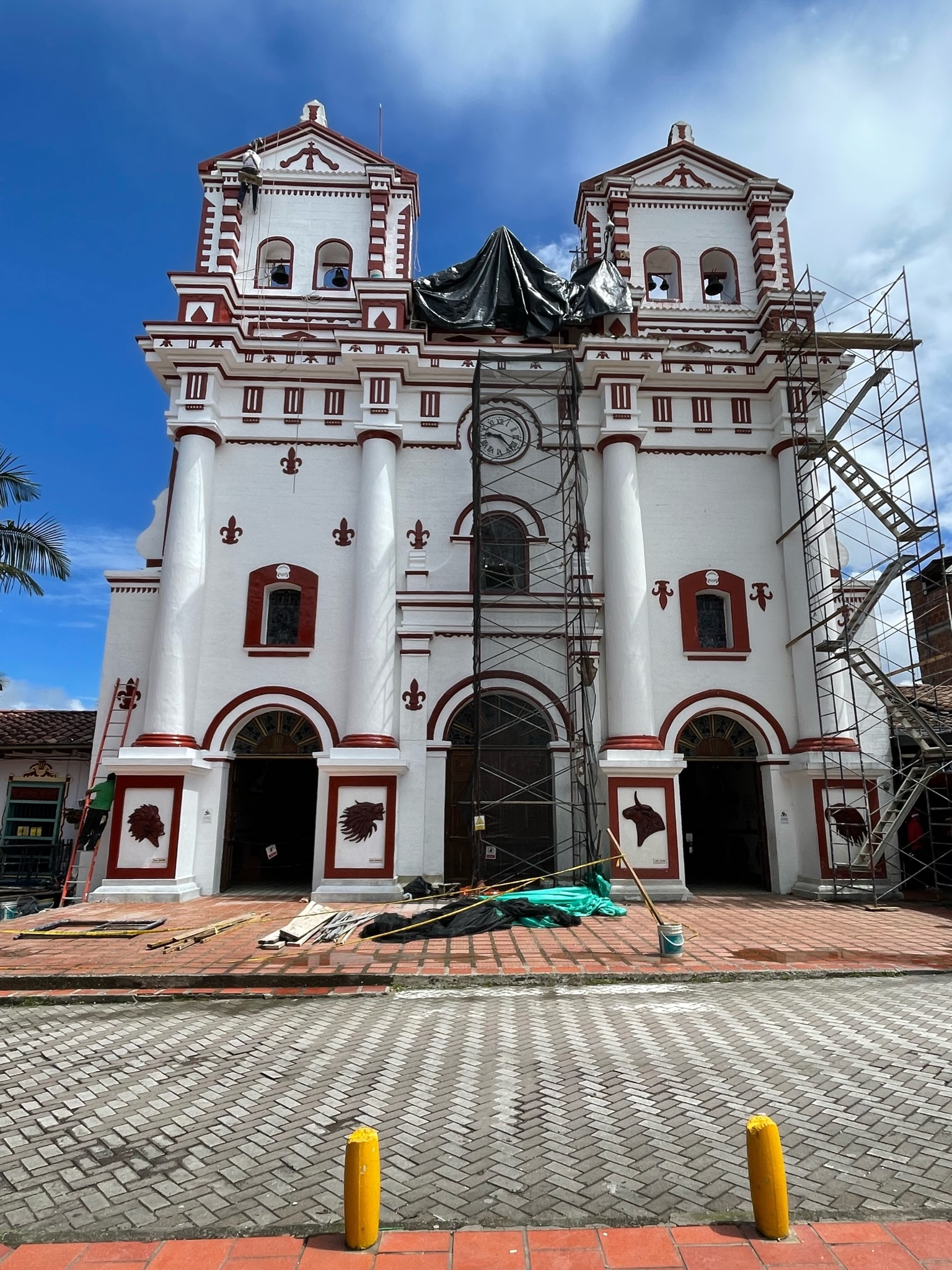
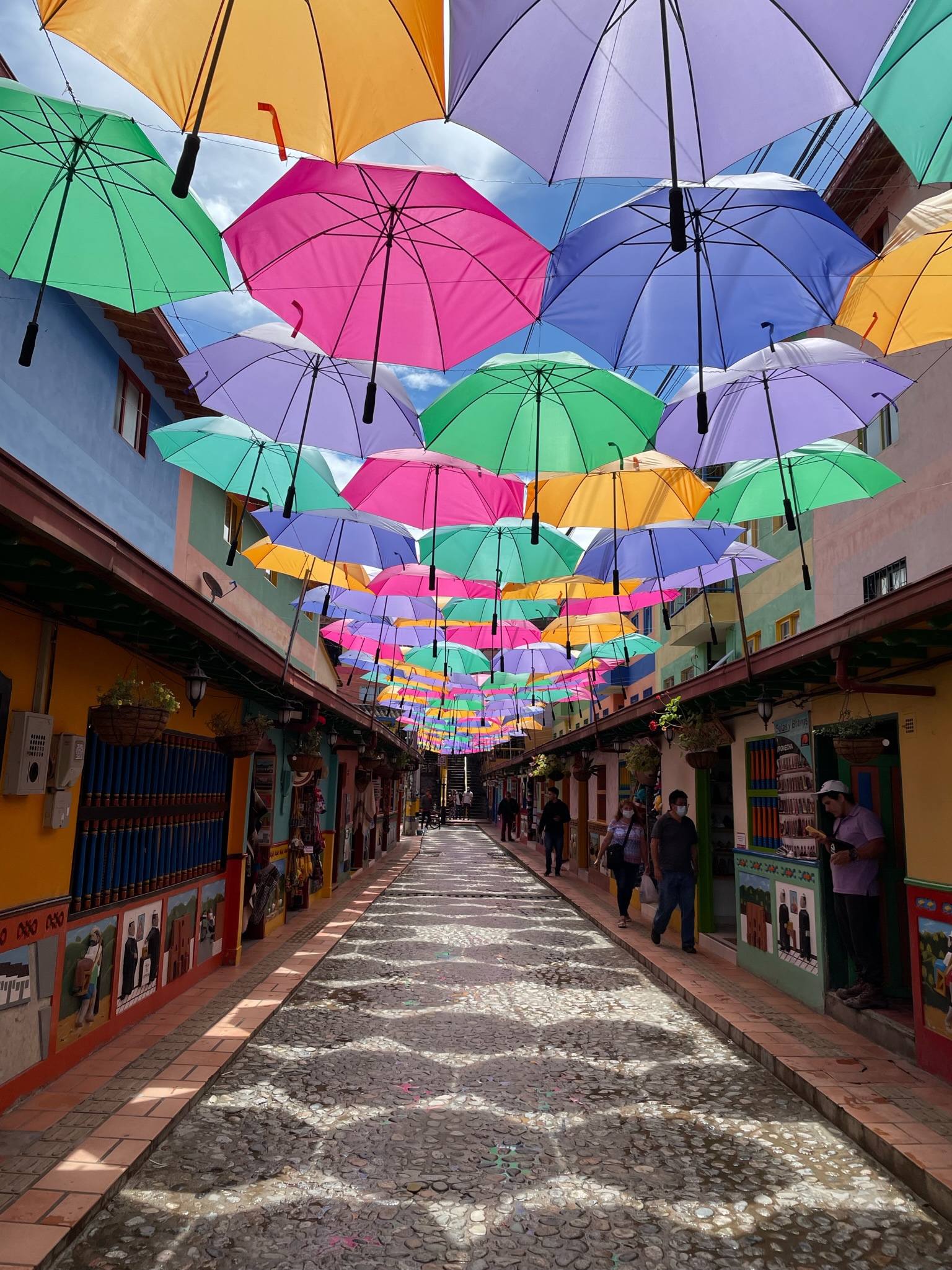
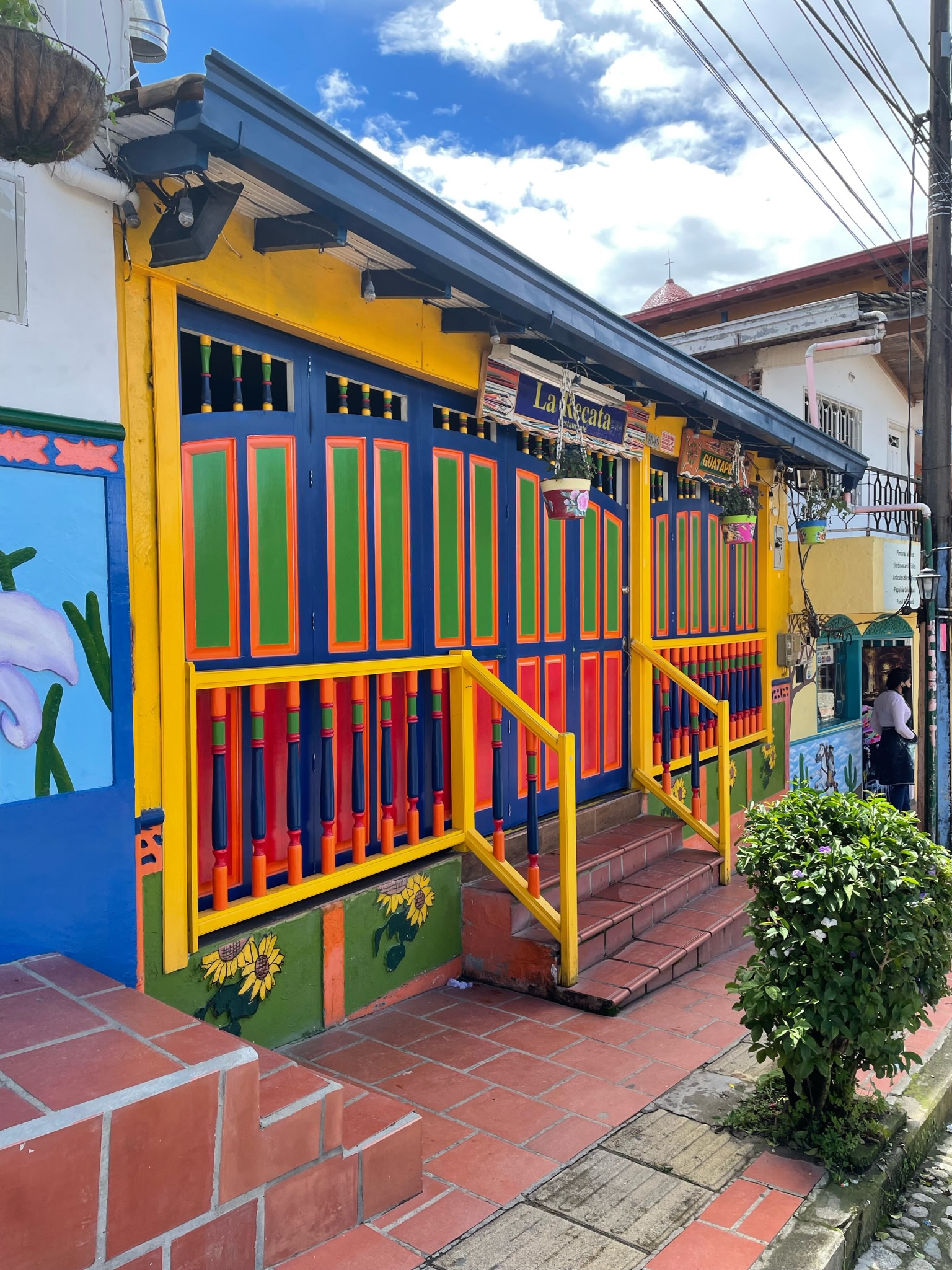
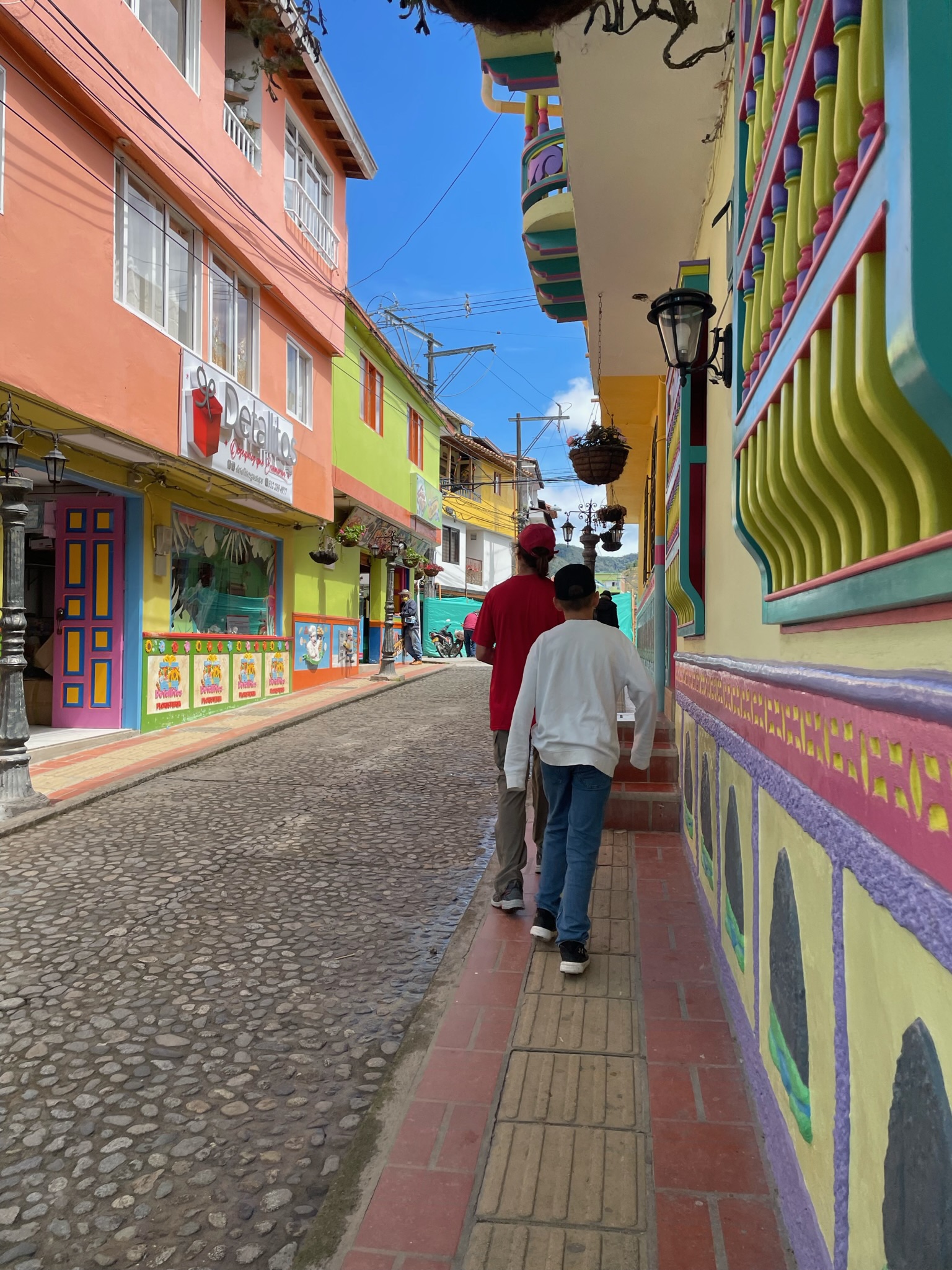
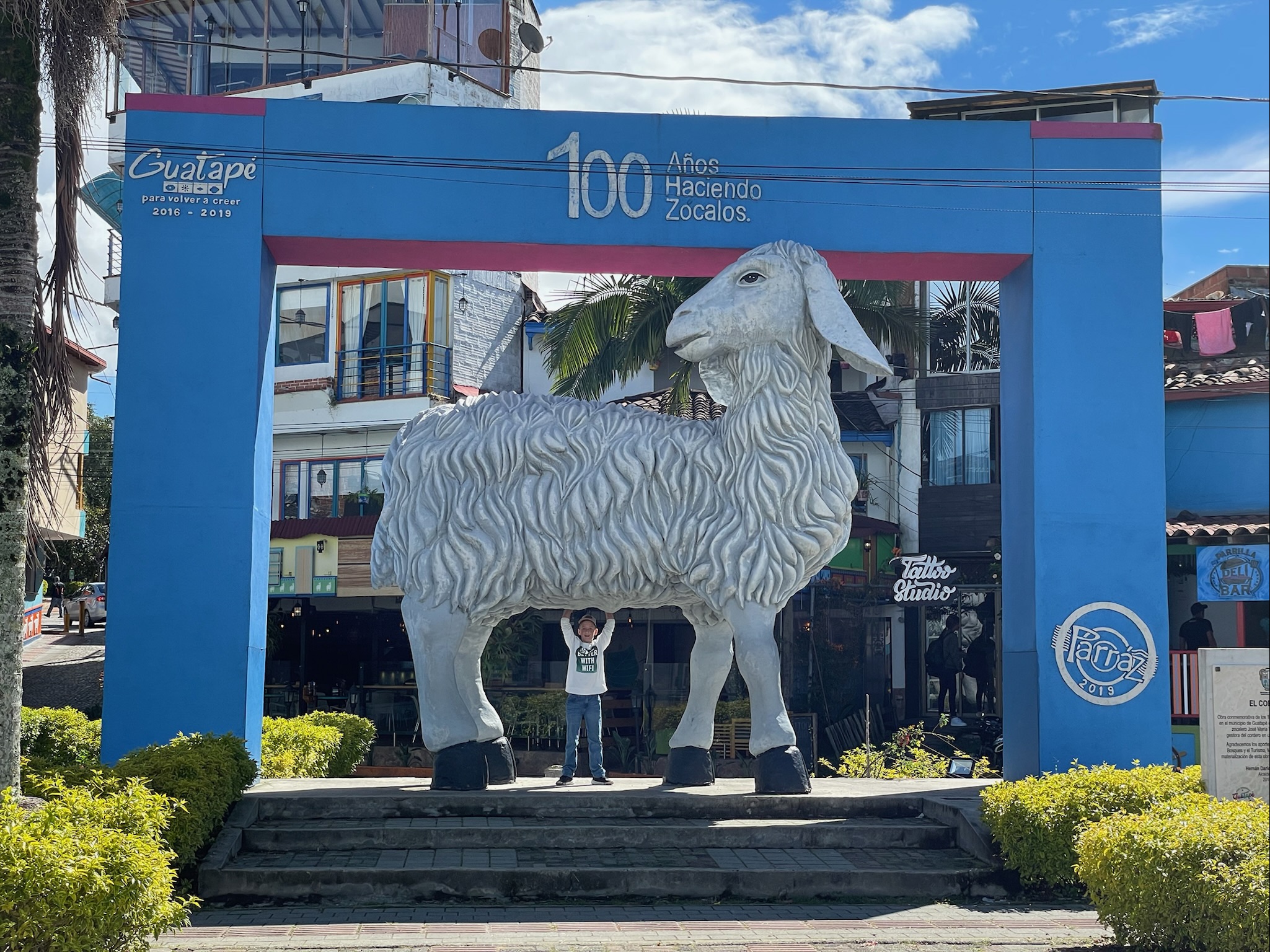

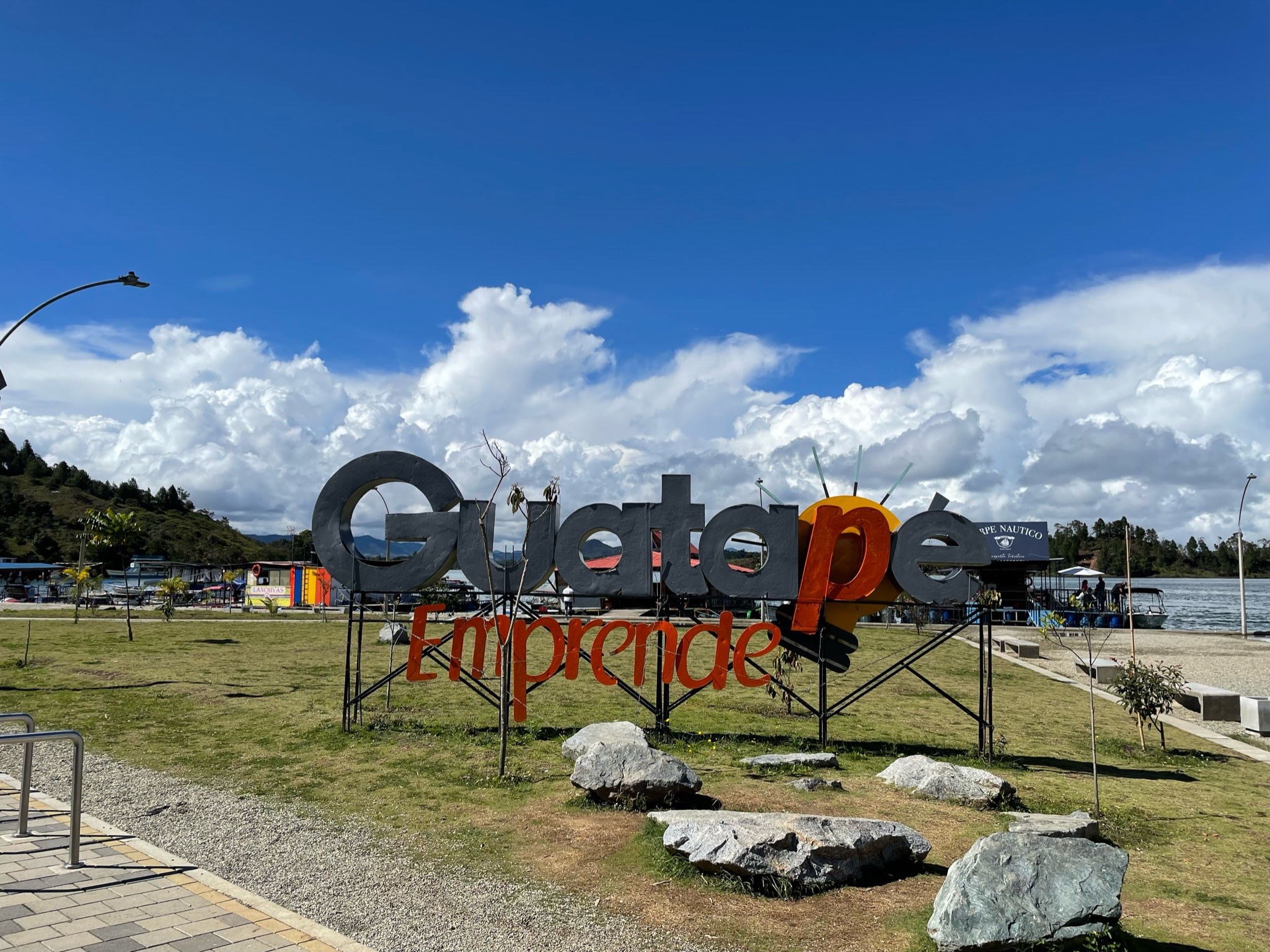
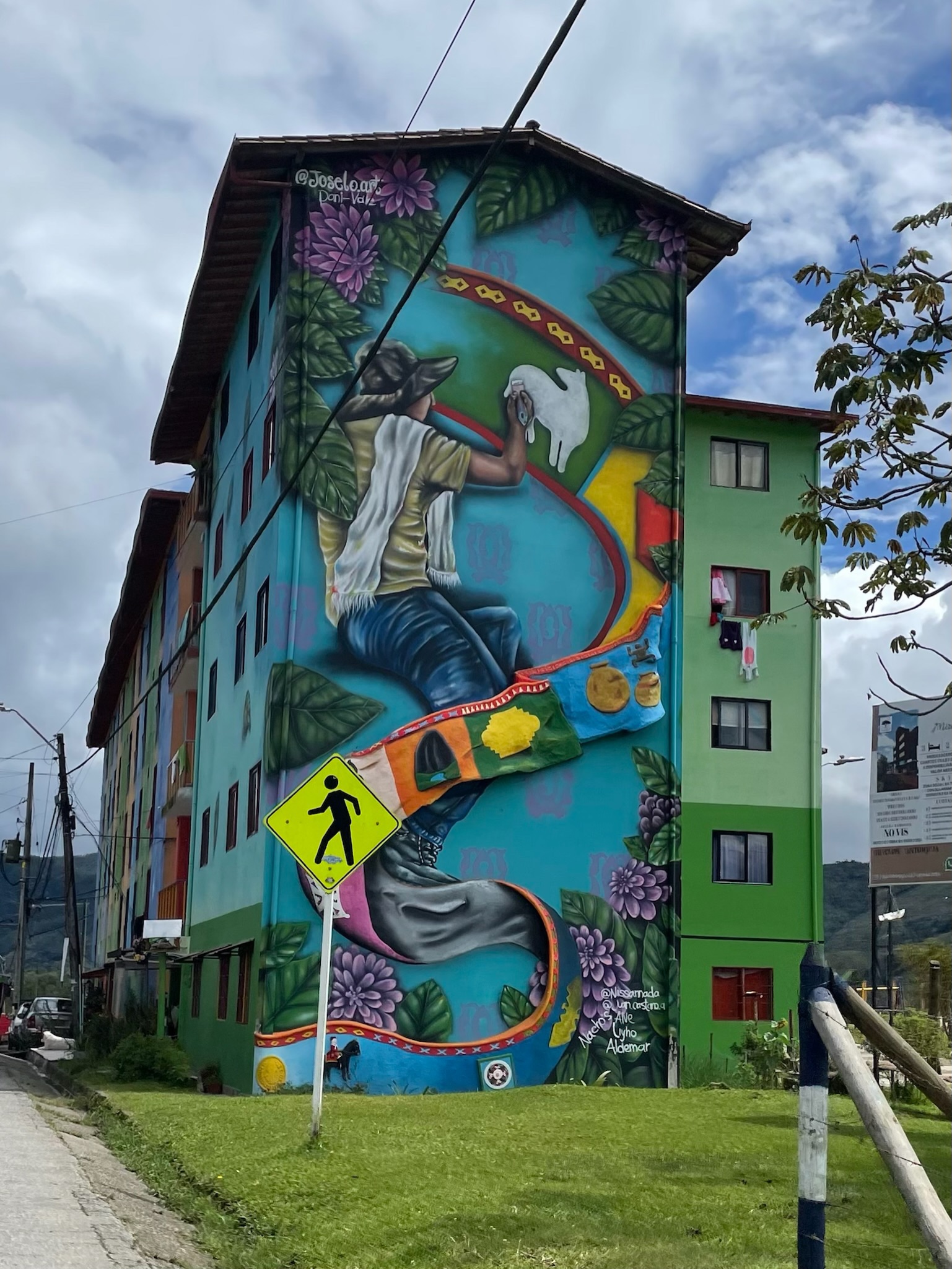

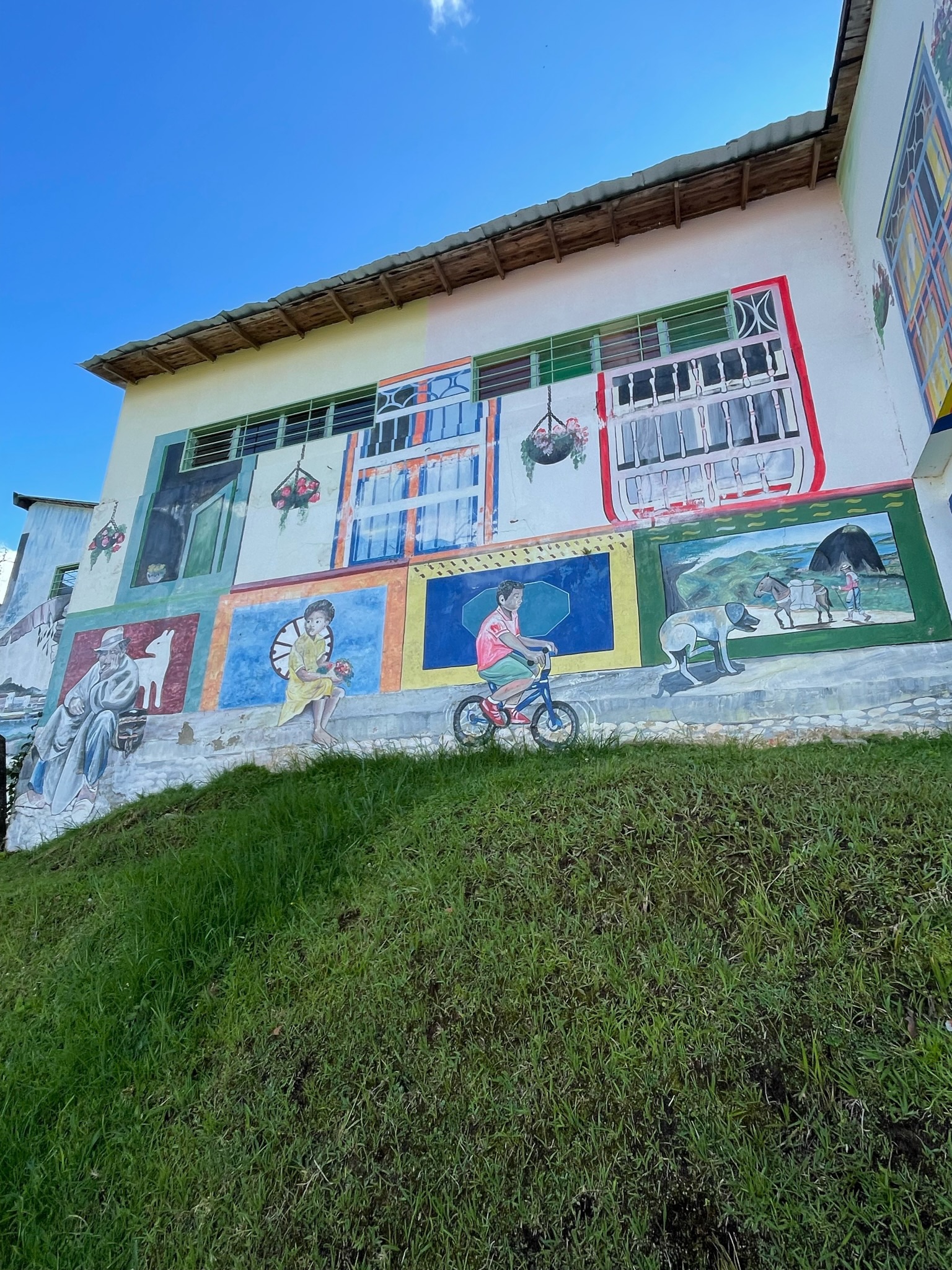
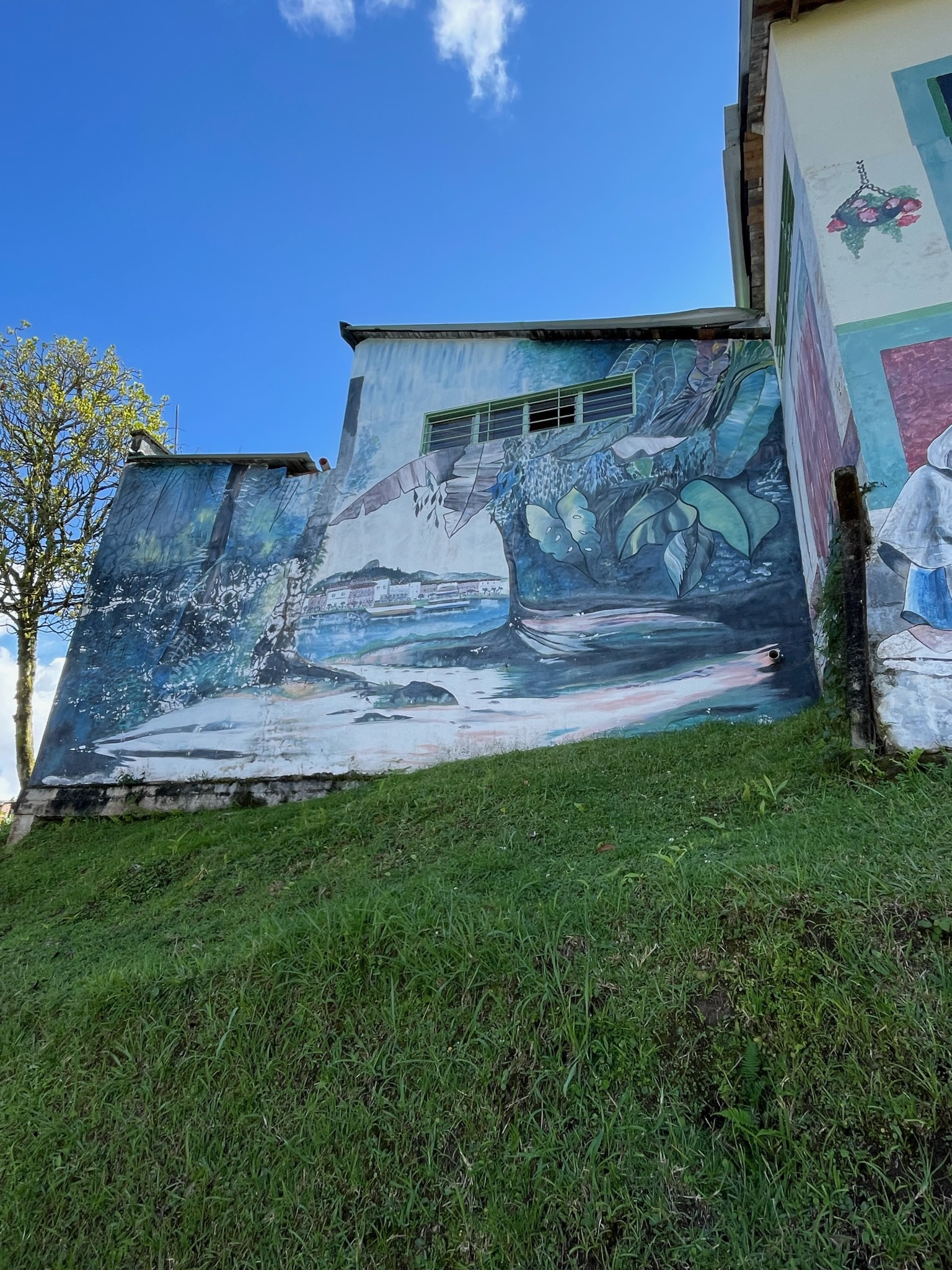
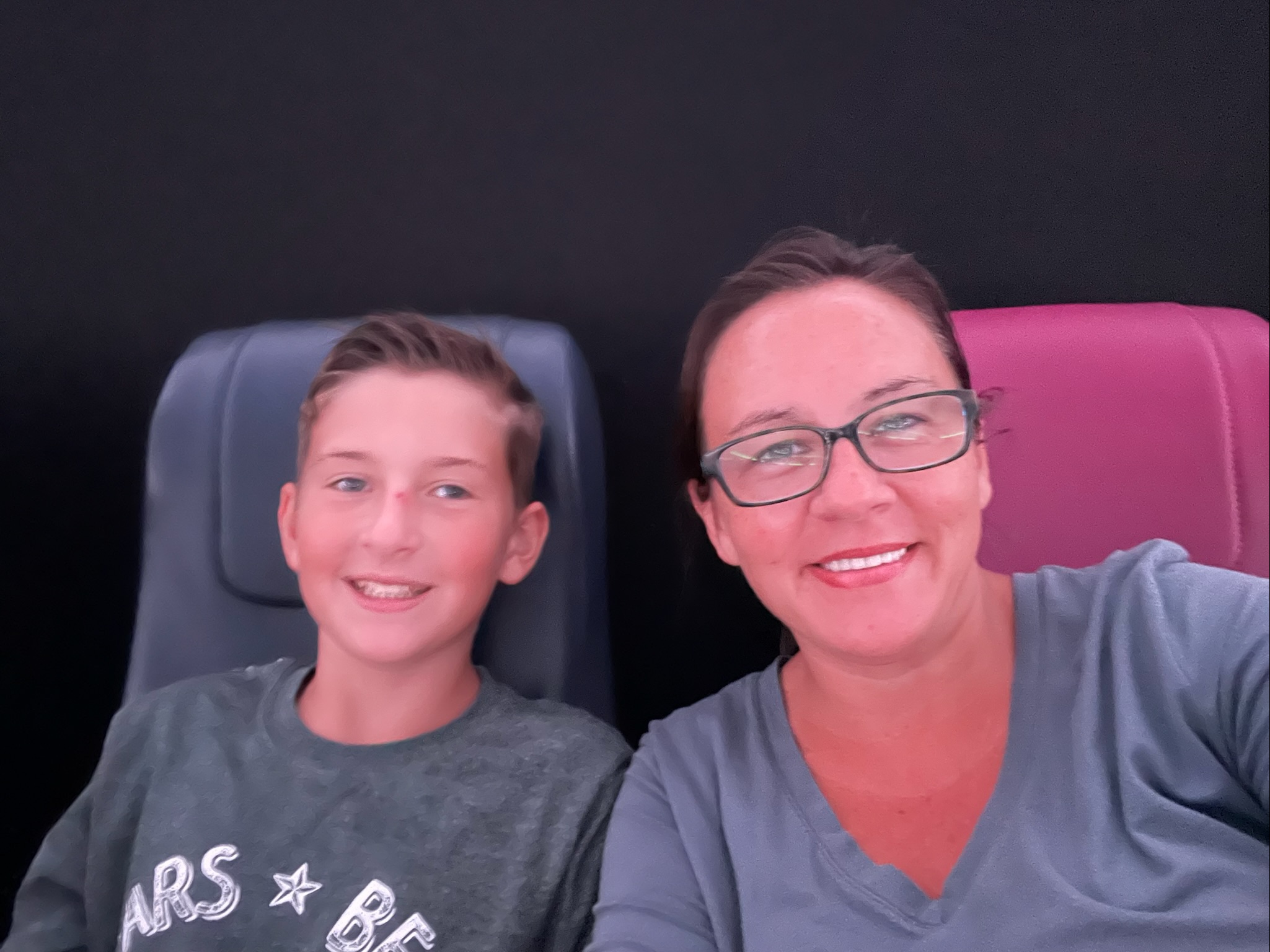
But after our lunch, we knew we had to get moving again. So that afternoon, we caught our bus bound for Medellin. Now, of course I’d heard of Pablo Escobar, but aside from him and the drug cartels, I’d never heard anything about Medellin. I was a little nervous about going there because the little I knew wasn’t very good. We picked a hotel in the Laureles neighborhood because it was supposed to be full of restaurants, safe for tourists, and close to transportation. Our bus ran into some heavy traffic, and we were later pulling into the north terminal bus station than we’d hoped for. After grabbing our bags, a few friendly employees helped us navigate the enormous station and get on the metro towards our hotel. Our bags were heavy as we stood in the center of the train, and we were ultra conscientious about the crime in the area, so the ride was both long and difficult. We got off at the Estadio station, and walked past busy restaurants and a street full of people to our hotel. Our hotel wasn’t marked well and was a bit hard to find. Thankfully, Carlos, our host was looking for us. It was a little unnerving when we had to show Henry’s birth certificate at check in so they could be sure we weren’t doing anything underhanded with him. We were safe where we were, but this was a very good reminder that things hadn’t always been so secure.
On our first day in Medellin, I had found a person who could repair my Keen sandals, and we walked about a mile through town to drop them off. It was the middle of the day, so people were out everywhere. We walked past the metro station and past a massive recreational complex with soccer fields, baseball fields, and more, and then we eventually wandered out of the Laureles area to the Zapateria (shoe repair shop). This section of town wasn’t bad, but it was certainly not as nice as the area we were staying in. After dropping off the shoes, we returned to our side of town and caught the metro to the Casa de la Memoria, a museum that honored the victims of Colombia’s heinous past. The museum explained the reasons for many of the civil and political wars in the area, and it talked about the cartel wars and their impact on the country. It was moving, and my heart broke for these people as I thought through the loss they have suffered through for decade after decade.
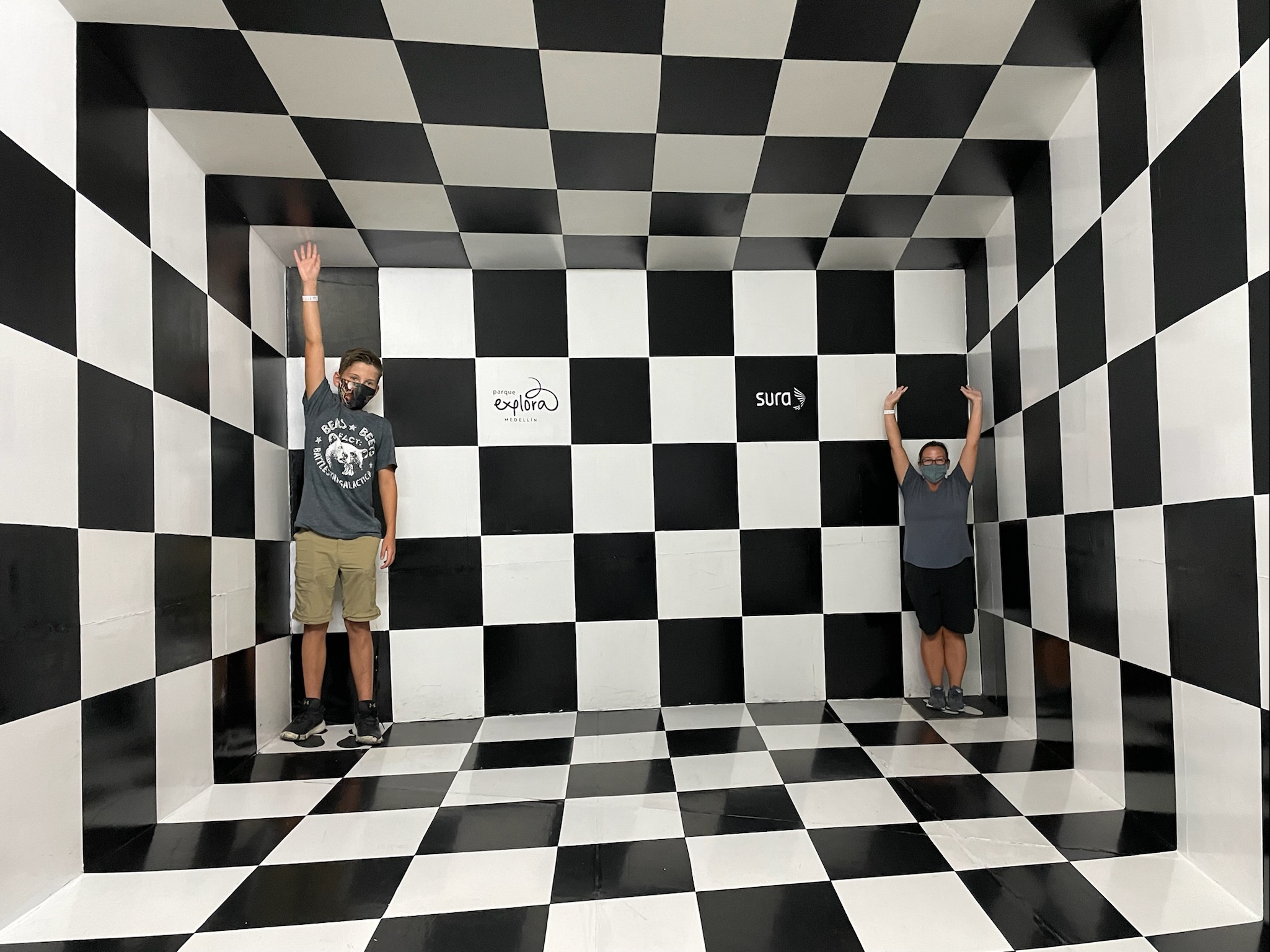
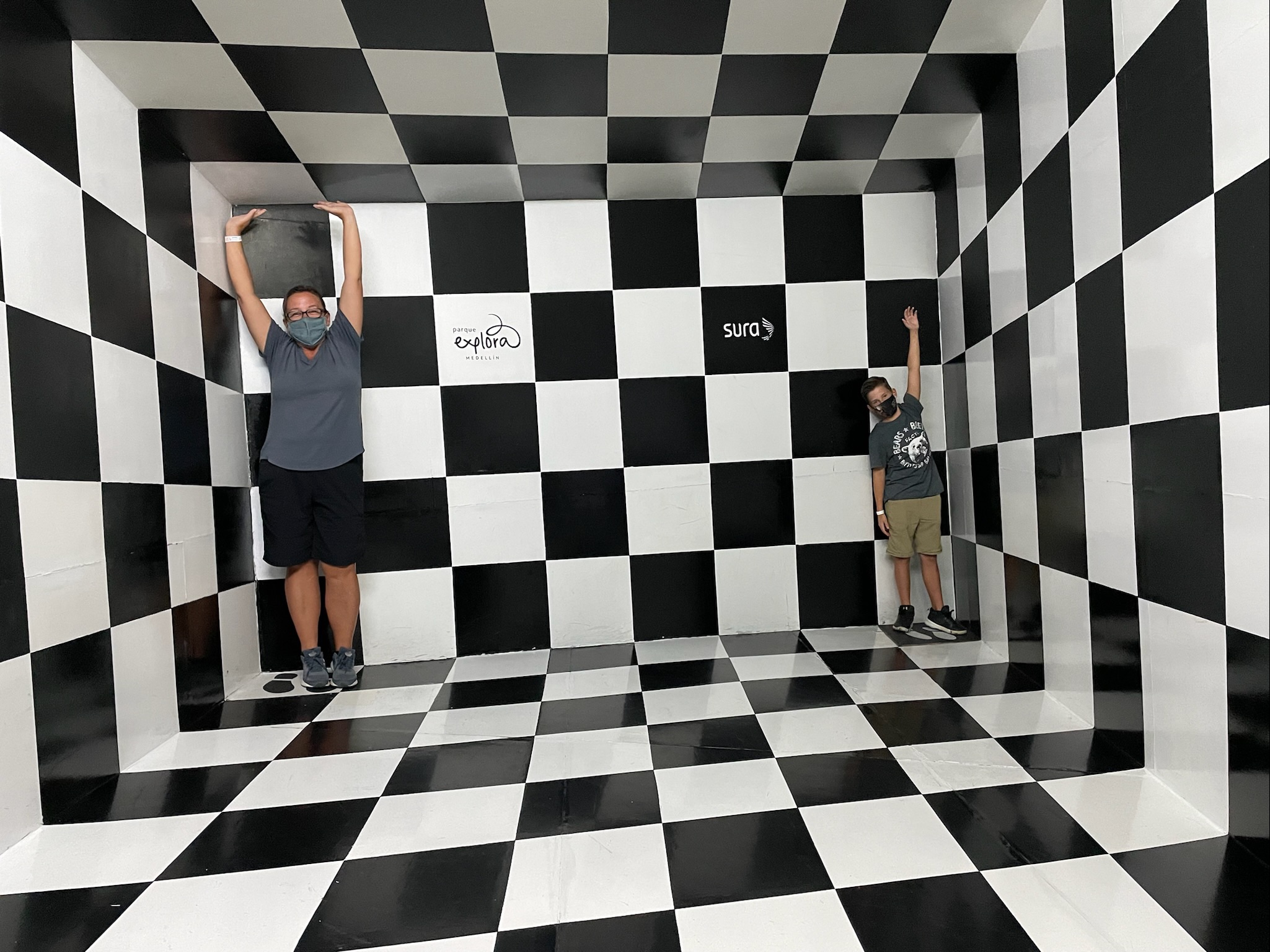
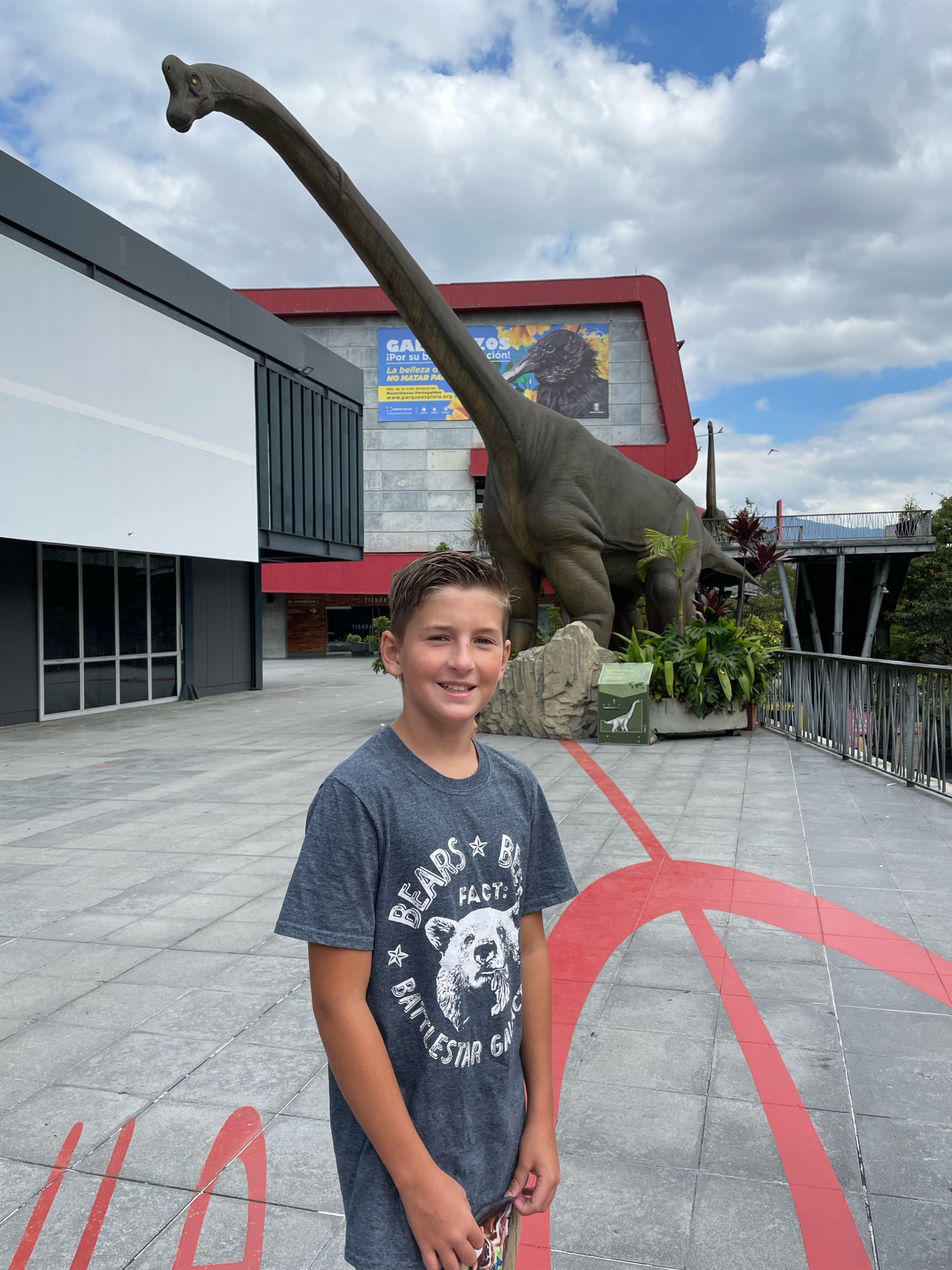
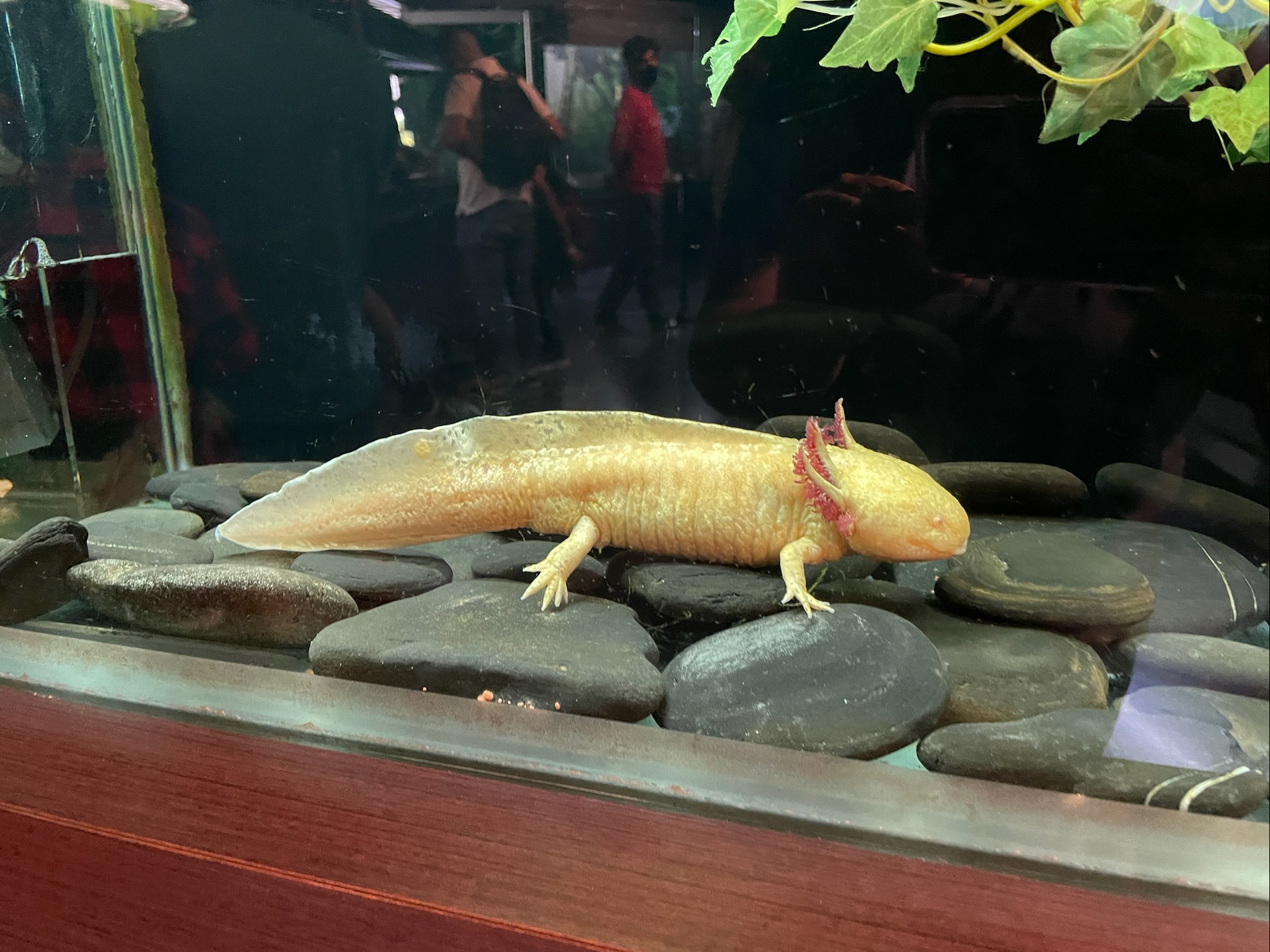
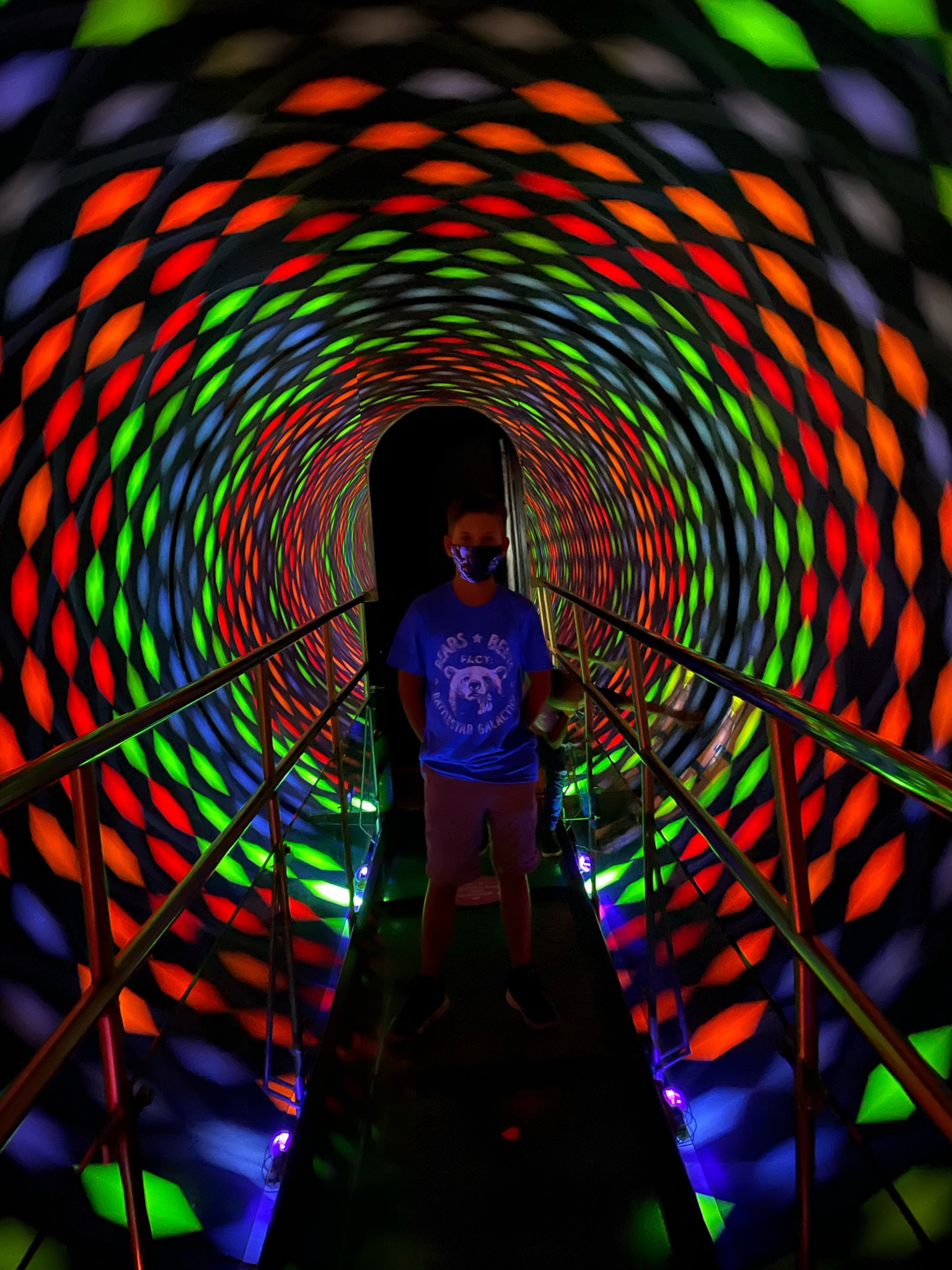
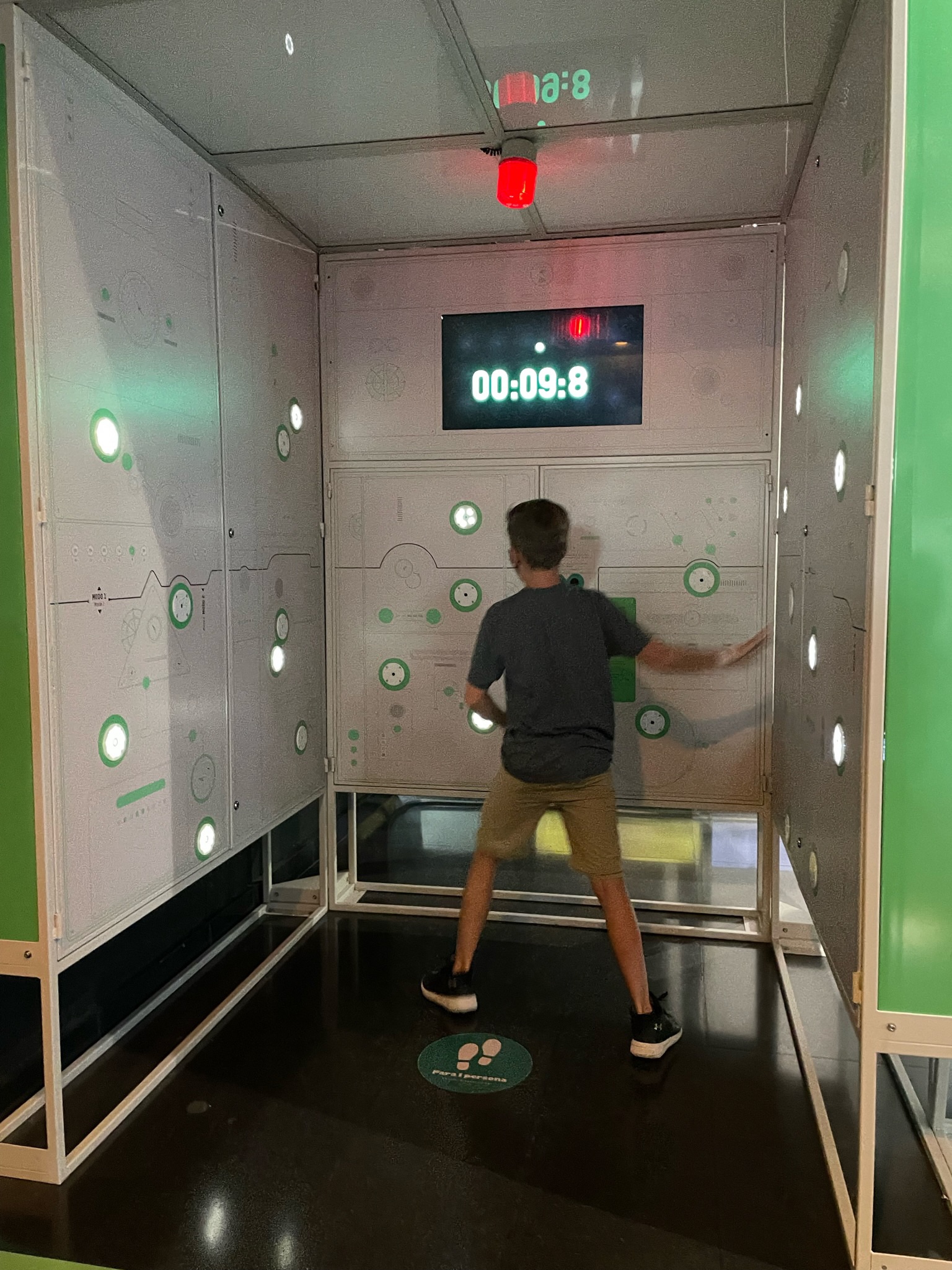
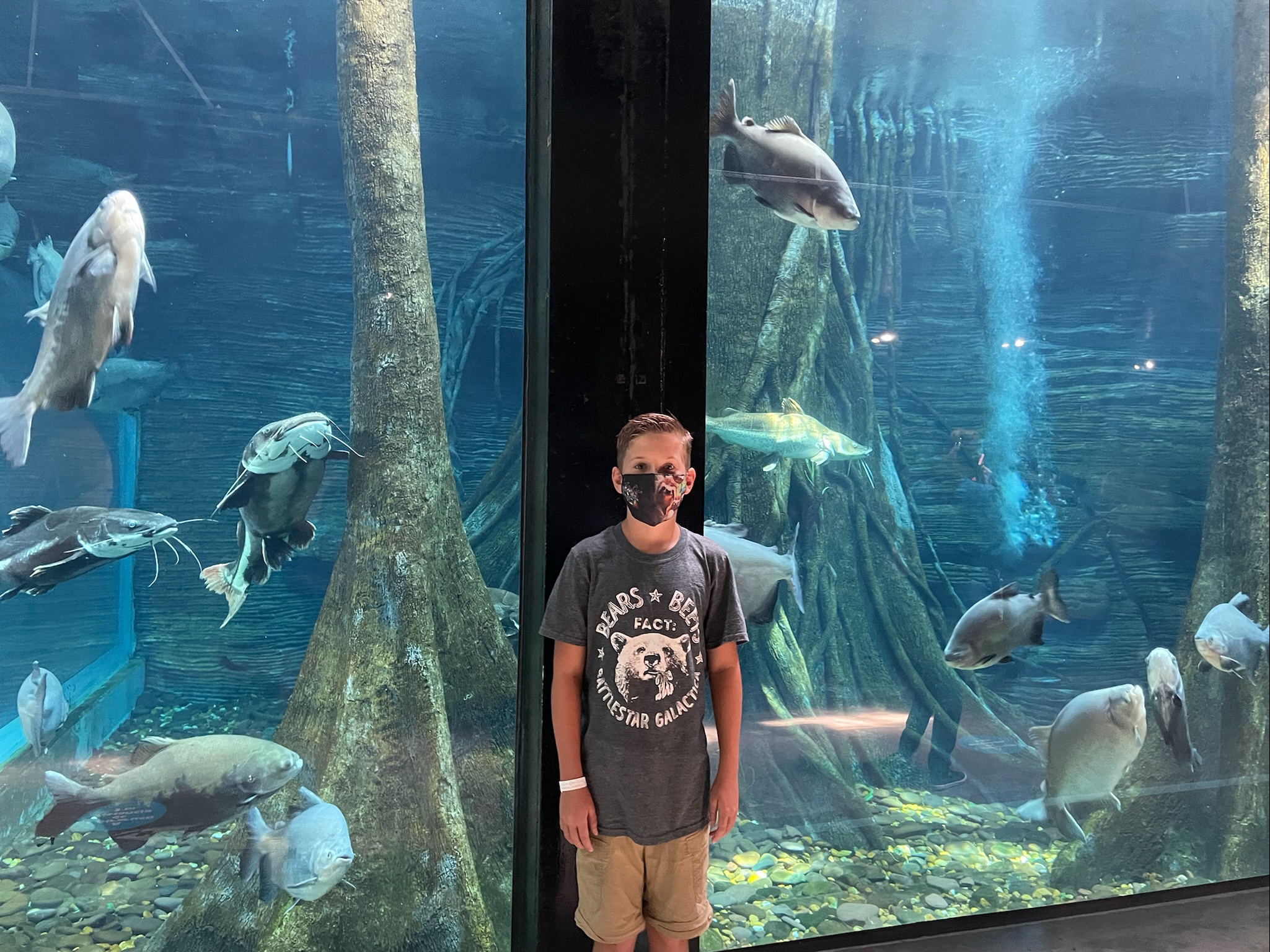
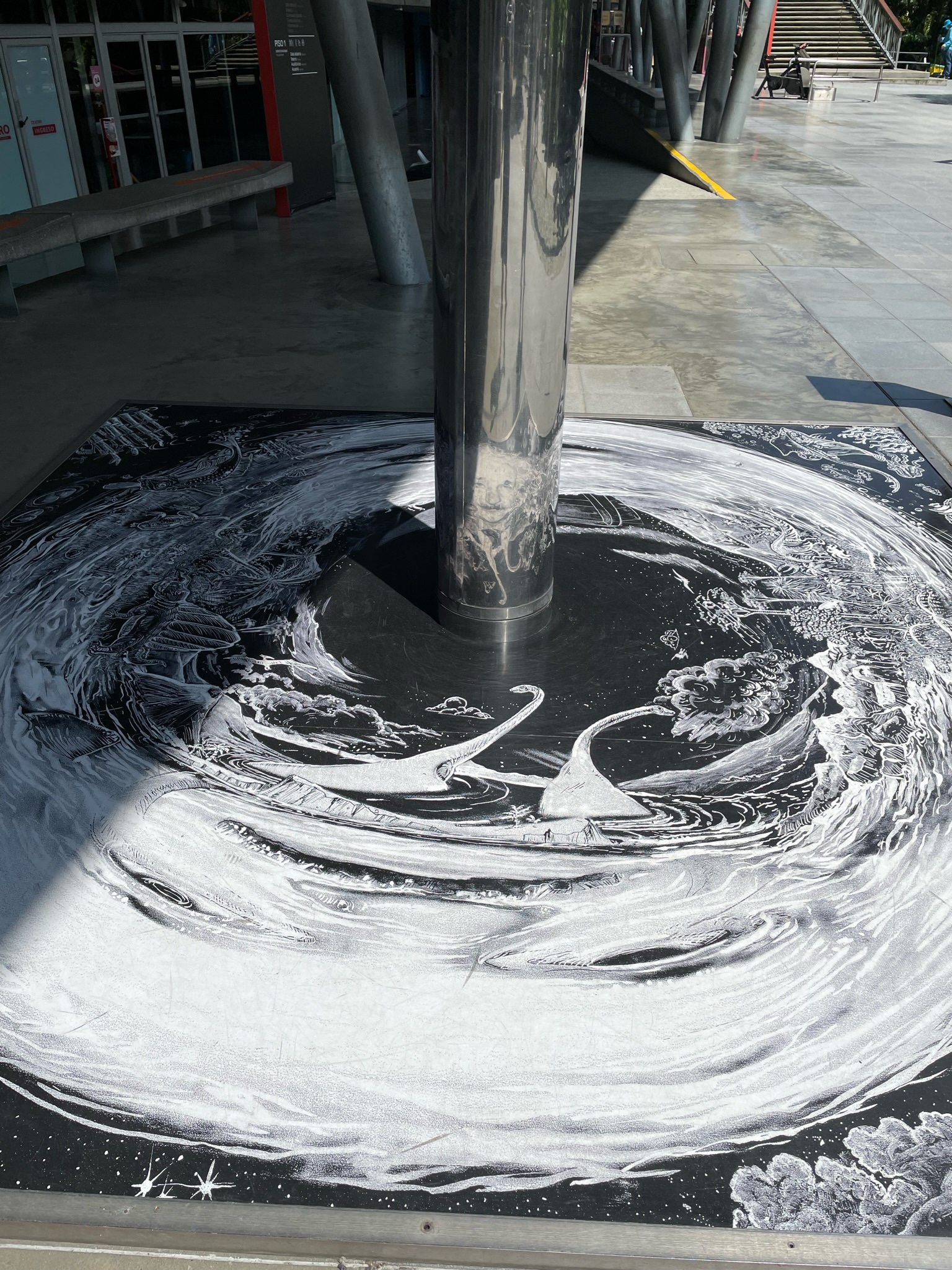
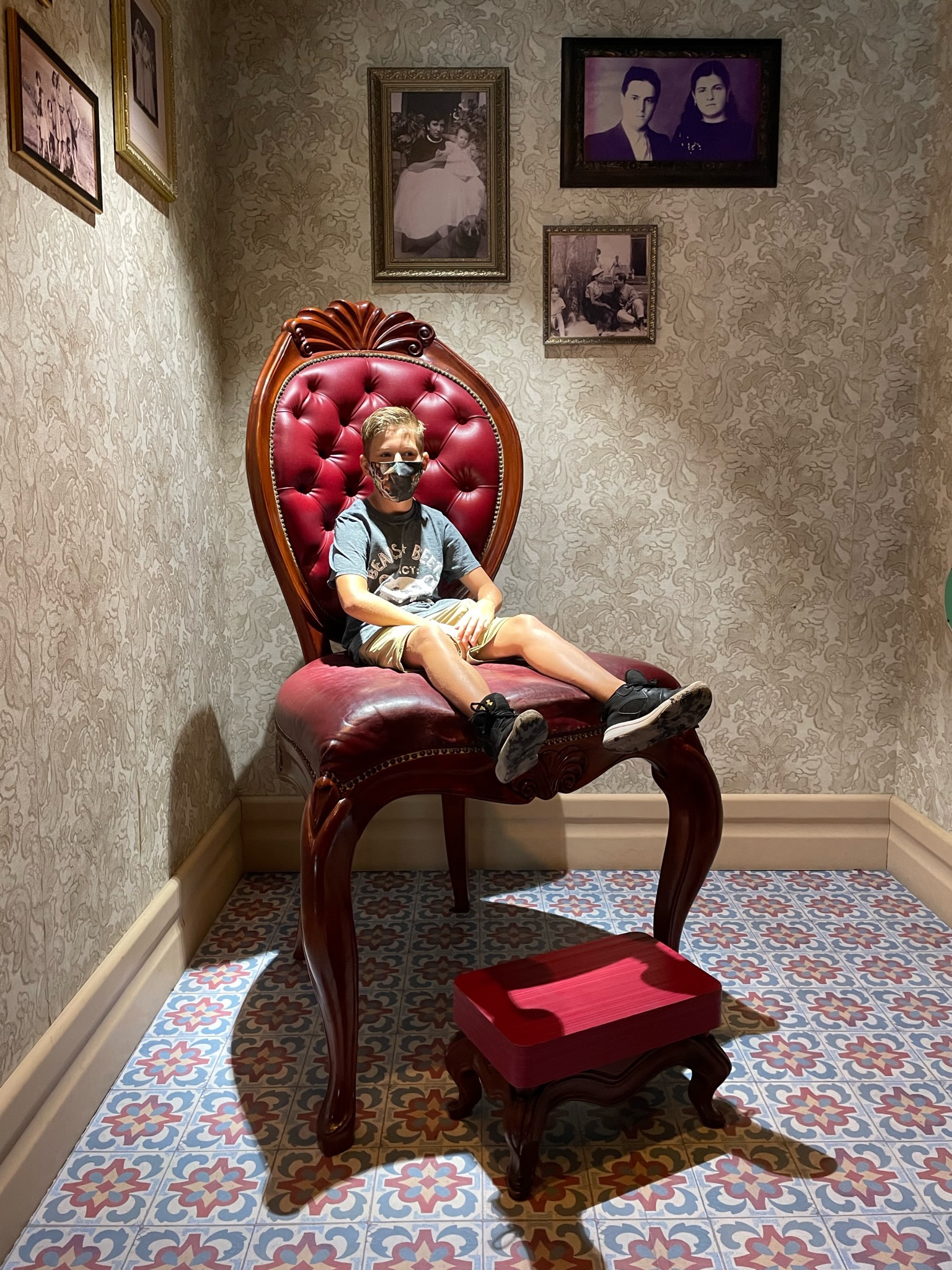
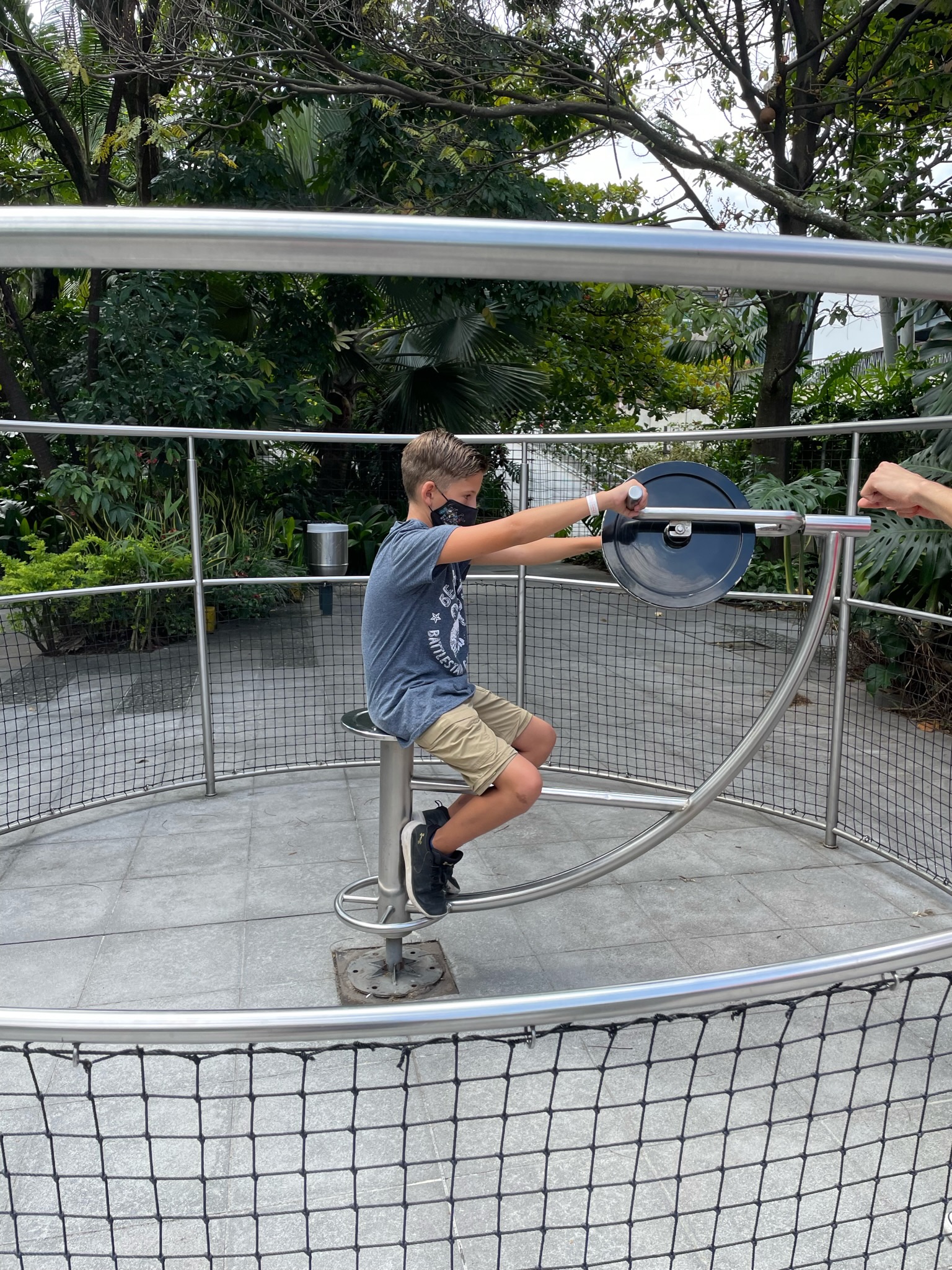
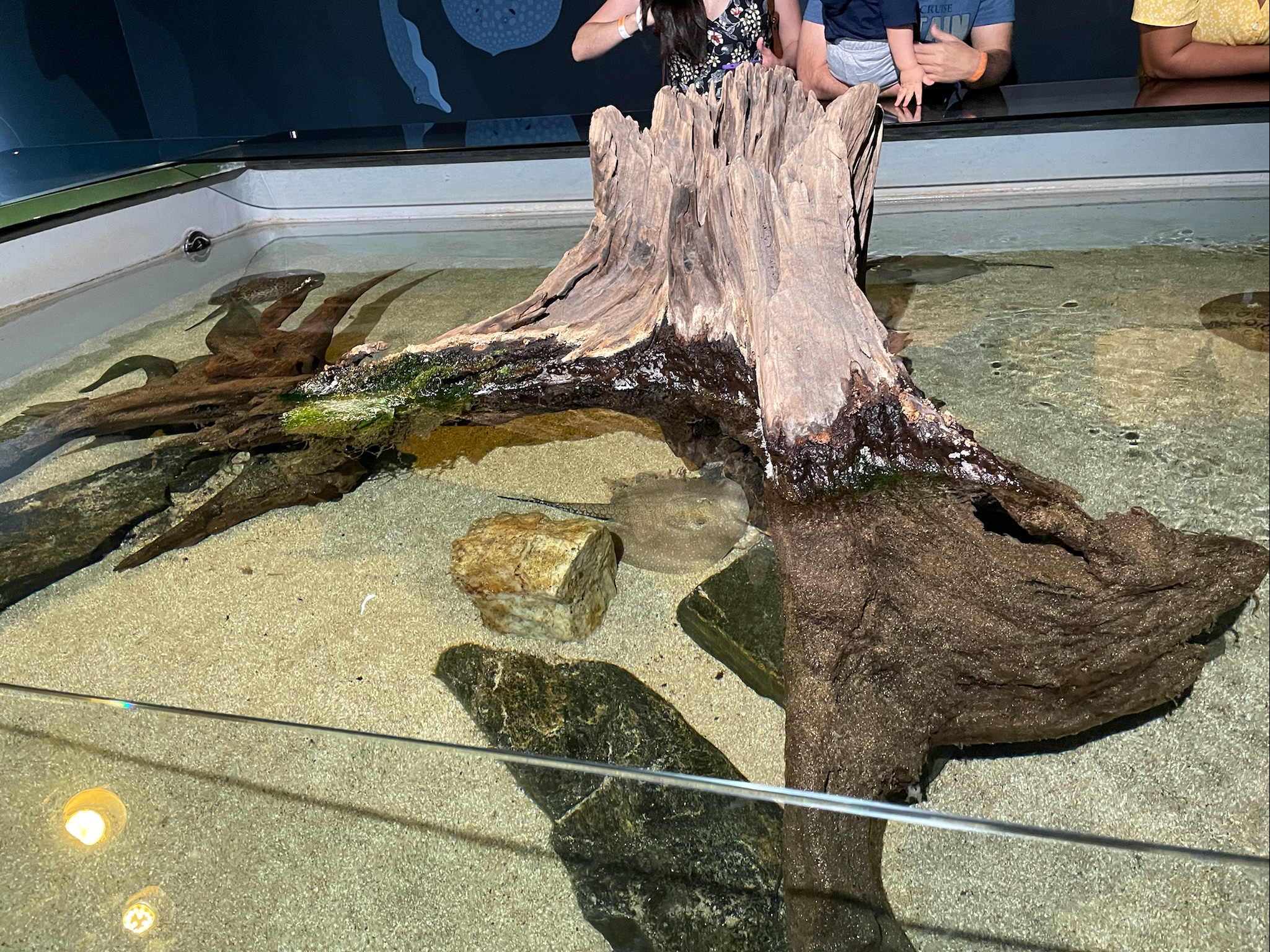
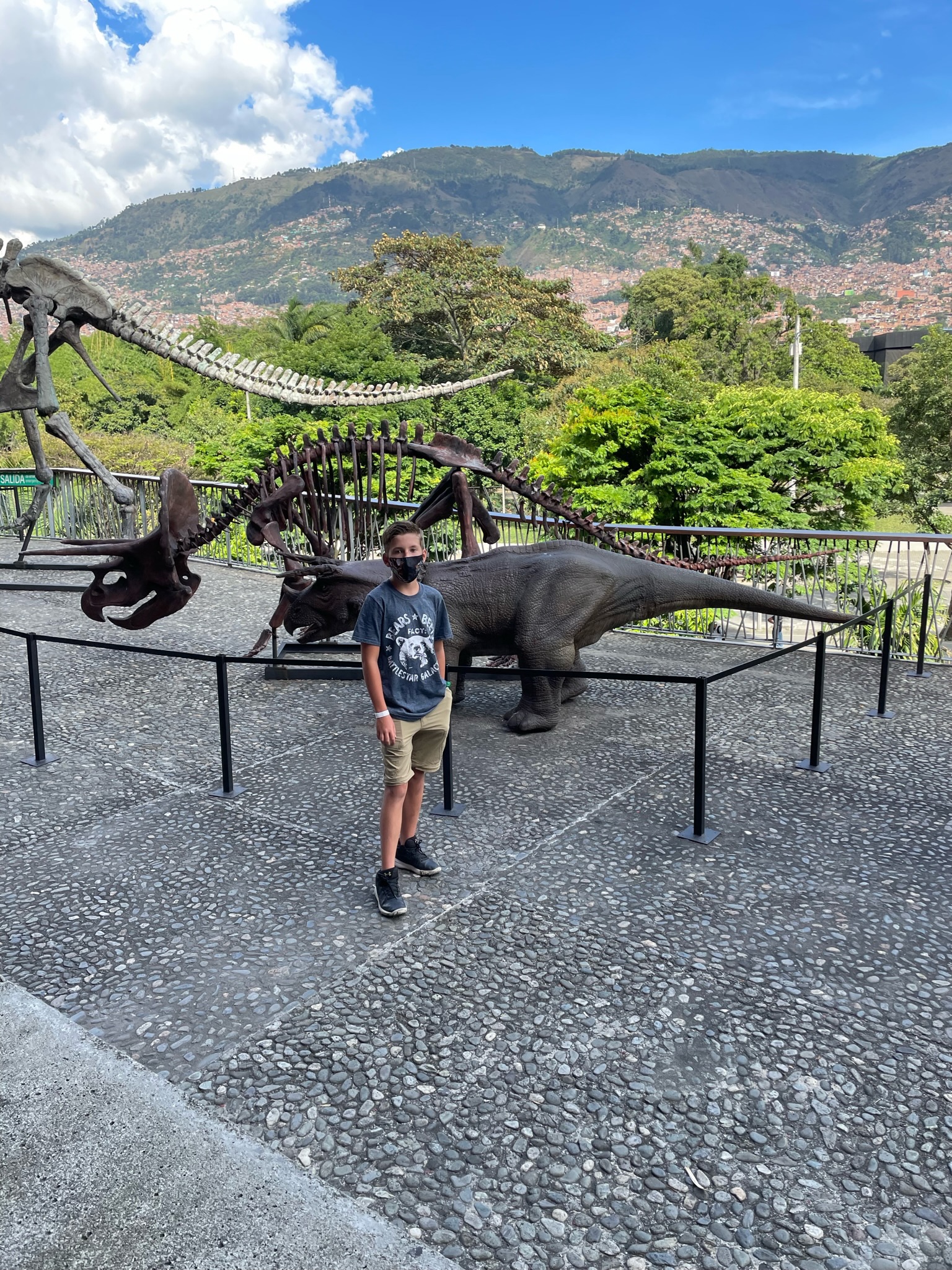
On our second day, we took the metro north to Parque Explora, a children’s science museum, planetarium, and aquarium in one. For less than $9 each, we were able to enjoy an entire day of interactive exhibits. First off, the place was designed to look like 4 giant red books from above. Each ‘book’ was a different exhibit. Everything in the museum was in Spanish and English except for the 30 minute planetarium show. I may have fallen asleep during that, but that was mostly because I was laid back in the dark and the speaker’s voice was very soothing. We loved it here, and especially for the price, the exhibits were fantastic.


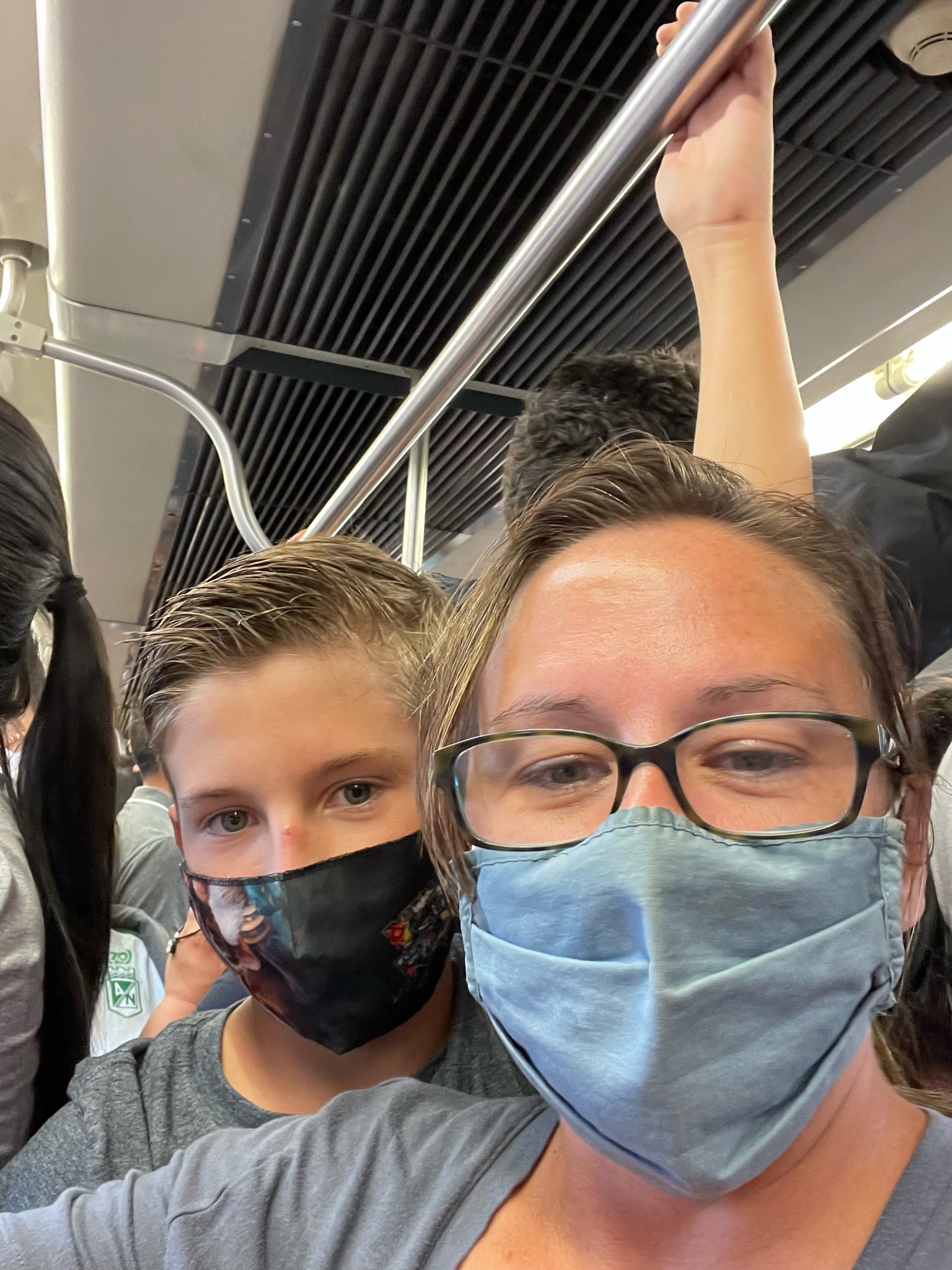
That night was one of the most interesting we’ve had on the trip. Apparently, there was a very important soccer match happening that afternoon in the soccer park near our hotel. When we got off the train after the children’s museum, we started noticing an abundance of green and white striped soccer jerseys. As we walked over to pick up my newly repaired shoes, we saw vendors blowing up green and white helium balloons, and there were green and white souvineers on every cart/stand. On the walk back to the hotel, there were noticably more people as the crowd continued thickening. By the time dinner rolled around, the crowd had gotten massive, and traffic was stalled in the street because of all the pedestrians. Everyone had on green and white clothing, and a whole bunch of people carried green and white umbrellas that were open and bouncing to their chants and celebrations in the street. People were cheering, and chanting, and celebrating what must have been a great game.
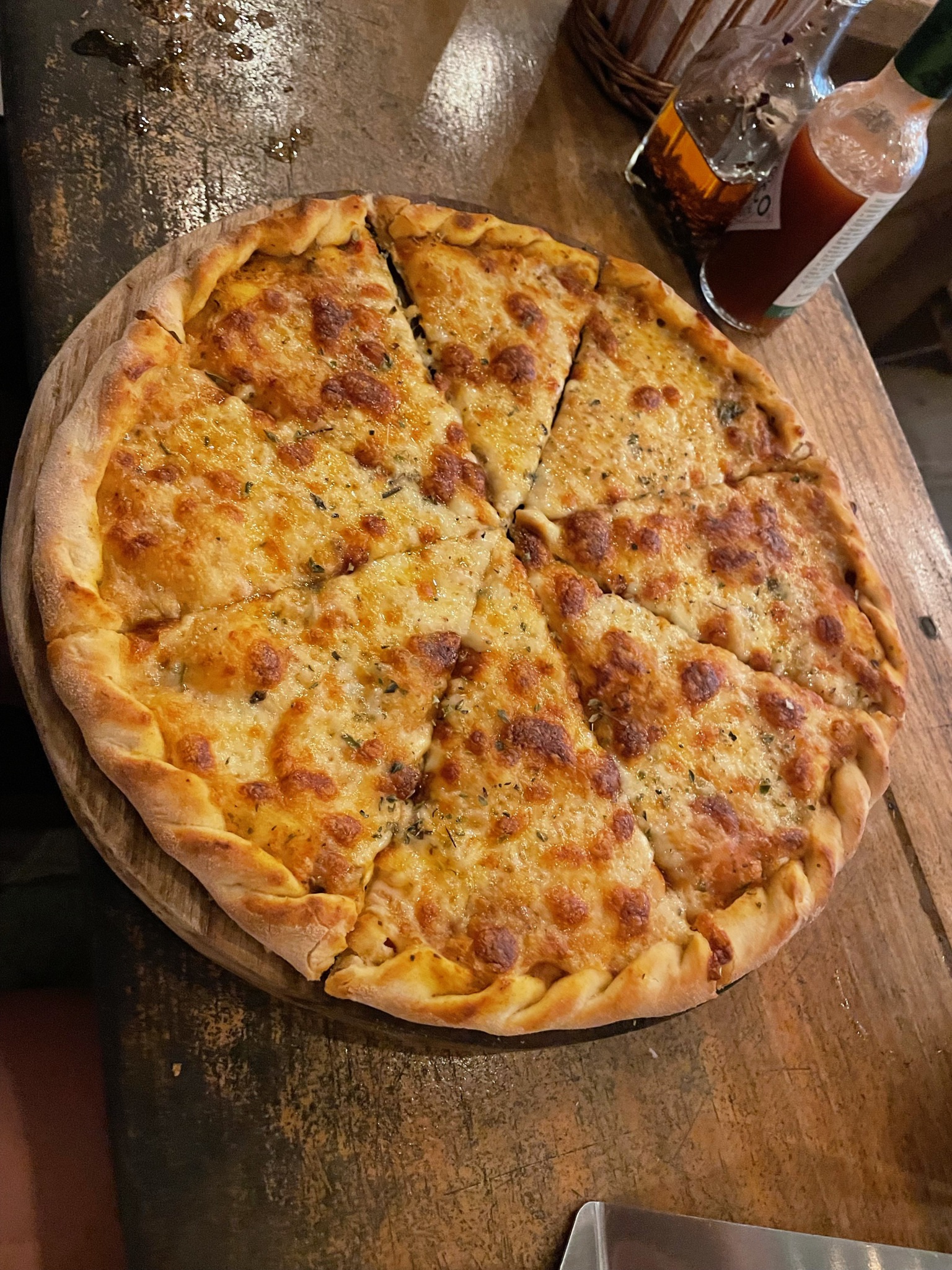
We made our way to a pizza restaurant and found a table on the second floor overlooking the street. The crowd continued to grow, and by the time our food arrived, they were shooting off fireworks and dancing in the street. The police had intervened to get traffic moving again, but it didn’t take long for the crowd to overtake the street again. Several of the small businesses lining the street closed up their storefronts as the crowds got even rowdier. We watched in shock as members of the swat-like force came in with their shields and started forcing the crowd to move on. They moved on for a time, but in 10 minutes, most had migrated back to the street. The swat-like police came in a second time, and this time they fired off a smoke bomb and forced the partygoers out completely. We were safe, but the crowd was massive and very energetic, which put us all on edge. The ‘regular’ police were numerous and they continued to monitor the area for the rest of the evening. We were able to walk back to our hotel with no issues.
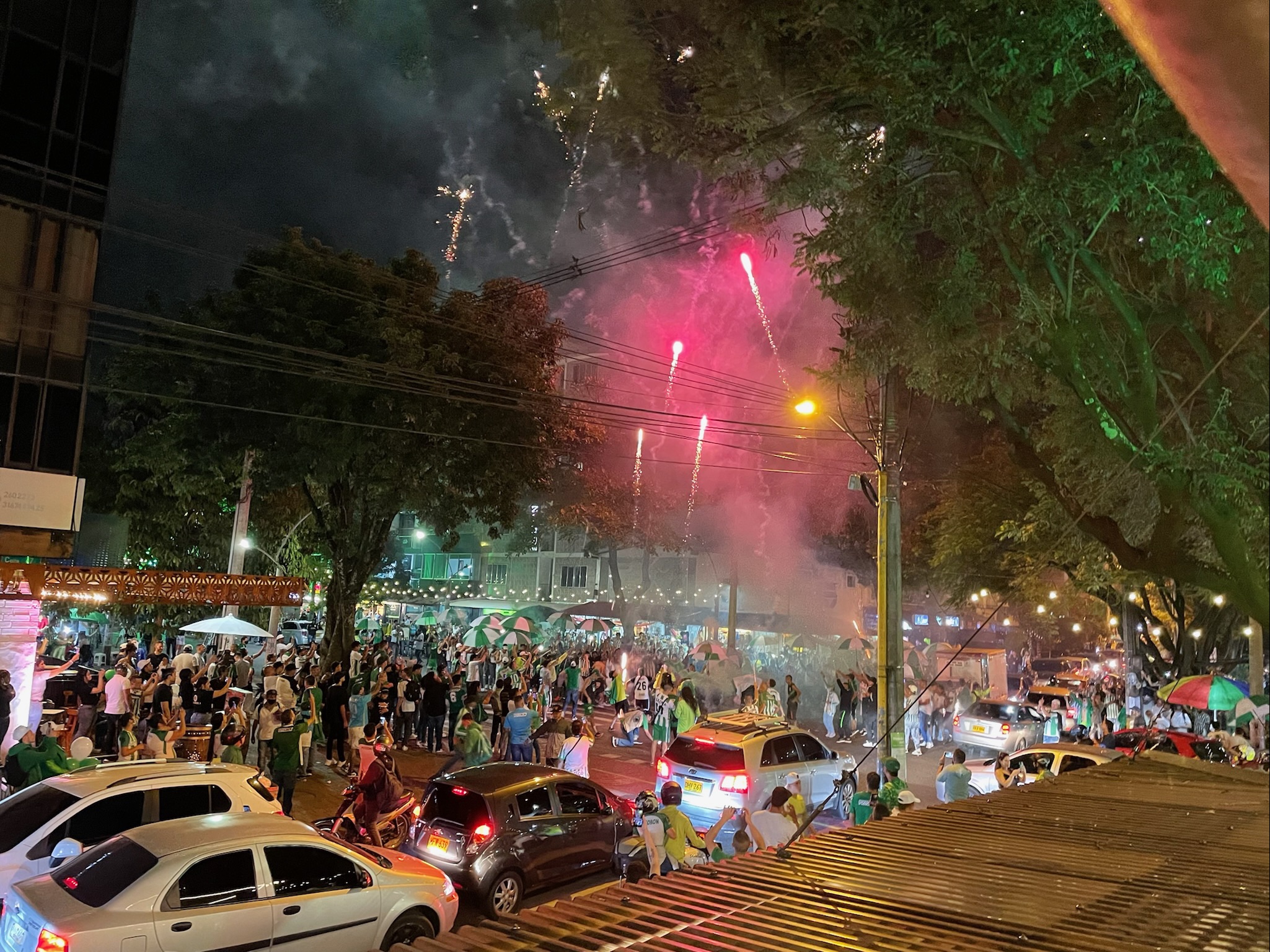
We later found out that Medellin is the home of the Atletico Nacional, which according to our host, is one of the most important teams in Colombia and in South America. We knew that soccer was a big deal in Central/South America, but we honestly had no idea. These people were all about soccer! Thankfully we were in a safe spot in the restaurant and had a great bird’s eye view to the whole show. By the time we left the restaurant, everything was calm, and most of the street was back to normal.
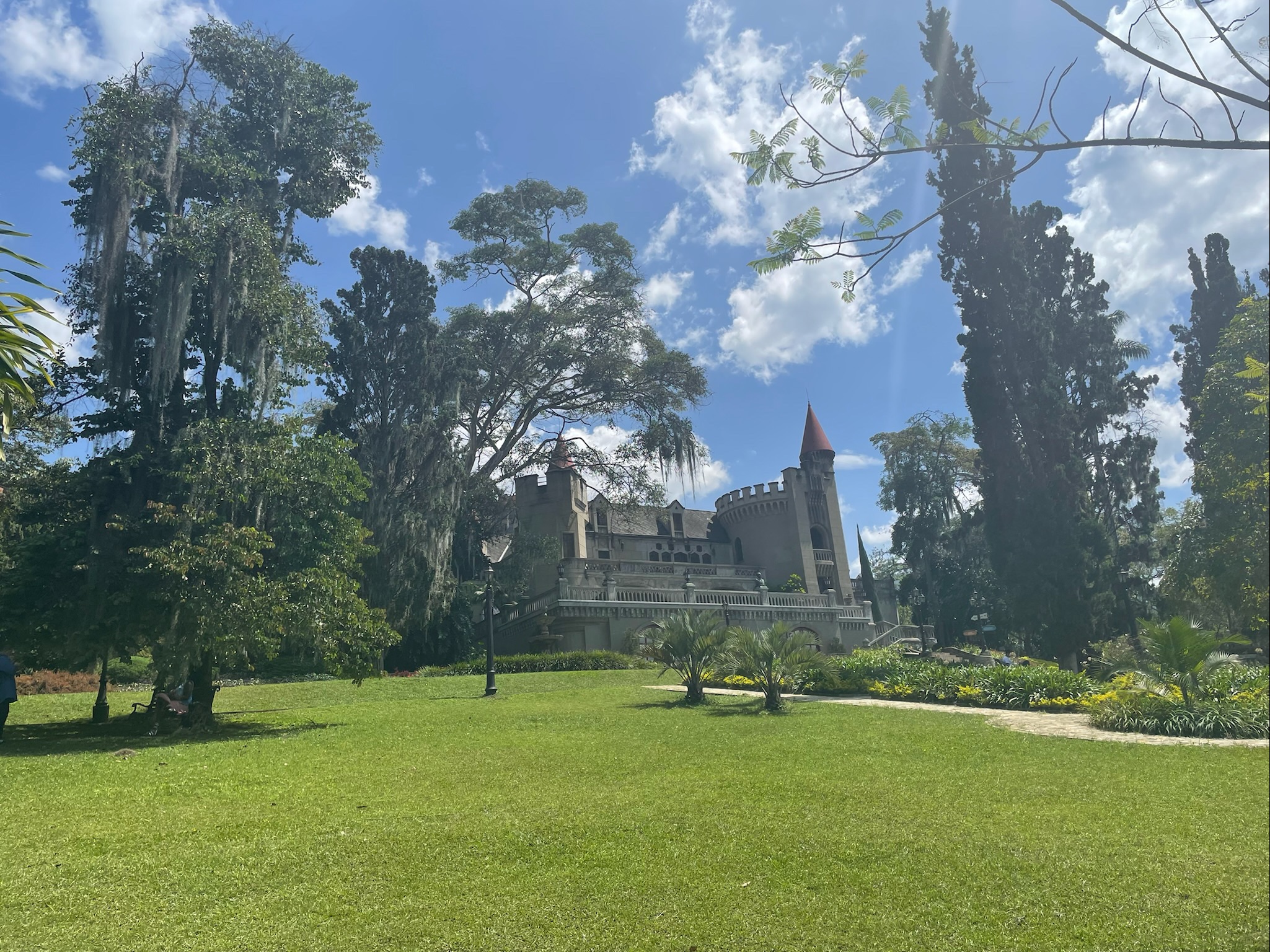
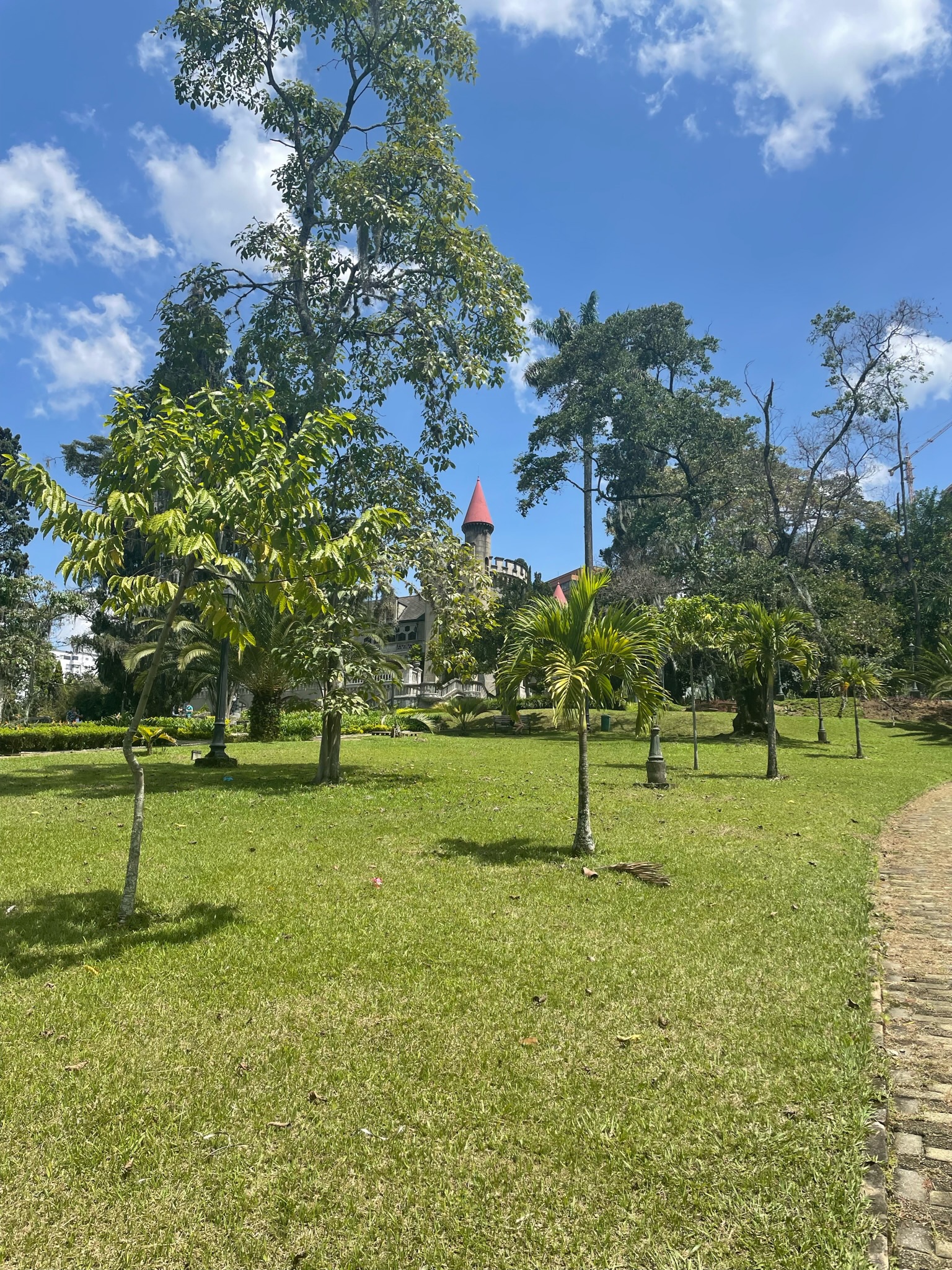
The next day we toured the Museo de Castillo. In the middle of the city, there is a beautiful old castle that was built in the early 1900s. The castle is open today as a music and arts hub in the city, and its grounds are open to tourists and picnicers. We explored the old house and walked through the immaculately manicured gardens, forgetting that we were still in the middle of one of the most dangerous cities in the world.
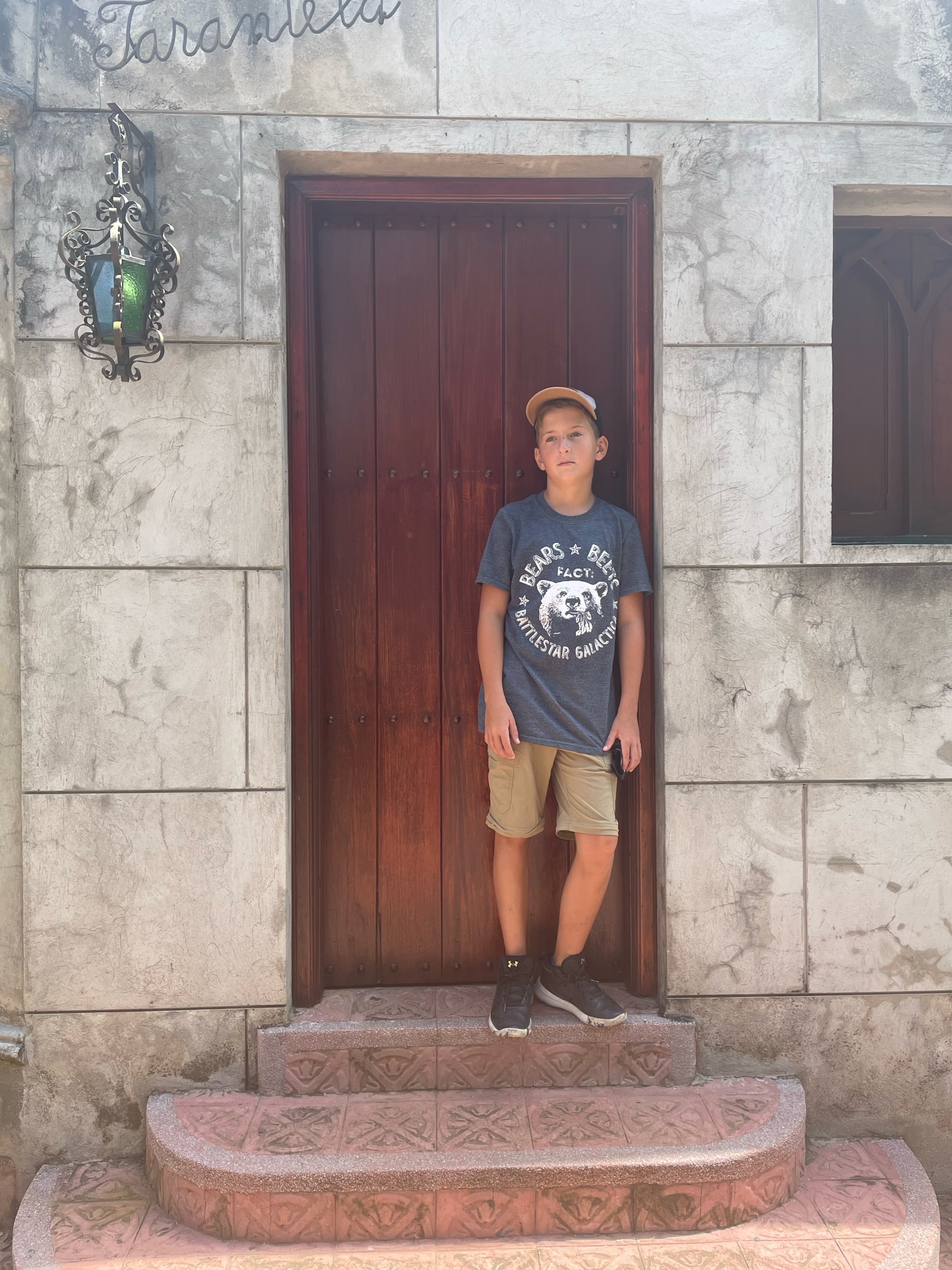


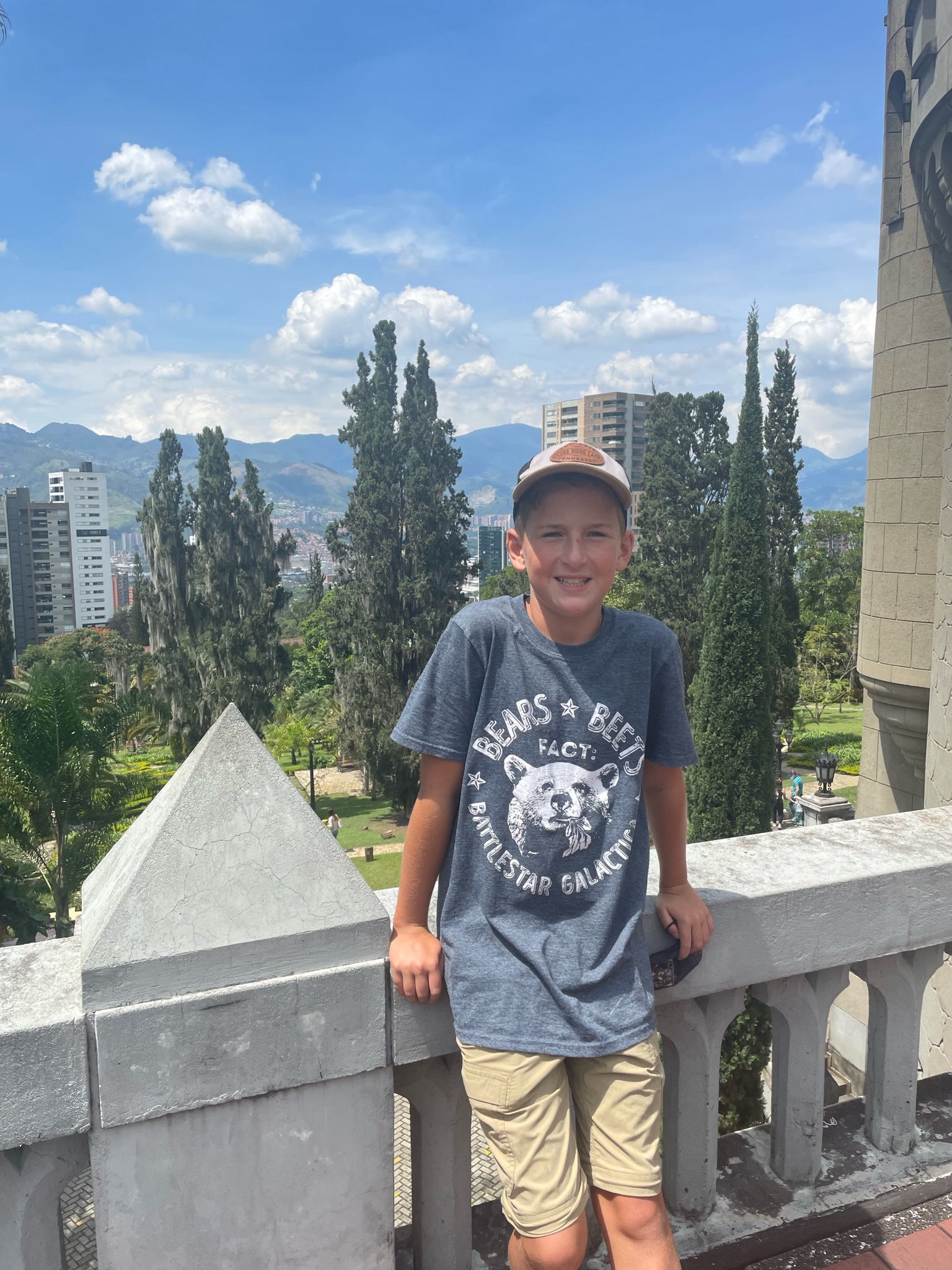

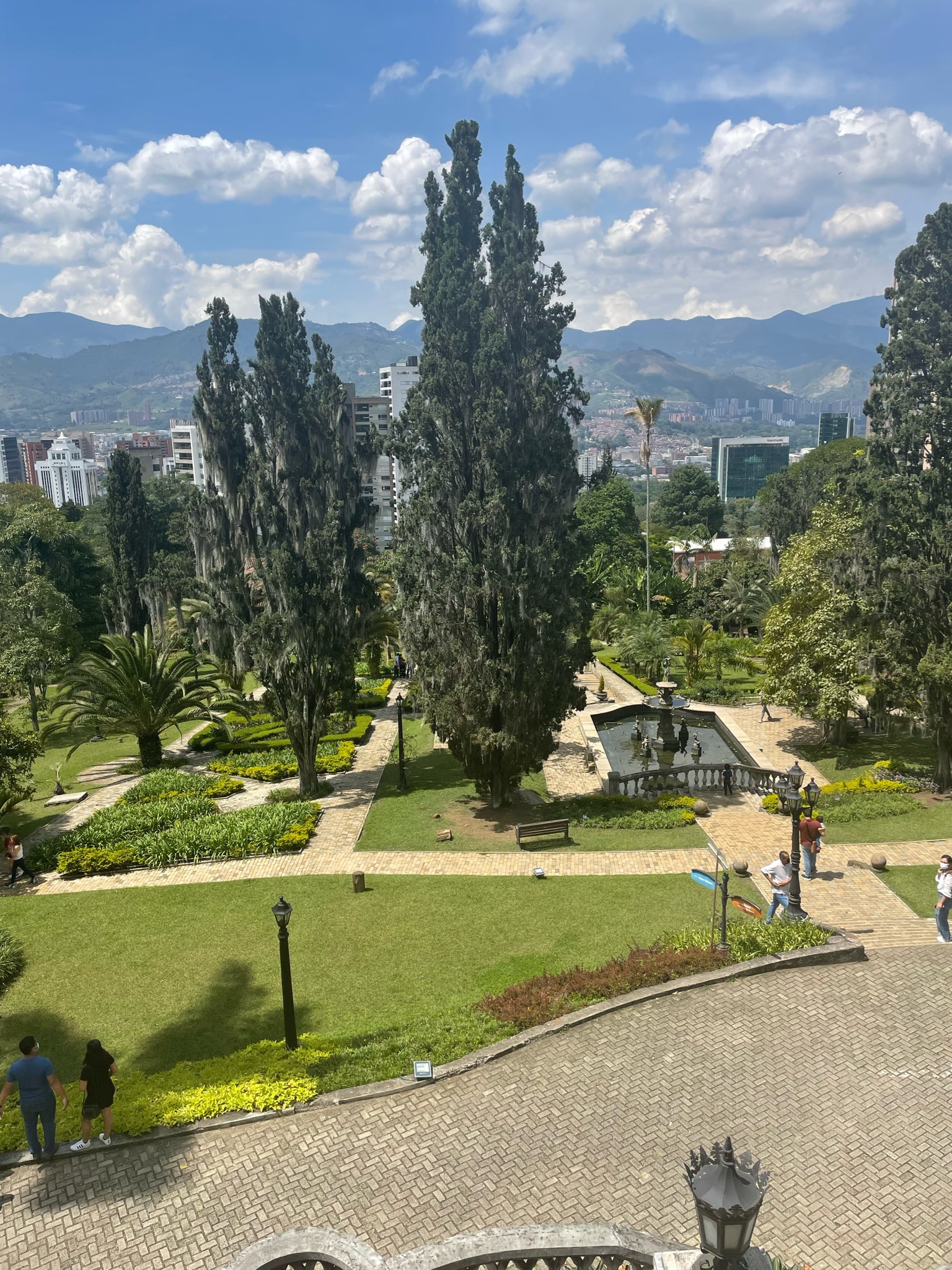

Medellin is a huge city of 2.7 million people, and they have a very well developed transportation system to help their residents. There are metro trains, buses, city buses, and cable cars. We had heard that the cable cars were a great way to really get to see the city since you get a view from above, and we weren’t going to miss out on that. So that afternoon we rode the metro and took the cable car system to check out Arvi Park.
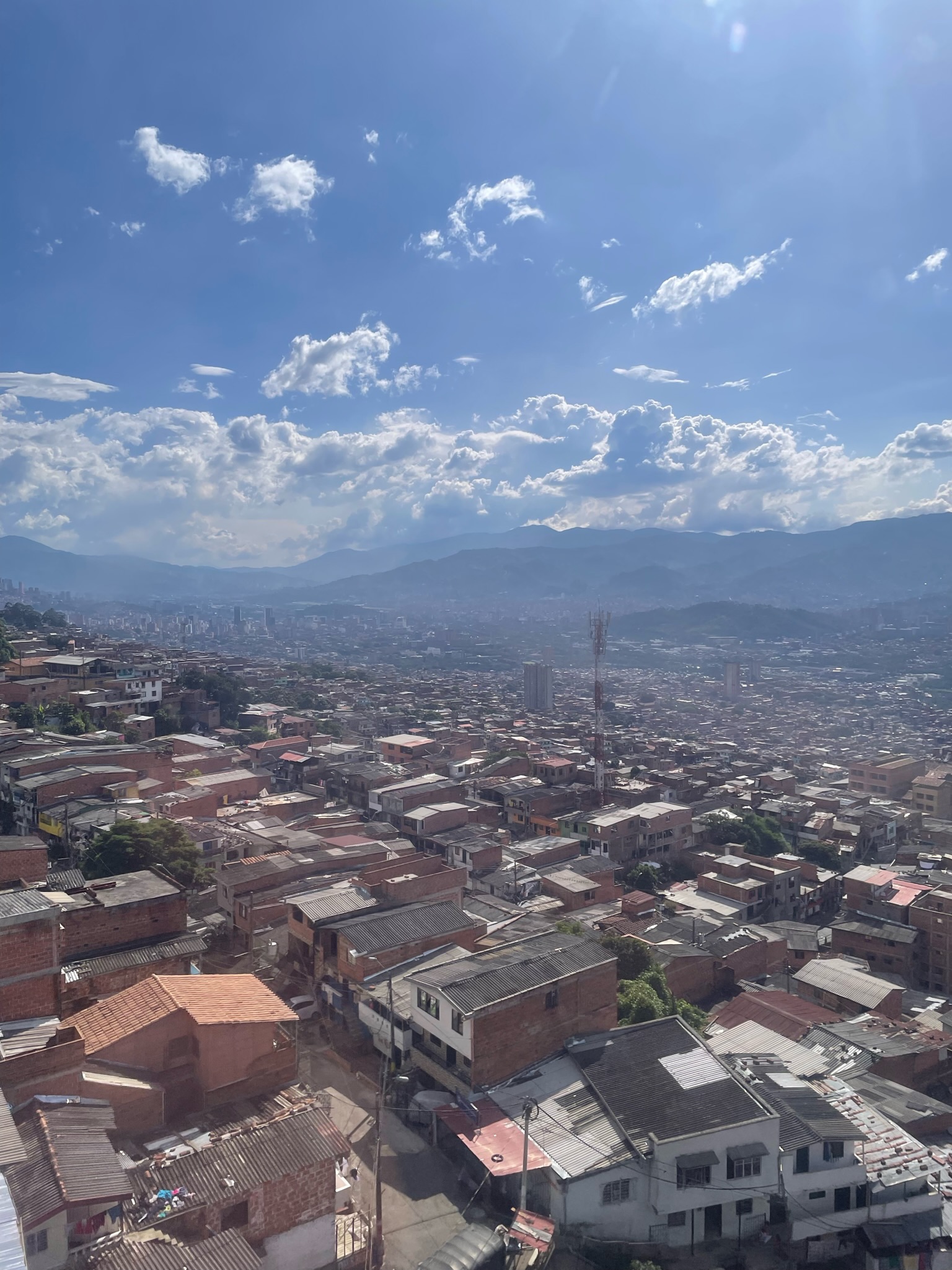
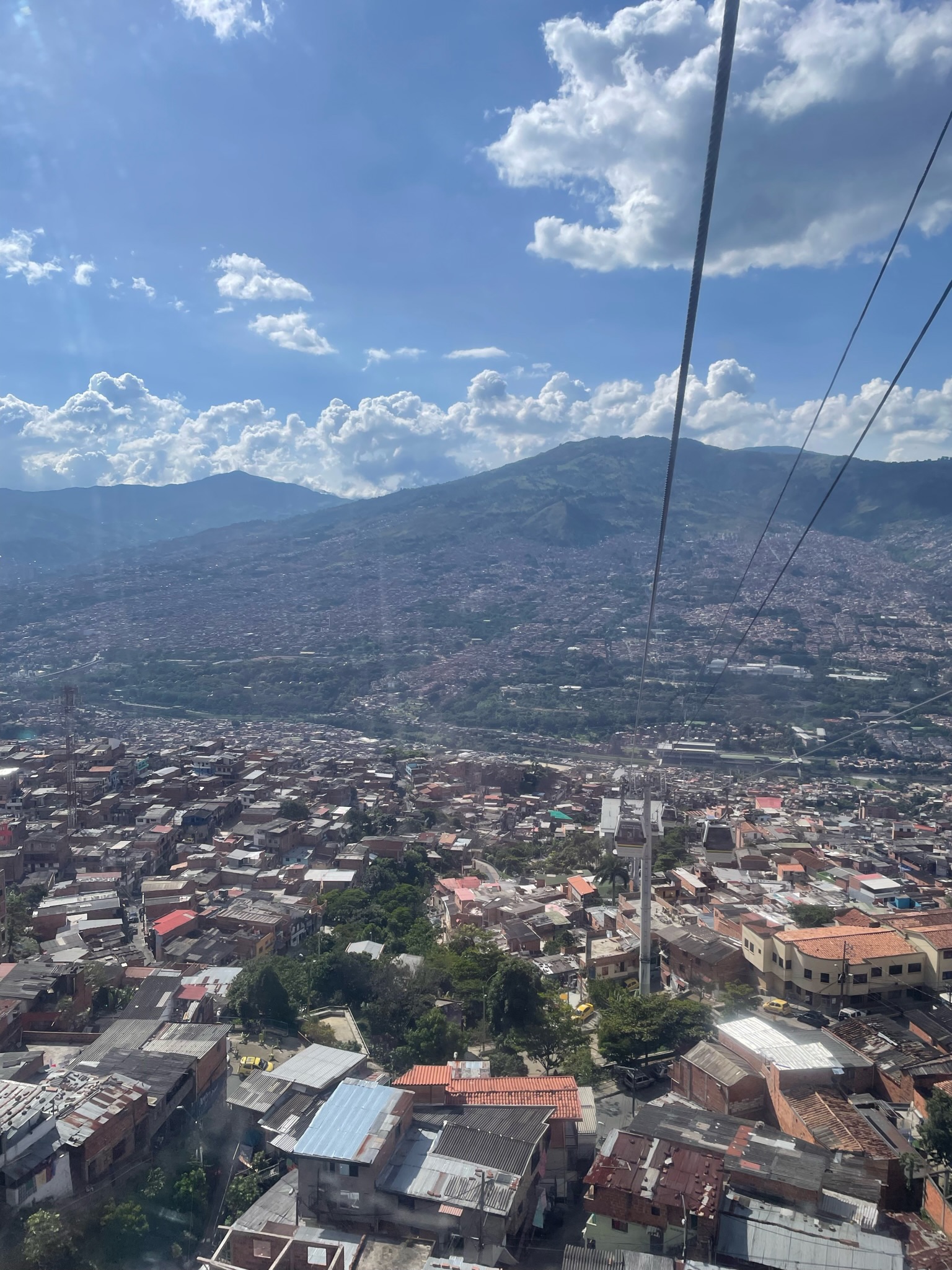
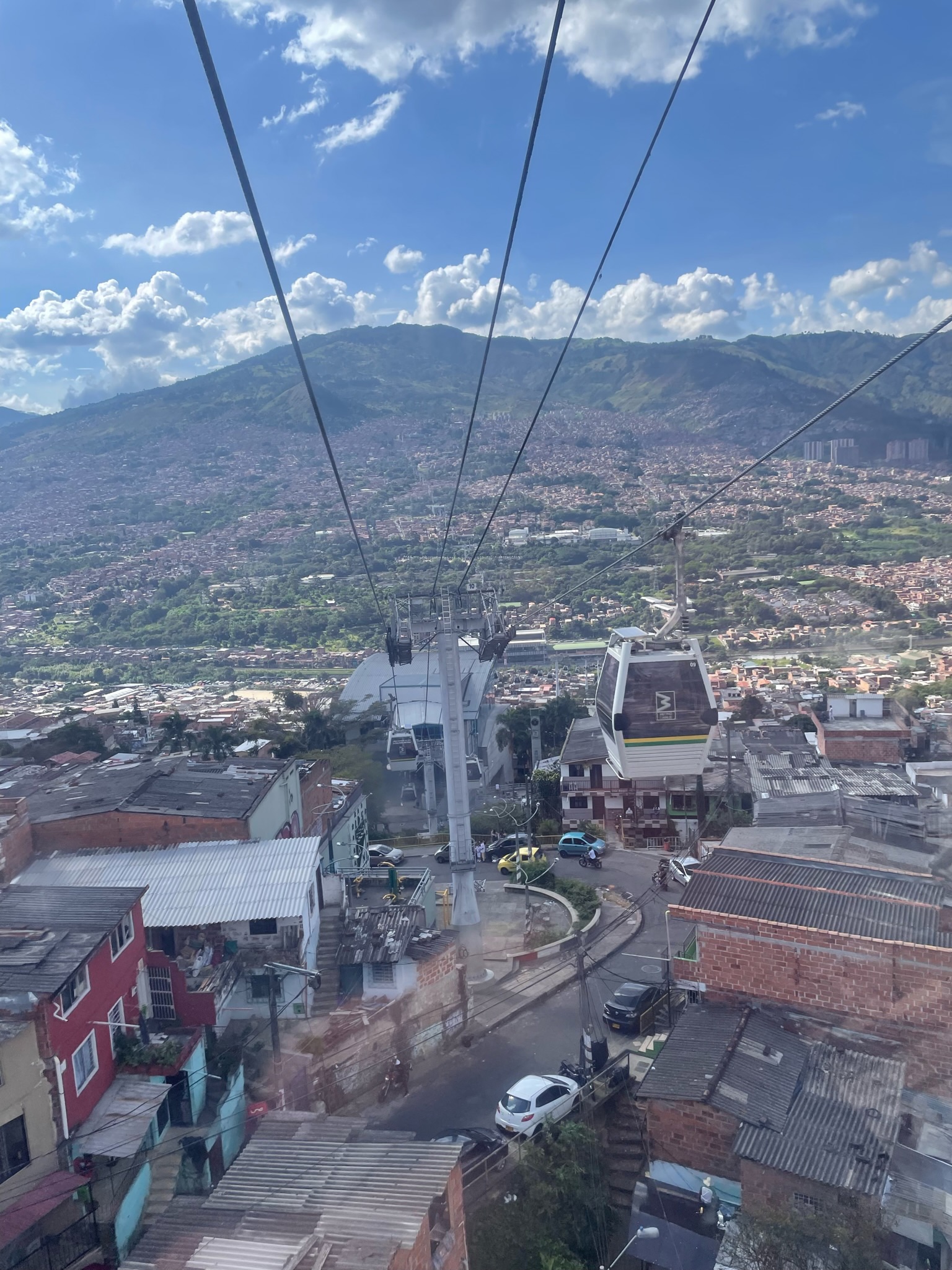
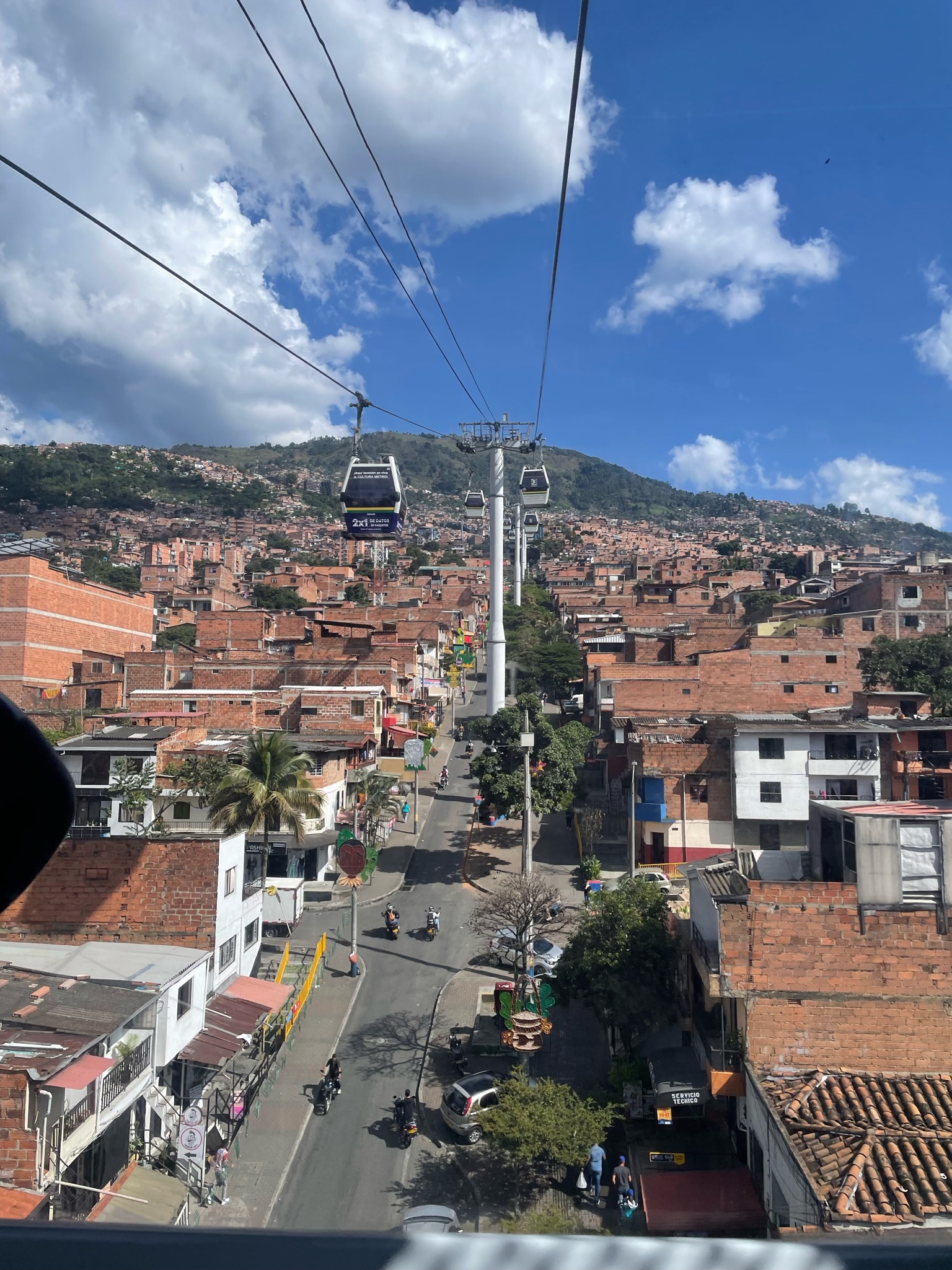
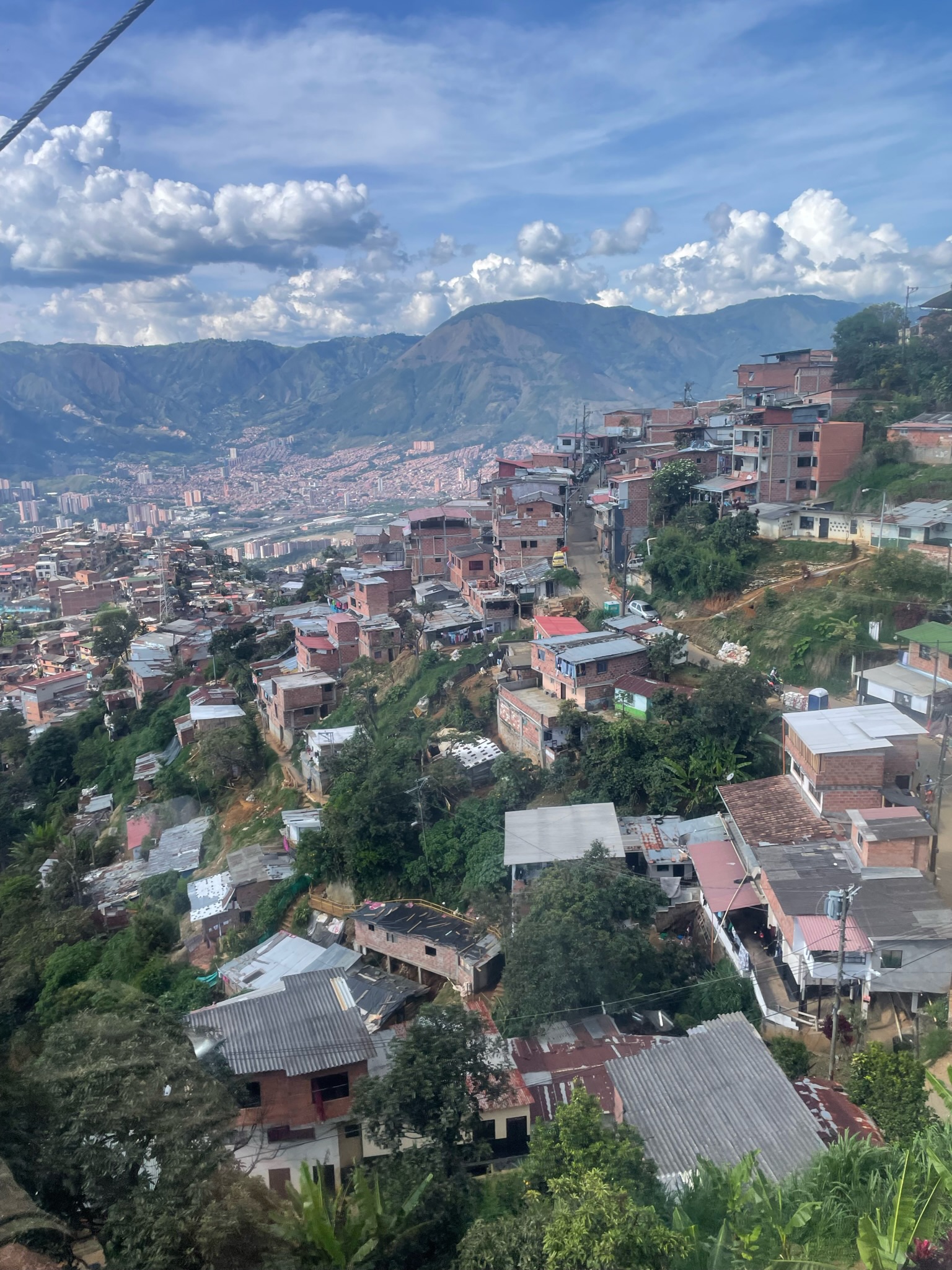
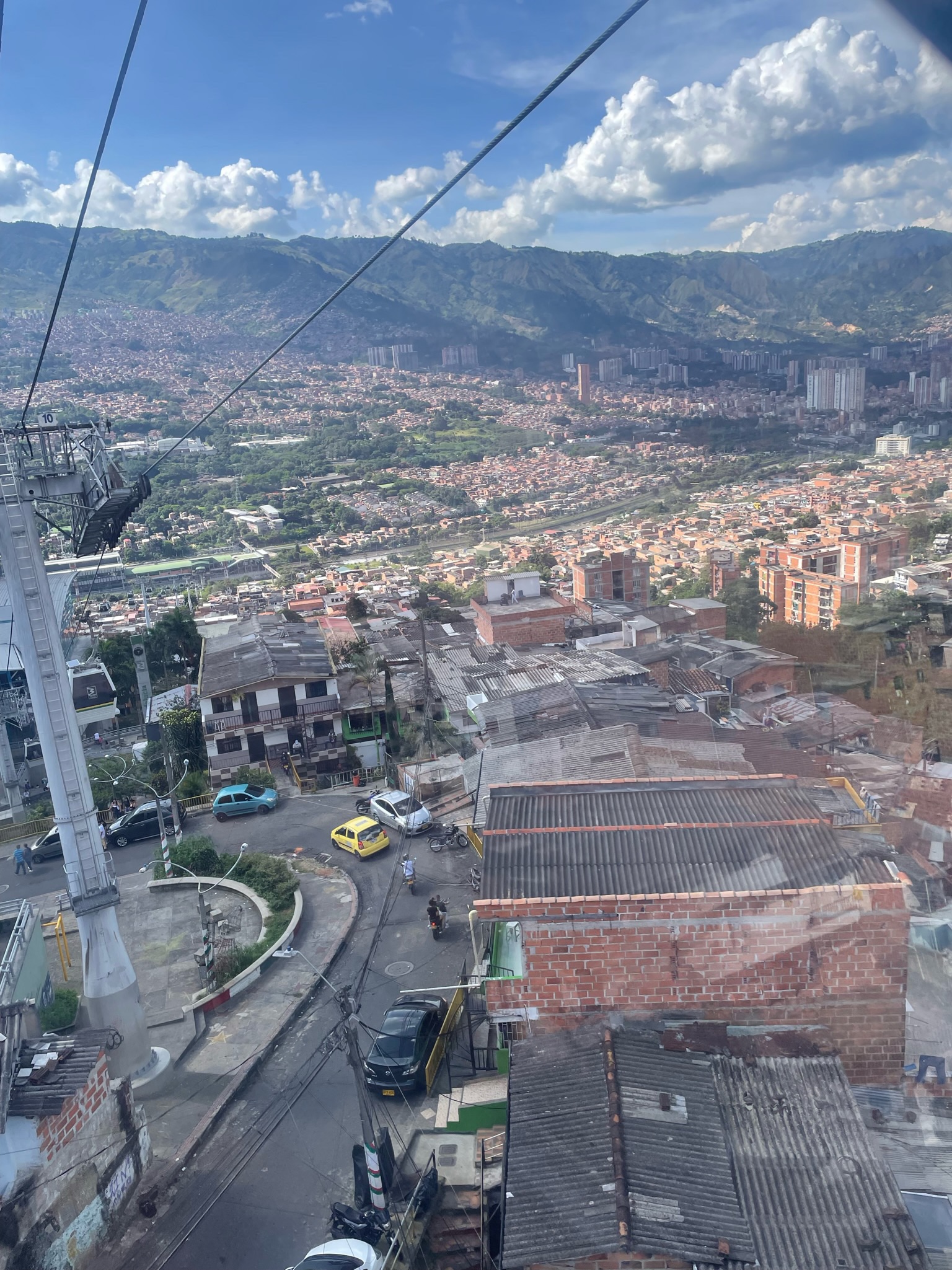
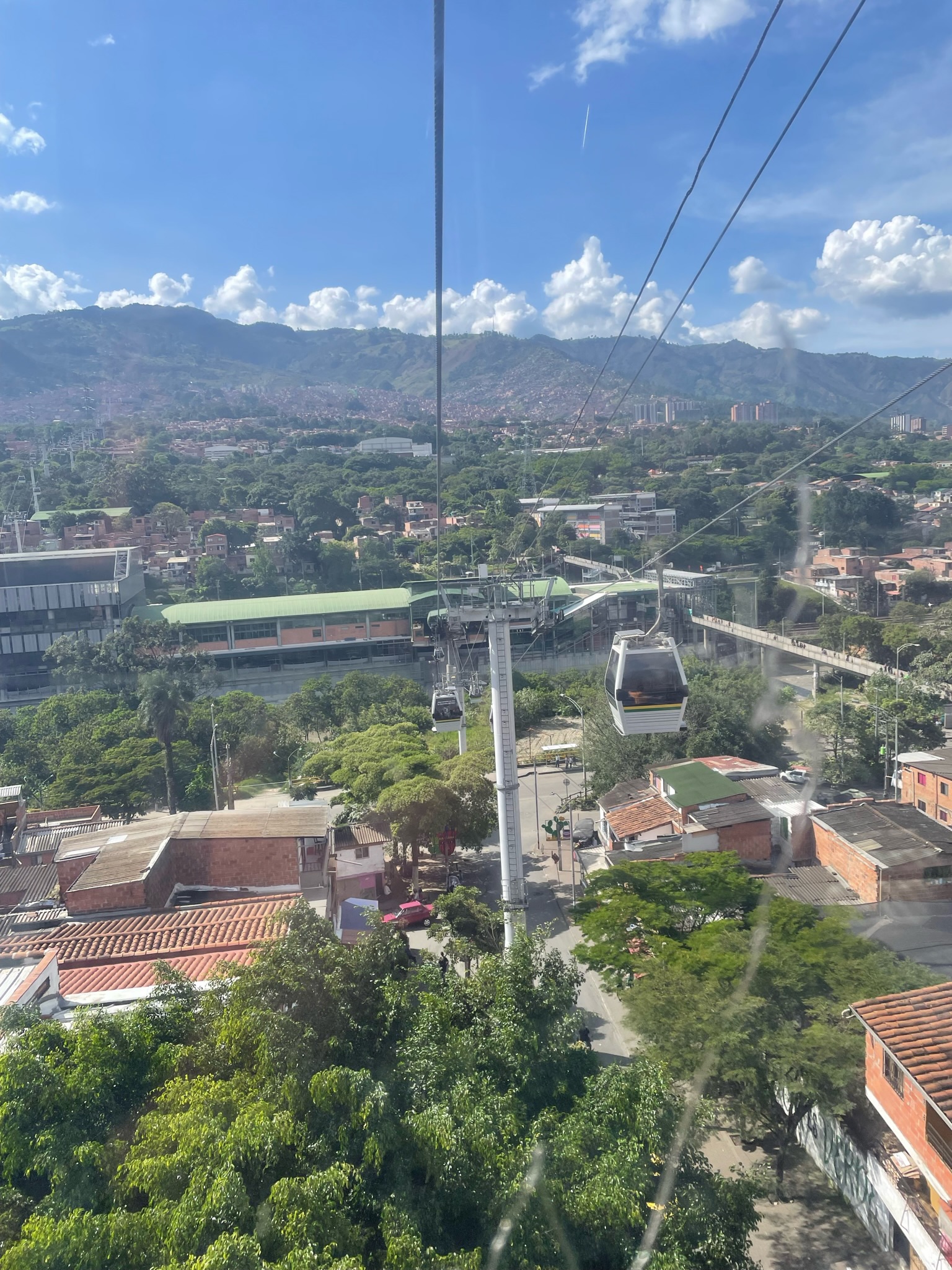

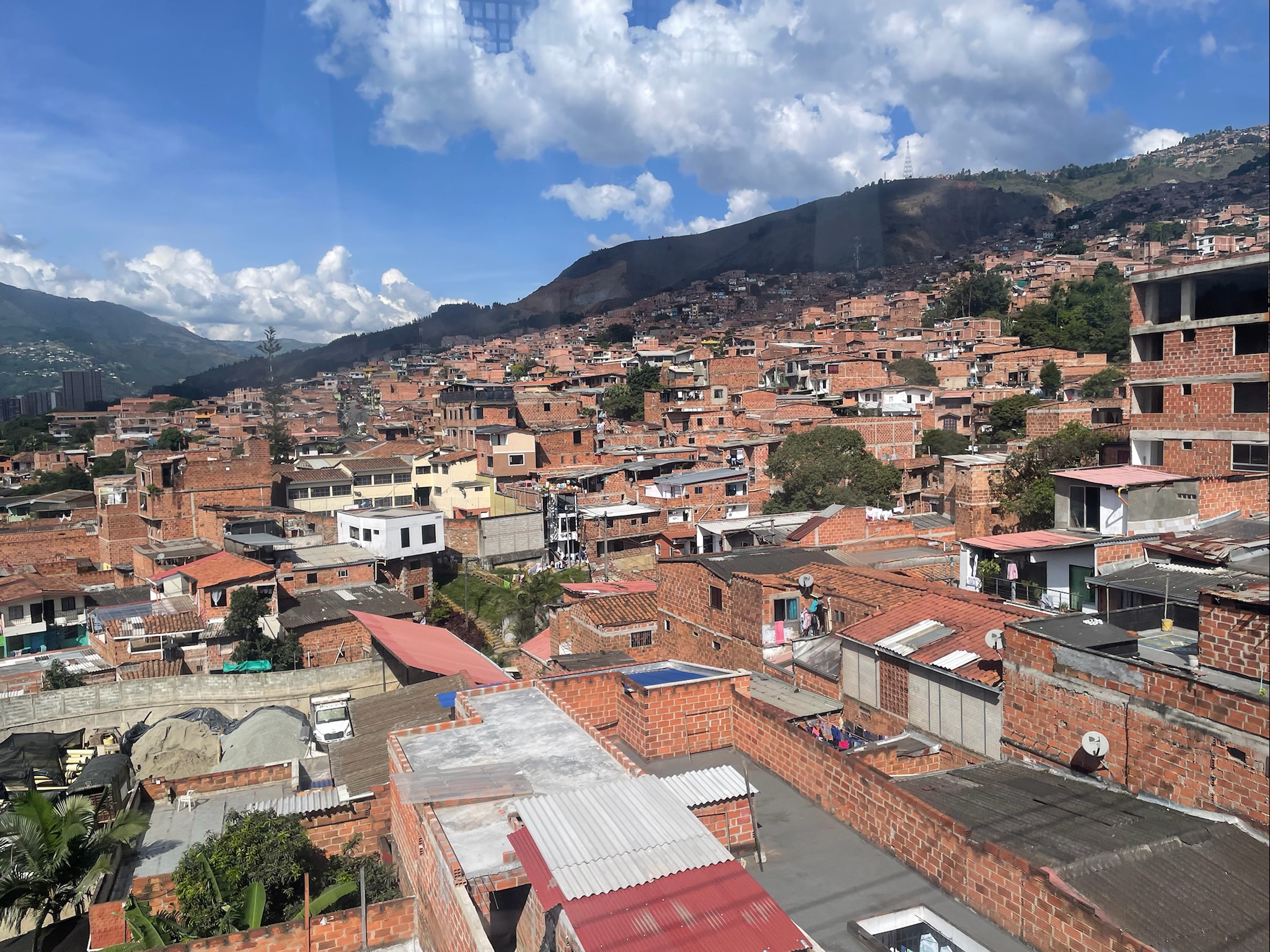
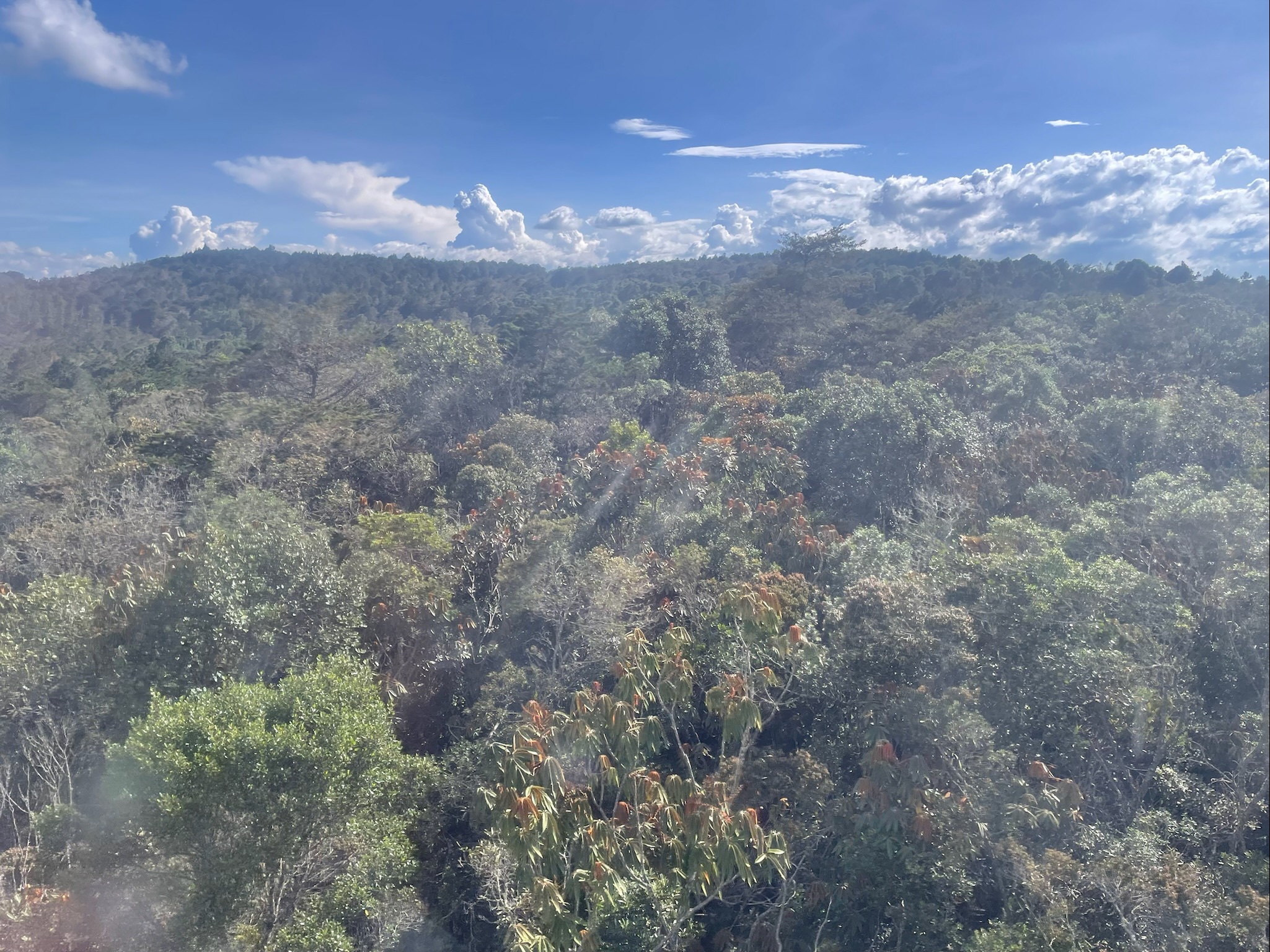
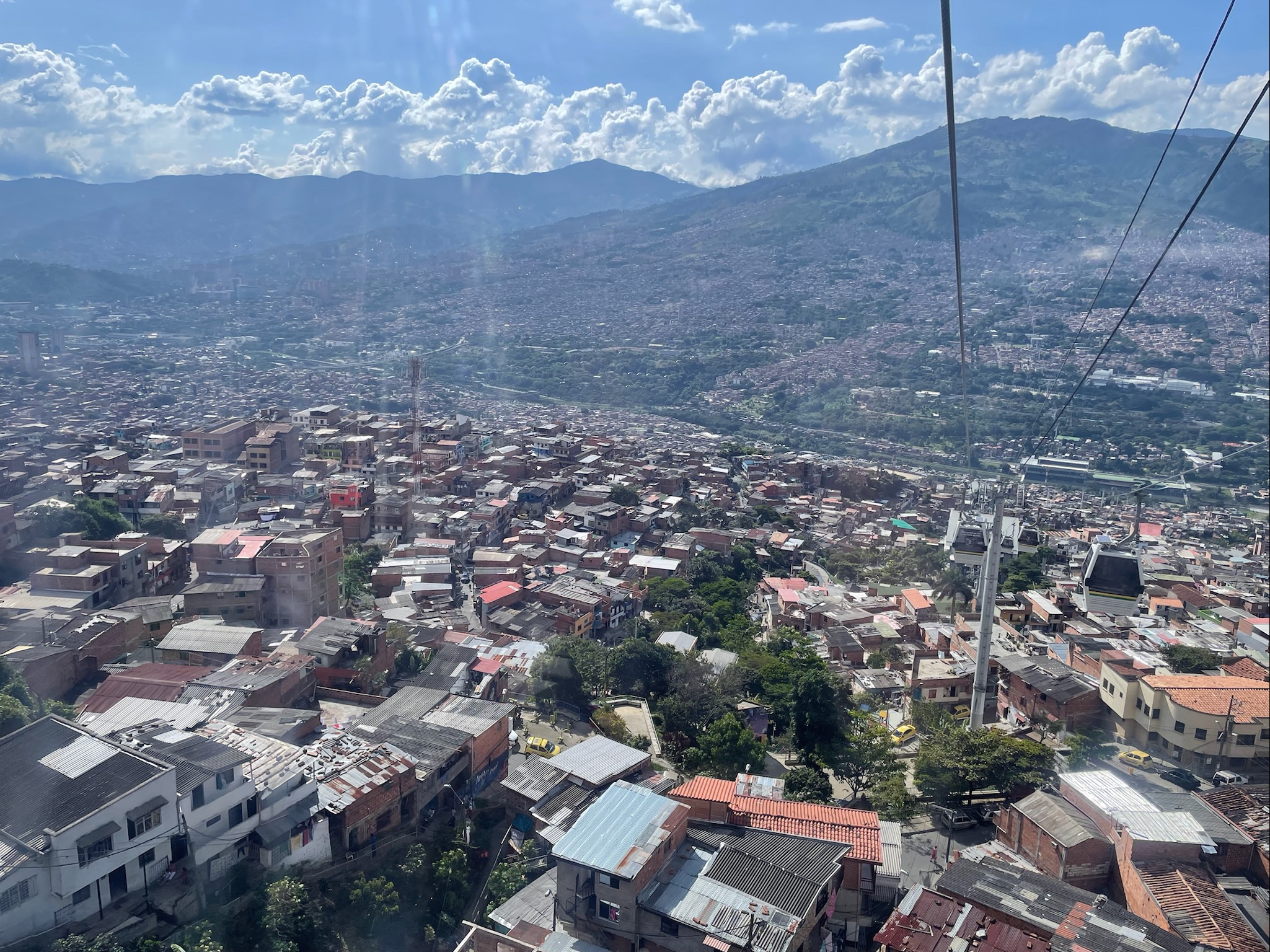
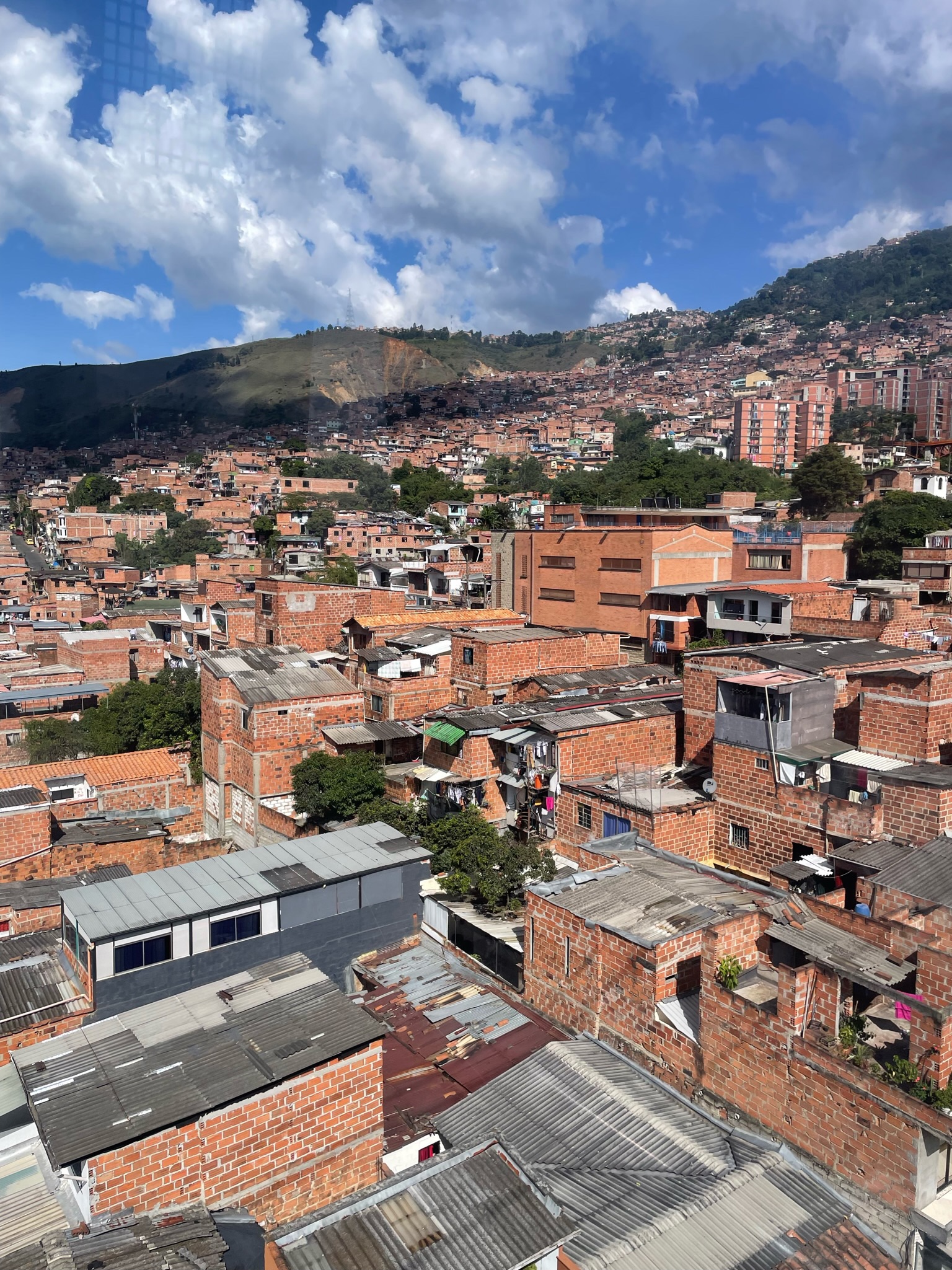
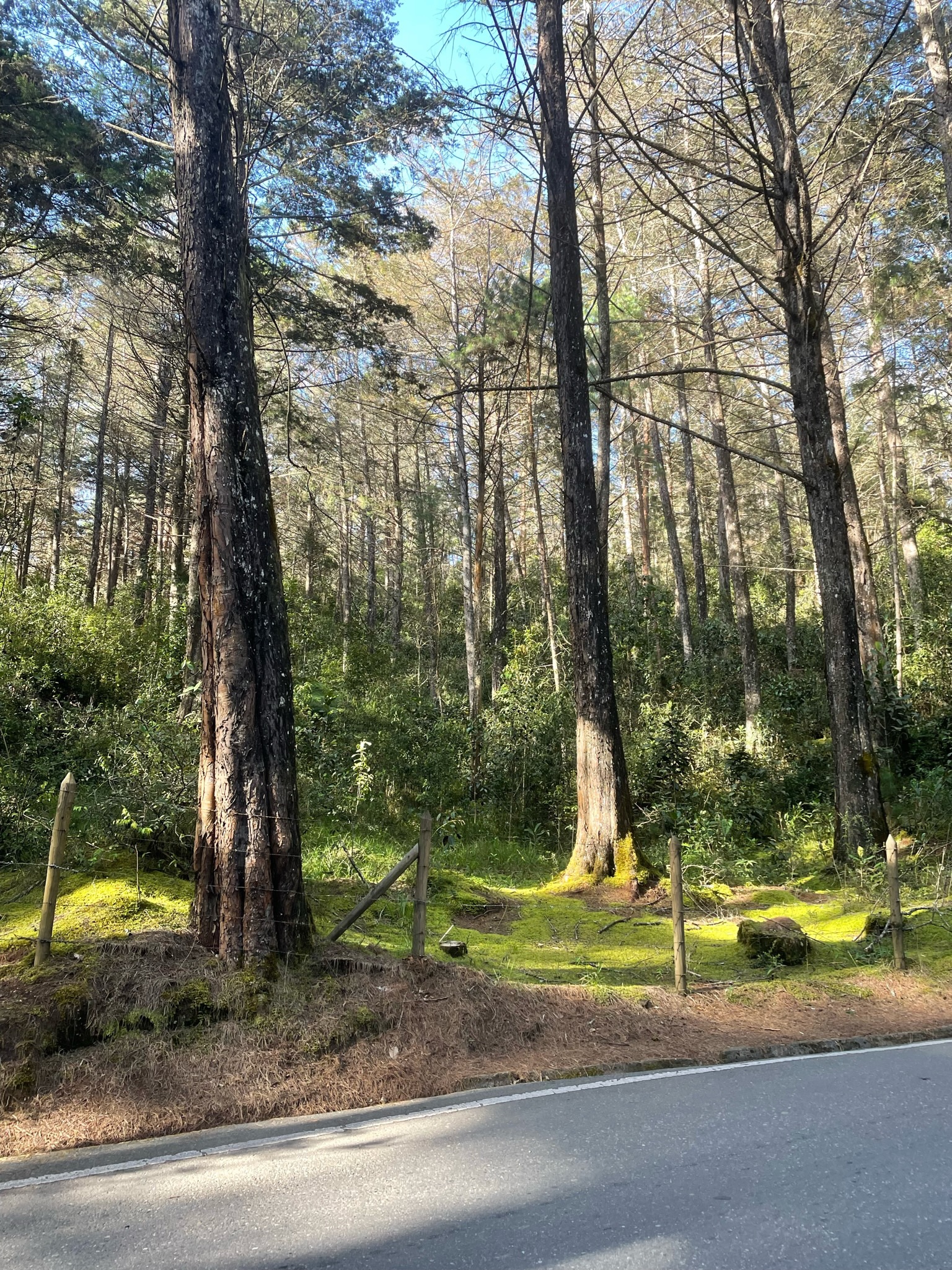
For about 3 linear kilometers, we watched the city move under us as we rode on the cable line and then we traveled another 2 kilometers over forest to the park. The park was very large and was full of beautiful trees and hiking trails. We walked a kilometer or two to see a waterfall and check out the camping area before we headed home for the night.
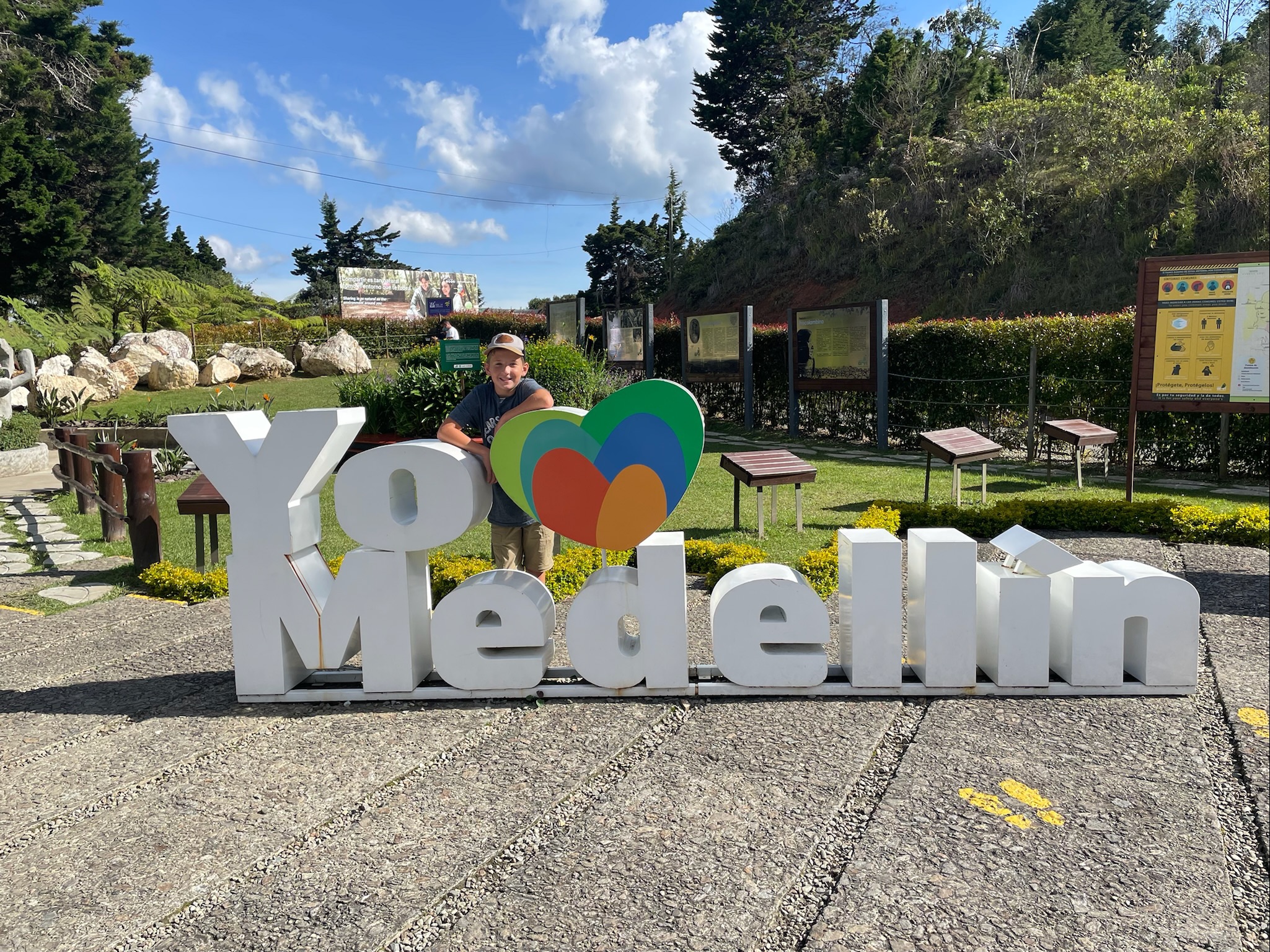
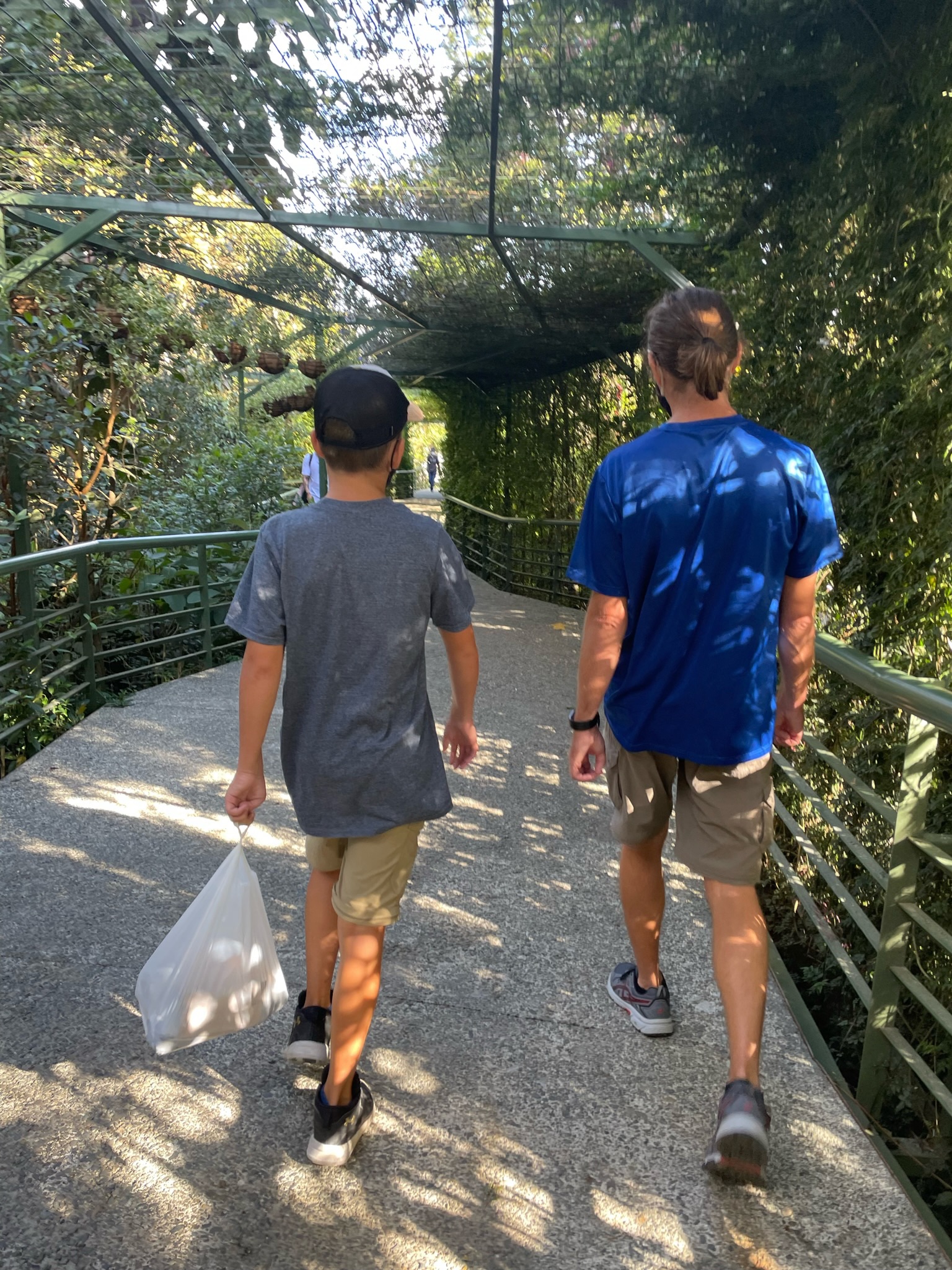
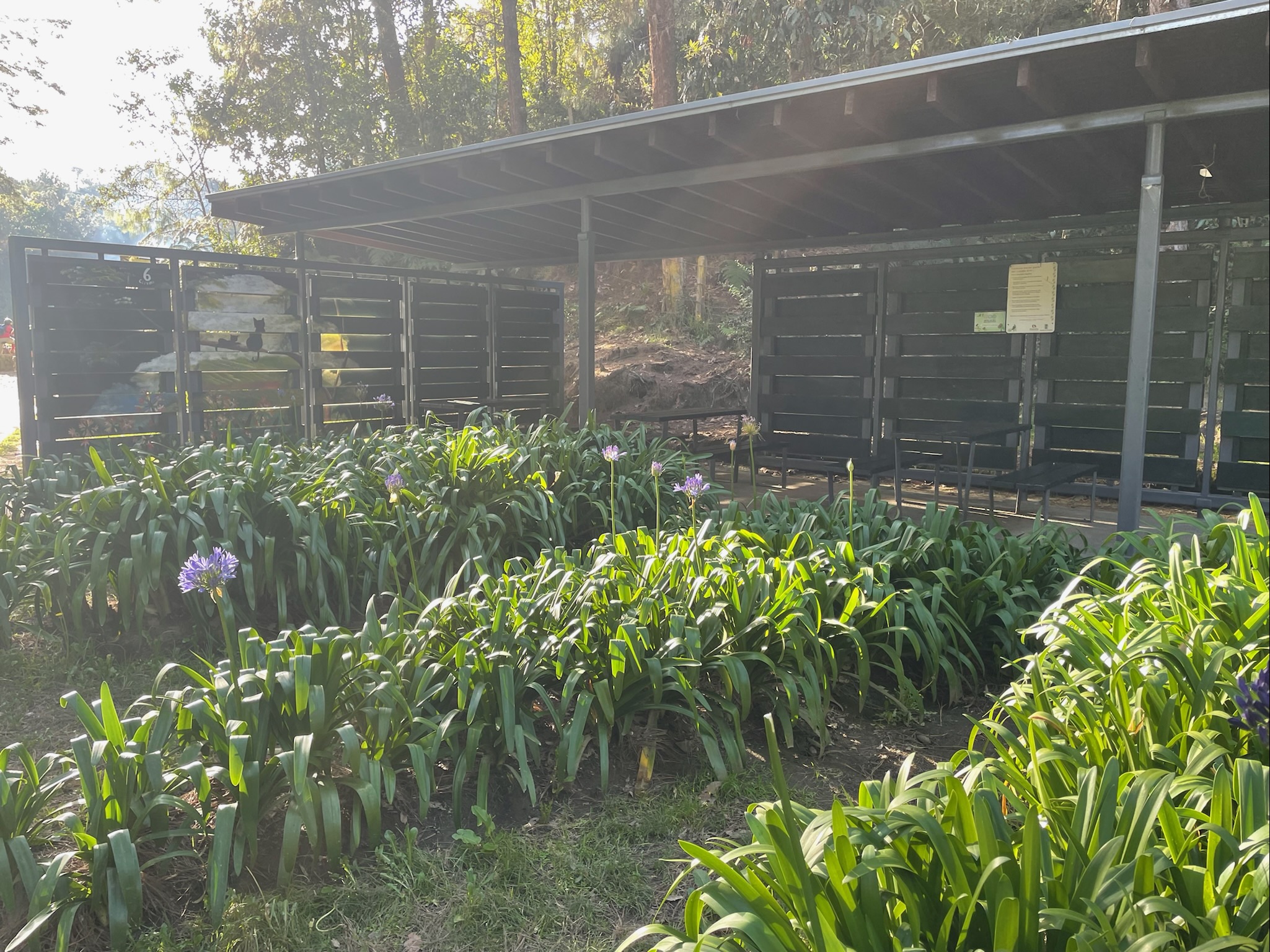

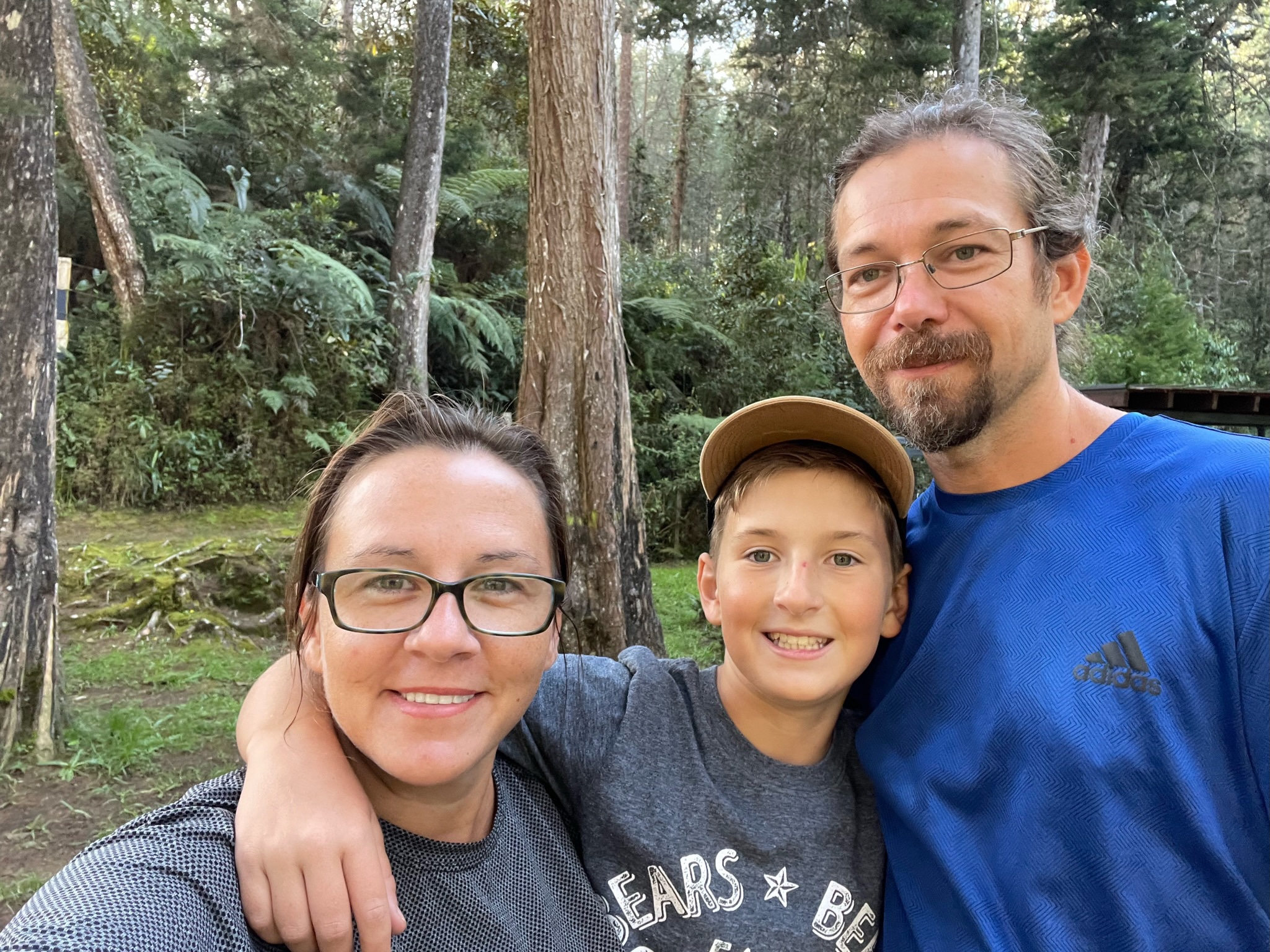

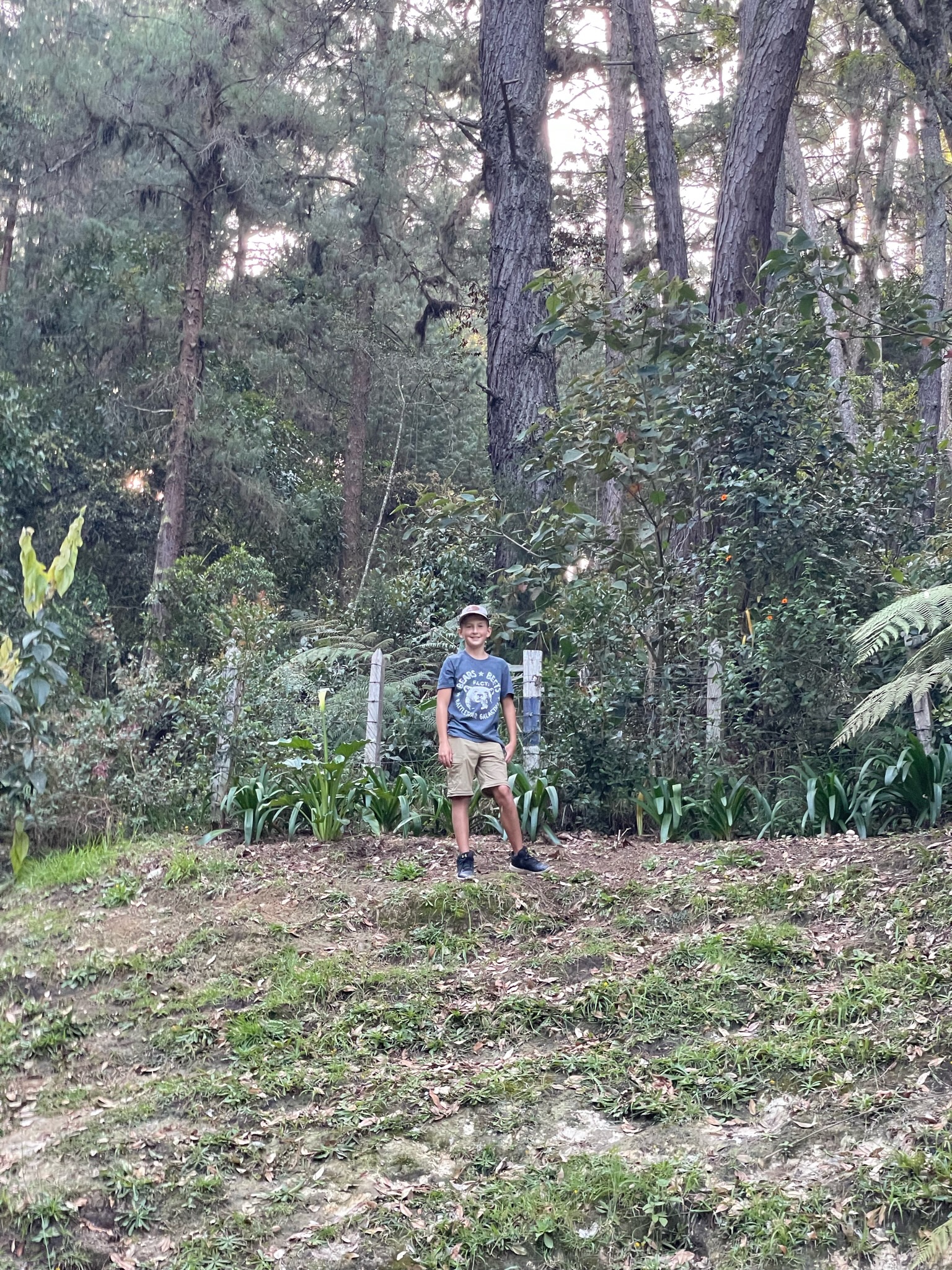


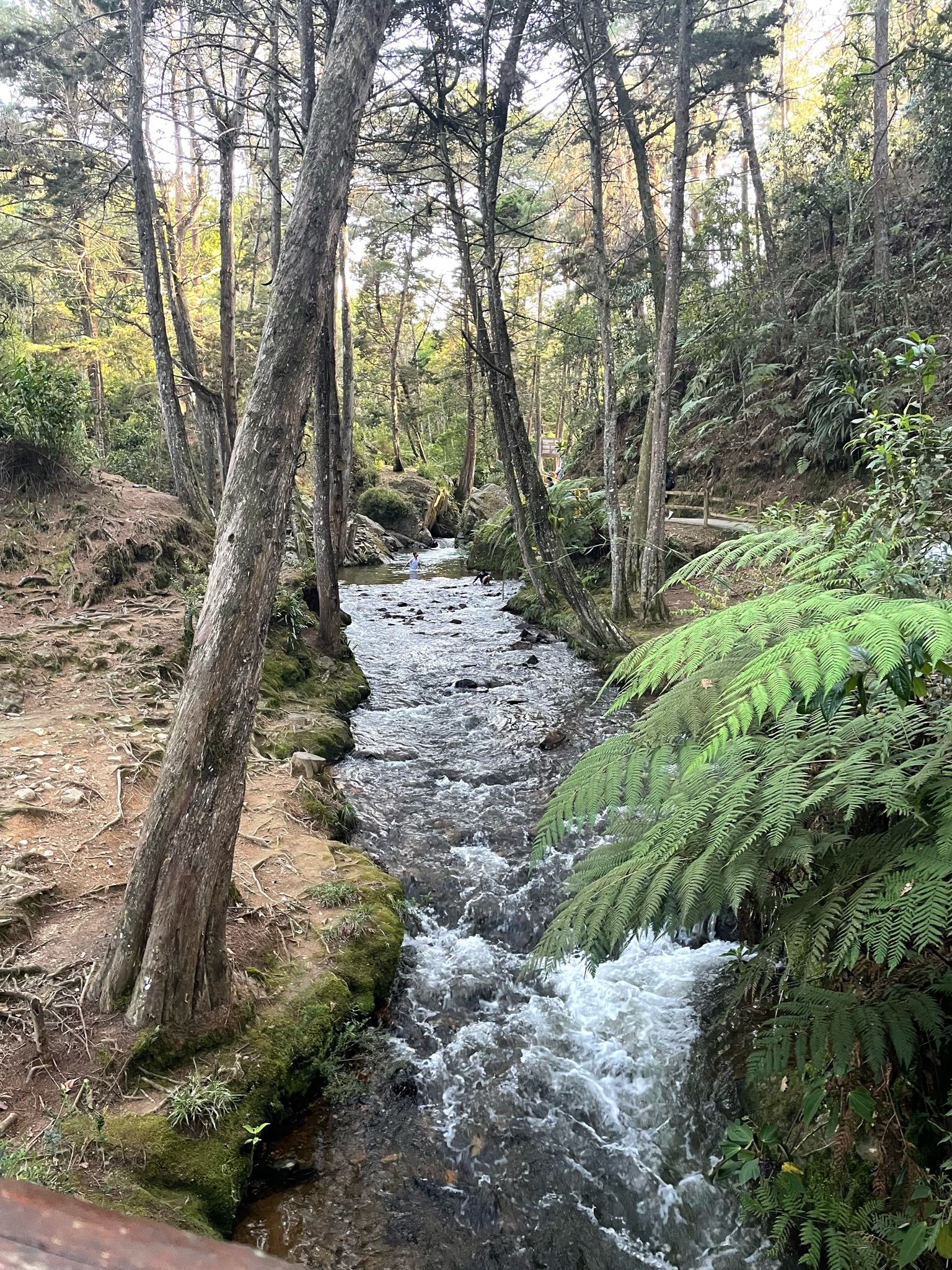
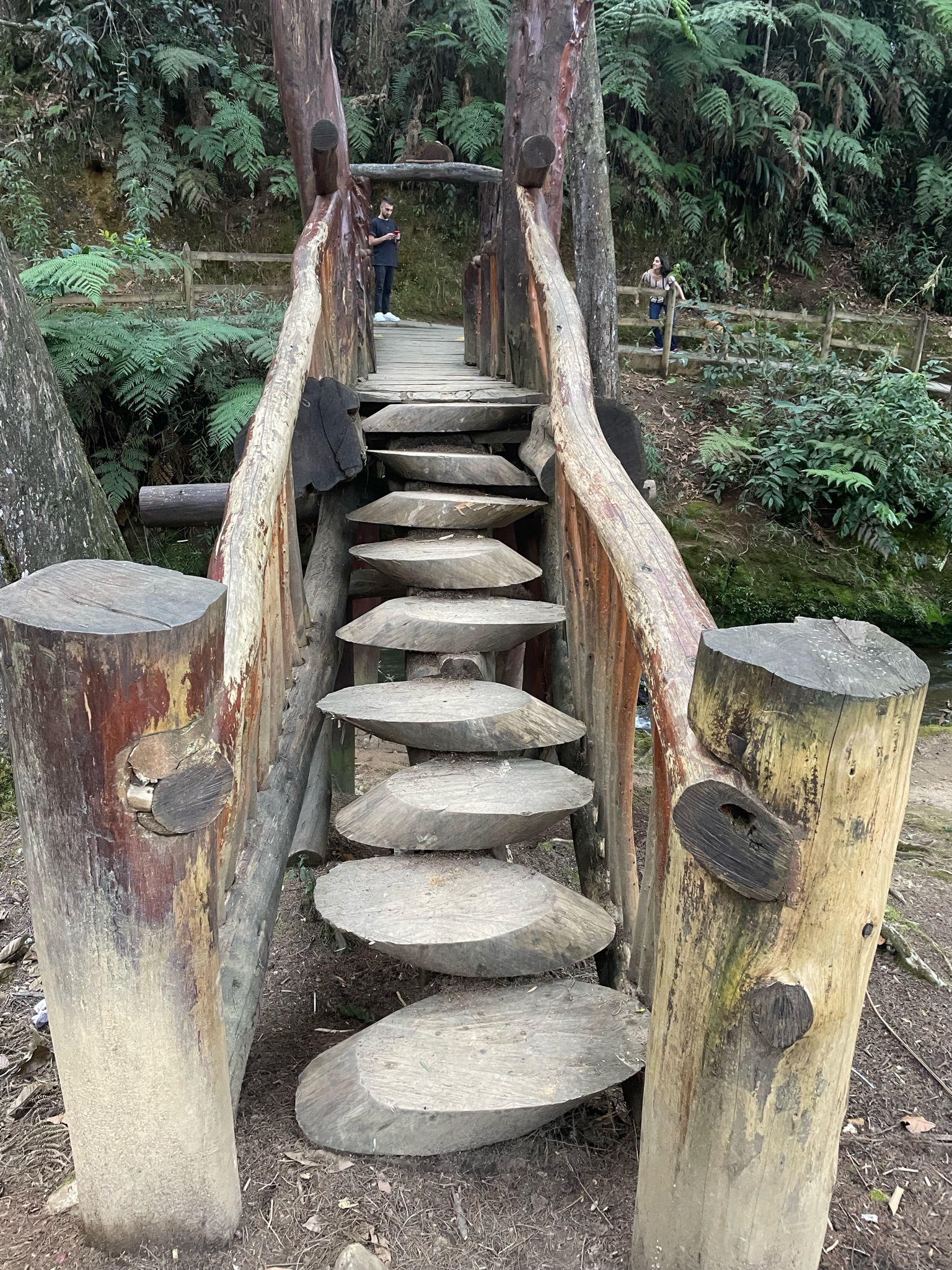
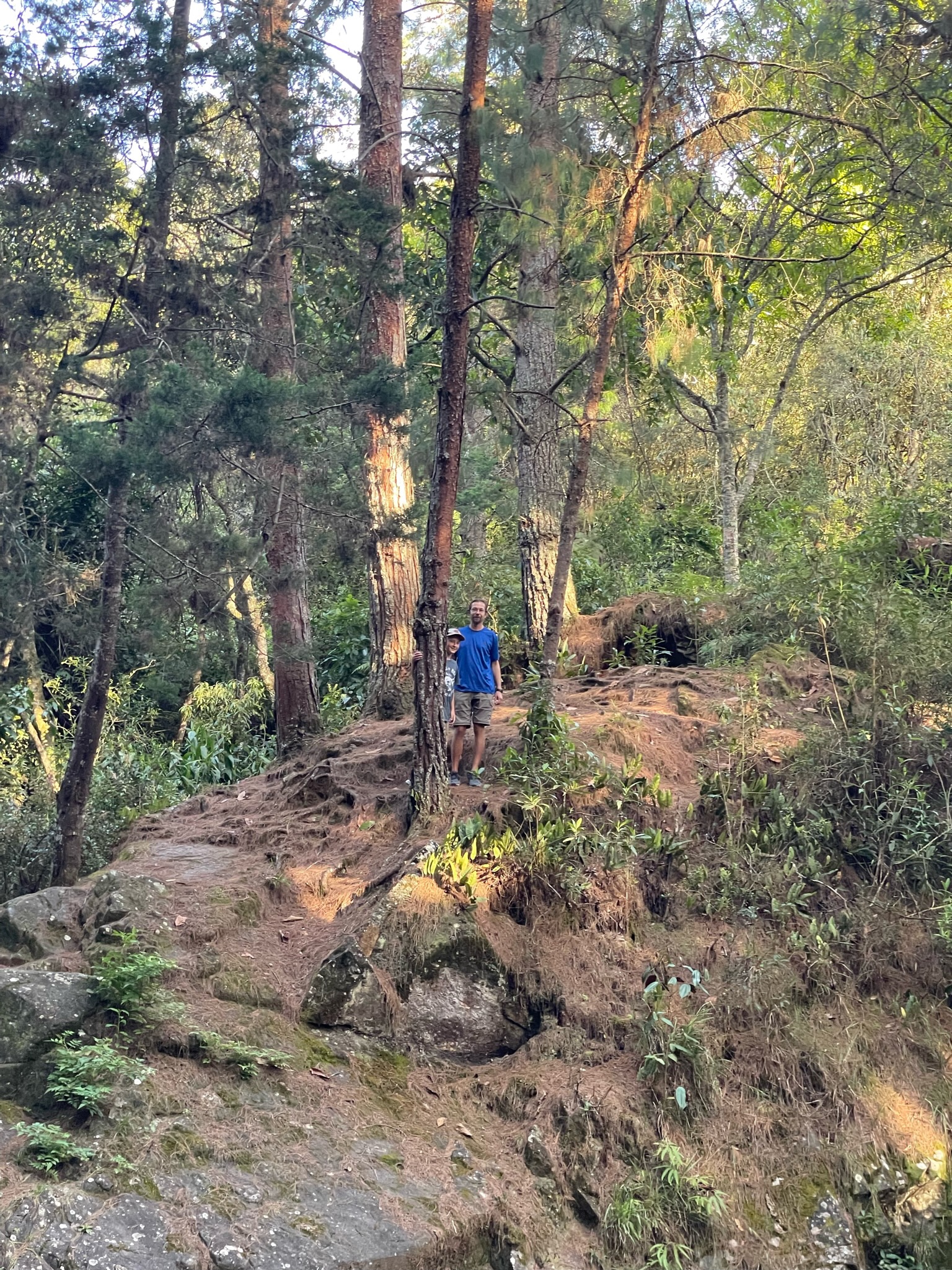

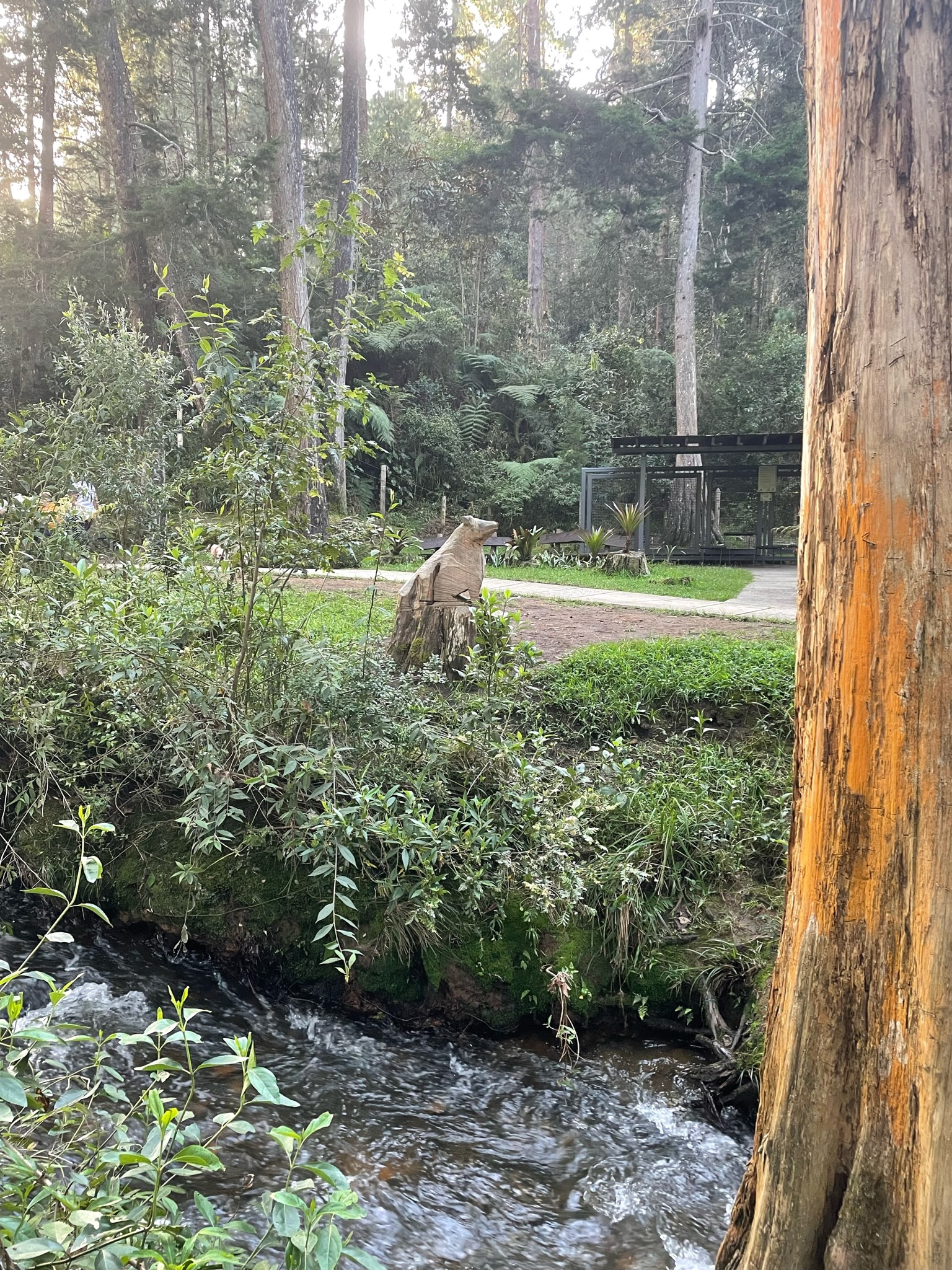
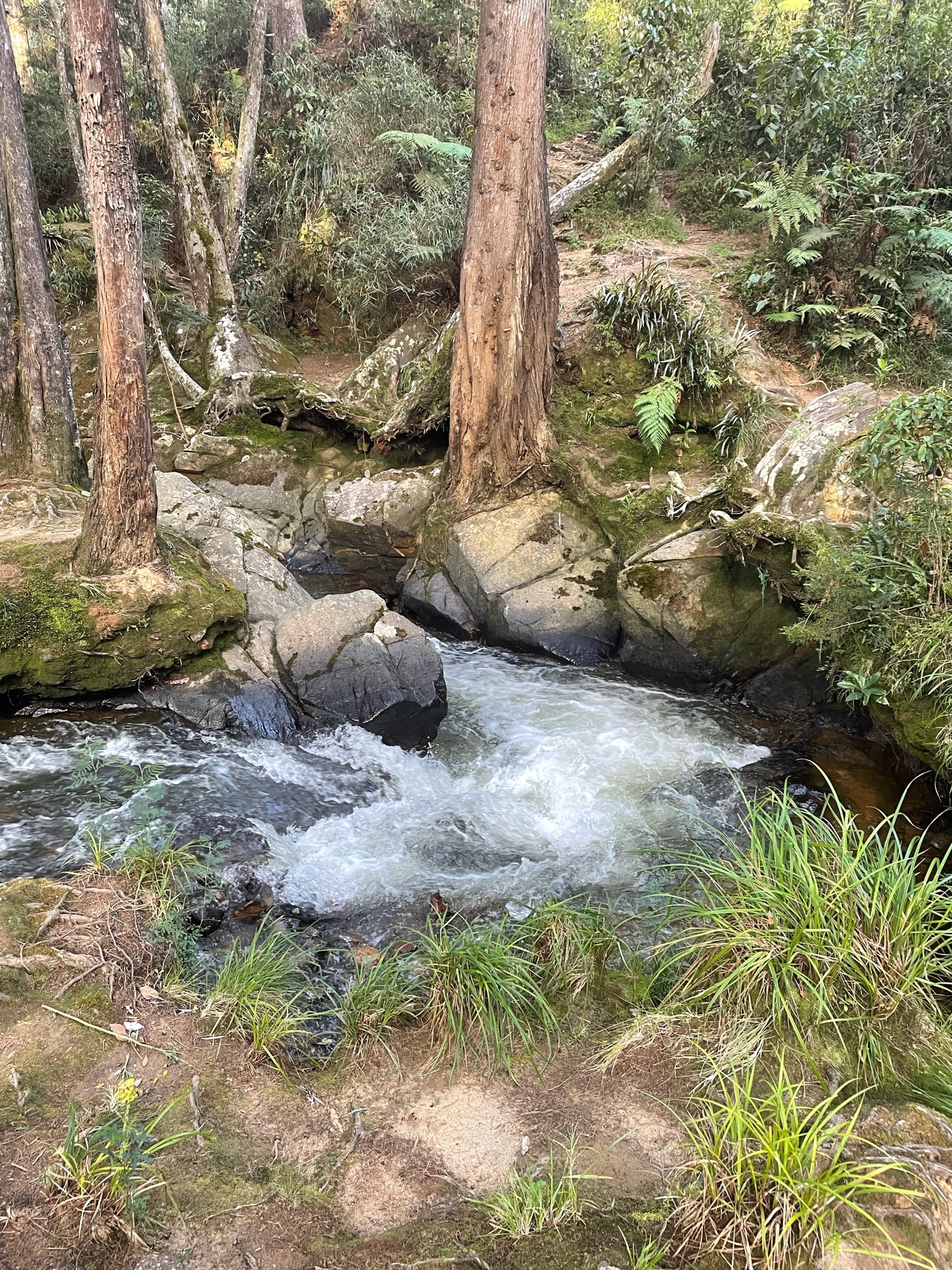
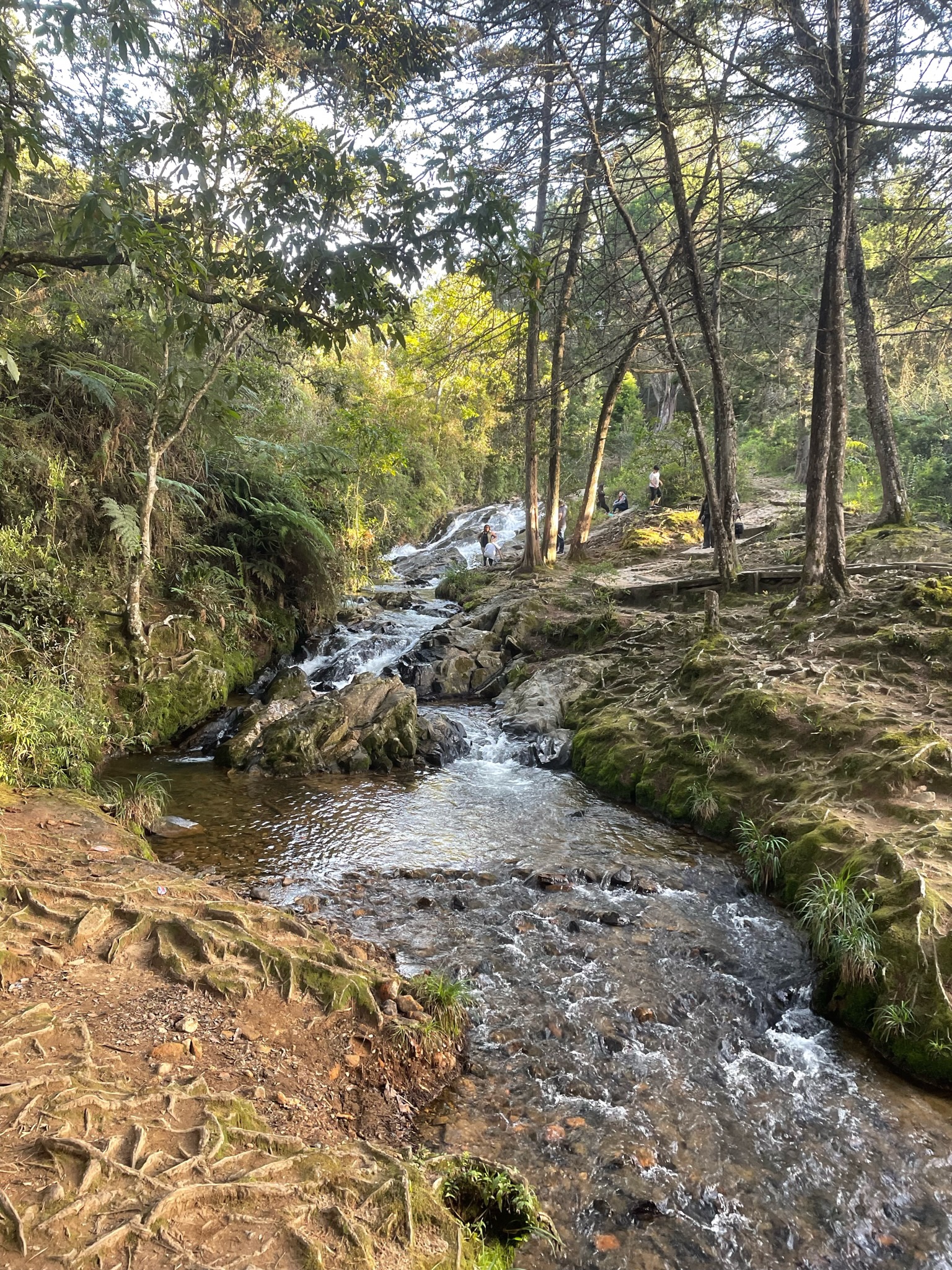

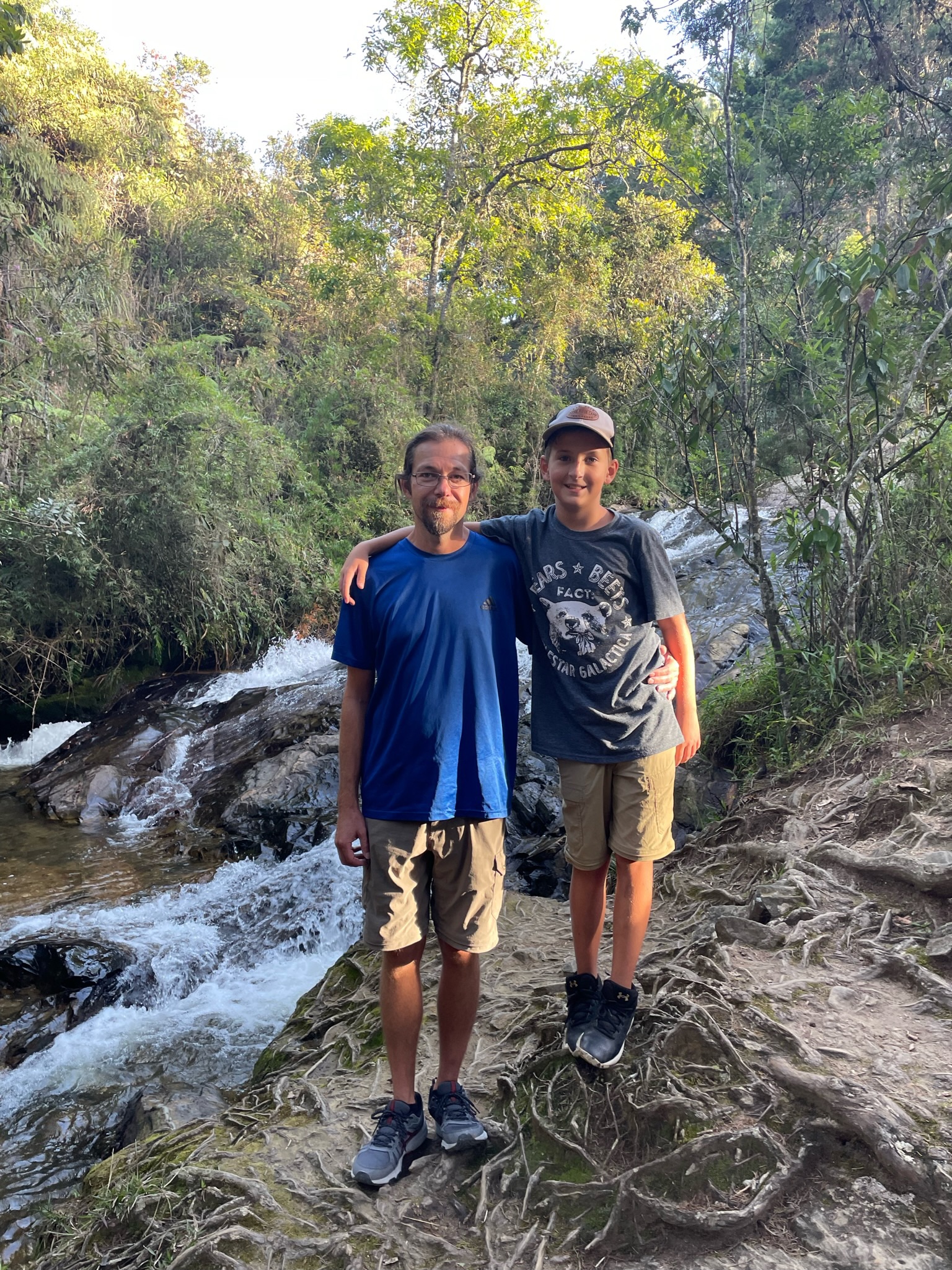
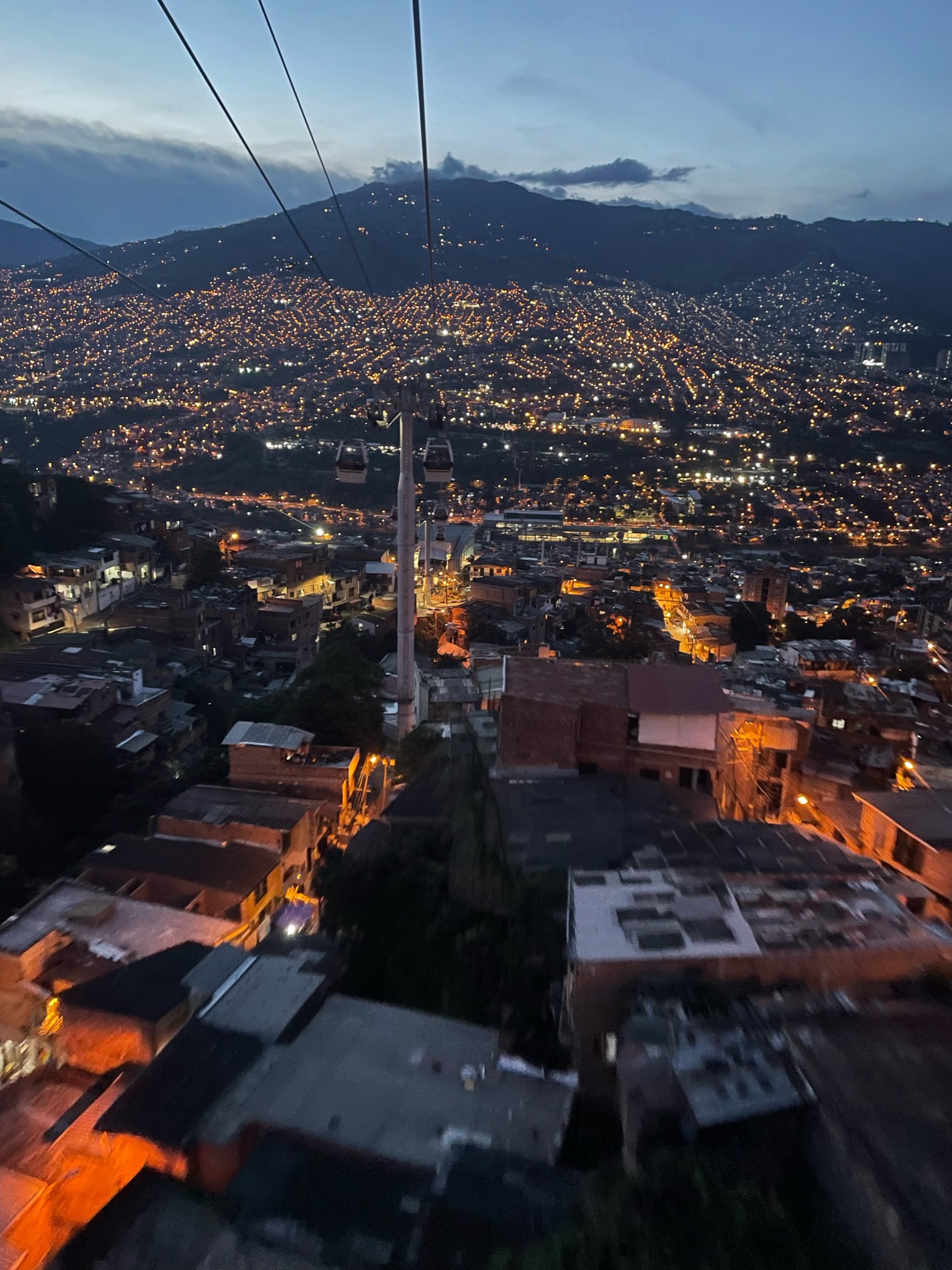
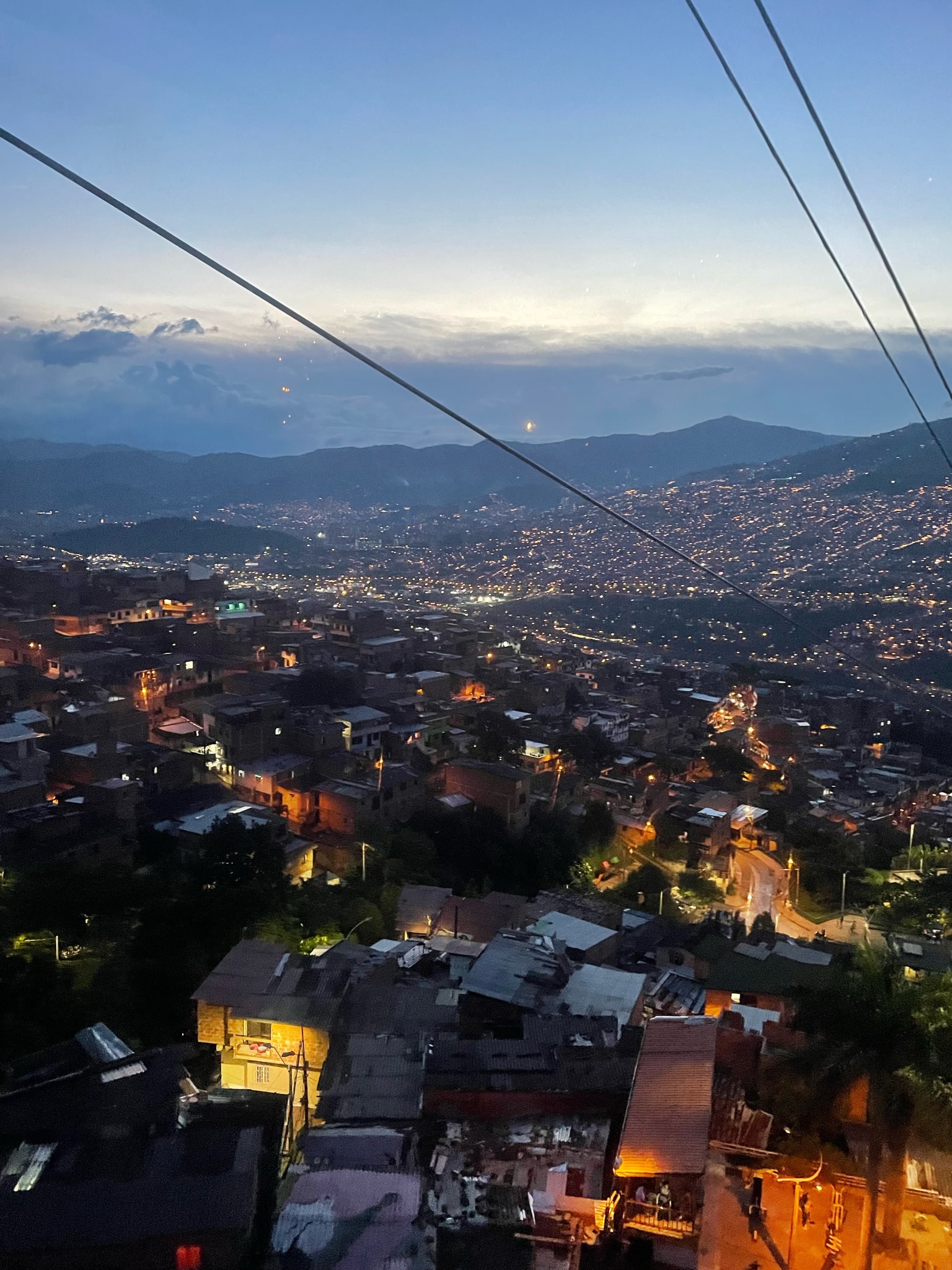
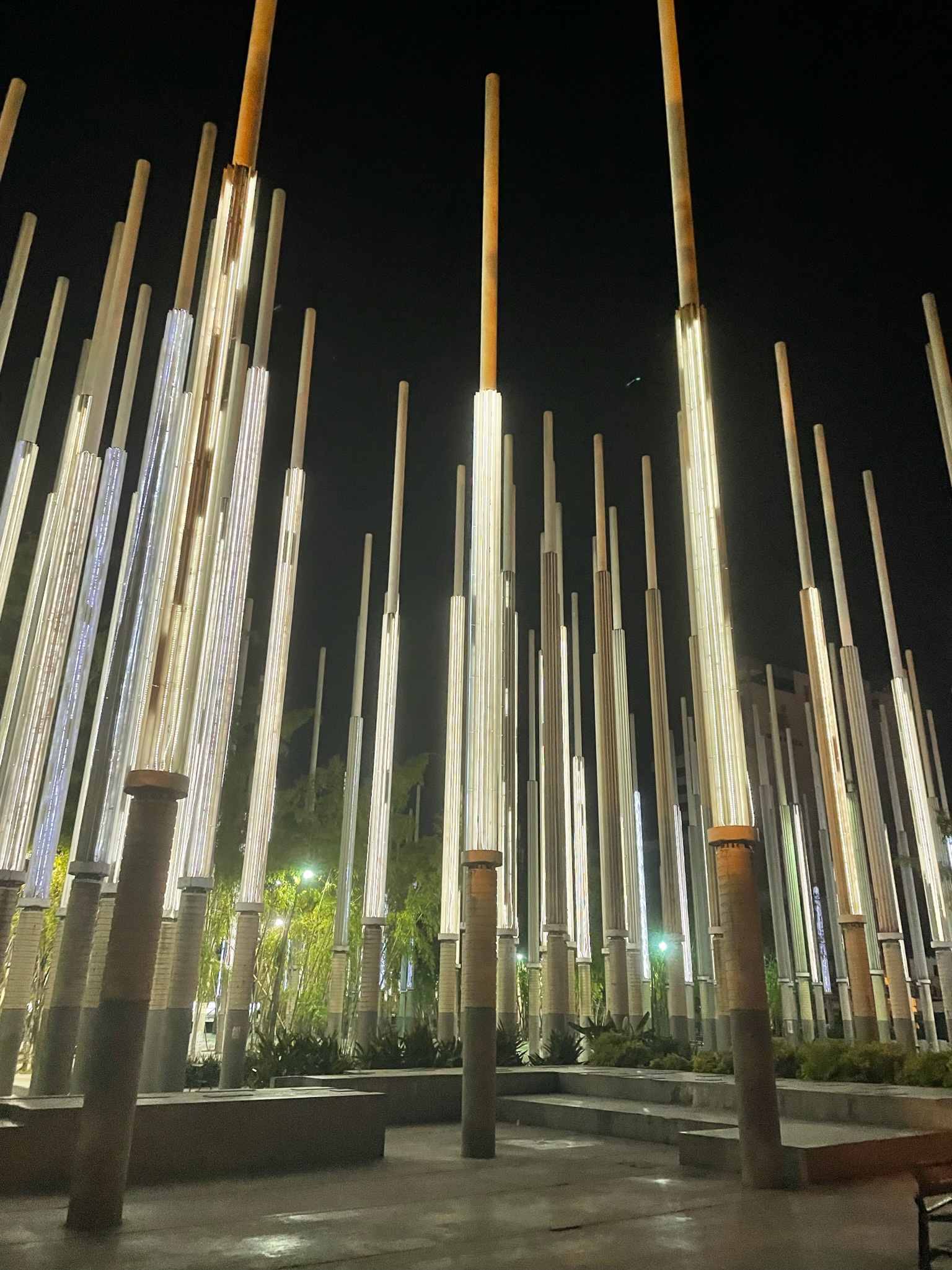
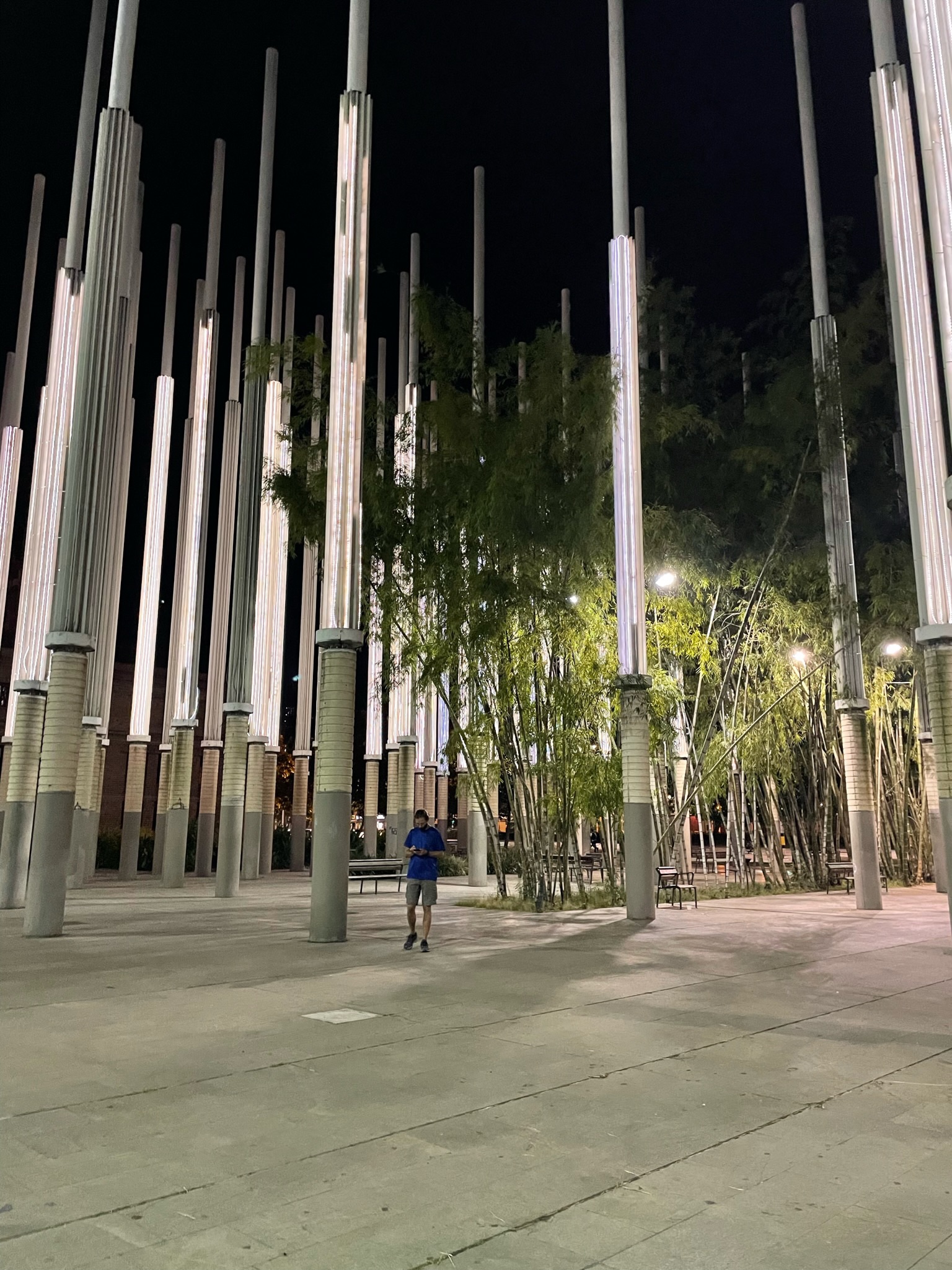
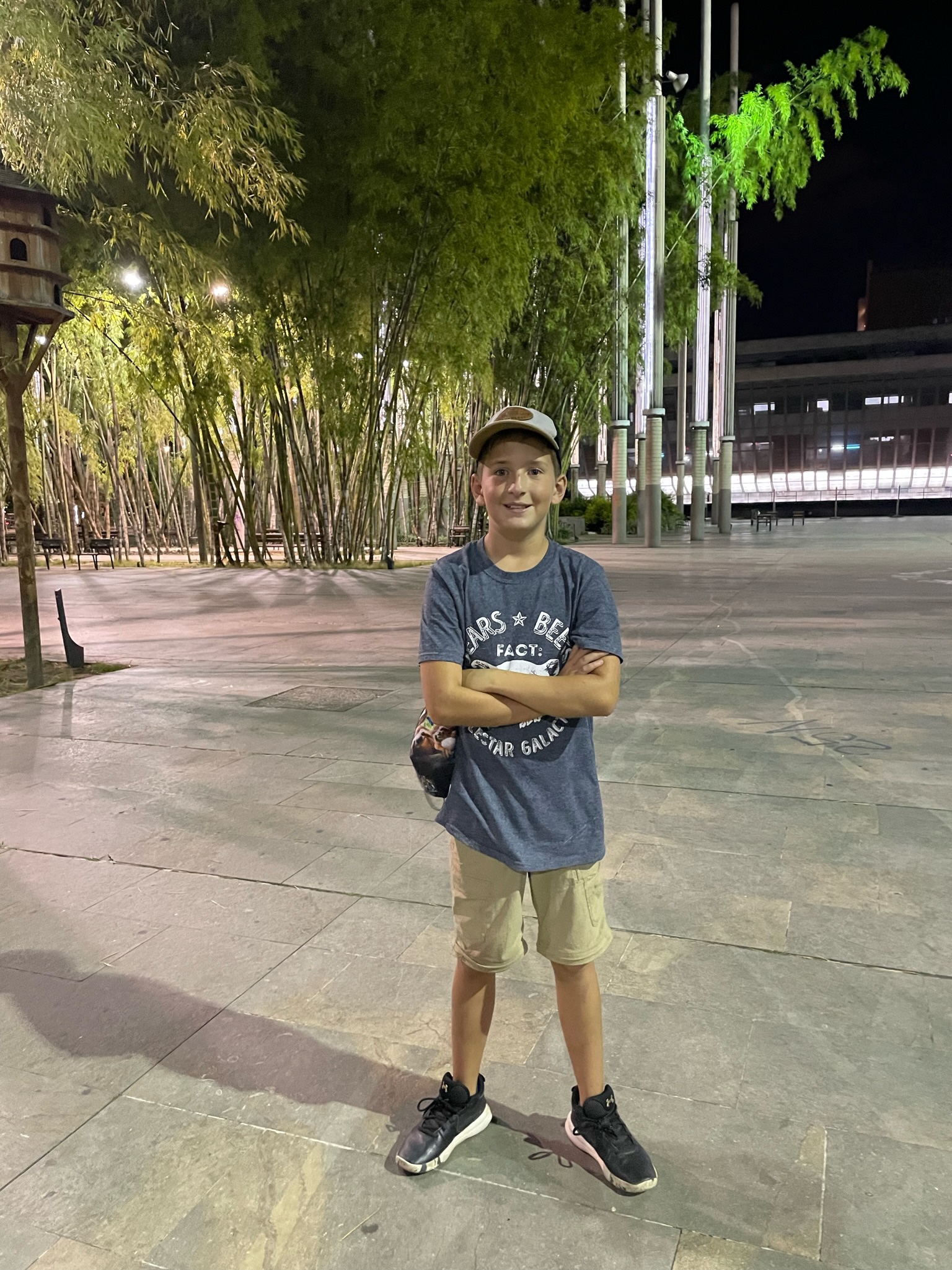
On the way back from Arvi Park, we took a detour and got off of the metro a station or two from our stop. The Parque de las Luces was one of the areas we had heard about as well. During the day, the 300 lighted poles provide shade, and at night, they provide light. Some of the lights weren’t working when we were there, which took away from the beauty, but the park itself was still beautiful.


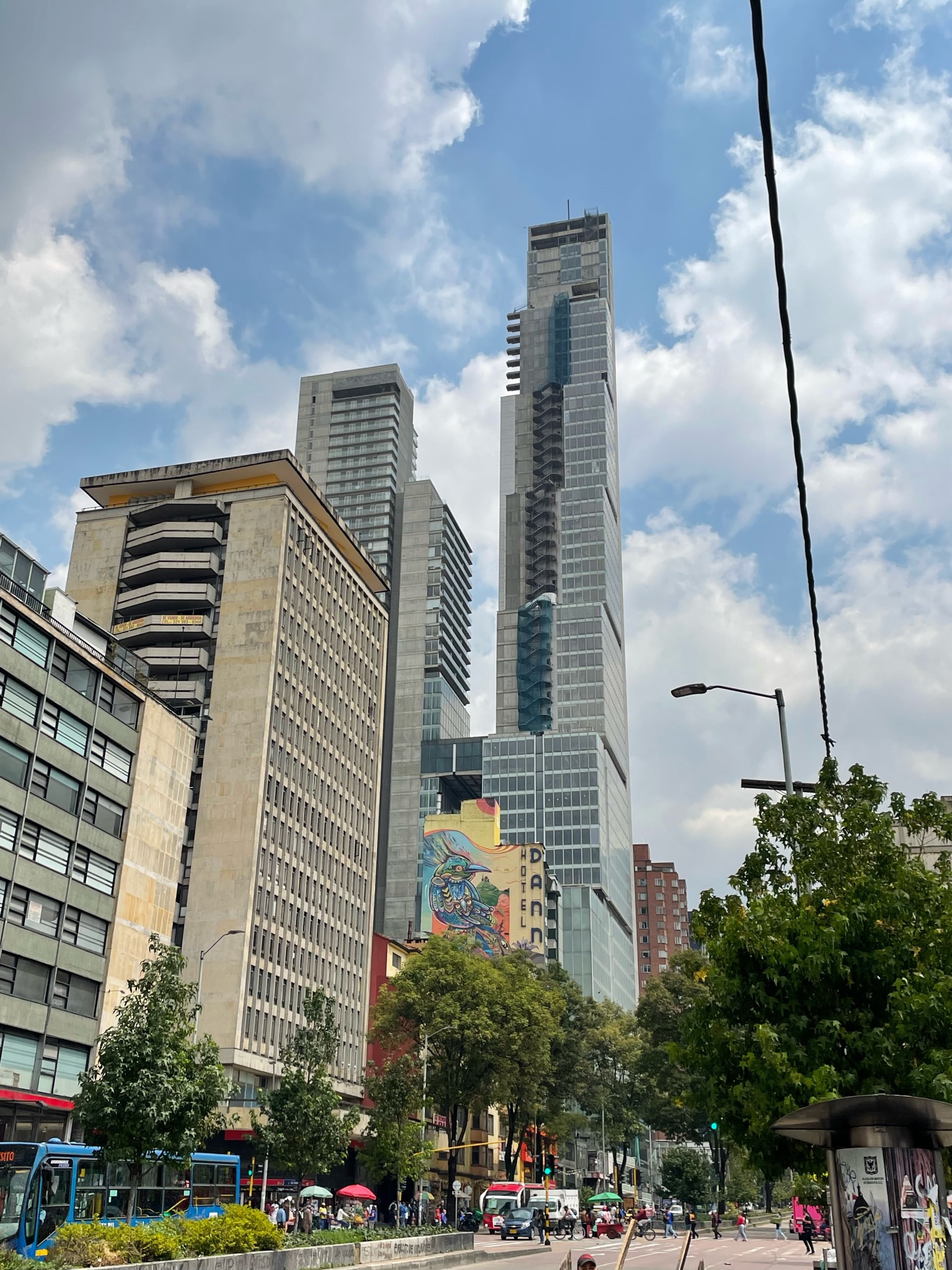
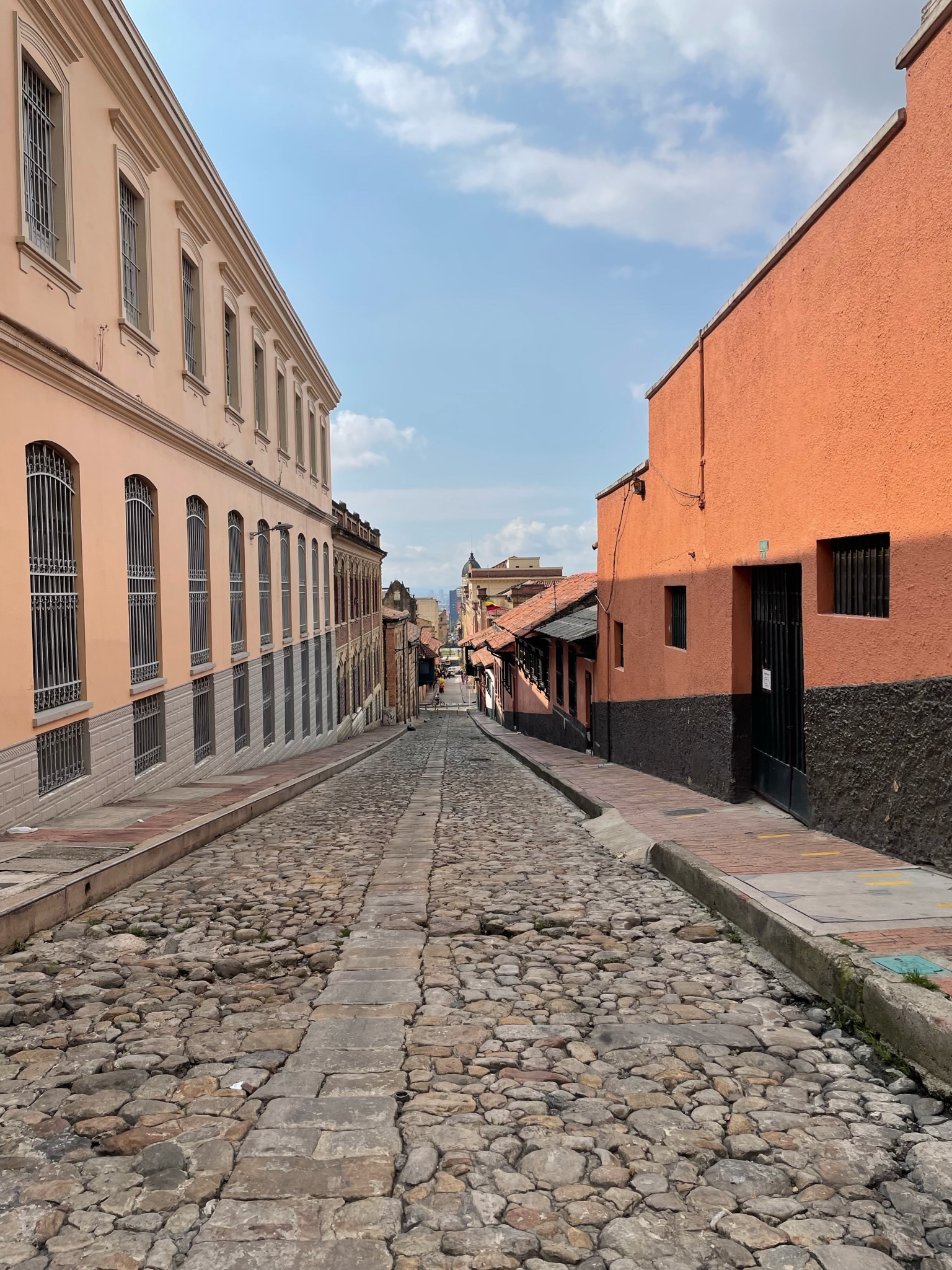
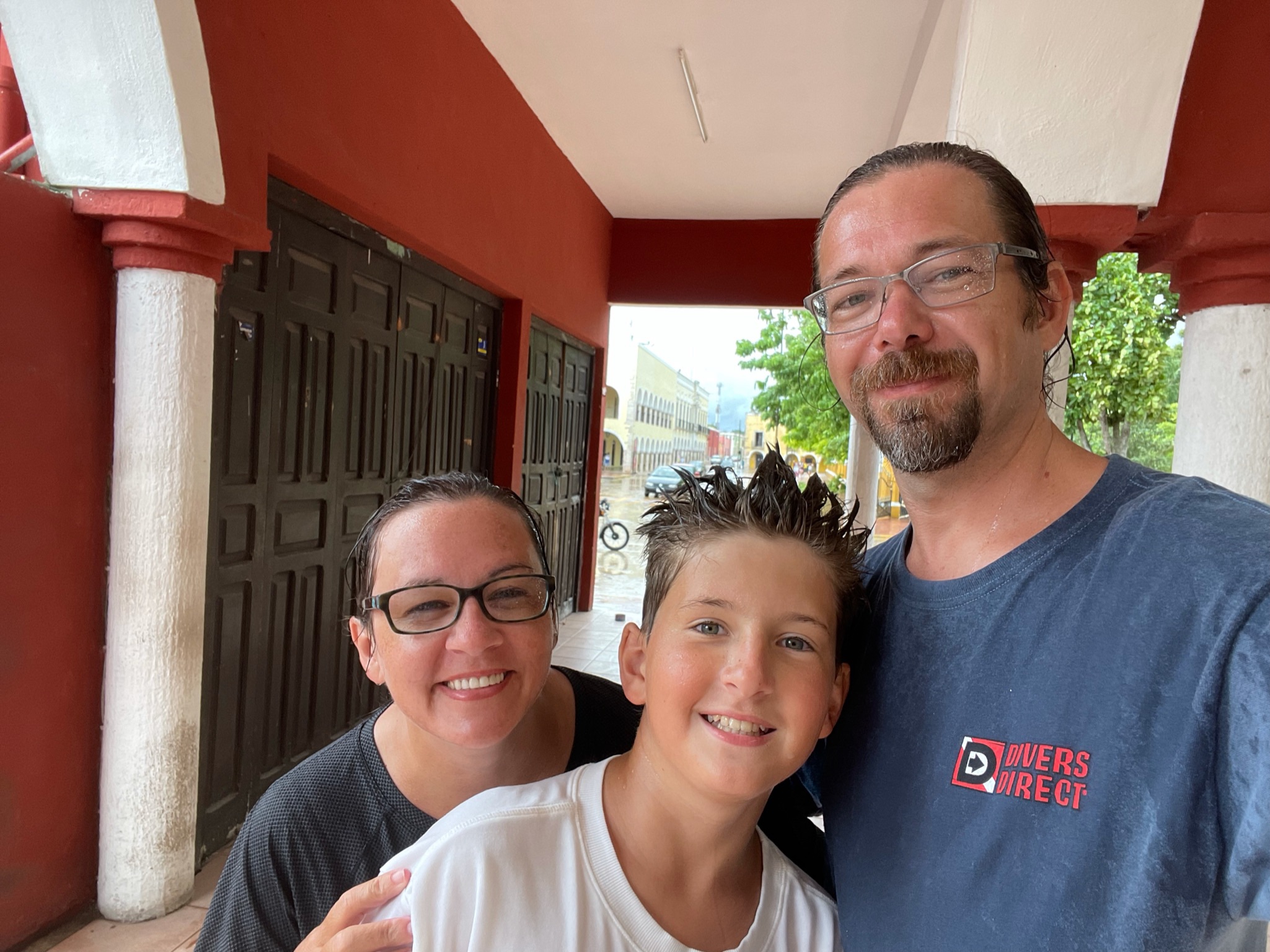
As great as our time in Medellin had been, it was time for us to move on to our next stop in Bogota. Bogota is almost three times the size of Medellin, and was, by far, the biggest city I’d ever been in. We flew into Bogota and took the public bus system to our Airbnb. We were staying on the outer edge of the Champinero area. This section of town was heavily developed for tourism, and there was plenty to do and see in the area. Getting to our apartment was a bit of a debacle, though, and the money we saved by not taking a taxi was not worth it. The bus we caught at the airport took us to a main bus station hub. This hub had hundreds of busses coming and going each hour, but a helpful attendant helped us purchase a ticket and find the B13 bus to get to our stop. We were able to get on the bus with no issues, but when we got close to our bus stop, we were completely shocked when the bus didn’t stop at it. Panicking a little, we got off at the next bus station (about 20 blocks away) to figure out what to do next. There was a map hanging in the station, and it listed off a boatload of buses and their stops. After a few minutes deciphering the map (maybe more than a few minutes), we finally figured out that we needed to get on bus H13 to go back to our stop. After a few more minutes, we figured out where H13 would pick us up at. But eventually we made it on, and it stopped at our intended stop. About this time, the bottom fell out, and it began raining cats and dogs. We had rain covers for our bags and rain jackets for us. Unforutnately, it was crowded, and everything else we had was packed up super tight. We decided we’d walk the 4-5 blocks and do the best we could to stay dry in our jeans and tennis shoes. Less than a block later, we were all completely drenched. The water was flooding the streets, and there was 4-6 inches of water off of every curb. Since we couldn’t fight it, we just embraced it. It was cold and wet, and we were absolutely miserable. We made it to the address we had in our phone but couldn’t find the apartment. It took us a few more minutes of frantic searching in the pouring rain to figure out that the address we’d been working off of was for the parking garage. Our apartment was another 5 blocks or so. So off we went again. We finally made it to the entrance, and we entered in our keyless code. Of course our apartment was the one on the third floor (with no elevator), so after trudging up the steps, we finally walked in absolutely sopping wet.

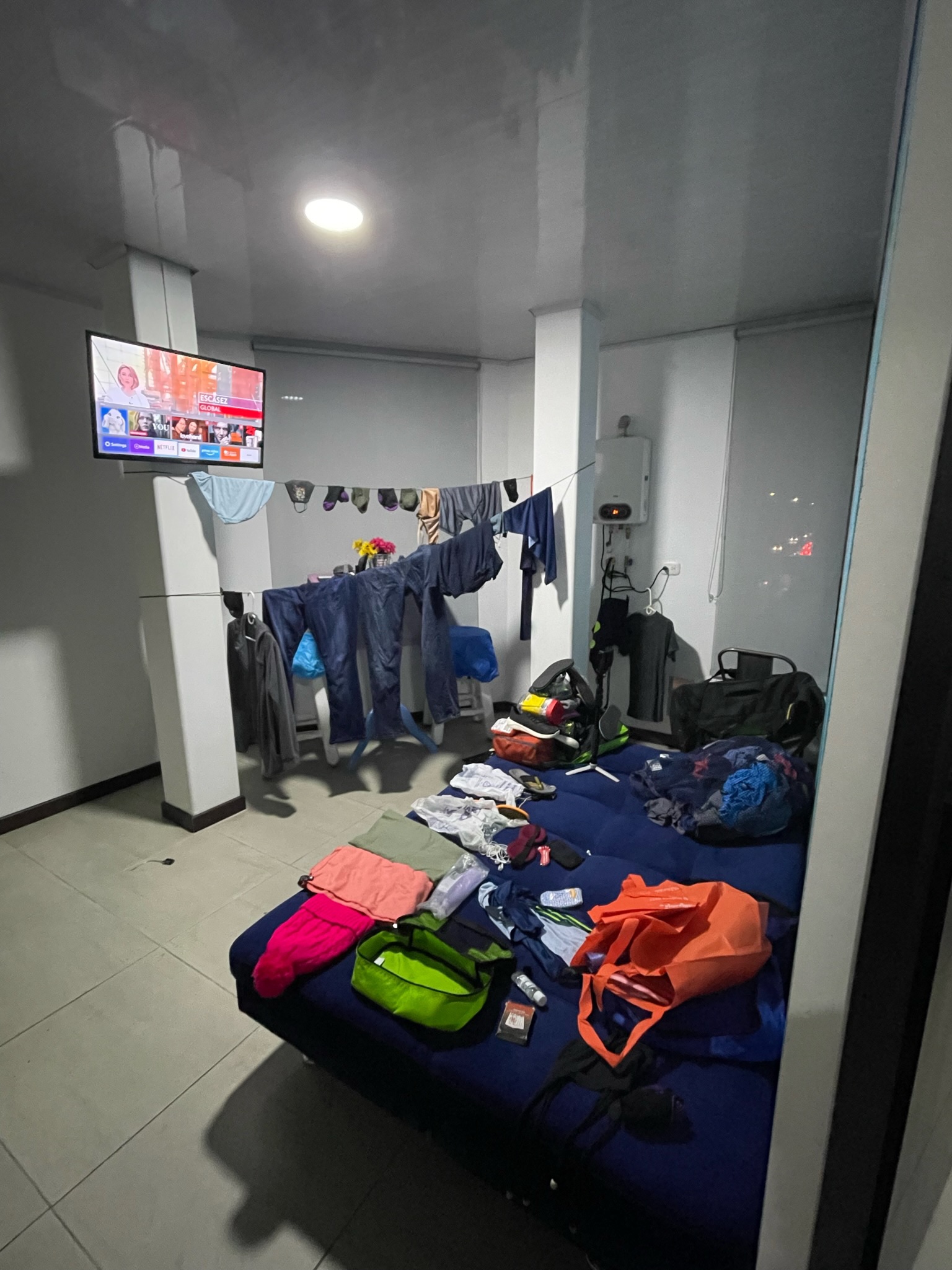
The apartment was really nice, and we made use of every square inch of it as we opened up all of our things and laid them out to dry. We used the washing machine in the apartment to wring out our clothes, and we made a makeshift clothes line in the living room to hang everything out on. The apartment was very cool from the Bogota weather, and it had no heat. Henry took a shower to try to warm up, and then he went straight for the covers on his bed. Brian and I tried to get as creative as we could with getting our stuff dry, but we were freezing too. We’d worn our only real set of warm clothes because we knew that it would be cold, and those were all dripping wet. So we put on our best shorts and tees and made do. We ordered a pizza because we were just too miserable to go out again, and that was delicious. We went to bed that night determined to make the next day a little better.

The next morning, Brian and Henry went to check out a local laundry service. Our wet clothes were still very wet, and everything else we had was dirty. We decided to split our laundry into two batches so that we’d have something to wear in the short term. And once we dropped off the clothes, we found a really nice food court near an apartment complex just a few blocks from our apartment. Henry had found some al pastor tacos there, and Brian and I fell in love with some jugo de lulo (lulo juice) that we got unlimited refills on. We didn’t do much that day because it was really too cold to be out the way we were dressed.
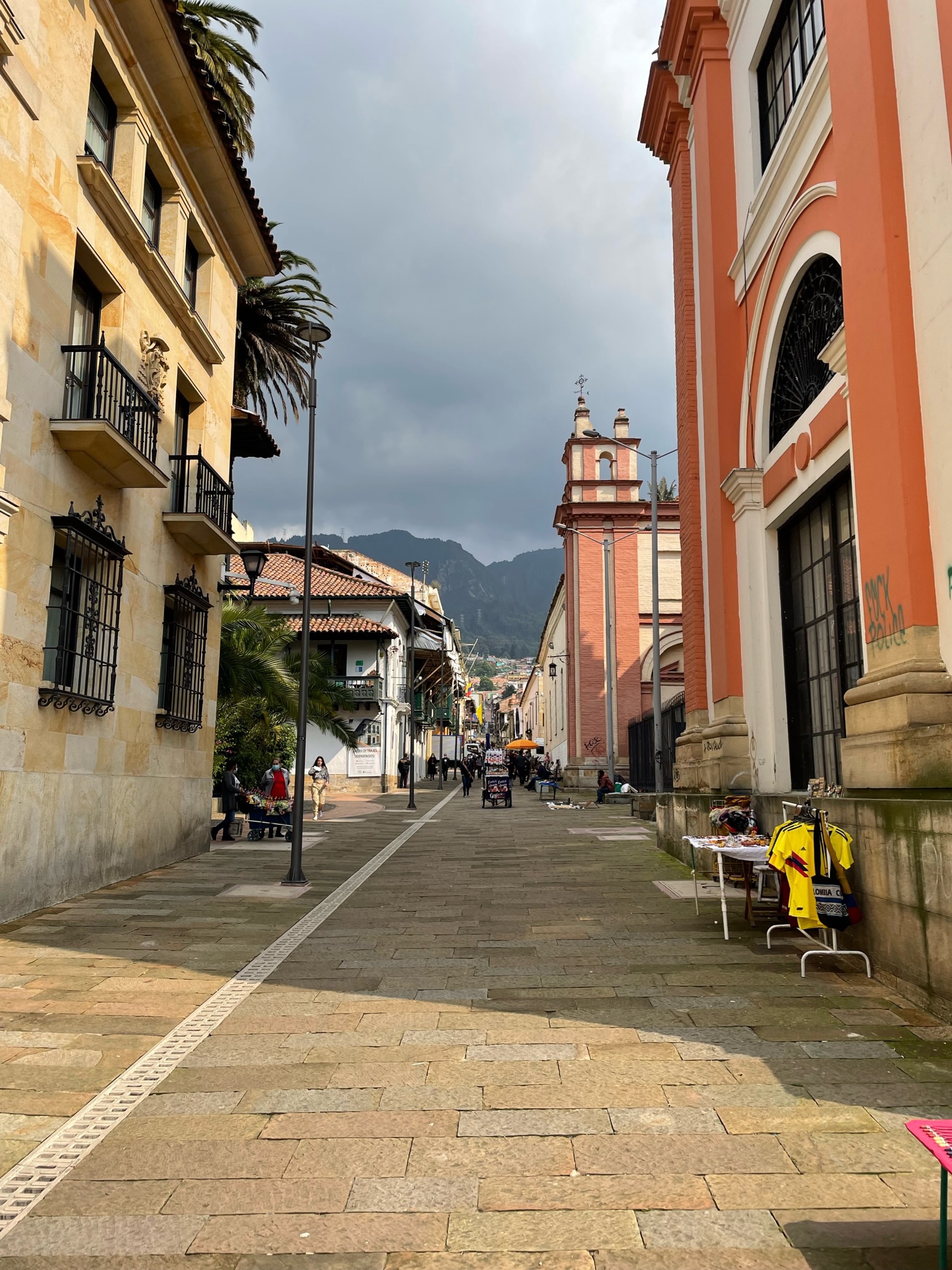
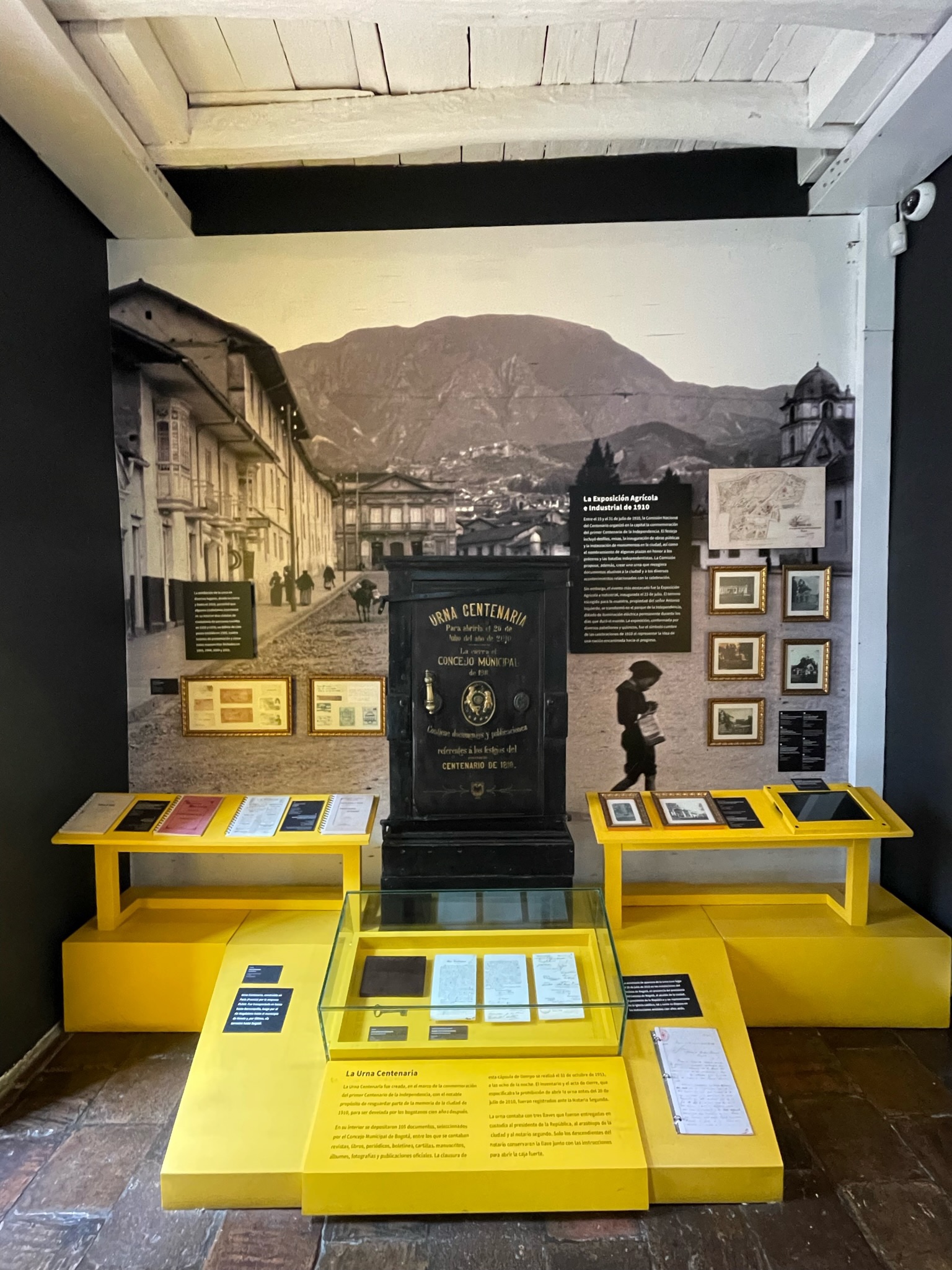
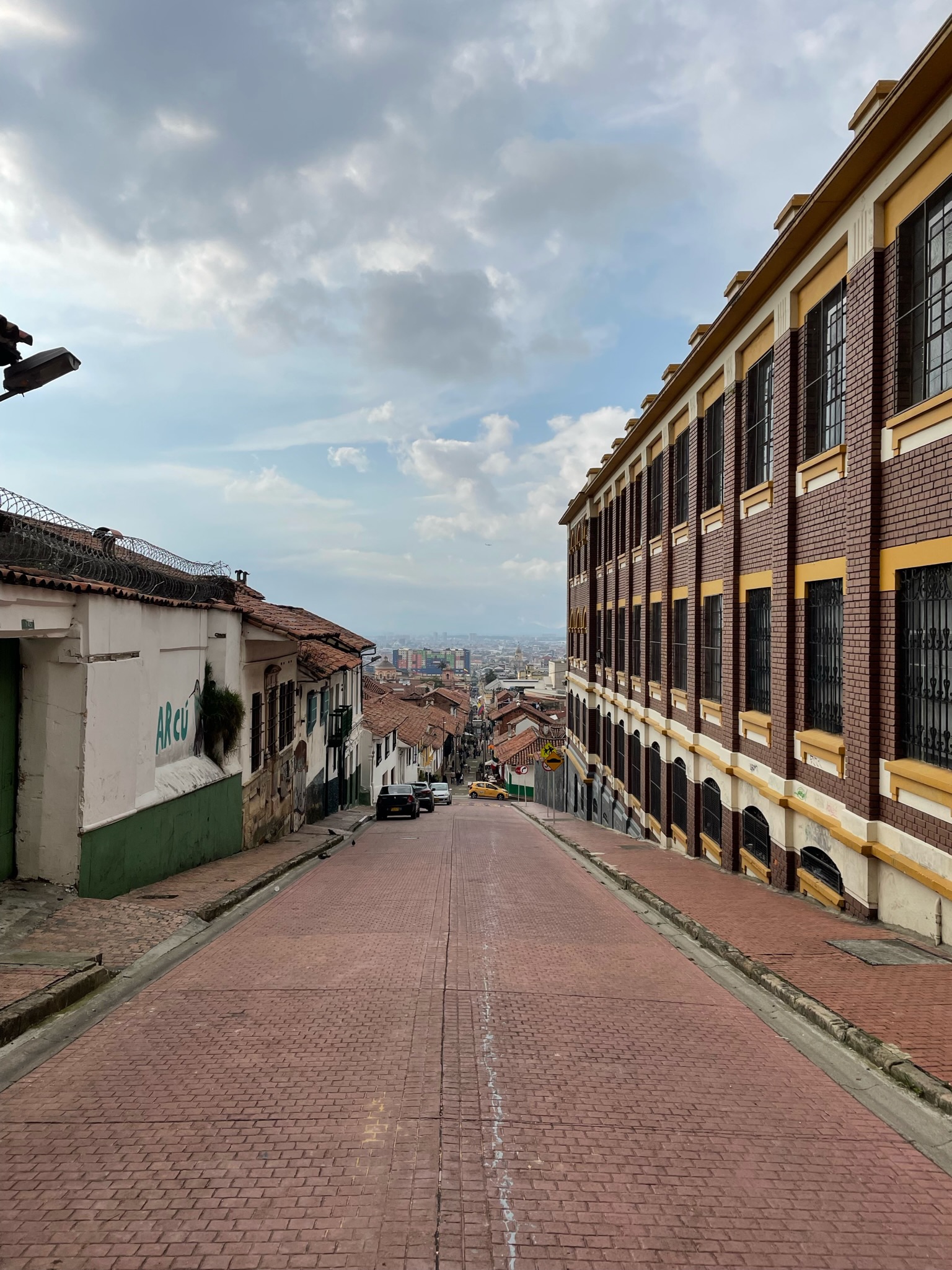
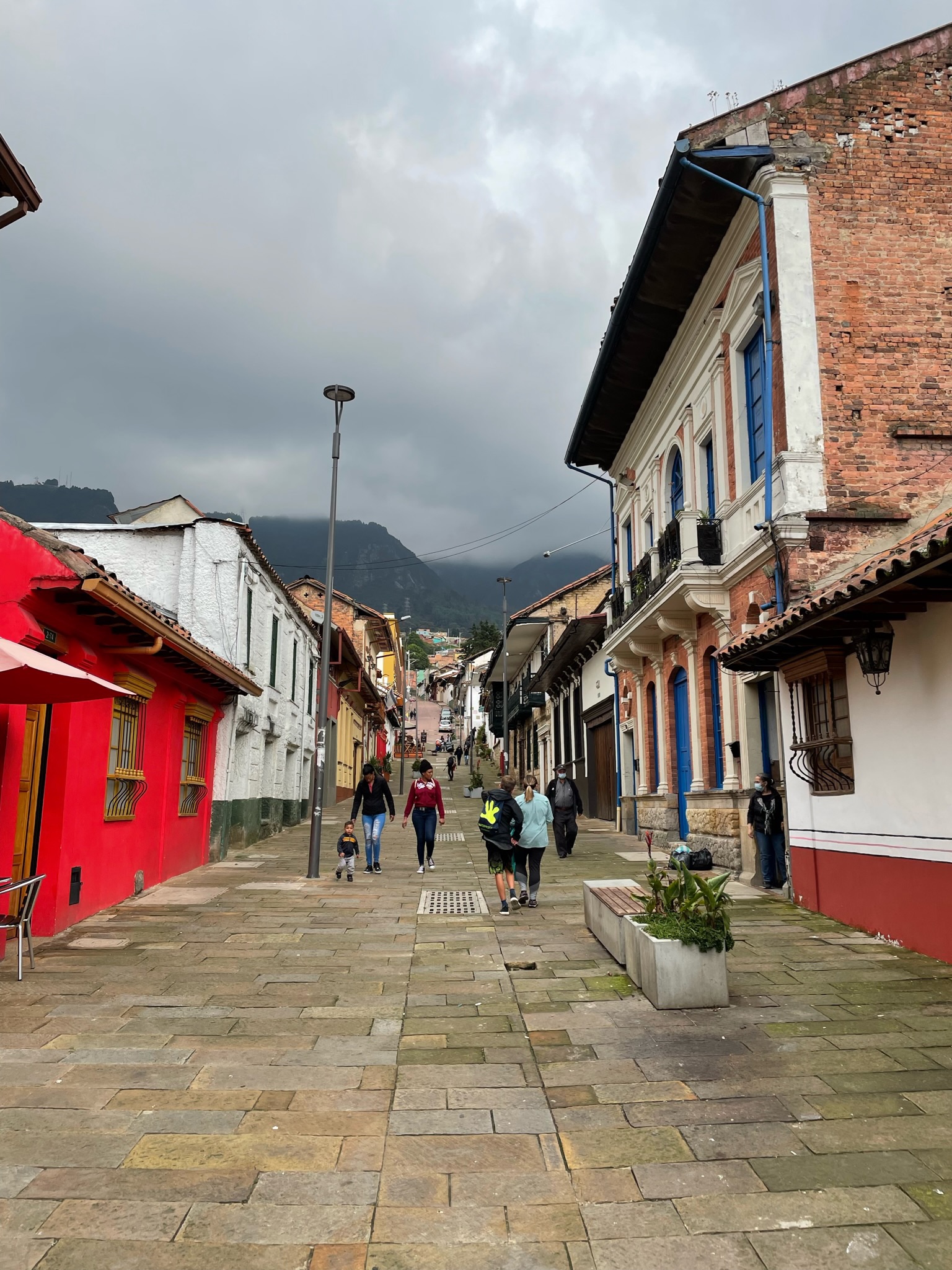
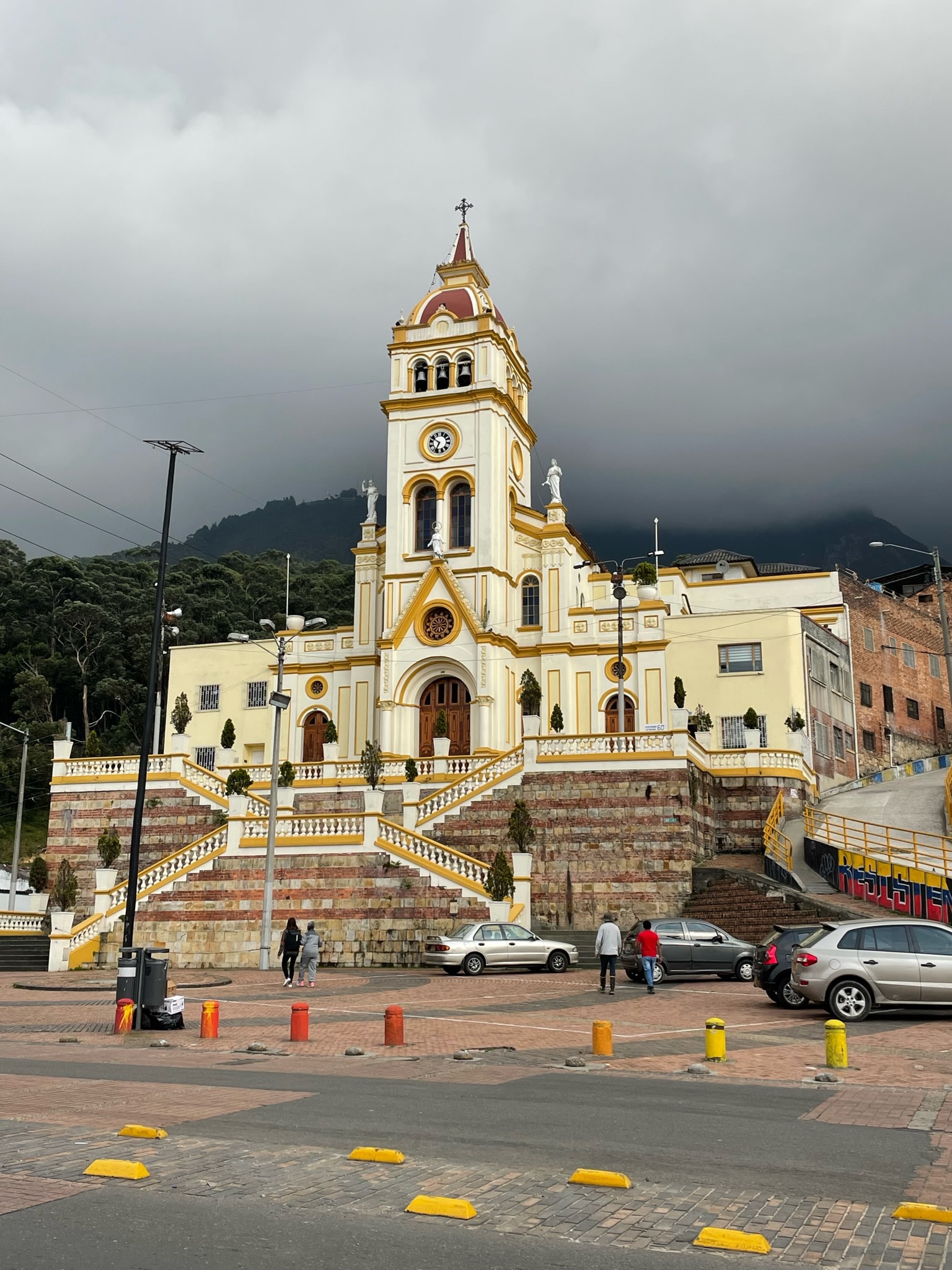
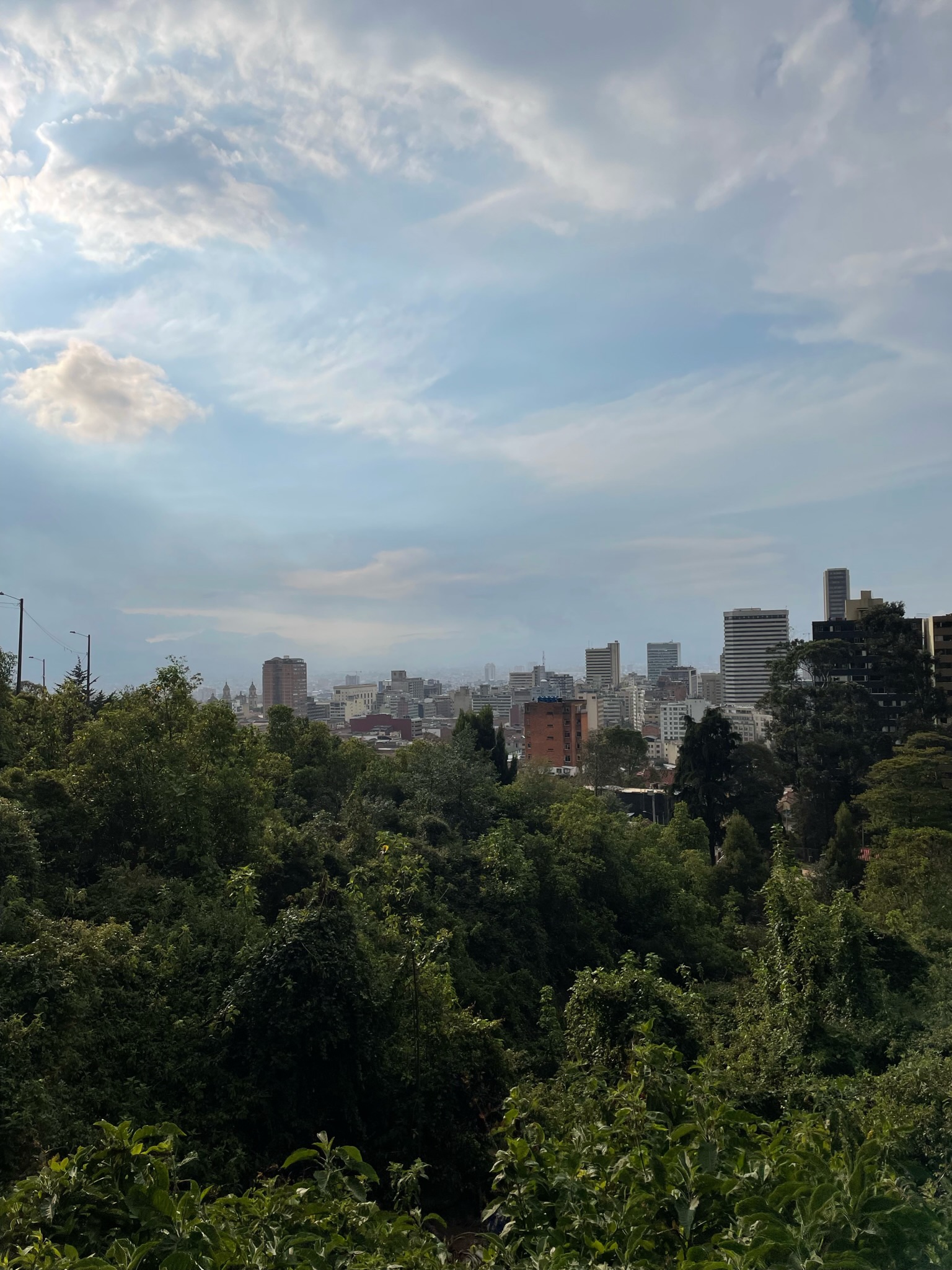
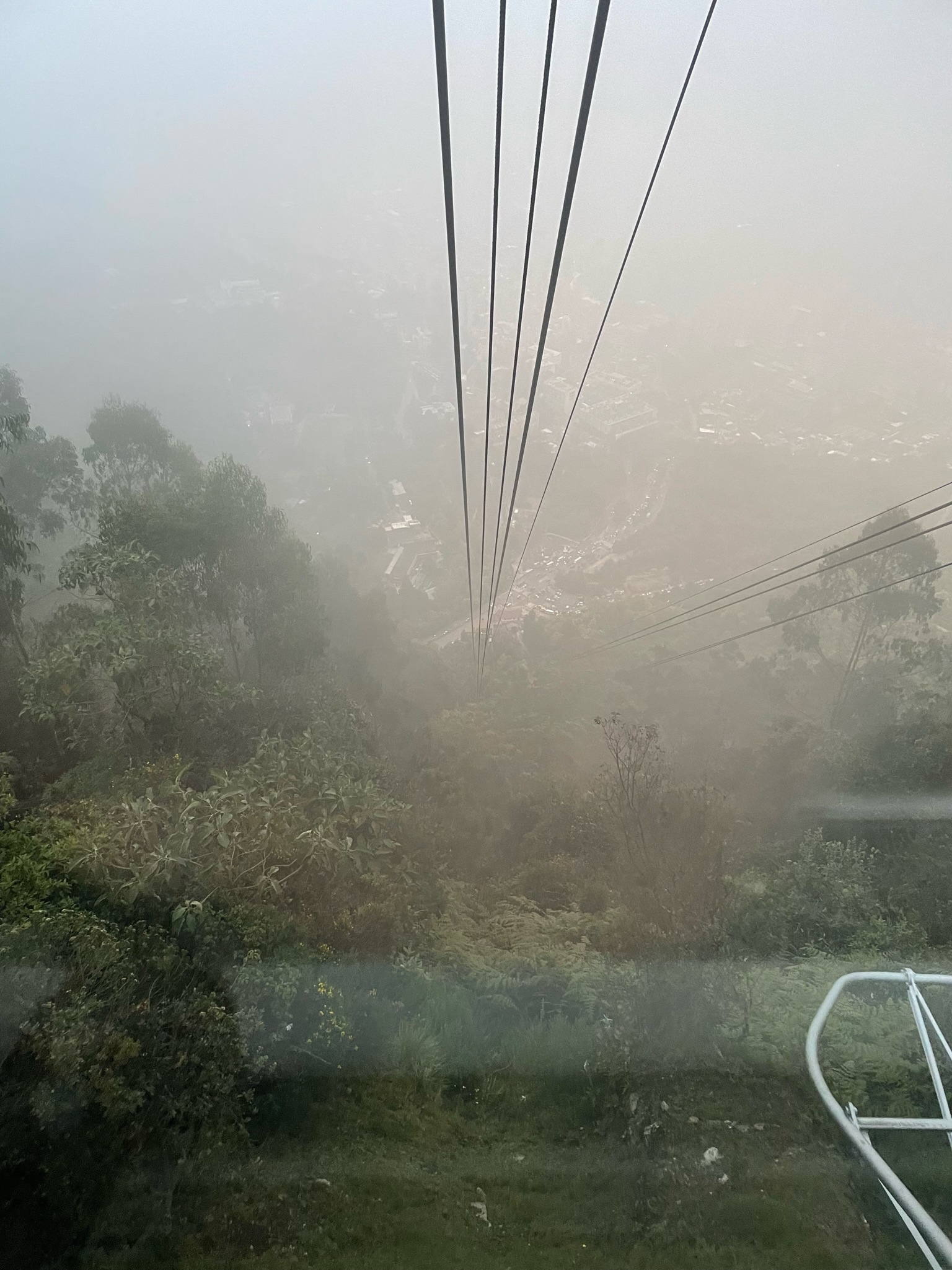
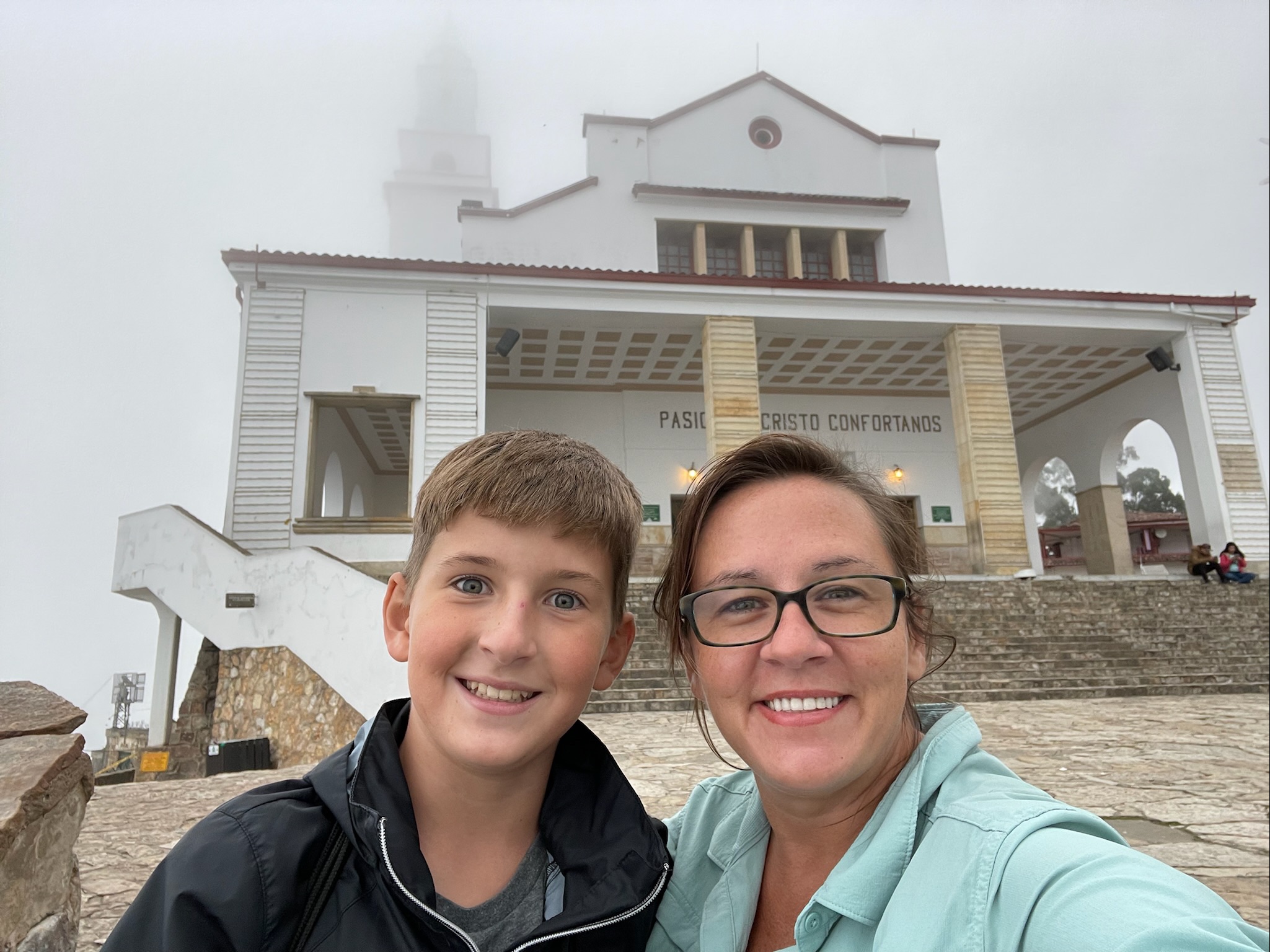
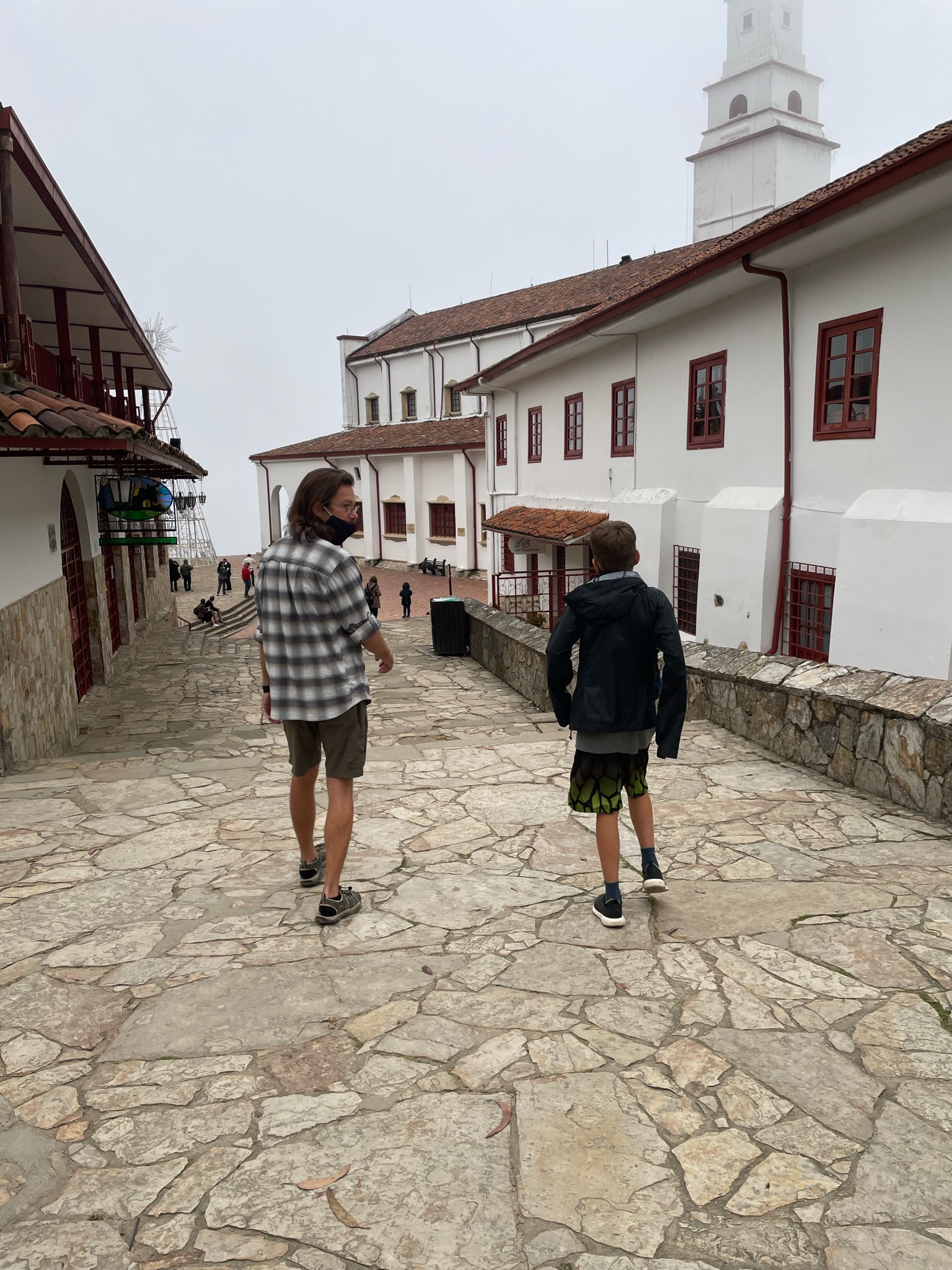
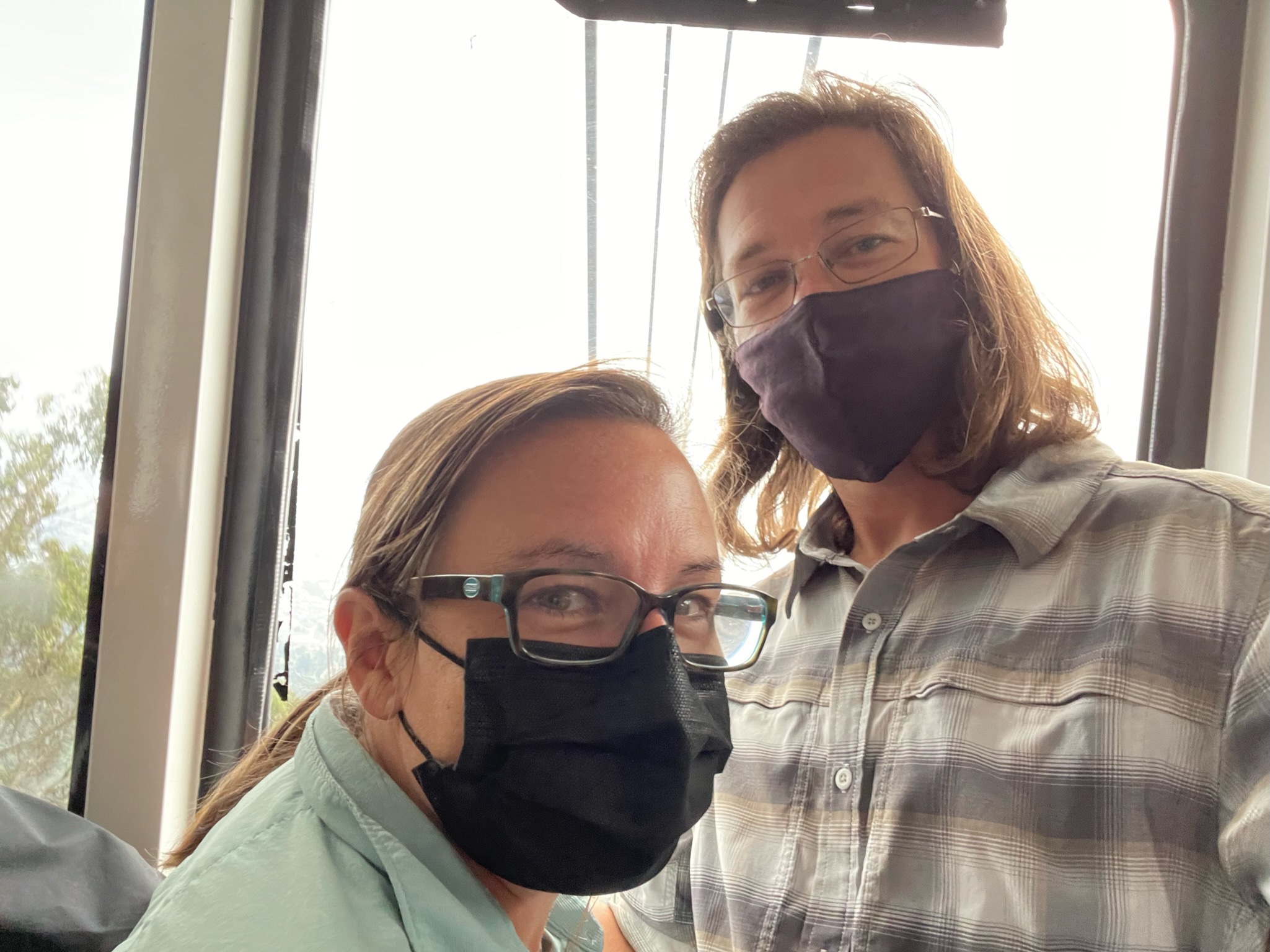
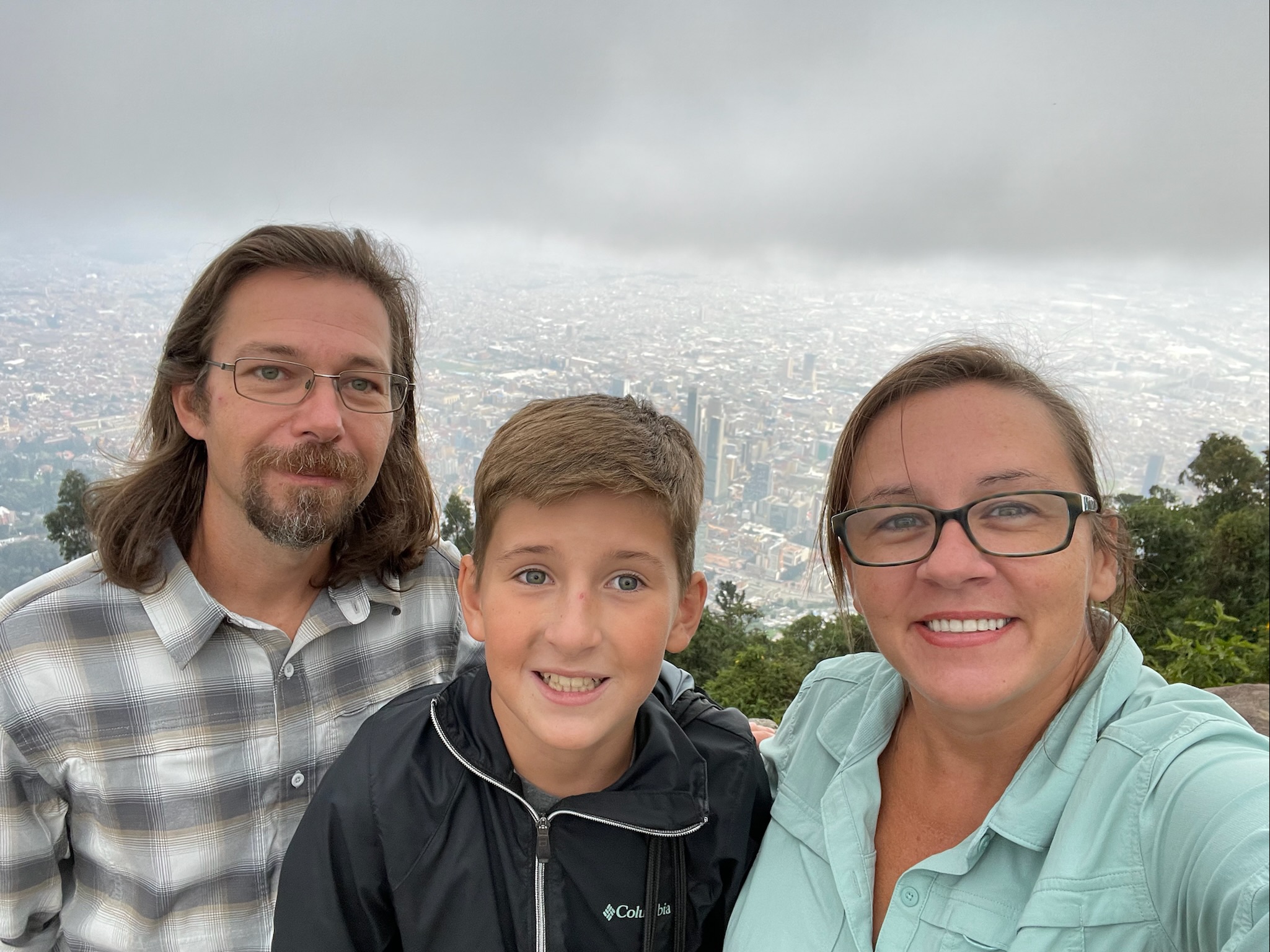
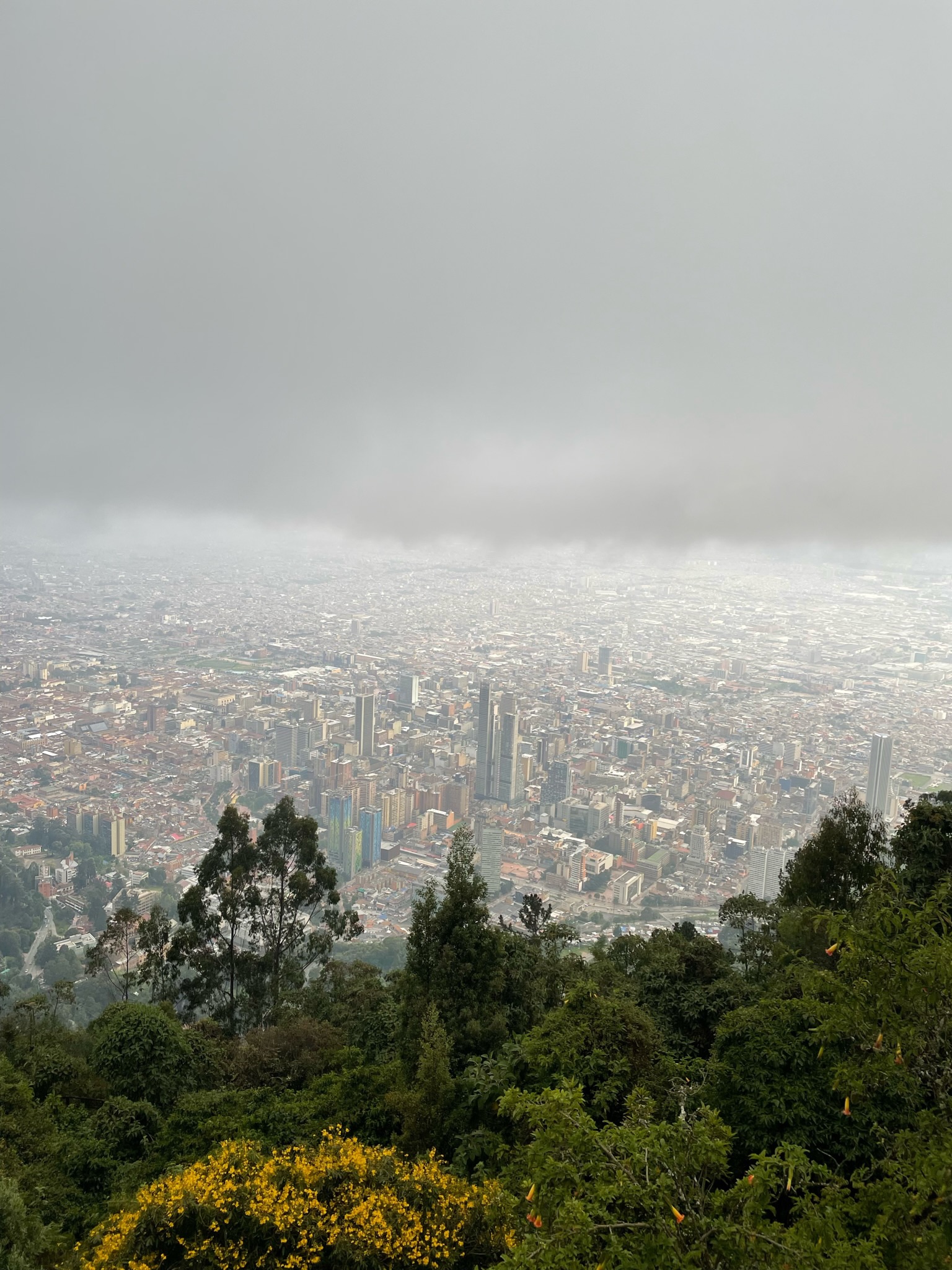
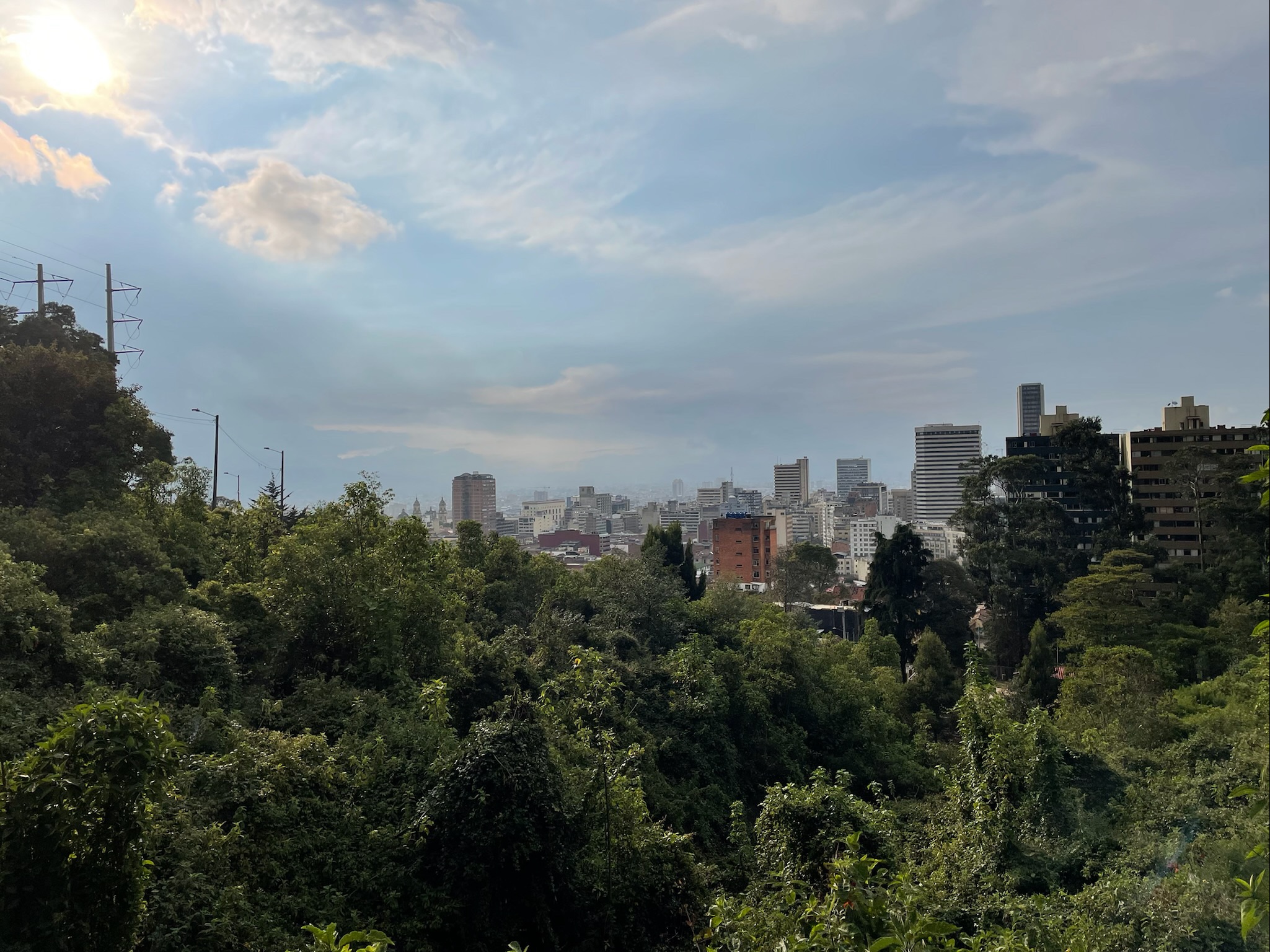
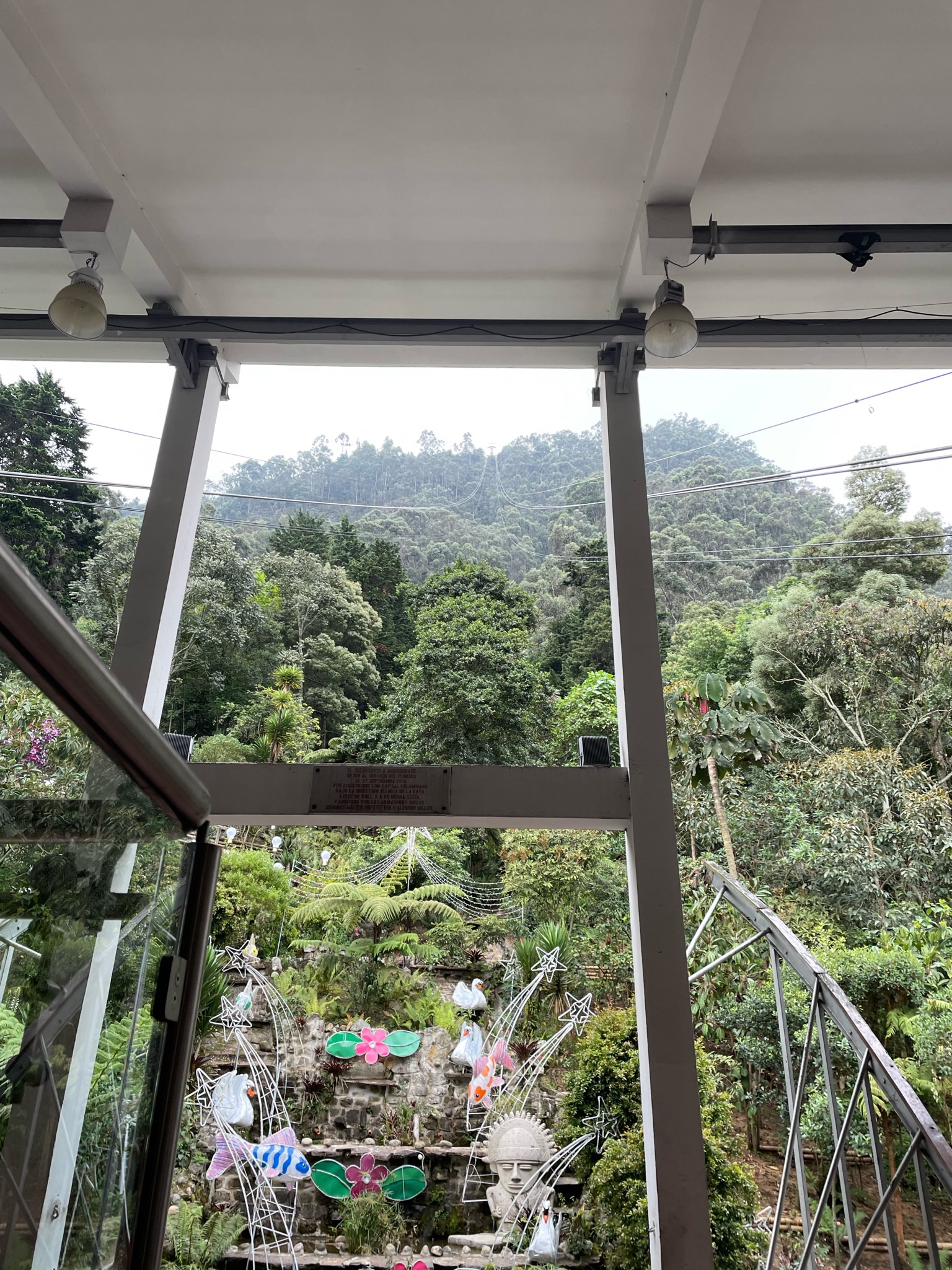
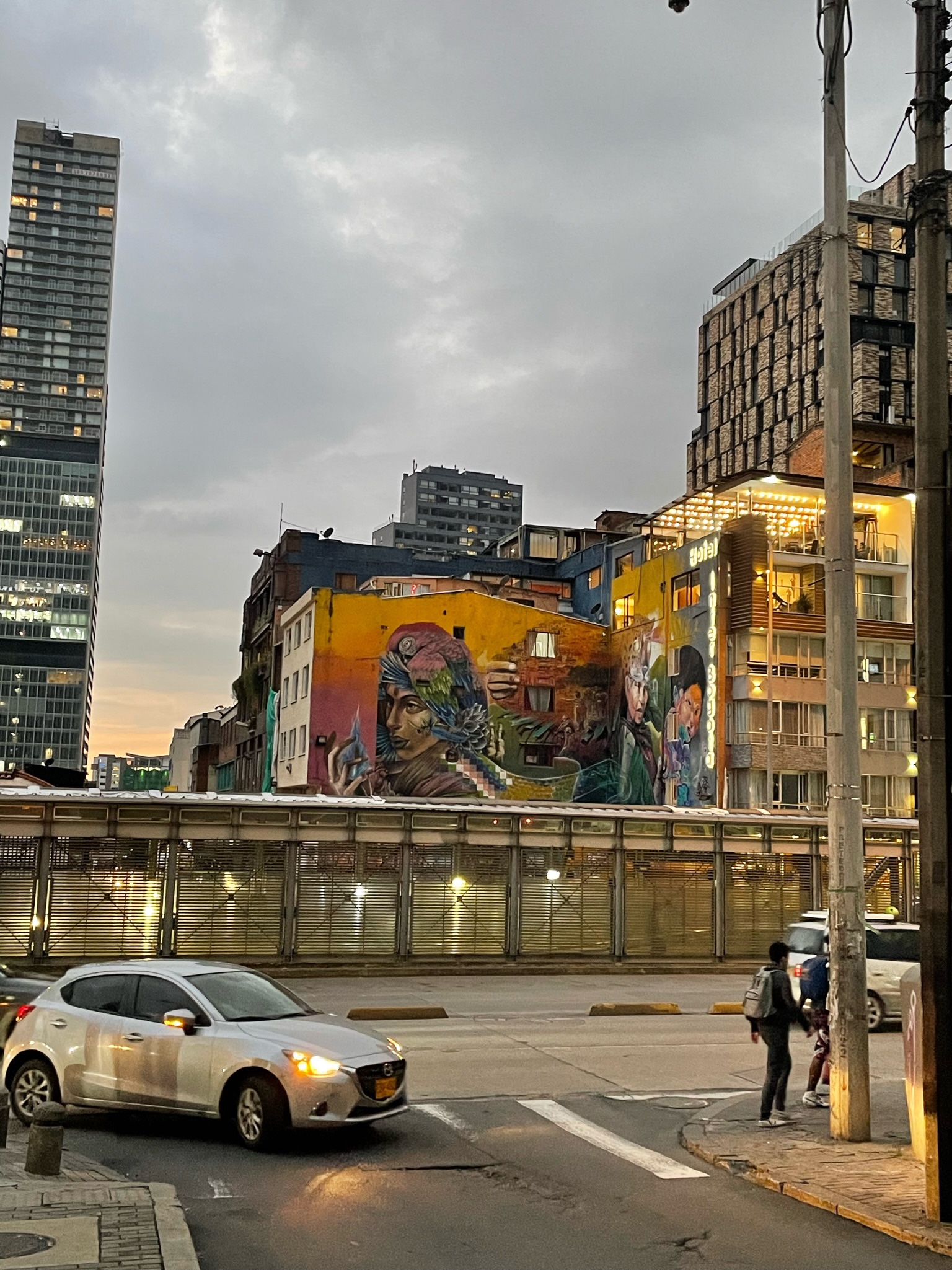
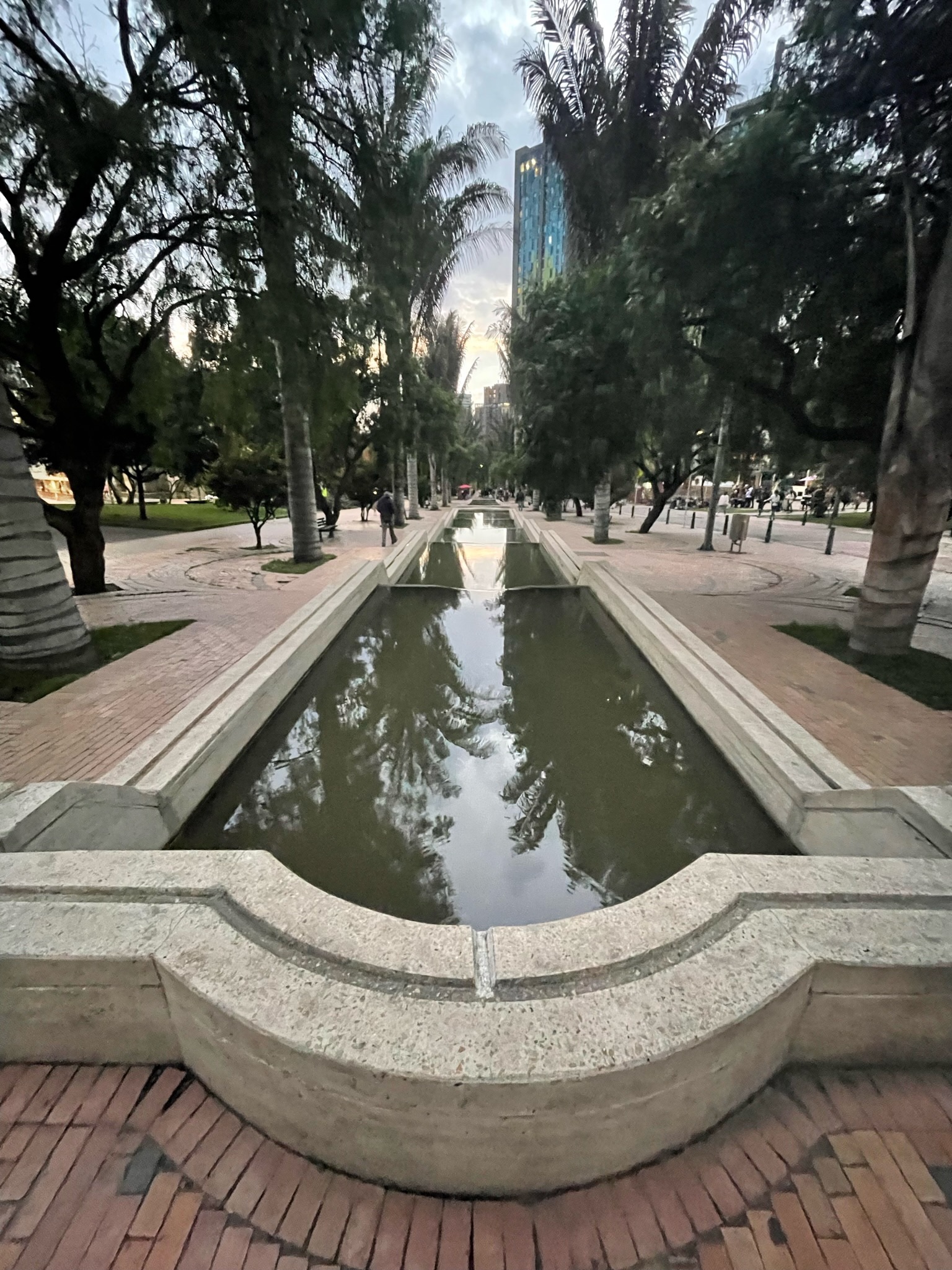
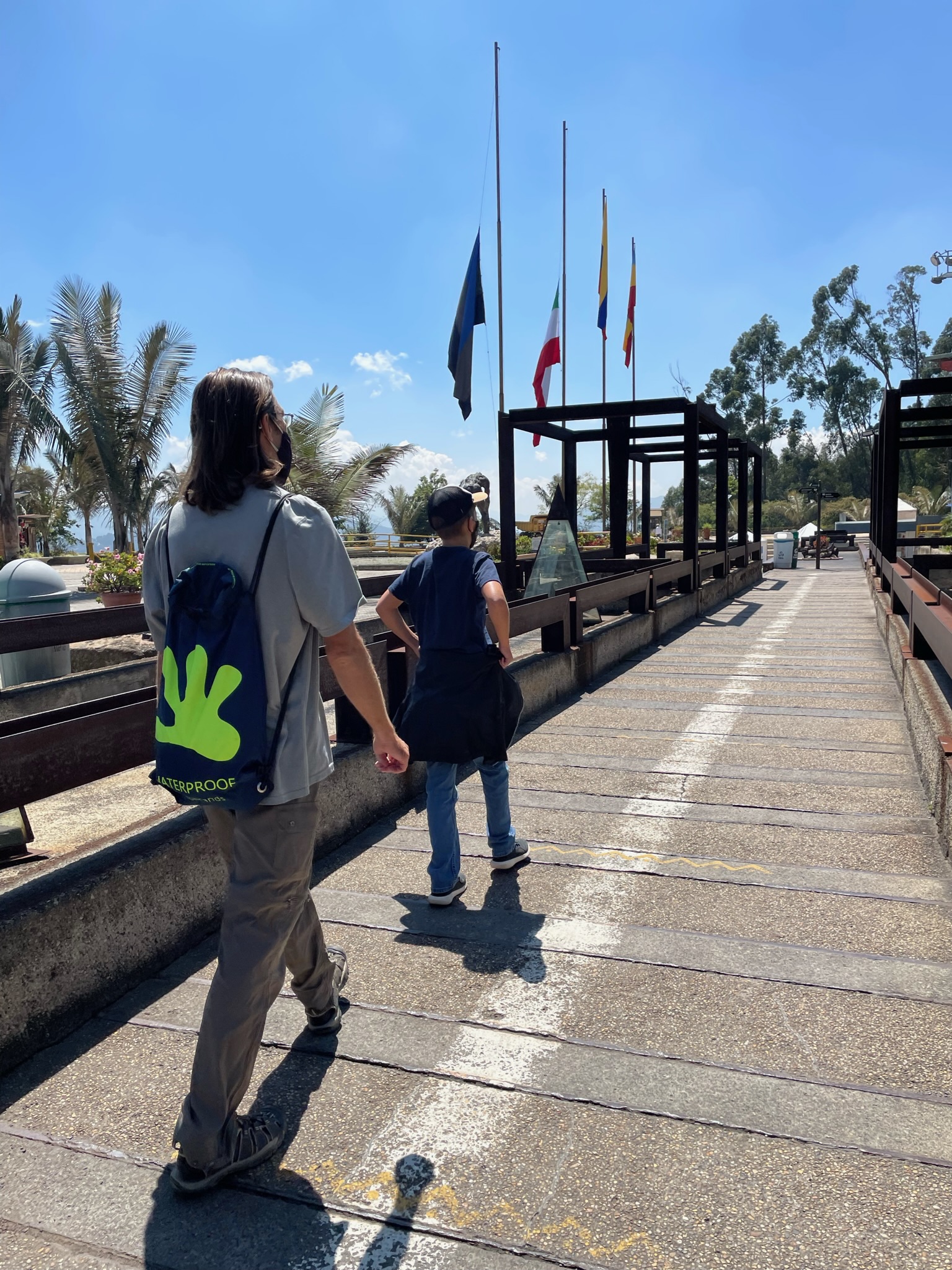
One afternoon, after we’d gotten our clothes back, we went into the city to explore and see what we could find to do. After eating a delicious lunch in the garden of a downtown restaurant, we decided to walk to a nearby free museum. While we were there, we learned that you could walk to the top of Montserrat and see the view of the city, so we decided to check that out. We walked up the hill near the edge of the city, and we were able to ride a cable car all the way to the top of the Montserrat mountain. The view was breathtaking, but unfortunately, it was shortlived. The rain came in, and the clouds ruined the views. It was very pleasant up there, but we were cold and tired, and we needed to get back to our section of town before it got too late, so we didn’t stay long.
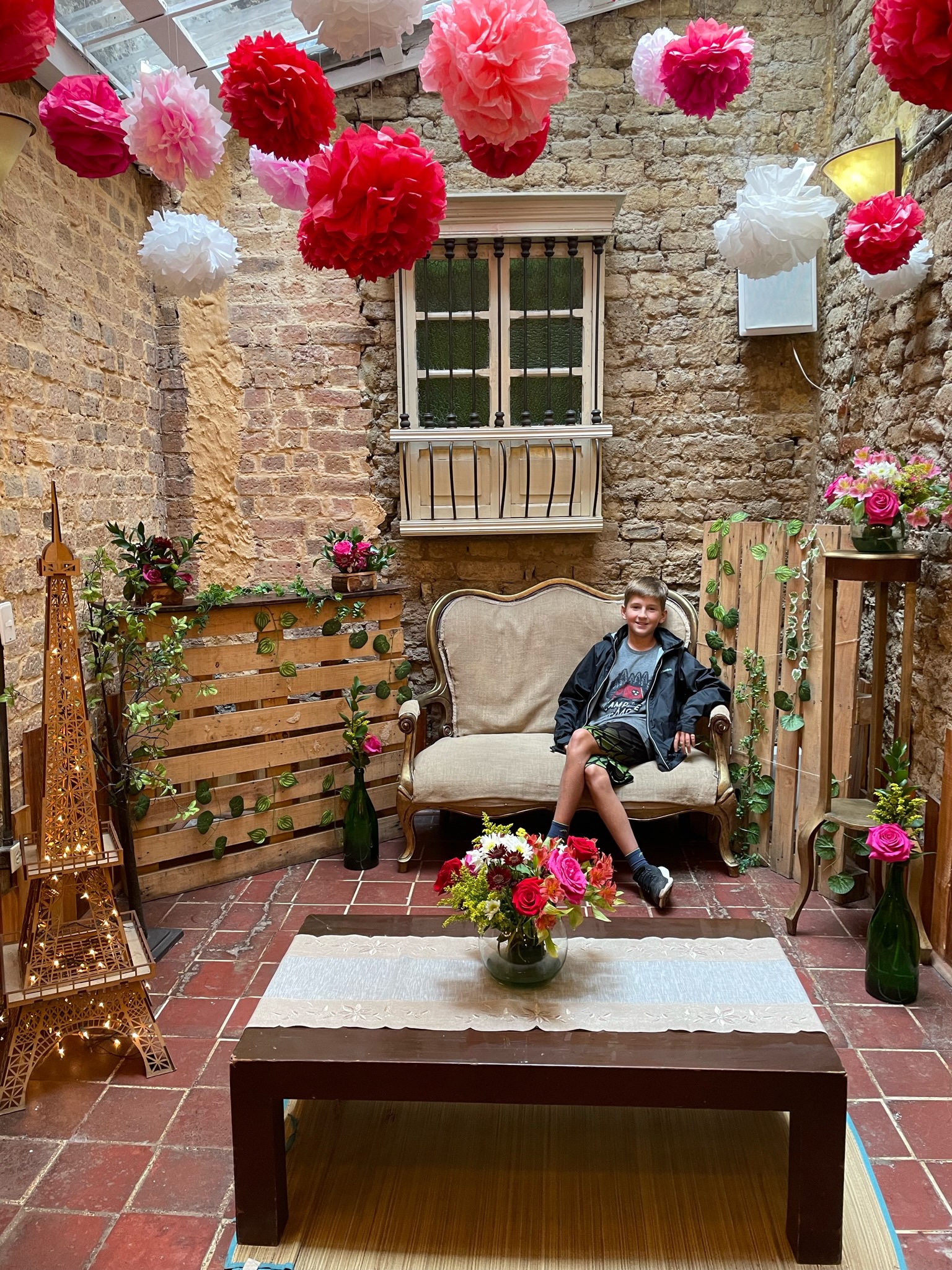
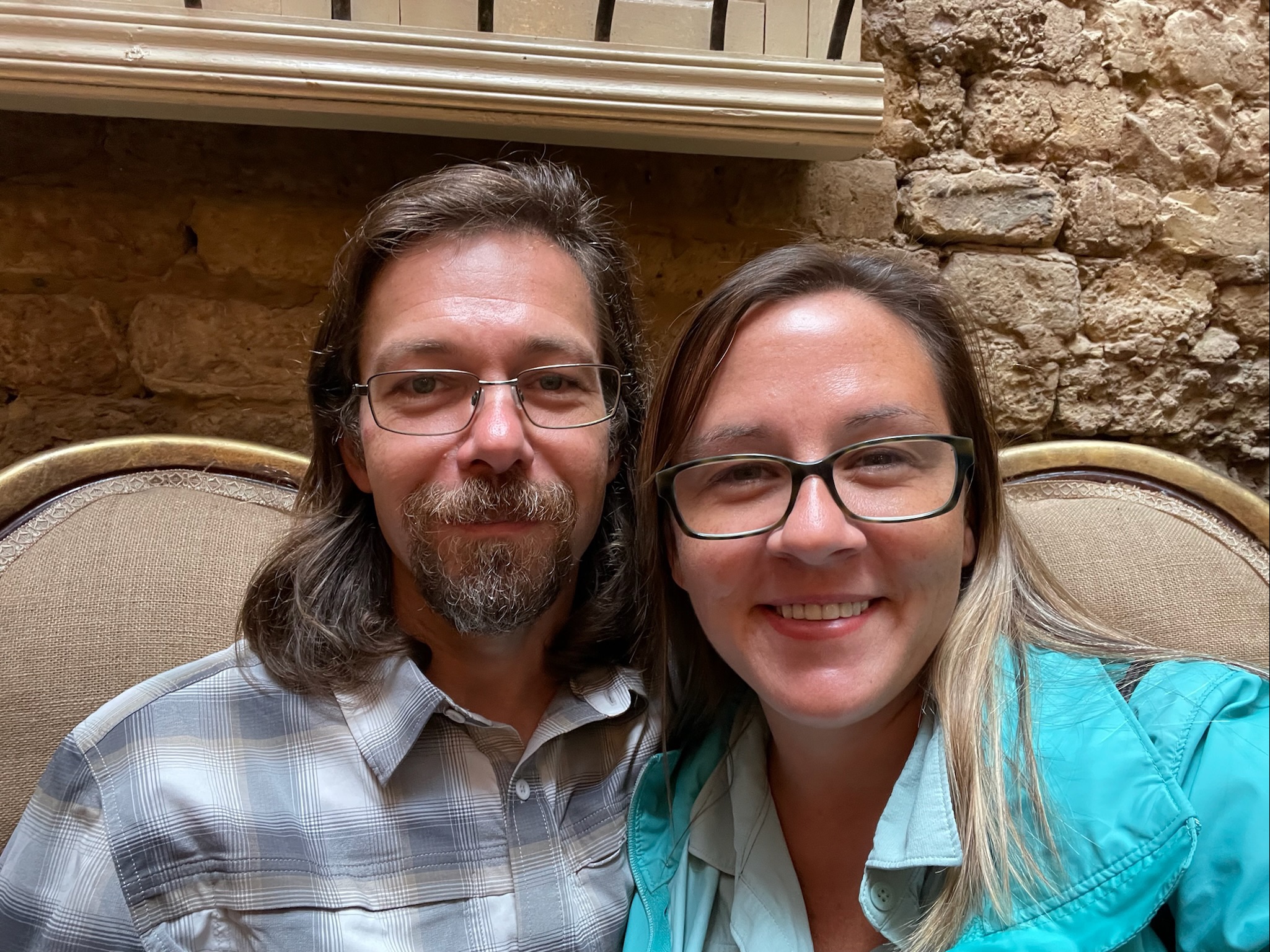
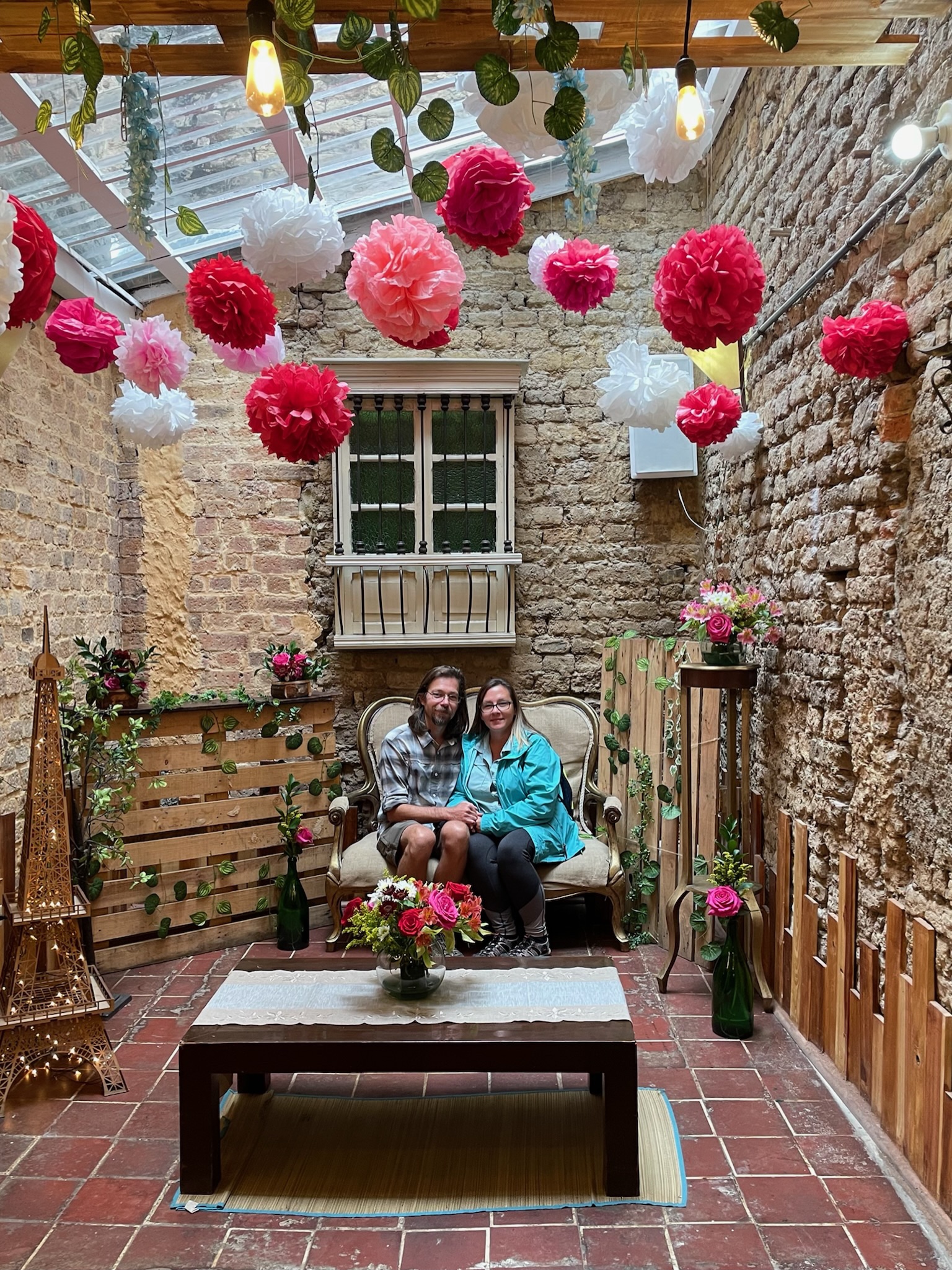
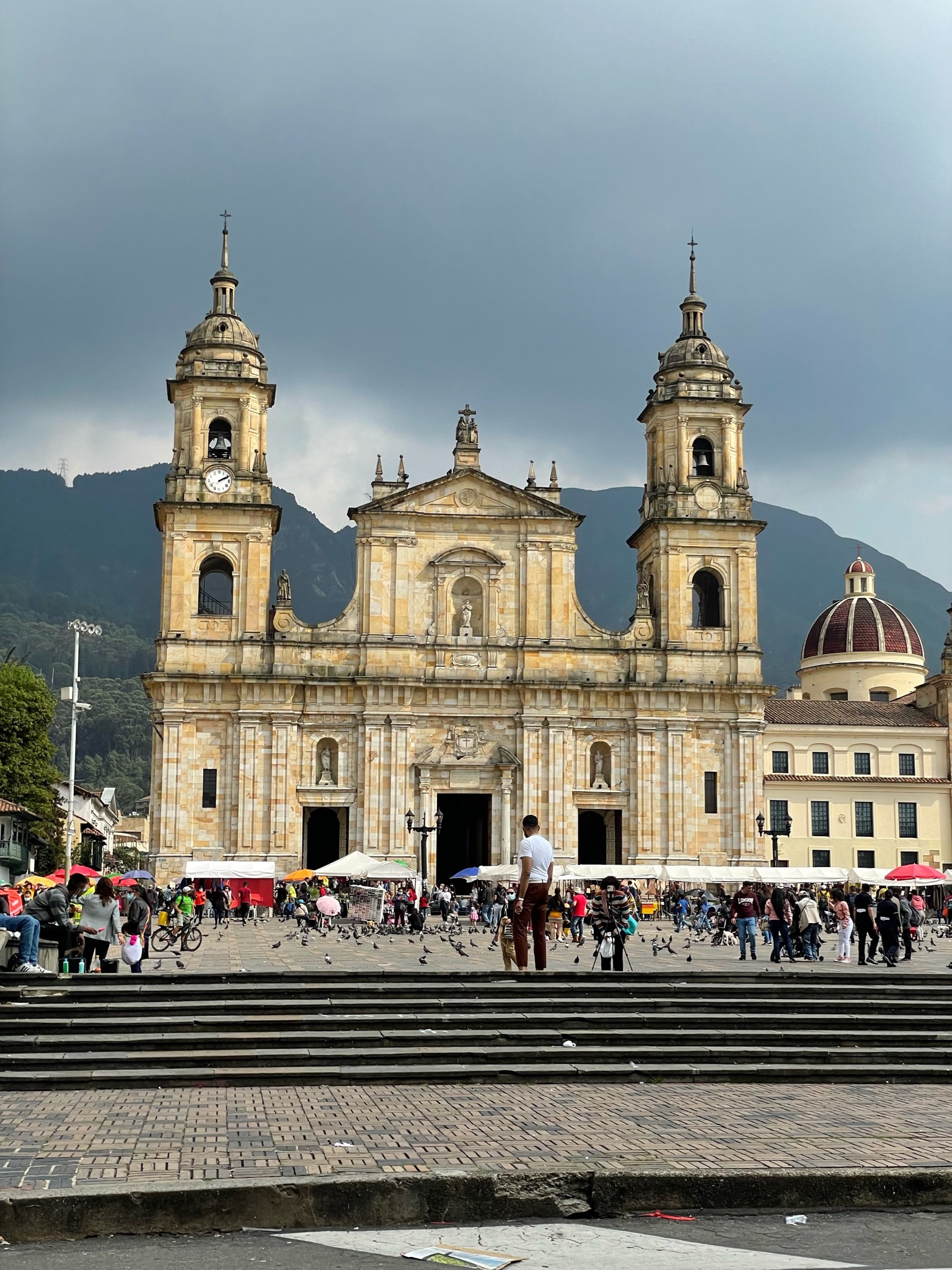
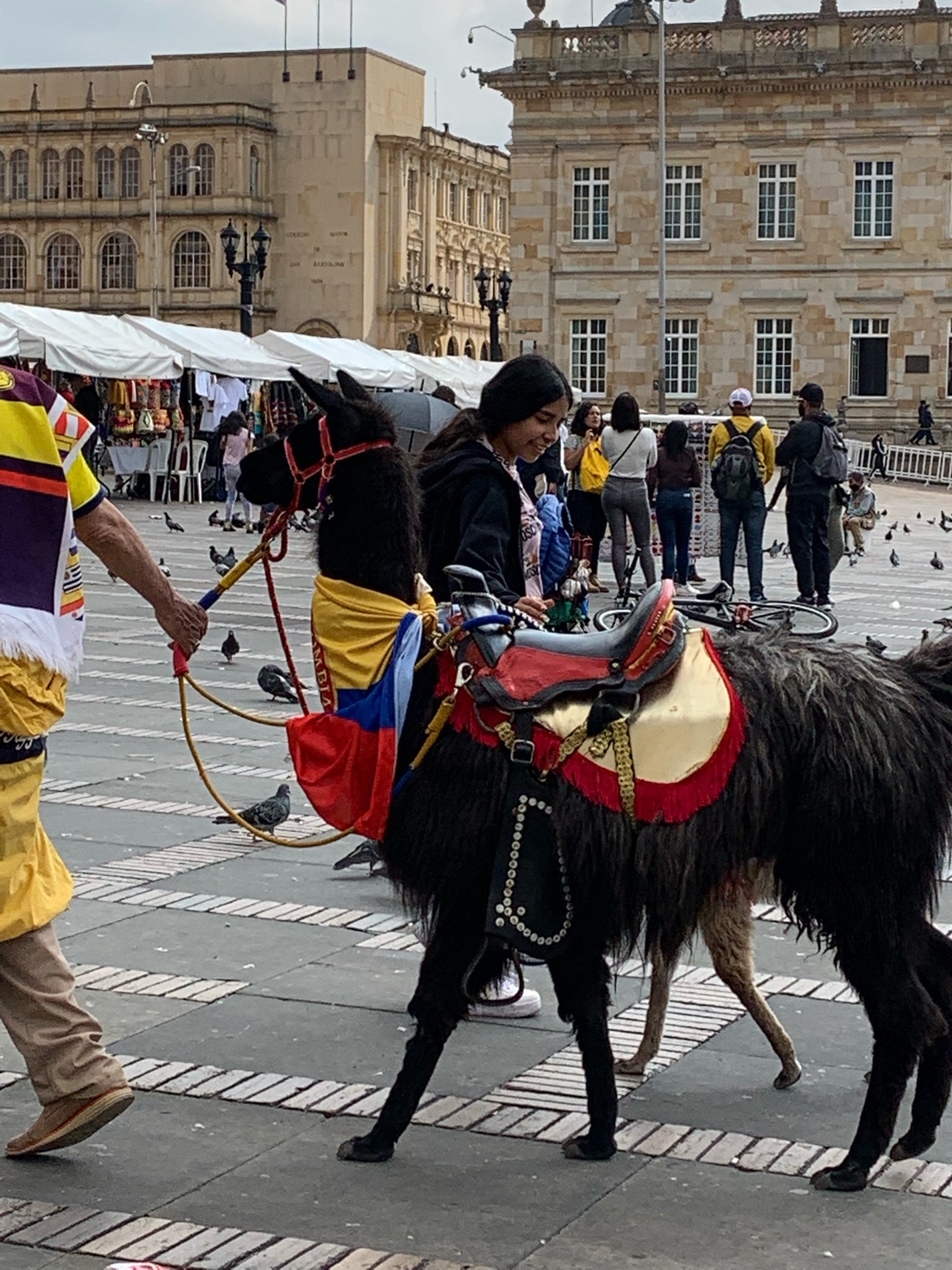
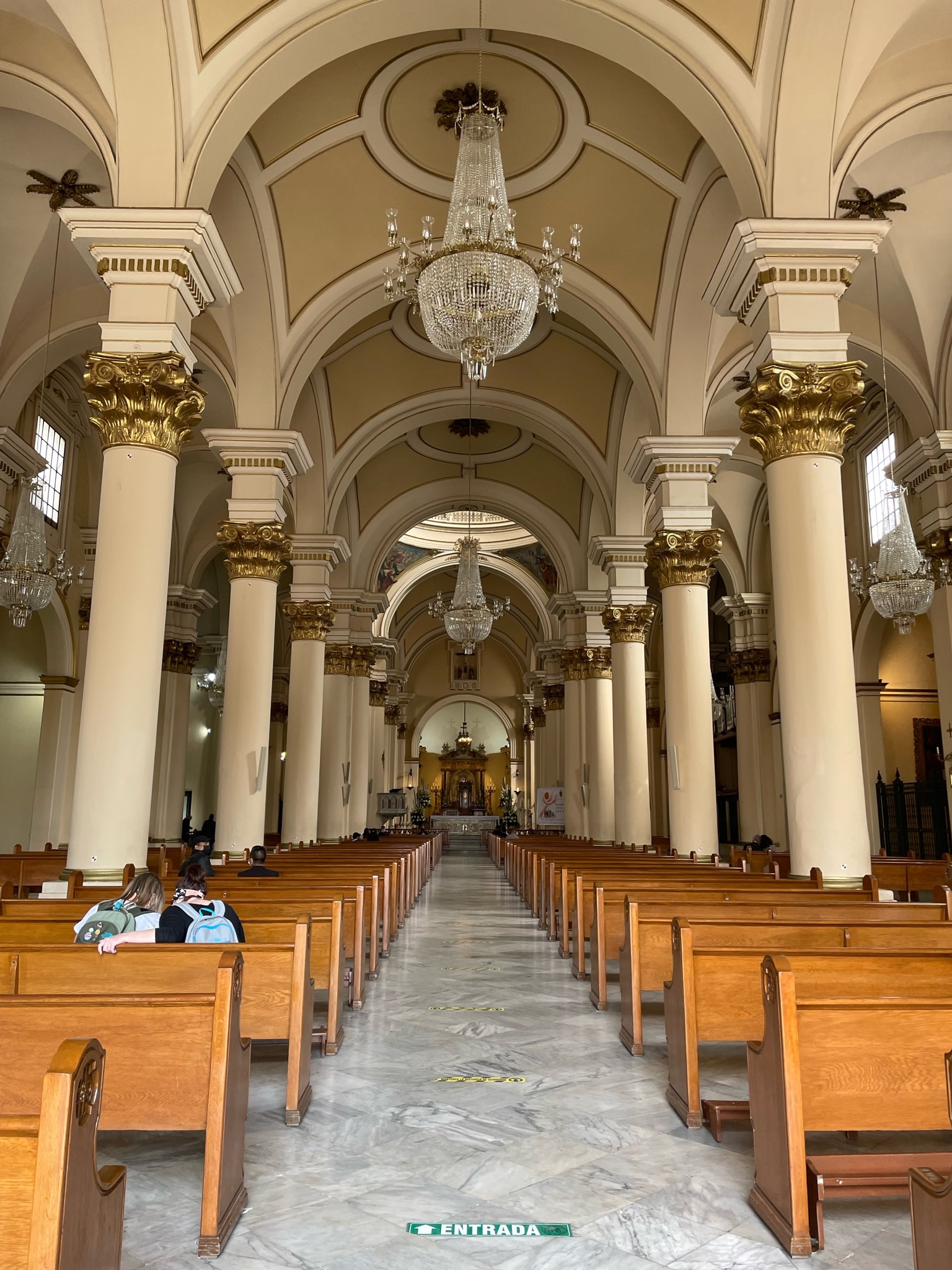

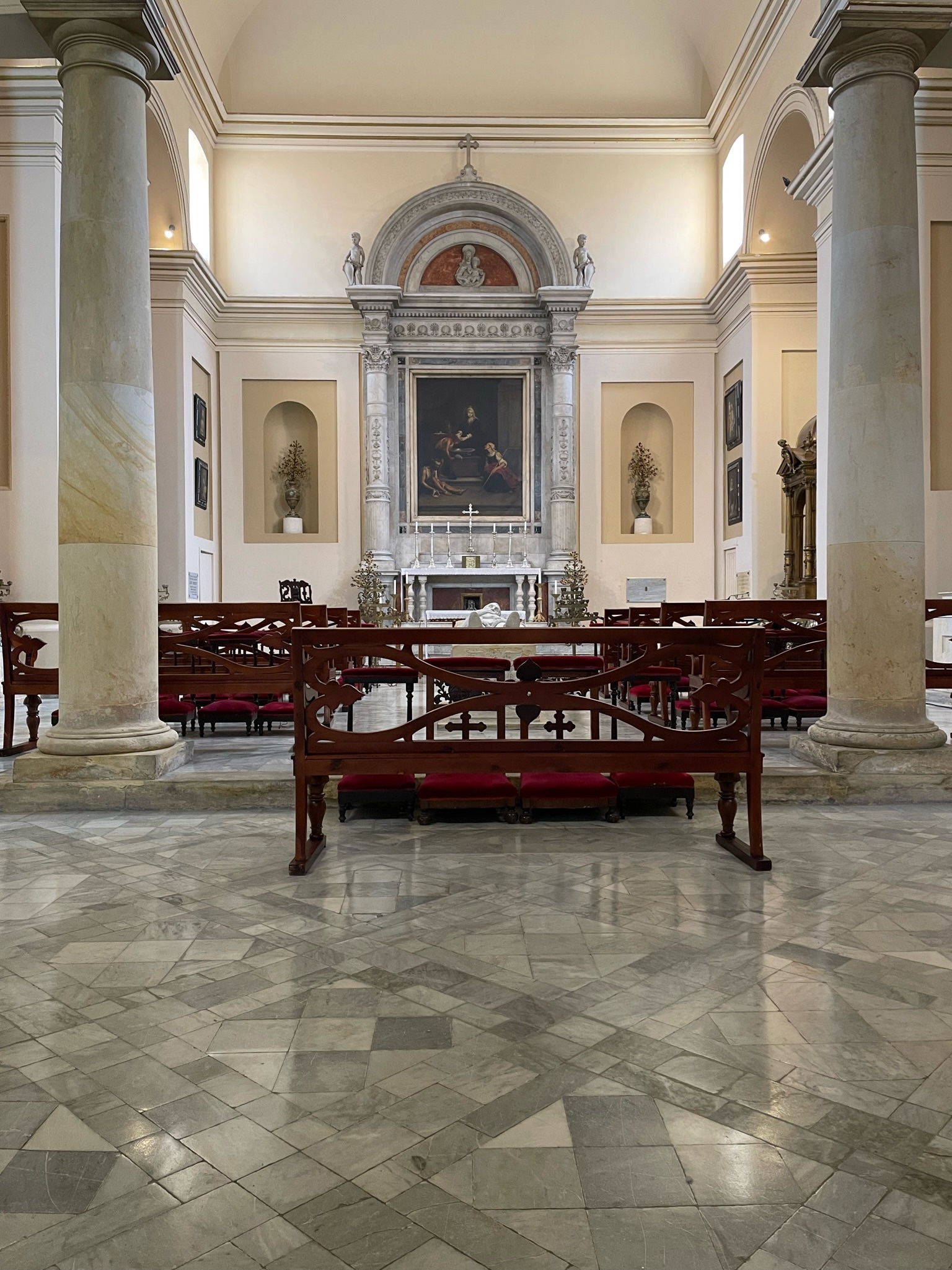




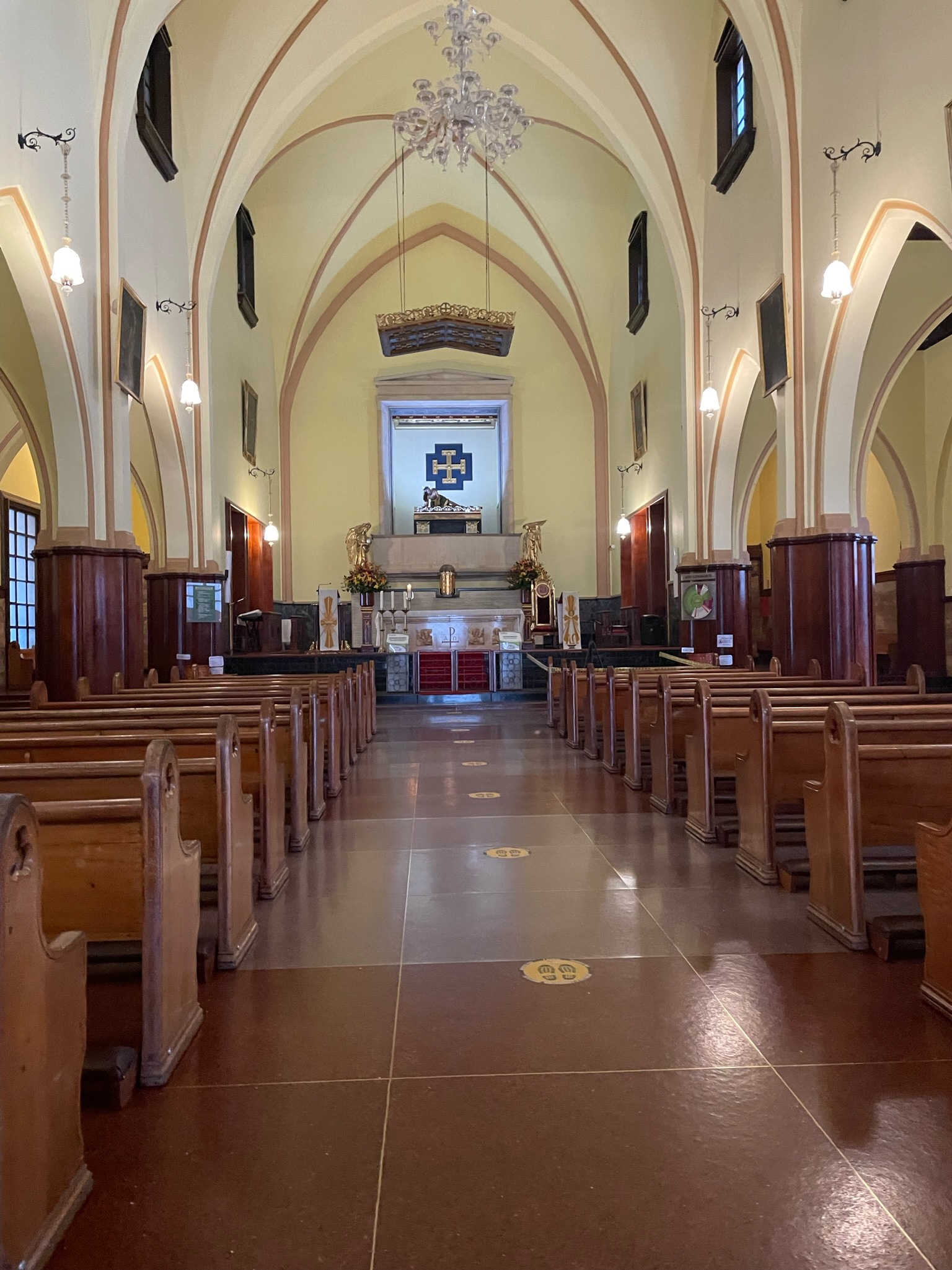

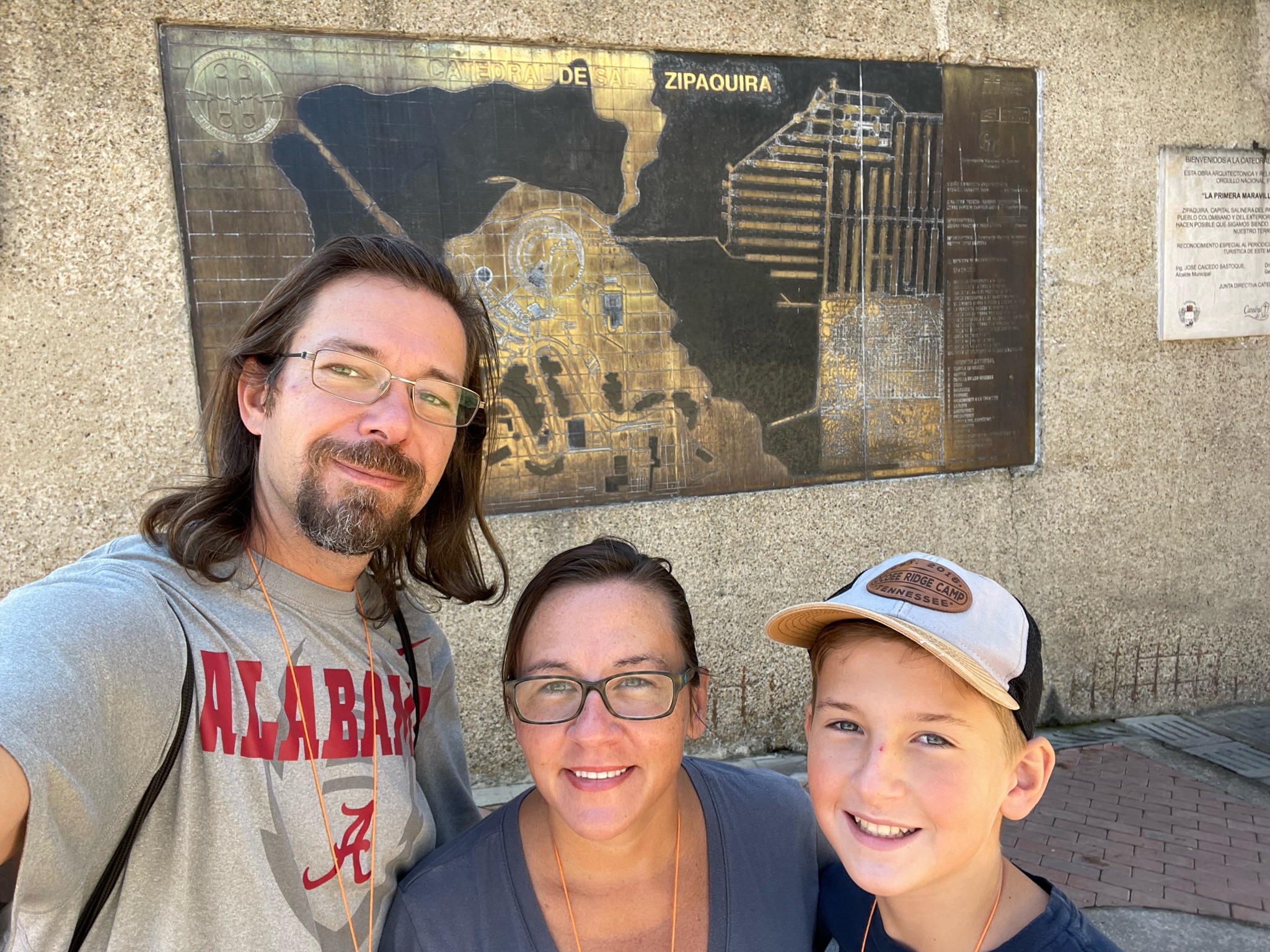
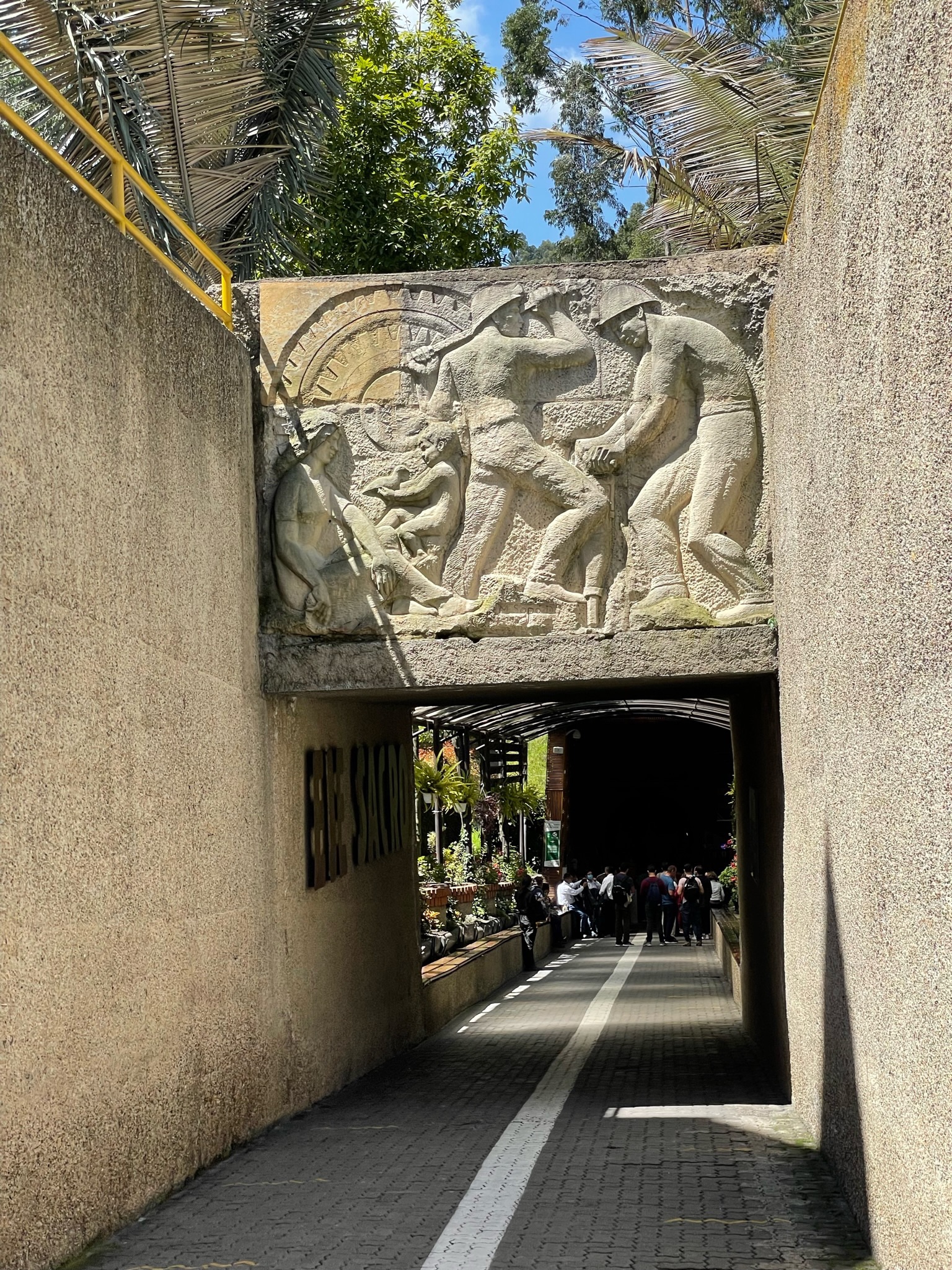
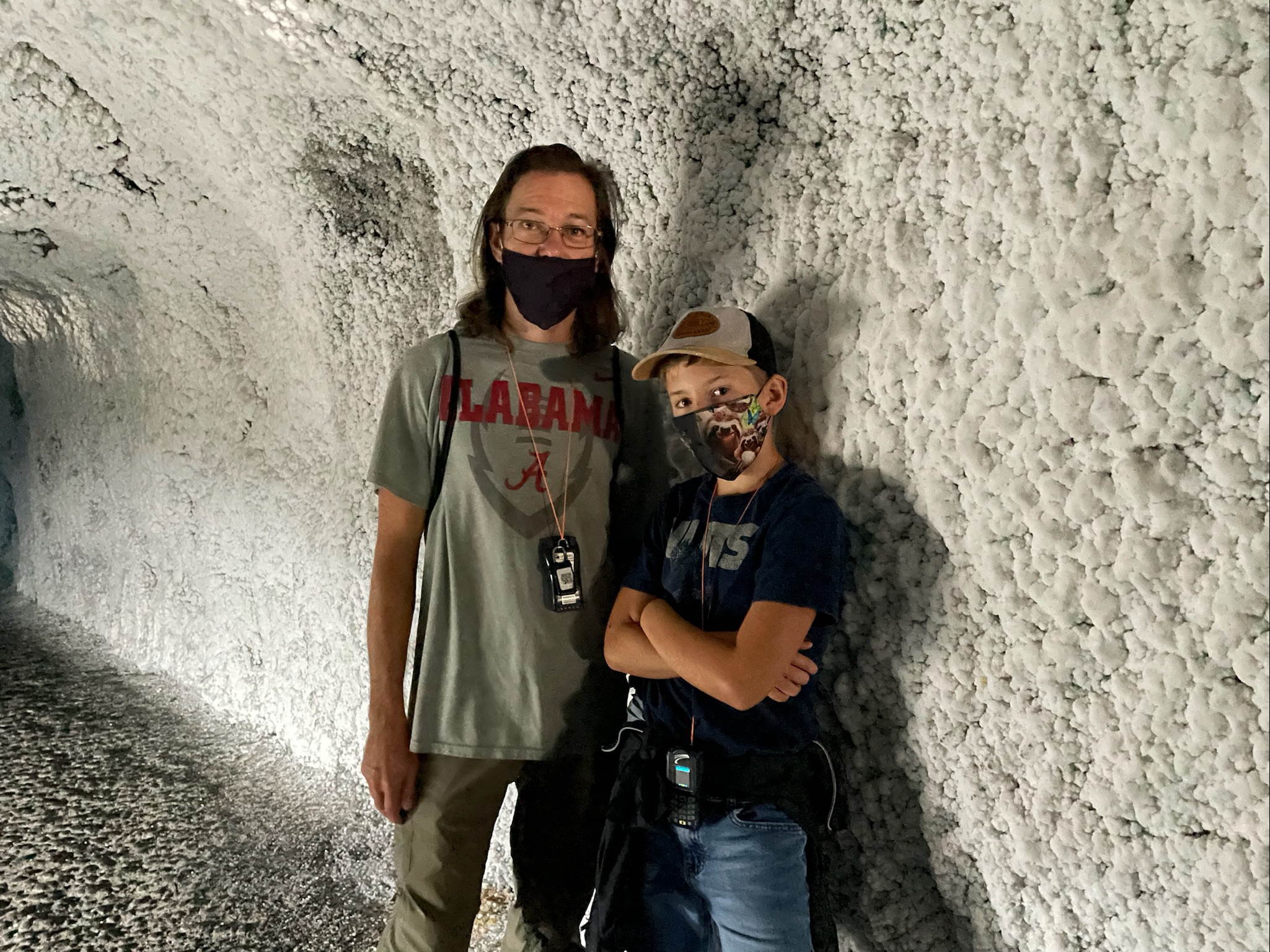
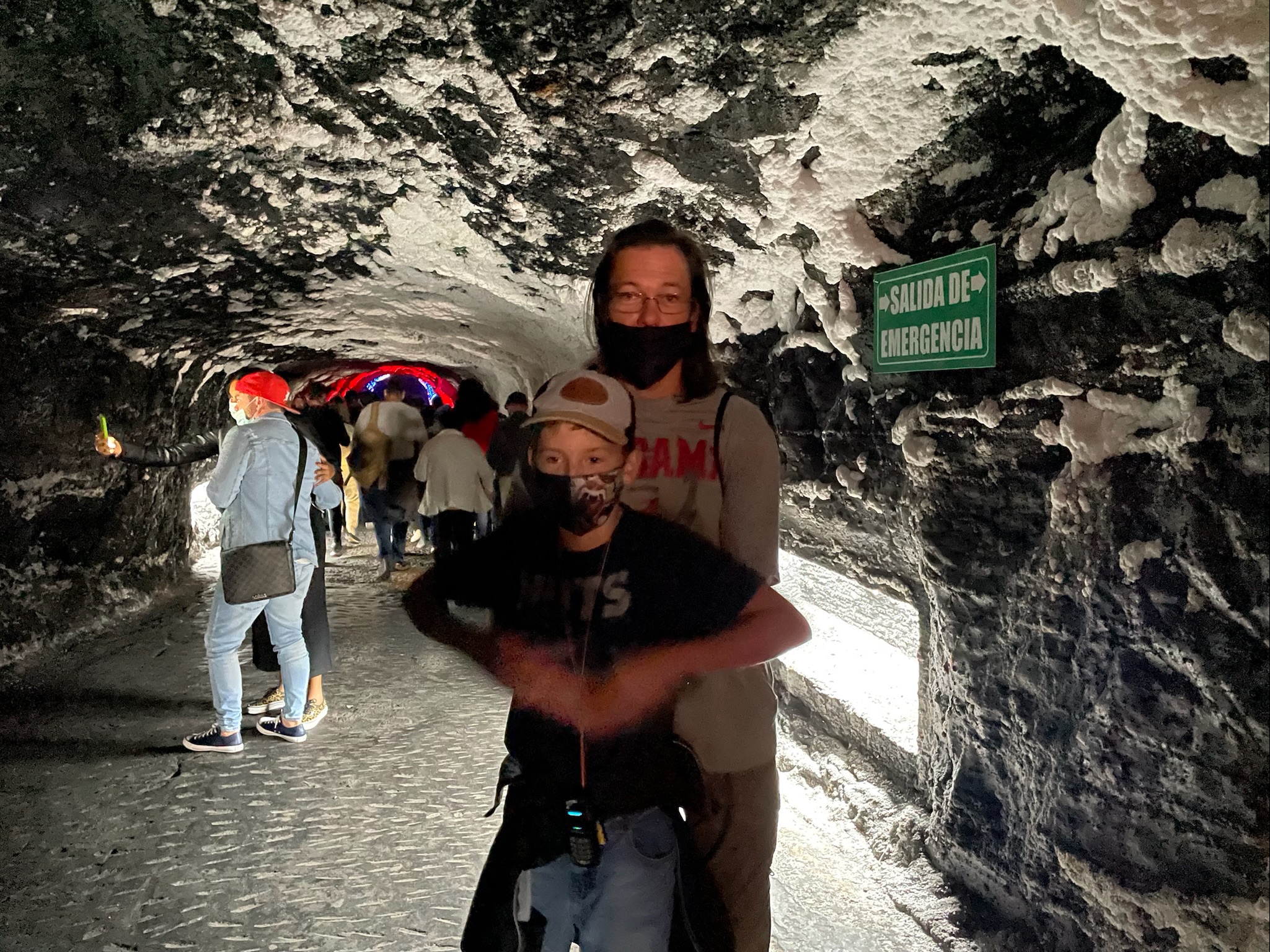
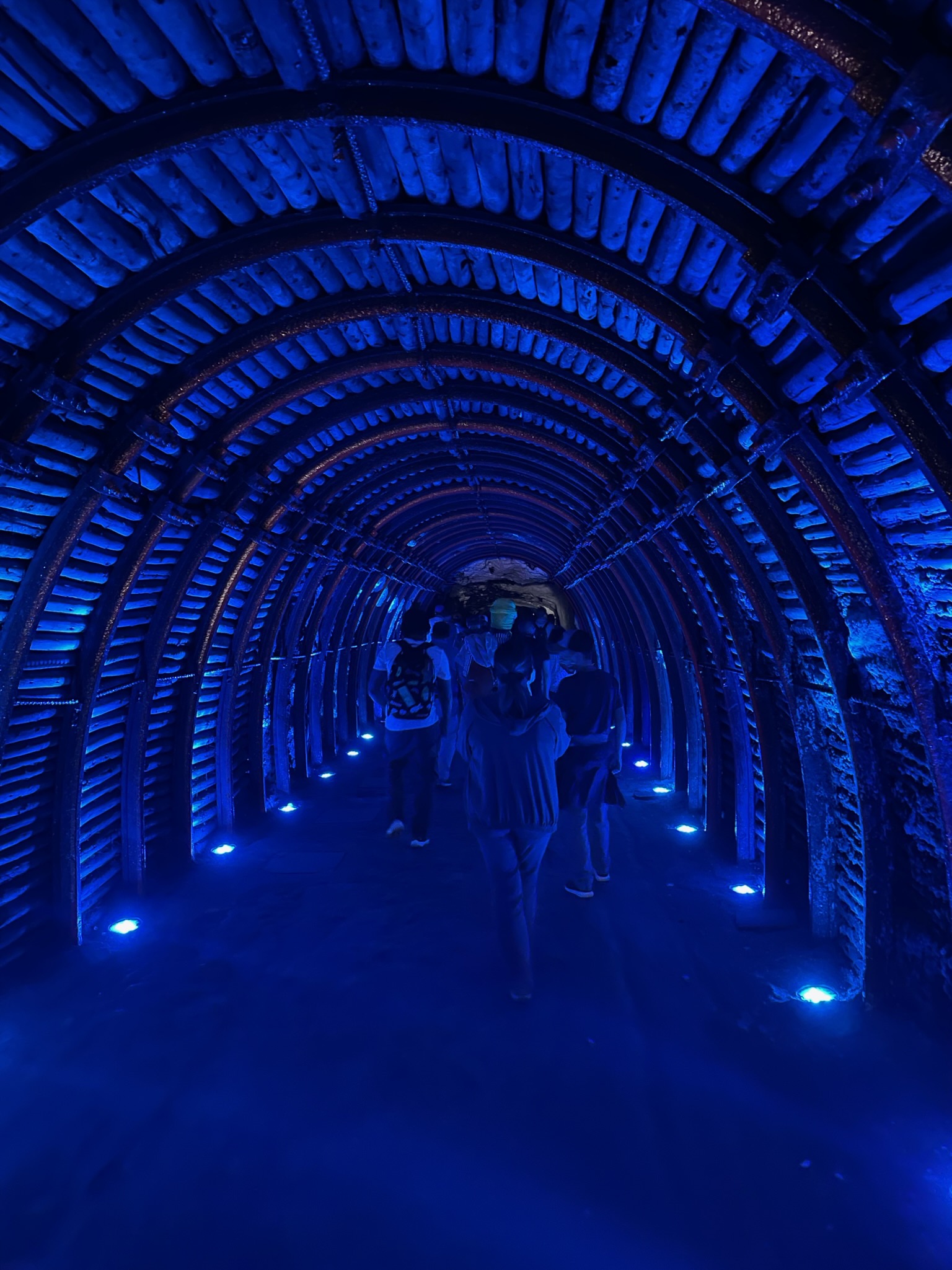
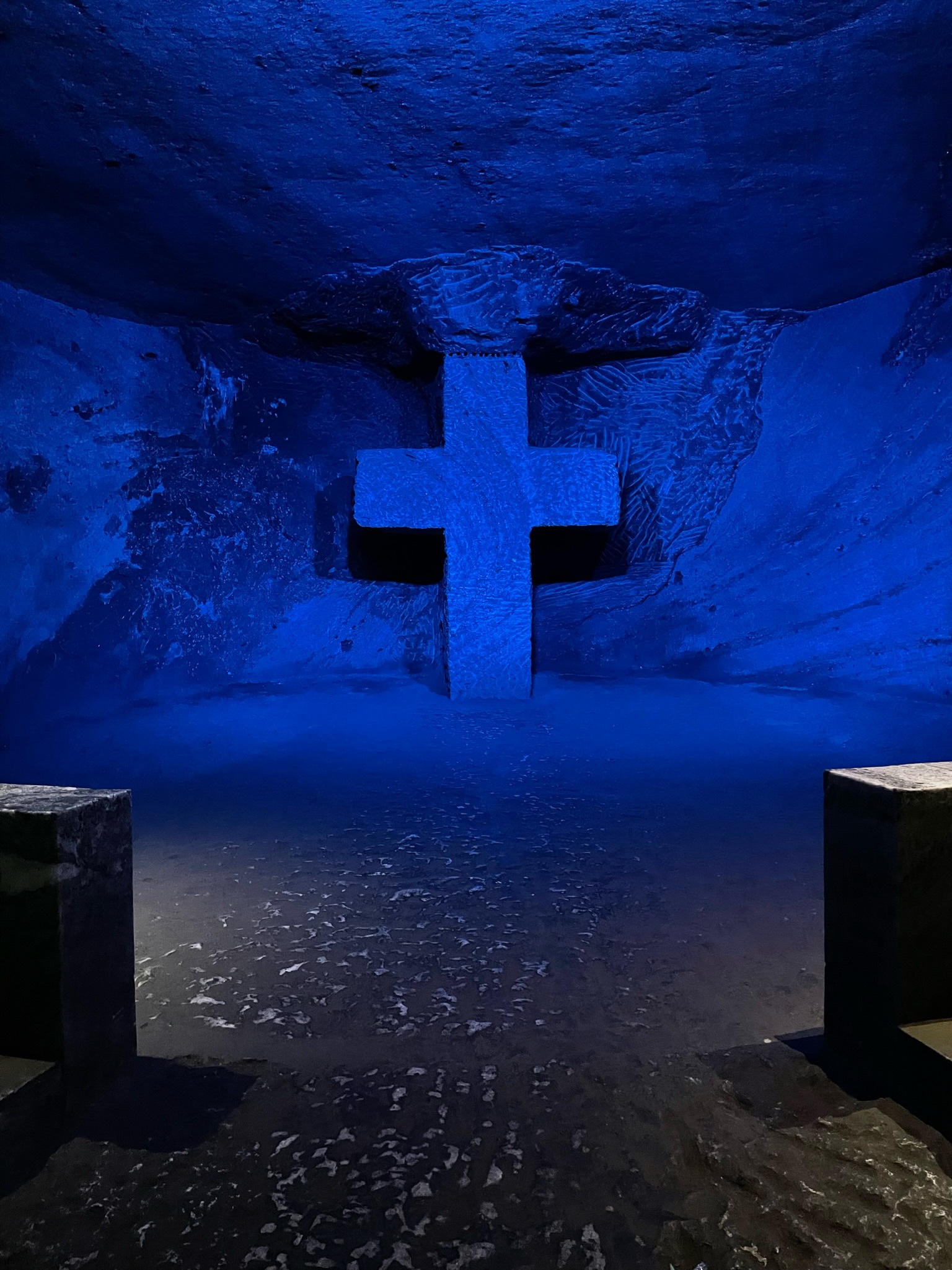
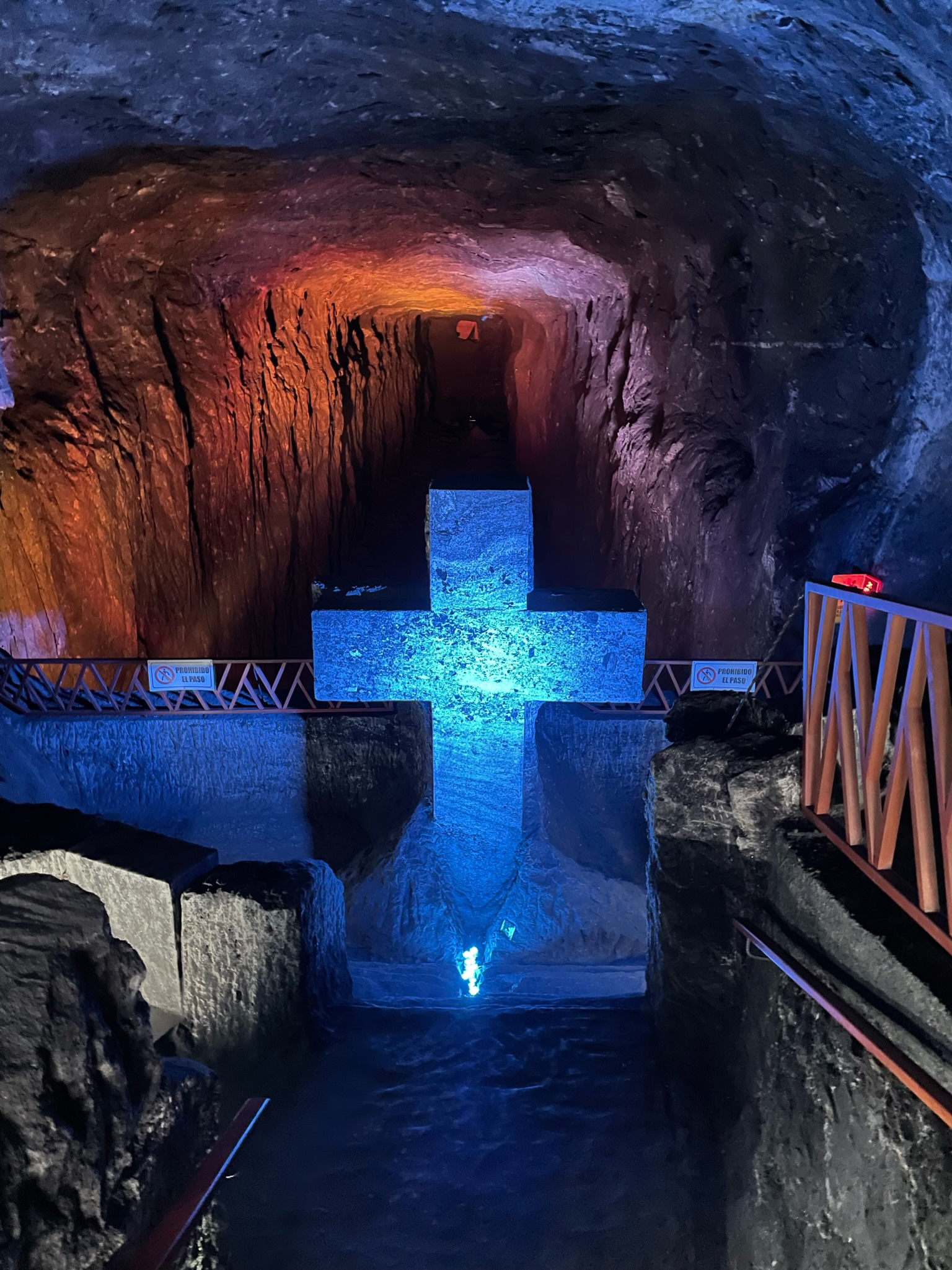
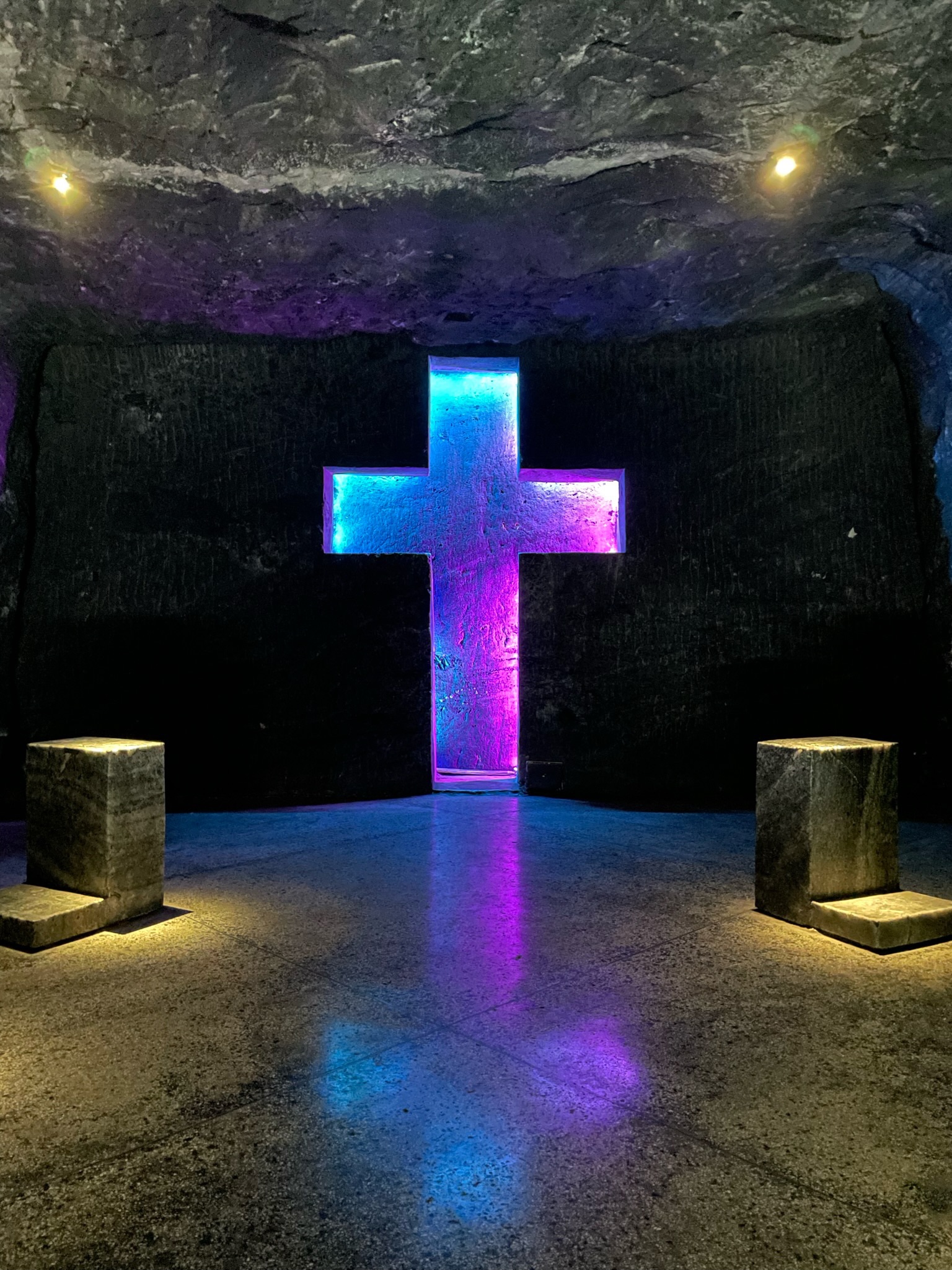
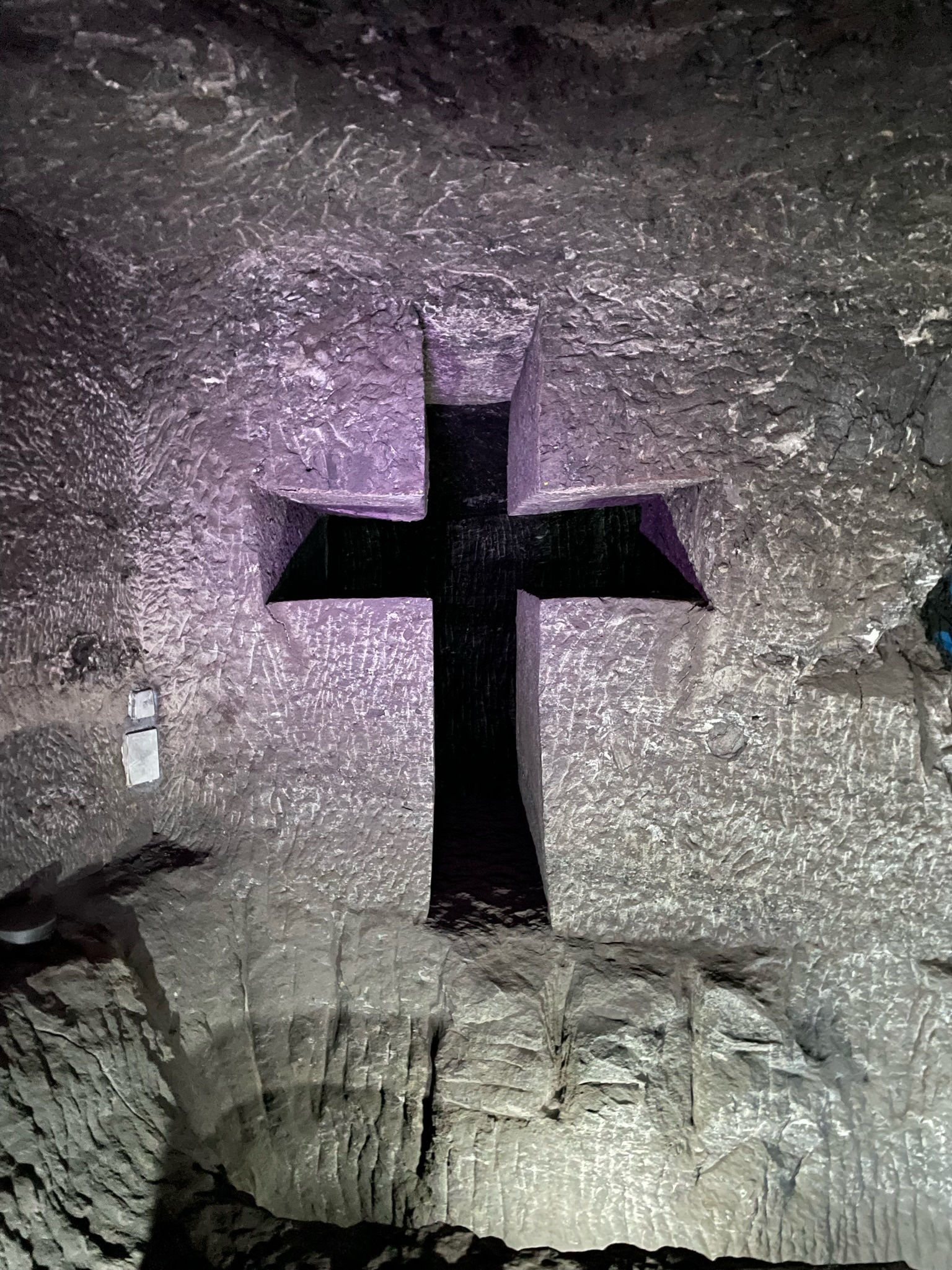
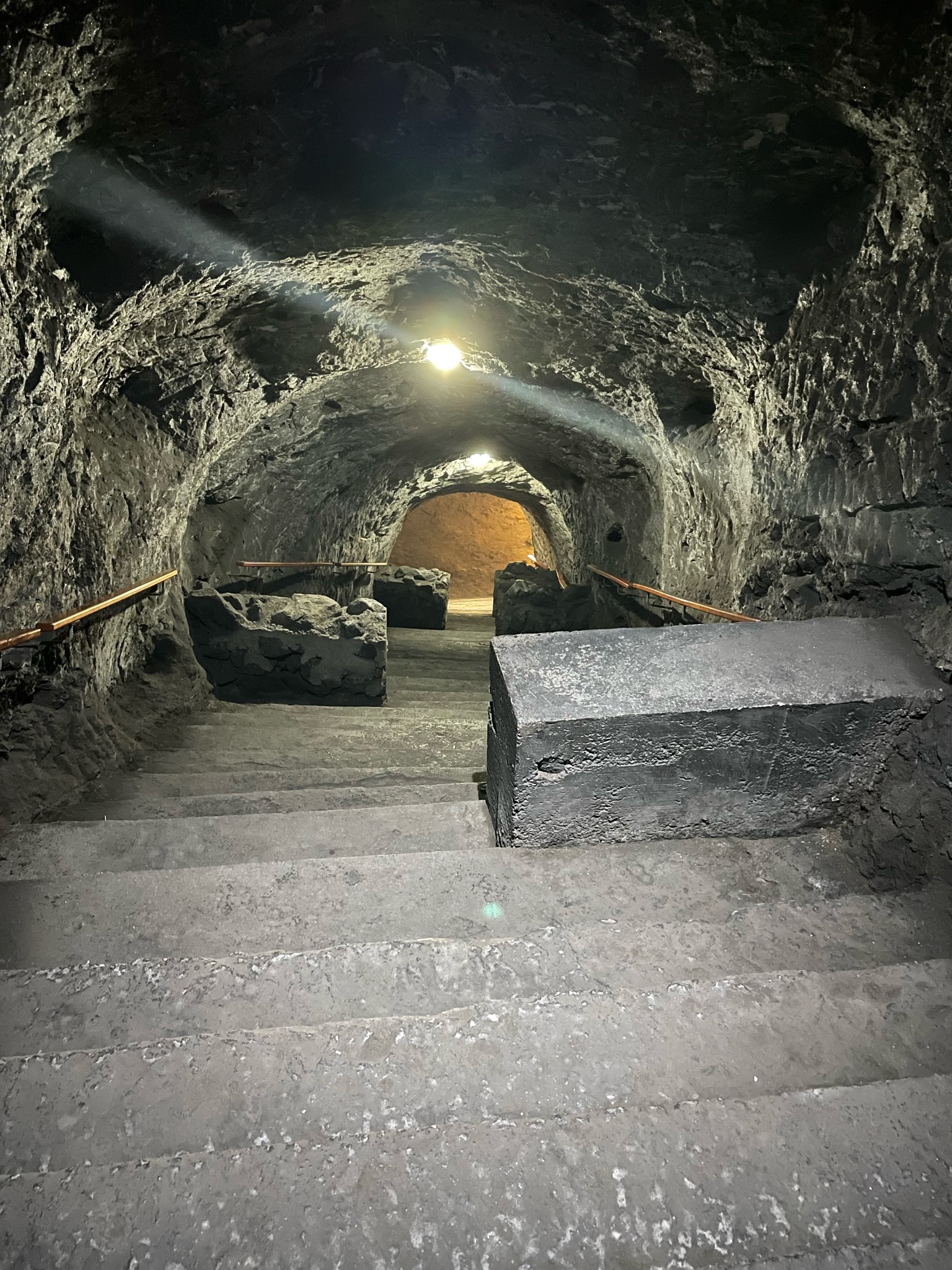
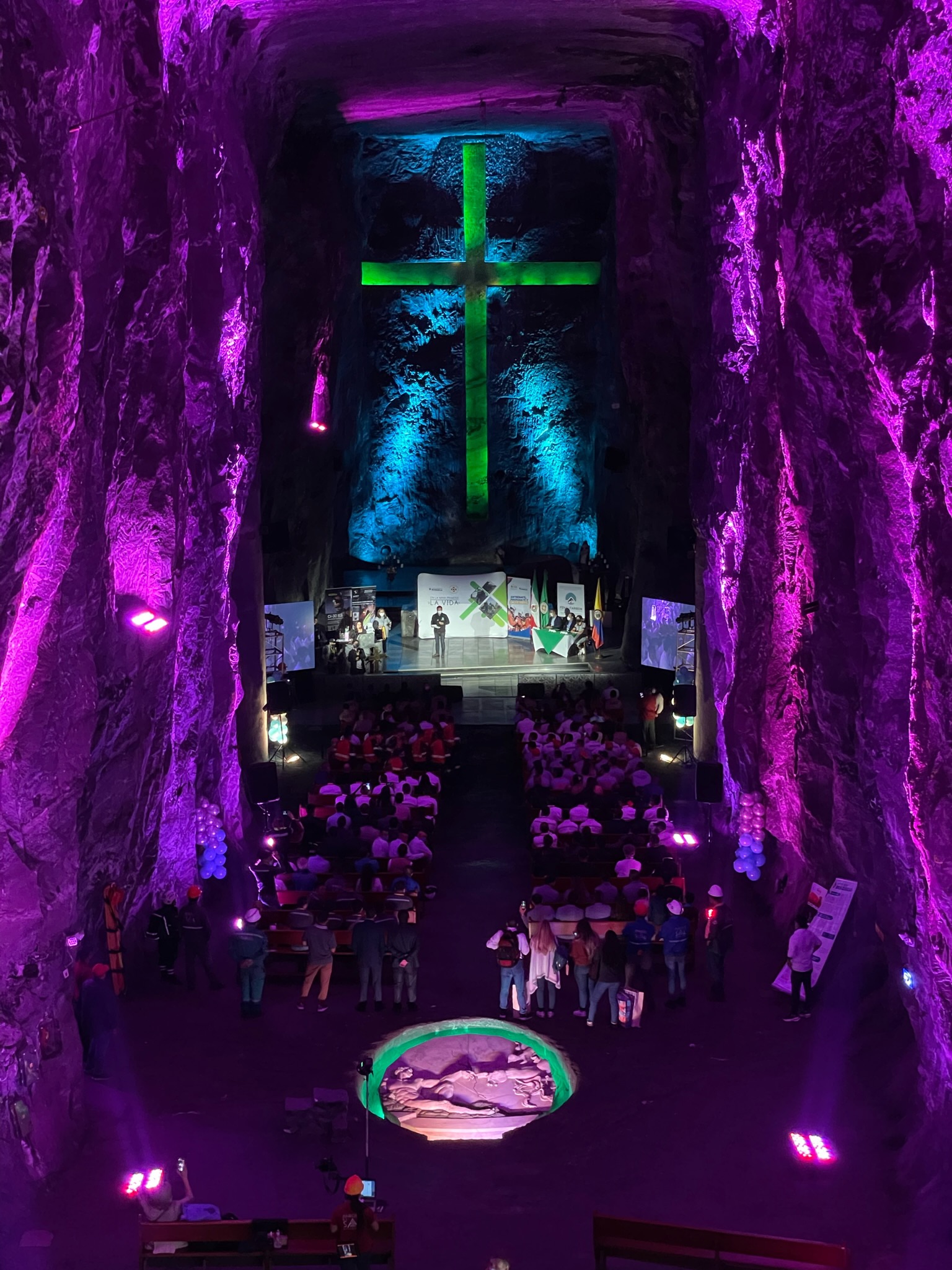
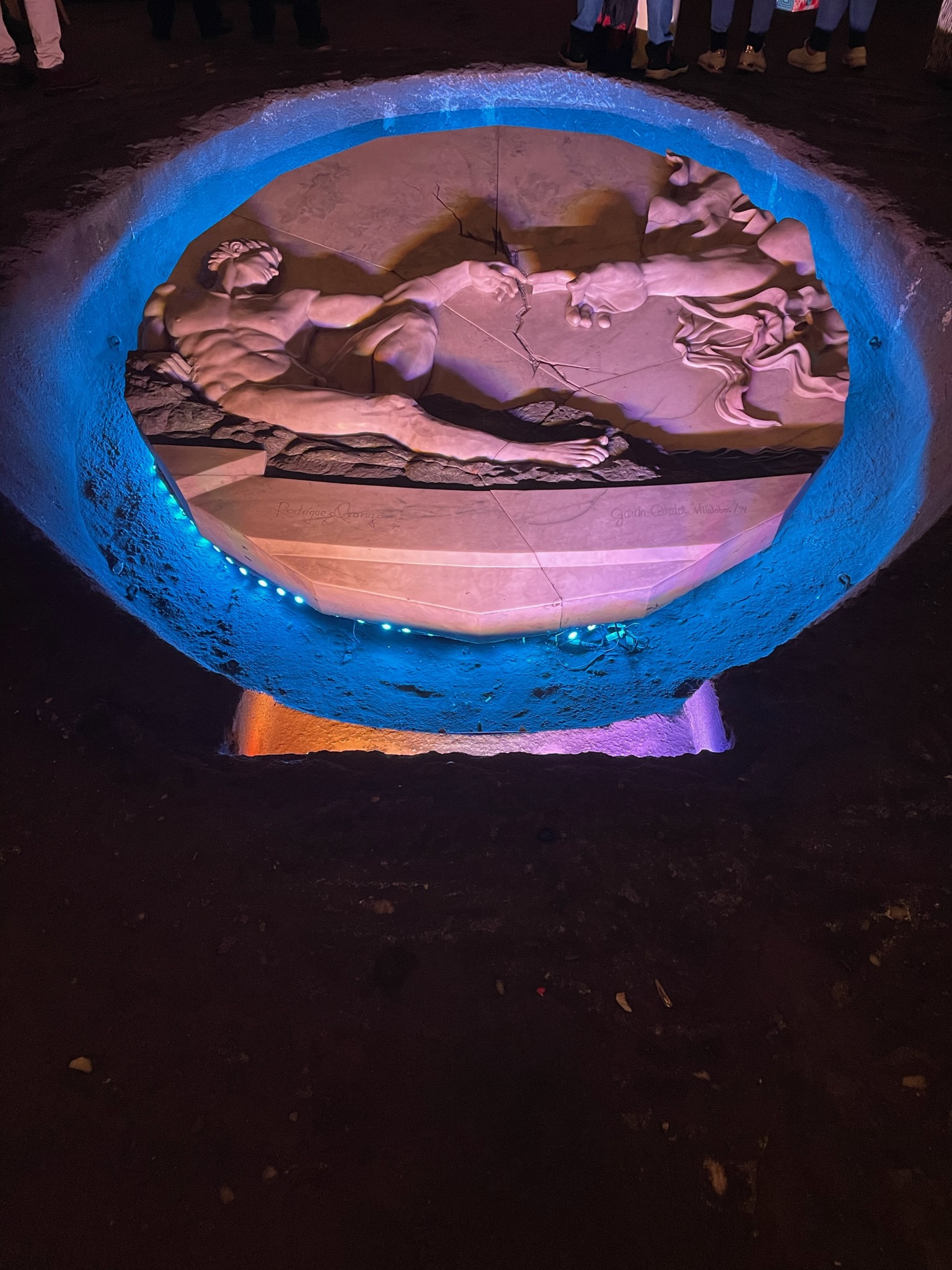
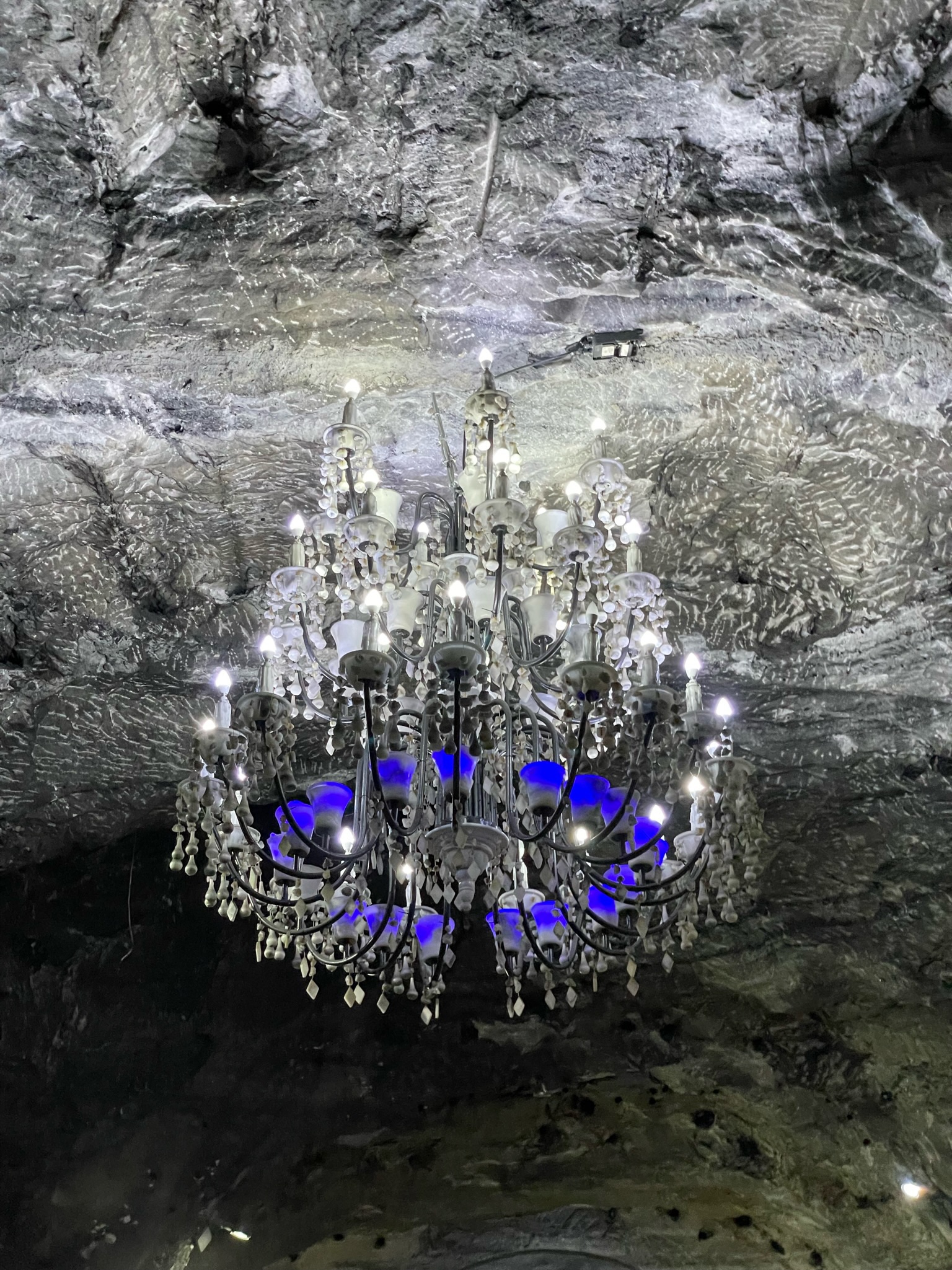
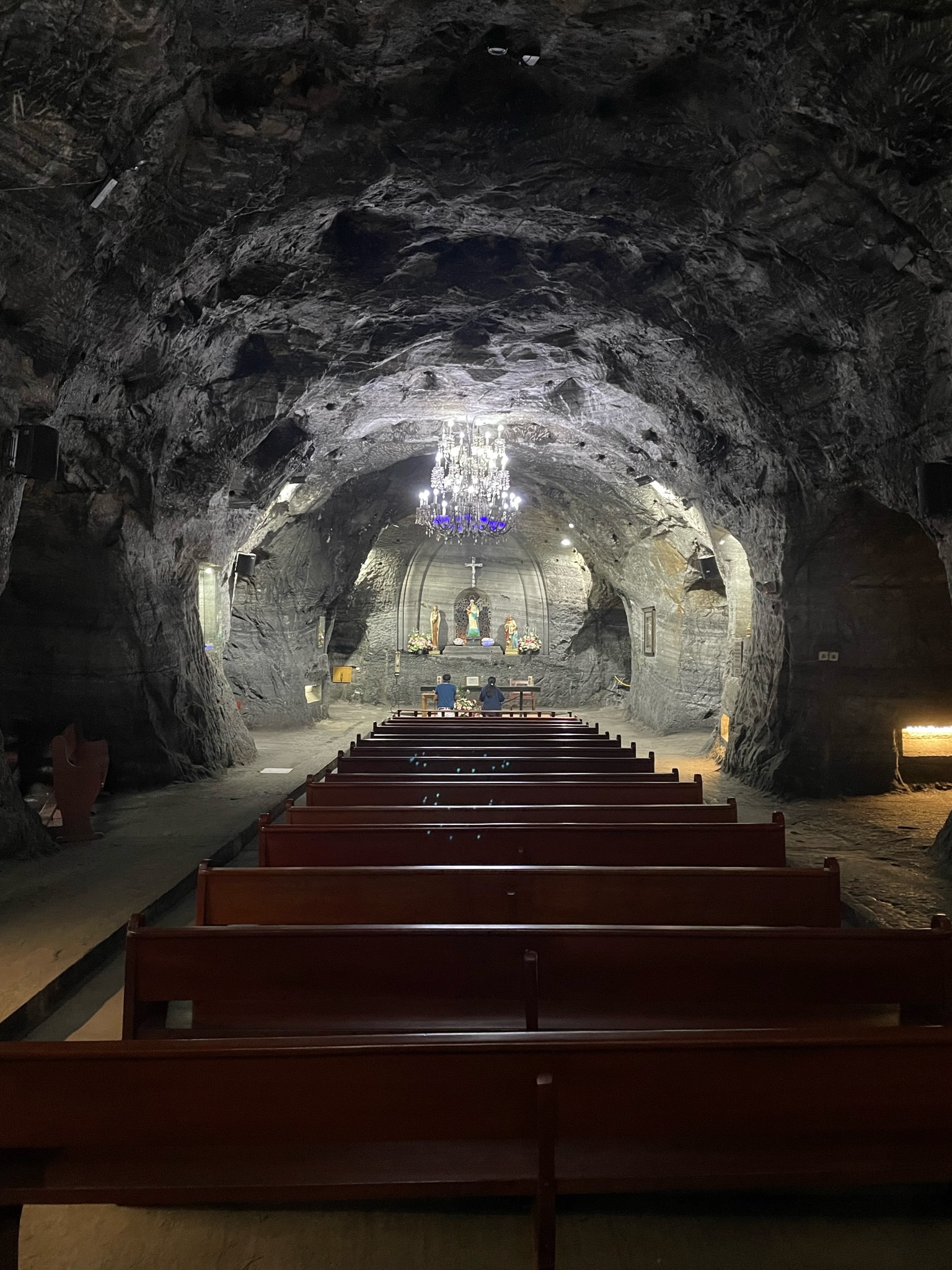
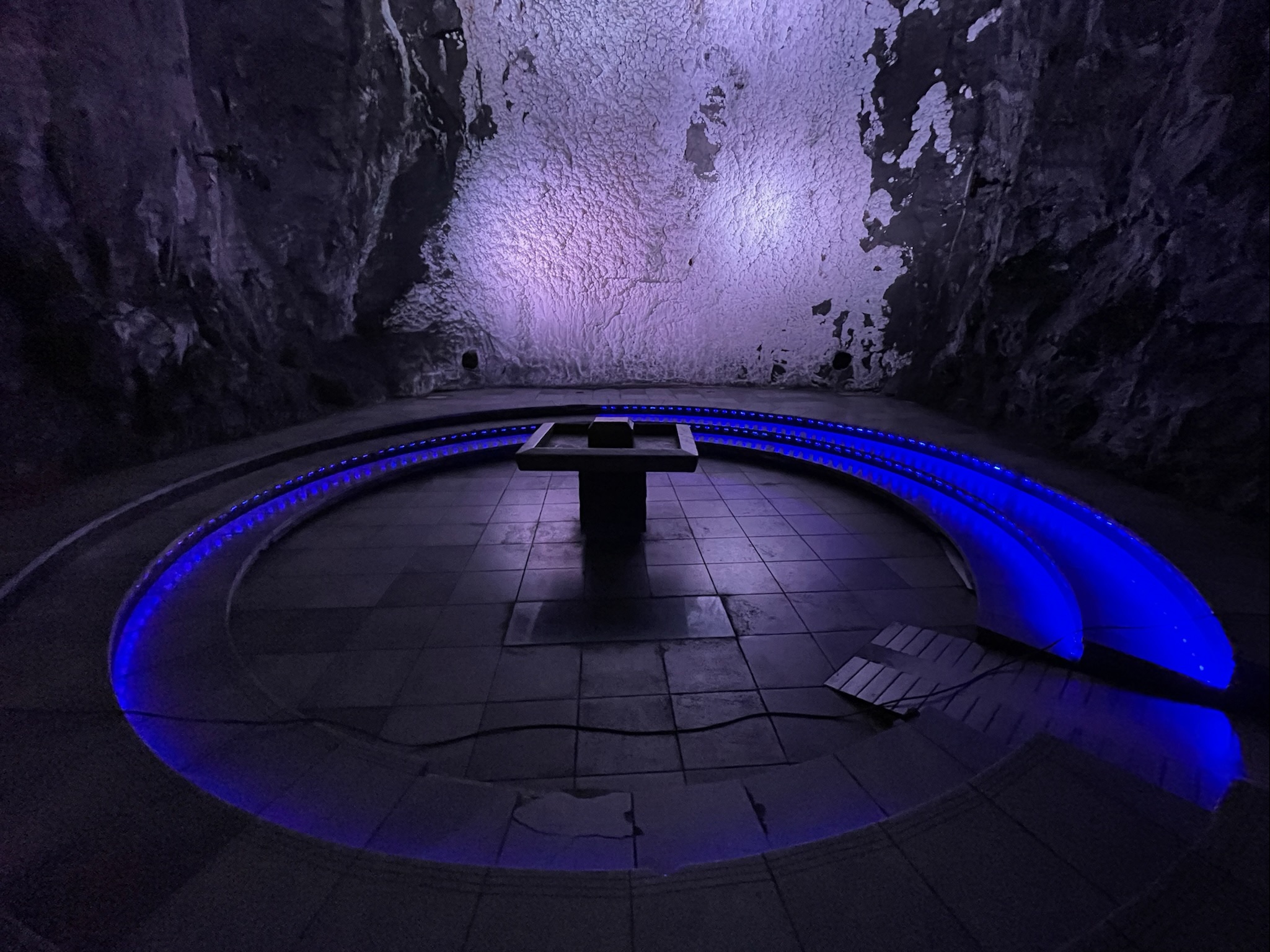
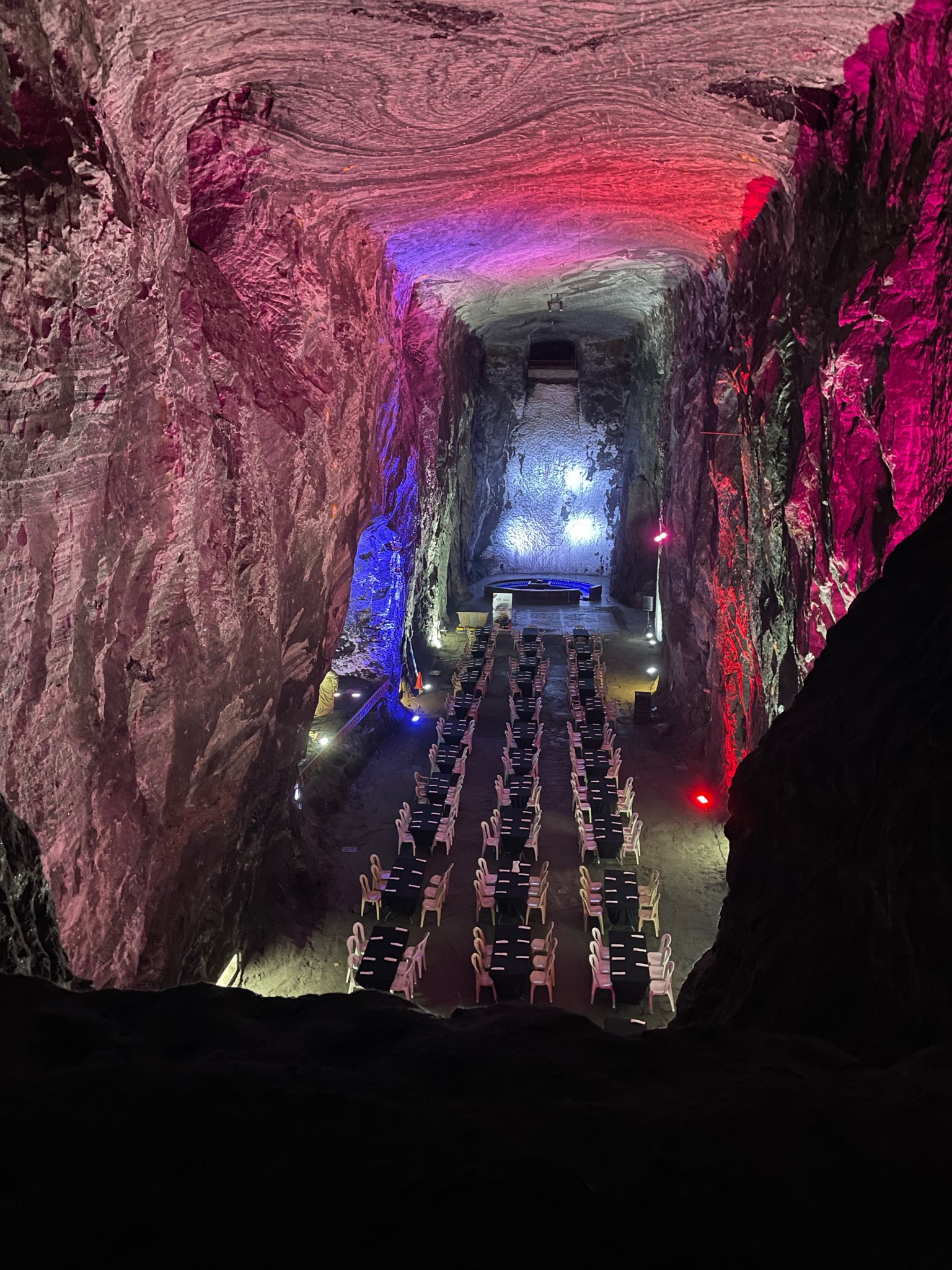
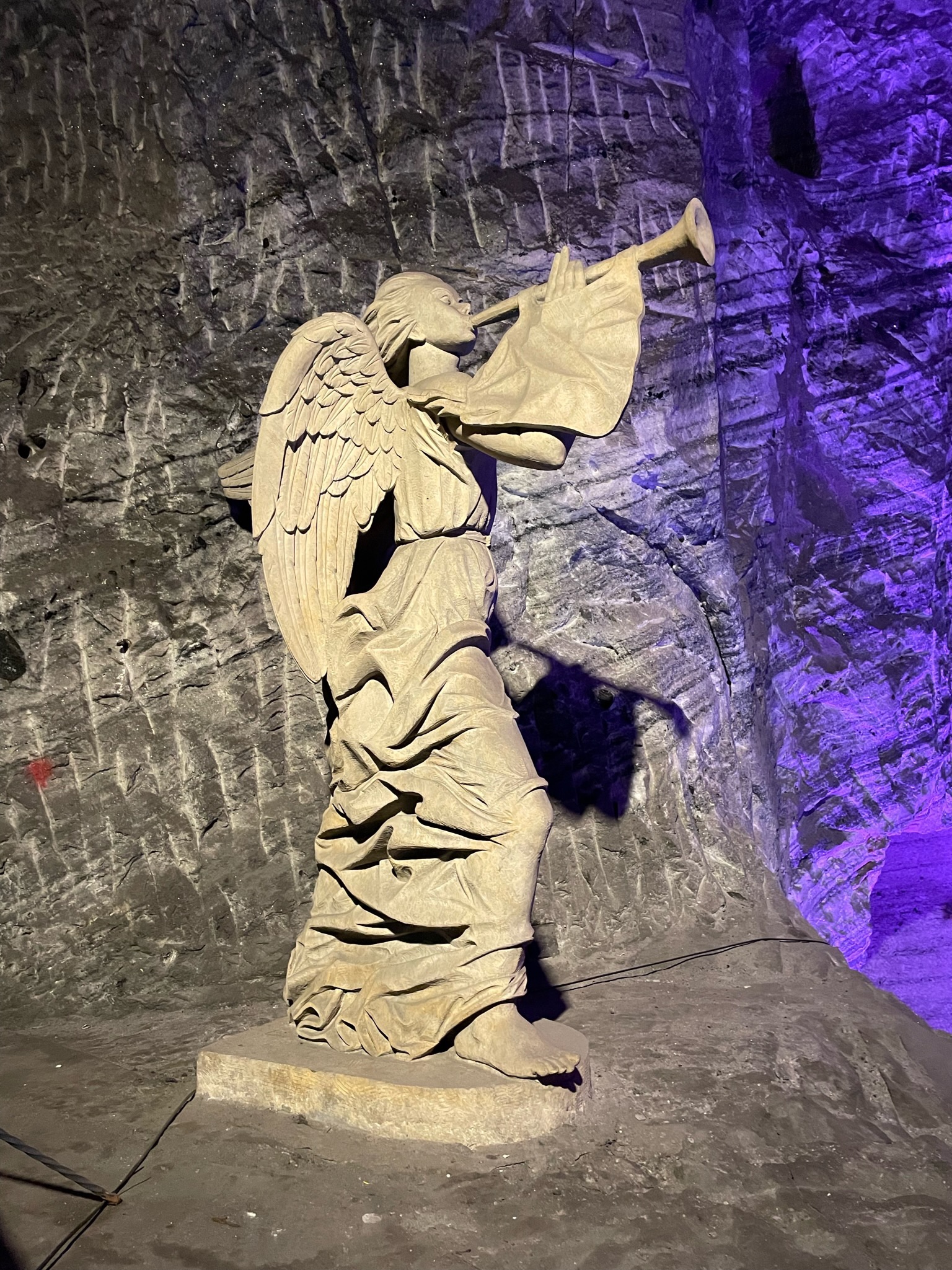
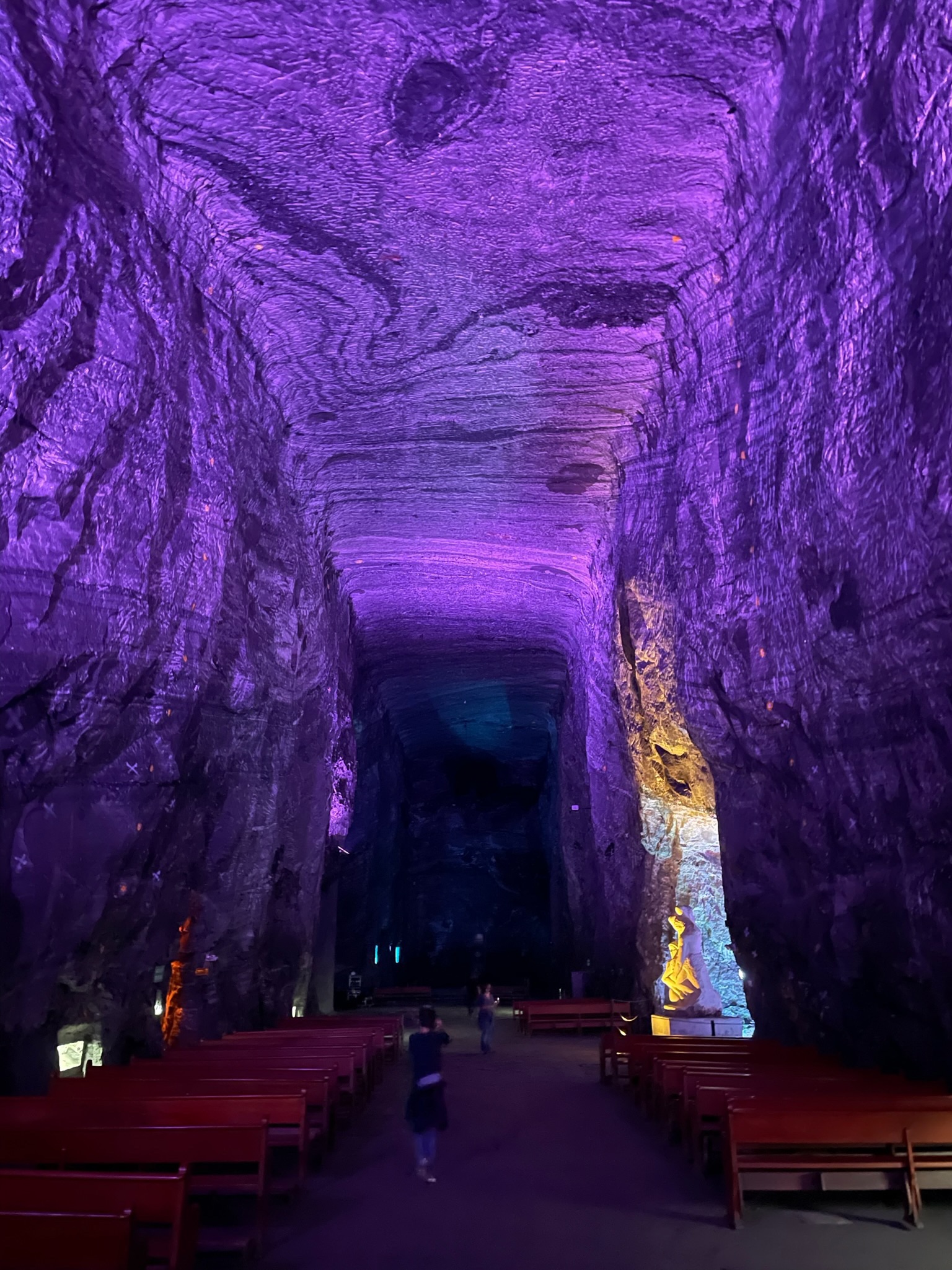
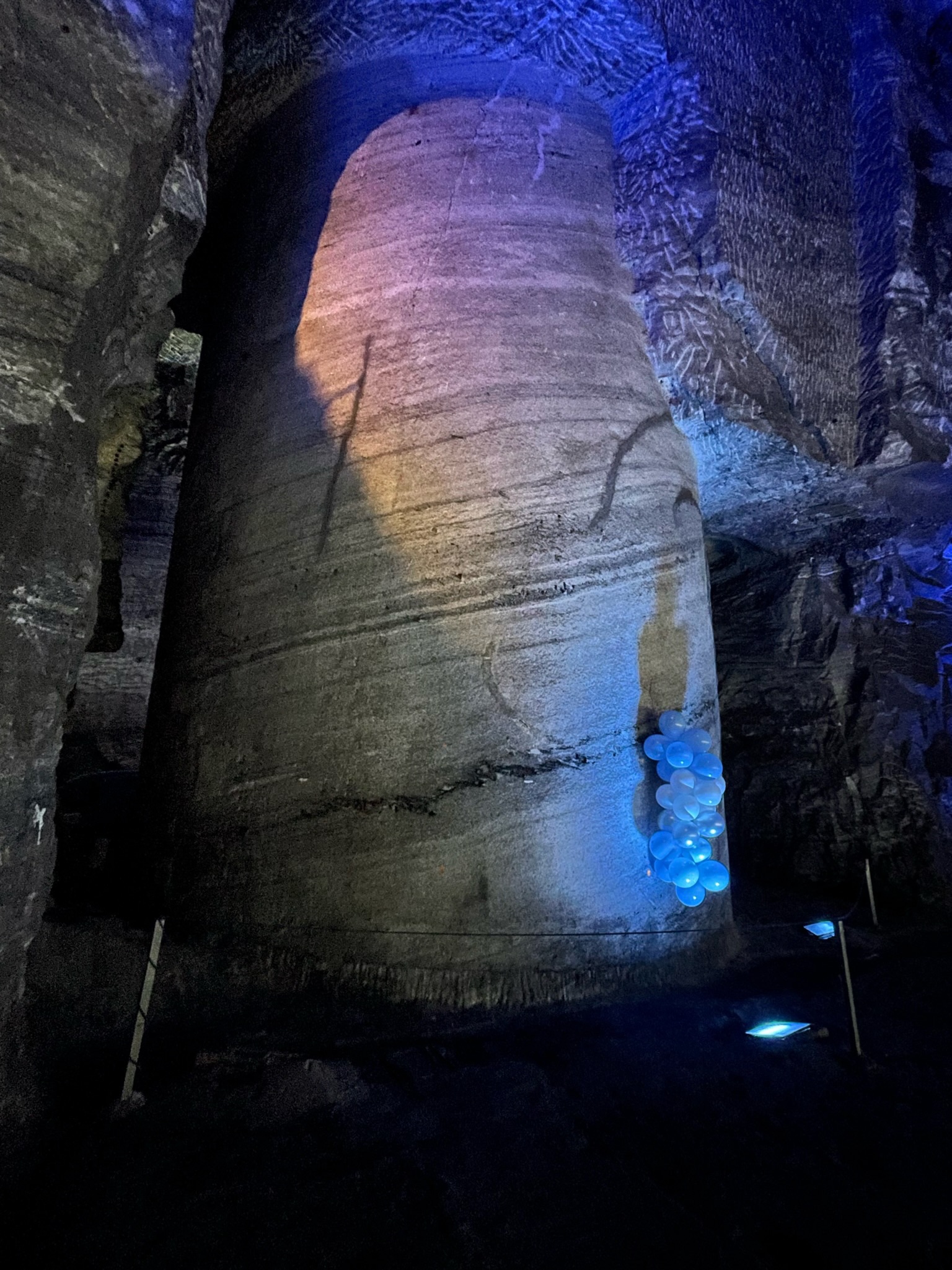
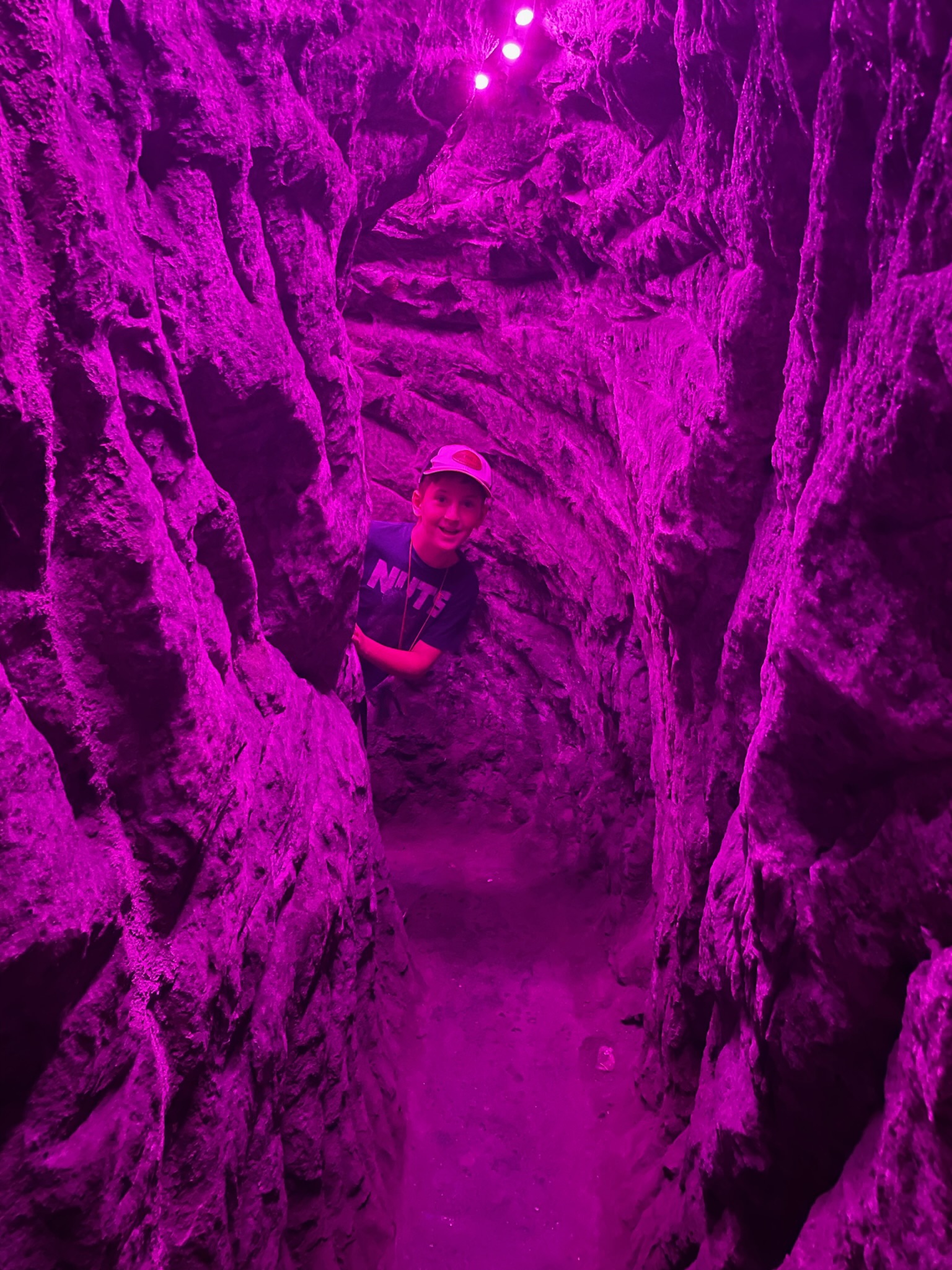
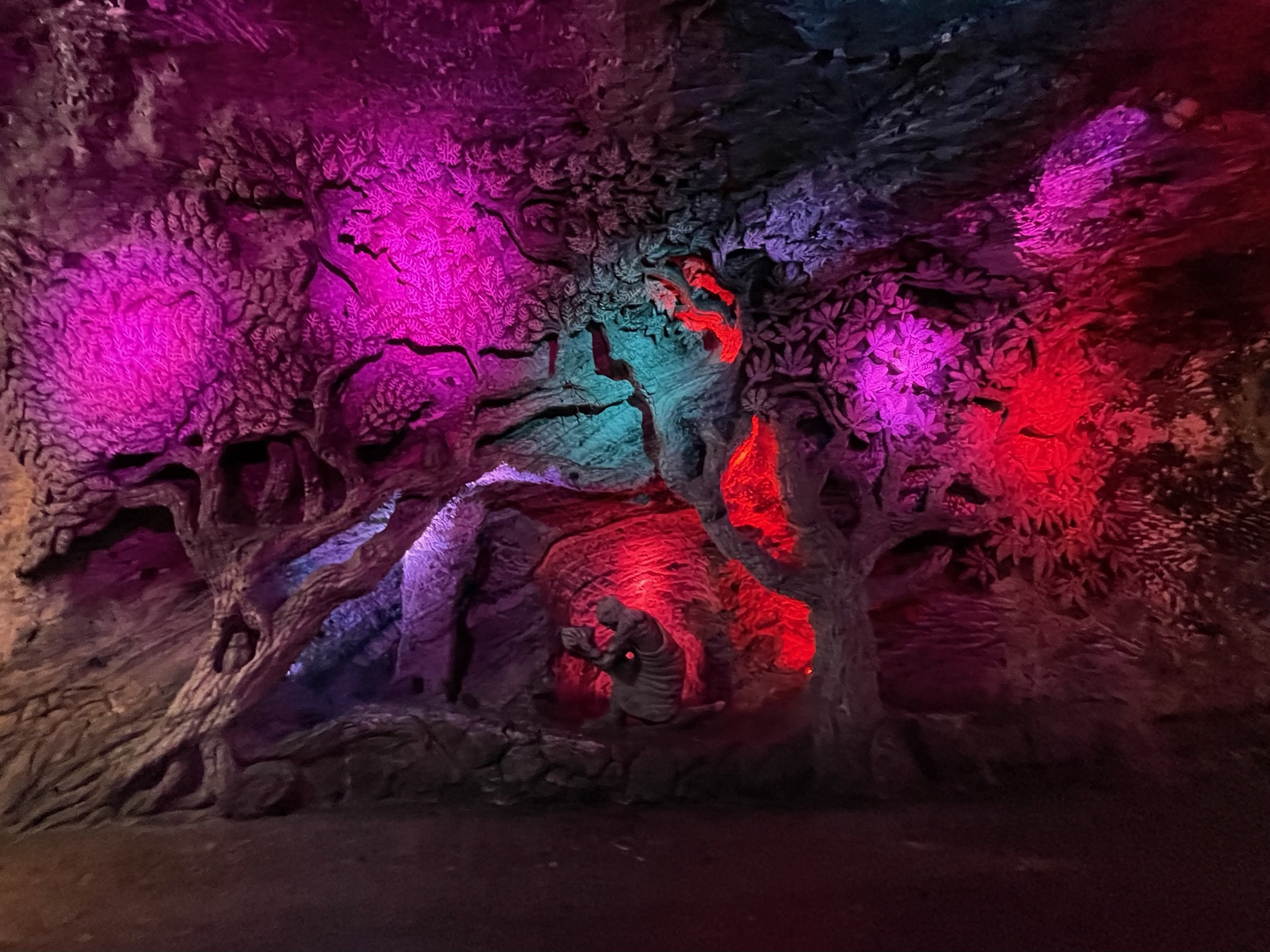
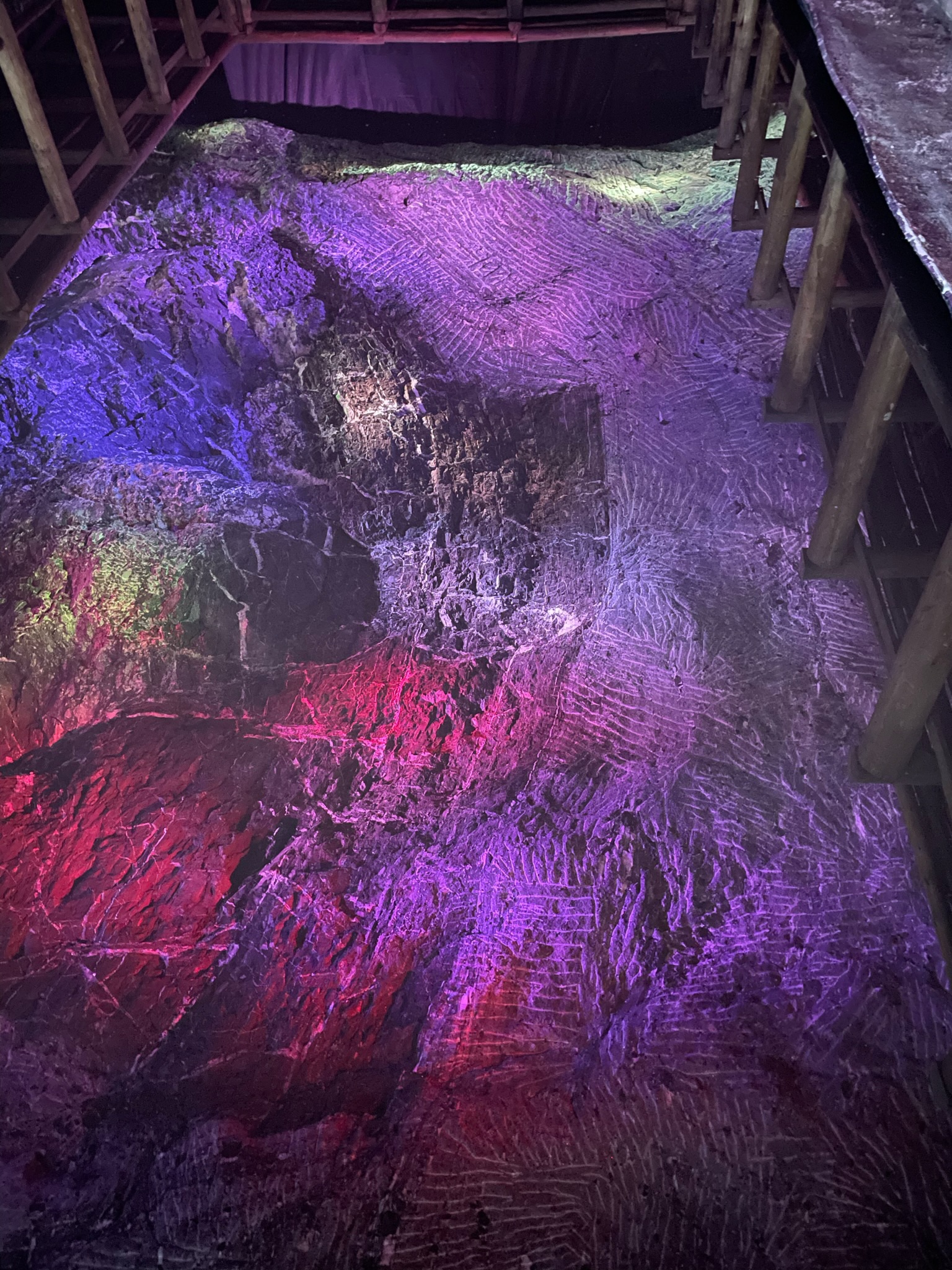
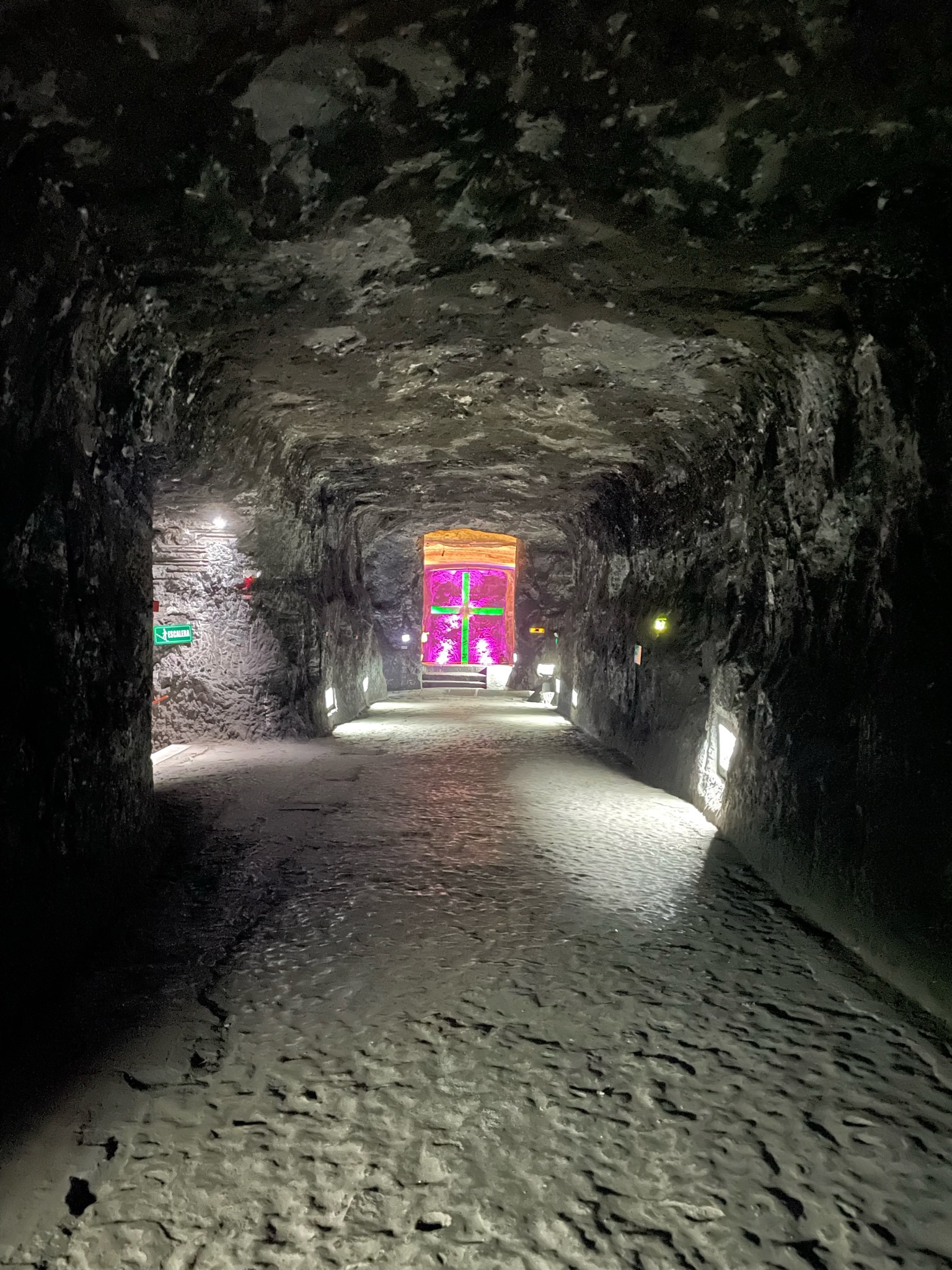
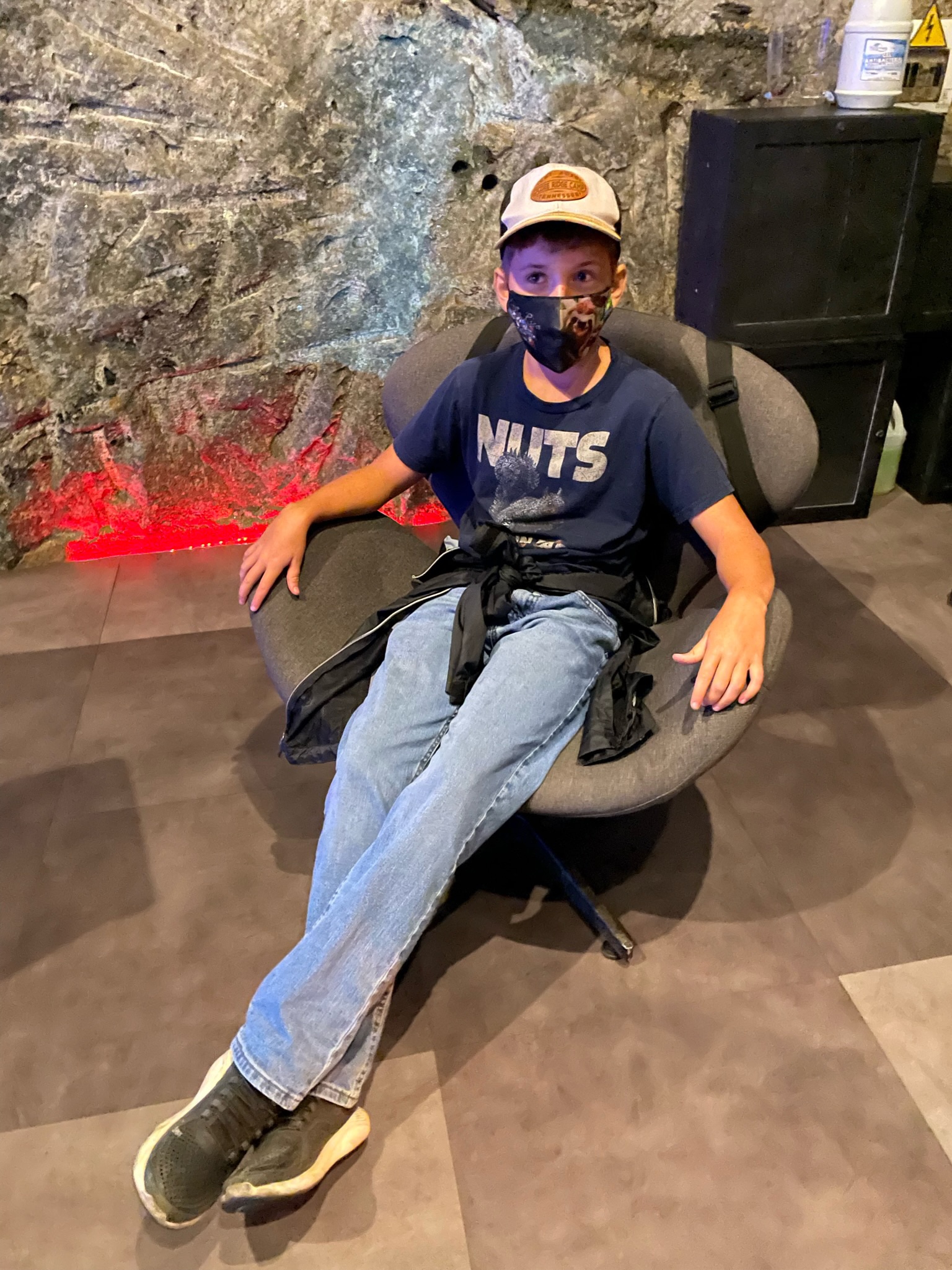
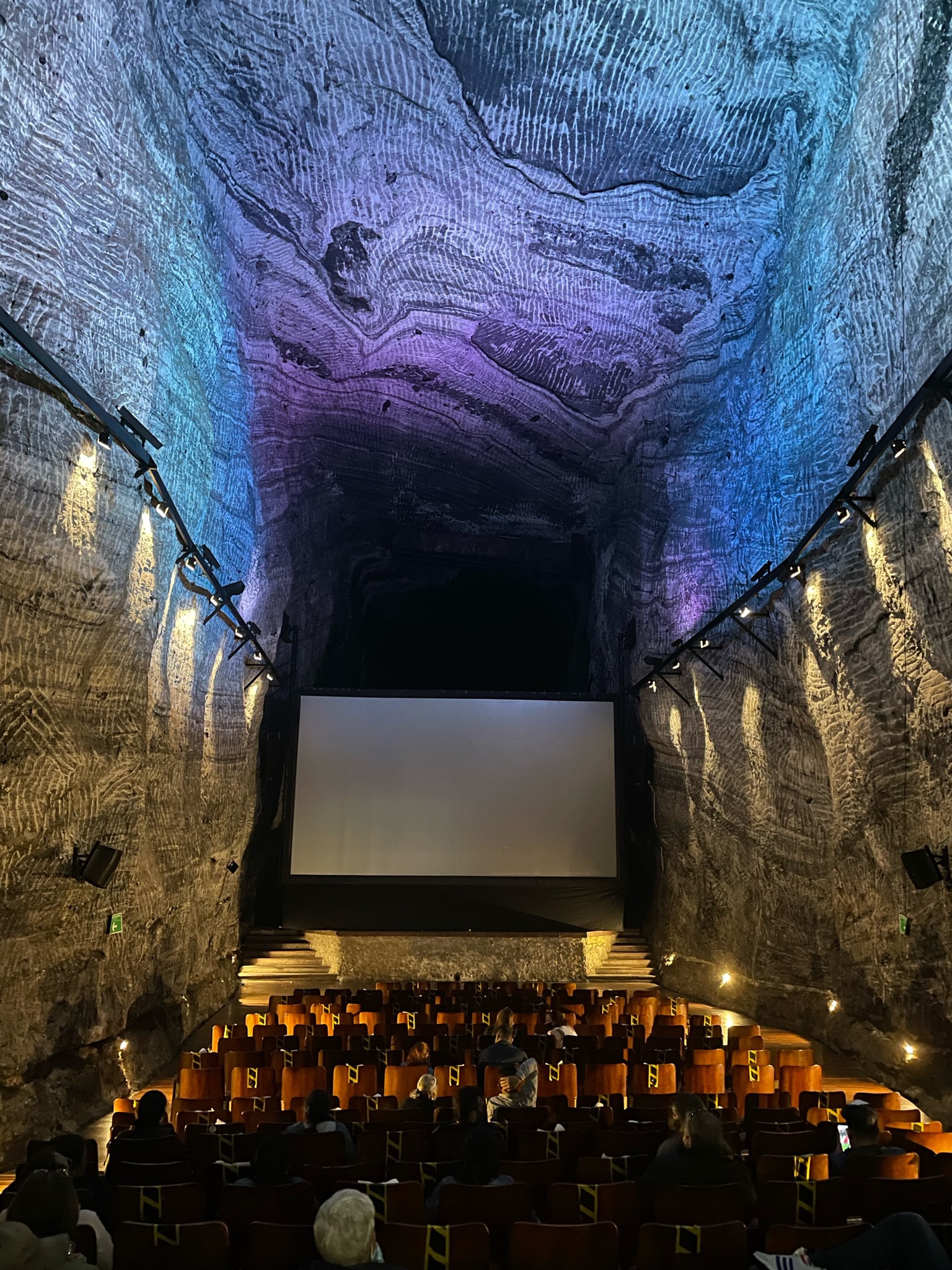
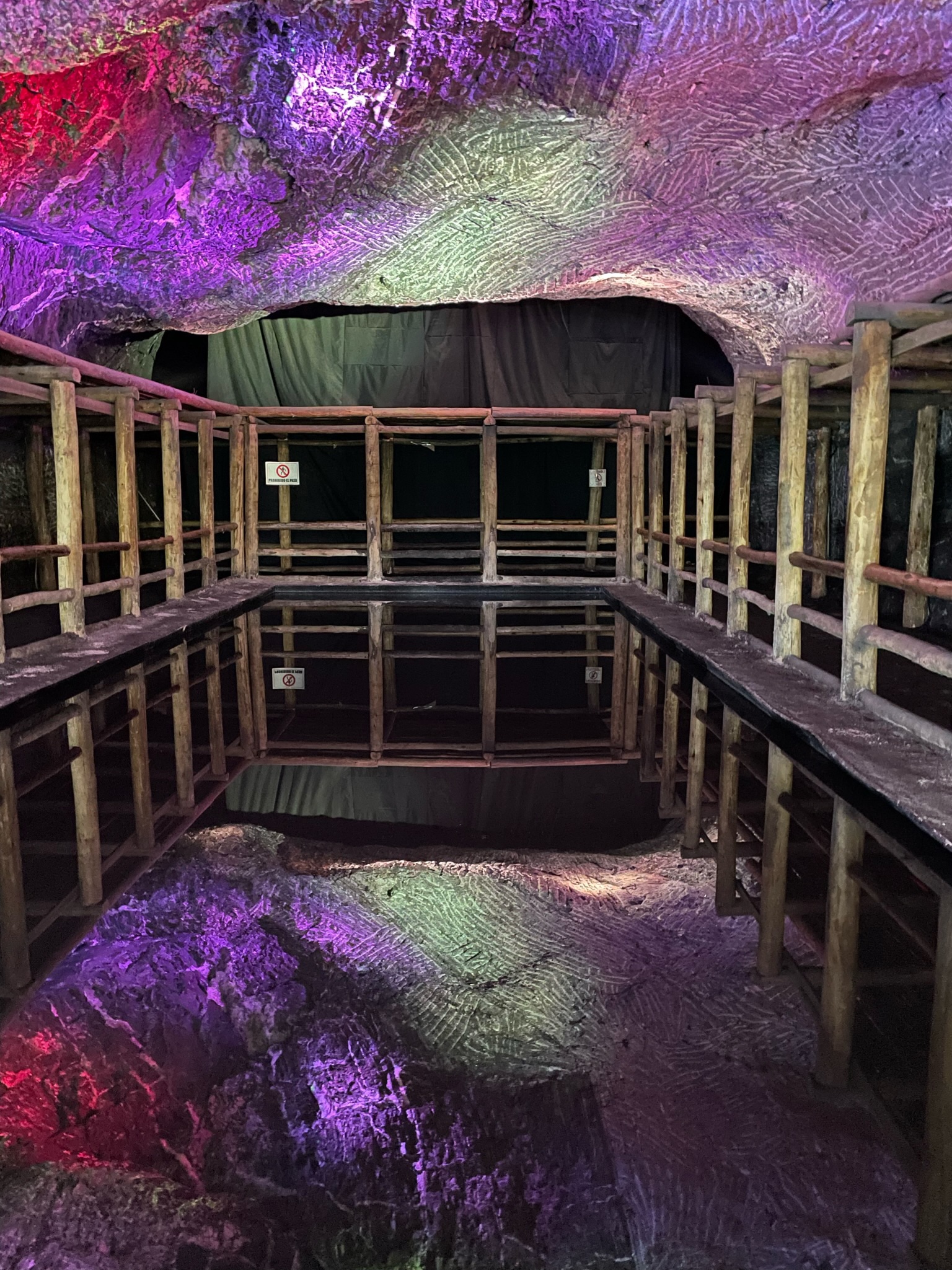
On another day, we took an Uber to the Catedral de Sal, the Salt Cathedral. In an area about an hour north of town, the native people had learned that salt was plentiful. They would make bread using the salty water that flowed from the mountain. Over the years, people figured out more efficient means of capturing it, and now there is a massive salt mine in the area. In a few of the tunnels on the third level down, the miners created artistic representations of the story of Christ for visitors to enjoy. In the fartherest visitable chambers, there is a massive church, commerce area, movie theater, and more. The caves were a constant 55-degrees, so regardless of the weather, visitors could come admire their work. When we were there, there was a celebration and awards ceremony happening in the church. I’m not sure what was really going on, but it was interesting to see the space being used like it was.


On our last day, we woke up early prepared to head to the airport to fly from Colombia to Peru. We’d figured out the bus system, and since we had a little money left on our transit card, we decided to take the bus to the airport. At around 5, we left our apartment for the bus stop that was about 3 blocks away. We waited together, being very vigilant of the sparsely populated streets. Another man joined us at the stop and waited with us for about 10 minutes. Just before he got on his bus, a second man joined us as well. After the first man got on his bus, a blue car pulled up to the stop, and the passenger rolled down his window. He spoke very quickly and in Spanish, so we really struggled to understand him. He said that he was police, and he showed us his badge. He asked to see our identification, and we all showed ours. He continued to talk quickly, and he asked to see if we had a cell phone. The man who was with us showed him his. The passenger took it, looked at it for a moment, and then handed it back to him. Brian did the same, but instead of handing it back to Brian, the man handed it to the driver. As he was handing it to the driver, he was also grabbing for mine. He continued to look at it for a moment, and then he started talking again. This time it sounded like he was asking for money. We had intentionally spent all of our cash the night before so we wouldn’t have to exchange it again. The other bus passenger handed him a little cash, and the ‘officer’ continued to push Brian for cash. Brian said we didn’t have any and showed the man his empty wallet. Then, the man started asking for cards. Brian ended up giving him a debit card for a closed account so that he would be satisfied. After a few minutes asking us for computers and other valuables, the bus stop passenger got in the back seat of the car, and the car sped off with our phones and a dead ATM card in tow. Brian said he had figured out what was going on when the ‘officer’ handed his phone to the driver. By then, it was too late for his or mine. Thankfully, we didn’t resist them, and we didn’t give them anything else. We walked back to our apartment to figure out what to do next. We were all pretty shaken up, but we were safe. Henry still had his phone, and we were able to use it to help us get what we would need to get out of the country. We tried to call an Uber, but the only driver that was popping up was one who didn’t list their car model or their car tags. In light of what happened, we refused the ride. We called a taxi instead, and after negotiating a rate, we all got in the car very dubious of our driver’s good intentions.
When we got to the airport, we notified a police officer at the entrance about what happened. Several officers later, we were asked to fill out a police report with the attendant in a little tech kiosk inside the airport. The store clerk logged onto the public use computers and filled out our report for us and gave us a copy to keep. From there, we headed over to the international departures to check in for our flights.
We made it to Lima, Peru, with no other issues, and we spent the next three days scrubbing all of our accounts and changing as many passwords as we could. We had turned on the lost mode on our phones, so we got notice when whoever took them connected them to the network. They were stolen at 5:30 am on Saturday, and by 10 pm on Sunday, they had gotten past my passcode and had managed to bypass all the security on my phone. They got into Brian’s the next morning, but thankfully we were able to remotely wipe his.
The robbery was scary, and I hate that it happened. We had been vigilant expecting someone to pick our pockets or to grab a bag and try to run with it. We weren’t expecting them to pose as police. We don’t know if they had weapons, because thank God, they didn’t pull any on us. We could have done so many things different, and we might have prevented this. But I also know that it could have gone much worse, and I’m thankful we all walked away safe with just the inconvenience of replacing our phones.
I also hate that this is the last memory we have of Colombia. We loved our time there, but now it’s hard to imagine ever going back there. Henry has really struggled since the incident with trusting anyone, and I hate that these men took that bit of innocence away from him. We keep reminding him that it’s important to be wary but to not let the few bad people taint your view of everyone. There are a lot of really good people everywhere, even in Colombia, and I’m trying hard to remember them instead. So for us, Colombia carries with it some mixed emotions. It was beautiful, but dangerous. We danced and laughed a lot, but we left with tears and frustration. We have immense gratitude that we all left unharmed, but we all lost a part of our ourselves there as well. We will use our lessons learned to help us in the future, and every day, we will remind each other of the good.

























































 Expedition Fresh Start